EP4262250B1 - Funkeinheit zur bereitstellung einer netzwerkkonnektivität für ein oder mehrere benutzergeräte an bord eines fahrzeugs - Google Patents
Funkeinheit zur bereitstellung einer netzwerkkonnektivität für ein oder mehrere benutzergeräte an bord eines fahrzeugs Download PDFInfo
- Publication number
- EP4262250B1 EP4262250B1 EP22168514.2A EP22168514A EP4262250B1 EP 4262250 B1 EP4262250 B1 EP 4262250B1 EP 22168514 A EP22168514 A EP 22168514A EP 4262250 B1 EP4262250 B1 EP 4262250B1
- Authority
- EP
- European Patent Office
- Prior art keywords
- network
- user equipment
- network slice
- vehicle
- packets
- Prior art date
- Legal status (The legal status is an assumption and is not a legal conclusion. Google has not performed a legal analysis and makes no representation as to the accuracy of the status listed.)
- Active
Links
Images

Classifications
-
- H—ELECTRICITY
- H04—ELECTRIC COMMUNICATION TECHNIQUE
- H04W—WIRELESS COMMUNICATION NETWORKS
- H04W8/00—Network data management
- H04W8/02—Processing of mobility data, e.g. registration information at HLR [Home Location Register] or VLR [Visitor Location Register]; Transfer of mobility data, e.g. between HLR, VLR or external networks
- H04W8/06—Registration at serving network Location Register, VLR or user mobility server
- H04W8/065—Registration at serving network Location Register, VLR or user mobility server involving selection of the user mobility server
-
- H—ELECTRICITY
- H04—ELECTRIC COMMUNICATION TECHNIQUE
- H04W—WIRELESS COMMUNICATION NETWORKS
- H04W4/00—Services specially adapted for wireless communication networks; Facilities therefor
- H04W4/30—Services specially adapted for particular environments, situations or purposes
- H04W4/40—Services specially adapted for particular environments, situations or purposes for vehicles, e.g. vehicle-to-pedestrians [V2P]
- H04W4/44—Services specially adapted for particular environments, situations or purposes for vehicles, e.g. vehicle-to-pedestrians [V2P] for communication between vehicles and infrastructures, e.g. vehicle-to-cloud [V2C] or vehicle-to-home [V2H]
-
- H—ELECTRICITY
- H04—ELECTRIC COMMUNICATION TECHNIQUE
- H04W—WIRELESS COMMUNICATION NETWORKS
- H04W8/00—Network data management
- H04W8/02—Processing of mobility data, e.g. registration information at HLR [Home Location Register] or VLR [Visitor Location Register]; Transfer of mobility data, e.g. between HLR, VLR or external networks
- H04W8/08—Mobility data transfer
-
- H—ELECTRICITY
- H04—ELECTRIC COMMUNICATION TECHNIQUE
- H04W—WIRELESS COMMUNICATION NETWORKS
- H04W4/00—Services specially adapted for wireless communication networks; Facilities therefor
- H04W4/30—Services specially adapted for particular environments, situations or purposes
- H04W4/40—Services specially adapted for particular environments, situations or purposes for vehicles, e.g. vehicle-to-pedestrians [V2P]
- H04W4/48—Services specially adapted for particular environments, situations or purposes for vehicles, e.g. vehicle-to-pedestrians [V2P] for in-vehicle communication
-
- H—ELECTRICITY
- H04—ELECTRIC COMMUNICATION TECHNIQUE
- H04W—WIRELESS COMMUNICATION NETWORKS
- H04W48/00—Access restriction; Network selection; Access point selection
- H04W48/18—Selecting a network or a communication service
-
- H—ELECTRICITY
- H04—ELECTRIC COMMUNICATION TECHNIQUE
- H04W—WIRELESS COMMUNICATION NETWORKS
- H04W88/00—Devices specially adapted for wireless communication networks, e.g. terminals, base stations or access point devices
- H04W88/08—Access point devices
- H04W88/10—Access point devices adapted for operation in multiple networks, e.g. multi-mode access points
-
- H—ELECTRICITY
- H04—ELECTRIC COMMUNICATION TECHNIQUE
- H04W—WIRELESS COMMUNICATION NETWORKS
- H04W4/00—Services specially adapted for wireless communication networks; Facilities therefor
- H04W4/30—Services specially adapted for particular environments, situations or purposes
- H04W4/40—Services specially adapted for particular environments, situations or purposes for vehicles, e.g. vehicle-to-pedestrians [V2P]
-
- H—ELECTRICITY
- H04—ELECTRIC COMMUNICATION TECHNIQUE
- H04W—WIRELESS COMMUNICATION NETWORKS
- H04W4/00—Services specially adapted for wireless communication networks; Facilities therefor
- H04W4/30—Services specially adapted for particular environments, situations or purposes
- H04W4/40—Services specially adapted for particular environments, situations or purposes for vehicles, e.g. vehicle-to-pedestrians [V2P]
- H04W4/42—Services specially adapted for particular environments, situations or purposes for vehicles, e.g. vehicle-to-pedestrians [V2P] for mass transport vehicles, e.g. buses, trains or aircraft
Definitions
- US 2016/366049 discloses a communications system for providing data communication between a vehicle and a server using a mobile transport layer proxy located on the vehicle and a parent transport layer proxy located remote from the vehicle.
- US 2016/219251 discloses a system for transferring data between a mobile communication unit and a wayside communication unit.
- the current invention relates to wireless communication in the context of industrial automation.
- high availability and reliability are required. This is particularly the case in relation to vehicles and other such mobile equipment used in the context of industrial automation.
- this is particularly challenging in the context of trains and other such long distance transportation.
- train network infrastructure include cellular routers which connect to the mobile operator network, which are connected local WLAN equipment which provide indoor coverage to the industrial and passenger equipment by means of WLAN.
- the cellular routers can have multiple SIMs to connect to several operators and choose the best among them, this solution will not necessarily deliver a good and reliable service since the coverage of the mobile operator network is often poor, since they often share the same antenna site resulting in no real difference amongst the different mobile operators.
- Most rail tracks are in rural areas where the coverage is achieved with 2G networks which do not have sufficient data rate.
- the propagation conditions can be hostile due to the landscape, mountains, train speed and indoor propagation inside the train. Because of this, industrial and passenger equipment often suffer from loss of coverage and poor service quality.
- the current disclosure describes a network infrastructure which provides a dedicated 5G network for transmission of packets from the industrial and passenger equipment onboard the train.
- the current disclosure describes a radio unit for providing network connectivity to one or more user equipment onboard a vehicle.
- the radio unit is located on the vehicle.
- the radio unit comprises a first network interface connectable to the one or more user equipment onboard the vehicle; and a second network interface connectable to a first network slice via a wayside network.
- the first network slice is connected to a home network associated with at least one user equipment from the one or more user equipment.
- the first network slice is configured to transport one or more traffic streams comprising one or more packets, associated with the at least one user equipment.
- the second network interface is connectable to the first network slice over a user plane function of a second network slice and wherein the first network slice includes a first network function for mapping one or more protocols of the first network slice and the one or more protocols of the second network slice.
- the current disclosure describes a radio unit which is configured to provide connectivity to the industrial and passenger equipment onboard the train using dedicated 5G network slices and a wayside network.
- dedicated network slices the current disclosure ensures that the equipment onboard the vehicle due no suffer from poor coverage as the wayside network and the dedicated network slices offer optimal coverage throughout the route of the vehicle.
- two dedicated network slices a first slice for communication with the home network and a second slice for intra network communication, the current disclosure ensures that communication reliability and low latency for the user equipment onboard the train.
- the first network slice includes a roaming function for exchanging user information associated the at least one user equipment with the home network. Accordingly, using the above mentioned roaming function, the current disclosure is able to offer inbound roaming services to customers of mobile network operators. Both roaming approaches are supported: local break out (LBO) and home routed (HR).
- LBO local break out
- HR home routed
- the at least one user equipment is registered with a subscriber server of the home network.
- the second network slice includes a second network function for providing one or more services to the at least one user equipment, wherein the one or more services are associated with the vehicle.
- the current disclosure may provide specific vehicular services to the devices onboard.
- the specific services may include ticketing services, localization services, etc.
- the radio unit is connected to the first network slice via a distributed unit located onboard the vehicle.
- additional network equipment may also be present on the vehicle.
- gNB distributed base station
- additional network infrastructure accordingly may be located or installed on the vehicle to reduce network communication related delays.
- the vehicle is one of a train, an automated guidance vehicle and a mining cart. Accordingly, the disclosure may be used in a plurality of industrial environments to facilitate communication.
- the current disclosure describes a method of transmitting packets from a user equipment onboard a vehicle to a home network associated with the user equipment.
- the method comprises receiving one or more packets from the user equipment, wherein at least one packet from the one or more packets includes subscriber information associated with the user equipment, and transmitting the packet to a user plane function associated with a first network slice via a wayside network over a second user plane function associated with a second network slice.
- the first network slice is connected to the home network associated with the user equipment and wherein the first network slice includes a first network function for mapping one or more protocols of the first network slice and the one or more protocols of the second network slice.
- the method further comprises encapsulating the one or more packets in a first format associated with the second user plane function associated with the second network slice.
- the first network function is configured to decapsulate the one or more packets from the first format associated with the second user plane function associated with the second network slice.
- the current disclosure a non transitory storage medium for transmitting packets from a user equipment onboard a vehicle to a home network associated with the user equipment, the non transitory storage medium comprising a plurality of instructions, which when executed on one or more processors, cause the one or more processors to receive one or more packets from the user equipment, wherein at least one packet from the one or more packets includes subscriber information associated with the user equipment, and transmit the one or more packets to a user plane function associated with a first network slice via a wayside network over a second user plane function associated with a second network slice, wherein the first network slice is connected to the home network associated with the user equipment and wherein the first network slice includes a first network function for mapping one or more protocols of the first network slice and the one or more protocols of the second network slice.
- Figure 1 illustrates a dedicated wireless network 101 for communication onboard a vehicle 115 in an industrial environment.
- Industrial environment herein refers to any environment where one or more industrial processes such as manufacturing, refining, smelting, assembly of equipment may take place and includes process plants, oil refineries, automobile factories, electrical power plants, transportation infrastructure such as railways, ships, etc.
- the vehicle may comprise a plurality of control devices connected to a plurality of field devices for monitoring and regulating one or more processes on the vehicle 115.
- Vehicle herein refers to any machine capable of transporting material or personnel from one location to another.
- Example of vehicles include automated guidance vehicles, mining carts, trains, automobiles, etc.
- the dedicated wireless network 101 includes one or more network devices installed onboard the vehicle 115, for example radio unit 110 and one or more access points 119 and 113 as shown in figure 1 .
- the one or more network devices onboard the vehicle 115 are connected to the network core 160 via a wayside network 130.
- the one or more network devices onboard the vehicle 115 includes a distributed unit (not shown in the figure).
- the radio unit 110 is connected to the distributed unit which in tun is connected to a network core 160. Other radio units may also be present onboard the vehicle 115 along with the radio unit 110.
- the wayside network 130 includes a plurality of network infrastructure devices 133 and 136, and includes, for example, radio units, distributed units, central units, etc. As mentioned previously, the wayside network 130 is connected to the network core 160.
- the central units process non-real time protocols and services.
- the distributed units process physical level protocols and latency-critical real time services.
- the radio units carry out link layer and physical layer signal processing when transmitting and receiving radio signals.
- a plurality of well known protocols (such as eCPRI) may be used for communication amongst these components.
- the dedicated wireless network 110 includes a network core 160 for managing and operating the dedicated wireless network 101.
- the network core 160 includes two network slices: a first network slice 165 (also referred to as onboard slice 165) and a second network slice 150 (also referred to as the main slice 150).
- the first network slice 165 handles communication between the user equipment and external networks such as the home network associated with at least one user equipment.
- the first network slice 165 includes a plurality of network functions for handling and managing the communication associated with the user equipment.
- the plurality of the network functions of the first network slice 165 include a user plane function 165 which serves as the network plane over which connection between the external networks and the user equipment is established and packets are transported between the user equipment and the external networks.
- the second network slice 150 manages and handles the wayside network and the communication occurring over the wayside network.
- the second network slice 150 includes a plurality of network functions.
- the wayside network and the second network slice are responsible for transporting packets associated with the first network slice 165.
- the wayside network and second network slice act as a dedicated tunnel between the user equipment on the vehicle and the first network slice which allows for transportation of packets associated with the first network slice over the user plane of the second network slice.
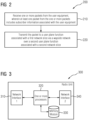
- Figure 2 illustrates a method 200 of transmitting packets from a user equipment onboard a vehicle to a home network associated with the user equipment.
- the method 200 is performed by the radio unit 110 onboard the vehicle 115.
- the radio unit 110 includes a first network interface connectable to the one or more user equipment 125 onboard the vehicle 115 and a second network interface connectable to the first network slice 160 via the wayside network 130.
- the radio unit 110 receives one or more packets from the user equipment 125 via the first network interface.
- the one or more packets includes at least one packet includes subscriber information associated with the user equipment 125.
- the radio unit 110 receives the packets from the user equipment via an access point onboard the vehicle 115.
- the user equipment 125 connects to the access point over a local subnetwork comprising a plurality of access points and is limited to the vehicle 115.
- Subscriber information includes roaming information, network services enabled, billing information etc.
- the radio unit 110 transmits the one or more packets to the user plane function 165 associated with the first network slice 160 via the wayside network 130 over the second user plane function 156 associated with a second network slice 150.
- the radio unit 110 and the first user plane function 165 include fronthaul map functions for mapping or translating / wrapping the one or more packets in the fronthaul protocols associated with the second network slice 150.
- the first user plane function 165 includes a fronthaul map function 169 which is responsible for mapping wrapping and unwrapping protocols into/out of the fronthaul protocols associated with the second network slice 150.
- a similar fronthaul map function is implemented in the radio unit 110 onboard the vehicle 115. The fronthaul map function on the radio unit is for wrapping the packets from the user equipment and for unwrapping the packets received from the external networks via the first network slice 160.
- fronthaul protocols can be used between the radio units and the distributed units of the first and second network slices, depending on the split option used. Since the packets are transported to the fist network slice via the second network slice, the fronthaul (FH) protocols of the first network slice are wrapped in the protocols of the second network slice.
- the fronthaul protocol mapping from one slice to the other is performed by two or more fronthaul map functions.
- the fronthaul map functions manage the translation of the flow of information between the two slices.
- the fronthaul map functions are responsible for requesting the correct QoS from the main slice for transportation of packets between the first user plane function and the onboard radio unit and map the fronthaul protocols of the first network slice onto the fronthaul protocols of the second network slice including the those associated with the user and control plane of the second network slice. For example, if the eCPRI protocol based packets have to be transported, then the fronthaul map function reads the appropriate field in the protocols of the packets associated with QoS and map the information onto a 5G QoS flow associated with the second network slice which can guarantee that level of QoS.
- the fronthaul map functions in the first network slice act as interworking function performing the mapping depending according to the protocol used between the first and second network slices.
- the Fronthaul map functions hold a mapping of the MAC address of the RU with IP address of the UE to which is connected and encapsulate the Ethernet frame into an IP packet to be routed to the RU behind the UE.
- the IP packet is routed to the user plane function of the second network slice.
- the IP packet is routed to the destination RU which has a FH-Map function. This will extract the Ethernet frame and delivers to the Physical Layer elements.
- the FH-MAP at the DU forwards the IP packet to the UPF which has the capabilities to route the packet to right onboard UE.
- the packet will be further routed to the destination RU.
- the packets are transmitted to the first network slice via the radio unit 115.
- the first network slice 160 is connected to the home network 180 associated with the user equipment 125. Accordingly, the first network slice 160 is determined configured to transmit the packets to the corresponding home network 180. Accordingly, network connectivity is provided between the user equipment and the home network using the first and second network slices.
- the first network slice 160 additionally includes a roaming function for exchanging user information associated the at least one user equipment 125 with the home network 180. Accordingly, using the roaming function, the first network slice 160 is configured to act as a visiting network for the user equipment and accordingly, fetch necessary information associated with the user equipment from the home network based on the subscriber information. Accordingly, using the above mentioned roaming function, the current disclosure is able to offer inbound roaming services to customers of mobile network operators. Both roaming approaches are supported: local break out (LBO) and home routed (HR).
- LBO local break out
- HR home routed
- the at least one user equipment is registered with a subscriber server of the home network.
- the second network slice 150 includes a second network function for providing one or more services to the at least one user equipment 125, wherein the one or more services are associated with the vehicle 115.
- the current disclosure may provide specific vehicular services to the devices onboard.
- the specific services may include ticketing services, localization services, etc.
- the onboard core network includes also a local platform for specific onboard services. Once the users are on boarded and registered on the train network they can use such services via an application on their smartphones.
- the onboard network as includes a location manager, the user can ask via the application an help function to localize their seat and the nearest free baggage space.
- the user is localized by the onboard 5G network and their position is shown on a train seating plan along with the position of the baggage space.
- the baggage space has sensors indicating the occupancy of such spaces, the application will then indicate the location of the nearest baggage space with live space availability.
- the user can get information about the journey, the position of the train, the weather on the destination and additional services, like booking a taxi on arrival or purchasing a local bus or underground ticket.
- the second network slice is configured to provide one or more train control related services.
- the second network slice delivers services, for example control, signaling, diagnostic, services to one or more train control equipment in addition to transporting the packets associated with the first network slice.
- the fronthaul map functions may be realized on second network slice instead of the first network slice and the radio unit aboard.
- the radio unit is connected to the first network slice via a distributed unit located onboard the vehicle. Accordingly, additional network infrastructure accordingly may be located or installed on the vehicle to reduce network communication related delays.
- the present disclosure can take a form of a computer program product comprising program modules accessible from computer-usable or computer-readable medium storing program code for use by or in connection with one or more computers, processing units, or instruction execution system.
- the radio unit or the user plane functions may be realized across one or more devices.
- the current disclosure as describes a radio unit device 300.
- the device 300 implements the method 200.
- the device 300 includes one or more network interfaces (310, 340), one or more processors 320 and a non-transitory storage medium 330.
- the non-transitory storage medium 330 contains a plurality of instructions for implementing the method 200.
- the plurality of instructions which when executed on one or more processors 320, cause the one or more processors 320 to receive one or more packets from the user equipment 125, wherein at least one packet from the one or more packets includes subscriber information associated with the user equipment 125, and transmit the one or more packets to a user plane function 165 associated with a first network slice 160 via a wayside network 130 over a second user plane function 156 associated with a second network slice 150, wherein the first network slice 160 is connected to the home network 180 associated with the user equipment 125 and wherein the first network slice 160 includes a first network function 169 for mapping one or more protocols of the first network slice 160 and the one or more protocols of the second network slice 150.
- a computer-usable or computer-readable non-transitory storage medium can be any apparatus that can contain, store, communicate, propagate, or transport the program for use by or in connection with the instruction execution system, apparatus, or device.
- the medium can be electronic, magnetic, optical, electromagnetic, infrared, or semiconductor system (or apparatus or device) or a propagation mediums in and of themselves as signal carriers are not included in the definition of physical computer-readable medium include a semiconductor or solid state memory, magnetic tape, a removable computer diskette, random access memory (RAM), a read only memory (ROM), a rigid magnetic disk and optical disk such as compact disk read-only memory (CD-ROM), compact disk read/write, and DVD.
- Both processing units and program code for implementing each aspect of the technology can be centralized or distributed (or a combination thereof) as known to those skilled in the art.
Landscapes
- Engineering & Computer Science (AREA)
- Computer Networks & Wireless Communication (AREA)
- Signal Processing (AREA)
- Databases & Information Systems (AREA)
- Computer Security & Cryptography (AREA)
- Mobile Radio Communication Systems (AREA)
Claims (10)
- Funkeinheit (110) zum Bereitstellen einer Netzwerkkonnektivität für ein oder mehrere Benutzergeräte (125) an Bord eines Fahrzeugs (115), wobei sich die Funkeinheit (110) an dem Fahrzeug (115) befindet, wobei die Funkeinheit (110) umfasst:a. eine erste Netzwerkschnittstelle, die mit den ein oder mehreren Benutzergeräten (125) an Bord des Fahrzeugs (115) verbunden werden kann; undb. eine zweite Netzwerkschnittstelle, die mit einer ersten Netzwerkscheibe (160) mittels eines Wegrandnetzwerks (130) verbunden werden kann, wobei die erste Netzwerkscheibe (160) mit einem Heimnetzwerk (180) verbunden ist, das mit wenigstens einem Benutzergerät (125) von den ein oder mehreren Benutzergeräten (125) verknüpft ist, und wobei die erste Netzwerkscheibe (160) dafür ausgelegt ist, einen oder mehrere Verkehrsströme zu transportieren, umfassend ein oder mehrere Pakete, die mit dem wenigstens einen Benutzergerät (125) verknüpft sind,wobei wenigstens ein Paket von den ein oder mehreren Paketen Teilnehmerinformationen beinhaltet, die mit dem Benutzergerät (125) verknüpft sind;wobei die zweite Netzwerkschnittstelle mit der ersten Netzwerkscheibe (160) über eine Benutzerebenenfunktion (156) einer zweiten Netzwerkscheibe (150) verbunden werden kann und wobei die erste Netzwerkscheibe (160) eine erste Netzwerkfunktion (169) zum Abbilden eines oder mehrerer Protokolle der ersten Netzwerkscheibe (160) und eines oder mehrere Protokolle der zweiten Netzwerkscheibe (150) beinhaltet.
- Funkeinheit (110) nach Anspruch 1, wobei die erste Netzwerkscheibe (160) eine Roaming-Funktion beinhaltet, um Benutzerinformationen, die mit dem wenigstens einen Benutzergerät (125) verknüpft sind, mit dem Heimnetzwerk (180) auszutauschen.
- Funkeinheit (110) nach Anspruch 1, wobei die zweite Netzwerkscheibe (150) eine zweite Netzwerkfunktion zum Bereitstellen ein oder mehrerer Dienste für das wenigstens eine Benutzergerät (125) beinhaltet, wobei die ein oder mehreren Dienste mit dem Fahrzeug verknüpft sind (115).
- Funkeinheit (110) nach Anspruch 1, wobei die Funkeinheit mit der ersten Netzwerkscheibe (160) über eine verteilte Einheit verbunden ist (110), die sich an Bord des Fahrzeugs (115) befindet.
- Funkeinheit (110) nach Anspruch 1, wobei das wenigstens eine Benutzergerät (125) bei einem Teilnehmerserver des Heimnetzwerks (180) registriert ist.
- Funkeinheit (110) nach Anspruch 1, wobei das Fahrzeug (115) eines von einem Zug, einem fahrerlosen Transportfahrzeug und einem Grubenwagen ist.
- Verfahren (200) zum Übertragen von Paketen von einem Benutzergerät (125) an Bord eines Fahrzeugs (115) an ein Heimnetzwerk (180), das mit dem Benutzergerät (125) verknüpft ist, wobei das Verfahren (200) umfasst:a. Empfangen (210) eines oder mehrerer Pakete von dem Benutzergerät (125), wobei wenigstens ein Paket von den ein oder mehreren Paketen Teilnehmerinformationen beinhaltet, die mit dem Benutzergerät (125) verknüpft sind, undb. Übertragen (220) der ein oder mehreren Pakete an eine Benutzerebenenfunktion (165), die mit einer ersten Netzwerkscheibe (160) verknüpft ist, mittels eines Wegrandnetzwerks (130) über eine zweite Benutzerebenenfunktion (156), die mit einer zweiten Netzwerkscheibe (150) verknüpft ist, wobei die erste Netzwerkscheibe (160) mit dem Heimnetzwerk (180) verbunden ist, welches mit dem Benutzergerät (125) verknüpft ist, und dafür ausgelegt ist, einen oder mehrere Verkehrsströme zu transportieren, umfassend die ein oder mehreren Pakete, und wobei die erste Netzwerkscheibe (160) eine erste Netzwerkfunktion (169) zum Abbilden eines oder mehrerer Protokolle der ersten Netzwerkscheibe (160) und eines oder mehrerer Protokolle der zweiten Netzwerkscheibe (150) beinhaltet.
- Verfahren (200) nach Anspruch 7, wobei das Verfahren (200) ferner das Verkapseln der ein oder mehreren Pakete in einem ersten Format umfasst, das mit der zweiten Benutzerebenenfunktion (156) verknüpft ist, die mit der zweiten Netzwerkscheibe (150) verknüpft ist.
- Verfahren (200) nach Anspruch 8, wobei die erste Netzwerkfunktion (169) dafür ausgelegt ist, die ein oder mehreren Pakete aus dem ersten Format zu entkapseln, das mit der zweiten Benutzerebenenfunktion (156) verknüpft ist, die mit der zweiten Netzwerkscheibe (150) verknüpft ist.
- Nicht-transitorisches Datenspeichermedium (330) zum Übertragen von Paketen von einem Benutzergerät (125) an Bord eines Fahrzeugs (115) an ein Heimnetzwerk (180), das mit dem Benutzergerät verknüpft ist (125), wobei das nichttransitorische Datenspeichermedium (330) mehrere Anweisungen umfasst, die, wenn sie von einem oder mehreren Prozessoren (320) ausgeführt werden, die ein oder mehreren Prozessoren (320) veranlassen, das Verfahren nach Anspruch 7 auszuführen.
Priority Applications (4)
| Application Number | Priority Date | Filing Date | Title |
|---|---|---|---|
| EP22168514.2A EP4262250B1 (de) | 2022-04-14 | 2022-04-14 | Funkeinheit zur bereitstellung einer netzwerkkonnektivität für ein oder mehrere benutzergeräte an bord eines fahrzeugs |
| ES22168514T ES3018857T3 (en) | 2022-04-14 | 2022-04-14 | A radio unit for providing network connectivity to one or more user equipment onboard a vehicle |
| CN202310391231.9A CN116916290A (zh) | 2022-04-14 | 2023-04-12 | 向交通工具上的用户设备提供网络连接的无线电单元 |
| US18/134,551 US12543030B2 (en) | 2022-04-14 | 2023-04-13 | Radio unit for providing network connectivity to one or more user equipment onboard a vehicle |
Applications Claiming Priority (1)
| Application Number | Priority Date | Filing Date | Title |
|---|---|---|---|
| EP22168514.2A EP4262250B1 (de) | 2022-04-14 | 2022-04-14 | Funkeinheit zur bereitstellung einer netzwerkkonnektivität für ein oder mehrere benutzergeräte an bord eines fahrzeugs |
Publications (3)
| Publication Number | Publication Date |
|---|---|
| EP4262250A1 EP4262250A1 (de) | 2023-10-18 |
| EP4262250B1 true EP4262250B1 (de) | 2025-01-01 |
| EP4262250C0 EP4262250C0 (de) | 2025-01-01 |
Family
ID=81581133
Family Applications (1)
| Application Number | Title | Priority Date | Filing Date |
|---|---|---|---|
| EP22168514.2A Active EP4262250B1 (de) | 2022-04-14 | 2022-04-14 | Funkeinheit zur bereitstellung einer netzwerkkonnektivität für ein oder mehrere benutzergeräte an bord eines fahrzeugs |
Country Status (4)
| Country | Link |
|---|---|
| US (1) | US12543030B2 (de) |
| EP (1) | EP4262250B1 (de) |
| CN (1) | CN116916290A (de) |
| ES (1) | ES3018857T3 (de) |
Families Citing this family (2)
| Publication number | Priority date | Publication date | Assignee | Title |
|---|---|---|---|---|
| JP2023056350A (ja) * | 2021-10-07 | 2023-04-19 | キヤノン株式会社 | 通信装置、制御方法、及びプログラム |
| WO2025226195A1 (en) * | 2024-04-26 | 2025-10-30 | Telefonaktiebolaget Lm Ericsson (Publ) | Multi-layered connectivity with multi-operator support for moving objects |
Family Cites Families (5)
| Publication number | Priority date | Publication date | Assignee | Title |
|---|---|---|---|---|
| WO2015044502A1 (en) * | 2013-09-27 | 2015-04-02 | Teleste Oyj | Wireless data offload system |
| GB2523394B (en) * | 2014-02-25 | 2020-10-28 | Mclaren Applied Tech Ltd | Vehicle data communication |
| KR102425675B1 (ko) * | 2017-08-14 | 2022-07-28 | 삼성전자 주식회사 | 5g 시스템에서 네트워크와 단말 간 제공 기능 협상 및 슬라이스 정보 맵핑 방법 |
| CN116996953A (zh) * | 2019-09-23 | 2023-11-03 | 华为技术有限公司 | 网络切片选择的方法、设备及系统 |
| CN116806436A (zh) * | 2021-03-11 | 2023-09-26 | 华为技术有限公司 | 移动边缘计算应用的移动网络运营商之间的协作 |
-
2022
- 2022-04-14 EP EP22168514.2A patent/EP4262250B1/de active Active
- 2022-04-14 ES ES22168514T patent/ES3018857T3/es active Active
-
2023
- 2023-04-12 CN CN202310391231.9A patent/CN116916290A/zh active Pending
- 2023-04-13 US US18/134,551 patent/US12543030B2/en active Active
Also Published As
| Publication number | Publication date |
|---|---|
| CN116916290A (zh) | 2023-10-20 |
| ES3018857T3 (en) | 2025-05-19 |
| EP4262250C0 (de) | 2025-01-01 |
| US12543030B2 (en) | 2026-02-03 |
| US20230336967A1 (en) | 2023-10-19 |
| EP4262250A1 (de) | 2023-10-18 |
Similar Documents
| Publication | Publication Date | Title |
|---|---|---|
| CN111313956B (zh) | 用于移动平台的多调制解调器通信系统和方法 | |
| EP3066767B1 (de) | Verfahren und gerät das kommunikationen erlaubt von und nach geräten getragen von fahrzeugen. | |
| EP3066769B1 (de) | Verfahren zur verteilten lieferung von zwei teilen eines inhalts auf zwei aufwärtsverbindungen mit verschiedener frequenz zu einem rechnergerät gefördert von einem fahrzeug in flug. | |
| CN107508630B (zh) | 混合运载工具通信系统中的自适应调制 | |
| US20230300226A1 (en) | Communication control device, communication control method, and relay server | |
| US12543030B2 (en) | Radio unit for providing network connectivity to one or more user equipment onboard a vehicle | |
| JP6975812B2 (ja) | 乗物上の装置のためのハイブリッド通信 | |
| Kutila et al. | C-V2X supported automated driving | |
| US9155011B2 (en) | Method for transmitting data in a wireless radio network | |
| CN113965910B (zh) | 车地通信冗余组网架构 | |
| WO2018182732A1 (en) | Vehicle communication | |
| US12414182B2 (en) | Communication terminal device, communication method and communication program product | |
| CN207820246U (zh) | 一种车载监测信息综合传输平台 | |
| US20240396622A1 (en) | Control apparatus, communication node, and methods thereof | |
| JP2012169832A (ja) | 無線通信装置 | |
| EP4297486A1 (de) | Verfahren zum weiterreichen von benutzergeräten an bord eines fahrzeugs | |
| EP3657759A1 (de) | Verfahren zum drahtlosen datenaustausch mit einem fahrzeug | |
| EP4358643A1 (de) | Verfahren zur kommunikation zwischen zwei mikronetzen | |
| JP6419350B2 (ja) | 通信ネットワーク用の端末機器、当該端末機器を備えている車両、当該端末機器の動作方法、および、当該動作方法を実施するためのコンピュータプログラム | |
| CN108933618A (zh) | 高速铁路的宽带通讯技术 | |
| Moreno García-Loygorri | Future Technologies and Communications Systems in Railways | |
| Iwamoto et al. | Train Control System Independent of Communication Transmission Paths | |
| HK40032031A (en) | Multiple modem communication system and method for a mobile platform | |
| HK40032031B (en) | Multiple modem communication system and method for a mobile platform | |
| CN113573278A (zh) | 一种交通领域移动通信系统 |
Legal Events
| Date | Code | Title | Description |
|---|---|---|---|
| PUAI | Public reference made under article 153(3) epc to a published international application that has entered the european phase |
Free format text: ORIGINAL CODE: 0009012 |
|
| STAA | Information on the status of an ep patent application or granted ep patent |
Free format text: STATUS: THE APPLICATION HAS BEEN PUBLISHED |
|
| AK | Designated contracting states |
Kind code of ref document: A1 Designated state(s): AL AT BE BG CH CY CZ DE DK EE ES FI FR GB GR HR HU IE IS IT LI LT LU LV MC MK MT NL NO PL PT RO RS SE SI SK SM TR |
|
| STAA | Information on the status of an ep patent application or granted ep patent |
Free format text: STATUS: REQUEST FOR EXAMINATION WAS MADE |
|
| 17P | Request for examination filed |
Effective date: 20240415 |
|
| RBV | Designated contracting states (corrected) |
Designated state(s): AL AT BE BG CH CY CZ DE DK EE ES FI FR GB GR HR HU IE IS IT LI LT LU LV MC MK MT NL NO PL PT RO RS SE SI SK SM TR |
|
| GRAP | Despatch of communication of intention to grant a patent |
Free format text: ORIGINAL CODE: EPIDOSNIGR1 |
|
| STAA | Information on the status of an ep patent application or granted ep patent |
Free format text: STATUS: GRANT OF PATENT IS INTENDED |
|
| INTG | Intention to grant announced |
Effective date: 20240903 |
|
| GRAS | Grant fee paid |
Free format text: ORIGINAL CODE: EPIDOSNIGR3 |
|
| GRAA | (expected) grant |
Free format text: ORIGINAL CODE: 0009210 |
|
| STAA | Information on the status of an ep patent application or granted ep patent |
Free format text: STATUS: THE PATENT HAS BEEN GRANTED |
|
| AK | Designated contracting states |
Kind code of ref document: B1 Designated state(s): AL AT BE BG CH CY CZ DE DK EE ES FI FR GB GR HR HU IE IS IT LI LT LU LV MC MK MT NL NO PL PT RO RS SE SI SK SM TR |
|
| REG | Reference to a national code |
Ref country code: GB Ref legal event code: FG4D |
|
| REG | Reference to a national code |
Ref country code: CH Ref legal event code: EP |
|
| REG | Reference to a national code |
Ref country code: DE Ref legal event code: R096 Ref document number: 602022009229 Country of ref document: DE |
|
| REG | Reference to a national code |
Ref country code: IE Ref legal event code: FG4D |
|
| U01 | Request for unitary effect filed |
Effective date: 20250101 |
|
| U07 | Unitary effect registered |
Designated state(s): AT BE BG DE DK EE FI FR IT LT LU LV MT NL PT RO SE SI Effective date: 20250109 |
|
| REG | Reference to a national code |
Ref country code: ES Ref legal event code: FG2A Ref document number: 3018857 Country of ref document: ES Kind code of ref document: T3 Effective date: 20250519 |
|
| U20 | Renewal fee for the european patent with unitary effect paid |
Year of fee payment: 4 Effective date: 20250417 |
|
| PG25 | Lapsed in a contracting state [announced via postgrant information from national office to epo] |
Ref country code: PL Free format text: LAPSE BECAUSE OF FAILURE TO SUBMIT A TRANSLATION OF THE DESCRIPTION OR TO PAY THE FEE WITHIN THE PRESCRIBED TIME-LIMIT Effective date: 20250101 |
|
| PG25 | Lapsed in a contracting state [announced via postgrant information from national office to epo] |
Ref country code: IS Free format text: LAPSE BECAUSE OF FAILURE TO SUBMIT A TRANSLATION OF THE DESCRIPTION OR TO PAY THE FEE WITHIN THE PRESCRIBED TIME-LIMIT Effective date: 20250501 Ref country code: NO Free format text: LAPSE BECAUSE OF FAILURE TO SUBMIT A TRANSLATION OF THE DESCRIPTION OR TO PAY THE FEE WITHIN THE PRESCRIBED TIME-LIMIT Effective date: 20250401 |
|
| PG25 | Lapsed in a contracting state [announced via postgrant information from national office to epo] |
Ref country code: HR Free format text: LAPSE BECAUSE OF FAILURE TO SUBMIT A TRANSLATION OF THE DESCRIPTION OR TO PAY THE FEE WITHIN THE PRESCRIBED TIME-LIMIT Effective date: 20250101 |
|
| PG25 | Lapsed in a contracting state [announced via postgrant information from national office to epo] |
Ref country code: GR Free format text: LAPSE BECAUSE OF FAILURE TO SUBMIT A TRANSLATION OF THE DESCRIPTION OR TO PAY THE FEE WITHIN THE PRESCRIBED TIME-LIMIT Effective date: 20250402 |
|
| PG25 | Lapsed in a contracting state [announced via postgrant information from national office to epo] |
Ref country code: CZ Free format text: LAPSE BECAUSE OF FAILURE TO SUBMIT A TRANSLATION OF THE DESCRIPTION OR TO PAY THE FEE WITHIN THE PRESCRIBED TIME-LIMIT Effective date: 20250101 |
|
| PG25 | Lapsed in a contracting state [announced via postgrant information from national office to epo] |
Ref country code: SM Free format text: LAPSE BECAUSE OF FAILURE TO SUBMIT A TRANSLATION OF THE DESCRIPTION OR TO PAY THE FEE WITHIN THE PRESCRIBED TIME-LIMIT Effective date: 20250101 |
|
| PGFP | Annual fee paid to national office [announced via postgrant information from national office to epo] |
Ref country code: ES Payment date: 20250721 Year of fee payment: 4 |
|
| PGFP | Annual fee paid to national office [announced via postgrant information from national office to epo] |
Ref country code: CH Payment date: 20250709 Year of fee payment: 4 |
|
| PG25 | Lapsed in a contracting state [announced via postgrant information from national office to epo] |
Ref country code: SK Free format text: LAPSE BECAUSE OF FAILURE TO SUBMIT A TRANSLATION OF THE DESCRIPTION OR TO PAY THE FEE WITHIN THE PRESCRIBED TIME-LIMIT Effective date: 20250101 |
|
| PLBE | No opposition filed within time limit |
Free format text: ORIGINAL CODE: 0009261 |
|
| STAA | Information on the status of an ep patent application or granted ep patent |
Free format text: STATUS: NO OPPOSITION FILED WITHIN TIME LIMIT |
|
| 26N | No opposition filed |
Effective date: 20251002 |
|
| PG25 | Lapsed in a contracting state [announced via postgrant information from national office to epo] |
Ref country code: MC Free format text: LAPSE BECAUSE OF FAILURE TO SUBMIT A TRANSLATION OF THE DESCRIPTION OR TO PAY THE FEE WITHIN THE PRESCRIBED TIME-LIMIT Effective date: 20250101 |
|
| PG25 | Lapsed in a contracting state [announced via postgrant information from national office to epo] |
Ref country code: IE Free format text: LAPSE BECAUSE OF NON-PAYMENT OF DUE FEES Effective date: 20250414 |