EP4255973B1 - Nanocellular expanded polymer beads, method of manufacture and uses - Google Patents
Nanocellular expanded polymer beads, method of manufacture and uses Download PDFInfo
- Publication number
- EP4255973B1 EP4255973B1 EP21830618.1A EP21830618A EP4255973B1 EP 4255973 B1 EP4255973 B1 EP 4255973B1 EP 21830618 A EP21830618 A EP 21830618A EP 4255973 B1 EP4255973 B1 EP 4255973B1
- Authority
- EP
- European Patent Office
- Prior art keywords
- beads
- polymer beads
- expanded
- nanocellular
- autoclave
- Prior art date
- Legal status (The legal status is an assumption and is not a legal conclusion. Google has not performed a legal analysis and makes no representation as to the accuracy of the status listed.)
- Active
Links
Images


Classifications
-
- C—CHEMISTRY; METALLURGY
- C08—ORGANIC MACROMOLECULAR COMPOUNDS; THEIR PREPARATION OR CHEMICAL WORKING-UP; COMPOSITIONS BASED THEREON
- C08J—WORKING-UP; GENERAL PROCESSES OF COMPOUNDING; AFTER-TREATMENT NOT COVERED BY SUBCLASSES C08B, C08C, C08F, C08G or C08H
- C08J9/00—Working-up of macromolecular substances to porous or cellular articles or materials; After-treatment thereof
- C08J9/04—Working-up of macromolecular substances to porous or cellular articles or materials; After-treatment thereof using blowing gases generated by a previously added blowing agent
- C08J9/12—Working-up of macromolecular substances to porous or cellular articles or materials; After-treatment thereof using blowing gases generated by a previously added blowing agent by a physical blowing agent
- C08J9/122—Hydrogen, oxygen, CO2, nitrogen or noble gases
-
- B—PERFORMING OPERATIONS; TRANSPORTING
- B29—WORKING OF PLASTICS; WORKING OF SUBSTANCES IN A PLASTIC STATE IN GENERAL
- B29C—SHAPING OR JOINING OF PLASTICS; SHAPING OF MATERIAL IN A PLASTIC STATE, NOT OTHERWISE PROVIDED FOR; AFTER-TREATMENT OF THE SHAPED PRODUCTS, e.g. REPAIRING
- B29C44/00—Shaping by internal pressure generated in the material, e.g. swelling or foaming ; Producing porous or cellular expanded plastics articles
- B29C44/34—Auxiliary operations
- B29C44/3442—Mixing, kneading or conveying the foamable material
- B29C44/3446—Feeding the blowing agent
- B29C44/3453—Feeding the blowing agent to solid plastic material
-
- B—PERFORMING OPERATIONS; TRANSPORTING
- B29—WORKING OF PLASTICS; WORKING OF SUBSTANCES IN A PLASTIC STATE IN GENERAL
- B29C—SHAPING OR JOINING OF PLASTICS; SHAPING OF MATERIAL IN A PLASTIC STATE, NOT OTHERWISE PROVIDED FOR; AFTER-TREATMENT OF THE SHAPED PRODUCTS, e.g. REPAIRING
- B29C44/00—Shaping by internal pressure generated in the material, e.g. swelling or foaming ; Producing porous or cellular expanded plastics articles
- B29C44/34—Auxiliary operations
- B29C44/3461—Making or treating expandable particles
-
- C—CHEMISTRY; METALLURGY
- C08—ORGANIC MACROMOLECULAR COMPOUNDS; THEIR PREPARATION OR CHEMICAL WORKING-UP; COMPOSITIONS BASED THEREON
- C08J—WORKING-UP; GENERAL PROCESSES OF COMPOUNDING; AFTER-TREATMENT NOT COVERED BY SUBCLASSES C08B, C08C, C08F, C08G or C08H
- C08J9/00—Working-up of macromolecular substances to porous or cellular articles or materials; After-treatment thereof
- C08J9/16—Making expandable particles
- C08J9/18—Making expandable particles by impregnating polymer particles with the blowing agent
-
- C—CHEMISTRY; METALLURGY
- C08—ORGANIC MACROMOLECULAR COMPOUNDS; THEIR PREPARATION OR CHEMICAL WORKING-UP; COMPOSITIONS BASED THEREON
- C08J—WORKING-UP; GENERAL PROCESSES OF COMPOUNDING; AFTER-TREATMENT NOT COVERED BY SUBCLASSES C08B, C08C, C08F, C08G or C08H
- C08J9/00—Working-up of macromolecular substances to porous or cellular articles or materials; After-treatment thereof
- C08J9/22—After-treatment of expandable particles; Forming foamed products
- C08J9/228—Forming foamed products
- C08J9/232—Forming foamed products by sintering expandable particles
-
- C—CHEMISTRY; METALLURGY
- C08—ORGANIC MACROMOLECULAR COMPOUNDS; THEIR PREPARATION OR CHEMICAL WORKING-UP; COMPOSITIONS BASED THEREON
- C08J—WORKING-UP; GENERAL PROCESSES OF COMPOUNDING; AFTER-TREATMENT NOT COVERED BY SUBCLASSES C08B, C08C, C08F, C08G or C08H
- C08J2203/00—Foams characterized by the expanding agent
- C08J2203/16—Unsaturated hydrocarbons
-
- C—CHEMISTRY; METALLURGY
- C08—ORGANIC MACROMOLECULAR COMPOUNDS; THEIR PREPARATION OR CHEMICAL WORKING-UP; COMPOSITIONS BASED THEREON
- C08J—WORKING-UP; GENERAL PROCESSES OF COMPOUNDING; AFTER-TREATMENT NOT COVERED BY SUBCLASSES C08B, C08C, C08F, C08G or C08H
- C08J2205/00—Foams characterised by their properties
- C08J2205/04—Foams characterised by their properties characterised by the foam pores
-
- C—CHEMISTRY; METALLURGY
- C08—ORGANIC MACROMOLECULAR COMPOUNDS; THEIR PREPARATION OR CHEMICAL WORKING-UP; COMPOSITIONS BASED THEREON
- C08J—WORKING-UP; GENERAL PROCESSES OF COMPOUNDING; AFTER-TREATMENT NOT COVERED BY SUBCLASSES C08B, C08C, C08F, C08G or C08H
- C08J2205/00—Foams characterised by their properties
- C08J2205/04—Foams characterised by their properties characterised by the foam pores
- C08J2205/042—Nanopores, i.e. the average diameter being smaller than 0,1 micrometer
-
- C—CHEMISTRY; METALLURGY
- C08—ORGANIC MACROMOLECULAR COMPOUNDS; THEIR PREPARATION OR CHEMICAL WORKING-UP; COMPOSITIONS BASED THEREON
- C08J—WORKING-UP; GENERAL PROCESSES OF COMPOUNDING; AFTER-TREATMENT NOT COVERED BY SUBCLASSES C08B, C08C, C08F, C08G or C08H
- C08J2323/00—Characterised by the use of homopolymers or copolymers of unsaturated aliphatic hydrocarbons having only one carbon-to-carbon double bond; Derivatives of such polymers
- C08J2323/02—Characterised by the use of homopolymers or copolymers of unsaturated aliphatic hydrocarbons having only one carbon-to-carbon double bond; Derivatives of such polymers not modified by chemical after treatment
- C08J2323/10—Homopolymers or copolymers of propene
- C08J2323/12—Polypropene
-
- C—CHEMISTRY; METALLURGY
- C08—ORGANIC MACROMOLECULAR COMPOUNDS; THEIR PREPARATION OR CHEMICAL WORKING-UP; COMPOSITIONS BASED THEREON
- C08J—WORKING-UP; GENERAL PROCESSES OF COMPOUNDING; AFTER-TREATMENT NOT COVERED BY SUBCLASSES C08B, C08C, C08F, C08G or C08H
- C08J2327/00—Characterised by the use of homopolymers or copolymers of compounds having one or more unsaturated aliphatic radicals, each having only one carbon-to-carbon double bond, and at least one being terminated by a halogen; Derivatives of such polymers
- C08J2327/02—Characterised by the use of homopolymers or copolymers of compounds having one or more unsaturated aliphatic radicals, each having only one carbon-to-carbon double bond, and at least one being terminated by a halogen; Derivatives of such polymers not modified by chemical after-treatment
- C08J2327/04—Characterised by the use of homopolymers or copolymers of compounds having one or more unsaturated aliphatic radicals, each having only one carbon-to-carbon double bond, and at least one being terminated by a halogen; Derivatives of such polymers not modified by chemical after-treatment containing chlorine atoms
- C08J2327/06—Homopolymers or copolymers of vinyl chloride
-
- C—CHEMISTRY; METALLURGY
- C08—ORGANIC MACROMOLECULAR COMPOUNDS; THEIR PREPARATION OR CHEMICAL WORKING-UP; COMPOSITIONS BASED THEREON
- C08J—WORKING-UP; GENERAL PROCESSES OF COMPOUNDING; AFTER-TREATMENT NOT COVERED BY SUBCLASSES C08B, C08C, C08F, C08G or C08H
- C08J2333/00—Characterised by the use of homopolymers or copolymers of compounds having one or more unsaturated aliphatic radicals, each having only one carbon-to-carbon double bond, and only one being terminated by only one carboxyl radical, or of salts, anhydrides, esters, amides, imides, or nitriles thereof; Derivatives of such polymers
- C08J2333/04—Characterised by the use of homopolymers or copolymers of compounds having one or more unsaturated aliphatic radicals, each having only one carbon-to-carbon double bond, and only one being terminated by only one carboxyl radical, or of salts, anhydrides, esters, amides, imides, or nitriles thereof; Derivatives of such polymers esters
- C08J2333/06—Characterised by the use of homopolymers or copolymers of compounds having one or more unsaturated aliphatic radicals, each having only one carbon-to-carbon double bond, and only one being terminated by only one carboxyl radical, or of salts, anhydrides, esters, amides, imides, or nitriles thereof; Derivatives of such polymers esters of esters containing only carbon, hydrogen, and oxygen, the oxygen atom being present only as part of the carboxyl radical
- C08J2333/10—Homopolymers or copolymers of methacrylic acid esters
- C08J2333/12—Homopolymers or copolymers of methyl methacrylate
Definitions
- the present invention is comprised in the technical sector of polymeric cellular materials and, particularly, relates to obtaining nanocellular polymeric materials with improved insulating and mechanical properties.
- Polymeric cellular materials are present in virtually all industrial sectors as a result of their excellent properties such as weight reduction, high rigidity and strength, thermal and acoustic insulation or impact energy absorption, among others, combined with a low economic cost.
- microcellular polymers with cells in the range of a few microns
- Rapra Technology Limited Shawbury, Shrewsbury, Shropshire, SY4 4NR, UK, 2004; ISBN 1859573886
- research on materials of this type has increased considerably.
- One of the main causes of this growing interest is the improvement of the mechanical properties with respect to conventional cellular polymers ( Shimbo, M.; Higashitani, I.; Miyano, Y.
- nanocellular polymers With the development of microcellular and nanocellular polymers, research linked to the study and optimisation of the methods of production thereof has also been enhanced, in the attempt to improve control over the size of the cellular structure and the homogeneity of these cellular polymers, also referred to as polymeric foams. This is because the properties of these materials are linked to the methods of production.
- Some of the techniques for the manufacture of nanocellular polymers are phase separation, imprint lithography and foaming ( Notario, B.; Pinto, J.; Rodriguez-Perez, M.A. Nanoporous polymeric materials: A new class of materials with enhanced properties. Prog. Mater. Sci. 2016, 78-79, 93-139 ; Hentze, H. P.; Antonietti, M.
- a solid skin is formed due to the gas being diffused out of the polymer.
- this solid skin can be greater than 150 ⁇ m.
- Such a thick solid skin can represent a problem in obtaining low density polymeric foams, since the skin itself is dense and increases the density and, moreover, hinders expansion of the polymeric material, resulting in denser parts.
- the size of the samples is limited by the dimensions of the autoclave, the geometry of the foams depends on the geometry of the initial sample, and the long cycle time (for obtaining a polymeric foam with an average cell size of 100 nm, a relative density of 0.25 and a thickness of 4 mm, the cycle time is greater than the 6 hours) causes it to be a process that is not very productive and, therefore, far from meeting the requirements of an industrialisable process ( Costeux, S. CO2 -Blown Nanocellular Foams. J. Appl. Polym. Sci.
- a method of production of cellular polymers which has allowed solving the problem of obtaining foams with complex geometries and high expansions is the method known as bead foaming.
- This technology consists of producing three-dimensional foamed polymers from a wide range of polymer matrices, by means of moulding and melting small, foamed polymer particles commonly called expanded beads ( Kee, E. Novel manufacturing processes for polymer bead foams, 2010 ; Daniel Klempner and Kurt C. Frisch Handbook of Polymeric Foams and Foam Technology. 2004, 31, 11201 ).
- Another advantage associated with bead foaming is the reduction in the bead production cycle time, making the implantation thereof in the industry possible despite also being a batch production process.
- solid beads solid polymer precursors
- micropellets expandable polystyrene
- the autoclave is depressurised through a valve which is usually located in the lower region thereof, thereby expelling the beads together with the water in which they were suspended.
- one-step foaming allows producing low density expanded polymer beads from semicrystalline materials, since the crystallinity of the samples hinders diffusion of the gas and limits solubility. For that reason, it is necessary to reduce the amount of crystals in the material by increasing the temperature of the sample ( Guo, P.; Liu, Y.; Xu, Y.; Lu, M.; Zhang, S.; Liu, T. Effects of saturation temperature/pressure on melting behavior and cell structure of expanded polypropylene bead. J. Cell. Plast. 2014 ).
- the bead foaming technology has allowed nanocellular polymers (500 - 700 nm) to be obtained in a one-step process, but these polymers have relative densities greater than 0.45.
- nanocellular polymers 500 - 700 nm
- the need to use high saturation temperatures causes the occurrence of degeneration mechanisms of the cellular structure which considerably increase the average cell size.
- a method for the production of nanocellular polymers with a low density (particularly, with a relative density less than 0.25) have not yet been developed by this bead foaming process with semicrystalline polymers ( Nofar, M.; Ameli, A.; Park, C.B. Development of polylactide bead foams with double crystal melting peaks. Polym.
- EP3670586 A1 refers to micro-, sub-micron or nano-cellular polymer foams comprising a siloxane based copolymer, wherein the polymer foam has a density of less than or equal to 300 kg/m 3 . This document also refers to a method of forming said polymer bead foams.
- the present invention relates to low density nanocellular expanded polymer beads, that is, with a relative density with respect to the precursor solid beads or micropellets less than 0.25.
- These nanocellular beads can be obtained by means of dissolution foaming of a foaming agent, particularly a gas, through the bead foaming technology, particularly by means of the method of manufacture described herein.
- the optimisation of the foaming process in the method of the present invention allows reducing manufacturing times and, furthermore, obtaining nanocellular expanded polymer beads with considerably improved properties with respect to expanded beads obtained by other methods known to date.
- a first aspect of the present invention relates to expanded polymer beads as defined in claim 1 obtained or obtainable from solid polymer beads, particularly by means of foaming techniques, wherein the expanded polymer beads are characterised by comprising cells having an average size less than 1 ⁇ m, preferably less than 500 nm, and more preferably less than 300 nm; and a relative density less than 0.25, preferably less than 0.20, wherein the relative density is the ratio between the density of the expanded polymer beads with respect to the density of the precursor polymer beads of the expanded polymer beads.
- micropellets are used interchangeably to refer to polymer particles with a size between 0.5 mm and 4 mm, preferably between 0.6 mm and 2 mm, and more preferably between 0.6 and 1.5 mm; wherein this size corresponds to the diameter when the beads are spherical, or to the side having a larger dimension in the event of having any other shape.
- These precursor solid beads or micropellets of the expanded polymer beads of the present invention can have any shape, particularly, they can be spherical or have a prism shape with a cylindrical base, since the most widespread process of manufacturing same is by means of an extrusion process, and a filament in the form of a cylinder that is cut in order to generate each bead is obtained directly from the extruder.
- the aforementioned size could be the length of the prism or the diameter of the cylindrical base, according to whichever of the two dimensions is larger.
- the micropellets or solid beads are generally obtained by extrusion, although they can also be obtained by other methods such as, for example, by means of suspension polymerisation techniques.
- the polymer, together with the additives to be included in the polymer matrix are conveyed by one or two screws through different regions at a high temperature, transitioning to a molten state and being homogenised.
- polymeric micropellets are obtained. Based on the type of cutting tool, the size and geometry of these micropellets may vary.
- This cutting tool can be a conventional pelletiser, consisting of a device in which the polymer filament(s) previously cooled in air or in a liquid medium after exiting the extruder are introduced and, as a result of the rotation of a toothed wheel, the micropellets are generated.
- the polymeric micropellets manufactured with this tool have a cylindrical geometry, the diameter of which depends on the filament drawing speed and the length of which depends on the number of teeth the cutting tool has and its rotating speed.
- an underwater cutting tool known as an underwater pelletiser
- this cutting tool is more expensive than the previous one.
- expanded beads and “expanded polymer beads” can be used interchangeably and refer to polymer particles with a cellular structure originating an expansion of the precursor polymer particles and, accordingly, a reduction of their density.
- the expanded polymer beads of the present invention are obtained or obtainable from the micropellets or solid beads defined above which have been subjected to an expansion or foaming process, particularly by means of the method described herein, resulting in the creation of the cellular structure originating a reduction in the density of the beads.
- the expanded polymer beads according to the present invention have an internal structure formed by pores or cells with an average size (diameter) less than 1 micron, preferably less than 500 nm, and more preferably less than 300 nm, so they can also be referred to as “nanocellular beads", “nanocellular expanded polymer beads”, or by means of similar combinations of the term “nanocellular” with the terms mentioned at the beginning of this paragraph.
- the expanded polymer beads of the present invention have a relative density less than 0.25, preferably less than 0.20, wherein the relative density is the ratio between the density of the expanded polymer beads with respect to the density of the micropellets, that is, the precursor solid beads of the expanded polymer beads by means of a foaming or expansion process.
- nanocellular polymeric materials refer to products obtained or obtainable from the expanded polymer beads described herein. Consequently, these polymeric materials, polymers or foams also have a nanocellular internal structure, that is, formed by cells with an average size less than 1 ⁇ m, preferably less than 500 nm, and more preferably less than 300 nm.
- these nanocellular polymeric materials, polymers or foams can be referred to as "low density", since they are formed from expanded beads having a relative density less than 0.25, or as “very low density” in those embodiments in which the materials, polymers or foams are formed from expanded beads with a relative density less than 0.20.
- the average cell size of the expanded polymer beads can be determined using scanning electron microscopy (SEM) images combined with an image analysis software, such as Image J, for example.
- SEM scanning electron microscopy
- Image J image analysis software
- the software allows measuring the area of the cells observed in the micrograph and calculating the average diameter thereof.
- the data thus obtained correspond to a 2D analysis and can be corrected using standard factors of stereology to find the real 3D diameter of the cells.
- the method of measuring cell size has been described in the following paper [ J. Pinto, E. Solorzano, M.A. Rodriguez-Perez, JA de Saja, Characterization of the cellular structure based on user-interactive image analysis procedures, Journal of Cellular Plastics, 49, 555-575, 2013 ] .
- the density of the precursor solid beads or micropellets can be determined using a gas pycnometer.
- This method comprises filling a first chamber of a known volume with a certain amount of micropellets, previously weighed.
- This first chamber is filled with an inert gas (preferably nitrogen) to a pre-set working pressure (preferably 0.13 MPa).
- a pre-set working pressure preferably 0.13 MPa.
- the gas from the first chamber which contains the sample is expanded to a second empty chamber, of a known volume, and the pressure at which the system is stabilised is measured. With the pressures measured in the first step and after the expansion, together with the known volumes of the chambers, it is possible to calculate the volume of the micropellet sample.
- the described method can be repeated at least 5 times to obtain a sufficiently precise measurement.
- the density of the micropellets is calculated as the ratio between the mass of the micropellets of the sample and the volume thereof determined with the gas pycnometer (weight/volume).
- the determination of density according to this method is performed in a range of temperatures between 21 and 23 °C.
- the density of the expanded polymer beads ( ⁇ expanded ) can be determined using a density kit coupled to a high precision balance, preferably of at least 0.0001 g, and by applying Archimedes' principle.
- the density kit consists of a vessel into which a liquid, preferably distilled water or ethanol, can be introduced and a device which allows weighing the samples in the liquid. At least 20 expanded polymer beads are weighed and their mass recorded. Next, the expanded beads are introduced in the liquid and weighed again. That second measurement provides information about the thrust experienced by the expanded beads of the sample by being submerged in a fluid. Specifically, it shows the difference between the weight and the thrust.
- the density of the expanded beads as the ratio between weight and thrust, multiplying by the density of the liquid.
- the described method is repeated at least 5 times, using a total of at least 100 expanded polymer beads, to obtain a significant measurement of the average density of said beads.
- the density of the solid polymer beads can also be determined by means of the method based on Archimedes' principle, which has been described above for the expanded beads.
- the use of both methods gas pycnometer or Archimedes' principle yields comparable results.
- this method is generally preferred for determining the density of the micropellets.
- the relative density of the expanded polymer beads is the measurement that allows determining the solid fraction present in an expanded or cellular material.
- this value can be calculated by dividing the density of the expanded polymer beads (obtained by means of Archimedes' principle as described above) between the density of the precursor polymer micropellets of these expanded polymer beads (determined by means of Archimedes' principle as described above or, preferably, by means of gas pycnometry according to the method described herein).
- This parameter is of enormous interest in the sector of cellular materials, since it allows obtaining information with respect to the relative solid and gas fractions in the cellular material.
- the expanded polymer beads comprise a solid skin with a thickness less than 5 ⁇ m and, even more preferably, less than 3 ⁇ m.
- solid skin or "outer skin” refers to the region present on the surface of each expanded bead, which penetrates the interior thereof, and in which the density of the material is similar to the density of the material constituting the precursor solid bead or micropellet.
- the thickness of the solid skin can be obtained by means of scanning electron microscopy micrographs, considering that the region of the solid skin of the material is that region where there is no porosity.
- the thickness of this solid skin is preferably determined using a criterion related to the variation in density based on the radius of the expanded polymer bead.
- the density at the centre of the expanded polymer bead has a value lower than the density on the surface thereof, where the solid or outer skin is located; this density gradually decreases from the surface to the central region of the expanded polymer bead.
- the thickness of the solid skin is preferably defined as that region of the expanded polymer bead where the density is greater than or equal to 95% of the density of the precursor solid bead.
- the thickness of this solid or outer skin can be determined quantitatively by determining the density based on the radius of the expanded bead using X-ray radiographies or X-ray tomographies, which allow quantifying the density at each point of the expanded bead and by applying the criterion defined above.
- the expanded polymer beads according to the present invention can be formed by any type of polymer and, particularly, by any type of amorphous polymer, semicrystalline polymer or mixtures of polymers of any of the two types.
- the polymeric material can be selected from the group consisting of polymethylmethacrylate (PMMA), polymethylmethacrylate-polybutylacrylate-polymethylmethacrylate (MAM) copolymer, polycarbonate (PC), polyphenylsulfone (PPSU), polyetherimide (PEI), thermoplastic polyurethane (TPU), polypropylene (PP), polypropylene copolymers, polyethylene (PE), polyethylene terephthalate (PET), polyethylene terephthalate copolymers (PET(COP)), poly(vinyl chloride) (PVC), polyetheretherketone (PEEK), natural rubber (NR), ethylene propylene diene monomer (EPDM) rubber, polylactic acid (PLA), thermoplastic starch (TPS), polyhydroxybut
- the expanded polymer beads may comprise one or more additives such as, for example, nucleating agents such as nanoclays, nanosilica or graphene; flame retardants such as metal hydroxides, halogen compounds, intumescent compounds or non-halogen compounds; infrared radiation blockers such as carbon black, graphite, graphene or aluminium particles; reinforcements and nanoreinforcements such as talc, calcium carbonate, mica, nanoclays or nanosilica; or pigments.
- nucleating agents such as nanoclays, nanosilica or graphene
- flame retardants such as metal hydroxides, halogen compounds, intumescent compounds or non-halogen compounds
- infrared radiation blockers such as carbon black, graphite, graphene or aluminium particles
- reinforcements and nanoreinforcements such as talc, calcium carbonate, mica, nanoclays or nanosilica; or pigments.
- the nucleating additives can help and/or improve the nucleation rate (number of cells per cm 3 ) and as a consequence reduce cell size; whereas the rest of the additives mentioned above allows improving the properties of the nanocellular polymeric materials, obtained or obtainable with the expanded polymer beads according to the present invention comprising said additives.
- the presence of flame retardant additives improves the fire-resistant behaviour
- the infrared radiation blockers help to reduce thermal conductivity
- the reinforcements or nanoreinforcements allow enhancing the mechanical properties of these nanocellular polymeric materials.
- the low density nanocellular expanded polymer beads according to the present invention have excellent capabilities as thermal insulators. Their thermal conductivity is less than that of expanded beads manufactured with the same raw materials and with the same relative density, but with cells with sizes in the micrometric range (that is, above 1 ⁇ m). Particularly, the expanded polymer beads described in this patent application can have a thermal conductivity less than 38 mW/mK, preferably less than 32 mW/mK, and more preferably less than 27 mW/mK.
- nanocellular expanded polymer beads of this invention have a glass transition temperature greater than what expanded polymer beads manufactured with the same raw materials, but with cells with sizes in the micrometric range (that is, above 1 ⁇ m), would have. Accordingly, the nanocellular expanded beads according to the present invention can maintain their mechanical properties at higher temperatures.
- the glass transition temperature (measured by means of differential scanning calorimetry (DSC)) of PMMA nanocellular beads manufactured according to the method of the present invention can be up to 5 °C more than that of the starting PMMA micropellets or than that of the expanded beads obtained from the same PMMA but with cell sizes greater than 1 micron.
- the nanocellular beads according to the present invention provide excellent mechanical properties (particularly, rigidity, strength and toughness) to the nanocellular polymeric materials obtained or obtainable from same. These mechanical properties are superior to the mechanical properties of those cellular materials manufactured with the same raw materials and with the same relative density, but comprising cells with sizes in the micrometric range (that is, above 1 ⁇ m).
- nanocellular structures comprising expanded polymer beads according to the present invention have a rigidity and strength up to 15% higher, as well as a toughness up to 30% higher than other cellular materials formed by expanded beads of the same polymeric material and relative density, but with cells having a size greater than 1 ⁇ m.
- the present invention also relates to the expanded polymer beads obtained or obtainable by the method described herein.
- the specific conditions of the method for the manufacture of these expanded polymer beads confer to said beads specific structural characteristics which result in the improved properties, particularly the insulating and mechanical properties described hereinabove.
- the nanocellular beads obtained or obtainable by the method of the present invention have an average cell size less than 1 ⁇ m, preferably less than 500 nm, and more preferably less than 300 nm; and a relative density less than 0.25, preferably less than 0.20, wherein the relative density is the ratio between the density of the expanded polymer beads with respect to the density of the solid polymer beads used as precursors in the method of manufacture described herein.
- these nanocellular beads can have a solid skin or outer skin with a thickness less than 5 ⁇ m and, even more preferably, less than 3 ⁇ m.
- the relative density, pore size and thickness of the solid skin of the expanded polymer beads obtained or obtainable by the method of the present invention can be measured as described herein.
- the present invention also relates to an improved method for manufacturing nanocellular polymeric materials by means of bead foaming technology using a foaming agent, preferably an inert gas.
- a foaming agent preferably an inert gas.
- the method described herein allows obtaining low density nanocellular beads (relative density less than 0.25) and, more preferably, very low density nanocellular beads (relative density less than 0.20).
- the improvement of the foaming technique provided by the present invention represents bringing nanocellular foams closer to industrialisation, since production times can be considerably reduced, in turn achieving a considerable improvement in the properties of the expanded polymer beads due to a smaller cell size (less than 1 ⁇ m) and a higher degree of expansion, that is, a lower density. Both characteristics are achieved by drastically reducing the transfer time, that is, the time that elapses between depressurisation of the autoclave and the foaming or expansion of the polymer beads in the second liquid medium.
- the method for the manufacture of nanocellular expanded polymer beads described herein allows for a wide versatility of polymeric materials and foaming conditions, which represents a further advantage with respect to the industrialisation thereof.
- a further aspect of the present invention relates to a method for the manufacture of expanded polymer beads as described herein, by means of dissolution foaming of a foaming agent, preferably a gas, characterised in that the method comprises:
- autoclave should be understood to mean a vessel suitable for working under the conditions of pressure and temperature required by the method for the manufacture of expanded polymer beads described herein. Particularly, this vessel is capable of withstanding an inner temperature between -50 °C and 350 °C, as well as a pressure between 2 MPa to 150 MPa.
- the method for the manufacture of expanded polymer beads takes place in an autoclave with a stirring system, particularly this stirring system allows stirring the dispersion of beads at a speed between 50 rpm and 1000 rpm.
- the autoclave in which the method of the present invention can be carried out comprises a depressurisation system suitable for carrying out depressurisation at a speed between 10 MPa/s and 1000 MPa/s, preferably between 20 MPa/s and 300 MPa/s, and more preferably between 50 MPa/s and 200 MPa/s.
- Depressurisation can take place by means of at least one depressurisation valve which can be located in the lower part of the autoclave, and/or in another position.
- this autoclave must have extraction means which allow the extraction of the dispersion of polymer beads saturated with inert gas from the autoclave, and the introduction thereof in a thermostatic bath where step vi) for expansion takes place.
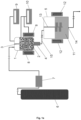
- the method for the production of expanded polymer beads can take place in a system such as the one shown in Figures 1a and 1b .
- the method for the manufacture of expanded polymer beads according to the present invention combines dissolution foaming of a foaming agent, particularly gas, by means of the bead foaming technique, with two-step foaming, with one of the essential features of the method being that the extraction of the saturated beads from the autoclave into a second liquid medium at the expansion temperature, where the subsequent expansion of the beads takes place, takes place simultaneously to depressurisation of the autoclave in step v) of the method.
- the period of time elapsed between step v) of depressurisation and extraction of the beads from the autoclave, and step vi) of expansion also referred to as "transfer time" herein, is a maximum of 15 seconds.
- the transfer time is less than 10 seconds, less than 5 seconds and, even more preferably, less than 1 second.
- the nanocellular beads with a relative density less than 0.25, preferably less than 0.20, described herein can be obtained in a very short cycle time, by means of a process that is environmentally-friendly particularly when non-contaminating inert gases are used as the foaming agent.
- the transfer time is preferred for the transfer time to be as short as possible, ideally zero, since the thickness of the outer skin of the nanocellular expanded polymer beads obtained can thereby be minimised.
- a suitable transfer time can be achieved, for example, by carrying out the method of the invention in a system where the outlet of the autoclave where saturation of the polymer beads takes place is directly connected to the thermostatic tank where the second liquid medium is found at the established expansion temperature (Te), such that upon depressurising the autoclave, the dispersion of saturated polymer beads passes directly to the second liquid medium contained in the thermostatic tank, also referred to as depressurisation tank herein.
- the maximum transfer time may vary based on, for example, the diffusivity of the gas when depressurisation takes place. More specifically, this transfer time period may be greater as diffusivity decreases.
- the maximum transfer time for given conditions can be increased by carrying out the method of the invention in a system where the outlet(s) of the autoclave where saturation of the polymer beads takes place is/are connected to the thermostatic tank where the second liquid medium is found at the established expansion temperature (Te), by connection means, for example, a pipe, heated at the same temperature. In this manner, the heating time of the saturated polymer beads can be reduced.
- This maximum transfer time period can be readily established for the different particular embodiments of the invention.
- the method for the manufacture of expanded polymer beads described herein allows manufacturing large amounts of nanocellular polymer, without the geometric limitation of the size of the autoclave, and allows for a wide versatility in the use of different polymeric materials and foaming agents.
- the expanded polymer beads obtained by the method of manufacture described herein can have a solid skin with a thickness less than 15 ⁇ m, preferably less than 10 ⁇ m, more preferably, less than 5 ⁇ m and, even more preferably, less than 3 ⁇ m.
- This represents an important advantage with respect to other alternative methods of manufacture such as, for example, the batch process in which materials with a larger thickness of the solid skin, greater than 150 ⁇ m, are obtained. This is largely due to the fact that in the batch process quite a long time (reaching up to several minutes) elapses between the depressurisation and the introduction of the sample in the heated bath.
- the main problem of having a thick solid skin is that the density of the expanded beads is increased for two reasons: the skin itself is dense and contributes to increasing the density and, moreover, that solid skin hinders the expansion of the material, generating denser parts.
- the saturated polymer beads can exit the autoclave less than 1 second after depressurisation starts and can be rapidly heated since they are transferred directly in the second liquid medium at the given expansion temperature (Te).
- the time that elapses from the extraction from the autoclave until they are introduced in the second liquid medium at the established expansion temperature (Te) is a maximum of 15 seconds, 10 seconds, 5 seconds, and the transfer time preferably being a maximum of 1 second. Therefore, the time the gas has to escape from the material and give rise to solid skin is much lower in the method of this invention, which entails a lower thickness of the solid skin.
- the dispersion of saturated beads extracted from the autoclave is transferred directly from the autoclave to the second liquid medium at the given expansion temperature (Te).
- this direct transfer can take place by suitable connection means (for example, a pipe) to allow the transfer of the dispersion of saturated beads from the autoclave to the second liquid medium in the desired time.
- connection means for example, a pipe
- these connection means can be heated at the established expansion temperature (Te).
- the method according to the present invention allows controlling the size and homogeneity of the cellular structure of the expanded beads obtained.
- the nanometric cell size that is, less than 1 ⁇ m
- the reduction of density particularly, relative density less than 0.25
- the polymer beads or micropellets used in the method of the present invention can have any shape, particularly, they can be spherical or have a prism shape with a cylindrical base.
- the polymer beads which are used in the method of production of expanded polymer beads of the invention have a size of 0.5 mm to 4 mm, preferably 0.6 mm to 2 mm, and more preferably 0.6 mm to 1.5 mm; wherein this size corresponds to the diameter when the beads are spherical, or to the side having a larger dimension in the event of having any other shape.
- This size of the beads allows reducing the cycle time and, moreover, allows a sufficiently rapid heating of the saturated beads in step vi) of foaming or expansion. More specifically, the times for dissolving the foaming agent in the polymer beads are reduced with the square of the distance to the centre of the particles. In non-spherical beads, the smallest distance to the centre of the particles should be used to perform the estimation indicated above. Therefore, particles having smaller dimensions ensure a more rapid cycle and higher productivity. For example, with spherical beads with diameters of 1 mm, the cycle time of the method of the present invention is about 1 hour, whereas for beads with a diameter of 2 mm, the cycle time would be 4 hours.
- step v) of depressurisation and in step vi) of expansion in the second liquid medium the smaller the size of the beads, the more rapidly the temperature thereof changes, cooling down during depressurisation and heating up in the subsequent step for expansion.
- This allows retaining a higher amount of foaming agent inside the saturated bead, and obtaining in this manner nanocellular expanded beads with a lower density as the size of the precursor polymer beads decreases.
- starting beads with a size greater than the established size it would not be possible to obtain nanocellular expanded beads with a relative density less than 0.25 and, particularly, with a relative density less than 0.20.
- the polymer beads can be formed by any type of polymer and, particularly, by any type of amorphous polymer, semicrystalline polymer or mixtures of polymers of any of the two types.
- This polymeric material can be selected from the group consisting of polymethylmethacrylate (PMMA), polymethylmethacrylate-polybutylacrylate-polymethylmethacrylate (MAM) copolymer, polycarbonate (PC), polyphenylsulfone (PPSU), polyetherimide (PEI), thermoplastic polyurethane (TPU), polypropylene (PP), polypropylene copolymers, polyethylene (PE), polyethylene terephthalate (PET), polyethylene terephthalate copolymers (PET(COP)), poly(vinyl chloride) (PVC), polyetheretherketone (PEEK), natural rubber (NR), ethylene propylene diene monomer (EPDM) rubber, polylactic acid (PLA), thermoplastic starch (TPS), polyhydroxybutyrate (PHB)
- the polymeric material comprised in the polymer beads is polymethylmethacrylate (PMMA), polymethylmethacrylate-polybutylacrylate-polymethylmethacrylate (MAM) block copolymer, or a mixture of both.
- PMMA polymethylmethacrylate
- MAM polymethylmethacrylate-polybutylacrylate-polymethylmethacrylate
- the solid beads or micropellets can have as a polymeric base a commercial grade of polymethylmethacrylate (PMMA).
- PMMA polymethylmethacrylate
- the PMMA that is used can have a density which can range from 1.15 g/cm 3 to 1.25 g/cm 3 and a molecular weight which can range from 1000 g/mol to 2000000 g/mol.
- the precursor polymer beads of the expanded polymer beads comprise PMMA with a density of 1.19 g/cm 3 and a molecular weight between 750000 and 95000 g/mol.
- the polymer beads or micropellets may comprise one or more additives such as, for example, nucleating agents such as nanoclays, nanosilica or graphene; flame retardants such as metal hydroxides, halogen compounds, intumescent compounds or non-halogen compounds; infrared radiation blockers such as carbon black, graphite, graphene or aluminium particles; reinforcements and nanoreinforcements such as talc, calcium carbonate, mica, nanoclays or nanosilica; or pigments.
- the nucleating additives can help and/or improve the nucleation rate (number of cells per cm 3 ) and, consequently, reduce the cell size of the expanded polymer beads obtained by means of the method of manufacture described herein.
- the rest of the aforementioned additives allow improving the properties of the nanocellular polymeric materials obtained or obtainable with the expanded polymer beads according to the present invention comprising said additives.
- the presence of flame retardant additives improves the fire-resistant behaviour
- the infrared radiation blockers help to reduce thermal conductivity
- the reinforcements or nanoreinforcements allow enhancing the mechanical properties of these nanocellular polymeric materials.
- PMMA beads or micropellets they can be obtained using a twin screw extruder, wherein the polymer is melted as it passes through various regions at a high temperature and is pushed towards a die as a result of the movement of the screws.
- the temperature at which the polymer exits the extruder can range from 150 °C up to 250 °C, preferably 200 °C.
- the PMMA acquires a filament form. This can be introduced in a tank of water to cool it and to re-solidify the polymer.
- the solidified PMMA filament can be introduced in a pelletiser where, by means of a toothed wheel, it is transformed into beads or micropellets with a given size, particularly between 0.5 mm and 4 mm, preferably 0.6 mm to 2 mm, and more preferably 0.6 mm to 1.5 mm; wherein the size corresponds to the diameter when the beads are spherical, or to the side having a larger dimension in the event of having any other shape.
- the first liquid medium comprised in the dispersion of polymer beads of step i) can be any liquid medium which allows a correct dispersion of the polymer beads, optionally with the help of an additive substance selected from surfactants, anticaking agents, antistatic agents or a combination of the above.
- This liquid medium can be water or an oil, preferably water.
- water as the first liquid medium, that is, as a liquid medium for the saturation of the polymer beads, due to its low viscosity and ease of cleaning.
- This liquid medium is particularly advantageous when the beads are formed by essentially hydrophobic polymers.
- the use of oils can be considered a valid alternative to water for dispersing the polymer beads or micropellets, particularly, when said beads or micropellets are formed by hydrophilic polymers such as PET, PLA or TPS; and/or when the saturation temperature (Ts) established in steps i) to iv) is equal to or greater than 100 °C.
- the dispersion of polymer beads of step i) preferably comprises an additive substance selected from the group consisting of surfactants, anticaking agents, antistatic agents and a combination of the above.
- This additive substance together with the continuous stirring of the dispersion, preferably at a speed between 50 rpm and 1000 rpm, allows preventing the polymer beads from clustering or sticking to the inside of the autoclave during the saturation process, in addition to facilitating saturation of the beads with the foaming agent.
- the beads can be stirred in the autoclave by means of an internal stirrer which can be magnetic or mechanical, such that the beads flow through the autoclave, preventing them from clustering on the surface of the liquid medium or at the bottom of the autoclave.
- the stirring speed depends on the geometry of the stirrer and of the autoclave, as well as on how full the autoclave is with the dispersion of polymer beads. Particularly, the speed of stirring may range from 50 rpm up to 1000 rpm, preferably 400 rpm.
- the additive substance can be selected from high molecular weight, water-soluble substances such as polyvinyl alcohol, methyl cellulose, N-polyvinylpyrrolidone; inorganic substances scarcely soluble in water such as calcium phosphate, aluminium hydroxide, magnesium carbonate, magnesium pyrophosphate, zinc carbonate, titanium oxide, aluminium oxide, calcium stearate and talc; surfactant agents such as sodium lauryl sulphate or sodium alkyl sulphonate; and a combination of the above.
- the additive substance is selected from the group consisting of sodium lauryl sulphate, talc, calcium stearate and a combination of the above.
- the percentage by weight of polymer beads or micropellets in the dispersion of solid polymer beads of step i) is preferably 5% to 50%, more preferably 10% to 45%, and even more preferably 15% to 40%, amounts expressed by weight of beads with respect to the total weight of beads and first liquid medium, preferably water. Moreover, to generate the higher amount of expanded polymer beads per cycle, thus increasing the yield of the method of manufacture, maximising the amount of precursor solid beads in the dispersion of polymer beads of step i) is of interest.
- the percentage by weight of additive substance is preferably 0.1% to 3%, more preferably 0.5% to 2.5%, and even more preferably 0.8% to 1.5%, amounts expressed by weight of additive substance with respect to the total weight of the dispersion of solid polymer beads of step i) of the method for the manufacture of nanocellular expanded polymer beads described herein.
- the dispersion of beads can take up from 50% to 99% of the capacity of the autoclave, preferably up to 85% to prevent overfilling from occurring.
- the temperature of this dispersion is adjusted to a saturation temperature (Ts) between -50 °C and 300 °C, preferably between -25 °C and 150 °C, more preferably between 0 and 100 °C, keeping the dispersion under stirring.
- Ts saturation temperature
- the saturation temperature (Ts) in steps ii) to iv) can be established between -25 °C and 250 °C and, particularly, between -25 °C and 200 °C.
- the saturation temperature (Ts) of steps ii) to iv) of the method of the present invention can be established based on the nature and characteristic thermal transitions of the polymer (or polymers) of the beads.
- An important aspect when selecting this parameter is the plasticising effect that gas has at the conditions of saturation.
- the saturation temperature can be selected such that the state of the polymeric material when the pressure is released, that is, in step v) of depressurisation, is such that it allows preventing the expansion of the saturated beads during this step for depressurisation, thus achieving complete expansion during the subsequent foaming step.
- the person skilled in the art can consult the data widely available in the literature to know the plasticising effect of the gas used as a foaming agent in given conditions, such that the maximum saturation temperature (Ts) suitable for carrying out steps ii) to iv) of the method of the invention can readily be established.
- the saturation temperature (Ts) is less than the glass transition temperature (Tg) or melting temperature (Tm) of the polymeric material forming the precursor solid beads.
- Table 1 (see below) includes the ranges of the given saturation temperature (Ts) at which saturation of the polymer beads (steps ii) to iv) of the method of the invention can take place based on the polymeric materials comprised in the precursor polymer beads.
- the polymers mentioned in Table 1 are polymethylmethacrylate (PMMA), polymethylmethacrylate-polybutylacrylate-polymethylmethacrylate (MAM) copolymer, polycarbonate (PC), polyphenylsulfone (PPSU), polyetherimide (PEI), thermoplastic polyurethane (TPU), polypropylene (PP), polyethylene (PE), polyethylene terephthalate (PET), polyethylene terephthalate copolymers (PET(COP)), poly(vinyl chloride) (PVC), polyetheretherketone (PEEK), natural rubber (NR), ethylene propylene diene monomer (EPDM) rubber, polylactic acid (PLA), thermoplastic starch (TPS) and polyhydroxybutyrate (PHB).
- PMMA polymethylmethacrylate
- PMMA polymethylmethacrylate-polybutylacrylate-polymethylmethacrylate
- PC polycarbonate
- PPSU polyphenylsulfone
- PEI poly
- Ts Saturation temperature
- the temperature of the autoclave can be controlled precisely by means of a thermocouple, preferably placed inside the autoclave, and a temperature controller.
- the temperature of the bead saturation process will in part determine the speed at which the foaming agent is diffused in the polymer and the solubility thereof.
- a foaming agent is added until reaching a pressure of 2 MPa to 150 MPa, preferably 4 MPa to 50 MPa, and more preferably 6 MPa to 35 MPa, keeping the dispersion of polymer beads under the conditions of stirring and temperatures described in relation to step ii).
- the foaming agent used can be selected such that, based on its affinity with the polymeric material of the precursor micropellets, an optimal balance between solubility and diffusivity is achieved.
- the foaming agent can be a volatile organic compound such as, for example, acetone or alcohols.
- the foaming agent used in the method of the present invention can be an inert gas such as, for example, nitrogen, carbon dioxide, helium or argon; or it can be another type of gas such as, for example, a hydrocarbon such as isobutane, cyclopentane, n-pentane, isopentane, cyclohexane; or other gases such as hydrogen, hydrofluoroolefins or hydrofluorocarbons.
- an inert gas as a foaming agent
- this inert gas can be nitrogen, carbon dioxide, helium or argon.
- the inert gas preferably used for saturating said beads in the method described herein is CO 2 .
- the foaming agent is introduced until achieving the desired saturation pressure within the established range.
- This increase in pressure can preferably be controlled by means of a pump or a pressure regulator.
- the temperature is kept within the ranges established for obtaining optimal conditions of saturation.
- step iii) of saturation can take place at room temperature, particularly between 20 °C and 30 °C, which allows obtaining a compromise between solubility and diffusivity of the foaming agent in the beads, while at the same time saving the time and power consumption involved in adjusting and stabilising the temperature of the autoclave at temperatures very different from the ambient temperature of the location where the manufacture of the expanded polymer beads as described herein takes place.
- the beads are under constant stirring.
- the stirring speed can depend on the geometry of the stirrer; it is preferably between 50 rpm and 1000 rpm, more preferably 400 rpm.
- this polymer bead saturation process takes place at an established pressure comprised between 2 MPa and 150 MPa, preferably between 4 MPa and 50 MPa, and more preferably between 6 MPa and 35 MPa, including the upper and lower limits of each of these ranges.
- the pressure value at which step iv) of saturation takes place may depend on several factors, including among them the polymeric material, the target relative density or the temperature at which this step for saturation takes place.
- Step iv) of saturation of the polymer beads can take place for a period of time long enough so as to ensure that the saturation process has been completed.
- these embodiments are less advantageous since the cycle is longer, they allow obtaining complete saturation without the need to determine the minimum saturation time, which may vary based on the polymer and the foaming agent used.
- the minimum saturation time can be readily obtained from the diffusivity of the system under the conditions in which saturation of the beads takes place, or by means of performing a reduced number of preliminary experiments at the working temperature and pressure, since once said minimum saturation period has been reached, the cellular structure of the expanded beads outside the region of the solid skin is homogeneous.
- step iv) of saturation has elapsed, depressurisation of the autoclave takes place at a speed between 10 MPa/s and 1000 MPa/s, preferably between 20 MPa/s and 300 MPa/s, more preferably between 50 MPa/s and 200 MPa/s, being particularly preferably that the depressurisation takes place at a speed of 75 MPa/s, and the simultaneous extraction of the dispersion of polymer beads saturated with foaming agent, preferably inert gas, from the autoclave.
- This process of depressurising and emptying the autoclave can be performed by means of opening at least one depressurisation valve present in the autoclave where the saturation process has taken place.
- This valve can be located in the lower part of the autoclave, but it could also be in other positions.
- the pressure inside the autoclave when the process of depressurising and extracting the dispersion of saturated beads starts is so high that this dispersion can be rapidly extracted from the autoclave regardless of where the depressurisation valve is located.
- the method of the present invention allows obtaining low density nanocellular beads (that is, relative density less than 0.25) with a depressurisation speed from 10 MPa/s, particularly, between 50 MPa/s and 200 MPa/s and, particularly, at a speed of 75 MPa/s, which can be advantageous for the industrialisation of the method for the manufacture of expanded polymer beads described herein, since these depressurisation speed values are more readily obtained on an industrial scale.
- the dispersion of polymer beads saturated with foaming agent, preferably inert gas, extracted from the autoclave in step v) of the method described herein is introduced in a second liquid medium at an expansion temperature (Te) between 0 and 300 °C, preferably between 25 °C and 200 °C, and more preferably between 50 °C and 150 °C.
- the second liquid medium can be, for example, water or silicone oil.
- the second liquid medium is water, and it is at a temperature greater than 0 and less than 100 °C.
- the expansion temperature (Te) is equal to or greater than 100 °C, it is preferable to use silicone oil as the second liquid medium due to its thermal resistance.
- the expansion temperature (Te) of step vi) is equal to or greater than the saturation temperature (Ts) of steps ii) to iv).
- Steps v) and vi) of the method for the manufacture of expanded polymer beads described herein, as well as the shorter time period elapsing between said steps, are essential for obtaining low density nanocellular beads.
- the method of the present invention allows foaming of the beads to be performed in two steps very rapidly. In this manner, by heating the saturated beads in a very short time interval, the loss of the gas of the foaming agent dissolved in the polymer is prevented, allowing greater expansion of the nanocellular beads, further preventing the formation of the solid skin of several microns appearing in nanocellular foams obtained in the two-step processes previously described.
- step v) of depressurisation and extraction of the dispersion of saturated beads particularly when dealing with large volumes, a variation in the depressurisation speed can occur as the autoclave is being emptied due to the variation in pressure inside the autoclave. Consequently, the saturated beads extracted from the autoclave at the beginning of this step v) are extracted at a higher speed, resulting in expanded polymer beads with cell sizes and densities less than those that are obtained from saturated beads extracted from the autoclave at the end of this step for depressurisation, when the inner pressure of the autoclave is lower and, therefore, the depressurisation speed is also lower. This difference in depressurisation speed can cause certain heterogeneity in the dimensions and densities of the nanocellular beads of one same batch.
- the method described herein comprises injecting inert gas, preferably at the upper part of the autoclave, simultaneously to depressurisation of the autoclave in step v), for the purpose of maintaining the depressurisation speed with a variation of ⁇ 10% with respect to the average depressurisation speed or, more preferably, constant throughout the entire depressurisation process (step v). Greater homogeneity in cell sizes and densities of the expanded polymer beads of one same batch is thereby achieved, which is particularly advantageous in the manufacture of large batches of nanocellular beads, that is, in production on an industrial scale.
- Inert gases which can be injected into the autoclave simultaneously to depressurisation thereof are, for example, nitrogen, carbon dioxide, argon or helium. However, it is preferable to use nitrogen or carbon dioxide as they are less expensive and likewise valid gases.
- the expansion time may range between 1 s and 120 s, more preferably between 5 s and 60 s.
- the expansion time is the optimal time for achieving expanded beads with the smallest density possible.
- the optimal expansion time which can depend on the polymeric material, the initial size of the micropellets and the expansion temperature, can be readily obtained by means of performing a reduced number of tests. Particularly, this parameter can be obtained by performing a preliminary test under the working conditions and evaluating how the density evolves over the time the expanded beads remain in the second liquid medium at the given expansion temperature.
- the method for the manufacture of expanded beads of the present invention preferably comprises a further step vii) of stabilisation of the expanded beads, wherein the expanded beads of step vi) are cooled in the second liquid medium or extracted into a third liquid medium such as, for example, water, preferably once a given optimal expansion time as described herein has elapsed.
- the thermostatic bath in which the method of the invention can be carried out may comprise means for cooling the expanded beads in the second liquid medium and/or extracting them into a third liquid medium to stabilise the expanded beads.
- the stabilisation temperature at which the expanded beads are cooled can range between -10 °C and 30 °C, more preferably between 0 °C and 25 °C.
- step iii) may comprise adding CO 2 until reaching a pressure of between 6 MPa and 35 MPa, preferably 31 MPa, and in step iv) the conditions of pressure, temperature and stirring described herein are maintained.
- the established conditions of saturation are maintained for a minimum saturation period of 1 hour for beads 1 mm in diameter.
- the saturation temperature (Ts) of steps ii) to iv) can be between -50 °C and 150 °C, preferably between -25 °C and 100 °C, more preferably between 0 and 50 °C and even more preferably between 20 °C and 40 °C; whereas the foaming or expansion temperature (Te) of step vi) can be between 50 °C and 130 °C, preferably between 60 °C and 115 °C, and more preferably between 70 °C and 105 °C; with the proviso that the saturation temperature (Ts) is equal to or less than the expansion temperature (Te).
- the amount of MAM in the mixture may range between 0.01% and 90% by weight, more preferably between 0.05% and 50%, even more preferably between 0.1% and 10%.
- step iii) may comprise adding CO 2 until reaching a pressure of between 6 MPa and 35 MPa, preferably 15 MPa, and in step iv) the conditions of pressure, temperature and stirring described herein are maintained.
- the established conditions of saturation are maintained for a minimum saturation period of 1 hour for beads 1 mm in diameter.
- the saturation temperature (Ts) of steps ii) to iv) can be between -50 °C and 150 °C, preferably between -25 °C and 100 °C, and more preferably between 0 and 50 °C and even more preferably between 20 °C and 40 °C; whereas the foaming or expansion temperature (Te) of step vi) can be between 50 °C and 130 °C, preferably between 60 °C and 115 °C, and more preferably between 70 °C and 105 °C; with the proviso that the saturation temperature (Ts) is equal to or less than the expansion temperature (Te).
- the nanocellular expanded polymer beads according to the present invention are thermoplastic and, accordingly, can be sintered by means of applying temperature and pressure to generate blocks of macroscopic material with complex geometries. These nanocellular polymeric materials retain the properties of the expanded polymer beads, therefore being low density or very low density materials, with a high thermal insulation capacity and excellent mechanical properties. As mentioned hereinabove, these nanocellular polymeric materials can be referred to as "low density", since they are formed from expanded beads having a relative density less than 0.25, or as "very low density” in those embodiments in which the polymeric materials are formed from expanded beads with a relative density less than 0.20, wherein the relative density of the expanded beads can be calculated as described herein. Accordingly, the present invention also relates to the use of the expanded polymer beads described herein for manufacturing a nanocellular polymeric material, particularly a macroscopic structure with a variable geometry, by means of sintering.
- an important feature of the expanded polymer beads object of the present invention is that the internal structure of cells of nanocellular size, that is, a size less than 1 ⁇ m, preferably less than 500 nm, and more preferably less than 300 nm, is maintained throughout the grinding or micronising process. This represents a significant advantage since it allows generating powder with a nanocellular structure that can in turn be used to form the core of vacuum insulation panels.
- the nanocellular expanded polymer beads can be ground, for example, by means of micronisation or another conventional technique for reducing the particle size of a solid, forming a powder that maintains the nanocellular structure and density of the expanded polymer beads, and, accordingly, it can be used as a core in vacuum insulation panels (or VIP).
- the nanocellular powder that can be generated with the nanocellular beads of the invention can have a particle size comprised between 5 ⁇ m and 500 ⁇ m, preferably between 10 ⁇ m and 250 ⁇ m, and more preferably between 15 ⁇ m and 150 ⁇ m, wherein the particle size is determined by means of dynamic light scattering (DLS).
- DLS dynamic light scattering
- the nanocellular expanded polymer beads object of this invention can also be used as a filler, particularly, in thermal insulators, without needing to subject them to a further sintering or grinding process.
- the present invention also relates to a thermal insulating material obtained or obtainable from the nanocellular expanded polymer beads described herein, particularly to a thermal insulating material selected from the group consisting of nanocellular powder and nanocellular polymeric material.
- the method for the manufacture of expanded polymer beads according to the present invention can be carried out in a system comprising, as shown in Figures 1a and 1b : an autoclave (1) suitable for working at temperatures between -50 °C and 350 °C and pressures between 2 MPa and 150 MPa, wherein the autoclave comprises a stirring system (3), heaters and/or coolers (8) which allow adjusting the temperature of the dispersion of polymer beads (2) inside the autoclave (1) to the established values, an inlet device for the gas used as the foaming agent into the autoclave (1) which can be formed by a gas tank (6) connected to an inlet of the autoclave (1) through a pump (7) or pressure regulator, and an outlet comprising a depressurisation valve (4), preferably located in the lower part of the autoclave, wherein the valve (4) is suitable for withstanding maximum pressures of 150 MPa and for being able to depressurise the autoclave at a depressurisation speed between 10 MPa/s and 1000 MPa/s,
- thermostatic tank (5) which may comprise heaters and/or coolers (12) suitable for adjusting the temperature of the second liquid medium (11) or the dispersion of expanded polymer beads (11') to the established values, particularly between 0 °C and 300 °C, and it can also contain a stirring system (13).
- the thermostatic tank (5) may comprise at least one outlet or extraction system (14) which allows the extraction of the expanded polymer beads obtained in the method of the present invention.
- the thermostatic tank (5) is connected to the outlet of the autoclave (1) through the depressurisation valve (4) in a suitable manner so that the transfer time period, that is, the time between depressurisation and extraction of the saturated beads from the autoclave (1) and the introduction of said beads into the second liquid medium is the shortest time possible a maximum of 15 seconds, 10 seconds or 5 seconds, the transfer time preferably being less than 1 second.
- the thermostatic tank (5) can be connected directly to the depressurisation valve (4) such that the dispersion of saturated beads can pass directly from the autoclave (1) to the second liquid medium (11) contained in the thermostatic tank (5) during the step vi) of depressurisation.
- the thermostatic tank (5) can be connected to the depressurisation valve (4) through connection means (15) such as, for example, a pipe, with means suitable for heating at the established temperature, particularly at the expansion temperature (Te) at which the second liquid medium (11) is found in the thermostatic tank (5).
- system used for carrying out the method of producing expanded polymer beads preferably comprises means suitable for carrying out a precise control of the temperature, pressure and depressurisation speed of the autoclave (1), as well as of the temperature of the thermostatic tank (5).
- a 4 mm-thick sheet of PMMA was introduced in a conventional autoclave to perform the foaming process by means of foaming technology by dissolving gases.
- the sheet of PMMA had a density of 1180 kg/m 3 (measured using a gas pycnometer by means of the method described hereinabove), a prism shape with a square base, with dimensions of 20 mm in length and 4 mm thick.
- the sample in the autoclave was pressurised with CO 2 at a pressure of 31 MPa for a period of 20 h at 25 °C. The long time used is due to the fact that the sample is thick, and this considerably increases the time needed to saturate the material.
- the pressure was released at the upper part of the autoclave.
- the discharge speed in the first few instants of depressurisation was 100 MPa/s.
- the autoclave was opened and the completely saturated PMMA sample was transferred to a thermostatic bath containing water at 95 °C.
- the transfer time between depressurisation and introduction of the sheet in the bath was 2 minutes (minimum time needed to release all the pressure and open the autoclave). In this example, the foaming time was 1 minute.
- the expanded sheet was extracted and immediately introduced in a third liquid medium consisting of water at room temperature (20 °C) for stabilisation thereof for one minute.
- the samples of this example have the following characteristics: Density 0.319 g/cm 3 , relative density 0.270, cell size 220 nm, skin thickness greater than 15 microns.
- nanocellular expanded polymer beads such as those manufactured in the method described in the present invention using this conventional gas dissolution foaming method.
- the amount of residual gas inside the micropellets at the time of introducing them in the thermostatic bath is too low to give rise to cell sizes less than one micron.
- Example 1 Manufacturing PMMA expanded beads according to the method of the invention
- the amount of 415 ml of water was introduced in the reactor (autoclave).
- the following additives were also introduced along with this water: calcium stearate (0.2 g), talc (0.1 g) and alkyl sulphonate (0.15 g).
- the amount of 30 g of solid PMMA micropellets was added. These micropellets had a density of 1180 kg/m 3 (by means of gas pycnometry at a temperature between 21 and 23 °C) and a cylindrical geometry with a length of 2 mm and diameter of 1 mm.
- the mixture under constant stirring at 400 rpm, was pressurised with CO 2 at a pressure of 31 MPa for a period of 2 hours at 25 °C.
- the depressurisation valve of the autoclave was opened at a depressurisation speed of 45 MPa/s, discharging the content from same in less than one second.
- the saturated beads were rapidly introduced in a thermostatic water bath at 95 °C, such that the time elapsed between depressurisation and the introduction of the beads in the bath (also referred to herein as "transfer time”) was 15 seconds.
- the temperature of the thermostatic bath was kept at 95 °C, and the saturated PMMA beads were kept therein for 5 seconds. After this period, the expanded beads were extracted and immediately introduced in a third liquid medium consisting of water at room temperature (20 °C) for stabilisation thereof for one minute.
- Expanded PMMA beads were obtained with a density of 0.158 g/cm 3 (measured by means of Archimedes' principle described hereinabove, at a temperature between 21 and 23 °C), a relative density of 0.134 with respect to the precursor solid beads and a thickness of solid skin (measured by means of X-ray radiographies) of 0.6 ⁇ m.
- Example 1.1 described above was repeated, with the exception that the time elapsed between depressurisation and the introduction of the beads in the bath was 30 seconds.
- Expanded PMMA beads were obtained with a density of 0.360 g/cm 3 (measured by means of Archimedes' principle described hereinabove, at a temperature between 21 and 23 °C), a relative density with respect to the starting solid beads of 0.305 and a thickness of solid skin (measured by X-ray radiography) of 3.4 ⁇ m.
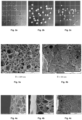
- the beads foamed 15 seconds ( Figure 2b ) after depressurisation have a higher degree of expansion than the beads foamed 30 seconds after depressurisation ( Figure 2c ).
- the first expanded beads have a relative density of 0.134 with respect to the solid beads, whereas the expanded beads that were foamed after 30 seconds have a relative density of 0.305.
- the time between depressurisation and foaming of the samples can affect the cellular structure of the nanocellular expanded polymer beads.
- the cellular structure of the expanded beads obtained when foaming the beads 15 seconds after their extraction from the autoclave differs considerably from those foamed after 30 seconds ( Figure 3b ). This is because, in the second case, since there is not enough dissolved gas in the polymer, expansion of the bead is very limited.
- the average cell size of the expanded polymer beads obtained 30 seconds after their extraction is less than that of the expanded beads obtained after 15 seconds, this does not represent an improvement in thermal properties because, given the high density thereof, heat can be transmitted through the polymer walls.
- FIGs 4a and 4b show the solid skin formed in expanded beads obtained by means of the method described herein, wherein the transfer time is 15 seconds ( Figure 4a ) or 30 seconds ( Figure 4b ), also comparing it with the solid skin formed in 4 mm-thick PMMA sheets, foamed by means gas dissolution following the standard method in a conventional autoclave (see the Comparative Example).
- the average thickness of the solid skin that is formed is hardly 0.6 ⁇ m, which means that it will have a very low impact on the density of the expanded bead.
- the skin In the expanded bead that was foamed 30 seconds after its extraction from the autoclave, the skin has an average value of 3.4 ⁇ m thick, increasing the density of the foam by 1.3% with respect to the density it would have without that skin.
- Example 2 Manufacturing expanded beads of a mixture of PMMA and MAM according to the method of the invention
- the amount of 415 ml of water was introduced in the reactor (autoclave).
- the following additives were also introduced along with this water: calcium stearate (0.2 g), talc (0.1 g) and alkyl sulphonate (0.15 g).
- the amount of 30 g of solid micropellets formed by a mixture of PMMA and MAM with a content of 1% by weight of MAM was added. These micropellets had a density of 1180 kg/m 3 (by means of gas pycnometry at a temperature between 21 and 23 °C) and a cylindrical geometry with a length of 2 mm and diameter of 1 mm.
- the mixture under constant stirring at 400 rpm, was pressurised at a pressure of 15 MPa for a period of 2 hours at 25 °C. After that time, the depressurisation valve of the autoclave was opened at a depressurisation speed of 15 MPa/s, discharging the content from same in less than one second.
- the saturated beads were introduced in a thermostatic water bath at 100 °C and were kept in said bath for 10 s. After this period, the expanded beads were extracted and immediately introduced in a third liquid medium consisting of water at room temperature (20 °C) for stabilisation thereof for one minute.
- the four samples had a nanocellular structure with cell sizes less than 1 ⁇ m.
- the transfer time in this case has the effect of increasing the relative density (see Figure 5 ) from values of 0.141 up to values of 0.159 when the transfer time increases from 15 s to 90 s.
- the relative density is the ratio between the density of the starting solid beads and the density of the expanded beads (measured by means of Archimedes' principle described hereinabove, at a temperature between 21 and 23 °C). This increase in density is due to an increase in the thickness of the solid skin. In the 60 s and 90 s samples, the thickness of the skin exceeds 15 ⁇ m, so they are not considered optimal times, despite low densities and cell sizes in the required range being obtained.
Landscapes
- Chemical & Material Sciences (AREA)
- Engineering & Computer Science (AREA)
- Materials Engineering (AREA)
- Health & Medical Sciences (AREA)
- Chemical Kinetics & Catalysis (AREA)
- Medicinal Chemistry (AREA)
- Polymers & Plastics (AREA)
- Organic Chemistry (AREA)
- Manufacture Of Porous Articles, And Recovery And Treatment Of Waste Products (AREA)
- Processes Of Treating Macromolecular Substances (AREA)
Applications Claiming Priority (2)
| Application Number | Priority Date | Filing Date | Title |
|---|---|---|---|
| ES202031205A ES2913577B2 (es) | 2020-12-02 | 2020-12-02 | Perlitas polimericas expandidas nanocelulares, metodo de fabricacion y usos |
| PCT/EP2021/083757 WO2022117642A1 (en) | 2020-12-02 | 2021-12-01 | Nanocellular expanded polymer beads, method of manufacture and uses |
Publications (3)
| Publication Number | Publication Date |
|---|---|
| EP4255973A1 EP4255973A1 (en) | 2023-10-11 |
| EP4255973B1 true EP4255973B1 (en) | 2024-10-30 |
| EP4255973C0 EP4255973C0 (en) | 2024-10-30 |
Family
ID=79021808
Family Applications (1)
| Application Number | Title | Priority Date | Filing Date |
|---|---|---|---|
| EP21830618.1A Active EP4255973B1 (en) | 2020-12-02 | 2021-12-01 | Nanocellular expanded polymer beads, method of manufacture and uses |
Country Status (9)
| Country | Link |
|---|---|
| US (1) | US20240010809A1 (pl) |
| EP (1) | EP4255973B1 (pl) |
| JP (1) | JP2023553280A (pl) |
| CA (1) | CA3200819A1 (pl) |
| ES (1) | ES2913577B2 (pl) |
| GB (1) | GB2615945B (pl) |
| MX (1) | MX2023006510A (pl) |
| PL (1) | PL4255973T3 (pl) |
| WO (1) | WO2022117642A1 (pl) |
Families Citing this family (3)
| Publication number | Priority date | Publication date | Assignee | Title |
|---|---|---|---|---|
| ES2913577B2 (es) | 2020-12-02 | 2023-03-06 | Cellmat Tech Sl | Perlitas polimericas expandidas nanocelulares, metodo de fabricacion y usos |
| CN115785637B (zh) * | 2023-02-03 | 2023-06-23 | 北京微构工场生物技术有限公司 | 一种发泡材料及其制备方法 |
| EP4617038A1 (en) * | 2024-03-12 | 2025-09-17 | JSP International SARL | A method and apparatus for processing polymer beads |
Citations (6)
| Publication number | Priority date | Publication date | Assignee | Title |
|---|---|---|---|---|
| US4379859A (en) | 1980-11-22 | 1983-04-12 | Japan Styrene Paper Corporation | Pre-foamed particles of polypropylene resin and process for production thereof |
| US6315931B1 (en) | 1997-12-18 | 2001-11-13 | Gefinex Polymerschaeume Gmbh | Method of producing a foamed granulate |
| US20120225272A1 (en) | 2009-11-25 | 2012-09-06 | Costeux Stephane | Nanoporous polymeric foam having high porosity |
| DE102013223391A1 (de) | 2013-11-15 | 2015-05-21 | Universität Zu Köln | Herstellung von porösen Materialien durch Expansion von Polymergelen |
| EP3670586A1 (en) | 2018-12-20 | 2020-06-24 | SABIC Global Technologies B.V. | Micro, sub-micron, and/or nano-cellular foams based on siloxane containing (co)polymers and blends |
| WO2022117642A1 (en) | 2020-12-02 | 2022-06-09 | Cellmat Technologies S.L. | Nanocellular expanded polymer beads, method of manufacture and uses |
Family Cites Families (6)
| Publication number | Priority date | Publication date | Assignee | Title |
|---|---|---|---|---|
| US2681321A (en) | 1950-02-27 | 1954-06-15 | Basf Ag | Production of porous materials from film-forming organic thermoplastic masses |
| DE4429844A1 (de) | 1994-08-23 | 1996-02-29 | Basf Ag | Verfahren zur Herstellung von expandierten Polyolefin-Partikeln |
| DE102011000473B4 (de) * | 2011-02-02 | 2017-07-13 | Langenstein & Schemann Gmbh | Pressmaschine und Verfahren zum Pressen von Werkstücken |
| US9145477B2 (en) * | 2012-09-25 | 2015-09-29 | Dow Global Technologies Llc | Nanocellular thermoplastic foam and process for making the same |
| EP3055351B1 (de) * | 2013-10-09 | 2017-09-13 | Basf Se | Verfahren zur herstellung von expandierten polyester-schaumstoffpartikeln |
| CN111621096A (zh) * | 2020-05-15 | 2020-09-04 | 济南泰德包装科技有限公司 | 一种改性聚丙烯发泡珠粒(epp)碳纤维复合材料的制备方法 |
-
2020
- 2020-12-02 ES ES202031205A patent/ES2913577B2/es active Active
-
2021
- 2021-12-01 PL PL21830618.1T patent/PL4255973T3/pl unknown
- 2021-12-01 EP EP21830618.1A patent/EP4255973B1/en active Active
- 2021-12-01 MX MX2023006510A patent/MX2023006510A/es unknown
- 2021-12-01 JP JP2023530779A patent/JP2023553280A/ja active Pending
- 2021-12-01 GB GB2307910.6A patent/GB2615945B/en active Active
- 2021-12-01 WO PCT/EP2021/083757 patent/WO2022117642A1/en not_active Ceased
- 2021-12-01 US US18/254,991 patent/US20240010809A1/en active Pending
- 2021-12-01 CA CA3200819A patent/CA3200819A1/en active Pending
Patent Citations (7)
| Publication number | Priority date | Publication date | Assignee | Title |
|---|---|---|---|---|
| US4379859A (en) | 1980-11-22 | 1983-04-12 | Japan Styrene Paper Corporation | Pre-foamed particles of polypropylene resin and process for production thereof |
| US6315931B1 (en) | 1997-12-18 | 2001-11-13 | Gefinex Polymerschaeume Gmbh | Method of producing a foamed granulate |
| US20120225272A1 (en) | 2009-11-25 | 2012-09-06 | Costeux Stephane | Nanoporous polymeric foam having high porosity |
| DE102013223391A1 (de) | 2013-11-15 | 2015-05-21 | Universität Zu Köln | Herstellung von porösen Materialien durch Expansion von Polymergelen |
| WO2015071463A2 (de) | 2013-11-15 | 2015-05-21 | Universität Zu Köln | Herstellung von porösen materialien durch expansion von polymergelen |
| EP3670586A1 (en) | 2018-12-20 | 2020-06-24 | SABIC Global Technologies B.V. | Micro, sub-micron, and/or nano-cellular foams based on siloxane containing (co)polymers and blends |
| WO2022117642A1 (en) | 2020-12-02 | 2022-06-09 | Cellmat Technologies S.L. | Nanocellular expanded polymer beads, method of manufacture and uses |
Non-Patent Citations (32)
| Title |
|---|
| " Recent Developments in Polymer Macro, Micro and Nano Blends", 1 January 2017, ISBN: 978-0-08-100408-1, article J. PINTO, M. DUMON, M.A. RODRIGUEZ-PEREZ: "Chapter 9: Nanoporous polymer foams from nanostructured polymer blends: preparation, characterization, and properties", pages: 237 - 288, XP009562801, DOI: 10.1016/B978-0-08-100408-1.00009-1 |
| ANONYMOUS: "Product Data Sheet SUMFOAM", SUMTEQ, 25 March 2019 (2019-03-25), pages 1, XP093134503 |
| B. NOTARIO: "Nanoporous polymeric materials: A new class of materials with enhanced properties", PROGRESS IN MATERIALS SCIENCE, vol. 78, 19 February 2016 (2016-02-19), pages 93 - 139, XP029445523, DOI: 10.1016/j.pmatsci.2016.02.002 |
| BERNARDO VICTORIA, MARTIN-DE LEON JUDITH, PINTO JAVIER, CATELANI TIZIANO, ATHANASSIOU ATHANASSIA, RODRIGUEZ-PEREZ MIGUEL ANGEL: "Low-density PMMA/MAM nanocellular polymers using low MAM contents: Production and characterization", POLYMER, ELSEVIER, AMSTERDAM, NL, vol. 163, 1 February 2019 (2019-02-01), AMSTERDAM, NL, pages 115 - 124, XP093304179, ISSN: 0032-3861, DOI: 10.1016/j.polymer.2018.12.057 |
| CHIMEZIE OKOLIEOCHA: "Microcellular to nanocellular polymer foams: Progress (2004–2015) and future directions – A review", EUROPEAN POLYMER JOURNAL, vol. 73, 11 November 2015 (2015-11-11), pages 500 - 519, XP029305961, DOI: 10.1016/j.eurpolymj.2015.11.001 |
| CLIFFORD S. TODD: "Closed-Cell Foam Skin Thickness Measurement Using a Scanning Electron Microscope", MICROSCOPY AND MICROANALYSIS, vol. 17, no. 5, 2011, pages 772 - 778, XP001569137, DOI: 10.1017/S1431927611000420 |
| D14 - GUTACHTEN DER SUMTEQ GMBH |
| D16 - PRÄSENTATION DER FIRMA VA-Q-TEC |
| D17 - SKZ – DAS KUNSTSTOFF-ZENTRUM: "Webseite mit Ort und Zeit der Präsentation MHP16", 16 May 2018 (2018-05-16), [retrieved on 20250718] |
| D2 - URSPRÜNGLICH EINGEREICHTE UNTERLAGEN |
| D20 - PRODUKTDATENBLATT SUMFOAM® |
| D21 - RECHNUNG AN FIRMA VA-Q-TEC |
| D37 - PRÄSENTATION "POLYMERIC INSULATION MATERIALS FOR THE PEOPLE AND THE PLANET" |
| D38 - SUMTEQ PRÄSENTATION AMI DÜSSELDORF |
| D39 - SUMTEQ PRÄSENTATION "POLYMERIC INSULATION MATERIALS FOR THE PEOPLE AND THE PLANET" |
| D40 - LIEFERSCHEIN NITROCHEM |
| D41 - RECHNUNG NITROCHEM |
| DODSON BRIAN: "Flexible, high-strength polymer aerogels deliver "super-insulation" properties", NEW ATLAS, 27 September 2012 (2012-09-27), XP093304187, Retrieved from the Internet <URL:https://newatlas.com/polymer-aerogel-stronger-flexible-nasa/23955/> |
| KUMAR VIPIN, WELLER JOHN E.: "A model for the unfoamed skin on microcellular foams", POLYMER ENGINEERING AND SCIENCE, BROOKFIELD CENTER., US, vol. 34, no. 3, 1 February 1994 (1994-02-01), US , pages 169 - 173, XP093304183, ISSN: 0032-3888, DOI: 10.1002/pen.760340302 |
| LENA GRASSBERGE: "Blowing agent free generation of nanoporous poly(methylmethacrylate) materials", COLLOIDPOLYM SCI, vol. 295, no. 2, 20 January 2017 (2017-01-20), pages 379 - 389, XP036138969, DOI: 10.1007/s00396-017-4012-1 |
| M. MORISAKI: "Preparation of skinless polymer foam with supercritical carbon dioxide and its application to a photoinduced hydrogen evolution system", POLYMER, vol. 49, no. 6, 2008, pages 1611 - 1619, XP022518820, DOI: 10.1016/j.polymer.2008.01.049 |
| MÜLLER ALEXANDER, HOFFMANN MICHAEL: "Entwicklung eines submikrozellularen Hochleistungsdämmstoffs aus einem Polystyrol-Nanoschaum", SUMTEQ GMBH, ABSCHLUSSBERICHT ÜBER EIN ENTWICKLUNGSPROJEKT, GEFÖRDERT UNTER DEM AZ: 33406 VON DER DEUTSCHEN BUNDESSTIFTUNG UMWELT, 1 September 2018 (2018-09-01), XP093304188, Retrieved from the Internet <URL:https://opac.dbu.de/ab/DBU-Abschlussbericht-AZ-33406_01-Hauptbericht%20korrigiert.pdf> |
| PHILIPPE VIOT: "Microtomography on polypropylene foam under dynamic loading: 3D analysis of bead morphology evolution", COMPOSITES PART A: APPLIED SCIENCE AND MANUFACTURING, vol. 39, no. 8, 2008, pages 1266 - 1281, XP023316703, DOI: 10.1016/j.compositesa.2007.11.014 |
| PINTO J, ESCUDERO J, SOLÓRZANO E, RODRIGUEZ-PEREZ MA: "A novel route to produce structural polymer foams with a controlled solid skin-porous core structure based on gas diffusion mechanisms", JOURNAL OF SANDWICH STRUCTURES AND MATERIALS, vol. 22, no. 3, 1 March 2020 (2020-03-01), pages 822 - 832, XP093304182, ISSN: 1099-6362, DOI: 10.1177/1099636218777434 |
| PINTO JAVIER, SOLÓRZANO EUSEBIO, RODRIGUEZ-PEREZ MIGUEL ANGEL, DE SAJA JOSE ANTONIO: "Characterization of the cellular structure based on user-interactive image analysis procedures", JOURNAL OF CELLULAR PLASTICS., SAGE PUBLICATIONS, LONDON., GB, vol. 49, no. 6, 1 November 2013 (2013-11-01), GB , pages 555 - 575, XP093304181, ISSN: 0021-955X, DOI: 10.1177/0021955X13503847 |
| SÁNCHEZ-CALDERÓN ISMAEL, BERNARDO VICTORIA, SANTIAGO-CALVO MERCEDES, NAJI HANEEN, SAIANI ALBERTO, RODRÍGUEZ-PÉREZ MIGUEL: "Effect of the Molecular Structure of TPU on the Cellular Structure of Nanocellular Polymers Based on PMMA/TPU Blends", POLYMERS, MOLECULAR DIVERSITY PRESERVATION INTERNATIONAL (M DP I) AG., CH, vol. 13, no. 18, CH , pages 3055, XP093304173, ISSN: 2073-4360, DOI: 10.3390/polym13183055 |
| SÁNCHEZ-CALDERÓN ISMAEL: "STUDY OF THE FEASIBILITY OF PRODUCING EXPANDED POLYCARBONATE BEAD FOAMS (EPC) BY AUTOCLAVE BEAD FOAMING", FOAMS 2021, 13 September 2021 (2021-09-13) - 16 September 2021 (2021-09-16), XP093304176 |
| STÉPHANE COSTEUX: "Low Density Thermoplastic Nanofoams Nucleated by Nanoparticles", POLYMER, vol. 54, no. 11, 21 March 2013 (2013-03-21), pages 2785 - 2795, XP028589328, DOI: 10.1016/j.polymer.2013.03.052 |
| SYURIK ET AL.: "Bio-inspired, large scale, highly scattering films for nanoparticle-alternative white surfaces", SCIENTIFIC REPORTS, 21 April 2017 (2017-04-21), pages 1 - 11, XP002782691, DOI: 10.1038/srep46637 |
| VICTORIA BERNARDO: "Nanocellular Polymers with a Gradient Cellular Structure Based on Poly(methyl methacrylate)/Thermoplastic Polyurethane Blends Produced by Gas Dissolution Foaming", MACROMOLECULAR MATERIALS AND ENGINEERING, vol. 305, no. 1, 2019, pages 1900428, XP072734470, DOI: 10.1002/mame.201900428 |
| WEINGART NICK, RAPS DANIEL, KUHNIGK JUSTUS, KLEIN ANDREAS, ALTSTÄDT VOLKER: "Expanded Polycarbonate (EPC)—A New Generation of High-Temperature Engineering Bead Foams", POLYMERS, MOLECULAR DIVERSITY PRESERVATION INTERNATIONAL (M DP I) AG., CH, vol. 12, no. 10, CH , pages 2314, XP093304184, ISSN: 2073-4360, DOI: 10.3390/polym12102314 |
| ZHANG AIJUAN, ZHANG QINGKUN, BAI HUA, LI LEI, LI JUN: "Polymeric nanoporous materials fabricated with supercritical CO2 and CO2 -expanded liquids", CHEMICAL SOCIETY REVIEWS, ROYAL SOCIETY OF CHEMISTRY, UK, vol. 43, no. 20, 17 July 2014 (2014-07-17), UK , pages 6938 - 6953, XP093304174, ISSN: 0306-0012, DOI: 10.1039/C4CS00100A |
Also Published As
| Publication number | Publication date |
|---|---|
| GB2615945A (en) | 2023-08-23 |
| WO2022117642A1 (en) | 2022-06-09 |
| GB202307910D0 (en) | 2023-07-12 |
| ES2913577A1 (es) | 2022-06-02 |
| EP4255973A1 (en) | 2023-10-11 |
| JP2023553280A (ja) | 2023-12-21 |
| PL4255973T3 (pl) | 2025-03-17 |
| GB2615945B (en) | 2025-08-20 |
| CA3200819A1 (en) | 2022-06-09 |
| ES2913577B2 (es) | 2023-03-06 |
| US20240010809A1 (en) | 2024-01-11 |
| GB2615945A8 (en) | 2025-07-16 |
| EP4255973C0 (en) | 2024-10-30 |
| MX2023006510A (es) | 2023-06-21 |
Similar Documents
| Publication | Publication Date | Title |
|---|---|---|
| EP4255973B1 (en) | Nanocellular expanded polymer beads, method of manufacture and uses | |
| Banerjee et al. | Foamability and special applications of microcellular thermoplastic polymers: a review on recent advances and future direction | |
| Guo et al. | Critical processing parameters for foamed bead manufacturing in a lab-scale autoclave system | |
| TWI545194B (zh) | A carrier for fluid treatment and a method for producing the same | |
| Marrazzo et al. | Conventional and nanometric nucleating agents in poly (ϵ‐caprolactone) foaming: Crystals vs. bubbles nucleation | |
| KR101768263B1 (ko) | 폴리락트산계 수지 발포 입자 및 폴리락트산계 수지 발포 입자 성형체 | |
| CN105793337A (zh) | 制备膨胀的聚酯泡沫颗粒的方法 | |
| Kaewmesri et al. | Effects of CO2 and talc contents on foaming behavior of recyclable high-melt-strength PP | |
| JP6519813B2 (ja) | 発泡粒子とその成形体 | |
| Strauss et al. | Supercritical CO2 processed polystyrene nanocomposite foams | |
| EP2940070A1 (en) | Molded article of polylactic acid-based resin expanded beads | |
| Sánchez-Calderón et al. | Novel approach based on autoclave bead foaming to produce expanded polycarbonate (EPC) bead foams with microcellular structure and controlled crystallinity | |
| Ozkoc et al. | Production of poly (lactic acid)/organoclay nanocomposite scaffolds by microcompounding and polymer/particle leaching | |
| Huang et al. | Improving of cell structure of microcellular foams based on polypropylene/high-density polyethylene blends | |
| CN110922630A (zh) | 树脂发泡颗粒及其制造方法、珠粒发泡成型体的制造方法 | |
| Brütting et al. | Amorphous polylactide bead foam–effect of talc and chain extension on foaming behavior and compression properties | |
| TWI464203B (zh) | 發泡性聚苯乙烯系樹脂粒子及其製造方法、聚苯乙烯系樹脂預備發泡粒子、聚苯乙烯系樹脂發泡成形體及其製造方法、隔熱材及緩衝材 | |
| CN111363326A (zh) | 一种phbv微孔发泡材料及其制备方法 | |
| EP2407504B1 (en) | Polyvinylidene fluoride resin expanded beads, and molded articles of polyvinylidene fluoride resin expanded beads | |
| JP7460681B2 (ja) | ポリブチレンテレフタレートをベースとするポリマーフォーム粒子及びそれらを製造するためのプロセス | |
| JP4519335B2 (ja) | ポリオレフィン系樹脂予備発泡粒子およびその製造方法 | |
| Wang et al. | Study on foaming kinetics and preparation of EPDM foams | |
| Wee et al. | Processing of microcellular nanocomposite foams by using a supercritical fluid | |
| US20220041831A1 (en) | Micro, sub-micron, and/or nano-cellular foams based on siloxane containing (co)polymers and blends | |
| Standau et al. | Influence of processing conditions on the Appearance of bead foams made of the Engineering Thermoplastic polybutylene terephthalate (E-PBT) |
Legal Events
| Date | Code | Title | Description |
|---|---|---|---|
| STAA | Information on the status of an ep patent application or granted ep patent |
Free format text: STATUS: UNKNOWN |
|
| STAA | Information on the status of an ep patent application or granted ep patent |
Free format text: STATUS: THE INTERNATIONAL PUBLICATION HAS BEEN MADE |
|
| PUAI | Public reference made under article 153(3) epc to a published international application that has entered the european phase |
Free format text: ORIGINAL CODE: 0009012 |
|
| STAA | Information on the status of an ep patent application or granted ep patent |
Free format text: STATUS: REQUEST FOR EXAMINATION WAS MADE |
|
| 17P | Request for examination filed |
Effective date: 20230602 |
|
| AK | Designated contracting states |
Kind code of ref document: A1 Designated state(s): AL AT BE BG CH CY CZ DE DK EE ES FI FR GB GR HR HU IE IS IT LI LT LU LV MC MK MT NL NO PL PT RO RS SE SI SK SM TR |
|
| TPAC | Observations filed by third parties |
Free format text: ORIGINAL CODE: EPIDOSNTIPA |
|
| DAV | Request for validation of the european patent (deleted) | ||
| DAX | Request for extension of the european patent (deleted) | ||
| GRAP | Despatch of communication of intention to grant a patent |
Free format text: ORIGINAL CODE: EPIDOSNIGR1 |
|
| STAA | Information on the status of an ep patent application or granted ep patent |
Free format text: STATUS: GRANT OF PATENT IS INTENDED |
|
| INTG | Intention to grant announced |
Effective date: 20240705 |
|
| GRAS | Grant fee paid |
Free format text: ORIGINAL CODE: EPIDOSNIGR3 |
|
| GRAA | (expected) grant |
Free format text: ORIGINAL CODE: 0009210 |
|
| STAA | Information on the status of an ep patent application or granted ep patent |
Free format text: STATUS: THE PATENT HAS BEEN GRANTED |
|
| TPAC | Observations filed by third parties |
Free format text: ORIGINAL CODE: EPIDOSNTIPA |
|
| TPAB | Information related to observations by third parties deleted |
Free format text: ORIGINAL CODE: EPIDOSDTIPA |
|
| TPAC | Observations filed by third parties |
Free format text: ORIGINAL CODE: EPIDOSNTIPA |
|
| AK | Designated contracting states |
Kind code of ref document: B1 Designated state(s): AL AT BE BG CH CY CZ DE DK EE ES FI FR GB GR HR HU IE IS IT LI LT LU LV MC MK MT NL NO PL PT RO RS SE SI SK SM TR |
|
| REG | Reference to a national code |
Ref country code: GB Ref legal event code: FG4D |
|
| REG | Reference to a national code |
Ref country code: CH Ref legal event code: EP |
|
| REG | Reference to a national code |
Ref country code: IE Ref legal event code: FG4D |
|
| REG | Reference to a national code |
Ref country code: DE Ref legal event code: R096 Ref document number: 602021021148 Country of ref document: DE |
|
| U01 | Request for unitary effect filed |
Effective date: 20241129 |
|
| U07 | Unitary effect registered |
Designated state(s): AT BE BG DE DK EE FI FR IT LT LU LV MT NL PT RO SE SI Effective date: 20241210 |
|
| U20 | Renewal fee for the european patent with unitary effect paid |
Year of fee payment: 4 Effective date: 20241216 |
|
| PG25 | Lapsed in a contracting state [announced via postgrant information from national office to epo] |
Ref country code: HR Free format text: LAPSE BECAUSE OF FAILURE TO SUBMIT A TRANSLATION OF THE DESCRIPTION OR TO PAY THE FEE WITHIN THE PRESCRIBED TIME-LIMIT Effective date: 20241030 Ref country code: IS Free format text: LAPSE BECAUSE OF FAILURE TO SUBMIT A TRANSLATION OF THE DESCRIPTION OR TO PAY THE FEE WITHIN THE PRESCRIBED TIME-LIMIT Effective date: 20250228 |
|
| PG25 | Lapsed in a contracting state [announced via postgrant information from national office to epo] |
Ref country code: ES Free format text: LAPSE BECAUSE OF FAILURE TO SUBMIT A TRANSLATION OF THE DESCRIPTION OR TO PAY THE FEE WITHIN THE PRESCRIBED TIME-LIMIT Effective date: 20241030 |
|
| PG25 | Lapsed in a contracting state [announced via postgrant information from national office to epo] |
Ref country code: NO Free format text: LAPSE BECAUSE OF FAILURE TO SUBMIT A TRANSLATION OF THE DESCRIPTION OR TO PAY THE FEE WITHIN THE PRESCRIBED TIME-LIMIT Effective date: 20250130 |
|
| PG25 | Lapsed in a contracting state [announced via postgrant information from national office to epo] |
Ref country code: GR Free format text: LAPSE BECAUSE OF FAILURE TO SUBMIT A TRANSLATION OF THE DESCRIPTION OR TO PAY THE FEE WITHIN THE PRESCRIBED TIME-LIMIT Effective date: 20250131 |
|
| PG25 | Lapsed in a contracting state [announced via postgrant information from national office to epo] |
Ref country code: RS Free format text: LAPSE BECAUSE OF FAILURE TO SUBMIT A TRANSLATION OF THE DESCRIPTION OR TO PAY THE FEE WITHIN THE PRESCRIBED TIME-LIMIT Effective date: 20250130 |
|
| PG25 | Lapsed in a contracting state [announced via postgrant information from national office to epo] |
Ref country code: SM Free format text: LAPSE BECAUSE OF FAILURE TO SUBMIT A TRANSLATION OF THE DESCRIPTION OR TO PAY THE FEE WITHIN THE PRESCRIBED TIME-LIMIT Effective date: 20241030 |
|
| PG25 | Lapsed in a contracting state [announced via postgrant information from national office to epo] |
Ref country code: MC Free format text: LAPSE BECAUSE OF FAILURE TO SUBMIT A TRANSLATION OF THE DESCRIPTION OR TO PAY THE FEE WITHIN THE PRESCRIBED TIME-LIMIT Effective date: 20241030 |
|
| PG25 | Lapsed in a contracting state [announced via postgrant information from national office to epo] |
Ref country code: SK Free format text: LAPSE BECAUSE OF FAILURE TO SUBMIT A TRANSLATION OF THE DESCRIPTION OR TO PAY THE FEE WITHIN THE PRESCRIBED TIME-LIMIT Effective date: 20241030 |
|
| PG25 | Lapsed in a contracting state [announced via postgrant information from national office to epo] |
Ref country code: CZ Free format text: LAPSE BECAUSE OF FAILURE TO SUBMIT A TRANSLATION OF THE DESCRIPTION OR TO PAY THE FEE WITHIN THE PRESCRIBED TIME-LIMIT Effective date: 20241030 |
|
| REG | Reference to a national code |
Ref country code: CH Ref legal event code: PL |
|
| PLBI | Opposition filed |
Free format text: ORIGINAL CODE: 0009260 |
|
| PLAB | Opposition data, opponent's data or that of the opponent's representative modified |
Free format text: ORIGINAL CODE: 0009299OPPO |
|
| PLAX | Notice of opposition and request to file observation + time limit sent |
Free format text: ORIGINAL CODE: EPIDOSNOBS2 |
|
| PLAB | Opposition data, opponent's data or that of the opponent's representative modified |
Free format text: ORIGINAL CODE: 0009299OPPO |
|
| 26 | Opposition filed |
Opponent name: MICHALSKI HUETTERMANN & PARTNERPATENTANWAELTE MBB Effective date: 20250729 |
|
| R26 | Opposition filed (corrected) |
Opponent name: MICHALSKI HUETTERMANN & PARTNERPATENTANWAELTE MBB Effective date: 20250729 |
|
| R26 | Opposition filed (corrected) |
Opponent name: MICHALSKI HUETTERMANN & PARTNERPATENTANWAELTE MBB Effective date: 20250729 |
|
| PG25 | Lapsed in a contracting state [announced via postgrant information from national office to epo] |
Ref country code: CH Free format text: LAPSE BECAUSE OF NON-PAYMENT OF DUE FEES Effective date: 20241231 |
|
| PG25 | Lapsed in a contracting state [announced via postgrant information from national office to epo] |
Ref country code: IE Free format text: LAPSE BECAUSE OF NON-PAYMENT OF DUE FEES Effective date: 20241201 |
|
| PLBB | Reply of patent proprietor to notice(s) of opposition received |
Free format text: ORIGINAL CODE: EPIDOSNOBS3 |
|
| U20 | Renewal fee for the european patent with unitary effect paid |
Year of fee payment: 5 Effective date: 20251205 |
|
| PGFP | Annual fee paid to national office [announced via postgrant information from national office to epo] |
Ref country code: PL Payment date: 20251201 Year of fee payment: 5 |