EP4251539B1 - Kapsel und herstellungsverfahren von dieser kapsel - Google Patents
Kapsel und herstellungsverfahren von dieser kapsel Download PDFInfo
- Publication number
- EP4251539B1 EP4251539B1 EP21816447.3A EP21816447A EP4251539B1 EP 4251539 B1 EP4251539 B1 EP 4251539B1 EP 21816447 A EP21816447 A EP 21816447A EP 4251539 B1 EP4251539 B1 EP 4251539B1
- Authority
- EP
- European Patent Office
- Prior art keywords
- capsule
- beverage
- flange
- inner space
- lid
- Prior art date
- Legal status (The legal status is an assumption and is not a legal conclusion. Google has not performed a legal analysis and makes no representation as to the accuracy of the status listed.)
- Active
Links
Images


Classifications
-
- B—PERFORMING OPERATIONS; TRANSPORTING
- B65—CONVEYING; PACKING; STORING; HANDLING THIN OR FILAMENTARY MATERIAL
- B65D—CONTAINERS FOR STORAGE OR TRANSPORT OF ARTICLES OR MATERIALS, e.g. BAGS, BARRELS, BOTTLES, BOXES, CANS, CARTONS, CRATES, DRUMS, JARS, TANKS, HOPPERS, FORWARDING CONTAINERS; ACCESSORIES, CLOSURES, OR FITTINGS THEREFOR; PACKAGING ELEMENTS; PACKAGES
- B65D85/00—Containers, packaging elements or packages, specially adapted for particular articles or materials
- B65D85/70—Containers, packaging elements or packages, specially adapted for particular articles or materials for materials not otherwise provided for
- B65D85/804—Disposable containers or packages with contents which are mixed, infused or dissolved in situ, i.e. without having been previously removed from the package
- B65D85/8043—Packages adapted to allow liquid to pass through the contents
- B65D85/8052—Details of the outlet
-
- A—HUMAN NECESSITIES
- A23—FOODS OR FOODSTUFFS; TREATMENT THEREOF, NOT COVERED BY OTHER CLASSES
- A23F—COFFEE; TEA; THEIR SUBSTITUTES; MANUFACTURE, PREPARATION, OR INFUSION THEREOF
- A23F5/00—Coffee; Coffee substitutes; Preparations thereof
- A23F5/24—Extraction of coffee; Coffee extracts; Making instant coffee
-
- A—HUMAN NECESSITIES
- A47—FURNITURE; DOMESTIC ARTICLES OR APPLIANCES; COFFEE MILLS; SPICE MILLS; SUCTION CLEANERS IN GENERAL
- A47J—KITCHEN EQUIPMENT; COFFEE MILLS; SPICE MILLS; APPARATUS FOR MAKING BEVERAGES
- A47J31/00—Apparatus for making beverages
- A47J31/24—Coffee-making apparatus in which hot water is passed through the filter under pressure, i.e. in which the coffee grounds are extracted under pressure
- A47J31/34—Coffee-making apparatus in which hot water is passed through the filter under pressure, i.e. in which the coffee grounds are extracted under pressure with hot water under liquid pressure
- A47J31/36—Coffee-making apparatus in which hot water is passed through the filter under pressure, i.e. in which the coffee grounds are extracted under pressure with hot water under liquid pressure with mechanical pressure-producing means
- A47J31/3666—Coffee-making apparatus in which hot water is passed through the filter under pressure, i.e. in which the coffee grounds are extracted under pressure with hot water under liquid pressure with mechanical pressure-producing means whereby the loading of the brewing chamber with the brewing material is performed by the user
- A47J31/3676—Cartridges being employed
- A47J31/368—Permeable cartridges being employed
-
- A—HUMAN NECESSITIES
- A47—FURNITURE; DOMESTIC ARTICLES OR APPLIANCES; COFFEE MILLS; SPICE MILLS; SUCTION CLEANERS IN GENERAL
- A47J—KITCHEN EQUIPMENT; COFFEE MILLS; SPICE MILLS; APPARATUS FOR MAKING BEVERAGES
- A47J31/00—Apparatus for making beverages
- A47J31/24—Coffee-making apparatus in which hot water is passed through the filter under pressure, i.e. in which the coffee grounds are extracted under pressure
- A47J31/34—Coffee-making apparatus in which hot water is passed through the filter under pressure, i.e. in which the coffee grounds are extracted under pressure with hot water under liquid pressure
- A47J31/36—Coffee-making apparatus in which hot water is passed through the filter under pressure, i.e. in which the coffee grounds are extracted under pressure with hot water under liquid pressure with mechanical pressure-producing means
- A47J31/3666—Coffee-making apparatus in which hot water is passed through the filter under pressure, i.e. in which the coffee grounds are extracted under pressure with hot water under liquid pressure with mechanical pressure-producing means whereby the loading of the brewing chamber with the brewing material is performed by the user
- A47J31/3676—Cartridges being employed
- A47J31/369—Impermeable cartridges being employed
- A47J31/3695—Cartridge perforating means for creating the hot water inlet
-
- A—HUMAN NECESSITIES
- A47—FURNITURE; DOMESTIC ARTICLES OR APPLIANCES; COFFEE MILLS; SPICE MILLS; SUCTION CLEANERS IN GENERAL
- A47J—KITCHEN EQUIPMENT; COFFEE MILLS; SPICE MILLS; APPARATUS FOR MAKING BEVERAGES
- A47J31/00—Apparatus for making beverages
- A47J31/40—Beverage-making apparatus with dispensing means for adding a measured quantity of ingredients, e.g. coffee, water, sugar, cocoa, milk, tea
- A47J31/407—Beverage-making apparatus with dispensing means for adding a measured quantity of ingredients, e.g. coffee, water, sugar, cocoa, milk, tea with ingredient-containing cartridges; Cartridge-perforating means
-
- A—HUMAN NECESSITIES
- A47—FURNITURE; DOMESTIC ARTICLES OR APPLIANCES; COFFEE MILLS; SPICE MILLS; SUCTION CLEANERS IN GENERAL
- A47J—KITCHEN EQUIPMENT; COFFEE MILLS; SPICE MILLS; APPARATUS FOR MAKING BEVERAGES
- A47J31/00—Apparatus for making beverages
- A47J31/44—Parts or details or accessories of beverage-making apparatus
- A47J31/4403—Constructional details
- A47J31/4407—Lids, covers or knobs
-
- B—PERFORMING OPERATIONS; TRANSPORTING
- B21—MECHANICAL METAL-WORKING WITHOUT ESSENTIALLY REMOVING MATERIAL; PUNCHING METAL
- B21D—WORKING OR PROCESSING OF SHEET METAL OR METAL TUBES, RODS OR PROFILES WITHOUT ESSENTIALLY REMOVING MATERIAL; PUNCHING METAL
- B21D51/00—Making hollow objects
- B21D51/16—Making hollow objects characterised by the use of the objects
- B21D51/18—Making hollow objects characterised by the use of the objects vessels, e.g. tubs, vats, tanks, sinks, or the like
-
- B—PERFORMING OPERATIONS; TRANSPORTING
- B65—CONVEYING; PACKING; STORING; HANDLING THIN OR FILAMENTARY MATERIAL
- B65B—MACHINES, APPARATUS OR DEVICES FOR, OR METHODS OF, PACKAGING ARTICLES OR MATERIALS; UNPACKING
- B65B1/00—Packaging fluent solid material, e.g. powders, granular or loose fibrous material, loose masses of small articles, in individual containers or receptacles, e.g. bags, sacks, boxes, cartons, cans, or jars
-
- B—PERFORMING OPERATIONS; TRANSPORTING
- B65—CONVEYING; PACKING; STORING; HANDLING THIN OR FILAMENTARY MATERIAL
- B65B—MACHINES, APPARATUS OR DEVICES FOR, OR METHODS OF, PACKAGING ARTICLES OR MATERIALS; UNPACKING
- B65B7/00—Closing containers or receptacles after filling
- B65B7/16—Closing semi-rigid or rigid containers or receptacles not deformed by, or not taking-up shape of, contents, e.g. boxes or cartons
- B65B7/28—Closing semi-rigid or rigid containers or receptacles not deformed by, or not taking-up shape of, contents, e.g. boxes or cartons by applying separate preformed closures, e.g. lids, covers
- B65B7/2842—Securing closures on containers
- B65B7/2892—Securing closures on containers by deformation of the container rim
-
- B—PERFORMING OPERATIONS; TRANSPORTING
- B65—CONVEYING; PACKING; STORING; HANDLING THIN OR FILAMENTARY MATERIAL
- B65D—CONTAINERS FOR STORAGE OR TRANSPORT OF ARTICLES OR MATERIALS, e.g. BAGS, BARRELS, BOTTLES, BOXES, CANS, CARTONS, CRATES, DRUMS, JARS, TANKS, HOPPERS, FORWARDING CONTAINERS; ACCESSORIES, CLOSURES, OR FITTINGS THEREFOR; PACKAGING ELEMENTS; PACKAGES
- B65D77/00—Packages formed by enclosing articles or materials in preformed containers, e.g. boxes, cartons, sacks or bags
- B65D77/10—Container closures formed after filling
- B65D77/20—Container closures formed after filling by applying separate lids or covers, i.e. flexible membrane or foil-like covers
- B65D77/2024—Container closures formed after filling by applying separate lids or covers, i.e. flexible membrane or foil-like covers the cover being welded or adhered to the container
-
- B—PERFORMING OPERATIONS; TRANSPORTING
- B65—CONVEYING; PACKING; STORING; HANDLING THIN OR FILAMENTARY MATERIAL
- B65D—CONTAINERS FOR STORAGE OR TRANSPORT OF ARTICLES OR MATERIALS, e.g. BAGS, BARRELS, BOTTLES, BOXES, CANS, CARTONS, CRATES, DRUMS, JARS, TANKS, HOPPERS, FORWARDING CONTAINERS; ACCESSORIES, CLOSURES, OR FITTINGS THEREFOR; PACKAGING ELEMENTS; PACKAGES
- B65D77/00—Packages formed by enclosing articles or materials in preformed containers, e.g. boxes, cartons, sacks or bags
- B65D77/10—Container closures formed after filling
- B65D77/20—Container closures formed after filling by applying separate lids or covers, i.e. flexible membrane or foil-like covers
- B65D77/2024—Container closures formed after filling by applying separate lids or covers, i.e. flexible membrane or foil-like covers the cover being welded or adhered to the container
- B65D77/2028—Means for opening the cover other than, or in addition to, a pull tab
- B65D77/2032—Means for opening the cover other than, or in addition to, a pull tab by peeling or tearing the cover from the container
- B65D77/2044—Means for opening the cover other than, or in addition to, a pull tab by peeling or tearing the cover from the container whereby a layer of the container or cover fails, e.g. cohesive failure
- B65D77/2048—Means for opening the cover other than, or in addition to, a pull tab by peeling or tearing the cover from the container whereby a layer of the container or cover fails, e.g. cohesive failure whereby part of the container or cover has been weakened, e.g. perforated or precut
- B65D77/2056—Means for opening the cover other than, or in addition to, a pull tab by peeling or tearing the cover from the container whereby a layer of the container or cover fails, e.g. cohesive failure whereby part of the container or cover has been weakened, e.g. perforated or precut the cover being weakened
-
- B—PERFORMING OPERATIONS; TRANSPORTING
- B65—CONVEYING; PACKING; STORING; HANDLING THIN OR FILAMENTARY MATERIAL
- B65D—CONTAINERS FOR STORAGE OR TRANSPORT OF ARTICLES OR MATERIALS, e.g. BAGS, BARRELS, BOTTLES, BOXES, CANS, CARTONS, CRATES, DRUMS, JARS, TANKS, HOPPERS, FORWARDING CONTAINERS; ACCESSORIES, CLOSURES, OR FITTINGS THEREFOR; PACKAGING ELEMENTS; PACKAGES
- B65D85/00—Containers, packaging elements or packages, specially adapted for particular articles or materials
- B65D85/70—Containers, packaging elements or packages, specially adapted for particular articles or materials for materials not otherwise provided for
- B65D85/804—Disposable containers or packages with contents which are mixed, infused or dissolved in situ, i.e. without having been previously removed from the package
- B65D85/8043—Packages adapted to allow liquid to pass through the contents
- B65D85/8061—Filters
-
- B—PERFORMING OPERATIONS; TRANSPORTING
- B65—CONVEYING; PACKING; STORING; HANDLING THIN OR FILAMENTARY MATERIAL
- B65D—CONTAINERS FOR STORAGE OR TRANSPORT OF ARTICLES OR MATERIALS, e.g. BAGS, BARRELS, BOTTLES, BOXES, CANS, CARTONS, CRATES, DRUMS, JARS, TANKS, HOPPERS, FORWARDING CONTAINERS; ACCESSORIES, CLOSURES, OR FITTINGS THEREFOR; PACKAGING ELEMENTS; PACKAGES
- B65D85/00—Containers, packaging elements or packages, specially adapted for particular articles or materials
- B65D85/70—Containers, packaging elements or packages, specially adapted for particular articles or materials for materials not otherwise provided for
- B65D85/804—Disposable containers or packages with contents which are mixed, infused or dissolved in situ, i.e. without having been previously removed from the package
- B65D85/8043—Packages adapted to allow liquid to pass through the contents
- B65D85/8064—Sealing means for the interface with the processing machine
-
- B—PERFORMING OPERATIONS; TRANSPORTING
- B65—CONVEYING; PACKING; STORING; HANDLING THIN OR FILAMENTARY MATERIAL
- B65D—CONTAINERS FOR STORAGE OR TRANSPORT OF ARTICLES OR MATERIALS, e.g. BAGS, BARRELS, BOTTLES, BOXES, CANS, CARTONS, CRATES, DRUMS, JARS, TANKS, HOPPERS, FORWARDING CONTAINERS; ACCESSORIES, CLOSURES, OR FITTINGS THEREFOR; PACKAGING ELEMENTS; PACKAGES
- B65D2577/00—Packages formed by enclosing articles or materials in preformed containers, e.g. boxes, cartons, sacks, bags
- B65D2577/10—Container closures formed after filling
- B65D2577/20—Container closures formed after filling by applying separate lids or covers
- B65D2577/2041—Pull tabs
- B65D2577/205—Pull tabs integral with the closure
Definitions
- the invention relates to a capsule integrating a filter element for preparing a beverage, preferably a crema-free coffee, tea, milk or chocolate-based beverage.
- the capsule comprises a substantially rigid capsule body having a circumferential sidewall extending around an inner space of the capsule which is at least partially filled with a beverage ingredient for preparing the beverage such as coffee, a base wall covering the inner space at a first end of the sidewall and a lid covering the inner space at a second end of the sidewall opposite the base wall.
- the capsule integrates in its inner space a filter and an aluminum disk comprising openings and the lid is removably attached to the capsule.
- the invention also relates to a process for producing said capsule.
- Capsules for preparing a beverage in a beverage preparation device are generally known from the prior art.
- the beverage preparation device comprises a brewing chamber in which the capsule is positioned. Liquid from the beverage preparation device is injected in the capsule to extract the beverage from an extractable ingredient, usually roasted and ground coffee or tea, or to prepare the beverage from a soluble ingredient, usually instant coffee, instant tea or instant milk or chocolate-based product, contained within an inner space of the capsule.
- the inner space of the capsule is closed, hermetically or fluid-tightly closed from the environment prior to be use in the beverage preparation device in order to maintain or prolong a freshness of the beverage ingredient during storage.
- the capsule hereto often comprises a substantially rigid capsule body having a circumferential sidewall extending around the inner space and a base wall covering the inner space at a first end of the sidewall. At a second end of the sidewall opposite the base wall the capsule body has an open filling side.
- a fluid and gas tight lid for example an aluminum lid, is provided over the open filling side of the capsule body to cover the inner space.
- the capsule may be pierced, preferably at the base wall and/or the lid, to form an injection opening for injecting the liquid such as hot water, and/or to form an outlet opening which allows the prepared beverage to escape the capsule.
- the known capsules are more particularly conceived for preparing an espresso type beverage using beverage preparation device delivering high pressurized hot water wherein the injection of pressurized hot water in the capsule leads to an extraction of substances from the coffee beverage ingredient and with foam forming on the beverage corresponding to an espresso beverage with a crema layer as obtained with known piston type espresso machine using high pressure brewing.
- a crema-free coffee beverage for example a coffee beverage without foam, also referred to as filter coffee
- specific apparatuses are used in which the beverage is prepared by unpressurized filtration of a mixture of beverage ingredient and water.
- EP 2952125 A1 discloses a capsule for preparing a beverage using an extractable product contained in an inner space of the capsule.
- the capsule comprises a circumferential first wall, a second wall closing the circumferential first wall at a first end, and a flexible sheet-shaped perforate and/or porous third wall closing the circumferential first wall at a second, open end opposite the second wall, thereby forming the said inner space.
- the third wall forms an outermost boundary of the capsule in an axial direction thereof and comprises a woven or nonwoven filtering material, such as filtering paper.
- WO 2019/013623 A1 proposes a capsule comprising a rigid capsule body with a circumferential wall and a base wall that border an inner space filed with a beverage ingredient.
- An open filling side of the capsule at an end of the circumferential wall opposite the base wall is covered with a lid of fluid tight material.
- the lid is provided with a preformed outlet opening suitable for draining the prepared beverage from the inner space when the capsule is used in a beverage preparation device.
- the outlet opening is fluid tightly closed by a removable cover element extending over at least part of the lid.
- the invention provides a capsule for providing a crema-free coffee, tea, milk or chocolate-based beverage according to Claim 1 and as described herein.
- the claimed capsule is intended for preparing a beverage and comprises:
- the capsule comprises at least one mechanical deformation at the junction or in the vicinity of the junction of the flange and side wall of the capsule, said mechanical deformation retaining the carrier disk inside the inner space of the capsule.
- the specific structure of the capsule allows when the capsule is extracted in a beverage preparation after removal of the lid to get a coffee with limited formation of foam and cream.
- This freshly brewed coffee has the main characteristics of a filter-like coffee with little crema, quickly disappearing to leave only a crown of crema around the cup.
- the result-in-cup is a coffee having a low body, little acidity, and little bitterness with absence of harsh, while being aromatic, soft, smooth and sweet.
- the carrier disk, and at the same time the filter are retained in the capsule when the lid is removed for extraction of the capsule.
- the capsule's integrity is kept, and no coffee (wet coffee) powder is escaping the capsule.
- the carrier disk is positioned inside the capsule and kept at distance from the lid comprised, i.e., between 0.1 mm and 2 mm. This allows avoiding possible interaction between the carrier disk and the tearing surface of the extraction plate of the beverage preparation device when the coffee bed volume expands during extraction.
- the capsule should sustain an extraction of the beverage ingredient is an extraction process made at a pressure below 8 bar, more preferably below 5 bar.
- the filter element comprises a layer of non-woven material adapted to prevent coffee drain to go through and reducing the formation of a crema layer.
- the filter is positioned on the carrier disk. This allows an easy processing in the assembling process of the capsule. Additionally, the filter may be fixed onto the carrier disk.
- the lid of the capsule comprises a free pull tab protruding from the lid.
- the pull tab is integral with the lid allowing to remove the full lid. This handling and opening are then easier.
- the lid comprises at least an aluminum layer to ensure a better shelf life of the coffee in the capsule.
- the lid may further comprise a plastic layer and/or a heat seal layer to ensure food grade compatibility for sealing the lid onto the flange of the capsule.
- the carrier disk is made of Aluminum allowing easy recycling in the conventional aluminum stream when the capsule is done in aluminum.
- the capsule body, the lid, and the carrier disk are each mainly made from aluminum.
- the use of aluminum ensures a better coffee protection and a longer shelf life. Additionally, the end of life of the capsule is easier and recycling is easier.
- the capsule body, the lid and the carrier disk may each be made of plastic or of a laminated or multilayer plastic element.
- the proposed capsule comprises a beverage ingredient.
- the beverage ingredient is preferably ground coffee, preferably in an amount of at least 4 g, preferably between 4.5 g and 15 g.
- the at least one mechanical deformation is provided on the side of the open side of the capsule, opposite the base wall at the junction or in the vicinity of the junction of the flange and side wall of the capsule.
- the at least one mechanical deformation is provided on the side of the capsule opposite the open side of the capsule at the junction or in the vicinity of the junction of the flange and side wall of the capsule.
- the at least one mechanical deformation at the junction of the flange and side wall of the capsule is a deformation by crimping.
- This crimping deformation by reducing the diameter (of the capsule's opening on its open side) allows holding the carrier disk inside the capsule by deforming the capsule (made of a ductile material).
- the number of mechanical deformations is between 2 and 10.
- the mechanical deformations are angularly distributed at the junction of the flange and side wall of the capsule and preferably the mechanical deformations are equally distributed at the junction of the flange and side wall of the capsule.
- the mechanical deformations have rounded crimping imprints (or shape) to avoid creation of holes into the aluminum layer of the capsule.
- the invention further provides a method of manufacturing a capsule suitable for preparing a beverage as claimed.
- the proposed method of manufacturing comprises the following steps:
- the manufacturing method further comprises a step of mechanically deforming the capsule at the junction or in the vicinity of the junction of the flange and side wall of the capsule, said mechanical deformation retaining the carrier disk inside the inner space the capsule.
- the proposed manufacturing process can easily be implemented in a conventional capsule production line, without significant changes else than inserting new machines or modules for inserting filter and carrier disk and crimping the capsule.
- the step of mechanically deforming the capsule at the junction of the flange and side wall is performed before the step of closing the open side of the capsule with a lid.
- the step of mechanically deforming the capsule at the junction of the flange and side wall is performed after the step of closing the open side of the capsule with a lid.
- the step of mechanically deforming the capsule at the junction of the flange and side wall is performed on the side of the open side of the capsule, opposite the base wall.
- the step of mechanically deforming the capsule at the junction of the flange and side wall is performed on the side of the capsule opposite the open side of the capsule.
- the step of mechanically deforming the capsule at the junction of the flange and side wall is performed using a crimping method.
- the advantage of this method it that the sidewalls will be deformed without any creation of openings/pierced areas.
- the step of mechanically deforming the capsule at the junction of the flange and side wall is performed using at least one crimping pin.
- the at least on crimping pin has a rounded end shape to avoid piercing the sidewalls of the capsule
- the capsule is deformed in at least 2points, preferably in 3 to 10 points.
- the solution of having 8 crimping points was tested and validated as a balance between a really good fixation of the disc and crimping tool that can be easily manufactured.
- the mechanical deformations are angularly distributed, preferably equally distributed, at the junction of the flange and side wall of the capsule. It is advantageous to cover the full disc surface equally to split the retaining force equally. This provides the best fixing effect of the disc inside the capsule.
- Figure 1a shows a capsule 1 according to the invention before use in a beverage preparation device, defined as storage state.
- the capsule 1 of figure 1a comprises a rigid capsule body 2.
- the body 2 comprises a frusto-conical sidewall 2a extending circumferentially around an inner space of the body.
- the capsule further comprises a base wall 3 integral with the capsule body 2 closing off the inner space at a first end of the side wall of the capsule body 2.
- a flange 4 extends radially outwardly from a second end of the side wall of the capsule body 2a. At the second end of the side wall the capsule body 2 has an open filling side.
- the capsule body 2 is processed to be food grade and in most of the cases comprises a lacquer layer or a polymer film layer (identified as 2b in figure 9b) applied on the inside of the capsule body.
- the capsule further includes a lid 5 that is attached to the flange 4 of the capsule body thereby closing hermetically the capsule.
- the lid 5 may be manually removed from the capsule by pulling on a pull tab 6.
- the pull tab 6 is integral with the lid 5 but alternative solutions are available.
- the lid 5 is a flexible sheet-like foil made of aluminum with an optional lacquer layer or a polymer layer on the sealing side.
- the thickness of the lacquer layer may be from 0.003 mm to 0.03mm.
- the thickness of the polymer layer may be from 0.01 mm to 0.05 mm.
- the lid 5 which is intended to be removed using the pull tab is attached to the flange 4 using an adhesive layer.
- the adhesive material is applied in the form of a layer of adhesive material and may be, for example, a layer of heat-seal lacquer or a polymer film layer.
- the sealing layer forming the adhesive material may be a layer between 0.003 mm and 0.03 mm.
- the layer of adhesive material allows removal of the lid 5 to the flange 4 of the capsule without any damage to the capsule 1.
- the inner space of the capsule is filled with a beverage ingredient before the capsule is closed.
- the capsule is filled with a coffee bed of roast and ground coffee before the capsule is tightly closed with the lid 5 to maintain freshness of the roast and ground coffee.
- the weight of the coffee is in the range of 4 g to 15 g depending on the size of the capsule.
- tea, milk or chocolate ingredients may be envisaged.
- the capsule of figure 1b shows the capsule of figure 1a in which the lid 5 is partially removed by tearing the pull tab 6 and in figure 1c the same capsule in which the lid 5 is fully removed.
- the second end of the capsule (filling side) is no longer closed and presents on the inside of the capsule a membrane, defined as a carrier disk 7.
- the carrier disk 7 comprises multiple preformed outlet openings 8 for the beverage (here coffee) prepared in the beverage preparation device.
- the capsule also comprises mechanical deformations 11a,11b, 11c ..., performed at the junction between the sidewall 2a and the flange 4 that retain the carrier disk 7 inside the inner space of the capsule.
- Four mechanical deformations 11 are visible in figure 1b .
- These mechanical deformations 11a, 11b, 11c ... are also visible on the capsule of figure 1c , indeed eight mechanical deformations can be observed. Their function and the way they are done will be explained in connection with figure 2a and followings.
- the preformed outlet openings 8 of the carrier disk 7 are covered by the lid 5 of the capsule thereby closing the capsule to keep hermetic sealing of the inner space of the capsule for ensuring freshness of the beverage ingredient inside the capsule during storage.
- the capsule further comprises in its inner space a filter element 9 positioned between the coffee bed and the carrier disk 7.
- the filter element 9 prevent solid particles of the beverage ingredient, for example coffee particles or tea leaves, to flow out of the capsule inside the end-consumer cup during extraction.
- the capsule body 2 and the lid 5 are each mainly made from aluminum.
- the capsule body and the lid may be made of plastic polymer material, or the capsule body and the lid may be made of paper-based material.
- the capsule of the invention is extracted using a conventional highpressure beverage preparation device compatible with conventional Nespresso ® coffee capsules.
- the beverage preparation device comprises a fluid dispensing device capable of feeding an amount of a fluid, such as water, with a pressure between 0.1 bar and 20 bar to the capsule, and a brewing chamber, comprising a first part for holding the capsule and a second part for closing the brew chamber, the second part of the brewing chamber comprising an extraction plate presenting a tearing surface for engaging with the capsule at its second end opposite its base wall.
- the capsule is inserted in the brewing chamber of the beverage preparation device.
- the fluid dispensing device feeds an amount of a fluid, such as water, to the capsule trough the base wall 3 inside the capsule to make the coffee infused and then extracted.
- a fluid such as water
- the lid of the capsule is removed before insertion of the capsule inside the brewing chamber of the beverage preparation device.
- the fluid dispensing device feeds an amount of a fluid, such as water, to the capsule through the base wall 3 inside the capsule to make the coffee infused and then extracted.
- the extracted coffee goes through the filter element 9 and then flows out through the outlet openings of the carrier disk 7.
- the carrier disk 7 (which is at a distance from the flange of the capsule) does not come into contact with the tearing surface of the extraction plate of the beverage preparation device so that the carrier disk 7 is not altered by the tearing during extraction of the capsule.
- a capsule of the invention in a conventional beverage preparation device leads to a coffee extraction at a pressure between 0.1 bar and 8 bar, depending on the quantity of coffee inside the capsule and on the filter element structure.
- the user when preparing a coffee using a capsule 1 of the invention in a beverage preparation device, the user removes the lid 5 by tearing on the pull tab 6 before inserting the capsule in a beverage preparation machine.
- the base wall 3 of the capsule body 2 is further pierced and opened by piercing means of a beverage preparation device for supplying water under pressure into the capsule for the preparation of a coffee beverage.
- the capsule Due to the fact that the capsule is not closed (lid 5 removed and outlet openings accessible) when used in the beverage preparation device, the extraction pressure building up inside the capsule is limited (0.1 to 6 bar) and there is limited formation of foam and cream during extraction.
- the resulting coffee in cup is with little or no crema.
- the capsule of the invention allows preparing crema-free coffee, tea, milk or chocolate depending on the beverage ingredient inside the capsule.
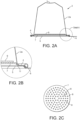
- Figure 2a shows a first embodiment of the capsule of the invention.
- the capsule comprises inside the inner space a carrier disk 7 comprising multiple preformed outlet openings 8.
- the carrier disk 7 is positioned inside the capsule at a distance from the lid 5 comprised between 0.1 mm to 2mm, the lid 5 being sealed on the flange 4.
- This gap between the capsule lid 5 (and so the flange 4 once the lid is removed for extraction) and the carrier disk 7 provides a recess for the tearing surface of the extraction plate of the beverage preparation device to protrude inside the capsule without contacting the carrier disk 7 and hence the coffee in the capsule.
- the carrier disk 7 is a substantially round piece of material as shown in figure 2c , and its diameter is approximately the inner diameter of capsule at the location where the carrier disk 7 is positioned/ inserted / maintained depending on the assembling process.
- the diameter of the carrier disk 7 is around 29.5 and 30.5 mm.
- the carrier disk is made of Aluminum. Its thickness is about 0.3 mm but may vary between 0.1 mm and 1mm.
- the carrier disk 7 is maintained inside the capsule thanks to local mechanical deformations 11 made on the capsule at the junction between the side wall 2a and the flange 4 of the capsule 1.
- one mechanical deformation 11 is visible.
- the mechanical deformation is in the form of a crimping point 11 and is located on the side of the open side of the capsule, opposite the base wall 3.
- the mechanical deformation by crimping allows reducing the diameter and thereby holding the carrier disk 7 (and filter) inside the capsule.
- the carrier disk is the retained inside the capsule 1.
- the step of mechanically deforming the capsule at the junction of the flange 4 and sidewall 2a leading to the crimping points 11 is made on the capsule before closing the capsule with the lid 5.
- the crimping points 11 (also visible on figure 1c ), which are between 2 and 10 crimping points are angularly distributed on the perimeter of the open side of the capsule at the junction of the flange and sidewall of the capsule.
- the crimping points 11 will preferably be equally distributed on the perimeter of the open side of the capsule.
- the crimping points 11 may have rounded crimping imprints according to the used crimping tool.
- the carrier disk 7 may be made of plastic or of a laminated membrane comprising for example, in polyolefins such as polypropylene, polyethylene or any other semi crystalline polymer.
- the carrier disk 7 may also be made of paper-based material, like a coated paper, a laminated paper or molded paper.
- the preformed outlet openings 9 are circular openings homogeneously distributed on the surface of the carrier disk. This homogeneous distribution of the outlet openings with ensure a homogeneous flux of the coffee flowing out of the capsule 1. This also helps to avoid creation of channel with the beverage (coffee bed) inside the capsule.
- the openings have a diameter set around 0.75 mm to 1 mm, but the diameter may vary between 0.4 mm and 3 mm, most preferably between 0.5 mm and 1.3 mm.
- the carrier disk 7 comprises between 50 to 150 openings, preferably around 90 and in the presented embodiment 92.
- the preformed outlet openings may be of oblong shape.
- the capsule further comprises a filter element 9 that during a possible assembling process is positioned on the ingredient bed (coffee bed for example) after the filling of the capsule, and the carrier disk 7 is positioned between the filter element and the lid 5.
- the filter element 9 lies on the carrier disk 7.
- the filter element is then supported by the carrier disk 7 inside the capsule.
- the filter is maintained flat inside the capsule and is not contacted by the tearing surface of the extraction plate of the beverage preparation device during extraction.
- the use of a two-piece design may enable the use of none-sealable filter materials which could be an advantage for sustainability.
- the filter element 9 is circular (disk-shaped) with a smaller diameter than the diameter of the carrier disk 7, i.e. between28 mm and 30.5 mm, and in general with 0.1mmn less than the disk carrier.
- the diameter of the filter element 9 could be similar to the one of the carrier disk 7.
- the filter element 9 is made of non-woven material adapted to prevent / refrain coffee drains to go through too slowly or too quickly during extraction of the beverage with the aim to avoid creation of a crema layer and with the aim to avoid coffee drain going directly through the disk carrier to the cup.
- the filter is preferably made of a compostable and/or biodegradable material and may be made of cellulose-based material with the below technical features. It may for example be a paper-based filter element.
- the filter element 9 of the proposed embodiment comprises a thickness between 20 to 300 microns, an air permeability in the range of 100 to 5000 l/m2/s according to ISO 9237, and a weight in the range of 5 to 600 g/m2. It may for example be a paper-based filter element.
- the filter elements may comprise a layer of non-woven material connected by any known means to another filtering layer.
- the filter element 9 and carrier disk 7 are independent elements positioned on one another. However, they may be assembled together, for example by gluing. This will then change the assembling process in the capsule as the insertion of the filter and carrier disk will be made in one step.
- the proposed circular carrier disk 7 may have a tapered shape on its perimeter so as to fit (force fit) into capsules having truncated cone shape.
- other alternative shape and arrangement of the carrier disk inside the capsule may be envisaged.
- a second filter made for example of non-woven material is added inside the capsule.
- the second filter element is positioned onto and may be fixed to the carrier disk on the side facing the lid (coffee opposing side - facing directly the pyramid plate of the beverage preparation device) without contacting the lid.
- this second filter 10 is to allow transversal flow of coffee in case the perforations match the flat top surface of the truncated pyramids.
- the second filter element is made of non-woven material, however, it can be made of any suitable element compatible with the required function.
- the second filter element may have the following dimensions from 28 mm to 30.5 mm.
- the second filter element is substantially circular with a diameter slightly smaller than the carrier disk 7.
- Figure 4a and 4b are representing the capsule of figure 2a (view from the open side of the capsule) with a carrier disk 7 inserted into the capsule of figure 2a once assembled in the capsule with, respectively, 4 and 8 crimping points before closing the open side of the capsule by attaching a lid.
- the number of crimping points may vary between 2 and 10 to allow sufficient and efficient retention of the carrier disk 7 (and filter element 9 supported by the carrier disk) inside the capsule 1.
- the crimping points 11 are angularly distributed around the open side perimeter of the capsule at the junction between the sidewall 2a and the flange 4 of the capsule. Preferably as here presented the crimping points are equally distributed along the perimeter of the open side of the capsule.
- the currently used tooling during the step of mechanically deforming the capsule has a round end shape allowing to have crimping points with substantially rounded crimping imprints.
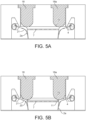
- Figure 5a and 5b schematically show how the mechanical deformation of a capsule according to figure 2a may be performed.
- Figure 5a presents a capsule 1 (in cross section) into which the carrier disk 7 has been inserted.
- a crimping tool (also called clamping tool) 18 comprising two crimping pins 18a each having a rounded end shape 19 is visible and in position ready to press, from the open side of the capsule, onto the capsule at the junction between the sidewall 2a and the flange 4 to induce a local deformation of the capsule body.
- Figure 5b presents the same capsule after mechanical deformation of the junction between the sidewall 2a and the flange 4 by the crimping tool 18.
- the mechanical deformation on the capsule at this specific location has induced crimping points 11 and has generated a bead 20 (due to physical transfer of material) for each mechanical deformation.
- the bead 20 (that could also be named burr) that is formed is located above the carrier disk 7.
- the bead 20 is located below the carrier disk 7 and therefore allows retaining it inside the capsule.
- the crimping tool 18 will comprise between 2 and 10 crimping pins 18a. Hence, the crimping tool will have angularly distributed crimping pins 18a.
- sealing means 21 are present on the capsule. These sealing means provide a fluid sealing engagement with a sealing profile of a capsule engagement member of the beverage preparation machine as for example disclosed in EP 1 654 966 B1 .
- the sealing means 21 are not damaged during the mechanical deformation of the capsule and the sealing function provide by the sealing means is maintained.
- sealing function of sealing means made by protrusions on and/or deformation of the flange of the capsule are preserved thanks to the specific location of the mechanical deformation.
- a substantially rigid capsule body 2 having a circumferential sidewall 2a extending around an inner space to be at least partially filled with a beverage ingredient suitable for preparing the beverage is provided.
- Manufacturing of this capsule body may be made by deep-drawing of an aluminum foil but other technologies exist depending on the material of the capsule body.
- the capsule body 2 comprises sidewall 2a, base wall 3, flange 4 at the open side of the capsule opposite the base wall.
- the inner space is then after filled with an amount of the beverage ingredient through the open side of the capsule.
- the amount of beverage ingredient is depending on the type of beverage, coffee, tea ... but also on the range of the beverage do be done (lungo,).
- the filter element 9 is inserted through the open side of the capsule body in the inner space. Hence in the configuration of figure 5a (open side of the capsule being directed upward), the filter element is inserted inside the capsule on top of the beverage ingredient.
- the carrier disk 7 is subsequently inserted through the open side of the capsule body over the filter element 9 in the inner space.
- the carrier disk 7 comprising multiple outlet openings 8 through which in use the prepared beverage may flow out of the capsule
- the filter element 9 and carrier disk 7 may be inserted in the inner space of the capsule at the same time. Both elements may be attached together or not when being inserted together.
- the step of mechanically deforming (also defined as crimping) the capsule at the junction or in the vicinity of the junction of the flange and side wall is then performed in order to provide retention of the carrier disk inside the inner space the capsule as previously explained.
- the crimping may be done on several points at the same time: between 2 to 10 crimping points thanks to the specific crimping tool 18 above disclosed.
- the crimping points are equally distributed, along the perimeter of the open side of the capsule, at the junction of the flange and side wall of the capsule.
- the open side of the capsule is further closed by attaching the lid 5.
- various technics may be used.
- heat sealing may be used.
- the lid 5 comprises a pull tab 6.
- the lid performing a tight closing of the capsules may be removed from the capsule prior to the use of the capsule in a beverage preparation device
- the capsule is then be removed from the manufacturing line and is ready to be used.
- sealing means 21 are not damaged during the crimping step and therefore their related sealing function fully kept.
- the step of mechanically deforming the capsule is performed before the step of closing the open side of the capsule with a lid, however, it may be envisaged that the deformation step is made after closing the open side of the capsule with a lid.
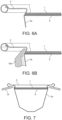
- the at least one local mechanical deformation with the aim to maintain the carrier disk 7 inside de capsule body is made at the location of the edge of the flange, i.e. at the junction between the sidewall 2a and the flange 4, from the side of the capsule opposite the open side of the capsule.
- the mechanical deformation is applied directly on the side of the sidewall 2a of the capsule body 2.
- a crimping tool 18 comprising at least one crimping pin 18a is used to provide mechanical deformation at a specific location of the capsule in order to retain the carrier disk 7 inside the capsule.
- This variant can be done before or after the lid 5 is positioned and/or sealed on the capsule.
- the distance between the carrier disk 7 and the flange of the capsule body will be smaller (but enough to avoid interaction of the carrier disk with the pyramid place of the beverage device during extraction) than the one when the local deformation is made on the sidewall of the capsule body ( Figure 6b ).
- Figure 7 proposes a view of the mechanically deforming the capsule during the assembling processes in which the carrier disk 7 of the capsule is clamped inside the capsule body through local deformation of the capsule from the outside of the capsule.
- a crimping tool 18 presses the capsule body, from the outside in the vicinity of the junction of the flange and side wall of the capsule, just above the level of the carrier disk 7 when it is positioned inside the inner space of the capsule, to induce a local deformation 11 of the capsule body. Thanks to this local deformation, the carrier disk 7 is maintained in position inside the capsule.
- the local deformation of the outside of the capsule body from the outside is made on its circumference, for example, at every 90°. This is enough to ensure efficient holding of the carrier disk 7.
- the step of mechanically deforming the capsule locally at the junction of the flange and side wall is performed using a crimping method, however, other method for mechanically deforming the capsule at this specific location may be used such as stamping, metal drawing, embossing.
- the presented embodiments for the carrier disk as well as for the manufacturing and assembling process may be combined whenever needed and possible to improve the holding of the carrier disk 7 (with or without the filter element 9) inside the capsule body 2.
- the presented capsule may be associated with sealing means located on the flange of the capsule ensuring liquid tightness between the capsule and the injection part of the beverage production machine.
- the sealing means may be a silicon ring applied on the base of the flange and sidewall of the capsule body, or one or more protrusions, or bridges formed on the flange (and integral with the flange).
- Such sealing means participates to the liquid-tight arrangement with the beverage production machine.
Landscapes
- Engineering & Computer Science (AREA)
- Mechanical Engineering (AREA)
- Food Science & Technology (AREA)
- Life Sciences & Earth Sciences (AREA)
- Chemical & Material Sciences (AREA)
- Polymers & Plastics (AREA)
- Apparatus For Making Beverages (AREA)
- Non-Alcoholic Beverages (AREA)
- Medicinal Preparation (AREA)
Claims (16)
- Kapsel (1) für die Zubereitung eines Getränks, umfassend- einen im Wesentlichen starren Kapselkörper (2),der eine umlaufende Seitenwand aufweist, die sich um einen Innenraum der Kapsel erstreckt, wobei der Innenraum mindestens teilweise mit einer Getränkezutat gefüllt ist, die zum Zubereiten des Getränks geeignet ist,- eine Basiswand (3), die den Innenraum an einem ersten Ende der Seitenwand abdeckt,- einen Flansch (4), der umlaufend um eine offene Seite der Kapsel an einem zweiten Ende der Seitenwand des Basiskörpers gegenüber der Basiswand angeordnet ist,- einen Deckel (5), der den Innenraum und die offene Seite der Kapsel an dem zweiten Ende der Seitenwand gegenüber der Basiswand abdeckt und die Kapsel dicht verschließt, wobei der Deckel abnehmbar an dem Flansch der Kapsel angebracht ist,- ein Filterelement (9), das in dem Innenraum der Kapsel zwischen der Getränkezutat und dem Deckel positioniert ist; und- eine Trägerscheibe (7), die in dem Innenraum der Kapsel zwischen dem Deckel und dem Filter bereitgestellt ist, die Trägerscheibe umfassend vielfache vorgeformte Auslassöffnungen, die zum Ablassen des zubereiteten Getränks aus dem Innenraum außerhalb der Kapsel geeignet sind, wenn die Kapsel in einer Getränkezubereitungsvorrichtung verwendet wird, dadurch gekennzeichnet, dass die Kapsel mindestens eine mechanische Verformung (11a, 11b, 11c) an der Verbindungsstelle oder in der Nähe der Verbindungsstelle des Flansches und der Seitenwand der Kapsel umfasst, wobei die mechanische Verformung die Trägerscheibe in dem Innenraum der Kapsel hält.
- Kapsel für die Zubereitung eines Getränks nach Anspruch 1, wobei sich die mindestens eine mechanische Verformung (11a, 11b, 11c) an der Verbindungsstelle des Flansches und der Seitenwand der Kapsel auf der Seite der offenen Seite der Kapsel, gegenüber der Basiswand oder auf der Seite der Kapsel gegenüber der offenen Seite der Kapsel befindet.
- Kapsel für die Zubereitung eines Getränks nach einem der vorstehenden Ansprüche, wobei
die mindestens eine mechanische Verformung (11a, 11b, 11c) an der Verbindungsstelle des Flansches und der Seitenwand der Kapsel eine Verformung durch Crimpen ist und die resultierenden mechanischen Verformungen vorzugsweise abgerundete Crimpungsabdrücke aufweisen. - Kapsel für die Zubereitung eines Getränks nach einem der vorstehenden Ansprüche, wobei die Anzahl von mechanischen Deformationen (11a, 11b, 11c) mindestens 2, vorzugsweise zwischen 3 und 10 Punkten beträgt.
- Kapsel für die Zubereitung eines Getränks nach einem der vorstehenden Ansprüche, wobei die mechanischen Verformungen (11a, 11b, 11c) an der Verbindungsstelle des Flansches und der Seitenwand der Kapsel winklig und/oder gleichmäßig verteilt sind.
- Kapsel für die Zubereitung eines Getränks nach einem der vorstehenden Ansprüche, wobei der Kapselkörper, der Deckel und die Trägerscheibe jeweils hauptsächlich aus Aluminium gefertigt sind.
- Kapsel für die Zubereitung eines Getränks nach einem der Ansprüche 1 bis 6, wobei der Deckel (5) eine freie Aufreißlasche (6) aufweist, die von dem Deckel vorsteht.
- Verfahren zum Herstellen einer Kapsel, die für die Zubereitung eines Getränks geeignet ist, insbesondere einer Kapsel nach den Ansprüchen 1 bis 7, wobei das Verfahren umfasst:- Bereitstellen eines im Wesentlichen starren Kapselkörpers I (2), der eine umlaufenden Seitenwand (2a), die sich um einen Innenraum erstreckt, der mindestens teilweise mit einer Getränkezutat, die zum Zubereiten des Getränks geeignet ist, gefüllt werden soll, eine Basiswand (3), die den Innenraum an einem ersten Ende der umlaufenden Wand abdeckt, und einen Flansch (4), der umlaufend um eine offene Seite der Kapsel an einem zweiten Ende der Seitenwand des Basiskörpers gegenüber der Basiswand angeordnet ist, aufweist,- Füllen des Innenraums mit einer Menge der Getränkezutat durch die offene Seite des Kapselkörpers gegenüber der Basiswand,- Einsetzen, durch die offene Seite des Kapselkörpers, eines Filters (9) in den Innenraum nach dem Füllen des Innenraums mit der Getränkezutat- Einsetzen, durch die offene Seite des Kapselkörpers, einer Trägerscheibe (7) über den Filter in den Innenraum, wobei optional der Filter und die Trägerscheibe gleichzeitig in den Innenraum der Kapsel eingesetzt werden, die Trägerscheibe umfassend vielfache Auslassöffnungen, durch die bei Gebrauch ein zubereitetes Getränk aus der Kapsel fließen kann,- Verschließen der offenen Seite der Kapsel durch Anbringen eines Deckels (5), umfassend eine Aufreißlasche (6), an den Kapselflansch, der sich über die offene Seite erstreckt, wobei der Deckel die Kapsel dicht verschließt; dadurch gekennzeichnet, dass das Herstellungsverfahren ferner einen Schritt des mechanischen Verformens der Kapsel an der Verbindungsstelle oder in der Nähe der Verbindungsstelle des Flansches und der Seitenwand der Kapsel umfasst, wobei die mechanische Verformung (11a, 11b, 11c) die Trägerscheibe in dem Innenraum der Kapsel hält.
- Verfahren zum Herstellen einer Kapsel nach Anspruch 8, wobei der Schritt des mechanischen Verformens der Kapsel an der Verbindungsstelle des Flansches und der Seitenwand vor oder nach dem Schritt des Verschließens der offenen Seite der Kapsel mit einem Deckel durchgeführt wird.
- Verfahren zum Herstellen einer Kapsel nach einem der vorstehenden Ansprüche 8 bis 9, wobei
der Schritt des mechanischen Verformens der Kapsel an der Verbindungsstelle des Flansches und der Seitenwand auf der Seite der offenen Seite der Kapsel gegenüber der Basiswand durchgeführt wird. - Verfahren zum Herstellen einer Kapsel nach einem der Ansprüche 8 bis 10, wobei
der Schritt des mechanischen Verformens der Kapsel an der Verbindungsstelle des Flansches und der Seitenwand auf der Seite der Kapsel gegenüber der offenen Seite der Kapsel durchgeführt wird. - Verfahren zum Herstellen einer Kapsel nach einem der vorstehenden Ansprüche 8 bis 11, wobei
der Schritt des mechanischen Verformens der Kapsel an der Verbindungsstelle des Flansches und der Seitenwand unter Verwendung eines Crimpungsverfahrens durchgeführt wird. - Verfahren zum Herstellen einer Kapsel nach einem der vorstehenden Ansprüche 8 bis 12, wobei
der Schritt des mechanischen Verformens der Kapsel an der Verbindungsstelle des Flansches und der Seitenwand unter Verwendung von mindestens einem Crimpungsstift durchgeführt wird, und der Crimpungsstift vorzugsweise eine abgerundete Endform aufweist. - Verfahren zum Herstellen einer Kapsel nach einem der vorstehenden Ansprüche 8 bis 13, wobei
während des Schritts des mechanischen Verformens der Kapsel an der Verbindungsstelle des Flansches und der Seitenwand der Kapsel, die Kapsel an mindestens 2 Punkten, vorzugsweise an 3 bis 10 Punkten verformt wird. - Verfahren zum Herstellen einer Kapsel nach Anspruch 14, wobei die mechanischen Deformationen (11a, 11b, 11c) an der Verbindungsstelle des Flansches und der Seitenwand der Kapsel winkelförmig verteilt sind, und vorzugsweise gleichmäßig verteilt sind.
- Verwendung der Kapsel nach einem der Ansprüche 1 bis 7.
Applications Claiming Priority (2)
| Application Number | Priority Date | Filing Date | Title |
|---|---|---|---|
| EP20210284 | 2020-11-27 | ||
| PCT/EP2021/082805 WO2022112320A1 (en) | 2020-11-27 | 2021-11-24 | Capsule and manufacturing process for producing said capsule |
Publications (2)
| Publication Number | Publication Date |
|---|---|
| EP4251539A1 EP4251539A1 (de) | 2023-10-04 |
| EP4251539B1 true EP4251539B1 (de) | 2024-08-21 |
Family
ID=73642648
Family Applications (3)
| Application Number | Title | Priority Date | Filing Date |
|---|---|---|---|
| EP21816446.5A Pending EP4251538A1 (de) | 2020-11-27 | 2021-11-24 | Kapsel und system zur herstellung eines getränks |
| EP21816447.3A Active EP4251539B1 (de) | 2020-11-27 | 2021-11-24 | Kapsel und herstellungsverfahren von dieser kapsel |
| EP21816448.1A Pending EP4251540A1 (de) | 2020-11-27 | 2021-11-24 | Kapsel und system zur herstellung eines getränks |
Family Applications Before (1)
| Application Number | Title | Priority Date | Filing Date |
|---|---|---|---|
| EP21816446.5A Pending EP4251538A1 (de) | 2020-11-27 | 2021-11-24 | Kapsel und system zur herstellung eines getränks |
Family Applications After (1)
| Application Number | Title | Priority Date | Filing Date |
|---|---|---|---|
| EP21816448.1A Pending EP4251540A1 (de) | 2020-11-27 | 2021-11-24 | Kapsel und system zur herstellung eines getränks |
Country Status (14)
| Country | Link |
|---|---|
| US (3) | US20240051738A1 (de) |
| EP (3) | EP4251538A1 (de) |
| JP (3) | JP2023552718A (de) |
| KR (3) | KR20230110732A (de) |
| CN (3) | CN116529179A (de) |
| AR (1) | AR124159A1 (de) |
| AU (3) | AU2021387788A1 (de) |
| CA (3) | CA3196480A1 (de) |
| CL (3) | CL2023001464A1 (de) |
| ES (1) | ES2992865T3 (de) |
| IL (3) | IL302268A (de) |
| MX (3) | MX2023005671A (de) |
| TW (1) | TW202227339A (de) |
| WO (3) | WO2022112321A1 (de) |
Families Citing this family (6)
| Publication number | Priority date | Publication date | Assignee | Title |
|---|---|---|---|---|
| US10004596B2 (en) | 2014-07-31 | 2018-06-26 | Lensgen, Inc. | Accommodating intraocular lens device |
| JP2025523959A (ja) * | 2022-07-25 | 2025-07-25 | ソシエテ・デ・プロデュイ・ネスレ・エス・アー | 飲料又は食品容器及び調製システム |
| JP2025533746A (ja) * | 2022-09-22 | 2025-10-09 | ソシエテ・デ・プロデュイ・ネスレ・エス・アー | カプセルの出口開口部を得るための方法 |
| USD1036987S1 (en) | 2022-11-23 | 2024-07-30 | Zuru (Singapore) Pte. Ltd. | Blister cup for confectionery |
| EP4495029A1 (de) * | 2023-07-20 | 2025-01-22 | Rubinstein, David | Getränkekapsel |
| EP4553001A1 (de) * | 2023-11-13 | 2025-05-14 | Rubinstein, David | Getränkekapsel |
Citations (2)
| Publication number | Priority date | Publication date | Assignee | Title |
|---|---|---|---|---|
| WO2012100975A1 (en) * | 2011-01-27 | 2012-08-02 | Nestec S.A. | Pod and package for preparing a beverage by centrifugation |
| DE102013215274A1 (de) * | 2013-02-20 | 2014-08-21 | K-Fee System Gmbh | Portionskapsel und System |
Family Cites Families (30)
| Publication number | Priority date | Publication date | Assignee | Title |
|---|---|---|---|---|
| CH340148A (de) * | 1954-09-07 | 1959-07-31 | Vetri Ind S R L | Kapselverschluss an Gefässen und Verfahren zur Herstellung dieses Kapselverschlusses |
| US4061244A (en) * | 1976-11-19 | 1977-12-06 | Tucker John A | Combination container with removable closure |
| JPS62292118A (ja) * | 1986-06-13 | 1987-12-18 | 松下電工株式会社 | 浄油器 |
| CH673082A5 (de) * | 1987-10-01 | 1990-02-15 | Nestle Sa | |
| KR100535744B1 (ko) * | 2002-03-07 | 2006-01-10 | 넥솔테크(주) | 액상식품 추출용 밀봉 용기 |
| ES2277184T3 (es) | 2004-10-25 | 2007-07-01 | Nestec S.A. | Capsula con medios de cierre hermetico. |
| WO2007137974A2 (en) * | 2006-05-29 | 2007-12-06 | Nestec S.A. | Coffee capsule with a deformable sealing element |
| RU2474525C2 (ru) * | 2007-06-05 | 2013-02-10 | Нестек С.А. | Капсула и способ приготовления пищевой жидкости с помощью центрифугирования |
| AT507345B1 (de) * | 2008-10-15 | 2010-12-15 | Firooz Kita | Kaffeekapsel |
| PL2307288T3 (pl) | 2009-06-17 | 2015-05-29 | Douwe Egberts Bv | Układ, sposób i kapsułka do przygotowywania napoju |
| DK2442695T3 (en) * | 2009-06-17 | 2015-07-06 | Koninkl Douwe Egberts Bv | Capsule and system for producing a beverage comprising a soluble substance |
| JP6174858B2 (ja) | 2009-06-17 | 2017-08-02 | コーニンクラケ ダウ エグバート ビー.ブイ. | 摂取に適する所定量の飲料を用意するためのカプセル、システム及び方法 |
| CN201686213U (zh) * | 2010-05-29 | 2010-12-29 | 汕头市自在天茶道科技有限公司 | 一种具有萃取功能的包装容器 |
| IT1402944B1 (it) * | 2010-12-15 | 2013-09-27 | Sarong Spa | Capsula per bevande e relativa macchina per utilizzare detta capsula |
| US9469471B2 (en) * | 2011-02-03 | 2016-10-18 | 2266170 Ontario Inc. | Beverage capsule |
| JP2014515297A (ja) * | 2011-06-01 | 2014-06-30 | フライドマン,アラン | 加圧飲料抽出用カプセル |
| US20130045307A1 (en) * | 2011-08-17 | 2013-02-21 | Medora Safai | Brew Cartridge |
| DE102012025145A1 (de) * | 2011-12-23 | 2013-06-27 | Beem Blitz-Elektro-Erzeugnisse Manufaktur Handels-Gmbh | Kaffeemaschine mit einer Brühvorrichtung |
| DE102012105282A1 (de) * | 2012-06-18 | 2013-12-19 | K-Fee System Gmbh | Portionskapsel und Verfahren zur Herstellung eines Getränks mit einer Portionskapsel |
| ITTO20120724A1 (it) * | 2012-08-13 | 2014-02-14 | Lavazza Luigi Spa | Capsula sigillata per la preparazione di una bevanda, in particolare caffe' |
| US9205975B2 (en) * | 2013-02-04 | 2015-12-08 | Caffitaly System S.P.A. | Capsule for the preparation of beverages |
| CA2898173C (en) * | 2013-02-04 | 2020-09-08 | Caffitaly System S.P.A. | Capsule for making beverages |
| BR112015019141A2 (pt) * | 2013-02-12 | 2017-07-18 | Douwe Egberts Bv | cápsula, sistema e método para preparação de uma quantidade predeterminada de bebida |
| CH711126A1 (de) * | 2015-05-27 | 2016-11-30 | Swiss Coffee Company Ag | Kapsel zur Verwendung in einer Extraktionsmaschine und Extraktionsverfahren unter Verwendung einer solchen Kapsel. |
| ITUA20161940A1 (it) * | 2016-03-23 | 2017-09-23 | Macchiavelli Srl | Capsula per prodotti da infusione, in particolare per caffè. |
| EP3308682B1 (de) * | 2016-10-12 | 2019-05-15 | Müller Mechanik GmbH & Co. KG | Mehrfach verwendbare kapsel zur zubereitung von getränken und befüllvorrichtung zum befüllen einer derartigen mehrfach verwendbaren kapsel sowie verfahren zur zubereitung von getränken mit einer derartigen mehrfach verwendbaren kapsel mittels einer kapsel-getränkemaschine |
| CN106691193A (zh) * | 2017-01-22 | 2017-05-24 | 无锡西爵商贸有限公司 | 用于无穿刺萃取的咖啡胶囊及其萃取方法 |
| NL2019220B1 (en) * | 2017-07-10 | 2019-01-16 | Douwe Egberts Bv | Capsule and system for preparing a crema-free coffee beverage |
| IT201800006242A1 (it) * | 2018-06-12 | 2019-12-12 | Capsula per la preparazione di una bevanda a base di caffe' | |
| CN109205108A (zh) * | 2018-09-11 | 2019-01-15 | 徐林英 | 一种用于咖啡机的咖啡胶囊 |
-
2021
- 2021-11-22 TW TW110143414A patent/TW202227339A/zh unknown
- 2021-11-24 IL IL302268A patent/IL302268A/en unknown
- 2021-11-24 MX MX2023005671A patent/MX2023005671A/es unknown
- 2021-11-24 KR KR1020237016786A patent/KR20230110732A/ko active Pending
- 2021-11-24 EP EP21816446.5A patent/EP4251538A1/de active Pending
- 2021-11-24 CA CA3196480A patent/CA3196480A1/en active Pending
- 2021-11-24 MX MX2023005750A patent/MX2023005750A/es unknown
- 2021-11-24 ES ES21816447T patent/ES2992865T3/es active Active
- 2021-11-24 CA CA3196302A patent/CA3196302A1/en active Pending
- 2021-11-24 MX MX2023005751A patent/MX2023005751A/es unknown
- 2021-11-24 AU AU2021387788A patent/AU2021387788A1/en active Pending
- 2021-11-24 CN CN202180077734.8A patent/CN116529179A/zh active Pending
- 2021-11-24 US US18/254,720 patent/US20240051738A1/en active Pending
- 2021-11-24 WO PCT/EP2021/082806 patent/WO2022112321A1/en not_active Ceased
- 2021-11-24 CN CN202180077720.6A patent/CN116529178B/zh active Active
- 2021-11-24 KR KR1020237016788A patent/KR20230110734A/ko active Pending
- 2021-11-24 JP JP2023530824A patent/JP2023552718A/ja active Pending
- 2021-11-24 EP EP21816447.3A patent/EP4251539B1/de active Active
- 2021-11-24 KR KR1020237016787A patent/KR20230110733A/ko active Pending
- 2021-11-24 IL IL302266A patent/IL302266A/en unknown
- 2021-11-24 CA CA3196486A patent/CA3196486A1/en active Pending
- 2021-11-24 US US18/254,709 patent/US20240298838A1/en active Pending
- 2021-11-24 AU AU2021388793A patent/AU2021388793A1/en active Pending
- 2021-11-24 US US18/254,700 patent/US20230415976A1/en active Pending
- 2021-11-24 AU AU2021388831A patent/AU2021388831A1/en active Pending
- 2021-11-24 IL IL302267A patent/IL302267A/en unknown
- 2021-11-24 EP EP21816448.1A patent/EP4251540A1/de active Pending
- 2021-11-24 CN CN202180077740.3A patent/CN116490445B/zh active Active
- 2021-11-24 JP JP2023530823A patent/JP2023552717A/ja not_active Withdrawn
- 2021-11-24 JP JP2023530821A patent/JP2023552715A/ja active Pending
- 2021-11-24 WO PCT/EP2021/082805 patent/WO2022112320A1/en not_active Ceased
- 2021-11-24 WO PCT/EP2021/082803 patent/WO2022112318A1/en not_active Ceased
- 2021-11-26 AR ARP210103276A patent/AR124159A1/es active IP Right Grant
-
2023
- 2023-05-22 CL CL2023001464A patent/CL2023001464A1/es unknown
- 2023-05-22 CL CL2023001467A patent/CL2023001467A1/es unknown
- 2023-05-22 CL CL2023001463A patent/CL2023001463A1/es unknown
Patent Citations (2)
| Publication number | Priority date | Publication date | Assignee | Title |
|---|---|---|---|---|
| WO2012100975A1 (en) * | 2011-01-27 | 2012-08-02 | Nestec S.A. | Pod and package for preparing a beverage by centrifugation |
| DE102013215274A1 (de) * | 2013-02-20 | 2014-08-21 | K-Fee System Gmbh | Portionskapsel und System |
Also Published As
Similar Documents
| Publication | Publication Date | Title |
|---|---|---|
| EP4251539B1 (de) | Kapsel und herstellungsverfahren von dieser kapsel | |
| US20250033868A1 (en) | Beverage capsule | |
| EP2387922B2 (de) | Kapsel, System und Verfahren zur Herstellung einer vorgegebenen Menge eines Getränks für den Konsum | |
| EP2134611B1 (de) | System und verfahren zur herstellung eines getränks | |
| EP3652090B1 (de) | Kapsel und system zur zubereitung von getränken | |
| BR112023009263B1 (pt) | Cápsula para preparar uma bebida, método de fabricação de uma cápsula e uso da cápsula | |
| WO2024062014A1 (en) | Method for obtaining outlet openings of a capsule | |
| CA2913042A1 (en) | System, method and capsule for preparing a beverage |
Legal Events
| Date | Code | Title | Description |
|---|---|---|---|
| STAA | Information on the status of an ep patent application or granted ep patent |
Free format text: STATUS: UNKNOWN |
|
| STAA | Information on the status of an ep patent application or granted ep patent |
Free format text: STATUS: THE INTERNATIONAL PUBLICATION HAS BEEN MADE |
|
| PUAI | Public reference made under article 153(3) epc to a published international application that has entered the european phase |
Free format text: ORIGINAL CODE: 0009012 |
|
| STAA | Information on the status of an ep patent application or granted ep patent |
Free format text: STATUS: REQUEST FOR EXAMINATION WAS MADE |
|
| 17P | Request for examination filed |
Effective date: 20230627 |
|
| AK | Designated contracting states |
Kind code of ref document: A1 Designated state(s): AL AT BE BG CH CY CZ DE DK EE ES FI FR GB GR HR HU IE IS IT LI LT LU LV MC MK MT NL NO PL PT RO RS SE SI SK SM TR |
|
| DAV | Request for validation of the european patent (deleted) | ||
| DAX | Request for extension of the european patent (deleted) | ||
| GRAP | Despatch of communication of intention to grant a patent |
Free format text: ORIGINAL CODE: EPIDOSNIGR1 |
|
| STAA | Information on the status of an ep patent application or granted ep patent |
Free format text: STATUS: GRANT OF PATENT IS INTENDED |
|
| INTG | Intention to grant announced |
Effective date: 20240404 |
|
| GRAS | Grant fee paid |
Free format text: ORIGINAL CODE: EPIDOSNIGR3 |
|
| P01 | Opt-out of the competence of the unified patent court (upc) registered |
Free format text: CASE NUMBER: APP_34818/2024 Effective date: 20240611 |
|
| GRAA | (expected) grant |
Free format text: ORIGINAL CODE: 0009210 |
|
| STAA | Information on the status of an ep patent application or granted ep patent |
Free format text: STATUS: THE PATENT HAS BEEN GRANTED |
|
| AK | Designated contracting states |
Kind code of ref document: B1 Designated state(s): AL AT BE BG CH CY CZ DE DK EE ES FI FR GB GR HR HU IE IS IT LI LT LU LV MC MK MT NL NO PL PT RO RS SE SI SK SM TR |
|
| REG | Reference to a national code |
Ref country code: GB Ref legal event code: FG4D |
|
| REG | Reference to a national code |
Ref country code: CH Ref legal event code: EP |
|
| REG | Reference to a national code |
Ref country code: IE Ref legal event code: FG4D |
|
| REG | Reference to a national code |
Ref country code: DE Ref legal event code: R096 Ref document number: 602021017676 Country of ref document: DE |
|
| REG | Reference to a national code |
Ref country code: NL Ref legal event code: FP |
|
| REG | Reference to a national code |
Ref country code: LT Ref legal event code: MG9D |
|
| REG | Reference to a national code |
Ref country code: ES Ref legal event code: FG2A Ref document number: 2992865 Country of ref document: ES Kind code of ref document: T3 Effective date: 20241218 |
|
| PG25 | Lapsed in a contracting state [announced via postgrant information from national office to epo] |
Ref country code: NO Free format text: LAPSE BECAUSE OF FAILURE TO SUBMIT A TRANSLATION OF THE DESCRIPTION OR TO PAY THE FEE WITHIN THE PRESCRIBED TIME-LIMIT Effective date: 20241121 |
|
| REG | Reference to a national code |
Ref country code: AT Ref legal event code: MK05 Ref document number: 1715318 Country of ref document: AT Kind code of ref document: T Effective date: 20240821 |
|
| PG25 | Lapsed in a contracting state [announced via postgrant information from national office to epo] |
Ref country code: FI Free format text: LAPSE BECAUSE OF FAILURE TO SUBMIT A TRANSLATION OF THE DESCRIPTION OR TO PAY THE FEE WITHIN THE PRESCRIBED TIME-LIMIT Effective date: 20240821 Ref country code: PL Free format text: LAPSE BECAUSE OF FAILURE TO SUBMIT A TRANSLATION OF THE DESCRIPTION OR TO PAY THE FEE WITHIN THE PRESCRIBED TIME-LIMIT Effective date: 20240821 Ref country code: GR Free format text: LAPSE BECAUSE OF FAILURE TO SUBMIT A TRANSLATION OF THE DESCRIPTION OR TO PAY THE FEE WITHIN THE PRESCRIBED TIME-LIMIT Effective date: 20241122 Ref country code: PT Free format text: LAPSE BECAUSE OF FAILURE TO SUBMIT A TRANSLATION OF THE DESCRIPTION OR TO PAY THE FEE WITHIN THE PRESCRIBED TIME-LIMIT Effective date: 20241223 |
|
| PG25 | Lapsed in a contracting state [announced via postgrant information from national office to epo] |
Ref country code: BG Free format text: LAPSE BECAUSE OF FAILURE TO SUBMIT A TRANSLATION OF THE DESCRIPTION OR TO PAY THE FEE WITHIN THE PRESCRIBED TIME-LIMIT Effective date: 20240821 |
|
| PG25 | Lapsed in a contracting state [announced via postgrant information from national office to epo] |
Ref country code: LV Free format text: LAPSE BECAUSE OF FAILURE TO SUBMIT A TRANSLATION OF THE DESCRIPTION OR TO PAY THE FEE WITHIN THE PRESCRIBED TIME-LIMIT Effective date: 20240821 |
|
| PG25 | Lapsed in a contracting state [announced via postgrant information from national office to epo] |
Ref country code: AT Free format text: LAPSE BECAUSE OF FAILURE TO SUBMIT A TRANSLATION OF THE DESCRIPTION OR TO PAY THE FEE WITHIN THE PRESCRIBED TIME-LIMIT Effective date: 20240821 Ref country code: IS Free format text: LAPSE BECAUSE OF FAILURE TO SUBMIT A TRANSLATION OF THE DESCRIPTION OR TO PAY THE FEE WITHIN THE PRESCRIBED TIME-LIMIT Effective date: 20241221 |
|
| PG25 | Lapsed in a contracting state [announced via postgrant information from national office to epo] |
Ref country code: HR Free format text: LAPSE BECAUSE OF FAILURE TO SUBMIT A TRANSLATION OF THE DESCRIPTION OR TO PAY THE FEE WITHIN THE PRESCRIBED TIME-LIMIT Effective date: 20240821 |
|
| PG25 | Lapsed in a contracting state [announced via postgrant information from national office to epo] |
Ref country code: RS Free format text: LAPSE BECAUSE OF FAILURE TO SUBMIT A TRANSLATION OF THE DESCRIPTION OR TO PAY THE FEE WITHIN THE PRESCRIBED TIME-LIMIT Effective date: 20241121 |
|
| PG25 | Lapsed in a contracting state [announced via postgrant information from national office to epo] |
Ref country code: RS Free format text: LAPSE BECAUSE OF FAILURE TO SUBMIT A TRANSLATION OF THE DESCRIPTION OR TO PAY THE FEE WITHIN THE PRESCRIBED TIME-LIMIT Effective date: 20241121 Ref country code: PT Free format text: LAPSE BECAUSE OF FAILURE TO SUBMIT A TRANSLATION OF THE DESCRIPTION OR TO PAY THE FEE WITHIN THE PRESCRIBED TIME-LIMIT Effective date: 20241223 Ref country code: PL Free format text: LAPSE BECAUSE OF FAILURE TO SUBMIT A TRANSLATION OF THE DESCRIPTION OR TO PAY THE FEE WITHIN THE PRESCRIBED TIME-LIMIT Effective date: 20240821 Ref country code: NO Free format text: LAPSE BECAUSE OF FAILURE TO SUBMIT A TRANSLATION OF THE DESCRIPTION OR TO PAY THE FEE WITHIN THE PRESCRIBED TIME-LIMIT Effective date: 20241121 Ref country code: LV Free format text: LAPSE BECAUSE OF FAILURE TO SUBMIT A TRANSLATION OF THE DESCRIPTION OR TO PAY THE FEE WITHIN THE PRESCRIBED TIME-LIMIT Effective date: 20240821 Ref country code: IS Free format text: LAPSE BECAUSE OF FAILURE TO SUBMIT A TRANSLATION OF THE DESCRIPTION OR TO PAY THE FEE WITHIN THE PRESCRIBED TIME-LIMIT Effective date: 20241221 Ref country code: HR Free format text: LAPSE BECAUSE OF FAILURE TO SUBMIT A TRANSLATION OF THE DESCRIPTION OR TO PAY THE FEE WITHIN THE PRESCRIBED TIME-LIMIT Effective date: 20240821 Ref country code: GR Free format text: LAPSE BECAUSE OF FAILURE TO SUBMIT A TRANSLATION OF THE DESCRIPTION OR TO PAY THE FEE WITHIN THE PRESCRIBED TIME-LIMIT Effective date: 20241122 Ref country code: FI Free format text: LAPSE BECAUSE OF FAILURE TO SUBMIT A TRANSLATION OF THE DESCRIPTION OR TO PAY THE FEE WITHIN THE PRESCRIBED TIME-LIMIT Effective date: 20240821 Ref country code: BG Free format text: LAPSE BECAUSE OF FAILURE TO SUBMIT A TRANSLATION OF THE DESCRIPTION OR TO PAY THE FEE WITHIN THE PRESCRIBED TIME-LIMIT Effective date: 20240821 Ref country code: AT Free format text: LAPSE BECAUSE OF FAILURE TO SUBMIT A TRANSLATION OF THE DESCRIPTION OR TO PAY THE FEE WITHIN THE PRESCRIBED TIME-LIMIT Effective date: 20240821 |
|
| PG25 | Lapsed in a contracting state [announced via postgrant information from national office to epo] |
Ref country code: RO Free format text: LAPSE BECAUSE OF FAILURE TO SUBMIT A TRANSLATION OF THE DESCRIPTION OR TO PAY THE FEE WITHIN THE PRESCRIBED TIME-LIMIT Effective date: 20240821 Ref country code: DK Free format text: LAPSE BECAUSE OF FAILURE TO SUBMIT A TRANSLATION OF THE DESCRIPTION OR TO PAY THE FEE WITHIN THE PRESCRIBED TIME-LIMIT Effective date: 20240821 Ref country code: SM Free format text: LAPSE BECAUSE OF FAILURE TO SUBMIT A TRANSLATION OF THE DESCRIPTION OR TO PAY THE FEE WITHIN THE PRESCRIBED TIME-LIMIT Effective date: 20240821 |
|
| PG25 | Lapsed in a contracting state [announced via postgrant information from national office to epo] |
Ref country code: EE Free format text: LAPSE BECAUSE OF FAILURE TO SUBMIT A TRANSLATION OF THE DESCRIPTION OR TO PAY THE FEE WITHIN THE PRESCRIBED TIME-LIMIT Effective date: 20240821 |
|
| PG25 | Lapsed in a contracting state [announced via postgrant information from national office to epo] |
Ref country code: CZ Free format text: LAPSE BECAUSE OF FAILURE TO SUBMIT A TRANSLATION OF THE DESCRIPTION OR TO PAY THE FEE WITHIN THE PRESCRIBED TIME-LIMIT Effective date: 20240821 |
|
| PG25 | Lapsed in a contracting state [announced via postgrant information from national office to epo] |
Ref country code: SK Free format text: LAPSE BECAUSE OF FAILURE TO SUBMIT A TRANSLATION OF THE DESCRIPTION OR TO PAY THE FEE WITHIN THE PRESCRIBED TIME-LIMIT Effective date: 20240821 |
|
| REG | Reference to a national code |
Ref country code: DE Ref legal event code: R097 Ref document number: 602021017676 Country of ref document: DE |
|
| PLBE | No opposition filed within time limit |
Free format text: ORIGINAL CODE: 0009261 |
|
| STAA | Information on the status of an ep patent application or granted ep patent |
Free format text: STATUS: NO OPPOSITION FILED WITHIN TIME LIMIT |
|
| PG25 | Lapsed in a contracting state [announced via postgrant information from national office to epo] |
Ref country code: MC Free format text: LAPSE BECAUSE OF FAILURE TO SUBMIT A TRANSLATION OF THE DESCRIPTION OR TO PAY THE FEE WITHIN THE PRESCRIBED TIME-LIMIT Effective date: 20240821 |
|
| PG25 | Lapsed in a contracting state [announced via postgrant information from national office to epo] |
Ref country code: LU Free format text: LAPSE BECAUSE OF NON-PAYMENT OF DUE FEES Effective date: 20241124 |
|
| 26N | No opposition filed |
Effective date: 20250522 |
|
| REG | Reference to a national code |
Ref country code: BE Ref legal event code: MM Effective date: 20241130 |
|
| PG25 | Lapsed in a contracting state [announced via postgrant information from national office to epo] |
Ref country code: SE Free format text: LAPSE BECAUSE OF FAILURE TO SUBMIT A TRANSLATION OF THE DESCRIPTION OR TO PAY THE FEE WITHIN THE PRESCRIBED TIME-LIMIT Effective date: 20240821 |
|
| PG25 | Lapsed in a contracting state [announced via postgrant information from national office to epo] |
Ref country code: BE Free format text: LAPSE BECAUSE OF NON-PAYMENT OF DUE FEES Effective date: 20241130 |
|
| PGFP | Annual fee paid to national office [announced via postgrant information from national office to epo] |
Ref country code: FR Payment date: 20250930 Year of fee payment: 5 |
|
| PG25 | Lapsed in a contracting state [announced via postgrant information from national office to epo] |
Ref country code: IE Free format text: LAPSE BECAUSE OF NON-PAYMENT OF DUE FEES Effective date: 20241124 |
|
| PGFP | Annual fee paid to national office [announced via postgrant information from national office to epo] |
Ref country code: NL Payment date: 20251003 Year of fee payment: 5 |
|
| REG | Reference to a national code |
Ref country code: CH Ref legal event code: U11 Free format text: ST27 STATUS EVENT CODE: U-0-0-U10-U11 (AS PROVIDED BY THE NATIONAL OFFICE) Effective date: 20251201 |
|
| PGFP | Annual fee paid to national office [announced via postgrant information from national office to epo] |
Ref country code: DE Payment date: 20250930 Year of fee payment: 5 |
|
| PGFP | Annual fee paid to national office [announced via postgrant information from national office to epo] |
Ref country code: GB Payment date: 20251001 Year of fee payment: 5 |
|
| PGFP | Annual fee paid to national office [announced via postgrant information from national office to epo] |
Ref country code: IT Payment date: 20251022 Year of fee payment: 5 |
|
| PGFP | Annual fee paid to national office [announced via postgrant information from national office to epo] |
Ref country code: CH Payment date: 20251201 Year of fee payment: 5 |
|
| PGFP | Annual fee paid to national office [announced via postgrant information from national office to epo] |
Ref country code: ES Payment date: 20251210 Year of fee payment: 5 |
|
| PG25 | Lapsed in a contracting state [announced via postgrant information from national office to epo] |
Ref country code: HU Free format text: LAPSE BECAUSE OF FAILURE TO SUBMIT A TRANSLATION OF THE DESCRIPTION OR TO PAY THE FEE WITHIN THE PRESCRIBED TIME-LIMIT; INVALID AB INITIO Effective date: 20211124 |
|
| PG25 | Lapsed in a contracting state [announced via postgrant information from national office to epo] |
Ref country code: CY Free format text: LAPSE BECAUSE OF FAILURE TO SUBMIT A TRANSLATION OF THE DESCRIPTION OR TO PAY THE FEE WITHIN THE PRESCRIBED TIME-LIMIT; INVALID AB INITIO Effective date: 20211124 |