EP4250806B1 - Verfahren und vorrichtung zur meldung von zeitvorlauf in ntn, verfahren und vorrichtung zum empfangen von zeitvorlauf in ntn und vorrichtung - Google Patents
Verfahren und vorrichtung zur meldung von zeitvorlauf in ntn, verfahren und vorrichtung zum empfangen von zeitvorlauf in ntn und vorrichtung Download PDFInfo
- Publication number
- EP4250806B1 EP4250806B1 EP20961893.3A EP20961893A EP4250806B1 EP 4250806 B1 EP4250806 B1 EP 4250806B1 EP 20961893 A EP20961893 A EP 20961893A EP 4250806 B1 EP4250806 B1 EP 4250806B1
- Authority
- EP
- European Patent Office
- Prior art keywords
- message
- terminal
- information
- random access
- indication information
- Prior art date
- Legal status (The legal status is an assumption and is not a legal conclusion. Google has not performed a legal analysis and makes no representation as to the accuracy of the status listed.)
- Active
Links
Images



Classifications
-
- H—ELECTRICITY
- H04—ELECTRIC COMMUNICATION TECHNIQUE
- H04W—WIRELESS COMMUNICATION NETWORKS
- H04W56/00—Synchronisation arrangements
- H04W56/004—Synchronisation arrangements compensating for timing error of reception due to propagation delay
- H04W56/0045—Synchronisation arrangements compensating for timing error of reception due to propagation delay compensating for timing error by altering transmission time
-
- H—ELECTRICITY
- H04—ELECTRIC COMMUNICATION TECHNIQUE
- H04B—TRANSMISSION
- H04B7/00—Radio transmission systems, i.e. using radiation field
- H04B7/14—Relay systems
- H04B7/15—Active relay systems
- H04B7/185—Space-based or airborne stations; Stations for satellite systems
- H04B7/1851—Systems using a satellite or space-based relay
- H04B7/18513—Transmission in a satellite or space-based system
-
- H—ELECTRICITY
- H04—ELECTRIC COMMUNICATION TECHNIQUE
- H04W—WIRELESS COMMUNICATION NETWORKS
- H04W56/00—Synchronisation arrangements
-
- H—ELECTRICITY
- H04—ELECTRIC COMMUNICATION TECHNIQUE
- H04W—WIRELESS COMMUNICATION NETWORKS
- H04W74/00—Wireless channel access
- H04W74/08—Non-scheduled access, e.g. ALOHA
- H04W74/0833—Random access procedures, e.g. with 4-step access
-
- H—ELECTRICITY
- H04—ELECTRIC COMMUNICATION TECHNIQUE
- H04W—WIRELESS COMMUNICATION NETWORKS
- H04W74/00—Wireless channel access
- H04W74/08—Non-scheduled access, e.g. ALOHA
- H04W74/0833—Random access procedures, e.g. with 4-step access
- H04W74/0836—Random access procedures, e.g. with 4-step access with 2-step access
-
- H—ELECTRICITY
- H04—ELECTRIC COMMUNICATION TECHNIQUE
- H04W—WIRELESS COMMUNICATION NETWORKS
- H04W74/00—Wireless channel access
- H04W74/08—Non-scheduled access, e.g. ALOHA
- H04W74/0866—Non-scheduled access, e.g. ALOHA using a dedicated channel for access
- H04W74/0891—Non-scheduled access, e.g. ALOHA using a dedicated channel for access for synchronized access
-
- H—ELECTRICITY
- H04—ELECTRIC COMMUNICATION TECHNIQUE
- H04W—WIRELESS COMMUNICATION NETWORKS
- H04W84/00—Network topologies
- H04W84/02—Hierarchically pre-organised networks, e.g. paging networks, cellular networks, WLAN [Wireless Local Area Network] or WLL [Wireless Local Loop]
- H04W84/04—Large scale networks; Deep hierarchical networks
- H04W84/06—Airborne or Satellite Networks
Definitions
- the disclosure relates to the field of mobile communication, and more particularly, to a method and an apparatus for timing advance (TA) reporting in a non-terrestrial network (NTN), a method and an apparatus for TA receiving in an NTN, and a device.
- TA timing advance
- NTN non-terrestrial network
- the random access procedure is important in mobile communication.
- the network device In the random access procedure, to ensure the orthogonality of uplink (UL) transmission, the network device requires that signals transmitted from different terminals at the same time but in different frequency-domain resources arrive at the network device at approximately the same time.
- the new radio (NR) system supports a UL timing advance (TA) mechanism.
- the terminal can usually estimate a pre-compensation value of transmission of a random access preamble in time domain according to location information and ephemeris information etc.
- the network device is unable to obtain the specific location of the terminal and the pre-compensation value adopted by the terminal. Therefore, after the random access procedure, the network device cannot know exact UL TA information of the terminal.
- WO2020/031120A2 discloses systems and methods for random access in a wireless communication system such as, e.g., a wireless communication system having a non-terrestrial (e.g., satellite-based) radio access network.
- a method performed by a wireless device and corresponding embodiments of a wireless device are disclosed.
- a method performed by a wireless device for random access comprises performing an open-loop timing advance estimation procedure to thereby determine an open-loop timing advance estimate for an uplink between the wireless device and a base station.
- the method further comprises transmitting a random access preamble using the open-loop timing advance estimate. In this manner, random access can be performed even in the presence of a long propagation delay such as that present in a satellite-based radio access network.
- Embodiments of a method performed by a base station and corresponding embodiments of a base station are also disclosed.
- WO2020/034564A1 discloses techniques to determine timing advance amount. For example, a first device receives, from a second device, a message comprising one or more fields that include information indicative of a communication delay between the first device and the second device. The first device processes the message to use the information for a transmission between the second device and the first device.
- WO2019/147010A1 discloses is a method for transmitting an uplink signal by a terminal in a non-licensed band.
- the method comprises: performing a clear channel assessment (CCA) on the non-licensed band; and transmitting the uplink signal on a specific slot on the basis of the result of performing the CCA, wherein when the specific slot is a random access channel (RACH) slot, the uplink signal is transmitted on the basis of a default timing advanced (TA) value for RACH signal transmission.
- CCA clear channel assessment
- RACH random access channel
- TA timing advanced
- US2020/351801A1 discloses that a wireless device transmits a first preamble via a first sub-band.
- the wireless device determines to perform a first preamble retransmission based on receiving no response to the first preamble.
- the wireless device selects, for the first preamble retransmission, a second sub-band. Based on the second sub-band being different from the first sub-band, the wireless device determines that a transmission power of the first preamble retransmission may be based on a same value of a power ramping counter used for transmitting the first preamble.
- the wireless device transmits, based on the transmission power, a second preamble for the first preamble retransmission via the second sub-band.
- Implementations of the disclosure provides a method and an apparatus for timing advance (TA) reporting in a non-terrestrial network (NTN), a method and an apparatus for TA receiving in an NTN, and a device, so that a network device can dynamically schedule uplink (UL) TA information of a terminal by controlling a UL message reported by the terminal.
- NTN non-terrestrial network
- UL uplink
- a method for TA reporting in an NTN is provided as defined in claims 1 to 4.
- a method for TA receiving in an NTN is provided as defined in claims 5 to 8.
- an apparatus for TA reporting in an NTN is provided as defined in claims 9 to 12.
- an apparatus for TA receiving in an NTN is provided as defined in claims 13 to 15.
- the network device can dynamically schedule the UL TA information of the terminal by controlling whether to report the TA information.
- message resources occupied by the terminal for reporting can be reduced, thereby saving resources.
- the network device can obtain an exact TA of the terminal, thereby reducing a scheduling delay.
- non-terrestrial network (NTN) technologies are studied by the third generation partnership project (3GPP).
- the NTN technology generally provides communication services to terrestrial users through satellite communication.
- the satellite communication has many unique advantages.
- the satellite communication is not constrained by areas of the users.
- terrestrial communication is not able to cover sparsely populated areas as well as areas where communication devices cannot be set up, such as oceans, mountains, and deserts.
- the satellite communication one satellite can cover a large area, and the satellite can orbit the earth, therefore, in theory, every corner on the earth can be covered for satellite communication.
- the satellite communication has greater social value.
- Satellite communication Remote mountainous areas, poor and backward countries or regions can be covered for satellite communication at a low cost, so that people in these areas can enjoy advanced voice communication and mobile internet technologies, thereby narrowing a digital gap with developed areas and promoting the development of these areas.
- a satellite has a long communication distance, and a communication cost thereof does not increase greatly with the increase of the communication distance.
- the satellite communication has high stability and is not constrained by natural disasters.
- LEO low-earth orbit
- MEO medium-earth orbit
- GEO geostationary earth orbit
- HEO high elliptical orbit
- LEO and GEO are mainly studied.
- the orbital altitude thereof is in the range of 500 km to 1500 km, a corresponding orbital period is about 1.5 hours to 2 hours, and signal propagation delay of single-hop communication between users is generally less than 20ms.
- a satellite has a maximum visibility time of 20 minutes, a short signal propagation distance, and a less link loss is small, and does not have high transmission power requirements for a user terminal.
- the orbital altitude thereof is 35786 km
- a rotation period around the earth thereof is 24 hours
- signal propagation delay of single-hop communication between users is generally 250 ms.
- the satellite uses multi-beams to cover the ground.
- One satellite can provide dozens of or even hundreds of beams for ground coverage, and one beam can cover a ground area with a diameter of tens to hundreds of kilometers.
- FIG. 1 illustrates the scenario of transparent payload NTN
- FIG. 2 illustrates the scenario of regenerative payload NTN.
- An NTN consists of the following network elements: One or more gateways for connecting a satellite with a terrestrial public network.
- a service link for communication between a terminal and the satellite is provided.
- a satellite which can be classified into a transparent payload satellite and a regenerative payload satellite in terms of the function provided by the satellite.
- a transparent payload which only provides the function of radio frequency filtering, frequency conversion and amplification, and only provides transparent forwarding of a signal, and a waveform signal forwarded is un-changed.
- a regenerative payload which, in addition to the function of radio frequency filtering, frequency conversion and amplification, also provides the function of demodulation/decoding, routing/switch, coding/modulation and has all or part of network device functions.
- Inter-satellite links which exists in the regenerative payload scenario.
- a network device 16 may be a base station.
- the base station is a device for providing wireless communication functions for a terminal.
- the base station may include macro base stations, micro base stations, relay stations, access points, and the like in various forms.
- devices with base station functions may have different names.
- LTE long term evolution
- eNodeB eNodeB
- NR-U fifth generation new radio in unlicensed spectrum
- base station may change with evolution of communication technologies.
- the device for providing wireless communication functions for a terminal 14 are collectively referred to as network devices.
- a random access procedure refers to a procedure from when a terminal transmits a random access preamble in an attempt to access a network to when a basic signaling connection is established between the terminal and the network.
- the random access procedure is used for the terminal to establish data communication with the network side.
- two types of random access procedures are mainly supported: a type-1 random access procedure and a type-2 random access procedure.
- Type-1 random access procedure (4-step random access procedure).
- the type-1 random access procedure mainly includes the following.
- Step 1 a terminal transmits message 1 (msg1), i.e., a random access preamble, to a network device.
- msg1 message 1
- the terminal transmits a selected random access preamble on a time-frequency resource in a selected physical random access channel (PRACH).
- PRACH physical random access channel
- the network device can estimate an uplink (UL) timing and a grant size required for the terminal to transmit message 3 (msg3) based on the random access preamble.
- UL uplink
- msg3 message 3
- Step 2 the network device transmits message 2 (msg2), i.e., a random access response (RAR), to the terminal.
- message 2 i.e., a random access response (RAR)
- the terminal After transmitting the message 1, the terminal starts a RAR window and monitors a physical downlink control channel (PDCCH) in the RAR window.
- the PDCCH is scrambled with a random access radio network temporary identifier (RA-RNTI).
- RA-RNTI random access radio network temporary identifier
- the terminal After successfully monitoring the PDCCH scrambled with the RA-RNTI, the terminal can obtain a physical downlink shared channel (PDSCH) scheduled by the PDCCH, where the PDSCH carries the RAR.
- PDSCH physical downlink shared channel
- the RAR contains a backoff indicator (BI) indicating a backoff time to retransmit the message 1, a random access preamble identifier (RAPID) indicating the random access preamble, a timing advance group (TAG) for adjusting the UL timing, a UL grant for scheduling a UL resource indication for the message 3, a temporary cell-radio network temporary identity (C-RNTI) for scrambling PDCCH for message 4 (msg4) (initial access).
- BI backoff indicator
- RAPID random access preamble identifier
- TAG timing advance group
- C-RNTI temporary cell-radio network temporary identity
- Step 3 the terminal transmits message 3, i.e., scheduled transmission, to the network device.
- the message 3 is mainly used to inform the network device of an event that triggers the random access procedure. For example, if the event is an initial access random procedure, the message 3 will carry a UE identity (ID) and an establishment cause, and if the event is radio resource control (RRC) reestablishment, the message 3 will carry a connected-state-UE ID and an establishment cause.
- ID UE identity
- RRC radio resource control
- Step 4 the network device transmits message 4, i.e., a contention resolution message, to the terminal.
- the message 4 is used for conflict resolution.
- Step 5 the terminal transmits message 5 (msg5), i.e., connection setup complete, to the network device.
- message 5 i.e., connection setup complete
- the message 5 is mainly used to inform the network device of random access connection setup complete.
- Type-2 random access procedure (2-step random access procedure).
- the 4-step random access procedure can be simplified into a 2-step random access procedure.
- Such 2-step random access procedure involves message A (msgA), message B (msgB), and the following.
- Step 1 a terminal transmits message A to a network device.
- Step 2 after receiving the message A transmitted by the terminal, the network device transmits message B to the terminal.
- the message A contains the content of the message 1 and the message 3, that is, the message A contains a random access preamble and a UE ID, where the UE ID may be one of a C-RNTI, a temporary C-RNTI, a RA-RNTI, and a non-access stratum (NAS) UE ID.
- the message B contains the content of the message 2 and the message 4, that is, the message B contains a RAR and a contention resolution message.
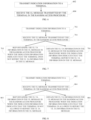
- FIG. 3 illustrates a flowchart of a method for timing advance (TA) reporting in an NTN provided in exemplary implementations of the disclosure.
- the method is applied to a terminal.
- the terminal supports the NTN.
- the method includes the following.
- Step 302 the terminal receives indication information from a network device.
- the indication information is a signaling transmitted by the network device to the terminal. Schematically, the indication information indicates whether the terminal reports UL TA information in a UL message in a random access procedure or whether the terminal is allowed to report the UL TA information in the UL message in the random access procedure.
- the indication information is carried in a RRC dedicated signaling or a system message broadcast.
- the UL message in the random access procedure includes any of: a message 3 in a type-1 random access procedure, a message 5 in the type-1 random access procedure, and a message A in a type-2 random access procedure.
- the message 3 in the type-1 random access procedure is mainly used to inform the network device of an event that triggers the random access procedure, and the message 3 contains a UE ID and an establishment cause or carries the UE ID and the establishment cause.
- the message 5 in the type-1 random access procedure is mainly used to inform the network device of random access connection setup complete.
- the message A in the type-2 random access procedure contains a random access preamble and a UE ID, where the UE ID may be one of a C-RNTI, a temporary C-RNTI, a RA-RNTI, and a NAS UE ID.
- the indication information may indicate only a certain message, or indicate all messages.
- the indication information may be classified into the following two types according to different functions.
- the indication information indicates whether the terminal reports the UL TA information in any of the message 3, the message 5, and the message A, or whether the terminal is allowed to report the UL TA information in any of the message 3, the message 5, and the message A.
- the network device When any of the above two types of indication information is adopted, it is the network device who determines whether to allow the terminal device to report the UL TA information. Such determination can be made by the network device based on any configuration information or operational requirement related to the random access procedure.
- the network device determines the indication information according to the configuration of a serving cell of the terminal, where the configuration of the serving cell of the terminal includes configuration related to random access resources.
- the network device may also determine whether to allow to report the UL TA information according to at least one of a coverage of the serving cell, a distance between the terminal and a satellite, and a distance between the terminal and the network device. For example, when the network device determines that the coverage of the serving cell is small, the indication information indicates that the UL TA information is not allowed to be reported.
- the network device transmits a RRC dedicated signaling to the terminal, where the RRC dedicated signaling carries indication information, and the indication information indicates whether the terminal reports the UL TA information in the message 3.
- the network device transmits a system message broadcast to the terminal, where the system message broadcast carries indication information, and the indication information indicates whether the terminal is allowed to report the UL TA information in any of the message 3, the message 5, and the message A.
- Step 304 the terminal reports or does not report the UL TA information in the UL message in the random access procedure according to the indication information.
- the time when the UL message transmitted by the terminal to the network device arrives at the network device is affected by factors such as distance. Therefore, there is a delay in signal transmission.
- a terminal far from the network device usually need to transmit the UL message earlier than a terminal closer to the network device.
- the UL TA information is carried in the UL message and refers to a relative value transmitted by the terminal to the network device and indicating a phase position of the terminal.
- the UL TA information includes at least one of: a UL TA, a first round trip delay (RTD) between the terminal and a satellite, a second RTD between the terminal and the network device, and a delta value relative to a common RTD.
- RTD round trip delay
- the UL TA value is determined according to a distance from the terminal to the satellite.
- the RTD value is obtained according to the real time differential (RTD) technology.
- the principle of this technology is: the network device or the satellite transmits a pseudo-range (or coordinate) correction value (also referred to as a differential value) to the terminal, and the terminal estimates a precise location of the terminal according to the correction value and an observation value of the terminal. Therefore, the RTD value can be used to obtain the precise location of the terminal dynamically in real time and for relative positioning.
- the first RTD is obtained according to a pseudo-range (or coordinate) correction value (also referred to as a differential value) transmitted by the satellite to the terminal
- the second RTD is obtained according to a pseudo-range (or coordinate) correction value (also referred to as a differential value) transmitted by the network device to the terminal.
- the common RTD refers to a minimum delay between the terminal and the network device in the cell, where the minimum delay depends on a delay between the terminal and the network device corresponding to satellite overtiming.
- the second RTD is equal to a sum of the common RTD and the delta value.
- the network device transmits a RRC dedicated signaling to the terminal, where the RRC dedicated signaling carries indication information, and the indication information indicates that the terminal is allowed to report the UL TA information in the message 3.
- the terminal reports the first RTD in the UL message, i.e., in the message 3, in the random access procedure according to the indication information.
- the network device transmits a system message broadcast to the terminal, where the system message broadcast carries indication information, and the indication information indicates that the terminal is not allowed to report the UL TA information in any of the message 3, the message 5, and the message A.
- the terminal will not report the UL TA information in the UL message in the random access procedure according to the indication information.
- the network device can dynamically schedule the UL TA information of the terminal by controlling whether to report the TA information.
- the network device does not obtain the UL TA information of the terminal, message resources occupied by the terminal for reporting can be reduced, thereby saving resources.
- the network device obtains the UL TA information of the terminal, the network device can obtain an exact TA of the terminal, thereby reducing a scheduling delay.
- the terminal during TA reporting in the NTN, the terminal generates a specific UL message according to the indication information, where the UL message may or may not carry the UL TA information of the terminal.
- the terminal may report the UL message in the random access procedure according to at least one of the following methods.
- the method is applied to a terminal.
- the terminal supports the NTN.
- the method includes the following.
- Step 402 the terminal receives indication information from a network device.
- the indication information indicates whether the terminal reports UL TA information in a UL message in a random access procedure.
- the indication information is carried in a RRC dedicated signaling or a system message broadcast.
- the UL message in the random access procedure includes any of: a message 3 in a type-1 random access procedure, a message 5 in the type-1 random access procedure, and a message A in a type-2 random access procedure.
- the indication information may indicate only a certain message, or indicate all messages.
- the indication information may be classified into the following two types according to different functions.
- the indication information indicates whether the terminal reports the UL TA information in any of the message 3, the message 5, and the message A.
- Step 403 the terminal skips reporting the UL TA information in the UL message in the random access procedure when the indication information indicates that the terminal does not report the UL TA information in the UL message.
- Step 404 the terminal reports the UL TA information in the UL message in the random access procedure when the indication information indicates that the terminal reports the UL TA information in the UL message.
- the terminal if the indication information indicates that the terminal reports the UL TA information in the UL message, the terminal generates a media access control (MAC) protocol data unit (MAC PDU) for final transmission by encapsulating, according to a logical channel priority, one or more media access control-control elements (MAC CE) carrying a UL TA together with other data to-be-transmitted, and reports the UL message carrying the UL TA information in the random access procedure.
- MAC media access control
- MAC CE media access control-control elements
- the network device transmits a RRC dedicated signaling to the terminal, where the RRC dedicated signaling carries indication information, and the indication information indicates that the terminal can report the UL TA information in the message 3.
- the terminal reports the UL TA information in the UL message, i.e., in the message 3, in the random access procedure according to the indication information, where the UL TA information is the second RTD.
- step 403 and step 404 cannot be executed at the same time.
- step 403 is executed first, and then step 404 is executed according to updated indication information.
- step 404 is executed first, and then step 403 is executed according to updated indication information.
- the indication information indicates whether the terminal is allowed to report the UL TA information in the UL message in the random access procedure.
- the method is applied to a terminal.
- the terminal supports the NTN.
- the method includes the following.
- Step 502 the terminal receives indication information from a network device.
- the indication information indicates whether the terminal is allowed to report UL TA information in a UL message in a random access procedure.
- the indication information is carried in a RRC dedicated signaling or a system message broadcast.
- the UL message in the random access procedure includes any of: a message 3 in a type-1 random access procedure, a message 5 in the type-1 random access procedure, and a message A in a type-2 random access procedure.
- the indication information may indicate only a certain message, or indicate all messages.
- the indication information may be classified into the following two types according to different functions.
- the indication information indicates whether the terminal is allowed to report the UL TA information in any of the message 3, the message 5, and the message A.
- Step 503 the terminal skips reporting the UL TA information in the UL message in the random access procedure when the indication information indicates that the UL TA information is not allowed to be reported in the UL message.
- Step 504 the terminal determines whether to report the UL TA information in the UL message in the random access procedure according to at least one of a logical channel priority and a UL grant when the indication information indicates that the UL TA information is allowed to be reported in the UL message.
- the terminal can make the following two decisions respectively according to at least one of the logical channel priority and the UL grant.
- All the data to-be-transmitted are sorted in descending order of the priority of the logical channel to which the UL TA information and the other data to-be-transmitted belong. Whether a UL resource scheduled by the UL grant is large enough to accommodate the UL TA information in the current UL transmission is determined according to the size of respective sorted data to-be-transmitted. When the UL resource indicated by the UL grant is large enough to accommodate the UL TA information, the UL TA information is reported.
- the data to-be-transmitted includes at least one of UL data and a MAC CE, and the UL TA information is carried in a certain MAC CE.
- All the data to-be-transmitted are sorted in descending order of the priority of the logical channel to which the UL TA information and the other data to-be-transmitted belong. Whether a UL resource scheduled by the UL grant is large enough to accommodate the UL TA information in the current UL transmission is determined according to the size of respective sorted data to-be-transmitted. When the UL resource indicated by the UL grant is too small to accommodate the UL TA information, the UL TA information will not be reported.
- step 503 and step 504 cannot be executed at the same time.
- step 503 is executed first, and then step 504 is executed according to updated indication information.
- step 504 is executed first, and then step 503 is executed according to updated indication information.
- the network device can dynamically schedule the UL TA information of the terminal by controlling whether to report the TA information.
- the network device does not obtain the UL TA information of the terminal, message resources occupied by the terminal for reporting can be reduced, thereby saving resources.
- the network device obtains the UL TA information of the terminal, the network device can obtain an exact TA of the terminal, thereby reducing a scheduling delay.
- a method for TA receiving in an NTN is provided in implementations of the disclosure. The method includes the following.
- Step 602 a network device transmits indication information to a terminal.
- the indication information is a signaling transmitted by the network device to the terminal.
- the indication information indicates whether the terminal reports UL TA information in a UL message in a random access procedure or whether the terminal is allowed to report the UL TA information in the UL message in the random access procedure.
- the indication information is carried in a RRC dedicated signaling or a system message broadcast.
- the UL message in the random access procedure includes any of: a message 3 in a type-1 random access procedure, a message 5 in the type-1 random access procedure, and a message A in a type-2 random access procedure.
- the message 3 in the type-1 random access procedure is mainly used to inform the network device of an event that triggers the random access procedure, and the message 3 contains a UE ID and an establishment cause or carries the UE ID and the establishment cause.
- the message 5 in the type-1 random access procedure is mainly used to inform the network device of connection setup complete of random access.
- the message A in the type-2 random access procedure contains a random access preamble and a UE ID, where the UE ID may be one of a C-RNTI, a temporary C-RNTI, a RA-RNTI, and a NAS UE ID.
- the indication information may indicate only a certain message, or indicate all messages.
- the indication information may be classified into the following two types according to different functions.
- the indication information indicates whether the terminal reports the UL TA information in any of the message 3, the message 5, and the message A, or whether the terminal is allowed to report the UL TA information in any of the message 3, the message 5, and the message A.
- the network device When any of the above two types of indication information is adopted, it is the network device who determines whether to allow the terminal device to report the UL TA information. Such determination can be made by the network device based on any configuration information or operational requirement related to the random access procedure.
- the network device determines the indication information according to configuration of a serving cell of the terminal, where the configuration of the serving cell of the terminal includes configuration related to random access resources.
- the network device may also determine whether to allow to report the UL TA information according to at least one of a coverage of the serving cell, a distance between the terminal and a satellite, and a distance between the terminal and the network device. For example, when the network device determines that the coverage of the serving cell is small, the indication information indicates that the UL TA information is not allowed to be reported.
- the network device transmits a RRC dedicated signaling to the terminal, where the RRC dedicated signaling carries indication information, and the indication information indicates whether the terminal reports the UL TA information in the message 5.
- the network device transmits a system message broadcast to the terminal, where the system message broadcast carries indication information, and the indication information indicates whether the terminal is allowed to report the UL TA information in any of the message 3, the message 5, and the message A.
- Step 604 the network device receives the UL message transmitted by the terminal in the random access procedure.
- the UL message may or may not carry the UL TA information of the terminal.
- the UL TA information includes at least one of: a UL TA, a first RTD between the terminal and a satellite, a second RTD between the terminal and the network device, and a delta value relative to a common RTD.
- the network device transmits a RRC dedicated signaling to the terminal, where the RRC dedicated signaling carries indication information, and the indication information indicates that the UL TA information is allowed to be reported in the message 5.
- the terminal reports the first RTD in the UL message in the random access procedure according to the indication information.
- the network device transmits a system message broadcast to the terminal, where the system message broadcast carries indication information, and the indication information indicates that the UL TA information is not allowed to be reported in any of the message 3, the message 5, and the message A.
- the terminal will not report the UL TA information in the UL message in the random access procedure according to the indication information.
- the network device can dynamically schedule the UL TA information of the terminal by controlling whether to report the TA information.
- the network device does not obtain the UL TA information of the terminal, message resources occupied by the terminal for reporting can be reduced, thereby saving resources.
- the network device obtains the UL TA information of the terminal, the network device can obtain an exact TA of the terminal, thereby reducing a scheduling delay.
- the network device may receive the UL message transmitted by the terminal according to at least one of the following two methods.
- FIG. 7 Schematically, as illustrated in FIG. 7 , another method for TA receiving in an NTN is provided in implementations of the disclosure.
- the method includes the following.
- Step 702 a network device transmits indication information to a terminal.
- the indication information indicates whether the terminal reports UL TA information in a UL message in a random access procedure.
- the indication information is carried in a RRC dedicated signaling or a system message broadcast.
- the UL message in the random access procedure includes any of: a message 3 in a type-1 random access procedure, a message 5 in the type-1 random access procedure, and a message A in a type-2 random access procedure.
- the indication information may indicate only a certain message, or indicate all messages.
- the indication information may be classified into the following two types according to different functions.
- the indication information indicates whether the terminal reports the UL TA information in any of the message 3, the message 5, and the message A.
- Step 704 the network device receives the UL message transmitted by the terminal in the random access procedure.
- the UL message may or may not carry the UL TA information of the terminal.
- the UL TA information includes at least one of: a UL TA, a first RTD between the terminal and a satellite, a second RTD between the terminal and the network device, and a delta value relative to a common RTD.
- the network device transmits a RRC dedicated signaling to the terminal, where the RRC dedicated signaling carries indication information, and the indication information indicates that the terminal reports the UL TA information in the message A.
- the terminal reports the first RTD in the UL message, i.e., in the message A, in the random access procedure according to the indication information.
- the network device transmits a system message broadcast to the terminal, where the system message broadcast carries indication information, and the indication information indicates that the terminal does not report the UL TA information in any of the message 3, the message 5, and the message A.
- the terminal will not report the UL TA information in the UL message in the random access procedure according to the indication information.
- Step 705 the network device skips obtaining the UL TA information in the UL message in the random access procedure when the indication information indicates that the terminal does not report the UL TA information in the UL message.
- Step 706 the network device obtains the UL TA information in the UL message in the random access procedure when the indication information indicates that the terminal reports the UL TA information in the UL message.
- step 705 and step 706 cannot be executed at the same time.
- step 705 is executed first, and then step 706 is executed according to updated indication information.
- step 706 is executed first, and then step 705 is executed according to updated indication information.
- the indication information indicates whether the terminal is allowed to report the UL TA information in the UL message in the random access procedure.
- FIG. 8 Schematically, as illustrated in FIG. 8 , another method for TA receiving in an NTN is provided in implementations of the disclosure.
- the method includes the following.
- Step 802 a network device transmits indication information to a terminal.
- the indication information indicates whether the terminal reports UL TA information in a UL message in a random access procedure or whether the terminal is allowed to report the UL TA information in the UL message in the random access procedure.
- the indication information is carried in a RRC dedicated signaling or a system message broadcast.
- the UL message in the random access procedure includes any of: a message 3 in a type-1 random access procedure, a message 5 in the type-1 random access procedure, and a message A in a type-2 random access procedure.
- the indication information may indicate only a certain message, or indicate all messages.
- the indication information may be classified into the following two types according to different functions.
- the indication information indicates whether the terminal is allowed to report the UL TA information in any of the message 3, the message 5, and the message A.
- Step 804 the network device receives the UL message transmitted by the terminal in the random access procedure.
- the UL message may or may not carry the UL TA information of the terminal.
- the UL TA information includes at least one of: a UL TA, a first RTD between the terminal and a satellite, a second RTD between the terminal and the network device, and a delta value relative to a common RTD.
- Step 805 the network device skips obtaining the UL TA information in the UL message in the random access procedure when the indication information indicates that the UL TA information is not allowed to be reported in the UL message.
- Step 806 the network device obtains the UL TA information in the UL message in the random access procedure when the indication information indicates that the UL TA information is allowed to be reported in the UL message.
- the terminal can make the following two decisions respectively according to at least one of the logical channel priority and the UL grant.
- All the data to-be-transmitted are sorted in descending order of the priority of the logical channel to which the UL TA information and the other data to-be-transmitted belong. Whether a UL resource scheduled by the UL grant is large enough to accommodate the UL TA information in the current UL transmission is determined according to the size of respective sorted data to-be-transmitted. When the UL resource indicated by the UL grant is large enough to accommodate the UL TA information, the UL TA information is reported.
- the data to-be-transmitted includes at least one of UL data and a MAC CE, and the UL TA information is carried in a certain MAC CE.
- All the data to-be-transmitted are sorted in descending order of the priority of the logical channel to which the UL TA information and the other data to-be-transmitted belong. Whether a UL resource scheduled by the UL grant is large enough to accommodate the UL TA information in the current UL transmission is determined according to the size of respective sorted data to-be-transmitted. When the UL resource indicated by the UL grant is too small to accommodate the UL TA information, the UL TA information will not be reported.
- step 805 and step 806 cannot be executed at the same time.
- step 805 is executed first, and then step 806 is executed according to updated indication information.
- step 806 is executed first, and then step 805 is executed according to updated indication information.
- the network device can dynamically schedule the UL TA information of the terminal by controlling whether to report the TA information.
- the network device does not obtain the UL TA information of the terminal, message resources occupied by the terminal for reporting can be reduced, thereby saving resources.
- the network device obtains the UL TA information of the terminal, the network device can obtain an exact TA of the terminal, thereby reducing a scheduling delay.
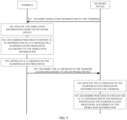
- a method for TA reporting/receiving in an NTN is provided in implementations of the disclosure.
- the method is performed by a terminal and a network device.
- the method includes the following.
- Step 901 the network device transmits indication information to the terminal.
- Step 902 the terminal receives the indication information from the network device.
- Step 903 the terminal determines whether to report UL TA information in a UL message in a random access procedure according to the indication information.
- Step 904 the terminal generates a UL message in the random access procedure.
- the indication information indicates whether the terminal reports the UL TA information in the UL message in the random access procedure or whether the terminal is allowed to report the UL TA information in the UL message in the random access procedure.
- the UL message in the random access procedure includes any of: a message 3 in a type-1 random access procedure, a message 5 in the type-1 random access procedure, and a message A in a type-2 random access procedure.
- the indication information may indicate only a certain message, or indicate all messages.
- the indication information may be classified into the following two types according to different functions.
- the indication information indicates that the terminal reports the UL TA information in any of the message 3, the message 5, and the message A, or whether the terminal is allowed to report the UL TA information in any of the message 3, the message 5, and the message A.
- the network device transmits a RRC dedicated signaling to the terminal, where the RRC dedicated signaling carries indication information, and the indication information indicates that the UL TA information is allowed to be reported in the message 3.
- the terminal After receiving the indication information, the terminal determines that the UL TA information needs to be reported in the UL message in the random access procedure according to the indication information, and generates the UL message containing the UL TA information.
- Step 905 the terminal transmits the UL message in the random access procedure to the network device.
- Step 906 the network device receives the UL message in the random access procedure transmitted by the terminal.
- Step 907 the network device determines whether to obtain the UL TA information in the message reported in the random access procedure according to the indication information.
- the UL TA information includes at least one of: a UL TA, a first RTD between the terminal and a satellite, a second RTD between the terminal and the network device, and a delta value relative to a common RTD.
- the terminal According to the indication information indicating that the UL TA information is allowed to be reported in the message 5, the terminal generates the UL message of the random access procedure. Subsequently, the terminal transmits the UL message to the network device, where the UL TA information in the UL message is the second RTD.
- the random access procedure is a type-2 random access procedure
- a procedure of TA reporting/receiving in an NTN is classified into the following two cases according to whether the network device allows the terminal to report the UL TA information in message A.
- Case 1 The network device does not allow the terminal to report the UL TA information in the message A.
- the TA reporting/receiving in the NTN includes the following.
- Step 1011 a network device transmits indication information to a terminal.
- the indication information indicates that the terminal is not allowed to report UL TA information of the terminal in a UL message, i.e., in message A, in a random access procedure.
- Step 1021 the terminal performs TA compensation on a transmission time of the UL message.
- Step 1031 the terminal transmits the message A to the network device.
- the terminal performs the TA compensation on the transmission time according to an estimated pre-compensation value, and transmits the message A to the network device at the transmission time after the TA compensation.
- the network device does not allow the terminal to report the UL TA information in the message A. Therefore, the UL message generated by the terminal does not contain the UL TA information. That is, a MAC CE carrying the UL TA information of the terminal is not reported in the message A transmitted by the terminal to the network device.
- Step 1041 the network device determines a TA adjustment amount of the terminal.
- Step 1051 the network device transmits message B to the terminal.
- a MAC CE obtained by the network device does not carry the UL TA information of the terminal.
- the network device adjusts a TA of the terminal and generates and transmits the message B to the terminal, where the TA of the terminal carried in the message B has not been adjusted according to the UL TA information of the terminal.
- Step 1061 the terminal adjusts the TA based on the indication of the message B.
- the terminal After receiving the message B transmitted by the network device, the terminal adjusts the transmission time of the UL message of the terminal according to the TA value carried in the message B.
- Case 2 The network device allows the terminal to report the UL TA information in the message A.
- the TA reporting/receiving in the NTN includes the following.
- Step 1012 a network device transmits indication information to a terminal.
- the indication information indicates that the terminal is not allowed to report UL TA information of the terminal in a UL message, i.e., in message A, in a random access procedure.
- Step 1022 the terminal performs TA compensation on a transmission time of the UL message.
- the terminal performs the TA compensation on the transmission time according to an estimated pre-compensation value, and transmits the message A to the network device at the transmission time after the TA compensation.
- the network device allows the terminal to report the UL TA information in the message A. Therefore, the UL message generated by the terminal may contain the UL TA information. That is, a MAC CE carrying the UL TA information of the terminal may be reported in the message A transmitted by the terminal to the network device.
- Step 1042 a TA adjustment amount of the terminal is determined.
- Step 1052 the network device transmits message B to the terminal.
- a MAC CE obtained by the network device carries the UL TA information of the terminal.
- the network device adjusts a TA of the terminal and generates and transmits the message B, where the TA of the terminal carried in the message B is a TA adjusted according to the UL TA information of the terminal.
- Step 1062 the terminal adjusts the TA based on the indication of the message B.
- the terminal After receiving the message B transmitted by the network device, the terminal adjusts the transmission time of the UL message of the terminal according to the TA value carried in the message B.
- the network device can dynamically schedule the UL TA information of the terminal by controlling whether to report the TA information.
- the network device does not obtain the UL TA information of the terminal, message resources occupied by the terminal for reporting can be reduced, thereby saving resources.
- the network device obtains the UL TA information of the terminal, the network device can obtain an exact TA of the terminal, thereby reducing a scheduling delay.
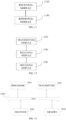
- an apparatus for TA reporting in an NTN is provided in implementations of the disclosure.
- the apparatus can be implemented as all or part of or be applied in a terminal.
- the terminal may support the NTN.
- the apparatus includes a receiving module 1120 and a reporting module 1140.
- the receiving module 1120 is configured to receive indication information from a network device, where the indication information indicates whether a terminal reports UL TA information in a UL message in a random access procedure or whether the terminal is allowed to report the UL TA information in the UL message in the random access procedure.
- the reporting module 1140 is configured to report or skip reporting the UL TA information in the UL message in the random access procedure according to the indication information.
- the UL message in the random access procedure includes any of: a message 3 in a type-1 random access procedure, a message 5 in the type-1 random access procedure, and a message A in a type-2 random access procedure.
- the indication information indicates one of: whether the terminal reports the UL TA information in the message 3, whether the terminal reports the UL TA information in the message 5, whether the terminal reports the UL TA information in the message A, whether the terminal is allowed to report the UL TA information in the message 3, whether the terminal is allowed to report the UL TA information in the message 5, or whether the terminal is allowed to report the UL TA information in the message A.
- the indication information indicates whether the terminal reports the UL TA information in any of the message 3, the message 5, and the message A, or whether the terminal is allowed to report the UL TA information in any of the message 3, the message 5, and the message A.
- the indication information is carried in a RRC dedicated signaling or a system message broadcast.
- the UL TA information includes at least one of: a UL TA, a first RTD between the terminal and a satellite, a second RTD between the terminal and the network device, and a delta value relative to a common RTD.
- the reporting module 1140 is further configured to: skip reporting, by the terminal, the UL TA information in the UL message in the random access procedure when the indication information indicates that the terminal does not report the UL TA information in the UL message, or report, by the terminal, the UL TA information in the UL message in the random access procedure when the indication information indicates that the terminal reports the UL TA information in the UL message.
- the reporting module 1140 is further configured to: skip reporting, by the terminal, the UL TA information in the UL message in the random access procedure when the indication information indicates that the terminal is not allowed to report the UL TA information in the UL message, or determine, by the terminal, whether to report the UL TA information in the UL message in the random access procedure according to at least one of a logical channel priority and a UL grant when the indication information indicates that the terminal is allowed to report the UL TA information in the UL message.
- an apparatus for TA receiving in an NTN is provided in implementations of the disclosure.
- the apparatus can be implemented as all or part of or be applied in a terminal.
- the terminal may support the NTN.
- the apparatus includes a transmitting module 1220, a receiving module 1240, and an obtaining module 1260.
- the transmitting module 1220 is configured to transmit indication information to a terminal, where the indication information indicates whether the terminal reports UL TA information in a UL message in a random access procedure or whether the terminal is allowed to report the UL TA information in the UL message in the random access procedure.
- the receiving module 1240 is configured to receive the UL message transmitted by the terminal in the random access procedure.
- the obtaining module 1260 is configured to: skip obtaining, by the terminal, the UL TA information in the UL message in the random access procedure when the indication information indicates that the terminal does not report the UL TA information in the UL message, or obtain, by the terminal, the UL TA information in the UL message in the random access procedure when the indication information indicates that the terminal reports the UL TA information in the UL message.
- the UL message in the random access procedure includes any of: a message 3 in a type-1 random access procedure, a message 5 in the type-1 random access procedure, and a message A in a type-2 random access procedure.
- the indication information indicates one of: whether the terminal reports the UL TA information in the message 3, whether the terminal reports the UL TA information in the message 5, whether the terminal reports the UL TA information in the message A, whether the terminal is allowed to report the UL TA information in the message 3, whether the terminal is allowed to report the UL TA information in the message 5, or whether the terminal is allowed to report the UL TA information in the message A.
- the indication information indicates whether the terminal reports the UL TA information in any of the message 3, the message 5, and the message A, or whether the terminal is allowed to report the UL TA information in any of the message 3, the message 5, and the message A.
- the indication information is carried in a RRC dedicated signaling or a system message broadcast.
- the UL TA information includes at least one of: a UL TA, a first RTD between the terminal and a satellite, a second RTD between the terminal and the network device, and a delta value relative to a common RTD.
- the obtaining module 1260 is further configured to: skip obtaining, by a network device, the UL TA information in the UL message in the random access procedure when the indication information indicates that the terminal is not allowed to report the UL TA information in the UL message, or obtain, by the network device, the UL TA information in the UL message in the random access procedure when the indication information indicates that the terminal is allowed to report the UL TA information in the UL message.
- FIG. 13 illustrates a schematic structural diagram of a communication device (a terminal or a network device) provided in exemplary implementations of the disclosure.
- the communication device includes a processor 1301, a receiver 1302, a transmitter 1303, a memory 1304, and a bus 1305.
- the processor 1301 includes one or more processing cores.
- the processor 1301 performs various functional applications and information processing by running software programs and modules.
- the receiver 1302 and the transmitter 1303 may be implemented as a communication component.
- the communication component may be a communication chip.
- the memory 1304 is connected with the processor 1301 via the bus 1305.
- the memory 1304 may be configured to store at least one instruction, and the processor 1301 is configured to execute the at least one instruction to implement various steps of the method for TA reporting and receiving in an NTN mentioned in foregoing method implementations.
- the memory 1304 may be implemented by any type of volatile or non-volatile storage devices or combinations thereof.
- the volatile or non-volatile storage devices includes, but are not limited to: a magnetic disk or an optical disk, an electrically-erasable programmable read only memory (EEPROM), an erasable programmable ROM (EPROM), a static random access memory (SRAM), a ROM, a magnetic memory, a flash memory, a programmable ROM (PROM).
- a terminal includes a processor, a transceiver connected with the processor, and a memory configured to store executable instructions for the processor.
- the processor is configured to load and execute the executable instructions to perform the method for TA reporting in the NTN described above.
- a network device includes a processor, a transceiver connected with the processor, and a memory configured to store executable instructions for the processor.
- the processor is configured to load and execute the executable instructions to perform the method for TA receiving in the NTN described above.
- a chip is provided.
- the chip includes a programmable logic circuit or program.
- the chip is configured to perform the method for TA reporting in the NTN or the method for TA receiving in the NTN according to the above aspect.
- a computer-readable storage medium stores executable instructions.
- the executable instructions are loaded and executed by a processor to perform the method for TA reporting in the NTN or the method for TA receiving in the NTN described above.
- the program may be stored in a computer-readable storage medium.
- the storage medium mentioned may be a ROM, a magnetic disk, an optical disk, and the like.
Landscapes
- Engineering & Computer Science (AREA)
- Computer Networks & Wireless Communication (AREA)
- Signal Processing (AREA)
- Physics & Mathematics (AREA)
- Astronomy & Astrophysics (AREA)
- Aviation & Aerospace Engineering (AREA)
- General Physics & Mathematics (AREA)
- Mobile Radio Communication Systems (AREA)
Claims (15)
- Verfahren zum Berichten von Zeitvorlauf, TA, in einem nicht terrestrischen Netzwerk, NTN, das auf ein Endgerät angewendet wird, dadurch gekennzeichnet, dass das Verfahren Folgendes umfasst:Empfangen (302, 402, 502) von Angabeinformationen von einer Netzwerkvorrichtung, wobei die Angabeinformationen verwendet werden, um anzugeben, dass das Endgerät Uplink- , UL-TA-Informationen in einer Nachricht 5 in einem Zufallzugriffsvorgang vom Typ 1 berichtet oder nicht berichtet; undBerichten oder Überspringen (304) des Berichtens durch das Endgerät der UL-TA-Informationen in der Nachricht 5 im Zufallszugriffsvorgang vom Typ 1 gemäß den Angabeinformationen.
- Verfahren nach Anspruch 1, wobei das Berichten oder Überspringen durch das Endgerät der UL-TA-Informationen in der Nachricht 5 im Zufallszugriffsvorgang vom Typ 1 gemäß den Angabeinformationen Folgendes umfasst:
Überspringen des Berichtens durch das Endgerät der UL-TA-Informationen in der Nachricht 5 im Zufallszugriffsvorgang vom Typ 1, wenn die Angabeinformationen angeben, dass das Endgerät die UL-TA-Informationen in der Nachricht 5 nicht berichtet; oder Berichten durch das Endgerät der UL-TA-Informationen in der Nachricht 5 im Zufallszugriffsvorgang vom Typ 1, wenn die Angabeinformationen angeben, dass das Endgerät die UL-TA-Informationen in der Nachricht 5 berichtet. - Verfahren nach einem der Ansprüche 1 bis 2, wobei die Angabeinformationen in einer dedizierten Signalisierung der Funkressourcensteuerung, RRC, oder einer Systemnachrichtausstrahlung getragen werden.
- Verfahren nach einem der Ansprüche 1 bis 2, wobei die UL-TA-Informationen Folgendes umfassen:einen UL-TA; und/odereine erste Umlaufverzögerung, RTD, zwischen dem Endgerät und einem Satelliten; und/odereine zweite RTD zwischen dem Endgerät und der Netzwerkvorrichtung; und/odereinen Delta-Wert im Verhältnis zu einer gemeinsamen RTD.
- Verfahren zum Empfangen von Zeitvorlauf, TA, in einem nicht terrestrischen Netzwerk, NTN, das auf eine Netzwerkvorrichtung angewendet wird, dadurch gekennzeichnet, dass das Verfahren Folgendes umfasst:Übertragen (602, 702, 802) von Angabeinformationen an ein Endgerät, wobei die Angabeninformationen verwendet werden, um anzugeben, dass das Endgerät Uplink-, UL-TA-Informationen in einer Nachricht 5 in einem Zufallzugriffsvorgang vom Typ 1 berichtet oder nicht berichtet; undEmpfang (604, 704, 804) der UL-Nachricht, die durch das Endgerät im Zufallszugriffsvorgang vom Typ 1 übertragen wird.
- Verfahren nach Anspruch 5, wobei die Angabeinformationen in einer dedizierten Signalisierung der Funkressourcensteuerung, RRC, oder einer Systemnachrichtausstrahlung getragen werden.
- Verfahren nach Anspruch 5, wobei die UL-TA-Informationen Folgendes umfassen:einen UL-TA; und/odereine erste Umlaufverzögerung, RTD, zwischen dem Endgerät und einem Satelliten; und/odereine zweite RTD zwischen dem Endgerät und der Netzwerkvorrichtung; und/odereinen Delta-Wert im Verhältnis zu einer gemeinsamen RTD.
- Verfahren nach einem der Ansprüche 5 bis 7, ferner umfassend:
Überspringen des Erhaltens durch die Netzwerkvorrichtung der UL-TA-Informationen in Nachricht 5 im Zufallszugriffsvorgang vom Typ 1, wenn die Angabeinformationen angeben, dass das Endgerät die UL-TA-Informationen in der Nachricht 5 nicht berichtet; oder Erhalten durch die Netzwerkvorrichtung der UL-TA-Informationen in Nachricht 5 im Zufallszugriffsvorgang vom Typ 1, wenn die Angabeinformationen angeben, dass das Endgerät die UL-TA-Informationen in der Nachricht 5 berichtet. - Einrichtung zum Berichten von Zeitvorlauf, TA, in einem nicht terrestrischen Netzwerk, NTN, dadurch gekennzeichnet, dass die Einrichtung Folgendes umfasst:
ein Empfangsmodul (1120), das dazu konfiguriert ist:Angabeinformationen von einer Netzwerkvorrichtung zu empfangen, wobei die Angabeninformationen verwendet werden, um anzugeben, dass ein Endgerät Uplink-, UL-TA-Informationen in einer Nachricht 5 in einem Zufallzugriffsvorgang vom Typ 1 berichtet oder nicht berichtet; undein Berichtsmodul (1140), das dazu konfiguriert ist:
die UL-TA-Informationen in der Nachricht 5 im Zufallszugriffsvorgang vom Typ 1 gemäß den Angabeinformationen zu berichten oder zu überspringen. - Einrichtung nach Anspruch 9, wobei die Angabeinformationen in einer dedizierten Signalisierung der Funkressourcensteuerung, RRC, oder einer Systemnachrichtausstrahlung getragen werden.
- Einrichtung nach Anspruch 9, wobei die UL-TA-Informationen Folgendes umfassen:einen UL-TA; und/odereine erste Umlaufverzögerung, RTD, zwischen dem Endgerät und einem Satelliten; und/odereine zweite RTD zwischen dem Endgerät und der Netzwerkvorrichtung; und/odereinen Delta-Wert im Verhältnis zu einer gemeinsamen RTD.
- Einrichtung nach einem der Ansprüche 9 bis 11, wobei das Berichtsmodul ferner dazu konfiguriert ist:das Berichten durch das Endgerät der UL-TA-Informationen in der Nachricht 5 im Zufallszugriffsvorgang vom Typ 1 zu überspringen, wenn die Angabeinformationen angeben, dass das Endgerät die UL-TA-Informationen in der Nachricht 5 nicht berichtet; oderdurch das Endgerät die UL-TA-Informationen in der Nachricht 5 im Zufallszugriffsvorgang vom Typ 1 zu berichten, wenn die Angabeinformationen angeben, dass das Endgerät die UL-TA-Informationen in der Nachricht 5 berichtet.
- Einrichtung zum Empfangen von Zeitvorlauf, TA, in einem nicht terrestrischen Netzwerk, NTN, dadurch gekennzeichnet, dass die Einrichtung Folgendes umfasst:
ein Übertragungsmodul (1220), das dazu konfiguriert ist:Angabeinformationen an ein Endgerät zu übertragen, wobei die Angabeninformationen verwendet werden, um anzugeben, dass das Endgerät Uplink-, UL-TA-Informationen in einer Nachricht 5 in einem Zufallzugriffsvorgang vom Typ 1 berichtet oder nicht berichtet; undein Empfangsmodul (1240), das dazu konfiguriert ist:
die UL-Nachricht zu empfangen, die durch das Endgerät im Zufallszugriffsvorgang vom Typ 1 übertragen wird. - Einrichtung nach Anspruch 13, wobei die Angabeinformationen in einer dedizierten Signalisierung der Funkressourcensteuerung, RRC, oder einer Systemnachrichtausstrahlung getragen werden.
- Einrichtung nach Anspruch 13, wobei die UL-TA-Informationen Folgendes umfassen:einen UL-TA; und/odereine erste Umlaufverzögerung, RTD, zwischen dem Endgerät und einem Satelliten; und/odereine zweite RTD zwischen dem Endgerät und einer Netzwerkvorrichtung; und/odereinen Delta-Wert im Verhältnis zu einer gemeinsamen RTD.
Applications Claiming Priority (1)
| Application Number | Priority Date | Filing Date | Title |
|---|---|---|---|
| PCT/CN2020/129854 WO2022104602A1 (zh) | 2020-11-18 | 2020-11-18 | Ntn中定时提前的上报方法、接收方法、装置及设备 |
Publications (3)
| Publication Number | Publication Date |
|---|---|
| EP4250806A1 EP4250806A1 (de) | 2023-09-27 |
| EP4250806A4 EP4250806A4 (de) | 2024-01-10 |
| EP4250806B1 true EP4250806B1 (de) | 2025-01-08 |
Family
ID=81708102
Family Applications (1)
| Application Number | Title | Priority Date | Filing Date |
|---|---|---|---|
| EP20961893.3A Active EP4250806B1 (de) | 2020-11-18 | 2020-11-18 | Verfahren und vorrichtung zur meldung von zeitvorlauf in ntn, verfahren und vorrichtung zum empfangen von zeitvorlauf in ntn und vorrichtung |
Country Status (4)
| Country | Link |
|---|---|
| US (1) | US12513640B2 (de) |
| EP (1) | EP4250806B1 (de) |
| CN (1) | CN116391399A (de) |
| WO (1) | WO2022104602A1 (de) |
Families Citing this family (2)
| Publication number | Priority date | Publication date | Assignee | Title |
|---|---|---|---|---|
| EP4398656A4 (de) * | 2021-09-03 | 2024-12-11 | Beijing Xiaomi Mobile Software Co., Ltd. | Verfahren und vorrichtung zur zeitvorlaufswertmeldung und speichermedium |
| US20240114406A1 (en) * | 2022-09-28 | 2024-04-04 | Comcast Cable Communications, Llc | Latency Reduction for Primary Cell Switching |
Family Cites Families (21)
| Publication number | Priority date | Publication date | Assignee | Title |
|---|---|---|---|---|
| CN103052095B (zh) * | 2011-10-11 | 2015-10-14 | 中国普天信息产业股份有限公司 | 频谱检测方法和系统 |
| CN104270810A (zh) * | 2014-10-16 | 2015-01-07 | 武汉理工大学 | 一种lte-a系统上行同步方法 |
| EP3826389B1 (de) * | 2015-09-25 | 2023-09-27 | Sony Group Corporation | Verfahren, apparat, computer software und speichermedia zum einrichten einer kabellosen verbindung |
| US10448423B2 (en) * | 2017-03-22 | 2019-10-15 | Ofinno, Llc | Data multiplexing in a wireless device and wireless network |
| WO2018202798A1 (en) * | 2017-05-04 | 2018-11-08 | Fraunhofer-Gesellschaft zur Förderung der angewandten Forschung e.V. | UE GROUPS, UE GROUP MANAGER UEs AND UE GROUP MEMBER UEs |
| WO2019147010A1 (ko) * | 2018-01-24 | 2019-08-01 | 엘지전자 주식회사 | 비면허 대역에서 임의 접속 채널 및 상향링크 채널을 송수신하는 방법 및 이를 위한 장치 |
| KR20240093866A (ko) * | 2018-08-10 | 2024-06-24 | 텔레폰악티에볼라겟엘엠에릭슨(펍) | 위성 통신을 위한 랜덤 액세스 절차 |
| CN109005563B (zh) * | 2018-08-22 | 2022-06-14 | 武汉虹信科技发展有限责任公司 | 一种lte负载均衡方法及系统 |
| CN113273261B (zh) * | 2019-01-07 | 2023-11-21 | 中兴通讯股份有限公司 | 无线网络中的定时提前确定 |
| WO2020167931A1 (en) * | 2019-02-14 | 2020-08-20 | Kyocera Corporation | Minimization of drive test for user equipment devices |
| CN111586582B (zh) * | 2019-02-15 | 2021-08-27 | 华为技术有限公司 | 确定跟踪区域的方法、终端设备和核心网设备 |
| CN116614894A (zh) * | 2019-02-25 | 2023-08-18 | 华为技术有限公司 | 通信方法、终端设备和网络设备 |
| US11228990B2 (en) * | 2019-03-28 | 2022-01-18 | Ofinno, Llc | Random access power control |
| CN110536341B (zh) * | 2019-04-29 | 2025-03-18 | 中兴通讯股份有限公司 | 网络信息上报方法、装置、用户终端、服务节点和介质 |
| KR102688336B1 (ko) * | 2019-05-03 | 2024-07-26 | 엘지전자 주식회사 | 다중 전송 블록 스케줄링을 위한 신호의 송수신 방법 및 이를 위한 장치 |
| US20220408384A1 (en) * | 2019-10-03 | 2022-12-22 | Telefonaktiebolaget Lm Ericsson (Publ) | Methods for Dynamic Update for Delay and Doppler Variations in Non-Terrestrial Networks |
| US11621768B2 (en) * | 2019-12-24 | 2023-04-04 | Huawei Technologies Co., Ltd. | Terrestrial and non-terrestrial communication systems, apparatuses, and methods |
| US12309730B2 (en) * | 2020-09-11 | 2025-05-20 | Sharp Kabushiki Kaisha | Reporting user equipment specific timing advance in a non-terrestrial network |
| KR20230096979A (ko) * | 2020-09-28 | 2023-06-30 | 애플 인크. | 무선 통신에 있어 사용자 장비에서 미리 구성된 그랜트를 사용하는 비활성 상태 초기 업링크 송신을 위한 방법들 및 장치 |
| WO2022061845A1 (en) * | 2020-09-28 | 2022-03-31 | Apple Inc. | Methods and apparatus for inactive state initial uplink transmission using pre-configured grant at a base station in wireless communication |
| CN116325565A (zh) * | 2020-10-06 | 2023-06-23 | 苹果公司 | 无线通信系统中的波束报告 |
-
2020
- 2020-11-18 CN CN202080106896.5A patent/CN116391399A/zh active Pending
- 2020-11-18 WO PCT/CN2020/129854 patent/WO2022104602A1/zh not_active Ceased
- 2020-11-18 EP EP20961893.3A patent/EP4250806B1/de active Active
-
2022
- 2022-12-26 US US18/146,417 patent/US12513640B2/en active Active
Also Published As
| Publication number | Publication date |
|---|---|
| EP4250806A4 (de) | 2024-01-10 |
| US20230269686A1 (en) | 2023-08-24 |
| EP4250806A1 (de) | 2023-09-27 |
| CN116391399A (zh) | 2023-07-04 |
| WO2022104602A1 (zh) | 2022-05-27 |
| US12513640B2 (en) | 2025-12-30 |
Similar Documents
| Publication | Publication Date | Title |
|---|---|---|
| US12376080B2 (en) | Random access resource configuration method and apparatus, device, and storage medium | |
| KR20240130123A (ko) | Gnss 유효성의 처리 방법, 장치, 디바이스 및 저장 매체 | |
| CN115052368A (zh) | 随机接入方法、终端设备、网络设备及存储介质 | |
| CN113498628B (zh) | 监听随机接入响应的方法、设备及存储介质 | |
| EP3993518A1 (de) | Direktzugriffsverfahren und -vorrichtung | |
| CN116210289B (zh) | 上行提前定时的确定方法、装置、设备及存储介质 | |
| US20230422147A1 (en) | Cell access control method, terminal device, and network device | |
| CN116325993B (zh) | Gnss测量方法、装置、设备及存储介质 | |
| US20230345399A1 (en) | Method and apparatus for broadcasting public information, and device and medium | |
| CN114902783A (zh) | 两步随机接入msg a资源的配置方法及相关装置 | |
| US12513640B2 (en) | Method for timing advance reporting in NTN, method for timing advance receiving in NTN, and device | |
| EP4258794A1 (de) | Direktzugriffsverfahren, elektronische vorrichtung und speichermedium | |
| CN117880998A (zh) | 信息指示方法、装置、设备、系统及存储介质 | |
| WO2022011710A1 (zh) | 上行定时提前的更新方法、装置、设备及介质 | |
| US20240155692A1 (en) | Communication method, terminal device and network device | |
| WO2022077141A1 (zh) | 随机接入响应接收窗的确定方法、装置、设备及介质 | |
| CN117156542A (zh) | 定时器启动方法、装置、终端及存储介质 | |
| US20250374328A1 (en) | Random access method and apparatus, device, and storage medium | |
| US20240224274A1 (en) | Sr triggering method and random access method and apparatuses, device and storage medium | |
| WO2022205223A1 (zh) | 一种随机接入方法、电子设备及存储介质 | |
| CN114846902B (zh) | 终端行为的确定方法、装置、设备及存储介质 | |
| CN116097880B (zh) | 随机接入的触发控制方法、装置、设备及存储介质 | |
| CN117882460A (zh) | 信息上报方法、装置、设备、存储介质及程序产品 | |
| US20250374333A1 (en) | Method for transmitting uplink message, terminal and network device | |
| RU2839000C2 (ru) | Способ и устройство для обработки достоверности фиксации глобальной навигационной спутниковой системы |
Legal Events
| Date | Code | Title | Description |
|---|---|---|---|
| STAA | Information on the status of an ep patent application or granted ep patent |
Free format text: STATUS: THE INTERNATIONAL PUBLICATION HAS BEEN MADE |
|
| PUAI | Public reference made under article 153(3) epc to a published international application that has entered the european phase |
Free format text: ORIGINAL CODE: 0009012 |
|
| STAA | Information on the status of an ep patent application or granted ep patent |
Free format text: STATUS: REQUEST FOR EXAMINATION WAS MADE |
|
| 17P | Request for examination filed |
Effective date: 20221222 |
|
| AK | Designated contracting states |
Kind code of ref document: A1 Designated state(s): AL AT BE BG CH CY CZ DE DK EE ES FI FR GB GR HR HU IE IS IT LI LT LU LV MC MK MT NL NO PL PT RO RS SE SI SK SM TR |
|
| A4 | Supplementary search report drawn up and despatched |
Effective date: 20231212 |
|
| RIC1 | Information provided on ipc code assigned before grant |
Ipc: H04W 74/08 20090101ALI20231206BHEP Ipc: H04W 56/00 20090101ALI20231206BHEP Ipc: H04W 24/10 20090101AFI20231206BHEP |
|
| DAV | Request for validation of the european patent (deleted) | ||
| DAX | Request for extension of the european patent (deleted) | ||
| GRAP | Despatch of communication of intention to grant a patent |
Free format text: ORIGINAL CODE: EPIDOSNIGR1 |
|
| STAA | Information on the status of an ep patent application or granted ep patent |
Free format text: STATUS: GRANT OF PATENT IS INTENDED |
|
| INTG | Intention to grant announced |
Effective date: 20240923 |
|
| GRAS | Grant fee paid |
Free format text: ORIGINAL CODE: EPIDOSNIGR3 |
|
| GRAA | (expected) grant |
Free format text: ORIGINAL CODE: 0009210 |
|
| STAA | Information on the status of an ep patent application or granted ep patent |
Free format text: STATUS: THE PATENT HAS BEEN GRANTED |
|
| AK | Designated contracting states |
Kind code of ref document: B1 Designated state(s): AL AT BE BG CH CY CZ DE DK EE ES FI FR GB GR HR HU IE IS IT LI LT LU LV MC MK MT NL NO PL PT RO RS SE SI SK SM TR |
|
| REG | Reference to a national code |
Ref country code: GB Ref legal event code: FG4D |
|
| REG | Reference to a national code |
Ref country code: CH Ref legal event code: EP |
|
| REG | Reference to a national code |
Ref country code: DE Ref legal event code: R096 Ref document number: 602020044690 Country of ref document: DE |
|
| REG | Reference to a national code |
Ref country code: IE Ref legal event code: FG4D |
|
| P01 | Opt-out of the competence of the unified patent court (upc) registered |
Free format text: CASE NUMBER: APP_9899/2025 Effective date: 20250226 |
|
| REG | Reference to a national code |
Ref country code: LT Ref legal event code: MG9D |
|
| REG | Reference to a national code |
Ref country code: NL Ref legal event code: MP Effective date: 20250108 |
|
| REG | Reference to a national code |
Ref country code: AT Ref legal event code: MK05 Ref document number: 1759118 Country of ref document: AT Kind code of ref document: T Effective date: 20250108 |
|
| PG25 | Lapsed in a contracting state [announced via postgrant information from national office to epo] |
Ref country code: NL Free format text: LAPSE BECAUSE OF FAILURE TO SUBMIT A TRANSLATION OF THE DESCRIPTION OR TO PAY THE FEE WITHIN THE PRESCRIBED TIME-LIMIT Effective date: 20250108 |
|
| PG25 | Lapsed in a contracting state [announced via postgrant information from national office to epo] |
Ref country code: RS Free format text: LAPSE BECAUSE OF FAILURE TO SUBMIT A TRANSLATION OF THE DESCRIPTION OR TO PAY THE FEE WITHIN THE PRESCRIBED TIME-LIMIT Effective date: 20250408 |
|
| PG25 | Lapsed in a contracting state [announced via postgrant information from national office to epo] |
Ref country code: FI Free format text: LAPSE BECAUSE OF FAILURE TO SUBMIT A TRANSLATION OF THE DESCRIPTION OR TO PAY THE FEE WITHIN THE PRESCRIBED TIME-LIMIT Effective date: 20250108 |
|
| PG25 | Lapsed in a contracting state [announced via postgrant information from national office to epo] |
Ref country code: PL Free format text: LAPSE BECAUSE OF FAILURE TO SUBMIT A TRANSLATION OF THE DESCRIPTION OR TO PAY THE FEE WITHIN THE PRESCRIBED TIME-LIMIT Effective date: 20250108 |
|
| PG25 | Lapsed in a contracting state [announced via postgrant information from national office to epo] |
Ref country code: ES Free format text: LAPSE BECAUSE OF FAILURE TO SUBMIT A TRANSLATION OF THE DESCRIPTION OR TO PAY THE FEE WITHIN THE PRESCRIBED TIME-LIMIT Effective date: 20250108 |
|
| PG25 | Lapsed in a contracting state [announced via postgrant information from national office to epo] |
Ref country code: IS Free format text: LAPSE BECAUSE OF FAILURE TO SUBMIT A TRANSLATION OF THE DESCRIPTION OR TO PAY THE FEE WITHIN THE PRESCRIBED TIME-LIMIT Effective date: 20250508 Ref country code: NO Free format text: LAPSE BECAUSE OF FAILURE TO SUBMIT A TRANSLATION OF THE DESCRIPTION OR TO PAY THE FEE WITHIN THE PRESCRIBED TIME-LIMIT Effective date: 20250408 |
|
| PG25 | Lapsed in a contracting state [announced via postgrant information from national office to epo] |
Ref country code: HR Free format text: LAPSE BECAUSE OF FAILURE TO SUBMIT A TRANSLATION OF THE DESCRIPTION OR TO PAY THE FEE WITHIN THE PRESCRIBED TIME-LIMIT Effective date: 20250108 |
|
| PG25 | Lapsed in a contracting state [announced via postgrant information from national office to epo] |
Ref country code: PT Free format text: LAPSE BECAUSE OF FAILURE TO SUBMIT A TRANSLATION OF THE DESCRIPTION OR TO PAY THE FEE WITHIN THE PRESCRIBED TIME-LIMIT Effective date: 20250508 Ref country code: LV Free format text: LAPSE BECAUSE OF FAILURE TO SUBMIT A TRANSLATION OF THE DESCRIPTION OR TO PAY THE FEE WITHIN THE PRESCRIBED TIME-LIMIT Effective date: 20250108 |
|
| PG25 | Lapsed in a contracting state [announced via postgrant information from national office to epo] |
Ref country code: GR Free format text: LAPSE BECAUSE OF FAILURE TO SUBMIT A TRANSLATION OF THE DESCRIPTION OR TO PAY THE FEE WITHIN THE PRESCRIBED TIME-LIMIT Effective date: 20250409 Ref country code: BG Free format text: LAPSE BECAUSE OF FAILURE TO SUBMIT A TRANSLATION OF THE DESCRIPTION OR TO PAY THE FEE WITHIN THE PRESCRIBED TIME-LIMIT Effective date: 20250108 |
|
| PG25 | Lapsed in a contracting state [announced via postgrant information from national office to epo] |
Ref country code: AT Free format text: LAPSE BECAUSE OF FAILURE TO SUBMIT A TRANSLATION OF THE DESCRIPTION OR TO PAY THE FEE WITHIN THE PRESCRIBED TIME-LIMIT Effective date: 20250108 |
|
| PG25 | Lapsed in a contracting state [announced via postgrant information from national office to epo] |
Ref country code: SE Free format text: LAPSE BECAUSE OF FAILURE TO SUBMIT A TRANSLATION OF THE DESCRIPTION OR TO PAY THE FEE WITHIN THE PRESCRIBED TIME-LIMIT Effective date: 20250108 |
|
| PG25 | Lapsed in a contracting state [announced via postgrant information from national office to epo] |
Ref country code: SM Free format text: LAPSE BECAUSE OF FAILURE TO SUBMIT A TRANSLATION OF THE DESCRIPTION OR TO PAY THE FEE WITHIN THE PRESCRIBED TIME-LIMIT Effective date: 20250108 |
|
| REG | Reference to a national code |
Ref country code: DE Ref legal event code: R097 Ref document number: 602020044690 Country of ref document: DE |
|
| PG25 | Lapsed in a contracting state [announced via postgrant information from national office to epo] |
Ref country code: DK Free format text: LAPSE BECAUSE OF FAILURE TO SUBMIT A TRANSLATION OF THE DESCRIPTION OR TO PAY THE FEE WITHIN THE PRESCRIBED TIME-LIMIT Effective date: 20250108 |
|
| PG25 | Lapsed in a contracting state [announced via postgrant information from national office to epo] |
Ref country code: CZ Free format text: LAPSE BECAUSE OF FAILURE TO SUBMIT A TRANSLATION OF THE DESCRIPTION OR TO PAY THE FEE WITHIN THE PRESCRIBED TIME-LIMIT Effective date: 20250108 Ref country code: EE Free format text: LAPSE BECAUSE OF FAILURE TO SUBMIT A TRANSLATION OF THE DESCRIPTION OR TO PAY THE FEE WITHIN THE PRESCRIBED TIME-LIMIT Effective date: 20250108 |
|
| PG25 | Lapsed in a contracting state [announced via postgrant information from national office to epo] |
Ref country code: RO Free format text: LAPSE BECAUSE OF FAILURE TO SUBMIT A TRANSLATION OF THE DESCRIPTION OR TO PAY THE FEE WITHIN THE PRESCRIBED TIME-LIMIT Effective date: 20250108 |
|
| PG25 | Lapsed in a contracting state [announced via postgrant information from national office to epo] |
Ref country code: SK Free format text: LAPSE BECAUSE OF FAILURE TO SUBMIT A TRANSLATION OF THE DESCRIPTION OR TO PAY THE FEE WITHIN THE PRESCRIBED TIME-LIMIT Effective date: 20250108 |
|
| PLBE | No opposition filed within time limit |
Free format text: ORIGINAL CODE: 0009261 |
|
| STAA | Information on the status of an ep patent application or granted ep patent |
Free format text: STATUS: NO OPPOSITION FILED WITHIN TIME LIMIT |
|
| 26N | No opposition filed |
Effective date: 20251009 |
|
| PGFP | Annual fee paid to national office [announced via postgrant information from national office to epo] |
Ref country code: GB Payment date: 20251126 Year of fee payment: 6 |
|
| PG25 | Lapsed in a contracting state [announced via postgrant information from national office to epo] |
Ref country code: IT Free format text: LAPSE BECAUSE OF FAILURE TO SUBMIT A TRANSLATION OF THE DESCRIPTION OR TO PAY THE FEE WITHIN THE PRESCRIBED TIME-LIMIT Effective date: 20250108 |