EP4246141A1 - Gas chromatograph, management apparatus, management system, and management method - Google Patents
Gas chromatograph, management apparatus, management system, and management method Download PDFInfo
- Publication number
- EP4246141A1 EP4246141A1 EP23161399.3A EP23161399A EP4246141A1 EP 4246141 A1 EP4246141 A1 EP 4246141A1 EP 23161399 A EP23161399 A EP 23161399A EP 4246141 A1 EP4246141 A1 EP 4246141A1
- Authority
- EP
- European Patent Office
- Prior art keywords
- gas chromatograph
- server
- information
- communication interface
- gas
- Prior art date
- Legal status (The legal status is an assumption and is not a legal conclusion. Google has not performed a legal analysis and makes no representation as to the accuracy of the status listed.)
- Withdrawn
Links
Images




Classifications
-
- G—PHYSICS
- G01—MEASURING; TESTING
- G01N—INVESTIGATING OR ANALYSING MATERIALS BY DETERMINING THEIR CHEMICAL OR PHYSICAL PROPERTIES
- G01N30/00—Investigating or analysing materials by separation into components using adsorption, absorption or similar phenomena or using ion-exchange, e.g. chromatography or field flow fractionation
- G01N30/02—Column chromatography
- G01N30/88—Integrated analysis systems specially adapted therefor, not covered by a single one of the groups G01N30/04 - G01N30/86
-
- G—PHYSICS
- G01—MEASURING; TESTING
- G01N—INVESTIGATING OR ANALYSING MATERIALS BY DETERMINING THEIR CHEMICAL OR PHYSICAL PROPERTIES
- G01N35/00—Automatic analysis not limited to methods or materials provided for in any single one of groups G01N1/00 - G01N33/00; Handling materials therefor
- G01N35/00584—Control arrangements for automatic analysers
- G01N35/00722—Communications; Identification
- G01N35/00871—Communications between instruments or with remote terminals
-
- G—PHYSICS
- G01—MEASURING; TESTING
- G01N—INVESTIGATING OR ANALYSING MATERIALS BY DETERMINING THEIR CHEMICAL OR PHYSICAL PROPERTIES
- G01N30/00—Investigating or analysing materials by separation into components using adsorption, absorption or similar phenomena or using ion-exchange, e.g. chromatography or field flow fractionation
- G01N30/02—Column chromatography
- G01N30/86—Signal analysis
-
- G—PHYSICS
- G01—MEASURING; TESTING
- G01N—INVESTIGATING OR ANALYSING MATERIALS BY DETERMINING THEIR CHEMICAL OR PHYSICAL PROPERTIES
- G01N30/00—Investigating or analysing materials by separation into components using adsorption, absorption or similar phenomena or using ion-exchange, e.g. chromatography or field flow fractionation
- G01N30/02—Column chromatography
- G01N2030/022—Column chromatography characterised by the kind of separation mechanism
- G01N2030/025—Gas chromatography
-
- G—PHYSICS
- G01—MEASURING; TESTING
- G01N—INVESTIGATING OR ANALYSING MATERIALS BY DETERMINING THEIR CHEMICAL OR PHYSICAL PROPERTIES
- G01N35/00—Automatic analysis not limited to methods or materials provided for in any single one of groups G01N1/00 - G01N33/00; Handling materials therefor
- G01N35/00584—Control arrangements for automatic analysers
- G01N35/00722—Communications; Identification
- G01N35/00871—Communications between instruments or with remote terminals
- G01N2035/00881—Communications between instruments or with remote terminals network configurations
-
- G—PHYSICS
- G01—MEASURING; TESTING
- G01N—INVESTIGATING OR ANALYSING MATERIALS BY DETERMINING THEIR CHEMICAL OR PHYSICAL PROPERTIES
- G01N30/00—Investigating or analysing materials by separation into components using adsorption, absorption or similar phenomena or using ion-exchange, e.g. chromatography or field flow fractionation
- G01N30/02—Column chromatography
- G01N30/26—Conditioning of the fluid carrier; Flow patterns
- G01N30/38—Flow patterns
- G01N30/46—Flow patterns using more than one column
-
- H—ELECTRICITY
- H04—ELECTRIC COMMUNICATION TECHNIQUE
- H04L—TRANSMISSION OF DIGITAL INFORMATION, e.g. TELEGRAPHIC COMMUNICATION
- H04L67/00—Network arrangements or protocols for supporting network services or applications
- H04L67/01—Protocols
- H04L67/12—Protocols specially adapted for proprietary or special-purpose networking environments, e.g. medical networks, sensor networks, networks in vehicles or remote metering networks
-
- H—ELECTRICITY
- H04—ELECTRIC COMMUNICATION TECHNIQUE
- H04L—TRANSMISSION OF DIGITAL INFORMATION, e.g. TELEGRAPHIC COMMUNICATION
- H04L67/00—Network arrangements or protocols for supporting network services or applications
- H04L67/50—Network services
- H04L67/56—Provisioning of proxy services
Definitions
- the present disclosure relates to a gas chromatograph, a management apparatus, a management system, and a management method.
- Patent Literature (PTL) 1 Patent Literature 1
- a gas chromatograph as a first gas chromatograph includes a controller configured to process data and a communication interface configured to output the data to a management apparatus.
- the communication interface functions as a wireless communication access point of a network identified by a predetermined identifier and outputs the data and/or information about the gas chromatograph via the network to the management apparatus connected to the wireless communication access point.
- the communication interface connects a second gas chromatograph to the wireless communication access point in bridge mode as a child device to cause the second gas chromatograph to output data processed by the second gas chromatograph and/or information about the second gas chromatograph to the management apparatus via the wireless communication access point and the network.
- the management apparatus can communicate with a plurality of gas chromatographs in parallel without switching network connections. The convenience for the management of a plurality of gas chromatographs thereby improves.
- the communication interface may acquire information to be set on the gas chromatograph and/or information on maintenance of the gas chromatograph from the management apparatus via the network.
- the management apparatus can maintain a gas chromatograph and acquire data in parallel without switching network connections. The convenience for the management of a plurality of gas chromatographs thereby improves.
- the communication interface may cause the second gas chromatograph to acquire, from the management apparatus, information to be set on the second gas chromatograph and/or information on maintenance of the second gas chromatograph via the wireless communication access point and the network.
- the management apparatus can maintain a gas chromatograph and acquire data in parallel without switching network connections. The convenience for the management of a plurality of gas chromatographs thereby improves.
- a management apparatus includes a communication interface and a controller.
- the communication interface communicates with the aforementioned first gas chromatograph as a parent device and the aforementioned second gas chromatograph as a child device via the aforementioned network.
- the controller acquires data received by the communication interface from the first gas chromatograph and the second gas chromatograph.
- the management apparatus can communicate with a plurality of gas chromatographs in parallel without switching network connections. The convenience for the management of a plurality of gas chromatographs thereby improves.
- the controller may generate information to be set on the first gas chromatograph or the second gas chromatograph or information on maintenance of the first gas chromatograph or the second gas chromatograph and output the generated information using the communication interface via the network to the first gas chromatograph or the second gas chromatograph.
- the management apparatus can maintain a gas chromatograph and acquire data in parallel without switching network connections. The convenience for the management of a plurality of gas chromatographs thereby improves.
- a management system includes the aforementioned gas chromatograph and the aforementioned management apparatus. In this way, the management system can communicate with a plurality of gas chromatographs in parallel without switching network connections. The convenience for the management of a plurality of gas chromatographs thereby improves.
- a management method includes communicating via a network identified by a predetermined identifier with a first gas chromatograph as a parent device that functions as a wireless communication access point of the network and a second gas chromatograph as a child device that connects to the wireless communication access point in bridge mode.
- the management method includes acquiring data received from the first gas chromatograph and the second gas chromatograph by the communicating step. In this way, the management apparatus can communicate with a plurality of gas chromatographs in parallel without switching network connections. The convenience for the management of a plurality of gas chromatographs thereby improves.
- the convenience of management of a plurality of gas chromatographs is improved.
- a management system 9 includes a management apparatus 96 and a gas chromatograph 90.
- the gas chromatograph 90 includes a device controller 92 and a device communication interface 94.
- the gas chromatograph 90 is assumed to be a measurement apparatus that measures various parameters representing plant conditions.
- the device controller 92 processes signals acquired from the measurement target to generate measurement data.
- the device communication interface 94 outputs the measurement data to the management apparatus 96.
- the management apparatus 96 acquires measurement data from the gas chromatograph 90.
- the management apparatus 96 also acquires information such as the occurrence of alarms from the gas chromatograph 90.
- the management apparatus 96 also transmits information on parameters to be set on the gas chromatograph 90 and firmware update data for the gas chromatograph 90.
- the management apparatus 96 communicates with each gas chromatograph 90.
- the gas chromatographs 90 are installed in various parts of a plant.
- the management apparatus 96 communicates with each gas chromatograph 90 wirelessly. It is assumed to be difficult for the gas chromatographs 90 to be wired to each other.
- the management apparatus 96 In the case in which the management apparatus 96 communicates wirelessly with each gas chromatograph 90, the management apparatus 96 connects to and initiates communication with one gas chromatograph 90 using an identifier that identifies the device communication interface 94 of the gas chromatograph 90 and a security key and then acquires measurement data and the like from the gas chromatograph 90 and outputs information such as parameters to the gas chromatograph 90.
- each gas chromatograph 90 The device communication interface 94 of each gas chromatograph 90 is identified by a different identifier and requires a different security key to connect. To switch to communication with another gas chromatograph 90, the management apparatus 96 must reconnect to that gas chromatograph 90. Therefore, while communicating with one gas chromatograph 90, the management apparatus 96 cannot communicate with other gas chromatographs 90.
- the time required to acquire the measurement data becomes longer. Furthermore, in a case of setting parameters or updating firmware on one gas chromatograph 90, the time required to output the setting data or updated data becomes longer. In these cases, the time during which the management apparatus 96 cannot communicate with other gas chromatographs 90 becomes longer. Since communication is only possible with one gas chromatograph 90 at a time in the management system 9 according to the comparative example, the convenience is reduced in the case of managing a plurality of gas chromatographs 90.
- the present disclosure therefore describes a gas chromatograph, a management apparatus, a management system, and a management method that can improve the convenience of management of a plurality of gas chromatographs.
- a management system 1 includes a first gas chromatograph 10, a second gas chromatograph 20, a server 30, and a data server 40.
- the first gas chromatograph 10 and the second gas chromatograph 20 are also collectively referred to simply as gas chromatographs when no distinction is necessary.
- the server 30 is also referred to as a management apparatus.
- the first gas chromatograph 10, the second gas chromatograph 20, and the server 30 are configured to communicate wirelessly, as described below.
- the dashed lines connecting the first gas chromatograph 10, the second gas chromatograph 20, and the server 30 represent connection in a manner enabling wireless communication.
- the server 30 and the first gas chromatograph 10 are connected by a dashed line, and the first gas chromatograph 10 and the (plurality of) second gas chromatograph(s) 20 are connected by dashed lines.
- the first gas chromatograph 10 and the data server 40 are configured to communicate in a wired manner, as described below.
- the solid line connecting the first gas chromatograph 10 and the data server 40 represents connection in a manner enabling wired communication.
- the server 30 outputs, to the gas chromatograph, information on parameters to be set on the gas chromatograph or information on maintenance, including updated data for programs such as firmware required for operation of the gas chromatograph.
- the server 30 outputs, to the gas chromatograph, information requesting that measurement data or information about the gas chromatograph be outputted.
- the gas chromatograph outputs measurement data or information about the gas chromatograph to the server 30.
- the server 30 acquires the measurement data or information about the gas chromatograph from the gas chromatograph.
- the information about the gas chromatograph includes alarms occurring on the gas chromatograph, the operating status of the gas chromatograph, and the like.
- the server 30 stores the information acquired from the gas chromatograph on the data server 40.
- the server 30 manages the gas chromatograph based on the information about the gas chromatograph stored on the data server 40, as described below.
- the measurement data is used to manage the plant.
- the plant may be managed by the server 30 or by another apparatus.
- the first gas chromatograph 10 includes a device controller 12 and a device communication interface 14.
- the second gas chromatograph 20 includes a device controller 22 and a device communication interface 24.
- the device controllers 12 and 22 are configured to include a processor such as a central processing unit (CPU).
- the device communication interfaces 14 and 24 are configured to include a wireless local area network (LAN) communication module.
- LAN wireless local area network
- the first gas chromatograph 10 and the second gas chromatograph 20 are connected within the same network on the wireless LAN.
- the same network means a network identified by a single identifier.
- SSID Service Set IDentifier
- the first gas chromatograph 10 and the second gas chromatograph 20 may be connected within the same network identified by a predetermined identifier.
- the first gas chromatograph 10 and the second gas chromatograph 20 are distinguished by different functions of their respective communication interfaces.
- the device communication interface 14 of the first gas chromatograph 10 connects to the wireless LAN network in access point mode. In other words, the device communication interface 14 of the first gas chromatograph 10 functions as a wireless communication access point.
- the device communication interface 24 of the second gas chromatograph 20 connects to the wireless LAN network in bridge mode.
- the first gas chromatograph 10 is also referred to as the parent device, which functions as a wireless communication access point of the wireless LAN.
- the second gas chromatograph 20 is also referred to as a child device, which connects in bridge mode to the wireless communication access point of the wireless LAN.
- the number of first gas chromatographs 10 functioning as parent devices in the same network is limited to one.
- the number of second gas chromatographs 20 functioning as child devices is not limited to one, but rather may be two or more.
- the upper limit on the number of child devices is determined by the specifications of the communication module of the parent device. It is assumed that each gas chromatograph connected to the same network is identified by an Internet Protocol (IP) address during communication. Each gas chromatograph may be identified by other means.
- IP Internet Protocol
- the server 30 includes a server controller 32, a storage 34, and a server communication interface 36.
- the server controller 32 may be configured by a processor such as a central processing unit (CPU).
- the server controller 32 may implement the various functions of the management system 1 by executing a predetermined program.
- the storage 34 may store various information used for operations of the server 30, programs for implementing the functions of the server 30, and the like.
- the storage 34 may function as a working memory of the server 30.
- the storage 34 may be configured to include an electromagnetic storage medium such as a magnetic disk or to include a memory such as a semiconductor memory or a magnetic memory.
- the storage 34 may be configured separately from the server 30.
- the server communication interface 36 is configured to include a wireless LAN communication module.
- the server communication interface 36 connects to the device communication interface 14 of the first gas chromatograph 10 functioning as a wireless communication access point.
- the server communication interface 36 connects to the network identified by a predetermined identifier.
- the server communication interface 36 can communicate with gas chromatographs connected to the same network. Therefore, the server communication interface 36 can communicate not only with the device communication interface 14 of the first gas chromatograph 10, but also with the device communication interface 24 of the second gas chromatograph 20 that is bridged.
- the server communication interface 36 communicates with each gas chromatograph connected to the same network by identifying each gas chromatograph using an IP address.
- the server 30 may include a display device for notifying managers or workers at a plant or other site of information.
- the display device may, for example, include a liquid crystal display (LCD).
- the display device may, for example, include an organic electroluminescence (EL) display or an inorganic EL display.
- the display device may include a plasma display, i.e., a plasma display panel (PDP).
- PDP plasma display panel
- the display device is not limited to these displays and may include various other types of displays.
- the display device may include a light emitting device such as a light emitting diode (LED).
- the server 30 may also include an audio output device such as a speaker.
- the management system 1 may include an output device such as a display device or an audio output device.
- the server 30 may include an input device that accepts input, such as data, from managers, workers, or others at a plant or other site.
- the input device may, for example, include a keyboard or physical keys, a touch panel or touch sensor, or a pointing device such as a mouse.
- the input device is not limited to these examples and may include a variety of other devices.
- the management system 1 may include an input device.
- the data server 40 is connected to the device communication interface 14 of the first gas chromatograph 10 by a wired LAN.
- the data server 40 communicates with the server communication interface 36 of the server 30 via the device communication interface 14 of the first gas chromatograph 10.
- the data server 40 stores information acquired from the server 30.
- the data server 40 also outputs the stored information to the server 30.
- the data server 40 stores the measurement data of the gas chromatograph or information about the gas chromatograph based on instructions from the server 30.
- the data server 40 may be configured to include an electromagnetic storage medium such as a magnetic disk or to include a memory such as a semiconductor memory or a magnetic memory.
- the data server 40 may be configured to be identical or similar to the server 30.
- the functions of the data server 40 may be included as part of the functions of the server 30. In other words, the server 30 and the data server 40 may be implemented as a single apparatus.
- data server 40 may be connected to the network configured by the device communication interface 14 of the first gas chromatograph 10.
- the server 30 may be configured to connect to two or more networks.
- the first gas chromatograph 10 may include first gas chromatographs 10A and 10B.
- the first gas chromatographs 10A and 10B function as wireless communication access points of networks identified by different identifiers.
- the first gas chromatograph 10A establishes a first network identified by a first identifier.
- the first gas chromatograph 10B establishes a second network identified by a second identifier.
- the server 30 When connected to the first gas chromatograph 10A, the server 30 can communicate with the first gas chromatograph 10A and with the second gas chromatograph 20 that is bridged to the wireless access point of the first gas chromatograph 10A. However, when connected to the first gas chromatograph 10A, the server 30 cannot communicate with the first gas chromatograph 10B nor with the second gas chromatograph 20 that is bridged to the first gas chromatograph 10B. By severing the connection with the first gas chromatograph 10A and connecting anew to the first gas chromatograph 10B, the server 30 can communicate with the first gas chromatograph 10B and with the second gas chromatograph 20 that is bridged to the wireless access point of the first gas chromatograph 10B.
- the server 30 When connected to the first gas chromatograph 10A, the server 30 stores information or data acquired from the first gas chromatograph 10A on the data server 40 connected to the first gas chromatograph 10A. When connected to the first gas chromatograph 10B, the server 30 stores information or data acquired from the first gas chromatograph 10B on the data server 40 connected to the first gas chromatograph 10B.
- the device controllers 12 and 22 of the gas chromatographs process data on the plant and the like, and as described below, output the processed data to the server 30 by communicating with the server 30 using the device communication interfaces 14 and 24.
- the server controller 32 of the server 30 connects to the device communication interface 14 of the first gas chromatograph 10 using the server communication interface 36.
- the server controller 32 acquires, in advance, a security key required to connect to the network identified by the predetermined identifier.
- the server controller 32 can connect to the network identified by the predetermined identifier.
- the server controller 32 uses the server communication interface 36 to acquire measurement data of the first gas chromatograph 10 or information about the first gas chromatograph 10 via the device communication interface 14 of the first gas chromatograph 10.
- the server communication interface 36 connects to the device communication interface 14, which functions as a wireless communication access point of the network identified by the predetermined identifier, and acquires (receives) the measurement data of the first gas chromatograph 10 or information about the first gas chromatograph 10 via the network.
- the device communication interface 14 of the first gas chromatograph 10 outputs (transmits) the measurement data of the first gas chromatograph 10 or information about the first gas chromatograph 10 via the network to the server 30 that connects to the device communication interface 14 functioning as a wireless communication access point.
- the server controller 32 uses the server communication interface 36 to output (transmit) information on parameters to be set on the first gas chromatograph 10, or information on maintenance, such as an update, for the first gas chromatograph 10 via the device communication interface 14 of the first gas chromatograph 10.
- the device communication interface 14 of the first gas chromatograph 10 acquires (receives) information on parameters or the like to be set for the first gas chromatograph 10, or information on maintenance for the first gas chromatograph 10, from the server 30 that connects to the device communication interface 14 functioning as a wireless communication access point.
- the device controller 12 of the first gas chromatograph 10 sets the acquired parameters or performs maintenance, such as updating the programs on the first gas chromatograph 10, based on the maintenance information.
- the device communication interface 24 of the second gas chromatograph 20 is bridged to the device communication interface 14 of the first gas chromatograph 10
- the device communication interface 24 of the second gas chromatograph 20 is connected to the network identified by the predetermined identifier.
- the server communication interface 36 can communicate with the device communication interface 24 of the second gas chromatograph 20 within the same network via the device communication interface 14 of the first gas chromatograph 10. With this configuration, the server communication interface 36 can communicate with both the first gas chromatograph 10 and the second gas chromatograph 20 without having to reconnect to the network.
- the device communication interface 14 of the first gas chromatograph 10 may cause the second gas chromatograph 20 to connect in bridge mode as a child device to the device communication interface 14 functioning as a wireless communication access point.
- the device communication interface 14 may cause data processed by the second gas chromatograph 20 or information about the second gas chromatograph 20 to be outputted to the server 30 via the network.
- the device communication interface 14 of the first gas chromatograph 10 may cause the second gas chromatograph 20, which is a child device, to acquire information on parameters to be set on the second gas chromatograph 20 and/or information on maintenance from the server 30 via the network.
- the server communication interface 36 may communicate via the network identified by the predetermined identifier with the first gas chromatograph 10 as a parent device that functions as a wireless communication access point of the network and the second gas chromatograph 20 as a child device that connects to the wireless communication access point in bridge mode.
- the server controller 32 may acquire data or information from the first gas chromatograph 10 as the parent device and the second gas chromatograph 20 as the child device.
- the server controller 32 may generate information on parameters or the like to be set on the first gas chromatograph 10 as the parent device or the second gas chromatograph 20 as the child device.
- the server controller 32 may generate information on maintenance, such as an update, for the first gas chromatograph 10 as the parent device or the second gas chromatograph 20 as the child device.
- the server controller 32 may output the generated information, using the server communication interface 36, to the first gas chromatograph 10 as the parent device or the second gas chromatograph 20 as the child device via the network in which the device communication interface 14 of the first gas chromatograph 10 functions as a wireless communication access point.
- the device communication interface 14 may connect the second gas chromatograph 20 in bridge mode as a child device to the wireless communication access point and perform setting processing to cause the second gas chromatograph 20 to output data processed by the second gas chromatograph 20 and/or information about the second gas chromatograph 20 to the server 30 via the wireless access point and the network.
- the server controller 32 instructs the gas chromatograph to output measurement data or information about the gas chromatograph.
- the server controller 32 identifies the target gas chromatograph, from which the information is to be acquired, by IP address and outputs the instruction.
- the gas chromatograph outputs measurement data or information about the gas chromatograph to the server 30.
- the gas chromatograph associates the outputted information with the device identification information that identifies the gas chromatograph itself.
- the server controller 32 can identify which gas chromatograph outputted the information by the device identification information associated with the acquired information.
- the server controller 32 may identify which gas chromatograph outputted the information by recognizing the IP address of the transmission source when acquiring the information from the gas chromatograph.
- the server controller 32 stores the measurement data or the information about the gas chromatograph acquired from each gas chromatograph on the data server 40.
- the server controller 32 uses the server communication interface 36 to output the information or the data to be stored on the data server 40 to the data server 40 via the device communication interface 14 of the first gas chromatograph 10.
- the data server 40 stores the information or data acquired from the server controller 32.
- the server controller 32 uses the server communication interface 36 to output information such as parameters to be set on the gas chromatograph or information on maintenance, such as an update.
- the server controller 32 uses the IP address to identify the gas chromatograph targeted for setting parameters or updating programs and outputs the information on parameters and the like or the information on maintenance, such as an update.
- the gas chromatograph sets the acquired parameters on the gas chromatograph itself or updates the programs of the gas chromatograph itself using the acquired update.
- the server communication interface 36 may be configured to simultaneously acquire (receive) data from a plurality of gas chromatographs and simultaneously output (transmit) information to a plurality of gas chromatographs by communicating with each gas chromatograph in parallel.
- the server communication interface 36 may be configured to acquire (receive) data from a plurality of gas chromatographs by time division and output (transmit) information to a plurality of gas chromatographs by time division by communicating with each gas chromatograph sequentially.
- the server communication interface 36 can maintain communication with a plurality of gas chromatographs without switching the network connection.
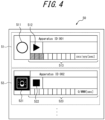
- the server controller 32 may, as illustrated in FIG. 4 , display the status of each gas chromatograph as a management screen 50 on the aforementioned display device of the server 30 to enable a user to grasp the status of each gas chromatograph.
- the management screen 50 includes display frames 51 and 52 that display the status of each gas chromatograph. Gas chromatographs are assumed to be identified by an apparatus ID.
- the display frame 51 displays the status of the gas chromatograph with an apparatus ID of 001.
- the display frame 52 displays the status of the gas chromatograph with an apparatus ID of 002.
- the management screen 50 includes apparatus status display frames 511 and 521, which indicate whether each gas chromatograph is normal or abnormal, within the display frames 51 and 52.
- the apparatus status display frame 511 displays an image indicating that the gas chromatograph with apparatus ID 001 is normal.
- the apparatus status display frame 521 displays an image indicating that the gas chromatograph with apparatus ID 002 is abnormal.
- the management screen 50 includes operating status display frames 512 and 522, indicating whether each gas chromatograph is in operation or is stopped, within the display frames 51 and 52.
- the operating status display frame 512 displays a symbol indicating that the gas chromatograph with apparatus ID 001 is in operation.
- the operating status display frame 522 displays a symbol indicating that the gas chromatograph with apparatus ID 002 is stopped.
- the management screen 50 includes progress display frames 513 and 523, illustrating the progress of the work being performed when each gas chromatograph is in operation, within the display frames 51 and 52.
- Gas chromatographs take a predetermined amount of time for each measurement.
- the display "xxx/yyy [sec]" in the progress display frame 513 indicates that the time required for the gas chromatograph with apparatus ID 001 to perform one measurement is yyy sec, and that the measurement has progressed to xxx sec.
- the hatched display of 3 out of the 10 rectangles in the progress display frame 513 indicates that the measurement progress rate is approximately 30%.
- the display of "0/www [sec]" in the progress display frame 523 represents that gas chromatograph with apparatus ID 002 is stopped. Furthermore, none of the rectangles in the progress display frame 523 is hatched.
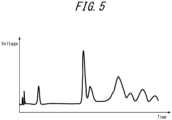
- Gas chromatographs output chromatographic data representing the results of analysis of the concentration of various gases as measurement data.
- Gas chromatographs vaporize a gas to be analyzed and then differentiate and detect types of gases according to the time taken to reach the detector.
- the chromatographic data relates the time taken for a gas to reach the detector and the signal intensity (voltage signal) detected at each time.
- the chromatographic data is represented by a graph with time on the horizontal axis and voltage on the vertical axis, as illustrated in FIG. 5 .
- the server controller 32 may display the measurement data acquired from each gas chromatograph as a graph on the management screen 50.
- the server controller 32 may analyze the types of gas contained in the gas to be analyzed and the concentrations. As illustrated in FIG. 6 , the server controller 32 may identify, based on the chromatographic data, that the gas to be analyzed contains C 2 H 6 (ethane) and C 3 H 8 (propane). The server controller 32 may also calculate the area in the graph corresponding to each of C 2 H 6 (ethane) and C 3 H 8 (propane) and calculate the respective concentrations of C 2 H 6 (ethane) and C 3 H 8 (propane) based on the area. The server controller 32 may display the identified gas types and the calculated gas concentrations.
- Analysis based on chromatographic data may be performed by a gas chromatograph.
- the gas chromatograph may output the result of analysis based on the chromatographic data to the server 30, without outputting the raw chromatographic data (the chromatographic data itself) to the server 30.
- the server controller 32 acquires the analysis results from the gas chromatograph as the measurement data.
- the server controller 32 may acquire the content and time of occurrence of alarms that have occurred in the gas chromatograph as the information about the gas chromatograph.
- the server controller 32 may display the time of occurrence of the alarm and the content of the alarm on the management screen 50, as illustrated in FIG. 7 .
- the server controller 32 may display a maintenance screen 60, such as the one illustrated in FIG. 8 , to enable the user to perform an operation to clear the alarm.
- the maintenance screen 60 includes an operation menu 61 from which the user can make selections and an operation key frame 62 for accepting user input.
- the server controller 32 may display the maintenance screen 60 on the touch panel and accept user operations via the touch panel.
- the server controller 32 may accept user operations via a pointing device such as a mouse.
- the server controller 32 In response to user operation, the server controller 32 generates information such as parameters to be set in the gas chromatograph or information on maintenance such as an update for the gas chromatograph and outputs the information to the gas chromatograph. Based on alarm information acquired from the gas chromatograph, the server controller 32 may generate instructions necessary to clear the alarm and may output the instructions to the gas chromatograph.
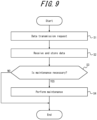
- the server controller 32 of the server 30 may perform the procedures illustrated in the flowchart in FIG. 9 as a management method.
- the procedures illustrated in the flowchart of FIG. 9 may be implemented as a management program to be executed by the processor configuring the server controller 32.
- the management program may be stored on a non-transitory computer readable medium, such as an electromagnetic storage medium.
- the server controller 32 requests that the gas chromatograph transmit (output) data (step S 1).
- the gas chromatograph transmits (outputs) data to the server 30 in response to the request.
- the server controller 32 receives (acquires) the data transmitted (outputted) from the gas chromatograph and stores the data on the data server 40 (step S2).
- the server controller 32 determines whether maintenance of the gas chromatograph is necessary based on the condition of the gas chromatograph (step S3). In a case in which maintenance of the gas chromatograph is not necessary (step S3: NO), the server controller 32 terminates execution of the procedures illustrated in FIG. 9 . In a case in which maintenance of the gas chromatograph is necessary (step S3: YES), the server controller 32 performs maintenance of the gas chromatograph (step S4). Specifically, the server controller 32 may output information on the maintenance of the gas chromatograph to the gas chromatograph.
- the server controller 32 may notify the user of the status of the gas chromatograph, accept input from the user of instructions for maintenance, and output the information on maintenance of the gas chromatograph to the gas chromatograph. After executing the procedure of step S4, the server controller 32 terminates execution of the procedures of the flowchart in FIG. 9 .
- gas chromatographs connected wirelessly to the same network can be managed by the server 30 (management apparatus) connected to the same network.
- the server 30 (management apparatus) can manage a plurality of gas chromatographs without switching the network connection.
- the server 30 (management apparatus) can acquire data in parallel from a plurality of gas chromatographs simultaneously or by time division.
- the server 30 (management apparatus) can output information in parallel to a plurality of gas chromatographs simultaneously or by time division.
- the server 30 (management apparatus) can acquire data from other gas chromatographs and output information such as parameters to other gas chromatographs even while continuing to communicate with one gas chromatograph to perform maintenance on that gas chromatograph.
- the convenience for the management of a plurality of gas chromatographs installed in a plant or the like thereby improves.
- the communication method is not limited to wireless LAN and may be any other wireless communication method that enables simultaneous communication with a plurality of gas chromatographs.
Landscapes
- Physics & Mathematics (AREA)
- Health & Medical Sciences (AREA)
- Life Sciences & Earth Sciences (AREA)
- Chemical & Material Sciences (AREA)
- Analytical Chemistry (AREA)
- Biochemistry (AREA)
- General Health & Medical Sciences (AREA)
- General Physics & Mathematics (AREA)
- Immunology (AREA)
- Pathology (AREA)
- Mobile Radio Communication Systems (AREA)
- Selective Calling Equipment (AREA)
Abstract
A gas chromatograph (10) as a first gas chromatograph includes a controller (12) that processes data and a communication interface (14) that outputs the data to a management apparatus (30). The communication interface (14) functions as a wireless communication access point of a network identified by a predetermined identifier and outputs the data and/or information about the first gas chromatograph (10) via the network to the management apparatus (30) connected to the wireless communication access point, and connects a second gas chromatograph (20) to the wireless communication access point in bridge mode as a child device to cause the second gas chromatograph (20) to output data processed by the second gas chromatograph (20) and/or information about the second gas chromatograph (20) to the management apparatus (30) via the wireless communication access point and the network.
Description
- The present disclosure relates to a gas chromatograph, a management apparatus, a management system, and a management method.
- Technology for easily acquiring the values of parameters necessary for non-experts to understand the state of an analysis apparatus is known. For example, see Patent Literature (PTL) 1.
- PTL 1:
JP 2021-101164 A - Demand exists for improved convenience in the management of a plurality of gas chromatographs.
- It would be helpful to provide a gas chromatograph, a management apparatus, a management system, and a management method that can improve the convenience of management of a plurality of gas chromatographs.
- A gas chromatograph as a first gas chromatograph according to an embodiment includes a controller configured to process data and a communication interface configured to output the data to a management apparatus. The communication interface functions as a wireless communication access point of a network identified by a predetermined identifier and outputs the data and/or information about the gas chromatograph via the network to the management apparatus connected to the wireless communication access point. The communication interface connects a second gas chromatograph to the wireless communication access point in bridge mode as a child device to cause the second gas chromatograph to output data processed by the second gas chromatograph and/or information about the second gas chromatograph to the management apparatus via the wireless communication access point and the network. In this way, the management apparatus can communicate with a plurality of gas chromatographs in parallel without switching network connections. The convenience for the management of a plurality of gas chromatographs thereby improves.
- In a gas chromatograph according to an embodiment, the communication interface may acquire information to be set on the gas chromatograph and/or information on maintenance of the gas chromatograph from the management apparatus via the network. In this way, the management apparatus can maintain a gas chromatograph and acquire data in parallel without switching network connections. The convenience for the management of a plurality of gas chromatographs thereby improves.
- In a gas chromatograph according to an embodiment, the communication interface may cause the second gas chromatograph to acquire, from the management apparatus, information to be set on the second gas chromatograph and/or information on maintenance of the second gas chromatograph via the wireless communication access point and the network. In this way, the management apparatus can maintain a gas chromatograph and acquire data in parallel without switching network connections. The convenience for the management of a plurality of gas chromatographs thereby improves.
- A management apparatus according to an embodiment includes a communication interface and a controller. The communication interface communicates with the aforementioned first gas chromatograph as a parent device and the aforementioned second gas chromatograph as a child device via the aforementioned network. The controller acquires data received by the communication interface from the first gas chromatograph and the second gas chromatograph. In this way, the management apparatus can communicate with a plurality of gas chromatographs in parallel without switching network connections. The convenience for the management of a plurality of gas chromatographs thereby improves.
- In a management apparatus according to an embodiment, the controller may generate information to be set on the first gas chromatograph or the second gas chromatograph or information on maintenance of the first gas chromatograph or the second gas chromatograph and output the generated information using the communication interface via the network to the first gas chromatograph or the second gas chromatograph. In this way, the management apparatus can maintain a gas chromatograph and acquire data in parallel without switching network connections. The convenience for the management of a plurality of gas chromatographs thereby improves.
- A management system according to an embodiment includes the aforementioned gas chromatograph and the aforementioned management apparatus. In this way, the management system can communicate with a plurality of gas chromatographs in parallel without switching network connections. The convenience for the management of a plurality of gas chromatographs thereby improves.
- A management method according to an embodiment includes communicating via a network identified by a predetermined identifier with a first gas chromatograph as a parent device that functions as a wireless communication access point of the network and a second gas chromatograph as a child device that connects to the wireless communication access point in bridge mode. The management method includes acquiring data received from the first gas chromatograph and the second gas chromatograph by the communicating step. In this way, the management apparatus can communicate with a plurality of gas chromatographs in parallel without switching network connections. The convenience for the management of a plurality of gas chromatographs thereby improves.
- According to the gas chromatograph, the management apparatus, the management system, and the management method of the present disclosure, the convenience of management of a plurality of gas chromatographs is improved.
- In the accompanying drawings:
-
FIG. 1 is a block diagram illustrating an example configuration of a management system according to a comparative example; -
FIG. 2 is a block diagram illustrating an example configuration of a management system according to an embodiment; -
FIG. 3 is a block diagram illustrating an example configuration in which a management apparatus is connectable to a plurality of networks; -
FIG. 4 illustrates an example of a management screen of a gas chromatograph; -
FIG. 5 is a diagram illustrating an example of measurement data of a gas chromatograph; -
FIG. 6 is a table illustrating an example of analysis results based on measurement data; -
FIG. 7 is a table illustrating an example of the alarm history of a gas chromatograph; -
FIG. 8 is a diagram illustrating an example of a menu screen of a management apparatus; and -
FIG. 9 is a flowchart illustrating example procedures of a management method according to an embodiment. - As illustrated in
FIG. 1 , amanagement system 9 according to a comparative example includes amanagement apparatus 96 and agas chromatograph 90. Thegas chromatograph 90 includes adevice controller 92 and adevice communication interface 94. Thegas chromatograph 90 is assumed to be a measurement apparatus that measures various parameters representing plant conditions. Thedevice controller 92 processes signals acquired from the measurement target to generate measurement data. Thedevice communication interface 94 outputs the measurement data to themanagement apparatus 96. Themanagement apparatus 96 acquires measurement data from thegas chromatograph 90. Themanagement apparatus 96 also acquires information such as the occurrence of alarms from thegas chromatograph 90. Themanagement apparatus 96 also transmits information on parameters to be set on thegas chromatograph 90 and firmware update data for thegas chromatograph 90. - In a case in which the
management system 9 includes a plurality ofgas chromatographs 90, themanagement apparatus 96 communicates with eachgas chromatograph 90. Thegas chromatographs 90 are installed in various parts of a plant. In themanagement system 9 according to the comparative example, themanagement apparatus 96 communicates with eachgas chromatograph 90 wirelessly. It is assumed to be difficult for thegas chromatographs 90 to be wired to each other. In the case in which themanagement apparatus 96 communicates wirelessly with eachgas chromatograph 90, themanagement apparatus 96 connects to and initiates communication with onegas chromatograph 90 using an identifier that identifies thedevice communication interface 94 of thegas chromatograph 90 and a security key and then acquires measurement data and the like from thegas chromatograph 90 and outputs information such as parameters to thegas chromatograph 90. - The
device communication interface 94 of eachgas chromatograph 90 is identified by a different identifier and requires a different security key to connect. To switch to communication with anothergas chromatograph 90, themanagement apparatus 96 must reconnect to thatgas chromatograph 90. Therefore, while communicating with onegas chromatograph 90, themanagement apparatus 96 cannot communicate withother gas chromatographs 90. - In a case in which the size of the measurement data to be acquired from one
gas chromatograph 90 is large, the time required to acquire the measurement data becomes longer. Furthermore, in a case of setting parameters or updating firmware on onegas chromatograph 90, the time required to output the setting data or updated data becomes longer. In these cases, the time during which themanagement apparatus 96 cannot communicate withother gas chromatographs 90 becomes longer. Since communication is only possible with onegas chromatograph 90 at a time in themanagement system 9 according to the comparative example, the convenience is reduced in the case of managing a plurality ofgas chromatographs 90. - The present disclosure therefore describes a gas chromatograph, a management apparatus, a management system, and a management method that can improve the convenience of management of a plurality of gas chromatographs.
- As illustrated in
FIG. 2 , amanagement system 1 according to an embodiment of the present disclosure includes afirst gas chromatograph 10, asecond gas chromatograph 20, aserver 30, and adata server 40. Thefirst gas chromatograph 10 and thesecond gas chromatograph 20 are also collectively referred to simply as gas chromatographs when no distinction is necessary. Theserver 30 is also referred to as a management apparatus. Thefirst gas chromatograph 10, thesecond gas chromatograph 20, and theserver 30 are configured to communicate wirelessly, as described below. The dashed lines connecting thefirst gas chromatograph 10, thesecond gas chromatograph 20, and theserver 30 represent connection in a manner enabling wireless communication. Specifically, theserver 30 and thefirst gas chromatograph 10 are connected by a dashed line, and thefirst gas chromatograph 10 and the (plurality of) second gas chromatograph(s) 20 are connected by dashed lines. Thefirst gas chromatograph 10 and thedata server 40 are configured to communicate in a wired manner, as described below. The solid line connecting thefirst gas chromatograph 10 and thedata server 40 represents connection in a manner enabling wired communication. - The
server 30 outputs, to the gas chromatograph, information on parameters to be set on the gas chromatograph or information on maintenance, including updated data for programs such as firmware required for operation of the gas chromatograph. Theserver 30 outputs, to the gas chromatograph, information requesting that measurement data or information about the gas chromatograph be outputted. In response to a request from theserver 30, the gas chromatograph outputs measurement data or information about the gas chromatograph to theserver 30. Theserver 30 acquires the measurement data or information about the gas chromatograph from the gas chromatograph. The information about the gas chromatograph includes alarms occurring on the gas chromatograph, the operating status of the gas chromatograph, and the like. - The
server 30 stores the information acquired from the gas chromatograph on thedata server 40. Theserver 30 manages the gas chromatograph based on the information about the gas chromatograph stored on thedata server 40, as described below. The measurement data is used to manage the plant. The plant may be managed by theserver 30 or by another apparatus. - Specific examples of each component of the
management system 1 are described below. - The
first gas chromatograph 10 includes adevice controller 12 and adevice communication interface 14. Thesecond gas chromatograph 20 includes adevice controller 22 and adevice communication interface 24. Thedevice controllers - The
first gas chromatograph 10 and thesecond gas chromatograph 20 are connected within the same network on the wireless LAN. The same network means a network identified by a single identifier. For example, a Service Set IDentifier (SSID) is used as an identifier to identify a network in a wireless LAN connection. Thefirst gas chromatograph 10 and thesecond gas chromatograph 20 may be connected within the same network identified by a predetermined identifier. - The
first gas chromatograph 10 and thesecond gas chromatograph 20 are distinguished by different functions of their respective communication interfaces. Thedevice communication interface 14 of thefirst gas chromatograph 10 connects to the wireless LAN network in access point mode. In other words, thedevice communication interface 14 of thefirst gas chromatograph 10 functions as a wireless communication access point. Thedevice communication interface 24 of thesecond gas chromatograph 20 connects to the wireless LAN network in bridge mode. Thefirst gas chromatograph 10 is also referred to as the parent device, which functions as a wireless communication access point of the wireless LAN. Thesecond gas chromatograph 20 is also referred to as a child device, which connects in bridge mode to the wireless communication access point of the wireless LAN. - The number of
first gas chromatographs 10 functioning as parent devices in the same network is limited to one. The number ofsecond gas chromatographs 20 functioning as child devices is not limited to one, but rather may be two or more. The upper limit on the number of child devices is determined by the specifications of the communication module of the parent device. It is assumed that each gas chromatograph connected to the same network is identified by an Internet Protocol (IP) address during communication. Each gas chromatograph may be identified by other means. - The
server 30 includes aserver controller 32, astorage 34, and aserver communication interface 36. - The
server controller 32 may be configured by a processor such as a central processing unit (CPU). Theserver controller 32 may implement the various functions of themanagement system 1 by executing a predetermined program. - The
storage 34 may store various information used for operations of theserver 30, programs for implementing the functions of theserver 30, and the like. Thestorage 34 may function as a working memory of theserver 30. Thestorage 34 may be configured to include an electromagnetic storage medium such as a magnetic disk or to include a memory such as a semiconductor memory or a magnetic memory. Thestorage 34 may be configured separately from theserver 30. - The
server communication interface 36 is configured to include a wireless LAN communication module. Theserver communication interface 36 connects to thedevice communication interface 14 of thefirst gas chromatograph 10 functioning as a wireless communication access point. In other words, theserver communication interface 36 connects to the network identified by a predetermined identifier. By connecting to the network identified by the predetermined identifier, theserver communication interface 36 can communicate with gas chromatographs connected to the same network. Therefore, theserver communication interface 36 can communicate not only with thedevice communication interface 14 of thefirst gas chromatograph 10, but also with thedevice communication interface 24 of thesecond gas chromatograph 20 that is bridged. Theserver communication interface 36 communicates with each gas chromatograph connected to the same network by identifying each gas chromatograph using an IP address. - The
server 30 may include a display device for notifying managers or workers at a plant or other site of information. The display device may, for example, include a liquid crystal display (LCD). The display device may, for example, include an organic electroluminescence (EL) display or an inorganic EL display. The display device may include a plasma display, i.e., a plasma display panel (PDP). The display device is not limited to these displays and may include various other types of displays. The display device may include a light emitting device such as a light emitting diode (LED). Theserver 30 may also include an audio output device such as a speaker. Themanagement system 1 may include an output device such as a display device or an audio output device. - The
server 30 may include an input device that accepts input, such as data, from managers, workers, or others at a plant or other site. The input device may, for example, include a keyboard or physical keys, a touch panel or touch sensor, or a pointing device such as a mouse. The input device is not limited to these examples and may include a variety of other devices. Themanagement system 1 may include an input device. - The
data server 40 is connected to thedevice communication interface 14 of thefirst gas chromatograph 10 by a wired LAN. Thedata server 40 communicates with theserver communication interface 36 of theserver 30 via thedevice communication interface 14 of thefirst gas chromatograph 10. Thedata server 40 stores information acquired from theserver 30. Thedata server 40 also outputs the stored information to theserver 30. Thedata server 40 stores the measurement data of the gas chromatograph or information about the gas chromatograph based on instructions from theserver 30. - The
data server 40 may be configured to include an electromagnetic storage medium such as a magnetic disk or to include a memory such as a semiconductor memory or a magnetic memory. Thedata server 40 may be configured to be identical or similar to theserver 30. The functions of thedata server 40 may be included as part of the functions of theserver 30. In other words, theserver 30 and thedata server 40 may be implemented as a single apparatus. - Not only the
data server 40 but also other devices may be connected to the network configured by thedevice communication interface 14 of thefirst gas chromatograph 10. - The
server 30 may be configured to connect to two or more networks. As illustrated inFIG. 3 , thefirst gas chromatograph 10 may includefirst gas chromatographs first gas chromatographs first gas chromatograph 10A establishes a first network identified by a first identifier. Thefirst gas chromatograph 10B establishes a second network identified by a second identifier. - When connected to the
first gas chromatograph 10A, theserver 30 can communicate with thefirst gas chromatograph 10A and with thesecond gas chromatograph 20 that is bridged to the wireless access point of thefirst gas chromatograph 10A. However, when connected to thefirst gas chromatograph 10A, theserver 30 cannot communicate with thefirst gas chromatograph 10B nor with thesecond gas chromatograph 20 that is bridged to thefirst gas chromatograph 10B. By severing the connection with thefirst gas chromatograph 10A and connecting anew to thefirst gas chromatograph 10B, theserver 30 can communicate with thefirst gas chromatograph 10B and with thesecond gas chromatograph 20 that is bridged to the wireless access point of thefirst gas chromatograph 10B. - When connected to the
first gas chromatograph 10A, theserver 30 stores information or data acquired from thefirst gas chromatograph 10A on thedata server 40 connected to thefirst gas chromatograph 10A. When connected to thefirst gas chromatograph 10B, theserver 30 stores information or data acquired from thefirst gas chromatograph 10B on thedata server 40 connected to thefirst gas chromatograph 10B. - An example of operations of the
management system 1 according to the present embodiment is described below. - The
device controllers server 30 by communicating with theserver 30 using the device communication interfaces 14 and 24. - The
server controller 32 of theserver 30 connects to thedevice communication interface 14 of thefirst gas chromatograph 10 using theserver communication interface 36. Theserver controller 32 acquires, in advance, a security key required to connect to the network identified by the predetermined identifier. By connecting theserver communication interface 36 to thedevice communication interface 14 using the security key, theserver controller 32 can connect to the network identified by the predetermined identifier. - The
server controller 32 uses theserver communication interface 36 to acquire measurement data of thefirst gas chromatograph 10 or information about thefirst gas chromatograph 10 via thedevice communication interface 14 of thefirst gas chromatograph 10. In other words, theserver communication interface 36 connects to thedevice communication interface 14, which functions as a wireless communication access point of the network identified by the predetermined identifier, and acquires (receives) the measurement data of thefirst gas chromatograph 10 or information about thefirst gas chromatograph 10 via the network. Conversely, thedevice communication interface 14 of thefirst gas chromatograph 10 outputs (transmits) the measurement data of thefirst gas chromatograph 10 or information about thefirst gas chromatograph 10 via the network to theserver 30 that connects to thedevice communication interface 14 functioning as a wireless communication access point. - The
server controller 32 uses theserver communication interface 36 to output (transmit) information on parameters to be set on thefirst gas chromatograph 10, or information on maintenance, such as an update, for thefirst gas chromatograph 10 via thedevice communication interface 14 of thefirst gas chromatograph 10. Conversely, thedevice communication interface 14 of thefirst gas chromatograph 10 acquires (receives) information on parameters or the like to be set for thefirst gas chromatograph 10, or information on maintenance for thefirst gas chromatograph 10, from theserver 30 that connects to thedevice communication interface 14 functioning as a wireless communication access point. Thedevice controller 12 of thefirst gas chromatograph 10 sets the acquired parameters or performs maintenance, such as updating the programs on thefirst gas chromatograph 10, based on the maintenance information. - In a case in which the
device communication interface 24 of thesecond gas chromatograph 20 is bridged to thedevice communication interface 14 of thefirst gas chromatograph 10, thedevice communication interface 24 of thesecond gas chromatograph 20 is connected to the network identified by the predetermined identifier. Theserver communication interface 36 can communicate with thedevice communication interface 24 of thesecond gas chromatograph 20 within the same network via thedevice communication interface 14 of thefirst gas chromatograph 10. With this configuration, theserver communication interface 36 can communicate with both thefirst gas chromatograph 10 and thesecond gas chromatograph 20 without having to reconnect to the network. - The
device communication interface 14 of thefirst gas chromatograph 10 may cause thesecond gas chromatograph 20 to connect in bridge mode as a child device to thedevice communication interface 14 functioning as a wireless communication access point. Thedevice communication interface 14 may cause data processed by thesecond gas chromatograph 20 or information about thesecond gas chromatograph 20 to be outputted to theserver 30 via the network. Thedevice communication interface 14 of thefirst gas chromatograph 10 may cause thesecond gas chromatograph 20, which is a child device, to acquire information on parameters to be set on thesecond gas chromatograph 20 and/or information on maintenance from theserver 30 via the network. - The
server communication interface 36 may communicate via the network identified by the predetermined identifier with thefirst gas chromatograph 10 as a parent device that functions as a wireless communication access point of the network and thesecond gas chromatograph 20 as a child device that connects to the wireless communication access point in bridge mode. Theserver controller 32 may acquire data or information from thefirst gas chromatograph 10 as the parent device and thesecond gas chromatograph 20 as the child device. - The
server controller 32 may generate information on parameters or the like to be set on thefirst gas chromatograph 10 as the parent device or thesecond gas chromatograph 20 as the child device. Theserver controller 32 may generate information on maintenance, such as an update, for thefirst gas chromatograph 10 as the parent device or thesecond gas chromatograph 20 as the child device. Theserver controller 32 may output the generated information, using theserver communication interface 36, to thefirst gas chromatograph 10 as the parent device or thesecond gas chromatograph 20 as the child device via the network in which thedevice communication interface 14 of thefirst gas chromatograph 10 functions as a wireless communication access point. - The
device communication interface 14 may connect thesecond gas chromatograph 20 in bridge mode as a child device to the wireless communication access point and perform setting processing to cause thesecond gas chromatograph 20 to output data processed by thesecond gas chromatograph 20 and/or information about thesecond gas chromatograph 20 to theserver 30 via the wireless access point and the network. - Using the
server communication interface 36, theserver controller 32 instructs the gas chromatograph to output measurement data or information about the gas chromatograph. Theserver controller 32 identifies the target gas chromatograph, from which the information is to be acquired, by IP address and outputs the instruction. In response to the instruction from theserver controller 32, the gas chromatograph outputs measurement data or information about the gas chromatograph to theserver 30. The gas chromatograph associates the outputted information with the device identification information that identifies the gas chromatograph itself. Theserver controller 32 can identify which gas chromatograph outputted the information by the device identification information associated with the acquired information. Theserver controller 32 may identify which gas chromatograph outputted the information by recognizing the IP address of the transmission source when acquiring the information from the gas chromatograph. - The
server controller 32 stores the measurement data or the information about the gas chromatograph acquired from each gas chromatograph on thedata server 40. Theserver controller 32 uses theserver communication interface 36 to output the information or the data to be stored on thedata server 40 to thedata server 40 via thedevice communication interface 14 of thefirst gas chromatograph 10. Thedata server 40 stores the information or data acquired from theserver controller 32. - The
server controller 32 uses theserver communication interface 36 to output information such as parameters to be set on the gas chromatograph or information on maintenance, such as an update. Theserver controller 32 uses the IP address to identify the gas chromatograph targeted for setting parameters or updating programs and outputs the information on parameters and the like or the information on maintenance, such as an update. The gas chromatograph sets the acquired parameters on the gas chromatograph itself or updates the programs of the gas chromatograph itself using the acquired update. - The
server communication interface 36 may be configured to simultaneously acquire (receive) data from a plurality of gas chromatographs and simultaneously output (transmit) information to a plurality of gas chromatographs by communicating with each gas chromatograph in parallel. Theserver communication interface 36 may be configured to acquire (receive) data from a plurality of gas chromatographs by time division and output (transmit) information to a plurality of gas chromatographs by time division by communicating with each gas chromatograph sequentially. During either simultaneous communication or time division, theserver communication interface 36 can maintain communication with a plurality of gas chromatographs without switching the network connection. - The
server controller 32 may, as illustrated inFIG. 4 , display the status of each gas chromatograph as amanagement screen 50 on the aforementioned display device of theserver 30 to enable a user to grasp the status of each gas chromatograph. Themanagement screen 50 includes display frames 51 and 52 that display the status of each gas chromatograph. Gas chromatographs are assumed to be identified by an apparatus ID. Thedisplay frame 51 displays the status of the gas chromatograph with an apparatus ID of 001. Thedisplay frame 52 displays the status of the gas chromatograph with an apparatus ID of 002. - The
management screen 50 includes apparatus status display frames 511 and 521, which indicate whether each gas chromatograph is normal or abnormal, within the display frames 51 and 52. The apparatusstatus display frame 511 displays an image indicating that the gas chromatograph with apparatus ID 001 is normal. The apparatusstatus display frame 521 displays an image indicating that the gas chromatograph with apparatus ID 002 is abnormal. - The
management screen 50 includes operating status display frames 512 and 522, indicating whether each gas chromatograph is in operation or is stopped, within the display frames 51 and 52. The operatingstatus display frame 512 displays a symbol indicating that the gas chromatograph with apparatus ID 001 is in operation. The operatingstatus display frame 522 displays a symbol indicating that the gas chromatograph with apparatus ID 002 is stopped. - The
management screen 50 includes progress display frames 513 and 523, illustrating the progress of the work being performed when each gas chromatograph is in operation, within the display frames 51 and 52. Gas chromatographs take a predetermined amount of time for each measurement. The display "xxx/yyy [sec]" in theprogress display frame 513 indicates that the time required for the gas chromatograph with apparatus ID 001 to perform one measurement is yyy sec, and that the measurement has progressed to xxx sec. In addition, the hatched display of 3 out of the 10 rectangles in theprogress display frame 513 indicates that the measurement progress rate is approximately 30%. The display of "0/www [sec]" in theprogress display frame 523 represents that gas chromatograph with apparatus ID 002 is stopped. Furthermore, none of the rectangles in theprogress display frame 523 is hatched. - Gas chromatographs output chromatographic data representing the results of analysis of the concentration of various gases as measurement data. Gas chromatographs vaporize a gas to be analyzed and then differentiate and detect types of gases according to the time taken to reach the detector. The chromatographic data relates the time taken for a gas to reach the detector and the signal intensity (voltage signal) detected at each time. The chromatographic data is represented by a graph with time on the horizontal axis and voltage on the vertical axis, as illustrated in
FIG. 5 . Theserver controller 32 may display the measurement data acquired from each gas chromatograph as a graph on themanagement screen 50. - In a case of acquiring the chromatographic data, the
server controller 32 may analyze the types of gas contained in the gas to be analyzed and the concentrations. As illustrated inFIG. 6 , theserver controller 32 may identify, based on the chromatographic data, that the gas to be analyzed contains C2H6 (ethane) and C3H8 (propane). Theserver controller 32 may also calculate the area in the graph corresponding to each of C2H6 (ethane) and C3H8 (propane) and calculate the respective concentrations of C2H6 (ethane) and C3H8 (propane) based on the area. Theserver controller 32 may display the identified gas types and the calculated gas concentrations. - Analysis based on chromatographic data may be performed by a gas chromatograph. In other words, the gas chromatograph may output the result of analysis based on the chromatographic data to the
server 30, without outputting the raw chromatographic data (the chromatographic data itself) to theserver 30. In this case, theserver controller 32 acquires the analysis results from the gas chromatograph as the measurement data. - The
server controller 32 may acquire the content and time of occurrence of alarms that have occurred in the gas chromatograph as the information about the gas chromatograph. Theserver controller 32 may display the time of occurrence of the alarm and the content of the alarm on themanagement screen 50, as illustrated inFIG. 7 . - In a case in which an alarm is occurring in the gas chromatograph, the
server controller 32 may display amaintenance screen 60, such as the one illustrated inFIG. 8 , to enable the user to perform an operation to clear the alarm. Themaintenance screen 60 includes anoperation menu 61 from which the user can make selections and an operationkey frame 62 for accepting user input. Theserver controller 32 may display themaintenance screen 60 on the touch panel and accept user operations via the touch panel. Theserver controller 32 may accept user operations via a pointing device such as a mouse. - In response to user operation, the
server controller 32 generates information such as parameters to be set in the gas chromatograph or information on maintenance such as an update for the gas chromatograph and outputs the information to the gas chromatograph. Based on alarm information acquired from the gas chromatograph, theserver controller 32 may generate instructions necessary to clear the alarm and may output the instructions to the gas chromatograph. - The
server controller 32 of theserver 30 may perform the procedures illustrated in the flowchart inFIG. 9 as a management method. The procedures illustrated in the flowchart ofFIG. 9 may be implemented as a management program to be executed by the processor configuring theserver controller 32. The management program may be stored on a non-transitory computer readable medium, such as an electromagnetic storage medium. - The
server controller 32 requests that the gas chromatograph transmit (output) data (step S 1). The gas chromatograph transmits (outputs) data to theserver 30 in response to the request. Theserver controller 32 receives (acquires) the data transmitted (outputted) from the gas chromatograph and stores the data on the data server 40 (step S2). - In a case of acquiring information about the gas chromatograph, the
server controller 32 determines whether maintenance of the gas chromatograph is necessary based on the condition of the gas chromatograph (step S3). In a case in which maintenance of the gas chromatograph is not necessary (step S3: NO), theserver controller 32 terminates execution of the procedures illustrated inFIG. 9 . In a case in which maintenance of the gas chromatograph is necessary (step S3: YES), theserver controller 32 performs maintenance of the gas chromatograph (step S4). Specifically, theserver controller 32 may output information on the maintenance of the gas chromatograph to the gas chromatograph. Theserver controller 32 may notify the user of the status of the gas chromatograph, accept input from the user of instructions for maintenance, and output the information on maintenance of the gas chromatograph to the gas chromatograph. After executing the procedure of step S4, theserver controller 32 terminates execution of the procedures of the flowchart inFIG. 9 . - As described above, according to the
management system 1 in the present embodiment, gas chromatographs connected wirelessly to the same network can be managed by the server 30 (management apparatus) connected to the same network. In other words, the server 30 (management apparatus) can manage a plurality of gas chromatographs without switching the network connection. In this way, the server 30 (management apparatus) can acquire data in parallel from a plurality of gas chromatographs simultaneously or by time division. In addition, the server 30 (management apparatus) can output information in parallel to a plurality of gas chromatographs simultaneously or by time division. For example, the server 30 (management apparatus) can acquire data from other gas chromatographs and output information such as parameters to other gas chromatographs even while continuing to communicate with one gas chromatograph to perform maintenance on that gas chromatograph. The convenience for the management of a plurality of gas chromatographs installed in a plant or the like thereby improves. - Embodiments of the present disclosure have been described with reference to the drawings, but specific configurations are not limited to these embodiments, and a variety of modifications may be made without departing from the spirit and scope thereof.
- In the present embodiment, a configuration in which the gas chromatographs and the management apparatus communicate via a wireless LAN has been described. The communication method is not limited to wireless LAN and may be any other wireless communication method that enables simultaneous communication with a plurality of gas chromatographs.
Claims (7)
- A gas chromatograph (10) as a first gas chromatograph comprising a controller (12) configured to process data and a communication interface (14) configured to output the data to a management apparatus (30), wherein
the communication interface (14) is configured to:function as a wireless communication access point of a network identified by a predetermined identifier and output the data and/or information about the first gas chromatograph (10) via the network to the management apparatus (30) connected to the wireless communication access point, andconnect a second gas chromatograph (20) to the wireless communication access point in bridge mode as a child device to cause the second gas chromatograph (20) to output data processed by the second gas chromatograph (20) and/or information about the second gas chromatograph (20) to the management apparatus (30) via the wireless communication access point and the network. - The gas chromatograph (10) according to claim 1, wherein the communication interface (14) is configured to acquire information to be set on the gas chromatograph (10) and/or information on maintenance of the gas chromatograph (10) from the management apparatus (30) via the network.
- The gas chromatograph (10) according to claim 1 or 2, wherein the communication interface (14) is configured to cause the second gas chromatograph (20) to acquire, from the management apparatus (30), information to be set on the second gas chromatograph (20) and/or information on maintenance of the second gas chromatograph (20) via the wireless communication access point and the network.
- A management apparatus (30) comprising:a communication interface (36) configured to communicate with the first gas chromatograph (10) according to any one of claims 1 to 3 as a parent device and the second gas chromatograph (20) as a child device via the network; anda controller (32) configured to acquire data received by the communication interface (36) from the first gas chromatograph (10) and the second gas chromatograph (20).
- The management apparatus (30) according to claim 4, wherein the controller (32) is configured to generate information to be set on the first gas chromatograph (10) or the second gas chromatograph (20) or information on maintenance of the first gas chromatograph (10) or the second gas chromatograph (20) and output the generated information using the communication interface (36) via the network to the first gas chromatograph (10) or the second gas chromatograph (20).
- A management system (1) comprising:the gas chromatograph (10) of any one of claims 1 to 3; anda management apparatus (30) comprising a communication interface configured to communicate with the first gas chromatograph and the second gas chromatograph via the network and a controller configured to acquire data received by the communication interface from the first gas chromatograph and the second gas chromatograph.
- A management method comprising:communicating via a network identified by a predetermined identifier with a first gas chromatograph (10) as a parent device that functions as a wireless communication access point of the network and a second gas chromatograph (20) as a child device that connects to the wireless communication access point in bridge mode; andacquiring data received from the first gas chromatograph (10) and the second gas chromatograph (20) by the communicating.
Applications Claiming Priority (1)
| Application Number | Priority Date | Filing Date | Title |
|---|---|---|---|
| JP2022040686A JP2023135455A (en) | 2022-03-15 | 2022-03-15 | Gas chromatograph, management device, management system, and management method |
Publications (1)
| Publication Number | Publication Date |
|---|---|
| EP4246141A1 true EP4246141A1 (en) | 2023-09-20 |
Family
ID=85640945
Family Applications (1)
| Application Number | Title | Priority Date | Filing Date |
|---|---|---|---|
| EP23161399.3A Withdrawn EP4246141A1 (en) | 2022-03-15 | 2023-03-13 | Gas chromatograph, management apparatus, management system, and management method |
Country Status (3)
| Country | Link |
|---|---|
| US (1) | US20230296575A1 (en) |
| EP (1) | EP4246141A1 (en) |
| JP (1) | JP2023135455A (en) |
Citations (2)
| Publication number | Priority date | Publication date | Assignee | Title |
|---|---|---|---|---|
| US20130079236A1 (en) * | 2011-09-25 | 2013-03-28 | Theranos, Inc., a Delaware Corporation | Systems and methods for multi-analysis |
| US20160360791A1 (en) * | 2015-06-10 | 2016-12-15 | Lunatech, Llc | Air Analyzer And Treatment System |
Family Cites Families (9)
| Publication number | Priority date | Publication date | Assignee | Title |
|---|---|---|---|---|
| JP3651569B2 (en) * | 1999-03-29 | 2005-05-25 | 横河電機株式会社 | Chromatograph control device |
| JP2003329662A (en) * | 2002-05-09 | 2003-11-19 | Toshiba Corp | Chromatographic analysis system, server device, and method of providing abnormality coping method |
| JP3142066U (en) * | 2008-03-18 | 2008-06-05 | 株式会社島津製作所 | Analysis equipment |
| JP5785933B2 (en) * | 2010-03-30 | 2015-09-30 | アークレイ株式会社 | Analysis device, quality confirmation device, and quality confirmation method |
| MX344792B (en) * | 2011-09-25 | 2017-01-06 | Theranos Inc | Systems and methods for multi-analysis. |
| JP7040099B2 (en) * | 2018-02-15 | 2022-03-23 | 横河電機株式会社 | Information processing equipment, information processing system, information processing method and information processing program |
| JP6791216B2 (en) * | 2018-08-28 | 2020-11-25 | 横河電機株式会社 | Monitoring programs, monitoring equipment, and monitoring systems |
| JP6463866B1 (en) * | 2018-08-29 | 2019-02-06 | リバティーポートジャパン株式会社 | Agricultural house sensor device |
| JP2021163061A (en) * | 2020-03-31 | 2021-10-11 | 株式会社フジクラ | CO2 sensor system |
-
2022
- 2022-03-15 JP JP2022040686A patent/JP2023135455A/en active Pending
-
2023
- 2023-02-17 US US18/110,997 patent/US20230296575A1/en not_active Abandoned
- 2023-03-13 EP EP23161399.3A patent/EP4246141A1/en not_active Withdrawn
Patent Citations (2)
| Publication number | Priority date | Publication date | Assignee | Title |
|---|---|---|---|---|
| US20130079236A1 (en) * | 2011-09-25 | 2013-03-28 | Theranos, Inc., a Delaware Corporation | Systems and methods for multi-analysis |
| US20160360791A1 (en) * | 2015-06-10 | 2016-12-15 | Lunatech, Llc | Air Analyzer And Treatment System |
Also Published As
| Publication number | Publication date |
|---|---|
| US20230296575A1 (en) | 2023-09-21 |
| JP2023135455A (en) | 2023-09-28 |
Similar Documents
| Publication | Publication Date | Title |
|---|---|---|
| US11163632B2 (en) | Log transmission apparatus and log collection system | |
| WO2015152317A1 (en) | Risk evaluation system for process system, risk evaluation program, and risk evaluation method | |
| JP4642881B2 (en) | Control device, control method, processing device, and program | |
| KR101259324B1 (en) | Mobile terminal and apparatus for managing server and method for managing server | |
| JP5983379B2 (en) | Analysis system and control method thereof | |
| JP2012069088A (en) | Medical information processor and software distribution system | |
| US7949905B2 (en) | Apparatus and method for dynamically detecting improper configuration data provided in a network | |
| KR20160091258A (en) | Relay apparatus and data communication system | |
| KR101860015B1 (en) | IoT device manager for providing before service based on error prediction | |
| JP5983102B2 (en) | Monitoring program, method and apparatus | |
| US20230296575A1 (en) | Gas chromatograph, management apparatus, management system, and management method | |
| JP5759340B2 (en) | Monitoring and control Web system | |
| WO2018010383A1 (en) | Display method and system of intelligent terminal device | |
| JP2016062598A (en) | Abnormality prediction system using PLC log data | |
| JPWO2014155517A1 (en) | Engineering tools | |
| JP2018006583A (en) | Component mounting machine and component mounting system | |
| CN110255316B (en) | Management server and management system | |
| CN104753993B (en) | A kind of method and monitoring device of monitoring server | |
| CN112437112A (en) | Wireless KVM control system | |
| JP2010049519A (en) | Alarm support apparatus and method for presenting measure when alarm is given | |
| CN103838213A (en) | Information linkage monitoring method and system | |
| WO2014060024A1 (en) | Guiding a maintenance engineer to a process control device | |
| EP2328051A1 (en) | Human machine interface device, and system and method incorporating the same | |
| JP7091034B2 (en) | Monitoring and control system test support system, monitoring and control system test support method and terminal equipment | |
| JP7652814B2 (en) | Remote monitoring and operation system, relay device, remote monitoring and operation method, relay method and program |
Legal Events
| Date | Code | Title | Description |
|---|---|---|---|
| PUAI | Public reference made under article 153(3) epc to a published international application that has entered the european phase |
Free format text: ORIGINAL CODE: 0009012 |
|
| STAA | Information on the status of an ep patent application or granted ep patent |
Free format text: STATUS: THE APPLICATION HAS BEEN PUBLISHED |
|
| AK | Designated contracting states |
Kind code of ref document: A1 Designated state(s): AL AT BE BG CH CY CZ DE DK EE ES FI FR GB GR HR HU IE IS IT LI LT LU LV MC ME MK MT NL NO PL PT RO RS SE SI SK SM TR |
|
| STAA | Information on the status of an ep patent application or granted ep patent |
Free format text: STATUS: THE APPLICATION IS DEEMED TO BE WITHDRAWN |
|
| 18D | Application deemed to be withdrawn |
Effective date: 20240321 |