EP4244078B1 - Verfahren zur kolonnenbildung bei schweren lastkraftwagen auf nassen strassen unter verwendung eines volumetrischen hohlraumanteils einer reifenlauffläche - Google Patents
Verfahren zur kolonnenbildung bei schweren lastkraftwagen auf nassen strassen unter verwendung eines volumetrischen hohlraumanteils einer reifenlauffläche Download PDFInfo
- Publication number
- EP4244078B1 EP4244078B1 EP20824719.7A EP20824719A EP4244078B1 EP 4244078 B1 EP4244078 B1 EP 4244078B1 EP 20824719 A EP20824719 A EP 20824719A EP 4244078 B1 EP4244078 B1 EP 4244078B1
- Authority
- EP
- European Patent Office
- Prior art keywords
- tractor
- tread
- tires
- percentage
- volumetric void
- Prior art date
- Legal status (The legal status is an assumption and is not a legal conclusion. Google has not performed a legal analysis and makes no representation as to the accuracy of the status listed.)
- Active
Links
Images


Classifications
-
- B—PERFORMING OPERATIONS; TRANSPORTING
- B60—VEHICLES IN GENERAL
- B60C—VEHICLE TYRES; TYRE INFLATION; TYRE CHANGING; CONNECTING VALVES TO INFLATABLE ELASTIC BODIES IN GENERAL; DEVICES OR ARRANGEMENTS RELATED TO TYRES
- B60C11/00—Tyre tread bands; Tread patterns; Anti-skid inserts
- B60C11/03—Tread patterns
- B60C11/0327—Tread patterns characterised by special properties of the tread pattern
- B60C11/033—Tread patterns characterised by special properties of the tread pattern by the void or net-to-gross ratios of the patterns
-
- B—PERFORMING OPERATIONS; TRANSPORTING
- B60—VEHICLES IN GENERAL
- B60T—VEHICLE BRAKE CONTROL SYSTEMS OR PARTS THEREOF; BRAKE CONTROL SYSTEMS OR PARTS THEREOF, IN GENERAL; ARRANGEMENT OF BRAKING ELEMENTS ON VEHICLES IN GENERAL; PORTABLE DEVICES FOR PREVENTING UNWANTED MOVEMENT OF VEHICLES; VEHICLE MODIFICATIONS TO FACILITATE COOLING OF BRAKES
- B60T7/00—Brake-action initiating means
- B60T7/12—Brake-action initiating means for automatic initiation; for initiation not subject to will of driver or passenger
- B60T7/16—Brake-action initiating means for automatic initiation; for initiation not subject to will of driver or passenger operated by remote control, i.e. initiating means not mounted on vehicle
- B60T7/18—Brake-action initiating means for automatic initiation; for initiation not subject to will of driver or passenger operated by remote control, i.e. initiating means not mounted on vehicle operated by wayside apparatus
-
- B—PERFORMING OPERATIONS; TRANSPORTING
- B60—VEHICLES IN GENERAL
- B60T—VEHICLE BRAKE CONTROL SYSTEMS OR PARTS THEREOF; BRAKE CONTROL SYSTEMS OR PARTS THEREOF, IN GENERAL; ARRANGEMENT OF BRAKING ELEMENTS ON VEHICLES IN GENERAL; PORTABLE DEVICES FOR PREVENTING UNWANTED MOVEMENT OF VEHICLES; VEHICLE MODIFICATIONS TO FACILITATE COOLING OF BRAKES
- B60T7/00—Brake-action initiating means
- B60T7/12—Brake-action initiating means for automatic initiation; for initiation not subject to will of driver or passenger
- B60T7/20—Brake-action initiating means for automatic initiation; for initiation not subject to will of driver or passenger specially for trailers, e.g. in case of uncoupling of or overrunning by trailer
-
- B—PERFORMING OPERATIONS; TRANSPORTING
- B60—VEHICLES IN GENERAL
- B60T—VEHICLE BRAKE CONTROL SYSTEMS OR PARTS THEREOF; BRAKE CONTROL SYSTEMS OR PARTS THEREOF, IN GENERAL; ARRANGEMENT OF BRAKING ELEMENTS ON VEHICLES IN GENERAL; PORTABLE DEVICES FOR PREVENTING UNWANTED MOVEMENT OF VEHICLES; VEHICLE MODIFICATIONS TO FACILITATE COOLING OF BRAKES
- B60T8/00—Arrangements for adjusting wheel-braking force to meet varying vehicular or ground-surface conditions, e.g. limiting or varying distribution of braking force
- B60T8/17—Using electrical or electronic regulation means to control braking
- B60T8/1701—Braking or traction control means specially adapted for particular types of vehicles
- B60T8/1708—Braking or traction control means specially adapted for particular types of vehicles for lorries or tractor-trailer combinations
-
- G—PHYSICS
- G08—SIGNALLING
- G08G—TRAFFIC CONTROL SYSTEMS
- G08G1/00—Traffic control systems for road vehicles
- G08G1/22—Platooning, i.e. convoy of communicating vehicles
-
- B—PERFORMING OPERATIONS; TRANSPORTING
- B60—VEHICLES IN GENERAL
- B60C—VEHICLE TYRES; TYRE INFLATION; TYRE CHANGING; CONNECTING VALVES TO INFLATABLE ELASTIC BODIES IN GENERAL; DEVICES OR ARRANGEMENTS RELATED TO TYRES
- B60C2200/00—Tyres specially adapted for particular applications
- B60C2200/06—Tyres specially adapted for particular applications for heavy duty vehicles
-
- B—PERFORMING OPERATIONS; TRANSPORTING
- B60—VEHICLES IN GENERAL
- B60T—VEHICLE BRAKE CONTROL SYSTEMS OR PARTS THEREOF; BRAKE CONTROL SYSTEMS OR PARTS THEREOF, IN GENERAL; ARRANGEMENT OF BRAKING ELEMENTS ON VEHICLES IN GENERAL; PORTABLE DEVICES FOR PREVENTING UNWANTED MOVEMENT OF VEHICLES; VEHICLE MODIFICATIONS TO FACILITATE COOLING OF BRAKES
- B60T2240/00—Monitoring, detecting wheel/tyre behaviour; counteracting thereof
Definitions
- the subject matter of the present invention relates to specifying the platooning order of heavy trucks when running on wet roads based upon an average amount of tread volumetric void of their tire treads. More particularly, the present application involves a platooning operation method for wet surface conditions in which the tread volumetric void percentage of the tires fitting the platoon tractor trailer units are used to establish the platooning order. More particularly, the present inventio relates to a method for platooning tractor trailers on wet road surfaces according to the preamble of independent method claim 1 and a tractor trailer platooning system surfaces according to the preamble of independent device claim 15, such as they are known e.g. from US 2020/160723 Al , WO 2019/122695 Al , US 2002 / 027355 A1 or WO 2018 / 043 753 A1 .
- V2V vehicle to vehicle
- Platooning systems vary in the communication technology and driver support systems they use.
- the tractor trailers all communicate with one another and include sensors that allow them to know how close one tractor trailer is from the other in sequence in the convoy.
- the driver support systems may include driverless technology that manages the distance between the successive tractor trailers. This driverless technology can automatically increase or decrease the distance between successive tractor trailers, can automatically brake the tractor trailers should the need arise, and may steer or otherwise automatically drive the tractor trailers. Any or all of these various features can be employed in different platooning arrangements.
- the platoon needs to be capable of interacting with other traffic on the roadway. For example, should a car break into the platoon by changing lanes so as to be between two successive tractor trailers, the platooning system can react by sensing the presence of this car and then adjusting the distance between the tractor trailers rearward from this car and possibly increasing the distance of those forward of this car. Also, should a car suddenly stop in front of the lead tractor trailer, or should any other situation occur requiring sudden stopping, the platooning system may react to automatically brake the tractor trailers. Sudden stopping of a convoy of tractor trailers should be executed in a manner that prevents tailing tractor trailers from crashing into those that are forward.
- Stopping distance can be effected by a number of variables such as the brake system on the tractor trailer, the type of tires and whether they are or are not damaged or worn, the weight of the tractor and trailer coupled with the weight or positioning of cargo transported within the trailer, the driver reaction, the road conditions, and whether the tractor trailer is equipped with automatic stopping technology. Due to the variables associated with stopping distances of tractor trailers in platoons, platoons are only run on dry pavement and not in the rain on wet road surfaces. Wet roadways may be those in which enough water is present on the roadway so that drainage is not effective and water pools on the road. Platoons are not run on wet road surfaces or in heavy rain because of hydroplaning and because stopping ability is different between the various tractor trailers when running in dry conditions. There is no present protocol for selecting tractor trailer order in wet conditions. A system for running platoons in wet road conditions does not exist and would expand the utilization of platooning on the roadways.
- the present invention provides for a method of establishing a platooning order of tractor trailers 12, 20, 110 in a platoon when driving in wet conditions.
- the method is executed by determining the tread volumetric void percentages of tires of the tractors 14, 22, 112 of the tractor trailers 12, 20, 110. At least one steer tire and at least one drive tire of the tractors 14, 22, 112 are considered. If more than one steer tire is considered then the average of the plurality is determined, and if more than one drive tire is considered then the average of the tread volumetric void percentage is calculated. Once this is determined, a weighting is performed such that the steer and drive tires are weighted against one another.
- the weighting is at least 80/20 steer/drive so that the average of the tread volumetric void percentage of the steer tires is multiplied by 0.80, and the average of the tread volumetric void percentage of the drive tires is multiplied by 0.20, and these numbers are added together to result in the volumetric void percentage of the tractor trailer 12, 20, 110 in question.
- the tractor trailers 12, 20, 110 are ordered in position in the platoon based upon the tread volumetric void percentages of the tractor trailers 12, 20, 110 once a certain threshold of difference in tread volumetric void percentages is reached.
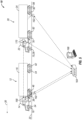
- Fig. 1 shows a platoon 10 that includes three tractor trailers 12, 20, 110 that all include tires which are heavy duty truck tires.
- the tires described herein are not designed for nor used with a car, motorcycle, or light truck (payload capacity less than 4,000 pounds), but are instead designed for and used with heavy duty trucks such as 18 wheelers, garbage trucks, or box trucks.
- the tire includes a casing onto which a tread is disposed thereon.
- the tread can be manufactured with the casing and formed as a new tire, or the tread can be a retread band that is attached to the casing at some point after the casing has already been used to form a retreaded tire.
- a first tractor trailer 12 is shown in the lead position in the platoon 10 and is the first vehicle in the group moving forward in the platoon forward direction of travel 30 on the ground 32, which is generally an asphalt or concrete road surface.
- the first tractor trailer 12 includes a first tractor 14 that is attached to and pulls a first trailer 16 that is filled with cargo.
- the first tractor 14 is the portion of the unit that includes the engine, and the first trailer 16 is the portion of the unit that includes the cargo that is desired to be transported.
- the first tractor trailer 12 is sometimes referred to as a semi-trailer truck, a tractor trailer, an eighteen wheeler (referring to the number of tires on the entire unit), a transport truck, or various other names.
- the first trailer 16 can be made of two or three trailers in other embodiments.
- Tractor trailers include three different types of tires known as steer tires, drive tires, and trailer tires. These three different tire types are designed for optimum use depending upon the position they occupy in the tractor trailer unit due to different needs at these different positions. Some truck tires can be designed as all position tires and may be placed at any position on the tractor trailer.
- the first tractor trailer 12 has a first tractor 14 that has a pair of steer tires 34, 36 located at the very front of the first tractor trailer 12 that function to help turn the first tractor trailer 12 in a left or right direction.
- the first tractor 14 also has eight drive tires toward the back end of the first tractor 14 that receive rotational motion to in turn drive the first tractor trailer 12 forward in the platoon forward direction of travel 30.
- the drive tires are tires 38, 40, 42, 44, 46, 48, 50 and 52. It is the case that drive tires 38, 40, 42 and 44 are on one axle, and that drive tires 46, 48, 50 and 52 are on a separate rearward axle. Although dual drive tires are shown, in other embodiments a single drive tire can be substituted for the dual set 38 and 40, the dual set 42 and 44, the dual set 46 and 48, and the dual set 50 and 52.
- the steer and drive tires 34, 36, 38, 40, 42, 44, 46, 48, 50 and 52 make up the tractor tires of the first tractor 14 because these tires are all located on the first tractor 14. As shown in Figs. 1 and 2 , the first trailer 16 extends over the top of the drive tires 38, 40, 42, 44, 46, 48, 50 and 52 but is connected to the first tractor 14 and does not have these drive tires located thereon.
- the first tractor trailer 12 also has a set of trailer tires, and these trailer tires are all located on the first trailer 16 and not the first tractor 14.
- the trailer tires are located on the back end of the first trailer 16 in the forward direction of travel 30 and function to support the loaded first trailer 16 during transport.
- the first tractor trailer 12 has a plurality of first tractor tires 18 that are tires of the first tractor 14 and are not tires of the first trailer 16.
- the plurality of first tractor tires 18 can be any two or more of the tires of the first tractor 14.
- the plurality of first tractor tires 18 may be all of the steer tires 34 and 36 in one embodiment.
- the plurality of first tractor tires 18 may be all of the drive tires 38, 40, 42, 44, 46, 48, 50 and 52.
- the plurality of first tractor tires 18 may be all of the tires 34, 36, 38, 40, 42, 44, 46, 48, 50 and 52 of the first tractor 14.
- the plurality of drive tires 18 are a combination of the steer and drive tires of the first tractor 14, and may be tires 34, 40, 44 and 46. Although shown has having eighteen tires, it is to be understood that the first tractor trailer 12 may have fewer than eighteen tires in accordance with other exemplary embodiments.
- the second tractor trailer 20 is immediately behind the first tractor trailer 12 in the platoon 10 in the platoon forward direction of travel 30.
- the second tractor trailer 20 can be configured in a similar manner to the first tractor trailer 12 with respect to the tires and can have eighteen tires or greater or less in various embodiments.
- the second tractor trailer 20 has a second tractor 22 that carries the steer and drive tires, and an attached second trailer 24 hauled by the second tractor 22 that includes the trailer tires of the second tractor trailer 20.
- the steer tires on the second tractor 22 are tires 70 and 72.
- the drive tires of the second tractor 22 are tires 74, 76, 78, 80, 82, 84, 86 and 88.
- the trailer tires of the second trailer 24 are tires 90, 92, 94, 96, 98, 100, 102 and 104.
- the tractor tires of the second tractor trailer 20 are tires of the second tractor 22 and are not any of the tires of the second trailer 24.
- the second tractor trailer 20 has a plurality of second tractor tires 26 that are only tires of the second tractor 22 and not the second trailer 24.
- the plurality of second tractor tires 26 can be all of the steer tires 70 and 72, can be all of the drive tires 74, 76, 78, 80, 82, 84, 86 and 88, or could be all of the tires 70, 72, 74, 76, 78, 80, 82, 84, 86 and 88 of the second tractor 22.
- the plurality of second tractor tires 26 may be any combination of the steer or drive tires and in one embodiment is tires 70, 78 and 82.
- the platoon 10 can include any plurality of tractor trailers. In the embodiment shown in Figs. 1 and 2 , there are three tractor trailers 12, 20 and 110.
- the third tractor trailer 110 is located immediately behind the second tractor trailer 20 in the platoon forward direction of travel 30.
- the third tractor trailer 110 is the last tractor trailer in the platoon 10 and can have eighteen tires like the rest of the tractor trailers 12, 20 in the platoon 10, or may have more or fewer tires than eighteen.
- the third tractor trailer 110 has a third tractor 112 that hauls a third trailer 114.
- the third tractor 112 includes steer tires 118 and 120, and includes a number of drive tires 122, 124, 126, 128, 130, 132, 134 and 136.
- the third trailer 114 has the trailer tires 138, 140, 142, 144, 146, 148, 150 and 152.
- a plurality of third tractor tires 116 are present and are tires of the third tractor 112 but are not tires of the third trailer 114.
- the third tractor tires 116 can be all of the steer tires 118 and 120, can be all of the drive tires 122, 124, 126, 128, 130, 132, 134 and 136, or may be all of the third tractor 112 tires 118, 120, 122, 124, 126, 128, 130, 132, 134 and 136.
- the plurality of third tractor tires 116 can be any combination of these tires such as being tire 122, 126, 134 and 136.
- Figs. 3 and 4 show one of the steer tires 34 of the first tractor 14 of the first tractor trailer 12 in cross-sectional view.
- the tire 34 is shown but it is to be understood that the tire 34 described with reference to Figs. 3 and 4 could be any of the aforementioned tires 34, 36, 38, 40, 42, 44, 46, 48, 50, 52, 54, 56, 58, 60, 62, 64, 66, 68, 70, 72, 74, 76, 78, 80, 82, 84, 86, 88, 90, 92, 94, 96, 98, 100, 102, 104, 120, 122, 124, 126, 128, 130, 132, 134, 136, 138, 140, 142, 144, 146, 148, 150 and 152.
- the tire 34 is described for sake of convenience and the follow description is applicable to any of the other tires of the various tractor trailer 12, 20, 110 of the platoon 10.
- the tire 34 is shown in an unworn state 154 in Fig. 3 .
- the unworn state 154 represents the condition of the tread 160 before being put onto the wheel of the first tractor 14 and driven so that some of the tread 160 is removed through driving.
- the unworn states 154 may be present either in a brand new tire 34 that was just produced or a retread tire onto which the tread 160 was placed and is brand new before being driving on the wheel of the first tractor 14.
- the tread 160 has a geometry that includes a series of grooves, sipes, ribs, and tread blocks that provide different functionality to the performance of the tire.
- the tread 160 in a more general sense is made up of rubber with a series of voids, which could be the aforementioned grooves and sipes.
- the tire 34 has a tread volumetric void 28 that is the total amount of void present in the tread 160.
- the tread volumetric void 28 can be distinguished from a surface void of the tire 34 which would be an area of void at the surface of the tread 160.
- the tread volumetric void 28 thus includes void that extends in the thickness direction of the tread 160.
- the tread volumetric void 28 can include hidden grooves and sipes within the tread 160 that are not visible from the surface of the tread 160.
- the tread volumetric void 28 can be expressed in terms of volume such as in cubic millimeters.
- Fig. 4 shows the tire 34 of Fig. 3 in a worn state 156 in which some but not all of the tread 160 has been removed due to driving.
- the tread 160 in the worn state 156 still has some of its tread life remaining as shown, but in other embodiments the tread 160 may be worn all the way down to where it will require replacement.
- the tire 34 has a tread volumetric void 158 that is the total amount of void in the tread 160 of the tire 34.
- the tread volumetric void 158 is a volume and can be expressed in units of cubic millimeters.
- the tread volumetric void 158 can be determined by measuring the amount of void present in the tread 160. This can be done by physically measuring the tread 160 or may be done by using a computer drafting program that has a solid model of the tread 160 that can output this information.
- One method to calculate the tread volumetric void percentage of the tire is to use the current void volume of the tire and divide it by the baseline “total void volume" of the tire.
- the total void volume, which can be expressed in cubic millimeters, of the new, unworn, tire is the baseline “total tread void volume” for the tire.
- the current tread void volume is the tread void volume of the tire at any instant in time. A new tire therefore has a tread volumetric void percentage of 100%.
- tread volumetric void percentage of the tire 34 could be through measurement of the wear of the tire 34.
- the tread volumetric void percentage could either be a completely accurate measurement or a measurement that does have an element of measurement error associated with it.
- the grooves, sipes, and other voids in the tread 160 can be wavy in extension in the depth direction of the tread 160, can be hidden under portions of the tread 160, or can expand or contract in width upon extension in the depth direction. In such instances, the surface void of the tread 160 of the tread is different depending upon what depth you are at within the tread 160.
- the void amount is not consistent from the unworn state 154 to the worn state 156 so that a linear relationship between tread 160 wear and tread volumetric void is not present.
- the tread 160 does have a linear relationship between wear and tread volumetric void, and when these tread 160 designs wear a corresponding amount of tread volumetric void would likewise be lost.
- a new tire 34 would have a tread volumetric void percentage of 100%, and a tire 34 that is completely worn down would have a tread volumetric void percentage of 0% as measured by the wear method.
- the depth of the tread 160 in the unworn state 154 is the depth of the tread 160 with a new tire 34 or a newly retreaded tire 34 representing the full tread depth of the tread 160 before it is completely worn and needs to be replaced.
- This tread volumetric void percentage 30% may be completely accurate in the case where the tread volumetric void does not vary upon wear of the tread 160, or may be an estimate of the tread volumetric void in designs of the tread 160 in which the tread volumetric void does not have a linear relationship with the tread depth.
- using the depth of the tread 160 is an alternate way, or additional way, to determine the tread volumetric void percentage of the tire 34 to or along with measurements using the tread volumetric void.
- the platooning method thus utilizes only the tread volumetric void percentage of the tires in order to determine the position of the tractor trailers 12, 20, 110 and does not take into account other stopping variables such as brake system, loading, tire pressure, tractor choice, trailer choice, or type of tire. Further, only the tires of the tractors 14, 22, 112 are evaluated for the positioning of the tractor trailers 12, 20, 110 and the tires of the trailers 16, 24, 114 are not even considered when setting the order of tractor trailers 12, 20, 110. Once the tread volumetric void percentages are known, an average tread volumetric void percentage can be calculated in order to make the decision as to the order of the tractor trailers 12, 20, 110 in the platoon 10.
- the steer tires 34, 36 have a higher impact on wet braking results than do the drive tires 38, 40, 42, 44, 46, 48, 50, 52 of the tractor trailer 12. This is true for the steer and drive tires of the other tractor trailers 20, 110 as well. For this reason, the method employs a weighing factor in which the steer tires 34, 36 are weighted more heavily than the drive tires 38, 40, 42, 44, 46, 48, 50, 52 due to the steer tires' tread volumetric void volume percentage having a larger impact on wet braking results.
- the weighing factor between steer and drive tires is at least 80/20 but may be as high as 100/0, and in some embodiments is 95/5.
- the steer tires 34, 36 are weighted at least 80% while the drive tires 38, 40, 42, 44, 46, 48, 50, 52 are weighted no more than 20%.
- the weighting of the tread volumetric void percentages of the steer and drive tires can take place after their averaging.
- the method uses the tread volumetric void percentage of at least one of the steer tires 34 or 36, and at least one of the drive tires 38, 40, 42, 44, 46, 48, 50 and 52. In other embodiments all of the steer and drive tires are used to determine the tread volumetric void percentages.
- the order of the tractor trailers 12, 20, 110 in the platoon 10 can be set on the wet road surface so that the tractor trailer with the smallest tread volumetric void percentage is first in the platoon 10 in the platoon forward direction of travel 30 and it is 31.25%.
- the immediately successive tractor trailer will be the one that has the next successively larger tread volumetric void percentage which is 44.13% and is the second tractor trailer 20.
- the last tractor trailer in the platoon 10 in the forward direction of travel 30 is the tractor trailer that has the greatest average tread volumetric void percentage which is 47.15% and is the first tractor trailer 12.
- the order of the tractor trailers 110, 20, 12 is thus based completely on the tread volumetric void percentages, and the platoon 10 is best suited for running in wet road conditions such as in heavy rain or when sufficient water is on the road which could cause hydroplaning of the tractor trailers 12, 20, 110.
- the present method allows the platoon 10 to improve fuel efficiency by allowing the trailing tractor trailers 20, 12 to run closer in wet conditions.
- the present method thus produces a tangible result of a platoon 10 that achieves better fuel efficiency for the convoy of tractor trailers 12, 20, 110.
- the steer/drive weighting is 95/5 steer to drive.
- This 95/5 weighting was set based upon data obtained from on track testing to date.
- This embodiment is similar to the 80/20 weighting described above such that 95 would be used in place of 80 and 5 would be used in place of 20.
- the order of the tractor trailers 12, 20, 110 in the platoon 10 is still set so that the tractor trailer with the smallest weighted tread volumetric void percentage is first in the platoon 10 in the platoon forward direction of travel 30 and it is 22.81%.
- the immediately successive tractor trailer will be the one that has the next successively larger weighted tread volumetric void percentage which is 42.53% and is the second tractor trailer 20.
- the last tractor trailer in the platoon 10 in the forward direction of travel 30 is the tractor trailer that has the greatest average tread volumetric void percentage which is 45.91% and is the first tractor trailer 12.
- the new order of the tractor trailers 110, 20, 12 is thus based completely on the weighted tread volumetric void percentages, and the platoon 10 is now best suited for running in wet road conditions such as in heavy rain or when sufficient water is on the road which could cause hydroplaning of the tractor trailers 12, 20, 110.
- the order of the tractor trailers 12, 20, 110 is not adjusted until a sufficient amount of difference between the tread volumetric void percentages is present.
- the platoon 10 of tractor trailers 12, 20, 110 can be ordered based upon various criteria for running on dry road surfaces, and such criteria is not within the scope of the present application. Once ordered, the present system allows the platoon 10 to continue to run in wet road conditions by ordering them via tread volumetric void percentages as current platooning arrangements do not allow running in wet road conditions.
- the tread volumetric void percentages can be determined for each of the tractor trailers 12, 20, 110 as previously discussed, but the order is adjusted from the dry platooning order already established only if the tread volumetric void percentages is greater than a certain threshold.
- This threshold can be 7% in some embodiments, and 10% in other embodiments.
- the platooning order 10 for dry road conditions is established so that the first tractor trailer 12 is first, the second tractor trailer 20 is second, and the third tractor trailer 110 is third, the tread volumetric void percentages are calculated and the order is adjusted only if the threshold is exceeded, and in this example that threshold is 7%.
- the platooning system is a wet platooning system in that it reorders the tractor trailers 12, 20, 110 from their dry road platooning order to a wet road platooning order.
- Another embodiment of the ordering method as described herein can include a threshold of 10%, a first tractor trailer 12 in the first position with a tread volumetric void percentage of 70%, a second tractor trailer 20 in the second position with a tread volumetric void percentage of 40%, and a third tractor trailer 110 in the last position with a tread volumetric void percentage of 50%. Since the difference of 30% between the first and second tractor trailers 12, 20 is over the 10% threshold the first tractor trailer 12 will be moved to the middle position and the second tractor trailer 20 that has the lower tread volumetric void percentage will be moved to the lead position. Next, the first tractor trailer 12 is compared to the third tractor trailer 110 and the 70% tread volumetric void volume is greater than the 50% tread volumetric void volume by over 10% so their positions are switched.
- the lead tractor trailer is the second tractor trailer 20 having a 40% tread volumetric void volume
- the middle vehicle is the third tractor trailer 110 with a 50% tread volumetric void volume
- the last tractor trailer in the platoon 10 is the first tractor trailer 12 with a 70% tread volumetric void volume. Since the difference between the second and third tractor trailers 20, 110 is only 10% the difference does not exceed the 10% threshold and the positions of these two tractor trailers 20, 110 are not changed in the platoon 10.
- the threshold can be set based upon the majority of the road surface the platoon 10 is expected to drive upon. If the majority of the road surface is a high polished road surface the threshold may be 7%. If the majority of the road surface the platoon 10 will drive on is a higher frictional road surface such as asphalt, then the threshold can be higher and may be 10%.
- the threshold set can be from 7%-10% in accordance with various exemplary embodiments.
- the platoon 10 is made up of two tractor trailers 12 and 20.
- any plurality of tractor trailers 12, 20 may be present in the platoon 10 in other embodiments.
- the platoon 10 includes the same tires as previously discussed and a repeat of this information is not necessary.
- each tractor trailer 12, 20 has eighteen tires other numbers are possible in other embodiments.
- the tire sensors 162, 163 may be any sensor capable of sensing tread depth or tread volumetric void, and in some embodiments may be a ProTrak G high-resolution profiling sensor from MTI Instruments that is a laser sensor that use triangulation to render a two dimensional height profile of the surface of the tread which can lead to the building of a 3D image of the tread upon rotation of the tire. In other embodiments, the tire sensors 162, 163 could be GOCATOR ® smart sensors that are non-contact 3D scanning sensors capable of providing tread depth or tread volumetric void data.
- a drive over sensor 162, 163 can be used in which the tractor trailers 12, 20, 110 drive over them and they record the tread depth, tread volumetric voids, or other desired tread information.
- the tire sensors 162, 163 could be mechanical devices that are put into grooves of the tread of the tires to measure tread depth.
- the tire sensors 162, 163 may be any device capable of measuring the depth and/or tread volumetric void of the tread of the tires. Although two tire sensors 162, 163 are shown, any number of tire sensors 162, 163 may be used to measure the tread volumetric void of the tread.
- This information may be sent to transmitters 168, 170 carried by the tractor trailers 12, 20 of the convoy or can be sent to a processor 164 located in a location remote from the tractor trailers 12, 20 or in some instances within one or more of the tractor trailers 12, 20.
- the processor 164 can obtain the sensor 162, 163 data and use it with a stored database, if necessary, to ascertain the tread volumetric void percentage of the plurality of tires in the tractor trailers 12, 20 that are the subject of evaluation.
- the determination of the tread volumetric void percentage may be executed by the tire sensors 162, 163, or processor 164, or combinations thereof.
- the processor 164 may then perform the averaging calculation to determine average tread volumetric void percentages of the tires of the tractor trailers 12, 20.
- the processor 164 can then send instructions to the transmitters 168 and 170 to in turn inform the drivers and/or the automatic driving systems of the tractor trailers 12, 20 to reorder, or keep as the case may be, their positions in the platoon 10. Alternatively, the processor 164 may simply output this information to the display 166 and this information could be transmitted to drivers of the tractor trailers 12, 20 in any other manner.
- the processor 164 has a display 166 that can show the drivers or operators any of the aforementioned data or the calculated platoon 10 order.
- the processor 164 can send and receive signals to the tire sensors 162, 163 and the transmitters 168, 170, and the transmitters 168, 170 and send and receive signals to one another and to the tire sensors 162, 163.
- the transmitters 168 and 170 need not be in communication with one another in other embodiments.
- the processor 164 and tire sensors 162, 163 could be provided as a single unit, or they may be provided as more than one unit so that they are not both contained in the same device in accordance with different embodiments.
- the processor 164 and transmitters 168, 170 can be provided by a variety of sources.
- the transmitters 168, 170 could be in-vehicle computer systems supplied by Sintrones having offices located at 2F-3 No. 738, Zhongzheng Rd., New Taipei City 235, Taiwan.
- the processor 164 could be a laptop or desktop computer provided by any variety of companies.
- the transmitters 168, 170 could be Bluetooth enabled two way radios capable of receiving and transmitting cell phone data and one such type of transmitter could be a Rugged Radios RRP696 Black Out Series.
- the method of ordering the tractor trailers in the platoon 10 can be executed by looking at all of the steer tires and drive tires and measuring the tread volumetric void percentages of all of them and taking an average of all of these tires and then comparing the average tread volumetric void percentages between the various tractor trailers 12, 20, 110 in the platoon 10.
- An alternative way of executing the method of ordering sees one measuring all of the tread volumetric void percentages of the steer tires and drive tires of the tractor trailer, but only considering the drive or steer tire that has the lowest tread volumetric void percentage and discounting all of the other tires of that particular tractor trailer 12, 20 or 110.
- the other tractor trailers 12, 20 or 110 are considered in a similar manner in which only the drive or steer tire having the lowest tread volumetric void percentage is counted and the rest are disregarded.
- the platooning order can be established for each one of the tractor trailers 12, 20, 110 based on the steer/drive tire of each one of the tractor trailers 12, 20, 110 that has the lowest tread volumetric void percentage irrespective of the tread volumetric void percentages of the remaining steer/drive tires of the tractor trailers 12, 20, 110.
- tread volumetric void percentage was a proper metric to order tractor trailers 12, 20, 110 in the platoon 10 arrangement.
- the test track was wetted to have a water depth of 1.2 mm and test tracks with surfaces of different frictional coefficients were utilized.
- Surface A8 is a wet asphalt surface which has a different coefficient than surface A1 that is a wet polished concrete road surface.
- Testing on dry surfaces was also conducted in order to determine the effects of average tread volumetric void percentages on dry surfaces. For baseline measurements, the pressure of the tires was set at 6.9 bars. Baseline loading, different tire types, and different types of tractors 14 and trailers 16 used in the testing follow, and combinations of these different types of tractors 14 and trailers 16 were utilized.
- Michelin ® tires used in various experiments:
- Baseline configuration for the tractor trailer 12 was set up using steer tires 34, 36 that were Michelin ® 275/80R22.5 baseline steer tires; drive tires 38, 40, 42, 44, 46, 48, 50 and 52 that were Michelin ® 275/80R22.5 baseline drive tires; and trailer tires 54, 56, 58, 60, 62, 64, 66 and 68 that were Michelin ® 275/80R22.5 baseline trailer tires.
- One tractor trailer 12 configuration evaluated is known as the long haul (LH)/ Energy Tire configuration and includes steer tires 34, 36 that are Michelin ® 275/80R22.5 long haul steer tires, drive tires 38, 40, 42, 44, 46, 48, 50 and 52 that are Michelin ® 275/80R22.5 multi-drive tires, and trailer tires 54, 56, 58, 60, 62, 64, 66 and 68 that are Michelin ® 275/80R22.5 long haul trailer tires.
- LH long haul
- Energy Tire configuration includes steer tires 34, 36 that are Michelin ® 275/80R22.5 long haul steer tires, drive tires 38, 40, 42, 44, 46, 48, 50 and 52 that are Michelin ® 275/80R22.5 multi-drive tires, and trailer tires 54, 56, 58, 60, 62, 64, 66 and 68 that are Michelin ® 275/80R22.5 long haul trailer tires.
- Another tractor trailer 12 tire configuration evaluated in the experiments include steer tires 34, 36 that were Michelin ® 275/80R22.5 multi-steer tires, drive tires 38, 40, 42, 44, 46, 48, 50 and 52 that were Michelin ® 275/80R22.5 multi-drive tires, and trailer tires 54, 56, 58, 60, 62, 64, 66 and 68 that were Michelin ® 275/80R22.5 long haul trailer tire which may be referred to as a multi tires configuration herein.
- An additional tractor trailer 12 tire configuration included steer tires 34, 36 that were Goodyear ® 295/75R22.5 Endurance ® LHS ® , drive tires 38, 40, 42, 44, 46, 48, 50 and 52 that were Goodyear ® 295/75R22.5 Endurance ® LHD ® , and trailer tires 54, 56, 58, 60, 62, 64, 66 and 68 that were Goodyear ® 295/75R22.5 Fuel Max ® LHT ® .
- Tire pressure was also adjusted in some tests to see if the tire pressure had any impact on stopping distance.
- the configurations were standard tire pressure versus tire pressure that was reduced by 25%. It was discovered that decreasing tire pressure did not have a significant impact on braking distance in dry or wet conditions.
- Pressure Effect (% LACCM) A1 (Wet) A8 (Wet) C6 (Dry) Constant Test Variable Set A Set A Set A Vehicle Config std. pressure 100.0% 100.0% 100.0% Vehicle Config low pressure 101.2% 101.1% 103.8% Note: Loaded Condition; Standard water depth; Cummins Tractor w/ Michelin Trailer
- the baseline set is the baseline set described above having brand new tires.
- Set B is the Goodyear ® set as previously described, and set C is the Michelin ® multi tires set previously described.
- tire wear state has the biggest impact on stopping distance for wet braking. Worn tires have a significantly different performance than new tires. Half worn tires have a statistically different response (15-20% on A1, and about 6% on A8) with significantly larger stopping distances than new tires. Worn out tires have an almost 50% (36-47% on Al, and 15-22% on A8) longer stopping distance. The lower the surface friction the bigger the impact on tread depth/wear state. Vehicle loading has a big impact on dry road conditions, but minimal impact when on wet roads. The vehicle's tractor/trailer brake system does appear to have an impact when tested on A8 surfaces. There is not a large variation in the selection of tire design with the exception that Goodyear ® tires performed slightly worse. Tire pressure does not have an impact on wet or dry braking performance.
- the tread volumetric void volume has the greatest impact on stopping performance in wet conditions.
- the wear state of the tires is related to the tread volumetric void volume and can be used to measure this property.
- Tractor brake type, trailer ABS configuration, and load distributions also had a noticeable impact on wet braking.
- the platooning arrangement may be ordered so that only tire tread volumetric void volume is considered when making the selection because it is the primary driver, especially in the worn condition.
- the ordering method may be selected so that no other property is considered when making the platoon ordering except for the tread volumetric void percentages of some of the tractor 14, 22, 112 tires 18, 26, 116 and none of the tires of the trailers 16, 24, 114.
- a weighting ratio of 95/5 is optimal, but any weighting ratio that is 80/20 or higher (steer tire 80-100, and drive tire 0-20) is possible in the method. If using a 100/0 weighting, none of the tread volumetric void of the drive tires is considered and only the steer tire tread volumetric void is used. The method may look at all of the steer tires, and all of the drive tires, or any number of these tires. If only a single one of the drive or steer tires is considered, it is preferable to use the single drive tire with the lowest tread volumetric void, and the steer tire with the lowest tread volumetric void.
- the weighting is applied and the numbers added together to arrive at the tread volumetric void percentage of that tractor trailer 12, 20, or 110.
- the platoon 10 order for wet road surfaces may be set using these tread volumetric void percentages of the tractor trailers 12, 20, or 110 so long as a certain amount of different, for example 7% or larger, is present. If none of the tread volumetric void percentages are different from one another by at least 7% then there is no reordering in the platoon 10.
- the method described herein can be executed before the platoon 10 is expected to be in wet road conditions and once the platoon 10 reaches the wet road conditions the tractor trailers 12, 20, 110 can be reordered based upon the disclosed method.
Landscapes
- Engineering & Computer Science (AREA)
- Mechanical Engineering (AREA)
- Transportation (AREA)
- Physics & Mathematics (AREA)
- General Physics & Mathematics (AREA)
- Tires In General (AREA)
Claims (15)
- Verfahren zur Kolonnenbildung von Lastzügen (12, 20, 110) auf nassen Fahrbahndecken, umfassend:Bereitstellen eines ersten Lastzugs (12), der eine erste Sattelzugmaschine (14) und einen ersten Anhänger (16) aufweist, wobei die erste Sattelzugmaschine (14) eine Vielzahl erster Sattelzugmaschinenreifen (18) aufweist, die sich an der ersten Sattelzugmaschine (14) befinden, die erste Sattelzugmaschinenlenkreifen (34, 36) und erste Sattelzugmaschinenantriebsreifen (38, 40, 42, 44, 46, 48, 50, 52) sind;Bereitstellen eines zweiten Lastzugs (20), der eine zweite Sattelzugmaschine (22) und einen zweiten Anhänger (24) aufweist, wobei die zweite Sattelzugmaschine (22) eine Vielzahl zweiter Sattelzugmaschinenreifen (26) aufweist, die sich an der zweiten Sattelzugmaschine (22) befinden, die zweite Sattelzugmaschinenlenkreifen (70, 72) und Sattelzugmaschinenantriebsreifen (74, 76, 78, 80, 82, 84, 86, 88) sind;Bereitstellen mindestens eines Reifensensors (162, 163);Messen der Vielzahl erster Sattelzugmaschinenreifen (18) und Messen der Vielzahl zweiter Sattelzugmaschinenreifen (26) mit dem mindestens einen Reifensensor (162, 163);Bereitstellen eines Prozessors (164), der Daten durch den mindestens einen Reifensensor (162, 163) empfängt;gekennzeichnet durchBestimmen eines volumetrischen Hohlraumanteils (28, 158) der Lauffläche jedes der Vielzahl erster Sattelzugmaschinenreifen (18) über die Daten, die durch den mindestens einen Reifensensor (162, 163) bereitgestellt werden, und schwereres Gewichten des volumetrischen Hohlraumanteils (28, 158) der Lauffläche mindestens eines der ersten Sattelzugmaschinenlenkreifen (34, 36) als des volumetrischen Hohlraumanteils (28, 158) der Lauffläche mindestens eines der ersten Sattelzugmaschinenantriebsreifen (38, 40, 42, 44, 46, 48, 50, 52), um einen Hohlraumanteil (28, 158) der Lauffläche des ersten Lastzugs (12) zu bestimmen;wobei das Gewichten des volumetrischen Hohlraumanteils (28, 158) der Lauffläche des mindestens einen der ersten Sattelzugmaschinenlenkreifen (34, 36) mindestens 80 % beträgt, und der volumetrische Hohlraumanteil (28, 158) der Lauffläche des mindestens einen der ersten Sattelzugmaschinenantriebsreifen (38, 40, 42, 44, 46, 48, 50, 52) nicht mehr als 20 % beträgt;Bestimmen eines volumetrischen Hohlraumanteils (28, 158) der Lauffläche jedes der Vielzahl zweiter Sattelzugmaschinenreifen (26) über die Daten, die durch den mindestens einen Reifensensor (162, 163) bereitgestellt werden, und schwereres Gewichten des volumetrischen Hohlraumanteils (28, 158) der Lauffläche mindestens eines der zweiten Sattelzugmaschinenlenkreifen (70, 72) als des volumetrischen Hohlraumanteils (28, 158) der Lauffläche mindestens eines der zweiten Sattelzugmaschinenantriebsreifen (74, 76, 78, 80, 82, 84, 86, 88), um einen Hohlraumanteil (28, 158) der Lauffläche des zweiten Lastzugs (20) zu bestimmen;wobei das Gewichten des volumetrischen Hohlraumanteils (28, 158) der Lauffläche des mindestens einen der zweiten Sattelzugmaschinenlenkreifen (70, 72) mindestens 80 % beträgt, und der volumetrische Hohlraumanteil (28, 158) der Lauffläche des mindestens einen der zweiten Sattelzugmaschinenantriebsreifen (74, 76, 78, 80, 82, 84, 86, 88) nicht mehr als 20 % beträgt;wobei, wenn mehr als ein Lenkreifen berücksichtigt wird, der Durchschnitt der Vielzahl bestimmt wird, und wenn mehr als ein Antriebsreifen berücksichtigt wird, der Durchschnitt des volumetrischen Hohlraumanteils der Lauffläche berechnet wird;Neuordnen des ersten Lastzugs (12) und des zweiten Lastzugs (20) in einer Kolonne (10) zum Fahren auf einer nassen Fahrbahndecke derart, dass der erste oder zweite Lastzug (12, 20), der einen niedrigeren volumetrischen Hohlraumanteil (28, 158) der Lauffläche aufweist, vor dem ersten oder zweiten Lastzug (12, 20) neu geordnet wird, der einen höheren volumetrischen Hohlraumanteil (28, 158) der Lauffläche aufweist, wenn die Differenz zwischen dem volumetrischen Hohlraumanteil (28, 158) der Lauffläche der ersten Lastzugs (12) und dem volumetrischen Hohlraumanteil (28, 158) der Lauffläche des zweiten Lastzugs (20) mindestens 7 % beträgt.
- Verfahren nach Anspruch 1, wobei das Gewichten des volumetrischen Hohlraumanteils (28, 158) der Lauffläche des mindestens einen der ersten Sattelzugmaschinenlenkreifen (34, 36) mindestens 95 % beträgt, und der volumetrische Hohlraumanteil (28, 158) der Lauffläche des mindestens einen der ersten Sattelzugmaschinenantriebsreifen (38, 40, 42, 44, 46, 48, 50, 52) 5 % beträgt;
wobei das Gewichten des volumetrischen Hohlraumanteils (28, 158) der Lauffläche des mindestens einen der zweiten Sattelzugmaschinenlenkreifen (70, 72) mindestens 95 % beträgt, und der volumetrische Hohlraumanteil (28, 158) der Lauffläche des mindestens einen der zweiten Sattelzugmaschinenantriebsreifen (74, 76, 78, 80, 82, 84, 86, 88) nicht mehr als 5 % beträgt. - Verfahren nach Anspruch 1, wobei alle der volumetrischen Hohlraumanteile (28, 158) der Laufflächen aller der ersten Sattelzugmaschinenlenkreifen (34, 36) und alle der volumetrischen Hohlraumanteile (28, 158) aller der ersten Sattelzugmaschinenantriebsreifen (38, 40, 42, 44, 46, 48, 50, 52) gewichtet und verwendet werden, um den volumetrischen Hohlraumanteil (28, 158) der Lauffläche des ersten Lastzugs (12) zu bestimmen; und
wobei alle der volumetrischen Hohlraumanteile (28, 158) der Laufflächen aller der zweiten Sattelzugmaschinenlenkreifen (70, 72) und alle der volumetrischen Hohlraumanteile (28, 158) aller der zweiten Sattelzugmaschinenantriebsreifen (74, 76, 78, 80, 82, 84, 86, 88) gewichtet und verwendet werden, um den volumetrischen Hohlraumanteil (28, 158) der Lauffläche des zweiten Lastzugs (20) zu bestimmen. - Verfahren nach einem der Ansprüche 1-3, wobei die volumetrischen Hohlraumanteile (28, 158) der Lauffläche jedes der Vielzahl erster Sattelzugmaschinenreifen (18) unter Verwendung einer Verschleißmenge bestimmt werden, die jeder der Vielzahl erster Sattelzugmaschinenreifen (18) ab unverschlissenen Zuständen jedes der Vielzahl erster Sattelzugmaschinenreifen (18) aufweist; und
wobei die volumetrischen Hohlraumanteile (28, 158) der Lauffläche jedes der Vielzahl zweiter Sattelzugmaschinenreifen (26) unter Verwendung einer Verschleißmenge bestimmt werden, die jeder der Vielzahl zweiter Sattelzugmaschinenreifen (26) ab unverschlissenen Zuständen jedes der Vielzahl zweiter Sattelzugmaschinenreifen (26) aufweist. - Verfahren nach einem der Ansprüche 1-3, wobei die volumetrischen Hohlraumanteile (28, 158) der Lauffläche jedes der Vielzahl erster Sattelzugmaschinenreifen (18) unter Verwendung einer Menge an Lebensdauer der Lauffläche (160) bestimmt werden, die auf jedem der Vielzahl erster Sattelzugmaschinenreifen (18) verbleibt; und
wobei die volumetrischen Hohlraumanteile (28, 158) der Lauffläche jedes der Vielzahl zweiter Sattelzugmaschinenreifen (26) unter Verwendung einer Menge an Lebensdauer der Lauffläche (160) bestimmt werden, die auf jedem der Vielzahl zweiter Sattelzugmaschinenreifen (26) verbleibt. - Verfahren nach einem der Ansprüche 1-3, wobei die volumetrischen Hohlraumanteile (28, 158) der Lauffläche jedes der Vielzahl erster Sattelzugmaschinenreifen (18) durch Vergleichen einer Hohlraummenge in jeder der Laufflächen (160) der Vielzahl erster Sattelzugmaschinenreifen (18) in einem neuen Zustand mit einer Hohlraummenge in jeder der Laufflächen (160) der Vielzahl erster Sattelzugmaschinenreifen (18) in einem aktuellen Zustand bestimmt werden;
wobei die volumetrischen Hohlraumanteile (28, 158) der Lauffläche jedes der Vielzahl zweiter Sattelzugmaschinenreifen (26) durch Vergleichen einer Hohlraummenge jeder der Laufflächen (160) der Vielzahl zweiter Sattelzugmaschinenreifen (26) in einem neuen Zustand mit einer Hohlraummenge jeder der Laufflächen (160) der Vielzahl zweiter Sattelzugmaschinenreifen (26) in einem aktuellen Zustand bestimmt werden. - Verfahren nach einem der Ansprüche 1-6, weiter umfassend:Bereitstellen eines dritten Lastzugs (110), der eine dritter Sattelzugmaschine (112) und einen dritten Anhänger (114) aufweist, wobei die dritte Sattelzugmaschine (112) eine Vielzahl dritter Sattelzugmaschinenreifen (110) aufweist, die sich an der dritten Sattelzugmaschine (112) befinden, die dritte Sattelzugmaschinenlenkreifen (122, 124, 126, 128, 130, 132, 134, 136) und dritte Sattelzugmaschinenantriebsreifen (118, 120) sind;Bestimmen eines volumetrischen Hohlraumanteils (28, 158) der Lauffläche jedes der Vielzahl dritter Sattelzugmaschinenreifen (110) über die Daten, die durch den mindestens einen Reifensensor (162, 163) bereitgestellt werden, und schwereres Gewichten des volumetrischen Hohlraumanteils (28, 158) der Lauffläche mindestens eines der dritten Sattelzugmaschinenlenkreifen (118, 120) als des volumetrischen Hohlraumanteils (28, 158) der Lauffläche mindestens eines der dritten Sattelzugmaschinenlenkreifen (122, 124, 126, 128, 130, 132, 134, 136), um einen Hohlraumanteil (28, 158) der Lauffläche des dritten Lastzugs (110) zu bestimmen;wobei das Gewichten des volumetrischen Hohlraumanteils (28, 158) der Lauffläche des mindestens einen der dritten Sattelzugmaschinenlenkreifen (118, 120) mindestens 80 % beträgt, und der volumetrische Hohlraumanteil (28, 158) der Lauffläche des mindestens einen der dritten Sattelzugmaschinenantriebsreifen (122, 124, 126, 128, 130, 132, 134, 136) nicht mehr als 20 % beträgt;Neuordnen des dritten Lastzugs (110) in der Kolonne (10) derart, dass der dritte oder erste Lastzug (110, 12), der den niedrigeren volumetrischen Hohlraumanteil (28, 158) der Lauffläche aufweist, vor dem dritten oder ersten Lastzug (110, 12) positioniert wird, der den höheren mittleren volumetrischen Hohlraumanteil (28, 158) der Lauffläche aufweist, wenn die Differenz zwischen dem volumetrischen Hohlraumanteil (28, 158) der Lauffläche des ersten Lastzugs (12) und den volumetrischen Hohlraumanteil (28, 158) der Lauffläche des dritten Lastzugs (110) mindestens 7 % beträgt; undNeuordnen des dritten Lastzugs (110) in der Kolonne (10) derart, dass der dritte oder zweite Lastzug (110, 20), der den niedrigeren volumetrischen Hohlraumanteil (28, 158) der Lauffläche aufweist, vor dem dritten oder zweiten Lastzug (110, 20) positioniert ist, der den höheren volumetrischen Hohlraumanteil (28, 158) der Lauffläche aufweist, wenn die Differenz zwischen dem volumetrischen Hohlraumanteil (28, 158) der Lauffläche des zweiten Lastzugs (20) und dem volumetrischen Hohlraumanteil (28, 158) der Lauffläche des dritten Lastzugs (110) mindestens 7 % beträgt.
- Verfahren nach einem der Ansprüche 1-7, wobei Gewicht nicht verwendet wird, um die Reihenfolge des ersten Lastzugs (12) und des zweiten Lastzugs (20) in der Kolonne (10) zu bestimmen.
- Verfahren nach einem der Ansprüche 1-8, wobei Bremssystemleistung nicht verwendet wird, um die Reihenfolge des ersten Lastzugs (12) und des zweiten Lastzugs (20) in der Kolonne (10) zu bestimmen.
- Verfahren nach einem der Ansprüche 1-9, wobei das Bestimmen des volumetrischen Hohlraumanteils (28, 158) der Lauffläche jedes der Vielzahl erster Sattelzugmaschinenreifen (18) durch den Prozessor (164) ausgeführt wird, und wobei das Bestimmen des volumetrischen Hohlraumanteils (28, 158) der Lauffläche jedes der Vielzahl zweiter Sattelzugmaschinenreifen (26) durch den Prozessor (164) ausgeführt wird, und wobei der Prozessor (164) das Neuordnen des ersten Lastzugs (12) und des zweiten Lastzugs (20) in der Kolonne (10) mitteilt.
- Verfahren nach einem der Ansprüche 1-10, wobei der erste Lastzug (12) und der zweite Lastzug (20) nur neu geordnet werden, wenn der volumetrische Hohlraumanteil (28, 158) der Lauffläche des ersten Lastzugs (12) 87,5 % oder weniger beträgt, und wenn der volumetrische Hohlraumanteil (28, 158) der Lauffläche des zweiten Lastzugs (20) 87,5 % oder weniger beträgt.
- Verfahren nach einem der Ansprüche 1-11, wobei der volumetrische Hohlraumanteil (28, 158) der Lauffläche des ersten Lastzugs (12) durch den Prozessor (164) durch Mitteln der volumetrischen Hohlraumanteile (28, 158) einer Vielzahl der ersten Sattelzugmaschinenantriebsreifen (38, 40, 42, 44, 46, 48, 50, 52) und dann Gewichten, und durch Mitteln der volumetrischen Hohlraumanteile (28, 158) der Lauffläche einer Vielzahl der ersten Sattelzugmaschinenlenkreifen (34, 36) und dann Gewichten und dann Addieren der gewichteten volumetrischen Hohlraumanteile (28, 158) der Lauffläche der ersten Sattelzugmaschinenantriebsreifen (38, 40, 42, 44, 46, 48, 50, 52) und der gewichteten volumetrischen Hohlraumanteile (28, 158) der Lauffläche der ersten Sattelzugmaschinenlenkreifen (34, 36) bestimmt wird; und
wobei der volumetrische Hohlraumanteil (28, 158) der Lauffläche des zweiten Lastzugs (20) durch den Prozessor (164) durch Mitteln der volumetrischen Hohlraumanteile (28, 158) der Lauffläche einer Vielzahl der zweiten Sattelzugmaschinenantriebsreifen (74, 76, 78, 80, 82, 84, 86, 88) und dann Gewichten und durch Mitteln der volumetrischen Hohlraumanteile (28, 158) der Lauffläche einer Vielzahl der zweiten Sattelzugmaschinenlenkreifen (70, 72) und dann Gewichten und dann Addieren der gewichteten volumetrischen Hohlraumanteile (28, 158) der Lauffläche der zweiten Sattelzugmaschinenantriebsreifen (74, 76, 78, 80, 82, 84, 86, 88) und des gewichteten volumetrischen Hohlraumanteils (28, 158) der Lauffläche der zweiten Sattelzugmaschinenlenkreifen (70, 72) bestimmt wird. - Verfahren nach einem der Ansprüche 1-11, wobei der volumetrische Hohlraumanteil (28, 158) der Lauffläche des ersten Lastzugs (12) durch den Prozessor (164) durch Gewichten des niedrigsten volumetrischen Hohlraumanteils (28, 158) der Lauffläche eines der ersten Sattelzugmaschinenlenkreifen (34, 36) und durch Gewichten des niedrigsten volumetrischen Hohlraumanteils (28, 158) der Lauffläche jedes der ersten Sattelzugmaschinenantriebsreifen (38, 40, 42, 44, 46, 48, 50, 52) und dann Addieren der gewichteten volumetrischen Hohlraumanteile (28, 158) der Lauffläche der ersten Sattelzugmaschinenantriebsreifen (38, 40, 42, 44, 46, 48, 50, 52) und ersten Sattelzugmaschinenlenkreifen (34, 36) bestimmt wird;
wobei der volumetrische Hohlraumanteil (28, 158) der Lauffläche des zweiten Lastzugs (20) durch den Prozessor (164) durch Gewichten des niedrigsten volumetrischen Hohlraumanteils (28, 158) der Lauffläche eines der zweiten Sattelzugmaschinenlenkreifen (70, 72) und durch Gewichten des niedrigsten volumetrischen Hohlraumanteils (28, 158) der Lauffläche eines der zweiten Sattelzugmaschinenantriebsreifen (74, 76, 78, 80, 82, 84, 86, 88) und dann Addieren der gewichteten volumetrischen Hohlraumanteile (28, 158) der Lauffläche der zweiten Sattelzugmaschinenantriebsreifen (74, 76, 78, 80, 82, 84, 86, 88) und zweiten Sattelzugmaschinenlenkreifen (70, 72) bestimmt wird. - Verfahren nach einem der Ansprüche 1-13, wobei das Neuordnen des ersten Lastzugs (12) und des zweiten Lastzugs (20) in der Kolonne (10) nur stattfindet, wenn die Differenz zwischen dem volumetrischen Hohlraumanteil (28, 158) der Lauffläche des ersten Lastzugs (12) und dem volumetrischen Hohlraumanteil (28, 158) der Lauffläche des zweiten Lastzugs (20) mindestens 10 % beträgt.
- Lastzug-Kolonnenbildungssystem, umfassend:einen ersten Lastzug (12), der eine erste Sattelzugmaschine (14) und einen ersten Anhänger (16) aufweist, wobei die erste Sattelzugmaschine (14) eine Vielzahl erster Sattelzugmaschinenreifen (18) aufweist, die sich an der ersten Sattelzugmaschine (14) befinden, die erste Sattelzugmaschinenlenkreifen (34, 36) und erste Sattelzugmaschinenantriebsreifen (38, 40, 42, 44, 46, 48, 50, 52) sind;einen zweiten Lastzug (20), der eine zweite Sattelzugmaschine (22) und einen zweiten Anhänger (24) aufweist, wobei die zweite Sattelzugmaschine (22) eine Vielzahl zweiter Sattelzugmaschinenreifen (26) aufweist, die sich an der zweiten Sattelzugmaschine (22) befinden, die zweite Sattelzugmaschinenlenkreifen (70, 72) und Sattelzugmaschinenantriebsreifen (74, 76, 78, 80, 82, 84, 86, 88) sind;mindestens einen Reifensensor (162, 163), wobei der mindestens eine Reifensensor (162, 163) zum Messen der Vielzahl erster Sattelzugmaschinenreifen (18) und der Vielzahl zweiter Sattelzugmaschinenreifen (26) konfiguriert ist;einen Prozessor (164), der Daten von dem mindestens einen Reifensensor (162, 163) empfängt;dadurch gekennzeichnet, dassder Prozessor (164) einen volumetrischen Hohlraumanteil (28, 158) der Lauffläche jedes der Vielzahl erster Sattelzugmaschinenreifen (18) über die Daten, die durch den mindestens einen Reifensensor (162, 163) bereitgestellt werden, und schwereres Gewichten des volumetrischen Hohlraumanteils (28, 158) der Lauffläche mindestens eines der ersten Sattelzugmaschinenlenkreifen (34, 36) als des volumetrischen Hohlraumanteils (28, 158) der Lauffläche mindestens eines der ersten Sattelzugmaschinenantriebsreifen (38, 40, 42, 44, 46, 48, 50, 52) bestimmt, um einen Hohlraumanteil (28, 158) der Lauffläche des ersten Lastzugs (12) zu bestimmen;das Gewichten des volumetrischen Hohlraumanteils (28, 158) der Lauffläche des mindestens einen der ersten Sattelzugmaschinenlenkreifen (34, 36) mindestens 80 % beträgt, und der volumetrische Hohlraumanteil (28, 158) der Lauffläche des mindestens einen der ersten Sattelzugmaschinenantriebsreifen (38, 40, 42, 44, 46, 48, 50, 52) nicht mehr als 20 % beträgt;der Prozessor (164) einen volumetrischen Hohlraumanteil (28, 158) der Lauffläche jedes der Vielzahl zweiter Sattelzugmaschinenreifen (26) über die Daten, die durch den mindestens einen Reifensensor (162, 163) bereitgestellt werden, und schwereres Gewichten des volumetrischen Hohlraumanteils (28, 158) der Lauffläche mindestens eines der zweiten Sattelzugmaschinenlenkreifen (70, 72) als des volumetrischen Hohlraumanteils (28, 158) der Lauffläche mindestens eines der zweiten Sattelzugmaschinenantriebsreifen (74, 76, 78, 80, 82, 84, 86, 88) bestimmt, um einen Hohlraumanteil (28, 158) der Lauffläche des zweiten Lastzugs (20) zu bestimmen;das Gewichten des volumetrischen Hohlraumanteils (28, 158) der Lauffläche des mindestens einen der zweiten Sattelzugmaschinenlenkreifen (70, 72) mindestens 80 % beträgt, und der volumetrische Hohlraumanteil (28, 158) der Lauffläche des mindestens einen der zweiten Sattelzugmaschinenantriebsreifen (74, 76, 78, 80, 82, 84, 86, 88) nicht mehr als 20 % beträgt;wobei, wenn mehr als ein Lenkreifen berücksichtigt wird, der Durchschnitt der Vielzahl bestimmt wird, und wenn mehr als ein Antriebsreifen berücksichtigt wird, der Durchschnitt des volumetrischen Hohlraumanteils der Lauffläche berechnet wird;der erste und der zweite Lastzug (12, 20) in einer Kolonne (10) derart neu geordnet werden, dass der erste oder zweite Lastzug (12, 20), der einen niedrigeren volumetrischen Hohlraumanteil (28, 158) der Lauffläche aufweist, vor dem ersten oder zweiten Lastzug (12, 20) positioniert wird, der einen höheren volumetrischen Hohlraumanteil (28, 158) der Lauffläche aufweist, wenn die Differenz zwischen dem volumetrischen Hohlraumanteil (28, 158) der Lauffläche des ersten Lastzugs (12) und den volumetrischen Hohlraumanteil (28, 158) der Lauffläche des zweiten Lastzugs (20) mindestens 7 % beträgt.
Applications Claiming Priority (1)
| Application Number | Priority Date | Filing Date | Title |
|---|---|---|---|
| PCT/US2020/060115 WO2022103392A1 (en) | 2020-11-12 | 2020-11-12 | Method for heavy truck platooning order on wet roads using tire tread volumetric void percentage |
Publications (2)
| Publication Number | Publication Date |
|---|---|
| EP4244078A1 EP4244078A1 (de) | 2023-09-20 |
| EP4244078B1 true EP4244078B1 (de) | 2025-04-30 |
Family
ID=73835695
Family Applications (1)
| Application Number | Title | Priority Date | Filing Date |
|---|---|---|---|
| EP20824719.7A Active EP4244078B1 (de) | 2020-11-12 | 2020-11-12 | Verfahren zur kolonnenbildung bei schweren lastkraftwagen auf nassen strassen unter verwendung eines volumetrischen hohlraumanteils einer reifenlauffläche |
Country Status (4)
| Country | Link |
|---|---|
| US (1) | US12462689B2 (de) |
| EP (1) | EP4244078B1 (de) |
| CA (1) | CA3196528A1 (de) |
| WO (1) | WO2022103392A1 (de) |
Family Cites Families (10)
| Publication number | Priority date | Publication date | Assignee | Title |
|---|---|---|---|---|
| US7975540B2 (en) * | 2008-04-24 | 2011-07-12 | Rite-Solutions, Inc. | Methods and apparatus for tire tread measurement |
| RU2521899C1 (ru) * | 2010-10-29 | 2014-07-10 | Мишлен Решерш Э Текник С.А. | Протектор шины, содержащий несколько слоев износа |
| WO2016099655A1 (en) * | 2014-12-16 | 2016-06-23 | Bridgestone Americas Tire Operations, Llc | Optical-based tread depth measuring device, system, and method |
| JP6748213B2 (ja) * | 2016-09-05 | 2020-08-26 | ナブテスコオートモーティブ株式会社 | 隊列走行管理システム |
| US10503176B2 (en) * | 2016-12-30 | 2019-12-10 | Bendix Commercial Vehicle Systems Llc | Self-ordering of fleet vehicles in a platoon |
| US10943490B2 (en) * | 2017-10-31 | 2021-03-09 | Cummins, Inc. | Platoon system for vehicles |
| US10921821B2 (en) * | 2017-12-21 | 2021-02-16 | Bendix Commercial Vehicle Systems Llc | Determining and using braking capabilities of vehicles for platooning deceleration operations |
| FR3076047B1 (fr) * | 2017-12-22 | 2021-01-08 | Michelin & Cie | Procede de gestion d'un peloton de camions a partir d'informations relatives aux pneumatiques equipant les camions dudit peloton |
| US20200126330A1 (en) * | 2018-10-19 | 2020-04-23 | The Goodyear Tire & Rubber Company | Tire inspection system for vehicle fleets |
| US20200160723A1 (en) * | 2018-11-21 | 2020-05-21 | Peloton Technology, Inc. | Systems and methods for managing tractor trailers |
-
2020
- 2020-11-12 US US18/249,272 patent/US12462689B2/en active Active
- 2020-11-12 EP EP20824719.7A patent/EP4244078B1/de active Active
- 2020-11-12 WO PCT/US2020/060115 patent/WO2022103392A1/en not_active Ceased
- 2020-11-12 CA CA3196528A patent/CA3196528A1/en active Pending
Also Published As
| Publication number | Publication date |
|---|---|
| WO2022103392A1 (en) | 2022-05-19 |
| EP4244078A1 (de) | 2023-09-20 |
| CA3196528A1 (en) | 2022-05-19 |
| US12462689B2 (en) | 2025-11-04 |
| US20230394976A1 (en) | 2023-12-07 |
Similar Documents
| Publication | Publication Date | Title |
|---|---|---|
| US20230294459A1 (en) | Model based tire wear estimation system and method | |
| US9296263B2 (en) | Smart active tyre pressure optimising system | |
| JP4597960B2 (ja) | 建設機械にタイヤを取付ける方法およびそのタイヤ | |
| Rodgers | Tire engineering: an introduction | |
| CN111512351B (zh) | 基于装配车队的卡车的轮胎相关的信息来管理卡车的所述车队的方法 | |
| JP7679725B2 (ja) | タイヤ状態判定システム、タイヤ状態判定装置、タイヤ状態判定方法、及びプログラム | |
| US20210394562A1 (en) | Model based tire wear estimation system and method | |
| US20210229670A1 (en) | Method for estimating tire grip | |
| US20230150482A1 (en) | Method for controlling axle load distribution of a vehicle | |
| RU2440249C1 (ru) | Нешипованная шина | |
| Walters | Uneven wear of vehicle tires | |
| EP4244078B1 (de) | Verfahren zur kolonnenbildung bei schweren lastkraftwagen auf nassen strassen unter verwendung eines volumetrischen hohlraumanteils einer reifenlauffläche | |
| JP4752704B2 (ja) | タイヤ摩耗寿命予測方法 | |
| JP4509324B2 (ja) | 路面摩擦係数の推定方法 | |
| CN120359399A (zh) | 用于确定轮胎在湿润路面上的抓地力系数的方法 | |
| CN101038240A (zh) | 确定自卸车轮胎所受应力的指标的方法 | |
| TWI747698B (zh) | 胎況評估方法及系統 | |
| CN117584981A (zh) | 用于估计摩擦势系数的方法和估计装置 | |
| JP5631861B2 (ja) | 車両用懸架システム及び車両用タイヤ | |
| US12330454B2 (en) | System for auto-location of tires employing footprint length | |
| KR102929792B1 (ko) | 유효회전반경 및 물림률을 활용한 타이어의 마모 추정 방법 | |
| CN206884613U (zh) | 全钢载重无内胎子午线轮胎胎面花纹结构 | |
| Astrauskas | ANALYSIS OF TIRE TYPES AND TREAD DEPTH IN VEHICLES OF M1 AND N1 CATEGORIES OPERATED IN THE SUMMERTIME IN ŠIAULIAI | |
| CN115871376A (zh) | 车辆湿地制动控制方法、存储介质、车辆控制器及车辆 | |
| JPH08318712A (ja) | 重荷重用空気入りタイヤ及びその装着方法 |
Legal Events
| Date | Code | Title | Description |
|---|---|---|---|
| STAA | Information on the status of an ep patent application or granted ep patent |
Free format text: STATUS: UNKNOWN |
|
| STAA | Information on the status of an ep patent application or granted ep patent |
Free format text: STATUS: THE INTERNATIONAL PUBLICATION HAS BEEN MADE |
|
| PUAI | Public reference made under article 153(3) epc to a published international application that has entered the european phase |
Free format text: ORIGINAL CODE: 0009012 |
|
| STAA | Information on the status of an ep patent application or granted ep patent |
Free format text: STATUS: REQUEST FOR EXAMINATION WAS MADE |
|
| 17P | Request for examination filed |
Effective date: 20230405 |
|
| AK | Designated contracting states |
Kind code of ref document: A1 Designated state(s): AL AT BE BG CH CY CZ DE DK EE ES FI FR GB GR HR HU IE IS IT LI LT LU LV MC MK MT NL NO PL PT RO RS SE SI SK SM TR |
|
| DAV | Request for validation of the european patent (deleted) | ||
| DAX | Request for extension of the european patent (deleted) | ||
| STAA | Information on the status of an ep patent application or granted ep patent |
Free format text: STATUS: EXAMINATION IS IN PROGRESS |
|
| 17Q | First examination report despatched |
Effective date: 20240627 |
|
| GRAP | Despatch of communication of intention to grant a patent |
Free format text: ORIGINAL CODE: EPIDOSNIGR1 |
|
| STAA | Information on the status of an ep patent application or granted ep patent |
Free format text: STATUS: GRANT OF PATENT IS INTENDED |
|
| INTG | Intention to grant announced |
Effective date: 20250203 |
|
| RIC1 | Information provided on ipc code assigned before grant |
Ipc: B60T 8/17 20060101ALI20250124BHEP Ipc: B60T 7/20 20060101ALI20250124BHEP Ipc: B60T 7/18 20060101ALI20250124BHEP Ipc: G08G 1/00 20060101ALI20250124BHEP Ipc: B60C 23/00 20060101ALI20250124BHEP Ipc: B60C 11/03 20060101AFI20250124BHEP |
|
| GRAS | Grant fee paid |
Free format text: ORIGINAL CODE: EPIDOSNIGR3 |
|
| GRAA | (expected) grant |
Free format text: ORIGINAL CODE: 0009210 |
|
| STAA | Information on the status of an ep patent application or granted ep patent |
Free format text: STATUS: THE PATENT HAS BEEN GRANTED |
|
| AK | Designated contracting states |
Kind code of ref document: B1 Designated state(s): AL AT BE BG CH CY CZ DE DK EE ES FI FR GB GR HR HU IE IS IT LI LT LU LV MC MK MT NL NO PL PT RO RS SE SI SK SM TR |
|
| REG | Reference to a national code |
Ref country code: CH Ref legal event code: EP Ref country code: GB Ref legal event code: FG4D |
|
| REG | Reference to a national code |
Ref country code: DE Ref legal event code: R096 Ref document number: 602020050538 Country of ref document: DE |
|
| REG | Reference to a national code |
Ref country code: IE Ref legal event code: FG4D |
|
| REG | Reference to a national code |
Ref country code: NL Ref legal event code: MP Effective date: 20250430 |
|
| REG | Reference to a national code |
Ref country code: AT Ref legal event code: MK05 Ref document number: 1789715 Country of ref document: AT Kind code of ref document: T Effective date: 20250430 |
|
| PG25 | Lapsed in a contracting state [announced via postgrant information from national office to epo] |
Ref country code: FI Free format text: LAPSE BECAUSE OF FAILURE TO SUBMIT A TRANSLATION OF THE DESCRIPTION OR TO PAY THE FEE WITHIN THE PRESCRIBED TIME-LIMIT Effective date: 20250430 Ref country code: PT Free format text: LAPSE BECAUSE OF FAILURE TO SUBMIT A TRANSLATION OF THE DESCRIPTION OR TO PAY THE FEE WITHIN THE PRESCRIBED TIME-LIMIT Effective date: 20250901 Ref country code: ES Free format text: LAPSE BECAUSE OF FAILURE TO SUBMIT A TRANSLATION OF THE DESCRIPTION OR TO PAY THE FEE WITHIN THE PRESCRIBED TIME-LIMIT Effective date: 20250430 |
|
| REG | Reference to a national code |
Ref country code: LT Ref legal event code: MG9D |
|
| PG25 | Lapsed in a contracting state [announced via postgrant information from national office to epo] |
Ref country code: GR Free format text: LAPSE BECAUSE OF FAILURE TO SUBMIT A TRANSLATION OF THE DESCRIPTION OR TO PAY THE FEE WITHIN THE PRESCRIBED TIME-LIMIT Effective date: 20250731 Ref country code: NO Free format text: LAPSE BECAUSE OF FAILURE TO SUBMIT A TRANSLATION OF THE DESCRIPTION OR TO PAY THE FEE WITHIN THE PRESCRIBED TIME-LIMIT Effective date: 20250730 |
|
| PG25 | Lapsed in a contracting state [announced via postgrant information from national office to epo] |
Ref country code: NL Free format text: LAPSE BECAUSE OF FAILURE TO SUBMIT A TRANSLATION OF THE DESCRIPTION OR TO PAY THE FEE WITHIN THE PRESCRIBED TIME-LIMIT Effective date: 20250430 Ref country code: PL Free format text: LAPSE BECAUSE OF FAILURE TO SUBMIT A TRANSLATION OF THE DESCRIPTION OR TO PAY THE FEE WITHIN THE PRESCRIBED TIME-LIMIT Effective date: 20250430 |
|
| PG25 | Lapsed in a contracting state [announced via postgrant information from national office to epo] |
Ref country code: BG Free format text: LAPSE BECAUSE OF FAILURE TO SUBMIT A TRANSLATION OF THE DESCRIPTION OR TO PAY THE FEE WITHIN THE PRESCRIBED TIME-LIMIT Effective date: 20250430 |
|
| PG25 | Lapsed in a contracting state [announced via postgrant information from national office to epo] |
Ref country code: HR Free format text: LAPSE BECAUSE OF FAILURE TO SUBMIT A TRANSLATION OF THE DESCRIPTION OR TO PAY THE FEE WITHIN THE PRESCRIBED TIME-LIMIT Effective date: 20250430 |
|
| PG25 | Lapsed in a contracting state [announced via postgrant information from national office to epo] |
Ref country code: AT Free format text: LAPSE BECAUSE OF FAILURE TO SUBMIT A TRANSLATION OF THE DESCRIPTION OR TO PAY THE FEE WITHIN THE PRESCRIBED TIME-LIMIT Effective date: 20250430 |
|
| PG25 | Lapsed in a contracting state [announced via postgrant information from national office to epo] |
Ref country code: RS Free format text: LAPSE BECAUSE OF FAILURE TO SUBMIT A TRANSLATION OF THE DESCRIPTION OR TO PAY THE FEE WITHIN THE PRESCRIBED TIME-LIMIT Effective date: 20250731 |
|
| PG25 | Lapsed in a contracting state [announced via postgrant information from national office to epo] |
Ref country code: IS Free format text: LAPSE BECAUSE OF FAILURE TO SUBMIT A TRANSLATION OF THE DESCRIPTION OR TO PAY THE FEE WITHIN THE PRESCRIBED TIME-LIMIT Effective date: 20250830 |
|
| PG25 | Lapsed in a contracting state [announced via postgrant information from national office to epo] |
Ref country code: LV Free format text: LAPSE BECAUSE OF FAILURE TO SUBMIT A TRANSLATION OF THE DESCRIPTION OR TO PAY THE FEE WITHIN THE PRESCRIBED TIME-LIMIT Effective date: 20250430 |
|
| PGFP | Annual fee paid to national office [announced via postgrant information from national office to epo] |
Ref country code: DE Payment date: 20251119 Year of fee payment: 6 |
|
| PG25 | Lapsed in a contracting state [announced via postgrant information from national office to epo] |
Ref country code: DK Free format text: LAPSE BECAUSE OF FAILURE TO SUBMIT A TRANSLATION OF THE DESCRIPTION OR TO PAY THE FEE WITHIN THE PRESCRIBED TIME-LIMIT Effective date: 20250430 Ref country code: SM Free format text: LAPSE BECAUSE OF FAILURE TO SUBMIT A TRANSLATION OF THE DESCRIPTION OR TO PAY THE FEE WITHIN THE PRESCRIBED TIME-LIMIT Effective date: 20250430 |
|
| PGFP | Annual fee paid to national office [announced via postgrant information from national office to epo] |
Ref country code: FR Payment date: 20251126 Year of fee payment: 6 |
|
| PG25 | Lapsed in a contracting state [announced via postgrant information from national office to epo] |
Ref country code: CZ Free format text: LAPSE BECAUSE OF FAILURE TO SUBMIT A TRANSLATION OF THE DESCRIPTION OR TO PAY THE FEE WITHIN THE PRESCRIBED TIME-LIMIT Effective date: 20250430 |
|
| PG25 | Lapsed in a contracting state [announced via postgrant information from national office to epo] |
Ref country code: EE Free format text: LAPSE BECAUSE OF FAILURE TO SUBMIT A TRANSLATION OF THE DESCRIPTION OR TO PAY THE FEE WITHIN THE PRESCRIBED TIME-LIMIT Effective date: 20250430 |
|
| PG25 | Lapsed in a contracting state [announced via postgrant information from national office to epo] |
Ref country code: SK Free format text: LAPSE BECAUSE OF FAILURE TO SUBMIT A TRANSLATION OF THE DESCRIPTION OR TO PAY THE FEE WITHIN THE PRESCRIBED TIME-LIMIT Effective date: 20250430 |
|
| PG25 | Lapsed in a contracting state [announced via postgrant information from national office to epo] |
Ref country code: IT Free format text: LAPSE BECAUSE OF FAILURE TO SUBMIT A TRANSLATION OF THE DESCRIPTION OR TO PAY THE FEE WITHIN THE PRESCRIBED TIME-LIMIT Effective date: 20250430 |
|
| REG | Reference to a national code |
Ref country code: DE Ref legal event code: R097 Ref document number: 602020050538 Country of ref document: DE |
|
| PG25 | Lapsed in a contracting state [announced via postgrant information from national office to epo] |
Ref country code: RO Free format text: LAPSE BECAUSE OF FAILURE TO SUBMIT A TRANSLATION OF THE DESCRIPTION OR TO PAY THE FEE WITHIN THE PRESCRIBED TIME-LIMIT Effective date: 20250430 |
|
| PLBE | No opposition filed within time limit |
Free format text: ORIGINAL CODE: 0009261 |
|
| STAA | Information on the status of an ep patent application or granted ep patent |
Free format text: STATUS: NO OPPOSITION FILED WITHIN TIME LIMIT |
|
| REG | Reference to a national code |
Ref country code: CH Ref legal event code: L10 Free format text: ST27 STATUS EVENT CODE: U-0-0-L10-L00 (AS PROVIDED BY THE NATIONAL OFFICE) Effective date: 20260311 |
|
| 26N | No opposition filed |
Effective date: 20260202 |