EP4242831A1 - Verfahren, vorrichtung und vorrichtung zur erzeugung einer bildverarbeitungsschnittstelle und speichermedium - Google Patents
Verfahren, vorrichtung und vorrichtung zur erzeugung einer bildverarbeitungsschnittstelle und speichermedium Download PDFInfo
- Publication number
- EP4242831A1 EP4242831A1 EP21913726.2A EP21913726A EP4242831A1 EP 4242831 A1 EP4242831 A1 EP 4242831A1 EP 21913726 A EP21913726 A EP 21913726A EP 4242831 A1 EP4242831 A1 EP 4242831A1
- Authority
- EP
- European Patent Office
- Prior art keywords
- image
- instruction
- template
- target image
- image template
- Prior art date
- Legal status (The legal status is an assumption and is not a legal conclusion. Google has not performed a legal analysis and makes no representation as to the accuracy of the status listed.)
- Granted
Links
Images

Classifications
-
- G—PHYSICS
- G06—COMPUTING OR CALCULATING; COUNTING
- G06F—ELECTRIC DIGITAL DATA PROCESSING
- G06F3/00—Input arrangements for transferring data to be processed into a form capable of being handled by the computer; Output arrangements for transferring data from processing unit to output unit, e.g. interface arrangements
- G06F3/01—Input arrangements or combined input and output arrangements for interaction between user and computer
- G06F3/048—Interaction techniques based on graphical user interfaces [GUI]
- G06F3/0484—Interaction techniques based on graphical user interfaces [GUI] for the control of specific functions or operations, e.g. selecting or manipulating an object, an image or a displayed text element, setting a parameter value or selecting a range
- G06F3/04845—Interaction techniques based on graphical user interfaces [GUI] for the control of specific functions or operations, e.g. selecting or manipulating an object, an image or a displayed text element, setting a parameter value or selecting a range for image manipulation, e.g. dragging, rotation, expansion or change of colour
-
- G—PHYSICS
- G06—COMPUTING OR CALCULATING; COUNTING
- G06F—ELECTRIC DIGITAL DATA PROCESSING
- G06F16/00—Information retrieval; Database structures therefor; File system structures therefor
- G06F16/90—Details of database functions independent of the retrieved data types
- G06F16/95—Retrieval from the web
- G06F16/955—Retrieval from the web using information identifiers, e.g. uniform resource locators [URL]
- G06F16/9566—URL specific, e.g. using aliases, detecting broken or misspelled links
-
- G—PHYSICS
- G06—COMPUTING OR CALCULATING; COUNTING
- G06F—ELECTRIC DIGITAL DATA PROCESSING
- G06F16/00—Information retrieval; Database structures therefor; File system structures therefor
- G06F16/50—Information retrieval; Database structures therefor; File system structures therefor of still image data
- G06F16/58—Retrieval characterised by using metadata, e.g. metadata not derived from the content or metadata generated manually
- G06F16/583—Retrieval characterised by using metadata, e.g. metadata not derived from the content or metadata generated manually using metadata automatically derived from the content
- G06F16/5846—Retrieval characterised by using metadata, e.g. metadata not derived from the content or metadata generated manually using metadata automatically derived from the content using extracted text
-
- G—PHYSICS
- G06—COMPUTING OR CALCULATING; COUNTING
- G06F—ELECTRIC DIGITAL DATA PROCESSING
- G06F21/00—Security arrangements for protecting computers, components thereof, programs or data against unauthorised activity
- G06F21/60—Protecting data
- G06F21/62—Protecting access to data via a platform, e.g. using keys or access control rules
- G06F21/6209—Protecting access to data via a platform, e.g. using keys or access control rules to a single file or object, e.g. in a secure envelope, encrypted and accessed using a key, or with access control rules appended to the object itself
-
- G—PHYSICS
- G06—COMPUTING OR CALCULATING; COUNTING
- G06F—ELECTRIC DIGITAL DATA PROCESSING
- G06F8/00—Arrangements for software engineering
- G06F8/30—Creation or generation of source code
-
- G—PHYSICS
- G06—COMPUTING OR CALCULATING; COUNTING
- G06F—ELECTRIC DIGITAL DATA PROCESSING
- G06F2221/00—Indexing scheme relating to security arrangements for protecting computers, components thereof, programs or data against unauthorised activity
- G06F2221/21—Indexing scheme relating to G06F21/00 and subgroups addressing additional information or applications relating to security arrangements for protecting computers, components thereof, programs or data against unauthorised activity
- G06F2221/2141—Access rights, e.g. capability lists, access control lists, access tables, access matrices
-
- Y—GENERAL TAGGING OF NEW TECHNOLOGICAL DEVELOPMENTS; GENERAL TAGGING OF CROSS-SECTIONAL TECHNOLOGIES SPANNING OVER SEVERAL SECTIONS OF THE IPC; TECHNICAL SUBJECTS COVERED BY FORMER USPC CROSS-REFERENCE ART COLLECTIONS [XRACs] AND DIGESTS
- Y02—TECHNOLOGIES OR APPLICATIONS FOR MITIGATION OR ADAPTATION AGAINST CLIMATE CHANGE
- Y02D—CLIMATE CHANGE MITIGATION TECHNOLOGIES IN INFORMATION AND COMMUNICATION TECHNOLOGIES [ICT], I.E. INFORMATION AND COMMUNICATION TECHNOLOGIES AIMING AT THE REDUCTION OF THEIR OWN ENERGY USE
- Y02D10/00—Energy efficient computing, e.g. low power processors, power management or thermal management
Definitions
- Embodiments of the present disclosure relate to a field of computer and network communication technology, and in particular, to a method and an apparatus for generating an image processing interface, a device, and a storage medium.
- Image resources in the network are generally saved in cloud servers, and users can access a uniform resource locator (Uniform Resource Locator, URL for short) to obtain an image.
- URL Uniform Resource Locator
- a developer using the image resources will carry out processing on the image to a certain extent, such as adjusting a size and a format of the image.
- Embodiments of the present disclosure provide a method and an apparatus for generating an image processing interface, a device, and a storage medium to overcome the problems that the efficiency of the image URL generation is low and the maintenance cost is high.
- an embodiment of the present disclosure provides a method for generating an image processing interface, including: receiving a first instruction, where the first instruction is used to characterize an image parameter of a target image; determining an image template corresponding to the first instruction, where the image template is used to characterize a processing flow of the target image; and generating a processing interface of the target image according to the image template.
- an apparatus for generating an image processing interface including:
- an embodiment of the present disclosure provides an electronic device, including: at least one processor and a memory;
- an embodiment of the present disclosure provides a computer readable storage medium storing a computer-executable instruction, when the computer-executable instruction is executed by a processor, the method for generating an image processing interface described in the first aspect above and various possible designs of the first aspect is implemented.
- an embodiment of the present disclosure provides a computer program product including a computer program, when the computer program is executed by a processor, the method for generating an image processing interface described in the first aspect above and various possible designs of the first aspect is implemented.
- an embodiment of the present disclosure provides a computer program, when the computer program is executed by a processor, the method for generating an image processing interface described in the first aspect above and various possible designs of the first aspect is implemented.
- the embodiments provide a method and an apparatus for generating an image processing interface, a device, and a storage medium, including: receiving a first instruction, where the first instruction is used to characterize an image parameter of a target image; determining an image template corresponding to the first instruction, where the image template is used to characterize a processing flow of the target image; and generating a processing interface of the target image according to the image template. Since the image template standardizes the process and steps of image processing, the specific operation steps for generating a uniform resource locator are simplified, while standardizing the generated image processing interface, reducing the using and maintenance cost of the image processing interface, and improving the security of the image processing interface.
- a uniform resource locator also known as a URL (Uniform Resource Locator) is a representation method used to specify a location of information on the World Wide Web service program of the Internet.
- the uniform resource locator is a concise representation of the location and access method of resources that can be obtained from the Internet, and is an address of a standard resource on the Internet.
- a resource file on the Internet corresponds to a unique URL, which contains information indicating a location of the file and how a browser should do with it.
- a basic URL includes information such as a mode (or a protocol), a server name (or an IP address), a path, and a file name, for a complete URL, which further includes other information beyond these, which will not be exemplified here.
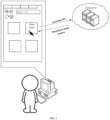
- FIG. 1 is a schematic diagram of an application scenario provided by an embodiment of the present disclosure, referring to FIG. 1 , an image resource on the network are generally stored in a cloud server, and the image resource corresponds to a unique URL.
- a user browses a business website through a terminal device, when needing to view a target image, the user clicks on a link provided by the business website to access a URL corresponding to the target image, thereby locating and obtaining the target image stored in the cloud server, and achieving a viewing process of the target image.
- the business website developer in the above application scenario needs to process the image according to a specific display requirement, such as adjusting a size, a direction, or an access permission of the image.
- the cloud server manufacturer usually directly places detailed parameter information for processing the above image in a query (Query) parameter of the image URL.
- Query query
- this method may lead to two problems: firstly, the detailed parameter information is directly exposed, the parameter is complex, and the meaning of a certain suffix is determined only by combining a document. If different image display areas in the business scenario need to keep the same processing parameters, the developer of the business website needs to manage this internal correlation on his own.
- the developer of the business website may add some custom information into the Query parameter, which may interfere with the parsing of the image processing parameter by the server side.
- the generated image URL in the related technology contains a large number of non-standard suffixes, which makes the process of generating the image URL complex and inefficient, while rising substantially the management cost and usage cost of the generated image URL.
- Embodiments of the present disclosure provide a method and an apparatus for generating an image processing interface, a device, and a storage medium method to solve the above problems.
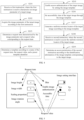
- FIG. 2 is a first flow chart of a method for generating an image processing interface provided by an embodiment of the present disclosure.
- the method of this embodiment can be applied to a server, and the method for generating an image processing interface includes the following.
- S101 receive a first instruction, where the first instruction is used to characterize an image parameter of a target image.
- the first instruction may be instruction information sent by the developer user to the server through the terminal device, the first instruction information is used to set the image parameter of the target image.
- the server After receiving the first instruction, the server will process the target image according to the image parameter of the target image characterized by the first instruction, such as adjusting the format and size of the image, and then generate the URL of the target image, so that other terminal devices may access the processed target image according to the image parameter when accessing the URL, thereby achieving a purpose that the developer user configures the target image.
- S102 determine an image template corresponding to the first instruction, where the image template is used to characterize a processing flow of the target image.
- the image template is information used to describe the processing flow of the image, and different image templates correspond to different processing flows for the target image.
- an image template A is used to set the size of the target image as the preset size
- an image template B is used to scale the target image equally first, and then apply Gaussian blur to the target image.
- Different processing flows for target images may be achieved through different image templates, thereby meeting the different image configuration needs of the developer user.
- the image parameter of the target image is obtained through the first instruction, the template name of the image template is determined according to the image parameter and a preset image template mapping relationship, and then the image template is determined. Therein, the image template mapping relationship is used to characterize a mapping relationship between the image template name and the image parameter.
- the image template is stored in a database
- the image template is a JS object notation (JavaScript Object Notation, JSON for short) format file
- the image template includes multiple functional fields which are used to characterize the processing flow of the target image, an image encoding parameter (such as an encoding quality parameter), and other content.
- JSON JavaScript Object Notation
- “name” is the template name
- “parameters” is the variable parameter list of the template.
- “Filters” represents the process of processing the image, including an equal scaling processing (“resize”), in the resize function field, the parameter (“param”) includes a height ("height") and width ("height") of the scaled image; and it also includes blur processing (“blur”), in the blur function field, the parameter ("param”) includes a blur type ("sigma”).
- “Quality” in the output (“output”) represents the coding quality parameter, which is only effective for image formats that support the coding quality parameter, such as Joint Photographic Experts Group (Joint Photographic Experts Group, JPEG for short) and WEBP.
- the processing flow that scaling in an equal proportion first and then processing with Gaussian blur for the target image through the above image template can be achieved.
- the first instruction contains the image processing parameter required in the above processing flow, and the first instruction is input or set by the user.
- a template that may achieve the purpose of image setting indicated by the first instruction, namely the image template may be determined, and the image template is determined by the content that needs to be set by the first instruction.
- the processing interface is a communication rule used to connect the target image and an external request when the target image is accessed by the external request.
- the processing interface may be a uniform resource locator (URL).
- the uniform resource locator (URL) of the template image consists of a domain name, a uniform resource identifier (Uniform Resource Identifier, URI for short), and identification information of the image template, where the domain name and the uniform resource identifier are preset and can be set according to a specific need.
- the identification information of the image template includes an image template name
- the identification information of the image template may also include: an image template parameter, where the image template parameter is used to characterize the processing parameter of the image template corresponding to the image template name when processing the target image; and/or image format information, where image format information is used to characterize an output image format after processing the target image.
- the image format may be specified as common formats such as jpeg and png, and the output image format may also be kept the same as the original image.
- the conversion of the image format supports converting the static image to the static image, the dynamic image to the dynamic image, and the dynamic image to the static image.
- the conversion of the dynamic image to the static image is achieved by extracting one frame from the dynamic image, and there is generally little requirement for converting the static image to the dynamic image.
- the WEBP encoding standard may support both the static and dynamic images
- defining the image format as WEBP means that the output image is a static image
- defining the image format as AWEBP means that the output image is adaptive, that is, when the original image is a static image, static WEBP is output, and when the original image is a dynamic image, dynamic WEBP is output.
- the uniform resource locator may be obtained by a combination according to the uniform resource identifier, the domain name, the identification information of the image template, and the preset separator. Where, for example, the separator may be " ⁇ ", that is, the unified resource identifier, the domain name, and the identification information of the image template are separated through " ⁇ ".
- the image template name may adopt a specification of a template identifier - ⁇ business abbreviation>- ⁇ business custom name>, where the business abbreviation is a fixed string related to the business, the business cannot be changed and can specify the part of the custom name, and the template name is globally unique.
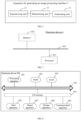
- FIG. 3 is a schematic structural diagram of identification information of an image template provided by an embodiment of the present disclosure, as illustrated in FIG. 3 , in a uniform resource locator A, "P9-dy byteimg.
- com/ is the domain name
- imagex-rc/review.jpg is the uniform resource identifier (URI) of the template image
- tplv-dy-480p is the image template name
- .webp is the format of the returned image, that is, the image format information.
- the combination of the image template name and the image format information is the identification information of the image template. Different parts are separated by the separator " ⁇ ”.
- "p9-tt.byteimg.com” is the domain name
- tplv-tt-resize is the template name
- :800:800 is the image template parameter, which defines width and height of the thumbnail
- “.webp” is the format of the returned image.
- the combination of the image template name, the image template parameter and the image format information is the identification information of the image template. Different parts are separated by the separator " ⁇ ". Since the processing flow for processing the image is defined in the image template, after determining the image template and the related input parameter according to the first instruction, the corresponding uniform resource locator for the target image after image processing may be generated according to the identification information of the image template, the domain name, and the uniform resource identifier.
- the embodiment is based on the implementation that the uniform resource locator is the image processing interface, and the method for generating an image processing interface provided by the embodiment of the present disclosure is described, but it is not limited to one method for generating the uniform resource locator.
- the method for generating an image processing interface provided by this embodiment may also be applied to other specifications that can use this method.
- a first instruction is received, where the first instruction is used to characterize an image parameter of a target image; an image template corresponding to the first instruction is determined, where the image template is used to characterize a processing flow of the target image; and a processing interface of the target image is generated according to the image template. Since the image template standardizes the process and steps of image processing, the specific operation steps for generating an image processing interface are simplified, while standardizing the generated image processing interface, reducing the using and maintenance cost of the image processing interface, and improving the security of the image processing interface.
- FIG. 4 is a second flow chart of a method for generating an image processing interface provided by an embodiment of the present disclosure.
- an authentication step is added, and the step of accessing the uniform resource locator according to the second instruction is added.
- the method for generating an image processing interface includes the following.
- S201 receive a first instruction, where the first instruction is used to characterize an image parameter of a target image.
- S202 acquire the image parameter of the target image according to the first instruction.
- S203 determine a request item characterized by the image parameter and a request value corresponding to the request item.
- the first instruction carries information that characterizes how to process the target image, such as modifying the size of the image, increasing the sharpness of the image, etc., the specific content of the image processing corresponding to such information is the request item, which corresponds to a specific request value. More specifically, the first instruction may be generated by the developer user through a user interface (User Interface, UI for short) to set the specific request item.
- UI User Interface
- FIG. 5 is a schematic diagram of a UI interface provided by an embodiment of the present disclosure, as illustrated in FIG.
- a variety of request items used to process the target image are set on the image setting interface, through the UI interface, the user sets the height of the image as a pixel and the width of the image as b pixel, and adds Gaussian blur to the target image.
- the first instruction generated accordingly contains the above information. Therefore, according to the content of the first instruction, it is possible to determine the image parameter of the corresponding target image, thereby determining the corresponding request item (such as the height of the image) and the request value (a pixel) corresponding to the request item.
- S204 determine a template according to a name of the request item, the request value, and a preset template identifier.
- the specific content for processing the image is determined after determining the name of the request item and the corresponding request value. Furthermore, according to the specific content for processing the image, a template name of the matching image template is determined, and then the image template is determined.
- S205 enable access authentication of the target image by setting the image template.
- the functional field of the image template includes an authentication field, and the authentication field is used to indicate whether an access authentication for the target image is enabled.
- the authentication field is used to indicate whether an access authentication for the target image is enabled.
- the "withsig" field is used to indicate whether authentication is enabled, if it is true, which indicates the authentication is enabled, if it is false, which indicates the authentication is not enabled.
- the key required for the authentication is also stored in the JSON description file.
- the name of the template is "tplv-19tz3ytenx-watermark", which is used to add a text watermark to the image, the "withsig” field is used to control whether authentication protection is enabled; "sigkey1" is the authentication key; the content of the watermark text (“text”) is passed in from the uniform resource locator and saved through the parameter ("parameters”) "wtext”.
- the authentication function for a single target image may be enabled or disabled by setting the image template.
- the authentication for the uniform resource locator may only be completed at the domain level, that is, for a certain CDN domain name, the authentication function may only be fully enabled or disabled.
- the authentication is not required in most cases, the authentication information needs to be added only in a scenario that preventing malicious tampering of the uniform resource locator.
- the image template it is possible to achieve the on-demand authentication for the uniform resource locator, reduce unnecessary authentication and signature verification calculation, and avoid computational resource waste.
- S206 set accessibility time of the target image through the image template.
- the setting the accessibility time of the target image refers to controlling that the target image to be accessed only within the preset time period and expires after exceeding the time point, so as to achieve the anti-theft chain function of the uniform resource locator for the target image.
- the setting the accessibility time of the target image through the image template includes: adding the field "req_deadline" in the JSON description file of the image template, which is not empty to indicate that expiration protection is enabled. Where, the field is set to pass a value from the uniform resource locator.
- the Unix timestamp of the expiration time of the uniform resource locator is placed in the image template parameter in the identification information of the image template, attaching the calculated authentication information.
- the server After receiving a request to access the target image, the server first verifies whether the authentication information of the uniform resource locator of the target image is correct, and then verifies whether the current system time is within the validity period of the uniform resource locator, if the verification fails, the server directly refuses to process the request; and if the verification passes, the server processes the image request, calculates an expiration time interval of the uniform resource locator (such as 300 seconds), and sets the expiration time interval in the returned HTTP (HyperText Transfer Protocol) cache header.
- the CDN domain name is configured accordingly to strictly follow the cache header.
- the image template name (name) is "tplv-19tz3ytenx-secure", including the function field "req_deadline”, which is used to set the accessibility time of the target image, and the field “withsig” is used to control whether the authentication protection is enabled; "sigkey1" is the authentication key; and the expiration timestamp is stored in the variable "deadline” and passed from the image template parameter in the identification information of the image template of the uniform resource locator.
- S207 generate a uniform resource locator of the target image according to the image template.
- S208 receive a second instruction, where the second instruction is used to access the uniform resource locator of the target image.
- S209 determine an access permission of the second instruction according to the identification information of the image template corresponding to the target image.
- the second instruction is a request of the user to access the target image, which is used to achieve accessing the target image through accessing the uniform resource locator of the target image.
- the access permission of the second instruction may be determined before responding to the second instruction to ensure the access security.
- the identification information of the image template contains authentication information used to determine the access permission of the second instruction, and the access permission of the second instruction may be confirmed by signing and verifying the uniform resource locator in the identification information of the image template.
- the flow of signing the uniform resource locator includes the following.
- the unauthenticated uniform resource locator is "http://p3-tt.byteimg.com/imagex-rc/preview.jpg ⁇ Tplv-19tz3ytenx-watermark:5rWL6K-V5L-h5oGv.image”
- the function of the image template is to add a watermark text "test information" to the image
- the identification information of the image template is "tplv-19tz3ytenx watermark:5rWL6K-V5L-h5oGv.image”
- 5rWL6K-V5L-h5oGv is a string of the watermark "test information” encoded by the Base64 URL Safe.
- the server When the server generates and issues the unified resource locator of the images, it is necessary to sign the uniform resource locator, generate authentication information, and attach it to the Query parameter of the uniform resource locator.
- the CDN receives the request and needs to transmit the complete uniform resource locator to the source station when returning to the source, after receiving the uniform resource locator, the source station server generates the signature content in the same way and compares it with the signature content in the uniform resource locator, if they are same, the verification is passed, and the image may continue to be processed, if they are different, it is considered an illegal request, and the request is refused to be processed.
- the subsequent access to the uniform resource locator may still be performed normally without providing authentication information.
- the present disclosure by adding authentication information to the generated uniform resource locator and performing authentication when accessing the uniform resource locator, it is ensured that the corresponding uniform resource locator of the target image is not tampered with, the integrity of the uniform resource locator of the target image is ensured, and the access security is improved.
- the identification information of the image template in the uniform resource locator also includes accessible time, the access permission for the second instruction is determined according to the accessible time.
- the access permission of the second instruction is verified through the accessible time in the uniform resource locator, which prevents a hotlinking connection of the uniform resource locator, thereby improving the access security.
- FIG. 6 is a block diagram of a structure of an apparatus for generating an image processing interface provided by an embodiment of the present disclosure. For the ease of explanation, only parts related to the embodiments of the present disclosure are shown. Referring to FIG. 6 , the apparatus for generating an image processing interface 3 includes:
- the uniform resource locator of the target image comprises identification information of the image template, a domain name corresponding to the target image, a uniform resource identifier corresponding to the target image, and a preset separator, where the identification information of the image template comprises an image template name and an image template parameter, and the image template parameter is used to characterize a processing parameter of the image template corresponding to the image template name when processing the target image.
- the identification information of the image template further includes format information of the target image.
- the determining unit 32 is specifically configured to: acquire a processing parameter of the target image according to the first instruction; determine a request item characterized by the processing parameter and a request value corresponding to the request item; and determine an image template according to a name of the request item, the request value, and a preset template identifier.
- the image template is a JSON format file
- the image template includes a plurality of functional fields
- the functional field is used to characterize a processing step for the target image.
- the functional field of the image template includes an authentication field, and the authentication field is used to indicate whether an access authentication for the target image is enabled.
- the functional field of the image template includes an access time field, and the access time field is used to characterize accessible time of the target image.
- the transceiving unit 31 is further configured to: receive a second instruction, where the second instruction is used to access the uniform resource locator of the target image; and send the target image according to the second instruction.
- the determining unit 32 before sending the target image, is further configured to: acquire identification information of the image template in the uniform resource locator of the target image; and determine an access permission of the second instruction according to the identification information of the image template.
- the identification information of the image template includes authentication information, and the authentication information is used to verify the access permission of the second instruction.
- the identification information of the image template further includes accessible time, the accessible time is used to determine whether the uniform resource locator of the target image is accessible by the second instruction at the current time.
- the device provided in the embodiment may be used to execute the technical solution of the above method embodiment, and the implementation principles and technical effects there between are similar, which will not be repeated in this embodiment.
- FIG. 7 is a schematic structural diagram of an electronic device provided by an embodiment of the present disclosure, as illustrated in FIG. 7 , the electronic device 4 includes at least one processor 401 and a memory 402;
- processor 401 and the memory 402 are connected through a bus 403.
- FIG. 8 illustrates a schematic structural diagram of an electronic device 900 suitable for implementing an embodiment of the present disclosure
- the electronic device 900 may be a terminal device or a server.
- the terminal device may include but are not limited to mobile terminals such as a mobile phone, a laptop, a digital broadcast receiver, a personal digital assistant (Personal Digital Assistant, PDA for short), a portable android device (Portable Android Device, PAD for short), a portable media player (Portable Media Player, PMP for short), a vehicle terminal (such as a vehicle navigation terminal), etc., and fixed terminals such as a digital TV (Television), a desktop computer, etc.
- PDA Personal Digital Assistant
- PDA Personal Digital Assistant
- portable android device Portable Android Device, PAD for short
- PMP portable media player
- vehicle terminal such as a vehicle navigation terminal
- fixed terminals such as a digital TV (Television), a desktop computer, etc.
- the electronic device shown in FIG. 8 is only an example, and there should be no limitations on the
- the electronic device 900 may include a processing apparatus (such as a central processing unit, a graphics processing unit, etc.) 901, where the processing apparatus may perform various appropriate actions and processing according to a program stored in a read only memory (Read Only Memory, ROM for short) 902 or a program loaded into a random access memory (Random Access Memory, RAM for short) 903 from a storage apparatus 908.
- a processing apparatus such as a central processing unit, a graphics processing unit, etc.
- the processing apparatus may perform various appropriate actions and processing according to a program stored in a read only memory (Read Only Memory, ROM for short) 902 or a program loaded into a random access memory (Random Access Memory, RAM for short) 903 from a storage apparatus 908.
- Various programs and data required for the operation of the electronic device 900 may also be stored in the RAM 903.
- the processing apparatus 901, the ROM 902, and the RAM 903 are connected to each other through a bus 904.
- the following apparatus may be connected to the I/O interface 905: an input apparatus 906, such as a touchscreen, a touchpad, a keyboard, a mouse, a camera, a microphone, an accelerometer, a gyrometer, etc.; an output apparatus 907, such as a liquid crystal display (Liquid Crystal Display, LCD for short), a speaker, a shaker, etc.; a storage apparatus 908, such as a magnetic disk, a hard disk, etc.; and a communication apparatus 909.
- the communication apparatus 909 allows the electronic device 900 to exchange data with other devices through a wireless or wire communication.
- FIG. 8 shows the electronic device 900 with various apparatuses, it should be understood that it is not required to implement or provide all the apparatus shown. More or fewer apparatuses may alternatively be implemented or provided.
- an embodiment of the present disclosure includes a computer program product, which includes a computer program loaded on a computer readable medium, and the computer program includes a program code for executing the method shown in a flowchart.
- the computer program may be downloaded and installed from the network through the communication apparatus 909, or installed from the storage apparatus 908, or installed from the ROM 902.
- the processing apparatus 901 the above functions defined in the method of the embodiment of the present disclosure are executed.
- the computer readable medium described in the present disclosure may be a computer readable signal medium, a computer readable storage medium, or a combination of the above two.
- the computer readable storage medium may be, for example, but not limited to, an electrical, magnetic, optical, electromagnetic, infrared, or semiconductor system, apparatus, or device, or any combination the foregoing.
- a computer readable storage medium may include, but are not limited to: an electrical connection with one or more wires, a portable computer disk, a hard disk, a random access memory (RAM), a read only memory (ROM), an erasable programmable read-only memory (Erasable Programmable Read-Only Memory, EPROM for short or flash memory), a fiber optic, a portable compact disk read-only memory (Portable Compact Disk Read-Only Memory, CD-ROM for short), an optical storage device, a magnetic storage device, or any suitable combination of the foregoing.
- a computer readable storage medium may be any tangible medium containing or storing a program, which may be used by or in combination with an instruction execution system, apparatus, or device.
- the computer readable signal medium may include data signals transmitted in the baseband or as part of the carrier, in which a computer readable program code is carried. Such transmitted data signals may take various forms, including but not limited to electromagnetic signals, optical signals or any suitable combination of the above.
- the computer readable signal medium may also be any computer readable medium other than the computer readable storage medium, which may send, propagate, or transmit programs for use by or in combination with an instruction execution system, apparatus, or device.
- the program code contained on the computer readable medium may be transmitted using any suitable medium, including, but not limited to, an electrical wire, an optical fiber cable, RF (Radio Frequency, radio frequency), etc., or any suitable combination of the foregoing.
- the above computer readable medium may be embodied in the above electronic device; and may also exist alone without being assembled into the electronic device.
- the above computer readable medium carries one or more programs which, when executed by the electronic device, enables the electronic device to execute the method illustrated in the above embodiments.
- the computer program code for executing operations in the present disclosure may be written in one or more programming languages or the combination thereof, including object-oriented programming languages-such as Java, Smalltalk, C++, and conventional procedural programming languages-such as the "C" language or similar programming languages.
- the program code may execute entirely on the user's computer, partly on the user's computer, as a stand-alone software package, partly on the user's computer and partly on a remote computer, or entirely on the remote computer or a server.
- the remote computer may be connected to the user's computer through any type of network, including a local area network (Local Area Network, LAN for short) or a wide area network (Wide Area Network, WAN for short), or the connection may be made to an external computer (for example, through the Internet using an Internet Service Provider).
- a local area network Local Area Network, LAN for short
- a wide area network Wide Area Network, WAN for short
- an Internet Service Provider for example, AT&T, MCI, Sprint, EarthLink, MSN, GTE, etc.
- each block in the flowcharts or block diagrams may represent a module, a program segment, or a portion of a code, which includes one or more executable instructions for implementing the specified logical functions.
- the functions noted in the blocks may occur out of the order noted in the drawing. For example, two blocks shown in a succession may, in fact, be executed substantially in parallel, or the blocks may also sometimes be executed in a reverse order, depending on the functions involved.
- each block in the block diagrams and/or flowcharts, and a combination of the blocks thereof may be implemented by a dedicated hardware-based system for performing specified functions or operations, or by a combination of dedicated hardware and computer instructions.
- the involved units described in the embodiments of the present disclosure may be implemented in a software manner, and may also be implemented in a hardware manner.
- the name of the unit does not constitute a limitation of the unit itself in some cases, for example, a first obtaining unit may also be described as "obtaining a unit of at least two Internet Protocol addresses".
- exemplary types of hardware logic components include: a field-programmable gate array (Field-Programmable Gate Array, FPGA for short), an application specific integrated circuit (Application Specific Integrated Circuit, ASIC for short), an application specific standard product (Application Specific Standard Product, ASSP for short), a system-on-chip (System-on-a-chip, SOC for short), a complex programmable logic device (Complex Programmable Logic Device, CPLD for short) and so on.
- FPGA Field-Programmable Gate Array
- ASIC Application Specific Integrated Circuit
- ASSP Application Specific Standard Product
- SOC System-on-a-chip
- CPLD Complex Programmable Logic Device
- a machine readable medium may be a tangible medium that may contain or store a program for use by or in combination with an instruction execution system, apparatus, or device.
- the machine readable medium may be a machine readable signal medium or a machine readable storage medium.
- the machine readable storage media may include, but is not limited to an electrical, magnetic, optical, electromagnetic, infrared, or semiconductor system, apparatus, or device, or any suitable combination of the foregoing.
- machine readable storage medium may include an electrical connection with one or more wires, a portable computer disk, a hard disk, a random access memory (RAM), a read only memory (ROM), an erasable programmable read only memory (EPROM or a flash memory), a fiber optic, a portable compact disk read-only memory (CD-ROM), an optical storage device, a magnetic storage device, or any suitable combination of the foregoing.
- RAM random access memory
- ROM read only memory
- EPROM or a flash memory erasable programmable read only memory
- CD-ROM portable compact disk read-only memory
- optical storage device a magnetic storage device, or any suitable combination of the foregoing.
- a method for generating an image processing interface including: receiving a first instruction, where the first instruction is used to characterize an image parameter of a target image; determining an image template corresponding to the first instruction, where the image template is used to characterize a processing flow of the target image; and generating a processing interface of the target image according to the image template.
- the processing interface is a uniform resource locator
- the uniform resource locator of the target image includes identification information of the image template, a domain name corresponding to the target image, a uniform resource identifier corresponding to the target image, and a preset separator
- the identification information of the image template includes an image template name and an image template parameter
- the image template parameter is used to characterize a processing parameter of the image template corresponding to the image template name when processing the target image.
- the identification information of the image template further includes format information of the target image.
- the determining the image template corresponding to the first instruction includes: acquiring a processing parameter of the target image according to the first instruction; determining a request item characterized by the processing parameter and a request value corresponding to the request item; and determining an image template according to a name of the request item, the request value, and a preset template identifier.
- the image template is a JSON format file
- the image template includes a plurality of functional fields
- the functional field is used to characterize a processing step for the target image.
- the functional field of the image template includes an authentication field, and the authentication field is used to indicate whether an access authentication for the target image is enabled.
- the functional field of the image template includes an access time field, and the access time field is used to characterize an accessible time of the target image.
- the method further includes: receiving a second instruction, where the second instruction is used to access the uniform resource locator of the target image; and sending the target image according to the second instruction.
- before sending the target image further including: acquiring identification information of the image template in the uniform resource locator of the target image; and determining an access permission of the second instruction according to the identification information of the image template.
- the identification information of the image template includes authentication information, and the authentication information is used to verify the access permission of the second instruction.
- the identification information of the image template further includes accessible time, and the accessible time is used to determine whether the uniform resource locator of the target image is accessible by the second instruction at the current time.
- an apparatus for generating an image processing interface including:
- the uniform resource locator of the target image includes identification information of the image template, a domain name corresponding to the target image, a uniform resource identifier corresponding to the target image, and a preset separator, where the identification information of the image template includes an image template name and an image template parameter, and the image template parameter is used to characterize a processing parameter of the image template corresponding to the image template name when processing the target image.
- the identification information of the image template further includes format information of the target image.
- the determining unit is specifically configured to: acquire a processing parameter of the target image according to the first instruction; determine a request item characterized by the processing parameter and a request value corresponding to the request item; and determine an image template according to a name of the request item, the request value, and a preset template identifier.
- the image template is a JSON format file
- the image template includes a plurality of functional fields
- the functional field is used to characterize a processing step for the target image.
- the functional field of the image template includes an authentication field, and the authentication field is used to indicate whether an access authentication for the target image is enabled.
- the functional field of the image template includes an access time field, and the access time field is used to characterize an accessible time of the target image.
- the transceiving unit is further configured to: receive a second instruction, where the second instruction is used to access the uniform resource locator of the target image; and send the target image according to the second instruction.
- the determining unit before sending the target image, is further configured to: acquire identification information of the image template in the uniform resource locator of the target image; and determine an access permission of the second instruction according to the identification information of the image template.
- the identification information of the image template includes authentication information, and the authentication information is used to verify the access permission of the second instruction.
- the identification information of the image template further includes accessible time, and the accessible time is used to determine whether the uniform resource locator of the target image is accessible by the second instruction at the current time.
- an electronic device including: at least one processor and a memory;
- a computer readable storage medium stores a computer-executable instruction, when the computer-executable instruction is executed by a processor, the method for generating an image processing interface described in the first aspect above and various possible designs of the first aspect is implemented.
- a computer program product is provided according to one or more embodiments of the present disclosure, which includes a computer program, when the computer program is executed by a processor, the method for generating an image processing interface described in the first aspect above and various possible designs of the first aspect is implemented.
- a computer program is provided according to one or more embodiments of the present disclosure, when the computer program is executed by a processor, the method for generating an image processing interface described in the first aspect above and various possible designs of the first aspect is implemented.
Landscapes
- Engineering & Computer Science (AREA)
- Theoretical Computer Science (AREA)
- General Engineering & Computer Science (AREA)
- Physics & Mathematics (AREA)
- General Physics & Mathematics (AREA)
- Databases & Information Systems (AREA)
- Software Systems (AREA)
- Data Mining & Analysis (AREA)
- Library & Information Science (AREA)
- Human Computer Interaction (AREA)
- Health & Medical Sciences (AREA)
- Bioethics (AREA)
- General Health & Medical Sciences (AREA)
- Computer Hardware Design (AREA)
- Computer Security & Cryptography (AREA)
- Information Transfer Between Computers (AREA)
- Editing Of Facsimile Originals (AREA)
Applications Claiming Priority (2)
| Application Number | Priority Date | Filing Date | Title |
|---|---|---|---|
| CN202011613301.3A CN112685022B (zh) | 2020-12-30 | 2020-12-30 | 图片处理接口生成方法、装置、设备及存储介质 |
| PCT/CN2021/134889 WO2022142985A1 (zh) | 2020-12-30 | 2021-12-01 | 图片处理接口生成方法、装置、设备及存储介质 |
Publications (4)
| Publication Number | Publication Date |
|---|---|
| EP4242831A1 true EP4242831A1 (de) | 2023-09-13 |
| EP4242831A4 EP4242831A4 (de) | 2024-04-24 |
| EP4242831C0 EP4242831C0 (de) | 2025-04-02 |
| EP4242831B1 EP4242831B1 (de) | 2025-04-02 |
Family
ID=75455305
Family Applications (1)
| Application Number | Title | Priority Date | Filing Date |
|---|---|---|---|
| EP21913726.2A Active EP4242831B1 (de) | 2020-12-30 | 2021-12-01 | Verfahren, vorrichtung und vorrichtung zur erzeugung einer bildverarbeitungsschnittstelle und speichermedium |
Country Status (4)
| Country | Link |
|---|---|
| US (1) | US20240061565A1 (de) |
| EP (1) | EP4242831B1 (de) |
| CN (1) | CN112685022B (de) |
| WO (1) | WO2022142985A1 (de) |
Families Citing this family (5)
| Publication number | Priority date | Publication date | Assignee | Title |
|---|---|---|---|---|
| CN112685022B (zh) * | 2020-12-30 | 2022-12-13 | 北京字节跳动网络技术有限公司 | 图片处理接口生成方法、装置、设备及存储介质 |
| CN113836331A (zh) * | 2021-09-24 | 2021-12-24 | 中国联合网络通信集团有限公司 | 图像查询方法、设备及存储介质 |
| US20230185961A1 (en) * | 2021-12-10 | 2023-06-15 | Business Objects Software Ltd. | Data blurring |
| CN117235386A (zh) * | 2022-06-06 | 2023-12-15 | 欧电云信息科技(江苏)有限公司 | 图片处理方法、系统、电子设备和介质 |
| CN116126934A (zh) * | 2022-12-14 | 2023-05-16 | 建信金融科技有限责任公司 | 数据采集方法、装置、电子设备和介质 |
Family Cites Families (28)
| Publication number | Priority date | Publication date | Assignee | Title |
|---|---|---|---|---|
| US10129261B2 (en) * | 2004-06-23 | 2018-11-13 | Nokia Technologies Oy | Method for serving location information access requests |
| JP2007311840A (ja) * | 2006-05-16 | 2007-11-29 | Cho & Company Co Ltd | テンプレート編集システムおよびプログラム |
| US20080215967A1 (en) * | 2007-02-23 | 2008-09-04 | Tabblo, Inc. | Method and system for online transformation using an image URL application programming interface (API) |
| CN102693232B (zh) * | 2011-03-23 | 2014-05-21 | 腾讯科技(深圳)有限公司 | 一种删除文件的方法及文件删除装置 |
| GB201119108D0 (en) * | 2011-10-18 | 2011-12-21 | Power Software Solutions Ltd | Server-based image-control schemes |
| CN102546664A (zh) * | 2012-02-27 | 2012-07-04 | 中国科学院计算技术研究所 | 用于分布式文件系统的用户与权限管理方法及系统 |
| US9477771B2 (en) * | 2013-04-23 | 2016-10-25 | Paypal, Inc. | Commerce oriented uniform resource locater (URL) shortener |
| EP3055805B1 (de) * | 2013-10-28 | 2018-12-12 | Huawei Technologies Co., Ltd. | System und verfahren zur signalisierung und verifizierung von url-signaturen für url-authentifizierung und url-basierte inhaltszugriffsautorisierung in einem adaptiven streaming |
| US9356927B2 (en) * | 2014-08-28 | 2016-05-31 | Adobe Systems Incorporated | Enabling digital signatures in mobile apps |
| US9639560B1 (en) * | 2015-10-22 | 2017-05-02 | Gopro, Inc. | Systems and methods that effectuate transmission of workflow between computing platforms |
| CN105721224B (zh) * | 2016-03-31 | 2019-04-19 | 网易(杭州)网络有限公司 | 统一资源定位符处理方法、装置和系统 |
| CN106254217A (zh) * | 2016-08-09 | 2016-12-21 | 百度在线网络技术(北京)有限公司 | 即时通讯中包含url地址的消息的处理方法和装置 |
| CN106302548A (zh) * | 2016-10-18 | 2017-01-04 | 许遥 | 区分用户权限以提供对应网络图片数据服务的机制 |
| CN106530183A (zh) * | 2016-11-13 | 2017-03-22 | 邹春秋 | 一种信用记录数据处理方法与装置 |
| CN108153761A (zh) * | 2016-12-05 | 2018-06-12 | 阿里巴巴集团控股有限公司 | 访问网络图片、以及响应网络图片访问的方法、装置 |
| CN108737476B (zh) * | 2017-04-21 | 2022-07-05 | 杭州海康威视数字技术股份有限公司 | 云存储系统、媒体数据存储方法及系统 |
| US11138277B2 (en) * | 2017-08-21 | 2021-10-05 | Airship Group, Inc. | Delivery of personalized platform-specific content using a single URL |
| US10630673B1 (en) * | 2017-10-27 | 2020-04-21 | Intuit Inc. | Composite user identities in distributed computing systems |
| CN108319868A (zh) * | 2018-02-06 | 2018-07-24 | 北京百度网讯科技有限公司 | 图片访问的保护方法、装置、存储介质及终端设备 |
| US10848498B2 (en) * | 2018-08-13 | 2020-11-24 | Capital One Services, Llc | Systems and methods for dynamic granular access permissions |
| CN109408478A (zh) * | 2018-11-06 | 2019-03-01 | 北京达佳互联信息技术有限公司 | 图片生成方法、装置、终端及存储介质 |
| CN109740073A (zh) * | 2018-11-26 | 2019-05-10 | 国云科技股份有限公司 | 一种基于url的图片实时处理系统及方法 |
| CN112132599B (zh) * | 2019-06-24 | 2024-06-21 | 北京沃东天骏信息技术有限公司 | 图像处理方法及装置、计算机可读存储介质、电子设备 |
| CN112149030A (zh) * | 2019-06-26 | 2020-12-29 | 北京京东尚科信息技术有限公司 | 页面展示方法及其装置、计算机系统及计算机可读介质 |
| US11036606B2 (en) * | 2019-07-25 | 2021-06-15 | Deep Factor, Inc. | Systems, methods, and computer-readable media for instrumenting an application to operate in conjunction with a telemetry interception and analysis platform |
| CN111209727B (zh) * | 2019-12-31 | 2023-07-25 | 网易(杭州)网络有限公司 | 一种图片处理的方法及装置、电子设备、存储介质 |
| CN111784326B (zh) * | 2020-07-30 | 2024-04-16 | 腾讯科技(深圳)有限公司 | 图片处理方法、装置和计算机设备 |
| CN112685022B (zh) * | 2020-12-30 | 2022-12-13 | 北京字节跳动网络技术有限公司 | 图片处理接口生成方法、装置、设备及存储介质 |
-
2020
- 2020-12-30 CN CN202011613301.3A patent/CN112685022B/zh active Active
-
2021
- 2021-12-01 WO PCT/CN2021/134889 patent/WO2022142985A1/zh not_active Ceased
- 2021-12-01 EP EP21913726.2A patent/EP4242831B1/de active Active
- 2021-12-01 US US18/259,638 patent/US20240061565A1/en active Pending
Also Published As
| Publication number | Publication date |
|---|---|
| WO2022142985A1 (zh) | 2022-07-07 |
| EP4242831C0 (de) | 2025-04-02 |
| EP4242831B1 (de) | 2025-04-02 |
| EP4242831A4 (de) | 2024-04-24 |
| CN112685022A (zh) | 2021-04-20 |
| CN112685022B (zh) | 2022-12-13 |
| US20240061565A1 (en) | 2024-02-22 |
Similar Documents
| Publication | Publication Date | Title |
|---|---|---|
| EP4242831B1 (de) | Verfahren, vorrichtung und vorrichtung zur erzeugung einer bildverarbeitungsschnittstelle und speichermedium | |
| US12474923B2 (en) | Model construction method and apparatus, and medium and electronic device | |
| WO2017190641A1 (zh) | 拦截爬虫的方法、装置、服务器终端以及计算机可读介质 | |
| CN112131021B (zh) | 一种访问请求处理方法及装置 | |
| CN106899549B (zh) | 一种网络安全检测方法及装置 | |
| EP4485859A1 (de) | Nachrichtenübertragungsverfahren und -vorrichtungen, speichermedium und elektronische vorrichtung | |
| WO2017079866A1 (zh) | 应用安装包获取方法、信息广播方法、移动设备及基站 | |
| CN112269959A (zh) | 展示内容的控制方法、装置、可读介质和电子设备 | |
| CN105701198B (zh) | 页面验证方法和装置 | |
| CN103207960B (zh) | 一种电子地图服务平台的数据处理方法及装置 | |
| CN111754600B (zh) | 海报图像生成方法、装置和电子设备 | |
| CN113329028B (zh) | 跨域访问方法及设备 | |
| CN110619101A (zh) | 用于处理信息的方法和装置 | |
| WO2024208097A1 (zh) | 网页鉴权方法、装置、介质及电子设备 | |
| CN116743736A (zh) | 文件上传方法、文件下发方法、装置、设备及存储介质 | |
| CN113452670B (zh) | 基于sdn网络的网络诈骗封堵方法、装置、设备及介质 | |
| CN113407314B (zh) | 服务流程化处理方法、装置、介质以及电子设备 | |
| CN110855655A (zh) | 一种信息验证方法、装置、设备和存储介质 | |
| CN113031950B (zh) | 一种图片生成方法、装置、设备及介质 | |
| CN110781523B (zh) | 用于处理信息的方法和装置 | |
| CN116186723A (zh) | 一种权限控制系统、方法、设备、介质及产品 | |
| CN111897620A (zh) | 交互方法、装置和电子设备 | |
| CN112203158A (zh) | 一种图像展示方法、装置、系统、设备及介质 | |
| US12395510B2 (en) | System and method for monitoring user actions with respect to a resource presented by a web browser | |
| WO2012143602A1 (en) | Methods, apparatuses and computer program products for providing a mechanism for same origin widget interworking |
Legal Events
| Date | Code | Title | Description |
|---|---|---|---|
| STAA | Information on the status of an ep patent application or granted ep patent |
Free format text: STATUS: THE INTERNATIONAL PUBLICATION HAS BEEN MADE |
|
| PUAI | Public reference made under article 153(3) epc to a published international application that has entered the european phase |
Free format text: ORIGINAL CODE: 0009012 |
|
| STAA | Information on the status of an ep patent application or granted ep patent |
Free format text: STATUS: REQUEST FOR EXAMINATION WAS MADE |
|
| 17P | Request for examination filed |
Effective date: 20230525 |
|
| AK | Designated contracting states |
Kind code of ref document: A1 Designated state(s): AL AT BE BG CH CY CZ DE DK EE ES FI FR GB GR HR HU IE IS IT LI LT LU LV MC MK MT NL NO PL PT RO RS SE SI SK SM TR |
|
| DAV | Request for validation of the european patent (deleted) | ||
| DAX | Request for extension of the european patent (deleted) | ||
| A4 | Supplementary search report drawn up and despatched |
Effective date: 20240327 |
|
| RIC1 | Information provided on ipc code assigned before grant |
Ipc: G06F 16/955 20190101ALI20240321BHEP Ipc: G06F 16/583 20190101ALI20240321BHEP Ipc: G06F 8/30 20180101AFI20240321BHEP |
|
| GRAP | Despatch of communication of intention to grant a patent |
Free format text: ORIGINAL CODE: EPIDOSNIGR1 |
|
| STAA | Information on the status of an ep patent application or granted ep patent |
Free format text: STATUS: GRANT OF PATENT IS INTENDED |
|
| INTG | Intention to grant announced |
Effective date: 20241023 |
|
| GRAS | Grant fee paid |
Free format text: ORIGINAL CODE: EPIDOSNIGR3 |
|
| GRAA | (expected) grant |
Free format text: ORIGINAL CODE: 0009210 |
|
| STAA | Information on the status of an ep patent application or granted ep patent |
Free format text: STATUS: THE PATENT HAS BEEN GRANTED |
|
| AK | Designated contracting states |
Kind code of ref document: B1 Designated state(s): AL AT BE BG CH CY CZ DE DK EE ES FI FR GB GR HR HU IE IS IT LI LT LU LV MC MK MT NL NO PL PT RO RS SE SI SK SM TR |
|
| REG | Reference to a national code |
Ref country code: GB Ref legal event code: FG4D |
|
| REG | Reference to a national code |
Ref country code: CH Ref legal event code: EP |
|
| REG | Reference to a national code |
Ref country code: DE Ref legal event code: R096 Ref document number: 602021028703 Country of ref document: DE |
|
| REG | Reference to a national code |
Ref country code: IE Ref legal event code: FG4D |
|
| U01 | Request for unitary effect filed |
Effective date: 20250430 |
|
| U07 | Unitary effect registered |
Designated state(s): AT BE BG DE DK EE FI FR IT LT LU LV MT NL PT RO SE SI Effective date: 20250508 |
|
| U1N | Appointed representative for the unitary patent procedure changed after the registration of the unitary effect |
Representative=s name: MARKS & CLERK LLP; GB |
|
| PG25 | Lapsed in a contracting state [announced via postgrant information from national office to epo] |
Ref country code: ES Free format text: LAPSE BECAUSE OF FAILURE TO SUBMIT A TRANSLATION OF THE DESCRIPTION OR TO PAY THE FEE WITHIN THE PRESCRIBED TIME-LIMIT Effective date: 20250402 |
|
| PG25 | Lapsed in a contracting state [announced via postgrant information from national office to epo] |
Ref country code: GR Free format text: LAPSE BECAUSE OF FAILURE TO SUBMIT A TRANSLATION OF THE DESCRIPTION OR TO PAY THE FEE WITHIN THE PRESCRIBED TIME-LIMIT Effective date: 20250703 Ref country code: NO Free format text: LAPSE BECAUSE OF FAILURE TO SUBMIT A TRANSLATION OF THE DESCRIPTION OR TO PAY THE FEE WITHIN THE PRESCRIBED TIME-LIMIT Effective date: 20250702 |
|
| PG25 | Lapsed in a contracting state [announced via postgrant information from national office to epo] |
Ref country code: PL Free format text: LAPSE BECAUSE OF FAILURE TO SUBMIT A TRANSLATION OF THE DESCRIPTION OR TO PAY THE FEE WITHIN THE PRESCRIBED TIME-LIMIT Effective date: 20250402 |
|
| PG25 | Lapsed in a contracting state [announced via postgrant information from national office to epo] |
Ref country code: HR Free format text: LAPSE BECAUSE OF FAILURE TO SUBMIT A TRANSLATION OF THE DESCRIPTION OR TO PAY THE FEE WITHIN THE PRESCRIBED TIME-LIMIT Effective date: 20250402 |
|
| PG25 | Lapsed in a contracting state [announced via postgrant information from national office to epo] |
Ref country code: RS Free format text: LAPSE BECAUSE OF FAILURE TO SUBMIT A TRANSLATION OF THE DESCRIPTION OR TO PAY THE FEE WITHIN THE PRESCRIBED TIME-LIMIT Effective date: 20250702 |
|
| PG25 | Lapsed in a contracting state [announced via postgrant information from national office to epo] |
Ref country code: IS Free format text: LAPSE BECAUSE OF FAILURE TO SUBMIT A TRANSLATION OF THE DESCRIPTION OR TO PAY THE FEE WITHIN THE PRESCRIBED TIME-LIMIT Effective date: 20250802 |