EP4241648A2 - Verbessertes trocknen von textilien - Google Patents
Verbessertes trocknen von textilien Download PDFInfo
- Publication number
- EP4241648A2 EP4241648A2 EP23176974.6A EP23176974A EP4241648A2 EP 4241648 A2 EP4241648 A2 EP 4241648A2 EP 23176974 A EP23176974 A EP 23176974A EP 4241648 A2 EP4241648 A2 EP 4241648A2
- Authority
- EP
- European Patent Office
- Prior art keywords
- body portion
- textile article
- tumble
- around
- drying
- Prior art date
- Legal status (The legal status is an assumption and is not a legal conclusion. Google has not performed a legal analysis and makes no representation as to the accuracy of the status listed.)
- Pending
Links
Images

Classifications
-
- C—CHEMISTRY; METALLURGY
- C11—ANIMAL OR VEGETABLE OILS, FATS, FATTY SUBSTANCES OR WAXES; FATTY ACIDS THEREFROM; DETERGENTS; CANDLES
- C11D—DETERGENT COMPOSITIONS; USE OF SINGLE SUBSTANCES AS DETERGENTS; SOAP OR SOAP-MAKING; RESIN SOAPS; RECOVERY OF GLYCEROL
- C11D17/00—Detergent materials or soaps characterised by their shape or physical properties
- C11D17/04—Detergent materials or soaps characterised by their shape or physical properties combined with or containing other objects
- C11D17/041—Compositions releasably affixed on a substrate or incorporated into a dispensing means
- C11D17/046—Insoluble free body dispenser
-
- D—TEXTILES; PAPER
- D06—TREATMENT OF TEXTILES OR THE LIKE; LAUNDERING; FLEXIBLE MATERIALS NOT OTHERWISE PROVIDED FOR
- D06F—LAUNDERING, DRYING, IRONING, PRESSING OR FOLDING TEXTILE ARTICLES
- D06F58/00—Domestic laundry dryers
- D06F58/20—General details of domestic laundry dryers
- D06F58/203—Laundry conditioning arrangements
-
- A—HUMAN NECESSITIES
- A45—HAND OR TRAVELLING ARTICLES
- A45D—HAIRDRESSING OR SHAVING EQUIPMENT; EQUIPMENT FOR COSMETICS OR COSMETIC TREATMENTS, e.g. FOR MANICURING OR PEDICURING
- A45D37/00—Sachet pads specially adapted for liquid toiletry or cosmetic substances
-
- A—HUMAN NECESSITIES
- A47—FURNITURE; DOMESTIC ARTICLES OR APPLIANCES; COFFEE MILLS; SPICE MILLS; SUCTION CLEANERS IN GENERAL
- A47L—DOMESTIC WASHING OR CLEANING; SUCTION CLEANERS IN GENERAL
- A47L15/00—Washing or rinsing machines for crockery or tableware
- A47L15/42—Details
- A47L15/44—Devices for adding cleaning agents; Devices for dispensing cleaning agents, rinsing aids or deodorants
-
- C—CHEMISTRY; METALLURGY
- C11—ANIMAL OR VEGETABLE OILS, FATS, FATTY SUBSTANCES OR WAXES; FATTY ACIDS THEREFROM; DETERGENTS; CANDLES
- C11D—DETERGENT COMPOSITIONS; USE OF SINGLE SUBSTANCES AS DETERGENTS; SOAP OR SOAP-MAKING; RESIN SOAPS; RECOVERY OF GLYCEROL
- C11D17/00—Detergent materials or soaps characterised by their shape or physical properties
- C11D17/04—Detergent materials or soaps characterised by their shape or physical properties combined with or containing other objects
- C11D17/041—Compositions releasably affixed on a substrate or incorporated into a dispensing means
- C11D17/047—Arrangements specially adapted for dry cleaning or laundry dryer related applications
-
- F—MECHANICAL ENGINEERING; LIGHTING; HEATING; WEAPONS; BLASTING
- F26—DRYING
- F26B—DRYING SOLID MATERIALS OR OBJECTS BY REMOVING LIQUID THEREFROM
- F26B11/00—Machines or apparatus for drying solid materials or objects with movement which is non-progressive
- F26B11/02—Machines or apparatus for drying solid materials or objects with movement which is non-progressive in moving drums or other mainly-closed receptacles
-
- F—MECHANICAL ENGINEERING; LIGHTING; HEATING; WEAPONS; BLASTING
- F26—DRYING
- F26B—DRYING SOLID MATERIALS OR OBJECTS BY REMOVING LIQUID THEREFROM
- F26B11/00—Machines or apparatus for drying solid materials or objects with movement which is non-progressive
- F26B11/02—Machines or apparatus for drying solid materials or objects with movement which is non-progressive in moving drums or other mainly-closed receptacles
- F26B11/04—Machines or apparatus for drying solid materials or objects with movement which is non-progressive in moving drums or other mainly-closed receptacles rotating about a horizontal or slightly-inclined axis
- F26B11/0463—Machines or apparatus for drying solid materials or objects with movement which is non-progressive in moving drums or other mainly-closed receptacles rotating about a horizontal or slightly-inclined axis having internal elements, e.g. which are being moved or rotated by means other than the rotating drum wall
- F26B11/0468—Machines or apparatus for drying solid materials or objects with movement which is non-progressive in moving drums or other mainly-closed receptacles rotating about a horizontal or slightly-inclined axis having internal elements, e.g. which are being moved or rotated by means other than the rotating drum wall for disintegrating, crushing, or for being mixed with the materials to be dried
- F26B11/0472—Machines or apparatus for drying solid materials or objects with movement which is non-progressive in moving drums or other mainly-closed receptacles rotating about a horizontal or slightly-inclined axis having internal elements, e.g. which are being moved or rotated by means other than the rotating drum wall for disintegrating, crushing, or for being mixed with the materials to be dried the elements being loose bodies or materials, e.g. balls, which may have a sorbent effect
-
- F—MECHANICAL ENGINEERING; LIGHTING; HEATING; WEAPONS; BLASTING
- F26—DRYING
- F26B—DRYING SOLID MATERIALS OR OBJECTS BY REMOVING LIQUID THEREFROM
- F26B19/00—Machines or apparatus for drying solid materials or objects not covered by groups F26B9/00 - F26B17/00
-
- F—MECHANICAL ENGINEERING; LIGHTING; HEATING; WEAPONS; BLASTING
- F26—DRYING
- F26B—DRYING SOLID MATERIALS OR OBJECTS BY REMOVING LIQUID THEREFROM
- F26B3/00—Drying solid materials or objects by processes involving the application of heat
Definitions
- the present invention relates to dryers for removing moisture from textiles.
- the present invention relates to a device for use in a tumble dryer to reduce the time and energy required to dry at least one textile article located in the tumble dryer.
- a clothes dryer often known as a 'tumble dryer', is a powered appliance for domestic or industrial use to remove moisture from items of clothing and/or other textile articles typically shortly after being subjected to a wash cycle in a washing machine.
- Conventional dryers typically include a rotating drum called a 'tumbler' through which heated air is circulated to evaporate the moisture held in the textile article. The drum is rotated to maintain a space between the articles being dried and increase the efficiency of the drying process.
- the hot, humid air is usually vented to atmosphere to allow additional dry, heated air to enter the drum and continue the drying process until the textile article is substantially moisture free and dry, or alternatively the water is extracted by an internal condenser and the extracted water collected in a reservoir to be subsequently emptied by the user.
- a method of drying at least one textile article in a tumble dryer comprising:
- the method comprises reflecting heat from the device in all directions around and into the centre of the drum of the tumble dryer.
- the method comprises agitating the at least one textile article with the device to move the textile article with respect to the drum and to aerate the textile article during the tumble-drying cycle.
- the method comprises softening the at least one textile article with the device during the tumble-drying cycle.
- the method comprises continually moving the device with respect to the textile article during the tumble-drying cycle.
- a use of a device to improve the drying performance of a tumble dryer wherein the device comprises a substantially curved and three-dimensional body portion and a heat reflective layer disposed on an outwardly facing surface of the body portion.
- a maximum cross-sectional dimension of the device is around 30-100mm.
- a weight of the device is around 3-55g.
- a ratio of the maximum cross-sectional dimension to the weight is at least 1.15.
- the ratio is between around 2 and 13.
- the body portion is substantially spherical, cylindrical, conical, toroidal, or egg-shaped, or at least defines a portion of such a three-dimensional shape.
- the body portion is substantially spherical.
- the body portion is substantially hollow defining at least one wall portion and an interior region.
- the wall portion has a thickness of between around 0.4mm and around 1mm.
- the wall portion comprises at least one opening extending into the interior region.
- the body portion comprises a substantially non-heat conducting material.
- the body portion comprises a plastics material.
- the at least one heat reflective layer comprises a metallic material.
- the at least one heat reflective layer comprises aluminium.
- a device to improve the drying performance of a tumble dryer comprising:
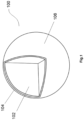
- a device 100 includes a substantially solid body or core portion 102 and a heat reflective surface layer 104 located thereon to provide the device with a heat reflective outwardly facing and substantially curved surface 106.
- a heat reflective surface layer 104 located thereon to provide the device with a heat reflective outwardly facing and substantially curved surface 106.
- the term 'layer' for the heat reflective layer includes a coating, film, or the like.
- the device 100 as illustrated is substantially spherical but may be substantially pyramidal, conical, egg-shaped, or cuboidal, or the like, and has a substantially curved heat reflective outer surface.
- the heat reflective surface is aptly provided by a separate coating/layer/film applied to the outer surface/s of the body portion.
- a polymer body portion may be powder coated with aluminium, or the like, to provide a substantially curved and heat reflective device.
- the diameter of the spherical device as illustrated in Figure 1 is around 60mm but may be around 40mm to around 100mm in diameter depending on the material and desired weight of the body portion 102.
- a 60mm diameter spherical device 100 having a substantially solid polyurethane foam or polystyrene body portion/core 102 weighs around 5 to 15g depending on the thickness/material of the heat reflective layer supported thereon.
- a celluloid sphere having a diameter of around 40mm weighs around 3g.
- the weight of the device is less than around 55g, and suitably around 15-40g, so that the device does not get caught up in the textile items being dried which prevents the same efficiently reflecting heat in all directions around, and particularly into the centre of, the drum and throughout the textile items being dried.
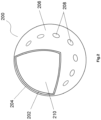
- FIG. 2 illustrates a device 200 according to certain alternative embodiments of the present invention.
- the device 200 includes a substantially hollow body portion 202 and a heat reflective layer 204 located thereon to provide the device with a heat reflective outwardly facing and substantially curved surface 206.
- at least one aperture 208 is disposed in the hollow body portion to provide access into an interior region 210 of the device 100.
- An active ingredient e.g. a perfume, powder/liquid softener, or the like, may be located in the interior region 210 via the aperture 208 before the device is placed into a tumble dryer, and the ingredients can be gradually released from the device via the at least one aperture during a drying cycle.
- the device 200 optionally includes a plurality of spaced apart apertures 208 extending into the interior region 210.
- the device may be substantially hollow without any apertures in the wall thereof.
- the thickness of the wall of the hollow body portion 202 is aptly between around 0.4mm and around 1.0mm and the heat reflective layer/coating 202 is a few micrometres thick.
- the diameter of the device 200 is around 40mm to around 100mm in diameter depending on the material and desired weight of the body portion. Aptly, the device weighs less than around 55g and suitably around 15-40g.
- a hollow acrylic sphere powder coated with aluminium and having a maximum diameter of around 100mm weighs around 36g and a hollow acrylic sphere powder coated with aluminium and having a diameter of around 60mm weighs around 6.5g.
- the substantially hollow body portion 202 may be a metal material, such as stainless steel, aluminium, silver, gold, or the like, or aptly a plastics material, such as acetal (polyoxymethylene), acrylic, cellulose acetate, polystyrene, polyester, high density polyethylene (HDPE), low density polyethylene, nitrile, nylon TM , polypropylene, PTFE, PVC, or the like.
- acetal polyoxymethylene
- acrylic acrylic
- cellulose acetate polystyrene
- polyester high density polyethylene (HDPE), low density polyethylene, nitrile, nylon TM , polypropylene, PTFE, PVC, or the like.
- HDPE high density polyethylene
- the body portion is substantially resistant to collapse/crumpling during a tumble-drying cycle, inexpensive, non-complex to manufacture, e.g. by moulding, strong, lightweight, and substantially heat resistant.
- the heat reflective layer 104,204 is aptly a relatively thin layer, aptly between around 0.01mm and 0.5mm thick, of a metallic material, such as a metal, metal alloy or metal oxide, or a coloured and polished plastics material.
- the heat reflective layer may be silver, gold, or aluminium, or the like. Aptly, alloys/mixtures of aluminium may be used.
- the outer surface of the heat reflective layer is aptly silver, gold, amber-gold, copper, bronze, or the like, in colour. A lacquer may be used to protect the outer surface of the heat reflective layer and to provide the colour thereof.
- the heat reflective layer/coating may be applied to the body portion by polishing, painting, powder coating, wet or dry coating, or wrapping or the like.
- the outer surface of the body portion is substantially smooth and curved to reduce the risk of snagging with, and damage to, the drum and textile article/s being dried.
- the weight of a substantially hollow body portion is minimised and, as such, the level of noise during the drying cycle is also reduced.
- a substantially smooth and curved body ensures the device does not become caught up with the textile article/s being dried to rotate therewith, but instead helps to agitate the textile article/s being dried to ensure the article/s remains moving with respect to a drum of a tumble dryer and remains aerated during the drying cycle, without moving/becoming snagged with the articles themselves.
- a number of tests were performed by the applicant using a conventional washing machine, a conventional tumble dryer, 2kg white cotton cut into 4 x 500g pieces, drying aid sample under test, and a balance for weighing the test specimens. Each test was repeated at least ten times, aptly around twenty times, and the mean result was recorded. The total weight of the interlocked cotton sheets was first recorded before the sheets were placed into the washing machine. A 30-minute cold wash cycle was carried out including a 1200 speed spin cycle with no additions to the machine. The damp sheets were immediately removed from the washing machine and the 'after-washing' total weight was recorded. The damp sheets were then placed in the tumble dryer and subjected to a drying cycle of 60 minutes.
- damp sheets were then returned to the tumble dryer until completely dry for reuse in a subsequent test.
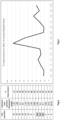
- a spherical device having a heat reflective outer surface increases the dryer performance of a tumble dryer.
- Spheres 2 and 3 which each consisted of a hollow rubber core covered in an aluminium foil, whilst having slightly different diameters and weights, showed a negligible if no increase in drying performance when compared to the control.
- the maximum cross-sectional diameter/weight ratios for these two test specimens were 1.01 and 1.08 respectively.
- the results for spheres 12 to 16 which had slightly higher maximum cross-sectional dimension/weight ratios of between 1.15 and 1.73 showed an increase in drying performance when compared to the control of between 12 and 26%.
- Sphere 12 comprised a solid polyurethane foam body portion having an aluminium foil covering. As shown best by the table of Figure 4 , the optimum ratio is between around 2.1 and 5.1 for increased drying performance.
- the drying performance decreases from optimum with increased maximum dimension/weight ratio, although the performance of these test specimens is still desirable.
- the size and weight of the device are particularly important factors, in combination with a heat reflective outer surface, for improved drying performance of a tumble dryer.
- the hollow aluminium sphere (sphere 9) having a diameter of 58mm and weighing 11.9g (ratio of 4.87) showed only a 2% increase in drying performance. This result shows that a device having a poor-heat conducting body, such as a plastics material, and a heat reflective outer surface is desirable.
- a device comprising a substantially curved and three-dimensional body portion and a heat reflective outer surface has a particularly desirable effect on the drying performance of a tumble dryer.
- the body portion is a hollow and substantially spherical body portion of a non-, or at least poor, heat conducting material, such as acrylic or polypropylene or the like, and having an aluminium coating applied thereto.
- the body portion has a maximum diameter of around 40-100mm and weighs around 3-40g.
- the maximum cross-sectional dimension, e.g. maximum diameter, to weight ratio of the device is at least 1.15 and aptly between around 2.1 and 5.1.
- Certain embodiments of the present invention therefore provide a device, use and method that substantially increases the efficiency and performance of a clothes drying process by a tumble dryer in terms of time and energy, without imparting chemicals or residues onto the textile article being dried and/or into the atmosphere or drainage system during the drying process.
- the amount of time and energy required for a domestic or industrial tumble dryer to dry a textile material is desirably reduced. Shorter drying times are desirable if items of clothing are required quickly and/or if a family for example has lots of laundry to dry and/or in view of the existing concerns about tumble dryers catching fire and thus not being operated at night or when a house is unattended. Shorter drying times also mean less fibre damage which prolongs the life of the textile article and the tumble dryer itself.
- the tumble dryer can be operated on a lower drying temperature saving energy and cost and further prolonging the life of the textile article and the dryer heater.
- the presence of a non-metallic device according to certain embodiments of the present invention also helps to reduce/prevent static build-up amongst articles being dried.
- the device may be re-usable which saves on material, waste, cost and energy, and one or more device may be used in a single drying cycle depending on the desired drying performance and/or the amount/characteristics of the textile article/s to be dried.
- the substantially curved and smooth outer surface of the device ensures the risk of damage to a textile item is minimised/prevented and also ensures the device continually moves with respect to the item/s and does not become snagged or caught up therewith.
- the device also helps to separate and aerate and soften the textile items during a tumble-drying cycle, and does not substantially increase noise or vibration levels of the tumble dryer.
Landscapes
- Engineering & Computer Science (AREA)
- Chemical & Material Sciences (AREA)
- Life Sciences & Earth Sciences (AREA)
- Wood Science & Technology (AREA)
- Chemical Kinetics & Catalysis (AREA)
- Oil, Petroleum & Natural Gas (AREA)
- Organic Chemistry (AREA)
- Mechanical Engineering (AREA)
- General Engineering & Computer Science (AREA)
- Textile Engineering (AREA)
- Microbiology (AREA)
- Detail Structures Of Washing Machines And Dryers (AREA)
- Treatments For Attaching Organic Compounds To Fibrous Goods (AREA)
- Drying Of Solid Materials (AREA)
- Treatment Of Fiber Materials (AREA)
Applications Claiming Priority (3)
| Application Number | Priority Date | Filing Date | Title |
|---|---|---|---|
| GB1708042.5A GB2562534B (en) | 2017-05-19 | 2017-05-19 | Improvements to drying textiles |
| EP18725629.2A EP3635167B1 (de) | 2017-05-19 | 2018-05-14 | Verbessertes trocknen von textilien |
| PCT/GB2018/051300 WO2018211250A1 (en) | 2017-05-19 | 2018-05-14 | Improvements to drying textiles |
Related Parent Applications (1)
| Application Number | Title | Priority Date | Filing Date |
|---|---|---|---|
| EP18725629.2A Division EP3635167B1 (de) | 2017-05-19 | 2018-05-14 | Verbessertes trocknen von textilien |
Publications (2)
| Publication Number | Publication Date |
|---|---|
| EP4241648A2 true EP4241648A2 (de) | 2023-09-13 |
| EP4241648A3 EP4241648A3 (de) | 2023-10-11 |
Family
ID=59220510
Family Applications (2)
| Application Number | Title | Priority Date | Filing Date |
|---|---|---|---|
| EP23176974.6A Pending EP4241648A3 (de) | 2017-05-19 | 2018-05-14 | Verbessertes trocknen von textilien |
| EP18725629.2A Active EP3635167B1 (de) | 2017-05-19 | 2018-05-14 | Verbessertes trocknen von textilien |
Family Applications After (1)
| Application Number | Title | Priority Date | Filing Date |
|---|---|---|---|
| EP18725629.2A Active EP3635167B1 (de) | 2017-05-19 | 2018-05-14 | Verbessertes trocknen von textilien |
Country Status (16)
| Country | Link |
|---|---|
| US (1) | US11668045B2 (de) |
| EP (2) | EP4241648A3 (de) |
| CN (1) | CN110770386A (de) |
| DK (1) | DK3635167T3 (de) |
| ES (1) | ES2952549T3 (de) |
| FI (1) | FI3635167T3 (de) |
| GB (1) | GB2562534B (de) |
| HR (1) | HRP20230906T1 (de) |
| HU (1) | HUE063068T2 (de) |
| LT (1) | LT3635167T (de) |
| PL (1) | PL3635167T3 (de) |
| PT (1) | PT3635167T (de) |
| RS (1) | RS64417B1 (de) |
| SI (1) | SI3635167T1 (de) |
| SM (1) | SMT202300254T1 (de) |
| WO (1) | WO2018211250A1 (de) |
Family Cites Families (17)
| Publication number | Priority date | Publication date | Assignee | Title |
|---|---|---|---|---|
| US4014105A (en) * | 1970-10-20 | 1977-03-29 | Colgate-Palmolive Company | Article, apparatus and method for conditioning fibrous materials with liquid conditioning composition |
| AU3394971A (en) * | 1970-10-20 | 1973-04-05 | Colgate Palmolive Co | Conditioning of fabrics |
| US4567675A (en) * | 1982-05-20 | 1986-02-04 | Lever Brothers Company | Device for conditioning fabrics in a tumble-dryer |
| DE8801921U1 (de) * | 1988-02-15 | 1989-06-15 | Henkel KGaA, 4000 Düsseldorf | Dosiervorrichtung zur Aufnahme und Abgabe eines Wäschebehandlungsmittels |
| US5018966A (en) * | 1989-03-20 | 1991-05-28 | Hunter Engineering Company, Inc. | Strip drying or curing oven |
| US5147715A (en) * | 1990-12-04 | 1992-09-15 | Thurman Robert B | Clothes dryer augmentation device |
| JPH0646285U (ja) * | 1991-11-28 | 1994-06-24 | 伸一 伊達 | 乾燥機用熱輻射式乾燥ボール |
| DE19806113A1 (de) * | 1998-02-14 | 1999-08-19 | Henkel Ecolab Gmbh & Co Ohg | Verfahren zur Dosierung von Waschmitteln und dazu geeignete Vorrichtung |
| WO2001032825A1 (en) | 1999-11-01 | 2001-05-10 | Custom Cleaner, Inc. | Tapered or straight-walled flat-bottomed dryer-safe bags |
| WO2001032823A1 (en) | 1999-11-01 | 2001-05-10 | Custom Cleaner, Inc. | Fabric-treatment systems using a metallized bag |
| US20050130868A1 (en) | 1999-11-10 | 2005-06-16 | Evans K D. | Multiuse, solid cleaning device and composition |
| CN2712624Y (zh) * | 2003-12-15 | 2005-07-27 | 耿洪彪 | 铝箔气泡复合反射绝热材料 |
| US7441345B2 (en) * | 2005-06-07 | 2008-10-28 | Ken Taylor | Laundering aid removing adherent matter from fabric articles |
| US8394420B2 (en) * | 2005-11-03 | 2013-03-12 | K2 Concepts, Inc. | Substrates comprising anti-microbial compositions and methods of making and using the same |
| US20090307924A1 (en) * | 2008-06-16 | 2009-12-17 | Yousef Georges Aouad | Fabric conditioning composition dispensing device |
| GB201100918D0 (en) * | 2011-01-19 | 2011-03-02 | Xeros Ltd | Improved drying method |
| US10179968B2 (en) * | 2012-10-31 | 2019-01-15 | Talu Specialty Imports Company Limited | Wool dryer ball and method of manufacturing same |
-
2017
- 2017-05-19 GB GB1708042.5A patent/GB2562534B/en active Active
-
2018
- 2018-05-14 PL PL18725629.2T patent/PL3635167T3/pl unknown
- 2018-05-14 SM SM20230254T patent/SMT202300254T1/it unknown
- 2018-05-14 LT LTEPPCT/GB2018/051300T patent/LT3635167T/lt unknown
- 2018-05-14 DK DK18725629.2T patent/DK3635167T3/da active
- 2018-05-14 US US16/612,710 patent/US11668045B2/en active Active
- 2018-05-14 FI FIEP18725629.2T patent/FI3635167T3/fi active
- 2018-05-14 EP EP23176974.6A patent/EP4241648A3/de active Pending
- 2018-05-14 CN CN201880033131.6A patent/CN110770386A/zh active Pending
- 2018-05-14 PT PT187256292T patent/PT3635167T/pt unknown
- 2018-05-14 SI SI201830970T patent/SI3635167T1/sl unknown
- 2018-05-14 WO PCT/GB2018/051300 patent/WO2018211250A1/en not_active Ceased
- 2018-05-14 HR HRP20230906TT patent/HRP20230906T1/hr unknown
- 2018-05-14 EP EP18725629.2A patent/EP3635167B1/de active Active
- 2018-05-14 RS RS20230646A patent/RS64417B1/sr unknown
- 2018-05-14 HU HUE18725629A patent/HUE063068T2/hu unknown
- 2018-05-14 ES ES18725629T patent/ES2952549T3/es active Active
Also Published As
| Publication number | Publication date |
|---|---|
| SMT202300254T1 (it) | 2023-09-06 |
| FI3635167T3 (fi) | 2023-08-14 |
| RS64417B1 (sr) | 2023-09-29 |
| EP3635167B1 (de) | 2023-06-07 |
| EP3635167A1 (de) | 2020-04-15 |
| SI3635167T1 (sl) | 2023-10-30 |
| HRP20230906T1 (hr) | 2023-11-24 |
| HUE063068T2 (hu) | 2024-01-28 |
| EP4241648A3 (de) | 2023-10-11 |
| WO2018211250A1 (en) | 2018-11-22 |
| PT3635167T (pt) | 2023-08-18 |
| US11668045B2 (en) | 2023-06-06 |
| GB2562534A (en) | 2018-11-21 |
| ES2952549T3 (es) | 2023-11-02 |
| CN110770386A (zh) | 2020-02-07 |
| PL3635167T3 (pl) | 2023-09-25 |
| GB2562534B (en) | 2022-06-22 |
| GB201708042D0 (en) | 2017-07-05 |
| LT3635167T (lt) | 2023-09-11 |
| DK3635167T3 (da) | 2023-08-21 |
| US20200208334A1 (en) | 2020-07-02 |
Similar Documents
| Publication | Publication Date | Title |
|---|---|---|
| US3633538A (en) | Spherical device for conditioning fabrics in dryer | |
| US3676199A (en) | Fabric conditioning article and use thereof | |
| US4014105A (en) | Article, apparatus and method for conditioning fibrous materials with liquid conditioning composition | |
| JP6511170B2 (ja) | 改善された乾燥機および乾燥方法 | |
| US3698095A (en) | Fiber conditioning article | |
| US4532722A (en) | Fabric conditioning device | |
| CA1205423A (en) | Device for conditioning fabrics in a tumble-dryer | |
| US2941309A (en) | Clothes dampener for clothes driers | |
| JP6066926B2 (ja) | 改良された乾燥方法 | |
| CA1151809A (en) | Laundry conditioner dispensing article | |
| US10179968B2 (en) | Wool dryer ball and method of manufacturing same | |
| EP3635167B1 (de) | Verbessertes trocknen von textilien | |
| GB2606064A (en) | Improvements to drying textiles | |
| US20070015676A1 (en) | Dryer sheet | |
| JP2008202187A (ja) | 繊維構造物 | |
| CA2794083C (en) | Wool dryer ball and method of manufacturing same | |
| WO2003087465A1 (en) | Fabric softener system and method for use in clothes dryer | |
| WO2017197260A1 (en) | Articles and methods for dispensing metal ions into laundry systems | |
| JP2003024688A (ja) | 界面活性剤拡散器 | |
| CN213866919U (zh) | 用于衣物护理机的护理球 | |
| CA3098121A1 (en) | Improvements to drying textiles | |
| CA2310517C (en) | Anti-static ball and a method of using the same | |
| GB2187479A (en) | Laundry aid | |
| KR900018452A (ko) | 미립자 세제를 사용하는 기계세탁 방법 및 그 장치 |
Legal Events
| Date | Code | Title | Description |
|---|---|---|---|
| PUAI | Public reference made under article 153(3) epc to a published international application that has entered the european phase |
Free format text: ORIGINAL CODE: 0009012 |
|
| STAA | Information on the status of an ep patent application or granted ep patent |
Free format text: STATUS: THE APPLICATION HAS BEEN PUBLISHED |
|
| REG | Reference to a national code |
Ref country code: DE Ref legal event code: R079 Free format text: PREVIOUS MAIN CLASS: A47L0015440000 Ipc: D06F0058200000 |
|
| PUAL | Search report despatched |
Free format text: ORIGINAL CODE: 0009013 |
|
| AC | Divisional application: reference to earlier application |
Ref document number: 3635167 Country of ref document: EP Kind code of ref document: P |
|
| AK | Designated contracting states |
Kind code of ref document: A2 Designated state(s): AL AT BE BG CH CY CZ DE DK EE ES FI FR GB GR HR HU IE IS IT LI LT LU LV MC MK MT NL NO PL PT RO RS SE SI SK SM TR |
|
| AK | Designated contracting states |
Kind code of ref document: A3 Designated state(s): AL AT BE BG CH CY CZ DE DK EE ES FI FR GB GR HR HU IE IS IT LI LT LU LV MC MK MT NL NO PL PT RO RS SE SI SK SM TR |
|
| RIC1 | Information provided on ipc code assigned before grant |
Ipc: A47L 15/44 20060101ALI20230906BHEP Ipc: C11D 17/04 20060101ALI20230906BHEP Ipc: A45D 37/00 20060101ALI20230906BHEP Ipc: D06F 58/20 20060101AFI20230906BHEP |
|
| STAA | Information on the status of an ep patent application or granted ep patent |
Free format text: STATUS: REQUEST FOR EXAMINATION WAS MADE |
|
| 17P | Request for examination filed |
Effective date: 20240308 |
|
| RBV | Designated contracting states (corrected) |
Designated state(s): AL AT BE BG CH CY CZ DE DK EE ES FI FR GB GR HR HU IE IS IT LI LT LU LV MC MK MT NL NO PL PT RO RS SE SI SK SM TR |
|
| STAA | Information on the status of an ep patent application or granted ep patent |
Free format text: STATUS: EXAMINATION IS IN PROGRESS |
|
| 17Q | First examination report despatched |
Effective date: 20250129 |
|
| STAA | Information on the status of an ep patent application or granted ep patent |
Free format text: STATUS: THE APPLICATION IS DEEMED TO BE WITHDRAWN |