EP4240609B1 - System zur elektrischen speisung mindestens eines elektrisch angetriebenen fahrzeugs - Google Patents
System zur elektrischen speisung mindestens eines elektrisch angetriebenen fahrzeugs Download PDFInfo
- Publication number
- EP4240609B1 EP4240609B1 EP20803150.0A EP20803150A EP4240609B1 EP 4240609 B1 EP4240609 B1 EP 4240609B1 EP 20803150 A EP20803150 A EP 20803150A EP 4240609 B1 EP4240609 B1 EP 4240609B1
- Authority
- EP
- European Patent Office
- Prior art keywords
- arm segment
- arm
- actuator
- segment
- elongated
- Prior art date
- Legal status (The legal status is an assumption and is not a legal conclusion. Google has not performed a legal analysis and makes no representation as to the accuracy of the status listed.)
- Active
Links
Images


Classifications
-
- B—PERFORMING OPERATIONS; TRANSPORTING
- B60—VEHICLES IN GENERAL
- B60L—PROPULSION OF ELECTRICALLY-PROPELLED VEHICLES; SUPPLYING ELECTRIC POWER FOR AUXILIARY EQUIPMENT OF ELECTRICALLY-PROPELLED VEHICLES; ELECTRODYNAMIC BRAKE SYSTEMS FOR VEHICLES IN GENERAL; MAGNETIC SUSPENSION OR LEVITATION FOR VEHICLES; MONITORING OPERATING VARIABLES OF ELECTRICALLY-PROPELLED VEHICLES; ELECTRIC SAFETY DEVICES FOR ELECTRICALLY-PROPELLED VEHICLES
- B60L5/00—Current collectors for power supply lines of electrically-propelled vehicles
- B60L5/40—Current collectors for power supply lines of electrically-propelled vehicles for collecting current from lines in slotted conduits
-
- B—PERFORMING OPERATIONS; TRANSPORTING
- B60—VEHICLES IN GENERAL
- B60L—PROPULSION OF ELECTRICALLY-PROPELLED VEHICLES; SUPPLYING ELECTRIC POWER FOR AUXILIARY EQUIPMENT OF ELECTRICALLY-PROPELLED VEHICLES; ELECTRODYNAMIC BRAKE SYSTEMS FOR VEHICLES IN GENERAL; MAGNETIC SUSPENSION OR LEVITATION FOR VEHICLES; MONITORING OPERATING VARIABLES OF ELECTRICALLY-PROPELLED VEHICLES; ELECTRIC SAFETY DEVICES FOR ELECTRICALLY-PROPELLED VEHICLES
- B60L5/00—Current collectors for power supply lines of electrically-propelled vehicles
- B60L5/04—Current collectors for power supply lines of electrically-propelled vehicles using rollers or sliding shoes in contact with trolley wire
- B60L5/12—Structural features of poles or their bases
- B60L5/16—Devices for lifting and resetting the collector
-
- B—PERFORMING OPERATIONS; TRANSPORTING
- B60—VEHICLES IN GENERAL
- B60L—PROPULSION OF ELECTRICALLY-PROPELLED VEHICLES; SUPPLYING ELECTRIC POWER FOR AUXILIARY EQUIPMENT OF ELECTRICALLY-PROPELLED VEHICLES; ELECTRODYNAMIC BRAKE SYSTEMS FOR VEHICLES IN GENERAL; MAGNETIC SUSPENSION OR LEVITATION FOR VEHICLES; MONITORING OPERATING VARIABLES OF ELECTRICALLY-PROPELLED VEHICLES; ELECTRIC SAFETY DEVICES FOR ELECTRICALLY-PROPELLED VEHICLES
- B60L5/00—Current collectors for power supply lines of electrically-propelled vehicles
- B60L5/18—Current collectors for power supply lines of electrically-propelled vehicles using bow-type collectors in contact with trolley wire
- B60L5/22—Supporting means for the contact bow
- B60L5/26—Half pantographs, e.g. using counter rocking beams
-
- B—PERFORMING OPERATIONS; TRANSPORTING
- B60—VEHICLES IN GENERAL
- B60L—PROPULSION OF ELECTRICALLY-PROPELLED VEHICLES; SUPPLYING ELECTRIC POWER FOR AUXILIARY EQUIPMENT OF ELECTRICALLY-PROPELLED VEHICLES; ELECTRODYNAMIC BRAKE SYSTEMS FOR VEHICLES IN GENERAL; MAGNETIC SUSPENSION OR LEVITATION FOR VEHICLES; MONITORING OPERATING VARIABLES OF ELECTRICALLY-PROPELLED VEHICLES; ELECTRIC SAFETY DEVICES FOR ELECTRICALLY-PROPELLED VEHICLES
- B60L5/00—Current collectors for power supply lines of electrically-propelled vehicles
- B60L5/18—Current collectors for power supply lines of electrically-propelled vehicles using bow-type collectors in contact with trolley wire
- B60L5/22—Supporting means for the contact bow
- B60L5/28—Devices for lifting and resetting the collector
-
- B—PERFORMING OPERATIONS; TRANSPORTING
- B60—VEHICLES IN GENERAL
- B60L—PROPULSION OF ELECTRICALLY-PROPELLED VEHICLES; SUPPLYING ELECTRIC POWER FOR AUXILIARY EQUIPMENT OF ELECTRICALLY-PROPELLED VEHICLES; ELECTRODYNAMIC BRAKE SYSTEMS FOR VEHICLES IN GENERAL; MAGNETIC SUSPENSION OR LEVITATION FOR VEHICLES; MONITORING OPERATING VARIABLES OF ELECTRICALLY-PROPELLED VEHICLES; ELECTRIC SAFETY DEVICES FOR ELECTRICALLY-PROPELLED VEHICLES
- B60L2200/00—Type of vehicles
- B60L2200/40—Working vehicles
-
- B—PERFORMING OPERATIONS; TRANSPORTING
- B60—VEHICLES IN GENERAL
- B60L—PROPULSION OF ELECTRICALLY-PROPELLED VEHICLES; SUPPLYING ELECTRIC POWER FOR AUXILIARY EQUIPMENT OF ELECTRICALLY-PROPELLED VEHICLES; ELECTRODYNAMIC BRAKE SYSTEMS FOR VEHICLES IN GENERAL; MAGNETIC SUSPENSION OR LEVITATION FOR VEHICLES; MONITORING OPERATING VARIABLES OF ELECTRICALLY-PROPELLED VEHICLES; ELECTRIC SAFETY DEVICES FOR ELECTRICALLY-PROPELLED VEHICLES
- B60L2200/00—Type of vehicles
- B60L2200/40—Working vehicles
- B60L2200/44—Industrial trucks or floor conveyors
-
- B—PERFORMING OPERATIONS; TRANSPORTING
- B60—VEHICLES IN GENERAL
- B60L—PROPULSION OF ELECTRICALLY-PROPELLED VEHICLES; SUPPLYING ELECTRIC POWER FOR AUXILIARY EQUIPMENT OF ELECTRICALLY-PROPELLED VEHICLES; ELECTRODYNAMIC BRAKE SYSTEMS FOR VEHICLES IN GENERAL; MAGNETIC SUSPENSION OR LEVITATION FOR VEHICLES; MONITORING OPERATING VARIABLES OF ELECTRICALLY-PROPELLED VEHICLES; ELECTRIC SAFETY DEVICES FOR ELECTRICALLY-PROPELLED VEHICLES
- B60L5/00—Current collectors for power supply lines of electrically-propelled vehicles
- B60L5/18—Current collectors for power supply lines of electrically-propelled vehicles using bow-type collectors in contact with trolley wire
- B60L5/19—Current collectors for power supply lines of electrically-propelled vehicles using bow-type collectors in contact with trolley wire using arrangements for effecting collector movement transverse to the direction of vehicle motion
-
- Y—GENERAL TAGGING OF NEW TECHNOLOGICAL DEVELOPMENTS; GENERAL TAGGING OF CROSS-SECTIONAL TECHNOLOGIES SPANNING OVER SEVERAL SECTIONS OF THE IPC; TECHNICAL SUBJECTS COVERED BY FORMER USPC CROSS-REFERENCE ART COLLECTIONS [XRACs] AND DIGESTS
- Y02—TECHNOLOGIES OR APPLICATIONS FOR MITIGATION OR ADAPTATION AGAINST CLIMATE CHANGE
- Y02T—CLIMATE CHANGE MITIGATION TECHNOLOGIES RELATED TO TRANSPORTATION
- Y02T10/00—Road transport of goods or passengers
- Y02T10/60—Other road transportation technologies with climate change mitigation effect
- Y02T10/70—Energy storage systems for electromobility, e.g. batteries
-
- Y—GENERAL TAGGING OF NEW TECHNOLOGICAL DEVELOPMENTS; GENERAL TAGGING OF CROSS-SECTIONAL TECHNOLOGIES SPANNING OVER SEVERAL SECTIONS OF THE IPC; TECHNICAL SUBJECTS COVERED BY FORMER USPC CROSS-REFERENCE ART COLLECTIONS [XRACs] AND DIGESTS
- Y02—TECHNOLOGIES OR APPLICATIONS FOR MITIGATION OR ADAPTATION AGAINST CLIMATE CHANGE
- Y02T—CLIMATE CHANGE MITIGATION TECHNOLOGIES RELATED TO TRANSPORTATION
- Y02T10/00—Road transport of goods or passengers
- Y02T10/60—Other road transportation technologies with climate change mitigation effect
- Y02T10/7072—Electromobility specific charging systems or methods for batteries, ultracapacitors, supercapacitors or double-layer capacitors
-
- Y—GENERAL TAGGING OF NEW TECHNOLOGICAL DEVELOPMENTS; GENERAL TAGGING OF CROSS-SECTIONAL TECHNOLOGIES SPANNING OVER SEVERAL SECTIONS OF THE IPC; TECHNICAL SUBJECTS COVERED BY FORMER USPC CROSS-REFERENCE ART COLLECTIONS [XRACs] AND DIGESTS
- Y02—TECHNOLOGIES OR APPLICATIONS FOR MITIGATION OR ADAPTATION AGAINST CLIMATE CHANGE
- Y02T—CLIMATE CHANGE MITIGATION TECHNOLOGIES RELATED TO TRANSPORTATION
- Y02T90/00—Enabling technologies or technologies with a potential or indirect contribution to GHG emissions mitigation
- Y02T90/10—Technologies relating to charging of electric vehicles
- Y02T90/14—Plug-in electric vehicles
Definitions
- the invention relates to the field of electrical feeding of vehicles, and in particular electrical feeding of mining/underground vehicles.
- EP0 047 819 B1 discloses a current collector arrangement for establishing a connection between a vehicle and an overhead power line, wherein the current collector comprises two arm sections. The upper arm is configured to be pressed against the overhead power line via a motor.
- EP 3 445 605 A1 also discloses a current collector mechanism comprising a lower and an upper arm, wherein the arms are connected to each other, and wherein each arm has actuating means for being able to control each arm.
- WO 2016/174030 discloses a system for electrical feeding of a vehicle in an underground environment such as a mine.
- the electrical feeding is used to propel the vehicle directly and/or to charge an onboard battery.
- the system comprises at least one elongated slotted element having at least one slot or groove in which electric conductors are arranged.
- the slotted element is suspended for example from the ceiling in the mine tunnels, and a current collector connects the vehicle electrically to the slotted element.
- Such a system is advantageous since it not only provides low emissions, reduced need for battery capacity, but also good safety properties due to the slotted electric conductors.
- One problem however with such a system is that the height of the mine tunnels typically varies which means that the distance between the vehicle and the slotted element can vary substantially while the vehicle is moving. The distance can also vary quite quickly due to bumps and depressions in the road surface.
- Known current collectors for example as disclosed in WO 2016/174030 may not be able to handle such quick variations in distance between the vehicle and the slotted element.
- An object of the invention is to solve or improve on at least some of the problems mentioned above in the background section.
- a system for electrically feeding at least one electrically powered vehicle comprises at least one elongated slotted element being suspended (or adapted to be suspended) and extending along a road section/roadway/travelway on which the at least one vehicle is adapted to travel, and at least one current collector being adapted to co-act with said at least one elongated slotted element.
- the elongated slotted element comprises at least one electric conductor arranged in at least one slot in said elongated slotted element and being adapted to be electrically energized.
- At least one or each of the current collector comprises at least one contact element and at least one collector arm.
- At least one of the contact element(s) is adapted to connect mechanically and electrically with a corresponding electric conductor of said elongated slotted element.
- At least one or each of the collector arm(s) supports at least one contact element at its first end and is adapted to directly or indirectly connect to an electrically powered vehicle with its second end.
- the at least one or each of the collector arm(s) is/are formed by at least two serially arranged arm segments comprising first and second arm segments being directly or indirectly connected to each other.
- the first arm segment comprises said first end of the collector arm, said first arm segment being provided with forcing means arranged to, when said first arm segment is within a working distance from the elongated slotted element, provide a force towards the elongated slotted element such that the contact element connects with the corresponding electric conductor.
- the second arm segment is provided with at least one actuator configured to act on the second arm segment to displace the first arm segment to a position within said working distance.
- a system for electrically feeding one or more electrically powered vehicles which vehicles may be ground vehicles, road vehicles, mining vehicles or conveyances.
- the system comprises one or more slotted elements being elongated, which in this context means having a greater length than width and height.
- the system preferably comprises a plurality of such elements arranged consecutively along the extension of the road. It is understood that the elongated slotted element being suspended refers to that it is arranged above the road surface, for instance by being suspended from for example a ceiling or wall of a mining tunnel or from one or more stands, posts or the like.
- the elongated slotted element comprises at least one slot or groove extending along the lengthwise direction of the elongated slotted element with at least one electric conductor arranged in at least one of the slots or grooves.
- the elongated slotted element does not necessarily need to be suspended vertically, i.e. with its slots facing vertically downwards. On the contrary, the elongated slotted element may even be suspended horizontally, i.e. with its slots facing sideways, or at any angle between a horizontal and vertical position. It is understood that any reference herein to the lengthwise/longitudinal direction and lateral direction is defined with respect to the slotted element.
- the at least one contact element may be formed as one, two, or a plurality of elements having at least a contact surface of a conductive material being adapted to connect electrically and mechanically with a corresponding electric conductor.
- the at least one or each of the collector arm(s) is formed by at least two serially arranged arm segments comprising first and second arm segments being directly or indirectly connected to each other in the sense that the first arm segment may connect directly to the second arm segment for example via a rotational joint or indirectly a lateral sliding mechanism, or via an intermediate third arm segment.
- the second arm segment does not necessarily connect directly to a vehicle via for example a rotational/pivotal connection joint but may connect indirectly via a further arm segment.
- the first arm segment comprises the first end of the collector arm in the sense that at least one contact element is connected directly or indirectly thereto, for example via a tracking device which guides/aligns the at least one contact element with the corresponding electrical conductor(s).
- the at least one actuator is configured to act directly or indirectly on the second arm segment to displace the first arm segment to a position within the working distance from the slotted element.
- the at least one actuator is configured to act on the second arm segment in the sense that it provides a force directly onto at least a part of the second arm segment, or onto another arm segment which in turn transmits the force indirectly to the second arm segment.
- the first and/or second arm segments may be formed by a single elongated arm element or may comprise two or more parallel arm elements.
- the invention is based on the insight that a varying distance between the vehicle and the slotted element can be handled in an improved manner by dividing the collector arm into two or more serially arranged arm segments, where an upper/first arm segment is configured to handle smaller/quicker deviations within a working distance from the slotted element, and where a lower/second arm segment is arranged to handle larger/slower deviations by means of an actuator configured to maintain the upper/first arm segment within its working distance.
- the first arm segment and said forcing means are configured such that displacement thereof is faster than displacement of the second arm segment by means of the at least one actuator. This may for example be achieved by means of said first arm segment having a smaller moving mass and/or shorter length than the second arm segment.
- the forcing means may be configured to provide a stronger force and/or shorter response time than said at least one actuator.
- the forcing means may be a spring or another type of resilient member, whereas the at least one actuator may comprise an electric motor, hydraulic actuator or the like.
- the forcing means is configured to provide said force being above a predetermined threshold value when said first arm segment is within a working distance from the elongated slotted element.
- the threshold value is chosen such that the contact element(s) is/are forced with sufficient force to maintain adequate electrical contact with the electric conductor(s).
- the forcing means comprises a resilient element providing a resilient force towards said corresponding electric conductor.
- a resilient element is advantageous since it may instantly/quickly adjust to increased distance between the vehicle and slotted element.
- the resilient element may be a mechanical or pneumatic spring.
- the spring may be a spiral torsion spring acting around a rotational axis of the first arm segment.
- the forcing means may furthermore comprise a pre-tensioning actuator configured to pre-tension the resilient element.
- a pre-tensioning actuator may be advantageous since the resilient element may be pre-tensioned or compressed while the at least one actuator of the second arm segment positions the first arm segment within said working distance.
- the at least one actuator of the second arm segment is used to pre-tension the resilient element when forcing the first arm segment into position within the working distance.
- the forcing means is formed by said first arm segment being at least partly formed from a resilient material.
- the first arm segment itself acts as a spring.
- the forcing means comprises actuating means configured to provide said force.
- the actuating means may for example be a motor, a hydraulic actuator or a pneumatic actuator.
- the first arm segment is directly or indirectly connected to the second arm segment by means of at least one rotational/hinge joint, i.e. providing rotation/movement relative the second arm segment in one or more planes, for instance in a vertical plane.
- it may be connected by means of a ball joint, i.e. providing rotation and translatory movement in all directions.
- the forcing means may be configured to rotate the second arm segment around one or more rotational axes which may be defined by the rotational joint(s).
- the second arm segment comprises or is connected to at least one rotational or hinge joint directly or indirectly rotationally connecting the second arm segment to the vehicle, i.e. providing rotation/movement relative the vehicle in one or more planes, for instance in a vertical plane.
- it may be connected by means of a ball joint, i.e. providing rotation and translatory movement in all directions.
- the at least one actuator may be configured to rotate the second arm segment around one or more rotational axes which may be defined by the rotational joint(s).
- the second arm segment is a telescopic arm directly or indirectly connectable to the vehicle.
- the at least one actuator may be configured to extend and withdraw the telescopic arm for example by comprising a hydraulic actuator.
- the system further comprises a sliding device arranged between the first and second arm segments.
- the sliding device is configured to allow lateral movement of the first arm segment relative the second arm segment.
- the sliding device may comprise a slide carrying the first arm segment, the slide riding on one or more laterally directed rails, rods or the like of a lower part of the sliding device, and actuating means such as a motor arranged to displace the slide laterally.
- the system further comprising a sliding device arranged at the second end of the collector arm to allow lateral movement of the collector arm relative the vehicle.
- the sliding device may comprise a slide carrying the second end of the collector arm, said slide riding on one or more laterally directed rails, rods or the like of a lower part of the sliding device, and actuating means such as a motor arranged to displace the slide laterally.
- the system comprises an electronic control unit (ECU) configured to control the at least one actuator of the second arm segment to displace or maintain the first arm segment at a position within the working distance.
- ECU electronice control unit
- the control of the at least one actuator may for instance be achieved in response to a signal from a sensor sensing the distance between the second end of the collector arm and the slotted element, or by means of force control sensing the applied force to the at least one actuator.
- the ECU may furthermore be configured to control the actuating means of the sliding device, for instance in response to a sensor signal indicating the lateral position of the first arm segment and/or contact element(s) relative the slotted element.
- the system further comprises the at least one electrically powered vehicle.
- a method for electrically feeding at least one electrically powered vehicle using a system according to any of the preceding claims comprises controlling the at least one actuator of said second arm segment to displace the first arm segment to a position within said working distance.
- a system for electrically feeding at least one electrically powered vehicle is provided.
- the system according to the third aspect corresponds to the system according to the first aspect, but with the difference being that the elongated slotted element is replaced with an elongated element having at least one electric conductor mounted thereto (but not necessarily in at least one slot), or one or more elongated elements being conductive themselves and being adapted to be electrically energized.
- the elongated slotted element is replaced with at least one (exposed) electric conductor adapted to be suspended on their own or from a mounting device.
- Fig. 1 shows a schematic side view illustration of an embodiment of the system according to the invention along with an electrically powered mining vehicle 1.
- the system comprises an elongated slotted element 2 being suspended from the ceiling of the mining tunnel and extends along the roadway 3 on which the vehicle 1 travels.
- a current collector 4 is adapted to co-act with the elongated slotted element.
- the elongated slotted element comprises two electric conductors 5 (only one can be seen in the cross-section of the slotted element) arranged in a respective slot in the elongated slotted element.
- the electric conductors are electrically energized.
- the current collector comprises two contact elements 7 (only one can be seen) attached to the collector arm 8.
- the contact elements connect mechanically and electrically with the electric conductors 5 by extending into the top of the slots 6 (where the electric conductors are provided).
- the collector arm 8 supports the contact elements at its first end 8' and connects to the electrically powered vehicle with its second end 8".
- the collector arm is formed by first and second serially arranged arm segments 8a, 8b being connected to each other.
- the first arm segment 8a comprises the first end 8' of the collector arm.
- the first arm segment 8a is formed by four parallel arm elements (only two are seen in the figure) connected to the second arm segment by means of rotational joints at both ends to allow rotation of the arm elements in parallel vertical planes.
- the first arm segment is provided with forcing means 9 in the form of a spiral torsional spring arranged to, when the first arm segment 8a is within a working distance 10 from the elongated slotted element, provide a force towards the elongated slotted element such that the contact elements 7 connect with the corresponding electric conductors 5.
- the spiral torsional spring 9 acts on two of arm elements (only one is seen, to the right in the figure) to provide rotation around the rotational axis defined by the rotational joint.
- the second arm segment 8b comprises the second end 8" of the collector arm and is connected via a rotational/hinge joint 12 (see fig. 2a ) to the vehicle 1 to rotate in a vertical plane.
- the second arm segment 8b is provided with at least one actuator 11 in the form of an electric motor configured to rotate/pivot the second arm segment around the rotational axis defined by the rotational/hinge joint to displace the first arm segment 8a to a position within said working distance.
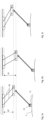
- Figs. 2a-2c show side view illustrations of the embodiment in fig. 1 in three different states.
- Fig. 2a corresponds to the state shown in fig. 1 where the lower ends of the arm elements of the first arm segment 8a are disposed at an initial distance 10' from the slotted element, which distance 10' is shorter than the working distance 10 which means that the spiral torsional spring forces the contact elements with sufficient force against the conductors.
- fig. 2b the vehicle has driven into a recess/depression in the road surface which means that the distance between the vehicle and the slotted element has increased.
- the first arm segment is however still within the working distance 10 which means that the spiral torsional spring still provides sufficient force to keep the contact elements in contact with the conductors even though the actuator 11 has not yet responded by rotating the first arm segment counter clockwise back to the initial position at distance 10'.
- the vehicle has driven up on a bump/elevation on the road surface. The distance is now even shorter than in fig. 2a , so the contact elements remain in contact with the conductors. If the distance is maintained as shown in fig.
- the ECU will control the actuator 11 to adjust the second arm segment 8b such that the lower ends of the arm elements of the first arm segment 8a are disposed at the initial distance 10' from the slotted element to allow further movement up/downwards from this state.
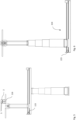
- Fig. 3 shows a schematic side view illustration of another embodiment of the system (shown without the slotted element).
- Fig. 4 shows a perspective view of the same embodiment.
- the contact elements and first arm segments correspond to those shown in figs. 1-2 , but the system differs in that the second arm segment 108b is telescopic and pivotable rather than being only pivotable as in figs. 1-2 .
- a further difference is that the first end of the collector arm is provided with a guiding element 116 having a laterally extending body provided with a recess having a width corresponding to that of said slotted element.
- the first arm segment is connected to the second arm segment via a sliding device 114.
- the hinge joints of the four parallel arm elements are attached to the slide 114' which slides on parallel rods of the lower part of the sliding device (which is connected via a hinge joint to the second arm segment 108b as can be seen in fig. 3 ).
- the forcing means (spiral torsional spring) 9 acts to rotate on the rod 114" to rotate/force the first arm segment upwards towards the slotted element.
- An actuator/motor 115 rotates the other rod to displace the slide 114' laterally.
- Fig. 5 shows a front view of the embodiment in figs. 3-4 .
- the slotted element is also shown.
- the ECU controls the motor 115 to displace slide 114' laterally to attempt to align the contact elements with the conductors. Due to the upwards force provided by the spiral torsional spring 9, once the contact elements are aligned laterally with the conductors, the guiding element will slide onto the slotted element and the contact elements will be forced into mechanical and electrical contact with the conductors.
- Fig. 6 shows a front view of an example system not falling under the scope of the invention. This example corresponds to that shown in figs. 3-5 with the only difference being that the sliding device 214 is instead place at the second end of the collector arm, which is connected via a hinge joint to the slide of the sliding device. The first and second arm segments are connected to each other via a hinge joint too.
- the slotted element and current collector does not need to comprise two conductors/contact elements, but may comprise only one conductor/contact element (supplemented with a ground contact) or three or more conductors/contact elements.
Landscapes
- Engineering & Computer Science (AREA)
- Power Engineering (AREA)
- Transportation (AREA)
- Mechanical Engineering (AREA)
- Current-Collector Devices For Electrically Propelled Vehicles (AREA)
- Arrangements For Transmission Of Measured Signals (AREA)
- Elimination Of Static Electricity (AREA)
- Non-Adjustable Resistors (AREA)
Claims (15)
- System zum elektrischen Speisen mindestens eines elektrisch angetriebenen Fahrzeugs (1), umfassend mindestens ein herabhängendes längliches Element (2), das sich entlang eines Straßenabschnitts (3) erstreckt, auf dem das mindestens eine Fahrzeug eingerichtet ist, zu fahren, und mindestens einen Stromabnehmer (4), der dazu eingerichtet ist, mit dem mindestens einen länglichen Element zusammenzuwirken, wobei das längliche Element mindestens einen elektrischen Leiter (5) umfasst, der dazu eingerichtet ist, elektrisch erregt zu werden, wobei der Stromabnehmer (4) umfasst:- mindestens ein Kontaktelement (7), das dazu eingerichtet ist, sich mechanisch und elektrisch mit einem entsprechenden elektrischen Leiter (5) des länglichen Elements zu verbinden, und- mindestens einen Sammelarm (8), der an seinem ersten Ende (8') mindestens ein Kontaktelement trägt und dazu eingerichtet ist, sich mit seinem zweiten Ende (8") direkt oder indirekt mit einem elektrisch angetriebenen Fahrzeug zu verbinden,wobei mindestens ein Sammelarm (8) durch mindestens zwei seriell angeordnete Armsegmente gebildet ist, die erste und zweite Armsegmente (8a, 8b) umfassen, die direkt oder indirekt miteinander verbunden sind,wobei das erste Armsegment (8a) das erste Ende (8') des Kollektorarms umfasst, wobei das erste Armsegment mit einer Zwangseinrichtung (9) versehen ist, die dazu eingerichtet ist, wenn sich das erste Armsegment innerhalb eines Arbeitsabstands (10) von dem länglichen Element (2) befindet, eine Kraft in Richtung des länglichen Elements bereitzustellen, derart, dass das mindestens eine Kontaktelement (7) mit dem entsprechenden elektrischen Leiter (5) verbunden ist,wobei das zweite Armsegment (8b) mit mindestens einem Antriebselement (11) versehen ist, der dazu konfiguriert ist, auf das zweite Armsegment einzuwirken, um das erste Armsegment in eine Position innerhalb des Arbeitsabstands zu verschieben, dadurch gekennzeichnet, dass das mindestens eine hängende längliche Element (2) geschlitzt ist, und dass der mindestens eine elektrische Leiter (5) in mindestens einem Schlitz (6) in dem länglichen geschlitzten Element angeordnet ist, und dass das System ferner eine Gleitvorrichtung (114) umfasst, die zwischen dem ersten und zweiten Armsegment angeordnet ist, wobei die Gleitvorrichtung dazu konfiguriert ist, eine seitliche Bewegung des ersten Armsegments (108a) relativ zu dem zweiten Armsegment (108b) zu ermöglichen.
- System nach Anspruch 1, wobei das erste Armsegment (8a) und die Zwangsmittel (9) derart konfiguriert sind, dass deren Verschiebung schneller ist als die Verschiebung des zweiten Armsegmentes (8b) durch das wenigstens eine Antriebselements (11).
- System nach Anspruch 1 oder 2, wobei das erste Armsegment (8a) eine kleinere bewegte Masse und/oder eine kürzere Länge als das zweite Armsegment (8b) hat.
- System gemäß einem der vorhergehenden Ansprüche, wobei das Zwangsmittel (9) dazu konfiguriert ist, eine stärkere Kraft und/oder eine kürzere Ansprechzeit als das mindestens eine Antriebselement (11) bereitzustellen.
- System gemäß einem der vorhergehenden Ansprüche, wobei das Druckmittel (9) dazu konfiguriert ist, die Kraft bereitzustellen, die über einem vorbestimmten Schwellenwert liegt, wenn das erste Armsegment (8a) innerhalb eines Arbeitsabstands von dem länglichen geschlitzten Element (2) ist.
- System gemäß einem der vorhergehenden Ansprüche, wobei die Zwangsmittel (9) ein widerstandsfähiges Element umfassen, das eine widerstandsfähige Kraft in Richtung des entsprechenden elektrischen Leiters bereitstellt, und/oder wobei die Zwangsmittel gebildet sind, indem das erste Armsegment zumindest teilweise aus einem widerstandsfähigen Material gebildet ist.
- System gemäß einem der vorhergehenden Ansprüche, wobei die Zwangsmittel Antriebsmittel umfassen, die dazu konfiguriert sind, die Kraft bereitzustellen.
- System gemäß einem der vorhergehenden Ansprüche, wobei das erste Armsegment (8a) direkt oder indirekt mit dem zweiten Armsegment (8b) mittels mindestens eines Drehgelenks verbunden ist.
- System gemäß einem der vorhergehenden Ansprüche, wobei das zweite Armsegment (8b) mindestens ein Drehgelenk (12) zum direkten oder indirekten drehbaren Verbinden des zweiten Armsegments mit einem Fahrzeug umfasst oder damit verbunden ist.
- System nach Anspruch 9, wobei das mindestens eine Antriebselement (11) dazu konfiguriert ist, das zweite Armsegment (8b; 108b) um eine durch das Drehgelenk (12) definierte Drehachse zu drehen.
- System gemäß einem der vorhergehenden Ansprüche, wobei das zweite Armsegment (108b) ein Teleskoparm ist, der direkt oder indirekt mit einem Fahrzeug verbindbar ist, wobei das mindestens eine Antriebselement dazu konfiguriert ist, den Teleskoparm (108b) auszufahren und zurückzuziehen.
- System gemäß einem der vorhergehenden Ansprüche, ferner umfassend eine Gleitvorrichtung (214), die an dem zweiten Ende (208') des Sammelarms (208) angeordnet ist, um eine seitliche Bewegung des Sammelarms relativ zu einem Fahrzeug zu ermöglichen.
- System gemäß einem der vorhergehenden Ansprüche, wobei das mindestens eine Antriebselement ein zusätzliches Antriebselement (115; 215) umfasst, das mit der Gleitvorrichtung (114; 214) zusammenwirkt, um die seitliche Bewegung anzutreiben.
- System gemäß einem der vorhergehenden Ansprüche, ferner umfassend eine elektronische Steuereinheit (ECU), die dazu konfiguriert ist, den mindestens einen Aktuator des zweiten Armsegments zu steuern, um das erste Armsegment zu einer Position innerhalb des Arbeitsabstands zu verschieben.
- Verfahren zum elektrischen Speisen mindestens eines elektrisch angetriebenen Fahrzeugs unter Verwendung eines Systems gemäß einem der vorhergehenden Ansprüche,wobei die Krafteinrichtung dazu konfiguriert ist, wenn sich das erste Armsegment innerhalb eines Arbeitsabstands von dem länglichen geschlitzten Element befindet, eine Kraft derart in Richtung des länglichen geschlitzten Elements bereitzustellen, dass das mindestens eine Kontaktelement sich mit dem entsprechenden elektrischen Leiter verbindet,wobei das Verfahren, Folgendes umfasst:- Steuern des mindestens einen Antriebselements des zweiten Armabschnitts, um das erste Armsegment in eine Position innerhalb des Arbeitsabstands zu verschieben, und wobei das Verfahren dadurch gekennzeichnet ist, dass es folgenden weiteren Schritt umfasst:- Verlagern des ersten Armabschnitts seitlich relativ zu dem zweiten Armabschnitt unter Verwendung der Gleitvorrichtung, um die Kontaktelemente mit den Leitern auszurichten.
Priority Applications (1)
| Application Number | Priority Date | Filing Date | Title |
|---|---|---|---|
| EP25164125.4A EP4545343A3 (de) | 2020-11-05 | 2020-11-05 | System zur elektrischen speisung mindestens eines elektrisch angetriebenen fahrzeugs |
Applications Claiming Priority (1)
| Application Number | Priority Date | Filing Date | Title |
|---|---|---|---|
| PCT/EP2020/081193 WO2022096112A1 (en) | 2020-11-05 | 2020-11-05 | System for electrically feeding at least one electrically powered vehicle |
Related Child Applications (1)
| Application Number | Title | Priority Date | Filing Date |
|---|---|---|---|
| EP25164125.4A Division EP4545343A3 (de) | 2020-11-05 | 2020-11-05 | System zur elektrischen speisung mindestens eines elektrisch angetriebenen fahrzeugs |
Publications (3)
| Publication Number | Publication Date |
|---|---|
| EP4240609A1 EP4240609A1 (de) | 2023-09-13 |
| EP4240609B1 true EP4240609B1 (de) | 2025-03-19 |
| EP4240609C0 EP4240609C0 (de) | 2025-03-19 |
Family
ID=73138847
Family Applications (2)
| Application Number | Title | Priority Date | Filing Date |
|---|---|---|---|
| EP20803150.0A Active EP4240609B1 (de) | 2020-11-05 | 2020-11-05 | System zur elektrischen speisung mindestens eines elektrisch angetriebenen fahrzeugs |
| EP25164125.4A Pending EP4545343A3 (de) | 2020-11-05 | 2020-11-05 | System zur elektrischen speisung mindestens eines elektrisch angetriebenen fahrzeugs |
Family Applications After (1)
| Application Number | Title | Priority Date | Filing Date |
|---|---|---|---|
| EP25164125.4A Pending EP4545343A3 (de) | 2020-11-05 | 2020-11-05 | System zur elektrischen speisung mindestens eines elektrisch angetriebenen fahrzeugs |
Country Status (4)
| Country | Link |
|---|---|
| US (1) | US20230406110A1 (de) |
| EP (2) | EP4240609B1 (de) |
| AU (3) | AU2020476229A1 (de) |
| WO (1) | WO2022096112A1 (de) |
Families Citing this family (2)
| Publication number | Priority date | Publication date | Assignee | Title |
|---|---|---|---|---|
| WO2024031130A1 (en) * | 2022-08-09 | 2024-02-15 | Newcrest Mining Limited | Underground mining |
| EP4714719A1 (de) | 2024-09-23 | 2026-03-25 | Bluvein Innovation Pty. Ltd. | System und verfahren zur elektrischen speisung von elektrisch angetriebenen fahrzeugen |
Citations (2)
| Publication number | Priority date | Publication date | Assignee | Title |
|---|---|---|---|---|
| DE3245601C2 (de) * | 1982-12-09 | 1986-11-27 | Wampfler Gmbh, 7858 Weil | Vorrichtung zum Abgriff von Strom für ein Fahrzeug |
| EP3445605B1 (de) * | 2016-06-29 | 2020-03-11 | Siemens Mobility GmbH | Kraftfahrzeug mit stromabnehmer |
Family Cites Families (17)
| Publication number | Priority date | Publication date | Assignee | Title |
|---|---|---|---|---|
| US574377A (en) * | 1897-01-05 | Edward m | ||
| US588188A (en) * | 1897-08-17 | David s | ||
| DE3033449C3 (de) * | 1980-09-05 | 1990-01-04 | Messerschmitt Boelkow Blohm | Zweistufiger scherenstromabnehmer |
| DE19540914C2 (de) * | 1995-11-03 | 2000-11-16 | Deutsch Zentr Luft & Raumfahrt | Stromabnehmer für die Energieübertragung zwischen einem Fahrdraht und einem Triebwagen |
| US5954171A (en) * | 1996-08-05 | 1999-09-21 | Abb Patent Gmbh | Moving contact |
| SE1000323A1 (sv) * | 2010-04-01 | 2011-03-22 | Elways Ab | Ett, för ett eller flera, elektriska framdrivbara, fordon anpassat system. (Armformat kontaktmedel) |
| EP2457764A1 (de) * | 2010-11-24 | 2012-05-30 | Richard AG, Murgenthal | Stromabnehmer für ein Schienenfahrzeug |
| JP5932995B2 (ja) * | 2012-05-31 | 2016-06-08 | 株式会社日立パワーソリューションズ | トロリー式トラックのパンタグラフ装置 |
| DE102012213460A1 (de) * | 2012-07-31 | 2014-02-06 | Siemens Aktiengesellschaft | Nicht schienengebundenes Fahrzeug |
| WO2015075773A1 (ja) * | 2013-11-19 | 2015-05-28 | 日立建機株式会社 | トロリー式トラック用パンタグラフ装置 |
| PL230883B1 (pl) * | 2015-02-12 | 2018-12-31 | Ec Eng Spolka Z Ograniczona Odpowiedzialnoscia | Zespół szybkiego ładowania pojazdów wyposażonych w napęd elektryczny oraz element ślizgowy |
| SE538900C2 (sv) | 2015-04-27 | 2017-01-31 | Elways Ab | System and method for electrical feeding of a vehicle |
| DE102015122423A1 (de) * | 2015-12-21 | 2017-06-22 | Paul Vahle Gmbh & Co. Kg | Stromabnehmersystem für ein längs einer Stromschienenanordnung verfahrbares Fahrzeug |
| DE102016205012A1 (de) * | 2016-03-24 | 2017-09-28 | Schunk Bahn- Und Industrietechnik Gmbh | Positioniereinheit und Verfahren zur Kontaktierung |
| DE102017215340A1 (de) * | 2017-09-01 | 2019-03-07 | Siemens Aktiengesellschaft | Verfahren zur Überprüfung einer Kontaktierung eines Stromabnehmers sowie Stromabnehmer |
| DE102018215941A1 (de) * | 2018-09-19 | 2020-03-19 | Siemens Mobility GmbH | Nicht spurgebundenes, elektrisch angetriebenes Fahrzeug |
| EP3828024B1 (de) * | 2019-11-28 | 2023-03-29 | Hitachi Energy Switzerland AG | Elektrisches fahrzeug mit energieübertragungsvorrichtung |
-
2020
- 2020-11-05 AU AU2020476229A patent/AU2020476229A1/en active Pending
- 2020-11-05 US US18/035,660 patent/US20230406110A1/en active Pending
- 2020-11-05 EP EP20803150.0A patent/EP4240609B1/de active Active
- 2020-11-05 EP EP25164125.4A patent/EP4545343A3/de active Pending
- 2020-11-05 WO PCT/EP2020/081193 patent/WO2022096112A1/en not_active Ceased
-
2024
- 2024-11-29 AU AU2024100050A patent/AU2024100050A4/en active Active
- 2024-11-29 AU AU2024267062A patent/AU2024267062A1/en active Pending
Patent Citations (2)
| Publication number | Priority date | Publication date | Assignee | Title |
|---|---|---|---|---|
| DE3245601C2 (de) * | 1982-12-09 | 1986-11-27 | Wampfler Gmbh, 7858 Weil | Vorrichtung zum Abgriff von Strom für ein Fahrzeug |
| EP3445605B1 (de) * | 2016-06-29 | 2020-03-11 | Siemens Mobility GmbH | Kraftfahrzeug mit stromabnehmer |
Also Published As
| Publication number | Publication date |
|---|---|
| US20230406110A1 (en) | 2023-12-21 |
| EP4545343A2 (de) | 2025-04-30 |
| EP4240609C0 (de) | 2025-03-19 |
| AU2024100050A4 (en) | 2025-01-23 |
| AU2020476229A9 (en) | 2024-06-20 |
| EP4240609A1 (de) | 2023-09-13 |
| AU2020476229A1 (en) | 2023-06-15 |
| WO2022096112A1 (en) | 2022-05-12 |
| EP4545343A3 (de) | 2025-07-30 |
| AU2024267062A1 (en) | 2024-12-19 |
Similar Documents
| Publication | Publication Date | Title |
|---|---|---|
| AU2024100050A4 (en) | System for electrically feeding at least one electrically powered vehicle | |
| WO2012163763A2 (de) | Nicht schienengebundenes fahrzeug | |
| US20050102872A1 (en) | Traffic-signalling system | |
| SE537626C2 (sv) | Strömavtagare | |
| EP3582995A1 (de) | Vorrichtung und verfahren zum automatischen verbinden eines kabels mit einem geparkten fahrzeug | |
| EP4240610B1 (de) | System zur elektrischen energieversorgung zumindest eines elektrisch angetriebenen fahrzeugs | |
| EP3815953B1 (de) | Elektrisch antreibbares fahrzeug, einen stromabnehmer umfassend | |
| WO2016174030A1 (en) | System and method for electrical feeding of a vehicle | |
| EP1031497B1 (de) | Verstellvorrichtung fur Windabweiser | |
| CN112672908A (zh) | 集电器和具有这种集电器的无轨的、电气驱动的交通工具 | |
| KR20220049008A (ko) | 포지셔닝 유닛 및 접촉 방법 | |
| EP4714719A1 (de) | System und verfahren zur elektrischen speisung von elektrisch angetriebenen fahrzeugen | |
| CN113581025A (zh) | 一种轨道车辆试验台用摆臂式接触网系统 | |
| CN117136146A (zh) | 用于为电动车辆供电的系统 | |
| CN121419896A (zh) | 受电弓以及配备有这种受电弓的道路交通工具 | |
| RU2798890C1 (ru) | Позиционирующий блок и способ контактирования | |
| JP7148342B2 (ja) | 電動車両の給電システム | |
| EP3003771A2 (de) | Mechanismus für elektrische versorgung von strassenfahrzeugen | |
| CN112550015A (zh) | 一种高速路应急充电装置 | |
| CN106218446B (zh) | 纵臂受电式电动列车 | |
| CN119682545A (zh) | 一种不卡线的集电头 | |
| CN117885613A (zh) | 一种铺设在地面的供电结构和集电结构 |
Legal Events
| Date | Code | Title | Description |
|---|---|---|---|
| STAA | Information on the status of an ep patent application or granted ep patent |
Free format text: STATUS: UNKNOWN |
|
| STAA | Information on the status of an ep patent application or granted ep patent |
Free format text: STATUS: THE INTERNATIONAL PUBLICATION HAS BEEN MADE |
|
| PUAI | Public reference made under article 153(3) epc to a published international application that has entered the european phase |
Free format text: ORIGINAL CODE: 0009012 |
|
| STAA | Information on the status of an ep patent application or granted ep patent |
Free format text: STATUS: REQUEST FOR EXAMINATION WAS MADE |
|
| 17P | Request for examination filed |
Effective date: 20230602 |
|
| AK | Designated contracting states |
Kind code of ref document: A1 Designated state(s): AL AT BE BG CH CY CZ DE DK EE ES FI FR GB GR HR HU IE IS IT LI LT LU LV MC MK MT NL NO PL PT RO RS SE SI SK SM TR |
|
| DAV | Request for validation of the european patent (deleted) | ||
| DAX | Request for extension of the european patent (deleted) | ||
| GRAP | Despatch of communication of intention to grant a patent |
Free format text: ORIGINAL CODE: EPIDOSNIGR1 |
|
| STAA | Information on the status of an ep patent application or granted ep patent |
Free format text: STATUS: GRANT OF PATENT IS INTENDED |
|
| INTG | Intention to grant announced |
Effective date: 20240607 |
|
| GRAJ | Information related to disapproval of communication of intention to grant by the applicant or resumption of examination proceedings by the epo deleted |
Free format text: ORIGINAL CODE: EPIDOSDIGR1 |
|
| STAA | Information on the status of an ep patent application or granted ep patent |
Free format text: STATUS: REQUEST FOR EXAMINATION WAS MADE |
|
| GRAP | Despatch of communication of intention to grant a patent |
Free format text: ORIGINAL CODE: EPIDOSNIGR1 |
|
| STAA | Information on the status of an ep patent application or granted ep patent |
Free format text: STATUS: GRANT OF PATENT IS INTENDED |
|
| INTC | Intention to grant announced (deleted) | ||
| INTG | Intention to grant announced |
Effective date: 20241011 |
|
| GRAS | Grant fee paid |
Free format text: ORIGINAL CODE: EPIDOSNIGR3 |
|
| GRAA | (expected) grant |
Free format text: ORIGINAL CODE: 0009210 |
|
| STAA | Information on the status of an ep patent application or granted ep patent |
Free format text: STATUS: THE PATENT HAS BEEN GRANTED |
|
| AK | Designated contracting states |
Kind code of ref document: B1 Designated state(s): AL AT BE BG CH CY CZ DE DK EE ES FI FR GB GR HR HU IE IS IT LI LT LU LV MC MK MT NL NO PL PT RO RS SE SI SK SM TR |
|
| REG | Reference to a national code |
Ref country code: GB Ref legal event code: FG4D |
|
| REG | Reference to a national code |
Ref country code: CH Ref legal event code: EP |
|
| REG | Reference to a national code |
Ref country code: IE Ref legal event code: FG4D |
|
| REG | Reference to a national code |
Ref country code: DE Ref legal event code: R096 Ref document number: 602020048005 Country of ref document: DE |
|
| U01 | Request for unitary effect filed |
Effective date: 20250407 |
|
| U07 | Unitary effect registered |
Designated state(s): AT BE BG DE DK EE FI FR IT LT LU LV MT NL PT RO SE SI Effective date: 20250411 |
|
| PG25 | Lapsed in a contracting state [announced via postgrant information from national office to epo] |
Ref country code: RS Free format text: LAPSE BECAUSE OF FAILURE TO SUBMIT A TRANSLATION OF THE DESCRIPTION OR TO PAY THE FEE WITHIN THE PRESCRIBED TIME-LIMIT Effective date: 20250619 |
|
| PG25 | Lapsed in a contracting state [announced via postgrant information from national office to epo] |
Ref country code: NO Free format text: LAPSE BECAUSE OF FAILURE TO SUBMIT A TRANSLATION OF THE DESCRIPTION OR TO PAY THE FEE WITHIN THE PRESCRIBED TIME-LIMIT Effective date: 20250619 |
|
| PG25 | Lapsed in a contracting state [announced via postgrant information from national office to epo] |
Ref country code: HR Free format text: LAPSE BECAUSE OF FAILURE TO SUBMIT A TRANSLATION OF THE DESCRIPTION OR TO PAY THE FEE WITHIN THE PRESCRIBED TIME-LIMIT Effective date: 20250319 |
|
| PG25 | Lapsed in a contracting state [announced via postgrant information from national office to epo] |
Ref country code: GR Free format text: LAPSE BECAUSE OF FAILURE TO SUBMIT A TRANSLATION OF THE DESCRIPTION OR TO PAY THE FEE WITHIN THE PRESCRIBED TIME-LIMIT Effective date: 20250620 |
|
| PG25 | Lapsed in a contracting state [announced via postgrant information from national office to epo] |
Ref country code: SM Free format text: LAPSE BECAUSE OF FAILURE TO SUBMIT A TRANSLATION OF THE DESCRIPTION OR TO PAY THE FEE WITHIN THE PRESCRIBED TIME-LIMIT Effective date: 20250319 |
|
| PG25 | Lapsed in a contracting state [announced via postgrant information from national office to epo] |
Ref country code: ES Free format text: LAPSE BECAUSE OF FAILURE TO SUBMIT A TRANSLATION OF THE DESCRIPTION OR TO PAY THE FEE WITHIN THE PRESCRIBED TIME-LIMIT Effective date: 20250319 |
|
| PG25 | Lapsed in a contracting state [announced via postgrant information from national office to epo] |
Ref country code: PL Free format text: LAPSE BECAUSE OF FAILURE TO SUBMIT A TRANSLATION OF THE DESCRIPTION OR TO PAY THE FEE WITHIN THE PRESCRIBED TIME-LIMIT Effective date: 20250319 |
|
| PG25 | Lapsed in a contracting state [announced via postgrant information from national office to epo] |
Ref country code: CZ Free format text: LAPSE BECAUSE OF FAILURE TO SUBMIT A TRANSLATION OF THE DESCRIPTION OR TO PAY THE FEE WITHIN THE PRESCRIBED TIME-LIMIT Effective date: 20250319 |
|
| PG25 | Lapsed in a contracting state [announced via postgrant information from national office to epo] |
Ref country code: SK Free format text: LAPSE BECAUSE OF FAILURE TO SUBMIT A TRANSLATION OF THE DESCRIPTION OR TO PAY THE FEE WITHIN THE PRESCRIBED TIME-LIMIT Effective date: 20250319 |
|
| PG25 | Lapsed in a contracting state [announced via postgrant information from national office to epo] |
Ref country code: IS Free format text: LAPSE BECAUSE OF FAILURE TO SUBMIT A TRANSLATION OF THE DESCRIPTION OR TO PAY THE FEE WITHIN THE PRESCRIBED TIME-LIMIT Effective date: 20250719 |
|
| U20 | Renewal fee for the european patent with unitary effect paid |
Year of fee payment: 6 Effective date: 20251126 |
|
| PLBE | No opposition filed within time limit |
Free format text: ORIGINAL CODE: 0009261 |
|
| STAA | Information on the status of an ep patent application or granted ep patent |
Free format text: STATUS: NO OPPOSITION FILED WITHIN TIME LIMIT |
|
| REG | Reference to a national code |
Ref country code: CH Ref legal event code: L10 Free format text: ST27 STATUS EVENT CODE: U-0-0-L10-L00 (AS PROVIDED BY THE NATIONAL OFFICE) Effective date: 20260128 |
|
| 26N | No opposition filed |
Effective date: 20251222 |