EP4236437A1 - Verfahren und vorrichtung zur verarbeitung von kanalstatusinformationen und endgerät - Google Patents
Verfahren und vorrichtung zur verarbeitung von kanalstatusinformationen und endgerät Download PDFInfo
- Publication number
- EP4236437A1 EP4236437A1 EP21882020.7A EP21882020A EP4236437A1 EP 4236437 A1 EP4236437 A1 EP 4236437A1 EP 21882020 A EP21882020 A EP 21882020A EP 4236437 A1 EP4236437 A1 EP 4236437A1
- Authority
- EP
- European Patent Office
- Prior art keywords
- csi
- trps
- subband
- csi report
- type
- Prior art date
- Legal status (The legal status is an assumption and is not a legal conclusion. Google has not performed a legal analysis and makes no representation as to the accuracy of the status listed.)
- Pending
Links
Images


Classifications
-
- H—ELECTRICITY
- H04—ELECTRIC COMMUNICATION TECHNIQUE
- H04L—TRANSMISSION OF DIGITAL INFORMATION, e.g. TELEGRAPHIC COMMUNICATION
- H04L5/00—Arrangements affording multiple use of the transmission path
- H04L5/003—Arrangements for allocating sub-channels of the transmission path
- H04L5/0032—Distributed allocation, i.e. involving a plurality of allocating devices, each making partial allocation
- H04L5/0035—Resource allocation in a cooperative multipoint environment
-
- H—ELECTRICITY
- H04—ELECTRIC COMMUNICATION TECHNIQUE
- H04B—TRANSMISSION
- H04B7/00—Radio transmission systems, i.e. using radiation field
- H04B7/02—Diversity systems; Multi-antenna system, i.e. transmission or reception using multiple antennas
- H04B7/04—Diversity systems; Multi-antenna system, i.e. transmission or reception using multiple antennas using two or more spaced independent antennas
- H04B7/06—Diversity systems; Multi-antenna system, i.e. transmission or reception using multiple antennas using two or more spaced independent antennas at the transmitting station
- H04B7/0613—Diversity systems; Multi-antenna system, i.e. transmission or reception using multiple antennas using two or more spaced independent antennas at the transmitting station using simultaneous transmission
- H04B7/0615—Diversity systems; Multi-antenna system, i.e. transmission or reception using multiple antennas using two or more spaced independent antennas at the transmitting station using simultaneous transmission of weighted versions of same signal
- H04B7/0619—Diversity systems; Multi-antenna system, i.e. transmission or reception using multiple antennas using two or more spaced independent antennas at the transmitting station using simultaneous transmission of weighted versions of same signal using feedback from receiving side
- H04B7/0621—Feedback content
- H04B7/0626—Channel coefficients, e.g. channel state information [CSI]
-
- H—ELECTRICITY
- H04—ELECTRIC COMMUNICATION TECHNIQUE
- H04W—WIRELESS COMMUNICATION NETWORKS
- H04W24/00—Supervisory, monitoring or testing arrangements
- H04W24/10—Scheduling measurement reports ; Arrangements for measurement reports
-
- H—ELECTRICITY
- H04—ELECTRIC COMMUNICATION TECHNIQUE
- H04B—TRANSMISSION
- H04B17/00—Monitoring; Testing
- H04B17/30—Monitoring; Testing of propagation channels
- H04B17/309—Measuring or estimating channel quality parameters
- H04B17/336—Signal-to-interference ratio [SIR] or carrier-to-interference ratio [CIR]
-
- H—ELECTRICITY
- H04—ELECTRIC COMMUNICATION TECHNIQUE
- H04B—TRANSMISSION
- H04B7/00—Radio transmission systems, i.e. using radiation field
- H04B7/02—Diversity systems; Multi-antenna system, i.e. transmission or reception using multiple antennas
- H04B7/04—Diversity systems; Multi-antenna system, i.e. transmission or reception using multiple antennas using two or more spaced independent antennas
- H04B7/0413—MIMO systems
-
- H—ELECTRICITY
- H04—ELECTRIC COMMUNICATION TECHNIQUE
- H04B—TRANSMISSION
- H04B7/00—Radio transmission systems, i.e. using radiation field
- H04B7/02—Diversity systems; Multi-antenna system, i.e. transmission or reception using multiple antennas
- H04B7/04—Diversity systems; Multi-antenna system, i.e. transmission or reception using multiple antennas using two or more spaced independent antennas
- H04B7/06—Diversity systems; Multi-antenna system, i.e. transmission or reception using multiple antennas using two or more spaced independent antennas at the transmitting station
- H04B7/0613—Diversity systems; Multi-antenna system, i.e. transmission or reception using multiple antennas using two or more spaced independent antennas at the transmitting station using simultaneous transmission
- H04B7/0615—Diversity systems; Multi-antenna system, i.e. transmission or reception using multiple antennas using two or more spaced independent antennas at the transmitting station using simultaneous transmission of weighted versions of same signal
- H04B7/0619—Diversity systems; Multi-antenna system, i.e. transmission or reception using multiple antennas using two or more spaced independent antennas at the transmitting station using simultaneous transmission of weighted versions of same signal using feedback from receiving side
- H04B7/0621—Feedback content
- H04B7/063—Parameters other than those covered in groups H04B7/0623 - H04B7/0634, e.g. channel matrix rank or transmit mode selection
-
- H—ELECTRICITY
- H04—ELECTRIC COMMUNICATION TECHNIQUE
- H04B—TRANSMISSION
- H04B7/00—Radio transmission systems, i.e. using radiation field
- H04B7/02—Diversity systems; Multi-antenna system, i.e. transmission or reception using multiple antennas
- H04B7/04—Diversity systems; Multi-antenna system, i.e. transmission or reception using multiple antennas using two or more spaced independent antennas
- H04B7/06—Diversity systems; Multi-antenna system, i.e. transmission or reception using multiple antennas using two or more spaced independent antennas at the transmitting station
- H04B7/0613—Diversity systems; Multi-antenna system, i.e. transmission or reception using multiple antennas using two or more spaced independent antennas at the transmitting station using simultaneous transmission
- H04B7/0615—Diversity systems; Multi-antenna system, i.e. transmission or reception using multiple antennas using two or more spaced independent antennas at the transmitting station using simultaneous transmission of weighted versions of same signal
- H04B7/0619—Diversity systems; Multi-antenna system, i.e. transmission or reception using multiple antennas using two or more spaced independent antennas at the transmitting station using simultaneous transmission of weighted versions of same signal using feedback from receiving side
- H04B7/0621—Feedback content
- H04B7/0632—Channel quality parameters, e.g. channel quality indicator [CQI]
-
- H—ELECTRICITY
- H04—ELECTRIC COMMUNICATION TECHNIQUE
- H04B—TRANSMISSION
- H04B7/00—Radio transmission systems, i.e. using radiation field
- H04B7/02—Diversity systems; Multi-antenna system, i.e. transmission or reception using multiple antennas
- H04B7/04—Diversity systems; Multi-antenna system, i.e. transmission or reception using multiple antennas using two or more spaced independent antennas
- H04B7/06—Diversity systems; Multi-antenna system, i.e. transmission or reception using multiple antennas using two or more spaced independent antennas at the transmitting station
- H04B7/0613—Diversity systems; Multi-antenna system, i.e. transmission or reception using multiple antennas using two or more spaced independent antennas at the transmitting station using simultaneous transmission
- H04B7/0615—Diversity systems; Multi-antenna system, i.e. transmission or reception using multiple antennas using two or more spaced independent antennas at the transmitting station using simultaneous transmission of weighted versions of same signal
- H04B7/0619—Diversity systems; Multi-antenna system, i.e. transmission or reception using multiple antennas using two or more spaced independent antennas at the transmitting station using simultaneous transmission of weighted versions of same signal using feedback from receiving side
- H04B7/0636—Feedback format
- H04B7/0639—Using selective indices, e.g. of a codebook, e.g. pre-distortion matrix index [PMI] or for beam selection
-
- H—ELECTRICITY
- H04—ELECTRIC COMMUNICATION TECHNIQUE
- H04L—TRANSMISSION OF DIGITAL INFORMATION, e.g. TELEGRAPHIC COMMUNICATION
- H04L1/00—Arrangements for detecting or preventing errors in the information received
- H04L1/08—Arrangements for detecting or preventing errors in the information received by repeating transmission, e.g. Verdan system
-
- H—ELECTRICITY
- H04—ELECTRIC COMMUNICATION TECHNIQUE
- H04L—TRANSMISSION OF DIGITAL INFORMATION, e.g. TELEGRAPHIC COMMUNICATION
- H04L5/00—Arrangements affording multiple use of the transmission path
- H04L5/003—Arrangements for allocating sub-channels of the transmission path
- H04L5/0053—Allocation of signalling, i.e. of overhead other than pilot signals
-
- H—ELECTRICITY
- H04—ELECTRIC COMMUNICATION TECHNIQUE
- H04L—TRANSMISSION OF DIGITAL INFORMATION, e.g. TELEGRAPHIC COMMUNICATION
- H04L5/00—Arrangements affording multiple use of the transmission path
- H04L5/003—Arrangements for allocating sub-channels of the transmission path
- H04L5/0053—Allocation of signalling, i.e. of overhead other than pilot signals
- H04L5/0057—Physical resource allocation for CQI
-
- H—ELECTRICITY
- H04—ELECTRIC COMMUNICATION TECHNIQUE
- H04W—WIRELESS COMMUNICATION NETWORKS
- H04W72/00—Local resource management
- H04W72/12—Wireless traffic scheduling
- H04W72/1263—Mapping of traffic onto schedule, e.g. scheduled allocation or multiplexing of flows
- H04W72/1268—Mapping of traffic onto schedule, e.g. scheduled allocation or multiplexing of flows of uplink data flows
-
- H—ELECTRICITY
- H04—ELECTRIC COMMUNICATION TECHNIQUE
- H04W—WIRELESS COMMUNICATION NETWORKS
- H04W72/00—Local resource management
- H04W72/20—Control channels or signalling for resource management
- H04W72/21—Control channels or signalling for resource management in the uplink direction of a wireless link, i.e. towards the network
-
- H—ELECTRICITY
- H04—ELECTRIC COMMUNICATION TECHNIQUE
- H04W—WIRELESS COMMUNICATION NETWORKS
- H04W72/00—Local resource management
- H04W72/20—Control channels or signalling for resource management
- H04W72/23—Control channels or signalling for resource management in the downlink direction of a wireless link, i.e. towards a terminal
- H04W72/232—Control channels or signalling for resource management in the downlink direction of a wireless link, i.e. towards a terminal the control data signalling from the physical layer, e.g. DCI signalling
-
- H—ELECTRICITY
- H04—ELECTRIC COMMUNICATION TECHNIQUE
- H04B—TRANSMISSION
- H04B17/00—Monitoring; Testing
- H04B17/30—Monitoring; Testing of propagation channels
- H04B17/309—Measuring or estimating channel quality parameters
- H04B17/318—Received signal strength
- H04B17/328—Reference signal received power [RSRP]; Reference signal received quality [RSRQ]
-
- H—ELECTRICITY
- H04—ELECTRIC COMMUNICATION TECHNIQUE
- H04B—TRANSMISSION
- H04B17/00—Monitoring; Testing
- H04B17/30—Monitoring; Testing of propagation channels
- H04B17/309—Measuring or estimating channel quality parameters
- H04B17/346—Noise values
-
- H—ELECTRICITY
- H04—ELECTRIC COMMUNICATION TECHNIQUE
- H04L—TRANSMISSION OF DIGITAL INFORMATION, e.g. TELEGRAPHIC COMMUNICATION
- H04L1/00—Arrangements for detecting or preventing errors in the information received
- H04L1/0001—Systems modifying transmission characteristics according to link quality, e.g. power backoff
- H04L1/0023—Systems modifying transmission characteristics according to link quality, e.g. power backoff characterised by the signalling
- H04L1/0026—Transmission of channel quality indication
-
- H—ELECTRICITY
- H04—ELECTRIC COMMUNICATION TECHNIQUE
- H04L—TRANSMISSION OF DIGITAL INFORMATION, e.g. TELEGRAPHIC COMMUNICATION
- H04L1/00—Arrangements for detecting or preventing errors in the information received
- H04L1/004—Arrangements for detecting or preventing errors in the information received by using forward error control
- H04L1/0072—Error control for data other than payload data, e.g. control data
-
- H—ELECTRICITY
- H04—ELECTRIC COMMUNICATION TECHNIQUE
- H04L—TRANSMISSION OF DIGITAL INFORMATION, e.g. TELEGRAPHIC COMMUNICATION
- H04L1/00—Arrangements for detecting or preventing errors in the information received
- H04L1/12—Arrangements for detecting or preventing errors in the information received by using return channel
- H04L1/16—Arrangements for detecting or preventing errors in the information received by using return channel in which the return channel carries supervisory signals, e.g. repetition request signals
- H04L1/1607—Details of the supervisory signal
- H04L1/1671—Details of the supervisory signal the supervisory signal being transmitted together with control information
-
- H—ELECTRICITY
- H04—ELECTRIC COMMUNICATION TECHNIQUE
- H04L—TRANSMISSION OF DIGITAL INFORMATION, e.g. TELEGRAPHIC COMMUNICATION
- H04L1/00—Arrangements for detecting or preventing errors in the information received
- H04L1/12—Arrangements for detecting or preventing errors in the information received by using return channel
- H04L1/16—Arrangements for detecting or preventing errors in the information received by using return channel in which the return channel carries supervisory signals, e.g. repetition request signals
- H04L1/18—Automatic repetition systems, e.g. Van Duuren systems
- H04L1/1812—Hybrid protocols; Hybrid automatic repeat request [HARQ]
- H04L1/1819—Hybrid protocols; Hybrid automatic repeat request [HARQ] with retransmission of additional or different redundancy
Definitions
- This application relates to the field of communications technologies, and specifically, to a method and an apparatus for processing channel state information, and a terminal.
- multi transmission-reception point or multi antenna panel (multi-TRP/multi-panel) reporting setting Reporting Setting
- multiple channel state information (Channel State Information, CSI) reporting settings are configured, where a resource setting of each reporting setting corresponds to one transmission-reception point (Transmitting Receiving Point, TRP), meaning each CSI reporting setting corresponds to one TRP.
- CSI reporting in this manner is subject to low efficiency.
- Embodiments of this application provide a method and an apparatus for processing channel state information, and a terminal, to improve the efficiency of CSI reporting.
- a method for processing channel state information is provided.
- the method is performed by a terminal and includes: transmitting, based on uplink channel, a multi transmission-reception point channel state information MTRP CSI report to multiple transmission-reception points TRPs, where the MTRP CSI report includes multiple CSIs.
- an apparatus for processing channel state information includes: a transmission module, configured to transmit, based on uplink channel, a multi transmission-reception point channel state information MTRP CSI report to multiple transmission-reception points TRPs, where the MTRP CSI report includes multiple CSIs.
- a terminal includes a processor, a memory, and a program or instructions stored in the memory and capable of running on the processor.
- the program or instructions are executed by the processor, the steps of the method according to the first aspect are implemented.
- a network-side device includes a processor, a memory, and a program or instructions stored in the memory and capable of running on the processor.
- the program or instructions are executed by the processor, the steps of the method according to the first aspect are implemented.
- a readable storage medium stores a program or instructions. When the program or instructions are executed by a processor, the steps of the method according to the first aspect are implemented.
- a chip includes a processor and a communications interface.
- the communications interface is coupled to the processor.
- the processor is configured to run a program or instructions on a network-side device to implement the method according to the first aspect.
- a computer program product is provided.
- the computer program product is stored in a non-transitory storage medium.
- the program product is executed by at least one processor to implement the method according to the first aspect.
- the MTRP CSI report includes the multiple CSIs
- a correspondence between the multiple CSIs and the multiple TRPs is implemented by transmitting the MTRP CSI report to the multiple TRPs, that is, feedback of the multiple CSIs in the MTRP CSI report can be well implemented.
- efficiency of CSI reporting is low because each CSI reporting setting corresponds to reporting to one TRP is resolved, and efficiency of CSI reporting is improved.
- first, second, and the like in this specification and claims of this application are used to distinguish between similar objects instead of describing a specific order or sequence. It should be understood that the terms used in this way are interchangeable in appropriate circumstances, so that the embodiments of this application can be implemented in other orders than the order illustrated or described herein.
- objects distinguished by “first” and “second” usually fall within one class, and a quantity of objects is not limited. For example, there may be one or more first objects.
- the term “and/or” in the specification and claims indicates at least one of connected objects, and the character “/" generally represents an "or” relationship between associated objects.
- technologies described in the embodiments of this application are not limited to a long term evolution (Long Term Evolution, LTE)/LTE-Advanced (LTE-Advanced, LTE-A) system, and can also be used in other wireless communications systems, such as code division multiple access (Code Division Multiple Access, CDMA), time division multiple access (Time Division Multiple Access, TDMA), frequency division multiple access (Frequency Division Multiple Access, FDMA), orthogonal frequency division multiple access (Orthogonal Frequency Division Multiple Access, OFDMA), single-carrier frequency-division multiple access (Single-carrier Frequency-Division Multiple Access, SC-FDMA), and other systems.
- code division multiple access Code Division Multiple Access
- TDMA time division multiple access
- FDMA frequency division multiple access
- OFDMA Orthogonal frequency division multiple access
- SC-FDMA single-carrier Frequency-Division Multiple Access
- system and “network” in the embodiments of this application are usually used interchangeably.
- the described technologies may be used for the foregoing systems and radio technologies, and may also be used for other systems and radio technologies.
- a new radio (New Radio, NR) system is described for an illustrative purpose, and NR terms are used in most of the following descriptions.
- NR New Radio
- these technologies may also be applied to other applications than the NR system application, for example, a 6th Generation (6th Generation, 6G) communications system.
- 6th Generation 6th Generation
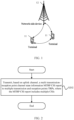
- FIG. 1 is a block diagram of a wireless communications system to which an embodiment of this application may be applied.
- the wireless communications system includes a terminal 11 and a network-side device 12.
- the terminal 11 may also be referred to as a terminal device or user equipment (User Equipment, UE).
- UE User Equipment
- the terminal 11 may be a terminal-side device such as a mobile phone, a tablet personal computer (Tablet Personal Computer), a laptop computer (Laptop Computer) or a notebook computer, a personal digital assistant (Personal Digital Assistant, PDA), a palmtop computer, a netbook, an ultra-mobile personal computer (ultra-mobile personal computer, UMPC), a mobile Internet device (Mobile Internet Device, MID), a wearable device (Wearable Device), a vehicular device (VUE), or a pedestrian terminal (PUE).
- the wearable device includes a wrist band, an earphone, glasses, or the like. It should be noted that a specific type of the terminal 11 is not limited in the embodiments of this application.
- the network-side device 12 may be a base station or a core network.
- the base station may be referred to as a NodeB, an evolved NodeB, an access point, a base transceiver station (Base Transceiver Station, BTS), a radio base station, a radio transceiver, a basic service set (Basic Service Set, BSS), an extended service set (Extended Service Set, ESS), a NodeB, an evolved NodeB (eNB), a home NodeB, a home evolved NodeB, a WLAN access point, a Wi-Fi node, a transmission-reception point (Transmitting Receiving Point, TRP), or other appropriate terms in the art, as long as the same technical effect is achieved.
- the base station is not limited to any specific technical terms. It should be noted that in the embodiments of this application, only the base station in the NR system is used as an example, but the base station is not limited to any specific type.
- 3GPP Rel-16 standardizes a multi transmission-reception point or multi antenna panel (multi-TRP/multi-panel) scenario to improve transmission reliability and throughput performance.
- UE can receive same data or different data from multiple TRPs.
- non-ideal backhaul a high latency is present in the information exchange between the multiple TRPs, independent scheduling is appropriate, and ACK/NACK and CSI report are reported to each TRP separately.
- this is applicable to multi downlink control information (Downlink Control Information, DCI) scheduling.
- DCI Downlink Control Information
- each TRP transmits a physical downlink control channel (Physical Downlink Control Channel, PDCCH) of the TRP, each PDCCH schedules a physical downlink shared channel (Physical Downlink shared Channel, PDSCH) of the TRP, and multiple control resource sets (Control Resource Set, CORESET) configured for the UE are associated with different radio resource control (Radio Resource Control, RRC) parameters CORESETPoolIndex and correspond to different TRPs.
- PDCCH Physical Downlink Control Channel
- PDSCH Physical Downlink shared Channel
- RRC Radio Resource Control
- Multiple PDSCHs scheduled by multiple DCIs may not overlap or may partially overlap or completely overlap on time-frequency resources.
- each TRP performs independent precoding based on its own channel, and the UE receives multi layers of data streams of the multiple PDSCHs in a non-coherent joint transmission (non-coherent joint transmission, NCJT) mode.
- NCJT non-coherent joint transmission
- scheduling information and UE feedback information can be exchanged between the multiple TRPs in real time. Not only the multiple PDSCHs can be scheduled by using multiple DCIs, but also a PDSCH can be scheduled by using a single DCI.
- the following transmission solutions are included.
- the ACK/NACK feedback and CSI report may be reported to any TRP.
- CSI reporting based on PUSCH supports type 1 wideband or subband CSI and also type 2 CSI.
- a CSI report For feedback of type 1 CSI (Type 1), type 2 (Type 2), and enhanced type 2 based on PUSCH, a CSI report includes two parts (part 1 and part 2), where the part 1 (part 1) has a fixed payload size and also specifies the number of information bits in the part 2 (part 2). It should be noted that the part 1 needs to be transmitted completely before the part 2.
- the part 1 may include one or more of RI (Rank Indicator, rank indicator), CRI (CSI-RS Resource Indicator, channel state information reference signal resource indicator), and CQI for a first codeword, and the part 2 includes one or more of PMI and CQI for a second codeword.
- RI Rank Indicator, rank indicator
- CRI CSI-RS Resource Indicator, channel state information reference signal resource indicator
- CQI CQI for a first codeword
- the part 2 includes one or more of PMI and CQI for a second codeword.
- the part 1 For feedback of type 2 CSI, the part 1 includes one or more of RI, a channel quality indicator (Channel quality indicator, CQI), and an indicator of the number of non-zero wideband amplitude coefficients per layer for the type 2 CSI, and the part 2 includes PMI of the type 2 CSI.
- RI RI
- CQI channel quality indicator
- PMI PMI
- the part 1 For feedback of enhanced type 2 CSI, the part 1 includes RI, CQI, and indicator of the total number of cross-layer non-zero amplitude coefficients for the enhanced type 2 CSI, and type 2 includes a precoding matrix indicator (Precoding Matrix Indicator, PMI) of the enhanced type 2 CSI.
- PMI Precoding Matrix Indicator
- i 1,7,1 [ i 1,7, l ] Indicating a selected coefficient. To reduce feedback overheads, only non-zero coefficients are reported, and the number of non-zero coefficients per layer cannot exceed K0. Therefore, the number of non-zero coefficients at all layers cannot exceed 2*K0.
- i 1,7, l is a bitmap with a length of 2L ⁇ Mv . i 1,8,1 [ i 1,8, l ] Indicating a strongest coefficient at a current layer.
- Periodic CSI reporting based on PUCCH format 2, 3, or 4 supports wideband type 1 CSI.
- Semi-persistent CSI reporting based on PUCCH supports type 1 CSI.
- Semi-persistent CSI reporting based on PUCCH format 2 supports type 1 CSI.
- Semi-persistent CSI reporting based on PUCCH format 3 or 4 supports wideband and subband type 1 CSI and type 2 CSI Part 1.
- a CSI load may be divided into two parts (part 1 and part 2), where the part 1 includes part or all of RI, CRI, and CQI for a first codeword, and the part 2 includes PMI and CQI for a second codeword (when RI > 4, there are two codewords).
- the UE may delete content of some of part 2 CSI, according to the same priority order as reporting based on PUSCH.
- multi-TRP or multi-panel is specifically defined in terms of a CSI reporting setting, report content, a CSI resource setting, and the like. There are the following methods:
- FIG. 2 is a flowchart of a method for processing channel state information according to an embodiment of this application. The method is performed by a terminal. As shown in FIG. 2 , the method includes the following step.
- S202 Transmit, based on uplink channel, a multi transmission-reception point channel state information MTRP CSI report to multiple transmission-reception points TRPs, where the MTRP CSI report includes multiple CSIs.
- the MTRP CSI report includes the multiple CSIs
- a correspondence between the multiple CSIs and the multiple TRPs is implemented by transmitting the MTRP CSI report to the multiple TRPs, that is, feedback of the multiple CSIs in the MTRP CSI report can be well implemented.
- efficiency of CSI reporting is low because each CSI reporting setting corresponds to reporting to one TRP is resolved, and efficiency of CSI reporting is improved.
- uplink channels in this embodiment of this application are preferably a PUSCH and a PUCCH. This application is hereinafter explained and described with reference to the two types of uplink channels.
- a manner of transmitting, based on the uplink channel, the MTRP CSI report to the multiple TRPs in S202 may include at least one of the following:
- a network side may configure or activate PUSCH repetition (repetition) resources configured with different spatial relation (spatial relation) or power control (power control) parameters, all or part of the CSIs are carried on multiple PUSCH repetition resources respectively reported to the multiple transmission-reception points TRPs (on the network side), where each PUSCH corresponds to one TRP, spatial relation, or power control parameter.
- one DCI may trigger multiple PUSCH resources, all or part of the CSIs are carried on multiple PUSCH resources respectively and reported to the multiple TRPs, where each PUSCH corresponds to one TRP, spatial relation, SRI, power control, TPMI, or MCS parameter, other information indicated by a DCI field, or one RRC configuration parameter.
- the first parameter or the second parameter in this embodiment of this application includes at least one of the following: a spatial relation, power control, first information, second information, and a radio resource control RRC configuration parameter, where the first information includes at least one of the following information indicated by a DCI field in the DCI: a sounding reference signal resource indicator SRI, a precoding matrix indicator TPMI, and a modulation and coding scheme MCS; and the second information includes information indicated by the DCI field in the DCI except the first information.
- a manner of transmitting, based on the uplink channel, the MTRP CSI report to the multiple TRPs in S202 includes at least one of the following:
- PUCCH repetition resources configured with different spatial relations may be configured or activated, all or part of the CSIs are carried on multiple PUCCH repetition resources respectively and reported to the multiple TRPs, where each PUCCH corresponds to one TRP, spatial relation, or power control parameter.
- one report may be associated with multiple PUCCH resources, and each PUCCH resource corresponds to one TRP, spatial relation, or power control parameter.
- the CSI is mapped onto different repetition resources; where the repetition resources include at least one of the following: PUSCH repetition resources and PUCCH repetition resources.
- the first repetition resource and the second repetition resource are different repetition resources, there are the following two manners for content included in the first repetition resource and the second repetition resource.
- Content on the first repetition resource includes at least one of the following: uplink control information UCI corresponding to a first TRP and common part content; and content on the second repetition resource includes at least one of the following: UCI corresponding to a second TRP and common part content; or
- the following illustrates a mapping relationship of the CSI.
- the first and second repetition resources may have different spatial relations, and the corresponding CSI may be mapped to both the first repetition and the second repetition.
- the method in this embodiment of this application may further include the following step.
- each type of parameter in the divided MTRP CSI report corresponds to one or more TRPs, so that the following is avoided in the prior art: Content included in part 1 and part 2 in one CSI in the prior art belongs to CSI of one TRP, and multiple CSIs of multiple TRPs cannot be supported.
- each type of parameter corresponds to one or more TRPs includes at least one of the following:
- the part 1 may include one or more of the following: one or more RIs correspond to one or more TRPs, one or more CRIs (CSI RS resource indicator) correspond to one or more TRPs, and one or more CQIs for a first codeword correspond to one or more TRPs; and the part 2 (part 2) includes one or more of the following: one or more PMIs correspond to one or more TRPs, and one or more CQIs for a second codeword correspond to one or more TRPs.
- one or more RIs correspond to one or more TRPs
- one or more CRIs CSI RS resource indicator
- CQIs for a first codeword correspond to one or more TRPs
- the part 2 includes one or more of the following: one or more PMIs correspond to one or more TRPs, and one or more CQIs for a second codeword correspond to one or more TRPs.
- one or more fifth parameters in the part 1 correspond to one or more TRPs
- one or more sixth parameters in the part 2 correspond to one or more TRPs
- the fifth parameter includes at least one of the following: RI, CRI, CQI, and indicator of the number of non-zero wideband amplitude coefficients per layer for the type 2 CSI
- the sixth parameter includes a parameter for constructing PMI of type 2.
- the part 1 may include one or more of the following: one or more RIs correspond to one or more TRPs, one or more CRIs correspond to one or more TRPs, one or more CQIs correspond to one or more TRPs, and one or more indicators of the number of non-zero wideband amplitude coefficients per layer for the type 2 CSI correspond to one or more TRPs; and the part 2 includes one or more of the following: one or more PMIs of the type 2 CSI correspond to one or more TRPs.
- one or more seventh parameters in the part 1 correspond to one or more TRPs
- one or more eighth parameters in the part 2 correspond to one or more TRPs
- the seventh parameter includes at least one of the following: RI, CRI, CQI, and indicator of the total number of cross-layer non-zero amplitude coefficients for the enhanced type 2 CSI
- the eighth parameter includes PMI of the enhanced type 2 CSI.
- the part 1 may include one or more of the following: one or more RIs correspond to one or more TRPs, one or more CRIs correspond to one or more TRPs, one or more CQIs correspond to one or more TRPs, and one or more indicators of the total number of cross-layer non-zero amplitude coefficients for the enhanced type 2 CSI correspond to one or more TRPs; and the part 2 includes one or more of the following: one or more PMIs of the enhanced type 2 CSI correspond to one or more TRPs.
- each type of parameter corresponds to one or more TRPs includes at least one of the following:
- the part 2 may include one or more of the following: one or more RIs correspond to one or more TRPs, one or more CRIs correspond to one or more TRPs, one or more CQIs for a first codeword correspond to one or more TRPs, one or more PMIs correspond to one or more TRPs, and one or more CQIs for a second codeword correspond to one or more TRPs.
- one or more tenth parameters in the part 2 correspond to one or more TRPs, where the tenth parameter includes at least one of the following: RI, CRI, CQI, indicator of the number of non-zero wideband amplitude coefficients per layer for the type 2 CSI, and PMI of the type 2 CSI.
- the part 2 may include one or more of the following: one or more RIs correspond to one or more TRPs, one or more CRIs correspond to one or more TRPs, one or more CQIs correspond to one or more TRPs, one or more indicators of the number of non-zero wideband amplitude coefficients per layer for the type 2 CSI correspond to one or more TRPs, and one or more PMIs of the type 2 CSI correspond to one or more TRPs.
- one or more eleventh parameters in the part 2 correspond to one or more TRPs, where the eleventh parameter includes at least one of the following: RI, CRI, CQI, indicator of the number of non-zero wideband amplitude coefficients per layer for the enhanced type 2 CSI, and PMI of the enhanced type 2 CSI.
- the part 2 may include one or more of the following: one or more RIs correspond to one or more TRPs, one or more CRIs correspond to one or more TRPs, one or more CQIs correspond to one or more TRPs, one or more indicators of the total number of cross-layer non-zero amplitude coefficients for the enhanced type 2 CSI correspond to one or more TRPs, and one or more PMIs of the enhanced type 2 CSI correspond to one or more TRPs.
- each type of parameter corresponds to one or more TRPs includes at least one of the following:
- the part 1 may include one or more of the following: one or more RIs correspond to one or more TRPs, one or more CRIs correspond to one or more TRPs, and one or more CQIs for a first codeword correspond to one or more TRPs; and the part 2 includes one or more of the following: one or more PMIs correspond to one or more TRPs, and one or more CQIs for a second codeword correspond to one or more TRPs.
- one or more fourteenth parameters in the part 1 correspond to one or more TRPs, where the fourteenth parameter includes at least one of the following: RI, CRI, CQI, and indicator of the number of non-zero wideband amplitude coefficients per layer for the type 2 CSI.
- the part 1 may include one or more of the following: one or more RIs correspond to one or more TRPs, one or more CRIs correspond to one or more TRPs, one or more CQIs correspond to one or more TRPs, and one or more indicators of the number of non-zero wideband amplitude coefficients per layer for the type 2 CSI correspond to one or more TRPs.
- each type of parameter corresponds to one or more TRPs includes at least one of the following:
- the part 2 may include one or more of the following: one or more RIs correspond to one or more TRPs, one or more CRIs correspond to one or more TRPs, one or more CQIs for a first codeword correspond to one or more TRPs, one or more PMIs correspond to one or more TRPs, and one or more CQIs for a second codeword correspond to one or more TRPs.
- one or more sixteenth parameters in the part 2 correspond to one or more TRPs, where the sixteenth parameter includes at least one of the following: RI, CRI, CQI, and indicator of the number of non-zero wideband amplitude coefficients per layer for the type 2 CSI.
- the method in this embodiment of this application may further include the following step.
- each CSI reporting setting corresponds to reporting to one TRP, resulting in that multiple CSIs of multiple TRPs cannot be supported.
- the CSI in the part 2 may be deleted according to ascending order of priorities of CSI reports, so that deletion of multiple CSIs of multiple TRPs can be better supported.
- the priorities in this embodiment of this application may include the following cases.
- all the CSI reports in the cases (1) to (9) regarding the priorities include the first CSI report to the N th CSI report, where a value of N is an integer greater than 1.
- the MTRP CSI report may be included in the first CSI report to the N th CSI report.
- a report setting includes CSI of multiple TRPs
- CSI corresponding to one or more TRPs, CSI-RS port groups, CSI-RSs, or CSI-RS sets is deleted
- CSI corresponding to other associated TRPs, CSI-RS port groups, CSI-RSs, or CSI-RS sets is also deleted.
- multiple report settings correspond to multiple TRPs
- CSI corresponding to one or more TRPs or CSI report settings is deleted
- CSI corresponding to other associated TRPs or CSI report settings is also deleted.
- the method in this embodiment of this application may further include the following step.
- each CSI reporting setting corresponds to reporting to one TRP, resulting in that a mapping from a corresponding CSI report to a UCI bit sequence cannot support multiple CSIs of multiple TRPs.
- the CSI in the MTRP CSI report can be mapped to the UCI, and a mapping from the multiple CSIs of the multiple TRPs to the UCI can be supported.
- the mapped CSI in the MTRP CSI report has at least one of the following features:
- the mapped CSI report in the MTRP CSI report has at least one of the following features:
- the mapped CSI in the MTRP CSI report has at least one of the following features:
- the mapped CSI report in the MTRP CSI report has at least one of the following features:
- Table 3 is a mapping sequence of CSI fields for CSI report part 1.
- Table 4 is a mapping sequence of CSI fields for CSI report part 2 wideband.
- Table 5 is a mapping sequence of CSI fields for CSI report part 2 subband.
- Table 3 CSI fields (CSI fields) CSI report Part 1 If reported, one or more CRIs correspond to one or more TRPs.
- one or more RIs correspond to one or more TRPs.
- one or more wideband CQIs for a first codeword correspond to one or more TRPs.
- one or more subband CQIs for a first codeword correspond to one or more TRPs.
- one or more indicators of the number of non-zero wideband amplitude coefficients at a layer 0 correspond to one or more TRPs.
- one or more indicators of the number of non-zero wideband amplitude coefficients at a layer 1 correspond to one or more TRPs (if a rank of the one or more reported RIs is equal to 1, all bits of the field corresponding to the one or more TRPs are set to 0).
- one or more PMIs correspond to one or more TRPs. If reported, one or more indicators of a sum of non-zero coefficients at all layers correspond to one or more TRPs. If reported, one or more SINRs correspond to one or more TRPs. Table 4 CSI fields CSI report If reported, one or more wideband CQIs for a second codeword correspond to one or more TRPs. Part2 wideband If reported, one or more LIs (Layer indicator) correspond to one or more TRPs. If reported, one or more PMI wideband information fields X1 correspond to one or more TRPs.
- Table 5 CSI fields CSI report If reported and cqi-FormatIndicator subbandCQI, one or more even subband CQIs for a second codeword correspond to one or more TRPs.
- Table 7 is a mapping sequence of CSI fields in part 1 of a CSI report.
- Table 8 is a mapping sequence of CSI fields for CSI report part 2 wideband.
- Table 9 is a mapping sequence of CSI fields for CSI report part 2 subband.
- Table 7 CSI fields CSI report Part 1 If reported, one CRI corresponds to the first TRP. If reported, one RI (rank indicator) corresponds to the first TRP. If reported, one wideband CQI for a first codeword corresponds to the first TRP.
- one subband CQI for a first codeword corresponds to the first TRP. If reported, one indicator of the number of non-zero wideband amplitude coefficients at a layer 0 corresponds to the first TRP. If reported, one indicator of the number of non-zero wideband amplitude coefficients at a layer 1 corresponds to the first TRP (if a rank of the reported RI of the first TRP is equal to 1, all bits of the field corresponding to the first TRP are set to 0). If reported, one PMI corresponds to the first TRP. If reported, one indicator of a total number of non-zero coefficients at all layers corresponds to the first TRP. If reported, one SINR corresponds to the first TRP.
- one SINR difference corresponds to the first TRP. If reported, one CRI corresponds to the second TRP. If reported, one RI (rank indicator) corresponds to the second TRP. If reported, one wideband CQI for a first codeword corresponds to the second TRP. If reported, one subband CQI for a first codeword corresponds to the second TRP. If reported, one indicator of the number of non-zero wideband amplitude coefficients at a layer 0 corresponds to the second TRP.
- one indicator of the number of non-zero wideband amplitude coefficients at a layer 1 corresponds to the second TRP (if a rank of the reported RI of the second TRP is equal to 1, all bits of the field corresponding to the second TRP are set to 0).
- one PMI corresponds to the second TRP.
- one indicator of a total number of non-zero coefficients at all layers corresponds to the second TRP.
- one SINR corresponds to the second TRP. If reported, one SINR difference corresponds to the second TRP. The rest is deduced until an N th TRP.
- Table 8 CSI fields CSI report Part2 wideband If reported, one wideband CQI for a second codeword corresponds to the first TRP.
- Table 9 CSI fields CSI report Part2 subband If reported and cqi-FormatIndicator subbandCQI, one even subband CQI for a second codeword corresponds to the first TRP.
- Table 10 is a mapping sequence of CSI fields for CSI report part 2 wideband.
- Table 11 is a mapping sequence of CSI fields for CSI report part 2 wideband.
- Table 12 is a mapping sequence of CSI fields for CSI report part 2 subband.
- Table 13 is a mapping sequence of CSI fields for CSI report part 2 subband.
- Table 10 CSI fields CSI report If reported, one or more CRIs correspond to one or more TRPs. Part2 wideband If reported, one or more RIs (rank indicator) correspond to one or more TRPs. If reported, one or more wideband CQIs for a first codeword correspond to one or more TRPs. If reported, one or more subband CQIs for a first codeword correspond to one or more TRPs. If reported, one or more indicators of the number of non-zero wideband amplitude coefficients at a layer 0 correspond to one or more TRPs.
- one or more indicators of the number of non-zero wideband amplitude coefficients at a layer 1 correspond to one or more TRPs (if a rank of the one or more reported RIs is equal to 1, all bits of the field corresponding to the one or more TRPs are set to 0).
- one or more PMIs correspond to one or more TRPs.
- one or more indicators of a sum of non-zero coefficients at all layers correspond to one or more TRPs.
- one or more SINRs correspond to one or more TRPs. If reported, one or more SINR differences correspond to one or more TRPs.
- one or more wideband CQIs for a second codeword correspond to one or more TRPs.
- one or more LIs correspond to one or more TRPs.
- one or more PMI wideband information fields X1 correspond to one or more TRPs.
- Table 11 CSI fields CSI report If reported, one or more CRIs correspond to one or more TRPs. Part2 wideband If reported, one or more RIs (rank indicator) correspond to one or more TRPs. If reported, one or more wideband CQIs for a first codeword correspond to one or more TRPs.
- one or more subband CQIs for a first codeword correspond to one or more TRPs. If reported, one or more indicators of the number of non-zero wideband amplitude coefficients at a layer 0 correspond to one or more TRPs. If reported, one or more indicators of the number of non-zero wideband amplitude coefficients at a layer 1 correspond to one or more TRPs (if a rank of the one or more reported RIs is equal to 1, all bits of the field corresponding to the one or more TRPs are set to 0). If reported, one or more PMIs correspond to one or more TRPs. If reported, one or more PMIs correspond to one or more TRPs.
- one or more indicators of a sum of non-zero coefficients at all layers correspond to one or more TRPs.
- one or more SINRs correspond to one or more TRPs.
- one or more SINR differences correspond to one or more TRPs.
- one wideband CQI for a second codeword corresponds to the first TRP.
- one LI Layer indicator
- one PMI wideband information field X1 corresponds to the first TRP.
- Table 12 CSI fields CSI report Part2 subband If reported, one or more CRIs correspond to one or more TRPs. If reported, one or more RIs (rank indicator) correspond to one or more TRPs. If reported, one or more wideband CQIs for a first codeword correspond to one or more TRPs. If reported, one or more subband CQIs for a first codeword correspond to one or more TRPs. If reported, one or more indicators of the number of non-zero wideband amplitude coefficients at a layer 0 correspond to one or more TRPs.
- one or more indicators of the number of non-zero wideband amplitude coefficients at a layer 1 correspond to one or more TRPs (if a rank of the one or more reported RIs is equal to 1, all bits of the field corresponding to the one or more TRPs are set to 0). If reported, one or more PMIs correspond to one or more TRPs. If reported, one or more indicators of a sum of non-zero coefficients at all layers correspond to one or more TRPs. If reported, one or more SINRs correspond to one or more TRPs. If reported, one or more SINR differences correspond to one or more TRPs.
- Table 13 CSI fields CSI report Part2 subband If reported, one or more CRIs correspond to one or more TRPs. If reported, one or more RIs (rank indicator) correspond to one or more TRPs. If reported, one or more wideband CQIs for a first codeword correspond to one or more TRPs. If reported, one or more subband CQIs for a first codeword correspond to one or more TRPs.
- one or more indicators of the number of non-zero wideband amplitude coefficients at a layer 0 correspond to one or more TRPs. If reported, one or more indicators of the number of non-zero wideband amplitude coefficients at a layer 1 correspond to one or more TRPs (if a rank of the one or more reported RIs is equal to 1, all bits of the field corresponding to the one or more TRPs are set to 0). If reported, one or more PMIs correspond to one or more TRPs. If reported, one or more indicators of a sum of non-zero coefficients at all layers correspond to one or more TRPs. If reported, one or more SINRs correspond to one or more TRPs.
- Table 14 CSI fields CSI report Part2 Group 0 A group 0 includes one or more RIs, one or more CRIs, one or more CQIs, and one or more indicators of the total number of cross-layer non-zero amplitude coefficients for the enhanced type 2 CSI, corresponding to one or more TRPs.
- CSI report Part2 Group 3 A group 3 includes low-priority i 1,7,l , i 2,4,l , and i 2,5.l (l 1, ..., v) corresponding to one or more TRPs.
- Table 15 CSI fields CSI report If reported, one or more CRIs correspond to one or more TRPs. If reported, one or more RIs (rank indicator) correspond to one or more TRPs. If reported, one or more LIs (Layer indicator) correspond to one or more TRPs. If required, zeros are padded to bits.
- one or more PMI wideband information fields X1 correspond to one or more TRPs. If reported, one or more PMI wideband information fields X2 correspond to one or more TRPs. If reported, one or more CQIs for a first codeword correspond to one or more TRPs. If reported, one or more CQIs for a second codeword correspond to one or more TRPs. Table 16 CSI fields CSI report Part 1 If reported, one or more CRIs correspond to one or more TRPs. If reported, one or more RIs (rank indicator) correspond to one or more TRPs. If reported, one or more wideband CQIs for a first codeword correspond to one or more TRPs.
- one or more subband CQIs for a first codeword correspond to one or more TRPs. If reported, one or more indicators of the number of non-zero wideband amplitude coefficients at a layer 0 correspond to one or more TRPs. If reported, one or more indicators of the number of non-zero wideband amplitude coefficients at a layer 1 correspond to one or more TRPs (if a rank of the one or more reported RIs is equal to 1, all bits of the field corresponding to the one or more TRPs are set to 0). If reported, one or more PMIs correspond to one or more TRPs.
- Table 19 CSI fields CSI report If reported, one CRI corresponds to the first TRP. If reported, one RI (rank indicator) corresponds to the first TRP. If reported, one LI (Layer indicator) corresponds to the first TRP. If required, zeros are padded to bits.
- one PMI wideband information field X1 corresponds to the first TRP. If reported, one PMI wideband information field X2 corresponds to the first TRP. If reported, one CQI for a first codeword corresponds to the first TRP. If reported, one CQI for a second codeword corresponds to the first TRP. If reported, one CRI corresponds to the second TRP. If reported, one RI (rank indicator) corresponds to the second TRP. If reported, one LI (Layer indicator) corresponds to the second TRP. If required, zeros are padded to bits. If reported, one PMI wideband information field X1 corresponds to the second TRP. If reported, one PMI wideband information field X2 corresponds to the second TRP.
- one CQI for a first codeword corresponds to the second TRP. If reported, one CQI for a second codeword corresponds to the second TRP. The rest is deduced until the N th TRP.
- Table 20 CSI fields CSI report If reported, one CRI corresponds to the first TRP. Part1 If reported, one RI (rank indicator) corresponds to the first TRP. If reported, one wideband CQI for a first codeword corresponds to the first TRP. If reported, one subband CQI for a first codeword corresponds to the first TRP. If reported, one indicator of the number of non-zero wideband amplitude coefficients at a layer 0 corresponds to the first TRP.
- one indicator of the number of non-zero wideband amplitude coefficients at a layer 1 corresponds to the first TRP (if a rank of the reported RI of the first TRP is equal to 1, all bits of the field corresponding to the first TRP are set to 0).
- one PMI corresponds to the first TRP.
- one CRI corresponds to the second TRP.
- one RI corresponds to the second TRP.
- one wideband CQI for a first codeword corresponds to the second TRP.
- one subband CQI for a first codeword corresponds to the second TRP.
- one indicator of the number of non-zero wideband amplitude coefficients at a layer 0 corresponds to the second TRP. If reported, one indicator of the number of non-zero wideband amplitude coefficients at a layer 1 corresponds to the second TRP (if a rank of the reported RI of the second TRP is equal to 1, all bits of the field corresponding to the second TRP are set to 0). If reported, one PMI corresponds to the second TRP. The rest is deduced until the N th TRP. Table 21 CSI fields CSI report If reported, one wideband CQI for a second codeword corresponds to the first TRP. Part2 wideband If reported, one LI (Layer indicator) corresponds to the first TRP.
- Table 22 CSI fields CSI report If reported and cqi-FormatIndicator subbandCQI, one even subband CQI for a second codeword corresponds to the first TRP.
- Table 23 CSI fields CSI report If reported, one or more CRIs correspond to one or more TRPs. Part2 wideband If reported, one or more RIs (rank indicator) correspond to one or more TRPs. If reported, one or more wideband CQIs for a first codeword correspond to one or more TRPs.
- one or more subband CQIs for a first codeword correspond to one or more TRPs. If reported, one or more indicators of the number of non-zero wideband amplitude coefficients at a layer 0 correspond to one or more TRPs. If reported, one or more indicators of the number of non-zero wideband amplitude coefficients at a layer 1 correspond to one or more TRPs (if a rank of the one or more reported RIs is equal to 1, all bits of the field corresponding to the one or more TRPs are set to 0). If reported, one or more PMIs correspond to one or more TRPs. If reported, one or more wideband CQIs for a second codeword correspond to one or more TRPs.
- one or more LIs correspond to one or more TRPs.
- one or more PMI wideband information fields X1 correspond to one or more TRPs.
- Table 24 CSI fields CSI report If reported, one or more CRIs correspond to one or more TRPs. Part2 wideband If reported, one or more RIs (rank indicator) correspond to one or more TRPs. If reported, one or more wideband CQIs for a first codeword correspond to one or more TRPs.
- one or more subband CQIs for a first codeword correspond to one or more TRPs. If reported, one or more indicators of the number of non-zero wideband amplitude coefficients at a layer 0 correspond to one or more TRPs. If reported, one or more indicators of the number of non-zero wideband amplitude coefficients at a layer 1 correspond to one or more TRPs (if a rank of the one or more reported RIs is equal to 1, all bits of the field corresponding to the one or more TRPs are set to 0). If reported, one or more PMIs correspond to one or more TRPs. If reported, one wideband CQI for a second codeword corresponds to the first TRP.
- Table 25 CSI fields CSI report If reported, one or more CRIs correspond to one or more TRPs. Part2 subband If reported, one or more RIs (rank indicator) correspond to one or more TRPs. If reported, one or more wideband CQIs for a first codeword correspond to one or more TRPs. If reported, one or more subband CQIs for a first codeword correspond to one or more TRPs.
- the method for processing channel state information according to the embodiments of this application may be performed by an apparatus for processing channel state information, or a control module for performing the method for processing channel state information in the apparatus for processing channel state information.
- the apparatus for processing channel state information according to the embodiments of this application is described by assuming that the method for processing channel state information is performed by the apparatus for processing channel state information in the embodiments of this application.
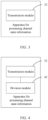
- FIG. 3 is a schematic diagram of a structure of an apparatus for processing channel state information according to an embodiment of this application.
- the apparatus is applied to a terminal side.
- the apparatus includes:
- the MTRP CSI report includes the multiple CSIs
- a correspondence between the multiple CSIs and the multiple TRPs is implemented by transmitting the MTRP CSI report to the multiple TRPs, that is, feedback of the multiple CSIs in the MTRP CSI report can be well implemented.
- efficiency of CSI reporting is low because each CSI reporting setting corresponds to reporting to one TRP is resolved, and efficiency of CSI reporting is improved.
- the transmission module 32 in this embodiment of this application may include at least one of the following:
- the transmission module 32 in this embodiment of this application may include at least one of the following:
- the first parameter or the second parameter includes at least one of the following: a spatial relation, power control, first information, second information, and a radio resource control RRC configuration parameter.
- the first information includes at least one of the following information indicated by a DCI field in the DCI: a sounding reference signal resource indicator SRI, a precoding matrix indicator TPMI, and a modulation and coding scheme MCS; and the second information includes information indicated by the DCI field in the DCI except the first information.
- the CSI is mapped onto different repetition resources, where the repetition resources include at least one of the following: PUSCH repetition resources and PUCCH repetition resources.
- the first repetition resource and the second repetition resource are different repetition resources
- the apparatus in this embodiment of this application may further include: a division module 42, configured to divide the MTRP CSI report before the MTRP CSI report is transmitted based on the uplink channel to the multiple TRPs, where each type of parameter in the divided MTRP CSI report corresponds to one or more TRPs.
- a division module 42 configured to divide the MTRP CSI report before the MTRP CSI report is transmitted based on the uplink channel to the multiple TRPs, where each type of parameter in the divided MTRP CSI report corresponds to one or more TRPs.
- each type of parameter corresponds to one or more TRPs includes at least one of the following:
- each type of parameter corresponds to one or more TRPs includes at least one of the following:
- each type of parameter corresponds to one or more TRPs includes at least one of the following:
- each type of parameter corresponds to one or more TRPs includes at least one of the following:
- the apparatus in this embodiment of this application may further include: a deletion module 52, configured to delete part 2 of CSI according to ascending order of priorities of CSI reports before the MTRP CSI report is transmitted based on the uplink channel to the TRPs.
- a deletion module 52 configured to delete part 2 of CSI according to ascending order of priorities of CSI reports before the MTRP CSI report is transmitted based on the uplink channel to the TRPs.
- the divided MTRP CSI report is transmitted based on PUSCH
- the divided MTRP CSI report is transmitted based on PUSCH
- the divided MTRP CSI report is transmitted based on PUCCH
- the MTRP CSI report is included in the first CSI report to the N th CSI report.
- the apparatus in this embodiment of this application may further include: a mapping module 62, configured to map the CSI in the MTRP CSI report to UCI before the MTRP CSI report is transmitted based on the uplink channel to the TRPs.
- a mapping module 62 configured to map the CSI in the MTRP CSI report to UCI before the MTRP CSI report is transmitted based on the uplink channel to the TRPs.
- the mapped CSI in the MTRP CSI report has at least one of the following features:
- the mapped CSI report in the MTRP CSI report has at least one of the following features:
- the mapped CSI in the MTRP CSI report has at least one of the following features:
- the mapped CSI report in the MTRP CSI report has at least one of the following features:
- the apparatus for processing channel state information in this embodiment of this application may be an apparatus, or may be a component, an integrated circuit, or a chip in a terminal.
- the apparatus may be a mobile terminal, or may be a nonmobile terminal.
- the mobile terminal may include but is not limited to the foregoing illustrated type of the terminal 11.
- the nonmobile terminal may be a server, a network attached storage (Network Attached Storage, NAS), a personal computer (personal computer, PC), a television (television, TV), a teller machine, a self-service machine, or the like. This is not specifically limited in this embodiment of this application.
- the apparatus for processing channel state information in this embodiment of this application may be an apparatus having an operating system.
- the operating system may be an Android (Android) operating system, an iOS operating system, or other possible operating systems, and is not specifically limited in this embodiment of this application.
- the apparatus for processing channel state information according to this embodiment of this application can implement each process implemented by the method embodiment in FIG. 2 , with the same technical effect achieved. To avoid repetition, details are not described herein again.
- an embodiment of this application further provides a communications device 700, including a processor 701, a memory 702, and a program or instructions stored in the memory 702 and capable of running on the processor 701.
- a communications device 700 including a processor 701, a memory 702, and a program or instructions stored in the memory 702 and capable of running on the processor 701.
- the communications device 700 is a terminal, and the program or instructions are executed by the processor 701, each process of the foregoing embodiment of the method for processing channel state information is implemented, with the same technical effect achieved.
- the communications device 700 is a network-side device, and the program or instructions are executed by the processor 701
- each process of the foregoing embodiment of the method for processing channel state information is implemented, with the same technical effect achieved. To avoid repetition, details are not described herein again.
- FIG. 8 is a schematic diagram of a hardware structure of a terminal for implementing an embodiment of this application.
- the terminal 800 includes but is not limited to components such as a radio frequency unit 801, a network module 802, an audio output unit 803, an input unit 804, a sensor 805, a display unit 806, a user input unit 807, an interface unit 108, a memory 809, and a processor 810.
- the terminal 800 may further include a power supply (for example, a battery) supplying power to all components.
- the power supply may be logically connected to the processor 810 through a power management system. In this way, functions such as charge management, discharge management, and power consumption management are implemented by using the power management system.
- the structure of the terminal shown in FIG. 8 does not constitute a limitation on the terminal. A quantity of components included in the terminal may be greater or less than that shown in FIG. 8 , or some components are combined, or component arrangements are different. Details are not described herein.
- the input unit 804 may include a graphics processing unit (Graphics Processing Unit, GPU) 8041 and a microphone 8042.
- the graphics processing unit 8041 processes image data of a still picture or video obtained by an image capture apparatus (such as a camera) in a video capture mode or an image capture mode.
- the display unit 806 may include a display panel 8061, and the display panel 8061 may be configured in a form of a liquid crystal display, an organic light-emitting diode, or the like.
- the user input unit 807 includes a touch panel 8071 and other input devices 8072.
- the touch panel 8071 is also referred to as a touchscreen.
- the touch panel 8071 may include two parts: a touch detection apparatus and a touch controller.
- the other input devices 8072 may include but are not limited to a physical keyboard, a function key (such as a volume control key or a switch key), a trackball, a mouse, and a joystick. Details are not described herein again.
- the radio frequency unit 801 after receiving downlink data from a network-side device, the radio frequency unit 801 sends the downlink data to the processor 810 for processing, and in addition, sends uplink data to the network-side device.
- the radio frequency unit 801 includes but is not limited to an antenna, at least one amplifier, a transceiver, a coupler, a low noise amplifier, a duplexer, and the like.
- the memory 809 may be configured to store software programs or instructions and various data.
- the memory 809 may primarily include a program or instruction storage area and a data storage area.
- the program or instruction storage area may store an operating system, an application program or instructions (such as an audio play function and an image play function) required by at least one function, and the like.
- the memory 809 may include a high-speed random access memory, and may further include a non-volatile memory.
- the non-volatile memory may be a read-only memory (Read-Only Memory, ROM), a programmable read-only memory (Programmable ROM, PROM), an erasable programmable read-only memory (Erasable PROM, EPROM), an electrically erasable programmable read-only memory (Electrically EPROM, EEPROM), or a flash memory, for example, at least one disk storage device, a flash memory device, or another non-volatile solid-state storage device.
- ROM Read-Only Memory
- PROM programmable read-only memory
- Erasable PROM Erasable PROM
- EPROM electrically erasable programmable read-only memory
- EEPROM electrically erasable programmable read-only memory
- flash memory for example, at least one disk storage device, a flash memory device, or another non-volatile solid-state storage device.
- the processor 810 may include one or more processing units.
- the processor 110 may integrate an application processor and a modem processor.
- the application processor mainly processes the operating system, a user interface, an application program, or an instruction.
- the modem processor mainly processes wireless communication.
- the modem processor is a baseband processor. It may be understood that the modem processor may alternatively not be integrated in the processor 810.
- the radio frequency unit 801 is configured to transmit, based on uplink channel, a multi transmission-reception point channel state information MTRP CSI report to multiple transmission-reception points TRPs, where the MTRP CSI report includes multiple CSIs.
- the MTRP CSI report includes the multiple CSIs
- a correspondence between the multiple CSIs and the multiple TRPs is implemented by transmitting the MTRP CSI report to the multiple TRPs, that is, feedback of the multiple CSIs in the MTRP CSI report can be well implemented.
- efficiency of CSI reporting is low because each CSI reporting setting corresponds to reporting to one TRP is resolved, and efficiency of CSI reporting is improved.
- An embodiment of this application further provides a readable storage medium.
- the readable storage medium stores a program or instructions.
- the program or instructions are executed by a processor, each process of the foregoing embodiment of the method for processing channel state information is implemented, with the same technical effect achieved. To avoid repetition, details are not described herein again.
- the processor is a processor in the terminal in the foregoing embodiment.
- the readable storage medium includes a computer-readable storage medium, for example, a computer read-only memory (Read-Only Memory, ROM), a random access memory (Random Access Memory, RAM), a magnetic disk, or an optical disc.
- an embodiment of this application provides a chip.
- the chip includes a processor and a communications interface.
- the communications interface is coupled to the processor.
- the processor is configured to run a program or instructions on a network-side device to implement each process of the foregoing embodiment of the method for processing channel state information, with the same technical effect achieved. To avoid repetition, details are not described herein again.
- the chip provided in this embodiment of this application may also be referred to as a system-level chip, a system chip, a chip system, a system-on-chip, or the like.
- the methods in the foregoing embodiments may be implemented by using software in combination with a necessary general hardware platform, and certainly may alternatively be implemented by using hardware. However, in most cases, the former is a preferred implementation.
- the technical solutions of this application essentially or the part contributing to the prior art may be implemented in a form of a software product.
- the computer software product is stored in a storage medium (such as a ROM/RAM, a magnetic disk, or an optical disc), and includes several instructions for enabling a terminal (which may be a mobile phone, a computer, a server, an air conditioner, a network device, or the like) to perform the methods described in the embodiments of this application.
- the disclosed apparatus and method may be implemented in other manners.
- the described apparatus embodiments are merely examples.
- the division of units is merely logical function division and may be other division in actual implementation.
- a plurality of units or components may be combined or integrated into another system, or some features may be ignored or may not be performed.
- the displayed or discussed mutual couplings or direct couplings or communication connections may be indirect couplings or communications connections through some interfaces, apparatuses or units, and may be implemented in electrical, mechanical, or other forms.
- the units described as separate parts may or may not be physically separate and parts displayed as units may or may not be physical units, meaning that they may be located in one position or distributed on a plurality of network elements. Some or all of the units may be selected based on actual requirements to achieve the objectives of the solutions of the embodiments.
- functional units in the embodiments of the present disclosure may be integrated into one processing unit, or each of the units may exist alone physically, or two or more units are integrated into one unit.
- the functions When the functions are implemented in a form of a software functional unit and sold or used as a separate product, the functions may be stored in a computer-readable storage medium.
- the technical solutions of the present disclosure substantially or parts contributing to the prior art or parts of the technical solutions may be embodied in a form of a software product, and the computer software product is stored in a storage medium, including several instructions for enabling a computer device (which may be a personal computer, a server, a network device, or the like) to perform all or part of the steps of the method in each embodiment of the present disclosure.
- the foregoing storage medium includes: any medium that can store program code, such as a USB flash drive, a removable hard disk, a ROM, a RAM, a magnetic disk, or an optical disc.
- the program may be stored in a computer-readable storage medium.
- the storage medium may include a magnetic disk, an optical disc, a read-only memory (Read-Only Memory, ROM), a random access memory (Random Access Memory, RAM), or the like.
Landscapes
- Engineering & Computer Science (AREA)
- Signal Processing (AREA)
- Computer Networks & Wireless Communication (AREA)
- Physics & Mathematics (AREA)
- Mathematical Physics (AREA)
- Quality & Reliability (AREA)
- Electromagnetism (AREA)
- Mobile Radio Communication Systems (AREA)
Applications Claiming Priority (2)
| Application Number | Priority Date | Filing Date | Title |
|---|---|---|---|
| CN202011126243.1A CN114390579B (zh) | 2020-10-20 | 2020-10-20 | 信道状态信息的处理方法及装置、终端 |
| PCT/CN2021/124831 WO2022083605A1 (zh) | 2020-10-20 | 2021-10-20 | 信道状态信息的处理方法及装置、终端 |
Publications (2)
| Publication Number | Publication Date |
|---|---|
| EP4236437A1 true EP4236437A1 (de) | 2023-08-30 |
| EP4236437A4 EP4236437A4 (de) | 2024-04-17 |
Family
ID=81194355
Family Applications (1)
| Application Number | Title | Priority Date | Filing Date |
|---|---|---|---|
| EP21882020.7A Pending EP4236437A4 (de) | 2020-10-20 | 2021-10-20 | Verfahren und vorrichtung zur verarbeitung von kanalstatusinformationen und endgerät |
Country Status (6)
| Country | Link |
|---|---|
| US (1) | US12537636B2 (de) |
| EP (1) | EP4236437A4 (de) |
| JP (2) | JP7690026B2 (de) |
| KR (1) | KR20230069968A (de) |
| CN (1) | CN114390579B (de) |
| WO (1) | WO2022083605A1 (de) |
Families Citing this family (17)
| Publication number | Priority date | Publication date | Assignee | Title |
|---|---|---|---|---|
| CN116548038A (zh) * | 2020-10-30 | 2023-08-04 | 高通股份有限公司 | 多发送接收点(trp)操作期间的波束恢复 |
| AU2021388041B2 (en) * | 2020-11-27 | 2025-01-23 | Telefonaktiebolaget Lm Ericsson (Publ) | Reliable csi feedback towards multiple trps |
| CN117480836A (zh) * | 2022-04-27 | 2024-01-30 | 北京小米移动软件有限公司 | 基于码本的预编码确定方法、装置、设备及存储介质 |
| US20250150135A1 (en) * | 2022-05-05 | 2025-05-08 | Qualcomm Incorporated | Linked channel state information reports for coherent joint transmission |
| WO2023216014A1 (en) * | 2022-05-07 | 2023-11-16 | Lenovo (Beijing) Limited | Methods and apparatus of mapping order of csi reporting for coherent joint transmission |
| US20240030978A1 (en) * | 2022-07-12 | 2024-01-25 | Qualcomm Incorporated | Channel state information codebook parameter configuration for dynamic antenna port adaptation |
| CN119631446A (zh) * | 2022-07-14 | 2025-03-14 | 高通股份有限公司 | 对用于相干联合发送预译码的非零系数进行排序 |
| WO2024026678A1 (zh) * | 2022-08-02 | 2024-02-08 | Oppo广东移动通信有限公司 | 无线通信的方法、终端设备和网络设备 |
| JP2025525766A (ja) * | 2022-08-12 | 2025-08-07 | 中興通訊股▲ふん▼有限公司 | 複数の送受信ポイント構成における同時アップリンク伝送 |
| CN117792444A (zh) * | 2022-09-21 | 2024-03-29 | 维沃移动通信有限公司 | Pmi组合系数的发送方法、装置及终端 |
| WO2024065291A1 (en) * | 2022-09-28 | 2024-04-04 | Lenovo (Beijing) Ltd. | Methods and apparatus of csi reporting on amplitude and phase coefficients for coherent joint transmission |
| AU2023379127A1 (en) * | 2023-02-16 | 2025-07-17 | Zte Corporation | Systems and methods for reporting user equipment capability |
| US20240405823A1 (en) * | 2023-05-23 | 2024-12-05 | Samsung Electronics Co., Ltd. | Method and device for energy saving in wireless communication system |
| WO2024099481A1 (en) * | 2024-01-25 | 2024-05-16 | Zte Corporation | Reference signal reporting method and apparatus |
| WO2025156215A1 (en) * | 2024-01-25 | 2025-07-31 | Zte Corporation | High-performance codebook design |
| WO2025171602A1 (en) * | 2024-02-16 | 2025-08-21 | Qualcomm Incorporated | Joint source encoding for channel state information |
| WO2025230240A1 (en) * | 2024-04-30 | 2025-11-06 | Samsung Electronics Co., Ltd. | Managing uci on pucch for multiple cri based reporting in a wireless communication system |
Family Cites Families (16)
| Publication number | Priority date | Publication date | Assignee | Title |
|---|---|---|---|---|
| EP3883172A1 (de) | 2012-06-04 | 2021-09-22 | Interdigital Patent Holdings, Inc. | Übertragung von kanalzustandsinformationen (csi) von mehreren übertragungspunkten |
| EP3639400B1 (de) * | 2017-06-14 | 2022-03-16 | Sony Group Corporation | Vorrichtung und verfahren zur bestimmung, ob ein csi-bericht bereitgestellt werden soll |
| CN116405079A (zh) * | 2017-09-11 | 2023-07-07 | 苹果公司 | 用于新无线电的多传输接收点操作中的上行链路控制信令的装置和方法以及解调参考信号设计 |
| US11457475B2 (en) * | 2018-02-14 | 2022-09-27 | Idac Holdings, Inc. | Methods, apparatus, and system using multiple antenna techniques for new radio (NR) operations in unlicensed bands |
| CN110831196B (zh) * | 2018-08-14 | 2022-01-04 | 维沃移动通信有限公司 | Csi报告配置方法、终端设备和网络设备 |
| WO2020044409A1 (ja) * | 2018-08-27 | 2020-03-05 | 株式会社Nttドコモ | ユーザ端末及び無線通信方法 |
| WO2020051922A1 (en) * | 2018-09-15 | 2020-03-19 | Qualcomm Incorporated | Csi for non-coherent joint transmission |
| JP7309335B2 (ja) * | 2018-09-19 | 2023-07-18 | シャープ株式会社 | 端末装置、基地局装置、および、通信方法 |
| WO2020056708A1 (en) * | 2018-09-21 | 2020-03-26 | Qualcomm Incorporated | Csi report configuration for multi-trp transmission |
| JP2020072425A (ja) * | 2018-11-01 | 2020-05-07 | シャープ株式会社 | 端末装置、基地局装置、および、通信方法 |
| CN111385073B (zh) * | 2018-12-27 | 2022-09-30 | 展讯半导体(南京)有限公司 | Csi上报方法及装置、存储介质、用户终端 |
| EP3910851B1 (de) * | 2019-01-10 | 2025-04-16 | Wilus Institute of Standards and Technology Inc. | Verfahren zur übertragung eines gemeinsam genutzten uplink-kanals in einem drahtloskommunikationssystem und vorrichtung mit verwendung davon |
| WO2020144602A1 (en) * | 2019-01-11 | 2020-07-16 | Telefonaktiebolaget Lm Ericsson (Publ) | Low overhead channel state information (csi) feedback for multi-transmission point (trp) transmission |
| CN111726213A (zh) * | 2019-03-21 | 2020-09-29 | 华硕电脑股份有限公司 | 物理上行链路共享信道的波束指示的方法和设备 |
| CN111614389A (zh) * | 2019-04-30 | 2020-09-01 | 维沃移动通信有限公司 | 信道状态信息的报告方法、接收方法、终端及网络设备 |
| US11985531B2 (en) * | 2020-09-09 | 2024-05-14 | Qualcomm Incorporated | Techniques for reporting multiple quantity types |
-
2020
- 2020-10-20 CN CN202011126243.1A patent/CN114390579B/zh active Active
-
2021
- 2021-10-20 EP EP21882020.7A patent/EP4236437A4/de active Pending
- 2021-10-20 WO PCT/CN2021/124831 patent/WO2022083605A1/zh not_active Ceased
- 2021-10-20 KR KR1020237012474A patent/KR20230069968A/ko active Pending
- 2021-10-20 JP JP2023519368A patent/JP7690026B2/ja active Active
-
2023
- 2023-04-12 US US18/299,309 patent/US12537636B2/en active Active
-
2025
- 2025-01-29 JP JP2025012997A patent/JP2025065191A/ja active Pending
Also Published As
| Publication number | Publication date |
|---|---|
| CN114390579A (zh) | 2022-04-22 |
| JP7690026B2 (ja) | 2025-06-09 |
| KR20230069968A (ko) | 2023-05-19 |
| WO2022083605A1 (zh) | 2022-04-28 |
| CN114390579B (zh) | 2024-07-26 |
| US20230246759A1 (en) | 2023-08-03 |
| US12537636B2 (en) | 2026-01-27 |
| EP4236437A4 (de) | 2024-04-17 |
| JP2025065191A (ja) | 2025-04-17 |
| JP2023543287A (ja) | 2023-10-13 |
Similar Documents
| Publication | Publication Date | Title |
|---|---|---|
| US12537636B2 (en) | Method and apparatus for processing channel state information, and terminal | |
| JP7549026B2 (ja) | チャネル状態情報csiレポートのフィードバック方法、端末機器及びネットワーク機器 | |
| US11239950B2 (en) | Method for configuring channel state information reporting band and communications apparatus | |
| CN110034889B (zh) | 一种探测参考信号srs配置方法和装置 | |
| EP3678403A1 (de) | Kommunikationsverfahren und -vorrichtung | |
| EP4318997A1 (de) | Csi-feedbackverfahren, zugehörige vorrichtung und lesbares speichermedium | |
| CN111182619B (zh) | 一种上行功率控制的方法和设备 | |
| EP4319266A1 (de) | Csi-feedbackverfahren und -vorrichtung, vorrichtung und lesbares speichermedium | |
| US20250279808A1 (en) | CSI Reporting Enhancements for Type II Codebook | |
| EP3609114A1 (de) | Verfahren und vorrichtung zur kanalmessung | |
| US9960829B2 (en) | Channel state information feedback method and apparatus | |
| EP4280667A1 (de) | Verfahren zum senden von kanalinformationen, verfahren zum empfangen von kanalinformationen und zugehörige vorrichtung | |
| EP4340505A1 (de) | Verfahren und vorrichtung für bericht über kanalzustandsinformationen (csi) | |
| WO2022237789A1 (zh) | 共享信道调度方法、装置、终端及网络侧设备 | |
| CN102377539B (zh) | 反馈及获取多个cc的csi的方法、ue及基站 | |
| WO2020233500A1 (zh) | 一种通信方法及通信装置 | |
| CN115333591B (zh) | 多trp csi报告的处理方法及装置 | |
| EP4661311A1 (de) | Csi-übertragungsverfahren, benutzergerät und lesbares speichermedium | |
| EP3614576B1 (de) | Verfahren und vorrichtung zum melden von ranganzeigen sowie anzeigeverfahren und vorrichtung | |
| US11290906B2 (en) | Channel measurement method | |
| CN115334538A (zh) | 多trp csi报告的生成方法、接收方法及装置 |
Legal Events
| Date | Code | Title | Description |
|---|---|---|---|
| STAA | Information on the status of an ep patent application or granted ep patent |
Free format text: STATUS: THE INTERNATIONAL PUBLICATION HAS BEEN MADE |
|
| PUAI | Public reference made under article 153(3) epc to a published international application that has entered the european phase |
Free format text: ORIGINAL CODE: 0009012 |
|
| STAA | Information on the status of an ep patent application or granted ep patent |
Free format text: STATUS: REQUEST FOR EXAMINATION WAS MADE |
|
| 17P | Request for examination filed |
Effective date: 20230331 |
|
| AK | Designated contracting states |
Kind code of ref document: A1 Designated state(s): AL AT BE BG CH CY CZ DE DK EE ES FI FR GB GR HR HU IE IS IT LI LT LU LV MC MK MT NL NO PL PT RO RS SE SI SK SM TR |
|
| DAV | Request for validation of the european patent (deleted) | ||
| DAX | Request for extension of the european patent (deleted) | ||
| REG | Reference to a national code |
Ref country code: DE Ref legal event code: R079 Free format text: PREVIOUS MAIN CLASS: H04W0024100000 Ipc: H04L0005000000 |
|
| A4 | Supplementary search report drawn up and despatched |
Effective date: 20240319 |
|
| RIC1 | Information provided on ipc code assigned before grant |
Ipc: H04L 1/1812 20230101ALN20240313BHEP Ipc: H04L 1/1607 20230101ALN20240313BHEP Ipc: H04L 1/00 20060101ALN20240313BHEP Ipc: H04L 1/08 20060101ALI20240313BHEP Ipc: H04B 7/06 20060101ALI20240313BHEP Ipc: H04L 5/00 20060101AFI20240313BHEP |