EP4236170B1 - Verfahren und system zum polstern und erweitern von paketen für downlinik-mehrbenutzerübertragung - Google Patents
Verfahren und system zum polstern und erweitern von paketen für downlinik-mehrbenutzerübertragung Download PDFInfo
- Publication number
- EP4236170B1 EP4236170B1 EP23174519.1A EP23174519A EP4236170B1 EP 4236170 B1 EP4236170 B1 EP 4236170B1 EP 23174519 A EP23174519 A EP 23174519A EP 4236170 B1 EP4236170 B1 EP 4236170B1
- Authority
- EP
- European Patent Office
- Prior art keywords
- group
- user
- data field
- padding
- initial
- Prior art date
- Legal status (The legal status is an assumption and is not a legal conclusion. Google has not performed a legal analysis and makes no representation as to the accuracy of the status listed.)
- Active
Links
Images







Classifications
-
- H—ELECTRICITY
- H04—ELECTRIC COMMUNICATION TECHNIQUE
- H04L—TRANSMISSION OF DIGITAL INFORMATION, e.g. TELEGRAPHIC COMMUNICATION
- H04L1/00—Arrangements for detecting or preventing errors in the information received
-
- H—ELECTRICITY
- H04—ELECTRIC COMMUNICATION TECHNIQUE
- H04L—TRANSMISSION OF DIGITAL INFORMATION, e.g. TELEGRAPHIC COMMUNICATION
- H04L1/00—Arrangements for detecting or preventing errors in the information received
- H04L1/004—Arrangements for detecting or preventing errors in the information received by using forward error control
- H04L1/0041—Arrangements at the transmitter end
-
- H—ELECTRICITY
- H04—ELECTRIC COMMUNICATION TECHNIQUE
- H04L—TRANSMISSION OF DIGITAL INFORMATION, e.g. TELEGRAPHIC COMMUNICATION
- H04L1/00—Arrangements for detecting or preventing errors in the information received
- H04L1/0078—Avoidance of errors by organising the transmitted data in a format specifically designed to deal with errors, e.g. location
- H04L1/0083—Formatting with frames or packets; Protocol or part of protocol for error control
-
- H—ELECTRICITY
- H04—ELECTRIC COMMUNICATION TECHNIQUE
- H04L—TRANSMISSION OF DIGITAL INFORMATION, e.g. TELEGRAPHIC COMMUNICATION
- H04L27/00—Modulated-carrier systems
- H04L27/26—Systems using multi-frequency codes
-
- H—ELECTRICITY
- H04—ELECTRIC COMMUNICATION TECHNIQUE
- H04L—TRANSMISSION OF DIGITAL INFORMATION, e.g. TELEGRAPHIC COMMUNICATION
- H04L27/00—Modulated-carrier systems
- H04L27/26—Systems using multi-frequency codes
- H04L27/2601—Multicarrier modulation systems
- H04L27/2602—Signal structure
- H04L27/261—Details of reference signals
- H04L27/2613—Structure of the reference signals
-
- H—ELECTRICITY
- H04—ELECTRIC COMMUNICATION TECHNIQUE
- H04L—TRANSMISSION OF DIGITAL INFORMATION, e.g. TELEGRAPHIC COMMUNICATION
- H04L27/00—Modulated-carrier systems
- H04L27/26—Systems using multi-frequency codes
- H04L27/2601—Multicarrier modulation systems
- H04L27/2647—Arrangements specific to the receiver only
- H04L27/2655—Synchronisation arrangements
- H04L27/2662—Symbol synchronisation
-
- H—ELECTRICITY
- H04—ELECTRIC COMMUNICATION TECHNIQUE
- H04L—TRANSMISSION OF DIGITAL INFORMATION, e.g. TELEGRAPHIC COMMUNICATION
- H04L5/00—Arrangements affording multiple use of the transmission path
- H04L5/0001—Arrangements for dividing the transmission path
- H04L5/0003—Two-dimensional division
- H04L5/0005—Time-frequency
- H04L5/0007—Time-frequency the frequencies being orthogonal, e.g. OFDM(A) or DMT
-
- H—ELECTRICITY
- H04—ELECTRIC COMMUNICATION TECHNIQUE
- H04L—TRANSMISSION OF DIGITAL INFORMATION, e.g. TELEGRAPHIC COMMUNICATION
- H04L5/00—Arrangements affording multiple use of the transmission path
- H04L5/003—Arrangements for allocating sub-channels of the transmission path
- H04L5/0037—Inter-user or inter-terminal allocation
-
- H—ELECTRICITY
- H04—ELECTRIC COMMUNICATION TECHNIQUE
- H04L—TRANSMISSION OF DIGITAL INFORMATION, e.g. TELEGRAPHIC COMMUNICATION
- H04L5/00—Arrangements affording multiple use of the transmission path
- H04L5/003—Arrangements for allocating sub-channels of the transmission path
- H04L5/0044—Allocation of payload; Allocation of data channels, e.g. PDSCH or PUSCH
- H04L5/0046—Determination of the number of bits transmitted on different sub-channels
-
- H—ELECTRICITY
- H04—ELECTRIC COMMUNICATION TECHNIQUE
- H04L—TRANSMISSION OF DIGITAL INFORMATION, e.g. TELEGRAPHIC COMMUNICATION
- H04L5/00—Arrangements affording multiple use of the transmission path
- H04L5/0091—Signalling for the administration of the divided path, e.g. signalling of configuration information
- H04L5/0094—Indication of how sub-channels of the path are allocated
-
- H—ELECTRICITY
- H04—ELECTRIC COMMUNICATION TECHNIQUE
- H04B—TRANSMISSION
- H04B7/00—Radio transmission systems, i.e. using radiation field
- H04B7/02—Diversity systems; Multi-antenna system, i.e. transmission or reception using multiple antennas
- H04B7/04—Diversity systems; Multi-antenna system, i.e. transmission or reception using multiple antennas using two or more spaced independent antennas
- H04B7/0413—MIMO systems
- H04B7/0452—Multi-user MIMO systems
-
- H—ELECTRICITY
- H04—ELECTRIC COMMUNICATION TECHNIQUE
- H04L—TRANSMISSION OF DIGITAL INFORMATION, e.g. TELEGRAPHIC COMMUNICATION
- H04L1/00—Arrangements for detecting or preventing errors in the information received
- H04L1/004—Arrangements for detecting or preventing errors in the information received by using forward error control
- H04L1/0056—Systems characterized by the type of code used
- H04L1/0057—Block codes
-
- H—ELECTRICITY
- H04—ELECTRIC COMMUNICATION TECHNIQUE
- H04L—TRANSMISSION OF DIGITAL INFORMATION, e.g. TELEGRAPHIC COMMUNICATION
- H04L27/00—Modulated-carrier systems
- H04L27/26—Systems using multi-frequency codes
- H04L27/2601—Multicarrier modulation systems
- H04L27/2602—Signal structure
- H04L27/2605—Symbol extensions, e.g. Zero Tail, Unique Word [UW]
-
- H—ELECTRICITY
- H04—ELECTRIC COMMUNICATION TECHNIQUE
- H04L—TRANSMISSION OF DIGITAL INFORMATION, e.g. TELEGRAPHIC COMMUNICATION
- H04L5/00—Arrangements affording multiple use of the transmission path
- H04L5/0001—Arrangements for dividing the transmission path
- H04L5/0014—Three-dimensional division
- H04L5/0023—Time-frequency-space
-
- H—ELECTRICITY
- H04—ELECTRIC COMMUNICATION TECHNIQUE
- H04L—TRANSMISSION OF DIGITAL INFORMATION, e.g. TELEGRAPHIC COMMUNICATION
- H04L5/00—Arrangements affording multiple use of the transmission path
- H04L5/003—Arrangements for allocating sub-channels of the transmission path
- H04L5/0044—Allocation of payload; Allocation of data channels, e.g. PDSCH or PUSCH
-
- H—ELECTRICITY
- H04—ELECTRIC COMMUNICATION TECHNIQUE
- H04L—TRANSMISSION OF DIGITAL INFORMATION, e.g. TELEGRAPHIC COMMUNICATION
- H04L5/00—Arrangements affording multiple use of the transmission path
- H04L5/003—Arrangements for allocating sub-channels of the transmission path
- H04L5/0053—Allocation of signalling, i.e. of overhead other than pilot signals
Definitions
- the present disclosure generally pertains to wireless communications and, more particularly, to a method for formatting and transmitting data in a wireless communications system.
- OFDMA Orthogonal Frequency Division Multiple Access
- OFDMA Orthogonal Frequency Division Multiple Access
- Fequency scheduling is generally performed for OFDMA multiuser transmission in 802.11ax.
- a radio communication access point apparatus (hereinafter simply “access point” or “AP”) adaptively assigns subcarriers to a plurality of radio communication station apparatuses (hereinafter simply “terminal stations” or “STAs”) based on reception qualities of frequency bands of the STAs. This makes it possible to obtain a maximum multiuser diversity effect and to perform communication quite efficiently.
- Frequency scheduling is generally performed based on a Resource Unit (RU).
- a RU comprises a plurality of consecutive subcarriers.
- a RU may have different types depending on the number of constituent subcarriers per RU.
- the RUs are assigned by an AP to each of a plurality of STAs with which the AP communicates.
- the RU assignment result of frequency scheduling performed by the AP shall be reported to the STAs as RU assignment information.
- the AP shall also report other control signaling such as common control information and per-user allocation information to STAs.
- Patent Application US 2011/149760 A1 relates to wireless communication, in particular to group resource allocation GRA, with groups of users being associated according to group-specific parameters. Users within a group may share common parameters, such as MCSs, resource sizes, burst sizes, and MIMO modes.
- the transmission for all the STAs in downlink OFDMA shall end at the same time. Padding is a straightforward method for achieving this goal.
- packet extension may be applied to an HE packet in order for the receiver to have enough time to process the last OFDM symbol of the received HE packet since 802.11ax has an OFDM symbol duration which is four time larger than 802.1 1n/ac. Packet extension increases system overhead and but reduces implementation complexity of the receiver. Studies are underway to perform efficient padding and packet extension for downlink OFDMA multiuser transmission in 802.11ax to compromise implementation comolexity and system overhead.
- FIG. 1 illustrates a format of an HE (High Efficiency) packet 100 complying with the 802.11ax SFD (Specification Framework Document) [see NPL1].
- the HE packet 100 includes: a leagcy preamble comprising a legacy short training field (L-STF) 102, a legacy long training field (L-LTF) 104 and a legacy signal field (L-SIG) 106; an HE preamble comprising a repeated L-SIG field (RL-SIG) 108, a first HE signal field (HE-SIG-A) 110, a second HE signal field (HE-SIG-B) 112, an HE short training field (HE-STF) 114 and an HE long training field (HE-LTF) 116; a HE data field 120; and a packet extension (PE) field 122.
- L-STF legacy short training field
- L-LTF legacy long training field
- PE packet extension
- the legacy preamble (102, 104, 106) is used to facilitate backwards compatibility with the legacy 802.11a/g/n/ac standards.
- the L-STF 102 and L-LTF 104 are primarily used for packet detection, AGC (Automatic Gain Control) setting, frequency offset estimation, time synchronization and channel estimation.
- the L-SIG 106 together with the RL-SIG 108 in the HE preamble which is duplicated from the L-SIG 106, is used to assist in differentiating the HE packet 100 from the legacy 802.11a/g/n/ac packets.
- the L-SIG 106 comprises a Length field which indicates the transmission time of the HE packet 100.
- the HE-SIG-A 110 in the HE preamble carries common control information required to interpret the remaining fields of the HE packet 100.
- the HE-SIG-A 110 comprises signaling fields such as bandwidth, MCS (Modulation and Coding Scheme), the number of spatial streams (N ss ), coding, STBC (Space Time Block Coding), a-factor, PE Disambiguity and LDPC Extra Symbol, etc.
- the coding field indicates whether the FEC (Forward Error Correction) applied to the HE data field 120 is BCC (Binary Convolutional Code) or LDPC (Low Density Parity Code).
- the STBC field indicates whether STBC is applied to the HE data field 120.
- the HE-SIG-A 110 comprises signaling fields such as bandwidth, SIGB MCS, SIGB Number of Symbols, a-factor, PE Disambiguity and LDPC Extra Symbol, etc.
- the HE-STF 114 in the HE preamble is used to reset AGC and reduces the dynamic range requirement on the ADC (Analog-to-Digital Converter).
- the HE-LTF 116 in the HE preamble is provided for MIMO channel estimation for receiving and equalizing the HE data field 120.
- the number of post-FEC padding bits in each of the last symbol(s) for each user is computed based on the final common a-factor value.
- the number of post-FEC padding bits in each of the last symbol(s) for user u is given by the following formula.
- an initial common a-factor value is computed based on the initial largest number of OFDM symbols in the HE data field 120.
- S a subset of users, with the initial largest number of OFDM symbols in the HE data field 120 is determined by the formula below.
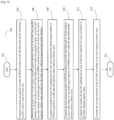
- Figure 7 illustrates an example method 700 for determining the padding and PE related parameters for downlink multiuser transmission according to a third embodiment of the first aspect of the present disclosure.
- the method 700 starts at step 702.
- an initial user with the longest encoded packet duration is determined by the following formula.
- Step 708 to step 714 of the method 700 are the same as step 508 to step 514 of the method 500, respectively.
- the method 700 stops at step 716.
- all users are grouped into two groups.
- the first group comprises at least one user that has FEC encoded bits spanned over all of the OFDM symbols in the HE data field 120.
- the second group comprises the users that have FEC encoded bits spanned over only a part of the OFDM symbols in the HE data field 120.
- FIG. 8 illustrates an example method for user grouping according to the second aspect of the present disclosure.
- the method 800 starts step 802.
- an initial number of OFDM symbols in the HE data field 120 for each user is computed.
- an initial number of OFDM symbols in the HE data field 120 for user u, N SYM init,u can be computed according to Equation (1).
- an initial largest number of OFDM symbols in the HE data field 120, N SYM max init can be computed according to Equation (3) based on the initial number of OFDM symbols in the HE data field 120 for each user.
- the users multiplexed in RUs designated for single user transmission are grouped into the first group and the second group.
- the users multiplexed in RUs designated for MU-MIMO transmission are grouped into the first group and the second group.
- the initial largest number of OFDM symbols in the HE data field 120 among the cluster of users is determined by the following formula where C stands for the cluster of users multiplexed in the RU designated for MU-MIMO transmission.
- C stands for the cluster of users multiplexed in the RU designated for MU-MIMO transmission.
- the whole cluster of users will be grouped into the second group if the following condition is met.
- the method 800 stops at step 810.
- all the users share the common number of OFDM symbols in the HE data field 120 and the common duration of the PE field 122.
- the common number of OFDM symbols in the HE data field 120 and the common duration of the PE field 122, together with other padding related paramters specific to the first group can be determined according to the user in the first group with the longest encoded packet duration using one of the methods according to the abovementioned three embodiments of the first aspect of the present disclosure.
- the pre-FEC padding pads towards the boundary in the last OFDM symbol(s) in the HE data field 120, specified by the a-factor value for the first group.
- the padding related paramters specific to the second group are determined according to the user in the second group with the longest encoded packet duration.
- the methods for determining the padding related parameters specific to the second group will be detailed later.
- the useful OFDM symbols in the HE data field 120 for the second group refer to those OFDM symbols in the HE data field 120 that contain FEC encoded bits for at least one of the users in the second group.
- the pre-FEC padding pads towards the boundary in the last useful OFDM symbol(s) in the HE data field 120 for the second group, specified by the a-factor value for the second group.
- Figure 9 illustrates example padding and packet extension for the HE packet 100 for downlink multiuser transmission in case of no STBC according to the second aspect of the present disclosure.
- the first group comprises STA1 and STA2 while the second group comprises STA3 and STA4.
- the a-factor for the first group has a value of 2 and the a-factor for the second group has a value of 3.
- the number of useful OFDM symbols in the HE data field 120 for the second group is one symbol less than the common number of OFDM symbols in the HE data field 120.
- the pre-FEC padding pads towards the second boundary in the last OFDM symbol in the HE data field 120 for each of the users in the first group (i.e., STA1 and STA2), the pre-FEC padding pads towards the second boundary in the last OFDM symbol in the HE data field 120; while for each of the users in the second group (i.e., STA3 and STA4), the pre-FEC padding pads towards the third boundary in the second last OFDM symbol in the HE data field 120.
- the users in the second group i.e., STA3 and STA4 need not to process the last OFDM symbol in the HE data field 120 and therefore power consumption is reduced compared with the prior arts [see NPL1 & NPL2].
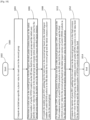
- Figure 10 illustrates an example method 1000 for determining the padding related parameters specific to the second group according to the first embodiment of the second aspect of the present disclosure.
- the method 1000 starts at step 1002.
- an initial user-specific a-factor value is computed for each user in the second group.
- the initial user-specific a-factor for user u, a init,u , in the second group can be computed according to Equation (2).
- an initial user in the second group with the longest encoded packet duration is determined based on the initial user-specific a-factor value for each user in the second group and the initial largest number of useful OFDM symbols in the HE data field 120 for the second group, N SYM_max_init,G2 , which can be obtained according to Equation (4) during the user grouping.
- N SYM_max_init,G2 the initial largest number of useful OFDM symbols in the HE data field 120
- the initial user in the second group with the longest encoded packet duration is determined by the following formula.
- the number of pre-FEC padding bits for each user in the second group are computed based on the initial largest number of useful OFDM symbols in the HE data field 120 for the second group and the initial common a-factor value for the second group. For example, the number of pre-FEC padding bits for user u in the second group is computed by the following formula
- the final common number of useful OFDM symbols in the HE data field 120 for the second group and the final common a-factor value for the second group are computed based on the initial largest number of useful OFDM symbols in the HE data field 120 for the second group and the initial common a-factor value for the second group. Similar to step 510 of the method 500 as illustrated in Figure 5 , it is necessary to go through the LDPC encoding process in order to compute the final common number of useful OFDM symbols in the HE data field 120 for the second group and the final common a-factor value for the second group if at least one user in the second group uses LDPC.
- the number of post-FEC padding bits for each user in the second group is computed based on the final common a-factor value for the second group, the final common number of useful OFDM symbols in the HE data field 120 for the second group and the common number of OFDM symbols in the HE data field 120.
- the number of post-FEC padding bits for user u in the second group is computed by the following formula.
- the method 1000 stops at step 1014.
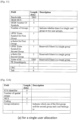
- Figure 11 illustrates the content of the HE-SIG-A 110 of the HE packet 100 according to the first embodiment of the second aspect of the present disclosure.
- the following signalling fields are required in the HE-SIG-A 110:
- Figure 12 illustrates the content of each user-specific subfield of the HE-SIG-B 112 of the HE packet 100 according to the first embodiment of the second aspect of the present disclosure.
- a Group Indication field shall be present in each user-specific subfield of the HE-SIG-B 112 to indicate which one of the first group and the second group each user belongs to.
- the condition for setting the LDPC Extra Symbol for the Second Group field in the HE-SIG-A 110 to 1 is assumed to be met for at least one user in the second group.
- the LDPC Extra Symbol for the Second Group field in the HE-SIG-A 110 can be ignored, which leads to reduced signaling requirement in the HE-SIG-A 110.
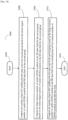
- Figure 13 illustrates an example method 1300 for determining the padding related parameters for the second group according to the second embodiment of the second aspect of the present disclosure.
- the method 1300 starts at step 1302.
- Step 1304 to step 1308 of the method 1300 are the same as step 1004 to step 1008 of the method 1000, respectively.
- the final common number of useful OFDM symbols in the HE data field 120 for the second group and the final common a-factor value for the second group are computed based on the initial largest number of useful OFDM symbols in the HE data field 120 for the second group and the initial common a-factor value for the second group. If LDPC is used by at least one of the users in the second group, the final common number of useful OFDM symbols in the HE data field 120 for the second group is shown by the following formula.
- the final common number of useful OFDM symbols in the HE data field 120 for the second group is shown by the following formula.
- the method 1312 of the method 1100 is the same as step 1012 of the method 1000.
- the method 1300 stops at step 1314.
- the final common a-factor value for the second group a G2 has a value of 1 and the condition for setting the LDPC Extra Symbol for the Second Group field to 1 is met for at least one user in the second group.
- the a-factor for the Second Group field and the LDPC Extra Symbol for the Second Group field in the HE-SIG-A 110 can be ignored, which leads to reduced signaling requirement in the HE-SIG-A 110.
- the final common number of useful OFDM symbols in the HE data field 120 for the second group is computed based on the initial largest number of useful OFDM symbols in the HE data field 120 for the second group by the following formula.
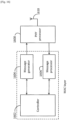
- FIG. 15 is a block diagram illustrating an example configuration of the AP according to the present disclosure.
- the AP comprises a controller 1502, a scheduler 1504, a message generator 1508, a message processor 1506, a PHY processor 1510 and an antenna 1512.
- the transmission apparatus further comprises a control circuitry, which, in operation, computes padding and packet extension related parameters by:
- the transmission apparatus further comprises a control circuitry, which, in operation, computes padding and packet extension related parameters by: computing an initial user-specific number of OFDM symbols in the HE data field for each user and compute an initial largest number of OFDM symbols in the HE data field based on the initial user-specific number of OFDM symbols in the HE data field for each user; and computing an initial common a-factor value based on the initial largest number of OFDM symbols in the HE data field.
- the transmission apparatus further comprises a control circuitry, which, in operation, computes padding and packet extension related parameters by:
- the transmission apparatus further comprises a control circuitry, which, in operation, computes padding and packet extension related parameters by:
- the transmission apparatus further comprises a control circuitry, which, in operation, computes padding and packet extension related parameters by:
- the transmission apparatus further comprises a control circuitry, which, in operation, computes padding and packet extension related parameters by:
- the transmission apparatus further comprises a control circuitry, which, in operation, computes padding and packet extension related parameters by:
- the transmission apparatus further comprises a control circuitry, which, in operation, computes padding and packet extension related parameters by:
- the transmission apparatus further comprises a control circuitry, which, in operation, computes padding and packet extension related parameters by:
- a transmission method comprising: generating a transmission signal that includes a legacy preamble, a non-legacy preamble, a data field and a packet extension field, wherein the non-legacy preamble comprises a first signal field and a second signal field, the second signal field comprising a common field that carries RU assignment information for one or more terminal stations and a user-specific field that carries per-user allocation information for the one or more terminal stations, wherein the one or more terminal stations are grouped into a single group or two group, and wherein in case that the one or more terminal stations are grouped into a first group and a second group, the first group comprises at least one terminal station that has FEC encoded bits spanned over all of the OFDM symbols in the data field while the second group comprises one or more terminal stations that have FEC encoded bits spanned over only a part of the OFDM symbols in the data field; and transmiting the generated transmission signal.
Landscapes
- Engineering & Computer Science (AREA)
- Signal Processing (AREA)
- Computer Networks & Wireless Communication (AREA)
- Mobile Radio Communication Systems (AREA)
- Data Exchanges In Wide-Area Networks (AREA)
Claims (6)
- Sendegerät, umfassend:eine Schaltung (1502) und wenigstens eine Antenne (1512),wobei die Schaltung dazu eingerichtet ist, ein Sendesignal für jeden einer Vielzahl von Benutzern zu erzeugen,das Sendesignal eine Vielzahl von Orthogonalfrequenz-Multiplex-, OFDM-, Symbolen für ein Datenfeld umfasst, das einen codierten Bitstrom von Informationsbits umfasst, wobei das letzte OFDM-Symbol der Vielzahl von OFDM-Symbolen in vier Segmente partitioniert ist und die vier Segmente jeweils mit vier Grenzen enden unddie wenigstens eine Antenne dazu eingerichtet ist, das Sendesignal zu senden, unddie Schaltung dazu eingerichtet ist, das Sendesignal zu erzeugen durch:- Berechnen (504) eines anfänglichen Auffüllfaktorwerts für jeden der zahlreichen Benutzer und Berechnen einer anfänglichen Anzahl von OFDM-Symbolen für das Datenfeld für jeden der zahlreichen Benutzer, wobei der Auffüllfaktorwert eine von vier Grenzen darstellt;- Bestimmen (506) eines Benutzers mit der längsten codierten Paketdauer unter der Vielzahl von Benutzern;- Bestimmen (510) eines gemeinsamen Füllfaktorwerts, der der anfängliche Füllfaktorwert des bestimmten Benutzers mit der längsten codierten Paketdauer ist;- Bestimmen (510) einer gemeinsamen Anzahl von OFDM-Symbolen, die die anfängliche Anzahl von OFDM-Symbolen für das Datenfeld des bestimmten Benutzers mit der längsten codierten Paketdauer ist;- Hinzufügen von Pre-FEC-Füllbits (FEC - Vorwärtsfehlerkorrektur) für jeden der zahlreichen Benutzer zu den Informationsbits, so dass der codierte Bitstrom wenigstens eines der vier Segmente bis zu einer der vier Grenzen füllt, die durch den bestimmten gemeinsamen Füllfaktorwert spezifiziert sind; und- Hinzufügen von Post-FEC-Füllbits nach dem codierten Bitstrom des letzten OFDM-Symbols;wobei das Sendegerät einen Terminplaner (1504) umfasst, der dazu eingerichtet ist, eine Terminplanung unter Steuerung der Schaltung auszuführen; undder Benutzer mit der längsten codierten Paketdauer auf der Grundlage sowohl der anfänglichen Zahl der OFDM-Symbole als auch dem anfänglichen Füllfaktorwert für jeden der Vielzahl von Benutzern bestimmt wird.
- Sendegerät nach Anspruch 1, bei dem eine Anzahl der Pre-FEC-Füllbits für jeden der zahlreichen Benutzer basierend auf dem bestimmten gemeinsamen Füllfaktorwert bestimmt wird (508).
- Sendegerät nach Anspruch 1, bei dem Informationsbits und die hinzugefügten Pre-FEC-Füllbits in dem Datenfeld entweder unter Verwendung eines Binary Convolutional Code, BCC, oder eines Low Density Parity Check, LDPC, codiert werden.
- Sendegerät nach Anspruch 1, bei dem das Datenfeld Informationsbits enthält, und der anfängliche Auffüllfaktorwert für jeden der Vielzahl von Benutzern basierend auf den Informationsbits bestimmt wird.
- Sendegerät nach Anspruch 1, bei dem eine Anzahl der Post-FEC-Füllbits basierend auf dem gemeinsamen Füllfaktorwert bestimmt wird.
- Sendegerät nach Anspruch 1, bei dem:ein Benutzer aus der Vielzahl von Benutzern in eine erste Gruppe oder eine zweite Gruppe eingeteilt wird, und die Paketdauer jedes Benutzers der zweiten Gruppe kürzer als die Paketdauer jedes Benutzers der ersten Gruppe ist;ein Füllfaktorwert für die erste Gruppe gemäß einem Benutzer in der ersten Gruppe mit der längsten codierten Paketdauer bestimmt wird;ein Füllfaktorwert für die zweite Gruppe gemäß einem Benutzer in der zweiten Gruppe mit der längsten codierten Paketdauer bestimmt wird;Pre-FEC-Füllbits zu den Informationsbits hinzugefügt werden, so dass der codierte Bitstrom wenigstens eines der vier Segmente bis zum Ende eines der vier Segmente des letzten OFDM-Symbols in dem Signal für die erste Gruppe füllt; undPre-FEC-Füllbits zu den Informationsbits hinzugefügt werden, so dass der codierte Bitstrom wenigstens eines der vier Segmente füllt, bis eines von vier Segmenten eines OFDM-Symbols, das nicht das letzte OFDM-Symbol ist, und die Pre-FEC-Füllbits in dem letzten OFDM-Symbol in dem Sendesignal für die zweite Gruppe nicht enthalten sind.
Applications Claiming Priority (6)
| Application Number | Priority Date | Filing Date | Title |
|---|---|---|---|
| US201662278884P | 2016-01-14 | 2016-01-14 | |
| JP2016106268 | 2016-05-27 | ||
| PCT/JP2016/004960 WO2017122240A1 (en) | 2016-01-14 | 2016-11-25 | Transmission apparatus and transmission method for padding and packet extension for downlink multiuser transmission |
| EP19209372.2A EP3629537B1 (de) | 2016-01-14 | 2016-11-25 | Verfahren und system für padding und paketerweiterung für downlink-mehrnutzerübertragung |
| EP16884844.8A EP3403383B9 (de) | 2016-01-14 | 2016-11-25 | Übertragungsvorrichtung und übertragungsverfahren für padding und paketerweiterung für downlink-mehrnutzerübertragung |
| EP21202373.3A EP3972213B1 (de) | 2016-01-14 | 2016-11-25 | Verfahren und system zum polstern und erweitern von paketen für downlinik-mehrbenutzerübertragung |
Related Parent Applications (4)
| Application Number | Title | Priority Date | Filing Date |
|---|---|---|---|
| EP19209372.2A Division EP3629537B1 (de) | 2016-01-14 | 2016-11-25 | Verfahren und system für padding und paketerweiterung für downlink-mehrnutzerübertragung |
| EP16884844.8A Division EP3403383B9 (de) | 2016-01-14 | 2016-11-25 | Übertragungsvorrichtung und übertragungsverfahren für padding und paketerweiterung für downlink-mehrnutzerübertragung |
| EP21202373.3A Division EP3972213B1 (de) | 2016-01-14 | 2016-11-25 | Verfahren und system zum polstern und erweitern von paketen für downlinik-mehrbenutzerübertragung |
| EP21202373.3A Division-Into EP3972213B1 (de) | 2016-01-14 | 2016-11-25 | Verfahren und system zum polstern und erweitern von paketen für downlinik-mehrbenutzerübertragung |
Publications (4)
| Publication Number | Publication Date |
|---|---|
| EP4236170A2 EP4236170A2 (de) | 2023-08-30 |
| EP4236170A3 EP4236170A3 (de) | 2023-11-01 |
| EP4236170C0 EP4236170C0 (de) | 2025-03-26 |
| EP4236170B1 true EP4236170B1 (de) | 2025-03-26 |
Family
ID=59311153
Family Applications (4)
| Application Number | Title | Priority Date | Filing Date |
|---|---|---|---|
| EP19209372.2A Active EP3629537B1 (de) | 2016-01-14 | 2016-11-25 | Verfahren und system für padding und paketerweiterung für downlink-mehrnutzerübertragung |
| EP16884844.8A Active EP3403383B9 (de) | 2016-01-14 | 2016-11-25 | Übertragungsvorrichtung und übertragungsverfahren für padding und paketerweiterung für downlink-mehrnutzerübertragung |
| EP23174519.1A Active EP4236170B1 (de) | 2016-01-14 | 2016-11-25 | Verfahren und system zum polstern und erweitern von paketen für downlinik-mehrbenutzerübertragung |
| EP21202373.3A Active EP3972213B1 (de) | 2016-01-14 | 2016-11-25 | Verfahren und system zum polstern und erweitern von paketen für downlinik-mehrbenutzerübertragung |
Family Applications Before (2)
| Application Number | Title | Priority Date | Filing Date |
|---|---|---|---|
| EP19209372.2A Active EP3629537B1 (de) | 2016-01-14 | 2016-11-25 | Verfahren und system für padding und paketerweiterung für downlink-mehrnutzerübertragung |
| EP16884844.8A Active EP3403383B9 (de) | 2016-01-14 | 2016-11-25 | Übertragungsvorrichtung und übertragungsverfahren für padding und paketerweiterung für downlink-mehrnutzerübertragung |
Family Applications After (1)
| Application Number | Title | Priority Date | Filing Date |
|---|---|---|---|
| EP21202373.3A Active EP3972213B1 (de) | 2016-01-14 | 2016-11-25 | Verfahren und system zum polstern und erweitern von paketen für downlinik-mehrbenutzerübertragung |
Country Status (7)
| Country | Link |
|---|---|
| US (4) | US10447519B2 (de) |
| EP (4) | EP3629537B1 (de) |
| JP (1) | JP6830200B2 (de) |
| CN (3) | CN112583758B (de) |
| ES (1) | ES2958267T3 (de) |
| PL (1) | PL3972213T3 (de) |
| WO (1) | WO2017122240A1 (de) |
Families Citing this family (17)
| Publication number | Priority date | Publication date | Assignee | Title |
|---|---|---|---|---|
| KR102178131B1 (ko) * | 2015-06-29 | 2020-11-12 | 주식회사 윌러스표준기술연구소 | 레거시 무선 통신 단말과 공존을 위한 무선 통신 방법 및 무선 통신 단말 |
| US10749996B2 (en) * | 2017-05-26 | 2020-08-18 | Newracom, Inc. | Doppler mode in a wireless network |
| WO2020085025A1 (ja) * | 2018-10-26 | 2020-04-30 | パナソニック インテレクチュアル プロパティ コーポレーション オブ アメリカ | 通信装置および通信方法 |
| US11082156B2 (en) * | 2018-10-30 | 2021-08-03 | Nxp Usa, Inc. | Method and apparatus for generating a physical layer (PHY) data unit for hybrid automatic repeat request (HARQ) |
| US11387936B2 (en) | 2018-12-14 | 2022-07-12 | Nxp Usa, Inc. | Hybrid automatic repeat request (HARQ) retransmission schemes for a wireless local area network (WLAN) |
| US11728942B2 (en) | 2019-03-22 | 2023-08-15 | Qualcomm Incorporated | Data parsing to support resource unit aggregation |
| US11252749B2 (en) | 2019-06-03 | 2022-02-15 | Mediatek Singapore Pte. Ltd. | Virtual resource unit for multi-resource unit assignment to a single station in WLAN |
| US11374698B2 (en) | 2019-06-05 | 2022-06-28 | Marvell Asia Pte Ltd | Physical layer (PHY) data unit format for hybrid automatic repeat request (HARQ) |
| US11290223B1 (en) | 2019-06-25 | 2022-03-29 | Marvell Asia Pte Ltd | Physical layer (PHY) data unit encoding for hybrid automatic repeat request (HARQ) transmission |
| US12107687B2 (en) * | 2019-07-05 | 2024-10-01 | Panasonic Intellectual Property Corporation Of America | Communication apparatus and communication method for hybrid automatic repeat request operation |
| MX2022011306A (es) | 2020-03-13 | 2022-10-07 | Panasonic Ip Corp America | Aparato de comunicacion y metodo de comunicacion para la transmision a traves de combinaciones de multiples unidades de recursos. |
| EP4144004A1 (de) * | 2020-04-28 | 2023-03-08 | Telefonaktiebolaget LM ERICSSON (PUBL) | Signalverarbeitung für verschiedene ressourceneinheitszuweisungen |
| US11496926B2 (en) | 2020-05-12 | 2022-11-08 | Nxp Usa, Inc. | EHT padding and packet extension method and apparatus |
| US11722354B2 (en) | 2020-07-27 | 2023-08-08 | Nxp Usa, Inc. | EHT capability design for PPE threshold |
| KR20250158816A (ko) * | 2020-09-28 | 2025-11-06 | 후아웨이 테크놀러지 컴퍼니 리미티드 | 무선 전송에서 프리 및 포스트 순방향 오류 정정 및 패킷 패딩을 위한 기술 |
| CN116320049B (zh) * | 2021-03-30 | 2023-11-07 | 华为技术有限公司 | 用于包扩展的方法、设备和存储介质 |
| WO2025188858A1 (en) * | 2024-03-06 | 2025-09-12 | Qualcomm Incorporated | Techniques for low density parity check rate matching |
Family Cites Families (26)
| Publication number | Priority date | Publication date | Assignee | Title |
|---|---|---|---|---|
| CN100576785C (zh) | 2002-04-25 | 2009-12-30 | Pmc-斯尔若以色列有限公司 | 以太网中的前向纠错编码 |
| CN101213808B (zh) * | 2005-06-29 | 2012-12-05 | 松下电器产业株式会社 | 用于根据不同的码元映射方案而使用利用码元映射方案的码元映射器来生成调制码元的方法、以及用于生成码元映射方案的方法 |
| US8566676B2 (en) * | 2007-01-05 | 2013-10-22 | Qualcomm Incorporated | FEC code and code rate selection based on packet size |
| US7995688B2 (en) * | 2007-03-08 | 2011-08-09 | Her Majesty The Queen In Right Of Canada, As Represented By The Minister Of Industry, Through The Communications Research Centre Canada | Channel estimation and ICI cancellation for OFDM |
| US8301177B2 (en) * | 2009-03-03 | 2012-10-30 | Intel Corporation | Efficient paging operation for femtocell deployment |
| US9438404B2 (en) * | 2009-03-03 | 2016-09-06 | Intel Corporation | Group resource allocation systems and techniques |
| US8400968B2 (en) * | 2009-12-09 | 2013-03-19 | Marvell World Trade Ltd. | Frame padding for wireless communications |
| EP2566156A4 (de) * | 2010-04-28 | 2015-04-29 | Lg Electronics Inc | Rundfunksignalsender, rundfunksignalempfänger sowie verfahren zum senden und empfangen von rundfunksignalen mit vorrichtungen zum senden und empfangen von rundfunksignalen |
| US9021341B1 (en) * | 2010-06-16 | 2015-04-28 | Marvell International Ltd. | LDPC coding in a communication system |
| EP3402088B3 (de) * | 2010-07-01 | 2022-12-21 | LG Electronics Inc. | Verfahren und vorrichtung zur übertragung eines mimo-pakets in einem drahtlos-lan-system |
| US9264287B2 (en) * | 2010-10-07 | 2016-02-16 | Marvell World Trade Ltd. | Encoding parameters for a wireless communication system |
| KR102015555B1 (ko) * | 2012-01-11 | 2019-08-28 | 마벨 월드 트레이드 리미티드 | Wlan을 위한 정보 비트 패딩 기법 |
| CN103004123B (zh) * | 2012-09-12 | 2015-07-08 | 华为技术有限公司 | Fec码字到物理资源块的适配方法、fec码字同步方法及系统 |
| WO2015037946A1 (en) * | 2013-09-12 | 2015-03-19 | Samsung Electronics Co., Ltd. | Transmitting apparatus, method of mapping data thereof, receiving apparatus, data processing method thereof |
| KR101801588B1 (ko) * | 2013-09-25 | 2017-11-27 | 엘지전자 주식회사 | 방송 신호 송신 장치, 방송 신호 수신 장치, 방송 신호 송신 방법 및 방송 신호 수신 방법 |
| US10218822B2 (en) * | 2013-10-25 | 2019-02-26 | Marvell World Trade Ltd. | Physical layer frame format for WLAN |
| KR101783619B1 (ko) * | 2013-11-29 | 2017-10-10 | 엘지전자 주식회사 | 방송 신호 송신 장치, 방송 신호 수신 장치, 방송 신호 송신 방법 및 방송 신호 수신 방법 |
| US11309998B2 (en) * | 2014-02-03 | 2022-04-19 | Nxp Usa, Inc. | Hybrid automatic repeat request for wireless local area network |
| US9954703B2 (en) * | 2014-06-11 | 2018-04-24 | Marvell World Trade Ltd. | Compressed preamble for a wireless communication system |
| CN104301278B (zh) * | 2014-09-28 | 2017-11-28 | 江苏中兴微通信息科技有限公司 | 一种混合载波wlan系统的填零方法及装置 |
| DE102016007395B4 (de) * | 2015-02-03 | 2020-10-01 | Avago Technologies International Sales Pte. Limited | Paketerweiterung für drahtlose kommunikation |
| US10187314B2 (en) * | 2015-05-22 | 2019-01-22 | Qualcomm Incorporated | Techniques for signal extension signaling |
| KR20180016725A (ko) * | 2015-06-11 | 2018-02-19 | 마벨 월드 트레이드 리미티드 | 신호 확장 패딩 기법 시스템, 장치, 및 방법 |
| US20160374017A1 (en) * | 2015-06-18 | 2016-12-22 | Intel IP Corporation | Systems and methods for determining device-specific signal extension durations |
| US10148326B2 (en) * | 2015-07-06 | 2018-12-04 | Qualcomm Incorporated | Methods and apparatus for extended receiver processing time |
| EP3270537B1 (de) * | 2016-07-11 | 2019-02-13 | Newracom, Inc. | Signalisierung von packet- und signalerweiterungen in einer he-ppdu-dateneinheit in einem drahtlosen netzwerk |
-
2016
- 2016-11-25 WO PCT/JP2016/004960 patent/WO2017122240A1/en not_active Ceased
- 2016-11-25 EP EP19209372.2A patent/EP3629537B1/de active Active
- 2016-11-25 CN CN202011408832.9A patent/CN112583758B/zh active Active
- 2016-11-25 EP EP16884844.8A patent/EP3403383B9/de active Active
- 2016-11-25 PL PL21202373.3T patent/PL3972213T3/pl unknown
- 2016-11-25 EP EP23174519.1A patent/EP4236170B1/de active Active
- 2016-11-25 JP JP2018529072A patent/JP6830200B2/ja active Active
- 2016-11-25 ES ES21202373T patent/ES2958267T3/es active Active
- 2016-11-25 CN CN201680074902.7A patent/CN108476189B/zh active Active
- 2016-11-25 EP EP21202373.3A patent/EP3972213B1/de active Active
- 2016-11-25 CN CN202011405246.9A patent/CN112583757B/zh active Active
-
2018
- 2018-06-18 US US16/011,315 patent/US10447519B2/en active Active
-
2019
- 2019-08-27 US US16/552,389 patent/US11245559B2/en active Active
-
2021
- 2021-12-21 US US17/558,367 patent/US11689406B2/en active Active
-
2023
- 2023-05-11 US US18/316,077 patent/US12107713B2/en active Active
Also Published As
| Publication number | Publication date |
|---|---|
| CN108476189B (zh) | 2020-12-25 |
| EP3403383A1 (de) | 2018-11-21 |
| CN108476189A (zh) | 2018-08-31 |
| EP4236170A2 (de) | 2023-08-30 |
| JP2019502309A (ja) | 2019-01-24 |
| EP3629537B1 (de) | 2022-01-05 |
| US11689406B2 (en) | 2023-06-27 |
| EP4236170C0 (de) | 2025-03-26 |
| EP4236170A3 (de) | 2023-11-01 |
| EP3972213A1 (de) | 2022-03-23 |
| CN112583757B (zh) | 2024-09-27 |
| ES2958267T3 (es) | 2024-02-06 |
| US20190386864A1 (en) | 2019-12-19 |
| US20230283507A1 (en) | 2023-09-07 |
| CN112583758A (zh) | 2021-03-30 |
| US10447519B2 (en) | 2019-10-15 |
| CN112583758B (zh) | 2024-03-22 |
| EP3403383A4 (de) | 2019-01-16 |
| US11245559B2 (en) | 2022-02-08 |
| US12107713B2 (en) | 2024-10-01 |
| CN112583757A (zh) | 2021-03-30 |
| EP3972213B1 (de) | 2023-07-05 |
| US20220116255A1 (en) | 2022-04-14 |
| WO2017122240A1 (en) | 2017-07-20 |
| JP6830200B2 (ja) | 2021-02-17 |
| EP3403383B9 (de) | 2020-12-02 |
| PL3972213T3 (pl) | 2023-12-11 |
| EP3403383B1 (de) | 2020-01-15 |
| EP3629537A1 (de) | 2020-04-01 |
| US20180302256A1 (en) | 2018-10-18 |
Similar Documents
| Publication | Publication Date | Title |
|---|---|---|
| US12107713B2 (en) | Apparatus and method for padding and packet extension for downlink multiuser transmission | |
| US11985019B2 (en) | Transmission apparatus and transmission method for transmitting a control signal in a wireless communication system | |
| JP7142316B2 (ja) | 送信方法および無線装置 |
Legal Events
| Date | Code | Title | Description |
|---|---|---|---|
| PUAI | Public reference made under article 153(3) epc to a published international application that has entered the european phase |
Free format text: ORIGINAL CODE: 0009012 |
|
| STAA | Information on the status of an ep patent application or granted ep patent |
Free format text: STATUS: REQUEST FOR EXAMINATION WAS MADE |
|
| 17P | Request for examination filed |
Effective date: 20230522 |
|
| AC | Divisional application: reference to earlier application |
Ref document number: 3403383 Country of ref document: EP Kind code of ref document: P Ref document number: 3629537 Country of ref document: EP Kind code of ref document: P Ref document number: 3972213 Country of ref document: EP Kind code of ref document: P |
|
| AK | Designated contracting states |
Kind code of ref document: A2 Designated state(s): AL AT BE BG CH CY CZ DE DK EE ES FI FR GB GR HR HU IE IS IT LI LT LU LV MC MK MT NL NO PL PT RO RS SE SI SK SM TR |
|
| REG | Reference to a national code |
Ref country code: DE Ref legal event code: R079 Free format text: PREVIOUS MAIN CLASS: H04L0005000000 Ipc: H04L0027260000 Ref country code: DE Ref legal event code: R079 Ref document number: 602016091742 Country of ref document: DE Free format text: PREVIOUS MAIN CLASS: H04L0005000000 Ipc: H04L0027260000 |
|
| PUAL | Search report despatched |
Free format text: ORIGINAL CODE: 0009013 |
|
| AK | Designated contracting states |
Kind code of ref document: A3 Designated state(s): AL AT BE BG CH CY CZ DE DK EE ES FI FR GB GR HR HU IE IS IT LI LT LU LV MC MK MT NL NO PL PT RO RS SE SI SK SM TR |
|
| RIC1 | Information provided on ipc code assigned before grant |
Ipc: H04L 5/00 20060101ALI20230928BHEP Ipc: H04L 1/00 20060101ALI20230928BHEP Ipc: H04L 27/26 20060101AFI20230928BHEP |
|
| GRAP | Despatch of communication of intention to grant a patent |
Free format text: ORIGINAL CODE: EPIDOSNIGR1 |
|
| STAA | Information on the status of an ep patent application or granted ep patent |
Free format text: STATUS: GRANT OF PATENT IS INTENDED |
|
| RIC1 | Information provided on ipc code assigned before grant |
Ipc: H04L 5/00 20060101ALI20241127BHEP Ipc: H04L 1/00 20060101ALI20241127BHEP Ipc: H04L 27/26 20060101AFI20241127BHEP |
|
| INTG | Intention to grant announced |
Effective date: 20241213 |
|
| GRAS | Grant fee paid |
Free format text: ORIGINAL CODE: EPIDOSNIGR3 |
|
| GRAA | (expected) grant |
Free format text: ORIGINAL CODE: 0009210 |
|
| STAA | Information on the status of an ep patent application or granted ep patent |
Free format text: STATUS: THE PATENT HAS BEEN GRANTED |
|
| AC | Divisional application: reference to earlier application |
Ref document number: 3403383 Country of ref document: EP Kind code of ref document: P Ref document number: 3629537 Country of ref document: EP Kind code of ref document: P Ref document number: 3972213 Country of ref document: EP Kind code of ref document: P |
|
| AK | Designated contracting states |
Kind code of ref document: B1 Designated state(s): AL AT BE BG CH CY CZ DE DK EE ES FI FR GB GR HR HU IE IS IT LI LT LU LV MC MK MT NL NO PL PT RO RS SE SI SK SM TR |
|
| REG | Reference to a national code |
Ref country code: GB Ref legal event code: FG4D |
|
| REG | Reference to a national code |
Ref country code: CH Ref legal event code: EP |
|
| REG | Reference to a national code |
Ref country code: DE Ref legal event code: R096 Ref document number: 602016091742 Country of ref document: DE |
|
| REG | Reference to a national code |
Ref country code: IE Ref legal event code: FG4D |
|
| U01 | Request for unitary effect filed |
Effective date: 20250423 |
|
| U07 | Unitary effect registered |
Designated state(s): AT BE BG DE DK EE FI FR IT LT LU LV MT NL PT RO SE SI Effective date: 20250430 |
|
| PG25 | Lapsed in a contracting state [announced via postgrant information from national office to epo] |
Ref country code: RS Free format text: LAPSE BECAUSE OF FAILURE TO SUBMIT A TRANSLATION OF THE DESCRIPTION OR TO PAY THE FEE WITHIN THE PRESCRIBED TIME-LIMIT Effective date: 20250626 |
|
| PG25 | Lapsed in a contracting state [announced via postgrant information from national office to epo] |
Ref country code: NO Free format text: LAPSE BECAUSE OF FAILURE TO SUBMIT A TRANSLATION OF THE DESCRIPTION OR TO PAY THE FEE WITHIN THE PRESCRIBED TIME-LIMIT Effective date: 20250626 |
|
| PG25 | Lapsed in a contracting state [announced via postgrant information from national office to epo] |
Ref country code: HR Free format text: LAPSE BECAUSE OF FAILURE TO SUBMIT A TRANSLATION OF THE DESCRIPTION OR TO PAY THE FEE WITHIN THE PRESCRIBED TIME-LIMIT Effective date: 20250326 |
|
| PG25 | Lapsed in a contracting state [announced via postgrant information from national office to epo] |
Ref country code: GR Free format text: LAPSE BECAUSE OF FAILURE TO SUBMIT A TRANSLATION OF THE DESCRIPTION OR TO PAY THE FEE WITHIN THE PRESCRIBED TIME-LIMIT Effective date: 20250627 |
|
| PG25 | Lapsed in a contracting state [announced via postgrant information from national office to epo] |
Ref country code: SM Free format text: LAPSE BECAUSE OF FAILURE TO SUBMIT A TRANSLATION OF THE DESCRIPTION OR TO PAY THE FEE WITHIN THE PRESCRIBED TIME-LIMIT Effective date: 20250326 |
|
| PG25 | Lapsed in a contracting state [announced via postgrant information from national office to epo] |
Ref country code: ES Free format text: LAPSE BECAUSE OF FAILURE TO SUBMIT A TRANSLATION OF THE DESCRIPTION OR TO PAY THE FEE WITHIN THE PRESCRIBED TIME-LIMIT Effective date: 20250326 |
|
| PG25 | Lapsed in a contracting state [announced via postgrant information from national office to epo] |
Ref country code: PL Free format text: LAPSE BECAUSE OF FAILURE TO SUBMIT A TRANSLATION OF THE DESCRIPTION OR TO PAY THE FEE WITHIN THE PRESCRIBED TIME-LIMIT Effective date: 20250326 |
|
| PG25 | Lapsed in a contracting state [announced via postgrant information from national office to epo] |
Ref country code: SK Free format text: LAPSE BECAUSE OF FAILURE TO SUBMIT A TRANSLATION OF THE DESCRIPTION OR TO PAY THE FEE WITHIN THE PRESCRIBED TIME-LIMIT Effective date: 20250326 |
|
| PG25 | Lapsed in a contracting state [announced via postgrant information from national office to epo] |
Ref country code: IS Free format text: LAPSE BECAUSE OF FAILURE TO SUBMIT A TRANSLATION OF THE DESCRIPTION OR TO PAY THE FEE WITHIN THE PRESCRIBED TIME-LIMIT Effective date: 20250726 |