EP4233784A2 - Belichtungsgerät zum beleuchten eines dentalobjekts - Google Patents
Belichtungsgerät zum beleuchten eines dentalobjekts Download PDFInfo
- Publication number
- EP4233784A2 EP4233784A2 EP23186096.6A EP23186096A EP4233784A2 EP 4233784 A2 EP4233784 A2 EP 4233784A2 EP 23186096 A EP23186096 A EP 23186096A EP 4233784 A2 EP4233784 A2 EP 4233784A2
- Authority
- EP
- European Patent Office
- Prior art keywords
- radiation source
- radiation
- dental object
- exposure device
- chamber
- Prior art date
- Legal status (The legal status is an assumption and is not a legal conclusion. Google has not performed a legal analysis and makes no representation as to the accuracy of the status listed.)
- Granted
Links
Images
Classifications
-
- A—HUMAN NECESSITIES
- A61—MEDICAL OR VETERINARY SCIENCE; HYGIENE
- A61C—DENTISTRY; APPARATUS OR METHODS FOR ORAL OR DENTAL HYGIENE
- A61C13/00—Dental prostheses; Making same
- A61C13/12—Tools for fastening artificial teeth; Holders, clamps, or stands for artificial teeth
- A61C13/14—Vulcanising devices for artificial teeth
-
- A—HUMAN NECESSITIES
- A61—MEDICAL OR VETERINARY SCIENCE; HYGIENE
- A61C—DENTISTRY; APPARATUS OR METHODS FOR ORAL OR DENTAL HYGIENE
- A61C13/00—Dental prostheses; Making same
- A61C13/08—Artificial teeth; Making same
- A61C13/082—Cosmetic aspects, e.g. inlays; Determination of the colour
-
- A—HUMAN NECESSITIES
- A61—MEDICAL OR VETERINARY SCIENCE; HYGIENE
- A61C—DENTISTRY; APPARATUS OR METHODS FOR ORAL OR DENTAL HYGIENE
- A61C13/00—Dental prostheses; Making same
- A61C13/08—Artificial teeth; Making same
- A61C13/083—Porcelain or ceramic teeth
-
- C—CHEMISTRY; METALLURGY
- C03—GLASS; MINERAL OR SLAG WOOL
- C03C—CHEMICAL COMPOSITION OF GLASSES, GLAZES OR VITREOUS ENAMELS; SURFACE TREATMENT OF GLASS; SURFACE TREATMENT OF FIBRES OR FILAMENTS MADE FROM GLASS, MINERALS OR SLAGS; JOINING GLASS TO GLASS OR OTHER MATERIALS
- C03C23/00—Other surface treatment of glass not in the form of fibres or filaments
- C03C23/0005—Other surface treatment of glass not in the form of fibres or filaments by irradiation
- C03C23/001—Other surface treatment of glass not in the form of fibres or filaments by irradiation by infrared light
-
- C—CHEMISTRY; METALLURGY
- C03—GLASS; MINERAL OR SLAG WOOL
- C03C—CHEMICAL COMPOSITION OF GLASSES, GLAZES OR VITREOUS ENAMELS; SURFACE TREATMENT OF GLASS; SURFACE TREATMENT OF FIBRES OR FILAMENTS MADE FROM GLASS, MINERALS OR SLAGS; JOINING GLASS TO GLASS OR OTHER MATERIALS
- C03C23/00—Other surface treatment of glass not in the form of fibres or filaments
- C03C23/0005—Other surface treatment of glass not in the form of fibres or filaments by irradiation
- C03C23/002—Other surface treatment of glass not in the form of fibres or filaments by irradiation by ultraviolet light
-
- C—CHEMISTRY; METALLURGY
- C03—GLASS; MINERAL OR SLAG WOOL
- C03C—CHEMICAL COMPOSITION OF GLASSES, GLAZES OR VITREOUS ENAMELS; SURFACE TREATMENT OF GLASS; SURFACE TREATMENT OF FIBRES OR FILAMENTS MADE FROM GLASS, MINERALS OR SLAGS; JOINING GLASS TO GLASS OR OTHER MATERIALS
- C03C4/00—Compositions for glass with special properties
- C03C4/02—Compositions for glass with special properties for coloured glass
-
- F—MECHANICAL ENGINEERING; LIGHTING; HEATING; WEAPONS; BLASTING
- F27—FURNACES; KILNS; OVENS; RETORTS
- F27B—FURNACES, KILNS, OVENS OR RETORTS IN GENERAL; OPEN SINTERING OR LIKE APPARATUS
- F27B17/00—Furnaces of a kind not covered by any of groups F27B1/00 - F27B15/00
- F27B17/02—Furnaces of a kind not covered by any of groups F27B1/00 - F27B15/00 specially designed for laboratory use
- F27B17/025—Furnaces of a kind not covered by any of groups F27B1/00 - F27B15/00 specially designed for laboratory use for dental workpieces
-
- A—HUMAN NECESSITIES
- A61—MEDICAL OR VETERINARY SCIENCE; HYGIENE
- A61C—DENTISTRY; APPARATUS OR METHODS FOR ORAL OR DENTAL HYGIENE
- A61C13/00—Dental prostheses; Making same
- A61C13/0003—Making bridge-work, inlays, implants or the like
-
- A—HUMAN NECESSITIES
- A61—MEDICAL OR VETERINARY SCIENCE; HYGIENE
- A61C—DENTISTRY; APPARATUS OR METHODS FOR ORAL OR DENTAL HYGIENE
- A61C2201/00—Material properties
- A61C2201/002—Material properties using colour effect, e.g. for identification purposes
-
- A—HUMAN NECESSITIES
- A61—MEDICAL OR VETERINARY SCIENCE; HYGIENE
- A61C—DENTISTRY; APPARATUS OR METHODS FOR ORAL OR DENTAL HYGIENE
- A61C5/00—Filling or capping teeth
- A61C5/70—Tooth crowns; Making thereof
-
- A—HUMAN NECESSITIES
- A61—MEDICAL OR VETERINARY SCIENCE; HYGIENE
- A61C—DENTISTRY; APPARATUS OR METHODS FOR ORAL OR DENTAL HYGIENE
- A61C8/00—Means to be fixed to the jaw-bone for consolidating natural teeth or for fixing dental prostheses thereon; Dental implants; Implanting tools
- A61C8/0048—Connecting the upper structure to the implant, e.g. bridging bars
- A61C8/005—Connecting devices for joining an upper structure with an implant member, e.g. spacers
Definitions
- the present invention relates to an exposure device for illuminating a dental object and a method for illuminating a dental object.
- Polychromic glasses and glass ceramics can be colored by exposure together with a thermal treatment, such as quartz glass, quartz glass ceramic, lithium aluminosilicate glass, lithium aluminosilicate glass ceramic, lithium silicate glass or lithium silicate glass ceramic.
- a thermal treatment such as quartz glass, quartz glass ceramic, lithium aluminosilicate glass, lithium aluminosilicate glass ceramic, lithium silicate glass or lithium silicate glass ceramic.
- the exposure here usually takes place by means of UV radiation. After exposure, the different color effects are mainly produced by temperature treatment.
- the polychrome glasses and glass ceramics comprise, for example, an oxidizable component and a reducible coloring component.
- the oxidizable component is a component that can be oxidized or stimulated to donate electrons by irradiation.
- Components that can be oxidized are, for example, cerium ions, europium ions, erbium ions, copper ions and mixtures thereof.
- the reducible coloring component is, for example, a component that can be reduced to form a color change.
- Preferred reducible coloring components are cations of metals such as silver, gold, copper, or combinations thereof.
- an exposure device for illuminating a dental object with a chamber for accommodating the dental object; and a radiation source for emitting radiation having a wavelength less than 350 nm in the chamber.
- the emitted radiation is used to expose the dental object.
- the radiation source is designed to emit radiation with a wavelength between 350 nm and 5 pm, preferably between 350 nm and 10 nm, or most preferably between 350 nm and 100 nm. This achieves the technical advantage, for example, that particularly suitable wavelength ranges can be used for treating the dental object.
- the exposure device comprises an intensity setting device for setting a radiation intensity of the radiation source.
- the exposure device comprises a timer device for activating the radiation source for a predetermined period of time. This achieves the technical advantage, for example, that the exposure can be carried out automatically for a predetermined period of time.
- the exposure device comprises a single radiation source for emitting radiation with a wavelength that is less than 350 nm. This achieves the technical advantage, for example, that the technical outlay for producing the exposure device is reduced.
- the exposure device comprises a moving device for moving the dental object in front of the radiation source. This achieves the technical advantage, for example, that the radiation can be directed at different areas of the dental object.
- the movement device is designed to move the dental object at a height and/or to rotate it relative to the radiation source. This achieves the technical advantage, for example, that the dental object can be easily exposed from different sides.
- the exposure device is designed to move the radiation source at a height. This achieves the technical advantage, for example, that the dental object can be easily exposed from different positions.
- the exposure device comprises an infrared radiation source for emitting radiation with a wavelength greater than 700 nm into the chamber.
- the infrared radiation source can be located inside or outside the chamber. Radiation can be guided into the chamber by means of an optical fiber.
- the infrared radiation source such as an IR laser, can also be arranged outside the chamber.
- the emitted radiation can then be scanned using a scanner (e.g. DMD - Digital Mirror Device) through a suitable viewing window over the dental object arranged inside the chamber.
- a scanner e.g. DMD - Digital Mirror Device
- the infrared radiation source is designed to emit radiation with a wavelength between 700 nm and 10 ⁇ m, preferably between 700 nm and 5 ⁇ m, or most preferably between 700 nm and 3 ⁇ m. This achieves the technical advantage, for example, that particularly suitable wavelengths are used to heat the dental object.
- the technical problem is solved by a method for illuminating a dental object the steps of accommodating the dental object in a chamber; and emitting radiation having a wavelength less than 350 nm into the chamber.
- the method achieves the same technical advantages as the exposure device according to the first aspect.
- the dental object is moved while the radiation is being emitted. This achieves the technical advantage, for example, that the radiation can be directed at different areas of the dental object.
- the radiation source is moved while the radiation is being emitted. This also achieves the technical advantage, for example, that the radiation can be directed at different areas of the dental object.
- radiation with a wavelength greater than 700 nm is emitted into the chamber by means of an infrared radiation source. This also achieves the technical advantage, for example, that the dental object can be heated and coloring of the dental object can be completed.
- the infrared radiation source is moved while emitting radiation. This also achieves the technical advantage, for example, that the thermal radiation can be directed at different areas of the dental object.
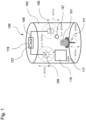
- FIG. 1 1 shows a schematic representation of an exposure device 100.
- the exposure device 100 is used to expose a dental object 101, which is made of a polychrome glass and/or a polychrome glass ceramic.
- the dental object 101 is a dental restoration, such as a crown, a bridge, a veneer, an abutment, an inlay or an onlay.
- the exposure device 100 comprises a chamber 103 in which the dental object 101 is arranged and which surrounds the dental object 101 .
- the exposure device 100 can comprise a UV-transparent holder on which a dental object 101 with a cavity can be placed and which enables the inside of the dental object 101 to be illuminated.
- the chamber 103 may include a door 115 that opens to insert the dental object 101 inside. To expose the dental object 101, the door 115 is closed so that no light can escape from the chamber 103 to the outside.
- the exposure device 100 comprises a radiation source 105 for emitting radiation with a wavelength that is less than 350 nm into the chamber 103.
- the emitted radiation from the radiation source 105 impinges on the Dental object 101.
- the radiation stimulates electronic transitions in the dental object 101, which lead to a color change when the dental object 101 is subsequently heated.
- the exposure device 100 can comprise an electrical switch which is actuated when the door 115 is opened and which deactivates the radiation source 105 . This achieves the technical advantage that dangerous radiation is prevented from escaping from the chamber 103 .
- the radiation source 105 is arranged, for example, in a wall of the chamber 103 so that it can radiate into the interior.
- a screen 121 can be arranged in front of the radiation source 105, which screens off the lateral areas of the radiation, such as a pinhole screen. As a result, the emitted radiation can be directed onto specific areas of the dental object 101 .
- the exposure device 100 can also include a light guide, with which the radiation from the radiation source 105 is guided to the dental object 101, such as a quartz glass fiber.
- the radiation source 105 is operated electrically and is formed, for example, by a mercury vapor lamp, a quartz lamp, a black light lamp, a UV laser or a UV light-emitting diode.
- the radiation source 105 can also include an x-ray tube for generating x-rays. In this case, the radiation source 105 can emit radiation with a wavelength of 5 pm to 10 nm.
- the radiation source 105 is suitable for emitting radiation with a wavelength between 350 nm and 5 pm, preferably between 350 nm and 10 nm, or most preferably between 350 nm and 100 nm.
- UV radiation it is also possible to use the dental object 101 with to expose to high-energy radiation. For example with X-rays with a wavelength of 5 pm to 10 nm.
- the exposure device 100 includes an intensity adjustment device 107.
- the intensity adjustment device 107 can be formed by a regulator with which the power of the radiation source 105 can be regulated. This intensity setting device 107 can be used, for example, to set the current or the voltage with which the radiation source 105 is operated.
- the intensity setting device 107 can also be implemented digitally.
- the exposure device 100 includes a data interface 117 via which data for controlling the intensity of the radiation source 105 can be transmitted from an external device, such as a WLAN interface or a Bluetooth interface.
- a mobile phone or a tablet can be equipped with a suitable application with which the intensity of the radiation source 105 can be controlled.
- the exposure device 100 includes an electronic control device 119 which communicates with the application and which can increase or decrease the emitted intensity of the radiation source 105 .
- the electronic control device 119 can include a microprocessor and a digital memory in which data and programs for controlling the functions of the exposure device 100 are stored.
- the electronic control device 119 can include a timer device 109, which activates the radiation source 105 for a predetermined period of time and automatically deactivates it after the predetermined period of time has elapsed. This achieves the technical advantage that the dental object 101 can be exposed automatically for a specific exposure time and a defined exposure of the dental object 101 takes place.
- the control device 119 can also include a trained algorithm for controlling the radiation source 105 and/or the infrared radiation source 113 .
- the algorithm can be a machine learning algorithm or can comprise an artificial neural network. The algorithm is trained using training data.
- the controller 119 may also include an electronic lookup table in which to predetermined color tones of the dental object 101, the respective control data for the radiation source 105 and the infrared radiation source 113 are stored. In this way, the dental object 101 with the desired shade can be generated automatically.
- the exposure device 100 can comprise a single or multiple radiation sources 105 for emitting radiation with a wavelength that is less than 350 nm.
- the technical outlay for producing the exposure device 100 is reduced by a single radiation source 105 .
- the exposure device 100 includes a movement device 111 for moving the dental object 101 in front of the radiation source 105.
- the movement device 111 is designed to move the dental object 101 in height and/or to rotate it relative to the radiation source 105.
- the axis of rotation is, for example, a vertical axis (z-axis).
- the dental object 101 can also be moved linearly along the axis of rotation.
- the movement device can also be formed by a mechanical arm with which the dental object 101 can be moved inside the chamber 102, such as a robot arm.
- the dental object 101 can be moved in front of the radiation source 105 in a controllable manner with this arm.
- the movement device 111 is formed, for example, by a turntable on which the dental object 101 can be arranged.
- the turntable can be rotated in front of the radiation source 105 and its height can be adjusted.
- the turntable for example, is driven by electric motors via a suitable mechanism.
- the movement device 111 can also be controlled by the electronic control device 119 .
- a movement program can also be stored in the electronic control device 119, which controls the movement device 111 and thereby moves the dental object 101 in relation to the radiation source 105 in a predetermined time sequence.
- the dental object 101 can be positioned in relation to the radiation source 105 by the movement program. Different positions can be approached one after the other.
- the radiation source 105 it is also possible to move the radiation source 105 at a height and/or to move it around the dental object 105 via a further movement device.
- electric motors can be driven via a suitable mechanism.
- the dental object 101 and/or the radiation source can move freely.
- the dental object 101 can be illuminated from several sides.
- a movement device 111 can be dispensed with.
- the exposure device 100 can include a further additional infrared radiation source 113 for the local thermal treatment of the dental object 101 and the local color adjustment of the dental object 101 .
- the infrared radiation source 113 emits radiation into the chamber 103 at a wavelength greater than 700 nm.
- the infrared radiation source 113 can be designed to emit radiation with a wavelength between 700 nm and 10 ⁇ m, preferably between 700 nm and 5 ⁇ m, or most preferably between 700 nm and 3 ⁇ m.
- the infrared radiation source 113 is formed, for example, by an electrically operated infrared lamp, red light lamp or heat lamp.
- the infrared radiation source 113 can also be formed by a thermal laser or infrared laser, such as an Nd:YAG laser, an Er:YAG laser, a CO and CO2 laser. If sufficient energy is absorbed by the glass-ceramic, any other wavelength can also be used, such as in the visible or UV range. All that matters for the heating is the thermal input into the dental object, preferably without melting it or even ablating it.
- the heat treatment can also be carried out by means of microwave radiation.
- the exposure device 100 can comprise a further intensity setting device 107.
- the electronic control device 119 can also include a timer device 109, which activates the infrared radiation source 113 for a predetermined period of time and automatically deactivates it after the predetermined period of time has elapsed.
- the infrared radiation source 113 can also be movably arranged, so that its height can be changed and it can be moved around the dental object 101 .
- a screen 121 can also be arranged in front of the infrared radiation source 113, which screens off the lateral areas of the radiation, such as a pinhole screen.
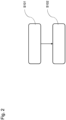
- step S101 receiving the dental object 101 in the chamber 103 of the exposure device 100.
- step S102 radiation with a wavelength that is less than 350 nm is emitted in the chamber 103. This radiation impinges on the dental object 101. Areas of the dental object 101 that are exposed to the radiation take on a color after the dental object 101 has been heated, which color depends on the previous exposure.
- This method achieves the technical advantage that the dental object 101 can be reliably exposed for coloring and the escape of radiation can be prevented.
- a dental object 101 with a cavity can be arranged on a UV-transparent holder, which enables illumination of the dental object 101 on the inside.
- All method steps can be implemented by devices that are suitable for carrying out the respective method step. All functions performed by physical features can be a method step of a method.
Landscapes
- Health & Medical Sciences (AREA)
- Chemical & Material Sciences (AREA)
- Life Sciences & Earth Sciences (AREA)
- Engineering & Computer Science (AREA)
- Oral & Maxillofacial Surgery (AREA)
- Chemical Kinetics & Catalysis (AREA)
- General Chemical & Material Sciences (AREA)
- Geochemistry & Mineralogy (AREA)
- Materials Engineering (AREA)
- Organic Chemistry (AREA)
- Public Health (AREA)
- Dentistry (AREA)
- Epidemiology (AREA)
- Animal Behavior & Ethology (AREA)
- General Health & Medical Sciences (AREA)
- Veterinary Medicine (AREA)
- Toxicology (AREA)
- Clinical Laboratory Science (AREA)
- Mechanical Engineering (AREA)
- General Engineering & Computer Science (AREA)
- Ceramic Engineering (AREA)
- Dental Tools And Instruments Or Auxiliary Dental Instruments (AREA)
- Orthopedic Medicine & Surgery (AREA)
Abstract
Description
- Die vorliegende Erfindung betrifft ein Belichtungsgerät zum Beleuchten eines Dentalobjekts und ein Verfahren zum Beleuchten eines Dentalobjekts.
- Polychrome Gläser und Glaskeramiken können durch eine Belichtung zusammen mit einer thermischen Behandlung eingefärbt werden, wie beispielsweise ein Quarzglas, eine Quarz-Glaskeramik, ein Lithiumalumosilikatglas, eine Lithiumaluminosilikat-Glaskeramik, ein Lithiumsilikatglas oder eine Lithiumsilikat-Glaskeramik. Die Belichtung erfolgt hierbei üblicherweise mittels UV-Strahlung. Die unterschiedliche Farbwirkung wird nach erfolgter Belichtung hauptsächlich über eine Temperaturbehandlung hergestellt.
- Die polychromen Gläser und Glaskeramiken umfassen hierzu beispielsweise eine oxidierbare Komponente und eine reduzierbare Färbekomponente. Die oxidierbare Komponente ist eine Komponente, die durch Bestrahlung oxidiert werden bzw. zur Elektronenabgabe angeregt werden kann. Oxidierbare Komponenten sind beispielsweise Cer-Ionen, Europium-Ionen, Erbium-Ionen, Kupfer-Ionen und deren Mischungen. Die reduzierbare Färbekomponente ist beispielsweise eine Komponente, die unter Ausbildung einer Farbänderung reduziert werden kann. Bevorzugte reduzierbare Färbekomponenten sind Kationen von Metallen, wie beispielsweise von Silber, Gold, Kupfer oder deren Kombinationen.
- Es ist die technische Aufgabe der vorliegenden Erfindung, eine anwendungssichere Farbgebung eines Dentalobjekts mittels kurzwelliger Strahlung zu ermöglichen.
- Diese technische Aufgabe wird durch Gegenstände nach den unabhängigen Ansprüchen gelöst. Technisch vorteilhafte Ausführungsformen sind Gegenstand der abhängigen Ansprüche, der Beschreibung und der Zeichnungen.
- Gemäß einem ersten Aspekt wird die technische Aufgabe durch ein Belichtungsgerät zum Beleuchten eines Dentalobjekts gelöst, mit einer Kammer zur Aufnahme des Dentalobjekts; und einer Strahlungsquelle zum Emittieren von Strahlung mit einer Wellenlänge, die kleiner als 350 nm ist, in der Kammer. Die emittierte Strahlung dient zum Belichten des Dentalobjekts. Dadurch wird der technische Vorteil erreicht, dass das Dentalobjekt in einem geschlossenen Bereich belichtet werden kann und ein Austreten von Strahlung verhindert wird.
- In einer technisch vorteilhaften Ausführungsform des Belichtungsgeräts ist die Strahlungsquelle ausgebildet, Strahlung mit einer Wellenlänge zwischen 350 nm und 5 pm, vorzugsweise zwischen 350 nm und 10 nm, oder höchst vorzugsweise zwischen 350 nm und 100 nm zu emittieren. Dadurch wird beispielsweise der technische Vorteil erreicht, dass besonders geeignete Wellenlängenbereiche für eine Behandlung des Dentalobjektes verwendet werden können.
- In einer weiteren technisch vorteilhaften Ausführungsform des Belichtungsgeräts umfasst das Belichtungsgerät eine Intensitätseinstellungseinrichtung zum Einstellen einer Strahlungsintensität der Strahlungsquelle. Dadurch wird beispielsweise der technische Vorteil erreicht, dass die Intensität der Strahlungsquelle auf einen gewünschten Wert eingestellt und verändert werden kann.
- In einer weiteren technisch vorteilhaften Ausführungsform des Belichtungsgeräts umfasst das Belichtungsgerät eine Zeitschaltvorrichtung zum Aktivieren der Strahlungsquelle für einen vorgegebenen Zeitraum. Dadurch wird beispielsweise der technische Vorteil erreicht, dass die Belichtung automatisch für eine vorgegebene Zeitdauer durchgeführt werden kann.
- In einer weiteren technisch vorteilhaften Ausführungsform des Belichtungsgeräts umfasst das Belichtungsgerät eine einzige Strahlungsquelle zum Emittieren von Strahlung mit einer Wellenlänge, die kleiner als 350 nm ist. Dadurch wird beispielsweise der technische Vorteil erreicht, dass sich der technische Aufwand für die Herstellung des Belichtungsgeräts verringert.
- In einer weiteren technisch vorteilhaften Ausführungsform des Belichtungsgeräts umfasst das Belichtungsgerät eine Bewegungsvorrichtung zum Bewegen des Dentalobjekts vor der Strahlungsquelle. Dadurch wird beispielsweise der technische Vorteil erreicht, dass die Strahlung auf unterschiedliche Bereiche des Dentalobjekt gerichtet werden kann.
- In einer weiteren technisch vorteilhaften Ausführungsform des Belichtungsgeräts ist die Bewegungsvorrichtung ausgebildet, das Dentalobjekt in einer Höhe zu verfahren und/oder gegenüber der Strahlungsquelle zu drehen. Dadurch wird beispielsweise der technische Vorteil erreicht, dass das Dentalobjekt auf einfache Weise von unterschiedlichen Seiten belichtet werden kann.
- In einer weiteren technisch vorteilhaften Ausführungsform des Belichtungsgeräts ist das Belichtungsgerät ausgebildet, die Strahlungsquelle in einer Höhe zu verfahren. Dadurch wird beispielsweise der technische Vorteil erreicht, dass das Dentalobjekt auf einfache Weise von unterschiedlicher Position aus belichtet werden kann.
- In einer weiteren technisch vorteilhaften Ausführungsform des Belichtungsgeräts umfasst das Belichtungsgerät eine Infrarot-Strahlungsquelle zum Emittieren von Strahlung mit einer Wellenlänge in die Kammer, die größer als 700 nm ist. Die Infrarot-Strahlungsquelle kann innerhalb oder außerhalb der Kammer angeordnet sein. Eine Strahlungsführung in die Kammer kann mittels einer Lichtleitfaser erfolgen. Die Infrarot-Strahlungsquelle, wie beispielsweise ein IR-Laser, kann auch außerhalb der Kammer angeordnet sein. Die emittierte Strahlung kann dann mittels eines Scanners (z.B. DMD - Digital Mirror Device) durch ein geeignetes Sichtfenster über das im Inneren der Kammer angeordnete Dentalobjekt gerastert werden. Dadurch wird beispielsweise der technische Vorteil erreicht, dass das Dentalobjekt erwärmt und eine Farbgebung des Dentalobjekts abgeschlossen werden kann.
- In einer weiteren technisch vorteilhaften Ausführungsform des Belichtungsgeräts ist die Infrarot-Strahlungsquelle ausgebildet, Strahlung mit einer Wellenlänge zwischen 700 nm und 10 um, vorzugsweise zwischen 700 nm und 5 um, oder höchst vorzugsweise zwischen 700 nm und 3 um zu emittieren. Dadurch wird beispielsweise der technische Vorteil erreicht, dass besonders geeignete Wellenlängen verwendet werden, um das Dentalobjekt zu erwärmen.
- Gemäß einem zweiten Aspekt wird die technische Aufgabe durch ein Verfahren zum Beleuchten eines Dentalobjekts gelöst, mit den Schritten eines Aufnehmens des Dentalobjekts in einer Kammer; und eines Emittierens von Strahlung mit einer Wellenlänge, die kleiner als 350 nm ist, in die Kammer. Durch das Verfahren werden die gleichen technischen Vorteile wie durch das Belichtungsgerät nach dem ersten Aspekt erreicht.
- In einer technisch vorteilhaften Ausführungsform des Verfahrens wird das Dentalobjekt während dem Emittieren von Strahlung bewegt. Dadurch wird beispielsweise der technische Vorteil erreicht, dass die Strahlung auf unterschiedliche Bereiche des Dentalobjekt gerichtet werden kann.
- In einer weiteren technisch vorteilhaften Ausführungsform des Verfahrens wird die Strahlungsquelle während dem Emittieren von Strahlung bewegt. Dadurch wird beispielsweise ebenfalls der technische Vorteil erreicht, dass die Strahlung auf unterschiedliche Bereiche des Dentalobjekt gerichtet werden kann.
- In einer weiteren technisch vorteilhaften Ausführungsform des Verfahrens wird Strahlung mit einer Wellenlänge, die größer als 700 nm ist, mittels einer Infrarot-Strahlungsquelle in die Kammer emittiert wird. Dadurch wird beispielsweise ebenfalls der technische Vorteil erreicht, dass das Dentalobjekt erwärmt und eine Farbgebung des Dentalobjekts abgeschlossen werden kann.
- In einer weiteren technisch vorteilhaften Ausführungsform des Verfahrens wird die Infrarot-Strahlungsquelle während dem Emittieren von Strahlung bewegt. Dadurch wird beispielsweise ebenfalls der technische Vorteil erreicht, dass die Wärmestrahlung auf unterschiedliche Bereiche des Dentalobjekts gerichtet werden kann.
- Ausführungsbeispiele der Erfindung sind in den Zeichnungen dargestellt und werden im Folgenden näher beschrieben.
- Es zeigen:
- Fig. 1
- eine schematische Darstellung eines Belichtungsgeräts; und
- Fig. 2
- ein Blockdiagramm eines Verfahrens zum Beleuchten eines Dentalobjekts.
-
Fig. 1 zeigt eine schematische Darstellung eines Belichtungsgeräts 100. Das Belichtungsgerät 100 dient zum Belichten eines Dentalobjekts 101, das aus einem polychromen Glas und oder einer polychromen Glaskeramik hergestellt ist. - Das Dentalobjekt 101 ist eine dentale Restauration, wie beispielsweise eine Krone, eine Brücke, ein Veneer, ein Abutment, ein Inlay oder ein Onlay.
- Das Belichtungsgerät 100 umfasst eine Kammer 103, in der das Dentalobjekt 101 angeordnet wird und die das Dentalobjekt 101 umgibt. Das Belichtungsgerät 100 kann einen UV-transparenten Halter umfassen, auf den ein Dentalobjekt 101 mit einer Aushöhlung gesetzt werden kann und der eine Beleuchtung des Dentalobjekts 101 auf der Innenseite ermöglicht. Die Kammer 103 kann eine Tür 115 umfassen, die geöffnet wird, um das Dentalobjekt 101 in das Innere einzulegen. Zum Belichten des Dentalobjekts 101 wird die Tür 115 geschlossen, so dass kein Licht aus der Kammer 103 nach außen treten kann.
- Die Belichtungseinrichtung 100 umfasst eine Strahlungsquelle 105 zum Emittieren von Strahlung mit einer Wellenlänge, die kleiner als 350 nm ist, in die Kammer 103. Die emittierte Strahlung von der Strahlungsquelle 105 trifft auf das Dentalobjekt 101. Durch die Strahlung werden in dem Dentalobjekt 101 elektronische Übergänge angeregt, die bei einer anschließenden Erwärmung des Dentalobjekts 101 zu einer Farbänderung führen.
- Das Belichtungsgerät 100 kann einen elektrischen Schalter umfassen, der beim Öffnen der Tür 115 betätigt wird und durch den die Strahlungsquelle 105 deaktiviert wird. Dadurch wird der technische Vorteil erreicht, dass das Austreten gefährlicher Strahlung aus der Kammer 103 verhindert wird. Die Strahlungsquelle 105 ist beispielsweise in einer Wand der Kammer 103 angeordnet, so dass diese in den Innenraum strahlen kann. Vor der Strahlungsquelle 105 kann eine Blende 121 angeordnet sein, die die seitlichen Bereiche der Strahlung abschirmt, wie beispielsweise eine Lochblende. Dadurch kann die emittierte Strahlung auf bestimmte Bereiche des Dentalobjektes 101 gerichtet werden. Das Belichtungsgerät 100 kann aber auch einen Lichtleiter umfassen, mit dem die Strahlung von der Strahlungsquelle 105 an das Dentalobjekt 101 herangeführt wird, wie beispielsweise eine Quarzglasfaser.
- Die Strahlungsquelle 105 wird elektrisch betrieben und ist beispielsweise durch eine Quecksilberdampflampe, eine Quarzlampe, eine Schwarzlichtlampe, ein UV-Laser oder eine UV-Leuchtdiode gebildet. Die Strahlungsquelle 105 kann aber auch eine Röntgenröhre zur Erzeugung von Röntgenstrahlen umfassen. In diesem Fall kann die Strahlungsquelle 105 Strahlung mit einer Wellenlänge von 5 pm bis 10 nm emittieren.
- Die Strahlungsquelle 105 ist geeignet, Strahlung mit einer Wellenlänge zwischen 350 nm und 5 pm, vorzugsweise zwischen 350 nm und 10 nm, oder höchst vorzugsweise zwischen 350 nm und 100 nm zu emittieren. Neben der Verwendung von UV-Strahlung ist es aber auch möglich, das Dentalobjekt 101 mit energiereicher Strahlung zu belichten. Beispielsweise mit Röntgenstrahlung mit einer Wellenlänge von 5 pm bis 10 nm.
- Um die Intensität der Strahlungsquelle 105 einzustellen, umfasst das Belichtungsgerät 100 eine Intensitätseinstellungseinrichtung 107. Die Intensitätseinstellungseinrichtung 107 kann durch einen Regler gebildet sein, mit dem die Leistung der Strahlungsquelle 105 geregelt werden kann. Mit dieser Intensitätseinstellungseinrichtung 107 kann beispielsweise der Strom oder die Spannung eingestellt werden, mit der die Strahlungsquelle 105 betrieben wird.
- Die Intensitätseinstellungseinrichtung 107 kann allerdings auch digital implementiert sein. In diesem Fall umfasst die Belichtungseinrichtung 100 eine Datenschnittstelle 117, über die von einem externen Gerät Daten für eine Steuerung der Intensität der Strahlungsquelle 105 übertragen werden können, wie beispielsweise eine WLAN-Schnittstelle oder eine Bluetooth-Schnittstelle.
- Beispielsweise kann ein Mobiltelefon oder ein Tablet mit einer geeigneten Applikation ausgerüstet werden, mit der sich die Intensität der Strahlungsquelle 105 steuern lässt. Zu diesem Zweck umfasst das Belichtungsgerät 100 eine elektronische Steuereinrichtung 119, die mit der Applikation kommuniziert und die die ausgesandte Intensität der Strahlungsquelle 105 erhöhen oder verringern kann. Die elektronische Steuereinrichtung 119 kann einen Mikroprozessor und einen digitalen Speicher umfassen, in dem Daten und Programme für die Steuerung der Funktionen des Belichtungsgerätes 100 abgelegt sind.
- Zudem kann die elektronische Steuereinrichtung 119 eine Zeitschaltvorrichtung 109 umfassen, die die Strahlungsquelle 105 für einen vorgegebenen Zeitraum aktiviert und nach Ablauf des vorgegebenen Zeitraums automatisch deaktiviert. Dadurch wird der technische Vorteil erreicht, dass das Dentalobjekt 101 automatisch für eine bestimmte Belichtungsdauer belichtet werden kann und eine definierte Belichtung des Dentalobjekts 101 erfolgt.
- Die Steuereinrichtung 119 kann zudem einen angelernten Algorithmus zum Steuern der Strahlungsquelle 105 und/oder der Infrarot-Strahlungsquelle 113 umfassen. Der Algorithmus kann ein Machine-Learning-Algorithmus sein oder ein künstliches neuronales Netz umfassen. Der Algorithmus wird anhand von Trainingsdaten angelernt.
- Dadurch wird beispielsweise der technische Vorteil erreicht, dass eine effiziente Technologie verwendet wird, um auf Basis von experimentellen Daten automatisch ein spezifisches Belichtungs- und/oder Temperatur-Programm zu generieren und einen gewünschten Farbton zu erzielen. Die experimentellen Daten dienen als Trainingsdaten zur Ermittlung des Farbtons. Wird dem Machine-Learning-Algorithmus ein Soll-Farbton als Eingabe übergeben, kann dieser ein geeignetes Belichtungs-Temperatur-Programm zum Steuern der Strahlungsquelle 105 und/oder der Infrarot-Strahlungsquelle 113 ermitteln. Auf diese Weise kann das Belichtungs-Temperatur-Programm mithilfe des Machine-Learning-Algorithmus automatisch generiert werden. Das Belichtungs-Temperatur-Programm kann im Hintergrund mittels der Machine-Learning-Technologie generiert und der Steuereinrichtung 119 übergeben werden.
- Die Steuereinrichtung 119 kann auch eine elektronische Nachschlagetabelle (Lookup Table) umfassen, in der zu vorgegebenen Farbtönen des Dentalobjekts 101, die jeweiligen Steuerdaten für die Strahlungsquelle 105 und die Infrarot-Strahlungsquelle 113 gespeichert sind. Auf diese Weise lässt sich das Dentalobjekt 101 mit dem gewünschten Farbton automatisch erzeugen.
- Das Belichtungsgerät 100 kann eine einzige oder mehrere Strahlungsquellen 105 zum Emittieren von Strahlung mit einer Wellenlänge umfassen, die kleiner als 350 nm ist. Durch eine einzige Strahlungsquelle 105 wird der technische Aufwand zum Herstellen der Belichtungseinrichtung 100 verringert. Beim Einsatz einer einzigen Strahlungsquelle 105 ist es vorteilhaft das Dentalobjekt 101 in verschiedenen räumlichen Richtungen zu bewegen, so dass die Strahlung auf alle Bereiche des Dentalobjektes 101 treffen kann.
- Zu diesem Zweck umfasst das Belichtungsgerät 100 eine Bewegungsvorrichtung 111 zum Bewegen des Dentalobjekts 101 vor der Strahlungsquelle 105. Die Bewegungsvorrichtung 111 ist ausgebildet, das Dentalobjekt 101 in einer Höhe zu verfahren und/oder gegenüber der Strahlungsquelle 105 zu drehen. Die Drehachse ist beispielsweise eine vertikale Achse (z-Achse). Entlang der Drehachse kann das Dentalobjekt 101 zusätzlich linear verfahren werden. Die Bewegungsvorrichtung kann aber auch durch einen mechanischen Arm gebildet werden, mit dem das Dentalobjekt 101 im inneren der Kammer 102 bewegt werden kann, wie beispielsweise einen Roboterarm. Mit diesem Arm kann das Dentalobjekt 101 steuerbar vor der Strahlungsquelle 105 bewegt werden.
- Die Bewegungsvorrichtung 111 ist beispielsweise durch einen Drehteller gebildet, auf dem das Dentalobjekt 101 angeordnet werden kann. Der Drehteller ist vor der Strahlungsquelle 105 drehbar und in einer Höhe verstellbar. Zu diesem Zweck wird der Drehteller beispielsweise von Elektromotoren über eine passende Mechanik angetrieben. Die Bewegungsvorrichtung 111 kann ebenfalls von der elektronischen Steuereinrichtung 119 gesteuert werden. In der elektronischen Steuereinrichtung 119 kann auch ein Bewegungsprogram gespeichert sein, das die Bewegungsvorrichtung 111 steuert und dadurch das Dentalobjekt 101 in einem vorgegebenen zeitlichen Ablauf in Bezug zur Strahlungsquelle 105 bewegt. Durch das Bewegungsprogramm kann das Dentalobjekt 101 gegenüber der Strahlungsquelle 105 positioniert werden. Dabei lassen sich nacheinander unterschiedliche Positionen anfahren.
- Andersherum ist es aber auch möglich, die Strahlungsquelle 105 über eine weitere Bewegungsvorrichtung in einer Höhe zu verfahren und/oder um das Dentalobjekt 105 herumzubewegen. Auch zu diesem Zweck können Elektromotoren über eine passende Mechanik angetrieben werden. Im Allgemeinen sind das Dentalobjekt 101 und/oder die Strahlungsquelle frei beweglich.
- Beim Einsatz mehrerer Strahlungsquellen 105 können diese um das Dentalobjekt 101 herum angeordnet sein. Dadurch kann das Dentalobjekt 101 von mehreren Seiten beleuchtet werden. In diesem Fall kann auf eine Bewegungsvorrichtung 111 verzichtet werden.
- Das Belichtungsgerät 100 kann eine weitere zusätzliche Infrarot-Strahlungsquelle 113 zur örtlichen thermischen Behandlung des Dentalobjekts 101 und der örtlichen Farbeinstellung des Dentalobjekts 101 umfassen. Die Infrarot-Strahlungsquelle 113 emittiert Strahlung mit einer Wellenlänge in die Kammer 103, die größer als 700 nm ist. Die Infrarot-Strahlungsquelle 113 kann ausgebildet sein, Strahlung mit einer Wellenlänge zwischen 700 nm und 10 um, vorzugsweise zwischen 700 nm und 5 um, oder höchst vorzugsweise zwischen 700 nm und 3 µm zu emittieren.
- Die Infrarot-Strahlungsquelle 113 ist beispielsweise durch eine elektrisch betriebene Infrarotlampe, Rotlichtlampe oder Wärmelampe gebildet. Die Infrarot-Strahlungsquelle 113 kann aber auch durch einen thermischen Laser oder Infrarot-Laser gebildet sein, wie beispielsweise ein Nd:YAG-Laser, ein Er:YAG-Laser, ein CO- und CO2-Laser. Falls ausreichend Energie von der Glaskeramik absorbiert wird, kann auch jede andere Wellenlänge verwendet werden, wie beispielsweise im sichtbaren oder UV-Bereich. Für die Erwärmung kommt es lediglich auf den thermischen Eintrag in das Dentalobjekt an, vorzugsweise ohne dieses aufzuschmelzen oder gar zu ablatieren. Alternativ kann die Wärmebehandlung auch mittels Mikrowellenstrahlung erfolgen.
- Um die Intensität der Infrarot-Strahlungsquelle 105 einzustellen, kann das Belichtungsgerät 100 eine weitere Intensitätseinstellungseinrichtung 107 umfassen. Ebenfalls kann die elektronische Steuereinrichtung 119 eine Zeitschaltvorrichtung 109 umfassen, die die Infrarot-Strahlungsquelle 113 für einen vorgegebenen Zeitraum aktiviert und nach Ablauf des vorgegebenen Zeitraums automatisch deaktiviert. Auch die Infrarot-Strahlungsquelle 113 kann beweglich angeordnet sein, so dass diese in einer Höhe verändert werden kann und um das Dentalobjekt 101 herumbewegt werden kann. Vor der Infrarot-Strahlungsquelle 113 kann ebenfalls eine Blende 121 angeordnet sein, die die seitlichen Bereiche der Strahlung abschirmt, wie beispielsweise eine Lochblende.
-
Fig. 2 zeigt ein Blockdiagramm eines Verfahrens zum Beleuchten eines Dentalobjekts 101. Das Verfahren umfasst den Schritt S101 eines Aufnehmens des Dentalobjekts 101 in der Kammer 103 des Belichtungsgerätes 100. Im Schritt S102 wird Strahlung mit einer Wellenlänge, die kleiner als 350 nm ist, in der Kammer 103 emittiert. Diese Strahlung trifft auf das Dentalobjekt 101. Bereiche des Dentalobjekts 101, die der Strahlung ausgesetzt werden, nehmen nach einem Erhitzen des Dentalobjekts 101 eine Farbe an, die von der vorherigen Belichtung abhängt. - Durch dieses Verfahren wird der technische Vorteil erreicht, dass das Dentalobjekt 101 sicher zur Farbgebung belichtet werden kann und ein Austreten von Strahlung verhindert werden kann. Ein Dentalobjekt 101 mit einer Aushöhlung kann auf einem UV-transparenten Halter angeordnet sein, der eine Beleuchtung des Dentalobjekts 101 auf der Innenseite ermöglicht.
- Alle in Verbindung mit einzelnen Ausführungsformen der Erfindung erläuterten und gezeigten Merkmale können in unterschiedlicher Kombination in dem erfindungsgemäßen Gegenstand vorgesehen sein, um gleichzeitig deren vorteilhafte Wirkungen zu realisieren.
- Alle Verfahrensschritte können durch Vorrichtungen implementiert werden, die zum Ausführen des jeweiligen Verfahrensschrittes geeignet sind. Alle Funktionen, die von gegenständlichen Merkmalen ausgeführt werden, können ein Verfahrensschritt eines Verfahrens sein.
- Der Schutzbereich der vorliegenden Erfindung ist durch die Ansprüche gegeben und wird durch die in der Beschreibung erläuterten oder den Figuren gezeigten Merkmale nicht beschränkt.
-
- 100
- Belichtungsgerät
- 101
- Dentalobjekt
- 103
- Kammer
- 105
- Strahlungsquelle
- 107
- Intensitätseinstellungseinrichtung
- 109
- Zeitschaltvorrichtung
- 111
- Bewegungsvorrichtung
- 113
- Infrarot-Strahlungsquelle
- 115
- Tür
- 117
- Datenschnittstelle
- 119
- elektronische Steuereinrichtung
- 121
- Blende
Claims (14)
- Belichtungsgerät (100) zum Beleuchten eines Dentalobjekts (101), mit:- einer Kammer (103) zur Aufnahme des Dentalobjekts (101);- einer Strahlungsquelle (105) zum Emittieren von Strahlung mit einer Wellenlänge, die kleiner als 350 nm ist, in die Kammer (103); und- einer Bewegungsvorrichtung, die ausgebildet ist, die Strahlungsquelle (105) in einer Höhe zu verfahren und/oder um das Dentalobjekt (101) herumzubewegen.
- Belichtungsgerät (100) nach Anspruch 1, wobei die Strahlungsquelle (105) ausgebildet ist, Strahlung mit einer Wellenlänge zwischen 350 nm und 5 pm, vorzugsweise zwischen 350 nm und 10 nm, oder höchst vorzugsweise zwischen 350 nm und 100 nm zu emittieren.
- Belichtungsgerät (100) nach einem der vorangehenden Ansprüche, wobei das Belichtungsgerät (100) eine Intensitätseinstellungseinrichtung (107) zum Einstellen einer Strahlungsintensität der Strahlungsquelle (105) umfasst.
- Belichtungsgerät (100) nach einem der vorangehenden Ansprüche, wobei das Belichtungsgerät (100) eine Zeitschaltvorrichtung (109) zum Aktivieren der Strahlungsquelle (105) für einen vorgegebenen Zeitraum umfasst.
- Belichtungsgerät (100) nach einem der vorangehenden Ansprüche, wobei das Belichtungsgerät (100) eine einzige Strahlungsquelle (105) zum Emittieren von Strahlung mit einer Wellenlänge umfasst, die kleiner als 350 nm ist.
- Belichtungsgerät (100) nach einem der vorangehenden Ansprüche, wobei das Belichtungsgerät (100) eine Bewegungsvorrichtung (111) zum Bewegen des Dentalobjekts (101) vor der Strahlungsquelle (105) umfasst.
- Belichtungsgerät (100) nach Anspruch 6, wobei die Bewegungsvorrichtung (111) ausgebildet ist, das Dentalobjekt (101) in einer Höhe zu verfahren und/oder gegenüber der Strahlungsquelle (105) zu drehen.
- Belichtungsgerät (100) nach einem der vorangehenden Ansprüche, wobei das Belichtungsgerät (100) ausgebildet ist, die Strahlungsquelle (105) in einer Höhe zu verfahren.
- Belichtungsgerät (100) nach einem der vorangehenden Ansprüche, wobei das Belichtungsgerät (100) eine Infrarot-Strahlungsquelle (113) zum Emittieren von Strahlung mit einer Wellenlänge in der Kammer (103) umfasst, die größer als 700 nm ist.
- Belichtungsgerät (100) nach Anspruch 9, wobei die Infrarot-Strahlungsquelle (113) ausgebildet ist, Strahlung mit einer Wellenlänge zwischen 700 nm und 10 um, vorzugsweise zwischen 700 nm und 5 um, oder höchst vorzugsweise zwischen 700 nm und 3 um zu emittieren.
- Verfahren zum Beleuchten eines Dentalobjekts (101), mit den Schritten:- Aufnehmen (S101) des Dentalobjekts (101) in einer Kammer (103); und- Emittieren (S102) von Strahlung mit einer Wellenlänge, die kleiner als 350 nm ist, in die Kammer (103), wobei die Strahlungsquelle (105) während dem Emittieren von Strahlung bewegt wird.
- Verfahren nach Anspruch 11, wobei das Dentalobjekt (101) während dem Emittieren von Strahlung bewegt wird.
- Verfahren nach einem der Ansprüche 11 oder 12, wobei Strahlung mit einer Wellenlänge, die größer als 700 nm ist, mittels einer Infrarot-Strahlungsquelle (113) in die Kammer (103) emittiert wird.
- Verfahren nach einem der Ansprüche 13, wobei die Infrarot-Strahlungsquelle (113) während dem Emittieren von Strahlung bewegt wird.
Priority Applications (1)
| Application Number | Priority Date | Filing Date | Title |
|---|---|---|---|
| EP23186096.6A EP4233784B1 (de) | 2021-10-14 | 2021-10-14 | Belichtungsgerät zum beleuchten eines dentalobjekts |
Applications Claiming Priority (2)
| Application Number | Priority Date | Filing Date | Title |
|---|---|---|---|
| EP23186096.6A EP4233784B1 (de) | 2021-10-14 | 2021-10-14 | Belichtungsgerät zum beleuchten eines dentalobjekts |
| EP21202635.5A EP4166523B1 (de) | 2021-10-14 | 2021-10-14 | Belichtungsgerät zum beleuchten eines dentalobjekts |
Related Parent Applications (2)
| Application Number | Title | Priority Date | Filing Date |
|---|---|---|---|
| EP21202635.5A Division-Into EP4166523B1 (de) | 2021-10-14 | 2021-10-14 | Belichtungsgerät zum beleuchten eines dentalobjekts |
| EP21202635.5A Division EP4166523B1 (de) | 2021-10-14 | 2021-10-14 | Belichtungsgerät zum beleuchten eines dentalobjekts |
Publications (3)
| Publication Number | Publication Date |
|---|---|
| EP4233784A2 true EP4233784A2 (de) | 2023-08-30 |
| EP4233784A3 EP4233784A3 (de) | 2023-12-13 |
| EP4233784B1 EP4233784B1 (de) | 2024-12-04 |
Family
ID=78211942
Family Applications (2)
| Application Number | Title | Priority Date | Filing Date |
|---|---|---|---|
| EP23186096.6A Active EP4233784B1 (de) | 2021-10-14 | 2021-10-14 | Belichtungsgerät zum beleuchten eines dentalobjekts |
| EP21202635.5A Active EP4166523B1 (de) | 2021-10-14 | 2021-10-14 | Belichtungsgerät zum beleuchten eines dentalobjekts |
Family Applications After (1)
| Application Number | Title | Priority Date | Filing Date |
|---|---|---|---|
| EP21202635.5A Active EP4166523B1 (de) | 2021-10-14 | 2021-10-14 | Belichtungsgerät zum beleuchten eines dentalobjekts |
Country Status (6)
| Country | Link |
|---|---|
| US (1) | US12575917B2 (de) |
| EP (2) | EP4233784B1 (de) |
| JP (1) | JP2023059258A (de) |
| KR (1) | KR20230053518A (de) |
| CN (1) | CN115969554A (de) |
| ES (1) | ES2968215T3 (de) |
Families Citing this family (3)
| Publication number | Priority date | Publication date | Assignee | Title |
|---|---|---|---|---|
| EP3845504A1 (de) | 2019-12-30 | 2021-07-07 | Ivoclar Vivadent AG | Verfahren zur herstellung einer mehrfarbigen dentalrestauration |
| ES2967699T3 (es) | 2021-10-14 | 2024-05-03 | Ivoclar Vivadent Ag | Horno para calentar un objeto dental |
| EP4233784B1 (de) | 2021-10-14 | 2024-12-04 | Ivoclar Vivadent AG | Belichtungsgerät zum beleuchten eines dentalobjekts |
Family Cites Families (70)
| Publication number | Priority date | Publication date | Assignee | Title |
|---|---|---|---|---|
| US2628160A (en) | 1951-08-30 | 1953-02-10 | Corning Glass Works | Sculpturing glass |
| US2971853A (en) | 1953-03-05 | 1961-02-14 | Corning Glass Works | Ceramic body and method of making it |
| DE2656288C3 (de) * | 1976-12-11 | 1981-06-11 | Vita Zahnfabrik H. Rauter GmbH & Co KG, 7880 Bad Säckingen | Brennofen für dental-keramische Arbeiten |
| JPS616899Y2 (de) * | 1981-04-27 | 1986-03-03 | ||
| FR2507296A1 (fr) * | 1981-06-09 | 1982-12-10 | Cladi Marcel | Enceinte pour la polymerisation a froid de produits, en particulier de produits de restauration esthetique et fonctionnelle des dents |
| US4480044A (en) | 1984-02-01 | 1984-10-30 | Corning Glass Works | High expansion glass-ceramic articles |
| US5162130A (en) * | 1986-12-17 | 1992-11-10 | Mclaughlin Gerald G | Light activated coloration of dental restorations |
| US5094619A (en) * | 1988-07-28 | 1992-03-10 | Mclaughlin Gerald G | Coloration of dental restorations |
| USRE35484E (en) * | 1986-12-17 | 1997-03-25 | Mclaughlin; Gerald G. | Light activated coloration of dental restorations |
| EP0313409B1 (de) | 1987-10-22 | 1993-06-02 | Robert E. Duthie Jr. | Verfahren und Sterilisationsvorrichtung |
| JPH0698628B2 (ja) * | 1989-09-01 | 1994-12-07 | 株式会社総合歯科医療研究所 | 可視光重合型レジンの連続硬化方法及び装置 |
| US5062877A (en) | 1989-11-06 | 1991-11-05 | Corning Incorporated | Method for making an optical device |
| DE19520016C2 (de) | 1995-05-26 | 1997-04-30 | Ivoclar Ag | Photochrome Dentalmaterialien |
| AU2003299155A1 (en) | 2002-10-01 | 2004-04-23 | Next Safety, Inc. | Methods and apparatus for ultraviolet sterilization |
| WO2004051716A1 (ja) * | 2002-12-03 | 2004-06-17 | Nikon Corporation | 露光装置及び露光方法、並びにデバイス製造方法 |
| DE10304382A1 (de) | 2003-02-03 | 2004-08-12 | Schott Glas | Photostrukturierbarer Körper sowie Verfahren zur Bearbeitung eines Glases und/oder einer Glaskeramik |
| US20060261503A1 (en) | 2003-07-17 | 2006-11-23 | Noritake Co., Limited | Process for producing dental prosthesis and kit for use for therein |
| DE10336913C9 (de) | 2003-08-07 | 2019-02-21 | Ivoclar Vivadent Ag | Verwendung eines Lithiumsilicatmaterials |
| JP3972126B2 (ja) * | 2004-05-28 | 2007-09-05 | 独立行政法人産業技術総合研究所 | 紫外線発生源、紫外線照射処理装置及び半導体製造装置 |
| DE102005003595A1 (de) | 2004-12-31 | 2006-07-20 | Schott Ag | Verfahren zur Herstellung eines optischen Bauteils, verfahrensgemäß hergestelltes Bauteil sowie derartige Bauteile umfassende Einrichtung |
| ATE507797T1 (de) | 2006-09-13 | 2011-05-15 | Ivoclar Vivadent Ag | Mehrfarbiger formkörper |
| US7829489B2 (en) | 2007-05-31 | 2010-11-09 | Corning Incorporated | Low CTE photomachinable glass |
| US20100028829A1 (en) | 2008-07-31 | 2010-02-04 | Ultradent Products, Inc. | Chemically activated dental bleaching trays |
| DE102008015483B4 (de) | 2008-03-25 | 2018-10-11 | Ivoclar Vivadent Ag | Ofen zur thermischen Behandlung eines dentalen Brennobjektes |
| DE202009019061U1 (de) | 2009-12-23 | 2016-02-23 | Degudent Gmbh | Lithiummetasilicat-Glaskeramik und deren Verwendung |
| WO2011113568A1 (en) * | 2010-03-15 | 2011-09-22 | Nobel Biocare Services Ag | Surface treatment method |
| EP2407122B1 (de) * | 2010-07-16 | 2016-07-06 | Ivoclar Vivadent AG | Mikrowellenofen mit Drehteller |
| WO2012057252A1 (ja) | 2010-10-29 | 2012-05-03 | 学校法人神奈川歯科大学 | 歯科用陶材焼き付け用基材の処理方法、歯科用陶材焼き付け用基材、歯冠修復材の製造方法、歯冠修復材の処理方法、及び歯冠修復材 |
| DE102010050275A1 (de) | 2010-11-02 | 2012-05-03 | Degudent Gmbh | Lithiumsilikat-Gläser oder -Glaskeramiken, Verfahren zu deren Herstellung sowie deren Verwendung |
| WO2012143137A1 (en) | 2011-04-20 | 2012-10-26 | Straumann Holding Ag | Process for preparing a glass-ceramic body |
| WO2012175615A1 (en) | 2011-06-22 | 2012-12-27 | Fraunhoffer-Gesellschaft Zur Förderung Der Angewandten Forschung E.V. | Dental restoration, method for its production and ingot |
| JP5989770B2 (ja) | 2011-06-22 | 2016-09-07 | ヴィタ ツァーンファブリク ハー.ラウター ゲーエムベーハー ウント コー.カーゲー | 歯科用修復材、その製造方法およびガラスセラミック |
| US10111282B2 (en) | 2011-07-25 | 2018-10-23 | Ivoclar Vivadent Ag | Dental furnace |
| US9700391B2 (en) * | 2012-01-20 | 2017-07-11 | Straumann Holding Ag | Method of manufacturing a prosthetic element |
| US9480544B2 (en) | 2012-01-27 | 2016-11-01 | Ivoclar Vivadent Ag | Dental furnace |
| WO2013122662A1 (en) | 2012-02-13 | 2013-08-22 | 3M Innovative Properties Company | Dental milling block containing individualized dental article and process of production |
| US9061082B2 (en) | 2012-04-16 | 2015-06-23 | Sensor Electronic Technology, Inc. | Ultraviolet-based sterilization |
| JP5977442B2 (ja) | 2012-05-04 | 2016-08-24 | イフォクレール ヴィヴァデント アクチェンゲゼルシャフトIvoclar Vivadent AG | 二ケイ酸リチウムアパタイトガラスセラミック |
| IN2014DN09498A (de) | 2012-05-11 | 2015-07-17 | Ivoclar Vivadent Ag | |
| FR2992848B1 (fr) * | 2012-07-06 | 2015-07-17 | Satelec Soc | Dispositif d'eclairage peroperatoire |
| CN105050537B (zh) * | 2012-09-14 | 2017-11-03 | 3M创新有限公司 | 牙科照射装置、牙科照射系统 |
| ES2577954T3 (es) | 2012-12-13 | 2016-07-19 | Ivoclar Vivadent Ag | Horno dental |
| EP2792345B1 (de) | 2013-04-15 | 2019-10-09 | Ivoclar Vivadent AG | Lithiumsilikat-Glaskeramik und -Glas mit Gehalt an Cäsiumoxid |
| EP2944619B1 (de) | 2014-05-13 | 2023-08-09 | Ivoclar Vivadent AG | Verfahren zur Herstellung von Lithiumsilikatgläsern und Lithiumsilikat-Glaskeramiken |
| US10377661B2 (en) | 2014-05-16 | 2019-08-13 | Ivoclar Vivadent Ag | Glass ceramic with SiO2 as the main crystalline phase |
| US20160057816A1 (en) | 2014-08-25 | 2016-02-25 | Nibu Alias | Method and system of a smart-microwave oven |
| EP3050856B1 (de) | 2015-01-30 | 2019-05-29 | Ivoclar Vivadent AG | Lithiumsilikat-Diopsid-Glaskeramik |
| DE102016109144A1 (de) | 2015-05-18 | 2016-11-24 | Schott Ag | Sensibilisiertes, fotosensitives Glas und seine Herstellung |
| EP3150563B1 (de) | 2015-09-30 | 2019-05-22 | Ivoclar Vivadent AG | Lithiumsilikat-wollastonit-glaskeramik |
| WO2017067909A1 (en) | 2015-10-19 | 2017-04-27 | Vita Zahnfabrik H. Rauter Gmbh & Co. Kg | Process for producing a workpiece with low translucency |
| US10470853B2 (en) | 2015-12-03 | 2019-11-12 | James R. Glidewell Dental Ceramics, Inc. | Continuous custom dental restoration manufacturing process and system |
| JP3203603U (ja) * | 2016-01-26 | 2016-04-07 | 株式会社ビィ・ソニック | 紫外線照射装置 |
| US11198639B2 (en) | 2016-06-13 | 2021-12-14 | Corning Incorporated | Multicolored photosensitive glass-based parts and methods of manufacture |
| WO2017219085A1 (en) * | 2016-06-22 | 2017-12-28 | Boomer Advanced Manufacturing Solutions Pty Ltd | Method and apparatus for generating three-dimensional objects |
| EP3484408B1 (de) * | 2016-07-12 | 2022-12-14 | Vita Zahnfabrik H. Rauter GmbH & Co. KG | Dental-brennofen |
| US10537411B2 (en) * | 2017-03-08 | 2020-01-21 | Dentsply Sirona Inc. | Method to produce a monolithic form body |
| EP3372193B1 (de) | 2017-03-08 | 2021-04-21 | Ivoclar Vivadent AG | Verfahren zur festlegung einer materialfarbe einer dentalrestauration |
| EP3592323B1 (de) | 2017-03-08 | 2021-02-17 | Dentsply Sirona Inc. | Verfahren zur herstellung eines monolithischen formkörpers |
| US11633268B2 (en) * | 2017-07-27 | 2023-04-25 | Align Technology, Inc. | Tooth shading, transparency and glazing |
| CN109896729B (zh) | 2017-12-07 | 2024-07-16 | 安徽精卓光显技术有限责任公司 | 玻璃盖板及其制备方法和触摸屏 |
| US11408629B2 (en) | 2019-04-23 | 2022-08-09 | Lg Electronics Inc. | Artificial intelligence device |
| EP4028252B1 (de) * | 2019-09-12 | 2025-06-04 | Solventum Intellectual Properties Company | Vorrichtung, system und verfahren zum nachhärten eines gegenstandes |
| EP3845504A1 (de) * | 2019-12-30 | 2021-07-07 | Ivoclar Vivadent AG | Verfahren zur herstellung einer mehrfarbigen dentalrestauration |
| CN212015827U (zh) * | 2020-03-17 | 2020-11-27 | 南充晟宇思创科技有限公司 | 一种基于氮化物紫外led的光固化设备 |
| CN212213927U (zh) * | 2020-03-24 | 2020-12-25 | 上海锦廷机电科技有限公司 | 一种齿科固化箱 |
| US20220318683A1 (en) | 2021-03-31 | 2022-10-06 | aixplain, Inc. | Machine learning model aggregator |
| US11886825B2 (en) | 2021-03-31 | 2024-01-30 | Adobe, Inc. | Aspect-based sentiment analysis |
| EP4233784B1 (de) | 2021-10-14 | 2024-12-04 | Ivoclar Vivadent AG | Belichtungsgerät zum beleuchten eines dentalobjekts |
| EP4166522A1 (de) * | 2021-10-14 | 2023-04-19 | Ivoclar Vivadent AG | Formgebungsgerät für ein dentalobjekt |
| ES2967699T3 (es) * | 2021-10-14 | 2024-05-03 | Ivoclar Vivadent Ag | Horno para calentar un objeto dental |
-
2021
- 2021-10-14 EP EP23186096.6A patent/EP4233784B1/de active Active
- 2021-10-14 EP EP21202635.5A patent/EP4166523B1/de active Active
- 2021-10-14 ES ES21202635T patent/ES2968215T3/es active Active
-
2022
- 2022-06-16 CN CN202210682840.5A patent/CN115969554A/zh active Pending
- 2022-10-11 KR KR1020220129359A patent/KR20230053518A/ko active Pending
- 2022-10-12 JP JP2022164364A patent/JP2023059258A/ja active Pending
- 2022-10-13 US US18/046,440 patent/US12575917B2/en active Active
Also Published As
| Publication number | Publication date |
|---|---|
| JP2023059258A (ja) | 2023-04-26 |
| ES2968215T3 (es) | 2024-05-08 |
| KR20230053518A (ko) | 2023-04-21 |
| EP4166523B1 (de) | 2023-11-29 |
| EP4166523A1 (de) | 2023-04-19 |
| US12575917B2 (en) | 2026-03-17 |
| EP4233784A3 (de) | 2023-12-13 |
| CN115969554A (zh) | 2023-04-18 |
| EP4233784B1 (de) | 2024-12-04 |
| US20230119981A1 (en) | 2023-04-20 |
Similar Documents
| Publication | Publication Date | Title |
|---|---|---|
| EP4233784B1 (de) | Belichtungsgerät zum beleuchten eines dentalobjekts | |
| EP4166524B1 (de) | Ofen zum erhitzen eines dentalobjektes | |
| EP4166522A1 (de) | Formgebungsgerät für ein dentalobjekt | |
| DE69425943T2 (de) | Lichtmusterschablone und Laserablationsverfahren bzw. -gerät zu deren Herstellung | |
| EP0827723B1 (de) | Verfahren und Vorrichtung zum Aushärten von lichtempfindlichen polymeren Zusammensetzungen | |
| DE19619155C2 (de) | Bestrahlungsgerät zur Aushärtung von Kunststoffen, sowie Verfahren und Verwendungen | |
| EP3031785B1 (de) | Verfahren zur herstellung eines glaskeramikelements mit strukturierter beschichtung | |
| DE3586668T2 (de) | Laserverfahren zur photomaskenreparatur. | |
| DE602005001428T2 (de) | Instrument und Apparat zur Bestrahlung mit ultraviolettem Licht | |
| DE3910438C2 (de) | ||
| DE2927260A1 (de) | Xenon lichtquelle | |
| EP0037461A1 (de) | Gerät zum Bestrahlen von Zahnersatzteilen | |
| DE112005002252T5 (de) | Blitzlampen-Aufwärmgerät zum Erzeugen elektromagnetischer Strahlung mit selektiven Wellenlängen | |
| WO2010049025A1 (de) | Verfahren zur bearbeitung von gewebe und laserbearbeitungsgerät zur bearbeitung von gewebe | |
| EP0023311B2 (de) | Medizinisches Bestrahlungsgerät | |
| DE69003326T2 (de) | Bestrahlungsgerät mit Kontrollvorrichtung. | |
| EP4484873A1 (de) | Belichtungsgerät zum beleuchten eines dentalobjekts | |
| EP0024335A1 (de) | Vorrichtung zur Durchführung von Wärmearbeiten in der zahnärztlichen Praxis | |
| EP0780104B1 (de) | Verfahren zum Betreiben eines Bestrahlungsgerät zur Aushärtung von Kunststoffen | |
| DE892970C (de) | Heissluftsterilisator mit Temperaturregelung | |
| CH721497A1 (de) | Bestrahlungsvorrichtung und Verfahren zur Beleuchtung einer Vorrichtung | |
| DE2518394A1 (de) | Verfahren und vorrichtung zur beleuchtung einer vorlage in einem vergroesserungsgeraet, insbesondere einer reprokamera | |
| DE1088341B (de) | Roentgenfilm-Betrachtungsgeraet | |
| DD207058A1 (de) | Bestrahleinrichtung zur ausheilung von festkoerperschichten im waermeleitungsregime |
Legal Events
| Date | Code | Title | Description |
|---|---|---|---|
| PUAI | Public reference made under article 153(3) epc to a published international application that has entered the european phase |
Free format text: ORIGINAL CODE: 0009012 |
|
| STAA | Information on the status of an ep patent application or granted ep patent |
Free format text: STATUS: REQUEST FOR EXAMINATION WAS MADE |
|
| 17P | Request for examination filed |
Effective date: 20230718 |
|
| AC | Divisional application: reference to earlier application |
Ref document number: 4166523 Country of ref document: EP Kind code of ref document: P |
|
| AK | Designated contracting states |
Kind code of ref document: A2 Designated state(s): AL AT BE BG CH CY CZ DE DK EE ES FI FR GB GR HR HU IE IS IT LI LT LU LV MC MK MT NL NO PL PT RO RS SE SI SK SM TR |
|
| REG | Reference to a national code |
Ref country code: DE Ref legal event code: R079 Free format text: PREVIOUS MAIN CLASS: A61C0013000000 Ipc: C03C0023000000 Ref country code: DE Ref legal event code: R079 Ref document number: 502021006052 Country of ref document: DE Free format text: PREVIOUS MAIN CLASS: A61C0013000000 Ipc: C03C0023000000 |
|
| PUAL | Search report despatched |
Free format text: ORIGINAL CODE: 0009013 |
|
| AK | Designated contracting states |
Kind code of ref document: A3 Designated state(s): AL AT BE BG CH CY CZ DE DK EE ES FI FR GB GR HR HU IE IS IT LI LT LU LV MC MK MT NL NO PL PT RO RS SE SI SK SM TR |
|
| RIC1 | Information provided on ipc code assigned before grant |
Ipc: A61C 13/00 20060101ALI20231108BHEP Ipc: C03C 23/00 20060101AFI20231108BHEP |
|
| GRAP | Despatch of communication of intention to grant a patent |
Free format text: ORIGINAL CODE: EPIDOSNIGR1 |
|
| STAA | Information on the status of an ep patent application or granted ep patent |
Free format text: STATUS: GRANT OF PATENT IS INTENDED |
|
| INTG | Intention to grant announced |
Effective date: 20240603 |
|
| P01 | Opt-out of the competence of the unified patent court (upc) registered |
Free format text: CASE NUMBER: APP_37266/2024 Effective date: 20240621 |
|
| GRAS | Grant fee paid |
Free format text: ORIGINAL CODE: EPIDOSNIGR3 |
|
| GRAA | (expected) grant |
Free format text: ORIGINAL CODE: 0009210 |
|
| STAA | Information on the status of an ep patent application or granted ep patent |
Free format text: STATUS: THE PATENT HAS BEEN GRANTED |
|
| AC | Divisional application: reference to earlier application |
Ref document number: 4166523 Country of ref document: EP Kind code of ref document: P |
|
| AK | Designated contracting states |
Kind code of ref document: B1 Designated state(s): AL AT BE BG CH CY CZ DE DK EE ES FI FR GB GR HR HU IE IS IT LI LT LU LV MC MK MT NL NO PL PT RO RS SE SI SK SM TR |
|
| REG | Reference to a national code |
Ref country code: CH Ref legal event code: EP |
|
| REG | Reference to a national code |
Ref country code: DE Ref legal event code: R096 Ref document number: 502021006052 Country of ref document: DE |
|
| REG | Reference to a national code |
Ref country code: IE Ref legal event code: FG4D Free format text: LANGUAGE OF EP DOCUMENT: GERMAN |
|
| REG | Reference to a national code |
Ref country code: LT Ref legal event code: MG9D |
|
| REG | Reference to a national code |
Ref country code: NL Ref legal event code: MP Effective date: 20241204 |
|
| PG25 | Lapsed in a contracting state [announced via postgrant information from national office to epo] |
Ref country code: HR Free format text: LAPSE BECAUSE OF FAILURE TO SUBMIT A TRANSLATION OF THE DESCRIPTION OR TO PAY THE FEE WITHIN THE PRESCRIBED TIME-LIMIT Effective date: 20241204 |
|
| PG25 | Lapsed in a contracting state [announced via postgrant information from national office to epo] |
Ref country code: FI Free format text: LAPSE BECAUSE OF FAILURE TO SUBMIT A TRANSLATION OF THE DESCRIPTION OR TO PAY THE FEE WITHIN THE PRESCRIBED TIME-LIMIT Effective date: 20241204 |
|
| PG25 | Lapsed in a contracting state [announced via postgrant information from national office to epo] |
Ref country code: BG Free format text: LAPSE BECAUSE OF FAILURE TO SUBMIT A TRANSLATION OF THE DESCRIPTION OR TO PAY THE FEE WITHIN THE PRESCRIBED TIME-LIMIT Effective date: 20241204 |
|
| PG25 | Lapsed in a contracting state [announced via postgrant information from national office to epo] |
Ref country code: ES Free format text: LAPSE BECAUSE OF FAILURE TO SUBMIT A TRANSLATION OF THE DESCRIPTION OR TO PAY THE FEE WITHIN THE PRESCRIBED TIME-LIMIT Effective date: 20241204 |
|
| PG25 | Lapsed in a contracting state [announced via postgrant information from national office to epo] |
Ref country code: NO Free format text: LAPSE BECAUSE OF FAILURE TO SUBMIT A TRANSLATION OF THE DESCRIPTION OR TO PAY THE FEE WITHIN THE PRESCRIBED TIME-LIMIT Effective date: 20250304 |
|
| PG25 | Lapsed in a contracting state [announced via postgrant information from national office to epo] |
Ref country code: GR Free format text: LAPSE BECAUSE OF FAILURE TO SUBMIT A TRANSLATION OF THE DESCRIPTION OR TO PAY THE FEE WITHIN THE PRESCRIBED TIME-LIMIT Effective date: 20250305 Ref country code: LV Free format text: LAPSE BECAUSE OF FAILURE TO SUBMIT A TRANSLATION OF THE DESCRIPTION OR TO PAY THE FEE WITHIN THE PRESCRIBED TIME-LIMIT Effective date: 20241204 |
|
| PG25 | Lapsed in a contracting state [announced via postgrant information from national office to epo] |
Ref country code: RS Free format text: LAPSE BECAUSE OF FAILURE TO SUBMIT A TRANSLATION OF THE DESCRIPTION OR TO PAY THE FEE WITHIN THE PRESCRIBED TIME-LIMIT Effective date: 20250304 |
|
| PG25 | Lapsed in a contracting state [announced via postgrant information from national office to epo] |
Ref country code: NL Free format text: LAPSE BECAUSE OF FAILURE TO SUBMIT A TRANSLATION OF THE DESCRIPTION OR TO PAY THE FEE WITHIN THE PRESCRIBED TIME-LIMIT Effective date: 20241204 |
|
| PG25 | Lapsed in a contracting state [announced via postgrant information from national office to epo] |
Ref country code: SM Free format text: LAPSE BECAUSE OF FAILURE TO SUBMIT A TRANSLATION OF THE DESCRIPTION OR TO PAY THE FEE WITHIN THE PRESCRIBED TIME-LIMIT Effective date: 20241204 |
|
| PG25 | Lapsed in a contracting state [announced via postgrant information from national office to epo] |
Ref country code: PL Free format text: LAPSE BECAUSE OF FAILURE TO SUBMIT A TRANSLATION OF THE DESCRIPTION OR TO PAY THE FEE WITHIN THE PRESCRIBED TIME-LIMIT Effective date: 20241204 |
|
| PG25 | Lapsed in a contracting state [announced via postgrant information from national office to epo] |
Ref country code: IS Free format text: LAPSE BECAUSE OF FAILURE TO SUBMIT A TRANSLATION OF THE DESCRIPTION OR TO PAY THE FEE WITHIN THE PRESCRIBED TIME-LIMIT Effective date: 20250404 |
|
| PG25 | Lapsed in a contracting state [announced via postgrant information from national office to epo] |
Ref country code: PT Free format text: LAPSE BECAUSE OF FAILURE TO SUBMIT A TRANSLATION OF THE DESCRIPTION OR TO PAY THE FEE WITHIN THE PRESCRIBED TIME-LIMIT Effective date: 20250404 |
|
| PG25 | Lapsed in a contracting state [announced via postgrant information from national office to epo] |
Ref country code: EE Free format text: LAPSE BECAUSE OF FAILURE TO SUBMIT A TRANSLATION OF THE DESCRIPTION OR TO PAY THE FEE WITHIN THE PRESCRIBED TIME-LIMIT Effective date: 20241204 |
|
| PG25 | Lapsed in a contracting state [announced via postgrant information from national office to epo] |
Ref country code: RO Free format text: LAPSE BECAUSE OF FAILURE TO SUBMIT A TRANSLATION OF THE DESCRIPTION OR TO PAY THE FEE WITHIN THE PRESCRIBED TIME-LIMIT Effective date: 20241204 |
|
| PG25 | Lapsed in a contracting state [announced via postgrant information from national office to epo] |
Ref country code: SK Free format text: LAPSE BECAUSE OF FAILURE TO SUBMIT A TRANSLATION OF THE DESCRIPTION OR TO PAY THE FEE WITHIN THE PRESCRIBED TIME-LIMIT Effective date: 20241204 |
|
| PG25 | Lapsed in a contracting state [announced via postgrant information from national office to epo] |
Ref country code: CZ Free format text: LAPSE BECAUSE OF FAILURE TO SUBMIT A TRANSLATION OF THE DESCRIPTION OR TO PAY THE FEE WITHIN THE PRESCRIBED TIME-LIMIT Effective date: 20241204 |
|
| PG25 | Lapsed in a contracting state [announced via postgrant information from national office to epo] |
Ref country code: IT Free format text: LAPSE BECAUSE OF FAILURE TO SUBMIT A TRANSLATION OF THE DESCRIPTION OR TO PAY THE FEE WITHIN THE PRESCRIBED TIME-LIMIT Effective date: 20241204 |
|
| REG | Reference to a national code |
Ref country code: DE Ref legal event code: R097 Ref document number: 502021006052 Country of ref document: DE |
|
| PG25 | Lapsed in a contracting state [announced via postgrant information from national office to epo] |
Ref country code: SE Free format text: LAPSE BECAUSE OF FAILURE TO SUBMIT A TRANSLATION OF THE DESCRIPTION OR TO PAY THE FEE WITHIN THE PRESCRIBED TIME-LIMIT Effective date: 20241204 |
|
| PG25 | Lapsed in a contracting state [announced via postgrant information from national office to epo] |
Ref country code: DK Free format text: LAPSE BECAUSE OF FAILURE TO SUBMIT A TRANSLATION OF THE DESCRIPTION OR TO PAY THE FEE WITHIN THE PRESCRIBED TIME-LIMIT Effective date: 20241204 |
|
| PLBE | No opposition filed within time limit |
Free format text: ORIGINAL CODE: 0009261 |
|
| STAA | Information on the status of an ep patent application or granted ep patent |
Free format text: STATUS: NO OPPOSITION FILED WITHIN TIME LIMIT |
|
| REG | Reference to a national code |
Ref country code: CH Ref legal event code: L10 Free format text: ST27 STATUS EVENT CODE: U-0-0-L10-L00 (AS PROVIDED BY THE NATIONAL OFFICE) Effective date: 20251015 |
|
| 26N | No opposition filed |
Effective date: 20250905 |
|
| REG | Reference to a national code |
Ref country code: CH Ref legal event code: U11 Free format text: ST27 STATUS EVENT CODE: U-0-0-U10-U11 (AS PROVIDED BY THE NATIONAL OFFICE) Effective date: 20251117 |
|
| PGFP | Annual fee paid to national office [announced via postgrant information from national office to epo] |
Ref country code: DE Payment date: 20251024 Year of fee payment: 5 |
|
| PGFP | Annual fee paid to national office [announced via postgrant information from national office to epo] |
Ref country code: GB Payment date: 20251024 Year of fee payment: 5 |
|
| PGFP | Annual fee paid to national office [announced via postgrant information from national office to epo] |
Ref country code: AT Payment date: 20260113 Year of fee payment: 5 |
|
| PGFP | Annual fee paid to national office [announced via postgrant information from national office to epo] |
Ref country code: FR Payment date: 20251027 Year of fee payment: 5 |
|
| PGFP | Annual fee paid to national office [announced via postgrant information from national office to epo] |
Ref country code: CH Payment date: 20251117 Year of fee payment: 5 |