EP4232701B1 - Mehrfachimpulsantriebssystem mit passiver auslösung - Google Patents
Mehrfachimpulsantriebssystem mit passiver auslösung Download PDFInfo
- Publication number
- EP4232701B1 EP4232701B1 EP21763426.0A EP21763426A EP4232701B1 EP 4232701 B1 EP4232701 B1 EP 4232701B1 EP 21763426 A EP21763426 A EP 21763426A EP 4232701 B1 EP4232701 B1 EP 4232701B1
- Authority
- EP
- European Patent Office
- Prior art keywords
- pulse
- sensor
- igniter
- propulsion system
- propellant
- Prior art date
- Legal status (The legal status is an assumption and is not a legal conclusion. Google has not performed a legal analysis and makes no representation as to the accuracy of the status listed.)
- Active
Links
Images



Classifications
-
- F—MECHANICAL ENGINEERING; LIGHTING; HEATING; WEAPONS; BLASTING
- F02—COMBUSTION ENGINES; HOT-GAS OR COMBUSTION-PRODUCT ENGINE PLANTS
- F02K—JET-PROPULSION PLANTS
- F02K9/00—Rocket-engine plants, i.e. plants carrying both fuel and oxidant therefor; Control thereof
- F02K9/95—Rocket-engine plants, i.e. plants carrying both fuel and oxidant therefor; Control thereof characterised by starting or ignition means or arrangements
-
- F—MECHANICAL ENGINEERING; LIGHTING; HEATING; WEAPONS; BLASTING
- F02—COMBUSTION ENGINES; HOT-GAS OR COMBUSTION-PRODUCT ENGINE PLANTS
- F02K—JET-PROPULSION PLANTS
- F02K9/00—Rocket-engine plants, i.e. plants carrying both fuel and oxidant therefor; Control thereof
- F02K9/08—Rocket-engine plants, i.e. plants carrying both fuel and oxidant therefor; Control thereof using solid propellants
-
- F—MECHANICAL ENGINEERING; LIGHTING; HEATING; WEAPONS; BLASTING
- F02—COMBUSTION ENGINES; HOT-GAS OR COMBUSTION-PRODUCT ENGINE PLANTS
- F02K—JET-PROPULSION PLANTS
- F02K9/00—Rocket-engine plants, i.e. plants carrying both fuel and oxidant therefor; Control thereof
- F02K9/08—Rocket-engine plants, i.e. plants carrying both fuel and oxidant therefor; Control thereof using solid propellants
- F02K9/26—Burning control
-
- F—MECHANICAL ENGINEERING; LIGHTING; HEATING; WEAPONS; BLASTING
- F02—COMBUSTION ENGINES; HOT-GAS OR COMBUSTION-PRODUCT ENGINE PLANTS
- F02K—JET-PROPULSION PLANTS
- F02K9/00—Rocket-engine plants, i.e. plants carrying both fuel and oxidant therefor; Control thereof
- F02K9/08—Rocket-engine plants, i.e. plants carrying both fuel and oxidant therefor; Control thereof using solid propellants
- F02K9/28—Rocket-engine plants, i.e. plants carrying both fuel and oxidant therefor; Control thereof using solid propellants having two or more propellant charges with the propulsion gases exhausting through a common nozzle
-
- F—MECHANICAL ENGINEERING; LIGHTING; HEATING; WEAPONS; BLASTING
- F02—COMBUSTION ENGINES; HOT-GAS OR COMBUSTION-PRODUCT ENGINE PLANTS
- F02K—JET-PROPULSION PLANTS
- F02K9/00—Rocket-engine plants, i.e. plants carrying both fuel and oxidant therefor; Control thereof
- F02K9/08—Rocket-engine plants, i.e. plants carrying both fuel and oxidant therefor; Control thereof using solid propellants
- F02K9/32—Constructional parts; Details not otherwise provided for
- F02K9/38—Safety devices, e.g. to prevent accidental ignition
-
- F—MECHANICAL ENGINEERING; LIGHTING; HEATING; WEAPONS; BLASTING
- F02—COMBUSTION ENGINES; HOT-GAS OR COMBUSTION-PRODUCT ENGINE PLANTS
- F02K—JET-PROPULSION PLANTS
- F02K9/00—Rocket-engine plants, i.e. plants carrying both fuel and oxidant therefor; Control thereof
- F02K9/74—Rocket-engine plants, i.e. plants carrying both fuel and oxidant therefor; Control thereof combined with another jet-propulsion plant
- F02K9/76—Rocket-engine plants, i.e. plants carrying both fuel and oxidant therefor; Control thereof combined with another jet-propulsion plant with another rocket-engine plant; Multistage rocket-engine plants
- F02K9/763—Rocket-engine plants, i.e. plants carrying both fuel and oxidant therefor; Control thereof combined with another jet-propulsion plant with another rocket-engine plant; Multistage rocket-engine plants with solid propellant
-
- F—MECHANICAL ENGINEERING; LIGHTING; HEATING; WEAPONS; BLASTING
- F02—COMBUSTION ENGINES; HOT-GAS OR COMBUSTION-PRODUCT ENGINE PLANTS
- F02K—JET-PROPULSION PLANTS
- F02K9/00—Rocket-engine plants, i.e. plants carrying both fuel and oxidant therefor; Control thereof
- F02K9/94—Re-ignitable or restartable rocket- engine plants; Intermittently operated rocket-engine plants
-
- F—MECHANICAL ENGINEERING; LIGHTING; HEATING; WEAPONS; BLASTING
- F42—AMMUNITION; BLASTING
- F42B—EXPLOSIVE CHARGES, e.g. FOR BLASTING, FIREWORKS, AMMUNITION
- F42B15/00—Self-propelled projectiles or missiles, e.g. rockets; Guided missiles
-
- F—MECHANICAL ENGINEERING; LIGHTING; HEATING; WEAPONS; BLASTING
- F42—AMMUNITION; BLASTING
- F42C—AMMUNITION FUZES; ARMING OR SAFETY MEANS THEREFOR
- F42C1/00—Impact fuzes, i.e. fuzes actuated only by ammunition impact
- F42C1/02—Impact fuzes, i.e. fuzes actuated only by ammunition impact with firing-pin structurally combined with fuze
- F42C1/09—Impact fuzes, i.e. fuzes actuated only by ammunition impact with firing-pin structurally combined with fuze the fuze activating a propulsive charge for propelling the ammunition or the warhead into the air, e.g. in rebounding projectiles
-
- F—MECHANICAL ENGINEERING; LIGHTING; HEATING; WEAPONS; BLASTING
- F05—INDEXING SCHEMES RELATING TO ENGINES OR PUMPS IN VARIOUS SUBCLASSES OF CLASSES F01-F04
- F05D—INDEXING SCHEME FOR ASPECTS RELATING TO NON-POSITIVE-DISPLACEMENT MACHINES OR ENGINES, GAS-TURBINES OR JET-PROPULSION PLANTS
- F05D2260/00—Function
- F05D2260/85—Starting
Definitions
- the invention relates to multi-pulse propulsion systems for flight vehicles, and more particularly to a multi-pulse rocket motor with one or more passively initiated pulses.
- Various applications use launchable payloads that are launched from a suitable platform, such as a land, sea, air, or space vehicle.
- a suitable platform such as a land, sea, air, or space vehicle.
- the payload to be launched is dependent on the application.
- Military applications that use land vehicles, aircrafts, surface ships, or underwater vehicles may use deployable munitions as payloads.
- the payloads may be carried by a flight vehicle such as a missile having a rocket motor.
- a multi-pulse propulsion system may include a multi-pulse rocket motor, which generates multiple discrete thrust events.
- An exemplary use would be accelerating a payload with an initial pulse and reaccelerating the payload with one or more additional pulses, achieving increased range of the vehicle and/or achieving control authority as the vehicle approaches critical proximity of a desired target.
- Using a multi-pulse propulsion system is advantageous in enabling increased range, maneuverability and efficiency in launching a payload such as a warhead.
- US 2017/097213 A1 discloses a gas generation system for generating gases, such as for use as or as part of a rocket motor in propelling a projectile, includes two or more propellant charges and electrically operated propellant initiators operatively coupled to respective of the propellant charges, to initiate combustion in the propellant charges, wherein the propellant charges are operatively isolated from one another such that the propellant charges can be individually initiated and are not ignited due to gases generated from other of the propellant charges being combusted.
- US 7 000 377 B1 discloses a super-staged rocket including at least approximately 50 rocket engines, where the engines are distributed according to at least one of: at least five multi-engine stages connected in series, each stage including at least ten engines connected in parallel; and at least five multi-stage units connected in parallel, each unit including at least five engines connected in series.
- US 5 238 204 A discloses a guided projectile, especially a propelled or ballistic missile, that has its trajectory corrected by gas jets from pulse thrusters disposed in at least on axial plane of the missile symmetrically on opposite sides of the center of gravity thereof and whose thrusts are countered, when no longer needed, by the operation of diametrically opposite pulse thrusters in the same plane and at the same side of the center of gravity.
- the pulse thrusters are formed as gas generators which can be triggered to feed respective nozzles.
- the projectile is also roll stabilized, e.g. by a rotatable empennage.
- the transverse thrusts produced by the pulse thrusters are controlled by a sensor which responds to deviations from the correct orientation of the missile.
- Conventional multi-pulse propulsion systems typically use igniters that are controlled by electronics from the mission computer (e.g., guidance system) to actively initiate each pulse ignition.
- Such conventional multi-pulse propulsion systems may be disadvantageous in that the duplication of system electronics and igniters for initiating each pulse of the multi-pulse motor accommodates a large volume in a volume-constrained system and adds overall cost and complexity to system. This is often at the expense of propellant volume and mass.
- retrofitting an existing vehicle designed and deployed with a single pulse motor requires extensive changes to guidance system hardware and software to control the additional pulses.
- An aspect of the present disclosure provides a multi-pulse rocket motor having a passive system for initiating one or more pulses of the rocket motor. This eliminates or reduces the complexity and volume constraints associated with conventional multi-pulse propulsion systems. Such a passive system, therefore, may be incorporated into smaller vehicle platforms than is currently practical with conventional multi-pulse systems, and would allow retrofit activities as described above to be implemented more cost efficiently.
- a multi-pulse propulsion system comprising: at least one pulse chamber containing at least one propellant for igniting during at least one pulse of the multi-pulse propulsion system; a first igniter configured to initiate the at least one pulse by igniting the at least one propellant contained in the at least one pulse chamber, the first igniter being controlled by a main system controller; at least one additional pulse chamber containing at least one additional propellant for igniting during at least one additional pulse of the multi-pulse propulsion system, wherein the at least one additional pulse is subsequent to and separate from the at least one pulse, wherein the at least one additional propellant is not ignited until the at least one additional pulse; and at least one passive fuzing system configured to initiate the at least one additional pulse, the at least one passive fuzing system comprising a sensor and a second igniter, the sensor being configured to sense an environmental condition and/or a ballistic condition, and the second igniter being configured to provide a stimulus that causes ignition of the at least one additional propellant
- the senor is a passive electronic device.
- the senor is a piezoelectric device.
- the senor is a micro-electro-mechanical system device, a semiconductor device, a shape memory material device, or a Peltier device.
- the environmental condition sensed by the sensor includes temperature or pressure, and when a threshold temperature or pressure value is sensed by the sensor, the igniter is activated to ignite the at least one additional propellant, thereby initiating the at least one additional pulse.
- the senor is a temperature sensor selected from: a thermistor, a thermocouple, a resistance temperature detector, or a piezoelectric temperature sensor.
- the senor is a piezoelectric pressure sensor or a micro-electro-mechanical pressure sensor.
- the ballistic condition sensed by the sensor includes velocity and/or acceleration, and when a threshold velocity and/or acceleration value is sensed by the sensor, the igniter is activated to ignite the at least one additional propellant, thereby initiating the at least one additional pulse.
- the senor is located in a skin of a flight vehicle that contains the multi-pulse propulsion system; or the sensor is located in a nose cone of the flight vehicle containing the multi-pulse propulsion system.
- the passive fuzing system further includes an energetic transfer part that is configured to transmit and/or transform energy from the sensor and transfer the energy to the igniter.
- the energetic transfer part transmits electrical energy from the sensor to the igniter.
- the energetic transfer part is a pyrotechnic device or pyrotechnic material that transmits thermal energy to the igniter.
- the igniter includes an explosive material.
- the igniter includes a pyrotechnic initiator having a pyrotechnic material composition.
- the at least one pulse chamber is separated from the at least one additional pulse chamber by a barrier, and the igniter is disposed in the at least one additional pulse chamber and coupled to a surface of the barrier.
- the at least one pulse chamber is separated from the at least one additional pulse chamber by a barrier, and the igniter is located in the at least one additional pulse chamber at an opposite end from the barrier.
- a flight vehicle includes: a payload; and a multi-pulse propulsion system according to the previous aspect..
- the flight vehicle has a diameter in the range from 40mm to 130mm.
- a method of operating a multi-pulse propulsion system of a flight vehicle comprising: sensing an environmental condition and/or a ballistic condition of the flight vehicle with a sensor of a passive fuzing system of the multi-pulse rocket motor; determining with the passive fuzing system when the environmental condition and/or the ballistic condition has reached or exceed a threshold environmental condition value and/or a threshold ballistic condition value; and when the environmental condition and/or the ballistic condition has reached or exceed the threshold environmental condition value, initiating a second pulse of the multi-pulse propulsion system by igniting a propellant contained in a second pulse chamber of the multi-pulse propulsion system, wherein the multi-pulse propulsion further includes; a first pulse chamber containing at least one first propellant for igniting during a first pulse of the multi-pulse propulsion system; and a first igniter configured to initiate the first pulse by igniting the first propellant contained in the first pulse chamber, wherein the first igniter
- the principles and aspects described herein have application in defense applications, such as in a hypersonic vehicle or any flight vehicle where space may be constrained.
- the multi-pulse propulsion system described herein may be implemented in a rocket that includes a multi-pulse rocket motor and carries a warhead.
- Other suitable applications may include different launching platforms or vehicles that include multi-pulse propulsion systems for launching a payload.
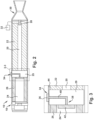
- a propulsion system 10 is shown arranged in a flight vehicle 12, such as a hypersonic vehicle or a rocket.
- the flight vehicle 12 includes a payload module 14 having at least one launchable payload. Any suitable payload may be arranged in the payload module 14 and the payload module 14 may include a plurality of payloads. Exemplary payloads include satellites, space probes, cargo, or warheads.
- the propulsion system 10 may be arranged in a separable stage of the flight vehicle 12.
- the flight vehicle 12 may have any suitable number of separable stages.
- the flight vehicle 12 may include between two and five separable stages that are separable from the flight vehicle 12 at pre-determined times during travel of the flight vehicle 12.
- the flight vehicle 12 may include at least a first stage and a second stage.
- the first stage may include a first-stage propulsion device 16 that is arranged opposite the payload module 14.
- the first-stage propulsion device 24 may include engines, boosters, tail fins, other thrusters, or any other suitable propulsion devices.
- the propulsion system 10 includes a multi-pulse rocket motor 18 for providing at least two distinct propulsive pulses.
- the multi-pulse rocket motor 18 may be a dual-pulse rocket motor that burns in two segments such that the rocket motor has a first pulse state and an additional pulse state that is initiated after the first pulse state. It is understood that the multi-pulse rocket motor 18 may include any number of pulse states as may be desired for a particular application.
- the rocket motor includes at least a first pulse chamber 20 containing a first burnable propellant 22 for burning during the first pulse state, and a second pulse chamber 24 containing a second burnable propellant 26 for burning during a second pulse state.
- a first igniter 28 is located in the first pulse chamber 20 and is configured to initiate the first pulse state by igniting the first burnable propellant, which causes pressurization in the first pulse chamber 20.
- the first pulse chamber 20 is configured for pressurization prior to pressurization of the second pulse chamber 24, such as by separating the pulse chambers 20, 24 via a barrier 29.
- the pressurized gas in the first pulse chamber 20 is exhausted through nozzle assembly 30, thereby generating thrust.
- the first igniter 28 is controlled by an electronic controller 32, such as the main vehicle computer 32 (e.g., guidance system) to actively initiate the first pulse ignition.
- the first burn propellant 22 contained in the first pulse chamber 20 may have different characteristics as compared with the second burnable propellant 26 contained in the second pulse chamber 24.
- the propellants 22, 26 may be configured to provide different burning rates relative to each other.
- the pulse chambers 20, 24 may be formed to have different sizes such that different amounts of the propellants 22, 26 may be provided. The sizes and burn rates of the propellants 22, 26 and pulse chambers 20, 24 may be dependent on the desired operation for a particular application of the flight vehicle 12.
- the propellants 22, 26 are solid propellant grains that are configured to burn when ignited to produce exhaust gas in the corresponding pulse chambers 20, 24.
- the exhaust gas is directed through the nozzle assembly 30 to produce thrust for the flight vehicle 12.
- the shape and size of the propellant grains is predetermined to achieve a specific burn time, amount of exhaust gas, and a thrust level.
- the pulse chambers 20, 24 and thus the propellants 22, 26 are separated by the barrier 29, which may be any suitable separation device configured such that during the first pulse state of the flight vehicle 12, the first propellant 22 burns separately relative to the second propellant 26 which burns during the second pulse state of the flight vehicle 12.
- the barrier 29 may include a bulkhead of the flight vehicle 12 and/or the barrier 29 may include a suitable thermal barrier, for example.
- the passive fuzing system 34 is configured to initiate the second pulse state of the motor via ignition of the second propellant 26. Any number of passive fuzing systems 34 may be provided for initiating the second pulse state, or any subsequent pulse state via ignition of additional propellant in subsequent pulse chambers. As discussed in further detail below, the passive fuzing system 34 may include one or more passive components or parts that are operable without external triggering logic.
- initiation of the second pulse state and/or subsequent pulse states of the rocket motor 18 may be accomplished through activation of the passive fuzing system 34 independently of initiation by an electronic controller, and more particularly independent of the main vehicle electronics (e.g., main controller 32) that initiates the first pulse state of the rocket motor 18.
- the passive fuzing system 34 independently of initiation by an electronic controller, and more particularly independent of the main vehicle electronics (e.g., main controller 32) that initiates the first pulse state of the rocket motor 18.
- the passive fuzing system 34 generally includes at least one sensor 36 and at least one igniter assembly 38.
- the sensor(s) (or sensing part(s)) 36 is/are configured to sense an environmental condition and/or ballistic condition of the flight vehicle 12 during flight.
- the igniter assembly 38 may include an energetic transfer device 40 (or part) and an igniter 42 (or initiator part).
- the igniter assembly 38, and more particularly the igniter 42 is configured to provide a stimulus that causes ignition of the second burnable propellant 26 in response to the sensor 36 sensing that the environmental condition and/or ballistic condition has reached or exceeded one or more threshold values.
- the sensor 36, or sensing part, of the passive fuzing system 34 may be any suitable sensor or sensing part that is capable of sensing or detecting an environmental condition and/or ballistic condition of the flight vehicle 12. Multiple sensors or sensing parts may be utilized for achieving such functionality, which may be singly or collectively referred to hereinafter as sensor 36 for simplicity.
- the sensor 36 may have any suitable construction for sensing the desired condition.
- one or more of the sensor(s) 36 is/are passive devices, such as passive electronic devices, that are operable to sense the desired condition without an external logic controlling the firing current by way of an external electrical signal.
- Examples of such passive electronic devices include, but are not limited to, one or more of a piezoelectric device, a micro-electro-mechanical system (MEMS) device, a semiconductor device, a shape memory material device, a Peltier device, or the like.
- MEMS micro-electro-mechanical system
- the environmental and/or ballistic condition sensed by the sensor 36 may be any desired environmental and/or ballistic condition.
- the environmental condition sensed by the sensor 36 is temperature and/or pressure.
- a suitable passive temperature sensor may include a thermistor, a thermocouple, a resistance temperature detector, a piezoelectric temperature sensor, or any other suitable passive temperature sensing device or part.
- a suitable passive pressure sensor may include a piezoelectric pressure sensor, a MEMS device, pitot tube, pressure transducer, or any other suitable passive pressure sensing device or part.
- the ballistic condition sensed by the sensor 36 is velocity (e.g., linear or angular velocity) and/or acceleration/deceleration.
- a suitable passive ballistic condition sensor may include a MEMS device, such as an accelerometer, or any other suitable passive velocity/acceleration sensing device or part, such as a gyroscope (e.g., a passive resonator gyroscope).
- the sensor(s) 36 of the passive fuzing system 34 may be located at any suitable part of the flight vehicle 12 for sensing the desired condition.
- the sensor(s) 36 may have an external face that is exposed to the external environment of the flight vehicle 12, which may be atmospheric (e.g., troposphere, stratosphere, mesosphere, thermosphere, exosphere) or outer space.
- the sensor(s) 36 may be located on a skin 44 of the flight vehicle 12.
- the sensor(s) 36 may be located in a nose cone 15 (see Fig. 1 ) of the flight vehicle 12, for example.
- the energetic transfer device 40 (or energetic transfer part) of the passive fuzing system 34 is configured to transmit energy from the sensor 36 to the igniter 42.
- the energetic transfer device 40 is operably coupled to both the sensor 36 and the igniter 42, which may include other components or parts interposed there between for facilitating operation of the passive fuzing system 34.
- the energetic transfer device 40 may be located at any suitable part of the flight vehicle 12 for providing such operable connection between the sensor 36 and igniter 42, which such placement may be dependent on the type of energetic transfer device 40.
- One or more energetic transfer devices 40 may be provided.
- the energy transferred by the energetic transfer device 40 may be any form of energy dependent on the particular type of sensor 36, and the energy from the sensor 36 may be transformed to another type of energy by the energetic transfer device, or other connected component, for transferring to the igniter 42.
- the energetic transfer device 40 may transmit electrical energy in the form of current provided by the sensor 36 to the igniter 42, which may activate the igniter 42 to cause ignition of the second burnable propellant 26.
- the energetic transfer device 40 may include an electrical wire, such as a copper wire, for transmitting the current from the sensor 36 to the igniter 42.
- the energetic transfer device 40 may include a pyrotechnic device or material that transmits thermal energy to the igniter 42.
- the pyrotechnic device may include a detonation cord, such as a mild detonation cord, for example shielded mild detonation cord, flexible detonation cord, or the like.
- the pyrotechnic device may include a detonation cord assembly, for example, an RDX filled transfer line with insulative and structural overwraps.
- the pyrotechnic device may include a suitable blasting cap.
- the pyrotechnic device may be any other suitable type of fuse.
- the energetic transfer device 40 may provide a combination of electrical and thermal impulses for causing the igniter 42 to ignite the propellant 26.
- an electrical wire may be provided for transmitting an electrical stimulus from the sensor 36 to a blasting cap, which in response to a threshold electrical stimulus by the sensor 36, may detonate the blasting cap to thereby transmit thermal energy that ignites a detonation cord, which thereby transmits thermal energy to activate the igniter 42.
- a bridgewire may be provided with a pyrotechnic material that is activated when the bridgewire is heated by resistance beyond a threshold level in response to an electrical current from the sensor 36.
- the igniter 42 may be any suitable device or part that provides a sufficient stimulus to cause ignition of the propellant 26 when the igniter 42 has been activated or triggered.
- the igniter 42 may include an explosive material, such as a shape charge, which is triggered to explode by energy transferred by the energetic transfer device 40 (e.g., wire or detonation cord). The heat from the explosion of the shape charge will initiate the second pulse via burning of propellant 26.
- the igniter 42 may include a pyrotechnic initiator, which may have a pyrotechnic material composition that causes a self-sustained exothermic chemical reaction when activated to make heat sufficient to burn the propellant 26.
- the composition of the pyrotechnic initiator may be adjusted to tune the activation temperature of the igniter 42.
- pyrotechnic initiators include, but are not limited to: metal-oxidizers (e.g., zirconium - potassium perchlorate, boron - potassium nitrate, aluminum-potassium perchlorate, or titanium-aluminum-potassium perchlorate); metal hydride-oxidizer (e.g., zirconium hydride - potassium perchlorate, titanium hydride potassium perchlorate); intermetallics (e.g., titanium-boron, nickel-aluminum, palladium-aluminum); or the like.
- metal-oxidizers e.g., zirconium - potassium perchlorate, boron - potassium nitrate, aluminum-potassium perchlorate, or titanium-aluminum-potassium perchlorate
- metal hydride-oxidizer e.g., zirconium hydride - potassium perchlorate, titanium hydride potassium perchlorate
- intermetallics
- the igniter 42 may be located at any suitable part of the flight vehicle 12 for providing the stimulus that ignites the second propellant 26.
- the igniter 42 is located in the second pulse chamber 24 with sufficient proximity to the propellant 26 to cause the propellant to burn when the igniter 42 is activated or triggered.
- the igniter 42 may be located proximally to, or coupled to, a surface of the barrier 29. When activated, the igniter 42 will break down the barrier 29 to open the pulse chamber 24 to the nozzle assembly 30. The igniter 42 may break down the barrier 29 via explosive force (e.g., when the igniter 42 includes a shape charge) and/or the igniter 42 may break down the barrier 29 via thermal energy (e.g., when the igniter 42 includes a pyrotechnic material). Also when the igniter 42 is activated, the igniter 42 will provide sufficient energetic stimulus to ignite the propellant 26, thereby causing the propellant 26 to burn and produce exhaust gas in the chamber 24. With the barrier 29 destroyed, the exhaust gas is directed through the nozzle assembly 30 to produce thrust for the flight vehicle 12.
- explosive force e.g., when the igniter 42 includes a shape charge
- thermal energy e.g., when the igniter 42 includes a pyrotechnic material.
- the igniter 42 will provide sufficient energetic stimulus to ignite the propellant 26, thereby causing
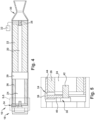
- the passive fuzing system 34 is shown at a different location of the flight vehicle 12 as compared to Fig. 3 .
- the igniter 42 is located at an opposite (e.g., forward) end of the chamber 24 away from the barrier 29.
- the igniter 42 may be the same as that described above in connection with Fig. 3 .
- the igniter 42 when the igniter 42 is activated, the igniter 42 will provide sufficient energetic stimulus to ignite the propellant 26, thereby causing the propellant 26 to burn and produce exhaust gas in the chamber 24.
- the pressure and/or temperature generated by burning the propellant 26 will break down barrier 29 to open the chamber 24 to the nozzle assembly 30. With the barrier 29 destroyed, the exhaust gas is directed through the nozzle assembly 30 to produce thrust for the flight vehicle 12.
- Fig. 6 an exemplary method 100 of operating the multi-pulse rocket motor 18 is shown. As shown, the method 100 starts at step 102 with initiating the first pulse state of the rocket motor 18, which may be accomplished in a conventional manner as described above.
- the sensor(s) 36 of the passive fuzing system 34 sense the environmental and/or ballistic condition of the flight vehicle 12. This is accomplished as described above, in which the sensor(s) 36 may be configured to sense temperature, pressure, acceleration, velocity, or any other suitable environmental and/or ballistic condition.
- the passive fuzing system 34 is configured to determine whether the environmental and/or ballistic condition sensed by the sensor(s) 36 has reached or exceeded a threshold value. As shown at step 108, when the sensed condition has reached or exceeded the threshold value, the second pulse state is initiated.
- the threshold value may be any suitable value which may be adjusted depending on the configuration of the passive fuzing system 34.
- a threshold temperature value that causes initiation of the second pulse state may be in a range from 700 - 725 °F (644 - 658 K).
- a threshold pressure value that causes initiation of the second pulse state may be in a range from 4 - 5 psi (27579 - 34474 Pa).
- a threshold acceleration value that causes initiation of the second pulse state may be in a range from 80 - 100 ft/sec 2 (24.38 -30.48 m/s 2 ).
- the determination at step 106 may be made in any suitable manner dependent on the particular configuration of the passive fuzing system 34.
- the energy output from the sensor 36 may vary proportionally to the input condition sensed by the sensor 36.
- the energy output from the sensor 36 may reach a threshold value that causes, directly or indirectly, activation or triggering of the igniter 42 which initiates the second pulse state of the motor 18, as described above.
- the proportional output from the sensor 36 may be insufficient to activate, directly or indirectly, the igniter 42. In this scenario, the sensor(s) 36 will continue to sense the environmental and/or ballistic conditions, as shown in the method 100 by looping back to step 104.
- multiple sensors 36 may be used to sense the same or different environmental and/or ballistic conditions, and the respective outputs of these sensors 36 may be combined to reach the activation threshold that causes, directly or indirectly, activation of the igniter 42.
- Such combination of sensor outputs may enable the passive fuzing system 34 to require multiple threshold values to be met prior to initiating the second pulse state.
- energy output from the sensor(s) 36 may be transferred directly to the igniter 42 in the same form, such as via the energetic transfer device 40 (e.g., electrical wire); or the energy output from the sensor(s) 36 may be transferred indirectly by the energetic transfer device 40 transforming the energy to another form (e.g., blasting cap and/or detonation cord, for example).
- the sensor 36 is a passive piezoelectric pressure sensor that generates an electrical output signal in response to strain applied to the sensor.
- the output from the piezoelectric sensor is a charge proportional to the sensed pressure.
- a small battery may be connected to amplify this charge and/or provide sufficient impetus to ignite a propellant grain.
- the energetic transfer device 40 is an electric wire that transmits this electrical charge to the igniter 42.
- the igniter 42 is a shape charge explosive that is configured to detonate when the charge transmitted from the pressure sensor reaches a threshold activation value. This threshold activation value may be achieved when the strain applied to the sensor exceeds a threshold value in response to the environmental pressure sensed reaching a threshold value.
- a passive fuzing system 34 may include a sensor 36 in the form of a passive piezoelectric pressure sensor, an energetic transfer device 40 in the form of a blasting cap and detonation cord operably coupled to the piezoelectric sensor, and an igniter 42 in the form of an intermetallic pyrotechnic material (e.g., Pd/Al) that is operably coupled to the detonation cord.
- the sensor 36 is a passive piezoelectric pressure sensor that generates an electrical output signal in response to strain applied to the sensor. The output from the piezoelectric sensor is a command charge triggered by the sensed pressure. A battery may be connected to amplify this charge.
- the energetic transfer device 40 is blasting cap, the output of which triggers a detonation cord that transmits a combination of heat and/or shock to an igniter.
- the igniter 42 contains intermetallic pyrotechnic material that is initiated when the charge output is transmitted from the detonation cord.
- trajectory shaping of the flight vehicle 12 may be utilized for optimally activating the passive fuzing system 34 and thereby initiating the second pulse state of the rocket motor 18.
- a long range trajectory of the flight vehicle 12 is shown, in which the flight vehicle 12 rockets to a high elevation (such as via the first pulse), and when the threshold condition is met, the second pulse is initiated.
- the threshold condition for initiating the second pulse may be a reduction in atmospheric pressure as the vehicle 12 increases in altitude, an increase in temperature as the vehicle 12 re-enters denser atmosphere, or reduction in acceleration as the vehicle 12 loses velocity, for example.
- a short range trajectory of the flight vehicle 12 is shown, in which higher density air may be utilized for reaching the threshold condition (e.g., via heating as the vehicle 12 rockets through the atmosphere).
- the exemplary passive fuzing system 34 may help to eliminate or reduce the complexity and volume constraints associated with conventional multi-pulse propulsion systems. Such a passive system, therefore, may be incorporated into smaller vehicle platforms than is currently practical with conventional multi-pulse systems.
- the flight vehicle 12 having the exemplary multi-pulse motor 18 with passive fuzing system 34 may be used with missiles having diameters of about 125mm or less (e.g., about 5-inches or less), such as missiles having a diameter in the range of about 40mm (e.g., about 1.5-inches) to about 125mm (e.g., about 5-inches).
- the multi-pulse rocket motor 18 with passive fuzing system 34 also may be used with larger diameter missiles or other flight vehicles as well.
Landscapes
- Engineering & Computer Science (AREA)
- Chemical & Material Sciences (AREA)
- Combustion & Propulsion (AREA)
- General Engineering & Computer Science (AREA)
- Mechanical Engineering (AREA)
- Aviation & Aerospace Engineering (AREA)
- Air Bags (AREA)
Claims (15)
- Mehrfachimpulsantriebssystem (10), umfassend:mindestens eine Impulskammer (20), die mindestens ein Treibmittel (22) zum Zünden während mindestens eines Impulses des Mehrfachimpulsantriebssystems enthält;einen ersten Zünder (28), der zum Auslösen des mindestens einen Impulses durch Zünden des mindestens einen in der mindestens einen Impulskammer enthaltenen Treibmittels konfiguriert ist, wobei der erste Zünder durch eine Hauptsystemsteuerung (32) gesteuert wird;mindestens eine zusätzliche Impulskammer (24), die mindestens ein zusätzliches Treibmittel (26) zum Zünden während mindestens eines zusätzlichen Impulses des Mehrfachimpulsantriebssystems enthält, wobei der mindestens eine zusätzliche Impuls dem mindestens einen Impuls folgt und von diesem getrennt ist, wobei das mindestens eine zusätzliche Treibmittel erst bei dem mindestens einen zusätzlichen Impuls gezündet wird; undmindestens ein passives Zündsystem (34), das zum Auslösen des mindestens einen zusätzlichen Impulses konfiguriert ist, wobei das mindestens eine passive Zündsystem einen Sensor (36) und einen zweiten Zünder (42) umfasst, wobei der Sensor zum Erfassen einer Umgebungsbedingung und/oder einer ballistischen Bedingung konfiguriert ist und der zweite Zünder zum Bereitstellen eines Stimulus konfiguriert ist, der die Zündung des mindestens einen zusätzlichen Treibmittels als Reaktion darauf veranlasst, dass der Sensor erfasst, dass die Umgebungsbedingung und/oder die ballistische Bedingung einen oder mehrere Schwellenwerte erreicht oder überschritten hat, wobei das passive Zündsystem unabhängig von einer Verbindung mit der Hauptsystemsteuerung betriebsfähig ist.
- Mehrfachimpulsantriebssystem nach Anspruch 1 oder einem der vorhergehenden Ansprüche, wobei der Sensor eine passive elektronische Vorrichtung ist.
- Mehrfachimpulsantriebssystem nach Anspruch 1 oder einem der vorhergehenden Ansprüche, wobei der Sensor eine piezoelektrische Vorrichtung ist.
- Mehrfachimpulsantriebssystem nach Anspruch 1 oder einem der vorhergehenden Ansprüche, wobei der Sensor eine mikroelektromechanische Systemvorrichtung, eine Halbleitervorrichtung, eine Vorrichtung aus Formgedächtnismaterial oder eine Peltier-Vorrichtung ist.
- Mehrfachimpulsantriebssystem nach Anspruch 1 oder einem der vorhergehenden Ansprüche, wobei:die von dem Sensor erfasste Umgebungsbedingung Temperatur oder Druck beinhaltet undder Zünder zum Zünden des mindestens einen zusätzlichen Treibmittels aktiviert wird, wodurch der mindestens eine zusätzliche Impuls ausgelöst wird, wenn ein Temperatur- oder Druckschwellenwert von dem Sensor erfasst wird.
- Mehrfachimpulsantriebssystem nach Anspruch 1 oder einem der vorhergehenden Ansprüche, wobei der Sensor ein Temperatursensor ist, ausgewählt aus: einem Thermistor, einem Thermoelement, einem Widerstandstemperaturdetektor oder einem piezoelektrischen Temperatursensor; oder
wobei der Sensor ein piezoelektrischer Drucksensor oder ein mikroelektromechanischer Drucksensor ist. - Mehrfachimpulsantriebssystem nach Anspruch 1 oder einem der vorhergehenden Ansprüche, wobei:die von dem Sensor erfasste ballistische Bedingung Geschwindigkeit und/oder Beschleunigung beinhaltet undder Zünder zum Zünden des mindestens einen zusätzlichen Treibmittels aktiviert wird, wodurch der mindestens eine zusätzliche Impuls ausgelöst wird, wenn ein Geschwindigkeits- und/oder Beschleunigungsschwellenwert von dem Sensor erfasst wird.
- Mehrfachimpulsantriebssystem nach Anspruch 1 oder einem der vorhergehenden Ansprüche, wobei sich der Sensor in einer Außenhaut (44) eines Luftfahrzeugs (12) befindet, das das Mehrfachimpulsantriebssystem enthält; oder sich der Sensor in einer Bugspitze (15) des Luftfahrzeugs befindet, das das Mehrfachimpulsantriebssystem enthält.
- Mehrfachimpulsantriebssystem nach Anspruch 1 oder einem der vorhergehenden Ansprüche, wobei das passive Zündsystem ferner ein Energieübertragungsteil (40) beinhaltet, das zum Übertragen und/oder Transformieren von Energie von dem Sensor und zum Übertragen der Energie an den Zünder konfiguriert ist.
- Mehrfachimpulsantriebssystem nach Anspruch 9 oder einem der vorhergehenden Ansprüche, wobei das Energieübertragungsteil elektrische Energie von dem Sensor an den Zünder überträgt; oder wobei das Energieübertragungsteil eine pyrotechnische Vorrichtung oder ein pyrotechnisches Material ist, die/das Wärmeenergie an den Zünder überträgt.
- Mehrfachimpulsantriebssystem nach Anspruch 1 oder einem der vorhergehenden Ansprüche, wobei der Zünder ein explosives Material beinhaltet; oder
wobei der Zünder einen pyrotechnischen Initiator, der eine pyrotechnische Materialzusammensetzung aufweist, beinhaltet. - Mehrfachimpulsantriebssystem nach Anspruch 1 oder einem der vorhergehenden Ansprüche, wobei:die mindestens eine Impulskammer von der mindestens einen weiteren Impulskammer durch eine Barriere (29) getrennt ist und der Zünder in der mindestens einen zusätzlichen Impulskammer angeordnet und an eine Oberfläche der Barriere gekoppelt ist; odersich der Zünder in der mindestens einen zusätzlichen Impulskammer an einem der Barriere gegenüberliegenden Ende befindet.
- Luftfahrzeug (12), umfassend:eine Nutzlast (14); undein Mehrfachimpulsantriebssystem (10) nach Anspruch 1.
- Luftfahrzeug nach Anspruch 13, wobei das Luftfahrzeug einen Durchmesser im Bereich von 40 mm bis 130 mm aufweist.
- Verfahren (100) zum Betreiben eines Mehrfachimpulsantriebssystems (10) eines Luftfahrzeugs (12), umfassend:Erfassen (104) einer Umgebungsbedingung und/oder einer ballistischen Bedingung des Luftfahrzeugs mit einem Sensor (36) eines passiven Zündsystems (34) des Mehrfachimpulsantriebssystems;Bestimmen (106) mit dem passiven Zündsystem, wann die Umgebungsbedingung und/oder die ballistische Bedingung einen Schwellenwert für die Umgebungsbedingung und/oder einen Schwellenwert für die ballistische Bedingung erreicht oder überschritten hat; undAuslösen (108) eines zweiten Impulses des Mehrfachimpulsantriebssystems durch Zünden eines zweiten Treibmittels (26), das in einer zweiten Impulskammer (24) des Mehrfachimpulsantriebssystems enthalten ist, wenn die Umgebungsbedingung und/oder die ballistische Bedingung den Schwellenwert für die Umgebungsbedingung erreicht oder überschritten hat, wobei der Mehrfachimpulsantrieb ferner Folgendes beinhaltet;eine erste Impulskammer (20), die mindestens ein erstes Treibmittel (22) zum Zünden während eines ersten Impulses des Mehrfachimpulsantriebssystems enthält; undeinen ersten Zünder (28), der zum Auslösen (102) des ersten Impulses durch Zünden des in der ersten Impulskammer enthaltenen ersten Treibmittels (22) konfiguriert ist, wobei der erste Zünder durch eine Hauptsystemsteuerung (34) gesteuert wird;wobei das passive Zündsystem unabhängig von einer Korrektur der Hauptsystemsteuerung betriebsfähig ist, wobei der erste Impuls vor und getrennt von dem zweiten Impuls erfolgt, wobei das zweite Treibmittel in der zweiten Impulskammer erst mit dem zweiten Impuls gezündet wird.
Applications Claiming Priority (2)
| Application Number | Priority Date | Filing Date | Title |
|---|---|---|---|
| US17/075,987 US11988173B2 (en) | 2020-10-21 | 2020-10-21 | Multi-pulse propulsion system with passive initiation |
| PCT/US2021/017415 WO2022086587A1 (en) | 2020-10-21 | 2021-02-10 | Multi-pulse propulsion system with passive initiation |
Publications (2)
| Publication Number | Publication Date |
|---|---|
| EP4232701A1 EP4232701A1 (de) | 2023-08-30 |
| EP4232701B1 true EP4232701B1 (de) | 2025-06-11 |
Family
ID=77595609
Family Applications (1)
| Application Number | Title | Priority Date | Filing Date |
|---|---|---|---|
| EP21763426.0A Active EP4232701B1 (de) | 2020-10-21 | 2021-02-10 | Mehrfachimpulsantriebssystem mit passiver auslösung |
Country Status (3)
| Country | Link |
|---|---|
| US (1) | US11988173B2 (de) |
| EP (1) | EP4232701B1 (de) |
| WO (1) | WO2022086587A1 (de) |
Families Citing this family (1)
| Publication number | Priority date | Publication date | Assignee | Title |
|---|---|---|---|---|
| CN115839290B (zh) * | 2022-12-16 | 2025-02-14 | 西安长峰机电研究所 | 一种双脉冲固体火箭发动机动态闭环点火控制方法及装置 |
Family Cites Families (81)
| Publication number | Priority date | Publication date | Assignee | Title |
|---|---|---|---|---|
| NL294375A (de) * | 1962-06-30 | |||
| US3420176A (en) | 1967-04-10 | 1969-01-07 | Umc Ind | Electrical pyrotechnic programming system |
| FR2545599B1 (fr) | 1974-08-29 | 1986-10-24 | France Etat Armement | Fusee de proximite |
| FR2674621B1 (fr) | 1977-07-29 | 1994-08-26 | Thomson Brandt | Projectile guide . |
| DE2819863A1 (de) | 1978-03-14 | 1986-07-24 | Buck Chemisch-Technische Werke Gmbh & Co, 8230 Bad Reichenhall | Wurfkoerper |
| DE2831420A1 (de) | 1978-07-18 | 1980-01-31 | Licentia Gmbh | Zuender fuer ein militaerisches kampfmittel |
| US4372239A (en) | 1980-03-03 | 1983-02-08 | General Dynamics, Pomona Division | Undersea weapon with hydropulse system and periodical seawater admission |
| FR2728676B1 (fr) | 1982-05-11 | 1997-03-21 | France Etat | Systeme de commande de mise a feu de charges pyrotechniques a action horizontale |
| FR2543288B1 (fr) | 1983-03-23 | 1987-07-17 | Luchaire Sa | Fusee de culot pour bombe |
| DE3603497C1 (de) | 1986-02-05 | 1993-01-07 | Rheinmetall Gmbh | Geschoss fuer eine Panzerabwehrwaffe zur Bekaempfung eines Panzers von oben |
| US4798142A (en) | 1986-08-18 | 1989-01-17 | Morton Thiokol, Inc. | Rapid buring propellant charge for automobile air bag inflators, rocket motors, and igniters therefor |
| US5024160A (en) | 1986-08-18 | 1991-06-18 | Thiokol Corporation | Rapid burning propellant charge for automobile air bag inflators, rocket motors, and igniters therefor |
| US5062365A (en) | 1986-08-18 | 1991-11-05 | Thiokol Corporation | Rapid burning propellent charge for automobile air bag inflators, rocket motors, and igniters therefor |
| US5127223A (en) | 1986-09-18 | 1992-07-07 | Thiokol Corporation | Solid rocket motor propellants with reticulated structures embedded therein and method of manufacture thereof |
| FR2726360B1 (fr) | 1986-12-23 | 1997-04-11 | Thomson Trt Defense | Procede d'elaboration d'un ordre d'allumage automatique pour un piege antichar et allumeur pour la mise en oeuvre du procede |
| US5206989A (en) * | 1988-08-03 | 1993-05-04 | Thiokol Corporation | Method of making solid propellant canister loaded rocket motor |
| US5109669A (en) | 1989-09-28 | 1992-05-05 | Rockwell International Corporation | Passive self-contained auto ignition system |
| US5166468A (en) * | 1991-04-05 | 1992-11-24 | Thiokol Corporation | Thermocouple-triggered igniter |
| JP3660357B2 (ja) | 1994-03-02 | 2005-06-15 | ウィリアム・シー・オーア | 無鉛mmt燃料組成物 |
| DE4435319A1 (de) | 1994-10-01 | 1996-04-04 | Temic Bayern Chem Airbag Gmbh | Anzündeinheit für einen Gasgenerator eines passiven Rückhaltesystems |
| US7578122B1 (en) | 1995-02-24 | 2009-08-25 | Aerojet General Corporation | Rocket motor case using plank sections and method of manufacture |
| RU2133864C1 (ru) | 1997-09-10 | 1999-07-27 | Государственное научно-производственное предприятие "Сплав" | Ракетный двигатель твердого топлива |
| JP2003516197A (ja) | 1999-12-11 | 2003-05-13 | グラクソ グループ リミテッド | 薬物ディスペンサ |
| US7047885B1 (en) * | 2000-02-14 | 2006-05-23 | Alliant Techsystems Inc. | Multiple pulse cartridge ignition system |
| US6584907B2 (en) * | 2000-03-17 | 2003-07-01 | Ensign-Bickford Aerospace & Defense Company | Ordnance firing system |
| US6958813B1 (en) | 2000-05-22 | 2005-10-25 | The United States Of America As Represented By The Secretary Of The Air Force | Plume detector |
| US6523475B2 (en) | 2000-09-28 | 2003-02-25 | Superior Ballistics, Inc. | Firearm cartridge and case-less chamber |
| US20020156418A1 (en) | 2000-11-30 | 2002-10-24 | Gonnelli Robert R. | Injection systems |
| US7144434B2 (en) | 2001-03-22 | 2006-12-05 | Oryxe Energy International, Inc. | Method and composition for using organic, plant-derived, oil-extracted materials in coal-based fuels for reduced emissions |
| US20020196152A1 (en) * | 2001-06-20 | 2002-12-26 | Eric Wilson | Automated fire protection system |
| WO2003007311A1 (en) | 2001-07-09 | 2003-01-23 | W.E. Research Llc | Description of methods to increase propellant throughput in a micro pulsed plasma thruster |
| RU2225586C1 (ru) | 2002-07-09 | 2004-03-10 | Федеральное Государственное унитарное предприятие "Государственное научно-производственное предприятие "Сплав" | Кассетная боевая часть |
| FR2844557B1 (fr) | 2002-09-12 | 2006-03-03 | Snecma Propulsion Solide | Systeme et procede de controle des oscillations de pression d'origine hydrodynamique pour propulseur a propergol solide |
| CN1403781A (zh) | 2002-10-21 | 2003-03-19 | 张宝林 | 一种新型军用便携组合式双联高速防空导弹 |
| US7000377B1 (en) | 2004-04-26 | 2006-02-21 | Knight Andrew F | Super-staged and continuously staged rocket |
| US7202809B1 (en) | 2004-05-10 | 2007-04-10 | Bae Systems Land & Armaments L.P. | Fast acting active protection system |
| CN100480488C (zh) | 2004-12-28 | 2009-04-22 | 蒋子刚 | 流体机械的揉动变容方法及其机构与用途 |
| CN2799011Y (zh) | 2005-03-18 | 2006-07-26 | 张森 | 长时间推力作用的超音速干粉灭火装置 |
| US7565795B1 (en) | 2006-01-17 | 2009-07-28 | Pratt & Whitney Rocketdyne, Inc. | Piezo-resonance igniter and ignition method for propellant liquid rocket engine |
| CA2642760A1 (en) | 2006-02-13 | 2008-07-10 | Halkey-Roberts Corporation | Apparatus and method for using tetrazine-based energetic material |
| CN101553558B (zh) | 2006-10-10 | 2015-08-26 | 阿迈瑞斯公司 | 包含法呢烷和法呢烷衍生物的燃料组合物及其制备和使用方法 |
| CN200970429Y (zh) | 2006-11-10 | 2007-11-07 | 成都神剑消防科技有限公司 | 外插与内置启动器均备的超音速干粉灭火装置 |
| US10286599B2 (en) | 2007-03-22 | 2019-05-14 | Ronald D Jones | Additive manufactured thermoplastic-nanocomposite aluminum hybrid rocket fuel grain and method of manufacturing same |
| US9822045B2 (en) | 2007-03-22 | 2017-11-21 | Ronald D Jones | Additive manufactured thermoplastic-aluminum nanocomposite hybrid rocket fuel grain and method of manufacturing same |
| FR2914368B1 (fr) | 2007-03-30 | 2009-10-16 | Snecma Sa | Allumeur electrolytique pour moteur-fusee a ergols liquides |
| US10581347B2 (en) * | 2007-07-10 | 2020-03-03 | Omnitek Partners Llc | Manually operated piezoelectric energy harvesting electronic circuitry |
| WO2009014636A2 (en) | 2007-07-20 | 2009-01-29 | Amyris Biotechnologies, Inc. | Fuel compositions comprising tetramethylcyclohexane |
| FR2924410B1 (fr) | 2007-11-29 | 2010-06-11 | Astrium Sas | Dispositif de reduction de trainee aerodynamique |
| WO2012003706A1 (zh) | 2010-07-07 | 2012-01-12 | Jin Beibiao | 超音速转子发动机 |
| US8434411B2 (en) * | 2011-01-19 | 2013-05-07 | Raytheon Company | Cluster explosively-formed penetrator warheads |
| ITMI20111332A1 (it) | 2011-07-18 | 2013-01-19 | Orbit S R L D | Dispositivo per la deorbitazione di satelliti artificiali. |
| IL217450A (en) | 2012-01-10 | 2017-02-28 | Israel Aerospace Ind Ltd | Anti-rocket system |
| US9853744B2 (en) | 2012-01-17 | 2017-12-26 | Hadal, Inc. | Systems and methods for transmitting data from an underwater station |
| US8966879B1 (en) | 2012-02-15 | 2015-03-03 | Orbital Technologies Corporation | Acoustic igniter |
| US9062712B1 (en) | 2012-02-27 | 2015-06-23 | The United States Of America As Represented By The Administrator Of The National Aeronautics And Space Administration | Passive thermal management of foil bearings |
| WO2013160901A2 (en) | 2012-04-25 | 2013-10-31 | Elta Systems Ltd. | Estimating a source location of a projectile |
| US9476399B1 (en) | 2012-05-16 | 2016-10-25 | Orbital Technologies Corporation | Glow plug type acoustic resonance igniter |
| US9227883B2 (en) | 2012-07-31 | 2016-01-05 | Purdue Research Foundation | Mechanically activated metal fuels for energetic material applications |
| CN103194284B (zh) | 2013-04-22 | 2015-05-06 | 黑龙江省能源环境研究院 | 车用汽油复合调节剂 |
| JP2015006650A (ja) | 2013-06-26 | 2015-01-15 | 須知 晃一 | システム構成構造細胞複合諸物体の製造方法と構成材料 |
| RU2561182C2 (ru) | 2013-08-08 | 2015-08-27 | Николай Евгеньевич Староверов | Парашютная система /варианты/ и система управления ею /варианты/ |
| US9947423B2 (en) | 2013-08-23 | 2018-04-17 | Global Energy Research Associates, LLC | Nanofuel internal engine |
| US9881706B2 (en) | 2013-08-23 | 2018-01-30 | Global Energy Research Associates, LLC | Nuclear powered rotary internal engine apparatus |
| CN103670797B (zh) | 2013-12-06 | 2015-12-09 | 北京动力机械研究所 | 一种固液冲压发动机 |
| US9518802B2 (en) | 2014-01-06 | 2016-12-13 | Yanwei Wei | Multi-launcher firearm |
| CN104989551A (zh) | 2015-07-08 | 2015-10-21 | 杜善骥 | 拉瓦尔喷嘴效应冲压火箭的工作方法 |
| CN105114208A (zh) | 2015-07-18 | 2015-12-02 | 杜善骥 | 拉瓦尔喷嘴效应爆轰冲压火箭的工作方法 |
| CN105065137A (zh) | 2015-07-19 | 2015-11-18 | 杜善骥 | 拉瓦尔喷嘴效应爆轰叠加冲压火箭工作方法 |
| CN105065138A (zh) | 2015-07-19 | 2015-11-18 | 杜善骥 | 拉瓦尔喷嘴效应爆轰冲压制氧火箭工作方法 |
| CN105134411A (zh) | 2015-09-02 | 2015-12-09 | 杜善骥 | 爆轰冲压拉瓦尔喷嘴效应推进及制氧火箭工作方法 |
| US10107601B2 (en) | 2015-10-06 | 2018-10-23 | Raytheon Company | Electrically operated pulse initiators and ignition |
| CN105971767B (zh) | 2016-05-19 | 2018-08-24 | 湖北三江航天江河化工科技有限公司 | 一种固体助推火箭发动机 |
| CN106988929B (zh) | 2017-03-06 | 2018-07-24 | 西安航天动力技术研究所 | 一种固体火箭发动机殉爆试验方法 |
| RO133060B1 (ro) | 2017-07-28 | 2023-11-29 | Mihail Sima | Echipament şi metodă de lansare a rachetelor reactive antigrindină cu o platformă autopurtată dirijată |
| CN107796270A (zh) | 2017-11-29 | 2018-03-13 | 四川蓝狮科技有限公司 | 一种延期点火装置 |
| WO2019123801A1 (ja) | 2017-12-19 | 2019-06-27 | 明倫 久米 | 水難事故の救命用具、およびそれを応用した用具や装置と方法 |
| WO2019146595A1 (ja) | 2018-01-23 | 2019-08-01 | 久米明倫 | 水難事故の救命用具、およびそれを応用した用具や装置と方法 |
| RU2678726C1 (ru) | 2018-01-29 | 2019-01-31 | Акционерное общество "Корпорация "Московский институт теплотехники" (АО "Корпорация "МИТ") | Пороховой аккумулятор давления для минометной схемы разделения ступеней ракеты в полете |
| CN108894893B (zh) | 2018-06-26 | 2020-02-07 | 西北工业大学 | 火箭冲压组合发动机用液膜冷却引射火箭发动机推力室 |
| CN109441664A (zh) | 2018-12-29 | 2019-03-08 | 湖北航天技术研究院总体设计所 | 一种一体化双脉冲固体发动机软质隔层 |
| CN110237462B (zh) | 2019-06-10 | 2022-02-08 | 西北工业大学 | 一种采用柔性内胆的硬壳式灭火弹 |
-
2020
- 2020-10-21 US US17/075,987 patent/US11988173B2/en active Active
-
2021
- 2021-02-10 WO PCT/US2021/017415 patent/WO2022086587A1/en not_active Ceased
- 2021-02-10 EP EP21763426.0A patent/EP4232701B1/de active Active
Also Published As
| Publication number | Publication date |
|---|---|
| US11988173B2 (en) | 2024-05-21 |
| WO2022086587A1 (en) | 2022-04-28 |
| US20220120241A1 (en) | 2022-04-21 |
| EP4232701A1 (de) | 2023-08-30 |
Similar Documents
| Publication | Publication Date | Title |
|---|---|---|
| US7947938B2 (en) | Methods and apparatus for projectile guidance | |
| US8931415B2 (en) | Initiation systems for explosive devices, scalable output explosive devices including initiation systems, and related methods | |
| US6105505A (en) | Hard target incendiary projectile | |
| US11499505B2 (en) | Multi-pulse rocket motor with flight termination destruct charge | |
| US9605932B2 (en) | Gas generators, launch tubes including gas generators and related systems and methods | |
| US8546736B2 (en) | Modular guided projectile | |
| EP2203708B1 (de) | Verfahren zur variierung des schussbereiches und der zielwirkung für eine granate und für diesen zweck konfigurierte granate | |
| US4213393A (en) | Gun projectile arranged with a base drag reducing system | |
| US7762195B2 (en) | Slow cook off rocket igniter | |
| EP2271887A1 (de) | Verfahren und vorrichtung für schnellen impulsantrieb | |
| US5440993A (en) | High velocity impulse rocket | |
| AU6149290A (en) | Lateral thrust assembly for missiles | |
| US5353711A (en) | Extended range artillery projectile | |
| EP1851501B1 (de) | Verfahren und vorrichtung für ein projektilsystem mit wählbarer geschwindigkeit | |
| EP4232701B1 (de) | Mehrfachimpulsantriebssystem mit passiver auslösung | |
| US20090212163A1 (en) | Propulsion Enhancement Arrangement for Rocket | |
| US3296967A (en) | Incendiary device | |
| US6000340A (en) | Rocket launching system employing thermal-acoustic detection for rocket ignition | |
| US5153369A (en) | Safe and arm device with expansible element in liquid explosive | |
| EP4251871B1 (de) | Mehrpuls-festbrennstoffraketenmotor und zündungsverfahren | |
| EP4232700B1 (de) | Integriertes antriebs- und gefechtskopfsystem für eine artillerierunde | |
| EP4211344B1 (de) | Feststoffraketenmotorzündverfahren mit variabler brenngeschwindigkeit | |
| US6796242B2 (en) | Propulsion enhancement arrangement for rocket | |
| US10030951B2 (en) | Drag reduction system | |
| US3273337A (en) | Linear explosive type igniter train for rocket motor |
Legal Events
| Date | Code | Title | Description |
|---|---|---|---|
| STAA | Information on the status of an ep patent application or granted ep patent |
Free format text: STATUS: UNKNOWN |
|
| STAA | Information on the status of an ep patent application or granted ep patent |
Free format text: STATUS: THE INTERNATIONAL PUBLICATION HAS BEEN MADE |
|
| PUAI | Public reference made under article 153(3) epc to a published international application that has entered the european phase |
Free format text: ORIGINAL CODE: 0009012 |
|
| STAA | Information on the status of an ep patent application or granted ep patent |
Free format text: STATUS: REQUEST FOR EXAMINATION WAS MADE |
|
| 17P | Request for examination filed |
Effective date: 20230420 |
|
| AK | Designated contracting states |
Kind code of ref document: A1 Designated state(s): AL AT BE BG CH CY CZ DE DK EE ES FI FR GB GR HR HU IE IS IT LI LT LU LV MC MK MT NL NO PL PT RO RS SE SI SK SM TR |
|
| DAV | Request for validation of the european patent (deleted) | ||
| DAX | Request for extension of the european patent (deleted) | ||
| GRAP | Despatch of communication of intention to grant a patent |
Free format text: ORIGINAL CODE: EPIDOSNIGR1 |
|
| STAA | Information on the status of an ep patent application or granted ep patent |
Free format text: STATUS: GRANT OF PATENT IS INTENDED |
|
| INTG | Intention to grant announced |
Effective date: 20250225 |
|
| GRAS | Grant fee paid |
Free format text: ORIGINAL CODE: EPIDOSNIGR3 |
|
| GRAA | (expected) grant |
Free format text: ORIGINAL CODE: 0009210 |
|
| STAA | Information on the status of an ep patent application or granted ep patent |
Free format text: STATUS: THE PATENT HAS BEEN GRANTED |
|
| AK | Designated contracting states |
Kind code of ref document: B1 Designated state(s): AL AT BE BG CH CY CZ DE DK EE ES FI FR GB GR HR HU IE IS IT LI LT LU LV MC MK MT NL NO PL PT RO RS SE SI SK SM TR |
|
| REG | Reference to a national code |
Ref country code: GB Ref legal event code: FG4D |
|
| REG | Reference to a national code |
Ref country code: CH Ref legal event code: EP |
|
| REG | Reference to a national code |
Ref country code: DE Ref legal event code: R096 Ref document number: 602021032169 Country of ref document: DE |
|
| REG | Reference to a national code |
Ref country code: IE Ref legal event code: FG4D |
|
| PG25 | Lapsed in a contracting state [announced via postgrant information from national office to epo] |
Ref country code: FI Free format text: LAPSE BECAUSE OF FAILURE TO SUBMIT A TRANSLATION OF THE DESCRIPTION OR TO PAY THE FEE WITHIN THE PRESCRIBED TIME-LIMIT Effective date: 20250611 Ref country code: ES Free format text: LAPSE BECAUSE OF FAILURE TO SUBMIT A TRANSLATION OF THE DESCRIPTION OR TO PAY THE FEE WITHIN THE PRESCRIBED TIME-LIMIT Effective date: 20250611 |
|
| REG | Reference to a national code |
Ref country code: LT Ref legal event code: MG9D |
|
| PG25 | Lapsed in a contracting state [announced via postgrant information from national office to epo] |
Ref country code: GR Free format text: LAPSE BECAUSE OF FAILURE TO SUBMIT A TRANSLATION OF THE DESCRIPTION OR TO PAY THE FEE WITHIN THE PRESCRIBED TIME-LIMIT Effective date: 20250912 |
|
| REG | Reference to a national code |
Ref country code: NL Ref legal event code: MP Effective date: 20250611 |
|
| PG25 | Lapsed in a contracting state [announced via postgrant information from national office to epo] |
Ref country code: BG Free format text: LAPSE BECAUSE OF FAILURE TO SUBMIT A TRANSLATION OF THE DESCRIPTION OR TO PAY THE FEE WITHIN THE PRESCRIBED TIME-LIMIT Effective date: 20250611 |
|
| PG25 | Lapsed in a contracting state [announced via postgrant information from national office to epo] |
Ref country code: HR Free format text: LAPSE BECAUSE OF FAILURE TO SUBMIT A TRANSLATION OF THE DESCRIPTION OR TO PAY THE FEE WITHIN THE PRESCRIBED TIME-LIMIT Effective date: 20250611 |
|
| PG25 | Lapsed in a contracting state [announced via postgrant information from national office to epo] |
Ref country code: RS Free format text: LAPSE BECAUSE OF FAILURE TO SUBMIT A TRANSLATION OF THE DESCRIPTION OR TO PAY THE FEE WITHIN THE PRESCRIBED TIME-LIMIT Effective date: 20250911 |
|
| PG25 | Lapsed in a contracting state [announced via postgrant information from national office to epo] |
Ref country code: LV Free format text: LAPSE BECAUSE OF FAILURE TO SUBMIT A TRANSLATION OF THE DESCRIPTION OR TO PAY THE FEE WITHIN THE PRESCRIBED TIME-LIMIT Effective date: 20250611 |
|
| PG25 | Lapsed in a contracting state [announced via postgrant information from national office to epo] |
Ref country code: NL Free format text: LAPSE BECAUSE OF FAILURE TO SUBMIT A TRANSLATION OF THE DESCRIPTION OR TO PAY THE FEE WITHIN THE PRESCRIBED TIME-LIMIT Effective date: 20250611 |
|
| PG25 | Lapsed in a contracting state [announced via postgrant information from national office to epo] |
Ref country code: PT Free format text: LAPSE BECAUSE OF FAILURE TO SUBMIT A TRANSLATION OF THE DESCRIPTION OR TO PAY THE FEE WITHIN THE PRESCRIBED TIME-LIMIT Effective date: 20251013 |
|
| REG | Reference to a national code |
Ref country code: AT Ref legal event code: MK05 Ref document number: 1802441 Country of ref document: AT Kind code of ref document: T Effective date: 20250611 |
|
| PG25 | Lapsed in a contracting state [announced via postgrant information from national office to epo] |
Ref country code: IS Free format text: LAPSE BECAUSE OF FAILURE TO SUBMIT A TRANSLATION OF THE DESCRIPTION OR TO PAY THE FEE WITHIN THE PRESCRIBED TIME-LIMIT Effective date: 20251011 |
|
| PG25 | Lapsed in a contracting state [announced via postgrant information from national office to epo] |
Ref country code: AT Free format text: LAPSE BECAUSE OF FAILURE TO SUBMIT A TRANSLATION OF THE DESCRIPTION OR TO PAY THE FEE WITHIN THE PRESCRIBED TIME-LIMIT Effective date: 20250611 Ref country code: SM Free format text: LAPSE BECAUSE OF FAILURE TO SUBMIT A TRANSLATION OF THE DESCRIPTION OR TO PAY THE FEE WITHIN THE PRESCRIBED TIME-LIMIT Effective date: 20250611 |
|
| PG25 | Lapsed in a contracting state [announced via postgrant information from national office to epo] |
Ref country code: CZ Free format text: LAPSE BECAUSE OF FAILURE TO SUBMIT A TRANSLATION OF THE DESCRIPTION OR TO PAY THE FEE WITHIN THE PRESCRIBED TIME-LIMIT Effective date: 20250611 |
|
| PG25 | Lapsed in a contracting state [announced via postgrant information from national office to epo] |
Ref country code: PL Free format text: LAPSE BECAUSE OF FAILURE TO SUBMIT A TRANSLATION OF THE DESCRIPTION OR TO PAY THE FEE WITHIN THE PRESCRIBED TIME-LIMIT Effective date: 20250611 |
|
| PG25 | Lapsed in a contracting state [announced via postgrant information from national office to epo] |
Ref country code: EE Free format text: LAPSE BECAUSE OF FAILURE TO SUBMIT A TRANSLATION OF THE DESCRIPTION OR TO PAY THE FEE WITHIN THE PRESCRIBED TIME-LIMIT Effective date: 20250611 |
|
| PG25 | Lapsed in a contracting state [announced via postgrant information from national office to epo] |
Ref country code: SK Free format text: LAPSE BECAUSE OF FAILURE TO SUBMIT A TRANSLATION OF THE DESCRIPTION OR TO PAY THE FEE WITHIN THE PRESCRIBED TIME-LIMIT Effective date: 20250611 |