EP4227995B1 - Leistungselektronikmodul und verfahren zu dessen herstellung - Google Patents
Leistungselektronikmodul und verfahren zu dessen herstellung Download PDFInfo
- Publication number
- EP4227995B1 EP4227995B1 EP22155917.2A EP22155917A EP4227995B1 EP 4227995 B1 EP4227995 B1 EP 4227995B1 EP 22155917 A EP22155917 A EP 22155917A EP 4227995 B1 EP4227995 B1 EP 4227995B1
- Authority
- EP
- European Patent Office
- Prior art keywords
- electronic devices
- power electronic
- solder
- group
- layer
- Prior art date
- Legal status (The legal status is an assumption and is not a legal conclusion. Google has not performed a legal analysis and makes no representation as to the accuracy of the status listed.)
- Active
Links
Images




Classifications
-
- H—ELECTRICITY
- H10—SEMICONDUCTOR DEVICES; ELECTRIC SOLID-STATE DEVICES NOT OTHERWISE PROVIDED FOR
- H10W—GENERIC PACKAGES, INTERCONNECTIONS, CONNECTORS OR OTHER CONSTRUCTIONAL DETAILS OF DEVICES COVERED BY CLASS H10
- H10W90/00—Package configurations
-
- H—ELECTRICITY
- H10—SEMICONDUCTOR DEVICES; ELECTRIC SOLID-STATE DEVICES NOT OTHERWISE PROVIDED FOR
- H10W—GENERIC PACKAGES, INTERCONNECTIONS, CONNECTORS OR OTHER CONSTRUCTIONAL DETAILS OF DEVICES COVERED BY CLASS H10
- H10W72/00—Interconnections or connectors in packages
- H10W72/01—Manufacture or treatment
- H10W72/013—Manufacture or treatment of die-attach connectors
- H10W72/01321—Manufacture or treatment of die-attach connectors using local deposition
- H10W72/01323—Manufacture or treatment of die-attach connectors using local deposition in liquid form, e.g. by dispensing droplets or by screen printing
-
- H—ELECTRICITY
- H10—SEMICONDUCTOR DEVICES; ELECTRIC SOLID-STATE DEVICES NOT OTHERWISE PROVIDED FOR
- H10W—GENERIC PACKAGES, INTERCONNECTIONS, CONNECTORS OR OTHER CONSTRUCTIONAL DETAILS OF DEVICES COVERED BY CLASS H10
- H10W72/00—Interconnections or connectors in packages
- H10W72/071—Connecting or disconnecting
- H10W72/0711—Apparatus therefor
- H10W72/07141—Means for applying energy, e.g. ovens or lasers
-
- H—ELECTRICITY
- H10—SEMICONDUCTOR DEVICES; ELECTRIC SOLID-STATE DEVICES NOT OTHERWISE PROVIDED FOR
- H10W—GENERIC PACKAGES, INTERCONNECTIONS, CONNECTORS OR OTHER CONSTRUCTIONAL DETAILS OF DEVICES COVERED BY CLASS H10
- H10W72/00—Interconnections or connectors in packages
- H10W72/071—Connecting or disconnecting
- H10W72/073—Connecting or disconnecting of die-attach connectors
-
- H—ELECTRICITY
- H10—SEMICONDUCTOR DEVICES; ELECTRIC SOLID-STATE DEVICES NOT OTHERWISE PROVIDED FOR
- H10W—GENERIC PACKAGES, INTERCONNECTIONS, CONNECTORS OR OTHER CONSTRUCTIONAL DETAILS OF DEVICES COVERED BY CLASS H10
- H10W72/00—Interconnections or connectors in packages
- H10W72/071—Connecting or disconnecting
- H10W72/073—Connecting or disconnecting of die-attach connectors
- H10W72/07321—Aligning
-
- H—ELECTRICITY
- H10—SEMICONDUCTOR DEVICES; ELECTRIC SOLID-STATE DEVICES NOT OTHERWISE PROVIDED FOR
- H10W—GENERIC PACKAGES, INTERCONNECTIONS, CONNECTORS OR OTHER CONSTRUCTIONAL DETAILS OF DEVICES COVERED BY CLASS H10
- H10W72/00—Interconnections or connectors in packages
- H10W72/071—Connecting or disconnecting
- H10W72/073—Connecting or disconnecting of die-attach connectors
- H10W72/07331—Connecting techniques
-
- H—ELECTRICITY
- H10—SEMICONDUCTOR DEVICES; ELECTRIC SOLID-STATE DEVICES NOT OTHERWISE PROVIDED FOR
- H10W—GENERIC PACKAGES, INTERCONNECTIONS, CONNECTORS OR OTHER CONSTRUCTIONAL DETAILS OF DEVICES COVERED BY CLASS H10
- H10W72/00—Interconnections or connectors in packages
- H10W72/071—Connecting or disconnecting
- H10W72/073—Connecting or disconnecting of die-attach connectors
- H10W72/07331—Connecting techniques
- H10W72/07332—Compression bonding, e.g. thermocompression bonding
-
- H—ELECTRICITY
- H10—SEMICONDUCTOR DEVICES; ELECTRIC SOLID-STATE DEVICES NOT OTHERWISE PROVIDED FOR
- H10W—GENERIC PACKAGES, INTERCONNECTIONS, CONNECTORS OR OTHER CONSTRUCTIONAL DETAILS OF DEVICES COVERED BY CLASS H10
- H10W72/00—Interconnections or connectors in packages
- H10W72/071—Connecting or disconnecting
- H10W72/073—Connecting or disconnecting of die-attach connectors
- H10W72/07331—Connecting techniques
- H10W72/07336—Soldering or alloying
-
- H—ELECTRICITY
- H10—SEMICONDUCTOR DEVICES; ELECTRIC SOLID-STATE DEVICES NOT OTHERWISE PROVIDED FOR
- H10W—GENERIC PACKAGES, INTERCONNECTIONS, CONNECTORS OR OTHER CONSTRUCTIONAL DETAILS OF DEVICES COVERED BY CLASS H10
- H10W72/00—Interconnections or connectors in packages
- H10W72/071—Connecting or disconnecting
- H10W72/073—Connecting or disconnecting of die-attach connectors
- H10W72/07331—Connecting techniques
- H10W72/07337—Connecting techniques using a polymer adhesive, e.g. an adhesive based on silicone or epoxy
-
- H—ELECTRICITY
- H10—SEMICONDUCTOR DEVICES; ELECTRIC SOLID-STATE DEVICES NOT OTHERWISE PROVIDED FOR
- H10W—GENERIC PACKAGES, INTERCONNECTIONS, CONNECTORS OR OTHER CONSTRUCTIONAL DETAILS OF DEVICES COVERED BY CLASS H10
- H10W72/00—Interconnections or connectors in packages
- H10W72/071—Connecting or disconnecting
- H10W72/073—Connecting or disconnecting of die-attach connectors
- H10W72/07331—Connecting techniques
- H10W72/07337—Connecting techniques using a polymer adhesive, e.g. an adhesive based on silicone or epoxy
- H10W72/07338—Connecting techniques using a polymer adhesive, e.g. an adhesive based on silicone or epoxy hardening the adhesive by curing, e.g. thermosetting
-
- H—ELECTRICITY
- H10—SEMICONDUCTOR DEVICES; ELECTRIC SOLID-STATE DEVICES NOT OTHERWISE PROVIDED FOR
- H10W—GENERIC PACKAGES, INTERCONNECTIONS, CONNECTORS OR OTHER CONSTRUCTIONAL DETAILS OF DEVICES COVERED BY CLASS H10
- H10W72/00—Interconnections or connectors in packages
- H10W72/071—Connecting or disconnecting
- H10W72/073—Connecting or disconnecting of die-attach connectors
- H10W72/07341—Controlling the bonding environment, e.g. atmosphere composition or temperature
-
- H—ELECTRICITY
- H10—SEMICONDUCTOR DEVICES; ELECTRIC SOLID-STATE DEVICES NOT OTHERWISE PROVIDED FOR
- H10W—GENERIC PACKAGES, INTERCONNECTIONS, CONNECTORS OR OTHER CONSTRUCTIONAL DETAILS OF DEVICES COVERED BY CLASS H10
- H10W72/00—Interconnections or connectors in packages
- H10W72/071—Connecting or disconnecting
- H10W72/073—Connecting or disconnecting of die-attach connectors
- H10W72/07351—Connecting or disconnecting of die-attach connectors characterised by changes in properties of the die-attach connectors during connecting
- H10W72/07352—Connecting or disconnecting of die-attach connectors characterised by changes in properties of the die-attach connectors during connecting changes in structures or sizes
-
- H—ELECTRICITY
- H10—SEMICONDUCTOR DEVICES; ELECTRIC SOLID-STATE DEVICES NOT OTHERWISE PROVIDED FOR
- H10W—GENERIC PACKAGES, INTERCONNECTIONS, CONNECTORS OR OTHER CONSTRUCTIONAL DETAILS OF DEVICES COVERED BY CLASS H10
- H10W72/00—Interconnections or connectors in packages
- H10W72/071—Connecting or disconnecting
- H10W72/073—Connecting or disconnecting of die-attach connectors
- H10W72/07351—Connecting or disconnecting of die-attach connectors characterised by changes in properties of the die-attach connectors during connecting
- H10W72/07353—Connecting or disconnecting of die-attach connectors characterised by changes in properties of the die-attach connectors during connecting changes in shapes
-
- H—ELECTRICITY
- H10—SEMICONDUCTOR DEVICES; ELECTRIC SOLID-STATE DEVICES NOT OTHERWISE PROVIDED FOR
- H10W—GENERIC PACKAGES, INTERCONNECTIONS, CONNECTORS OR OTHER CONSTRUCTIONAL DETAILS OF DEVICES COVERED BY CLASS H10
- H10W72/00—Interconnections or connectors in packages
- H10W72/071—Connecting or disconnecting
- H10W72/075—Connecting or disconnecting of bond wires
-
- H—ELECTRICITY
- H10—SEMICONDUCTOR DEVICES; ELECTRIC SOLID-STATE DEVICES NOT OTHERWISE PROVIDED FOR
- H10W—GENERIC PACKAGES, INTERCONNECTIONS, CONNECTORS OR OTHER CONSTRUCTIONAL DETAILS OF DEVICES COVERED BY CLASS H10
- H10W72/00—Interconnections or connectors in packages
- H10W72/30—Die-attach connectors
- H10W72/321—Structures or relative sizes of die-attach connectors
-
- H—ELECTRICITY
- H10—SEMICONDUCTOR DEVICES; ELECTRIC SOLID-STATE DEVICES NOT OTHERWISE PROVIDED FOR
- H10W—GENERIC PACKAGES, INTERCONNECTIONS, CONNECTORS OR OTHER CONSTRUCTIONAL DETAILS OF DEVICES COVERED BY CLASS H10
- H10W72/00—Interconnections or connectors in packages
- H10W72/30—Die-attach connectors
- H10W72/321—Structures or relative sizes of die-attach connectors
- H10W72/324—Die-attach connectors having multiple side-by-side cores
-
- H—ELECTRICITY
- H10—SEMICONDUCTOR DEVICES; ELECTRIC SOLID-STATE DEVICES NOT OTHERWISE PROVIDED FOR
- H10W—GENERIC PACKAGES, INTERCONNECTIONS, CONNECTORS OR OTHER CONSTRUCTIONAL DETAILS OF DEVICES COVERED BY CLASS H10
- H10W72/00—Interconnections or connectors in packages
- H10W72/30—Die-attach connectors
- H10W72/321—Structures or relative sizes of die-attach connectors
- H10W72/325—Die-attach connectors having a filler embedded in a matrix
-
- H—ELECTRICITY
- H10—SEMICONDUCTOR DEVICES; ELECTRIC SOLID-STATE DEVICES NOT OTHERWISE PROVIDED FOR
- H10W—GENERIC PACKAGES, INTERCONNECTIONS, CONNECTORS OR OTHER CONSTRUCTIONAL DETAILS OF DEVICES COVERED BY CLASS H10
- H10W72/00—Interconnections or connectors in packages
- H10W72/30—Die-attach connectors
- H10W72/331—Shapes of die-attach connectors
-
- H—ELECTRICITY
- H10—SEMICONDUCTOR DEVICES; ELECTRIC SOLID-STATE DEVICES NOT OTHERWISE PROVIDED FOR
- H10W—GENERIC PACKAGES, INTERCONNECTIONS, CONNECTORS OR OTHER CONSTRUCTIONAL DETAILS OF DEVICES COVERED BY CLASS H10
- H10W72/00—Interconnections or connectors in packages
- H10W72/30—Die-attach connectors
- H10W72/331—Shapes of die-attach connectors
- H10W72/332—Plan-view shape, i.e. in top view
-
- H—ELECTRICITY
- H10—SEMICONDUCTOR DEVICES; ELECTRIC SOLID-STATE DEVICES NOT OTHERWISE PROVIDED FOR
- H10W—GENERIC PACKAGES, INTERCONNECTIONS, CONNECTORS OR OTHER CONSTRUCTIONAL DETAILS OF DEVICES COVERED BY CLASS H10
- H10W72/00—Interconnections or connectors in packages
- H10W72/30—Die-attach connectors
- H10W72/351—Materials of die-attach connectors
- H10W72/352—Materials of die-attach connectors comprising metals or metalloids, e.g. solders
-
- H—ELECTRICITY
- H10—SEMICONDUCTOR DEVICES; ELECTRIC SOLID-STATE DEVICES NOT OTHERWISE PROVIDED FOR
- H10W—GENERIC PACKAGES, INTERCONNECTIONS, CONNECTORS OR OTHER CONSTRUCTIONAL DETAILS OF DEVICES COVERED BY CLASS H10
- H10W72/00—Interconnections or connectors in packages
- H10W72/30—Die-attach connectors
- H10W72/351—Materials of die-attach connectors
- H10W72/353—Materials of die-attach connectors not comprising solid metals or solid metalloids, e.g. ceramics
-
- H—ELECTRICITY
- H10—SEMICONDUCTOR DEVICES; ELECTRIC SOLID-STATE DEVICES NOT OTHERWISE PROVIDED FOR
- H10W—GENERIC PACKAGES, INTERCONNECTIONS, CONNECTORS OR OTHER CONSTRUCTIONAL DETAILS OF DEVICES COVERED BY CLASS H10
- H10W72/00—Interconnections or connectors in packages
- H10W72/30—Die-attach connectors
- H10W72/351—Materials of die-attach connectors
- H10W72/353—Materials of die-attach connectors not comprising solid metals or solid metalloids, e.g. ceramics
- H10W72/354—Materials of die-attach connectors not comprising solid metals or solid metalloids, e.g. ceramics comprising polymers
-
- H—ELECTRICITY
- H10—SEMICONDUCTOR DEVICES; ELECTRIC SOLID-STATE DEVICES NOT OTHERWISE PROVIDED FOR
- H10W—GENERIC PACKAGES, INTERCONNECTIONS, CONNECTORS OR OTHER CONSTRUCTIONAL DETAILS OF DEVICES COVERED BY CLASS H10
- H10W72/00—Interconnections or connectors in packages
- H10W72/50—Bond wires
- H10W72/551—Materials of bond wires
-
- H—ELECTRICITY
- H10—SEMICONDUCTOR DEVICES; ELECTRIC SOLID-STATE DEVICES NOT OTHERWISE PROVIDED FOR
- H10W—GENERIC PACKAGES, INTERCONNECTIONS, CONNECTORS OR OTHER CONSTRUCTIONAL DETAILS OF DEVICES COVERED BY CLASS H10
- H10W72/00—Interconnections or connectors in packages
- H10W72/851—Dispositions of multiple connectors or interconnections
- H10W72/874—On different surfaces
- H10W72/884—Die-attach connectors and bond wires
-
- H—ELECTRICITY
- H10—SEMICONDUCTOR DEVICES; ELECTRIC SOLID-STATE DEVICES NOT OTHERWISE PROVIDED FOR
- H10W—GENERIC PACKAGES, INTERCONNECTIONS, CONNECTORS OR OTHER CONSTRUCTIONAL DETAILS OF DEVICES COVERED BY CLASS H10
- H10W90/00—Package configurations
- H10W90/701—Package configurations characterised by the relative positions of pads or connectors relative to package parts
- H10W90/731—Package configurations characterised by the relative positions of pads or connectors relative to package parts of die-attach connectors
- H10W90/734—Package configurations characterised by the relative positions of pads or connectors relative to package parts of die-attach connectors between a chip and a stacked insulating package substrate, interposer or RDL
-
- H—ELECTRICITY
- H10—SEMICONDUCTOR DEVICES; ELECTRIC SOLID-STATE DEVICES NOT OTHERWISE PROVIDED FOR
- H10W—GENERIC PACKAGES, INTERCONNECTIONS, CONNECTORS OR OTHER CONSTRUCTIONAL DETAILS OF DEVICES COVERED BY CLASS H10
- H10W90/00—Package configurations
- H10W90/701—Package configurations characterised by the relative positions of pads or connectors relative to package parts
- H10W90/751—Package configurations characterised by the relative positions of pads or connectors relative to package parts of bond wires
- H10W90/753—Package configurations characterised by the relative positions of pads or connectors relative to package parts of bond wires between laterally-adjacent chips
Definitions
- the present disclosure relates to a power electronics module comprising a substrate with at least a first metallization area and a first group of power electronic devices.
- the present disclosure further relates to a method for manufacturing such a power electronics module.
- Power electronics modules comprising a plurality of power electronic devices are used in many different application areas.
- a plurality of power semiconductor chips may be connected in parallel to form a power electronics module with a relatively high current rating.
- DE 197 35 531 A1 relates to a power semiconductor device module having a number of sub-modules with at least one semiconducting chip attached to the top of an electrically insulating, and a heat conducting substrate with a thermal expansion coefficient matching that of the chip.
- Each submodule has a substrate with a cooler made from a good thermal conductor. The cooler is embedded in the underside of the substrate.
- a solder layer is used for attaching the at least one semiconductor chip to a metallization of the substrate.
- EP 2 804 209 A1 relates to packaging of electronic components and is concerned with implementation of Ag sintering, and in particular with the challenge that softer parts in an assembly like emitter contacts may be difficult to sinter as they bend along the underlying topology of the substrate and the chip.
- US 6,002,163 A is concerned with the electrical relocation of device top pads to the bottom of a device, in particular for the fabrication of arrays of devices, such as imaging (viewing) or display devices.
- an electronic device package includes a semiconductor chip having a contact pad on a main face of the semiconductor chip, a contact element disposed on the contact pad, a dielectric layer disposed on the semiconductor chip and the contact element, and an encapsulant disposed onto the dielectric layer.
- US 2019/006260 A1 relates to a method of manufacturing a package, wherein the method comprises a forming a chip carrier by covering a thermally conductive and electrically insulating core on both opposing main surfaces thereof at least partially by a respective electrically conductive layer by brazing the respective electrically conductive layer on a respective one of the main surfaces; a mounting at least one electronic chip on the chip carrier; an electrically coupling an electrically conductive contact structure with the at least one electronic chip; and an encapsulating part of the electrically conductive contact structure, and at least part of the chip carrier and of the at least one electronic chip by a mold-type encapsulant.
- Embodiments of the disclosure relate to power electronics modules and methods for their manufacturing enabling an increased current rating of a power electronics module with a given size or, a smaller size of a power electronics module with a given current rating.
- This disclosure shows an alternative method with low effort to enhance or optimize the current capability.
- a power electronics module comprises a substrate with at least a first metallization area, a first group of power electronic devices arranged in the first metallization area, and a common, uninterrupted joining layer arranged between the first metallization area and the first group of power electronic devices.
- the first group comprising a plurality of power electronic devices, and the common, uninterrupted joining layer establishes a mechanical and an electrical contact between the first metallization area and the first group of power electronic devices.
- the inventors have found that, by omitting or reducing a distance between power electronic devices and joining a plurality of power electronic devices using a common, uninterrupted joining layer to a single metallization area, a total active area of the power electronic devices arranged on a power electronics module of a given size can be increased, thereby also increasing a current rating of the power electronic devices. While the space on a substrate available for positioning of power electronic devices, such as semiconductor chips, is limited, it can be better utilized by joining multiple power electronic devices using a common, uninterrupted joining layer. This is in contrast to the joining of each power electronic device separately using a separate joining layer, where space is lost due to spaces between individual power electronic devices.
- each one of the power electronic devices of the first group is arranged directly adjacent to at least one other power electronic device of the first group.
- the power electronic devices of the first group are arranged essentially without any gap, or at least a strongly reduced gap, between them, thus maximizing the use of available mounting space.
- the size of the power electronic devices, and consequently the active area can be increased.
- power electronic devices such as semiconductor chips
- an optimal use of the available surface area of the substrate can be obtained.
- the power electronic devices are self-aligned and the distance between adjacent power electronic devices of the first group is smaller than 1 mm, for example smaller than 0.5 mm. Such distances cannot be obtained using conventional mounting techniques, when power electronic devices are aligned and mounted using separate joining layers.
- the first metallization area comprises a subarea covering a part of the first metallization area and/or the substrate, and the common, uninterrupted joining layer covers essentially the entire subarea.
- the area covered by the common, uninterrupted joining layer may exclude any space required for alignment of the group of power electronic devices.
- the subarea may represent a substantial part of the first metallization area or the substrate, such as the entire area available for placement of power electronic devices. For example, it may represent more than 25, 50 or 75 percent of the main surface area of the first metallization area or the substrate.
- the subarea may be a rectangular area or an area with any other geometry defined by the power electronic devices to be placed on the power module.
- the subarea may be a largest rectangular part of the first metallization area.
- the subarea may exclude one or more smaller parts of the first metallization area configured for interconnecting the power electronic devices and/or for further components of the power electronics modules.
- the power electronic devices of the first group may be joined to the first metallization area using different joining techniques, including soldering or diffusion soldering.
- the power electronic devices are soldered to the substrate, and a solder layer acts as the common, uninterrupted joining layer. Moreover, due to the physical properties of a soldering process, a distance between neighboring power electronic devices of the first group is defined by a solder meniscus. This effectively enables a self-alignment of the power electronic devices.
- the power electronic devices of the first group comprise semiconductor chips, such as MOSFETs, MISFETs, JFETs, IGBTs, or diodes.
- each one of the semiconductor chips may comprise at least two terminals, and the terminals of each one of the semiconductor chips may be connected electrically in parallel. Combining multiple semiconductor chips in parallel enables a high current rating.
- the power electronic devices of the first group may be of the same type, or may be of two or more different types.
- a combination of one or more protective or free-wheeling diodes and one or more transistor or switching devices may be arranged on the first metallization area to form a hybrid power electronics module.
- a method for manufacturing a power electronics module according to claim 8 is provided.
- different processing steps may be performed to process and join the plurality of power electronic devices of the first group together, thereby lowering manufacturing cost and improving yield.
- the present disclosure comprises several aspects of a power electronics module and methods for its manufacturing. Every feature described with respect to one of the aspects is also disclosed herein with respect to the other aspects, even if the respective feature is not explicitly mentioned in the context of the specific aspect.
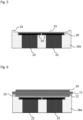
- FIG. 1 shows, in a schematic manner, a cross-section through a power electronics module 10.
- the power electronics module 10 comprises a substrate 11 with a first metallization area 12 on one of its main surfaces.
- the substrate 11 may be a ceramic substrate with a metallization layer formed on one side.
- a common, uninterrupted joining layer 13 is formed on a surface of the first metallization area opposite the substrate 11.
- the joining layer 13 is a solder layer or a layer prepared by diffusion soldering.
- a group comprising two power electronic devices 14 is arranged on top of the joining layer 13, a group comprising two power electronic devices 14 is arranged.
- the group of power electronic devices 14 may comprise at least one semiconductor power diode and/or at least one semiconductor power transistors.
- the joining layer 13 is uninterrupted in the sense that it does not comprise any intentional gaps and/or provides a direct electrical path between the power electronic devices 14 of the same group, irrespective of an electrical path provided by the first metallization area 12.
- a remaining gap G between the two power electronic devices 14 is very small. That is to say, the power electronic devices 14 are arranged more or less directly adjacent to one another in the first metallization area 12. In terms of absolute distance, this may mean that the remaining gap G between the two power electronic devices 14 is smaller than 1 mm, for example 0.5 mm or less. In terms of relative distance, this may mean that the remaining gap G between the two power electronic devices 14 is smaller than 10% or 50 of the width and/or length of the adjacent power electronic devices 14.
- the joining layer 13 is substantially continuous, and preferably has no gap in an area located between two adjacent power electronic devices 14.
- the joining layer 13 is formed from a common body of joining material. For example, a single piece of material, such as a single solder preform, may be used. Alternatively, a paste-like joining material, such as solder paste, may be applied by dispensing or printing it in a continuous or patterned shape, such as a cross, snowflake, or multiple dots. A continuous joining layer 13 is formed by putting the power electronic devices 14 on the previously dispensed joining material.
- Figure 2 shows a top view of a power electronics module 10 with a total of five power electronic devices 14a to 14e, for three IGBTs (or other type of transistors) and two diodes.
- a first part 15, in Figure 2 the lower part covers a substantial part of the substrate 11, e.g. more than 50 percent of the total surface of the substrate 11, and comprises an essentially rectangular subarea 16, indicated using a dashed line, of a first metallization area 12.
- the subarea 16 represents the largest rectangular subarea of the first metallization area 12.
- a large proportion of the subarea 16, e.g. more than 95 percent, is covered by the five power electronic devices 14a to 14e. Only a remaining outer area of the subarea 16 near the outer edges of the five power electronic devices 14a to 14e is left uncovered.
- a smaller, second part 17 of the substrate 11, in Figure 2 the upper part may comprise further parts of the first metallization area and further metallization areas.
- metal traces used for connecting contact surfaces on the back side of the power electronic devices 14a to 14e and/or for connecting the power electronics modules 10 to other components or for joining of other electronic devices like sensor devices, passive device, control devices may be provided.
- the proportion of the subarea 16 can be at least 80 to 85 percent in some other variants of the power electronics module, e.g. when the shape of the subarea is other than the rectangular geometrical shape or when the current rating requirement is lower.
- further metallization areas and/or subareas may be provided.
- two different metallization areas may be provided for placement of one or more high-side group and one or more low-side group of power electronic devices, respectively (not shown).
- further metallization areas and corresponding groups of power electronic devices may be provided.
- one or more respective subareas for placement of power electronic devices may only cover a smaller part of the substrate's surface, but may still represent the largest continuous geometrical shape, such as a rectangle, of the respective metallization.
- the individual power electronic devices 14a to 14e touch each other or are separated only by a very narrow gap caused by the respective joining technique, as detailed below.
- the width of remaining gap G between the individual power electronic devices 14 is smaller than a width of a remaining outer edge E between the outside circumference of the first group of power electronic devices 14 and the respective outer circumference of the subarea 16.
- Figures 3 to 9 show how such a power electronics module may be formed by soldering.
- a modified solder fixture 18 is explained with reference to Figures 3 and 4 , before individual phases of a related manufacturing process are explained with reference to Figures 5 to 9 .
- Figures 3 and 4 show a perspective and a plane view of a first part 18a of the solder fixture 18, respectively.
- the first part 18a of the solder fixture 18 comprises a number of depressions for holding the components of power electronics module 10.
- a larger, relatively shallow first recess 19 corresponds to the outer circumference of the substrate 11 and/or the metallization areas formed thereon, and serves to hold the substrate 11 during soldering.
- a smaller, slightly deeper, second recess 20 is formed within the first recess 19, and is configured to hold a plurality of power electronic devices 14.
- the second recess 20 is configured to hold the five power electronic devices 14a to 14e previously shown in Figure 2 and a common solder preform, as explained later. While only a single second recess 20 configured for holding a single group of power electronic devices 14 is shown in Figures 3 and 4 , fixtures 18 comprising several second recesses 20 for multiple groups arranged on the same or different metallization areas 12 are also envisioned.
- the first part 18a of the solder fixture 18 comprises a number of further depressions, openings and other structural features that facilitate insertion and removal of the various components into and out of the solder fixture 18, and for accommodating weights for pushing down any power electronic devices 14 placed therein. For the sake of brevity, these are not described in detail here.
- a rectangular area 21 formed by the second recess 20 is highlighted using a dashed line. Attention is drawn to the fact that the edges of the second recess 20 corresponding to the rectangular area 21 serve to align all of the power electronic devices 14 and the common solder preform together. In contrast, no internal dividing or alignment features are provided between the positions of the individual power electronic devices 14a to 14e. Avoidance of such internal protrusions increases the space available for placement of the power electronic devices 14. Further attention is drawn to the fact that the rectangular area 21 formed within the second recess 20 essentially corresponds to or is only smaller by a relatively small fraction, e.g. a distance corresponding to a solder meniscus and/or needed for alignment, than the subarea 16 of the first metallization area 12.
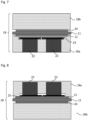
- FIG. 5 shows, in a schematic manner, a first stage in the manufacturing of a power electronics module 10.
- multiple power electronic devices 14 have been placed in a common recess 20, from which only two are visible in the cross-section of Figures 5 to 9 .
- a corresponding weight 22 is arranged, which may be a loose part or may be attached to the first part 18a of the solder fixture 18 in a movable manner.
- solder preform 23 covers corresponding contact surfaces of the two power electronic devices 14 and essentially extends over the entire widths of the second recess 20. Accordingly, the same solder preform may be used, irrespective of the individual size of the used power electronic devices 14. For example, the same solder preform 23 may be used to attach two full-size or four half-size chips to the same metallization area 12. Attention is drawn once again to the fact that no separating protrusion is present between the two power electronic devices 14.
- Figure 6 shows a further stage in the manufacturing process.
- a double-sided substrate 11 comprising a first metallization area 12 on the first side and a second metallization area 24 arranged on the opposite, second side of the substrate 11 is placed in the first part 18a of the solder fixture 18.
- the first side may correspond to a backside
- the second side may correspond to a front side of the substrate 11.
- the first metallization area 12 is placed in the first recess 19 surrounding the second recess 20 such that a subarea of the first metallization area 12, for example the subarea 16 shown in Figure 2 , is aligned with the power electronic devices 14.
- a second part 18b of the solder fixture 18 (fixture bottom plate) is placed on top of the substrate 11, i.e. the second metallization area 24, to close the solder fixture 18.
- the closed solder fixture 18 comprising the first part 18a and the second part 18b is flipping, such that the weights 22 press the respective power electronic devices 14 against the first metallization area 12.
- the solder preform 23 is heated or otherwise liquefied, resulting in a layer of liquid solder material 25.
- a process gas or liquid such as hydrogen, or formic acid may be applied during soldering, to support or enable a chemical reduction of the solder material.
- hydrogen or formic acid may be used for reduction of the solder material of the solder preform 23.
- an inert gas like nitrogen may be applied during at least phases of the joining process.
- the solidified solder material 25 forms a common, uninterrupted solder layer 26 as shown in Figure 9 .
- the thickness of the solder layer 26 may vary to a small extend in areas below the power electronic devices 14 and neighbouring areas, e.g. by a limited overflow of the soldering material into the gap G or towards the edge E. Nonetheless, such a solder layer 26 may be described as homogenous, as it is formed in a single rather than several successive soldering steps.
- solder fixture 18 can be removed, with the individual power electronic devices 14 being mechanically and electrically attached to the first metallization area 12.
- the solder layer 26 may also serve as a thermal connection between the power electronic devices 14 and the substrate 11, e.g. for cooling of the power electronic devices 14. Due to the uninterrupted nature of the common joining layer 13 and/or the larger total surface area of the power electronic devices 14, the thermal capabilities of the resulting power electronics module 10 may also be improved, for example, by achieving a more uniform heat distribution.
- the individual power electronic devices 14 are essentially self-aligned by a solder meniscus 27 formed at the periphery of power electronic devices 14, e.g. by merging with the meniscus of an adjacent power electronic device 14, indicated by a recess 36 in the solder layer 26 in a remaining, internal gap between the power electronic devices 14, and a clear meniscus 27 on the outer periphery of the group of power electronic devices 14.
- the physical properties of the solder material itself provides an alignment aid, further alleviating the need for internal protrusions within the second depression 20 of the solder fixture 18.
- a controlled pressure may be applied to the power electronic devices 14, e.g. by corresponding fixtures.
- solder paste is coated on a surface of the first metallization area 12.
- a subarea intended for the placement of power electronic devices 14 may be covered with a patterned layer of a viscous solder paste by printing or coating or dispensing.
- the power electronic devices 14 of the first group are then mounted, for example, using a pick-and-place process and a subsequent thermal process, such as reflow soldering or another bonding technique, resulting in a common, uninterrupted solder layer 26 as described above.
- use of a fixture for holding the power electronic devices 14 is optional, as the power electronic devices 14 may be held in place before and during soldering by the solder paste.
- each group can be mounted separately, as described below with respect to sintering.
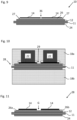
- Figures 10 and 11 show an intermediate stage and resulting power electronics module 28 formed by an alternative, more conventional method of attaching two power electronic devices 14 to a substrate 11 with a first metallization area 12.
- each one of the power electronic devices 14 is individually aligned on all sides before and during soldering.
- a protrusion 29 is present in a first part 18a of a solder fixture 18, separating the power electronic devices 14 and individual solder preforms from each other. Accordingly, two separate solder preforms 23a and 23b must be placed in each one of two corresponding recesses 20a and 20b. During the soldering process, the power electronic devices 14 as well as the solder materials remain separated by the protrusion 29.
- two separate solder layers 26a and 26b are formed, which are separated from one another (except for unintentional solder overflows) by a corresponding gap G, which typically exceeds 1 mm in width.
- the surface area of the substrate 11 and corresponding part of the first metallization area 12 according to the gap G is lost for the placement of active components, so the chip sizes and consequently the active areas of the chips must be smaller. This leads to a lower current rating of the power electronics module 28 compared to the power electronics module 10 of Figure 9 .
- Figures 12 to 15 show, in a schematic manner, different stages of a manufacturing method for a power electronics module 10 based on sintering, which is not covered by the attached set of claims.
- a layer of sinter material is provided on a first metallization area 12 of a double-sided substrate 11.
- sintering preform 30 may be placed on the first metallization area 12.
- a layer of sinter material may be applied, for example by printing, in a corresponding area of the first metallization area 12.
- multiple power electronic devices 14, forming a group of power electronic devices to be sintered, are placed on the sintering preform 30.
- a pick and place procedure may be used to place individual power semiconductor chips on the sinter preform 30.
- the substrate 11 with the aligned power electronic device 14 may be placed in a sinter press.
- a protective foil 31 may be placed on top of the power electronic devices 14 to provide mechanical protection and/or protection against contaminations during sintering, e.g. to protect corresponding electrodes or other parts of the upper side of the power electronic devices 14.
- a first part 32a of a sintering fixture 32 may be placed over the protective foil 31, the power electronic devices 14, the sintering preform 30 and the double-sided substrate 11 as shown in Figure 13 .
- the first part 32a of a sintering fixture 32 comprises a recess 33 for laterally holding and/or aligning the power electronic device 14 before and during sintering.
- a second part 32b of the sintering press or sintering fixture 32 is arranged on the opposite side of the double-sided substrate 11, i.e. below the second metallization area 24, a second part 32b of the sintering press or sintering fixture 32 is arranged.
- sintering fixture is used here and a profiled sintering fixture 32 is shown for better understanding, attention is drawn to the fact that, in its simplest form, sintering may be performed between two arbitrary, flat surfaces. That is to say, the recess 33 represents an optional feature for the sintering process.
- the two opposite surfaces used for sintering are closed and pressed against each other to sinter the material of the sinter preform 30 into an essentially uniform sinter layer 34 between the power electronic devices 14 and the first metallization area 12.
- sintering based on mechanical pressing has been described above, other known sintering processes based on heat and/or a processing atmospheric may also be used or combined with a mechanical sintering process.
- sintering may be performed in an atmosphere consisting of an inert gas to avoid unwanted chemical reactions.
- the sintering layer 34 provides both a mechanical and electrical connection between the adjoining parts, and may also provide a thermal connection.
- the sintering fixture 32 may be removed and further processing steps may take place.
- one or more bond wires 35 may be connected to electrical contacts arranged on the opposite, upper surface of the individual power electronic devices 14, for example between different power electronic devices 14 as shown in Figure 15 , or between a power electronic device 14 and a metallization area (not shown). In this way, for example, a relatively large number of power electronic devices 14 may be connected electrically in parallel.
- different groups of power electronic devices 14 may be soldered tc a common metallization area 12 in successive stages.
- a single preform or area covered with joining material, such as a solder paste may only cover a part of the first metallization area 12, which corresponds to a respective first group of power electronic devices 14.
- the above solder or sintering processed may be repeated for the second main surface of the substrate, thereby forming power electronics modules 10 carrying power electronic devices 14 on the two opposite metallization areas 12 and 24.
- a common, uninterrupted joining layer 13 may also be formed using an adhesive layer.
- a preferably electrically conductive, double-sided adhesive tape may be placed on an upper surface of a first metallization area 12 of a substrate 11. Thereafter, individual power electronic devices 14 forming a group of power electronic devices can be placed on the opposite second adhesive surface of the double-sided adhesive tape, e.g. by a pick and place process.
- a preferably electrically conductive, typically patterned layer of liquid or viscous glue such as a silver glue
- a preferably electrically conductive, typically patterned layer of liquid or viscous glue may be dispensed, for example in a patterned layer, by scribing, dispensing, printing or coating the liquid or viscous glue on the surface of the first metallization area 12, or on corresponding contact surfaces of a plurality of power electronic devices 14 held in a common fixture similar to the first part 18a of the solder fixture 18 shown in Figures 3 and 4 .
- the first metallization area 12 may be aligned with the group of power electronic devices 14.
- the liquid or viscous glue forms a homogenous layer.
- the glue may be cured using an appropriate process, such as heating or evaporating of a solvent, resulting an essentially homogenous, uninterrupted joining layer 13.
Landscapes
- Die Bonding (AREA)
Claims (10)
- Leistungshalbleitermodul (10), umfassend:- ein Substrat (11) mit mindestens einem ersten Metallisierungsbereich (12);- eine erste Gruppe von Leistungshalbleiterbauelementen (14), die in dem ersten Metallisierungsbereich (12) angeordnet sind, wobei die erste Gruppe eine Mehrzahl von Leistungshalbleiterbauelementen (14) umfasst; und- eine gemeinsame, unterbrechungsfreie Verbindungsschicht (13) aus Lotmaterial (25), das zwischen dem ersten Metallisierungsbereich (12) und der ersten Gruppe von Leistungshalbleiterbauelementen (14) angeordnet ist, wobei die gemeinsame, unterbrechungsfreie Verbindungsschicht (13) einen mechanischen und einen elektrischen Kontakt zwischen dem ersten Metallisierungsbereich (12) und der ersten Gruppe von Leistungshalbleiterbauelementen (14) herstellt;- wobei jedes der Leistungshalbleiterbauelemente (14) der ersten Gruppe direkt benachbart zu mindestens einem anderen Leistungshalbleiterbauelement (14) der ersten Gruppe angeordnet ist;- wobei die einzelnen Leistungshalbleiterbauelemente (14) während eines Lötprozesses zum Verbinden der Leistungshalbleiterbauelemente (14) mit dem Metallisierungsbereich (12) durch einen an der Peripherie jedes Leistungshalbleiterbauelements (14) gebildeten Lötmeniskus (27) selbstjustierend sind, wobei der Lötmeniskus benachbarter Leistungshalbleiterbauelemente (14) so ineinanderfließt, dass die Lotschicht (26) eine Aussparung (36) in einem inneren Spalt zwischen benachbarten Leistungshalbleiterbauelementen (14) umfasst;- wobei die erste Gruppe von Leistungshalbleiterbauelementen an ihrer äußeren Peripherie einen freien Meniskus (27) umfasst; und- wobei ein Abstand zwischen benachbarten Leistungshalbleiterbauelementen (14) der ersten Gruppe kleiner als 1 mm ist.
- Leistungshalbleitermodul (10) nach Anspruch 1, wobei der Abstand zwischen benachbarten Leistungshalbleiterbauelementen (14) der ersten Gruppe kleiner als 0,5 mm ist.
- Leistungshalbleitermodul (10) nach Anspruch 1 oder 2, wobei der erste Metallisierungsbereich (12) einen rechteckigen Teilbereich (16) umfasst, der mehr als 50 Prozent, vorzugsweise mehr als 75 Prozent, einer Hauptoberfläche des ersten Metallisierungsbereichs (12) und/oder des Substrats (11) bedeckt, und die gemeinsame, unterbrechungsfreie Verbindungsschicht (13) den gesamten rechteckigen Teilbereich (16) bedeckt.
- Leistungshalbleitermodul (10) nach Anspruch 3, wobei ein Abstand zwischen einem Außenumfang des rechteckigen Teilbereichs (16) und einer Außenkante eines nächstgelegenen Leistungshalbleiterbauelements (14) der ersten Gruppe größer als ein Abstand zwischen benachbarten Leistungshalbleiterbauelementen (14) der ersten Gruppe ist.
- Leistungshalbleitermodul (10) nach einem der Ansprüche 1 bis 4, wobei die Leistungshalbleiterbauelemente (14) der ersten Gruppe Halbleiterchips sind, die mindestens einen MOSFET, einen MISFET, einen JFET, einen IBGT oder eine Diode umfassen.
- Leistungshalbleitermodul (10) nach einem der Ansprüche 1 bis 5, wobei jeder der Halbleiterchips mindestens zwei Anschlüsse umfasst, und die Anschlüsse jedes einzelnen Chips elektrisch parallelgeschaltet sind.
- Leistungshalbleitermodul (10) nach einem der Ansprüche 1 bis 6, wobei die erste Gruppe von Leistungshalbleiterbauelementen (14) mindestens zwei verschiedene Typen von Leistungshalbleiterbauelementen umfasst, die in dem ersten Metallisierungsbereich (12) angeordnet sind.
- Verfahren zur Herstellung eines Leistungshalbleitermoduls (10), umfassend:- Anordnen einer Schicht aus Lotmaterial (25) zwischen einem ersten Metallisierungsbereich (12) eines Substrats (11) und jeweiligen Kontaktoberflächen einer ersten Gruppe von Leistungshalbleiterbauelementen (14), wobei die erste Gruppe eine Mehrzahl von Leistungshalbleiterbauelementen (14) umfasst, und jedes der Leistungshalbleiterbauelemente (14) der ersten Gruppe direkt benachbart zu mindestens einem anderen Leistungshalbleiterbauelement (14) der ersten Gruppe angeordnet ist; und- Bilden einer gemeinsamen, unterbrechungsfreien Lotschicht (26) aus dem Lotmaterial (25) durch Aufbringen eines Gewichts oder kontrollierten Drucks auf die Leistungshalbleiterbauelemente (14) der ersten Gruppe von Leistungshalbleiterbauelementen (14), wobei:- die gemeinsame, unterbrechungsfreie Lotschicht (26) einen mechanischen und einen elektrischen Kontakt zwischen dem ersten Metallisierungsbereich (12) und der ersten Gruppe von Leistungshalbleiterbauelementen (14) herstellt;- während des Schritts des Bildens der gemeinsamen, unterbrechungsfreien Lotschicht (26) ein Lötmeniskus (27) aus dem Lotmaterial an der Peripherie der Leistungshalbleiterbauelemente (14) gebildet wird, so dass die einzelnen Leistungshalbleiterbauelemente (14) aufgrund der Oberflächenspannung des flüssigen Lotmaterials selbstjustierend sind; wobei der Lötmeniskus benachbarter Leistungshalbleiterbauelemente (14) so ineinanderfließt, dass eine Aussparung (36) in der Lotschicht (26) in einem verbleibenden, inneren Spalt zwischen den Leistungshalbleiterbauelementen (14) gebildet wird, und an der äußeren Peripherie der Gruppe von Leistungshalbleiterbauelementen ein freier Meniskus (27) gebildet wird; und- ein Abstand zwischen benachbarten Leistungshalbleiterbauelementen (14) der ersten Gruppe kleiner als 1 mm ist.
- Verfahren nach Anspruch 8, wobei die Schicht aus Lotmaterial (25) eine Lötvorform (23) umfasst, und das Verfahren insbesondere umfasst:- Platzieren der ersten Gruppe von Leistungshalbleiterbauelementen (14) in einer gemeinsamen Aussparung (20) eines ersten Teils (18a) einer Löthalterung (18), wobei die gemeinsame Aussparung (20) frei von Vorsprüngen zum Trennen von Leistungshalbleiterbauelementen (14) der ersten Gruppe ist;- Platzieren der Lötvorform (23) auf den Kontaktflächen der Leistungshalbleiterbauelemente (14) der ersten Gruppe;- Platzieren des Substrats (11) mit dem mindestens einen Metallisierungsbereich (12) auf der Lötvorform (23) ;- Schließen der Löthalterung (18); und- Anwenden eines Lötprozesses, um die kontinuierliche Lötvorform (23) in die gemeinsame, unterbrechungsfreie Lotschicht (26) zu transformieren.
- Verfahren nach Anspruch 8, wobei die Schicht aus Verbindungsmaterial eine Schicht aus Lotpaste umfasst, und das Verfahren insbesondere umfasst:- Beschichten mindestens eines Teils des ersten Metallisierungsbereichs (12) mit einer Schicht aus Lotpaste;- Platzieren der ersten Gruppe von Leistungshalbleiterbauelementen (14) auf der Schicht aus Lotpaste; und- Anwenden eines Lötprozesses, um die Lotpaste in die gemeinsame, unterbrechungsfreie Lotschicht (26) zu transformieren.
Priority Applications (3)
| Application Number | Priority Date | Filing Date | Title |
|---|---|---|---|
| EP22155917.2A EP4227995B1 (de) | 2022-02-09 | 2022-02-09 | Leistungselektronikmodul und verfahren zu dessen herstellung |
| PCT/EP2023/053068 WO2023152160A1 (en) | 2022-02-09 | 2023-02-08 | Power electronics module and method for its manufacture |
| CN202380020781.8A CN118891726A (zh) | 2022-02-09 | 2023-02-08 | 功率电子模块及其制造方法 |
Applications Claiming Priority (1)
| Application Number | Priority Date | Filing Date | Title |
|---|---|---|---|
| EP22155917.2A EP4227995B1 (de) | 2022-02-09 | 2022-02-09 | Leistungselektronikmodul und verfahren zu dessen herstellung |
Publications (2)
| Publication Number | Publication Date |
|---|---|
| EP4227995A1 EP4227995A1 (de) | 2023-08-16 |
| EP4227995B1 true EP4227995B1 (de) | 2024-09-11 |
Family
ID=80446487
Family Applications (1)
| Application Number | Title | Priority Date | Filing Date |
|---|---|---|---|
| EP22155917.2A Active EP4227995B1 (de) | 2022-02-09 | 2022-02-09 | Leistungselektronikmodul und verfahren zu dessen herstellung |
Country Status (3)
| Country | Link |
|---|---|
| EP (1) | EP4227995B1 (de) |
| CN (1) | CN118891726A (de) |
| WO (1) | WO2023152160A1 (de) |
Families Citing this family (2)
| Publication number | Priority date | Publication date | Assignee | Title |
|---|---|---|---|---|
| KR20250155815A (ko) * | 2024-04-24 | 2025-10-31 | 현대모비스 주식회사 | 반도체 제조를 위한 이송장치 |
| WO2025226298A1 (en) * | 2024-04-25 | 2025-10-30 | Microchip Technology Incorporated | Semiconductor device and method for manufacturing same |
Citations (2)
| Publication number | Priority date | Publication date | Assignee | Title |
|---|---|---|---|---|
| US20180350780A1 (en) * | 2016-04-04 | 2018-12-06 | Infineon Technologies Ag | An Electronic Device Package |
| US20190006260A1 (en) * | 2017-07-02 | 2019-01-03 | Infineon Technologies Ag | Molded package with chip carrier comprising brazed electrically conductive layers |
Family Cites Families (5)
| Publication number | Priority date | Publication date | Assignee | Title |
|---|---|---|---|---|
| DE19735531A1 (de) * | 1997-08-16 | 1999-02-18 | Abb Research Ltd | Leistungshalbleitermodul mit in Submodulen integrierten Kühlern |
| US5888884A (en) * | 1998-01-02 | 1999-03-30 | General Electric Company | Electronic device pad relocation, precision placement, and packaging in arrays |
| DE102008048869A1 (de) * | 2008-09-25 | 2010-04-22 | Infineon Technologies Ag | Vorrichtung und Verfahren zum Verbinden zweier Verbindungspartner |
| EP2804209A1 (de) * | 2013-05-17 | 2014-11-19 | ABB Technology AG | Geformtes Elektronikmodul |
| US20190287943A1 (en) * | 2015-08-31 | 2019-09-19 | Delta Electronics (Shanghai) Co., Ltd | Power package module of multiple power chips and method of manufacturing power chip unit |
-
2022
- 2022-02-09 EP EP22155917.2A patent/EP4227995B1/de active Active
-
2023
- 2023-02-08 CN CN202380020781.8A patent/CN118891726A/zh active Pending
- 2023-02-08 WO PCT/EP2023/053068 patent/WO2023152160A1/en not_active Ceased
Patent Citations (2)
| Publication number | Priority date | Publication date | Assignee | Title |
|---|---|---|---|---|
| US20180350780A1 (en) * | 2016-04-04 | 2018-12-06 | Infineon Technologies Ag | An Electronic Device Package |
| US20190006260A1 (en) * | 2017-07-02 | 2019-01-03 | Infineon Technologies Ag | Molded package with chip carrier comprising brazed electrically conductive layers |
Also Published As
| Publication number | Publication date |
|---|---|
| EP4227995A1 (de) | 2023-08-16 |
| WO2023152160A1 (en) | 2023-08-17 |
| CN118891726A (zh) | 2024-11-01 |
Similar Documents
| Publication | Publication Date | Title |
|---|---|---|
| US12094793B2 (en) | Package with electrically insulated carrier and at least one step on encapsulant | |
| US10204882B2 (en) | Stacked package module having an exposed heat sink surface from the packaging | |
| US8921159B2 (en) | Stacked interposer leadframes | |
| EP3130009B1 (de) | Gleichstrom-gleichstrom-wandler mit anschlüssen für halbleiterchips | |
| US20160027711A1 (en) | Semiconductor module | |
| EP2889902B1 (de) | Elektrische leistungshalbleitervorrichtung | |
| EP3690938A1 (de) | Halbleiterbauelement und herstellungsverfahren dafür | |
| KR20240141193A (ko) | 크리페이지 연장 구조체를 갖는 반도체 패키지 | |
| EP4227995B1 (de) | Leistungselektronikmodul und verfahren zu dessen herstellung | |
| US9437508B2 (en) | Method for manufacturing semiconductor device and semiconductor device | |
| US20250118640A1 (en) | Multiple substrate package systems and related methods | |
| US20220148934A1 (en) | Linear spacer for spacing a carrier of a package | |
| US20240178094A1 (en) | Semiconductor package | |
| US11410906B2 (en) | Semiconductor package and method for fabricating a semiconductor package | |
| CN114334884B (zh) | 具有带有开口槽口的焊盘的封装体 | |
| EP1696484B1 (de) | Verfahren zum Zusammenbau einer doppelseitigen Schaltungskomponente | |
| US11848257B2 (en) | Bending semiconductor chip for connection at different vertical levels | |
| US20250183131A1 (en) | Semiconductor device, electronic device, and method of manufacturing electronic device | |
| US20250218887A1 (en) | Semiconductor device and manufacturing method of semiconductor device | |
| US20250279388A1 (en) | Semiconductor device | |
| US12543579B2 (en) | Dual side cooled power module with three-dimensional direct bonded metal substrates | |
| US20250054840A1 (en) | Power module having a lead frame that provides substrate support and forms terminals of the power module | |
| US20260082944A1 (en) | Semiconductor device and method for manufacturing the same | |
| EP4428914A1 (de) | Leistungshalbleitermodulanordnung | |
| EP4369394A1 (de) | Leistungshalbleitergehäuse und verfahren zu seiner herstellung |
Legal Events
| Date | Code | Title | Description |
|---|---|---|---|
| STAA | Information on the status of an ep patent application or granted ep patent |
Free format text: STATUS: EXAMINATION IS IN PROGRESS |
|
| PUAI | Public reference made under article 153(3) epc to a published international application that has entered the european phase |
Free format text: ORIGINAL CODE: 0009012 |
|
| 17P | Request for examination filed |
Effective date: 20220923 |
|
| AK | Designated contracting states |
Kind code of ref document: A1 Designated state(s): AL AT BE BG CH CY CZ DE DK EE ES FI FR GB GR HR HU IE IS IT LI LT LU LV MC MK MT NL NO PL PT RO RS SE SI SK SM TR |
|
| RAP1 | Party data changed (applicant data changed or rights of an application transferred) |
Owner name: HITACHI ENERGY LTD |
|
| GRAP | Despatch of communication of intention to grant a patent |
Free format text: ORIGINAL CODE: EPIDOSNIGR1 |
|
| STAA | Information on the status of an ep patent application or granted ep patent |
Free format text: STATUS: GRANT OF PATENT IS INTENDED |
|
| INTG | Intention to grant announced |
Effective date: 20240411 |
|
| GRAS | Grant fee paid |
Free format text: ORIGINAL CODE: EPIDOSNIGR3 |
|
| P01 | Opt-out of the competence of the unified patent court (upc) registered |
Free format text: CASE NUMBER: APP_38560/2024 Effective date: 20240627 |
|
| GRAA | (expected) grant |
Free format text: ORIGINAL CODE: 0009210 |
|
| STAA | Information on the status of an ep patent application or granted ep patent |
Free format text: STATUS: THE PATENT HAS BEEN GRANTED |
|
| AK | Designated contracting states |
Kind code of ref document: B1 Designated state(s): AL AT BE BG CH CY CZ DE DK EE ES FI FR GB GR HR HU IE IS IT LI LT LU LV MC MK MT NL NO PL PT RO RS SE SI SK SM TR |
|
| REG | Reference to a national code |
Ref country code: GB Ref legal event code: FG4D |
|
| REG | Reference to a national code |
Ref country code: CH Ref legal event code: EP |
|
| REG | Reference to a national code |
Ref country code: DE Ref legal event code: R096 Ref document number: 602022005941 Country of ref document: DE |
|
| REG | Reference to a national code |
Ref country code: IE Ref legal event code: FG4D |
|
| REG | Reference to a national code |
Ref country code: DE Ref legal event code: R079 Ref document number: 602022005941 Country of ref document: DE Free format text: PREVIOUS MAIN CLASS: H01L0025070000 Ipc: H10D0080200000 |
|
| REG | Reference to a national code |
Ref country code: LT Ref legal event code: MG9D |
|
| PG25 | Lapsed in a contracting state [announced via postgrant information from national office to epo] |
Ref country code: NO Free format text: LAPSE BECAUSE OF FAILURE TO SUBMIT A TRANSLATION OF THE DESCRIPTION OR TO PAY THE FEE WITHIN THE PRESCRIBED TIME-LIMIT Effective date: 20241211 |
|
| REG | Reference to a national code |
Ref country code: NL Ref legal event code: MP Effective date: 20240911 |
|
| PG25 | Lapsed in a contracting state [announced via postgrant information from national office to epo] |
Ref country code: GR Free format text: LAPSE BECAUSE OF FAILURE TO SUBMIT A TRANSLATION OF THE DESCRIPTION OR TO PAY THE FEE WITHIN THE PRESCRIBED TIME-LIMIT Effective date: 20241212 Ref country code: FI Free format text: LAPSE BECAUSE OF FAILURE TO SUBMIT A TRANSLATION OF THE DESCRIPTION OR TO PAY THE FEE WITHIN THE PRESCRIBED TIME-LIMIT Effective date: 20240911 |
|
| PG25 | Lapsed in a contracting state [announced via postgrant information from national office to epo] |
Ref country code: BG Free format text: LAPSE BECAUSE OF FAILURE TO SUBMIT A TRANSLATION OF THE DESCRIPTION OR TO PAY THE FEE WITHIN THE PRESCRIBED TIME-LIMIT Effective date: 20240911 |
|
| PG25 | Lapsed in a contracting state [announced via postgrant information from national office to epo] |
Ref country code: LV Free format text: LAPSE BECAUSE OF FAILURE TO SUBMIT A TRANSLATION OF THE DESCRIPTION OR TO PAY THE FEE WITHIN THE PRESCRIBED TIME-LIMIT Effective date: 20240911 |
|
| PG25 | Lapsed in a contracting state [announced via postgrant information from national office to epo] |
Ref country code: HR Free format text: LAPSE BECAUSE OF FAILURE TO SUBMIT A TRANSLATION OF THE DESCRIPTION OR TO PAY THE FEE WITHIN THE PRESCRIBED TIME-LIMIT Effective date: 20240911 |
|
| PG25 | Lapsed in a contracting state [announced via postgrant information from national office to epo] |
Ref country code: ES Free format text: LAPSE BECAUSE OF FAILURE TO SUBMIT A TRANSLATION OF THE DESCRIPTION OR TO PAY THE FEE WITHIN THE PRESCRIBED TIME-LIMIT Effective date: 20240911 Ref country code: RS Free format text: LAPSE BECAUSE OF FAILURE TO SUBMIT A TRANSLATION OF THE DESCRIPTION OR TO PAY THE FEE WITHIN THE PRESCRIBED TIME-LIMIT Effective date: 20241211 |
|
| PG25 | Lapsed in a contracting state [announced via postgrant information from national office to epo] |
Ref country code: RS Free format text: LAPSE BECAUSE OF FAILURE TO SUBMIT A TRANSLATION OF THE DESCRIPTION OR TO PAY THE FEE WITHIN THE PRESCRIBED TIME-LIMIT Effective date: 20241211 Ref country code: NO Free format text: LAPSE BECAUSE OF FAILURE TO SUBMIT A TRANSLATION OF THE DESCRIPTION OR TO PAY THE FEE WITHIN THE PRESCRIBED TIME-LIMIT Effective date: 20241211 Ref country code: LV Free format text: LAPSE BECAUSE OF FAILURE TO SUBMIT A TRANSLATION OF THE DESCRIPTION OR TO PAY THE FEE WITHIN THE PRESCRIBED TIME-LIMIT Effective date: 20240911 Ref country code: HR Free format text: LAPSE BECAUSE OF FAILURE TO SUBMIT A TRANSLATION OF THE DESCRIPTION OR TO PAY THE FEE WITHIN THE PRESCRIBED TIME-LIMIT Effective date: 20240911 Ref country code: GR Free format text: LAPSE BECAUSE OF FAILURE TO SUBMIT A TRANSLATION OF THE DESCRIPTION OR TO PAY THE FEE WITHIN THE PRESCRIBED TIME-LIMIT Effective date: 20241212 Ref country code: FI Free format text: LAPSE BECAUSE OF FAILURE TO SUBMIT A TRANSLATION OF THE DESCRIPTION OR TO PAY THE FEE WITHIN THE PRESCRIBED TIME-LIMIT Effective date: 20240911 Ref country code: ES Free format text: LAPSE BECAUSE OF FAILURE TO SUBMIT A TRANSLATION OF THE DESCRIPTION OR TO PAY THE FEE WITHIN THE PRESCRIBED TIME-LIMIT Effective date: 20240911 Ref country code: BG Free format text: LAPSE BECAUSE OF FAILURE TO SUBMIT A TRANSLATION OF THE DESCRIPTION OR TO PAY THE FEE WITHIN THE PRESCRIBED TIME-LIMIT Effective date: 20240911 |
|
| REG | Reference to a national code |
Ref country code: AT Ref legal event code: MK05 Ref document number: 1723485 Country of ref document: AT Kind code of ref document: T Effective date: 20240911 |
|
| PG25 | Lapsed in a contracting state [announced via postgrant information from national office to epo] |
Ref country code: NL Free format text: LAPSE BECAUSE OF FAILURE TO SUBMIT A TRANSLATION OF THE DESCRIPTION OR TO PAY THE FEE WITHIN THE PRESCRIBED TIME-LIMIT Effective date: 20240911 |
|
| PG25 | Lapsed in a contracting state [announced via postgrant information from national office to epo] |
Ref country code: PT Free format text: LAPSE BECAUSE OF FAILURE TO SUBMIT A TRANSLATION OF THE DESCRIPTION OR TO PAY THE FEE WITHIN THE PRESCRIBED TIME-LIMIT Effective date: 20250113 Ref country code: IS Free format text: LAPSE BECAUSE OF FAILURE TO SUBMIT A TRANSLATION OF THE DESCRIPTION OR TO PAY THE FEE WITHIN THE PRESCRIBED TIME-LIMIT Effective date: 20250111 |
|
| PGFP | Annual fee paid to national office [announced via postgrant information from national office to epo] |
Ref country code: DE Payment date: 20250218 Year of fee payment: 4 |
|
| PG25 | Lapsed in a contracting state [announced via postgrant information from national office to epo] |
Ref country code: SM Free format text: LAPSE BECAUSE OF FAILURE TO SUBMIT A TRANSLATION OF THE DESCRIPTION OR TO PAY THE FEE WITHIN THE PRESCRIBED TIME-LIMIT Effective date: 20240911 |
|
| PG25 | Lapsed in a contracting state [announced via postgrant information from national office to epo] |
Ref country code: EE Free format text: LAPSE BECAUSE OF FAILURE TO SUBMIT A TRANSLATION OF THE DESCRIPTION OR TO PAY THE FEE WITHIN THE PRESCRIBED TIME-LIMIT Effective date: 20240911 Ref country code: AT Free format text: LAPSE BECAUSE OF FAILURE TO SUBMIT A TRANSLATION OF THE DESCRIPTION OR TO PAY THE FEE WITHIN THE PRESCRIBED TIME-LIMIT Effective date: 20240911 |
|
| PG25 | Lapsed in a contracting state [announced via postgrant information from national office to epo] |
Ref country code: CZ Free format text: LAPSE BECAUSE OF FAILURE TO SUBMIT A TRANSLATION OF THE DESCRIPTION OR TO PAY THE FEE WITHIN THE PRESCRIBED TIME-LIMIT Effective date: 20240911 Ref country code: PL Free format text: LAPSE BECAUSE OF FAILURE TO SUBMIT A TRANSLATION OF THE DESCRIPTION OR TO PAY THE FEE WITHIN THE PRESCRIBED TIME-LIMIT Effective date: 20240911 |
|
| PG25 | Lapsed in a contracting state [announced via postgrant information from national office to epo] |
Ref country code: SK Free format text: LAPSE BECAUSE OF FAILURE TO SUBMIT A TRANSLATION OF THE DESCRIPTION OR TO PAY THE FEE WITHIN THE PRESCRIBED TIME-LIMIT Effective date: 20240911 Ref country code: IT Free format text: LAPSE BECAUSE OF FAILURE TO SUBMIT A TRANSLATION OF THE DESCRIPTION OR TO PAY THE FEE WITHIN THE PRESCRIBED TIME-LIMIT Effective date: 20240911 |
|
| REG | Reference to a national code |
Ref country code: DE Ref legal event code: R097 Ref document number: 602022005941 Country of ref document: DE |
|
| PG25 | Lapsed in a contracting state [announced via postgrant information from national office to epo] |
Ref country code: DK Free format text: LAPSE BECAUSE OF FAILURE TO SUBMIT A TRANSLATION OF THE DESCRIPTION OR TO PAY THE FEE WITHIN THE PRESCRIBED TIME-LIMIT Effective date: 20240911 |
|
| PLBE | No opposition filed within time limit |
Free format text: ORIGINAL CODE: 0009261 |
|
| STAA | Information on the status of an ep patent application or granted ep patent |
Free format text: STATUS: NO OPPOSITION FILED WITHIN TIME LIMIT |
|
| 26N | No opposition filed |
Effective date: 20250612 |
|
| PG25 | Lapsed in a contracting state [announced via postgrant information from national office to epo] |
Ref country code: SE Free format text: LAPSE BECAUSE OF FAILURE TO SUBMIT A TRANSLATION OF THE DESCRIPTION OR TO PAY THE FEE WITHIN THE PRESCRIBED TIME-LIMIT Effective date: 20240911 |
|
| PG25 | Lapsed in a contracting state [announced via postgrant information from national office to epo] |
Ref country code: MC Free format text: LAPSE BECAUSE OF FAILURE TO SUBMIT A TRANSLATION OF THE DESCRIPTION OR TO PAY THE FEE WITHIN THE PRESCRIBED TIME-LIMIT Effective date: 20240911 |
|
| REG | Reference to a national code |
Ref country code: CH Ref legal event code: PL |
|
| PG25 | Lapsed in a contracting state [announced via postgrant information from national office to epo] |
Ref country code: LU Free format text: LAPSE BECAUSE OF NON-PAYMENT OF DUE FEES Effective date: 20250209 |
|
| PG25 | Lapsed in a contracting state [announced via postgrant information from national office to epo] |
Ref country code: CH Free format text: LAPSE BECAUSE OF NON-PAYMENT OF DUE FEES Effective date: 20250228 |
|
| REG | Reference to a national code |
Ref country code: BE Ref legal event code: MM Effective date: 20250228 |
|
| PG25 | Lapsed in a contracting state [announced via postgrant information from national office to epo] |
Ref country code: FR Free format text: LAPSE BECAUSE OF NON-PAYMENT OF DUE FEES Effective date: 20250228 |
|
| PG25 | Lapsed in a contracting state [announced via postgrant information from national office to epo] |
Ref country code: BE Free format text: LAPSE BECAUSE OF NON-PAYMENT OF DUE FEES Effective date: 20250228 |
|
| PG25 | Lapsed in a contracting state [announced via postgrant information from national office to epo] |
Ref country code: IE Free format text: LAPSE BECAUSE OF NON-PAYMENT OF DUE FEES Effective date: 20250209 |