EP4227425B1 - Martensitisches edelstahlmaterial - Google Patents
Martensitisches edelstahlmaterial Download PDFInfo
- Publication number
- EP4227425B1 EP4227425B1 EP21877705.0A EP21877705A EP4227425B1 EP 4227425 B1 EP4227425 B1 EP 4227425B1 EP 21877705 A EP21877705 A EP 21877705A EP 4227425 B1 EP4227425 B1 EP 4227425B1
- Authority
- EP
- European Patent Office
- Prior art keywords
- steel material
- ave
- line segments
- concentrations
- measurement positions
- Prior art date
- Legal status (The legal status is an assumption and is not a legal conclusion. Google has not performed a legal analysis and makes no representation as to the accuracy of the status listed.)
- Active
Links
Images

Classifications
-
- C—CHEMISTRY; METALLURGY
- C21—METALLURGY OF IRON
- C21D—MODIFYING THE PHYSICAL STRUCTURE OF FERROUS METALS; GENERAL DEVICES FOR HEAT TREATMENT OF FERROUS OR NON-FERROUS METALS OR ALLOYS; MAKING METAL MALLEABLE, e.g. BY DECARBURISATION OR TEMPERING
- C21D1/00—General methods or devices for heat treatment, e.g. annealing, hardening, quenching or tempering
- C21D1/18—Hardening; Quenching with or without subsequent tempering
-
- C—CHEMISTRY; METALLURGY
- C21—METALLURGY OF IRON
- C21D—MODIFYING THE PHYSICAL STRUCTURE OF FERROUS METALS; GENERAL DEVICES FOR HEAT TREATMENT OF FERROUS OR NON-FERROUS METALS OR ALLOYS; MAKING METAL MALLEABLE, e.g. BY DECARBURISATION OR TEMPERING
- C21D1/00—General methods or devices for heat treatment, e.g. annealing, hardening, quenching or tempering
- C21D1/18—Hardening; Quenching with or without subsequent tempering
- C21D1/25—Hardening, combined with annealing between 300 degrees Celsius and 600 degrees Celsius, i.e. heat refining ("Vergüten")
-
- C—CHEMISTRY; METALLURGY
- C21—METALLURGY OF IRON
- C21D—MODIFYING THE PHYSICAL STRUCTURE OF FERROUS METALS; GENERAL DEVICES FOR HEAT TREATMENT OF FERROUS OR NON-FERROUS METALS OR ALLOYS; MAKING METAL MALLEABLE, e.g. BY DECARBURISATION OR TEMPERING
- C21D1/00—General methods or devices for heat treatment, e.g. annealing, hardening, quenching or tempering
- C21D1/26—Methods of annealing
-
- C—CHEMISTRY; METALLURGY
- C21—METALLURGY OF IRON
- C21D—MODIFYING THE PHYSICAL STRUCTURE OF FERROUS METALS; GENERAL DEVICES FOR HEAT TREATMENT OF FERROUS OR NON-FERROUS METALS OR ALLOYS; MAKING METAL MALLEABLE, e.g. BY DECARBURISATION OR TEMPERING
- C21D6/00—Heat treatment of ferrous alloys
- C21D6/004—Heat treatment of ferrous alloys containing Cr and Ni
-
- C—CHEMISTRY; METALLURGY
- C21—METALLURGY OF IRON
- C21D—MODIFYING THE PHYSICAL STRUCTURE OF FERROUS METALS; GENERAL DEVICES FOR HEAT TREATMENT OF FERROUS OR NON-FERROUS METALS OR ALLOYS; MAKING METAL MALLEABLE, e.g. BY DECARBURISATION OR TEMPERING
- C21D6/00—Heat treatment of ferrous alloys
- C21D6/005—Heat treatment of ferrous alloys containing Mn
-
- C—CHEMISTRY; METALLURGY
- C21—METALLURGY OF IRON
- C21D—MODIFYING THE PHYSICAL STRUCTURE OF FERROUS METALS; GENERAL DEVICES FOR HEAT TREATMENT OF FERROUS OR NON-FERROUS METALS OR ALLOYS; MAKING METAL MALLEABLE, e.g. BY DECARBURISATION OR TEMPERING
- C21D6/00—Heat treatment of ferrous alloys
- C21D6/007—Heat treatment of ferrous alloys containing Co
-
- C—CHEMISTRY; METALLURGY
- C21—METALLURGY OF IRON
- C21D—MODIFYING THE PHYSICAL STRUCTURE OF FERROUS METALS; GENERAL DEVICES FOR HEAT TREATMENT OF FERROUS OR NON-FERROUS METALS OR ALLOYS; MAKING METAL MALLEABLE, e.g. BY DECARBURISATION OR TEMPERING
- C21D6/00—Heat treatment of ferrous alloys
- C21D6/008—Heat treatment of ferrous alloys containing Si
-
- C—CHEMISTRY; METALLURGY
- C21—METALLURGY OF IRON
- C21D—MODIFYING THE PHYSICAL STRUCTURE OF FERROUS METALS; GENERAL DEVICES FOR HEAT TREATMENT OF FERROUS OR NON-FERROUS METALS OR ALLOYS; MAKING METAL MALLEABLE, e.g. BY DECARBURISATION OR TEMPERING
- C21D8/00—Modifying the physical properties of ferrous metals or ferrous alloys by deformation combined with, or followed by, heat treatment
- C21D8/06—Modifying the physical properties of ferrous metals or ferrous alloys by deformation combined with, or followed by, heat treatment during manufacturing of rods or wires
-
- C—CHEMISTRY; METALLURGY
- C21—METALLURGY OF IRON
- C21D—MODIFYING THE PHYSICAL STRUCTURE OF FERROUS METALS; GENERAL DEVICES FOR HEAT TREATMENT OF FERROUS OR NON-FERROUS METALS OR ALLOYS; MAKING METAL MALLEABLE, e.g. BY DECARBURISATION OR TEMPERING
- C21D8/00—Modifying the physical properties of ferrous metals or ferrous alloys by deformation combined with, or followed by, heat treatment
- C21D8/10—Modifying the physical properties of ferrous metals or ferrous alloys by deformation combined with, or followed by, heat treatment during manufacturing of tubular bodies
-
- C—CHEMISTRY; METALLURGY
- C21—METALLURGY OF IRON
- C21D—MODIFYING THE PHYSICAL STRUCTURE OF FERROUS METALS; GENERAL DEVICES FOR HEAT TREATMENT OF FERROUS OR NON-FERROUS METALS OR ALLOYS; MAKING METAL MALLEABLE, e.g. BY DECARBURISATION OR TEMPERING
- C21D9/00—Heat treatment, e.g. annealing, hardening, quenching or tempering, adapted for particular articles; Furnaces therefor
- C21D9/0075—Heat treatment, e.g. annealing, hardening, quenching or tempering, adapted for particular articles; Furnaces therefor for rods of limited length
-
- C—CHEMISTRY; METALLURGY
- C21—METALLURGY OF IRON
- C21D—MODIFYING THE PHYSICAL STRUCTURE OF FERROUS METALS; GENERAL DEVICES FOR HEAT TREATMENT OF FERROUS OR NON-FERROUS METALS OR ALLOYS; MAKING METAL MALLEABLE, e.g. BY DECARBURISATION OR TEMPERING
- C21D9/00—Heat treatment, e.g. annealing, hardening, quenching or tempering, adapted for particular articles; Furnaces therefor
- C21D9/08—Heat treatment, e.g. annealing, hardening, quenching or tempering, adapted for particular articles; Furnaces therefor for tubular bodies or pipes
- C21D9/085—Cooling or quenching
-
- C—CHEMISTRY; METALLURGY
- C22—METALLURGY; FERROUS OR NON-FERROUS ALLOYS; TREATMENT OF ALLOYS OR NON-FERROUS METALS
- C22C—ALLOYS
- C22C38/00—Ferrous alloys, e.g. steel alloys
- C22C38/001—Ferrous alloys, e.g. steel alloys containing N
-
- C—CHEMISTRY; METALLURGY
- C22—METALLURGY; FERROUS OR NON-FERROUS ALLOYS; TREATMENT OF ALLOYS OR NON-FERROUS METALS
- C22C—ALLOYS
- C22C38/00—Ferrous alloys, e.g. steel alloys
- C22C38/002—Ferrous alloys, e.g. steel alloys containing In, Mg, or other elements not provided for in one single group C22C38/001 - C22C38/60
-
- C—CHEMISTRY; METALLURGY
- C22—METALLURGY; FERROUS OR NON-FERROUS ALLOYS; TREATMENT OF ALLOYS OR NON-FERROUS METALS
- C22C—ALLOYS
- C22C38/00—Ferrous alloys, e.g. steel alloys
- C22C38/004—Very low carbon steels, i.e. having a carbon content of less than 0,01%
-
- C—CHEMISTRY; METALLURGY
- C22—METALLURGY; FERROUS OR NON-FERROUS ALLOYS; TREATMENT OF ALLOYS OR NON-FERROUS METALS
- C22C—ALLOYS
- C22C38/00—Ferrous alloys, e.g. steel alloys
- C22C38/005—Ferrous alloys, e.g. steel alloys containing rare earths, i.e. Sc, Y, Lanthanides
-
- C—CHEMISTRY; METALLURGY
- C22—METALLURGY; FERROUS OR NON-FERROUS ALLOYS; TREATMENT OF ALLOYS OR NON-FERROUS METALS
- C22C—ALLOYS
- C22C38/00—Ferrous alloys, e.g. steel alloys
- C22C38/02—Ferrous alloys, e.g. steel alloys containing silicon
-
- C—CHEMISTRY; METALLURGY
- C22—METALLURGY; FERROUS OR NON-FERROUS ALLOYS; TREATMENT OF ALLOYS OR NON-FERROUS METALS
- C22C—ALLOYS
- C22C38/00—Ferrous alloys, e.g. steel alloys
- C22C38/04—Ferrous alloys, e.g. steel alloys containing manganese
-
- C—CHEMISTRY; METALLURGY
- C22—METALLURGY; FERROUS OR NON-FERROUS ALLOYS; TREATMENT OF ALLOYS OR NON-FERROUS METALS
- C22C—ALLOYS
- C22C38/00—Ferrous alloys, e.g. steel alloys
- C22C38/06—Ferrous alloys, e.g. steel alloys containing aluminium
-
- C—CHEMISTRY; METALLURGY
- C22—METALLURGY; FERROUS OR NON-FERROUS ALLOYS; TREATMENT OF ALLOYS OR NON-FERROUS METALS
- C22C—ALLOYS
- C22C38/00—Ferrous alloys, e.g. steel alloys
- C22C38/18—Ferrous alloys, e.g. steel alloys containing chromium
- C22C38/40—Ferrous alloys, e.g. steel alloys containing chromium with nickel
- C22C38/42—Ferrous alloys, e.g. steel alloys containing chromium with nickel with copper
-
- C—CHEMISTRY; METALLURGY
- C22—METALLURGY; FERROUS OR NON-FERROUS ALLOYS; TREATMENT OF ALLOYS OR NON-FERROUS METALS
- C22C—ALLOYS
- C22C38/00—Ferrous alloys, e.g. steel alloys
- C22C38/18—Ferrous alloys, e.g. steel alloys containing chromium
- C22C38/40—Ferrous alloys, e.g. steel alloys containing chromium with nickel
- C22C38/44—Ferrous alloys, e.g. steel alloys containing chromium with nickel with molybdenum or tungsten
-
- C—CHEMISTRY; METALLURGY
- C22—METALLURGY; FERROUS OR NON-FERROUS ALLOYS; TREATMENT OF ALLOYS OR NON-FERROUS METALS
- C22C—ALLOYS
- C22C38/00—Ferrous alloys, e.g. steel alloys
- C22C38/18—Ferrous alloys, e.g. steel alloys containing chromium
- C22C38/40—Ferrous alloys, e.g. steel alloys containing chromium with nickel
- C22C38/46—Ferrous alloys, e.g. steel alloys containing chromium with nickel with vanadium
-
- C—CHEMISTRY; METALLURGY
- C22—METALLURGY; FERROUS OR NON-FERROUS ALLOYS; TREATMENT OF ALLOYS OR NON-FERROUS METALS
- C22C—ALLOYS
- C22C38/00—Ferrous alloys, e.g. steel alloys
- C22C38/18—Ferrous alloys, e.g. steel alloys containing chromium
- C22C38/40—Ferrous alloys, e.g. steel alloys containing chromium with nickel
- C22C38/48—Ferrous alloys, e.g. steel alloys containing chromium with nickel with niobium or tantalum
-
- C—CHEMISTRY; METALLURGY
- C22—METALLURGY; FERROUS OR NON-FERROUS ALLOYS; TREATMENT OF ALLOYS OR NON-FERROUS METALS
- C22C—ALLOYS
- C22C38/00—Ferrous alloys, e.g. steel alloys
- C22C38/18—Ferrous alloys, e.g. steel alloys containing chromium
- C22C38/40—Ferrous alloys, e.g. steel alloys containing chromium with nickel
- C22C38/50—Ferrous alloys, e.g. steel alloys containing chromium with nickel with titanium or zirconium
-
- C—CHEMISTRY; METALLURGY
- C22—METALLURGY; FERROUS OR NON-FERROUS ALLOYS; TREATMENT OF ALLOYS OR NON-FERROUS METALS
- C22C—ALLOYS
- C22C38/00—Ferrous alloys, e.g. steel alloys
- C22C38/18—Ferrous alloys, e.g. steel alloys containing chromium
- C22C38/40—Ferrous alloys, e.g. steel alloys containing chromium with nickel
- C22C38/52—Ferrous alloys, e.g. steel alloys containing chromium with nickel with cobalt
-
- C—CHEMISTRY; METALLURGY
- C22—METALLURGY; FERROUS OR NON-FERROUS ALLOYS; TREATMENT OF ALLOYS OR NON-FERROUS METALS
- C22C—ALLOYS
- C22C38/00—Ferrous alloys, e.g. steel alloys
- C22C38/18—Ferrous alloys, e.g. steel alloys containing chromium
- C22C38/40—Ferrous alloys, e.g. steel alloys containing chromium with nickel
- C22C38/54—Ferrous alloys, e.g. steel alloys containing chromium with nickel with boron
-
- C—CHEMISTRY; METALLURGY
- C21—METALLURGY OF IRON
- C21D—MODIFYING THE PHYSICAL STRUCTURE OF FERROUS METALS; GENERAL DEVICES FOR HEAT TREATMENT OF FERROUS OR NON-FERROUS METALS OR ALLOYS; MAKING METAL MALLEABLE, e.g. BY DECARBURISATION OR TEMPERING
- C21D2211/00—Microstructure comprising significant phases
- C21D2211/008—Martensite
Definitions
- the present disclosure relates to a steel material, and more particularly relates to a martensitic stainless steel material that is a seamless steel pipe or a round steel bar.
- oil wells and gas wells In oil wells and gas wells (hereunder, oil wells and gas wells are collectively referred to as "oil wells"), a steel material referred to as a downhole member is used that has been processed into a predetermined shape from a seamless steel pipe or a round steel bar.
- Oil wells are being made deeper in recent years, and consequently there is a demand to enhance the strength of steel materials to be used for oil wells.
- steel materials for oil wells of 80 ksi grade yield strength is 80 to less than 95 ksi, that is, 552 to less than 655 MPa
- 95 ksi grade yield strength is 95 to less than 110 ksi, that is, 655 to less than 758 MPa
- requests have also recently started to be made for steel materials for oil wells of 110 ksi grade (yield strength is 110 to less than 125 ksi, that is, 758 to less than 862 MPa).
- sour environment means an acidified environment containing hydrogen sulfide, or hydrogen sulfide and carbon dioxide.
- Steel materials to be used in such sour environments are required to have not only the aforementioned high strength, but also to have excellent sulfide stress cracking resistance (hereunder, referred to as "SSC resistance").
- the H 2 S partial pressure in a sour environment differs depending on the region.
- sour environments mild sour environments
- martensitic stainless steel materials containing about 13% by mass of Cr that are typified by an API L80 13Cr steel material (normal 13Cr steel material) and a Super 13Cr steel material in which the content of C is reduced are used.
- Patent Literature 1 Japanese Patent Application Publication No. 10-001755
- Patent Literature 2 Japanese Translation of PCT International Application Publication No. 10-503809
- Patent Literature 3 Japanese Patent Application Publication No. 08-246107
- a martensitic stainless steel material according to Patent Literature 1 has a chemical composition consisting of, in mass%, C: 0.005 to 0.05%, Si: 0.05 to 0.5%, Mn: 0.1 to 1.0%, P: 0.025% or less, S: 0.015% or less, Cr: 10 to 15%, Ni: 4.0 to 9.0%, Cu: 0.5 to 3%, Mo: 1.0 to 3%, Al: 0.005 to 0.2%, and N: 0.005% to 0.1%, with the balance being Fe and unavoidable impurities, and satisfying 40C + 34N + Ni + 0.3Cu - 1.1Cr - 1.8Mo ⁇ -10.
- the microstructure of the martensitic stainless steel material disclosed in this patent literature consists of a tempered martensite phase, a martensite phase, and a retained austenite phase.
- a total fraction of the tempered martensite phase and the martensite phase in the microstructure is 60% or more to 80% or less, and the balance is the retained austenite phase.
- a martensitic stainless steel according to Patent Literature 2 consists of, in mass%, C: 0.005 to 0.05%, Si ⁇ 0.50%, Mn: 0.1 to 1.0%, P ⁇ 0.03%, S ⁇ 0.005%, Mo: 1.0 to 3.0%, Cu: 1.0 to 4.0%, Ni: 5 to 8%, and Al ⁇ 0.06%, with the balance being Fe and impurities. Further, the aforementioned chemical composition satisfies Cr + 1.6Mo ⁇ 13, and 40C + 34N + Ni + 0.3Cu - 1.1Cr - 1.8Mo ⁇ -10.5.
- the microstructure of the martensitic stainless steel of this patent literature is a tempered martensite structure.
- the chemical composition of a martensitic stainless steel according to Patent Literature 3 consists of, in mass%, C: 0.005% to 0.05%, Si: 0.05% to 0.5%, Mn: 0.1% to 1.0%, P: 0.025% or less, S: 0.015% or less, Cr: 12 to 15%, Ni: 4.5% to 9.0%, Cu: 1% to 3%, Mo: 2% to 3%, W: 0.1% to 3%, Al: 0.005 to 0.2%, and N: 0.005% to 0.1%, with the balance being Fe and unavoidable impurities. Further, the aforementioned chemical composition satisfies 40C + 34N + Ni + 0.3Cu + Co - 1.1Cr - 1.8Mo -0.9W ⁇ -10.
- Patent Literature 4 relates to a martensitic stainless steel material.
- Patent Literature 5 relates to a high-strength seamless stainless steel pipe for oil country tubular goods and to a method for manufacturing the same.
- An objective of the present disclosure is to provide a martensitic stainless steel material that has high strength and is excellent in SSC resistance.
- a martensitic stainless steel material according to the present invention is defined in claim 1.
- Preferred embodiment is defined in claim 2.
- the martensitic stainless steel material according to the present disclosure has a high strength that is a yield strength of 110 ksi or more (758 MPa or more), and is excellent in SSC resistance.
- the present inventors conducted studies regarding a steel material in which a yield strength of 110 ksi or more (758 MPa or more) and excellent SSC resistance in a sour environment can be compatibly obtained.
- the present inventors produced a steel material having the aforementioned chemical composition by a well-known method, and evaluated the yield strength and SSC resistance in a sour environment.
- the present inventors found that, simply by adjusting the contents of the elements in the chemical composition, a yield strength of 110 ksi or more and excellent SSC resistance in a sour environment are not necessarily adequately obtained compatibly in some cases. Therefore, the present inventors conducted various studies to investigate the reason why, in some cases, a yield strength of 110 ksi or more and excellent SSC resistance in a sour environment cannot be compatibly obtained in a steel material having the aforementioned chemical composition. As a result, the present inventors obtained the following findings.
- the SSC resistance of the steel material in a sour environment is improved by making the content of Cr 10.00 to 14.00%, the content of Mo 1.50 to 3.00%, and the content of Cu more than 1.00 to 3.50%, and setting the contents of the other elements to be within the aforementioned ranges.
- the aforementioned content of Cr forms a strong passivation film.
- the aforementioned content of Mo forms Mo sulfides on the passivation film, and thereby inhibits contact between the passivation film and hydrogen sulfide ions (HS - ).
- HS - hydrogen sulfide ions
- the aforementioned content of Cu forms Cu sulfides on the passivation film, and thereby inhibits contact between the passivation film and hydrogen sulfide ions (HS - ). As a result, the SSC resistance of the steel material in a sour environment is enhanced.
- Cr, Mo, and Cu are elements that easily segregate.
- the content of Cr is 10.00 to 14.00% which is high
- the content of Mo is 1.50 to 3.00% which is also high
- the content of Cu is more than 1.00 to 3.50% which is also high. Therefore, there is a possibility that Cr, Mo, and Cu will segregate. If Cr, Mo, and Cu segregate, there is a possibility that the SSC resistance in a sour environment will be low.
- the present inventors investigated the relation between the degree of segregation of Cr, Mo, and Cu and the SSC resistance in a sour environment with respect to a martensitic stainless steel material having the aforementioned chemical composition and having a yield strength of 110 ksi or more.
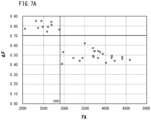
- FIG. 1 is a cross-sectional diagram (transverse cross-sectional diagram) along a direction perpendicular to a longitudinal direction (rolling direction) of a cylindrical billet (round billet) 100 that is the starting material for a seamless steel pipe.
- a segregation region SE is likely to be present at the center part in the transverse cross-section of the billet 100.
- Cr, Mo, and Cu easily segregate. Therefore, it was more likely for Cr segregation, Mo segregation, and Cu segregation to occur in the segregation region SE than in regions other than the segregation region SE.
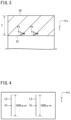
- a cross section perpendicular to the rolling direction of the seamless steel pipe was as illustrated in FIG. 2 .
- a segregation region SE was present that extended in a circumferential direction in a vicinity of an inner surface IS of the seamless steel pipe.
- the present inventors initially considered that, in a martensitic stainless steel material having the aforementioned chemical composition, a yield strength of 110 ksi or more and excellent SSC resistance in a sour environment can be compatibly obtained if differences between a Cr concentration, a Mo concentration and a Cu concentration in the segregation region SE that exists in the vicinity of the inner surface IS of a seamless steel pipe and a Cr concentration, a Mo concentration and a Cu concentration in a region other than the segregation region SE, for example, a vicinity of an outer surface OS in FIG. 2 is made small.
- the present inventors considered that if segregation within a macroscopic region in the steel material can be suppressed, a yield strength of 110 ksi or more and excellent SSC resistance in a sour environment can be compatibly obtained in a martensitic stainless steel material having the aforementioned chemical composition.
- the present inventors focused their attention on microscopic regions within the segregation region SE, and investigated making the Cr concentration distribution, the Mo concentration distribution, and the Cu concentration distribution within the microscopic regions sufficiently uniform.
- the Cr concentration distribution, the Mo concentration distribution, and the Cu concentration distribution within microscopic regions can be made sufficiently uniform, the Cr concentration distribution, the Mo concentration distribution, and the Cu concentration distribution of the steel material as a whole will also be sufficiently uniform. As a result, there is a possibility that a yield strength of 110 ksi or more and excellent SSC resistance in a sour environment can be compatibly obtained.
- the present inventors focused on microscopic regions within the segregation region SE and conducted further studies regarding the relation between the SSC resistance of the steel material having a yield strength of 110 ksi or more and the Cr concentration distribution, Mo concentration distribution, and Cu concentration distribution.
- the martensitic stainless steel material was a seamless steel pipe
- a cross section including a rolling direction L and a wall thickness direction T of the seamless steel pipe an arbitrary two points at positions at a depth of 2 mm from the inner surface IS were defined as two center points P1.
- the two center points P1 were positions which corresponded to the segregation region SE illustrated in FIG. 2 .
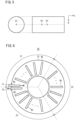
- FIG. 4 is an enlarged view of a vicinity of the two center points P1 in FIG. 3 .
- two line segments of 1000 ⁇ m extending in the wall thickness direction T that centered on the respective center points P1 were defined as line segments LS.
- the two line segments LS corresponded to the interior of the segregation region SE, and were microscopic regions.
- point analysis using energy dispersive X-ray spectroscopy (EDS) was performed at measurement positions at a pitch of 1 ⁇ m, and the Cr concentration (mass%), Mo concentration (mass%), and Cu concentration (mass%) at each measurement position were determined.
- the accelerating voltage was set to 20 kV.
- a degree of Cr segregation ⁇ Cr defined by Formula (1) was determined, a degree of Mo segregation ⁇ Mo defined by Formula (2) was determined, and a degree of Cu segregation ⁇ Cu defined by Formula (3) was determined.
- ⁇ Cr Cr ⁇ max ⁇ Cr ⁇ min / Cr ⁇ ave
- Mo Mo ⁇ max ⁇ Mo ⁇ min / Mo ⁇ ave
- Cu Cu ⁇ max ⁇ Cu ⁇ min / Cu ⁇ ave
- the degree of Cr segregation ⁇ Cr defined by Formula (1) means the degree of Cr segregation within microscopic regions in the segregation region SE.
- the degree of Mo segregation ⁇ Mo defined by Formula (2) means the degree of Mo segregation within microscopic regions in the segregation region SE.
- the degree of Cu segregation ⁇ Cu defined by Formula (3) means the degree of Cu segregation within microscopic regions in the segregation region SE.
- the present inventors investigated the relation between the SSC resistance and the total value of the degree of Cr segregation ⁇ Cr, the degree of Mo segregation ⁇ Mo, and the degree of Cu segregation ⁇ Cu in microscopic regions within the segregation region SE in the steel material.
- a in Formula (4) is 0.70
- a in Formula (4) is 0.50
- the martensitic stainless steel material according to the present disclosure was completed based on the technical idea described above, and is a martensitic stainless steel material that is a seamless pipe or a round steel bar as defined in the appended claims.
- round steel bar means a steel bar in which a cross section perpendicular to a longitudinal direction is a circular shape.
- Carbon (C) is unavoidably contained. That is, the content of C is more than 0%. C increases hardenability of the steel material and thus increases the strength of the steel material. However, if the content of C is more than 0.030%, C will easily combine with Cr to form Cr carbides. As a result, even if the contents of other elements are within the range of the present embodiment, the SSC resistance of the steel material will be likely to decrease.
- the content of C is to be 0.030% or less.
- a preferable lower limit of the content of C is 0.001%, more preferably is 0.003%, and further preferably is 0.005%.
- a preferable upper limit of the content of C is 0.025%, more preferably is 0.020%, and further preferably is 0.015%.
- Silicon (Si) is unavoidably contained. That is, the content of Si is more than 0%. Si deoxidizes steel. However, if the content of Si is more than 1.00%, the hot workability of the steel material will decrease even if the contents of other elements are within the range of the present embodiment.
- the content of Si is to be 1.00% or less.
- a preferable lower limit of the content of Si is 0.05%, more preferably is 0.10%, further preferably is 0.15%, and further preferably is 0.20%.
- a preferable upper limit of the content of Si is 0.70%, more preferably is 0.50%, further preferably is 0.45%, and further preferably is 0.40%.
- Manganese (Mn) is unavoidably contained. That is, the content of Mn is more than 0%. Mn increases hardenability of steel material and thus increases the strength of the steel material. However, if the content of Mn is more than 1.00%, even if the contents of other elements are within the range of the present embodiment, Mn will form coarse inclusions and cause toughness of the steel material to decrease.
- the content of Mn is to be 1.00% or less.
- a preferable lower limit of the content of Mn is 0.10%, more preferably is 0.20%, and further preferably is 0.25%.
- a preferable upper limit of the content of Mn is 0.80%, more preferably is 0.60%, and further preferably is 0.50%.
- Phosphorus (P) is an impurity that is unavoidably contained. That is, the content of P is more than 0%. If the content of P is more than 0.030%, even if the contents of other elements are within the range of the present embodiment, P will segregate at grain boundaries and cause toughness of the steel material to markedly decrease.
- the content of P is to be 0.030% or less.
- a preferable upper limit of the content of P is 0.025%, and more preferably is 0.020%.
- the content of P is preferably as low as possible. However, excessively reducing the content of P will significantly increase the production cost. Therefore, when taking industrial production into consideration, a preferable lower limit of the content of P is 0.001%, more preferably is 0.002%, and further preferably is 0.005%.
- S Sulfur
- S is an impurity that is unavoidably contained. That is, the content of S is more than 0%. If the content of S is more than 0.0050%, S will excessively segregate at grain boundaries, and an excessively large amount of MnS that is an inclusion will form. In such a case, toughness and hot workability of the steel material will markedly decrease even if the contents of other elements are within the range of the present embodiment.
- the content of S is to be 0.0050% or less.
- a preferable upper limit of the content of S is 0.0030%, more preferably is 0.0020%, and further preferably is 0.0015%.
- the content of S is preferably as low as possible. However, excessively reducing the content of S will significantly increase the production cost. Therefore, when taking industrial production into consideration, a preferable lower limit of the content of S is 0.0001%, more preferably is 0.0002%, and further preferably is 0.0004%.
- Nickel (Ni) forms sulfides on a passivation film in a sour environment.
- the Ni sulfides inhibit chloride ions (Cl - ) and hydrogen sulfide ions (HS - ) from coming into contact with the passivation film. Consequently, it is difficult for the passivation film to be destroyed by chloride ions and hydrogen sulfide ions.
- Ni increases the SSC resistance of the steel material in a sour environment.
- Ni is also an austenite-forming element. Therefore, Ni causes the microstructure of the steel material after quenching to become martensitic.
- the content of Ni is less than 5.00%, even if the contents of other elements are within the range of the present embodiment, the aforementioned effects will not be sufficiently obtained. On the other hand, if the content of Ni is more than 7.00%, the aforementioned effects will be saturated and the production cost will increase.
- the content of Ni is to be 5.00 to 7.00%.
- a preferable lower limit of the content of Ni is 5.10%, more preferably is 5.15%, and further preferably is 5.20%.
- a preferable upper limit of the content of Ni is 6.50%, more preferably is 6.40%, further preferably is 6.30%, and further preferably is 6.20%.
- Chromium (Cr) forms a passivation film on the surface of the steel material in a sour environment, and thereby improves the SSC resistance of the steel material. If the content of Cr is less than 10.00%, the aforementioned effect will not be sufficiently obtained even if the contents of other elements are within the range of the present embodiment. On the other hand, if the content of Cr is more than 14.00%, Cr carbides, intermetallic compounds containing Cr, and Cr oxides will excessively form. In such a case the SSC resistance of the steel material will decrease even if the contents of other elements are within the range of the present embodiment.
- the content of Cr is to be 10.00 to 14.00%.
- a preferable lower limit of the content of Cr is 10.05%, more preferably is 10.10%, further preferably is 10.50%, and further preferably is 11.00%.
- a preferable upper limit of the content of Cr is 13.70%, more preferably is 13.50%, further preferably is 13.40%, and further preferably is 13.30%.
- Molybdenum (Mo) forms sulfides on a passivation film in a sour environment.
- the Mo sulfides inhibit chloride ions (Cl - ) and hydrogen sulfide ions (HS - ) from coming into contact with the passivation film. Consequently, it is difficult for the passivation film to be destroyed by chloride ions and hydrogen sulfide ions.
- Mo increases the SSC resistance of the steel material in a sour environment. If the content of Mo is less than 1.50%, this effect will not be sufficiently obtained even if the contents of other elements are within the range of the present embodiment. On the other hand, if the content of Mo is more than 3.00%, the aforementioned effect will be saturated and the production cost will increase.
- the content of Mo is to be 1.50 to 3.00%.
- a preferable lower limit of the content of Mo is 1.70%, more preferably is 1.80%, further preferably is 1.90%, and further preferably is 2.00%.
- a preferable upper limit of the content of Mo is 2.95%, more preferably is 2.90%, further preferably is 2.85%, and further preferably is 2.80%.
- Aluminum (Al) deoxidizes steel. If the content of Al is less than 0.005%, the aforementioned effect will not be sufficiently obtained even if the contents of other elements are within the range of the present embodiment. On the other hand, if the content of Al is more than 0.050%, even if the contents of other elements are within the range of the present embodiment, coarse Al oxides will form and the toughness of the steel material will decrease.
- the content of Al is to be 0.005 to 0.050%.
- a preferable lower limit of the content of Al is 0.007%, more preferably is 0.010%, and further preferably is 0.015%.
- a preferable upper limit of the content of Al is 0.047%, more preferably is 0.043%, and further preferably is 0.040%.
- the term "content of Al” means the content of sol. Al (acid-soluble Al).
- Vanadium (V) forms V precipitates such as carbides, nitrides, and carbo-nitrides in the steel material.
- the V precipitates increase the strength of the steel material. If the content of V is less than 0.01%, the aforementioned effect will not be sufficiently obtained even if the contents of other elements are within the range of the present embodiment. On the other hand, if the content of V is more than 0.30%, V precipitates will excessively form and the strength of the steel material will become excessively high. In such a case, the SSC resistance of the steel material will decrease even if the contents of other elements are within the range of the present embodiment.
- the content of V is to be 0.01 to 0.30%.
- a preferable lower limit of the content of V is 0.02%, and more preferably is 0.03%.
- a preferable upper limit of the content of V is 0.25%, more preferably is 0.20%, further preferably is 0.15%, further preferably is 0.10%, and further preferably is 0.08%.
- Nitrogen (N) improves pitting resistance of the steel material and increases the SSC resistance of the steel material. If the content of N is less than 0.0030%, the aforementioned effect will not be sufficiently obtained even if the contents of other elements are within the range of the present embodiment. On the other hand, if the content of N is more than 0.0500%, coarse TiN will form. In such a case, the SSC resistance of the steel material will decrease even if the contents of other elements are within the range of the present embodiment.
- the content of N is to be 0.0030 to 0.0500%.
- a preferable lower limit of the content of N is 0.0033%, more preferably is 0.0035%, and further preferably is 0.0038%.
- a preferable upper limit of the content of N is 0.0400%, more preferably is 0.0300%, further preferably is 0.0200%, further preferably is 0.0100%, further preferably is 0.0080%, and further preferably is 0.0070%.
- Titanium (Ti) combines with C or N to form Ti precipitates that are carbides or nitrides.
- the Ti precipitates suppress coarsening of grains by the pinning effect. As a result, the strength of the steel material increases. In addition, an excessive increase in strength due to excessive formation of V precipitates is suppressed by formation of the Ti precipitates. As a result, the SSC resistance of the steel material increases.
- V precipitates refers to carbides, nitrides, carbo-nitrides and the like. If the content of Ti is less than 0.020%, the aforementioned effects will not be sufficiently obtained even if the contents of other elements are within the range of the present embodiment.
- the content of Ti is more than 0.150%, the aforementioned effects will be saturated. Furthermore, if the content of Ti is more than 0.150%, Ti carbides or Ti nitrides will excessively form, and toughness of the steel material will decrease.
- the content of Ti is to be 0.020 to 0.150%.
- a preferable lower limit of the content of Ti is 0.030%, more preferably is 0.040%, and further preferably is 0.050%.
- a preferable upper limit of the content of Ti is 0.140%, and more preferably is 0.130%.
- Co Cobalt
- Co is unavoidably contained. That is, the content of Co is more than 0%.
- Co forms sulfides on a passivation film.
- the Co sulfides inhibit chloride ions (Cl - ) and hydrogen sulfide ions (HS - ) from coming into contact with the passivation film. Consequently, it is difficult for the passivation film to be destroyed by chloride ions and hydrogen sulfide ions.
- Co increases the SSC resistance of the steel material. Co also suppresses the formation of retained austenite, and suppresses the occurrence of variations in the strength of the steel material.
- the content of Co is more than 0.50%, toughness of the steel material will decrease even if the contents of other elements are within the range of the present embodiment.
- the content of B is to be 0 to 0.0050%.
- a preferable lower limit of the content of B is 0.0001%, and more preferably is 0.0002%.
- a preferable upper limit of the content of B is 0.0040%, more preferably is 0.0030%, further preferably is 0.0020%, further preferably is 0.0010%, further preferably is 0.0008%, and further preferably is 0.0007%.
- Calcium (Ca) is an optional element, and need not be contained. That is, the content of Ca may be 0%. When contained, Ca spheroidizes and/or refines inclusions, and thereby increases hot workability of the steel material. If even a small amount of Ca is contained, this effect will be obtained to a certain extent. However, if the content of Ca is more than 0.0050%, coarse oxides will form. In such a case, toughness of the steel material will decrease even if the contents of other elements are within the range of the present embodiment.
- the content of Ca is to be 0 to 0.0050%.
- a preferable lower limit of the content of Ca is 0.0001%, more preferably is 0.0005%, further preferably is 0.0010%, and further preferably is 0.0015%.
- a preferable upper limit of the content of Ca is 0.0045%, more preferably is 0.0040%, and further preferably is 0.0035%.
- the content of Mg is to be 0 to 0.0050%.
- a preferable lower limit of the content of Mg is 0.0001%, more preferably is 0.0005%, and further preferably is 0.0010%.
- a preferable upper limit of the content of Mg is 0.0045%, more preferably is 0.0035%, and further preferably is 0.0025%.
- Rare earth metal is an optional element, and need not be contained. That is, the content of REM may be 0%. When contained, similarly to Ca, REM spheroidizes and/or refines inclusions, and thereby increases hot workability of the steel material. If even a small amount of REM is contained, the aforementioned effect will be obtained to a certain extent. However, if the content of REM is more than 0.0050%, coarse oxides will form. In such a case, toughness of the steel material will decrease even if the contents of other elements are within the range of the present embodiment.
- REM Rare earth metal
- the content of REM is to be 0 to 0.0050%.
- a preferable lower limit of the content of REM is 0.0001%, more preferably is 0.0005%, and further preferably is 0.0010%.
- a preferable upper limit of the content of REM is 0.0045%, more preferably is 0.0035%, and further preferably is 0.0025%.
- REM means one or more elements selected from the group consisting of scandium (Sc) which is the element with atomic number 21, yttrium (Y) which is the element with atomic number 39, and the elements from lanthanum (La) with atomic number 57 to lutetium (Lu) with atomic number 71 that are lanthanoids.
- scandium Sc
- Y yttrium
- Li lutetium
- content of REM refers to the total content of these elements.
- the chemical composition of the martensitic stainless steel material according to the present embodiment may further contain one or more elements selected from the group consisting of Nb and W in lieu of a part of Fe. These elements are optional elements, and each of these elements increases the SSC resistance of the steel material.
- Niobium (Nb) is an optional element, and need not be contained. That is, the content of Nb may be 0%. When contained, Nb forms Nb precipitates that are fine carbides, nitrides, or carbo-nitrides. The Nb precipitates refine the substructure of the steel material by the pinning effect. As a result, the SSC resistance of the steel material increases. If even a small amount of Nb is contained, the aforementioned effect will be obtained to a certain extent. However, if the content of Nb is more than 0.15%, Nb precipitates will excessively form. In such a case, the SSC resistance of the steel material will decrease even if the contents of other elements are within the range of the present embodiment.
- the content of Nb is to be 0 to 0.15%.
- a preferable lower limit of the content of Nb is 0.01%, more preferably is 0.02%, and further preferably is 0.03%.
- a preferable upper limit of the content of Nb is 0.14%, more preferably is 0.13%, and further preferably is 0.10%.
- Tungsten (W) is an optional element, and need not be contained. That is, the content of W may be 0%. When contained, W stabilizes the passivation film in a sour environment. Consequently, it is difficult for the passivation film to be destroyed by chloride ions and hydrogen sulfide ions. As a result, the SSC resistance of the steel material increases. If even a small amount of W is contained, the aforementioned effect will be obtained to a certain extent. However, if the content of W is more than 0.20%, W will combine with C, and coarse W carbides will be formed. In such a case, toughness of the steel material will decrease even if the contents of other elements are within the range of the present embodiment.
- a degree of Cr segregation ⁇ Cr defined by Formula (1), a degree of Mo segregation ⁇ Mo defined by Formula (2), and a degree of Cu segregation ⁇ Cu defined by Formula (3) satisfy Formula (4):
- the degree of Cr segregation ⁇ Cr defined by Formula (1), the degree of Mo segregation ⁇ Mo defined by Formula (2), and the degree of Cu segregation ⁇ Cu defined by Formula (3) are determined by the following method.
- the production method described hereunder is an example, and a method for producing the martensitic stainless steel material of the present embodiment is not limited to this production method. That is, as long as the martensitic stainless steel material of the present embodiment that is composed as described above can be produced, a method for producing the martensitic stainless steel material is not limited to the production method described hereunder. However, the production method described hereunder is a favorable method for producing the martensitic stainless steel material of the present embodiment.
- One example of a method for producing the martensitic stainless steel material of the present embodiment includes the following processes.
- molten steel in which the content of each element in the chemical composition is within the range of the present embodiment is produced by a well-known steel-making method.
- a cast piece is produced by a continuous casting process using the produced molten steel.
- the cast piece is a bloom or a billet.
- an ingot may be produced by an ingot-making process using the aforementioned molten steel.
- the starting material (bloom or ingot) is produced by the above described production process.
- the starting material (bloom or ingot) is subjected to hot rolling using a blooming mill to thereby produce a billet.
- the blooming process includes the following processes.
- the starting material is heated in a bloom reheating furnace.
- the in-furnace temperature of the bloom reheating furnace and the residence time of the starting material in the bloom reheating furnace are as follows.
- the aforementioned range of the in-furnace temperature (°C) of the bloom reheating furnace is a well-known range.
- the aforementioned range of the holding time (minutes) at the bloom reheating furnace is also a well-known range. If the in-furnace temperature of the bloom reheating furnace is 1200 to 1350°C, and the holding time in the bloom reheating furnace is 200 to 400 minutes, the hot workability of the starting material will sufficiently increase. Therefore, in the hot working process in the next process, the starting material can be made into a billet.
- thermometer thermocouple
- the holding time (minutes) in the bloom reheating furnace can be determined based on the time point at which the starting material is charged into the bloom reheating furnace and the time point at which the starting material is extracted from the bloom reheating furnace.
- the starting material that was heated in the starting material heating process is subjected to hot rolling to produce a billet.
- the heated starting material is subjected to hot rolling using a blooming mill to thereby produce a billet.
- the starting material may be subjected to further hot rolling using a continuous mill arranged downstream of the blooming mill to produce a billet.
- the total reduction of area in the blooming process is not particularly limited, and for example is 20 to 70%.
- the billet produced in the hot working process is cooled to normal temperature before the steel material production process.
- the in-furnace temperature T in the heating zone Z2 and the holding zone Z3 is set in the range of 1225 to 1275°C, and is set to a temperature that is higher than the in-furnace temperature in the preheating zone Z1. If the in-furnace temperature T in the heating zone Z2 and the holding zone Z3 is less than 1225°C, the Cr concentration distribution, the Mo concentration distribution, and the Cu concentration distribution within the segregation region SE will not be uniform, and variations will occur. Consequently, in the produced martensitic stainless steel material, the degree of Cr segregation ⁇ Cr, the degree of Mo segregation ⁇ Mo, and the degree of Cu segregation ⁇ Cu will not satisfy Formula (4).
- the in-furnace temperature T in the heating zone Z2 and the holding zone Z3 is more than 1275°C, ⁇ -ferrite will be formed in the steel material having the aforementioned chemical composition.
- the ⁇ -ferrite will decrease the hot workability of the steel material. Accordingly, the in-furnace temperature T in the heating zone Z2 and the holding zone Z3 is to be within the range of 1225 to 1275°C.
- total residence time in the heating zone Z2 and the holding zone Z3 be defined as t (minute).
- total residence time t means the time (minutes) from when the billet produced in the blooming process enters the heating zone Z2 until the billet is discharged to outside from the extraction port 12.
- the in-furnace temperature T and the total residence time t in the heating zone Z2 and the holding zone Z3 are set so as to satisfy the following Formula (A): B ⁇ t / 60 0.5 ⁇ T + 273 where, when the yield strength is 110 ksi grade (758 to less than 862 MPa), B in Formula (A) is 2900, and when the yield strength is 862 MPa or more, B in Formula (A) is 3900.
- the total residence time t (minutes) of the billet in the heating zone Z2 and the holding zone Z3 is substituted for "t”. Further, the in-furnace temperature T (°C) in the heating zone Z2 and the holding zone Z3 is substituted for "T”. Note that, an arithmetic average value of the in-furnace temperature (°C) in the heating zone Z2 obtained with a thermometer and the in-furnace temperature (°C) in the holding zone Z3 obtained with a thermometer is adopted as the in-furnace temperature T (°C) in the heating zone Z2 and the holding zone Z3.
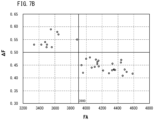
- FIG. 7B is a view illustrating the relation between FA and the total degree of segregation ⁇ F in a case where the yield strength of the steel material is made 125 ksi or more (862 MPa or more).
- the billet in a case where the yield strength of the steel material is made 110 ksi grade, if FA is less than 2900, the billet is not sufficiently held in a temperature range of 1225°C or more. In this case, at least one kind among variations in the Cr concentration distribution, variations in the Mo concentration distribution, and variations in the Cu concentration distribution in the segregation region SE in the billet cannot be sufficiently reduced. Therefore, as illustrated in FIG. 7A , in the produced martensitic stainless steel material, the total degree of segregation ⁇ F is more than 0.70.
- the billet is sufficiently held in a temperature range of 1225°C or more.
- variations in the Cr concentration distribution are sufficiently reduced, variations in the Mo concentration distribution are sufficiently reduced, and variations in the Cu concentration distribution are sufficiently reduced.
- the total degree of segregation ⁇ F in the produced martensitic stainless steel material markedly decreases, and becomes 0.70 or less. That is, variations in the Cr concentration, the Mo concentration, and the Cu concentration in the segregation region SE can be markedly suppressed.
- a preferable lower limit of FA in a case where the yield strength of the steel material is made 110 ksi grade is 3000, more preferably is 3100, further preferably is 3150, further preferably is 3200, and further preferably is 3250.
- An upper limit of FA is not particularly limited. However, taking into consideration the productivity during normal industrial production, the total residence time t is preferably 600 minutes or less. Accordingly, the upper limit of FA is, for example, 4890.
- a preferable lower limit of the total residence time t (minutes) in the heating zone Z2 and the holding zone Z3 in a case where the yield strength of the steel material is made 110 ksi grade is 220 minutes, more preferably is 230 minutes, further preferably is 240 minutes, and further preferably is 250 minutes.
- the billet is heated using a continuous heating furnace so that, in particular, FA is 2900 or more in the temperature range of 1225 to 1275°C in the heating zone Z2 and the holding zone Z3.
- a preferable furnace time of the billet in the heating furnace is 320 minutes or more, and further preferably is 330 minutes or more.
- the billet in a case where the yield strength of the steel material is made 125 ksi or more, if FA is less than 3900, the billet is not sufficiently held in a temperature range of 1225°C or more. In this case, at least one kind among variations in the Cr concentration distribution, variations in the Mo concentration distribution, and variations in the Cu concentration distribution in the segregation region SE in the billet cannot be sufficiently reduced. Therefore, as illustrated in FIG. 7B , in the produced martensitic stainless steel material, the total degree of segregation ⁇ F is more than 0.50.
- the billet is sufficiently held in the temperature range of 1225°C or more.
- variations in the Cr concentration distribution are sufficiently reduced, variations in the Mo concentration distribution are sufficiently reduced, and variations in the Cu concentration distribution are sufficiently reduced.
- the total degree of segregation ⁇ F in the produced martensitic stainless steel material markedly decreases, and becomes 0.50 or less. That is, variations in the Cr concentration, the Mo concentration, and the Cu concentration in the segregation region SE can be markedly suppressed.
- An upper limit of FA is not particularly limited. However, taking into consideration the productivity during normal industrial production, the total residence time t is preferably 600 minutes or less. Accordingly, the upper limit of FA is, for example, 4890.
- a preferable lower limit of the total residence time t (minutes) in the heating zone Z2 and the holding zone Z3 in a case where the yield strength of the steel material is made 125 ksi or more is 350 minutes, more preferably is 380 minutes, and further preferably is 400 minutes.
- the billet is heated using a continuous heating furnace so that, in particular, FA is 3900 or more in the temperature range of 1225 to 1275°C in the heating zone Z2 and the holding zone Z3.
- a preferable furnace time of the billet in the heating furnace is 450 minutes or more, and further preferably is 500 minutes or more.
- thermometer thermocouple
- a thermometer thermocouple
- An arithmetic average value of the in-furnace temperature (°C) in the heating zone Z2 obtained with a thermometer and the in-furnace temperature (°C) in the holding zone Z3 obtained with a thermometer is defined as the in-furnace temperature T (°C) in the heating zone Z2 and the holding zone Z3.
- the residence time of the billet in each zone can be determined based on the order and feeding speed of the billets charged into the heating furnace.
- a rotary hearth heating furnace has been described as the heating furnace.
- the structure of a walking beam heating furnace is the same as the structure of a rotary hearth heating furnace.
- a walking beam heating furnace includes a main body that has a charging port and an extraction port. The main body is divided into a preheating zone, a heating zone, and a holding zone in that order in the direction from the charging port toward the extraction port. Accordingly, in a walking beam heating furnace also, the conditions of the heating process are as described above.
- the preheating zone Z1, the heating zone Z2, and the holding zone Z3 are divided equally inside the furnace main body 13. However, the preheating zone Z1, the heating zone Z2, and the holding zone Z3 do not have to be divided equally.
- the as-solidified starting material includes dendrite (a tree-like structure). Dendrite inhibits diffusion of Cr, Mo, and Cu during heating. By performing hot rolling on the starting material in the blooming process, dendrite is physically or mechanically destroyed. Therefore, in comparison to the microstructure of the starting material in the starting material preparation process, almost no dendritic structure is present in the microstructure of the billet produced in the blooming process, and the microstructure of the billet is a fine microstructure.
- the billet heated under the aforementioned conditions by the heating process is subjected to hot working.
- the heated billet is subjected to hot working to produce a hollow shell (seamless steel pipe).
- hot rolling by the Mannesmann-mandrel process is performed as the hot working to produce a hollow shell.
- the billet is subjected to piercing-rolling by a piercing machine.
- the piercing ratio is, for example, 1.0 to 4.0.
- the billet after piercing-rolling is subjected to elongating and rolling using a mandrel mill.
- the billet after elongating and rolling is subjected to diameter adjusting rolling using a reducer or a sizing mill.
- a hollow shell is produced by the above process.
- the cumulative reduction of area in the hot working process is, for example, 20 to 70%.
- the heated billet is subjected to hot forging to produce a round steel bar.
- the heat treatment process includes the following processes.
- the hollow shell may be rapidly cooled by immersing the hollow shell in a water bath or an oil bath, or the hollow shell may be rapidly cooled by pouring or jetting cooling water onto the outer surface and/or inner surface of the hollow shell by shower cooling or mist cooling.
- quenching may be performed immediately after the hot working, without cooling the hollow shell to normal temperature. Further, quenching may be performed after the hollow shell after hot working has been held at the quenching temperature after being charged into a supplementary heating furnace before the temperature of the hollow shell decreased after the hot working.
- the holding time at the tempering temperature is, for example, 20 to 60 minutes.
- a preferable upper limit of the holding time is 50 minutes, and more preferably is 45 minutes.
- the volume ratio of martensite of the seamless steel pipe of each test number was measured by the following method. Specifically, the volume ratio (%) of retained austenite was determined, and the determined value was subtracted from 100.0% to determine the martensite volume ratio.
- I ⁇ is an integrated intensity of ⁇ phase.
- R ⁇ is a crystallographic theoretical calculation value of ⁇ phase.
- Iy is an integrated intensity of ⁇ phase.
- Ry is a crystallographic theoretical calculation value of ⁇ phase. Note that, R ⁇ in the (200) plane of ⁇ phase was set to 15.9, R ⁇ in the (211) plane of ⁇ phase was set to 29.2, Ry in the (200) plane of ⁇ phase was set to 35.5, Ry in the (220) plane of ⁇ phase was set to 20.8, and Ry in the (311) plane of ⁇ phase was set to 21.8. The volume ratio of retained austenite was obtained by rounding off the second decimal place of the obtained numerical value.
- the seamless steel pipe of each test number was subjected to an SSC resistance evaluation test in accordance with NACE TM0177-2005 Method A.
- a round bar specimen was taken from the center portion of the wall thickness of the seamless steel pipe.
- the round bar specimen had a size in which the diameter of the parallel portion was 6.35 mm, and the length of the parallel portion was 25.4 mm.
- the longitudinal direction of the parallel portion of the round bar specimen was parallel to the rolling direction (longitudinal direction) of the seamless steel pipe.
- test solution An aqueous solution containing 20 mass% of sodium chloride in which the pH was 4.0 was adopted as the test solution.
- a stress equivalent to 90% of the actual yield stress was applied to the round bar specimen.
- the test solution at 24°C was poured into a test vessel so that the round bar specimen to which the stress had been applied was immersed therein, and this was adopted as the test bath.
- a gaseous mixture consisting of H 2 S at 0.10 bar and CO 2 at 0.90 bar was blown into the test bath so that the test bath was saturated with H 2 S gas.
- the test bath in which the H 2 S gas was saturated was held at 24°C for 720 hours.
- the content of each element in the chemical composition was within the range of the present embodiment.
- the in-furnace temperature and residence time in the preheating zone were appropriate, the in-furnace temperature T in the heating zone and the holding zone was 1225 to 1275°C, and FA was 2900 or more. Therefore, the total degree of segregation ⁇ F was 0.70 or less, and the Cr concentration distribution, the Mo concentration distribution, and the Cu concentration distribution in a microscopic segregation region in the steel material were sufficiently uniform.
- the yield strength was 110 ksi grade (758 to less than 862 MPa), and excellent SSC resistance was obtained.
- Test Number 25 the content of Cr was too high. Therefore, the total degree of segregation ⁇ F was more than 0.70. As a result, the SSC resistance was low.
- Test Numbers 30 to 39 although the content of each element in the chemical composition was within the range of the present embodiment, FA was less than 2900 and Formula (A) was not satisfied. Therefore, the total degree of segregation ⁇ F in these test numbers was more than 0.70. As a result, in these test numbers the SSC resistance was low.
- Steel materials (seamless steel pipes) having a yield strength of 125 ksi or more (862 MPa or more) were produced by the same production method as the method used in Example 1. The produced steel materials were subjected to the same evaluation tests as in Example 1.
- the produced molten steels were used to produce blooms by continuous casting.
- a blooming process was performed to produce round billets having a diameter of 310 mm.
- the in-furnace temperature (°C) and holding time (minutes) in the bloom reheating furnace were as shown in Table 4.
- Example 2 similarly to Example 1, the round billet of each test number was subjected to a steel material production process.
- the in-furnace temperature (°C) in the preheating zone the residence time (minutes) in the preheating zone, the in-furnace temperature T (°C) in the heating zone and the holding zone, and the total residence time t (minutes) in the heating zone and the holding zone were as shown in Table 4.
- FA (t/60) 0.5 ⁇ (T + 273) was as shown in Table 4.
- each heated round billet was subjected to hot working under the same conditions as in Example 1 to thereby produce a hollow shell for each test number.
- each produced hollow shell was subjected to a heat treatment process (quenching process and tempering process).
- quenching process the quenching temperature was set to 910°C, and the holding time at the quenching temperature was set to 15 minutes.
- tempering process the tempering temperature (°C) was set as shown in Table 4, and the holding time (minutes) at the tempering temperature was set as shown in Table 4.
- the yield strength was adjusted to 125 ksi or more (862 MPa or more) by the heat treatment process. Martensitic stainless steel materials (seamless steel pipes) were produced by the above production process.
- the content of each element in the chemical composition was within the range of the present embodiment.
- the in-furnace temperature and residence time in the preheating zone were appropriate, the in-furnace temperature T in the heating zone and the holding zone was 1225 to 1275°C, and FA was 3900 or more. Therefore, the total degree of segregation ⁇ F was 0.50 or less, and the Cr concentration distribution, the Mo concentration distribution, and the Cu concentration distribution in a microscopic segregation region in the steel material were sufficiently uniform.
- the yield strength was 125 ksi grade or more (862 MPa or more), and excellent SSC resistance was obtained.
- Test Numbers 31 to 40 although the content of each element in the chemical composition was within the range of the present embodiment, FA was less than 3900 and Formula (A) was not satisfied. Therefore, the total degree of segregation ⁇ F in these test numbers was more than 0.50. As a result, in these test numbers the SSC resistance was low.
Landscapes
- Chemical & Material Sciences (AREA)
- Engineering & Computer Science (AREA)
- Mechanical Engineering (AREA)
- Materials Engineering (AREA)
- Metallurgy (AREA)
- Organic Chemistry (AREA)
- Physics & Mathematics (AREA)
- Thermal Sciences (AREA)
- Crystallography & Structural Chemistry (AREA)
- Manufacturing & Machinery (AREA)
- Heat Treatment Of Steel (AREA)
- Heat Treatment Of Articles (AREA)
Claims (2)
- Martensitisches rostfreies Stahlmaterial, das ein nahtloses Stahlrohr oder ein Rundstahlstab ist, das eine chemischen Zusammensetzung aufweist, bestehend aus, in Masse-%:C: 0,030% oder weniger,Si: 1,00% oder weniger,Mn: 1,00% oder weniger,P: 0,030% oder weniger,S: 0,0050% oder weniger,Ni: 5,00 bis 7,00%,Cr: 10,00 bis 14,00%,Mo: 1,50 bis 3,00%,Al: 0,005 bis 0,050%,V: 0,01 bis 0,30%,N: 0,0030 bis 0,0500%,Ti: 0,020 bis 0,150%,Cu: mehr als 1,00 bis 3,50%,Co: 0,50% oder weniger,B: 0 bis 0,0050%,Ca: 0 bis 0,0050%,Mg: 0 bis 0,0050%,Seltenes Erdmetall (REM): 0 bis 0,0050%,Nb: 0 bis 0,15% undW: 0 bis 0,20%,wobei der Rest aus Fe und Verunreinigungen besteht,wobei:das Volumenverhältnis von Martensit 80,0% oder mehr und das Volumenverhältnis von Restaustenit 0 bis 20,0% beträgt, gemessen nach dem in der Beschreibung beschriebenen Verfahren;die Streckgrenze 758 MPa oder mehr beträgt, gemessen nach dem in der Beschreibung beschriebenen Verfahren;in einem Fall, in dem das martensitische rostfreie Stahlmaterial das nahtlose Stahlrohr ist, werden in einem Querschnitt, der eine Walzrichtung und eine Wanddickenrichtung des nahtlosen Stahlrohrs aufweist, zwei beliebige Punkte an Positionen in einer Tiefe von 2 mm von einer inneren Oberfläche als zwei Mittelpunkte P1 definiert, und zwei Liniensegmente von 1000 µm, die sich in der Wanddickenrichtung mit jedem Mittelpunkt P1 als eine Mitte erstrecken, werden als zwei Liniensegmente LS definiert, energiedispersive Röntgenspektroskopie wird an Messpositionen in einem Abstand von 1 µm auf jedem Liniensegment LS durchgeführt, und eine Cr-Konzentration, eine Mo-Konzentration, und eine Cu-Konzentration werden an jeder Messposition bestimmt;in einem Fall, in dem das martensitische rostfreie Stahlmaterial der Rundstabstahl ist, werden in einem Querschnitt, der eine Walzrichtung und eine radiale Richtung des Rundstabstahls aufweist, zwei beliebige Punkte auf einer zentralen Achse des Rundstabstahls als zwei Mittelpunkte P1 definiert, und zwei Liniensegmente von 1000 µm, die sich in radialer Richtung mit jedem Mittelpunkt P1 als eine Mitte erstrecken, werden als zwei Liniensegmente LS definiert, energiedispersive Röntgenspektroskopie wird an Messpositionen in einem Abstand von 1 µm auf jedem Liniensegment LS durchgeführt, und eine Cr-Konzentration, eine Mo-Konzentration, und eine Cu-Konzentration an jeder Messposition werden bestimmt; undein Durchschnittswert aller Cr-Konzentrationen, die an allen Messpositionen auf den beiden Liniensegmenten LS bestimmt wurden, wird als [Cr]ave definiert,eine Probenstandardabweichung aller Cr-Konzentrationen, die an allen Messpositionen auf den beiden Liniensegmenten LS bestimmt wurden, wird als σCr definiert,unter allen Cr-Konzentrationen, die an allen Messpositionen auf den beiden Liniensegmenten LS bestimmt wurden, wird ein Durchschnittswert der Cr-Konzentrationen innerhalb eines Bereichs von [Cr]ave ±3σCr als [Cr*]ave definiert,unter allen Cr-Konzentrationen, die an allen Messpositionen auf den beiden Liniensegmenten LS bestimmt wurden, wird ein Maximalwert der Cr-Konzentrationen innerhalb eines Bereichs von [Cr]ave ±3σCr als [Cr*]max definiert,unter allen Cr-Konzentrationen, die an allen Messpositionen auf den beiden Liniensegmenten LS bestimmt wurden, wird ein Mindestwert der Cr-Konzentrationen, innerhalb eines Bereichs von [Cr]ave ±3σCr als [Cr*]min definiert,ein Durchschnittswert aller Mo-Konzentrationen, die an allen Messpositionen auf den beiden Liniensegmenten LS bestimmt wurden, wird als [Mo]ave definiert,eine Probenstandardabweichung aller Mo-Konzentrationen, die an allen Messpositionen auf den beiden Liniensegmenten LS bestimmt wurden, wird als σMo definiert,unter allen Mo-Konzentrationen, die an allen Messpositionen auf den beiden Liniensegmenten LS bestimmt wurden, wird ein Durchschnittswert der Mo-Konzentrationen innerhalb eines Bereichs von [Mo]ave ±3σMo als [Mo*]ave definiert,unter allen Mo-Konzentrationen, die an allen Messpositionen auf den beiden Liniensegmenten LS bestimmt wurden, wird ein Maximalwert der Mo-Konzentrationen innerhalb eines Bereichs von [Mo]ave ±3σMo als [Mo*]max definiert, undunter allen Mo-Konzentrationen, die an allen Messpositionen auf den beiden Liniensegmenten LS bestimmt wurden, wird ein Minimalwert der Mo-Konzentrationen innerhalb eines Bereichs von [Mo]ave±3σMo als [Mo*]min definiert,ein Durchschnittswert aller Cu-Konzentrationen, die an allen Messpositionen auf den beiden Liniensegmenten LS bestimmt wurden, wird als [Cu]ave definiert.eine Probenstandardabweichung aller Cu-Konzentrationen, die an allen Messpositionen auf den beiden Liniensegmenten LS bestimmt wurden, wird als σCu definiert,unter allen Cu-Konzentrationen, die an allen Messpositionen auf den beiden Liniensegmenten LS bestimmt wurden, wird ein Durchschnittswert der Cu-Konzentrationen innerhalb eines Bereichs von [Cu]ave ±3σCu als [Cu*]ave definiert,unter allen Cu-Konzentrationen, die an allen Messpositionen auf den beiden Liniensegmenten LS bestimmt wurden, wird ein Maximalwert der Cu-Konzentrationen innerhalb eines Bereichs von [Cu]ave ±3σCu als [Cu*]max definiert, undunter allen Cu-Konzentrationen, die an allen Messpositionen auf den beiden Liniensegmenten LS bestimmt wurden, wird ein Minimalwert der Cu-Konzentrationen innerhalb eines Bereichs von [Cu]ave ±3σCu als [Cu*]min definiert,ein Grad der Cr-Segregation ΔCr, definiert durch Formel (1), ein Grad der Mo-Segregation ΔMo, definiert durch Formel (2), und ein Grad der Cu-Segregation ΔCu, definiert durch Formel (3), die Formel (4) erfüllen:


 wobei in einem Fall, in dem die Streckgrenze 758 bis weniger als 862 MPa beträgt, A in Formel (4) 0,70 ist, und in einem Fall, in dem die Streckgrenze 862 MPa oder mehr beträgt, A in Formel (4) 0,50 ist.
 - Martensitisches rostfreies Stahlmaterial gemäß Anspruch 1, wobei die chemische Zusammensetzung ein oder mehrere Elemente enthält, die ausgewählt sind aus der Gruppe bestehend aus:B: 0,0001 bis 0,0050%,Ca: 0,0001 bis 0,0050%,Mg: 0,0001 bis 0,0050%,Seltenes Erdmetall (REM): 0,0001 bis 0,0050%,Nb: 0,01 bis 0,15%, undW: 0,01 bis 0,20%.
Applications Claiming Priority (3)
| Application Number | Priority Date | Filing Date | Title |
|---|---|---|---|
| JP2020170659 | 2020-10-08 | ||
| JP2020170658 | 2020-10-08 | ||
| PCT/JP2021/037135 WO2022075406A1 (ja) | 2020-10-08 | 2021-10-07 | マルテンサイト系ステンレス鋼材 |
Publications (4)
| Publication Number | Publication Date |
|---|---|
| EP4227425A1 EP4227425A1 (de) | 2023-08-16 |
| EP4227425A4 EP4227425A4 (de) | 2024-04-17 |
| EP4227425C0 EP4227425C0 (de) | 2025-07-02 |
| EP4227425B1 true EP4227425B1 (de) | 2025-07-02 |
Family
ID=81126521
Family Applications (1)
| Application Number | Title | Priority Date | Filing Date |
|---|---|---|---|
| EP21877705.0A Active EP4227425B1 (de) | 2020-10-08 | 2021-10-07 | Martensitisches edelstahlmaterial |
Country Status (5)
| Country | Link |
|---|---|
| US (1) | US20230366071A1 (de) |
| EP (1) | EP4227425B1 (de) |
| JP (1) | JP7173405B2 (de) |
| ES (1) | ES3036001T3 (de) |
| WO (1) | WO2022075406A1 (de) |
Families Citing this family (5)
| Publication number | Priority date | Publication date | Assignee | Title |
|---|---|---|---|---|
| JP7381983B2 (ja) * | 2021-11-09 | 2023-11-16 | 日本製鉄株式会社 | マルテンサイト系ステンレス継目無鋼管、及び、マルテンサイト系ステンレス継目無鋼管の製造方法 |
| JP7428953B1 (ja) * | 2022-05-25 | 2024-02-07 | 日本製鉄株式会社 | マルテンサイト系ステンレス鋼材 |
| WO2023228783A1 (ja) * | 2022-05-25 | 2023-11-30 | 日本製鉄株式会社 | マルテンサイト系ステンレス鋼材 |
| WO2024154450A1 (ja) * | 2023-01-19 | 2024-07-25 | 日本製鉄株式会社 | マルテンサイト系ステンレス鋼材 |
| JP7486014B1 (ja) * | 2023-01-19 | 2024-05-17 | 日本製鉄株式会社 | マルテンサイト系ステンレス鋼材 |
Family Cites Families (6)
| Publication number | Priority date | Publication date | Assignee | Title |
|---|---|---|---|---|
| JP3444008B2 (ja) | 1995-03-10 | 2003-09-08 | 住友金属工業株式会社 | 耐炭酸ガス腐食性及び耐硫化物応力腐食割れ性の優れたマルテンサイトステンレス鋼 |
| JPH101755A (ja) | 1996-04-15 | 1998-01-06 | Nippon Steel Corp | 耐食性、耐硫化物応力腐食割れに優れたマルテンサイトステンレス鋼及びその製造方法 |
| JP3598771B2 (ja) * | 1996-12-19 | 2004-12-08 | 住友金属工業株式会社 | 熱間加工性及び耐硫化物応力割れ性に優れたマルテンサイト系ステンレス鋼及びその分塊圧延方法並びにこれらを用いた継目無鋼管及びその製造方法 |
| BR112016027036B1 (pt) * | 2014-05-21 | 2021-04-13 | Jfe Steel Corporation | Tubo de aço inoxidável sem emenda de alta resistência para artigos tubulares de campo petrolífero e método para fabricação do mesmo |
| AR116495A1 (es) * | 2018-09-27 | 2021-05-12 | Nippon Steel Corp | Material de acero inoxidable martensítico |
| JP7060108B2 (ja) * | 2018-10-02 | 2022-04-26 | 日本製鉄株式会社 | マルテンサイト系ステンレス継目無鋼管 |
-
2021
- 2021-10-07 WO PCT/JP2021/037135 patent/WO2022075406A1/ja not_active Ceased
- 2021-10-07 EP EP21877705.0A patent/EP4227425B1/de active Active
- 2021-10-07 ES ES21877705T patent/ES3036001T3/es active Active
- 2021-10-07 US US18/245,564 patent/US20230366071A1/en active Pending
- 2021-10-07 JP JP2022519989A patent/JP7173405B2/ja active Active
Also Published As
| Publication number | Publication date |
|---|---|
| EP4227425A1 (de) | 2023-08-16 |
| JP7173405B2 (ja) | 2022-11-16 |
| US20230366071A1 (en) | 2023-11-16 |
| EP4227425C0 (de) | 2025-07-02 |
| EP4227425A4 (de) | 2024-04-17 |
| JPWO2022075406A1 (de) | 2022-04-14 |
| WO2022075406A1 (ja) | 2022-04-14 |
| ES3036001T3 (en) | 2025-09-11 |
Similar Documents
| Publication | Publication Date | Title |
|---|---|---|
| EP3508603B1 (de) | Stahlmaterial, stahlrohr für ölbohrungen oder stahlrohr für gasbohrungen | |
| EP4227425A1 (de) | Martensitisches edelstahlmaterial | |
| EP3604591A1 (de) | Martensitisches edelstahlmaterial | |
| EP3859031A1 (de) | Martensitisches edelstahlmaterial | |
| EP3524706A1 (de) | Stahlmaterial, stahlrohr für ölbohrungen und verfahren zur herstellung von stahlmaterial | |
| EP3425079B1 (de) | Stahlmaterial und ölbohrloch-stahlrohr | |
| EP4286542B1 (de) | Martensitisches edelstahlmaterial | |
| EP3190200B1 (de) | Dickwandiges stahlrohr für ein ölbohrloch und verfahren zur herstellung davon | |
| EP4130317A1 (de) | Stahlmaterial | |
| EP4227424B1 (de) | Martensitisches edelstahlmaterial | |
| EP4481062A1 (de) | Stahlmaterial zur verwendung in sauren umgebungen | |
| EP3778971B1 (de) | Stahlrohr und verfahren zur herstellung eines stahlrohrs | |
| EP3575428A1 (de) | Stahlmaterial und stahlmaterialherstellungsverfahren | |
| EP4134462A1 (de) | Nahtloses rohr aus martensitischem rostfreiem stahl | |
| EP4692398A1 (de) | Stahlmaterial | |
| EP3875622B1 (de) | Stahlmaterial und verfahren zur herstellung von stahlmaterial | |
| EP4592408A1 (de) | Martensitisches edelstahlmaterial | |
| EP4506473A1 (de) | Stahlmaterial | |
| EP4506481A1 (de) | Martensitisches edelstahlmaterial | |
| EP4286543A1 (de) | Stahlmaterial | |
| EP4696796A1 (de) | Stahlmaterial | |
| EP4137598A1 (de) | Stahlmaterial | |
| EP4411001A1 (de) | Rohr aus martensitischem nichtrostendem stahl | |
| US11905580B2 (en) | Seamless steel pipe suitable for use in sour environment | |
| EP4512921A1 (de) | Stahlmaterial |
Legal Events
| Date | Code | Title | Description |
|---|---|---|---|
| STAA | Information on the status of an ep patent application or granted ep patent |
Free format text: STATUS: THE INTERNATIONAL PUBLICATION HAS BEEN MADE |
|
| PUAI | Public reference made under article 153(3) epc to a published international application that has entered the european phase |
Free format text: ORIGINAL CODE: 0009012 |
|
| STAA | Information on the status of an ep patent application or granted ep patent |
Free format text: STATUS: REQUEST FOR EXAMINATION WAS MADE |
|
| 17P | Request for examination filed |
Effective date: 20230315 |
|
| AK | Designated contracting states |
Kind code of ref document: A1 Designated state(s): AL AT BE BG CH CY CZ DE DK EE ES FI FR GB GR HR HU IE IS IT LI LT LU LV MC MK MT NL NO PL PT RO RS SE SI SK SM TR |
|
| DAV | Request for validation of the european patent (deleted) | ||
| DAX | Request for extension of the european patent (deleted) | ||
| REG | Reference to a national code |
Ref country code: DE Ref legal event code: R079 Free format text: PREVIOUS MAIN CLASS: C21D0008060000 Ipc: C21D0001180000 Ref document number: 602021033568 Country of ref document: DE |
|
| A4 | Supplementary search report drawn up and despatched |
Effective date: 20240315 |
|
| RIC1 | Information provided on ipc code assigned before grant |
Ipc: C22C 38/54 20060101ALI20240311BHEP Ipc: C22C 38/52 20060101ALI20240311BHEP Ipc: C22C 38/50 20060101ALI20240311BHEP Ipc: C22C 38/48 20060101ALI20240311BHEP Ipc: C22C 38/46 20060101ALI20240311BHEP Ipc: C22C 38/44 20060101ALI20240311BHEP Ipc: C21D 8/06 20060101ALI20240311BHEP Ipc: C22C 38/42 20060101ALI20240311BHEP Ipc: C22C 38/04 20060101ALI20240311BHEP Ipc: C22C 38/02 20060101ALI20240311BHEP Ipc: C22C 38/00 20060101ALI20240311BHEP Ipc: C21D 9/08 20060101ALI20240311BHEP Ipc: C21D 9/00 20060101ALI20240311BHEP Ipc: C21D 8/10 20060101ALI20240311BHEP Ipc: C21D 6/00 20060101ALI20240311BHEP Ipc: C21D 1/26 20060101ALI20240311BHEP Ipc: C21D 1/25 20060101ALI20240311BHEP Ipc: C21D 1/18 20060101AFI20240311BHEP |
|
| RIC1 | Information provided on ipc code assigned before grant |
Ipc: C22C 38/54 20060101ALI20240920BHEP Ipc: C22C 38/52 20060101ALI20240920BHEP Ipc: C22C 38/50 20060101ALI20240920BHEP Ipc: C22C 38/48 20060101ALI20240920BHEP Ipc: C22C 38/46 20060101ALI20240920BHEP Ipc: C22C 38/44 20060101ALI20240920BHEP Ipc: C21D 8/06 20060101ALI20240920BHEP Ipc: C22C 38/42 20060101ALI20240920BHEP Ipc: C22C 38/04 20060101ALI20240920BHEP Ipc: C22C 38/02 20060101ALI20240920BHEP Ipc: C22C 38/00 20060101ALI20240920BHEP Ipc: C21D 9/08 20060101ALI20240920BHEP Ipc: C21D 9/00 20060101ALI20240920BHEP Ipc: C21D 8/10 20060101ALI20240920BHEP Ipc: C21D 6/00 20060101ALI20240920BHEP Ipc: C21D 1/26 20060101ALI20240920BHEP Ipc: C21D 1/25 20060101ALI20240920BHEP Ipc: C21D 1/18 20060101AFI20240920BHEP |
|
| GRAP | Despatch of communication of intention to grant a patent |
Free format text: ORIGINAL CODE: EPIDOSNIGR1 |
|
| STAA | Information on the status of an ep patent application or granted ep patent |
Free format text: STATUS: GRANT OF PATENT IS INTENDED |
|
| INTG | Intention to grant announced |
Effective date: 20241106 |
|
| GRAJ | Information related to disapproval of communication of intention to grant by the applicant or resumption of examination proceedings by the epo deleted |
Free format text: ORIGINAL CODE: EPIDOSDIGR1 |
|
| STAA | Information on the status of an ep patent application or granted ep patent |
Free format text: STATUS: REQUEST FOR EXAMINATION WAS MADE |
|
| GRAP | Despatch of communication of intention to grant a patent |
Free format text: ORIGINAL CODE: EPIDOSNIGR1 |
|
| STAA | Information on the status of an ep patent application or granted ep patent |
Free format text: STATUS: GRANT OF PATENT IS INTENDED |
|
| INTC | Intention to grant announced (deleted) | ||
| INTG | Intention to grant announced |
Effective date: 20250228 |
|
| GRAS | Grant fee paid |
Free format text: ORIGINAL CODE: EPIDOSNIGR3 |
|
| GRAA | (expected) grant |
Free format text: ORIGINAL CODE: 0009210 |
|
| STAA | Information on the status of an ep patent application or granted ep patent |
Free format text: STATUS: THE PATENT HAS BEEN GRANTED |
|
| AK | Designated contracting states |
Kind code of ref document: B1 Designated state(s): AL AT BE BG CH CY CZ DE DK EE ES FI FR GB GR HR HU IE IS IT LI LT LU LV MC MK MT NL NO PL PT RO RS SE SI SK SM TR |
|
| REG | Reference to a national code |
Ref country code: GB Ref legal event code: FG4D |
|
| REG | Reference to a national code |
Ref country code: CH Ref legal event code: EP |
|
| REG | Reference to a national code |
Ref country code: IE Ref legal event code: FG4D |
|
| U01 | Request for unitary effect filed |
Effective date: 20250702 |
|
| U07 | Unitary effect registered |
Designated state(s): AT BE BG DE DK EE FI FR IT LT LU LV MT NL PT RO SE SI Effective date: 20250708 |
|
| REG | Reference to a national code |
Ref country code: ES Ref legal event code: FG2A Ref document number: 3036001 Country of ref document: ES Kind code of ref document: T3 Effective date: 20250911 |
|
| U20 | Renewal fee for the european patent with unitary effect paid |
Year of fee payment: 5 Effective date: 20251007 |
|
| PG25 | Lapsed in a contracting state [announced via postgrant information from national office to epo] |
Ref country code: IS Free format text: LAPSE BECAUSE OF FAILURE TO SUBMIT A TRANSLATION OF THE DESCRIPTION OR TO PAY THE FEE WITHIN THE PRESCRIBED TIME-LIMIT Effective date: 20251102 |
|
| PG25 | Lapsed in a contracting state [announced via postgrant information from national office to epo] |
Ref country code: NO Free format text: LAPSE BECAUSE OF FAILURE TO SUBMIT A TRANSLATION OF THE DESCRIPTION OR TO PAY THE FEE WITHIN THE PRESCRIBED TIME-LIMIT Effective date: 20251002 |
|
| PG25 | Lapsed in a contracting state [announced via postgrant information from national office to epo] |
Ref country code: HR Free format text: LAPSE BECAUSE OF FAILURE TO SUBMIT A TRANSLATION OF THE DESCRIPTION OR TO PAY THE FEE WITHIN THE PRESCRIBED TIME-LIMIT Effective date: 20250702 |
|
| PG25 | Lapsed in a contracting state [announced via postgrant information from national office to epo] |
Ref country code: GR Free format text: LAPSE BECAUSE OF FAILURE TO SUBMIT A TRANSLATION OF THE DESCRIPTION OR TO PAY THE FEE WITHIN THE PRESCRIBED TIME-LIMIT Effective date: 20251003 |
|
| PG25 | Lapsed in a contracting state [announced via postgrant information from national office to epo] |
Ref country code: CZ Free format text: LAPSE BECAUSE OF FAILURE TO SUBMIT A TRANSLATION OF THE DESCRIPTION OR TO PAY THE FEE WITHIN THE PRESCRIBED TIME-LIMIT Effective date: 20250702 |
|
| PG25 | Lapsed in a contracting state [announced via postgrant information from national office to epo] |
Ref country code: PL Free format text: LAPSE BECAUSE OF FAILURE TO SUBMIT A TRANSLATION OF THE DESCRIPTION OR TO PAY THE FEE WITHIN THE PRESCRIBED TIME-LIMIT Effective date: 20250702 |
|
| PG25 | Lapsed in a contracting state [announced via postgrant information from national office to epo] |
Ref country code: RS Free format text: LAPSE BECAUSE OF FAILURE TO SUBMIT A TRANSLATION OF THE DESCRIPTION OR TO PAY THE FEE WITHIN THE PRESCRIBED TIME-LIMIT Effective date: 20251002 |
|
| PGFP | Annual fee paid to national office [announced via postgrant information from national office to epo] |
Ref country code: ES Payment date: 20251216 Year of fee payment: 5 |
|
| PG25 | Lapsed in a contracting state [announced via postgrant information from national office to epo] |
Ref country code: SM Free format text: LAPSE BECAUSE OF FAILURE TO SUBMIT A TRANSLATION OF THE DESCRIPTION OR TO PAY THE FEE WITHIN THE PRESCRIBED TIME-LIMIT Effective date: 20250702 |
|
| PG25 | Lapsed in a contracting state [announced via postgrant information from national office to epo] |
Ref country code: SK Free format text: LAPSE BECAUSE OF FAILURE TO SUBMIT A TRANSLATION OF THE DESCRIPTION OR TO PAY THE FEE WITHIN THE PRESCRIBED TIME-LIMIT Effective date: 20250702 |
|
| PLBE | No opposition filed within time limit |
Free format text: ORIGINAL CODE: 0009261 |
|
| STAA | Information on the status of an ep patent application or granted ep patent |
Free format text: STATUS: NO OPPOSITION FILED WITHIN TIME LIMIT |