EP4222632B1 - Verfahren zur synchronisation mehrerer kommunikationsserver sowie entsprechende computereinrichtungen und programme - Google Patents
Verfahren zur synchronisation mehrerer kommunikationsserver sowie entsprechende computereinrichtungen und programme Download PDFInfo
- Publication number
- EP4222632B1 EP4222632B1 EP21798414.5A EP21798414A EP4222632B1 EP 4222632 B1 EP4222632 B1 EP 4222632B1 EP 21798414 A EP21798414 A EP 21798414A EP 4222632 B1 EP4222632 B1 EP 4222632B1
- Authority
- EP
- European Patent Office
- Prior art keywords
- servers
- server
- time information
- transmission time
- primary server
- Prior art date
- Legal status (The legal status is an assumption and is not a legal conclusion. Google has not performed a legal analysis and makes no representation as to the accuracy of the status listed.)
- Active
Links
Images

Classifications
-
- H—ELECTRICITY
- H04—ELECTRIC COMMUNICATION TECHNIQUE
- H04J—MULTIPLEX COMMUNICATION
- H04J3/00—Time-division multiplex systems
- H04J3/02—Details
- H04J3/06—Synchronising arrangements
- H04J3/0635—Clock or time synchronisation in a network
- H04J3/0638—Clock or time synchronisation among nodes; Internode synchronisation
- H04J3/0641—Change of the master or reference, e.g. take-over or failure of the master
-
- G—PHYSICS
- G06—COMPUTING OR CALCULATING; COUNTING
- G06F—ELECTRIC DIGITAL DATA PROCESSING
- G06F21/00—Security arrangements for protecting computers, components thereof, programs or data against unauthorised activity
- G06F21/60—Protecting data
- G06F21/64—Protecting data integrity, e.g. using checksums, certificates or signatures
-
- H—ELECTRICITY
- H04—ELECTRIC COMMUNICATION TECHNIQUE
- H04L—TRANSMISSION OF DIGITAL INFORMATION, e.g. TELEGRAPHIC COMMUNICATION
- H04L63/00—Network architectures or network communication protocols for network security
- H04L63/12—Applying verification of the received information
-
- H—ELECTRICITY
- H04—ELECTRIC COMMUNICATION TECHNIQUE
- H04L—TRANSMISSION OF DIGITAL INFORMATION, e.g. TELEGRAPHIC COMMUNICATION
- H04L63/00—Network architectures or network communication protocols for network security
- H04L63/12—Applying verification of the received information
- H04L63/123—Applying verification of the received information received data contents, e.g. message integrity
-
- H—ELECTRICITY
- H04—ELECTRIC COMMUNICATION TECHNIQUE
- H04J—MULTIPLEX COMMUNICATION
- H04J3/00—Time-division multiplex systems
- H04J3/02—Details
- H04J3/06—Synchronising arrangements
- H04J3/0635—Clock or time synchronisation in a network
- H04J3/0638—Clock or time synchronisation among nodes; Internode synchronisation
- H04J3/0658—Clock or time synchronisation among packet nodes
- H04J3/0661—Clock or time synchronisation among packet nodes using timestamps
- H04J3/0667—Bidirectional timestamps, e.g. NTP or PTP for compensation of clock drift and for compensation of propagation delays
Definitions
- the invention is implemented in a virtual data space, for example implemented by a plurality of partners, deployed on a communications infrastructure.
- the invention relates to the time synchronization of the communication servers involved in the development and processing of data.
- VNF - Virtual Network Functions consisting of decoupling network functions from dedicated physical equipment to deploy network functions in storage spaces, or clouds, more or less distributed and relying on generic servers.
- the exchange and processing of data within the virtual data space requires a time stamp. Indeed, to classify, to authenticate or more generally to respect a level of security for the data exchanged, it is necessary that time information be added to the data exchanged between the communication servers, also called connectors, of a virtual data space. However, for the time information to be exploited by the different entities intervening in the virtual data space, it is appropriate that the data timestamping function used by each connector to add the time information to the data is based on a clock shared between the different connectors. It is indeed necessary that the different connectors use the same time reference so that the time stamp information added by each connector can be exploited by other connectors or by other entities in the virtual data space.
- a connector must therefore include a local clock to be able to effectively add timestamp information to the data exchanged in a virtual data space.
- WO2018057322 discloses a method of synchronizing nodes in a network, in which to determine whether a received timestamp is valid, two nonces are compared.
- the present invention aims to provide improvements over the state of the art.
- Synchronization by one of the communication servers, also called connectors, in a communications network, such as a virtual data space is implemented following the process of selecting a server, called a primary server, from among the servers of the data center.
- a server called a primary server
- the other servers of the communications network also called secondary servers, can thus verify that the server transmitting the initialization message is indeed authorized to transmit time information.
- a plurality of servers in the space of data executes the selection algorithm, and one of these executes more quickly or is the only one able to execute the algorithm and becomes for a given period the reference server for determining the clock used for the timestamping of the data exchanged between the different connectors in the communications network.
- the transmission time information corresponding to the moment when the initialization message is actually transmitted to the other connectors is then used by the other connectors to verify that the time information can actually be used as a synchronization reference.
- the reception of an acknowledgment message makes it possible on the one hand to verify the identity of the secondary connector transmitting the acknowledgment message and on the other hand to determine that the transmission time information has been validated by the secondary connector.
- the non-receipt of such a message from a secondary server indicates that the secondary server does not validate the transmitted time information.
- Validation and recording of the synchronization challenge including the transmission time information makes it possible to recover the synchronization information during a future analysis of the data exchanged between the connectors.
- the chronology of the exchanges between the connectors as well as the validity periods of security keys for example are relevant in relation to a time information that can be found in the recorded data.
- the method thus makes it possible to implement a reliable selection of the time reference in a data space, different connectors of the data space being capable of successively determining a reference time information to be used by the other connectors.
- the steps of the method are repeated according to a time interval specific to the communications network.
- the synchronization method can advantageously be implemented in accordance with a given frequency value.
- the primary server can be different in time, thereby improving the reliability of the determination of the time information used for the synchronization of data in the communications network.
- the data results from the resolution of a cryptographic problem.
- the method is all the more reliable as it is difficult to determine the data resulting from the execution of an algorithm for selecting the primary server so that the server solving the resolution of the cryptographic problem can change over time or the risks associated with a malicious server transmitting temporal information to other servers are reduced. Since the resolution requires computing resources and computing capacities, the probability that a single communication server will solve the algorithm is lower.
- the validation of the synchronization challenge is relative to the number of acknowledgment messages received.
- certain secondary servers determine that the time information can be used or not, in accordance with the determination method implemented by the secondary servers.
- the primary server can, according to one example, compare the number of acknowledgment messages received with respect to the number of secondary servers requested to validate or not the transmission time information and, consequently, to record the synchronization challenge.
- the validation of a synchronization challenge further comprises the at least one acknowledgment message received.
- Recording the acknowledgment messages received makes it possible to identify the servers that have actually validated the transmission time information and therefore to determine the clock used in particular for the timestamping of the data transmitted by the servers that sent these acknowledgment messages.
- the synchronization method further comprises recording a reward characteristic of the primary server if the number of acknowledgment messages received is greater than a confidence threshold.
- the primary server is rewarded. For example, a primary server having transmitted a time information which is subsequently actually validated by a sufficient number of servers secondary servers, then this primary server is rewarded. This reward can be taken into account in the selection algorithm during the next implementations of the method and/or the entity in charge of the server can be rewarded according to this reward characteristic.
- the method is based on trust and on participation of the different servers of the plurality. If it turns out that the transmission time information is not validated by a sufficient number of secondary servers, that is to say below a so-called trust threshold of the primary server, then the primary server is penalized.
- the trust threshold is possibly taken into account in the selection process of the primary server in the plurality to improve the consensus mechanism for the validation of the transmission time information.
- the synchronization method further comprises the prior acquisition of the transmission time information from an external source.
- the transmission time information considered as the reference clock for a period of time before another transmission time information is proposed by the same primary server or another primary server selected from the plurality, is advantageously obtained from a third party entity.
- a secondary server intervenes in the synchronization process by being able to become a primary server itself and also by analyzing the received time analysis with respect to a clock, which can be an internal clock or a clock received from a third-party server. Thus, depending on the difference between the calculated value and the value of the clock, it issues an acknowledgment message or not and thus validates or not the received time information.
- a clock which can be an internal clock or a clock received from a third-party server.
- the reception time information is calculated as a function of the data propagation time between the primary server and the at least one secondary server.
- the calculation can advantageously consist of adding the data propagation time between the primary server and the secondary server to the received time information, and the determination of the difference then consists of subtracting a clock value from the calculated value. Depending on this difference and the tolerance acceptable by the secondary server, the latter transmits or not an acknowledgment message.
- the determination method further comprises a comparison of the deviation with a tolerance value, and the updating of the local clock with the received transmission time information if the deviation is less than the tolerance value.
- a secondary server may have its own tolerance for the received transmission time information and if it turns out to be too different from its local clock, i.e. the gap between the transmission time information and the local clock is too large, then the secondary server may consider that the received time information is not valid.
- a new primary server may be elected by executing a new selection algorithm.
- This device capable of implementing in all its embodiments the synchronization method described above, is intended to be implemented in a data server, for example instantiated in a virtual machine or a container and/or in a cloud environment of a data network.
- This device capable of implementing in all its embodiments the determination method which has just been described, is intended to be implemented in a data server, for example instantiated in a virtual machine or a container and/or in a cloud environment of a data network.
- the invention also relates to a computer program comprising instructions for implementing the steps of the synchronization method which has just been described, when this program is executed by a processor and a recording medium readable by a synchronization device on which the computer program is recorded.
- the invention also relates to a computer program comprising instructions for implementing the steps of the determination method which has just been described, when this program is executed by a processor and a recording medium readable by a determination device on which the computer program is recorded.
- These programs may use any programming language, and may be in the form of source code, object code, or intermediate code between source code and object code, such as in a partially compiled form, or in any other desirable form.
- the invention also relates to an information medium readable by a computer, and comprising instructions of the computer programs as mentioned above.
- the information carrier may be any entity or device capable of storing programs.
- the carrier may include a storage medium, such as a ROM, for example a CD ROM or a microelectronic circuit ROM, or a magnetic recording medium, for example on a hard disk.
- the information carrier may be a transmissible carrier such as an electrical or optical signal, which may be conveyed via an electrical or optical cable, by radio or by other means.
- the programs according to the invention may in particular be downloaded from a network such as the Internet.
- the information carrier may be an integrated circuit in which the programs are incorporated, the circuit being adapted to execute or to be used in the execution of the methods in question.
- inventions of the invention are presented in a communication infrastructure.
- This infrastructure can be implemented to route communication data to fixed or mobile terminals and the invention can be intended to install virtualized functions used for routing and/or processing residential or business customer data.
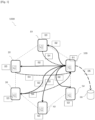
- FIG 1 presents a simplified view of a communications infrastructure comprising a virtual data space in which a synchronization method and a determination method are implemented.
- a set of connectors 10, 20, 30, 40, 50, 100 also called communication servers are interconnected and exchange data in a virtual data space 1000 (in English data-space).
- the number of connectors is not limited and can also be less than the number presented on the [ Fig 1 ] as an example.
- the virtual 1000 data space allows a set of actors (companies, network operators, cloud space operators, etc.) to exchange data securely in order to provide a service to a client.
- Each communication server manages its data and decides which data it wants to share with the other actors participating in the virtual 1000 data space.
- the virtual 1000 data space is deployed on a fixed and/or mobile communication infrastructure, allowing the different servers 10, 20, 30, 40, 50, 100 to be able to exchange data.
- the exchange of data between the communication servers 10, 20, 30, 40, 50, 100 requires that the servers use the same clock to timestamp the data exchanged between these servers.
- the various communication servers 10, 20, 30, 40, 50, 100 of the virtual data space 1000 perform a consensus loop aimed at electing a so-called primary server from among the communication servers 10, 20, 30, 40, 50, 100. It should be noted that it is possible for only some of the communication servers 10, 20, 30, 40, 50, 100 to perform the consensus loop.
- This consensus loop corresponds, according to this embodiment, to the execution of an algorithm for selecting a server from among the communication servers 10, 20, 30, 40, 50, 100 of the data space 1000.
- each communication server 10, 20, 30, 40, 50, 100 it is for example a question of solving a cryptographic problem consisting for example of finding a so-called "nonce" value or a numerical value that must solve an equation or an inequality.
- the primary server will be that of the servers 10, 20, 30, 40, 50, 100 that first solved the selection algorithm among the communication servers 10, 20, 30, 40, 50, 100 and which is therefore capable of transmitting data resulting from the execution of the selection algorithm to the other servers.
- the communication server 100 is the first to solve the selection algorithm and therefore transmits the data resulting from the execution of the algorithm to the other servers 10, 20, 30, 40, 50 of the data space.
- the resulting data could for example be the “nonce” value or the numerical value indicated above.
- sending the data resulting from the execution of the selection algorithm has the advantage, in addition to indicating to the servers 10, 20, 30, 40, 50 that a master clock will be proposed, of improving the security level of the data space by guaranteeing that the server 100 has indeed carried out the selection algorithm.
- the servers 10, 20, 30, 40, 50 can in fact verify the data received and ensure that it indeed results from the algorithm that these servers will have themselves carried out. Sending this data therefore prevents the sending of a clock by an unauthorized communication server or one that has not resolved the selection algorithm.
- step S1 corresponding to the consensus loop because the latter includes the election of the server 100 as primary server, it alone having solved the selection algorithm or because it was the first to solve the selection algorithm among the servers in the data space.
- the server 100 called primary sends to the servers 10, 20, 30, 40, 50 called secondary servers, an initialization message comprising an identifier of the server 100, for example an IP address, an FQDN identifier (in English Fully Qualified Domain Name) or any other identifier specific or not to the data space 1000.
- the signature of the frame can be done using the ECDSA protocol (in English “Elliptic Curve Digital Signature Algorithm”), also used on the current implementation of Bitcoin.
- This message also includes the result of the execution of the selection algorithm, described above, as well as time information for the sending of the initialization message sent. According to one example, this is the information corresponding to the time when the message is actually sent.
- the server 100 can use a clock recovered from an external source to define this time information.
- this time information may be formatted according to the definition of the PTP protocol, thus allowing for precision of the order of nanoseconds.
- Table 1, presented below, describes an example of information transmitted in the initialization message transmitted by the server 100.
- the “Timestamp transmission” corresponds to the transmission time information described above.
- the secondary servers 10, 20, 30, 40, 50 receive these initialization messages comprising the information indicated above. Upon receipt of this initialization message, during a step S3, Upon receipt of this frame, each server 10, 20, 30, 40, 50 will proceed to verify it. The first step of this verification will concern the signature of the primary server 100, as well as the proof (result of the selection algorithm); these two fields make it possible to attest to the validity of the server 100.
- the secondary servers 10, 20, 30, 40, 50 determine a difference between the transmission time information received in the initialization message and a local clock of the secondary servers 10, 20, 30, 40, 50.
- the secondary servers 10, 20, 30, 40, 50 may have their own local clock or retrieve a clock from a remote server.
- each secondary server 10, 20, 30, 40, 50 involved i.e. having received the initialization message, calculates the corrected time, by adding to the transmission time information contained in the initialization message, the data propagation delay between the server 100 and the secondary server considered.
- the server 10 will add to the received transmission time information the propagation time, which can be obtained for example from an ICMP (Internet Control Message Protocol) message.
- ICMP Internet Control Message Protocol
- This corrected time will then be compared to the time of reception of the initialization message evaluated from the local clock of the connector.
- the offset between the two hours (the corrected time and the actual time of reception) must remain within a certain tolerance.
- the verification of the corrected time is thus left to the free choice of the secondary server, which will base itself on its own policy.
- a global policy can be implemented within the 1000 data space to harmonize the rules for validating initialization messages between the secondary servers 10, 20, 30, 40, 50.
- the secondary server 10, 20, 30, 40, 50 emits during a step S4 an acknowledgment message of the initialization message received.
- the secondary servers 10, 20, 30 send an acknowledgment message during step S4.
- the other two secondary servers, namely the servers 40, 50 have not sent an acknowledgment message because they have not certified the primary server 100, either because they have not decrypted the signature of the latter or because the result of the algorithm for selecting the server 100 has not been validated by these servers 40, 50.
- the difference between the times calculated by these servers 40, 50 is greater than a tolerance value and they therefore do not validate the received transmission time information.
- the servers 10, 20, 30 transmitting an acknowledgment message to the initialization message received, they update their local clock using the transmission time information which becomes the clock value for the data exchanges between the servers 100, 10, 20, 30.
- the other secondary servers, i.e. the servers 40 and 50 do not update their local clock since they do not transmit acknowledgment messages and therefore do not validate the transmission time information received.
- the received acknowledgment messages are signed by the secondary servers 10, 20, 30 to authenticate the validity of the senders of these acknowledgment messages.
- the primary server 100 Upon receipt of the acknowledgment messages from the secondary servers 10, 20, 30 having validated the initialization message received, the primary server 100 records during a step S5 a synchronization challenge in a data register 60.
- This synchronization challenge comprises a difference between the transmitted transmission time information and the recorded time information.
- This recorded time information is a transmission time information previously transmitted by one of the servers 10, 20, 30, 40, 50, 100 of the data space 1000.
- the transmission time information used by servers among the servers 10, 20, 30, 40, 50, 100 of the data space 1000 is regularly updated in accordance with the steps S1, S2, S3, S4, S5 described above and replicated repeatedly, the primary server being able to change during these different iterations in accordance with the execution of a selection algorithm which can induce a change of primary server at each iteration.
- the recorded synchronization challenge further includes, according to one example, the initialization message sent and possibly the acknowledgment messages received from the servers 10, 20, 30.
- An example of a synchronization challenge is presented in Table 2 below.
- Table 2 Information transmitted in the synchronization challenge Broadcast time information - PTP format (64 bits) Recorded Time Information Deviation / Transmit Time Information - 32-bit signed integer Nonce (result of the selection algorithm) - typical 32-bit unsigned integer Server Signature 100 Primary (variable size) Signature (acknowledgment) Server 10 (variable size) Signature (acknowledgment) Server 20 (variable size) ...
- the update of the emission time information which will be used for the timestamp of the data exchanged from the moment the challenge is registered, relies on the good participation of all servers 10, 20, 30, 40, 50 and their ability to return signed acknowledgements. It is therefore preferable that the clock update is executed in a secure environment. However, it is not guaranteed that all servers in the virtual data space 1000 contribute to this update. According to one option, for the server 100 to validate this new transmission time information, it can consider the number of acknowledgment messages received from the servers 10, 20, 30, 40, 50. In particular, for the transmission time information to be validated, i.e.
- the number of acknowledgments must be above a threshold defined beforehand (for example 60% of the servers in the data space 1000) or a fixed number.
- a threshold defined beforehand for example 60% of the servers in the data space 1000
- the primary server 100 can validate the transmission time information transmitted in the initialization message and record it in the data register 60, which would not have been the case if it had only received 2 acknowledgement messages while the minimum rate of acknowledgements received was 60%. In the latter case, the recorded time information would have continued to be used for the timestamp of the data exchanged in the data space 1000.
- the validity of the signatures of the acknowledgements can also be checked by the primary server 100 upon their reception.
- the primary server 100 obtains a reward and this reward characteristic (monetary, token) is possibly recorded in the data register 60. This remuneration thus encourages the servers 10, 20, 30, 40, 50, 100 to take part in the synchronization process.
- a penalty may be attributed to the primary server 100.
- the virtual data space in which a primary server (or connector) and at least one secondary server (or connector) are deployed forms a static topology known to all (for example, they are interconnected via a wired network).
- a primary server or connector
- at least one secondary server or connector
- the connectors each have a local clock, potentially synchronized from an external reference (GNSS, time server, mobile network, etc.).
- the primary connector executes a selection algorithm.
- the primary connector and at least one secondary connector execute this algorithm but only one will be selected to become the primary connector.
- Each connector thus integrates an application certified for example by a regulatory entity, allowing multi-actor synchronization of the connectors.
- the application first integrates a consensus loop (selection algorithm) executed by all, regularly allowing the selection of a primary connector, algorithmically.
- This consensus loop will involve cryptographic mechanisms to make the primary connector selection process fair between the connectors, while preventing Byzantine attacks, or Denial of Service attacks.
- the use of such a mechanism makes the architecture resilient. Indeed, any connector has its chances of being elected.
- the mechanism is thus designed so that if a connector sends an incorrect synchronization frame, it can simply be ignored by the others, because another primary connector will be selected by consensus.
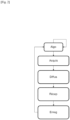
- the primary connector acquires a clock for example from the local clock indicated above. This acquisition step is considered optional since the connector can receive a clock regardless of whether it becomes a primary connector or not.
- the connector elected as the primary connector broadcasts a synchronization frame (also called an initialization message) to the at least one secondary server of the data space 1000.
- This frame includes in particular the clock acquired by the primary connector during the “Acquired” step. This clock is intended to become the time reference of the data space until a new time reference is selected.
- a “primary connector” responsible for giving a time reference to the data space, by means of a synchronization frame comprising this time reference, or clock, or transmission time information.
- the primary connector receives the acknowledgments from the at least one secondary connector that has actually accepted and validated the time reference received from the primary connector.
- the number of acknowledgment messages received indicates to the primary connector the level of acceptance of the time reference in the data space.
- the primary connector once it has collected the acknowledgments thus broadcast, records during a "Register” step the result of the synchronization process implemented in a trusted register, by means of a transaction.
- This transaction will contain the complete synchronization frame, possibly the acknowledgments collected as well as the time difference between the old and the new time reference of the data space, which can be coded on a signed 32-bit integer.
- a secondary server indifferently called connector
- a secondary connector may attempt, during an "Algo Test” step, to solve the selection algorithm used to select the primary connector. This step is optional because a server is not required to attempt to solve the algorithm, and whether it attempts to solve it or not, a connector is said to be secondary because it failed to solve the algorithm, either by default or due to failure, or because it is not the first to solve said algorithm.
- a secondary connector of the data space implemented on a communication network receives from the primary connector a synchronization frame comprising the clock proposed by the connector. primary as well as proof of the execution of the consensus loop (corresponding to the selection algorithm) and an identifier of the primary connector such as a signature.
- the secondary server Upon receipt of the synchronization frame, during a "Timestamp” step, the secondary server records the clock transmitted by the primary connector, this clock being able to be used by the secondary connector if it validates it during a following step.
- the secondary server Before validating this clock, during a "Tests” step, the secondary server ensures that the synchronization frame received actually comes from the primary connector by checking the identifier included in the synchronization frame and verifying that the latter has successfully executed the consensus loop. In the case where the test is negative, that is to say that one and/or the other of the information is not compliant (the identifier does not correspond to a server in the data space and/or the data does not result from the execution of the consensus loop), then it ignores the synchronization frame received during an "Ignore" step and does not take into account the information present in this frame.
- the secondary connector determines a difference between the modified received clock to take into account the transmission duration of this local clock in the synchronization frame routed between the primary connector and the secondary connector and a local clock of the secondary server.
- H1 represents the transmission time information or the clock transmitted in the synchronization frame and H2
- a local clock of the secondary server and the propagation time of the synchronization frame between the primary connector and the secondary connector is T1
- the secondary server calculates H1 + T1.
- the secondary server can use another method or another calculation to compare H1 and H2.
- the secondary server can also consider H2 as valid by comparing H1 and H2 independently of the propagation time.
- the secondary connector compares H2 to H1 + T1 during a “Verify” step. If during this "Verif” step, the secondary connector determines that the absolute value of H2 - (H1+T1) is less than a tolerance value, then the secondary server validates the received H1 clock and transmits during a "Send” step, an acknowledgment message for the received synchronization frame. If the secondary connector does not take T1 into account, it then compares the values of H1 and H2. Preferably, it transmits the acknowledgment in a message, preferably signed, for example with the protocol ECDSA, with the signature specific to the secondary connector, in accordance with the technical requirements of a virtual data space. If during the "verif” step, the gap between H2 and (H1 + T1) is too large, then the secondary connector ignores the synchronization frame received during an "Ignore” step.
- the secondary connector can update its local clock with the H1 clock only once it has received a confirmation message from the primary connector. This allows in particular that a new clock is only used if the primary connector receives enough acknowledgement messages from the secondary servers, thus ensuring that this clock is used by a sufficient number of servers in the data space.
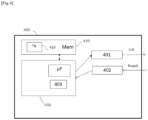
- the synchronization device 400 implements the synchronization method, different embodiments of which have just been described.
- Such a device 400 can be implemented in a data server, for example instantiated in a virtual machine or a container and/or in a cloud environment of a data network.
- the device 400 comprises a processing unit 430, equipped for example with a microprocessor ⁇ P, and controlled by a computer program 410, stored in a memory 420 and implementing the determination method according to the invention.
- a computer program 410 stored in a memory 420 and implementing the determination method according to the invention.
- the code instructions of the computer program 410 are for example loaded into a RAM memory, before being executed by the processor of the processing unit 430.
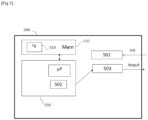
- the determination device 500 implements the method for determining time information used for the timestamping of data exchanged between a plurality of communications servers of a communications network, different embodiments of which have just been described.
- Such a device 500 can be implemented in a data server, for example instantiated in a virtual machine or a container and/or in a cloud environment of a data network.
- the device 500 comprises a processing unit 530, equipped for example with a microprocessor ⁇ P, and controlled by a computer program 510, stored in a memory 520 and implementing the charging method according to the invention.
- a computer program 510 stored in a memory 520 and implementing the charging method according to the invention.
- the code instructions of the computer program 510 are for example loaded into a RAM memory, before being executed by the processor of the processing unit 530.
Landscapes
- Engineering & Computer Science (AREA)
- Computer Security & Cryptography (AREA)
- Computer Networks & Wireless Communication (AREA)
- Signal Processing (AREA)
- Computer Hardware Design (AREA)
- General Engineering & Computer Science (AREA)
- Computing Systems (AREA)
- Theoretical Computer Science (AREA)
- Bioethics (AREA)
- General Health & Medical Sciences (AREA)
- Software Systems (AREA)
- Physics & Mathematics (AREA)
- General Physics & Mathematics (AREA)
- Health & Medical Sciences (AREA)
- Synchronisation In Digital Transmission Systems (AREA)
- Data Exchanges In Wide-Area Networks (AREA)
Claims (15)
- Verfahren zur Synchronisierung einer Mehrzahl von Kommunikationsservern (10, 20, 30, 40, 50, 100) eines Kommunikationsnetzes (1000), die geeignet sind, mithilfe einer Zeitreferenz zeitgestempelte Daten auszutauschen,
wobei das Verfahren von einem Server (100) der Mehrzahl, primärer Server genannt, durchgeführt wird und umfasst:- Ein Senden (S2), an die anderen Kommunikationsserver (10, 20, 30, 40, 50) der Mehrzahl, sekundäre Server genannt, einer Initialisierungsnachricht Init, die eine Kennung des primären Servers (100), ein aus der Ausführung eines Algorithmus zur Auswahl (S1) des primären Servers (100) unter den Servern (10, 20, 30, 40, 50, 100) der Mehrzahl resultierendes Datenelement, eine Sendezeitinformation der Initialisierungsnachricht Init umfasst,- Ein Empfangen (S4), von mindestens einem sekundären Server (10, 20, 30), einer Quittierungsnachricht Acquit zur Quittierung der gesendeten Initialisierungsnachricht,- Eine Validierung (S5) einer Synchronisierungsanforderung, die die Differenz zwischen einer registrierten Sendezeitreferenz und der Sendezeitinformation der Initialisierungsnachricht umfasst, wobei die Sendezeitinformation die registrierte Zeitreferenz zur Zeitstempelung der zwischen den Servern (10, 20, 30, 100) der Mehrzahl ausgetauschten Daten nach der Validierung ersetzt. - Verfahren zur Synchronisierung nach Anspruch 1, wobei die Schritte des Verfahrens gemäß einem dem Kommunikationsnetz eigenen Zeitintervall wiederholt werden.
- Verfahren zur Synchronisierung nach Anspruch 1 oder Anspruch 2, wobei das Datenelement aus der Lösung eines kryptographischen Problems resultiert.
- Verfahren zur Synchronisierung nach einem der Ansprüche 1 bis 3, wobei die Validierung der Synchronisierungsanforderung sich auf die Anzahl von empfangenen Quittierungsnachrichten Acquit bezieht.
- Verfahren zur Synchronisierung nach einem der Ansprüche 1 bis 4, wobei die Validierung einer Synchronisierungsanforderung ferner die mindestens eine empfangene Quittierungsnachricht Acquit umfasst.
- Verfahren zur Synchronisierung nach einem der Ansprüche 1 bis 5, umfassend ferner das Registrieren eines Belohnungsmerkmals des primären Servers (100), wenn die Anzahl empfangener Quittierungsnachrichten Acquit über einem Konfidenzschwellenwert liegt.
- Verfahren zur Synchronisierung nach einem der Ansprüche 1 bis 6, umfassend ferner das vorherige Erfassen der Sendezeitinformation bei einer externen Quelle.
- Verfahren zur Bestimmung einer Zeitreferenz, die zur Zeitstempelung von Daten verwendet wird, die zwischen einer Mehrzahl von Kommunikationsservern (10, 20, 30, 40, 50, 100) eines Kommunikationsnetzes (1000) ausgetauscht werden, wobei die Mehrzahl eine primären Server (100), der geeignet ist, eine Sendezeitinformation zu senden, und mindestens einen sekundären Server (10, 20, 30, 40, 50) umfasst, wobei das Verfahren von dem mindestens einen sekundären Server (10, 20, 30, 40, 50) durchgeführt wird und umfasst:- ein Empfangen (S2), von dem primären Server (100), einer Initialisierungsnachricht Init, die eine Kennung des primären Servers (100), ein aus der Ausführung eines Algorithmus zur Auswahl des primären Servers (100) unter den Servern (10, 20, 30, 40, 50, 100) der Mehrzahl resultierendes Datenelement, eine Sendezeitinformation der Initialisierungsnachricht Init umfasst,- ein Bestimmen (S3) einer Abweichung zwischen einer Empfangszeitinformation, die ausgehend von der empfangenen Sendezeitinformation berechnet wird, und einer lokalen Uhr des mindestens einen sekundären Servers,- ein Senden (S4), an den primären Server (100), einer Quittierungsnachricht Acquit zur Quittierung der empfangenen Initialisierungsnachricht Init in Abhängigkeit von der bestimmten Abweichung.
- Verfahren zur Bestimmung nach Anspruch 8, wobei die Empfangszeitinformation in Abhängigkeit von der Datenlaufzeit zwischen dem primären Server und dem mindestens einen sekundären Server berechnet wird.
- Verfahren zur Bestimmung nach Anspruch 8 oder Anspruch 9, umfassend ferner ein Vergleichen der Abweichung mit einem Toleranzwert und das Aktualisieren der lokalen Uhr mit der empfangenen Sendezeitinformation, wenn die Abweichung geringer als der Toleranzwert ist.
- Vorrichtung (400) zur Synchronisierung einer Mehrzahl von Kommunikationsservern (10, 20, 30, 40, 50, 100) eines Kommunikationsnetzes (1000), die geeignet sind, mithilfe einer Zeitreferenz zeitgestempelte Daten auszutauschen, umfassend- Einen Sender (401), der geeignet ist, an die anderen Kommunikationsserver der Mehrzahl, sekundäre Server genannt, eine Initialisierungsnachricht Init zu senden, die eine Kennung des primären Servers (100), ein aus der Ausführung eines Algorithmus zur Auswahl des primären Servers unter den Servern der Mehrzahl resultierendes Datenelement, eine Sendezeitinformation der Initialisierungsnachricht umfasst,- Einen Empfänger (402), der geeignet ist, von mindestens einem sekundären Server (10, 20, 30, 40, 50) eine Quittierungsnachricht Acquit zur Quittierung der gesendeten Initialisierungsnachricht Init zu empfangen,- Eine Registriereinrichtung (403), die geeignet ist, eine Synchronisierungsanforderung zu validieren, die die Differenz zwischen einer registrierten Sendezeitreferenz und der Sendezeitinformation der Initialisierungsnachricht umfasst, wobei die Sendezeitinformation die registrierte Zeitreferenz zur Zeitstempelung der zwischen den Servern (10, 20, 30, 40, 50, 100) der Mehrzahl ausgetauschten Daten nach der Validierung ersetzt.
- Vorrichtung (500) zur Bestimmung einer Zeitreferenz, die zur Zeitstempelung von Daten verwendet wird, die zwischen einer Mehrzahl von Kommunikationsservern (10, 20, 30, 40, 50, 100) eines Kommunikationsnetzes ausgetauscht werden, wobei die Mehrzahl einen primären Server (100), der geeignet ist, eine Sendezeitinformation zu senden, und mindestens einen sekundären Server (10, 20, 30, 40, 50) umfasst, wobei die Vorrichtung umfasst:- einen Empfänger (501), der geeignet ist, von dem primären Server (100) eine Initialisierungsnachricht Init zu empfangen, die eine Kennung des primären Servers (100), ein aus der Ausführung eines Algorithmus zur Auswahl des primären Servers (100) unter den Servern (10, 20, 30, 40, 50, 100) der Mehrzahl resultierendes Datenelement, eine Sendezeitinformation der Initialisierungsnachricht Init umfasst,- ein Modul (502) zur Bestimmung, das geeignet ist, eine Abweichung zwischen einer Empfangszeitinformation, die ausgehend von der empfangenen Sendezeitinformation berechnet wird, und einer lokalen Uhr des mindestens einen sekundären Servers (10, 20, 30, 40, 50) zu bestimmen,- einen Sender (503), der geeignet ist, eine Quittierungsnachricht Acquit zur Quittierung der empfangenen Initialisierungsnachricht Init in Abhängigkeit von der bestimmten Abweichung zu senden.
- System zur Synchronisierung einer Mehrzahl von Kommunikationsservern (10, 20, 30, 40, 50, 100) eines Kommunikationsnetzes (1000), die geeignet sind, mithilfe einer Zeitreferenz zeitgestempelte Daten auszutauschen, wobei das System umfasst:- einen primären Server (100), der eine Vorrichtung (400) zur Synchronisierung nach Anspruch 11 umfasst,- mindestens einen sekundären Server (10, 20, 30, 40, 50), der eine Vorrichtung (500) zur Bestimmung nach Anspruch 12 umfasst.
- Computerprogramm, das Anweisungen umfasst, die bei der Ausführung des Programms durch einen Prozessor das Verfahren zur Synchronisierung nach einem der Ansprüche 1 bis 7 durchführen.
- Computerprogramm, das Anweisungen umfasst, die bei der Ausführung des Programms durch einen Prozessor das Verfahren zur Bestimmung nach einem der Ansprüche 8 bis 10 durchführen.
Applications Claiming Priority (2)
| Application Number | Priority Date | Filing Date | Title |
|---|---|---|---|
| FR2009880A FR3114712A1 (fr) | 2020-09-29 | 2020-09-29 | Procédé de synchronisation d’une pluralité de serveurs de communications, dispositifs et programmes d’ordinateurs correspondants |
| PCT/FR2021/051642 WO2022069818A1 (fr) | 2020-09-29 | 2021-09-24 | Procede de synchronisation d'une pluralite de serveurs de communications, dispositifs et programmes d'ordinateurs correspondants |
Publications (2)
| Publication Number | Publication Date |
|---|---|
| EP4222632A1 EP4222632A1 (de) | 2023-08-09 |
| EP4222632B1 true EP4222632B1 (de) | 2024-08-21 |
Family
ID=74125369
Family Applications (1)
| Application Number | Title | Priority Date | Filing Date |
|---|---|---|---|
| EP21798414.5A Active EP4222632B1 (de) | 2020-09-29 | 2021-09-24 | Verfahren zur synchronisation mehrerer kommunikationsserver sowie entsprechende computereinrichtungen und programme |
Country Status (4)
| Country | Link |
|---|---|
| US (1) | US12418350B2 (de) |
| EP (1) | EP4222632B1 (de) |
| FR (1) | FR3114712A1 (de) |
| WO (1) | WO2022069818A1 (de) |
Family Cites Families (9)
| Publication number | Priority date | Publication date | Assignee | Title |
|---|---|---|---|---|
| KR101197280B1 (ko) * | 2005-07-15 | 2012-11-05 | 삼성전자주식회사 | 타임 스탬프를 이용한 타임 동기 방법 및 장치 |
| US8392709B1 (en) * | 2009-04-28 | 2013-03-05 | Adobe Systems Incorporated | System and method for a single request—single response protocol with mutual replay attack protection |
| PT2676389T (pt) | 2011-02-15 | 2016-11-07 | ERICSSON TELEFON AB L M (publ) | Método de facultar uma assimetria de atraso de percurso para sincronização de tempo entre um relógio mestre e um escravo através de uma rede de comunicação |
| US9973601B2 (en) * | 2013-03-15 | 2018-05-15 | Avago Technologies General Ip (Singapore) Pte. Ltd. | Fault tolerant clock network |
| EP3491752A1 (de) * | 2016-09-23 | 2019-06-05 | Apple Inc. | Synchronisation von netzwerktakten |
| US10691722B2 (en) * | 2017-05-31 | 2020-06-23 | Oracle International Corporation | Consistent query execution for big data analytics in a hybrid database |
| US11197075B1 (en) * | 2018-12-27 | 2021-12-07 | Equinix, Inc. | Clock synchronization in a heterogeneous system |
| US11872905B2 (en) * | 2021-04-16 | 2024-01-16 | Texas Instruments Incorporated | Wireless protocol for battery management |
| US11483085B1 (en) * | 2019-09-16 | 2022-10-25 | Amazon Technologies, Inc. | Device time synchronization by networking device |
-
2020
- 2020-09-29 FR FR2009880A patent/FR3114712A1/fr not_active Ceased
-
2021
- 2021-09-24 WO PCT/FR2021/051642 patent/WO2022069818A1/fr not_active Ceased
- 2021-09-24 EP EP21798414.5A patent/EP4222632B1/de active Active
- 2021-09-24 US US18/246,958 patent/US12418350B2/en active Active
Also Published As
| Publication number | Publication date |
|---|---|
| US20230388035A1 (en) | 2023-11-30 |
| FR3114712A1 (fr) | 2022-04-01 |
| EP4222632A1 (de) | 2023-08-09 |
| WO2022069818A1 (fr) | 2022-04-07 |
| US12418350B2 (en) | 2025-09-16 |
Similar Documents
| Publication | Publication Date | Title |
|---|---|---|
| Kim et al. | Measuring ethereum network peers | |
| US7702909B2 (en) | Method and system for validating timestamps | |
| Fontugne et al. | Rpki time-of-flight: Tracking delays in the management, control, and data planes | |
| CN112019330B (zh) | 一种基于联盟链的内网安全审计数据的存储方法及系统 | |
| US11961074B2 (en) | Method and system for a network device to obtain a trusted state representation of the state of the distributed ledger technology network | |
| Frieß et al. | Byzantine-secure relying party for resilient RPKI | |
| EP3568966B1 (de) | Verfahren und vorrichtungen zur delegation der verteilung von verschlüsseltem inhalt | |
| Roos | Identity management on the blockchain | |
| JP3963315B2 (ja) | 時刻認証方法、時刻認証要求プログラムおよび時刻認証要求装置 | |
| Zeilemaker et al. | Dispersy bundle synchronization | |
| EP4222632A1 (de) | Verfahren zur synchronisation mehrerer kommunikationsserver sowie entsprechende computereinrichtungen und programme | |
| Luo | Unveiling ethereum's P2P network: The role of chain and client diversity | |
| Huang et al. | Measuring the Time Source Vulnerabilities in the NTP Ecosystem | |
| Liska | NTP Security: A Quick-Start Guide | |
| EP3785403B1 (de) | Verfahren zur formulierung von nutzungsdaten bezüglich eines relais im zuge einer kommunikation zwischen zwei geräten, zum suchen der daten und zugehörige vorrichtungen | |
| FR3141021A1 (fr) | Procédé de mise en œuvre d’un service d’une chaîne de services et dispositif électronique associé | |
| EP4348483B1 (de) | Verfahren zur verwaltung eines lokalen kontos eines zu einer menge von knoten, die zu einem verteilten konto beitragen, gehörenden knotens | |
| WO2007125235A2 (fr) | Identification de noeuds dans un reseau | |
| Fontugne et al. | RPKI Time-of-Flight: Tracking Delays in the Management, Control, and Data | |
| FR3142313A1 (fr) | Procédé de distribution de clefs de session dans un réseau de télécommunication, procédés associés de traitement dans un client et un serveur, module client et serveur associés | |
| Chandid | Empirical Use of Network Time Protocol in Internet of Things Devices: Vulnerabilities and Security Measures | |
| Morigaki et al. | An analysis of detailed electronic time-stamping using digital TV | |
| Di Sarno et al. | D5. 1.2-Preliminary Defense Services and Protocols | |
| FR3145253A1 (fr) | Procédé de révocation d’un jeton de certification permettant d’authentifier l’établissement d’une connexion entre deux équipements de communication, dispositifs et programmes d’ordinateur correspondants | |
| FR3141020A1 (fr) | Procédé de mise en œuvre d’un service d’une chaîne de services et dispositif électronique associé |
Legal Events
| Date | Code | Title | Description |
|---|---|---|---|
| STAA | Information on the status of an ep patent application or granted ep patent |
Free format text: STATUS: UNKNOWN |
|
| STAA | Information on the status of an ep patent application or granted ep patent |
Free format text: STATUS: THE INTERNATIONAL PUBLICATION HAS BEEN MADE |
|
| PUAI | Public reference made under article 153(3) epc to a published international application that has entered the european phase |
Free format text: ORIGINAL CODE: 0009012 |
|
| STAA | Information on the status of an ep patent application or granted ep patent |
Free format text: STATUS: REQUEST FOR EXAMINATION WAS MADE |
|
| 17P | Request for examination filed |
Effective date: 20230417 |
|
| AK | Designated contracting states |
Kind code of ref document: A1 Designated state(s): AL AT BE BG CH CY CZ DE DK EE ES FI FR GB GR HR HU IE IS IT LI LT LU LV MC MK MT NL NO PL PT RO RS SE SI SK SM TR |
|
| DAV | Request for validation of the european patent (deleted) | ||
| DAX | Request for extension of the european patent (deleted) | ||
| RAP3 | Party data changed (applicant data changed or rights of an application transferred) |
Owner name: ORANGE |
|
| GRAP | Despatch of communication of intention to grant a patent |
Free format text: ORIGINAL CODE: EPIDOSNIGR1 |
|
| STAA | Information on the status of an ep patent application or granted ep patent |
Free format text: STATUS: GRANT OF PATENT IS INTENDED |
|
| INTG | Intention to grant announced |
Effective date: 20240408 |
|
| GRAS | Grant fee paid |
Free format text: ORIGINAL CODE: EPIDOSNIGR3 |
|
| GRAA | (expected) grant |
Free format text: ORIGINAL CODE: 0009210 |
|
| STAA | Information on the status of an ep patent application or granted ep patent |
Free format text: STATUS: THE PATENT HAS BEEN GRANTED |
|
| AK | Designated contracting states |
Kind code of ref document: B1 Designated state(s): AL AT BE BG CH CY CZ DE DK EE ES FI FR GB GR HR HU IE IS IT LI LT LU LV MC MK MT NL NO PL PT RO RS SE SI SK SM TR |
|
| REG | Reference to a national code |
Ref country code: GB Ref legal event code: FG4D Free format text: NOT ENGLISH |
|
| REG | Reference to a national code |
Ref country code: CH Ref legal event code: EP |
|
| REG | Reference to a national code |
Ref country code: IE Ref legal event code: FG4D Free format text: LANGUAGE OF EP DOCUMENT: FRENCH |
|
| REG | Reference to a national code |
Ref country code: DE Ref legal event code: R096 Ref document number: 602021017648 Country of ref document: DE |
|
| REG | Reference to a national code |
Ref country code: LT Ref legal event code: MG9D |
|
| REG | Reference to a national code |
Ref country code: NL Ref legal event code: MP Effective date: 20240821 |
|
| PG25 | Lapsed in a contracting state [announced via postgrant information from national office to epo] |
Ref country code: NO Free format text: LAPSE BECAUSE OF FAILURE TO SUBMIT A TRANSLATION OF THE DESCRIPTION OR TO PAY THE FEE WITHIN THE PRESCRIBED TIME-LIMIT Effective date: 20241121 |
|
| REG | Reference to a national code |
Ref country code: AT Ref legal event code: MK05 Ref document number: 1716210 Country of ref document: AT Kind code of ref document: T Effective date: 20240821 |
|
| PG25 | Lapsed in a contracting state [announced via postgrant information from national office to epo] |
Ref country code: PT Free format text: LAPSE BECAUSE OF FAILURE TO SUBMIT A TRANSLATION OF THE DESCRIPTION OR TO PAY THE FEE WITHIN THE PRESCRIBED TIME-LIMIT Effective date: 20241223 Ref country code: FI Free format text: LAPSE BECAUSE OF FAILURE TO SUBMIT A TRANSLATION OF THE DESCRIPTION OR TO PAY THE FEE WITHIN THE PRESCRIBED TIME-LIMIT Effective date: 20240821 Ref country code: GR Free format text: LAPSE BECAUSE OF FAILURE TO SUBMIT A TRANSLATION OF THE DESCRIPTION OR TO PAY THE FEE WITHIN THE PRESCRIBED TIME-LIMIT Effective date: 20241122 Ref country code: NL Free format text: LAPSE BECAUSE OF FAILURE TO SUBMIT A TRANSLATION OF THE DESCRIPTION OR TO PAY THE FEE WITHIN THE PRESCRIBED TIME-LIMIT Effective date: 20240821 Ref country code: PL Free format text: LAPSE BECAUSE OF FAILURE TO SUBMIT A TRANSLATION OF THE DESCRIPTION OR TO PAY THE FEE WITHIN THE PRESCRIBED TIME-LIMIT Effective date: 20240821 |
|
| PG25 | Lapsed in a contracting state [announced via postgrant information from national office to epo] |
Ref country code: BG Free format text: LAPSE BECAUSE OF FAILURE TO SUBMIT A TRANSLATION OF THE DESCRIPTION OR TO PAY THE FEE WITHIN THE PRESCRIBED TIME-LIMIT Effective date: 20240821 |
|
| PG25 | Lapsed in a contracting state [announced via postgrant information from national office to epo] |
Ref country code: LV Free format text: LAPSE BECAUSE OF FAILURE TO SUBMIT A TRANSLATION OF THE DESCRIPTION OR TO PAY THE FEE WITHIN THE PRESCRIBED TIME-LIMIT Effective date: 20240821 |
|
| PG25 | Lapsed in a contracting state [announced via postgrant information from national office to epo] |
Ref country code: IS Free format text: LAPSE BECAUSE OF FAILURE TO SUBMIT A TRANSLATION OF THE DESCRIPTION OR TO PAY THE FEE WITHIN THE PRESCRIBED TIME-LIMIT Effective date: 20241221 Ref country code: AT Free format text: LAPSE BECAUSE OF FAILURE TO SUBMIT A TRANSLATION OF THE DESCRIPTION OR TO PAY THE FEE WITHIN THE PRESCRIBED TIME-LIMIT Effective date: 20240821 |
|
| PG25 | Lapsed in a contracting state [announced via postgrant information from national office to epo] |
Ref country code: HR Free format text: LAPSE BECAUSE OF FAILURE TO SUBMIT A TRANSLATION OF THE DESCRIPTION OR TO PAY THE FEE WITHIN THE PRESCRIBED TIME-LIMIT Effective date: 20240821 |
|
| PG25 | Lapsed in a contracting state [announced via postgrant information from national office to epo] |
Ref country code: RS Free format text: LAPSE BECAUSE OF FAILURE TO SUBMIT A TRANSLATION OF THE DESCRIPTION OR TO PAY THE FEE WITHIN THE PRESCRIBED TIME-LIMIT Effective date: 20241121 Ref country code: ES Free format text: LAPSE BECAUSE OF FAILURE TO SUBMIT A TRANSLATION OF THE DESCRIPTION OR TO PAY THE FEE WITHIN THE PRESCRIBED TIME-LIMIT Effective date: 20240821 |
|
| PG25 | Lapsed in a contracting state [announced via postgrant information from national office to epo] |
Ref country code: RS Free format text: LAPSE BECAUSE OF FAILURE TO SUBMIT A TRANSLATION OF THE DESCRIPTION OR TO PAY THE FEE WITHIN THE PRESCRIBED TIME-LIMIT Effective date: 20241121 Ref country code: PT Free format text: LAPSE BECAUSE OF FAILURE TO SUBMIT A TRANSLATION OF THE DESCRIPTION OR TO PAY THE FEE WITHIN THE PRESCRIBED TIME-LIMIT Effective date: 20241223 Ref country code: PL Free format text: LAPSE BECAUSE OF FAILURE TO SUBMIT A TRANSLATION OF THE DESCRIPTION OR TO PAY THE FEE WITHIN THE PRESCRIBED TIME-LIMIT Effective date: 20240821 Ref country code: NO Free format text: LAPSE BECAUSE OF FAILURE TO SUBMIT A TRANSLATION OF THE DESCRIPTION OR TO PAY THE FEE WITHIN THE PRESCRIBED TIME-LIMIT Effective date: 20241121 Ref country code: NL Free format text: LAPSE BECAUSE OF FAILURE TO SUBMIT A TRANSLATION OF THE DESCRIPTION OR TO PAY THE FEE WITHIN THE PRESCRIBED TIME-LIMIT Effective date: 20240821 Ref country code: LV Free format text: LAPSE BECAUSE OF FAILURE TO SUBMIT A TRANSLATION OF THE DESCRIPTION OR TO PAY THE FEE WITHIN THE PRESCRIBED TIME-LIMIT Effective date: 20240821 Ref country code: IS Free format text: LAPSE BECAUSE OF FAILURE TO SUBMIT A TRANSLATION OF THE DESCRIPTION OR TO PAY THE FEE WITHIN THE PRESCRIBED TIME-LIMIT Effective date: 20241221 Ref country code: HR Free format text: LAPSE BECAUSE OF FAILURE TO SUBMIT A TRANSLATION OF THE DESCRIPTION OR TO PAY THE FEE WITHIN THE PRESCRIBED TIME-LIMIT Effective date: 20240821 Ref country code: GR Free format text: LAPSE BECAUSE OF FAILURE TO SUBMIT A TRANSLATION OF THE DESCRIPTION OR TO PAY THE FEE WITHIN THE PRESCRIBED TIME-LIMIT Effective date: 20241122 Ref country code: FI Free format text: LAPSE BECAUSE OF FAILURE TO SUBMIT A TRANSLATION OF THE DESCRIPTION OR TO PAY THE FEE WITHIN THE PRESCRIBED TIME-LIMIT Effective date: 20240821 Ref country code: ES Free format text: LAPSE BECAUSE OF FAILURE TO SUBMIT A TRANSLATION OF THE DESCRIPTION OR TO PAY THE FEE WITHIN THE PRESCRIBED TIME-LIMIT Effective date: 20240821 Ref country code: BG Free format text: LAPSE BECAUSE OF FAILURE TO SUBMIT A TRANSLATION OF THE DESCRIPTION OR TO PAY THE FEE WITHIN THE PRESCRIBED TIME-LIMIT Effective date: 20240821 Ref country code: AT Free format text: LAPSE BECAUSE OF FAILURE TO SUBMIT A TRANSLATION OF THE DESCRIPTION OR TO PAY THE FEE WITHIN THE PRESCRIBED TIME-LIMIT Effective date: 20240821 |
|
| PG25 | Lapsed in a contracting state [announced via postgrant information from national office to epo] |
Ref country code: DK Free format text: LAPSE BECAUSE OF FAILURE TO SUBMIT A TRANSLATION OF THE DESCRIPTION OR TO PAY THE FEE WITHIN THE PRESCRIBED TIME-LIMIT Effective date: 20240821 Ref country code: SM Free format text: LAPSE BECAUSE OF FAILURE TO SUBMIT A TRANSLATION OF THE DESCRIPTION OR TO PAY THE FEE WITHIN THE PRESCRIBED TIME-LIMIT Effective date: 20240821 Ref country code: RO Free format text: LAPSE BECAUSE OF FAILURE TO SUBMIT A TRANSLATION OF THE DESCRIPTION OR TO PAY THE FEE WITHIN THE PRESCRIBED TIME-LIMIT Effective date: 20240821 |
|
| PG25 | Lapsed in a contracting state [announced via postgrant information from national office to epo] |
Ref country code: EE Free format text: LAPSE BECAUSE OF FAILURE TO SUBMIT A TRANSLATION OF THE DESCRIPTION OR TO PAY THE FEE WITHIN THE PRESCRIBED TIME-LIMIT Effective date: 20240821 |
|
| PG25 | Lapsed in a contracting state [announced via postgrant information from national office to epo] |
Ref country code: CZ Free format text: LAPSE BECAUSE OF FAILURE TO SUBMIT A TRANSLATION OF THE DESCRIPTION OR TO PAY THE FEE WITHIN THE PRESCRIBED TIME-LIMIT Effective date: 20240821 |
|
| PG25 | Lapsed in a contracting state [announced via postgrant information from national office to epo] |
Ref country code: SK Free format text: LAPSE BECAUSE OF FAILURE TO SUBMIT A TRANSLATION OF THE DESCRIPTION OR TO PAY THE FEE WITHIN THE PRESCRIBED TIME-LIMIT Effective date: 20240821 Ref country code: IT Free format text: LAPSE BECAUSE OF FAILURE TO SUBMIT A TRANSLATION OF THE DESCRIPTION OR TO PAY THE FEE WITHIN THE PRESCRIBED TIME-LIMIT Effective date: 20240821 |
|
| REG | Reference to a national code |
Ref country code: CH Ref legal event code: PL |
|
| PG25 | Lapsed in a contracting state [announced via postgrant information from national office to epo] |
Ref country code: LU Free format text: LAPSE BECAUSE OF NON-PAYMENT OF DUE FEES Effective date: 20240924 |
|
| REG | Reference to a national code |
Ref country code: DE Ref legal event code: R097 Ref document number: 602021017648 Country of ref document: DE |
|
| PLBE | No opposition filed within time limit |
Free format text: ORIGINAL CODE: 0009261 |
|
| STAA | Information on the status of an ep patent application or granted ep patent |
Free format text: STATUS: NO OPPOSITION FILED WITHIN TIME LIMIT |
|
| PG25 | Lapsed in a contracting state [announced via postgrant information from national office to epo] |
Ref country code: MC Free format text: LAPSE BECAUSE OF FAILURE TO SUBMIT A TRANSLATION OF THE DESCRIPTION OR TO PAY THE FEE WITHIN THE PRESCRIBED TIME-LIMIT Effective date: 20240821 |
|
| REG | Reference to a national code |
Ref country code: BE Ref legal event code: MM Effective date: 20240930 |
|
| PG25 | Lapsed in a contracting state [announced via postgrant information from national office to epo] |
Ref country code: BE Free format text: LAPSE BECAUSE OF NON-PAYMENT OF DUE FEES Effective date: 20240930 |
|
| PG25 | Lapsed in a contracting state [announced via postgrant information from national office to epo] |
Ref country code: CH Free format text: LAPSE BECAUSE OF NON-PAYMENT OF DUE FEES Effective date: 20240930 |
|
| PG25 | Lapsed in a contracting state [announced via postgrant information from national office to epo] |
Ref country code: IE Free format text: LAPSE BECAUSE OF NON-PAYMENT OF DUE FEES Effective date: 20240924 |
|
| 26N | No opposition filed |
Effective date: 20250522 |
|
| PG25 | Lapsed in a contracting state [announced via postgrant information from national office to epo] |
Ref country code: SE Free format text: LAPSE BECAUSE OF FAILURE TO SUBMIT A TRANSLATION OF THE DESCRIPTION OR TO PAY THE FEE WITHIN THE PRESCRIBED TIME-LIMIT Effective date: 20240821 |
|
| PGFP | Annual fee paid to national office [announced via postgrant information from national office to epo] |
Ref country code: DE Payment date: 20250820 Year of fee payment: 5 |
|
| PGFP | Annual fee paid to national office [announced via postgrant information from national office to epo] |
Ref country code: GB Payment date: 20250820 Year of fee payment: 5 |
|
| PGFP | Annual fee paid to national office [announced via postgrant information from national office to epo] |
Ref country code: FR Payment date: 20250820 Year of fee payment: 5 |
|
| PG25 | Lapsed in a contracting state [announced via postgrant information from national office to epo] |
Ref country code: CY Free format text: LAPSE BECAUSE OF FAILURE TO SUBMIT A TRANSLATION OF THE DESCRIPTION OR TO PAY THE FEE WITHIN THE PRESCRIBED TIME-LIMIT; INVALID AB INITIO Effective date: 20210924 |
|
| PG25 | Lapsed in a contracting state [announced via postgrant information from national office to epo] |
Ref country code: HU Free format text: LAPSE BECAUSE OF FAILURE TO SUBMIT A TRANSLATION OF THE DESCRIPTION OR TO PAY THE FEE WITHIN THE PRESCRIBED TIME-LIMIT; INVALID AB INITIO Effective date: 20210924 |
|
| PG25 | Lapsed in a contracting state [announced via postgrant information from national office to epo] |
Ref country code: TR Free format text: LAPSE BECAUSE OF FAILURE TO SUBMIT A TRANSLATION OF THE DESCRIPTION OR TO PAY THE FEE WITHIN THE PRESCRIBED TIME-LIMIT Effective date: 20240821 |
|
| PG25 | Lapsed in a contracting state [announced via postgrant information from national office to epo] |
Ref country code: SI Free format text: LAPSE BECAUSE OF FAILURE TO SUBMIT A TRANSLATION OF THE DESCRIPTION OR TO PAY THE FEE WITHIN THE PRESCRIBED TIME-LIMIT Effective date: 20240821 |
|
| PG25 | Lapsed in a contracting state [announced via postgrant information from national office to epo] |
Ref country code: LT Free format text: LAPSE BECAUSE OF FAILURE TO SUBMIT A TRANSLATION OF THE DESCRIPTION OR TO PAY THE FEE WITHIN THE PRESCRIBED TIME-LIMIT Effective date: 20240821 |