EP4222632B1 - Method for synchronising a plurality of communication servers, and corresponding computer devices and programs - Google Patents
Method for synchronising a plurality of communication servers, and corresponding computer devices and programs Download PDFInfo
- Publication number
- EP4222632B1 EP4222632B1 EP21798414.5A EP21798414A EP4222632B1 EP 4222632 B1 EP4222632 B1 EP 4222632B1 EP 21798414 A EP21798414 A EP 21798414A EP 4222632 B1 EP4222632 B1 EP 4222632B1
- Authority
- EP
- European Patent Office
- Prior art keywords
- servers
- server
- time information
- transmission time
- primary server
- Prior art date
- Legal status (The legal status is an assumption and is not a legal conclusion. Google has not performed a legal analysis and makes no representation as to the accuracy of the status listed.)
- Active
Links
Images

Classifications
-
- H—ELECTRICITY
- H04—ELECTRIC COMMUNICATION TECHNIQUE
- H04J—MULTIPLEX COMMUNICATION
- H04J3/00—Time-division multiplex systems
- H04J3/02—Details
- H04J3/06—Synchronising arrangements
- H04J3/0635—Clock or time synchronisation in a network
- H04J3/0638—Clock or time synchronisation among nodes; Internode synchronisation
- H04J3/0641—Change of the master or reference, e.g. take-over or failure of the master
-
- G—PHYSICS
- G06—COMPUTING OR CALCULATING; COUNTING
- G06F—ELECTRIC DIGITAL DATA PROCESSING
- G06F21/00—Security arrangements for protecting computers, components thereof, programs or data against unauthorised activity
- G06F21/60—Protecting data
- G06F21/64—Protecting data integrity, e.g. using checksums, certificates or signatures
-
- H—ELECTRICITY
- H04—ELECTRIC COMMUNICATION TECHNIQUE
- H04L—TRANSMISSION OF DIGITAL INFORMATION, e.g. TELEGRAPHIC COMMUNICATION
- H04L63/00—Network architectures or network communication protocols for network security
- H04L63/12—Applying verification of the received information
-
- H—ELECTRICITY
- H04—ELECTRIC COMMUNICATION TECHNIQUE
- H04L—TRANSMISSION OF DIGITAL INFORMATION, e.g. TELEGRAPHIC COMMUNICATION
- H04L63/00—Network architectures or network communication protocols for network security
- H04L63/12—Applying verification of the received information
- H04L63/123—Applying verification of the received information received data contents, e.g. message integrity
-
- H—ELECTRICITY
- H04—ELECTRIC COMMUNICATION TECHNIQUE
- H04J—MULTIPLEX COMMUNICATION
- H04J3/00—Time-division multiplex systems
- H04J3/02—Details
- H04J3/06—Synchronising arrangements
- H04J3/0635—Clock or time synchronisation in a network
- H04J3/0638—Clock or time synchronisation among nodes; Internode synchronisation
- H04J3/0658—Clock or time synchronisation among packet nodes
- H04J3/0661—Clock or time synchronisation among packet nodes using timestamps
- H04J3/0667—Bidirectional timestamps, e.g. NTP or PTP for compensation of clock drift and for compensation of propagation delays
Definitions
- the invention is implemented in a virtual data space, for example implemented by a plurality of partners, deployed on a communications infrastructure.
- the invention relates to the time synchronization of the communication servers involved in the development and processing of data.
- VNF - Virtual Network Functions consisting of decoupling network functions from dedicated physical equipment to deploy network functions in storage spaces, or clouds, more or less distributed and relying on generic servers.
- the exchange and processing of data within the virtual data space requires a time stamp. Indeed, to classify, to authenticate or more generally to respect a level of security for the data exchanged, it is necessary that time information be added to the data exchanged between the communication servers, also called connectors, of a virtual data space. However, for the time information to be exploited by the different entities intervening in the virtual data space, it is appropriate that the data timestamping function used by each connector to add the time information to the data is based on a clock shared between the different connectors. It is indeed necessary that the different connectors use the same time reference so that the time stamp information added by each connector can be exploited by other connectors or by other entities in the virtual data space.
- a connector must therefore include a local clock to be able to effectively add timestamp information to the data exchanged in a virtual data space.
- WO2018057322 discloses a method of synchronizing nodes in a network, in which to determine whether a received timestamp is valid, two nonces are compared.
- the present invention aims to provide improvements over the state of the art.
- Synchronization by one of the communication servers, also called connectors, in a communications network, such as a virtual data space is implemented following the process of selecting a server, called a primary server, from among the servers of the data center.
- a server called a primary server
- the other servers of the communications network also called secondary servers, can thus verify that the server transmitting the initialization message is indeed authorized to transmit time information.
- a plurality of servers in the space of data executes the selection algorithm, and one of these executes more quickly or is the only one able to execute the algorithm and becomes for a given period the reference server for determining the clock used for the timestamping of the data exchanged between the different connectors in the communications network.
- the transmission time information corresponding to the moment when the initialization message is actually transmitted to the other connectors is then used by the other connectors to verify that the time information can actually be used as a synchronization reference.
- the reception of an acknowledgment message makes it possible on the one hand to verify the identity of the secondary connector transmitting the acknowledgment message and on the other hand to determine that the transmission time information has been validated by the secondary connector.
- the non-receipt of such a message from a secondary server indicates that the secondary server does not validate the transmitted time information.
- Validation and recording of the synchronization challenge including the transmission time information makes it possible to recover the synchronization information during a future analysis of the data exchanged between the connectors.
- the chronology of the exchanges between the connectors as well as the validity periods of security keys for example are relevant in relation to a time information that can be found in the recorded data.
- the method thus makes it possible to implement a reliable selection of the time reference in a data space, different connectors of the data space being capable of successively determining a reference time information to be used by the other connectors.
- the steps of the method are repeated according to a time interval specific to the communications network.
- the synchronization method can advantageously be implemented in accordance with a given frequency value.
- the primary server can be different in time, thereby improving the reliability of the determination of the time information used for the synchronization of data in the communications network.
- the data results from the resolution of a cryptographic problem.
- the method is all the more reliable as it is difficult to determine the data resulting from the execution of an algorithm for selecting the primary server so that the server solving the resolution of the cryptographic problem can change over time or the risks associated with a malicious server transmitting temporal information to other servers are reduced. Since the resolution requires computing resources and computing capacities, the probability that a single communication server will solve the algorithm is lower.
- the validation of the synchronization challenge is relative to the number of acknowledgment messages received.
- certain secondary servers determine that the time information can be used or not, in accordance with the determination method implemented by the secondary servers.
- the primary server can, according to one example, compare the number of acknowledgment messages received with respect to the number of secondary servers requested to validate or not the transmission time information and, consequently, to record the synchronization challenge.
- the validation of a synchronization challenge further comprises the at least one acknowledgment message received.
- Recording the acknowledgment messages received makes it possible to identify the servers that have actually validated the transmission time information and therefore to determine the clock used in particular for the timestamping of the data transmitted by the servers that sent these acknowledgment messages.
- the synchronization method further comprises recording a reward characteristic of the primary server if the number of acknowledgment messages received is greater than a confidence threshold.
- the primary server is rewarded. For example, a primary server having transmitted a time information which is subsequently actually validated by a sufficient number of servers secondary servers, then this primary server is rewarded. This reward can be taken into account in the selection algorithm during the next implementations of the method and/or the entity in charge of the server can be rewarded according to this reward characteristic.
- the method is based on trust and on participation of the different servers of the plurality. If it turns out that the transmission time information is not validated by a sufficient number of secondary servers, that is to say below a so-called trust threshold of the primary server, then the primary server is penalized.
- the trust threshold is possibly taken into account in the selection process of the primary server in the plurality to improve the consensus mechanism for the validation of the transmission time information.
- the synchronization method further comprises the prior acquisition of the transmission time information from an external source.
- the transmission time information considered as the reference clock for a period of time before another transmission time information is proposed by the same primary server or another primary server selected from the plurality, is advantageously obtained from a third party entity.
- a secondary server intervenes in the synchronization process by being able to become a primary server itself and also by analyzing the received time analysis with respect to a clock, which can be an internal clock or a clock received from a third-party server. Thus, depending on the difference between the calculated value and the value of the clock, it issues an acknowledgment message or not and thus validates or not the received time information.
- a clock which can be an internal clock or a clock received from a third-party server.
- the reception time information is calculated as a function of the data propagation time between the primary server and the at least one secondary server.
- the calculation can advantageously consist of adding the data propagation time between the primary server and the secondary server to the received time information, and the determination of the difference then consists of subtracting a clock value from the calculated value. Depending on this difference and the tolerance acceptable by the secondary server, the latter transmits or not an acknowledgment message.
- the determination method further comprises a comparison of the deviation with a tolerance value, and the updating of the local clock with the received transmission time information if the deviation is less than the tolerance value.
- a secondary server may have its own tolerance for the received transmission time information and if it turns out to be too different from its local clock, i.e. the gap between the transmission time information and the local clock is too large, then the secondary server may consider that the received time information is not valid.
- a new primary server may be elected by executing a new selection algorithm.
- This device capable of implementing in all its embodiments the synchronization method described above, is intended to be implemented in a data server, for example instantiated in a virtual machine or a container and/or in a cloud environment of a data network.
- This device capable of implementing in all its embodiments the determination method which has just been described, is intended to be implemented in a data server, for example instantiated in a virtual machine or a container and/or in a cloud environment of a data network.
- the invention also relates to a computer program comprising instructions for implementing the steps of the synchronization method which has just been described, when this program is executed by a processor and a recording medium readable by a synchronization device on which the computer program is recorded.
- the invention also relates to a computer program comprising instructions for implementing the steps of the determination method which has just been described, when this program is executed by a processor and a recording medium readable by a determination device on which the computer program is recorded.
- These programs may use any programming language, and may be in the form of source code, object code, or intermediate code between source code and object code, such as in a partially compiled form, or in any other desirable form.
- the invention also relates to an information medium readable by a computer, and comprising instructions of the computer programs as mentioned above.
- the information carrier may be any entity or device capable of storing programs.
- the carrier may include a storage medium, such as a ROM, for example a CD ROM or a microelectronic circuit ROM, or a magnetic recording medium, for example on a hard disk.
- the information carrier may be a transmissible carrier such as an electrical or optical signal, which may be conveyed via an electrical or optical cable, by radio or by other means.
- the programs according to the invention may in particular be downloaded from a network such as the Internet.
- the information carrier may be an integrated circuit in which the programs are incorporated, the circuit being adapted to execute or to be used in the execution of the methods in question.
- inventions of the invention are presented in a communication infrastructure.
- This infrastructure can be implemented to route communication data to fixed or mobile terminals and the invention can be intended to install virtualized functions used for routing and/or processing residential or business customer data.
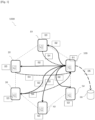
- FIG 1 presents a simplified view of a communications infrastructure comprising a virtual data space in which a synchronization method and a determination method are implemented.
- a set of connectors 10, 20, 30, 40, 50, 100 also called communication servers are interconnected and exchange data in a virtual data space 1000 (in English data-space).
- the number of connectors is not limited and can also be less than the number presented on the [ Fig 1 ] as an example.
- the virtual 1000 data space allows a set of actors (companies, network operators, cloud space operators, etc.) to exchange data securely in order to provide a service to a client.
- Each communication server manages its data and decides which data it wants to share with the other actors participating in the virtual 1000 data space.
- the virtual 1000 data space is deployed on a fixed and/or mobile communication infrastructure, allowing the different servers 10, 20, 30, 40, 50, 100 to be able to exchange data.
- the exchange of data between the communication servers 10, 20, 30, 40, 50, 100 requires that the servers use the same clock to timestamp the data exchanged between these servers.
- the various communication servers 10, 20, 30, 40, 50, 100 of the virtual data space 1000 perform a consensus loop aimed at electing a so-called primary server from among the communication servers 10, 20, 30, 40, 50, 100. It should be noted that it is possible for only some of the communication servers 10, 20, 30, 40, 50, 100 to perform the consensus loop.
- This consensus loop corresponds, according to this embodiment, to the execution of an algorithm for selecting a server from among the communication servers 10, 20, 30, 40, 50, 100 of the data space 1000.
- each communication server 10, 20, 30, 40, 50, 100 it is for example a question of solving a cryptographic problem consisting for example of finding a so-called "nonce" value or a numerical value that must solve an equation or an inequality.
- the primary server will be that of the servers 10, 20, 30, 40, 50, 100 that first solved the selection algorithm among the communication servers 10, 20, 30, 40, 50, 100 and which is therefore capable of transmitting data resulting from the execution of the selection algorithm to the other servers.
- the communication server 100 is the first to solve the selection algorithm and therefore transmits the data resulting from the execution of the algorithm to the other servers 10, 20, 30, 40, 50 of the data space.
- the resulting data could for example be the “nonce” value or the numerical value indicated above.
- sending the data resulting from the execution of the selection algorithm has the advantage, in addition to indicating to the servers 10, 20, 30, 40, 50 that a master clock will be proposed, of improving the security level of the data space by guaranteeing that the server 100 has indeed carried out the selection algorithm.
- the servers 10, 20, 30, 40, 50 can in fact verify the data received and ensure that it indeed results from the algorithm that these servers will have themselves carried out. Sending this data therefore prevents the sending of a clock by an unauthorized communication server or one that has not resolved the selection algorithm.
- step S1 corresponding to the consensus loop because the latter includes the election of the server 100 as primary server, it alone having solved the selection algorithm or because it was the first to solve the selection algorithm among the servers in the data space.
- the server 100 called primary sends to the servers 10, 20, 30, 40, 50 called secondary servers, an initialization message comprising an identifier of the server 100, for example an IP address, an FQDN identifier (in English Fully Qualified Domain Name) or any other identifier specific or not to the data space 1000.
- the signature of the frame can be done using the ECDSA protocol (in English “Elliptic Curve Digital Signature Algorithm”), also used on the current implementation of Bitcoin.
- This message also includes the result of the execution of the selection algorithm, described above, as well as time information for the sending of the initialization message sent. According to one example, this is the information corresponding to the time when the message is actually sent.
- the server 100 can use a clock recovered from an external source to define this time information.
- this time information may be formatted according to the definition of the PTP protocol, thus allowing for precision of the order of nanoseconds.
- Table 1, presented below, describes an example of information transmitted in the initialization message transmitted by the server 100.
- the “Timestamp transmission” corresponds to the transmission time information described above.
- the secondary servers 10, 20, 30, 40, 50 receive these initialization messages comprising the information indicated above. Upon receipt of this initialization message, during a step S3, Upon receipt of this frame, each server 10, 20, 30, 40, 50 will proceed to verify it. The first step of this verification will concern the signature of the primary server 100, as well as the proof (result of the selection algorithm); these two fields make it possible to attest to the validity of the server 100.
- the secondary servers 10, 20, 30, 40, 50 determine a difference between the transmission time information received in the initialization message and a local clock of the secondary servers 10, 20, 30, 40, 50.
- the secondary servers 10, 20, 30, 40, 50 may have their own local clock or retrieve a clock from a remote server.
- each secondary server 10, 20, 30, 40, 50 involved i.e. having received the initialization message, calculates the corrected time, by adding to the transmission time information contained in the initialization message, the data propagation delay between the server 100 and the secondary server considered.
- the server 10 will add to the received transmission time information the propagation time, which can be obtained for example from an ICMP (Internet Control Message Protocol) message.
- ICMP Internet Control Message Protocol
- This corrected time will then be compared to the time of reception of the initialization message evaluated from the local clock of the connector.
- the offset between the two hours (the corrected time and the actual time of reception) must remain within a certain tolerance.
- the verification of the corrected time is thus left to the free choice of the secondary server, which will base itself on its own policy.
- a global policy can be implemented within the 1000 data space to harmonize the rules for validating initialization messages between the secondary servers 10, 20, 30, 40, 50.
- the secondary server 10, 20, 30, 40, 50 emits during a step S4 an acknowledgment message of the initialization message received.
- the secondary servers 10, 20, 30 send an acknowledgment message during step S4.
- the other two secondary servers, namely the servers 40, 50 have not sent an acknowledgment message because they have not certified the primary server 100, either because they have not decrypted the signature of the latter or because the result of the algorithm for selecting the server 100 has not been validated by these servers 40, 50.
- the difference between the times calculated by these servers 40, 50 is greater than a tolerance value and they therefore do not validate the received transmission time information.
- the servers 10, 20, 30 transmitting an acknowledgment message to the initialization message received, they update their local clock using the transmission time information which becomes the clock value for the data exchanges between the servers 100, 10, 20, 30.
- the other secondary servers, i.e. the servers 40 and 50 do not update their local clock since they do not transmit acknowledgment messages and therefore do not validate the transmission time information received.
- the received acknowledgment messages are signed by the secondary servers 10, 20, 30 to authenticate the validity of the senders of these acknowledgment messages.
- the primary server 100 Upon receipt of the acknowledgment messages from the secondary servers 10, 20, 30 having validated the initialization message received, the primary server 100 records during a step S5 a synchronization challenge in a data register 60.
- This synchronization challenge comprises a difference between the transmitted transmission time information and the recorded time information.
- This recorded time information is a transmission time information previously transmitted by one of the servers 10, 20, 30, 40, 50, 100 of the data space 1000.
- the transmission time information used by servers among the servers 10, 20, 30, 40, 50, 100 of the data space 1000 is regularly updated in accordance with the steps S1, S2, S3, S4, S5 described above and replicated repeatedly, the primary server being able to change during these different iterations in accordance with the execution of a selection algorithm which can induce a change of primary server at each iteration.
- the recorded synchronization challenge further includes, according to one example, the initialization message sent and possibly the acknowledgment messages received from the servers 10, 20, 30.
- An example of a synchronization challenge is presented in Table 2 below.
- Table 2 Information transmitted in the synchronization challenge Broadcast time information - PTP format (64 bits) Recorded Time Information Deviation / Transmit Time Information - 32-bit signed integer Nonce (result of the selection algorithm) - typical 32-bit unsigned integer Server Signature 100 Primary (variable size) Signature (acknowledgment) Server 10 (variable size) Signature (acknowledgment) Server 20 (variable size) ...
- the update of the emission time information which will be used for the timestamp of the data exchanged from the moment the challenge is registered, relies on the good participation of all servers 10, 20, 30, 40, 50 and their ability to return signed acknowledgements. It is therefore preferable that the clock update is executed in a secure environment. However, it is not guaranteed that all servers in the virtual data space 1000 contribute to this update. According to one option, for the server 100 to validate this new transmission time information, it can consider the number of acknowledgment messages received from the servers 10, 20, 30, 40, 50. In particular, for the transmission time information to be validated, i.e.
- the number of acknowledgments must be above a threshold defined beforehand (for example 60% of the servers in the data space 1000) or a fixed number.
- a threshold defined beforehand for example 60% of the servers in the data space 1000
- the primary server 100 can validate the transmission time information transmitted in the initialization message and record it in the data register 60, which would not have been the case if it had only received 2 acknowledgement messages while the minimum rate of acknowledgements received was 60%. In the latter case, the recorded time information would have continued to be used for the timestamp of the data exchanged in the data space 1000.
- the validity of the signatures of the acknowledgements can also be checked by the primary server 100 upon their reception.
- the primary server 100 obtains a reward and this reward characteristic (monetary, token) is possibly recorded in the data register 60. This remuneration thus encourages the servers 10, 20, 30, 40, 50, 100 to take part in the synchronization process.
- a penalty may be attributed to the primary server 100.
- the virtual data space in which a primary server (or connector) and at least one secondary server (or connector) are deployed forms a static topology known to all (for example, they are interconnected via a wired network).
- a primary server or connector
- at least one secondary server or connector
- the connectors each have a local clock, potentially synchronized from an external reference (GNSS, time server, mobile network, etc.).
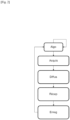
- the primary connector executes a selection algorithm.
- the primary connector and at least one secondary connector execute this algorithm but only one will be selected to become the primary connector.
- Each connector thus integrates an application certified for example by a regulatory entity, allowing multi-actor synchronization of the connectors.
- the application first integrates a consensus loop (selection algorithm) executed by all, regularly allowing the selection of a primary connector, algorithmically.
- This consensus loop will involve cryptographic mechanisms to make the primary connector selection process fair between the connectors, while preventing Byzantine attacks, or Denial of Service attacks.
- the use of such a mechanism makes the architecture resilient. Indeed, any connector has its chances of being elected.
- the mechanism is thus designed so that if a connector sends an incorrect synchronization frame, it can simply be ignored by the others, because another primary connector will be selected by consensus.
- the primary connector acquires a clock for example from the local clock indicated above. This acquisition step is considered optional since the connector can receive a clock regardless of whether it becomes a primary connector or not.
- the connector elected as the primary connector broadcasts a synchronization frame (also called an initialization message) to the at least one secondary server of the data space 1000.
- This frame includes in particular the clock acquired by the primary connector during the “Acquired” step. This clock is intended to become the time reference of the data space until a new time reference is selected.
- a “primary connector” responsible for giving a time reference to the data space, by means of a synchronization frame comprising this time reference, or clock, or transmission time information.
- the primary connector receives the acknowledgments from the at least one secondary connector that has actually accepted and validated the time reference received from the primary connector.
- the number of acknowledgment messages received indicates to the primary connector the level of acceptance of the time reference in the data space.
- the primary connector once it has collected the acknowledgments thus broadcast, records during a "Register” step the result of the synchronization process implemented in a trusted register, by means of a transaction.
- This transaction will contain the complete synchronization frame, possibly the acknowledgments collected as well as the time difference between the old and the new time reference of the data space, which can be coded on a signed 32-bit integer.
- a secondary server indifferently called connector
- a secondary connector may attempt, during an "Algo Test” step, to solve the selection algorithm used to select the primary connector. This step is optional because a server is not required to attempt to solve the algorithm, and whether it attempts to solve it or not, a connector is said to be secondary because it failed to solve the algorithm, either by default or due to failure, or because it is not the first to solve said algorithm.
- a secondary connector of the data space implemented on a communication network receives from the primary connector a synchronization frame comprising the clock proposed by the connector. primary as well as proof of the execution of the consensus loop (corresponding to the selection algorithm) and an identifier of the primary connector such as a signature.
- the secondary server Upon receipt of the synchronization frame, during a "Timestamp” step, the secondary server records the clock transmitted by the primary connector, this clock being able to be used by the secondary connector if it validates it during a following step.
- the secondary server Before validating this clock, during a "Tests” step, the secondary server ensures that the synchronization frame received actually comes from the primary connector by checking the identifier included in the synchronization frame and verifying that the latter has successfully executed the consensus loop. In the case where the test is negative, that is to say that one and/or the other of the information is not compliant (the identifier does not correspond to a server in the data space and/or the data does not result from the execution of the consensus loop), then it ignores the synchronization frame received during an "Ignore" step and does not take into account the information present in this frame.
- the secondary connector determines a difference between the modified received clock to take into account the transmission duration of this local clock in the synchronization frame routed between the primary connector and the secondary connector and a local clock of the secondary server.
- H1 represents the transmission time information or the clock transmitted in the synchronization frame and H2
- a local clock of the secondary server and the propagation time of the synchronization frame between the primary connector and the secondary connector is T1
- the secondary server calculates H1 + T1.
- the secondary server can use another method or another calculation to compare H1 and H2.
- the secondary server can also consider H2 as valid by comparing H1 and H2 independently of the propagation time.
- the secondary connector compares H2 to H1 + T1 during a “Verify” step. If during this "Verif” step, the secondary connector determines that the absolute value of H2 - (H1+T1) is less than a tolerance value, then the secondary server validates the received H1 clock and transmits during a "Send” step, an acknowledgment message for the received synchronization frame. If the secondary connector does not take T1 into account, it then compares the values of H1 and H2. Preferably, it transmits the acknowledgment in a message, preferably signed, for example with the protocol ECDSA, with the signature specific to the secondary connector, in accordance with the technical requirements of a virtual data space. If during the "verif” step, the gap between H2 and (H1 + T1) is too large, then the secondary connector ignores the synchronization frame received during an "Ignore” step.
- the secondary connector can update its local clock with the H1 clock only once it has received a confirmation message from the primary connector. This allows in particular that a new clock is only used if the primary connector receives enough acknowledgement messages from the secondary servers, thus ensuring that this clock is used by a sufficient number of servers in the data space.
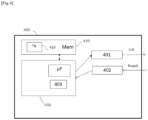
- the synchronization device 400 implements the synchronization method, different embodiments of which have just been described.
- Such a device 400 can be implemented in a data server, for example instantiated in a virtual machine or a container and/or in a cloud environment of a data network.
- the device 400 comprises a processing unit 430, equipped for example with a microprocessor ⁇ P, and controlled by a computer program 410, stored in a memory 420 and implementing the determination method according to the invention.
- a computer program 410 stored in a memory 420 and implementing the determination method according to the invention.
- the code instructions of the computer program 410 are for example loaded into a RAM memory, before being executed by the processor of the processing unit 430.
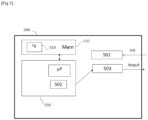
- the determination device 500 implements the method for determining time information used for the timestamping of data exchanged between a plurality of communications servers of a communications network, different embodiments of which have just been described.
- Such a device 500 can be implemented in a data server, for example instantiated in a virtual machine or a container and/or in a cloud environment of a data network.
- the device 500 comprises a processing unit 530, equipped for example with a microprocessor ⁇ P, and controlled by a computer program 510, stored in a memory 520 and implementing the charging method according to the invention.
- a computer program 510 stored in a memory 520 and implementing the charging method according to the invention.
- the code instructions of the computer program 510 are for example loaded into a RAM memory, before being executed by the processor of the processing unit 530.
Landscapes
- Engineering & Computer Science (AREA)
- Computer Security & Cryptography (AREA)
- Computer Networks & Wireless Communication (AREA)
- Signal Processing (AREA)
- Computer Hardware Design (AREA)
- General Engineering & Computer Science (AREA)
- Computing Systems (AREA)
- Theoretical Computer Science (AREA)
- Bioethics (AREA)
- General Health & Medical Sciences (AREA)
- Software Systems (AREA)
- Physics & Mathematics (AREA)
- General Physics & Mathematics (AREA)
- Health & Medical Sciences (AREA)
- Synchronisation In Digital Transmission Systems (AREA)
- Data Exchanges In Wide-Area Networks (AREA)
Description
L'invention est mise en oeuvre dans un espace virtuel de données, par exemple mis en oeuvre par une pluralité de partenaires, déployé sur une infrastructure de communications. L'invention est relative à la synchronisation temporelle des serveurs de communication intervenant dans l'élaboration et au traitement des données.The invention is implemented in a virtual data space, for example implemented by a plurality of partners, deployed on a communications infrastructure. The invention relates to the time synchronization of the communication servers involved in the development and processing of data.
Le secteur des télécommunications est au coeur d'une transformation digitale qui s'appuie sur des technologies émergentes telles que la virtualisation des fonctions réseaux (VNF - Virtual Network Functions), consistant à découpler les fonctions réseau des équipements physiques dédiés pour déployer les fonctions réseau dans des espaces de stockage, ou cloud, plus ou moins distribués et en s'appuyant sur des serveurs génériques.The telecommunications sector is at the heart of a digital transformation that relies on emerging technologies such as virtualization of network functions (VNF - Virtual Network Functions), consisting of decoupling network functions from dedicated physical equipment to deploy network functions in storage spaces, or clouds, more or less distributed and relying on generic servers.
Cette évolution des réseaux de télécommunications s'appuie en outre sur des technologies émergentes notamment basées sur des registres distribués et sur l'enregistrement des données dans ces registres sans qu'il y ait recours à une autorité de certification. Ainsi, les différentes transactions sont enregistrées dans des registres distribués par des fonctions spécifiques, appelés mineurs, ayant suffisamment de capacité pour résoudre une énigme et ainsi obtenir l'autorisation d'effectuer l'enregistrement des transactions dans les registres.This evolution of telecommunications networks also relies on emerging technologies, notably based on distributed ledgers and on the recording of data in these ledgers without resorting to a certification authority. Thus, the various transactions are recorded in distributed ledgers by specific functions, called miners, having sufficient capacity to solve a puzzle and thus obtain authorization to record the transactions in the ledgers.
L'échange et le traitement des données au sein de l'espace virtuel de données requièrent un horodatage. En effet, pour classer, pour authentifier ou plus globalement pour respecter un niveau de sécurité pour les données échangées, il est nécessaire qu'une information temporelle soit ajoutée aux données échangées entre les serveurs de communication, aussi appelés connecteurs, d'un espace virtuel de données. Hors, pour que l'information temporelle puisse être exploitée par les différentes entités intervenant dans l'espace virtuel de données, il convient que la fonction d'horodatage des données utilisée par chaque connecteur pour ajouter l'information temporelle aux données s'appuie sur une horloge partagée entre les différents connecteurs. Il est en effet nécessaire que les différents connecteurs utilisent une même référence temporelle pour que les informations d'horodatage ajoutées par chaque connecteur puissent être exploitées par les autres connecteurs ou par d'autres entités de l'espace virtuel de données.The exchange and processing of data within the virtual data space requires a time stamp. Indeed, to classify, to authenticate or more generally to respect a level of security for the data exchanged, it is necessary that time information be added to the data exchanged between the communication servers, also called connectors, of a virtual data space. However, for the time information to be exploited by the different entities intervening in the virtual data space, it is appropriate that the data timestamping function used by each connector to add the time information to the data is based on a clock shared between the different connectors. It is indeed necessary that the different connectors use the same time reference so that the time stamp information added by each connector can be exploited by other connectors or by other entities in the virtual data space.
Un connecteur doit donc comprendre une horloge locale pour pouvoir effectivement ajouter une information d'horodatage aux données échangées dans un espace virtuel de données.A connector must therefore include a local clock to be able to effectively add timestamp information to the data exchanged in a virtual data space.
Selon les techniques antérieures, l'horloge locale utilisée par chaque connecteur, est par exemple synchronisée sur une horloge externe de meilleure précision, telle qu'un satellite GNSS (Géolocalisation et Navigation par un Système de Satellites) ou bien un serveur de temps. A ce jour, une pluralité de protocole parmi lesquels
- NTP (en anglais
Network Time Protocol - IETF RFC5905 -D. Mills et al. - Network Time Protocol version 4 : Protocol and Algorithms Spécification - PTP (en anglais Précision Time Protocol - 1588-2008 - IEEE Standard for a Précision Clock Synchronization Protocol for Networked Measurement and Control Systems)
- Timesync -
S. Ruffini and B. Giulio. Methods of time synchronisation in communications networks - U.S. Patent No. 9,094,142.28 Jul. 2015
- NTP (in English)
Network Time Protocol - IETF RFC5905 -D. Mills et al. - Network Time Protocol version 4: Protocol and Algorithms Specification - PTP (Precision Time Protocol - 1588-2008 - IEEE Standard for a Precision Clock Synchronization Protocol for Networked Measurement and Control Systems)
- Timesync -
S. Ruffini and B. Giulio. Methods of time synchronization in communications networks - US Patent No. 9,094,142.28 Jul. 2015
Ces protocoles et techniques utilisées dans les espaces virtuels de données, selon les techniques relevant de l'état de l'art, consistent à utiliser une seule référence temporelle pour tous les connecteurs. D'une part, dans un contexte d'espace virtuel de données où les connecteurs sont possiblement administrés par des entités distinctes, il est possible que diverses sources ou références soient utilisées par les différents connecteurs, ce qui induit que la solution basée sur une référence temporelle unique n'est pas adaptée au contexte d'utilisation dans un espace virtuel de données multi-acteurs. Il est à noter que même dans un espace virtuel de données mono-acteur, il peut être difficile d'un point de vue architectural de se référer à une source temporelle unique. En outre, cette solution n'est pas satisfaisante car si la référence unique est défaillante ou bien compromise, alors la synchronisation par référence unique n'est pas complètement satisfaisante. Par ailleurs, dans le cas d'une attaque ou d'un dysfonctionnement de l'horloge de référence, aussi appelée horloge maître, alors la synchronisation des connecteurs et donc des données échangées entre les connecteurs s'avère au mieux inexacte et au pire inopérante. Il est à noter que dans un cadre multi-acteurs, notamment, il est possible de mettre en oeuvre des mécanismes de sécurité tels que spécifiés dans le document
La présente invention a pour objet d'apporter des améliorations par rapport à l'état de la technique.The present invention aims to provide improvements over the state of the art.
L'invention vient améliorer la situation à l'aide d'un procédé de synchronisation d'une pluralité de serveurs de communication d'un réseau de communications, aptes à s'échanger des données horodatées à l'aide d'une référence temporelle, ledit procédé étant mis en oeuvre par un serveur de la pluralité, appelé serveur primaire, et comprenant :
- Une émission à destination des autres serveurs de communication de la pluralité, dits serveurs secondaires, d'un message d'initialisation comprenant un identifiant du serveur primaire, une donnée résultant de l'exécution d'un algorithme de sélection du serveur primaire parmi les serveurs de la pluralité, une information temporelle d'émission du message d'initialisation,
- Une réception en provenance d'au moins un serveur secondaire d'un message d'acquittement du message d'initialisation émis,
- Une validation d'un défi de synchronisation comprenant la différence entre une référence temporelle d'émission enregistrée et l'information temporelle d'émission du message d'initialisation, l'information temporelle d'émission remplaçant la référence temporelle enregistrée pour l'horodatage des données échangées entre les serveurs de la pluralité après la validation.
- A transmission to the other communication servers of the plurality, called secondary servers, of an initialization message comprising an identifier of the primary server, data resulting from the execution of an algorithm for selecting the primary server from among the servers of the plurality, time information for transmission of the initialization message,
- A reception from at least one secondary server of an acknowledgment message of the initialization message sent,
- A validation of a synchronization challenge comprising the difference between a recorded transmission time reference and the transmission time information of the initialization message, the transmission time information replacing the recorded time reference for timestamping data exchanged between the servers of the plurality after the validation.
La synchronisation par un des serveurs de communication, aussi appelés connecteurs, dans un réseau de communications, tel qu'un espace virtuel de données, est mise en oeuvre suite au processus de sélection d'un serveur, dit serveur primaire, parmi les serveurs du centre de données. En transmettant un message d'initialisation comprenant une donnée résultant de l'exécution d'un algorithme de sélection, les autres serveurs du réseau de communications, aussi appelés serveurs secondaires, peuvent ainsi vérifier que le serveur transmettant le message d'initialisation est bien autorisé à transmettre une information temporelle. En effet, une pluralité de serveurs de l'espace de données exécute l'algorithme de sélection, et un parmi ceux-ci exécute plus rapidement ou est le seul à pouvoir exécuter l'algorithme et devient pour une période donnée le serveur de référence pour la détermination de l'horloge utilisée pour l'horodatage des données échangées entre les différents connecteurs dans le réseau de communications. L'information temporelle d'émission correspondant au moment où le message d'initialisation est effectivement transmis aux autres connecteurs est ensuite utilisée par les autres connecteurs pour vérifier que l'information temporelle peut effectivement être utilisée comme référence de synchronisation. La réception d'un message d'acquittement permet d'une part de vérifier l'identité du connecteur secondaire transmettant le message d'acquittement et d'autre part de déterminer que l'information temporelle d'émission a été validée par le connecteur secondaire. De façon incidente, la non réception d'un tel message en provenance d'un serveur secondaire indique que le serveur secondaire ne valide pas l'information temporelle transmise. La validation et l'enregistrement du défi de synchronisation comprenant l'information temporelle d'émission permet de pouvoir récupérer l'information de synchronisation lors d'une future analyse des données échangées entre les connecteurs. La chronologie des échanges entre les connecteurs ainsi que les périodes de validité de clés de sécurité par exemple sont pertinentes par rapport à une information temporelle qu'il est possible de retrouver dans les données enregistrées. Le procédé permet ainsi de pouvoir mettre en oeuvre une sélection fiable de la référence temporelle dans un espace de données, des connecteurs différents de l'espace de données étant susceptibles de déterminer successivement une information temporelle de référence à utiliser par les autres connecteurs. De façon préférentielle, seuls les serveurs secondaires ayant effectivement transmis un message d'acquittement et le serveur primaire utilise l'information temporelle d'émission comme horloge.Synchronization by one of the communication servers, also called connectors, in a communications network, such as a virtual data space, is implemented following the process of selecting a server, called a primary server, from among the servers of the data center. By transmitting an initialization message comprising data resulting from the execution of a selection algorithm, the other servers of the communications network, also called secondary servers, can thus verify that the server transmitting the initialization message is indeed authorized to transmit time information. Indeed, a plurality of servers in the space of data executes the selection algorithm, and one of these executes more quickly or is the only one able to execute the algorithm and becomes for a given period the reference server for determining the clock used for the timestamping of the data exchanged between the different connectors in the communications network. The transmission time information corresponding to the moment when the initialization message is actually transmitted to the other connectors is then used by the other connectors to verify that the time information can actually be used as a synchronization reference. The reception of an acknowledgment message makes it possible on the one hand to verify the identity of the secondary connector transmitting the acknowledgment message and on the other hand to determine that the transmission time information has been validated by the secondary connector. Incidentally, the non-receipt of such a message from a secondary server indicates that the secondary server does not validate the transmitted time information. Validation and recording of the synchronization challenge including the transmission time information makes it possible to recover the synchronization information during a future analysis of the data exchanged between the connectors. The chronology of the exchanges between the connectors as well as the validity periods of security keys for example are relevant in relation to a time information that can be found in the recorded data. The method thus makes it possible to implement a reliable selection of the time reference in a data space, different connectors of the data space being capable of successively determining a reference time information to be used by the other connectors. Preferably, only the secondary servers having actually transmitted an acknowledgment message and the primary server uses the transmission time information as a clock.
Selon un aspect de l'invention, les étapes du procédé sont réitérées selon un intervalle de temps propre au réseau de communications.According to one aspect of the invention, the steps of the method are repeated according to a time interval specific to the communications network.
Le procédé de synchronisation peut avantageusement être mis en oeuvre conformément à une valeur fréquentielle donnée. Ainsi, le serveur primaire peut être différent dans le temps améliorant ainsi la fiabilité de la détermination de l'information temporelle utilisée pour la synchronisation des données dans le réseau de communications.The synchronization method can advantageously be implemented in accordance with a given frequency value. Thus, the primary server can be different in time, thereby improving the reliability of the determination of the time information used for the synchronization of data in the communications network.
Selon un autre aspect de l'invention, dans le procédé de synchronisation, la donnée résulte de la résolution d'un problème cryptographique.According to another aspect of the invention, in the synchronization method, the data results from the resolution of a cryptographic problem.
Le procédé est d'autant plus fiable qu'il est difficile de déterminer la donnée résultant de l'exécution d'un algorithme de sélection du serveur primaire de façon que le serveur résolvant la résolution du problème cryptographique puisse changer dans le temps ou que les risques liés à ce qu'un serveur malveillant transmette une information temporelle à d'autres serveurs soient réduits. La résolution requérant des ressources informatiques et des capacités de calcul, la probabilité pour qu'un unique serveur de communication résolve l'algorithme est moindre.The method is all the more reliable as it is difficult to determine the data resulting from the execution of an algorithm for selecting the primary server so that the server solving the resolution of the cryptographic problem can change over time or the risks associated with a malicious server transmitting temporal information to other servers are reduced. Since the resolution requires computing resources and computing capacities, the probability that a single communication server will solve the algorithm is lower.
Selon un autre aspect de l'invention, dans le procédé de synchronisation, la validation du défi de synchronisation est relative au nombre de messages d'acquittements reçus. Parmi la pluralité de serveurs présents dans le réseau de communications, certains serveurs secondaires déterminent que l'information temporelle peut être utilisée ou non, conformément au procédé de détermination mis en oeuvre par les serveurs secondaires. Le serveur primaire peut selon un exemple comparer le nombre de messages d'acquittements reçus par rapport au nombre de serveurs secondaires sollicité pour valider ou non l'information temporelle d'émission et consécutivement, pour enregistrer le défi de synchronisation.According to another aspect of the invention, in the synchronization method, the validation of the synchronization challenge is relative to the number of acknowledgment messages received. Among the plurality of servers present in the communications network, certain secondary servers determine that the time information can be used or not, in accordance with the determination method implemented by the secondary servers. The primary server can, according to one example, compare the number of acknowledgment messages received with respect to the number of secondary servers requested to validate or not the transmission time information and, consequently, to record the synchronization challenge.
Selon un autre aspect de l'invention, dans le procédé de synchronisation, la validation d'un défi de synchronisation comprend en outre l'au moins un message d'acquittement reçu.According to another aspect of the invention, in the synchronization method, the validation of a synchronization challenge further comprises the at least one acknowledgment message received.
L'enregistrement des messages d'acquittement reçus permet d'identifier les serveurs ayant effectivement validé l'information temporelle d'émission et donc de pouvoir déterminer l'horloge utilisée notamment pour l'horodatage des données émises par les serveurs ayant émis ces messages d'acquittement.Recording the acknowledgment messages received makes it possible to identify the servers that have actually validated the transmission time information and therefore to determine the clock used in particular for the timestamping of the data transmitted by the servers that sent these acknowledgment messages.
Selon un autre aspect de l'invention, le procédé de synchronisation comprend en outre l'enregistrement d'une caractéristique de récompense du serveur primaire si le nombre de messages d'acquittement reçus est supérieur à un seuil de confiance.According to another aspect of the invention, the synchronization method further comprises recording a reward characteristic of the primary server if the number of acknowledgment messages received is greater than a confidence threshold.
Dans le but d'encourager les serveurs de communication à résoudre l'algorithme de sélection pour être désigné serveur primaire, et pour augmenter les chances qu'une information temporelle d'émission soit effectivement validée, le serveur primaire est récompensé. Par exemple, un serveur primaire ayant émis une information temporelle qui est par la suite effectivement validée par un nombre suffisant de serveurs secondaires, alors ce serveur primaire est récompensé. Cette récompense peut être prise en compte dans l'algorithme de sélection lors des prochaines mises en oeuvre du procédé et/ou l'entité en charge du serveur peut se voir rétribuer en fonction de cette caractéristique de récompense. Le procédé repose sur une confiance et sur une participation des différents serveurs de la pluralité. S'il s'avère que l'information temporelle d'émission n'est pas validée par un nombre suffisant de serveurs secondaires, c'est-à-dire sous un seuil dit de confiance du serveur primaire, alors le serveur primaire est pénalisé. Le seuil de confiance est possiblement pris en compte dans le processus de sélection du serveur primaire dans la pluralité pour améliorer le mécanisme de consensus pour la validation de l'information temporelle d'émission. Selon un autre aspect de l'invention, le procédé de synchronisation comprend en outre l'acquisition préalable de l'information temporelle d'émission auprès d'une source externe.In order to encourage communication servers to solve the selection algorithm to be designated as a primary server, and to increase the chances that a transmission time information is actually validated, the primary server is rewarded. For example, a primary server having transmitted a time information which is subsequently actually validated by a sufficient number of servers secondary servers, then this primary server is rewarded. This reward can be taken into account in the selection algorithm during the next implementations of the method and/or the entity in charge of the server can be rewarded according to this reward characteristic. The method is based on trust and on participation of the different servers of the plurality. If it turns out that the transmission time information is not validated by a sufficient number of secondary servers, that is to say below a so-called trust threshold of the primary server, then the primary server is penalized. The trust threshold is possibly taken into account in the selection process of the primary server in the plurality to improve the consensus mechanism for the validation of the transmission time information. According to another aspect of the invention, the synchronization method further comprises the prior acquisition of the transmission time information from an external source.
L'information temporelle d'émission, considérée comme l'horloge de référence pendant une période de temps avant qu'une autre information temporelle d'émission soit proposée par le même serveur primaire ou un autre serveur primaire sélectionné parmi la pluralité, est avantageusement obtenue auprès d'une entité tierce.The transmission time information, considered as the reference clock for a period of time before another transmission time information is proposed by the same primary server or another primary server selected from the plurality, is advantageously obtained from a third party entity.
Les différents aspects du procédé de synchronisation qui viennent d'être décrits peuvent être mis en oeuvre indépendamment les uns des autres ou en combinaison les uns avec les autres.The various aspects of the synchronization method just described can be implemented independently of each other or in combination with each other.
L'invention concerne également un procédé de détermination d'une référence temporelle utilisée pour l'horodatage de données échangées entre une pluralité de serveurs de communications d'un réseau de communications, ladite pluralité comprenant un serveur primaire apte à émettre une information temporelle d'émission et au moins un serveur secondaire, ledit procédé étant mis en oeuvre par l'au moins un serveur secondaire, et comprenant :
- une réception en provenance du serveur primaire, d'un message d'initialisation comprenant un identifiant du serveur primaire, une donnée résultant de l'exécution d'un algorithme de sélection du serveur primaire parmi les serveurs de la pluralité, une information temporelle d'émission du message d'initialisation,
- une détermination d'un écart entre une information temporelle de réception calculée à partir de l'information temporelle d'émission reçue et une horloge locale de l'au moins un serveur secondaire,
- une émission d'un message d'acquittement du message d'initialisation reçu en fonction de l'écart déterminé.
- a reception from the primary server of an initialization message comprising an identifier of the primary server, data resulting from the execution of an algorithm for selecting the primary server from among the servers of the plurality, time information for sending the initialization message,
- a determination of a difference between reception time information calculated from the received transmission time information and a local clock of the at least one secondary server,
- a transmission of an acknowledgment message of the initialization message received based on the determined deviation.
Un serveur secondaire intervient dans le procédé de synchronisation en pouvant lui-même devenir serveur primaire et également en analysant l'analyse temporelle reçue par rapport à une horloge, qui peut être une horloge interne ou une horloge reçue d'un serveur tiers. Ainsi, en fonction de l'écart entre la valeur calculée et la valeur de l'horloge, il émet un message d'acquittement ou non et valide ainsi ou non l'information temporelle reçue.A secondary server intervenes in the synchronization process by being able to become a primary server itself and also by analyzing the received time analysis with respect to a clock, which can be an internal clock or a clock received from a third-party server. Thus, depending on the difference between the calculated value and the value of the clock, it issues an acknowledgment message or not and thus validates or not the received time information.
Selon un autre aspect de l'invention, dans le procédé de détermination, l'information temporelle de réception est calculée en fonction du temps de propagation de données entre le serveur primaire et l'au moins un serveur secondaire.According to another aspect of the invention, in the determination method, the reception time information is calculated as a function of the data propagation time between the primary server and the at least one secondary server.
Le calcul peut avantageusement consister à ajouter le temps de propagation des données entre le serveur primaire et le serveur secondaire à l'information temporelle reçue, et la détermination de l'écart consiste alors à soustraire à la valeur calculée une valeur d'horloge. En fonction de cet écart et de la tolérance acceptable par le serveur secondaire, celui-ci transmet ou non un message d'acquittement.The calculation can advantageously consist of adding the data propagation time between the primary server and the secondary server to the received time information, and the determination of the difference then consists of subtracting a clock value from the calculated value. Depending on this difference and the tolerance acceptable by the secondary server, the latter transmits or not an acknowledgment message.
Selon un autre aspect de l'invention, le procédé de détermination comprend en outre une comparaison de l'écart avec une valeur de tolérance, et la mise à jour de l'horloge locale avec l'information temporelle d'émission reçue si l'écart est inférieur à la valeur de tolérance.According to another aspect of the invention, the determination method further comprises a comparison of the deviation with a tolerance value, and the updating of the local clock with the received transmission time information if the deviation is less than the tolerance value.
Un serveur secondaire peut avoir sa propre tolérance vis-à-vis de l'information temporelle d'émission reçue et si celle-ci s'avère être trop différente de son horloge locale, c'est-à-dire que l'écart entre l'information temporelle d'émission et l'horloge locale est trop important, alors le serveur secondaire peut considérer que l'information temporelle reçue n'est pas valide. En fonction du nombre d'acquittements reçus, un nouveau serveur primaire pourra être élu par l'exécution d'un nouvel algorithme de sélection.A secondary server may have its own tolerance for the received transmission time information and if it turns out to be too different from its local clock, i.e. the gap between the transmission time information and the local clock is too large, then the secondary server may consider that the received time information is not valid. Depending on the number of acknowledgements received, a new primary server may be elected by executing a new selection algorithm.
Les différents aspects du procédé de détermination qui viennent d'être décrits peuvent être mis en oeuvre indépendamment les uns des autres ou en combinaison les uns avec les autres.The various aspects of the determination method which have just been described can be implemented independently of one another or in combination with one another.
L'invention concerne également un dispositif de de synchronisation d'une pluralité de serveurs de communication d'un réseau de communications, aptes à s'échanger des données horodatées à l'aide d'une référence temporelle comprenant
- Un émetteur, apte à émettre à destination des autres serveurs de communication de la pluralité, dits serveurs secondaires, d'un message d'initialisation comprenant un identifiant du serveur primaire, une donnée résultant de l'exécution d'un algorithme de sélection du serveur primaire parmi les serveurs de la pluralité, une information temporelle d'émission du message d'initialisation,
- Un récepteur, apte à recevoir en provenance d'au moins un serveur secondaire d'un message d'acquittement du message d'initialisation émis,
- Un enregistreur, apte à valider un défi de synchronisation comprenant la différence entre une référence temporelle d'émission enregistrée et l'information temporelle d'émission du message d'initialisation, l'information temporelle d'émission remplaçant la référence temporelle enregistrée pour l'horodatage des données échangées entre les serveurs de la pluralité après la validation.
- A transmitter, capable of transmitting to the other communication servers of the plurality, called secondary servers, an initialization message comprising an identifier of the primary server, data resulting from the execution of an algorithm for selecting the primary server from among the servers of the plurality, time information for transmitting the initialization message,
- A receiver, capable of receiving from at least one secondary server an acknowledgment message of the initialization message sent,
- A recorder, capable of validating a synchronization challenge comprising the difference between a recorded transmission time reference and the transmission time information of the initialization message, the transmission time information replacing the recorded time reference for the timestamping of the data exchanged between the servers of the plurality after the validation.
Ce dispositif, apte à mettre en oeuvre dans tous ses modes de réalisation le procédé de synchronisation décrit ci-dessus, est destiné à être mis en oeuvre dans un serveur de données, par exemple instancié dans une machine virtuelle ou un conteneur et/ou dans un environnement cloud d'un réseau de données.This device, capable of implementing in all its embodiments the synchronization method described above, is intended to be implemented in a data server, for example instantiated in a virtual machine or a container and/or in a cloud environment of a data network.
L'invention concerne également un dispositif de détermination d'une référence temporelle utilisée pour l'horodatage de données échangées entre une pluralité de serveurs de communications d'un réseau de communications, ladite pluralité comprenant un serveur primaire apte à émettre une information temporelle d'émission et au moins un serveur secondaire comprenant
- Un récepteur, apte à recevoir en provenance du serveur primaire, d'un message d'initialisation comprenant un identifiant du serveur primaire, une donnée résultant de l'exécution d'un algorithme de sélection du serveur primaire parmi les serveurs de la pluralité, une information temporelle d'émission du message d'initialisation,
- Un module de détermination, apte à déterminer un écart entre une information temporelle de réception calculée à partir de l'information temporelle d'émission reçue et une horloge locale de l'au moins un serveur secondaire,
- un émetteur, apte à émettre un message d'acquittement du message d'initialisation reçu en fonction de l'écart déterminé.
- A receiver, capable of receiving from the primary server, an initialization message comprising an identifier of the primary server, data resulting from the execution of an algorithm for selecting the primary server from among the servers of the plurality, time information for sending the initialization message,
- A determination module, capable of determining a difference between reception time information calculated from the received transmission time information and a local clock of the at least one secondary server,
- a transmitter, capable of transmitting an acknowledgment message of the initialization message received according to the determined deviation.
Ce dispositif, apte à mettre en oeuvre dans tous ses modes de réalisation le procédé de détermination qui vient d'être décrit, est destiné à être mis en oeuvre dans un serveur de données, par exemple instancié dans une machine virtuelle ou un conteneur et/ou dans un environnement cloud d'un réseau de données.This device, capable of implementing in all its embodiments the determination method which has just been described, is intended to be implemented in a data server, for example instantiated in a virtual machine or a container and/or in a cloud environment of a data network.
L'invention concerne aussi un système de synchronisation d'une pluralité de serveurs de communication d'un réseau de communications, aptes à s'échanger des données horodatées à l'aide d'une référence temporelle, ledit système comprenant
- un serveur primaire comprenant un dispositif de synchronisation,
- au moins un serveur secondaire comprenant un dispositif de détermination.
- a primary server including a synchronization device,
- at least one secondary server comprising a determination device.
L'invention concerne aussi un programme d'ordinateur comprenant des instructions pour la mise en oeuvre des étapes du procédé de synchronisation qui vient d'être décrit, lorsque ce programme est exécuté par un processeur et un support d'enregistrement lisible par un dispositif de synchronisation sur lequel est enregistré le programme d'ordinateur.The invention also relates to a computer program comprising instructions for implementing the steps of the synchronization method which has just been described, when this program is executed by a processor and a recording medium readable by a synchronization device on which the computer program is recorded.
L'invention concerne aussi un programme d'ordinateur comprenant des instructions pour la mise en oeuvre des étapes du procédé de détermination qui vient d'être décrit, lorsque ce programme est exécuté par un processeur et un support d'enregistrement lisible par un dispositif de détermination sur lequel est enregistré le programmes d'ordinateur.The invention also relates to a computer program comprising instructions for implementing the steps of the determination method which has just been described, when this program is executed by a processor and a recording medium readable by a determination device on which the computer program is recorded.
Ces programmes peuvent utiliser n'importe quel langage de programmation, et être sous la forme de code source, code objet, ou de code intermédiaire entre code source et code objet, tel que dans une forme partiellement compilée, ou dans n'importe quelle autre forme souhaitable.These programs may use any programming language, and may be in the form of source code, object code, or intermediate code between source code and object code, such as in a partially compiled form, or in any other desirable form.
L'invention vise aussi un support d'informations lisible par un ordinateur, et comportant des instructions des programmes d'ordinateur tel que mentionnés ci-dessus.The invention also relates to an information medium readable by a computer, and comprising instructions of the computer programs as mentioned above.
Le support d'informations peut être n'importe quelle entité ou dispositif capable de stocker les programmes. Par exemple, le support peut comporter un moyen de stockage, tel qu'une ROM, par exemple un CD ROM ou une ROM de circuit microélectronique, ou encore un moyen d'enregistrement magnétique, par exemple sur un disque dur.The information carrier may be any entity or device capable of storing programs. For example, the carrier may include a storage medium, such as a ROM, for example a CD ROM or a microelectronic circuit ROM, or a magnetic recording medium, for example on a hard disk.
D'autre part, le support d'informations peut être un support transmissible tel qu'un signal électrique ou optique, qui peut être acheminé via un câble électrique ou optique, par radio ou par d'autres moyens. Les programmes selon l'invention peuvent être en particulier téléchargés sur un réseau de type Internet.On the other hand, the information carrier may be a transmissible carrier such as an electrical or optical signal, which may be conveyed via an electrical or optical cable, by radio or by other means. The programs according to the invention may in particular be downloaded from a network such as the Internet.
Alternativement, le support d'informations peut être un circuit intégré dans lequel les programmes sont incorporés, le circuit étant adapté pour exécuter ou pour être utilisé dans l'exécution des procédés en question.Alternatively, the information carrier may be an integrated circuit in which the programs are incorporated, the circuit being adapted to execute or to be used in the execution of the methods in question.
D'autres caractéristiques et avantages de l'invention apparaîtront plus clairement à la lecture de la description suivante de modes de réalisation particuliers, donnés à titre de simples exemples illustratifs et non limitatifs, et des dessins annexés, parmi lesquels :
- La [
Fig 1 ] présente une vue simplifiée d'une infrastructure de communications comprenant un espace virtuel de données dans lequel un procédé de synchronisation et un procédé de détermination sont mis en oeuvre, - La [
Fig 2 ] présente un aperçu du procédé de synchronisations selon un premier mode de réalisation de l'invention, - La [
Fig 3 ] présente un procédé de détermination d'une information temporelle utilisée pour l'horodatage de données échangées entre une pluralité de serveurs de communications d'un réseau de communications selon un deuxième mode de réalisation de l'invention, - La [
Fig 4 ] présente un exemple de structure d'un dispositif de synchronisation selon un autre mode de réalisation de l'invention, - La [
Fig 5 ] présente un exemple de structure d'un dispositif de détermination d'une information temporelle utilisée pour l'horodatage de données échangées entre une pluralité de serveurs de communications d'un réseau de communications selon un autre mode de réalisation de l'invention.
- There [
Fig 1 ] presents a simplified view of a communications infrastructure comprising a virtual data space in which a synchronization method and a determination method are implemented, - There [
Fig 2 ] presents an overview of the synchronization method according to a first embodiment of the invention, - There [
Fig 3 ] presents a method for determining temporal information used for the timestamping of data exchanged between a plurality of communications servers of a communications network according to a second embodiment of the invention, - There [
Fig 4 ] presents an example of the structure of a synchronization device according to another embodiment of the invention, - There [
Fig 5 ] presents an example of the structure of a device for determining temporal information used for the timestamping of data exchanged between a plurality of communications servers of a communications network according to another embodiment of the invention.
Dans la suite de la description, on présente des modes de réalisation de l'invention dans une infrastructure de communication. Cette infrastructure peut être mise en oeuvre pour acheminer des données de communications à destination de terminaux fixes ou mobiles et l'invention peut être destinée à installer des fonctions virtualisées utilisées pour l'acheminement et/ou le traitement de données de clientèle résidentielle ou d'entreprises.In the remainder of the description, embodiments of the invention are presented in a communication infrastructure. This infrastructure can be implemented to route communication data to fixed or mobile terminals and the invention can be intended to install virtualized functions used for routing and/or processing residential or business customer data.
On se réfère tout d'abord à la [
Dans cette [
Lors d'une étape S2, le serveur 100 dit primaire émet à destination des serveurs 10, 20, 30, 40, 50 dits serveurs secondaires, d'un message d'initialisation comprenant un identifiant du serveur 100, par exemple une adresse IP, un identifiant FQDN (en anglais Fully Qualified Domain Name) ou tout autre identifiant spécifique ou non à l'espace 1000 de données. Selon un exemple, la signature de la trame peut se faire grâce au protocole ECDSA (en anglais « « Elliptic Curve Digital Signature Algorithm »), également utilisé sur l'implémentation actuelle du Bitcoin. Ce message comprend également le résultat de l'exécution de l'algorithme de sélection, décrit ci-avant, ainsi qu'une information temporelle d'émission du message d'initialisation émis. Selon un exemple, il s'agit de l'information correspondant au moment où le message est effectivement émis. Selon un exemple, le serveur 100 peut utiliser une horloge récupérée auprès d'une source externe pour définir cette information temporelle. Selon un exemple, cette information temporelle peut être formatée selon la définition du protocole PTP, permettant ainsi une précision de l'ordre de la nanoseconde. Le tableau 1, présenté ci-dessous, décrit un exemple d'informations transmises dans le message d'initialisation transmis par le serveur 100. Le « Timestamp émission » correspond à l'information temporelle d'émission décrite ci-dessus.
Les serveurs 10, 20, 30, 40, 50 secondaires reçoivent ces messages d'initialisation comprenant les informations indiquées ci-dessus. A la réception de ce message d'initialisation, lors d'une étape S3, À la réception de cette trame, chaque serveur 10, 20, 30, 40, 50 procédera à sa vérification. La première étape de cette vérification concernera la signature du serveur primaire 100, ainsi que la preuve (résultat de l'algorithme de sélection) ; ces deux champs permettant d'attester de la validité du serveur 100.The
Lors de cette étape S3, les serveurs 10, 20, 30, 40, 50 secondaires déterminent un écart entre l'information temporelle d'émission reçue dans le message d'initialisation et une horloge locale des serveurs 10, 20, 30, 40, 50 secondaires. Les serveurs 10, 20, 30, 40, 50 secondaires peuvent avoir leur propre horloge locale ou bien récupérer une horloge depuis un serveur distant. Selon un exemple, Ensuite, chaque serveur 10, 20, 30, 40, 50 secondaire impliqué, c'est-à-dire ayant reçu le message d'initialisation, calcule l'heure corrigée, en ajoutant à l'information temporelle d'émission contenue dans le message d'initialisation, le délai de propagation de données entre le serveur 100 et le serveur secondaire considéré. Par exemple, le serveur 10 ajoutera à l'information temporelle d'émission reçue le temps de propagation, qui peut être par exemple obtenu à partir d'un message ICMP (en anglais Internet Control Message Protocol). Cette heure corrigée sera ensuite comparée à l'heure de réception du message d'initialisation évaluée à partir de l'horloge locale du connecteur. Ainsi, le décalage entre les deux heures (l'heure corrigée et l'heure effective de réception) devra rester dans une certaine tolérance. La vérification du temps corrigé est ainsi laissée au libre choix du serveur secondaire, qui se basera sur sa propre politique. Une politique globale pourra être mise en oeuvre au sein de l'espace 1000 de données pour harmoniser les règles de validation des messages d'initialisation entre les serveurs 10, 20, 30, 40, 50 secondaires.During this step S3, the
Si le décalage, c'est-à-dire l'écart entre les deux heures, est inférieur à une valeur de tolérance, propre au serveur 10, 20, 30, 40, 50 secondaire ou à l'espace de données 1000, alors le serveur 10, 20, 30, 40, 50 secondaire émet lors d'une étape S4 un message d'acquittement du message d'initialisation reçu. Dans la [
Selon une option, les serveurs 10, 20, 30 transmettant un message d'acquittement au message d'initialisation reçu, ils mettent à jour leur horloge locale en utilisant l'information temporelle d'émission qui devient la valeur d'horloge pour les échanges de données entre les serveurs 100, 10, 20, 30. Les autres serveurs secondaires, c'est-à-dire les serveurs 40 et 50 ne mettent pas à jour leur horloge locale puisqu'ils n'émettent pas de messages d'acquittement et ne valident donc pas l'information temporelle d'émission reçue.According to one option, the
Selon un exemple, les messages d'acquittement reçus sont signés par les serveurs 10, 20, 30 secondaires pour authentifier la validité des émetteurs de ces messages d'acquittement.According to one example, the received acknowledgment messages are signed by the
A la réception des messages d'acquittement en provenance des serveurs 10, 20, 30 secondaires ayant validé le message d'initialisation reçu, le serveur 100 primaire enregistre lors d'une étape S5 un défi de synchronisation dans un registre 60 de données. Ce défi de synchronisation comprend une différence entre l'information temporelle d'émission transmise et l'information temporelle enregistrée. Cette information temporelle enregistrée, selon un exemple, est une information temporelle d'émission précédemment transmise par un des serveurs 10, 20, 30, 40, 50, 100 de l'espace 1000 de données. Ainsi, l'information temporelle d'émission utilisée par des serveurs parmi les serveurs 10, 20, 30, 40, 50, 100 de l'espace 1000 de données est régulièrement mise à jour conformément aux étapes S1, S2, S3, S4, S5 décrites ci-dessus et répliquées de façon répétée, le serveur primaire pouvant changer lors de ces différentes itérations conformément à l'exécution d'un algorithme de sélection qui peut induire un changement de serveur primaire à chaque itération. Le défi de synchronisation enregistré comprend en outre, selon un exemple, le message d'initialisation émis et possiblement les messages d'acquittements reçus en provenance des serveurs 10, 20, 30. Un exemple de défi de synchronisation est présenté dans le Tableau 2 ci-dessous.
La mise à jour de l'information temporelle d'émission, qui sera utilisée pour l'horodatage des données échangées à partir du moment où le défi sera enregistré, repose sur la bonne participation de tous les serveurs 10, 20, 30, 40, 50 et leur capacité à renvoyer des acquittements signés. Il est donc préférable que la mise à jour de l'horloge s'exécute dans un environnement sécurisé. Il n'est cependant pas garanti que tous les serveurs de l'espace 1000 virtuel de données contribuent à cette mise à jour. Selon une option, pour que le serveur 100 valide cette nouvelle information temporelle d'émission, il peut considérer le nombre de messages d'acquittement reçus des serveurs 10, 20, 30, 40, 50. En particulier, pour que l'information temporelle d'émission soit validée, c'est-à-dire pour que l'enregistrement du défi sur le registre 60 de données soit accepté, donc transmis au registre 60 de données, il faut que le nombre d'acquittements soit au-delà d'un seuil défini au préalable (par exemple 60% des serveurs de l'espace 1000 de données) ou un nombre fixé. Par exemple, dans la [
Selon une option, dans le cas où le nombre (ou le ratio) de messages d'acquittements reçus (par rapport au nombre de serveurs secondaires de l'espace 1000 de données) est supérieur à une valeur (ou à un ratio) dit de confiance, alors le serveur 100 primaire obtient une récompense et cette caractéristique de récompense (monétaire, jeton) est possiblement enregistrée dans le registre 60 de données. Cette rétribution incite ainsi les serveurs 10, 20, 30, 40, 50, 100 à prendre part au procédé de synchronisation. Inversement, dans le cas où le nombre de messages d'acquittements reçus est inférieur à la valeur de confiance ou si le ratio nombre de messages d'acquittements reçus / nombre de serveurs secondaires dans l'espace 1000 de données est inférieur à un ratio de confiance, une pénalité peut être attribuée au serveur 100 primaire.According to one option, in the case where the number (or ratio) of acknowledgment messages received (relative to the number of secondary servers in the data space 1000) is greater than a so-called trust value (or ratio), then the
En relation avec la [
L'espace virtuel de données dans lequel sont déployés un serveur (ou connecteur) primaire et au moins un serveur (ou connecteur) secondaire forme une topologie statique et connue de tous (par exemple ils sont interconnectés par le biais d'un réseau filaire). Ainsi, les délais de propagation entre connecteurs sont constants et connus de tous. Les connecteurs possèdent chacun une horloge locale, potentiellement synchronisée à partir d'une référence externe (GNSS, serveur de temps, réseau mobile, ...).The virtual data space in which a primary server (or connector) and at least one secondary server (or connector) are deployed forms a static topology known to all (for example, they are interconnected via a wired network). Thus, the propagation delays between connectors are constant and known to all. The connectors each have a local clock, potentially synchronized from an external reference (GNSS, time server, mobile network, etc.).
Lors d'une première étape « algo », le connecteur primaire exécute un algorithme de sélection. En fait, le connecteur primaire et l'au moins un connecteur secondaire exécutent cet algorithme mais un seul va être sélectionné pour devenir connecteur primaire. Chaque connecteur intègre ainsi une application certifiée par exemple par une entité de régulation, permettant la synchronisation multi-acteur des connecteurs. L'application intègre tout d'abord une boucle de consensus (algorithme de sélection) exécutée par tous, permettant régulièrement la sélection d'un connecteur primaire, de manière algorithmique. Cette boucle de consensus impliquera des mécanismes cryptographiques permettant de rendre le processus de sélection du connecteur primaire équitable entre les connecteurs, tout en prévenant les attaques de type Byzantines, où de type Déni de Service. L'utilisation d'un tel mécanisme permet de rendre l'architecture résiliente. En effet, n'importe quel connecteur possède ses chances d'être élu. Le mécanisme est ainsi conçu pour que si un connecteur envoie une trame de synchronisation incorrecte, cette dernière pourra simplement être ignorée par les autres, car un autre connecteur primaire sera sélectionné par consensus.In a first "algo" step, the primary connector executes a selection algorithm. In fact, the primary connector and at least one secondary connector execute this algorithm but only one will be selected to become the primary connector. Each connector thus integrates an application certified for example by a regulatory entity, allowing multi-actor synchronization of the connectors. The application first integrates a consensus loop (selection algorithm) executed by all, regularly allowing the selection of a primary connector, algorithmically. This consensus loop will involve cryptographic mechanisms to make the primary connector selection process fair between the connectors, while preventing Byzantine attacks, or Denial of Service attacks. The use of such a mechanism makes the architecture resilient. Indeed, any connector has its chances of being elected. The mechanism is thus designed so that if a connector sends an incorrect synchronization frame, it can simply be ignored by the others, because another primary connector will be selected by consensus.
Une fois le connecteur primaire sélectionné, lors d'une étape « Acquis », celui-ci acquiert une horloge par exemple à partir de l'horloge locale indiquée ci-dessus. Cette étape d'acquisition est considérée comme optionnelle puisque le connecteur peut recevoir une horloge indépendamment du fait qu'il devienne connecteur primaire ou non.Once the primary connector is selected, during an "Acquire" step, it acquires a clock for example from the local clock indicated above. This acquisition step is considered optional since the connector can receive a clock regardless of whether it becomes a primary connector or not.
Lors d'une étape « Diffus », le connecteur élu comme connecteur primaire diffuse une trame de synchronisation (aussi appelée message d'initialisation) à l'au moins un serveur secondaire de l'espace 1000 de données. Cette trame comprend notamment l'horloge acquise par le connecteur primaire lors de l'étape «Acquis». Cette horloge est destinée à devenir la référence temporelle de l'espace de données jusqu'à ce qu'une nouvelle référence temporelle soit sélectionnée. Ainsi, il est possible de sélectionner à intervalle régulier un « connecteur primaire » chargé de donner une référence temporelle à l'espace de données, au moyen d'une trame de synchronisation comprenant cette référence temporelle, ou horloge, ou information temporelle d'émission.During a “Diffuse” step, the connector elected as the primary connector broadcasts a synchronization frame (also called an initialization message) to the at least one secondary server of the
Lors d'une étape « Récep », le connecteur primaire reçoit les acquittements de l'au moins un connecteur secondaire ayant effectivement accepté et validé la référence temporelle reçue du connecteur primaire. Le nombre de messages d'acquittements reçus indique au connecteur primaire le niveau d'acceptation de la référence temporelle dans l'espace de données.During a "Receive" step, the primary connector receives the acknowledgments from the at least one secondary connector that has actually accepted and validated the time reference received from the primary connector. The number of acknowledgment messages received indicates to the primary connector the level of acceptance of the time reference in the data space.
Le connecteur primaire, une fois qu'il a collecté les acquittements ainsi diffusés, enregistre lors d'une étape « Enreg » le résultat du processus de synchronisation mis en oeuvre dans un registre de confiance, au moyen d'une transaction. Cette transaction contiendra la trame de synchronisation complète, possiblement les acquittements collectés ainsi que la différence de temps entre l'ancienne et la nouvelle référence temporelle de l'espace de données, pouvant être codée sur un entier signé de 32 bits. En relation avec la [
Un connecteur secondaire, de façon optionnelle, peut essayer, lors d'une étape « Essai algo », de résoudre l'algorithme de sélection permettant de sélectionner le connecteur primaire. Cette étape est optionnelle car un serveur n'est pas obligé d'essayer de résoudre l'algorithme et, qu'il essaye de le résoudre ou qu'il n'essaye pas, un connecteur est dit secondaire en raison du fait qu'il n'a pas réussi à résoudre l'algorithme, par défaut de tentative ou suite à une non réussite, ou bien parce qu'il n'est pas le premier à résoudre ledit algorithme.A secondary connector, optionally, may attempt, during an "Algo Test" step, to solve the selection algorithm used to select the primary connector. This step is optional because a server is not required to attempt to solve the algorithm, and whether it attempts to solve it or not, a connector is said to be secondary because it failed to solve the algorithm, either by default or due to failure, or because it is not the first to solve said algorithm.
Lors d'une étape « Recept », un connecteur secondaire de l'espace de données mis en oeuvre sur un réseau de communication, reçoit en provenance du connecteur primaire une trame de synchronisation comprenant l'horloge proposée par le connecteur primaire ainsi que la preuve de l'exécution de la boucle de consensus (correspondant à l'algorithme de sélection) et un identifiant du connecteur primaire tel qu'une signature. A la réception de la trame de synchronisation, lors d'une étape « Horodat », le serveur secondaire enregistre l'horloge transmise par le connecteur primaire, cette horloge pouvant être utilisée par le connecteur secondaire s'il la valide lors d'une étape suivante.During a “Recept” step, a secondary connector of the data space implemented on a communication network receives from the primary connector a synchronization frame comprising the clock proposed by the connector. primary as well as proof of the execution of the consensus loop (corresponding to the selection algorithm) and an identifier of the primary connector such as a signature. Upon receipt of the synchronization frame, during a "Timestamp" step, the secondary server records the clock transmitted by the primary connector, this clock being able to be used by the secondary connector if it validates it during a following step.
Avant de valider cette horloge, lors d'une étape « Tests », le serveur secondaire s'assure que la trame de synchronisation reçue provient effectivement du connecteur primaire en contrôlant l'identifiant compris dans la trame de synchronisation et en vérifiant que celui-ci a bien exécuté avec succès la boucle de consensus. Dans le cas où le test est négatif, c'est-à-dire que l'une et/ou l'autre des informations n'est pas conforme (l'identifiant ne correspond pas à un serveur de l'espace de données et/ou la donnée ne résulte pas de l'exécution de la boucle de consensus), alors il ignore lors d'une étape « Ignor » la trame de synchronisation reçue et ne prend pas en compte les informations présentes dans cette trame.Before validating this clock, during a "Tests" step, the secondary server ensures that the synchronization frame received actually comes from the primary connector by checking the identifier included in the synchronization frame and verifying that the latter has successfully executed the consensus loop. In the case where the test is negative, that is to say that one and/or the other of the information is not compliant (the identifier does not correspond to a server in the data space and/or the data does not result from the execution of the consensus loop), then it ignores the synchronization frame received during an "Ignore" step and does not take into account the information present in this frame.
Lors d'une phase « Calculs », le connecteur secondaire détermine un écart entre l'horloge reçue modifiée pour prendre en compte la durée de transmission de cette horloge locale dans la trame de synchronisation acheminée entre le connecteur primaire et le connecteur secondaire et une horloge locale du serveur secondaire. Ainsi, si H1 représente l'information temporelle d'émission ou l'horloge transmise dans la trame de synchronisation et H2, une horloge locale du serveur secondaire et que le temps de propagation de la trame de synchronisation entre le connecteur primaire et le connecteur secondaire est T1, alors le serveur secondaire calcule H1 + T1. Il est à noter que le serveur secondaire peut utiliser une autre méthode ou un autre calcul pour comparer H1 et H2. Selon une alternative, le serveur secondaire peut également considérer H2 comme valide en comparant H1 et H2 indépendamment du temps de propagation. Ensuite il compare H2 à H1 + T1 lors d'une étape « Verif ». Si lors de cette étape « Verif », le connecteur secondaire détermine que la valeur absolue de H2 - (H1+T1) est inférieure à une valeur de tolérance, alors le serveur secondaire valide l'horloge H1 reçue et transmet lors d'une étape « Envoi », un message d'acquittement de la trame de synchronisation reçue. Si le connecteur secondaire ne prend pas en compte T1, il compare alors les valeurs de H1 et H2. De préférence, il transmet l'acquittement dans un message, de préférence signé, par exemple avec le protocole ECDSA, avec la signature propre au connecteur secondaire, conformément aux exigences techniques d'un espace virtuel de données. Si lors de l'étape « verif », l'écart entre H2 et (H1 + T1) est trop important, alors le connecteur secondaire ignore la trame de synchronisation reçue lors d'une étape « Ignor ».During a “Calculations” phase, the secondary connector determines a difference between the modified received clock to take into account the transmission duration of this local clock in the synchronization frame routed between the primary connector and the secondary connector and a local clock of the secondary server. Thus, if H1 represents the transmission time information or the clock transmitted in the synchronization frame and H2, a local clock of the secondary server and the propagation time of the synchronization frame between the primary connector and the secondary connector is T1, then the secondary server calculates H1 + T1. It should be noted that the secondary server can use another method or another calculation to compare H1 and H2. Alternatively, the secondary server can also consider H2 as valid by comparing H1 and H2 independently of the propagation time. Then it compares H2 to H1 + T1 during a “Verify” step. If during this "Verif" step, the secondary connector determines that the absolute value of H2 - (H1+T1) is less than a tolerance value, then the secondary server validates the received H1 clock and transmits during a "Send" step, an acknowledgment message for the received synchronization frame. If the secondary connector does not take T1 into account, it then compares the values of H1 and H2. Preferably, it transmits the acknowledgment in a message, preferably signed, for example with the protocol ECDSA, with the signature specific to the secondary connector, in accordance with the technical requirements of a virtual data space. If during the "verif" step, the gap between H2 and (H1 + T1) is too large, then the secondary connector ignores the synchronization frame received during an "Ignore" step.
S'il valide l'horloge reçue, il met alors lors d'une étape « MaJ » sa propre horloge locale avec l'horloge H1, garantissant ainsi que les données qu'il émettra et qu'il recevra à partir de ce moment-là sont horodatées avec l'horloge effectivement proposée par le connecteur primaire. Il est à noter que le connecteur secondaire, selon une option, peut mettre à jour son horloge locale avec l'horloge H1 qu'une fois qu'il a reçu un message de confirmation reçu en provenance du connecteur primaire. Cela permet notamment qu'une nouvelle horloge ne soit utilisée que si le connecteur primaire reçoit suffisamment de messages d'acquittement des serveurs secondaires, garantissant ainsi que cette horloge est utilisée par un nombre suffisant de serveurs de l'espace de données.If it validates the received clock, it then updates its own local clock with the H1 clock during an "Update" step, thus ensuring that the data it will send and receive from that moment on are timestamped with the clock actually proposed by the primary connector. It should be noted that the secondary connector, according to one option, can update its local clock with the H1 clock only once it has received a confirmation message from the primary connector. This allows in particular that a new clock is only used if the primary connector receives enough acknowledgement messages from the secondary servers, thus ensuring that this clock is used by a sufficient number of servers in the data space.
En relation avec la [
Le dispositif 400 de synchronisation met en oeuvre le procédé de synchronisation, dont différents modes de réalisation viennent d'être décrits.The
Un tel dispositif 400 peut être mis en oeuvre dans un serveur de données, par exemple instancié dans une machine virtuelle ou un conteneur et/ou dans un environnement cloud d'un réseau de données.Such a
Par exemple, le dispositif 400 comprend une unité de traitement 430, équipée par exemple d'un microprocesseur µP, et pilotée par un programme d'ordinateur 410, stocké dans une mémoire 420 et mettant en oeuvre le procédé de détermination selon l'invention. A l'initialisation, les instructions de code du programme d'ordinateur 410 sont par exemple chargées dans une mémoire RAM, avant d'être exécutées par le processeur de l'unité de traitement 430.For example, the
Un tel dispositif 400 comprend :
- Un émetteur 401, apte à émettre à destination des autres serveurs de communication de la pluralité, dits serveurs secondaires, d'un message Init d'initialisation comprenant un identifiant du serveur primaire, une donnée résultant de l'exécution d'un algorithme de sélection du serveur primaire parmi les serveurs de la pluralité, une information temporelle d'émission du message d'initialisation,
- Un récepteur 402, apte à recevoir en provenance d'au moins un serveur secondaire d'un message Acquit d'acquittement du message d'initialisation émis,
- Un enregistreur 403, apte à valider un défi de synchronisation comprenant la différence entre une référence temporelle d'émission enregistrée et l'information temporelle d'émission du message d'initialisation, l'information temporelle d'émission remplaçant la référence temporelle enregistrée pour l'horodatage des données échangées entre les serveurs de la pluralité après l'enregistrement.
- A
transmitter 401, capable of transmitting to the other communication servers of the plurality, called secondary servers, an initialization Init message comprising an identifier of the primary server, data resulting from the execution of an algorithm for selecting the primary server from among the servers of the plurality, a temporal information of emission of the initialization message, - A
receiver 402, capable of receiving from at least one secondary server an Acknowledgement message acknowledging the initialization message sent, - A
recorder 403, capable of validating a synchronization challenge comprising the difference between a recorded transmission time reference and the transmission time information of the initialization message, the transmission time information replacing the recorded time reference for the timestamping of the data exchanged between the servers of the plurality after the recording.
En relation avec la [
Le dispositif 500 de détermination met en oeuvre le procédé de détermination d'une information temporelle utilisée pour l'horodatage de données échangées entre une pluralité de serveurs de communications d'un réseau de communications, dont différents modes de réalisation viennent d'être décrits.The
Un tel dispositif 500 peut être mis en oeuvre dans un serveur de données, par exemple instancié dans une machine virtuelle ou un conteneur et/ou dans un environnement cloud d'un réseau de données.Such a
Par exemple, le dispositif 500 comprend une unité de traitement 530, équipée par exemple d'un microprocesseur µP, et pilotée par un programme d'ordinateur 510, stocké dans une mémoire 520 et mettant en oeuvre le procédé de taxation selon l'invention. A l'initialisation, les instructions de code du programme d'ordinateur 510 sont par exemple chargées dans une mémoire RAM, avant d'être exécutées par le processeur de l'unité de traitement 530.For example, the
Un tel dispositif 500 comprend :
un récepteur 501, apte à recevoir en provenance du serveur primaire, d'un message Init d'initialisation comprenant un identifiant du serveur primaire, une donnée résultant de l'exécution d'un algorithme de sélection du serveur primaire parmi les serveurs de la pluralité, une information temporelle d'émission du message d'initialisation,un module 502 de détermination, apte à déterminer un écart entre une information temporelle de réception calculée à partir de l'information temporelle d'émission reçue et une horloge locale de l'au moins un serveur secondaire,un émetteur 503, apte à émettre un message Acquit d'acquittement du message d'initialisation reçu en fonction de l'écart déterminé.
- a
receiver 501, capable of receiving from the primary server, an initialization Init message comprising an identifier of the primary server, data resulting from the execution of an algorithm for selecting the primary server from among the servers of the plurality, time information for sending the message initialization, - a
determination module 502, capable of determining a difference between reception time information calculated from the received transmission time information and a local clock of the at least one secondary server, - a
transmitter 503, capable of transmitting an Acknowledge message acknowledging the initialization message received as a function of the determined deviation.
Claims (15)
- Method for synchronizing a plurality of communication servers (10, 20, 30, 40, 50, 100) of a communication network (1000), which servers are capable of exchanging timestamped data using a time reference, said method being implemented by a server (100), called primary server, of the plurality of servers and comprising:- transmitting (S2) an initialization message Init to the other communication servers (10, 20, 30, 40, 50), called secondary servers, of the plurality of servers, said initialization message comprising an identifier of the primary server (100), a data item resulting from the execution (S1) of an algorithm for selecting the primary server (100) from among the servers (10, 20, 30, 40, 50, 100) of the plurality of servers, an item of transmission time information of the initialization message Init;- receiving (S4), from at least one secondary server (10, 20, 30), an acknowledgement message Acquit for the transmitted initialization message;- validating (S5) a synchronization challenge comprising the difference between a recorded transmission time reference and the transmission time information of the initialization message, the transmission time information replacing the recorded time reference for timestamping the data exchanged between the servers (10, 20, 30, 100) of the plurality of servers after the validation.
- Synchronization method according to Claim 1, wherein the steps of the method are repeated over a time interval specific to the communication network.
- Synchronization method according to Claim 1 or Claim 2, wherein the data item results from solving a cryptographic problem.
- Synchronization method according to any of Claims 1 to 3, wherein the validation of the synchronization challenge relates to the number of received acknowledgement messages Acquit.
- Synchronization method according to any of Claims 1 to 4, wherein the validation of a synchronization challenge further comprises the at least one received acknowledgement message Acquit.
- Synchronization method according to any of Claims 1 to 5, further comprising recording a reward feature of the primary server (100) if the number of received acknowledgement messages Acquit is greater than a trusted threshold.
- Synchronization method according to any of Claims 1 to 6, further comprising the prior acquisition of the transmission time information from an external source.
- Method for determining a time reference used for timestamping data exchanged between a plurality of communication servers (10, 20, 30, 40, 50, 100) of a communication network (1000), said plurality of servers comprising a primary server (100) capable of transmitting an item of transmission time information and at least one secondary server (10, 20, 30, 40, 50), said method being implemented by the at least one secondary server (10, 20, 30, 40, 50), and comprising:- receiving (S2), from the primary server (100), an initialization message Init comprising an identifier of the primary server (100), a data item resulting from the execution (S1) of an algorithm for selecting the primary server (100) from among the servers (10, 20, 30, 40, 50, 100) of the plurality of servers, an item of transmission time information of the initialization message Init;- determining (S3) a deviation between an item of reception time information computed from the received transmission time information and a local clock of the at least one secondary server;- transmitting (S4), to the primary server (100), an acknowledgement message Acquit for the received initialization message Init as a function of the determined deviation.
- Determination method according to Claim 8, wherein the reception time information is computed as a function of the data propagation time between the primary server and the at least one secondary server.
- Determination method according to Claim 8 or Claim 9, further comprising comparing the deviation with a tolerance value, and updating the local clock with the received transmission time information if the deviation is below the tolerance value.
- Device (400) for synchronizing a plurality of communication servers (10, 20, 30, 40, 50, 100) of a communication network (1000), capable of exchanging timestamped data using a time reference, comprising:- a transmitter (401) capable of transmitting an initialization message Init to the other communication servers, called secondary servers, of the plurality of servers, said initialization message comprising an identifier of the primary server (100), a data item resulting from the execution of an algorithm for selecting the primary server from among the servers of the plurality of servers, an item of transmission time information of the initialization message;- a receiver (402) capable of receiving, from at least one secondary server (10, 20, 30, 40, 50), an acknowledgement message Acquit for the transmitted initialization message Init;- a recorder (403) capable of validating a synchronization challenge comprising the difference between a recorded transmission time reference and the transmission time information of the initialization message, the transmission time information replacing the recorded time reference for timestamping the data exchanged between the servers (10, 20, 30, 40, 50, 100) of the plurality of servers after the validation.
- Device (500) for determining a time reference used for timestamping data exchanged between a plurality of communication servers (10, 20, 30, 40, 50, 100) of a communication network, said plurality comprising a primary server (100) capable of transmitting an item of transmission time information and at least one secondary server (10, 20, 30, 40, 50), said device comprising:- a receiver (501) capable of receiving, from the primary server (100), an initialization message Init comprising an identifier of the primary server (100), a data item resulting from the execution of an algorithm for selecting the primary server (100) from among the servers (10, 20, 30, 40, 50, 100) of the plurality of servers, an item of transmission time information of the initialization message Init;- a determination module (502) capable of determining a deviation between an item of reception time information computed from the received transmission time information and a local clock of the at least one secondary server (10, 20, 30, 40, 50);- a transmitter (503) capable of transmitting an acknowledgement message Acquit for the received initialization message Init as a function of the determined deviation.
- System for synchronizing a plurality of communication servers (10, 20, 30, 40, 50, 100) of a communication network (1000), capable of exchanging timestamped data using a time reference, said system comprising:- a primary server (100) comprising a synchronization device (400) according to Claim 11;- at least one secondary server (10, 20, 30, 40, 50) comprising a determination device (500) according to Claim 12.
- Computer program comprising instructions for implementing the synchronization method according to any one of Claims 1 to 7, when the program is executed by a processor.
- Computer program comprising instructions for implementing the determination method according to any one of Claims 8 to 10, when the program is executed by a processor.
Applications Claiming Priority (2)
| Application Number | Priority Date | Filing Date | Title |
|---|---|---|---|
| FR2009880A FR3114712A1 (en) | 2020-09-29 | 2020-09-29 | Method of synchronizing a plurality of communication servers, devices and corresponding computer programs |
| PCT/FR2021/051642 WO2022069818A1 (en) | 2020-09-29 | 2021-09-24 | Method for synchronising a plurality of communication servers, and corresponding computer devices and programs |
Publications (2)
| Publication Number | Publication Date |
|---|---|
| EP4222632A1 EP4222632A1 (en) | 2023-08-09 |
| EP4222632B1 true EP4222632B1 (en) | 2024-08-21 |
Family
ID=74125369
Family Applications (1)
| Application Number | Title | Priority Date | Filing Date |
|---|---|---|---|
| EP21798414.5A Active EP4222632B1 (en) | 2020-09-29 | 2021-09-24 | Method for synchronising a plurality of communication servers, and corresponding computer devices and programs |
Country Status (4)
| Country | Link |
|---|---|
| US (1) | US12418350B2 (en) |
| EP (1) | EP4222632B1 (en) |
| FR (1) | FR3114712A1 (en) |
| WO (1) | WO2022069818A1 (en) |
Family Cites Families (9)
| Publication number | Priority date | Publication date | Assignee | Title |
|---|---|---|---|---|
| KR101197280B1 (en) * | 2005-07-15 | 2012-11-05 | 삼성전자주식회사 | Time synchronizing method and apparatus based on time stamp |
| US8392709B1 (en) * | 2009-04-28 | 2013-03-05 | Adobe Systems Incorporated | System and method for a single request—single response protocol with mutual replay attack protection |
| US9094142B2 (en) | 2011-02-15 | 2015-07-28 | Telefonaktiebolaget L M Ericsson (Publ) | Methods of time sychronisation in communications networks |
| US9973601B2 (en) * | 2013-03-15 | 2018-05-15 | Avago Technologies General Ip (Singapore) Pte. Ltd. | Fault tolerant clock network |
| EP3491752A1 (en) * | 2016-09-23 | 2019-06-05 | Apple Inc. | Network timing synchronization |
| US10691722B2 (en) * | 2017-05-31 | 2020-06-23 | Oracle International Corporation | Consistent query execution for big data analytics in a hybrid database |
| US11197075B1 (en) * | 2018-12-27 | 2021-12-07 | Equinix, Inc. | Clock synchronization in a heterogeneous system |
| US11872905B2 (en) * | 2021-04-16 | 2024-01-16 | Texas Instruments Incorporated | Wireless protocol for battery management |
| US11483085B1 (en) * | 2019-09-16 | 2022-10-25 | Amazon Technologies, Inc. | Device time synchronization by networking device |
-
2020
- 2020-09-29 FR FR2009880A patent/FR3114712A1/en not_active Ceased
-
2021
- 2021-09-24 EP EP21798414.5A patent/EP4222632B1/en active Active
- 2021-09-24 US US18/246,958 patent/US12418350B2/en active Active
- 2021-09-24 WO PCT/FR2021/051642 patent/WO2022069818A1/en not_active Ceased
Also Published As
| Publication number | Publication date |
|---|---|
| FR3114712A1 (en) | 2022-04-01 |
| EP4222632A1 (en) | 2023-08-09 |
| WO2022069818A1 (en) | 2022-04-07 |
| US20230388035A1 (en) | 2023-11-30 |
| US12418350B2 (en) | 2025-09-16 |
Similar Documents
| Publication | Publication Date | Title |
|---|---|---|
| Kim et al. | Measuring ethereum network peers | |
| US7702909B2 (en) | Method and system for validating timestamps | |
| EP3409054A1 (en) | Synchronisation method for a node in a cellular network | |
| CN111444211A (en) | Block chain consensus node checking method, device, equipment and storage medium | |
| US11961074B2 (en) | Method and system for a network device to obtain a trusted state representation of the state of the distributed ledger technology network | |
| Reilly et al. | Network time protocol best current practices | |
| EP3568966B1 (en) | Methods and devices for delegation of distribution of encrypted content | |
| Frieß et al. | Byzantine-secure relying party for resilient RPKI | |
| Roos | Identity management on the blockchain | |
| EP4222632B1 (en) | Method for synchronising a plurality of communication servers, and corresponding computer devices and programs | |
| JP3963315B2 (en) | Time authentication method, time authentication request program, and time authentication request device | |
| Zeilemaker et al. | Dispersy bundle synchronization | |
| Luo | Unveiling Ethereum's P2P network: The role of chain and client diversity | |
| Huang et al. | Measuring the Time Source Vulnerabilities in the NTP Ecosystem | |
| EP3785403B1 (en) | Method for formulating usage data in respect of relays used in the course of a communication between two devices, for searching said data, and associated devices | |
| FR3141021A1 (en) | Method for implementing a service in a service chain and associated electronic device | |
| Liska | NTP Security: A Quick-Start Guide | |
| EP4348483B1 (en) | Method for managing a local ledger of a node belonging to a set of nodes contributing to a distributed ledger | |
| WO2007125235A2 (en) | Identifying nodes in a network | |
| Fontugne et al. | RPKI Time-of-Flight: Tracking Delays in the Management, Control, and Data | |
| FR3142313A1 (en) | Method for distributing session keys in a telecommunications network, associated methods of processing in a client and a server, associated client and server module | |
| Chandid | Empirical Use of Network Time Protocol in Internet of Things Devices: Vulnerabilities and Security Measures | |
| Morigaki et al. | An analysis of detailed electronic time-stamping using digital TV | |
| Di Sarno et al. | D5. 1.2-Preliminary Defense Services and Protocols | |
| FR3145253A1 (en) | Method for revoking a certification token making it possible to authenticate the establishment of a connection between two corresponding communications equipment, devices and computer programs |
Legal Events
| Date | Code | Title | Description |
|---|---|---|---|
| STAA | Information on the status of an ep patent application or granted ep patent |
Free format text: STATUS: UNKNOWN |
|
| STAA | Information on the status of an ep patent application or granted ep patent |
Free format text: STATUS: THE INTERNATIONAL PUBLICATION HAS BEEN MADE |
|
| PUAI | Public reference made under article 153(3) epc to a published international application that has entered the european phase |
Free format text: ORIGINAL CODE: 0009012 |
|
| STAA | Information on the status of an ep patent application or granted ep patent |
Free format text: STATUS: REQUEST FOR EXAMINATION WAS MADE |
|
| 17P | Request for examination filed |
Effective date: 20230417 |
|
| AK | Designated contracting states |
Kind code of ref document: A1 Designated state(s): AL AT BE BG CH CY CZ DE DK EE ES FI FR GB GR HR HU IE IS IT LI LT LU LV MC MK MT NL NO PL PT RO RS SE SI SK SM TR |
|
| DAV | Request for validation of the european patent (deleted) | ||
| DAX | Request for extension of the european patent (deleted) | ||
| RAP3 | Party data changed (applicant data changed or rights of an application transferred) |
Owner name: ORANGE |
|
| GRAP | Despatch of communication of intention to grant a patent |
Free format text: ORIGINAL CODE: EPIDOSNIGR1 |
|
| STAA | Information on the status of an ep patent application or granted ep patent |
Free format text: STATUS: GRANT OF PATENT IS INTENDED |
|
| INTG | Intention to grant announced |
Effective date: 20240408 |
|
| GRAS | Grant fee paid |
Free format text: ORIGINAL CODE: EPIDOSNIGR3 |
|
| GRAA | (expected) grant |
Free format text: ORIGINAL CODE: 0009210 |
|
| STAA | Information on the status of an ep patent application or granted ep patent |
Free format text: STATUS: THE PATENT HAS BEEN GRANTED |
|
| AK | Designated contracting states |
Kind code of ref document: B1 Designated state(s): AL AT BE BG CH CY CZ DE DK EE ES FI FR GB GR HR HU IE IS IT LI LT LU LV MC MK MT NL NO PL PT RO RS SE SI SK SM TR |
|
| REG | Reference to a national code |
Ref country code: GB Ref legal event code: FG4D Free format text: NOT ENGLISH |
|
| REG | Reference to a national code |
Ref country code: CH Ref legal event code: EP |
|
| REG | Reference to a national code |
Ref country code: IE Ref legal event code: FG4D Free format text: LANGUAGE OF EP DOCUMENT: FRENCH |
|
| REG | Reference to a national code |
Ref country code: DE Ref legal event code: R096 Ref document number: 602021017648 Country of ref document: DE |
|
| REG | Reference to a national code |
Ref country code: LT Ref legal event code: MG9D |
|
| REG | Reference to a national code |
Ref country code: NL Ref legal event code: MP Effective date: 20240821 |
|
| PG25 | Lapsed in a contracting state [announced via postgrant information from national office to epo] |
Ref country code: NO Free format text: LAPSE BECAUSE OF FAILURE TO SUBMIT A TRANSLATION OF THE DESCRIPTION OR TO PAY THE FEE WITHIN THE PRESCRIBED TIME-LIMIT Effective date: 20241121 |
|
| REG | Reference to a national code |
Ref country code: AT Ref legal event code: MK05 Ref document number: 1716210 Country of ref document: AT Kind code of ref document: T Effective date: 20240821 |
|
| PG25 | Lapsed in a contracting state [announced via postgrant information from national office to epo] |
Ref country code: PT Free format text: LAPSE BECAUSE OF FAILURE TO SUBMIT A TRANSLATION OF THE DESCRIPTION OR TO PAY THE FEE WITHIN THE PRESCRIBED TIME-LIMIT Effective date: 20241223 Ref country code: FI Free format text: LAPSE BECAUSE OF FAILURE TO SUBMIT A TRANSLATION OF THE DESCRIPTION OR TO PAY THE FEE WITHIN THE PRESCRIBED TIME-LIMIT Effective date: 20240821 Ref country code: GR Free format text: LAPSE BECAUSE OF FAILURE TO SUBMIT A TRANSLATION OF THE DESCRIPTION OR TO PAY THE FEE WITHIN THE PRESCRIBED TIME-LIMIT Effective date: 20241122 Ref country code: NL Free format text: LAPSE BECAUSE OF FAILURE TO SUBMIT A TRANSLATION OF THE DESCRIPTION OR TO PAY THE FEE WITHIN THE PRESCRIBED TIME-LIMIT Effective date: 20240821 Ref country code: PL Free format text: LAPSE BECAUSE OF FAILURE TO SUBMIT A TRANSLATION OF THE DESCRIPTION OR TO PAY THE FEE WITHIN THE PRESCRIBED TIME-LIMIT Effective date: 20240821 |
|
| PG25 | Lapsed in a contracting state [announced via postgrant information from national office to epo] |
Ref country code: BG Free format text: LAPSE BECAUSE OF FAILURE TO SUBMIT A TRANSLATION OF THE DESCRIPTION OR TO PAY THE FEE WITHIN THE PRESCRIBED TIME-LIMIT Effective date: 20240821 |
|
| PG25 | Lapsed in a contracting state [announced via postgrant information from national office to epo] |
Ref country code: LV Free format text: LAPSE BECAUSE OF FAILURE TO SUBMIT A TRANSLATION OF THE DESCRIPTION OR TO PAY THE FEE WITHIN THE PRESCRIBED TIME-LIMIT Effective date: 20240821 |
|
| PG25 | Lapsed in a contracting state [announced via postgrant information from national office to epo] |
Ref country code: IS Free format text: LAPSE BECAUSE OF FAILURE TO SUBMIT A TRANSLATION OF THE DESCRIPTION OR TO PAY THE FEE WITHIN THE PRESCRIBED TIME-LIMIT Effective date: 20241221 Ref country code: AT Free format text: LAPSE BECAUSE OF FAILURE TO SUBMIT A TRANSLATION OF THE DESCRIPTION OR TO PAY THE FEE WITHIN THE PRESCRIBED TIME-LIMIT Effective date: 20240821 |
|
| PG25 | Lapsed in a contracting state [announced via postgrant information from national office to epo] |
Ref country code: HR Free format text: LAPSE BECAUSE OF FAILURE TO SUBMIT A TRANSLATION OF THE DESCRIPTION OR TO PAY THE FEE WITHIN THE PRESCRIBED TIME-LIMIT Effective date: 20240821 |
|
| PG25 | Lapsed in a contracting state [announced via postgrant information from national office to epo] |
Ref country code: RS Free format text: LAPSE BECAUSE OF FAILURE TO SUBMIT A TRANSLATION OF THE DESCRIPTION OR TO PAY THE FEE WITHIN THE PRESCRIBED TIME-LIMIT Effective date: 20241121 Ref country code: ES Free format text: LAPSE BECAUSE OF FAILURE TO SUBMIT A TRANSLATION OF THE DESCRIPTION OR TO PAY THE FEE WITHIN THE PRESCRIBED TIME-LIMIT Effective date: 20240821 |
|
| PG25 | Lapsed in a contracting state [announced via postgrant information from national office to epo] |
Ref country code: RS Free format text: LAPSE BECAUSE OF FAILURE TO SUBMIT A TRANSLATION OF THE DESCRIPTION OR TO PAY THE FEE WITHIN THE PRESCRIBED TIME-LIMIT Effective date: 20241121 Ref country code: PT Free format text: LAPSE BECAUSE OF FAILURE TO SUBMIT A TRANSLATION OF THE DESCRIPTION OR TO PAY THE FEE WITHIN THE PRESCRIBED TIME-LIMIT Effective date: 20241223 Ref country code: PL Free format text: LAPSE BECAUSE OF FAILURE TO SUBMIT A TRANSLATION OF THE DESCRIPTION OR TO PAY THE FEE WITHIN THE PRESCRIBED TIME-LIMIT Effective date: 20240821 Ref country code: NO Free format text: LAPSE BECAUSE OF FAILURE TO SUBMIT A TRANSLATION OF THE DESCRIPTION OR TO PAY THE FEE WITHIN THE PRESCRIBED TIME-LIMIT Effective date: 20241121 Ref country code: NL Free format text: LAPSE BECAUSE OF FAILURE TO SUBMIT A TRANSLATION OF THE DESCRIPTION OR TO PAY THE FEE WITHIN THE PRESCRIBED TIME-LIMIT Effective date: 20240821 Ref country code: LV Free format text: LAPSE BECAUSE OF FAILURE TO SUBMIT A TRANSLATION OF THE DESCRIPTION OR TO PAY THE FEE WITHIN THE PRESCRIBED TIME-LIMIT Effective date: 20240821 Ref country code: IS Free format text: LAPSE BECAUSE OF FAILURE TO SUBMIT A TRANSLATION OF THE DESCRIPTION OR TO PAY THE FEE WITHIN THE PRESCRIBED TIME-LIMIT Effective date: 20241221 Ref country code: HR Free format text: LAPSE BECAUSE OF FAILURE TO SUBMIT A TRANSLATION OF THE DESCRIPTION OR TO PAY THE FEE WITHIN THE PRESCRIBED TIME-LIMIT Effective date: 20240821 Ref country code: GR Free format text: LAPSE BECAUSE OF FAILURE TO SUBMIT A TRANSLATION OF THE DESCRIPTION OR TO PAY THE FEE WITHIN THE PRESCRIBED TIME-LIMIT Effective date: 20241122 Ref country code: FI Free format text: LAPSE BECAUSE OF FAILURE TO SUBMIT A TRANSLATION OF THE DESCRIPTION OR TO PAY THE FEE WITHIN THE PRESCRIBED TIME-LIMIT Effective date: 20240821 Ref country code: ES Free format text: LAPSE BECAUSE OF FAILURE TO SUBMIT A TRANSLATION OF THE DESCRIPTION OR TO PAY THE FEE WITHIN THE PRESCRIBED TIME-LIMIT Effective date: 20240821 Ref country code: BG Free format text: LAPSE BECAUSE OF FAILURE TO SUBMIT A TRANSLATION OF THE DESCRIPTION OR TO PAY THE FEE WITHIN THE PRESCRIBED TIME-LIMIT Effective date: 20240821 Ref country code: AT Free format text: LAPSE BECAUSE OF FAILURE TO SUBMIT A TRANSLATION OF THE DESCRIPTION OR TO PAY THE FEE WITHIN THE PRESCRIBED TIME-LIMIT Effective date: 20240821 |
|
| PG25 | Lapsed in a contracting state [announced via postgrant information from national office to epo] |
Ref country code: DK Free format text: LAPSE BECAUSE OF FAILURE TO SUBMIT A TRANSLATION OF THE DESCRIPTION OR TO PAY THE FEE WITHIN THE PRESCRIBED TIME-LIMIT Effective date: 20240821 Ref country code: SM Free format text: LAPSE BECAUSE OF FAILURE TO SUBMIT A TRANSLATION OF THE DESCRIPTION OR TO PAY THE FEE WITHIN THE PRESCRIBED TIME-LIMIT Effective date: 20240821 Ref country code: RO Free format text: LAPSE BECAUSE OF FAILURE TO SUBMIT A TRANSLATION OF THE DESCRIPTION OR TO PAY THE FEE WITHIN THE PRESCRIBED TIME-LIMIT Effective date: 20240821 |
|
| PG25 | Lapsed in a contracting state [announced via postgrant information from national office to epo] |
Ref country code: EE Free format text: LAPSE BECAUSE OF FAILURE TO SUBMIT A TRANSLATION OF THE DESCRIPTION OR TO PAY THE FEE WITHIN THE PRESCRIBED TIME-LIMIT Effective date: 20240821 |
|
| PG25 | Lapsed in a contracting state [announced via postgrant information from national office to epo] |
Ref country code: CZ Free format text: LAPSE BECAUSE OF FAILURE TO SUBMIT A TRANSLATION OF THE DESCRIPTION OR TO PAY THE FEE WITHIN THE PRESCRIBED TIME-LIMIT Effective date: 20240821 |
|
| PG25 | Lapsed in a contracting state [announced via postgrant information from national office to epo] |
Ref country code: SK Free format text: LAPSE BECAUSE OF FAILURE TO SUBMIT A TRANSLATION OF THE DESCRIPTION OR TO PAY THE FEE WITHIN THE PRESCRIBED TIME-LIMIT Effective date: 20240821 Ref country code: IT Free format text: LAPSE BECAUSE OF FAILURE TO SUBMIT A TRANSLATION OF THE DESCRIPTION OR TO PAY THE FEE WITHIN THE PRESCRIBED TIME-LIMIT Effective date: 20240821 |
|
| REG | Reference to a national code |
Ref country code: CH Ref legal event code: PL |
|
| PG25 | Lapsed in a contracting state [announced via postgrant information from national office to epo] |
Ref country code: LU Free format text: LAPSE BECAUSE OF NON-PAYMENT OF DUE FEES Effective date: 20240924 |
|
| REG | Reference to a national code |
Ref country code: DE Ref legal event code: R097 Ref document number: 602021017648 Country of ref document: DE |
|
| PLBE | No opposition filed within time limit |
Free format text: ORIGINAL CODE: 0009261 |
|
| STAA | Information on the status of an ep patent application or granted ep patent |
Free format text: STATUS: NO OPPOSITION FILED WITHIN TIME LIMIT |
|
| PG25 | Lapsed in a contracting state [announced via postgrant information from national office to epo] |
Ref country code: MC Free format text: LAPSE BECAUSE OF FAILURE TO SUBMIT A TRANSLATION OF THE DESCRIPTION OR TO PAY THE FEE WITHIN THE PRESCRIBED TIME-LIMIT Effective date: 20240821 |
|
| REG | Reference to a national code |
Ref country code: BE Ref legal event code: MM Effective date: 20240930 |
|
| PG25 | Lapsed in a contracting state [announced via postgrant information from national office to epo] |
Ref country code: BE Free format text: LAPSE BECAUSE OF NON-PAYMENT OF DUE FEES Effective date: 20240930 |
|
| PG25 | Lapsed in a contracting state [announced via postgrant information from national office to epo] |
Ref country code: CH Free format text: LAPSE BECAUSE OF NON-PAYMENT OF DUE FEES Effective date: 20240930 |
|
| PG25 | Lapsed in a contracting state [announced via postgrant information from national office to epo] |
Ref country code: IE Free format text: LAPSE BECAUSE OF NON-PAYMENT OF DUE FEES Effective date: 20240924 |
|
| 26N | No opposition filed |
Effective date: 20250522 |
|
| PG25 | Lapsed in a contracting state [announced via postgrant information from national office to epo] |
Ref country code: SE Free format text: LAPSE BECAUSE OF FAILURE TO SUBMIT A TRANSLATION OF THE DESCRIPTION OR TO PAY THE FEE WITHIN THE PRESCRIBED TIME-LIMIT Effective date: 20240821 |
|
| PGFP | Annual fee paid to national office [announced via postgrant information from national office to epo] |
Ref country code: DE Payment date: 20250820 Year of fee payment: 5 |
|
| PGFP | Annual fee paid to national office [announced via postgrant information from national office to epo] |
Ref country code: GB Payment date: 20250820 Year of fee payment: 5 |
|
| PGFP | Annual fee paid to national office [announced via postgrant information from national office to epo] |
Ref country code: FR Payment date: 20250820 Year of fee payment: 5 |
|
| PG25 | Lapsed in a contracting state [announced via postgrant information from national office to epo] |
Ref country code: CY Free format text: LAPSE BECAUSE OF FAILURE TO SUBMIT A TRANSLATION OF THE DESCRIPTION OR TO PAY THE FEE WITHIN THE PRESCRIBED TIME-LIMIT; INVALID AB INITIO Effective date: 20210924 |
|
| PG25 | Lapsed in a contracting state [announced via postgrant information from national office to epo] |
Ref country code: HU Free format text: LAPSE BECAUSE OF FAILURE TO SUBMIT A TRANSLATION OF THE DESCRIPTION OR TO PAY THE FEE WITHIN THE PRESCRIBED TIME-LIMIT; INVALID AB INITIO Effective date: 20210924 |