EP4214397B1 - Tubing component having a cladding of fillet weld, and method for producing a tubing component - Google Patents
Tubing component having a cladding of fillet weld, and method for producing a tubing component Download PDFInfo
- Publication number
- EP4214397B1 EP4214397B1 EP21777856.2A EP21777856A EP4214397B1 EP 4214397 B1 EP4214397 B1 EP 4214397B1 EP 21777856 A EP21777856 A EP 21777856A EP 4214397 B1 EP4214397 B1 EP 4214397B1
- Authority
- EP
- European Patent Office
- Prior art keywords
- tubing component
- metallic layer
- inner tube
- protective metallic
- outer tube
- Prior art date
- Legal status (The legal status is an assumption and is not a legal conclusion. Google has not performed a legal analysis and makes no representation as to the accuracy of the status listed.)
- Active
Links
Images

Classifications
-
- E—FIXED CONSTRUCTIONS
- E21—EARTH OR ROCK DRILLING; MINING
- E21B—EARTH OR ROCK DRILLING; OBTAINING OIL, GAS, WATER, SOLUBLE OR MELTABLE MATERIALS OR A SLURRY OF MINERALS FROM WELLS
- E21B36/00—Heating, cooling or insulating arrangements for boreholes or wells, e.g. for use in permafrost zones
- E21B36/003—Insulating arrangements
-
- B—PERFORMING OPERATIONS; TRANSPORTING
- B23—MACHINE TOOLS; METAL-WORKING NOT OTHERWISE PROVIDED FOR
- B23K—SOLDERING OR UNSOLDERING; WELDING; CLADDING OR PLATING BY SOLDERING OR WELDING; CUTTING BY APPLYING HEAT LOCALLY, e.g. FLAME CUTTING; WORKING BY LASER BEAM
- B23K31/00—Processes relevant to this subclass, specially adapted for particular articles or purposes, but not covered by any single one of main groups B23K1/00 - B23K28/00
- B23K31/02—Processes relevant to this subclass, specially adapted for particular articles or purposes, but not covered by any single one of main groups B23K1/00 - B23K28/00 relating to soldering or welding
-
- F—MECHANICAL ENGINEERING; LIGHTING; HEATING; WEAPONS; BLASTING
- F16—ENGINEERING ELEMENTS AND UNITS; GENERAL MEASURES FOR PRODUCING AND MAINTAINING EFFECTIVE FUNCTIONING OF MACHINES OR INSTALLATIONS; THERMAL INSULATION IN GENERAL
- F16L—PIPES; JOINTS OR FITTINGS FOR PIPES; SUPPORTS FOR PIPES, CABLES OR PROTECTIVE TUBING; MEANS FOR THERMAL INSULATION IN GENERAL
- F16L58/00—Protection of pipes or pipe fittings against corrosion or incrustation
- F16L58/18—Protection of pipes or pipe fittings against corrosion or incrustation specially adapted for pipe fittings
- F16L58/182—Protection of pipes or pipe fittings against corrosion or incrustation specially adapted for pipe fittings for screw-threaded joints
-
- F—MECHANICAL ENGINEERING; LIGHTING; HEATING; WEAPONS; BLASTING
- F16—ENGINEERING ELEMENTS AND UNITS; GENERAL MEASURES FOR PRODUCING AND MAINTAINING EFFECTIVE FUNCTIONING OF MACHINES OR INSTALLATIONS; THERMAL INSULATION IN GENERAL
- F16L—PIPES; JOINTS OR FITTINGS FOR PIPES; SUPPORTS FOR PIPES, CABLES OR PROTECTIVE TUBING; MEANS FOR THERMAL INSULATION IN GENERAL
- F16L59/00—Thermal insulation in general
- F16L59/06—Arrangements using an air layer or vacuum
- F16L59/065—Arrangements using an air layer or vacuum using vacuum
-
- F—MECHANICAL ENGINEERING; LIGHTING; HEATING; WEAPONS; BLASTING
- F16—ENGINEERING ELEMENTS AND UNITS; GENERAL MEASURES FOR PRODUCING AND MAINTAINING EFFECTIVE FUNCTIONING OF MACHINES OR INSTALLATIONS; THERMAL INSULATION IN GENERAL
- F16L—PIPES; JOINTS OR FITTINGS FOR PIPES; SUPPORTS FOR PIPES, CABLES OR PROTECTIVE TUBING; MEANS FOR THERMAL INSULATION IN GENERAL
- F16L9/00—Rigid pipes
- F16L9/02—Rigid pipes of metal
-
- F—MECHANICAL ENGINEERING; LIGHTING; HEATING; WEAPONS; BLASTING
- F16—ENGINEERING ELEMENTS AND UNITS; GENERAL MEASURES FOR PRODUCING AND MAINTAINING EFFECTIVE FUNCTIONING OF MACHINES OR INSTALLATIONS; THERMAL INSULATION IN GENERAL
- F16L—PIPES; JOINTS OR FITTINGS FOR PIPES; SUPPORTS FOR PIPES, CABLES OR PROTECTIVE TUBING; MEANS FOR THERMAL INSULATION IN GENERAL
- F16L9/00—Rigid pipes
- F16L9/18—Double-walled pipes; Multi-channel pipes or pipe assemblies
-
- B—PERFORMING OPERATIONS; TRANSPORTING
- B23—MACHINE TOOLS; METAL-WORKING NOT OTHERWISE PROVIDED FOR
- B23K—SOLDERING OR UNSOLDERING; WELDING; CLADDING OR PLATING BY SOLDERING OR WELDING; CUTTING BY APPLYING HEAT LOCALLY, e.g. FLAME CUTTING; WORKING BY LASER BEAM
- B23K2101/00—Articles made by soldering, welding or cutting
- B23K2101/04—Tubular or hollow articles
- B23K2101/06—Tubes
Definitions
- the present disclosure relates to the field of vacuum insulated tubing for use in oil and gas wells.
- the present disclosure further relates to cladding of a fillet welding for vacuum insulated tubing and methods for making this cladding of a fillet welding.
- the present disclosure relates to vacuum insulated tubing for high pressure and high temperature conditions.
- Vacuum insulated tubing is a known device for use in such wells to mitigate the annular pressure buildup.
- FIG 1 shown is a prior art vacuum insulated tubing 1.
- a vacuum insulated tubing for mitigating annular pressure buildup in a wellbore casing annulus of an oil or gas well having an ability to withstand high pressure and high temperature conditions and to resist to oil and H 2 S corrosion.
- the vacuum insulated tubing 10 also referred to as the tubing component 10 has an inner tube 11, having a maximum outer diameter 12, a minimum outer diameter 13 defining a vacuum space 14.
- the inner tube 11 has a first internal diameter ID along a first length 15 starting from each of the very end of said tube.
- the inner tube 11 has also a second, smaller internal diameter ID' along a second length 16 beyond the first length 15.
- the first length 15 has a length of 12.7 mm
- the first internal diameter ID has a diameter of 96.5 mm
- the second internal diameter ID' has a diameter of 91 mm.
- the inner tube 11 comprises a bevel 17 between said first and second length 15 and 16. This bevel 17 makes for example an angle of 60° with a transversal plane.
- the difference ID-ID' is larger than 5 mm.
- the bevel 17 is created during manufacturing of the inner tube 11.
- the tubing component 10 also has an outer tube 20, having a constant inner diameter for its internal surface 21 and an outer diameter 22.
- the outer tube 20 fits around the inner tube 11 such that the end of the outer tube 20 extends beyond the inner tube 11.
- the outer tube has an outer diameter of 155 mm.
- the inner tube can have a maximum outer diameter of 127 mm.
- the outer tube 20 and the inner tube 11 can be made from a suitable material for providing the required strength.
- the outer tube 20 and the inner tube 11 are made from an alloy having a yield strength of at least 125 ksi.
- the outer tube 20 and the inner tube 11 are made from a weldable chromium steel alloy comprising at least 13% of chromium, also referred to as 13Cr steel.
- the vacuum space 14 is formed between the outer tube 20 and the inner tube 11, having a vacuum in between.
- the vacuum is created using any suitable technology employed in known vacuum insulated tubing manufacturing.
- a protective metallic layer 24 completely covers the surface of the fillet weld 23.
- the protective metallic layer 24 is an overlay weld obtained by Gas Tungsten Arc Welding or Tungsten Inert Gas welding, also referred to as cladding.
- the fillet weld 23 and the protective metallic layer 24 do not extend, i.e., protrude, beyond the first internal diameter ID of the inner tube 11; therefore, the second internal diameter ID' of the tubing component is not impacted by the fillet weld 23 and the protective metallic layer 24.
- the protective metallic layer 24 has a thickness from about 3 mm to about 3.5 mm.
- the thickness can be 3.2 mm.
- the protective metallic layer 24 can be formed by depositing the material in two passes.
- the protective metallic layer 24 material deposited in the two passes can have substantially the same thickness.
- the thickness of each of the two passes can be 1.6 mm.
- the surface of the fillet weld 23 is prepared prior to the deposition of the protective metallic layer 24 by beveling, modifying or polishing the fillet weld 23 to help ensure complete coverage and bonding of the fillet weld 23 by the overlay weld.
- the protective metallic layer 24 can extend beyond the edges of the fillet weld, e.g., 12.7 mm in the axial direction of the tubing component 10, to also cover the adjacent internal surfaces of the inner tube 11 and of the outer tube 20.
- the first length 15 of the internal surface of the inner tube 11 can be overlaps, i.e.
- the cladding of the protective metallic layer 24 is precisely done with respect to the bevel 17.
- a second specified distance SD for example of 12.7 mm can be overlaps on the internal surface 21 of the outer tube 20.
- the thickness of the protective metallic layer 24 is equal or smaller than (ID-ID')/2 over the first length 15, wherein the difference ID - ID' is larger than 4 mm, preferably larger than 5.5 mm.
- the protective metallic layer 24 can be thicker over the internal surface 21 of the outer tube 20.
- the protective metallic layer 24 is made from a suitable overlay weld material for protecting the fillet weld 23 under the conditions the tubing component will experience in the field system.
- the overlay weld material is made of a corrosion resistant nickel-based alloy such as an alloy including Nickel, Chromium and Molybdenum wherein Nickel amounts to more than 50%.
- the protective metallic layer 24 material is Inconel 625, that permits an excellent bonding.
- the dilution iron can be no more than 5% to 10 % for corrosion resistance of the overlay weld. This is achieved by depositing the protective metallic layer 24 material in two passes by making a bottom layer and at least a top layer on top of the bottom layer in order to reduce dilution of iron near the free surface of the layer. The thickness of the protective metallic layer 24 is thus high.
- a first length 15 with a first internal diameter ID and the bevel 17 of the inner tube 11 have been designed, as described above.
- This first internal diameter ID is bigger than the second internal diameter ID' and permits to an existing design of tubing to house the cladding without reducing the drift.
- the first internal diameter ID is also small enough to allow the fillet weld to match with the tubing strength required and to facilitate the welding of the fillet weld 23.
Landscapes
- Engineering & Computer Science (AREA)
- General Engineering & Computer Science (AREA)
- Mechanical Engineering (AREA)
- Mining & Mineral Resources (AREA)
- Geology (AREA)
- Life Sciences & Earth Sciences (AREA)
- Fluid Mechanics (AREA)
- Physics & Mathematics (AREA)
- General Life Sciences & Earth Sciences (AREA)
- Geochemistry & Mineralogy (AREA)
- Environmental & Geological Engineering (AREA)
- Butt Welding And Welding Of Specific Article (AREA)
- Earth Drilling (AREA)
- Arc Welding In General (AREA)
- Rigid Pipes And Flexible Pipes (AREA)
Description
- The present disclosure relates to the field of vacuum insulated tubing for use in oil and gas wells. The present disclosure further relates to cladding of a fillet welding for vacuum insulated tubing and methods for making this cladding of a fillet welding. In particular, the present disclosure relates to vacuum insulated tubing for high pressure and high temperature conditions.
- In the domain of oil and gas wells, an annular pressure buildup increases the pressure in the wellbore casing annulus. It is the pressure generated by the thermal expansion of trapped wellbore fluids as they are heated in the wellbore during production. Other terms are also used to describe this occurrence such as "trapped annular pressure" and "annular fluid expansion". The casing used to extract oil and gas is therefore submitted to extreme pressure and temperature conditions. The casing can collapse under pressure and cause the loss of the well.
- Vacuum insulated tubing is a known device for use in such wells to mitigate the annular pressure buildup. Referring to
figure 1 , shown is a prior art vacuum insulatedtubing 1. - Vacuum insulated tubing is a tubing component placed in a well, and connected to the production tubing such that production fluids like oil and gas flow through the tubing component. The vacuum insulated
tubing 1 has avacuum space 2 between the inner and theouter tubes tubing 1 to improve the thermic isolation between the inside of the inner tube and the outside of theouter tube 4. Thevacuum space 2 is formed with afillet welding 5 between the end of theinner tube 3 and theouter tubes 4. An example of such a vacuum insulated tubing is disclosed in the documentUS2004/0178626 . - However, in some high pressure and high temperature wells, the pressure of the well can be so great that no known vacuum insulated tubing can meet design requirements for a sufficient strength. Moreover, the fillet weld between the inner and outer tubes of existing vacuum insulated tubing are highly prone to corrosion, oil or H2S being for example highly corrosive. Such damage is very problematic as it can result in the loss of vacuum in the space between the inner and outer tube of the tubing. A High-Velocity Oxygen Fuel coating over the fillet weld has been tempted to protect the fillet weld from the corrosion, although this solution does not meet design requirements for high pressure and high temperature wells. Attempts have also been made with laser cladding. However, laser cladding requires tight machining tolerance on the surface to be cladded, that is not compatible with current vacuum insulated tubing assembly techniques.
- What is needed is a vacuum insulated tubing capable of resisting the corrosion and high pressures and temperatures without collapsing and without losing vacuum. Finally, what is needed is a way and a method to produce with high precision this vacuum insulated tubing.
- In general, in one aspect, the disclosure relates to a tubing component including an outer tube and an inner tube within the outer tube, said tubes being so configured to create a space between each other over a specified length. Each end of the inner tube is secured to the internal surface of the outer tube by a frustoconical fillet weld so that said space is leak-tight. The inner tube has a first internal diameter along a first length starting from each end of said tube and a second, smaller internal diameter along a second length beyond the first length. The tubing component further includes a protective metallic layer extending at least over the fillet weld.
- In another aspect, the disclosure relates to a method for producing a tubing component as described above. The method includes providing, before assembly, an inner tube with a first internal diameter along a first length starting from each end of said tube and a second, smaller internal diameter along a second length beyond the first length. It further includes positioning the inner tube within the outer tube, welding each end of the inner tube to the internal surface of the outer tube so as to produce a frustoconical fillet weld that secures the tubes to each other so that said space is leak-tight, and forming a protective metallic layer that extends at least over the weld.
- These and other objects, features and advantages of the present invention will become better understood with reference to the following description, appended claims and accompanying drawings. The drawings are not considered limiting of the scope of the appended claims. Reference numerals designate like or corresponding, but not necessarily identical, elements. The drawings illustrate only example embodiments. The elements and features shown in the drawings are not necessarily to scale, emphasis instead being placed upon clearly illustrating the principles of the example embodiments. Additionally, certain dimensions or positionings may be exaggerated to help visually convey such principles.
-
FIG. 1 shows a cross-sectional view of a prior art example of a tubing component. -
FIG. 2 shows a cross-sectional view of an example of tubing component according to the invention. -
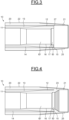
FIG. 3 shows a cross-sectional view of an inner tube inside an outer tube. -
FIG. 4 shows a cross-sectional view of a tubing component with an inner tube inside an outer tube secured together by a fillet weld. -
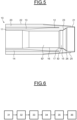
FIG. 5 shows a cross-sectional view of the tubing component ofFIG. 4 after beveling of the fillet weld. -
FIG. 6 is a flowchart of an example method for making a tubing component. - In one embodiment, a vacuum insulated tubing for mitigating annular pressure buildup in a wellbore casing annulus of an oil or gas well is provided having an ability to withstand high pressure and high temperature conditions and to resist to oil and H2S corrosion.
- Referring to
FIG. 2 , one example embodiment of one end of the vacuum insulatedtubing 10 of the present disclosure is shown. The vacuum insulatedtubing 10, also referred to as thetubing component 10, has aninner tube 11, having a maximumouter diameter 12, a minimumouter diameter 13 defining avacuum space 14. - The
inner tube 11 has a first internal diameter ID along afirst length 15 starting from each of the very end of said tube. Theinner tube 11 has also a second, smaller internal diameter ID' along asecond length 16 beyond thefirst length 15. For example, thefirst length 15 has a length of 12.7 mm, the first internal diameter ID has a diameter of 96.5 mm and the second internal diameter ID' has a diameter of 91 mm. Theinner tube 11 comprises abevel 17 between said first andsecond length bevel 17 makes for example an angle of 60° with a transversal plane. For thebevel 17 to be long enough, the difference ID-ID' is larger than 5 mm. Thebevel 17 is created during manufacturing of theinner tube 11. - The
tubing component 10 also has anouter tube 20, having a constant inner diameter for itsinternal surface 21 and anouter diameter 22. Theouter tube 20 fits around theinner tube 11 such that the end of theouter tube 20 extends beyond theinner tube 11. In one embodiment, the outer tube has an outer diameter of 155 mm. The inner tube can have a maximum outer diameter of 127 mm. - The
outer tube 20 and theinner tube 11 can be made from a suitable material for providing the required strength. In one embodiment, theouter tube 20 and theinner tube 11 are made from an alloy having a yield strength of at least 125 ksi. - In one embodiment, the
outer tube 20 and theinner tube 11 are made from a weldable chromium steel alloy comprising at least 13% of chromium, also referred to as 13Cr steel. - The
vacuum space 14 is formed between theouter tube 20 and theinner tube 11, having a vacuum in between. The vacuum is created using any suitable technology employed in known vacuum insulated tubing manufacturing. - A weld, such as a
frustoconical fillet weld 23, is formed at the corner between the end of theinner tube 11 and theinternal surface 21 of theouter tube 20. It permits to join the inner andouter tubes vacuum space 14. Thefillet weld 23 is made from a suitable weld material compatible with the 15Cr tubing. - A protective
metallic layer 24 completely covers the surface of thefillet weld 23. The protectivemetallic layer 24 is an overlay weld obtained by Gas Tungsten Arc Welding or Tungsten Inert Gas welding, also referred to as cladding. Thefillet weld 23 and the protectivemetallic layer 24 do not extend, i.e., protrude, beyond the first internal diameter ID of theinner tube 11; therefore, the second internal diameter ID' of the tubing component is not impacted by thefillet weld 23 and the protectivemetallic layer 24. In one embodiment, the protectivemetallic layer 24 has a thickness from about 3 mm to about 3.5 mm. For example, the thickness can be 3.2 mm. The protectivemetallic layer 24 can be formed by depositing the material in two passes. The protectivemetallic layer 24 material deposited in the two passes can have substantially the same thickness. For example, the thickness of each of the two passes can be 1.6 mm. In one embodiment, the surface of thefillet weld 23 is prepared prior to the deposition of the protectivemetallic layer 24 by beveling, modifying or polishing thefillet weld 23 to help ensure complete coverage and bonding of thefillet weld 23 by the overlay weld. The protectivemetallic layer 24 can extend beyond the edges of the fillet weld, e.g., 12.7 mm in the axial direction of thetubing component 10, to also cover the adjacent internal surfaces of theinner tube 11 and of theouter tube 20. For example, thefirst length 15 of the internal surface of theinner tube 11 can be overlaps, i.e. over a first specified distance FD for example of 12.7 mm. In one embodiment, the cladding of the protectivemetallic layer 24 is precisely done with respect to thebevel 17. A second specified distance SD for example of 12.7 mm can be overlaps on theinternal surface 21 of theouter tube 20. In order not to protrude beyond the first internal diameter ID of theinner tube 11, the thickness of the protectivemetallic layer 24 is equal or smaller than (ID-ID')/2 over thefirst length 15, wherein the difference ID - ID' is larger than 4 mm, preferably larger than 5.5 mm. The protectivemetallic layer 24 can be thicker over theinternal surface 21 of theouter tube 20. - The protective
metallic layer 24 is made from a suitable overlay weld material for protecting thefillet weld 23 under the conditions the tubing component will experience in the field system. In one embodiment, the overlay weld material is made of a corrosion resistant nickel-based alloy such as an alloy including Nickel, Chromium and Molybdenum wherein Nickel amounts to more than 50%. In one embodiment, the protectivemetallic layer 24 material is Inconel 625, that permits an excellent bonding. - The dilution iron can be no more than 5% to 10 % for corrosion resistance of the overlay weld. This is achieved by depositing the protective
metallic layer 24 material in two passes by making a bottom layer and at least a top layer on top of the bottom layer in order to reduce dilution of iron near the free surface of the layer. The thickness of the protectivemetallic layer 24 is thus high. In order not to reduce the drift of thetubing component 10 because of this cladding, afirst length 15 with a first internal diameter ID and thebevel 17 of theinner tube 11 have been designed, as described above. This first internal diameter ID is bigger than the second internal diameter ID' and permits to an existing design of tubing to house the cladding without reducing the drift. The first internal diameter ID is also small enough to allow the fillet weld to match with the tubing strength required and to facilitate the welding of thefillet weld 23. - The
outer tube 20 can haveexternal threads 25 along a portion of length proximate the end of the outer tube for attaching a coupling (not represented) having an internal threaded profile for connecting two outer tubes thereby connecting two segments of vacuum insulated tubing. - The protective
metallic layer 24 provides the tubing component weld integrity which prevents corrosion or cracking of thefillet weld 23, thus protecting against loss of vacuum thevacuum space 14. - The vacuum insulated tubing is able to withstand higher pressures than known vacuum insulated tubing are capable of withstanding without collapsing and without losing vacuum.
- Following will be introduced the method for producing a tubing component as disclosed with reference to the
FIG. 3 to FIG. 6 . -
FIG. 3 illustrates thetubing component 10 after inserting aninner tube 11 inside anouter tube 20, as described above. -
FIG. 4 illustrates thetubing component 10 after welding each end of theinner tube 11 to theinternal surface 21 of theouter tube 20 so as to produce afrustoconical fillet weld 23 that secures the tubes to each other so that thevacuum space 14 is leak-tight. -
FIG. 5 illustrates thetubing component 10 after beveling thefillet weld 23. In particular, thetow 26 of thefillet weld 23 is not beveled to avoid reducing wall of theouter tube 20. - Referring to
FIG. 6 , instep 31, aninner tube 11 and anouter tube 20 are provided. Instep 32, theouter tube 20 is positioned around theinner tube 11 in such a way that acorner 27 is formed at the intersection between theinner tube 11 and theouter tube 20 as shown inFIG. 3 and described above. Instep 33, afillet weld 23 is formed at thecorner 27 as shown inFIG. 4 and described above. Instep 34, the weld surface of thefillet weld 23 is beveled to remove faults, surfaces oxides, and facilitate application of the protectivemetallic layer 24 onto the weld surface as shown inFIG. 5 and described above. The beveling is achieved in order to obtain an angle between 50° and 60° between thefillet weld 23 and a transversal plan. For example, the angle can be 56.1°. Thebevel 17 is used as a reference for depth control of thebeveling step 34 and thus ensures that the weld remains strong enough. Thebevel 17 being a reference for the production of thetubing component 10, it provides positive evidence that the weld after machining still has enough section to provide for the required strength. In the cladding step 35, the protectivemetallic layer 24 is formed over the fillet weld surface as shown inFIG. 2 and described above. - In
step 36, thefillet weld 23 and the protectivemetallic layer 24 can be simultaneously heat treated (tempered) at a temperature greater than 426°C in a stress-relieve operation. In one embodiment, the Post Weld Heat Treatment is processed on a zone centered on the protectivemetallic layer 24, and extending axially of 12.7 mm on each side of the protectivemetallic layer 24. The stress relieve equipment uses a low frequency induction to limit the risk with non-magnetic material interface response. - It should be noted that only the components relevant to the disclosure are shown in the figures, and that other components normally part of a wellbore or vacuum insulated tubing may not be shown for simplicity.
- For the purposes of this specification and appended claims, unless otherwise indicated, all numbers expressing quantities, percentages or proportions, and other numerical values used in the specification and claims are to be understood as being modified in all instances by the term "about." Accordingly, unless indicated to the contrary, the numerical parameters set forth in the following specification and attached claims are approximations that can vary depending upon the desired properties sought to be obtained by the present invention. It is noted that, as used in this specification and the appended claims, the singular forms "a," "an," and "the," include plural references unless expressly and unequivocally limited to one referent.
- Unless otherwise specified, the recitation of a kind of elements, materials or other components, from which an individual component or mixture of components can be selected, is intended to include all possible sub-generic combinations of the listed components and mixtures thereof. Also, "comprise," "include" and its variants, are intended to be non-limiting, such that recitation of items in a list is not to the exclusion of other like items that may also be useful in the materials, compositions, methods and systems of this invention.
Claims (15)
- A tubing component (10), suitable for use in oil and gas wells, comprising an outer tube (20) and an inner tube (11) within the outer tube (20), said outer tube (20) and said inner tube (11) being made of steel, said tubes (11, 20) being so configured to create a space (14) between each other over a specified length, the tubing component (10) being characterized in thata. Each end of the inner tube (11) is secured to an internal surface (21) of the outer tube (20) by a frustoconical fillet weld (23) so that said space (14) is leak-tight,b. The inner tube (11) hasi. a first internal diameter (ID) along a first length (15) starting from each end of said tube,ii. a second, smaller internal diameter (ID') along a second length (16) beyond the first length (15),c. The tubing component (10) further includes a protective metallic layer (24) extending at least over the fillet weld (23).
- The tubing component (10) of claim 1 wherein the protective metallic layer (24) is an overlay weld.
- The tubing component (10) of claim 1 wherein the protective metallic layer (24) is made of a corrosion resistant nickel-based alloy.
- The tubing component (10) of claim 1 wherein the protective metallic layer (24) further extends beyond the fillet weld (23) towards the inside of the inner tube (11) and towards the inside of the outer tube (20).
- The tubing component (10) of claim 1 wherein the protective metallic layer (24) overlaps the internal surface of the inner tube (11) over a first specified distance (FD).
- The tubing component (10) of claim 1 wherein the protective metallic layer (24) overlaps the internal surface of the inner tube over said first length (15).
- The tubing component (10) of claim 1 wherein the protective metallic layer (24) overlaps the internal surface (21) of the outer tube (20) over a second specified distance (SD).
- The tubing component (10) of claim 5 wherein the thickness of the protective metallic layer (24) is equal or smaller than (ID - ID') / 2 over the first specified distance (FD).
- The tubing component (10) of claim 1 wherein the inner tube (11) comprises a bevel (17) between said first (FD) and second lengths (SD).
- The tubing component (10) of claim 1 wherein the outer tube (20) includes external threads (25) at least at one end to enable connection to a tubular element.
- A method for producing a tubing component (10) according to any of claims 1 to 10, the method comprising:a. Providing (31), before assembly, an inner tube (11) with:i. a first internal diameter ID along a first length (15) starting from each end of said tube (11),ii. a second, smaller internal diameter ID' along a second length (16) beyond the first length (15),b. Positioning (32) the inner tube (11) within the outer tube (20),c. Welding (33) each end of the inner tube (11) to the internal surface (21) of the outer tube (20) so as to produce a frustoconical fillet weld (23) that secures the tubes (11, 20) to each other so that said space (14) is leak-tight,d. Forming (35) a protective metallic layer (24) that extends at least over the weld (23).
- The method of claim 11 wherein the protective metallic layer (24) is an overlay weld.
- The method of claim 11 wherein the protective metallic layer (24) is formed in two passes by making a bottom layer and at least a top layer on top of the bottom layer in order to reduce dilution of iron near the free surface of the layer.
- The method of claim 11 further includes a beveling operation (34) on the fillet weld (23) to remove surface oxides, said beveling operation preferably being made after said welding and before forming the protective metallic layer (24).
- The method of claim 11 further includes a stress-relieve operation (36) by a Post Weld Heat Treatment.
Applications Claiming Priority (2)
| Application Number | Priority Date | Filing Date | Title |
|---|---|---|---|
| US17/025,785 US11739862B2 (en) | 2020-09-18 | 2020-09-18 | Tubing component having a cladding of fillet weld, and method for producing a tubing component |
| PCT/IB2021/058439 WO2022058917A1 (en) | 2020-09-18 | 2021-09-16 | Tubing component having a cladding of fillet weld, and method for producing a tubing component |
Publications (3)
| Publication Number | Publication Date |
|---|---|
| EP4214397A1 EP4214397A1 (en) | 2023-07-26 |
| EP4214397C0 EP4214397C0 (en) | 2025-07-09 |
| EP4214397B1 true EP4214397B1 (en) | 2025-07-09 |
Family
ID=77914415
Family Applications (1)
| Application Number | Title | Priority Date | Filing Date |
|---|---|---|---|
| EP21777856.2A Active EP4214397B1 (en) | 2020-09-18 | 2021-09-16 | Tubing component having a cladding of fillet weld, and method for producing a tubing component |
Country Status (6)
| Country | Link |
|---|---|
| US (1) | US11739862B2 (en) |
| EP (1) | EP4214397B1 (en) |
| JP (1) | JP7697003B2 (en) |
| CN (1) | CN116547438A (en) |
| MX (1) | MX2023003243A (en) |
| WO (1) | WO2022058917A1 (en) |
Families Citing this family (1)
| Publication number | Priority date | Publication date | Assignee | Title |
|---|---|---|---|---|
| ES2988741T3 (en) * | 2021-12-14 | 2024-11-21 | Vallourec Tube Alloy Llc | High strength insulated tube |
Family Cites Families (20)
| Publication number | Priority date | Publication date | Assignee | Title |
|---|---|---|---|---|
| CA926377A (en) * | 1970-08-25 | 1973-05-15 | Harold S. Chapman | Dual concentric drillpipe |
| DE2626813C3 (en) * | 1976-06-15 | 1980-10-30 | Bayer Ag, 5090 Leverkusen | Process for the production of detachable connections in a jacket-heated pipe system |
| US4415184A (en) * | 1981-04-27 | 1983-11-15 | General Electric Company | High temperature insulated casing |
| JPS5934086A (en) * | 1982-08-16 | 1984-02-24 | 川崎重工業株式会社 | Corrosion-resisting double pipe structure |
| US4673652A (en) * | 1982-10-12 | 1987-06-16 | Baker Oil Tools, Inc. | Method of testing and reconditioning insulating tubular conduits |
| US4635967A (en) * | 1985-03-29 | 1987-01-13 | Kawasaki Thermal Systems, Inc. | Internal seal for insulated steam injection casing assembly |
| JPS63101599A (en) * | 1986-10-16 | 1988-05-06 | 住友金属工業株式会社 | Heat-insulating double pipe for oil well pipe |
| JPS631886A (en) * | 1987-03-03 | 1988-01-06 | 川崎重工業株式会社 | End-section pretreatment welding unit double-pipe structure |
| US7207603B2 (en) * | 2003-03-11 | 2007-04-24 | Grant Prideco, L.P. | Insulated tubular assembly |
| CN101270445B (en) * | 2007-03-23 | 2010-10-06 | 宝山钢铁股份有限公司 | A method of manufacturing a heat-resistant heat-insulating oil pipe |
| CN102071879B (en) * | 2011-01-07 | 2013-07-10 | 中国石油集团渤海石油装备制造有限公司 | Novel prestressed heat-insulation oil pipe |
| RU2487228C1 (en) * | 2011-12-20 | 2013-07-10 | Общество С Ограниченной Ответственностью "Тмк-Премиум Сервис" | Section of heat-insulated string |
| US9032774B1 (en) * | 2013-12-13 | 2015-05-19 | The Boeing Company | Laminated forming dies |
| JP6199725B2 (en) * | 2013-12-16 | 2017-09-20 | 三菱重工業株式会社 | Piping connection method and piping connection structure |
| DE102016210415A1 (en) * | 2016-06-13 | 2018-01-11 | MTU Aero Engines AG | Pipe arrangement with support sections on the outer tube |
| US11072036B2 (en) * | 2016-12-29 | 2021-07-27 | Spinduction Weld, Inc. | Concentric welded pipes with condition monitoring capability and method of manufacture |
| JP7087756B2 (en) * | 2018-07-18 | 2022-06-21 | 日本製鉄株式会社 | Blast furnace tuyere and its manufacturing method |
| JP7215010B2 (en) * | 2018-08-03 | 2023-01-31 | 日本製鉄株式会社 | Blast furnace tuyere and manufacturing method thereof |
| CN109578752B (en) * | 2019-01-29 | 2024-02-23 | 信达科创(唐山)石油设备有限公司 | An extra-long thermally insulated steel-sheathed steel pipe and its processing technology |
| US11118426B2 (en) * | 2019-06-17 | 2021-09-14 | Chevron U.S.A. Inc. | Vacuum insulated tubing for high pressure, high temperature wells, and systems and methods for use thereof, and methods for making |
-
2020
- 2020-09-18 US US17/025,785 patent/US11739862B2/en active Active
-
2021
- 2021-09-16 JP JP2023517845A patent/JP7697003B2/en active Active
- 2021-09-16 EP EP21777856.2A patent/EP4214397B1/en active Active
- 2021-09-16 MX MX2023003243A patent/MX2023003243A/en unknown
- 2021-09-16 WO PCT/IB2021/058439 patent/WO2022058917A1/en not_active Ceased
- 2021-09-16 CN CN202180063409.6A patent/CN116547438A/en active Pending
Also Published As
| Publication number | Publication date |
|---|---|
| US11739862B2 (en) | 2023-08-29 |
| JP7697003B2 (en) | 2025-06-23 |
| EP4214397C0 (en) | 2025-07-09 |
| WO2022058917A1 (en) | 2022-03-24 |
| CN116547438A (en) | 2023-08-04 |
| MX2023003243A (en) | 2023-04-14 |
| JP2023541481A (en) | 2023-10-02 |
| BR112023002972A2 (en) | 2023-04-04 |
| EP4214397A1 (en) | 2023-07-26 |
| US20220090708A1 (en) | 2022-03-24 |
Similar Documents
| Publication | Publication Date | Title |
|---|---|---|
| US11072036B2 (en) | Concentric welded pipes with condition monitoring capability and method of manufacture | |
| US6860420B2 (en) | Method of joining metal oilfield tubulars and well provided therewith | |
| US11174685B2 (en) | Enhanced welded pipe, threaded connections, and methods for achieving the same | |
| EP0171416A1 (en) | Insulating coupling for drill collars and method of manufacture thereof. | |
| EP4214397B1 (en) | Tubing component having a cladding of fillet weld, and method for producing a tubing component | |
| EP3224519B1 (en) | Fluid conduit element and method for producing the fluid conduit element | |
| GB2438631A (en) | A bimetal bore seal for connecting and sealing oil and gas tubular members | |
| US20220243845A1 (en) | Threaded joint with shoulder produced by additive manufacturing | |
| EP3389919B1 (en) | Method for connection and tubular connection assembly for improved fatigue performance of metallic risers | |
| US9677179B2 (en) | Pipe connector and method | |
| WO2003050380A1 (en) | Multiple seal design for composite risers and tubing for offshore applications | |
| US11118426B2 (en) | Vacuum insulated tubing for high pressure, high temperature wells, and systems and methods for use thereof, and methods for making | |
| EP4127383B1 (en) | Assembly with tightly controlled axial gap for threaded connector insulation on vacuum insulated tubing | |
| US8672621B2 (en) | Welded structural flats on cases to eliminate nozzles | |
| EP4381215B1 (en) | Composite pipe end-fitting | |
| JPS6335333B2 (en) | ||
| EP4198363B1 (en) | High strength insulated tube | |
| CN107191686B (en) | High-strength stainless steel composite steel pipe capable of being connected through end threads and manufacturing method thereof | |
| US20180066789A1 (en) | High Thermal Efficiency Tube for Conveying Fluids | |
| HK1059241B (en) | Method for a combined mechanical and metallurgical connection |
Legal Events
| Date | Code | Title | Description |
|---|---|---|---|
| STAA | Information on the status of an ep patent application or granted ep patent |
Free format text: STATUS: UNKNOWN |
|
| STAA | Information on the status of an ep patent application or granted ep patent |
Free format text: STATUS: THE INTERNATIONAL PUBLICATION HAS BEEN MADE |
|
| PUAI | Public reference made under article 153(3) epc to a published international application that has entered the european phase |
Free format text: ORIGINAL CODE: 0009012 |
|
| STAA | Information on the status of an ep patent application or granted ep patent |
Free format text: STATUS: REQUEST FOR EXAMINATION WAS MADE |
|
| 17P | Request for examination filed |
Effective date: 20230327 |
|
| AK | Designated contracting states |
Kind code of ref document: A1 Designated state(s): AL AT BE BG CH CY CZ DE DK EE ES FI FR GB GR HR HU IE IS IT LI LT LU LV MC MK MT NL NO PL PT RO RS SE SI SK SM TR |
|
| DAV | Request for validation of the european patent (deleted) | ||
| DAX | Request for extension of the european patent (deleted) | ||
| GRAP | Despatch of communication of intention to grant a patent |
Free format text: ORIGINAL CODE: EPIDOSNIGR1 |
|
| STAA | Information on the status of an ep patent application or granted ep patent |
Free format text: STATUS: GRANT OF PATENT IS INTENDED |
|
| RIC1 | Information provided on ipc code assigned before grant |
Ipc: F16L 58/18 20060101ALI20250217BHEP Ipc: F16L 59/065 20060101ALI20250217BHEP Ipc: F16L 9/18 20060101ALI20250217BHEP Ipc: E21B 36/00 20060101AFI20250217BHEP |
|
| INTG | Intention to grant announced |
Effective date: 20250228 |
|
| GRAS | Grant fee paid |
Free format text: ORIGINAL CODE: EPIDOSNIGR3 |
|
| GRAA | (expected) grant |
Free format text: ORIGINAL CODE: 0009210 |
|
| STAA | Information on the status of an ep patent application or granted ep patent |
Free format text: STATUS: THE PATENT HAS BEEN GRANTED |
|
| AK | Designated contracting states |
Kind code of ref document: B1 Designated state(s): AL AT BE BG CH CY CZ DE DK EE ES FI FR GB GR HR HU IE IS IT LI LT LU LV MC MK MT NL NO PL PT RO RS SE SI SK SM TR |
|
| REG | Reference to a national code |
Ref country code: GB Ref legal event code: FG4D |
|
| REG | Reference to a national code |
Ref country code: CH Ref legal event code: EP |
|
| REG | Reference to a national code |
Ref country code: IE Ref legal event code: FG4D |
|
| REG | Reference to a national code |
Ref country code: DE Ref legal event code: R096 Ref document number: 602021033859 Country of ref document: DE |
|
| U01 | Request for unitary effect filed |
Effective date: 20250723 |
|
| U07 | Unitary effect registered |
Designated state(s): AT BE BG DE DK EE FI FR IT LT LU LV MT NL PT RO SE SI Effective date: 20250730 |
|
| PGFP | Annual fee paid to national office [announced via postgrant information from national office to epo] |
Ref country code: NO Payment date: 20250825 Year of fee payment: 5 |
|
| PGFP | Annual fee paid to national office [announced via postgrant information from national office to epo] |
Ref country code: GB Payment date: 20250820 Year of fee payment: 5 |
|
| U20 | Renewal fee for the european patent with unitary effect paid |
Year of fee payment: 5 Effective date: 20250912 |
|
| PG25 | Lapsed in a contracting state [announced via postgrant information from national office to epo] |
Ref country code: IS Free format text: LAPSE BECAUSE OF FAILURE TO SUBMIT A TRANSLATION OF THE DESCRIPTION OR TO PAY THE FEE WITHIN THE PRESCRIBED TIME-LIMIT Effective date: 20251109 |
|
| PG25 | Lapsed in a contracting state [announced via postgrant information from national office to epo] |
Ref country code: HR Free format text: LAPSE BECAUSE OF FAILURE TO SUBMIT A TRANSLATION OF THE DESCRIPTION OR TO PAY THE FEE WITHIN THE PRESCRIBED TIME-LIMIT Effective date: 20250709 |
|
| PG25 | Lapsed in a contracting state [announced via postgrant information from national office to epo] |
Ref country code: GR Free format text: LAPSE BECAUSE OF FAILURE TO SUBMIT A TRANSLATION OF THE DESCRIPTION OR TO PAY THE FEE WITHIN THE PRESCRIBED TIME-LIMIT Effective date: 20251010 |
|
| PG25 | Lapsed in a contracting state [announced via postgrant information from national office to epo] |
Ref country code: PL Free format text: LAPSE BECAUSE OF FAILURE TO SUBMIT A TRANSLATION OF THE DESCRIPTION OR TO PAY THE FEE WITHIN THE PRESCRIBED TIME-LIMIT Effective date: 20250709 |
|
| PG25 | Lapsed in a contracting state [announced via postgrant information from national office to epo] |
Ref country code: RS Free format text: LAPSE BECAUSE OF FAILURE TO SUBMIT A TRANSLATION OF THE DESCRIPTION OR TO PAY THE FEE WITHIN THE PRESCRIBED TIME-LIMIT Effective date: 20251009 |
|
| PG25 | Lapsed in a contracting state [announced via postgrant information from national office to epo] |
Ref country code: ES Free format text: LAPSE BECAUSE OF FAILURE TO SUBMIT A TRANSLATION OF THE DESCRIPTION OR TO PAY THE FEE WITHIN THE PRESCRIBED TIME-LIMIT Effective date: 20250709 |