EP4209381B1 - Elektrisch angetriebene baumaschine und zugehörige steuerung - Google Patents
Elektrisch angetriebene baumaschine und zugehörige steuerung Download PDFInfo
- Publication number
- EP4209381B1 EP4209381B1 EP22150993.8A EP22150993A EP4209381B1 EP 4209381 B1 EP4209381 B1 EP 4209381B1 EP 22150993 A EP22150993 A EP 22150993A EP 4209381 B1 EP4209381 B1 EP 4209381B1
- Authority
- EP
- European Patent Office
- Prior art keywords
- propulsion
- component
- electric motor
- variable
- current
- Prior art date
- Legal status (The legal status is an assumption and is not a legal conclusion. Google has not performed a legal analysis and makes no representation as to the accuracy of the status listed.)
- Active
Links
Images

Classifications
-
- B—PERFORMING OPERATIONS; TRANSPORTING
- B60—VEHICLES IN GENERAL
- B60L—PROPULSION OF ELECTRICALLY-PROPELLED VEHICLES; SUPPLYING ELECTRIC POWER FOR AUXILIARY EQUIPMENT OF ELECTRICALLY-PROPELLED VEHICLES; ELECTRODYNAMIC BRAKE SYSTEMS FOR VEHICLES IN GENERAL; MAGNETIC SUSPENSION OR LEVITATION FOR VEHICLES; MONITORING OPERATING VARIABLES OF ELECTRICALLY-PROPELLED VEHICLES; ELECTRIC SAFETY DEVICES FOR ELECTRICALLY-PROPELLED VEHICLES
- B60L15/00—Methods, circuits, or devices for controlling the traction-motor speed of electrically-propelled vehicles
- B60L15/20—Methods, circuits, or devices for controlling the traction-motor speed of electrically-propelled vehicles for control of the vehicle or its driving motor to achieve a desired performance, e.g. speed, torque, programmed variation of speed
-
- B—PERFORMING OPERATIONS; TRANSPORTING
- B60—VEHICLES IN GENERAL
- B60L—PROPULSION OF ELECTRICALLY-PROPELLED VEHICLES; SUPPLYING ELECTRIC POWER FOR AUXILIARY EQUIPMENT OF ELECTRICALLY-PROPELLED VEHICLES; ELECTRODYNAMIC BRAKE SYSTEMS FOR VEHICLES IN GENERAL; MAGNETIC SUSPENSION OR LEVITATION FOR VEHICLES; MONITORING OPERATING VARIABLES OF ELECTRICALLY-PROPELLED VEHICLES; ELECTRIC SAFETY DEVICES FOR ELECTRICALLY-PROPELLED VEHICLES
- B60L3/00—Electric devices on electrically-propelled vehicles for safety purposes; Monitoring operating variables, e.g. speed, deceleration or energy consumption
- B60L3/06—Limiting the traction current under mechanical overload conditions
-
- B—PERFORMING OPERATIONS; TRANSPORTING
- B60—VEHICLES IN GENERAL
- B60L—PROPULSION OF ELECTRICALLY-PROPELLED VEHICLES; SUPPLYING ELECTRIC POWER FOR AUXILIARY EQUIPMENT OF ELECTRICALLY-PROPELLED VEHICLES; ELECTRODYNAMIC BRAKE SYSTEMS FOR VEHICLES IN GENERAL; MAGNETIC SUSPENSION OR LEVITATION FOR VEHICLES; MONITORING OPERATING VARIABLES OF ELECTRICALLY-PROPELLED VEHICLES; ELECTRIC SAFETY DEVICES FOR ELECTRICALLY-PROPELLED VEHICLES
- B60L1/00—Supplying electric power to auxiliary equipment of vehicles
-
- B—PERFORMING OPERATIONS; TRANSPORTING
- B60—VEHICLES IN GENERAL
- B60L—PROPULSION OF ELECTRICALLY-PROPELLED VEHICLES; SUPPLYING ELECTRIC POWER FOR AUXILIARY EQUIPMENT OF ELECTRICALLY-PROPELLED VEHICLES; ELECTRODYNAMIC BRAKE SYSTEMS FOR VEHICLES IN GENERAL; MAGNETIC SUSPENSION OR LEVITATION FOR VEHICLES; MONITORING OPERATING VARIABLES OF ELECTRICALLY-PROPELLED VEHICLES; ELECTRIC SAFETY DEVICES FOR ELECTRICALLY-PROPELLED VEHICLES
- B60L15/00—Methods, circuits, or devices for controlling the traction-motor speed of electrically-propelled vehicles
- B60L15/10—Methods, circuits, or devices for controlling the traction-motor speed of electrically-propelled vehicles for automatic control superimposed on human control to limit the acceleration of the vehicle, e.g. to prevent excessive motor current
-
- B—PERFORMING OPERATIONS; TRANSPORTING
- B60—VEHICLES IN GENERAL
- B60L—PROPULSION OF ELECTRICALLY-PROPELLED VEHICLES; SUPPLYING ELECTRIC POWER FOR AUXILIARY EQUIPMENT OF ELECTRICALLY-PROPELLED VEHICLES; ELECTRODYNAMIC BRAKE SYSTEMS FOR VEHICLES IN GENERAL; MAGNETIC SUSPENSION OR LEVITATION FOR VEHICLES; MONITORING OPERATING VARIABLES OF ELECTRICALLY-PROPELLED VEHICLES; ELECTRIC SAFETY DEVICES FOR ELECTRICALLY-PROPELLED VEHICLES
- B60L3/00—Electric devices on electrically-propelled vehicles for safety purposes; Monitoring operating variables, e.g. speed, deceleration or energy consumption
- B60L3/0023—Detecting, eliminating, remedying or compensating for drive train abnormalities, e.g. failures within the drive train
- B60L3/0046—Detecting, eliminating, remedying or compensating for drive train abnormalities, e.g. failures within the drive train relating to electric energy storage systems, e.g. batteries or capacitors
-
- B—PERFORMING OPERATIONS; TRANSPORTING
- B60—VEHICLES IN GENERAL
- B60L—PROPULSION OF ELECTRICALLY-PROPELLED VEHICLES; SUPPLYING ELECTRIC POWER FOR AUXILIARY EQUIPMENT OF ELECTRICALLY-PROPELLED VEHICLES; ELECTRODYNAMIC BRAKE SYSTEMS FOR VEHICLES IN GENERAL; MAGNETIC SUSPENSION OR LEVITATION FOR VEHICLES; MONITORING OPERATING VARIABLES OF ELECTRICALLY-PROPELLED VEHICLES; ELECTRIC SAFETY DEVICES FOR ELECTRICALLY-PROPELLED VEHICLES
- B60L3/00—Electric devices on electrically-propelled vehicles for safety purposes; Monitoring operating variables, e.g. speed, deceleration or energy consumption
- B60L3/0023—Detecting, eliminating, remedying or compensating for drive train abnormalities, e.g. failures within the drive train
- B60L3/0061—Detecting, eliminating, remedying or compensating for drive train abnormalities, e.g. failures within the drive train relating to electrical machines
-
- B—PERFORMING OPERATIONS; TRANSPORTING
- B60—VEHICLES IN GENERAL
- B60L—PROPULSION OF ELECTRICALLY-PROPELLED VEHICLES; SUPPLYING ELECTRIC POWER FOR AUXILIARY EQUIPMENT OF ELECTRICALLY-PROPELLED VEHICLES; ELECTRODYNAMIC BRAKE SYSTEMS FOR VEHICLES IN GENERAL; MAGNETIC SUSPENSION OR LEVITATION FOR VEHICLES; MONITORING OPERATING VARIABLES OF ELECTRICALLY-PROPELLED VEHICLES; ELECTRIC SAFETY DEVICES FOR ELECTRICALLY-PROPELLED VEHICLES
- B60L50/00—Electric propulsion with power supplied within the vehicle
- B60L50/50—Electric propulsion with power supplied within the vehicle using propulsion power supplied by batteries or fuel cells
- B60L50/60—Electric propulsion with power supplied within the vehicle using propulsion power supplied by batteries or fuel cells using power supplied by batteries
-
- B—PERFORMING OPERATIONS; TRANSPORTING
- B60—VEHICLES IN GENERAL
- B60P—VEHICLES ADAPTED FOR LOAD TRANSPORTATION OR TO TRANSPORT, TO CARRY, OR TO COMPRISE SPECIAL LOADS OR OBJECTS
- B60P1/00—Vehicles predominantly for transporting loads and modified to facilitate loading, consolidating the load, or unloading
- B60P1/04—Vehicles predominantly for transporting loads and modified to facilitate loading, consolidating the load, or unloading with a tipping movement of load-transporting element
-
- B—PERFORMING OPERATIONS; TRANSPORTING
- B60—VEHICLES IN GENERAL
- B60L—PROPULSION OF ELECTRICALLY-PROPELLED VEHICLES; SUPPLYING ELECTRIC POWER FOR AUXILIARY EQUIPMENT OF ELECTRICALLY-PROPELLED VEHICLES; ELECTRODYNAMIC BRAKE SYSTEMS FOR VEHICLES IN GENERAL; MAGNETIC SUSPENSION OR LEVITATION FOR VEHICLES; MONITORING OPERATING VARIABLES OF ELECTRICALLY-PROPELLED VEHICLES; ELECTRIC SAFETY DEVICES FOR ELECTRICALLY-PROPELLED VEHICLES
- B60L2200/00—Type of vehicles
- B60L2200/40—Working vehicles
-
- B—PERFORMING OPERATIONS; TRANSPORTING
- B60—VEHICLES IN GENERAL
- B60L—PROPULSION OF ELECTRICALLY-PROPELLED VEHICLES; SUPPLYING ELECTRIC POWER FOR AUXILIARY EQUIPMENT OF ELECTRICALLY-PROPELLED VEHICLES; ELECTRODYNAMIC BRAKE SYSTEMS FOR VEHICLES IN GENERAL; MAGNETIC SUSPENSION OR LEVITATION FOR VEHICLES; MONITORING OPERATING VARIABLES OF ELECTRICALLY-PROPELLED VEHICLES; ELECTRIC SAFETY DEVICES FOR ELECTRICALLY-PROPELLED VEHICLES
- B60L2240/00—Control parameters of input or output; Target parameters
- B60L2240/10—Vehicle control parameters
-
- B—PERFORMING OPERATIONS; TRANSPORTING
- B60—VEHICLES IN GENERAL
- B60L—PROPULSION OF ELECTRICALLY-PROPELLED VEHICLES; SUPPLYING ELECTRIC POWER FOR AUXILIARY EQUIPMENT OF ELECTRICALLY-PROPELLED VEHICLES; ELECTRODYNAMIC BRAKE SYSTEMS FOR VEHICLES IN GENERAL; MAGNETIC SUSPENSION OR LEVITATION FOR VEHICLES; MONITORING OPERATING VARIABLES OF ELECTRICALLY-PROPELLED VEHICLES; ELECTRIC SAFETY DEVICES FOR ELECTRICALLY-PROPELLED VEHICLES
- B60L2240/00—Control parameters of input or output; Target parameters
- B60L2240/40—Drive Train control parameters
- B60L2240/42—Drive Train control parameters related to electric machines
- B60L2240/421—Speed
-
- B—PERFORMING OPERATIONS; TRANSPORTING
- B60—VEHICLES IN GENERAL
- B60L—PROPULSION OF ELECTRICALLY-PROPELLED VEHICLES; SUPPLYING ELECTRIC POWER FOR AUXILIARY EQUIPMENT OF ELECTRICALLY-PROPELLED VEHICLES; ELECTRODYNAMIC BRAKE SYSTEMS FOR VEHICLES IN GENERAL; MAGNETIC SUSPENSION OR LEVITATION FOR VEHICLES; MONITORING OPERATING VARIABLES OF ELECTRICALLY-PROPELLED VEHICLES; ELECTRIC SAFETY DEVICES FOR ELECTRICALLY-PROPELLED VEHICLES
- B60L2240/00—Control parameters of input or output; Target parameters
- B60L2240/40—Drive Train control parameters
- B60L2240/54—Drive Train control parameters related to batteries
- B60L2240/549—Current
-
- B—PERFORMING OPERATIONS; TRANSPORTING
- B60—VEHICLES IN GENERAL
- B60L—PROPULSION OF ELECTRICALLY-PROPELLED VEHICLES; SUPPLYING ELECTRIC POWER FOR AUXILIARY EQUIPMENT OF ELECTRICALLY-PROPELLED VEHICLES; ELECTRODYNAMIC BRAKE SYSTEMS FOR VEHICLES IN GENERAL; MAGNETIC SUSPENSION OR LEVITATION FOR VEHICLES; MONITORING OPERATING VARIABLES OF ELECTRICALLY-PROPELLED VEHICLES; ELECTRIC SAFETY DEVICES FOR ELECTRICALLY-PROPELLED VEHICLES
- B60L2260/00—Operating Modes
- B60L2260/10—Temporary overload
- B60L2260/16—Temporary overload of electrical drive trains
- B60L2260/162—Temporary overload of electrical drive trains of electrical cells or capacitors
-
- B—PERFORMING OPERATIONS; TRANSPORTING
- B60—VEHICLES IN GENERAL
- B60L—PROPULSION OF ELECTRICALLY-PROPELLED VEHICLES; SUPPLYING ELECTRIC POWER FOR AUXILIARY EQUIPMENT OF ELECTRICALLY-PROPELLED VEHICLES; ELECTRODYNAMIC BRAKE SYSTEMS FOR VEHICLES IN GENERAL; MAGNETIC SUSPENSION OR LEVITATION FOR VEHICLES; MONITORING OPERATING VARIABLES OF ELECTRICALLY-PROPELLED VEHICLES; ELECTRIC SAFETY DEVICES FOR ELECTRICALLY-PROPELLED VEHICLES
- B60L2260/00—Operating Modes
- B60L2260/10—Temporary overload
- B60L2260/16—Temporary overload of electrical drive trains
- B60L2260/167—Temporary overload of electrical drive trains of motors or generators
Definitions
- the present disclosure relates to an electric machine, such as an electric construction machine, more particularly to an electric construction machine for use in building, in construction, in agriculture, in roadworks, in landscaping or similar.
- the present disclosure is also related to the control of such electric construction machine.
- the present disclosure relates to a construction machine, such as a moveable machine that transports, lifts or works with elements that require strong use of power.
- the construction machine of the present disclosure may be a mini dumper, a dumper, a front loader, a motorised wheelbarrow, a tractor, an excavator, a backhoe, etc.
- the construction machine of the present disclosure may be a smaller type of construction machine.
- the construction machine of the present disclosure may be of a type with a dead weight of less than 10,000 kg, such as less than 4,500 kg.
- a construction machine having a body, at least one electric motor, one or more batteries, such as rechargeable batteries, adapted to power the at least one electric motor, and a control circuit.
- the one or more batteries may be lithium-ion (Li-ion) batteries. However, other batteries, such as rechargeable batteries, known in the art may also be used.
- the one or more batteries may comprise parallel coupled batteries and/or serially coupled batteries.
- the one or more batteries may supply a voltage of less than 100V, such as less than 75V, such as less than 50V, such as less than 25V.
- the at least one electric motor may be adapted to operate at a voltage corresponding to the voltage supplied by the one or more batteries, such as at a voltage of less than 100V, such as less than 75V, such as less than 50V, such as less than 25V.
- the construction machine may comprise a control panel comprising one or more controllers.
- the control panel may be physically coupled to the body of the construction machine.
- the control panel may be a remote control panel, such as to allow remote control of the construction machine.
- the construction machine may comprise one or more movement elements, e.g., wheels and/or continuous tracks, and a propulsion electric motor adapted to drive the one or more movement elements.
- the at least one electric motor of the construction machine may include the propulsion electric motor.
- the one or more batteries such as one or more propulsion batteries, e.g., of the one or more batteries, may be adapted to power the propulsion electric motor.
- the one or more propulsion batteries may comprise parallel coupled batteries and/or serially coupled batteries.
- the one or more propulsion batteries may supply a propulsion voltage.
- the propulsion voltage may be less than 100V, such as less than 75V, such as less than 50V, such as less than 25V.
- the propulsion electric motor may be adapted to operate at the propulsion voltage.
- the construction machine may comprise a plurality of propulsion electric motors, e.g., adapted to drive individual movement elements of the one or more movement elements.
- the control circuit may be adapted to operate the propulsion electric motor in accordance with a propulsion variable.
- the construction machine may be self-driving.
- the propulsion variable may be based on a pre-programmed scheme of movement.
- the propulsion variable may be based on an input from a user operable controller.
- the control panel may comprise a propulsion controller operable between a lower propulsion controller limit and an upper propulsion controller limit.
- the control circuit may be adapted to receive a propulsion controller input indicative of a state of the propulsion controller between the lower propulsion controller limit and the upper propulsion controller limit, and to operate the propulsion electric motor in accordance with a propulsion variable based on the propulsion controller input.
- control circuit While operating the propulsion electric motor in accordance with the propulsion variable, the control circuit may be further adapted to receive a propulsion current signal indicative of an amount of current drawn by the propulsion electric motor, and in accordance with the propulsion current signal satisfying propulsion reduction criteria, reduce the propulsion variable by a propulsion reduction amount, e.g., such that the propulsion variable is below a maximum propulsion variable.
- the construction machine may comprise a functional component, e.g., a skip, a shovel, a bucket, a blade or similar, movable between a first component position and a second component position, and a component electric motor adapted to move the functional component between the first component position and the second component position.
- the at least one electric motor of the construction machine may include the component electric motor.
- the component electric motor and the propulsion electric motor may be the same.
- the component electric motor and the propulsion electric motor may be different electric motors.
- the one or more batteries such as one or more component batteries, e.g., of the one or more batteries, may be adapted to power the component electric motor.
- the one or more propulsion batteries and the one or more component batteries may be different batteries, e.g., of the one or more batteries.
- the one or more component batteries may comprise parallel coupled batteries and/or serially coupled batteries.
- the one or more component batteries may supply a component voltage.
- the component voltage may be less than 100V, such as less than 75V, such as less than 50V, such as less than 25V.
- the component electric motor may be adapted to operate at the component voltage.
- the control circuit may be adapted to operate the component electric motor in accordance with a component movement variable.
- the construction machine may be self-operating, e.g., in combination with it being self-driving.
- the component movement variable may be based on a pre-programmed scheme of movement.
- the component movement variable may be based on an input from a user operable controller.
- the control panel may comprise a component controller operable between a lower component controller limit and an upper component controller limit.
- the control circuit may be adapted to receive a component controller input indicative of a state of the component controller between the lower component controller limit and the upper component controller limit, and to operate the component electric motor in accordance with a component movement variable based on the component controller input.
- control circuit may be further adapted to: receive a component current signal indicative of an amount of current drawn by the component electric motor, and in accordance with the component current signal satisfying component reduction criteria, reduce the component movement variable by a component reduction amount, e.g., such that the component movement variable is below a maximum component movement variable.
- an electrically driven construction machine may be subject to loads resulting in excessive current being drawn from the batteries for prolonged period of times. It is further realised that batteries, particularly lithium-ion batteries, may be damaged (in some cases permanently) by drawing too much current for a prolonged period of time. Furthermore, also other components of the construction machines may be harmed by excessive currents.
- the present disclosure provides the advantage that overloading and resulting potential damaging of the batteries, as well as other components, may be prevented or at least reduced.
- the risk of damaging the batteries may be decreased, leading to increased durability of the construction machine.
- control method reduces the need for providing more expensive solutions, such as a gear transmission system.
- the propulsion reduction criteria may include an upper propulsion current threshold and/or an upper propulsion threshold duration of time.
- the propulsion current signal may be indicative of the propulsion electric motor having drawn an amount of current above the upper propulsion current threshold, e.g. for a period of time longer than the upper propulsion threshold duration of time.
- the component reduction criteria may include an upper component current threshold and/or an upper component threshold duration of time.
- the component current signal may be indicative of the component electric motor having drawn an amount of current above the upper component current threshold, e.g. for a period of time longer than the upper component threshold duration of time.
- the upper propulsion current threshold and/or the upper component current threshold may be between 50-1000 ampere, such as between 50-500 ampere, such as between 50-300 ampere, such as between 80-200 ampere, such as between 100-150 ampere, such as between 110-130 ampere.
- the upper propulsion current threshold and/or the upper component current threshold may be based on the number of parallel coupled batteries of the one or more propulsion batteries or component batteries, respectively.
- the upper propulsion current threshold may be between 50-1000 ampere, such as between 50-500 ampere, such as between 50-300 ampere, such as between 80-200 ampere, such as between 100-150 ampere, such as between 110-130 ampere per parallel coupled propulsion batteries.
- the upper component current threshold may be between 50-1000 ampere, such as between 50-500 ampere, such as between 50-300 ampere, such as between 80-200 ampere, such as between 100-150 ampere, such as between 110-130 ampere per parallel coupled component batteries.
- the upper propulsion threshold duration of time and/or the upper component threshold duration of time may be between 1 and 10 seconds, such as between 3 and 8 seconds, such as between 4 and 6 seconds, such as 5 seconds.
- the propulsion controller may be operable between a lower propulsion controller limit and an upper propulsion controller limit.
- the propulsion controller may be realised as a potentiometer, but other means known in the art may equally be used.
- the lower propulsion controller limit may correspond to a standstill of the construction machine, i.e., no movement of the movement elements.
- the upper propulsion controller limit may correspond to maximum (forward or rearward) propulsion speed of the construction machine, i.e., maximum rotational speed of the movement elements.
- a state of the propulsion controller between the lower propulsion controller limit and the upper propulsion controller limit may be linearly proportional to a corresponding propulsion speed of the construction machine, e.g., the propulsion controller at a 30% position between the lower propulsion controller limit and the upper propulsion controller limit may correspond to a propulsion speed of 30% of the maximum propulsion speed.
- the maximum propulsion speed of the construction machine caused by the one or more movement elements may be less than 50 km/h, such as less than 25 km/h, such as less than 10 km/h, such as 6 km/h.
- the maximum propulsion speed may correspond to a maximum rotational speed of the one or more movement elements, which again may correspond to a maximum rotational speed of the rotor of the propulsion electric motor.
- the propulsion electric motor such as the rotor of the propulsion electric motor, may be connected to the one or more movement elements, such as an axle of the one or more movement elements, by a gear with a gear ratio.
- the gear may be a reduction gear.
- the gear ratio may be between 2:1-20:1, such as between 4:1-15:1, such as between 5:1-10:1, such as 8:1.
- the control circuit may receive the propulsion controller input, e.g., from the propulsion controller.
- the propulsion controller input may be indicative of the state of the propulsion controller.
- the propulsion controller input may be a voltage signal between 0-5V, where 5V is indicative of the propulsion controller being at the upper propulsion controller limit and 0V being indicative of the propulsion controller being at the lower propulsion controller limit.
- the propulsion controller input may be realised differently, as known in the art, such as e.g., PWM signals etc.
- the control circuit may determine the propulsion variable based on the propulsion controller input. As also explained herein, the propulsion variable may be further adjusted based on the propulsion current signal.
- the propulsion variable may be transmitted to the propulsion electric motor.
- the propulsion variable may be transmitted as a PWM signal, or as another signal known in the art.
- the propulsion variable may be indicative of a wanted rotational speed of the propulsion electric motor, such as of the rotor of the propulsion electric motor.
- the control circuit may be further adapted to receive the propulsion current signal, and in accordance with the propulsion current signal satisfying propulsion reduction criteria, reduce the propulsion variable by a propulsion reduction amount, e.g., such that the propulsion variable is below a maximum propulsion variable.
- the maximum propulsion variable may correspond to the propulsion variable based on the propulsion controller input, without it being adjusted based on the propulsion current signal.
- the propulsion reduction amount may be between 30-60%, such as between 40-55%, such as 50% of the propulsion variable and/or of the maximum propulsion variable.
- the propulsion reduction amount may correspond to a fixed speed of the propulsion electric motor, such as between 100-1000 rpm, such as between 500-900 rpm.
- the propulsion reduction amount may correspond to a fixed propulsion speed of the construction machine, such as between 2-25 km/h of the construction machine, such as between 2-5 km/h, such as 3 km/h or such as between 5-20 km/h, such as 10 km/h, of the construction machine.
- the propulsion current signal may be a root mean square of the current drawn by the propulsion electric motor, e.g., over a time period, e.g., of 0.5 seconds or 1 second or 2 seconds.
- the propulsion current signal may be acquired from the propulsion electric motor.
- a current sensor may be provided between the one or more batteries and the propulsion electric motor, and the control circuit may receive the propulsion current signal from the current sensor.
- the component controller may be operable between a lower component controller limit and an upper component controller limit.
- the component controller may be realised as a potentiometer, but other means known in the art may equally be used.
- the lower component controller limit may correspond to a standstill of the functional component, i.e., no movement of the functional component.
- the upper component controller limit may correspond to maximum speed of movement of the functional component.
- a state of the component controller between the lower component controller limit and the upper component controller limit may linearly correspond to a corresponding speed of movement of the functional component, e.g., the component controller being at a 30% position between the lower component controller limit and the upper component controller limit may correspond to a speed of movement of the functional component of 30% of the maximum speed.
- the control circuit may receive the component controller input, e.g., from the component controller.
- the component controller input may be indicative of the state of the component controller.
- the component controller input may be a voltage signal between 0-5V, where 5V is indicative of the component controller being at the upper component controller limit and 0V being indicative of the component controller being at the lower component controller limit.
- the component controller input may be realised differently, as known in the art.
- the control circuit may determine the component movement variable based on the component controller input. As also explained herein, the component movement variable may be further adjusted based on the component current signal.
- the component movement variable may be transmitted to the component electric motor.
- the component movement variable may be transmitted as a PWM signal, or as another signal known in the art.
- the component movement variable may be indicative of a wanted speed (e.g., rotational speed) of the component electric motor, such as of a rotor of the component electric motor.
- the control circuit may be further adapted to receive the component current signal, and in accordance with the component current signal satisfying component reduction criteria, reduce the component movement variable by a component reduction amount, e.g., such that the component movement variable is below a maximum component movement variable.
- the maximum component movement variable may correspond to the component movement variable based on the component controller input, without it being adjusted based on the component current signal.
- the component reduction amount may be between 30-60%, such as between 40-55%, such as 50% of the component movement variable and/or of the maximum component movement variable.
- the component reduction amount may correspond to a fixed speed of the component electric motor, such as between 100-1000 rpm, such as between 500-900 rpm.
- the component current signal may be a root mean square of the current drawn by the component electric motor, e.g., over a time period, e.g., of 0.5 seconds or 1 second or 2 seconds.
- the component current signal may be acquired from the component electric motor.
- a current sensor may be provided between the one or more batteries and the component electric motor, and the control circuit may receive the component current signal from the current sensor.
- the control circuit While operating the propulsion electric motor in accordance with the propulsion variable and while the propulsion variable is below the maximum propulsion variable, the control circuit may be further adapted to, in accordance with the propulsion current signal satisfying a propulsion increasing criteria, increase the propulsion variable by a propulsion increase amount.
- the control circuit may be further adapted to, in accordance with the component current signal satisfying a component increasing criteria, increase the component movement variable by a propulsion increase amount.
- the propulsion increasing criteria may include a lower propulsion current threshold and optionally a lower propulsion threshold duration of time.
- the propulsion current signal may be indicative of the propulsion electric motor having drawn an amount of current below the lower propulsion current threshold, e.g., for a period of time longer than the lower propulsion threshold duration of time.
- the component increasing criteria may include a lower component current threshold and optionally a lower component threshold duration of time.
- the component current signal may be indicative of the component electric motor having drawn an amount of current below the lower component current threshold, e.g., for a period of time longer than the lower component threshold duration of time.
- the propulsion variable and/or the component movement variable may be increased up to what they were before being adjusted based on the respective current signal, when the current signal is indicative of the electric motor no longer drawing excessive current at normal speed.
- the lower propulsion current threshold may be lower than the upper propulsion current threshold.
- the lower component current threshold may be lower than the upper component current threshold. Thereby, it may be less likely that reduction is not initiated immediately again after increasing the propulsion variable and/or the component movement variable.
- the lower propulsion current threshold and/or the lower component current threshold may be between 30-150 ampere, such as between 50-120 ampere, such as between 70-100 ampere, such as between 80-90 ampere.
- the lower propulsion threshold duration of time may be lower than the upper propulsion threshold duration of time.
- the lower component threshold duration of time may be lower than the upper component threshold duration of time.
- the lower propulsion threshold duration of time and/or the lower component threshold duration of time may be between 1 and 10 seconds, such as between 3 and 8 seconds, such as between 4 and 6 seconds, such as 5 seconds.
- the propulsion increase amount may be less than the propulsion reduction amount, and/or the component increase amount may be less than the component reduction amount.
- the reduction may significantly reduce the current drawn, e.g., to ensure protection of the batteries, while subsequent increasing may be provided in smaller increments to approach the limit while preventing excessive current being drawn.
- the propulsion increase amount may be between 5-40%, such as between 10-20%, such as 25% of the propulsion variable and/or of the maximum propulsion variable.
- the propulsion increase amount may correspond to a fixed speed of the propulsion electric motor, such as between 50-500 rpm, such as between 100-300 rpm.
- the component increase amount may be between 5-40%, such as between 10-20%, such as 25% of the component movement variable and/or of the maximum component movement variable.
- the component increase amount may correspond to a fixed speed of the component electric motor, such as between 50-500 rpm, such as between 100-300 rpm.
- the propulsion electric motor may be an asynchronous electric motor, such as a three-phase electric motor.
- the propulsion electric motor may be a direct current electric motor.
- the component electric motor may be an asynchronous electric motor, such as a three-phase electric motor.
- the component electric motor may be a direct current electric motor.
- the component electric motor may form part of a linear actuator.
- the component electric motor may drive a pump of a hydraulic actuator.
- a current limiter may be arranged to limit current to the propulsion electric motor and/or to the component electric motor by a maximum current limit specific to the current limiter.
- the maximum current limit may be more than the upper propulsion current threshold of the propulsion reduction criteria, such as more than 150% of the upper propulsion current threshold, such as more than 200% of the upper propulsion current threshold.
- the maximum current limit may be more than the upper component current threshold of the component reduction criteria, such as more than 150% of the upper component current threshold, such as more than 200% of the upper component current threshold.
- the maximum current limit may be between 150-300 ampere, such as between 200-250 ampere.
- the functional component may be rotatably attached to the body.
- the functional component may be a skip rotatably attached to the body, e.g., such as to unload the contents of the skip.
- the functional component may be rotated, e.g., relative to the body, by more than 45 degrees, such as more than 60 degrees, such as more than 80 degrees, such as more than 90 degrees.
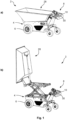
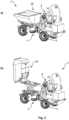
- Figs. 1a-1b, and 2a-2b schematically illustrate exemplary construction machines 2.
- the construction machine 2 is a motorised wheelbarrow or mini dumper.
- the construction machine 2 is a dumper.
- the construction machine 2 has a body 4 and movement elements 6, which in the illustrated examples are wheels. However, other movement elements, known in the art, e.g., continuous tracks, may alternatively be used.
- the construction machine 2 may further comprise a functional component 28, which in the presently illustrated examples is a skip.
- the functional component may be a shovel, a bucket, a blade or other functional components known in the art.
- the functional component 28 may be movable between a first component position, as illustrated in Figs. 1a and 2a , and a second component position, as illustrated in Figs. 1b and 2b .
- the construction machine 2 further has a control panel 8, which allows an operator to control the construction machine 2.
- the operator may control propulsion by the movement elements 6 of the construction machine or control the functional component 28.
- the control panel 8 may comprise a propulsion controller 10.
- the propulsion controller 10 may, for example, be a pedal, as illustrated in Figs 2a and 2b , or a handle, as illustrated in Figs. 1a and 1b .
- the propulsion controller 10 allows the operator to control the movement of the construction machine 2 and may allow the operator to initiate forward as well as rearward movement of the construction machine 2.
- the propulsion controller 10 may be operable between a lower propulsion controller limit and an upper propulsion controller limit.
- the lower propulsion controller limit may correspond to standstill of the movement elements 6, and the upper propulsion controller limit may correspond to maximum movement of the movement elements 6, e.g., corresponding to maximum forward movement of the construction machine.
- the control panel 8 may comprise a component controller 30.
- the component controller 30 may, for example, be a pedal or a handle, as illustrated in the present examples.
- the component controller 30 allows the operator to control the movement of the functional component 28, e.g., the component controller 30 may allow the operator to initiate lifting as well as lowering of the functional component 28.
- the component controller 30 may be operable between a lower component controller limit and an upper component controller limit.
- the lower component controller limit may correspond to standstill of the functional component 28, and the upper component controller limit may correspond to maximum movement of the functional component 28.
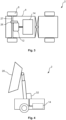
- Fig. 3 schematically illustrates an exemplary construction machine 2, which may be one of the construction machines 2 as described in relation to Figs. 1-2 .
- the construction machine 2 comprises a propulsion electric motor 12 adapted to drive the movement elements 6.
- the propulsion electric motor 6 may, for example, be a direct current electric motor, or be an asynchronous electric motor, such as a three-phase electric motor.
- the construction machine 2 may, as illustrated, comprise a gear 26 connecting the propulsion electric motor 12, e.g., a rotor (not visible) of the propulsion electric motor 12, to an axle 27 of the movement element 6.
- the propulsion electric motor 12 may be directly coupled to the axle 27 or to the movement element 6.
- the construction machine 2 comprises a battery 14.
- the construction machine 2 may comprise a plurality of batteries.
- the battery 14 is adapted to power the propulsion electric motor 12.
- the operator may charge the battery 14 of the construction machine 2 from a charging point, e.g., a domestic power socket.
- Fig. 4 schematically illustrates part of an exemplary construction machine 2, which may be one of the construction machines 2 as described in relation to Figs. 1-2 , and/or may be combined with the construction machine 2 as described in relation to Fig. 3 .
- the construction machine 2 comprises a component electric motor 32 adapted to move the functional component 28, e.g., between a first component position and a second component position, as further described in relation to Figs. 1-2 .
- the component electric motor 32 may, for example, be a direct current electric motor, or be an asynchronous electric motor, such as a three-phase electric motor.
- the component electric motor 32 may form part of a linear actuator to control the movement of the function component 28.
- the component electric motor 32 may be powered by a battery 14, which may be a battery designated for the component electric motor 32.
- the battery 14 for powering the component electric motor 32 may be the same battery 14 as also used for powering a propulsion electric motor 12 as described in relation to Fig. 3 .
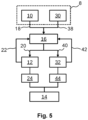
- Fig. 5 is a block diagram illustrating an exemplary control of an electric motor of an exemplary construction machine 2 as described in relation to the previous figures.
- the block diagram illustrates exemplary control of the propulsion electric motor 12 and the component electric motor 32, as described in relation to previous figures.
- the present diagram shows control of both the propulsion electric motor 12 and the component electric motor 32, it will be realised that they are not mutually dependent, i.e., one may be implemented without the other.
- the construction machine 2 comprises a control panel 8 with a propulsion controller 10 and/or a component controller 30. Furthermore, the construction machine 2 comprises a control circuit 16.
- the control circuit 16 is adapted to receive a propulsion controller input 18 indicative of a state of the propulsion controller 10 between the lower propulsion controller limit and the upper propulsion controller limit.
- the control circuit 16 is further configured to operate the propulsion electric motor 12 in accordance with a propulsion variable 20.
- the propulsion variable 20 is based on the propulsion controller input 18.
- the control circuit 16 determines the propulsion variable 20 based on the propulsion controller input 18.
- the propulsion electric motor 12 will draw more current to obtain the speed corresponding to the state of the propulsion controller 10. For example, if full speed ahead of the propulsion controller 10 is associated with a speed of the propulsion electric motor 12 corresponding to a speed of the construction machine 2 of 6 km/h, more current will be drawn by the propulsion electric motor 12 if the construction machine 2 needs to travel uphill than downhill or if the construction machine 2 is loaded with 1000 kg. than if not loaded. As batteries may be damaged if too much current is drawn for a prolonged period of time, protective measures should be provided. One such measure is proposed herein.
- the control circuit 16 is adapted to receive a propulsion current signal 22.
- the propulsion current signal 22 is indicative of the amount of current drawn by the propulsion electric motor 12, e.g., as a root mean square of the current drawn, e.g., over a time period, e.g., of 0.5 seconds or 1 second or 2 seconds or 5 seconds.
- the propulsion current signal may be acquired from the propulsion electric motor 12, as illustrated.
- a dedicated current sensor may be provided between the battery 14 and the propulsion electric motor 12 to provide the propulsion current signal 22.
- the control circuit 16 While operating the propulsion electric motor 12 in accordance with the propulsion variable 20, the control circuit 16 is further adapted to adjust the propulsion variable 20 in response to the propulsion current signal. For example, the control circuit 16 may, in accordance with the propulsion current signal 22 satisfying propulsion reduction criteria, reduce the propulsion variable 20 by a propulsion reduction amount, such that the propulsion variable 20 is below a maximum propulsion variable.
- the maximum propulsion variable may be the propulsion variable normally associated with the state of the propulsion controller 10.
- the control circuit 16 may deliberately reduce the speed of the propulsion electric motor 12 below the speed normally associated with the state of the propulsion controller 10, if the propulsion current signal 22 satisfies the propulsion reduction criteria.
- the propulsion reduction criteria may include an upper propulsion current threshold and an upper propulsion threshold duration of time.
- the propulsion electric motor 12 may be allowed to draw a high amount of current for a short period of time, which may be sufficient to overcome a minor obstacle causing the propulsion electric motor 12 to draw a high amount of current.
- the control circuit 16 reduces the propulsion variable 20. Thereby, the battery is protected, while still allowing the task to be performed, although at a slower pace.
- the control circuit 16 While operating the propulsion electric motor 12 in accordance with the propulsion variable 20 and while the propulsion variable is below the maximum propulsion variable (e.g., due to the reduction criteria having been satisfied), the control circuit 16 is further adapted to, in accordance with the propulsion current signal 22 satisfying a propulsion increasing criteria, increase the propulsion variable 20 by a propulsion increase amount. For example, when the current drawn by the propulsion electric motor 12 is again below a certain level, after having been too high for too long, the control circuit 16 may increase the propulsion variable to achieve the maximum propulsion variable corresponding to the state of the propulsion controller 10.
- the propulsion increasing criteria may include a lower propulsion current threshold and a lower propulsion threshold duration of time. Thereby, it is more certain that the propulsion electric motor 12 steadily draws current below the respective threshold.
- the propulsion increase amount may be different than the propulsion reduction amount.
- the propulsion increase amount may be less than the propulsion reduction amount.
- the increase in speed may be gradually increased to reduce the risk of having to immediately again reduce the speed due to too excessive current being drawn.
- control circuit 16 is adapted to receive a component controller input 38 indicative of a state of the component controller 30 between the lower component controller limit and the upper component controller limit.
- the control circuit 16 is further adapted to operate the component electric motor 32 in accordance with a component movement variable 40.
- the component movement variable 40 is based on the component controller input 38.
- the control circuit 16 determines the component movement variable 40 based on the component controller input 38.
- the component electric motor 32 will draw more current to obtain a movement speed of the functional component 28 corresponding to the state of the component controller 30, and as batteries may be damaged if too much current is drawn for a prolonged period of time, protective measures may similarly be applied to a motor, such as the component electric motor 32, for movement of a functional component 28 of the construction machine 2.
- the control circuit 16 is adapted to receive a component current signal 42.
- the component current signal 42 is indicative of the amount of current drawn by the component electric motor 32, e.g., as a root mean square of the current drawn, e.g., over a time period, e.g., of 0.5 seconds or 1 second or 2 seconds.
- the component current signal may be acquired from the component electric motor 32, as illustrated.
- a dedicated current sensor may be provided between the battery 14 and the component electric motor 32 to provide the component current signal 42.
- the control circuit 16 While operating the component electric motor 32 in accordance with the component movement variable 40, the control circuit 16 is further adapted to adjust the component movement variable 40 in response to the component current signal 42.
- the control circuit 16 may, in accordance with the component current signal 42 satisfying component reduction criteria, reduce the component variable 40 by a component reduction amount, such that the component movement variable 40 is below a maximum component movement variable.
- the maximum component movement variable may be the component movement variable normally associated with the state of the component controller 30.
- the control circuit 16 may deliberately reduce the speed of the component electric motor 32 below the speed normally associated with the state of the component controller 30, if the component current signal 42 satisfies the component reduction criteria.
- the component reduction criteria may include an upper component current threshold and an upper component threshold duration of time.
- the control circuit 16 reduces the component movement variable 40, which may result in slower lifting of a skip or a shovel. Thereby, the battery is protected, while still allowing the task to be performed, although at a slower pace.
- the control circuit 16 While operating the component electric motor 32 in accordance with the component movement variable 40 and while the component movement variable 40 is below the maximum component movement variable (e.g., due to the component reduction criteria having been satisfied), the control circuit 16 is further adapted to, in accordance with the component current signal 42 satisfying a component increasing criteria, increase the component movement variable 40 by a component increase amount. For example, when the current drawn by the component electric motor 32 is again below a certain level, after having been too high for too long, the control circuit 16 may increase the component movement variable 40 to achieve the maximum component movement variable corresponding to the state of the component controller 30.
- the component increasing criteria may include a lower component current threshold and a lower component threshold duration of time. Thereby, it is more certain that the component electric motor 32 steadily draws current below the respective threshold.
- the component increase amount may be different than the component reduction amount.
- the component increase amount may be less than the component reduction amount.
- a current limiter 24 may be arranged to limit current to the propulsion electric motor by a maximum current limit.
- the current limiter 24 may completely prevent current above the maximum current limit to flow from the battery 14 and the propulsion electric motor 12.
- the maximum current limit imposed by the current limiter 24 may be higher than the upper propulsion current threshold of the propulsion reduction criteria. Thereby, current above the maximum current limit is prevented, while current above the upper propulsion current threshold may be allowed for shorter periods of time before protective measures, involving reducing the speed of the propulsion electric motor 12, are initiated.
- a current limiter 44 may additionally or alternatively be arranged to limit current to the component electric motor by a maximum current limit.
- the maximum current limit of the current limiter 24 and the current limiter 44 need not be the same but may be.
- Fig. 5 the same control circuit 16 is shown to control both the propulsion electric motor 12 and the component electric motor 32. However, alternatively, separate control circuits may be provided to control each of the propulsion electric motor 12 and the component electric motor 32. Similarly, Fig. 5 also illustrates the same battery supplying power to both the propulsion electric motor 12 and the component electric motor 32. However, it should be understood that batteries may be provided for each of the propulsion electric motor 12 and the component electric motor 32.
- Fig. 6 is a flow chart 100 schematically illustrating the logic of controlling the electric motor, such as the propulsion electric motor 12 or the component electric motor 32, based on the propulsion controller input 18 or the component controller input 38, respectively, as well as the respective propulsion current signal 22 or component current signal 42.
- the electric motor such as the propulsion electric motor 12 or the component electric motor 32
- the flow chart 100 illustrates the behaviour of the control circuit 16, as described in relation to the previous figures.
- the blocks of the flow chart 100 will be described in relation to control of the propulsion electric motor 12 based on the propulsion controller input 18 and the propulsion current signal 22.
- the flow chart 100 may similarly apply to corresponding control of the component electric motor 32 based on the component controller input 38 and the component current signal 42.
- the propulsion controller input is received.
- the propulsion controller input may be indicative of a state of the propulsion controller between the lower propulsion controller limit and the upper propulsion controller limit.
- the propulsion variable is determined based on the received propulsion controller input.
- the propulsion variable may be indicative of a certain speed (rpm) of the propulsion electric motor.
- the propulsion variable may initially be determined such that a rotational speed of the propulsion electric motor is proportional to the state of the propulsion controller as indicated by the propulsion controller input, e.g. if the propulsion controller is set at 50% between the lower propulsion controller limit and the upper propulsion controller limit, the propulsion variable may initially be determined such that the rotational speed of the propulsion electric motor is at 50% of a defined maximum.
- the propulsion electric motor is operated in accordance with the propulsion variable.
- the propulsion current signal is received.
- the propulsion current signal is indicative of the amount of current drawn by the propulsion electric motor, e.g., in the form of a root mean squared signal.
- the procedure determines whether the propulsion current signal satisfies the propulsion reduction criteria. If it does not satisfy the propulsion reduction criteria, the procedure continues operating the propulsion electric motor in accordance with the propulsion variable at block 106. If the propulsion current signal does satisfy the propulsion reduction criteria, the procedure continues to block 112, wherein the propulsion variable is reduced by a propulsion reduction amount, e.g., to 50% of the present propulsion variable or by a fixed amount of speed, e.g., 200 rpm. Following the reduction at block 112, the operation of the propulsion electric motor at block 106 is continued with the updated propulsion variable.
- a propulsion reduction amount e.g., to 50% of the present propulsion variable or by a fixed amount of speed, e.g., 200 rpm.
- the procedure may comprise a possibility to increase propulsion variable, when the propulsion current signal does not satisfy the propulsion reduction criteria.
- the procedure may continue to block 114 wherein it is determined whether the propulsion variable is below a maximum propulsion variable, i.e., has the propulsion variable previously been reduced and/or does the present propulsion variable correspond to the state of the propulsion controller as indicated by the propulsion controller input received at block 102. If the propulsion variable is not below the maximum propulsion variable, no increase of the propulsion variable is relevant, and the procedure continues operating the propulsion electric motor in accordance with the propulsion variable at block 106.
- the procedure continues to block 116, wherein it is determined whether the propulsion current signal satisfies the propulsion increasing criteria. If it does not satisfy the propulsion increasing criteria, the procedure continues operating the propulsion electric motor in accordance with the propulsion variable at block 106. If the propulsion current signal does satisfy the propulsion increasing criteria, the procedure continues to block 118, wherein the propulsion variable is increased by a propulsion increase amount, e.g., by 10% of the present propulsion variable or by a fixed amount of speed, e.g., 200 rpm. Following the increasing at block 118, the operation of the propulsion electric motor at block 106 is continued with the updated propulsion variable.
- a propulsion increase amount e.g., by 10% of the present propulsion variable or by a fixed amount of speed, e.g., 200 rpm.
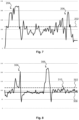
- Fig. 7 is an example of current drawn by an electric motor, e.g., a propulsion electric motor, of an exemplary construction machine without implementation of the control of the present disclosure.
- the horizontal axis shows time, and the vertical axis shows current drawn by the electric motor in ampere.
- An exemplary upper current threshold of 115 ampere is shown by the line 202. If current above such threshold is drawn for prolonged period of time, the batteries may be damaged.
- there are some instances with significant periods of time above this limit even approaching double the limit. This situation might occur at periods of acceleration, passing obstacles, driving uphill or similar, particularly when being loaded close to or above the capacity of the construction machine.
- Fig. 8 is an example of current drawn by an electric motor, e.g., a propulsion electric motor, of an exemplary construction machine having implemented the control of the present disclosure.
- the horizontal axis shows time, and the vertical axis shows current drawn by the electric motor in ampere.
- An exemplary upper current threshold of 115 ampere is shown by the line 302.
- an exemplary lower current threshold of 90 ampere is shown by the line 308.
- the speed is gradually increased, e.g., by 200 rpm, when the current is below the lower current threshold 308.
- the speed of the electric motor may be gradually increased to the maximum speed as long as the current drawn by the electric motor is below the lower current threshold 308.
- the presently described control allows short peaks of current to be above the threshold, e.g. as illustrated at position 310, which may act to overcome minor obstacles and provide for a more consistent speed of the construction machine.
- first, second, third, “fourth”, “primary”, “secondary”, “tertiary” etc. does not imply any particular order or importance but are included to identify individual elements. Furthermore, the labelling of a first element does not imply the presence of a second element and vice versa.
Landscapes
- Engineering & Computer Science (AREA)
- Power Engineering (AREA)
- Transportation (AREA)
- Mechanical Engineering (AREA)
- Life Sciences & Earth Sciences (AREA)
- Sustainable Development (AREA)
- Sustainable Energy (AREA)
- Control Of Electric Motors In General (AREA)
Claims (15)
- Baumaschine (2), die einen Körper und ein oder mehrere Bewegungselemente (6) aufweist, wobei die Baumaschine weiter umfasst:- einen elektrischen Antriebsmotor (12), der angepasst ist, um das eine oder die mehreren Bewegungselemente anzutreiben,- eine oder mehrere Batterien (14), die angepasst sind, um den elektrischen Antriebsmotor mit Energie zu versorgen,- eine Steuerschaltung (16), die angepasst ist, um den elektrischen Antriebsmotor in Übereinstimmung mit einer Antriebsvariablen (20) zu betreiben, wobei die Antriebsvariable eine gewünschte Drehgeschwindigkeit des elektrischen Antriebsmotors angibt,
wobei die Steuerschaltung während des Betriebs des elektrischen Antriebsmotors in Übereinstimmung mit der Antriebsvariablen weiter angepasst ist zum:- Empfangen eines Antriebsstromsignals (22), das eine Strommenge angibt, die von dem elektrischen Antriebsmotor aufgenommen wird, und- in Übereinstimmung damit, dass das Antriebsstromsignal Antriebsreduktionskriterien erfüllt, Reduzieren der Antriebsvariablen um einen Antriebsreduktionsbetrag, so dass die Antriebsvariable unter einer maximalen Antriebsvariablen liegt. - Baumaschine nach Anspruch 1, wobei die Antriebsreduktionskriterien einen oberen Antriebsstromschwellenwert und eine obere Antriebsschwellenwert-Zeitdauer einschließen, und wobei, um die Antriebsreduktionskriterien zu erfüllen, das Antriebsstromsignal angibt, dass der elektrische Antriebsmotor eine Strommenge über dem oberen Antriebsstromschwellenwert für eine Zeitdauer aufgenommen hat, die länger als die obere Antriebsschwellenwert-Zeitdauer ist.
- Baumaschine nach Anspruch 2, wobei die obere Antriebsschwellenwert-Zeitdauer zwischen 1 und 10 Sekunden, wie beispielsweise zwischen 3 und 8 Sekunden, wie beispielsweise zwischen 4 und 6 Sekunden, wie beispielsweise 5 Sekunden, beträgt.
- Baumaschine nach einem der vorstehenden Ansprüche, wobei der Antriebsreduktionsbetrag zwischen 30-60 %, wie beispielsweise zwischen 40-55 %, wie beispielsweise 50 % der Antriebsvariablen und/oder der maximalen Antriebsvariablen beträgt.
- Baumaschine nach einem der vorstehenden Ansprüche, wobei während eines Betriebs des elektrischen Antriebsmotors in Übereinstimmung mit der Antriebsvariablen und während die Antriebsvariable unter der maximalen Antriebsvariablen liegt, die Steuerschaltung weiter angepasst ist, um in Übereinstimmung mit dem Antriebsstromsignal, das ein Antriebserhöhungskriterium erfüllt, die Antriebsvariable um einen Antriebserhöhungsbetrag zu erhöhen.
- Baumaschine nach Anspruch 5, wobei die Antriebserhöhungskriterien einen unteren Antriebsstromschwellenwert und eine untere Antriebsschwellenwert-Zeitdauer einschließen, und wobei, um die Antriebserhöhungskriterien zu erfüllen, das Antriebsstromsignal angibt, dass der elektrische Antriebsmotor eine Strommenge unterhalb des unteren Antriebsstromschwellenwerts für eine längere Zeitdauer als die untere Antriebsschwellenwert-Zeitdauer aufgenommen hat.
- Baumaschine nach Anspruch 6 in Abhängigkeit von mindestens Anspruch 2, wobei der untere Antriebsstromschwellenwert niedriger ist als der obere Antriebsstromschwellenwert und/oder wobei die untere Antriebsschwellenwert-Zeitdauer niedriger ist als die obere Antriebsschwellenwert-Zeitdauer und/oder wobei der Antriebserhöhungsbetrag geringer ist als der Antriebsreduktionsbetrag.
- Baumaschine nach einem der Ansprüche 5 - 7, wobei der Antriebserhöhungsbetrag zwischen 5 - 40 %, wie beispielsweise zwischen 10 - 20 %, wie beispielsweise 25 % der Antriebsvariablen und/oder der maximalen Antriebsvariablen beträgt.
- Baumaschine nach einem der vorstehenden Ansprüche, umfassend eine Steuertafel, die eine Antriebssteuereinheit umfasst, die zwischen einer unteren Antriebssteuereinheitsgrenze und einer oberen Antriebssteuereinheitsgrenze betrieben werden kann, wobei die Steuerschaltung angepasst ist, um eine Antriebssteuereinheitseingabe zu empfangen, die einen Zustand der Antriebssteuereinheit zwischen der unteren Antriebssteuereinheitsgrenze und der oberen Antriebssteuereinheitsgrenze angibt, und wobei die Antriebsvariable auf der Antriebssteuereinheitseingabe basiert.
- Baumaschine nach einem der vorstehenden Ansprüche, wobei eine maximale Antriebsgeschwindigkeit der Baumaschine, die durch das eine oder die mehreren Bewegungselemente verursacht wird, weniger als 50 km/h, wie beispielsweise weniger als 25 km/h, wie beispielsweise weniger als 10 km/h, wie beispielsweise 6 km/h beträgt.
- Baumaschine nach einem der vorstehenden Ansprüche, wobei es sich bei der einen oder den mehreren Batterien um Lithium-Ionen-Batterien handelt.
- Baumaschine nach einem der vorstehenden Ansprüche in Abhängigkeit von mindestens Anspruch 2, wobei ein Strombegrenzer so angeordnet ist, dass er den Strom zu dem elektrischen Antriebsmotor durch eine für den Strombegrenzer spezifische maximale Stromgrenze begrenzt, und wobei die maximale Stromgrenze mehr als der obere Antriebsstromschwellenwert der Antriebsreduktionskriterien ist, wie beispielsweise mehr als 150 % des oberen Antriebsstromschwellenwerts, wie beispielsweise mehr als 200 % des oberen Antriebsstromschwellenwerts.
- Baumaschine nach einem der vorstehenden Ansprüche, wobei ein Rotor des elektrischen Antriebsmotors mit einer Achse des einen oder der mehreren Bewegungselemente durch ein Getriebe mit einer Getriebeübersetzung verbunden ist, wobei die Getriebeübersetzung zwischen 2:1-20:1, wie beispielsweise zwischen 4:1-15:1, wie beispielsweise zwischen 5:1-10:1, wie beispielsweise 8:1 betragen kann.
- Baumaschine nach einem der vorstehenden Ansprüche umfassend eine Funktionskomponente, wie beispielsweise eine Mulde, die zwischen einer ersten Komponentenposition und einer zweiten Komponentenposition beweglich ist, wobei die Baumaschine einen Komponentenelektromotor umfasst, der angepasst ist, um die Funktionskomponente zwischen der ersten Komponentenposition und der zweiten Komponentenposition zu bewegen, wobei die Steuerschaltung angepasst ist, um den Komponenten-Elektromotor in Übereinstimmung mit einer Komponentenbewegungsvariablen zu betreiben,
wobei die Steuerschaltung während des Betriebs des Komponenten-Elektromotors in Übereinstimmung mit der Komponentenbewegungsvariablen weiter angepasst ist zum:- Empfangen eines Komponentenstromsignals, das eine Strommenge angibt, die von dem Komponenten-Elektromotor aufgenommen wird, und- in Übereinstimmung damit, dass das Komponentenstromsignal Komponentenreduktionskriterien erfüllt, Reduzieren der Komponentenbewegungsvariable um einen Komponentenreduktionsbetrag, so dass die Komponentenbewegungsvariable unter einer maximalen Komponentenbewegungsvariable liegt. - Baumaschine (2), die einen Körper und eine Funktionskomponente, die zwischen einer ersten Komponentenposition und einer zweiten Komponentenposition beweglich ist, aufweist,
wobei die Baumaschine weiter umfasst:- einen Komponenten-Elektromotor (32), der angepasst ist, um die Funktionskomponente zwischen der ersten Komponentenposition und der zweiten Komponentenposition zu bewegen,- eine oder mehrere Batterien (14), die angepasst sind, um den Komponenten-Elektromotor mit Energie zu versorgen,- eine Steuerschaltung (16), die angepasst ist, um den Komponenten-Elektromotor in Übereinstimmung mit einer Komponentenbewegungsvariablen (40) zu betreiben, wobei die Komponentenbewegungsvariable eine gewünschte Geschwindigkeit des Komponenten-Elektromotors angibt,wobei die Steuerschaltung während des Betriebs des Komponenten-Elektromotors in Übereinstimmung mit der Komponentenbewegungsvariablen weiter angepasst ist zum:- Empfangen eines Komponentenstromsignals (42), das eine Strommenge angibt, die von dem Komponenten-Elektromotor aufgenommen wird, und- in Übereinstimmung damit, dass das Komponentenstromsignal Komponentenreduktionskriterien erfüllt, Reduzieren der Komponentenbewegungsvariable um einen Komponentenreduktionsbetrag, so dass die Komponentenbewegungsvariable unter einer maximalen Komponentenbewegungsvariable liegt.
Priority Applications (3)
| Application Number | Priority Date | Filing Date | Title |
|---|---|---|---|
| EP22150993.8A EP4209381B1 (de) | 2022-01-11 | 2022-01-11 | Elektrisch angetriebene baumaschine und zugehörige steuerung |
| PCT/EP2023/050478 WO2023135141A1 (en) | 2022-01-11 | 2023-01-10 | Electric construction machine and associated control |
| US18/724,158 US20250065731A1 (en) | 2022-01-11 | 2023-01-10 | Electric construction machine and associated control |
Applications Claiming Priority (1)
| Application Number | Priority Date | Filing Date | Title |
|---|---|---|---|
| EP22150993.8A EP4209381B1 (de) | 2022-01-11 | 2022-01-11 | Elektrisch angetriebene baumaschine und zugehörige steuerung |
Publications (3)
| Publication Number | Publication Date |
|---|---|
| EP4209381A1 EP4209381A1 (de) | 2023-07-12 |
| EP4209381C0 EP4209381C0 (de) | 2024-04-17 |
| EP4209381B1 true EP4209381B1 (de) | 2024-04-17 |
Family
ID=79317047
Family Applications (1)
| Application Number | Title | Priority Date | Filing Date |
|---|---|---|---|
| EP22150993.8A Active EP4209381B1 (de) | 2022-01-11 | 2022-01-11 | Elektrisch angetriebene baumaschine und zugehörige steuerung |
Country Status (3)
| Country | Link |
|---|---|
| US (1) | US20250065731A1 (de) |
| EP (1) | EP4209381B1 (de) |
| WO (1) | WO2023135141A1 (de) |
Citations (1)
| Publication number | Priority date | Publication date | Assignee | Title |
|---|---|---|---|---|
| WO2022005372A1 (en) * | 2020-07-01 | 2022-01-06 | Scania Cv Ab | A method for connecting one or more electric battery units to an electrical system |
Family Cites Families (4)
| Publication number | Priority date | Publication date | Assignee | Title |
|---|---|---|---|---|
| FI124052B (fi) * | 2010-05-25 | 2014-02-28 | Sandvik Mining & Constr Oy | Kallionporauslaite, menetelmä sen siirtoajoon sekä nopeudensäädin |
| WO2013094057A1 (ja) * | 2011-12-22 | 2013-06-27 | 日立ビークルエナジー株式会社 | 電池制御装置、電池システム |
| DE102014213865A1 (de) * | 2013-07-18 | 2015-01-22 | Ford Global Technologies, Llc | Stromschutz für eine elektrische Verteilungskomponente in einem Elektrofahrzeug |
| EP4115492A1 (de) * | 2020-03-06 | 2023-01-11 | Oshkosh Corporation | Aufzugsvorrichtungsinnovationen |
-
2022
- 2022-01-11 EP EP22150993.8A patent/EP4209381B1/de active Active
-
2023
- 2023-01-10 US US18/724,158 patent/US20250065731A1/en active Pending
- 2023-01-10 WO PCT/EP2023/050478 patent/WO2023135141A1/en not_active Ceased
Patent Citations (1)
| Publication number | Priority date | Publication date | Assignee | Title |
|---|---|---|---|---|
| WO2022005372A1 (en) * | 2020-07-01 | 2022-01-06 | Scania Cv Ab | A method for connecting one or more electric battery units to an electrical system |
Also Published As
| Publication number | Publication date |
|---|---|
| WO2023135141A1 (en) | 2023-07-20 |
| EP4209381C0 (de) | 2024-04-17 |
| EP4209381A1 (de) | 2023-07-12 |
| US20250065731A1 (en) | 2025-02-27 |
Similar Documents
| Publication | Publication Date | Title |
|---|---|---|
| AU2021200592B2 (en) | Systems, methods, and apparatuses for storing energy in a mining machine | |
| US7900732B2 (en) | Fork lift truck with a single front wheel | |
| EP2868518B1 (de) | Auf Schlupf reagierendes Fahrzeugantriebssystem | |
| JP5676739B2 (ja) | ホイールローダ | |
| CN107428336B (zh) | 混合动力式作业车辆 | |
| JP6433687B2 (ja) | ハイブリッド式ホイールローダ | |
| US20230279641A1 (en) | Systems and methods for power modes for electrically powered power machines | |
| US12583324B2 (en) | Working vehicle | |
| EP4209381B1 (de) | Elektrisch angetriebene baumaschine und zugehörige steuerung | |
| US20250263908A1 (en) | Working machine | |
| EP4111002B1 (de) | System und verfahren zur steuerung des pumpenbetriebsgeschwindigkeitsbereichs eines elektrischen arbeitsfahrzeugs auf der basis von hydraulikflüssigkeitsdruck | |
| JP6735698B2 (ja) | 作業車 | |
| EP3714109B1 (de) | Antriebssystem für eine arbeitsmaschine und verfahren zur steuerung eines antriebssystems | |
| EP3673117B1 (de) | Antriebssystem und verfahren zur steuerung eines antriebssystems einer arbeitsmaschine | |
| EP3676454B1 (de) | Antriebssystem und verfahren zur steuerung eines antriebssystems einer hybriden arbeitsmaschine | |
| US20250243933A1 (en) | Electric utility vehicle with tow mode | |
| US20030132038A1 (en) | Lift truck | |
| GB2399062A (en) | Articulated lift truck |
Legal Events
| Date | Code | Title | Description |
|---|---|---|---|
| PUAI | Public reference made under article 153(3) epc to a published international application that has entered the european phase |
Free format text: ORIGINAL CODE: 0009012 |
|
| STAA | Information on the status of an ep patent application or granted ep patent |
Free format text: STATUS: REQUEST FOR EXAMINATION WAS MADE |
|
| 17P | Request for examination filed |
Effective date: 20220907 |
|
| AK | Designated contracting states |
Kind code of ref document: A1 Designated state(s): AL AT BE BG CH CY CZ DE DK EE ES FI FR GB GR HR HU IE IS IT LI LT LU LV MC MK MT NL NO PL PT RO RS SE SI SK SM TR |
|
| GRAP | Despatch of communication of intention to grant a patent |
Free format text: ORIGINAL CODE: EPIDOSNIGR1 |
|
| STAA | Information on the status of an ep patent application or granted ep patent |
Free format text: STATUS: GRANT OF PATENT IS INTENDED |
|
| INTG | Intention to grant announced |
Effective date: 20231004 |
|
| GRAS | Grant fee paid |
Free format text: ORIGINAL CODE: EPIDOSNIGR3 |
|
| RBV | Designated contracting states (corrected) |
Designated state(s): AL AT BE BG CH CY CZ DE DK EE ES FI FR GB GR HR HU IE IS IT LI LT LU LV MC MK MT NL NO PL PT RO RS SE SI SK SM TR |
|
| GRAA | (expected) grant |
Free format text: ORIGINAL CODE: 0009210 |
|
| STAA | Information on the status of an ep patent application or granted ep patent |
Free format text: STATUS: THE PATENT HAS BEEN GRANTED |
|
| AK | Designated contracting states |
Kind code of ref document: B1 Designated state(s): AL AT BE BG CH CY CZ DE DK EE ES FI FR GB GR HR HU IE IS IT LI LT LU LV MC MK MT NL NO PL PT RO RS SE SI SK SM TR |
|
| REG | Reference to a national code |
Ref country code: GB Ref legal event code: FG4D |
|
| REG | Reference to a national code |
Ref country code: CH Ref legal event code: EP |
|
| REG | Reference to a national code |
Ref country code: DE Ref legal event code: R096 Ref document number: 602022002843 Country of ref document: DE |
|
| REG | Reference to a national code |
Ref country code: IE Ref legal event code: FG4D |
|
| U01 | Request for unitary effect filed |
Effective date: 20240424 |
|
| U07 | Unitary effect registered |
Designated state(s): AT BE BG DE DK EE FI FR IT LT LU LV MT NL PT SE SI Effective date: 20240503 |
|
| PG25 | Lapsed in a contracting state [announced via postgrant information from national office to epo] |
Ref country code: IS Free format text: LAPSE BECAUSE OF FAILURE TO SUBMIT A TRANSLATION OF THE DESCRIPTION OR TO PAY THE FEE WITHIN THE PRESCRIBED TIME-LIMIT Effective date: 20240817 |
|
| PG25 | Lapsed in a contracting state [announced via postgrant information from national office to epo] |
Ref country code: HR Free format text: LAPSE BECAUSE OF FAILURE TO SUBMIT A TRANSLATION OF THE DESCRIPTION OR TO PAY THE FEE WITHIN THE PRESCRIBED TIME-LIMIT Effective date: 20240417 |
|
| PG25 | Lapsed in a contracting state [announced via postgrant information from national office to epo] |
Ref country code: GR Free format text: LAPSE BECAUSE OF FAILURE TO SUBMIT A TRANSLATION OF THE DESCRIPTION OR TO PAY THE FEE WITHIN THE PRESCRIBED TIME-LIMIT Effective date: 20240718 |
|
| PG25 | Lapsed in a contracting state [announced via postgrant information from national office to epo] |
Ref country code: ES Free format text: LAPSE BECAUSE OF FAILURE TO SUBMIT A TRANSLATION OF THE DESCRIPTION OR TO PAY THE FEE WITHIN THE PRESCRIBED TIME-LIMIT Effective date: 20240417 |
|
| PG25 | Lapsed in a contracting state [announced via postgrant information from national office to epo] |
Ref country code: PL Free format text: LAPSE BECAUSE OF FAILURE TO SUBMIT A TRANSLATION OF THE DESCRIPTION OR TO PAY THE FEE WITHIN THE PRESCRIBED TIME-LIMIT Effective date: 20240417 |
|
| PG25 | Lapsed in a contracting state [announced via postgrant information from national office to epo] |
Ref country code: PL Free format text: LAPSE BECAUSE OF FAILURE TO SUBMIT A TRANSLATION OF THE DESCRIPTION OR TO PAY THE FEE WITHIN THE PRESCRIBED TIME-LIMIT Effective date: 20240417 Ref country code: NO Free format text: LAPSE BECAUSE OF FAILURE TO SUBMIT A TRANSLATION OF THE DESCRIPTION OR TO PAY THE FEE WITHIN THE PRESCRIBED TIME-LIMIT Effective date: 20240717 Ref country code: IS Free format text: LAPSE BECAUSE OF FAILURE TO SUBMIT A TRANSLATION OF THE DESCRIPTION OR TO PAY THE FEE WITHIN THE PRESCRIBED TIME-LIMIT Effective date: 20240817 Ref country code: HR Free format text: LAPSE BECAUSE OF FAILURE TO SUBMIT A TRANSLATION OF THE DESCRIPTION OR TO PAY THE FEE WITHIN THE PRESCRIBED TIME-LIMIT Effective date: 20240417 Ref country code: GR Free format text: LAPSE BECAUSE OF FAILURE TO SUBMIT A TRANSLATION OF THE DESCRIPTION OR TO PAY THE FEE WITHIN THE PRESCRIBED TIME-LIMIT Effective date: 20240718 Ref country code: ES Free format text: LAPSE BECAUSE OF FAILURE TO SUBMIT A TRANSLATION OF THE DESCRIPTION OR TO PAY THE FEE WITHIN THE PRESCRIBED TIME-LIMIT Effective date: 20240417 Ref country code: RS Free format text: LAPSE BECAUSE OF FAILURE TO SUBMIT A TRANSLATION OF THE DESCRIPTION OR TO PAY THE FEE WITHIN THE PRESCRIBED TIME-LIMIT Effective date: 20240717 |
|
| REG | Reference to a national code |
Ref country code: DE Ref legal event code: R097 Ref document number: 602022002843 Country of ref document: DE |
|
| PG25 | Lapsed in a contracting state [announced via postgrant information from national office to epo] |
Ref country code: CZ Free format text: LAPSE BECAUSE OF FAILURE TO SUBMIT A TRANSLATION OF THE DESCRIPTION OR TO PAY THE FEE WITHIN THE PRESCRIBED TIME-LIMIT Effective date: 20240417 |
|
| PG25 | Lapsed in a contracting state [announced via postgrant information from national office to epo] |
Ref country code: SK Free format text: LAPSE BECAUSE OF FAILURE TO SUBMIT A TRANSLATION OF THE DESCRIPTION OR TO PAY THE FEE WITHIN THE PRESCRIBED TIME-LIMIT Effective date: 20240417 Ref country code: RO Free format text: LAPSE BECAUSE OF FAILURE TO SUBMIT A TRANSLATION OF THE DESCRIPTION OR TO PAY THE FEE WITHIN THE PRESCRIBED TIME-LIMIT Effective date: 20240417 |
|
| PG25 | Lapsed in a contracting state [announced via postgrant information from national office to epo] |
Ref country code: SM Free format text: LAPSE BECAUSE OF FAILURE TO SUBMIT A TRANSLATION OF THE DESCRIPTION OR TO PAY THE FEE WITHIN THE PRESCRIBED TIME-LIMIT Effective date: 20240417 |
|
| PG25 | Lapsed in a contracting state [announced via postgrant information from national office to epo] |
Ref country code: SM Free format text: LAPSE BECAUSE OF FAILURE TO SUBMIT A TRANSLATION OF THE DESCRIPTION OR TO PAY THE FEE WITHIN THE PRESCRIBED TIME-LIMIT Effective date: 20240417 Ref country code: SK Free format text: LAPSE BECAUSE OF FAILURE TO SUBMIT A TRANSLATION OF THE DESCRIPTION OR TO PAY THE FEE WITHIN THE PRESCRIBED TIME-LIMIT Effective date: 20240417 Ref country code: RO Free format text: LAPSE BECAUSE OF FAILURE TO SUBMIT A TRANSLATION OF THE DESCRIPTION OR TO PAY THE FEE WITHIN THE PRESCRIBED TIME-LIMIT Effective date: 20240417 Ref country code: CZ Free format text: LAPSE BECAUSE OF FAILURE TO SUBMIT A TRANSLATION OF THE DESCRIPTION OR TO PAY THE FEE WITHIN THE PRESCRIBED TIME-LIMIT Effective date: 20240417 |
|
| U20 | Renewal fee for the european patent with unitary effect paid |
Year of fee payment: 4 Effective date: 20250114 |
|
| PLBE | No opposition filed within time limit |
Free format text: ORIGINAL CODE: 0009261 |
|
| STAA | Information on the status of an ep patent application or granted ep patent |
Free format text: STATUS: NO OPPOSITION FILED WITHIN TIME LIMIT |
|
| 26N | No opposition filed |
Effective date: 20250120 |
|
| REG | Reference to a national code |
Ref country code: CH Ref legal event code: PL |
|
| PG25 | Lapsed in a contracting state [announced via postgrant information from national office to epo] |
Ref country code: MC Free format text: LAPSE BECAUSE OF FAILURE TO SUBMIT A TRANSLATION OF THE DESCRIPTION OR TO PAY THE FEE WITHIN THE PRESCRIBED TIME-LIMIT Effective date: 20240417 |
|
| PG25 | Lapsed in a contracting state [announced via postgrant information from national office to epo] |
Ref country code: CH Free format text: LAPSE BECAUSE OF NON-PAYMENT OF DUE FEES Effective date: 20250131 |
|
| PG25 | Lapsed in a contracting state [announced via postgrant information from national office to epo] |
Ref country code: IE Free format text: LAPSE BECAUSE OF NON-PAYMENT OF DUE FEES Effective date: 20250111 |
|
| U20 | Renewal fee for the european patent with unitary effect paid |
Year of fee payment: 5 Effective date: 20260116 |