EP4207010A1 - Berechnungssystem für versicherungsprämien und berechnungsverfahren für versicherungsprämien - Google Patents
Berechnungssystem für versicherungsprämien und berechnungsverfahren für versicherungsprämien Download PDFInfo
- Publication number
- EP4207010A1 EP4207010A1 EP21861637.3A EP21861637A EP4207010A1 EP 4207010 A1 EP4207010 A1 EP 4207010A1 EP 21861637 A EP21861637 A EP 21861637A EP 4207010 A1 EP4207010 A1 EP 4207010A1
- Authority
- EP
- European Patent Office
- Prior art keywords
- animal
- age
- facial image
- insurance premium
- trained model
- Prior art date
- Legal status (The legal status is an assumption and is not a legal conclusion. Google has not performed a legal analysis and makes no representation as to the accuracy of the status listed.)
- Pending
Links
Images


Classifications
-
- G—PHYSICS
- G06—COMPUTING OR CALCULATING; COUNTING
- G06Q—INFORMATION AND COMMUNICATION TECHNOLOGY [ICT] SPECIALLY ADAPTED FOR ADMINISTRATIVE, COMMERCIAL, FINANCIAL, MANAGERIAL OR SUPERVISORY PURPOSES; SYSTEMS OR METHODS SPECIALLY ADAPTED FOR ADMINISTRATIVE, COMMERCIAL, FINANCIAL, MANAGERIAL OR SUPERVISORY PURPOSES, NOT OTHERWISE PROVIDED FOR
- G06Q40/00—Finance; Insurance; Tax strategies; Processing of corporate or income taxes
- G06Q40/08—Insurance
-
- G—PHYSICS
- G06—COMPUTING OR CALCULATING; COUNTING
- G06N—COMPUTING ARRANGEMENTS BASED ON SPECIFIC COMPUTATIONAL MODELS
- G06N20/00—Machine learning
- G06N20/10—Machine learning using kernel methods, e.g. support vector machines [SVM]
-
- G—PHYSICS
- G06—COMPUTING OR CALCULATING; COUNTING
- G06N—COMPUTING ARRANGEMENTS BASED ON SPECIFIC COMPUTATIONAL MODELS
- G06N3/00—Computing arrangements based on biological models
- G06N3/02—Neural networks
- G06N3/04—Architecture, e.g. interconnection topology
- G06N3/0464—Convolutional networks [CNN, ConvNet]
-
- G—PHYSICS
- G06—COMPUTING OR CALCULATING; COUNTING
- G06N—COMPUTING ARRANGEMENTS BASED ON SPECIFIC COMPUTATIONAL MODELS
- G06N3/00—Computing arrangements based on biological models
- G06N3/02—Neural networks
- G06N3/08—Learning methods
- G06N3/09—Supervised learning
-
- G—PHYSICS
- G06—COMPUTING OR CALCULATING; COUNTING
- G06V—IMAGE OR VIDEO RECOGNITION OR UNDERSTANDING
- G06V10/00—Arrangements for image or video recognition or understanding
- G06V10/70—Arrangements for image or video recognition or understanding using pattern recognition or machine learning
- G06V10/764—Arrangements for image or video recognition or understanding using pattern recognition or machine learning using classification, e.g. of video objects
-
- G—PHYSICS
- G06—COMPUTING OR CALCULATING; COUNTING
- G06V—IMAGE OR VIDEO RECOGNITION OR UNDERSTANDING
- G06V10/00—Arrangements for image or video recognition or understanding
- G06V10/70—Arrangements for image or video recognition or understanding using pattern recognition or machine learning
- G06V10/77—Processing image or video features in feature spaces; using data integration or data reduction, e.g. principal component analysis [PCA] or independent component analysis [ICA] or self-organising maps [SOM]; Blind source separation
- G06V10/774—Generating sets of training patterns; Bootstrap methods, e.g. bagging or boosting
-
- G—PHYSICS
- G06—COMPUTING OR CALCULATING; COUNTING
- G06V—IMAGE OR VIDEO RECOGNITION OR UNDERSTANDING
- G06V40/00—Recognition of biometric, human-related or animal-related patterns in image or video data
- G06V40/10—Human or animal bodies, e.g. vehicle occupants or pedestrians; Body parts, e.g. hands
-
- G—PHYSICS
- G06—COMPUTING OR CALCULATING; COUNTING
- G06V—IMAGE OR VIDEO RECOGNITION OR UNDERSTANDING
- G06V40/00—Recognition of biometric, human-related or animal-related patterns in image or video data
- G06V40/10—Human or animal bodies, e.g. vehicle occupants or pedestrians; Body parts, e.g. hands
- G06V40/16—Human faces, e.g. facial parts, sketches or expressions
- G06V40/178—Human faces, e.g. facial parts, sketches or expressions estimating age from face image; using age information for improving recognition
Definitions
- the present invention relates to an insurance premium calculation system and an insurance premium calculation method, and more particularly to an insurance premium calculation system and an insurance premium calculation method, which provide a prediction relating to the age of an animal from an image of the face of the animal, and calculate an insurance premium that is based on the prediction relating to the age.
- Pet animals including dogs, cats and rabbits, among others, and domestic animals including cows and pigs, among others, are precious beings to humans.
- the animals in many cases, contract some diseases in their lifetimes, leading to a problem of an increase in medical expenses borne by rearers.
- pet insurance covering medical expenses of pet animals is provided.
- the insurance premium and the eligibility for insurance are determined in accordance with ages of animals.
- it is difficult to ascertain the exact age of an animal unlike humans of which the family registration system is well maintained, and whose ages can easily be confirmed by identification cards or the like.
- the date of birth and the age of an animal protected on the street are unknown, and as regards animals transferred through breeders or pet shops, there are cases where the owners lose records relating to the birth or forget the ages.
- the possibility of false declaration in regard to the age cannot be denied.
- Patent Document 1 discloses an insurance premium calculation apparatus that calculates an insurance premium in accordance with the kind of disease, the apparatus including an acquisition unit that acquires detection data including at least either vital data or lifestyle data of an insurant, and a determination unit that determines an insurance premium for each of kinds of diseases, based on the detection data and insurant data including at least the age of the insurant.
- Patent Document 2 discloses an insurance purchase support system of a reared animal.
- the calculation apparatus described in Patent Document 1 is an insurance premium calculation apparatus with an object of insurance being a person, and is not intended for insurance premium calculation of insurance for animals.
- the age of an insurant is ascertained in advance.
- the insurance purchase support system described in Patent Document 2 determines an insurance purchase time from basic information and disease information of an animal, and does not include a determination function of the age of an animal and an insurance premium calculation function based on this function.
- the object of the present invention is to provide an insurance premium calculation system and the like, which perform, by a simple method, predictive determination of the age of an animal and insurance premium calculation corresponding to the predictive determination of the age.
- An insurance company which operates health insurance for animals, commonly known as pet insurance, accumulates an enormous number of photographs of animals, and information relating to the ages of animals at the time of photographing, and the present inventors have studied whether the above problem can be solved by using them.
- the inventors have found that a prediction model that performs predictive determination of the age of an animal from a photograph of the animal can be generated if artificial intelligence is trained using, as teaching data, photographs of animals and the age of the animals at the time of photographing, and have completed the present invention.
- the present invention includes the following [1] to [9].
- an age prediction system that determines the age of an animal by a simple method, and an insurance premium calculation system or the like, which calculates an insurance premium for an animal based on the determination result of the age.
- an insurance premium calculation system or the like which calculates an insurance premium for an animal based on the determination result of the age.
- the owner since the age of a pet, for example, the actual age or health age, or what age the appearance of a pet corresponds to, can be understood by a simple method, the owner is given an opportunity to become careful of the health of the reared animal, and, by extension, it can be expected to raise the owner's motivation to take out pet insurance, and to improve the pet insurance purchase rate.
- An age prediction system of the present invention includes a reception means that accepts an input of a facial image of an animal excluding humans, and a determination means that predicts or determines the age of the animal from the facial image of the animal input to the reception means using a trained model and outputs the age.
- the reception means of the present invention is a means that accepts an input of a facial image of an animal the age of which is to be predicted.
- the animal include mammals such as a dog, a cat, a rabbit and a ferret, birds, reptiles, and pet animals, and the mammals are preferable and the dog and cat are more preferable.
- a reception method of the image may be any method such as scan, input or transmission of image data, and image take-in by photography on the spot.
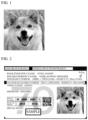
- the format of the facial image is not particularly limited, but the facial image is preferably a photograph taken by photographing the face of the animal from the front and is more preferably a photograph in which the face of the animal appears in a large size as illustrated in FIG. 1 .
- An example of such a photograph includes a photograph of a human on a driver's license.
- an image used on a health insurance card of an animal is preferable.
- the image may be black-and-white, gray-scale, or color.
- Unpreferable images are an image in which the entire face of an animal does not appear, an image with a shape edited by image editing software, an image in which a plurality of animals appear, an image in which the face appears so small that the eyes and ears cannot be distinguished, and an unclear image.
- it is preferable that the image is subjected to normalization, and the resolution or the like is standardized.
- the determination means of the present invention includes a trained model obtained by performing learning using, as teaching data, the facial image of the animal excluding humans and the age (the number of years elapsed from the date of birth) at the time of photographing the animal, the trained model using the facial image of the animal as an input and using a prediction of the age at the time of photographing the animal as an output.
- the age may be divided in the unit of month, in the unit of year, or in divisions. The divisions are, for example, in the case of dogs, a baby/young age (1 year old), an intermediate age (2 to 7 years old) and an elderly age (8 years old or more).
- divisions may be a baby/young age (less than 1 year old), an adult dog (2 to 7 years old), an elderly dog (8 to 10 years old), and an old age (11 years old or more).
- Other animals such as a cat and a ferret can also be divided into age groups in accordance with their average life span.
- AI artificial intelligence
- Artificial intelligence is software or a system in which intelligent work performed by the human brain is simulated by a computer, and is, concretely, a computer program or the like, which comprehends a natural language used by humans, performs logical inference, or performs learning from experience.
- Artificial intelligence may be either a general-purpose one or a purpose-specific one or may be either a deep neural network or a convolutional neural network, and publicized software can be used.
- artificial intelligence is trained using teaching data.
- the learning may be either machine learning or deep learning, but deep learning is preferable. Deep learning is a development of machine learning and is characterized by automatically finding features.
- the learning method for generating a trained model is not particularly limited, and publicized software can be used.
- DIGITS the Deep Learning GPU Training System
- NVIDIA the Deep Learning GPU Training System
- learning may be performed by a publicly known support vector machine method publicized in, for example, " Support Vector Machine Nyumon” ("Introduction to Support Vector Machines"), Kyoritsu Shuppan , or the like.
- the teaching data for learning are facial images of animals and ages of the animals at the time of photographing.
- the facial images of animals as teaching data are the same as the facial images described in the above reception method.
- the information on the age of the animal is available from an animal hospital or from the owner of the animal who intends to insure the animal, as information provided at the time of application for insurance purchase.
- the age may be in the unit of month, in the unit of year, or in divisions.
- the divisions are, for example, in the case of dogs, a baby/young age (less than 1 year old), an intermediate age (2 to 7 years old) and an elderly age (8 years old or more).
- divisions of dogs may be a baby/young age (less than 1 year old), an adult dog (2 to 7 years old), an elderly dog (8 to 10 years old), and an old age (11 years old or more).
- Other animals such as a cat and a ferret can also be divided into age groups in accordance with their average life span.
- the determination means of the present invention receives a facial image of an animal as input information
- the trained model is used to make a predictive determination of the age of the animal at the time of photographing the facial image.
- the age to be output may be the actual age (the number of years/months elapsed from the date of birth) or the health age (what age the health condition or the appearance condition of the animal corresponds to).
- the format of the output is not particularly limited, and, for example, a predictive determination can be output by displaying "1 year and 2 months” or “juvenile age”, “baby/young age” and “old age” on the screen of a personal computer.
- the certainty of the predictive determination of the age such as "1 year and 2 months old (reliability: 80%)" may be output at the same time.
- the age may be output as a numerical range, such as "11 months to 1 year and 2 months old", “less than 1 year old", “1 to 2 years old", and "8 years old or more”.
- the age prediction system of the present invention may additionally include output means that receives a determination result from the determination means and outputs the determination result.
- the calculation of an insurance premium can be performed, and, moreover, when the determined age is higher than the actual age of an animal, effective food for aging prevention can be proposed to the owner of the animal, thus prompting the owner to be careful of health management of the animal.
- An insurance premium calculation system of the present invention includes: a reception means that accepts an input of a facial image of an animal excluding humans; a determination means that performs, using a trained model, predictive determination of an age of the animal from the facial image of the animal that is input to the reception means; and an insurance premium calculation means that calculates an insurance premium based on the age obtained by the predictive determination by the determination means, the trained model being a trained model obtained by performing learning using, as teaching data, the facial image of the animal excluding humans and the age of the animal at the time of photographing , and the trained model using the facial image of the animal as an input and using the predictive determination of the age of the animal as an output.
- the insurance premium calculation system of the present invention inputs a facial image of an animal to be insured to the above-described age prediction system, and calculates the insurance premium of the animal in accordance with an output age prediction result.
- a publicly known method can be used for the calculation method of the insurance premium corresponding to the age.
- the determination of the insurance premium use may be made of, as well as the prediction of the age, a prediction of disease contraction of the animal, and the information of the kind, breed, sex, body weight, medical history, and the like of the animal.
- a learning model to be described later can be used.
- the information of the kind, breed, sex, body weight, medical history, and the like of the animal the information can be obtained by encouraging the animal owner or the person who applies for animal insurance to input the information from a terminal.
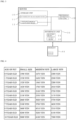
- a terminal 40 is a terminal that is used by a policyholder (an applicant for an insurance contract, a user).
- the terminal 40 is, for example, a personal computer, or a tablet terminal.
- the terminal 40 is configured to include a processing unit such as a CPU, a storage unit such as a hard disk, a ROM or a RAM, a display unit such as a liquid crystal panel, an input unit such as a mouse, a keyboard or a touch panel, and a communication unit such as a network adapter.
- a user accesses a server from the terminal 40, and inputs and transmits a facial image (photograph) of an animal that is an object of insurance, and the information of the kind, breed, sex, body weight, medical history, and the like of the animal.
- a facial image photograph
- the facial image is preferably within 6 months, more preferably within 3 months, and still more preferably within 1 month, from the time of photographing.
- the user may take a facial photograph of an animal that is an object using a smartphone camera on the spot, enter and transmit the facial photograph.
- a user takes a facial photograph of an animal to be insured in accordance with an instruction displayed on the screen of the terminal 40, and, if an appropriate photograph is taken, transmits it to the server.
- the server may be further configured to include a photography support means composed of an image determination program, and the photography support means determines whether the photography is appropriate for predictive determination of the age of the animal, such as whether the entire face of the animal is photographed and whether the photography is taken from the front of the face of the animal, and communicates the determination result to the user via an interface or a terminal.
- the user can also receive an age prediction result or an insurance premium calculation result on the server.
- the server is composed of a computer, but the server may be any apparatus as far as the server includes functions of the present invention.
- the server may be a server on a cloud.
- a storage unit 10 is composed of, for example, a ROM, a RAM, or a hard disk.
- the storage unit 10 stores an information processing program for operating each part of the server, and stores, in particular, a determination means (trained model) 11, and, where necessary, an insurance premium calculation means 12.
- the insurance premium calculation means 12 may be omitted if the system does not aim at calculating the insurance premium but is constituted as the age prediction system that simply outputs a prediction of the age.
- the determination means (trained model) 11 inputs the facial image of the animal to be insured input by the user, and outputs a prediction of the age of the animal in the image at the time of photographing.
- the determination means (trained model) 11 in the present embodiment is configured to include, for example, a deep neural network or a convolutional neural network.
- the insurance premium calculation means 12 is software that calculates an insurance premium of the animal from the prediction of the age output by the determination means 11.
- the information of the kind, breed, sex, age (declared age) at the time of photographing, body weight, medical history, and the like of the animal input by the user may be used for the calculation of the insurance premium.
- the software is software for grading the insurance premium according to the kind, breed, sex, body weight, medical history, and the like of the animal, correcting, at last, the grade by taking into account the prediction of the age that was output by the determination means 11 and calculating a final insurance premium.
- the software may calculate the final insurance premium by first performing the grading according to the predictive determination result of the age, and then correcting the insurance premium according to the kind, breed, sex, body weight, medical history, and the like of the animal.
- the insurance premium calculation means 12 and the determination means (trained model) 11 may be single software.
- the insurance premium calculation means may calculate the insurance premium using a calculation formula for insurance premium calculation, and by inserting the information, such as the age of the animal, into the calculation formula, or may calculate the insurance premium by storing an insurance premium table as illustrated in FIG. 4 in advance in the storage unit, and referring to the insurance premium table by the insurance premium calculation means.
- the insurance premiums described in FIG. 4 are examples of monthly insurance premiums.
- a processing arithmetic unit 20 executes the prediction of the age and the calculation of the insurance premium using the determination means (trained model) 11 and insurance premium calculation means 12 stored in the storage unit.
- An interface unit (communication unit) 30 includes a reception means 31 and an output means 32, accepts the facial image of the animal and other information from the terminal of the user, and outputs the prediction of the age of the animal and the calculation result of the insurance premium to the terminal of the user.
- a policyholder uploads a photograph of a pet for creating a health insurance card for the pet to the server, thereby creating a health insurance card for the pet and obtaining a calculation result of an insurance premium of the pet.
- the insurance premium calculation system of the present invention may be such a mode of having the user declare the age of the animal, performing predictive determination of the age from the facial image of the animal provided by the user, and calculating an insurance premium after correcting the age declared by the user based on the predictive determination result.
- the insurance premium calculation means may also include a function of presenting a determination result of ineligibility for insurance purchase, in place of the calculation of the insurance premium or together with the calculation of the insurance premium, when the age obtained by the predictive determination is a predetermined value or more.
- the determination result of ineligibility for insurance purchase is presented in the case of a dog.
- the predictive determination result of the age is 13 years old or more, 14 years old or more, 15 years old or more, 16 years old or more, or 17 years old or more.
- the determination result of ineligibility for insurance purchase is presented in the case of a cat.
- Predetermined values of the age, at which the ineligibility for insurance purchase is determined can be set according to the kind or breed of animals.
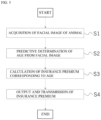
- FIG. 5 illustrates a flowchart of insurance premium calculation based on one embodiment of the insurance premium calculation system of the present invention.
- the user inputs basic information such as the kind, breed, body weight and the like of an animal, for which the user considers purchasing insurance, to the reception means of the server and uploads the facial image of the animal (step S 1).
- the processing arithmetic unit of the server performs predictive determination of the age of the animal at the time of photographing from the uploaded facial image using the determination means (trained model) (step S2).
- the processing arithmetic unit uses the insurance premium calculation means, calculates the insurance premium based on the predictive determination result of the age (step S3).
- the output means presents the calculated insurance premium to the user by, for example, displaying the calculated insurance premium on the screen of the user's terminal (step S4).
- the insurance premium calculation system of the present invention may include, in addition to the above-described determination means (trained model), a disease prediction means that performs predictive determination as to whether the animal contracts a disease from the facial image of the animal.
- the disease prediction means includes a trained model obtained by performing learning using, as teaching data, a facial image of an animal excluding humans and a fact of disease contraction within a predetermined period from the time of photographing the animal, the trained model using the facial image of the animal as an input and using a prediction of disease contraction of the animal as an output.
- FIG. 6 illustrates a flowchart of insurance premium calculation based on one embodiment of the insurance premium calculation system of the present invention in the case where the disease prediction means is included (the structural figure is shown in FIG. 7 ).
- the user inputs basic information such as the kind, breed, body weight and the like of an animal, for which the user considers purchasing insurance, to the reception means of the server and uploads the facial image of the animal (step S21).
- the processing arithmetic unit of the server performs predictive determination of the age of the animal at the time of photographing from the uploaded facial image using the determination means (trained model) (step S22).
- the processing arithmetic unit calculates the insurance premium, based on the predictive determination result of the age (step S23).
- the disease prediction means performs predictive determination of the possibility of future disease contraction of the animal from the facial image of the animal (step S24). Then, if the possibility of disease contraction is high, the insurance premium calculation means corrects the insurance premium in such a direction as to increase the insurance premium calculated based on the age, and if the possibility of disease contraction is low, the insurance premium calculation means corrects the insurance premium in such a direction as to decrease the insurance premium (step S25).
- the insurance premium calculation means may also include a function of calculating the insurance premium based on the age, without correction, if the possibility of disease contraction is not different from an average in regard to the animal.
- the insurance premium calculation means may also include a function of outputting a determination result of ineligibility for insurance purchase, regardless of the predictive determination result of the age, when the possibility of disease contraction is a predetermined value or more.
- the output means presents the calculated insurance premium to the user by, for example, displaying the calculated insurance premium on the screen of the user's terminal (step S26).
- the teaching data for the learning of the possibility of disease contraction are the facial image of an animal and the presence/absence of disease contraction as to whether the animal contracted a disease within a predetermined period from the time of photography of the facial image, preferably within 3 years, more preferably within 2 years, and still more preferably within 1 year.
- the facial image of the animal as the teaching data is the same as the facial image described in the above reception method.
- the information as to whether the animal contracted a disease is available, for example, as a fact of an insurance claim (also referred to as "accident") from an animal hospital or the owner or the like that insured the animal.
- the animal is an animal that is covered by pet insurance
- the animal hospital or the owner informs the insurance company of the fact of disease contraction and claims an insurance payment, and thus the insurance company can recognize that the animal contracted the disease.
- an insurance payment is not claimed until a predetermined period has passed since the facial image was created, it can be judged that the insured animal did not contract a disease during this period.
- the trained model may be generated for each disease, or may be generated for a plurality of diseases together.
- learning is performed using, as teaching data, a facial image of an animal that contracted a specific disease, which was photographed a predetermined period before the contraction of the disease, the fact that the animal contracted the disease, a facial image of an animal as a comparison object that did not contract the disease during a predetermined period from the capturing of the facial image, and the fact that the animal did not contract the disease during the predetermined period.
- a plurality of teaching data should be prepared as the teaching data, such as an animal that contracted a certain disease and a facial image captured a predetermined period before the contraction of the disease, an animal that contracted another disease than the certain disease and a facial image captured a predetermined period before the contraction of the disease, and an animal that contracted still another disease and a facial image captured a predetermined period before the contraction of the disease.
- the kinds of diseases targeted in the present invention are not particularly limited, and examples of the diseases include ophthalmological diseases, otological diseases and dermatological diseases.
- the ophthalmological diseases include conjunctivitis, eye mucus, corneitis, corneal ulcer/ulceration, lacrimation, cataract, and glaucoma.
- the otological diseases include external otitis, and otitis media.
- the dermatological diseases include dermatitis, atopic dermatitis, and pyoderma.
- An insurance purchase eligibility determination system of the present invention is a system that determines whether a subject animal is eligible for insurance based on the above-described predictive determination result of the age. Specifically, in the insurance premium calculation system of the present invention, when the age obtained by the predictive determination based on the facial photograph of the animal is a predetermined value or more, insurance purchase eligibility determination means determines that the animal is ineligible for insurance purchase. For example, in the case of a dog, when the predictive determination result of the age is 11 years old or more, 12 years old or more, 13 years old or more, 14 years old or more, or 15 years old or more, the determination result of ineligibility for insurance purchase is presented.
- the determination result of ineligibility for insurance purchase is presented.
- Predetermined values of the age, at which the ineligibility for insurance purchase is determined can be set according to the kind or breed of animals.
- the insurance purchase eligibility determination means is software that determines whether the purchase of insurance of the animal is permitted, from the prediction of the age that is output by the determination means 11. Where necessary, the information input by the user on the kind, breed, sex, age (declared age) at the time of photographing, body weight, medical history, and the like of the animal may be used for the insurance purchase eligibility determination.
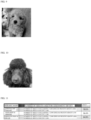
- a trained model was generated by performing deep learning using facial photographs (by way of example, color photographs of FIG. 8 to FIG. 10 ; standardized to 256 ⁇ 256 pixels) of toy poodles.
- facial photographs by way of example, color photographs of FIG. 8 to FIG. 10 ; standardized to 256 ⁇ 256 pixels
- 11,519 were of baby/young (less than 1 year old), and 11,519 were of old age (8 years old or more).
- the generated learning model was asked to determine whether each of 1,000 facial photographs of "baby/young” and "old age”, which were used in the evaluation of the trained model, is “baby/young” or "old age”, and the accuracy was 93.5%.
- the generated learning model was asked to determine whether each of 1,000 facial photographs of "baby/young” and “elderly”, which were different from the facial photographs used in the generation of the trained model, is “baby/young” or "old age”, and the accuracy was 92.5%.
- a trained model was generated by performing deep learning using facial photographs of toy poodles.
- 11,519 were of baby/young (less than 1 year old)
- 11,519 were of intermediate age (3 to 5 years old)
- 11,519 were of old age (8 years old or more).
- the generated learning model was asked to determine whether each of 1,000 facial photographs of "baby/young”, “intermediate age” and “old age”, which were used in the evaluation of the trained mode, is “baby/young", “intermediate age” or “old age”, and the accuracy for "old age” was 87.5%.
- the generated learning model was asked to determine whether each of 1,000 facial photographs of "baby/young”, “intermediate age” and “old age”, which are different from the facial photographs used in the generation of the trained model, is “baby/young", “intermediate age” or “old age”, and the accuracy relating for "old age” was 87.8%.
- the generated learning model was asked to determine whether each of 3,000 facial photographs of "baby/young” and “intermediate age”, among the facial photographs used in the evaluation of the trained model, is “baby/young” or “intermediate age”, and the accuracy was 92.2%.
- the generated learning model was determined whether each of 3000 facial photographs of "baby/young” and “intermediate age”, which are different from the facial photographs used in the generation of the trained model, is “baby/young” or “intermediate age”, and the accuracy was 91.5%.
- a trained model was generated by performing deep learning using facial photographs (by way of example, color photographs of FIG. 8 to FIG. 10 ; standardized to 256 ⁇ 256 pixels) of toy poodles, the numbers of photographs being listed in FIG. 11 .
- GoogLeNet was used as artificial intelligence (neural network)
- NVIDIA DIGITS Ver.3.0.0 was used as software for learning
- deep learning was performed by labeling photograph data with the presence or absence of disease.
- a trained model A was generated using, as photographs for teaching data, 4,800 photographs of toy poodles that contracted ophthalmological diseases within one year from the date of photography, and 4,800 photographs of toy poodles that did not contract ophthalmological diseases within one year of the date of photography.
- a trained model B was generated using, as photographs for teaching data, 6,400 photographs of toy poodles that contracted otological diseases within one year from the date of photography and 6,400 photographs of toy poodles that did not contract otological diseases within one year from the date of photography.
- a trained model C was generated using, as photographs for teaching data, 6,400 photographs of toy poodles that contracted dermatological diseases within one year from the date of photography and 6,400 photographs of toy poodles that did not contract dermatological diseases within one year from the date of photography.
Landscapes
- Engineering & Computer Science (AREA)
- Theoretical Computer Science (AREA)
- Physics & Mathematics (AREA)
- General Physics & Mathematics (AREA)
- Business, Economics & Management (AREA)
- Software Systems (AREA)
- Multimedia (AREA)
- Evolutionary Computation (AREA)
- Health & Medical Sciences (AREA)
- Artificial Intelligence (AREA)
- General Health & Medical Sciences (AREA)
- Computing Systems (AREA)
- Finance (AREA)
- Accounting & Taxation (AREA)
- Human Computer Interaction (AREA)
- Medical Informatics (AREA)
- Computer Vision & Pattern Recognition (AREA)
- Data Mining & Analysis (AREA)
- Mathematical Physics (AREA)
- General Engineering & Computer Science (AREA)
- Development Economics (AREA)
- Economics (AREA)
- General Business, Economics & Management (AREA)
- Technology Law (AREA)
- Strategic Management (AREA)
- Marketing (AREA)
- Databases & Information Systems (AREA)
- Biomedical Technology (AREA)
- Life Sciences & Earth Sciences (AREA)
- Molecular Biology (AREA)
- Biophysics (AREA)
- Computational Linguistics (AREA)
- Oral & Maxillofacial Surgery (AREA)
- Financial Or Insurance-Related Operations Such As Payment And Settlement (AREA)
- Image Analysis (AREA)
- Management, Administration, Business Operations System, And Electronic Commerce (AREA)
Applications Claiming Priority (2)
| Application Number | Priority Date | Filing Date | Title |
|---|---|---|---|
| JP2020145099A JP7082647B2 (ja) | 2020-08-28 | 2020-08-28 | 保険料算出システム及び保険料算出方法 |
| PCT/JP2021/031226 WO2022045214A1 (ja) | 2020-08-28 | 2021-08-25 | 保険料算出システム及び保険料算出方法 |
Publications (2)
| Publication Number | Publication Date |
|---|---|
| EP4207010A1 true EP4207010A1 (de) | 2023-07-05 |
| EP4207010A4 EP4207010A4 (de) | 2024-01-03 |
Family
ID=80355365
Family Applications (1)
| Application Number | Title | Priority Date | Filing Date |
|---|---|---|---|
| EP21861637.3A Pending EP4207010A4 (de) | 2020-08-28 | 2021-08-25 | Berechnungssystem für versicherungsprämien und berechnungsverfahren für versicherungsprämien |
Country Status (5)
| Country | Link |
|---|---|
| US (1) | US20230245243A1 (de) |
| EP (1) | EP4207010A4 (de) |
| JP (1) | JP7082647B2 (de) |
| CN (1) | CN116057549A (de) |
| WO (1) | WO2022045214A1 (de) |
Families Citing this family (2)
| Publication number | Priority date | Publication date | Assignee | Title |
|---|---|---|---|---|
| JPWO2024161871A1 (de) * | 2023-02-01 | 2024-08-08 | ||
| WO2024202365A1 (ja) * | 2023-03-27 | 2024-10-03 | 日本電気株式会社 | 動物保険管理システム、動物保険管理方法、及びプログラム |
Family Cites Families (14)
| Publication number | Priority date | Publication date | Assignee | Title |
|---|---|---|---|---|
| TW359781B (en) * | 1993-05-25 | 1999-06-01 | Casio Computer Co Ltd | Animal image display controlling devices and method thereof |
| US7246070B2 (en) * | 2004-09-24 | 2007-07-17 | James Dennis Schwartz | Method and apparatus for bundling insurance coverages in order to gain a pricing advantage |
| JP4668680B2 (ja) | 2005-05-17 | 2011-04-13 | ヤマハ発動機株式会社 | 属性識別システムおよび属性識別辞書生成装置 |
| US10235467B2 (en) * | 2015-12-11 | 2019-03-19 | Samsung Electronics Co., Ltd. | Providing search results based on an estimated age of a current user of a mobile computing device |
| JP2017224188A (ja) | 2016-06-16 | 2017-12-21 | アニドック株式会社 | 飼育動物の保険加入支援システム、飼育支援システム、及びプログラム |
| JP6803791B2 (ja) | 2016-08-01 | 2020-12-23 | パナソニック インテレクチュアル プロパティ コーポレーション オブ アメリカPanasonic Intellectual Property Corporation of America | 保険金算出装置、保険金算出方法及び保険金算出プログラム |
| CN107229947B (zh) * | 2017-05-15 | 2020-11-06 | 翔创科技(北京)有限公司 | 一种基于动物识别的金融保险方法及系统 |
| JP6928369B2 (ja) | 2017-06-29 | 2021-09-01 | 株式会社Peco | 情報処理システム及びプログラム |
| WO2019064743A1 (ja) * | 2017-09-28 | 2019-04-04 | パナソニックIpマネジメント株式会社 | 認証装置、認証システム、認証方法、及びプログラム |
| JP6894858B2 (ja) | 2018-02-05 | 2021-06-30 | ヤフー株式会社 | 情報処理装置、情報処理方法および情報処理プログラム |
| CN110414298B (zh) * | 2018-04-28 | 2023-07-07 | 中山大学 | 一种猴脸多属性联合识别方法 |
| CN111292146B (zh) * | 2018-12-07 | 2023-06-13 | 泰康保险集团股份有限公司 | 保险推荐方法及装置、计算机存储介质、电子设备 |
| CN110717401A (zh) * | 2019-09-12 | 2020-01-21 | Oppo广东移动通信有限公司 | 年龄估计方法及装置、设备、存储介质 |
| JP6734457B1 (ja) | 2019-10-28 | 2020-08-05 | アニコム ホールディングス株式会社 | 疾患予測システム、保険料算出システム及び疾患予測方法 |
-
2020
- 2020-08-28 JP JP2020145099A patent/JP7082647B2/ja active Active
-
2021
- 2021-08-25 WO PCT/JP2021/031226 patent/WO2022045214A1/ja not_active Ceased
- 2021-08-25 US US18/023,644 patent/US20230245243A1/en not_active Abandoned
- 2021-08-25 EP EP21861637.3A patent/EP4207010A4/de active Pending
- 2021-08-25 CN CN202180053421.9A patent/CN116057549A/zh active Pending
Also Published As
| Publication number | Publication date |
|---|---|
| EP4207010A4 (de) | 2024-01-03 |
| JP7082647B2 (ja) | 2022-06-08 |
| JP2022039845A (ja) | 2022-03-10 |
| US20230245243A1 (en) | 2023-08-03 |
| WO2022045214A1 (ja) | 2022-03-03 |
| CN116057549A (zh) | 2023-05-02 |
Similar Documents
| Publication | Publication Date | Title |
|---|---|---|
| EP4053762A1 (de) | Krankheitsvorhersagesystem, versicherungsbeitragsberechnungssystem und krankheitsvorhersageverfahren | |
| US20240366340A1 (en) | Method for generating a model of a dental arch | |
| US10600179B2 (en) | Image analysis for determining characteristics of groups of individuals | |
| CN114118755B (zh) | 基于rpa和ai的牲畜养殖管理方法、装置、设备及存储介质 | |
| US9355329B2 (en) | Image analysis for determining characteristics of pairs of individuals | |
| EP4207010A1 (de) | Berechnungssystem für versicherungsprämien und berechnungsverfahren für versicherungsprämien | |
| Lake et al. | Application of artificial intelligence algorithm in image processing for cattle disease diagnosis | |
| JP2019010004A (ja) | 情報処理システム及びプログラム | |
| CN115082968B (zh) | 基于红外光和可见光融合的行为识别方法及终端设备 | |
| JP7360496B2 (ja) | 判定システム | |
| JP7503041B2 (ja) | 保険料算出システム及び保険料算出方法 | |
| US9098898B2 (en) | Image analysis for determining characteristics of individuals | |
| CN117672501A (zh) | 一种基于人工智能的宠物健康初筛系统 | |
| JP7726675B2 (ja) | 画像判定システム及び画像判定方法 | |
| WO2023008571A1 (ja) | 個体識別システム及び個体識別方法 | |
| JP7204852B1 (ja) | ペット保険査定支援装置、ペット保険査定支援システム、ペット保険査定支援方法 | |
| JP7360489B2 (ja) | 個体識別システム及び個体識別方法 | |
| AU2012375204B2 (en) | Image analysis for determining characteristics of individuals and group of individuals | |
| KR102790919B1 (ko) | Ai기반 반려동물 원격 치과 진료 및 처방 플랫폼 | |
| Haas et al. | Standardized horse hoof photography and documentation | |
| KR102921440B1 (ko) | 딥러닝 기반 반려동물 진료비 예측 서비스 제공 방법 | |
| JP2022184223A (ja) | ペット販売価格判定システム及びペット販売価格判定方法 | |
| GB2618780A (en) | Health tracking method and system | |
| KR20250086096A (ko) | 반려동물 질환 진단 및 보험 서비스 제공 장치 및 그 방법 | |
| JP2025177351A (ja) | 動物の母子観察装置及び動物の母子観察システム |
Legal Events
| Date | Code | Title | Description |
|---|---|---|---|
| STAA | Information on the status of an ep patent application or granted ep patent |
Free format text: STATUS: THE INTERNATIONAL PUBLICATION HAS BEEN MADE |
|
| PUAI | Public reference made under article 153(3) epc to a published international application that has entered the european phase |
Free format text: ORIGINAL CODE: 0009012 |
|
| STAA | Information on the status of an ep patent application or granted ep patent |
Free format text: STATUS: REQUEST FOR EXAMINATION WAS MADE |
|
| 17P | Request for examination filed |
Effective date: 20230324 |
|
| AK | Designated contracting states |
Kind code of ref document: A1 Designated state(s): AL AT BE BG CH CY CZ DE DK EE ES FI FR GB GR HR HU IE IS IT LI LT LU LV MC MK MT NL NO PL PT RO RS SE SI SK SM TR |
|
| REG | Reference to a national code |
Ref country code: DE Ref legal event code: R079 Free format text: PREVIOUS MAIN CLASS: G06Q0010040000 Ipc: G06Q0040080000 |
|
| DAV | Request for validation of the european patent (deleted) | ||
| DAX | Request for extension of the european patent (deleted) | ||
| A4 | Supplementary search report drawn up and despatched |
Effective date: 20231204 |
|
| RIC1 | Information provided on ipc code assigned before grant |
Ipc: G06V 40/10 20220101ALI20231128BHEP Ipc: G06N 3/09 20230101ALI20231128BHEP Ipc: G06N 20/10 20190101ALI20231128BHEP Ipc: G06N 3/0464 20230101ALI20231128BHEP Ipc: G06V 10/82 20220101ALI20231128BHEP Ipc: G06Q 10/10 20230101ALI20231128BHEP Ipc: G06N 20/00 20190101ALI20231128BHEP Ipc: G06N 3/08 20230101ALI20231128BHEP Ipc: G06V 40/16 20220101ALI20231128BHEP Ipc: G06V 10/764 20220101ALI20231128BHEP Ipc: G06T 7/00 20170101ALI20231128BHEP Ipc: G06Q 40/08 20120101AFI20231128BHEP |
|
| STAA | Information on the status of an ep patent application or granted ep patent |
Free format text: STATUS: EXAMINATION IS IN PROGRESS |
|
| 17Q | First examination report despatched |
Effective date: 20241008 |