EP4201768B1 - Steuerung eines fahrzeugs für vorhersagbares verhalten - Google Patents
Steuerung eines fahrzeugs für vorhersagbares verhalten Download PDFInfo
- Publication number
- EP4201768B1 EP4201768B1 EP21217595.4A EP21217595A EP4201768B1 EP 4201768 B1 EP4201768 B1 EP 4201768B1 EP 21217595 A EP21217595 A EP 21217595A EP 4201768 B1 EP4201768 B1 EP 4201768B1
- Authority
- EP
- European Patent Office
- Prior art keywords
- vehicle
- ads
- trajectory
- time
- control system
- Prior art date
- Legal status (The legal status is an assumption and is not a legal conclusion. Google has not performed a legal analysis and makes no representation as to the accuracy of the status listed.)
- Active
Links
Images





Classifications
-
- B—PERFORMING OPERATIONS; TRANSPORTING
- B60—VEHICLES IN GENERAL
- B60W—CONJOINT CONTROL OF VEHICLE SUB-UNITS OF DIFFERENT TYPE OR DIFFERENT FUNCTION; CONTROL SYSTEMS SPECIALLY ADAPTED FOR HYBRID VEHICLES; ROAD VEHICLE DRIVE CONTROL SYSTEMS FOR PURPOSES NOT RELATED TO THE CONTROL OF A PARTICULAR SUB-UNIT
- B60W30/00—Purposes of road vehicle drive control systems not related to the control of a particular sub-unit, e.g. of systems using conjoint control of vehicle sub-units
- B60W30/08—Active safety systems predicting or avoiding probable or impending collision or attempting to minimise its consequences
-
- B—PERFORMING OPERATIONS; TRANSPORTING
- B60—VEHICLES IN GENERAL
- B60W—CONJOINT CONTROL OF VEHICLE SUB-UNITS OF DIFFERENT TYPE OR DIFFERENT FUNCTION; CONTROL SYSTEMS SPECIALLY ADAPTED FOR HYBRID VEHICLES; ROAD VEHICLE DRIVE CONTROL SYSTEMS FOR PURPOSES NOT RELATED TO THE CONTROL OF A PARTICULAR SUB-UNIT
- B60W60/00—Drive control systems specially adapted for autonomous road vehicles
- B60W60/001—Planning or execution of driving tasks
- B60W60/0015—Planning or execution of driving tasks specially adapted for safety
-
- B—PERFORMING OPERATIONS; TRANSPORTING
- B60—VEHICLES IN GENERAL
- B60W—CONJOINT CONTROL OF VEHICLE SUB-UNITS OF DIFFERENT TYPE OR DIFFERENT FUNCTION; CONTROL SYSTEMS SPECIALLY ADAPTED FOR HYBRID VEHICLES; ROAD VEHICLE DRIVE CONTROL SYSTEMS FOR PURPOSES NOT RELATED TO THE CONTROL OF A PARTICULAR SUB-UNIT
- B60W30/00—Purposes of road vehicle drive control systems not related to the control of a particular sub-unit, e.g. of systems using conjoint control of vehicle sub-units
- B60W30/08—Active safety systems predicting or avoiding probable or impending collision or attempting to minimise its consequences
- B60W30/09—Taking automatic action to avoid collision, e.g. braking and steering
-
- B—PERFORMING OPERATIONS; TRANSPORTING
- B60—VEHICLES IN GENERAL
- B60W—CONJOINT CONTROL OF VEHICLE SUB-UNITS OF DIFFERENT TYPE OR DIFFERENT FUNCTION; CONTROL SYSTEMS SPECIALLY ADAPTED FOR HYBRID VEHICLES; ROAD VEHICLE DRIVE CONTROL SYSTEMS FOR PURPOSES NOT RELATED TO THE CONTROL OF A PARTICULAR SUB-UNIT
- B60W30/00—Purposes of road vehicle drive control systems not related to the control of a particular sub-unit, e.g. of systems using conjoint control of vehicle sub-units
- B60W30/08—Active safety systems predicting or avoiding probable or impending collision or attempting to minimise its consequences
- B60W30/095—Predicting travel path or likelihood of collision
-
- B—PERFORMING OPERATIONS; TRANSPORTING
- B60—VEHICLES IN GENERAL
- B60W—CONJOINT CONTROL OF VEHICLE SUB-UNITS OF DIFFERENT TYPE OR DIFFERENT FUNCTION; CONTROL SYSTEMS SPECIALLY ADAPTED FOR HYBRID VEHICLES; ROAD VEHICLE DRIVE CONTROL SYSTEMS FOR PURPOSES NOT RELATED TO THE CONTROL OF A PARTICULAR SUB-UNIT
- B60W30/00—Purposes of road vehicle drive control systems not related to the control of a particular sub-unit, e.g. of systems using conjoint control of vehicle sub-units
- B60W30/08—Active safety systems predicting or avoiding probable or impending collision or attempting to minimise its consequences
- B60W30/095—Predicting travel path or likelihood of collision
- B60W30/0953—Predicting travel path or likelihood of collision the prediction being responsive to vehicle dynamic parameters
-
- B—PERFORMING OPERATIONS; TRANSPORTING
- B60—VEHICLES IN GENERAL
- B60W—CONJOINT CONTROL OF VEHICLE SUB-UNITS OF DIFFERENT TYPE OR DIFFERENT FUNCTION; CONTROL SYSTEMS SPECIALLY ADAPTED FOR HYBRID VEHICLES; ROAD VEHICLE DRIVE CONTROL SYSTEMS FOR PURPOSES NOT RELATED TO THE CONTROL OF A PARTICULAR SUB-UNIT
- B60W30/00—Purposes of road vehicle drive control systems not related to the control of a particular sub-unit, e.g. of systems using conjoint control of vehicle sub-units
- B60W30/10—Path keeping
-
- B—PERFORMING OPERATIONS; TRANSPORTING
- B60—VEHICLES IN GENERAL
- B60W—CONJOINT CONTROL OF VEHICLE SUB-UNITS OF DIFFERENT TYPE OR DIFFERENT FUNCTION; CONTROL SYSTEMS SPECIALLY ADAPTED FOR HYBRID VEHICLES; ROAD VEHICLE DRIVE CONTROL SYSTEMS FOR PURPOSES NOT RELATED TO THE CONTROL OF A PARTICULAR SUB-UNIT
- B60W60/00—Drive control systems specially adapted for autonomous road vehicles
- B60W60/001—Planning or execution of driving tasks
- B60W60/0011—Planning or execution of driving tasks involving control alternatives for a single driving scenario, e.g. planning several paths to avoid obstacles
-
- B—PERFORMING OPERATIONS; TRANSPORTING
- B60—VEHICLES IN GENERAL
- B60W—CONJOINT CONTROL OF VEHICLE SUB-UNITS OF DIFFERENT TYPE OR DIFFERENT FUNCTION; CONTROL SYSTEMS SPECIALLY ADAPTED FOR HYBRID VEHICLES; ROAD VEHICLE DRIVE CONTROL SYSTEMS FOR PURPOSES NOT RELATED TO THE CONTROL OF A PARTICULAR SUB-UNIT
- B60W2554/00—Input parameters relating to objects
- B60W2554/40—Dynamic objects, e.g. animals, windblown objects
- B60W2554/404—Characteristics
- B60W2554/4046—Behavior, e.g. aggressive or erratic
Definitions
- the present invention relates to a method for controlling a vehicle to have predictable behaviour and to related aspects.
- the invention relates to a method which enables an ADS of a vehicle to make decisions at run-time that create independent sets of error-consequence classes such that the predicted consequences of the vehicle being involved in a traffic incident are easier to quantify. Whilst this is sub-optimal if an alternative to a traffic incident occurring is available, in some situations where there are no safe trajectories available for a vehicle to select from, the ability to assign the contribution of every type of incident to every type of consequence, with certainty has clear advantages.
- the described technology is mainly with respect to vehicles, for example, automated vehicles, which may be autonomous or semi-autonomous vehicles.
- Such vehicles may include heavy-duty vehicles, such as semi-trailer vehicles and trucks as well as other types of vehicles such as cars.
- German Patent Application DE102014204168 relates to a system for preventing evasive accidents.
- the system is designed to predict a travel path (111) of a vehicle (105), to detect an impending collision of the vehicle (105) with at least one collision object (101), and at least in the case of an impending collision with the collision object (101), to prevent a deviation of the vehicle (105) from the travel path (111).
- the travel path (111) can be calculated in advance such that a collision of the vehicle (105) with the collision object (101) occurs.
- United States Patent Application US2017/210383 relates to a vehicle collision avoidance assist system, including: a forward obstacle detecting device; a lateral object detecting device; and a controller including an automatic braking control executing portion to execute an automatic braking control for permitting a brake apparatus to automatically operate, an avoidance control executing portion to execute, in addition to the automatic braking control, an avoidance control for permitting a steering apparatus to automatically operate, and an avoidance control prohibiting portion to prohibit execution of the avoidance control, wherein the avoidance control prohibiting portion prohibits execution of the avoidance control when the lateral object detecting device detects a lateral moving object that is moving on a lateral side of an own vehicle in the same direction as the own vehicle is travelling and there is a risk that the own vehicle and the lateral moving object will collide with each other if the avoidance control is executed.
- an automatic brake and steering system for a vehicle comprising a sensor device for detecting vehicle state variables and vehicle characteristic quantities in addition to environmental conditions.
- a regulating and control device are provided for adjusting the brakes and/or the steering of the vehicle.
- an alternative route (b) is determined when an obstacle (3) lies in the travel path. If a further obstacle (4) lies in the alternative route, a strategy for determining another alternative route is applied. If a collision-free alternative route cannot be found, a subsequent route (e) is chosen, where the difference (D S2) of the remaining stopping distance (sb) and the remaining distance (sh2) to the obstacles (5) is the shortest.
- German Patent Application DE102017103700 relates to a method for automatically avoiding a collision (8) of a motor vehicle (1) with at least one vehicle-external object (2), comprising the steps: acquiring (V3) object data (3) relating to the at least one vehicle-external object (2) by means of a first sensor system (20) of the motor vehicle (1), acquiring (V1) vehicle data (10) relating to the motor vehicle (1) by means of a second sensor system (24) of the motor vehicle (1), determining (V5) the imminent collision (8) of the motor vehicle (1) with the at least one vehicle-external object (2) on the basis of the object data (3) and the vehicle data (10).
- a respective movement (7) of the at least one vehicle-external object (2) is modelled (V4) from the object data (3) for determining the imminent collision, and an intervention (V7, V7') in a steering system of the motor vehicle (1) in order to avoid the imminent collision of the motor vehicle (1) with the at least one vehicle-external object (2) only takes place if the respective movement (7) of the at least one vehicle-external object (2) is reliably determined or predicted according to a predefined criterion.
- the disclosed technology seeks to mitigate, obviate, alleviate, or eliminate various issues known in the art which affect an autonomous vehicle experiencing a rare event which may lead to unexpected consequences if there are no safe trajectories for the vehicle to follow.
- Run-time tactical decisions avoid incidents ( I ), and incidents can lead to consequences ( C ).
- the function that maps a particular incident to a consequence is random in the sense that consequences cannot always be correctly assessed. For example, a hazardous situation or incident may be classified as the most severe type if the probability for fatality is larger than 10%.
- An ADS configured to assess consequences which are limited by an explicit bound/promise is required to know all mappings I_n -> ⁇ C_0, C_1, ... C_m ⁇ (assuming there are 'n' types if incidents and 'm' types of consequences).
- the disclosed technology generally relates to a computer-implemented method as defined by claim 1.
- a decision to follow the current re-evaluated trajectory is then made possible removing one or more consequences of the occurrence of the event from the safety criteria used to re-evaluate the current trajectory whilst maintaining all other previous safety criteria. This allows the vehicles ADS to maintain the path of the current trajectory whilst possibly changing the behaviour of the vehicle along that path to slow it down.
- a first aspect of the disclosed technology comprises a computer-implemented method of controlling a vehicle to have predictable behaviour, the method comprising an automated driver system, ADS, of the vehicle performing determining there are no safe trajectories responsive to an occurrence of an unexpected event; and responsive to the determination, dynamically re-evaluating whether a current trajectory meets a current set of safety criteria, and determining the current re-evaluated trajectory path is to be maintained with the vehicle have a predictable behaviour by removing one or more consequences of the occurrence of the event from the safety criteria used to re-evaluate the current trajectory whilst maintaining all other previous safety criteria.
- the method may prevent an ADS from making a tactical decision that leads to an over-representation of certain incidents when an unexpected event has already happened.
- the vehicle is a heavy-duty vehicle.
- the method is executed by the vehicle ADS at run time, and the all other previous safety criteria comprise safety criteria from a previous ADS run-time epoch to the current ADS run-time epoch.
- the pre-determined one or more consequences are associated with a set of one or more predicted outcomes for a type of the unexpected event.
- the set of predicted outcomes are associated with a set of rules for maintaining or changing the current trajectory.
- re-evaluating the trajectory against subsequent safety criteria in a subsequent ADS run-time epoch results in the trajectory meeting the subsequent safety criteria.
- the event is a type of isolated unexpected event.
- Another, second, aspect of the invention comprises a control system of a vehicle including an automated driving system, ADS, the control system comprising memory, computer program code, and one or more processors and/or processing circuitry, wherein the computer program code, when loaded from the memory and executed by the one or more processors and/or processing circuitry causes the control system to perform a method according to the first aspect.
- Another, third, aspect of the invention comprises a vehicle configured with a control system according the second aspect.
- Embodiments of the disclosed technology allow events leading to an incident and the actions that an control unit of an autonomous vehicle having an ADS caused the vehicle to take to be analysed and considered from the perspective of what can be proven so that a vehicle can be is safe by definition based on meeting a risk norm.
- a technical benefit of the disclosed technology is that that it is easier to show with confidence that the risk norm is met by an ADS by simplifying the possible consequences of an error in the assumptions of the ADS (or of a "Driver").
- Such assumptions include, but are not limited to, for example, assuming that an area is free because the vehicle has received this information from the perception system with sufficient integrity.
- the disclosed technology meets the risk norm and so does not compromise safety of a vehicle, instead it allows a risk norm to be met by an ADS of a vehicle even when the ADS has to make potentially suboptimal decisions in critical situations such as those which may lead to a traffic incident for example.
- run-time decisions always take this risk in aspect and consequently use other means to minimize risk, such as lowering the allowed maximum speed.
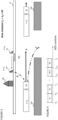
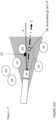
- the vehicle 10 comprises a large, heavy-duty vehicle such as a truck or lorry or cab-and-trailer arrangement.
- the vehicle 10 is able to sense other objects in its surroundings, such as, for example, stationary objects 16a, 16b and 18 and moving objects 12 and 20.
- stationary objects 16a, 16b, 18 may include road-side kerbs or railings or the like and buildings.
- Moving objects may include other vehicles 12 and pedestrians 20.
- the ADS of the vehicle is able to determine the current position of the pedestrians shown as pedestrians 20 in Figure 1 , and, assuming the ADS has been tracking the movement of the pedestrians in previous epochs, the ADS is also able to make a prediction as to where the pedestrians will be at the time t1, the start of the next time epoch #2 of the ADS run-time.
- time labels #1 for the current epoch and the time labels t0 and t1 are merely to allow for the sequence of events leading up to a later incident to be better understood from the accompanying drawings.
- Figure 3 schematically illustrates the example scenario of Figure 1 at a later time t1, the start of the second run-time epoch of the ADS.
- like elements to those of Figure 1 retain their numbering scheme.
- the vehicle 10 has advanced along trajectory A, trajectory C remains a safe available trajectory but, as the pedestrians 20 have now moved to a new position, shown as 20* in Figure 3 , trajectory B is no longer safe and so is an unavailable alternative trajectory for the vehicle ADS to select if it needs to change trajectory.
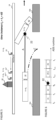
- Figure 5 schematically illustrates the example scenario of Figure 1 at a later time t2, the start of the next epoch of the ADS execution thread.
- the pedestrians have moved on, but trajectory B is no longer available as the vehicle 10 has advanced along the reference trajectory A beyond the point where it could switch to trajectory B. This means that when the vehicle predicts an incident 22 if the current trajectory A is maintained, the vehicle ADS assesses its safe available trajectories, and determines that the vehicle should switch to trajectory C.
- Figure 6 schematically illustrates the runtime execution thread of the ADS of Figure 2 , at a later time t2 showing the occurrence of the incident in the third epoch which starts with time t2.
- Figure 7 schematically illustrates the example scenario of Figure 1 at a later time T in the third epoch of the ADS runtime execution thread, where unexpected incident 24 occurs.
- the incident is unexpected in the sense that the ADS could not predict in a previous time epoch that the event would occur to any useful degree.
- the event occurs before the start of the next ADS epoch and the outcome of the event is predicted to be a collision at a time t>T.
- Figure 8 schematically illustrates the runtime execution thread of the ADS of Figure 2 , at the later time T.
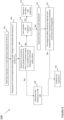
- the vehicle ADS is configured according to the invention to perform a method 100 which enables the subsequent behaviour of the vehicle 10 to be predictable behaviour.
- the method determines the current re-evaluated trajectory is to be maintained with the vehicle have a predictable behaviour by removing one or more consequences of the occurrence of the event from the safety criteria used to re-evaluate the current trajectory whilst maintaining all other previous safety criteria.
- the method 100 is executed by the vehicle ADS at run time.
- the other previous safety criteria comprise safety criteria from a previous ADS run-time epoch to the current ADS run-time epoch, for example, the safety criteria which were used to evaluate the current trajectory selected in the previous ADS run-time epoch.
- method 100 is performed by the ADS dynamically, in other words, when the ADS is executing, the one or more of the consequences of the occurrence of the event are pre-determined off-line in some embodiments.
- the consequences accordingly may be determined remotely, for example, by a remoter server such as a back-office server managing the autonomous vehicle 10.
- the pre-determined one or more consequences are associated with a set of one or more predicted outcomes for a type of the unexpected event in some embodiments of the method. For example, if an unexpected event is a road collapse, a predicted outcome may be to fall into a hole. As another example, if an unexpected event is a tree falling over the road, a predicted outcome may be to run into the fallen tree
- the set of predicted outcomes are associated with a set of rules for maintaining or changing the current trajectory.
- the method removes the one or more consequences of the event when re-evaluating the safety criteria by using the set of rules associated with safe outcomes of the set of one or more predicted outcomes determined from information about the current trajectory in a previous instance of the ADS run-time.
- the method further comprises reducing in run-time an available set of control option s for the ADS of the vehicle to an allowed set of options for the ADS to exercise to control the vehicle towards a predicted outcome.
- exercising the reduced set of available control options causes the vehicle to continue along the current trajectory with different predictable behaviour to predicted behaviour prior to the unexpected event.
- the different predicted behaviour includes behaviour predicted to slow the vehicle speed.
- the different predicted behaviour may include actions such as breaking, slowing the engine by engaging a lower gear, and/or swerving from side to side for example.
- the ADS is configured to generate information, responsive to which the control system generates actuator signals to operate the vehicle
- re-evaluating the trajectory against subsequent safety criteria in a subsequent ADS run-time epoch results in the trajectory meeting the subsequent safety criteria.
- the unexpected event is a type of isolated unexpected event, in other words, the ADS assumes that the event which occurs at time T is not part of a chain of events, which may last for longer than a particular runtime epoch.
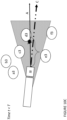
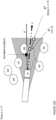
- Figures 10A to 10E illustrate schematically an example scenario where a method of controlling a vehicle to have predictable behaviour according to the disclosed technology which avoids an incident after an unexpected event has occurred at time T.
- Figures 10A to 10E are particularly simplified versions of a scenario where an incident could occur.
- the object D has unexpectedly moved to location d3, as shown in Figure 10C , which is before the vehicle 10 can safely stop.
- the ADS of the vehicle will reassess the safety criteria for trajectory A and when it does so, will switch the vehicle to follow trajectory C, which is still determined to be safe at that time t.
- Such an unpredictable event occurrence should be very rare indeed but may happen. It could, for example, be anything from a drone, bird or aeroplane part falling from the sky to something falling off the back of a lorry to a tree falling in front of the road. RE.
- trajectory C when the ADS reassesses trajectory C against the safety criteria to assess if trajectory C is safe to follow after time T, i.e. when t>T, trajectory C will fail if the consequences of continuing to follow trajectory C are taken into account.
- the ADS of the vehicle will perform an embodiment of method 100, for example, it will determine (114) there are no safe available existing trajectories responsive to an occurrence of the unexpected event at g1. It will then, responsive to the occurrence of the unexpected event, dynamically re-evaluate (116) whether a current trajectory, in this case trajectory C meets a current set of safety criteria. If not, then it will determine if the current re-evaluated trajectory is to be maintained by removing one or more consequences of the occurrence of the event from the safety criteria used to re-evaluate the current trajectory whilst maintaining all other previous safety criteria.
- Figure 10E shows schematically a positive outcome of performing method 100 could be at a time t >T or t>>T, in other words at a time somewhat later than the epoch for which the ADS made the tactical decision to continue along trajectory C, as it turns out, no collision along trajectory C with the unexpected object occurs.
- the tactical decision by the ADS to continue along the trajectory had a safe outcome.
- the unexpected object which appeared along the path of trajectory C at position g1 in the illustrated scenario is now at position g2 at time t>>T, so although this was unexpected at the point in time t > T where the ADS made the tactical decision to continue along trajectory C.
- the ADS makes the tactical decision to continue along the path of trajectory C
- the behaviour of the vehicle along trajectory C now differs as, in response to the unexpected event occurring, the ADS instructs the control unit of the vehicle to perhaps slow as quickly as possible, which may result in swerving from side to side, performing an emergency stop, changing down gear etc., etc.
- Some, if not all, of the above embodiments of the method 100 may be implemented using computer program code which may be provided as software or hardcoded, for example, as a computer program product carried on as a signal to a vehicle for installation into the vehicle ADS, or on a device which connects to the ADS system of a vehicle.
- the computer program product may be accordingly installed in a factory-production environment in a vehicle or provided as an update to a vehicle's ADS software, which may be provided as an over the air, OTA, update or on a physical memory stick such as a portable memory device, such as a flash drive or usb stick or similar device.
- the computer program product comprises computercode which when loaded from memory and executed by one or more processors and/or processing circuitry 42 of a vehicle 10, causes the vehicle 10 to implement a method 100 for controlling a vehicle to have predictable behaviour according to any one of the disclosed method embodiments.
- FIG 11 of the accompanying drawings shows a control system 38 of a vehicle 10 including an automated driving system, ADS, 30, where the control system 38 comprises memory 44, computer program code, and one or more processors and/or processing circuitry 42.
- the computer program code when loaded from the memory 44 and executed by the one or more processors and/or processing circuitry 42, causes the control system to perform one of the disclosed embodiments of method 100.
- a vehicle comprising such a control system is thus also configured to perform one of the disclosed embodiments of method 100.
- a method embodiments such as one of the method embodiments described above may be at least partly implemented through one or more processors, such as, the processors or processing circuitry 42 in a vehicle control system, shown as control unit 38 in Figure 11 , together with computer program code for performing the functions and actions of the embodiments of method 100 disclosed herein.
- the control system 38 includes an ADS 30, comprising sensing subsystem 32a, perception subsystem 32b, and a decision subsystem 32c, receives sensory data and other data such as environmental and location data and processes this to implement an embodiment of method 100. After implementing method 100, the ADS sends the tactical decision data to the control system for processing and generation of any appropriate actuator signals to control the vehicle operation.
- the ADS 30 is shown in Figure 11 as being part of the control system 30, in other words some of the support components and functionality used by the ADS are also used by the control system 38.
- the ADS may be separate from the control system 38 in the sense that it uses separate support components and functionality, in which case a suitable data interface may be provided between the ADS 30 and the control system 38 so that the information about any tactical decisions made by the ADS 30 can be send to the control system 38 for further processing and, if appropriate, to cause the generation of actuator signals to control the vehicle operation.
- program code mentioned above may also be provided as a computer program product, for instance in the form of a data carrier carrying computer program code or code means for performing the embodiments herein when being loaded into the processors or processing circuitry 42 in the control unit 38.
- the data carrier may be one of an electronic signal, optical signal, radio signal or computer-readable storage medium.
- the computer program code may e.g. be provided as pure program code in the control unit 38 or on a server and downloaded to the control unit 38.
- control unit 38 may in some embodiments be implemented as computer programs stored in memory 44, for example, a computer readable storage unit, for execution by processors or processing modules, e.g. the processing circuitry 42 in the control unit 38 of Figure 11 .
- control unit 38 may the features shown in the schematic block diagram of Figure 11 , where the control unit 38 is arranged to communicate via at least one antenna 40. It should also be noted that, although not shown in Figure 11 , known conventional features of a control unit 38, such as, for example, a connection to a power source, e.g. a battery, or connections to brake or steering systems, e.g. on-board actuators or sensors for controlling the movement of the vehicle 12, may be assumed to be comprised in the control unit 38, but are not shown or described in any further detail in regards to Fig. 4 .
- the control unit 38 may comprise as mentioned above, processing circuitry 42 and a memory 44.
- control unit 38 may be provided by the processing circuitry 42 executing instructions stored on a computer-readable medium, such as, e.g. the memory 44 shown in Figure 11 .
- control unit 68 may comprise additional components, such as, for example, at least a determining module 46, a re-evaluation module 48, and an operating system module 50, whereby each module may be configured and responsible for providing its dedicated functionality to support the embodiments described herein. These modules may be used by the control system alone or shared with the vehicles ADS in some embodiments.
- control unit 38 and/or processing circuitry 42 includes components configured to or configurable to provide an ADS
- those components may include the determining module 46 determining 114 there are no safe trajectories responsive to an occurrence of an unexpected event, and responsive to an occurrence of an unexpected event, the re-evaluation module 48 dynamically reevaluating 116 whether a current trajectory meets a current set of safety criteria, as well as the determining module 46 or another determining module determining the current path of the re-evaluated trajectory is to be maintained with the vehicle so that the vehicle can have predictable behavior.
- the determining module 46 or another module may perform this by removing one or more consequences of the occurrence of the event from the safety criteria used to re-evaluate the current trajectory whilst maintaining all other previous safety criteria.
- control unit 38 and/or processing circuitry 42 comprises the ADS 30
- the method 100 is executed by the vehicle ADS 30 at run time, and the all other previous safety criteria comprise safety criteria from a previous ADS run-time epoch to the current ADS run-time epoch.
- the one or more of the consequences of the occurrence of the event may be pre-determined off-line and/or dynamically assess on-board the vehicle in some embodiments.
- the pre-determined one or more consequences are associated with a set of one or more predicted outcomes for a type of the unexpected event.
- the set of predicted outcomes are associated with a set of rules for maintaining or changing the current trajectory in some embodiments.
- control unit 38 or processing circuitry 42 is configured to remove the one or more consequences of the event when re-evaluating the safety criteria by using the set of rules associated with safe outcomes of the set of one or more predicted outcomes determined from information about the current trajectory in a previous instance of the ADS run-time.
- the method further comprises the control unit 38 or processing circuitry 42 reducing in run-time an available set of control options for the ADS of the vehicle to an allowed set of options for the ADS to exercise to control the vehicle towards a predicted outcome.
- exercising the reduced set of available control options causes the vehicle to continue along the current trajectory with different predictable behaviour to predicted behaviour prior to the unexpected event.
- the different predicted behaviour may include behaviour predicted to slow the vehicle speed.
- the different predicted behaviour may include one or more of breaking, slowing the engine by engaging a lower gear, and swerving from side to side.
- control unit 38 or processing circuitry 42 is configured to re-evaluate the trajectory against subsequent safety criteria in a subsequent ADS run-time epoch results in the trajectory meeting the subsequent safety criteria.
- the event may be a type of isolated unexpected event.
- ADS 30 of the the control unit 38 or processing circuitry 42 is configured to send instructions to a control unit of the vehicle responsive determining the current re-evaluated trajectory is to be maintained with the vehicle have a predictable behaviour.
- processing circuitry 42 and the memory or computer readable storage unit 44 described above may refer to a combination of analog and digital circuits, and/or one or more processors configured with software and/or firmware, e.g. stored in a memory, that when executed by the one or more processors such as the processing circuitry 44 perform as described above.
- processors as well as the other digital hardware, may be included in a single application-specific integrated circuit (ASIC), or several processors and various digital hardware may be distributed among several separate components, whether individually packaged or assembled into a system-on-a-chip (SoC).
- ASIC application-specific integrated circuit
- SoC system-on-a-chip
- the control unit 38 also comprises or is capable of controlling how signals are sent wirelessly via antenna 40 in order for the vehicle 12 to communicate via one or more communications channels with remote entities, for example, a site back office.
- the communication channels may be point-to-point, or networks, for example, over cellular or satellite networks which support wireless communications.
- the wireless communications may conform to one or more public or proprietary communications standards, protocols and/or technologies, including but not limited to Global System for Mobile Communications (GSM), Enhanced Data GSM Environment (EDGE), high-speed downlink packet access (HSDPA), wideband code division multiple access (W-CDMA), code division multiple access (CDMA), time division multiple access (TDMA), Bluetooth, Wireless Fidelity (Wi-Fi) (e.g., IEEE 802.11a, IEEE 802.11b, IEEE 802.11g and/or IEEE 802.11n), voice over Internet Protocol (VoIP), Wi-MAX, a protocol for email (e.g., Internet message access protocol (IMAP) and/or post office protocol (POP)), instant messaging (e.g., extensible messaging and presence protocol (XMPP), Session Initiation Protocol for Instant Messaging and Presence Leveraging Extensions (SIMPLE), and/or Instant Messaging and
- the operating system of the vehicle may further various software components and/or drivers for controlling and managing general system tasks (e.g., memory management, storage device control, power management, etc.) and facilitates communication between various hardware and software components in addition to operating software module 50.
- general system tasks e.g., memory management, storage device control, power management, etc.
- the functions or steps noted in the blocks can occur out of the order noted in the operational illustrations.
- two blocks shown in succession can in fact be executed substantially concurrently or the blocks can sometimes be executed in the reverse order, depending upon the functionality/acts involved.
- the functions or steps noted in the blocks can according to some aspects of the disclosure be executed continuously in a loop.
- a computer-readable medium may include removable and non-removable storage devices including, but not limited to, Read Only Memory (ROM), Random Access Memory, RAM), which may be static RAM, SRAM, or dynamic RAM, DRAM.
- ROM may be programmable ROM, PROM, or EPROM, erasable programmable ROM, or electrically erasable programmable ROM, EEPROM.
- Suitable storage components for memory may be integrated as chips into a printed circuit board or other substrate connected with one or more processors or processing modules, or provided as removable components, for example, by flash memory (also known as USB sticks), compact discs (CDs), digital versatile discs (DVD), and any other suitable forms of memory.
- memory may also be distributed over a various forms of memory and storage components, and may be provided remotely on a server or servers, such as may be provided by a cloud-based storage solution.
- program modules may include routines, programs, objects, components, data structures, etc. that perform particular tasks or implement particular abstract data types.
- Computer-executable instructions, associated data structures, and program modules represent examples of program code for executing steps of the methods disclosed herein. The particular sequence of such executable instructions or associated data structures represents examples of corresponding acts for implementing the functions described in such steps or processes.
- any suitable device readable and/or writeable medium examples of which include, but are not limited to: any form of volatile or non-volatile computer readable memory including, without limitation, persistent storage, solid-state memory, remotely mounted memory, magnetic media, optical media, random access memory (RAM), read-only memory
- Memory may store any suitable instructions, data or information, including a computer program, software, an application including one or more of logic, rules, code, tables, etc. and/or other instructions capable of being executed by processing circuitry and, utilized by the apparatus in whatever form of electronic apparatus. Memory may be used to store any calculations made by processing circuitry and/or any data received via a user or communications or other type of data interface. In some embodiments, processing circuitry and memory are integrated. Memory may be also dispersed amongst one or more system or apparatus components. For example, memory may comprises a plurality of different memory modules, including modules located on other network nodes in some embodiments.
Landscapes
- Engineering & Computer Science (AREA)
- Automation & Control Theory (AREA)
- Transportation (AREA)
- Mechanical Engineering (AREA)
- Human Computer Interaction (AREA)
- Traffic Control Systems (AREA)
- Control Of Driving Devices And Active Controlling Of Vehicle (AREA)
Claims (15)
- Computerimplementiertes Verfahren (100) zum Steuern eines Fahrzeugs für vorhersagbares Verhalten, wobei das Verfahren ein automatisiertes Fahrersystem, ADS, (30) des Fahrzeugs umfasst, das Folgendes durchführt:Bestimmen, dass es keine sicheren Fahrstrecken gibt, als Reaktion auf ein Auftreten eines unerwarteten Ereignisses (114); undals Reaktion auf das Bestimmen, dynamisches Neubewerten, ob eine aktuelle Fahrstrecke einen aktuellen Satz von Sicherheitskriterien (116) erfüllt;Bestimmen, dass der aktuelle Verlauf der neubewerteten Fahrstrecke mit dem Fahrzeug beizubehalten ist, damit das Fahrzeug ein vorhersagbares Verhalten aufweisen kann, indem eine oder mehrere Konsequenzen des Auftretens des Ereignisses aus den Sicherheitskriterien, die zum Neubewerten der aktuellen Fahrstrecke verwendet werden, entfernt werden, während alle anderen vorhergehenden Sicherheitskriterien beibehalten werden.
- Verfahren (100) nach Anspruch 1, wobei das Verfahren durch das Fahrzeug-ADS während einer Betriebszeit ausgeführt wird, und alle anderen vorhergehenden Sicherheitskriterien Sicherheitskriterien von einem vorhergehenden ADS-Betriebszeitraum bis zu dem aktuellen ADS-Betriebszeitraum umfassen.
- Verfahren (100) nach Anspruch 1 oder 2, wobei die eine oder die mehreren der Konsequenzen des Auftretens des Ereignisses offline vorbestimmt werden.
- Verfahren nach Anspruch 1, wobei die vorbestimmte eine oder die vorbestimmten mehreren Konsequenzen mit einem Satz von einem oder mehreren vorhergesagten Ergebnissen für einen Typ des unerwarteten Ereignisses verknüpft sind.
- Verfahren nach Anspruch 4, wobei der Satz von vorhergesagten Ergebnissen mit einem Satz von Regeln zum Beibehalten oder Ändern der aktuellen Fahrstrecke verknüpft ist.
- Verfahren nach Anspruch 5, wobei das Entfernen der einen oder der mehreren Konsequenzen des Ereignisses beim Neubewerten der Sicherheitskriterien Verwenden des Satzes von Regeln umfasst, der mit sicheren Ergebnissen des Satzes von einem oder mehreren vorhergesagten Ergebnissen verknüpft ist, die aus Informationen über die aktuelle Fahrstrecke in einer vorhergehenden Instanz der ADS-Betriebszeit bestimmt wurden.
- Verfahren nach einem der vorhergehenden Ansprüche 1 bis 6, wobei das Verfahren als Reaktion auf das Bestimmen, dass es keine sicheren Fahrstrecken gibt, ferner umfasst, dass das ADS während der Betriebszeit einen verfügbaren Satz von Steueroptionen für ein Steuersystem (38) des Fahrzeugs (10) auf einen zulässigen Satz von Optionen reduziert, die das Steuersystem (38) umsetzen kann, um das Fahrzeug (10) in Richtung eines vorhergesagten Ergebnisses zu steuern.
- Verfahren nach Anspruch 7, wobei das Umsetzen des reduzierten Satzes von verfügbaren Steueroptionen das Fahrzeug (10) dazu veranlasst, dem aktuellen Fahrstreckenverlauf mit einem anderen vorhersagbaren Verhalten als dem vorhergesagten Verhalten vor dem unerwarteten Ereignis weiterhin zu folgen.
- Verfahren nach Anspruch 8, wobei das andere vorhergesagte Verhalten ein Verhalten beinhaltet, bei dem ein Verlangsamen der Fahrzeuggeschwindigkeit vorhergesagt wird, wobei das andere vorhergesagte Verhalten eines oder mehrere der Folgenden umfasst:Bremsen; undVerlangsamen des Motors durch Einlegen eines niedrigeren Ganges.
- Verfahren (100) nach einem der vorhergehenden Ansprüche 7 bis 9, wobei das ADS dazu konfiguriert ist, Informationen zu erzeugen, als Reaktion auf die das Steuersystem Aktorsignale zum Betreiben des Fahrzeugs erzeugt.
- Verfahren (100) nach Anspruch 8 oder 9, wobei das Neubewerten der Fahrstrecke anhand nachfolgender Sicherheitskriterien in einem nachfolgenden ADS-Betriebszeitraum dazu führt, dass die Fahrstrecke die nachfolgenden Sicherheitskriterien erfüllt.
- Verfahren (100) nach einem der vorhergehenden Ansprüche, wobei es sich bei dem Ereignis um eine Art isoliertes unerwartetes Ereignis handelt.
- Steuersystem (38) eines Fahrzeugs (10), das ein automatisiertes Fahrsystem, ADS, (30) beinhaltet, wobei das Steuersystem (38) Folgendes umfasst:einen Speicher (44);einen Computerprogrammcode; undeinen oder mehrere Prozessoren und/oder Verarbeitungsschaltkreise (42), wobei der Computerprogrammcode, wenn er aus dem Speicher (44) geladen wird und durch den einen oder die mehreren Prozessoren und/oder Verarbeitungsschaltkreise (42) ausgeführt wird, das Steuersystem dazu veranlasst, ein Verfahren nach einem der Ansprüche 1 bis 12 durchzuführen.
- Fahrzeug, das mit einem Steuersystem nach Anspruch 13 konfiguriert ist.
- Computerprogrammprodukt, umfassend ein computerlesbares Speichermedium, wobei das computerlesbare Speichermedium einen Computercode beinhaltet, der, wenn er durch einen oder mehrere Prozessoren und/oder Verarbeitungsschaltkreise (42) eines Steuersystems (38) eines Fahrzeugs (10) geladen und ausgeführt wird, das Steuersystem (38) dazu veranlasst, dazu konfiguriert zu sein, durch Durchführen eines Verfahrens nach einem der Ansprüche 1 bis 12 ein vorhersagbares Verhalten des Fahrzeugs beizubehalten.
Priority Applications (4)
| Application Number | Priority Date | Filing Date | Title |
|---|---|---|---|
| EP21217595.4A EP4201768B1 (de) | 2021-12-23 | 2021-12-23 | Steuerung eines fahrzeugs für vorhersagbares verhalten |
| JP2022185154A JP2023094553A (ja) | 2021-12-23 | 2022-11-18 | 予測可能な挙動を有するように車両を制御すること |
| US18/056,968 US20230202523A1 (en) | 2021-12-23 | 2022-11-18 | Controlling a vehicle to have predictable behavior |
| CN202211463305.7A CN116331194A (zh) | 2021-12-23 | 2022-11-22 | 控制车辆以具有可预测行为 |
Applications Claiming Priority (1)
| Application Number | Priority Date | Filing Date | Title |
|---|---|---|---|
| EP21217595.4A EP4201768B1 (de) | 2021-12-23 | 2021-12-23 | Steuerung eines fahrzeugs für vorhersagbares verhalten |
Publications (2)
| Publication Number | Publication Date |
|---|---|
| EP4201768A1 EP4201768A1 (de) | 2023-06-28 |
| EP4201768B1 true EP4201768B1 (de) | 2025-03-12 |
Family
ID=79164625
Family Applications (1)
| Application Number | Title | Priority Date | Filing Date |
|---|---|---|---|
| EP21217595.4A Active EP4201768B1 (de) | 2021-12-23 | 2021-12-23 | Steuerung eines fahrzeugs für vorhersagbares verhalten |
Country Status (4)
| Country | Link |
|---|---|
| US (1) | US20230202523A1 (de) |
| EP (1) | EP4201768B1 (de) |
| JP (1) | JP2023094553A (de) |
| CN (1) | CN116331194A (de) |
Family Cites Families (4)
| Publication number | Priority date | Publication date | Assignee | Title |
|---|---|---|---|---|
| DE10036276A1 (de) * | 2000-07-26 | 2002-02-07 | Daimler Chrysler Ag | Automatisches Brems- und Lenksystem für ein Fahrzeug |
| DE102014204168A1 (de) * | 2014-03-06 | 2015-09-10 | Zf Friedrichshafen Ag | Verhindern von Ausweichunfällen bei Wildwechsel |
| JP6330825B2 (ja) * | 2016-01-26 | 2018-05-30 | トヨタ自動車株式会社 | 車両用衝突回避支援システム |
| DE102017103700A1 (de) * | 2017-02-23 | 2018-08-23 | Valeo Schalter Und Sensoren Gmbh | Vermeiden einer Kollision durch einen Lenkeingriff in Abhängigkeit von einer Bewegung eines fahrzeugexternen Objekts |
-
2021
- 2021-12-23 EP EP21217595.4A patent/EP4201768B1/de active Active
-
2022
- 2022-11-18 JP JP2022185154A patent/JP2023094553A/ja active Pending
- 2022-11-18 US US18/056,968 patent/US20230202523A1/en active Pending
- 2022-11-22 CN CN202211463305.7A patent/CN116331194A/zh active Pending
Also Published As
| Publication number | Publication date |
|---|---|
| CN116331194A (zh) | 2023-06-27 |
| US20230202523A1 (en) | 2023-06-29 |
| EP4201768A1 (de) | 2023-06-28 |
| JP2023094553A (ja) | 2023-07-05 |
Similar Documents
| Publication | Publication Date | Title |
|---|---|---|
| KR102524297B1 (ko) | 차량용 자율 주행 장치 및 그의 자율 주행 방법과 그를 포함하는 차량 | |
| US10077052B2 (en) | State-based operation for autonomous vehicles | |
| JP6899769B2 (ja) | 車両を動作させる方法及び装置 | |
| US9463806B2 (en) | Consistent behavior generation of a predictive advanced driver assistant system | |
| US12482303B2 (en) | System for recording event data of autonomous vehicle | |
| US10730521B2 (en) | System for autonomous lane merging | |
| US9254802B2 (en) | Method for operating a safety system of a motor vehicle and motor vehicle | |
| US20250065919A1 (en) | Automated driving systems for supporting driving mode transition | |
| EP3418843B1 (de) | Konzept zur koordination einer notbremsung einer kolonne von kommunikativ gekoppelten fahrzeugen | |
| CN113232655B (zh) | 紧急场景下自动驾驶行驶模式决策方法 | |
| CN112666916A (zh) | 用于开发和验证自动驾驶特征的方法和系统 | |
| KR102681727B1 (ko) | 전자 모듈 및 전자 모듈 제어방법 | |
| EP3816749A1 (de) | Ferngesteuertes fahren eines fahrzeugs | |
| WO2024005997A1 (en) | Modified minimal risk maneuver using sensor input | |
| KR20210063244A (ko) | 자율주행차량의 이벤트 데이터 기록을 위한 시스템 | |
| CN111572515A (zh) | 无人车、无人车制动方法 | |
| US20230391301A1 (en) | Brake boost assist implementing modified pressure versus actuator displacement profiles | |
| CN115431962A (zh) | 用于避免碰撞的横向移动系统 | |
| EP4201768B1 (de) | Steuerung eines fahrzeugs für vorhersagbares verhalten | |
| JP6989531B2 (ja) | 自動運転過程の間に自動車において縦方向動特性を制御するための方法および装置 | |
| CN113492881B (zh) | 自动驾驶车辆及其控制方法 | |
| JP6493175B2 (ja) | 自動運転制御装置及びプログラム | |
| US10245957B2 (en) | Smart regenerative braking control | |
| KR102935696B1 (ko) | 자율 주행 제어 장치 및 그 최소위험상태 전환 방법 | |
| US20240132064A1 (en) | Method and system for a longitudinal control of a motor vehicle |
Legal Events
| Date | Code | Title | Description |
|---|---|---|---|
| PUAI | Public reference made under article 153(3) epc to a published international application that has entered the european phase |
Free format text: ORIGINAL CODE: 0009012 |
|
| STAA | Information on the status of an ep patent application or granted ep patent |
Free format text: STATUS: THE APPLICATION HAS BEEN PUBLISHED |
|
| AK | Designated contracting states |
Kind code of ref document: A1 Designated state(s): AL AT BE BG CH CY CZ DE DK EE ES FI FR GB GR HR HU IE IS IT LI LT LU LV MC MK MT NL NO PL PT RO RS SE SI SK SM TR |
|
| STAA | Information on the status of an ep patent application or granted ep patent |
Free format text: STATUS: REQUEST FOR EXAMINATION WAS MADE |
|
| 17P | Request for examination filed |
Effective date: 20231218 |
|
| RBV | Designated contracting states (corrected) |
Designated state(s): AL AT BE BG CH CY CZ DE DK EE ES FI FR GB GR HR HU IE IS IT LI LT LU LV MC MK MT NL NO PL PT RO RS SE SI SK SM TR |
|
| GRAP | Despatch of communication of intention to grant a patent |
Free format text: ORIGINAL CODE: EPIDOSNIGR1 |
|
| STAA | Information on the status of an ep patent application or granted ep patent |
Free format text: STATUS: GRANT OF PATENT IS INTENDED |
|
| RIC1 | Information provided on ipc code assigned before grant |
Ipc: B60W 30/095 20120101ALI20241007BHEP Ipc: B60W 30/09 20120101ALI20241007BHEP Ipc: B60W 30/08 20120101AFI20241007BHEP |
|
| INTG | Intention to grant announced |
Effective date: 20241106 |
|
| GRAS | Grant fee paid |
Free format text: ORIGINAL CODE: EPIDOSNIGR3 |
|
| GRAA | (expected) grant |
Free format text: ORIGINAL CODE: 0009210 |
|
| STAA | Information on the status of an ep patent application or granted ep patent |
Free format text: STATUS: THE PATENT HAS BEEN GRANTED |
|
| AK | Designated contracting states |
Kind code of ref document: B1 Designated state(s): AL AT BE BG CH CY CZ DE DK EE ES FI FR GB GR HR HU IE IS IT LI LT LU LV MC MK MT NL NO PL PT RO RS SE SI SK SM TR |
|
| REG | Reference to a national code |
Ref country code: GB Ref legal event code: FG4D |
|
| REG | Reference to a national code |
Ref country code: CH Ref legal event code: EP |
|
| REG | Reference to a national code |
Ref country code: DE Ref legal event code: R096 Ref document number: 602021027462 Country of ref document: DE |
|
| REG | Reference to a national code |
Ref country code: IE Ref legal event code: FG4D |
|
| REG | Reference to a national code |
Ref country code: SE Ref legal event code: TRGR |
|
| PG25 | Lapsed in a contracting state [announced via postgrant information from national office to epo] |
Ref country code: RS Free format text: LAPSE BECAUSE OF FAILURE TO SUBMIT A TRANSLATION OF THE DESCRIPTION OR TO PAY THE FEE WITHIN THE PRESCRIBED TIME-LIMIT Effective date: 20250612 |
|
| PG25 | Lapsed in a contracting state [announced via postgrant information from national office to epo] |
Ref country code: FI Free format text: LAPSE BECAUSE OF FAILURE TO SUBMIT A TRANSLATION OF THE DESCRIPTION OR TO PAY THE FEE WITHIN THE PRESCRIBED TIME-LIMIT Effective date: 20250312 |
|
| PG25 | Lapsed in a contracting state [announced via postgrant information from national office to epo] |
Ref country code: ES Free format text: LAPSE BECAUSE OF FAILURE TO SUBMIT A TRANSLATION OF THE DESCRIPTION OR TO PAY THE FEE WITHIN THE PRESCRIBED TIME-LIMIT Effective date: 20250312 |
|
| REG | Reference to a national code |
Ref country code: LT Ref legal event code: MG9D |
|
| PG25 | Lapsed in a contracting state [announced via postgrant information from national office to epo] |
Ref country code: NO Free format text: LAPSE BECAUSE OF FAILURE TO SUBMIT A TRANSLATION OF THE DESCRIPTION OR TO PAY THE FEE WITHIN THE PRESCRIBED TIME-LIMIT Effective date: 20250612 |
|
| PG25 | Lapsed in a contracting state [announced via postgrant information from national office to epo] |
Ref country code: HR Free format text: LAPSE BECAUSE OF FAILURE TO SUBMIT A TRANSLATION OF THE DESCRIPTION OR TO PAY THE FEE WITHIN THE PRESCRIBED TIME-LIMIT Effective date: 20250312 |
|
| REG | Reference to a national code |
Ref country code: NL Ref legal event code: MP Effective date: 20250312 |
|
| PG25 | Lapsed in a contracting state [announced via postgrant information from national office to epo] |
Ref country code: LV Free format text: LAPSE BECAUSE OF FAILURE TO SUBMIT A TRANSLATION OF THE DESCRIPTION OR TO PAY THE FEE WITHIN THE PRESCRIBED TIME-LIMIT Effective date: 20250312 |
|
| PG25 | Lapsed in a contracting state [announced via postgrant information from national office to epo] |
Ref country code: BG Free format text: LAPSE BECAUSE OF FAILURE TO SUBMIT A TRANSLATION OF THE DESCRIPTION OR TO PAY THE FEE WITHIN THE PRESCRIBED TIME-LIMIT Effective date: 20250312 Ref country code: GR Free format text: LAPSE BECAUSE OF FAILURE TO SUBMIT A TRANSLATION OF THE DESCRIPTION OR TO PAY THE FEE WITHIN THE PRESCRIBED TIME-LIMIT Effective date: 20250613 |
|
| REG | Reference to a national code |
Ref country code: AT Ref legal event code: MK05 Ref document number: 1774796 Country of ref document: AT Kind code of ref document: T Effective date: 20250312 |
|
| PG25 | Lapsed in a contracting state [announced via postgrant information from national office to epo] |
Ref country code: NL Free format text: LAPSE BECAUSE OF FAILURE TO SUBMIT A TRANSLATION OF THE DESCRIPTION OR TO PAY THE FEE WITHIN THE PRESCRIBED TIME-LIMIT Effective date: 20250312 |
|
| PG25 | Lapsed in a contracting state [announced via postgrant information from national office to epo] |
Ref country code: SM Free format text: LAPSE BECAUSE OF FAILURE TO SUBMIT A TRANSLATION OF THE DESCRIPTION OR TO PAY THE FEE WITHIN THE PRESCRIBED TIME-LIMIT Effective date: 20250312 |
|
| PG25 | Lapsed in a contracting state [announced via postgrant information from national office to epo] |
Ref country code: PT Free format text: LAPSE BECAUSE OF FAILURE TO SUBMIT A TRANSLATION OF THE DESCRIPTION OR TO PAY THE FEE WITHIN THE PRESCRIBED TIME-LIMIT Effective date: 20250714 |
|
| PG25 | Lapsed in a contracting state [announced via postgrant information from national office to epo] |
Ref country code: PL Free format text: LAPSE BECAUSE OF FAILURE TO SUBMIT A TRANSLATION OF THE DESCRIPTION OR TO PAY THE FEE WITHIN THE PRESCRIBED TIME-LIMIT Effective date: 20250312 Ref country code: IT Free format text: LAPSE BECAUSE OF FAILURE TO SUBMIT A TRANSLATION OF THE DESCRIPTION OR TO PAY THE FEE WITHIN THE PRESCRIBED TIME-LIMIT Effective date: 20250312 |
|
| PG25 | Lapsed in a contracting state [announced via postgrant information from national office to epo] |
Ref country code: AT Free format text: LAPSE BECAUSE OF FAILURE TO SUBMIT A TRANSLATION OF THE DESCRIPTION OR TO PAY THE FEE WITHIN THE PRESCRIBED TIME-LIMIT Effective date: 20250312 |
|
| PG25 | Lapsed in a contracting state [announced via postgrant information from national office to epo] |
Ref country code: CZ Free format text: LAPSE BECAUSE OF FAILURE TO SUBMIT A TRANSLATION OF THE DESCRIPTION OR TO PAY THE FEE WITHIN THE PRESCRIBED TIME-LIMIT Effective date: 20250312 Ref country code: EE Free format text: LAPSE BECAUSE OF FAILURE TO SUBMIT A TRANSLATION OF THE DESCRIPTION OR TO PAY THE FEE WITHIN THE PRESCRIBED TIME-LIMIT Effective date: 20250312 |
|
| PG25 | Lapsed in a contracting state [announced via postgrant information from national office to epo] |
Ref country code: RO Free format text: LAPSE BECAUSE OF FAILURE TO SUBMIT A TRANSLATION OF THE DESCRIPTION OR TO PAY THE FEE WITHIN THE PRESCRIBED TIME-LIMIT Effective date: 20250312 |
|
| PG25 | Lapsed in a contracting state [announced via postgrant information from national office to epo] |
Ref country code: SK Free format text: LAPSE BECAUSE OF FAILURE TO SUBMIT A TRANSLATION OF THE DESCRIPTION OR TO PAY THE FEE WITHIN THE PRESCRIBED TIME-LIMIT Effective date: 20250312 |
|
| PG25 | Lapsed in a contracting state [announced via postgrant information from national office to epo] |
Ref country code: IS Free format text: LAPSE BECAUSE OF FAILURE TO SUBMIT A TRANSLATION OF THE DESCRIPTION OR TO PAY THE FEE WITHIN THE PRESCRIBED TIME-LIMIT Effective date: 20250712 |
|
| REG | Reference to a national code |
Ref country code: DE Ref legal event code: R097 Ref document number: 602021027462 Country of ref document: DE |
|
| PG25 | Lapsed in a contracting state [announced via postgrant information from national office to epo] |
Ref country code: DK Free format text: LAPSE BECAUSE OF FAILURE TO SUBMIT A TRANSLATION OF THE DESCRIPTION OR TO PAY THE FEE WITHIN THE PRESCRIBED TIME-LIMIT Effective date: 20250312 |
|
| PLBE | No opposition filed within time limit |
Free format text: ORIGINAL CODE: 0009261 |
|
| STAA | Information on the status of an ep patent application or granted ep patent |
Free format text: STATUS: NO OPPOSITION FILED WITHIN TIME LIMIT |
|
| PGFP | Annual fee paid to national office [announced via postgrant information from national office to epo] |
Ref country code: SE Payment date: 20251222 Year of fee payment: 5 |
|
| REG | Reference to a national code |
Ref country code: CH Ref legal event code: L10 Free format text: ST27 STATUS EVENT CODE: U-0-0-L10-L00 (AS PROVIDED BY THE NATIONAL OFFICE) Effective date: 20260121 |
|
| 26N | No opposition filed |
Effective date: 20251215 |
|
| PGFP | Annual fee paid to national office [announced via postgrant information from national office to epo] |
Ref country code: DE Payment date: 20251229 Year of fee payment: 5 |