EP4199545A1 - Vorrichtungssuch- und -registrierungsverfahren und netzwerkseitige vorrichtung - Google Patents
Vorrichtungssuch- und -registrierungsverfahren und netzwerkseitige vorrichtung Download PDFInfo
- Publication number
- EP4199545A1 EP4199545A1 EP21855571.2A EP21855571A EP4199545A1 EP 4199545 A1 EP4199545 A1 EP 4199545A1 EP 21855571 A EP21855571 A EP 21855571A EP 4199545 A1 EP4199545 A1 EP 4199545A1
- Authority
- EP
- European Patent Office
- Prior art keywords
- information
- application
- location information
- local
- communication device
- Prior art date
- Legal status (The legal status is an assumption and is not a legal conclusion. Google has not performed a legal analysis and makes no representation as to the accuracy of the status listed.)
- Pending
Links
Images


Classifications
-
- H—ELECTRICITY
- H04—ELECTRIC COMMUNICATION TECHNIQUE
- H04W—WIRELESS COMMUNICATION NETWORKS
- H04W4/00—Services specially adapted for wireless communication networks; Facilities therefor
- H04W4/02—Services making use of location information
-
- H—ELECTRICITY
- H04—ELECTRIC COMMUNICATION TECHNIQUE
- H04W—WIRELESS COMMUNICATION NETWORKS
- H04W4/00—Services specially adapted for wireless communication networks; Facilities therefor
- H04W4/20—Services signaling; Auxiliary data signalling, i.e. transmitting data via a non-traffic channel
-
- H—ELECTRICITY
- H04—ELECTRIC COMMUNICATION TECHNIQUE
- H04W—WIRELESS COMMUNICATION NETWORKS
- H04W48/00—Access restriction; Network selection; Access point selection
- H04W48/18—Selecting a network or a communication service
-
- H—ELECTRICITY
- H04—ELECTRIC COMMUNICATION TECHNIQUE
- H04W—WIRELESS COMMUNICATION NETWORKS
- H04W60/00—Affiliation to network, e.g. registration; Terminating affiliation with the network, e.g. de-registration
-
- H—ELECTRICITY
- H04—ELECTRIC COMMUNICATION TECHNIQUE
- H04W—WIRELESS COMMUNICATION NETWORKS
- H04W60/00—Affiliation to network, e.g. registration; Terminating affiliation with the network, e.g. de-registration
- H04W60/04—Affiliation to network, e.g. registration; Terminating affiliation with the network, e.g. de-registration using triggered events
-
- H—ELECTRICITY
- H04—ELECTRIC COMMUNICATION TECHNIQUE
- H04W—WIRELESS COMMUNICATION NETWORKS
- H04W8/00—Network data management
- H04W8/005—Discovery of network devices, e.g. terminals
-
- H—ELECTRICITY
- H04—ELECTRIC COMMUNICATION TECHNIQUE
- H04W—WIRELESS COMMUNICATION NETWORKS
- H04W8/00—Network data management
- H04W8/02—Processing of mobility data, e.g. registration information at HLR [Home Location Register] or VLR [Visitor Location Register]; Transfer of mobility data, e.g. between HLR, VLR or external networks
Definitions
- This application pertains to the field of communication technologies, and specifically relates to a device discovery and registration method and a network-side device.
- QoS Quality of Service
- An application function Application Function, AF
- NEF Network Exposure Function
- Embodiments of this application are intended to provide a device discovery and registration method and a network-side device, so as to resolve a problem of lack of local NEF network element discovery manners in the prior art.
- a device discovery method including: receiving, by a first communication device, first information sent by a second communication device, where the first information includes at least one of first location information of a to-be-discovered local device and information about a first application; and sending, by the first communication device, first notification information to the second communication device, where the first notification information is used to notify of information about a discovered local device.
- a device discovery method including: sending, by a second communication device, first information to a first communication device, where the first information includes at least one of first location information of a to-be-discovered local device and information about a first application; and receiving, by the second communication device, first notification information sent by the first communication device, where the first notification information is sent by the first communication device in response to the first information, and the first notification information is used to notify of information about a discovered local device.
- a device registration method including: sending, by a local device, second information to a first communication device, where the second information includes at least one of second location information of a to-be-registered local device or information about a second application; and receiving, by the local device, a second notification message sent by the first communication device, where the second notification information is sent by the first communication device in response to the second information, and the second notification information is used to notify that the local device has been registered.
- a device discovery apparatus applied to a first communication device and including: a first receiving module, configured to receive first information sent by a second communication device, where the first information includes at least one of first location information of a to-be-discovered local device the information about the first application; and a second sending module, configured to send first notification information to the second communication device, where the first notification information is used to notify of the information about a discovered local device.
- a device discovery apparatus applied to a second communication device and including: a third sending module, configured to send first information to a first communication device, where the first information includes at least one of first location information of a to-be-discovered local device the information about the first application; and a third receiving module, configured to receive first notification information sent by the first communication device, where the first notification information is sent by the first communication device in response to the first information, and the first notification information is used to notify of information about a discovered local device.
- a device registration apparatus applied to a local device and including: a fourth sending module, configured to send second information to a first communication device, where the second information includes at least one of second location information of a to-be-registered local device and information about a second application; and a fourth receiving module, configured to receive a second notification message sent by the first communication device, where the second notification information is sent by the first communication device in response to the second information, and the second notification information is used to notify that the local device has been registered.
- a network-side device includes a processor, a memory, and a program or instructions stored on the memory and capable of running on the processor, and when the program or instructions are executed by the processor, the steps of the method according to the first aspect, the second aspect, or the third aspect are implemented.
- a readable storage medium where a program or instructions are stored in the readable storage medium, and the program or instructions are executed by a processor to implement the steps of the method according to the first aspect, the steps of the method according to the second aspect, or the steps of the method according to the third aspect.
- a chip includes a processor and a communication interface, the communication interface is coupled to the processor, and the processor is configured to run a network-side device program or instructions to implement the method according to the first aspect, the method according to the second aspect, or the method according to the third aspect.
- the second communication device may send the first information to the first communication device, where the first information includes at least one of the first location information of the to-be-discovered local device and the information about the first application, so that the first communication device can discover the local device based on the first information.
- the NRF can discover a corresponding local device (L-NEF) based on first information sent by the NEF, thereby implementing discovery of the local device, and resolving the problem of lack of a local NEF network element discovery manner in the prior art.
- L-NEF local device
- first, second, and the like in this specification and claims of this application are used to distinguish between similar objects rather than to describe a specific order or sequence. It should be understood that a number used in this way may be interchangeable in an appropriate case, so that the embodiments of this application can be implemented in a sequence other than those shown or described herein.
- Objects distinguished by “first” and “second” are usually of one type, and a quantity of objects is not limited.
- a first object may be one, or may be a plurality.
- "and/or" represents at least one of the connected objects, and the character “/" usually represents an "or” relationship between the associated objects.
- LTE Long Term Evolution
- LTE-A Long Term Evolution-Advanced
- LTE-A Long Term Evolution-Advanced
- CDMA code division multiple access
- TDMA time division multiple access
- FDMA frequency division multiple access
- OFDMA Orthogonal Frequency Division Multiple Access
- SC-FDMA single-carrier Frequency-Division Multiple Access
- system and “network” in the embodiments of this application are often used interchangeably.
- the described technology may be used in the foregoing system and radio technology, or may be used in another system and radio technology.
- NR New Radio
- NR terms are used in most of the following descriptions.
- These technologies may also be applied to other applications than an NR system application, such as 6 th generation (6 th Generation, 6G) communication systems.
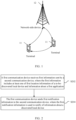
- FIG. 1 is a block diagram of a wireless communication system to which embodiments of this application are applicable.
- the wireless communication system includes a terminal 11 and a network-side device 12.
- the terminal 11 may also be referred to as a terminal device or a user equipment.
- the terminal 11 may be a terminal-side device such as a mobile phone, a tablet personal computer (Tablet Personal Computer), a laptop computer (Laptop Computer) or a notebook computer, a personal digital assistant (Personal Digital Assistant, PDA), a palmtop computer, a netbook, an ultra-mobile personal computer (ultra-mobile personal computer, UMPC), a mobile Internet device (Mobile Internet Device, MID), a wearable device (Wearable Device), vehicle user equipment (VUE), or pedestrian user equipment (PUE).
- a terminal-side device such as a mobile phone, a tablet personal computer (Tablet Personal Computer), a laptop computer (Laptop Computer) or a notebook computer, a personal digital assistant (Personal Digital Assistant, PDA), a
- the wearable device includes: a band, earphones, glasses, and the like. It should be noted that a specific type of the terminal 11 is not limited in the embodiments of this application.
- the network-side device 12 may be a base station or a core network.
- the base station may be referred to as a NodeB, an evolved NodeB, an access point, a base transceiver station (Base Transceiver Station, BTS), a radio base station, a radio transceiver, a basic service set (Basic Service Set, BSS), an extended service set (Extended Service Set, ESS), a node B, an evolved node B (eNB), a home NodeB, a home evolved NodeB, a WLAN access point, a Wi-Fi node, a transmission-reception point (Transmitting Receiving Point, TRP), or another suitable term in the field.
- the base station is not limited to a specific technical term. It should be noted that in the embodiments of this application, only a base station in an NR system is used as an example, but a specific type of the base station is not limited.
- FIG. 2 is a first flowchart of a device discovery method according to an embodiment of this application. As shown in FIG. 2 , the method includes the following steps.
- Step S202 A first communication device receives first information sent by a second communication device, where the first information includes at least one of first location information of a to-be-discovered local device and information about a first application.
- Step S204 The first communication device sends first notification information to the second communication device, where the first notification information is used to notify of the information about a discovered local device.
- the first communication device in the embodiments of this application includes a network repository function (Network Repository Function, NRF);
- NRF Network Repository Function
- the first information in this embodiment of this application includes at least one of the following: first location information and information about a first application.
- the first location information includes at least one of the following: location information of a terminal, location information of an application server, location information of an application function (Application Function, AF), and service area information.
- the information about the first application in this embodiment of this application is information of an application service requested for providing.
- the second communication device may send the first information to the first communication device, where the first information includes at least one of the first location information of the to-be-discovered local device and the information about the first application, so that the first communication device can discover the local device based on the first information.
- the NRF can discover a corresponding local device (L-NEF) based on first information sent by the NEF, thereby implementing discovery of the local device.
- L-NEF local device
- a local device such as an L-NEF, an L-SMF, or an L-PCF can be discovered based on this application. Therefore, when QoS monitoring status needs to be reported, the AF can initiate QoS monitoring reporting to a discovered L-NEF instead of initiating QoS monitoring reporting to the NEF, thereby speeding up the QoS monitoring reporting.
- a specific application scenario may be a discovery process shown in FIG. 3 .
- the local device/local network element discovery includes the following steps:
- Step S302 The NEF initiates an L-NEF discovery request (Nnrf_NFDiscovery Request) to the NRF.
- Nnrf_NFDiscovery Request L-NEF discovery request
- the discovery request includes first location information and information about a first application.
- the first location information includes at least location information of a terminal, location information of an application server, and location information of an AF.
- the information about the first application includes at least a fully qualified domain name (Fully Qualified Domain Name, FQDN) of the application, an IP (Internet Protocol, internet protocol) address of the application, an ID (Identity Document, identity) of the application, and a description of the application.
- FQDN Fully Qualified Domain Name
- IP Internet Protocol, internet protocol
- ID Identity Document, identity
- Step S304 The NRF selects a proper L-NEF based on a location parameter and the information about the application that are sent by the NEF and a location and service application information of the L-NEF, and sends an Nnrf_NFDiscovery Response to the NEF.
- the response includes an IP address of the L-NEF, an FQDN of the L-NEF, and an instance ID of the L-NEF.
- the method of this embodiment of this application may further include the following steps.
- Step S206 The first communication device receives second information sent by a local device, where the second information includes at least one of second location information of a to-be-registered local device and information about a second application.
- Step S208 The first communication device sends second notification information to the local device, where the second notification information is used to notify that the to-be-registered local device has been registered.
- the local device may send the second information to the first communication device, so as to perform registration of the local device.
- registration with the L-NEF by the NRF can be implemented, that is, registration with the local network element is implemented.
- the second information in this embodiment of this application includes at least one of the following: second location information and information about a second application.
- the second location information is location information of the local device; and the information about the second application is information about an application service provided by the local device.
- the information about the first application and the information about the second application in this embodiment of this application each include at least one of the following: an FQDN of an application, an IP address of the application, an ID of the application, and a description of the application.
- the second location information and the location information of the terminal in this embodiment of this application each include at least one of the following: a data network access identity (Data Network Access Identifier, DNAI), a tracking area (Tracking Area, TA), a cell identity (Cell ID), a geographic zone identifier (geographic zone identifier(s)), or a location criteria validity condition (Location Criteria Validity Conditions).
- DNAI Data Network Access Identifier
- TA tracking area
- Cell ID Cell ID
- geographic zone identifier geographic zone identifier
- location criteria validity condition Lication Criteria Validity Conditions
- the method of this embodiment of this application may further include the following step.
- Step S210 Determine a to-be-discovered local device from the registered local device based on the first information and the second information.
- the to-be-discovered local device may be determined by matching the first information with the second information.
- the first location information of the determined to-be-discovered local device matches the second location information in the second information, for example, location information of an application server or AF of the to-be-discovered local device matches that in the second information; and/or the determined information about a first application of the to-be-discovered local device matches the information about the second application in the second information, for example, an FQDN or ID of the to-be-discovered local device matches that in the second information.
- the foregoing local device/local network element registration process may be a registration process shown in FIG. 4 in a specific application scenario. As shown in FIG. 4 , the local device/local network element registration includes the following steps.
- Step S402 The L-NEF sends a registration request Nnrf_NFManagement_NFRegister to the NRF.
- the registration request includes a parameter: location information.
- the location information includes: a DNAI, a TA, a Cell ID, and Location Criteria Validity Conditions.
- Step S404 The NRF receives the registration request from the L-NEF, and registers the L-NEF. After the registration is completed, a registration complete response is sent to the L-NEF.
- FIG. 5 is a second flowchart of a device discovery method according to an embodiment of this application. As shown in FIG. 5 , the method includes the following steps.
- Step S502 The second communication device sends first information to a first communication device, where the first information includes at least one of first location information of a to-be-discovered local device and information about a first application.
- Step S504 The second communication device receives first notification information sent by the first communication device, where the first notification information is sent by the first communication device in response to the first information, and the first notification information is used to notify of information about a discovered local device.
- the second communication device can send the first information to the first communication device, so as to discover the local device that matches the first information.
- the first information in this embodiment of this application includes at least one of the following: first location information and information about a first application.
- the first location information includes at least one of the following: location information of a terminal, location information of an application server, location information of an AF, and service area information.
- the information about the first application is information about an application service requested for providing.
- the information about the first application in this embodiment of this application includes at least one of the following: an FQDN of an application, an IP address of the application, an ID of the application, and a description of the application.
- the location information of the terminal includes at least one of the following: a DNAI, a TA, a cell identity, a geographical zone identifier, and a location criteria validity condition.
- the location information of the application server includes a DNAI.
- the method includes the following steps, as shown in FIG. 6 .
- Step S602 The local device sends second information to a first communication device, where the second information includes at least one of second location information of a to-be-registered local device and information about a second application.
- Step S604 The local device receives a second notification message sent by the first communication device, where the second notification information is sent by the first communication device in response to the second information, and the second notification information is used to notify that the local device has been registered.
- the second information in this embodiment of this application includes at least one of the following: second location information and information about a second application.
- the second location information is location information of the local device, and the information about the second application is information about an application service provided by the local device.
- the information about the second application in this embodiment of this application includes at least one of the following: an FQDN of an application, an Internet protocol IP address of the application, an identifier ID of the application, and a description of the application.
- the second location information includes at least one of the following: a DNAI, a TA, a cell identity, a geographical zone identifier, and a location criteria validity condition.
- a network structure in which an L-NEF is deployed in a local DC is proposed.
- an AF/EAS Edge Application Server, edge application server
- PDU Session Anchor PDU Session Anchor
- a QoS monitoring initiation procedure includes the following steps.
- Step S802 The L-NEF sends a registration request Nnrf_NFManagement_NFRegister request to the NRF.
- the registration request includes second location information and information about a second application.
- the second location information includes: a DNAI, an IP address of the L-NEF, an FQDN of the L-NEF, and an instance ID of the L-NEF.
- the information about a second application includes an FQDN of an application, an IP address of the application, an ID of the application, and a description of the application.
- Step S804 The NRF receives the registration request from the L-NEF, and registers the L-NEF. After the registration is completed, a registration complete response is sent to the L-NEF.
- Step S806 The AF/EAS sends a QoS monitoring request Nnef_AFsessionWithQoS Notify to the NEF.
- the request includes: an uplink/downlink data packet delay, a user plane round-trip delay, and location information of an AF/EAS such as DNAI and APP-related information.
- Step S808 The NEF receives the QoS monitoring request, and the NEF determines whether the L-NEF has been locally configured. If the L-NEF has been locally configured, step S812 is performed. If the L-NEF has not been locally configured, the NEF sends an L-NEF discovery request Nnrf_ NFDiscovery Request to the NRF.
- the request includes first location information and information about a first application.
- the first location information includes at least one of the following: location information of a terminal, location information of an application server, and location information of an AF.
- the information about the first application includes at least one of the following: an application FQDN, an application IP address, an application ID, or an application description.
- Step S810 The NRF selects, according to a location parameter and application information that are sent by the NEF, a proper L-NEF based on location information and the application information and a location and service application information of the L-NEF, and sends an Nnrf_NFDiscovery Response to the NEF.
- the response includes an IP address of the L-NEF, an FQDN of the L-NEF, and an instance ID of the L-NEF.
- Step S812 The NEF sends an Nnef_EventExposure_Notify to the selected L-NEF, to notify that the L-NEF is selected as a local AF/EAS capability exposure network element.
- Step S814 The L-NEF and the PCF complete QoS monitoring policy generation.
- Step S816 The L-NEF sends a QoS monitoring response to the AF/EAS.
- the NRF can discover a proper L-NEF by respectively matching the location information, application information, and service area information in the network element discovery/discover request with the location information, application information, and service area information of the L-NEF that are stored in the NRF.
- the discovered L-NEF can serve as a local network element and provide services for the EAS/AF. For example, when the EAS/AF needs to report QoS monitoring information, that is, needs to report QoS monitoring status, the AF does not need to initiate QoS monitoring reporting to the NEF, but can initiate QoS monitoring reporting to the discovered L-NEF, thereby speeding up the QoS monitoring reporting.
- the device discovery and registration methods provided in the embodiments of this application may be performed by device discovery and registration apparatuses, or control modules that are in the device discovery and registration apparatuses and that are used to perform the device discovery and registration methods.
- device discovery and registration apparatuses performing the device discovery and registration methods is used as an example to describe the device discovery and registration apparatuses provided in the embodiments of this application.
- FIG. 9 is a first schematic structural diagram of a device discovery apparatus according to an embodiment of this application.
- the apparatus is applied to a first communication device.
- the apparatus includes:
- FIG. 10 is a second schematic structural diagram of a device discovery apparatus according to an embodiment of this application. As shown in FIG. 10 , the apparatus may further include:
- the first information in this embodiment of this application includes at least one of the following: first location information and information about a first application.
- the first location information includes at least one of the following: location information of a terminal, location information of an application server, location information of an application function AF, and service area information.
- the information about the first application is information about an application service requested for providing.
- the second information in this embodiment of this application includes at least one of the following: second location information and information about a second application.
- the second location information is location information of the local device.
- the information about a second application is information about an application service provided by the local device.
- the information about the first application and the information about the second application in this embodiment of this application each include at least one of the following: an FQDN of an application, an IP address of the application, an ID of the application, and a description of the application.
- the second location information and the location information of the terminal in this embodiment of this application each include at least one of the following: a DNAI, a TA, a cell identity, a geographical zone identifier, or a location criteria validity condition.
- the apparatus in this embodiment of this application may further include a determining module, configured to determine a to-be-discovered local device from the registered local device based on the first information and the second information.
- a determining module configured to determine a to-be-discovered local device from the registered local device based on the first information and the second information.
- the first communication device in this embodiment of this application includes a network repository function NRF.
- the second communication device includes at least one of the following: a network exposure function NEF, a session management function SMF, and a policy control function PCF.
- the local device includes at least one of the following: a local network exposure function L-NEF, a local session management function L-SMF, and a local policy control function L-PCF.
- FIG. 11 is a third schematic structural diagram of a device discovery apparatus according to an embodiment of this application.
- the apparatus is applied to a second communication device.
- the apparatus may include:
- the first information in this embodiment of this application includes at least one of the following: first location information and information about a first application.
- the first location information includes at least one of the following: location information of a terminal, location information of an application server, location information of an AF, and service area information.
- the information about the first application is information about an application service requested for providing.
- the information about the first application in this embodiment of this application includes at least one of the following: an FQDN of an application, an IP address of the application, an ID of the application, and a description of the application.
- the location information of the terminal includes at least one of the following: a DNAI, a TA, a cell identity, a geographical zone identifier, and a location criteria validity condition.
- the location information of the application server includes a DNAI.
- FIG. 12 is a schematic structural diagram of a device registration apparatus according to an embodiment of this application.
- the apparatus is applied to a local device. As shown in FIG. 12 , the apparatus includes:
- the second information in this embodiment of this application includes at least one of the following: second location information and information about a second application.
- the second location information is location information of the local device.
- the information about a second application is information about an application service provided by the local device.
- the information about the second application in this embodiment of this application includes at least one of the following: an FQDN of an application, an IP address of the application, an ID of the application, and a description of the application.
- the second location information in this embodiment of this application includes at least one of the following: a DNAI, a TA, a cell identity, a geographical zone identifier, and a location criteria validity condition.
- the second communication device may send the first information to the first communication device, where the first information includes at least one of the first location information of the to-be-discovered local device and the information about the first application, so that the first communication device can discover the local device based on the first information.
- the NRF can discover a corresponding local device (L-NEF) based on first information sent by the NEF, thereby implementing discovery of the local device.
- L-NEF local device
- a local device such as an L-NEF, an L-SMF, or an L-PCF can be discovered based on this application. Therefore, when QoS monitoring status needs to be reported, the AF can initiate QoS monitoring reporting to a discovered L-NEF instead of initiating QoS monitoring reporting to the NEF, thereby speeding up the QoS monitoring reporting.
- the device discovery and registration apparatuses in this embodiment of this application may be apparatuses, or may be components, integrated circuits, or chips in a terminal.
- the apparatuses may be mobile terminals, or may be non-mobile terminals.
- the mobile terminal may include but is not limited to the type of the terminal 11 listed above.
- the non-mobile terminal may be a server, a network attached storage (Network Attached Storage, NAS), a personal computer (personal computer, PC), a television (television, TV), a teller machine, or a self-service computer. This is not specifically limited in this embodiment of this application.
- the device discovery and registration apparatuses in the embodiments of this application may be apparatuses having an operating system.
- the operating system may be an Android (Android) operating system, may be an iOS operating system, or may be another possible operating system. This is not specifically limited in the embodiments of this application.
- the device discovery and registration apparatuses provided in the embodiments of this application can implement processes implemented in the method embodiments of FIG. 2 to FIG. 7 , with the same technical effects achieved. To avoid repetition, details are not described herein again.
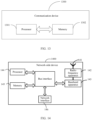
- an embodiment of this application further provides a communication device 1300, including a processor 1301, a memory 1302, a program or instructions stored in the memory 1302 and capable of running on the processor 1301.
- a communication device 1300 including a processor 1301, a memory 1302, a program or instructions stored in the memory 1302 and capable of running on the processor 1301.
- the program or the instructions are executed by the processor 1301 to implement processes of the foregoing device discovery and registration method embodiments, with the same technical effects achieved.
- the communication device 1300 is a network-side device
- the program or the instructions are executed by the processor 1301 to implement processes of the foregoing device discovery and registration method embodiments, with the same technical effects achieved. To avoid repetition, details are not described herein again.
- the network device 1400 includes an antenna 141, a radio frequency apparatus 142, and a baseband apparatus 143.
- the antenna 141 is connected to the radio frequency apparatus 142.
- the radio frequency apparatus 142 receives information by using the antenna 141, and transmits the received information to the baseband apparatus 143 for processing.
- the baseband apparatus 143 processes to-be-transmitted information, and transmits the information to the radio frequency apparatus 142; and the radio frequency apparatus 142 processes the received information and then transmits the information by using the antenna 141.
- a frequency band processing apparatus may be located in the baseband apparatus 143.
- the method performed by the network-side device in the foregoing embodiment may be implemented by the baseband apparatus 143, and the baseband apparatus 143 includes a processor 144 and a memory 145.
- the baseband apparatus 143 may include, for example, at least one baseband processing unit, where a plurality of chips are disposed on the baseband processing unit. As shown in FIG. 14 , one of the chips is, for example, the processor 144, and connected to the memory 145, to invoke the program in the memory 145 to perform the operations of the network device shown in the foregoing method embodiments.
- the baseband apparatus 143 may further include a network interface 146, configured to exchange information with the radio frequency apparatus 142, where the interface is, for example, a common public radio interface (common public radio interface, CPRI).
- a network interface 146 configured to exchange information with the radio frequency apparatus 142, where the interface is, for example, a common public radio interface (common public radio interface, CPRI).
- CPRI common public radio interface
- the network-side device in this embodiment of the present invention further includes instructions or a program stored in the memory 145 and capable of running on the processor 144.
- the processor 144 invokes the instructions or program in the memory 145 to perform the methods executed by the modules shown in FIG. 9 to FIG. 12 , with the same technical effect achieved. To avoid repetition, details are not described herein again.
- An embodiment of this application further provides a readable storage medium, where the readable storage medium stores a program or instructions, and when the program or instructions are executed by a processor, the processes of the foregoing device discovery and registration method embodiments are implemented, with the same technical effects achieved. To avoid repetition, details are not described herein again.
- the processor is a processor in the terminal in the foregoing embodiment.
- the readable storage medium includes a computer-readable storage medium such as a computer read-only memory (Read-Only Memory, ROM), a random access memory (Random Access Memory, RAM), a magnetic disk, or an optical disc.
- An embodiment of this application further provides a chip, where the chip includes a processor and a communication interface, the communication interface is coupled to the processor, and the processor is configured to run a program or instructions of a network-side device to implement processes of the foregoing device discovery and registration method embodiments, with the same technical effects achieved. To avoid repetition, details are not described herein again.
- the chip mentioned in this embodiment of this application may also be referred to as a system-level chip, a system chip, a chip system, or a system-on-chip.
- a module, a unit, a sub-module, a sub-unit, or the like may be implemented in one or more application-specific integrated circuits (Application Specific Integrated Circuits, ASIC), digital signal processors (Digital Signal Processor, DSP), digital signal processing devices (DSP Device, DSPD), programmable logic devices (Programmable Logic Device, PLD), field-programmable gate arrays (Field-Programmable Gate Array, FPGA), general-purpose processors, controllers, microcontrollers, microprocessors, and other electronic units for performing the functions described in this application, or a combination thereof.
- ASIC Application Specific Integrated Circuits
- DSP Digital Signal Processor
- DSP Device digital signal processing devices
- PLD programmable logic devices
- FPGA field-programmable gate array
- general-purpose processors controllers, microcontrollers, microprocessors, and other electronic units for performing the functions described in this application, or a combination thereof.
- the scope of the method and apparatus in the embodiments of this application is not limited to performing a function in a sequence shown or discussed, and may further include performing a function in a basically simultaneous manner or in a reverse sequence based on a function involved.
- the described method may be performed in a different sequence, and various steps may be added, omitted, or combined.
- features described with reference to some examples may be combined in other examples.
- the software product is stored in a storage medium (for example, ROM/RAM, a magnetic disk, or an optical disc), and includes several instructions for instructing a terminal (which may be a mobile phone, a computer, a server, an air conditioner, a network device, or the like) to perform the method described in the embodiments of this application.
- a storage medium for example, ROM/RAM, a magnetic disk, or an optical disc
- a terminal which may be a mobile phone, a computer, a server, an air conditioner, a network device, or the like
Landscapes
- Engineering & Computer Science (AREA)
- Computer Networks & Wireless Communication (AREA)
- Signal Processing (AREA)
- Databases & Information Systems (AREA)
- Computer Security & Cryptography (AREA)
- Mobile Radio Communication Systems (AREA)
Applications Claiming Priority (2)
| Application Number | Priority Date | Filing Date | Title |
|---|---|---|---|
| CN202010808820.9A CN114143701B9 (zh) | 2020-08-12 | 2020-08-12 | 设备的查找和注册方法、网络侧设备 |
| PCT/CN2021/112073 WO2022033520A1 (zh) | 2020-08-12 | 2021-08-11 | 设备的查找和注册方法、网络侧设备 |
Publications (2)
| Publication Number | Publication Date |
|---|---|
| EP4199545A1 true EP4199545A1 (de) | 2023-06-21 |
| EP4199545A4 EP4199545A4 (de) | 2023-12-27 |
Family
ID=80246972
Family Applications (1)
| Application Number | Title | Priority Date | Filing Date |
|---|---|---|---|
| EP21855571.2A Pending EP4199545A4 (de) | 2020-08-12 | 2021-08-11 | Vorrichtungssuch- und -registrierungsverfahren und netzwerkseitige vorrichtung |
Country Status (5)
| Country | Link |
|---|---|
| US (1) | US20230199468A1 (de) |
| EP (1) | EP4199545A4 (de) |
| JP (1) | JP7526876B2 (de) |
| CN (1) | CN114143701B9 (de) |
| WO (1) | WO2022033520A1 (de) |
Families Citing this family (2)
| Publication number | Priority date | Publication date | Assignee | Title |
|---|---|---|---|---|
| CN113573326B (zh) * | 2020-04-28 | 2023-08-22 | 华为技术有限公司 | 一种地址获取方法及装置 |
| CN116828445A (zh) * | 2022-03-28 | 2023-09-29 | 维沃移动通信有限公司 | 网元注册方法、模型确定方法、装置、网元、通信系统及存储介质 |
Family Cites Families (10)
| Publication number | Priority date | Publication date | Assignee | Title |
|---|---|---|---|---|
| US10531420B2 (en) * | 2017-01-05 | 2020-01-07 | Huawei Technologies Co., Ltd. | Systems and methods for application-friendly protocol data unit (PDU) session management |
| WO2019001376A1 (en) * | 2017-06-28 | 2019-01-03 | Telefonaktiebolaget Lm Ericsson (Publ) | EXPOSURE OF DYNAMIC DATA NF TO NRF IN A 5G CENTRAL NETWORK |
| CN110167003B (zh) * | 2018-01-12 | 2023-10-20 | 华为技术有限公司 | 会话管理方法、设备及系统 |
| US10999787B2 (en) * | 2018-02-17 | 2021-05-04 | Huawei Technologies Co., Ltd. | System and method for UE context and PDU session context management |
| WO2019197426A1 (en) * | 2018-04-10 | 2019-10-17 | NEC Laboratories Europe GmbH | System and method of application function influence on traffic routing in enhanced topology of smf and upf in 5g networks |
| CN110719303B (zh) * | 2018-07-11 | 2021-03-12 | 大唐移动通信设备有限公司 | 一种容器化nrf的方法及系统 |
| CN110769412B (zh) * | 2018-07-26 | 2021-06-25 | 中国移动通信有限公司研究院 | 会话绑定方法、网络发现功能、应用功能及网络单元 |
| CN110972090B (zh) * | 2018-09-29 | 2022-04-15 | 中兴通讯股份有限公司 | Pcf+pcrf选择方法、amf、bsf及存储介质 |
| CN110086652B (zh) * | 2019-03-25 | 2023-04-18 | 北京天地互连信息技术有限公司 | 一种针对5g核心网中服务网元的管理系统及其方法 |
| KR102876740B1 (ko) * | 2020-01-08 | 2025-10-27 | 삼성전자주식회사 | 무선 통신 시스템에서 엣지 컴퓨팅 서비스를 지원하기 위한 장치 및 방법 |
-
2020
- 2020-08-12 CN CN202010808820.9A patent/CN114143701B9/zh active Active
-
2021
- 2021-08-11 EP EP21855571.2A patent/EP4199545A4/de active Pending
- 2021-08-11 WO PCT/CN2021/112073 patent/WO2022033520A1/zh not_active Ceased
- 2021-08-11 JP JP2023509449A patent/JP7526876B2/ja active Active
-
2023
- 2023-02-09 US US18/107,719 patent/US20230199468A1/en active Pending
Also Published As
| Publication number | Publication date |
|---|---|
| JP2023539805A (ja) | 2023-09-20 |
| US20230199468A1 (en) | 2023-06-22 |
| EP4199545A4 (de) | 2023-12-27 |
| JP7526876B2 (ja) | 2024-08-01 |
| CN114143701B (zh) | 2023-03-03 |
| CN114143701A (zh) | 2022-03-04 |
| WO2022033520A1 (zh) | 2022-02-17 |
| CN114143701B9 (zh) | 2023-05-19 |
Similar Documents
| Publication | Publication Date | Title |
|---|---|---|
| EP4380131A1 (de) | Verfahren und vorrichtung zur erfassung eines edge-dienstes | |
| US11943638B2 (en) | Service area definition at network slicing | |
| US20230054244A1 (en) | Network migration method and apparatus, communications device, and communications system | |
| EP3843460B1 (de) | Funkzugangsteuerungsverfahren, -vorrichtung und -system | |
| CN111133831B (zh) | 通信的方法、介质以及用户设备和辅基站中的装置 | |
| EP3322243B1 (de) | Vorrichtung-zu-vorrichtung-kommunikationsverfahren und -system | |
| JP7493622B2 (ja) | データ転送のサポート | |
| EP2712262A1 (de) | Netzwerkverbindungsverfahren und vorrichtung damit für einen relaisknoten | |
| US20240129089A1 (en) | Positioning method and apparatus, and related device | |
| US20230199468A1 (en) | Device discovery and registration method and network-side device | |
| CN108293259A (zh) | 一种nas消息处理、小区列表更新方法及设备 | |
| CN112771933A (zh) | 第一无线设备、第一网络节点、第二无线设备以及由其执行的用于确定小区的状态的方法 | |
| US8451779B2 (en) | Emergency support for voice over internet protocol (VoIP) over mixed macro and femto networks | |
| WO2023030945A2 (en) | Data synchronization between active and standby nodes for service continuity | |
| CN112368976B (zh) | 用于执行组通信的终端和方法 | |
| US20250126593A1 (en) | Information transmission method and apparatus, and device | |
| EP3060008A1 (de) | Steuerung der entdeckbarkeit | |
| US11265785B2 (en) | Method and apparatus for identifying user device | |
| US20220039018A1 (en) | Terminal device management method and apparatus | |
| WO2024165342A1 (en) | Conditional reconfiguration handling during musim operation in wireless networks | |
| WO2024060077A1 (en) | Method and apparatus for integrated sensing and communication | |
| EP4228373A1 (de) | Kommunikationsanzeigeverfahren und -vorrichtung sowie netzwerkseitige vorrichtung | |
| WO2018171866A1 (en) | Neighbor relationship mechanism for lte-new radio interworking for wireless networks | |
| WO2016162047A1 (en) | Facilitating effective isolated wireless network operation | |
| US20260046359A1 (en) | Routing emergency calls based on authentication ability of public safety answering points |
Legal Events
| Date | Code | Title | Description |
|---|---|---|---|
| STAA | Information on the status of an ep patent application or granted ep patent |
Free format text: STATUS: THE INTERNATIONAL PUBLICATION HAS BEEN MADE |
|
| PUAI | Public reference made under article 153(3) epc to a published international application that has entered the european phase |
Free format text: ORIGINAL CODE: 0009012 |
|
| STAA | Information on the status of an ep patent application or granted ep patent |
Free format text: STATUS: REQUEST FOR EXAMINATION WAS MADE |
|
| 17P | Request for examination filed |
Effective date: 20230215 |
|
| AK | Designated contracting states |
Kind code of ref document: A1 Designated state(s): AL AT BE BG CH CY CZ DE DK EE ES FI FR GB GR HR HU IE IS IT LI LT LU LV MC MK MT NL NO PL PT RO RS SE SI SK SM TR |
|
| DAV | Request for validation of the european patent (deleted) | ||
| DAX | Request for extension of the european patent (deleted) | ||
| A4 | Supplementary search report drawn up and despatched |
Effective date: 20231124 |
|
| RIC1 | Information provided on ipc code assigned before grant |
Ipc: H04W 8/00 20090101ALI20231120BHEP Ipc: H04W 4/02 20180101AFI20231120BHEP |
|
| STAA | Information on the status of an ep patent application or granted ep patent |
Free format text: STATUS: EXAMINATION IS IN PROGRESS |
|
| 17Q | First examination report despatched |
Effective date: 20250103 |