EP4380131A1 - Verfahren und vorrichtung zur erfassung eines edge-dienstes - Google Patents
Verfahren und vorrichtung zur erfassung eines edge-dienstes Download PDFInfo
- Publication number
- EP4380131A1 EP4380131A1 EP22851924.5A EP22851924A EP4380131A1 EP 4380131 A1 EP4380131 A1 EP 4380131A1 EP 22851924 A EP22851924 A EP 22851924A EP 4380131 A1 EP4380131 A1 EP 4380131A1
- Authority
- EP
- European Patent Office
- Prior art keywords
- network element
- dns
- information
- discovery function
- server discovery
- Prior art date
- Legal status (The legal status is an assumption and is not a legal conclusion. Google has not performed a legal analysis and makes no representation as to the accuracy of the status listed.)
- Pending
Links
Images



Classifications
-
- H—ELECTRICITY
- H04—ELECTRIC COMMUNICATION TECHNIQUE
- H04L—TRANSMISSION OF DIGITAL INFORMATION, e.g. TELEGRAPHIC COMMUNICATION
- H04L61/00—Network arrangements, protocols or services for addressing or naming
- H04L61/45—Network directories; Name-to-address mapping
- H04L61/4505—Network directories; Name-to-address mapping using standardised directories; using standardised directory access protocols
- H04L61/4511—Network directories; Name-to-address mapping using standardised directories; using standardised directory access protocols using domain name system [DNS]
-
- H—ELECTRICITY
- H04—ELECTRIC COMMUNICATION TECHNIQUE
- H04L—TRANSMISSION OF DIGITAL INFORMATION, e.g. TELEGRAPHIC COMMUNICATION
- H04L47/00—Traffic control in data switching networks
- H04L47/10—Flow control; Congestion control
-
- H—ELECTRICITY
- H04—ELECTRIC COMMUNICATION TECHNIQUE
- H04L—TRANSMISSION OF DIGITAL INFORMATION, e.g. TELEGRAPHIC COMMUNICATION
- H04L61/00—Network arrangements, protocols or services for addressing or naming
- H04L61/45—Network directories; Name-to-address mapping
- H04L61/4541—Directories for service discovery
-
- H—ELECTRICITY
- H04—ELECTRIC COMMUNICATION TECHNIQUE
- H04L—TRANSMISSION OF DIGITAL INFORMATION, e.g. TELEGRAPHIC COMMUNICATION
- H04L67/00—Network arrangements or protocols for supporting network services or applications
- H04L67/50—Network services
- H04L67/51—Discovery or management thereof, e.g. service location protocol [SLP] or web services
Definitions
- This application relates to the communication field, and more specifically, to an edge service obtaining method and apparatus.
- a terminal device To use an edge service, a terminal device first needs to obtain address information of an edge application server (edge application server, EAS) by using a DNS-based service discovery mechanism.
- the terminal device performs the following steps to obtain the address information of the EAS.
- the terminal device sends a DNS query request including identification information of the EAS to an edge application server discovery function (edge application server discovery function, EASDF) network element, to obtain the address information of the EAS.
- EASDF sends the DNS query request to a DNS server to obtain a DNS response corresponding to the service, and sends a DNS information report to an SMF based on the response, and accordingly the SMF completes establishment of a data plane path of the terminal device.
- the EASDF sends the DNS response including the address information of the EAS to the terminal device.
- a same edge service may involve more than one piece of EAS identification information. Therefore, when accessing a service, a terminal device sends a plurality of DNS query requests, and an EASDF sends the plurality of DNS query requests to a DNS server and receives a plurality of DNS responses. The plurality of DNS responses may trigger the EASDF to send a plurality of DNS information reports to an SMF, and accordingly the SMF completes establishment of a data plane path of the terminal device. Because EASs in the returned DNS responses usually belong to a same data network (data network, DN), the SMF only needs to complete establishment of a data plane path of the terminal device once. Therefore, an existing edge service obtaining method may cause a waste of signaling resources.
- data network data network
- This application provides an edge service obtaining method and apparatus, to reduce signaling overheads in a process of obtaining an edge service.
- an edge service obtaining method includes: receiving, by a server discovery function network element, a plurality of DNS response messages sent by a DNS server, where the plurality of DNS response messages include address information of EASs to be queried by a terminal device; and determining, by the server discovery function network element based on first indication information, to send a DNS information report to a first core network element once for the plurality of DNS response messages.
- the server discovery function network element may receive a plurality of DNS response messages including address information of a plurality of EASs that corresponds to a same data network.
- the server discovery function network element may determine, based on the first indication information, to send a DNS information report to the first core network element only once for the plurality of DNS response messages. This can reduce signaling overheads generated when the address information of the plurality of EASs is queried.
- the first core network element is a session management function network element
- the server discovery function network element is an edge application server discovery function network element
- the first indication information includes correspondence information between a network address and identification information of a data network.
- the server discovery function network element determines, based on the first indication information and the address information of the EASs in the plurality of DNS response messages, that the EASs to be queried correspond to same data network identification information; and the server discovery function network element reports, to the first core network element once, a DNS information report corresponding to one of the plurality of DNS response messages.
- the server discovery function network element buffers the plurality of DNS response messages; the server discovery function network element receives second indication information sent by the first core network element, where the second indication information includes a handling rule for the plurality of DNS response messages; and the server discovery function network element determines, based on the second indication information, to send the plurality of DNS response messages to the terminal device.
- the method before the server discovery function network element receives the plurality of DNS response messages sent by the DNS server, the method further includes: receiving, by the server discovery function network element, the first indication information sent by the first core network element.
- the identification information of the data network includes at least one of the following information: a data network access identifier DNAI of the data network and a data network name DNN of the data network.
- an edge service obtaining method includes: sending, by a first core network element, first indication information to a server discovery function network element, where the first indication information indicates the server discovery function network element to send a DNS information report to the first core network element once for a plurality of DNS response messages, and the plurality of DNS response messages include address information of EASs to be queried by a terminal device; and receiving, by the first core network element, the DNS information report.
- the server discovery function network element may receive a plurality of DNS query messages, and the plurality of DNS query messages may include identification information of a plurality of EASs that corresponds to a same data network.
- the server discovery function network element may determine, based on the third indication information, to send a DNS information report to the first core network element only once for the plurality of DNS query messages. This can reduce signaling overheads generated when address information of the plurality of EASs is queried.
- the first indication information includes correspondence information between a network address and identification information of a data network.
- the first core network element sends second indication information to the server discovery function network element, where the second indication information includes a handling rule for the plurality of DNS response messages, so that the server discovery function network element determines, based on the second indication information, to send the plurality of DNS response messages to the terminal device.
- the identification information of the data network includes at least one of the following information: a data network access identifier DNAI of the data network and a data network name DNN of the data network.
- an edge service obtaining method includes: receiving, by a server discovery function network element, a plurality of DNS query messages from a terminal device, where the plurality of DNS query messages are for querying address information of EASs; and determining, by the server discovery function network element based on third indication information, to send a DNS information report to a first core network element once for the plurality of DNS query messages.
- the third indication information includes correspondence information between identification information of the EASs and identification information of a data network.
- the server discovery function network element determines, based on first indication information, that the plurality of DNS query messages correspond to same data network identification information; and the server discovery function network element reports, to the first core network element once, a DNS information report corresponding to one of the plurality of DNS query messages.
- the server discovery function network element buffers the plurality of DNS query messages; the server discovery function network element receives fourth indication information from the first core network element, where the fourth indication information includes a handling rule for the plurality of DNS query messages; and the server discovery function network element determines, based on the fourth indication information, to send the plurality of DNS query messages to a DNS server.
- the server discovery function network element receives the third indication information sent by the first core network element.
- the identification information of the EASs includes at least one of the following information: uniform resource identifiers URIs of the EASs, instance identifiers of the EASs, or fully qualified domain names FQDNs of the EASs.
- the identification information of the data network includes at least one of the following information: a data network access identifier DNAI and a data network name DNN.
- an edge service obtaining method includes: sending, by a first core network element, third indication information to a server discovery function network element, where the third indication information indicates the server discovery function network element to send a DNS information report to the first core network element once for a plurality of DNS query messages, and the plurality of DNS query messages are for querying address information of EASs; and receiving, by the first core network element, the DNS information report.
- the third indication information includes correspondence information between identification information of the EASs and identification information of a data network.
- the first core network element sends fourth indication information to the server discovery function network element, where the fourth indication information includes a handling rule for the plurality of DNS query messages, and the handling rule includes building a client subnet option for the plurality of DNS query messages.
- the identification information of the EASs includes at least one of the following information: uniform resource identifiers URIs of the EASs, instance identifiers of the EASs, or fully qualified domain names FQDNs of the EASs.
- the identification information of the data network includes at least one of the following information: a data network access identifier DNAI and a data network name DNN.
- an edge service obtaining apparatus includes: a transceiver unit, where the transceiver unit is configured to receive a plurality of DNS response messages sent by a DNS server, where the plurality of DNS response messages include address information of EASs to be queried by a terminal device; and a processing unit, where the processing unit is configured to determine, based on first indication information, to send a DNS information report to a first core network element once for the plurality of DNS response messages.
- the first core network element is a session management function network element.
- the first indication information includes correspondence information between a network address and identification information of a data network.
- the processing unit is specifically configured to determine, based on the first indication information and the plurality of DNS response messages, that the EASs to be queried correspond to same data network identification information.
- the transceiver unit is specifically configured to report, to the first core network element once, a DNS information report corresponding to one of the plurality of DNS response messages.
- the apparatus further includes a storage unit.
- the storage unit is configured to buffer the plurality of DNS response messages.
- the transceiver unit is specifically configured to receive second indication information sent by the first core network element, where the second indication information includes a handling rule for the plurality of DNS response messages.
- the processing unit is specifically configured to determine, based on the second indication information, to send the plurality of DNS response messages to the terminal device.
- the transceiver unit is further configured to receive the first indication information sent by the first core network element.
- the identification information of the data network includes at least one of the following information: a data network access identifier DNAI of the data network and a data network name DNN of the data network.
- an edge service obtaining apparatus includes: a transceiver unit, configured to send first indication information to a server discovery function network element, where the first indication information indicates the server discovery function network element to send a DNS information report to a first core network element once for a plurality of DNS response messages, and the plurality of DNS response messages include address information of EASs to be queried by a terminal device.
- the transceiver unit is further configured to receive the DNS information report.
- the first indication information includes correspondence information between a network address and identification information of a data network.
- the transceiver unit is further configured to send second indication information to the server discovery function network element, where the second indication information includes a handling rule for the plurality of DNS response messages, so that the server discovery function network element determines, based on the second indication information, to send the plurality of DNS response messages to the terminal device.
- the identification information of the data network includes at least one of the following information: a data network access identifier DNAI of the data network and a data network name DNN of the data network.
- an edge service obtaining apparatus includes: a transceiver unit, configured to receive a plurality of DNS query messages from a terminal device, where the plurality of DNS query messages are for querying address information of EASs; and a processing unit, configured to determine, based on third indication information, to send a DNS information report to a first core network element once for the plurality of DNS query messages.
- the third indication information includes correspondence information between identification information of the EASs and identification information of a data network.
- the processing unit is specifically configured to determine, based on first indication information, that the plurality of DNS query messages correspond to same data network identification information.
- the transceiver unit is further configured to report, to the first core network element once, a DNS information report corresponding to one of the plurality of DNS query messages.
- the apparatus further includes a storage unit, configured to buffer the plurality of DNS query messages.
- the transceiver unit is further configured to receive fourth indication information sent by the first core network element, where the fourth indication information includes a handling rule for the plurality of DNS query messages.
- the processing unit is specifically configured to determine, based on the fourth indication information, to send the plurality of DNS query messages to a DNS server.
- the transceiver unit is specifically configured to receive the third indication information sent by the first core network element.
- the identification information of the EASs includes at least one of the following information: uniform resource identifiers URIs of the EASs, instance identifiers of the EASs, or fully qualified domain names FQDNs of the EASs.
- the identification information of the data network includes at least one of the following information: a data network access identifier DNAI and a data network name DNN.
- an edge service obtaining apparatus includes: a transceiver unit, configured to send third indication information to a server discovery function network element, where the third indication information indicates the server discovery function network element to send a DNS information report to a first core network element once for a plurality of DNS query messages, and the plurality of DNS query messages are for querying address information of EASs.
- the transceiver unit is further configured to receive the DNS information report.
- the third indication information includes correspondence information between identification information of the EASs and identification information of a data network.
- the transceiver unit is further configured to send fourth indication information to the server discovery function network element, where the fourth indication information includes a handling rule for the plurality of DNS query messages, and the handling rule includes building a client subnet option for the plurality of DNS query messages.
- the identification information of the EASs includes at least one of the following information: uniform resource identifiers URIs of the EASs, instance identifiers of the EASs, or fully qualified domain names FQDNs of the EASs.
- the identification information of the data network includes at least one of the following information: a data network access identifier DNAI and a data network name DNN.
- an edge service obtaining apparatus may be a server discovery function network element, or the apparatus may be a chip.
- the apparatus has a function of implementing the server discovery function network element in any one of the first aspect, the third aspect, or the possible implementation of the first aspect or the third aspect.
- the function may be implemented by hardware, or may be implemented by hardware executing corresponding software.
- the hardware or the software includes one or more modules or units corresponding to the foregoing function.
- an edge service obtaining apparatus may be a first core network element, for example, a session management function network element, or the apparatus may be a chip.
- the apparatus has a function of implementing the first core network element in any one of the second aspect, the fourth aspect, or the possible implementation of the second aspect or the fourth aspect.
- the function may be implemented by hardware, or may be implemented by hardware executing corresponding software.
- the hardware or the software includes one or more modules or units corresponding to the foregoing function.
- an edge service obtaining apparatus includes a processor.
- the processor is coupled to a memory, and may be configured to execute instructions in the memory, to implement a function of the server discovery function network element in any one of the first aspect, the third aspect, or the possible implementations of the first aspect or the third aspect.
- the apparatus further includes the memory.
- the apparatus further includes a communication interface, and the processor is coupled to the communication interface.
- an edge service obtaining apparatus includes a processor.
- the processor is coupled to a memory, and may be configured to execute instructions in the memory, to implement a function of the second network element in any one of the second aspect, the fourth aspect, or the possible implementations of the second aspect or the fourth aspect.
- the second network element may be, for example, a mobility management network element.
- the apparatus further includes the memory.
- the apparatus further includes a communication interface, and the processor is coupled to the communication interface.
- the apparatus is a first core network element, for example, an SMF.
- the communication interface may be a transceiver or an input/output interface.
- the apparatus is a chip disposed in an SMF network element.
- the communication interface may be an input/output interface.
- the transceiver may be a transceiver circuit.
- the input/output interface may be an input/output circuit.
- a processor including an input circuit, an output circuit, and a processing circuit.
- the processing circuit is configured to: receive a signal via the input circuit, and transmit a signal via the output circuit, so that the processor is enabled to perform the method according to any one of the first aspect to the fourth aspect or the possible implementations of the first aspect to the fourth aspect.
- the processor may be a chip
- the input circuit may be an input pin
- the output circuit may be an output pin
- the processing circuit may be a transistor, a gate circuit, a trigger, various logic circuits, or the like.
- An input signal received by the input circuit may be received and input by a receiver, a signal output by the output circuit may be output to a transmitter and transmitted by the transmitter, and the input circuit and the output circuit may be a same circuit, where the circuit is used as the input circuit and the output circuit at different moments.
- Specific implementations of the processor and the various circuits are not limited in embodiments of this application.
- an apparatus including a processor and a memory.
- the processor is configured to read instructions stored in the memory, and may receive a signal by using a receiver, and transmit a signal by using a transmitter, to perform the method according to any one of the first aspect to the fourth aspect or the possible implementations of the first aspect to the fourth aspect.
- processors there are one or more processors, and there are one or more memories.
- the memory may be integrated with the processor, or the memory and the processor are separately disposed.
- the memory may be a non-transitory (non-transitory) memory, such as a read-only memory (read-only memory, ROM).
- ROM read-only memory
- the memory and the processor may be integrated into one chip, or may be separately disposed in different chips.
- a type of the memory and a manner in which the memory and the processor are disposed are not limited in this embodiment of this application.
- a related data exchange process such as sending of indication information may be a process of outputting the indication information from the processor, and receiving of capability information may be a process of receiving the input capability information by the processor.
- data output by the processor may be output to a transmitter, and input data received by the processor may be from a receiver.
- the transmitter and the receiver may be collectively referred to as a transceiver.
- the apparatus in the fourteenth aspect may be a chip.
- the processor may be implemented by using hardware or software.
- the processor may be a logic circuit, an integrated circuit, or the like.
- the processor may be a general-purpose processor, and is implemented by reading software code stored in the memory.
- the memory may be integrated into the processor, or may exist independently of the processor.
- a computer program product includes a computer program (which may also be referred to as code or instructions).
- a computer program which may also be referred to as code or instructions.
- a computer-readable medium stores a computer program (which may also be referred to as code or instructions).
- the computer program When the computer program is run on a computer, the computer is enabled to perform the method according to any one of the first aspect to the fourth aspect or the possible implementations of the first aspect to the fourth aspect.
- a chip system including a processor, configured to invoke a computer program from a memory and run the computer program, so that a device on which the chip system is installed performs the method according to any one of the first aspect to the fourth aspect or the possible implementations of the first aspect to the fourth aspect.
- a wireless communication system mentioned in embodiments of this application includes but is not limited to a global system for mobile communications (global system for mobile communications, GSM) system, a long term evolution (long term evolution, LTE) frequency division duplex (frequency division duplex, FDD) system, an LTE time division duplex (time division duplex, TDD) system, an LTE system, a long term evolution-advanced (LTE-Advanced, LTE-A) system, a next-generation communication system (for example, a 6G communication system), a system integrating a plurality of access systems, or an evolved system.
- GSM global system for mobile communications
- LTE long term evolution
- FDD frequency division duplex
- TDD time division duplex
- LTE-A long term evolution-advanced
- LTE-A next-generation communication system
- a next-generation communication system for example, a 6G communication system
- a system integrating a plurality of access systems or an evolved system.
- the technical solutions provided in this application may be further applied to machine type communication (machine type communication, MTC), long term evolution for machine to machine (LTE for M2M, LTE-M) communication, a device to device (device to device, D2D) network, a machine to machine (machine to machine, M2M) network, an internet of things (internet of things, IoT) network, or another network.
- the IoT network may include, for example, an internet of vehicles. Communication modes in the internet of vehicles system are collectively referred to as vehicle to X (vehicle to X, V2X, where X may represent anything).
- V2X may include vehicle to vehicle (vehicle to vehicle, V2V) communication, vehicle to infrastructure (vehicle to infrastructure, V2I) communication, vehicle to pedestrian (vehicle to pedestrian, V2P) communication, or vehicle to network (vehicle to network, V2N) communication.
- V2V vehicle to vehicle
- V2I vehicle to infrastructure
- V2P vehicle to pedestrian
- V2N vehicle to network
- a terminal device in embodiments of this application may include various access terminals, mobile devices, user terminals, or user apparatuses that have a wireless communication function.
- the terminal device may be user equipment (user equipment, UE), such as a mobile phone (mobile phone), a tablet computer (Pad), a computer with a wireless transceiver function, a virtual reality (virtual reality, VR) terminal device, or an augmented reality (augmented reality, AR) terminal device.
- UE user equipment
- UE user equipment
- UE user equipment
- UE user equipment
- UE user equipment
- VR virtual reality
- AR augmented reality
- the terminal device may alternatively be a wireless terminal in industrial control (industrial control), a machine type communication (machine type communication, MTC) terminal, customer premise equipment (customer premise equipment, CPE), a wireless terminal in self-driving (self-driving), a wireless terminal in remote medical (remote medical), a wireless terminal in a smart grid (smart grid), a wireless terminal in transportation safety (transportation safety), a wireless terminal in a smart city (smart city), a wireless terminal in a smart home (smart home), a cellular phone, a cordless phone, a session initiation protocol (session initiation protocol, SIP) phone, a wireless local loop (wireless local loop, WLL) station, a personal digital assistant (personal digital assistant, PDA), a handheld device or a computing device with a wireless communication function, another processing device, vehicle-mounted device, or wearable device connected to a wireless modem, a terminal device in a 5G network, or a terminal device in a future evolved public land mobile
- FIG. 1 and FIG. 2 the following describes in detail a network system architecture and an edge service architecture in the architecture in embodiments of this application.
- FIG. 1 is a schematic block diagram of an example of a wireless communication system architecture to which this application is applicable. As shown in the figure, the system architecture may specifically include the following network elements:
- the foregoing network architecture further includes: a network slice selection function network element (network slice selection function, NSSF), configured to manage information related to network slices; and a network repository function network element (network repository function, NRF), configured to store network function profile of NF entities and their supported services, and support functions such as service discovery and network element entity discovery.
- NSSF network slice selection function
- NRF network repository function
- an N2 interface is an interface between the RAN and the AMF network element, and is for sending a non-access stratum (non-access stratum, NAS) message and the like
- an N3 interface is an interface between the RAN and the UPF network element, and is for transmitting user plane data and the like
- an N4 interface is an interface between the SMF network element and the UPF network element, and is for transmitting information such as tunnel identification information of an N3 connection, data buffer indication information, and a downlink data notification message.
- network elements or the functions may be network elements in a hardware device, software functions running on dedicated hardware, or virtualized functions instantiated on a platform (for example, a cloud platform).
- an access management function network element is an AMF network element
- a session management network element is an SMF network element
- a policy control network element is a PCF network element in this application.
- the AMF network element is briefly referred to as an AMF
- the SMF network element is briefly referred to as an SMF
- the PCF network element is briefly referred to as a PCF.
- all AMFs may be replaced with access management function network elements
- all SMFs may be replaced with session management network elements
- all PCFs may be replaced with policy control network elements.
- an edge service obtaining method is described by using an example in which an apparatus is an AMF entity, an SMF entity, or a PCF entity.
- an implementation method in which the apparatus is a chip in an AMF entity, a chip in an SMF entity, or a chip in a PCF entity refer to specific descriptions about the method in which the apparatus is the AMF entity, the SMF entity, or the PCF entity. Details are not repeated.
- the UE is connected to the AMF through an N1 interface
- the RAN is connected to the AMF through an N2 interface
- the RAN is connected to the UPF through an N3 interface.
- UPFs are connected to each other through an N9 interface, and the UPF is interconnected to the data network (data network, DN) through an N6 interface.
- the SMF controls the UPF through the N4 interface.
- N1, N2, N3, N4, and the like are interface sequence numbers.
- meanings of these interface sequence numbers refer to the meanings defined in current standard protocols, which is not limited herein.
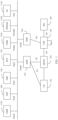
- FIG. 2 is a schematic diagram of a system architecture or a scenario to which an embodiment of this application is applied.
- the system may also be considered as support for edge computing (edge computing) in the foregoing network architecture.
- the system architecture includes an edge application server (edge application server, EAS).
- the EAS is an edge application server deployed in an edge data network (edge data network, EDN), and may also be referred to as an edge application (server), an application instance, an edge application instance, a multi-access edge computing (multi-access edge computing, MEC) application (server), an EAS function, or the like.
- the edge application may also be referred to as an "application instance", and is specifically an instance (instance) of a server application program (for example, social media software, augmented reality (augmented reality, AR), or virtual reality (virtual reality, VR)) that is deployed and runs in the EDN.
- One or more EASs may be deployed for one application in one or more EDNs.
- EASs deployed and running in different EDNs may be considered as different EASs of one application.
- the EASs may share one domain name, or may use domain names different from that of an application deployed on cloud, where the domain name may be a fully qualified domain name (fully qualified domain name, FQDN); and may use one anycast internet protocol (internet protocol, IP) address, or may use different IP addresses.
- IP internet protocol
- the edge data network may be a local (local) data network.
- the local DN may be identified by a data network access identifier (data network access identifier, DNAI) and a data network name (data network name, DNN), and is a logical network concept.
- the system architecture further includes an edge application server discovery function (edge application server discovery function, EASDF) network element.
- the EASDF may include one or more of the following functions: registering with an NRF for EASDF discovery and selection; and processing a domain name system (domain name system, DNS) message based on an indication of an SMF, including receiving a DNS message handling rule from the SMF, exchanging a DNS message from UE, and forwarding the DNS message to a central DNS (central DNS, C-DNS) resolver/server (resolver/server) or a local DNS (L-DNS) resolver/server for DNS query.
- the EASDF may further establish a user plane connection to a UPF through an N6 interface, to transmit DNS signaling exchanged with the UE.
- the EASDF can be directly connected to one or more local DNs.
- a DNS server (resolver/server) may be locally deployed by a 5GC operator or a third party including a local DN, and is configured to resolve a DNS query of the UE to an appropriate EAS IP address in the local DN.
- the DNS server can be deployed at different locations in the network as a central DNS (C-DNS) server or a local DNS (L-DNS) server.
- the L-DNS may or may not be connected to the C-DNS, depending on the deployment.
- the SMF may establish a plurality of protocol data unit (protocol data unit, PDU) sessions (sessions) to a same DN or different DNs.
- PDU protocol data unit
- the SMF can control PDU data routing so that the PDU sessions can have a plurality of N6 interfaces.
- a UPF connected to each N6 interface is referred to as a PDU session anchor (PDU session anchor, PSA) UPF.
- PSA PDU session anchor
- the SMF may insert an uplink classifier (uplink classifier, UL CL) into a data transmission path of each PDU session.
- a function of the UL CL is provided by a UPF, to forward a data packet that meets a service filtering rule to a designated path.
- the PDU session may have a plurality of PDU session anchors, providing a plurality of different paths to a same DN.
- the function of the UL CL may be transmitting uplink data to different PSAs, and combining downlink data to the UE.
- data corresponding to all PSAs may be aggregated to a common UPF, and the common UPF has a function of a branching point (branching point, BP).
- the branching point forwards uplink data to different PSAs in an uplink direction and combines downlink data from PSAs in a downlink direction.
- the UPF may represent a UPF that provides a UL CL function or a common UPF.
- the UPF may transmit uplink data to different PSAs, for example, a UPF (PSA2) and a UPF (PSA1), and combine downlink data to the UE.
- PSA2 a UPF
- PSA1 a UPF
- a terminal device needs to obtain an IP address of an EAS by using a DNS-based service discovery mechanism. As shown in FIG. 3 , the terminal device may obtain the IP address of the EAS in the following steps: S301. Perform a process of establishing a PDU session.
- the process of establishing the PDU session includes establishing a session of a user plane path between the UE and a UPF.
- a specific procedure is in a conventional technology. Details are not described herein.
- an SMF selects an EASDF.
- the SMF sends a DNS context create request (Neasdf_DNSContext_Create Request) to the selected EASDF.
- the DNS context create request may include an IP address of the terminal device, a callback URI, and a DNS message handling rule.
- the EASDF may create a DNS context for the PDU session based on the request message, and store the IP address of the UE, the callback URI, and the DNS message handling rule in the context.
- the EASDF sends a DNS context create response to the SMF.
- the SMF sends a DNS context update request (Neasdf_DNSContext_UpdateRequest) to the EASDF.
- the update request message may be triggered by mobility of the terminal device, or the update request message may be triggered by insertion or removal of a PSA.
- the update request message may include an EASDF context ID and the DNS message handling rule.
- the EASDF sends a DNS context update response to the SMF.
- the terminal device sends a DNS query message to the EASDF.
- the EASDF sends a DNS message report to the SMF by invoking a DNS context notify request (Neasdf_DNSContext_Notify Request).
- the SMF sends a DNS context notify response (Neasdf_DNSContext_Notify Response) to the EASDF.
- a DNS message handling rule for an FQDN received in the report needs to be updated, for example, update information is provided to build EDNS client subnet option (EDNS Client Subnet option, ECS) information, in S340, the SMF sends a DNS context update request (Neasdf_DNSContext_Update Request) to the EASDF.
- the update request may include the DNS message handling rule.
- the ECS (EDNS-Client-Subnet) is a new protocol supported by a DNS service. According to this protocol, an IP address of a user is added to a DNS request packet. In this way, the DNS server can return an IP address of a nearer server to the user based on the IP address of the user instead of an IP address of a recursive server, so that the user can access the nearer server.
- the EASDF sends a DNS context update response (Neasdf_DNSContext_Update Response) to the SMF.
- the EASDF handles the received DNS query message.
- the EASDF sends the DNS query request to the DNS server.
- the EASDF sends a DNS message report to the SMF by triggering a DNS context notify request (Neasdf_DNSContext_Notify request).
- the SMF sends a DNS context notify response (Neasdf_DNSContext_Notify Response) to the EASDF.
- the SMF may determine a DNAI and associated N6 traffic routing information of the DNAI.
- the SMF may perform selection and insertion of the UL CL/BP and a local PSA to complete establishment of a data plane path for the UE.
- the SMF may send a DNS context update request (Neasdf_DNSContext_Update Request) including the DNS message handling rule to the EASDF.
- a DNS context update request (Neasdf_DNSContext_Update Request) including the DNS message handling rule to the EASDF.
- the EASDF sends a DNS context update response (Neasdf_DNSContext_Update Response) to the SMF.
- the EASDF sends the DNS response message to the terminal device.
- a same edge service may involve more than one FQDN. Therefore, when accessing an edge service, a terminal device simultaneously sends a plurality of DNS query requests, and an EASDF sends a plurality of DNS query requests to a DNS server and receives a plurality of DNS responses. The plurality of DNS responses trigger the EASDF to send a plurality of DNS message reports to an SMF, so that the SMF selects a DNAI and inserts a UL CL/BP.
- EASs in the returned DNS responses usually belong to a same DN, a waste of signaling resources may be caused if the EASDF sends a plurality of DNS messages to the SMF.
- this application provides an edge service obtaining method.
- a server discovery function network element may determine a specific message sending policy based on indication information, to reduce signaling overheads in obtaining an edge service.
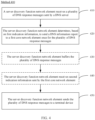
- FIG. 4 is a schematic block diagram of an edge service obtaining method 400 according to this application. The method includes at least the following several steps.
- a server discovery function network element receives a plurality of DNS response (DNS Response) messages sent by a DNS server.
- DNS Response DNS response
- the server discovery function network element may include an EASDF network element.
- the plurality of DNS response messages are responses to a plurality of DNS query (DNS Query) request messages sent by a terminal device.
- DNS Query DNS query
- the plurality of DNS response messages include address information of EASs to be queried by the terminal device.
- the address information of the EASs may include address information of a plurality of EASs for a same edge service, or the address information of the EASs may be address information of a plurality of EASs corresponding to different edge services.
- the server discovery function network element determines, based on first indication information, to send a DNS information report to a first core network element once for the plurality of DNS response messages.
- That the server discovery function network element determines, based on first indication information, to send a DNS information report to a first core network element once for the plurality of DNS response messages may include: The server discovery function network element reports, to the first core network element based on the first indication information, a DNS information report corresponding to one of the plurality of DNS response messages, where the DNS response messages may include, for example, the 1 st DNS response message received by the server discovery function network element.
- the first core network element may be a session management function network element, and the DNS information report is for triggering the session management function network element to send a handling rule for the plurality of DNS response messages.
- the first indication information may include a correspondence between network address information and a data network.
- the first indication information may include a correspondence table between network address information and identification information of a data network.
- the network address information may be an IP address
- the identification information of the data network may include a data network access identifier DNAI and/or a data network name DNN. It should be understood that a same edge service may correspond to identification information of different EASs, and the identification information of the different EASs may correspond to identification information of a same data network.
- the data network may be a local DN.
- identification information may be any other information that can be for obtaining edge server address information.
- the server discovery function network element receives the plurality of DNS response messages, where the plurality of DNS response messages include the address information of the EASs.
- the server discovery function network element may determine, based on the address information of the EASs and the correspondence between the network address information and the data network, a data network corresponding to the address information of the EASs. If the address information of the EASs corresponds to a same data network, the server discovery function network element determines to report a DNS information report once for the plurality of DNS response messages.
- the first indication information may be configured in the server discovery function network element, or the server discovery function network element may receive the first indication information sent by the first core network element.
- the server discovery function network element may receive the first indication information in a PDU session establishment process.
- the server discovery function network element receives a DNS context create request (Neasdf_DNSContext_Create Request) sent by the SMF, where the request message includes the first indication information.
- the server discovery function network element may receive the first indication information in a DNS context update procedure.
- the EASDF receives a DNS context update request (Neasdf_DNSContext_Update Request) sent by the SMF, where the update request includes the first indication information.
- the EASDF may receive the first indication information at any moment before the terminal device sends the DNS query requests.
- the method may further include S430: The server discovery function network element buffers the plurality of DNS response messages.
- the server discovery function network element may buffer the plurality of DNS response messages. Subsequently, the server discovery function network element may determine, based on the DNS handling rule sent by the first core network element, to send all or some of the plurality of DNS response messages to the terminal device.
- the method may further include S440: The server discovery function network element receives second indication information sent by the first core network element, where the second indication information includes the DNS handling rule for the plurality of DNS response messages.
- the DNS handling rule may indicate the server discovery function network element to send the plurality of buffered DNS response messages to the terminal device, or indicate the server discovery function network element to send a DNS response message for a specified EAS address range to the terminal device.
- the DNS handling rule may indicate the server discovery function network element not to buffer a first DNS response message following the plurality of DNS response messages, where the first DNS response message is also a response to the plurality of DNS query request messages sent by the terminal device.
- the DNS handling rule may indicate the server discovery function network element to discard a first DNS response message following the plurality of DNS response messages.
- the server discovery function network element sends the plurality of DNS response messages to the terminal device.
- the server discovery function network element may receive a plurality of DNS response messages including address information of a plurality of EASs that corresponds to a same data network.
- the server discovery function network element may determine, based on the first indication information, to send a DNS information report to the first core network element only once for the plurality of DNS response messages. This can reduce signaling overheads generated when the address information of the plurality of EASs is queried.
- FIG. 5 is a schematic block diagram of an edge service obtaining method 500 according to this application. The method includes at least the following several steps.
- a server discovery function network element receives a plurality of DNS query (DNS Query) messages sent by a terminal device.
- DNS query DNS Query
- the plurality of DNS query messages are used by the terminal device to obtain address information of EASs for an edge service.
- the address information of the EASs may include address information of a plurality of EASs for a same edge service, or the address information of the EASs may be address information of a plurality of EASs corresponding to different edge services.
- the server discovery function network element determines, based on third indication information, to send a DNS information report to a first core network element once for the plurality of DNS query messages.
- That the server discovery function network element determines, based on third indication information, to send a DNS information report to a first core network element once for the plurality of DNS query messages may include: The server discovery function network element reports, to the first core network element based on the third indication information, a DNS information report corresponding to one of the plurality of DNS query messages, where the DNS query messages may include, for example, the 1 st DNS query message received by the server discovery function network element.
- the first core network element may be a session management function network element, and the DNS information report is for triggering the session management function network element to send a DNS handling rule for the plurality of DNS query messages.
- the third indication information may include a correspondence between identification information of EASs and a data network.
- the third indication information may include a correspondence table between identification information of the EASs and identification information of a data network.
- the identification information of the EASs may further include at least one of the following information: uniform resource identifiers (uniform resource identifiers, URIs) of the EASs, instance identifiers (instance IDs) of the EASs, and FQDNs of the EASs. It should be understood that the address information of the EASs may be obtained based on the identification information of the EASs.
- the identification information of the data network is similar to that in S420. Details are not described herein again.
- identification information may be any other information that can be for obtaining edge server address information.
- the plurality of DNS query messages include identification information of EASs to be queried.
- the server discovery function network element may determine, based on the identification information of the EASs to be queried and the correspondence between the identification information of the EASs and the data network, a data network corresponding to the identification information of the EASs to be queried. If the identification information of the EASs to be queried corresponds to a same data network, the server discovery function network element determines to report a DNS information report once for the plurality of DNS query messages.
- the third indication information may be configured in the server discovery function network element, or the server discovery function network element may receive the third indication information sent by the first core network element.
- the server discovery function network element may receive the third indication information in a PDU session establishment process.
- the server discovery function network element receives a DNS context create request (Neasdf_DNSContext_Create Request) sent by the SMF, where the request message includes the third indication information.
- the server discovery function network element may receive the third indication information in a DNS context update procedure.
- the EASDF receives a DNS context update request (Neasdf_DNSContext_Update Request) sent by the SMF, where the update request includes the third indication information.
- the EASDF may receive the third indication information at any moment before the terminal device sends the DNS query messages.
- the third indication information and the foregoing first indication information may be included in same information, for example, first information.
- the first core network element may send both the first indication information and the third indication information to the server discovery function network element by sending the first information.
- the method may further include S530: The server discovery function network element buffers the plurality of DNS query messages.
- the server discovery function network element may buffer the plurality of DNS query messages. Subsequently, the server discovery function network element may handle the DNS query messages based on the DNS handling rule sent by the first core network element, for example, building EDNS client subnet option information.
- the method may further include S540: Receive fourth indication information sent by the first core network element, where the fourth indication information includes the DNS handling rule.
- the server discovery function network element sends the plurality of DNS query messages to a DNS server, to obtain DNS response messages corresponding to the plurality of DNS query messages, where the DNS response messages include the address information of the EASs to be queried by the terminal device.
- the server discovery function network element sends the plurality of DNS response messages to the terminal device.
- the server discovery function network element may receive a plurality of DNS query messages, and the plurality of DNS query messages may correspond to a same data network.
- the server discovery function network element may determine, based on the third indication information, to send a DNS information report to the first core network element only once for the plurality of DNS query messages. This can reduce signaling overheads generated when address information of the plurality of EASs is queried.
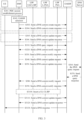
- FIG. 6 is a schematic flowchart of another edge service obtaining method 600 according to this application.
- the method 600 shown in FIG. 6 may be performed by the network elements such as the SMF, the EASDF, the UDM (UL CL/BP), and the UDM (PSA) in the system shown in FIG. 1 .
- the method includes steps S610 to S6110.
- the SMF sends first indication information to the EASDF.
- the EASDF receives the first indication information.
- the first indication information is similar to that in S420. Details are not described herein again.
- the EASDF receives a plurality of DNS query messages sent by a terminal device.
- the plurality of DNS query messages may be for obtaining address information of EASs corresponding to identification information of a same data network, where the identification information of the data network is similar to that in S420.
- the EASDF sends the plurality of DNS query messages to a DNS server.
- the EASDF receives DNS response messages that are sent by the DNS server and that respond to the plurality of DNS query messages.
- the EASDF buffers the plurality of DNS response messages, and determines, based on the first indication information, to send a DNS information report to a first core network element once for the plurality of DNS response messages.
- the EASDF sends a DNS information report (DNS context notify request) to the SMF.
- the EASDF receives a response message (DNS context notify response) of the DNS information report.
- the SMF establishes a data plane path for the terminal device based on the DNS information report.
- the SMF sends second indication information to the EASDF, where the second indication information may include a DNS handling rule.
- the SMF may send the second indication information in a DNS context update request (Neasdf_DNSContext_Update Request) message.
- a DNS context update request Neasdf_DNSContext_Update Request
- the DNS handling rule may be a policy for indicating the server discovery function network element to send the DNS response messages to the terminal device, for example, send the plurality of DNS response messages buffered by the EASDF or send a DNS response message for a specified EAS address range, where the second indication information may include EAS IP address range information, a specified DANI, or a specified FQDN.
- the DNS handling rule may indicate the server discovery function network element not to buffer a first DNS response message following the plurality of DNS response messages, where the first DNS response message is also a response to the plurality of DNS query messages sent by the terminal device.
- the DNS handling rule may indicate the server discovery function network element to discard a first DNS response message following the plurality of DNS response messages.
- the SMF receives a response message sent by the EASDF, where the response message may be a DNS context update response (Neasdf_DNSContext_Update Response).
- the EASDF sends the DNS response messages to the terminal device.
- FIG. 7 is a schematic flowchart of another edge service obtaining method 700 according to this application.
- the method 700 shown in FIG. 7 may be performed by the network elements such as the SMF, the EASDF, the UDM (UL CL/BP), and the UDM (PSA) in the system shown in FIG. 1 .
- the method includes steps S710 to S7120.
- the SMF sends third indication information to the EASDF.
- the EASDF receives the third indication information.
- the third indication information is similar to that in S520. Details are not described herein again.
- the EASDF receives a plurality of DNS query messages sent by a terminal device.
- the plurality of DNS query messages may be for obtaining address information of EASs corresponding to identification information of a same data network, where the identification information of the data network is similar to that in S420.
- the EASDF buffers the plurality of DNS query messages.
- the EASDF determines, based on the third indication information, to send a DNS information report (DNS context notify request) to a first core network element for the plurality of DNS query messages.
- DNS information report DNS context notify request
- the EASDF receives a response message (DNS context notify response) of the DNS information report.
- the SMF sends fourth indication information to the EASDF, where the fourth indication information may include a DNS handling rule.
- the DNS handling rule may include building EDNS client subnet option information.
- the SMF may send the fourth indication information in a DNS context update request (Neasdf_DNSContext_Update Request) message.
- a DNS context update request Neasdf_DNSContext_Update Request
- the EASDF receives a DNS context update response (Neasdf_DNSContext_Update Response) message.
- the EASDF builds the EDNS client subnet option information for the buffered DNS query messages.
- the EASDF sends the plurality of DNS query messages to a DNS server.
- the EASDF receives DNS response messages that are sent by the DNS server and that respond to the plurality of DNS query messages.
- a process of processing the DNS response messages is similar to that in S680.
- the EASDF sends the DNS response messages to the terminal device.
- first and second are used in embodiments of this application to distinguish between same items or similar items that have basically same functions and purposes.
- first information and second information are merely used to distinguish between different information, and do not limit sequences of the first information and the second information.
- a person skilled in the art may understand that the terms such as “first” and “second” do not limit a quantity or an execution sequence, and that the terms such as “first” and “second” do not indicate a definite difference.
- each node such as a terminal device or a network device, includes a corresponding hardware structure and/or software module for performing each function.
- each node such as a terminal device or a network device, includes a corresponding hardware structure and/or software module for performing each function.
- a person skilled in the art may be aware that, in combination with the examples described in embodiments disclosed in this specification, units and algorithm steps may be implemented by hardware or a combination of hardware and computer software in this application. Whether a function is performed by hardware or hardware driven by computer software depends on particular applications and design constraints of the technical solutions. A person skilled in the art may use different methods to implement the described functions for each particular application, but it should not be considered that the implementation goes beyond the scope of this application.
- each functional module may be obtained through division based on the foregoing method examples.
- each functional module may be obtained through division based on each function, or two or more functions may be integrated into one processing module.
- the integrated module may be implemented in a form of hardware, or may be implemented in a form of a software functional module.
- module division is an example, and is merely a logical function division. In actual implementation, another division manner may be used. An example in which each functional module is obtained through division based on each corresponding function is used below for description.
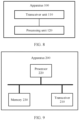
- FIG. 8 is a schematic block diagram of an apparatus 100 according to an embodiment of this application. As shown in the figure, the apparatus 100 may include a transceiver unit 110 and a processing unit 120.
- the apparatus 100 may be the server discovery function network element in the foregoing method embodiments, or may be a chip configured to implement a function of the server discovery function network element in the foregoing method embodiments. It should be understood that the apparatus 100 may correspond to the server discovery function network element in the method 400, the method 500, the method 600, and the method 700 in embodiments of this application. The apparatus 100 may perform the steps corresponding to the server discovery function network element in the method 400, the method 500, the method 600, and the method 700 in embodiments of this application. It should be understood that a specific process in which the units perform the foregoing corresponding steps is described in detail in the foregoing method embodiments, and for brevity, details are not described herein.
- the transceiver unit is configured to receive a plurality of DNS response messages sent by a DNS server.
- the plurality of DNS response messages are responses to a plurality of DNS query (DNS Query) request messages sent by a terminal device, and the plurality of DNS response messages include address information of EASs to be queried by the terminal device.
- DNS query DNS query
- the address information of the EASs may include address information of a plurality of EASs for a same edge service, or the address information of the EASs may be address information of a plurality of EASs corresponding to different edge services.
- the processing unit is configured to determine, based on first indication information, to send a DNS information report to a first core network element once for the plurality of DNS response messages.
- the first indication information may include a correspondence between network address information and a data network.
- the apparatus 100 may further include a storage unit 130, configured to buffer the plurality of DNS response messages.
- the transceiver unit is further configured to receive second indication information sent by the first core network element, where the second indication information includes a DNS handling rule for the plurality of DNS response messages.
- the DNS handling rule may indicate the server discovery function network element to send the plurality of buffered DNS response messages to the terminal device, or indicate the server discovery function network element to send a DNS response message for a specified EAS address range to the terminal device.
- the DNS handling rule may indicate the server discovery function network element not to buffer a first DNS response message following the plurality of DNS response messages, where the first DNS response message is also a response to the plurality of DNS query request messages sent by the terminal device.
- the DNS handling rule may include indicating the server discovery function network element to discard a first DNS response message following the plurality of DNS response messages.
- the apparatus 100 may be the first core network element in the foregoing method embodiments, for example, the SMF, or may be a chip configured to implement a function of the first core network element in the foregoing method embodiments. It should be understood that the apparatus 100 may perform the steps corresponding to the first core network element in the method 400, the method 500, the method 600, and the method 700 in embodiments of this application. It should be understood that a specific process in which the units perform the foregoing corresponding steps is described in detail in the foregoing method embodiments, and for brevity, details are not described herein.
- FIG. 9 is a schematic block diagram of an apparatus 200 according to an embodiment of this application.
- the apparatus 200 includes at least one processor 220.
- the processor 220 is coupled to a memory, and is configured to execute instructions stored in the memory, to send a signal and/or receive a signal.
- the apparatus 200 further includes the memory 230, configured to store instructions.
- the apparatus 200 further includes a transceiver 210, and the processor 220 controls the transceiver 210 to send a signal and/or receive a signal.
- processor 220 and the memory 230 may be integrated into one processing apparatus.
- the processor 220 is configured to execute program code stored in the memory 230 to implement the foregoing functions.
- the memory 230 may alternatively be integrated into the processor 220, or may be independent of the processor 220.
- the transceiver 210 may include a receiver (or referred to as a receiver machine) and a transmitter (or referred to as a transmitter machine).
- the transceiver may further include an antenna. There may be one or more antennas.
- the transceiver 210 may be a communication interface or an interface circuit.
- the transceiver 210 in the apparatus 200 may correspond to the transceiver unit 110 in the apparatus 100, and the processor 220 in the apparatus 200 may correspond to the processing unit 120 in the apparatus 200.
- steps in the foregoing methods can be implemented by using a hardware integrated logical circuit in the processor, or by using instructions in a form of software.
- the steps of the methods disclosed with reference to embodiments of this application may be directly performed and accomplished by a hardware processor, or may be performed and accomplished by using a combination of hardware and software modules in the processor.
- a software module may be located in a mature storage medium in the art, such as a random access memory, a flash memory, a read-only memory, a programmable read-only memory, an electrically erasable programmable memory, or a register.
- the storage medium is located in the memory, and a processor reads information in the memory and completes the steps in the foregoing methods in combination with hardware of the processor. To avoid repetition, details are not described herein again.
- the processor in embodiments of this application may be an integrated circuit chip, and has a signal processing capability.
- steps in the foregoing method embodiments can be implemented by using a hardware integrated logical circuit in the processor, or by using instructions in a form of software.
- the processor may be a general-purpose processor, a digital signal processor (digital signal processor, DSP), an application-specific integrated circuit (application-specific integrated circuit, ASIC), a field-programmable gate array (field-programmable gate array, FPGA) or another programmable logic device, a discrete gate or transistor logic device, or a discrete hardware component. It may implement or perform the methods, the steps, and logical block diagrams that are disclosed in embodiments of this application.
- the general-purpose processor may be a microprocessor, or the processor may be any conventional processor or the like.
- the steps of the methods disclosed with reference to embodiments of this application may be directly performed and accomplished by a hardware decoding processor, or may be performed and accomplished by using a combination of hardware and software modules in the decoding processor.
- a software module may be located in a mature storage medium in the art, such as a random access memory, a flash memory, a read-only memory, a programmable read-only memory, an electrically erasable programmable memory, or a register.
- the storage medium is located in the memory, and a processor reads information in the memory and completes the steps in the foregoing methods in combination with hardware of the processor.
- the memory in this embodiment of this application may be a volatile memory or a nonvolatile memory, or may include a volatile memory and a nonvolatile memory.
- the nonvolatile memory may be a read-only memory (read-only memory, ROM), a programmable read-only memory (programmable ROM, PROM), an erasable programmable read-only memory (erasable PROM, EPROM), an electrically erasable programmable read-only memory (electrically EPROM, EEPROM), or a flash memory.
- the volatile memory may be a random access memory (random access memory, RAM), used as an external cache.
- RAMs may be used, for example, a static random access memory (static RAM, SRAM), a dynamic random access memory (dynamic RAM, DRAM), a synchronous dynamic random access memory (synchronous DRAM, SDRAM), a double data rate synchronous dynamic random access memory (double data rate SDRAM, DDR SDRAM), an enhanced synchronous dynamic random access memory (enhanced SDRAM, ESDRAM), a synchronous link dynamic random access memory (synch link DRAM, SLDRAM), and a direct rambus dynamic random access memory (direct rambus RAM, DR RAM).
- static random access memory static random access memory
- DRAM dynamic random access memory
- DRAM dynamic random access memory
- SDRAM synchronous dynamic random access memory
- double data rate SDRAM double data rate SDRAM
- DDR SDRAM double data rate SDRAM
- ESDRAM enhanced synchronous dynamic random access memory
- synchronous link dynamic random access memory switching link DRAM
- SLDRAM direct rambus dynamic random access memory
- direct rambus RAM direct rambus RAM
- this application further provides a computer program product.
- the computer program product store compute program code.
- the computer program code When the computer program code is run on a computer, the computer is enabled to perform a method in any one of the embodiments of the method 300, the method 400, and the method 500.
- this application further provides a computer-readable medium.
- the computer-readable medium stores program code.
- the program code When the program code is run on a computer, the computer is enabled to perform a method in any one of the embodiments of the method 300, the method 400, and the method 500.
- this application further provides a system.
- the system includes the foregoing apparatus or device.
- All or some of the foregoing embodiments may be implemented by using software, hardware, firmware, or any combination thereof.
- software is used to implement embodiments, all or some of embodiments may be implemented in a form of a computer program product.
- the computer program product includes one or more computer instructions. When the computer instructions are loaded and executed on the computer, the procedure or functions according to embodiments of this application are all or partially generated.
- the computer may be a general-purpose computer, a dedicated computer, a computer network, or other programmable apparatuses.
- the computer instructions may be stored in a computer-readable storage medium or may be transmitted from a computer-readable storage medium to another computer-readable storage medium.
- the computer instructions may be transmitted from a website, computer, server, or data center to another website, computer, server, or data center in a wired (for example, a coaxial cable, an optical fiber, or a digital subscriber line (digital subscriber line, DSL)) or wireless (for example, infrared, radio, or microwave) manner.
- the computer-readable storage medium may be any usable medium accessible by the computer, or a data storage device, for example, a server or a data center, integrating one or more usable media.
- the usable medium may be a magnetic medium (for example, a floppy disk, a hard disk drive, or a magnetic tape), an optical medium (for example, a high-density digital video disc (digital video disc, DVD)), a semiconductor medium (for example, a solid-state drive (solid-state drive, SSD)), or the like.
- a magnetic medium for example, a floppy disk, a hard disk drive, or a magnetic tape
- an optical medium for example, a high-density digital video disc (digital video disc, DVD)
- a semiconductor medium for example, a solid-state drive (solid-state drive, SSD)
- the network side device and the terminal device in the foregoing apparatus embodiments correspond to the network side device or the terminal device in the method embodiments.
- a corresponding module or unit performs a corresponding step.
- a communication unit (a transceiver) performs a receiving step or a sending step in the method embodiments, and a step other than the sending step and the receiving step may be performed by a processing unit (a processor).
- a processing unit (a processor).
- a processor For a function of a specific unit, refer to a corresponding method embodiment. There may be one or more processors.
- a component may be, but is not limited to, a process that runs on a processor, a processor, an object, an executable file, an execution thread, a program, and/or a computer.
- a computing device and an application that runs on the computing device may be components.
- One or more components may reside within a process and/or a thread of execution, and a component may be located on one computer and/or distributed between two or more computers.
- these components may be executed from various computer-readable media that store various data structures.
- the components may communicate by using a local and/or remote process and based on, for example, a signal having one or more data packets (for example, data from two components interacting with another component in a local system, a distributed system, and/or across a network such as the Internet interacting with other systems by using the signal).
- a signal having one or more data packets (for example, data from two components interacting with another component in a local system, a distributed system, and/or across a network such as the Internet interacting with other systems by using the signal).
- the disclosed system, apparatus, and method may be implemented in other manners.
- the described apparatus embodiment is merely an example.
- division into the units is merely logical function division and may be other division in actual implementation.
- a plurality of units or components may be combined or integrated into another system, or some features may be ignored or not performed.
- the displayed or discussed mutual couplings or direct couplings or communication connections may be implemented by using some interfaces.
- the indirect couplings or communication connections between the apparatuses or units may be implemented in electronic, mechanical, or other forms.
- the units described as separate parts may or may not be physically separate, and parts displayed as units may or may not be physical units, may be located in one position, or may be distributed on a plurality of network units. Some or all of the units may be selected based on actual requirements to achieve the objectives of the solutions of embodiments.
- the functions When the functions are implemented in the form of a software functional unit and sold or used as an independent product, the functions may be stored in a computer-readable storage medium. Based on such an understanding, the technical solutions of this application essentially, or the part contributing to the prior art, or some of the technical solutions may be implemented in a form of a software product.
- the software product is stored in a storage medium, and includes several instructions for instructing a computer device (which may be a personal computer, a server, or a network device) to perform all or some of the steps of the methods described in embodiments of this application.
- the foregoing storage medium includes any medium that can store program code, such as a USB flash drive, a removable hard disk, a read-only memory (read-only memory, ROM), a random access memory (random access memory, RAM), a magnetic disk, or an optical disc.
- program code such as a USB flash drive, a removable hard disk, a read-only memory (read-only memory, ROM), a random access memory (random access memory, RAM), a magnetic disk, or an optical disc.
Landscapes
- Engineering & Computer Science (AREA)
- Computer Networks & Wireless Communication (AREA)
- Signal Processing (AREA)
- Mobile Radio Communication Systems (AREA)
- Data Exchanges In Wide-Area Networks (AREA)
- Telephonic Communication Services (AREA)
Applications Claiming Priority (2)
| Application Number | Priority Date | Filing Date | Title |
|---|---|---|---|
| CN202110904355.3A CN113794784B (zh) | 2021-08-06 | 2021-08-06 | 一种获取边缘服务的方法和装置 |
| PCT/CN2022/107148 WO2023011210A1 (zh) | 2021-08-06 | 2022-07-21 | 一种获取边缘服务的方法和装置 |
Publications (2)
| Publication Number | Publication Date |
|---|---|
| EP4380131A1 true EP4380131A1 (de) | 2024-06-05 |
| EP4380131A4 EP4380131A4 (de) | 2024-11-06 |
Family
ID=79181581
Family Applications (1)
| Application Number | Title | Priority Date | Filing Date |
|---|---|---|---|
| EP22851924.5A Pending EP4380131A4 (de) | 2021-08-06 | 2022-07-21 | Verfahren und vorrichtung zur erfassung eines edge-dienstes |
Country Status (5)
| Country | Link |
|---|---|
| US (1) | US20240179118A1 (de) |
| EP (1) | EP4380131A4 (de) |
| JP (1) | JP7732692B2 (de) |
| CN (2) | CN113794784B (de) |
| WO (1) | WO2023011210A1 (de) |
Families Citing this family (16)
| Publication number | Priority date | Publication date | Assignee | Title |
|---|---|---|---|---|
| CN113572835B (zh) * | 2021-07-21 | 2024-02-27 | 腾讯科技(深圳)有限公司 | 一种数据处理方法、网元设备以及可读存储介质 |
| CN113794784B (zh) * | 2021-08-06 | 2022-11-11 | 华为技术有限公司 | 一种获取边缘服务的方法和装置 |
| CN116567523B (zh) * | 2022-01-30 | 2026-01-09 | 华为技术有限公司 | 设备选择的方法以及装置 |
| CN116614824A (zh) * | 2022-02-08 | 2023-08-18 | 华为技术有限公司 | 请求应用功能的方法、装置和系统 |
| CN116634413A (zh) * | 2022-02-14 | 2023-08-22 | 华为技术有限公司 | 通信方法和装置 |
| CN116709446A (zh) * | 2022-02-24 | 2023-09-05 | 华为技术有限公司 | 一种通信方法及相关装置 |
| CN116866884A (zh) * | 2022-03-28 | 2023-10-10 | 维沃移动通信有限公司 | 边缘应用服务器选择的指示方法、终端及网络侧设备 |
| CN117014907A (zh) * | 2022-05-06 | 2023-11-07 | 维沃移动通信有限公司 | Edi获取、路由重配置、ecs地址配置信息的获取、dns处理方法、装置及设备 |
| CN114945015B (zh) * | 2022-05-26 | 2023-05-16 | 中国联合网络通信集团有限公司 | 信息获取方法、装置及存储介质 |
| CN115119287B (zh) * | 2022-06-29 | 2024-03-26 | 阿里巴巴(中国)有限公司 | 通信网络、车联网、终端设备接入方法、设备和存储介质 |
| CN117640578A (zh) * | 2022-08-09 | 2024-03-01 | 维沃移动通信有限公司 | Dns查询方法及通信设备 |
| WO2024032364A1 (zh) * | 2022-08-10 | 2024-02-15 | 中国移动通信有限公司研究院 | Eas查找方法、装置、相关功能及存储介质 |
| EP4607871A4 (de) * | 2022-12-05 | 2025-12-10 | Huawei Tech Co Ltd | Netzwerkdienstverfahren, kommunikationsvorrichtung und kommunikationssystem |
| CN118740791B (zh) * | 2023-03-31 | 2026-01-06 | 华为技术有限公司 | 通信方法和通信装置 |
| CN119110427A (zh) * | 2023-06-09 | 2024-12-10 | 大唐移动通信设备有限公司 | 通信方法、装置及网络设备 |
| CN119521270A (zh) * | 2023-08-25 | 2025-02-25 | 华为技术有限公司 | 一种通信方法及装置 |
Family Cites Families (8)
| Publication number | Priority date | Publication date | Assignee | Title |
|---|---|---|---|---|
| US7526562B1 (en) * | 2003-04-11 | 2009-04-28 | Cisco Technology, Inc. | Stateful IPv4-IPv6 DNS application level gateway for handling topologies with coexisting IPv4-only, Ipv6-only and dual-stack devices |
| US10285155B1 (en) * | 2018-09-24 | 2019-05-07 | Cisco Technology, Inc. | Providing user equipment location information indication on user plane |
| EP3993486A4 (de) * | 2019-07-30 | 2022-08-31 | Huawei Technologies Co., Ltd. | Verfahren, vorrichtung und system zum senden von ereignisberichten |
| US11924163B2 (en) * | 2020-04-08 | 2024-03-05 | Intel Corporation | Initiation of domain name system (DNS) resolution in 5G systems |
| US20240048524A1 (en) * | 2021-01-21 | 2024-02-08 | Telefonaktiebolaget Lm Ericsson (Publ) | Distance-based selection |
| CN113115480B (zh) * | 2021-04-02 | 2024-07-26 | 腾讯科技(深圳)有限公司 | 地址信息发送方法、获取方法、装置、设备及介质 |
| CN113114651B (zh) * | 2021-04-02 | 2024-03-29 | 腾讯科技(深圳)有限公司 | 报告控制方法、装置、设备及介质 |
| CN113794784B (zh) * | 2021-08-06 | 2022-11-11 | 华为技术有限公司 | 一种获取边缘服务的方法和装置 |
-
2021
- 2021-08-06 CN CN202110904355.3A patent/CN113794784B/zh active Active
- 2021-08-06 CN CN202211345786.1A patent/CN115766657A/zh active Pending
-
2022
- 2022-07-21 EP EP22851924.5A patent/EP4380131A4/de active Pending
- 2022-07-21 WO PCT/CN2022/107148 patent/WO2023011210A1/zh not_active Ceased
- 2022-07-21 JP JP2024507068A patent/JP7732692B2/ja active Active
-
2024
- 2024-02-05 US US18/432,976 patent/US20240179118A1/en active Pending
Also Published As
| Publication number | Publication date |
|---|---|
| JP7732692B2 (ja) | 2025-09-02 |
| JP2024533979A (ja) | 2024-09-18 |
| CN113794784A (zh) | 2021-12-14 |
| CN115766657A (zh) | 2023-03-07 |
| CN113794784B (zh) | 2022-11-11 |
| US20240179118A1 (en) | 2024-05-30 |
| WO2023011210A1 (zh) | 2023-02-09 |
| EP4380131A4 (de) | 2024-11-06 |
Similar Documents
| Publication | Publication Date | Title |
|---|---|---|
| EP4380131A1 (de) | Verfahren und vorrichtung zur erfassung eines edge-dienstes | |
| EP4362512B1 (de) | Kommunikationsverfahren und -vorrichtung | |
| US20240171647A1 (en) | Method and apparatus for discovering edge application server | |
| CN113132334B (zh) | 授权结果的确定方法及装置 | |
| CN113630749B (zh) | 一种获取边缘服务的方法和装置 | |
| US20230099786A1 (en) | Methods and Apparatus for Provisioning Private Network Devices During Onboarding | |
| US12363702B2 (en) | Communication method, apparatus, and system | |
| EP3713372A1 (de) | Verfahren und vorrichtung zur erzeugung einer benutzergruppe | |
| US20230156833A1 (en) | Packet Forwarding Method, Apparatus, and System | |
| WO2020135850A1 (zh) | 通信方法和装置 | |
| EP4395369A1 (de) | Verfahren und vorrichtung zur bestimmung eines anwendungsservers | |
| EP4391652A1 (de) | Verfahren und vorrichtung zur netzwerküberprüfung | |
| EP4460101A1 (de) | Kommunikationsverfahren und kommunikationsvorrichtung | |
| US20220141664A1 (en) | Data transmission method and apparatus in network slice architecture | |
| JP2024537675A (ja) | セキュアドパケットのプロビジョニング | |
| US20240155325A1 (en) | Information obtaining method and apparatus, and system | |
| US20230199468A1 (en) | Device discovery and registration method and network-side device | |
| WO2020200297A1 (zh) | 选择会话管理网元的方法和装置 | |
| WO2024078313A1 (zh) | 认证授权的方法与通信装置 | |
| US12556602B2 (en) | Method for determining application server for aterminal | |
| EP4654670A1 (de) | Kommunikationsverfahren und vorrichtung | |
| US20250184810A1 (en) | Communication method and communication apparatus | |
| EP4637202A1 (de) | Kommunikationsverfahren und kommunikationsvorrichtung | |
| US20250253999A1 (en) | Apparatus, method and computer program | |
| JP2024512630A (ja) | 情報処理方法、装置及び通信機器 |
Legal Events
| Date | Code | Title | Description |
|---|---|---|---|
| STAA | Information on the status of an ep patent application or granted ep patent |
Free format text: STATUS: THE INTERNATIONAL PUBLICATION HAS BEEN MADE |
|
| PUAI | Public reference made under article 153(3) epc to a published international application that has entered the european phase |
Free format text: ORIGINAL CODE: 0009012 |
|
| STAA | Information on the status of an ep patent application or granted ep patent |
Free format text: STATUS: REQUEST FOR EXAMINATION WAS MADE |
|
| 17P | Request for examination filed |
Effective date: 20240229 |
|
| AK | Designated contracting states |
Kind code of ref document: A1 Designated state(s): AL AT BE BG CH CY CZ DE DK EE ES FI FR GB GR HR HU IE IS IT LI LT LU LV MC MK MT NL NO PL PT RO RS SE SI SK SM TR |
|
| REG | Reference to a national code |
Ref country code: DE Ref legal event code: R079 Free format text: PREVIOUS MAIN CLASS: H04L0047100000 Ipc: H04L0061451100 |
|
| A4 | Supplementary search report drawn up and despatched |
Effective date: 20241007 |
|
| RIC1 | Information provided on ipc code assigned before grant |
Ipc: H04L 61/4511 20220101AFI20240930BHEP |
|
| DAV | Request for validation of the european patent (deleted) | ||
| DAX | Request for extension of the european patent (deleted) | ||
| STAA | Information on the status of an ep patent application or granted ep patent |
Free format text: STATUS: EXAMINATION IS IN PROGRESS |
|
| 17Q | First examination report despatched |
Effective date: 20250702 |