EP4194230B1 - Apparatus and methods for calculating and/or monitoring a tire wear rate of a vehicle - Google Patents
Apparatus and methods for calculating and/or monitoring a tire wear rate of a vehicle Download PDFInfo
- Publication number
- EP4194230B1 EP4194230B1 EP21214025.5A EP21214025A EP4194230B1 EP 4194230 B1 EP4194230 B1 EP 4194230B1 EP 21214025 A EP21214025 A EP 21214025A EP 4194230 B1 EP4194230 B1 EP 4194230B1
- Authority
- EP
- European Patent Office
- Prior art keywords
- tire
- vehicle
- wear rate
- tire wear
- data
- Prior art date
- Legal status (The legal status is an assumption and is not a legal conclusion. Google has not performed a legal analysis and makes no representation as to the accuracy of the status listed.)
- Active
Links
Images





Classifications
-
- B—PERFORMING OPERATIONS; TRANSPORTING
- B60—VEHICLES IN GENERAL
- B60C—VEHICLE TYRES; TYRE INFLATION; TYRE CHANGING; CONNECTING VALVES TO INFLATABLE ELASTIC BODIES IN GENERAL; DEVICES OR ARRANGEMENTS RELATED TO TYRES
- B60C11/00—Tyre tread bands; Tread patterns; Anti-skid inserts
- B60C11/24—Wear-indicating arrangements
- B60C11/246—Tread wear monitoring systems
-
- B—PERFORMING OPERATIONS; TRANSPORTING
- B60—VEHICLES IN GENERAL
- B60C—VEHICLE TYRES; TYRE INFLATION; TYRE CHANGING; CONNECTING VALVES TO INFLATABLE ELASTIC BODIES IN GENERAL; DEVICES OR ARRANGEMENTS RELATED TO TYRES
- B60C11/00—Tyre tread bands; Tread patterns; Anti-skid inserts
- B60C11/24—Wear-indicating arrangements
- B60C11/243—Tread wear sensors, e.g. electronic sensors
-
- B—PERFORMING OPERATIONS; TRANSPORTING
- B60—VEHICLES IN GENERAL
- B60C—VEHICLE TYRES; TYRE INFLATION; TYRE CHANGING; CONNECTING VALVES TO INFLATABLE ELASTIC BODIES IN GENERAL; DEVICES OR ARRANGEMENTS RELATED TO TYRES
- B60C23/00—Devices for measuring, signalling, controlling, or distributing tyre pressure or temperature, specially adapted for mounting on vehicles; Arrangement of tyre inflating devices on vehicles, e.g. of pumps or of tanks; Tyre cooling arrangements
- B60C23/02—Signalling devices actuated by tyre pressure
- B60C23/04—Signalling devices actuated by tyre pressure mounted on the wheel or tyre
-
- B—PERFORMING OPERATIONS; TRANSPORTING
- B60—VEHICLES IN GENERAL
- B60C—VEHICLE TYRES; TYRE INFLATION; TYRE CHANGING; CONNECTING VALVES TO INFLATABLE ELASTIC BODIES IN GENERAL; DEVICES OR ARRANGEMENTS RELATED TO TYRES
- B60C23/00—Devices for measuring, signalling, controlling, or distributing tyre pressure or temperature, specially adapted for mounting on vehicles; Arrangement of tyre inflating devices on vehicles, e.g. of pumps or of tanks; Tyre cooling arrangements
- B60C23/02—Signalling devices actuated by tyre pressure
- B60C23/04—Signalling devices actuated by tyre pressure mounted on the wheel or tyre
- B60C23/0401—Signalling devices actuated by tyre pressure mounted on the wheel or tyre characterised by the type of alarm
- B60C23/0405—Mechanically generated visible signals, e.g. by using a gauge needle
-
- B—PERFORMING OPERATIONS; TRANSPORTING
- B60—VEHICLES IN GENERAL
- B60C—VEHICLE TYRES; TYRE INFLATION; TYRE CHANGING; CONNECTING VALVES TO INFLATABLE ELASTIC BODIES IN GENERAL; DEVICES OR ARRANGEMENTS RELATED TO TYRES
- B60C23/00—Devices for measuring, signalling, controlling, or distributing tyre pressure or temperature, specially adapted for mounting on vehicles; Arrangement of tyre inflating devices on vehicles, e.g. of pumps or of tanks; Tyre cooling arrangements
- B60C23/02—Signalling devices actuated by tyre pressure
- B60C23/04—Signalling devices actuated by tyre pressure mounted on the wheel or tyre
- B60C23/0401—Signalling devices actuated by tyre pressure mounted on the wheel or tyre characterised by the type of alarm
- B60C23/0406—Alarms noticeable from outside the vehicle, e.g. indication in side mirror, front light or audible alarms
Definitions
- This invention is generally directed to computer-implemented methods and apparatus for calculating and/or monitoring a tire wear rate of a vehicle.
- Tire wear rate is an essential factor contributing to road safety. Changing tires not early enough may lead to dangerous traffic situations or even accidents, which may lead to serious injuries or deaths as well as high financial liability risks. Being able to change tires just at the right time therefore is not only a question of safety but also a question of economy. Missing the right point in time to change the tires may result in high cost due to potential accidents or damages, taking the change too early may lead to additional fleet costs. A proper tire lifecycle management is also a matter of sustainability since changing tires too early may lead to waste of valuable resources.
- Determining the right point in time to change tires is also an important success factor in vehicle logistics or fleet management.
- By being able to schedule changing tires of a vehicle right in time or scheduling changing tires in combination with maintenance of other components of a vehicle non-operation periods can be kept as short as possible, resulting in cost savings and increased reliability especially in view of commercial applications.
- other components of a vehicle having only a short remaining lifetime may be replaced as well.
- monitoring the wear rate of the tires properly is important to e.g., decide which truck among the available trucks is suited best for a particular route.
- US 2017/0001482 A1 discloses a method for making available data relating to the tires of a vehicle in which vehicle data and/or tire data is made available by a vehicle memory unit of the vehicle, wherein the vehicle data is acquired by a sensor which is arranged in the vehicle.
- the vehicle data and/or the tire data have information on at least one property of the tires of the vehicle.
- a tire-wear probability of the tires of the vehicle is acquired as a function of the vehicle data and/or tire data.
- US 2018/0272813 A1 provides a tire wear estimation system on the basis of sensor data.
- at least one sensor is affixed to the tire to generate a first predictor.
- a lookup table or a database stores data for a second predictor.
- One of the predictors includes at least one vehicle effect.
- a model receives the predictors and generates an estimated wear rate for the at least one tire.
- US 2019/0009618 A1 discloses a vehicle integrated expected tread-life indicator system and methods of operation thereof.
- data associated with one or more tread depth measurements are received.
- the one or more tread depth measurements were made by a measurement device external to a vehicle.
- the one or more tread depth measurements are descriptive of a tread depth of at least one tread of at least one tire of the vehicle.
- the method includes associating a respective distance value with each of the one or more tread depth measurements, and accessing a model that correlates the one or more tread depth measurements to a projected tread depth.
- the method includes determining an estimated distance at which the projected tread depth is expected to equal or pass a tread depth threshold based at least in part on the model.
- the method includes providing the estimated distance to a notification system in the vehicle.
- EP 3 318 422 A1 relates to a tire wear state estimation system comprising at least one tire supporting a vehicle; a plurality of tire-mounted devices operable to supply tire-specific information affecting tire contact patch dynamics; at least one inertial measurement unit operable to supply sliding velocity information from a tire contact patch formed by the one tire rolling over a ground surface; a friction work estimator operable to calculate a friction work estimate done by the at least one tire from the tire-specific information and the sliding velocity information; and a tire wear rate estimator operable to generate a tire wear rate estimation from drawing a proportional correlation between the tire wear rate estimation and the calculated friction work estimate.
- US 2020/334922 A1 relates to a device that may receive vehicle data from a vehicle telematics device or a client device.
- the vehicle data may include information relating to a vehicle, a vehicle component, and a sensor associated with the vehicle.
- the device may determine a vehicle profile, and one or more of a driving behavior and a driving location based on the vehicle data.
- the vehicle profile may include information relating to a condition of the vehicle component.
- the device may determine a wear rate for the vehicle component based on the vehicle profile, and one or more of the driving behavior or the driving location.
- the device may determine a service timeframe for the vehicle component based on the wear rate, the condition of the vehicle component, and a wear threshold.
- the device may generate a recommendation based on the service timeframe, and transmit the recommendation to the client device.
- DE 10 2021101595 A1 relates to a method for determining the instantaneous tire wear rate of a wheel of a vehicle, the method comprising: calculating, for a plurality of times, the longitudinal wheel slip values for the wheel slip between a surface of the Wheel and a corresponding road surface; and determining a current tire wear rate indicator based on a set of calculated longitudinal ratchet slip values corresponding to the different times during a period of time, the current tire wear rate indicator being correlated with the instantaneous tire wear rate given during the period.
- the tire wear rate of a vehicle may be monitored with higher dimension of accuracy allowing precise predictions of the remaining tread depth, residual mileage or residual time before it is time to change a tire.
- the present invention provides computer-implemented methods and apparatus for calculating the tire wear rate of a vehicle.
- the computer-implemented methods and apparatus according to this disclosure offer many advantages.
- the invention allows determining the optimum point in time for replacing the tires of a vehicle and therefore renders mobility of people as well as transportation of goods safer, greener, more reliable and more cost efficient.
- Fig. 1 illustrates a chart showing exemplary tire wear profiles of a tire of a vehicle.
- the mileage of a tire is depicted.
- a tire property such as the remaining tread depth, RTD, is indicated.
- RTD remaining tread depth
- the tire is in a new state, i.e., in this example the tire has a remaining tread depth of 13 mm and a mileage of 0 km.
- a remaining tread depth of 3 mm indicates in the present example the end of life of the tire.
- the dash-dotted and the dashed lines represent the estimated tire wear calculated by a purely statistic model based on tire parameters, such as tire size, tire position, etc.
- Fig. 1 furthermore illustrates that the conventional purely statistical method can be improved upon when at a certain point in time a measurement of the remaining tread depth is taken, and the measured value is then taken into account when calculating the tire wear rate.
- an in-operational measurement at about 110,000 kilometers is performed (illustrated with a black triangle). The in-operational measurement shows that the tire wear is below average, or, in other words, that the current tire wear rate (in this case the remaining tread depth) is above average.
- a self-tuning mathematical tire wear model In order to evaluate when the end of life of the tire, i.e., a remaining tread depth of 3 mm, will be reached, a self-tuning mathematical tire wear model, according to the present invention, is applied.
- the self-tuning mathematical tire wear model is provided with the measured property of the tire at a particular mileage (here: the measured RTD at 110,000 kilometers), and furthermore with input data related to technical data of the tire of the vehicle, and technical data of the vehicle.
- the self-tuning mathematical model calculates the expected future tire wear, e.g. until the end of life of the tire has been reached (e.g., until a certain minimum RDT is reached, e.g. 3 mm).
- the average mileage of the tire in this example is about 200,000 kilometers, deviating by about only 40,000 kilometers in both directions, hence, leading to an improved statistical mileage in the range of 160,000 to 240,000 kilometers.
- the exact point in time when a minimum tread depth is reached can be assessed more precisely, since the deviating range was reduced by 50%.
- Input data related to the technical data of a tire of the vehicle may include one or more of the tire manufacturer, the tire pattern, the tire specification, the tire size, the tire mounting position, retread information, country or region.
- Input data related to the technical data of the vehicle may include one or more of the vehicle manufacturer, the vehicle chassis, vehicle usage, and/or tractor load.
- the self-tuning mathematical model uses data of at least one in-operational measurement of at least one property of the tire as input.
- the in-operational measurement for example, the actual residual tread depth of the tire and the mileage as read from the odometer is obtained.
- the technical data of the at least one tire of a vehicle as well as data of the at least one in-operational measurement of at least one property of the at least one tire of the vehicle are obtained and a tire wear rate is calculated according to the self-tuning mathematical model, based on the obtained technical data of at least one tire of the vehicle and the obtained data of at least one in-operational measurement of at least one property of the at least one tire of the vehicle.
- Fig. 2a illustrates an example aspect of a self-tuning mathematical model according to which a computer-implemented method for calculating and/or monitoring a tire wear rate of a vehicle may calculate a tire wear and/or tire wear rate.
- calculating a tire wear rate may take place after having obtained data of at least one in-operational measurement of a property of a tire, e.g., the residual tread depth in combination with a respective mileage as read from the odometer of the vehicle.
- calculating the tire wear rate may comprise running multiple pre-stored algorithms.
- Fig. 2a three different charts for three different pre-stored algorithms are shown. For each of the three graphs, on the vertical axis, the remaining tread depth (RTD) and on the horizontal axis the mileage of at least one tire as read from the odometer of a vehicle (KM) is shown.
- the upper left corner of each graph represents a state where the tire is new, i.e., the remaining tread depth is in accordance with the technical data when a tire is sold and the mileage of the tire is zero. With increasing mileage, the remaining tread depth decreases.
- the filled black dots in each of the graphs represent measurements of the remaining tread depths which are associated with an odometer state of the vehicle. For example, in the first graph previously two in-operational measurements had been taken, in the second graph previously six in-operational measurements had been taken and in the third graph previously also six in-operational measurements had been taken.
- the black-framed circle in each of the graphs represents, based on the previous (filled black dots) measurement dots and the algorithm applied, the calculated RTD for a particular mileage at which a further in-operational measurement is scheduled.
- the cross (X) in each of the graphs represents the most recent in-operational measurement of RTD at the particular mileage. To simplify the explanation, in each of the graphs the cross (X) is illustrated above the black-famed circle.
- the three algorithms illustrated by the three graphs may run in parallel, and are suited to find the best algorithm for the prediction:
- the first graph shows a notable offset between the calculated RTD (black-framed circle) and the measured value of RTD (cross).
- the second graph illustrating a model of linear regression shows a smaller offset between the calculated RTD (black-framed circle) and the measured value of RTD (cross).
- this algorithm may be preferred over the first one, for calculating future RTD, taking the current measured value as a further measurement point for the calculation of future RTD.
- the third graph illustrating a model of exponential regression shows an even smaller offset between the calculated RTD (black-framed circle) and the measured value of RTD (cross).
- this may be the most preferred algorithm for calculating future RTD.
- the currently measured value black-framed circle is taken as a further measurement point for the calculation of future RTD.
- Fig. 2a shows that after having obtained data from at least one measurement of the remaining tread depth which are associated with an odometer state of the vehicle, various pre-stored algorithms such as 3 points, linear regression, exponential regression, logarithmic regression or a neural network may be run.
- the algorithm among the pre-stored and run algorithms that produces a calculated tire wear rate (e.g., RTD) for a particular mileage which is closest to the measured value of tire wear rate (e.g., RTD) at the particular mileage is selected for calculating tire wear rate over lifetime of the tire.
- the multiple algorithms may leverage on all available in-operational measurement results of a property of a tire and estimate in combination with the other input data provided to the model such as the tire manufacturer, the tire pattern, the tire specification, the tire size, the tire mounting position, retread information, the vehicle manufacturer, the vehicle chassis, vehicle usage, tractor load, country or region which of the pre-stored algorithms is most appropriate to describe the respective property of the tire during operations.
- curve fitting techniques may be applied. The algorithm yielding a result that fits best to a respective value of one or more in-operational measurements is subsequently used to extrapolate the respective tire property. Based on this extrapolation, the remaining life time of the tire may be determined.
- the end of life value of a tire may be defined as a tread depth of 3 mm or any other value defined by the user.
- the pre-stored algorithms of the self-tuning mathematical model may be continuously modified, refined or replaced/updated by the respective provider.
- Fig. 2b shows a graph illustrating a further aspect of the self-tuning mathematical model.
- the mileage of a vehicle's tire in km and three inspections taking place at particular odometer states are indicated.
- the remaining tread depth is indicated in the form of discrete values for a new tire ("New Tire”).
- three remaining tread depth states (“RTD 1 ", "RTD 2 " and “RTD 3 ") when the three inspections take place and another discrete value of the remaining tread depth at the end of life of the tire (TWI, tread wear indicator) are indicated.
- the self-tuning model may be fed with tire data and vehicle data and the trend of the tire wear and the remaining tread depth may be calculated (illustrated with a dashed line, A).
- A a dashed line
- the self-tuning model calculated a particular RTD (illustrated with 2).
- the actual in-operational measurement of the remaining tread depth that is performed at this particular mileage leads to a lower value than calculated.
- the respective value is indicated as "RTD 1 ", illustrated with 3.
- the self-tuning model adjusts the prediction, and the calculated tire wear is higher than originally predicted.
- the mathematical model corrects itself, i.e., the mathematical model is tuned.
- the tuning of the mathematical model comprises equalizing the calculated value for the property of the tire with the actually measured value of the respective property at the mileage where the measurement is taken.
- Tuning of the model may further comprise fitting the model to the latest actually measured value and at least one previously measured value of the respective property of the tire if available.
- the afore-mentioned procedure may be repeated for every additional in-operational measurement of a respective property of a tire, so for the second and third inspections and the measured values "RTD 2 " and "RTD 3 " respectively. These values are also indicated with uneven numbers 5 and 7 (and 9 indicating TWI). The calculated values are again indicated with even numbers, here 4, 6 and 8. This allows for continuous self-tuning of the model. The more measurements are performed, the higher the accuracy and the lower the calculation error of the model will become.
- the self-tuning mathematical model for calculating a tire wear rate may be continuously modified/improve by adapting big data approaches and/or machine learning techniques.
- the self-tuning mathematical tire wear model may be trained on the basis of a plurality of calculated tire wear rates, wherein the plurality of calculated tire wear rates is based on data obtained from a plurality of vehicles, wherein the obtained data comprise technical data of at least one tire of each of the vehicles, technical data of each of the vehicles and data of at least one measurement of at least one property of at least one tire of each of the vehicles.
- a lot of data representing a myriad of driving scenarios including lots of different vehicles under various different traffic conditions may be obtained.
- the respective data may create additional value by being used for continuously training the self-tuning mathematical method for calculating a tire wear rate.
- wear patterns for particular scenarios may be determined by machine learning techniques.
- the self-tuning mathematical model may also be modified manually. For example, in cases where it turns out that a specific tire product behaves differently under certain scenarios than expected in advance. Due the high number of inputs to the model, modifications can even be limited to certain batches of a tire model from specific manufacturing facilities. For example, it may turn out that a specific batch of a tire model which has been manufactured in a particular facility shows different performance than other batches from other facilities. In such a case, the behaviour of a single batch of tires may be considered by the model.
- Another important factor which impacts the tire wear is the country in which the vehicle on which the tire to be monitored is installed is driving. While some countries are flat and have wide roads, others may be dominated by mountains in connection with narrow and curvy roads. Another country-dependent factors which influence tire wear is the climate, for example it may make a difference if in a particular country there are long summer seasons and mild winters or cold winters and short summer seasons.
- Tire wear may also depend on the quality of the infrastructure a country has to offer. While some countries invest lots of money in road infrastructure, others may invest less. The latter may result in damages of the road surface due to a lack of maintenance, which in turn may also contribute to reducing the life time of a tire. Another factor which may influence the lifespan of a tire may be the quality of the driver's education in a respective country. A further factor to consider may be the driving rules in the different countries. While some countries such as the Netherlands have very strict speed limits even on motorways, there are other countries such as Germany which have no speed limit on motorways. This leads to the fact that a tire may undergo completely different stress depending on the country.
- the boundary conditions in various countries may be not very homogeneous. This is why the region may also be used in order to calculate the tire wear as accurately as possible. In many countries, the quality of infrastructure in the large economic centres may be different than in rural areas. Additionally or alternatively, some regions of a country may be flat, while others may be mountainous. In both cases, the way how a tire wears may be very different. Therefore, the region data may be seen as more granular than the country data.
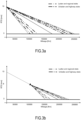
- Fig. 3a and Fig. 3b show other charts of exemplary calculated tire wear profiles of a tire of a vehicle.
- the mileage of a tire is depicted.
- the remaining tread depth is indicated.
- the tire is in a new state, i.e., having a mileage of 0 km and a remaining tread depth of 13 mm (in this example).
- the remaining tread depth has reached a value of 3 mm (in this example)
- the end of life of a tire is reached.
- the dashed lines represent the calculated range of the mileage of a tire made according to a purely statistical model.
- the two sets of dash-dotted and dash-dot-dotted lines represent prediction ranges of the mileage of the tire made according to a data-driven mathematical model taking into account telematics information of a vehicle.
- the telematics information of the vehicle may include data about the load of the vehicle (e.g., empty or loaded) and the way a vehicle is used (for regional or long-haul scenarios).
- Telematics information of a vehicle allow calculating the tire wear rate even more precisely.
- the tire wear may be different if a vehicle is rather used for short distances with lots of stop and go traffic or primarily for long distance travels, where in particular trucks often have a constant speed for long continuous time periods.
- the actual measured tire pressure is for example too low (i.e., deviating from the recommended tire pressure)
- the contact area between the tire and the road is increased.
- the information about the actual measured tire pressure is even more important in connection with the tractor load of the vehicle.
- the recommended tire pressure depends on the load of the vehicle. So, if the load of the vehicle is high, however, the measured tire pressure is in the range of the recommended tire pressure for an unloaded vehicle, the tire wear is still increased.
- the predicted residual mileage of a tire considerably deviates with respect to load and use case of a vehicle.
- the residual mileage is way lower compared to the case that a vehicle is empty and used for long haul scenarios.
- the prediction accuracy of the residual mileage can be clearly improved.
- the average mileage of a tire is about 235,000 kilometers (cf. dash-dotted line with wide dots), deviating by about 20,000 kilometers in both directions, leading to a statistical mileage in the range of 215,000 to 255,000 kilometers (cf. dash-dot-dotted lines with wide dots).
- the average mileage of a tire is about 120,000 kilometers (cf. dash-dotted line with small dots), deviating by about 20,000 kilometers in both directions, leading to a statistical mileage in the range of 100,000 to 140,000 kilometers (cf. dash-dot-dotted lines with small dots).
- the exact point in time or the respective mileage when a minimum tread depth is reached can be assessed more precisely, since the deviating range is reduced by 75% compared to the state of the art (e. g. a purely statistic model) and by 50% compared to using a self-tuning mathematical model without considering telematics information of a vehicle as illustrated in Fig. 1 .
- the telematics information of a vehicle may include at least one of the vehicle usage, tire pressure, tractor load, longitudinal acceleration, lateral acceleration, speed, GPS coordinates, odometer, type of road, load, gear shifts, engine RPMs, wheel speed, throttle/brake pedal position, tire temperature, external temperature or steering wheel angle.
- the advantages of a data driven mathematical model may be combined with in-operational measurements, corresponding to the in-operational measurements as described for the self-tuning mathematical model.
- the second computer-implemented method may comprise obtaining data from at least one in-operational measurement.
- the calculated tire wear based on the data-driven model may be improved by the mechanisms of the self-tuning model as described in connection with Fig. 2a and Fig. 2b .
- the measured value of the remaining tread depth is compared with the calculated value of the tread depth, i.e., the measured value is used to correct the data-driven mathematical model.
- the deviating range was reduced by almost 90% compared to the state of the art.
- the deviating range was reduced by 75% compared to the method using a self-tuning mathematical model without considering telematics information of a vehicle as illustrated in Fig. 1 .
- the deviating range can be further reduced by 50% compared to the case that the data-driven mathematical model is used without additional measurement data.
- Fig. 4a illustrates different conditions on which the development of the data driven mathematical tire wear model is based.
- Vehicle telematics information such as speed, accelerations, gear shifts, engine RPMs, wheel speed, brake/throttle pedal position, tire temperature, external temperature or steering wheel angle may be taken into consideration play an essential role in predicting tire wear more accurately.
- Fig. 4b for different vehicle load scenarios, i.e., empty and fully loaded, the maximum mileage until reaching end of life of the tires for different road types, i.e., highway and curvy road has been determined. Based on the maximum mileage until reaching end of life of the tires for different road types, the mileage per mm tread wear of a tire has been determined. This value is also denoted as kilometers per mm (KPM). In the table shown by Fig. 4b , the KPM for various axes of a truck for different road conditions and load scenarios is shown.
- KPM kilometers per mm
- Fig. 4c shows the respective percentages of the results from Fig. 4b .
- the KPM of the steer axes of an unladen truck is expected to be 80% with respect to the KPM of an unladen truck driving on a highway.
- the KPM value of a laden truck is only 37% compared to an unladen truck on a highway.
- ResidualTreadDepth F ( Mileage, Technical data of a tire, Technical data of the vehicle, A x , A y , Load, IP ⁇ , wherein A x is the longitudinal acceleration and A y is the lateral acceleration and IP is the tire (inflation) pressure.
- the wear energy is estimated due to longitudinal accelerations.
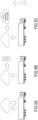
- Fig. 5a, 5b and 5c illustrate different ways of how a calculated tire wear rate may be reported.
- the transmission of data such as technical data of a tire, technical data of a vehicle and telematics information of a vehicle are illustrated by black arrows.
- the black arrows may, alternatively or in addition, illustrate the transmission of the calculated tire wear rate, or in other words, the output of the applied mathematical models, in cases where the calculation is performed in the vehicle, or at a component outside the vehicle not shown in Fig. 5 .
- the dotted arrows indicate the reporting of the calculated tire wear rate or model output.
- the tire wear rate may be calculated outside a vehicle, e.g., in a cloud computing environment.
- technical data of at least one tire of a vehicle, technical data of a vehicle and telematics information of a vehicle may be transmitted to a cloud computing device.
- the calculation of the tire wear may take place and the calculated tire wear may be reported to at least the respective vehicle.
- the report may be transmitted to a user computing device such as a smartphone, a notebook, a PC or a tablet or to a fleet managing platform.
- a user computing device such as a smartphone, a notebook, a PC or a tablet or to a fleet managing platform.
- the tire wear rate may be calculated in the vehicle.
- the calculated tire wear may be reported from the vehicle to at least one of a user computing device or a fleet managing platform.
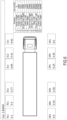
- Fig. 6 shows a screenshot of an example fleet managing application which is based on the computer-implemented methods for calculating and/or monitoring a wear rate of a tire of a vehicle according to the present invention.
- the fleet managing platform/software may be stored and run on a cloud computing device/server.
- the digital representation of the vehicle may comprise technical data of the vehicle such as the brand, the vehicle model, the number of axes, the used tires etc.
- the calculated tire wear rate may be reported to the fleet managing application.
- the calculated tire wear rate may be associated with the digital representation of the respective vehicle. This association may be performed on a per tire basis.
- the application may be capable to display the tire wear rate of each tire of a vehicle.
- the residual time or mileage of each tire of a vehicle may be displayed.
- a user of the fleet managing platform may be provided with detailed information with respect to at least one of the calculated tire wear rate, the residual tread depth, the residual mileage, and the residual life time of each tire of a vehicle. If certain conditions are fulfilled, an alert message my be issued, e.g. to the driver, fleet manager, or any other user.
- Fig. 7 shows a flowchart illustrating a computer-implemented method 900 for calculating and/or monitoring the tire wear rate of a vehicle.
- the operations of computer-implemented method 700 may be implemented by a computing device.
- At 730 data of at least one measurement of at least one property of at least one tire of the vehicle are obtained.
- a tire wear rate based at least in part on the obtained technical data of the at least one tire of the vehicle and the obtained data of at least one measurement of at least one property of at least one tire of the vehicle is calculated according to a self-tuning mathematical tire wear model.
- calculating a tire wear rate may comprise selecting one of a plurality of pre-stored algorithms for calculating tire wear rate after performing the at least one in-operational measurement of at least one property of the at least one tire of the vehicle.
- selecting one of a plurality of pre-stored algorithms for calculating tire wear rate after performing the at least one in-operational measurement of at least one property of the at least one tire of the vehicle according to a self-tuning mathematical tire wear model may comprise running a plurality of pre-stored algorithms for calculating the tire wear in and choosing one algorithm of the plurality of pre-stored algorithms which yields a calculated value for the tire wear that is closest to the tire wear obtained in at least one in-operational measurement.
- the self-tuning model is tuned on the basis of data of at least one in-operational measurement of at least one tire of the vehicle.
- the self-tuning mathematical tire wear model is trained on the basis of a plurality of calculated tire wear rates, wherein the plurality of calculated tire wear rates is based on data obtained from a plurality of vehicles, wherein the obtained data comprise technical data of at least one tire of each of the vehicles, technical data of each of the vehicles and telematics information of each of the vehicles.
- the residual tread depth and/or the remaining mileage of the tire and/or the remaining time before change according to a configured minimum tread depth is estimated based on the calculated tire wear rate.
- At least one of the calculated tire wear rate, the estimated residual tread depth, the remaining mileage of the tire, and the remaining time before change according is reported to a configured minimum tread depth to a control system.
- control system ins arranged in the vehicle.
- control system is arranged outside the vehicle, enabling collecting, from a plurality of vehicles, at least of the calculated tire wear rate, the estimated residual tread depth, the remaining mileage of the tire, and the remaining time before change according to a configured minimum tread depth.
- Fig. 8 shows a flowchart illustrating a computer-implemented method 800 for calculating and/or monitoring the tire wear rate of a vehicle.
- the operations of computer-implemented method 800 may be implemented by a computing device.
- At 830 data of at least one measurement of at least one property of at least one tire of the vehicle is transmitted.
- a calculated tire wear rate based at least in part on the transmitted technical data of the at least one tire of the vehicle and the obtained telematics information of the vehicle is obtained, wherein the calculated tire wear rate is calculated according to a self-tuning mathematical tire wear model.
- the residual tread depth and/or the remaining mileage of the tire and/or the remaining time before change according to a configured minimum tread depth is estimated based on the calculated tire wear rate.
- At least one of the calculated tire wear rate, the estimated residual tread depth, the remaining mileage of the tire, and the remaining time before change according is reported to a configured minimum tread depth to a control system.
- control system ins arranged in the vehicle.
- control system is arranged outside the vehicle, enabling collecting, from a plurality of vehicles, at least of the calculated tire wear rate, the estimated residual tread depth, the remaining mileage of the tire, and the remaining time before change according to a configured minimum tread depth.
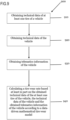
- Fig. 9 shows a flowchart illustrating a computer-implemented method 900 for calculating and/or monitoring the tire wear rate of a vehicle.
- the operations of computer-implemented method 900 may be implemented by a computing device.
- a tire wear rate based at least in part on the obtained technical data of the at least one tire of the vehicle and the obtained telematics information of the vehicle is calculated according to a data-driven mathematical tire wear model.
- data from at least one in-operational measurement of at least one property of the at least one tire of the vehicle may be obtained wherein calculating the tire wear rate further comprises calculating the tire wear rate based at least in part on the obtained data of the at least one in-operational measurement of the at least one property of the at least one tire of the vehicle.
- calculating a tire wear rate based at least in part on data obtained from at least one in-operational measurement of at least one property of the at least one tire of the vehicle may comprise selecting one of a plurality of pre-stored algorithms for calculating tire wear rate after performing the at least one in-operational measurement of at least one property of the at least one tire of the vehicle.
- selecting one of a plurality of pre-stored algorithms for calculating tire wear rate after performing the at least one in-operational measurement of at least one property of the at least one tire of the vehicle according to an self-tuning mathematical tire wear model may comprise running a plurality of pre-stored algorithms for calculating the tire wear in and choosing one algorithm of the plurality of pre-stored algorithms which yields a calculated value for the tire wear that is closest to the tire wear obtained in at least one in-operational measurement.
- calculating tire wear rate further comprises calculating tire wear rate according to a self-tuning model and wherein the self-tuning model is tuned on the basis of data of at least one in-operational measurement of at least one tire of the vehicle.
- the data-driven mathematical tire wear model is trained on the basis of a plurality of calculated tire wear rates, wherein the plurality of calculated tire wear rates is based on data obtained from a plurality of vehicles, wherein the obtained data comprise technical data of at least one tire of each of the vehicles, technical data of each of the vehicles and telematics information of each of the vehicles.
- the residual tread depth and/or the remaining mileage of the tire and/or the remaining time before change according to a configured minimum tread depth is estimated based on the calculated tire wear rate.
- At least one of the calculated tire wear rate, the estimated residual tread depth, the remaining mileage of the tire, and the remaining time before change according is reported to a configured minimum tread depth to a control system.
- control system ins arranged in the vehicle.
- control system is arranged outside the vehicle, enabling collecting, from a plurality of vehicles, at least of the calculated tire wear rate, the estimated residual tread depth, the remaining mileage of the tire, and the remaining time before change according to a configured minimum tread depth.
- Fig. 10 shows a flowchart illustrating a computer-implemented method 1000 for calculating and/or monitoring the tire wear rate of a vehicle.
- the operations of computer-implemented method 1000 may be implemented by a computing device.
- telematics information of the vehicle is transmitted.
- a calculated tire wear rate based at least in part on the transmitted technical data of the at least one tire of the vehicle and the obtained telematics information of the vehicle is obtained, wherein the calculated tire wear rate is calculated according to a data-driven mathematical tire wear model.
- data from at least one in-operational measurement of at least one property of the at least one tire of the vehicle may be transmitted, wherein the calculated tire wear rate is further calculated based at least in part on the at least one in-operational measurement of the at least one property of the at least one tire of the vehicle.
- the residual tread depth and/or the remaining mileage of the tire and/or the remaining time before change according to a configured minimum tread depth is estimated based on the calculated tire wear rate.
- At least one of the calculated tire wear rate, the estimated residual tread depth, the remaining mileage of the tire, and the remaining time before change according is reported to a configured minimum tread depth to a control system.
- control system ins arranged in the vehicle.
- control system is arranged outside the vehicle, enabling collecting, from a plurality of vehicles, at least of the calculated tire wear rate, the estimated residual tread depth, the remaining mileage of the tire, and the remaining time before change according to a configured minimum tread depth.
Landscapes
- Engineering & Computer Science (AREA)
- Mechanical Engineering (AREA)
- Tires In General (AREA)
Priority Applications (5)
| Application Number | Priority Date | Filing Date | Title |
|---|---|---|---|
| EP21214025.5A EP4194230B1 (en) | 2021-12-13 | 2021-12-13 | Apparatus and methods for calculating and/or monitoring a tire wear rate of a vehicle |
| JP2024535331A JP7815444B2 (ja) | 2021-12-13 | 2022-12-12 | 車両のタイヤ摩耗速度を算出及び/又は監視する装置及び方法 |
| PCT/EP2022/085297 WO2023110708A1 (en) | 2021-12-13 | 2022-12-12 | Apparatus and methods for calculating and/or monitoring a tire wear rate of a vehicle |
| US18/719,436 US20250042204A1 (en) | 2021-12-13 | 2022-12-12 | Apparatus and methods for calculating and/or monitoring a tire wear rate of a tire |
| CN202280091433.5A CN118679069A (zh) | 2021-12-13 | 2022-12-12 | 用于计算和/或监测运载工具的轮胎磨损率的设备和方法 |
Applications Claiming Priority (1)
| Application Number | Priority Date | Filing Date | Title |
|---|---|---|---|
| EP21214025.5A EP4194230B1 (en) | 2021-12-13 | 2021-12-13 | Apparatus and methods for calculating and/or monitoring a tire wear rate of a vehicle |
Publications (2)
| Publication Number | Publication Date |
|---|---|
| EP4194230A1 EP4194230A1 (en) | 2023-06-14 |
| EP4194230B1 true EP4194230B1 (en) | 2024-11-20 |
Family
ID=78844856
Family Applications (1)
| Application Number | Title | Priority Date | Filing Date |
|---|---|---|---|
| EP21214025.5A Active EP4194230B1 (en) | 2021-12-13 | 2021-12-13 | Apparatus and methods for calculating and/or monitoring a tire wear rate of a vehicle |
Country Status (5)
| Country | Link |
|---|---|
| US (1) | US20250042204A1 (enExample) |
| EP (1) | EP4194230B1 (enExample) |
| JP (1) | JP7815444B2 (enExample) |
| CN (1) | CN118679069A (enExample) |
| WO (1) | WO2023110708A1 (enExample) |
Families Citing this family (7)
| Publication number | Priority date | Publication date | Assignee | Title |
|---|---|---|---|---|
| US20240192093A1 (en) * | 2022-12-13 | 2024-06-13 | The Goodyear Tire & Rubber Company | System for estimation of remaining tire mileage |
| CN116749685A (zh) * | 2023-07-21 | 2023-09-15 | 广西民族大学 | 一种基于预测模型的轮胎磨损预警系统 |
| CN117252865B (zh) * | 2023-11-14 | 2024-03-19 | 深圳市昊岳科技有限公司 | 一种商用车车辆轮胎状态获取方法及相关装置 |
| JP2026052458A (ja) * | 2024-09-11 | 2026-03-24 | 株式会社ブリヂストン | タイヤ管理装置、プログラム及びタイヤ管理方法 |
| DE102024208783A1 (de) * | 2024-09-16 | 2026-03-19 | Continental Reifen Deutschland Gmbh | Verfahren, Computerprogramm und Vorrichtung zur Vorhersage einer Abnutzung von Reifen eines Fortbewegungsmittels |
| JP7684504B1 (ja) * | 2024-12-27 | 2025-05-27 | Toyo Tire株式会社 | タイヤ摩耗推定システム、タイヤ摩耗推定方法および演算モデル生成システム |
| JP7684505B1 (ja) * | 2024-12-27 | 2025-05-27 | Toyo Tire株式会社 | タイヤ摩耗推定システム、タイヤ摩耗推定方法および演算モデル生成システム |
Family Cites Families (13)
| Publication number | Priority date | Publication date | Assignee | Title |
|---|---|---|---|---|
| JPH0382931A (ja) * | 1989-08-25 | 1991-04-08 | Sumitomo Rubber Ind Ltd | タイヤ点検方法 |
| US6718259B1 (en) * | 2002-10-02 | 2004-04-06 | Hrl Laboratories, Llc | Adaptive Kalman filter method for accurate estimation of forward path geometry of an automobile |
| CN101467011B (zh) * | 2006-04-20 | 2013-04-10 | Cmte开发有限公司 | 有效载荷的估算系统和方法 |
| US9428018B2 (en) * | 2012-12-28 | 2016-08-30 | Bridgestone Americas Tire Operations, Llc | Scalable vehicle models for indoor tire testing |
| DE102014205168A1 (de) | 2014-03-20 | 2015-10-08 | Bayerische Motoren Werke Aktiengesellschaft | Verfahren, Vorrichtung, Computerprogramm und Computerprogrammprodukt zum Bereitstellen von Daten |
| WO2017156213A1 (en) | 2016-03-09 | 2017-09-14 | Compagnie Generale Des Etablissements Michelin | Vehicle integrated expected tread-life indicator system |
| JP2018034608A (ja) * | 2016-08-30 | 2018-03-08 | 横浜ゴム株式会社 | タイヤ寿命管理装置およびタイヤ寿命管理システム |
| EP3318422B1 (en) * | 2016-11-08 | 2019-08-28 | The Goodyear Tire & Rubber Company | Indirect tire wear state prediction system and method |
| US20180272813A1 (en) | 2017-03-23 | 2018-09-27 | The Goodyear Tire & Rubber Company | Model based tire wear estimation system and method |
| IT201800007884A1 (it) * | 2018-08-06 | 2020-02-06 | Bridgestone Europe Nv Sa | Sistema e metodo per monitorare il consumo di battistrada |
| JP7194066B2 (ja) * | 2019-03-29 | 2022-12-21 | Toyo Tire株式会社 | 演算モデル生成システム、摩耗量推定システムおよび演算モデル生成方法 |
| US11087566B2 (en) * | 2019-04-16 | 2021-08-10 | Verizon Patent And Licensing Inc. | Determining vehicle service timeframes based on vehicle data |
| SE544696C2 (en) * | 2020-02-17 | 2022-10-18 | Scania Cv Ab | Method and control arrangement for determining momentary tire wear rate of a wheel of a vehicle |
-
2021
- 2021-12-13 EP EP21214025.5A patent/EP4194230B1/en active Active
-
2022
- 2022-12-12 CN CN202280091433.5A patent/CN118679069A/zh active Pending
- 2022-12-12 JP JP2024535331A patent/JP7815444B2/ja active Active
- 2022-12-12 US US18/719,436 patent/US20250042204A1/en active Pending
- 2022-12-12 WO PCT/EP2022/085297 patent/WO2023110708A1/en not_active Ceased
Also Published As
| Publication number | Publication date |
|---|---|
| US20250042204A1 (en) | 2025-02-06 |
| JP2025500037A (ja) | 2025-01-07 |
| CN118679069A (zh) | 2024-09-20 |
| EP4194230A1 (en) | 2023-06-14 |
| WO2023110708A1 (en) | 2023-06-22 |
| JP7815444B2 (ja) | 2026-02-17 |
Similar Documents
| Publication | Publication Date | Title |
|---|---|---|
| EP4194230B1 (en) | Apparatus and methods for calculating and/or monitoring a tire wear rate of a vehicle | |
| EP4194231B1 (en) | Apparatus and methods for calculating and/or monitoring a tire wear rate of a vehicle | |
| KR102866939B1 (ko) | 타이어의 마모 및 수명의 종료를 예측하기 위한 모델 | |
| CN103674573B (zh) | 轮胎胎体寿命预测系统 | |
| EP4015250B1 (en) | System and method for real-time health prediction of tires | |
| KR101699884B1 (ko) | Obd와 gps 정보를 이용한 맞춤형 차량정비 관리 시스템 및 방법 | |
| US12165441B2 (en) | Condition monitoring of a vehicle | |
| CN112292271A (zh) | 胎面磨损监视系统和方法 | |
| CN108712972A (zh) | 车辆集成预期胎面寿命指示系统 | |
| US20240246373A1 (en) | System and method for real-time estimation of tire rolling resistance force | |
| US20230196854A1 (en) | Tire replacement system | |
| US20250369830A1 (en) | Apparatus and methods for calculating and/or monitoring a wear rate of a tire | |
| US20230184563A1 (en) | Connected vehicle-based road surface quality determination | |
| EP3721170B1 (en) | Method to measure road roughness characteristics and pavement induced vehicle fuel consumption | |
| EP4357168B1 (en) | Tire load monitoring | |
| CN116278523B (zh) | 轮胎更换系统 | |
| EP4385763A1 (en) | System and method for estimation of remaining tire mileage | |
| AU2012202024A1 (en) | A System and Method for Collecting an Operator Behavioural Profile | |
| CN118182019A (zh) | 轮胎剩余里程估计系统 |
Legal Events
| Date | Code | Title | Description |
|---|---|---|---|
| PUAI | Public reference made under article 153(3) epc to a published international application that has entered the european phase |
Free format text: ORIGINAL CODE: 0009012 |
|
| STAA | Information on the status of an ep patent application or granted ep patent |
Free format text: STATUS: THE APPLICATION HAS BEEN PUBLISHED |
|
| AK | Designated contracting states |
Kind code of ref document: A1 Designated state(s): AL AT BE BG CH CY CZ DE DK EE ES FI FR GB GR HR HU IE IS IT LI LT LU LV MC MK MT NL NO PL PT RO RS SE SI SK SM TR |
|
| STAA | Information on the status of an ep patent application or granted ep patent |
Free format text: STATUS: REQUEST FOR EXAMINATION WAS MADE |
|
| 17P | Request for examination filed |
Effective date: 20231214 |
|
| RBV | Designated contracting states (corrected) |
Designated state(s): AL AT BE BG CH CY CZ DE DK EE ES FI FR GB GR HR HU IE IS IT LI LT LU LV MC MK MT NL NO PL PT RO RS SE SI SK SM TR |
|
| GRAP | Despatch of communication of intention to grant a patent |
Free format text: ORIGINAL CODE: EPIDOSNIGR1 |
|
| STAA | Information on the status of an ep patent application or granted ep patent |
Free format text: STATUS: GRANT OF PATENT IS INTENDED |
|
| INTG | Intention to grant announced |
Effective date: 20240613 |
|
| GRAS | Grant fee paid |
Free format text: ORIGINAL CODE: EPIDOSNIGR3 |
|
| GRAA | (expected) grant |
Free format text: ORIGINAL CODE: 0009210 |
|
| STAA | Information on the status of an ep patent application or granted ep patent |
Free format text: STATUS: THE PATENT HAS BEEN GRANTED |
|
| AK | Designated contracting states |
Kind code of ref document: B1 Designated state(s): AL AT BE BG CH CY CZ DE DK EE ES FI FR GB GR HR HU IE IS IT LI LT LU LV MC MK MT NL NO PL PT RO RS SE SI SK SM TR |
|
| REG | Reference to a national code |
Ref country code: GB Ref legal event code: FG4D |
|
| REG | Reference to a national code |
Ref country code: CH Ref legal event code: EP |
|
| REG | Reference to a national code |
Ref country code: DE Ref legal event code: R096 Ref document number: 602021022038 Country of ref document: DE |
|
| REG | Reference to a national code |
Ref country code: IE Ref legal event code: FG4D |
|
| REG | Reference to a national code |
Ref country code: LT Ref legal event code: MG9D |
|
| REG | Reference to a national code |
Ref country code: NL Ref legal event code: MP Effective date: 20241120 |
|
| P01 | Opt-out of the competence of the unified patent court (upc) registered |
Free format text: CASE NUMBER: APP_8772/2025 Effective date: 20250220 |
|
| PG25 | Lapsed in a contracting state [announced via postgrant information from national office to epo] |
Ref country code: HR Free format text: LAPSE BECAUSE OF FAILURE TO SUBMIT A TRANSLATION OF THE DESCRIPTION OR TO PAY THE FEE WITHIN THE PRESCRIBED TIME-LIMIT Effective date: 20241120 Ref country code: PT Free format text: LAPSE BECAUSE OF FAILURE TO SUBMIT A TRANSLATION OF THE DESCRIPTION OR TO PAY THE FEE WITHIN THE PRESCRIBED TIME-LIMIT Effective date: 20250320 Ref country code: IS Free format text: LAPSE BECAUSE OF FAILURE TO SUBMIT A TRANSLATION OF THE DESCRIPTION OR TO PAY THE FEE WITHIN THE PRESCRIBED TIME-LIMIT Effective date: 20250320 |
|
| PG25 | Lapsed in a contracting state [announced via postgrant information from national office to epo] |
Ref country code: FI Free format text: LAPSE BECAUSE OF FAILURE TO SUBMIT A TRANSLATION OF THE DESCRIPTION OR TO PAY THE FEE WITHIN THE PRESCRIBED TIME-LIMIT Effective date: 20241120 Ref country code: NL Free format text: LAPSE BECAUSE OF FAILURE TO SUBMIT A TRANSLATION OF THE DESCRIPTION OR TO PAY THE FEE WITHIN THE PRESCRIBED TIME-LIMIT Effective date: 20241120 |
|
| REG | Reference to a national code |
Ref country code: AT Ref legal event code: MK05 Ref document number: 1743265 Country of ref document: AT Kind code of ref document: T Effective date: 20241120 |
|
| PG25 | Lapsed in a contracting state [announced via postgrant information from national office to epo] |
Ref country code: BG Free format text: LAPSE BECAUSE OF FAILURE TO SUBMIT A TRANSLATION OF THE DESCRIPTION OR TO PAY THE FEE WITHIN THE PRESCRIBED TIME-LIMIT Effective date: 20241120 |
|
| PG25 | Lapsed in a contracting state [announced via postgrant information from national office to epo] |
Ref country code: ES Free format text: LAPSE BECAUSE OF FAILURE TO SUBMIT A TRANSLATION OF THE DESCRIPTION OR TO PAY THE FEE WITHIN THE PRESCRIBED TIME-LIMIT Effective date: 20241120 |
|
| PG25 | Lapsed in a contracting state [announced via postgrant information from national office to epo] |
Ref country code: NO Free format text: LAPSE BECAUSE OF FAILURE TO SUBMIT A TRANSLATION OF THE DESCRIPTION OR TO PAY THE FEE WITHIN THE PRESCRIBED TIME-LIMIT Effective date: 20250220 |
|
| PG25 | Lapsed in a contracting state [announced via postgrant information from national office to epo] |
Ref country code: LV Free format text: LAPSE BECAUSE OF FAILURE TO SUBMIT A TRANSLATION OF THE DESCRIPTION OR TO PAY THE FEE WITHIN THE PRESCRIBED TIME-LIMIT Effective date: 20241120 Ref country code: GR Free format text: LAPSE BECAUSE OF FAILURE TO SUBMIT A TRANSLATION OF THE DESCRIPTION OR TO PAY THE FEE WITHIN THE PRESCRIBED TIME-LIMIT Effective date: 20250221 Ref country code: AT Free format text: LAPSE BECAUSE OF FAILURE TO SUBMIT A TRANSLATION OF THE DESCRIPTION OR TO PAY THE FEE WITHIN THE PRESCRIBED TIME-LIMIT Effective date: 20241120 |
|
| PG25 | Lapsed in a contracting state [announced via postgrant information from national office to epo] |
Ref country code: PL Free format text: LAPSE BECAUSE OF FAILURE TO SUBMIT A TRANSLATION OF THE DESCRIPTION OR TO PAY THE FEE WITHIN THE PRESCRIBED TIME-LIMIT Effective date: 20241120 |
|
| PG25 | Lapsed in a contracting state [announced via postgrant information from national office to epo] |
Ref country code: IT Free format text: LAPSE BECAUSE OF NON-PAYMENT OF DUE FEES Effective date: 20241213 |
|
| PG25 | Lapsed in a contracting state [announced via postgrant information from national office to epo] |
Ref country code: RS Free format text: LAPSE BECAUSE OF FAILURE TO SUBMIT A TRANSLATION OF THE DESCRIPTION OR TO PAY THE FEE WITHIN THE PRESCRIBED TIME-LIMIT Effective date: 20250220 |
|
| PG25 | Lapsed in a contracting state [announced via postgrant information from national office to epo] |
Ref country code: SM Free format text: LAPSE BECAUSE OF FAILURE TO SUBMIT A TRANSLATION OF THE DESCRIPTION OR TO PAY THE FEE WITHIN THE PRESCRIBED TIME-LIMIT Effective date: 20241120 |
|
| PG25 | Lapsed in a contracting state [announced via postgrant information from national office to epo] |
Ref country code: DK Free format text: LAPSE BECAUSE OF FAILURE TO SUBMIT A TRANSLATION OF THE DESCRIPTION OR TO PAY THE FEE WITHIN THE PRESCRIBED TIME-LIMIT Effective date: 20241120 |
|
| PG25 | Lapsed in a contracting state [announced via postgrant information from national office to epo] |
Ref country code: EE Free format text: LAPSE BECAUSE OF FAILURE TO SUBMIT A TRANSLATION OF THE DESCRIPTION OR TO PAY THE FEE WITHIN THE PRESCRIBED TIME-LIMIT Effective date: 20241120 |
|
| PG25 | Lapsed in a contracting state [announced via postgrant information from national office to epo] |
Ref country code: RO Free format text: LAPSE BECAUSE OF FAILURE TO SUBMIT A TRANSLATION OF THE DESCRIPTION OR TO PAY THE FEE WITHIN THE PRESCRIBED TIME-LIMIT Effective date: 20241120 |
|
| PG25 | Lapsed in a contracting state [announced via postgrant information from national office to epo] |
Ref country code: SK Free format text: LAPSE BECAUSE OF FAILURE TO SUBMIT A TRANSLATION OF THE DESCRIPTION OR TO PAY THE FEE WITHIN THE PRESCRIBED TIME-LIMIT Effective date: 20241120 |
|
| PG25 | Lapsed in a contracting state [announced via postgrant information from national office to epo] |
Ref country code: CZ Free format text: LAPSE BECAUSE OF FAILURE TO SUBMIT A TRANSLATION OF THE DESCRIPTION OR TO PAY THE FEE WITHIN THE PRESCRIBED TIME-LIMIT Effective date: 20241120 |
|
| REG | Reference to a national code |
Ref country code: CH Ref legal event code: PL |
|
| PG25 | Lapsed in a contracting state [announced via postgrant information from national office to epo] |
Ref country code: LU Free format text: LAPSE BECAUSE OF NON-PAYMENT OF DUE FEES Effective date: 20241213 |
|
| REG | Reference to a national code |
Ref country code: DE Ref legal event code: R097 Ref document number: 602021022038 Country of ref document: DE |
|
| PG25 | Lapsed in a contracting state [announced via postgrant information from national office to epo] |
Ref country code: SE Free format text: LAPSE BECAUSE OF FAILURE TO SUBMIT A TRANSLATION OF THE DESCRIPTION OR TO PAY THE FEE WITHIN THE PRESCRIBED TIME-LIMIT Effective date: 20241120 |
|
| PG25 | Lapsed in a contracting state [announced via postgrant information from national office to epo] |
Ref country code: MC Free format text: LAPSE BECAUSE OF FAILURE TO SUBMIT A TRANSLATION OF THE DESCRIPTION OR TO PAY THE FEE WITHIN THE PRESCRIBED TIME-LIMIT Effective date: 20241120 |
|
| PLBE | No opposition filed within time limit |
Free format text: ORIGINAL CODE: 0009261 |
|
| STAA | Information on the status of an ep patent application or granted ep patent |
Free format text: STATUS: NO OPPOSITION FILED WITHIN TIME LIMIT |
|
| REG | Reference to a national code |
Ref country code: BE Ref legal event code: MM Effective date: 20241231 |
|
| PG25 | Lapsed in a contracting state [announced via postgrant information from national office to epo] |
Ref country code: BE Free format text: LAPSE BECAUSE OF NON-PAYMENT OF DUE FEES Effective date: 20241231 |
|
| PG25 | Lapsed in a contracting state [announced via postgrant information from national office to epo] |
Ref country code: CH Free format text: LAPSE BECAUSE OF NON-PAYMENT OF DUE FEES Effective date: 20241231 |
|
| 26N | No opposition filed |
Effective date: 20250821 |
|
| PG25 | Lapsed in a contracting state [announced via postgrant information from national office to epo] |
Ref country code: IE Free format text: LAPSE BECAUSE OF NON-PAYMENT OF DUE FEES Effective date: 20241213 |
|
| PGFP | Annual fee paid to national office [announced via postgrant information from national office to epo] |
Ref country code: DE Payment date: 20251126 Year of fee payment: 5 |
|
| PG25 | Lapsed in a contracting state [announced via postgrant information from national office to epo] |
Ref country code: IT Free format text: LAPSE BECAUSE OF NON-PAYMENT OF DUE FEES Effective date: 20241213 |
|
| PGFP | Annual fee paid to national office [announced via postgrant information from national office to epo] |
Ref country code: IT Payment date: 20251119 Year of fee payment: 5 |
|
| PGRI | Patent reinstated in contracting state [announced from national office to epo] |
Ref country code: IT Effective date: 20241231 |
|
| PGFP | Annual fee paid to national office [announced via postgrant information from national office to epo] |
Ref country code: FR Payment date: 20251120 Year of fee payment: 5 |