EP4192143B1 - Verfahren zur bestimmung einer sidelink-konfigurierten berechtigungsressource und endgerätevorrichtung - Google Patents
Verfahren zur bestimmung einer sidelink-konfigurierten berechtigungsressource und endgerätevorrichtung Download PDFInfo
- Publication number
- EP4192143B1 EP4192143B1 EP20946650.7A EP20946650A EP4192143B1 EP 4192143 B1 EP4192143 B1 EP 4192143B1 EP 20946650 A EP20946650 A EP 20946650A EP 4192143 B1 EP4192143 B1 EP 4192143B1
- Authority
- EP
- European Patent Office
- Prior art keywords
- resource
- transmission
- time
- terminal device
- domain
- Prior art date
- Legal status (The legal status is an assumption and is not a legal conclusion. Google has not performed a legal analysis and makes no representation as to the accuracy of the status listed.)
- Active
Links
Images



Classifications
-
- H—ELECTRICITY
- H04—ELECTRIC COMMUNICATION TECHNIQUE
- H04W—WIRELESS COMMUNICATION NETWORKS
- H04W72/00—Local resource management
- H04W72/02—Selection of wireless resources by user or terminal
-
- H—ELECTRICITY
- H04—ELECTRIC COMMUNICATION TECHNIQUE
- H04W—WIRELESS COMMUNICATION NETWORKS
- H04W4/00—Services specially adapted for wireless communication networks; Facilities therefor
- H04W4/30—Services specially adapted for particular environments, situations or purposes
- H04W4/40—Services specially adapted for particular environments, situations or purposes for vehicles, e.g. vehicle-to-pedestrians [V2P]
- H04W4/44—Services specially adapted for particular environments, situations or purposes for vehicles, e.g. vehicle-to-pedestrians [V2P] for communication between vehicles and infrastructures, e.g. vehicle-to-cloud [V2C] or vehicle-to-home [V2H]
-
- H—ELECTRICITY
- H04—ELECTRIC COMMUNICATION TECHNIQUE
- H04W—WIRELESS COMMUNICATION NETWORKS
- H04W4/00—Services specially adapted for wireless communication networks; Facilities therefor
- H04W4/30—Services specially adapted for particular environments, situations or purposes
- H04W4/40—Services specially adapted for particular environments, situations or purposes for vehicles, e.g. vehicle-to-pedestrians [V2P]
- H04W4/46—Services specially adapted for particular environments, situations or purposes for vehicles, e.g. vehicle-to-pedestrians [V2P] for vehicle-to-vehicle communication [V2V]
-
- H—ELECTRICITY
- H04—ELECTRIC COMMUNICATION TECHNIQUE
- H04W—WIRELESS COMMUNICATION NETWORKS
- H04W72/00—Local resource management
- H04W72/04—Wireless resource allocation
- H04W72/044—Wireless resource allocation based on the type of the allocated resource
- H04W72/0446—Resources in time domain, e.g. slots or frames
-
- H—ELECTRICITY
- H04—ELECTRIC COMMUNICATION TECHNIQUE
- H04W—WIRELESS COMMUNICATION NETWORKS
- H04W72/00—Local resource management
- H04W72/20—Control channels or signalling for resource management
- H04W72/25—Control channels or signalling for resource management between terminals via a wireless link, e.g. sidelink
-
- H—ELECTRICITY
- H04—ELECTRIC COMMUNICATION TECHNIQUE
- H04W—WIRELESS COMMUNICATION NETWORKS
- H04W72/00—Local resource management
- H04W72/40—Resource management for direct mode communication, e.g. D2D or sidelink
-
- H—ELECTRICITY
- H04—ELECTRIC COMMUNICATION TECHNIQUE
- H04W—WIRELESS COMMUNICATION NETWORKS
- H04W72/00—Local resource management
- H04W72/04—Wireless resource allocation
- H04W72/115—Grant-free or autonomous transmission
-
- H—ELECTRICITY
- H04—ELECTRIC COMMUNICATION TECHNIQUE
- H04W—WIRELESS COMMUNICATION NETWORKS
- H04W92/00—Interfaces specially adapted for wireless communication networks
- H04W92/16—Interfaces between hierarchically similar devices
- H04W92/18—Interfaces between hierarchically similar devices between terminal devices
Definitions
- Implementations of the disclosure relate to the field of communication, and more particularly, to a method for sidelink (SL) configured grant (CG) resource determination and a terminal device.
- SL sidelink
- CG configured grant
- the network device can allocate sidelink (SL) configured grant (CG) transmission resources for the terminal device.
- SL sidelink
- CG configured grant
- OPPO "Remaining issues of mode 1 resource allocation for NR-V2X", 3GPP DRAFT; R1-2001746, 3RD GENERATION PARTNERSHIP PROJECT (8GPP), MOBILE COMPETENCE CENTRE ; 650, ROUTE DES LUCIOLES; F-06921 SOPHIA-ANTIPOLIS CEDEX discusses the remaining issues of NR Uu to control NR SL.
- US20200045674A1 provides a method for a first user equipment (UE) to exchange one or more sidelink packets with a second UE.
- the method receives, from a serving base station, a sidelink resource allocation configuration that includes i) one or more sidelink resource configurations on one or more sidelink frequency carriers, and (ii) data identifying a valid area of the sidelink resource configurations.
- the method determines, based on the data identifying the valid area, whether the first UE is located within the valid area.
- the method determines that the first UE is located within the valid area, the method exchanges the one or more sidelink packets with the second UE based on the received sidelink resource allocation configuration, otherwise, the method stops exchanging the one or more sidelink packets, on one or more sidelink resources indicated by the sidelink resource configurations, with the second UE.
- OPPO "Discussion on resource allocation and HARQ process id of configured grant", 3GPP DRAFT; R2-2006769, 3RD GENERATION PARTNERSHIP PROJECT (8GPP), MOBILE COMPETENCE CENTRE ; 650, ROUTE DES LUCIOLES ; F-06921 SOPHIA-ANTIPOLIS CEDEX ; FRANCE vol. RAN WG2, no. E -meeting discusses that the latest 38.321 [1] capture the equation on resource allocation and HARQ process id of configured grant. After carefully checking we find the equation is not technically correct. In this paper correction is proposed to fix the problem.
- GSM global system of mobile communication
- CDMA code division multiple access
- WCDMA wideband code division multiple access
- GPRS general packet radio service
- LTE long term evolution
- LTE-A advanced LTE
- NR new radio
- LTE-U LTE-U
- NTN non-terrestrial network
- UMTS universal mobile telecommunication system
- WLAN wireless local area networks
- WiFi wireless fidelity
- 5G 5th-generation
- a conventional communication system generally supports a limited number of connections and therefore is easy to implement.
- a mobile communication system will not only support conventional communication but also support, for example, device to device (D2D) communication, machine to machine (M2M) communication, machine type communication (MTC), and vehicle to vehicle (V2V) communication, or vehicle to everything (V2X) communication. Implementations of the disclosure can also be applied to these communication systems.
- D2D device to device
- M2M machine to machine
- MTC machine type communication
- V2V vehicle to vehicle
- V2X vehicle to everything
- a communication system of implementations of the disclosure may be applied to a carrier aggregation (CA) scenario, a dual connectivity (DC) scenario, or a standalone (SA) network deployment scenario.
- CA carrier aggregation
- DC dual connectivity
- SA standalone
- the communication system of implementations of the disclosure may be applied to an unlicensed spectrum or a licensed spectrum, where the unlicensed spectrum may also be referred to as a shared spectrum, and the licensed spectrum may also be referred to as a non-shared spectrum.
- the terminal device may also be referred to as a user equipment (UE), an access terminal, a subscriber unit, a subscriber station, a mobile station, a remote station, a remote terminal, a mobile device, a user terminal, a terminal, a wireless communication device, a user agent, or a user device.
- UE user equipment
- the terminal device may be a station (ST) in a WLAN, a cellular radio telephone, a cordless telephone, a session initiation protocol (SIP) telephone, a wireless local loop (WLL) station, a personal digital assistant (PDA), a handheld device with wireless communication functions, a computing device, other processing devices coupled with a wireless modem, an in-vehicle device, a wearable device, and a next-generation communication system, for example, a terminal device in an NR network, a terminal device in a future evolved public land mobile network (PLMN), etc.
- ST station
- WLAN wireless local loop
- PDA personal digital assistant
- the terminal device may be deployed on land, for example, deployed indoors or outdoors, and may be handheld, wearable, or vehicle-mounted.
- the terminal device may also be deployed on water, for example, on a ship, etc.
- the terminal device may also be deployed in the air, for example, on an airplane, an air balloon, a satellite, etc.
- the terminal device may be a mobile phone, a pad, a computer with a wireless transceiver function, a virtual reality (VR) terminal device, an augmented reality (AR) terminal device, a wireless terminal device in industrial control, a wireless terminal device in self driving, a wireless terminal device in remote medical, a wireless terminal device in smart grid, a wireless terminal device in transportation safety, a wireless terminal device in smart city, a wireless terminal device in smart home, etc.
- VR virtual reality
- AR augmented reality
- the terminal device may also be a wearable device.
- the wearable device may also be called a wearable smart device, which is a generic term of wearable devices obtained through intelligentization designing and development on daily wearing products with wearable technology, for example, glasses, gloves, watches, clothes, accessories, and shoes.
- the wearable device is a portable device that can be directly worn or integrated into clothes or accessories of a user.
- the wearable device can also realize various functions through software support, data interaction, and cloud interaction.
- a wearable smart device in a broad sense includes, for example, a smart watch or smart glasses with complete functions and large sizes and capable of realizing independently all or part of functions of a smart phone, and for example, various types of smart bands and smart jewelries for physical monitoring, of which each is dedicated to application functions of a certain type and required to be used together with other devices such as a smart phone.
- the network device may be a device configured to communicate with a mobile device, and the network device may be an access point (AP) in the WLAN, a base transceiver station (BTS) in the GSM or CDMA, may also be a Node B (NB) in WCDMA, and may further be an evolutional Node B (eNB or eNodeB) in LTE, or a relay station or AP, or an in-vehicle device, a wearable device, a network device or a g-Node B (gNB) in the NR network, a network device in the future evolved PLMN, a network device in a NTN, etc.
- AP access point
- BTS base transceiver station
- NB Node B
- eNB evolutional Node B
- gNB g-Node B
- the network device may be of mobility.
- the network device may be a mobile device.
- the network device may be a satellite or a balloon station.
- the satellite may be a low earth orbit (LEO) satellite, a medium earth orbit (MEO) satellite, a geostationary earth orbit (GEO) satellite, a high elliptical orbit (HEO) satellite, etc.
- the network device may also be a base station located on land, water, etc.
- the network device can provide services for a cell, and the terminal device communicates with the network device through a transmission resource (for example, a frequency-domain resource or a spectrum resource) for the cell.
- the cell may be a cell corresponding to the network device (for example, a base station).
- the cell may correspond to a macro base station, and may correspond to a base station corresponding to a small cell.
- the small cell may include: a metro cell, a micro cell, a pico cell, a femto cell, and the like. These small cells are characterized by small coverage and low transmission power and are adapted to provide data transmission service with high-rate.
- system and “network” herein are usually interchangeable.
- the term “and/or” herein describes only an association relationship for describing associated objects and represents that three relationships may exist. For example, A and/or B may represent the following three cases: only A exists, both A and B exist, and only B exists.
- the character “/” herein generally indicates an "or" relationship between the associated objects.
- the "indication" mentioned in embodiments of the disclosure may be a direct indication or an indirect indication, or indicate an association.
- a indicates B it can mean that A directly indicates B, for example, B can be obtained through A, or mean that A indicates B indirectly, for example, A indicates C, and B can be obtained through C, or it can also mean that there is an association between A and B.
- corresponding can mean that there is a direct or indirect correspondence between two elements, or that there is an association between two elements, or that there is a relationship of "indicating” and “being indicated”, “configuring” and “being configured”, and the like.
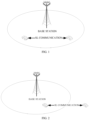
- sidelink (SL) communication can be classified into SL communication in network coverage, as illustrated in FIG. 1 , SL communication in partial network coverage, as illustrated in FIG. 2 , or SL communication out of network coverage, as illustrated in FIG. 3 .
- FIG.1 In SL communication in network coverage, all terminals in SL communication are in the coverage of the same base station. Therefore, these terminals can receive a configuration signaling from the base station and perform SL communication based on the same SL configuration.
- FIG. 2 In SL communication in partial network coverage, some terminals in SL communication are in the coverage of the base station. These terminals can receive a configuration signaling from the base station and perform SL communication according to the configuration of the base station. However, terminals out of the network coverage cannot receive the configuration signaling from the base station. In this case, the terminals out of the network coverage will determine SL configuration for SL communication according to pre-configuration information and information carried in a physical sidelink broadcast channel (PSBCH) transmitted from the terminal in the network coverage.
- PSBCH physical sidelink broadcast channel
- FIG. 3 For SL communication out of network coverage, all terminals in SL communication are out of the network coverage and determine SL configuration based on the pre-configuration information for SL communication.
- the D2D communication is a D2D-based SL transmission technology.
- the D2D communication is different from a manner that communication data is received or transmitted through a base station in a traditional cellular system, and thus has higher spectral efficiency and lower transmission delay.
- An internet of vehicles (IOV) system adopts D2D direct communication.
- Two transmission modes are defined in the 3rd generation partnership project (3GPP). The two transmission modes are respectively denoted as mode A and mode B. Implementations of the disclosure may be applied to mode A and/or mode B.
- Mode A Transmission resources of the terminal are allocated by the base station, and the terminal transmits data on the SL with the resources allocated by the base station.
- the base station can allocate to the terminal resources for a single transmission or resources for semi-static transmission. As illustrated in FIG. 1 , the terminal is in the network coverage, and the network allocates to the terminal transmission resources for SL transmission.
- Mode B The terminal selects a resource from a resource pool for data transmission. As illustrated in FIG. 3 , the terminal is out of the coverage of the cell. The terminal autonomously selects a transmission resource for SL transmission from a pre-configured resource pool. Alternatively, as illustrated in FIG. 1 , the terminal autonomously selects a transmission resource for SL transmission from a resource pool configured by the network.
- the user may be in a mixed mode. That is, the user can obtain a resource both in mode A and in mode B.
- LTE-V2X broadcast transmission is supported.
- NR-V2X unicast transmission and multicast transmission are introduced.
- unicast transmission there is only one receiving terminal.
- UE 1 performs unicast transmission with UE 2.
- multicast transmission all terminals in a communication group or all terminals within a certain transmission distance are receiving terminals.
- UE 1, UE 2, UE 3, and UE 4 form a communication group, where UE 1 transmits data, and other terminals in the group are receiving terminals.
- any terminal around a transmitting terminal is a receiving terminal.
- UE 1 is the transmitting terminal, and other terminals around UE 1, i.e., UE 2 to UE 6 are all receiving terminals.
- a resource pool is introduced in the SL transmission system.
- the so-called resource pool is a set of transmission resources. Both transmission resources configured by the network and transmission resources autonomously selected by the terminal are resources in the resource pool.
- the resource pool can be pre-configured, or configured by the network, and one or more resource pools can be configured.
- the resource pool is further classified into a transmitting resource pool or a receiving resource pool. Transmission resources in the transmitting resource pool are configured for transmitting SL data.
- the terminal receives SL data on transmission resources in the receiving resource pool.
- a set of subframes for SL transmission mode 3 (i.e., the mode A mentioned above) or mode 4 (i.e., the mode B mentioned above) in a physical sidelink shared channel (PSSCH) resource pool can be denoted by t 0 SL , t 1 SL , ... , t T max SL , where 0 ⁇ t i SL ⁇ 10240 .
- the subframe index is relative to subframe #0 of the radio frame corresponding to SFN 0 of the serving cell or DFN 0.
- the set of subframes includes all the subframes except: subframes in which sidelink synchronization signal (SLSS) resources are configured, downlink (DL) subframes and special subframes in a time division duplexing (TDD) system, and reserved subframes.
- SLSS sidelink synchronization signal
- DL downlink
- TDD time division duplexing
- the terminal device determines a set of subframes assigned to the PSSCH resource pool as follows.
- a resource pool is determined in a system frame number (SFN) or direct frame number (DFN) period.
- SFN period includes 10240 subframes which correspond to subframes 0, 1, 2, ..., 10239 respectively (also referred to as physical slots or physical subframes), synchronous subframes, DL subframes, special subframes (that is, DL subframes and special subframes in the TDD system), and reserved subframes are excluded, the remaining subframes are indexed as t 0 SL , t 1 SL , ... , t T max SL the number of the remaining subframes is divisible by L bitmap , and the bitmap ( b 0 , b 1 ,..., b L bitmap ) is periodically repeated in the remaining subframes. If a bit is 1, it indicates that a subframe corresponding to the bit in the remaining subframes belongs to the resource pool, otherwise the subframe does not belong to the resource pool.
- the remaining subframes are re-indexed as 0, 1, 2, ..., 10109 and are also referred to as logical slots or logical subframes.
- the first three bits in the bitmap are 1, and the remaining seven bits are 0.
- the bitmap needs to be repeated 1011 times in the remaining subframes to indicate whether each subframe belongs to the resource pool, and three subframes in each bitmap period belong to the resource pool. Therefore, a total of 3033 subframes belong to the resource pool in one SFN period.
- mode 1 and mode 2 resource allocation in mode 1 and mode 2 are supported.
- mode 2 i.e., the mode B mentioned above
- the terminal autonomously selects transmission resources for SL transmission from a resource pool.
- mode 1 i.e., the mode A mentioned above
- the network allocates SL transmission resources for the terminal.
- the network device can allocate SL transmission resources to the terminal through dynamic scheduling (DG), or the network can allocate to the terminal SL configured grant (CG) transmission resources (also referred to as SL grant-free transmission resources).
- DG dynamic scheduling
- CG SL configured grant
- Type-1 SL CG The network device configures SL transmission resources for the terminal through a radio resource control (RRC) signaling. All transmission resources and transmission parameters including time-domain resources, frequency-domain resources, a demodulation reference signal (DMRS), a modulation and coding scheme (MCS), and the like are configured through the RRC signaling.
- RRC radio resource control
- All transmission resources and transmission parameters including time-domain resources, frequency-domain resources, a demodulation reference signal (DMRS), a modulation and coding scheme (MCS), and the like are configured through the RRC signaling.
- the terminal device can perform SL transmission on the configured time-frequency resources with the configured transmission parameters upon receiving the high-layer parameters.
- Type-2 SL CG A two-step resource configuration manner, that is, an RRC+DCI manner is adopted. First, transmission resources and transmission parameters including a period of time-frequency resources, a redundancy version, the number of retransmissions, a hybrid automatic repeat request (HARQ) process number, and the like are configured through a RRC signaling. Then, transmission of the type-2 SL CG is activated through downlink control information (DCI), and other transmission resources and transmission parameters including time-domain resources, frequency-domain resources, a MCS and the like are configured through the DCI.
- DCI downlink control information
- the terminal device When receiving the RRC signaling, the terminal device cannot perform SL transmission immediately with the resources and parameters configured by the higher-layer parameter, but needs to wait for a corresponding DCI for activating the SL CG and then performs SL transmission.
- the network can deactivate the SL CG through a DCI. After receiving the deactivating DCI, the terminal can no longer performs SL transmission with the SL CG transmission resource.
- PeriodicitySL N 20 ms ⁇ sl _ periodCG
- N indicates the number of logical slots available for SL transmission within the time range of 20ms
- sl_periodCG indicates a period of the SL CG configured by the network
- numberOfSLSlotsPerFrame indicates the number of logical slots available for SL transmission in one radio frame
- "logical slot number in the frame” indicates the number of logical slots in the radio frame
- timeReferenceSFN indicates a time reference SFN
- sl-TimeOffsetCGType1 indicates a time-domain offset of type-1 CG
- S indicates any integer.
- PeriodicitySL N 20 ms ⁇ sl _ periodCG
- N indicates the number of logical slots available for SL transmission within the time range of 20ms
- sl_periodCG indicates a period of the SL CG configured by the network
- numberOfSLSlotsPerFrame indicates the number of logical slots available for SL transmission in one radio frame
- SFN start time indicates a SFN corresponding to the first PSSCH transmission opportunity in the CG resource
- slot start time indicates a logical slot corresponding to the first PSSCH transmission opportunity in the CG resource
- sl-TimeOffsetCGType1 indicates a time-domain offset of type-1 CG
- S indicates any integer.
- PeriodicitySL N 20 ms ⁇ sl _ periodCG
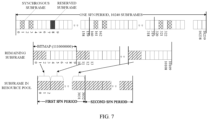
- the parameter PeriodicitySL obtained through this formula includes all logical slots available for SL transmission (for example, corresponding to the second row in FIG. 7 )
- the SL CG is configured in a certain resource pool (for example, corresponding to the third row in FIG. 7 )
- the length of the bitmap indicating resource-pool slots has a value selected from [10, 100] and may not have an integer multiple relationship with the number of slots within the time range of 20ms. Therefore, a slot determined according to formula 1 and formula 2 may not belong to the resource pool associated with the SL CG, and thus is not a time-domain transmission resource for SL CG.
- numberOfSLSlotsPerFrame indicates the number of logical slots available for SL transmission in one radio frame, but in the formula for period determination, the number is determined with a period of 20ms. 20ms includes two radio frames, and the number of logical slots available for SL transmission in each radio frame may be different. For example, there are ten logical slots available for SL transmission in 20ms, specifically, there are three logical slots in the first 10ms (one radio frame) and seven logical slots in the last 20ms (another radio frame). In this case, the value of numberOfSLSlotsPerFrame varies for different radio frames. How to determine the value and whether the value is 3 or 7 is a question.
- SL CG For SL CG, up to three transmission resources can be configured by the network device in each CG period. However, in the formula for SL CG transmission resource determination, only the first transmission resource in each period is considered. That is, only sl-TimeOffsetCGType1 in type-1 SL CG and SFN start time and slot start time in type-2 SL CG are considered. Time-domain positions corresponding to the second or the third transmission resources are not considered.
- the disclosure proposes a solution for SL CG resource determination to solve the above technical problems.
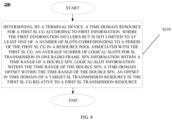
- FIG. 8 is a schematic flowchart of a method 200 for SL CG resource determination according to implementations of the disclosure. As illustrated in FIG. 8 , the method 200 may include at least part of the following content.
- a terminal device determines a time-domain resource for a first SL CG according to first information, where the first information includes but is not limited to at least one of: a number of slots corresponding to a period of the first SL CG in a resource pool associated with the first SL CG, an average number of logical slots for SL transmission in one radio frame, SFN information within a time range of a double SFN, logical-slot information within the time range of the double SFN, a time-domain offset within the time range of the double SFN, and an offset in time domain of a target SL transmission resource in the first SL CG relative to a first SL transmission resource.
- first information includes but is not limited to at least one of: a number of slots corresponding to a period of the first SL CG in a resource pool associated with the first SL CG, an average number of logical slots for SL transmission in one radio frame, SFN information within a time range of a double SFN, logical-slot information within the time range
- the time range of the double SFN may be a time range of 20ms.
- the first SL CG may be a type-1 SL CG, where the type-1 SL CG is a SL CG configured by a network device through a RRC signaling.
- the type-1 SL CG is a SL CG configured by a network device through a RRC signaling.
- RRC Radio Resource Control
- the first SL CG may also be a type-2 SL CG, where the type-2 SL CG is a SL CG configured by a network device through a RRC signaling and activated through a DCI.
- the type-2 SL CG is a SL CG configured by a network device through a RRC signaling and activated through a DCI.
- the first information includes the number of slots corresponding to the period of the first SL CG in the resource pool associated with the first SL CG. That is, the terminal device can determine the time-domain resource for the first SL CG according to the number of slots corresponding to the period of the first SL CG in the resource pool associated with the first SL CG.
- the number of slots corresponding to the period of the first SL CG in the resource pool associated with the first SL CG is determined according to at least one of: a total length of a bitmap for configuring resource-pool time-domain resources, a number of first values in the bitmap for configuring resource-pool time-domain resources, and the period of the first SL CG configured by a network device.
- the resource pool associated with the first SL CG has a first value in the bitmap.
- the first value is 1.
- the terminal device can obtain PeriodicitySL based on formula 3.
- the terminal device determines the time-domain resource for the first SL CG by substituting PeriodicitySL obtained through formula 3 into formula 1.
- the terminal device determines the time-domain resource for the first SL CG by substituting PeriodicitySL obtained through formula 3 into formula 2.
- slot A+ PeriodicitySL also belongs to the resource pool corresponding to the first SL CG and is also a transmission opportunity of the first SL CG.
- the length of the bitmap for configuring resource-pool time-domain resources is 15 bits. One bit "1" is set for every three bits. That is, 5 slots in every 15 slots available for SL transmission belong to the resource pool associated with the first SL CG.
- the first SL CG is a type-1 SL CG
- the period of the first SL CG is 20ms
- PeriodicitySL N 20 ms ⁇ sl _ periodCG
- PeriodicitySL 10
- slot 10 and slot 20 do not belong to the resource pool associated with the first SL CG. As illustrated in the fourth row in FIG.
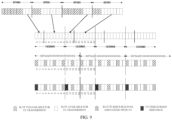
- the first SL CG is a type-1 SL CG
- the period of the first SL CG is 20ms
- PeriodicitySL N 20 ms ⁇ sl _ periodCG ⁇ k L
- PeriodicitySL 4. That is, the period of the first SL CG is 4 slots, and the 4 slots are 4 slots in the resource pool associated with the first SL CG.
- the period of the first SL CG configured by the network device is converted into the number of slots corresponding to the period of the first SL CG in the resource pool associated with the first SL CG through formula 3, so that slots belonging to the first SL CG are determined from the resource pool associated with the first SL CG according to the formula for transmission resource determination for first SL CG, thereby avoiding that a certain slot does not belong to the resource pool associated with the first SL CG.
- the first information includes the average number of logical slots for SL transmission in one radio frame. That is, the terminal device can determine the time-domain resource for the first SL CG according to the average number of logical slots for SL transmission in one radio frame.
- the average number of logical slots for SL transmission in one radio frame includes: an average of a number of logical slots for SL transmission in a first radio frame within the time range of the double SFN and a number of logical slots for SL transmission in a second radio frame within the time range of the double SFN.
- the time-domain resource for the first SL CG can be determined by replacing numberOfSLSlotsPerFrame in formula 1 and formula 2 with averagenumberOfSLSlotsPerFrame.
- the time-domain resource for the first SL CG is determined based on the average number of logical slots for SL transmission in one radio frame, thereby avoiding that numberOfSLSlotsPerFrame is different in each radio frame.
- the first information includes: the SFN information within the time range of the double SFN, the logical-slot information within the time range of the double SFN, and the time-domain offset within the time range of the double SFN. That is, in example 3, the terminal device can determine the time-domain resource for the first SL CG according to the SFN information within the time range of the double SFN, the logical-slot information within the time range of the double SFN, and the time-domain offset within the time range of the double SFN.
- the SFN information within the time range of the double SFN includes at least one of: a SFN index within the time range of the double SFN, a reference SFN index for determining the time-domain offset within the time range of the double SFN, and an index of a double SFN corresponding to a first transmission opportunity in the first SL CG.
- the logical-slot information within the time range of the double SFN includes at least one of: a number of logical slots for SL transmission within the time range of the double SFN, an index of a logical slot for SL transmission within the time range of the double SFN, and an index of a logical slot within a time range of a double SFN corresponding to a first transmission opportunity in the first SL CG.
- the terminal device can determine the time-domain resource for the first SL CG based on the following formula 5.
- (DoubleSFN ⁇ numberOfSLSlotsPerDoubleFrame) + logical slot number in the double frame] (timeReferenceDoubleSFN ⁇ numberOfSLSlotsPerDoubleFrame + sl-TimeOffsetCGTypel+ S ⁇ PeriodicitySL) modulo (512 ⁇ numberOfSLSlotsPerDoubleFrame)
- DoubleSFN indicates the SFN index within the time range of the double SFN.
- the range of the SFN index is [0,1023], that is, there are 1024 radio frames in 10240ms, and the range of DoubleSFN index is [0,511].
- numberOfSLSlotsPerDoubleFrame indicates the number of logical slots for SL transmission within the time range of the double SFN
- "logical slot number in the double frame” indicates the index of the logical slot for SL transmission within the time range of the double SFN
- sl-TimeOffsetCGType1 indicates the time-domain offset within the time range of the double SFN
- timeReferenceDoubleSFN indicates the reference SFN index for determining the time-domain offset within the time range of the double SFN
- S is any integer
- N indicates the number of logical slots available for SL transmission within the time range of the double SFN
- sl_periodCG indicates the period of the first SL CG configured by the network
- k indicates the number of bits "1" in the bitmap for configuring resource-pool time-domain resources
- L
- the terminal device can determine the time-domain resource for the first SL CG based on the following formula 6.
- (DoubleSFN ⁇ numberOfSLSlotsPerDoubleFrame) + logical slot number in the double frame] [(DoubleSFN start time ⁇ numberOfSLSlotsPerDoubleFrame + slot start time ) + S ⁇ PeriodicitySL] modulo (512 ⁇ numberOfSLSlotsPerDoubleFrame)
- DoubleSFN indicates the SFN index within the time range of the double SFN.
- the range of the SFN index is [0,1023], that is, there are 1024 radio frames in 10240ms, and the range of DoubleSFN index is [0,511].
- numberOfSLSlotsPerDoubleFrame indicates the number of logical slots for SL transmission within the time range of the double SFN
- "logical slot number in the double frame” indicates the index of the logical slot for SL transmission within the time range of the double SFN
- DoubleSFN start time indicates the index of the double SFN corresponding to the first transmission opportunity in the first SL CG
- slot start time indicates the index of the logical slot within the time range of the double SFN corresponding to the first transmission opportunity in the first SL CG
- S is any integer
- N indicates the number of logical slots available for SL transmission within the time range of the double SFN
- sl_periodCG indicates the period of the first SL CG configured by the network
- k indicates the number of bits "1" in the bitmap for configuring resource-pool time-
- the time-domain resource for the first SL CG is determined based on the time range of the double SFN, thereby avoiding that numberOfSLSlotsPerFrame is different in each radio frame.
- the first information includes the offset in time domain of the target SL transmission resource in the first SL CG relative to the first SL transmission resource. That is, the terminal device can determine the time-domain resource for the first SL CG according to the offset in time domain of the target SL transmission resource in the first SL CG relative to the first SL transmission resource.
- the terminal device can determine the time-domain resource for the first SL CG based on the following formula 7.
- (SFN ⁇ numberOfSLSlotsPerFrame) + logical slot number in the frame] ( timeReferenceSFN ⁇ numberOfSLSlotsPerFrame + sl-TimeOffsetCGTypel+ T + S ⁇ PeriodicitySL) modulo (1024 ⁇ numberOfSLSlotsPerFrame)
- the terminal device can determine the time-domain resource for the first SL CG based on the following formula 8.
- (SFN ⁇ numberOfSLSlotsPerFrame) + logical slot number in the frame] [(SFN start time ⁇ numberOfSLSlotsPerFrame + slot start time ) + T + S ⁇ PeriodicitySL ] modulo (1024 ⁇ numberOfSLSlotsPerFrame)
- the two SL transmission resources correspond to slot t1 and slot t2 respectively
- the terminal device determines the time-domain resource for the first SL CG according to the offset in time domain of the target SL transmission resource in the first SL CG relative to the first SL transmission resource. That is, when there are multiple SL transmission resources in one period of the first SL CG, other SL transmission resources may be determined based on the offset.
- the resource pool associated with the first SL CG has a value of 1 in the bitmap for configuring resource-pool time-domain resources.
- the terminal device can determine the time-domain resource for the first SL CG in combination with solutions in the four examples.
- the terminal device can determine the time-domain resource for the first SL CG in combination with solutions in example 1 and example 2. For example, when the first SL CG is a type-1 SL CG, the terminal device can determine the time-domain resource for the first SL CG based on the following formula 9. For another example, when the first SL CG is a type-2 SL CG, the terminal device can determine the time-domain resource for the first SL CG based on the following formula 10.
- [(SFN ⁇ averagenumberOfSLSlotsPerFrame ) + logical slot number in the frame] [(SFN start time ⁇ averagenumberOfSLSlotsPerFrame + slot start time ) + S ⁇ PeriodicitySL] modulo (1024 ⁇ averagenumberOfSLSlotsPerFrame )
- averagenumberOfSLSlotsPerFrame ( numberOfSLSlotsFirstFrame + numberOfSLSlotsSecondFrame ) / 2.
- the terminal device can determine the time-domain resource for the first SL CG in combination with solutions in example 1 and example 4.
- the terminal device can determine the time-domain resource for the first SL CG in combination with solutions in example 2 and example 4. For example, when the first SL CG is a type-1 SL CG, the terminal device can determine the time-domain resource for the first SL CG based on the following formula 11. For another example, when the first SL CG is a type-2 SL CG, the terminal device can determine the time-domain resource for the first SL CG based on the following formula 12.
- averagenumberOfSLSlotsPerFrame ( numberOfSLSlotsFirstFrame + numberOfSLSlotsSecondFrame ) / 2 .
- [(SFN ⁇ averagenumberOfSLSlotsPerFrame ) + logical slot number in the frame] [(SFN start time ⁇ averagenumberOfSLSlotsPerFrame + slot start time ) + T+ S ⁇ PeriodicitySL] modulo (1024 ⁇ averagenumberOfSLSlotsPerFrame )
- the terminal device can determine the time-domain resource for the first SL CG in combination with solutions in example 3 and example 4. For example, when the first SL CG is a type-1 SL CG, the terminal device can determine the time-domain resource for the first SL CG based on the following formula 13. For another example, when the first SL CG is a type-2 SL CG, the terminal device can determine the time-domain resource for the first SL CG based on the following formula 14.
- T indicates the offset in time domain of the target SL transmission resource in the first SL CG relative to the first SL transmission resource, and other parameters can refer to the relevant description in formula 5, which will not be repeated herein.
- [(DoubleSFN ⁇ numberOfSLSlotsPerDoubleFrame) + logical slot number in the double frame] [(DoubleSFN start time ⁇ numberOfSLSlotsPerDoubleFrame + slot start time ) + T + S ⁇ PeriodicitySL] modulo (512 ⁇ numberOfSLSlotsPerDoubleFrame)
- T indicates the offset in time domain of the target SL transmission resource in the first SL CG relative to the first SL transmission resource, and other parameters can refer to the relevant description in formula 6, which will not be repeated herein.
- the terminal device can determine the time-domain resource for the first SL CG in combination with solutions in example 1, example 2, and example 4. For example, when the first SL CG is a type-1 SL CG, the terminal device can determine the time-domain resource for the first SL CG based on the following formula 15. For another example, when the first SL CG is a type-2 SL CG, the terminal device can determine the time-domain resource for the first SL CG based on the following formula 16.
- [(SFN ⁇ averagenumberOfSLSlotsPerFrame ) + logical slot number in the frame] [(SFN start time ⁇ averagenumberOfSLSlotsPerFrame + slot start time ) + T + S ⁇ PeriodicitySL] modulo (1024 ⁇ averagenumberOfSLSlotsPerFrame )
- averagenumberOfSLSlotsPerFrame ( numberOfSLSlotsFirstFrame + numberOfSLSlotsSecondFrame ) / 2.
- the terminal device can determine the time-domain resource for the first SL CG in combination with solutions in example 1, example 3, and example 4.
- the network device may also configure through a RRC signaling at least one of: a SL CG index ( sl-ConfigIndexCG), a CS-RNTI for SL transmission ( sl-CS-RNTI ), a HARQ process number for CG (nrofHARQ-Processes), a period of type-2 SL CG (sl-periodCG), the maximum number of times that a TB can be transmitted using a CG (sl-CG-MaxTransNumList), and an offset of a HARQ process for type-2 SL CG (sl-harq-procID-offset ) .
- a SL CG index sl-ConfigIndexCG
- a CS-RNTI for SL transmission
- HARQ process number for CG a period of type-2 SL CG
- sl-periodCG the maximum number of times that a TB can be transmitted using a CG
- the terminal device determines the time-domain resource for the first SL CG according to the number of slots corresponding to the period of the first SL CG in the resource pool associated with the first SL CG, so that the time-domain resource for the first SL CG is indexed in the resource pool associated with the first SL CG, thereby avoiding that a certain slot does not belong to the resource pool associated with the first SL CG.
- the terminal device determines the time-domain resource for the first SL CG based on the time range of the double SFN, thereby avoiding that the number of logical slots for SL transmission in one radio frame is different from another radio frame.
- the terminal device determines the time-domain resource for the first SL CG according to the offset in time domain of the target SL transmission resource in the first SL CG relative to the first SL transmission resource. That is, when there are multiple SL transmission resources in one period of the first SL CG, other SL transmission resources may be determined based on the offset.
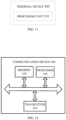
- FIG. 11 illustrates a schematic block diagram of a terminal device 300 according to implementations of the disclosure.
- the terminal device 300 includes a processing unit 310.
- the processing unit 310 is configured to determine a time-domain resource for a first SL CG according to first information, where the first information includes at least one of: a number of slots corresponding to a period of the first SL CG in a resource pool associated with the first SL CG, an average number of logical slots for SL transmission in one radio frame, SFN information within a time range of a double SFN, logical-slot information within the time range of the double SFN, a time-domain offset within the time range of the double SFN, and an offset in time domain of a target SL transmission resource in the first SL CG relative to a first SL transmission resource.
- the number of slots corresponding to the period of the first SL CG in the resource pool associated with the first SL CG is determined according to at least one of: a total length of a bitmap for configuring resource-pool time-domain resources, a number of first values in the bitmap for configuring resource-pool time-domain resources, and the period of the first SL CG configured by a network device.
- the resource pool associated with the first SL CG has a first value in the bitmap.
- the first value is 1.
- the average number of logical slots for SL transmission in one radio frame includes: an average of a number of logical slots for SL transmission in a first radio frame within the time range of the double SFN and a number of logical slots for SL transmission in a second radio frame within the time range of the double SFN.
- the SFN information within the time range of the double SFN includes at least one of: a SFN index within the time range of the double SFN, a reference SFN index for determining the time-domain offset within the time range of the double SFN, and an index of a double SFN corresponding to a first transmission opportunity in the first SL CG.
- the logical-slot information within the time range of the double SFN includes at least one of: a number of logical slots for SL transmission within the time range of the double SFN, an index of a logical slot for SL transmission within the time range of the double SFN, and an index of a logical slot within a time range of a double SFN corresponding to a first transmission opportunity in the first SL CG.
- the target SL transmission resource is a second SL transmission resource among the two SL transmission resources, or there are three SL transmission resources in one period of the first SL CG, and the target SL transmission resource is a second SL transmission resource or a third SL transmission resource among the two SL transmission resources.
- the first SL CG is a type-1 SL CG, where the type-1 SL CG is a SL CG configured by a network device through a RRC signaling, or the first SL CG is a type-2 SL CG, where the type-2 SL CG is a SL CG configured by a network device through a RRC signaling and activated through a DCI.
- the processing unit may be one or more processors.
- the terminal device 300 may correspond to a terminal device in method implementations of the disclosure.
- the above-mentioned and other operations and/or functions of each unit in the terminal device 300 are respectively intended for implementing corresponding procedures of the terminal device in the method 200 illustrated in FIG. 8 , which will not be repeated herein for the sake of simplicity.
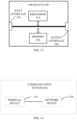
- FIG. 12 is a schematic structural diagram of a communication device 400 provided in an implementation of the disclosure. As illustrated in FIG. 12 , the communication device 400 includes a processor 410. The processor 410 can invoke and execute computer programs stored in a memory to perform the method provided in implementations of the disclosure.
- the communication device 400 can further include the memory 420.
- the processor 410 can invoke and execute the computer programs stored in the memory 420 to perform the method provided in implementations of the disclosure.
- the memory 420 may be a separate device independent of the processor 410, or may be integrated into the processor 410.
- the communication device 400 can further include a transceiver 430.
- the processor 410 can control the transceiver 430 to communicate with other devices, for example, to transmit information or data to other devices, or to receive information or data from other devices.
- the transceiver 430 may include a transmitter and a receiver.
- the transceiver 430 may further include an antenna, where one or more antenna can be provided.
- the communication device 400 may be the network device in implementations of the disclosure, and the communication device 400 can implement the corresponding procedures performed by the network device described in the foregoing method implementations, which will not be repeated herein for the sake of simplicity.
- the communication device 400 may be the mobile terminal/terminal device in implementations of the disclosure, and the communication device 400 can implement the corresponding procedures performed by the mobile terminal/terminal device described in the foregoing method implementations, which will not be repeated herein for the sake of simplicity.
- FIG. 13 is a schematic structural diagram of an apparatus according to an implementation of the disclosure.
- the apparatus 500 includes a processor 510.
- the processor 510 is configured to invoke and execute computer programs stored in a memory to perform the method provided in implementations of the disclosure.
- the apparatus 500 further includes the memory 520.
- the processor 510 can invoke and execute the computer programs stored in the memory 520 to perform the method provided in implementations of the disclosure.
- the memory 520 may be a separate device independent of the processor 510, or may be integrated into the processor 510.
- the apparatus 500 may further include an input interface 530.
- the processor 510 can control the input interface 530 to communicate with other devices or chips, for example, to acquire information or data transmitted by other devices or chips.
- the apparatus 500 may further include an output interface 540.
- the processor 510 can control the output interface 540 to communicate with other devices or chips, for example, to output information or data to other devices or chips.
- the apparatus is applicable to the network device in implementations of the disclosure, and the apparatus can implement the corresponding procedures performed by the network device described in the foregoing method implementations, which will not be repeated herein for the sake of simplicity.
- the apparatus is applicable to the mobile terminal/terminal device in implementations of the disclosure, and the apparatus can implement the corresponding procedures performed by the mobile terminal/terminal device described in the foregoing method implementations, which will not be repeated herein for the sake of simplicity.
- the apparatus mentioned in implementations of the disclosure may also be a chip, for example, may be a system-level chip, a system chip, a chip system, or an on-chip system chip.
- FIG. 14 is a schematic block diagram of a communication system 600 provided in an implementation of the disclosure. As illustrated in FIG. 14 , the communication system 600 includes a terminal device 610 and a network device 620.
- the memory may be a volatile memory or a non-volatile memory, or may include both the volatile memory and the non-volatile memory.
- the non-volatile memory may be a ROM, a PROM, an erasable programmable read only memory (erasable PROM, EPROM), an electrically erasable programmable read only memory (electrically EPROM, EEPROM), or a flash memory.
- the volatile memory can be a RAM that acts as an external cache.
- RAM synchronous link dynamic random access memory
- SRAM static RAM
- DRAM dynamic RAM
- SDRAM synchronous DRAM
- DDR SDRAM double data rate SDRAM
- ESDRAM enhanced SDRAM
- SLDRAM synchronous link dynamic random access memory
- DRRAM direct rambus RAM
- the above description of the memory is intended for illustration rather than limitation.
- the memory of implementations may also be an SRAM, a DRAM, an SDRAM, a DDR SDRAM, an ESDRAM, an SLDRAM, a DR RAM, etc.
- the memory of implementations is intended to include, but is not limited to, these and any other suitable types of memory.
- Implementations of the disclosure further provide a computer-readable storage medium.
- the computer-readable storage medium is configured to store computer programs.
- the computer-readable storage medium is applicable to the network device of implementations of the disclosure.
- the computer programs are operable with a computer to implement the corresponding procedures performed by the network device described in the foregoing method implementations, which will not be repeated herein for the sake of simplicity.
- Implementations of the disclosure further provide a computer program product.
- the computer program product includes computer program instructions.
- the computer program product is applicable to the network device of implementations of the disclosure.
- the computer program instructions are operable with a computer to implement the corresponding procedures by the network device described in the foregoing method implementations, which will not be repeated herein for the sake of simplicity.
- the computer program product is applicable to the mobile terminal/terminal device of implementations of the disclosure.
- the computer program instructions are operable with a computer to implement the corresponding procedures performed by the mobile terminal/terminal device described in the foregoing method implementations, which will not be repeated herein for the sake of simplicity.
- Implementations of the disclosure further provide a computer program.
- the computer program is applicable to the network device of implementations of the disclosure.
- the computer program when executed by a computer, is operable with the computer to implement the corresponding procedures performed by the network device described in the foregoing method implementations, which will not be repeated herein for the sake of simplicity.
- the computer program is applicable to the mobile terminal/terminal device of implementations of the disclosure.
- the computer program when executed by a computer, is operable with the computer to implement the corresponding procedures performed by the mobile terminal/terminal device described in the foregoing method implementations, which will not be repeated herein for the sake of simplicity.
- the systems, apparatuses, and methods disclosed in implementations of the disclosure may also be implemented in various other manners.
- the above apparatus implementations are merely illustrative, e.g., the division of units is only a division of logical functions, and other manners of division may also available in practice, e.g., multiple units or assemblies may be combined or may be integrated into another system, or some features may be ignored or omitted.
- the coupling or direct coupling or communication connection as illustrated or discussed may be an indirect coupling or communication connection through some interface, device, or unit, and may be electrical, mechanical, or otherwise.
- Separated units as illustrated may or may not be physically separated.
- Components or parts displayed as units may or may not be physical units, and may reside at one location or may be distributed to multiple networked units. Some or all of the units may be selectively adopted according to practical needs to achieve desired objectives of the disclosure.
- various functional units described in implementations of the disclosure may be integrated into one processing unit or may be present as a number of physically separated units, and two or more units may be integrated into one.
- the integrated units are implemented as software functional units and sold or used as standalone products, they may be stored in a computer-readable storage medium.
- the computer software products can be stored in a storage medium and may include multiple instructions that, when executed, can cause a computing device, e.g., a personal computer, a server, a network device, etc., to execute some or all operations of the methods described in various implementations.
- the above storage medium may include various kinds of media that can store program codes, such as a universal serial bus (USB) flash disk, a mobile hard drive, a ROM, a RAM, a magnetic disk, or an optical disk.
- USB universal serial bus
Landscapes
- Engineering & Computer Science (AREA)
- Computer Networks & Wireless Communication (AREA)
- Signal Processing (AREA)
- Mobile Radio Communication Systems (AREA)
Claims (12)
- Verfahren zur Bestimmung einer Ressource für eine konfigurierte Sidelink-Freigabe, SL-CG, umfassend:
Bestimmen einer Zeitdomänenressource für eine erste SL-CG durch eine Endgerätevorrichtung gemäß mindestens einem von Folgenden: einer Anzahl von Schlitzen, die einer Periode der ersten SL-CG in einem Ressourcenpool entspricht, der mit der ersten SL-CG assoziiert ist, und einem Offset in der Zeitdomäne einer Ziel-SL-Übertragungsressource in der ersten SL-CG relativ zu einer ersten SL-Übertragungsressource, wobei die Anzahl von Schlitzen, die der Periode der ersten SL-CG in dem mit der ersten SL-CG assoziierten Ressourcenpool entspricht, gemäß mindestens einem von Folgenden bestimmt wird:
einer Gesamtlänge einer Bitmap zum Konfigurieren von Ressourcenpool-Zeitdomänenressourcen, einer Anzahl von Bits mit einem ersten Wert in der Bitmap zum Konfigurieren von Ressourcenpool-Zeitdomänenressourcen und der Periode der ersten SL-CG, die von einer Netzwerkvorrichtung konfiguriert wird. - Verfahren nach Anspruch 1, wobei der mit der ersten SL-CG assoziierte Ressourcenpool den ersten Wert in der Bitmap aufweist.
- Verfahren nach Anspruch 1 oder 2, wobei der erste Wert 1 ist.
- Verfahren nach Anspruch 1, wobeizwei SL-Übertragungsressourcen in einer Periode der ersten SL-CG vorhanden sind und die Ziel-SL-Übertragungsressource eine zweite SL-Übertragungsressource unter den zwei SL-Übertragungsressourcen ist; oderdrei SL-Übertragungsressourcen in einer Periode der ersten SL-CG vorhanden sind und die Ziel-SL-Übertragungsressource eine zweite SL-Übertragungsressource oder eine dritte SL-Übertragungsressource unter den drei SL-Übertragungsressourcen ist.
- Verfahren nach einem der Ansprüche 1 bis 4, wobeidie erste SL-CG eine Typ-1-SL-CG ist, wobei die Typ-1-SL-CG eine SL-CG ist, die von der Netzwerkvorrichtung über eine Funkressourcensteuerungssignalisierung, RRC-Signalisierung, konfiguriert wird; oderdie erste SL-CG eine Typ-2-SL-CG ist, wobei die Typ-2-SL-CG eine SL-CG ist, die von der Netzwerkvorrichtung über eine RRC-Signalisierung konfiguriert und über Downlink-Steuerinformationen, DCI, aktiviert wird.
- Endgerätevorrichtung (300), umfassend:
eine Verarbeitungseinheit (310), die zum Bestimmen einer Zeitdomänenressource für eine erste konfigurierte Sidelink-Freigabe, SL-CG, gemäß mindestens einem von Folgenden konfiguriert ist: einer Anzahl von Schlitzen, die einer Periode der ersten SL-CG in einem Ressourcenpool entspricht, der mit der ersten SL-CG assoziiert ist, und einem Offset in der Zeitdomäne einer Ziel-SL-Übertragungsressource in der ersten SL-CG relativ zu einer ersten SL-Übertragungsressource, wobei die Anzahl von Schlitzen, die der Periode der ersten SL-CG in dem mit der ersten SL-CG assoziierten Ressourcenpool entspricht, gemäß mindestens einem von Folgenden bestimmt wird:
einer Gesamtlänge einer Bitmap zum Konfigurieren von Ressourcenpool-Zeitdomänenressourcen, einer Anzahl von Bits mit einem ersten Wert in der Bitmap zum Konfigurieren von Ressourcenpool-Zeitdomänenressourcen und der Periode der ersten SL-CG, die von einer Netzwerkvorrichtung konfiguriert wird. - Endgerätevorrichtung (300) nach Anspruch 6, wobei der mit der ersten SL-CG assoziierte Ressourcenpool den ersten Wert in der Bitmap aufweist.
- Endgerätevorrichtung (300) nach Anspruch 6 oder 7, wobei der erste Wert 1 ist.
- Endgerätevorrichtung (300) nach Anspruch 6, wobeizwei SL-Übertragungsressourcen in einer Periode der ersten SL-CG vorhanden sind und die Ziel-SL-Übertragungsressource eine zweite SL-Übertragungsressource unter den zwei SL-Übertragungsressourcen ist; oderdrei SL-Übertragungsressourcen in einer Periode der ersten SL-CG vorhanden sind und die Ziel-SL-Übertragungsressource eine zweite SL-Übertragungsressource oder eine dritte SL-Übertragungsressource unter den drei SL-Übertragungsressourcen ist.
- Endgerätevorrichtung (300) nach einem der Ansprüche 6 bis 9, wobei:
die erste SL-CG eine Typ-1-SL-CG ist, wobei die Typ-1-SL-CG eine SL-CG ist, die von der Netzwerkvorrichtung über eine Funkressourcensteuerungssignalisierung, RRC-Signalisierung, konfiguriert wird; oder
die erste SL-CG eine Typ-2-SL-CG ist, wobei die Typ-2-SL-CG eine SL-CG ist, die von der Netzwerkvorrichtung über eine RRC-Signalisierung konfiguriert und über Downlink-Steuerinformationen, DCI, aktiviert wird. - Kommunikationsvorrichtung (400), umfassend:einen Speicher (420), der zum Speichern von Computerprogrammen konfiguriert ist; undeinen Prozessor (410), der zum Aufrufen und Ausführen der im Speicher gespeicherten Computerprogramme konfiguriert ist, um das Verfahren nach einem der Ansprüche 1 bis 5 durchzuführen.
- Computerlesbares Speichermedium, das Computerprogramme speichert, die mit einem Computer ausgeführt werden können, um das Verfahren nach einem der Ansprüche 1 oder 10 durchzuführen.
Priority Applications (1)
| Application Number | Priority Date | Filing Date | Title |
|---|---|---|---|
| EP25159739.9A EP4557860A3 (de) | 2020-07-27 | 2020-07-27 | Verfahren zur bestimmung von seitenlink-konfigurierten berechtigungsressourcen und endgerätevorrichtung |
Applications Claiming Priority (1)
| Application Number | Priority Date | Filing Date | Title |
|---|---|---|---|
| PCT/CN2020/104893 WO2022021008A1 (zh) | 2020-07-27 | 2020-07-27 | 确定侧行链路配置授权资源的方法和终端设备 |
Related Child Applications (1)
| Application Number | Title | Priority Date | Filing Date |
|---|---|---|---|
| EP25159739.9A Division EP4557860A3 (de) | 2020-07-27 | 2020-07-27 | Verfahren zur bestimmung von seitenlink-konfigurierten berechtigungsressourcen und endgerätevorrichtung |
Publications (3)
| Publication Number | Publication Date |
|---|---|
| EP4192143A1 EP4192143A1 (de) | 2023-06-07 |
| EP4192143A4 EP4192143A4 (de) | 2023-07-26 |
| EP4192143B1 true EP4192143B1 (de) | 2025-03-26 |
Family
ID=80037213
Family Applications (2)
| Application Number | Title | Priority Date | Filing Date |
|---|---|---|---|
| EP25159739.9A Pending EP4557860A3 (de) | 2020-07-27 | 2020-07-27 | Verfahren zur bestimmung von seitenlink-konfigurierten berechtigungsressourcen und endgerätevorrichtung |
| EP20946650.7A Active EP4192143B1 (de) | 2020-07-27 | 2020-07-27 | Verfahren zur bestimmung einer sidelink-konfigurierten berechtigungsressource und endgerätevorrichtung |
Family Applications Before (1)
| Application Number | Title | Priority Date | Filing Date |
|---|---|---|---|
| EP25159739.9A Pending EP4557860A3 (de) | 2020-07-27 | 2020-07-27 | Verfahren zur bestimmung von seitenlink-konfigurierten berechtigungsressourcen und endgerätevorrichtung |
Country Status (5)
| Country | Link |
|---|---|
| US (1) | US20230209516A1 (de) |
| EP (2) | EP4557860A3 (de) |
| CN (2) | CN115669119A (de) |
| ES (1) | ES3029134T3 (de) |
| WO (1) | WO2022021008A1 (de) |
Families Citing this family (3)
| Publication number | Priority date | Publication date | Assignee | Title |
|---|---|---|---|---|
| EP4176634A4 (de) * | 2020-08-06 | 2023-08-23 | ZTE Corporation | Systeme und verfahren zur vehicle-to-everything-sidelink-kommunikation |
| US20240314748A1 (en) * | 2021-02-04 | 2024-09-19 | Lg Electronics Inc. | Method and device for determining sl resource in nr v2x |
| CN117676615A (zh) * | 2022-08-10 | 2024-03-08 | 大唐移动通信设备有限公司 | 确定harq进程标识的方法及装置 |
Family Cites Families (10)
| Publication number | Priority date | Publication date | Assignee | Title |
|---|---|---|---|---|
| KR102771072B1 (ko) * | 2016-08-11 | 2025-02-19 | 이노스카이 주식회사 | V2x를 위한 준영구적 스케줄링 방법 및 장치 |
| CN107889073B (zh) * | 2016-09-30 | 2022-05-24 | 北京三星通信技术研究有限公司 | 一种v2x通信中的发送资源确定方法和设备 |
| CN109803397B (zh) * | 2017-11-17 | 2021-08-03 | 华为技术有限公司 | 确定用于免授权传输的时域资源的方法和装置 |
| US11457431B2 (en) * | 2018-08-03 | 2022-09-27 | FG Innovation Company Limited | Sidelink radio resource allocation |
| KR102293380B1 (ko) * | 2018-08-10 | 2021-08-25 | 아서스테크 컴퓨터 인코포레이션 | 무선 통신 시스템에서 다수의 장치 대 장치 리소스 풀을 위한 리소스 할당의 방법 및 장치 |
| CN112806081B (zh) * | 2018-10-02 | 2023-08-18 | 鸿颖创新有限公司 | 配置用户设备交换侧链路分组的方法和用户设备 |
| US11109378B2 (en) * | 2018-11-01 | 2021-08-31 | Huawei Technologies Co., Ltd. | Methods and apparatus for sidelink communications configuration |
| CN111148229B (zh) * | 2018-11-02 | 2023-01-13 | 华为技术有限公司 | 确定传输资源的方法和装置 |
| CN111385765B (zh) * | 2018-12-28 | 2022-07-22 | 大唐移动通信设备有限公司 | 信息传输的方法及终端 |
| CN111436069B (zh) * | 2019-01-11 | 2023-05-02 | 华硕电脑股份有限公司 | 无线通信中用于改进侧链路通信的调度模式的方法和设备 |
-
2020
- 2020-07-27 EP EP25159739.9A patent/EP4557860A3/de active Pending
- 2020-07-27 CN CN202080101010.8A patent/CN115669119A/zh active Pending
- 2020-07-27 ES ES20946650T patent/ES3029134T3/es active Active
- 2020-07-27 CN CN202310349034.0A patent/CN116347602B/zh active Active
- 2020-07-27 WO PCT/CN2020/104893 patent/WO2022021008A1/zh not_active Ceased
- 2020-07-27 EP EP20946650.7A patent/EP4192143B1/de active Active
-
2022
- 2022-12-23 US US18/145,945 patent/US20230209516A1/en active Pending
Non-Patent Citations (2)
| Title |
|---|
| LG ELECTRONICS INC: "Corrections to 5G V2X with NR Sidelink", vol. RAN WG2, no. Online; 20200601 - 20200612, 23 June 2020 (2020-06-23), XP051904145, Retrieved from the Internet <URL:https://ftp.3gpp.org/tsg_ran/WG2_RL2/TSGR2_110-e/Docs/R2-2005970.zip R2-2005970_CR0730r2_38321_V2X.docx> [retrieved on 20200623] * |
| NOKIA ET AL: "Remaining details of Physical layer structure for sidelink", vol. RAN WG1, no. e-Meeting; 20200420 - 20200430, 11 April 2020 (2020-04-11), XP051875280, Retrieved from the Internet <URL:https://ftp.3gpp.org/tsg_ran/WG1_RL1/TSGR1_100b_e/Docs/R1-2001803.zip R1-2001803-Nokia-5G_Remaining details of Physical layer structure for sidelink.docx> [retrieved on 20200411] * |
Also Published As
| Publication number | Publication date |
|---|---|
| EP4557860A2 (de) | 2025-05-21 |
| CN116347602A (zh) | 2023-06-27 |
| CN116347602B (zh) | 2024-12-27 |
| CN115669119A (zh) | 2023-01-31 |
| EP4557860A3 (de) | 2025-06-25 |
| WO2022021008A1 (zh) | 2022-02-03 |
| ES3029134T3 (en) | 2025-06-23 |
| EP4192143A1 (de) | 2023-06-07 |
| US20230209516A1 (en) | 2023-06-29 |
| EP4192143A4 (de) | 2023-07-26 |
Similar Documents
| Publication | Publication Date | Title |
|---|---|---|
| US20250125917A1 (en) | Method for Data Transmission and Terminal Device | |
| US20230209516A1 (en) | Method for determining sidelink configured grant resource, and terminal device | |
| EP4329400B1 (de) | Verfahren zur übertragung eines physikalischen sidelink-feedbackkanals (psfch) und endgerätevorrichtung | |
| US12520262B2 (en) | Method for transmission timing determination, terminal device, and network device | |
| CN116347601A (zh) | 无线通信的方法和终端设备 | |
| US20240276472A1 (en) | Method for resource indication, terminal device, and network device | |
| US20240023076A1 (en) | Method for channel estimation, terminal device, and network device | |
| CN119402147B (zh) | 传输方法、终端设备和网络设备 | |
| US20240314812A1 (en) | Wireless communication method, first terminal device, and second terminal device | |
| US20230422240A1 (en) | Wireless communication method, terminal device, and network device | |
| CN117652117A (zh) | 无线通信的方法、终端设备和网络设备 | |
| CN117242851A (zh) | 无线通信方法、第一设备和第二设备 | |
| EP4319220B1 (de) | Drahtloskommunikationsverfahren und endgerätevorrichtung | |
| US20240323904A1 (en) | Wireless communication method and terminal device | |
| US20230353292A1 (en) | Wireless communication method and device | |
| US20240057215A1 (en) | Method for wireless communication and terminal device | |
| US20240064749A1 (en) | Method for wireless communication, terminal device, and network device | |
| US20230344606A1 (en) | Wireless communication method and device | |
| CN119366153A (zh) | 无线通信的方法和终端设备 | |
| WO2023279399A1 (zh) | 侧行传输资源的确定方法、发送方法、装置、设备及介质 | |
| US20240340908A1 (en) | Wireless communication method, terminal device, and network device | |
| US20240007231A1 (en) | Wireless communication method and terminal device | |
| US20230224908A1 (en) | Method for repeatedly transmitting control channel, terminal device, and network device | |
| CN115699813B (zh) | 传输反馈信息的方法、终端设备和网络设备 | |
| WO2023197260A1 (zh) | 无线通信的方法、终端设备和网络设备 |
Legal Events
| Date | Code | Title | Description |
|---|---|---|---|
| STAA | Information on the status of an ep patent application or granted ep patent |
Free format text: STATUS: THE INTERNATIONAL PUBLICATION HAS BEEN MADE |
|
| PUAI | Public reference made under article 153(3) epc to a published international application that has entered the european phase |
Free format text: ORIGINAL CODE: 0009012 |
|
| STAA | Information on the status of an ep patent application or granted ep patent |
Free format text: STATUS: REQUEST FOR EXAMINATION WAS MADE |
|
| 17P | Request for examination filed |
Effective date: 20221223 |
|
| AK | Designated contracting states |
Kind code of ref document: A1 Designated state(s): AL AT BE BG CH CY CZ DE DK EE ES FI FR GB GR HR HU IE IS IT LI LT LU LV MC MK MT NL NO PL PT RO RS SE SI SK SM TR |
|
| A4 | Supplementary search report drawn up and despatched |
Effective date: 20230623 |
|
| RIC1 | Information provided on ipc code assigned before grant |
Ipc: H04W 72/04 20230101ALI20230619BHEP Ipc: H04W 72/02 20090101AFI20230619BHEP |
|
| DAV | Request for validation of the european patent (deleted) | ||
| DAX | Request for extension of the european patent (deleted) | ||
| STAA | Information on the status of an ep patent application or granted ep patent |
Free format text: STATUS: EXAMINATION IS IN PROGRESS |
|
| 17Q | First examination report despatched |
Effective date: 20240307 |
|
| RIC1 | Information provided on ipc code assigned before grant |
Ipc: H04W 72/04 20230101ALI20240826BHEP Ipc: H04W 72/02 20090101AFI20240826BHEP |
|
| GRAP | Despatch of communication of intention to grant a patent |
Free format text: ORIGINAL CODE: EPIDOSNIGR1 |
|
| STAA | Information on the status of an ep patent application or granted ep patent |
Free format text: STATUS: GRANT OF PATENT IS INTENDED |
|
| RIC1 | Information provided on ipc code assigned before grant |
Ipc: H04W 72/04 20230101ALI20240926BHEP Ipc: H04W 72/02 20090101AFI20240926BHEP |
|
| INTG | Intention to grant announced |
Effective date: 20241028 |
|
| GRAS | Grant fee paid |
Free format text: ORIGINAL CODE: EPIDOSNIGR3 |
|
| GRAA | (expected) grant |
Free format text: ORIGINAL CODE: 0009210 |
|
| STAA | Information on the status of an ep patent application or granted ep patent |
Free format text: STATUS: THE PATENT HAS BEEN GRANTED |
|
| AK | Designated contracting states |
Kind code of ref document: B1 Designated state(s): AL AT BE BG CH CY CZ DE DK EE ES FI FR GB GR HR HU IE IS IT LI LT LU LV MC MK MT NL NO PL PT RO RS SE SI SK SM TR |
|
| REG | Reference to a national code |
Ref country code: GB Ref legal event code: FG4D |
|
| REG | Reference to a national code |
Ref country code: CH Ref legal event code: EP |
|
| REG | Reference to a national code |
Ref country code: DE Ref legal event code: R096 Ref document number: 602020048559 Country of ref document: DE |
|
| REG | Reference to a national code |
Ref country code: IE Ref legal event code: FG4D |
|
| REG | Reference to a national code |
Ref country code: NL Ref legal event code: FP |
|
| REG | Reference to a national code |
Ref country code: ES Ref legal event code: FG2A Ref document number: 3029134 Country of ref document: ES Kind code of ref document: T3 Effective date: 20250623 |
|
| PG25 | Lapsed in a contracting state [announced via postgrant information from national office to epo] |
Ref country code: RS Free format text: LAPSE BECAUSE OF FAILURE TO SUBMIT A TRANSLATION OF THE DESCRIPTION OR TO PAY THE FEE WITHIN THE PRESCRIBED TIME-LIMIT Effective date: 20250626 |
|
| PG25 | Lapsed in a contracting state [announced via postgrant information from national office to epo] |
Ref country code: FI Free format text: LAPSE BECAUSE OF FAILURE TO SUBMIT A TRANSLATION OF THE DESCRIPTION OR TO PAY THE FEE WITHIN THE PRESCRIBED TIME-LIMIT Effective date: 20250326 |
|
| REG | Reference to a national code |
Ref country code: LT Ref legal event code: MG9D |
|
| PG25 | Lapsed in a contracting state [announced via postgrant information from national office to epo] |
Ref country code: NO Free format text: LAPSE BECAUSE OF FAILURE TO SUBMIT A TRANSLATION OF THE DESCRIPTION OR TO PAY THE FEE WITHIN THE PRESCRIBED TIME-LIMIT Effective date: 20250626 |
|
| PG25 | Lapsed in a contracting state [announced via postgrant information from national office to epo] |
Ref country code: HR Free format text: LAPSE BECAUSE OF FAILURE TO SUBMIT A TRANSLATION OF THE DESCRIPTION OR TO PAY THE FEE WITHIN THE PRESCRIBED TIME-LIMIT Effective date: 20250326 |
|
| PG25 | Lapsed in a contracting state [announced via postgrant information from national office to epo] |
Ref country code: LV Free format text: LAPSE BECAUSE OF FAILURE TO SUBMIT A TRANSLATION OF THE DESCRIPTION OR TO PAY THE FEE WITHIN THE PRESCRIBED TIME-LIMIT Effective date: 20250326 |
|
| PG25 | Lapsed in a contracting state [announced via postgrant information from national office to epo] |
Ref country code: BG Free format text: LAPSE BECAUSE OF FAILURE TO SUBMIT A TRANSLATION OF THE DESCRIPTION OR TO PAY THE FEE WITHIN THE PRESCRIBED TIME-LIMIT Effective date: 20250326 Ref country code: GR Free format text: LAPSE BECAUSE OF FAILURE TO SUBMIT A TRANSLATION OF THE DESCRIPTION OR TO PAY THE FEE WITHIN THE PRESCRIBED TIME-LIMIT Effective date: 20250627 |
|
| PGFP | Annual fee paid to national office [announced via postgrant information from national office to epo] |
Ref country code: NL Payment date: 20250723 Year of fee payment: 6 |
|
| PG25 | Lapsed in a contracting state [announced via postgrant information from national office to epo] |
Ref country code: SE Free format text: LAPSE BECAUSE OF FAILURE TO SUBMIT A TRANSLATION OF THE DESCRIPTION OR TO PAY THE FEE WITHIN THE PRESCRIBED TIME-LIMIT Effective date: 20250326 |
|
| REG | Reference to a national code |
Ref country code: AT Ref legal event code: MK05 Ref document number: 1780253 Country of ref document: AT Kind code of ref document: T Effective date: 20250326 |
|
| PG25 | Lapsed in a contracting state [announced via postgrant information from national office to epo] |
Ref country code: SM Free format text: LAPSE BECAUSE OF FAILURE TO SUBMIT A TRANSLATION OF THE DESCRIPTION OR TO PAY THE FEE WITHIN THE PRESCRIBED TIME-LIMIT Effective date: 20250326 |
|
| P01 | Opt-out of the competence of the unified patent court (upc) registered |
Free format text: CASE NUMBER: UPC_APP_5298_4192143/2025 Effective date: 20250829 |
|
| PG25 | Lapsed in a contracting state [announced via postgrant information from national office to epo] |
Ref country code: PT Free format text: LAPSE BECAUSE OF FAILURE TO SUBMIT A TRANSLATION OF THE DESCRIPTION OR TO PAY THE FEE WITHIN THE PRESCRIBED TIME-LIMIT Effective date: 20250728 |
|
| PGFP | Annual fee paid to national office [announced via postgrant information from national office to epo] |
Ref country code: ES Payment date: 20250819 Year of fee payment: 6 |
|
| PGFP | Annual fee paid to national office [announced via postgrant information from national office to epo] |
Ref country code: DE Payment date: 20250722 Year of fee payment: 6 |
|
| PG25 | Lapsed in a contracting state [announced via postgrant information from national office to epo] |
Ref country code: PL Free format text: LAPSE BECAUSE OF FAILURE TO SUBMIT A TRANSLATION OF THE DESCRIPTION OR TO PAY THE FEE WITHIN THE PRESCRIBED TIME-LIMIT Effective date: 20250326 |
|
| PGFP | Annual fee paid to national office [announced via postgrant information from national office to epo] |
Ref country code: IT Payment date: 20250731 Year of fee payment: 6 |
|
| PGFP | Annual fee paid to national office [announced via postgrant information from national office to epo] |
Ref country code: GB Payment date: 20250724 Year of fee payment: 6 |
|
| PG25 | Lapsed in a contracting state [announced via postgrant information from national office to epo] |
Ref country code: AT Free format text: LAPSE BECAUSE OF FAILURE TO SUBMIT A TRANSLATION OF THE DESCRIPTION OR TO PAY THE FEE WITHIN THE PRESCRIBED TIME-LIMIT Effective date: 20250326 |
|
| PGFP | Annual fee paid to national office [announced via postgrant information from national office to epo] |
Ref country code: FR Payment date: 20250722 Year of fee payment: 6 |
|
| PG25 | Lapsed in a contracting state [announced via postgrant information from national office to epo] |
Ref country code: EE Free format text: LAPSE BECAUSE OF FAILURE TO SUBMIT A TRANSLATION OF THE DESCRIPTION OR TO PAY THE FEE WITHIN THE PRESCRIBED TIME-LIMIT Effective date: 20250326 |
|
| PG25 | Lapsed in a contracting state [announced via postgrant information from national office to epo] |
Ref country code: RO Free format text: LAPSE BECAUSE OF FAILURE TO SUBMIT A TRANSLATION OF THE DESCRIPTION OR TO PAY THE FEE WITHIN THE PRESCRIBED TIME-LIMIT Effective date: 20250326 |
|
| PG25 | Lapsed in a contracting state [announced via postgrant information from national office to epo] |
Ref country code: SK Free format text: LAPSE BECAUSE OF FAILURE TO SUBMIT A TRANSLATION OF THE DESCRIPTION OR TO PAY THE FEE WITHIN THE PRESCRIBED TIME-LIMIT Effective date: 20250326 |
|
| PG25 | Lapsed in a contracting state [announced via postgrant information from national office to epo] |
Ref country code: IS Free format text: LAPSE BECAUSE OF FAILURE TO SUBMIT A TRANSLATION OF THE DESCRIPTION OR TO PAY THE FEE WITHIN THE PRESCRIBED TIME-LIMIT Effective date: 20250726 |
|
| REG | Reference to a national code |
Ref country code: DE Ref legal event code: R097 Ref document number: 602020048559 Country of ref document: DE |
|
| PG25 | Lapsed in a contracting state [announced via postgrant information from national office to epo] |
Ref country code: DK Free format text: LAPSE BECAUSE OF FAILURE TO SUBMIT A TRANSLATION OF THE DESCRIPTION OR TO PAY THE FEE WITHIN THE PRESCRIBED TIME-LIMIT Effective date: 20250326 |
|
| PG25 | Lapsed in a contracting state [announced via postgrant information from national office to epo] |
Ref country code: CZ Free format text: LAPSE BECAUSE OF FAILURE TO SUBMIT A TRANSLATION OF THE DESCRIPTION OR TO PAY THE FEE WITHIN THE PRESCRIBED TIME-LIMIT Effective date: 20250326 |
|
| PLBE | No opposition filed within time limit |
Free format text: ORIGINAL CODE: 0009261 |
|
| STAA | Information on the status of an ep patent application or granted ep patent |
Free format text: STATUS: NO OPPOSITION FILED WITHIN TIME LIMIT |
|
| REG | Reference to a national code |
Ref country code: CH Ref legal event code: L10 Free format text: ST27 STATUS EVENT CODE: U-0-0-L10-L00 (AS PROVIDED BY THE NATIONAL OFFICE) Effective date: 20260211 |
|
| REG | Reference to a national code |
Ref country code: CH Ref legal event code: H13 Free format text: ST27 STATUS EVENT CODE: U-0-0-H10-H13 (AS PROVIDED BY THE NATIONAL OFFICE) Effective date: 20260224 |
|
| 26N | No opposition filed |
Effective date: 20260105 |
|
| PG25 | Lapsed in a contracting state [announced via postgrant information from national office to epo] |
Ref country code: LU Free format text: LAPSE BECAUSE OF NON-PAYMENT OF DUE FEES Effective date: 20250727 |
|
| REG | Reference to a national code |
Ref country code: BE Ref legal event code: MM Effective date: 20250731 |
|
| PG25 | Lapsed in a contracting state [announced via postgrant information from national office to epo] |
Ref country code: BE Free format text: LAPSE BECAUSE OF NON-PAYMENT OF DUE FEES Effective date: 20250731 |