EP4183638A1 - Occupant protection device - Google Patents
Occupant protection device Download PDFInfo
- Publication number
- EP4183638A1 EP4183638A1 EP21842425.7A EP21842425A EP4183638A1 EP 4183638 A1 EP4183638 A1 EP 4183638A1 EP 21842425 A EP21842425 A EP 21842425A EP 4183638 A1 EP4183638 A1 EP 4183638A1
- Authority
- EP
- European Patent Office
- Prior art keywords
- mounting point
- vehicle seat
- lower panel
- upper panel
- point
- Prior art date
- Legal status (The legal status is an assumption and is not a legal conclusion. Google has not performed a legal analysis and makes no representation as to the accuracy of the status listed.)
- Granted
Links
Images





Classifications
-
- B—PERFORMING OPERATIONS; TRANSPORTING
- B60—VEHICLES IN GENERAL
- B60N—SEATS SPECIALLY ADAPTED FOR VEHICLES; VEHICLE PASSENGER ACCOMMODATION NOT OTHERWISE PROVIDED FOR
- B60N2/00—Seats specially adapted for vehicles; Arrangement or mounting of seats in vehicles
- B60N2/24—Seats specially adapted for vehicles; Arrangement or mounting of seats in vehicles for particular purposes or particular vehicles
- B60N2/42—Seats specially adapted for vehicles; Arrangement or mounting of seats in vehicles for particular purposes or particular vehicles the seat constructed to protect the occupant from the effect of abnormal g-forces, e.g. crash or safety seats
- B60N2/427—Seats or parts thereof displaced during a crash
- B60N2/42727—Seats or parts thereof displaced during a crash involving substantially rigid displacement
- B60N2/42754—Seats or parts thereof displaced during a crash involving substantially rigid displacement of the cushion
- B60N2/42763—Seats or parts thereof displaced during a crash involving substantially rigid displacement of the cushion with anti-submarining systems
-
- B—PERFORMING OPERATIONS; TRANSPORTING
- B60—VEHICLES IN GENERAL
- B60N—SEATS SPECIALLY ADAPTED FOR VEHICLES; VEHICLE PASSENGER ACCOMMODATION NOT OTHERWISE PROVIDED FOR
- B60N2/00—Seats specially adapted for vehicles; Arrangement or mounting of seats in vehicles
- B60N2/24—Seats specially adapted for vehicles; Arrangement or mounting of seats in vehicles for particular purposes or particular vehicles
- B60N2/42—Seats specially adapted for vehicles; Arrangement or mounting of seats in vehicles for particular purposes or particular vehicles the seat constructed to protect the occupant from the effect of abnormal g-forces, e.g. crash or safety seats
- B60N2/427—Seats or parts thereof displaced during a crash
- B60N2/42772—Seats or parts thereof displaced during a crash characterised by the triggering system
- B60N2/4279—Seats or parts thereof displaced during a crash characterised by the triggering system electric or electronic triggering
-
- B—PERFORMING OPERATIONS; TRANSPORTING
- B60—VEHICLES IN GENERAL
- B60R—VEHICLES, VEHICLE FITTINGS, OR VEHICLE PARTS, NOT OTHERWISE PROVIDED FOR
- B60R21/00—Arrangements or fittings on vehicles for protecting or preventing injuries to occupants or pedestrians in case of accidents or other traffic risks
- B60R21/02—Occupant safety arrangements or fittings, e.g. crash pads
- B60R21/16—Inflatable occupant restraints or confinements designed to inflate upon impact or impending impact, e.g. air bags
- B60R21/20—Arrangements for storing inflatable members in their non-use or deflated condition; Arrangement or mounting of air bag modules or components
- B60R21/207—Arrangements for storing inflatable members in their non-use or deflated condition; Arrangement or mounting of air bag modules or components in vehicle seats
-
- B—PERFORMING OPERATIONS; TRANSPORTING
- B60—VEHICLES IN GENERAL
- B60R—VEHICLES, VEHICLE FITTINGS, OR VEHICLE PARTS, NOT OTHERWISE PROVIDED FOR
- B60R21/00—Arrangements or fittings on vehicles for protecting or preventing injuries to occupants or pedestrians in case of accidents or other traffic risks
- B60R21/02—Occupant safety arrangements or fittings, e.g. crash pads
- B60R21/16—Inflatable occupant restraints or confinements designed to inflate upon impact or impending impact, e.g. air bags
- B60R21/26—Inflatable occupant restraints or confinements designed to inflate upon impact or impending impact, e.g. air bags characterised by the inflation fluid source or means to control inflation fluid flow
- B60R21/264—Inflatable occupant restraints or confinements designed to inflate upon impact or impending impact, e.g. air bags characterised by the inflation fluid source or means to control inflation fluid flow using instantaneous generation of gas, e.g. pyrotechnic
-
- B—PERFORMING OPERATIONS; TRANSPORTING
- B60—VEHICLES IN GENERAL
- B60R—VEHICLES, VEHICLE FITTINGS, OR VEHICLE PARTS, NOT OTHERWISE PROVIDED FOR
- B60R21/00—Arrangements or fittings on vehicles for protecting or preventing injuries to occupants or pedestrians in case of accidents or other traffic risks
- B60R21/02—Occupant safety arrangements or fittings, e.g. crash pads
- B60R21/16—Inflatable occupant restraints or confinements designed to inflate upon impact or impending impact, e.g. air bags
- B60R21/20—Arrangements for storing inflatable members in their non-use or deflated condition; Arrangement or mounting of air bag modules or components
- B60R21/215—Arrangements for storing inflatable members in their non-use or deflated condition; Arrangement or mounting of air bag modules or components characterised by the covers for the inflatable member
- B60R2021/21506—Arrangements for storing inflatable members in their non-use or deflated condition; Arrangement or mounting of air bag modules or components characterised by the covers for the inflatable member comprising tearing tabs, legs or the like for holding the lid before deployment
Definitions
- the present invention relates to an occupant protecting device provided inside or below a seat cushion of a vehicle seat.
- Patent Document 1 describes an occupant protecting device which, in the event of such a frontal collision, raises a front end portion of a seat cushion by instantaneously expanding an airbag in a vehicle seat, thereby suppressing forward movement of the waist of an occupant.
- Patent Document 1 Japanese Unexamined Patent Application No. 2007-118820
- an airbag is formed of a 2D (two dimensional) panel formed by overlaying two base fabrics.
- the volume of the airbag must be increased.
- Patent Document 1 a knee of an occupant is pushed up by a front end portion of the seat cushion when the airbag is expanded.
- the knee of the occupant is not sufficiently lifted.
- the vicinity of the thigh near the buttocks of the occupant is preferably pushed up to lift up a portion from the thigh of the occupant to the knee as a whole, rather than pushing up only the knee of the occupant as in Patent Document 1.
- An object of the present invention is to provide an occupant protecting device that contributes to improving the waist restraining performance of an occupant.
- the occupant protecting device is an occupant protecting device provided inside or below a seat cushion of a vehicle seat, containing:
- the upper panel of the airbag cushion is longer than the lower panel in the front-rear direction of the seat, the upper panel and the lower panel are mutually joined to each other proximal to the first and second mounting points in the front-rear direction of the vehicle seat, and the side panels are joined to the upper panel and the lower panel, thereby demarcating the interior space of the airbag cushion having a 3D (three-dimensional) shape.
- the upward expansion (stroke or depth) between both mounting points can be increased while reducing the overall volume when expanded and deployed.
- the right side of the occupant is referred to as a right direction
- the left side of the occupant is referred to as a left direction
- a direction indicating a coordinate axis is referred to as a left-right direction.
- a head direction of the occupant is referred to as up
- a waist direction of the occupant is referred to as down
- a direction indicating a coordinate axis is referred to as an up-down direction.
- the vehicle seat 100 is provided with a seatback 1 that supports the back of an occupant, a seat cushion 2 on which the occupant is seated, and a headrest 3 that supports the head of the occupant.
- the vehicle seat 100 is, for example, a driver seat or passenger seat, but may be a rear seat.
- the seat frame 10 and the seating frame 20 are obtained by processing a metal component or hard resin, and are mutually connected via a reclining mechanism 4.
- the seating frame 20 has a pair of side frames 22, 22 spaced apart on the left and right, and a seat pan 24 (see FIG. 4C ) is bridged between the pair of side frames 22, 22.
- the seat cushion 2 has, for example, a seat pad made of a urethane foam material or the like covering a surface and perimeter of the seating frame 20, and a seat cover made of leather, fabric or the like covering a surface of the seat pad.
- An upper surface of the seat cover configures a surface on which the occupant sits, in other words, a seat surface 26 of the seat cushion 2.
- the occupant protecting device 30 is provided inside or below the seat cushion 2.
- the occupant protecting device 30 is provided inside the seat cushion 2 and is covered by the seat cover.
- the occupant protecting device 30 may be provided on an upper surface of the seat pan 24.
- the occupant protecting device 30 is provided below the seat cushion 2 instead of inside the seat cushion 2.
- the occupant protecting device 30 is mounted on a bracket secured to the vehicle seat 100 below the seat cushion 2.
- the occupant protecting device 30 is provided with an airbag cushion 32 capable of expansion and deployment, and an inflator 34 (see FIG. 4C ) that supplies gas for expansion and deployment to the interior space 33 of the airbag cushion 32 in the event of a vehicle emergency.
- a vehicle emergency is a frontal collision of a vehicle.
- the inflator 34 is electrically connected to a vehicle side ECU.
- the inflator 34 receives a signal that an impact upon a frontal collision of the vehicle has been detected from the vehicle side ECU and operates to instantly supply the gas to the airbag cushion 32.
- the inflator 34 can be one of various types of inflators, such as inflators filled with a gas generating agent, compressed gas, or both, and the like.
- the inflator 34 has an igniting device at an open end portion of a cylindrical body with a bottom. Furthermore, when a gas generating agent in the cylindrical body is ignited using the igniting device, gas is generated, and the gas for expansion and deployment is supplied into the airbag cushion 32 from a plurality of injection holes located on a peripheral surface of the cylindrical body.
- the airbag cushion 32 is a bag body and expands and deploys by receiving the supply of gas from the inflator 34.
- the airbag cushion 32 is formed, for example, by joining (sewing or adhering) a plurality of pieces of base fabric made of a non-woven fabric or the like at appropriate positions.
- the airbag cushion 32 has a lower panel 40, an upper panel 42, and mutually opposing side panels 44a, 44b (see: FIG. 3C ). Furthermore, the panels 40, 42, 44a, 44b are made of a non-woven fabric and are joined by sewing.
- the lower panel 40 is formed in, for example, a rectangular shape.
- the lower panel 40 has a front mounting hole 51, rear mounting holes 52, 52 and a center mounting hole 53.
- the front mounting hole 51 is formed at the center in the left-right direction in the front end portion of the lower panel 40.
- the rear mounting holes 52, 52 are formed in a rear end portion of the lower panel 40 so as to be spaced apart from each other in the left-right direction.
- the center mounting hole 53 may be formed at any position between the front mounting hole 51 and the rear mounting holes 52, 52 in the front-rear direction and the left-right direction of the lower panel 40.
- the holes are formed at an optimum position as appropriate in accordance with the size of the inflator 34 to be used, the pitch of the stud bolts (34a to be described later), and the layout of the vehicle seat.
- the center mounting hole 53 can be formed in the center portion in the front-rear direction and the left-right direction of the lower panel 40, the center mounting hole 53 is preferably formed in a center portion.
- the positions of the front mounting hole 51 and the rear mounting holes 52, 52 are, for example, at the apexes of an isosceles triangle, and the center mounting hole 53 is positioned on the bisector of the isosceles triangle.
- the front mounting holes 51, rear mounting holes 52, 52 and center mounting holes 53 are holes where fasteners are used to attach the lower panel 40 to a prescribed position on the vehicle seat 100 side.
- the fastener is, for example, a bolt, rivet, or the like.
- the center mounting hole 53 may constitute a mounting point (third mounting point) for attaching the inflator 34 to the vehicle seat 100 side together with the lower panel 40.
- the inflator is provided on the lower panel 40 with the axial direction of the cylindrical body aligned with the left-right direction.
- a stud bolt 34a protruding from an outer peripheral portion of the cylindrical body (see: FIG.
- the upper panel 42 is formed in, for example, a rectangular shape.
- the upper panel 42 is formed with a length in the front-rear direction of the vehicle seat 100 that is longer than the length of the lower panel 40. In terms of length in the left-right direction, the upper panel 42 and the lower panel 40 are the same or substantially the same.
- the upper panel 42 has a front mounting hole 61 and rear mounting holes 62, 62.
- the front mounting hole 61 is formed at the center in the left-right direction in the front end portion of the upper panel 42.
- the rear mounting holes 62, 62 are formed in a rear end portion of the upper panel 42 so as to be spaced apart from each other in the left-right direction.
- the front mounting hole 61 and the rear mounting holes 62, 62 are holes where fasteners are used to attach the upper panel 42 to a prescribed position on the vehicle seat 100 side.
- the positions in the left-right direction of the front mounting hole 61 and the rear mounting holes 62, 62 of the upper panel 42 are the same as the positions of the front mounting hole 51 and the rear mounting holes 52, 52 of the lower panel 40.
- the side panels 44a, 44b are formed, for example, in shapes that are mutually paired (symmetrical shapes). Furthermore, the side panels 44a, 44b are formed such that the height (dimension in the up-down direction) of the rear side portion 72 is larger than the height of the front side portion 71.
- the side panels 44a, 44b are joined to the lower panel 40 and the upper panel 42. Specifically, the side panels 44a, 44b are sewn to the lower panel 40 and the upper panel 42, with seam lines 73a, 73b along a perimeter part.
- the occupant protecting device 30 accommodates the inflators 34 in the airbag cushions 32 and is mounted on the seat pan 24.
- the stud bolt 34a of the inflator 34 is fastened and secured to the seat pan 24 by a nut via the center mounting hole 53 of the lower panel 40.
- the lower panel 40 and the upper panel 42 are attached to the front securing position 91 of the seat pan 24 via the fastener 81 inserted through the front mounting holes 51, 61.
- the lower panel 40 and the upper panel 42 are mounted to a rear securing position 92 of the seat pan 24 via fasteners 82, 82 inserted through the rear mounting holes 52, 52 and 62, 62.
- the front securing position 91 and the rear securing position 92 are, for example, positions of securing holes formed in the seat pan 24. Note that in relation to an occupant seated in a regular posture, the rear securing position 92 is below a portion of a thigh of the occupant near the buttocks.
- the airbag cushion 32 has a front mounting point 101 (first mounting point) that is mounted to the vehicle seat 100 side, and two rear mounting points 102, 102 (second mounting points) that are mounted to the vehicle seat 100 side on the rear side of the front mounting point 101.
- the front mounting points 101 are constituted by the front mounting holes 51 and 61 of the lower panel 40 and the upper panel 42
- the rear mounting points 102 are constituted by the rear mounting holes 52 and 62 of the lower panel 40 and the upper panel 42.
- the distance between the front securing position 91 and the rear securing position 92 in the seat pan 24 in the front-rear direction is the same as the distance between the front mounting hole 51 and the rear mounting hole 52 in the lower panel 40 in the front-rear direction. Therefore, the lower panel 40 mounted to the seat pan 24 is in a flattened state between the front and rear mounting points 101, 102.
- the upper panel 42 which is longer in the front-rear direction than the lower panel 40, will sag or can be folded back between the front and rear mounting points 101, 102.
- the upper panel 42 is flattened and unfolded such that the fold is not visible in plan view (see FIG. 4B ), and is folded inward at the positions of the fasteners 81, 82 (at the front and rear mounting points 101, 102), and has a partially overlapping portion between the front and rear mounting points 101, 102.
- the lower panel 40 and the upper panel 42 are mutually joined by sewing proximal to the front mounting point 101 and the rear mounting point 102, respectively.
- the sewing point (joining point) 111 between the lower panel 40 and the upper panel 42 proximal to the front mounting point 101 is positioned on the rear side of the front mounting point 101.
- the sewing point 111 is positioned, for example, approximately several centimeters from the front mounting point 101.
- the front mounting point 101 is positioned to the outer side (front side) of the sewing point 111, and therefore is positioned in a non-expanding portion of the airbag cushion 32.
- the sewing point (joining point) 112 between the lower panel 40 and the upper panel 42 proximal to the rear mounting point 102 is positioned to the front side of the rear mounting point 102.
- the sewing point 112 is positioned, for example, a few centimeters from the rear mounting point 102.
- the rear mounting point 102 is positioned to the outer side (rear side) of the sewing point 112, and thus is positioned in a non-expanding portion of the airbag cushion 32.
- the lower panel 40 and the upper panel 42 are sewn together at the sewing points 111, 112 in the front-rear direction, while the side panels 44a, 44b are sewn together with the lower panel 40 and the upper panel 42 in the left-right direction. Furthermore, the lower panel 40, upper panel 42 and side panels 44a, 44b demarcate the interior space 33 of the airbag cushion 32.
- the left and right side portions of the lower panel 40 and the upper panel 42 may be bound with tape 121a, 121b as illustrated in FIG. 4A .
- the occupant protecting device 30 can easily be stored.
- the tape 121a, 121b may be formed so as to be easily broken by the expansion and deployment of the airbag cushion 32, and the occupant protecting device 30 may be mounted to the seat pan 24 while bound by the tape 121a, 121b.
- FIG. 5 illustrates the airbag cushion 32 after expanding and deploying.
- the airbag cushion 32 expands and deploys primarily between the front and rear mounting points 101, 102. Due to the sagging or folding of the upper panel 42 during mounting, the airbag cushion 32 expands upward between the front and rear mounting points 101, 102.
- the height (upward expansion) of the rear side portion 132 is greater than the front side portion 131 in the front-rear direction of the vehicle seat 100, when viewed from the side portion direction of the vehicle seat 100 (left-right direction). This is because the side panels 44a, 44b are formed such that the height of the rear side portion 72 is larger than the height of the front side portion 71.
- the rear mounting point 102 of the airbag cushion 32 is positioned below the portion of the thigh of the occupant 200 near the buttocks, in relation to the occupant 200 who is seated on the seating surface 26 in a regular posture. Therefore, the rear side portion 132 of the expanded and deployed airbag cushion 32 lifts the vicinity of the thigh near the buttocks of the occupant 200 via the seating surface 26. In this manner, effective lifting of the knees of the occupant 200 is achieved, and forward movement of the waist of the occupant 200 is suppressed.
- the occupant protecting device 30 includes the airbag cushion 32 and the inflator 34, the airbag cushion 32 includes the lower panel 40, the upper panel 42, and the side panels 44a, 44b defining the interior space, the upper panel 42 is longer than the lower panel 40 in the front-rear direction, and the upper panel 42 and the lower panel 40 are joined to each other proximal to the front mounting point 101 and the rear mounting point 102.
- the upward expansion (stroke or depth) between the front and rear mounting points 101, 102 can be increased while reducing the overall volume when expanded and deployed as compared to an airbag cushion having a conventional 2D shape.
- the use of the side panels 44a, 44b contributes to this effect, and joining of the upper panel 42 and the lower panel 40 proximal to the front mounting point 101 and the rear mounting point 102 is advantageous for deploying the side panels 44a, 44b to the intended amount of stroke. Therefore, the vicinity of the thigh near the buttocks of the occupant 200 seated on the seat surface 26 in a regular posture can be effectively pushed upward with a larger stroke. Therefore, the waist restraining performance of the occupant 200 can be improved.
- the side panels 44a, 44b are formed such that the height of the rear side portion 72 is higher than the height of the front side portion 71 when viewed from the side portion direction of the vehicle seat 100 when the airbag cushion 32 is expanded and deployed. Therefore, the rear side portion 132 of the expanded and deployed airbag cushion 32 expands upward to a relatively large extent. Accordingly, the vicinity of the thigh near the buttocks of the occupant 200 can be pushed up relatively high, and the vicinity of the thigh can be effectively pushed up.
- the front mounting point 101 is provided on the upper panel 42 as well as the lower panel 40. Accordingly, the portion of the airbag cushion 32 proximal to the front mounting point 101 can be prevented from being lifted or being raised more than necessary at the time of expansion and deployment.
- the rear mounting points 102 are provided not only on the lower panel 40 but also on the upper panel 42. Accordingly, the portion of the airbag cushion 32 proximal to the rear mounting point 102 can be prevented from being lifted or being raised more than necessary at the time of expansion and deployment.
- rear mounting points 102, 102 spaced apart in the left-right direction. This configuration also contributes to the portion of the airbag cushion 32 proximal to the rear mounting point 102 being prevented from being lifted or being raised more than necessary at the time of expansion and deployment.
- FIG. 6A illustrates an enlarged view of the first sewing point 111 proximal to the front mounting point 101.
- the lower panel 40 has a tab part 301
- the upper panel 42 has a tab cover part 311 and a folded back part 313.
- the tab part 301 is a portion formed by folding a portion of the lower panel 40 having a prescribed width and extending in the left-right direction of the vehicle seat 100 upward in a mountain fold. Specifically, the tab part 301 is formed by folding a portion of the lower panel 40 on the rear side of the front mounting hole 51 upward or outward for a prescribed length and then folding it downward or inward for a prescribed length.
- the tab cover part 311 is a portion formed by folding a portion of the upper panel 42 having a prescribed width and extending in the left-right direction of the vehicle seat 100 upward in a mountain fold, and is provided so as to cover the tab part 301. Specifically, the tab cover part 311 is formed by folding a portion of the upper panel 42 on the rear side of the front mounting hole 61 upward or outward for a prescribed length and then folding it downward or inward for a prescribed length.
- the tab part 301 is provided inside the tab cover part 311.
- the folded back part 313 is a portion formed on the upper panel 42 and folded upward or outward from the rear end of the tab cover part 311.
- the folded back part 313 is disposed to face the rear side portion of the tab cover part 311.
- the tab part 301, the tab cover part 311, and the folded back part 313 are sewn together with sewing thread 321.
- the tab part 301, the tab cover part 311, and the folded back part 313 are integrally coupled.
- FIG. 6B illustrates an enlarged view of the second sewing point 112 proximal to the rear mounting point 102.
- the lower panel 40 includes a tab part 331 and the upper panel 42 includes a tab cover part 341 and a folded back part 343.
- the tab part 331, the tab cover part 341, and the folded back part 343 are sewn together with the sewing thread 351 at the second sewing point 112 so as to be integrally joined. Note that a detailed description of the tab part 331, the tab cover part 341, and the folded back part 343 at the second sewing point 112 is omitted.
- the portions near the front mounting point 101 and rear mounting point 102 are inhibited from lifting or rising more than necessary.
- the aforementioned sewing at the first sewing point 111 causes the front side portion of the upper panel 42 to be pulled downward as indicated by arrow 361 in FIG. 6C .
- the aforementioned sewing at the second sewing point 112 causes the rear side portion of the upper panel 42 to be pulled downward as indicated by arrow 362 in FIG. 6C .
- FIG. 7A illustrates an enlarged view of the first sewing point 111 proximal to the front mounting point 101.
- the upper panel 42 has a tab part 401.
- the lower panel 40 does not have such a tab part.
- the lower panel 40 has a non-tab part 411 proximal to the front mounting point 101.
- the tab part 401 is a portion formed by folding a portion of the upper panel 42 having a prescribed width and extending in the left-right direction of the vehicle seat 100 in a valley fold. Specifically, the tab part 401 is formed by folding a portion of the upper panel 42 on the rear side of the front mounting hole 61 downward or inward for a prescribed length and then folding it upward or outward for a prescribed length.
- the non-tab part 411 is disposed to face the lower side of the lower side portion of the tab part 401.
- the tab part 401 and the non-tab part 411 are sewn together with sewing thread 421.
- the upper side portion and the lower side portion of the tab part 401 and the non-tab part 411 are integrally joined by sewing together with sewing thread 421.
- FIG. 7B illustrates an enlarged view of the second sewing point 112 proximal to the rear mounting point 102.
- the second sewing point 112 is sewn in the same manner as the second sewing point 112 illustrated in FIG. 6B .
- FIG. 7B the same reference numerals as those in FIG. 6B are shown, and a detailed description thereof is omitted.
- the number of the front mounting points 101 may be one or may be three or more.
- the number of the rear mounting points 102 may be one or may be three or more.
- the front mounting point 101 and the rear mounting point 102 may be provided only on the lower panel 40.
- Vehicle seat 101... Front mounting point (first mounting point), 102... Rear mounting point (second mounting point), 111... First sewing point, 112... Second sewing point, 121a, 121b... Tape, 131... Front side portion, 132... Rear side portion, 200... Occupant, 301... Tab part, 311... Tab cover portion, 313 ... Folded back part, 321... Sewing thread, 331... Tab, 341... Tab cover part, 343... Folded back part, 351... Sewing thread, 361, 362... Arrow, 401... Tab part, 411... Non-tab part, 421... Sewing thread, 431, 432... Arrow
Landscapes
- Engineering & Computer Science (AREA)
- Mechanical Engineering (AREA)
- Aviation & Aerospace Engineering (AREA)
- Transportation (AREA)
- Physics & Mathematics (AREA)
- Fluid Mechanics (AREA)
- Air Bags (AREA)
- Seats For Vehicles (AREA)
Abstract
Description
- The present invention relates to an occupant protecting device provided inside or below a seat cushion of a vehicle seat.
- In the event of a vehicle frontal collision, an occupant will move forward due to inertia.
Patent Document 1 describes an occupant protecting device which, in the event of such a frontal collision, raises a front end portion of a seat cushion by instantaneously expanding an airbag in a vehicle seat, thereby suppressing forward movement of the waist of an occupant. - Patent Document 1:
Japanese Unexamined Patent Application No. 2007-118820 - In
Patent Document 1, an airbag is formed of a 2D (two dimensional) panel formed by overlaying two base fabrics. However, in order for such an airbag to ensure a sufficient stroke for pushing up the front end portion of the seat cushion, the volume of the airbag must be increased. - Furthermore, in
Patent Document 1, a knee of an occupant is pushed up by a front end portion of the seat cushion when the airbag is expanded. However, based on the relationship to an attachment mode and arrangement position of the airbag with regard to the vehicle seat, the knee of the occupant is not sufficiently lifted. In order to effectively lift the knee of an occupant, the vicinity of the thigh near the buttocks of the occupant is preferably pushed up to lift up a portion from the thigh of the occupant to the knee as a whole, rather than pushing up only the knee of the occupant as inPatent Document 1. - An object of the present invention is to provide an occupant protecting device that contributes to improving the waist restraining performance of an occupant.
- The occupant protecting device according to one aspect of the present invention is an occupant protecting device provided inside or below a seat cushion of a vehicle seat, containing:
- an airbag cushion capable of expanding and deploying to push up a seat surface of the seat cushion;
- an inflator that supplies gas for expansion and deployment into the interior space of the airbag cushion in the event of a vehicle emergency, the airbag cushion comprising: a lower panel;
- an upper panel with a length in the front-rear direction of the vehicle seat that is longer than that of the lower panel; and
- mutually opposing side panels joined to the lower panel and the upper panel;
- wherein
- the interior space is defined by the upper panel, the lower panel, and the mutually opposing side panels,
- the airbag cushion having:
- at least one first mounting point provided on at least the lower panel and attached on the vehicle seat side;
- at least one second attaching point provided on at least the lower panel and attached to the vehicle seat side on a rear side of the at least one first attaching point in a front-rear direction of the vehicle seat; and
- the lower panel and the upper panel are mutually joined proximal to each of the at least one first mounting point and the at least one second mounting point.
- According to this aspect, the upper panel of the airbag cushion is longer than the lower panel in the front-rear direction of the seat, the upper panel and the lower panel are mutually joined to each other proximal to the first and second mounting points in the front-rear direction of the vehicle seat, and the side panels are joined to the upper panel and the lower panel, thereby demarcating the interior space of the airbag cushion having a 3D (three-dimensional) shape. As a result, as compared with a conventional airbag cushion having a 2D shape, the upward expansion (stroke or depth) between both mounting points can be increased while reducing the overall volume when expanded and deployed. Therefore, when there is an occupant seated on the seat surface in a regular posture, the vicinity of the thigh proximal to the buttocks of the occupant can be effectively pushed up with a larger stroke in relation to the occupant. Therefore, the waist restraining performance of the occupant can be improved.
-
-
FIG. 1A is a perspective view illustrating an external shape of a vehicle seat provided with an occupant protecting device according to an embodiment. -
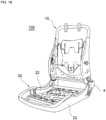
FIG. 1B is a perspective view illustrating a frame structure inside the vehicle seat ofFIG. 1A . -
FIG. 2 is a perspective view illustrating a condition of the airbag cushion of the occupant protecting device according to an embodiment expanded and deployed. -
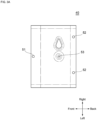
FIG. 3A is a plan view illustrating the lower panel of the airbag cushion of the occupant protecting device according to the embodiment prior to sewing. -
FIG. 3B is a plan view illustrating the upper panel of the airbag cushion of the occupant protecting device according to the embodiment prior to sewing. -
FIG. 3C is a plan view illustrating the side panel of the airbag cushion of the occupant protecting device according to the embodiment prior to sewing. -
Fig. 4A is a perspective view illustrating the occupant protecting device according to the embodiment prior to installation on the seat pan of a vehicle seat. -
Fig. 4B is a plan view illustrating the occupant protecting device according to the embodiment prior to installation on the seat pan of a vehicle seat. -
FIG. 4C is a cross-sectional view taken along line C-C ofFIG. 4B , illustrating the occupant protecting device after mounting on the seat pan of the vehicle seat. -
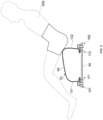
FIG. 5 is a longitudinal cross-sectional view illustrating a condition of the airbag cushion of the occupant protecting device according to an embodiment expanded and deployed, and also showing the occupant. -
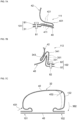
Fig. 6A is an enlarged cross-sectional view schematically illustrating the first sewing point according to the first sewing method of the airbag cushion according to the embodiment. -
Fig. 6B is an enlarged cross-sectional view schematically illustrating the second sewing point according to the first sewing method of the airbag cushion according to the embodiment. -
FIG. 6C is a longitudinal cross-sectional view schematically illustrating a condition in which the airbag cushion using the first sewing method according to the embodiment is expanded and deployed. -
Fig. 7A is an enlarged cross-sectional view schematically illustrating the first sewing point according to the second sewing method of the airbag cushion according to the embodiment. -
Fig. 7B is an enlarged cross-sectional view schematically illustrating the second sewing point according to the second sewing method of the airbag cushion according to the embodiment. -
FIG. 7C is a longitudinal cross-sectional view schematically illustrating a condition in which the airbag cushion that uses the second sewing method according to the embodiment is expanded and deployed. - An occupant protecting device according to preferred embodiments of the present invention will be described with reference to the accompanying drawings. In the present document, up and down, left and right, and front and rear are defined as follows. When an occupant is seated in a seat (vehicle seat) in a regular posture, a direction the occupant faces is referred to as the front, a opposite direction is referred to as the rear, and a direction indicating a coordinate axis is referred to as a front-rear direction. Furthermore, when the occupant is seated in the vehicle seat in a regular posture, the right side of the occupant is referred to as a right direction, the left side of the occupant is referred to as a left direction, and a direction indicating a coordinate axis is referred to as a left-right direction. Similarly, when the occupant is seated in a regular posture, a head direction of the occupant is referred to as up, a waist direction of the occupant is referred to as down, and a direction indicating a coordinate axis is referred to as an up-down direction.
- As illustrated in
FIG. 1A and1B , thevehicle seat 100 is provided with aseatback 1 that supports the back of an occupant, aseat cushion 2 on which the occupant is seated, and aheadrest 3 that supports the head of the occupant. Thevehicle seat 100 is, for example, a driver seat or passenger seat, but may be a rear seat. - A
seat frame 10 and aseating frame 20, which form the framework of the seat, are provided inside the seat back 1 and theseat cushion 2, respectively. Theseat frame 10 and theseating frame 20 are obtained by processing a metal component or hard resin, and are mutually connected via areclining mechanism 4. Theseating frame 20 has a pair of side frames 22, 22 spaced apart on the left and right, and a seat pan 24 (seeFIG. 4C ) is bridged between the pair of side frames 22, 22. - The
seat cushion 2 has, for example, a seat pad made of a urethane foam material or the like covering a surface and perimeter of theseating frame 20, and a seat cover made of leather, fabric or the like covering a surface of the seat pad. An upper surface of the seat cover configures a surface on which the occupant sits, in other words, aseat surface 26 of theseat cushion 2. - The
occupant protecting device 30 is provided inside or below theseat cushion 2. For example, theoccupant protecting device 30 is provided inside theseat cushion 2 and is covered by the seat cover. In this case, theoccupant protecting device 30 may be provided on an upper surface of theseat pan 24. Alternatively, if theseat pan 24 is not provided, placing in theseating frame 20 is possible. In another example, theoccupant protecting device 30 is provided below theseat cushion 2 instead of inside theseat cushion 2. In this case, for example, theoccupant protecting device 30 is mounted on a bracket secured to thevehicle seat 100 below theseat cushion 2. Hereinafter, an example in which theoccupant protecting device 30 is provided on the upper surface of theseat pan 24 will be described. - As illustrated in
FIG. 2 , theoccupant protecting device 30 is provided with anairbag cushion 32 capable of expansion and deployment, and an inflator 34 (seeFIG. 4C ) that supplies gas for expansion and deployment to theinterior space 33 of theairbag cushion 32 in the event of a vehicle emergency. An example of a vehicle emergency is a frontal collision of a vehicle. - The inflator 34 is electrically connected to a vehicle side ECU. For example, the
inflator 34 receives a signal that an impact upon a frontal collision of the vehicle has been detected from the vehicle side ECU and operates to instantly supply the gas to theairbag cushion 32. The inflator 34 can be one of various types of inflators, such as inflators filled with a gas generating agent, compressed gas, or both, and the like. By way of example, theinflator 34 has an igniting device at an open end portion of a cylindrical body with a bottom. Furthermore, when a gas generating agent in the cylindrical body is ignited using the igniting device, gas is generated, and the gas for expansion and deployment is supplied into theairbag cushion 32 from a plurality of injection holes located on a peripheral surface of the cylindrical body. - The
airbag cushion 32 is a bag body and expands and deploys by receiving the supply of gas from theinflator 34. Theairbag cushion 32 is formed, for example, by joining (sewing or adhering) a plurality of pieces of base fabric made of a non-woven fabric or the like at appropriate positions. Herein, theairbag cushion 32 has alower panel 40, anupper panel 42, and mutually opposingside panels FIG. 3C ). Furthermore, thepanels - As illustrated in
FIG. 3A , thelower panel 40 is formed in, for example, a rectangular shape. Thelower panel 40 has a front mountinghole 51,rear mounting holes center mounting hole 53. The front mountinghole 51 is formed at the center in the left-right direction in the front end portion of thelower panel 40. The rear mounting holes 52, 52 are formed in a rear end portion of thelower panel 40 so as to be spaced apart from each other in the left-right direction. Thecenter mounting hole 53 may be formed at any position between the front mountinghole 51 and the rear mounting holes 52, 52 in the front-rear direction and the left-right direction of thelower panel 40. The holes are formed at an optimum position as appropriate in accordance with the size of the inflator 34 to be used, the pitch of the stud bolts (34a to be described later), and the layout of the vehicle seat. However, if thecenter mounting hole 53 can be formed in the center portion in the front-rear direction and the left-right direction of thelower panel 40, thecenter mounting hole 53 is preferably formed in a center portion. In this case, the positions of the front mountinghole 51 and the rear mounting holes 52, 52 are, for example, at the apexes of an isosceles triangle, and thecenter mounting hole 53 is positioned on the bisector of the isosceles triangle. - The front mounting holes 51,
rear mounting holes center mounting holes 53 are holes where fasteners are used to attach thelower panel 40 to a prescribed position on thevehicle seat 100 side. The fastener is, for example, a bolt, rivet, or the like. Herein, thecenter mounting hole 53 may constitute a mounting point (third mounting point) for attaching the inflator 34 to thevehicle seat 100 side together with thelower panel 40. For example, when the aforementioned cylindrical body with a bottom is used as the inflator 34, the inflator is provided on thelower panel 40 with the axial direction of the cylindrical body aligned with the left-right direction. Furthermore, astud bolt 34a protruding from an outer peripheral portion of the cylindrical body (see:FIG. 4C ) protrudes from thecenter mounting hole 53 to an outer side of the airbag cushion 32 (below the lower panel 40) and is fastened and secured to theseat pan 24 by a nut. Thereby, theinflator 34 and thelower panel 40 are co-fastened to theseat pan 24 by thestud bolt 34a and a nut. - As illustrated in
FIG. 3B , theupper panel 42 is formed in, for example, a rectangular shape. Theupper panel 42 is formed with a length in the front-rear direction of thevehicle seat 100 that is longer than the length of thelower panel 40. In terms of length in the left-right direction, theupper panel 42 and thelower panel 40 are the same or substantially the same. - The
upper panel 42 has a front mountinghole 61 and rear mounting holes 62, 62. The front mountinghole 61 is formed at the center in the left-right direction in the front end portion of theupper panel 42. The rear mounting holes 62, 62 are formed in a rear end portion of theupper panel 42 so as to be spaced apart from each other in the left-right direction. The front mountinghole 61 and the rear mounting holes 62, 62 are holes where fasteners are used to attach theupper panel 42 to a prescribed position on thevehicle seat 100 side. The positions in the left-right direction of the front mountinghole 61 and the rear mounting holes 62, 62 of theupper panel 42 are the same as the positions of the front mountinghole 51 and the rear mounting holes 52, 52 of thelower panel 40. - As illustrated in
FIGS. 3C (A) and (B) , theside panels side panels rear side portion 72 is larger than the height of thefront side portion 71. Theside panels lower panel 40 and theupper panel 42. Specifically, theside panels lower panel 40 and theupper panel 42, withseam lines - As illustrated in
FIGS. 4A to C, theoccupant protecting device 30 accommodates theinflators 34 in the airbag cushions 32 and is mounted on theseat pan 24. In this mounted state, thestud bolt 34a of the inflator 34 is fastened and secured to theseat pan 24 by a nut via thecenter mounting hole 53 of thelower panel 40. - Furthermore, in this mounted state, the
lower panel 40 and theupper panel 42 are attached to thefront securing position 91 of theseat pan 24 via thefastener 81 inserted through the front mounting holes 51, 61. Similarly, thelower panel 40 and theupper panel 42 are mounted to arear securing position 92 of theseat pan 24 viafasteners front securing position 91 and therear securing position 92 are, for example, positions of securing holes formed in theseat pan 24. Note that in relation to an occupant seated in a regular posture, therear securing position 92 is below a portion of a thigh of the occupant near the buttocks. - In other words, the
airbag cushion 32 has a front mounting point 101 (first mounting point) that is mounted to thevehicle seat 100 side, and two rear mounting points 102, 102 (second mounting points) that are mounted to thevehicle seat 100 side on the rear side of thefront mounting point 101. Furthermore, the front mounting points 101 are constituted by the front mountingholes lower panel 40 and theupper panel 42, and the rear mounting points 102 are constituted by therear mounting holes lower panel 40 and theupper panel 42. - Herein, the distance between the
front securing position 91 and therear securing position 92 in theseat pan 24 in the front-rear direction is the same as the distance between the front mountinghole 51 and therear mounting hole 52 in thelower panel 40 in the front-rear direction. Therefore, thelower panel 40 mounted to theseat pan 24 is in a flattened state between the front and rear mounting points 101, 102. On the other hand, theupper panel 42, which is longer in the front-rear direction than thelower panel 40, will sag or can be folded back between the front and rear mounting points 101, 102. Herein, theupper panel 42 is flattened and unfolded such that the fold is not visible in plan view (seeFIG. 4B ), and is folded inward at the positions of thefasteners 81, 82 (at the front and rear mounting points 101, 102), and has a partially overlapping portion between the front and rear mounting points 101, 102. - As illustrated in
FIG. 4C , thelower panel 40 and theupper panel 42 are mutually joined by sewing proximal to thefront mounting point 101 and therear mounting point 102, respectively. The sewing point (joining point) 111 between thelower panel 40 and theupper panel 42 proximal to thefront mounting point 101 is positioned on the rear side of thefront mounting point 101. Thesewing point 111 is positioned, for example, approximately several centimeters from thefront mounting point 101. Thefront mounting point 101 is positioned to the outer side (front side) of thesewing point 111, and therefore is positioned in a non-expanding portion of theairbag cushion 32. - Similarly, the sewing point (joining point) 112 between the
lower panel 40 and theupper panel 42 proximal to therear mounting point 102 is positioned to the front side of therear mounting point 102. Thesewing point 112 is positioned, for example, a few centimeters from therear mounting point 102. Therear mounting point 102 is positioned to the outer side (rear side) of thesewing point 112, and thus is positioned in a non-expanding portion of theairbag cushion 32. - As described above, in the
airbag cushion 32, thelower panel 40 and theupper panel 42 are sewn together at the sewing points 111, 112 in the front-rear direction, while theside panels lower panel 40 and theupper panel 42 in the left-right direction. Furthermore, thelower panel 40,upper panel 42 andside panels interior space 33 of theairbag cushion 32. - Note that before the
occupant protecting device 30 is attached to theseat pan 24, the left and right side portions of thelower panel 40 and theupper panel 42 may be bound withtape FIG. 4A . Thus, theoccupant protecting device 30 can easily be stored. Furthermore, thetape airbag cushion 32, and theoccupant protecting device 30 may be mounted to theseat pan 24 while bound by thetape -
FIG. 5 illustrates theairbag cushion 32 after expanding and deploying. Theairbag cushion 32 expands and deploys primarily between the front and rear mounting points 101, 102. Due to the sagging or folding of theupper panel 42 during mounting, theairbag cushion 32 expands upward between the front and rear mounting points 101, 102. Furthermore, in the expanded and deployedairbag cushion 32, the height (upward expansion) of therear side portion 132 is greater than thefront side portion 131 in the front-rear direction of thevehicle seat 100, when viewed from the side portion direction of the vehicle seat 100 (left-right direction). This is because theside panels rear side portion 72 is larger than the height of thefront side portion 71. - As mentioned above, the
rear mounting point 102 of theairbag cushion 32 is positioned below the portion of the thigh of theoccupant 200 near the buttocks, in relation to theoccupant 200 who is seated on theseating surface 26 in a regular posture. Therefore, therear side portion 132 of the expanded and deployedairbag cushion 32 lifts the vicinity of the thigh near the buttocks of theoccupant 200 via theseating surface 26. In this manner, effective lifting of the knees of theoccupant 200 is achieved, and forward movement of the waist of theoccupant 200 is suppressed. - As described above, the
occupant protecting device 30 according to one aspect of the present embodiment includes theairbag cushion 32 and the inflator 34, theairbag cushion 32 includes thelower panel 40, theupper panel 42, and theside panels upper panel 42 is longer than thelower panel 40 in the front-rear direction, and theupper panel 42 and thelower panel 40 are joined to each other proximal to thefront mounting point 101 and therear mounting point 102. - With the
airbag cushion 32 having the 3D (three-dimensional) shape as in this aspect, the upward expansion (stroke or depth) between the front and rear mounting points 101, 102 can be increased while reducing the overall volume when expanded and deployed as compared to an airbag cushion having a conventional 2D shape. In particular, the use of theside panels upper panel 42 and thelower panel 40 proximal to thefront mounting point 101 and therear mounting point 102 is advantageous for deploying theside panels occupant 200 seated on theseat surface 26 in a regular posture can be effectively pushed upward with a larger stroke. Therefore, the waist restraining performance of theoccupant 200 can be improved. - Furthermore, the
side panels rear side portion 72 is higher than the height of thefront side portion 71 when viewed from the side portion direction of thevehicle seat 100 when theairbag cushion 32 is expanded and deployed. Therefore, therear side portion 132 of the expanded and deployedairbag cushion 32 expands upward to a relatively large extent. Accordingly, the vicinity of the thigh near the buttocks of theoccupant 200 can be pushed up relatively high, and the vicinity of the thigh can be effectively pushed up. - Furthermore, the
front mounting point 101 is provided on theupper panel 42 as well as thelower panel 40. Accordingly, the portion of theairbag cushion 32 proximal to thefront mounting point 101 can be prevented from being lifted or being raised more than necessary at the time of expansion and deployment. Similarly, the rear mounting points 102 are provided not only on thelower panel 40 but also on theupper panel 42. Accordingly, the portion of theairbag cushion 32 proximal to therear mounting point 102 can be prevented from being lifted or being raised more than necessary at the time of expansion and deployment. - Furthermore, there are two rear mounting points 102, 102 spaced apart in the left-right direction. This configuration also contributes to the portion of the
airbag cushion 32 proximal to therear mounting point 102 being prevented from being lifted or being raised more than necessary at the time of expansion and deployment. - Next, a first sewing method for joining the
lower panel 40 and theupper panel 42 will be described with reference toFIG. 6A to FIG. 6C . -
FIG. 6A illustrates an enlarged view of thefirst sewing point 111 proximal to thefront mounting point 101. Thelower panel 40 has atab part 301, and theupper panel 42 has atab cover part 311 and a folded backpart 313. - The
tab part 301 is a portion formed by folding a portion of thelower panel 40 having a prescribed width and extending in the left-right direction of thevehicle seat 100 upward in a mountain fold. Specifically, thetab part 301 is formed by folding a portion of thelower panel 40 on the rear side of the front mountinghole 51 upward or outward for a prescribed length and then folding it downward or inward for a prescribed length. - The tab cover
part 311 is a portion formed by folding a portion of theupper panel 42 having a prescribed width and extending in the left-right direction of thevehicle seat 100 upward in a mountain fold, and is provided so as to cover thetab part 301. Specifically, thetab cover part 311 is formed by folding a portion of theupper panel 42 on the rear side of the front mountinghole 61 upward or outward for a prescribed length and then folding it downward or inward for a prescribed length. Thetab part 301 is provided inside thetab cover part 311. - The folded back
part 313 is a portion formed on theupper panel 42 and folded upward or outward from the rear end of thetab cover part 311. The folded backpart 313 is disposed to face the rear side portion of thetab cover part 311. - At the
first sewing point 111, thetab part 301, thetab cover part 311, and the folded backpart 313 are sewn together withsewing thread 321. As a result, thetab part 301, thetab cover part 311, and the folded backpart 313 are integrally coupled. -
FIG. 6B illustrates an enlarged view of thesecond sewing point 112 proximal to therear mounting point 102. Similar to thefirst sewing point 111, thelower panel 40 includes atab part 331 and theupper panel 42 includes atab cover part 341 and a folded backpart 343. Furthermore, as in the case of thefirst sewing point 111, thetab part 331, thetab cover part 341, and the folded backpart 343 are sewn together with thesewing thread 351 at thesecond sewing point 112 so as to be integrally joined. Note that a detailed description of thetab part 331, thetab cover part 341, and the folded backpart 343 at thesecond sewing point 112 is omitted. - As illustrated in
FIG. 6C , when theairbag cushion 32 using the first sewing method is expanded and deployed, the portions near thefront mounting point 101 andrear mounting point 102 are inhibited from lifting or rising more than necessary. Specifically, the aforementioned sewing at thefirst sewing point 111 causes the front side portion of theupper panel 42 to be pulled downward as indicated byarrow 361 inFIG. 6C . Similarly, the aforementioned sewing at thesecond sewing point 112 causes the rear side portion of theupper panel 42 to be pulled downward as indicated byarrow 362 inFIG. 6C . - Next, a second sewing method for joining the
lower panel 40 and theupper panel 42 will be described with reference toFIG. 7A to FIG. 7C . -
FIG. 7A illustrates an enlarged view of thefirst sewing point 111 proximal to thefront mounting point 101. Theupper panel 42 has atab part 401. Thelower panel 40 does not have such a tab part. In other words, thelower panel 40 has anon-tab part 411 proximal to thefront mounting point 101. - The
tab part 401 is a portion formed by folding a portion of theupper panel 42 having a prescribed width and extending in the left-right direction of thevehicle seat 100 in a valley fold. Specifically, thetab part 401 is formed by folding a portion of theupper panel 42 on the rear side of the front mountinghole 61 downward or inward for a prescribed length and then folding it upward or outward for a prescribed length. Thenon-tab part 411 is disposed to face the lower side of the lower side portion of thetab part 401. - At the
first sewing point 111, thetab part 401 and thenon-tab part 411 are sewn together withsewing thread 421. In other words, the upper side portion and the lower side portion of thetab part 401 and thenon-tab part 411 are integrally joined by sewing together withsewing thread 421. -
FIG. 7B illustrates an enlarged view of thesecond sewing point 112 proximal to therear mounting point 102. Thesecond sewing point 112 is sewn in the same manner as thesecond sewing point 112 illustrated inFIG. 6B . InFIG. 7B , the same reference numerals as those inFIG. 6B are shown, and a detailed description thereof is omitted. - As illustrated in
FIG. 7C , when theairbag cushion 32 using the second sewing method is expanded and deployed, the portion near therear mounting point 102 is inhibited from lifting or rising more than necessary, and the rising position of the front side portion of theupper panel 42, as shown byarrow 431, is shifted to the rearward side. As a result, the upper position of the rear side portion of theupper panel 42 is displaced obliquely rearward and upward as indicated byarrow 432. As a result, therear side portion 132 of theairbag cushion 32 expands upward to a greater extent when viewed from the side portion direction of thevehicle seat 100. Therefore, the waist restraining performance of the occupant can be improved. - The embodiment described above is for ease of understanding of the present invention and is not intended to be construed as limiting the present invention. Elements included in the embodiment, as well as arrangements, materials, conditions, shapes, sizes, and the like thereof, are not limited to those exemplified, but rather can be appropriately changed.
- For example, the number of the front mounting points 101 may be one or may be three or more. Similarly, the number of the rear mounting points 102 may be one or may be three or more. Furthermore, the
front mounting point 101 and therear mounting point 102 may be provided only on thelower panel 40. - 1... Seatback, 2... Seat cushion, 3... Headrest, 4... Reclining mechanism, 10... Seat frame, 20... Seating frame, 22... Side frame, 24... Seat pan, 26... Seat surface, 30... Occupant protecting device, 32... Airbag cushion, 33... Interior space, 34... Inflator, 34a... Stud bolt, 40... Lower panel, 42... Upper panel, 44a, 44b.... Side panel, 51... Front mounting hole, 52... Rear mounting hole, 53... Center mounting hole, 61... Front mounting hole, 62... Rear mounting hole, 71... Front side portion, 72... Rear side portion, 73a, 73b... Seam line, 81, 82... Fastener, 91... Front securing position, 92... Rear securing position, 100... Vehicle seat, 101... Front mounting point (first mounting point), 102... Rear mounting point (second mounting point), 111... First sewing point, 112... Second sewing point, 121a, 121b... Tape, 131... Front side portion, 132... Rear side portion, 200... Occupant, 301... Tab part, 311... Tab cover portion, 313 ... Folded back part, 321... Sewing thread, 331... Tab, 341... Tab cover part, 343... Folded back part, 351... Sewing thread, 361, 362... Arrow, 401... Tab part, 411... Non-tab part, 421... Sewing thread, 431, 432... Arrow
Claims (14)
- An occupant protecting device provided inside or below a seat cushion of a vehicle seat, containing:an airbag cushion capable of expanding and deploying to push up a seat surface of the seat cushion; andan inflator that supplies gas for expansion and deployment into the interior space of the airbag cushion in the event of a vehicle emergency,the airbag cushion comprising:a lower panel;an upper panel with a length in the front-rear direction of the vehicle seat that is longer than that of the lower panel; andmutually opposing side panels joined to the lower panel and the upper panel; whereinthe interior space is defined by the upper panel, the lower panel, and the mutually opposing side panels;the airbag cushion having:at least one first mounting point provided on at least the lower panel and attached on the vehicle seat side; andat least one second attaching point provided on at least the lower panel and attached to the vehicle seat side on a rear side of the at least one first attaching point in a front-rear direction of the vehicle seat; andthe lower panel and the upper panel are mutually joined proximal to each of the at least one first mounting point and the at least one second mounting point.
- The occupant protecting device according to claim 1, wherein the side panel is formed such that when the airbag cushion is expanded and deployed, a height of a rear side portion in a front-rear direction of the vehicle seat is greater than a height of a front side portion in the front-rear direction of the vehicle seat, when viewed from the direction of the side part of the vehicle seat.
- The occupant protecting device according to claim 1 or 2, wherein the at least one first mounting point and/or the at least one second mounting point is also provided on the upper panel.
- The occupant protecting device according to any one of claims 1 to 3, wherein the lower panel and the upper panel are joined together by sewing.
- The occupant protecting device according to Claim 4, whereina tab part formed by folding a portion of the lower panel having a prescribed width extending in a left-right direction of the vehicle seat in an upward mountain fold;a tab cover part formed by folding a portion of the upper panel having a prescribed width extending in a left-right direction of the vehicle seat in an upward mountain fold, provided so as to cover the tab portion; anda folded back part formed on the upper panel and folded back upward from a rear end of the tab cover partare integrally joined by sewing together at a first sewing point of the lower panel and the upper panel proximal to the at least one first mounting point.
- The occupant protecting device according to claim 4, whereina tab part formed by folding a portion of the upper panel having a prescribed width and extending in a left-right direction of the vehicle seat in a valley fold; anda non-tab part of the lower panel;are integrally joined together by sewing, at a first sewing point of the lower panel and the upper panel proximal to the at least one first mounting point.
- The occupant protecting device according to claim 5 or 6, wherein the first sewing point is positioned to the rear side of the at least one first mounting point in the front-rear direction of the vehicle seat.
- The occupant protecting device according to claim 4, whereina tab part formed by folding a portion of the lower panel having a prescribed width extending in a left-right direction of the vehicle seat in an upward mountain-fold;a tab cover part formed by folding a portion of the upper panel having a prescribed width extending in a left-right direction of the vehicle seat that is provided so as to cover the tab portion in an upward mountain fold; anda folded back part formed on the upper panel and folded back upward from a front end of the tab cover partare integrally joined together by sewing, at a second sewing point of the lower panel and the upper panel proximal to the at least one second mounting point.
- The occupant protecting device according to claim 8, wherein the second sewing point is positioned to the front side of the at least one second mounting point in the front-rear direction of the vehicle seat.
- The occupant protecting device according to any one of claims 1 to 3, wherein a joining point between the lower panel and the upper panel proximal to the at least one first mounting point is positioned to the rear side of the at least one first mounting point in the front-rear direction of the vehicle seat.
- The occupant protecting device according to any one of claims 1 to 3, wherein a joining point between the lower panel and the upper panel proximal to the at least one second mounting point is positioned to the front side of the at least one second mounting point in the front-rear direction of the vehicle seat.
- The occupant protecting device according to any one of claims 1 to 11, whereinthe airbag cushion further comprises at least one third mounting point for attaching the inflator to the vehicle seat side; andthe at least one third mounting point is provided on the lower panel between the at least one first mounting point and the at least one second mounting point.
- The occupant protecting device according to any one of claims 1 to 12, wherein the at least one second mounting point is two or more points spaced apart in the left-right direction of the vehicle seat.
- The occupant protecting device according to any one of claims 1 to 4, wherein the upper panel is folded inward at each position of the at least one first mounting point and the at least one second mounting point, and has portions partially mutually overlapping between the at least one first mounting point and the at least one second mounting point.
Applications Claiming Priority (2)
| Application Number | Priority Date | Filing Date | Title |
|---|---|---|---|
| JP2020120434 | 2020-07-14 | ||
| PCT/JP2021/021840 WO2022014207A1 (en) | 2020-07-14 | 2021-06-09 | Occupant protection device |
Publications (3)
| Publication Number | Publication Date |
|---|---|
| EP4183638A1 true EP4183638A1 (en) | 2023-05-24 |
| EP4183638A4 EP4183638A4 (en) | 2024-08-28 |
| EP4183638B1 EP4183638B1 (en) | 2026-02-11 |
Family
ID=79555146
Family Applications (1)
| Application Number | Title | Priority Date | Filing Date |
|---|---|---|---|
| EP21842425.7A Active EP4183638B1 (en) | 2020-07-14 | 2021-06-09 | Occupant protection device |
Country Status (6)
| Country | Link |
|---|---|
| US (1) | US11993218B2 (en) |
| EP (1) | EP4183638B1 (en) |
| JP (1) | JP7411807B2 (en) |
| KR (1) | KR20230037603A (en) |
| CN (1) | CN115956034A (en) |
| WO (1) | WO2022014207A1 (en) |
Families Citing this family (2)
| Publication number | Priority date | Publication date | Assignee | Title |
|---|---|---|---|---|
| WO2020217877A1 (en) * | 2019-04-22 | 2020-10-29 | オートリブ ディベロップメント エービー | Occupant protection device |
| KR20240050089A (en) * | 2022-10-11 | 2024-04-18 | 현대모비스 주식회사 | Seat cushion airbag and folding method of the seat cushion airbag |
Family Cites Families (20)
| Publication number | Priority date | Publication date | Assignee | Title |
|---|---|---|---|---|
| JP4674468B2 (en) * | 2004-02-10 | 2011-04-20 | タカタ株式会社 | Crew protection device |
| JP2005306251A (en) * | 2004-04-22 | 2005-11-04 | Autoliv Development Ab | Inflator bag and vehicle seat cushion device using the same |
| EP1767396B1 (en) * | 2004-07-01 | 2011-09-21 | Autoliv Development Aktiebolag | Waist restraining airbag device and seat cushion device using the same |
| JP4143063B2 (en) * | 2004-11-19 | 2008-09-03 | オートリブ ディベロップメント エービー | Lumbar restraint device and vehicle seat |
| CN1814476A (en) * | 2005-02-04 | 2006-08-09 | 高田株式会社 | Occupant protection device |
| JP5078248B2 (en) | 2005-10-28 | 2012-11-21 | タカタ株式会社 | Crew restraint system |
| JP2007131104A (en) * | 2005-11-09 | 2007-05-31 | Takata Corp | Occupant restraining device |
| JP4509915B2 (en) * | 2005-11-16 | 2010-07-21 | 本田技研工業株式会社 | Airbag device |
| JP2007320543A (en) * | 2006-06-05 | 2007-12-13 | Autoliv Development Ab | Vehicle seat cushion airbag device |
| JP5530607B2 (en) * | 2008-08-27 | 2014-06-25 | トヨタ自動車株式会社 | Vehicle seat with built-in cushion airbag device |
| JP5428926B2 (en) * | 2010-02-17 | 2014-02-26 | マツダ株式会社 | Vehicle occupant protection device |
| JP5463199B2 (en) * | 2010-05-14 | 2014-04-09 | 芦森工業株式会社 | Airbag device |
| JP5545282B2 (en) * | 2011-09-30 | 2014-07-09 | 豊田合成株式会社 | Seat cushion airbag device |
| WO2013094027A1 (en) * | 2011-12-20 | 2013-06-27 | トヨタ自動車株式会社 | Vehicle seat |
| KR102207570B1 (en) * | 2014-09-26 | 2021-01-26 | 현대모비스 주식회사 | Cushion of seat cushion air bag device |
| KR102254488B1 (en) * | 2014-11-03 | 2021-05-21 | 현대모비스 주식회사 | Cushion of seat cushion air bag device |
| JP6926959B2 (en) * | 2017-11-02 | 2021-08-25 | トヨタ自動車株式会社 | Vehicle seat |
| US10246193B1 (en) * | 2018-02-08 | 2019-04-02 | B/E Aerospace, Inc. | Passenger seat with articulated pneumatic seat cushion |
| JP6958506B2 (en) * | 2018-07-31 | 2021-11-02 | 豊田合成株式会社 | Seat cushion airbag device |
| US11260818B2 (en) * | 2019-03-29 | 2022-03-01 | Toyoda Gosei Co., Ltd. | Seat cushion airbag apparatus |
-
2021
- 2021-06-09 WO PCT/JP2021/021840 patent/WO2022014207A1/en not_active Ceased
- 2021-06-09 JP JP2022536173A patent/JP7411807B2/en active Active
- 2021-06-09 KR KR1020237004548A patent/KR20230037603A/en active Pending
- 2021-06-09 CN CN202180042274.5A patent/CN115956034A/en active Pending
- 2021-06-09 EP EP21842425.7A patent/EP4183638B1/en active Active
- 2021-06-09 US US18/005,142 patent/US11993218B2/en active Active
Also Published As
| Publication number | Publication date |
|---|---|
| KR20230037603A (en) | 2023-03-16 |
| CN115956034A (en) | 2023-04-11 |
| JPWO2022014207A1 (en) | 2022-01-20 |
| US20230256928A1 (en) | 2023-08-17 |
| WO2022014207A1 (en) | 2022-01-20 |
| EP4183638B1 (en) | 2026-02-11 |
| EP4183638A4 (en) | 2024-08-28 |
| JP7411807B2 (en) | 2024-01-11 |
| US11993218B2 (en) | 2024-05-28 |
Similar Documents
| Publication | Publication Date | Title |
|---|---|---|
| US11833990B2 (en) | Side airbag device, vehicle seat provided with same, and method for manufacturing side airbag device | |
| JP6919383B2 (en) | Vehicle seats equipped with side airbag devices | |
| US11865987B2 (en) | Occupant protection device | |
| CN111086478B (en) | Side airbag device | |
| JP2011025909A (en) | Side airbag device | |
| JP2020147110A (en) | Airbag device and airbag system | |
| CN111731218A (en) | Airbag system | |
| EP4183638B1 (en) | Occupant protection device | |
| US12122316B2 (en) | Side airbag device | |
| US11766981B2 (en) | Occupant protection device | |
| JP2021147033A (en) | Air bag device manufacturing method and air bag device | |
| JP7279257B2 (en) | side airbag device | |
| CN109795440B (en) | Side airbag device for vehicle | |
| JP7846594B2 (en) | Vehicle seats | |
| WO2024062969A1 (en) | Vehicle seat | |
| EP4119402A1 (en) | Side airbag device | |
| JP7742302B2 (en) | Airbag device | |
| WO2026070157A1 (en) | Occupant protection device | |
| KR20250159221A (en) | Rear seat occupant protection device | |
| KR20250116659A (en) | Passenger restraint device | |
| KR20260033597A (en) | Passenger protection device | |
| EP1939050A1 (en) | Occupant restraint device |
Legal Events
| Date | Code | Title | Description |
|---|---|---|---|
| STAA | Information on the status of an ep patent application or granted ep patent |
Free format text: STATUS: THE INTERNATIONAL PUBLICATION HAS BEEN MADE |
|
| PUAI | Public reference made under article 153(3) epc to a published international application that has entered the european phase |
Free format text: ORIGINAL CODE: 0009012 |
|
| STAA | Information on the status of an ep patent application or granted ep patent |
Free format text: STATUS: REQUEST FOR EXAMINATION WAS MADE |
|
| 17P | Request for examination filed |
Effective date: 20230203 |
|
| AK | Designated contracting states |
Kind code of ref document: A1 Designated state(s): AL AT BE BG CH CY CZ DE DK EE ES FI FR GB GR HR HU IE IS IT LI LT LU LV MC MK MT NL NO PL PT RO RS SE SI SK SM TR |
|
| DAV | Request for validation of the european patent (deleted) | ||
| DAX | Request for extension of the european patent (deleted) | ||
| REG | Reference to a national code |
Ref country code: DE Ref legal event code: R079 Free format text: PREVIOUS MAIN CLASS: B60R0021207000 Ipc: B60N0002420000 Ref country code: DE Ref legal event code: R079 Ref document number: 602021047862 Country of ref document: DE Free format text: PREVIOUS MAIN CLASS: B60R0021207000 Ipc: B60N0002420000 |
|
| A4 | Supplementary search report drawn up and despatched |
Effective date: 20240725 |
|
| RIC1 | Information provided on ipc code assigned before grant |
Ipc: B60R 21/207 20060101ALI20240719BHEP Ipc: B60N 2/427 20060101ALI20240719BHEP Ipc: B60N 2/42 20060101AFI20240719BHEP |
|
| REG | Reference to a national code |
Ref country code: DE Ref legal event code: R079 Free format text: PREVIOUS MAIN CLASS: B60N0002420000 Ipc: B60N0002427000 Ref country code: DE Ref legal event code: R079 Ref document number: 602021047862 Country of ref document: DE Free format text: PREVIOUS MAIN CLASS: B60N0002420000 Ipc: B60N0002427000 |
|
| GRAP | Despatch of communication of intention to grant a patent |
Free format text: ORIGINAL CODE: EPIDOSNIGR1 |
|
| STAA | Information on the status of an ep patent application or granted ep patent |
Free format text: STATUS: GRANT OF PATENT IS INTENDED |
|
| RIC1 | Information provided on ipc code assigned before grant |
Ipc: B60N 2/427 20060101AFI20250919BHEP Ipc: B60R 21/207 20060101ALI20250919BHEP |
|
| INTG | Intention to grant announced |
Effective date: 20251027 |
|
| GRAS | Grant fee paid |
Free format text: ORIGINAL CODE: EPIDOSNIGR3 |
|
| GRAA | (expected) grant |
Free format text: ORIGINAL CODE: 0009210 |
|
| STAA | Information on the status of an ep patent application or granted ep patent |
Free format text: STATUS: THE PATENT HAS BEEN GRANTED |
|
| AK | Designated contracting states |
Kind code of ref document: B1 Designated state(s): AL AT BE BG CH CY CZ DE DK EE ES FI FR GB GR HR HU IE IS IT LI LT LU LV MC MK MT NL NO PL PT RO RS SE SI SK SM TR |
|
| REG | Reference to a national code |
Ref country code: CH Ref legal event code: F10 Free format text: ST27 STATUS EVENT CODE: U-0-0-F10-F00 (AS PROVIDED BY THE NATIONAL OFFICE) Effective date: 20260211 Ref country code: GB Ref legal event code: FG4D |
|
| REG | Reference to a national code |
Ref country code: DE Ref legal event code: R096 Ref document number: 602021047862 Country of ref document: DE |
|
| REG | Reference to a national code |
Ref country code: IE Ref legal event code: FG4D |