EP4178909B1 - Trockenreformierung von kohlenwasserstoffen - Google Patents
Trockenreformierung von kohlenwasserstoffen Download PDFInfo
- Publication number
- EP4178909B1 EP4178909B1 EP21751696.2A EP21751696A EP4178909B1 EP 4178909 B1 EP4178909 B1 EP 4178909B1 EP 21751696 A EP21751696 A EP 21751696A EP 4178909 B1 EP4178909 B1 EP 4178909B1
- Authority
- EP
- European Patent Office
- Prior art keywords
- dry reforming
- feed stream
- catalyst
- reforming process
- implementations
- Prior art date
- Legal status (The legal status is an assumption and is not a legal conclusion. Google has not performed a legal analysis and makes no representation as to the accuracy of the status listed.)
- Active
Links
Images





Classifications
-
- C—CHEMISTRY; METALLURGY
- C01—INORGANIC CHEMISTRY
- C01B—NON-METALLIC ELEMENTS; COMPOUNDS THEREOF; METALLOIDS OR COMPOUNDS THEREOF NOT COVERED BY SUBCLASS C01C
- C01B3/00—Hydrogen; Gaseous mixtures containing hydrogen; Separation of hydrogen from mixtures containing it; Purification of hydrogen; Reversible storage of hydrogen
- C01B3/02—Production of hydrogen; Production of gaseous mixtures containing hydrogen
- C01B3/32—Production of hydrogen; Production of gaseous mixtures containing hydrogen by reaction of gaseous or liquid organic compounds with gasifying agents, e.g. water, carbon dioxide or air
- C01B3/34—Production of hydrogen; Production of gaseous mixtures containing hydrogen by reaction of gaseous or liquid organic compounds with gasifying agents, e.g. water, carbon dioxide or air by reaction of hydrocarbons with gasifying agents
- C01B3/38—Production of hydrogen; Production of gaseous mixtures containing hydrogen by reaction of gaseous or liquid organic compounds with gasifying agents, e.g. water, carbon dioxide or air by reaction of hydrocarbons with gasifying agents using catalysts
- C01B3/42—Production of hydrogen; Production of gaseous mixtures containing hydrogen by reaction of gaseous or liquid organic compounds with gasifying agents, e.g. water, carbon dioxide or air by reaction of hydrocarbons with gasifying agents using catalysts using moving solid particles, e.g. fluidised bed technique
-
- C—CHEMISTRY; METALLURGY
- C01—INORGANIC CHEMISTRY
- C01B—NON-METALLIC ELEMENTS; COMPOUNDS THEREOF; METALLOIDS OR COMPOUNDS THEREOF NOT COVERED BY SUBCLASS C01C
- C01B3/00—Hydrogen; Gaseous mixtures containing hydrogen; Separation of hydrogen from mixtures containing it; Purification of hydrogen; Reversible storage of hydrogen
- C01B3/02—Production of hydrogen; Production of gaseous mixtures containing hydrogen
- C01B3/32—Production of hydrogen; Production of gaseous mixtures containing hydrogen by reaction of gaseous or liquid organic compounds with gasifying agents, e.g. water, carbon dioxide or air
- C01B3/34—Production of hydrogen; Production of gaseous mixtures containing hydrogen by reaction of gaseous or liquid organic compounds with gasifying agents, e.g. water, carbon dioxide or air by reaction of hydrocarbons with gasifying agents
- C01B3/38—Production of hydrogen; Production of gaseous mixtures containing hydrogen by reaction of gaseous or liquid organic compounds with gasifying agents, e.g. water, carbon dioxide or air by reaction of hydrocarbons with gasifying agents using catalysts
- C01B3/40—Production of hydrogen; Production of gaseous mixtures containing hydrogen by reaction of gaseous or liquid organic compounds with gasifying agents, e.g. water, carbon dioxide or air by reaction of hydrocarbons with gasifying agents using catalysts characterised by the catalyst
-
- B—PERFORMING OPERATIONS; TRANSPORTING
- B01—PHYSICAL OR CHEMICAL PROCESSES OR APPARATUS IN GENERAL
- B01J—CHEMICAL OR PHYSICAL PROCESSES, e.g. CATALYSIS OR COLLOID CHEMISTRY; THEIR RELEVANT APPARATUS
- B01J21/00—Catalysts comprising the elements, oxides, or hydroxides of magnesium, boron, aluminium, carbon, silicon, titanium, zirconium, or hafnium
- B01J21/02—Boron or aluminium; Oxides or hydroxides thereof
- B01J21/04—Alumina
-
- B—PERFORMING OPERATIONS; TRANSPORTING
- B01—PHYSICAL OR CHEMICAL PROCESSES OR APPARATUS IN GENERAL
- B01J—CHEMICAL OR PHYSICAL PROCESSES, e.g. CATALYSIS OR COLLOID CHEMISTRY; THEIR RELEVANT APPARATUS
- B01J23/00—Catalysts comprising metals or metal oxides or hydroxides, not provided for in group B01J21/00
- B01J23/70—Catalysts comprising metals or metal oxides or hydroxides, not provided for in group B01J21/00 of the iron group metals or copper
- B01J23/76—Catalysts comprising metals or metal oxides or hydroxides, not provided for in group B01J21/00 of the iron group metals or copper combined with metals, oxides or hydroxides provided for in groups B01J23/02 - B01J23/36
- B01J23/83—Catalysts comprising metals or metal oxides or hydroxides, not provided for in group B01J21/00 of the iron group metals or copper combined with metals, oxides or hydroxides provided for in groups B01J23/02 - B01J23/36 with rare earths or actinides
-
- B—PERFORMING OPERATIONS; TRANSPORTING
- B01—PHYSICAL OR CHEMICAL PROCESSES OR APPARATUS IN GENERAL
- B01J—CHEMICAL OR PHYSICAL PROCESSES, e.g. CATALYSIS OR COLLOID CHEMISTRY; THEIR RELEVANT APPARATUS
- B01J23/00—Catalysts comprising metals or metal oxides or hydroxides, not provided for in group B01J21/00
- B01J23/70—Catalysts comprising metals or metal oxides or hydroxides, not provided for in group B01J21/00 of the iron group metals or copper
- B01J23/89—Catalysts comprising metals or metal oxides or hydroxides, not provided for in group B01J21/00 of the iron group metals or copper combined with noble metals
- B01J23/8933—Catalysts comprising metals or metal oxides or hydroxides, not provided for in group B01J21/00 of the iron group metals or copper combined with noble metals also combined with metals, or metal oxides or hydroxides provided for in groups B01J23/02 - B01J23/36
- B01J23/8986—Catalysts comprising metals or metal oxides or hydroxides, not provided for in group B01J21/00 of the iron group metals or copper combined with noble metals also combined with metals, or metal oxides or hydroxides provided for in groups B01J23/02 - B01J23/36 with manganese, technetium or rhenium
-
- B—PERFORMING OPERATIONS; TRANSPORTING
- B01—PHYSICAL OR CHEMICAL PROCESSES OR APPARATUS IN GENERAL
- B01J—CHEMICAL OR PHYSICAL PROCESSES, e.g. CATALYSIS OR COLLOID CHEMISTRY; THEIR RELEVANT APPARATUS
- B01J37/00—Processes, in general, for preparing catalysts; Processes, in general, for activation of catalysts
- B01J37/02—Impregnation, coating or precipitation
- B01J37/0201—Impregnation
-
- B—PERFORMING OPERATIONS; TRANSPORTING
- B01—PHYSICAL OR CHEMICAL PROCESSES OR APPARATUS IN GENERAL
- B01J—CHEMICAL OR PHYSICAL PROCESSES, e.g. CATALYSIS OR COLLOID CHEMISTRY; THEIR RELEVANT APPARATUS
- B01J37/00—Processes, in general, for preparing catalysts; Processes, in general, for activation of catalysts
- B01J37/16—Reducing
- B01J37/18—Reducing with gases containing free hydrogen
-
- B—PERFORMING OPERATIONS; TRANSPORTING
- B01—PHYSICAL OR CHEMICAL PROCESSES OR APPARATUS IN GENERAL
- B01J—CHEMICAL OR PHYSICAL PROCESSES, e.g. CATALYSIS OR COLLOID CHEMISTRY; THEIR RELEVANT APPARATUS
- B01J21/00—Catalysts comprising the elements, oxides, or hydroxides of magnesium, boron, aluminium, carbon, silicon, titanium, zirconium, or hafnium
- B01J21/02—Boron or aluminium; Oxides or hydroxides thereof
-
- C—CHEMISTRY; METALLURGY
- C01—INORGANIC CHEMISTRY
- C01B—NON-METALLIC ELEMENTS; COMPOUNDS THEREOF; METALLOIDS OR COMPOUNDS THEREOF NOT COVERED BY SUBCLASS C01C
- C01B2203/00—Integrated processes for the production of hydrogen or synthesis gas
- C01B2203/02—Processes for making hydrogen or synthesis gas
- C01B2203/0205—Processes for making hydrogen or synthesis gas containing a reforming step
- C01B2203/0227—Processes for making hydrogen or synthesis gas containing a reforming step containing a catalytic reforming step
- C01B2203/0233—Processes for making hydrogen or synthesis gas containing a reforming step containing a catalytic reforming step the reforming step being a steam reforming step
-
- C—CHEMISTRY; METALLURGY
- C01—INORGANIC CHEMISTRY
- C01B—NON-METALLIC ELEMENTS; COMPOUNDS THEREOF; METALLOIDS OR COMPOUNDS THEREOF NOT COVERED BY SUBCLASS C01C
- C01B2203/00—Integrated processes for the production of hydrogen or synthesis gas
- C01B2203/02—Processes for making hydrogen or synthesis gas
- C01B2203/0205—Processes for making hydrogen or synthesis gas containing a reforming step
- C01B2203/0227—Processes for making hydrogen or synthesis gas containing a reforming step containing a catalytic reforming step
- C01B2203/0238—Processes for making hydrogen or synthesis gas containing a reforming step containing a catalytic reforming step the reforming step being a carbon dioxide reforming step
-
- C—CHEMISTRY; METALLURGY
- C01—INORGANIC CHEMISTRY
- C01B—NON-METALLIC ELEMENTS; COMPOUNDS THEREOF; METALLOIDS OR COMPOUNDS THEREOF NOT COVERED BY SUBCLASS C01C
- C01B2203/00—Integrated processes for the production of hydrogen or synthesis gas
- C01B2203/10—Catalysts for performing the hydrogen forming reactions
- C01B2203/1041—Composition of the catalyst
- C01B2203/1047—Group VIII metal catalysts
- C01B2203/1052—Nickel or cobalt catalysts
- C01B2203/1058—Nickel catalysts
-
- C—CHEMISTRY; METALLURGY
- C01—INORGANIC CHEMISTRY
- C01B—NON-METALLIC ELEMENTS; COMPOUNDS THEREOF; METALLOIDS OR COMPOUNDS THEREOF NOT COVERED BY SUBCLASS C01C
- C01B2203/00—Integrated processes for the production of hydrogen or synthesis gas
- C01B2203/10—Catalysts for performing the hydrogen forming reactions
- C01B2203/1041—Composition of the catalyst
- C01B2203/1047—Group VIII metal catalysts
- C01B2203/1064—Platinum group metal catalysts
-
- C—CHEMISTRY; METALLURGY
- C01—INORGANIC CHEMISTRY
- C01B—NON-METALLIC ELEMENTS; COMPOUNDS THEREOF; METALLOIDS OR COMPOUNDS THEREOF NOT COVERED BY SUBCLASS C01C
- C01B2203/00—Integrated processes for the production of hydrogen or synthesis gas
- C01B2203/10—Catalysts for performing the hydrogen forming reactions
- C01B2203/1041—Composition of the catalyst
- C01B2203/1047—Group VIII metal catalysts
- C01B2203/1064—Platinum group metal catalysts
- C01B2203/107—Platinum catalysts
-
- C—CHEMISTRY; METALLURGY
- C01—INORGANIC CHEMISTRY
- C01B—NON-METALLIC ELEMENTS; COMPOUNDS THEREOF; METALLOIDS OR COMPOUNDS THEREOF NOT COVERED BY SUBCLASS C01C
- C01B2203/00—Integrated processes for the production of hydrogen or synthesis gas
- C01B2203/10—Catalysts for performing the hydrogen forming reactions
- C01B2203/1041—Composition of the catalyst
- C01B2203/1082—Composition of support materials
-
- C—CHEMISTRY; METALLURGY
- C01—INORGANIC CHEMISTRY
- C01B—NON-METALLIC ELEMENTS; COMPOUNDS THEREOF; METALLOIDS OR COMPOUNDS THEREOF NOT COVERED BY SUBCLASS C01C
- C01B2203/00—Integrated processes for the production of hydrogen or synthesis gas
- C01B2203/12—Feeding the process for making hydrogen or synthesis gas
- C01B2203/1205—Composition of the feed
- C01B2203/1211—Organic compounds or organic mixtures used in the process for making hydrogen or synthesis gas
- C01B2203/1235—Hydrocarbons
-
- C—CHEMISTRY; METALLURGY
- C01—INORGANIC CHEMISTRY
- C01B—NON-METALLIC ELEMENTS; COMPOUNDS THEREOF; METALLOIDS OR COMPOUNDS THEREOF NOT COVERED BY SUBCLASS C01C
- C01B2203/00—Integrated processes for the production of hydrogen or synthesis gas
- C01B2203/12—Feeding the process for making hydrogen or synthesis gas
- C01B2203/1258—Pre-treatment of the feed
-
- C—CHEMISTRY; METALLURGY
- C01—INORGANIC CHEMISTRY
- C01B—NON-METALLIC ELEMENTS; COMPOUNDS THEREOF; METALLOIDS OR COMPOUNDS THEREOF NOT COVERED BY SUBCLASS C01C
- C01B2203/00—Integrated processes for the production of hydrogen or synthesis gas
- C01B2203/12—Feeding the process for making hydrogen or synthesis gas
- C01B2203/1276—Mixing of different feed components
-
- Y—GENERAL TAGGING OF NEW TECHNOLOGICAL DEVELOPMENTS; GENERAL TAGGING OF CROSS-SECTIONAL TECHNOLOGIES SPANNING OVER SEVERAL SECTIONS OF THE IPC; TECHNICAL SUBJECTS COVERED BY FORMER USPC CROSS-REFERENCE ART COLLECTIONS [XRACs] AND DIGESTS
- Y02—TECHNOLOGIES OR APPLICATIONS FOR MITIGATION OR ADAPTATION AGAINST CLIMATE CHANGE
- Y02P—CLIMATE CHANGE MITIGATION TECHNOLOGIES IN THE PRODUCTION OR PROCESSING OF GOODS
- Y02P20/00—Technologies relating to chemical industry
- Y02P20/141—Feedstock
-
- Y—GENERAL TAGGING OF NEW TECHNOLOGICAL DEVELOPMENTS; GENERAL TAGGING OF CROSS-SECTIONAL TECHNOLOGIES SPANNING OVER SEVERAL SECTIONS OF THE IPC; TECHNICAL SUBJECTS COVERED BY FORMER USPC CROSS-REFERENCE ART COLLECTIONS [XRACs] AND DIGESTS
- Y02—TECHNOLOGIES OR APPLICATIONS FOR MITIGATION OR ADAPTATION AGAINST CLIMATE CHANGE
- Y02P—CLIMATE CHANGE MITIGATION TECHNOLOGIES IN THE PRODUCTION OR PROCESSING OF GOODS
- Y02P20/00—Technologies relating to chemical industry
- Y02P20/50—Improvements relating to the production of bulk chemicals
- Y02P20/52—Improvements relating to the production of bulk chemicals using catalysts, e.g. selective catalysts
Definitions
- This disclosure relates to reforming of hydrocarbons, and in particular, dry reforming of hydrocarbons.
- Synthesis gas also referred to as syngas
- syngas is a fuel gas mixture that includes hydrogen, carbon monoxide, and sometimes carbon dioxide.
- Syngas is combustible and can be used as a fuel of internal combustion engines.
- syngas can be used as an intermediate for producing synthetic petroleum for use as a fuel or lubricant.
- Syngas can also be used to produce methanol or as a hydrogen source for various processes. Hydrocarbon reforming is one example of a process for producing syngas.
- EP 2104657 describes a method for the thermo-neutral reforming of liquid hydrocarbon fuels which employs a Ni, Ce 2 O 3 , La 2 O 3 , PtZrO 2 , Rh and Re catalyst having dual functionalities to achieve both combustion and steam reforming.
- US 2017/001176 describes catalysts capable of catalyzing the dry reforming of methane.
- the catalysts have a core-shell structure with the shell surrounding the core.
- the shell has a redox-metal oxide phase that includes a metal dopant incorporated into the lattice framework of the redox-metal oxide phase.
- An active metal is deposited on the surface of the shell.
- This disclosure describes technologies relating to hydrocarbon reforming.
- the invention relates to a dry reforming process as from claim 1.
- the feed stream is preheated to a temperature in a range of from about 750 degrees Celsius (°C) to about 950°C.
- an operating pressure within the reactor during the dry reforming reaction is in a range of from about 7 bar to about 28 bar.
- the catalyst includes a rare earth group metal oxide, lanthanum oxide (La 2 O 3 ), cerium oxide (Ce 2 O 3 ), a mixture of both.
- the catalyst includes zirconium oxide (ZrO 2 ).
- the catalyst includes nickel (Ni), a reducible compound of Ni (for example, nickel oxide (NiO)), or a mixture of both.
- the catalyst includes platinum (Pt), Rh, a mixture of both.
- the platinum group metal can be included in pure elemental form or as a part of a chemical compound that includes the platinum group metal.
- the catalyst includes rhenium (Re).
- the Group VIIB metal can function as a promoter to enhance the efficiency of the dry reforming activity of the catalyst.
- catalyst includes a refractory support that includes alumina (for example, theta-alumina), magnesium aluminate, or a mixture of both.
- a refractory cement that is based on calcium aluminate is incorporated into the catalyst to improve the mechanical strength of the catalyst.
- the catalyst has a specific surface area in a range of from about 15 square meters per gram (m 2 /g) to about 125 m 2 /g.
- the temperature is then increased to about 250 °C at a slow heating rate, for example, of about 0.5 °C increase per minute, and then the temperature is maintained at about 250 °C for about 1.5 hours.
- the aforementioned heating (calcination) steps can be carried out in the presence of air or another oxygen containing gas.
- the catalyst can be treated at about 60 °C for about 10 to about 30 minutes with an ammonia containing gas.
- the catalyst can then be reduced with a hydrogen containing gas at a temperature in a range of from about 400 °C to about 450 °C for about 2 hours.
- the aforementioned impregnation, calcination, and reduction steps can be repeated with salts of Pt and Zr.
- the aforementioned impregnation, calcination, and reduction steps can be repeated with salts of Ni, Ce, and La.
- the reduction step for the salts of Ni, Ce, and La can be conducted at a temperature in a range of from about 400 °C to about 1,100°C, from about 600 °C to about 800°C, or from about 700 °C to about 750°C.
- the catalyst is prepared by a single step sequence of impregnation, calcination, and reduction at a temperature in a range of from about 400 °C to about 1,100°C, from about 600 °C to about 800°C, or to about 700 °C to about 750°C.
- the refractory support can be impregnated with an aqueous solution of a soluble salt, such as a nitrate salt of Ni, Ce, La, and Pt. After impregnation, the composite material is dried (calcined) at a slow heating rate, for example, of about 0.5 °C increase per minute until reaching about 120 °C, and then the temperature is maintained at about 120 °C for about one hour.
- the temperature is then increased to about 250 °C at a slow heating rate, for example, of about 0.5 °C increase per minute, and then the temperature is maintained at about 250 °C for about 1.5 hours.
- the temperature is then increased to about 400 °C to about 450 °C.
- the aforementioned heating (calcination) steps can be carried out in the presence of air or another oxygen containing gas.
- the catalyst can then be reduced with a hydrogen containing gas at a temperature in a range of from about 400 °C to about 1,100 °C, from about 600 °C to about 800°C, or from about 700 °C to about 750°C.
- the impregnation, drying, and calcination can be repeated one or more times to obtain desired contents of each component in the catalyst.
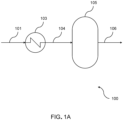
- the feed stream 101 also includes water (H 2 O) in the form of steam.
- the feed stream 101 has a water to carbon (that is, carbon atoms from any carbon-containing species, such as the carbon dioxide and the hydrocarbon fuel) ratio in a range of from about 1:10 to about 3:1.
- the feed stream 101 has a water to carbon ratio in a range of from about 1:10 to about 1:1.
- Including steam in the feed stream 101 can reduce the severity of the carbon-carbon reaction at the operating conditions of the dry reforming reaction within the reactor 105.
- Including steam in the feed stream 101 can mitigate coke formation on the catalyst and can therefore mitigate catalyst deactivation.
- Including steam in the feed stream 101 can increase the hydrogen to carbon monoxide ratio in the syngas 106 that is produced by the reactor 105.
- Including steam in the feed stream 101 can improve selectivity of the catalyst in producing syngas 106 as opposed to other carbon-containing compounds.
- FIG. 1B illustrates an implementation of the system 100 that is substantially similar to the system 100 shown in FIG. 1A .
- the system 100 includes an additional hydrogen stream 107 that can be mixed with the syngas 106 exiting the reactor 105.
- the additional hydrogen stream 107 can be sourced, for example, from electrolysis of water using renewable energy, allowing for the chemicals/fuels produced from the syngas 106 to have a decreased carbon footprint.
- the addition of hydrogen to the syngas 106 can increase the hydrogen to carbon monoxide ratio for tailoring to downstream processes. For example, some processes that may favor an increased hydrogen to carbon monoxide ratio in the syngas 106 include methanol production, ethanol production, and acetic acid production.
- FIG. 2 is a flow chart of an example dry reforming process 200 for producing a syngas from a hydrocarbon fuel.
- the system 100 can implement the dry reforming process 200.
- a feed stream including hydrocarbon fuel and carbon dioxide (such as the feed stream 101) is preheated.
- the preheater 103 preheats the feed stream 101 at step 202.
- the feed stream 101 is preheated to a temperature in a range of from about 750°C to about 950°C at step 202.
- the feed stream 101 can also include water in the form of steam.
- the dry reforming process 200 includes mixing the hydrocarbon fuel (for example, methane) with the carbon dioxide to form the feed stream 101 before step 202.
- the dry reforming process 200 includes mixing the hydrocarbon fuel (for example, methane) with the carbon dioxide and water to form the feed stream 101 before step 202.
- the preheated feed stream (such as the preheated feed stream 104) is flowed to a reactor including a catalyst (such as the reactor 105).
- the catalyst can be the catalyst that was described previously. Flowing the preheated feed stream 104 to the reactor 105 at step 204 brings the preheated feed stream 104 into contact with the catalyst. In the absence of oxygen, the catalyst causes a dry reforming reaction (for example, the reaction represented by Equation (1)) within the reactor 105 for a period of time sufficient to reform the hydrocarbon fuel to produce the syngas (such as the syngas 106).
- the feed stream is brought into contact with the catalyst in the absence of oxygen at a gas hourly space velocity in a range of from about 1,000 h -1 to about 3,000 h -1 at step 204.
- an operating pressure within the reactor during the dry reforming reaction at step 204 is in a range of from about 7 bar to about 28 bar.
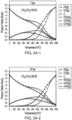
- FIGs. 3A-1, 3A-2 , and 3A-3 provide various plots that illustrate the thermodynamic equilibrium product compositions of the dry reforming process over a range of operating temperatures at various operating pressures.
- FIGs. 3A-1, 3A-2 , and 3A-3 demonstrate that selectivity of syngas (hydrogen and carbon monoxide) generally increases with increasing operating temperature.
- FIG. 3A-4 is a plot that illustrates the effect of operating pressure on carbon yields (coking) of the dry reforming process.
- FIG. 3A-4 demonstrates that coke formation generally increases with increasing operating pressure and generally decreases with increasing operating temperature.
- the CH 4 :CO 2 in the feed stream was 1:1.
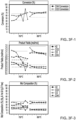
- FIGs. 3B-1, 3B-2, and 3B-3 provide various plots that illustrate the effect of operating pressure (7 bar, 14 bar, and 28 bar, respectively) on hydrocarbon conversion rate, product yield, and feed/product compositions of the dry reforming process at an operating temperature of 700°C.
- the horizontal dotted lines in FIGs. 3B-1, 3B-2, and 3B-3 represent expected conversions, product yields, and product compositions, respectively.
- the connected data points in FIGs. 3B-1, 3B-2, and 3B-3 demonstrate the catalyst performances with a feed stream including a CH 4 :CO 2 ratio of 1:1 at 700°C and the various operating pressures.
- FIGs. 3C-1, 3C-2, and 3C-3 provide various plots that illustrate the effect of operating pressure (7 bar, 14 bar, and 28 bar, respectively) on hydrocarbon conversion rate, product yield, and feed/product compositions of the dry reforming process at an operating temperature of 750°C.
- the horizontal dotted lines in FIGs. 3C-1, 3C-2, and 3C-3 represent expected conversions, product yields, and product compositions, respectively.
- the connected data points in FIGs. 3C-1, 3C-2, and 3C-3 demonstrate the catalyst performances with a feed stream including a CH 4 :CO 2 ratio of 1:1 at 750°C and the various operating pressures.
- FIGs. 3D-1, 3D-2, and 3D-3 provide various plots that illustrate the effect of operating pressure (7 bar, 14 bar, and 28 bar, respectively) on hydrocarbon conversion rate, product yield, and feed/product compositions of the dry reforming process at an operating temperature of 800°C.
- the horizontal dotted lines in FIGs. 3D-1, 3D-2, and 3D-3 represent expected conversions, product yields, and product compositions, respectively.
- the connected data points in FIGs. 3D-1, 3D-2, and 3D-3 demonstrate the catalyst performances with a feed stream including a CH 4 :CO 2 ratio of 1:1 at 800°C and the various operating pressures.
- the gas hourly space velocity was 1,500 h -1 ;
- the molar compositional ratio of CH 4 :CO 2 :N 2 :He in the feed stream was 31:31:30:8;
- the catalyst was pre-treated to 700°C for three hours; and total reaction runtime was 24 hours.
- These experimental runs demonstrate effective performance of the catalyst at high temperatures (for example, 800°C or greater) at an operating pressure in a range of from about 10 bar to about 15 bar.
- FIGs. 3E-1, 3E-2, and 3E-3 provide various plots that illustrate the effect of gas hourly space velocity (2,000 h -1 and 2,500 h -1 ) on hydrocarbon conversion rate, product yield, and feed/product compositions, respectively, of the dry reforming process at an operating temperature of 800°C and an operating pressure of 28 bar.
- the molar compositional ratio of CH 4 :CO 2 :N 2 :He in the feed stream was 31:31:30:8; the catalyst was pre-treated to 800°C for six hours; and total reaction runtime was 24 hours.
- FIGs. 3E-1, 3E-2, and 3E-3 demonstrate that the catalyst exhibits stable performance in reaching equilibrium compositions over a range of gas hourly space velocities at the operating temperature of 800°C and the operating pressure of 28 bar.
- FIGs. 3F-1, 3F-2, and 3F-3 provide various plots that illustrate the effect of operating temperature (750°C and 800°C) on hydrocarbon conversion rate, product yield, and feed/product compositions, respectively, of the dry reforming process at an operating pressure of 14 bar when the feed stream includes water (CH 4 :CO 2 :H 2 O ⁇ 2:2:1).
- the molar compositional ratio of CH 4 :CO 2 :H 2 O:N 2 :He in the feed stream was 26:26:16:26:6; the catalyst was pre-treated to 800°C for six hours; and total reaction runtime was 24 hours.
- 3F-1, 3F-2, and 3F-3 demonstrate the impact of adding steam in the feed stream.
- Adding steam can increase the H 2 :CO ratio in the product at milder operating conditions (for example, at cooler temperatures), which can improve catalyst operating life. Further, increased H 2 :CO ratios in the product can be favorable for various downstream processes (mentioned previously).
- FIGs. 3G-1, 3G-2, and 3G-3 provide various plots that illustrate the effect of operating temperature (750°C and 800°C) on hydrocarbon conversion rate, product yield, and feed/product compositions, respectively, of the dry reforming process at an operating pressure of 14 bar when the feed stream has a decreased CH 4 :CO 2 ratio (1:3).
- the molar compositional ratio of CH 4 :CO 2 :N 2 :He in the feed stream was 16:48:32:4; the catalyst was pre-treated to 800°C for six hours; and total reaction runtime was 24 hours.
- 3G-1, 3G-2, and 3G-3 demonstrate the impact of adjusting the CH 4 :CO 2 ratio in the feed stream at dry operating conditions (no addition of steam) at the various operating temperatures.
- the stability of these results may demonstrate favorable conditions in mitigating coking.
- coke deposits that form during the reaction can potentially be further reacted with CO 2 to form additional CO (for example, via the reverse Boudouard reaction).
- Decreasing the CH 4 :CO 2 ratio in the feed stream may result in decreased H 2 :CO ratios in the product syngas, but the H 2 :CO ratio in the syngas can be adjusted (see, for example, FIG. 1B ).
- inert gas for example, nitrogen (N 2 ), helium (He), or both
- N 2 nitrogen
- He helium
- the inert gas was included in order to verify quality of the experiments through mass balance checks, and the inert gas is not necessarily included in industrial applications of the dry reforming processes described here.
- the term "about” or “approximately” can allow for a degree of variability in a value or range, for example, within 10%, within 5%, or within 1% of a stated value or of a stated limit of a range.
- the term “substantially” refers to a majority of, or mostly, as in at least about 50%, 60%, 70%, 80%, 90%, 95%, 96%, 97%, 98%, 99%, 99.5%, 99.9%, 99.99%, or at least about 99.999% or more.
Landscapes
- Chemical & Material Sciences (AREA)
- Chemical Kinetics & Catalysis (AREA)
- Organic Chemistry (AREA)
- Engineering & Computer Science (AREA)
- Materials Engineering (AREA)
- Health & Medical Sciences (AREA)
- General Health & Medical Sciences (AREA)
- Combustion & Propulsion (AREA)
- Inorganic Chemistry (AREA)
- Hydrogen, Water And Hydrids (AREA)
- Catalysts (AREA)
Claims (11)
- Trockenreformierungsverfahren (200) zum Erzeugen eines Synthesegases aus einem Kohlenwasserstoffbrennstoff, umfassend:Vorwärmen (202) eines Einsatzstroms, der den Kohlenwasserstoffbrennstoff und Kohlendioxid umfasst; undEinleiten (204) des vorgewärmten Einsatzstroms in einen Reaktor, der einen Katalysator umfasst, wodurch der vorgewärmte Einsatzstrom in Abwesenheit von Sauerstoff mit dem Katalysator in Kontakt gebracht wird und eine Trockenreformierungsreaktion in dem Reaktor über einen Zeitraum bewirkt wird, der ausreicht, um den Kohlenwasserstoffbrennstoff unter Erzeugung von Synthesegas zu reformieren, wobei der Katalysator Nickel (Ni), Lanthanoxid (La2O3), Ceroxid (Ce2O3), Platin (Pt), Zirconiumoxid (ZrO2), Rhodium (Rh), Rhenium (Re) und einen Aluminatträger umfasst.
- Trockenreformierungsverfahren nach Anspruch 1, wobei der Einsatzstrom auf eine Temperatur in einem Bereich von 750 Grad Celsius (°C) bis 950 °C vorgewärmt wird.
- Trockenreformierungsverfahren nach Anspruch 1 oder 2, wobei ein Betriebsdruck in dem Reaktor während der Trockenreformierungsreaktion in einem Bereich von 7 bar bis 28 bar liegt.
- Trockenreformierungsverfahren nach einem der vorhergehenden Ansprüche, wobei der Einsatzstrom ein Verhältnis von Kohlendioxid zu Kohlenwasserstoff in einem Bereich von 1:1 bis 4:1 aufweist.
- Trockenreformierungsverfahren nach Anspruch 4, wobei das Verhältnis von Kohlendioxid zu Kohlenwasserstoff des Einsatzstroms in einem Bereich von 1:1 bis 2:1 liegt.
- Trockenreformierungsverfahren nach einem der vorhergehenden Ansprüche, wobei der Einsatzstrom Wasser umfasst.
- Trockenreformierungsverfahren nach Anspruch 6, wobei der Einsatzstrom ein Verhältnis von Wasser zu Kohlenstoff in einem Bereich von 1:10 bis 3:1 aufweist.
- Trockenreformierungsverfahren nach Anspruch 7, wobei das Verhältnis von Wasser zu Kohlenstoff des Einsatzstroms in einem Bereich von 1:10 bis 1:1 liegt.
- Trockenreformierungsverfahren nach einem der vorhergehenden Ansprüche, wobei der Katalysator Folgendes umfasst:0,5 Gewichtsprozent (Gew.-%) bis 15 Gew.-% Ni;etwa 0,5 Gew.-% bis 10 Gew.-% Ce2O3;0,5 Gew.-% bis 5 Gew.-% La2O3;0,1 Gew.-% bis 2 Gew.-% Pt;bis zu 1 Gew.-% ZrO2;bis zu 2 Gew.-% Rh undbis zu 2 Gew.-% Re.
- Trockenreformierungsverfahren nach Anspruch 9, wobei Kalium (K) in den Aluminatträger eingebaut ist.
- Trockenreformierungsverfahren nach Anspruch 10, wobei der Katalysator 0,5 Gew.-% bis 5,0 Gew.-% K umfasst.
Applications Claiming Priority (2)
| Application Number | Priority Date | Filing Date | Title |
|---|---|---|---|
| US16/927,642 US20220009774A1 (en) | 2020-07-13 | 2020-07-13 | Dry reforming of hydrocarbons |
| PCT/US2021/041226 WO2022015625A1 (en) | 2020-07-13 | 2021-07-12 | Dry reforming of hydrocarbons |
Publications (2)
| Publication Number | Publication Date |
|---|---|
| EP4178909A1 EP4178909A1 (de) | 2023-05-17 |
| EP4178909B1 true EP4178909B1 (de) | 2025-07-02 |
Family
ID=77227124
Family Applications (1)
| Application Number | Title | Priority Date | Filing Date |
|---|---|---|---|
| EP21751696.2A Active EP4178909B1 (de) | 2020-07-13 | 2021-07-12 | Trockenreformierung von kohlenwasserstoffen |
Country Status (7)
| Country | Link |
|---|---|
| US (1) | US20220009774A1 (de) |
| EP (1) | EP4178909B1 (de) |
| JP (1) | JP7801305B2 (de) |
| KR (1) | KR20230038734A (de) |
| CN (1) | CN115836025B (de) |
| DK (1) | DK4178909T3 (de) |
| WO (1) | WO2022015625A1 (de) |
Families Citing this family (1)
| Publication number | Priority date | Publication date | Assignee | Title |
|---|---|---|---|---|
| US12258272B2 (en) * | 2021-08-12 | 2025-03-25 | Saudi Arabian Oil Company | Dry reforming of methane using a nickel-based bi-metallic catalyst |
Family Cites Families (17)
| Publication number | Priority date | Publication date | Assignee | Title |
|---|---|---|---|---|
| JPS61200195A (ja) * | 1985-03-04 | 1986-09-04 | Mitsubishi Kakoki Kaisha Ltd | 還元性ガスの製造方法 |
| CA2392106A1 (en) * | 1999-11-17 | 2001-05-25 | David M. Minahan | Cobalt-based catalysts and process for producing synthesis gas |
| US6911161B2 (en) * | 2002-07-02 | 2005-06-28 | Conocophillips Company | Stabilized nickel-containing catalysts and process for production of syngas |
| US20040077496A1 (en) * | 2002-07-26 | 2004-04-22 | Shizhong Zhao | Catalyst |
| US7381230B2 (en) * | 2004-12-30 | 2008-06-03 | Conocophillips Company | Reactor and process for making synthesis gas |
| US7824656B2 (en) * | 2005-03-24 | 2010-11-02 | University Of Regina | Catalysts for hydrogen production |
| US7700005B2 (en) * | 2006-12-26 | 2010-04-20 | Saudi Arabian Oil Company | Oil-based thermo-neutral reforming with a multi-component catalyst |
| AT507917B1 (de) * | 2009-03-02 | 2014-02-15 | Univ Wien Tech | Verfahren zur herstellung von kohlendioxid und wasserstoff |
| KR20120080361A (ko) * | 2011-01-07 | 2012-07-17 | 에스케이이노베이션 주식회사 | 합성가스 전환용 촉매로 코팅된 여과 구조물 및 이를 이용한 여과방법 |
| US8921256B2 (en) * | 2011-05-24 | 2014-12-30 | Siluria Technologies, Inc. | Catalysts for petrochemical catalysis |
| US20140001407A1 (en) * | 2012-06-29 | 2014-01-02 | Basf Se | High-pressure process for the carbon dioxide reforming of hydrocarbons in the presence of iridium-comprising active compositions |
| KR20140122117A (ko) * | 2013-04-09 | 2014-10-17 | 삼성전자주식회사 | 탄화수소의 이산화탄소 개질용 촉매 |
| US9499403B2 (en) * | 2013-07-10 | 2016-11-22 | Saudi Arabian Oil Company | Catalyst and process for thermo-neutral reforming of liquid hydrocarbons |
| EP2886514A1 (de) * | 2013-12-20 | 2015-06-24 | Basf Se | Verfahren zur Reformierung von Gemischen aus Kohlenwasserstoffen und Kohlendioxid |
| US10478808B2 (en) * | 2015-07-01 | 2019-11-19 | Sabic Global Technologies B.V. | Synthesis of oxygen-mobility enhanced CeO2 and use thereof |
| CN106607032A (zh) * | 2015-10-21 | 2017-05-03 | 中国石油化工股份有限公司 | 甲烷干重整催化剂及其制备方法和应用以及甲烷干重整制合成气的方法 |
| US11472700B2 (en) * | 2019-12-27 | 2022-10-18 | Saudi Arabian Oil Company | Catalyst and process for thermo-neutral reforming of petroleum-based liquid hydrocarbons |
-
2020
- 2020-07-13 US US16/927,642 patent/US20220009774A1/en not_active Abandoned
-
2021
- 2021-07-12 CN CN202180049462.0A patent/CN115836025B/zh active Active
- 2021-07-12 KR KR1020237004511A patent/KR20230038734A/ko active Pending
- 2021-07-12 JP JP2023502847A patent/JP7801305B2/ja active Active
- 2021-07-12 EP EP21751696.2A patent/EP4178909B1/de active Active
- 2021-07-12 WO PCT/US2021/041226 patent/WO2022015625A1/en not_active Ceased
- 2021-07-12 DK DK21751696.2T patent/DK4178909T3/da active
Also Published As
| Publication number | Publication date |
|---|---|
| CN115836025B (zh) | 2025-01-03 |
| WO2022015625A1 (en) | 2022-01-20 |
| JP2023534274A (ja) | 2023-08-08 |
| JP7801305B2 (ja) | 2026-01-16 |
| US20220009774A1 (en) | 2022-01-13 |
| KR20230038734A (ko) | 2023-03-21 |
| EP4178909A1 (de) | 2023-05-17 |
| CN115836025A (zh) | 2023-03-21 |
| DK4178909T3 (da) | 2025-09-22 |
Similar Documents
| Publication | Publication Date | Title |
|---|---|---|
| AU767267B2 (en) | Nickel-rhodium based catalysts and process for preparing synthesis gas | |
| US9499403B2 (en) | Catalyst and process for thermo-neutral reforming of liquid hydrocarbons | |
| US20140128484A1 (en) | Converting natural gas to organic compounds | |
| WO2012110781A1 (en) | Catalysts for use in steam reforming processes | |
| EP3464173B1 (de) | Katalysator für ethanoldampfreformierung bei niedriger temperatur und zugehöriges verfahren | |
| US20080224097A1 (en) | Catalyst for Catalytic Partial Oxidation of Hydrocarbon, and Method for Producing Synthetic Gas | |
| CN113597422A (zh) | 通过co2再循环的具有较高碳利用率的甲醇生产方法 | |
| JP2000084410A (ja) | オ―トサ―マルリフォ―ミング触媒および水素または合成ガスの製造方法 | |
| US12297109B1 (en) | Syngas and method of making the same | |
| JP2000104078A (ja) | 炭素ガスを含む低級炭化水素ガスから液体炭化水素油を製造する方法 | |
| US20020009406A1 (en) | Chromium-rare earth based catalysts and process for converting hydrocarbons to synthesis gas | |
| US7001867B2 (en) | Rare earth aluminates and gallates supported rhodium catalysts for catalytic partial oxidation of hydrocarbons | |
| US20220009774A1 (en) | Dry reforming of hydrocarbons | |
| AU2004210950A1 (en) | Silicon carbide-supported catalysts for partial oxidation of natural gas to synthesis gas | |
| AU2020211925B2 (en) | Methanol production process | |
| US20030103892A1 (en) | Promoted cobalt-chromium oxide catalysts on lanthanide-modified supports and process for producing synthesis gas | |
| KR100903271B1 (ko) | 자열개질에 의한 천연가스로부터 피셔-트롭쉬 액화공정용합성가스(h2/co≒2)제조에 사용되는 개질촉매 및 그제조방법과 이를 이용한 피셔-트롭쉬 액화공정용합성가스의 제조방법 | |
| Saad et al. | An Overview of Reforming Technologies and the Effect of Parameters on the Catalytic Performance of Mesoporous Silica/Alumina Supported Nickel Catalysts for Syngas Production by Methane Dry Reforming | |
| Xanthopoulou | Self-propagating high-temperature synthesis as method of catalysts production | |
| CN113614025A (zh) | 生产贫氢合成气以用于乙酸合成和二甲醚合成的方法 |
Legal Events
| Date | Code | Title | Description |
|---|---|---|---|
| STAA | Information on the status of an ep patent application or granted ep patent |
Free format text: STATUS: UNKNOWN |
|
| STAA | Information on the status of an ep patent application or granted ep patent |
Free format text: STATUS: THE INTERNATIONAL PUBLICATION HAS BEEN MADE |
|
| PUAI | Public reference made under article 153(3) epc to a published international application that has entered the european phase |
Free format text: ORIGINAL CODE: 0009012 |
|
| STAA | Information on the status of an ep patent application or granted ep patent |
Free format text: STATUS: REQUEST FOR EXAMINATION WAS MADE |
|
| 17P | Request for examination filed |
Effective date: 20230201 |
|
| AK | Designated contracting states |
Kind code of ref document: A1 Designated state(s): AL AT BE BG CH CY CZ DE DK EE ES FI FR GB GR HR HU IE IS IT LI LT LU LV MC MK MT NL NO PL PT RO RS SE SI SK SM TR |
|
| P01 | Opt-out of the competence of the unified patent court (upc) registered |
Effective date: 20230616 |
|
| DAV | Request for validation of the european patent (deleted) | ||
| DAX | Request for extension of the european patent (deleted) | ||
| GRAP | Despatch of communication of intention to grant a patent |
Free format text: ORIGINAL CODE: EPIDOSNIGR1 |
|
| STAA | Information on the status of an ep patent application or granted ep patent |
Free format text: STATUS: GRANT OF PATENT IS INTENDED |
|
| GRAJ | Information related to disapproval of communication of intention to grant by the applicant or resumption of examination proceedings by the epo deleted |
Free format text: ORIGINAL CODE: EPIDOSDIGR1 |
|
| STAA | Information on the status of an ep patent application or granted ep patent |
Free format text: STATUS: REQUEST FOR EXAMINATION WAS MADE |
|
| INTG | Intention to grant announced |
Effective date: 20250401 |
|
| RIC1 | Information provided on ipc code assigned before grant |
Ipc: B01J 37/18 20060101ALN20250324BHEP Ipc: B01J 37/02 20060101ALN20250324BHEP Ipc: B01J 23/89 20060101ALI20250324BHEP Ipc: B01J 21/04 20060101ALI20250324BHEP Ipc: C01B 3/40 20060101AFI20250324BHEP |
|
| GRAP | Despatch of communication of intention to grant a patent |
Free format text: ORIGINAL CODE: EPIDOSNIGR1 |
|
| STAA | Information on the status of an ep patent application or granted ep patent |
Free format text: STATUS: GRANT OF PATENT IS INTENDED |
|
| INTC | Intention to grant announced (deleted) | ||
| RIC1 | Information provided on ipc code assigned before grant |
Ipc: B01J 37/18 20060101ALN20250416BHEP Ipc: B01J 37/02 20060101ALN20250416BHEP Ipc: B01J 23/89 20060101ALI20250416BHEP Ipc: B01J 21/04 20060101ALI20250416BHEP Ipc: C01B 3/40 20060101AFI20250416BHEP |
|
| GRAS | Grant fee paid |
Free format text: ORIGINAL CODE: EPIDOSNIGR3 |
|
| GRAA | (expected) grant |
Free format text: ORIGINAL CODE: 0009210 |
|
| STAA | Information on the status of an ep patent application or granted ep patent |
Free format text: STATUS: THE PATENT HAS BEEN GRANTED |
|
| INTG | Intention to grant announced |
Effective date: 20250506 |
|
| AK | Designated contracting states |
Kind code of ref document: B1 Designated state(s): AL AT BE BG CH CY CZ DE DK EE ES FI FR GB GR HR HU IE IS IT LI LT LU LV MC MK MT NL NO PL PT RO RS SE SI SK SM TR |
|
| REG | Reference to a national code |
Ref country code: GB Ref legal event code: FG4D |
|
| REG | Reference to a national code |
Ref country code: CH Ref legal event code: EP |
|
| REG | Reference to a national code |
Ref country code: DE Ref legal event code: R096 Ref document number: 602021033404 Country of ref document: DE |
|
| REG | Reference to a national code |
Ref country code: IE Ref legal event code: FG4D |
|
| REG | Reference to a national code |
Ref country code: DK Ref legal event code: T3 Effective date: 20250917 |
|
| PGFP | Annual fee paid to national office [announced via postgrant information from national office to epo] |
Ref country code: DE Payment date: 20250702 Year of fee payment: 5 |
|
| PGFP | Annual fee paid to national office [announced via postgrant information from national office to epo] |
Ref country code: GB Payment date: 20250724 Year of fee payment: 5 |
|
| PGFP | Annual fee paid to national office [announced via postgrant information from national office to epo] |
Ref country code: AT Payment date: 20251020 Year of fee payment: 5 |
|
| REG | Reference to a national code |
Ref country code: NL Ref legal event code: MP Effective date: 20250702 |
|
| PG25 | Lapsed in a contracting state [announced via postgrant information from national office to epo] |
Ref country code: PT Free format text: LAPSE BECAUSE OF FAILURE TO SUBMIT A TRANSLATION OF THE DESCRIPTION OR TO PAY THE FEE WITHIN THE PRESCRIBED TIME-LIMIT Effective date: 20251103 |
|
| PG25 | Lapsed in a contracting state [announced via postgrant information from national office to epo] |
Ref country code: NL Free format text: LAPSE BECAUSE OF FAILURE TO SUBMIT A TRANSLATION OF THE DESCRIPTION OR TO PAY THE FEE WITHIN THE PRESCRIBED TIME-LIMIT Effective date: 20250702 |
|
| REG | Reference to a national code |
Ref country code: AT Ref legal event code: MK05 Ref document number: 1809104 Country of ref document: AT Kind code of ref document: T Effective date: 20250702 |
|
| PG25 | Lapsed in a contracting state [announced via postgrant information from national office to epo] |
Ref country code: IS Free format text: LAPSE BECAUSE OF FAILURE TO SUBMIT A TRANSLATION OF THE DESCRIPTION OR TO PAY THE FEE WITHIN THE PRESCRIBED TIME-LIMIT Effective date: 20251102 |
|
| PG25 | Lapsed in a contracting state [announced via postgrant information from national office to epo] |
Ref country code: NO Free format text: LAPSE BECAUSE OF FAILURE TO SUBMIT A TRANSLATION OF THE DESCRIPTION OR TO PAY THE FEE WITHIN THE PRESCRIBED TIME-LIMIT Effective date: 20251002 |
|
| REG | Reference to a national code |
Ref country code: LT Ref legal event code: MG9D |
|
| PG25 | Lapsed in a contracting state [announced via postgrant information from national office to epo] |
Ref country code: AT Free format text: LAPSE BECAUSE OF FAILURE TO SUBMIT A TRANSLATION OF THE DESCRIPTION OR TO PAY THE FEE WITHIN THE PRESCRIBED TIME-LIMIT Effective date: 20250702 |
|
| PG25 | Lapsed in a contracting state [announced via postgrant information from national office to epo] |
Ref country code: FI Free format text: LAPSE BECAUSE OF FAILURE TO SUBMIT A TRANSLATION OF THE DESCRIPTION OR TO PAY THE FEE WITHIN THE PRESCRIBED TIME-LIMIT Effective date: 20250702 |
|
| PGFP | Annual fee paid to national office [announced via postgrant information from national office to epo] |
Ref country code: DK Payment date: 20251007 Year of fee payment: 5 |
|
| PG25 | Lapsed in a contracting state [announced via postgrant information from national office to epo] |
Ref country code: HR Free format text: LAPSE BECAUSE OF FAILURE TO SUBMIT A TRANSLATION OF THE DESCRIPTION OR TO PAY THE FEE WITHIN THE PRESCRIBED TIME-LIMIT Effective date: 20250702 |
|
| PG25 | Lapsed in a contracting state [announced via postgrant information from national office to epo] |
Ref country code: GR Free format text: LAPSE BECAUSE OF FAILURE TO SUBMIT A TRANSLATION OF THE DESCRIPTION OR TO PAY THE FEE WITHIN THE PRESCRIBED TIME-LIMIT Effective date: 20251003 |
|
| PG25 | Lapsed in a contracting state [announced via postgrant information from national office to epo] |
Ref country code: CZ Free format text: LAPSE BECAUSE OF FAILURE TO SUBMIT A TRANSLATION OF THE DESCRIPTION OR TO PAY THE FEE WITHIN THE PRESCRIBED TIME-LIMIT Effective date: 20250702 Ref country code: SE Free format text: LAPSE BECAUSE OF FAILURE TO SUBMIT A TRANSLATION OF THE DESCRIPTION OR TO PAY THE FEE WITHIN THE PRESCRIBED TIME-LIMIT Effective date: 20250702 |
|
| PG25 | Lapsed in a contracting state [announced via postgrant information from national office to epo] |
Ref country code: LV Free format text: LAPSE BECAUSE OF FAILURE TO SUBMIT A TRANSLATION OF THE DESCRIPTION OR TO PAY THE FEE WITHIN THE PRESCRIBED TIME-LIMIT Effective date: 20250702 |
|
| PG25 | Lapsed in a contracting state [announced via postgrant information from national office to epo] |
Ref country code: BG Free format text: LAPSE BECAUSE OF FAILURE TO SUBMIT A TRANSLATION OF THE DESCRIPTION OR TO PAY THE FEE WITHIN THE PRESCRIBED TIME-LIMIT Effective date: 20250702 Ref country code: PL Free format text: LAPSE BECAUSE OF FAILURE TO SUBMIT A TRANSLATION OF THE DESCRIPTION OR TO PAY THE FEE WITHIN THE PRESCRIBED TIME-LIMIT Effective date: 20250702 |
|
| PG25 | Lapsed in a contracting state [announced via postgrant information from national office to epo] |
Ref country code: RS Free format text: LAPSE BECAUSE OF FAILURE TO SUBMIT A TRANSLATION OF THE DESCRIPTION OR TO PAY THE FEE WITHIN THE PRESCRIBED TIME-LIMIT Effective date: 20251002 |
|
| PG25 | Lapsed in a contracting state [announced via postgrant information from national office to epo] |
Ref country code: ES Free format text: LAPSE BECAUSE OF FAILURE TO SUBMIT A TRANSLATION OF THE DESCRIPTION OR TO PAY THE FEE WITHIN THE PRESCRIBED TIME-LIMIT Effective date: 20250702 |
|
| REG | Reference to a national code |
Ref country code: CH Ref legal event code: H13 Free format text: ST27 STATUS EVENT CODE: U-0-0-H10-H13 (AS PROVIDED BY THE NATIONAL OFFICE) Effective date: 20260224 |
|
| PG25 | Lapsed in a contracting state [announced via postgrant information from national office to epo] |
Ref country code: RO Free format text: LAPSE BECAUSE OF FAILURE TO SUBMIT A TRANSLATION OF THE DESCRIPTION OR TO PAY THE FEE WITHIN THE PRESCRIBED TIME-LIMIT Effective date: 20250702 Ref country code: LU Free format text: LAPSE BECAUSE OF NON-PAYMENT OF DUE FEES Effective date: 20250712 |
|
| REG | Reference to a national code |
Ref country code: BE Ref legal event code: MM Effective date: 20250731 |
|
| PG25 | Lapsed in a contracting state [announced via postgrant information from national office to epo] |
Ref country code: SM Free format text: LAPSE BECAUSE OF FAILURE TO SUBMIT A TRANSLATION OF THE DESCRIPTION OR TO PAY THE FEE WITHIN THE PRESCRIBED TIME-LIMIT Effective date: 20250702 |
|
| PG25 | Lapsed in a contracting state [announced via postgrant information from national office to epo] |
Ref country code: IT Free format text: LAPSE BECAUSE OF FAILURE TO SUBMIT A TRANSLATION OF THE DESCRIPTION OR TO PAY THE FEE WITHIN THE PRESCRIBED TIME-LIMIT Effective date: 20250702 Ref country code: BE Free format text: LAPSE BECAUSE OF NON-PAYMENT OF DUE FEES Effective date: 20250731 |
|
| PG25 | Lapsed in a contracting state [announced via postgrant information from national office to epo] |
Ref country code: CH Free format text: LAPSE BECAUSE OF NON-PAYMENT OF DUE FEES Effective date: 20250731 |
|
| PG25 | Lapsed in a contracting state [announced via postgrant information from national office to epo] |
Ref country code: EE Free format text: LAPSE BECAUSE OF FAILURE TO SUBMIT A TRANSLATION OF THE DESCRIPTION OR TO PAY THE FEE WITHIN THE PRESCRIBED TIME-LIMIT Effective date: 20250702 Ref country code: SK Free format text: LAPSE BECAUSE OF FAILURE TO SUBMIT A TRANSLATION OF THE DESCRIPTION OR TO PAY THE FEE WITHIN THE PRESCRIBED TIME-LIMIT Effective date: 20250702 |
|
| PLBE | No opposition filed within time limit |
Free format text: ORIGINAL CODE: 0009261 |
|
| STAA | Information on the status of an ep patent application or granted ep patent |
Free format text: STATUS: NO OPPOSITION FILED WITHIN TIME LIMIT |