EP4178588B1 - Antikrebswirkung von perboratsalzen - Google Patents
Antikrebswirkung von perboratsalzen Download PDFInfo
- Publication number
- EP4178588B1 EP4178588B1 EP21837202.7A EP21837202A EP4178588B1 EP 4178588 B1 EP4178588 B1 EP 4178588B1 EP 21837202 A EP21837202 A EP 21837202A EP 4178588 B1 EP4178588 B1 EP 4178588B1
- Authority
- EP
- European Patent Office
- Prior art keywords
- pathway
- cancer
- cell
- perborate salt
- perborate
- Prior art date
- Legal status (The legal status is an assumption and is not a legal conclusion. Google has not performed a legal analysis and makes no representation as to the accuracy of the status listed.)
- Active
Links
Images















Classifications
-
- C—CHEMISTRY; METALLURGY
- C01—INORGANIC CHEMISTRY
- C01B—NON-METALLIC ELEMENTS; COMPOUNDS THEREOF; METALLOIDS OR COMPOUNDS THEREOF NOT COVERED BY SUBCLASS C01C
- C01B15/00—Peroxides; Peroxyhydrates; Peroxyacids or salts thereof; Superoxides; Ozonides
- C01B15/055—Peroxyhydrates; Peroxyacids or salts thereof
- C01B15/12—Peroxyhydrates; Peroxyacids or salts thereof containing boron
-
- A—HUMAN NECESSITIES
- A61—MEDICAL OR VETERINARY SCIENCE; HYGIENE
- A61K—PREPARATIONS FOR MEDICAL, DENTAL OR TOILETRY PURPOSES
- A61K33/00—Medicinal preparations containing inorganic active ingredients
- A61K33/22—Boron compounds
-
- A—HUMAN NECESSITIES
- A61—MEDICAL OR VETERINARY SCIENCE; HYGIENE
- A61K—PREPARATIONS FOR MEDICAL, DENTAL OR TOILETRY PURPOSES
- A61K33/00—Medicinal preparations containing inorganic active ingredients
- A61K33/40—Peroxides
-
- A—HUMAN NECESSITIES
- A61—MEDICAL OR VETERINARY SCIENCE; HYGIENE
- A61K—PREPARATIONS FOR MEDICAL, DENTAL OR TOILETRY PURPOSES
- A61K45/00—Medicinal preparations containing active ingredients not provided for in groups A61K31/00 - A61K41/00
- A61K45/06—Mixtures of active ingredients without chemical characterisation, e.g. antiphlogistics and cardiaca
-
- A—HUMAN NECESSITIES
- A61—MEDICAL OR VETERINARY SCIENCE; HYGIENE
- A61P—SPECIFIC THERAPEUTIC ACTIVITY OF CHEMICAL COMPOUNDS OR MEDICINAL PREPARATIONS
- A61P35/00—Antineoplastic agents
Definitions
- This disclosure relates to the field of anti-cancer therapy.
- the disclosure relates to perborate salts, compositions comprising the same, and uses thereof as anti-cancer agents.
- Cancer is the general name of various diseases that result in the continuous growth and division of cells in the body due to the disruption of control mechanisms.
- Ten properties that distinguish cancer cells from normal cells include: the ability to synthesize the growth factors they need, immunity to signals that restrict their growth, the ability to escape controlled cell death pathways, the ability to divide unlimitedly, the ability to form a blood vessel network that can feed themselves, the ability to metastasize and invade other tissues and organs through blood vessels, immunity to the ability to escape the system, increase tumor inflammation, irregular metabolic pathways, and an unstable genome that is open to mutations (Hanahan & Weinberg, 2011).
- Cancer is the second most fatal disease after cardiovascular diseases, with lung cancer causing the most deaths amongst all cancer types. Surgical, radiotherapeutic and/or chemotherapeutic methods are commonly used as cancer treatments, each having variable levels of efficacy depending on the type of cancer.
- chemotherapeutic drugs do not solely affect cancer cells.
- Chemotherapy drugs may be targeted to cancer cells, e.g. by using cancer's interest in sugar, but this does not prevent entry to healthy cells.
- chemotherapies have many side effects such as emesis, vertigo, weight loss, fever, decreased blood values and bleeding. These side effects are only some of the 23 known side effects of 250 chemotherapy drugs supported by the NCI (National Cancer Institute). In addition, the side effects of existing chemotherapeutic drugs vary from patient to patient.
- Boric acid is known for use in the treatment of certain types of cancer: WADE T. BARRANCO ET AL: "Boric acid inhibits human prostate cancer cell proliferation",CANCER LETTERS, vol. 216, no. 1, 1 December 2004 (2004-12-01), pages 21-29 .
- GB 2 215 205 A discloses perborate salts for use in medicine, in particular for the treatment of acne and bromidrosis.
- WO 2006/102439 A2 discloses the use of perborate salts as an oxidising agent in chemotherapy compositions.
- the present invention discloses a perborate salt for use in the treatment of cancer.
- the invention is defined by the claims.
- the present disclosure provides a perborate salt for use in a method for reducing gene expression of one or more genes in a cancer cell or a tumor cell, the method comprising contacting the cell with an effective amount of a perborate salt, wherein the one or more genes are selected from the group consisting of Paxillin (PXN), Vinculin (VCL), TLN1, TNS2, RHOA, CDC42, KRAS, CCN2, C-Met and BIRC5.
- PXN Paxillin
- VCL Vinculin
- TLN1 TNS2
- RHOA CDC42
- KRAS KRAS
- CCN2 C-Met
- BIRC5 BIRC5.
- the one or more genes is PXN. In some embodiments, the one or more genes is VCL. In some embodiments, the one or more genes is TLN1. In some embodiments, the one or more genes is TNS2. In some embodiments, the one or more genes is RHOA. In some embodiments, the one or more genes is CDC42. In some embodiments, the one or more genes is KRAS. In some embodiments, the one or more genes is CCN2. In some embodiments, the one or more genes is C-met. In some embodiments, the one or more genes is BIRC5 (survivin).
- the cell is characterized by upregulation of the EGF/EGFR pathway as compared to normal cells.
- the cancer or tumor cell is a bladder cancer cell, a bone cancer cell, a brain tumor cell, a breast cancer cell, a cervical cancer cell, a colorectal cancer cell, an endometrial cancer cell, a gastric cancer (adenocarcinoma) cell, a leukemia cell, a liver cancer cell, a lung cancer cell, a lymphoma cell, an oral cancer cell, an ovarian cancer cell, a pancreatic cancer cell, a prostate cancer cell, a renal cancer cell, a skin cancer cell or a thyroid cancer cell.
- the cancer or tumor cell is a lung cancer cell, a pancreatic cancer cell, a chordoma cell, a breast cancer cell or an adenocarcinoma cell. In some embodiments, the cancer or tumor cell is a lung cancer cell. In some embodiments, the cancer or tumor cell is a pancreatic cancer cell. In some embodiments, the cancer or tumor cell is a chordoma cell.
- the present disclosure provides a pharmaceutical composition
- a pharmaceutical composition comprising a perborate salt and a pharmaceutically acceptable carrier, diluent or adjuvant.
- the pharmaceutical composition may comprise an effective amount of a perborate salt.
- the pharmaceutical composition may further comprise a chemotherapy agent, such as Cisplatin and/or 5-fluorouracil.
- the present disclosure provides a perborate salt for use in the treatment of a cancer.
- a perborate salt for use in the treatment of a cancer.
- an effective amount of a perborate salt for use in the treatment of cancer is provided.
- the present disclosure further provides a combination comprising an effective amount of a perborate salt and a chemotherapy agent, such as Cisplatin and/or 5-fluorouracil.
- the present disclosure provides a perborate salt for use in a method for treating a cancer in a subject, the method comprising administering a perborate salt to the subject.
- the method comprises administering an effective amount of a perborate salt to the subject.
- the method may further comprise administering a chemotherapy agent, such as Cisplatin and/or 5-fluorouracil, to the subject.
- the present disclosure provides an effective amount of a perborate salt for use in the treatment of a cancer.
- the cancer may be a lung cancer, a pancreatic cancer, a chordoma, a breast cancer or an adenocarcinoma.
- the cancer may be small cell lung cancer.
- a combination comprising the effective amount of the perborate salt and a chemotherapy agent.
- the one or more genes may be a gene involved in the focal adhesion pathway, such as one or more genes selected from the group consisting of: ANGPT2, CDC37, COL3A1, EIF4E, EIF4E2, ELAVL1, EPHA2, EPOR, FGF18, FGF2, FGFR1, GNB2, GNG4, GNG10, GNG12, HSP90AA1, HSP90AB1, HSP90B1, IKBKG, IRS1, ITGB3, LAMA1, LAMB1, LAMC3, PIK3R1, PPP2CA, PPP2CB, PPP2R1A, PPP2R1B, PPP2R3C, RAB11B, RAF1, SLC2A3, TBC1D1, THBS1, ITGB3, LAMA1, LAMB1, THBS1, LAMC3, SHC1, SHC4, STYK1, PRKCB, ACTN1, ACTN4, FLNA, ZYX, VASP, VCL, PARVB, PARVA, RHOA, PIK3R1, PPP
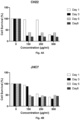
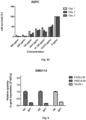
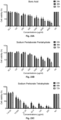
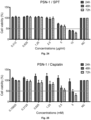
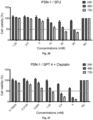
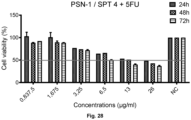
- the perborate salts were found to have significant toxicity to cancer cell lines, with minimal toxicity to healthy cell lines (see Figures 1-9 ).
- the perborate salts were found to be surprisingly effective at selectively killing cancer cells, preventing cancer cells from dividing and multiplying, moving and migrating to other tissues and organs, and preventing the attachment of cancer cells already present in the body to tissues and organs.
- reducing gene expression otherwise known as gene silencing, gene knockdown or gene suppression, will be readily understood by those in the art to mean any effect that renders a gene inactive, or less active.
- a gene that is suppressed two-fold means that said gene has half of its usual level of activity.
- Methods for measuring gene activity will be known to those skilled in the art.
- gene expression measurement may be achieved by quantifying levels of the gene product, which is often a protein (e.g. Western Blot, ELISA), or by measuring levels of mRNA or DNA (e.g. Northern Blot, Microarray).
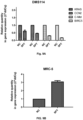
- the perborate salts increased the expression of survivin in healthy cells (see Figure 9B ).
- compositions of the present invention may include a pharmaceutically acceptable carrier, diluent or adjuvant to achieve a composition usable as a dosage form.
- the pharmaceutical composition may be formulated for administration orally, intravenously, intraperitoneally, rectally, intramuscularly, or subcutaneously.
- the pharmaceutical compositions are formulated for oral use.
- compositions according to the invention can be in different forms, in particular in a form chosen from the group comprising tablets, capsules, pills, syrups, suspensions, solutions, powders, granules, emulsions, microspheres and injectable solutions and solid lipid nanoparticles, in particular solid lipid nanoparticles.
- the pharmaceutical compositions of the present invention may be used alone or in combination with other biologically active ingredients.
- a pharmaceutical composition of the present invention, alone or in combination with other active ingredients, may be administered to a subject in a single dose or multiple doses over a period of time.
- the perborate salts may be used as a pre-treatment or a co-treatment of a cancer in a subject.
- the perborate salts may be formulated in a pharmaceutical composition in combination with a chemotherapy agent.
- the perborate salts may be administered in combination with a chemotherapy agent.
- the administration of the perborate salt with the chemotherapy agent is simultaneous.
- the administration of the perborate salt with the chemotherapy agent is sequential.
- an effective amount of a perborate salt or a pharmaceutical composition comprising a perborate salt includes a therapeutically effect amount or a prophylactically effective amount.
- a “therapeutically effective amount” refers to an amount effective, at dosages and for periods of time necessary, to achieve the desired therapeutic result, such as decreased cancer proliferation, increased life span or increased life expectancy.
- a therapeutically effective amount may vary according to factors such as the disease state, age, sex and weight of the subject, and the ability of the perborate salt to elicit a desired response in the subject. Dosage regimens may be adjusted to provide the optimum therapeutic response.
- a therapeutically effective amount is also one in which any toxic or detrimental effects of the formulation are outweighed by the therapeutically beneficial effects.
- a “prophylactically effective amount” refers to an amount effective, at dosages and for periods of time necessary, to achieve the desired prophylactic result, such as the prevention, or the prevention of the progression, of a cancer.
- a prophylactic dose is used in subjects prior to or at an earlier state of disease. Methods of determining reduction or elimination of cancer or tumor cells are well known in the art, and need not be repeated herein.
- dosage values may vary with the severity of the condition to be alleviated.
- specific dosage regimens may be adjusted over time according to the individual need and the professional judgment of the person administering or supervising the administration of the compositions.
- the amount of composition may vary according to factors such as the disease state, age, sex and weight of the subject. Dosage regimens may be adjusted to provide the optimum therapeutic response. For example, a single bolus may be administered, several divided doses may be administered over time or the dosage may be proportionally reduced or increased as indicated by the exigencies of the therapeutic situation. It may be advantageous to formulate compositions in dosage unit form for ease of administration and uniformity of dosage.
- the "effective amount" of perborate salt refers to a dosage of at least about 0.05 mg/kg/day.
- the dosage may be at least about 0.1 mg/kg/day.
- the dosage may be at least about 0.125 mg/kg/day.
- the dosage may be at least about 0.15 mg/kg/day.
- the dosage may be at least about 0.2 mg/kg/day.
- the dosage may be at least about 0.25 mg/kg/day.
- the dosage may be at least about 0.5 mg/kg/day.
- the dosage may be at least about 1 mg/kg/day.
- the dosage may be at least about 2 mg/kg/day.
- the dosage may be at least about 3 mg/kg/day.
- the dosage may be at least about 4 mg/kg/day.
- the dosage may be at least about 5 mg/kg/day.
- the dosage may be at least about 6 mg/kg/day.
- the dosage may be at least about 7 mg/kg/day.
- the dosage may be at least about 10 mg/kg/day.
- the dosage may be at least about 20 mg/kg/day.
- the dosage may be at least about 30 mg/kg/day.
- the dosage may be at least about 40 mg/kg/day.
- the dosage may be at least about 50 mg/kg/day.
- the dosage may be at least about 60 mg/kg/day.
- the dosage may be at least about 70 mg/kg/day.
- the dosage may be at least about 80 mg/kg/day.
- the dosage may be at least about 90 mg/kg/day.
- the dosage may be at least about 100 mg/kg/day.
- the dosage may be between about 0.05 mg/kg/day and about 15 mg/kg/day.
- the dosage may be between about 0.1 mg/kg/day and about 10 mg/kg/day.
- the dosage may be between about 0.125 mg/kg/day and about 8 mg/kg/day.
- the dosage may be between about 0.05 mg/kg/day and about 7 mg/kg/day.
- the dosage may be between about 0.05 mg/kg/day and about 5 mg/kg/day.
- the dosage may be between about 10 mg/kg/day and about 20 mg/kg/day.
- the dosage may be between about 10 mg/kg/day and about 50 mg/kg/day.
- the dosage may be between about 20 mg/kg/day and about 50 mg/kg/day.
- the dosage may be between about 20 mg/kg/day and about 70 mg/kg/day.
- the dosage may be between about 10 mg/kg/day and about 120 mg/kg/day.
- the dosage may be between about 50 mg/kg/day and about 120 mg/kg/day.
- the dosage may be between about 50 mg/kg/day and about 70 mg/kg/day.
- the dosage may be between about 70 mg/kg/day and about 120 mg/kg/day.
- the dosage may be up to about 0.25 mg/kg/day, up to about 0.5 mg/kg/day, up to about 1 mg/kg/day, up to about 2 mg/kg/day, up to about 4 mg/kg/day, up to about 5 mg/kg/day, up to about 6 mg/kg/day, up to about 7 mg/kg/day, up to about 8 mg/kg/day, up to about 10 mg/kg/day, or up to about 15 mg/kg/day.
- the dosage of sodium perborate tetrahydrate may be up to about 50 mg/kg/day.
- the dosage of sodium perborate tetrahydrate may be up to about 70 mg/kg/day.
- the dosage of sodium perborate tetrahydrate may be up to 115 mg/kg/day.
- perborate salts as described herein may be used in combination with other treatment methods.
- the perborate salts may be used as neoadjuvant (prior), adjunctive (during), and/or adjuvant (after) therapy in combination with other therapies known to one of ordinary skill in the art.
- the perborate salts may be administered in combination with a chemotherapy agent.
- a non-toxic dosage of the perborate salt is used in a combination treatment, for example, up to about 115 mg/kg/day of sodium perborate tetrahydrate, up to about 70 mg/kg/day or up to about 15 mg/kg/day.
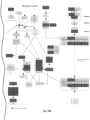
- This pathway controls the intracellular signal pathways that start with a stimulus that binds to the cell receptors. It is one of the pathways that control the destiny, movement and migration of the cell. A disorder in this pathway prevents the cell from continuing its life and prevents its division and migration. It has been found that perborate salts reduce the expression level of many genes in this pathway. Genes involved in the WNG signaling pathway whose expression was found to decrease two-fold and above following treatment with a perborate salt include: CAMK2G, CCND3, CTBP1, CTNNB1, GPC4, LRP6, MYC, PLAU, PRICKLE1, PRKCB, RHOA, ROR2, SFRP1, VANGL1, WNT5A, and WNT5B (see Figure 20A and 20B ).
- the term "about” refers to an approximately +/-10% variation from a given value. It is to be understood that such a variation is always included in any given value provided herein, whether or not it is specifically referred to.
- Annexin V Cell death pathways were analysed using the Annexin V method, performed by flow cytometry.
- Annexin V dye is used to detect cells entering the apoptosis death pathway (Sigma-Aldrich Cat No: 11858777001), while PI (Propidium Iodide) dye is used to detect cells entering the necrosis death pathway (Sigma-Aldrich Cat No: 11858777001).
- Cells were grown in complete RPMI media (completed with 10% Fetal Bovine Serum and 1% penicillin streptomycin amphotericin) in a humidified CO 2 incubator (80% humidity, 5% CO 2 and 37 °C). At 70-80% confluency, cells were harvested using Trypsin/EDTA solution. After 3 days of sodium perborate tetrahydrate treatment (15 ⁇ g/mL), the cells were harvested and divided into 4 equal tubes. The first tube did not contain any dye and was used as a negative control. Only PI dye was placed in the second tube and necrotic cells were detected. Annexin V dye was placed in the third tube and apoptotic cells were detected. In the fourth tube, two dyes were put together.
- Figure 1 shows that in the control, ⁇ 80% of DMS114 cells were alive after 3 days, with ⁇ 15% of cells in early apoptosis and ⁇ 5% of cells in late apoptosis, whereas in the cells treated with sodium perborate tetrahydrate, less than 5% of cells were alive after 3 days, with ⁇ 80% in early apoptosis and ⁇ 10% in late apoptosis.
- MRC5 cells were alive in the control as well as following treatment with sodium perborate tetrahydrate, with only a small percentage ( ⁇ 5%) of treated cells in necrosis.
- Sodium perborate tetrahydrate was shown to effectively kill small cell lung cancer cells (DMS114), while giving healthy cells (MRC5) approximately 5 times less damage than cancer cells.
- MTS reduction (MTS (3-(4,5-dimethylthiazol-2-yl)-5-(3-carboxymethoxyphenyl)-2-(4-sulfophenyl)-2H-tetrazolium) assay) was conducted to analyze the cytotoxic effect of sodium perborate tetrahydrate on lung, chordoma and pancreatic cells and normal cells.
- cell viability is determined via the activity of mitochondrial dehydrogenase enzyme, which reduces the tetrazolium dye MTS to its insoluble formazan (absorbance maximum of 490 nm in PBS).
- BxPC3 and PSN-1 cells were contacted with sodium perborate tetrahydrate at concentrations of 125 ⁇ g/mL, 62.5 ⁇ g/mL, 31.25 ⁇ g/mL, 15.625 ⁇ g/mL, 7.8125 ⁇ g/mL and 3.90615 ⁇ g/mL.
- DMS114 cells were contacted with sodium perborate tetrahydrate at concentrations of 250 ⁇ g/mL, 125 ⁇ g/mL, 62.5 ⁇ g/mL, 31.25 ⁇ g/mL, 15.625 ⁇ g/mL, 7.8125 ⁇ g/mL and 3.90615 ⁇ g/mL.
- ASPC and MRC5 cells were contacted with sodium perborate tetrahydrate at concentrations of 500 ⁇ g/mL, 250 ⁇ g/mL, 125 ⁇ g/mL, 62.5 ⁇ g/mL, 31.25 ⁇ g/mL, 15.625 ⁇ g/mL.
- CH22, JHC7, UM-Chor1, MUG-Chor1, UCH1 and NPH cells were contacted with sodium perborate tetrahydrate at concentrations of 500 ⁇ g/mL, 250 ⁇ g/mL and 125 ⁇ g/mL.
- the positive control comprised 20% Dimethyl Sulfoxide and the negative control comprised complete growth media.
- Seeding densities were as follows: DMS114: 20.000 cells/well; MRC5: 5.000 cells/well; CH22: 2.000 cells/well; JHC7, UM-Chor1, MUG-Chor1, UCH1 and NPH: 5.000 cells/well; PSN1: 10.000 cells/well; BxPC3 and ASPC: 7.500 cells/well.
- the effect of sodium perborate tetrahydrate on cell viability was measured as follows. The cell culture medium was discarded and 100 ⁇ l of MTS solution (10% glucose solution and 1% MTS-PMS solution in PBS) was added into each well. After 1 hour incubation in a humidified incubator, an absorbance reading was taken to determine mitochondrial dehydrogenase activity and cell survival was calculated relative to the negative control.
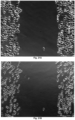
- the DMS114 and MRC5 cells from Example 2 were analyzed during the 3 day treatment period with sodium perborate tetrahydrate. Roughly 20 photos/hour were taken of the cells over the 72 hour (3 day) period. The resulting 1500 were merged to create a video which was used to observe the effect of sodium perborate on movement and division of DMS114 and MRC5 cells. The video analysis showed that the maximum effect on cell survival of DMS114 cells was achieved after 18 hours and that movement of close to 100% of DMS114 cells was stopped. The video analysis also showed that sodium perborate tetrahydrate had the effect of slowing cell division and movement of healthy cells to some extent, but that the effects diminished once the sodium perborate tetrahydrate moved away from the cellular environment.
- Figures 21A and 21B show DMS114 cells at the start and end of the 72 hour treatment period.
- Figures 22A and 22B show MRC5 cells at the start and end of the 72 hour treatment period.
- RNAs of the cells were isolated (Macherey-Nagel Cat No: 740955250) and cDNA synthesis was made from these RNAs (QIAGEN Cat No: 205313). Synthesized cDNAs were mixed with SYBR Green mixture (Biorad Cat No: 1725122) and required primers to a final volume of 10 ⁇ l and expression levels of genes were analyzed using a BIO-RAD TM PCR device. The results are shown in Figures 6-9 .
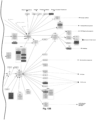
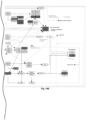
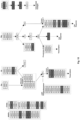
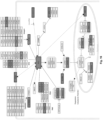
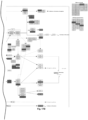
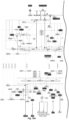
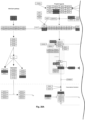
- Cells were treated with sodium perborate tetrahydrate for 3 days and changes in the levels of gene expression were determined by Microarray. Affected genes and related pathways are shown in Figures 10-20 . Genes where expression was reduced two-fold or more compared to the control are shown in grey shaded boxes on each pathway map. Genes where expression was reduced less than two-fold are shown in boxes with diagonal lines.
- Rats were treated orally with varying dosages of sodium perborate tetrahydrate ranging from 0.125 mg/kg/day to 8 mg/kg/day. After 32 days, the rats were sacrificed and their organs were examined under a microscope. The histopathology results showed no significant organ damage (see Tables 1 and 2 below).
- Table 1 Tissues submitted for histology and numbers of rats examined Group# 1 2 3 4 5 6 7 8 Treatment Control Sodium Perborate Tetrahydrate Sodium Perborate Tetrahydrate Sodium Perborate Tetrahydrate Sodium Perborate Tetrahydrate Sodium Perborate Tetrahydrate Sodium Perborate Tetrahydrate Sodium Perborate Tetrahydrate Treatment Dose 0 0.125 mg/kg/day 0.25 mg/kg/day 0.5 mg/kg/day 1 mg/kg/day 2 mg/kg/day 4 mg/kg/day 8 mg/kg/day Time of Sacrifice (in days) 32 32 32 32 32 32 32 32 32 32 32 32 32 32 32 32 32 32 32 32 32 32 32 32 32 32 32 32 32 32 32 32 32 32 32 32 32 32 32 32 32 32 32 32 32 32 32 32 32 32 32 32 32 32 32 32 32 32 32 32 32 32 32 32 32 32 32 32 32 32 32 32 32 32 32 32 32 32 32 32 32 32 32 32 32 32 32 32 32 32 32 32 32 32 32 32 32 32 32 32 32 32 32 32 32 32 32 32 32 32
- the cytoxic effect of boric acid, sodium pentaborate pentahydrate and sodium perborate tetrahydrate on small cell lung cancer cells was tested using the method described in Example 2 and the results are shown in Figures 23A-C .
- the EC50 half maximal effective concentration; dose that kills 50% of cells in the population is 1,000 ⁇ g/mL for boric acid, 1,250 ⁇ g/mL for sodium pentaborate pentahydrate and 15 ⁇ g/mL for sodium perborate tetrahydrate.
Landscapes
- Health & Medical Sciences (AREA)
- Chemical & Material Sciences (AREA)
- Medicinal Chemistry (AREA)
- Pharmacology & Pharmacy (AREA)
- Life Sciences & Earth Sciences (AREA)
- Animal Behavior & Ethology (AREA)
- General Health & Medical Sciences (AREA)
- Public Health (AREA)
- Veterinary Medicine (AREA)
- Organic Chemistry (AREA)
- Inorganic Chemistry (AREA)
- Epidemiology (AREA)
- Nuclear Medicine, Radiotherapy & Molecular Imaging (AREA)
- General Chemical & Material Sciences (AREA)
- Chemical Kinetics & Catalysis (AREA)
- Pharmaceuticals Containing Other Organic And Inorganic Compounds (AREA)
- Medicines That Contain Protein Lipid Enzymes And Other Medicines (AREA)
Claims (15)
- Perboratsalz zur Verwendung in einem Verfahren zur Behandlung eines Krebses in einem Subjekt, wobei das Verfahren die Verabreichung einer wirksamen Menge des Perboratsalzes an das Subjekt umfasst.
- Perboratsalz zur Verwendung nach Anspruch 1, wobei der Krebs ein Lungenkrebs, ein Bauchspeicheldrüsenkrebs, ein Chordom, ein Brustkrebs oder ein Adenokarzinom ist.
- Perboratsalz zur Verwendung nach Anspruch 1, wobei der Krebs kleinzelliger Lungenkrebs ist.
- Perboratsalz zur Verwendung nach einem der Ansprüche 1 bis 3, wobei das Perboratsalz ein Natriumperboratsalz, ein Kaliumperboratsalz oder ein Lithiumperboratsalz ist.
- Perboratsalz zur Verwendung nach Anspruch 4, wobei das Perboratsalz NaBO3·nH2O (n = 1 bis 6) ist.
- Perboratsalz zur Verwendung nach einem der Ansprüche 1 bis 5, wobei das Perboratsalz in einer Dosis von mindestens etwa 0,05 mg/kg/Tag verabreicht wird.
- Perboratsalz zur Verwendung nach einem der Ansprüche 1 bis 6, wobei das Verfahren weiter die Verabreichung eines Chemotherapeutikums umfasst.
- Perboratsalz zur Verwendung nach Anspruch 7, wobei das Chemotherapeutikum eines oder mehrere umfasst von Altretamin; Bendamustin; Busulfan; Carboplatin; Carmustin; Chlorambucil; Cisplatin; Cyclophosphamid; Dacarbazin; Ifosfamid; Lomustin; Mechlorethamin; Chlormethin; Melphalan; Oxaliplatin; Temozolomid; Thiotepa; Trabectedin; Carmustin; Lomustin; Streptozocin; Azacitidin; 5-Fluorouracil (5-FU); 6-Mercaptopurin (6-MP); Capecitabin (Xeloda); Cladribin; Clofarabin; Cytarabin (Ara-C); Decitabin; Floxuridin; Fludarabin; Gemcitabin (Gemzar); Hydroxyharnstoff; Methotrexat; Nelarabin; Pemetrexed (Alimta); Pentostatin; Pralatrexat; Thioguanin; Trifluridin/Tipiracil Kombination; Daunorubicin; Doxorubicin; Epirubicin; Idarubicin; Valrubicin; Bleomycin; Dactinomycin; Mitomycin-C; Mitoxantron; Irinotecan; Topotecan; Etoposid (VP-16); Mitoxantron; Teniposid; Cabazitaxel; Docetaxel; Nab-Paclitaxel; Paclitaxel; Vinblastin; Vincristin; Vinorelbin; Prednison; Methylprednisolon; Dexamethason; Arsentrioxid; Asparaginase; Eribulin; Hydroxyharnstoff; Ixabepilon; Mitotan; Omacetaxin; Pegaspargase; Procarbazin; Romidepsin; Vorinostat; oder Raltitrexed.
- Perboratsalz zur Verwendung nach einem der Ansprüche 1 bis 8, wobei das Perboratsalz die Genexpression eines oder mehrerer Gene in einer Krebszelle oder einer Tumorzelle in dem Subjekt verringert, wobei das eine oder die mehreren Gene ausgewählt sind aus der Gruppe bestehend aus PXN, VCL, TLN1, TNS2, RHOA, CDC42, KRAS, CCN2, C-Met und BIRC5.
- Perboratsalz zur Verwendung nach einem der Ansprüche 1 bis 8, wobei das Perboratsalz die Genexpression eines oder mehrerer Gene in einer Krebszelle oder einer Tumorzelle in dem Subjekt verringert, wobei das eine oder die mehreren Gene an einem Zellsignalweg beteiligt sind, wobei es sich bei dem Zellsignalweg um einen Zellzyklusweg, einen DNA-Replikationsweg, einen EGF/EGFR-Signalweg, einen Focal Adhesion-PI3K-AKT-Weg, einen fokalen Adhäsionsweg, einen G-Protein-Signalweg, einen Hippo-Merlin-Signaldysregulationsweg, einen MAPK-Signalweg, einen Aktin-Zytoskelett-Weg, einen TGF-Beta-Signalweg und einen WNT-Signalweg handelt.
- Pharmazeutische Zusammensetzung, umfassend eine wirksame Menge eines Perboratsalzes zur Verwendung nach einem der Ansprüche 1 bis 6, 9 oder 10 und einen pharmazeutisch annehmbaren Träger, ein pharmazeutisch annehmbares Verdünnungsmittel oder einen pharmazeutisch annehmbaren Hilfsstoff.
- Pharmazeutische Zusammensetzung zur Verwendung nach Anspruch 11, wobei die pharmazeutische Zusammensetzung weiter ein Chemotherapeutikum umfasst.
- Pharmazeutische Zusammensetzung zur Verwendung nach Anspruch 12, wobei das Chemotherapeutikum eines oder mehrere umfasst von Altretamin; Bendamustin; Busulfan; Carboplatin; Carmustin; Chlorambucil; Cisplatin; Cyclophosphamid; Dacarbazin; Ifosfamid; Lomustin; Mechlorethamin; Chlormethin; Melphalan; Oxaliplatin; Temozolomid; Thiotepa; Trabectedin; Carmustin; Lomustin; Streptozocin; Azacitidin; 5-Fluorouracil (5-FU); 6-Mercaptopurin (6-MP); Capecitabin (Xeloda); Cladribin; Clofarabin; Cytarabin (Ara-C); Decitabin; Floxuridin; Fludarabin; Gemcitabin (Gemzar); Hydroxyharnstoff; Methotrexat; Nelarabin; Pemetrexed (Alimta); Pentostatin; Pralatrexat; Thioguanin; Trifluridin/Tipiracil Kombination; Daunorubicin; Doxorubicin; Epirubicin; Idarubicin; Valrubicin; Bleomycin; Dactinomycin; Mitomycin-C; Mitoxantron; Irinotecan; Topotecan; Etoposid (VP-16); Mitoxantron; Teniposid; Cabazitaxel; Docetaxel; Nab-Paclitaxel; Paclitaxel; Vinblastin; Vincristin; Vinorelbin; Prednison; Methylprednisolon; Dexamethason; Arsentrioxid; Asparaginase; Eribulin; Hydroxyharnstoff; Ixabepilon; Mitotan; Omacetaxin; Pegaspargase; Procarbazin; Romidepsin; Vorinostat; oder Raltitrexed.
- Verwendung eines Perboratsalzes in einem in vitro-Verfahren zur Verringerung der Genexpression eines oder mehrerer Gene in einer Krebszelle oder einer Tumorzelle, wobei das Verfahren das Inkontaktbringen der Zelle mit einer wirksamen Menge des Perboratsalzes umfasst, wobei das eine oder die mehreren Gene ausgewählt sind aus der Gruppe bestehend aus PXN, VCL, TLN1, TNS2, RHOA, CDC42, KRAS, CCN2, C-Met und BIRC5.
- Verwendung eines Perboratsalzes in einem in vitro-Verfahren zur Verringerung der Genexpression eines oder mehrerer Gene in einer Krebszelle oder einer Tumorzelle, wobei das Verfahren das Inkontaktbringen der Zelle mit einer wirksamen Menge des Perboratsalzes umfasst, wobei das eine oder die mehreren Gene an einem Zellsignalweg beteiligt sind, wobei es sich bei dem Zellsignalweg um einen Zellzyklusweg, einen DNA-Replikationsweg, einen EGF/EGFR-Signalweg, einen Focal Adhesion-PI3K-AKT-Weg, einen fokalen Adhäsionsweg, einen G-Protein-Signalweg, einen Hippo-Merlin-Signaldysregulationsweg, einen MAPK-Signalweg, einen Aktin-Zytoskelett-Weg, einen TGF-Beta-Signalweg und einen WNT-Signalweg handelt.
Applications Claiming Priority (2)
| Application Number | Priority Date | Filing Date | Title |
|---|---|---|---|
| PCT/CA2020/050950 WO2022006653A1 (en) | 2020-07-09 | 2020-07-09 | Anti-cancer activity of perborate salts |
| PCT/CA2021/050932 WO2022006673A1 (en) | 2020-07-09 | 2021-07-07 | Anti-cancer activity of perborate salts |
Publications (4)
| Publication Number | Publication Date |
|---|---|
| EP4178588A1 EP4178588A1 (de) | 2023-05-17 |
| EP4178588A4 EP4178588A4 (de) | 2023-12-20 |
| EP4178588B1 true EP4178588B1 (de) | 2025-05-07 |
| EP4178588C0 EP4178588C0 (de) | 2025-05-07 |
Family
ID=79553361
Family Applications (1)
| Application Number | Title | Priority Date | Filing Date |
|---|---|---|---|
| EP21837202.7A Active EP4178588B1 (de) | 2020-07-09 | 2021-07-07 | Antikrebswirkung von perboratsalzen |
Country Status (14)
| Country | Link |
|---|---|
| US (1) | US20230263825A1 (de) |
| EP (1) | EP4178588B1 (de) |
| JP (1) | JP2023538481A (de) |
| KR (1) | KR20230038188A (de) |
| CN (1) | CN115916221A (de) |
| AR (1) | AR122920A1 (de) |
| AU (1) | AU2021304691A1 (de) |
| CA (1) | CA3181317A1 (de) |
| ES (1) | ES3031306T3 (de) |
| IL (1) | IL299673A (de) |
| MX (1) | MX2023000313A (de) |
| PH (1) | PH12023550024A1 (de) |
| PL (1) | PL4178588T3 (de) |
| WO (2) | WO2022006653A1 (de) |
Families Citing this family (1)
| Publication number | Priority date | Publication date | Assignee | Title |
|---|---|---|---|---|
| TR2022005058A2 (tr) * | 2022-03-31 | 2023-10-23 | Univ Yeditepe | Hepatoselüler karsi̇nom tedavi̇si̇nde kullanilmak üzere sodyum pentaborat, kurkumi̇n ve pi̇peri̇n i̇çeren bi̇r anti̇-kanser formülasyon |
Family Cites Families (7)
| Publication number | Priority date | Publication date | Assignee | Title |
|---|---|---|---|---|
| GB2215205A (en) * | 1988-02-26 | 1989-09-20 | Cyril Joseph France | Skin treatment formulations comprising boric acid and/or perborate salt |
| WO2001096356A1 (en) * | 2000-06-13 | 2001-12-20 | Japan Science And Technology Corporation | Antisense molecules and method of controlling expression of gene function by using the same |
| WO2006102439A2 (en) * | 2005-03-23 | 2006-09-28 | Florida Atlantic University | Treatment or prevention of cancer and precancerous disorders |
| US20070048389A1 (en) * | 2005-08-26 | 2007-03-01 | Fu-Pao Tsao | Stabilized and preserved ketotifen ophthalmic compositions |
| US20080008769A1 (en) * | 2006-07-05 | 2008-01-10 | Gregg Siegel | Treatment of urinary tract infections |
| US20090169591A1 (en) * | 2007-12-28 | 2009-07-02 | Boston Scientific Scimed, Inc. | Medical articles for the treatment of tumors |
| BR112013032659B1 (pt) * | 2011-07-06 | 2021-04-06 | Histocell S.L. | Método para o tratamento de células-tronco mesenquimais, que compreende a obtenção e o isolamento das células-tronco mesenquimais e a cultura das células em um meio de tratamento; e uso das células |
-
2020
- 2020-07-09 WO PCT/CA2020/050950 patent/WO2022006653A1/en not_active Ceased
-
2021
- 2021-07-07 MX MX2023000313A patent/MX2023000313A/es unknown
- 2021-07-07 US US18/004,601 patent/US20230263825A1/en active Pending
- 2021-07-07 IL IL299673A patent/IL299673A/en unknown
- 2021-07-07 PH PH1/2023/550024A patent/PH12023550024A1/en unknown
- 2021-07-07 WO PCT/CA2021/050932 patent/WO2022006673A1/en not_active Ceased
- 2021-07-07 JP JP2023501367A patent/JP2023538481A/ja active Pending
- 2021-07-07 EP EP21837202.7A patent/EP4178588B1/de active Active
- 2021-07-07 CA CA3181317A patent/CA3181317A1/en active Pending
- 2021-07-07 ES ES21837202T patent/ES3031306T3/es active Active
- 2021-07-07 AU AU2021304691A patent/AU2021304691A1/en active Pending
- 2021-07-07 CN CN202180049029.7A patent/CN115916221A/zh active Pending
- 2021-07-07 PL PL21837202.7T patent/PL4178588T3/pl unknown
- 2021-07-07 KR KR1020237000709A patent/KR20230038188A/ko active Pending
- 2021-07-08 AR ARP210101929A patent/AR122920A1/es unknown
Also Published As
| Publication number | Publication date |
|---|---|
| CN115916221A (zh) | 2023-04-04 |
| AR122920A1 (es) | 2022-10-12 |
| EP4178588A4 (de) | 2023-12-20 |
| PH12023550024A1 (en) | 2024-03-11 |
| KR20230038188A (ko) | 2023-03-17 |
| MX2023000313A (es) | 2023-05-17 |
| PL4178588T3 (pl) | 2025-08-18 |
| IL299673A (en) | 2023-03-01 |
| WO2022006673A1 (en) | 2022-01-13 |
| AU2021304691A1 (en) | 2023-02-02 |
| EP4178588C0 (de) | 2025-05-07 |
| ES3031306T3 (en) | 2025-07-07 |
| JP2023538481A (ja) | 2023-09-08 |
| US20230263825A1 (en) | 2023-08-24 |
| CA3181317A1 (en) | 2022-01-13 |
| EP4178588A1 (de) | 2023-05-17 |
| WO2022006653A1 (en) | 2022-01-13 |
Similar Documents
| Publication | Publication Date | Title |
|---|---|---|
| EP2154971B1 (de) | Synergistische pharmazeutische kombination für die behandlung von krebs | |
| EP3019166B1 (de) | Pharmazeutische zusammensetzungen zur behandlung von melanomen | |
| CA2789365A1 (en) | Methods for treating non-small cell lung cancer using 5-azacytidine | |
| JP5890043B2 (ja) | 抗癌活性を有する2−デオキシ単糖の新規なアセテート | |
| CN118045081B (zh) | 司替戊醇在制备抗肿瘤药物中的应用 | |
| EP4178588B1 (de) | Antikrebswirkung von perboratsalzen | |
| Feng et al. | Triptolide suppresses pancreatic cancer cell proliferation by inhibiting hedgehog signaling pathway activity | |
| EP1796688B1 (de) | Pankreaskrebsbehandlung mit na+/k+-atpase-hemmern | |
| KR102011105B1 (ko) | 고시폴 및 펜포르민을 유효성분으로 포함하는 췌장암 예방 및 치료용 약학적 조성물 | |
| EA050108B1 (ru) | Противораковая активность перборатных солей | |
| KR20140035974A (ko) | 종양 질환 치료를 위한 약제 조성물 | |
| US10441564B2 (en) | Fructose analogs and their combinations as anti-cancer agents | |
| RU2415670C2 (ru) | Усиливающий агент для радиационной терапии, включающий производное пиридина в качестве активного ингредиента | |
| CN119896671B (zh) | 一种化合物组合在制备治疗乳腺癌药物中的应用 | |
| JP7414230B2 (ja) | 抗血液悪性腫瘍薬 | |
| EP2517707A1 (de) | Antitumormittel oder postoperatives adjuvantes chemotherapeutikum zur behandlung von leberzellenkarzinom | |
| Korsch | Investigation of Alternative Treatment Options for Pancreatic Cancer | |
| Heydarnia et al. | The effects of metformin and PCL-sorafenib nanoparticle co-treatment on MCF-7 cell culture model of breast cancer | |
| Mahmood et al. | Effects of Dpyridamole on Histopathology of Salivary Glands in Rabbits | |
| KR20070020270A (ko) | 방사선치료 증감제 | |
| Al-Ali et al. | Inducing Selective Starvation of Cancer Cells through Synergistic Inhibition of glycolysis using Mannoheptulose and 2-Deoxy-D-Glucose | |
| CN107921134B (zh) | 肿瘤基因甲基化调节剂的新用途及抗肿瘤药物 | |
| SULEIMAN | The role of P90 ribosomal S6 kinase and autophagy in sunitinib and ponatinib-induced cardiotoxicity | |
| Rosso et al. | The role of lonidamine in the treatment of breast cancer patients | |
| CN113633631A (zh) | 米铂脂质体在抗耐药性肿瘤的应用 |
Legal Events
| Date | Code | Title | Description |
|---|---|---|---|
| STAA | Information on the status of an ep patent application or granted ep patent |
Free format text: STATUS: THE INTERNATIONAL PUBLICATION HAS BEEN MADE |
|
| PUAI | Public reference made under article 153(3) epc to a published international application that has entered the european phase |
Free format text: ORIGINAL CODE: 0009012 |
|
| STAA | Information on the status of an ep patent application or granted ep patent |
Free format text: STATUS: REQUEST FOR EXAMINATION WAS MADE |
|
| 17P | Request for examination filed |
Effective date: 20230117 |
|
| AK | Designated contracting states |
Kind code of ref document: A1 Designated state(s): AL AT BE BG CH CY CZ DE DK EE ES FI FR GB GR HR HU IE IS IT LI LT LU LV MC MK MT NL NO PL PT RO RS SE SI SK SM TR |
|
| DAV | Request for validation of the european patent (deleted) | ||
| DAX | Request for extension of the european patent (deleted) | ||
| A4 | Supplementary search report drawn up and despatched |
Effective date: 20231121 |
|
| RIC1 | Information provided on ipc code assigned before grant |
Ipc: C12N 15/63 20060101ALI20231115BHEP Ipc: C01B 15/12 20060101ALI20231115BHEP Ipc: A61P 35/00 20060101ALI20231115BHEP Ipc: A61K 33/40 20060101AFI20231115BHEP |
|
| GRAP | Despatch of communication of intention to grant a patent |
Free format text: ORIGINAL CODE: EPIDOSNIGR1 |
|
| STAA | Information on the status of an ep patent application or granted ep patent |
Free format text: STATUS: GRANT OF PATENT IS INTENDED |
|
| RIC1 | Information provided on ipc code assigned before grant |
Ipc: C12N 15/63 20060101ALI20241115BHEP Ipc: C01B 15/12 20060101ALI20241115BHEP Ipc: A61P 35/00 20060101ALI20241115BHEP Ipc: A61K 33/22 20060101ALI20241115BHEP Ipc: A61K 33/40 20060101AFI20241115BHEP |
|
| INTG | Intention to grant announced |
Effective date: 20241128 |
|
| GRAS | Grant fee paid |
Free format text: ORIGINAL CODE: EPIDOSNIGR3 |
|
| GRAA | (expected) grant |
Free format text: ORIGINAL CODE: 0009210 |
|
| STAA | Information on the status of an ep patent application or granted ep patent |
Free format text: STATUS: THE PATENT HAS BEEN GRANTED |
|
| AK | Designated contracting states |
Kind code of ref document: B1 Designated state(s): AL AT BE BG CH CY CZ DE DK EE ES FI FR GB GR HR HU IE IS IT LI LT LU LV MC MK MT NL NO PL PT RO RS SE SI SK SM TR |
|
| REG | Reference to a national code |
Ref country code: GB Ref legal event code: FG4D |
|
| REG | Reference to a national code |
Ref country code: CH Ref legal event code: EP |
|
| REG | Reference to a national code |
Ref country code: IE Ref legal event code: FG4D |
|
| U01 | Request for unitary effect filed |
Effective date: 20250513 |
|
| U07 | Unitary effect registered |
Designated state(s): AT BE BG DE DK EE FI FR IT LT LU LV MT NL PT RO SE SI Effective date: 20250519 |
|
| REG | Reference to a national code |
Ref country code: ES Ref legal event code: FG2A Ref document number: 3031306 Country of ref document: ES Kind code of ref document: T3 Effective date: 20250707 |
|
| PGFP | Annual fee paid to national office [announced via postgrant information from national office to epo] |
Ref country code: GB Payment date: 20250515 Year of fee payment: 5 |
|
| U20 | Renewal fee for the european patent with unitary effect paid |
Year of fee payment: 5 Effective date: 20250606 |
|
| PGFP | Annual fee paid to national office [announced via postgrant information from national office to epo] |
Ref country code: ES Payment date: 20250807 Year of fee payment: 5 |
|
| PG25 | Lapsed in a contracting state [announced via postgrant information from national office to epo] |
Ref country code: NO Free format text: LAPSE BECAUSE OF FAILURE TO SUBMIT A TRANSLATION OF THE DESCRIPTION OR TO PAY THE FEE WITHIN THE PRESCRIBED TIME-LIMIT Effective date: 20250807 Ref country code: GR Free format text: LAPSE BECAUSE OF FAILURE TO SUBMIT A TRANSLATION OF THE DESCRIPTION OR TO PAY THE FEE WITHIN THE PRESCRIBED TIME-LIMIT Effective date: 20250808 |
|
| PGFP | Annual fee paid to national office [announced via postgrant information from national office to epo] |
Ref country code: PL Payment date: 20250626 Year of fee payment: 5 Ref country code: TR Payment date: 20250708 Year of fee payment: 5 |
|
| PG25 | Lapsed in a contracting state [announced via postgrant information from national office to epo] |
Ref country code: HR Free format text: LAPSE BECAUSE OF FAILURE TO SUBMIT A TRANSLATION OF THE DESCRIPTION OR TO PAY THE FEE WITHIN THE PRESCRIBED TIME-LIMIT Effective date: 20250507 |
|
| PG25 | Lapsed in a contracting state [announced via postgrant information from national office to epo] |
Ref country code: RS Free format text: LAPSE BECAUSE OF FAILURE TO SUBMIT A TRANSLATION OF THE DESCRIPTION OR TO PAY THE FEE WITHIN THE PRESCRIBED TIME-LIMIT Effective date: 20250807 |
|
| PG25 | Lapsed in a contracting state [announced via postgrant information from national office to epo] |
Ref country code: IS Free format text: LAPSE BECAUSE OF FAILURE TO SUBMIT A TRANSLATION OF THE DESCRIPTION OR TO PAY THE FEE WITHIN THE PRESCRIBED TIME-LIMIT Effective date: 20250907 |
|
| PG25 | Lapsed in a contracting state [announced via postgrant information from national office to epo] |
Ref country code: SM Free format text: LAPSE BECAUSE OF FAILURE TO SUBMIT A TRANSLATION OF THE DESCRIPTION OR TO PAY THE FEE WITHIN THE PRESCRIBED TIME-LIMIT Effective date: 20250507 |
|
| PG25 | Lapsed in a contracting state [announced via postgrant information from national office to epo] |
Ref country code: CZ Free format text: LAPSE BECAUSE OF FAILURE TO SUBMIT A TRANSLATION OF THE DESCRIPTION OR TO PAY THE FEE WITHIN THE PRESCRIBED TIME-LIMIT Effective date: 20250507 |
|
| PG25 | Lapsed in a contracting state [announced via postgrant information from national office to epo] |
Ref country code: SK Free format text: LAPSE BECAUSE OF FAILURE TO SUBMIT A TRANSLATION OF THE DESCRIPTION OR TO PAY THE FEE WITHIN THE PRESCRIBED TIME-LIMIT Effective date: 20250507 |
|
| REG | Reference to a national code |
Ref country code: CH Ref legal event code: H13 Free format text: ST27 STATUS EVENT CODE: U-0-0-H10-H13 (AS PROVIDED BY THE NATIONAL OFFICE) Effective date: 20260224 |
|
| PLBE | No opposition filed within time limit |
Free format text: ORIGINAL CODE: 0009261 |
|
| STAA | Information on the status of an ep patent application or granted ep patent |
Free format text: STATUS: NO OPPOSITION FILED WITHIN TIME LIMIT |
|
| REG | Reference to a national code |
Ref country code: CH Ref legal event code: L10 Free format text: ST27 STATUS EVENT CODE: U-0-0-L10-L00 (AS PROVIDED BY THE NATIONAL OFFICE) Effective date: 20260318 |