EP4178290B1 - Verfahren und vorrichtung zur meldung von sidelink-hilfsinformationen und elektronische vorrichtung - Google Patents
Verfahren und vorrichtung zur meldung von sidelink-hilfsinformationen und elektronische vorrichtung Download PDFInfo
- Publication number
- EP4178290B1 EP4178290B1 EP21832553.8A EP21832553A EP4178290B1 EP 4178290 B1 EP4178290 B1 EP 4178290B1 EP 21832553 A EP21832553 A EP 21832553A EP 4178290 B1 EP4178290 B1 EP 4178290B1
- Authority
- EP
- European Patent Office
- Prior art keywords
- terminal
- sidelink
- resource
- channel
- assistance information
- Prior art date
- Legal status (The legal status is an assumption and is not a legal conclusion. Google has not performed a legal analysis and makes no representation as to the accuracy of the status listed.)
- Active
Links
Images
Classifications
-
- H—ELECTRICITY
- H04—ELECTRIC COMMUNICATION TECHNIQUE
- H04L—TRANSMISSION OF DIGITAL INFORMATION, e.g. TELEGRAPHIC COMMUNICATION
- H04L5/00—Arrangements affording multiple use of the transmission path
- H04L5/0091—Signalling for the administration of the divided path, e.g. signalling of configuration information
- H04L5/0094—Indication of how sub-channels of the path are allocated
-
- H—ELECTRICITY
- H04—ELECTRIC COMMUNICATION TECHNIQUE
- H04W—WIRELESS COMMUNICATION NETWORKS
- H04W72/00—Local resource management
- H04W72/40—Resource management for direct mode communication, e.g. D2D or sidelink
-
- H—ELECTRICITY
- H04—ELECTRIC COMMUNICATION TECHNIQUE
- H04B—TRANSMISSION
- H04B17/00—Monitoring; Testing
- H04B17/30—Monitoring; Testing of propagation channels
- H04B17/309—Measuring or estimating channel quality parameters
- H04B17/318—Received signal strength
- H04B17/328—Reference signal received power [RSRP]; Reference signal received quality [RSRQ]
-
- H—ELECTRICITY
- H04—ELECTRIC COMMUNICATION TECHNIQUE
- H04B—TRANSMISSION
- H04B17/00—Monitoring; Testing
- H04B17/30—Monitoring; Testing of propagation channels
- H04B17/382—Monitoring; Testing of propagation channels for resource allocation, admission control or handover
-
- H—ELECTRICITY
- H04—ELECTRIC COMMUNICATION TECHNIQUE
- H04W—WIRELESS COMMUNICATION NETWORKS
- H04W72/00—Local resource management
- H04W72/20—Control channels or signalling for resource management
- H04W72/25—Control channels or signalling for resource management between terminals via a wireless link, e.g. sidelink
Definitions
- This application relates to the field of communications technologies, and in particular, to a method for notifying sidelink assistance information, an electronic device and a readable storage medium.
- a receiving terminal may suggest some assistance information to a transmitting terminal, to assist the transmitting terminal in resource selection and/or adjustment of a transmission parameter of the transmitting terminal.
- how the receiving terminal sends the assistance information to the transmitting terminal is not stipulated in the related art.
- Document CN 110972276 A discloses that the event criteria in the measurement configuration information sent by the second device of the direct link includes the above the V1 event to V7 event.
- Document R1-1812491 discloses that the sensing and resource selection procedures itself may utilize various types of input information to optimize sidelink performance including location information, radio-layer measurements, sidelink transmissions from other UEs, or sidelink assistance information provided by UEs or gNB.
- Document EP 4132160 A1 discloses that before transmitting the assistance information to the at least one second terminal device if the preset trigger condition is met, the first terminal device may autonomously determine whether the preset trigger condition is met.
- Embodiments of this application provide a method and an electronic device for notifying sidelink assistance information, and a readable storage medium, which can improve reliability of sidelink transmission.
- an embodiment of this application provides a method for notifying sidelink assistance information, where the method is applied to a first terminal, which is defined in claim 1.
- an embodiment of this application further provides an electronic device, which is defined in claim 14.
- an embodiment of this application provides a readable storage medium, which is defined in claim 15.
- LTE Long Term Evolution
- LTE-Advanced LTE-Advanced
- LTE-A Long Term Evolution-Advanced
- CDMA code division multiple access
- TDMA time division multiple access
- FDMA frequency division multiple access
- OFDMA Orthogonal Frequency Division Multiple Access
- SC-FDMA single-carrier Frequency-Division Multiple Access
- SC-FDMA single-carrier Frequency-Division Multiple Access
- the CDMA system can implement radio technologies such as CDMA2000 and universal terrestrial radio access (Universal Terrestrial Radio Access, UTRA).
- the UTRA includes wideband CDMA (Wideband Code Division Multiple Access, WCDMA) and other CDMA variants.
- a TDMA system may implement a radio technology such as the Global System for Mobile Communication (Global System for Mobile Communication, GSM).
- the OFDMA system can implement radio technologies such as ultra-mobile broadband (Ultra Mobile Broadband, UMB), evolved-UTRA (Evolution-UTRA, E-UTRA), IEEE 802.11 (Wi-Fi), IEEE 802.16 (WiMAX), IEEE 802.20, and Flash-OFDM.
- the UTRA and E-UTRA are parts of a universal mobile telecommunications system (Universal Mobile Telecommunications System, UMTS).
- the LTE and more advanced LTE (for example, LTE-A) are new UMTS versions using E-UTRA.
- the UTRA, E-UTRA, UMTS, LTE, LTE-A, and GSM are described in documents from an organization named "3rd Generation Partnership Project” (3rd Generation Partnership Project, 3GPP).
- the CDMA2000 and UMB are described in the documents of the organization named the "3rd Generation Partnership Project 2" (3GPP2).
- the technologies described in this specification may be used in the systems and radio technologies mentioned above, and may also be used in another system and radio technology.
- an NR system is described in the following description for illustrative purposes, and an NR terminology is used in most of the following description, although these technologies can also be applied to applications other than the NR system application.
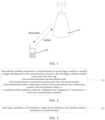
- FIG. 1 is a block diagram of a wireless communications system to which embodiments of this application can be applied.
- the wireless communications system includes a terminal 11 and a network side device 12.
- the terminal 11 may also be referred to as a terminal device or user equipment (User Equipment, UE).
- the terminal 11 may be a terminal-side device such as a mobile phone, a tablet personal computer (Tablet Personal Computer), a laptop computer (Laptop Computer), a personal digital assistant (Personal Digital Assistant, PDA), a mobile Internet device (Mobile Internet Device, MID), a wearable device (Wearable Device), or an in-vehicle device.
- a specific type of the terminal 11 is not limited in the embodiments of this application.
- the network side device 12 may be a base station or a core network, where the foregoing base station may be a base station of a 5G or later release (for example: a gNB or a 5G NR NB), or base stations (for example: an eNB, a WLAN access point, or another access point) in other communications systems, or a location server (such as an E-SMLC or LMF (Location Manager Function)).
- a base station of a 5G or later release for example: a gNB or a 5G NR NB
- base stations for example: an eNB, a WLAN access point, or another access point
- a location server such as an E-SMLC or LMF (Location Manager Function)
- the base station may be referred to as a NodeB, an evolved NodeB, an access point, a base transceiver station (Base Transceiver Station, BTS), a radio base station, a radio transceiver, a basic service set (Basic Service Set, BSS), an extended service set (Extended Service Set, ESS), a NodeB, an evolved NodeB (eNB), a home NodeB, a home evolved NodeB, a WLAN access point, a Wi-Fi node, or another proper term in the art.
- BTS Base Transceiver Station
- BTS Base Transceiver Station
- BSS Basic Service Set
- ESS Extended Service Set
- eNB evolved NodeB
- the base station is not limited to a specified technical term. It should be noted that, in the embodiments of this application, only a base station in an NR system is used as an example, but a specific type of the base station and a specific communications system are not limited in the embodiments of this application.
- NR new radio
- sidelink sidelink
- SL new radio
- base station scheduling mode 1
- UE user equipment
- TX transmitting terminal
- the UE selects an available transmission resource from a (pre-) configured resource pool, and before resource selection, the UE performs channel monitoring, selects a resource set with less interference according to a result of the channel monitoring, and then randomly selects a resource for transmission from the resource set.
- a specific working manner in mode 2 is as follows. 1) After the resource selection is triggered, the TX UE first determines a resource selection window, a lower boundary of the resource selection window is at a T1 time after the resource selection is triggered, and an upper boundary of the resource selection window is at a T2 time after the resource selection is triggered, where T2 is a value selected by the UE in a packet delay budget (packet delay budget, PDB) transmitted in a transport block (Transport Block, TB) of the UE, and T2 is not earlier than T1.
- PDB packet delay budget
- Transport Block Transport Block
- the UE Before resource selection, the UE needs to determine a candidate resource set (candidate resource set) for resource selection, and compare a reference signal received power (Reference Signal Received Power, RSRP) measured on a resource in the resource selection window with a corresponding RSRP threshold (threshold), and if the RSRP is greater than the RSRP threshold, the resource will be excluded and cannot be included in the candidate resource set. After resource exclusion, remaining resources in the resource selection window form the candidate resource set. Resources in the candidate resource set account for at least 20% of resources in the resource selection window.
- RSRP Reference Signal Received Power
- the RSRP threshold needs to be increased according to a step-by-step value (3dB), and then the resource exclusion is performed until no less than 20% of the resources can be selected. 3)
- the UE randomly selects a transmission resource in the candidate resource set.
- the UE can reserve a transmission resource for a next transmission in this transmission.
- Embodiments of this application provide a method and an apparatus for notifying sidelink assistance information, and an electronic device, which can improve reliability of sidelink transmission.
- An embodiment of this application provides a method for notifying sidelink assistance information, applied to a first terminal.
- the method includes: Step 101: Send the sidelink assistance information to a second terminal if a preset trigger condition is satisfied or trigger signaling sent by the second terminal is received, where the trigger condition includes at least one of the following:
- the first terminal after the first terminal receives the trigger signaling sent by the second terminal or the preset trigger condition is satisfied, the first terminal sends the sidelink assistance information to the second terminal.
- the first terminal can send the sidelink assistance information to the second terminal, to assist the second terminal in resource selection and/or adjustment of a transmission parameter, thereby improving reliability of sidelink transmission.
- the first terminal may be a receiving terminal and the second terminal may be a transmitting terminal.
- the first terminal may send the sidelink assistance information to the second terminal after determining that the demodulation fails.
- the first terminal sends the sidelink assistance information to the second terminal at a preset time position after a time position at which the preset trigger condition is satisfied.
- Maximum time duration between the preset time position and the time position at which the preset trigger condition is satisfied is x and/or minimum time duration therebetween is y, where x and y are values specified in a protocol, or configured or pre-configured by the control node, and units of x and y may be milliseconds, time slots, sub-time slots, or the like.
- the first terminal needs to feed back the sidelink assistance information within a time limit x after a relative time position that a PSCCH and/or PSSCH with the demodulation failure is located, and the time limit may be a time range, an upper delay limit, or a lower delay limit.
- that the first terminal determines that demodulation fails includes at least one of the following:
- the first terminal may send the sidelink assistance information to the second terminal after determining that demodulation fails for n times, where n is a positive integer, and n is a value specified in a protocol or configured or pre-configured by the control node.
- the first terminal may feed back the sidelink assistance information to the second terminal after the first terminal detects a transmission resource (such as the PSCCH and/or PSSCH resource) reserved by the second terminal. Specifically, if the first terminal determines that the second terminal reserves a resource for transmitting information to the first terminal, the first terminal feeds back the sidelink assistance information to the second terminal. In addition, the first terminal needs to feed back the sidelink assistance information within x time limit before or after a relative time position that the reserved PSCCH or PSSCH is located, where the time limit may be a time range, an upper delay limit, or a lower delay limit; and x may be a value specified in a protocol or configured or pre-configured by the control node.
- a transmission resource such as the PSCCH and/or PSSCH resource
- the first terminal feeds back the sidelink assistance information to the second terminal when the first terminal detects that a transmission resource (such as the reserved PSCCH or PSSCH resource, or a PSFCH resource associated with the PSCCH or PSSCH) of the second terminal is at a transmission moment of the first terminal.
- a transmission resource such as the reserved PSCCH or PSSCH resource, or a PSFCH resource associated with the PSCCH or PSSCH
- the first terminal needs to feed back the sidelink assistance information within x time limit before or after a relative time position that the transmission resource is located, where the time limit may be time range, an upper delay limit, or a lower delay limit; and x may be a value specified in a protocol or configured or pre-configured by the control node.
- the constraint condition may be specified in a protocol, configured or pre-configured by the control node, or transmitted by the second terminal to the first terminal.
- the constraint condition may include a sending frequency and/or sending interval at which the sidelink assistance information is sent. For example, a timer is enabled after triggering of transmission of the sidelink assistance information is limited or the sidelink assistance information is transmitted once, next transmission can be triggered after time out, and the maximum/minimum number of times for transmission within a unit time is limited. If the constraint condition is configured or pre-configured by the control node, the constraint condition is for at least one of the following objects: a resource pool (per pool), a bandwidth part BWP (per BWP), or a UE (per UE).
- a channel carrying the sidelink assistance information includes at least one of the following:
- a channel resource carrying the trigger signaling may be a standalone PSCCH (that is, a PSCCH not associated with a PSSCH), a PSCCH or PSSCH with the smallest transmission granularity (that is, a PSSCH or PSCCH with one sub-channel (sub-channel) and one slot (slot)), and the like.
- the occasion when the channel appears may be a time for automatic gain control (Automatic gain control, AGC) agreed, configured, or pre-configured for several time domain resources (such as several symbols (symbol) or slots (slot)) before or after the occasion when the channel appears.
- AGC Automatic gain control
- channel resources of the sidelink physical channel may also be numbered.
- the channel resources may be numbered according to a time domain, frequency domain, or code domain sequence of the channel resources as specified in a protocol or configured or pre-configured by the control node.
- the dedicated sidelink physical channel may be a new PSFCH format, and may also carry a hybrid automatic repeat request (Hybrid Automatic Repeat Request, HARQ), channel state information (Channel State Information, CSI), sidelink assistance information, and the like.
- Hybrid Automatic Repeat Request Hybrid Automatic Repeat Request, HARQ
- channel state information Channel State Information, CSI
- sidelink assistance information and the like.
- the method also includes that the first terminal obtains a transmission resource for the sidelink assistance information, including any one of the following:
- the transmission resource allocated by the second terminal may be indicated to the first terminal through resource allocation information, where the resource allocation information is carried in at least one of the following:
- the second terminal when the second terminal triggers the first terminal to feed back the sidelink assistance information, the second terminal may directly allocate a resource to the first terminal, where a transmission resource for the sidelink assistance information is associated with a transmission resource (a PSCCH or PSSCH resource) of the second terminal.
- a transmission resource for the sidelink assistance information is associated with a transmission resource (a PSCCH or PSSCH resource) of the second terminal.
- a PSCCH or PSSCH resource a transmission resource for the sidelink assistance information.
- the resource may simultaneously carry CSI, where the CSI may include a channel quality indicator (Channel Quality Indicator, CQI), a precoding matrix indicator (Precoding Matrix Indicator, PMI), a rank indicator (Rank Indicator, RI), a RSRP, or the like.
- CQI Channel Quality Indicator
- PMI Precoding Matrix Indicator
- RI rank Indicator
- RSRP RSRP
- that the first terminal selects a transmission resource includes: obtaining transmission packet information before resource selection, where the transmission packet information includes at least one of the following:
- the obtaining transmission packet information includes obtaining transmission packet information specified in a protocol, configured or pre-configured by the control node, or obtained according to a rule specified in a protocol.
- An embodiment of this application provides a method for notifying sidelink assistance information, applied to a second terminal. As shown in FIG. 3 , the method includes:
- Step 201 Send trigger signaling to a first terminal, to trigger the first terminal to send the sidelink assistance information to the second terminal.
- a channel carrying the trigger signaling includes at least one of the following:
- a channel resource carrying the trigger signaling may be a standalone PSCCH (that is, a PSCCH not associated with a PSSCH), a PSCCH or PSSCH with the smallest transmission granularity (that is, a PSSCH or PSCCH with one sub-channel (sub-channel) and one slot (slot)), and the like.
- the occasion when the channel appears may be a time of automatic gain control (Automatic gain control, AGC) agreed, configured, or pre-configured for several time domain resources (such as several symbols (symbol) or slots (slot)) before or after the occasion when the channel appears.
- AGC Automatic gain control
- channel resources of the sidelink physical channel may also be numbered.
- the channel resources may be numbered according to a time domain, frequency domain and/or code domain sequence of the channel resources as specified in a protocol or configured or pre-configured by the control node.
- channel definition involves at least one of the following parameter items.
- a second terminal may obtain a transmission resource for trigger signaling on a carrying channel, including at least one of the following:
- That the second terminal selects a transmission resource includes any one of the following:
- that the second terminal monitors a channel resource includes monitoring one group of or multiple groups of channel resources, further including at least any one of the following: the group of channel resources includes channel resources on continuously multiple sidelink physical channel occasions; and inclusion of channel resources included in the group of channel resources has a characteristic as specified in a protocol or configured or pre-configured by the control node. For example, the same channel resources on continuously multiple channel occasions are indexed as a group of channel resources; and resources with the same time domain resource and/or frequency domain resource and/or code domain resource on the continuously multiple channel occasions are included in a group of channel resources.
- a channel resource is determined to be in the idle state according to at least one of the following:
- the n transmission occasions are specified in a protocol or configured or pre-configured by the control node;
- the 'before' includes at least before the moment for determining, before the trigger signaling is transmitted, or the like.
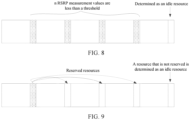
- the resource is determined as an idle resource if a measured reference signal received power RSRP is less than a threshold.
- that a second terminal selects the transmission resource from resources in the idle state includes: selecting an idle resource as the transmission resource from multiple idle resources randomly and/or according to a predetermined rule.
- monitoring a channel resource includes monitoring whether a resource is reserved, or whether a RSRP or RSSI value measured on reservation information carrying the resource is less than or equal to a threshold, where the threshold includes a threshold specified in a protocol (obtained according to a predefined rule) or configured or pre-configured by the control node. If a result of the monitoring is 'yes', the resource is determined to be idle. That the second terminal selects a resource includes at least that the second terminal selects a resource from multiple idle resources randomly or according to a predetermined rule.
- the second terminal may continuously transmit or reserve a transmission resource from a group of selected resources, for example, the second terminal may perform transmission or reservation for continuous m times, where m may be specified in a protocol or configured or pre-configured by the control node.
- resource reservation information may be carried in trigger signaling.
- the reservation information indicates the number of times for which the second terminal has reserved resources, or indicates whether the second terminal is performing resource reservation.
- the resource may simultaneously carry channel state information (CSI) trigger signaling or HARQ feedback trigger signaling.
- CSI channel state information
- joint coding or separate coding may be used for the trigger signaling.
- that the second terminal selects a transmission resource includes obtaining transmission packet information before resource selection, where the transmission packet information includes at least one of the following:
- the obtaining transmission packet information includes obtaining transmission packet information specified in a protocol, configured or pre-configured by the control node, or obtained according to a rule specified in a protocol.
- an executing body for the method for notifying the sidelink assistance information provided in this embodiment of this application may be an apparatus for notifying the sidelink assistance information, or a module that is in the apparatus for notifying the sidelink assistance information and that is configured to load the method for notifying the sidelink assistance information.
- the method for notifying the sidelink assistance information provided in this embodiment of this application is described by taking that the apparatus for notifying the sidelink assistance information loads the method for notifying the sidelink assistance information as an example.
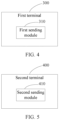
- the apparatus for notifying the sidelink assistance information in this embodiment of this application is applied to a first terminal 300, and as shown in FIG. 4 , the apparatus includes: a first sending module 310, configured to send the sidelink assistance information to a second terminal if a preset trigger condition is satisfied or trigger signaling sent by the second terminal is received, where the trigger condition includes at least one of the following:
- the first terminal after the first terminal receives the trigger signaling sent by the second terminal or the preset trigger condition is satisfied, the first terminal sends the sidelink assistance information to the second terminal.
- the first terminal can send the sidelink assistance information to the second terminal, to assist the second terminal in resource selection and/or adjustment of a transmission parameter, thereby improving reliability of sidelink transmission.
- the first terminal may send the sidelink assistance information to the second terminal after determining that the demodulation fails.
- the first sending module 310 is specifically configured to transmit the sidelink assistance information to the second terminal at a preset time position after a time position at which the preset trigger condition is satisfied.
- Maximum time duration between the preset time position and the time position at which the preset trigger condition is satisfied is x and/or minimum time duration therebetween is y, where x and y are values specified in a protocol, or configured or pre-configured by the control node, and units of x and y may be milliseconds, time slots, or sub-time slots.
- the first terminal needs to feed back the sidelink assistance information within a time limit x after a relative time position that a PSCCH and/or PSSCH with the demodulation failure is located, and the time limit may be a time range, an upper delay limit, or a lower delay limit.
- that the first terminal determines that demodulation fails includes at least one of the following:
- the first sending module 310 may send the sidelink assistance information to the second terminal after determining that demodulation fails for n times, where n is a positive integer, and n is a value specified in a protocol or configured or pre-configured by the control node.
- the first terminal may feed back the sidelink assistance information to the second terminal after the first sending module 310 detects a transmission resource (such as the PSCCH and/or PSSCH resource) reserved by the second terminal. Specifically, if the first terminal determines that the second terminal reserves a resource for transmitting information to the first terminal, the first terminal feeds back the sidelink assistance information to the second terminal.
- the first sending module 310 needs to feed back the sidelink assistance information within x time limit before or after a relative time position that the reserved PSCCH or PSSCH is located, where the time limit may be a time range, an upper delay limit, or a lower delay limit; and x may be a value specified in a protocol or configured or pre-configured by the control node.
- the first sending module 310 may feed back the sidelink assistance information to the second terminal when the first sending module detects that a transmission resource (such as the reserved PSCCH or PSSCH resource, or a PSFCH resource associated with the PSCCH or PSSCH) of the second terminal is at a transmission moment of the first terminal.
- the first sending module 310 needs to feed back the sidelink assistance information within x time limit before or after a relative time position that the transmission resource is located, where the time limit may be time range, an upper delay limit, or a lower delay limit; and x may be a value specified in a protocol or configured or pre-configured by the control node.
- the apparatus further includes: an obtaining module, configured to obtain a constraint condition for sending the sidelink assistance information, where the constraint condition is specified in a protocol, configured or pre-configured by the control node, or sent by the second terminal, and the constraint condition includes a sending frequency and/or a sending interval at which the sidelink assistance information is sent. For example, a timer is enabled after triggering of transmission of the sidelink assistance information is limited or the sidelink assistance information is transmitted once, next transmission can be triggered after time out, and the maximum/minimum number of times for transmission within a unit time is limited. If the constraint condition is configured or pre-configured by the control node, the constraint condition is for at least one of the following objects: a resource pool (per pool), a bandwidth part BWP (per BWP), or a UE (per UE).
- a resource pool per pool
- BWP bandwidth part
- UE per UE
- a channel carrying the sidelink assistance information includes at least one of the following:
- a channel resource carrying the trigger signaling may be a standalone PSCCH (that is, a PSCCH not associated with a PSSCH), a PSCCH or PSSCH with the smallest transmission granularity (that is, a PSSCH or PSCCH with one sub-channel (sub-channel) and one slot (slot)), and the like.
- the occasion when the channel appears may be a time for automatic gain control (Automatic gain control, AGC) agreed, configured, or pre-configured for several time domain resources (such as several symbols (symbol) or slots (slot)) before or after the occasion when the channel appears.
- AGC Automatic gain control
- channel resources of the sidelink physical channel may also be numbered.
- the channel resources may be numbered according to a time domain, frequency domain, or code domain sequence of the channel resources as specified in a protocol or configured or pre-configured by the control node.
- the dedicated sidelink physical channel may be a new PSFCH format, and may also carry a hybrid automatic repeat request (HARQ), channel state information (CSI), sidelink assistance information, and the like.
- HARQ hybrid automatic repeat request
- CSI channel state information
- sidelink assistance information and the like.
- the first sending module 310 is further configured to obtain the transmission resource for the sidelink assistance information, including any one of the following:
- the transmission resource allocated by the second terminal may be indicated to the first sending module 310 through resource allocation information, where the resource allocation information is carried in at least one of the following:
- the second terminal when the second terminal triggers the first terminal to feed back the sidelink assistance information, the second terminal may directly allocate a resource to the first terminal, where a transmission resource for the sidelink assistance information is associated with a transmission resource (a PSCCH or PSSCH resource) of the second terminal.
- a transmission resource for the sidelink assistance information is associated with a transmission resource (a PSCCH or PSSCH resource) of the second terminal.
- a PSCCH or PSSCH resource a transmission resource for the sidelink assistance information is associated with a transmission resource (a PSCCH or PSSCH resource) of the second terminal.
- a transmission resource for the sidelink assistance information is associated with a transmission resource (a PSCCH or PSSCH resource) of the second terminal.
- a transmission resource a PSCCH or PSSCH resource
- the resource may simultaneously carry the CSI, and the CSI may include channel quality indicator (CQI), precoding matrix indicator (PMI), rank indicator (RI), RSRP, and the like.
- CQI channel quality indicator
- PMI precoding
- the first sending module 310 is specifically configured to obtain transmission packet information before resource selection, where the transmission packet information includes at least one of the following:
- the obtaining transmission packet information includes obtaining transmission packet information specified in a protocol, configured or pre-configured by the control node, or obtained according to a rule specified in a protocol.
- the apparatus for notifying the sidelink assistance information in this embodiment of this application is applied to a second terminal 400, and as shown in FIG. 5 , the apparatus includes: a second sending module 410, configured to send trigger signaling to a first terminal, to trigger the first terminal to send the sidelink assistance information to the second terminal.
- a channel carrying the trigger signaling includes at least one of the following:
- a channel resource carrying the trigger signaling may be a standalone PSCCH (that is, a PSCCH not associated with a PSSCH), a PSCCH or PSSCH with the smallest transmission granularity (that is, a PSSCH or PSCCH with one sub-channel (sub-channel) and one slot (slot)), and the like.
- the occasion when the channel appears may be a time of automatic gain control (Automatic gain control, AGC) agreed, configured, or pre-configured for several time domain resources (such as several symbols (symbol) or slots (slot)) before or after the occasion when the channel appears.
- AGC Automatic gain control
- channel resources of the sidelink physical channel may also be numbered.
- the channel resources may be numbered according to a time domain, frequency domain and/or code domain sequence of the channel resources as specified in a protocol or configured or pre-configured by the control node.
- channel definition involves at least one of the following parameter items.
- the second sending module 410 is further configured to obtain the transmission resource for the trigger signaling, including at least one of the following:
- That the second sending module 410 selects a transmission resource includes any one of the following:
- that second sending module 410 monitors a channel resource includes monitoring one group of or multiple groups of channel resources, further including at least any one of the following: the group of channel resources includes channel resources on continuously multiple sidelink physical channel occasions; and inclusion of channel resources included in the group of channel resources has a characteristic as specified in a protocol or configured or pre-configured by the control node. For example, same channel resources on continuously multiple channel occasions are indexed as a group of channel resources; and resources with the same time domain resource and/or frequency domain resource and/or code domain resource on the continuously multiple channel occasions are included in a group of channel resources.
- a channel resource is determined to be in the idle state according to at least one of the following:
- the n transmission occasions are specified in a protocol or configured or pre-configured by the control node;
- the 'before' includes at least before the moment for determining, before the trigger signaling is transmitted, or the like.
- the resource is determined as an idle resource if a measured reference signal received power RSRP is less than a threshold.
- the second sending module 410 is specifically configured to select an idle resource as the transmission resource from multiple idle resources randomly and/or according to a predetermined rule.
- monitoring a channel resource includes monitoring whether a resource is reserved, or whether a RSRP or RSSI value measured on reservation information carrying the resource is less than or equal to a threshold, where the threshold includes a threshold specified in a protocol (obtained according to a predefined rule) or configured or pre-configured by the control node. If a result of the monitoring is 'yes', the resource is determined to be idle. That the second terminal selects a resource includes at least that the second terminal selects a resource from multiple idle resources randomly or according to a predetermined rule.
- the second terminal may continuously transmit or reserve a transmission resource from a group of selected resources, for example, the second terminal may perform transmission or reservation for continuous m times, where m may be specified in a protocol or configured or pre-configured by the control node.
- resource reservation information may be carried in trigger signaling.
- the reservation information indicates the number of times for which the second terminal has reserved resources, or indicates whether the second terminal is performing resource reservation.
- the resource may simultaneously carry channel state information (CSI) trigger signaling or HARQ feedback trigger signaling.
- CSI channel state information
- joint coding or separate coding may be used for the trigger signaling.
- the second sending module 410 is further configured to obtain transmission packet information before resource selection, where the transmission packet information includes at least one of the following:
- the obtaining transmission packet information includes obtaining transmission packet information specified in a protocol, configured or pre-configured by the control node, or obtained according to a rule specified in a protocol.
- the apparatus for notifying sidelink assistance information in this embodiment of this application may be an apparatus, or may be a component, an integrated circuit, or a chip in a terminal.
- the apparatus may be a mobile electronic device, or may be a non-mobile electronic device.
- the mobile electronic device may be a mobile phone, a tablet computer, a notebook computer, a palmtop computer, an in-vehicle terminal device, a wearable device, an ultra-mobile personal computer (ultra-mobile personal computer, UMPC), a netbook, or a personal digital assistant (personal digital assistant, PDA), and the non-mobile electronic device may be a network attached storage (Network Attached Storage, NAS), a personal computer (personal computer, PC), a television (television, TV), a counter, or a self-service machine. This is not specifically limited in this embodiment of this application.
- the apparatus for notifying sidelink assistance information in this embodiment of this application may be an apparatus with an operating system.
- the operating system may be an Android (Android) operating system, may be an iOS operating system, or may be another possible operating system, which is not specifically limited in the embodiments of this application.
- the apparatus for notifying sidelink assistance information provided in this embodiment of this application can implement processes of the method for notifying sidelink assistance information in the method embodiment of FIG. 2 or FIG. 3 . To avoid repetition, details are not described herein again.
- an embodiment of this application further provides an electronic device, including a processor, a memory, and a program or an instruction stored in the memory and capable of running on the processor.
- the program or the instruction is executed by the processor, the processes of the foregoing embodiments of the method for notifying sidelink assistance information are implemented, and a same technical effect can be achieved. To avoid repetition, details are not described herein again.
- the electronic device in this embodiment of this application includes the foregoing mobile electronic device and the foregoing non-mobile electronic device.
- the electronic device in this embodiment may be a terminal.
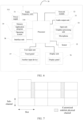
- FIG. 6 is a schematic diagram of a hardware structure of a terminal according to the embodiments of this application.
- a terminal 30 includes but is not limited to components such as a radio frequency unit 31, a network module 32, an audio output unit 33, an input unit 34, a sensor 35, a display unit 36, a user input unit 37, an interface unit 38, a memory 39, a processor 310, and a power supply 311.
- the terminal structure shown in FIG. 6 does not constitute any limitation on the terminal, and the terminal may include more or fewer components than those shown in the figure, or combine some components, or have different component arrangements.
- the terminal includes but is not limited to a mobile phone, a tablet computer, a notebook computer, a palmtop computer, an in-vehicle terminal, a wearable device, a pedometer, and the like.
- the radio frequency unit 31 may be configured to receive and send information or a signal in a call process. Specifically, after receiving downlink data from a base station, the radio frequency unit 31 sends the downlink data to the processor 310 for processing. In addition, the radio frequency unit 31 sends uplink data to the base station.
- the radio frequency unit 31 includes but is not limited to an antenna, at least one amplifier, a transceiver, a coupler, a low noise amplifier, a duplexer, and the like.
- the radio frequency unit 31 may further communicate with a network and another device through a wireless communications system.
- the memory 39 may be configured to store a software program and various pieces of data.
- the memory 39 may mainly include a program storage region and a data storage region.
- the program storage region may store an operating system, an application program required by at least one function (such as a sound play function or an image play function), and the like.
- the data storage region may store data (such as audio data or an address book) created based on use of the mobile phone, and the like.
- the memory 39 may include a high-speed random access memory, and may further include a nonvolatile memory, for example, at least one magnetic disk storage device, a flash storage device, or another volatile solid-state storage device.
- the processor 310 is a control center of the terminal, and connects all parts of the entire terminal by using various interfaces and lines. By running or executing a software program and/or a module stored in the memory 39 and invoking data stored in the memory 39, the processor 310 performs various functions of the terminal and data processing, to perform overall monitoring on the terminal.
- the processor 310 may include one or more processing units. Preferably, an application processor and a modem processor may be integrated into the processor 310.
- the application processor mainly processes an operating system, a user interface, an application, and the like.
- the modem processor mainly processes wireless communications. It can be understood that, alternatively, the modem processor may not be integrated into the processor 310.
- the terminal 30 may further include the power supply 311 (such as a battery) that supplies power to each component.
- the power supply 311 may be logically connected to the processor 310 by using a power management system, so as to implement functions such as charging, discharging, and power consumption management by using the power management system.
- the terminal 30 includes some function modules not shown, and details are not described herein.
- An embodiment of this application further provides a readable storage medium, where the readable storage medium stores a program or an instruction, and when the program or the instruction is executed by a processor, processes of the foregoing embodiments of the method for notifying sidelink assistance information are implemented, and a same technical effect can be achieved. To avoid repetition, details are not described herein again.
- the processor is a processor in the electronic device in the foregoing embodiment.
- the readable storage medium includes a computer-readable storage medium, such as a computer read-only memory (Read-Only Memory, ROM), a random access memory (Random Access Memory, RAM), a magnetic disk, or an optical disc.
- An embodiment of this application also provides a chip.
- the chip includes a processor and a communications interface, and the communications interface is coupled to the processor.
- the processor is configured to run a program or an instruction to implement processes of the foregoing embodiments of the method for notifying sidelink assistance information, and a same technical effect can be achieved. To avoid repetition, details are not described herein again.
- the chip mentioned in this embodiment of this application may also be referred to as a system-level chip, a system chip, a system on chip, a system-on-a-chip chip, and the like.
- the method in the foregoing embodiment may be implemented by software in addition to a necessary universal hardware platform or by hardware only. In most circumstances, the former is a preferred implementation manner.
- the technical solutions of this application essentially, or the part contributing to the prior art may be implemented in a form of a software product.
- the computer software product is stored in a storage medium (for example, a ROM/RAM, a magnetic disk, or a compact disc), and includes several instructions for instructing a terminal (which may be a mobile phone, a computer, a server, an air conditioner, a network device, or the like) to perform the method described in the embodiments of this application.
- modules may be all or partially integrated in a physical entity or may be physically separate in actual implementation.
- all these modules may be implemented in a form of software by invoking a processing element; or all these modules may be implemented in a form of hardware; or some modules may be implemented in a form of software by invoking a processing element, and some modules are implemented in a form of hardware.
- the determining module may be a separately disposed processing element, or may be integrated into a chip of the foregoing apparatus for implementation.
- the determining module may be stored in a memory of the foregoing apparatus in a form of program code, and a processing element of the foregoing apparatus invokes and executes a function of the determining module.
- the implementations of other modules are similar thereto.
- all or some of these modules may be integrated together or implemented independently.
- the processing element herein may be an integrated circuit having a signal processing capability.
- various steps of the foregoing method or the foregoing modules may be completed through an integrated logic circuit of the hardware in the processor element or a command in the form of software.
- each module, unit, subunit, or submodule may be one or more integrated circuits configured to implement the foregoing method, for example, one or more application-specific integrated circuits (Application Specific Integrated Circuit, ASIC), or one or more microprocessors (digital signal processor, DSP), or one or more field programmable gate arrays (Field Programmable Gate Array, FPGA).
- ASIC Application Specific Integrated Circuit
- DSP digital signal processor
- FPGA Field Programmable Gate Array
- the processing element may be a general-purpose processor, such as a central processing unit (Central Processing Unit, CPU) or another processor that can invoke program code.
- the modules may be integrated in a form of a system-on-a-chip (system-on-a-chip, SOC) for implementation.
- the terms “first”, “second”, and the like are intended to distinguish between similar objects but do not necessarily describe a specific order or sequence. It should be understood that such used data is exchangeable in a proper case, so that the embodiments of the present disclosure described herein, for example, can be implemented in sequences other than those shown in the figures or described herein.
- terms “include”, “have”, and any variants thereof are intended to cover non-exclusive inclusion, for example, processes, methods, systems, products, or devices that contain a series of steps or units are not necessarily limited to those steps or units that are clearly listed, but may include other steps or units that are not clearly listed or are inherent to these processes, methods, products, or devices.
Landscapes
- Engineering & Computer Science (AREA)
- Signal Processing (AREA)
- Computer Networks & Wireless Communication (AREA)
- Quality & Reliability (AREA)
- Physics & Mathematics (AREA)
- Electromagnetism (AREA)
- Mobile Radio Communication Systems (AREA)
Claims (15)
- Ein Verfahren zur Meldung von Sidelink-Hilfsinformationen, das durch ein erstes Endgerät durchgeführt wird, beinhaltend:Senden (101) der Sidelink-Hilfsinformationen an ein zweites Endgerät in einem Fall, in dem eine voreingestellte Auslösebedingung erfüllt ist,wobei die Auslösebedingung mindestens eines von Folgendem beinhaltet:das erste Endgerät detektiert eine durch das zweite Endgerät reservierte Übertragungsressource;das erste Endgerät detektiert, dass eine Übertragungsressource des zweiten Endgeräts und eine Übertragungsressource des ersten Endgeräts überlappen;dadurch gekennzeichnet, dassdie Sidelink-Hilfsinformationen an einer voreingestellten Zeitposition nach einer Zeitposition, an der die voreingestellte Auslösebedingung erfüllt ist, an das zweite Endgerät gesendet werden und die maximale Zeitdauer zwischen der voreingestellten Zeitposition und der Zeitposition, an der die voreingestellte Auslösebedingung erfüllt ist, x ist und/oder die minimale Zeitdauer dazwischen y ist, wobei x und y Werte sind, die in einem Protokoll spezifiziert sind oder durch einen Steuerknoten konfiguriert oder vorkonfiguriert sind.
- Verfahren zur Meldung von Sidelink-Hilfsinformationen gemäß Anspruch 1, wobei die Auslösebedingung mindestens eines von Folgendem beinhaltet:das erste Endgerät bestimmt, dass eine Demodulation fehlschlägt;eine Constraint-Bedingung, die in einem Protokoll spezifiziert ist, durch den Steuerknoten konfiguriert oder vorkonfiguriert ist oder durch das zweite Endgerät gesendet wird, ist erfüllt.
- Verfahren zur Meldung von Sidelink-Hilfsinformationen gemäß Anspruch 2, wobei das Bestimmen, durch das erste Endgerät, dass eine Demodulation fehlschlägt, mindestens eines von Folgendem beinhaltet:die Demodulation einer anfänglichen Übertragung eines physikalischen Sidelink-Steuerkanals, PSCCH, und/oder eines gemeinsam genutzten physikalischen Sidelink-Kanals, PSSCH, des zweiten Endgeräts schlägt fehl;die Demodulation einer erneuten Übertragung eines PSCCH und/oder PSSCH des zweiten Endgeräts schlägt fehl;die Demodulation eines spezifischen PSCCH und/oder PSSCH schlägt fehl;die Demodulation einer Übertragungsressource eines spezifischen Transportblocks, TB, schlägt fehl; oderdie Demodulation einer Ressource mit einer spezifischen Sidelink-Gewährung, SL-Gewährung, schlägt fehl.
- Verfahren zur Meldung von Sidelink-Hilfsinformationen gemäß Anspruch 2, wobei das erste Endgerät die Sidelink-Hilfsinformationen nach dem Bestimmen, dass die Demodulation n Male fehlschlägt, an das zweite Endgerät sendet, wobei n eine positive ganze Zahl ist.
- Verfahren zur Meldung von Sidelink-Hilfsinformationen gemäß Anspruch 2, ferner beinhaltend:
Erhalten einer Constraint-Bedingung für das Senden der Sidelink-Hilfsinformationen, wobei die Constraint-Bedingung in einem Protokoll spezifiziert ist, durch den Steuerknoten konfiguriert oder vorkonfiguriert ist oder durch das zweite Endgerät gesendet wird und die Constraint-Bedingung eine Sendefrequenz und/oder ein Sendeintervall beinhaltet, mit der/dem die Sidelink-Hilfsinformationen gesendet werden. - Verfahren zur Meldung von Sidelink-Hilfsinformationen gemäß Anspruch 5, wobei, wenn die Constraint-Bedingung durch den Steuerknoten konfiguriert oder vorkonfiguriert ist, die Constraint-Bedingung für beliebige der folgenden Objekte gilt: einen Ressourcenpool, einen Bandbreitenteil oder ein Endgerät.
- Verfahren zur Meldung von Sidelink-Hilfsinformationen gemäß Anspruch 1, wobei ein Kanal, der die Sidelink-Hilfsinformationen trägt, mindestens eines von Folgendem beinhaltet:einen PSCCH;einen PSSCH;einen physikalischen Sidelink-Rückkopplungskanal, PSFCH; odereinen dedizierten physikalischen Sidelink-Kanal, wobei ein Parameter des physikalischen Sidelink-Kanals mindestens eines von Folgendem beinhaltet: einen Anlass, zu dem der Kanal erscheint, eine Zeitbereichsressource des Kanals, eine Frequenzbereichsressource des Kanals oder eine Codebereichsressource des Kanals.
- Verfahren zur Meldung von Sidelink-Hilfsinformationen gemäß Anspruch 7, ferner beinhaltend: Nummerieren von Kanalressourcen des physikalischen Sidelink-Kanals.
- Verfahren zur Meldung von Sidelink-Hilfsinformationen gemäß Anspruch 7, wobei das Verfahren ferner das Erhalten einer Übertragungsressource für die Sidelink-Hilfsinformationen beinhaltet, was ein beliebiges von Folgendem beinhaltet:das erste Endgerät erhält eine Übertragungsressource, die durch den Steuerknoten zugeteilt wird;das erste Endgerät wählt eine Übertragungsressource aus;das erste Endgerät erhält eine Übertragungsressource, die durch das zweite Endgerät zugeteilt wird; oderdas erste Endgerät erhält eine reservierte Übertragungsressource.
- Verfahren zur Meldung von Sidelink-Hilfsinformationen gemäß Anspruch 9, wobei die durch das zweite Endgerät zugeteilte Übertragungsressource dem ersten Endgerät durch Ressourcenzuteilungsinformationen angezeigt wird, wobei die Ressourcenzuteilungsinformationen in mindestens einem von Folgendem getragen werden:Sidelink-Steuerinformationen, SCI;Sidelink-Rückkopplungssteuerinformationen, SFCI;einer Funkressourcensteuernachricht, RRC-Nachricht;einem Medienzugangssteuer-, MAC-, Steuerelement, CE; oderInformationen, die durch den dedizierten physikalischen Sidelink-Kanal getragen werden.
- Verfahren zur Meldung von Sidelink-Hilfsinformationen gemäß Anspruch 9, wobei die Übertragungsressource für die Sidelink-Hilfsinformationen mit einer Übertragungsressource des zweiten Endgeräts assoziiert ist.
- Verfahren zur Meldung von Sidelink-Hilfsinformationen gemäß Anspruch 9, wobei das Auswählen, durch das erste Endgerät, einer Übertragungsressource Folgendes beinhaltet:
Erhalten von Übertragungspaketinformationen vor der Ressourcenauswahl, wobei die Übertragungspaketinformationen mindestens eines von Folgendem beinhalten:Paketverzögerungsbudgetinformationen, PDB-Informationen, eines Übertragungspakets; undeine Priorität eines Übertragungspakets. - Verfahren zur Meldung von Sidelink-Hilfsinformationen gemäß den Ansprüchen 12, wobei
das Erhalten von Übertragungspaketinformationen das Erhalten von Übertragungspaketinformationen beinhaltet, die in einem Protokoll spezifiziert sind, durch den Steuerknoten konfiguriert oder vorkonfiguriert sind oder gemäß einer in einem Protokoll spezifizierten Regel erhalten werden. - Eine elektronische Vorrichtung (30), dadurch gekennzeichnet, dass, beinhaltend:einen Prozessor (310); undeinen Speicher (39), der ein Programm oder eine Anweisung speichert, das/die dazu fähig ist, auf dem Prozessor (310) zu laufen, wobei das Programm oder die Anweisung bei Ausführung durch den Prozessor (310) bewirkt, dass die elektronische Vorrichtung (30) das Verfahren gemäß einem der Ansprüche 1 bis 13 durchführt.
- Ein lesbares Speicherungsmedium, wobei das lesbare Speicherungsmedium ein Programm oder eine Anweisung speichert und bei Ausführung des Programms oder der Anweisung durch einen Prozessor die Schritte des Verfahrens gemäß einem der Ansprüche 1 bis 13 implementiert werden.
Applications Claiming Priority (2)
| Application Number | Priority Date | Filing Date | Title |
|---|---|---|---|
| CN202010634680.8A CN113890697B (zh) | 2020-07-02 | 2020-07-02 | 旁链路辅助信息的通知方法、装置及电子设备 |
| PCT/CN2021/103518 WO2022002124A1 (zh) | 2020-07-02 | 2021-06-30 | 旁链路辅助信息的通知方法、装置及电子设备 |
Publications (3)
| Publication Number | Publication Date |
|---|---|
| EP4178290A1 EP4178290A1 (de) | 2023-05-10 |
| EP4178290A4 EP4178290A4 (de) | 2024-01-10 |
| EP4178290B1 true EP4178290B1 (de) | 2025-02-12 |
Family
ID=79012792
Family Applications (1)
| Application Number | Title | Priority Date | Filing Date |
|---|---|---|---|
| EP21832553.8A Active EP4178290B1 (de) | 2020-07-02 | 2021-06-30 | Verfahren und vorrichtung zur meldung von sidelink-hilfsinformationen und elektronische vorrichtung |
Country Status (7)
| Country | Link |
|---|---|
| US (1) | US12471122B2 (de) |
| EP (1) | EP4178290B1 (de) |
| CN (1) | CN113890697B (de) |
| ES (1) | ES3014524T3 (de) |
| HU (1) | HUE070737T2 (de) |
| PT (1) | PT4178290T (de) |
| WO (1) | WO2022002124A1 (de) |
Families Citing this family (5)
| Publication number | Priority date | Publication date | Assignee | Title |
|---|---|---|---|---|
| US11818716B2 (en) * | 2020-07-17 | 2023-11-14 | Samsung Electronics Co., Ltd | User equipment assistance for resource selection in new radio vehicle to everything |
| WO2023043578A1 (en) * | 2021-09-15 | 2023-03-23 | Qualcomm Incorporated | Techniques for control signal configuration for reference signal precoding |
| CN116567819A (zh) * | 2022-01-28 | 2023-08-08 | 维沃移动通信有限公司 | 旁链路传输方法、终端及存储介质 |
| CN116981048A (zh) * | 2022-04-24 | 2023-10-31 | 维沃移动通信有限公司 | 旁链路定位处理方法、装置、终端及可读存储介质 |
| WO2024159428A1 (zh) * | 2023-01-31 | 2024-08-08 | 北京小米移动软件有限公司 | 一种侧链路资源冲突确定方法、装置、设备及存储介质 |
Family Cites Families (25)
| Publication number | Priority date | Publication date | Assignee | Title |
|---|---|---|---|---|
| CN108886769B (zh) * | 2016-04-08 | 2021-05-18 | 华为技术有限公司 | 一种通信资源协调方法及装置 |
| CN106792885B (zh) * | 2016-06-15 | 2019-11-22 | 北京展讯高科通信技术有限公司 | D2d通信资源重选方法、装置及终端 |
| CN109644410B (zh) * | 2016-09-23 | 2022-04-08 | 富士通株式会社 | 功率控制方法、装置以及通信系统 |
| US10945236B2 (en) * | 2016-10-26 | 2021-03-09 | Lg Electronics Inc. | Method for sensing resource for direct communication between terminals in wireless communication system and device therefor |
| US11304217B2 (en) * | 2017-05-04 | 2022-04-12 | Panasonic Intellectual Property Corporation Of America | User equipment and method therefor |
| EP3662711A4 (de) * | 2017-08-02 | 2021-02-17 | Intel IP Corporation | Vorrichtung, system und verfahren zur implementierung von reservierten ressourcen für vorwärtskompatibilität in new-radio (nr)-netzwerken |
| CN109391922A (zh) * | 2017-08-11 | 2019-02-26 | 北京三星通信技术研究有限公司 | 一种旁路通信方法和设备 |
| US10952266B2 (en) * | 2018-01-30 | 2021-03-16 | Hyundai Motor Company | Method for transmitting and receiving control information including configuration information for transmission and reception in communication system supporting vehicle-to-everything communication and apparatus for the same |
| CN110149698B (zh) * | 2018-02-11 | 2025-02-18 | 中兴通讯股份有限公司 | 无线通信发送资源的确定方法及装置 |
| CN110267226B (zh) * | 2018-03-12 | 2021-07-20 | 华为技术有限公司 | 信息发送的方法和装置 |
| CN110944390B (zh) * | 2018-09-21 | 2022-04-22 | 展讯通信(上海)有限公司 | 资源冲突处理方法及装置、存储介质、用户设备 |
| CN110944352B (zh) * | 2018-09-25 | 2022-11-01 | 维沃移动通信有限公司 | 一种旁链路的链路失败检测方法及终端 |
| CN110944394B (zh) * | 2018-09-25 | 2023-04-21 | 华硕电脑股份有限公司 | 无线通信中导出用于侧链路传送的反馈资源的方法和设备 |
| CN110972276B (zh) * | 2018-09-28 | 2023-05-09 | 中国移动通信有限公司研究院 | 直连链路资源分配方法、第二设备及第一设备 |
| WO2020067675A1 (ko) * | 2018-09-28 | 2020-04-02 | 엘지전자 주식회사 | 무선 통신 시스템에서 전송 단말의 사이드링크 동작 방법 및 상기 방법을 이용하는 단말 |
| CN110972290B (zh) * | 2018-09-29 | 2022-10-11 | 中国信息通信研究院 | 一种终端直通通信的资源分配方法 |
| KR20200047928A (ko) * | 2018-10-26 | 2020-05-08 | 주식회사 케이티 | V2x 설정 정보 송수신 방법 및 장치 |
| CN111132329B (zh) * | 2018-11-02 | 2022-09-16 | 维沃移动通信有限公司 | 一种资源指示方法、设备及系统 |
| CN112152760B (zh) * | 2019-06-27 | 2022-03-29 | 华为技术有限公司 | 一种psfch的发送方法及装置 |
| CN111278050B (zh) * | 2019-07-24 | 2021-11-02 | 维沃移动通信有限公司 | 一种资源配置方法、信息传输方法及相关设备 |
| EP4049490A4 (de) * | 2019-10-25 | 2023-07-26 | Qualcomm Incorporated | Codebuch-erweiterung einer hybriden automatischen wiederholungsaufforderung (harq) und ressourcenbestimmung eines physikalischen uplink-steuerungskanals (pucch) mit sidelink-rückkopplungsweiterleitung |
| CN110891289B (zh) * | 2019-11-08 | 2023-03-24 | 中国信息通信研究院 | 一种信道接入侦听方法和终端设备 |
| CN115699960A (zh) * | 2020-03-20 | 2023-02-03 | 弗劳恩霍夫应用研究促进协会 | Nr侧链路辅助信息消息 |
| CN113453196B (zh) * | 2020-03-27 | 2023-05-23 | 维沃移动通信有限公司 | 信息传输方法和终端设备 |
| WO2021237663A1 (en) * | 2020-05-29 | 2021-12-02 | Lenovo (Beijing) Limited | Methods and apparatus for receiver assistance information-based resource allocation |
-
2020
- 2020-07-02 CN CN202010634680.8A patent/CN113890697B/zh active Active
-
2021
- 2021-06-30 EP EP21832553.8A patent/EP4178290B1/de active Active
- 2021-06-30 PT PT218325538T patent/PT4178290T/pt unknown
- 2021-06-30 WO PCT/CN2021/103518 patent/WO2022002124A1/zh not_active Ceased
- 2021-06-30 HU HUE21832553A patent/HUE070737T2/hu unknown
- 2021-06-30 ES ES21832553T patent/ES3014524T3/es active Active
-
2022
- 2022-12-30 US US18/092,193 patent/US12471122B2/en active Active
Also Published As
| Publication number | Publication date |
|---|---|
| US12471122B2 (en) | 2025-11-11 |
| HUE070737T2 (hu) | 2025-06-28 |
| PT4178290T (pt) | 2025-03-10 |
| ES3014524T3 (en) | 2025-04-23 |
| EP4178290A1 (de) | 2023-05-10 |
| EP4178290A4 (de) | 2024-01-10 |
| CN113890697A (zh) | 2022-01-04 |
| WO2022002124A1 (zh) | 2022-01-06 |
| US20230147087A1 (en) | 2023-05-11 |
| CN113890697B (zh) | 2023-04-18 |
Similar Documents
| Publication | Publication Date | Title |
|---|---|---|
| EP4178290B1 (de) | Verfahren und vorrichtung zur meldung von sidelink-hilfsinformationen und elektronische vorrichtung | |
| US11606803B2 (en) | Resource allocation and scheduling using a buffer status report (BSR) | |
| CN113647170B (zh) | 用于快速服务小区激活的方法和装置 | |
| US12513696B2 (en) | Control channel resource indication method, user equipment, and network device | |
| US10966255B2 (en) | Random access method, apparatus, system, terminal, and base station | |
| EP3195688B1 (de) | Drx-zyklus-konfiguration in dualer konnektivität | |
| CN114071765B (zh) | 传输控制方法、装置及电子设备 | |
| US20230137334A1 (en) | Method and apparatus for determining sidelink assistance information, and electronic device | |
| US12088450B2 (en) | Communication method and apparatus | |
| US11395362B2 (en) | Beam failure event handling method and apparatus and terminal | |
| US11616625B2 (en) | Wireless communication method, terminal, and network device | |
| US20200120566A1 (en) | Cell handover method, network device, and terminal device | |
| CN109803443A (zh) | 用于随机接入的方法、终端设备和网络设备 | |
| EP3432678B1 (de) | Vorrichtung und verfahren zur konfiguration eines sekundären knotens und berichterstattung in dualer konnektivität | |
| US20160128003A1 (en) | Method and apparatus for enhanced secondary cell activation and deactivation | |
| US11871403B2 (en) | Resource use status reporting method and communications apparatus | |
| US20230209508A1 (en) | Information transmission method, resource selection method, apparatus, and electronic device | |
| CN113709823B (zh) | 检测失败处理方法、装置及终端 | |
| US12096404B2 (en) | Methods and devices for data transmission | |
| US12532344B2 (en) | Resource selection method and apparatus, and electronic device | |
| JP2020017989A (ja) | 端末、基地局、およびスケジューリング要求送信方法 |
Legal Events
| Date | Code | Title | Description |
|---|---|---|---|
| STAA | Information on the status of an ep patent application or granted ep patent |
Free format text: STATUS: THE INTERNATIONAL PUBLICATION HAS BEEN MADE |
|
| PUAI | Public reference made under article 153(3) epc to a published international application that has entered the european phase |
Free format text: ORIGINAL CODE: 0009012 |
|
| STAA | Information on the status of an ep patent application or granted ep patent |
Free format text: STATUS: REQUEST FOR EXAMINATION WAS MADE |
|
| 17P | Request for examination filed |
Effective date: 20230131 |
|
| AK | Designated contracting states |
Kind code of ref document: A1 Designated state(s): AL AT BE BG CH CY CZ DE DK EE ES FI FR GB GR HR HU IE IS IT LI LT LU LV MC MK MT NL NO PL PT RO RS SE SI SK SM TR |
|
| DAV | Request for validation of the european patent (deleted) | ||
| DAX | Request for extension of the european patent (deleted) | ||
| REG | Reference to a national code |
Ref country code: DE Ref legal event code: R079 Free format text: PREVIOUS MAIN CLASS: H04W0072040000 Ipc: H04W0072400000 Ref document number: 602021026124 Country of ref document: DE |
|
| A4 | Supplementary search report drawn up and despatched |
Effective date: 20231207 |
|
| RIC1 | Information provided on ipc code assigned before grant |
Ipc: H04W 72/25 20230101ALN20231201BHEP Ipc: H04W 72/40 20230101AFI20231201BHEP |
|
| RIC1 | Information provided on ipc code assigned before grant |
Ipc: H04W 72/25 20230101ALN20240627BHEP Ipc: H04W 72/40 20230101AFI20240627BHEP |
|
| RIC1 | Information provided on ipc code assigned before grant |
Ipc: H04W 72/25 20230101ALN20240724BHEP Ipc: H04W 72/40 20230101AFI20240724BHEP |
|
| GRAP | Despatch of communication of intention to grant a patent |
Free format text: ORIGINAL CODE: EPIDOSNIGR1 |
|
| STAA | Information on the status of an ep patent application or granted ep patent |
Free format text: STATUS: GRANT OF PATENT IS INTENDED |
|
| INTG | Intention to grant announced |
Effective date: 20240909 |
|
| GRAS | Grant fee paid |
Free format text: ORIGINAL CODE: EPIDOSNIGR3 |
|
| GRAA | (expected) grant |
Free format text: ORIGINAL CODE: 0009210 |
|
| STAA | Information on the status of an ep patent application or granted ep patent |
Free format text: STATUS: THE PATENT HAS BEEN GRANTED |
|
| AK | Designated contracting states |
Kind code of ref document: B1 Designated state(s): AL AT BE BG CH CY CZ DE DK EE ES FI FR GB GR HR HU IE IS IT LI LT LU LV MC MK MT NL NO PL PT RO RS SE SI SK SM TR |
|
| REG | Reference to a national code |
Ref country code: GB Ref legal event code: FG4D |
|
| REG | Reference to a national code |
Ref country code: CH Ref legal event code: EP |
|
| REG | Reference to a national code |
Ref country code: DE Ref legal event code: R096 Ref document number: 602021026124 Country of ref document: DE |
|
| REG | Reference to a national code |
Ref country code: PT Ref legal event code: SC4A Ref document number: 4178290 Country of ref document: PT Date of ref document: 20250310 Kind code of ref document: T Free format text: AVAILABILITY OF NATIONAL TRANSLATION Effective date: 20250303 |
|
| REG | Reference to a national code |
Ref country code: IE Ref legal event code: FG4D |
|
| REG | Reference to a national code |
Ref country code: NL Ref legal event code: FP |
|
| REG | Reference to a national code |
Ref country code: SE Ref legal event code: TRGR |
|
| REG | Reference to a national code |
Ref country code: ES Ref legal event code: FG2A Ref document number: 3014524 Country of ref document: ES Kind code of ref document: T3 Effective date: 20250423 |
|
| PGFP | Annual fee paid to national office [announced via postgrant information from national office to epo] |
Ref country code: NL Payment date: 20250516 Year of fee payment: 5 |
|
| REG | Reference to a national code |
Ref country code: HU Ref legal event code: AG4A Ref document number: E070737 Country of ref document: HU |
|
| PG25 | Lapsed in a contracting state [announced via postgrant information from national office to epo] |
Ref country code: RS Free format text: LAPSE BECAUSE OF FAILURE TO SUBMIT A TRANSLATION OF THE DESCRIPTION OR TO PAY THE FEE WITHIN THE PRESCRIBED TIME-LIMIT Effective date: 20250512 |
|
| PG25 | Lapsed in a contracting state [announced via postgrant information from national office to epo] |
Ref country code: FI Free format text: LAPSE BECAUSE OF FAILURE TO SUBMIT A TRANSLATION OF THE DESCRIPTION OR TO PAY THE FEE WITHIN THE PRESCRIBED TIME-LIMIT Effective date: 20250212 |
|
| PG25 | Lapsed in a contracting state [announced via postgrant information from national office to epo] |
Ref country code: PL Free format text: LAPSE BECAUSE OF FAILURE TO SUBMIT A TRANSLATION OF THE DESCRIPTION OR TO PAY THE FEE WITHIN THE PRESCRIBED TIME-LIMIT Effective date: 20250212 |
|
| PGFP | Annual fee paid to national office [announced via postgrant information from national office to epo] |
Ref country code: DE Payment date: 20250507 Year of fee payment: 5 |
|
| PGFP | Annual fee paid to national office [announced via postgrant information from national office to epo] |
Ref country code: GB Payment date: 20250508 Year of fee payment: 5 |
|
| REG | Reference to a national code |
Ref country code: LT Ref legal event code: MG9D |
|
| PG25 | Lapsed in a contracting state [announced via postgrant information from national office to epo] |
Ref country code: NO Free format text: LAPSE BECAUSE OF FAILURE TO SUBMIT A TRANSLATION OF THE DESCRIPTION OR TO PAY THE FEE WITHIN THE PRESCRIBED TIME-LIMIT Effective date: 20250512 Ref country code: IS Free format text: LAPSE BECAUSE OF FAILURE TO SUBMIT A TRANSLATION OF THE DESCRIPTION OR TO PAY THE FEE WITHIN THE PRESCRIBED TIME-LIMIT Effective date: 20250612 |
|
| PGFP | Annual fee paid to national office [announced via postgrant information from national office to epo] |
Ref country code: IT Payment date: 20250522 Year of fee payment: 5 |
|
| PG25 | Lapsed in a contracting state [announced via postgrant information from national office to epo] |
Ref country code: HR Free format text: LAPSE BECAUSE OF FAILURE TO SUBMIT A TRANSLATION OF THE DESCRIPTION OR TO PAY THE FEE WITHIN THE PRESCRIBED TIME-LIMIT Effective date: 20250212 |
|
| PG25 | Lapsed in a contracting state [announced via postgrant information from national office to epo] |
Ref country code: LV Free format text: LAPSE BECAUSE OF FAILURE TO SUBMIT A TRANSLATION OF THE DESCRIPTION OR TO PAY THE FEE WITHIN THE PRESCRIBED TIME-LIMIT Effective date: 20250212 |
|
| PGFP | Annual fee paid to national office [announced via postgrant information from national office to epo] |
Ref country code: PT Payment date: 20250612 Year of fee payment: 5 |
|
| PGFP | Annual fee paid to national office [announced via postgrant information from national office to epo] |
Ref country code: HU Payment date: 20250529 Year of fee payment: 5 Ref country code: FR Payment date: 20250508 Year of fee payment: 5 |
|
| PG25 | Lapsed in a contracting state [announced via postgrant information from national office to epo] |
Ref country code: GR Free format text: LAPSE BECAUSE OF FAILURE TO SUBMIT A TRANSLATION OF THE DESCRIPTION OR TO PAY THE FEE WITHIN THE PRESCRIBED TIME-LIMIT Effective date: 20250513 Ref country code: BG Free format text: LAPSE BECAUSE OF FAILURE TO SUBMIT A TRANSLATION OF THE DESCRIPTION OR TO PAY THE FEE WITHIN THE PRESCRIBED TIME-LIMIT Effective date: 20250212 |
|
| PGFP | Annual fee paid to national office [announced via postgrant information from national office to epo] |
Ref country code: SE Payment date: 20250514 Year of fee payment: 5 |
|
| REG | Reference to a national code |
Ref country code: AT Ref legal event code: MK05 Ref document number: 1767311 Country of ref document: AT Kind code of ref document: T Effective date: 20250212 |
|
| PG25 | Lapsed in a contracting state [announced via postgrant information from national office to epo] |
Ref country code: SM Free format text: LAPSE BECAUSE OF FAILURE TO SUBMIT A TRANSLATION OF THE DESCRIPTION OR TO PAY THE FEE WITHIN THE PRESCRIBED TIME-LIMIT Effective date: 20250212 |
|
| PGFP | Annual fee paid to national office [announced via postgrant information from national office to epo] |
Ref country code: ES Payment date: 20250707 Year of fee payment: 5 |
|
| PG25 | Lapsed in a contracting state [announced via postgrant information from national office to epo] |
Ref country code: DK Free format text: LAPSE BECAUSE OF FAILURE TO SUBMIT A TRANSLATION OF THE DESCRIPTION OR TO PAY THE FEE WITHIN THE PRESCRIBED TIME-LIMIT Effective date: 20250212 |
|
| PG25 | Lapsed in a contracting state [announced via postgrant information from national office to epo] |
Ref country code: AT Free format text: LAPSE BECAUSE OF FAILURE TO SUBMIT A TRANSLATION OF THE DESCRIPTION OR TO PAY THE FEE WITHIN THE PRESCRIBED TIME-LIMIT Effective date: 20250212 |
|
| PG25 | Lapsed in a contracting state [announced via postgrant information from national office to epo] |
Ref country code: EE Free format text: LAPSE BECAUSE OF FAILURE TO SUBMIT A TRANSLATION OF THE DESCRIPTION OR TO PAY THE FEE WITHIN THE PRESCRIBED TIME-LIMIT Effective date: 20250212 Ref country code: CZ Free format text: LAPSE BECAUSE OF FAILURE TO SUBMIT A TRANSLATION OF THE DESCRIPTION OR TO PAY THE FEE WITHIN THE PRESCRIBED TIME-LIMIT Effective date: 20250212 |
|
| PG25 | Lapsed in a contracting state [announced via postgrant information from national office to epo] |
Ref country code: RO Free format text: LAPSE BECAUSE OF FAILURE TO SUBMIT A TRANSLATION OF THE DESCRIPTION OR TO PAY THE FEE WITHIN THE PRESCRIBED TIME-LIMIT Effective date: 20250212 |
|
| PG25 | Lapsed in a contracting state [announced via postgrant information from national office to epo] |
Ref country code: SK Free format text: LAPSE BECAUSE OF FAILURE TO SUBMIT A TRANSLATION OF THE DESCRIPTION OR TO PAY THE FEE WITHIN THE PRESCRIBED TIME-LIMIT Effective date: 20250212 |
|
| REG | Reference to a national code |
Ref country code: DE Ref legal event code: R097 Ref document number: 602021026124 Country of ref document: DE |
|
| PLBE | No opposition filed within time limit |
Free format text: ORIGINAL CODE: 0009261 |
|
| STAA | Information on the status of an ep patent application or granted ep patent |
Free format text: STATUS: NO OPPOSITION FILED WITHIN TIME LIMIT |
|
| REG | Reference to a national code |
Ref country code: CH Ref legal event code: L10 Free format text: ST27 STATUS EVENT CODE: U-0-0-L10-L00 (AS PROVIDED BY THE NATIONAL OFFICE) Effective date: 20251224 |
|
| 26N | No opposition filed |
Effective date: 20251113 |
|
| REG | Reference to a national code |
Ref country code: CH Ref legal event code: H13 Free format text: ST27 STATUS EVENT CODE: U-0-0-H10-H13 (AS PROVIDED BY THE NATIONAL OFFICE) Effective date: 20260127 |
|
| PG25 | Lapsed in a contracting state [announced via postgrant information from national office to epo] |
Ref country code: MC Free format text: LAPSE BECAUSE OF FAILURE TO SUBMIT A TRANSLATION OF THE DESCRIPTION OR TO PAY THE FEE WITHIN THE PRESCRIBED TIME-LIMIT Effective date: 20250212 |
|
| PG25 | Lapsed in a contracting state [announced via postgrant information from national office to epo] |
Ref country code: LU Free format text: LAPSE BECAUSE OF NON-PAYMENT OF DUE FEES Effective date: 20250630 |
|
| REG | Reference to a national code |
Ref country code: BE Ref legal event code: MM Effective date: 20250630 |