EP4170983A1 - Datenmodulationsverfahren und -vorrichtung sowie vorrichtung und speichermedium - Google Patents
Datenmodulationsverfahren und -vorrichtung sowie vorrichtung und speichermedium Download PDFInfo
- Publication number
- EP4170983A1 EP4170983A1 EP21828430.5A EP21828430A EP4170983A1 EP 4170983 A1 EP4170983 A1 EP 4170983A1 EP 21828430 A EP21828430 A EP 21828430A EP 4170983 A1 EP4170983 A1 EP 4170983A1
- Authority
- EP
- European Patent Office
- Prior art keywords
- modulation
- modulation symbols
- data
- symbols
- constellation point
- Prior art date
- Legal status (The legal status is an assumption and is not a legal conclusion. Google has not performed a legal analysis and makes no representation as to the accuracy of the status listed.)
- Pending
Links
Images



Classifications
-
- H—ELECTRICITY
- H04—ELECTRIC COMMUNICATION TECHNIQUE
- H04L—TRANSMISSION OF DIGITAL INFORMATION, e.g. TELEGRAPHIC COMMUNICATION
- H04L27/00—Modulated-carrier systems
- H04L27/26—Systems using multi-frequency codes
- H04L27/2601—Multicarrier modulation systems
- H04L27/2626—Arrangements specific to the transmitter only
- H04L27/2627—Modulators
- H04L27/2634—Inverse fast Fourier transform [IFFT] or inverse discrete Fourier transform [IDFT] modulators in combination with other circuits for modulation
-
- H—ELECTRICITY
- H04—ELECTRIC COMMUNICATION TECHNIQUE
- H04L—TRANSMISSION OF DIGITAL INFORMATION, e.g. TELEGRAPHIC COMMUNICATION
- H04L27/00—Modulated-carrier systems
- H04L27/26—Systems using multi-frequency codes
- H04L27/2601—Multicarrier modulation systems
- H04L27/2647—Arrangements specific to the receiver only
- H04L27/2655—Synchronisation arrangements
- H04L27/2689—Link with other circuits, i.e. special connections between synchronisation arrangements and other circuits for achieving synchronisation
- H04L27/2691—Link with other circuits, i.e. special connections between synchronisation arrangements and other circuits for achieving synchronisation involving interference determination or cancellation
-
- H—ELECTRICITY
- H04—ELECTRIC COMMUNICATION TECHNIQUE
- H04L—TRANSMISSION OF DIGITAL INFORMATION, e.g. TELEGRAPHIC COMMUNICATION
- H04L27/00—Modulated-carrier systems
- H04L27/32—Carrier systems characterised by combinations of two or more of the types covered by groups H04L27/02, H04L27/10, H04L27/18 or H04L27/26
- H04L27/34—Amplitude- and phase-modulated carrier systems, e.g. quadrature-amplitude modulated carrier systems
- H04L27/3405—Modifications of the signal space to increase the efficiency of transmission, e.g. reduction of the bit error rate, bandwidth, or average power
- H04L27/3411—Modifications of the signal space to increase the efficiency of transmission, e.g. reduction of the bit error rate, bandwidth, or average power reducing the peak to average power ratio or the mean power of the constellation; Arrangements for increasing the shape gain of a signal set
-
- H—ELECTRICITY
- H04—ELECTRIC COMMUNICATION TECHNIQUE
- H04L—TRANSMISSION OF DIGITAL INFORMATION, e.g. TELEGRAPHIC COMMUNICATION
- H04L1/00—Arrangements for detecting or preventing errors in the information received
- H04L1/004—Arrangements for detecting or preventing errors in the information received by using forward error control
- H04L1/0041—Arrangements at the transmitter end
-
- H—ELECTRICITY
- H04—ELECTRIC COMMUNICATION TECHNIQUE
- H04L—TRANSMISSION OF DIGITAL INFORMATION, e.g. TELEGRAPHIC COMMUNICATION
- H04L27/00—Modulated-carrier systems
- H04L27/18—Phase-modulated carrier systems, i.e. using phase-shift keying
- H04L27/20—Modulator circuits; Transmitter circuits
- H04L27/2032—Modulator circuits; Transmitter circuits for discrete phase modulation, e.g. in which the phase of the carrier is modulated in a nominally instantaneous manner
- H04L27/2053—Modulator circuits; Transmitter circuits for discrete phase modulation, e.g. in which the phase of the carrier is modulated in a nominally instantaneous manner using more than one carrier, e.g. carriers with different phases
- H04L27/206—Modulator circuits; Transmitter circuits for discrete phase modulation, e.g. in which the phase of the carrier is modulated in a nominally instantaneous manner using more than one carrier, e.g. carriers with different phases using a pair of orthogonal carriers, e.g. quadrature carriers
- H04L27/2067—Modulator circuits; Transmitter circuits for discrete phase modulation, e.g. in which the phase of the carrier is modulated in a nominally instantaneous manner using more than one carrier, e.g. carriers with different phases using a pair of orthogonal carriers, e.g. quadrature carriers with more than two phase states
- H04L27/2078—Modulator circuits; Transmitter circuits for discrete phase modulation, e.g. in which the phase of the carrier is modulated in a nominally instantaneous manner using more than one carrier, e.g. carriers with different phases using a pair of orthogonal carriers, e.g. quadrature carriers with more than two phase states in which the phase change per symbol period is constrained
-
- H—ELECTRICITY
- H04—ELECTRIC COMMUNICATION TECHNIQUE
- H04L—TRANSMISSION OF DIGITAL INFORMATION, e.g. TELEGRAPHIC COMMUNICATION
- H04L27/00—Modulated-carrier systems
- H04L27/26—Systems using multi-frequency codes
- H04L27/2601—Multicarrier modulation systems
-
- H—ELECTRICITY
- H04—ELECTRIC COMMUNICATION TECHNIQUE
- H04L—TRANSMISSION OF DIGITAL INFORMATION, e.g. TELEGRAPHIC COMMUNICATION
- H04L27/00—Modulated-carrier systems
- H04L27/32—Carrier systems characterised by combinations of two or more of the types covered by groups H04L27/02, H04L27/10, H04L27/18 or H04L27/26
- H04L27/34—Amplitude- and phase-modulated carrier systems, e.g. quadrature-amplitude modulated carrier systems
- H04L27/3405—Modifications of the signal space to increase the efficiency of transmission, e.g. reduction of the bit error rate, bandwidth, or average power
- H04L27/3416—Modifications of the signal space to increase the efficiency of transmission, e.g. reduction of the bit error rate, bandwidth, or average power in which the information is carried by both the individual signal points and the subset to which the individual points belong, e.g. using coset coding, lattice coding, or related schemes
-
- H—ELECTRICITY
- H04—ELECTRIC COMMUNICATION TECHNIQUE
- H04L—TRANSMISSION OF DIGITAL INFORMATION, e.g. TELEGRAPHIC COMMUNICATION
- H04L27/00—Modulated-carrier systems
- H04L27/32—Carrier systems characterised by combinations of two or more of the types covered by groups H04L27/02, H04L27/10, H04L27/18 or H04L27/26
- H04L27/34—Amplitude- and phase-modulated carrier systems, e.g. quadrature-amplitude modulated carrier systems
- H04L27/3405—Modifications of the signal space to increase the efficiency of transmission, e.g. reduction of the bit error rate, bandwidth, or average power
- H04L27/3444—Modifications of the signal space to increase the efficiency of transmission, e.g. reduction of the bit error rate, bandwidth, or average power by applying a certain rotation to regular constellations
-
- H—ELECTRICITY
- H04—ELECTRIC COMMUNICATION TECHNIQUE
- H04L—TRANSMISSION OF DIGITAL INFORMATION, e.g. TELEGRAPHIC COMMUNICATION
- H04L1/00—Arrangements for detecting or preventing errors in the information received
- H04L1/004—Arrangements for detecting or preventing errors in the information received by using forward error control
-
- H—ELECTRICITY
- H04—ELECTRIC COMMUNICATION TECHNIQUE
- H04L—TRANSMISSION OF DIGITAL INFORMATION, e.g. TELEGRAPHIC COMMUNICATION
- H04L27/00—Modulated-carrier systems
- H04L27/32—Carrier systems characterised by combinations of two or more of the types covered by groups H04L27/02, H04L27/10, H04L27/18 or H04L27/26
- H04L27/34—Amplitude- and phase-modulated carrier systems, e.g. quadrature-amplitude modulated carrier systems
Definitions
- the present application relates to the technical field of communications, for example, a data modulation method and apparatus, a device, and a storage medium.
- a high-frequency scenario is an important scenario for beyond 5th generation mobile networks or beyond 5th generation wireless systems (B5G) or 6th generation mobile networks or 6th generation wireless systems (6G) in the future.
- phase noise is relatively large, even if phase compensation is made at a receiving end, there is a lot of residual phase noise.
- the present application provides a data modulation method and apparatus, a device, and a storage medium to better resist the influence of phase noise.
- An embodiment of the present application provides a data modulation method.
- the method includes the following, a data sequence is modulated by using N constellation point modulation symbols ⁇ S(n) ⁇ , where the N constellation point modulation symbols are divided into two groups of modulation symbols, the phase difference between the two groups of modulation symbols is a preset angle, n is any integer from 0 to N - 1, and N is an even integer greater than or equal to 4; and data symbols obtained after modulation are transmitted on a physical resource.
- An embodiment of the present application provides a data modulation apparatus.
- the apparatus includes a modulation module and a transmission module.
- the modulation module is configured to modulate a data sequence by using N constellation point modulation symbols ⁇ S(n) ⁇ .
- the N constellation point modulation symbols are divided into two groups of modulation symbols.
- the phase difference between the two groups of modulation symbols is a preset angle.
- n is any integer from 0 to N - 1.
- N is an even integer greater than or equal to 4.
- the transmission module is configured to transmit, on a physical resource, data symbols obtained after modulation.
- An embodiment of the present application provides a device.
- the device includes one or more processors and a memory.
- the memory is configured to store one or more programs. When executed by the one or more processors, the one or more programs cause the one or more processors to implement the data modulation method in the embodiment of the present application.
- An embodiment of the present application provides a storage medium.
- the storage medium stores a computer program which, when executed by a processor, implements the method in the embodiment of the present application.
- Embodiments of the present application provide a data modulation method and apparatus, a device, and a storage medium, a data sequence is modulated by using N constellation point modulation symbols ⁇ S(n) ⁇ , where the N constellation point modulation symbols are divided into two groups of modulation symbols, the phase difference between the two groups of modulation symbols is a preset angle, n is any integer from 0 to N - 1, and N is an even integer greater than or equal to 4; and data symbols obtained after modulation are transmitted on a physical resource, so as to better resist the influence of phase noise.
- the data modulation method provided in the embodiments may be applied to a variety of communication formats, including, but not limited to, a global system for mobile communications (GSM), a code division multiple access (CDMA), a wideband code division multiple access (WCDMA), a long term evolution (LTE), a future 5G network format, a wireless local area network (WLAN), a worldwide interoperability for microwave access (WiMAX), Bluetooth, infrared, and other communication formats.
- GSM global system for mobile communications
- CDMA code division multiple access
- WCDMA wideband code division multiple access
- LTE long term evolution
- 5G network format a wireless local area network (WLAN), a worldwide interoperability for microwave access (WiMAX), Bluetooth, infrared, and other communication formats.
- WiMAX worldwide interoperability for microwave access
- Bluetooth infrared, and other communication formats.
- a data modulation method is provided. As shown in FIG. 1 , the data modulation method provided in this embodiment of the present application mainly includes S11 and S12.
- N constellation point modulation symbols ⁇ S(n) ⁇ are used to modulate a data sequence.
- the N constellation point modulation symbols are divided into two groups of modulation symbols.
- the phase difference between the two groups of modulation symbols is a preset angle.
- n is any integer from 0 to N - 1.
- N is an even integer greater than or equal to 4.
- the data sequence may be a data sequence of binary bits.
- the data sequence of binary bits may be obtained after coding.
- An original binary data sequence is acquired. Processing such as source coding and channel coding or interleaved coding is performed on the original data sequence, and a data sequence of binary bits is obtained after the coding processing.
- the source coding methods include, but are not limited to, Shannon coding, Feno coding, and Huffman coding.
- the channel coding methods include, but are not limited to, parity check coding, cyclic redundancy check (CRC) coding, Turbo coding, low density parity check (LDPC) coding, and so on.
- one group of modulation symbols have the same phase, and the other group of modulation symbols have the same phase.
- the phase difference between these two groups of modulation symbols is 180°.
- phase difference between the two groups of modulation symbols is ⁇ .
- the influence of phase noise can be better resisted due to the large phase difference.
- each group of modulation symbols include the same number of modulation symbols, and the same number of modulation symbols is half of N.
- using the N constellation point modulation symbols ⁇ S(n) ⁇ to modulate the data sequence includes modulating the data sequence by alternately using the constellation point modulation symbols ⁇ S(n) ⁇ and constellation point modulation symbols ⁇ e j ⁇ S(n) ⁇ after the phase change of ⁇ .
- e is a natural constant
- j is an imaginary unit
- ⁇ is equal to ⁇ /2 or - ⁇ /2.
- the constellation point modulation symbols ⁇ S(n) ⁇ and the constellation point modulation symbols ⁇ e j ⁇ S(n) ⁇ after the phase change of ⁇ are alternately used for modulating the data sequence, so that the phase difference between adjacent modulation symbols may be less than ⁇ .
- the phase difference between adjacent modulation symbols is ⁇ ⁇ /2 so that the peak-to-average power ratio of modulated data signals is relatively small.
- the constellation point modulation symbols ⁇ S(n) ⁇ and the constellation point modulation symbols ⁇ e j ⁇ S(n) ⁇ after the phase change of ⁇ are different constellation point modulation symbol sets.
- modulating the data sequence by alternately using the constellation point modulation symbols ⁇ S(n) ⁇ and the constellation point modulation symbols ⁇ e j ⁇ S(n) ⁇ after the phase change of ⁇ includes modulating, by taking a data sequence of M binary bits as a unit, the data sequence by alternately using the constellation point modulation symbols ⁇ S(n) ⁇ and the constellation point modulation symbols ⁇ e j ⁇ S(n) ⁇ after the phase change of ⁇ .
- M is the logarithm to the base 2 of N.
- every data sequence of log 2 N binary bits is taken as a unit, and the data sequence is modulated by using ⁇ e j ⁇ k S(n) ⁇ .
- k 0 denotes the first data symbol.
- K denotes the number of modulated data symbols.
- ⁇ ⁇ /2.
- At least one binary bit of data in the M binary bits of data is modulated by different phases of the constellation point modulation symbols ⁇ S(n) ⁇ .
- modulating the data sequence by alternately using the constellation point modulation symbols ⁇ S(n) ⁇ and the constellation point modulation symbols ⁇ e j ⁇ S(n) ⁇ after the phase change of ⁇ includes modulating the data sequence by using constellation point modulation symbols ⁇ e j ⁇ k S(n) ⁇ carrying the position number of data symbols.
- k denotes the position number of the data symbols, and k is any integer from 0 to K - 1.
- K denotes the number of modulated data symbols.
- the modulus values of modulation symbols in each group are different.
- the modulus value of any modulation symbol in one group is equal to the modulus value of one modulation symbol in the other group.
- modulus values of modulation symbols in each group are different. Different modulation symbols can be simply distinguished according to different power. The value of N is increased, that is, the larger the value of log 2 N is, so the data transmission rate can be improved. Different modulation symbols can be distinguished according to different modulus values or different power. This is not affected by phase noise, that is, the influence of phase noise can be better resisted.
- the minimum modulus value of modulation symbols in each group is greater than half of the minimum modulus value difference in the group.
- the minimum modulus value of modulation symbols in each group is greater than the minimum modulus value difference in the group.
- the minimum modulus value of modulation symbols in each group is greater than half of the minimum modulus value difference in the group. This can reduce the modulus value difference between modulation symbols as much as possible so that the signal peak-to-average power ratio is lower.
- the data symbols obtained after the modulation are transmitted on the physical resource in the manner of transmitting the data symbols obtained after the modulation, on the time domain.
- the data symbols obtained after the modulation are transmitted on the physical resource in the manner where after filtering and digital-to-analog conversion are performed, the data symbols obtained after the modulation are transmitted on a radio frequency link.
- the data symbols obtained after the modulation are transmitted on the physical resource in the manner where after discrete Fourier transform (DFT), inverse discrete Fourier transform (IDFT), and digital-to-analog conversion are performed, the data symbols obtained after the modulation are transmitted on a radio frequency link.
- DFT discrete Fourier transform
- IDFT inverse discrete Fourier transform
- digital-to-analog conversion digital-to-analog conversion
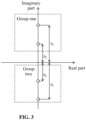
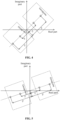
- FIGS. 2 to 5 An example of constellation point modulation symbols ⁇ S(n) ⁇ is provided in this embodiment.
- four modulation symbols ⁇ S(n) ⁇ may be divided into two groups.
- the modulus values of the modulation symbols in group one are different, which are r 3 and r 4 , respectively.
- the modulus values of the modulation symbols in group two are different, which are r 3 and r 4 , respectively.
- four modulation symbols ⁇ S(n) ⁇ may be divided into two groups.
- the modulus values of the modulation symbols in group one are different, which are r 5 and r 6 , respectively.
- the modulus values of the modulation symbols in group two are different, which are r 5 and r 6 , respectively.
- four modulation symbols ⁇ S(n) ⁇ may be divided into two groups.
- the modulus values of the modulation symbols in group one are different, which are r 7 and r 8 , respectively.
- the modulus values of the modulation symbols in group two are different, which are r 7 and r 8 , respectively.
- One group of constellation point modulation symbols ⁇ S(n) ⁇ provided in FIGS. 2 to 5 may be obtained by rotation of any group of constellation point modulation symbols ⁇ e j ⁇ S(n) ⁇ .
- ⁇ may be equal to any value.
- N/2 modulation symbols in group one have the same phase
- N/2 modulation symbols in group two have the same phase.
- the phase difference between the modulation symbols in group one and the modulation symbols in group two is ⁇ .
- the modulus values of the N/2 modulation symbols in group one are different
- the modulus values of the N/2 modulation symbols in group two are different.
- the modulus value of one modulation symbol in group one is equal to the modulus value of one modulation symbol in group two.
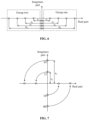
- eight modulation symbols ⁇ S(n) ⁇ may be divided into two groups.
- the modulus values of the modulation symbols in group one are different, which are r 1 , r 2 , r 3 , and r 4 , respectively.
- the modulus values of the modulation symbols in group two are different, which are r 1 , r 2 , r 3 , and r 4 , respectively.
- the phase difference between the modulation symbols in group one and the modulation symbols in group two is ⁇ .
- the modulus value of one modulation symbol in group one is equal to the modulus value of one modulation symbol in group two. That is, the modulus value r 1 of the modulation symbol in group one is equal to the modulus value r 1 of the modulation symbol in group two.
- the modulus value r 2 of the modulation symbol in group one is equal to the modulus value r 2 of the modulation symbol in group two.
- the modulus value r 3 of the modulation symbol in group one is equal to the modulus value r 3 of the modulation symbol in group two.
- the modulus value r 4 of the modulation symbol in group one is equal to the modulus value r 4 of the modulation symbol in group two.
- the minimum modulus value r 1 of modulation symbols in a group is greater than half of the minimum modulus value difference in the group. To further reduce the peak-to-average power ratio, the minimum modulus value r 1 of modulation symbols in a group may be greater than the minimum modulus value difference in the group.
- a data modulation method is provided in this embodiment.
- every two binary bits of data correspond to one constellation point in the constellation point modulation symbols ⁇ S(n) ⁇ . That is, 00 corresponds to -jr 4 , 01 corresponds to r 4 , 10 corresponds to -jr 3 , and 11 corresponds to r 3 .
- every two binary bits of data correspond to one constellation point in the constellation point modulation symbols ⁇ jS(n) ⁇ . That is, 00 corresponds to r 4 , 01 corresponds to -r 4 , 10 corresponds to r 3 , and 11 corresponds to -r 3 .
- d 0 of [00] is modulated by using a constellation point modulation symbol ⁇ S(n) ⁇ to obtain a data symbol s 0 of [-jr 4 ].
- d 1 of [00] is modulated by using the constellation point modulation symbol ⁇ jS(n) ⁇ to obtain a data symbol s 1 of [r 4 ].
- d 2 of [01] is modulated by using the constellation point modulation symbol ⁇ S(n) ⁇ to obtain a data symbol s 2 of [-jr 3 ].
- d 3 of [01] is modulated by using the constellation point modulation symbol ⁇ jS(n) ⁇ to obtain a data symbol s 3 of [r 3 ].
- d 4 of [10] is modulated by using the constellation point modulation symbol ⁇ S(n) ⁇ to obtain a data symbol s 4 of [jr 4 ].
- d 5 of [10] is modulated by using the constellation point modulation symbol ⁇ jS(n) ⁇ to obtain a data symbol ss of [-r 4 ].
- d 6 of [11] is modulated by using the constellation point modulation symbol ⁇ S(n) ⁇ to obtain a data symbol s 6 of [jr 3 ].
- d 7 of [11] is modulated by using the constellation point modulation symbol ⁇ jS(n) ⁇ to obtain a data symbol s 7 of [r 3 ].
- an example of a data modulation method is provided.
- k denotes the position number of the modulated data symbols
- k 0, 1, ..., K - 1.
- k 0 denotes the first data symbol.
- K denotes the number of the modulated data symbols.
- ⁇ ⁇ /2.
- a block diagram illustrating the structure of a transmitting end of a data modulation method is provided.
- a data sequence of binary bits through coding and constellation modulation that is, through a data modulation method, generates modulated data symbols.
- the modulated data symbols are transmitted on a radio frequency link.
- a data modulation apparatus is provided.
- the data modulation apparatus provided in this embodiment of the present application mainly includes a modulation module 101 and a transmission module 102.
- the modulation module 101 is configured to modulate a data sequence by using N constellation point modulation symbols ⁇ S(n) ⁇ .
- the N constellation point modulation symbols are divided into two groups of modulation symbols.
- the phase difference between the two groups of modulation symbols is a preset angle.
- n is any integer from 0 to N - 1.
- N is an even integer greater than or equal to 4.
- the transmission module 102 is configured to transmit, on a physical resource, data symbols obtained after modulation.
- one group of modulation symbols have the same phase, and the other group of modulation symbols have the same phase.
- the phase difference between the two groups of modulation symbols is 180°.
- the two groups of modulation symbols include the same number of modulation symbols, and the number of the modulation symbols is half of N.
- e is a natural constant
- j is an imaginary unit
- ⁇ is equal to ⁇ /2 or - ⁇ /2.
- the constellation point modulation symbols ⁇ S(n) ⁇ and the constellation point modulation symbols ⁇ e j ⁇ S(n) ⁇ after the phase change of ⁇ are different constellation point modulation symbol sets.
- modulating the data sequence by alternately using the constellation point modulation symbols ⁇ S(n) ⁇ and the constellation point modulation symbols ⁇ e j ⁇ S(n) ⁇ after the phase change of ⁇ includes modulating, by taking M binary bits of data as a unit, the data sequence by alternately using the constellation point modulation symbols ⁇ S(n) ⁇ and the constellation point modulation symbols ⁇ e j ⁇ S(n) ⁇ after the phase change of ⁇ .
- M is the logarithm to a base 2 of N.
- At least one binary bit of data in the M binary bits of data is modulated by different phases of the constellation point modulation symbols ⁇ S(n) ⁇ .
- modulating the data sequence by alternately using the constellation point modulation symbols ⁇ S(n) ⁇ and the constellation point modulation symbols ⁇ e j ⁇ S(n) ⁇ after the phase change of ⁇ includes modulating the data sequence by using constellation point modulation symbols ⁇ e j ⁇ k S(n) ⁇ carrying the position number of data symbols.
- k denotes the position numbers of data symbols, and k is any integer from 0 to K - 1.
- K denotes the number of data symbols obtained after the modulation.
- the modulus values of modulation symbols in each group are different.
- the modulus value of any modulation symbol in one group is equal to the modulus value of one modulation symbol in another group.
- the minimum modulus value of modulation symbols in each group is greater than half of the minimum modulus value difference in the group.
- the minimum modulus value of modulation symbols in each group is greater than the minimum modulus value difference in the group.
- the data symbols obtained after modulation are transmitted on the physical resource in the manner of transmitting the data symbols obtained after modulation on the time domain.
- the data symbols obtained after modulation are transmitted on the physical resource in the manner where after filtering and digital-to-analog conversion are performed, the data symbols obtained after modulation are transmitted on a radio frequency link.
- the data symbols obtained after modulation are transmitted on the physical resource in the manner where after DFT, IDFT, and digital-to-analog conversion are performed, the data symbols obtained after modulation are transmitted on a radio frequency link.
- the data modulation apparatus provided in this embodiment can execute the data modulation method provided in any embodiment of the present application and has corresponding functional modules and effects for executing the method.
- Technology details that are not described in detail in this embodiment may refer to the data modulation method provided in any embodiment of the present application.
- Units and modules involved in the embodiment of the preceding data modulation apparatus are just divided according to functional logic, and the division is not limited to this, as long as the corresponding functions can be implemented.
- the names of functional units are just intended for distinguishing and are not to limit the protection scope of the present application.
- FIG. 11 is a diagram illustrating the structure of a device according to an embodiment of the present application.
- the device includes a processor 111, a memory 112, an input apparatus 113, an output apparatus 114, and a communication apparatus 115.
- One or more processors 111 may be provided in the device.
- One processor 111 is taken as an example in FIG. 11 .
- the processor 111, the memory 112, the input apparatus 113, and the output apparatus 114 in the device may be connected by a bus or in other manners. Connecting by a bus is used as an example in FIG. 11 .
- the memory 112 may be configured to store software programs, computer-executable programs, and modules, such as program instructions/modules (for example, the modulation module 101 and the transmission module 102 that are in the data modulation apparatus) corresponding to the data modulation method in the embodiment of the present application.
- the processor 111 runs the software programs, instructions, and modules stored in the memory 112 to execute function applications and data processing of the device, that is, to implement the method provided in any embodiment of the present application.
- the memory 112 may mainly include a program storage region and a data storage region.
- the program storage region may store an operating system and an application program required by at least one function.
- the data storage region may store data created depending on use of a device.
- the memory 112 may include a high-speed random-access memory and may also include a nonvolatile memory such as at least one disk memory, a flash memory, or another nonvolatile solid-state memory.
- the memory 112 may include memories which are remotely disposed relative to the processor 111, and these remote memories may be connected to the device via a network. Examples of the preceding network include, but are not limited to, the Internet, an intranet, a local area network, a mobile communication network, and a combination thereof.
- the input apparatus 113 may be configured to receive inputted digital or character information and generate key signal input related to user settings and function control of the device.
- the output apparatus 114 may include display devices such as a display screen.
- the communication apparatus 115 may include a receiver and a sender.
- the communication apparatus 115 is configured to perform information transceiving communication under the control of the processor 111.
- an embodiment of the present application provides a storage medium including computer-executable instructions.
- the computer-executable instructions are used for executing a data modulation method when executed by a computer processor.
- the method includes the followings, a data sequence is modulated by using N constellation point modulation symbols ⁇ S(n) ⁇ , where the N constellation point modulation symbols are divided into two groups of modulation symbols, the phase difference between the two groups of modulation symbols is a preset angle, n is any integer from 0 to N - 1, and N is an even integer greater than or equal to 4; and data symbols obtained after modulation are transmitted on a physical resource.
- the computer-executable instructions execute not only the preceding method operations but also related operations in the data modulation method provided in any embodiment of the present application.
- the present application may be implemented by relying on both software and necessary general-purpose hardware, and also by relying on hardware.
- the technical solutions of the present application may essentially be embodied in the form of a software product.
- the software product in a computer may be stored in a computer-readable storage medium such as a floppy disk, read-only memory (ROM), random access memory (RAM), flash memory, hard disk, or compact disc in the computer and includes some instructions for enabling a computer device (which may be a personal computer, a server, or a network device) to execute the method of any embodiment of the present application.
- the term user terminal encompasses any appropriate type of wireless user equipment, such as a mobile phone, a portable data processing apparatus, a portable web browser, or a vehicle-mounted mobile station.
- multiple embodiments of the present application may be implemented in hardware, dedicated circuits, software, logics, or any combination thereof.
- some aspects may be implemented in hardware, and other aspects may be implemented in firmware or software that may be executed by a controller, a microprocessor, or another computing apparatus, though the present application is not limited thereto.
- the embodiments of the present application may be implemented by computer program instructions executed by a data processor of a mobile apparatus, for example, implemented in a processor entity, by hardware, or by a combination of software and hardware.
- the computer program instructions may be assembly instructions, instruction set architecture (ISA) instructions, machine instructions, machine-related instructions, microcodes, firmware instructions, status setting data, or source or object codes written in any combination of one or more programming languages.
- ISA instruction set architecture
- a block diagram of any logic flow among the drawings of the present application may represent program steps, may represent interconnected logic circuits, modules, and functions, or may represent a combination of program steps with logic circuits, modules, and functions.
- Computer programs may be stored in the memory.
- the memory may be of any type suitable for a local technical environment and may be implemented by using any suitable data storage technology, for example, but not limited to, a read-only memory (ROM), a random access memory (RAM), an optical memory apparatus and system (a digital video disc (DVD), or a compact disc (CD)).
- the computer-readable medium may include a non-transitory storage medium.
- the data processor may be of any type suitable to the local technical environment, for example, but not limited to, a general-purpose computer, a special-purpose computer, a microprocessor, a digital signal processing (DSP), an application specific integrated circuit (ASIC), a field-programmable gate array (FPGA), or a processor based on a multi-core processor architecture.
- a general-purpose computer for example, but not limited to, a general-purpose computer, a special-purpose computer, a microprocessor, a digital signal processing (DSP), an application specific integrated circuit (ASIC), a field-programmable gate array (FPGA), or a processor based on a multi-core processor architecture.
- DSP digital signal processing
- ASIC application specific integrated circuit
- FPGA field-programmable gate array
Landscapes
- Engineering & Computer Science (AREA)
- Computer Networks & Wireless Communication (AREA)
- Signal Processing (AREA)
- Physics & Mathematics (AREA)
- Discrete Mathematics (AREA)
- General Physics & Mathematics (AREA)
- Mathematical Physics (AREA)
- Digital Transmission Methods That Use Modulated Carrier Waves (AREA)
Applications Claiming Priority (2)
| Application Number | Priority Date | Filing Date | Title |
|---|---|---|---|
| CN202010576321.1A CN111901276A (zh) | 2020-06-22 | 2020-06-22 | 数据调制方法、装置、设备和存储介质 |
| PCT/CN2021/096221 WO2021258974A1 (zh) | 2020-06-22 | 2021-05-27 | 数据调制方法、装置、设备和存储介质 |
Publications (2)
| Publication Number | Publication Date |
|---|---|
| EP4170983A1 true EP4170983A1 (de) | 2023-04-26 |
| EP4170983A4 EP4170983A4 (de) | 2024-07-24 |
Family
ID=73207458
Family Applications (1)
| Application Number | Title | Priority Date | Filing Date |
|---|---|---|---|
| EP21828430.5A Pending EP4170983A4 (de) | 2020-06-22 | 2021-05-27 | Datenmodulationsverfahren und -vorrichtung sowie vorrichtung und speichermedium |
Country Status (6)
| Country | Link |
|---|---|
| US (1) | US12348348B2 (de) |
| EP (1) | EP4170983A4 (de) |
| JP (1) | JP2023530724A (de) |
| KR (1) | KR20230025900A (de) |
| CN (1) | CN111901276A (de) |
| WO (1) | WO2021258974A1 (de) |
Families Citing this family (3)
| Publication number | Priority date | Publication date | Assignee | Title |
|---|---|---|---|---|
| CN111901276A (zh) * | 2020-06-22 | 2020-11-06 | 中兴通讯股份有限公司 | 数据调制方法、装置、设备和存储介质 |
| CN115208727A (zh) * | 2021-04-13 | 2022-10-18 | 中兴通讯股份有限公司 | 符号发送、接收方法、发送设备、接收设备及存储介质 |
| CN118118306A (zh) * | 2022-11-29 | 2024-05-31 | 中兴通讯股份有限公司 | 数据调制方法、装置、介质及存储介质 |
Family Cites Families (13)
| Publication number | Priority date | Publication date | Assignee | Title |
|---|---|---|---|---|
| EP1953988B1 (de) * | 2007-01-30 | 2010-10-13 | Infineon Technologies AG | Sender für Kommunikationssysteme, die ein Modulationsschema benutzen |
| JP2009147637A (ja) | 2007-12-13 | 2009-07-02 | Panasonic Corp | 無線送信装置、無線送信方法および無線通信システム |
| US9935805B2 (en) | 2009-08-25 | 2018-04-03 | Qualcomm Incorporated | MIMO and MU-MIMO OFDM preambles |
| EP2757752B1 (de) | 2013-01-21 | 2019-03-13 | Mitsubishi Electric R&D Centre Europe B.V. | Verfahren und Vorrichtung zur Übertragung von Daten unter Verwendung einer hierarchischen Modulation mit gruppierten Konstellationspunkten |
| FR3021471B1 (fr) | 2014-05-23 | 2017-12-22 | Thales Sa | Procede de turbo-egalisation lineaire au sens large dans un contexte multi-utilisateurs et pour un recepteur multi-voies |
| US20180062904A1 (en) * | 2015-04-16 | 2018-03-01 | Lg Electronics Inc. | Symbol-mapping method and radio device for decreasing papr |
| CN106713213B (zh) * | 2015-07-25 | 2018-09-28 | 华为技术有限公司 | 一种数字调制方法、解调方法、相关装置和系统 |
| CN107846377B (zh) | 2016-09-19 | 2021-08-03 | 华为技术有限公司 | 传输数据的方法和装置 |
| US10211953B2 (en) * | 2017-02-07 | 2019-02-19 | Qualcomm Incorporated | Antenna diversity schemes |
| EP3364678A1 (de) | 2017-02-15 | 2018-08-22 | Nokia Solutions and Networks Oy | Verfahren und vorrichtungen zur funkdatenübertragung |
| CN110557219A (zh) | 2018-05-30 | 2019-12-10 | 华为技术有限公司 | 数字调制方法、解调方法、装置和通信系统 |
| US11153141B2 (en) * | 2019-03-15 | 2021-10-19 | Wisig Private Networks Limited | Methods and systems for generating a low peak-to-average power ratio (PAPR) data and reference signal |
| CN111901276A (zh) | 2020-06-22 | 2020-11-06 | 中兴通讯股份有限公司 | 数据调制方法、装置、设备和存储介质 |
-
2020
- 2020-06-22 CN CN202010576321.1A patent/CN111901276A/zh active Pending
-
2021
- 2021-05-27 EP EP21828430.5A patent/EP4170983A4/de active Pending
- 2021-05-27 KR KR1020237002357A patent/KR20230025900A/ko not_active Ceased
- 2021-05-27 WO PCT/CN2021/096221 patent/WO2021258974A1/zh not_active Ceased
- 2021-05-27 US US18/008,545 patent/US12348348B2/en active Active
- 2021-05-27 JP JP2022577692A patent/JP2023530724A/ja active Pending
Also Published As
| Publication number | Publication date |
|---|---|
| WO2021258974A1 (zh) | 2021-12-30 |
| US12348348B2 (en) | 2025-07-01 |
| KR20230025900A (ko) | 2023-02-23 |
| JP2023530724A (ja) | 2023-07-19 |
| EP4170983A4 (de) | 2024-07-24 |
| US20230216723A1 (en) | 2023-07-06 |
| CN111901276A (zh) | 2020-11-06 |
Similar Documents
| Publication | Publication Date | Title |
|---|---|---|
| US12348348B2 (en) | Data modulation method and apparatus, device, and storage medium | |
| US20230198822A1 (en) | Data sending and receiving method and apparatus | |
| CN110418220B (zh) | 一种广义频分复用系统、光纤信号的生成方法及装置 | |
| US20070098094A1 (en) | Peak-to-Average Power Ratio Reduction with Threshold Limited Selection for Coded OFDM Systems | |
| US11695609B2 (en) | Side information transmission method based on partial transmit sequence technology, and apparatus | |
| CN111262807B (zh) | 一种数据流复用的方法及终端 | |
| EP4254844A1 (de) | Signalkonfigurationsverfahren, -vorrichtung und -vorrichtung sowie speichermedium | |
| US20240250861A1 (en) | Data transmission method and apparatus, communication node, and storage medium | |
| US8630364B2 (en) | Termination techniques for multi-index continuous phase encoders for wireless networks | |
| KR101514982B1 (ko) | 무선 통신 시스템에서 데이터를 송신 및 수신하는 방법 및 이를 지원하는 장치 | |
| CN116471158B (zh) | 实现otfs调制和解调的方法、装置及系统 | |
| CN105656832A (zh) | 生成ofdm时域信号的方法和装置 | |
| US20250365185A1 (en) | Data modulation method and apparatus, and medium and storage medium | |
| CN108574555B (zh) | 干扰随机化方法及设备 | |
| US12267196B1 (en) | Method for processing OFDM signal, system for transmitting OFDM signal, and device | |
| CN113973039B (zh) | 一种数据处理方法、装置、设备和存储介质 | |
| WO2025218229A1 (zh) | 数据调制方法、通信设备及存储介质 | |
| WO2025218228A1 (zh) | 数据调制方法、通信设备及存储介质 | |
| WO2025218225A1 (zh) | 调制符号处理方法、第一通信节点、第二通信节点及介质 | |
| WO2025218224A1 (zh) | 调制符号处理方法、第一通信节点、第二通信节点及介质 | |
| WO2025175860A1 (zh) | 数据调制方法、通信节点及存储介质 | |
| CN120825375A (zh) | 调制符号处理方法、第一通信节点、第二通信节点及介质 | |
| CN117176535A (zh) | 信号的生成方法、装置、存储介质和计算机设备 | |
| CN115208727A (zh) | 符号发送、接收方法、发送设备、接收设备及存储介质 |
Legal Events
| Date | Code | Title | Description |
|---|---|---|---|
| STAA | Information on the status of an ep patent application or granted ep patent |
Free format text: STATUS: THE INTERNATIONAL PUBLICATION HAS BEEN MADE |
|
| PUAI | Public reference made under article 153(3) epc to a published international application that has entered the european phase |
Free format text: ORIGINAL CODE: 0009012 |
|
| STAA | Information on the status of an ep patent application or granted ep patent |
Free format text: STATUS: REQUEST FOR EXAMINATION WAS MADE |
|
| 17P | Request for examination filed |
Effective date: 20230120 |
|
| AK | Designated contracting states |
Kind code of ref document: A1 Designated state(s): AL AT BE BG CH CY CZ DE DK EE ES FI FR GB GR HR HU IE IS IT LI LT LU LV MC MK MT NL NO PL PT RO RS SE SI SK SM TR |
|
| DAV | Request for validation of the european patent (deleted) | ||
| DAX | Request for extension of the european patent (deleted) | ||
| A4 | Supplementary search report drawn up and despatched |
Effective date: 20240625 |
|
| RIC1 | Information provided on ipc code assigned before grant |
Ipc: H04L 27/34 20060101ALI20240619BHEP Ipc: H04L 27/20 20060101ALI20240619BHEP Ipc: H04L 1/00 20060101ALI20240619BHEP Ipc: H04L 27/26 20060101AFI20240619BHEP |
|
| STAA | Information on the status of an ep patent application or granted ep patent |
Free format text: STATUS: EXAMINATION IS IN PROGRESS |
|
| 17Q | First examination report despatched |
Effective date: 20251015 |