EP4170879B1 - Abwärtsunterstützter split-source-wandler - Google Patents
Abwärtsunterstützter split-source-wandler Download PDFInfo
- Publication number
- EP4170879B1 EP4170879B1 EP21204184.2A EP21204184A EP4170879B1 EP 4170879 B1 EP4170879 B1 EP 4170879B1 EP 21204184 A EP21204184 A EP 21204184A EP 4170879 B1 EP4170879 B1 EP 4170879B1
- Authority
- EP
- European Patent Office
- Prior art keywords
- link
- buck
- voltage
- source inverter
- split
- Prior art date
- Legal status (The legal status is an assumption and is not a legal conclusion. Google has not performed a legal analysis and makes no representation as to the accuracy of the status listed.)
- Active
Links
Images

Classifications
-
- H—ELECTRICITY
- H02—GENERATION; CONVERSION OR DISTRIBUTION OF ELECTRIC POWER
- H02M—APPARATUS FOR CONVERSION BETWEEN AC AND AC, BETWEEN AC AND DC, OR BETWEEN DC AND DC, AND FOR USE WITH MAINS OR SIMILAR POWER SUPPLY SYSTEMS; CONVERSION OF DC OR AC INPUT POWER INTO SURGE OUTPUT POWER; CONTROL OR REGULATION THEREOF
- H02M1/00—Details of apparatus for conversion
- H02M1/0067—Converter structures employing plural converter units, other than for parallel operation of the units on a single load
- H02M1/007—Plural converter units in cascade
-
- H—ELECTRICITY
- H02—GENERATION; CONVERSION OR DISTRIBUTION OF ELECTRIC POWER
- H02M—APPARATUS FOR CONVERSION BETWEEN AC AND AC, BETWEEN AC AND DC, OR BETWEEN DC AND DC, AND FOR USE WITH MAINS OR SIMILAR POWER SUPPLY SYSTEMS; CONVERSION OF DC OR AC INPUT POWER INTO SURGE OUTPUT POWER; CONTROL OR REGULATION THEREOF
- H02M1/00—Details of apparatus for conversion
- H02M1/0048—Circuits or arrangements for reducing losses
- H02M1/0054—Transistor switching losses
- H02M1/0058—Transistor switching losses by employing soft switching techniques, i.e. commutation of transistors when applied voltage is zero or when current flow is zero
-
- H—ELECTRICITY
- H02—GENERATION; CONVERSION OR DISTRIBUTION OF ELECTRIC POWER
- H02M—APPARATUS FOR CONVERSION BETWEEN AC AND AC, BETWEEN AC AND DC, OR BETWEEN DC AND DC, AND FOR USE WITH MAINS OR SIMILAR POWER SUPPLY SYSTEMS; CONVERSION OF DC OR AC INPUT POWER INTO SURGE OUTPUT POWER; CONTROL OR REGULATION THEREOF
- H02M1/00—Details of apparatus for conversion
- H02M1/0095—Hybrid converter topologies, e.g. NPC mixed with flying capacitor, thyristor converter mixed with MMC or charge pump mixed with buck
-
- H—ELECTRICITY
- H02—GENERATION; CONVERSION OR DISTRIBUTION OF ELECTRIC POWER
- H02M—APPARATUS FOR CONVERSION BETWEEN AC AND AC, BETWEEN AC AND DC, OR BETWEEN DC AND DC, AND FOR USE WITH MAINS OR SIMILAR POWER SUPPLY SYSTEMS; CONVERSION OF DC OR AC INPUT POWER INTO SURGE OUTPUT POWER; CONTROL OR REGULATION THEREOF
- H02M3/00—Conversion of DC power input into DC power output
- H02M3/02—Conversion of DC power input into DC power output without intermediate conversion into AC
- H02M3/04—Conversion of DC power input into DC power output without intermediate conversion into AC by static converters
- H02M3/10—Conversion of DC power input into DC power output without intermediate conversion into AC by static converters using discharge tubes with control electrode or semiconductor devices with control electrode
- H02M3/145—Conversion of DC power input into DC power output without intermediate conversion into AC by static converters using discharge tubes with control electrode or semiconductor devices with control electrode using devices of a triode or transistor type requiring continuous application of a control signal
- H02M3/155—Conversion of DC power input into DC power output without intermediate conversion into AC by static converters using discharge tubes with control electrode or semiconductor devices with control electrode using devices of a triode or transistor type requiring continuous application of a control signal using semiconductor devices only
- H02M3/156—Conversion of DC power input into DC power output without intermediate conversion into AC by static converters using discharge tubes with control electrode or semiconductor devices with control electrode using devices of a triode or transistor type requiring continuous application of a control signal using semiconductor devices only with automatic control of output voltage or current, e.g. switching regulators
- H02M3/158—Conversion of DC power input into DC power output without intermediate conversion into AC by static converters using discharge tubes with control electrode or semiconductor devices with control electrode using devices of a triode or transistor type requiring continuous application of a control signal using semiconductor devices only with automatic control of output voltage or current, e.g. switching regulators including plural semiconductor devices as final control devices for a single load
- H02M3/1582—Buck-boost converters
-
- H—ELECTRICITY
- H02—GENERATION; CONVERSION OR DISTRIBUTION OF ELECTRIC POWER
- H02M—APPARATUS FOR CONVERSION BETWEEN AC AND AC, BETWEEN AC AND DC, OR BETWEEN DC AND DC, AND FOR USE WITH MAINS OR SIMILAR POWER SUPPLY SYSTEMS; CONVERSION OF DC OR AC INPUT POWER INTO SURGE OUTPUT POWER; CONTROL OR REGULATION THEREOF
- H02M7/00—Conversion of AC power input into DC power output; Conversion of DC power input into AC power output
- H02M7/42—Conversion of DC power input into AC power output without possibility of reversal
- H02M7/44—Conversion of DC power input into AC power output without possibility of reversal by static converters
- H02M7/48—Conversion of DC power input into AC power output without possibility of reversal by static converters using discharge tubes with control electrode or semiconductor devices with control electrode
- H02M7/53—Conversion of DC power input into AC power output without possibility of reversal by static converters using discharge tubes with control electrode or semiconductor devices with control electrode using devices of a triode or transistor type requiring continuous application of a control signal
- H02M7/537—Conversion of DC power input into AC power output without possibility of reversal by static converters using discharge tubes with control electrode or semiconductor devices with control electrode using devices of a triode or transistor type requiring continuous application of a control signal using semiconductor devices only, e.g. single switched pulse inverters
- H02M7/5387—Conversion of DC power input into AC power output without possibility of reversal by static converters using discharge tubes with control electrode or semiconductor devices with control electrode using devices of a triode or transistor type requiring continuous application of a control signal using semiconductor devices only, e.g. single switched pulse inverters in a bridge configuration
-
- H—ELECTRICITY
- H02—GENERATION; CONVERSION OR DISTRIBUTION OF ELECTRIC POWER
- H02M—APPARATUS FOR CONVERSION BETWEEN AC AND AC, BETWEEN AC AND DC, OR BETWEEN DC AND DC, AND FOR USE WITH MAINS OR SIMILAR POWER SUPPLY SYSTEMS; CONVERSION OF DC OR AC INPUT POWER INTO SURGE OUTPUT POWER; CONTROL OR REGULATION THEREOF
- H02M7/00—Conversion of AC power input into DC power output; Conversion of DC power input into AC power output
- H02M7/66—Conversion of AC power input into DC power output; Conversion of DC power input into AC power output with possibility of reversal
- H02M7/68—Conversion of AC power input into DC power output; Conversion of DC power input into AC power output with possibility of reversal by static converters
- H02M7/72—Conversion of AC power input into DC power output; Conversion of DC power input into AC power output with possibility of reversal by static converters using discharge tubes with control electrode or semiconductor devices with control electrode
- H02M7/79—Conversion of AC power input into DC power output; Conversion of DC power input into AC power output with possibility of reversal by static converters using discharge tubes with control electrode or semiconductor devices with control electrode using devices of a triode or transistor type requiring continuous application of a control signal
- H02M7/797—Conversion of AC power input into DC power output; Conversion of DC power input into AC power output with possibility of reversal by static converters using discharge tubes with control electrode or semiconductor devices with control electrode using devices of a triode or transistor type requiring continuous application of a control signal using semiconductor devices only
-
- Y—GENERAL TAGGING OF NEW TECHNOLOGICAL DEVELOPMENTS; GENERAL TAGGING OF CROSS-SECTIONAL TECHNOLOGIES SPANNING OVER SEVERAL SECTIONS OF THE IPC; TECHNICAL SUBJECTS COVERED BY FORMER USPC CROSS-REFERENCE ART COLLECTIONS [XRACs] AND DIGESTS
- Y02—TECHNOLOGIES OR APPLICATIONS FOR MITIGATION OR ADAPTATION AGAINST CLIMATE CHANGE
- Y02E—REDUCTION OF GREENHOUSE GAS [GHG] EMISSIONS, RELATED TO ENERGY GENERATION, TRANSMISSION OR DISTRIBUTION
- Y02E10/00—Energy generation through renewable energy sources
- Y02E10/50—Photovoltaic [PV] energy
- Y02E10/56—Power conversion systems, e.g. maximum power point trackers
Definitions
- the present invention relates to an inverter, and particularly to a split-source inverter having a fuel cell as a source of energy.
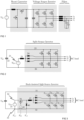
- FC systems require a two-stage power conditioning stage, where a DC-DC converter is utilized before the DC-AC converter in order to achieve the right voltage levels for either LV or MV AC grid integration as shown in Figure 1 .
- a DC-DC converter is utilized before the DC-AC converter in order to achieve the right voltage levels for either LV or MV AC grid integration as shown in Figure 1 .
- an isolating or step-up transformer can be utilized.
- SSI split-source inverter
- Figure 2 Another approach is to utilize a single-stage solution, such as the split-source inverter (SSI) shown in Figure 2 , in which the boosting capability is integrated within the inversion operation.
- This integrated solution uses the inverter switches with the addition diodes connected to a common inductor to achieve the boosting properties, i.e. it avoids the utilization of extra active switches and gate drive circuits.
- the operation of the SSI is described in A. Abdelhakim, P. Mattavelli and G. Spiazzi, "Three-Phase Split-Source Inverter (SSI): Analysis and Modulation," in IEEE Transactions on Power Electronics, vol. 31, no. 11, pp. 7451-7461, Nov. 2016 .
- This inverter uses at least one of the lower semiconductor switches to charge the input inductor, while using only one state to discharge this inductor over the inverter dc-link when all the upper switches are ON.
- the operation of the three-phase SSI does not require any special pulses to be generated or modifications of the standard modulation schemes of the voltage source inverter (VSI) for its basic operation. Hence, the same modulation schemes of the VSI can be applied to the SSI.
- An object of the present invention is to provide a buck-assisted split-source converter so as to alleviate the above disadvantage relating to utilization of the voltage.
- the object of the invention is achieved by an inverter circuit which characterized by what is stated in the independent claim.
- the preferred embodiments of the invention are disclosed in the dependent claims.
- the invention is based on the idea of modifying the configuration of the SSI circuit with minimum amount of additional components and without affecting the modulation of the inverter circuit.
- the circuit of the invention With the circuit of the invention voltage stresses of the inverter switch components are reduced and at the same time DC-link utilization is increased when compared to known SSI configuration. These advantages together with standard modulation of the inverter lead to a structure which is more efficient in use. Especially in connection with low voltage sources, such as fuel cells, the circuit of the invention provides efficient DC to AC conversion.
- Figure 1 shows a configuration for feeding electrical energy to a grid from a fuel cell.
- a DC voltage V dc from a voltage source such as a fuel cell
- a boost converter In the second stage the boosted voltage is inverted with a voltage source inverter to a three phase AC voltage.
- a filter When feeding the voltage to the grid, a filter is also applied to smooth the voltage generated by the inverter.
- Figure 2 shows a known split-source inverter with a fuel cell 21.
- a split source inverter has a voltage source inverter bridge which is connected between the voltage of a DC link.
- DC link of Figure 2 has a capacitor 22 to sustain the voltage of the DC link. The voltage of the DC link is used to produce alternating voltage using the switches of the inverter bridge.
- a voltage from a voltage source 21 is boosted using the switch components of the inverter and an additional inductor 23. Further, additional diodes 24 are needed such that the DC link is not shorted.
- a fuel cell is provided as a voltage source 21 having voltage V FC .
- the inverter bridge formed of three parallel inverter legs, are modulated such that either upper or lower semiconductor switch of a phase is active. That is, the output voltages v a , v b , v c are formed of voltages of DC link using the upper or lower semiconductor switches.
- the upper switches are connected to positive rail 25 of the DC link and the lower switches are connected to negative rail 26 of the DC link.
- the inductor When during the modulation of the switches of the inverter a state in which all the upper switches are conductive is selected, the inductor is discharged and pushes current through the switch components to the capacitor 22, and thereby charges the capacitor. Such a state is typically reached during normal modulation scheme, and additional measures to charge the capacitor are not required.
- the voltage of the voltage source 21 is effectively boosted with the switch components of the inverter bridge during modulation of the switch components.
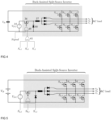
- FIG. 3 shows a main circuit of the present invention.
- the buck-assisted split-source inverter comprising a DC link having two voltage rails 31, 32 and at least two pairs of series connected switches with antiparallel connected diodes between the rails of the DC link, the center points of the series connected switches forming the phase outputs of the inverter
- FIG. 3 a three-phase inverter bridge is shown having upper switch components S a,u , S b,u , S c,u and lower switch components S a,l , S b,l , S c,l .
- each switch component of the inverter bridge has also a parallel connected diode to enable flow of current to both directions.
- the center points of the switches form phase outputs of the inverter.
- the output voltages being denoted as v a , v b , and Vc.
- the buck-assisted split-source inverter comprises a first connection point 33 and a second connection point 34 for receiving voltage terminals of a fuel cell, one of the two voltage rails forming the first connection point 33.
- the buck-assisted split-source inverter is shown with a fuel cell 35 connected to the circuit.
- the connection points 33, 34 are provided in the circuit for receiving the fuel cells and are thus terminals for connecting voltage outputs of a fuel cell.
- the first connecting point is shown to be the DC voltage rail 32, which is the negative voltage rail of the DC link. In another embodiment discussed below, the first connecting point is the positive voltage rail 31.
- the buck-assisted split-source inverter comprises further a switch component 36 and an inductor 37 connected in series.
- the series connection has a first end formed of a terminal of the switch component 36 and a second end formed of a terminal of the inductor 37 The first end of the series connection forms the second connection point 34 for receiving a voltage terminal of a fuel cell.
- the inverter of the invention comprises at least two first diodes 39 having one of their corresponding terminals connected together and to the second end of the series connection of the switch component and the inductor.
- the other terminals of the at least two first diodes 39 being connected to separate phase outputs of the inverter.
- Figure 3 shows an embodiment with three phases and therefore also three first diodes 39.
- the diodes are connected such that their anodes are connected to the inductor, allowing current to pass from the inductor towards the inverter bridge.
- Figure 3 further shows a second diode 40 having first and second terminals, the first terminal being connected to the point between the switch component 36 and the inductor 37.
- the second terminal of the second diode 40 connected to the voltage rail 32 forming the first connection point 33, the polarity of the second diode corresponding to the polarities of the at least two first diodes such that a current path is formed through the second diode and the at least two first diodes.
- the polarity of the diode blocks the voltage of the point between the switch component 36.
- the switch component 36 of the invention is adapted to be controlled conductive when any one of the switches connected to voltage rail forming the first connection point 33 is controlled conductive.
- the switch component 36 when any one of the lower switches S a,l , S b,l , S a,l is controlled conductive, the switch component 36 is also controlled conductive. In Figure 3 , this is shown as an OR circuit 41 which receives control signals of the lower switches and outputs the logical OR of the inputted signals as a control signal for the switch component 36.
- the circuit of the invention differs from the known structure in that it comprises the switch component 36 and the second diode 40.
- the operation of the circuit of the invention corresponds to the known structure except that the switch component 36 is controlled conductive when any of the switches connected to the first connection point is controlled conductive.
- a three phase inverter can produce eight different switching states which may also be called output voltage vectors. From these states two are zero states in which either all of the upper switches or all of the lower switches are conductive, and the voltage between the output phases of the inverter is zero.
- the switch component 36 is also not conducting, and the current flows through the second diode 40.
- the voltage conversion gain can be further modified due to the extra degree of freedom in modulating the switch component 36. This can result in reduced voltage stresses across the DC-link in order to obtain the same AC voltage.
- Figure 4 shows another embodiment of the invention.
- the control of the switch 36 is affected by an additional control signal Signal.
- An AND gate 45 is shown to provide control to the switch 36, and the inputs to the AND gate are the additional control signal and the output of an OR gate 41.
- the OR gate receives control information from the lower switches similarly as in connection with the embodiment of Figure 3 .
- the switch component 36 is controlled conductive if anyone of the lower switch components are controlled conductive and if the additional control signal is in a logical high state.
- the switch component 36 can be set in a blocking state although one of the lower switches is controlled conductive.
- the control signal is kept active, the control information from the lower semiconductor switches is passed to the swich component.
- the switch 36 can be controlled to a blocking state.
- the current path through the lower switch components charge the inductor 37 from the voltage of the fuel cell 35. If the current path from the fuel cell is opened with the switch component when current is flowing trough the lower semiconductor switches, the current path is changed to the diode 40, and the current is being pushed from the inductor 37. As the inductor is discharged through the diode 40, the energy for the next charging cycle of the DC link is reduced.
- the additional signal Signal enables therefore to lower the DC link voltage.
- the lowering of the DC link voltage may lead to higher utilization of the DC link voltage as a higher modulation index can be employed in the control of the inverter bridge.
- the voltage of the DC voltage link is supported by capacitor 42 which is charged during the operation from the fuel cell.
- Figure 5 shows another embodiment, in which a battery or a battery unit is connected to the DC link. During operation, the battery is charged and discharged.
- FIG. 6 shows another embodiment of the invention.
- a separate boost converter is connected to the DC link.
- Voltage to the boost converter is obtained from a battery or a battery unit.
- the boost converter is operated in a known manner to control the voltage of the DC link.
- the boost converter is operated such that a fixed DC voltage is obtained in the DC link.
- the DC link voltage is sustained using a supercapacitor.
- the battery or battery unit of Figure 6 is replaced with a supercapacitor.
- FIG. 7 shows another embodiment of the invention, in which a boost converter is used to control the DC link voltage as in Figure 6 .
- a battery or battery unit with voltage V B is connected to the output of the boost converter and thereby also to the input of the split-source inverter.
- a super capacitor with voltage Vsc is connected to feed power to the boost converter.
- fuel cell, batteries and supercapacitors can be integrated with minimal converter requirements.
- the input terminals for the fuel cell are provided such that one of the input terminal is the negative DC link.
- the first connection point is formed of a negative voltage rail of the DC link, the anodes of the at least two first diodes are connected together and the anode of the second diode being connected to the negative voltage rail of the DC link.
- the first connection point is formed of a positive voltage rail of the DC link, the cathodes of the at least two first diodes being connected together and the cathode of the second diode being connected to the positive voltage rail of the DC link.
- the fuel cell is adapted to be connected to the positive voltage rail from it's positive output.
- the state of the output voltage in which the energy storage of the DC link is charged is when all of the lower semiconductor switches of the inverter bridge are controlled conductive. Further, the inductor is charged and the switch component is controlled conductive when any of the upper switches of the inverter bridge is controlled conductive.
- the embodiments of the invention presented in Figures 6 and 7 enable to integrate different energy sources to a converter structure.
- the additional boost converter in the input of the buck-assisted split-source converter may be controlled with different control schemes.
- the high-level control of the split-source converter and the additional boost converter may be synchronized to take into account the different energy sources used in the structure.
- the invention and its embodiments are not limited to the examples described above but may vary within the scope of the claims.
Landscapes
- Engineering & Computer Science (AREA)
- Power Engineering (AREA)
- Dc-Dc Converters (AREA)
- Inverter Devices (AREA)
Claims (8)
- Abwärtsunterstützter Split-Source-Wandler, umfassend:einen Zwischenkreis, der zwei Spannungsschienen (31, 32) aufweist,mindestens zwei Paare von in Reihe geschalteten Schaltern (Sa,u, Sb,u, Sc,u, Sa,l, Sb,l, Sc,l) mit antiparallelen Dioden, die zwischen den Schienen (31, 32) des Zwischenkreises verbunden sind, wobei die Mittelpunkte der in Reihe geschalteten Schalter (Sa,u, Sb,u, Sc,u, Sa,l, Sb,l, Sc,l) die Phasenausgänge des Wandlers bilden,einen ersten Anschlusspunkt (33) und einen zweiten Anschlusspunkt (34) zum Aufnehmen von Spannungsanschlüssen einer Brennstoffzelle (35), wobei eine der zwei Spannungsschienen (31, 32) den ersten Anschlusspunkt (33) bildet,eine Schaltkomponente (36) und eine Induktivität (37), die in Reihe geschaltet sind und ein erstes Ende, das aus einem Anschluss der Schaltkomponente (36) gebildet ist, und ein zweites Ende, das aus einem Anschluss der Induktivität (37) gebildet ist, aufweisen, wobei das erste Ende den zweiten Anschlusspunkt (34) zum Aufnehmen eines Spannungsanschlusses einer Brennstoffzelle (35) bildet,mindestens zwei erste Dioden (39), bei denen einer ihrer entsprechenden Anschlüsse miteinander und mit dem zweiten Ende der Reihenschaltung der Schaltkomponente (36) und der Induktivität (37) verbunden ist, und wobei die anderen Anschlüsse der mindestens zwei ersten Dioden (39) mit separaten Phasenausgängen des Wandlers verbunden sind,eine zweite Diode (40), die einen ersten und einen zweiten Anschluss aufweist, wobei der erste Anschluss mit dem Punkt zwischen der Schaltkomponente (36) und der Induktivität (37) verbunden ist und der zweite Anschluss mit der Spannungsschiene verbunden ist, wodurch der erste Anschlusspunkt (33) gebildet wird, wobei die Polarität der zweiten Diode (40) den Polaritäten der mindestens zwei ersten Dioden (39) entspricht, sodass ein Strompfad durch die zweite Diode (40) und die mindestens zwei ersten Dioden (39) gebildet wird,wobei die Schaltkomponente (36) dafür konzipiert ist, leitfähig gesteuert zu werden, wenn ein beliebiger der unteren Schalter (Sa,l, Sb,l, Sc,l), die mit der Spannungsschiene verbunden sind, wodurch der erste Anschlusspunkt (33) gebildet wird, leitfähig gesteuert wird.
- Abwärtsunterstützter Split-Source-Wandler nach Anspruch 1, wobei der erste Anschlusspunkt (33) aus einer negativen Spannungsschiene (32) des Zwischenkreises gebildet ist, wobei die Anoden der mindestens zwei ersten Dioden (39) miteinander verbunden sind und die Anode der zweiten Diode (40) mit der negativen Spannungsschiene (32) des Zwischenkreises verbunden ist.
- Abwärtsunterstützter Split-Source-Wandler nach Anspruch 1, wobei der erste Anschlusspunkt aus einer positiven Spannungsschiene (31) des Zwischenkreises gebildet ist, wobei die Kathoden der mindestens zwei ersten Dioden (39) miteinander verbunden sind und die Kathode der zweiten Diode (40) mit der positiven Spannungsschiene (31) des Zwischenkreises verbunden ist.
- Abwärtsunterstützter Split-Source-Wandler nach Anspruch 1, 2 oder 3, wobei die Schaltkomponente (36) dafür konzipiert ist, leitfähig gesteuert zu werden, wenn ein beliebiger der Schalter, die mit der Spannungsschiene verbunden sind, wodurch der erste Anschlusspunkt (33) gebildet wird, leitfähig gesteuert wird und wenn ein Steuersignal aktiv ist.
- Abwärtsunterstützter Split-Source-Wandler nach einem der Ansprüche 1 bis 4, wobei der Zwischenkreis des abwärtsunterstützten Split-Source-Wandlers einen Kondensator, der zwischen den Schienen (31, 32) des Zwischenkreises verbunden ist, umfasst.
- Abwärtsunterstützter Split-Source-Wandler nach einem der Ansprüche 1 bis 4, wobei der Zwischenkreis des abwärtsunterstützten Split-Source-Wandlers eine Batterie, die zwischen den Schienen (31, 32) des Zwischenkreises verbunden ist, umfasst.
- Abwärtsunterstützter Split-Source-Wandler nach einem der Ansprüche 1 bis 6, wobei der abwärtsunterstützte Split-Source-Wandler einen Boost-Wandler, der mit dem Zwischenkreis verbunden ist, umfasst, wobei der Boost-Wandler Leistung von einer Batterie oder einem Superkondensator aufnimmt.
- Abwärtsunterstützter Split-Source-Wandler nach Anspruch 7, wobei der Zwischenkreis eine Batterie, die zwischen den Schienen (31, 32) des Zwischenkreises verbunden ist, umfasst, wobei die Batterie mit dem Ausgang des Boost-Wandlers verbunden ist.
Priority Applications (3)
| Application Number | Priority Date | Filing Date | Title |
|---|---|---|---|
| EP21204184.2A EP4170879B1 (de) | 2021-10-22 | 2021-10-22 | Abwärtsunterstützter split-source-wandler |
| US18/048,804 US11962244B2 (en) | 2021-10-22 | 2022-10-21 | Buck-assisted split-source inverter |
| CN202211295698.5A CN116015087A (zh) | 2021-10-22 | 2022-10-21 | 降压辅助分裂源逆变器 |
Applications Claiming Priority (1)
| Application Number | Priority Date | Filing Date | Title |
|---|---|---|---|
| EP21204184.2A EP4170879B1 (de) | 2021-10-22 | 2021-10-22 | Abwärtsunterstützter split-source-wandler |
Publications (3)
| Publication Number | Publication Date |
|---|---|
| EP4170879A1 EP4170879A1 (de) | 2023-04-26 |
| EP4170879C0 EP4170879C0 (de) | 2024-07-17 |
| EP4170879B1 true EP4170879B1 (de) | 2024-07-17 |
Family
ID=78371953
Family Applications (1)
| Application Number | Title | Priority Date | Filing Date |
|---|---|---|---|
| EP21204184.2A Active EP4170879B1 (de) | 2021-10-22 | 2021-10-22 | Abwärtsunterstützter split-source-wandler |
Country Status (3)
| Country | Link |
|---|---|
| US (1) | US11962244B2 (de) |
| EP (1) | EP4170879B1 (de) |
| CN (1) | CN116015087A (de) |
Families Citing this family (3)
| Publication number | Priority date | Publication date | Assignee | Title |
|---|---|---|---|---|
| CN116633185B (zh) * | 2023-07-19 | 2023-11-10 | 南京理工大学 | 一种升压型并网逆变器及其控制方法 |
| CN117811402B (zh) * | 2023-12-27 | 2025-02-14 | 南京理工大学 | 一种升压型三端口储能逆变器及其控制方法 |
| CN117691887B (zh) * | 2024-01-31 | 2024-04-19 | 湖南大学 | 一种超级电容储能型高过载单相逆变器电路及其控制方法 |
Family Cites Families (5)
| Publication number | Priority date | Publication date | Assignee | Title |
|---|---|---|---|---|
| KR101653837B1 (ko) * | 2009-12-24 | 2016-09-02 | 두산인프라코어 주식회사 | 하이브리드 산업용 차량의 전력변환장치 |
| DE102017201155A1 (de) * | 2017-01-25 | 2018-07-26 | Robert Bosch Gmbh | Anordnung zum Übertragen elektrischer Energie, Antriebsstrang und Arbeitsvorrichtung |
| US10381951B1 (en) * | 2018-11-30 | 2019-08-13 | The Florida International University Board Of Trustees | Family of modular quasi-resonant inverters |
| EP4065405B1 (de) * | 2019-11-27 | 2024-08-07 | ABB Schweiz AG | Bordantriebsstrang für agv |
| CN113517824B (zh) * | 2021-06-24 | 2022-07-22 | 南京航空航天大学 | 一种单相单级式六开关双输出分裂源升压逆变器 |
-
2021
- 2021-10-22 EP EP21204184.2A patent/EP4170879B1/de active Active
-
2022
- 2022-10-21 CN CN202211295698.5A patent/CN116015087A/zh active Pending
- 2022-10-21 US US18/048,804 patent/US11962244B2/en active Active
Also Published As
| Publication number | Publication date |
|---|---|
| EP4170879C0 (de) | 2024-07-17 |
| EP4170879A1 (de) | 2023-04-26 |
| CN116015087A (zh) | 2023-04-25 |
| US20230125181A1 (en) | 2023-04-27 |
| US11962244B2 (en) | 2024-04-16 |
Similar Documents
| Publication | Publication Date | Title |
|---|---|---|
| US11962244B2 (en) | Buck-assisted split-source inverter | |
| Zhao et al. | A hybrid nine-level inverter with reduced components and simplified control | |
| JP2007166783A (ja) | 電力変換装置 | |
| JP5132797B2 (ja) | 電力変換装置 | |
| US20250373067A1 (en) | Multiple input converter and an uninterruptible power supply including the same | |
| CN100426644C (zh) | 功率变换装置 | |
| Bughneda et al. | A single-phase multilevel inverter with reduced switch count for solar PV application | |
| Wageh et al. | A high gain split-source inverter with reduced input current ripple | |
| Dhasharatha et al. | A capacitor-based boost nine-level inverter with less switching device count | |
| Cheng et al. | Hot-swappable grid-connected multilevel converter for battery energy storage system | |
| Koduri et al. | A nine level quadruple boost inverter with reduced switch count for stand alone PV applications | |
| Asapu et al. | Dual switch High Gain Boost Converter for DC microgrid Applications | |
| Salary et al. | Multi-stage DC-AC converter based on new DC-DC converter for energy conversion | |
| Roy et al. | A novel step-up multilevel inverter based on switched-capacitor technique for renewable energy conversion system | |
| Sandeep et al. | Switched-capacitor-based three-phase five-level inverter topology with reduced components | |
| Eswar et al. | THD Analysis of Hybrid Switched-Capacitor Integrated Multilevel Inverter Using Level-Shifted Modulation Techniques | |
| Shaw et al. | Switched-inductor based high voltage gain step-up DC-DC converter for photovoltaic micro-inverter application | |
| Neti et al. | Common ground single-phase single-stage transformerless inverter five levels using reduced components and switched capacitor cell | |
| Patel et al. | A Novel Switched Capacitors Based Multilevel Boost Inverter With Single DC Source For Three Phase Applications | |
| Faraji et al. | Switching-cell paralleled H-bridge multilevel current source inverter | |
| US12407274B2 (en) | Inverter topology circuit | |
| US20230253879A1 (en) | Charger, a multiplexing current conversion circuit and an uninterruptible power supply including the same | |
| US20240195178A1 (en) | Power conversion device and control method thereof | |
| Singh et al. | A review analysis of switched-capacitor-based inverters with different output voltage levels | |
| US20210143753A1 (en) | Multiphase Current-Fed Modular Multilevel Converter |
Legal Events
| Date | Code | Title | Description |
|---|---|---|---|
| PUAI | Public reference made under article 153(3) epc to a published international application that has entered the european phase |
Free format text: ORIGINAL CODE: 0009012 |
|
| STAA | Information on the status of an ep patent application or granted ep patent |
Free format text: STATUS: THE APPLICATION HAS BEEN PUBLISHED |
|
| AK | Designated contracting states |
Kind code of ref document: A1 Designated state(s): AL AT BE BG CH CY CZ DE DK EE ES FI FR GB GR HR HU IE IS IT LI LT LU LV MC MK MT NL NO PL PT RO RS SE SI SK SM TR |
|
| STAA | Information on the status of an ep patent application or granted ep patent |
Free format text: STATUS: REQUEST FOR EXAMINATION WAS MADE |
|
| 17P | Request for examination filed |
Effective date: 20230914 |
|
| RBV | Designated contracting states (corrected) |
Designated state(s): AL AT BE BG CH CY CZ DE DK EE ES FI FR GB GR HR HU IE IS IT LI LT LU LV MC MK MT NL NO PL PT RO RS SE SI SK SM TR |
|
| GRAP | Despatch of communication of intention to grant a patent |
Free format text: ORIGINAL CODE: EPIDOSNIGR1 |
|
| STAA | Information on the status of an ep patent application or granted ep patent |
Free format text: STATUS: GRANT OF PATENT IS INTENDED |
|
| RIC1 | Information provided on ipc code assigned before grant |
Ipc: H02M 7/797 20060101ALN20240123BHEP Ipc: H02M 3/158 20060101ALI20240123BHEP Ipc: H02M 7/5387 20070101ALI20240123BHEP Ipc: H02M 1/00 20060101AFI20240123BHEP |
|
| INTG | Intention to grant announced |
Effective date: 20240213 |
|
| GRAS | Grant fee paid |
Free format text: ORIGINAL CODE: EPIDOSNIGR3 |
|
| GRAA | (expected) grant |
Free format text: ORIGINAL CODE: 0009210 |
|
| STAA | Information on the status of an ep patent application or granted ep patent |
Free format text: STATUS: THE PATENT HAS BEEN GRANTED |
|
| AK | Designated contracting states |
Kind code of ref document: B1 Designated state(s): AL AT BE BG CH CY CZ DE DK EE ES FI FR GB GR HR HU IE IS IT LI LT LU LV MC MK MT NL NO PL PT RO RS SE SI SK SM TR |
|
| REG | Reference to a national code |
Ref country code: CH Ref legal event code: EP |
|
| REG | Reference to a national code |
Ref country code: DE Ref legal event code: R096 Ref document number: 602021015747 Country of ref document: DE |
|
| REG | Reference to a national code |
Ref country code: IE Ref legal event code: FG4D |
|
| U01 | Request for unitary effect filed |
Effective date: 20240813 |
|
| U07 | Unitary effect registered |
Designated state(s): AT BE BG DE DK EE FI FR IT LT LU LV MT NL PT RO SE SI Effective date: 20240902 |
|
| U20 | Renewal fee for the european patent with unitary effect paid |
Year of fee payment: 4 Effective date: 20241025 |
|
| PG25 | Lapsed in a contracting state [announced via postgrant information from national office to epo] |
Ref country code: NO Free format text: LAPSE BECAUSE OF FAILURE TO SUBMIT A TRANSLATION OF THE DESCRIPTION OR TO PAY THE FEE WITHIN THE PRESCRIBED TIME-LIMIT Effective date: 20241017 |
|
| PG25 | Lapsed in a contracting state [announced via postgrant information from national office to epo] |
Ref country code: GR Free format text: LAPSE BECAUSE OF FAILURE TO SUBMIT A TRANSLATION OF THE DESCRIPTION OR TO PAY THE FEE WITHIN THE PRESCRIBED TIME-LIMIT Effective date: 20241018 Ref country code: PL Free format text: LAPSE BECAUSE OF FAILURE TO SUBMIT A TRANSLATION OF THE DESCRIPTION OR TO PAY THE FEE WITHIN THE PRESCRIBED TIME-LIMIT Effective date: 20240717 |
|
| PG25 | Lapsed in a contracting state [announced via postgrant information from national office to epo] |
Ref country code: IS Free format text: LAPSE BECAUSE OF FAILURE TO SUBMIT A TRANSLATION OF THE DESCRIPTION OR TO PAY THE FEE WITHIN THE PRESCRIBED TIME-LIMIT Effective date: 20241117 |
|
| PG25 | Lapsed in a contracting state [announced via postgrant information from national office to epo] |
Ref country code: HR Free format text: LAPSE BECAUSE OF FAILURE TO SUBMIT A TRANSLATION OF THE DESCRIPTION OR TO PAY THE FEE WITHIN THE PRESCRIBED TIME-LIMIT Effective date: 20240717 |
|
| PG25 | Lapsed in a contracting state [announced via postgrant information from national office to epo] |
Ref country code: ES Free format text: LAPSE BECAUSE OF FAILURE TO SUBMIT A TRANSLATION OF THE DESCRIPTION OR TO PAY THE FEE WITHIN THE PRESCRIBED TIME-LIMIT Effective date: 20240717 Ref country code: RS Free format text: LAPSE BECAUSE OF FAILURE TO SUBMIT A TRANSLATION OF THE DESCRIPTION OR TO PAY THE FEE WITHIN THE PRESCRIBED TIME-LIMIT Effective date: 20241017 |
|
| PG25 | Lapsed in a contracting state [announced via postgrant information from national office to epo] |
Ref country code: RS Free format text: LAPSE BECAUSE OF FAILURE TO SUBMIT A TRANSLATION OF THE DESCRIPTION OR TO PAY THE FEE WITHIN THE PRESCRIBED TIME-LIMIT Effective date: 20241017 Ref country code: PL Free format text: LAPSE BECAUSE OF FAILURE TO SUBMIT A TRANSLATION OF THE DESCRIPTION OR TO PAY THE FEE WITHIN THE PRESCRIBED TIME-LIMIT Effective date: 20240717 Ref country code: NO Free format text: LAPSE BECAUSE OF FAILURE TO SUBMIT A TRANSLATION OF THE DESCRIPTION OR TO PAY THE FEE WITHIN THE PRESCRIBED TIME-LIMIT Effective date: 20241017 Ref country code: IS Free format text: LAPSE BECAUSE OF FAILURE TO SUBMIT A TRANSLATION OF THE DESCRIPTION OR TO PAY THE FEE WITHIN THE PRESCRIBED TIME-LIMIT Effective date: 20241117 Ref country code: HR Free format text: LAPSE BECAUSE OF FAILURE TO SUBMIT A TRANSLATION OF THE DESCRIPTION OR TO PAY THE FEE WITHIN THE PRESCRIBED TIME-LIMIT Effective date: 20240717 Ref country code: GR Free format text: LAPSE BECAUSE OF FAILURE TO SUBMIT A TRANSLATION OF THE DESCRIPTION OR TO PAY THE FEE WITHIN THE PRESCRIBED TIME-LIMIT Effective date: 20241018 Ref country code: ES Free format text: LAPSE BECAUSE OF FAILURE TO SUBMIT A TRANSLATION OF THE DESCRIPTION OR TO PAY THE FEE WITHIN THE PRESCRIBED TIME-LIMIT Effective date: 20240717 |
|
| PG25 | Lapsed in a contracting state [announced via postgrant information from national office to epo] |
Ref country code: SM Free format text: LAPSE BECAUSE OF FAILURE TO SUBMIT A TRANSLATION OF THE DESCRIPTION OR TO PAY THE FEE WITHIN THE PRESCRIBED TIME-LIMIT Effective date: 20240717 |
|
| PG25 | Lapsed in a contracting state [announced via postgrant information from national office to epo] |
Ref country code: CZ Free format text: LAPSE BECAUSE OF FAILURE TO SUBMIT A TRANSLATION OF THE DESCRIPTION OR TO PAY THE FEE WITHIN THE PRESCRIBED TIME-LIMIT Effective date: 20240717 |
|
| PG25 | Lapsed in a contracting state [announced via postgrant information from national office to epo] |
Ref country code: SK Free format text: LAPSE BECAUSE OF FAILURE TO SUBMIT A TRANSLATION OF THE DESCRIPTION OR TO PAY THE FEE WITHIN THE PRESCRIBED TIME-LIMIT Effective date: 20240717 |
|
| PLBE | No opposition filed within time limit |
Free format text: ORIGINAL CODE: 0009261 |
|
| STAA | Information on the status of an ep patent application or granted ep patent |
Free format text: STATUS: NO OPPOSITION FILED WITHIN TIME LIMIT |
|
| REG | Reference to a national code |
Ref country code: CH Ref legal event code: PL |
|
| 26N | No opposition filed |
Effective date: 20250422 |
|
| PG25 | Lapsed in a contracting state [announced via postgrant information from national office to epo] |
Ref country code: MC Free format text: LAPSE BECAUSE OF FAILURE TO SUBMIT A TRANSLATION OF THE DESCRIPTION OR TO PAY THE FEE WITHIN THE PRESCRIBED TIME-LIMIT Effective date: 20240717 |
|
| PG25 | Lapsed in a contracting state [announced via postgrant information from national office to epo] |
Ref country code: CH Free format text: LAPSE BECAUSE OF NON-PAYMENT OF DUE FEES Effective date: 20241031 |
|
| PG25 | Lapsed in a contracting state [announced via postgrant information from national office to epo] |
Ref country code: IE Free format text: LAPSE BECAUSE OF NON-PAYMENT OF DUE FEES Effective date: 20241022 |
|
| U20 | Renewal fee for the european patent with unitary effect paid |
Year of fee payment: 5 Effective date: 20251028 |
|
| PG25 | Lapsed in a contracting state [announced via postgrant information from national office to epo] |
Ref country code: CY Free format text: LAPSE BECAUSE OF FAILURE TO SUBMIT A TRANSLATION OF THE DESCRIPTION OR TO PAY THE FEE WITHIN THE PRESCRIBED TIME-LIMIT; INVALID AB INITIO Effective date: 20211022 |