EP4168913B1 - Securely signing configuration settings - Google Patents
Securely signing configuration settings Download PDFInfo
- Publication number
- EP4168913B1 EP4168913B1 EP21740398.9A EP21740398A EP4168913B1 EP 4168913 B1 EP4168913 B1 EP 4168913B1 EP 21740398 A EP21740398 A EP 21740398A EP 4168913 B1 EP4168913 B1 EP 4168913B1
- Authority
- EP
- European Patent Office
- Prior art keywords
- computing device
- configuration settings
- public key
- secure circuit
- certificate
- Prior art date
- Legal status (The legal status is an assumption and is not a legal conclusion. Google has not performed a legal analysis and makes no representation as to the accuracy of the status listed.)
- Active
Links
Images



Classifications
-
- H—ELECTRICITY
- H04—ELECTRIC COMMUNICATION TECHNIQUE
- H04L—TRANSMISSION OF DIGITAL INFORMATION, e.g. TELEGRAPHIC COMMUNICATION
- H04L63/00—Network architectures or network communication protocols for network security
- H04L63/12—Applying verification of the received information
- H04L63/126—Applying verification of the received information the source of the received data
-
- G—PHYSICS
- G06—COMPUTING OR CALCULATING; COUNTING
- G06F—ELECTRIC DIGITAL DATA PROCESSING
- G06F21/00—Security arrangements for protecting computers, components thereof, programs or data against unauthorised activity
- G06F21/50—Monitoring users, programs or devices to maintain the integrity of platforms, e.g. of processors, firmware or operating systems
- G06F21/57—Certifying or maintaining trusted computer platforms, e.g. secure boots or power-downs, version controls, system software checks, secure updates or assessing vulnerabilities
- G06F21/575—Secure boot
-
- G—PHYSICS
- G06—COMPUTING OR CALCULATING; COUNTING
- G06F—ELECTRIC DIGITAL DATA PROCESSING
- G06F21/00—Security arrangements for protecting computers, components thereof, programs or data against unauthorised activity
- G06F21/70—Protecting specific internal or peripheral components, in which the protection of a component leads to protection of the entire computer
- G06F21/71—Protecting specific internal or peripheral components, in which the protection of a component leads to protection of the entire computer to assure secure computing or processing of information
- G06F21/72—Protecting specific internal or peripheral components, in which the protection of a component leads to protection of the entire computer to assure secure computing or processing of information in cryptographic circuits
-
- G—PHYSICS
- G06—COMPUTING OR CALCULATING; COUNTING
- G06F—ELECTRIC DIGITAL DATA PROCESSING
- G06F21/00—Security arrangements for protecting computers, components thereof, programs or data against unauthorised activity
- G06F21/70—Protecting specific internal or peripheral components, in which the protection of a component leads to protection of the entire computer
- G06F21/71—Protecting specific internal or peripheral components, in which the protection of a component leads to protection of the entire computer to assure secure computing or processing of information
- G06F21/73—Protecting specific internal or peripheral components, in which the protection of a component leads to protection of the entire computer to assure secure computing or processing of information by creating or determining hardware identification, e.g. serial numbers
-
- G—PHYSICS
- G06—COMPUTING OR CALCULATING; COUNTING
- G06F—ELECTRIC DIGITAL DATA PROCESSING
- G06F9/00—Arrangements for program control, e.g. control units
- G06F9/06—Arrangements for program control, e.g. control units using stored programs, i.e. using an internal store of processing equipment to receive or retain programs
- G06F9/44—Arrangements for executing specific programs
- G06F9/4401—Bootstrapping
- G06F9/4406—Loading of operating system
-
- H—ELECTRICITY
- H04—ELECTRIC COMMUNICATION TECHNIQUE
- H04L—TRANSMISSION OF DIGITAL INFORMATION, e.g. TELEGRAPHIC COMMUNICATION
- H04L63/00—Network architectures or network communication protocols for network security
- H04L63/08—Network architectures or network communication protocols for network security for authentication of entities
- H04L63/0823—Network architectures or network communication protocols for network security for authentication of entities using certificates
-
- H—ELECTRICITY
- H04—ELECTRIC COMMUNICATION TECHNIQUE
- H04L—TRANSMISSION OF DIGITAL INFORMATION, e.g. TELEGRAPHIC COMMUNICATION
- H04L63/00—Network architectures or network communication protocols for network security
- H04L63/12—Applying verification of the received information
- H04L63/123—Applying verification of the received information received data contents, e.g. message integrity
-
- H—ELECTRICITY
- H04—ELECTRIC COMMUNICATION TECHNIQUE
- H04L—TRANSMISSION OF DIGITAL INFORMATION, e.g. TELEGRAPHIC COMMUNICATION
- H04L9/00—Cryptographic mechanisms or cryptographic arrangements for secret or secure communications; Network security protocols
- H04L9/08—Key distribution or management, e.g. generation, sharing or updating, of cryptographic keys or passwords
- H04L9/0894—Escrow, recovery or storing of secret information, e.g. secret key escrow or cryptographic key storage
- H04L9/0897—Escrow, recovery or storing of secret information, e.g. secret key escrow or cryptographic key storage involving additional devices, e.g. trusted platform module [TPM], smartcard or USB
-
- H—ELECTRICITY
- H04—ELECTRIC COMMUNICATION TECHNIQUE
- H04L—TRANSMISSION OF DIGITAL INFORMATION, e.g. TELEGRAPHIC COMMUNICATION
- H04L9/00—Cryptographic mechanisms or cryptographic arrangements for secret or secure communications; Network security protocols
- H04L9/32—Cryptographic mechanisms or cryptographic arrangements for secret or secure communications; Network security protocols including means for verifying the identity or authority of a user of the system or for message authentication, e.g. authorization, entity authentication, data integrity or data verification, non-repudiation, key authentication or verification of credentials
- H04L9/3226—Cryptographic mechanisms or cryptographic arrangements for secret or secure communications; Network security protocols including means for verifying the identity or authority of a user of the system or for message authentication, e.g. authorization, entity authentication, data integrity or data verification, non-repudiation, key authentication or verification of credentials using a predetermined code, e.g. password, passphrase or PIN
-
- H—ELECTRICITY
- H04—ELECTRIC COMMUNICATION TECHNIQUE
- H04L—TRANSMISSION OF DIGITAL INFORMATION, e.g. TELEGRAPHIC COMMUNICATION
- H04L9/00—Cryptographic mechanisms or cryptographic arrangements for secret or secure communications; Network security protocols
- H04L9/32—Cryptographic mechanisms or cryptographic arrangements for secret or secure communications; Network security protocols including means for verifying the identity or authority of a user of the system or for message authentication, e.g. authorization, entity authentication, data integrity or data verification, non-repudiation, key authentication or verification of credentials
- H04L9/3236—Cryptographic mechanisms or cryptographic arrangements for secret or secure communications; Network security protocols including means for verifying the identity or authority of a user of the system or for message authentication, e.g. authorization, entity authentication, data integrity or data verification, non-repudiation, key authentication or verification of credentials using cryptographic hash functions
-
- H—ELECTRICITY
- H04—ELECTRIC COMMUNICATION TECHNIQUE
- H04L—TRANSMISSION OF DIGITAL INFORMATION, e.g. TELEGRAPHIC COMMUNICATION
- H04L9/00—Cryptographic mechanisms or cryptographic arrangements for secret or secure communications; Network security protocols
- H04L9/32—Cryptographic mechanisms or cryptographic arrangements for secret or secure communications; Network security protocols including means for verifying the identity or authority of a user of the system or for message authentication, e.g. authorization, entity authentication, data integrity or data verification, non-repudiation, key authentication or verification of credentials
- H04L9/3247—Cryptographic mechanisms or cryptographic arrangements for secret or secure communications; Network security protocols including means for verifying the identity or authority of a user of the system or for message authentication, e.g. authorization, entity authentication, data integrity or data verification, non-repudiation, key authentication or verification of credentials involving digital signatures
-
- H—ELECTRICITY
- H04—ELECTRIC COMMUNICATION TECHNIQUE
- H04L—TRANSMISSION OF DIGITAL INFORMATION, e.g. TELEGRAPHIC COMMUNICATION
- H04L9/00—Cryptographic mechanisms or cryptographic arrangements for secret or secure communications; Network security protocols
- H04L9/32—Cryptographic mechanisms or cryptographic arrangements for secret or secure communications; Network security protocols including means for verifying the identity or authority of a user of the system or for message authentication, e.g. authorization, entity authentication, data integrity or data verification, non-repudiation, key authentication or verification of credentials
- H04L9/3263—Cryptographic mechanisms or cryptographic arrangements for secret or secure communications; Network security protocols including means for verifying the identity or authority of a user of the system or for message authentication, e.g. authorization, entity authentication, data integrity or data verification, non-repudiation, key authentication or verification of credentials involving certificates, e.g. public key certificate [PKC] or attribute certificate [AC]; Public key infrastructure [PKI] arrangements
-
- H—ELECTRICITY
- H04—ELECTRIC COMMUNICATION TECHNIQUE
- H04L—TRANSMISSION OF DIGITAL INFORMATION, e.g. TELEGRAPHIC COMMUNICATION
- H04L9/00—Cryptographic mechanisms or cryptographic arrangements for secret or secure communications; Network security protocols
- H04L9/32—Cryptographic mechanisms or cryptographic arrangements for secret or secure communications; Network security protocols including means for verifying the identity or authority of a user of the system or for message authentication, e.g. authorization, entity authentication, data integrity or data verification, non-repudiation, key authentication or verification of credentials
- H04L9/3263—Cryptographic mechanisms or cryptographic arrangements for secret or secure communications; Network security protocols including means for verifying the identity or authority of a user of the system or for message authentication, e.g. authorization, entity authentication, data integrity or data verification, non-repudiation, key authentication or verification of credentials involving certificates, e.g. public key certificate [PKC] or attribute certificate [AC]; Public key infrastructure [PKI] arrangements
- H04L9/3268—Cryptographic mechanisms or cryptographic arrangements for secret or secure communications; Network security protocols including means for verifying the identity or authority of a user of the system or for message authentication, e.g. authorization, entity authentication, data integrity or data verification, non-repudiation, key authentication or verification of credentials involving certificates, e.g. public key certificate [PKC] or attribute certificate [AC]; Public key infrastructure [PKI] arrangements using certificate validation, registration, distribution or revocation, e.g. certificate revocation list [CRL]
-
- G—PHYSICS
- G06—COMPUTING OR CALCULATING; COUNTING
- G06F—ELECTRIC DIGITAL DATA PROCESSING
- G06F2221/00—Indexing scheme relating to security arrangements for protecting computers, components thereof, programs or data against unauthorised activity
- G06F2221/03—Indexing scheme relating to G06F21/50, monitoring users, programs or devices to maintain the integrity of platforms
- G06F2221/034—Test or assess a computer or a system
Definitions
- This disclosure relates generally to computing devices, and, more specifically, to securing computing devices during boot.
- a computer When a computer is powered on, it may perform a boot strapping procedure to eventually load an operating system. As part of performing this procedure, the computer may initialize various resources and load drivers used by the operating system. The computer may also perform various checks in order to determine that the computer is operating as intended. These checks may include, for example, testing memory, user interface devices, processor functionality, etc. As the computer may also be particularly vulnerable to security breaches, the computer may perform various checks to confirm, for example, that the bootloader and operating system have not been tampered with before allowing further execution.
- US20170373843 describes an integrated circuit that includes at least one processor and a secure circuit isolated from access by the processor except through a mailbox mechanism. The secure circuit is configured to generate a key pair having a public key and a private key, and to issue, to a certificate authority (CA), a certificate signing request (CSR) for a certificate corresponding to the key pair.
- CA certificate authority
- CSR certificate signing request
- a "secure circuit configured to sign configuration settings for an operating system” is intended to cover, for example, an integrated circuit that has circuitry (e.g., dedicated cryptographic hardware) that performs this function during operation, even if the integrated circuit in question is not currently being used (e.g., a power supply is not connected to it).
- circuitry e.g., dedicated cryptographic hardware
- an entity described or recited as “configured to” perform some task refers to something physical, such as a device, circuit, memory storing program instructions executable to implement the task, etc. This phrase is not used herein to refer to something intangible.
- the "configured to" construct is not used herein to refer to a software entity such as an application programming interface (API).
- API application programming interface
- first As used herein, the terms “first,” “second,” etc. are used as labels for nouns that they precede, and do not imply any type of ordering (e.g., spatial, temporal, logical, etc.) unless specifically stated.
- a secure circuit may derive first and second cryptographic keys.
- the term “first” is not limited to the initial cryptographic key derived by the secure circuit.
- the term “first” may also be used when only one key exists.
- the term "based on” is used to describe one or more factors that affect a determination. This term does not foreclose the possibility that additional factors may affect a determination. That is, a determination may be solely based on specified factors or based on the specified factors as well as other, unspecified factors.
- a determination may be solely based on specified factors or based on the specified factors as well as other, unspecified factors.
- An operating system may provide various configuration settings that can be altered to modify behaviors of a computing device. These settings, for example, may pertain to device security, network interface behavior, user account access, accessibility functionality, etc. To facilitate alteration of these settings, the operating system may provide a user interface (e.g., a control panel) or accessible configuration files through which these settings can be altered. While alteration of these settings can beneficially allow a user to personalize operation of their device, these settings also present a potential vulnerability as an unauthorized actor may attempt to modify these settings in a malicious manner. For example, an unauthorized actor may attempt to disable various security functionality of a device in order to further compromise the device.
- a user interface e.g., a control panel
- a secure circuit within the computing device generates and maintains a private key used by the secure circuit to sign the configuration settings.
- a bootloader verifies the signed configuration settings using a public key corresponding to the private key.
- the secure circuit may request that a certificate authority trusted by the bootloader certify the public-key pair in order to provide a further indicium of trust to the signed configuration settings.
- the private key used to sign the configuration settings is cryptographically protected by the secure circuit based on an authorized user's passcode.
- the user can provide the passcode in order to enable the secure circuit to obtain access to the private key and sign the altered settings. If, on the other hand, the user is unable to present the passcode, the user may be barred from altering the settings.
- the certification of the private, signing key may be contingent on the computing device contacting an external server (e.g., associated with a manufacturer of the device) in order to confirm that an activation lock has not been placed on the device by an owner, for example, reporting that the device has been lost or stolen.
- system 10 includes a computing device 100 and a certificate authority (CA) 20 external to computing device 100.
- Computing device 100 includes a central processing unit (CPU) 110, non-volatile memory (NVM) 120, and secure enclave processor (SEP) 130, which may be connected via an interconnect 140.
- NVM 120 includes operating system (OS) 122, a bootloader 124, and configuration settings 126.
- SEP 130 may include a cryptographic engine 132.
- computing device 100 may be implemented differently than shown. Accordingly, device 100 may include additional components such as those discussed below with respect to Fig. 6 .
- elements 122-126 may be in different memories.
- OS 122 in various embodiments, is an operating system executable to manage various operations of computing device 100. Accordingly, OS 122 may include various drivers to facilitate interfacing with various hardware resources of computing device 100. OS 122 may also include a kernel to facilitate scheduling and managing of device resources. OS 122 may also include various firmware to be executed by hardware in device 100 to provide various services. As noted above, OS 122 may read various configuration settings 126 that control operation of OS 122 (or more generally computing device 100). These configuration settings 126 may correspond to any suitable settings such as those noted above. For example, in some embodiments, the configuration settings include one or more security settings that enable or disable one or more protection systems implemented by OS 122 to protect operation of computing device 100.
- OS 122 may implement a file protection system used to restrict access to critical system files, such as those residing OS 122's kernel space, and settings 126 may include a setting to enable or disable this protection.
- OS 122 may be one of multiple operating systems, each having a respected set of settings 126, which may be protected using the techniques described herein.
- Bootloader 124 in various embodiments, is executable by CPU 110 to boot/load an operating system, such as OS 122, of computing device 100. Accordingly, bootloader 124 may perform a boot sequence that includes handling initializing hardware on device 100, performing one or more verification checks, initiating the execution of the OS kernel, etc. In some embodiments, bootloader 124 complies with the unified extensible firmware interface (UEFI) specification. As noted above, in various embodiments, bootloader 124 further verifies configuration settings 126 during the boot process in order to, for example, ensure that settings 126 have not been altered in an unauthorized manner. As will be described below, bootloader 124 may verify configuration settings using a signature 127 produced by SEP 130-along with the public key included certificate 128.
- UEFI unified extensible firmware interface
- SEP 130 in various embodiments, is a secure circuit configured to perform cryptographic services for computing device 100.
- secure circuit refers to one of a class of circuits that is configured to perform one or more services and return an authenticated response to an external requester.
- a result returned by a secure circuit is considered to have indicia of trust exceeding that of a circuit that merely returns a result without any form of authentication.
- responses from SEP 130 are authenticated through the use of cryptography such as providing a digital signature or encrypted data.
- responses from SEP 130 are authenticated by being communicated through a trusted communication channel such as a dedicated bus between SEP 130 and the other party or a mailbox mechanism discussed below.
- SEP 130 and an NVM controller of NVM 120 communicate via secure channel established using shared cryptographic keys.
- a circuit such as a hardware accelerator that merely operates on some received value and returns a result would not be considered a secure circuit within the meaning of this application.
- a secure circuit may thus provide anti-spoofing functionality.
- a secure circuit may be said to be "tamper-resistant," which is a term of art referring to mechanisms that prevent compromise of the portions of the secure circuit that perform the one or more services.
- SEP 130 is configured (via crypto engine 132) to generate a public key pair having a private key (shown as signing key 134) for signing configuration settings 126 to produce signature 127.
- signing key 134 is cryptographically protected based on an authorized user's passcode to restrict SEP130's access to key 134 in order to prevent an unauthorized actor from modifying settings 126 without the user's consent.
- signing key 134 is also protected by a unique identifier that is stored in SEP 130 and that uniquely identifies the computing device from other computing devices. This unique-identifier protection may be performed, for example, to prevent configuration settings 126 from being provided to another computing device for its use (or conversely computing device 100 for using configuration settings obtained from another device).
- SEP 130 requests that CA 20, which may be trusted by bootloader 124, certify signing key 134.
- CA 20 generally refers to a public key or a private key of a key pair for which a corresponding certificate has been issued such as certificate 128.
- CA 20 issues certificates that certify the ownership of public keys and are usable to verify that owners are in possession of the corresponding private keys.
- SEP 130 may request certification of signing key 134 by issuing a certificate signing request (CSR) 136 to CA 20 for the public key pair generated by SEP 130.
- CSR certificate signing request
- the term "certificate signing request” refers generally to a request for a trusted authority to verify a collection of information attesting to the validity of a public key pair.
- CSR 136 may include any suitable information.
- CSR 136 includes an identifier of intended use of key 134 (e.g., signing settings 126), the public key, and a signature produced from the corresponding private key (i.e., key 134).
- SEP 130 further signs components of CSR 136 using a trusted key derived from an identifier embedded during manufacture of SEP 130 (or, more generally, manufacture of computing device 100).
- CSR 136 complies with a standard format such as defined by the public-key cryptography standards (PKCS) #10 specification.
- PKCS public-key cryptography standards
- CA 20 may issue a certificate 128.
- certificate refers generally to a collection of information (e.g., a token) that can be presented to establish that a trusted authority has verified information attesting to the validity of a public-key pair. Certificate 128 may include any suitable information.
- certificate 128 includes an identifier of CA 20, the public key presented in CSR 136, a period for when the certificate is valid, and a signature generated from the certificate 128 using a private key held by CA 20 and trusted by bootloader 124.
- certificate 128 complies with a standard format such as defined by the X.509 standard.
- computing device 100 may store certificate 128 in NVM 120 with settings 126.
- SEP 130 may then use certified signing key 134 to sign settings 126.
- this may include OS 122 generating a hash value from settings 126 and causing SEP 130 to sign the hash value with key 134 to provide signature 127, which is stored with settings 126 and certificate 128.
- bootloader 124 may verify signed configuration settings 126 using signature 127 and the public key included in the certificate (public key 212 discussed next with Fig. 2 ).
- this verification may include generating another hash value from settings 126 and comparing this hash value with the earlier hash value, which be obtained from signature 127 using the public key. If the hashes match, bootloader 124 may continue loading OS 122 and allow it to access settings 126. If, however, verification of settings 126 fails, bootloader 124 may suspend loading OS 122 and identify the problem via a user interface of device 100.
- OS 122 may then make the requested changes and provide the altered version of configuration settings 126 and the passcode to SEP 130.
- SEP 130 may use the passcode to obtain access to signing key 134 and then use signing key 134 to sign the altered version of configuration settings 126.
- OS 122 prior to signing the altered version of configuration settings 126, OS 122 (or SEP 130 in other embodiments) may generate a nonce for inclusion in the altered version of configuration settings 126 signed by SEP 130.
- bootloader 124 may track the most recently signed nonce and compare it against the nonce included in the signed altered version of configuration settings 126 in order to prevent an earlier signed version of settings 126 from being reused.
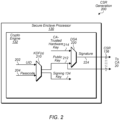
- a block diagram of a CSR generation 200 is depicted.
- engine 132 is configured to facilitate generation of CSR 136 by performing one or more key derivation functions (KDFs) 210 followed by an application of the digital signature algorithm (DSA) 220 to produce a signature 224 and public key 212 for inclusion in CSR 136.
- KDFs key derivation functions
- DSA digital signature algorithm
- CSR generation 200 may be implemented differently than shown such as will be discussed below.
- KDF 210 uses a unique identifier (UID) 202 and passcode 204 to create a public key pair including signing key 134 and its corresponding public key 212.
- KDF 210 may correspond to any suitable key derivation function such as an application of advanced encryption standard (AES) in cipher block chaining (AES-CBC) mode, keyed-hash message authentication code (HMAC), Secure Hash Algorithm (SHA), etc.
- AES advanced encryption standard
- HMAC keyed-hash message authentication code
- SHA Secure Hash Algorithm
- UID 202 is a value that uniquely identifies computing device 100 from other computing devices (or hardware within computing device 100 from similar hardware in other computing devices-thus, UID 202 may be a hardware seed to KDF 210).
- UID 202 is stored in SEP 130 by burning a set of fuses to encode UID 202 during a fabrication of SEP 130 (or more generally device 100).
- passcode 204 is the passcode usable by the user to authenticate to computing device 100. Accordingly, passcode 204 may include a sequence of user-supplied alpha-numeric characters, which may be received via an input device of computing device 100 such as a keyboard, touch screen, etc. Although two inputs are shown, in some embodiments, KDF 210 may take additional inputs such as an initialization vector (IV), other hardware identifiers, a salt, a key seed, etc.
- IV initialization vector
- signing key 134 may be described as being cryptographically protected based on UID 202 and passcode 204 since UID 202 and passcode 204 are used to derive key 134.
- signing key 134 is cryptographically protected based on UID 202 and passcode 204 by using a level of indirection. That is, UID 202 and passcode 204 may be inputs into a KDF that produces a master key used to encrypt signing key 134 and thus protect key 134-although signing key 134 and public key 212 may not be directly derived from UID 202 and passcode 204 in such an embodiment.
- references to a key being "useable to decrypt/encrypt" something include either decrypting/encrypting with the key or using the key to derive (or decrypt) one or more additional keys that are used to decrypt/encrypt that thing.
- references to a key being "useable to decrypt/encrypt" something include either decrypting/encrypting with the key or using the key to derive (or decrypt) one or more additional keys that are used to decrypt/encrypt that thing.
- KDF 210 is depicted, in some embodiments, multiple nested KDFs 210 may be used.
- DSA 220 uses a CA-trusted hardware key 214 to sign public key 212 to produce a signature 224 usable by CA 20 to verify CSR 136.
- hardware key 214 is trusted by CA 20 as it is derived, for example, by reading a hardware identifier embedded at manufacture to identify a presence of particular hardware in the computing device. For example, a manufacturer may burn fuses within SEP 130 to store a generation identifier into each of a particular class of devices known to have particular hardware, such as SEP 130, which can improve the security of a device. This hardware identifier may be used to derive key 214, which, in turn, is used to sign key 212 to produce signature 224.
- DSA 220 may also take additional non-depicted inputs being included in CSR 136 such as the nonce mentioned above. Although depicted as DSA, other signing algorithms may be employed.
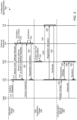
- process 300 includes various exchanges among a user 302 of computing device 100, OS 122, SEP 130, one or more external servers 304, and CA 20.
- process 300 may include an activation phase 310 including steps 312-324, a key certification phase 330 including steps 332-338, and a configuration signing phase 350 including steps 352-358.
- process 300 may be implemented differently than shown. Accordingly, more (or less) steps may be performed.
- performances of process 300 may include performances of only phases 330 and 350 (or only phase 350).
- process 300 may begin with activation phase 310 in order to initially set up computing device 100 and enable device 100 to perform a certification of signing key 134.
- this phase 310 may include downloading an initial set of trusted configuration settings that can be used by OS 122 until the signed configuration settings 126 can be obtained at the end of process 300.
- this phase 310 may also be performed in order to determine whether an owner of device has requested placement of a lock to prevent activation of device 100-e.g., because the owner reported the device 100 to an external sever 304 as lost or stolen.
- phase 310 may begin at step 312 with the user making an initiation request to start process 300.
- this request may include powering on device 100 and causing bootloader 124 to boot OS 122 into a recovery mode.
- OS 122 requests, from a server system 304, an initial set of configuration settings signed by the server system 304.
- this initial set of configuration settings may be a generic set of configuration settings for device 100 and may be signed by the external server 304 in order to provide an indicium of trust to the settings.
- the external server 304 may check whether that an owner has requested a disabling of the computing device 100 by placing an activation lock.
- the external server 304 may provide the initial set of configuration settings for use by OS 122 until signed configuration settings 126 can be obtained from SEP 130. If an activation lock has been set for device 100, the external server 304 may also request a user credential registered to the owner in order to remove the activation lock. At step 320, user 302 may provide this owner credential via device 100 to the server 304. The external server 304 may, at step 322, perform a verification of the owner credential. In response to a success verification of the owner credential (or in response to no activation lock being placed), the server 304 provides, at step 324, an attestation indicating that computing device 100 is authorized to request certification of signing key 134.
- Process 300 may then proceed to key certification phase 330 in which SEP 130 obtains certified signing key 134.
- phase 330 may begin with SEP 130 (using crypto engine 132) generating the public key pair including public key 212 and signing key 134.
- SEP 130 may then issue CSR 136 at 334 to CA 20 along with the registration attestation received at step 324, which may be provided by OS 122.
- CA 20 issues, at 338, certificate 128, which may be stored by OS 122 in NVM 120 with configuration settings 126.
- Process 300 may then conclude with configuration signing phase 350 in which SEP 130 signs configuration settings 126.
- phase 350 begins at 352 with a user requesting an alteration of setting 126. In some embodiments, however, this step may be omitted if, for example, a default set of settings 126 is being signed before a user has had any chance to request an alteration.
- OS 122 may make the requested changes and provide the altered (and now user-personalized) settings 126 to SEP 130 for signing. In some embodiments, OS 122 may merely provide a hash value generated from settings 126; rather than, providing settings 126 in their entireties.
- step 354 may include using signing key 134 to sign other information used by OS 122 such as binaries executed by computing device 100, boot chain objects, cache information, etc.
- OS 122 may also prompt the user for a passcode 204, which is provided to SEP 130 in order to obtain access to signing key 134.
- SEP 130 may use signing key 134 to sign settings 126 and produce signature 127, which is returned to OS 122 for storage in NVM 120 with settings 126. In a subsequent boot, bootloader 124 can now use this signature 127 along with certificate 128 to verify the integrity of settings 126.
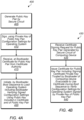
- Method 400 is one embodiment of a method for securely verifying configuration settings of a computing device such as computing device 100. In many instances, performance of method 400 may improve the overall security of the computing device.
- Method 400 begins at step 405 with a secure circuit (e.g., SEP 130) of the computing device generating a public key pair (e.g., keys 134 and 212).
- the computing device sends a user credential (e.g., owner credential at 320) to a server system operable to perform a verification of the user credential and a confirmation that an owner has not requested a disabling of the computing device.
- a user credential e.g., owner credential at 320
- the computing device receives, from the server system, an attestation (e.g., registration attestation at 324) indicating that the computing device is authorized to request certification of the private key and sends the attestation and a certificate signing request (e.g., CSR 136) for the public key pair to a certificate authority (e.g., CA 20) external to the computing device.
- the secure circuit reads a hardware identifier (e.g., hardware key 214) embedded at manufacture to identify a presence of particular hardware in the computing device and uses the hardware identifier to sign (e.g., via signature 224) the certificate signing request.
- the secure circuit signs, using a private key (e.g., signing key 134) of the public key pair, configuration settings (e.g., configuration settings 126) for an operating system (e.g., OS 122) of the computing device.
- the secure circuit cryptographically protects the private key based on a passcode (e.g., passcode 204) of a user, the passcode being usable by the user to authenticate to the computing device.
- the secure circuit stores a unique identifier (UID) (e.g., UID 202) that uniquely identifies the computing device from other computing devices and cryptographically protects the private key based on the UID stored by the secure circuit.
- UID unique identifier
- the configuration settings include one or more security settings that enable or disable one or more protection systems implemented by the operating system to protect operation of the computing device.
- the operating system is one of a plurality of operating systems having program instructions stored in the memory, and the secure circuit uses the private key to sign configuration settings for respective ones of the plurality of operating systems.
- the computing device receives, at a bootloader (e.g., bootloader 124), a certificate (e.g., certificate 128) for the public key pair from the certificate authority.
- a bootloader e.g., bootloader 124
- a certificate e.g., certificate 1228 for the public key pair from the certificate authority.
- the computing device initiates, by the bootloader, a boot sequence to load the operating system.
- the boot sequence includes the bootloader verifying the signed configuration settings using a public key (e.g., public key 212) included in the certificate and of the public key pair.
- a public key e.g., public key 212
- method 400 further includes the computing device receiving a request (e.g., settings change at 352) from the user to alter the configuration settings, the request including the passcode.
- a request e.g., settings change at 352
- the computing device provides an altered version of the configuration settings and the passcode to the secure circuit.
- the secure circuit uses the passcode to obtain access to the private key and uses the private key to sign the altered version of the configuration settings.
- the computing device in response to the request to alter the configuration settings, the computing device generates a nonce for inclusion in the altered version of the configuration settings and causes the secure circuit to use the private key to sign the nonce with the signing of the altered version of the configuration settings.
- the computing devices boots the operating system into a recovery mode in which the operating system requests, from a server system, an initial set of configuration settings (e.g., generic signed settings at 318) signed by the server system and provides the initial set of configuration settings for use by the operating system until the signed configuration settings are obtained from the secure circuit
- an initial set of configuration settings e.g., generic signed settings at 318
- Method 430 is one embodiment of a method for securely verifying configuration settings of a computing device and performed by a server system implementing a certificate authority such as external CA 20.
- Method 430 begins at step 435 with the server system receiving a certificate signing request (e.g., CSR 136) for a public key pair generated by a secure circuit of a computing device.
- the server system verifies a signature (e.g., signature 224) of the certificate signing request, the signature being generated using a hardware identifier (e.g., hardware key 214) embedded at manufacture to identify a presence of particular hardware in the computing device.
- a user credential e.g., owner credential at 320
- the server system based on the verification and the confirmation, provides an attestation (e.g., registration attestation at 324) indicating that the computing device is authorized to request certification of the public key pair and verifies that the attestation has been provided with the certificate signing request.
- an attestation e.g., registration attestation at 324
- the server issues a certificate (e.g., certificate 128) for the public key pair.
- the issuing includes signing the certificate with a private key trusted by a bootloader (e.g., bootloader 124) of the computing device, the bootloader being executable to use the certificate during a boot sequence to verify configuration settings (e.g., configuration settings 126) for an operating system (e.g., OS 122) that are signed by a private key (e.g., certified signing key 134) of the public key pair generated by the secure circuit.
- configuration settings e.g., configuration settings 126)
- an operating system e.g., OS 122
- a private key e.g., certified signing key 134
- the server system prior to the configuration settings being signed, provides an initial set of configuration settings (e.g., generic signed settings at 318) for use by the operating system until the signed configuration settings are obtained from the secure circuit.
- Method 460 is another embodiment of a method for securely verifying configuration settings of a computing device such as computing device 100.
- Method 460 begins at step 465 with sending a request to a secure circuit (e.g., SEP 130) of the computing device to use a private key (e.g., certified signing key 134) to sign configuration settings (e.g., settings 126) for an operating system (e.g., OS 122) of the computing device.
- a passcode e.g., passcode 204 of the user is provided to the secure circuit to obtain access to the private key for signing the configuration settings.
- a nonce is generated for inclusion in the configuration settings signed by the secure circuit.
- the configuration settings control one or more security systems implemented by the computing device.
- a bootloader (e.g., bootloader 124) initiates a boot sequence to load the operating system.
- the bootloader boots the operating system into a recovery mode in which the operating system requests, from a server system, an initial set of configuration settings signed by the server system, and the initial set of configuration settings are used until the signed configuration settings are obtained from the secure circuit.
- the bootloader reads the signed configuration settings and a certificate (e.g., certificate 128) issued for a public key pair including the private key.
- a certificate e.g., certificate 1228 issued for a public key pair including the private key.
- the bootloader verifies the signed configuration settings using a public key included in the certificate. In some embodiments, the bootloader verifies the inclusion of the nonce when verifying the signed configuration settings.
- SEP 130 includes a filter 510, secure mailbox mechanism 520, processor 530, secure ROM 540, cryptographic engine 132, a key storage 560, and a biosensor pipeline 570 coupled together via an interconnect 580.
- SEP 130 may include more (or less) components than shown in Fig. 5 .
- SEP 130 is a secure circuit having tamper resistance. As discussed below, SEP 130 implements tamper resistance through the use of filter 510 and secure mailbox 520.
- Filter 510 is circuitry configured to tightly control access to SEP 130 to increase the isolation of the SEP 130 from the rest of computing device 100, and thus the overall security of the device 100. More particularly, in one embodiment, filter 510 may permit read/write operations from a CPU 110 (or other peripherals coupled to interconnect 140) to enter SEP 130 only if the operations address the secure mailbox 520. Other operations may not progress from the interconnect 140 into SEP 130. Even more particularly, filter 510 may permit write operations to the address assigned to the inbox portion of secure mailbox 520, and read operations to the address assigned to the outbox portion of the secure mailbox 520. All other read/write operations may be prevented/filtered by the filter 510. In some embodiments, filter 510 may respond to other read/write operations with an error.
- filter 510 may sink write data associated with a filtered write operation without passing the write data on to local interconnect 580.
- filter 510 may supply nonce data as read data for a filtered read operation.
- Nonce data e.g., "garbage data”
- Filter 510 may supply any data as nonce data (e.g. all zeros, all ones, random data from a random number generator, data programmed into filter 510 to respond as read data, the address of the read transaction, etc.).
- filter 510 may only filter incoming read/write operations. Thus, the components of the SEP 130 may have full access to the other components of computing device 100 such as NVM 120. Accordingly, filter 510 may not filter responses from interconnect 140 that are provided in response to read/write operations issued by SEP 130.
- Secure mailbox 520 is circuitry that, in some embodiments, includes an inbox and an outbox. Both the inbox and the outbox may be first-in, first-out buffers (FIFOs) for data.
- the buffers may have any size (e.g. any number of entries, where each entry is capable of storing data from a read/write operation).
- the inbox may be configured to store write data from write operations sourced from interconnect 140.
- the outbox may store write data from write operations sourced by processor 530.
- a "mailbox mechanism" refers to a memory circuit that temporarily stores 1) an input for a secure circuit until it can be retrieved by the circuit and/or 2) an output of a secure circuit until it can be retrieved by an external circuit.
- software executing on CPU 110 may request services of SEP 130 via an application programming interface (API) supported by OS 122-i.e., a requester may make API calls that request services of SEP 130. These calls may cause corresponding requests to be written to mailbox mechanism 520, which are then retrieved from mailbox 520 and analyzed by processor 530 to determine whether it should service the requests. Accordingly, this API may be used to send, via mailbox 520, for example, a passcode 204, a request 504 to generate a certified key pair including key 134 and 212, biometric data 502, etc. and receive, via mailbox 520, signature 127 and CSR 136. By isolating SEP 130 in this manner, integrity of SEP 130 may be enhanced.
- API application programming interface
- SEP processor 530 is configured to process commands received from various sources in computing device 100 and may use various secure peripherals to accomplish the commands. Processor 530 may then execute instructions stored in ROM 540 such as authentication application 542 to perform an authentication of a user in order to use cryptographic services of SEP such as performing operations using signing key 134 discussed above. For example, SEP processor 530 may execute application 542 to provide appropriate commands to biosensor sensor pipeline 570 in order to verify biometric data 502 collected by a biosensor of device 100. In some embodiments, program instructions executed by SEP processor 530 are signed by a trusted authority (e.g., device 10's manufacturer) in order to ensure their integrity.
- a trusted authority e.g., device 10's manufacturer
- Secure ROM 540 is a memory configured to store program instruction for booting SEP 130.
- ROM 540 may respond to only a specific address range assigned to secure ROM 540 on local interconnect 580.
- the address range may be hardwired, and processor 530 may be hardwired to fetch from the address range at boot in order to boot from secure ROM 540.
- Filter 510 may filter addresses within the address range assigned to secure ROM 540 (as mentioned above), preventing access to secure ROM 540 from components external to the SEP 130.
- secure ROM 540 may include other software executed by SEP processor 530 during use. This software may include the program instructions to process inbox messages and generate outbox messages, etc.
- Cryptographic engine 132 is circuitry configured to perform cryptographic operations for SEP 130, including key generation as well as encryption and decryption using keys in key storage 560.
- Cryptographic engine 132 may implement any suitable encryption algorithm such as Data Encryption Standard (DES), Advanced Encryption Standard (AES), Rivest Shamir Adleman (RSA), etc.
- engine 132 may further implement elliptic curve cryptography (ECC).
- ECC elliptic curve cryptography
- engine 132 is responsible for generating signing key 134 used to produce signature 127.
- Key storage 560 is a local memory (i.e., internal memory) configured to store cryptograph keys such as signing key 134, hardware key 214, and/or public key 212. In some embodiments, these keys may include keys used to establish the secure channels between SEP 130 and other elements such as an NVM controller of NVM 120 and a biosensor. Key storage 560 may include any type of memory such as the various examples of volatile or non-volatile memory listed below with respect to Fig. 7. In some embodiments, storage 560 may also include a set of fuses that are burnt during a fabrication of SEP 130 (or more generally device 100) in order to record keys such as UID 202 discussed above.
- cryptograph keys such as signing key 134, hardware key 214, and/or public key 212. In some embodiments, these keys may include keys used to establish the secure channels between SEP 130 and other elements such as an NVM controller of NVM 120 and a biosensor. Key storage 560 may include any type of memory such as the various examples of volatile or non-volatile memory
- Biosensor sensor pipeline 570 in one embodiment, is circuitry configured to compare biometric data 502 captured by a biosensor from a user being authenticated with biometric data 572 of an authorized user. (In another embodiment, data 502 and 527 may be compared by software such as authentication application 542.) Biometric data may be data that uniquely identifies the user among other humans (at least to a high degree of accuracy) based on the user's physical or behavioral characteristics. In some embodiments in which data 502 is collected from a user's face, pipeline 570 may perform the comparison using a collection of neural networks included in pipeline 570, each network being configured to compare biometric data 502 captured in a single frame with biometric data 572 captured in multiple frames for an authorized user.
- pipeline 570 may be configured to read, from NVM 120, biometric data 572, which may be protected by encryption in some embodiments and/or be stored in an associated part of NVM 120 that is only accessible to SEP 130. (In another embodiment, SEP 130 may store data 572 internally.) Based on the comparison of biometric data 502 and 572, SEP 130 may provide an authentication result indicating whether the authentication was successful or failed. Such an authentication result may be used, for example, to grant use of signing key 134.
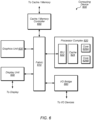
- FIG. 6 a block diagram illustrating an exemplary embodiment of a computing device 600, which may implement functionality of computing device 100, is shown.
- Device 600 may correspond to any suitable computing device such as a server system, personal computer system, desktop computer, laptop or notebook computer, mainframe computer system, tablet computer, handheld computer, workstation, network computer, a mobile phone, music player, personal data assistant (PDA), wearable device, internet of things (IoT) device, etc.
- device 600 includes fabric 610, processor complex 620, graphics unit 630, display unit 640, cache/memory controller 650, input/output (I/O) bridge 660.
- elements of device 600 may be included within a system on a chip (SOC).
- SOC system on a chip
- Fabric 610 may include various interconnects, buses, MUX's, controllers, etc., and may be configured to facilitate communication between various elements of device 600. In some embodiments, portions of fabric 610 may be configured to implement various different communication protocols. In other embodiments, fabric 610 may implement a single communication protocol and elements coupled to fabric 610 may convert from the single communication protocol to other communication protocols internally. As used herein, the term "coupled to” may indicate one or more connections between elements, and a coupling may include intervening elements. For example, in Fig. 6 , graphics unit 630 may be described as “coupled to" a memory through fabric 610 and cache/memory controller 650. In contrast, in the illustrated embodiment of Fig. 6 , graphics unit 630 is "directly coupled" to fabric 610 because there are no intervening elements. In some embodiments, fabric 610 corresponds to interconnect 140.
- processor complex 620 includes bus interface unit (BIU) 622, cache 624, and cores 626A and 626B.
- processor complex 620 may include various numbers of processors, processor cores and/or caches.
- processor complex 620 may include 1, 2, or 4 processor cores, or any other suitable number.
- cache 624 is a set associative L2 cache.
- cores 626A and/or 626B may include internal instruction and/or data caches.
- a coherency unit (not shown) in fabric 610, cache 624, or elsewhere in device 600 may be configured to maintain coherency between various caches of device 600.
- BIU 622 may be configured to manage communication between processor complex 620 and other elements of device 600.
- Processor cores such as cores 626 may be configured to execute instructions of a particular instruction set architecture (ISA), which may include instructions of OS 122, bootloader 124, a user application, etc. These instructions may be stored in computer readable medium such as a memory coupled to memory controller 650 discussed below.
- ISA instruction set architecture
- CPU 110 corresponds to complex 620.
- Graphics unit 630 may include one or more processors and/or one or more graphics processing units (GPU's). Graphics unit 630 may receive graphics-oriented instructions, such as OPENGU ® , Metal, or DIRECT3D ® instructions, for example. Graphics unit 630 may execute specialized GPU instructions or perform other operations based on the received graphics-oriented instructions. Graphics unit 630 may generally be configured to process large blocks of data in parallel and may build images in a frame buffer for output to a display. Graphics unit 630 may include transform, lighting, triangle, and/or rendering engines in one or more graphics processing pipelines. Graphics unit 630 may output pixel information for display images.
- graphics processing units GPU's
- Graphics unit 630 may receive graphics-oriented instructions, such as OPENGU ® , Metal, or DIRECT3D ® instructions, for example. Graphics unit 630 may execute specialized GPU instructions or perform other operations based on the received graphics-oriented instructions. Graphics unit 630 may generally be configured to process large blocks of data in parallel and may build images in
- Display unit 640 may be configured to read data from a frame buffer and provide a stream of pixel values for display.
- Display unit 640 may be configured as a display pipeline in some embodiments. Additionally, display unit 640 may be configured to blend multiple frames to produce an output frame. Further, display unit 640 may include one or more interfaces (e.g., MIPI ® or embedded display port (eDP)) for coupling to a user display (e.g., a touchscreen or an external display).
- interfaces e.g., MIPI ® or embedded display port (eDP)
- Cache/memory controller 650 may be configured to manage transfer of data between fabric 610 and one or more caches and/or memories.
- cache/memory controller 650 may be coupled to an L3 cache, which may in turn be coupled to a system memory.
- cache/memory controller 650 may be directly coupled to a memory.
- cache/memory controller 650 may include one or more internal caches.
- Memory coupled to controller 650 may be any type of volatile memory, such as dynamic random access memory (DRAM), synchronous DRAM (SDRAM), double data rate (DDR, DDR2, DDR3, etc.) SDRAM (including mobile versions of the SDRAMs such as mDDR3, etc., and/or low power versions of the SDRAMs such as LPDDR4, etc.), RAMBUS DRAM (RDRAM), static RAM (SRAM), etc.
- DRAM dynamic random access memory
- SDRAM synchronous DRAM
- SDRAM double data rate SDRAM
- RDRAM RAMBUS DRAM
- SRAM static RAM
- One or more memory devices may be coupled onto a circuit board to form memory modules such as single inline memory modules (SIMMs), dual inline memory modules (DIMMs), etc.
- SIMMs single inline memory modules
- DIMMs dual inline memory modules
- the devices may be mounted with an integrated circuit in a chip-on-chip configuration, a package-on-package configuration
- Memory coupled to controller 650 may be any type of non-volatile memory such as NAND flash memory, NOR flash memory, nano RAM (NRAM), magneto-resistive RAM (MRAM), phase change RAM (PRAM), Racetrack memory, Memristor memory, etc. As noted above, this memory may store program instructions executable by processor complex 620 to cause device 600 to perform functionality described herein.
- NAND flash memory NOR flash memory
- NRAM nano RAM
- MRAM magneto-resistive RAM
- PRAM phase change RAM
- Racetrack memory Memristor memory, etc.
- this memory may store program instructions executable by processor complex 620 to cause device 600 to perform functionality described herein.
- I/O bridge 660 may include various elements configured to implement universal serial bus (USB) communications, security, audio, and/or low-power always-on functionality, for example. I/O bridge 660 may also include interfaces such as pulse-width modulation (PWM), general-purpose input/output (GPIO), serial peripheral interface (SPI), and/or inter-integrated circuit (I2C), for example. Various types of peripherals and devices may be coupled to device 600 via I/O bridge 660.
- PWM pulse-width modulation
- GPIO general-purpose input/output
- SPI serial peripheral interface
- I2C inter-integrated circuit
- these devices may include various types of wireless communication (e.g., Wi-Fi, Bluetooth, cellular, global positioning system, etc.), additional storage (e.g., RAM storage, solid state storage, or disk storage), user interface devices (e.g., keyboard, microphones, speakers, etc.), etc.
- wireless communication e.g., Wi-Fi, Bluetooth, cellular, global positioning system, etc.
- additional storage e.g., RAM storage, solid state storage, or disk storage
- user interface devices e.g., keyboard, microphones, speakers, etc.
Landscapes
- Engineering & Computer Science (AREA)
- Computer Security & Cryptography (AREA)
- Theoretical Computer Science (AREA)
- Software Systems (AREA)
- Computer Hardware Design (AREA)
- General Engineering & Computer Science (AREA)
- Computer Networks & Wireless Communication (AREA)
- Signal Processing (AREA)
- Physics & Mathematics (AREA)
- General Physics & Mathematics (AREA)
- Computing Systems (AREA)
- Mathematical Physics (AREA)
- Storage Device Security (AREA)
- Stored Programmes (AREA)
Applications Claiming Priority (3)
| Application Number | Priority Date | Filing Date | Title |
|---|---|---|---|
| US202063042050P | 2020-06-22 | 2020-06-22 | |
| US17/092,030 US11822664B2 (en) | 2020-06-22 | 2020-11-06 | Securely signing configuration settings |
| PCT/US2021/038039 WO2021262545A1 (en) | 2020-06-22 | 2021-06-18 | Securely signing configuration settings |
Publications (2)
| Publication Number | Publication Date |
|---|---|
| EP4168913A1 EP4168913A1 (en) | 2023-04-26 |
| EP4168913B1 true EP4168913B1 (en) | 2024-02-28 |
Family
ID=79023572
Family Applications (1)
| Application Number | Title | Priority Date | Filing Date |
|---|---|---|---|
| EP21740398.9A Active EP4168913B1 (en) | 2020-06-22 | 2021-06-18 | Securely signing configuration settings |
Country Status (6)
| Country | Link |
|---|---|
| US (1) | US11822664B2 (enExample) |
| EP (1) | EP4168913B1 (enExample) |
| JP (1) | JP7406013B2 (enExample) |
| KR (1) | KR102660863B1 (enExample) |
| CN (1) | CN115943610B (enExample) |
| WO (1) | WO2021262545A1 (enExample) |
Families Citing this family (13)
| Publication number | Priority date | Publication date | Assignee | Title |
|---|---|---|---|---|
| US11641363B2 (en) * | 2019-01-14 | 2023-05-02 | Qatar Foundation For Education, Science And Community Development | Methods and systems for verifying the authenticity of a remote service |
| US11809876B2 (en) * | 2021-04-29 | 2023-11-07 | Dell Products L.P. | Trusted platform module protection for non-volatile memory express (NVMe) recovery |
| US20230015697A1 (en) * | 2021-07-13 | 2023-01-19 | Citrix Systems, Inc. | Application programming interface (api) authorization |
| US11748485B2 (en) * | 2021-07-29 | 2023-09-05 | Dell Products L.P. | System and method for booting using HSM integrated chain of trust certificates |
| US12088696B2 (en) * | 2021-10-27 | 2024-09-10 | Salesforce, Inc. | Protecting application private keys with remote and local security controllers and local MPC key generation |
| US20240265152A1 (en) * | 2023-02-08 | 2024-08-08 | Stmicroelectronics International N.V. | Embedded secure circuit |
| US12574419B2 (en) | 2024-01-29 | 2026-03-10 | Dell Products L.P. | Management of location-based security policies using out of band methods |
| US12490095B2 (en) | 2024-01-29 | 2025-12-02 | Dell Products L.P. | Obtaining location data for data processing systems using out-of-band components |
| US12481493B2 (en) | 2024-01-29 | 2025-11-25 | Dell Products L.P. | Managing out of band software updates |
| US12309022B1 (en) * | 2024-01-29 | 2025-05-20 | Dell Products L.P. | Recovery of data processing systems using out-of-band methods |
| US12530470B2 (en) | 2024-01-29 | 2026-01-20 | Dell Products L.P. | Policy implementation for data processing systems based on location data using out-of-band components |
| US12574411B2 (en) | 2024-01-29 | 2026-03-10 | Dell Products L.P. | Transport layer security management using a management controller |
| CN119293832B (zh) * | 2024-12-13 | 2025-04-01 | 湖北长江万润半导体技术有限公司 | 一种用于eMMC存储设备的数据加密方法与装置 |
Family Cites Families (16)
| Publication number | Priority date | Publication date | Assignee | Title |
|---|---|---|---|---|
| US6757824B1 (en) | 1999-12-10 | 2004-06-29 | Microsoft Corporation | Client-side boot domains and boot rules |
| JP4612399B2 (ja) | 2004-11-11 | 2011-01-12 | 日本電信電話株式会社 | 共同利用パソコンシステムの環境復元方法および共同利用パソコン |
| US7587595B2 (en) | 2005-05-13 | 2009-09-08 | Intel Corporation | Method and apparatus for providing software-based security coprocessors |
| JP5305473B2 (ja) | 2010-11-26 | 2013-10-02 | Necインフロンティア株式会社 | エラーコード出力装置及びエラーコード出力方法 |
| US9158924B2 (en) | 2011-05-25 | 2015-10-13 | Panasonic Intellectual Property Management Co., Ltd. | Information processing apparatus and information processing method |
| US9547778B1 (en) | 2014-09-26 | 2017-01-17 | Apple Inc. | Secure public key acceleration |
| US10079677B2 (en) * | 2015-06-05 | 2018-09-18 | Apple Inc. | Secure circuit for encryption key generation |
| US10536271B1 (en) | 2016-01-10 | 2020-01-14 | Apple Inc. | Silicon key attestation |
| EP3291504B1 (en) | 2016-08-30 | 2020-03-11 | Wacom Co., Ltd. | Authentication and secure transmission of data between signature devices and host computers using transport layer security |
| US10992482B2 (en) * | 2017-01-12 | 2021-04-27 | Google Llc | Verified boot and key rotation |
| JP2018117185A (ja) | 2017-01-16 | 2018-07-26 | キヤノン株式会社 | 情報処理装置、情報処理方法 |
| US10417429B2 (en) | 2017-06-02 | 2019-09-17 | Apple Inc. | Method and apparatus for boot variable protection |
| US11263326B2 (en) | 2017-06-02 | 2022-03-01 | Apple Inc. | Method and apparatus for secure system boot |
| US10467416B2 (en) * | 2017-06-16 | 2019-11-05 | International Business Machines Corporation | Securing operating system configuration using hardware |
| CN111149106B (zh) * | 2017-08-11 | 2022-09-02 | 华为技术有限公司 | 使用多个设备证书进行密钥认证的设备和方法 |
| US10057243B1 (en) | 2017-11-30 | 2018-08-21 | Mocana Corporation | System and method for securing data transport between a non-IP endpoint device that is connected to a gateway device and a connected service |
-
2020
- 2020-11-06 US US17/092,030 patent/US11822664B2/en active Active
-
2021
- 2021-06-18 KR KR1020227044779A patent/KR102660863B1/ko active Active
- 2021-06-18 EP EP21740398.9A patent/EP4168913B1/en active Active
- 2021-06-18 JP JP2022577761A patent/JP7406013B2/ja active Active
- 2021-06-18 CN CN202180044356.3A patent/CN115943610B/zh active Active
- 2021-06-18 WO PCT/US2021/038039 patent/WO2021262545A1/en not_active Ceased
Also Published As
| Publication number | Publication date |
|---|---|
| WO2021262545A1 (en) | 2021-12-30 |
| US20210397716A1 (en) | 2021-12-23 |
| US11822664B2 (en) | 2023-11-21 |
| CN115943610B (zh) | 2024-02-13 |
| KR102660863B1 (ko) | 2024-04-29 |
| CN115943610A (zh) | 2023-04-07 |
| JP7406013B2 (ja) | 2023-12-26 |
| JP2023530730A (ja) | 2023-07-19 |
| EP4168913A1 (en) | 2023-04-26 |
| KR20230016195A (ko) | 2023-02-01 |
Similar Documents
| Publication | Publication Date | Title |
|---|---|---|
| EP4168913B1 (en) | Securely signing configuration settings | |
| US20240078343A1 (en) | Application Integrity Attestation | |
| US7986786B2 (en) | Methods and systems for utilizing cryptographic functions of a cryptographic co-processor | |
| JP5657811B2 (ja) | ハードウェアベースセキュリティエンジンを用いるセキュアソフトウェアライセンシング及びプロビジョニング | |
| JP5703391B2 (ja) | 耐タンパー性ブート処理のためのシステム及び方法 | |
| JP6538610B2 (ja) | 外部不揮発性メモリに間接アクセスするセキュリティデバイス | |
| CN112262546A (zh) | 用于数据处理加速器的密钥分配和交换的方法和系统 | |
| CN108476404A (zh) | 安全设备配对 | |
| TWI745629B (zh) | 電腦系統以及初始化電腦系統的方法 | |
| JP2007512787A (ja) | トラステッド・モバイル・プラットフォーム・アーキテクチャ | |
| CN104246784A (zh) | 用于保护和安全地传输媒体内容的方法、设备和系统 | |
| CN109983465A (zh) | 增强的安全引导 | |
| US11677554B2 (en) | Key registration transparency for secure messaging | |
| US12314408B2 (en) | Ephemeral data storage | |
| CN106156632B (zh) | 安全装置及在其内提供安全服务至主机的方法、安全设备 | |
| Boubakri et al. | Architectural security and trust foundation for RISC-V | |
| US20250119273A1 (en) | Device Managed Cryptographic Keys | |
| US20250094602A1 (en) | Silicon Key Exchange |
Legal Events
| Date | Code | Title | Description |
|---|---|---|---|
| STAA | Information on the status of an ep patent application or granted ep patent |
Free format text: STATUS: UNKNOWN |
|
| STAA | Information on the status of an ep patent application or granted ep patent |
Free format text: STATUS: THE INTERNATIONAL PUBLICATION HAS BEEN MADE |
|
| PUAI | Public reference made under article 153(3) epc to a published international application that has entered the european phase |
Free format text: ORIGINAL CODE: 0009012 |
|
| STAA | Information on the status of an ep patent application or granted ep patent |
Free format text: STATUS: REQUEST FOR EXAMINATION WAS MADE |
|
| 17P | Request for examination filed |
Effective date: 20221215 |
|
| AK | Designated contracting states |
Kind code of ref document: A1 Designated state(s): AL AT BE BG CH CY CZ DE DK EE ES FI FR GB GR HR HU IE IS IT LI LT LU LV MC MK MT NL NO PL PT RO RS SE SI SK SM TR |
|
| DAV | Request for validation of the european patent (deleted) | ||
| DAX | Request for extension of the european patent (deleted) | ||
| GRAP | Despatch of communication of intention to grant a patent |
Free format text: ORIGINAL CODE: EPIDOSNIGR1 |
|
| STAA | Information on the status of an ep patent application or granted ep patent |
Free format text: STATUS: GRANT OF PATENT IS INTENDED |
|
| RIC1 | Information provided on ipc code assigned before grant |
Ipc: G06F 9/4401 20180101ALI20231013BHEP Ipc: H04L 9/40 20220101ALI20231013BHEP Ipc: H04L 9/32 20060101ALI20231013BHEP Ipc: G06F 21/57 20130101AFI20231013BHEP |
|
| INTG | Intention to grant announced |
Effective date: 20231030 |
|
| GRAS | Grant fee paid |
Free format text: ORIGINAL CODE: EPIDOSNIGR3 |
|
| GRAA | (expected) grant |
Free format text: ORIGINAL CODE: 0009210 |
|
| STAA | Information on the status of an ep patent application or granted ep patent |
Free format text: STATUS: THE PATENT HAS BEEN GRANTED |
|
| AK | Designated contracting states |
Kind code of ref document: B1 Designated state(s): AL AT BE BG CH CY CZ DE DK EE ES FI FR GB GR HR HU IE IS IT LI LT LU LV MC MK MT NL NO PL PT RO RS SE SI SK SM TR |
|
| REG | Reference to a national code |
Ref country code: GB Ref legal event code: FG4D |
|
| REG | Reference to a national code |
Ref country code: CH Ref legal event code: EP |
|
| REG | Reference to a national code |
Ref country code: DE Ref legal event code: R096 Ref document number: 602021009912 Country of ref document: DE |
|
| REG | Reference to a national code |
Ref country code: IE Ref legal event code: FG4D |
|
| REG | Reference to a national code |
Ref country code: LT Ref legal event code: MG9D |
|
| PG25 | Lapsed in a contracting state [announced via postgrant information from national office to epo] |
Ref country code: IS Free format text: LAPSE BECAUSE OF FAILURE TO SUBMIT A TRANSLATION OF THE DESCRIPTION OR TO PAY THE FEE WITHIN THE PRESCRIBED TIME-LIMIT Effective date: 20240628 |
|
| REG | Reference to a national code |
Ref country code: NL Ref legal event code: MP Effective date: 20240228 |
|
| PG25 | Lapsed in a contracting state [announced via postgrant information from national office to epo] |
Ref country code: LT Free format text: LAPSE BECAUSE OF FAILURE TO SUBMIT A TRANSLATION OF THE DESCRIPTION OR TO PAY THE FEE WITHIN THE PRESCRIBED TIME-LIMIT Effective date: 20240228 |
|
| PG25 | Lapsed in a contracting state [announced via postgrant information from national office to epo] |
Ref country code: GR Free format text: LAPSE BECAUSE OF FAILURE TO SUBMIT A TRANSLATION OF THE DESCRIPTION OR TO PAY THE FEE WITHIN THE PRESCRIBED TIME-LIMIT Effective date: 20240529 |
|
| PG25 | Lapsed in a contracting state [announced via postgrant information from national office to epo] |
Ref country code: HR Free format text: LAPSE BECAUSE OF FAILURE TO SUBMIT A TRANSLATION OF THE DESCRIPTION OR TO PAY THE FEE WITHIN THE PRESCRIBED TIME-LIMIT Effective date: 20240228 Ref country code: RS Free format text: LAPSE BECAUSE OF FAILURE TO SUBMIT A TRANSLATION OF THE DESCRIPTION OR TO PAY THE FEE WITHIN THE PRESCRIBED TIME-LIMIT Effective date: 20240528 Ref country code: NL Free format text: LAPSE BECAUSE OF FAILURE TO SUBMIT A TRANSLATION OF THE DESCRIPTION OR TO PAY THE FEE WITHIN THE PRESCRIBED TIME-LIMIT Effective date: 20240228 |
|
| PG25 | Lapsed in a contracting state [announced via postgrant information from national office to epo] |
Ref country code: ES Free format text: LAPSE BECAUSE OF FAILURE TO SUBMIT A TRANSLATION OF THE DESCRIPTION OR TO PAY THE FEE WITHIN THE PRESCRIBED TIME-LIMIT Effective date: 20240228 |
|
| PG25 | Lapsed in a contracting state [announced via postgrant information from national office to epo] |
Ref country code: RS Free format text: LAPSE BECAUSE OF FAILURE TO SUBMIT A TRANSLATION OF THE DESCRIPTION OR TO PAY THE FEE WITHIN THE PRESCRIBED TIME-LIMIT Effective date: 20240528 Ref country code: NO Free format text: LAPSE BECAUSE OF FAILURE TO SUBMIT A TRANSLATION OF THE DESCRIPTION OR TO PAY THE FEE WITHIN THE PRESCRIBED TIME-LIMIT Effective date: 20240528 Ref country code: NL Free format text: LAPSE BECAUSE OF FAILURE TO SUBMIT A TRANSLATION OF THE DESCRIPTION OR TO PAY THE FEE WITHIN THE PRESCRIBED TIME-LIMIT Effective date: 20240228 Ref country code: LT Free format text: LAPSE BECAUSE OF FAILURE TO SUBMIT A TRANSLATION OF THE DESCRIPTION OR TO PAY THE FEE WITHIN THE PRESCRIBED TIME-LIMIT Effective date: 20240228 Ref country code: IS Free format text: LAPSE BECAUSE OF FAILURE TO SUBMIT A TRANSLATION OF THE DESCRIPTION OR TO PAY THE FEE WITHIN THE PRESCRIBED TIME-LIMIT Effective date: 20240628 Ref country code: HR Free format text: LAPSE BECAUSE OF FAILURE TO SUBMIT A TRANSLATION OF THE DESCRIPTION OR TO PAY THE FEE WITHIN THE PRESCRIBED TIME-LIMIT Effective date: 20240228 Ref country code: GR Free format text: LAPSE BECAUSE OF FAILURE TO SUBMIT A TRANSLATION OF THE DESCRIPTION OR TO PAY THE FEE WITHIN THE PRESCRIBED TIME-LIMIT Effective date: 20240529 Ref country code: FI Free format text: LAPSE BECAUSE OF FAILURE TO SUBMIT A TRANSLATION OF THE DESCRIPTION OR TO PAY THE FEE WITHIN THE PRESCRIBED TIME-LIMIT Effective date: 20240228 Ref country code: ES Free format text: LAPSE BECAUSE OF FAILURE TO SUBMIT A TRANSLATION OF THE DESCRIPTION OR TO PAY THE FEE WITHIN THE PRESCRIBED TIME-LIMIT Effective date: 20240228 Ref country code: BG Free format text: LAPSE BECAUSE OF FAILURE TO SUBMIT A TRANSLATION OF THE DESCRIPTION OR TO PAY THE FEE WITHIN THE PRESCRIBED TIME-LIMIT Effective date: 20240228 |
|
| PG25 | Lapsed in a contracting state [announced via postgrant information from national office to epo] |
Ref country code: PT Free format text: LAPSE BECAUSE OF FAILURE TO SUBMIT A TRANSLATION OF THE DESCRIPTION OR TO PAY THE FEE WITHIN THE PRESCRIBED TIME-LIMIT Effective date: 20240628 Ref country code: PL Free format text: LAPSE BECAUSE OF FAILURE TO SUBMIT A TRANSLATION OF THE DESCRIPTION OR TO PAY THE FEE WITHIN THE PRESCRIBED TIME-LIMIT Effective date: 20240228 |
|
| REG | Reference to a national code |
Ref country code: AT Ref legal event code: MK05 Ref document number: 1661891 Country of ref document: AT Kind code of ref document: T Effective date: 20240228 |
|
| PG25 | Lapsed in a contracting state [announced via postgrant information from national office to epo] |
Ref country code: SE Free format text: LAPSE BECAUSE OF FAILURE TO SUBMIT A TRANSLATION OF THE DESCRIPTION OR TO PAY THE FEE WITHIN THE PRESCRIBED TIME-LIMIT Effective date: 20240228 Ref country code: PT Free format text: LAPSE BECAUSE OF FAILURE TO SUBMIT A TRANSLATION OF THE DESCRIPTION OR TO PAY THE FEE WITHIN THE PRESCRIBED TIME-LIMIT Effective date: 20240628 Ref country code: PL Free format text: LAPSE BECAUSE OF FAILURE TO SUBMIT A TRANSLATION OF THE DESCRIPTION OR TO PAY THE FEE WITHIN THE PRESCRIBED TIME-LIMIT Effective date: 20240228 Ref country code: LV Free format text: LAPSE BECAUSE OF FAILURE TO SUBMIT A TRANSLATION OF THE DESCRIPTION OR TO PAY THE FEE WITHIN THE PRESCRIBED TIME-LIMIT Effective date: 20240228 |
|
| PG25 | Lapsed in a contracting state [announced via postgrant information from national office to epo] |
Ref country code: DK Free format text: LAPSE BECAUSE OF FAILURE TO SUBMIT A TRANSLATION OF THE DESCRIPTION OR TO PAY THE FEE WITHIN THE PRESCRIBED TIME-LIMIT Effective date: 20240228 |
|
| PG25 | Lapsed in a contracting state [announced via postgrant information from national office to epo] |
Ref country code: SM Free format text: LAPSE BECAUSE OF FAILURE TO SUBMIT A TRANSLATION OF THE DESCRIPTION OR TO PAY THE FEE WITHIN THE PRESCRIBED TIME-LIMIT Effective date: 20240228 |
|
| PG25 | Lapsed in a contracting state [announced via postgrant information from national office to epo] |
Ref country code: CZ Free format text: LAPSE BECAUSE OF FAILURE TO SUBMIT A TRANSLATION OF THE DESCRIPTION OR TO PAY THE FEE WITHIN THE PRESCRIBED TIME-LIMIT Effective date: 20240228 Ref country code: EE Free format text: LAPSE BECAUSE OF FAILURE TO SUBMIT A TRANSLATION OF THE DESCRIPTION OR TO PAY THE FEE WITHIN THE PRESCRIBED TIME-LIMIT Effective date: 20240228 |
|
| PG25 | Lapsed in a contracting state [announced via postgrant information from national office to epo] |
Ref country code: AT Free format text: LAPSE BECAUSE OF FAILURE TO SUBMIT A TRANSLATION OF THE DESCRIPTION OR TO PAY THE FEE WITHIN THE PRESCRIBED TIME-LIMIT Effective date: 20240228 |
|
| PG25 | Lapsed in a contracting state [announced via postgrant information from national office to epo] |
Ref country code: SK Free format text: LAPSE BECAUSE OF FAILURE TO SUBMIT A TRANSLATION OF THE DESCRIPTION OR TO PAY THE FEE WITHIN THE PRESCRIBED TIME-LIMIT Effective date: 20240228 |
|
| PG25 | Lapsed in a contracting state [announced via postgrant information from national office to epo] |
Ref country code: SM Free format text: LAPSE BECAUSE OF FAILURE TO SUBMIT A TRANSLATION OF THE DESCRIPTION OR TO PAY THE FEE WITHIN THE PRESCRIBED TIME-LIMIT Effective date: 20240228 Ref country code: SK Free format text: LAPSE BECAUSE OF FAILURE TO SUBMIT A TRANSLATION OF THE DESCRIPTION OR TO PAY THE FEE WITHIN THE PRESCRIBED TIME-LIMIT Effective date: 20240228 Ref country code: RO Free format text: LAPSE BECAUSE OF FAILURE TO SUBMIT A TRANSLATION OF THE DESCRIPTION OR TO PAY THE FEE WITHIN THE PRESCRIBED TIME-LIMIT Effective date: 20240228 Ref country code: EE Free format text: LAPSE BECAUSE OF FAILURE TO SUBMIT A TRANSLATION OF THE DESCRIPTION OR TO PAY THE FEE WITHIN THE PRESCRIBED TIME-LIMIT Effective date: 20240228 Ref country code: DK Free format text: LAPSE BECAUSE OF FAILURE TO SUBMIT A TRANSLATION OF THE DESCRIPTION OR TO PAY THE FEE WITHIN THE PRESCRIBED TIME-LIMIT Effective date: 20240228 Ref country code: CZ Free format text: LAPSE BECAUSE OF FAILURE TO SUBMIT A TRANSLATION OF THE DESCRIPTION OR TO PAY THE FEE WITHIN THE PRESCRIBED TIME-LIMIT Effective date: 20240228 Ref country code: AT Free format text: LAPSE BECAUSE OF FAILURE TO SUBMIT A TRANSLATION OF THE DESCRIPTION OR TO PAY THE FEE WITHIN THE PRESCRIBED TIME-LIMIT Effective date: 20240228 |
|
| REG | Reference to a national code |
Ref country code: DE Ref legal event code: R097 Ref document number: 602021009912 Country of ref document: DE |
|
| PG25 | Lapsed in a contracting state [announced via postgrant information from national office to epo] |
Ref country code: IT Free format text: LAPSE BECAUSE OF FAILURE TO SUBMIT A TRANSLATION OF THE DESCRIPTION OR TO PAY THE FEE WITHIN THE PRESCRIBED TIME-LIMIT Effective date: 20240228 |
|
| PG25 | Lapsed in a contracting state [announced via postgrant information from national office to epo] |
Ref country code: IT Free format text: LAPSE BECAUSE OF FAILURE TO SUBMIT A TRANSLATION OF THE DESCRIPTION OR TO PAY THE FEE WITHIN THE PRESCRIBED TIME-LIMIT Effective date: 20240228 |
|
| PLBE | No opposition filed within time limit |
Free format text: ORIGINAL CODE: 0009261 |
|
| STAA | Information on the status of an ep patent application or granted ep patent |
Free format text: STATUS: NO OPPOSITION FILED WITHIN TIME LIMIT |
|
| PG25 | Lapsed in a contracting state [announced via postgrant information from national office to epo] |
Ref country code: MC Free format text: LAPSE BECAUSE OF FAILURE TO SUBMIT A TRANSLATION OF THE DESCRIPTION OR TO PAY THE FEE WITHIN THE PRESCRIBED TIME-LIMIT Effective date: 20240228 |
|
| REG | Reference to a national code |
Ref country code: CH Ref legal event code: PL |
|
| 26N | No opposition filed |
Effective date: 20241129 |
|
| PG25 | Lapsed in a contracting state [announced via postgrant information from national office to epo] |
Ref country code: LU Free format text: LAPSE BECAUSE OF NON-PAYMENT OF DUE FEES Effective date: 20240618 |
|
| PG25 | Lapsed in a contracting state [announced via postgrant information from national office to epo] |
Ref country code: IE Free format text: LAPSE BECAUSE OF NON-PAYMENT OF DUE FEES Effective date: 20240618 |
|
| PG25 | Lapsed in a contracting state [announced via postgrant information from national office to epo] |
Ref country code: SI Free format text: LAPSE BECAUSE OF FAILURE TO SUBMIT A TRANSLATION OF THE DESCRIPTION OR TO PAY THE FEE WITHIN THE PRESCRIBED TIME-LIMIT Effective date: 20240228 Ref country code: BE Free format text: LAPSE BECAUSE OF NON-PAYMENT OF DUE FEES Effective date: 20240630 Ref country code: CH Free format text: LAPSE BECAUSE OF NON-PAYMENT OF DUE FEES Effective date: 20240630 |
|
| PG25 | Lapsed in a contracting state [announced via postgrant information from national office to epo] |
Ref country code: FR Free format text: LAPSE BECAUSE OF NON-PAYMENT OF DUE FEES Effective date: 20240630 |
|
| REG | Reference to a national code |
Ref country code: BE Ref legal event code: MM Effective date: 20240630 |
|
| PGFP | Annual fee paid to national office [announced via postgrant information from national office to epo] |
Ref country code: DE Payment date: 20250402 Year of fee payment: 5 |
|
| PGFP | Annual fee paid to national office [announced via postgrant information from national office to epo] |
Ref country code: GB Payment date: 20250401 Year of fee payment: 5 |
|
| PG25 | Lapsed in a contracting state [announced via postgrant information from national office to epo] |
Ref country code: CY Free format text: LAPSE BECAUSE OF FAILURE TO SUBMIT A TRANSLATION OF THE DESCRIPTION OR TO PAY THE FEE WITHIN THE PRESCRIBED TIME-LIMIT; INVALID AB INITIO Effective date: 20210618 |
|
| PG25 | Lapsed in a contracting state [announced via postgrant information from national office to epo] |
Ref country code: HU Free format text: LAPSE BECAUSE OF FAILURE TO SUBMIT A TRANSLATION OF THE DESCRIPTION OR TO PAY THE FEE WITHIN THE PRESCRIBED TIME-LIMIT; INVALID AB INITIO Effective date: 20210618 |