EP4159249B1 - Verfahren zur kultivierung rekonstruierter menschlicher haut - Google Patents
Verfahren zur kultivierung rekonstruierter menschlicher haut Download PDFInfo
- Publication number
- EP4159249B1 EP4159249B1 EP22198764.7A EP22198764A EP4159249B1 EP 4159249 B1 EP4159249 B1 EP 4159249B1 EP 22198764 A EP22198764 A EP 22198764A EP 4159249 B1 EP4159249 B1 EP 4159249B1
- Authority
- EP
- European Patent Office
- Prior art keywords
- human skin
- epidermal keratinocytes
- reconstructed human
- inner chamber
- culture vessel
- Prior art date
- Legal status (The legal status is an assumption and is not a legal conclusion. Google has not performed a legal analysis and makes no representation as to the accuracy of the status listed.)
- Active
Links
Images




Classifications
-
- A—HUMAN NECESSITIES
- A61—MEDICAL OR VETERINARY SCIENCE; HYGIENE
- A61L—METHODS OR APPARATUS FOR STERILISING MATERIALS OR OBJECTS IN GENERAL; DISINFECTION, STERILISATION OR DEODORISATION OF AIR; CHEMICAL ASPECTS OF BANDAGES, DRESSINGS, ABSORBENT PADS OR SURGICAL ARTICLES; MATERIALS FOR BANDAGES, DRESSINGS, ABSORBENT PADS OR SURGICAL ARTICLES
- A61L27/00—Materials for grafts or prostheses or for coating grafts or prostheses
- A61L27/50—Materials characterised by their function or physical properties, e.g. injectable or lubricating compositions, shape-memory materials, surface modified materials
- A61L27/60—Materials for use in artificial skin
-
- C—CHEMISTRY; METALLURGY
- C12—BIOCHEMISTRY; BEER; SPIRITS; WINE; VINEGAR; MICROBIOLOGY; ENZYMOLOGY; MUTATION OR GENETIC ENGINEERING
- C12N—MICROORGANISMS OR ENZYMES; COMPOSITIONS THEREOF; PROPAGATING, PRESERVING, OR MAINTAINING MICROORGANISMS; MUTATION OR GENETIC ENGINEERING; CULTURE MEDIA
- C12N5/00—Undifferentiated human, animal or plant cells, e.g. cell lines; Tissues; Cultivation or maintenance thereof; Culture media therefor
- C12N5/06—Animal cells or tissues; Human cells or tissues
- C12N5/0697—Artificial constructs associating cells of different lineages, e.g. tissue equivalents
- C12N5/0698—Skin equivalents
-
- A—HUMAN NECESSITIES
- A61—MEDICAL OR VETERINARY SCIENCE; HYGIENE
- A61L—METHODS OR APPARATUS FOR STERILISING MATERIALS OR OBJECTS IN GENERAL; DISINFECTION, STERILISATION OR DEODORISATION OF AIR; CHEMICAL ASPECTS OF BANDAGES, DRESSINGS, ABSORBENT PADS OR SURGICAL ARTICLES; MATERIALS FOR BANDAGES, DRESSINGS, ABSORBENT PADS OR SURGICAL ARTICLES
- A61L27/00—Materials for grafts or prostheses or for coating grafts or prostheses
- A61L27/14—Macromolecular materials
- A61L27/22—Polypeptides or derivatives thereof, e.g. degradation products
- A61L27/227—Other specific proteins or polypeptides not covered by A61L27/222, A61L27/225 or A61L27/24
-
- A—HUMAN NECESSITIES
- A61—MEDICAL OR VETERINARY SCIENCE; HYGIENE
- A61L—METHODS OR APPARATUS FOR STERILISING MATERIALS OR OBJECTS IN GENERAL; DISINFECTION, STERILISATION OR DEODORISATION OF AIR; CHEMICAL ASPECTS OF BANDAGES, DRESSINGS, ABSORBENT PADS OR SURGICAL ARTICLES; MATERIALS FOR BANDAGES, DRESSINGS, ABSORBENT PADS OR SURGICAL ARTICLES
- A61L27/00—Materials for grafts or prostheses or for coating grafts or prostheses
- A61L27/14—Macromolecular materials
- A61L27/22—Polypeptides or derivatives thereof, e.g. degradation products
- A61L27/24—Collagen
-
- A—HUMAN NECESSITIES
- A61—MEDICAL OR VETERINARY SCIENCE; HYGIENE
- A61L—METHODS OR APPARATUS FOR STERILISING MATERIALS OR OBJECTS IN GENERAL; DISINFECTION, STERILISATION OR DEODORISATION OF AIR; CHEMICAL ASPECTS OF BANDAGES, DRESSINGS, ABSORBENT PADS OR SURGICAL ARTICLES; MATERIALS FOR BANDAGES, DRESSINGS, ABSORBENT PADS OR SURGICAL ARTICLES
- A61L27/00—Materials for grafts or prostheses or for coating grafts or prostheses
- A61L27/28—Materials for coating prostheses
- A61L27/34—Macromolecular materials
-
- A—HUMAN NECESSITIES
- A61—MEDICAL OR VETERINARY SCIENCE; HYGIENE
- A61L—METHODS OR APPARATUS FOR STERILISING MATERIALS OR OBJECTS IN GENERAL; DISINFECTION, STERILISATION OR DEODORISATION OF AIR; CHEMICAL ASPECTS OF BANDAGES, DRESSINGS, ABSORBENT PADS OR SURGICAL ARTICLES; MATERIALS FOR BANDAGES, DRESSINGS, ABSORBENT PADS OR SURGICAL ARTICLES
- A61L27/00—Materials for grafts or prostheses or for coating grafts or prostheses
- A61L27/36—Materials for grafts or prostheses or for coating grafts or prostheses containing ingredients of undetermined constitution or reaction products thereof, e.g. transplant tissue, natural bone, extracellular matrix
- A61L27/38—Materials for grafts or prostheses or for coating grafts or prostheses containing ingredients of undetermined constitution or reaction products thereof, e.g. transplant tissue, natural bone, extracellular matrix containing added animal cells
- A61L27/3804—Materials for grafts or prostheses or for coating grafts or prostheses containing ingredients of undetermined constitution or reaction products thereof, e.g. transplant tissue, natural bone, extracellular matrix containing added animal cells characterised by specific cells or progenitors thereof, e.g. fibroblasts, connective tissue cells, kidney cells
- A61L27/3813—Epithelial cells, e.g. keratinocytes, urothelial cells
-
- A—HUMAN NECESSITIES
- A61—MEDICAL OR VETERINARY SCIENCE; HYGIENE
- A61L—METHODS OR APPARATUS FOR STERILISING MATERIALS OR OBJECTS IN GENERAL; DISINFECTION, STERILISATION OR DEODORISATION OF AIR; CHEMICAL ASPECTS OF BANDAGES, DRESSINGS, ABSORBENT PADS OR SURGICAL ARTICLES; MATERIALS FOR BANDAGES, DRESSINGS, ABSORBENT PADS OR SURGICAL ARTICLES
- A61L27/00—Materials for grafts or prostheses or for coating grafts or prostheses
- A61L27/50—Materials characterised by their function or physical properties, e.g. injectable or lubricating compositions, shape-memory materials, surface modified materials
- A61L27/52—Hydrogels or hydrocolloids
-
- C—CHEMISTRY; METALLURGY
- C12—BIOCHEMISTRY; BEER; SPIRITS; WINE; VINEGAR; MICROBIOLOGY; ENZYMOLOGY; MUTATION OR GENETIC ENGINEERING
- C12M—APPARATUS FOR ENZYMOLOGY OR MICROBIOLOGY; APPARATUS FOR CULTURING MICROORGANISMS FOR PRODUCING BIOMASS, FOR GROWING CELLS OR FOR OBTAINING FERMENTATION OR METABOLIC PRODUCTS, i.e. BIOREACTORS OR FERMENTERS
- C12M21/00—Bioreactors or fermenters specially adapted for specific uses
- C12M21/08—Bioreactors or fermenters specially adapted for specific uses for producing artificial tissue or for ex-vivo cultivation of tissue
-
- C—CHEMISTRY; METALLURGY
- C12—BIOCHEMISTRY; BEER; SPIRITS; WINE; VINEGAR; MICROBIOLOGY; ENZYMOLOGY; MUTATION OR GENETIC ENGINEERING
- C12N—MICROORGANISMS OR ENZYMES; COMPOSITIONS THEREOF; PROPAGATING, PRESERVING, OR MAINTAINING MICROORGANISMS; MUTATION OR GENETIC ENGINEERING; CULTURE MEDIA
- C12N2533/00—Supports or coatings for cell culture, characterised by material
- C12N2533/30—Synthetic polymers
- C12N2533/32—Polylysine, polyornithine
-
- C—CHEMISTRY; METALLURGY
- C12—BIOCHEMISTRY; BEER; SPIRITS; WINE; VINEGAR; MICROBIOLOGY; ENZYMOLOGY; MUTATION OR GENETIC ENGINEERING
- C12N—MICROORGANISMS OR ENZYMES; COMPOSITIONS THEREOF; PROPAGATING, PRESERVING, OR MAINTAINING MICROORGANISMS; MUTATION OR GENETIC ENGINEERING; CULTURE MEDIA
- C12N2533/00—Supports or coatings for cell culture, characterised by material
- C12N2533/50—Proteins
- C12N2533/54—Collagen; Gelatin
Definitions
- the present invention relates to a method of culturing reconstructed human skin composed of a dermis and an epidermis, and more particularly to a method of culturing reconstructed human skin, which is capable of culturing reconstructed human skin that does not contract so as to enable the barrier function thereof to be evaluated through treatment of a liquid material on the upper portion thereof by preventing reconstructed human skin from being deformed during culture.
- the skin is a large organ that surrounds the body, and is broadly divided into two layers, namely the epidermis and dermis, from the outermost surface thereof.
- the epidermis is mostly composed of epidermal keratinocytes, which form a layered structure, and the dermis contains blood vessels, nerves, sebaceous glands, and the like based on a matrix including dermal fibroblasts inside matrix proteins such as collagen fibers and elastic fibers.
- the barrier function of the epidermis is regarded as the most important, and the skin barrier function protects the body by blocking penetration of external pollutants and irritants and prevents loss of body fluids by blocking evaporation of moisture inside the body.
- Reconstructed human skin is a skin equivalent produced in a manner in which a dermis equivalent composed of a type-I-collagen-based three-dimensional hydrogel scaffold matrix including dermal fibroblasts is placed in a special culture vessel (a filter membrane insert), the bottom surface of which is formed of a porous membrane, epidermal keratinocytes are applied thereon, and the upper portion thereof is exposed to air to induce differentiation of the epidermal keratinocytes, thereby forming a mature reconstructed epidermis having a skin barrier function.
- a dermis equivalent composed of a type-I-collagen-based three-dimensional hydrogel scaffold matrix including dermal fibroblasts is placed in a special culture vessel (a filter membrane insert), the bottom surface of which is formed of a porous membrane, epidermal keratinocytes are applied thereon, and the upper portion thereof is exposed to air to induce differentiation of the epidermal keratinocytes, thereby forming a mature reconstructed epidermis having a skin barrier
- This reconstructed human skin is used to replace damaged parts of the skin such as burns, external injuries, etc., or is used in skin physiology research, evaluation of skin irritation of specific materials, or evaluation of functional improvement efficacy thereof.
- an object of the present invention is to provide a method of coating the inner wall of a culture vessel in order to prevent detachment of reconstructed human skin, which is the starting point of contraction of reconstructed human skin when producing reconstructed human skin, and reconstructed human skin produced without contraction using the same and configured such that an epidermis having a skin barrier function is formed on a dermis equivalent matrix, in which the skin barrier function may be reflected in an experiment including treatment of a liquid material on the upper portion thereof and delivery of the liquid material into the dermis thereof.
- An embodiment of the present invention provides a method of producing reconstructed human skin using a culture vessel including an inner chamber surrounded by an inner wall and a porous bottom surface and an outer chamber spaced apart from the inner chamber and configured to surround the inner chamber, including (a) forming an adhesive layer by coating the inner wall with an adhesive material and (b) culturing reconstructed human skin in the culture vessel having the adhesive layer formed thereon, wherein step (a) comprises: preparing a coating solution by dissolving the adhesive material in a powder form in a solvent; and forming the adhesive layer by placing the coating solution in the inner chamber and carrying out reaction, wherein the adhesive material is dopamine at a concentration of 0.1 to 20 mg/ml, wherein the solvent is Tris-HCl at a pH of 8.0 to 9.0, wherein step (b) comprises: forming a dermis equivalent by placing a scaffold solution comprising a type I collagen solution and dermal fibroblasts in the inner chamber coated with dopamine and performing gelling; and forming a re
- the scaffold solution may further include a basement membrane component material.
- the method according to an embodiment of the present invention may further include supplying a first culture medium to the inner chamber and the outer chamber so that the epidermal keratinocytes are attached, after seeding the epidermal keratinocytes.
- the method according to an embodiment of the present invention may further include removing the first culture medium and supplying a second culture medium to the outer chamber so that the epidermal keratinocytes differentiate.
- FIG. 1 is a perspective view showing a culture vessel 10 used in a process of producing reconstructed human skin according to the present invention
- FIG. 2 is a cross-sectional view taken along line A-A' of FIG. 1
- FIG. 3 is a flowchart showing the process of producing reconstructed human skin according to the present invention.
- the method of producing reconstructed human skin according to the present invention using a culture vessel 10 including an inner chamber 11 surrounded by an inner wall and a porous bottom surface and an outer chamber 13 spaced apart from the inner chamber 11 and configured to surround the inner chamber 11 includes forming an adhesive layer 20 by coating the inner wall with an adhesive material and culturing reconstructed human skin in the culture vessel 10 having the adhesive layer 20 formed thereon.
- reconstructed human skin narrowly means a skin equivalent in which an epidermis is formed on a three-dimensional hydrogel scaffold matrix based on type I collagen, which is a dermal component, and including dermal fibroblasts, and should be interpreted in the broadest sense, including all polymer composites that exhibit structural and functional properties similar to those of real skin.
- type I collagen which is a dermal component, and including dermal fibroblasts
- the resulting product may correspond to reconstructed human skin.
- This reconstructed human skin is cultured in a culture vessel 10, and the culture vessel 10 may be formed in a double-walled structure in which the inner chamber 11 is surrounded by the outer chamber 13.
- the inner chamber 11 has an inner space formed by an inner wall and a bottom surface, the bottom surface may be made of a porous membrane having numerous micropores, and reconstructed human skin is cultured in the inner space.
- the outer chamber 13 has an outer wall and a bottom surface, and is spaced apart from the inner chamber 11 and is configured to surround the inner chamber 11.
- the method of producing reconstructed human skin using the culture vessel 10 according to the present invention includes forming an adhesive layer and culturing reconstructed human skin.
- the inner wall of the inner chamber 11 is coated with an adhesive material, whereby the adhesive layer 20 is formed on the inner wall.
- the adhesive material that is used is dopamine.
- Dopamine is a material composed of 3,4-dihydroxy-L-phenylalanine (DOPA) and amine (lysine) groups, which are the main components that provide strong adhesion of Plaque secreted by Mytilus edulis to attach to rocks, and has a structure represented by Chemical Formula 1 below.
- a coating solution is prepared by dissolving an adhesive material in a powder form in a predetermined solvent, after which the coating solution is placed in the inner chamber 11 and allowed to react for a certain period of time, thereby forming an adhesive layer 20 on the surface of the inner wall of the inner chamber 11.
- the adhesive layer 20 is formed in a manner in which dopamine in a powder form is dissolved at a concentration of 0.1 to 20 mg/ml in Tris-HCl at a pH of 8.0 to 9.0 to afford a coating solution, which is then placed in the inner chamber 11 and allowed to react for 1 to 3 hours.
- This adhesive layer 20 provides adhesion between the inner wall of the inner chamber 11 and a three-dimensional hydrogel scaffold matrix 30 to be described later.
- reconstructed human skin is cultured in the culture vessel 10 having the adhesive layer 20 formed thereon.
- a three-dimensional hydrogel scaffold matrix 30 is formed, and epidermal keratinocytes 40 are seeded onto the three-dimensional hydrogel scaffold matrix 30.
- a scaffold solution including a type I collagen solution is placed in the inner chamber 11 and gelled.
- the scaffold solution may include type I collagen at a concentration of 2.0 to 6.0 mg/ml, but the concentration thereof is not necessarily limited thereto.
- the scaffold solution further includes dermal fibroblasts, and as such, the three-dimensional hydrogel scaffold matrix 30 may be produced into a dermis equivalent.
- the number of dermal fibroblasts may be 1.0x10 5 to 3.0x10 5 cells/ml, but is not necessarily limited thereto.
- the scaffold solution may further include a basement membrane component material.
- the basement membrane component material may be at least one selected from the group consisting of laminin, type IV collagen, and type VII collagen, and the concentration thereof may be 0.1 to 50 mg/ml, but the type and concentration of the component material are not necessarily limited thereto.
- Example 1 Manufacture of culture vessel having inner wall coated with dopamine
- a culture vessel having a coated inner wall was prepared in a manner in which a solution obtained by dissolving dopamine in a powder form at a concentration of 2.0 mg/ml in a Tris-HCl solvent at a pH of 8.5 was placed in a culture vessel (a filter membrane insert) having an outer diameter of 12 mm and having a porous bottom membrane, followed by reaction at room temperature for 2 hours.
- a culture vessel of the same type without any treatment was prepared.
- a dermis equivalent was cultured through the following method.
- the dermis equivalent was formed using a type-I-collagen-based three-dimensional scaffold including dermal fibroblasts (Normal Human Dermal Fibroblasts, LONZA).
- a collagen-fibroblast-mixed solution having 2.0 mg/ml of type I collagen and 3.0x10 5 cells/ml of dermal fibroblasts was prepared by mixing type I collagen (Corning) with 10X PBS, 1.0 M NaOH, distilled deionized water (DDW), and a cell suspension including dermal fibroblasts in an appropriate ratio.
- 1X PBS phosphate-buffered saline
- Example 1 150 ⁇ l of the solution thus prepared was placed in each of Example 1 and Comparative Example 1, and stored for 30 minutes in an incubator at 37°C and 5% CO 2 and thus gelled.
- the culture vessel for culturing reconstructed human skin was placed in a chamber, after which a culture medium (Fibroblast Growth Medium-2, LONZA) was supplied to the chamber, followed by three-dimensional culture for 11 days.
- a culture medium Fibroblast Growth Medium-2, LONZA
- FIG. 4A is a photographic image showing the dermis equivalent completed according to Comparative Example 1
- FIG. 4B is a photographic image showing the dermis equivalent completed according to Example 1.
- Comparative Example 1 which was the culture vessel without any treatment as shown in FIG. 4A , it was confirmed that the dermis equivalent was detached from the inner wall of the culture vessel and contracted due to the internal tension generated by the dermal fibroblasts contained in the dermis equivalent.
- FIG. 4B using the culture vessel having the inner wall coated with dopamine in Example 1 according to the present invention, it was confirmed that, due to strong adhesion between the inner wall of the culture vessel and the type-I-collagen-based three-dimensional hydrogel scaffold corresponding to the matrix of the dermis equivalent, the dermis equivalent was not detached from the inner wall of the culture vessel, and thus, no contraction of the dermis equivalent occurred.
- a reconstructed epidermis was cultured through the following method.
- This reconstructed epidermis was an epidermis having a skin barrier function obtained by culturing epidermal keratinocytes on a type-I-collagen-based three-dimensional scaffold matrix not including dermal fibroblasts (acellular dermal matrix) and inducing differentiation thereof.
- a type I collagen solution in 1X PBS at a pH of 7.6 2.0 mg/ml to 6.0 mg/ml of a type I collagen solution was prepared by mixing type I collagen (Corning) with 10X PBS, 1.0 M NaOH, and DDW in an appropriate ratio, and 1.0 mg/ml of a basement membrane component was further added thereto to obtain a solution.
- Example 1 150 ⁇ l of each of the solutions thus obtained was placed in Example 1 and Comparative Example 1, and stored for 30 minutes in an incubator at 37°C and 5% CO 2 and thus gelled.
- Keratinocytes Normal Human Epidermal Keratinocytes, LONZA
- a culture medium Keratinocyte Growth Medium-GOLD, LONZA
- the culture medium was removed from the culture vessel, a culture medium for forming an epidermis was placed in the outer chamber, and differentiation of the keratinocytes was induced.
- the epidermis was produced by inducing differentiation for 10 days while changing the culture medium every day.
- FIG. 5A is photographic images showing the epidermis formed by inducing differentiation of epidermal keratinocytes on the type-I-collagen-based three-dimensional hydrogel scaffold matrix according to Comparative Example 1
- FIG. 5B is photographic images showing the epidermis formed by differentiating epidermal keratinocytes on the type-I-collagen-based three-dimensional hydrogel scaffold matrix according to Example 1.
- Comparative Example 1 which was the culture vessel without any treatment as shown in FIG. 5A , it was confirmed that the three-dimensional hydrogel scaffold matrix was detached from the inner wall of the culture vessel due to contractile force generated by the migratory epidermal keratinocytes during differentiation thereof, and was thus deformed.
- the culture vessel having the inner wall coated with dopamine in Example 1 according to the present invention created strong adhesion between the type-I-collagen-based three-dimensional hydrogel scaffold and the inner wall of the culture vessel, whereby the matrix was not detached from the inner wall of the culture vessel, confirming that almost no deformation occurred.
- reconstructed human skin was cultured through the following method.
- This reconstructed human skin was produced by forming an epidermis having a skin barrier function by culturing epidermal keratinocytes on the dermis equivalent and inducing differentiation thereof.
- a collagen-fibroblast-mixed solution including 6.0 mg/ml of type I collagen and 1.0x10 5 cells/ml of dermal fibroblasts was prepared by mixing type I collagen (Corning) with 10X PBS, 1.0 M NaOH, DDW (distilled deionized water), and a cell suspension including dermal fibroblasts in an appropriate ratio, and 1.0 mg/ml of a basement membrane component was further added thereto to obtain a mixed solution.
- 1X PBS phosphate-buffered saline
- Example 1 150 ⁇ l of each of the solutions thus obtained was placed in Example 1, and stored for 30 minutes in an incubator at 37°C and 5% CO 2 and thus gelled.
- Keratinocytes Normal Human Epidermal Keratinocytes, LONZA
- a culture medium Keratinocyte Growth Medium-GOLD, LONZA
- the culture medium was removed from the culture vessel, a culture medium for forming an epidermis was placed in the outer chamber, and differentiation of the keratinocytes was induced.
- the epidermis was formed by inducing differentiation for 10 days while changing the culture medium every day.
- FIGS. 6A and 6B The results thereof are shown in FIGS. 6A and 6B.
- FIG. 6A is images showing the reconstructed human skin produced according to Example 1
- FIG. 6B is an optical microscope image showing the histology of the reconstructed human skin produced according to Example 1 stained with hematoxylin and eosin (H&E) .
- the culture vessel having the inner wall coated with dopamine in Example 1 according to the present invention created strong adhesion between the type-I-collagen-based three-dimensional hydrogel scaffold and the inner wall of the culture vessel, thereby preventing the matrix from being detached from the inner wall of the culture vessel due to internal tension generated by the dermal fibroblasts contained in the dermis equivalent or contractile force generated by the migratory epidermal keratinocytes during the differentiation thereof, confirming that no contraction occurred.
- the reconstructed human skin produced according to Example 1 was structurally very similar to human skin as shown in FIG. 6B .
- the skin barrier function was evaluated using the reconstructed human skin produced in the culture vessel having the inner wall coated with dopamine in Example 1.
- the skin barrier function was evaluated in a manner in which cell viability relative to an untreated control depending on the treatment time with 1% Triton X-100 was measured, and ET 50 (Effective Time 50%), which is the time taken to reach the cell viability of 50%, was determined, according to the barrier evaluation method presented as a performance standard in OECD Test Guideline 439.
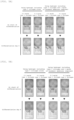
- the upper surface of the reconstructed human skin produced using Example 1 was treated with 200 ⁇ l of a 1% Triton X-100 solution and allowed to react for 2 hours, 5 hours, 8 hours, and 20 hours, followed by reaction with 1 mg/ml of an MTT solution for 3 hours along with an untreated control, whereby a thiazolyl blue formazan dye was formed through reaction with viable cells and photographed, and depending on the treatment time, the sliced reconstructed human skin was stained with hematoxylin and eosin (H&E) and observed using an optical microscope. The results thereof are shown in FIG. 7 .
- the formazan dye thus formed was dissolved in 2 ml of 2-propanol, 200 ⁇ l thereof was placed in each of two wells of a 96-well plate, and optical density at a wavelength of 570 nm was measured using a plate reader, and each optical density of treated group was compared to those in untreated control, thereby calculating relative cell viability, and ET 50 (Effective Time 50), which is the time taken to reach the cell viability of 50%, was determined. The results thereof are shown in FIG. 8 .
Landscapes
- Health & Medical Sciences (AREA)
- Life Sciences & Earth Sciences (AREA)
- Engineering & Computer Science (AREA)
- Chemical & Material Sciences (AREA)
- Biomedical Technology (AREA)
- General Health & Medical Sciences (AREA)
- Zoology (AREA)
- Epidemiology (AREA)
- Animal Behavior & Ethology (AREA)
- Transplantation (AREA)
- Public Health (AREA)
- Veterinary Medicine (AREA)
- Oral & Maxillofacial Surgery (AREA)
- Medicinal Chemistry (AREA)
- Dermatology (AREA)
- Genetics & Genomics (AREA)
- Wood Science & Technology (AREA)
- Organic Chemistry (AREA)
- Bioinformatics & Cheminformatics (AREA)
- Biotechnology (AREA)
- Cell Biology (AREA)
- Microbiology (AREA)
- Biochemistry (AREA)
- General Engineering & Computer Science (AREA)
- Molecular Biology (AREA)
- Sustainable Development (AREA)
- Dispersion Chemistry (AREA)
- Chemical Kinetics & Catalysis (AREA)
- Botany (AREA)
- Urology & Nephrology (AREA)
- Biophysics (AREA)
- Micro-Organisms Or Cultivation Processes Thereof (AREA)
Claims (5)
- Verfahren zur Herstellung rekonstruierter menschlicher Haut unter Verwendung eines Kulturgefäßes, das eine innere Kammer, die von einer inneren Wand und einer porösen Bodenfläche umgeben ist, und eine äußere Kammer, die von der inneren Kammer beabstandet ist und so konfiguriert ist, dass sie die innere Kammer umgibt, umfasst, wobei das Verfahren die folgenden Schritte umfasst:(a) Bilden einer adhäsiven Schicht durch Beschichten der inneren Wand mit einem adhäsiven Material und(b) Kultivieren von rekonstruierter menschlicher Haut in dem Kulturgefäß, das die darauf ausgebildete adhäsive Schicht aufweist,wobei Schritt (a) Folgendes umfasst:Herstellen einer Beschichtungslösung durch Auflösen des adhäsiven Materials in einer Pulverform in einem Lösemittel undAusbilden der adhäsiven Schicht durch Platzieren der Beschichtungslösung in der inneren Kammer und Durchführen einer Reaktion,wobei das adhäsive Material Dopamin in einer Konzentration von 0,1 bis 20 mg/ml ist,wobei das Lösemittel Tris-HCl eines pH-Werts von 8,0 bis 9,0 ist,wobei Schritt (b) Folgendes umfasst:Ausbilden eines Dermisäquivalents, das eine dreidimensionale Hydrogel-Gerüstmatrix umfasst, durch Platzieren einer Gerüstlösung, die eine Lösung von Kollagen Typ I und dermale Fibroblasten umfasst, in der mit Dopamin beschichteten inneren Kammer und Durchführen einer Gelierung, undAusbilden einer rekonstruierten Epidermis durch Beimpfen des Dermisäquivalents mit epidermalen Keratinozyten.
- Verfahren gemäß Anspruch 1, wobei die Gerüstlösung des Weieren ein Basalmembran-Komponentenmaterial umfasst.
- Verfahren gemäß Anspruch 1, wobei das Beimpfen mit epidermalen Keratinozyten das Zuführen eines ersten, die epidermalen Keratinozyten umfassenden Kulturmediums zu der inneren Kammer umfasst.
- Verfahren gemäß Anspruch 1, wobei das Verfahren des Weiteren das Zuführen eines ersten Kulturmediums zu der inneren Kammer und der äußeren Kammer umfasst, so dass die epidermalen Keratinozyten nach dem Aussäen der epidermalen Keratinozyten haften.
- Verfahren gemäß Anspruch 3, wobei das Verfahren des Weiteren das Entfernen des ersten Kulturmediums und das Zuführen eines zweiten Kulturmediums zu der äußeren Kammer umfasst, so dass sich die epidermalen Keratinozyten differenzieren.
Applications Claiming Priority (2)
| Application Number | Priority Date | Filing Date | Title |
|---|---|---|---|
| KR20210129433 | 2021-09-30 | ||
| KR1020220106664A KR102885210B1 (ko) | 2021-09-30 | 2022-08-25 | 인공피부모델 배양방법 |
Publications (2)
| Publication Number | Publication Date |
|---|---|
| EP4159249A1 EP4159249A1 (de) | 2023-04-05 |
| EP4159249B1 true EP4159249B1 (de) | 2025-07-02 |
Family
ID=83508723
Family Applications (1)
| Application Number | Title | Priority Date | Filing Date |
|---|---|---|---|
| EP22198764.7A Active EP4159249B1 (de) | 2021-09-30 | 2022-09-29 | Verfahren zur kultivierung rekonstruierter menschlicher haut |
Country Status (2)
| Country | Link |
|---|---|
| US (1) | US20230095689A1 (de) |
| EP (1) | EP4159249B1 (de) |
Family Cites Families (5)
| Publication number | Priority date | Publication date | Assignee | Title |
|---|---|---|---|---|
| DE102016206862A1 (de) * | 2016-04-22 | 2017-10-26 | Henkel Ag & Co. Kgaa | In-vitro Vollhautmodell, enthaltend dreidimensionale Zellkulturmodelle der Schweißdrüse |
| BR102018003726B1 (pt) * | 2018-02-26 | 2023-04-11 | Universidade Federal Do Espírito Santo - Ufes | Método de produção de um biomaterial ósseo, biomaterial ósseo e uso do mesmo |
| CN109082391B (zh) * | 2018-08-08 | 2020-11-24 | 内蒙古润田生物科技有限公司 | 一种控释农业用菌剂 |
| CN109321513B (zh) * | 2018-09-30 | 2021-05-04 | 洛阳师范学院 | 一种具有生理功能的组织工程皮肤构建方法 |
| JP7368117B2 (ja) * | 2019-06-14 | 2023-10-24 | 株式会社 資生堂 | 三次元培養皮膚の製造方法、及びそれにより得られる三次元培養皮膚 |
-
2022
- 2022-09-29 EP EP22198764.7A patent/EP4159249B1/de active Active
- 2022-09-30 US US17/957,166 patent/US20230095689A1/en active Pending
Also Published As
| Publication number | Publication date |
|---|---|
| US20230095689A1 (en) | 2023-03-30 |
| EP4159249A1 (de) | 2023-04-05 |
Similar Documents
| Publication | Publication Date | Title |
|---|---|---|
| Lotz et al. | Cross-linked collagen hydrogel matrix resisting contraction to facilitate full-thickness skin equivalents | |
| Li et al. | Electrospun gelatin nanofibers loaded with vitamins A and E as antibacterial wound dressing materials | |
| EP1290145B1 (de) | Dreidimensionales hautmodell | |
| EP2318060B1 (de) | Biokompatibilitätsschicht und beschichtete gegenstände | |
| EP3421057B1 (de) | Verfahren zur herstellung von künstlicher haut und künstliche haut | |
| KR101830236B1 (ko) | 보습능 및 피부재생능이 우수한 나노섬유 지지체 및 그 제조방법 | |
| Dong et al. | An in situ dressing material containing a multi‐armed antibiotic for healing irregular wounds | |
| US10669527B2 (en) | Artificial skin culture container and method for producing artificial skin using same | |
| EP1778307A2 (de) | Vernetzte kollagenmatrix zur herstellung eines haut[quivalentes | |
| EP4159249B1 (de) | Verfahren zur kultivierung rekonstruierter menschlicher haut | |
| JP2020202754A (ja) | 三次元培養皮膚の製造方法、及びそれにより得られる三次元培養皮膚 | |
| KR100432395B1 (ko) | 표피세포증식 활성화소재 | |
| US10988591B2 (en) | Vinyl-lactam-based hydrogel coatings | |
| KR102885210B1 (ko) | 인공피부모델 배양방법 | |
| DE8909437U1 (de) | Zellenkultivierungs-Vorrichtung | |
| US11981886B2 (en) | Biocompatible three-dimensional network and use thereof as a cell support | |
| CN119564932A (zh) | 一种具有即时、稳定组织粘附的Janus人工角膜及其制备方法和应用 | |
| US20230095264A1 (en) | Method of enhancing structural integrity of epidermis in culture of reconstructed human skin | |
| Zhu et al. | Smart wound management with sustainable pH sensing and dynamic electrotherapy | |
| KR102253725B1 (ko) | 바이오 접착제가 전처리된 3차원 세포 조직체의 배양 및 테스트 장치 | |
| DE10062623B4 (de) | Dreidimensionales Hautmodell | |
| WO2022255251A1 (ja) | 二層培養基材 | |
| KR102335878B1 (ko) | 노화 인공피부, 이의 제조방법 및 이를 이용한 피부 항노화 물질 스크리닝 방법 | |
| EP4659770A1 (de) | Gewebeersatz mit stützschicht, abdichtender polymerfolie und vliesschicht | |
| KR20250074753A (ko) | 바이오잉크 및 3d 프린팅을 이용한 인공 피부조직의 제조방법 및 이에 의해 제조된 인공 피부조직 |
Legal Events
| Date | Code | Title | Description |
|---|---|---|---|
| PUAI | Public reference made under article 153(3) epc to a published international application that has entered the european phase |
Free format text: ORIGINAL CODE: 0009012 |
|
| STAA | Information on the status of an ep patent application or granted ep patent |
Free format text: STATUS: REQUEST FOR EXAMINATION WAS MADE |
|
| 17P | Request for examination filed |
Effective date: 20220929 |
|
| AK | Designated contracting states |
Kind code of ref document: A1 Designated state(s): AL AT BE BG CH CY CZ DE DK EE ES FI FR GB GR HR HU IE IS IT LI LT LU LV MC MK MT NL NO PL PT RO RS SE SI SK SM TR |
|
| RBV | Designated contracting states (corrected) |
Designated state(s): AL AT BE BG CH CY CZ DE DK EE ES FI FR GB GR HR HU IE IS IT LI LT LU LV MC MK MT NL NO PL PT RO RS SE SI SK SM TR |
|
| GRAP | Despatch of communication of intention to grant a patent |
Free format text: ORIGINAL CODE: EPIDOSNIGR1 |
|
| STAA | Information on the status of an ep patent application or granted ep patent |
Free format text: STATUS: GRANT OF PATENT IS INTENDED |
|
| RIC1 | Information provided on ipc code assigned before grant |
Ipc: A61L 27/60 20060101ALI20250120BHEP Ipc: A61L 27/52 20060101ALI20250120BHEP Ipc: A61L 27/38 20060101ALI20250120BHEP Ipc: A61L 27/34 20060101ALI20250120BHEP Ipc: A61L 27/24 20060101ALI20250120BHEP Ipc: A61L 27/22 20060101AFI20250120BHEP |
|
| INTG | Intention to grant announced |
Effective date: 20250129 |
|
| GRAS | Grant fee paid |
Free format text: ORIGINAL CODE: EPIDOSNIGR3 |
|
| GRAA | (expected) grant |
Free format text: ORIGINAL CODE: 0009210 |
|
| STAA | Information on the status of an ep patent application or granted ep patent |
Free format text: STATUS: THE PATENT HAS BEEN GRANTED |
|
| AK | Designated contracting states |
Kind code of ref document: B1 Designated state(s): AL AT BE BG CH CY CZ DE DK EE ES FI FR GB GR HR HU IE IS IT LI LT LU LV MC MK MT NL NO PL PT RO RS SE SI SK SM TR |
|
| REG | Reference to a national code |
Ref country code: GB Ref legal event code: FG4D |
|
| REG | Reference to a national code |
Ref country code: CH Ref legal event code: EP |
|
| REG | Reference to a national code |
Ref country code: DE Ref legal event code: R096 Ref document number: 602022016775 Country of ref document: DE |
|
| REG | Reference to a national code |
Ref country code: IE Ref legal event code: FG4D |
|
| PGFP | Annual fee paid to national office [announced via postgrant information from national office to epo] |
Ref country code: DE Payment date: 20250924 Year of fee payment: 4 |
|
| PGFP | Annual fee paid to national office [announced via postgrant information from national office to epo] |
Ref country code: AT Payment date: 20251020 Year of fee payment: 4 Ref country code: FR Payment date: 20250924 Year of fee payment: 4 |
|
| REG | Reference to a national code |
Ref country code: NL Ref legal event code: MP Effective date: 20250702 |
|
| PG25 | Lapsed in a contracting state [announced via postgrant information from national office to epo] |
Ref country code: PT Free format text: LAPSE BECAUSE OF FAILURE TO SUBMIT A TRANSLATION OF THE DESCRIPTION OR TO PAY THE FEE WITHIN THE PRESCRIBED TIME-LIMIT Effective date: 20251103 |
|
| PG25 | Lapsed in a contracting state [announced via postgrant information from national office to epo] |
Ref country code: NL Free format text: LAPSE BECAUSE OF FAILURE TO SUBMIT A TRANSLATION OF THE DESCRIPTION OR TO PAY THE FEE WITHIN THE PRESCRIBED TIME-LIMIT Effective date: 20250702 |
|
| REG | Reference to a national code |
Ref country code: AT Ref legal event code: MK05 Ref document number: 1808539 Country of ref document: AT Kind code of ref document: T Effective date: 20250702 |
|
| PG25 | Lapsed in a contracting state [announced via postgrant information from national office to epo] |
Ref country code: IS Free format text: LAPSE BECAUSE OF FAILURE TO SUBMIT A TRANSLATION OF THE DESCRIPTION OR TO PAY THE FEE WITHIN THE PRESCRIBED TIME-LIMIT Effective date: 20251102 |
|
| PG25 | Lapsed in a contracting state [announced via postgrant information from national office to epo] |
Ref country code: NO Free format text: LAPSE BECAUSE OF FAILURE TO SUBMIT A TRANSLATION OF THE DESCRIPTION OR TO PAY THE FEE WITHIN THE PRESCRIBED TIME-LIMIT Effective date: 20251002 |
|
| REG | Reference to a national code |
Ref country code: LT Ref legal event code: MG9D |
|
| PG25 | Lapsed in a contracting state [announced via postgrant information from national office to epo] |
Ref country code: AT Free format text: LAPSE BECAUSE OF FAILURE TO SUBMIT A TRANSLATION OF THE DESCRIPTION OR TO PAY THE FEE WITHIN THE PRESCRIBED TIME-LIMIT Effective date: 20250702 |
|
| PG25 | Lapsed in a contracting state [announced via postgrant information from national office to epo] |
Ref country code: FI Free format text: LAPSE BECAUSE OF FAILURE TO SUBMIT A TRANSLATION OF THE DESCRIPTION OR TO PAY THE FEE WITHIN THE PRESCRIBED TIME-LIMIT Effective date: 20250702 |
|
| PG25 | Lapsed in a contracting state [announced via postgrant information from national office to epo] |
Ref country code: HR Free format text: LAPSE BECAUSE OF FAILURE TO SUBMIT A TRANSLATION OF THE DESCRIPTION OR TO PAY THE FEE WITHIN THE PRESCRIBED TIME-LIMIT Effective date: 20250702 |
|
| PG25 | Lapsed in a contracting state [announced via postgrant information from national office to epo] |
Ref country code: GR Free format text: LAPSE BECAUSE OF FAILURE TO SUBMIT A TRANSLATION OF THE DESCRIPTION OR TO PAY THE FEE WITHIN THE PRESCRIBED TIME-LIMIT Effective date: 20251003 |
|
| PG25 | Lapsed in a contracting state [announced via postgrant information from national office to epo] |
Ref country code: CZ Free format text: LAPSE BECAUSE OF FAILURE TO SUBMIT A TRANSLATION OF THE DESCRIPTION OR TO PAY THE FEE WITHIN THE PRESCRIBED TIME-LIMIT Effective date: 20250702 Ref country code: SE Free format text: LAPSE BECAUSE OF FAILURE TO SUBMIT A TRANSLATION OF THE DESCRIPTION OR TO PAY THE FEE WITHIN THE PRESCRIBED TIME-LIMIT Effective date: 20250702 |
|
| PG25 | Lapsed in a contracting state [announced via postgrant information from national office to epo] |
Ref country code: LV Free format text: LAPSE BECAUSE OF FAILURE TO SUBMIT A TRANSLATION OF THE DESCRIPTION OR TO PAY THE FEE WITHIN THE PRESCRIBED TIME-LIMIT Effective date: 20250702 |
|
| PG25 | Lapsed in a contracting state [announced via postgrant information from national office to epo] |
Ref country code: BG Free format text: LAPSE BECAUSE OF FAILURE TO SUBMIT A TRANSLATION OF THE DESCRIPTION OR TO PAY THE FEE WITHIN THE PRESCRIBED TIME-LIMIT Effective date: 20250702 Ref country code: PL Free format text: LAPSE BECAUSE OF FAILURE TO SUBMIT A TRANSLATION OF THE DESCRIPTION OR TO PAY THE FEE WITHIN THE PRESCRIBED TIME-LIMIT Effective date: 20250702 |
|
| PG25 | Lapsed in a contracting state [announced via postgrant information from national office to epo] |
Ref country code: RS Free format text: LAPSE BECAUSE OF FAILURE TO SUBMIT A TRANSLATION OF THE DESCRIPTION OR TO PAY THE FEE WITHIN THE PRESCRIBED TIME-LIMIT Effective date: 20251002 |
|
| PG25 | Lapsed in a contracting state [announced via postgrant information from national office to epo] |
Ref country code: ES Free format text: LAPSE BECAUSE OF FAILURE TO SUBMIT A TRANSLATION OF THE DESCRIPTION OR TO PAY THE FEE WITHIN THE PRESCRIBED TIME-LIMIT Effective date: 20250702 |
|
| PG25 | Lapsed in a contracting state [announced via postgrant information from national office to epo] |
Ref country code: RO Free format text: LAPSE BECAUSE OF FAILURE TO SUBMIT A TRANSLATION OF THE DESCRIPTION OR TO PAY THE FEE WITHIN THE PRESCRIBED TIME-LIMIT Effective date: 20250702 |
|
| PG25 | Lapsed in a contracting state [announced via postgrant information from national office to epo] |
Ref country code: SM Free format text: LAPSE BECAUSE OF FAILURE TO SUBMIT A TRANSLATION OF THE DESCRIPTION OR TO PAY THE FEE WITHIN THE PRESCRIBED TIME-LIMIT Effective date: 20250702 |
|
| PG25 | Lapsed in a contracting state [announced via postgrant information from national office to epo] |
Ref country code: DK Free format text: LAPSE BECAUSE OF FAILURE TO SUBMIT A TRANSLATION OF THE DESCRIPTION OR TO PAY THE FEE WITHIN THE PRESCRIBED TIME-LIMIT Effective date: 20250702 |
|
| PG25 | Lapsed in a contracting state [announced via postgrant information from national office to epo] |
Ref country code: IT Free format text: LAPSE BECAUSE OF FAILURE TO SUBMIT A TRANSLATION OF THE DESCRIPTION OR TO PAY THE FEE WITHIN THE PRESCRIBED TIME-LIMIT Effective date: 20250702 |
|
| PG25 | Lapsed in a contracting state [announced via postgrant information from national office to epo] |
Ref country code: SK Free format text: LAPSE BECAUSE OF FAILURE TO SUBMIT A TRANSLATION OF THE DESCRIPTION OR TO PAY THE FEE WITHIN THE PRESCRIBED TIME-LIMIT Effective date: 20250702 Ref country code: EE Free format text: LAPSE BECAUSE OF FAILURE TO SUBMIT A TRANSLATION OF THE DESCRIPTION OR TO PAY THE FEE WITHIN THE PRESCRIBED TIME-LIMIT Effective date: 20250702 |