EP4156522A1 - Ratenanpassungsverfahren für ldpc-code und kommunikationsvorrichtung - Google Patents
Ratenanpassungsverfahren für ldpc-code und kommunikationsvorrichtung Download PDFInfo
- Publication number
- EP4156522A1 EP4156522A1 EP21807567.9A EP21807567A EP4156522A1 EP 4156522 A1 EP4156522 A1 EP 4156522A1 EP 21807567 A EP21807567 A EP 21807567A EP 4156522 A1 EP4156522 A1 EP 4156522A1
- Authority
- EP
- European Patent Office
- Prior art keywords
- repetition
- priorities
- information bits
- matrix
- mother
- Prior art date
- Legal status (The legal status is an assumption and is not a legal conclusion. Google has not performed a legal analysis and makes no representation as to the accuracy of the status listed.)
- Pending
Links
Images







Classifications
-
- H—ELECTRICITY
- H03—ELECTRONIC CIRCUITRY
- H03M—CODING; DECODING; CODE CONVERSION IN GENERAL
- H03M13/00—Coding, decoding or code conversion, for error detection or error correction; Coding theory basic assumptions; Coding bounds; Error probability evaluation methods; Channel models; Simulation or testing of codes
- H03M13/03—Error detection or forward error correction by redundancy in data representation, i.e. code words containing more digits than the source words
- H03M13/05—Error detection or forward error correction by redundancy in data representation, i.e. code words containing more digits than the source words using block codes, i.e. a predetermined number of check bits joined to a predetermined number of information bits
- H03M13/11—Error detection or forward error correction by redundancy in data representation, i.e. code words containing more digits than the source words using block codes, i.e. a predetermined number of check bits joined to a predetermined number of information bits using multiple parity bits
- H03M13/1102—Codes on graphs and decoding on graphs, e.g. low-density parity check [LDPC] codes
- H03M13/1105—Decoding
- H03M13/1128—Judging correct decoding and iterative stopping criteria other than syndrome check and upper limit for decoding iterations
-
- H—ELECTRICITY
- H03—ELECTRONIC CIRCUITRY
- H03M—CODING; DECODING; CODE CONVERSION IN GENERAL
- H03M13/00—Coding, decoding or code conversion, for error detection or error correction; Coding theory basic assumptions; Coding bounds; Error probability evaluation methods; Channel models; Simulation or testing of codes
- H03M13/03—Error detection or forward error correction by redundancy in data representation, i.e. code words containing more digits than the source words
- H03M13/05—Error detection or forward error correction by redundancy in data representation, i.e. code words containing more digits than the source words using block codes, i.e. a predetermined number of check bits joined to a predetermined number of information bits
- H03M13/11—Error detection or forward error correction by redundancy in data representation, i.e. code words containing more digits than the source words using block codes, i.e. a predetermined number of check bits joined to a predetermined number of information bits using multiple parity bits
- H03M13/1102—Codes on graphs and decoding on graphs, e.g. low-density parity check [LDPC] codes
- H03M13/1148—Structural properties of the code parity-check or generator matrix
- H03M13/116—Quasi-cyclic LDPC [QC-LDPC] codes, i.e. the parity-check matrix being composed of permutation or circulant sub-matrices
-
- H—ELECTRICITY
- H03—ELECTRONIC CIRCUITRY
- H03M—CODING; DECODING; CODE CONVERSION IN GENERAL
- H03M13/00—Coding, decoding or code conversion, for error detection or error correction; Coding theory basic assumptions; Coding bounds; Error probability evaluation methods; Channel models; Simulation or testing of codes
- H03M13/03—Error detection or forward error correction by redundancy in data representation, i.e. code words containing more digits than the source words
- H03M13/05—Error detection or forward error correction by redundancy in data representation, i.e. code words containing more digits than the source words using block codes, i.e. a predetermined number of check bits joined to a predetermined number of information bits
- H03M13/11—Error detection or forward error correction by redundancy in data representation, i.e. code words containing more digits than the source words using block codes, i.e. a predetermined number of check bits joined to a predetermined number of information bits using multiple parity bits
- H03M13/1102—Codes on graphs and decoding on graphs, e.g. low-density parity check [LDPC] codes
- H03M13/1148—Structural properties of the code parity-check or generator matrix
- H03M13/118—Parity check matrix structured for simplifying encoding, e.g. by having a triangular or an approximate triangular structure
- H03M13/1185—Parity check matrix structured for simplifying encoding, e.g. by having a triangular or an approximate triangular structure wherein the parity-check matrix comprises a part with a double-diagonal
-
- H—ELECTRICITY
- H03—ELECTRONIC CIRCUITRY
- H03M—CODING; DECODING; CODE CONVERSION IN GENERAL
- H03M13/00—Coding, decoding or code conversion, for error detection or error correction; Coding theory basic assumptions; Coding bounds; Error probability evaluation methods; Channel models; Simulation or testing of codes
- H03M13/63—Joint error correction and other techniques
- H03M13/6306—Error control coding in combination with Automatic Repeat reQuest [ARQ] and diversity transmission, e.g. coding schemes for the multiple transmission of the same information or the transmission of incremental redundancy
-
- H—ELECTRICITY
- H03—ELECTRONIC CIRCUITRY
- H03M—CODING; DECODING; CODE CONVERSION IN GENERAL
- H03M13/00—Coding, decoding or code conversion, for error detection or error correction; Coding theory basic assumptions; Coding bounds; Error probability evaluation methods; Channel models; Simulation or testing of codes
- H03M13/63—Joint error correction and other techniques
- H03M13/635—Error control coding in combination with rate matching
- H03M13/6362—Error control coding in combination with rate matching by puncturing
- H03M13/6368—Error control coding in combination with rate matching by puncturing using rate compatible puncturing or complementary puncturing
- H03M13/6393—Rate compatible low-density parity check [LDPC] codes
-
- H—ELECTRICITY
- H03—ELECTRONIC CIRCUITRY
- H03M—CODING; DECODING; CODE CONVERSION IN GENERAL
- H03M13/00—Coding, decoding or code conversion, for error detection or error correction; Coding theory basic assumptions; Coding bounds; Error probability evaluation methods; Channel models; Simulation or testing of codes
- H03M13/65—Purpose and implementation aspects
- H03M13/6522—Intended application, e.g. transmission or communication standard
- H03M13/6527—IEEE 802.11 [WLAN]
-
- H—ELECTRICITY
- H04—ELECTRIC COMMUNICATION TECHNIQUE
- H04L—TRANSMISSION OF DIGITAL INFORMATION, e.g. TELEGRAPHIC COMMUNICATION
- H04L1/00—Arrangements for detecting or preventing errors in the information received
- H04L1/004—Arrangements for detecting or preventing errors in the information received by using forward error control
- H04L1/0056—Systems characterized by the type of code used
- H04L1/0057—Block codes
-
- H—ELECTRICITY
- H04—ELECTRIC COMMUNICATION TECHNIQUE
- H04L—TRANSMISSION OF DIGITAL INFORMATION, e.g. TELEGRAPHIC COMMUNICATION
- H04L1/00—Arrangements for detecting or preventing errors in the information received
- H04L1/004—Arrangements for detecting or preventing errors in the information received by using forward error control
- H04L1/0056—Systems characterized by the type of code used
- H04L1/0061—Error detection codes
- H04L1/0063—Single parity check
-
- H—ELECTRICITY
- H04—ELECTRIC COMMUNICATION TECHNIQUE
- H04L—TRANSMISSION OF DIGITAL INFORMATION, e.g. TELEGRAPHIC COMMUNICATION
- H04L1/00—Arrangements for detecting or preventing errors in the information received
- H04L1/004—Arrangements for detecting or preventing errors in the information received by using forward error control
- H04L1/0056—Systems characterized by the type of code used
- H04L1/0067—Rate matching
-
- H—ELECTRICITY
- H04—ELECTRIC COMMUNICATION TECHNIQUE
- H04L—TRANSMISSION OF DIGITAL INFORMATION, e.g. TELEGRAPHIC COMMUNICATION
- H04L1/00—Arrangements for detecting or preventing errors in the information received
- H04L1/12—Arrangements for detecting or preventing errors in the information received by using return channel
- H04L1/16—Arrangements for detecting or preventing errors in the information received by using return channel in which the return channel carries supervisory signals, e.g. repetition request signals
- H04L1/18—Automatic repetition systems, e.g. Van Duuren systems
- H04L1/1812—Hybrid protocols; Hybrid automatic repeat request [HARQ]
- H04L1/1819—Hybrid protocols; Hybrid automatic repeat request [HARQ] with retransmission of additional or different redundancy
-
- H—ELECTRICITY
- H04—ELECTRIC COMMUNICATION TECHNIQUE
- H04L—TRANSMISSION OF DIGITAL INFORMATION, e.g. TELEGRAPHIC COMMUNICATION
- H04L1/00—Arrangements for detecting or preventing errors in the information received
- H04L1/12—Arrangements for detecting or preventing errors in the information received by using return channel
- H04L1/16—Arrangements for detecting or preventing errors in the information received by using return channel in which the return channel carries supervisory signals, e.g. repetition request signals
- H04L1/18—Automatic repetition systems, e.g. Van Duuren systems
- H04L1/1829—Arrangements specially adapted for the receiver end
- H04L1/1835—Buffer management
- H04L1/1845—Combining techniques, e.g. code combining
Definitions
- This application relates to the field of channel coding, and more specifically, to an LDPC rate matching method and a communication apparatus.
- a low-density parity check (low-density parity check, LDPC) code is one of most mature and widely applied channel coding schemes.
- LDPC has performance close to the Shannon limit, and has many advantages. Therefore, IEEE 802.11n, 802.11ac, 802.11ax, and other protocols propose that the LDPC be used as a standard channel coding scheme for a wireless local area network (wireless local area network, WLAN).
- WLAN wireless local area network
- 12 LDPC check matrices are used in the 802.11ac/ax standard, three code lengths are supported, and each code length supports four code rates.
- a transmit device selects a corresponding check matrix of the 12 check matrices based on a target code length and code rate, to perform LDPC encoding.
- a next-generation WLAN standard 802.11be is proposed, and an incremental redundancy-hybrid automatic repeat request (incremental redundancy-hybrid automatic repeat request, IR-HARQ) mechanism is introduced based on 802.11ax.
- the IR-HARQ mechanism expects to increase a redundant bit through retransmission and reduce a channel coding rate, to improve decoding performance of a receive end.
- an LDPC coding scheme used in a current WLAN standard cannot meet a requirement of obtaining a performance gain by continuously adding redundant bits through retransmission in an IR-HARQ mechanism, and decoding performance is low.
- This application provides an LDPC rate matching method and a communication apparatus, to improve decoding performance.
- this application provides an LDPC rate matching method.
- the method includes: A transmit end performs rate matching on a first LDPC codeword at a first code rate based on an order of repetition priorities of K information bits of a mother code of an LDPC in rate matching, to obtain a second LDPC codeword at a second code rate, where K is a positive integer.
- the transmit end sends the second LDPC codeword.
- a priority at which an information bit is repeated in a rate matching process is referred to as a repetition priority of the information bit.
- the transmit end repeats information bits of an LDPC codeword based on repetition priorities of the information bits in the rate matching process during retransmission, to obtain a performance gain at a receive end.
- the order of repetition priorities of information bits is determined based on sensitivity of LDPC codewords. Therefore, in the order of repetition priorities, an information bit with higher sensitivity has a lower repetition priority, and an information bit with lower sensitivity has a higher repetition priority. Therefore, when the transmit end repeats the information bits of the LDPC codeword, an information bit with lower sensitivity is repeated first, so that decoding performance of the receive end can be improved.
- a transmit end performs rate matching on a first LDPC codeword at a first code rate based on an order of repetition priorities of K information bits includes:
- the transmit end repeatedly sends, in descending order of repetition priorities, L information bits in a first information bit set in the first LDPC codeword based on a quantity L of bits that need to be repeated and the order of repetition priorities of the K information bits.
- a repetition priority of an information bit with a lowest repetition priority in the L information bits of the first information bit set is higher than or equal to a repetition priority of a remaining information bit in the first LDPC codeword other than the information bits in the first information bit set, L ⁇ K, and L is an integer.
- the first information bit set is L information bits with highest repetition priorities in all information bits of the first LDPC codeword that are sorted in descending order of repetition priorities.
- the mother code length is 1944
- the code rate is 1/2
- repetition priorities of the columns, in the mother matrix, corresponding to the information bits are sorted as follows: 10, 6, 8, 11, 4, 3, 12, 7, 2, 5, 9, and 1, where each element a in the sorting indicates an a th column of the mother matrix.
- the mother code length is 1296
- the code rate is 1/2
- repetition priorities of the columns, in the mother matrix, corresponding to the information bits are sorted as follows: 8, 12, 7, 3, 11, 10, 4, 6, 2, 5, 9, and 1, where each element a in the sorting indicates an a th column of the mother matrix.
- the mother code length is 648
- the code rate is 1/2
- repetition priorities of the columns, in the mother matrix, corresponding to the information bits are sorted as follows: 8, 6, 12, 11, 2, 3, 10, 7, 4, 1, 5, and 9, where each element a in the sorting indicates an a th column of the mother matrix.
- the mother code length is 1944
- the code rate is 2/3
- repetition priorities of the columns, in the mother matrix, corresponding to the information bits are sorted as follows: 16, 8, 15, 12, 9, 10, 14, 6, 13, 11, 7, 5, 1, 2, 3, and 4, where each element a in the sorting indicates an a th column of the mother matrix.
- the mother code length is 1296
- the code rate is 2/3
- repetition priorities of the columns, in the mother matrix, corresponding to the information bits are sorted as follows: 16, 9, 12, 7, 10, 8, 11, 14, 13, 15, 6, 4, 5, 1, 2, and 3, where each element a in the sorting indicates an a th column of the mother matrix.
- the mother code length is 648
- the code rate is 2/3
- repetition priorities of the columns, in the mother matrix, corresponding to the information bits are sorted as follows: 16, 9, 12, 7, 10, 8, 11, 14, 13, 15, 6, 4, 5, 1, 2, and 3, where each element a in the sorting indicates an a th column of the mother matrix.
- the mother code length is 1944
- the code rate is 3/4
- repetition priorities of the columns, in the mother matrix corresponding to the information bits are sorted as follows: 12, 16, 11, 10, 14, 17, 15, 8, 13, 18, 7, 9, 1, 2, 3, 4, 5, and 6, where each element a in the sorting indicates an a th column of the mother matrix.
- the mother code length is 1296
- the code rate is 3/4
- repetition priorities of the columns, in the mother matrix, corresponding to the information bits are sorted as follows: 9, 11, 13, 15, 17, 8, 10, 12, 14, 16, 18, 1, 2, 3, 4, 5, 6, and 7, where each element a in the sorting indicates an a th column of the mother matrix.
- the mother code length is 648
- the code rate is 3/4
- repetition priorities of the columns, in the mother matrix, corresponding to the information bits are sorted as follows: 18, 13, 15, 16, 12, 14, 17, 10, 6, 7, 8, 11, 9, 1, 2, 3, 4, and 5, where each element a in the sorting indicates an a th column of the mother matrix.
- the mother code length is 1944
- the code rate is 5/6
- repetition priorities of the columns, in the mother matrix, corresponding to the information bits are sorted as follows: 12, 14, 15, 17, 19, 13, 20, 11, 16, 18, 1, 2, 3, 4, 5, 6, 7, 8, 9, and 10, where each element a in the sorting indicates an a th column of the mother matrix.
- the mother code length is 1296
- the code rate is 5/6
- repetition priorities of the columns, in the mother matrix, corresponding to the information bits are sorted as follows: 17, 20, 19, 18, 1, 2, 3, 4, 5, 6, 7, 8, 9, 10, 11, 12, 13, 14, 15, and 16, where each element a in the sorting indicates an a th column of the mother matrix.
- the mother code length is 648
- the code rate is 5/6
- repetition priorities of the columns, in the mother matrix, corresponding to the information bits are sorted as follows: 13, 1, 2, 3, 4, 5, 6, 7, 8, 9, 10, 11, 12, 14, 15, 16, 17, 18, 19, and 20, where each element a in the sorting indicates an a th column of the mother matrix.
- first L information bits in the order of repetition priorities in the first LDPC codeword includes:
- the method before the transmit end repeatedly sends, in descending order of repetition priorities based on the quantity L of bits that need to be repeated and the order of repetition priorities of the K information bits, L information bits included in the first information bit set in the first LDPC codeword, the method further includes: The transmit end sends the first LDPC codeword.
- the transmit end repeatedly sends, in descending order of repetition priorities based on a quantity L of bits that need to be repeated and the order of repetition priorities of the K information bits, L information bits included in a first information bit set in the first LDPC codeword includes: If the first LDPC codeword is not successfully decoded by a receive end, the transmit end repeatedly sends, in descending order of repetition priorities based on a quantity L of bits that need to be repeated and the order of repetition priorities of the K information bits, L information bits included in a first information bit set in the first LDPC codeword.
- the method further includes: if all information bits included in the first LDPC codeword are repeatedly sent and the receive end still does not successfully decode the information bits, the method further includes:
- the transmit end sends check bits obtained after puncturing in the first LDPC codeword in an order of puncturing priorities of check bits, where a check bit with a lower puncturing priority is sent first, the puncturing priorities indicate puncturing priorities of (N - K) check bits in rate matching, N is the mother code length of the LDPC, N ⁇ K, and N is an integer.
- the method before the transmit end repeatedly sends, in descending order of repetition priorities based on the quantity L of bits that need to be repeated and the order of repetition priorities of the K information bits, L information bits included in the first information bit set in the first LDPC codeword, the method further includes:
- L information bits included in a first information bit set in the first LDPC codeword includes: If all check bits, obtained after puncturing, of the first LDPC codeword are sent and the receive end still does not successfully decode the check bits obtained after puncturing, the transmit end sends the information bits of the first LDPC codeword based on the repetition priorities of the K information bits.
- this application provides a communication apparatus.
- the communication apparatus has a function of implementing the method according to the first aspect and any one of the possible implementations of the first aspect.
- the function may be implemented by using hardware or may be implemented by using hardware executing corresponding software.
- the hardware or the software includes one or more units corresponding to the function.
- this application provides a communication apparatus.
- the communication apparatus includes an interface circuit and a processor.
- the interface circuit is configured to receive computer code or instructions, and transmit the computer code or the instructions to the processor.
- the processor runs the computer code or the instructions, and the method in the first aspect or any implementation of the first aspect is implemented.
- this application provides a communication device.
- the communication device includes at least one processor, and the at least one processor is coupled to at least one memory.
- the at least one memory is configured to store a computer program or instructions.
- the at least one processor is configured to invoke the computer program or the instructions from the at least one memory and run the computer program or the instructions, so that the communication device performs the method in the first aspect or any possible implementation of the first aspect.
- the communication device may be an encoder.
- this application provides a computer-readable storage medium.
- the computer-readable storage medium stores computer instructions.
- the computer instructions are run on a computer, the method according to the first aspect or any one of the possible implementations of the first aspect is implemented.
- this application provides a computer program product.
- the computer program product includes computer program code.
- the computer program code is run on a computer, the method according to any one of the first aspect or the possible implementations of the first aspect is implemented.
- this application provides a wireless communication system, including the communication device according to the fourth aspect.
- Wireless Local Area Network (wireless local area network, WLAN) transmission standards such as the Institute of Electrical and Electronics Engineers (institute of electrical and electronics engineers, IEEE) 802.11n/ac/ax/be, are mainly evolved to improve user experience in 60 GHz large bandwidth scenarios, including improving an average user throughput and energy efficiency of battery-type power supply devices.
- This requires highspeed and reliable transmission of data, time-frequency, and other services on limited frequency and power resources. Therefore, a high-reliability and high-efficiency channel coding/decoding scheme is required.
- a low-density parity check low-density parity check, LDPC
- LDPC has performance close to the Shannon limit, and has many advantages. For example, good bit error performance can be obtained without deep interleaving, frame error rate performance is good, an error floor is greatly reduced, decoding is not based on a network, parallel decoding is supported, and a decoding delay is short. Therefore, LDPC has become a standard channel coding scheme for a low-frequency short-range WLAN communication system in the IEEE 802. 11n/ac/ax. In addition, the LDPC becomes a mandatory channel coding scheme when a bandwidth of the IEEE 802.11ax is greater than or equal to 40 MHz.
- a new next-generation wireless WLAN standard 802.11be of the 802.11ax proposes to introduce a hybrid automatic repeat request (hybrid automatic repeat request, HARQ), to further improve a throughput rate of a system.
- the HARQ mainly includes storage, retransmission request, and combination and demodulation.
- a receive end When failing to decode data, a receive end saves received data, and requests a transmit end to retransmit data. The receive end combines the retransmitted data and the previously received and saved data, and then decodes the data, thereby achieving a diversity gain, reducing a quantity of retransmission times and a delay, and improving a probability of successful data decoding.
- the HARQ may roughly include two types: chase combining (chase combine, CC) and incremental redundancy (incremental redundancy, IR), which may be referred to as a CC-HARQ and an IR-HARQ, respectively.
- a HARQ mechanism may be considered as two types: chase combining (chase combine, CC) and incremental redundancy (incremental redundancy, IR-HARQ).
- chase combining chase combine, CC
- incremental redundancy incrementmental redundancy
- IR-HARQ incremental redundancy
- the receive end directly discards data packets that are not correctly received.
- the data packets that are not correctly received cannot be decoded independently and correctly, the data packets still include a part of wanted information.
- CC-HARQ in a CC process, the data packets that are not correctly received are stored in a memory based on the part of information, and are combined with a retransmitted data packet for decoding. This improves transmission efficiency.
- the transmit end sends an information bit and a part of redundant bits during first transmission, and sends an additional redundant bit during retransmission. If decoding is not successfully performed during first transmission, the transmit end retransmits more redundant bits to reduce a code rate of a channel, to improve a success rate of decoding. If the receive end still cannot successfully perform decoding after the retransmitted redundant bits are added, the transmit end performs retransmission again. As a quantity of retransmissions increases, redundancy bits continuously increases, and the channel coding rate continuously decreases, so that better decoding effect can be achieved.
- an LDPC encoding scheme (rate-compatible LDPC, RC-LDPC) that is compatible with a plurality of rates is required for support, so that a new incremental redundancy bit can be introduced during retransmission.
- the LDPC is a linear block code
- a check matrix of the LDPC is a sparse matrix, that is, a quantity of zero elements in the check matrix is far greater than a quantity of non-zero elements.
- a row weight and a column weight of the check matrix are very small numbers compared with a code length of the LDPC.
- Tanner represented an LDPC codeword in a graph. Now, this graph is referred to as a Tanner graph.
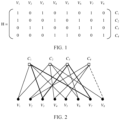
- the Tanner graph is in a one-to-one correspondence with the check matrix, and is formed by two types of nodes. One type of node indicates a codeword symbol, and is referred to as a variable node. The other type of node is a check node, and indicates a check constraint relationship. Each check node indicates a check constraint relationship. The following provides description with reference to FIG. 1 and FIG. 2 .
- FIG. 1 is a check matrix H of an LDPC.
- ⁇ Vi ⁇ indicates a variable node set
- ⁇ Ci ⁇ indicates a check node set.
- Each row of the check matrix H indicates one check equation
- each column indicates one codeword bit.
- FIG. 2 is a Tanner graph of a check matrix H of an LDPC.
- the Tanner graph indicates the check matrix of the LDPC.
- the Tanner graph includes two types of nodes: n variable nodes and m check nodes.
- the n variable nodes respectively correspond to the n columns of the check matrix H
- the m check nodes respectively correspond to the m rows of the check matrix H.
- a cycle in a Tanner graph consists of nodes that are connected to each other.
- a cycle uses one node in the group as a start point and an end point at the same time and passes through each node only once.
- a length of the cycle is defined as a quantity of connection lines included in the cycle.
- a girth of a graph may also be referred to as a size of the graph, and is defined as a minimum cycle length in the graph. In FIG. 2 , a girth is 6, as shown by a bold connection line in FIG. 2 .
- the variable nodes in the Tanner graph each correspond to one column of the check matrix H, that is, correspond to each codeword bit of the LDPC codeword.
- Check nodes in the Tanner graph each correspond to one row of the check matrix H, that is, correspond to check bits of the LDPC codeword. Connection between the two types of nodes corresponds to a value of an element in the matrix H.
- a cycle is a closed cycle formed by a variable node, a check node, and an edge that are connected end-to-end.
- the LDPC code is a linear block code.
- a mapping relationship between the information bits of k bits and the code group whose length is n bits is usually represented by a corresponding check matrix H.
- An encoding sequence may be correspondingly generated based on the check matrix H, to complete an encoding process. After an encoded codeword is transmitted through a channel, the receive end decodes a received signal accordingly to determine original information bits.
- the check matrix H of the LDPC is very large. Therefore, the check matrix H is usually indicated by blocks.
- the check matrix H (specifically, an original check matrix) is considered to be generated by using a plurality of submatrices of z ⁇ z. Therefore, the check matrix H may be represented by using one mother matrix H b . Each element in the mother matrix corresponds to one submatrix of z ⁇ z, and each submatrix may be represented by using a quantity of cyclic shift bits. Storage space required by the check matrix H is greatly reduced.
- Each check matrix corresponds to one code rate and one code length.
- a check matrix in the 802.11ac standard is used, and code lengths 1944, 1296, and 648 are supported. All the three code lengths support code rates 1/2, 2/3, 3/4, and 5/6.
- the original check matrix H may be obtained based on the mother matrix and an expansion factor z that are provided in the 802.11ac standard.
- An LDPC code used in the IEEE 802.11ac and 802.11ax standards is a quasi-cyclic low density parity check (quasi-cyclic low density parity check, QC-LDPC) code.
- the QC-LDPC code is a type of structured LDPC code. Because of a unique structure of the check matrix of the QC-LDPC code, a simple feedback shift register can be used for encoding, to reduce a complexity of encoding the LDPC code.
- a total of 12 check matrices are used, which support three code lengths.
- the three code lengths are 648, 1296, and 1944.
- Each code length supports four code rates: 1/2, 2/3, 3/4, and 5/6.
- Check bit parts of the 12 check matrices all have a same structure.
- a mother matrix of a check matrix H of an LDPC whose code length is 1944 and whose code rate is 5/6 in the 802.11ac is as follows: 13 48 80 66 4 74 7 30 76 52 37 60 ⁇ 49 ⁇ 73 31 74 73 23 1 0 ⁇ ⁇ 69 63 74 56 64 77 57 65 6 16 51 ⁇ 64 ⁇ 64 68 9 48 62 54 ⁇ 0 0 ⁇ 51 15 0 80 24 25 42 54 44 71 71 9 67 35 67 ⁇ 58 ⁇ 29 ⁇ 0 ⁇ 0 16 29 36 41 44 56 59 37 50 24 ⁇ 65 4 65 4 52 ⁇ 4 ⁇ 73 1 ⁇ ⁇ 0
- a size of the mother matrix is 4 rows and 24 columns.
- "-" in the mother matrix indicates an all-zero square matrix whose size is z ⁇ z .
- An element i in the mother matrix indicates a cyclic shift value. 0 ⁇ i ⁇ z - 1, and i is an integer.
- a transmit end selects a corresponding check matrix from the foregoing 12 check matrices based on a target code length and a target code rate.
- the 12 check matrices are different from each other.
- a rate-compatible LDPC encoding scheme also needs to be introduced, to obtain a new incremental redundancy bit during retransmission.
- the technical solutions of this application are mainly applicable to a wireless communication system.
- the wireless communication system may comply with a 3rd generation partnership project (third generation partnership project, 3GPP) wireless communication standard, or may comply with another wireless communication standard, for example, an IEEE 802 series (for example, 802.11, 802.15, or 802.20) wireless communication standard.
- 3GPP third generation partnership project
- the wireless communication system includes at least one network device and one or more terminal devices.
- the at least one network device and the one or more terminal devices communicate with each other by using a wireless communication technology.
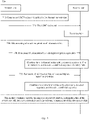
- FIG. 3 shows communication between one network device and a single terminal device.
- FIG. 3 shows communication between one network device and a plurality of terminal devices.
- the communication between the network device and the terminal device may further include downlink transmission in which the network device sends a signal to the terminal device and uplink transmission in which the terminal device sends a signal to the network device. This is not limited in this specification.
- the transmit end in each embodiment is a terminal device, and the receive end is a network device.
- the transmit end is a network device, and the receive end is a terminal device.
- a terminal device in embodiments of this application may be user equipment (user equipment, UE), a terminal (terminal), a mobile phone (mobile phone), a tablet computer (tablet computer), a laptop computer (laptop computer), a wearable device (for example, a smartwatch, a smart band, a smart helmet, or smart glasses), and another device having a wireless access capability, for example, a smart car or various Internet of Things (Internet of Things, IoT) devices including various smart home devices (such as a smart meter and a smart home appliance) and smart city devices (such as a security or monitoring device and an intelligent road transportation facility), and a terminal device in a 5G system or a future communication system.
- IoT Internet of Things
- the network device in embodiments of this application may be a base station.
- the base station is sometimes referred to as a wireless access point (access point, AP), a transmission/reception point (transmission reception point, TRP), or a transmission point (transmission point, TP).
- the base station may be a generation nodeB (generation NodeB, gNB) in a 5th generation (5th generation, 5G) system or an evolved nodeB (evolved NodeB, eNB) in a long term evolution (long term evolution, LTE) system.
- base stations may be classified into a macro base station (macro base station) or a micro base station (micro base station) based on different physical forms or transmit powers of the base stations.
- the micro base station is also sometimes referred to as a small base station or a small cell (small cell).
- the network device may alternatively be a network node that forms the gNB or the TRP, for example, a baseband unit (building baseband unit, BBU), a central unit (central unit, CU), or a distributed unit (distributed unit, DU).
- BBU building baseband unit
- CU central unit
- DU distributed unit
- This application provides an LDPC-based repetition scheme.
- Information bits in LDPC codeword bits are repeated, so that repeated information bits can be obtained during retransmission, and a receive end combines these repeated information bits with corresponding information bits transmitted for the first time.
- the LDPC repetition scheme provided in this application may be alternatively used in combination with a puncturing (or puncture) scheme, so that information bits in the LDPC codeword bits can be repeated, puncturing is performed on check bits in the LDPC codeword bits, and the part of information bits and remaining check bits obtained after puncturing are retransmitted, to finally obtain a more flexible HARQ retransmission mechanism.
- the receive end may combine the bits transmitted for the first time, the part of retransmitted information bits, and incremental redundancy bits at the same time, to obtain a performance gain.
- a basic idea of an LDPC repetition scheme based on a confidence criterion provided in this application is: determining a position of a sensitive information bit to be repeated based on a statistical confidence feature, for example, an absolute value of a comparison likelihood rate (likelihood rate, LLR) of iterative decoding.
- LLR comparison likelihood rate
- the IR-HARQ requires that bit rates of LDPCs at the receive end be compatible, that is, bits transmitted at a high bit rate are included in bits transmitted at a low bit rate. The retransmitted information bits need to meet this condition.
- a system bit with a low confidence are repeated first, because an error is more likely to occur for a bit with a low confidence, and only system bits carry valid information.
- the sensitivity of a codeword bit is defined first.
- a fixed signal source is an all-zero signal source.
- iterative calculation for a specific quantity of iterations is performed on an LDPC codeword on which rate matching has not been performed, and after iterative decoding is converged, an absolute value
- indicates that a bit position corresponding to
- the fixed signal source is an all-zero signal source.
- Table T is a sensitivity-based sorting table of bit positions.
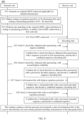
- the following describes a process of establishing a sensitivity-based sorting table of bit positions with reference to FIG. 4 .
- FIG. 4 is a flowchart of establishing a sensitivity-based sorting table of bit positions according to this application.
- an all-zero signal source is fixed, LDPC encoding with a corresponding code rate and code length is performed. Then, modulation such as binary phase shift keying (binary phase shift keying, BPSK) modulation is performed.
- BPSK binary phase shift keying
- Initial decoding information is set to a fixed value ⁇ x, and then is sent to an iterative decoder for decoding. After a specific quantity of iterations (for example, n times), an LLR of check bits are output, and absolute values of the LLR are sorted, for example, sorted in ascending order.
- the iterative decoder may specifically be a log-SPA iterative decoder.
- SPA indicates a sum-product algorithm (sum-product algorithm), which is a type of LDPC decoding algorithm based on iterative decoding, and belongs to a soft-decision algorithm.
- sum-product algorithm sum-product algorithm
- initial decoding information of an additive white Gaussian noise (additive white Gaussian noise, AWGN) channel is y/ ⁇ 2 , where y is channel information, and ⁇ 2 is a noise variance.
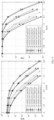
- FIG. 5 shows an image of the function ⁇ ( x ) .
- a decoding initial value x may be set to 3, 4, 5, or the like.
- this application provides repetition priority sorting based on LDPCs whose bit rates are 1/2, 2/3, 3/4, and 5/6.
- an original LDPC codeword may be directly transmitted, or puncturing is first performed on check bits of the original LDPC codeword, and then the punctured codeword is transmitted.
- a part of information bits are retransmitted in descending order of priorities (in ascending order of confidences), or a part of check bits obtained after puncturing are retransmitted at the same time.
- a quantity of retransmitted bits is determined based on a new code rate for retransmission or a quantity of channel resources of a channel allocated for retransmission.
- FIG. 6 is a schematic flowchart of an LDPC rate matching method according to this application.
- the methods in embodiments of this application may be performed by a transmit end, or may be performed by a component or a module such as a chip, a processor, or a processing circuit disposed in the transmit end.
- a transmit end or may be performed by a component or a module such as a chip, a processor, or a processing circuit disposed in the transmit end.
- a component or a module such as a chip, a processor, or a processing circuit disposed in the transmit end.
- an example in which the method is performed by the transmit end is used for description.
- the transmit end performs rate matching on a first LDPC codeword at a first code rate based on an order of repetition priorities of K information bits of a mother code of a low-density parity-check LDPC in a rate matching process, to obtain a second LDPC codeword at a second code rate.
- a priority at which an information bit in an LDPC codeword is repeated (or repeatedly sent) in a rate matching process is referred to as a repetition priority.
- the order of repetition priorities of the K information bits indicates reliability (or confidences) of the K information bits.
- a higher repetition priority of an information bit indicates higher reliability of the information bit.
- the information bit is repeated first.
- a lower repetition priority of an information bit indicates lower reliability of the information bit.
- the information bit is repeated later in the K information bits.
- the repetition priorities of the K information bits may be sorted in descending order. In this case, an information bit in a front position has a higher repetition priority.
- the information bits may be sorted in ascending order. In this case, an information bit at a subsequent position has a higher repetition priority.
- LDPC encoding is performed on the K information bits by using a check matrix corresponding to a target code rate and a target code length, to obtain a mother code of an LDPC whose length is N.
- N codeword bits of the mother code K codeword bits correspond to the K information bits
- remaining (N - K) codeword bits correspond to (N - K) check bits, where both N and M are positive integers, and N > K.
- the target code rate may be 1/2, 2/3, 3/4, and 5/6 described above, and the target code length may be 1944, 1296, and 648.
- Bit rates correspond to different check matrices. Therefore, from a high bit rate to a low bit rate or from a low bit rate to a high bit rate, a bit rate change can be implemented only by selecting different check matrices.
- a process from a high bit rate to a low bit rate or from a low bit rate to a high bit rate may also be implemented based on a same check matrix.
- the process from a high bit rate to a low bit rate or from a low bit rate to a high bit rate is rate matching.
- the first LDPC codeword in step 410 may be the mother code.
- the first code rate of the first LDPC codeword is a code rate of the mother code.
- LDPC encoding is performed on the K information bits by using the check matrix of the target code length and the target code rate, to obtain the first LDPC codeword.
- a code length of the first LDPC is the target code length
- the first code rate of the first LDPC codeword is the target code rate.
- the foregoing check matrix of the LDPC whose code length is 1944 and code rate is 5/6 is used as an example.
- LDPC encoding is performed on the K information bits by using the check matrix, to obtain the first LDPC codeword whose code length is 1944 and code rate is 5/6.
- rate matching may be performed on the first LDPC codeword at the first code rate according to the rate matching scheme provided in this application, to obtain the second LDPC codeword at the second code rate.
- the transmit end may attempt to use a higher code rate.
- rate matching is performed on the first LDPC codeword at the first code rate, to obtain the second LDPC codeword at the higher code rate.
- the second code rate is higher than the first code rate.
- the transmit end may attempt to reduce the code rate, to increase a probability of successful decoding by the receive end.
- the transmit end may perform rate matching on the first LDPC codeword at the first code rate, to obtain the second LDPC codeword at a lower code rate.
- the second code rate is lower than the first code rate.
- a bit rate (namely, the second bit rate) of the second LDPC codeword is lower than a first bit rate of the first LDPC codeword.
- rate matching is performed based on repetition priorities of information bits.
- the repetition priorities of the information bits and puncturing priorities of the check bits may be used in combination.
- a check bit is more sensitive, it indicates lower reliability of the check bit. In this case, the check bit is punctured first during rate matching. Therefore, a puncturing priority of the check bit is higher. On the contrary, lower sensitivity of a check bit indicates higher reliability of the check bit, and then a puncturing priority of the check bit is lower during rate matching.
- Retransmission is performed to improve a decoding success rate of the receive end, and a check bit with a higher puncturing priority has lower reliability. Therefore, in a retransmission process, the check bit has a lowest priority of being retransmitted by the transmit end. On the contrary, a check bit with a lower puncturing priority has a higher priority of being retransmitted by the transmit end in the retransmission process.
- the first LDPC codeword may be an LDPC codeword obtained through rate matching.
- the first LDPC codeword may be an LDPC codeword obtained by puncturing the mother code.
- the first LDPC codeword may be an LDPC codeword obtained by repeating a part of information bits of the mother code.
- the transmit end may perform rate matching on the first LDPC codeword at the first code rate based on the repetition priorities of the information bits, or based on the repetition priorities of the information bits and the puncturing priorities of the check bits, to obtain an expected second code rate.
- the transmit end sends an LDPC codeword at the second code rate.
- an order of repetition priorities of information bits according to this application is used for rate matching of the LDPC codeword.
- the transmit end obtains an LDPC codeword at a lower code rate by repeating an information bit, with a higher repetition priority, of an LDPC codeword at a high code rate.
- the transmit end repeats information bits, with a higher repetition priority, of an LDPC codeword at a high code rate, and punctures a part of check bits, with high puncturing priorities, of the LDPC codeword, to obtain an expected code rate.
- a high bit rate is compatible with a low bit rate.
- a mother matrix (denoted as a matrix 1) of a check matrix of the LDPC code whose code rate is 1/2 and code length is 1944 is first provided as follows: 57 ⁇ ⁇ ⁇ 50 ⁇ 11 ⁇ 50 ⁇ 79 ⁇ 1 0 ⁇ ⁇ ⁇ ⁇ ⁇ ⁇ ⁇ ⁇ ⁇ 3 ⁇ 28 ⁇ 0 ⁇ ⁇ ⁇ 55 7 ⁇ ⁇ ⁇ 0 0 ⁇ ⁇ ⁇ ⁇ ⁇ ⁇ ⁇ 30 ⁇ ⁇ ⁇ 24 37 ⁇ ⁇ 56 14 ⁇ ⁇ ⁇ 0 0 ⁇ ⁇ ⁇ ⁇ ⁇ ⁇ ⁇ ⁇ 62 53 ⁇ ⁇ 53 ⁇ ⁇ 3 35 ⁇ ⁇ ⁇ ⁇ ⁇ ⁇ 0 0 ⁇ ⁇ ⁇ ⁇ ⁇ 40 ⁇ ⁇ 20 66 ⁇ ⁇ 22 28 ⁇ ⁇ ⁇ ⁇ ⁇ ⁇ 0 0 ⁇ ⁇ ⁇ ⁇ ⁇ ⁇ ⁇ 20 66 ⁇ ⁇
- a (b) indicates an a th column of the mother matrix, and a column weight of the a th column is b (that is, a quantity of 1s in the column is b).
- an order of reliability of columns, in the mother matrix, corresponding to information bits is consistent with an order of repetition priorities of the columns in a rate matching process. That is, the descending order of reliability is the descending order of repetition priorities.
- Table 2 shows an order of repetition priorities of information bits provided in this application.
- Table 2 Reliability sorting 10 (3) 6 (3) 8 (3) 11 (3) 4 (3) 3 (3) LLR 35.1049 35.3955 35.3983 35.4292 35.4818 35.5749
- a (b) indicates an a th column of the mother matrix, and a column weight of the a th column is b. As shown in Table 2, an information bit with a smaller confidence has a higher repetition priority.
- Table 2 provides sorting of the first column to the twelfth column of the matrix 1, because the first column to the twelfth column correspond to an information (or in other words, a system) part of the check matrix. Codeword bits corresponding to these columns are all original information bits.
- each column in the mother matrix corresponds to z codeword bits of the original check matrix.
- the repetition priority of the information bit is given by using a column of the mother matrix. Therefore, repetition priorities of the z codeword bits, corresponding to each column of the mother matrix, in the original check matrix are the same.
- the tenth column with the highest reliability in Table 2 is used as an example. Repetition priorities of 81 codeword bits in the original check matrix corresponding to the tenth column are the same.
- Each element a in the sorting 1 indicates an a th column of the mother matrix of the check matrix.
- indexes of columns in the mother matrix start from 1. For example, for a mother matrix with a size of 12 ⁇ 24, a value range of an index of a column of the mother matrix is [1, 24].
- indexes of columns of the mother matrix may alternatively start from 0. This is not limited. Whether the indexes start from 0 or the indexes start from 1, sorting of repetition priorities of columns, corresponding to information bits, in the mother matrix indicated by the index is the same in essence.
- columns of the mother matrix include two parts, one part corresponds to information bits, and the other part corresponds to check bits.
- the first column to the twelfth column of the 24 columns correspond to information bits
- the thirteenth column to the twenty-fourth column correspond to check bits. Therefore, because this application mainly relates to sorting of repetition priorities of information bits, the "columns, in the mother matrix, corresponding to the information bits" described in embodiments means all columns other than a check part of the mother matrix.
- an information bit may be selected and repeated, according to the following rule, based on a quantity L of information bits that need to be repeated.
- the transmit end selects L information bits from z information bits corresponding to a column with a highest repetition priority in the mother matrix to repeat.
- the transmit end may randomly select the L information bits from the z information bits corresponding to the column with the highest repetition priority to repeat. For example, the transmit end selects the L information bits in a back-to-front, front-to-back, or random selection manner.
- the transmit end selects, from the mother matrix, mz information bits that are in the original check matrix and that correspond to m columns with highest repetition priorities, to perform repetition.
- the transmit end selects, in descending order of repetition priorities, the m ⁇ z information bits that are in the original check matrix and that correspond to the m columns with the highest repetition priorities to repeat.
- the transmit end repeats a total of 4 ⁇ 81 information bits that correspond to the tenth column, the sixth column, the eighth column, and the eleventh column of the mother matrix and that are in the original matrix. Details are not described one by one.
- the transmit end selects 81 information bits that are in the original check matrix and that correspond to the tenth column of the mother matrix, 81 information bits that are in the original check matrix and that correspond to the sixth column of the mother matrix, and (170 - 2 ⁇ 81) information bits in 81 information bits that are in the original check matrix and that correspond to the eighth column of the mother matrix to repeat.
- the transmit end only needs to randomly select eight information bits from the 81 information bits, in the original check matrix, corresponding to the eighth column of the mother matrix.
- a set including information bits repeated by the transmit end may be referred to as a first information bit set.
- the transmit end repeats information bits in the first information bit set of the LDPC codeword based on the quantity L of bits that need to be repeated.
- the first information bit set includes L information bits.
- a repetition priority of an information bit with a lowest repetition priority in the L information bits is higher than or equal to a repetition priority of a remaining information bit in all information bits of the LDPC codeword other than the L information bits in the first information bit set.
- Table 3 shows a comparison between a repetition scheme based on a confidence criterion provided in this application and a repetition scheme in the 802.11ac standard.
- Table 3 Two columns are repeated Five columns are repeated Eight columns are repeated 10 columns are repeated Repetition scheme based on a confidence criterion 12 and 14 12, 14, 15, 17, and 19 12, 14, 15, 17, 19, 13, 20, and 11 12, 14, 15, 17, 19, 13, 20, 11, 16, and 18 Repetition scheme in the 802.11ac standard 1 and 2 1, 2, 3, 4, and 5 1, 2, 3, 4, 5, 6, 7, and 8 1, 2, 3,4, 5, 6, 7, 8, 9, and 10
- Table 3 that quantities of information bits that need to be repeated are 2 ⁇ 81, 5 ⁇ 81, 8 ⁇ 81, and 10 ⁇ 81 is used as an example.
- Table 3 lists column indexes of columns, in the mother matrix, corresponding to preferentially repeated information bits. For comparison, repetition priorities in the 802.11ac are from front to back.
- a repetition scheme of an LDPC at a low code rate is compatible with a repetition scheme of an LDPC at a high code rate.
- repetition positions of information bits of the LDPC at the low bit rate include repetition positions of information bits of the LDPC at the high bit rate.
- an index set of columns of the mother matrix corresponding to repetition positions of the information bits of the LDPC is ⁇ 12, 14 ⁇ .
- an index set of columns of the mother matrix corresponding to repetition locations of the information bits of the LDPC is ⁇ 12, 14, 15, 17, 19 ⁇ , where the index set includes the twelfth column and the fourteenth column of the mother matrix.
- an index set of columns of the mother matrix corresponding to repetition positions of the information bits of the LDPC is ⁇ 12, 14, 15, 17, 19, 13, 20, 11 ⁇ .
- the index set includes not only a case in which the twelfth column and the fourteenth column of the mother matrix, that is, two columns are repeated, but also a case in which the twelfth column, the fourteenth column, the fifteenth column, the seventeenth column, and the nineteenth column of the mother matrix, that is, five columns are repeated.
- a higher bit rate is compatible with a low bit rate.
- a new repetition position is added to a repetition position of an LDPC codeword at a low code rate, to obtain an LDPC codeword at a higher code rate.
- a mother matrix (denoted as a matrix 2) of a check matrix of the LDPC code whose code rate is 1/2 and code length is 1296 is provided as follows: 40 ⁇ ⁇ ⁇ 22 ⁇ 49 23 43 ⁇ ⁇ ⁇ 1 0 ⁇ ⁇ ⁇ ⁇ ⁇ ⁇ ⁇ ⁇ ⁇ ⁇ 50 1 ⁇ ⁇ 48 35 ⁇ ⁇ 13 ⁇ 30 ⁇ ⁇ 0 0 ⁇ ⁇ ⁇ ⁇ ⁇ ⁇ ⁇ 39 50 ⁇ ⁇ 4 ⁇ 2 ⁇ ⁇ ⁇ ⁇ 49 ⁇ 0 0 ⁇ ⁇ ⁇ ⁇ ⁇ ⁇ 33 ⁇ ⁇ 38 37 ⁇ ⁇ 4 1 ⁇ ⁇ ⁇ ⁇ ⁇ ⁇ 0 0 ⁇ ⁇ ⁇ ⁇ ⁇ ⁇ 45 ⁇ ⁇ ⁇ 0 22 ⁇ ⁇ 20 42 ⁇ ⁇ ⁇ ⁇ ⁇ 0 0 ⁇ ⁇ ⁇ ⁇ ⁇ 51
- Table 4 shows sorting of repetition priorities of information bits of an LDPC whose code rate is 1/2 and code length is 1296 in this application.
- Table 4 Reliability sorting 8 (3) 12 (3) 7 (3) 3 (3) 11 (3) 10 (3) LLR 39.2121 39.3214 39.7775 39.7809 40.3593 40.5239
- a (b) indicates an a th column of the mother matrix, and a column weight of the a th column is b.
- Table 4 provides sorting of the first column to the twelfth column of the matrix 2, because the first column to the twelfth column correspond to an information (or in other words, a system) part of the matrix. Codeword bits corresponding to these columns are all original information bits.
- each column corresponds to 54 codeword bits of the original check matrix.
- Each column in the mother matrix corresponds to z information bits of the original check matrix, and repetition priorities of the z codeword bits are the same.
- the eighth column with the highest repetition priority in Table 4 is used as an example. To be specific, 54 information bits, in the original check matrix, corresponding to the eighth column of the mother matrix have a same repetition priority.
- repetition priorities of columns, corresponding to information bits, in the mother matrix of the check matrix of the LDPC in rate matching may be sorted in descending order as the following sorting 2: Sorting 2: 8, 12, 7, 3, 11, 10, 4, 6, 2, 5, 9, and 1.
- Each element a in the sorting 2 indicates an a th column of the mother matrix of the check matrix.
- indexes of columns in the mother matrix start from 1.
- a mother matrix (denoted as a matrix 3) of a check matrix of the LDPC code whose code rate is 1/2 and code length is 648 is provided as follows: 0 ⁇ ⁇ ⁇ 0 0 ⁇ ⁇ 0 ⁇ ⁇ 0 1 0 ⁇ ⁇ ⁇ ⁇ ⁇ ⁇ ⁇ ⁇ 22 0 ⁇ ⁇ 17 ⁇ 0 0 12 ⁇ ⁇ ⁇ ⁇ 0 0 ⁇ ⁇ ⁇ ⁇ ⁇ ⁇ 6 ⁇ 0 ⁇ 10 ⁇ ⁇ ⁇ 24 ⁇ 0 ⁇ ⁇ 0 0 ⁇ ⁇ ⁇ ⁇ ⁇ ⁇ 2 ⁇ 0 20 ⁇ ⁇ ⁇ 25 0 ⁇ ⁇ ⁇ ⁇ 0 0 ⁇ ⁇ ⁇ ⁇ ⁇ ⁇ ⁇ 23 ⁇ ⁇ ⁇ 3 ⁇ ⁇ ⁇ 0 ⁇ 9 11 ⁇ ⁇ ⁇ ⁇ 0 0 0 ⁇ ⁇ ⁇ 0 0 ⁇ ⁇ ⁇
- Table 5 shows an order of repetition priorities of information bits of an LDPC whose code rate is 1/2 and code length is 648 in this application.
- Table 5 Reliability sorting 8 (3) 6 (3) 12 (3) 11 (3) 2 (3) 3 (3) LLR 46.8189 48.0339 49.6489 50.3947 50.6030 50.0061 Reliability sorting 10 (3) 7 (3) 4 (3) 1 (12) 5 (12) 9 (12) LLR 51.5432 52.8294 53.0404 199.0153 199.0153 199.0153 199.0153
- a (b) indicates an a th column of the mother matrix, and a column weight of the a th column is b.
- Table 5 provides sorting of the first column to the twelfth column of the matrix 3, because the first column to the twelfth column correspond to an information (or in other words, a system) part of the matrix. Codeword bits corresponding to these columns are all original information bits.
- each column corresponds to 27 codeword bits of the original check matrix.
- Each column in the mother matrix corresponds to z information bits of the original check matrix, and repetition priorities of the z codeword bits are the same.
- the eighth column with the highest repetition priority in Table 5 is used as an example. To be specific, 27 information bits, in the original check matrix, corresponding to the eighth column of the mother matrix have a same repetition priority.
- Each element a in the sorting 3 indicates an a th column of the mother matrix of the check matrix.
- indexes of columns in the mother matrix start from 1.
- a mother matrix (denoted as a matrix 4) of a check matrix of the LDPC whose code rate is 1/2 and code length is 648 is provided as follows: 61 75 4 63 56 ⁇ ⁇ ⁇ ⁇ ⁇ ⁇ 8 ⁇ 2 17 25 1 0 ⁇ ⁇ ⁇ ⁇ ⁇ 56 74 77 20 ⁇ ⁇ ⁇ 64 24 4 67 ⁇ 7 ⁇ ⁇ ⁇ 0 0 ⁇ ⁇ ⁇ ⁇ 28 21 68 10 7 14 65 ⁇ ⁇ ⁇ 23 ⁇ ⁇ ⁇ 75 ⁇ ⁇ 0 0 ⁇ ⁇ ⁇ ⁇ 48 38 43 78 76 ⁇ ⁇ ⁇ 5 36 ⁇ 15 72 ⁇ ⁇ ⁇ ⁇ 0 0 ⁇ ⁇ ⁇ 40 2 53 25 ⁇ 52 62 ⁇ 20 ⁇ ⁇ 44 ⁇ ⁇ ⁇ ⁇ 0 ⁇ ⁇ ⁇ ⁇ ⁇ ⁇ ⁇ ⁇ ⁇
- Table 6 shows sorting of repetition priorities of information bits of an LDPC whose code rate is 2/3 and code length is 1944 in this application.
- Table 6 Reliability sorting 16 (3) 8 (3) 15 (3) 12 (3) 9 (3) 10 (3) 14 (3) 6 (3)
- a (b) indicates an a th column of the mother matrix, and a column weight of the a th column is b. As shown in Table 6, an information bit with a smaller confidence has a higher repetition priority.
- Table 6 provides sorting of the first column to the sixteenth column of the matrix 4, because the first column to the sixteenth column correspond to an information (or in other words, a system) part of the matrix. Codeword bits corresponding to these columns are all original information bits.
- each column corresponds to 81 codeword bits of the original check matrix.
- Each column in the mother matrix corresponds to z information bits of the original check matrix, and repetition priorities of the z codeword bits are the same.
- the sixteenth column with the highest repetition priority in Table 6 is used as an example. To be specific, 81 information bits, in the original check matrix, corresponding to the sixteenth column of the mother matrix have a same repetition priority.
- Each element a in the sorting 4 indicates an a th column of the mother matrix of the check matrix.
- indexes of columns in the mother matrix start from 1.
- a mother matrix (denoted as a matrix 5) of a check matrix of the LDPC code whose code rate is 2/3 and code length is 1296 is provided as follows: 39 31 22 43 ⁇ 40 4 ⁇ 11 ⁇ ⁇ 50 ⁇ ⁇ ⁇ 6 1 0 ⁇ ⁇ ⁇ ⁇ ⁇ 25 52 41 2 6 ⁇ 14 ⁇ 34 ⁇ ⁇ ⁇ 24 ⁇ 37 ⁇ ⁇ 0 0 ⁇ ⁇ ⁇ ⁇ 43 31 29 0 21 ⁇ 28 ⁇ ⁇ 2 ⁇ ⁇ 7 ⁇ 17 ⁇ ⁇ 0 0 ⁇ ⁇ ⁇ ⁇ 20 33 48 ⁇ 4 13 ⁇ 26 ⁇ ⁇ 22 ⁇ ⁇ 46 42 ⁇ ⁇ ⁇ 0 0 ⁇ ⁇ ⁇ 45 7 18 51 12 25 ⁇ ⁇ ⁇ 50 ⁇ ⁇ 5 ⁇ ⁇ ⁇ 0 ⁇ ⁇ 0 ⁇ ⁇ 35 40 32 16 5 ⁇ ⁇ 18 ⁇ ⁇ 43 51
- Table 7 shows sorting of repetition priorities of information bits of an LDPC whose code rate is 2/3 and code length is 1296 in this application.
- Table 7 Reliability sorting 16 (3) 9 (3) 12 (3) 7 (3) 10 (3) 8 (3) 11 (3) 14 (3) LLR 51.6235 51.7664 53.0464 54.2856 57.1662 58.0598 58.0598 58.0598 Reliability sorting 13 (3) 15 (3) 6 (3) 4 (7) 5 (7) 1 (8) 2 (8) 3 (8) LLR 58.2351 58.3730 58.9266 126.8313 130.9186 147.3210 147.3210 147.3210
- a (b) indicates an a th column of the mother matrix, and a column weight of the a th column is b.
- Table 7 provides sorting of the first column to the sixteenth column of the matrix 5, because the first column to the sixteenth column correspond to an information (or in other words, a system) part of the check matrix. Codeword bits corresponding to these columns are all original information bits.
- each column corresponds to 54 codeword bits of the original check matrix.
- Each column in the mother matrix corresponds to z information bits of the original check matrix, and repetition priorities of the z codeword bits are the same.
- the sixteenth column with the highest repetition priority in Table 7 is used as an example. 54 information bits, in the original check matrix, corresponding to the sixteenth column of the mother matrix have a same repetition priority.
- repetition priorities of columns, corresponding to information bits, in the mother matrix of the check matrix of the LDPC in rate matching may be sorted in descending order as the following sorting 5: Sorting 5: 16, 9, 12, 7, 10, 8, 11, 14, 13, 15, 6, 4, 5, 1, 2, and 3.
- Each element a in the sorting 5 indicates an a th column of the mother matrix of the check matrix.
- indexes of columns in the mother matrix start from 1.
- a mother matrix (denoted as a matrix 6) of a check matrix of the LDPC code whose code rate is 2/3 and code length is 648 is provided as follows: 25 26 14 ⁇ 20 ⁇ 2 ⁇ 4 ⁇ ⁇ 8 ⁇ 16 ⁇ 18 1 0 ⁇ ⁇ ⁇ ⁇ ⁇ 10 9 15 11 ⁇ 0 ⁇ 1 ⁇ ⁇ 18 ⁇ 8 ⁇ 10 ⁇ ⁇ 0 0 ⁇ ⁇ ⁇ ⁇ 16 2 20 26 21 ⁇ 6 ⁇ 1 26 ⁇ 7 ⁇ ⁇ ⁇ ⁇ ⁇ 0 0 ⁇ ⁇ ⁇ 10 13 5 0 ⁇ 3 ⁇ 7 ⁇ ⁇ 26 ⁇ ⁇ 13 21 16 ⁇ ⁇ ⁇ 0 0 ⁇ ⁇ ⁇ 23 14 24 ⁇ 12 ⁇ 19 ⁇ 17 ⁇ ⁇ ⁇ 20 ⁇ ⁇ 0 ⁇ ⁇ 0 ⁇ ⁇ 6 22 9 20 ⁇ 25 ⁇ 17 ⁇ 8 ⁇ 14
- Table 8 shows sorting of repetition priorities of information bits of an LDPC whose code rate is 2/3 and code length is 648 in this application.
- Table 8 Reliability sorting 16 (3) 9 (3) 12 (3) 7 (3) 10 (3) 8 (3) 11 (3) 14 (3) LLR 51.6235 51.7664 53.0464 54.2856 57.1662 58.0598 58.0598 58.0598 Reliability sorting 13 (3) 15 (3) 6 (3) 4(7) 5 (7) 1 (8) 2 (8) 3 (8) LLR 58.2351 58.3730 58.9266 126.8313 130.9186 147.3210 147.3210 147.3210
- a (b) indicates an a th column of the mother matrix, and a column weight of the a th column is b.
- each column in the mother matrix corresponds to z information bits of the original check matrix, and repetition priorities of the z codeword bits are the same. Because the matrix 6 gives a mother matrix, each column corresponds to 27 codeword bits of the original check matrix. The sixteenth column with the highest repetition priority in Table 7 is used as an example. 27 information bits, in the original check matrix, corresponding to the sixteenth column of the mother matrix have a same repetition priority.
- repetition priorities of columns, corresponding to information bits, in the mother matrix of the check matrix of the LDPC in rate matching may be sorted in descending order as the following sorting 6: Sorting 6: 16, 9, 12, 7, 10, 8, 11, 14, 13, 15, 6, 4, 5, 1, 2, and 3.
- Each element a in the sorting 6 indicates an a th column of the mother matrix of the check matrix.
- indexes of columns in the mother matrix start from 1.
- a mother matrix (denoted as a matrix 7) of a check matrix of the LDPC code whose code rate is 3/4 and code length is 1944 is provided as follows: 48 29 28 39 9 61 ⁇ ⁇ ⁇ 63 45 80 ⁇ ⁇ ⁇ 37 32 22 1 0 ⁇ ⁇ ⁇ 4 49 42 48 11 30 ⁇ ⁇ ⁇ 49 17 41 37 15 ⁇ 54 ⁇ ⁇ ⁇ 0 0 ⁇ ⁇ ⁇ 35 76 78 51 37 35 21 ⁇ 17 64 ⁇ ⁇ ⁇ 59 7 ⁇ ⁇ 32 ⁇ 0 0 ⁇ ⁇ 9 65 44 9 54 56 73 34 42 ⁇ ⁇ ⁇ 35 ⁇ ⁇ ⁇ 46 39 0 ⁇ ⁇ 0 0 ⁇ 3 62 7 80 68 26 ⁇ 80 55 ⁇ 36 ⁇ 26 ⁇ 9 ⁇ 72 ⁇ ⁇ ⁇ ⁇ 0 0 26 75 33 21 69 59 3 38 ⁇ ⁇ ⁇ 35 ⁇ 62 36 26 ⁇ ⁇ 1
- Table 9 shows sorting of repetition priorities of information bits of an LDPC whose code rate is 3/4 and code length is 1944 in this application.
- Table 9 Reliability sorting 12 (3) 16 (3) 11 (3) 10 (3) 14 (3) 17 (3) 15 (3) 8 (3) 13(3) LLR 42.1947 42.1947 42.2473 42.3949 42.4339 42.4605 42.4782 42.4996 42.5079
- Reliability sorting 18 (3) 7 (3) 9 (3) 1 (6) 2 (6) 3 (6) 4 (6) 5 (6) 6 (6) LLR 42.6081 42.6472 42.6998 81.8940 81.8940 81.8940 81.8940 81.8940 81.8940 81.8940 81.8940 81.8940 81.8940 81.8940 81.8940 81.8940 81.8940 81.8940 81.8940 81.8940 81.8940 81.8940 81.8940 81.8940 81.8940
- a (b) indicates an a th column of the mother matrix, and a column weight of the a th column is b.
- Table 9 provides sorting of the first column to the eighteenth column of the matrix 7, because the first column to the eighteenth column correspond to an information (or in other words, a system) part of the matrix. Codeword bits corresponding to these columns are all original information bits.
- Each column in the mother matrix corresponds to z information bits of the original check matrix, and repetition priorities of the z codeword bits are the same. Because the matrix 7 gives a mother matrix, each column corresponds to 81 codeword bits of the original check matrix. The eighteenth column with the highest repetition priority in Table 9 is used as an example. 81 information bits, in the original check matrix, corresponding to the eighteenth column of the mother matrix have a same repetition priority.
- Each element a in the sorting 7 indicates an a th column of the mother matrix of the check matrix.
- indexes of columns in the mother matrix start from 1.
- a mother matrix (denoted as a matrix 8) of a check matrix of the LDPC code whose code rate is 3/4 and code length is 1296 is provided as follows: 39 40 51 41 3 29 8 36 ⁇ 14 ⁇ 6 ⁇ 33 ⁇ 11 ⁇ 4 1 0 ⁇ ⁇ ⁇ ⁇ 48 21 47 9 48 35 51 ⁇ 38 ⁇ 28 ⁇ 34 ⁇ 50 ⁇ 50 ⁇ ⁇ 0 0 ⁇ ⁇ ⁇ 30 39 28 42 50 39 5 17 ⁇ 6 ⁇ 18 ⁇ 20 ⁇ 15 ⁇ 40 ⁇ 0 0 ⁇ ⁇ 29 0 1 43 36 30 47 ⁇ 49 ⁇ 47 ⁇ 3 ⁇ 35 ⁇ 34 ⁇ 0 ⁇ 0 0 ⁇ 1 32 11 23 10 44 12 7 ⁇ 48 ⁇ 4 ⁇ 9 ⁇ 17 ⁇ 16 ⁇ ⁇ ⁇ 0 0 13 7 15 47 23 16 47 ⁇ 43 ⁇ 29 ⁇ 52 ⁇ 53 ⁇ 53 ⁇ 1 ⁇ ⁇ ⁇ ⁇ 0 0
- Table 10 shows sorting of repetition priorities of information bits of an LDPC whose code rate is 3/4 and code length is 1296.
- Table 10 Reliability sorting 9 (3) 11 (3) 13 (3) 15 (3) 17 (3) 8 (3) 10 (3) 12 (3) 14 (3) LLR 42.4009 42.4009 42.4009 42.4009 42.4009 42.4009 42.5957 42.5957 42.5957 Reliability sorting 16 (3) 18 (3) 1 (6) 2 (6) 3 (6) 4 (6) 5 (6) 6 (6) 7 (6) LLR 42.5957 42.5957 81.9962 81.9962 81.9962 81.9962 81.9962 81.9962 81.9962 81.9962 81.9962 81.9962 81.9962 81.9962 81.9962 81.9962 81.9962 81.9962 81.9962 81.9962 81.9962 81.9962 81.9962 81.9962 81.9962 81.9962 81.9962 81.9962 81.9962 81.9962 81.9962 81
- a (b) indicates an a th column of the mother matrix, and a column weight of the a th column is b.
- Table 10 provides sorting of the first column to the eighteenth column of the matrix 8, because the first column to the eighteenth column correspond to an information (or in other words, a system) part of the matrix. Codeword bits corresponding to these columns are all original information bits.
- Each column in the mother matrix corresponds to z information bits of the original check matrix, and repetition priorities of the z codeword bits are the same. Because the matrix 7 gives a mother matrix, each column corresponds to 54 codeword bits of the original check matrix.
- the ninth column with the highest repetition priority in Table 10 is used as an example. 54 information bits, in the original check matrix, corresponding to the ninth column of the mother matrix have a same repetition priority.
- repetition priorities of columns, corresponding to information bits, in the mother matrix of the check matrix of the LDPC in rate matching may be sorted in descending order as the following sorting 8: Sorting 8: 9, 11, 13, 15, 17, 8, 10, 12, 14,16, 18, 1, 2, 3, 4, 5, 6, 7.
- Each element a in the sorting 8 indicates an a th column of the mother matrix of the check matrix.
- indexes of columns in the mother matrix start from 1.
- a mother matrix (denoted as a matrix 9) of a check matrix of the LDPC code whose code rate is 3/4 and code length is 648 is provided as follows: 16 17 22 24 9 3 14 ⁇ 4 2 7 ⁇ 26 ⁇ 2 ⁇ 21 ⁇ 1 0 ⁇ ⁇ ⁇ ⁇ 25 12 12 3 3 26 6 21 ⁇ 15 22 ⁇ 15 ⁇ 4 ⁇ ⁇ 16 ⁇ 0 0 ⁇ ⁇ ⁇ 25 18 26 16 22 23 9 ⁇ 0 ⁇ 4 ⁇ 4 ⁇ 8 23 11 ⁇ ⁇ ⁇ 0 0 ⁇ ⁇ 9 7 0 1 17 ⁇ ⁇ 7 3 ⁇ 3 23 ⁇ 16 ⁇ ⁇ 21 ⁇ 0 ⁇ 0 0 ⁇ 24 5 26 7 1 ⁇ ⁇ 15 24 15 ⁇ 8 ⁇ 13 ⁇ 13 ⁇ 11 ⁇ ⁇ ⁇ ⁇ 0 0 2 2 19 14 24 1 15 19 ⁇ 21 ⁇ 2 ⁇ 24 ⁇ 3 ⁇ 2 1 ⁇ ⁇ ⁇ ⁇ ⁇ ⁇
- Table 11 shows sorting of repetition priorities of information bits of an LDPC whose code rate is 3/4 and code length is 648 in this application.
- Table 11 Reliability sorting 18 (3) 13 (3) 15 (3) 16 (3) 12 (3) 14 (3) 17 (3) 10 (4) 6 (4) LLR 55.6613 57.4149 57.4149 57.8154 57.9725 57.9725 59.7288 72.4135 74.3434 Reliability sorting 7 (4) 8 (4) 11 (4) 9 (4) 1 (6) 2 (6) 3 (6) 4 (6) 5 (6) LLR 74.3434 76.0379 77.7915 78.0157 113.0070 113.0070 113.0070 113.0070 113.0070 113.0070 113.0070 113.0070 113.0070 113.0070 113.0070 113.0070
- a (b) indicates an a th column of the mother matrix, and a column weight of the a th column is b.
- Table 11 provides sorting of the first column to the eighteenth column of the matrix 9, because the first column to the eighteenth column correspond to an information (or in other words, a system) part of the matrix. Codeword bits corresponding to these columns are all original information bits.
- Each column in the mother matrix corresponds to z information bits of the original check matrix, and repetition priorities of the z codeword bits are the same. Because the matrix 9 gives a mother matrix, each column corresponds to 27 codeword bits of the original check matrix. The eighteenth column with the highest repetition priority in Table 10 is used as an example. 27 information bits corresponding to the eighteenth column of the mother matrix have a same repetition priority.
- repetition priorities of columns, corresponding to information bits, in the mother matrix of the check matrix of the LDPC in rate matching may be sorted in descending order as the following sorting 9: Sorting 9: 18, 13, 15, 16, 12, 14, 17, 10, 6, 7, 8, 11, 9, 1, 2, 3, 4, and 5.
- Each element a in the sorting 9 indicates an a th column of the mother matrix of the check matrix.
- indexes of columns in the mother matrix start from 1.
- a mother matrix (denoted as a matrix 10) of a check matrix of the LDPC code whose code rate is 5/6 and code length is 1944 is provided as follows: 13 48 80 66 4 74 7 30 76 52 37 60 ⁇ 49 73 31 74 73 23 ⁇ 1 0 ⁇ ⁇ 69 63 74 56 64 77 57 65 6 16 51 ⁇ 64 ⁇ 68 9 48 62 54 27 ⁇ 0 0 ⁇ 51 15 0 80 24 25 42 54 44 71 71 9 67 35 ⁇ ⁇ ⁇ 29 ⁇ 53 0 ⁇ 0 0 16 29 36 41 44 56 59 37 50 24 ⁇ 65 4 65 52 58 4 ⁇ 73 52 1 ⁇ ⁇ 0
- Table 12 shows sorting of repetition priorities of information bits of an LDPC whose code rate is 5/6 and code length is 1944 in this application.
- Table 12 Reliability sorting 12 (3) 14 (3) 15 (3) 17 (3) 19 (3) 13 (3) 20 (3) 11 (3) 16 (3) 18 (3)
- a (b) indicates an a th column of the mother matrix, and a column weight of the a th column is b.
- Table 12 provides sorting of the first column to the twentieth column of the matrix 10, because the first column to the twentieth column correspond to an information (or in other words, a system) part of the matrix. Codeword bits corresponding to these columns are all original information bits.
- Each column in the mother matrix corresponds to z information bits of the original check matrix, and repetition priorities of the z codeword bits are the same. Because the matrix 10 gives a mother matrix, each column corresponds to 81 codeword bits of the original check matrix. The twelfth column with the highest repetition priority in Table 12 is used as an example. 81 information bits, in the original check matrix, corresponding to the twelfth column of the mother matrix have a same repetition priority.
- repetition priorities of columns, corresponding to information bits, in the mother matrix of the check matrix of the LDPC in rate matching may be sorted in descending order as the following sorting 10: Sorting 10: 12, 14, 15, 17, 19, 13, 20, 11, 16, 18, 1, 2, 3, 4, 5, 6, 7, 8, 9, and 10.
- Each element a in the sorting 10 indicates an a th column of the mother matrix of the check matrix.
- indexes of columns in the mother matrix start from 1.
- a mother matrix (denoted as a matrix 11) of a check matrix of the LDPC code whose code rate is 5/6 and code length is 1296 is provided as follows: 48 29 37 52 2 16 6 14 53 31 34 5 18 42 53 31 45 ⁇ 46 52 1 0 ⁇ ⁇ 17 4 30 7 43 11 24 6 14 21 6 39 17 40 47 7 15 41 19 ⁇ ⁇ 0 0 ⁇ 7 2 51 31 46 23 16 11 53 40 10 7 46 53 33 35 ⁇ 25 35 38 0 ⁇ 0 0 19 48 41 1 10 7 36 47 5 29 52 52 31 10 26 6 3 2 ⁇ 51 1 ⁇ ⁇ 0
- Table 13 shows sorting of repetition priorities of information bits of an LDPC whose code rate is 5/6 and code length is 1296 in this application.
- Table 13 Reliability sorting 17 (3) 20 (3) 19 (3) 18 (3) 1 (3) 2 (3) 3 (3) 4 (3) 5 (3) 6 (3)
- a (b) indicates an a th column of the mother matrix, and a column weight of the a th column is b.
- Table 13 provides sorting of the first column to the twentieth column of the matrix 11, because the first column to the twentieth column correspond to an information (or in other words, a system) part of the matrix. Codeword bits corresponding to these columns are all original information bits.
- Each column in the mother matrix corresponds to z information bits of the original check matrix, and repetition priorities of the z codeword bits are the same. Because the matrix 11 gives a mother matrix, each column corresponds to 54 codeword bits of the original check matrix. The seventeenth column with the highest repetition priority in Table 13 is used as an example. 54 information bits, in the original check matrix, corresponding to the seventeenth column of the mother matrix have a same repetition priority.
- repetition priorities of columns, corresponding to information bits, in the mother matrix of the check matrix of the LDPC in rate matching may be sorted in descending order as the following sorting 11: Sorting 11: 17, 20, 19, 17, 19, 13, 20, 11, 16, 18, 1, 2, 3, 4, 5, 6, 7, 8, 9, and 10.
- Each element a in the sorting 11 indicates an a th column of the mother matrix of the check matrix.
- indexes of columns in the mother matrix start from 1.
- a mother matrix (denoted as a matrix 12) of a check matrix of the LDPC code whose code rate is 5/6 and code length is 648 is provided as follows: 17 13 8 21 9 3 18 12 10 0 4 15 19 2 5 10 26 19 13 13 1 0 ⁇ ⁇ 3 12 11 14 11 25 5 18 0 9 2 26 26 10 24 7 14 20 4 2 ⁇ 0 0 ⁇ 22 16 4 3 10 21 12 5 21 14 19 5 ⁇ 8 5 18 11 5 5 15 0 ⁇ 0 0 17 7 14 14 4 16 16 24 24 10 1 7 15 6 10 26 8 18 21 14 1 ⁇ ⁇ 0
- Table 14 shows sorting of repetition priorities of information bits of an LDPC whose code rate is 5/6 and code length is 648 in this application.
- Table 14 Reliability sorting 13(3) 1 (3) 2(3) 3 (3) 4(3) 5 (3) 6 (4) 7 (4) 8(4) 9 (4) LLR 53.3878 73.4420 73.4420 73.4420 73.4420 73.4420 73.4420 73.4420 73.4420 73.4420 Reliability sorting 10 (4) 11 (4) 12 (4) 14 (4) 15 (4) 16 (4) 17 (4) 18 (4) 19 (4) 20 (4) LLR 73.4420 73.4420 73.4420 73.4420 73.4420 73.4420 73.4420 73.4420 73.4420 73.4420 73.4420 73.4420 73.4420 73.4420 73.4420 73.4420 73.4420 73.4420 73.4420 73.4420 73.4420 73.4420 73.4420 73.4420 73.4420 73.4420 73.4420 73.4420
- a (b) indicates an a th column of the mother matrix, and a column weight of the a th column is b.
- Table 14 provides sorting of the first column to the twentieth column of the matrix 12, because the first column to the twentieth column correspond to an information (or in other words, a system) part of the matrix. Codeword bits corresponding to these columns are all original information bits.
- Each column in the mother matrix corresponds to z information bits of the original check matrix, and repetition priorities of the z codeword bits are the same. Because the matrix 12 gives a mother matrix, each column corresponds to 27 codeword bits of the original check matrix. The thirteenth column with the highest repetition priority in Table 14 is used as an example. 27 information bits, in the original check matrix, corresponding to the thirteenth column of the mother matrix have a same repetition priority.
- repetition priorities of columns, corresponding to information bits, in the mother matrix of the check matrix of the LDPC in rate matching may be sorted in descending order as the following sorting 12: Sorting 12: 13, 1, 2, 3, 4, 5, 6, 7, 8, 9, 10, 11, 12, 14, 15, 16, 17, 18, 19, and 20.
- Each element a in the sorting 12 indicates an a th column of the mother matrix of the check matrix.
- indexes of columns in the mother matrix start from 1.
- the foregoing provides sorting of repetition priorities of information bits in three code lengths and four code rates provided in this application.
- the following uses an example to describe the application of the repetition priority in the IR-HARQ.
- FIG. 7 is an application example of a repetition scheme in the IR-HARQ according to this application.
- a transmit end generates an LDPC codeword applicable to channel transmission.
- a bit rate of the LDPC codeword is 1/2.
- the transmit end sends the LDPC codeword.
- a retransmission process may be step 530 and subsequent steps.
- the transmit end obtains an order of repetition priorities of information bits.
- the transmit end retransmits, based on the order of the repetition priorities, t1 information bits with highest repetition priorities.
- the receive end receives the t1 information bits retransmitted by the transmit end, combines the t1 information bits with corresponding information bits of a previously received sequence, and then performs decoding. If the receive end still cannot correctly perform decoding, when a preset maximum quantity of retransmission times is not reached, the receive end continues to request the transmit end to perform retransmission.
- the transmit end retransmits, based on the order of the repetition priorities, t2 information bits with the second highest repetition priorities.
- the receive end receives the t2 information bits retransmitted by the transmit end, combines the t2 information bits with the previously received t1 information bits and corresponding information bits of the sequence received in the first transmission, and then performs decoding.
- the rest may be deduced by analogy until the transmit end repeatedly sends all information bits. If the receive end still cannot correctly recover the information bits, it indicates that transmission of the data packet fails. Transmission of the data packet is ended, and transmission of a next data packet is performed.
- R c is a code rate of the LDPC codeword sent by the transmit end for the first time (for example, 1/2 in step 510), k indicates a quantity of system bits, and n indicates a length of a mother code codeword of the LDPC.
- an information bit repetition scheme provided in this application may be used in combination with a check bit puncturing scheme.
- the following uses an example with reference to FIG. 8 .
- FIG. 8 is an application example of a combination of an information bit repetition scheme and a check bit puncturing scheme in the IR-HARQ according to this application.
- a transmit end generates an original LDPC codeword applicable to channel transmission.
- a bit rate of the original LDPC codeword is 1/2.
- a code length of a mother code of the LDPC is N
- a quantity of information bits is K
- a quantity of check bits is (N - K), where both N and K are positive integers.
- the transmit end obtains an order of repetition priorities of the K information bits and an order of puncturing priorities of the (N - K) check bits.
- a higher repetition priority of an information bit indicates higher reliability of the information bit, and therefore a higher retransmission priority.
- a higher puncturing priority of a check bit indicates lower reliability of the check bit and a higher puncturing priority of the check bit in a rate matching process, but a lower retransmission priority.
- a retransmission process may be step 615 and subsequent steps.
- the transmit end first sends t1 check bits that are with highest reliability and that are obtained after puncturing.
- the t1 check bits that are with the highest reliability and that are obtained after puncturing are first t1 check bits sorted in ascending order of puncturing priorities.
- the check bits obtained after puncturing are check bits obtained after puncturing in a rate matching process in first transmission.
- the receive end receives the t1 check bits obtained after puncturing, combines the t1 check bits obtained after puncturing and a sequence received during first transmission into one sequence, and then performs decoding.
- the receive end If the receive end still cannot correctly perform decoding, when a preset maximum quantity of retransmission times is not reached, the receive end continues to request the transmit end to perform retransmission.
- the transmit end then sends t2 check bits that are with second highest reliability and that are obtained after puncturing.
- the t2 check bits that are with the second highest reliability and that are obtained after puncturing are first t2 check bits obtained after puncturing sorted in ascending order of puncturing priorities in remaining to-be-punctured check bits other than the t1 check bits in all check bits obtained after puncturing.
- the receive end receives the t2 check bits obtained after puncturing, combines, into one sequence, the t2 check bits obtained after puncturing, the sequence received during first transmission, and the t1 check bits obtained after puncturing, and then performs decoding.
- the transmit end sends s1 information bits with highest repetition priority.
- the receive end receives the s1 information bits, combines the s1 information bits with a previously decoded sequence, and decodes a combined sequence. If the receive end still cannot correctly perform decoding, when a preset maximum quantity of retransmission times is not reached, the receive end continues to request the transmit end to perform retransmission.
- the transmit end sends s2 information bits with second highest repetition priority.
- the receive end receives the s2 information bits, combines the s2 information bits with a previous decoded sequence, and decodes a combined sequence. The rest may be deduced by analogy until the transmit end repeatedly sends all the information bits. In this case, if the receive end still cannot correctly decode the information bits, it indicates that transmission of this data packet fails. Transmission of the data packet ends, and transmission of a next data packet is performed.
- the transmit end sends the first LDPC codeword. If the receive end does not successfully perform decoding, the transmit end first sends the check bits obtained after puncturing based on the puncturing priorities of the check bits until all the check bits are sent. If the receive end still does not successfully perform decoding, the transmit end repeatedly sends the information bits in the first LDPC codeword based on the repetition priorities of the information bits.
- the transmit end may first repeatedly send the information bits in the first LDPC codeword based on the repetition priorities of the information bits until all the information bits are repeatedly sent. If the receive end still does not successfully perform decoding, the transmit end sends the check bits obtained after puncturing based on the puncturing priorities of the check bits.
- a sequence of the puncturing scheme and the repetition scheme in combination is not limited in embodiments of this application.
- the transmit end may first perform the repetition scheme and then perform the puncturing scheme, or may first perform the repetition scheme and then perform the puncturing scheme.
- R c k / n
- n indicates a length of a mother code codeword of the LDPC.
- a rate compatible latitude HARQ (rate compatible puncture latitude HARQ, RCPL-HARQ) technology and a rate compatible repeat latitude HARQ (rate compatible repeat latitude HARQ, RCRL-HARQ) technology can implement a more flexible bit rate.
- the foregoing describes in detail the LDPC repetition scheme and a combination scheme of the repetition scheme and the puncturing scheme provided in this application with reference to FIG. 1 to FIG. 8 .
- the following provides a comparison between simulation results of a BER and an FER in the LDPC repetition scheme provided in this application and those of a conventional repetition scheme.
- FIG. 9 to FIG. 19 are FER curves and throughput curves of a system under various IR-HARQ transmission policies.
- Simulation parameters in FIG. 9 to FIG. 19 are set as follows: AWGAN channel; BPSK modulation; log-SPA decoding; a maximum quantity of iterative decoding times is 10; a stop-wait retransmission request policy is used; and a maximum quantity of transmissions for restoring data of each frame is 4.
- performance evaluation parameters considered in FIG. 9 to FIG. 19 are mainly a frame error rate (frame error rate, FER) and throughput (throughput).
- Throughput (Quantity of correctly received frames ⁇ k)/Total quantity of sent bits.
- k is a quantity of information bits of each frame.
- E s /N 0 in each figure indicates a symbol signal-to-noise ratio.
- An LDPC code in a conventional method is a QC-LDPC code whose code length is 1944 or 972 in an 802.11ac standard.
- FIG. 15 is a simulation result 1 of a QC-LDPC, of (1944, 1620), whose code rate is 5/6 in the IR-HARQ technology.
- FIG. 16 is a simulation result 2 of a QC-LDPC, of (1944, 1620), whose code rate is 5/6 in the IR-HARQ technology.
- FIG. 17 is a simulation result 3 of a QC-LDPC, of (1944, 972), whose code rate is 1/2 in the IR-HARQ technology.
- FIG. 18 is a simulation result 4 of a QC-LDPC, of (1944, 972), whose code rate is 1/2 in the IR-HARQ technology.
- FIG. 19 is a simulation result 5 of a QC-LDPC, of (1944, 972), whose code rate is 1/2 in the IR-HARQ technology.
- a curve corresponding to "the reliability based repetition” indicates a performance curve of the repetition scheme in this application
- a curve corresponding to "the standard based puncturing” indicates a performance curve of the conventional repetition scheme.
- a number in parentheses after repetition indicates a quantity of repetitions of information bits, and is in a unit of column. For example, repetition (2) indicates that the repetition quantity is two columns, and repetition (5) indicates that the repetition quantity is five columns.
- each "proposed scheme” indicates a solution provided in this application
- each "standard scheme” indicates a standard (namely, the foregoing 802.11ac standard) scheme, namely, a conventional scheme.
- FIG. 20 is a schematic block diagram of a communication apparatus 1000 according to this application. As shown in FIG. 20 , the communication apparatus 1000 includes a processing unit 1100 and a transceiver unit 1200.
- the transceiver unit 1200 may alternatively be replaced with a sending unit or a receiving unit.
- the transceiver unit 1200 may be replaced with the sending unit.
- the transceiver unit 1200 may be replaced with the receiving unit.
- the processing unit 1100 is configured to perform rate matching on a first LDPC codeword at a first code rate based on an order of repetition priorities of K information bits of a mother code of an LDPC in a rate matching process, to obtain a second LDPC codeword at a second code rate, where K is a quantity of information bits included in the LDPC mother code, and K is a positive integer.
- the transceiver unit 1200 is configured to send the second LDPC codeword.
- the processing unit 1100 is further configured to: repeat, in descending order of repetition priorities, information bits in a first information bit set in the first LDPC codeword based on a quantity L of bits that need to be repeated and the order of repetition priorities of the K information bits in a rate matching process, where a repetition priority of an information bit with a lowest repetition priority in the first information bit set is higher than or equal to a repetition priority of a remaining information bit in the first LDPC codeword other than the information bits in the first information bit set, L ⁇ K, and L is an integer.
- the mother code length is 1944
- the code rate is 1/2
- repetition priorities of columns, in the mother matrix, corresponding to information bits are sorted as follows: 10, 6, 8, 11, 4, 3, 12, 7, 2, 5, 9, and 1.
- Each element a in the sorting indicates an a th column of the mother matrix.
- the mother code length is 1296
- the code rate is 1/2
- repetition priorities of columns, in the mother matrix, corresponding to information bits are sorted as follows: 8, 12, 7, 3, 11, 10, 4, 6, 2, 5, 9, and 1.
- Each element a in the sorting indicates an a th column of the mother matrix.
- the mother code length is 648
- the code rate is 1/2
- repetition priorities of columns, in the mother matrix, corresponding to information bits are sorted as follows: 8, 6, 12, 11, 2, 3, 10, 7, 4, 1, 5, and 9.
- Each element a in the sorting indicates an a th column of the mother matrix.
- the mother code length is 1944
- the code rate is 2/3
- repetition priorities of columns, in the mother matrix, corresponding to information bits are sorted as follows: 16, 8, 15, 12, 9, 10, 14, 6, 13, 11, 7, 5, 1, 2, 3, and 4.
- Each element a in the sorting indicates an a th column of the mother matrix.
- the mother code length is 1296
- the code rate is 2/3
- repetition priorities of columns, in the mother matrix, corresponding to information bits are sorted as follows: 16, 9, 12, 7, 10, 8, 11, 14, 13, 15, 6, 4, 5, 1, 2, and 3.
- Each element a in the sorting indicates an a th column of the mother matrix.
- the mother code length is 648
- the code rate is 2/3
- repetition priorities of columns, in the mother matrix, corresponding to information bits are sorted as follows: 16, 9, 12, 7, 10, 8, 11, 14, 13, 15, 6, 4, 5, 1, 2, and 3.
- Each element a in the sorting indicates an a th column of the mother matrix.
- the mother code length is 1944
- the code rate is 3/4
- repetition priorities of columns, in the mother matrix, corresponding to information bits are sorted as follows: 12, 16, 11, 10, 14, 17, 15, 8, 13, 18, 7, 9, 1, 2, 3, 4, 5, and 6.
- Each element a in the sorting indicates an a th column of the mother matrix.
- the mother code length is 1296
- the code rate is 3/4
- repetition priorities of columns, in the mother matrix, corresponding to information bits are sorted as follows: 9, 11, 13, 15, 17, 8, 10, 12, 14, 16, 18, 1, 2, 3, 4, 5, 6, and 7.
- Each element a in the sorting indicates an a th column of the mother matrix.
- the mother code length is 648
- the code rate is 3/4
- repetition priorities of columns, in the mother matrix, corresponding to information bits are sorted as follows: 18, 13, 15, 16, 12, 14, 17, 10, 6, 7, 8, 11, 9, 1, 2, 3, 4, and 5.
- Each element a in the sorting indicates an a th column of the mother matrix.
- the mother code length is 1944
- the code rate is 5/6
- repetition priorities of columns, in the mother matrix, corresponding to information bits are sorted as follows: 12, 14, 15, 17, 19, 13, 20, 11, 16, 18, 1, 2, 3, 4, 5, 6, 7, 8, 9, and 10.
- Each element a in the sorting indicates an a th column of the mother matrix.
- the mother code length is 1296
- the code rate is 5/6
- repetition priorities of columns, in the mother matrix, corresponding to information bits are sorted as follows: 17, 20, 19, 18, 1, 2, 3, 4, 5, 6, 7, 8, 9, 10, 11, 12, 13, 14, 15, and 16.
- Each element a in the sorting indicates an a th column of the mother matrix.
- the mother code length is 648
- the code rate is 5/6
- repetition priorities of columns, in the mother matrix, corresponding to information bits are sorted as follows: 13, 1, 2, 3, 4, 5, 6, 7, 8, 9, 10, 11, 12, 14, 15, 16, 17, 18, 19, and 20.
- Each element a in the sorting indicates an a th column of the mother matrix.
- processing unit 1100 is specifically configured to:
- the transceiver unit 1200 is further configured to send the first LDPC codeword.
- the processing unit 1100 is configured to determine that the first LDPC codeword is not successfully decoded by a receive end.
- the transceiver unit 1200 is specifically configured to repeatedly send, in descending order of repetition priorities based on a quantity L of bits that need to be repeated and the order of repetition priorities of the K information bits, L information bits included in a first information bit set in the first LDPC codeword.
- the processing unit 1100 is further configured to determine that all information bits included in the first LDPC codeword are repeatedly sent and a receive end still does not successfully perform decoding.
- the transceiver unit 1200 is further configured to send check bits obtained after puncturing in the first LDPC codeword in an order of puncturing priorities of check bits, where a check bit with a lower puncturing priority is sent first, the puncturing priorities indicate puncturing priorities of (N - K) check bits in rate matching, N is the mother code length of the LDPC, N ⁇ K, and N is an integer.
- the transceiver unit 1200 is further configured to send the first LDPC codeword.
- the processing unit 1100 is further configured to determine that the first LDPC codeword is not successfully decoded by a receive end.
- the sending unit 1200 is further configured to send check bits in the first LDPC codeword in an order of puncturing priorities of check bits, where a check bit with a lower puncturing priority is sent first, the puncturing priorities indicate puncturing priorities of (N - K) check bits in rate matching, N is the mother code length of the LDPC, N ⁇ K, and N is an integer.
- the processing unit 1100 is further configured to determine that all check bits, obtained after puncturing, of the first LDPC codeword are sent and a receive end still does not successfully perform decoding.
- the transceiver unit 1200 is further configured to send information bits of the first LDPC codeword based on repetition priorities of the K information bits.
- the communication apparatus 1000 may be a transmit end, or the communication apparatus 1000 may be a component, a module, or the like that is inside the transmit end and that has a function for implementing each method embodiment.
- the communication apparatus 1000 is the transmit end in the foregoing method embodiments, and the communication apparatus 1000 may have any function of the transmit end in the method embodiments.
- the processing unit 1100 may be a processor.
- the transceiver unit 1200 may be a transceiver.
- the transceiver may specifically include a receiver device and a transmitter device. The receiver device is configured to perform a receiving function, and the transmitter device is configured to perform a transmitting function.
- the communication apparatus 1000 may be a circuit system at a transmit end.
- the processing unit 1100 may be a chip, a logic circuit, an integrated circuit, a processing circuit, a system on chip (system on chip, SoC) chip, or the like.
- the transceiver unit 1200 may be a communication interface.
- the communication interface may be an interface circuit, an input/output interface, a pin that is on the chip and that is used to transmit a signal, or the like.
- the communication apparatus 1000 may be an encoder at a transmit end.
- a function of the processing unit 1100 may be implemented by hardware, or may be implemented by hardware by executing corresponding software.
- the processing unit 1100 may include one or more processors.
- the one or more processors are configured to read and execute a computer program or instructions stored in a memory, so that operations and/or processing performed by the transmit end in the method embodiments are performed.
- the memory is located outside the one or more processors.
- the processing unit 1100 may further include one or more memories.
- the one or more processors are connected to the one or more memories by using a circuit/wire.
- the one or more processors may read a computer program or instructions stored in the one or more memories, so that operations and/or processing performed by the transmit end in the method embodiments of this application are performed.
- the processing unit 1100 is a processor
- the transceiver unit 1200 may be an interface circuit.
- the interface circuit is configured to receive computer code or instructions, and transmit the computer code or the instructions to the processor.
- the processor executes the computer code or the instructions, so that operations and/or processing performed by the transmit end in the method embodiments of this application are/is performed.
- the processing unit 1100 may alternatively be a processing circuit, a logic circuit, or the like.
- this application further provides a computer-readable storage medium.
- the computer-readable storage medium stores computer instructions. When the computer instructions are run on a computer, the LDPC rate matching method provided in this application is implemented.
- the application further provides a computer program product.
- the computer program product includes computer code or instructions.
- the computer code or the instructions is run or are run on a computer, the LDPC rate matching method in the method embodiments of this application is implemented.
- This application further provides a communication apparatus, including a processor and an interface circuit.
- the interface circuit is configured to receive computer code or instructions, and transmit the computer code or instructions to the processor, and the processor is configured to run the computer code or instructions, so that the LDPC rate matching method provided in this application is implemented.
- the chip includes one or more processors.
- the one or more processors are configured to execute a computer program stored in a memory, to perform operations and/or processing performed by a transmit device in any method embodiment.
- the memory is disposed independent of the chip.
- the chip may further include one or more communication interfaces.
- the one or more communication interfaces may be an input/output interface, an interface circuit, or the like.
- the chip may further include one or more memories.
- This application further provides a wireless communication system, including the transmit end in embodiments of this application.
- the transmit end may be a network device (for example, a base station) or a terminal device. This is not limited.
- the processor in this embodiment of this application may be an integrated circuit chip, and has a signal processing capability.
- steps of the foregoing method embodiments may be implemented by using an integrated logic circuit of hardware in the processor or by using instructions in a form of software.
- the processor may be a general-purpose processor, a digital signal processor (digital signal processor, DSP), an application-specific integrated circuit (application specific integrated circuit, ASIC), a field programmable gate array (field programmable gate array, FPGA) or another programmable logic device, a discrete gate or a transistor logic device, or a discrete hardware component.
- the general-purpose processor may be a microprocessor, or the processor may be any conventional processor or the like.
- the steps of the methods disclosed in embodiments of this application may be directly presented as being performed and completed by a hardware encoding processor, or performed and completed by a combination of hardware and a software module in an encoding processor.
- the software module may be located in a mature storage medium in the art, such as a random access memory, a flash memory, a read-only memory, a programmable read-only memory, an electrically erasable programmable memory, or a register.
- the storage medium is located in a memory, and the processor reads information in the memory and completes the steps in the foregoing methods in combination with the hardware of the processor.
- the memory in this embodiment of this application may be a volatile memory or a nonvolatile memory, or may include both a volatile memory and a nonvolatile memory.
- the nonvolatile memory may be a read-only memory (read-only memory, ROM), a programmable read-only memory (programmable ROM, PROM), an erasable programmable read-only memory (erasable PROM, EPROM), an electrically erasable programmable read-only memory (electrically EPROM, EEPROM), or a flash memory.
- the volatile memory may be a random access memory (random access memory, RAM), used as an external cache.
- RAMs in many forms are available, for example, a static random access memory (static RAM, SRAM), a dynamic random access memory (dynamic RAM, DRAM), a synchronous dynamic random access memory (synchronous DRAM, SDRAM), a double data rate synchronous dynamic random access memory (double data rate SDRAM, DDR SDRAM), an enhanced synchronous dynamic random access memory (enhanced SDRAM, ESDRAM), a synchlink dynamic random access memory (synchlink DRAM, SLDRAM), and a direct rambus random access memory (direct rambus RAM, DRRAM).
- static random access memory static random access memory
- DRAM dynamic random access memory
- DRAM dynamic random access memory
- SDRAM synchronous dynamic random access memory
- double data rate SDRAM double data rate SDRAM
- DDR SDRAM double data rate SDRAM
- ESDRAM enhanced synchronous dynamic random access memory
- synchlink dynamic random access memory synchlink dynamic random access memory
- direct rambus RAM direct rambus RAM
- a component may be, but is not limited to, a process that runs on a processor, a processor, an object, an executable file, an execution thread, a program, and/or a computer.
- a computing device and an application that runs on a computing device may be components.
- One or more components may reside within the process and/or the execution thread.
- the components may be located on one computer and/or distributed between two or more computers.
- these components may be executed from various computer-readable media that store various data structures.
- the components may communicate by using a local and/or remote process based on a signal having one or more data packets (for example, data from two components interacting with another component in a local system, a distributed system, and/or another network, such as the Internet for interacting with another system by using the signal).
- a signal having one or more data packets (for example, data from two components interacting with another component in a local system, a distributed system, and/or another network, such as the Internet for interacting with another system by using the signal).
- the disclosed system, apparatus, and method may be implemented in other manners.
- the described apparatus embodiment is merely an example.
- division into the units is merely logical function division and may be other division in actual implementation.
- a plurality of units or components may be combined or integrated into another system, or some features may be ignored or not performed.
- the displayed or discussed mutual couplings or direct couplings or communication connections may be implemented through some interfaces.
- the indirect couplings or communication connections between the apparatuses or units may be implemented in an electronic form, a mechanical form, or another form.
- the units described as separate parts may or may not be physically separate, and parts displayed as units may or may not be physical units, may be located in one position, or may be distributed on a plurality of network units. Some or all of the units may be selected based on actual requirements to achieve the objectives of the solutions of the embodiments.
- the functions When the functions are implemented in the form of a software functional unit and sold or used as an independent product, the functions may be stored in a computer-readable storage medium.
- the computer software product is stored in a storage medium, and includes several instructions for instructing a computer device (which may be a personal computer, a server, a network device, or the like) to perform all or some of the steps of the methods described in the embodiments of this application.
- the foregoing storage medium includes any medium that can store program code, such as a USB flash drive, a removable hard disk, a read-only memory, a random access memory, a magnetic disk, or an optical disc.
Landscapes
- Physics & Mathematics (AREA)
- Engineering & Computer Science (AREA)
- Mathematical Physics (AREA)
- Probability & Statistics with Applications (AREA)
- Theoretical Computer Science (AREA)
- Computer Networks & Wireless Communication (AREA)
- Signal Processing (AREA)
- Error Detection And Correction (AREA)
Applications Claiming Priority (2)
| Application Number | Priority Date | Filing Date | Title |
|---|---|---|---|
| CN202010439966.0A CN113708778B (zh) | 2020-05-22 | 2020-05-22 | Ldpc的速率匹配的方法和通信装置 |
| PCT/CN2021/092348 WO2021233141A1 (zh) | 2020-05-22 | 2021-05-08 | Ldpc的速率匹配的方法和通信装置 |
Publications (2)
| Publication Number | Publication Date |
|---|---|
| EP4156522A1 true EP4156522A1 (de) | 2023-03-29 |
| EP4156522A4 EP4156522A4 (de) | 2023-07-05 |
Family
ID=78646158
Family Applications (1)
| Application Number | Title | Priority Date | Filing Date |
|---|---|---|---|
| EP21807567.9A Pending EP4156522A4 (de) | 2020-05-22 | 2021-05-08 | Ratenanpassungsverfahren für ldpc-code und kommunikationsvorrichtung |
Country Status (3)
| Country | Link |
|---|---|
| EP (1) | EP4156522A4 (de) |
| CN (1) | CN113708778B (de) |
| WO (1) | WO2021233141A1 (de) |
Families Citing this family (2)
| Publication number | Priority date | Publication date | Assignee | Title |
|---|---|---|---|---|
| CN117675093A (zh) * | 2022-08-25 | 2024-03-08 | 华为技术有限公司 | 速率匹配的方法和通信装置 |
| CN117749315A (zh) * | 2022-09-13 | 2024-03-22 | 华为技术有限公司 | 编码方法、译码方法、通信装置及计算机可读存储介质 |
Family Cites Families (11)
| Publication number | Priority date | Publication date | Assignee | Title |
|---|---|---|---|---|
| KR101102396B1 (ko) * | 2006-02-08 | 2012-01-05 | 엘지전자 주식회사 | 이동통신 시스템에서의 코드워드 크기 정합 방법 및 송신장치 |
| WO2008096550A1 (ja) * | 2007-02-09 | 2008-08-14 | Panasonic Corporation | 無線通信装置およびレピティション方法 |
| CN101286825A (zh) * | 2007-04-11 | 2008-10-15 | 松下电器产业株式会社 | 实现基于可靠性的混合自动重传的方法、发送端和系统 |
| CN101325474B (zh) * | 2007-06-12 | 2012-05-09 | 中兴通讯股份有限公司 | Ldpc码的混合自动请求重传的信道编码及调制映射方法 |
| CN101188428B (zh) * | 2007-12-10 | 2012-09-05 | 中兴通讯股份有限公司 | 一种ldpc码的有限长度循环缓存的速率匹配方法 |
| US9755665B1 (en) * | 2014-09-23 | 2017-09-05 | Marvell International Ltd. | Systems and methods for an iterative decoding scheme |
| CN112187403B (zh) * | 2017-02-04 | 2022-01-14 | 华为技术有限公司 | 信息处理的方法、装置、通信设备和通信系统 |
| KR20180107692A (ko) * | 2017-03-22 | 2018-10-02 | 삼성전자주식회사 | 통신 또는 방송 시스템에서 harq 적용시 전송 방법 및 장치 |
| CN107425941B (zh) * | 2017-06-16 | 2022-11-18 | 华为技术有限公司 | 速率匹配和解速率匹配的方法及装置 |
| US10735134B2 (en) * | 2017-08-11 | 2020-08-04 | Qualcomm Incorporated | Self-decodable redundancy versions for low-density parity-check codes |
| CN110492981B (zh) * | 2019-09-03 | 2021-07-30 | 西南交通大学 | 基于信道可靠性与码距的极化码混合自动重传请求方法 |
-
2020
- 2020-05-22 CN CN202010439966.0A patent/CN113708778B/zh active Active
-
2021
- 2021-05-08 EP EP21807567.9A patent/EP4156522A4/de active Pending
- 2021-05-08 WO PCT/CN2021/092348 patent/WO2021233141A1/zh not_active Ceased
Also Published As
| Publication number | Publication date |
|---|---|
| CN113708778B (zh) | 2025-10-28 |
| WO2021233141A1 (zh) | 2021-11-25 |
| CN113708778A (zh) | 2021-11-26 |
| EP4156522A4 (de) | 2023-07-05 |
Similar Documents
| Publication | Publication Date | Title |
|---|---|---|
| US11881870B2 (en) | LDPC code encoding method and communication apparatus | |
| EP4109794A1 (de) | Ratenanpassungsverfahren für ldpc-code und kommunikationsvorrichtung | |
| US11664928B2 (en) | Multi-label offset lifting method | |
| US20240031058A1 (en) | Encoding and modulation method, demodulation and decoding method, and apparatus | |
| US12155475B2 (en) | Method and apparatus for encoding/decoding channel in communication or broadcasting system | |
| US20250070800A1 (en) | Ldpc encoding and decoding method and related apparatus | |
| EP4395211A1 (de) | Neuübertragungsverfahren und -vorrichtung | |
| EP4395182A1 (de) | Codierungsverfahren und -vorrichtung sowie decodierungsverfahren und -vorrichtung | |
| JP2019522435A (ja) | Ldpc符号の符号化および復号化のための方法およびシステム | |
| CN109391356B (zh) | 编码方法、译码方法、编码装置和译码装置 | |
| EP3547579A1 (de) | Codierungsverfahren und -vorrichtung | |
| US12476656B2 (en) | Encoding and decoding method and apparatus | |
| EP4351028A1 (de) | Datenverarbeitungsverfahren und -vorrichtung | |
| US11616598B2 (en) | Puncturing and retransmission techniques for encoded transmissions | |
| US20250350403A1 (en) | Ldpc code-based communication method and communication apparatus | |
| EP4156522A1 (de) | Ratenanpassungsverfahren für ldpc-code und kommunikationsvorrichtung | |
| US12113548B2 (en) | Method and apparatus for encoding polar code, and method and apparatus for decoding polar code | |
| EP4072026A1 (de) | Verfahren zur anpassung der faltungscodierrate und drahtloses kommunikationsgerät | |
| US20250192919A1 (en) | Rate matching method and communication apparatus | |
| US20190020357A1 (en) | Device and Method of Decoding a Raptor Code | |
| EP4586524A1 (de) | Verfahren zur kodierung und dekodierung eines verketteten codes und kommunikationsvorrichtung | |
| WO2024114812A1 (zh) | 编码方法、译码方法以及通信装置 |
Legal Events
| Date | Code | Title | Description |
|---|---|---|---|
| STAA | Information on the status of an ep patent application or granted ep patent |
Free format text: STATUS: THE INTERNATIONAL PUBLICATION HAS BEEN MADE |
|
| PUAI | Public reference made under article 153(3) epc to a published international application that has entered the european phase |
Free format text: ORIGINAL CODE: 0009012 |
|
| STAA | Information on the status of an ep patent application or granted ep patent |
Free format text: STATUS: REQUEST FOR EXAMINATION WAS MADE |
|
| 17P | Request for examination filed |
Effective date: 20221219 |
|
| AK | Designated contracting states |
Kind code of ref document: A1 Designated state(s): AL AT BE BG CH CY CZ DE DK EE ES FI FR GB GR HR HU IE IS IT LI LT LU LV MC MK MT NL NO PL PT RO RS SE SI SK SM TR |
|
| A4 | Supplementary search report drawn up and despatched |
Effective date: 20230606 |
|
| RIC1 | Information provided on ipc code assigned before grant |
Ipc: H04L 1/00 20060101ALI20230531BHEP Ipc: H03M 13/00 20060101ALI20230531BHEP Ipc: H03M 13/11 20060101AFI20230531BHEP |
|
| DAV | Request for validation of the european patent (deleted) | ||
| DAX | Request for extension of the european patent (deleted) | ||
| STAA | Information on the status of an ep patent application or granted ep patent |
Free format text: STATUS: EXAMINATION IS IN PROGRESS |
|
| 17Q | First examination report despatched |
Effective date: 20250924 |
|
| GRAP | Despatch of communication of intention to grant a patent |
Free format text: ORIGINAL CODE: EPIDOSNIGR1 |
|
| STAA | Information on the status of an ep patent application or granted ep patent |
Free format text: STATUS: GRANT OF PATENT IS INTENDED |
|
| RIC1 | Information provided on ipc code assigned before grant |
Ipc: H03M 13/11 20060101AFI20260227BHEP Ipc: H03M 13/00 20060101ALI20260227BHEP Ipc: H04L 1/00 20060101ALI20260227BHEP Ipc: H04L 1/1812 20230101ALI20260227BHEP Ipc: H04L 1/1829 20230101ALI20260227BHEP |