EP4156019B1 - Datenverarbeitungsverfahren und -vorrichtung - Google Patents
Datenverarbeitungsverfahren und -vorrichtung Download PDFInfo
- Publication number
- EP4156019B1 EP4156019B1 EP22797611.5A EP22797611A EP4156019B1 EP 4156019 B1 EP4156019 B1 EP 4156019B1 EP 22797611 A EP22797611 A EP 22797611A EP 4156019 B1 EP4156019 B1 EP 4156019B1
- Authority
- EP
- European Patent Office
- Prior art keywords
- tof
- frame
- data
- face
- recognition
- Prior art date
- Legal status (The legal status is an assumption and is not a legal conclusion. Google has not performed a legal analysis and makes no representation as to the accuracy of the status listed.)
- Active
Links
Images




Classifications
-
- G—PHYSICS
- G06—COMPUTING OR CALCULATING; COUNTING
- G06V—IMAGE OR VIDEO RECOGNITION OR UNDERSTANDING
- G06V40/00—Recognition of biometric, human-related or animal-related patterns in image or video data
- G06V40/10—Human or animal bodies, e.g. vehicle occupants or pedestrians; Body parts, e.g. hands
- G06V40/16—Human faces, e.g. facial parts, sketches or expressions
- G06V40/168—Feature extraction; Face representation
- G06V40/169—Holistic features and representations, i.e. based on the facial image taken as a whole
-
- G—PHYSICS
- G06—COMPUTING OR CALCULATING; COUNTING
- G06V—IMAGE OR VIDEO RECOGNITION OR UNDERSTANDING
- G06V40/00—Recognition of biometric, human-related or animal-related patterns in image or video data
- G06V40/10—Human or animal bodies, e.g. vehicle occupants or pedestrians; Body parts, e.g. hands
- G06V40/16—Human faces, e.g. facial parts, sketches or expressions
- G06V40/172—Classification, e.g. identification
-
- G—PHYSICS
- G01—MEASURING; TESTING
- G01S—RADIO DIRECTION-FINDING; RADIO NAVIGATION; DETERMINING DISTANCE OR VELOCITY BY USE OF RADIO WAVES; LOCATING OR PRESENCE-DETECTING BY USE OF THE REFLECTION OR RERADIATION OF RADIO WAVES; ANALOGOUS ARRANGEMENTS USING OTHER WAVES
- G01S17/00—Systems using the reflection or reradiation of electromagnetic waves other than radio waves, e.g. lidar systems
- G01S17/88—Lidar systems specially adapted for specific applications
- G01S17/89—Lidar systems specially adapted for specific applications for mapping or imaging
- G01S17/894—3D imaging with simultaneous measurement of time-of-flight at a 2D array of receiver pixels, e.g. time-of-flight cameras or flash lidar
-
- G—PHYSICS
- G01—MEASURING; TESTING
- G01S—RADIO DIRECTION-FINDING; RADIO NAVIGATION; DETERMINING DISTANCE OR VELOCITY BY USE OF RADIO WAVES; LOCATING OR PRESENCE-DETECTING BY USE OF THE REFLECTION OR RERADIATION OF RADIO WAVES; ANALOGOUS ARRANGEMENTS USING OTHER WAVES
- G01S7/00—Details of systems according to groups G01S13/00, G01S15/00, G01S17/00
- G01S7/48—Details of systems according to groups G01S13/00, G01S15/00, G01S17/00 of systems according to group G01S17/00
- G01S7/483—Details of pulse systems
- G01S7/486—Receivers
- G01S7/4868—Controlling received signal intensity or exposure of sensor
-
- G—PHYSICS
- G06—COMPUTING OR CALCULATING; COUNTING
- G06V—IMAGE OR VIDEO RECOGNITION OR UNDERSTANDING
- G06V10/00—Arrangements for image or video recognition or understanding
- G06V10/94—Hardware or software architectures specially adapted for image or video understanding
-
- G—PHYSICS
- G06—COMPUTING OR CALCULATING; COUNTING
- G06V—IMAGE OR VIDEO RECOGNITION OR UNDERSTANDING
- G06V10/00—Arrangements for image or video recognition or understanding
- G06V10/96—Management of image or video recognition tasks
Definitions
- This application relates to the field of electronic information, and in particular, to a data processing method and an apparatus.
- Face recognition is widely used in electronic devices to identify authorized users. For example, for a face unlock function, it is determined whether to unlock a screen based on whether face recognition is successful.
- An electronic devices configured to identify authorized users, in which a human eye safety check is performed based on first image data collected by a time-of-flight (TOF) camera, and a facial recognition is performed based on second image data collected by the TOF camera controlled based on the result of the human eye safety check is described in EP 4 160 475 A1 to be state of the art acc. Art. 54(3) EPC.
- TOF time-of-flight
- CN 210 691384 U discloses a data processing method, in which image data collected by a TOF camera during a face recognition process are directly transferred to a face recognition trusted application running in a trusted execution environment for processing.
- US 2016/006914 A1 discloses a system for target illumination comprising an infrared laser, an image sensor and a processor configured to control the infrared laser to project low level full scan illumination to a target area, wherein the laser is amplitude modulated or pulse width modulated, the image sensor is configured to receive reflected illumination from the target area,and the processor configured to identify specific target areas of interest, map the target area, set a value of the number of image pulses for one scan, calculate the energy intensity of each pulse, calculate the total intensity per frame, and compare the total intensity per frame to an eye safety limit.
- CN 108 734 001 A discloses a user identity authentication method in which the identification of the iris and the human face are performed simultaneously.
- this application provides a data processing method, including: acquiring time-of-flight, TOF, data, wherein the TOF data comprises a plurality of security indicator frames and a plurality of face recognition frames, the TOF data is TOF data collected by a TOF camera triggered by a task request from an application and the security indicator frames carry eye safety flags used to indicate whether infrared light emitted by the TOF camera is safe for human eyes; processing a first face recognition frame in the plurality of face recognition frames into a first frame of TOF image; and performing face recognition by using the first frame of TOF image to obtain a first recognition result.
- the data processing method further comprises: extracting an eye safety flag from a security indicator frame of the plurality of security indicator frames; determining whether human eyes are safe based on the extracted eye safety flag; adjusting the TOF camera by turning off the TOF camera or reducing emission intensity of a TOF light source of the TOF camera if the human eyes are unsafe; and collecting face recognition frames and identifying the collected face recognition frames as face recognition frames for face recognition if the human eyes are safe.
- the TOF data is used for face recognition, higher security can be achieved.
- the first frame of TOF image generated from the first frame of TOF data is used for face recognition to obtain a recognition result more quickly.
- the TOF data is less affected by light, and a high-quality TOF image can be obtained even if the first frame of TOF data is used, and therefore, the recognition accuracy is high.
- the acquiring TOF data includes: acquiring the TOF data by using preset fixed exposure parameters.
- only one processor is used for serially executing: the processing the first face recognition frame in the plurality of face recognition frames into a first frame of TOF image; and the performing face recognition by using the first frame of TOF image to obtain a first recognition result. Because the first frame of TOF image is used for face recognition, a higher speed can be achieved even if one processor is used to serially implement data processing and recognition.
- the method further includes: executing a task by using the first recognition result, to respond to an application-specific function based on face recognition of the TOF data.
- the executing a task by using the first recognition result includes: executing a first task if the first recognition result indicates that the recognition succeeds.
- the executing a task by using the first recognition result further includes: executing a second task if the first recognition result indicates that the recognition fails and meets a preset ending condition, where the ending condition includes: the time for executing the task reaches a preset time threshold.
- the setting of the ending condition reduces a response delay of the task while ensuring a recognition accuracy.
- the executing a task by using the first recognition result further includes: acquiring and using a recognition result of another face recognition frame in response to the task if the first recognition result indicates that the recognition fails and does not meet a preset ending condition. If the preset condition is not met, face recognition will continue, which further improves the recognition accuracy.
- the method further includes: acquiring the first automatic exposure, AE, result after the collecting a first face recognition frame.
- the another frame of TOF data is collected by using exposure parameters adjusted based on the first automatic exposure, AE, result, so that the quality of the another frame of TOF data can be improved, and a more accurate identification result can be obtained.
- the performing face recognition by using the first frame of TOF image to obtain a first recognition result includes: receiving, by a face trusted application in a trusted execution environment TEE, storage information of the first face recognition frame, and then transmitting, by the face trusted application, the storage information of the first face recognition frame to a face recognition module; reading, by the face recognition module, the first face recognition frame based on the storage information of the first face recognition frame; and performing, by the face recognition module, face recognition on the first face recognition frame to obtain the first recognition result.
- Security can be further improved by implementing data processing and face recognition in the TEE.
- the processing the first frame of TOF data into a first frame of TOF image includes: receiving, by the face trusted application, storage information of the first frame of TOF data, and then transmitting, by the face trusted application, the storage information of the first frame of TOF data to a data processing module; reading, by the data processing module, the first frame of TOF data based on the storage information of the first frame of TOF data; and processing, by the data processing module, the first frame of TOF data into the first frame of TOF image.
- the storage information of the TOF data instead of the TOF data is transmitted, which further improves the security of the TOF data and saves transmission bandwidth resources.
- the method further includes: storing, by the data processing module, the first frame of TOF image, and transmitting the storage information of the first frame of TOF image to the face trusted application.
- the storage information of the TOF image is transmitted, which improves the security of the TOF image and saves transmission bandwidth resources.
- the performing face recognition by using the first frame of TOF image to obtain a first recognition result includes: generating, by a face client application at a hardware abstraction layer, the first frame of TOF image, and then performing face recognition by using the first frame of TOF image to obtain the first recognition result.
- a software framework implementation based on an Android operating system has high compatibility and implementability.
- the processing the first frame of TOF data into a first frame of TOF image includes: receiving, by the face client application, the first face recognition frame, and processing the first face recognition frame of into the first frame of TOF image.
- a software framework implementation based on an Android operating system has high compatibility and implementability.
- this application provides an electronic device, including: a TOF camera, a memory, and a processor.
- the TOF camera is configured to collect TOF data.
- the memory is configured to store program code.
- the processor is configured to run the program code to implement the data processing method according to the first aspect.
- this application provides a chip system, including: at least one processor and an interface, where the interface is configured to receive code instructions and transmit the code instructions to the at least one processor; and the at least one processor runs the code instructions to implement the data processing method according to the first aspect.
- FIG. 1a shows a scenario in which face recognition is applied to an electronic device.
- a user uses an electronic device (for example, a mobile phone) to achieve a function that requires user authorization
- the user points a camera of the electronic device at the face spontaneously or based on a prompt message from the electronic device.
- an electronic device is usually equipped with an RGB (Red Green Blue) camera. After collecting an image by using the RGB camera, the electronic device performs face recognition on the image.
- the face recognition includes, but is not limited to, comparison with a stored face template and anti-spoofing recognition. After a recognition result is obtained, a task is executed based on the recognition result.
- a user expecting to unlock a screen with his/her face, points the screen of a mobile phone at the face to allow a front camera of the mobile phone to collect an image of the face. After collecting the image, the mobile phone performs face recognition on the image. If the recognition succeeds, the screen is unlocked; or if the recognition fails, the screen remains locked.
- the inventors have found in the research that the security of electronic devices needs to be improved when recognition results are used to identify authorized users: current malicious attacks on faces may be mainly divided into print attacks (for example, using photos to pretend to be real faces), mask attacks (for example, using 3D models to pretend to be real faces), and spoofing with similar faces.
- time-of-flight (Time-of-Flight, TOF) data for face recognition has the following characteristics: 1. A depth image and an infrared image may be generated from TOF data, so that good anti-spoofing performance (that is, prevent head-on attacks and head mask attacks) is achieved. 2. TOF data is of high quality because the TOF data is less affected by light. Therefore, a higher threshold may be used for face comparison, thereby reducing the possibility of spoofing with similar faces. It can be learned that the security may be improved by using TOF data for face recognition.
- the following embodiments of this application provide a face recognition method, applied to electronic devices, so as to improve the security of face recognition.
- FIG. 2 is a diagram of an example of an electronic device, including a TOF camera 1, a processor 2, a memory 3, and an I/O subsystem 4.
- the TOF camera 1 is configured to collect TOF data.
- the TOF camera 1 is configured as a front camera of an electronic device to collect TOF data in front of a display (not shown in FIG. 2 ) of the electronic device, for example, collect TOF data of a human face in front of the display of the electronic device.
- the TOF camera 1 includes a TOF sensor 11, a TOF sensor controller 12, a TOF light source 13, and a TOF light source controller 14.
- the TOF light source controller 14 is controlled by the TOF sensor controller 12, to control the TOF light source 13.
- the TOF light source 13 emits infrared (IR) light under the control of the TOF light source controller 14.
- the TOF sensor 11 is configured to sense light that is obtained after infrared (IR) light is reflected from an object (for example, a human face), to collect TOF data.
- the TOF sensor controller 12 and the TOF light source controller 14 are disposed in the I/O subsystem 4, and communicate with the processor 2 through the I/O subsystem 4.
- the memory 3 may be configured to store computer executable program code.
- the memory 3 may include a program storage area and a data storage area.
- the program storage area may store program code required for implementing an operating system, a software system, and at least one function.
- the data storage area may store data acquired, generated, and used during the use of electronic devices.
- all or a part of the memory 3 may be integrated in the processor 2 as an internal memory of the processor 2.
- the memory 3 is an external memory relative to the processor 2, and communicates with the processor 2 through an external memory interface of the processor 2.
- the memory 3 may include a high-speed random access memory, and may further include a non-volatile memory, such as at least one magnetic disk storage device, a flash memory device, or a universal flash storage (universal flash storage, UFS).
- a non-volatile memory such as at least one magnetic disk storage device, a flash memory device, or a universal flash storage (universal flash storage, UFS).
- the processor 2 may include one or more processing units.
- the processor 2 may include an application processor (application processor, AP), a graphics processing unit (graphics processing unit, GPU), an image signal processor (image signal processor, ISP), or the like.
- the processor 2 may include a secure enclave processor 21, and data used in face recognition may be stored in the secure enclave processor 21.
- the secure enclave processor 21 executes a processing procedure for these data by calling program code in the memory 3, so as to improve the security of face recognition.
- the secure enclave processor 21 is configured to store TOF data collected by the TOF camera 1, generate a TOF image by using the TOF data, and perform face recognition processing by using the TOF image, to obtain a recognition result.
- the processor 2 may use the recognition result to execute a task such as face unlock or face recognition payment.
- the electronic device may further include an ambient light sensor (not shown in FIG. 2 ) to sense light intensity of an environment in which the electronic device is located. It may be understood that the ambient light sensor communicates with the processor 2 by using an ambient light sensor controller (not shown in FIG. 2 ) in the I/O subsystem 4.
- an ambient light sensor (not shown in FIG. 2 ) to sense light intensity of an environment in which the electronic device is located. It may be understood that the ambient light sensor communicates with the processor 2 by using an ambient light sensor controller (not shown in FIG. 2 ) in the I/O subsystem 4.
- the structure illustrated in this embodiment does not constitute a specific limitation to the electronic device.
- the electronic device may include more or fewer components than those illustrated, or combine some components, or split some components, or have different component arrangements.
- the illustrated components may be implemented by hardware, software, or a combination of software and hardware.
- the operating system implemented by the processor 2 by running code stored in the memory 3 may be an iOS operating system, an Android open source operating system, a Windows operating system, a Harmony operating system, or the like.
- an Android open source operating system will be illustrated as an example.
- the processor 2 of the electronic device runs program code stored in the memory 3, to implement a software framework based on the Android open source operating system as shown in FIG. 3 .
- the software framework includes a trusted execution environment (Trusted Execution Environment, TEE), and a rich execution environment (Rich Execution Environment, REE) in which rich instructions may be executed.
- TEE Trusted Execution Environment
- REE Rich Execution Environment
- the TEE may be implemented by the secure enclave processor 21 in the processor 2 by running program code.
- the REE includes all layers of the Android open source operating system, including but not limited to: an application layer, an application framework layer, a hardware abstraction layer, and a kernel layer.
- the application layer may include a series of application packages. As shown in FIG. 3 , the application packages may include a payment application and a screen lock application. Each application may initiate a task request in different scenarios to trigger face recognition.
- the application framework layer provides an application programming interface (application programming interface, API) and a programming framework for applications at the application layer.
- the application framework layer includes some predefined functions.
- the application framework layer may include a camera service (Camera service) and a face service (Face service).
- the camera service is used to implement a camera function.
- the face service is used to implement a face recognition function.
- the hardware abstraction layer is used to abstract hardware.
- the hardware abstraction layer hides details of hardware interfaces of a specific platform, provides a virtual hardware platform for the operating system, so that the operating system is hardware-independent, and is portable across various platforms.
- a camera hardware abstraction layer (Camera HAL3) at the hardware abstraction layer is used to control the camera in response to instructions of the camera service.
- a face client application (Face Client application, Face CA) accesses a trusted application in the TEE by calling an API (Application Programming Interface, Application Programming Interface) of a TEE client in the REE, so as to use security functions provided by the TEE and the trusted application.
- the kernel layer is a layer between hardware and software.
- Software driver of hardware is usually provided at the kernel layer.
- one of the functions of ISP-Lite at the kernel layer is to drive the ISP-Lite (a part of ISP) in the processor, and convert TOF data (such as TOF camera Raw Data) collected by the TOF sensor into a data format commonly used for image processing, such as TOF raw data (Raw Data).
- TOF data such as TOF camera Raw Data
- TOF data processed by the ISP-Lite and TOF data collected by the TOF camera are collectively referred to as TOF data.
- a TOF camera driver at the kernel layer is used to drive the TOF camera.
- the TEE includes applications, modules, and units for face recognition based on TOF data.
- a face trusted application (Face Trusted Application, Face TA) is configured to schedule modules and units in the TEE, and communicates with the REE.
- a data processing module is configured to process data such as raw data.
- a face recognition module is configured to implement functions such as face recognition using face templates, and face template management.
- the electronic device can process TOF data into a TOF image in the TEE, and use the TOF image for face recognition in the TEE to obtain a recognition result. That is, on the basis of using TOF data for face recognition to improve security, both data processing and recognition are implemented in the TEE, which can further improve security.
- the face recognition method according to an embodiment of this application will be described in detail with reference to FIG. 3 .
- the face recognition method performed by the electronic device according to the embodiment of this application includes the following steps:
- An application at the application layer transmits a task request to the face service (Face service) at the application framework layer.
- the application may initiate a task and send a task request to the face service in response to at least one instruction, at least one operation performed by a user, or at least one sensor signal, or periodically.
- a user presses a power key to trigger an unlock task, and an unlock application sends an unlock request to the face service.
- the face service transmits the task request to the face client application (Face Client application, Face CA) at the hardware abstraction layer.
- the face CA transmits an image request to the camera service (Camera service) at the application framework layer in response to the task request.
- the camera service Camera service
- the camera service transmits the image request to the camera hardware abstraction layer (Camera HAL3) at the hardware abstraction layer.
- the camera hardware abstraction layer (Camera HAL3) at the hardware abstraction layer.
- the camera HAL3 In response to the image request, the camera HAL3 transmits an image output instruction to the TOF camera driver at the kernel layer to drive the TOF camera to collect TOF data.
- the ISP-Lite at the kernel layer stores received and processed TOF data in a first secure buffer (Secure Buffer) in the TEE as first stored information.
- the first storage information indicates a storage address.
- the ISP-Lite stores the received and processed TOF data in the TEE, which is equivalent to directly storing the TOF data in a secure enclave from hardware (ISP of the processor), and therefore, the possibility of being attacked is reduced.
- the ISP-Lite at the kernel layer transmits the first storage information to the camera HAL3 at the hardware abstraction layer.
- the first storage information may optionally be encrypted information, that is, ciphertext, to ensure the security of the first storage information.
- encrypted information is a file descriptor (File Descriptor, FD), which is used to describe a storage location and a reading method.
- ciphertext of the first storage information is referred to as FD1.
- the camera HAL3 transmits FD1 and calibration data to the camera service at the application framework layer.
- the camera HAL3 acquires the calibration data pre-configured in the REE and transmits the calibration data to the TEE together with the FD1.
- the camera HAL3 may acquire a part of calibration data from a storage unit in the REE and another part of calibration data from the TOF camera.
- the camera service transmits the FD1 and the calibration data to the face CA at the hardware abstraction layer.
- the face CA transmits the FD1 and the calibration data to the face trusted application (Face Trusted Application, Face TA) in the TEE.
- Face Trusted Application Face TA
- TOF data is transmitted to the TEE, which lays a foundation for processing the TOF data in the TEE.
- the ISP-Lite stores received and processed TOF data in the TEE, thereby ensuring the security of the TOF data.
- the face TA in the TEE transmits the FD1 to a data processing module in the TEE, and stores the calibration data in a calibration data storage unit in the TEE.
- the data processing module reads TOF data from the first secure buffer based on the FD1, and reads the calibration data from the calibration data storage unit.
- the data processing module generates a depth image and an infrared image by using the TOF data and calibration data of the TOF camera.
- the data processing module stores a TOF image in a second secure buffer in the TEE as second storage information.
- the second storage information may be unencrypted.
- the data processing module transmits the second storage information to the face TA.
- the face TA transmits the second storage information to a face recognition module.
- the face recognition module reads the TOF image from the second secure buffer based on the second storage information.
- the face recognition module performs face recognition on the read TOF image to obtain a recognition result.
- the face recognition module performs face comparison on the TOF image by calling pre-configured face templates to obtain a comparison result, and uses the TOF image for anti-spoofing recognition to obtain an anti-spoofing result.
- the recognition result may be determined based on the comparison result and the anti-spoofing result. For example, if the comparison result is a comparison success and the anti-spoofing result is an anti-spoofing success, the recognition result is a recognition success.
- the TOF image includes a depth image and an infrared image
- a higher comparison threshold may be used when comparing the infrared image with a face module. Therefore, the accuracy is high, which can reduce the possibility of spoofing with similar faces.
- the depth image and the infrared image may be used for anti-spoofing recognition at the same time, high anti-spoofing performance (that is, high performance against head-on attacks and head mask attacks) is achieved.
- the face recognition module transmits the recognition result to the face TA.
- the face CA transmits the recognition result to the face service at the application framework layer.
- the face service transmits the recognition result to the application that initiates the task request at the application layer.
- the screen lock application after initiating an unlock request, the screen lock application receives a recognition result, and executes an unlock task based on the recognition result indicating that the recognition succeeds, or executes a task of keeping the screen locked based on the recognition result indicating that the recognition fails.
- the face recognition method described in this embodiment uses TOF data for face recognition, and therefore has high security. Further, face recognition based on TOF data is implemented in the TEE, and therefore, the security of the TOF data, data processing and recognition processes may be guaranteed, so as to further improving the safety of face recognition.
- the transmission of data storage information, recognition results and calibration data between the REE and the TEE is achieved with good compatibility.
- the calibration data may also be transferred from the camera service to the face CA through the face service.
- the calibration data in the calibration data storage unit in the TEE will not be lost provided that the processor is not powered off, and therefore, it is unnecessary to reload the calibration data.
- the calibration data may also be reloaded, which is not limited herein.
- the transmission of the calibration data together with the FD1 is only one implementation, and the calibration data and the FD1 may also be transmitted separately through transmission paths as described above.
- one set of TOF data is collected at one exposure of the TOF camera, a plurality of sets of TOF data are collected at a plurality of successive exposures with a first time interval, followed by a plurality of successive exposures with the first time interval, and so on.
- a plurality of sets of TOF data collected successively is referred to as a frame of TOF data, and a plurality of sets of TOF data collected again after the first time interval is referred to as another frame of TOF data.
- the ISP-Lite also sequentially stores each frame of TOF data in the first secure buffer at the first time interval, and sequentially transmits the storage information of each frame of TOF data to the face CA at the first time interval.
- the face CA also sequentially transmits the storage information of each frame of TOF data to the face TA at the first time interval. Therefore, the face TA also sequentially receives the storage information of each frame of TOF data at the first time interval.
- any frame of TOF data may be stored in S406, an FD of any frame of TOF data may be transmitted in S407-S411, and S413-S419 show a processing procedure for this frame of TOF data.
- S420-S422 may be a processing procedure for a recognition result of this frame of TOF data or a processing procedure for a recognition result of a plurality of frames of TOF data.
- the TOF camera collects TOF data by projecting infrared light, it is necessary to pay attention to the safety of human eyes during the collection. Because the quality of a TOF image is associated with the accuracy of a recognition result, and exposure parameters of the TOF camera are directly associated with the quality of the TOF image, it is necessary to optimize the exposure parameters of the TOF camera.
- a procedure shown in FIG. 4A-FIG. 4B is further improved, and the data processing module may generate different parameters for adjusting the TOF camera based on the type of the received TOF data.
- FIG. 5A-FIG. 5C show a procedure of generating and feeding back an automatic exposure (Automatic Exposure, AE) result and controlling the camera based on the AE result. Only differences between FIG. 5A-FIG. 5C and FIG. 4A-FIG. 4B are described here.
- AE Automatic Exposure
- S413a The data processing module in the TEE generates a depth image, an infrared image, and an AE result in response to TOF data as a face recognition frame.
- the TOF camera divides collected TOF data into security indicator frames and face recognition frames.
- the security indicator frames carry eye safety flags used to indicate whether infrared light emitted by the TOF camera is safe for human eyes.
- the face recognition frames are TOF data frames used for face recognition.
- the type of a TOF data frame is indicated by at least one of a value, a character, and a character string in the TOF data frame.
- the first to fourth frames of TOF data are security indicator frames
- the subsequent frames of TOF data are face recognition frames.
- the security indicator frames include eye safety flags.
- the AE result is used to adjust exposure parameters of the TOF camera.
- the AE result includes, but is not limited to, exposure time and physical gain of the TOF sensor.
- a method for generating an AE result includes: extracting a face area from TOF raw data (that is, an original image), calculating a brightness value of the face area, and comparing the brightness value with a pre-configured target brightness value to obtain exposure time and physical gain of the TOF sensor.
- An AE result can be generated for each frame of TOF data, or for frames of TOF data.
- the data processing module in the TEE transmits the second storage information and the AE result to the face TA in the TEE.
- the latest AE result may not be transmitted to save resources of the TEE.
- S420a The face TA in the TEE transmits the recognition result and the AE result to the face CA at the hardware abstraction layer in the REE.
- S423a The face CA transmits the AE result to the camera service at the application framework layer in the REE.
- the camera service transmits the AE result to the camera HAL3 at the hardware abstraction layer.
- S425a The camera HAL3 adjusts the TOF camera through the TOF camera driver based on the AE result.
- the camera HAL3 may send the AE result to the TOF sensor controller through the TOF camera driver, and the TOF sensor controller controls the TOF sensor to collect TOF data based on the AE result.
- FIG. 6A-FIG. 6C show a procedure of generating and feeding back a security identifier and controlling the camera based on the security identifier. Only differences between FIG. 6A-FIG. 6C and FIG. 4A-FIG. 4B are described here.
- S413b The data processing module in the TEE generates a security identifier in response to the TOF data as security indicator frames.
- the security identifier is used to indicate whether the TOF light source is safe for human eyes.
- a method for generating a security identifier includes: receiving a TOF data frame (that is, a security indicator frame) carrying an eye safety flag, then extracting the eye safety flag, and determining whether human eyes are safe based on the extracted eye safety flag to generate the security identifier. If the eye safety flag indicates safeness, a security identifier indicating safeness is obtained. If the eye safety flag indicates unsafeness, a security identifier indicating unsafeness is obtained.
- S415b The data processing module in the TEE transmits the second storage information and the security identifier to the face TA in the TEE.
- all security indicator frames carry the same eye safety flag.
- all eye safety flags indicate that human eyes are safe or unsafe.
- the plurality of security identifiers obtained are the same. Therefore, it is also possible to transmit only one security identifier to save resources of the TEE.
- S420b The face TA in the TEE transmits the recognition result and the security identifier to the face CA at the hardware abstraction layer in the REE.
- the face CA transmits the security identifier to the camera service at the application framework layer in the REE.
- the camera service transmits the security identifier to the camera HAL3 at the hardware abstraction layer.
- the camera HAL3 transmits the TOF camera through the TOF camera driver based on the security identifier.
- the adjusting the TOF camera includes, but is not limited to: turning off the TOF camera or reducing emission intensity of the TOF light source if the security identifier indicates that human eyes are unsafe; collecting TOF data frames and identifying these TOF data frames as TOF data frames (that is, face recognition frames) for face recognition if the security identifier indicates that human eyes are safe.
- the camera HAL3 may send a turn-off instruction to the TOF sensor controller through the TOF camera driver to turn off the TOF camera.
- the electronic device processes the TOF raw data into a TOF image in the TEE, and performs face recognition by using the TOF image, so that the face recognition has higher security.
- eye safety can be guaranteed and exposure parameters can be adjusted, so that the electronic device has better performance on the basis of improving the security of face recognition.
- the Android operating system is illustrated as an example in the foregoing FIG. 4A-FIG. 4B to FIG. 6A-FIG. 6C
- the face recognition method according to the embodiments of this application is not limited to the Android operating system.
- the operation of the TEE is not limited to the Android operating system, and therefore, functions of various applications, modules, and units in the TEE can also be achieved in other operating systems.
- the operation of the REE is not limited to the Android operating system.
- a transmission path for transmitting TOF data and calibration data to the TEE a transmission path for a task request and a feedback path for a recognition result can be adjusted based on different operating systems, provided that the TOF data and the calibration data can be transmitted from the REE to the TEE, the task request can trigger the collection of TOF data, and the recognition result can be used to execute a task.
- TOF data collected by the TOF camera is less affected by ambient light, and therefore, in most scenarios, the quality of a first frame of TOF data (such as a first face recognition frame) collected by the TOF camera can meet the requirements of recognition accuracy. Therefore, in most scenarios, the first frame of TOF data can be used to obtain face recognition results with high accuracy.
- a first frame of TOF data such as a first face recognition frame
- a face unlock service as another example: assuming that a face attempting to unlock is a face already recorded in the electronic device, that is, the face attempting to unlock can unlock the screen.
- the unlock may be implemented through the first frame of TOF data.
- the unlock may be implemented through the collected third or fourth frame of TOF data.
- TOF data is used for face recognition to improve security, which provides the possibility to give consideration to accuracy and speed.
- the data processing module and the face recognition module are scheduled by the face TA to achieve the purpose of accurately and quickly obtaining recognition results.
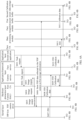
- FIG. 7A-FIG. 7B show a data processing method according to an embodiment of this application.
- the improvement lies in applications and modules in the TEE, and the functions and data transmission modes of modules in the REE are the same as those in FIG. 4A-FIG. 4B , FIG. 5A-FIG. 5C , or FIG. 6A-FIG. 6C . Details are not described herein again.
- a procedure, starting after the face TA receives an FD1 and calibration data includes the following steps:
- the face TA receives an FD of a first frame of TOF data (referred to as FD1), and then transmits the FD1 to the data processing module.
- FD1 a first frame of TOF data
- the first frame of TOF data is the first frame of TOF data collected by the TOF camera after the TOF camera is driven by the TOF camera driver that is controlled by the camera HAL3 in response to an image request.
- TOF data frames collected by the TOF camera are identified as security indicator frames and face recognition frames.
- the security indicator frames carry eye safety flags used to indicate whether infrared light emitted by the TOF camera is safe for human eyes.
- the face recognition frames are TOF data frames used for face recognition.
- the first frame of TOF data in this step is a first face recognition frame.
- the data processing module reads the first frame of TOF data from a first Secure Buffer based on the FD1, and reads calibration data from the calibration data storage unit.
- the data processing module generates a TOF image by using the first frame of TOF data and the calibration data, and generates an automatic exposure (Automatic Exposure, AE) result.
- AE Automatic Exposure
- the TOF image includes a depth image and an infrared image.
- the AE result is used for the TOF camera to adjust exposure parameters of collected TOF data.
- the AE result includes, but is not limited to, exposure time and physical gain of the TOF sensor.
- a method for generating an AE result includes: extracting a face area from a TOF original image (Raw Data), calculating a brightness value of the face area, and comparing the brightness value with a pre-configured target brightness value to obtain exposure time and physical gain of the TOF sensor.
- the TOF image obtained by processing the first frame of TOF data is referred to as a first frame of TOF image.
- the AE result obtained from the first frame of TOF data is referred to as a first AE result.
- the data processing module stores the first frame of TOF image in a second secure buffer.
- the data processing module transmits storage information of the first frame of TOF image and the first AE result to the face TA.
- the storage information of the first frame of TOF image is only transmitted in the TEE, the storage information may be transmitted in plain text.
- paths for transmitting the first AE result to the TOF camera include: the face TA, the face CA, the camera service, the camera HAL3, and the TOF sensor controller of the TOF camera.
- the TOF sensor controller uses the first AE result to adjust parameters of the TOF camera, including but not limited to exposure time.
- TOF data frames for which the first AE result can be used are associated with the time for the processor to process TOF data.
- the TOF camera collects data at an interval of 30 ms, assuming that the processor also takes 30 ms to generate a first TOF image and a first AE result in total, the first AE result can be first used for a third frame of TOF data collected by the TOF camera.
- the generating and transmitting the AE result is an optional step.
- the purpose is to improve the quality of TOF data collected subsequently, so as to obtain better TOF images and more accurate recognition results.
- the first frame of TOF data may be collected by using pre-configured fixed exposure parameters.
- the face TA transmits the storage information of the first frame of TOF image to the face recognition module to trigger the face recognition module to perform face recognition.
- execution sequence of S706 and S707 is not limited.
- the face recognition module reads the first frame of TOF image from the second secure buffer by using the storage information of the first frame of TOF image.
- the face recognition module performs face recognition by using the first frame of TOF image to obtain a first recognition result.
- the face recognition module calls face templates to perform face comparison on the first frame of TOF image.
- face recognition includes face comparison and anti-spoofing recognition. If both face comparison and anti-spoofing recognition succeed, the recognition result indicates that the face recognition succeeds.
- the face recognition module transmits the first recognition result to the face TA.
- S711 The face TA determines whether the first recognition result indicates that the recognition succeeds; and S712 is performed if the first recognition result indicates that the recognition succeeds, or S713 is performed if the first recognition result does not indicate that the recognition succeeds.
- the face CA transmits the first recognition result to a task initiator, such as an unlock application.
- S713 The face TA determines whether an ending condition is met; and S712 is performed if the ending condition is met, or S714 is performed if the ending condition is not met.
- the ending condition may be set in advance.
- the ending condition includes: the time for executing the task reaches a second time threshold.
- the second time threshold is 5 seconds.
- the ending condition is optional. Alternatively, it is not necessary to determine whether the ending condition is met. If the first recognition result indicates that the recognition fails, S714 is performed.
- the purpose of setting the ending condition is to avoid unnecessary time consumption during task execution: if the face recognition still fails after a period of time, it may be basically determined that the face recognition result is determined to be unacceptable. For example, a face attempting to unlock is not stored in the electronic device in advance. Therefore, it is unnecessary to continue the face recognition. Instead, the face recognition results should be fed back to the task as soon as possible to reduce delay of task execution, so as to ensure a better user experience.
- S714 The face TA receives a frame of TOF data from the TOF camera again.
- the TOF camera collects data at an interval of 30 ms, and it takes 30 ms to generate a first frame of TOF image and a first AE result.
- a frame of TOF data received from the TOF camera again is a seventh frame of TOF data collected by the TOF camera.
- the seventh frame of TOF data is a TOF data frame collected after exposure parameters are adjusted based on the first AE result.
- a TOF data frame is received again, for a subsequent procedure to be executed by the face TA, reference may be made to S701-S714; that is, the first frame of TOF data as a processing object in S701-S714 is replaced by a frame of TOF data received again, such as the seventh frame of TOF data, and a processing result of the first frame of TOF data is adaptively replaced by a processing result of the frame of TOF data received again (for example, a first frame of TOF image is replaced by a second frame of TOF image). Details are not described herein again.
- an image data processing procedure in the conventional technology includes a step of iterating image data to acquire convergent image data, so as to obtain images with quality meeting the requirements of recognition accuracy.
- RGB data because RGB data may be easily affected by ambient light, the quality of the first frame of RGB data collected usually cannot meet the requirements of recognition accuracy. Therefore, it is necessary to iterate the RGB data to obtain convergent RGB data, and then the convergent RGB data is used to perform face recognition to ensure the accuracy of a recognition result. Generally, based on different iterative algorithms, RGB data can converge in about 10 frames at a fast rate, and in 30-40 frames at a slow rate. Therefore, persons skilled in the art have a consensus that the quality of the first frame of RGB data is likely to be poor due to the influence of ambient light, and it is meaningless to use the first frame of RGB data directly for face recognition.
- the first frame of TOF data converges in most scenarios. Therefore, it can be learned that a more accurate recognition result may be probably obtained from the first frame of TOF data. Therefore, after the first frame of TOF data is collected by the electronic device, the first frame of TOF image generated from the first frame of TOF data is used to obtain a face recognition result. Therefore, lower processing delay can be obtained while ensuring the high accuracy of the recognition result. That is, based on the foregoing TOF imaging principle, the step of iterating image data to obtain convergent image data is omitted for increasing an image data processing speed.
- only one processor can be configured to implement face recognition.
- the TOF camera collects TOF data at an interval of 30 ms, and transmits the TOF data to the processor.
- the processor processes the first frame of TOF data into a first frame of depth image and a first frame of infrared image based on the procedure described in this embodiment, and uses the first frame of depth image and the first frame of infrared image to obtain a first recognition result.
- the processor can no longer receive subsequent TOF data frames, that is, other TOF data frames are discarded except the first frame of TOF data received.
- the procedure of a TOF data iteration process is not considered in this embodiment, which can exactly fit the foregoing scenario of one processor. That is, in a scenario where only one processor is used for TOF data processing and face recognition, if recognition processing is to be implemented and iteration of TOF data is to be performed to wait for convergence of the TOF data, these operations need to be processed serially by the processor, and therefore, it takes too much time.
- the method according to this embodiment can shorten the time because iteration is not performed on TOF data.
- the method can also ensure the accuracy of recognition results while shortening the time for face recognition.
- the data processing method based on the characteristic that TOF data probably converges in the first frame, ensures that face recognition can be performed accurately and quickly in most cases, and because TOF data is used for face recognition with high security, the data processing method can achieve the purpose of implementing face recognition safely, accurately, and quickly.
- the inventors have further found in the research that in an outdoor scenario, because there is also light in the natural light with a wavelength close to that of infrared light emitted by the TOF light source, the first frame of TOF data collected may be overexposed. In this case, the quality of the first frame of TOF data is insufficient to obtain an accurate recognition result.
- the unlock delay required is at least 360 ms, and there is still room for further shortening the delay.
- FIG. 8A-FIG. 8B show another data processing method according to an embodiment of this application.
- S801-S806 are the same as S701-S706. Refer to FIG. 8 for details, and details are not described herein again.
- S807-S812 show a processing procedure for a second frame of TOF data after storage information of the second frame of TOF data is received.
- the processing procedure for the second frame of TOF data is the same as the processing procedure for the first frame of TOF data. Refer to FIG. 8A-FIG. 8B for details, and details are not described herein again.
- the second frame of TOF data may be a TOF data frame collected by the TOF camera using exposure parameters adjusted based on the first AE result, or may be the same as exposure parameters of the first frame of TOF data, depending on the interval at which the TOF camera collects TOF data frames (such as the foregoing first time interval) and the time taken by the processor from receiving a TOF data frame to feeding back an AE result.
- the processor Assuming that the TOF camera collects and transmits data at an interval of 30 ms, and the processor also takes 30 ms to process TOF data into a TOF image and obtain an AE result, the first AE result cannot be used to collect the second frame of TOF data.
- S813-S818 show a processing procedure for a third frame of TOF data after storage information of the third frame of TOF data is received.
- the processing procedure for the third frame of TOF data is the same as the processing procedure for the first frame of TOF data. Refer to FIG. 8A-FIG. 8B for details, and details are not described herein again.
- this embodiment differs from the foregoing embodiment in that the first three frames of TOF data are received and processed.
- the face TA calls a face recognition module for face recognition.
- FIG. 9 An optional implementation of S819 is shown in FIG. 9 :
- the face TA transmits storage information of a third frame of TOF image to the face recognition module.
- the face recognition module reads the third frame of TOF image by using the storage information of the third frame of TOF image, and then performs face recognition by using the third frame of TOF image to obtain a recognition result for the third frame of TOF image.
- the face recognition module reads the third frame of TOF image from the second secure buffer, which is not described in detail in FIG. 9 .
- the recognition result of the third frame of image is referred to as a third recognition result.
- the face recognition module transmits the third recognition result to the face TA.
- S904 The face TA determines whether the third recognition result indicates that the recognition succeeds; and S905 is performed if the third recognition result indicates that the recognition succeeds, or S906 is performed if the third recognition result does not indicate that the recognition succeeds.
- the third frame of TOF data is most likely to be the data collected after exposure parameters are adjusted based on an AE result, the quality is most likely to be optimal. Therefore, the time consumed can be further shortened by first using the third frame of TOF image for face recognition.
- the face TA transmits the storage information of the first frame of TOF image and the storage information of the second frame of TOF image to the face recognition module.
- the face recognition module obtains the first recognition result and the second recognition result.
- the first recognition result is a result of face recognition performed by using the first frame of TOF image.
- the second recognition result is a result of face recognition performed by using the second frame of TOF image.
- sequence of using the first frame of TOF image and the second frame of TOF image for face recognition is not limited.
- the face recognition module transmits the first recognition result and the second recognition result to the face TA.
- the time threshold in the ending condition may be shorter than that in the foregoing embodiments, because in this embodiment, a plurality of frames of TOF data have been collected and processed.
- an example of the time threshold is 3 seconds.
- N is no longer a sequence of data frames collected by the TOF camera
- N 1,2,3, which refers to an order of TOF data frames received by the processor when the procedure shown in FIG. 8A-FIG. 8B is executed this time.
- the TOF camera may collect the ninth frame of TOF data, but when the procedure shown in FIG. 8A-FIG. 8B is executed this time, the processor receives the first frame of TOF data. Therefore, "the first frame of TOF data" in S801 is the first frame of TOF data in the procedure shown in FIG. 8A-FIG. 8B executed this time, rather than the first frame of TOF data actually collected by the TOF camera.
- S819 may be implemented in other ways in addition to that shown in FIG. 9 , for example, the first frame of TOF image, the second frame of TOF image, and the third frame of TOF image are successively used for face recognition, or only the third frame of TOF image is used for recognition. If the recognition result indicates that the recognition fails, the procedure shown in FIG. 8A-FIG. 8B is executed again to save resources such as memory. Other implementations are not listed herein.
- TOF data converges in 2-3 frames, three frames of TOF data are processed successively to obtain a recognition result. For an outdoor scenario, the processing delay can be lower than that in the foregoing embodiments.
- An example of an application scenario of the procedure shown in FIG. 8A-FIG. 8B is as follows:
- the user points the face at a screen in an outdoor environment, and then the TOF camera collects TOF data at an interval of 30 ms and transmits the TOF data to the processor.
- the processor After receiving a first frame of TOF data, the processor processes the received TOF data to generate a first TOF image and a first AE result.
- the electronic device Because the electronic device is in an outdoor environment, the electronic device will probably not be unlocked by the first frame of TOF data. Therefore, after generating the first TOF image and transmitting the first AE result, the processor will not perform face recognition, but continue to receive and process TOF data frames.
- the time required to generate a TOF image and an AE result is 30 ms, which is equivalent to the time required for the TOF camera to collect and transmit TOF data. Therefore, after the first frame of TOF data is processed, a second frame of TOF data may be received and processed, and after the second frame of TOF data is processed, a third frame of TOF data may be received and processed.
- the first AE result generated from the first frame of TOF data can be first used for the third frame of TOF data. Therefore, the third frame of TOF data will probably unlock successfully.
- the shortest time consumed to obtain a recognition result from the third frame of TOF data is 30 ms*3+150 ms.
- the data processing method according to this embodiment can increase the unlocking speed in outdoor bright light scenarios by sacrificing the unlocking speed of the first frame of TOF data.
- the second frame of TOF data and the AE result of the second frame of TOF data may not be processed, that is, S807-S812 are not performed, so as to save resources.
- the recognition result is obtained without the participation of the second frame of TOF image.
- the second frame of TOF data may only be received without being processed.
- the second frame of TOF data may be discarded instead of being received.
- three frames of TOF data are successively processed in a procedure, in fact, a quantity of successively processed TOF data frames is associated with the time taken to generate and feed back an AE result, and the first time interval for the TOF camera to collect data frames.
- FIG. 7A-FIG. 7B or FIG. 8A-FIG. 8B may be used preferentially based on judging conditions.
- another data processing method according to an embodiment of this application includes the following steps:
- the intensity value of light is used to determine an environment in which the electronic device is located, and a procedure more suitable for the environment is used to obtain a face recognition result. Therefore, on the basis of improving the security, the accuracy and speed of obtaining the face recognition result can be improved to the greatest extent.
- the inventors have further found in the research that, in both outdoor and indoor scenarios, the quality of the first frame of TOF data cannot support an accurate face recognition result when ambient light is extremely intense and the sensor of the TOF camera is exposed to an intense light source. Therefore, it is necessary to converge TOF data, so as to increase the time for face recognition.
- a user is located outdoors in intense sunlight and faces away from the sun.
- the user points a front camera of a mobile phone at the face, expecting to unlock with the face (assuming that the face of the user has been stored in the mobile phone as a face module), which takes more time to unlock than in an indoor environment.
- an embodiment of this application provides a data acquisition method, to acquire a first frame of TOF data with higher quality, so as to improve the accuracy of a recognition result of the first frame of TOF data while using TOF data for face recognition to achieve higher security, and further achieve the purpose of completing face recognition quickly.
- FIG. 10 shows a data acquisition method according to an embodiment of this application.
- the data acquisition method is performed by the foregoing electronic device.
- the procedure shown in FIG. 10 starts from driving, by the camera HAL3, the TOF camera through the TOF camera driver to collect data.
- the data acquisition method includes the following steps:
- the camera HAL3 transmits an image output instruction to the TOF camera in response to an image request.
- the camera HAL3 may transmit the image output instruction to the TOF camera through the TOF camera driver at the kernel layer.
- the TOF camera collects a first frame of TOF data including depth data, projection-off data, and infrared data in response to the image output instruction.
- the depth data is data used to generate a depth image.
- the projection-off data is TOF data collected by the TOF camera when the TOF light source is turned off.
- the infrared data is data used to generate an infrared image.
- the depth data and the infrared data are TOF data collected by the TOF camera when the TOF light source is turned on.
- the TOF sensor controller of the TOF camera transmits an image output instruction to the TOF sensor, and the TOF sensor, in response to the image output instruction, collects depth data and transmits a turn-off instruction to the TOF light source controller.
- the TOF light source controller turns off the TOF light source in response to the turn-off instruction, and the TOF sensor collects projection-off data.
- the TOF sensor transmits a turn-on instruction to the TOF light source controller, the TOF light source controller turns on the TOF light source in response to the turn-on instruction, and then the TOF sensor collects infrared data.
- an example of the first frame of TOF data is: 4 sets of depth data, one set of projection-off data, and one set of infrared data. "One set of data” may be construed as a two-dimensional array.
- the TOF sensor collects sets of depth data successively in a first exposure time, and then collects infrared data in a second exposure time, and collects projection-off data in the first exposure time or the second exposure time.
- the first exposure time and the second exposure time may be carried by the camera HAL3 in the image output instruction or transmitted to the TOF camera separately, may be transmitted to the TOF camera by another module, or may be acquired from a storage module by the TOF camera in advance.
- the timing when the TOF sensor sends a turn-off instruction to the TOF light source controller is associated with the first exposure time, and the timing when the TOF sensor sends a turn-on instruction to the TOF light source controller is associated with an exposure time of projection-off data.
- the TOF sensor may mark TOF data collected in a first time range as projection-off data.
- the first time range may be determined based on an interval between the time when the TOF sensor sends a turn-off instruction and the time when the TOF sensor sends a turn-on instruction.
- the TOF sensor may mark TOF data collected before the first time range as depth data, and mark TOF data collected after the first time range as infrared data.
- a sequence in which the TOF camera collects depth data, projection-off data, and infrared data is not limited.
- these data may be collected in a sequence of projection-off data, infrared data, and depth data, or may be collected in a sequence of infrared data, depth data, and projection-off data.
- the timing when the TOF sensor transmits a turn-off instruction and a turn-on instruction to the TOF light source controller is adjusted based on the sequence.
- S 1003 The data processing module acquires the first frame of TOF data, and then determines whether the infrared data in the first frame of TOF data includes a target data block; and S 1004 is performed if the infrared data includes the target data block, or S1005 is performed if the infrared data does not include the target data block.
- FIG. 4A-FIG. 4B A specific manner in which the data processing module acquires the first frame of TOF data is as shown in FIG. 4A-FIG. 4B , FIG. 5A-FIG. 5C , or FIG. 6A-FIG. 6C . Details are not described herein again.
- the infrared data is a two-dimensional array. It may be understood that the two-dimensional array includes some numerical values arranged in rows and columns, and each numerical value may be regarded as a data point.
- the target data block is a data block that meets the following preset condition: a quantity of data points with numerical values greater than a first threshold is greater than a second threshold.
- the infrared data collected by the TOF sensor is a two-dimensional array, which is processed by the ISP-Lite into infrared raw data, that is, an infrared raw image. Therefore, it may be understood that the target data block is a target area in the infrared raw image, and each numerical value in the target data block is a brightness value of a corresponding pixel in the target area. Therefore, for the infrared raw image, the target area is an area in which a quantity of pixels with brightness values greater than a first threshold is greater than a second threshold.
- S1004 Subtract the projection-off data in the first frame of TOF data from the infrared data in the first frame of TOF data to obtain a processed first frame of TOF data, and process the processed first frame of TOF data into a TOF image.
- S1005 Process the first frame of TOF data into a TOF image.
- processing the first frame of TOF data into a TOF image means processing the depth data in the first frame of TOF data into a depth image and processing the infrared data in the first frame of TOF data into an infrared image.
- the impact of ambient light on the infrared data is removed by subtracting the projection-off data from the infrared data in the first frame of TOF data, so as to improve the quality of the first frame of TOF data, and further obtain a high-quality TOF image, which improves the accuracy and speed of face recognition.
- FIG. 11 shows another data acquisition method according to an embodiment of this application.
- the data acquisition method is performed by the camera HAL3 shown in FIG. 3 , and includes the following steps:
- S1101 In response to an image request, determine whether an interval is within a preset range; and S1102 is performed if the interval is within the preset range, or S1103 is performed if the interval is not within the preset range.
- the interval is an interval between the time when TOF data is collected last time (referred to as a first time) and the time when the first frame of TOF data is to be collected (referred to as a second time).
- the camera HAL3 may select the second time based on the time when an image output instruction is sent to the TOF camera driver. For example, the time when the image output instruction is sent to the TOF camera driver is added with a certain delay, and then is used as the second time. For another example, to simplify the procedure, the camera HAL3 may directly take the current time of the system as the second time.
- the first frame of TOF data is a first frame of TOF data collected by the TOF camera triggered by a task request from an application, as shown in FIG. 4A-FIG. 4B , FIG. 5A-FIG. 5C , or FIG. 6A-FIG. 6C .
- the last time may be the last frame of TOF data collected by the TOF camera triggered by the last task request.
- S 1102 Instruct the TOF camera to collect the first frame of TOF data at the second time by using exposure parameters used for collection of TOF data last time.
- the exposure parameters used for collection of TOF data last time are likely to be adjusted exposure parameters, and because the interval between the first time and the second time is within the preset range, the electronic device is likely to be in the same environment as the last collection. Therefore, the exposure parameters used for collection of TOF data last time are likely to be applicable to the current environment, which helps obtain high-quality TOF data, and therefore helps obtain a high-quality TOF image.
- S1 103 Instruct the TOF camera to collect the first frame of TOF data by using pre-configured exposure parameters.
- the exposure parameters used for collection of TOF data last time are no longer applicable to the current environment, and it is not meaningful to use the exposure parameters used for collection of TOF data last time. Therefore, pre-configured exposure parameters are used.
- the data acquisition method makes full use of exposure parameters adjusted based on an AE adjustment mechanism, so as to improve the quality of the first frame of TOF data, and further obtain a high-quality TOF image, which improves the accuracy and speed of face recognition.
- the exposure parameters used for collection of TOF data last time are only one implementation. Because the time for collection of TOF data last time is the latest time from the second time, the purpose of comparison with the collection of TOF data last time is to save computing resources.
- any collection before the second time may be compared with the second time, but not limited to the comparison with the collection of TOF data last time. Therefore, the conditions met by the first time may be summarized as follows: The first time is earlier than the second time, and the interval between the first time and the second time is within the preset range.
- FIG. 12 shows another data acquisition method according to an embodiment of this application.
- the data acquisition method is performed by the camera HAL3 shown in FIG. 3 , and includes the following steps:
- S1201 Acquire light intensity in response to an image request.
- an ambient light sensor on the electronic device may be used to acquire light intensity of an environment in which the electronic device is located.
- S1202 Instruct the TOF camera to collect the first frame of TOF data by using an exposure time corresponding to the light intensity.
- a correspondence between a plurality of light intensity ranges and exposure time is pre-configured, and the correspondence meets the following principles:
- Pre-configured fixed exposure time may not apply to an outdoor environment, so that exposure time used in an indoor environment is different from that used in an outdoor environment. Therefore, it is necessary to use light intensity ranges to reflect such difference.
- a larger value in each light intensity range corresponds to a shorter exposure time.
- a longer exposure time corresponds to a brighter image. Therefore, in an outdoor environment, it is necessary to shorten the exposure time to avoid the problem that definition is reduced due to excessive brightness of the image.
- L represents a light intensity value
- t represents an exposure time
- the default fixed exposure time may be used.
- granularity of the intensity ranges in the outdoor environment in the foregoing example may be adjusted. A smaller granularity indicates a finer control over the exposure time, a higher image quality, and a higher image processing speed.
- the camera HAL3 may transmit, through the TOF camera driver, the exposure time corresponding to light intensity to the TOF sensor controller of the TOF camera.
- an exposure time for collecting TOF data is acquired based on light intensity of an environment in which the electronic device is located. Therefore, it facilitates the collection of TOF data with brightness meeting the requirements of face recognition in the first frame, thereby improving the accuracy and speed of face recognition.
- FIG. 7A-FIG. 7B to FIG. 12 are not limited to the software framework shown in FIG. 3 , but may also be applied to the software framework shown in FIG. 13 .
- TEE is not set, that is, TOF data processing and face recognition are performed in the REE, specifically, may be performed in the face CA. Therefore, TOF data, rather than storage information of the TOF data, may be transmitted directly between modules. That is, FIG. 13 differs from FIG. 3 in that: after receiving TOF data collected by the TOF camera, the ISP-Lite transmits the TOF data to the face CA through the camera HAL3 and the camera service. Then the face CA processes the TOF data into a TOF image, and performs face recognition by using the TOF image.
- the face CA processes the first frame of TOF data into a first frame of TOF image and obtains a first AE result.
- the first AE result is transmitted to the camera HAL3, and the first frame of TOF image is used for face recognition to obtain a first recognition result. If the first recognition result indicates that the recognition succeeds, the first recognition result is transmitted to the face service; or if the first recognition result indicates that the recognition fails, a seventh frame of TOF data is received again.
- FIG. 11 and FIG. 12 are applicable to FIG. 13 .
- modules with the same function as the data module may implement the steps performed by the data module
- modules with the same function as the camera HAL3 may implement the steps performed by the camera HAL3.
- each module in the software framework shown in FIG. 3 may be split or combined based on functions to achieve transformation.
- a TOF TA is added to the TEE to achieve the functions of the face TA to schedule the data processing module and transmit AE results or security identifiers, while the face TA is only configured to schedule the face recognition module.
- modules such as a TOF CA that communicates with the TOF TA are added to the REE, and data transmission paths in the REE may be adaptively adjusted.
- FIG. 7A-FIG. 7B to FIG. 12 are also applicable to the software framework subjected to the transformation, and some functions may be implemented by adaptively adjusting an execution module.
- An embodiment of this application further discloses a chip system, including: at least one processor and an interface, where the interface is configured to receive code instructions and transmit the code instructions to the at least one processor; and the at least one processor runs the code instructions to implement at least one of the face recognition method, the data acquisition method, and the data processing method.
- An embodiment of this application further discloses a computer-readable storage medium, where the storage medium stores program code, and the program code, when executed by a computer device, implements at least one of the face recognition method, the data acquisition method, and the data processing method according to the foregoing embodiments.
Landscapes
- Engineering & Computer Science (AREA)
- Physics & Mathematics (AREA)
- General Physics & Mathematics (AREA)
- Multimedia (AREA)
- Theoretical Computer Science (AREA)
- Oral & Maxillofacial Surgery (AREA)
- Health & Medical Sciences (AREA)
- Human Computer Interaction (AREA)
- General Health & Medical Sciences (AREA)
- Computer Networks & Wireless Communication (AREA)
- Radar, Positioning & Navigation (AREA)
- Remote Sensing (AREA)
- Electromagnetism (AREA)
- Computer Vision & Pattern Recognition (AREA)
- Software Systems (AREA)
- Collating Specific Patterns (AREA)
- Studio Devices (AREA)
- Image Analysis (AREA)
Claims (14)
- Ein Datenverarbeitungsverfahren, umfassend:Erfassung (S701..S702) von Time-of-Flight (TOF)-Daten, wobei die TOF-Daten eine Vielzahl von Sicherheitsindikatorrahmen und eine Vielzahl von Gesichtserkennungsrahmen umfassen, die TOF-Daten sind TOF-Daten, die von einer TOF-Kamera (1) erfasst wurden, die durch eine Aufgabenanforderung einer Anwendung ausgelöst wurde, und die Sicherheitsindikatorrahmen tragen Augensicherheitsflaggen, die verwendet werden, um anzuzeigen, ob das von der TOF-Kamera (1) emittierte Infrarotlicht für menschliche Augen sicher ist;Verarbeitung (S703) eines ersten Gesichtserkennungsrahmens in der Vielzahl von Gesichtserkennungsrahmen in einen ersten Rahmen des TOF-Bildes; undDurchführen der Gesichtserkennung (S709) unter Verwendung des ersten Rahmens des TOF-Bildes, um ein erstes Erkennungsergebnis zu erhalten; wobei das Datenverarbeitungsverfahren ferner umfasst:Extrahieren einer Augensicherheitsflagge aus einem Sicherheitsindikatorrahmen der Vielzahl von Sicherheitsindikatorrahmen;Bestimmung, ob menschliche Augen sicher sind, basierend auf der extrahierten Augensicherheitsflagge;Anpassen (S425b) der TOF-Kamera (1) durch Ausschalten der TOF-Kamera (1) oder Reduzieren der Emissionsintensität einer TOF-Lichtquelle der TOF-Kamera (1), wenn die menschlichen Augen unsicher sind; undSammeln von Gesichtserkennungsrahmen und Identifizieren der gesammelten Gesichtserkennungsrahmen als Gesichtserkennungsrahmen zur Gesichtserkennung, wenn die menschlichen Augen sicher sind.
- Das Verfahren nach Anspruch 1, wobei das Erfassen (S701..S702) von TOF-Daten umfasst:
Erfassung der TOF-Daten durch Verwendung voreingestellter fester Belichtungsparameter. - Das Verfahren nach Anspruch 1 oder 2, wobei nur ein Prozessor (2) verwendet wird, um seriell auszuführen: die Verarbeitung (S703) des ersten Gesichtserkennungsrahmens in der Vielzahl von Gesichtserkennungsrahmen in einen ersten Rahmen des TOF-Bildes; und die Durchführung (S709) der Gesichtserkennung unter Verwendung des ersten Rahmens des TOF-Bildes, um ein erstes Erkennungsergebnis zu erhalten.
- Das Verfahren nach einem der Ansprüche 1 bis 3, ferner umfassend:
Eine Aufgabe ausführen, indem das erste Erkennungsergebnis verwendet wird. - Das Verfahren nach Anspruch 4, wobei das Ausführen einer Aufgabe unter Verwendung des ersten Erkennungsergebnisses umfasst:
Ausführen einer ersten Aufgabe, wenn das erste Erkennungsergebnis anzeigt, dass die Erkennung erfolgreich ist. - Das Verfahren nach Anspruch 5, wobei das Ausführen einer Aufgabe unter Verwendung des ersten Erkennungsergebnisses ferner umfasst:
Ausführen einer zweiten Aufgabe, wenn das erste Erkennungsergebnis anzeigt, dass die Erkennung fehlschlägt und eine voreingestellte Endbedingung erfüllt ist, wobei die Endbedingung umfasst: die Zeit für die Ausführung der Aufgabe erreicht einen voreingestellten Zeitwert. - Das Verfahren nach Anspruch 5 oder 6, wobei das Ausführen einer Aufgabe unter Verwendung des ersten Erkennungsergebnisses ferner umfasst:
Erwerb (S714) und Verwendung eines Erkennungsergebnisses eines anderen Gesichtserkennungsrahmens als Reaktion auf die Aufgabe, wenn das erste Erkennungsergebnis anzeigt, dass die Erkennung fehlschlägt und (S713) eine voreingestellte Endbedingung nicht erfüllt. - Das Verfahren nach Anspruch 7, wobei der andere Gesichtserkennungsrahmen unter Verwendung von Belichtungsparametern gesammelt wird, die basierend auf einem ersten automatischen Belichtungsergebnis (AE) angepasst wurden; und
das Verfahren umfasst ferner:
Erhalten des ersten AE-Ergebnisses nach dem Sammeln eines ersten Gesichtserkennungsrahmens. - Das Verfahren nach einem der Ansprüche 1 bis 8, wobei die Durchführung der Gesichtserkennung unter Verwendung des ersten Rahmens des TOF-Bildes zur Erzielung eines ersten Erkennungsergebnisses umfasst:Empfangen (S415) von Speicherinformationen des ersten Frames des TOF-Bildes durch eine vertrauenswürdige Gesichtsanwendung in einer vertrauenswürdigen Ausführungsumgebung (TEE) und anschließendes Übertragen (S416) der Speicherinformationen des ersten Frames des TOF-Bildes durch die vertrauenswürdige Gesichtsanwendung an ein Gesichtserkennungsmodul;Lesen (S417) durch das Gesichtserkennungsmodul das erste Bild der TOF-Aufnahme basierend auf den Speicherinformationen des ersten Bildes der TOF-Aufnahme; undDurchführen der Gesichtserkennung auf dem ersten TOF-Bildrahmen durch das Gesichtserkennungsmodul, um das erste Erkennungsergebnis zu erhalten.
- Das Verfahren nach Anspruch 9, wobei die Verarbeitung (S703) des ersten Gesichtserkennungsrahmens in einen ersten Rahmen des TOF-Bildes umfasst:Empfangen (S410) durch die vertrauenswürdige Gesichtsanwendung, Speichern der Informationen des ersten Gesichtserkennungsrahmens und dann Übertragen (S411) durch die vertrauenswürdige Gesichtsanwendung der gespeicherten Informationen des ersten Gesichtserkennungsrahmens an ein Datenverarbeitungsmodul;Lesen (S412), durch das Datenverarbeitungsmodul, den ersten Gesichtserkennungsrahmen basierend auf den Speicherinformationen des ersten Gesichtserkennungsrahmens; undVerarbeitung (S413a), durch das Datenverarbeitungsmodul, den ersten Gesichtserkennungsrahmen in den ersten TOF-Bildrahmen.
- Das Verfahren nach Anspruch 10, ferner umfassend:
Speichern (S414) des ersten TOF-Bildrahmens durch das Datenverarbeitungsmodul und Übertragen (S415a) der Speicherinformationen des ersten TOF-Bildrahmens an die vertrauenswürdige Gesichtsanwendung. - Das Verfahren nach einem der Ansprüche 1 bis 8, wobei die Durchführung der Gesichtserkennung (S709) unter Verwendung des ersten Rahmens des TOF-Bildes zur Erzielung eines ersten Erkennungsergebnisses umfasst:
Erzeugen des ersten Frames des TOF-Bildes durch eine Gesichts-Client-Anwendung auf einer Hardware-Abstraktionsschicht und anschließende Durchführung der Gesichtserkennung unter Verwendung des ersten Frames des TOF-Bildes, um das erste Erkennungsergebnis zu erhalten. - Das Verfahren nach Anspruch 12, wobei die Verarbeitung (S703) des ersten Rahmens von TOF-Daten in einen ersten Rahmen von TOF-Bildern umfasst:
Empfangen des ersten Gesichtserkennungsrahmens durch die Gesichtsklientenanwendung und Verarbeiten des ersten Gesichtserkennungsrahmens in den ersten Rahmen des TOF-Bildes. - Eine elektronische Vorrichtung, umfassend:eine TOF-Kamera (1), konfiguriert zur Erfassung von TOF-Daten;ein Speicher (3), konfiguriert, um Programmcodes zu speichern; undein Prozessor (2), der so konfiguriert ist, dass er den Programmcode ausführt, um das Datenverarbeitungsverfahren gemäß einem der Ansprüche 1 bis 13 zu implementieren.
Applications Claiming Priority (2)
| Application Number | Priority Date | Filing Date | Title |
|---|---|---|---|
| CN202110924492.3A CN113780090B (zh) | 2021-08-12 | 2021-08-12 | 数据处理方法及装置 |
| PCT/CN2022/092042 WO2023015995A1 (zh) | 2021-08-12 | 2022-05-10 | 数据处理方法及装置 |
Publications (3)
| Publication Number | Publication Date |
|---|---|
| EP4156019A1 EP4156019A1 (de) | 2023-03-29 |
| EP4156019A4 EP4156019A4 (de) | 2023-12-13 |
| EP4156019B1 true EP4156019B1 (de) | 2025-02-12 |
Family
ID=78837454
Family Applications (1)
| Application Number | Title | Priority Date | Filing Date |
|---|---|---|---|
| EP22797611.5A Active EP4156019B1 (de) | 2021-08-12 | 2022-05-10 | Datenverarbeitungsverfahren und -vorrichtung |
Country Status (4)
| Country | Link |
|---|---|
| US (1) | US12283128B2 (de) |
| EP (1) | EP4156019B1 (de) |
| CN (2) | CN116935467A (de) |
| WO (1) | WO2023015995A1 (de) |
Families Citing this family (5)
| Publication number | Priority date | Publication date | Assignee | Title |
|---|---|---|---|---|
| CN113727033A (zh) * | 2021-08-12 | 2021-11-30 | 荣耀终端有限公司 | 数据获取方法及装置 |
| CN116935467A (zh) * | 2021-08-12 | 2023-10-24 | 荣耀终端有限公司 | 数据处理方法及装置 |
| EP4156674B1 (de) | 2021-08-12 | 2025-01-29 | Honor Device Co., Ltd. | Verfahren und vorrichtung zur datenerfassung |
| CN120318873A (zh) * | 2024-01-05 | 2025-07-15 | 荣耀终端股份有限公司 | 一种人脸识别方法及电子设备 |
| CN119251447B (zh) * | 2024-01-09 | 2025-10-24 | 荣耀终端股份有限公司 | 一种人脸识别方法和电子设备 |
Family Cites Families (28)
| Publication number | Priority date | Publication date | Assignee | Title |
|---|---|---|---|---|
| US7079775B2 (en) * | 2001-02-05 | 2006-07-18 | Finisar Corporation | Integrated memory mapped controller circuit for fiber optics transceiver |
| WO2014014838A2 (en) * | 2012-07-15 | 2014-01-23 | 2R1Y | Interactive illumination for gesture and/or object recognition |
| CN105224932A (zh) * | 2015-10-21 | 2016-01-06 | 北京旷视科技有限公司 | 一种人脸识别方法和系统 |
| US10275610B2 (en) * | 2016-11-28 | 2019-04-30 | Stmicroelectronics, Inc. | Time of flight sensing for providing security and power savings in electronic devices |
| CN107808127B (zh) * | 2017-10-11 | 2020-01-14 | Oppo广东移动通信有限公司 | 人脸识别方法及相关产品 |
| CN108288044B (zh) * | 2018-01-31 | 2020-11-20 | Oppo广东移动通信有限公司 | 电子装置、人脸识别方法及相关产品 |
| CN108769509B (zh) * | 2018-04-28 | 2019-06-21 | Oppo广东移动通信有限公司 | 控制摄像头的方法、装置、电子设备及存储介质 |
| WO2019196793A1 (zh) * | 2018-04-12 | 2019-10-17 | Oppo广东移动通信有限公司 | 图像处理方法及装置、电子设备和计算机可读存储介质 |
| CN108734001B (zh) * | 2018-04-26 | 2020-10-02 | 维沃移动通信有限公司 | 一种用户身份的认证方法、移动终端 |
| EP3608813B1 (de) * | 2018-05-29 | 2025-12-17 | Guangdong Oppo Mobile Telecommunications Corp., Ltd. | Verifikationssystem und verifikationsverfahren |
| CN110619200B (zh) * | 2018-06-19 | 2022-04-08 | Oppo广东移动通信有限公司 | 验证系统和电子装置 |
| CN108769542B (zh) * | 2018-05-30 | 2021-06-01 | 北京图森智途科技有限公司 | 一种曝光参数确定方法、装置和可读介质 |
| CN109040591B (zh) * | 2018-08-22 | 2020-08-04 | Oppo广东移动通信有限公司 | 图像处理方法、装置、计算机可读存储介质和电子设备 |
| CN108965732B (zh) | 2018-08-22 | 2020-04-14 | Oppo广东移动通信有限公司 | 图像处理方法、装置、计算机可读存储介质和电子设备 |
| CN109635539B (zh) | 2018-10-30 | 2022-10-14 | 荣耀终端有限公司 | 一种人脸识别方法及电子设备 |
| CN109587407A (zh) * | 2018-12-14 | 2019-04-05 | 广州华多网络科技有限公司 | 图像拍摄的曝光量调整方法、装置及计算机设备 |
| CN109975821B (zh) * | 2019-03-25 | 2021-05-14 | Oppo广东移动通信有限公司 | 控制方法及装置、飞行时间组件、存储介质和计算机设备 |
| CN110463183A (zh) * | 2019-06-28 | 2019-11-15 | 深圳市汇顶科技股份有限公司 | 识别装置及方法 |
| CN110335389B (zh) * | 2019-07-01 | 2021-10-12 | 上海商汤临港智能科技有限公司 | 车门解锁方法及装置、系统、车、电子设备和存储介质 |
| CN112330846A (zh) * | 2019-07-31 | 2021-02-05 | 比亚迪股份有限公司 | 车辆控制的方法、装置、存储介质及电子设备和车辆 |
| CN210691384U (zh) * | 2019-08-30 | 2020-06-05 | 北京银联金卡科技有限公司 | 基于安全单元和可信执行环境的人脸识别支付终端平台 |
| CN113902446B (zh) * | 2019-08-30 | 2025-04-25 | 北京银联金卡科技有限公司 | 基于安全单元和可信执行环境的人脸支付安全方法 |
| CN110933307A (zh) * | 2019-11-29 | 2020-03-27 | 维沃移动通信有限公司 | 一种电子设备及图像处理方法 |
| CN114902074A (zh) * | 2019-12-23 | 2022-08-12 | 索尼半导体解决方案公司 | 飞行时间物体检测电路及飞行时间物体检测方法 |
| CN112232324B (zh) * | 2020-12-15 | 2021-08-03 | 杭州宇泛智能科技有限公司 | 人脸验伪方法、装置、计算机设备和存储介质 |
| CN113194226A (zh) * | 2021-04-13 | 2021-07-30 | 中山大学 | 一种可自动调节曝光时间的tof成像系统及其自动曝光方法 |
| CN113807172B (zh) * | 2021-08-11 | 2022-10-18 | 荣耀终端有限公司 | 一种人脸识别方法和装置 |
| CN116935467A (zh) * | 2021-08-12 | 2023-10-24 | 荣耀终端有限公司 | 数据处理方法及装置 |
-
2021
- 2021-08-12 CN CN202310851465.7A patent/CN116935467A/zh active Pending
- 2021-08-12 CN CN202110924492.3A patent/CN113780090B/zh active Active
-
2022
- 2022-05-10 WO PCT/CN2022/092042 patent/WO2023015995A1/zh not_active Ceased
- 2022-05-10 EP EP22797611.5A patent/EP4156019B1/de active Active
- 2022-11-09 US US17/983,650 patent/US12283128B2/en active Active
Also Published As
| Publication number | Publication date |
|---|---|
| US12283128B2 (en) | 2025-04-22 |
| EP4156019A4 (de) | 2023-12-13 |
| CN113780090A (zh) | 2021-12-10 |
| WO2023015995A1 (zh) | 2023-02-16 |
| CN116935467A (zh) | 2023-10-24 |
| CN113780090B (zh) | 2023-07-28 |
| US20230064281A1 (en) | 2023-03-02 |
| EP4156019A1 (de) | 2023-03-29 |
Similar Documents
| Publication | Publication Date | Title |
|---|---|---|
| EP4156019B1 (de) | Datenverarbeitungsverfahren und -vorrichtung | |
| EP4156002B1 (de) | Gesichtserkennungsverfahren und -vorrichtung | |
| CN117014727B (zh) | 数据获取方法及装置 | |
| CN108769509B (zh) | 控制摄像头的方法、装置、电子设备及存储介质 | |
| CN108965732B (zh) | 图像处理方法、装置、计算机可读存储介质和电子设备 | |
| US10255689B2 (en) | Electronic device for selecting image processing technique based on shape and operating method thereof | |
| EP3579544A1 (de) | Elektronische vorrichtung zur bereitstellung eines qualitätsangepassten bildes und verfahren zur steuerung davon | |
| WO2021037157A1 (zh) | 图像识别方法及电子设备 | |
| KR102263537B1 (ko) | 전자 장치와, 그의 제어 방법 | |
| CN109040591A (zh) | 图像处理方法、装置、计算机可读存储介质和电子设备 | |
| CN111225157B (zh) | 追焦方法及相关设备 | |
| CN114120431B (zh) | 一种人脸识别的方法、介质和电子设备 | |
| CN108804895A (zh) | 图像处理方法、装置、计算机可读存储介质和电子设备 | |
| EP2911088B1 (de) | Verfahren und Vorrichtung zum Anzeigen biometrischer Informationen | |
| CN107862653A (zh) | 图像显示方法、装置、存储介质和电子设备 | |
| CN109151303B (zh) | 图像处理方法和装置、电子设备、计算机可读存储介质 | |
| US20240418862A1 (en) | Processing apparatus, electronic apparatus, processing method, and program | |
| EP4156674B1 (de) | Verfahren und vorrichtung zur datenerfassung | |
| US20130155286A1 (en) | Electronic camera | |
| CN108763906B (zh) | 生物特征识别方法及装置 | |
| JP2020160757A (ja) | 虹彩認証装置および電子機器 | |
| US20180227494A1 (en) | Apparatus of stabilizing shaking image and controlling method thereof | |
| CN119763162B (zh) | 一种人脸识别方法及电子设备 | |
| CN112351212A (zh) | 用于多曝光图像融合的利用全局正则化和运动排除的局部直方图匹配 | |
| CN119645217A (zh) | 一种信息处理方法及电子设备 |
Legal Events
| Date | Code | Title | Description |
|---|---|---|---|
| STAA | Information on the status of an ep patent application or granted ep patent |
Free format text: STATUS: UNKNOWN |
|
| STAA | Information on the status of an ep patent application or granted ep patent |
Free format text: STATUS: THE INTERNATIONAL PUBLICATION HAS BEEN MADE |
|
| PUAI | Public reference made under article 153(3) epc to a published international application that has entered the european phase |
Free format text: ORIGINAL CODE: 0009012 |
|
| STAA | Information on the status of an ep patent application or granted ep patent |
Free format text: STATUS: REQUEST FOR EXAMINATION WAS MADE |
|
| 17P | Request for examination filed |
Effective date: 20221109 |
|
| AK | Designated contracting states |
Kind code of ref document: A1 Designated state(s): AL AT BE BG CH CY CZ DE DK EE ES FI FR GB GR HR HU IE IS IT LI LT LU LV MC MK MT NL NO PL PT RO RS SE SI SK SM TR |
|
| REG | Reference to a national code |
Ref country code: DE Ref legal event code: R079 Free format text: PREVIOUS MAIN CLASS: G06K0009000000 Ipc: G06V0040160000 Ref country code: DE Ref legal event code: R079 Ref document number: 602022010613 Country of ref document: DE Free format text: PREVIOUS MAIN CLASS: G06K0009000000 Ipc: G06V0040160000 |
|
| A4 | Supplementary search report drawn up and despatched |
Effective date: 20231115 |
|
| RIC1 | Information provided on ipc code assigned before grant |
Ipc: G01S 17/894 20200101ALI20231109BHEP Ipc: G01S 7/486 20200101ALI20231109BHEP Ipc: G06V 40/16 20220101AFI20231109BHEP |
|
| STAA | Information on the status of an ep patent application or granted ep patent |
Free format text: STATUS: EXAMINATION IS IN PROGRESS |
|
| 17Q | First examination report despatched |
Effective date: 20240604 |
|
| GRAP | Despatch of communication of intention to grant a patent |
Free format text: ORIGINAL CODE: EPIDOSNIGR1 |
|
| STAA | Information on the status of an ep patent application or granted ep patent |
Free format text: STATUS: GRANT OF PATENT IS INTENDED |
|
| DAV | Request for validation of the european patent (deleted) | ||
| DAX | Request for extension of the european patent (deleted) | ||
| INTG | Intention to grant announced |
Effective date: 20240920 |
|
| GRAS | Grant fee paid |
Free format text: ORIGINAL CODE: EPIDOSNIGR3 |
|
| GRAA | (expected) grant |
Free format text: ORIGINAL CODE: 0009210 |
|
| STAA | Information on the status of an ep patent application or granted ep patent |
Free format text: STATUS: THE PATENT HAS BEEN GRANTED |
|
| AK | Designated contracting states |
Kind code of ref document: B1 Designated state(s): AL AT BE BG CH CY CZ DE DK EE ES FI FR GB GR HR HU IE IS IT LI LT LU LV MC MK MT NL NO PL PT RO RS SE SI SK SM TR |
|
| REG | Reference to a national code |
Ref country code: GB Ref legal event code: FG4D |
|
| REG | Reference to a national code |
Ref country code: CH Ref legal event code: EP |
|
| REG | Reference to a national code |
Ref country code: DE Ref legal event code: R096 Ref document number: 602022010613 Country of ref document: DE |
|
| REG | Reference to a national code |
Ref country code: IE Ref legal event code: FG4D Ref country code: NL Ref legal event code: FP |
|
| PGFP | Annual fee paid to national office [announced via postgrant information from national office to epo] |
Ref country code: NL Payment date: 20250409 Year of fee payment: 4 |
|
| PG25 | Lapsed in a contracting state [announced via postgrant information from national office to epo] |
Ref country code: RS Free format text: LAPSE BECAUSE OF FAILURE TO SUBMIT A TRANSLATION OF THE DESCRIPTION OR TO PAY THE FEE WITHIN THE PRESCRIBED TIME-LIMIT Effective date: 20250512 |
|
| PG25 | Lapsed in a contracting state [announced via postgrant information from national office to epo] |
Ref country code: FI Free format text: LAPSE BECAUSE OF FAILURE TO SUBMIT A TRANSLATION OF THE DESCRIPTION OR TO PAY THE FEE WITHIN THE PRESCRIBED TIME-LIMIT Effective date: 20250212 |
|
| PG25 | Lapsed in a contracting state [announced via postgrant information from national office to epo] |
Ref country code: PL Free format text: LAPSE BECAUSE OF FAILURE TO SUBMIT A TRANSLATION OF THE DESCRIPTION OR TO PAY THE FEE WITHIN THE PRESCRIBED TIME-LIMIT Effective date: 20250212 |
|
| PGFP | Annual fee paid to national office [announced via postgrant information from national office to epo] |
Ref country code: DE Payment date: 20250402 Year of fee payment: 4 |
|
| PG25 | Lapsed in a contracting state [announced via postgrant information from national office to epo] |
Ref country code: ES Free format text: LAPSE BECAUSE OF FAILURE TO SUBMIT A TRANSLATION OF THE DESCRIPTION OR TO PAY THE FEE WITHIN THE PRESCRIBED TIME-LIMIT Effective date: 20250212 |
|
| REG | Reference to a national code |
Ref country code: LT Ref legal event code: MG9D |
|
| PG25 | Lapsed in a contracting state [announced via postgrant information from national office to epo] |
Ref country code: NO Free format text: LAPSE BECAUSE OF FAILURE TO SUBMIT A TRANSLATION OF THE DESCRIPTION OR TO PAY THE FEE WITHIN THE PRESCRIBED TIME-LIMIT Effective date: 20250512 Ref country code: IS Free format text: LAPSE BECAUSE OF FAILURE TO SUBMIT A TRANSLATION OF THE DESCRIPTION OR TO PAY THE FEE WITHIN THE PRESCRIBED TIME-LIMIT Effective date: 20250612 |
|
| PG25 | Lapsed in a contracting state [announced via postgrant information from national office to epo] |
Ref country code: HR Free format text: LAPSE BECAUSE OF FAILURE TO SUBMIT A TRANSLATION OF THE DESCRIPTION OR TO PAY THE FEE WITHIN THE PRESCRIBED TIME-LIMIT Effective date: 20250212 |
|
| PG25 | Lapsed in a contracting state [announced via postgrant information from national office to epo] |
Ref country code: LV Free format text: LAPSE BECAUSE OF FAILURE TO SUBMIT A TRANSLATION OF THE DESCRIPTION OR TO PAY THE FEE WITHIN THE PRESCRIBED TIME-LIMIT Effective date: 20250212 Ref country code: PT Free format text: LAPSE BECAUSE OF FAILURE TO SUBMIT A TRANSLATION OF THE DESCRIPTION OR TO PAY THE FEE WITHIN THE PRESCRIBED TIME-LIMIT Effective date: 20250612 |
|
| PG25 | Lapsed in a contracting state [announced via postgrant information from national office to epo] |
Ref country code: BG Free format text: LAPSE BECAUSE OF FAILURE TO SUBMIT A TRANSLATION OF THE DESCRIPTION OR TO PAY THE FEE WITHIN THE PRESCRIBED TIME-LIMIT Effective date: 20250212 Ref country code: GR Free format text: LAPSE BECAUSE OF FAILURE TO SUBMIT A TRANSLATION OF THE DESCRIPTION OR TO PAY THE FEE WITHIN THE PRESCRIBED TIME-LIMIT Effective date: 20250513 |
|
| REG | Reference to a national code |
Ref country code: AT Ref legal event code: MK05 Ref document number: 1766835 Country of ref document: AT Kind code of ref document: T Effective date: 20250212 |
|
| PG25 | Lapsed in a contracting state [announced via postgrant information from national office to epo] |
Ref country code: SE Free format text: LAPSE BECAUSE OF FAILURE TO SUBMIT A TRANSLATION OF THE DESCRIPTION OR TO PAY THE FEE WITHIN THE PRESCRIBED TIME-LIMIT Effective date: 20250212 |
|
| PG25 | Lapsed in a contracting state [announced via postgrant information from national office to epo] |
Ref country code: SM Free format text: LAPSE BECAUSE OF FAILURE TO SUBMIT A TRANSLATION OF THE DESCRIPTION OR TO PAY THE FEE WITHIN THE PRESCRIBED TIME-LIMIT Effective date: 20250212 |
|
| PG25 | Lapsed in a contracting state [announced via postgrant information from national office to epo] |
Ref country code: DK Free format text: LAPSE BECAUSE OF FAILURE TO SUBMIT A TRANSLATION OF THE DESCRIPTION OR TO PAY THE FEE WITHIN THE PRESCRIBED TIME-LIMIT Effective date: 20250212 |
|
| PG25 | Lapsed in a contracting state [announced via postgrant information from national office to epo] |
Ref country code: IT Free format text: LAPSE BECAUSE OF FAILURE TO SUBMIT A TRANSLATION OF THE DESCRIPTION OR TO PAY THE FEE WITHIN THE PRESCRIBED TIME-LIMIT Effective date: 20250212 |
|
| PG25 | Lapsed in a contracting state [announced via postgrant information from national office to epo] |
Ref country code: AT Free format text: LAPSE BECAUSE OF FAILURE TO SUBMIT A TRANSLATION OF THE DESCRIPTION OR TO PAY THE FEE WITHIN THE PRESCRIBED TIME-LIMIT Effective date: 20250212 |
|
| PG25 | Lapsed in a contracting state [announced via postgrant information from national office to epo] |
Ref country code: EE Free format text: LAPSE BECAUSE OF FAILURE TO SUBMIT A TRANSLATION OF THE DESCRIPTION OR TO PAY THE FEE WITHIN THE PRESCRIBED TIME-LIMIT Effective date: 20250212 Ref country code: CZ Free format text: LAPSE BECAUSE OF FAILURE TO SUBMIT A TRANSLATION OF THE DESCRIPTION OR TO PAY THE FEE WITHIN THE PRESCRIBED TIME-LIMIT Effective date: 20250212 |
|
| PG25 | Lapsed in a contracting state [announced via postgrant information from national office to epo] |
Ref country code: RO Free format text: LAPSE BECAUSE OF FAILURE TO SUBMIT A TRANSLATION OF THE DESCRIPTION OR TO PAY THE FEE WITHIN THE PRESCRIBED TIME-LIMIT Effective date: 20250212 |
|
| PG25 | Lapsed in a contracting state [announced via postgrant information from national office to epo] |
Ref country code: SK Free format text: LAPSE BECAUSE OF FAILURE TO SUBMIT A TRANSLATION OF THE DESCRIPTION OR TO PAY THE FEE WITHIN THE PRESCRIBED TIME-LIMIT Effective date: 20250212 |
|
| REG | Reference to a national code |
Ref country code: DE Ref legal event code: R097 Ref document number: 602022010613 Country of ref document: DE |
|
| PLBE | No opposition filed within time limit |
Free format text: ORIGINAL CODE: 0009261 |
|
| STAA | Information on the status of an ep patent application or granted ep patent |
Free format text: STATUS: NO OPPOSITION FILED WITHIN TIME LIMIT |
|
| REG | Reference to a national code |
Ref country code: CH Ref legal event code: H13 Free format text: ST27 STATUS EVENT CODE: U-0-0-H10-H13 (AS PROVIDED BY THE NATIONAL OFFICE) Effective date: 20251223 |
|
| REG | Reference to a national code |
Ref country code: CH Ref legal event code: L10 Free format text: ST27 STATUS EVENT CODE: U-0-0-L10-L00 (AS PROVIDED BY THE NATIONAL OFFICE) Effective date: 20251224 |
|
| PG25 | Lapsed in a contracting state [announced via postgrant information from national office to epo] |
Ref country code: LU Free format text: LAPSE BECAUSE OF NON-PAYMENT OF DUE FEES Effective date: 20250510 |
|
| PG25 | Lapsed in a contracting state [announced via postgrant information from national office to epo] |
Ref country code: CH Free format text: LAPSE BECAUSE OF NON-PAYMENT OF DUE FEES Effective date: 20250531 |
|
| 26N | No opposition filed |
Effective date: 20251113 |
|
| REG | Reference to a national code |
Ref country code: BE Ref legal event code: MM Effective date: 20250531 |
|
| PG25 | Lapsed in a contracting state [announced via postgrant information from national office to epo] |
Ref country code: MC Free format text: LAPSE BECAUSE OF FAILURE TO SUBMIT A TRANSLATION OF THE DESCRIPTION OR TO PAY THE FEE WITHIN THE PRESCRIBED TIME-LIMIT Effective date: 20250212 |