EP4156002B1 - Gesichtserkennungsverfahren und -vorrichtung - Google Patents
Gesichtserkennungsverfahren und -vorrichtung Download PDFInfo
- Publication number
- EP4156002B1 EP4156002B1 EP22777573.1A EP22777573A EP4156002B1 EP 4156002 B1 EP4156002 B1 EP 4156002B1 EP 22777573 A EP22777573 A EP 22777573A EP 4156002 B1 EP4156002 B1 EP 4156002B1
- Authority
- EP
- European Patent Office
- Prior art keywords
- tof
- data
- face
- tee
- frame
- Prior art date
- Legal status (The legal status is an assumption and is not a legal conclusion. Google has not performed a legal analysis and makes no representation as to the accuracy of the status listed.)
- Active
Links
Images










Classifications
-
- G—PHYSICS
- G06—COMPUTING OR CALCULATING; COUNTING
- G06F—ELECTRIC DIGITAL DATA PROCESSING
- G06F21/00—Security arrangements for protecting computers, components thereof, programs or data against unauthorised activity
- G06F21/50—Monitoring users, programs or devices to maintain the integrity of platforms, e.g. of processors, firmware or operating systems
- G06F21/57—Certifying or maintaining trusted computer platforms, e.g. secure boots or power-downs, version controls, system software checks, secure updates or assessing vulnerabilities
-
- G—PHYSICS
- G06—COMPUTING OR CALCULATING; COUNTING
- G06F—ELECTRIC DIGITAL DATA PROCESSING
- G06F21/00—Security arrangements for protecting computers, components thereof, programs or data against unauthorised activity
- G06F21/30—Authentication, i.e. establishing the identity or authorisation of security principals
- G06F21/31—User authentication
- G06F21/32—User authentication using biometric data, e.g. fingerprints, iris scans or voiceprints
-
- G—PHYSICS
- G06—COMPUTING OR CALCULATING; COUNTING
- G06F—ELECTRIC DIGITAL DATA PROCESSING
- G06F21/00—Security arrangements for protecting computers, components thereof, programs or data against unauthorised activity
- G06F21/50—Monitoring users, programs or devices to maintain the integrity of platforms, e.g. of processors, firmware or operating systems
- G06F21/52—Monitoring users, programs or devices to maintain the integrity of platforms, e.g. of processors, firmware or operating systems during program execution, e.g. stack integrity ; Preventing unwanted data erasure; Buffer overflow
- G06F21/53—Monitoring users, programs or devices to maintain the integrity of platforms, e.g. of processors, firmware or operating systems during program execution, e.g. stack integrity ; Preventing unwanted data erasure; Buffer overflow by executing in a restricted environment, e.g. sandbox or secure virtual machine
-
- G—PHYSICS
- G06—COMPUTING OR CALCULATING; COUNTING
- G06V—IMAGE OR VIDEO RECOGNITION OR UNDERSTANDING
- G06V10/00—Arrangements for image or video recognition or understanding
- G06V10/10—Image acquisition
- G06V10/12—Details of acquisition arrangements; Constructional details thereof
-
- G—PHYSICS
- G06—COMPUTING OR CALCULATING; COUNTING
- G06V—IMAGE OR VIDEO RECOGNITION OR UNDERSTANDING
- G06V40/00—Recognition of biometric, human-related or animal-related patterns in image or video data
- G06V40/10—Human or animal bodies, e.g. vehicle occupants or pedestrians; Body parts, e.g. hands
- G06V40/16—Human faces, e.g. facial parts, sketches or expressions
- G06V40/172—Classification, e.g. identification
-
- G—PHYSICS
- G06—COMPUTING OR CALCULATING; COUNTING
- G06F—ELECTRIC DIGITAL DATA PROCESSING
- G06F2221/00—Indexing scheme relating to security arrangements for protecting computers, components thereof, programs or data against unauthorised activity
- G06F2221/03—Indexing scheme relating to G06F21/50, monitoring users, programs or devices to maintain the integrity of platforms
- G06F2221/034—Test or assess a computer or a system
Definitions
- This application relates to the field of electronic information, and in particular, to a face recognition method and apparatus.
- Face recognition is widely used in electronic devices to recognize authorized users. For example, a face unlock function is used to determine, based on whether face recognition succeeds, whether to unlock a screen.
- RGB Red Green Blue
- the data security processing terminal comprises an image acquisition module used for acquiring image data and transmitting the image data to a trusted execution environment through a security channel; an image acquisition driving module which runs in a trusted execution environment and is used for driving the image acquisition module to acquire image data in response to a driving instruction of the execution module; and an execution module which runs in a trusted execution environment and is used for sending a driving instruction to the image acquisition driving module, acquiring image data, encrypting the image data by using the stored first key to obtain image ciphertext data and outputting the image ciphertext data.
- EP4160475A1 discloses embodiments relating to the terminal field, and provides a method and an apparatus for facial recognition so as to improve security of facial recognition.
- CN210691384U discloses a face recognition payment terminal platform based on security unit and trusted execution environment.
- a face recognition method according to claim 1.
- an electronic device according to claim 12.
- a system on a chip according to claim 13.
- a second aspect of this application provides an electronic device, including a TOF camera, a memory, and a processor.
- the TOF camera is configured to capture time-of-flight TOF data;
- the memory is configured to store program code;
- the processor is configured to run the program code to perform the face recognition method according to the first aspect of this application.
- a third aspect of this application provides a system-on-chip, including at least one processor and an interface, where the interface is configured to receive code instructions and transmit the code instructions to the at least one processor; and the at least one processor runs the code instructions to implement the face recognition method according to the first aspect of this application.
- a fourth aspect of this application provides a readable storage medium, where the readable storage medium stores program code, and when the program code is executed by a computer device, the face recognition method according to the first aspect of this application is implemented.
- FIG. 1a is a scenario of face recognition applied to an electronic device.
- a user uses an electronic device such as a mobile phone to implement a function that requires user authorization, the user aligns a camera of the electronic device with a face automatically or according to prompt information sent by the electronic device.
- electronic devices are generally equipped with RGB cameras. After the electronic device captures an image by using an RGB camera, face recognition is performed by using the image.
- the face recognition includes but is not limited to comparison with a stored face template and anti-counterfeit recognition. After a recognition result is obtained, a task is performed based on the recognition result.
- the user expects to use the face to unlock a screen, and turns the screen of the mobile phone toward the face, so that the front-facing camera of the mobile phone captures a face image. After the mobile phone captures the image, the mobile phone performs face recognition by using the image. If the recognition succeeds, the screen is unlocked. If the recognition fails, the screen is kept in a locked state.
- time-of-flight (Time-of-Flight, TOF) data for face recognition has the following characteristics: 1.
- the TOF data can generate a depth map and an infrared image, and therefore has high anti-counterfeit performance (that is, protection against plane attacks and head model mask attacks).
- the TOF data is less affected by light. Therefore, quality of the TOF data is high, and a large threshold can be used for face comparison, thereby reducing a possibility of counterfeiting of similar faces. It can be seen that using the TOF data for face recognition can improve security.
- a current mainstream hardware platform supports processing of RGB data only, and does not support processing of TOF data.
- an image signal processor image signal processor, ISP
- ISP image signal processor
- a current mainstream processor supports processing of RGB camera raw data (Camera Raw Data) captured by an RGB camera into RGB raw data (Raw Data) only, and TOF data (such as TOF camera data) captured by a TOF camera cannot be processed.
- redesigning the hardware platform to process the TOF data captured by the TOF camera is excessively expensive. Therefore, the TOF data captured by the TOF camera needs to be processed with the help of a software framework. Compared with hardware, software is more vulnerable to attacks. In this case, even if the TOF data is used for face recognition, there are still security holes.
- the following embodiment of this application provides a face recognition method.
- the method is applied to an electronic device and intended to improve security of face recognition.
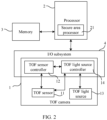
- FIG. 2 is an exemplary diagram of an electronic device.
- the electronic device includes a TOF camera 1, a processor 2, a memory 3, and an I/O subsystem 4.
- the TOF camera 1 is configured to capture TOF data.
- the TOF camera 1 is disposed as a front-facing camera of the electronic device, and is configured to capture TOF data in front of a display screen (not shown in FIG. 2 ) of the electronic device, for example, capture TOF data of a face located in front of the display screen of the electronic device.
- the TOF camera 1 includes a TOF sensor 11, a TOF sensor controller 12, a TOF light source 13, and a TOF light source controller 14.
- the TOF light source controller 14 is controlled by the TOF sensor controller 12 to control the TOF light source 13. Under control of the TOF light source controller 14, the TOF light source 13 emits infrared (IR) light.
- the TOF sensor 11 is configured to sense reflected light of infrared (IR) light from an object such as a face, to capture TOF data.
- the TOF sensor controller 12 and the TOF light source controller 14 are disposed in the I/O subsystem 4 and communicate with the processor 2 by using the I/O subsystem 4.
- the memory 3 may be configured to store computer-executable program code.
- the memory 3 may include a program storage area and a data storage area.
- the program storage area may store program code required for implementing an operating system, a software system, at least one function, and the like.
- the data storage area may store data obtained, generated and used during use of the electronic device.
- the memory 3 may be completely or partially integrated in the processor 2 as an internal memory of the processor 2. In some implementations, the memory 3 is an external memory relative to the processor 2 and communicates with the processor 2 by using an external memory interface of the processor 2.
- the memory 3 may include a high-speed random access memory, and may further include a non-volatile memory, for example, at least one magnetic disk storage device, a flash memory, or a universal flash storage (universal flash storage, UFS).
- a non-volatile memory for example, at least one magnetic disk storage device, a flash memory, or a universal flash storage (universal flash storage, UFS).
- the processor 2 may include one or more processing units.
- the processor 2 may include an application processor (application processor, AP), a graphics processing unit (graphics processing unit, GPU), and an image signal processor (image signal processor, ISP).
- application processor application processor, AP
- graphics processing unit graphics processing unit, GPU
- image signal processor image signal processor
- the processor 2 may include a secure area processor 21, data used in face recognition may be stored in the secure area processor 21, and the secure area processor 21 performs a procedure for processing the data by invoking the program code in the memory 3, to improve security of face recognition.
- the secure area processor 21 is configured to store the TOF data captured by the TOF camera 1, generate a TOF image by using the TOF data, and perform face recognition processing by using the TOF image, to obtain a recognition result.
- the processor 2 may perform a task such as face unlocking or face payment by using the recognition result.
- the electronic device may further include an ambient light sensor (not shown in FIG. 2 ) for sensing light intensity of an environment in which the electronic device is located. It may be understood that the ambient light sensor communicates with the processor 2 by using an ambient light sensor controller (not shown in FIG. 2 ) disposed in the I/O subsystem 4.
- the electronic device may include more or fewer components than those shown in the figure, or some components are combined, or some components are split, or component arrangements are different.
- the illustrated components may be implemented by hardware, software, or a combination of software and hardware.
- the operating system implemented by the processor 2 by running the code stored in the memory 3 may be an iOS operating system, an Android open source operating system, a Windows operating system, a Harmony operating system, or the like.
- the Android open source operating system is used as an example for description.
- the processor 2 of the electronic device can implement a software framework based on the Android open source operating system shown in FIG. 3 .
- the software framework includes a trusted execution environment (Trusted Execution Environment, TEE) and a rich execution environment (Rich Execution Environment, REE) that can execute rich instructions.
- TEE Trusted Execution Environment
- REE Rich Execution Environment
- the TEE may be implemented by the secure area processor 21 in the processor 2 by running program code.
- the REE includes various layers of the Android open source operating system, including but not limited to an application program layer, an application program framework layer, a hardware abstraction layer, and a kernel layer.
- the application program layer may include a series of application program packages. As shown in FIG. 3 , the application program package may include a payment application and a lock screen application. Each application may initiate task requests in different scenarios to trigger face recognition.
- the application program framework layer provides an application programming interface (application programming interface, API) and a programming framework for application programs at the application program layer.
- the application program framework layer includes some predefined functions.
- the application program framework layer may include a camera service (Camera service) and a face service (Face service).
- the camera service is used to implement a camera function.
- the face service is used to implement a face recognition function.
- the hardware abstraction layer is used for hardware abstraction.
- the hardware abstraction layer hides hardware interface details of a specific platform, and provides a virtual hardware platform for the operating system, so that the operating system is hardware-independent and can be transplanted on various platforms.
- a camera hardware abstraction layer (Camera HAL3) at the hardware abstraction layer is used to control the camera in response to an instruction of the camera service.
- a face application client (Face Client application, Face CA, also referred to as a face client application) accesses a trusted application of the TEE by invoking an API (Application Programming Interface, application programming interface) of a TEE client located in the REE, to use the TEE and a security function provided by the trusted application.
- API Application Programming Interface
- the kernel layer is a layer between hardware and software.
- Hardware driver software is usually disposed at the kernel layer.
- one of functions of an ISP-Lite at the kernel layer is to drive the ISP-Lite (a part of the ISP) in the processor to convert the TOF data captured by the TOF sensor (such as TOF camera Raw Data) into a data format commonly used for image processing, such as TOF raw data (Raw Data).
- TOF data captured by the TOF sensor
- TOF raw data TOF raw data
- a TOF camera driver at the kernel layer is used to drive the TOF camera.
- the TEE includes various applications, modules, and units for performing face recognition based on the TOF data.
- a function of a face trusted application is to invoke each module and unit in the TEE, and communicate with the REE.
- a data processing module is configured to process data such as raw data.
- a face recognition module is configured to implement functions such as face recognition by using a face template, and face template management.
- the electronic device can process the TOF data into the TOF image in the TEE, and perform face recognition in the TEE by using the TOF image, to obtain the recognition result.
- the electronic device can process the TOF data into the TOF image in the TEE, and perform face recognition in the TEE by using the TOF image, to obtain the recognition result.
- data processing and recognition are both implemented in the TEE. Therefore, security can be further improved.
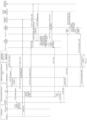
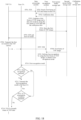
- the face recognition method disclosed in this embodiment of this application is hereinafter described in detail with reference to FIG. 3 .
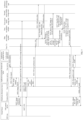
- the face recognition method performed by the electronic device disclosed in this embodiment of this application includes the following steps.
- the application may initiate a task and send a task request to the face service in response to at least one instruction, at least one operation of a user, at least one sensor signal, or the like, or periodically.
- the user presses a power key to trigger an unlock task, and an unlock application sends an unlock request to the face service.
- S405. Transmit an image generation instruction to the TOF camera driver at the kernel layer in response to the image request by using the camera HAL3, to drive the TOF camera to capture TOF data.
- the ISP-Lite at the kernel layer stores the received and processed TOF data into a first secure buffer (Secure Buffer) storage unit of the TEE as first storage information.
- the first storage information indicates a storage address.
- the ISP-Lite stores the received and processed TOF data in the TEE, and this is equivalent to directly storing the TOF data from hardware (the ISP of the processor) in a secure area. Therefore, a possibility of being attacked is reduced.
- the first storage information may be encrypted information, that is, a ciphertext.
- an example of the encrypted information is a file descriptor (File Descriptor, FD), used to describe a storage location and a read mode.
- the ciphertext of the first storage information is abbreviated as an FD1.
- the camera HAL3 obtains the calibration data preconfigured in the REE and transmits the calibration data together with the FD1 to the TEE.
- the camera HAL3 may obtain a part of the calibration data from a storage unit of the REE, and may obtain another part of the calibration data from the TOF camera.
- the storage information of the TOF data is transmitted to the TEE, and this lays a basis for processing the TOF data in the TEE.
- the ISP-Lite stores the received and processed TOF data in the TEE, and this ensures security of the TOF data.
- the second storage information may not be encrypted.
- the face recognition module performs face comparison on the TOF image by invoking a preconfigured face template, to obtain a comparison result, and performs anti-counterfeit recognition by using the TOF image, to obtain an anti-counterfeit result.
- the recognition result may be determined based on the comparison result and the anti-counterfeit result. For example, if the comparison result is comparison success, and the anti-counterfeit result is anti-counterfeit success, the recognition result is success.
- the TOF image includes the depth map and the infrared image
- a large comparison threshold can be used when the infrared image is compared with the face module. Therefore, accuracy is high, and a possibility of counterfeiting of similar faces can be reduced.
- both the depth map and infrared image can be used for anti-counterfeit recognition, anti-counterfeit performance is high (that is, performance of protection against plane attacks and head model mask attacks is high).
- the lock screen application receives the recognition result, and performs the unlock task based on the recognition result indicating that the recognition succeeds, or performs a task of keeping the screen in the locked state based on the recognition result indicating that the recognition fails.
- the TOF data is used for face recognition, security is high. Further, because face recognition based on the TOF data is implemented in the TEE, security of the TOF data, a data processing process, and a recognition process can be ensured. Therefore, security of face recognition is further improved.
- the calibration data is data in camera domain rather than data in face domain
- the calibration data may be further transmitted from the camera service to the face CA via the face service.
- the calibration data in the calibration data storage unit of the TEE is not lost as long as the processor is not powered off. Therefore, there is no need to reload the calibration data.
- the calibration data may alternatively be reloaded. This is not limited herein. Transmission of the calibration data together with the FD1 is only an implementation. Alternatively, the calibration data and the FD1 may be transmitted separately on a transmission path as described above.
- the TOF camera captures one group of TOF data in one exposure, stops for first duration after capturing a plurality of groups of TOF data in a plurality of continuous exposures, then stops again for the first duration after a plurality of continuous exposures again, and so on.
- a plurality of groups of TOF data captured continuously are referred to as one frame of TOF data, and a plurality of groups of TOF data captured again after an interval of the first duration are referred to as another frame of TOF data.
- the ISP-Lite also sequentially stores each frame of TOF data in the first secure buffer storage unit at the interval of the first duration, and also sequentially transmits storage information of each frame of TOF data to the face CA at the interval of the first duration.
- the face CA also sequentially transmits the storage information of each frame of TOF data to the face TA at the interval of the first duration. Therefore, the face TA also sequentially receives the storage information of each frame of TOF data at the interval of the first duration.
- S406 may be storing any frame of TOF data
- S407 to S411 may be transmitting an FD of any frame of TOF data
- S413 to S419 are a procedure for processing this frame of TOF data.
- S420 to S422 may be a procedure for processing a recognition result of this frame of TOF data, or may be a procedure for processing recognition results of a plurality of frames of TOF data.
- the TOF camera captures TOF data by emmiting infrared light, it is necessary to pay attention to safety of human eyes in the capture process.
- quality of the TOF image is related to accuracy of the recognition result, and an exposure parameter of the TOF camera is directly related to the quality of the TOF image, it is necessary to optimize the exposure parameter of the TOF camera.
- the procedure shown in FIG. 4 is further improved, and based on a type of the received TOF data, the data processing module can generate different parameters for adjusting the TOF camera.
- FIG. 5 shows a procedure for generating and feeding back an automatic exposure (Automatic Exposure, AE) result and controlling a camera based on the AE result. Only differences between FIG. 5 and FIG. 4 are described herein.
- AE Automatic Exposure
- the TOF camera divides the captured TOF data into a safety indication frame and a face recognition frame.
- the safety indication frame carries a human eye safety flag used to indicate whether infrared light emitted by the TOF camera is safe for human eyes.
- the face recognition frame is a TOF data frame used for face recognition.
- a type of the TOF data frame is indicated by at least one of a value, a character, and a character string in the TOF data frame.
- first to fourth frames of TOF data are safety indication frames
- subsequent frames of TOF data are face recognition frames.
- the safety indication frame includes the human eye safety flag.
- the AE result is used to adjust the exposure parameter of the TOF camera.
- the AE result includes but is not limited to exposure duration and a physical gain of the TOF sensor.
- a manner of generating the AE result is: extracting TOF raw data (Raw Data), that is, a face region in a raw image, calculating a luminance value of the face region, and comparing the luminance value of the face region with a preconfigured target luminance value to obtain the exposure duration and the physical gain of the TOF sensor.
- One AE result may be generated for each frame of TOF data, or one AE result may be generated for a plurality of frames of TOF data.
- the camera HAL3 may send the AE result to the TOF sensor controller by using the TOF camera driver, and the TOF sensor controller controls the TOF sensor to capture the TOF data based on the AE result.
- FIG. 6 shows a procedure for generating and feeding back a safety flag, and controlling a camera based on the safety flag. Only differences between FIG. 6 and FIG. 4 are described herein.
- the safety flag is used to indicate whether the TOF light source is safe for human eyes.
- a manner of generating the safety flag is: after receiving a TOF data frame (that is, the safety indication frame) carrying a human eye safety flag, extracting the human eye safety flag, determining, based on the extracted human eye flag, whether the human eyes are safe, and generating the safety flag. If the human eye safety flag indicates safety, the safety flag indicating safety is obtained. If the human eye safety flag indicates non safety, the safety flag indicating non safety is obtained.
- human eye safety flags carried in various safety indication frames are the same.
- human eye safety flags in a first safety indication frame to a fourth safety indication frame all indicate safety for human eyes or all indicate non safety for human eyes.
- a plurality of safety flags that are obtained are the same. Therefore, only one safety flag may be transmitted, so that resources of the TEE are saved.
- Adjusting the TOF camera includes but is not limited to: if the safety flag indicates non safety for human eyes, turning off the TOF camera, or reducing emission intensity of the TOF light source. If the safety flag indicates safety for human eyes, a TOF data frame is captured and identified as a TOF data frame used for face recognition (that is, a face recognition frame).
- the camera HAL3 may send a turn-off instruction to the TOF sensor controller by using the TOF camera driver, to turn off the TOF camera.
- the TOF raw data is processed into a TOF image in the TEE, and the TOF image is used for face recognition, so that security of face recognition is higher.
- the Android operating system is used as an example for description in FIG. 4 to FIG. 6
- the face recognition method described in this embodiment of this application is not limited to the Android operating system.
- running of the TEE is not limited to the Android operating system. Therefore, functions of each application, module, and unit in the TEE can also be implemented in other operating systems.
- Running of the REE is not limited to the Android operating system either.
- the paths for transmitting the TOF data and calibration data to the TEE, the path for transmitting the task request, the path for feeding back the recognition result, and the like can be adjusted to adapt to different operating systems, as long as the TOF data and calibration data can be transmitted from the REE to the TEE, and the task request triggers capture of the TOF data, and the recognition result is used to perform the task.
- the recognition result is inaccurate due to low image quality. Due to impact of ambient light, data captured by the camera may have quality defects such as an overexposure, a blur, and insufficient luminance, but face recognition is based on the data captured by the camera. Therefore, a problem that a comparison result is incorrect may occur. For example, the person is originally the same, but the face recognition result is failure.
- Improving the image quality and improving the execution speed are a pair of contradictions.
- To improve the image quality it is necessary to perform iterative processing, noise reduction processing, and the like on the image, so that the image converges.
- TOF imaging has the following characteristics:
- unlocking is not implemented by using the captured first frame of TOF data
- the captured third or fourth frame of TOF data converges (that is, even if the exposure parameter is adjusted later, the TOF data no longer changes)
- unlocking can be implemented by using the captured third or fourth frame of TOF data.
- an objective of obtaining the recognition result accurately and quickly is achieved through invoking of the data processing module and the face recognition module by using the face TA.
- FIG. 7 is a data processing method disclosed in an embodiment of this application.
- an improvement lies in applications and modules in the TEE.
- the functions and data transmission modes of the modules in the REE are the same as those shown in FIG. 4 .
- FIG. 5 or FIG. 6 and are not described herein again.
- the procedure shown in FIG. 7 includes the following steps.
- the face TA After receiving the FD (abbreviated as the FD1) of the first frame of TOF data, the face TA transmits the FD1 to the data processing module.
- FD abbreviated as the FD1
- the face TA After receiving the FD (abbreviated as the FD1) of the first frame of TOF data, the face TA transmits the FD1 to the data processing module.
- the first frame of TOF data is a first frame of TOF data captured by the TOF camera driven by the TOF camera driver controlled by the camera HAL3 in response to an image request.
- TOF data frames captured by the TOF camera are respectively identified as a safety indication frame and a face recognition frame.
- the safety indication frame carries a human eye safety flag used to indicate whether infrared light emitted by the TOF camera is safe for human eyes.
- the face recognition frame is a TOF data frame used for face recognition.
- the first frame of TOF data in this step is a first face recognition frame.
- the data processing module reads the first frame of TOF data from the first secure buffer storage unit based on the FD1, and reads the calibration data from the calibration data storage unit.
- the data processing module generates a TOF image by using the first frame of TOF data and the calibration data and generates an automatic exposure (Automatic Exposure, AE) result.
- AE Automatic Exposure
- the TOF image includes a depth map and an infrared image.
- the AE result is used to adjust an exposure parameter for capturing TOF data by the TOF camera.
- the AE result includes but is not limited to exposure duration and a physical gain of the TOF sensor.
- a manner of generating the AE result is: extracting a face region in a TOF raw image (Raw Data), calculating a luminance value of the face region, and comparing the luminance value of the face region with a preconfigured target luminance value to obtain the exposure duration and the physical gain of the TOF sensor.
- the TOF image obtained by processing the first frame of TOF data is referred to as a first frame of TOF image.
- the AE result obtained from the first frame of TOF data is referred to as a first AE result.
- the data processing module stores the first frame of TOF image in the second secure buffer storage unit.
- the data processing module transmits storage information of the first frame of TOF image and the first AE result to the face TA.
- the storage information of the first frame of TOF image is transmitted only in the TEE, the storage information can be transmitted in a plain text form.
- the face TA transmits the first AE result to the TOF camera.
- a path for transmitting the first AE result to the TOF camera is: the face TA, the face CA, the camera service, the camera HAL3, and the TOF sensor controller of the TOF camera, and then the TOF sensor controller uses the first AE result to adjust parameters of the TOF camera, including but not limited to exposure duration.
- a TOF data frame on which the first AE result can act is related to duration of processing the TOF data by the processor. Assuming that a capture interval of the TOF camera is 30 ms and that a total time taken by the processor to generate the first TOF image and the first AE result is also 30 ms, the first AE result can earliest act on a third frame of TOF data captured by the TOF camera.
- Generating and transmitting the AE result are optional steps.
- a purpose of the steps is to improve quality of subsequently captured TOF data and further obtain a TOF image with better quality and a more accurate recognition result.
- the first frame of TOF data may be captured by using a preconfigured fixed exposure parameter.
- the face TA transmits the storage information of the first frame of TOF image to the face recognition module, to trigger the face recognition module to perform face recognition.
- the face recognition module reads the first frame of TOF image from the second secure buffer storage unit by using the storage information of the first frame of TOF image.
- the face recognition module performs face recognition by using the first frame of TOF image, to obtain a first recognition result.
- the face recognition module invokes a face template to perform face comparison on the first frame of TOF image.
- anti-counterfeit recognition may also be performed by using the depth map and the infrared image. Therefore, face recognition includes face comparison and anti-counterfeit recognition. If both face comparison and anti-counterfeit recognition succeed, the recognition result of face recognition indicates success.
- the face recognition module transmits the first recognition result to the face TA.
- the face TA determines whether the first recognition result indicates that the recognition succeeds, and if yes, performs S712, or if no, performs S713.
- the face TA transmits the first recognition result to the face CA.
- the face CA transmits the first recognition result to a task initiator, for example, an unlock application.
- the face TA determines whether a termination condition is satisfied, and if yes, performs S712, or if no, performs S714.
- the termination condition may be preset. In this step, the termination condition includes: duration of performing the task reaches a second duration threshold. An example of the second duration threshold is 5 seconds. The termination condition is optional, and it is not necessary to determine whether the termination condition is satisfied. When the first recognition result indicates that the recognition fails, S714 is performed.
- a purpose of setting the termination condition is to avoid unnecessary time consumption in the task execution process: If face recognition still fails after certain duration, it can be basically determined that the face recognition result is failure. For example, a face trying to unlock is not prestored in the electronic device. Therefore, there is no need to continue the face recognition. Instead, the face recognition result should be fed back to the task initiator as soon as possible to reduce a task execution delay and ensure good user experience.
- the face TA receives one frame of TOF data from the TOF camera again.
- a frame of TOF data received from the TOF camera again is a seventh frame of TOF data captured by the TOF camera.
- the seventh frame of TOF data is a TOF data frame captured after the exposure parameter is adjusted by using the first AE result.
- the first frame of TOF data as a processing object in S701 to S714 is replaced with a frame of TOF data received again, such as the seventh frame of TOF data, and a processing result of the first frame of TOF data is adaptively replaced with a processing result of the frame of TOF data received again (for example, the first frame of TOF image is replaced with a second frame of TOF image). Details are not described herein again.
- An image data processing procedure in the prior art includes iteratively processing image data to obtain converged image data, and its purpose is to obtain an image whose quality satisfies a recognition accuracy requirement.
- RGB data because the RGB data is easily affected by ambient light, quality of a first frame of RGB data captured usually cannot satisfy the recognition accuracy requirement. Therefore, iterative processing needs to be performed on the RGB data to obtain converged RGB data, and then face recognition is performed by using the converged RGB data, to ensure accuracy of a recognition result. Generally, depending on different iterative algorithms, the RGB data can converge in about 10 frames quickly, or converge in 30 to 40 frames slowly. Therefore, a consensus of persons skilled in the art is that the quality of the first frame of RGB data is probably poor due to impact of ambient light, and it is meaningless to directly use the first frame of RGB data for face recognition.
- the first frame of TOF data converges. It can be learned that an accurate recognition result can be probably obtained by using the first frame of TOF data. Therefore, after the electronic device captures the first frame of TOF data, the face recognition result is obtained by using the first frame of TOF image generated by the first frame of TOF data. Therefore, a shorter processing delay can be achieved while high accuracy of the recognition result is ensured.
- the step of iterating the image data to obtain converged image data is omitted, in exchange for an improvement of the processing speed of the image data.
- this value can indicate that the method described in this embodiment can make the user feel acceleration of unlocking. Therefore, user experience can be improved.
- a more specific example of a scenario to which this embodiment is applied is as follows: Limited by hardware conditions of the mobile phone, only one processor (the secure area processor 21 shown in FIG. 2 ) can be used to implement face recognition.
- the TOF camera captures TOF data at intervals of 30 ms and transmits the TOF data to the processor.
- the processor processes the first frame of TOF data into a first frame of depth map and a first frame of infrared image according to the procedure described in this embodiment, and obtains a first recognition result by using the first frame of depth map and the first frame of infrared image.
- the processor In the process in which the processor generates the first frame of TOF image and calculates the recognition result, because the processor is occupied, although the TOF camera is still transmitting TOF data frames to the processor, the processor can no longer receive subsequent TOF data frames. In other words, TOF data frames other than the received first frame of TOF data are discarded.
- this embodiment does not take a TOF data iteration process into account, and just fits the foregoing scenario of one processor.
- the processor in a scenario in which only one processor is used for TOF data processing and face recognition, if both recognition processing and TOF data iteration are to be implemented to wait for convergence of the TOF data, the processor must perform serial processing, and therefore, an excessively long time is consumed.
- time consumption can be reduced.
- the TOF data converges in the first frame in most cases, in the case of reducing time consumption of face recognition, it can also be ensured that the recognition result is accurate.
- the data processing method described in this embodiment ensures that face recognition can be performed accurately and quickly in most cases.
- security of face recognition performed by using the TOF data is high, an objective of secure, accurate, and fast face recognition can be achieved.
- the inventor further finds that in an outdoor scenario, because natural light includes light whose wavelength is close to that of the infrared light emitted by the TOF light source, the first frame of TOF data captured may be overexposed. In this case, the quality of the first frame of TOF data is not sufficient for obtaining an accurate recognition result.
- a required unlocking delay is at least 360 ms, and there is room for further reducing this delay.
- An embodiment of this application discloses another data processing method, as shown in FIG. 8 .
- S801 to S806 are the same as S701 to S706. For details, refer to FIG. 8 . Details are not described herein again.
- S807 to S812 are a procedure for processing a second frame of TOF data after storage information of the second frame of TOF data is received.
- the procedure is the same as the procedure for processing the first frame of TOF data. For details, refer to FIG. 8 . Details are not described herein again.
- the second frame of TOF data may be a TOF data frame captured by the TOF camera by using an exposure parameter adjusted based on the first AE result, where the exposure parameter may be the same as an exposure parameter of the first frame of TOF data.
- a specific case depends on an interval at which the TOF camera captures a TOF data frame (such as the foregoing interval of the first duration) and duration from receiving the TOF data frame to feeding back an AE result by the processor.
- S813 to S818 are a procedure for processing a third frame of TOF data after storage information of the third frame of TOF data is received.
- the procedure is the same as the procedure for processing the first frame of TOF data. For details, refer to FIG. 8 . Details are not described herein again.
- the face TA invokes the face recognition module to perform face recognition.
- FIG. 9 An optional implementation of S819 is shown in FIG. 9 :
- the face recognition module reads the third frame of TOF image from the second secure buffer storage unit. Details are not described in FIG. 9 again.
- the recognition result of the third frame of image is referred to as a third recognition result.
- the face recognition module transmits the third recognition result to the face TA.
- the face TA determines whether the third recognition result indicates that the recognition succeeds, and if yes, performs S905, or if no, performs S906.
- the face TA transmits the third recognition result to the face CA.
- the third frame of TOF data is most probably data captured after the exposure parameter is adjusted by using the AE result, quality is most probably the best. Therefore, first using the third frame of TOF image for face recognition can further reduce time consumption.
- the face TA transmits storage information of a first frame of TOF image and storage information of a second frame of TOF image to the face recognition module.
- the face recognition module obtains a first recognition result and a second recognition result.
- the first recognition result is a result of performing face recognition on the first frame of TOF image.
- the second recognition result is a result of performing face recognition on the second frame of TOF image.
- an order of performing face recognition by using the first frame of TOF image and performing face recognition by using the second frame of TOF image is not limited.
- the face recognition module transmits the first recognition result and the second recognition result to the face TA.
- the face TA transmits the recognition result of recognition success to the TOF CA.
- the face TA determines whether a termination condition is satisfied, and if yes, performs S911, or if no, performs the procedure shown in FIG. 8 again.
- a duration threshold in the termination condition may be shorter than the duration threshold in the termination condition in the foregoing embodiment, because in this embodiment, a plurality of frames of TOF data have been captured and processed.
- an example of the duration threshold is 3 seconds.
- N 1, 2, 3, which refers to an order of TOF data frames received when the processor currently performs the procedure shown in FIG. 8 .
- the TOF camera may capture a ninth frame of TOF data, but when the procedure shown in FIG. 8 is currently performed, the processor receives the first frame of TOF data. Therefore, the "first frame of TOF data" in S801 refers to the first frame of TOF data in the currently performed procedure shown in FIG. 8 , rather than the first frame of TOF data actually captured by the TOF camera.
- the face TA transmits the recognition result of recognition failure to the TOF CA.
- S819 can also be implemented in other manners.
- face recognition is performed by using the first frame of TOF image, the second frame of TOF image, and the third frame of TOF image in sequence, or recognition is performed by using only the third frame of TOF image, and if the recognition result indicates that the recognition fails, the procedure shown in FIG. 8 is performed again to save resources such as memory.
- Other implementations are not listed one by one herein.
- An example of an application scenario of the procedure shown in FIG. 8 is as follows: Assuming that a face trying to unlock is a face already recorded in the electronic device, the user aligns the face with the screen in an outdoor environment, the TOF camera captures TOF data at an interval of 30 ms and transmits the TOF data to the processor, and after receiving the first frame of TOF data, the processor processes the received TOF data to generate the first TOF image and the first AE result.
- the processor does not perform face recognition after generating the first TOF image and transmitting the first AE result, but continues to receive and process a TOF data frame. Because the duration of generating the TOF image and the AE result is 30 ms, which is equivalent to the duration of capturing and transmitting TOF data by the TOF camera, after processing the first frame of TOF data, the processor can continue to receive and process the second frame of TOF data. After processing the second frame of TOF data, the processor can continue to receive and process the third frame of TOF data.
- the first AE result generated based on the first frame of TOF data can earliest act on the third frame of TOF data. Therefore, unlocking is probably performed successfully by using the third frame of TOF data.
- Shortest duration required for obtaining the recognition result by using the third frame of TOF data is: 30 ms * 3 + 150 ms.
- the frame for successful unlocking changes from the seventh frame to the third frame. Therefore, the speed can be increased, and the delay is reduced.
- the second frame of TOF data and the AE result of the second frame of TOF data may not be processed, that is, S807 to S812 are not performed, to save resources.
- the recognition result is obtained without participation of the second frame of TOF image.
- the second frame of TOF data may be received only without being processed.
- the second frame of TOF data may be discarded without being received.
- a quantity of continuously processed TOF data frames is related to time consumption of generating and feeding back an AE result and the interval of the first duration of capturing a data frame by the TOF camera.
- FIG. 7 or FIG. 8 may be used preferably with a determining condition.
- FIG. 3 another data processing method disclosed in an embodiment of this application includes the following steps.
- an environment in which the electronic device is located is determined by using the intensity value of the light, and a face recognition result is obtained by using a procedure that is more adaptive to the environment, so that accuracy and a speed of obtaining the face recognition result can be maximized on a basis of improving security.
- the inventor further finds that, regardless of an outdoor scenario or an indoor scenario, when the ambient light is extremely strong and a sensor of the TOF camera faces a strong light source, quality of a first frame of TOF data cannot support obtaining an accurate face recognition result. Therefore, the TOF data needs to converge, so that duration of face recognition is increased.
- a user is located outdoors where sunlight is extremely strong, and the user faces away from the sun.
- the user aligns the front-facing camera of the mobile phone with the face, expecting to perform face unlocking (assuming that the face of the user is already stored in the mobile phone as a face module). It takes more time to unlock than in an indoor environment.
- an embodiment of this application provides a data obtaining method to obtain a higher-quality first frame of TOF data, so as to improve accuracy of a recognition result of the first frame of TOF data while using the TOF data for face recognition to obtain higher security, thereby further quickly completing face recognition.
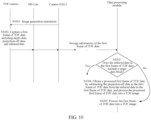
- FIG. 10 is a data obtaining method disclosed in an embodiment of this application. The method is performed by the foregoing electronic device. With reference to FIG. 2 to FIG. 6 , the procedure shown in FIG. 10 starts to be performed from driving, by the camera HAL3 by using the TOF camera driver, the TOF camera to capture data, and includes the following steps.
- the camera HAL3 transmits an image generation instruction to the TOF camera in response to an image request.
- the camera HAL3 may transmit the image generation instruction to the TOF camera by using the TOF camera driver at the kernel layer.
- the TOF camera captures a first frame of TOF data including depth data, projection-off data, and infrared data.
- the depth data is data used to generate a depth map.
- the projection-off data is TOF data captured by the TOF camera when the TOF light source is turned off.
- the infrared data is data used to generate an infrared image.
- the depth data and the infrared data are both TOF data captured by the TOF camera when the TOF light source is turned on.
- the TOF light source When the TOF camera (powered on) is started, the TOF light source is turned on by default.
- the TOF sensor controller of the TOF camera transmits the image generation instruction to the TOF sensor, and the TOF sensor captures the depth data in response to the image generation instruction and transmits a turn-off instruction to the TOF light source controller.
- the TOF light source controller turns off the TOF light source in response to the turn-off instruction, and the TOF sensor captures the projection-off data.
- the TOF sensor transmits a turn-on instruction to the TOF light source controller.
- the TOF light source controller turns on the TOF light source in response to the turn-on instruction, and the TOF sensor captures the infrared data.
- one example of the first frame of TOF data is: four groups of depth data, one group of projection-off data, and one group of infrared data. "One group of data” may be understood as a two-dimensional array.
- the TOF sensor first captures each group of depth data with first exposure duration, captures infrared data with second exposure duration, and captures projection-off data with the first exposure duration or the second exposure duration.
- the first exposure duration and the second exposure duration may be carried in the image generation instruction by the camera HAL3 or transmitted to the TOF camera separately, or transmitted to the TOF camera by other modules, or obtained by the TOF camera from the storage module in advance.
- an occasion when the TOF sensor sends the turn-off instruction to the TOF light source controller is related to the first exposure duration, and that an occasion when the TOF sensor sends the turn-on instruction to the TOF light source controller is related to the exposure duration of the projection-off data.
- the TOF sensor may mark TOF data captured within a first time range as projection-off data.
- the first time range may be determined based on interval duration between the time when the TOF sensor sends the turn-off instruction and the time when the TOF sensor sends the turn-on instruction.
- the TOF sensor may mark TOF data captured before the first time range as depth data, and mark TOF data captured after the first time range as infrared data.
- an order of capturing the depth data, the projection-off data, and the infrared data by the TOF camera is not limited.
- the order of capture may be the projection-off data, the infrared data, and the depth data, or the order of capture may be the infrared data, the depth data, and the projection-off data.
- the data processing module determines whether the infrared data in the first frame of TOF data includes a target data block, and if yes, performs S1004, or if no, performs S1005.
- FIG. 4 A specific manner of obtaining the first frame of TOF data by the data processing module is shown in FIG. 4 , FIG. 5 , or FIG. 6 , and is not described herein again.
- the infrared data is a two-dimensional array. It may be understood that the two-dimensional array includes some values arranged in rows and columns. Each value can be considered as a data point.
- the target data block is a data block that satisfies the following preset condition: A quantity of data points whose values are greater than a first threshold is greater than a second threshold.
- the infrared data captured by the TOF sensor is a two-dimensional array and is processed by the ISP-Lite into infrared raw data, that is, an infrared raw image. Therefore, it may be understood that the target data block is a target region in the infrared raw image, and each value in the target data block is a luminance value of a corresponding pixel in the target region. Therefore, for the infrared raw image, the target region is a region in which a quantity of pixels whose luminance values are greater than a first threshold is greater than a second threshold.
- the TOF data captured by the TOF camera is usually overexposed due to the strong light. Therefore, luminance of most of pixel values in an overexposed region in the infrared raw image generated by the TOF data is excessively high, and recognition is affected.
- the condition of the target region (data block) in this step is set based on this principle.
- S1005. Process the first frame of TOF data into a TOF image.
- processing the first frame of TOF data into the TOF image means processing the depth data in the first frame of TOF data into a depth map and processing the infrared data in the first frame of TOF data into an infrared image.
- FIG. 11 is another data obtaining method disclosed in an embodiment of this application. The method is performed by the camera HAL3 shown in FIG. 3 and includes the following steps.
- the interval duration is interval duration between a moment when TOF data is last captured (first moment for short) and a moment when a first frame of TOF data is to be captured (second moment for short).
- the camera HAL3 drives, by using the TOF camera driver at the kernel layer, the TOF camera to capture TOF data, the camera HAL3 can select the second moment based on a time of sending an image generation instruction to the TOF camera driver. For example, a moment obtained after a delay is added to the moment of sending the image generation instruction to the TOF camera driver is used as the second moment. For another example, to simplify the procedure, the camera HAL3 can directly use a current moment of the system as the second moment.
- the first frame of TOF data refers to a first frame of TOF data captured by the TOF camera as triggered by an application that sends a task request, as shown in FIG. 4 , FIG. 5 , or FIG. 6 .
- "Last" may be a last frame of TOF data captured by the TOF camera as triggered by an application that last sends a task request.
- S1102. Instruct the TOF camera to capture the first frame of TOF data at the second moment by using an exposure parameter used for the last capture of TOF data.
- the exposure parameter used for the last capture of TOF data is probably an adjusted exposure parameter, and because the interval duration between the first moment and the second moment is within the preset range, a current environment is probably the same as an environment in which the last capture is performed. Therefore, the exposure parameter used for the last capture of TOF data is also probably applicable to the current environment. This helps obtain high-quality TOF data and helps obtain a high-quality TOF image.
- the exposure parameter used for the last capture of TOF data is no longer applicable to the current environment. Therefore, it is not meaningful to use the exposure parameter used for the last capture of TOF data. Therefore, the preconfigured exposure parameter is used.
- the data obtaining method described in this embodiment fully uses the exposure parameter adjusted by the AE adjustment mechanism, improves quality of the first frame of TOF data, and further obtains a high-quality TOF image. This helps improve the accuracy and speed of face recognition.
- the exposure parameter used for the last capture of TOF data is only an implementation. Because the moment of the last capture of TOF data is a moment closest to the second moment, a purpose of comparison with the last capture of TOF data is to save computing resources.
- the comparison with the last capture of TOF data is not limited. As long as the capture is any capture before the second moment, the comparison with the second moment can be performed. Therefore, a condition satisfied by the first moment can be summarized as follows: It is earlier than the second moment and the interval duration from the second moment is within the preset range.
- FIG. 12 is another data obtaining method disclosed in an embodiment of this application. The method is performed by the camera HAL3 shown in FIG. 3 and includes the following steps.
- the ambient light sensor on the electronic device may be used to obtain light intensity of an environment in which the electronic device is located.
- S1202. Instruct the TOF camera to capture a first frame of TOF data by using exposure duration corresponding to the light intensity.
- Preconfigured fixed exposure duration may not be applicable to an outdoor environment. Therefore, exposure duration used in an indoor environment is different from that used in the outdoor environment. Therefore, the light intensity intervals need to be used to reflect this difference.
- L represents the light intensity value
- t represents the exposure duration
- L ⁇ 500 lux is the indoor light intensity interval, that is, if L is less than 500 lux, it can be considered that the electronic device is in the indoor environment.
- the default fixed exposure duration may be used.
- 500 lux ⁇ L ⁇ 3000 lux, 3000 lux ⁇ L ⁇ 30000 lux, and L > 30000 lux are intervals obtained through further division for the outdoor environment. It can be seen that among the three intervals, if the value is larger, the corresponding exposure duration is shorter.
- a granularity of the intensity interval of the outdoor environment in the foregoing example can be adjusted. If the granularity is smaller, exposure time control is finer, and this is more helpful for improving image quality and more helpful for improving an image processing speed.
- the camera HAL3 can transmit, to the TOF sensor controller of the TOF camera by using the TOF camera driver, the exposure duration corresponding to the light intensity.
- the exposure duration for capturing TOF data is obtained based on the light intensity of the environment in which the electronic device is located. This helps capture TOF data whose luminance satisfies a requirement of face recognition in the first frame and therefore helps improve the accuracy and speed of face recognition.
- FIG. 13 no TEE is disposed, that is, TOF data processing and face recognition are both performed in an REE, and specifically, may be performed in a face CA. Therefore, TOF data instead of storage information of the TOF data can be directly transmitted between modules.
- a difference between FIG. 13 and FIG. 3 is that after an ISP-Lite receives TOF data captured by a TOF camera, the TOF data is transmitted to the face CA by using a camera HAL3 and a camera service.
- the face CA processes the TOF data into a TOF image and performs face recognition by using the TOF image.
- each step is performed by the face CA: After receiving a first frame of TOF data, the face CA processes the first frame of TOF data into a first frame of TOF image, obtains a first AE result, transmits the first AE result to the camera HAL3, and performs face recognition by using the first frame of TOF image, to obtain a first recognition result. If the first recognition result indicates that the recognition succeeds, the first recognition result is transmitted to a face service; or if the first recognition result indicates that the recognition fails, a seventh frame of TOF data is received again.
- each step is performed by the face CA. Details are not described herein again.
- the data processing module may be replaced with the face CA. Details are not described herein again.
- FIG. 11 and FIG. 12 are applicable to FIG. 13 .
- a module having the same function as the data processing module can implement the steps performed by the foregoing data processing module, and a module having the same function as the camera HAL3 can implement the foregoing steps performed by the camera HAL3.
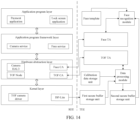
- processing TOF data into a TOF image in the TEE and performing face recognition in the TEE by using the TOF image can be not only implemented by using the software framework shown in FIG. 3 , but also implemented by using a software framework shown in FIG. 14 .
- FIG. 14 A difference between FIG. 14 and FIG. 3 is that in addition to the camera HAL3 and the face CA, a TOF node (Node) and a TOF CA are added to the hardware abstraction layer.
- the TOF node (Node) is a camera domain data interaction center.
- a TOF TA is added to invoke a data processing unit and communicate with the REE.
- a function of the TOF CA is similar to that of the face CA.
- the TOF CA is used to access the TOF TA.
- FIG. 15 an implementation procedure of the face recognition method disclosed in this application is shown in FIG. 15 :
- the TOF node obtains the calibration data preconfigured in the REE and transmits the calibration data together with the FD1 to the TEE.
- the TOF node may obtain a part of the calibration data from a storage unit of the REE, and may obtain another part of the calibration data from the TOF camera.
- the calibration data may alternatively be obtained by the camera HAL3 and transmitted to the TOF node.
- S1512 to S1514 are functions of the data processing module, and are the same as the functions of the data processing module shown in FIG. 4 . Refer to FIG. 15 . Details are not described herein again.
- the second storage information is also transmitted in a form of a ciphertext.
- the ciphertext of the second storage information is abbreviated as an FDI.
- S1523 and S1524 are functions of the face recognition module, and are the same as the functions of the face recognition module shown in FIG. 4 . Refer to FIG. 15 . Details are not described herein again.
- S1525 to S1528 are a procedure for transmitting a recognition result to an application initiating a task, and are the same as those shown in FIG. 4 . Refer to FIG. 15 . Details are not described herein again.
- the TOF data is transmitted to the TEE by using the TOF node, the TOF CA, and the TOF TA, and the TOF data is processed into a TOF image in the TEE.
- the processing is performed separately from processing of the TOF image and conforms to division logic of the camera domain and the face domain.
- the ISP-Lite also sequentially stores each frame of TOF data in the first secure buffer storage unit at an interval of first duration, and also sequentially transmits storage information of each frame of TOF data to the TOF node at the interval of the first duration.
- the TOF node also sequentially transmits the storage information of each frame of TOF data to the TOF TA at the interval of the first duration by using the TOF CA. Therefore, the TOF TA also sequentially receives the storage information of each frame of TOF data at the interval of the first duration.
- S1506 may be storing any frame of TOF data
- S1507 to S1510 may be transmitting an FD of any frame of TOF data
- S1513 to S1515 are a procedure for processing this frame of TOF data.
- S1516 to S1522 are a procedure for transmitting storage information of the TOF image generated for this frame of TOF data
- S1523 to S1525 are a procedure for processing the TOF image generated for this frame of TOF data.
- S1526 to S1528 may be a procedure for processing a recognition result of the TOF image generated for this frame of TOF data, or may be a procedure for processing recognition results of TOF images generated for a plurality of frames of TOF data.
- FIG. 16 shows a procedure for generating and feeding back an automatic exposure (Automatic Exposure, AE) result and controlling a camera based on the AE result. Only differences between FIG. 16 and FIG. 15 are described herein.
- AE Automatic Exposure
- FIG. 17 shows a procedure for generating and feeding back a safety flag, and controlling a camera based on the safety flag. Only differences between FIG. 17 and FIG. 15 are described herein.
- FIG. 18 is the procedure shown in FIG. 7 . Based on the implementation of the software framework shown in FIG. 14 , differences between FIG. 18 and FIG. 7 lie in that an FD of a TOF data frame is transmitted by the TOF TA to the data processing module, and an AE result and an FD of a TOF image (using an FDI as an example) are also transmitted by the TOF TA. Other steps are the same as those in FIG. 7 . Refer to FIG. 18 for details. Details are not described herein again.
- FIG. 19 is the procedure shown in FIG. 8 .
- differences between FIG. 19 and FIG. 8 lie in that an FD of a TOF data frame is transmitted by the TOF TA to the data processing module, and an AE result and an FD of a TOF image (using an FDI as an example) are also transmitted by the TOF TA.
- Other steps are the same as those in FIG. 8 . Refer to FIG. 18 for details. Details are not described herein again.
- the TOF TA determines whether an intensity value of ambient light is greater than a preset first intensity threshold, and if yes, the data processing procedure shown in FIG. 18 is performed, or if no, the data processing procedure shown in FIG. 19 is performed.
- An embodiment of this application further discloses a system-on-chip, including at least one processor and an interface, where the interface is configured to receive code instructions and transmit the code instructions to the at least one processor; and the at least one processor runs the code instructions to implement at least one of the face recognition method, the data obtaining method, and the data processing method.
- An embodiment of this application further discloses a computer-readable storage medium, where the readable storage medium stores program code, and when the program code is executed by a computer device, at least one of the face recognition method, the data obtaining method, and the data processing described in the foregoing embodiments is implemented.
Landscapes
- Engineering & Computer Science (AREA)
- Theoretical Computer Science (AREA)
- Computer Security & Cryptography (AREA)
- Software Systems (AREA)
- General Physics & Mathematics (AREA)
- Physics & Mathematics (AREA)
- General Engineering & Computer Science (AREA)
- Computer Hardware Design (AREA)
- Multimedia (AREA)
- Health & Medical Sciences (AREA)
- General Health & Medical Sciences (AREA)
- Oral & Maxillofacial Surgery (AREA)
- Human Computer Interaction (AREA)
- Collating Specific Patterns (AREA)
- Studio Devices (AREA)
Claims (13)
- Gesichtserkennungsverfahren, umfassend:Erhalten von Laufzeit-Daten, TOF-Daten, durch eine TOF-Kamera, wobei die TOF-Daten einen Sicherheitsanzeigerahmen und einen Gesichtserkennungsrahmen umfassen;direktes Speichern, durch Verwenden einer Kernelschicht, der erhaltenen TOF-Daten in einer vertrauenswürdigen Ausführungsumgebung, TEE;Übertragen von ersten Speicherinformationen der TOF-Daten in der TEE von einer umfassenden Ausführungsumgebung, REE, an die TEE, wobei die ersten Speicherinformationen eine Speicheradresse der TOF-Daten in der TEE anzeigen;Lesen der TOF-Daten durch Verwenden der ersten Speicherinformationen in der TEE;Verarbeiten des Gesichtserkennungsrahmens in den TOF-Daten zu einem TOF-Bild in der TEE; undDurchführen einer Gesichtserkennung in der TEE durch Verwenden des TOF-Bilds, um ein Erkennungsergebnis zu erhalten, wobei das Verarbeiten des Gesichtserkennungsrahmens in den TOF-Daten zu einem TOF-Bild umfasst:Übertragen von Kalibrierungsdaten der TOF-Kamera von der REE zu der TEE;
undGenerieren des TOF-Bilds durch Verwenden des Gesichtserkennungsrahmens in den TOF-Daten und Kalibrierungsdaten. - Verfahren nach Anspruch 1, ferner umfassend:
Generieren einer Sicherheitsflagge oder eines AE-Ergebnisses in der TEE basierend auf den TOF-Daten, wobei die Sicherheitsflagge verwendet wird, um anzuzeigen, ob eine TOF-Lichtquelle für das menschliche Auge sicher ist, und das AE-Ergebnis verwendet wird, um einen Belichtungsparameter der TOF-Kamera anzupassen. - Verfahren nach Anspruch 2, wobei nach dem Generieren einer Sicherheitsflagge oder eines AE-Ergebnisses, das Verfahren ferner umfasst:Übertragen der Sicherheitsflagge oder des AE-Ergebnisses an die REE; undSteuern der TOF-Kamera in der REE basierend auf der Sicherheitsflagge oder dem AE-Ergebnis.
- Verfahren nach einem der Ansprüche 1 bis 3, wobei das TOF-Bild eine Tiefenkarte und ein Infrarotbild umfasst; und
das Durchführen der Gesichtserkennung durch Verwenden des TOF-Bilds umfasst:Durchführen einer Antifälschungserkennung durch Verwenden der Tiefenkarte und des Infrarotbilds; undDurchführen eines Gesichtsvergleichs durch Verwenden des Infrarotbilds und einer voreingestellten Gesichtsvorlage. - Verfahren nach einem der Ansprüche 1 bis 4, wobei nach dem Erhalten eines Erkennungsergebnisses, das Verfahren ferner umfasst:
Übertragen des Erkennungsergebnisses von der TEE an eine Anwendung der REE, um auszulösen, dass die Anwendung eine Aufgabe durch Verwenden des Erkennungsergebnisses durchführt. - Verfahren nach einem der Ansprüche 1 bis 5, wobei das Verarbeiten des Gesichtserkennungsrahmens in den TOF-Daten zu einem TOF-Bild umfasst: Verarbeiten der TOF-Daten zu dem TOF-Bild in einem Kamerabereich; und
das Durchführen der Gesichtserkennung durch Verwenden des TOF-Bilds umfasst:
Durchführen einer Gesichtserkennung in dem Gesichtsbereich durch Verwenden des TOF-Bilds. - Verfahren nach einem der Ansprüche 1 bis 6,
wobei das Übertragen von ersten Speicherinformationen der TOF-Daten in der TEE von der REE an die TEE umfasst:
Übertragen der ersten Speicherinformationen an die TEE durch Verwenden eines Kommunikationsprotokolls der REE. - Verfahren nach Anspruch 7, wobei das Übertragen der ersten Speicherinformationen an die TEE durch Verwenden eines Kommunikationsprotokolls der REE umfasst:Übertragen der ersten Speicherinformationen an eine Kamera HAL3 auf einer Hardwareabstraktionsschicht durch Verwenden der Kernelschicht;Übertragen der ersten Speicherinformationen an einen Kameradienst auf einer Anwendungsrahmenbedingungsschicht durch Verwenden der Kamera HAL3;Übertragen der ersten Speicherinformationen an einen Gesichtsanwendungsclient auf der Hardwareabstraktionsschicht durch Verwenden des Kameradienstes; undÜbertragen der ersten Speicherinformationen an eine vertrauenswürdige Gesichtsanwendung des TEE durch Verwenden des Gesichtsanwendungsclients.
- Verfahren nach Anspruch 7, wobei das Übertragen der ersten Speicherinformationen an die TEE durch Verwenden eines Kommunikationsprotokolls der REE umfasst:Übertragen der ersten Speicherinformationen an einen TOF-Knoten auf einer Hardwareabstraktionsschicht durch Verwenden der Kernelschicht;Übertragen der ersten Speicherinformationen an einen TOF-Anwendungsclient auf der Hardwareabstraktionsschicht durch Verwenden des TOF-Knotens; undÜbertragen der ersten Speicherinformationen an eine vertrauenswürdige TOF-Anwendung der TEE durch Verwenden des TOF-Anwendungsclients.
- Verfahren nach einem der Ansprüche 1 bis 9, wobei das Verarbeiten des Gesichtserkennungsrahmens in den TOF-Daten zu einem TOF-Bild in der TEE umfasst:Übertragen der ersten Speicherinformationen an ein Datenverarbeitungsmodul der TEE durch Verwenden der vertrauenswürdigen Gesichtsanwendung oder der vertrauenswürdigen TOF-Anwendung der TEE; undLesen der TOF-Daten aus der ersten sicheren Pufferspeichereinheit basierend auf den ersten Speicherinformationen durch Verwenden des Datenverarbeitungsmoduls und Verarbeiten des Gesichtserkennungsrahmens in den TOF-Daten zu dem TOF-Bild.
- Verfahren nach Anspruch 7, wobei nach dem Verarbeiten des Gesichtserkennungsrahmens in den TOF-Daten zu dem TOF-Bild, das Verfahren ferner umfasst:Speichern des TOF-Bilds in einer zweiten sicheren Pufferspeichereinheit der TEE als zweite Speicherinformationen durch Verwenden des Datenverarbeitungsmoduls;Übertragen der zweiten Speicherinformationen an die vertrauenswürdige Gesichtsanwendung oder die vertrauenswürdige TOF-Anwendung durch Verwenden des Datenverarbeitungsmoduls; undÜbertragen der zweiten Speicherinformationen an ein Gesichtserkennungsmodul in der TEE durch Verwenden der vertrauenswürdigen Gesichtsanwendung oder der vertrauenswürdigen TOF-Anwendung.
- Elektronische Vorrichtung, umfassend:eine TOF-Kamera, die konfiguriert ist, um Laufzeit-TOF-Daten zu erfassen;einen Speicher, der konfiguriert ist, um Programmcode zu speichern; undeinen Prozessor, der konfiguriert ist, um den Programmcode auszuführen, um das Gesichtserkennungsverfahren nach einem der Ansprüche 1 bis 11 durchzuführen.
- System-on-Chip, umfassend:
mindestens einen Prozessor und eine Schnittstelle, wobei die Schnittstelle konfiguriert ist, um Codeanweisungen zu empfangen und die Codeanweisungen an den mindestens einen Prozessor zu übertragen; und der mindestens eine Prozessor die Codeanweisungen ausführt, um das Gesichtserkennungsverfahren nach einem der Ansprüche 1 bis 11 zu implementieren.
Applications Claiming Priority (2)
| Application Number | Priority Date | Filing Date | Title |
|---|---|---|---|
| CN202110925835.8A CN113779588B (zh) | 2021-08-12 | 2021-08-12 | 面部识别方法及装置 |
| PCT/CN2022/092043 WO2023015996A1 (zh) | 2021-08-12 | 2022-05-10 | 面部识别方法及装置 |
Publications (3)
| Publication Number | Publication Date |
|---|---|
| EP4156002A1 EP4156002A1 (de) | 2023-03-29 |
| EP4156002A4 EP4156002A4 (de) | 2023-09-20 |
| EP4156002B1 true EP4156002B1 (de) | 2024-08-07 |
Family
ID=78837817
Family Applications (1)
| Application Number | Title | Priority Date | Filing Date |
|---|---|---|---|
| EP22777573.1A Active EP4156002B1 (de) | 2021-08-12 | 2022-05-10 | Gesichtserkennungsverfahren und -vorrichtung |
Country Status (4)
| Country | Link |
|---|---|
| US (1) | US12248576B2 (de) |
| EP (1) | EP4156002B1 (de) |
| CN (1) | CN113779588B (de) |
| WO (1) | WO2023015996A1 (de) |
Families Citing this family (7)
| Publication number | Priority date | Publication date | Assignee | Title |
|---|---|---|---|---|
| CN113779588B (zh) * | 2021-08-12 | 2023-03-24 | 荣耀终端有限公司 | 面部识别方法及装置 |
| EP4156674B1 (de) | 2021-08-12 | 2025-01-29 | Honor Device Co., Ltd. | Verfahren und vorrichtung zur datenerfassung |
| CN113727033A (zh) * | 2021-08-12 | 2021-11-30 | 荣耀终端有限公司 | 数据获取方法及装置 |
| CN114863510B (zh) * | 2022-03-25 | 2023-08-01 | 荣耀终端有限公司 | 一种人脸识别方法和装置 |
| CN116910745A (zh) * | 2022-11-18 | 2023-10-20 | 中国移动通信集团浙江有限公司 | 基于可信执行环境的混合算力处理方法及装置 |
| CN119763162B (zh) * | 2023-09-27 | 2025-12-30 | 荣耀终端股份有限公司 | 一种人脸识别方法及电子设备 |
| CN119251649A (zh) * | 2024-01-10 | 2025-01-03 | 荣耀终端有限公司 | 图像处理方法及电子设备 |
Family Cites Families (12)
| Publication number | Priority date | Publication date | Assignee | Title |
|---|---|---|---|---|
| CN107944429B (zh) * | 2017-12-15 | 2021-03-12 | 深圳市海谱纳米光学科技有限公司 | 一种面部识别方法、装置及其使用的移动终端 |
| US10951613B2 (en) * | 2017-12-28 | 2021-03-16 | iProov Ltd. | Biometric methods for online user authentication |
| CN108804895B (zh) * | 2018-04-28 | 2021-01-15 | Oppo广东移动通信有限公司 | 图像处理方法、装置、计算机可读存储介质和电子设备 |
| CN110619200B (zh) * | 2018-06-19 | 2022-04-08 | Oppo广东移动通信有限公司 | 验证系统和电子装置 |
| CN108769542B (zh) * | 2018-05-30 | 2021-06-01 | 北京图森智途科技有限公司 | 一种曝光参数确定方法、装置和可读介质 |
| CN110474874B (zh) * | 2019-07-11 | 2023-02-17 | 中国银联股份有限公司 | 数据安全处理终端、系统及方法 |
| CN210691384U (zh) * | 2019-08-30 | 2020-06-05 | 北京银联金卡科技有限公司 | 基于安全单元和可信执行环境的人脸识别支付终端平台 |
| CN113902446B (zh) | 2019-08-30 | 2025-04-25 | 北京银联金卡科技有限公司 | 基于安全单元和可信执行环境的人脸支付安全方法 |
| CN110750772B (zh) * | 2019-09-12 | 2023-05-12 | 华为技术有限公司 | 一种电子设备及传感器控制方法 |
| CN110933307A (zh) * | 2019-11-29 | 2020-03-27 | 维沃移动通信有限公司 | 一种电子设备及图像处理方法 |
| CN115937922B (zh) * | 2021-08-11 | 2023-11-07 | 荣耀终端有限公司 | 一种人脸识别方法和装置 |
| CN113779588B (zh) * | 2021-08-12 | 2023-03-24 | 荣耀终端有限公司 | 面部识别方法及装置 |
-
2021
- 2021-08-12 CN CN202110925835.8A patent/CN113779588B/zh active Active
-
2022
- 2022-05-10 WO PCT/CN2022/092043 patent/WO2023015996A1/zh not_active Ceased
- 2022-05-10 EP EP22777573.1A patent/EP4156002B1/de active Active
- 2022-05-10 US US17/914,208 patent/US12248576B2/en active Active
Also Published As
| Publication number | Publication date |
|---|---|
| CN113779588B (zh) | 2023-03-24 |
| EP4156002A4 (de) | 2023-09-20 |
| EP4156002A1 (de) | 2023-03-29 |
| WO2023015996A1 (zh) | 2023-02-16 |
| CN113779588A (zh) | 2021-12-10 |
| US20240232359A1 (en) | 2024-07-11 |
| US12248576B2 (en) | 2025-03-11 |
Similar Documents
| Publication | Publication Date | Title |
|---|---|---|
| EP4156002A1 (de) | Gesichtserkennungsverfahren und -vorrichtung | |
| EP4156019A1 (de) | Datenverarbeitungsverfahren und -vorrichtung | |
| CN117014727B (zh) | 数据获取方法及装置 | |
| EP3579544B1 (de) | Elektronische vorrichtung zur bereitstellung eines qualitätsangepassten bildes und verfahren zur steuerung davon | |
| CN110995994B (zh) | 图像拍摄方法及相关装置 | |
| CN108804895B (zh) | 图像处理方法、装置、计算机可读存储介质和电子设备 | |
| US20240095329A1 (en) | Cross-Device Authentication Method and Electronic Device | |
| TWI739096B (zh) | 資料處理方法和電子設備 | |
| CN108965732A (zh) | 图像处理方法、装置、计算机可读存储介质和电子设备 | |
| CN109040591A (zh) | 图像处理方法、装置、计算机可读存储介质和电子设备 | |
| CN109151303B (zh) | 图像处理方法和装置、电子设备、计算机可读存储介质 | |
| CN108830141A (zh) | 图像处理方法、装置、计算机可读存储介质和电子设备 | |
| US20140123260A1 (en) | Terminal equipment, server, method of controlling terminal equipment, and method of controlling server | |
| EP4156674B1 (de) | Verfahren und vorrichtung zur datenerfassung | |
| CN116704571B (zh) | 人脸识别方法、电子设备及可读存储介质 | |
| CN119763162B (zh) | 一种人脸识别方法及电子设备 | |
| CN119645217A (zh) | 一种信息处理方法及电子设备 | |
| CN122046325A (zh) | 一种凭据管理方法及设备 | |
| CN116719487A (zh) | 发送打印任务的方法和装置 | |
| JP2011015304A (ja) | 電子カメラ |
Legal Events
| Date | Code | Title | Description |
|---|---|---|---|
| STAA | Information on the status of an ep patent application or granted ep patent |
Free format text: STATUS: UNKNOWN |
|
| STAA | Information on the status of an ep patent application or granted ep patent |
Free format text: STATUS: THE INTERNATIONAL PUBLICATION HAS BEEN MADE |
|
| PUAI | Public reference made under article 153(3) epc to a published international application that has entered the european phase |
Free format text: ORIGINAL CODE: 0009012 |
|
| STAA | Information on the status of an ep patent application or granted ep patent |
Free format text: STATUS: REQUEST FOR EXAMINATION WAS MADE |
|
| 17P | Request for examination filed |
Effective date: 20221006 |
|
| AK | Designated contracting states |
Kind code of ref document: A1 Designated state(s): AL AT BE BG CH CY CZ DE DK EE ES FI FR GB GR HR HU IE IS IT LI LT LU LV MC MK MT NL NO PL PT RO RS SE SI SK SM TR |
|
| REG | Reference to a national code |
Ref legal event code: R079 Free format text: PREVIOUS MAIN CLASS: G06F0021570000 Ipc: G06F0021320000 Ref country code: DE Ref legal event code: R079 Ref document number: 602022005210 Country of ref document: DE Free format text: PREVIOUS MAIN CLASS: G06F0021570000 Ipc: G06F0021320000 |
|
| A4 | Supplementary search report drawn up and despatched |
Effective date: 20230823 |
|
| RIC1 | Information provided on ipc code assigned before grant |
Ipc: G06F 21/53 20130101ALI20230817BHEP Ipc: G06F 21/32 20130101AFI20230817BHEP |
|
| GRAP | Despatch of communication of intention to grant a patent |
Free format text: ORIGINAL CODE: EPIDOSNIGR1 |
|
| STAA | Information on the status of an ep patent application or granted ep patent |
Free format text: STATUS: GRANT OF PATENT IS INTENDED |
|
| DAV | Request for validation of the european patent (deleted) | ||
| DAX | Request for extension of the european patent (deleted) | ||
| INTG | Intention to grant announced |
Effective date: 20240320 |
|
| GRAS | Grant fee paid |
Free format text: ORIGINAL CODE: EPIDOSNIGR3 |
|
| GRAA | (expected) grant |
Free format text: ORIGINAL CODE: 0009210 |
|
| STAA | Information on the status of an ep patent application or granted ep patent |
Free format text: STATUS: THE PATENT HAS BEEN GRANTED |
|
| AK | Designated contracting states |
Kind code of ref document: B1 Designated state(s): AL AT BE BG CH CY CZ DE DK EE ES FI FR GB GR HR HU IE IS IT LI LT LU LV MC MK MT NL NO PL PT RO RS SE SI SK SM TR |
|
| REG | Reference to a national code |
Ref country code: GB Ref legal event code: FG4D |
|
| REG | Reference to a national code |
Ref country code: CH Ref legal event code: EP |
|
| REG | Reference to a national code |
Ref country code: IE Ref legal event code: FG4D |
|
| REG | Reference to a national code |
Ref country code: DE Ref legal event code: R096 Ref document number: 602022005210 Country of ref document: DE |
|
| REG | Reference to a national code |
Ref country code: NL Ref legal event code: FP |
|
| REG | Reference to a national code |
Ref country code: LT Ref legal event code: MG9D |
|
| PG25 | Lapsed in a contracting state [announced via postgrant information from national office to epo] |
Ref country code: NO Free format text: LAPSE BECAUSE OF FAILURE TO SUBMIT A TRANSLATION OF THE DESCRIPTION OR TO PAY THE FEE WITHIN THE PRESCRIBED TIME-LIMIT Effective date: 20241107 |
|
| REG | Reference to a national code |
Ref country code: AT Ref legal event code: MK05 Ref document number: 1711723 Country of ref document: AT Kind code of ref document: T Effective date: 20240807 |
|
| PG25 | Lapsed in a contracting state [announced via postgrant information from national office to epo] |
Ref country code: GR Free format text: LAPSE BECAUSE OF FAILURE TO SUBMIT A TRANSLATION OF THE DESCRIPTION OR TO PAY THE FEE WITHIN THE PRESCRIBED TIME-LIMIT Effective date: 20241108 Ref country code: PT Free format text: LAPSE BECAUSE OF FAILURE TO SUBMIT A TRANSLATION OF THE DESCRIPTION OR TO PAY THE FEE WITHIN THE PRESCRIBED TIME-LIMIT Effective date: 20241209 Ref country code: PL Free format text: LAPSE BECAUSE OF FAILURE TO SUBMIT A TRANSLATION OF THE DESCRIPTION OR TO PAY THE FEE WITHIN THE PRESCRIBED TIME-LIMIT Effective date: 20240807 Ref country code: FI Free format text: LAPSE BECAUSE OF FAILURE TO SUBMIT A TRANSLATION OF THE DESCRIPTION OR TO PAY THE FEE WITHIN THE PRESCRIBED TIME-LIMIT Effective date: 20240807 |
|
| PG25 | Lapsed in a contracting state [announced via postgrant information from national office to epo] |
Ref country code: BG Free format text: LAPSE BECAUSE OF FAILURE TO SUBMIT A TRANSLATION OF THE DESCRIPTION OR TO PAY THE FEE WITHIN THE PRESCRIBED TIME-LIMIT Effective date: 20240807 |
|
| PG25 | Lapsed in a contracting state [announced via postgrant information from national office to epo] |
Ref country code: LV Free format text: LAPSE BECAUSE OF FAILURE TO SUBMIT A TRANSLATION OF THE DESCRIPTION OR TO PAY THE FEE WITHIN THE PRESCRIBED TIME-LIMIT Effective date: 20240807 |
|
| PG25 | Lapsed in a contracting state [announced via postgrant information from national office to epo] |
Ref country code: IS Free format text: LAPSE BECAUSE OF FAILURE TO SUBMIT A TRANSLATION OF THE DESCRIPTION OR TO PAY THE FEE WITHIN THE PRESCRIBED TIME-LIMIT Effective date: 20241207 Ref country code: AT Free format text: LAPSE BECAUSE OF FAILURE TO SUBMIT A TRANSLATION OF THE DESCRIPTION OR TO PAY THE FEE WITHIN THE PRESCRIBED TIME-LIMIT Effective date: 20240807 |
|
| PG25 | Lapsed in a contracting state [announced via postgrant information from national office to epo] |
Ref country code: HR Free format text: LAPSE BECAUSE OF FAILURE TO SUBMIT A TRANSLATION OF THE DESCRIPTION OR TO PAY THE FEE WITHIN THE PRESCRIBED TIME-LIMIT Effective date: 20240807 |
|
| PG25 | Lapsed in a contracting state [announced via postgrant information from national office to epo] |
Ref country code: ES Free format text: LAPSE BECAUSE OF FAILURE TO SUBMIT A TRANSLATION OF THE DESCRIPTION OR TO PAY THE FEE WITHIN THE PRESCRIBED TIME-LIMIT Effective date: 20240807 Ref country code: RS Free format text: LAPSE BECAUSE OF FAILURE TO SUBMIT A TRANSLATION OF THE DESCRIPTION OR TO PAY THE FEE WITHIN THE PRESCRIBED TIME-LIMIT Effective date: 20241107 |
|
| PG25 | Lapsed in a contracting state [announced via postgrant information from national office to epo] |
Ref country code: RS Free format text: LAPSE BECAUSE OF FAILURE TO SUBMIT A TRANSLATION OF THE DESCRIPTION OR TO PAY THE FEE WITHIN THE PRESCRIBED TIME-LIMIT Effective date: 20241107 Ref country code: PT Free format text: LAPSE BECAUSE OF FAILURE TO SUBMIT A TRANSLATION OF THE DESCRIPTION OR TO PAY THE FEE WITHIN THE PRESCRIBED TIME-LIMIT Effective date: 20241209 Ref country code: PL Free format text: LAPSE BECAUSE OF FAILURE TO SUBMIT A TRANSLATION OF THE DESCRIPTION OR TO PAY THE FEE WITHIN THE PRESCRIBED TIME-LIMIT Effective date: 20240807 Ref country code: NO Free format text: LAPSE BECAUSE OF FAILURE TO SUBMIT A TRANSLATION OF THE DESCRIPTION OR TO PAY THE FEE WITHIN THE PRESCRIBED TIME-LIMIT Effective date: 20241107 Ref country code: LV Free format text: LAPSE BECAUSE OF FAILURE TO SUBMIT A TRANSLATION OF THE DESCRIPTION OR TO PAY THE FEE WITHIN THE PRESCRIBED TIME-LIMIT Effective date: 20240807 Ref country code: IS Free format text: LAPSE BECAUSE OF FAILURE TO SUBMIT A TRANSLATION OF THE DESCRIPTION OR TO PAY THE FEE WITHIN THE PRESCRIBED TIME-LIMIT Effective date: 20241207 Ref country code: HR Free format text: LAPSE BECAUSE OF FAILURE TO SUBMIT A TRANSLATION OF THE DESCRIPTION OR TO PAY THE FEE WITHIN THE PRESCRIBED TIME-LIMIT Effective date: 20240807 Ref country code: GR Free format text: LAPSE BECAUSE OF FAILURE TO SUBMIT A TRANSLATION OF THE DESCRIPTION OR TO PAY THE FEE WITHIN THE PRESCRIBED TIME-LIMIT Effective date: 20241108 Ref country code: FI Free format text: LAPSE BECAUSE OF FAILURE TO SUBMIT A TRANSLATION OF THE DESCRIPTION OR TO PAY THE FEE WITHIN THE PRESCRIBED TIME-LIMIT Effective date: 20240807 Ref country code: ES Free format text: LAPSE BECAUSE OF FAILURE TO SUBMIT A TRANSLATION OF THE DESCRIPTION OR TO PAY THE FEE WITHIN THE PRESCRIBED TIME-LIMIT Effective date: 20240807 Ref country code: BG Free format text: LAPSE BECAUSE OF FAILURE TO SUBMIT A TRANSLATION OF THE DESCRIPTION OR TO PAY THE FEE WITHIN THE PRESCRIBED TIME-LIMIT Effective date: 20240807 Ref country code: AT Free format text: LAPSE BECAUSE OF FAILURE TO SUBMIT A TRANSLATION OF THE DESCRIPTION OR TO PAY THE FEE WITHIN THE PRESCRIBED TIME-LIMIT Effective date: 20240807 |
|
| PG25 | Lapsed in a contracting state [announced via postgrant information from national office to epo] |
Ref country code: SM Free format text: LAPSE BECAUSE OF FAILURE TO SUBMIT A TRANSLATION OF THE DESCRIPTION OR TO PAY THE FEE WITHIN THE PRESCRIBED TIME-LIMIT Effective date: 20240807 Ref country code: DK Free format text: LAPSE BECAUSE OF FAILURE TO SUBMIT A TRANSLATION OF THE DESCRIPTION OR TO PAY THE FEE WITHIN THE PRESCRIBED TIME-LIMIT Effective date: 20240807 |
|
| PG25 | Lapsed in a contracting state [announced via postgrant information from national office to epo] |
Ref country code: EE Free format text: LAPSE BECAUSE OF FAILURE TO SUBMIT A TRANSLATION OF THE DESCRIPTION OR TO PAY THE FEE WITHIN THE PRESCRIBED TIME-LIMIT Effective date: 20240807 |
|
| PG25 | Lapsed in a contracting state [announced via postgrant information from national office to epo] |
Ref country code: CZ Free format text: LAPSE BECAUSE OF FAILURE TO SUBMIT A TRANSLATION OF THE DESCRIPTION OR TO PAY THE FEE WITHIN THE PRESCRIBED TIME-LIMIT Effective date: 20240807 |
|
| PG25 | Lapsed in a contracting state [announced via postgrant information from national office to epo] |
Ref country code: SK Free format text: LAPSE BECAUSE OF FAILURE TO SUBMIT A TRANSLATION OF THE DESCRIPTION OR TO PAY THE FEE WITHIN THE PRESCRIBED TIME-LIMIT Effective date: 20240807 |
|
| REG | Reference to a national code |
Ref country code: DE Ref legal event code: R097 Ref document number: 602022005210 Country of ref document: DE |
|
| PGFP | Annual fee paid to national office [announced via postgrant information from national office to epo] |
Ref country code: NL Payment date: 20250409 Year of fee payment: 4 |
|
| PLBE | No opposition filed within time limit |
Free format text: ORIGINAL CODE: 0009261 |
|
| STAA | Information on the status of an ep patent application or granted ep patent |
Free format text: STATUS: NO OPPOSITION FILED WITHIN TIME LIMIT |
|
| PGFP | Annual fee paid to national office [announced via postgrant information from national office to epo] |
Ref country code: DE Payment date: 20250402 Year of fee payment: 4 |
|
| 26N | No opposition filed |
Effective date: 20250508 |
|
| PG25 | Lapsed in a contracting state [announced via postgrant information from national office to epo] |
Ref country code: SE Free format text: LAPSE BECAUSE OF FAILURE TO SUBMIT A TRANSLATION OF THE DESCRIPTION OR TO PAY THE FEE WITHIN THE PRESCRIBED TIME-LIMIT Effective date: 20240807 |
|
| REG | Reference to a national code |
Ref country code: CH Ref legal event code: H13 Free format text: ST27 STATUS EVENT CODE: U-0-0-H10-H13 (AS PROVIDED BY THE NATIONAL OFFICE) Effective date: 20251223 |
|
| PG25 | Lapsed in a contracting state [announced via postgrant information from national office to epo] |
Ref country code: LU Free format text: LAPSE BECAUSE OF NON-PAYMENT OF DUE FEES Effective date: 20250510 |
|
| PG25 | Lapsed in a contracting state [announced via postgrant information from national office to epo] |
Ref country code: CH Free format text: LAPSE BECAUSE OF NON-PAYMENT OF DUE FEES Effective date: 20250531 |
|
| PG25 | Lapsed in a contracting state [announced via postgrant information from national office to epo] |
Ref country code: IT Free format text: LAPSE BECAUSE OF FAILURE TO SUBMIT A TRANSLATION OF THE DESCRIPTION OR TO PAY THE FEE WITHIN THE PRESCRIBED TIME-LIMIT Effective date: 20240807 |
|
| REG | Reference to a national code |
Ref country code: BE Ref legal event code: MM Effective date: 20250531 |
|
| PG25 | Lapsed in a contracting state [announced via postgrant information from national office to epo] |
Ref country code: MC Free format text: LAPSE BECAUSE OF FAILURE TO SUBMIT A TRANSLATION OF THE DESCRIPTION OR TO PAY THE FEE WITHIN THE PRESCRIBED TIME-LIMIT Effective date: 20240807 |
|
| PGFP | Annual fee paid to national office [announced via postgrant information from national office to epo] |
Ref country code: GB Payment date: 20260324 Year of fee payment: 5 |
|
| PG25 | Lapsed in a contracting state [announced via postgrant information from national office to epo] |
Ref country code: IE Free format text: LAPSE BECAUSE OF NON-PAYMENT OF DUE FEES Effective date: 20250510 |
|
| PG25 | Lapsed in a contracting state [announced via postgrant information from national office to epo] |
Ref country code: RO Free format text: LAPSE BECAUSE OF FAILURE TO SUBMIT A TRANSLATION OF THE DESCRIPTION OR TO PAY THE FEE WITHIN THE PRESCRIBED TIME-LIMIT Effective date: 20240807 Ref country code: BE Free format text: LAPSE BECAUSE OF NON-PAYMENT OF DUE FEES Effective date: 20250531 |
|
| PG25 | Lapsed in a contracting state [announced via postgrant information from national office to epo] |
Ref country code: FR Free format text: LAPSE BECAUSE OF NON-PAYMENT OF DUE FEES Effective date: 20250531 |