EP4155853B1 - Erkennung von beziehungen zwischen variable und empfehlungen für industrielle automatisierungsumgebungen - Google Patents
Erkennung von beziehungen zwischen variable und empfehlungen für industrielle automatisierungsumgebungen Download PDFInfo
- Publication number
- EP4155853B1 EP4155853B1 EP22196588.2A EP22196588A EP4155853B1 EP 4155853 B1 EP4155853 B1 EP 4155853B1 EP 22196588 A EP22196588 A EP 22196588A EP 4155853 B1 EP4155853 B1 EP 4155853B1
- Authority
- EP
- European Patent Office
- Prior art keywords
- variable
- control logic
- machine learning
- data
- environment
- Prior art date
- Legal status (The legal status is an assumption and is not a legal conclusion. Google has not performed a legal analysis and makes no representation as to the accuracy of the status listed.)
- Active
Links
Images





Classifications
-
- G—PHYSICS
- G05—CONTROLLING; REGULATING
- G05B—CONTROL OR REGULATING SYSTEMS IN GENERAL; FUNCTIONAL ELEMENTS OF SUCH SYSTEMS; MONITORING OR TESTING ARRANGEMENTS FOR SUCH SYSTEMS OR ELEMENTS
- G05B19/00—Programme-control systems
- G05B19/02—Programme-control systems electric
- G05B19/04—Programme control other than numerical control, i.e. in sequence controllers or logic controllers
- G05B19/042—Programme control other than numerical control, i.e. in sequence controllers or logic controllers using digital processors
- G05B19/0426—Programming the control sequence
-
- G—PHYSICS
- G05—CONTROLLING; REGULATING
- G05B—CONTROL OR REGULATING SYSTEMS IN GENERAL; FUNCTIONAL ELEMENTS OF SUCH SYSTEMS; MONITORING OR TESTING ARRANGEMENTS FOR SUCH SYSTEMS OR ELEMENTS
- G05B13/00—Adaptive control systems, i.e. systems automatically adjusting themselves to have a performance which is optimum according to some preassigned criterion
- G05B13/02—Adaptive control systems, i.e. systems automatically adjusting themselves to have a performance which is optimum according to some preassigned criterion electric
- G05B13/0265—Adaptive control systems, i.e. systems automatically adjusting themselves to have a performance which is optimum according to some preassigned criterion electric the criterion being a learning criterion
-
- G—PHYSICS
- G06—COMPUTING OR CALCULATING; COUNTING
- G06F—ELECTRIC DIGITAL DATA PROCESSING
- G06F8/00—Arrangements for software engineering
- G06F8/30—Creation or generation of source code
- G06F8/33—Intelligent editors
-
- G—PHYSICS
- G06—COMPUTING OR CALCULATING; COUNTING
- G06F—ELECTRIC DIGITAL DATA PROCESSING
- G06F8/00—Arrangements for software engineering
- G06F8/30—Creation or generation of source code
- G06F8/34—Graphical or visual programming
-
- G—PHYSICS
- G05—CONTROLLING; REGULATING
- G05B—CONTROL OR REGULATING SYSTEMS IN GENERAL; FUNCTIONAL ELEMENTS OF SUCH SYSTEMS; MONITORING OR TESTING ARRANGEMENTS FOR SUCH SYSTEMS OR ELEMENTS
- G05B2219/00—Program-control systems
- G05B2219/10—Plc systems
- G05B2219/13—Plc programming
- G05B2219/13144—GUI graphical user interface, icon, function bloc editor, OI operator interface
-
- G—PHYSICS
- G05—CONTROLLING; REGULATING
- G05B—CONTROL OR REGULATING SYSTEMS IN GENERAL; FUNCTIONAL ELEMENTS OF SUCH SYSTEMS; MONITORING OR TESTING ARRANGEMENTS FOR SUCH SYSTEMS OR ELEMENTS
- G05B2219/00—Program-control systems
- G05B2219/20—Pc systems
- G05B2219/23—Pc programming
- G05B2219/23258—GUI graphical user interface, icon, function bloc editor, labview
-
- G—PHYSICS
- G05—CONTROLLING; REGULATING
- G05B—CONTROL OR REGULATING SYSTEMS IN GENERAL; FUNCTIONAL ELEMENTS OF SUCH SYSTEMS; MONITORING OR TESTING ARRANGEMENTS FOR SUCH SYSTEMS OR ELEMENTS
- G05B2219/00—Program-control systems
- G05B2219/30—Nc systems
- G05B2219/32—Operator till task planning
- G05B2219/32128—Gui graphical user interface
Definitions
- operational data and industrial environment data may be accessible from within the IDE.
- an automation engineer using the IDE may be building control logic for a production line. While the programming environment provides information about the flow of the process. it also provides access to the historical data stream for the production line, such as the data for each tag and process object in the line.
- the engineer may select a tag, and a machine learning-based engine may identify inputs and tags upstream of the selected tag that likely have an influence on that tag. In this way, the engineer can rapidly find relevant data in the context of the process from within their IDE. The engineer can then assess the relevance of data points to what they are trying to improve.
- Embodiments of the described technology may be implemented to perform variable relationship discovery.
- Variable relationship discovery may include finding correlations between variables, which is traditionally a manual process in which engineers use their own judgment to select variables that they think should be included in the process. However, when shifting to big data. it becomes far more difficult to identify how variables are related or correlated.
- machine learning models are used within the programming environment to help find potentially useful variables, models, or components for an industrial line.
- a machine learning-based engine is used to determine that humidity is predictive of temperature increases in the industrial automation environment, but that a humidity variable is not included in the control code.
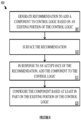
- a recommendation to add the humidity variable to the control logic is surfaced.
- the variable may be added to the control logic and configured.
- variable relationship discovery is performed with respect to big data mining and data repositories.
- a machine learning-based engine analyzes a code repository to determine dominant variables in a codebase.
- the engine may look at various types of data available in the code base, including, in some instances, a comment section.
- the engine may recognize that there are 100 tags available and three of them have not been used anywhere in the code. The engine further recognizes that those three missing tags are used in many other code repositories and informs the user of how the tags are typically used.
- the machine learning-based engine is used to recommend the insertion of a loop, a function, a variable, or the like as well as input to the component and assistance with configuring and/or connecting the component in the control code.
- a machine learning-based engine may identify that a variable that is heavily used in the control code is absent or under-used in the data pipeline, suggesting that its inclusion in the pipeline and model may yield better predictions.
- a machine learning model comprises one or more machine learning algorithms that are trained based on historical data and/or training data.
- a machine learning model may employ one or more machine learning algorithms through which data can be analyzed to identify patterns, make decisions, make predictions, or similarly produce output that can inform control code and/or parameters.
- Different types of machine learning models may be used in accordance with the present technology including but not limited to classification models, regression models, clustering models, dimensionality reduction models, and deep learning models.
- Examples of machine learning algorithms that may be employed solely or in conjunction with one another include artificial neural networks, nearest neighbor methods, decision trees, ensemble random forests, support vector machines (SVMs), na ⁇ ve Bayes methods, regressions, or similar machine learning techniques or combinations thereof capable of predicting output based on input data.
- a machine learning engine determines which machine learning methods to use may depend on the specific purpose or functions required for a particular industrial setting, the specific programming application used, or similar requirements.
- a machine learning engine outputs a prediction about what components might be beneficial to add or remove from the control logic.
- a machine learning engine may output a recommendation to add or remove one or more components from the control logic, or a notification that a component that should be used or is typically used is missing.
- the machine learning engine outputs the predicted components or settings directly for integration into the control code.
- a machine learning engine provides a model of the control code or the industrial automation environment in such a way that a data scientist may use the contextual information to inform their analyses. Other outputs with a similar purpose may exist and are contemplated herein.
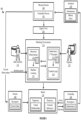
- Figure 1 illustrates an overview of an industrial automation environment wherein engineering and data science environments are integrated as described herein.
- Figure 1 includes automation environment 100.
- Automation environment 100 comprises physical system 101 including controlled process 102.
- Automation environment 100 further comprises digital twin 103 and modeling environment 1 10.
- Modeling environment 110 comprises historical observations 111, machine learning 112, instructions and first principles 113, and control logic 114.
- Automation environment 100 further comprises data scientist 121, engineer 122, model 130, controller 140, actuators 150, and sensors 160.
- digital twin 103 of physical system 101 is provided to modeling environment 110, wherein modeling environment 110 is used by both data scientist 121 and engineer 122.
- data scientist 121 accessed modeling environment 110 through a different application than engineer 122.
- data scientist 121 and engineer 122 use the same application for their data science and engineering purposes.
- information from the data science portion of the modeling environment and the engineering portion of the modeling environment is shared and accessible for both functions - data scientist 121 can access contextual engineering data in performing data science tasks and engineer 122 can access operational data and data science tools.
- a machine learning-based engine is provided in both the engineering environment and the data science environment.
- Functionality of the machine learning-based engines may include generating recommendations, auto-completion functionality, providing contextual information, and other functionalities described herein.
- Instructions and first principles 113 is used to generate control logic 114.
- Engineer 122 may utilize operational data or similar from the data science environment in producing both instructions and first principles 113 and control logic 114.
- a machine learning-based recommendation engine recommends adding components or editing control logic based in part on historical observations 111 and machine learning 112.
- Model 130 is representative of one or more machine learning models implemented in control code for controlling controlled process 102.
- the one or more machine learning models may include predictive models for generating forward inferences and diagnostic models for identifying causal relationships.
- Model 130 includes one or more machine learning models that produces control logic as output for controller 140.
- Controller 140 runs one or more prescriptive models for optimizing controlled process 102 or a portion of controlled process 102.
- Controller 140 controls actuators 150 which actuate physical system 101 to perform controlled process 102.
- Actuators 150 comprise one or more machine learning models for autonomous driving of physical system 101.
- Sensors 160 collect data from physical system 101 running controlled process 102.
- Sensors 160 comprise one or more machine learning models for describing output and current state from controlled process 102.
- Output from controlled process 102 is also provided to modeling environment 110 and may be used for data science and/or engineering purposes.
- Figure 2 illustrates a graphical user interface (GUI) of an industrial automation programming environment in accordance with some embodiments of the present technology.
- GUI 200 comprises GUI 200. which is representative of any user interface for writing and editing industrial control code.
- GUI 200 is representative of modeling environment 110 from Figure 1 .
- GUI 200 includes workspace 210 for writing and editing control code.
- Workspace 210 includes control logic 220, a current project for control code for an industrial automation process.
- GUI 200 also includes wizard 230.
- wizard 230 has recommended adding component 231, component 232, link 233, component 234, link 235, and link 236 to control logic 220.
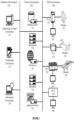
- Enterprise environment 310 comprises engineering and design environment 311, visualization environment 312, and information environment 313.
- Control environment 320 comprises database server 321, management servers 322, web server 323, scheduling server 324, and application server 325. Each of database server 321, management servers 322, web server 323, scheduling server 324, and application server 325 may be representative of a single server or a plurality of servers.
- Field environment 330 comprises PLC 331, which is coupled to human-machine interface (HMI) 332 and machine 133.
- Field environment 330 also comprises PLC 334, which is coupled to machine 335.
- Field environment 330 further comprises PLC 336, which is coupled to HMI 373 and machine 338.
- Field environment 330 also comprises machine learning asset (MLA) 339, which is coupled to HMI 340.
- MLA machine learning asset
- engineering and design environment 311 is representative of any connected devices or environments on which control logic is programmed for operating devices in field environment 330.
- Visualization environment 312 is representative of any connected devices or environments on which operational data is viewed and/or analyzed.
- Information environment 313 is representative of any connected devices or environments on the enterprise level on which any other industrial automation information relevant to field environment 330 can be viewed, processed, analyzed, generated, or the like.
- Assets of control environment 320 are illustrative in nature such that one, none, or any combination of known server types may be in communication with the industrial automation environment of Figure 3 .
- field environment 330 is illustrative in nature such that one, none, or any combination of assets may be present.
- Each of PLC 331, PLC 334, and PLC 336 is representative of one or more programmable logic controllers, which may be coupled to one or more devices, machines, sensors, actuators, interfaces, or other asset types.
- Each of machine 333, machine 335, and machine 338 is representative of any industrial machine relevant to the industrial automation environment of Figure 3 .
- Each of HMI 332, HMI 337, and HMI 340 is representative of any form of human-machine interface on which a user or operator in field environment 330 can view and/or interact with connected assets.
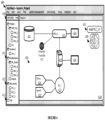
- Figure 4 illustrates an example of a programming environment in which machine learning assets can be programmed into an industrial process.
- Figure 4 includes user interface 400, which is representative of any user interface for generating control code.
- user interface 400 is representative of modeling environment 110 from Figure 1 .
- user interface 400 is running in engineering and design environment 311 from Figure 3 .
- User interface 400 includes explorer 410, wherein explorer 410 comprises industrial asset libraries, the industrial asset libraries including model library 411, programmable assets library 412, and tags library 413.
- User interface 400 includes workspace 440 comprising industrial line 420.
- Industrial line 420 includes database 4211, external variable 422, machine learning asset 423, HMI 424, PLC 425, HMI 426, machine 427, temperature sensor 428, and speed sensor 429.
- User interface 400 further includes wizard 430 and suggestion 431.
- a programmer may develop or edit industrial line 420 within user interface 400 in accordance with the present disclosure.
- a programmer has access to model library 411 comprising machine learning models that can be used in industrial line 420.
- a programmer also has access to programmable assets library 412 comprising programmable assets that can be used in industrial line 420.
- a programmer also has access to tags library 413 comprising tags that can be used in industrial line 420.
- assets may be provided such that a programmer can "drag and drop" assets into their project such as industrial line 420 and connect assets to the existing model in the same way that other assets are typically connected in the programming environment.
- wizard 430 has produced suggestion 431, wherein suggestion 431 suggests adding PLC_2 to industrial line 420.
- an engineer or programmer may accept the recommendation to add an asset to industrial line 420 in the programming environment.
- Wizard 430 may then provide a list of tags that are related to the asset, available for linking to the asset, or commonly linked to the asset. Similarly, the engineer may choose to open a truncated list of tags from the library without the use of wizard 430.
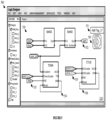
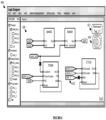
- Figure 5 illustrates a user interface of an industrial automation programming environment for performing variable relationship discovery in accordance with some embodiments of the present technology.
- Figure 5 comprises GUI 500, which is representative of any user interface for writing and editing industrial control code.
- GUI 500 is representative of modeling environment 110 from Figure 1 .
- GUI 500 may be running in engineering and design environment 311 from Figure 3 .
- GUI 500 includes workspace 520 for writing and editing control code.
- Workspace 520 includes control logic 510.
- GUI 500 also includes wizard 530 and recommendation 531.
- wizard 230 has surfaced recommendations to add component 532, component 533, link 534, component 535, and link 536 to control logic 510.
- Wizard 530 has also surfaced a recommendation to add a tag in recommendation 531.
- Wizard 530 is representative of any machine learning-based engine capable of recommending industrial components for control code.
- wizard 230 consumes data from existing control code (i.e., control logic 510) in the IDE to create suggestions and automatic completions as shown in the present example.
- control logic 510 existing control code
- the wizard 530 may suggest useful or relevant tags or surface relevant data in the context of control logic 510.
- Wizard 530 uses historical operational data to inform suggestions it makes in the IDE.
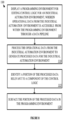
- Figure 11 illustrates process 1100 performed by a computing system for providing contextual data in an industrial programming environment associated with an industrial automation environment.
- a user interface component displays the programming environment for editing control logic associated with an industrial automation environment, wherein the operational data from the industrial automation environment is accessible from within the programming environment through a data pipeline.
- a machine learning-based data science engine processes the operational data from the industrial automation environment to generate processed data for the industrial automation environment, wherein processed data may include any data that is formatted and presented in a useful way to a user of the programming environment.
- the machine learning-based data science engine identifies a portion of the processed data relevant to a component of the control logic.
- the user interface surfaces the portion of the processed data in the programming environment.
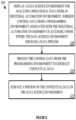
- Figure 12 illustrates process 1200 performed by a computing system for providing contextual data in a data science environment associated with an industrial automation environment.
- a user interface component displays a data science environment for analyzing operational data from an industrial automation environment, wherein control data from a programming environment associated with the industrial automation environment is accessible from within the data science environment through a data pipeline.
- a machine learning-based context engine processes the control data from the programming environment to generate contextual data.
- the user interface component surfaces a portion of the contextual data in the data science environment.
- the contextual data comprises a model or similar rendering of the control code or a portion of the control code as it may be displayed in the programming environment.
- FIG. 13 illustrates computing system 1301 to perform machine learning assisted programming and data analytics according to an implementation of the present technology.
- Computing system 1301 is representative of any system or collection of systems with which the various operational architectures, processes, scenarios, and sequences disclosed herein for utilizing machine learning models within industrial programming and data science environments may be employed.
- Computing system 1301 may be implemented as a single apparatus, system, or device or may be implemented in a distributed manner as multiple apparatuses, systems, or devices.
- Computing system 1301 includes, but is not limited to, processing system 1302, storage system 1303, software 1305, communication interface system 1307, and user interface system 1309 (optional).
- Processing system 1302 is operatively coupled with storage system 1303, communication interface system 1307, and user interface system 1309.
- Processing system 1302 loads and executes software 1305 from storage system 1303.
- Software 1305 includes and implements machine learning assisted control programming 1306, which is representative of any of the programming and analytic processes discussed with respect to the preceding Figures, including but not limited to industrial asset libraries, wizards, variable relationship discovery, and variable slimming.
- machine learning assisted control programming 1306 is representative of any of the programming and analytic processes discussed with respect to the preceding Figures, including but not limited to industrial asset libraries, wizards, variable relationship discovery, and variable slimming.
- software 1305 directs processing system 1302 to operate as described herein for at least the various processes, operational scenarios, and sequences discussed in the foregoing implementations.
- Computing system 1301 may optionally include additional devices, features, or functionality not discussed for purposes of brevity.
- Software 1305 may be implemented in program instructions and among other functions may, when executed by processing system 1302, direct processing system 1302 to operate as described with respect to the various operational scenarios, sequences, and processes illustrated herein.
- software 1305 may include program instructions for performing variable slimming in control logic for industrial automation environments as described herein.
- software 1305 may, when loaded into processing system 1302 and executed, transform a suitable apparatus, system, or device (of which computing system 1301 is representative) overall from a general-purpose computing system into a special-purpose computing system customized to provide machine learning functionality to industrial programming and data science environments as described herein.
- encoding software 1305 on storage system 1303 may transform the physical structure of storage system 1303.
- the specific transformation of the physical structure may depend on various factors in different implementations of this description. Examples of such factors may include, but are not limited to, the technology used to implement the storage media of storage system 1303 and whether the computer-storage media are characterized as primary or secondary storage, as well as other factors.
- Communication between computing system 1301 and other computing systems may occur over a communication network or networks and in accordance with various communication protocols, combinations of protocols, or variations thereof. Examples include intranets, internets, the Internet, local area networks, wide area networks, wireless networks, wired networks, virtual networks, software defined networks, data center buses and backplanes, or any other type of network, combination of networks, or variation thereof.
- the aforementioned communication networks and protocols are well known and need not be discussed at length here.
Landscapes
- Engineering & Computer Science (AREA)
- Software Systems (AREA)
- General Engineering & Computer Science (AREA)
- Physics & Mathematics (AREA)
- General Physics & Mathematics (AREA)
- Theoretical Computer Science (AREA)
- Artificial Intelligence (AREA)
- Automation & Control Theory (AREA)
- Health & Medical Sciences (AREA)
- Computer Vision & Pattern Recognition (AREA)
- Evolutionary Computation (AREA)
- Medical Informatics (AREA)
- Stored Programmes (AREA)
- Programmable Controllers (AREA)
Claims (9)
- Ein System, aufweisend:einen Speicher (1303), der so konfiguriert ist, dass er ausführbare Komponenten speichert; undeinen Prozessor (1302), der operativ mit dem Speicher (1303) gekoppelt ist und so konfiguriert ist, dass er die ausführbaren Komponenten ausführt, wobei die ausführbaren Komponenten Folgendes umfassen:eine auf maschinellem Lernen basierenden Analyse-Engine, der so konfiguriert ist, dass sie eine Variable identifiziert, die zur Verwendung in einer Steuerlogik (114) zur Steuerung einer industriellen Automatisierungsumgebung verfügbar ist;der auf maschinellem Lernen basierende Analyse-Engine ferner so konfiguriert ist, dass dieser bestimmt, dass die Variable nicht in der Steuerlogik (114) verwendet wird;eine Bestimmungskomponente, die so konfiguriert ist, dass sie eine Empfehlung zum Hinzufügen der Variablen zur Steuerlogik (114) auf der Grundlage einer Häufigkeit der Verwendung der Variablen in der Steuerlogik (114) zur Steuerung von industriellen Automatisierungsumgebungen desselben Typs wie die industrielle Automatisierungsumgebung bestimmt;wobei die Häufigkeit der Verwendung der Variablen auf der Grundlage von Informationen bestimmt wird, die von einem oder mehreren Steuercode-Speichern abgeleitet werden, mit denen das System kommunikativ verbunden ist;eine Empfehlungskomponente, die so konfiguriert ist, dass sie in einer industriellen Programmierumgebung eine Empfehlung zum Hinzufügen der Variablen zur Steuerlogik (114) auf einer grafischen Benutzeroberfläche (GUI) anzeigt; undeine Programmierkomponente, die so konfiguriert ist, dass sie als Reaktion auf eine Eingabe, die die Empfehlung akzeptiert, die Variable zur Steuerlogik (114) hinzuzufügen, die Variable zur Steuerlogik (114) hinzufügt.
- Das System nach Anspruch 1, wobei der auf maschinellem Lernen basierende Analyse-Engine zur Identifizierung der Variablen so konfiguriert ist, dass dieser Betriebsdaten aus der industriellen Automatisierungsumgebung analysiert.
- Das System nach Anspruch 2, wobei der auf maschinellem Lernen basierende Analyse-Engine zur Identifizierung der Variablen so konfiguriert ist, dass dieser nach Variablen sucht, die mit Änderungen des Ergebnisses in den Betriebsdaten korrelieren.
- Das System nach Anspruch 2, wobei zur Bestimmung, dass die Variable nicht in der Steuerlogik (114) verwendet wird, ein maschinelles Lernmodell des auf maschinellem Lernen basierenden Analyse-Engine so betrieben werden kann, dass es eine Ausgabe liefert.
- Ein Verfahren zum Empfehlen der Integration von auffälligen Variablen in einer Programmierumgebung für die industrielle Automatisierung, wobei das Verfahren umfasst:Identifizieren einer Variablen, die zur Verwendung in einer Steuerlogik (114) zur Steuerung einer industriellen Automatisierungsumgebung verfügbar ist, durch ein System, das einen Prozessor (1302) umfasst;Bestimmen durch das System, dass die Variable in der Steuerlogik (114) nicht verwendet wird;Feststellen, dass die Empfehlung, die Variable zur Steuerlogik (114) hinzuzufügen, auf der Grundlage einer Nutzungshäufigkeit der Variable in der Steuerlogik (114) zur Steuerung von industriellen Automatisierungsumgebungen desselben Typs wie die industrielle Automatisierungsumgebung angezeigt werden sollte;wobei die Nutzungshäufigkeit der Variable auf der Grundlage von Informationen bestimmt wird, die von einem oder mehreren Steuercode-Speichern abgeleitet werden, mit denen das System kommunikativ gekoppelt ist;wobei das System und in einer industriellen Programmierumgebung eine Empfehlung zum Hinzufügen der Variablen zur Steuerlogik (114) ausgeben; undals Reaktion auf eine Eingabe, die die Empfehlung zum Hinzufügen der Variablen zur Steuerlogik (114) akzeptiert, die Variable zur Steuerlogik (114) hinzugefügt wird.
- Das Verfahren nach Anspruch 5, wobei der auf maschinellem Lernen basierende Analyse-Engine zur Identifizierung der Variablen Betriebsdaten aus der industriellen Automatisierungsumgebung analysiert.
- Das Verfahren nach Anspruch 6, wobei der auf maschinellem Lernen basierende Analyse-Engine zur Identifizierung der Variablen nach Variablen sucht, die mit Änderungen des Ergebnisses in den Betriebsdaten korrelieren.
- Das Verfahren nach einem der Ansprüche 5 bis 7, wobei die Bestimmung, dass die Variable nicht in der Steuerlogik (114) verwendet wird, das Empfangen einer Ausgabe von einem maschinellen Lernmodell des auf maschinellem Lernen basierenden Analyse-Engine umfasst.
- Ein nicht flüchtiges computerlesbares Medium, auf dem Anweisungen gespeichert sind, die als Reaktion auf die Ausführung ein System mit einem Prozessor (1302) veranlassen, ein Verfahren gemäß einem der Ansprüche 5 bis 8 auszuführen.
Applications Claiming Priority (1)
| Application Number | Priority Date | Filing Date | Title |
|---|---|---|---|
| US17/484,690 US12399466B2 (en) | 2021-09-24 | 2021-09-24 | Variable relationship discovery and recommendations for industrial automation environments |
Publications (2)
| Publication Number | Publication Date |
|---|---|
| EP4155853A1 EP4155853A1 (de) | 2023-03-29 |
| EP4155853B1 true EP4155853B1 (de) | 2024-11-20 |
Family
ID=83689527
Family Applications (1)
| Application Number | Title | Priority Date | Filing Date |
|---|---|---|---|
| EP22196588.2A Active EP4155853B1 (de) | 2021-09-24 | 2022-09-20 | Erkennung von beziehungen zwischen variable und empfehlungen für industrielle automatisierungsumgebungen |
Country Status (2)
| Country | Link |
|---|---|
| US (1) | US12399466B2 (de) |
| EP (1) | EP4155853B1 (de) |
Families Citing this family (3)
| Publication number | Priority date | Publication date | Assignee | Title |
|---|---|---|---|---|
| US12411468B2 (en) * | 2021-09-24 | 2025-09-09 | Rockwell Automation Technologies, Inc. | Data assessment and selection for industrial automation environments |
| US12298732B2 (en) * | 2022-03-18 | 2025-05-13 | Rockwell Automation Technologies, Inc. | Insight driven programming tags in an industrial automation environment |
| US20240296400A1 (en) * | 2023-03-02 | 2024-09-05 | Sap Se | Requirements driven machine learning models for technical configuration |
Family Cites Families (33)
| Publication number | Priority date | Publication date | Assignee | Title |
|---|---|---|---|---|
| US6633782B1 (en) | 1999-02-22 | 2003-10-14 | Fisher-Rosemount Systems, Inc. | Diagnostic expert in a process control system |
| US7266677B1 (en) | 2003-09-25 | 2007-09-04 | Rockwell Automation Technologies, Inc. | Application modifier based on operating environment parameters |
| US9449175B2 (en) * | 2010-06-03 | 2016-09-20 | Nokia Technologies Oy | Method and apparatus for analyzing and detecting malicious software |
| US8798775B2 (en) | 2011-06-28 | 2014-08-05 | Rockwell Automation Technologies, Inc. | Binding graphic elements to controller data |
| US20130131840A1 (en) | 2011-11-11 | 2013-05-23 | Rockwell Automation Technologies, Inc. | Scalable automation system |
| US20150271607A1 (en) * | 2014-03-19 | 2015-09-24 | Bose Corporation | Crowd sourced recommendations for hearing assistance devices |
| US9501594B2 (en) | 2014-04-13 | 2016-11-22 | Vtool Ltd. | Graphical design verification environment generator |
| EP3161618A4 (de) | 2014-06-30 | 2017-06-28 | Microsoft Technology Licensing, LLC | Codeempfehlung |
| CA2979201A1 (en) * | 2015-03-11 | 2016-09-15 | Siemens Industry, Inc. | Prediction in building automation |
| US10126726B2 (en) * | 2015-07-10 | 2018-11-13 | Mitsubishi Electric Corporation | Apparatus and method for generating program |
| US9727313B2 (en) * | 2015-08-26 | 2017-08-08 | Ross Video Limited | Systems and methods for bi-directional visual scripting for programming languages |
| US10846617B2 (en) | 2017-05-12 | 2020-11-24 | Adobe Inc. | Context-aware recommendation system for analysts |
| US10809705B2 (en) | 2017-09-01 | 2020-10-20 | Johnson Controls Technology Company | Central plant control system with automatic optimization formulation |
| EP3462388A1 (de) | 2017-09-27 | 2019-04-03 | Siemens Aktiengesellschaft | Verfahren und system zur verarbeitung von technischen gegenständen in einer industriellen automatisierungsumgebung |
| CN111417907A (zh) * | 2017-12-01 | 2020-07-14 | 西安姆贝拉有限公司 | 创建和管理智能可编程逻辑控制器解决方案的方法和装置 |
| US10783162B1 (en) * | 2017-12-07 | 2020-09-22 | Palantir Technologies Inc. | Workflow assistant |
| CN110083079A (zh) | 2018-01-26 | 2019-08-02 | 阿里巴巴集团控股有限公司 | 工艺参数确定方法、装置及系统 |
| CN110909507A (zh) * | 2018-09-12 | 2020-03-24 | 台达电子工业股份有限公司 | 焊锡制程参数建议方法 |
| US11079743B2 (en) | 2018-09-27 | 2021-08-03 | Rockwell Automation Technologies, Inc. | Project autonomy in industrial automation design environments |
| US11720072B2 (en) * | 2018-09-28 | 2023-08-08 | Honeywell International Inc. | Plant state operating analysis and control |
| US10739763B2 (en) * | 2018-11-13 | 2020-08-11 | Rockwell Automation Technologies, Inc. | Industrial control system with predictive machine learning module |
| US11921495B2 (en) * | 2018-11-26 | 2024-03-05 | Abb Schweiz Ag | System and a method for asset monitoring in an industrial plant |
| KR102563127B1 (ko) | 2018-11-26 | 2023-08-02 | 에이에스엠엘 네델란즈 비.브이. | 반도체 제조 프로세스의 이벤트의 근본 원인을 결정하고 반도체 제조 프로세스를 모니터링하기 위한 방법 |
| EP3686804A1 (de) | 2019-01-24 | 2020-07-29 | ABB Schweiz AG | Verwaltung einer installierten basis von modulen der künstlichen intelligenz |
| US11586945B2 (en) * | 2019-08-06 | 2023-02-21 | Salesforce.Com, Inc. | Methods and systems for automated, intelligent application process development that recommend how to modify applications based on usage patterns of end users |
| US10942710B1 (en) | 2019-09-24 | 2021-03-09 | Rockwell Automation Technologies, Inc. | Industrial automation domain-specific language programming paradigm |
| US11163536B2 (en) * | 2019-09-26 | 2021-11-02 | Rockwell Automation Technologies, Inc. | Maintenance and commissioning |
| EP3809214B1 (de) | 2019-10-14 | 2025-07-30 | Siemens Aktiengesellschaft | Verfahren zum konfigurieren einer schnittstellenvorrichtung und schnittstellenvorrichtung damit |
| US11720068B2 (en) * | 2020-01-06 | 2023-08-08 | Opro.Ai Inc. | Autonomous industrial process control system and method that provides autonomous retraining of forecast model |
| CA3184445A1 (en) * | 2020-05-19 | 2021-11-25 | Tata Consultancy Services Limited | System and method for development and deployment of self-organizing cyber-physical systems for manufacturing industries |
| WO2022011562A1 (zh) * | 2020-07-14 | 2022-01-20 | 西门子(中国)有限公司 | 编程标记方法和处理器、终端及计算机程序产品 |
| EP3975052A1 (de) | 2020-09-23 | 2022-03-30 | Siemens Aktiengesellschaft | Verfahren und system zur bereitstellung von empfehlungen bezüglich eines konfigurationsverfahrens |
| US11763078B2 (en) * | 2021-04-22 | 2023-09-19 | Microsoft Technology Licensing, Llc | Provisional selection drives edit suggestion generation |
-
2021
- 2021-09-24 US US17/484,690 patent/US12399466B2/en active Active
-
2022
- 2022-09-20 EP EP22196588.2A patent/EP4155853B1/de active Active
Also Published As
| Publication number | Publication date |
|---|---|
| US20230094187A1 (en) | 2023-03-30 |
| EP4155853A1 (de) | 2023-03-29 |
| US12399466B2 (en) | 2025-08-26 |
Similar Documents
| Publication | Publication Date | Title |
|---|---|---|
| EP4155853B1 (de) | Erkennung von beziehungen zwischen variable und empfehlungen für industrielle automatisierungsumgebungen | |
| US20210390160A1 (en) | Base analytics engine modeling for monitoring, diagnostics optimization and control | |
| US12411468B2 (en) | Data assessment and selection for industrial automation environments | |
| US11675605B2 (en) | Discovery, mapping, and scoring of machine learning models residing on an external application from within a data pipeline | |
| CN111260073A (zh) | 数据处理方法、装置和计算机可读存储介质 | |
| EP4155849A1 (de) | Modellbestandsbibliothek und empfehlungsmaschine für industrielle automatisierungsumgebungen | |
| US12130611B2 (en) | Model lifecycle management for closed-loop processes within industrial automation environments | |
| US20250164972A1 (en) | Analysis wizard for optimizing control logic using operational data in industrial automation environments | |
| WO2022039748A1 (en) | Systems and methods for an automated data science process | |
| Garouani et al. | Towards meta-learning based data analytics to better assist the domain experts in industry 4.0 | |
| EP4155841A1 (de) | Maschinenlernmodelle zur anlagenoptimierung in industriellen automatisierungsumgebungen | |
| JP7721821B2 (ja) | クラウドコンピューティングシステム、方法およびコンピュータプログラム | |
| US20250370418A1 (en) | Design environment using feature extraction integration with control programs for training and using optimization models | |
| Parihar et al. | Automated machine learning deployment using open-source CI/CD tool | |
| Garouani et al. | Toward an automatic assistance framework for the selection and configuration of machine learning based data analytics solutions in industry 4.0 | |
| EP4246251A1 (de) | Maschinenlernoptimierung eines steuerungscodes in industriellen automatisierungsumgebungen | |
| Hansen et al. | Artificial intelligence and machine learning | |
| US20180018364A1 (en) | Common analytic framework and environment for big data analytics | |
| EP4155855A1 (de) | Bereitstellung eines modells als industrielles automatisierungsobjekt | |
| US12117780B2 (en) | Supplying HMI snapshots from industrial automation environments as input to machine learning models | |
| US12360514B2 (en) | Tag driven data pipelines in an industrial automation environment | |
| Zhang et al. | A flexible manufacturing mechanism presentation model for process simulation and execution | |
| Lepenioti et al. | Autonomous Analytics as a Service: From Vision to Action | |
| Wewer et al. | Using FactoryML for Deployment of Machine Learning Models in Industrial Production | |
| Samigulina et al. | Reinforcement Learning-Based Smart Manufacturing System: Design and Optimization |
Legal Events
| Date | Code | Title | Description |
|---|---|---|---|
| PUAI | Public reference made under article 153(3) epc to a published international application that has entered the european phase |
Free format text: ORIGINAL CODE: 0009012 |
|
| STAA | Information on the status of an ep patent application or granted ep patent |
Free format text: STATUS: THE APPLICATION HAS BEEN PUBLISHED |
|
| AK | Designated contracting states |
Kind code of ref document: A1 Designated state(s): AL AT BE BG CH CY CZ DE DK EE ES FI FR GB GR HR HU IE IS IT LI LT LU LV MC MK MT NL NO PL PT RO RS SE SI SK SM TR |
|
| STAA | Information on the status of an ep patent application or granted ep patent |
Free format text: STATUS: REQUEST FOR EXAMINATION WAS MADE |
|
| 17P | Request for examination filed |
Effective date: 20230926 |
|
| RBV | Designated contracting states (corrected) |
Designated state(s): AL AT BE BG CH CY CZ DE DK EE ES FI FR GB GR HR HU IE IS IT LI LT LU LV MC MK MT NL NO PL PT RO RS SE SI SK SM TR |
|
| GRAP | Despatch of communication of intention to grant a patent |
Free format text: ORIGINAL CODE: EPIDOSNIGR1 |
|
| STAA | Information on the status of an ep patent application or granted ep patent |
Free format text: STATUS: GRANT OF PATENT IS INTENDED |
|
| INTG | Intention to grant announced |
Effective date: 20240725 |
|
| GRAS | Grant fee paid |
Free format text: ORIGINAL CODE: EPIDOSNIGR3 |
|
| GRAA | (expected) grant |
Free format text: ORIGINAL CODE: 0009210 |
|
| STAA | Information on the status of an ep patent application or granted ep patent |
Free format text: STATUS: THE PATENT HAS BEEN GRANTED |
|
| AK | Designated contracting states |
Kind code of ref document: B1 Designated state(s): AL AT BE BG CH CY CZ DE DK EE ES FI FR GB GR HR HU IE IS IT LI LT LU LV MC MK MT NL NO PL PT RO RS SE SI SK SM TR |
|
| REG | Reference to a national code |
Ref country code: GB Ref legal event code: FG4D |
|
| REG | Reference to a national code |
Ref country code: CH Ref legal event code: EP |
|
| REG | Reference to a national code |
Ref country code: DE Ref legal event code: R096 Ref document number: 602022007883 Country of ref document: DE |
|
| REG | Reference to a national code |
Ref country code: IE Ref legal event code: FG4D |
|
| REG | Reference to a national code |
Ref country code: LT Ref legal event code: MG9D |
|
| REG | Reference to a national code |
Ref country code: NL Ref legal event code: MP Effective date: 20241120 |
|
| PG25 | Lapsed in a contracting state [announced via postgrant information from national office to epo] |
Ref country code: HR Free format text: LAPSE BECAUSE OF FAILURE TO SUBMIT A TRANSLATION OF THE DESCRIPTION OR TO PAY THE FEE WITHIN THE PRESCRIBED TIME-LIMIT Effective date: 20241120 Ref country code: IS Free format text: LAPSE BECAUSE OF FAILURE TO SUBMIT A TRANSLATION OF THE DESCRIPTION OR TO PAY THE FEE WITHIN THE PRESCRIBED TIME-LIMIT Effective date: 20250320 Ref country code: PT Free format text: LAPSE BECAUSE OF FAILURE TO SUBMIT A TRANSLATION OF THE DESCRIPTION OR TO PAY THE FEE WITHIN THE PRESCRIBED TIME-LIMIT Effective date: 20250320 |
|
| PG25 | Lapsed in a contracting state [announced via postgrant information from national office to epo] |
Ref country code: NL Free format text: LAPSE BECAUSE OF FAILURE TO SUBMIT A TRANSLATION OF THE DESCRIPTION OR TO PAY THE FEE WITHIN THE PRESCRIBED TIME-LIMIT Effective date: 20241120 Ref country code: FI Free format text: LAPSE BECAUSE OF FAILURE TO SUBMIT A TRANSLATION OF THE DESCRIPTION OR TO PAY THE FEE WITHIN THE PRESCRIBED TIME-LIMIT Effective date: 20241120 |
|
| REG | Reference to a national code |
Ref country code: AT Ref legal event code: MK05 Ref document number: 1744140 Country of ref document: AT Kind code of ref document: T Effective date: 20241120 |
|
| PG25 | Lapsed in a contracting state [announced via postgrant information from national office to epo] |
Ref country code: BG Free format text: LAPSE BECAUSE OF FAILURE TO SUBMIT A TRANSLATION OF THE DESCRIPTION OR TO PAY THE FEE WITHIN THE PRESCRIBED TIME-LIMIT Effective date: 20241120 |
|
| PG25 | Lapsed in a contracting state [announced via postgrant information from national office to epo] |
Ref country code: ES Free format text: LAPSE BECAUSE OF FAILURE TO SUBMIT A TRANSLATION OF THE DESCRIPTION OR TO PAY THE FEE WITHIN THE PRESCRIBED TIME-LIMIT Effective date: 20241120 |
|
| PG25 | Lapsed in a contracting state [announced via postgrant information from national office to epo] |
Ref country code: NO Free format text: LAPSE BECAUSE OF FAILURE TO SUBMIT A TRANSLATION OF THE DESCRIPTION OR TO PAY THE FEE WITHIN THE PRESCRIBED TIME-LIMIT Effective date: 20250220 |
|
| PG25 | Lapsed in a contracting state [announced via postgrant information from national office to epo] |
Ref country code: AT Free format text: LAPSE BECAUSE OF FAILURE TO SUBMIT A TRANSLATION OF THE DESCRIPTION OR TO PAY THE FEE WITHIN THE PRESCRIBED TIME-LIMIT Effective date: 20241120 Ref country code: LV Free format text: LAPSE BECAUSE OF FAILURE TO SUBMIT A TRANSLATION OF THE DESCRIPTION OR TO PAY THE FEE WITHIN THE PRESCRIBED TIME-LIMIT Effective date: 20241120 Ref country code: GR Free format text: LAPSE BECAUSE OF FAILURE TO SUBMIT A TRANSLATION OF THE DESCRIPTION OR TO PAY THE FEE WITHIN THE PRESCRIBED TIME-LIMIT Effective date: 20250221 |
|
| PG25 | Lapsed in a contracting state [announced via postgrant information from national office to epo] |
Ref country code: PL Free format text: LAPSE BECAUSE OF FAILURE TO SUBMIT A TRANSLATION OF THE DESCRIPTION OR TO PAY THE FEE WITHIN THE PRESCRIBED TIME-LIMIT Effective date: 20241120 |
|
| PG25 | Lapsed in a contracting state [announced via postgrant information from national office to epo] |
Ref country code: RS Free format text: LAPSE BECAUSE OF FAILURE TO SUBMIT A TRANSLATION OF THE DESCRIPTION OR TO PAY THE FEE WITHIN THE PRESCRIBED TIME-LIMIT Effective date: 20250220 |
|
| PG25 | Lapsed in a contracting state [announced via postgrant information from national office to epo] |
Ref country code: SM Free format text: LAPSE BECAUSE OF FAILURE TO SUBMIT A TRANSLATION OF THE DESCRIPTION OR TO PAY THE FEE WITHIN THE PRESCRIBED TIME-LIMIT Effective date: 20241120 |
|
| PG25 | Lapsed in a contracting state [announced via postgrant information from national office to epo] |
Ref country code: DK Free format text: LAPSE BECAUSE OF FAILURE TO SUBMIT A TRANSLATION OF THE DESCRIPTION OR TO PAY THE FEE WITHIN THE PRESCRIBED TIME-LIMIT Effective date: 20241120 |
|
| PG25 | Lapsed in a contracting state [announced via postgrant information from national office to epo] |
Ref country code: EE Free format text: LAPSE BECAUSE OF FAILURE TO SUBMIT A TRANSLATION OF THE DESCRIPTION OR TO PAY THE FEE WITHIN THE PRESCRIBED TIME-LIMIT Effective date: 20241120 |
|
| PG25 | Lapsed in a contracting state [announced via postgrant information from national office to epo] |
Ref country code: RO Free format text: LAPSE BECAUSE OF FAILURE TO SUBMIT A TRANSLATION OF THE DESCRIPTION OR TO PAY THE FEE WITHIN THE PRESCRIBED TIME-LIMIT Effective date: 20241120 |
|
| PG25 | Lapsed in a contracting state [announced via postgrant information from national office to epo] |
Ref country code: SK Free format text: LAPSE BECAUSE OF FAILURE TO SUBMIT A TRANSLATION OF THE DESCRIPTION OR TO PAY THE FEE WITHIN THE PRESCRIBED TIME-LIMIT Effective date: 20241120 |
|
| PG25 | Lapsed in a contracting state [announced via postgrant information from national office to epo] |
Ref country code: CZ Free format text: LAPSE BECAUSE OF FAILURE TO SUBMIT A TRANSLATION OF THE DESCRIPTION OR TO PAY THE FEE WITHIN THE PRESCRIBED TIME-LIMIT Effective date: 20241120 |
|
| PG25 | Lapsed in a contracting state [announced via postgrant information from national office to epo] |
Ref country code: IT Free format text: LAPSE BECAUSE OF FAILURE TO SUBMIT A TRANSLATION OF THE DESCRIPTION OR TO PAY THE FEE WITHIN THE PRESCRIBED TIME-LIMIT Effective date: 20241120 |
|
| REG | Reference to a national code |
Ref country code: DE Ref legal event code: R097 Ref document number: 602022007883 Country of ref document: DE |
|
| PG25 | Lapsed in a contracting state [announced via postgrant information from national office to epo] |
Ref country code: SE Free format text: LAPSE BECAUSE OF FAILURE TO SUBMIT A TRANSLATION OF THE DESCRIPTION OR TO PAY THE FEE WITHIN THE PRESCRIBED TIME-LIMIT Effective date: 20241120 |
|
| PLBE | No opposition filed within time limit |
Free format text: ORIGINAL CODE: 0009261 |
|
| STAA | Information on the status of an ep patent application or granted ep patent |
Free format text: STATUS: NO OPPOSITION FILED WITHIN TIME LIMIT |
|
| PGFP | Annual fee paid to national office [announced via postgrant information from national office to epo] |
Ref country code: DE Payment date: 20250820 Year of fee payment: 4 |
|
| PGFP | Annual fee paid to national office [announced via postgrant information from national office to epo] |
Ref country code: FR Payment date: 20250820 Year of fee payment: 4 |
|
| 26N | No opposition filed |
Effective date: 20250821 |