EP4152732B1 - Verfahren zum austausch von informationen über ein ereignis und informationsaustauschsystem dafür - Google Patents
Verfahren zum austausch von informationen über ein ereignis und informationsaustauschsystem dafür Download PDFInfo
- Publication number
- EP4152732B1 EP4152732B1 EP22194788.0A EP22194788A EP4152732B1 EP 4152732 B1 EP4152732 B1 EP 4152732B1 EP 22194788 A EP22194788 A EP 22194788A EP 4152732 B1 EP4152732 B1 EP 4152732B1
- Authority
- EP
- European Patent Office
- Prior art keywords
- electronic device
- user
- server
- zone
- data
- Prior art date
- Legal status (The legal status is an assumption and is not a legal conclusion. Google has not performed a legal analysis and makes no representation as to the accuracy of the status listed.)
- Active
Links
Images

Classifications
-
- G—PHYSICS
- G08—SIGNALLING
- G08B—SIGNALLING SYSTEMS, e.g. PERSONAL CALLING SYSTEMS; ORDER TELEGRAPHS; ALARM SYSTEMS
- G08B21/00—Alarms responsive to a single specified undesired or abnormal condition and not otherwise provided for
- G08B21/02—Alarms for ensuring the safety of persons
-
- H—ELECTRICITY
- H04—ELECTRIC COMMUNICATION TECHNIQUE
- H04L—TRANSMISSION OF DIGITAL INFORMATION, e.g. TELEGRAPHIC COMMUNICATION
- H04L67/00—Network arrangements or protocols for supporting network services or applications
- H04L67/01—Protocols
- H04L67/12—Protocols specially adapted for proprietary or special-purpose networking environments, e.g. medical networks, sensor networks, networks in vehicles or remote metering networks
-
- G—PHYSICS
- G06—COMPUTING OR CALCULATING; COUNTING
- G06V—IMAGE OR VIDEO RECOGNITION OR UNDERSTANDING
- G06V10/00—Arrangements for image or video recognition or understanding
- G06V10/70—Arrangements for image or video recognition or understanding using pattern recognition or machine learning
- G06V10/764—Arrangements for image or video recognition or understanding using pattern recognition or machine learning using classification, e.g. of video objects
-
- G—PHYSICS
- G06—COMPUTING OR CALCULATING; COUNTING
- G06V—IMAGE OR VIDEO RECOGNITION OR UNDERSTANDING
- G06V10/00—Arrangements for image or video recognition or understanding
- G06V10/94—Hardware or software architectures specially adapted for image or video understanding
- G06V10/95—Hardware or software architectures specially adapted for image or video understanding structured as a network, e.g. client-server architectures
-
- G—PHYSICS
- G06—COMPUTING OR CALCULATING; COUNTING
- G06V—IMAGE OR VIDEO RECOGNITION OR UNDERSTANDING
- G06V20/00—Scenes; Scene-specific elements
- G06V20/50—Context or environment of the image
- G06V20/52—Surveillance or monitoring of activities, e.g. for recognising suspicious objects
-
- H—ELECTRICITY
- H04—ELECTRIC COMMUNICATION TECHNIQUE
- H04L—TRANSMISSION OF DIGITAL INFORMATION, e.g. TELEGRAPHIC COMMUNICATION
- H04L67/00—Network arrangements or protocols for supporting network services or applications
- H04L67/50—Network services
- H04L67/52—Network services specially adapted for the location of the user terminal
-
- H—ELECTRICITY
- H04—ELECTRIC COMMUNICATION TECHNIQUE
- H04L—TRANSMISSION OF DIGITAL INFORMATION, e.g. TELEGRAPHIC COMMUNICATION
- H04L67/00—Network arrangements or protocols for supporting network services or applications
- H04L67/50—Network services
- H04L67/535—Tracking the activity of the user
-
- H—ELECTRICITY
- H04—ELECTRIC COMMUNICATION TECHNIQUE
- H04L—TRANSMISSION OF DIGITAL INFORMATION, e.g. TELEGRAPHIC COMMUNICATION
- H04L67/00—Network arrangements or protocols for supporting network services or applications
- H04L67/50—Network services
- H04L67/60—Scheduling or organising the servicing of application requests, e.g. requests for application data transmissions using the analysis and optimisation of the required network resources
- H04L67/63—Routing a service request depending on the request content or context
-
- H—ELECTRICITY
- H04—ELECTRIC COMMUNICATION TECHNIQUE
- H04N—PICTORIAL COMMUNICATION, e.g. TELEVISION
- H04N7/00—Television systems
- H04N7/18—Closed-circuit television [CCTV] systems, i.e. systems in which the video signal is not broadcast
- H04N7/183—Closed-circuit television [CCTV] systems, i.e. systems in which the video signal is not broadcast for receiving images from a single remote source
Definitions
- the invention relates to the field of secure exchange of information, in particular video images, on an incident or accident.
- the witness When a person witnesses an event such as an incident or accident in an area, there is no provision for a dedicated and secure system to send images of the event to a dedicated server for purposes of receive advice on what to do and notify emergency services or law enforcement.
- the witness records a video of the event in their phone's memory and shares it on social media.
- the witness also warns the emergency services or the police that an event is occurring, but is not always capable of giving the precise location of the event, nor of pertinently describing the facts relating to the event. .
- Images posted on social networks can cause panic, curiosity or ill will among viewers of the video. Image rights are not respected. Curious spectators may move to the event area to watch the event live, which may put them in danger and hinder the intervention of emergency services or law enforcement.
- the witness has no feedback on the dangerousness of the event nor on the risk he takes in remaining in the area to film
- the prior art document US 2019/193659 A1 discloses the transmission of accident information, including video of the periphery of a vehicle captured by a vehicle-mounted camera, to an information collection center when an abnormality is detected in the behavior of the vehicle.
- the invention aims to resolve the aforementioned problems of the state of the art by proposing a secure information exchange method, at the initiative of the witness user, and providing in return to the witness user information relating at the event.
- the analysis step comprises a machine analysis by a server computer and a human analysis by a server business operator.
- the user information is a function of the location of said electronic device.
- the acquisition and transmission steps are subject to prior authorization from the user.
- the zone data further comprises user data selected by the user from a plurality of predetermined event contexts.
- the plurality of predetermined event contexts is a function of the analysis and/or a history of events in said area.
- the step of opening a communication channel comprises a user act among a reading by the electronic device of a code displayed in said zone at the initiative of the user, an activation by the user of a hyperlink sent by a communication system on the electronic device or an opening triggered by the user of an application installed on the electronic device.
- the communication channel is arranged so that said zone data is transmitted to the server without storing said images on said electronic device.
- the analysis step comprises a consolidation of the zone data with other zone data associated with one or more other electronic devices located in said zone.
- the alert data is also a function of the qualification of the event and/or a location of the predetermined services or people.
- the invention also relates to a server capable of exchanging information with an electronic device, the server comprising a calculator configured to execute the steps of the data processing method.
- the invention also relates to a computer program product comprising the program instructions implementing the steps of the data processing method, when the program instructions are executed by a computer.
- the invention also relates to a system for exchanging information on an event located in an area, comprising a server and an electronic device comprising an image acquisition device, the electronic device being configured to acquire area data comprising images of the event acquired by the acquisition device, and location data of said electronic device, following an opening of a bidirectional communication channel between the electronic device and the server, triggered by a user located in the zone, and to transmit said zone data to the server, the server being configured to analyze said zone data to generate user information based on said analysis, and to transmit to the electronic device said user information, the electronic device being further configured to communicate said user information to the user.
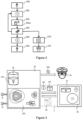
- FIG. 1 represents a user 1 located in a zone Z.
- zone Z an event E is happening.
- An event E can be an accident or an incident such as a crowd in panic, an attack, a fire, a demonstration, a person who feels unwell, a group of people, a person who screams or calls for help, a altercation, a natural disaster, a landslide. These examples are non-limiting.
- FIG 1 also represents an information exchange system comprising a server 20 and an electronic device 10.
- the server 20 is generally not located in zone Z, but this is possible if the event E occurs close to the location where the server 20 is located.
- the electronic device 10 is located in zone Z.
- the electronic device 10 includes an image acquisition device 11.
- the electronic device 10 is a telephone and the image acquisition device 11 is a camera. This is an electronic device 10 mobile in zone Z. The user 1 holds the electronic device 10 in his hand.
- a mobile electronic device is an electronic watch, a computer, an electronic tablet, electronic glasses, an electronic headset. This list is not exhaustive.
- the electronic device 10 can be fixed in zone Z.
- the electronic device 10 can be a terminal equipped with a camera.
- the server 20 and the electronic device 10 are capable of communicating with each other bidirectionally, in particular by means of wireless communication, for example by radio waves.
- a business operator 2 of the server 20 is represented on the figure 1 .
- a business operator 2 is able to analyze data stored on the server 20.
- the business operator 2 is an analyst who can advantageously complete or correct a machine analysis carried out by a computer of the server 20, by a human analysis.
- the server 20 comprises a calculator capable of carrying out a machine analysis, of sending machine data resulting from the machine analysis to a business operator 2 and of receiving processed data resulting from a human analysis of the machine data, carried out by business operator 2.
- the information exchange method according to the invention comprises several stages.
- a user 1 located in zone Z triggers the opening of a bidirectional communication channel between the electronic device 10 and the server 20.
- the opening of a bidirectional communication channel is triggered by the user 1. Following the opening of the communication channel, the server 20 can send data to the electronic device 10 and the electronic device can send data to the server 20
- the communication channel is bidirectional which means that the communication within the communication channel is two-way.
- the opening of the communication channel can be triggered by reading a code displayed in said zone Z, by the electronic device 10, at the initiative of the user 1.
- the user is located in zone Z and notices that an event E is occurring in said zone Z.
- zone Z is displayed a code, for example a QR code.
- the code is for example displayed on a panel, a wall, a terminal. User 1 moves to the location where the code is displayed and scans it using his electronic device 10, in particular his telephone.
- the opening of the communication channel can be triggered by activation by the user 1 of a hyperlink sent by a communication system to the electronic device 10.
- a communication system sends to electronic devices 10 located in zone Z or near zone Z, a message, in particular an SMS (acronym for Short Message Service in English) including a hyperlink.
- SMS short Message Service
- the communications system may send a message including the hyperlink only to subscribers to a service of the communications system. Subscribers advantageously share the position of their electronic device 10 with the communication system. This allows the communication system to send the message including the hyperlink to subscribers whose electronic device 10 is located in zone Z.
- the communication system can retrieve via a telephone operator a list of addresses of electronic devices 10 located in zone Z and send them a message including the hyperlink.
- User 1 upon receipt of the message including the hyperlink, can decide or not to open said hyperlink. If user 1 does not open the hyperlink, opening step 100 is not implemented.
- the duration of operation of the hyperlink is less than the duration of the event E.
- the hyperlink no longer functions, which makes it possible to limit the influx of irrelevant data to the server 20, linked to an irrelevant or abusive implementation of the information exchange process, through irrelevant or abusive use by users of electronic devices 10
- the opening of the communication channel can be triggered by opening by the user 1 of an application installed on the electronic device 10.
- the user 1 has previously installed a specific application on his electronic device 10.
- triggering the opening of the communication channel can be achieved by pressing a button on the electronic device or via selection of a menu on a screen of the electronic device.
- user 1 On detection of an event E in zone Z, user 1 moves to the electronic device and presses the button or selects the menu.
- the electronic device 10 acquires area data.
- the user 1 moves if necessary and if possible towards the location of the event E and directs the objective of the acquisition device 11 of the electronic device 10 in the direction of the event E.
- User 1 triggers the acquisition of images by the acquisition device 11 of event E, preferably the acquisition of video images.
- the user 1 moves to the electronic device 10 and orients the objective of the acquisition device 11 of the electronic device 10 in the direction of the event E if this is possible.
- the acquisition device 11 does not continuously acquire images, the user 1 triggers image acquisition.
- the electronic device 10 comprises a location device.
- the electronic device 10 is therefore capable of acquiring location data via the on-board location device.
- the electronic device 10 knows its geographical position, which is fixed and therefore includes location data in a memory.
- the electronic device 10 may also include a location device, even if its location is fixed.
- the zone data may include user data selected by user 1 from a plurality of predetermined event contexts.
- user 1 has the possibility of choosing predetermined event contexts from a drop-down menu.
- predetermined event contexts include: attack, violence, armed attack, malaise, panic, demonstration, gathering of people, call for help, suicide, fight, landslide, flood, fire, gas leak, etc.
- User data may include one or more event contexts. Indeed, user 1 can select several event contexts.
- the electronic device 10 transmits said zone data to the server 20.
- the transmission step 102 includes a reception step 102a by the server 20 of zone data coming from the electronic device 10 located in zone Z.
- the server 20 therefore receives images of the event E and location data of the electronic device 10 located in the same zone Z as the event E.
- the server 20 thus receives images of the event E and approximate data of location of the event E.
- the server 20 also receives user data which specifies the context of the event E, according to the user 1.
- the electronic device 10 can ask the user 1 for authorization to send zone data to the server 20, in particular authorization for sending location data.
- the communication channel between the electronic device 10 and the server 20 is arranged so that said zone data is transmitted to the server 20 without storing the images on said electronic device 10.
- the communication channel can be arranged so as to provide for the possibility that images are stored on the electronic device 10 in the event of a breakdown of the communication channel between the electronic device 10 and the server 20 or in the event of poor quality of zone data transmission.
- storage is in this case only possible within the limit of the duration of the interruption of the communication channel or of the transmission quality problem, and preferably limited to a predetermined duration.
- the stored images are encrypted so that they cannot be used by user 1.
- the data passing through the communication channel is encrypted, in particular images.
- the server 20 analyzes the zone data.
- the analysis step 103 comprises a machine analysis by a computer of the server 20 and a human analysis by one or more business operators 2 of the server 20.
- the analysis includes the diagnosis of the images to verify that the event E is a relevant event. If the user implements the method of the invention in an abusive and irrelevant manner, the diagnosis detects this and ends the execution of the method by closing the communication channel between the communication device 10 and the server 20, For example.
- the analysis includes timestamping, storing and possibly tracing the images for later use by authorized services, in particular for evidentiary purposes.
- the analysis includes the qualification of event E.
- a qualification is for example a fire, a gas leak, an altercation, an accident with victims, an accident without victims.
- the qualification is similar in its content to the event contexts, but the purpose is not the same.
- the qualification of the event E is carried out with a view to alerting or informing predetermined services or people, for example with a view to an intervention in zone Z, the generation of statistical data, the provision of evidence.
- the qualification of the event E can be used to give an alert or information to predetermined services or people, depending on said qualification.
- predetermined services are the fire services.
- predetermined services are relevant: the police and medical emergency services.
- the purpose of the event contexts is to offer a list of event contexts to a user with a view to selecting said user from user data, to improve the analysis.
- Image analysis is more effective and targeted when the context of the event E is identified.
- the analysis of the images can immediately focus on a counting of people, weapons, facial recognition of weapon carriers and an assessment of a need for medical assistance.
- the analysis of the images can be oriented directly to a location in the images of the flames to determine for example the floor on which the fire is raging in a building, the characteristics of the flames to determine the extent of the fire and the assessment of a danger for people in zone Z.
- the analysis includes the detection in the images of people or objects, in particular a number of people involved in the event E, potential victims, weapons, vehicles.
- the analysis includes the characterization in images of people, in particular by biometric means, the characterization of objects or noises, with a view to comparison with a database of models for recognition, identification, authentication of said people, objects or noises. Characterizing a noise makes it possible to suspect, for example, an explosion, a brawl, a fire, or crowd panic.
- the server 20 may include an artificial intelligence module for faster and more reliable analysis results.
- one or more business operators 2 of the server 20 can intervene if necessary in a validation role, in particular at the end of the chain of automatic analysis operations of the server 20. This allows both to benefit from the speed and the computing power provided by automatic analysis operations and the quality of human analysis provided by the intervention of professionals, in particular downstream of the automatic analysis operations, where this is most relevant.
- the server 20 is capable of receiving other zone data sent by one or more other electronic devices 10 located in said same zone Z.
- the other zone data is associated with one or more other openings of a bidirectional communication channel between the server 20 and said other electronic devices 10, triggered by several other users located in zone Z.
- the analysis step 103 advantageously comprises a consolidation of all the zone data associated with zone Z by the server 20.
- the server 20 then performs the analysis on consolidated zone data.
- zone data makes it possible to increase a degree of confidence, for example in the user data that the server 20 can compare, the context of the event can then be confirmed and specified.
- the consolidation of images makes it possible to enrich the analysis, the server having images of the same event E with different points of view.
- the location of the event can also be better evaluated and specified if the server 20 has the location of a plurality of electronic devices 10 in zone Z.
- the transmission step 102 and the analysis step 103 are executed in parallel.
- the server 20 analyzes said zone data.
- the plurality of predetermined event contexts is a function of the location of the electronic device.
- the plurality of predetermined event contexts is a function of the analysis.
- the server 20 can exclude certain event contexts. For example, if a first analysis detects flames in the images, it is not relevant to offer the user event contexts such as a flood.
- zone data As described previously, the analysis is performed on zone data or consolidated zone data.
- the plurality of predetermined event contexts is a function of a history of events in said zone Z.
- the server 20 can estimate the probability of occurrence of a context linked to the event E. For example, if it is frequent in zone Z that altercations between people, it is relevant to offer user 1 event contexts relating to an altercation context.
- the plurality of predetermined event contexts is a function of contextual data such as a time of the day or of the year, an hour, a day, a month, a season, the weather, a pollution reading, road traffic or railed, a program of events, a political context... This list is not exhaustive.
- the event contexts offered to the user 1 can be filtered, certain event contexts not being offered to the user because they are improbable with regard to the analysis, the location of the electronic device 10, contextual data and/or a history of events in said zone Z.
- the event contexts offered to the user 1 can also or alternatively be classified from the most probable to the least probable depending on the analysis, the location of the electronic device 10, contextual data and/or a history of events on said zone Z.
- user 1 selects the event contexts, he is offered as a priority, for example at the top of a drop-down menu, the most probable event contexts. Selection errors are thus minimized and user selection is accelerated.
- the user data is thus more relevant and available very quickly for the electronic device 10.
- event contexts are offered to the user 1 with a view to generating user data, after a first analysis by the server 20 of first zone data associated with the electronic device 10 of said user 1 or other data zones associated with one or more other electronic devices 10.
- User data can be sent several times during the transmission step, for example if the server 20 needs for its analysis to specify, confirm or verify the context of the event E.
- the electronic device 10 prefferably send user data before the first analysis of the server 20 and after a first analysis of the server 20.
- event contexts When the event contexts are unfiltered and unclassified, they can be offered to user 1 for selection with a view to generating user data, by default, without prior filtering or classification by server 20.
- the server 20 When the event contexts are filtered or classified, the server 20 first sends to the electronic device 10, following a first analysis of zone data consolidated or not, a list of filtered or classified event contexts, or filter data and/or classification, so that said electronic device 10 offers the user 1 filtered and/or classified event contexts for the selection of user data.
- the server 20 According to a generation step 104, the server 20 generates user information as a function of said analysis, said analysis coming from a machine analysis carried out by a computer of the server 20 and optionally advantageously completed, compiled, validated and/or corrected by a human analysis carried out by a business operator 2 of the server 20.
- the goal is to generate information useful to user 1 who is located in zone Z, close to the location of event E.
- the user information may be recommendations for behavior to follow, preferred evacuation routes, general information on the event E such as a level of danger or threat, a duration, information to be broadcast in zone Z
- general information on the event E such as a level of danger or threat
- a duration information to be broadcast in zone Z
- the user information depends on the location of the electronic device. Indeed, to inform a user 1 about an evacuation route it is advantageous to take into account his position which is substantially the same as that of the electronic device 10.
- the server 20 transmits said user information to the electronic device 10 for communication of said user information to user 1.
- the communication of information can be carried out by sending a message by SMS to the electronic device 10, to an internet page, to an application downloaded to the electronic device.
- the data processing method is a subset of the information exchange method, the steps common to both processes being the steps implemented by the server 20.
- the information exchange method also includes two additional steps. These steps are also applicable to the data processing method since they are implemented by the server 20.
- the server 20 produces alert data, based on said analysis and in particular, based on the qualification of the event E.
- the alert data includes, for example, images selected from the images from the area data or the compiled area data.
- the selected images are not the same.
- the alert data includes for example the address of the event E, the start time of the event E, the qualification of the event E, the number of victims, the number of people involved in the event , a degree of urgency, violence, danger.
- alert data depends on the location of the services or predetermined people. Indeed, it may be appropriate to send to a predetermined person, for example a police officer intervening in zone Z, images from a certain point of view, depending on the location of said predetermined person, here, the police officer. These images will complete and enrich the police officer's vision of event E with his own eyes.
- the server 20 sends said alert data to predetermined services or people depending on the qualification of the event.
- the alert data is sent to the fire station or to a firefighter responding in zone Z.
- the alert data is sent to the nearest police station in zone Z or to a police officer on intervention in zone Z.
- the alert data is for example sent to a server, a computer, or to mobile viewing devices identified as belonging to predetermined people.
- a non-exhaustive list of mobile viewing devices includes a laptop computer, a multimedia system on board an emergency or police vehicle, a tablet, a telephone, a connected watch, augmented reality glasses.
- alert data is sent regularly to predetermined services and people, as zone data is received by the server 20.
- a predetermined person can also be a user 1 of an electronic device 10 and participate in enriching the analysis of the server 20 by providing area data.
- a police officer wearing augmented reality glasses operating in zone Z can with his glasses both receive alert data from server 20 and send zone data to said server 20.
- alert data is sent encrypted.
- the production 114 and sending 115 steps can be carried out simultaneously with the generation 104 and information feedback 105 steps.
- FIG. 3 illustrates an example of a system comprising an electronic device 10 of a first user 1 and a server 20, but also two other electronic devices 10 of two other users.
- All electronic devices 10 are located in the same zone Z and are capable of executing the steps of the method of the invention.
- the electronic device 10 of the first user 1 includes DZ zone data.
- the server 20 includes consolidated zone data DZC from the zone data DZ associated with the three electronic devices 10 located in the same zone Z.
- the server 20 includes CE event context data which has been filtered and/or classified into filtered and/or classified CEF event context data following a first analysis of the server 20 of the DZC consolidated zone data.
- a bidirectional communication channel C was opened at the initiative of the first user 1 and allows data exchanges in both directions, between the electronic device 10 and the server 20.
Landscapes
- Engineering & Computer Science (AREA)
- Signal Processing (AREA)
- Computer Networks & Wireless Communication (AREA)
- Multimedia (AREA)
- General Physics & Mathematics (AREA)
- Physics & Mathematics (AREA)
- Theoretical Computer Science (AREA)
- Software Systems (AREA)
- Computing Systems (AREA)
- General Health & Medical Sciences (AREA)
- Medical Informatics (AREA)
- Health & Medical Sciences (AREA)
- Databases & Information Systems (AREA)
- Computer Vision & Pattern Recognition (AREA)
- Artificial Intelligence (AREA)
- Evolutionary Computation (AREA)
- Business, Economics & Management (AREA)
- Emergency Management (AREA)
- Computer Hardware Design (AREA)
- General Engineering & Computer Science (AREA)
- Alarm Systems (AREA)
- Management, Administration, Business Operations System, And Electronic Commerce (AREA)
- Telephonic Communication Services (AREA)
- Closed-Circuit Television Systems (AREA)
Claims (14)
- Verfahren zum Austausch von Informationen über ein in einem Gebiet (Z) befindliches Ereignis (E) in einem System, das einen Server (20) und eine elektronische Vorrichtung (10) umfasst, die zur Benutzung durch einen Benutzer (1) geeignet ist, wobei die elektronische Vorrichtung (10) eine Bilderfassungsvorrichtung (11) umfasst, wobei das Verfahren zum Austausch von Informationen die folgenden Schritte umfasst:- einen Schritt des Öffnens (100) eines bidirektionalen Kommunikationskanals zwischen der elektronischen Vorrichtung (10) und dem Server (20), der durch einen Benutzer (1) der elektronischen Vorrichtung (10) ausgelöst wird, wobei sich der Benutzer (1) in dem Gebiet (Z) befindet,- einen Schritt des Erfassens (101) von Gebietsdaten durch die elektronische Vorrichtung (10), wobei die Gebietsdaten von der Erfassungsvorrichtung (11) erfasste Bilder vom Ereignis (E) und Standortdaten der elektronischen Vorrichtung (10) umfassen,- einen Schritt des Übertragens (102), in dem die elektronische Vorrichtung (10) die Gebietsdaten an den Server (20) überträgt,- einen Schritt des Analysierens (103) der Gebietsdaten durch den Server (20),- einen Schritt des Erzeugens (104) von Benutzerinformationen durch den Server (20) abhängig der Analyse, wobei die Benutzerinformationen Informationen umfassen, die abhängig vom Standort der elektronischen Vorrichtung (10) nahe am Ort des Ereignisses (E) für den Benutzer (1) nützlich sind,- einen Schritt des Rücksendens von Informationen (105), in dem der Server (20) die Benutzerinformationen an die elektronische Vorrichtung (10) als Kommunikation der Benutzerinformationen an den Benutzer (1) sendet.
- Verfahren zum Austausch von Informationen nach dem vorherigen Anspruch, wobei der Schritt des Analysierens (103) eine maschinelle Analyse durch einen Rechner des Servers (20) und eine menschliche Analyse durch einen Fachbediener (2) des Servers (20) umfasst.
- Verfahren zum Austausch von Informationen nach einem der vorherigen Ansprüche, wobei die Benutzerinformationen abhängig vom Standort der elektronischen Vorrichtung (10) sind.
- Verfahren zum Austausch von Informationen nach einem der vorherigen Ansprüche, wobei die Gebietsdaten außerdem Benutzerdaten umfassen, die vom Benutzer (1) aus einer Vielzahl vorbestimmter Ereigniskontexte ausgewählt werden.
- Verfahren zum Austausch von Informationen nach dem vorherigen Anspruch, wobei die Vielzahl vorbestimmter Ereigniskontexte von der Analyse und/oder einem Ereignisverlauf in dem Gebiet (Z) abhängig sind.
- Verfahren zum Austausch von Informationen nach einem der vorherigen Ansprüche, wobei der Schritt des Öffnens (100) eines Kommunikationskanals eine Benutzerhandlung aus Lesen eines im dem Gebiet (Z) angezeigten Codes durch die elektronische Vorrichtung (10) auf Initiative des Benutzers (1), Aktivieren eines Hyperlinks, der durch ein Kommunikationssystem gesendet wurde, auf der elektronischen Vorrichtung (10) durch den Benutzer (1) oder Öffnen einer auf der elektronischen Vorrichtung (10) installierten Anwendung durch den Benutzer (1) umfasst.
- Verfahren zum Austausch von Informationen nach einem der vorherigen Ansprüche, wobei der Kommunikationskanal so eingerichtet ist, dass die Gebietsdaten ohne Speicherung der Bilder auf der elektronischen Vorrichtung (10) auf den Server (20) übertragen werden.
- Verfahren zum Austausch von Informationen nach einem der vorherigen Ansprüche, wobei der Schritt des Analysierens (103) eine Konsolidierung der Gebietsdaten mit anderen Gebietsdaten in Zusammenhang mit einer oder mehreren anderen in dem Gebiet (Z) befindlichen elektronischen Vorrichtungen (10) umfassen.
- Verfahren zum Austausch von Informationen nach einem der vorherigen Ansprüche, wobei der Schritt des Analysierens (103) die Einstufung des Ereignisses umfasst, wobei das Verfahren zum Austausch von Informationen außerdem umfasst:- einen Schritt des Erstellens (114) von Alarmdaten durch den Server (20) abhängig von der Analyse,- einen Schritt des Sendens (115) der Alarmdaten durch den Server (20) an vorbestimmte Dienste oder Personen abhängig von der Einstufung des Ereignisses.
- Verfahren zum Austausch von Informationen nach dem vorherigen Anspruch, wobei die Alarmdaten außerdem abhängig von der Einstufung des Ereignisses und/oder eines Standorts der vorbestimmten Dienste oder Personen sind.
- Verfahren zum Austausch von Informationen über ein in einem Gebiet (Z) befindliches Ereignis (E), das von einem Server (20) umgesetzt wird, der geeignet ist, Informationen mit einer elektronischen Vorrichtung (10) auszutauschen, die eine Bilderfassungsvorrichtung (11) umfasst, wobei das Datenverarbeitungsverfahren umfasst:- einen Schritt des Empfangens (102a) von Gebietsdaten aus einer im Gebiet (Z) befindlichen elektronischen Vorrichtung (10), wobei die Gebietsdaten Bilder des Ereignisses (E) und Standortdaten der elektronischen Vorrichtung (10) umfassen, nach Öffnen eines bidirektionalen Kommunikationskanals zwischen der elektronischen Vorrichtung (10) und dem Server (20), das durch einen Benutzer (1) der im Gebiet (Z) befindlichen elektronischen Vorrichtung (10) ausgelöst wurde,- einen Schritt des Analysierens (103) der Gebietsdaten,- einen Schritt des Erzeugens (104) von Benutzerinformationen durch den Server (20) abhängig von der Analyse, wobei die Benutzerinformationen Informationen umfassen, die abhängig vom Standort der elektronischen Vorrichtung (10) nahe am Ort des Ereignisses (E) für den Benutzer (1) nützlich sind,- einen Schritt des Rücksendens von Informationen (105), in dem der Server (20) die Benutzerinformationen an die elektronische Vorrichtung (10) als Kommunikation der Benutzerinformationen an den Benutzer (1) überträgt.
- Server (20), der geeignet ist, Informationen mit einer elektronischen Vorrichtung (10) auszutauschen, und einen Rechner umfasst, der dafür konfiguriert ist, die Schritte des Datenverarbeitungsverfahrens nach dem vorherigen Anspruch auszuführen.
- Computerprogrammprodukt, das Programmanweisungen umfasst, die die Schritte des Datenverarbeitungsverfahrens nach Anspruch 11 umsetzen, wenn die Programmanweisungen durch einen Computer ausgeführt werden.
- System zum Austausch von Informationen über ein in einem Gebiet (Z) befindliches Ereignis (E), das einen Server (20) und eine elektronische Vorrichtung (10) umfasst, die eine Bilderfassungsvorrichtung (11) umfasst,
wobei die elektronische Vorrichtung (10) dafür konfiguriert ist, nach Öffnen eines bidirektionalen Kommunikationskanals zwischen der elektronischen Vorrichtung (10) und dem Server (20), das von einem Benutzer (1) der im Gebiet (Z) befindlichen elektronischen Vorrichtung (10) ausgelöst wird, Gebietsdaten, die von der Erfassungsvorrichtung (11) erfasste Bilder des Ereignisses (E) und Standortdaten der elektronischen Vorrichtung (10) umfassen, zu erfassen und die Gebietsdaten an den Server (20) zu übertragen, wobei der Server dafür konfiguriert ist, die Gebietsdaten zu analysieren, um abhängig von der Analyse Benutzerinformationen zu erzeugen, wobei die Benutzerinformationen Informationen umfassen, die abhängig vom Standort der elektronischen Vorrichtung (10) nahe dem Ort des Ereignisses (E) für den Benutzer (1), der sich im Gebiet (Z) befindet, nützlich sind, und die Benutzerinformationen an die elektronische Vorrichtung (10) zu übertragen, wobei die elektronische Vorrichtung (10) außerdem dafür konfiguriert ist, die Benutzerinformationen dem Benutzer (1) zu kommunizieren.
Applications Claiming Priority (1)
| Application Number | Priority Date | Filing Date | Title |
|---|---|---|---|
| FR2109731A FR3127093B1 (fr) | 2021-09-16 | 2021-09-16 | Procédé d’échange d’informations sur un évènement et système d’échange d’informations associé. |
Publications (3)
| Publication Number | Publication Date |
|---|---|
| EP4152732A1 EP4152732A1 (de) | 2023-03-22 |
| EP4152732B1 true EP4152732B1 (de) | 2024-05-15 |
| EP4152732C0 EP4152732C0 (de) | 2024-05-15 |
Family
ID=78827920
Family Applications (1)
| Application Number | Title | Priority Date | Filing Date |
|---|---|---|---|
| EP22194788.0A Active EP4152732B1 (de) | 2021-09-16 | 2022-09-09 | Verfahren zum austausch von informationen über ein ereignis und informationsaustauschsystem dafür |
Country Status (4)
| Country | Link |
|---|---|
| US (1) | US12387582B2 (de) |
| EP (1) | EP4152732B1 (de) |
| JP (1) | JP2023043882A (de) |
| FR (1) | FR3127093B1 (de) |
Family Cites Families (9)
| Publication number | Priority date | Publication date | Assignee | Title |
|---|---|---|---|---|
| US9866673B2 (en) * | 2013-12-18 | 2018-01-09 | Medlegal Network, Inc. | Methods and systems of managing accident communications over a network |
| CN109416870A (zh) * | 2016-07-07 | 2019-03-01 | 三菱电机株式会社 | 事故信息收集系统、车载装置以及事故信息收集方法 |
| US10180332B2 (en) * | 2017-01-13 | 2019-01-15 | Uber Technologies, Inc. | Method and system for repositioning a service location |
| US10489607B2 (en) * | 2017-04-28 | 2019-11-26 | Innovative Lending Solutions, LLC | Apparatus and method for a document management information system |
| US10642855B2 (en) * | 2018-04-13 | 2020-05-05 | Banjo, Inc. | Utilizing satisified rules as input signals |
| KR102093650B1 (ko) * | 2018-05-03 | 2020-03-26 | (주)그린아이티코리아 | 클라우드 기반 보안 서비스 시스템 및 방법 |
| JP7168367B2 (ja) * | 2018-07-25 | 2022-11-09 | 株式会社デンソーテン | 事故通報装置 |
| KR102241906B1 (ko) * | 2019-06-13 | 2021-04-20 | 주식회사 가린시스템 | 차량의 주차위치 안내 시스템 및 방법 |
| US20210081477A1 (en) * | 2019-09-13 | 2021-03-18 | safeXai, Inc. | Filtering signals during major events |
-
2021
- 2021-09-16 FR FR2109731A patent/FR3127093B1/fr active Active
-
2022
- 2022-09-09 EP EP22194788.0A patent/EP4152732B1/de active Active
- 2022-09-14 US US17/944,302 patent/US12387582B2/en active Active
- 2022-09-15 JP JP2022147439A patent/JP2023043882A/ja active Pending
Also Published As
| Publication number | Publication date |
|---|---|
| US12387582B2 (en) | 2025-08-12 |
| FR3127093B1 (fr) | 2024-10-25 |
| EP4152732A1 (de) | 2023-03-22 |
| JP2023043882A (ja) | 2023-03-29 |
| US20230080675A1 (en) | 2023-03-16 |
| EP4152732C0 (de) | 2024-05-15 |
| FR3127093A1 (fr) | 2023-03-17 |
Similar Documents
| Publication | Publication Date | Title |
|---|---|---|
| US7840203B2 (en) | Process and system for automatically transmitting audio/video content from an electronic device to desired recipient(s) | |
| US9699401B1 (en) | Public encounter monitoring system | |
| US8630820B2 (en) | Methods and systems for threat assessment, safety management, and monitoring of individuals and groups | |
| US9841865B2 (en) | In-vehicle user interfaces for law enforcement | |
| US20170124834A1 (en) | Systems and methods for secure collection of surveillance data | |
| US20140118140A1 (en) | Methods and systems for requesting the aid of security volunteers using a security network | |
| Williams et al. | Data-driven Policing: The hardwiring of discriminatory policing practices across Europe. | |
| US20100027766A1 (en) | Automatic Transmission of Audio and/or Video Content To Desired Recipient(s) | |
| US10311692B2 (en) | Method and information system for security intelligence and alerts | |
| Roy | On-officer video cameras: Examining the effects of police department policy and assignment on camera use and activation | |
| KR20140088836A (ko) | 음향 문맥을 활용하여 탐색하는 방법들 및 시스템들 | |
| US20170284754A1 (en) | Systems, methods, and apparatuses for implementing video shooting guns and personal safety management applications | |
| CN104380298A (zh) | 用于动态地评估和减轻被保险实体风险的系统和方法 | |
| US20230047028A1 (en) | Mobile Legal Counsel System and Method | |
| WO2018017706A1 (en) | Mobile legal counsel system and method | |
| WO2009052618A1 (en) | System, method and computer program for capturing, sharing, and annotating content | |
| US11704995B2 (en) | Systems and methods for emergency event capture | |
| Bedi | The fourth amendment disclosure doctrines | |
| EP4152732A1 (de) | Verfahren zum austausch von informationen über ein ereignis und informationsaustauschsystem dafür | |
| US20160086480A1 (en) | Crime evidence provider cum help seeker | |
| Michael | Sousveillance: Implications for privacy, security, trust, and the law | |
| CN111292508A (zh) | 银行安全警示系统及其警示方法 | |
| US9503875B2 (en) | Systems and methods of data collection, exchange, and analysis | |
| Harris | The Panopticon v. the Capitol Rioters: Forensic technology is enormously powerful, but is it worth the privacy trade-offs? | |
| US20230319537A1 (en) | Systems And Methods For Emergency Event Capture |
Legal Events
| Date | Code | Title | Description |
|---|---|---|---|
| PUAI | Public reference made under article 153(3) epc to a published international application that has entered the european phase |
Free format text: ORIGINAL CODE: 0009012 |
|
| STAA | Information on the status of an ep patent application or granted ep patent |
Free format text: STATUS: REQUEST FOR EXAMINATION WAS MADE |
|
| 17P | Request for examination filed |
Effective date: 20221104 |
|
| AK | Designated contracting states |
Kind code of ref document: A1 Designated state(s): AL AT BE BG CH CY CZ DE DK EE ES FI FR GB GR HR HU IE IS IT LI LT LU LV MC MK MT NL NO PL PT RO RS SE SI SK SM TR |
|
| P01 | Opt-out of the competence of the unified patent court (upc) registered |
Effective date: 20230919 |
|
| GRAP | Despatch of communication of intention to grant a patent |
Free format text: ORIGINAL CODE: EPIDOSNIGR1 |
|
| STAA | Information on the status of an ep patent application or granted ep patent |
Free format text: STATUS: GRANT OF PATENT IS INTENDED |
|
| INTG | Intention to grant announced |
Effective date: 20240301 |
|
| GRAS | Grant fee paid |
Free format text: ORIGINAL CODE: EPIDOSNIGR3 |
|
| GRAA | (expected) grant |
Free format text: ORIGINAL CODE: 0009210 |
|
| STAA | Information on the status of an ep patent application or granted ep patent |
Free format text: STATUS: THE PATENT HAS BEEN GRANTED |
|
| AK | Designated contracting states |
Kind code of ref document: B1 Designated state(s): AL AT BE BG CH CY CZ DE DK EE ES FI FR GB GR HR HU IE IS IT LI LT LU LV MC MK MT NL NO PL PT RO RS SE SI SK SM TR |
|
| REG | Reference to a national code |
Ref country code: CH Ref legal event code: EP |
|
| REG | Reference to a national code |
Ref country code: DE Ref legal event code: R096 Ref document number: 602022003476 Country of ref document: DE |
|
| REG | Reference to a national code |
Ref country code: IE Ref legal event code: FG4D Free format text: LANGUAGE OF EP DOCUMENT: FRENCH |
|
| U01 | Request for unitary effect filed |
Effective date: 20240515 |
|
| P04 | Withdrawal of opt-out of the competence of the unified patent court (upc) registered |
Effective date: 20240518 |
|
| U07 | Unitary effect registered |
Designated state(s): AT BE BG DE DK EE FI FR IT LT LU LV MT NL PT SE SI Effective date: 20240523 |
|
| U20 | Renewal fee for the european patent with unitary effect paid |
Year of fee payment: 3 Effective date: 20240820 |
|
| PG25 | Lapsed in a contracting state [announced via postgrant information from national office to epo] |
Ref country code: IS Free format text: LAPSE BECAUSE OF FAILURE TO SUBMIT A TRANSLATION OF THE DESCRIPTION OR TO PAY THE FEE WITHIN THE PRESCRIBED TIME-LIMIT Effective date: 20240915 |
|
| PG25 | Lapsed in a contracting state [announced via postgrant information from national office to epo] |
Ref country code: HR Free format text: LAPSE BECAUSE OF FAILURE TO SUBMIT A TRANSLATION OF THE DESCRIPTION OR TO PAY THE FEE WITHIN THE PRESCRIBED TIME-LIMIT Effective date: 20240515 |
|
| PG25 | Lapsed in a contracting state [announced via postgrant information from national office to epo] |
Ref country code: GR Free format text: LAPSE BECAUSE OF FAILURE TO SUBMIT A TRANSLATION OF THE DESCRIPTION OR TO PAY THE FEE WITHIN THE PRESCRIBED TIME-LIMIT Effective date: 20240816 |
|
| PG25 | Lapsed in a contracting state [announced via postgrant information from national office to epo] |
Ref country code: ES Free format text: LAPSE BECAUSE OF FAILURE TO SUBMIT A TRANSLATION OF THE DESCRIPTION OR TO PAY THE FEE WITHIN THE PRESCRIBED TIME-LIMIT Effective date: 20240515 |
|
| PG25 | Lapsed in a contracting state [announced via postgrant information from national office to epo] |
Ref country code: PL Free format text: LAPSE BECAUSE OF FAILURE TO SUBMIT A TRANSLATION OF THE DESCRIPTION OR TO PAY THE FEE WITHIN THE PRESCRIBED TIME-LIMIT Effective date: 20240515 |
|
| PG25 | Lapsed in a contracting state [announced via postgrant information from national office to epo] |
Ref country code: PL Free format text: LAPSE BECAUSE OF FAILURE TO SUBMIT A TRANSLATION OF THE DESCRIPTION OR TO PAY THE FEE WITHIN THE PRESCRIBED TIME-LIMIT Effective date: 20240515 Ref country code: NO Free format text: LAPSE BECAUSE OF FAILURE TO SUBMIT A TRANSLATION OF THE DESCRIPTION OR TO PAY THE FEE WITHIN THE PRESCRIBED TIME-LIMIT Effective date: 20240815 Ref country code: IS Free format text: LAPSE BECAUSE OF FAILURE TO SUBMIT A TRANSLATION OF THE DESCRIPTION OR TO PAY THE FEE WITHIN THE PRESCRIBED TIME-LIMIT Effective date: 20240915 Ref country code: HR Free format text: LAPSE BECAUSE OF FAILURE TO SUBMIT A TRANSLATION OF THE DESCRIPTION OR TO PAY THE FEE WITHIN THE PRESCRIBED TIME-LIMIT Effective date: 20240515 Ref country code: GR Free format text: LAPSE BECAUSE OF FAILURE TO SUBMIT A TRANSLATION OF THE DESCRIPTION OR TO PAY THE FEE WITHIN THE PRESCRIBED TIME-LIMIT Effective date: 20240816 Ref country code: ES Free format text: LAPSE BECAUSE OF FAILURE TO SUBMIT A TRANSLATION OF THE DESCRIPTION OR TO PAY THE FEE WITHIN THE PRESCRIBED TIME-LIMIT Effective date: 20240515 Ref country code: RS Free format text: LAPSE BECAUSE OF FAILURE TO SUBMIT A TRANSLATION OF THE DESCRIPTION OR TO PAY THE FEE WITHIN THE PRESCRIBED TIME-LIMIT Effective date: 20240815 |
|
| P05 | Withdrawal of opt-out of the competence of the unified patent court (upc) changed |
Free format text: CASE NUMBER: APP_28472/2024 Effective date: 20240523 |
|
| PG25 | Lapsed in a contracting state [announced via postgrant information from national office to epo] |
Ref country code: CZ Free format text: LAPSE BECAUSE OF FAILURE TO SUBMIT A TRANSLATION OF THE DESCRIPTION OR TO PAY THE FEE WITHIN THE PRESCRIBED TIME-LIMIT Effective date: 20240515 |
|
| PG25 | Lapsed in a contracting state [announced via postgrant information from national office to epo] |
Ref country code: SK Free format text: LAPSE BECAUSE OF FAILURE TO SUBMIT A TRANSLATION OF THE DESCRIPTION OR TO PAY THE FEE WITHIN THE PRESCRIBED TIME-LIMIT Effective date: 20240515 Ref country code: RO Free format text: LAPSE BECAUSE OF FAILURE TO SUBMIT A TRANSLATION OF THE DESCRIPTION OR TO PAY THE FEE WITHIN THE PRESCRIBED TIME-LIMIT Effective date: 20240515 |
|
| PG25 | Lapsed in a contracting state [announced via postgrant information from national office to epo] |
Ref country code: SM Free format text: LAPSE BECAUSE OF FAILURE TO SUBMIT A TRANSLATION OF THE DESCRIPTION OR TO PAY THE FEE WITHIN THE PRESCRIBED TIME-LIMIT Effective date: 20240515 |
|
| PG25 | Lapsed in a contracting state [announced via postgrant information from national office to epo] |
Ref country code: SM Free format text: LAPSE BECAUSE OF FAILURE TO SUBMIT A TRANSLATION OF THE DESCRIPTION OR TO PAY THE FEE WITHIN THE PRESCRIBED TIME-LIMIT Effective date: 20240515 Ref country code: SK Free format text: LAPSE BECAUSE OF FAILURE TO SUBMIT A TRANSLATION OF THE DESCRIPTION OR TO PAY THE FEE WITHIN THE PRESCRIBED TIME-LIMIT Effective date: 20240515 Ref country code: RO Free format text: LAPSE BECAUSE OF FAILURE TO SUBMIT A TRANSLATION OF THE DESCRIPTION OR TO PAY THE FEE WITHIN THE PRESCRIBED TIME-LIMIT Effective date: 20240515 Ref country code: CZ Free format text: LAPSE BECAUSE OF FAILURE TO SUBMIT A TRANSLATION OF THE DESCRIPTION OR TO PAY THE FEE WITHIN THE PRESCRIBED TIME-LIMIT Effective date: 20240515 |
|
| REG | Reference to a national code |
Ref country code: DE Ref legal event code: R097 Ref document number: 602022003476 Country of ref document: DE |
|
| RAP2 | Party data changed (patent owner data changed or rights of a patent transferred) |
Owner name: IDEMIA PUBLIC SECURITY FRANCE |
|
| U1K | Transfer of rights of the unitary patent after the registration of the unitary effect |
Owner name: IDEMIA PUBLIC SECURITY FRANCE; FR |
|
| U1N | Appointed representative for the unitary patent procedure changed after the registration of the unitary effect |
Representative=s name: IPS; FR |
|
| PLBE | No opposition filed within time limit |
Free format text: ORIGINAL CODE: 0009261 |
|
| STAA | Information on the status of an ep patent application or granted ep patent |
Free format text: STATUS: NO OPPOSITION FILED WITHIN TIME LIMIT |
|
| 26N | No opposition filed |
Effective date: 20250218 |
|
| PG25 | Lapsed in a contracting state [announced via postgrant information from national office to epo] |
Ref country code: MC Free format text: LAPSE BECAUSE OF FAILURE TO SUBMIT A TRANSLATION OF THE DESCRIPTION OR TO PAY THE FEE WITHIN THE PRESCRIBED TIME-LIMIT Effective date: 20240515 |
|
| PG25 | Lapsed in a contracting state [announced via postgrant information from national office to epo] |
Ref country code: IE Free format text: LAPSE BECAUSE OF NON-PAYMENT OF DUE FEES Effective date: 20240909 |
|
| U20 | Renewal fee for the european patent with unitary effect paid |
Year of fee payment: 4 Effective date: 20250820 |
|
| PG25 | Lapsed in a contracting state [announced via postgrant information from national office to epo] |
Ref country code: CY Free format text: LAPSE BECAUSE OF FAILURE TO SUBMIT A TRANSLATION OF THE DESCRIPTION OR TO PAY THE FEE WITHIN THE PRESCRIBED TIME-LIMIT; INVALID AB INITIO Effective date: 20220909 |
|
| PG25 | Lapsed in a contracting state [announced via postgrant information from national office to epo] |
Ref country code: HU Free format text: LAPSE BECAUSE OF FAILURE TO SUBMIT A TRANSLATION OF THE DESCRIPTION OR TO PAY THE FEE WITHIN THE PRESCRIBED TIME-LIMIT; INVALID AB INITIO Effective date: 20220909 |
|
| REG | Reference to a national code |
Ref country code: CH Ref legal event code: H13 Free format text: ST27 STATUS EVENT CODE: U-0-0-H10-H13 (AS PROVIDED BY THE NATIONAL OFFICE) Effective date: 20260504 |