EP4150103B1 - Verfahren zur herstellung von hydroxyfettsäurebasierten polyolen - Google Patents
Verfahren zur herstellung von hydroxyfettsäurebasierten polyolen Download PDFInfo
- Publication number
- EP4150103B1 EP4150103B1 EP21723760.1A EP21723760A EP4150103B1 EP 4150103 B1 EP4150103 B1 EP 4150103B1 EP 21723760 A EP21723760 A EP 21723760A EP 4150103 B1 EP4150103 B1 EP 4150103B1
- Authority
- EP
- European Patent Office
- Prior art keywords
- acid
- hydroxy
- dienoic
- fatty acids
- trienoic
- Prior art date
- Legal status (The legal status is an assumption and is not a legal conclusion. Google has not performed a legal analysis and makes no representation as to the accuracy of the status listed.)
- Active
Links
Classifications
-
- C—CHEMISTRY; METALLURGY
- C12—BIOCHEMISTRY; BEER; SPIRITS; WINE; VINEGAR; MICROBIOLOGY; ENZYMOLOGY; MUTATION OR GENETIC ENGINEERING
- C12P—FERMENTATION OR ENZYME-USING PROCESSES TO SYNTHESISE A DESIRED CHEMICAL COMPOUND OR COMPOSITION OR TO SEPARATE OPTICAL ISOMERS FROM A RACEMIC MIXTURE
- C12P7/00—Preparation of oxygen-containing organic compounds
- C12P7/40—Preparation of oxygen-containing organic compounds containing a carboxyl group including Peroxycarboxylic acids
- C12P7/42—Hydroxy-carboxylic acids
-
- C—CHEMISTRY; METALLURGY
- C08—ORGANIC MACROMOLECULAR COMPOUNDS; THEIR PREPARATION OR CHEMICAL WORKING-UP; COMPOSITIONS BASED THEREON
- C08G—MACROMOLECULAR COMPOUNDS OBTAINED OTHERWISE THAN BY REACTIONS ONLY INVOLVING UNSATURATED CARBON-TO-CARBON BONDS
- C08G18/00—Polymeric products of isocyanates or isothiocyanates
- C08G18/06—Polymeric products of isocyanates or isothiocyanates with compounds having active hydrogen
- C08G18/08—Processes
- C08G18/16—Catalysts
- C08G18/22—Catalysts containing metal compounds
- C08G18/227—Catalysts containing metal compounds of antimony, bismuth or arsenic
-
- C—CHEMISTRY; METALLURGY
- C08—ORGANIC MACROMOLECULAR COMPOUNDS; THEIR PREPARATION OR CHEMICAL WORKING-UP; COMPOSITIONS BASED THEREON
- C08G—MACROMOLECULAR COMPOUNDS OBTAINED OTHERWISE THAN BY REACTIONS ONLY INVOLVING UNSATURATED CARBON-TO-CARBON BONDS
- C08G18/00—Polymeric products of isocyanates or isothiocyanates
- C08G18/06—Polymeric products of isocyanates or isothiocyanates with compounds having active hydrogen
- C08G18/28—Polymeric products of isocyanates or isothiocyanates with compounds having active hydrogen characterised by the compounds used containing active hydrogen
- C08G18/30—Low-molecular-weight compounds
- C08G18/36—Hydroxylated esters of higher fatty acids
-
- C—CHEMISTRY; METALLURGY
- C08—ORGANIC MACROMOLECULAR COMPOUNDS; THEIR PREPARATION OR CHEMICAL WORKING-UP; COMPOSITIONS BASED THEREON
- C08G—MACROMOLECULAR COMPOUNDS OBTAINED OTHERWISE THAN BY REACTIONS ONLY INVOLVING UNSATURATED CARBON-TO-CARBON BONDS
- C08G18/00—Polymeric products of isocyanates or isothiocyanates
- C08G18/06—Polymeric products of isocyanates or isothiocyanates with compounds having active hydrogen
- C08G18/28—Polymeric products of isocyanates or isothiocyanates with compounds having active hydrogen characterised by the compounds used containing active hydrogen
- C08G18/40—High-molecular-weight compounds
- C08G18/42—Polycondensates having carboxylic or carbonic ester groups in the main chain
- C08G18/4266—Polycondensates having carboxylic or carbonic ester groups in the main chain prepared from hydroxycarboxylic acids and/or lactones
- C08G18/4283—Hydroxycarboxylic acid or ester
-
- C—CHEMISTRY; METALLURGY
- C08—ORGANIC MACROMOLECULAR COMPOUNDS; THEIR PREPARATION OR CHEMICAL WORKING-UP; COMPOSITIONS BASED THEREON
- C08G—MACROMOLECULAR COMPOUNDS OBTAINED OTHERWISE THAN BY REACTIONS ONLY INVOLVING UNSATURATED CARBON-TO-CARBON BONDS
- C08G18/00—Polymeric products of isocyanates or isothiocyanates
- C08G18/06—Polymeric products of isocyanates or isothiocyanates with compounds having active hydrogen
- C08G18/70—Polymeric products of isocyanates or isothiocyanates with compounds having active hydrogen characterised by the isocyanates or isothiocyanates used
- C08G18/72—Polyisocyanates or polyisothiocyanates
- C08G18/721—Two or more polyisocyanates not provided for in one single group C08G18/73 - C08G18/80
- C08G18/722—Combination of two or more aliphatic and/or cycloaliphatic polyisocyanates
-
- C—CHEMISTRY; METALLURGY
- C08—ORGANIC MACROMOLECULAR COMPOUNDS; THEIR PREPARATION OR CHEMICAL WORKING-UP; COMPOSITIONS BASED THEREON
- C08G—MACROMOLECULAR COMPOUNDS OBTAINED OTHERWISE THAN BY REACTIONS ONLY INVOLVING UNSATURATED CARBON-TO-CARBON BONDS
- C08G18/00—Polymeric products of isocyanates or isothiocyanates
- C08G18/06—Polymeric products of isocyanates or isothiocyanates with compounds having active hydrogen
- C08G18/70—Polymeric products of isocyanates or isothiocyanates with compounds having active hydrogen characterised by the isocyanates or isothiocyanates used
- C08G18/72—Polyisocyanates or polyisothiocyanates
- C08G18/73—Polyisocyanates or polyisothiocyanates acyclic
-
- C—CHEMISTRY; METALLURGY
- C08—ORGANIC MACROMOLECULAR COMPOUNDS; THEIR PREPARATION OR CHEMICAL WORKING-UP; COMPOSITIONS BASED THEREON
- C08G—MACROMOLECULAR COMPOUNDS OBTAINED OTHERWISE THAN BY REACTIONS ONLY INVOLVING UNSATURATED CARBON-TO-CARBON BONDS
- C08G18/00—Polymeric products of isocyanates or isothiocyanates
- C08G18/06—Polymeric products of isocyanates or isothiocyanates with compounds having active hydrogen
- C08G18/70—Polymeric products of isocyanates or isothiocyanates with compounds having active hydrogen characterised by the isocyanates or isothiocyanates used
- C08G18/72—Polyisocyanates or polyisothiocyanates
- C08G18/74—Polyisocyanates or polyisothiocyanates cyclic
- C08G18/75—Polyisocyanates or polyisothiocyanates cyclic cycloaliphatic
- C08G18/751—Polyisocyanates or polyisothiocyanates cyclic cycloaliphatic containing only one cycloaliphatic ring
- C08G18/752—Polyisocyanates or polyisothiocyanates cyclic cycloaliphatic containing only one cycloaliphatic ring containing at least one isocyanate or isothiocyanate group linked to the cycloaliphatic ring by means of an aliphatic group
- C08G18/753—Polyisocyanates or polyisothiocyanates cyclic cycloaliphatic containing only one cycloaliphatic ring containing at least one isocyanate or isothiocyanate group linked to the cycloaliphatic ring by means of an aliphatic group containing one isocyanate or isothiocyanate group linked to the cycloaliphatic ring by means of an aliphatic group having a primary carbon atom next to the isocyanate or isothiocyanate group
- C08G18/755—Polyisocyanates or polyisothiocyanates cyclic cycloaliphatic containing only one cycloaliphatic ring containing at least one isocyanate or isothiocyanate group linked to the cycloaliphatic ring by means of an aliphatic group containing one isocyanate or isothiocyanate group linked to the cycloaliphatic ring by means of an aliphatic group having a primary carbon atom next to the isocyanate or isothiocyanate group and at least one isocyanate or isothiocyanate group linked to a secondary carbon atom of the cycloaliphatic ring, e.g. isophorone diisocyanate
-
- C—CHEMISTRY; METALLURGY
- C08—ORGANIC MACROMOLECULAR COMPOUNDS; THEIR PREPARATION OR CHEMICAL WORKING-UP; COMPOSITIONS BASED THEREON
- C08G—MACROMOLECULAR COMPOUNDS OBTAINED OTHERWISE THAN BY REACTIONS ONLY INVOLVING UNSATURATED CARBON-TO-CARBON BONDS
- C08G18/00—Polymeric products of isocyanates or isothiocyanates
- C08G18/06—Polymeric products of isocyanates or isothiocyanates with compounds having active hydrogen
- C08G18/70—Polymeric products of isocyanates or isothiocyanates with compounds having active hydrogen characterised by the isocyanates or isothiocyanates used
- C08G18/72—Polyisocyanates or polyisothiocyanates
- C08G18/77—Polyisocyanates or polyisothiocyanates having heteroatoms in addition to the isocyanate or isothiocyanate nitrogen and oxygen or sulfur
- C08G18/78—Nitrogen
- C08G18/7806—Nitrogen containing -N-C=0 groups
- C08G18/7818—Nitrogen containing -N-C=0 groups containing ureum or ureum derivative groups
- C08G18/7831—Nitrogen containing -N-C=0 groups containing ureum or ureum derivative groups containing biuret groups
-
- C—CHEMISTRY; METALLURGY
- C12—BIOCHEMISTRY; BEER; SPIRITS; WINE; VINEGAR; MICROBIOLOGY; ENZYMOLOGY; MUTATION OR GENETIC ENGINEERING
- C12N—MICROORGANISMS OR ENZYMES; COMPOSITIONS THEREOF; PROPAGATING, PRESERVING, OR MAINTAINING MICROORGANISMS; MUTATION OR GENETIC ENGINEERING; CULTURE MEDIA
- C12N9/00—Enzymes; Proenzymes; Compositions thereof; Processes for preparing, activating, inhibiting, separating or purifying enzymes
- C12N9/14—Hydrolases (3)
- C12N9/16—Hydrolases (3) acting on ester bonds (3.1)
- C12N9/18—Carboxylic ester hydrolases (3.1.1)
- C12N9/20—Triglyceride splitting, e.g. by means of lipase
-
- C—CHEMISTRY; METALLURGY
- C12—BIOCHEMISTRY; BEER; SPIRITS; WINE; VINEGAR; MICROBIOLOGY; ENZYMOLOGY; MUTATION OR GENETIC ENGINEERING
- C12N—MICROORGANISMS OR ENZYMES; COMPOSITIONS THEREOF; PROPAGATING, PRESERVING, OR MAINTAINING MICROORGANISMS; MUTATION OR GENETIC ENGINEERING; CULTURE MEDIA
- C12N9/00—Enzymes; Proenzymes; Compositions thereof; Processes for preparing, activating, inhibiting, separating or purifying enzymes
- C12N9/88—Lyases (4.)
-
- C—CHEMISTRY; METALLURGY
- C12—BIOCHEMISTRY; BEER; SPIRITS; WINE; VINEGAR; MICROBIOLOGY; ENZYMOLOGY; MUTATION OR GENETIC ENGINEERING
- C12P—FERMENTATION OR ENZYME-USING PROCESSES TO SYNTHESISE A DESIRED CHEMICAL COMPOUND OR COMPOSITION OR TO SEPARATE OPTICAL ISOMERS FROM A RACEMIC MIXTURE
- C12P7/00—Preparation of oxygen-containing organic compounds
- C12P7/62—Carboxylic acid esters
-
- C—CHEMISTRY; METALLURGY
- C12—BIOCHEMISTRY; BEER; SPIRITS; WINE; VINEGAR; MICROBIOLOGY; ENZYMOLOGY; MUTATION OR GENETIC ENGINEERING
- C12P—FERMENTATION OR ENZYME-USING PROCESSES TO SYNTHESISE A DESIRED CHEMICAL COMPOUND OR COMPOSITION OR TO SEPARATE OPTICAL ISOMERS FROM A RACEMIC MIXTURE
- C12P7/00—Preparation of oxygen-containing organic compounds
- C12P7/62—Carboxylic acid esters
- C12P7/625—Polyesters of hydroxy carboxylic acids
-
- C—CHEMISTRY; METALLURGY
- C12—BIOCHEMISTRY; BEER; SPIRITS; WINE; VINEGAR; MICROBIOLOGY; ENZYMOLOGY; MUTATION OR GENETIC ENGINEERING
- C12P—FERMENTATION OR ENZYME-USING PROCESSES TO SYNTHESISE A DESIRED CHEMICAL COMPOUND OR COMPOSITION OR TO SEPARATE OPTICAL ISOMERS FROM A RACEMIC MIXTURE
- C12P7/00—Preparation of oxygen-containing organic compounds
- C12P7/64—Fats; Fatty oils; Ester-type waxes; Higher fatty acids, i.e. having at least seven carbon atoms in an unbroken chain bound to a carboxyl group; Oxidised oils or fats
- C12P7/6409—Fatty acids
- C12P7/6427—Polyunsaturated fatty acids [PUFA], i.e. having two or more double bonds in their backbone
-
- C—CHEMISTRY; METALLURGY
- C12—BIOCHEMISTRY; BEER; SPIRITS; WINE; VINEGAR; MICROBIOLOGY; ENZYMOLOGY; MUTATION OR GENETIC ENGINEERING
- C12P—FERMENTATION OR ENZYME-USING PROCESSES TO SYNTHESISE A DESIRED CHEMICAL COMPOUND OR COMPOSITION OR TO SEPARATE OPTICAL ISOMERS FROM A RACEMIC MIXTURE
- C12P7/00—Preparation of oxygen-containing organic compounds
- C12P7/64—Fats; Fatty oils; Ester-type waxes; Higher fatty acids, i.e. having at least seven carbon atoms in an unbroken chain bound to a carboxyl group; Oxidised oils or fats
- C12P7/6409—Fatty acids
- C12P7/6427—Polyunsaturated fatty acids [PUFA], i.e. having two or more double bonds in their backbone
- C12P7/6431—Linoleic acids [18:2[n-6]]
-
- C—CHEMISTRY; METALLURGY
- C12—BIOCHEMISTRY; BEER; SPIRITS; WINE; VINEGAR; MICROBIOLOGY; ENZYMOLOGY; MUTATION OR GENETIC ENGINEERING
- C12P—FERMENTATION OR ENZYME-USING PROCESSES TO SYNTHESISE A DESIRED CHEMICAL COMPOUND OR COMPOSITION OR TO SEPARATE OPTICAL ISOMERS FROM A RACEMIC MIXTURE
- C12P7/00—Preparation of oxygen-containing organic compounds
- C12P7/64—Fats; Fatty oils; Ester-type waxes; Higher fatty acids, i.e. having at least seven carbon atoms in an unbroken chain bound to a carboxyl group; Oxidised oils or fats
- C12P7/6436—Fatty acid esters
-
- C—CHEMISTRY; METALLURGY
- C12—BIOCHEMISTRY; BEER; SPIRITS; WINE; VINEGAR; MICROBIOLOGY; ENZYMOLOGY; MUTATION OR GENETIC ENGINEERING
- C12P—FERMENTATION OR ENZYME-USING PROCESSES TO SYNTHESISE A DESIRED CHEMICAL COMPOUND OR COMPOSITION OR TO SEPARATE OPTICAL ISOMERS FROM A RACEMIC MIXTURE
- C12P7/00—Preparation of oxygen-containing organic compounds
- C12P7/64—Fats; Fatty oils; Ester-type waxes; Higher fatty acids, i.e. having at least seven carbon atoms in an unbroken chain bound to a carboxyl group; Oxidised oils or fats
- C12P7/6436—Fatty acid esters
- C12P7/6445—Glycerides
- C12P7/6472—Glycerides containing polyunsaturated fatty acid [PUFA] residues, i.e. having two or more double bonds in their backbone
-
- C—CHEMISTRY; METALLURGY
- C12—BIOCHEMISTRY; BEER; SPIRITS; WINE; VINEGAR; MICROBIOLOGY; ENZYMOLOGY; MUTATION OR GENETIC ENGINEERING
- C12Y—ENZYMES
- C12Y301/00—Hydrolases acting on ester bonds (3.1)
- C12Y301/01—Carboxylic ester hydrolases (3.1.1)
- C12Y301/01003—Triacylglycerol lipase (3.1.1.3)
-
- C—CHEMISTRY; METALLURGY
- C12—BIOCHEMISTRY; BEER; SPIRITS; WINE; VINEGAR; MICROBIOLOGY; ENZYMOLOGY; MUTATION OR GENETIC ENGINEERING
- C12Y—ENZYMES
- C12Y402/00—Carbon-oxygen lyases (4.2)
- C12Y402/01—Hydro-lyases (4.2.1)
- C12Y402/01053—Oleate hydratase (4.2.1.53)
-
- C—CHEMISTRY; METALLURGY
- C07—ORGANIC CHEMISTRY
- C07K—PEPTIDES
- C07K2319/00—Fusion polypeptide
- C07K2319/20—Fusion polypeptide containing a tag with affinity for a non-protein ligand
- C07K2319/21—Fusion polypeptide containing a tag with affinity for a non-protein ligand containing a His-tag
Definitions
- bio-based raw materials Despite the numerous positive properties of bio-based raw materials, there are still many concerns regarding the consistent quality of the resulting products. On the other hand, there is a growing desire to be able to produce everyday consumer goods independently of petrochemical raw materials, even though the production of bio-based products is still associated with higher costs in many areas.
- the present invention is directed to the provision of bio-based polyols (also referred to herein as hydroxy fatty acid condensates), particularly for the production of polyurethanes.
- the present invention relates to a polyurethane which is obtainable by reacting a composition comprising the hydroxy fatty acid condensate or the mixture of hydroxy fatty acid condensates with a diisocyanate, triisocyanate, tetraisocyanate or other polyisocyanates customary for the production of polyurethanes.
- polyol refers to compounds, preferably aliphatic compounds, containing at least two alcohol groups, preferably at least two primary or secondary alcohol groups, more preferably at least two primary alcohol groups.
- double bonds when two or more double bonds are present, the double bonds are not conjugated. Therefore, two double bonds are usually separated from each other by one or more sp 3 hybridized carbons (such as a -CH 2 - group).
- alkenoic acids are preferably linear alkenoic acids (n-alkenoic acids).
- biotechnological H 2 O addition can produce a partial structural unit into a partial structural unit be converted, wherein the carboxy group of the fatty acid can be located to the left or right of the partial structural units shown.
- the carboxy group of the fatty acid is located to the left of the partial structural units shown.
- the product is preferably a 10-hydroxyoctadecanoic acid.
- a hydratase The suitability of such enzymes for the hydration of unsaturated fatty acids under mild reaction conditions and using water as both a reagent and a cost-effective and environmentally friendly solvent is known.
- Such hydratases suitable for the addition of water to unsaturated fatty acids are known as fatty acid hydratases, and the state of the art in this field was recently described, for example, in a detailed review article ( J. Löwe, H.
- biotechnological H 2 O addition provides more uniform products and proceeds under milder reaction conditions than is the case with typical chemical hydration.
- biotechnological H2O addition can lead to hydration of a specific double bond (provided there are multiple double bonds per fatty acid molecule).
- biotechnological H2O addition can lead to stereoselective hydration.
- oleic acid hydratases OAH
- LAH linoleic acid hydratases
- general fatty acid hydratases listed on Page 25 of the dissertation by Rebecca M. Demming at the Faculty 4 of the University of Stuttgart dated 22.03.2018 with the title "Enzymatic Hydration of Short-Chain Fatty Acids and Alkenes ")
- a buffer salt concentration of 50 mM or 100 mM is preferred.
- the monohydroxy fatty acids are selected from 10-hydroxyhexadecanoic acid, 11-hydroxyhexadecanoic acid, 12-hydroxyhexadecanoic acid, 13-hydroxyhexadecanoic acid, 14-hydroxyhexadecanoic acid, 10-hydroxyheptadecanoic acid, 11-hydroxyheptadecanoic acid, 12-hydroxyheptadecanoic acid, 13-hydroxyheptadecanoic acid, 14-hydroxyheptadecanoic acid, 10-hydroxyoctadecanoic acid, 11-hydroxyoctadecanoic acid, 12-hydroxyoctadecanoic acid, 13-hydroxyoctadecanoic acid, 14-hydroxyoctadecanoic acid, 10-hydroxynonadecanoic acid, 11-hydroxynonadecanoic acid, 12-hydroxynonadecanoic acid, 13-hydroxynonadecanoic acid, 14-hydroxynonadecanoic acid, 10-Hydr
- linolenic acid (( cis,cis,cis )-octadeca-9,12,15-trienoic acid), for example, can preferably be converted into ( cis , cis )-10-hydroxyoctadeca-12,15-dienoic acid in the process of the present invention.
- One of the three double bonds is hydrated, while the other two double bonds remain intact.
- the mixture contains, based on all hydroxy fatty acids, at least 40 mol%, at least 50 mol% or even at least 60 mol%, but 90 mol% or less, preferably 80 mol% or less of 10-hydroxystearic acid.
- hydroxy fatty acids which contain 24 or fewer, preferably 22 or fewer, carbon atoms, wherein preferably the (only or furthest from the carboxyl group) hydroxy group is located at C18 or closer to the carboxyl group (but preferably not closer to the carboxyl group than C10) and is preferably not a terminal hydroxy group.
- the one or more hydroxy fatty acids are preferably selected from hydrated undecylenic acid, myristoleic acid, palmitoleic acid, margaroleic acid, petroselinic acid, oleic acid, elaidic acid, vaccenic acid, gadoleic acid, gondoic acid, cetoleic acid, erucic acid, vernolic acid, cis-5-eicosenoic acid, brassidic acid and nervonic acid, and/or from the group consisting of hydrated linoleic acid, linolenic acid, calendulic acid, punicic acid, elaeostearic acid, arachidonic acid, timnodonic acid, clupanodonic acid, lesquerolic acid, licanic acid and cervonic acid.
- the mixture preferably contains, based on all hydroxy fatty acids, at least 5 mol%, at least 7 mol% or even at least 10 mol%, but 70 mol% or less, preferably 50 mol% or less, more preferably 30 mol% or less, even more preferably 20 mol% or less, of one or more monounsaturated hydroxy fatty acids, preferably ( cis )-10-hydroxyoctadec-12-enoic acid. ( cis )-10-hydroxyoctadec-12-enoic acid.
- the reaction can of course be carried out by any conventional amidation processes which are well known to the person skilled in the art.
- the biotechnological conversion of the one or more hydroxy fatty acids with one or more at least divalent linker groups within the meaning of the present invention more preferably relates to the esterification of one or more hydroxy fatty acids with one or more at least divalent linker groups mediated by an enzyme selected from the group consisting of hydroxylases, preferably esterases, lipases, and/or proteases, more preferably lipases. If the one or more at least divalent linker groups contain (poly)amino(poly)alcohols and/or polyamines, the conversion preferably takes place mediated by an enzyme selected from the group consisting of proteases and amidases.
- the one or more at least divalent linker groups are selected from 2-butyl-2-ethyl-1,3-propanediol, 2-ethyl-2-(hydroxymethyl)1,3-propanediol, 1,2-propanediol, 1,3-propanediol, 1,4-butanediol, 1,3-butanediol, 2-methyl-1,3-propanediol, 1,5-pentanediol and combinations thereof.
- the lipase is preferably supported and particularly preferably selected from Addzyme CalB 165G, CalB immo 8285 and CalB immo 8806.
- hydroxy fatty acids also contain hydroxy groups that could react with carboxylic acids.
- carboxylic acids In a conventional chemical esterification, it would therefore be expected that no, or only limited, distinction could be made between the secondary alcohol of the hydroxy group and the hydroxy group of the polyol, thus forming a mixture of numerous different esters.
- biotechnological conversion particularly using a lipase, allows the targeted formation of ester bonds between the alcohol groups of the polyols and the carboxylic acid groups of the hydroxy fatty acids.
- R is a polyol residue used to adjust the functionality, branching, molecular weight, and other properties of the final product.
- the medium typically used is a solvent mixture of one or more C 1-6 nitriles, C 1-6 alcohols, and/or C 1-6 ethers, such as MTBE, with one or more aliphatic and/or aromatic hydrocarbons, such as n-hexane or toluene.
- the volume ratio of the one or more C 1-6 nitriles, C 1-6 alcohols, and/or C 1-6 ethers to the one or more aliphatic and/or aromatic hydrocarbons is preferably 5:1 to 1:5, more preferably 2:1 to 1:2, in particular about 1:1.
- the hydroxylase(s) is/are immobilized on a support, and the reaction is carried out at a temperature in the range of 30 to 90°C, more preferably 50 to 85°C, even more preferably 60 to 80°C.
- the conditions suitable for the respective hydroxylase(s) can be adjusted accordingly by a person skilled in the art based on the information known in the literature.
- Typical reaction conditions are CAL-B with (30 mg/mmol substrate) in a 1:1 ( v / v ) mixture of MTBE and n-hexane or toluene with molecular sieves (0.4 nm, 0.4 g/mmol substrate) for 14 h at 35 or 60 °C.
- the optimal reaction conditions for CAL-B, when the lipase is immobilized, are 60-80 °C.
- the use of immobilized enzymes is often preferred due to the easy recovery of the enzyme and the products.
- immobilization often has a stabilizing effect on the enzyme and allows the use of the catalyst in organic solvents (apolar, with high log P, such as hexane and/or iso-octane).
- linker groups include ethanediol, propanediols, butanediols, pentanediols, hexanediols, heptanediols, octanediols, nonanediols, decanediols, undecanediols, dodecanediols, tridecanediols, tetradecanediols, propanediols, butanetriols, pentanetriols, hexanetriols, heptanetriols, octanediols, nonanetriols, Decantriols, undecantriols, dodecantriols, tridecantriols, tetradecantriols, butantetrols, pentantetrols, hexantetrols, heptantetrols, oc
- polyols obtained by etherifying one or more of the above polyols are preferably compounds in which 2 to 10, preferably 2 to 6, of the polyols mentioned herein are etherified with one another.
- diols can be obtained by etherifying (can also be referred to as oligomerization by etherification) 2 to 6 diols, such as 2 to 6 molecules of ethanediol (HOC 2 H 4 OH) to give HO(C 2 H 4 O) n H, where n is a number from 2 to 6.
- hydroxy groups are arranged so that there is no more than one hydroxy group per carbon.
- the acetals and hemiacetals formed therefrom by ring closure are of course also included.
- one or more hydroxyl groups in the linker groups can be etherified, for example with C 1 to C 30 alkanol(s), provided that at least two hydroxyl groups remain for the reaction with the hydroxycarboxylic acid(s).
- any two hydroxyl groups can be linked to form a cyclic ether.
- the at least divalent linker group is more preferably an aliphatic ⁇ - ⁇ -alkanediol, ⁇ - ⁇ -alkanetriol, ⁇ - ⁇ -alkanetetraol, ⁇ - ⁇ -alkanepentaol or ⁇ - ⁇ -alkanehexaol.
- Examples of aliphatic ⁇ - ⁇ -alkanediols, ⁇ - ⁇ -alkanetriols, ⁇ - ⁇ -alkanetetraols, ⁇ - ⁇ -alkanepentaols and ⁇ - ⁇ -alkanehexaols include in particular 1,2-ethanediol, 1,3-propanediol, 1,4-butanediol, 1,5-pentanediol, 1,6-hexanediol, 1,7-heptanediol, 1,8-octanediol, 1,9-nonanediol, 1,10-decanediol, 1,11-undecanediol, 1,12-dodecanediol, 1,13-tridecanediol, 1,14-tetradecanediol, glycerol, ⁇ - ⁇ -butanetriols, ⁇ - ⁇ -pent
- polyols include 1,2-ethanediol, 1,3-propanediol, 1,4-butanediol, 1,5-pentanediol, 1,6-hexanediol, 1,7-heptanediol, 1,8-octanediol, 1,9-nonanediol, 1,10-decanediol, 1,11-undecanediol, 1,12-dodecanediol, 1,13-tridecanediol, 1,14-tetradecanediol, glycerin, ⁇ - ⁇ -butanetriols, ⁇ - ⁇ -pentanetriols, ⁇ - ⁇ -hexanetriols, ⁇ - ⁇ -heptanetriols, ⁇ - ⁇ -octanetriols, ⁇ - ⁇ -nonanetriols, ⁇ - ⁇ -decanetriols, ⁇ - ⁇
- polyols include 1,2-ethanediol, 1,3-propanediol, 1,4-butanediol, 1,5-pentanediol, 1,6-hexanediol, 1,7-heptanediol, 1,8-octanediol, 1,9-nonanediol, 1,10-decanediol, 1,11-undecanediol, 1,12-dodecanediol, 1,13-tridecanediol, 1,14-tetradecanediol, as well as ⁇ - ⁇ -pentanetriols and ⁇ - ⁇ -hexanetriols.
- polyols include 1,3-propanediol, 1,4-butanediol, 1,5-pentanediol, 1,6-hexanediol, as well as ⁇ - ⁇ -pentanetriols and ⁇ - ⁇ -hexanetriols.
- the at least divalent linker group is not glycerol.
- all primary hydroxyl groups (also called primary alcohols or -CH2OH groups) contained in the polyol are each esterified with a hydroxy fatty acid. More preferably, all hydroxyl groups contained in the polyol are each esterified with a hydroxy fatty acid. It is preferred that at least two of the hydroxyl groups contained in the polyol are each esterified with a hydroxy fatty acid.
- a hydroxy fatty acid condensate molecule preferably has at least two ester groups (or one ester and one amide group, or two amide groups) via which the at least two hydroxy fatty acid residues are bonded to the polyol, the polyamine, and/or the (poly)amino(poly)alcohol.
- preferred hydroxy fatty acid condensates may have only one ester group or one amide group via which a hydroxy fatty acid residue is bonded to the polyol, the polyamine, and/or the (poly)amino(poly)alcohol.
- hydroxy fatty acid residue stands for a partial structure corresponding to a hydroxy fatty acid (preferably monohydroxy fatty acid) without a carboxyl group
- diol residue stands for a diol without the two hydroxy groups
- triol residue stands for a triol without the three hydroxy groups.
- the average OH functionality per molecule can be determined by methods known to those skilled in the art, e.g., by determining the OH groups esterifiable with acetic anhydride.
- the molecular weight (M n ) can be determined, for example, by gel permeation chromatography.
- the average OH functionality per molecule can preferably be determined according to DIN EN ISO 4629-2:2016-12.
- the average OH functionality per molecule refers to moles of OH groups per mole of hydroxy fatty acid condensate.
- a hydroxy fatty acid condensate obtained by esterification of a diol with two hydroxy fatty acids thus has an average OH functionality per molecule of exactly 2.
- the resulting hydroxy fatty acid condensates have an average OH functionality per molecule of 2.0 to 7, particularly preferably 2.5 to 3.
- the bio-based component in a polyurethane framework will further form crosslinks and increase the average molecular weight of the thus accessible polymer.
- An average OH functionality significantly above 2 has a crosslinking effect and increasingly strengthens a polyurethane polymer.
- the modified, bio-based component of the polyurethane reactive composition preferably has an OH functionality per molecule of 2.69 to 2.71.
- a hydroxy functionality adjusted in this way by enzymatic H2O addition offers—advantageously in combination with an average molecular weight of around 950 g/mol with a 10% variation—a combination of extending and crosslinking OH groups, which makes highly stable and resilient polyurethane polymers accessible.
- the components used according to the invention preferably in combination with the previously described OH functionality—have a purity of 99 percent by weight. This makes polyurethane polymers more uniform in their material properties, of higher quality, and they can also provide the desired function with a stable appearance, permanently and durably, even in areas of regular stress.
- the present invention relates to a polyurethane which is obtained by reacting a composition comprising the hydroxy fatty acid condensate or the mixture of Hydroxy fatty acid condensates with a diisocyanate, triisocyanate, tetraisocyanate or other polyisocyanates commonly used in the production of polyurethanes.
- hydroxy fatty acid condensate or mixture of hydroxy fatty acid condensates produced by the process of the present invention other hydroxy fatty acid condensates or mixtures of hydroxy fatty acid condensates can also be used in the preparation of the polyurethane.
- the polyurethane product can be represented, for example, as follows: where "fatty acid residue” represents a partial structure corresponding to a fatty acid without a carboxyl group, and where "diol residue” represents a diol without the two hydroxyl groups, and “isocyanate residue” represents a diisocyanate compound without the two NCO groups. "n” indicates the number of repeating units in the polyurethane. In the case of a linear polyurethane shown here, n can, for example, range from 10 to 1000, in particular 50 to 200.
- Suitable diisocyanates, triisocyanates, and tetraisocyanates are known to the person skilled in the art.
- Suitable diisocyanates include, for example, aliphatic, cycloaliphatic, aryliphatic, heterocyclic, and aromatic diisocyanates, as described in Justus Liebig's Annals of Chemistry (1949), 562, pp. 75-136 Aliphatic and cycloaliphatic diisocyanates are preferred.
- Suitable aromatic asymmetric diisocyanates are all isomers of toluene diisocyanate (TDI) either in isomerically pure form or as a mixture of several isomers, naphthalene-1,5-diisocyanate (NDI), naphthalene-1,4-diisocyanate (NDI), diphenylmethane-2,4'-diisocyanate (MDI) and mixtures of 4,4'-diphenylmethane diisocyanate with the 2,4'-MDI isomer and 1,3-phenylene diisocyanate.
- TDI toluene diisocyanate
- NDI naphthalene-1,5-diisocyanate
- NDI naphthalene-1,4-diisocyanate
- MDI diphenylmethane-2,4'-diisocyanate
- MDI diphenylmethane-2,4'-diis
- aliphatic asymmetric diisocyanates examples include 1,6-diisocyanato-2,2,4-trimethylhexane, 1,6-diisocyanato-2,4,4-trimethylhexane and lysine diisocyanate.
- isocyanates are monomeric MDIs, polymeric MDI, TDIs, HDI and IPDI isomers, in particular polymerized variants such as isocyanurates from HDI or IPDI (isophorone diisocyanate) and also mixtures thereof as well as prepolymers obtainable therefrom.
- hexane-1,6-diyl bis(10-hydroxyoctadecanoate) (OH number 164) are melted and mixed at 85 °C with 1.5 wt.% molecular sieve 3 A (UOP L Powder), 0.2 wt.% Byk A 535, and 0.03 wt.% of a bismuth catalyst (e.g., Borchi Kat 315 EU). This mixture is homogenized under vacuum for 2 min at 1000 rpm and degassed.
- a polyurethane reactive composition comprises, in addition to the inventive subject matter, several components.
- the components include at least one alcohol, at least one isocyanate, the remainder being extenders and auxiliaries, and unavoidable impurities.
- the present invention enables polyurethanes with excellent product properties to be produced from predominantly renewable raw materials, which are at least equivalent to the petrochemically obtained polyurethanes previously used. Furthermore, the process described herein makes it possible for the first time to produce these polyurethanes at an economically viable cost, which is expected to finally meet the demand for cost-effective bio-based polyurethanes. Furthermore, it is conceivable that the biodegradability of the polyurethanes obtained herein (e.g., by means of enzymes) is significantly improved compared to previously available polyurethanes. This is due, among other things, to the ester base structure, which is suitable as a starting material for numerous enzymes.
- a Sn-Ohy crude extract was used, in which Sn-Ohy with the sequence deposited in Uniprot as A0A172MLH9 was used, with the only difference that in addition to this sequence of Sn-Ohy in pET28(a), an N-terminal His 6 tag (pET28-Sn-Ohy(N)His 6 ) with the sequence ATGGGCAGCAGCCATCATCATCATCATCACAG CAGCGGCCTGGTGCCGCGCGGCAGCCAT (SEQ ID NO. 3) was added, resulting in a nucleotide sequence of 2022 bp (SEQ ID NO. 1):
- E. coli BL21(DE3) preculture 250 ⁇ L of an E. coli BL21(DE3) preculture was transferred into a sterile flask containing 25 mL of LB medium.
- 5 mL of LB medium were added to sterile test tubes.
- a single colony was isolated from each An agar plate containing E. coli BL21(DE3) cells was isolated and transferred to a test tube.
- the preculture was incubated overnight at 37°C and 180 rpm.
- the main culture was harvested after reaching an OD of 0.35–0.4 and cooled to 4°C.
- the cells were transferred to sterile tubes and centrifuged (800x g and 4°C for 15 minutes). The supernatant was discarded.
- the cell pellet was resuspended in 5 mL of calcium chloride solution (100 mM), and the suspension was cooled to 4°C for 20 minutes. The suspension was then centrifuged (800x g and 4°C for 10 minutes), and the supernatant was discarded. The cells were resuspended in 500 ⁇ L of a solution of calcium chloride (100 mM) and 15% aqueous glycerol solution. The resuspension was aliquoted into sterile tubes (50 ⁇ L) and stored at -80 °C.
- the protein solution was applied to the microtiter plate at various dilutions (1:10 to 1:100, 5 ⁇ L each) and the BSA standard series with known protein concentrations (5 ⁇ L each) as a reference.
- Bradford reagent 250 ⁇ L was then added, and after an incubation period of 15 minutes at 25 °C, the absorbance at 595 nm was measured. The concentration was measured in triplicate.
- Example 5 Formation of an ester polyol from hydrated oleic acid and a diol
- esterdiols i.e., diols with at least two ester bonds in the molecule
- estertriols can be achieved by biotechnological conversion of diols or triols and hydroxy fatty acids.
- Corresponding reactions with polyamines or (Poly)amino(poly)alcohols can also be prepared by the person skilled in the art based on general technical knowledge using amidases or synthetically.
- Example 7b Enzymatically catalyzed self-condensation of 12-hydroxystearic acid
- Example 7d Esterification of 12-hydroxystearic acid with CAL-B and various alcohol linkers
Landscapes
- Chemical & Material Sciences (AREA)
- Organic Chemistry (AREA)
- Life Sciences & Earth Sciences (AREA)
- Health & Medical Sciences (AREA)
- Engineering & Computer Science (AREA)
- Zoology (AREA)
- Wood Science & Technology (AREA)
- Genetics & Genomics (AREA)
- Bioinformatics & Cheminformatics (AREA)
- General Health & Medical Sciences (AREA)
- Chemical Kinetics & Catalysis (AREA)
- Biochemistry (AREA)
- General Engineering & Computer Science (AREA)
- Microbiology (AREA)
- Biotechnology (AREA)
- Medicinal Chemistry (AREA)
- General Chemical & Material Sciences (AREA)
- Polymers & Plastics (AREA)
- Oil, Petroleum & Natural Gas (AREA)
- Molecular Biology (AREA)
- Biomedical Technology (AREA)
- Organic Low-Molecular-Weight Compounds And Preparation Thereof (AREA)
Description
- Die vorliegende Erfindung betrifft ein Verfahren zur Herstellung eines Hydroxyfettsäurekondensats oder eines Gemischs von Hydroxyfettsäurekondensaten, sowie Polyurethan, das erhältlich ist durch Umsetzung eines durch das Verfahren erhältlichen Hydroxyfettsäurekondensats oder Gemischs von Hydroxyfettsäurekondensaten.
- Konventionelle Polymere basieren häufig auf petrochemischen Rohstoffen. Obwohl petrochemische Rohstoffe nur in endlicher Menge verfügbar sind, haben sich bio-basierte Rohstoffe als Ersatzstoff vor allem im Bereich der Polymere, insbesondere Polyurethane, in vielen Bereichen bis jetzt nicht durchsetzen können.
- Trotz der zahlreichen positiven Eigenschaften von bio-basierten Rohstoffen bestehen vielfach noch Bedenken bezüglich der gleichbleibenden Qualität der daraus erhaltenen Produkte. Andererseits besteht zunehmend der Wunsch, Produkte des täglichen Bedarfs unabhängig von petrochemischen Rohstoffen herstellen zu können, auch wenn in vielen Bereichen die Herstellung von bio-basierten Produkten noch mit höheren Kosten verbunden ist. Die vorliegende Erfindung ist auf die Bereitstellung von bio-basierten Polyolen (hierin auch als Hydroxyfettsäurekondensate bezeichnet) insbesondere für die Herstellung von Polyurethanen gerichtet.
-
WO 2016/151115 A1 beschreibt ein Verfahren zur Herstellung eines oder mehrerer Ester einer oder mehrerer Hydroxyfettsäuren, wobei mindestens eine solche Hydroxyfettsäure eine Hydroxyfettsäure ist, die durch Einwirkung einer Oleathydratase auf ein ungesättigtes Fettsäuresubstrat mit einer cis C9-C10 Doppelbindung erhältlich ist, wobei das Verfahren die Verwendung einer Lipase zur Veresterung der mindestens einen Hydroxyfettsäure in einem wässrigen gepufferten Reaktionsmedium und unter Bedingungen umfasst, die mit der Herstellung der mindestens einen Hydroxyfettsäure in situ durch die Oleathydratase kompatibel sind. -
WO 2011/112923 A2 betrifft ein Verfahren zur Herstellung eines Polyurethans, das die folgenden Schritte umfasst: (i) Herstellung eines Copolyester-Präpolymers, das eine oder mehrere Co-Hydroxyfettsäuren oder einen Ester davon umfasst und durch Fermentation eines Ausgangsmaterials unter Verwendung eines manipulierten Hefestamms erhalten wird; und (ii) Herstellung eines Gemischs, das das Copolyester-Präpolymer, ein Isocyanat und gegebenenfalls einen Katalysator umfasst; (iii) Bildung des Copolyester-haltigen Polyurethans; und (iv) Gewinnung des Copolyester-haltigen Polyurethanmaterials. - In Biotechnology and Bioengineering 2017, 114(1), auf den Seiten 74 bis 82, berichteten Kang et al. über die Genklonierung einer effizienten Oleathydratase aus Stenotrophomonas nitritireducens für mehrfach ungesättigte Fettsäuren und deren Anwendung bei der Umwandlung von Pflanzenölen in 10-Hydroxyfettsäuren.
-
KR 101 492 206 B1 - Die vorliegende Erfindung betrifft ein Verfahren zur Herstellung eines Hydroxyfettsäurekondensats oder eines Gemischs von Hydroxyfettsäurekondensaten, das Verfahren umfassend die Schritte:
- Bereitstellen einer oder mehrerer Fettsäuren mit mindestens einer C=C Doppelbindungsfunktionalität,
- biotechnologische H2O-Addition mittels einer Hydratase an mindestens eine C=C-Doppelbindungsfunktionalität der einen oder mehreren Fettsäuren, wobei die Doppelbindung keine terminale Doppelbindung ist, unter Erhalt einer oder mehrerer Hydroxyfettsäuren,
- Umsetzung der einen oder mehreren Hydroxyfettsäure(n) mit einer oder mehreren mindestens zweiwertigen Linkergruppe(n), ausgewählt aus Polyolen, Polyaminen und (Poly)amino(poly)alkoholen, unter Erhalt eines Hydroxyfettsäurekondensats oder eines Gemischs von Hydroxyfettsäurekondensaten, wobei die Umsetzung der einen oder mehreren Hydroxyfettsäure(n) mit der einen oder den mehreren mindestens zweiwertigen Linkergruppe(n) biotechnologisch erfolgt.
- Hierin offenbart, jedoch nicht als solches beansprucht, ist ein Hydroxyfettsäurekondensat oder ein Gemisch von Hydroxyfettsäurekondensaten, das durch das Verfahren gemäß der Erfindung erhältlich ist.
- Weiterhin betrifft die vorliegende Erfindung ein Polyurethan, das durch Umsetzung einer Zusammensetzung umfassend das Hydroxyfettsäurekondensat oder das Gemisch von Hydroxyfettsäurekondensaten mit einem Diisocyanat, Triisocyanat, Tetraisocyanat oder sonstigen für die Herstellung von Polyurethanen üblichen Polyisocyanaten erhältlich ist.
- Der Begriff "Fettsäure", wie hierin verwendet, bezieht sich vorzugsweise auf aliphatische, lineare, verzweigte oder cyclische (bevorzugt lineare) Alkansäuren mit 6 bis 40 Kohlenstoffatomen, bevorzugt 10 bis 30, stärker bevorzugt 12 bis 24 Kohlenstoffatomen, wobei die Alkansäuren neben der Säuregruppe optional eine oder mehrere weitere funktionelle Gruppen ausgewählt aus Doppelbindungen, Hydroxy, Carboxy und Carbonyl enthält. Bevorzugt bezieht sich der Begriff "Fettsäure" auf aliphatische, lineare Monoalkansäuren mit 6 bis 40 Kohlenstoffatomen, bevorzugt 10 bis 30, stärker bevorzugt 12 bis 24 Kohlenstoffatomen, wobei die Alkansäure neben der Säuregruppe optional eine, zwei, drei oder vier Doppelbindungen und/oder eine oder zwei Hydroxygruppen enthält (z.B. bei einer Fettsäure mit mindestens einer C=C Doppelbindung und/oder einer Hydroxyfettsäure). Der Begriff "Fettsäure mit mindestens einer C=C Doppelbindung" wie hierin verwendet bezieht sich vorzugsweise auf aliphatische, lineare, verzweigte oder cyclische Alkansäuren mit 6 bis 40 Kohlenstoffatomen, bevorzugt 10 bis 30, stärker bevorzugt 12 bis 24 Kohlenstoffatomen, wobei die Alkansäuren neben der Säuregruppe und der mindestens einen C=C Doppelbindung optional eine oder mehrere weitere funktionelle Gruppen, ausgewählt aus Hydroxy, Carboxy und Carbonyl enthält. Bevorzugt bezieht sich der Begriff "Fettsäure mit mindestens einer C=C Doppelbindung" auf aliphatische, lineare Monoalkansäure mit 6 bis 40 Kohlenstoffatomen, bevorzugt 10 bis 30, stärker bevorzugt 12 bis 24 Kohlenstoffatomen, wobei die Alkansäure neben der Säuregruppe eine, zwei, drei oder vier C=C Doppelbindungen (vorzugsweise eine oder zwei, stärker bevorzugt eine) und optional eine oder zwei Hydroxygruppen enthält. Stärker bevorzugt bezieht sich der Begriff "Fettsäure mit mindestens einer C=C Doppelbindung" auf aliphatische, lineare Monoalkansäure mit 6 bis 40 Kohlenstoffatomen, bevorzugt 10 bis 30, stärker bevorzugt 12 bis 24 Kohlenstoffatomen, wobei die Alkansäure neben der Säuregruppe eine oder zwei C=C Doppelbindungen (vorzugsweise eine) enthält.
- Der Begriff "Hydroxyfettsäure" wie hierin verwendet, bezieht sich vorzugsweise auf aliphatische, lineare, verzweigte oder cyclische Alkansäuren mit 6 bis 40 Kohlenstoffatomen, bevorzugt 10 bis 30, stärker bevorzugt 12 bis 24 Kohlenstoffatomen, wobei die Alkansäuren neben der Säuregruppe und der mindestens einen Hydroxygruppe optional eine oder mehrere weitere funktionelle Gruppen ausgewählt aus C=C Doppelbindung, Hydroxy, Carboxy und Carbonyl enthält. Bevorzugt bezieht sich der Begriff "Hydroxyfettsäure" auf aliphatische, lineare Monoalkansäure mit 6 bis 40 Kohlenstoffatomen, bevorzugt 10 bis 30, stärker bevorzugt 12 bis 24 Kohlenstoffatomen, wobei die Alkansäure neben der Säuregruppe eine oder zwei Hydroxygruppen (vorzugsweise eine) und optional eine oder zwei C=C Doppelbindungen enthält. Stärker bevorzugt bezieht sich der Begriff "Hydroxyfettsäure" auf aliphatische, lineare Monoalkansäure mit 6 bis 40 Kohlenstoffatomen, bevorzugt 10 bis 30, stärker bevorzugt 12 bis 24 Kohlenstoffatomen, wobei die Alkansäure neben der Säuregruppe eine oder zwei Hydroxygruppen (vorzugsweise eine) enthält.
- Soweit nicht anders angegeben bezieht sich der Begriff "Alkansäure" vorzugsweise auf aliphatische sowie lineare, verzweigte oder cyclische (bevorzugt aliphatische lineare) Alkansäuren mit 6 bis 40 Kohlenstoffatomen, die abgesehenen von der einen Carbonsäuregruppe (und optionalen Hydroxy und/oder C=C-Doppelbindungen) nur C-C Einfachbindungen und C-H Bindungen enthält.
- Soweit nicht anders angegeben bezieht sich der Begriff "Hydroxyfettsäurekondensat" auf jegliche Verbindungen, die durch Umsetzung der einen oder mehreren Hydroxyfettsäuren mit einer oder mehreren mindestens zweiwertigen Linkergruppen erhalten werden können. Bevorzugt sind dies Verbindungen, in denen eine oder mehrere Hydroxyfettsäuren mit einer oder mehreren Polyolen und/oder (Poly)amino(poly)alkoholen unter Ester- und/oder Amidbildung umgesetzt wurden. Besonders bevorzugt bezieht sich der Begriff "Hydroxyfettsäurekondensat" auf "Hydroxyfettsäureester".
- Der Begriff "(Poly)amino(poly)alkohol" bezieht sich auf Verbindungen, bevorzugt aliphatische Verbindungen, die mindestens eine Aminogruppe und mindestens eine Alkoholgruppe enthalten. Die Aminogruppen können primär, sekundär oder tertiär sein, sind jedoch bevorzugt primär. Der Begriff "(Poly)amino(poly)alkohol" bezieht sich bevorzugt auf Verbindungen, bevorzugt aliphatische Verbindungen, die eine, zwei oder drei Aminogruppen und eine, zwei oder drei Alkoholgruppen enthalten.
- Der Begriff "Polyamin" bezieht sich auf Verbindungen, bevorzugt aliphatische Verbindungen, die mindestens zwei Aminogruppen, bevorzugt mindestens zwei primäre oder sekundäre Aminogruppen enthalten.
- Der Begriff "Polyol" bezieht sich auf Verbindungen, bevorzugt aliphatische Verbindungen, die mindestens zwei Alkoholgruppen, bevorzugt mindestens zwei primäre oder sekundäre Alkoholgruppen, stärker bevorzugt mindestens zwei primäre Alkoholgruppen, enthalten.
- Soweit nicht anders angegeben bezieht sich der Begriff "Doppelbindung" auf eine C=C-Doppelbindung.
- Ausdrücke enthaltend "ein oder mehrere", oder grammatikalische Abwandlungen davon, mit darauffolgendem Nomen in Pluralform bezeichnen einerseits die Möglichkeit, dass nur ein Exemplar der durch das Nomen bezeichneten Einheit vorhanden ist, andererseits jedoch auch die Möglichkeit, dass zwei oder mehr Exemplare der durch das Nomen bezeichneten Einheit vorhanden sind. Die Verwendung des Nomens im Plural in einem solchen Zusammenhang ist also nicht derart zu interpretieren, dass das Vorhandensein nur eines Exemplars der durch das Nomen bezeichneten Einheit ausgeschlossen ist.
- Die vorliegende Erfindung betrifft ein Verfahren zur Herstellung eines Hydroxyfettsäurekondensats oder eines Gemischs von Hydroxyfettsäurekondensaten, das Verfahren umfassend die Schritte:
- Bereitstellen einer oder mehrerer Fettsäuren mit mindestens einer C=C Doppelbindungsfunktionalität,
- biotechnologische H2O-Addition mittels einer Hydratase an mindestens eine C=C-Doppelbindungsfunktionalität der einen oder mehreren Fettsäuren, wobei die Doppelbindung keine terminale Doppelbindung ist, unter Erhalt einer oder mehrerer Hydroxyfettsäuren,
- Umsetzung der einen oder mehreren Hydroxyfettsäuren mit einer oder mehreren mindestens zweiwertigen Linkergruppe(n), ausgewählt aus Polyolen, Polyaminen und (Poly)amino(poly)alkoholen, unter Erhalt eines Hydroxyfettsäurekondensats, oder eines Gemischs von Hydroxyfettsäurekondensaten, wobei die Umsetzung der einen oder mehreren Hydroxyfettsäure(n) mit der einen oder den mehreren mindestens zweiwertigen Linkergruppe(n) biotechnologisch erfolgt.
- Die eine oder mehreren Fettsäuren mit mindestens einer C=C Doppelbindungsfunktionalität sind vorzugsweise ausgewählt aus der Gruppe bestehend aus aliphatischen C6-40-Carbonsäuren mit einer, zwei oder drei C=C Doppelbindungsfunktionalitäten, wobei die C6-40-Carbonsäuren bevorzugt C10-30, stärker bevorzugt C12-24-Carbonsäuren sind.
- Es versteht sich, dass die Carbonsäuregruppe (-COOH) bei Fettsäuren bevorzugt eine terminale Carbonsäuregruppe ist. Bevorzugt ist, dass das der Carbonsäuregruppe am nächsten befindliche Kohlenstoffatom zwei Wasserstoffe als Substituenten aufweist.
- Es ist bevorzugt, dass die "Fettsäure mit mindestens einer C=C Doppelbindungsfunktionalität" eine einfach oder zweifach ungesättigte Alkansäure ist. Bevorzugt ist die eine bzw. eine der beiden Doppelbindungen in cis-Stellung. Sofern eine zweite Doppelbindung enthalten ist, kann diese entweder in cis- oder in trans-, bevorzugt in cis-, Stellung sein. Dies gilt auch für eine gegebenenfalls vorhandene dritte und vierte Doppelbindung. Besonders bevorzugt sind alle C=C Doppelbindungen in cis-Stellung.
- Es ist bevorzugt, dass die "Fettsäure mit mindestens einer C=C Doppelbindungsfunktionalität" eine Fettsäure mit einer C=C Doppelbindungsfunktionalität ist. Dadurch enthält ein daraus hergestelltes Polyurethan vorzugsweise keine C=C Doppelbindungsfunktionalität mehr und ist somit stabiler gegenüber Oxidation und/oder Zersetzung durch Luftsauerstoff und elektromagnetische Strahlung wie beispielsweise UV-Licht. Unter dem Gesichtspunkt eines niedrigeren Schmelzpunktes und daher verbesserter Verarbeitbarkeit kann es jedoch auch bevorzugt sein, dass die "Fettsäure mit mindestens einer C=C Doppelbindungsfunktionalität" eine Fettsäure mit zwei oder drei C=C Doppelbindungsfunktionalität ist. In diesem Fall kann ein daraus hergestelltes Polyurethan noch ein oder zwei C=C Doppelbindungsfunktionalitäten enthalten, wodurch sich üblicherweise ein niedrigerer Schmelzpunkt der Hydroxyfettsäuren und der daraus durch Umsetzung mit Linkermolekülen erhaltenen Ausgangsprodukte für z.B. Polyurethane erreichen lässt.
- Es ist bevorzugt, dass die "Fettsäure mit mindestens einer C=C Doppelbindungsfunktionalität" eine aliphatische lineare Fettsäure (n-Alkensäure) ist.
- Es ist weiterhin bevorzugt, dass bei Vorhandensein von zwei oder mehr Doppelbindungen die Doppelbindungen nicht konjugiert sind. Üblicherweise sind daher jeweils zwei Doppelbindungen durch einen oder mehrere sp3 hybridisierte Kohlenstoffe (wie beispielsweise eine -CH2- Gruppe) voneinander getrennt.
- Bevorzugte Beispiele von Fettsäuren mit einer C=C Doppelbindung (auch einfach ungesättigte Fettsäuren genannt) beinhalten insbesondere 3-Hexensäure, 4-Hexensäure, 3-Heptensäure, 4-Heptensäure, 5-Heptensäure, 3-Octensäure, 4-Octensäure, 5-Octensäure, 6-Octensäure, , 3-Nonensäure, 4-Nonensäure, 5-Nonensäure, 6-Nonensäure, 7-Nonensäure, , 3-Decensäure, 4-Decensäure, 5-Decensäure, 6-Decensäure, 7-Decensäure, 8-Decensäure, 3-Undecensäure, 4-Undecensäure, 5-Undecensäure, 6-Undecensäure, 7-Undecensäure, 8-Undecensäure, 9-Undecensäure, , 3-Dodecensäure, 4-Dodecensäure, 5-Dodecensäure, 6-Dodecensäure, 7-Dodecensäure, 8-Dodecensäure, 9-Dodecensäure, 10-Dodecensäure, 3 - Tridecensäure, 4-Tridecensäure, 5-Tridecensäure, 6-Tridecensäure, 7-Tridecensäure, 8-Tridecensäure, 9-Tridecensäure, 10-Tridecensäure, 11-Tridecensäure, 3-Tetradecensäure, 4-Tetradecensäure, 5-Tetradecensäure, 6-Tetradecensäure, 7-Tetradecensäure, 8-Tetradecensäure, 9-Tetradecensäure, 10-Tetradecensäure, 11-Tetradecensäure, 12-Tetradecensäure, 3-Pentadecensäure, 4-Pentadecensäure, 5-Pentadecensäure, 6-Pentadecensäure, 7-Pentadecensäure, 8-Pentadecensäure, 9-Pentadecensäure, 10-Pentadecensäure, 11-Pentadecensäure, 12-Pentadecensäure, 13-Pentadecensäure, 3-Hexadecensäure, 4-Hexadecensäure, 5-Hexadecensäure, 6-Hexadecensäure, 7-Hexadecensäure, 8-Hexadecensäure, 9-Hexadecensäure, 10-Hexadecensäure, 11-Hexadecensäure, 12-Hexadecensäure, 13-Hexadecensäure, 14-Hexadecensäure, 3-Heptadecensäure, 4-Heptadecensäure, 5-Heptadecensäure, 6-Heptadecensäure, 7-Heptadecensäure, 8-Heptadecensäure, 9-Heptadecensäure, 10-Heptadecensäure, 11-Heptadecensäure, 12-Heptadecensäure, 13-Heptadecensäure, 14-Heptadecensäure, 15-Heptadecensäure, 3-Octadecensäure, 4-Octadecensäure, 5-Octadecensäure, 6-Octadecensäure, 7-Octadecensäure, 8-Octadecensäure, 9-Octadecensäure, 10-Octadecensäure, 11-Octadecensäure, 12-Octadecensäure, 13-Octadecensäure, 14-Octadecensäure, 15-Octadecensäure, 16-Octadecensäure, 3-Nonadecensäure, 4-Nonadecensäure, 5-Nonadecensäure, 6-Nonadecensäure, 7-Nonadecensäure, 8-Nonadecensäure, 9-Nonadecensäure, 10-Nonadecensäure, 11-Nonadecensäure, 12-Nonadecensäure, 13-Nonadecensäure, 14-Nonadecensäure, 15-Nonadecensäure, 16-Nonadecensäure, 17-Nonadecensäure, , 3-Icosanensäure, 4-Icosanensäure, 5-Icosanensäure, 6-Icosanensäure, 7-Icosanensäure, 8-Icosanensäure, 9-Icosanensäure, 10-Icosanensäure, 11-Icosanensäure, 12-Icosanensäure, 13-Icosanensäure, 14-Icosanensäure, 15-Icosanensäure, 16-Icosanensäure, 17-Icosanensäure, 18-Icosanensäure, 3-Heneicosensäure, 4-Heneicosensäure, 5-Heneicosensäure, 6-Heneicosensäure, 7-Heneicosensäure, 8-Heneicosensäure, 9-Heneicosensäure, 10-Heneicosensäure, 11-Heneicosensäure, 12-Heneicosensäure, 13-Heneicosensäure, 14-Heneicosensäure, 15-Heneicosensäure, 16-Heneicosensäure, 17-Heneicosensäure, 18-Heneicosensäure, 19-Heneicosensäure, , 3-Docosensäure, 4-Docosensäure, 5-Docosensäure, 6-Docosensäure, 7-Docosensäure, 8-Docosensäure, 9-Docosensäure, 10-Docosensäure, 11-Docosensäure, 12-Docosensäure, 13-Docosensäure, 14-Docosensäure, 15-Docosensäure, 16-Docosensäure, 17-Docosensäure, 18-Docosensäure, 19-Docosensäure, 20-Docosensäure, , 3-Tricosensäure, 4-Tricosensäure, 5-Tricosensäure, 6-Tricosensäure, 7-Tricosensäure, 8-Tricosensäure, 9-Tricosensäure, 10-Tricosensäure, 11-Tricosensäure, 12-Tricosensäure, 13-Tricosensäure, 14-Tricosensäure, 15-Tricosensäure, 16-Tricosensäure, 17-Tricosensäure, 18-Tricosensäure, 19-Tricosensäure, 20-Tricosensäure, 21-Tricosensäure, 3-Tetracosensäure, 4-Tetracosensäure, 5-Tetracosensäure, 6-Tetracosensäure, 7-Tetracosensäure, 8-Tetracosensäure, 9-Tetracosensäure, 10-Tetracosensäure, 11-Tetracosensäure, 12-Tetracosensäure, 13-Tetracosensäure, 14-Tetracosensäure, 15-Tetracosensäure, 16-Tetracosensäure, 17-Tetracosensäure, 18-Tetracosensäure, 19-Tetracosensäure, 20-Tetracosensäure, 21-Tetracosensäure, 22-Tetracosensäure, 3-Pentacosensäure, 4-Pentacosensäure, 5-Pentacosensäure, 6-Pentacosensäure, 7-Pentacosensäure, 8-Pentacosensäure, 9-Pentacosensäure, 10-Pentacosensäure, 11-Pentacosensäure, 12-Pentacosensäure, 13-Pentacosensäure, 14-Pentacosensäure, 15-Pentacosensäure, 16-Pentacosensäure, 17-Pentacosensäure, 18-Pentacosensäure, 19-Pentacosensäure, 20-Pentacosensäure, 21-Pentacosensäure, 22-Pentacosensäure, 23-Pentacosensäure, 3-Hexacosensäure, 4-Hexacosensäure, 5-Hexacosensäure, 6-Hexacosensäure, 7-Hexacosensäure, 8-Hexacosensäure, 9-Hexacosensäure, 10-Hexacosensäure, 11-Hexacosensäure, 12-Hexacosensäure, 13-Hexacosensäure, 14-Hexacosensäure, 15-Hexacosensäure, 16-Hexacosensäure, 17-Hexacosensäure, 18-Hexacosensäure, 19-Hexacosensäure, 20-Hexacosensäure, 21-Hexacosensäure, 22-Hexacosensäure, 23-Hexacosensäure, 24-Hexacosensäure, 3-Heptacosensäure, 4-Heptacosensäure, 5-Heptacosensäure, 6-Heptacosensäure, 7-Heptacosensäure, 8-Heptacosensäure, 9-Heptacosensäure, 10-Heptacosensäure, 11-Heptacosensäure, 12-Heptacosensäure, 13-Heptacosensäure, 14-Heptacosensäure, 15-Heptacosensäure, 16-Heptacosensäure, 17-Heptacosensäure, 18-Heptacosensäure, 19-Heptacosensäure, 20-Heptacosensäure, 21-Heptacosensäure, 22-Heptacosensäure, 23-Heptacosensäure, 24-Heptacosensäure, 25-Heptacosensäure, 3-Octacosensäure, 4-Octacosensäure, 5-Octacosensäure, 6-Octacosensäure, 7-Octacosensäure, 8-Octacosensäure, 9-Octacosensäure, 10-Octacosensäure, 11-Octacosensäure, 12-Octacosensäure, 13-Octacosensäure, 14-Octacosensäure, 15-Octacosensäure, 16-Octacosensäure, 17-Octacosensäure, 18-Octacosensäure, 19-Octacosensäure, 20-Octacosensäure, 21-Octacosensäure, 22-Octacosensäure, 23-Octacosensäure, 24-Octacosensäure, 25-Octacosensäure, 26-Octacosensäure, , 3-Nonacosensäure, 4-Nonacosensäure, 5-Nonacosensäure, 6-Nonacosensäure, 7-Nonacosensäure, 8-Nonacosensäure, 9-Nonacosensäure, 10-Nonacosensäure, 11-Nonacosensäure, 12-Nonacosensäure, 13-Nonacosensäure, 14-Nonacosensäure, 15-Nonacosensäure, 16-Nonacosensäure, 17-Nonacosensäure, 18-Nonacosensäure, 19-Nonacosensäure, 20-Nonacosensäure, 21-Nonacosensäure, 22-Nonacosensäure, 23-Nonacosensäure, 24-Nonacosensäure, 25-Nonacosensäure, 26-Nonacosensäure, 27-Nonacosensäure, , 3 - Triacontensäure, 4-Triacontensäure, 5-Triacontensäure, 6-Triacontensäure, 7-Triacontensäure, 8- Triacontensäure, 9-Triacontensäure, 10-Triacontensäure, 11-Triacontensäure, 12-Triacontensäure, 13-Triacontensäure, 14-Triacontensäure, 15-Triacontensäure, 16-Triacontensäure, 17-Triacontensäure, 18-Triacontensäure, 19-Triacontensäure, 20-Triacontensäure, 21-Triacontensäure, 22-Triacontensäure, 23 - Triacontensäure, 24-Triacontensäure, 25-Triacontensäure, 26-Triacontensäure, 27-Triacontensäure, 28-Triacontensäure.
- Diese können jeweils cis- oder trans- (bevorzugt cis-)-Konfiguration aufweisen. Die obigen Alkensäuren sind bevorzugt lineare Alkensäuren (n-Alkensäuren).
- Es versteht sich, dass die einer Doppelbindung in einer ungesättigten (d.h. eine oder mehrere C=C Doppelbindungen enthaltenden) Fettsäuren zugeordnete Zahl die Position der Doppelbindung in der Fettsäure angeben. Entsprechendes gilt für mehrere Zahlen bei mehrfach ungesättigten Fettsäuren. Dabei gibt die Zahl den der Carboxylgruppe am nächsten liegenden Kohlenstoff der Doppelbindung an. Beispielweise ist eine 12-Tetradecensäure eine Fettsäure mit 14 Kohlenstoffatomen, in der sich die Doppelbindung zwischen C12 und C13 befindet (wobei das Kohlenstoffatom C1 das Kohlenstoffatom der Carboxylgruppe ist). Bevorzugte Beispiele von Fettsäuren mit zwei C=C Doppelbindung beinhalten Fettsäuren wie oben aufgeführt, in denen sich eine zusätzliche C=C Doppelbindung, bevorzugt in nichtkonjugierter Stellung, stärker bevorzugt an einer durch eine CH2-Gruppe abgesetzten Stellung, befindet.
- Es ist bevorzugt, dass sich die erste (oder einzige Doppelbindung) zwischen C9 und C10 (oder weiter entfernt von der Carboxylgruppe) befindet und dass die zu hydratisierende Doppelbindung eine cis-Konformation aufweist. Die Doppelbindung ist keine terminale Doppelbindung. Entsprechend sind insbesondere bevorzugt die Fettsäuren mit ein, zwei oder drei C=C Doppelbindungen ausgewählt aus 9-Undecensäure, 9-Dodecensäure, 10-Dodecensäure, 9-Tridecensäure, 10-Tridecensäure, 11-Tridecensäure, 9-Tetradecensäure, 10-Tetradecensäure, 11-Tetradecensäure, 12-Tetradecensäure, 9-Pentadecensäure, 10-Pentadecensäure, 11-Pentadecensäure, 12-Pentadecensäure, 13-Pentadecensäure, 9-Hexadecensäure, 10-Hexadecensäure, 11-Hexadecensäure, 12-Hexadecensäure, 13-Hexadecensäure, 14-Hexadecensäure, 9-Heptadecensäure, 10-Heptadecensäure, 11-Heptadecensäure, 12-Heptadecensäure, 13-Heptadecensäure, 14-Heptadecensäure, 15-Heptadecensäure, 9-Octadecensäure, 10-Octadecensäure, 11-Octadecensäure, 12-Octadecensäure, 13-Octadecensäure, 14-Octadecensäure, 15-Octadecensäure, 16-Octadecensäure, 9-Nonadecensäure, 10-Nonadecensäure, 11-Nonadecensäure, 12-Nonadecensäure, 13-Nonadecensäure, 14-Nonadecensäure, 15-Nonadecensäure, 16-Nonadecensäure, 17-Nonadecensäure, 9-Icosanensäure, 10-Icosanensäure, 11-Icosanensäure, 12-Icosanensäure, 13-Icosanensäure, 14-Icosanensäure, 15-Icosanensäure, 16-Icosanensäure, 17-Icosanensäure, 18-Icosanensäure, 9-Heneicosensäure, 10-Heneicosensäure, 11-Heneicosensäure, 12-Heneicosensäure, 13-Heneicosensäure, 14-Heneicosensäure, 15-Heneicosensäure, 16-Heneicosensäure, 17-Heneicosensäure, 18-Heneicosensäure, 19-Heneicosensäure, 9-Docosensäure, 10-Docosensäure, 11-Docosensäure, 12-Docosensäure, 13-Docosensäure, 14-Docosensäure, 15-Docosensäure, 16-Docosensäure, 17-Docosensäure, 18-Docosensäure, 19-Docosensäure, 20-Docosensäure, 9-Tricosensäure, 10-Tricosensäure, 11-Tricosensäure, 12-Tricosensäure, 13-Tricosensäure, 14-Tricosensäure, 15-Tricosensäure, 16-Tricosensäure, 17-Tricosensäure, 18-Tricosensäure, 19-Tricosensäure, 20-Tricosensäure, 21-Tricosensäure, 9-Tetracosensäure, 10-Tetracosensäure, 11-Tetracosensäure, 12-Tetracosensäure, 13-Tetracosensäure, 14-Tetracosensäure, 15-Tetracosensäure, 16-Tetracosensäure, 17-Tetracosensäure, 18-Tetracosensäure, 19-Tetracosensäure, 20-Tetracosensäure, 21-Tetracosensäure, 22-Tetracosensäure, 9-Pentacosensäure, 10-Pentacosensäure, 11-Pentacosensäure, 12-Pentacosensäure, 13-Pentacosensäure, 14-Pentacosensäure, 15-Pentacosensäure, 16-Pentacosensäure, 17-Pentacosensäure, 18-Pentacosensäure, 19-Pentacosensäure, 20-Pentacosensäure, 21-Pentacosensäure, 22-Pentacosensäure, 23-Pentacosensäure, 9-Hexacosensäure, 10-Hexacosensäure, 11-Hexacosensäure, 12-Hexacosensäure, 13-Hexacosensäure, 14-Hexacosensäure, 15-Hexacosensäure, 16-Hexacosensäure, 17-Hexacosensäure, 18-Hexacosensäure, 19-Hexacosensäure, 20-Hexacosensäure, 21-Hexacosensäure, 22-Hexacosensäure, 23-Hexacosensäure, 24-Hexacosensäure, 9-Heptacosensäure, 10-Heptacosensäure, 11-Heptacosensäure, 12-Heptacosensäure, 13-Heptacosensäure, 14-Heptacosensäure, 15-Heptacosensäure, 16-Heptacosensäure, 17-Heptacosensäure, 18-Heptacosensäure, 19-Heptacosensäure, 20-Heptacosensäure, 21-Heptacosensäure, 22-Heptacosensäure, 23-Heptacosensäure, 24-Heptacosensäure, 25-Heptacosensäure, 9-Octacosensäure, 10-Octacosensäure, 11-Octacosensäure, 12-Octacosensäure, 13-Octacosensäure, 14-Octacosensäure, 15-Octacosensäure, 16-Octacosensäure, 17-Octacosensäure, 18-Octacosensäure, 19-Octacosensäure, 20-Octacosensäure, 21-Octacosensäure, 22-Octacosensäure, 23-Octacosensäure, 24-Octacosensäure, 25-Octacosensäure, 26-Octacosensäure, 9-Nonacosensäure, 10-Nonacosensäure, 11-Nonacosensäure, 12-Nonacosensäure, 13-Nonacosensäure, 14-Nonacosensäure, 15-Nonacosensäure, 16-Nonacosensäure, 17-Nonacosensäure, 18-Nonacosensäure, 19-Nonacosensäure, 20-Nonacosensäure, 21-Nonacosensäure, 22-Nonacosensäure, 23-Nonacosensäure, 24-Nonacosensäure, 25-Nonacosensäure, 26-Nonacosensäure, 27-Nonacosensäure, 9-Triacontensäure, 10-Triacontensäure, 11-Triacontensäure, 12-Triacontensäure, 13-Triacontensäure, 14-Triacontensäure, 15-Triacontensäure, 16-Triacontensäure, 17-Triacontensäure, 18-Triacontensäure, 19-Triacontensäure, 20-Triacontensäure, 21-Triacontensäure, 22- Triacontensäure, 23-Triacontensäure, 24-Triacontensäure, 25-Triacontensäure, 26-Triacontensäure, 27-Triacontensäure, 28-Triacontensäure, Tetradeca-9,12-diensäure, Pentadeca-9,12-diensäure, Pentadeca-10,13-diensäure, Hexadeca-9,12-diensäure, Hexadeca-10,13-diensäure, Hexadeca-11,14-diensäure, Heptadeca-9,12-diensäure, Heptadeca-10,13-diensäure, Heptadeca-11,14-diensäure, Heptadeca-12,15-diensäure, Octadeca-9,12-diensäure, Octadeca-10,13-diensäure, Octadeca-11,14-diensäure, Octadeca-12,15-diensäure, Octadeca-13,16-diensäure, Nonadeca-9,12-diensäure, Nonadeca-10,13-diensäure, Nonadeca-11,14-diensäure, Nonadeca-12,15-diensäure, Nonadeca-13,16-diensäure, Nonadeca-14,17-diensäure, Icosana-9,12-diensäure, Icosana-10,13-diensäure, Icosana-11,14-diensäure, Icosana-12,15-diensäure, Icosana-13,16-diensäure, Icosana-14,17-diensäure, Icosana-15,18-diensäure, Heneicosa-9,12-diensäure, Heneicosa-10,13-diensäure, Heneicosa-11,14-diensäure, Heneicosa-12,15-diensäure, Heneicosa-13,16-diensäure, Heneicosa-14,17-diensäure, Heneicosa-15,18-diensäure, Heneicosa-16,19-diensäure, Docosa-9,12-diensäure, Docosa-10,13-diensäure, Docosa-11,14-diensäure, Docosa-12,15-diensäure, Docosa-13,16-diensäure, Docosa-14,17-diensäure, Docosa-15,18-diensäure, Docosa-16,19-diensäure, Docosa-17,20-diensäure, Tricosa-9,12-diensäure, Tricosa-10,13-diensäure, Tricosa-11,14-diensäure, Tricosa-12,15-diensäure, Tricosa-13,16-diensäure, Tricosa-14,17-diensäure, Tricosa-15,18-diensäure, Tricosa-16,19-diensäure, Tricosa-17,20-diensäure, Tricosa-18,21-diensäure, Tetracosa-9,12-diensäure, Tetracosa-10,13-diensäure, Tetracosa-11,14-diensäure, Tetracosa-12,15-diensäure, Tetracosa-13,16-diensäure, Tetracosa-14,17-diensäure, Tetracosa-15,18-diensäure, Tetracosa-16,19-diensäure, Tetracosa-17,20-diensäure, Tetracosa-18,21-diensäure, Tetracosa-19,22-diensäure, Pentacosa-9,12-diensäure, Pentacosa-10,13-diensäure, Pentacosa-11,14-diensäure, Pentacosa-12,15-diensäure, Pentacosa-13,16-diensäure, Pentacosa-14,17-diensäure, Pentacosa-15,18-diensäure, Pentacosa-16,19-diensäure, Pentacosa-17,20-diensäure, Pentacosa-18,21-diensäure, Pentacosa-19,22-diensäure, Pentacosa-20,23-diensäure, Hexacosa-9,12-diensäure, Hexacosa-10,13-diensäure, Hexacosa-11,14-diensäure, Hexacosa-12,15-diensäure, Hexacosa-13,16-diensäure, Hexacosa-14,17-diensäure, Hexacosa-15,18-diensäure, Hexacosa-16,19-diensäure, Hexacosa-17,20-diensäure, Hexacosa-18,21-diensäure, Hexacosa-19,22-diensäure, Hexacosa-20,23-diensäure, Hexacosa-21,24-diensäure, Heptacosa-9,12-diensäure, Heptacosa-10,13-diensäure, Heptacosa-11,14-diensäure, Heptacosa-12,15-diensäure, Heptacosa-13,16-diensäure, Heptacosa-14,17-diensäure, Heptacosa-15,18-diensäure, Heptacosa-16,19-diensäure, Heptacosa-17,20-diensäure, Heptacosa-18,21-diensäure, Heptacosa-19,22-diensäure, Heptacosa-20,23-diensäure, Heptacosa-21,24-diensäure, Heptacosa-22,25-diensäure, Octacosa-9,12-diensäure, Octacosa-10,13-diensäure, Octacosa-11,14-diensäure, Octacosa-12,15-diensäure, Octacosa-13,16-diensäure, Octacosa-14,17-diensäure, Octacosa-15,18-diensäure, Octacosa-16,19-diensäure, Octacosa-17,20-diensäure, Octacosa-18,21-diensäure, Octacosa-19,22-diensäure, Octacosa-20,23-diensäure, Octacosa-21,24-diensäure, Octacosa-22,25-diensäure, Octacosa-23,26-diensäure, Nonacosa-9,12-diensäure, Nonacosa-10,13-diensäure, Nonacosa-11,14-diensäure, Nonacosa-12,15-diensäure, Nonacosa-13,16-diensäure, Nonacosa-14,17-diensäure, Nonacosa-15,18-diensäure, Nonacosa-16,19-diensäure, Nonacosa-17,20-diensäure, Nonacosa-18,21-diensäure, Nonacosa-19,22-diensäure, Nonacosa-20,23-diensäure, Nonacosa-21,24-diensäure, Nonacosa-22,25-diensäure, Nonacosa-23,26-diensäure, Nonacosa-24,27-diensäure, Triaconta-9,12-diensäure, Triaconta-10,13-diensäure, Triaconta-11,14-diensäure, Triaconta-12,15-diensäure, Triaconta-13,16-diensäure, Triaconta-14,17-diensäure, Triaconta-15,18-diensäure, Triaconta-16,19-diensäure, Triaconta-17,20-diensäure, Triaconta-18,21-diensäure, Triaconta-19,22-diensäure, Triaconta-20,23-diensäure, Triaconta-21,24-diensäure, Triaconta-22,25-diensäure, Triaconta-23,26-diensäure, Triaconta-24,27-diensäure, Triaconta-25,28-diensäure, Heptadeca-9,12,15-triensäure, Octadeca-9,12,15-triensäure, Octadeca-10,13,16-triensäure, Nonadeca-9,12,15-triensäure, Nonadeca-10,13,16-triensäure, Nonadeca-11,14,17-triensäure, Icosana-9,12,15-triensäure, Icosana-10,13,16-triensäure, Icosana-11,14,17-triensäure, Icosana-12,15,18-triensäure, Heneicosa-9,12,15-triensäure, Heneicosa-10,13,16-triensäure, Heneicosa-11,14,17-triensäure, Heneicosa-12,15,18-triensäure, Heneicosa-13,16,19-triensäure, Docosa-9,12,15-triensäure, Docosa-10,13,16-triensäure, Docosa-11,14,17-triensäure, Docosa-12,15,18-triensäure, Docosa-13,16,19-triensäure, Docosa-14,17,20-triensäure, Tricosa-9,12,15-triensäure, Tricosa-10,13,16-triensäure, Tricosa-11,14,17-triensäure, Tricosa-12,15,18-triensäure, Tricosa-13,16,19-triensäure, Tricosa-14,17,20-triensäure, Tricosa-15,18,21-triensäure, Tetracosa-9,12,15-triensäure, Tetracosa-10,13,16-triensäure, Tetracosa-11,14,17-triensäure, Tetracosa-12,15,18-triensäure, Tetracosa-13,16,19-triensäure, Tetracosa-14,17,20-triensäure, Tetracosa-15,18,21-triensäure, Tetracosa-16,19,22-triensäure, Pentacosa-9,12,15-triensäure, Pentacosa-10,13,16-triensäure, Pentacosa-11,14,17-triensäure, Pentacosa-12,15,18-triensäure, Pentacosa-13,16,19-triensäure, Pentacosa-14,17,20-triensäure, Pentacosa-15,18,21-triensäure, Pentacosa-16,19,22-triensäure, Pentacosa-17,20,23-triensäure, Hexacosa-9,12,15-triensäure, Hexacosa-10,13,16-triensäure, Hexacosa-11,14,17-triensäure, Hexacosa-12,15,18-triensäure, Hexacosa-13,16,19-triensäure, Hexacosa-14,17,20-triensäure, Hexacosa-15,18,21-triensäure, Hexacosa-16,19,22-triensäure, Hexacosa-17,20,23-triensäure, Hexacosa-18,21,24-triensäure, Heptacosa-9,12,15-triensäure, Heptacosa-10,13,16-triensäure, Heptacosa-11,14,17-triensäure, Heptacosa-12,15,18-triensäure, Heptacosa-13,16,19-triensäure, Heptacosa-14,17,20-triensäure, Heptacosa-15,18,21-triensäure, Heptacosa-16,19,22-triensäure, Heptacosa-17,20,23-triensäure, Heptacosa-18,21,24-triensäure, Heptacosa-19,22,25-triensäure, Octacosa-9,12,15-triensäure, Octacosa-10,13,16-triensäure, Octacosa-11,14,17-triensäure, Octacosa-12,15,18-triensäure, Octacosa-13,16,19-triensäure, Octacosa-14,17,20-triensäure, Octacosa-15,18,21-triensäure, Octacosa-16,19,22-triensäure, Octacosa-17,20,23-triensäure, Octacosa-18,21,24-triensäure, Octacosa-19,22,25-triensäure, Octacosa-20,23,26-triensäure, Nonacosa-9,12,15-triensäure, Nonacosa-10,13,16-triensäure, Nonacosa-11,14,17-triensäure, Nonacosa-12,15,18-triensäure, Nonacosa-13,16,19-triensäure, Nonacosa-14,17,20-triensäure, Nonacosa-15,18,21-triensäure, Nonacosa-16,19,22-triensäure, Nonacosa-17,20,23-triensäure, Nonacosa-18,21,24-triensäure, Nonacosa-19,22,25-triensäure, Nonacosa-20,23,26-triensäure, Nonacosa-21,24,27-triensäure, Triaconta-9,12,15-triensäure, Triaconta-10,13,16-triensäure, Triaconta-11,14,17-triensäure, Triaconta-12,15,18-triensäure, Triaconta-13,16,19-triensäure, Triaconta-14,17,20-triensäure, Triaconta-15,18,21-triensäure, Triaconta-16,19,22-triensäure, Triaconta-17,20,23-triensäure, Triaconta-18,21,24-triensäure, Triaconta-19,22,25-triensäure, Triaconta-20,23,26-triensäure, Triaconta-21,24,27-triensäure und Triaconta-22,25,28-triensäure. Dabei hat vorzugsweise zumindest die der Carbonsäurefunktion am nächsten befindliche C=C-Doppelbindung, bevorzugt aber alle C=C-Doppelbindungen, cis-Konformation.
- Zur Herstellung von besonders oxidationsbeständigen und UV-stabilen Produkten sind unter diesen stärker bevorzugt die Fettsäuren mit einer C=C Doppelbindung ausgewählt aus 9-Undecensäure, 9-Dodecensäure, 10-Dodecensäure, 9-Tridecensäure, 10-Tridecensäure, 11-Tridecensäure, 9-Tetradecensäure, 10-Tetradecensäure, 11-Tetradecensäure, 12-Tetradecensäure, 9-Pentadecensäure, 10-Pentadecensäure, 11-Pentadecensäure, 12-Pentadecensäure, 13-Pentadecensäure, 9-Hexadecensäure, 10-Hexadecensäure, 11-Hexadecensäure, 12-Hexadecensäure, 13-Hexadecensäure, 14-Hexadecensäure, 9-Heptadecensäure, 10-Heptadecensäure, 11-Heptadecensäure, 12-Heptadecensäure, 13-Heptadecensäure, 14-Heptadecensäure, 15-Heptadecensäure, 9-Octadecensäure, 10-Octadecensäure, 11-Octadecensäure, 12-Octadecensäure, 13-Octadecensäure, 14-Octadecensäure, 15-Octadecensäure, 16-Octadecensäure, 9-Nonadecensäure, 10-Nonadecensäure, 11-Nonadecensäure, 12-Nonadecensäure, 13-Nonadecensäure, 14-Nonadecensäure, 15-Nonadecensäure, 16-Nonadecensäure, 17-Nonadecensäure, 9-Icosanensäure, 10-Icosanensäure, 11-Icosanensäure, 12-Icosanensäure, 13-Icosanensäure, 14-Icosanensäure, 15-Icosanensäure, 16-Icosanensäure, 17-Icosanensäure, 18-Icosanensäure, 9-Heneicosensäure, 10-Heneicosensäure, 11-Heneicosensäure, 12-Heneicosensäure, 13-Heneicosensäure, 14-Heneicosensäure, 15-Heneicosensäure, 16-Heneicosensäure, 17-Heneicosensäure, 18-Heneicosensäure, 19-Heneicosensäure, 9-Docosensäure, 10-Docosensäure, 11-Docosensäure, 12-Docosensäure, 13-Docosensäure, 14-Docosensäure, 15-Docosensäure, 16-Docosensäure, 17-Docosensäure, 18-Docosensäure, 19-Docosensäure, 20-Docosensäure, 9-Tricosensäure, 10-Tricosensäure, 11-Tricosensäure, 12-Tricosensäure, 13-Tricosensäure, 14-Tricosensäure, 15-Tricosensäure, 16-Tricosensäure, 17-Tricosensäure, 18-Tricosensäure, 19-Tricosensäure, 20-Tricosensäure, 21-Tricosensäure, 9-Tetracosensäure, 10-Tetracosensäure, 11-Tetracosensäure, 12-Tetracosensäure, 13-Tetracosensäure, 14-Tetracosensäure, 15-Tetracosensäure, 16-Tetracosensäure, 17-Tetracosensäure, 18-Tetracosensäure, 19-Tetracosensäure, 20-Tetracosensäure, 21-Tetracosensäure, 22-Tetracosensäure, 9-Pentacosensäure, 10-Pentacosensäure, 11-Pentacosensäure, 12-Pentacosensäure, 13-Pentacosensäure, 14-Pentacosensäure, 15-Pentacosensäure, 16-Pentacosensäure, 17-Pentacosensäure, 18-Pentacosensäure, 19-Pentacosensäure, 20-Pentacosensäure, 21-Pentacosensäure, 22-Pentacosensäure, 23-Pentacosensäure, 9-Hexacosensäure, 10-Hexacosensäure, 11-Hexacosensäure, 12-Hexacosensäure, 13-Hexacosensäure, 14-Hexacosensäure, 15-Hexacosensäure, 16-Hexacosensäure, 17-Hexacosensäure, 18-Hexacosensäure, 19-Hexacosensäure, 20-Hexacosensäure, 21-Hexacosensäure, 22-Hexacosensäure, 23-Hexacosensäure, 24-Hexacosensäure, 9-Heptacosensäure, 10-Heptacosensäure, 11-Heptacosensäure, 12-Heptacosensäure, 13-Heptacosensäure, 14-Heptacosensäure, 15-Heptacosensäure, 16-Heptacosensäure, 17-Heptacosensäure, 18-Heptacosensäure, 19-Heptacosensäure, 20-Heptacosensäure, 21-Heptacosensäure, 22-Heptacosensäure, 23-Heptacosensäure, 24-Heptacosensäure, 25-Heptacosensäure, 9-Octacosensäure, 10-Octacosensäure, 11-Octacosensäure, 12-Octacosensäure, 13-Octacosensäure, 14-Octacosensäure, 15-Octacosensäure, 16-Octacosensäure, 17-Octacosensäure, 18-Octacosensäure, 19-Octacosensäure, 20-Octacosensäure, 21-Octacosensäure, 22-Octacosensäure, 23-Octacosensäure, 24-Octacosensäure, 25-Octacosensäure, 26-Octacosensäure, 9-Nonacosensäure, 10-Nonacosensäure, 11-Nonacosensäure, 12-Nonacosensäure, 13-Nonacosensäure, 14-Nonacosensäure, 15-Nonacosensäure, 16-Nonacosensäure, 17-Nonacosensäure, 18-Nonacosensäure, 19-Nonacosensäure, 20-Nonacosensäure, 21-Nonacosensäure, 22-Nonacosensäure, 23-Nonacosensäure, 24-Nonacosensäure, 25-Nonacosensäure, 26-Nonacosensäure, 27-Nonacosensäure, 9-Triacontensäure, 10-Triacontensäure, 11-Triacontensäure, 12- Triacontensäure, 13-Triacontensäure, 14-Triacontensäure, 15-Triacontensäure, 16-Triacontensäure, 17-Triacontensäure, 18-Triacontensäure, 19-Triacontensäure, 20- Triacontensäure, 21-Triacontensäure, 22-Triacontensäure, 23-Triacontensäure, 24-Triacontensäure, 25-Triacontensäure, 26-Triacontensäure, 27-Triacontensäure und 28-Triacontensäure. Dabei hat vorzugsweise die C=C-Doppelbindung cis-Konformation.
- Um die Verarbeitbarkeit der Hydroxyfettsäuren zu verbessern, insbesondere um möglichst bei Raumtemperatur flüssige Hydroxyfettsäuren zu erhalten, ist es bevorzugt, dass die Fettsäuren mit mindestens einer C=C Doppelbindung zwei oder drei C=C Doppelbindungen enthalten. Diese können bevorzugt ausgewählt werden aus Fettsäuren mit zwei C=C Doppelbindungen, wie Tetradeca-9,12-diensäure, Pentadeca-9,12-diensäure, Pentadeca-10,13-diensäure, Hexadeca-9,12-diensäure, Hexadeca-10,13-diensäure, Hexadeca-11,14-diensäure, Heptadeca-9,12-diensäure, Heptadeca-10,13-diensäure, Heptadeca-11,14-diensäure, Heptadeca-12,15-diensäure, Octadeca-9,12-diensäure, Octadeca-10,13-diensäure, Octadeca-11,14-diensäure, Octadeca-12,15-diensäure, Octadeca-13,16-diensäure, Nonadeca-9,12-diensäure, Nonadeca-10,13-diensäure, Nonadeca-11,14-diensäure, Nonadeca-12,15-diensäure, Nonadeca-13,16-diensäure, Nonadeca-14,17-diensäure, Icosana-9,12-diensäure, Icosana-10,13-diensäure, Icosana-11,14-diensäure, Icosana-12,15-diensäure, Icosana-13,16-diensäure, Icosana-14,17-diensäure, Icosana-15,18-diensäure, Heneicosa-9,12-diensäure, Heneicosa-10,13-diensäure, Heneicosa-11,14-diensäure, Heneicosa-12,15-diensäure, Heneicosa-13,16-diensäure, Heneicosa-14,17-diensäure, Heneicosa-15,18-diensäure, Heneicosa-16,19-diensäure, Docosa-9,12-diensäure, Docosa-10,13-diensäure, Docosa-11,14-diensäure, Docosa-12,15-diensäure, Docosa-13,16-diensäure, Docosa-14,17-diensäure, Docosa-15,18-diensäure, Docosa-16,19-diensäure, Docosa-17,20-diensäure, Tricosa-9,12-diensäure, Tricosa-10,13-diensäure, Tricosa-11,14-diensäure, Tricosa-12,15-diensäure, Tricosa-13,16-diensäure, Tricosa-14,17-diensäure, Tricosa-15,18-diensäure, Tricosa-16,19-diensäure, Tricosa-17,20-diensäure, Tricosa-18,21-diensäure, Tetracosa-9,12-diensäure, Tetracosa-10,13-diensäure, Tetracosa-11,14-diensäure, Tetracosa-12,15-diensäure, Tetracosa-13,16-diensäure, Tetracosa-14,17-diensäure, Tetracosa-15,18-diensäure, Tetracosa-16,19-diensäure, Tetracosa-17,20-diensäure, Tetracosa-18,21-diensäure und Tetracosa-19,22-diensäure.
- Fettsäuren mit drei C=C Doppelbindungen können bevorzugt ausgewählt werden aus Heptadeca-9,12,15-triensäure, Octadeca-9,12,15-triensäure, Octadeca-10,13,16-triensäure, Nonadeca-9,12,15-triensäure, Nonadeca-10,13,16-triensäure, Nonadeca-11,14,17-triensäure, Icosana-9,12,15-triensäure, Icosana-10,13,16-triensäure, Icosana-11,14,17-triensäure, Icosana-12,15,18-triensäure, Heneicosa-9,12,15-triensäure, Heneicosa-10,13,16-triensäure, Heneicosa-11,14,17-triensäure, Heneicosa-12,15,18-triensäure, Heneicosa-13,16,19-triensäure, Docosa-9,12,15-triensäure, Docosa-10,13,16-triensäure, Docosa-11, 14, 17-triensäure, Docosa-12,15,18-triensäure, Docosa-13,16,19-triensäure, Docosa-14,17,20-triensäure, Tricosa-9,12,15-triensäure, Tricosa-10,13,16-triensäure, Tricosa-11,14,17-triensäure, Tricosa-12,15,18-triensäure, Tricosa-13,16,19-triensäure, Tricosa-14,17,20-triensäure, Tricosa-15,18,21-triensäure, Tetracosa-9,12,15-triensäure, Tetracosa-10,13,16-triensäure, Tetracosa-11,14,17-triensäure, Tetracosa-12,15,18-triensäure, Tetracosa-13,16,19-triensäure, Tetracosa-14,17,20-triensäure, Tetracosa-15,18,21-triensäure und Tetracosa-16,19,22-triensäure.
- Unter diesen sind wiederum besonders bevorzugt die Alkensäuren, die 24 oder weniger, bevorzugt 22 oder weniger, Kohlenstoffatome enthalten, wobei sich vorzugsweise die (einzige bzw. der Carboxylgruppe am weitesten entfernteste) Doppelbindung an C18=C19 oder näher an der Carboxylgruppe befindet (jedoch vorzugsweise nicht näher an der Carboxylgruppe als C9=C10).
- Es ist bevorzugt, dass die "Fettsäure mit mindestens einer C=C Doppelbindungsfunktionalität" eine Fettsäure C14 bis C20 Fettsäure, weiter bevorzugt C14, C16, C18 oder C20 Fettsäure (insbesondere bevorzugt C14, C16 oder C18 Fettsäure), ist.
- Stärker bevorzugt sind die eine oder mehreren Fettsäuren mit mindestens einer C=C Doppelbindungsfunktionalität ausgewählt aus der Gruppe bestehend aus einfach ungesättigten Fettsäuren, bevorzugt ausgewählt aus Undecylensäure, Myristoleinsäure, Palmitoleinsäure, Margaroleinsäure, Petroselinsäure, Ölsäure, Elaidinsäure, Vaccensäure, Gadoleinsäure, Gondosäure, Cetoleinsäure, Erucasäure, Vernolsäure, cis-5-Eicosensäure, Brassidinsäure und Nervonsäure, und/oder aus der Gruppe bestehend aus mehrfach ungesättigten Fettsäuren, bevorzugt ausgewählt aus Linolsäure, Linolensäure, Calendulasäure, Punicinsäure, Elaeostearinsäure, Arachidonsäure, Timnodonsäure, Clupanodonsäure, Lesquerolsäure, Licansäure und Cervonsäure ausgewählt.
- Unter diesen sind die einfach ungesättigten Fettsäuren, bevorzugt ausgewählt aus Undecylensäure, Myristoleinsäure, Palmitoleinsäure, Margaroleinsäure, Petroselinsäure, Ölsäure, Elaidinsäure, Vaccensäure, Gadoleinsäure, Gondosäure, Cetoleinsäure, Erucasäure, Vernolsäure, cis-5-Eicosensäure, Brassidinsäure und Nervonsäure, bevorzugt.
- Noch stärker bevorzugt sind die eine oder mehreren Fettsäuren mit mindestens einer C=C Doppelbindungsfunktionalität ausgewählt aus Ölsäure, Linolsäure, Linolensäure und Palmitoleinsäure, wobei die eine oder mehreren Fettsäuren bevorzugt ausgewählt sind aus Ölsäure, Linolsäure und Linolensäure, und stärker bevorzugt Ölsäure ist.
- Es ist bevorzugt, dass die einen oder mehreren Fettsäuren mit mindestens einer C=C Doppelbindungsfunktionalität ein Gemisch von mindestens 2, vorzugsweise mindestens 3, stärker bevorzugt mindestens 4, noch stärker bevorzugt mindestens 5, Fettsäuren mit mindestens einer C=C Doppelbindungsfunktionalität sind.
- Es ist weiter bevorzugt, dass die einen oder mehreren Fettsäuren mit mindestens einer C=C Doppelbindungsfunktionalität zu mindestens 70 mol-%, bevorzugt mindestens 85 mol-%, stärker bevorzugt mindestens 90 % eines oder mehrere, bevorzugt zwei oder drei, ausgewählt aus Ölsäure, Linolsäure und Linolensäure enthalten. Solche Fettsäuregemische können z.B. aus sog. "high oleic sunflower oil" durch Hydrolyse erhalten werden. Es ist bevorzugt, dass das Gemisch, bezogen auf alle Fettsäuren mit mindestens einer C=C Doppelbindungsfunktionalität, mindestens 40 mol-%, mindestens 50 mol-% oder sogar mindestens 60 mol-%, jedoch 90 mol-% oder weniger, bevorzugt 80 mol-% oder weniger an Ölsäure enthält.
- Die in der vorliegenden Erfindung verwendeten ungesättigten Fettsäuren können insbesondere durch Hydrolyse von Triglyceriden (Fette, Öle, etc.) erhalten werden. Dabei kommt beispielsweise die alkalische Verseifung oder Hydrolyse von Trigylceriden sowie die enzymatische Hydrolyse der Estergruppen zum Einsatz. Bevorzugte Triglyceride im Sinne der vorliegenden Erfindung sind ausgewählt aus der Gruppe bestehend aus Rapsöl, Sonnenblumenöl, Sojabohnenöl, Olivenöl, Rizinusöl, Färberdistelöl, Crambeöl, Leinöl, Jatrophaöl, Palmöl, Seetieröle, Sesamöl, Rindertalg, Erdnussöl, Schmalz, verbrauchtem Frittieröl, verbrauchtem Hydraulik-Öl und verbrauchtem Industrie-Öl. Es versteht sich, dass diese Öle naturbedingt üblicherweise ein Gemisch von Triglyceriden darstellen. Dabei sind Triglyceride mit einem hohen Anteil an Ölsäure bevorzugt. Diese Öle bzw. Triglyceride können einzeln oder als Gemisch eingesetzt werden. Um ein gewünschtes Fettsäureverhältnis einzustellen, kann die Verwendung eines Gemischs von zwei oder mehr Ölen erwünscht sein. Sofern nicht ausdrücklich anders angegeben, sind alle hierin angegebenen ungesättigten Fettsäuren bevorzugt ungesättigte Fettsäuren, in denen mindestens eine Doppelbindung, bevorzugt alle Doppelbindungen cis-Konformation aufweisen.
- Die biotechnologische H2O-Addition mittels einer Hydratase im Sinne der vorliegenden Erfindung bezieht sich auf die Addition von H2O an eine nicht-aromatische, nicht-terminale, sowie bevorzugt nicht konjugierte, C=C Doppelbindung unter Vermittlung (insbesondere Katalyse) eines Proteins.
- Durch die biotechnologische H2O-Addition kann beispielweise eine partielle Struktureinheit


- Die dabei gebildete alkoholische OH-Gruppe kann, in Abhängigkeit von dem verwendeten biotechnologischen H2O-Additionsmechanmismus und der Konfiguration der Doppelbindung im Substrat, die Stereokonfiguration R oder S aufweisen oder ein beliebiges Gemisch von R und S sein. Es ist bevorzugt, dass die biotechnologische H2O-Addition zu 80 mol-% oder mehr zu nur R oder nur S Konfiguration führt. Stärker bevorzugt führt die biotechnologische H2O-Addition zu 50 mol-% oder mehr, 70 mol-% oder mehr, 90 mol-% oder mehr oder sogar 95 mol-% oder mehr, zu nur R Konfiguration. Durch eine derartige Selektivität der biotechnologischen H2O-Addition können einheitlichere Hydroxyfettsäuren als Produkte erhalten werden, die wiederum die Herstellung von einheitlicheren und klarer definierten Polyurethanprodukten ermöglichen.
- Der Begriff "Protein" wie hierin verwendet bezieht sich auf Polypeptide (d.h. Verbindungen enthaltend mindestens 9 peptidische Bindungen, wobei eine peptidische Bindung eine Amidbindung zwischen der Carboxygruppe einer Aminosäure und der Aminogruppe des α-Kohlenstoffatoms (α-C-Atom) einer weiteren Aminosäure beschreibt) mit mindestens 10 Aminosäuren, bevorzugt mindestens 50 Aminosäuren, bevorzugt mindestens 100 Aminosäuren, noch stärker bevorzugt mindestens 200 Aminosäuren. Diese Polypeptide umfassen bevorzugt nicht mehr als 50 000 Aminosäuren, stärker bevorzugt nicht mehr als 20 000 Aminosäuren, noch stärker bevorzugt nicht mehr als 10 000 Aminosäuren, noch stärker bevorzugt nicht mehr als 5 000 Aminosäuren, am stärksten bevorzugt nicht mehr als 1 000 Aminosäuren.
- Die biotechnologische H2O-Addition im Sinne der vorliegenden Erfindung bezieht sich auf die Addition von H2O an eine nicht-aromatische, sowie bevorzugt nicht konjugierte, C=C Doppelbindung unter Vermittlung einer Hydratase. Die Eignung von solchen Enzymen für die Hydratisierung von ungesättigten Fettsäuren unter milden Reaktionsbedingungen und unter Einsatz von Wasser als sowohl Reagenz als auch zugleich kostengünstiges und umweltfreundliches Lösungsmittel ist bekannt. Solche für die Wasser-Anlagerung an ungesättigte Fettsäuren geeigneten Hydratasen sind als sogenannte Fettsäurehydratasen bekannt und der Stand der Wissenschaft und Technik auf diesem Gebiet wurde beispielsweise kürzlich in einem ausführlichen Übersichtsartikel beschrieben (J. Löwe, H. Gröger, "Fatty Acid Hydratases: Versatile Catalysts to Access Hydroxy Fatty Acids in Efficient Syntheses of Industrial Interest", Catalysts 2020, 10, 287; DOI: 10.3390/catal10030287).
- Vorliegend wird eine biotechnologische H2O-Addition verwendet, da diese einheitlichere Produkte liefern kann und unter milderen Reaktionsbedingungen verläuft, als dies bei einer typischen chemischen Hydratisierung der Fall ist. Beispielsweise kann eine biotechnologische H2O-Addition zu einer Hydratisierung einer bestimmten Doppelbindung (sofern mehrere Doppelbindungen pro Fettsäuremolekül vorhanden sind) führen. Außerdem kann, wie oben beschrieben, die biotechnologische H2O-Addition zu einer stereoselektiven Hydratisierung führen. Diese Effekte führen dazu, dass die Reinheit der erhaltenen Hydroxyfettsäuren üblicherweise sehr hoch ist und insbesondere die Mengen an Regioisomeren und Stereoisomeren gering gehalten werden kann. Dadurch ist es möglich, Polyurethane mit sehr genau einstellbaren und einheitlichen Eigenschaften zu erhalten.
- Aus der Literatur ist bekannt, dass viele biobasierte Rohstoffe eine unzureichend einheitliche und/oder unpassende OH-Funktionalität pro Molekül aufweisen. Solche Rohstoffe können nur anteilig oder sehr unregelmäßig in ein Polyurethan-Netzwerk eingebunden werden. Hinzu kommt, dass typische Begleitstoffe je nach Ursprung des Rohstoffes stark variieren und nachteilig bei industrieller Fertigung und Verarbeitung Anlagen beschädigen und/oder verunreinigen können. Enzymatische Modifikationen bieten hier die Möglichkeit, einen Rohstoff bei niedriger Temperatur, bevorzugt mit Wasser als Lösungsmittel und mit geringen bis gar keinen Verunreinigungen, gleichmäßig einzustellen.
- Problematisch ist bei den etablierten, chemischen Synthesewegen, dass eine Hydratisierung ungesättigter C=C-Gruppen stets mit zusätzlichen, chemischen oder chemo-enzymatischen Maßnahmen, also stets mit etablierten Maßnahmen in Kombination, vorgesehen ist. So wird für die Herstellung pflanzlich basierter Polyole in 'Plant Oils as Platform Chemicals for Polyurethane Synthesis' (Biomacromolecules 2010, 11, 2825-2835) vorgeschlagen, eine Säuregruppe chemisch einzuführen, mit NaBH4 zu reduzieren und anschließend verbliebene Doppelbindungen mit einem Platinkatalysator zu hydrieren. Die Produkte solcher Synthesen liegen dadurch stets als Gemisch verschiedener Isomere und Produkte vor. Selbst nach chemischer Fraktionierung enthalten die Fraktionen dann immer noch unregelmäßige Anteile an Stereoisomeren. Die so zugänglichen, polymeren Produkte sind in ihrer Volumenstruktur unregelmäßig und die Volumeneigenschaften schwanken. Präzise Erweichungspunkte, hoch gleichmäßige Festigkeiten oder auch elektrotechnisch (wobei Polyurethane gerne als sog. Elektrovergussmassen, bei denen die hervorragenden elektrischen Isolationseigenschaften des Polyurethans ausgenutzt werden, eingesetzt werden) einheitliche und stabile Volumeneigenschaften sind bei Synthesewegen mit etablierten, technisch-chemischen Synthesestufen nur sehr aufwändig und mit sehr hohen Kosten zugänglich.
- Diese Probleme werden durch die vorliegende Erfindung mittels der biotechnologischen H2O-Addition gelöst. Dem Fachmann sind eine Vielzahl an Enzymen aus einer großen Bandbreite Gram-negativer und Gram-positiver Bakterien (u.a. Bifidobacterium animalis, B. breve, Chryseobacterium gleum, Desulfomicrobium baculatum, E. meningoseptica, Gemella morbillorum, Lactobacillus acidophilus, L. hammesii, L. plantarum, L. reuteri, L. rhamnosus, L. spicheri, Lysinibacillus fusiformis, Macrococcus caseolyticus, Rhodococcus erythropolis, Stenotrophomonas maltophilia, S. nitritireducens, Streptococcus pyogenes) bekannt, die rekombinant exprimiert, charakterisiert und als Ölsäure-Hydratasen (OAH), Linolsäure-Hydratasen (LAH) oder allgemeine Fettsäure-Hydratasen identifiziert wurden (aufgeführt auf Seite 25 der Dissertation von Rebecca M. Demming an der Fakultät 4 der Universität Stuttgart vom 22.03.2018 mit dem Titel "Enzymatische Hydratisierung kurzkettiger Fettsäuren und Alkene")
- In Jahre 2016 wurde darüber hinaus eine Hydratase-Datenbank (Hydratase Engineering Database; URL: https://hyed.biocatnet.de/) mit 2046 Sequenzen bekannter oder aber putativer Hydratasen erstellt. Bei der Mehrzahl dieser Hydratasen handelt es sich um bakterielle Proteine, es wurden aber auch 103 bzw. 24 Sequenzen aus Pilzen und Archaeen aufgenommen. Folglich sind dem Fachmann eine Vielzahl von Hydratasen bekannt, mit Hilfe derer sich einfach oder auch mehrfach ungesättigte Fettsäuren einfach oder auch mehrfach hydratisieren lassen.
- Im Verfahren der vorliegenden Erfindung wird bevorzugt eine Ölsäurehydratase des Organismus Stenotrophomonas nitritireducens verwendet, welche von Kang et al. in Biotechnology and Bioengineering, 2017, 114, 74-82 beschrieben wurde. Diese kann als Rohextrakt, in Form von ganzen Zellen, als Lyophilisat oder in immobilisierter Form eingesetzt werden. Die Enzymimmobilisierung ist ein vielseitiges Werkzeug zur Optimierung der Katalysatorbedingungen. Dabei sind Vorteile, wie die Steigerung der Stabilität, die Wiederverwendbarkeit des geträgerten Enzyms sowie eine bessere Abtrennung von Enzym und gewünschtem Produkt zu nennen. Die bekannten Verfahren zur Enzymimmobilisierung sind die Bindung an einen Träger, der Einschluss oder die Vernetzung von Enzymen (R. A. Sheldon and S. van Pelt, Enzyme immobilisation in biocatalysis: why, what and how, Chemical Society Reviews, 2013, 42, 6223-6235). Stärker bevorzugt wird die Sn-Ohy Hydratase des Organismus Stenotrophomonas nitritireducens verwendet. In den erfindungsrelevanten Beispielen wurde dieser Biokatalysator für die Hydratisierung von Ölsäure als Substratkomponente eingesetzt. Zugleich ist der Fachmann frei in der Wahl der Hydratase und wird vorzugsweise diejenigen Hydratasen einsetzten, die für das jeweilige Substrat am besten geeignet sind. In der Literatur sind hierzu ausführliche Beschreibungen zum Substratspektrum der jeweiligen Hydratasen vorhanden. So ist beispielsweise neben der Ölsäure auch Linolensäure als gut umsetzbares Substrat bekannt, wobei hierfür auch eine andere, passgenau auf Linolensäure zugeschnittene Fettsäurehydratase zum Einsatz kommen kann. Eine Übersicht von solchen Fettsäurehydratasen ist beispielsweise in folgendem Übersichtsartikel gegeben: J. Löwe, H. Gröger, "Fatty Acid Hydratases: Versatile Catalysts to Access Hydroxy Fatty Acids in Efficient Syntheses of Industrial Interest", Catalysts 2020, 10, 287; DOI: 10.3390/catal10030287.
- Bevorzugt wird die Hydratisierung mittels einer Hydratase durchgeführt, wobei die Konzentration der einen oder mehreren Fettsäuren mit mindestens einer C=C-Doppelbindung in einem Bereich gehalten wird, wobei der Minimalwert des Bereichs ausgewählt ist aus der Gruppe bestehend aus 100 g/L, 150 g/L, 200 g/L, und der optionale Maximalwert bevorzugt ausgewählt ist aus der Gruppe bestehend aus 250 g/L, 280 g/L, 300 g/L. Besonders bevorzugt ist die Konzentration der einen oder mehreren Fettsäuren mit mindestens einer C=C-Doppelbindung in einem Bereich von 200 bis 300 g/L.
- Beispiele geeigneter Puffer für die Hydratisierung von Fettsäuren sind:
- Citrat Puffer (50 mM; pH 3,0- 4,0),
- Natriumsuccinat Puffer (50 mM; pH 4,0-6,0),
- KPB Puffer (50 mM; pH 5,0-8,0),
- Tris-HCl Puffer (50 mM; pH 7,0-9,0).
- Bevorzugte Puffer zur Hydratisierung von Fettsäuren im bevorzugten pH Bereich von 5,5-7,5 wurden beispielsweise beschrieben von Kim et al., Appl. Microbiol. Biotechnol. 2012, 95 (4), 929-937; Takeuchi et al., J. Biosci. Bioeng. 2015, 119 (6), 636-641; Park et al., J. Biotechnol. 2015, 208, 1-10). Diese beinhalten insbesondere:
- Phosphat-Puffer (Park et al., J. Biotechnol. 2015, 208, 1-10),
- TRIS-HCl (Jo et al., J. Agric. Food Chem. 2014, 62 (28), 6736-6745),
- Citrat-Puffer (Park et al., J. Biotechnol. 2015, 208, 1-10; Kang et al., Biotechnol. Bioeng. 2017, 114 (1), 74-82),
- HEPES-Puffer (Kang et al., Appl. Environ. Microbiol. 2017, 83 (9)), und PIPES-Puffer (Seo et al., Appl. Microbiol. Biotechnol. 2013, 97 (20), 8987-8995).
- In allen oben genannten Puffersystemen ist eine Salzkonzentration der Puffer von 50 mM oder 100 mM bevorzugt.
- In bevorzugter Ausführungsform wird in der Synthese als Enzym ein rekombinantes Enzym verwendet, das mindestens ein rekombinantes Enzym ausgewählt aus der Gruppe bestehend aus Hydratase aus Streptococcus pyogenes; Hydratase aus Elizabethkingia Meningoseptica; Proteine mit einem Aufbau homolog zu Elizabethkingia meningoseptica ausgewählt aus mindestens einer Quelle der Gruppe von Quellen bestehend aus Psychroflexus torquis, Rhodopseudomonas palustris, Lactobacillus plantarum, Lactobacillus acidophilus, Stenotrophomonas nitritireducens, Lactobacillus rhamnosus, Lysinibacillus fusiformis, Macrococcus caseolyticus, Stenotrophomas maltophilia, Bifidobacterium breve, Bifidobacterium animalis ist.
- Beispiele geeigneter Wirtsorganismen als Expressionsstämme sind bakterielle Systeme wie Escherichia coli, Corynebacterium glutamicum oder eukaryotische Systeme/Hefen wie Saccharomyces cerevisiae oder Pichia pastoris.
- In bevorzugter Ausführungsform der Synthese wird mindestens eines der Enzyme vorbereitend mindestens einer Modifikation unterworfen. Die mindestens eine Modifikation ist ausgewählt aus der Gruppe von Maßnahmen bestehend aus Molekulargewichtsvergrößerung des Enzyms; Immobilisierung des Enzyms; Immobilisierung des Enzyms auf einem leicht von flüssigen Phasen abtrennbaren, partikulären Träger; Immobilisierung des Enzyms auf einem partikulären Träger umfassend superparamagnetischen Nanoteilchen, welche eine magnetische Separation der Träger ermöglichen; Immobilisierung des Enzyms auf einem polymeren Träger auf Acrylatbasis; Immobilisierung des Enzyms in einer lonentauscher-Träger-Matrix; Immobilisierung des Enzyms auf einem polypartikulären, vernetzten Kompositwerkstoffträger; Immobilisierung des Enzyms auf einem Schichtsilikat; Immobilisierung von Zellen herstellend oder enthaltend das Enzym auf einem Träger; Immobilisierung des Enzyms auf einem biobasierten Silikatgerüst; Hydrophilierung des Enzyms mit einer hydrophilen Ankergruppe; Oleophilierung des Enzyms mit einer oleophilen Ankergruppe; gentechnische Veränderung durch Einfügen mindestens einer Mutation; gentechnische Veränderung durch Einfügen mindestens einer Sequenz einer hydrophoben Gruppe; gentechnische Veränderung durch Einfügen mindestens einer Sequenz einer hydrophilen Gruppe; gentechnische Veränderung der Teilsequenz welche die aktive Tasche eines Enzyms definiert; Fusion der Gensequenz des Enzyms mit einer transportaktiven, Membran-permeierenden Eiweiß-Gensequenz; Fusion der Gensequenz des Enzyms mit einer weiteren Enzym-Gensequenz; Fusion der Gensequenz einer Hydratase mit einer Lipase-Gensequenz; Fusion der Gensequenz eines Enzyms mit einer stabilisierenden Eiweiß-Gensequenz aus einem extremophilen Wirtsorganismus unter Steigerung der thermischen Widerstandfähigkeit, Scherbeständigkeit, Salzbeständigkeit und pH-Beständigkeit; Steigerung der thermischen Widerstandsfähigkeit eines Enzyms; Fusion der Gensequenz eines Enzyms mit einer amphiphilen, Löslichkeit in verschiedenen Medien steigernden, Eiweiß-Gensequenz; randomisierte Mutation, Screening und Selektion; selektive Mutation des polaren Abschnitts der aktiven Tasche; selektive Mutation des hydrophoben Abschnitts der aktiven Tasche; selektive Mutation der endständig-hydrophilen Abschnitte des Enzyms; Micellisierung des Enzyms in einer Kaskade von Lipid-Schichten mit jeweiligem Wechsel von Lipophilie zu Hydrophilie der nach außen weisenden Endgruppen, wobei bevorzugt nach außen weisende, transportfördernde Ankergruppen eine Permeation durch Phasengrenzen unterstützen; Expression und/oder Bereitstellung des Enzyms in permeabilisierten Zellen; Expression und/oder Bereitstellung des Enzyms in periplasmatisch exprimierenden Zellen.
- Die eine oder mehreren Hydroxyfettsäuren, die durch das erfindungsgemäße Verfahren erhalten werden, unterscheiden sich von der einen oder den mehreren Fettsäuren mit mindestens einer C=C Doppelbindung bevorzugt nur darin, dass mindestens eine (bevorzugt eine) der mindestens einen C=C Doppelbindung in den Fettsäuren hydratisiert ist, d.h. dass eine partielle Struktureinheit


- Bevorzugte Beispiele von Hydroxyfettsäuren beinhalten insbesondere 3-Hydroxy-hexansäure, 4-Hydroxy-hexansäure, 5-Hydroxy-hexansäure, 6-Hydroxy-hexansäure, 3-Hydroxy-heptansäure, 4-Hydroxy-heptansäure, 5-Hydroxy-heptansäure, 6-Hydroxy-heptansäure, 7-Hydroxy-heptansäure, 3-Hydroxy-octansäure, 4-Hydroxy-octansäure, 5-Hydroxy-octansäure, 6-Hydroxy-octansäure, 7-Hydroxy-octansäure, 8-Hydroxy-octansäure, 3-Hydroxy-nonansäure, 4-Hydroxy-nonansäure, 5-Hydroxy-nonansäure, 6-Hydroxy-nonansäure, 7-Hydroxy-nonansäure, 8-Hydroxy-nonansäure, 9-Hydroxy-nonansäure, 3-Hydroxy-decansäure, 4-Hydroxy-decansäure, 5-Hydroxy-decansäure, 6-Hydroxy-decansäure, 7-Hydroxy-decansäure, 8-Hydroxy-decansäure, 9-Hydroxy-decansäure, 10-Hydroxy-decansäure, 3-Hydroxy-undecansäure, 4-Hydroxy-undecansäure, 5-Hydroxy-undecansäure, 6-Hydroxy-undecansäure, 7-Hydroxy-undecansäure, 8-Hydroxy-undecansäure, 9-Hydroxy-undecansäure, 10-Hydroxy-undecansäure, 11-Hydroxy-undecansäure, 3-Hydroxy-dodecansäure, 4-Hydroxy-dodecansäure, 5-Hydroxy-dodecansäure, 6-Hydroxy-dodecansäure, 7-Hydroxy-dodecansäure, 8-Hydroxy-dodecansäure, 9-Hydroxy-dodecansäure, 10-Hydroxy-dodecansäure, 11-Hydroxy-dodecansäure, 12-Hydroxy-dodecansäure, 3-Hydroxy-tridecansäure, 4-Hydroxy-tridecansäure, 5-Hydroxy-tridecansäure, 6-Hydroxy-tridecansäure, 7-Hydroxy-tridecansäure, 8-Hydroxy-tridecansäure, 9-Hydroxy-tridecansäure, 10-Hydroxy-tridecansäure, 11-Hydroxy-tridecansäure, 12-Hydroxy-tridecansäure, 13-Hydroxy-tridecansäure, 3-Hydroxy-tetradecansäure, 4-Hydroxy-tetradecansäure, 5-Hydroxy-tetradecansäure, 6-Hydroxy-tetradecansäure, 7-Hydroxy-tetradecansäure, 8-Hydroxy-tetradecansäure, 9-Hydroxy-tetradecansäure, 10-Hydroxy-tetradecansäure, 11-Hydroxy-tetradecansäure, 12-Hydroxy-tetradecansäure, 13-Hydroxy-tetradecansäure, 14-Hydroxy-tetradecansäure, 3-Hydroxy-pentadecansäure, 4-Hydroxy-pentadecansäure, 5-Hydroxy-pentadecansäure, 6-Hydroxy-pentadecansäure, 7-Hydroxy-pentadecansäure, 8-Hydroxy-pentadecansäure, 9-Hydroxy-pentadecansäure, 10-Hydroxy-pentadecansäure, 11-Hydroxy-pentadecansäure, 12-Hydroxy-pentadecansäure, 13-Hydroxy-pentadecansäure, 14-Hydroxy-pentadecansäure, 15-Hydroxy-pentadecansäure, 3-Hydroxy-hexadecansäure, 4-Hydroxy-hexadecansäure, 5-Hydroxy-hexadecansäure, 6-Hydroxy-hexadecansäure, 7-Hydroxy-hexadecansäure, 8-Hydroxy-hexadecansäure, 9-Hydroxy-hexadecansäure, 10-Hydroxy-hexadecansäure, 11-Hydroxy-hexadecansäure, 12-Hydroxy-hexadecansäure, 13-Hydroxy-hexadecansäure, 14-Hydroxy-hexadecansäure, 15-Hydroxy-hexadecansäure, 16-Hydroxy-hexadecansäure, 3-Hydroxy-heptadecansäure, 4-Hydroxy-heptadecansäure, 5-Hydroxy-heptadecansäure, 6-Hydroxy-heptadecansäure, 7-Hydroxy-heptadecansäure, 8-Hydroxy-heptadecansäure, 9-Hydroxy-heptadecansäure, 10-Hydroxy-heptadecansäure, 11-Hydroxy-heptadecansäure, 12-Hydroxy-heptadecansäure, 13-Hydroxy-heptadecansäure, 14-Hydroxy-heptadecansäure, 15-Hydroxy-heptadecansäure, 16-Hydroxy-heptadecansäure, 17-Hydroxy-heptadecansäure, 3-Hydroxy-octadecansäure, 4-Hydroxy-octadecansäure, 5-Hydroxyoctadecansäure, 6-Hydroxy-octadecansäure, 7-Hydroxy-octadecansäure, 8-Hydroxyoctadecansäure, 9-Hydroxy-octadecansäure, 10-Hydroxy-octadecansäure, 11-Hydroxyoctadecansäure, 12-Hydroxy-octadecansäure, 13-Hydroxy-octadecansäure, 14-Hydroxyoctadecansäure, 15-Hydroxy-octadecansäure, 16-Hydroxy-octadecansäure, 17-Hydroxyoctadecansäure, 18-Hydroxy-octadecansäure, 3-Hydroxy-nonadecansäure, 4-Hydroxy-nonadecansäure, 5-Hydroxy-nonadecansäure, 6-Hydroxy-nonadecansäure, 7-Hydroxy-nonadecansäure, 8-Hydroxy-nonadecansäure, 9-Hydroxy-nonadecansäure, 10-Hydroxy-nonadecansäure, 11-Hydroxy-nonadecansäure, 12-Hydroxy-nonadecansäure, 13-Hydroxy-nonadecansäure, 14-Hydroxy-nonadecansäure, 15-Hydroxy-nonadecansäure, 16-Hydroxy-nonadecansäure, 17-Hydroxy-nonadecansäure, 18-Hydroxy-nonadecansäure, 19-Hydroxy-nonadecansäure, 3-Hydroxy-icosanansäure, 4-Hydroxy-icosanansäure, 5-Hydroxy-icosanansäure, 6-Hydroxy-icosanansäure, 7-Hydroxy-icosanansäure, 8-Hydroxy-icosanansäure, 9-Hydroxy-icosanansäure, 10-Hydroxy-icosanansäure, 11-Hydroxy-icosanansäure, 12-Hydroxy-icosanansäure, 13-Hydroxy-icosanansäure, 14-Hydroxy-icosanansäure, 15-Hydroxy-icosanansäure, 16-Hydroxy-icosanansäure, 17-Hydroxy-icosanansäure, 18-Hydroxy-icosanansäure, 19-Hydroxy-icosanansäure, 20-Hydroxy-icosanansäure, 3-Hydroxy-heneicosansäure, 4-Hydroxy-heneicosansäure, 5-Hydroxy-heneicosansäure, 6-Hydroxy-heneicosansäure, 7-Hydroxy-heneicosansäure, 8-Hydroxy-heneicosansäure, 9-Hydroxy-heneicosansäure, 10-Hydroxy-heneicosansäure, 11-Hydroxy-heneicosansäure, 12-Hydroxy-heneicosansäure, 13-Hydroxy-heneicosansäure, 14-Hydroxy-heneicosansäure, 15-Hydroxy-heneicosansäure, 16-Hydroxy-heneicosansäure, 17-Hydroxy-heneicosansäure, 18-Hydroxy-heneicosansäure, 19-Hydroxy-heneicosansäure, 20-Hydroxy-heneicosansäure, 21-Hydroxy-heneicosansäure, 3-Hydroxy-docosansäure, 4-Hydroxy-docosansäure, 5-Hydroxy-docosansäure, 6-Hydroxy-docosansäure, 7-Hydroxy-docosansäure, 8-Hydroxy-docosansäure, 9-Hydroxy-docosansäure, 10-Hydroxy-docosansäure, 11-Hydroxy-docosansäure, 12-Hydroxy-docosansäure, 13-Hydroxy-docosansäure, 14-Hydroxy-docosansäure, 15-Hydroxy-docosansäure, 16-Hydroxy-docosansäure, 17-Hydroxy-docosansäure, 18-Hydroxy-docosansäure, 19-Hydroxy-docosansäure, 20-Hydroxy-docosansäure, 21-Hydroxy-docosansäure, 22-Hydroxy-docosansäure, 3-Hydroxy-tricosansäure, 4-Hydroxy-tricosansäure, 5-Hydroxy-tricosansäure, 6-Hydroxy-tricosansäure, 7-Hydroxy-tricosansäure, 8-Hydroxy-tricosansäure, 9-Hydroxy-tricosansäure, 10-Hydroxy-tricosansäure, 11-Hydroxy-tricosansäure, 12-Hydroxy-tricosansäure, 13-Hydroxy-tricosansäure, 14-Hydroxy-tricosansäure, 15-Hydroxy-tricosansäure, 16-Hydroxy-tricosansäure, 17-Hydroxy-tricosansäure, 18-Hydroxy-tricosansäure, 19-Hydroxy-tricosansäure, 20-Hydroxy-tricosansäure, 21-Hydroxy-tricosansäure, 22-Hydroxy-tricosansäure, 23-Hydroxy-tricosansäure, 3-Hydroxy-tetracosansäure, 4-Hydroxy-tetracosansäure, 5-Hydroxy-tetracosansäure, 6-Hydroxy-tetracosansäure, 7-Hydroxy-tetracosansäure, 8-Hydroxy-tetracosansäure, 9-Hydroxy-tetracosansäure, 10-Hydroxy-tetracosansäure, 11-Hydroxy-tetracosansäure, 12-Hydroxy-tetracosansäure, 13-Hydroxy-tetracosansäure, 14-Hydroxy-tetracosansäure, 15-Hydroxy-tetracosansäure, 16-Hydroxy-tetracosansäure, 17-Hydroxy-tetracosansäure, 18-Hydroxy-tetracosansäure, 19-Hydroxy-tetracosansäure, 20-Hydroxy-tetracosansäure, 21-Hydroxy-tetracosansäure, 22-Hydroxy-tetracosansäure, 23-Hydroxy-tetracosansäure, 24-Hydroxy-tetracosansäure, 3-Hydroxy-pentacosansäure, 4-Hydroxy-pentacosansäure, 5-Hydroxy-pentacosansäure, 6-Hydroxy-pentacosansäure, 7-Hydroxy-pentacosansäure, 8-Hydroxy-pentacosansäure, 9-Hydroxy-pentacosansäure, 10-Hydroxy-pentacosansäure, 11-Hydroxy-pentacosansäure, 12-Hydroxy-pentacosansäure, 13-Hydroxy-pentacosansäure, 14-Hydroxy-pentacosansäure, 15-Hydroxy-pentacosansäure, 16-Hydroxy-pentacosansäure, 17-Hydroxy-pentacosansäure, 18-Hydroxy-pentacosansäure, 19-Hydroxy-pentacosansäure, 20-Hydroxy-pentacosansäure, 21-Hydroxy-pentacosansäure, 22-Hydroxy-pentacosansäure, 23-Hydroxy-pentacosansäure, 24-Hydroxy-pentacosansäure, 25-Hydroxy-pentacosansäure, 3-Hydroxy-hexacosansäure, 4-Hydroxy-hexacosansäure, 5-Hydroxy-hexacosansäure, 6-Hydroxy-hexacosansäure, 7-Hydroxy-hexacosansäure, 8-Hydroxy-hexacosansäure, 9-Hydroxy-hexacosansäure, 10-Hydroxy-hexacosansäure, 11-Hydroxy-hexacosansäure, 12-Hydroxy-hexacosansäure, 13-Hydroxy-hexacosansäure, 14-Hydroxy-hexacosansäure, 15-Hydroxy-hexacosansäure, 16-Hydroxy-hexacosansäure, 17-Hydroxy-hexacosansäure, 18-Hydroxy-hexacosansäure, 19-Hydroxy-hexacosansäure, 20-Hydroxy-hexacosansäure, 21-Hydroxy-hexacosansäure, 22-Hydroxy-hexacosansäure, 23-Hydroxy-hexacosansäure, 24-Hydroxy-hexacosansäure, 25-Hydroxy-hexacosansäure, 26-Hydroxy-hexacosansäure, 3-Hydroxy-heptacosansäure, 4-Hydroxy-heptacosansäure, 5-Hydroxy-heptacosansäure, 6-Hydroxy-heptacosansäure, 7-Hydroxy-heptacosansäure, 8-Hydroxy-heptacosansäure, 9-Hydroxy-heptacosansäure, 10-Hydroxy-heptacosansäure, 11-Hydroxy-heptacosansäure, 12-Hydroxy-heptacosansäure, 13-Hydroxy-heptacosansäure, 14-Hydroxy-heptacosansäure, 15-Hydroxy-heptacosansäure, 16-Hydroxy-heptacosansäure, 17-Hydroxy-heptacosansäure, 18-Hydroxy-heptacosansäure, 19-Hydroxy-heptacosansäure, 20-Hydroxy-heptacosansäure, 21-Hydroxy-heptacosansäure, 22-Hydroxy-heptacosansäure, 23-Hydroxy-heptacosansäure, 24-Hydroxy-heptacosansäure, 25-Hydroxy-heptacosansäure, 26-Hydroxy-heptacosansäure, 27-Hydroxy-heptacosansäure, 3-Hydroxy-octacosansäure, 4-Hydroxy-octacosansäure, 5-Hydroxy-octacosansäure, 6-Hydroxy-octacosansäure, 7-Hydroxy-octacosansäure, 8-Hydroxy-octacosansäure, 9-Hydroxy-octacosansäure, 10-Hydroxy-octacosansäure, 11-Hydroxy-octacosansäure, 12-Hydroxy-octacosansäure, 13-Hydroxy-octacosansäure, 14-Hydroxy-octacosansäure, 15-Hydroxy-octacosansäure, 16-Hydroxy-octacosansäure, 17-Hydroxy-octacosansäure, 18-Hydroxy-octacosansäure, 19-Hydroxy-octacosansäure, 20-Hydroxy-octacosansäure, 21-Hydroxy-octacosansäure, 22-Hydroxy-octacosansäure, 23-Hydroxy-octacosansäure, 24-Hydroxy-octacosansäure, 25-Hydroxy-octacosansäure, 26-Hydroxy-octacosansäure, 27-Hydroxy-octacosansäure, 28-Hydroxy-octacosansäure, 3-Hydroxy-nonacosansäure, 4-Hydroxy-nonacosansäure, 5-Hydroxy-nonacosansäure, 6-Hydroxy-nonacosansäure, 7-Hydroxy-nonacosansäure, 8-Hydroxy-nonacosansäure, 9-Hydroxy-nonacosansäure, 10-Hydroxy-nonacosansäure, 11-Hydroxy-nonacosansäure, 12-Hydroxy-nonacosansäure, 13-Hydroxy-nonacosansäure, 14-Hydroxy-nonacosansäure, 15-Hydroxy-nonacosansäure, 16-Hydroxy-nonacosansäure, 17-Hydroxy-nonacosansäure, 18-Hydroxy-nonacosansäure, 19-Hydroxy-nonacosansäure, 20-Hydroxy-nonacosansäure, 21-Hydroxy-nonacosansäure, 22-Hydroxy-nonacosansäure, 23-Hydroxy-nonacosansäure, 24-Hydroxy-nonacosansäure, 25-Hydroxy-nonacosansäure, 26-Hydroxy-nonacosansäure, 27-Hydroxy-nonacosansäure, 28-Hydroxy-nonacosansäure, 29-Hydroxy-nonacosansäure, 3-Hydroxy-triacontansäure, 4-Hydroxy-triacontansäure, 5-Hydroxy-triacontansäure, 6-Hydroxy-triacontansäure, 7-Hydroxy-triacontansäure, 8-Hydroxy-triacontansäure, 9-Hydroxy-triacontansäure, 10-Hydroxy-triacontansäure, 11-Hydroxy-triacontansäure, 12-Hydroxy-triacontansäure, 13-Hydroxy-triacontansäure, 14-Hydroxy-triacontansäure, 15-Hydroxy-triacontansäure, 16-Hydroxy-triacontansäure, 17-Hydroxy-triacontansäure, 18-Hydroxy-triacontansäure, 19-Hydroxy-triacontansäure, 20-Hydroxy-triacontansäure, 21-Hydroxy-triacontansäure, 22-Hydroxy-triacontansäure, 23-Hydroxy-triacontansäure, 24-Hydroxy-triacontansäure, 25-Hydroxy-triacontansäure, 26-Hydroxy-triacontansäure, 27-Hydroxy-triacontansäure, 28-Hydroxy-triacontansäure, 29-Hydroxy-triacontansäure, 30-Hydroxy-triacontansäure. In diesen kann die Hydroxygruppe jeweils R oder S Konfiguration aufweisen, bevorzugt R. Die obigen Alkansäuren sind bevorzugt lineare Alkansäuren (n-Alkansäuren).
- Bevorzugte Beispiele von Fettsäuren mit zwei Hydroxygruppen beinhalten Hydroxyfettsäuren wie oben aufgeführt, in denen sich eine zusätzliche Hydroxygruppe befindet.
- Es ist bevorzugt, dass sich die erste (oder einzige Hydroxygruppe) an C10 (oder weiter entfernt von der Carboxylgruppe) befindet. Die der Carboxylgruppe am weitesten entfernte Hydroxygruppe ist keine terminale Hydroxygruppe. Entsprechend sind insbesondere bevorzugt die Hydroxyfettsäuren mit einer oder zwei Hydroxygruppe(n) ausgewählt aus 10-Hydroxy-undecansäure, 10-Hydroxy-dodecansäure, 11-Hydroxy-dodecansäure, 10-Hydroxy-tridecansäure, 11-Hydroxy-tridecansäure, 12-Hydroxy-tridecansäure, 10-Hydroxy-tetradecansäure, 11-Hydroxy-tetradecansäure, 12-Hydroxy-tetradecansäure, 13-Hydroxy-tetradecansäure, 10-Hydroxy-pentadecansäure, 11-Hydroxy-pentadecansäure, 12-Hydroxy-pentadecansäure, 13-Hydroxy-pentadecansäure, 14-Hydroxy-pentadecansäure, 10-Hydroxy-hexadecansäure, 11-Hydroxy-hexadecansäure, 12-Hydroxy-hexadecansäure, 13-Hydroxy-hexadecansäure, 14-Hydroxy-hexadecansäure, 15-Hydroxy-hexadecansäure, 10-Hydroxy-heptadecansäure, 11-Hydroxy-heptadecansäure, 12-Hydroxy-heptadecansäure, 13-Hydroxy-heptadecansäure, 14-Hydroxy-heptadecansäure, 15-Hydroxy-heptadecansäure, 16-Hydroxy-heptadecansäure, 10-Hydroxy-octadecansäure, 11-Hydroxy-octadecansäure, 12-Hydroxyoctadecansäure, 13-Hydroxy-octadecansäure, 14-Hydroxy-octadecansäure, 15-Hydroxyoctadecansäure, 16-Hydroxy-octadecansäure, 17-Hydroxy-octadecansäure, 10-Hydroxy-nonadecansäure, 11-Hydroxy-nonadecansäure, 12-Hydroxy-nonadecansäure, 13-Hydroxy-nonadecansäure, 14-Hydroxy-nonadecansäure, 15-Hydroxy-nonadecansäure, 16-Hydroxy-nonadecansäure, 17-Hydroxy-nonadecansäure, 18-Hydroxy-nonadecansäure, 10-Hydroxy-icosanansäure, 11-Hydroxy-icosanansäure, 12-Hydroxy-icosanansäure, 13-Hydroxy-icosanansäure, 14-Hydroxy-icosanansäure, 15-Hydroxy-icosanansäure, 16-Hydroxy-icosanansäure, 17-Hydroxy-icosanansäure, 18-Hydroxy-icosanansäure, 19-Hydroxy-icosanansäure, 10-Hydroxy-heneicosansäure, 11-Hydroxy-heneicosansäure, 12-Hydroxy-heneicosansäure, 13-Hydroxy-heneicosansäure, 14-Hydroxy-heneicosansäure, 15-Hydroxy-heneicosansäure, 16-Hydroxy-heneicosansäure, 17-Hydroxy-heneicosansäure, 18-Hydroxy-heneicosansäure, 19-Hydroxy-heneicosansäure, 20-Hydroxy-heneicosansäure, 10-Hydroxy-docosansäure, 11-Hydroxy-docosansäure, 12-Hydroxy-docosansäure, 13-Hydroxy-docosansäure, 14-Hydroxy-docosansäure, 15-Hydroxy-docosansäure, 16-Hydroxy-docosansäure, 17-Hydroxy-docosansäure, 18-Hydroxy-docosansäure, 19-Hydroxy-docosansäure, 20-Hydroxy-docosansäure, 21-Hydroxy-docosansäure, 10-Hydroxy-tricosansäure, 11-Hydroxy-tricosansäure, 12-Hydroxy-tricosansäure, 13-Hydroxy-tricosansäure, 14-Hydroxy-tricosansäure, 15-Hydroxy-tricosansäure, 16-Hydroxy-tricosansäure, 17-Hydroxy-tricosansäure, 18-Hydroxy-tricosansäure, 19-Hydroxy-tricosansäure, 20-Hydroxy-tricosansäure, 21-Hydroxy-tricosansäure, 22-Hydroxy-tricosansäure, 10-Hydroxy-tetracosansäure, 11-Hydroxy-tetracosansäure, 12-Hydroxy-tetracosansäure, 13-Hydroxy-tetracosansäure, 14-Hydroxy-tetracosansäure, 15-Hydroxy-tetracosansäure, 16-Hydroxy-tetracosansäure, 17-Hydroxy-tetracosansäure, 18-Hydroxy-tetracosansäure, 19-Hydroxy-tetracosansäure, 20-Hydroxy-tetracosansäure, 21-Hydroxy-tetracosansäure, 22-Hydroxy-tetracosansäure, 23-Hydroxy-tetracosansäure, 10-Hydroxy-pentacosansäure, 11-Hydroxy-pentacosansäure, 12-Hydroxy-pentacosansäure, 13-Hydroxy-pentacosansäure, 14-Hydroxy-pentacosansäure, 15-Hydroxy-pentacosansäure, 16-Hydroxy-pentacosansäure, 17-Hydroxy-pentacosansäure, 18-Hydroxy-pentacosansäure, 19-Hydroxy-pentacosansäure, 20-Hydroxy-pentacosansäure, 21-Hydroxy-pentacosansäure, 22-Hydroxy-pentacosansäure, 23-Hydroxy-pentacosansäure, 24-Hydroxy-pentacosansäure, 10-Hydroxy-hexacosansäure, 11-Hydroxy-hexacosansäure, 12-Hydroxy-hexacosansäure, 13-Hydroxy-hexacosansäure, 14-Hydroxy-hexacosansäure, 15-Hydroxy-hexacosansäure, 16-Hydroxy-hexacosansäure, 17-Hydroxy-hexacosansäure, 18-Hydroxy-hexacosansäure, 19-Hydroxy-hexacosansäure, 20-Hydroxy-hexacosansäure, 21-Hydroxy-hexacosansäure, 22-Hydroxy-hexacosansäure, 23-Hydroxy-hexacosansäure, 24-Hydroxy-hexacosansäure, 25-Hydroxy-hexacosansäure, 10-Hydroxy-heptacosansäure, 11-Hydroxy-heptacosansäure, 12-Hydroxy-heptacosansäure, 13-Hydroxy-heptacosansäure, 14-Hydroxy-heptacosansäure, 15-Hydroxy-heptacosansäure, 16-Hydroxy-heptacosansäure, 17-Hydroxy-heptacosansäure, 18-Hydroxy-heptacosansäure, 19-Hydroxy-heptacosansäure, 20-Hydroxy-heptacosansäure, 21-Hydroxy-heptacosansäure, 22-Hydroxy-heptacosansäure, 23-Hydroxy-heptacosansäure, 24-Hydroxy-heptacosansäure, 25-Hydroxy-heptacosansäure, 26-Hydroxy-heptacosansäure, 10-Hydroxy-octacosansäure, 11-Hydroxy-octacosansäure, 12-Hydroxy-octacosansäure, 13-Hydroxy-octacosansäure, 14-Hydroxy-octacosansäure, 15-Hydroxy-octacosansäure, 16-Hydroxy-octacosansäure, 17-Hydroxy-octacosansäure, 18-Hydroxy-octacosansäure, 19-Hydroxy-octacosansäure, 20-Hydroxy-octacosansäure, 21-Hydroxy-octacosansäure, 22-Hydroxy-octacosansäure, 23-Hydroxy-octacosansäure, 24-Hydroxy-octacosansäure, 25-Hydroxy-octacosansäure, 26-Hydroxy-octacosansäure, 27-Hydroxy-octacosansäure, 10-Hydroxy-nonacosansäure, 11-Hydroxy-nonacosansäure, 12-Hydroxy-nonacosansäure, 13-Hydroxy-nonacosansäure, 14-Hydroxy-nonacosansäure, 15-Hydroxy-nonacosansäure, 16-Hydroxy-nonacosansäure, 17-Hydroxy-nonacosansäure, 18-Hydroxy-nonacosansäure, 19-Hydroxy-nonacosansäure, 20-Hydroxy-nonacosansäure, 21-Hydroxy-nonacosansäure, 22-Hydroxy-nonacosansäure, 23-Hydroxy-nonacosansäure, 24-Hydroxy-nonacosansäure, 25-Hydroxy-nonacosansäure, 26-Hydroxy-nonacosansäure, 27-Hydroxy-nonacosansäure, 28-Hydroxy-nonacosansäure, 10-Hydroxy-triacontansäure, 11-Hydroxy-triacontansäure, 12-Hydroxy-triacontansäure, 13-Hydroxy-triacontansäure, 14-Hydroxy-triacontansäure, 15-Hydroxy-triacontansäure, 16-Hydroxy-triacontansäure, 17-Hydroxy-triacontansäure, 18-Hydroxy-triacontansäure, 19-Hydroxy-triacontansäure, 20-Hydroxy-triacontansäure, 21-Hydroxy-triacontansäure, 22-Hydroxy-triacontansäure, 23-Hydroxy-triacontansäure, 24-Hydroxy-triacontansäure, 25-Hydroxy-triacontansäure, 26-Hydroxy-triacontansäure, 27-Hydroxy-triacontansäure, 28-Hydroxy-triacontansäure, 29-Hydroxy-triacontansäure, 10,13-Dihydroxytetradecansäure, 10,13 -Dihydroxypentadecansäure, 10,13-Dihydroxyhexadecansäure, 11,14-Dihydroxyhexadecansäure, 10,13-Dihydroxyheptadecansäure, 11,14-Dihydroxyheptadecansäure, 12,15-Dihydroxyheptadecansäure, 10,13 -Dihydroxyoctadecansäure, 11,14-Dihydroxyoctadecansäure, 12,15-Dihydroxyoctadecansäure, 13,16-Dihydroxyoctadecansäure, 10,13 -Dihydroxynonadecansäure, 11,14-Dihydroxynonadecansäure, 12,15-Dihydroxynonadecansäure, 13,16-Dihydroxynonadecansäure, 14,17-Dihydroxynonadecansäure, 10,13-Dihydroxyicosanansäure, 11,14-Dihydroxyicosanansäure, 12,15-Dihydroxyicosanansäure, 13,16-Dihydroxyicosanansäure, 14,17-Dihydroxyicosanansäure, 15,18-Dihydroxyicosanansäure, 10,13-Dihydroxyheneicosansäure, 11,14-Dihydroxyheneicosansäure, 12,15-Dihydroxyheneicosansäure, 13,16-Dihydroxyheneicosansäure, 14,17-Dihydroxyheneicosansäure, 15,18-Dihydroxyheneicosansäure, 16,19-Dihydroxyheneicosansäure, 10,13-Dihydroxydocosansäure, 11,14-Dihydroxydocosansäure, 12,15-Dihydroxydocosansäure, 13,16-Dihydroxydocosansäure, 14,17-Dihydroxydocosansäure, 15,18-Dihydroxydocosansäure, 16,19-Dihydroxydocosansäure, 17,20-Dihydroxydocosansäure, 10,13-Dihydroxytricosansäure, 11,14-Dihydroxytricosansäure, 12,15-Dihydroxytricosansäure, 13,16-Dihydroxytricosansäure, 14,17-Dihydroxytricosansäure, 15,18-Dihydroxytricosansäure, 16,19-Dihydroxytricosansäure, 17,20-Dihydroxytricosansäure, 18,21-Dihydroxytricosansäure, 10,13-Dihydroxytetracosansäure, 11,14-Dihydroxytetracosansäure, 12,15-Dihydroxytetracosansäure, 13,16-Dihydroxytetracosansäure, 14,17-Dihydroxytetracosansäure, 15,18-Dihydroxytetracosansäure, 16,19-Dihydroxytetracosansäure, 17,20-Dihydroxytetracosansäure, 18,21-Dihydroxytetracosansäure, 19,22-Dihydroxytetracosansäure, 10,13 -Dihydroxypentacosansäure, 11,14-Dihydroxypentacosansäure, 12,15-Dihydroxypentacosansäure, 13,16-Dihydroxypentacosansäure, 14,17-Dihydroxypentacosansäure, 15,18-Dihydroxypentacosansäure, 16,19-Dihydroxypentacosansäure, 17,20-Dihydroxypentacosansäure, 18,21-Dihydroxypentacosansäure, 19,22-Dihydroxypentacosansäure, 20,23-Dihydroxypentacosansäure, 10,13-Dihydroxyhexacosansäure, 11,14-Dihydroxyhexacosansäure, 12,15-Dihydroxyhexacosansäure, 13,16-Dihydroxyhexacosansäure, 14,17-Dihydroxyhexacosansäure, 15,18-Dihydroxyhexacosansäure, 16,19-Dihydroxyhexacosansäure, 17,20-Dihydroxyhexacosansäure, 18,21-Dihydroxyhexacosansäure, 19,22-Dihydroxyhexacosansäure, 20,23-Dihydroxyhexacosansäure, 21,24-Dihydroxyhexacosansäure, 10,13-Dihydroxyheptacosansäure, 11,14-Dihydroxyheptacosansäure, 12,15-Dihydroxyheptacosansäure, 13,16-Dihydroxyheptacosansäure, 14,17-Dihydroxyheptacosansäure, 15,18-Dihydroxyheptacosansäure, 16,19-Dihydroxyheptacosansäure, 17,20-Dihydroxyheptacosansäure, 18,21-Dihydroxyheptacosansäure, 19,22-Dihydroxyheptacosansäure, 20,23-Dihydroxyheptacosansäure, 21,24-Dihydroxyheptacosansäure, 22,25-Dihydroxyheptacosansäure, 10,13 -Dihydroxyoctacosansäure, 11,14-Dihydroxyoctacosansäure, 12,15-Dihydroxyoctacosansäure, 13,16-Dihydroxyoctacosansäure, 14,17-Dihydroxyoctacosansäure, 15,18-Dihydroxyoctacosansäure, 16,19-Dihydroxyoctacosansäure, 17,20-Dihydroxyoctacosansäure, 18,21-Dihydroxyoctacosansäure, 19,22-Dihydroxyoctacosansäure, 20,23-Dihydroxyoctacosansäure, 21,24-Dihydroxyoctacosansäure, 22,25-Dihydroxyoctacosansäure, 23,26-Dihydroxyoctacosansäure, 10,13 -Dihydroxynonacosansäure, 11,14-Dihydroxynonacosansäure, 12,15-Dihydroxynonacosansäure, 13,16-Dihydroxynonacosansäure, 14,17-Dihydroxynonacosansäure, 15,18-Dihydroxynonacosansäure, 16,19-Dihydroxynonacosansäure, 17,20-Dihydroxynonacosansäure, 18,21-Dihydroxynonacosansäure, 19,22-Dihydroxynonacosansäure, 20,23-Dihydroxynonacosansäure, 21,24-Dihydroxynonacosansäure, 22,25-Dihydroxynonacosansäure, 23,26-Dihydroxynonacosansäure, 24,27-Dihydroxynonacosansäure, 10,13 -Dihydroxytriacontansäure, 11,14-Dihydroxytriacontansäure, 12,15-Dihydroxytriacontansäure, 13,16-Dihydroxytriacontansäure, 14,17-Dihydroxytriacontansäure, 15,18-Dihydroxytriacontansäure, 16,19-Dihydroxytriacontansäure, 17,20-Dihydroxytriacontansäure, 18,21-Dihydroxytriacontansäure, 19,22-Dihydroxytriacontansäure, 20,23-Dihydroxytriacontansäure, 21,24-Dihydroxytriacontansäure, 22,25-Dihydroxytriacontansäure, 23,26-Dihydroxytriacontansäure, 24,27-Dihydroxytriacontansäure und 25,28-Dihydroxytriacontansäure. Dabei hat vorzugsweise zumindest die der Carbonsäurefunktion am nächsten befindliche Hydroxygruppe, bevorzugt aber alle Hydroxygruppen, R-Konformation. Verbleibende C=C-Doppelbindungen haben bevorzugt cis-Konformation.
- Unter diesen sind stärker bevorzugt die Monohydroxyfettsäuren z.B. 10-Hydroxy-undecansäure, 10-Hydroxy-dodecansäure, 11-Hydroxy-dodecansäure, 10-Hydroxy-tridecansäure, 11-Hydroxy-tridecansäure, 12-Hydroxy-tridecansäure, 10-Hydroxy-tetradecansäure, 11-Hydroxy-tetradecansäure, 12-Hydroxy-tetradecansäure, 13-Hydroxy-tetradecansäure, 10-Hydroxy-pentadecansäure, 11-Hydroxy-pentadecansäure, 12-Hydroxy-pentadecansäure, 13-Hydroxy-pentadecansäure, 14-Hydroxy-pentadecansäure, 10-Hydroxy-hexadecansäure, 11-Hydroxy-hexadecansäure, 12-Hydroxy-hexadecansäure, 13-Hydroxy-hexadecansäure, 14-Hydroxy-hexadecansäure, 15-Hydroxy-hexadecansäure, 10-Hydroxy-heptadecansäure, 11-Hydroxy-heptadecansäure, 12-Hydroxy-heptadecansäure, 13-Hydroxy-heptadecansäure, 14-Hydroxy-heptadecansäure, 15-Hydroxy-heptadecansäure, 16-Hydroxy-heptadecansäure, 10-Hydroxy-octadecansäure, 11-Hydroxy-octadecansäure, 12-Hydroxyoctadecansäure, 13-Hydroxy-octadecansäure, 14-Hydroxy-octadecansäure, 15-Hydroxyoctadecansäure, 16-Hydroxy-octadecansäure, 17-Hydroxy-octadecansäure, 10-Hydroxy-nonadecansäure, 11-Hydroxy-nonadecansäure, 12-Hydroxy-nonadecansäure, 13-Hydroxy-nonadecansäure, 14-Hydroxy-nonadecansäure, 15-Hydroxy-nonadecansäure, 16-Hydroxy-nonadecansäure, 17-Hydroxy-nonadecansäure, 18-Hydroxy-nonadecansäure, 10-Hydroxy-icosanansäure, 11-Hydroxy-icosanansäure, 12-Hydroxy-icosanansäure, 13-Hydroxy-icosanansäure, 14-Hydroxy-icosanansäure, 15-Hydroxy-icosanansäure, 16-Hydroxy-icosanansäure, 17-Hydroxy-icosanansäure, 18-Hydroxy-icosanansäure, 19-Hydroxy-icosanansäure, 10-Hydroxy-heneicosansäure, 11-Hydroxy-heneicosansäure, 12-Hydroxy-heneicosansäure, 13-Hydroxy-heneicosansäure, 14-Hydroxy-heneicosansäure, 15-Hydroxy-heneicosansäure, 16-Hydroxy-heneicosansäure, 17-Hydroxy-heneicosansäure, 18-Hydroxy-heneicosansäure, 19-Hydroxy-heneicosansäure, 20-Hydroxy-heneicosansäure, 10-Hydroxy-docosansäure, 11-Hydroxy-docosansäure, 12-Hydroxy-docosansäure, 13-Hydroxy-docosansäure, 14-Hydroxy-docosansäure, 15-Hydroxy-docosansäure, 16-Hydroxy-docosansäure, 17-Hydroxy-docosansäure, 18-Hydroxy-docosansäure, 19-Hydroxy-docosansäure, 20-Hydroxy-docosansäure, 21-Hydroxy-docosansäure, 10-Hydroxy-tricosansäure, 11-Hydroxy-tricosansäure, 12-Hydroxy-tricosansäure, 13-Hydroxy-tricosansäure, 14-Hydroxy-tricosansäure, 15-Hydroxy-tricosansäure, 16-Hydroxy-tricosansäure, 17-Hydroxy-tricosansäure, 18-Hydroxy-tricosansäure, 19-Hydroxy-tricosansäure, 20-Hydroxy-tricosansäure, 21-Hydroxy-tricosansäure, 22-Hydroxy-tricosansäure, 10-Hydroxy-tetracosansäure, 11-Hydroxy-tetracosansäure, 12-Hydroxy-tetracosansäure, 13-Hydroxy-tetracosansäure, 14-Hydroxy-tetracosansäure, 15-Hydroxy-tetracosansäure, 16-Hydroxy-tetracosansäure, 17-Hydroxy-tetracosansäure, 18-Hydroxy-tetracosansäure, 19-Hydroxy-tetracosansäure, 20-Hydroxy-tetracosansäure, 21-Hydroxy-tetracosansäure, 22-Hydroxy-tetracosansäure, 23-Hydroxy-tetracosansäure, 10-Hydroxy-pentacosansäure, 11-Hydroxy-pentacosansäure, 12-Hydroxy-pentacosansäure, 13-Hydroxy-pentacosansäure, 14-Hydroxy-pentacosansäure, 15-Hydroxy-pentacosansäure, 16-Hydroxy-pentacosansäure, 17-Hydroxy-pentacosansäure, 18-Hydroxy-pentacosansäure, 19-Hydroxy-pentacosansäure, 20-Hydroxy-pentacosansäure, 21-Hydroxy-pentacosansäure, 22-Hydroxy-pentacosansäure, 23-Hydroxy-pentacosansäure, 24-Hydroxy-pentacosansäure, 10-Hydroxy-hexacosansäure, 11-Hydroxy-hexacosansäure, 12-Hydroxy-hexacosansäure, 13-Hydroxy-hexacosansäure, 14-Hydroxy-hexacosansäure, 15-Hydroxy-hexacosansäure, 16-Hydroxy-hexacosansäure, 17-Hydroxy-hexacosansäure, 18-Hydroxy-hexacosansäure, 19-Hydroxy-hexacosansäure, 20-Hydroxy-hexacosansäure, 21-Hydroxy-hexacosansäure, 22-Hydroxy-hexacosansäure, 23-Hydroxy-hexacosansäure, 24-Hydroxy-hexacosansäure, 25-Hydroxy-hexacosansäure, 10-Hydroxy-heptacosansäure, 11-Hydroxy-heptacosansäure, 12-Hydroxy-heptacosansäure, 13-Hydroxy-heptacosansäure, 14-Hydroxy-heptacosansäure, 15-Hydroxy-heptacosansäure, 16-Hydroxy-heptacosansäure, 17-Hydroxy-heptacosansäure, 18-Hydroxy-heptacosansäure, 19-Hydroxy-heptacosansäure, 20-Hydroxy-heptacosansäure, 21-Hydroxy-heptacosansäure, 22-Hydroxy-heptacosansäure, 23-Hydroxy-heptacosansäure, 24-Hydroxy-heptacosansäure, 25-Hydroxy-heptacosansäure, 26-Hydroxy-heptacosansäure, 10-Hydroxy-octacosansäure, 11-Hydroxy-octacosansäure, 12-Hydroxy-octacosansäure, 13-Hydroxy-octacosansäure, 14-Hydroxy-octacosansäure, 15-Hydroxy-octacosansäure, 16-Hydroxy-octacosansäure, 17-Hydroxy-octacosansäure, 18-Hydroxy-octacosansäure, 19-Hydroxy-octacosansäure, 20-Hydroxy-octacosansäure, 21-Hydroxy-octacosansäure, 22-Hydroxy-octacosansäure, 23-Hydroxy-octacosansäure, 24-Hydroxy-octacosansäure, 25-Hydroxy-octacosansäure, 26-Hydroxy-octacosansäure, 27-Hydroxy-octacosansäure, 10-Hydroxy-nonacosansäure, 11-Hydroxy-nonacosansäure, 12-Hydroxy-nonacosansäure, 13-Hydroxy-nonacosansäure, 14-Hydroxy-nonacosansäure, 15-Hydroxy-nonacosansäure, 16-Hydroxy-nonacosansäure, 17-Hydroxy-nonacosansäure, 18-Hydroxy-nonacosansäure, 19-Hydroxy-nonacosansäure, 20-Hydroxy-nonacosansäure, 21-Hydroxy-nonacosansäure, 22-Hydroxy-nonacosansäure, 23-Hydroxy-nonacosansäure, 24-Hydroxy-nonacosansäure, 25-Hydroxy-nonacosansäure, 26-Hydroxy-nonacosansäure, 27-Hydroxy-nonacosansäure, 28-Hydroxy-nonacosansäure, 10-Hydroxy-triacontansäure, 11-Hydroxy-triacontansäure, 12-Hydroxy-triacontansäure, 13-Hydroxy-triacontansäure, 14-Hydroxy-triacontansäure, 15-Hydroxy-triacontansäure, 16-Hydroxy-triacontansäure, 17-Hydroxy-triacontansäure, 18-Hydroxy-triacontansäure, 19-Hydroxy-triacontansäure, 20-Hydroxy-triacontansäure, 21-Hydroxy-triacontansäure, 22-Hydroxy-triacontansäure, 23-Hydroxy-triacontansäure, 24-Hydroxy-triacontansäure, 25-Hydroxy-triacontansäure, 26-Hydroxy-triacontansäure, 27-Hydroxy-triacontansäure, 28-Hydroxy-triacontansäure und 29-Hydroxy-triacontansäure. Stärker bevorzugt sind 10-Hydroxy-hexadecansäure, 11-Hydroxy-hexadecansäure, 12-Hydroxy-hexadecansäure, 13-Hydroxy-hexadecansäure, 14-Hydroxy-hexadecansäure, 10-Hydroxy-heptadecansäure, 11-Hydroxy-heptadecansäure, 12-Hydroxy-heptadecansäure, 13-Hydroxy-heptadecansäure, 14-Hydroxy-heptadecansäure, 10-Hydroxy-octadecansäure, 11-Hydroxyoctadecansäure, 12-Hydroxy-octadecansäure, 13-Hydroxy-octadecansäure, 14-Hydroxyoctadecansäure, 10-Hydroxy-nonadecansäure, 11-Hydroxy-nonadecansäure, 12-Hydroxy-nonadecansäure, 13-Hydroxy-nonadecansäure, 14-Hydroxy-nonadecansäure, 10-Hydroxy-icosanansäure, 11-Hydroxy-icosanansäure, 12-Hydroxy-icosanansäure, 13-Hydroxy-icosanansäure und 14-Hydroxy-icosanansäure. Weiter bevorzugt sind die Monohydroxyfettsäuren ausgewählt aus 10-Hydroxy-hexadecansäure, 11-Hydroxy-hexadecansäure, 12-Hydroxy-hexadecansäure, 13-Hydroxy-hexadecansäure, 14-Hydroxy-hexadecansäure, 10-Hydroxy-heptadecansäure, 11-Hydroxy-heptadecansäure, 12-Hydroxy-heptadecansäure, 13-Hydroxy-heptadecansäure, 14-Hydroxy-heptadecansäure, 10-Hydroxyoctadecansäure, 11-Hydroxy-octadecansäure, 12-Hydroxy-octadecansäure, 13-Hydroxyoctadecansäure, 14-Hydroxy-octadecansäure, 10-Hydroxy-nonadecansäure, 11-Hydroxy-nonadecansäure, 12-Hydroxy-nonadecansäure, 13-Hydroxy-nonadecansäure, 14-Hydroxy-nonadecansäure, 10-Hydroxy-icosanansäure, 11-Hydroxy-icosanansäure, 12-Hydroxy-icosanansäure, 13-Hydroxy-icosanansäure und 14-Hydroxy-icosanansäure. Dabei hat die Hydroxygruppe bevorzugt R-Konformation.
- Um die Verarbeitbarkeit der Hydroxyfettsäuren zu verbessern, sind insbesondere bei Raumtemperatur (25°C, 1 atm) flüssige Hydroxyfettsäuren bevorzugt. Unter diesem Gesichtspunkt ist es bevorzugt, dass die Hydroxyfettsäuren eine oder zwei C=C Doppelbindungen enthalten. Bevorzugt wird die der Carboxylgruppe der Fettsäure am nächsten befindliche C=C Doppelbindung hydratisiert, während die eine oder zwei weiteren C=C Doppelbindungen erhalten bleiben. Darüber hinaus ist es auch möglich, dass die beiden der Carboxylgruppe der Fettsäure am nächsten befindlichen C=C Doppelbindungen hydratisiert werden, während die eine weitere C=C Doppelbindung erhalten bleibt.
- Bevorzugte Hydroxyfettsäuren, die eine C=C Doppelbindung enthalten, sind 10-Hydroxytetradec-12-ensäure, 10-Hydroxy-pentadec-12-ensäure, 11-Hydroxy-pentadec-13-ensäure, 10-Hydroxy-hexadec-12-ensäure, 11-Hydroxy-hexadec-13-ensäure, 12-Hydroxy-hexadec-14-ensäure, 10-Hydroxy-heptadec-12-ensäure, 11-Hydroxy-heptadec-13-ensäure, 12-Hydroxyheptadec-14-ensäure, 13-Hydroxy-heptadec-15-ensäure, 10-Hydroxy-octadec-12-ensäure, 11-Hydroxy-octadec-13-ensäure, 12-Hydroxy-octadec-14-ensäure, 13-Hydroxy-octadec-15-ensäure, 14-Hydroxy-octadec-16-ensäure, 10-Hydroxy-nonadec-12-ensäure, 11-Hydroxynonadec-13-ensäure, 12-Hydroxy-nonadec-14-ensäure, 13-Hydroxy-nonadec-15-ensäure, 14-Hydroxy-nonadec-16-ensäure, 15-Hydroxy-nonadec-17-ensäure, 10-Hydroxy-icosan-12-ensäure, 11-Hydroxy-icosan-13-ensäure, 12-Hydroxy-icosan-14-ensäure, 13-Hydroxy-icosan-15-ensäure, 14-Hydroxy-icosan-16-ensäure, 15-Hydroxy-icosan-17-ensäure, 16-Hydroxyicosan-18-ensäure, 10-Hydroxy-heneicos-12-ensäure, 11-Hydroxy-heneicos-13-ensäure, 12-Hydroxy-heneicos-14-ensäure, 13-Hydroxy-heneicos-15-ensäure, 14-Hydroxy-heneicos-16-ensäure, 15-Hydroxy-heneicos-17-ensäure, 16-Hydroxy-heneicos-18-ensäure, 17-Hydroxyheneicos-19-ensäure, 10-Hydroxy-docos-12-ensäure, 11-Hydroxy-docos-13-ensäure, 12-Hydroxy-docos-14-ensäure, 13-Hydroxy-docos-15-ensäure, 14-Hydroxy-docos-16-ensäure, 15-Hydroxy-docos-17-ensäure, 16-Hydroxy-docos-18-ensäure, 17-Hydroxy-docos-19-ensäure, 18-Hydroxy-docos-20-ensäure, 10-Hydroxy-tricos-12-ensäure, 11-Hydroxy-tricos-13-ensäure, 12-Hydroxy-tricos-14-ensäure, 13-Hydroxy-tricos-15-ensäure, 14-Hydroxytricos-16-ensäure, 15-Hydroxy-tricos-17-ensäure, 16-Hydroxy-tricos-18-ensäure, 17-Hydroxy-tricos-19-ensäure, 18-Hydroxy-tricos-20-ensäure, 19-Hydroxy-tricos-21-ensäure, 10-Hydroxy-tetracos-12-ensäure, 11-Hydroxy-tetracos-13-ensäure, 12-Hydroxy-tetracos-14-ensäure, 13-Hydroxy-tetracos-15-ensäure, 14-Hydroxy-tetracos-16-ensäure, 15-Hydroxytetracos-17-ensäure, 16-Hydroxy-tetracos-18-ensäure, 17-Hydroxy-tetracos-19-ensäure, 18-Hydroxy-tetracos-20-ensäure, 19-Hydroxy-tetracos-21-ensäure und 20-Hydroxy-tetracos-22-ensäure.
- Zur Verbesserung der Verarbeitbarkeit sind weitere Modifikationen, die die Kristallisation bzw. parallele Ausrichtung der FS-Reste stören und auch Abmischungen mit entsprechenden Produkten zur Kristallisationsverhinderung geeignet. Dazu zählen ungesättigte Fettsäuren, insbesondere in cis-Konfiguration, Kettenverzweigungen wie z.B. durch Methylgruppen oder Alkoxygruppen, die durch Alkoholyse von epoxidierten Ketten erhältlich sind, Epoxidgruppen sowie Mischungen verschiedener Kettenlängen und sonstige Abmischungen mit Komponenten, die als Lösemittel oder Weichmacher wirken.
- Bevorzugte Hydroxyfettsäuren, die zwei C=C Doppelbindungen enthalten sind 10-Hydroxyheptadeca-12,15-diensäure, 10-Hydroxy-octadeca-12,15-diensäure, 11-Hydroxy-octadeca-13,16-diensäure, 10-Hydroxy-nonadeca-12,15-diensäure, 11-Hydroxy-nonadeca-13,16-diensäure, 12-Hydroxy-nonadeca-14,17-diensäure, 10-Hydroxy-icosana-12,15-diensäure, 11-Hydroxy-icosana-13,16-diensäure, 12-Hydroxy-icosana-14,17-diensäure, 13-Hydroxyicosana-15,18-diensäure, 10-Hydroxy-heneicosa-12,15-diensäure, 11-Hydroxy-heneicosa-13,16-diensäure, 12-Hydroxy-heneicosa-14,17-diensäure, 13-Hydroxy-heneicosa-15,18-diensäure, 14-Hydroxy-heneicosa-16,19-diensäure, 10-Hydroxy-docosa-12,15-diensäure, 11-Hydroxy-docosa-13,16-diensäure, 12-Hydroxy-docosa-14,17-diensäure, 13-Hydroxy-docosa-15,18-diensäure, 14-Hydroxy-docosa-16,19-diensäure, 15-Hydroxy-docosa-17,20-diensäure, 10-Hydroxy-tricosa-12,15-diensäure, 11-Hydroxy-tricosa-13,16-diensäure, 12-Hydroxytricosa-14,17-diensäure, 13-Hydroxy-tricosa-15,18-diensäure, 14-Hydroxy-tricosa-16,19-diensäure, 15-Hydroxy-tricosa-17,20-diensäure, 16-Hydroxy-tricosa-18,21-diensäure, 10-Hydroxy-tetracosa-12,15-diensäure, 11-Hydroxy-tetracosa-13,16-diensäure, 12-Hydroxytetracosa-14,17-diensäure, 13-Hydroxy-tetracosa-15,18-diensäure, 14-Hydroxy-tetracosa-16,19-diensäure, 15-Hydroxy-tetracosa-17,20-diensäure, 16-Hydroxy-tetracosa-18,21-diensäure, 17-Hydroxy-tetracosa-19,22-diensäure, 10-Hydroxy-pentacosa-12,15-diensäure, 11-Hydroxy-pentacosa-13, 16-diensäure, 12-Hydroxy-pentacosa-14,17-diensäure, 13-Hydroxy-pentacosa-15,18-diensäure, 14-Hydroxy-pentacosa-16,19-diensäure, 15-Hydroxy-pentacosa-17,20-diensäure, 16-Hydroxy-pentacosa-18,21-diensäure, 17-Hydroxy-pentacosa-19,22-diensäure, 18-Hydroxy-pentacosa-20,23-diensäure, 10-Hydroxy-hexacosa-12,15-diensäure, 11-Hydroxy-hexacosa-13,16-diensäure, 12-Hydroxy-hexacosa-14,17-diensäure, 13-Hydroxy-hexacosa-15,18-diensäure, 14-Hydroxy-hexacosa-16,19-diensäure, 15-Hydroxyhexacosa-17,20-diensäure, 16-Hydroxy-hexacosa-18,21-diensäure, 17-Hydroxy-hexacosa-19,22-diensäure, 18-Hydroxy-hexacosa-20,23-diensäure, 19-Hydroxy-hexacosa-21,24-diensäure, 10-Hydroxy-heptacosa-12,15-diensäure, 11-Hydroxy-heptacosa-13,16-diensäure, 12-Hydroxy-heptacosa-14,17-diensäure, 13-Hydroxy-heptacosa-15,18-diensäure, 14-Hydroxy-heptacosa-16,19-diensäure, 15-Hydroxy-heptacosa-17,20-diensäure, 16-Hydroxyheptacosa-18,21-diensäure, 17-Hydroxy-heptacosa-19,22-diensäure, 18-Hydroxy-heptacosa-20,23-diensäure, 19-Hydroxy-heptacosa-21,24-diensäure, 20-Hydroxy-heptacosa-22,25-diensäure, 10-Hydroxy-octacosa-12,15-diensäure, 11-Hydroxy-octacosa-13,16-diensäure, 12-Hydroxy-octacosa-14,17-diensäure, 13-Hydroxy-octacosa-15,18-diensäure, 14-Hydroxyoctacosa-16,19-diensäure, 15-Hydroxy-octacosa-17,20-diensäure, 16-Hydroxy-octacosa-18,21-diensäure, 17-Hydroxy-octacosa-19,22-diensäure, 18-Hydroxy-octacosa-20,23-diensäure, 19-Hydroxy-octacosa-21,24-diensäure, 20-Hydroxy-octacosa-22,25-diensäure, 21-Hydroxy-octacosa-23,26-diensäure, 10-Hydroxy-nonacosa-12,15-diensäure, 11-Hydroxynonacosa-13,16-diensäure, 12-Hydroxy-nonacosa-14,17-diensäure, 13-Hydroxy-nonacosa-15,18-diensäure, 14-Hydroxy-nonacosa-16,19-diensäure, 15-Hydroxy-nonacosa-17,20-diensäure, 16-Hydroxy-nonacosa-18,21-diensäure, 17-Hydroxy-nonacosa-19,22-diensäure, 18-Hydroxy-nonacosa-20,23-diensäure, 19-Hydroxy-nonacosa-21,24-diensäure, 20-Hydroxynonacosa-22,25-diensäure, 21-Hydroxy-nonacosa-23,26-diensäure, 22-Hydroxy-nonacosa-24,27-diensäure, 10-Hydroxy-triaconta-12,15-diensäure, 11-Hydroxy-triaconta-13,16-diensäure, 12-Hydroxy-triaconta-14,17-diensäure, 13-Hydroxy-triaconta-15,18-diensäure, 14-Hydroxy-triaconta-16,19-diensäure, 15-Hydroxy-triaconta-17,20-diensäure, 16-Hydroxytriaconta-18,21-diensäure, 17-Hydroxy-triaconta-19,22-diensäure, 18-Hydroxy-triaconta-20,23-diensäure, 19-Hydroxy-triaconta-21,24-diensäure, 20-Hydroxy-triaconta-22,25-diensäure, 21-Hydroxy-triaconta-23,26-diensäure, 22-Hydroxy-triaconta-24,27-diensäure und 23-Hydroxy-triaconta-25,28-diensäure.
- Bevorzugte Dihydroxyfettsäuren, die eine C=C Doppelbindungen enthalten, sind 10,13-Dihydroxy-heptadec-15-ensäure, 10,13-Dihydroxy-octadec-15-ensäure, 11,14-Dihydroxyoctadec-16-ensäure, 10,13-Dihydroxy-nonadec-15-ensäure, 11,14-Dihydroxy-nonadec-16-ensäure, 12,15-Dihydroxy-nonadec-17-ensäure, 10,13-Dihydroxy-icosan-15-ensäure, 11,14-Dihydroxy-icosan-16-ensäure, 12,15-Dihydroxy-icosan-17-ensäure, 13,16-Dihydroxy-icosan-18-ensäure, 10,13-Dihydroxy-heneicos-15-ensäure, 11,14-Dihydroxy-heneicos-16-ensäure, 12,15-Dihydroxy-heneicos-17-ensäure, 13,16-Dihydroxy-heneicos-18-ensäure, 14,17-Dihydroxy-heneicos-19-ensäure, 10,13-Dihydroxy-docos-15-ensäure, 11,14-Dihydroxydocos-16-ensäure, 12,15-Dihydroxy-docos-17-ensäure, 13,16-Dihydroxy-docos-18-ensäure, 14,17-Dihydroxy-docos-19-ensäure, 15,18-Dihydroxy-docos-20-ensäure, 10,13-Dihydroxytricos-15-ensäure, 11,14-Dihydroxy-tricos-16-ensäure, 12,15-Dihydroxy-tricos-17-ensäure, 13,16-Dihydroxy-tricos-18-ensäure, 14,17-Dihydroxy-tricos-19-ensäure, 15,18-Dihydroxytricos-20-ensäure, 16,19-Dihydroxy-tricos-21-ensäure, 10,13-Dihydroxy-tetracos-15-ensäure, 11,14-Dihydroxy-tetracos-16-ensäure, 12,15-Dihydroxy-tetracos-17-ensäure, 13,16-Dihydroxy-tetracos-18-ensäure, 14,17-Dihydroxy-tetracos-19-ensäure, 15,18-Dihydroxytetracos-20-ensäure, 16,19-Dihydroxy-tetracos-21-ensäure und 17,20-Dihydroxy-tetracos-22-ensäure.
- Unter den hierin genannten Hydroxyfettsäuren sind bevorzugt die C14-24 Hydroxyfettsäuren, stärker bevorzugt die C16-20 Hydroxyfettsäuren, noch stärker bevorzugt die C16 oder C18 Hydroxyfettsäuren, am stärksten bevorzugt die C18 Hydroxyfettsäuren.
- Unter den hierin genannten Hydroxyfettsäuren sind außerdem bevorzugt die C14-24 Hydroxyfettsäuren, stärker bevorzugt die C16-20 Hydroxyfettsäuren, noch stärker bevorzugt die C16 oder C18 Hydroxyfettsäuren, am stärksten bevorzugt C18 Hydroxyfettsäuren, in denen die erste Hydroxygruppe an C10 bis C18, C10 bis C16, C10 bis C14, weiter bevorzugt an C10 bis C13 ist.
- Bevorzugt kann beispielsweise Linolsäure ((cis,cis)-Octadeca-9,12-diensäure) im Verfahren der vorliegenden Erfindung zu (cis)-10-Hydroxyoctadec-12-ensäure umgesetzt werden. Dabei wird eine der beiden Doppelbindungen hydratisiert, während die andere Doppelbindung erhalten bleibt.
- Außerdem kann bevorzugt beispielsweise Linolensäure ((cis,cis,cis)-Octadeca-9,12,15-triensäure) im Verfahren der vorliegenden Erfindung zu (cis,cis)-10-Hydroxyoctadeca-12,15-diensäure umgesetzt werden. Dabei wird eine der drei Doppelbindungen hydratisiert, während die anderen beiden Doppelbindungen erhalten bleiben.
- Um Produkte zu erhalten, die bei Raumtemperatur flüssig sind, ist es bevorzugt, dass die eine oder mehreren Hydroxyfettsäuren ein Gemisch von zwei oder mehr Hydroxyfettsäuren, bevorzugt drei oder mehr, vier oder mehr, oder sogar fünf oder mehr Hydroxyfettsäuren sind. In diesem Gemisch sind bevorzugt mindestens 50 mol-%, 60 mol-%, 70 mol-%, 80 mol-%, 90 mol-%, der Hydroxyfettsäuren ausgewählt aus 10-Hydroxystearinsäure, (cis)-10-Hydroxyoctadec-12-ensäure und (cis,cis)-10-Hydroxyoctadeca-12,15-diensäure.
- Es ist bevorzugt, dass das Gemisch, bezogen auf alle Hydroxyfettsäuren, mindestens 40 mol-%, mindestens 50 mol-% oder sogar mindestens 60 mol-%, jedoch 90 mol-% oder weniger, bevorzugt 80 mol-% oder weniger an 10-Hydroxystearinsäure enthält.
- Bevorzugt kann das Gemisch von Hydroxyfettsäuren darüber hinaus 10,13-Dihydroxystearinsäure enthalten.
- Bevorzugt sind Hydroxyfettsäuren, die 24 oder weniger, bevorzugt 22 oder weniger, Kohlenstoffatome enthalten, wobei sich vorzugsweise die (einzige bzw. der Carboxylgruppe am weitesten entfernteste) Hydroxygruppe an C18 oder näher an der Carboxylgruppe befindet (jedoch vorzugsweise nicht näher an der Carboxylgruppe als C10) und vorzugsweise keine terminale Hydroxygruppe ist.
- Demzufolge sind die einen oder mehreren Hydroxyfettsäuren bevorzugt ausgewählt aus hydratiserter Undecylensäure, Myristoleinsäure, Palmitoleinsäure, Margaroleinsäure, Petroselinsäure, Ölsäure, Elaidinsäure, Vaccensäure, Gadoleinsäure, Gondosäure, Cetoleinsäure, Erucasäure, Vernolsäure, cis-5-Eicosensäure, Brassidinsäure und Nervonsäure, und/oder aus der Gruppe bestehend aus hydratiserter Linolsäure, Linolensäure, Calendulasäure, Punicinsäure, Elaeostearinsäure, Arachidonsäure, Timnodonsäure, Clupanodonsäure, Lesquerolsäure, Licansäure und Cervonsäure.
- Unter diesen sind die einen oder mehreren Hydroxyfettsäuren bevorzugt ausgewählt aus hydratisierter Undecylensäure, Myristoleinsäure, Palmitoleinsäure, Margaroleinsäure, Petroselinsäure, Ölsäure, Elaidinsäure, Vaccensäure, Gadoleinsäure, Gondosäure, Cetoleinsäure, Erucasäure, Vernolsäure, cis-5-Eicosensäure, Brassidinsäure und Nervonsäure.
- Besonders bevorzugt sind Hydroxyfettsäuren, die durch Hydratisierung einer einfach ungesättigten Fettsäure erhalten werden.
- Noch stärker bevorzugt sind die einen oder mehreren Hydroxyfettsäuren bevorzugt ausgewählt aus hydratisierter Ölsäure, Linolsäure, Linolensäure und Palmitoleinsäure, wobei die Hydroxyfettsäure bevorzugt ausgewählt ist aus hydratisierter Ölsäure, Linolsäure, Linolensäure und Kombinationen davon, und stärker bevorzugt hydratisierte Ölsäure ist.
- Bevorzugt sind die einen oder mehreren Hydroxyfettsäuren ausgewählt aus der Gruppe von 7-Hydroxy-, 8-Hydroxy-, 9-Hydroxy-, 10-Hydroxy-, 11-Hydroxy-, 12-Hydroxy- und 13-Hydroxy-Fettsäuren, wobei die Fettsäure bevorzugt eine C6-40-Alkansäure, stärker bevorzugt eine C10-30-Alkansäure, stärker bevorzugt eine C12-24-Alkansäure ist. Stärker bevorzugt sind die einen oder mehreren Hydroxyfettsäuren ausgewählt aus der Gruppe von 9-Hydroxy-, 10-Hydroxy-, 11-Hydroxy-, 12-Hydroxy- und 13-Hydroxy-Fettsäuren, wobei die Fettsäure bevorzugt eine C6-40-Alkansäure, stärker bevorzugt eine C10-30-Alkansäure, stärker bevorzugt eine C12-24-Alkansäure ist. Stärker bevorzugt sind die einen oder mehreren Hydroxyfettsäuren ausgewählt aus der Gruppe von 10-Hydroxy- und 13-Hydroxy-Fettsäuren (insbesondere bevorzugt 10-Hydroxy-Fettsäuren oder 10,13-Dihydroxyfettsäuren), wobei die Fettsäure bevorzugt eine C6-40-Alkansäure, stärker bevorzugt eine C10-30-Alkansäure, stärker bevorzugt eine C12-24-Alkansäure ist. Die Hydroxyfettsäure enthält bevorzugt eine oder zwei (stärker bevorzugt eine) Hydroxygruppe(n). Optional kann die Hydroxyfettsäure eine oder zwei C=C Doppelbindungen aufweisen. Es ist bevorzugt, dass die Hydroxyfettsäure eine Hydroxygruppe und keine C=C-Doppelbindung aufweist.
- Es ist bevorzugt, dass die eine oder mehreren Hydroxyfettsäuren ein Gemisch von zwei oder mehr Hydroxyfettsäuren, bevorzugt drei oder mehr, vier oder mehr, oder sogar fünf oder mehr Hydroxyfettsäuren sind, wobei das Gemisch vorzugsweise, bezogen auf alle Hydroxyfettsäuren, mindestens 40 mol-%, mindestens 50 mol-% oder sogar mindestens 60 mol-%, jedoch 90 mol-% oder weniger, bevorzugt 80 mol-% oder weniger an einer oder mehreren gesättigten Hydroxyfettsäuren, bevorzugt 10-Hydroxystearinsäure, enthält. Das Gemisch enthält vorzugsweise, bezogen auf alle Hydroxyfettsäuren, mindestens 5 mol-%, mindestens 7 mol-% oder sogar mindestens 10 mol-%, jedoch 70 mol-% oder weniger, bevorzugt 50 mol-% oder weniger, stärker bevorzugt 30 mol-% oder weniger, noch stärker bevorzugt 20 mol-% oder weniger, an einer oder mehreren einfach ungesättigten Hydroxyfettsäuren, bevorzugt (cis)-10-Hydroxyoctadec-12-ensäure. (cis)-10-Hydroxyoctadec-12-ensäure. Das Gemisch enthält vorzugsweise, bezogen auf alle Hydroxyfettsäuren mindestens 0,1 mol-%, mindestens 0,5 mol-% oder sogar mindestens 1 mol-%, jedoch 20 mol-% oder weniger, bevorzugt 15 mol-% oder weniger, stärker bevorzugt 10 mol-% oder weniger, noch stärker bevorzugt 5 mol-% oder weniger, an einer oder mehreren zweifach ungesättigten Hydroxyfettsäuren, bevorzugt (cis,cis)-10-Hydroxyoctadeca-12,15-diensäure.
- Die Umsetzung der einen oder mehreren Hydroxyfettsäuren mit einer oder mehreren mindestens zweiwertigen Linkergruppen erfolgt biotechnologisch.
- Die biotechnologische Umsetzung der einen oder mehreren Hydroxyfettsäuren mit einer oder mehreren mindestens zweiwertigen Linkergruppen im Sinne der vorliegenden Erfindung bezieht sich bevorzugt auf die Veresterung und/oder Amidierung einer oder mehrerer Hydroxyfettsäuren mit einer oder mehreren mindestens zweiwertigen Linkergruppen unter Vermittlung (insbesondere Katalyse) eines Proteins.
- Insbesondere wenn die eine oder mehreren mindestens zweiwertigen Linkergruppen (Poly)amino(poly)alkohole oder Polyamine enthalten/sind, kann die Umsetzung jedoch selbstverständlich nach beliebigen herkömmlichen Amidierungsverfahren, die dem Fachmann hinlänglich bekannt sind, durchgeführt werden.
- Die biotechnologische Umsetzung der einen oder mehreren Hydroxyfettsäuren mit einer oder mehreren mindestens zweiwertigen Linkergruppen im Sinne der vorliegenden Erfindung bezieht sich stärker bevorzugt auf die Veresterung einer oder mehrerer Hydroxyfettsäuren mit einer oder mehreren mindestens zweiwertigen Linkergruppen unter Vermittlung eines Enzyms ausgewählt aus der Gruppe bestehend aus Hydroxylasen, bevorzugt Esterasen, Lipasen und/oder Proteasen, stärker bevorzugt Lipasen. Wenn die eine oder mehreren mindestens zweiwertigen Linkergruppen (Poly)amino(poly)alkohole und/oder Polyamine enthalten, erfolgt die Umsetzung vorzugsweise unter Vermittlung eines Enzyms ausgewählt aus der Gruppe bestehend aus Proteasen und Amidasen.
- Das Enzym für die biotechnologische Umsetzung der einen oder mehreren Hydroxyfettsäuren mit einer oder mehreren mindestens zweiwertigen Linkergruppen ist bevorzugt eine Lipase, stärker bevorzugt eine Lipase von Candida antarctica, besonders bevorzugt Lipase B von Candida antarctica.
- Es ist insbesondere bevorzugt, dass die Umsetzung der einen oder mehreren Hydroxyfettsäuren mit einer oder mehreren mindestens zweiwertigen Linkergruppen mittels einer Lipase von Candida antarctica, besonders bevorzugt Lipase B von Candida antarctica, durchgeführt wird, wobei die eine oder mehreren mindestens zweiwertigen Linkergruppen aus Alkandiolen, Alkantriolen, Alkantetraolen und deren Kombinationen ausgewählt sind. Dabei ist weiterhin bevorzugt, dass die eine oder mehreren mindestens zweiwertigen Linkergruppen aus Alkandiolen, Alkantriolen und deren Kombinationen ausgewählt sind. Noch stärker bevorzugt sind hierbei die eine oder mehreren mindestens zweiwertigen Linkergruppen aus 2-Butyl-2-ethyl-1,3-propandiol, 2-Ethyl-2-(hydroxymethyl)1,3-propandiol, 1,2-Propandiol, 1,3-Propandiol, 1,4-Butandiol, 1,3-Butandiol, 2-Methyl-1,3-propandiol, 1,5-Pentandiol und deren Kombinationen ausgewählt. Die Lipase ist bevorzugt geträgert und besonders bevorzugt ausgewählt aus Addzyme CalB 165G, CalB immo 8285 und CalB immo 8806.
- Bei der Umsetzung der einen oder mehreren Hydroxyfettsäuren mit einer oder mehreren mindestens zweiwertigen Linkergruppen werden mindestens zwei, bevorzugt zwei, drei oder vier, der Hydroxy- oder Aminogruppen der mindestens zweiwertigen Linkergruppe mit Hydroxyfettsäure kondensiert.
- Wie für den Fachmann ersichtlich enthalten die Hydroxyfettsäuren ebenfalls Hydroxygruppen, die mit Carbonsäuren reagieren könnten. Bei einer herkömmlichen chemischen Veresterung wäre folglich zu erwarten, dass zwischen dem sekundären Alkohol der Hydroxygruppe und der Hydroxygruppe des Polyols nicht, oder nur in begrenzten Umfang, unterschieden werden könnte und sich daher ein Gemisch von zahlreichen verschiedenen Estern bilden würde. Durch die biotechnologische Umsetzung, insbesondere mittels einer Lipase, lassen sich hingegen gezielt die Esterbindungen zwischen den Alkoholgruppen der Polyole und den Carbonsäuregruppen der Hydroxyfettsäuren bilden.

- Bevorzugt werden 1 bis 100 mg der Hydroxylase(n), stärker bevorzugt 2 bis 70 mg, noch stärker bevorzugt 5 bis 50 mg pro mmol Substrat (d.h. Gesamtheit der zu hydratisierenden Fettsäuren) verwendet.
- Als Medium wird üblicherweise ein Lösungsmittelgemisch eines oder mehrerer C1-6-Nitrile, C1-6-Alholole und/oder C1-6-Ether, wie MTBE, mit einem oder mehreren aliphatischen und/oder aromatischen Kohlenwasserstoffen, wie n-Hexan oder Toluol, verwendet. Dabei beträgt das Volumenverhältnis der einen oder mehreren C1-6-Nitrile, C1-6-Alholole und/oder C1-6-Ether zu den ein oder mehreren aliphatischen und/oder aromatischen Kohlenwasserstoffen bevorzugt 5:1 bis 1:5, stärker bevorzugt 2:1 bis 1:2, insbesondere etwa 1:1. Außerdem wird üblicherweise Molsieb (0,3 bis 0,5 nm, bevorzugt 4 nm) in einer Menge von 0,1 bis 10 g/mmol Substrat, bevorzugt 0,2 bis 1 g/mmol Substrat, stärker bevorzugt 0,4 g/mmol Substrat, verwendet.
- Bevorzugt wird/werden die Hydroxylase(n) auf einem Träger immobilisiert und die Umsetzung bei einer Temperatur im Bereich von 30 bis 90°C, stärker bevorzugt 50 bis 85, noch stärker bevorzugt 60 bis 80°C durchgeführt. Die für die jeweilige(n) Hydroxylase(n) geeigneten Bedingungen können von einem Fachmann basierend auf den in der Literatur bekannten Angaben entsprechend eingestellt werden.
- Typische Reaktionsbedingungen sind CAL-B mit (30 mg/mmol Substrat) in einer 1:1 (v/v) Mischung aus MTBE und n-Hexan oder Toluol mit Molsieb (0,4 nm, 0,4 g/mmol Substrat) für 14 h bei 35 oder 60 °C gerührt. Die optimalen Reaktionsbedingungen für die CAL-B sind, wenn die Lipase immobilisiert ist, 60-80 °C. Die Verwendung von immobilisierten Enzymen wird oft wegen der einfachen Rückgewinnung des Enzyms und der Produkte bevorzugt. Darüber hinaus hat die Immobilisierung oft stabilisierende Wirkung auf das Enzym und ermöglicht die Verwendung des Katalysators in organischen Lösungsmitteln (apolar, mit hohem log P, wie Hexan und/oder iso-Octan). Auch polare Lösungsmittel (tert-Butanol, Acetonitril) werden akzeptiert (E.M. Anderson, K. M. Larsson, O. Kirk, One Biocatalyst-Many Applications: The Use of Candida Antarctica B-Lipase in Organic Synthesis, Biocatalysis and Biotransformation 1998, 16, 181-204).
- Die eine oder mehreren mindestens zweiwertigen Linkergruppen beziehen sich auf eine oder mehrere Verbindungen, die jeweils zwei oder mehr Gruppen enthalten, die mit einer Carbonsäure unter Bildung einer Bindung reagieren können. Im Folgenden wird auf die mindestens zweiwertige Linkergruppe im Singular Bezug genommen, dies ist jedoch nicht dahingehend zu verstehen, dass die vorliegende Erfindung darauf beschränkt wäre. Vielmehr versteht es sich, dass eine oder mehrere mindestens zweiwertige Linkergruppen eingesetzt werden können. Insbesondere können Gemische von mehreren mindestens zweiwertigen Linkergruppen eingesetzt werden. In einer bevorzugten Ausführungsform enthält die mindestens zweiwertige Linkergruppe jedoch zu mindestens 90 Gew.-% eine einzelne mindestens zweiwertige Linkergruppe.
- Die mindestens zweiwertige Linkergruppe ausgewählt aus Polyolen, Polyaminen und (Poly)amino(poly)alkoholen (wie z.B. Aminoalkohol, Polyaminoalkohol, Aminopolyol oder Polyaminopolyol). Bevorzugt ist die mindestens zweiwertige Linkergruppe ein Polyol, wobei das Polyol bevorzugt ein Diol, Triol, Tetraol, Pentaol oder Hexaol, stärker bevorzugt ein Diol, Triol oder Tetraol, ist. Es ist bevorzugt, dass die mindestens zweiwertige Linkergruppe aus nachwachsenden Rohstoffen erhalten ist, also biobasierte zweiwertige Linkergruppen, wie biobasierte Polyole, verwendet werden.
- Im Folgenden wird auf das Polyol, das Polyamin oder den (Poly)amino(poly)alkohol im Singular Bezug genommen, dies ist jedoch nicht dahingehend zu verstehen, dass die vorliegende Erfindung darauf beschränkt wäre. Vielmehr versteht es sich, dass ein oder mehrere Polyole und/oder Polyamine und/oder (Poly)amino(poly)alkohole eingesetzt werden können, wie z.B. ein Gemisch von Polyolen und (Poly)amino(poly)alkoholen, ein Gemisch von Polyaminen und Polyolen, und/oder ein Gemisch von Polyaminen und (Poly)amino(poly)alkoholen. In einer bevorzugten Ausführungsform enthält die mindestens zweiwertige Linkergruppe jedoch zu mindestens 90 Gew.-% Polyole, bevorzugt mindestens 90 Gew.-% einer einzelnen Polyolverbindung.
- Die mindestens zweiwertige Linkergruppe ist besonders bevorzugt ein Polyol. Es versteht sich, dass das Polyol entweder ein einzelnes oder ein Gemisch von Polyolen sein kann. Ebenso können bei der Umsetzung der mindestens zweiwertige Linkergruppe zwei oder mehr Arten von Linkergruppe selbstverständlich gleichzeitig oder auch nacheinander zugegeben werden. Das Polyol enthält bevorzugt mindestens zwei primäre OH-Gruppen, d.h. OH-Gruppen, die an ein Kohlenstoffatom gebunden sind, an das zwei Wasserstoffe gebunden sind. Mit anderen Worten enthält das Polyol bevorzugt mindestens zwei Teilstrukturen der folgenden Formel:

- Die mindestens zweiwertige Linkergruppe ist bevorzugt ein aliphatisches Polyol, bevorzugt ein aliphatisches C2-40 Polyol, wobei das aliphatische C2-40 Polyol bevorzugt ein aliphatisches Alkandiol, Alkantriol, Alkantetraol, Alkanpentaol oder Alkanhexaol ist.
- Bevorzugte Beispiele von Linkergruppen beinhalten Ethandiol, Propandiole, Butandiole, Pentandiole, Hexandiole, Heptandiole, Octandiole, Nonandiole, Decandiole, Undecandiole, Dodecandiole, Tridecandiole, Tetradecandiole, Propantriole, Butantriole, Pentantriole, Hexantriole, Heptantriole, Octantriole, Nonantriole, Decantriole, Undecantriole, Dodecantriole, Tridecantriole, Tetradecantriole, Butantetrole, Pentantetrole, Hexantetrole, Heptantetrole, Octantetrole, Nonantetrole, Decantetrole, Undecantetrole, Dodecantetrole, Tridecantetrole, Tetradecantetrole, Pentanpentole, Hexanpentole, Heptanpentole, Octanpentole, Nonanpentole, Decanpentole, Undecanpentole, Dodecanpentole, Tridecanpentole, Tetradecanpentole, Hexanhexole, Heptanhexole, Octanhexole, Nonanhexole, Decanhexole, Undecanhexole, Dodecanhexole, Tridecanhexole, Tetradecanhexole, Heptanheptole, Octanheptole, Nonanheptole, Decanheptole, Undecanheptole, Dodecanheptole, Tridecanheptole, Tetradecanheptole, Octanoctole, Nonanoctole, Decanoctole, Undecanoctole, Dodecanoctole, Tridecanoctole, Tetradecanoctole, Nonannonole, Decannonole, Undecannonole, Dodecannonole, Tridecannonole, Tetradecannonole, Decandecole, Undecandecole, Dodecandecole, Tridecandecole, Tetradecandecole, Undecanundecole, Dodecanundecole, Tridecanundecole, Tetradecanundecole, Dodecandodecole, Tridecandodecole, Tetradecandodecole, Tridecantridecole, Tetradecantridecole und Tetradecantetradecole. Es versteht sich, dass die Kohlenstoffketten in diesen Polyolen linear oder verzweigt sein können. Optional können sie auch cyclisch sein, insbesondere bei Kohlenstoffketten mit mehr als 4 Kohlenstoffen.
- Stärker bevorzugte Beispiele von Linkergruppen beinhalten Ethandiol, Propandiole, Butandiole, Pentandiole, Hexandiole, Heptandiole, Octandiole, Propantriole, Butantriole, Pentantriole, Hexantriole, Heptantriole, Octantriole, Butantetrole, Pentantetrole, Hexantetrole, Heptantetrole, Octantetrole, Pentanpentole, Hexanpentole, Heptanpentole und Octanpentole. Es versteht sich, dass die Kohlenstoffketten in diesen Polyolen linear oder verzweigt sein können. Optional können sie auch cyclisch sein, insbesondere bei Kohlenstoffketten mit mehr als 4 Kohlenstoffen.
- Es versteht sich, dass beliebige Gemische der genannten Polyole verwendet werden können. Außerdem sind auch Polyole umfasst, die durch Veretherung einer oder mehrerer der obigen Polyole erhalten werden. Diese sind bevorzugt Verbindungen, in denen 2 bis 10, vorzugsweise 2 bis 6, der hierin genannten Polyole miteinander verethert sind. Beispielsweise können Diole durch Veretherung (kann auch als Oligomerisierung durch Veretherung bezeichnet werden) von 2 bis 6 Diolen, wie beispielsweise 2 bis 6 Molekülen Ethandiol (HOC2H4OH) unter Erhalt von HO(C2H4O)nH mit n als einer Zahl von 2 bis 6, erhalten werden.
- In allen Beispielen von Linkergruppen sind Hydroxygruppen so angeordnet, dass nicht mehr als eine Hydroxygruppe pro Kohlenstoff vorhanden ist. Optional kann eine >CHOH Gruppe durch eine >C(=O) Gruppe ersetzt sein (d.h. beispielsweise die Alkoholgruppe zu einer Aldehyd- oder Ketogruppe oxidiert sein). In diesem Fall sind selbstverständlich auch die daraus durch Ringschluss gebildeten Acetale und Halbacetale mit umfasst. Darüber hinaus können eine oder mehrere Hydroxygruppen in den Linkergruppen z.B. mit C1 bis C30-Alkanol(en) verethert sein, vorausgesetzt, dass für die Reaktion mit der/den Hydroxycarbonsäure(n) mindestens zwei Hydroxygruppen verbleiben. Weiterhin können beliebige zwei Hydroxygruppen unter Bildung eines zyklischen Ethers verbunden sein. Außerdem können die Polyole bevorzugt sekundäre und/oder tertiäre Aminogruppen enthalten, da diese bei der Polyurethansynthese als Katalysatoren wirken können. Durch Verwendung von stickstoffhaltigen und/oder phosphorhaltigen Polyolen können darüber hinaus Polyurethane mit Flammschutzmitteleigenschaften erhalten werden. Darüber hinaus können auch Silangruppen enthaltende Polyole als sogenannte Hybride eingesetzt werden. Ebenfalls sind Polyole mit ein oder mehreren ionischen Gruppen wie NH4 +, PO4 3-, SO4 2- pro Molekül interessant, da somit hydrophile und gut wassermischbare Produkte erhalten werden können.
- Die mindestens zweiwertige Linkergruppe ist weiter bevorzugt ein aliphatisches α-ω-Alkandiol, α-ω-Alkantriol, α-ω-Alkantetraol, α-ω-Alkanpentaol oder α-ω-Alkanhexaol. Beispiele von aliphatischen α-ω-Alkandiolen, α-ω-Alkantriolen, α-ω-Alkantetraolen, α-ω-Alkanpentaolen und α-ω-Alkanhexaolen beinhalten insbesondere 1,2-Ethandiol, 1,3-Propandiol, 1,4-Butandiol, 1,5-Pentandiol, 1,6-Hexandiol, 1,7-Heptandiol, 1,8-Octandiol, 1,9-Nonandiol, 1,10-Decandiol, 1,11-Undecandiol, 1,12-Dodecandiol, 1,13-Tridecandiol, 1,14-Tetradecandiol, Glycerin, α-ω-Butantriole, α-ω-Pentantriole, α-ω-Hexantriole, α-ω-Heptantriole, α-ω-Octantriole, α-ω-Nonantriole, α-ω-Decantriole, α-ω-Undecantriole, α-ω-Dodecantriole, α-ω-Tridecantriole, α-ω-Tetradecantriole, α-ω-Butantetrole, α-ω-Pentantetrole, α-ω-Hexantetrole, α-ω-Heptantetrole, α-ω-Octantetrole, α-ω-Nonantetrole, α-ω-Decantetrole, α-ω-Undecantetrole, α-ω-Dodecantetrole, α-ω-Tridecantetrole, α-ω-Tetradecantetrole, α-ω-Pentanpentole, α-ω-Hexanpentole, α-ω-Heptanpentole, α-ω-Octanpentole, α-ω-Nonanpentole, α-ω-Decanpentole, α-ω-Undecanpentole, α-ω-Dodecanpentole, α-ω-Tridecanpentole, α-ω-Tetradecanpentole, α-ω-Hexanhexole, α-ω-Heptanhexole, α-ω-Octanhexole, α-ω-Nonanhexole, α-ω-Decanhexole, α-ω-Undecanhexole, α-ω-Dodecanhexole, α-ω-Tridecanhexole und α-ω-Tetradecanhexole. Dabei bedeutet, wie dem Fachmann bekannt ist, "α-ω", dass sich am Ende und am Anfang der längsten Kette von Kohlenstoffatomen jeweils eine OH-Gruppe befindet. Es versteht sich, dass die Kohlenstoffketten in diesen Polyolen linear oder verzweigt sein können. Optional können sie auch cyclisch sein, insbesondere bei Kohlenstoffketten mit mehr als 4 Kohlenstoffen.
- Bevorzugte Beispiele von Polyolen beinhalten 1,2-Ethandiol, 1,3-Propandiol, 1,4-Butandiol, 1,5-Pentandiol, 1,6-Hexandiol, 1,7-Heptandiol, 1,8-Octandiol, 1,9-Nonandiol, 1,10-Decandiol, 1,11-Undecandiol, 1,12-Dodecandiol, 1,13-Tridecandiol, 1,14-Tetradecandiol, Glycerin, α-ω-Butantriole, α-ω-Pentantriole, α-ω-Hexantriole, α-ω-Heptantriole, α-ω-Octantriole, α-ω-Nonantriole, α-ω-Decantriole, α-ω-Undecantriole, α-ω-Dodecantriole, α-ω-Tridecantriole, α-ω-Tetradecantriole,
- Weiter bevorzugte Beispiele von Polyolen beinhalten 1,2-Ethandiol, 1,3-Propandiol, 1,4-Butandiol, 1,5-Pentandiol, 1,6-Hexandiol, 1,7-Heptandiol, 1,8-Octandiol, 1,9-Nonandiol, 1,10-Decandiol, 1,11-Undecandiol, 1,12-Dodecandiol, 1,13-Tridecandiol, 1,14-Tetradecandiol, sowie α-ω-Pentantriole und α-ω-Hexantriole.
- Noch weiter bevorzugte Beispiele von Polyolen beinhalten 1,3-Propandiol, 1,4-Butandiol, 1,5-Pentandiol, 1,6-Hexandiol, sowie α-ω-Pentantriole und α-ω-Hexantriole.
- Es ist bevorzugt, dass die eine oder mehreren mindestens zweiwertigen Linkergruppen aus Alkandiolen, Alkantriolen, Alkantetraolen, und Kombinationen davon ausgewählt sind. Stärker bevorzugt sind die eine oder mehreren mindestens zweiwertigen Linkergruppen aus Alkandiolen, Alkantriolen und Kombinationen davon ausgewählt. Noch stärker bevorzugt sind hierbei die eine oder mehreren mindestens zweiwertigen Linkergruppen aus 2-Butyl-2-ethyl-1,3-propandiol, 2-Ethyl-2-(hydroxymethyl)1,3-propandiol, 1,2-Propandiol, 1,3-Propandiol, 1,4-Butandiol, 1,3-Butandiol, 2-Methyl-1,3-propandiol, 1,5-Pentandiol, sowie deren Kombinationen ausgewählt.
- Beispiele von Polyaminen sind 1,2-Diaminocyclohexan, 4,4'-Diaminodiphenylsulfon, 1,5-Diamino-2-methylpentan, Diethylentriamin, Hexamethylendiamin, Isophorondiamin, Triethylentetramin und Trimethylhexamethylendiamin.
- Beispiele von (Poly)amino(poly)alkoholen sind 2-Aminoethanol, Diethanolamin, Triethanolamin, 2-Amino-2-methylpropanol, 2-(Dimethylamino)ethanol, 2-(2-Aminoethoxy)ethanol, Methyldiethanolamin, 4-Amino-1-butanol, (S)-3-Amino-1,2-propandiol, 1-Aminopropan-2-ol, 2-Amino-2-methyl-1,3-propandiol und Polyaminosaccharide wie Chitin (N-Acetylierungsgrad bevorzugt geringer als 90%) und insbesondere Chitosan, sowie Aminosaccharide wie Glucosamin. Bevorzugte (Poly)amino(poly)alkohole aus nachwachsenden Quellen sind Polyaminosaccharide wie Chitosan und Aminosaccharide wie Glucosamin.
- Besonders bevorzugt ist die mindestens zweiwertige Linkergruppe ausgewählt aus 1,3-Propandiol, 2-Methyl-1,3-propandiol, 2,2-Dimethyl-1,3-propandiol, 2-Ethyl-2-hydroxymethyl-1,3-propandiol, 1,6-Hexandiol, Ethanolamin und Diethanolamin. Noch stärker bevorzugt ist die mindestens zweiwertige Linkergruppe ausgewählt aus 1,3-Propandiol, 2-Methyl-1,3-propandiol, 2,2-Dimethyl-1,3-propandiol, 2-Ethyl-2-hydroxymethyl-1,3-propandiol und 1,6-Hexandiol.
- Es ist bevorzugt, dass die mindestens zweiwertige Linkergruppe nicht Glycerin ist.
- Hierin offenbart, jedoch nicht als solches beansprucht, ist ein Hydroxyfettsäurekondensat oder ein Gemisch von Hydroxyfettsäurekondensaten, das durch das Verfahren gemäß der Erfindung erhältlich ist. Der Begriff Hydroxyfettsäurekondensat wie hierin verwendet kann sich auf ein einzelnes oder eine Mehrzahl von Hydroxyfettsäurekondensaten beziehen.
- Es versteht sich, dass diese Hydroxyfettsäurekondensate durch Veresterung bzw. Amidierung der oben genannten Polyole, Polyamine und/oder (Poly)amino(poly)alkohole mit den oben genannten Hydroxyfettsäuren gebildet werden. Die Hydroxyfettsäurekondensate weisen daher die sich daraus ergebenden chemischen Strukturen auf.
- Vorzugsweise werden alle in dem Polyol enthaltenen primären Hydroxygruppen (auch primäre Alkohole, bzw. -CH2OH-Gruppen genannt) mit jeweils einer Hydroxyfettsäure verestert. Stärker bevorzugt werden alle in dem Polyol enthaltenen Hydroxygruppen mit jeweils einer Hydroxyfettsäure verestert. Es ist bevorzugt, dass mindestens zwei der im Polyol enthaltenen Hydroxygruppen mit jeweils einer Hydroxyfettsäure verestert werden.
- Infolgedessen weist ein Hydroxyfettsäurekondensat Molekül bevorzugt jeweils mindestens zwei Estergruppen (bzw. eine Ester- und eine Amidgruppe, bzw. zwei Amidgruppen) auf, über die die mindestens zwei Hydroxyfettsäurereste an das Polyol, das Polyamin und/oder den (Poly)amino(poly)alkohol gebunden sind. Alternativ können bevorzugte Hydroxyfettsäurekondensate nur eine Estergruppe oder eine Amidgruppe aufweisen, über die ein Hydroxyfettsäurerest an das Polyol, das Polyamin und/oder den (Poly)amino(poly)alkohol gebunden ist.
- Schematisch lässt sich dies im Falle von zwei Hydroxyfettsäuren und einem Diol wie folgt darstellen:


- Bevorzugt weisen die erhaltenen Hydroxyfettsäurekondensate eine durchschnittliche OH-Funktionalität pro Molekül von mindestens 1 auf. Hydroxyfettsäurekondensate mit einer OH-Funktionalität von exakt 1 bilden in einem verzweigten Polyurethan-Gerüst abschließende, Ketten beendende Bindungen aus. Solche, monofunktionalen Moleküle werden auch als Weichmacher oder Seitenketten-Weichteile bezeichnet. Höhere OH- Funktionalitäten erhöhen die Fähigkeit des jeweiligen Moleküls über zusätzliche Urethanbindungen ein Gerüst weiter auszubauen und/oder zu vernetzen.
- Die durchschnittliche OH-Funktionalität pro Molekül lässt sich durch dem Fachmann bekannte Verfahren bestimmen, z.B. durch die Bestimmung der mit Essigsäureanhydrid veresterbaren OH-Gruppen, wobei das Molekulargewicht (Mn) z.B. durch Gelpermeationschromatographie ermittelt werden kann. Bevorzugt kann die durchschnittliche OH-Funktionalität pro Molekül gemäß DIN EN ISO 4629-2:2016-12 durchgeführt werden.
- Die durchschnittliche OH-Funktionalität pro Molekül bezieht sich auf mol OH-Gruppen/mol Hydroxyfettsäurekondensat. Ein durch Veresterung eines Diols mit zwei Hydroxyfettsäuen erhaltenes Hydroxyfettsäurekondensat weist somit eine durchschnittliche OH-Funktionalität pro Molekül von exakt 2 auf.
- Weiter bevorzugt weisen die erhaltenen Hydroxyfettsäurekondensate eine durchschnittliche OH-Funktionalität pro Molekül von 1,5 bis 2,5, bevorzugt 1,7 bis 2,3, stärker bevorzugt 1,8 bis 2,2, noch stärker bevorzugt 1,9 bis 2,1, noch stärker bevorzugt 1,95 bis 2,05 auf. Derartige Hydroxyfettsäurekondensate bilden mit Diisocyanaten schmelzbare Polymere, sog. TPU's, die in Heißklebern, extrudierbaren Thermoplasten und als thermoplastischer Anteil von Verbundwerkstoffen Verwendung finden. Die erfindungsgemäß erhaltenen TPUs weisen einen deutlich verringerten Anteil an gelartigen Oligomeren auf, die bei den etablierten Produkten dieser Art häufig das Schmelzverhalten problematisch verschlechtern.
- Besonders vorteilhaft kommen präzise eingestellte OH-Funktionalitäten bei hoch schmelzenden TPU's zum Tragen: Extrem langkettige, unverzweigte und gleichmäßig in ihrer mittleren Kettenlänge aufgebaute, lineare Polymere ergeben einen Thermoplasten mit homogenen und eng eingestellten Verarbeitungseigenschaften. Die sonst üblichen Schwankungen in der Erweichungstemperatur und dem Melt-Flow-Index werden so vorteilhaft vermieden und erlauben eine präzise, einfachere und schnellere Verarbeitung, da eine komplexe Regelung zur Kompensation schwankender TPU-Eigenschaften nicht mehr notwendig ist.
- Eine bevorzugte Schwankung bis zu ±0,1 in der durchschnittlichen OH-Funktionalität pro Molekül erlaubt das Einbauen der biobasierten Komponente in einfache, robuste und kostengünstige Polymerisationsprodukte. Eine bevorzugte Schwankung von bis zu ±0,05 in der durchschnittlichen OH-Funktionalität pro Molekül ermöglicht gleichmäßigere und besser einstellbare Volumeneigenschaften in darüber zugänglichen Polymerisations-Produkten. Eine bevorzugte Schwankung von bis zu ±0,011 in der durchschnittlichen OH-Funktionalität pro Molekül bietet durch eng eingestellte Eigenschaften der Komponente einen Zugang zu präzise regelbaren Volumeneigenschaften.
- Bei anderen Anwendungen kann es jedoch auch erwünscht sein, dass ein gewisser Grad an Vernetzung auftritt. In diesem Fall weisen die erhaltenen Hydroxyfettsäurekondensate eine durchschnittliche OH-Funktionalität pro Molekül von 2,0 bis 7, besonders bevorzugt 2,5 bis 3, auf. Bei einer OH-Funktionalität von 2 und mehr wird die biobasierte Komponente in einem Polyurethan-Gerüst Vernetzungen weiterbilden und die mittlere Molekülmasse des so zugänglichen Polymerisats ansteigen lassen. Eine durchschnittliche OH-Funktionalität von deutlich über 2 wirkt quervernetzend und verfestigt ein Polyurethan-Polymerisat zunehmend. Bevorzugt weist die modifizierte, biobasierte Komponente der Polyurethan-Reaktivmasse eine OH-Funktionalität pro Molekül von 2,69 bis 2,71 auf. Eine so durch enzymatische H2O-Addition eingestellte Hydroxy-Funktionalität bietet - vorteilhaft in Kombination mit einer mittleren Molmasse um 950 g/mol mit 10% Schwankung - eine Kombination von verlängernden und quervernetzenden OH-Gruppen, welche sehr stabile und gut belastbare Polyurethan-Polymere zugänglich macht. Besonders bevorzugt weisen die erfindungsgemäß eingesetzten Komponenten - bevorzugt in Kombination zu der vorbeschriebenen OH-Funktionalität - eine Reinheit von 99 Gewichtsprozent auf. Dadurch werden Polyurethan-Polymere in ihren Werkstoffeigenschaften gleichmäßiger, qualitativ wertiger und können auch optisch in Bereichen regelmäßiger Belastung dauerhaft und langlebig die gewünschte Funktion bei stabilem Erscheinungsbild bereitstellen.
- Es versteht sich, dass das Hydroxyfettsäurekondensat oder das Gemisch von Hydroxyfettsäurekondensaten auch als Ausgangsstoff für Polyether, Polyester, Polymere, Ester, Öle, Schmierstoffe, rheologiemodifizierende Additive, Weichmacher, Kosmetika, Wachse oder Lacke dienen kann.
- Weiterhin betrifft die vorliegende Erfindung ein Polyurethan, das durch Umsetzung einer Zusammensetzung umfassend das Hydroxyfettsäurekondensat oder das Gemisch von Hydroxyfettsäurekondensaten mit einem Diisocyanat, Triisocyanat, Tetraisocyanat oder sonstigen für die Herstellung von Polyurethanen üblichen Polyisocyanaten erhältlich ist.
- Es versteht sich, dass zusätzlich zu dem durch das Verfahren der vorliegenden Erfindung hergestellten Hydroxyfettsäurekondensat oder Gemisch von Hydroxyfettsäurekondensaten auch andere Hydroxyfettsäurekondensate oder Gemische von Hydroxyfettsäurekondensaten bei der Herstellung des Polyurethans eingesetzt werden können. Bevorzugt werden zu mindestens 30 Gew.-%, stärker bevorzugt mindestens 50 Gew.-%, noch stärker bevorzugt mindestens 70 Gew.-% des durch das Verfahren der vorliegenden Erfindung hergestellten Hydroxyfettsäurekondensats oder Gemischs von Hydroxyfettsäurekondensaten, bezogen auf das Gesamtgewicht der Polyolkomponente, bei der Herstellung des Polyurethans eingesetzt.
- Im Falle der Umsetzung eines mit zwei Monohydroxyfettsäuren veresterten Diols mit einem Diisocyanat lässt sich das Polyurethanprodukt beispielsweise wie folgt darstellen:

- Wie für den Fachmann erkenntlich ist, können durch Variation der Polyole, Hydroxyfettsäure sowie der Isocyanate zahlreiche lineare sowie verzweigte, bzw. vernetzte Polyurethanprodukte hergestellt werden. Um Verzweigungen einzuführen, kann beispielsweise ein Teil der Diole durch höherwertige Polyole, wie Triole oder Tetraole, ersetzt werden, und/oder ein Teil der Monohydroxyfettsäuren durch Di- oder Trihydroxyfettsäuren ersetzt werden und/oder ein Teil der Diisocyanate durch Tri- oder Tetraisocyanate ersetzt werden.
- Geeignete Diisocyanate, Triisocyanate und Tetraisocyanate sind dem Fachmann bekannt. Als Diisocyanate kommen beispielsweise aliphatische, cycloaliphatische, aryliphatische, heterocyclische und aromatische Diisocyanate in Betracht, wie sie in Justus Liebigs Annalen der Chemie (1949), 562, S. 75-136 beschrieben werden. Bevorzugt sind aliphatische und cycloaliphatische Diisocyanate.
- Aliphatische Diisocyanate umfassen beispielsweise Hexamethylendiisocyanat, insbesondere 1,6-Hexamethylendiisocyanat.
- Cycloaliphatische Diisocyanate umfassen beispielsweise Isophorondiisocyanat. 1,4-Cyclohexan-diisocyanat, 1-Methyl-2,4-cyclohexan-diisocyanat und 1-Methyl-2,6-cyclohexandiisocyanat sowie die entsprechenden Isomerengemische, 4,4'-Di-cyclohexylmethandiisocyanat, 2,4'-Dicyclohexylmethandiisocyanat und 2,2'-Dicyclohexylmethan-diisocyanat sowie die entsprechenden Isomerengemische. Ein bevorzugtes cycloaliphatisches Diisocyanat ist Isophorondiisocyanat.
- Aromatische Diisocyanate umfassen beispielsweise 2,4-Toluylendiisocyanat, Gemische aus 2,4-Toluylendiisocyanat und 2,6-Toluylendiisocyanat, 4,4'-Diphenylmethandiisocyanat, 2,4'-Diphenylmethandiisocyanat und 2,2'-Diphenylmethandiisocyanat, Gemische aus 2,4'-Diphenylmethandiisocyanat und 4,4'-Diphenylmethandiisocyanat, urethanmodifizierte flüssige 4,4'-Diphenylmethandiisocyanate und 2,4'-Diphenylmethandiisocyanate, 4,4'-Diisocyanatodiphenyl-ethan-(1,2) und 1,5-Naphthylendiisocyanat.
- Beispiele für geeignete aromatische asymmetrische Diisocyanate sind alle Isomeren des Toluylendiisocyanats (TDI) entweder in isomerenreiner Form oder als Mischung mehrerer Isomere, Naphthalin-1,5-diisocyanat (NDI), Naphthalin-1,4-diisocyanat (NDI), Diphenylmethan-2,4'-diisocyanat (MDI) sowie Mischungen des 4,4'-Diphenylmethandiisocyanats mit dem 2,4'-MDI-lsomeren und 1,3-Phenylendiisocyanat. Beispiele für aliphatische asymmetrische Diisocyanate sind 1,6-Diisocyanato-2,2,4-trimethylhexan, 1,6-Diisocyanato-2,4,4-trimethylhexan und Lysindiisocyanat.
- Beispiele für bevorzugte Isocyanate sind monomere MDIs, polymere MDI, TDIs, HDI- und IPDI-Isomere insbesondere auch polymerisierte Varianten wie bspw. Isocyanurate aus HDI oder IPDI (Isophorondiisocyanat) und auch Gemische daraus sowie daraus erhältliche Präpolymere.
- Asymmetrische Polyisocyanate können bei der stufenweisen Herstellung von Polyurethanen von besonderem Interesse sein, da sich durch ihre Verwendung, unter Reaktion der reaktiveren Isocyanatgruppe Präpolymere (im Fall der Verwendung von asymmetrischen Diisocyanaten) herstellen lassen, die in einem weiteren Schritt mit weiteren Polyolen zu den gewünschten Polyurethanen umgesetzt werden können, bzw. (im Fall der Verwendung von asymmetrischen Triisocyanaten) zunächst thermoplastische lineare Polyurethane bilden lassen, die durch Zugabe weiterer Polyole vernetzt werden können. Die Verwendung von asymmetrischen Polyisocyanaten ist beispielsweise aus der
EP 1 765 900 A1 bekannt. - Die zur Bildung von Polyurethanen aus Polyalkoholen und Polyisocyanaten geeigneten Reaktionsbedingungen sind dem Fachmann hinlänglich bekannt (siehe Oertel, Becker, Braun, Kunststoffhandbuch - Band 7 Polyurethane, 1993; J.H. Saunders, K.C. Frisch Polyurethanes: Chemistry and Technology Part II, 1964; C. Defonseka, Flexible Polyurethane Foams: A Practical Guide, 2019; M. Szycher Syzchers Handbook of Polyurethanes 2017; und U. Meier-Westhues, K. Danielmeier, Polyurethanes: Coatings, Adhesives and Sealants 2019).
- Beispielsweise können 100 Massenteile Hydroxyfettsäurekondensat (oder Gemische von Hydroxyfettsäurekondensaten) auf 70°C bis 100°C erwärmt werden, 0,5 bis 5 Massenteile Molekularsieb 3Å sowie 0,001 bis 0,5 Massenteile eines Katalysators (z.B. eine Bismutverbindung) zugegeben werden und dieses Gemisch nach Homogenisierung mit einem Diisocyanat, Triisocyanat, Tetraisocyanat, Pentaisocyanat oder einer Kombination davon versetzt werden, wobei das Verhältnis der Isocyanatgruppen zu Hydroxygruppen bevorzugt bei 1,0 bis 1,1 (insbesondere bei etwa 1,05) liegt. Dieses Gemisch kann nach erfolgtem Mischen in eine gewünschte Form gegossen und bei einer Temperatur von 70°C bis 100°C ausgehärtet werden.
- In einem konkreten Beispiel werden 100 g Hexane-1,6-diyl bis (10-hydroxyoctadecanoat) (OH-Zahl 164) aufgeschmolzen und bei 85 °C mit 1,5 Gew.-% Molekularsieb 3 A (UOP L Powder) versetzt sowie 0,2 Gew.-% Byk A 535 und 0,03 Gew.-% eines Bismuth-Katalysators (bspw. Borchi Kat 315 EU). Diese Mischung wird unter Vakuum 2 min bei 1000 U/min homogenisiert und entgast. Dann werden 58,3 g eines HDI-basierten difunktionellen Diisocyanates hinzugefügt (bspw. Desmodur N3400, NCO-Gehalt: 21,8 Gew.-%), wobei das Verhältnis von NCO- zu OH-Gruppen 1,05 beträgt. Diese Mischung wird 30 sec unter Vakuum bei 1000 U/min vermischt und dann bei 85 °C in eine Rechteckform gegossen und bei dieser Temperatur ausgehärtet. Nach 10 min bei 85 °C kann entformt werden. Man erhält einen transparenten Polyurethankörper, dessen physikalischen Endeigenschaften nach 7 Tagen Lagerung bei 23 °C und 50 % rF erreicht werden.
- Sofern ein späteres, ungewolltes Freisetzen oder Abreagieren eines lokalen Isocyanat-Überschusses vermieden werden soll oder eine Koppelung des Produkts in Polyestersysteme erwünscht ist, kann in der Reaktivmischung die Menge an Isocyanaten etwas kleiner gehalten werden als das stöchiometrische Äquivalent relativ zu den verfügbaren OH-Gruppen der hydratisierten Carbonsäuren. Üblicherweise ist jedoch ein Verhältnis der Isocyanatgruppen zu Hydroxygruppen von 1,0 bis 1,1 bevorzugt.
- In bevorzugter Ausführungsform umfasst eine Polyurethan-Reaktivmasse neben dem erfindungsgemäßen Gegenstand mehrere Komponenten. Die Komponenten umfassen mindestens einen Alkohol, mindestens ein Isocyanat, Rest Stell- und Hilfs-Stoffe sowie unvermeidbare Verunreinigungen.
- Bevorzugt erfolgt die Herstellung der erfindungsgemäßen Polyurethane als Ein-Topf-Prozess. Dabei können Stell- und Hilfs-Stoffe, wie zum Beispiel mineralische und/oder anorganische Füllstoffe, wie z.B. Kreide, Tonerde, Kieselgur, Holz-Zellulose-Fasern oder auch Polyester-Füllkörper und -Folien, chemisch in die Polyurethan-Struktur eingebunden werden. Dies kann zur Zugabe dieser Stell- und Hilfs-Stoffe vor, während, oder nach der Polymerisation erfolgen.
- Wie für den Fachmann ersichtlich ist, können durch die vorliegende Erfindung aus vorwiegend nachwachsenden Rohstoffen Polyurethane mit ausgezeichneten Produkteigenschaften hergestellt werden, die den bislang verwendeten petrochemisch erhaltenen Polyurethanen zumindest ebenbürtig sind. Darüber hinaus ermöglicht es das vorliegend beschriebe Verfahren erstmalig, diese Polyurethane mit wirtschaftlich vertretbarem Aufwand herzustellen, wodurch zu erwarten ist, dass endlich der Bedarf an kosteneffizienten biobasierten Polyurethanen gedeckt werden kann. Darüber hinaus ist es denkbar, dass die biologische Abbaubarkeit der vorliegend erhaltenen Polyurethane (z.B. mittels Enzymen) gegenüber bislang erhältlichen Polyurethanen deutlich verbessert ist. Die liegt u.a. an der Estergrundstruktur, die für zahlreiche Enzyme als Ausgangsstoff geeignet ist.
- Die vorliegende Erfindung wird unter Bezugnahme auf die folgenden Beispiele näher beschrieben, ohne jedoch auf diese Beispiele beschränkt zu sein.
- Ein Sn-Ohy Rohextrakt wurde verwendet, in dem Sn-Ohy mit der in Uniprot als A0A172MLH9 hinterlegten Sequenz verwendet wurde, mit dem einzigen Unterschied, dass neben dieser Sequenz von Sn-Ohy in pET28(a) außerdem ein N-terminaler His6-Tag (pET28-Sn-Ohy(N)His6) mit der Sequenz ATGGGCAGCAGCCATCATCATCATCATCACAG CAGCGGCCTGGTGCCGCGCGGCAGCCAT (SEQ ID NO.3) angefügt wurde, womit sich eine Nucleotidsequenz von 2022 bp ergab (SEQ ID NO. 1):

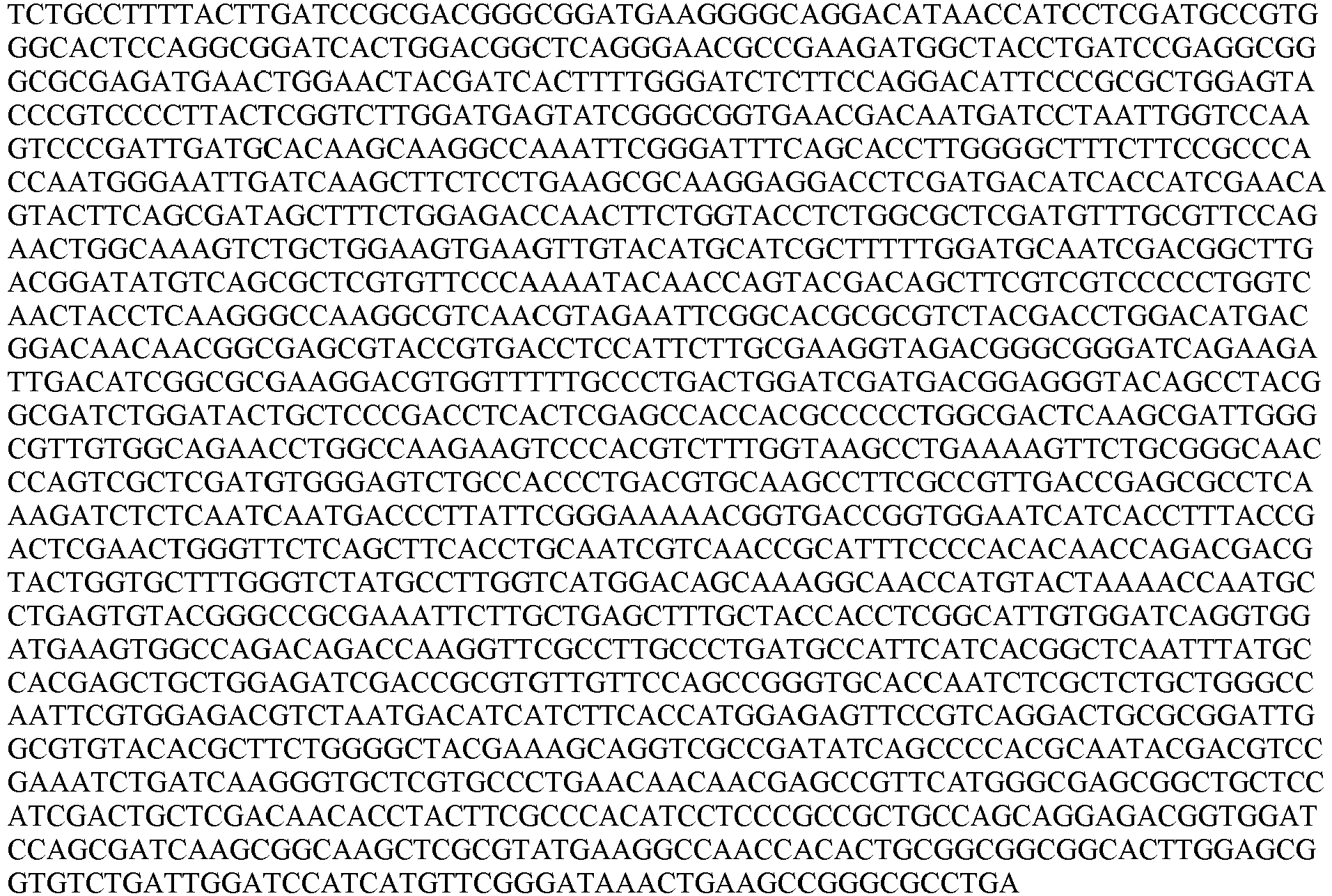
- Die entsprechende Aminosäuresequenz, die 673 Aminosäuren und eine Masse von 75,0 kDa aufwies, war somit wie folgt (SEQ ID NO.2):wobei der fett gedruckte Teil den His-Tag enthält und die restliche Sequenz der in Uniprot als A0A172MLH9 hinterlegten Sequenz entspricht.
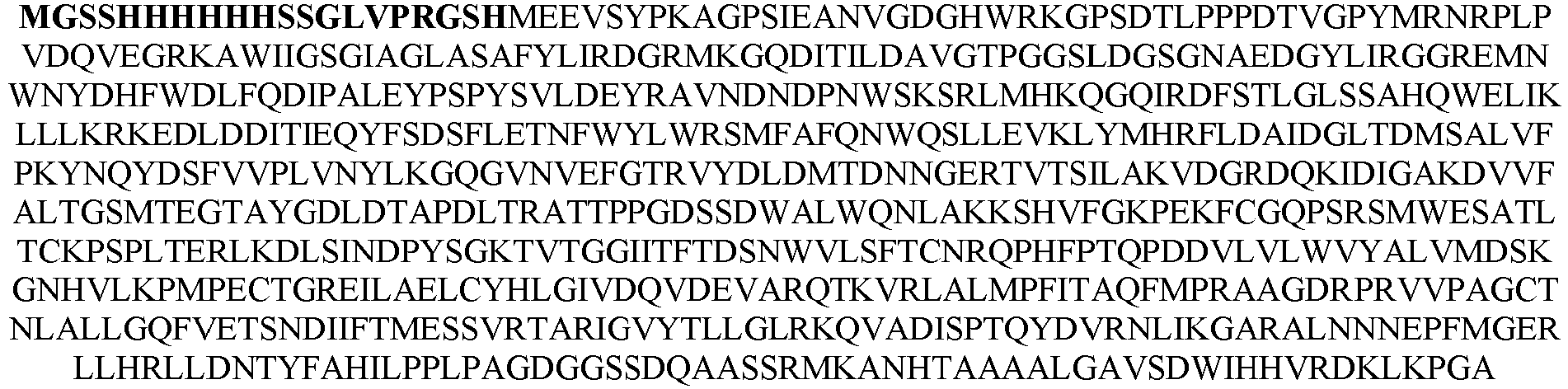
- Zur Herstellung der Hauptkultur wurde von einer E.coli BL21(DE3) Vorkultur 250 µL in einen sterilen Kolben mit 25 mL LB-Medium überführt. Für die Vorkultur wurden 5 mL LB-Medium in sterile Reagenzgläser gegeben. Es wurde jeweils eine Einzelkolonie von einer Agarplatte mit E.coli BL21(DE3) Zellen isoliert und in ein Reagenzglas überführt. Die Vorkultur wurde über Nacht bei 37 °C und 180 rpm inkubiert. Die Hauptkultur wurde nach Erreichen von einer OD von 0,35 - 0,4 geerntet und auf 4 °C gekühlt. Die Zellen wurden in sterile Gefäße überführt und zentrifugiert (800x g und 4 °C für 15 Minuten). Der Überstand wurde verworfen. Das Zellpellet wurde in 5 mL Calciumchloridlösung (100 mM) resuspendiert und die Suspension 20 Minuten auf 4 °C gekühlt. Anschließend wurde die Suspension abzentrifugiert (800x g und 4 °C für 10 Minuten) und der Überstand verworfen. Die Zellen wurden in 500 µL einer Lösung aus Calciumchlorid (100 mM) und 15 %-iger wässriger Glycerinlösung resuspendiert. Die Resuspension wurde in sterile Gefäße (50 µL) aliquotiert und bei -80 °C gelagert.
- Für die Transformation von pET28 Sn-Ohy in E.coli BL21(DE3) wurde das Plasmid (pET28-Sn-Ohy(N)His6, 0,5 µL) zu den kompetenten Zellen (50 µL) gegeben und für 30 min bei 4 °C inkubiert. Nach erfolgtem Hitzeschock bei 42 °C für 90 s wurden die Zellen weitere 5 min auf bei 4 °C inkubiert. LB-Medium (1 mL) wurde zum Transformationsansatz ergeben und für 1-2 h bei 37 °C und 160-180 rpm inkubiert. Anschließend wurde die Zellsuspension auf Agarplatten mit dem entsprechenden Antibiotikum (Kanamycin 50 µg mL-1) ausplattiert und für bei 37 °C für 18 h im Brutschrank inkubiert.
- Zur Überexpression von Sn-Ohy in E.coli BL21(DE3) wurden Vorkulturen in Reagenzgläsern angeimpft. Dafür wurde zu LB-Medium und Kanamycin 50 µg mL-1 (und eine Kolonie des transformierten E.coli (E.coli BL21(DE3)-pET28-Sn-Ohy(N)His6,) gegeben. Die Kulturen wurden für 17-21 h bei 37 °C und 170-180 rpm inkubiert.
- Für die Hauptkulturen wurde TB-Medium und Kanamycin (50 µg mL-1) in einem Erlenmeyerkolben vorgelegt und mit 1% der Vorkultur angeimpft. Die Kulturen wurden bei 37 °C und 180 rpm inkubiert. Bei einer optischen Dichte (OD) von 0,6-1,0 wurde mit IPTG (0,5 mM mL-1) induziert und die Inkubationstemperatur auf 20 °C gesenkt. 18-20 h nach der Induktion wurden die Bakterien durch Zentrifugieren der Hauptkulturen (4000x·g, 4 °C, 30 min) pelletiert. Die Zellpellets wurden anschließend bei -20 °C gelagert.
- Für den Zellaufschluss wurden die Zellpellets in KPi-Puffer (50 mM, pH 6,3) resuspendiert (25%ige Zellsuspension). Die Zellen wurden mittels Ultraschall (3x 3-5 min, ca. 20% Leistung) bei 4 °C aufgeschlossen. Durch anschließendes Zentrifugieren (20 min, 20000x·g, 4 °C) des Zelllysates wurden die Zelltrümmer von dem löslichen Protein abgetrennt.
- Zur Bestimmung der Proteinkonzentration wurde die Proteinlösung in unterschiedlichen Verdünnungen (1:10 bis 1:100, je 5 µL) und als Referenz die BSA-Standardreihe mit bekannten Proteinkonzentrationen (je 5 µL) auf die Mikrotiterplatte aufgetragen. Anschließend wurde Bradford-Reagenz (250 µL) hinzugegeben und nach einer Inkubationszeit von 15 min bei 25 °C die Absorption bei 595 nm gemessen. Die Konzentrationsmessung erfolgte als Dreifachbestimmung.
-

- Ölsäure (90% Reinheit, 52 g, 0,18 mol) wurde mit DMSO (12,5 mL), 237,5 mL KPi-Puffer (pH 6,5, 100 mM), und 20 mL Sn-Ohy Rohextrakt (Aufschluss mittels Ultraschall, 25% Zellsuspension, 5x 5 min, 5x5 Zyklen, 20%; Proteinkonzentration des Rohextrakts 15 mg/mL) vorgelegt. Sn-Ohy ist eine Hydratase des Organismus Stenotrophomonas nitritireducens und wurde z. B. von Kim et al. 2010 beschrieben (Conversion of oleic acid to 10-hydroxystearic acid by whole cells of Stenotrophomonas nitritireducens, Biotechnology letters, vol 33, pp. 993-997, May 2010).
- Die Reaktionslösung wurde bei 35 °C für sechs Tage gerührt, anschließend filtriert, mit MTBE gewaschen und aus MTBE abschließend umkristallisiert. Nach dem Trocknen wurden 15 g (0,05 mol) 10-Hydroxystearinsäure isoliert und per 1H-NMR-Spektroskopie charakterisiert.
- 1H-NMR (500 MHz, CDCl3) δ/ppm = 3,61 (m, 1H), 2,37 (t, 3 J= 7,5 Hz, 2H), 1,66 (q, 3 J= 7,2 Hz, 2H), 1,47 (m, 4H) 1,31 (m, 22H), 0,90 (t, 3 J= 6,8 Hz, 3H)
-

- Linolsäure (5,6 mg, 0,02 mmol, 20 mM) wurde in DMSO (50 µL) gelöst. Danach wurden KPi-Puffer (pH 6,3, 50 mM, 850 µL), Sn-Ohy-Rohextrakt (100 µL, 15 mg mL-1 Proteinkonzentration) der Reaktionsmischung zugegeben und bei 35 °C und 850 rpm für 1 h gerührt. Das Rohprodukt wurde mit CDCl3 (2x 700 µL) extrahiert und mittels 1H-NMR-Spektroskopie analysiert. Für (Z)-10-Hydroxyoctadec-12-ensäure konnte ein Umsatz von 38% erhalten werden.
- 1H-NMR (500 MHz, CDCl3): [ppm]= 5,64 - 5,54 (m, 1H), 5,48 - 5,38 (m, 1H), 3,64 (p, 3 J= 6,1 Hz, 1H), 2,37 (t, 3 J= 7,5 Hz, 2H), 2,24 (t, 3 J= 6,8 Hz, 2H), 2,07 (m, 2H), 1,66 (p, 3 J= 7,6 Hz, 2H), 1,48 (h, 3 J= 8,2, 6,8 Hz, 2H) , 1,43 - 1,31 (m, 16H), 0,91 (t, 3 J= 6,8 Hz, 3H).
-

- Linolensäure (5,6 mg, 0,02 mmol, 20 mM) wurde in DMSO (50 µL) gelöst. Danach wurden KPi-Puffer (pH 6,3, 50 mM, 850 µL), Sn-Ohy-Rohextrakt (100 µL, 15 mg mL-1 Proteinkonzentration) der Reaktionsmischung zugegeben und bei 35 °C und 850 rpm für 1 h gerührt. Das Rohprodukt wurde mit CDCl3 (2x 700 µL) extrahiert und mittels 1H-NMR-Spektroskopie analysiert. Für (12Z,15Z)-10-Hydroxyoctadeca-12,15-diensäure konnte ein Umsatz von 39% erhalten werden.
- 1H-NMR (500 MHz, CDCl3): [ppm]= 5,64 - 5,40 (m, 4H), 3,64 (p, 3 J= 6,1 Hz, 1H), 2,37 (t, 3 J= 7,5 Hz, 2H), 2,86 - 2,75 (m, 2H), 2,24 (t, 3 J= 6,8 Hz, 2H), 1,66 (p, 3 J= 7,6 Hz, 2H), 1,48 (h, 3 J= 8,2, 6,8 Hz, 2H) , 1,43 - 1,31 (m, 12H), 0,91 (t, 3 J= 6,8 Hz, 3H).
- Die erhaltene 10-Hydroxystearinsäure (15 g (0,05 mol)) wurde in gleichen Volumina von MTBE und n-Heptan gelöst. Anschließend wurden Hexan-1,6-diol (5,61 g, 0,05 mmol), CAL-B (1,5 g) und Molekularsieb (0,4 nm, 20 g) hinzugegeben und für 14 h bei 35 °C im SpinChem ® -Reaktor gerührt.
- CAL-B ist die Lipase B des Organismus Candida antarctica und wurde z. B. von Haeffner et al. 1998 beschrieben (F. Haeffner, T. Norin and K. Hult 'Molecular modeling of the enantioselectivity in lipase-catalyzed transestrifications reactions', Biophys. J, 74(3), p. 1251-1262, March 1998). Diese in diesem experimentellen Beispiel verwendete Lipase CAL-B ist hierbei in immobilisierter Form kommerziell erhältlich (54326 Sigma-Aldrich Lipase B Candida antarctica immobilized on Immobead 150, recombinant from Aspergillus oryzae).
- Das Lösungsmittel wurde unter Vakuum entfernt und das Rohprodukt per Säulenchromatographie isoliert (Cyclohexan:EtOAc, 3:1).
- 7 g Hexan-1,6-diyl-bis(10-hydroxyoctadecanoat) wurden abgetrennt; die Verbindung wurde per NMR und MS charakterisiert.
- 1H-NMR (500 MHz, CDCl3) δ/ppm = 4,08 (t, 3 J= 6,7 Hz, 4H), 3,60 (q, 3 J = 5,8, 5,1 Hz, 2H), 2,31 (t, 3 J = 7,5 Hz, 4H), 1,69 - 1,59 (m, 8H), 1,46 - 1,38 (m, 16H), 1,31 (d, 3 J = 9,2 Hz, 40H), 0,90 (t, 3 J= 6,7 Hz, 6H); 13C-NMR (126 MHz, CDCl3) δ/ppm = 13C NMR (126 MHz, CDCl3) δ/ppm = 173,96, 72,00, 64,17, 29,73, 29,64, 29,61, 29,43, 29,29, 29,21, 29,14, 28,56, 25,66, 24,99, 22,68, 14,12; MS (ESI): m/z = 706,2 [M+Na+].
- Das erhaltene Esterpolyol weist im Vergleich zu etablierten Diolen eine deutlich stärkere Neigung auf, beim Erreichen eines in der Temperatur eng gefassten Erstarrungspunkts kristalline, durchgehende Strukturen auszubilden, was für eine sehr niedrige Schwankungsbreite und hohe Reinheit spricht. Mit äquimolarer Menge an aufgereinigtem Rizinus-Öl vermischt ergibt sich eine gleichsinnig reine und emulsionsstabile Mischkomponente mit einer OH-Funktionalität von 2,37 +- 0,01.
- Mit einem optischen Referenz-Farbstoff (1,2 % Reaktiv-Farbstoff mit hydroxy-funktioneller Einbindbarkeit in PU-Strukturen; die OH-Funktionalität wird dadurch um 0,01 verringert) erweist sich die Gleichmäßigkeit der PU-Reaktivmasse nach Zugabe von HMDI und etablierten Stell- und Hilfs-Stoffen schon optisch als deutlich gleichmäßiger. Schlieren oder schwankende Helligkeiten während des Einrührens und Homogenisierens sind nicht sichtbar.
-

- Es wurden 10-Hydroxystearinsäure (92 mg, 0,25 mmol) in Toluol (3 mL) gelöst und im Anschluss die jeweilige Alkohol-Komponente sowie der Biokatalysator (Lipase B aus Candida antarctica in immobilisierter Form, CAL-B) und das Molekularsieb hinzugefügt. Danach wurde die daraus resultierende Reaktionsmischung 14 Stunden bei einer Reaktionstemperatur von 60 °C gerührt. Anschließend wurde das Lösungsmittel unter vermindertem Druck entfernt und das daraus resultierende Rohprodukt massenspektrometrisch analysiert. Hierbei wurden in den Rohprodukten sowohl das Ausgangsmaterial, als auch die Mono-, Di- oder Tri-, Tetraester detektiert. Eine Übersicht über die verwendeten Alkohol-Komponenten sowie die zu diesen Versuchen zugehörigen Mengen an Molekularsieb und Biokatalysator (Lipase CAL-B) sind der nachfolgenden Tabelle 1 aufgeführt.
Tabelle 1. Übersicht über die in den Veresterungsexperimenten gemäß der in diesem Beispiel verwendeten Alkohol-Komponenten sowie die zu diesen Versuchen zugehörigen Mengen an Molekularsieb und Biokatalysator (Lipase CAL-B) Reaktions-Nr. Alkohol-Komponente Alkohol MS (0,4 nM)/ mg Lipase CAL-B/mg 6-1 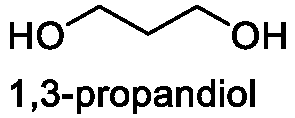
12,1 µL (0,50 Äq) 136 11 6-2 
14,7 µL (0,50 Äq) 101 13 6-3 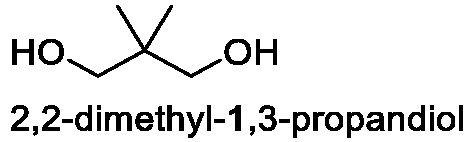
18,0 mg (0,50 Äq) 128 12 6-4 
15,1 mg (0,33 Äq) 105 12 - In diesen Versuchen wurde die Bildung der folgenden gewünschten Produkte mittels Massenspektrometrie nachgewiesen:
-


-


-


-


- Anhand dieser Versuche ist erkennbar, dass die Bildung der folgenden gewünschten Esterdiole (d.h. Diole mit mindestens zwei Esterbindungen im Molekül) bzw. Estertriole mittels biotechnologischer Umsetzung von Diolen bzw. Triolen und Hydroxyfettsäuren gezielt durchführbar ist. Entsprechende Umsetzungen mit Polyaminen bzw. (Poly)amino(poly)alkoholen sind für den Fachmann basierend auf dem allgemeinen Fachwissen mittels Amidasen oder synthetisch ebenfalls durchführbar.
- Aufgrund der besseren Verfügbarkeit wurden die nachfolgenden Reaktionen mit 12-Hydroxystearinsäure (12-HSS), anstatt mit 10-Hydroxystearinsäure, welches von der Sn-Ohy generiert wird, durchgeführt. Die Ergebnisse zur Veresterung von 10-Hydroxystearinsäure und 12-Hydroxystearinsäure sind jedoch vergleichbar.
- Die Reaktion von 12-Hydroxystearinsäure mit CAL-B zeigt, dass die Enzym-katalysierte Umsetzung nicht zur Selbstkondensation führt, wie sowohl aus dem 1H-NMR-Spektrum als auch aus dem Massenspektrum ersichtlich ist. Daher kann hier ein eindeutiger Vorteil in der Enzym-katalysierten Veresterung aufgezeigt werden, da weder eine Oligomerisationsreaktion, noch eine andere unerwünschte Reaktion stattfindet.
- Verschiedene Immobilisierungsformen der Lipase CAL-B sind für die enzymatisch-katalysierte Veresterung von 12-HSS mit 1,6-Hexandiol geeignet. So konnten bereits nach sechs Stunden der Mono- sowie der Diester detektiert werden.
- In weiteren Versuchen wurde die Lipase CalB 165G genutzt, um 12-HSS mit verschiedenen Linkern zu verestern. Dafür wurden Reaktionen für sechs und für 14 Stunden durchgeführt. Es zeigte sich, dass die Veresterung erfolgreich war, was wiederum im 1H-NMR-Spektrum sowie im Massenspektrum erkennbar ist. Auch hier konnte nach sechs Stunden bereits der Mono- sowie der Diester und bei 2-Ethyl-2-(hydroxymethyl)1,3-propandiol der Triester detektiert werden.
- 2-Ethyl-2-(hydroxymethyl)1,3-propandiol (0,11 mol) wurde im 100 g Maßstab erneut mit 12-HSS (0,33 mol) verestert. Nach der Reaktion konnte eine OH-Zahl von 172 mgKOH/g ermittelt werden. Dieses Triol (M=981,6 g/mol) wurde genutzt, um daraus ein Polyurethan herzustellen. Zur Herstellung wurde das oben erhaltene Triol mit einem Gemisch aliphatischer Isocyanate (HDI-Isocyanurat und IPDI-Isocyanurat) stöchiometrisch vermischt, ausgerakelt und bei 83-85 °C ausgehärtet. Es wurde ein transparenter Film erhalten, der bei 150 µm Dicke farblos war.
- Ein Gemisch aus 12-Hydroxystearinsäure (10,00 g, 33,28 mmol), MTBE (20 mL) und Schwefelsäure (98%, 0,3 mL, 5,63 mmol) wurde mit Molsieb (4 Å, 1,00 g) für 6 h oder 14 h bei 60°C gerührt. Das resultierende Rohprodukt wurde mit MTBE (40 mL) versetzt, mit gesättigter Natriumchloridlösung (2x 25 mL) gewaschen und über Natriumsulfat getrocknet. Das Lösungsmittel wurde unter vermindertem Druck eingedampft und das Produkt als Feststoff (8,36 g, 27,85 mmol, 84%) isoliert.
- Ein Gemisch aus 12-Hydroxystearinsäure (10,00 g, 33,28 mmol), MTBE (20 mL) und CAL-B (1,00 g) wurde mit Molsieb (4 Å, 1,00 g) für 6 h oder 14 h bei 60°C gerührt. Das resultierende Rohprodukt wurde mit MTBE (40 mL) versetzt, mit gesättigter Natriumchloridlösung (2x 25 mL) gewaschen und über Natriumsulfat getrocknet. Das Lösungsmittel wurde unter vermindertem Druck eingedampft und das Produkt quantitativ isoliert. Das 1H-NMR-Spektrum sowie das Massenspektrum zeigten, dass es bei der Katalyse mit CAL-B zu keiner Oligomerisierung der 12-Hydroxystearinsäure kam.
- 12-Hydroxystearinsäure (0,20 g, 0,67 mmol) wurde in MTBE (6 mL) gelöst. Danach wurden Hexan-1,6-diol (0,04 g, 0,34 mmol), Lipase (24 mg) und Molekularsieb (4 Å, 240 mg) in die Reaktionslösung überführt und bei 60 °C gerührt. Nach sechs und 14 h wurde eine Probe (2 mL) entnommen, zentrifugiert und die organische Phase isoliert. Das Lösungsmittel wurde entfernt. Es wurde eine Analytik mittels 1H-NMR-Spektroskopie sowie Massenspektrometrie durchgeführt.
Tabelle 2: Veresterung von 12-Hydroxystearinsäure mit Hexan-I, 6-diol und verschiedenen Lipasen. Reaktion-Nr. Lipase Umsetzung stattgefunden 1 Addzyme CalB 165G Ja 2 CalB immo 8285 Ja 3 CalB immo 8806 Ja -

- 1H-NMR (500 MHz, DMSO-d6) δ/ppm = 4,18 (d, 3 J = 5,4 Hz, 1H, OH), 3,34 (m, (C12)H), 2,18 (t, 3 J = 7,4 Hz, 2H, (C2)H), 1,48 (t, 3 J = 7,2 Hz, 2H, (C3)H), 1,31 (m, 26H, H alkyl), 0,90 (t, 3 J= 6,9 Hz, 3H, C(18)H); MS (ESI): m/z = 323,48 [M+Na+], 623,96 [2M+ Na+].
-

- 1H-NMR (500 MHz, CDCl3) δ/ppm = 4,06 (d, 3 J = 6,7 Hz, (C1')H), 3,58 (m, (C12)H), 2,28 (t, 3 J = 7,6 Hz, (C2)H), 1,62 (m, (C3,2')H), 1,40 (m, H alkyl), 1,28 (m, H alkyl), 0,89 (m, C(18)H); MS (ESI): m/z = 423,4 [M+Na+] (Monoester), 705,6 [M+Na+] (Diester).
- 12-Hydroxystearinsäure (0,20 g, 0,67 mmol) wurde in MTBE (6 mL) gelöst. Danach wurden Alkohol, Addzyme CalB 165G (24 mg) und Molekularsieb (4 Å, 240 mg) in die Reaktionslösung überführt und bei 60 °C gerührt. Nach sechs und 14 h wurde eine Probe (2 mL) entnommen, zentrifugiert und die organische Phase isoliert. Das Lösungsmittel wurde entfernt. Es wurde eine Analytik mittels 1H-NMR-Spektroskopie sowie Massenspektrometrie durchgeführt.
Tabelle 3: Veresterung 12-Hydroxystearinsäure mit CAL-B und verschiedenen Alkohol-Linkern. Reaktions-Nr. Alkohol mg mmol Umsetzung stattgefunden 1 2-Butyl-2-ethyl-1,3-propandiol 53,5 0,33 Ja 2 2-Ethyl-2-(hydroxymethyl)1,3-propandiol 30,0 0,22 Ja 3 1,2-Propandiol 25,3 0,33 Ja 4 1,3-Propandiol 25,3 0,33 Ja 5 1,4-Butandiol 30,0 0,33 Ja 6 1,3-Butandiol 30,0 0,33 Ja 7 2-Methyl-1,3-propanediol 30,0 0,33 Ja 8 1,5-Pentandiol 34,7 0,33 Ja -

- 1H-NMR (500 MHz, CDCl3) δ/ppm = 3,97 (s, (C1')H), 3,59 (m, (C12)H), 2,34 (m, (C2)H), 1,62 (m, (C3)H), 1,43 (m, H alkyl), 1,29 (m, H alkyl), 0,89 (m, C(18)H); MS (ESI): m/z = 465,7 [M+Na+] (Monoester), 748,2 [M+Na+] (Diester).
-

- 1H-NMR (500 MHz, CDCl3) δ/ppm = 4,03 (s, (C1')H), 3,58 (m, (C12)H), 2,33 (m, (C2)H), 1,63 (m, (C3)H), 1,42 (m, H alkyl), 1,28 (m, H alkyl), 0,88 (t, 3 J= 6,7 Hz, C(18, 4')H); MS (ESI): m/z = 439,6 [M+Na+] (Monoester), 722,1 [M+Na+] (Diester), 1004,6 (Triester). Theoretische OH-Zahl: 171,5, experimentell gefunden: 172, Schmelzbereich: 50-53 °C
-

- 1H-NMR (500 MHz, CDCl3) δ/ppm = 5,13 (qd, 3 J = 6,7 Hz, 4 J = 3,7 Hz, C(1')H), 4,22 (dd, 4 J = 11,7, 3,6 Hz, C(2')H) 4,05 (dd, 3 J = 6,6, 4 J = 11,7, C(2')H), 3,58 (m, (C12)H), 2,30 (m, C(2)H), 1,62 (m, (C3)H), 1,42 (m, H alkyl), 1,28 (m, H alkyl), 0,88 (m, C(18)H); MS (ESI): m/z = 381,5 [M+Na+] (Monoester), 664,0 [M+Na+] (Diester).
-

- 1H-NMR (500 MHz, CDCl3) δ/ppm = 4,15 (t, 3 J = 6,3 Hz, (C1')H), 3,58 (m, (C12)H), 2,29 (t, 3 J = 7,6 Hz (C2)H), 1,96 (q, 3 J = 6,3 Hz, (C3,2')H), 1,61 (m, (C3)H), 1,42 (m, H alkyl), 1,27 (m, H alkyl), 0,89 (m, C(18)H); MS (ESI): m/z = 381,5 [M+Na+] (Monoester), 664,0 [M+Na+] (Diester).
-

- 1H-NMR (500 MHz, CDCl3) δ/ppm = 4,09 (m, (C1')H), 3,58 (m, (C12)H), 2,29 (t, 3 J = 7,6 Hz, (C2)H), 1,69 1,62 (m, (C3)H), 1,42 (m, H alkyl), 1,28 (m, H alkyl), 0,88 (t, 3 J= 7,0 Hz, C(18)H); MS (ESI): m/z = 395,6 [M+Na+] (Monoester), 678,0 [M+Na+] (Diester).
-

- 1H-NMR (500 MHz, CDCl3) δ/ppm = 5,01 (m, (C1')H), 4,11 (m, (C3')H)), 3,57 (m, (C12)H), 2,27 (m, (C2)H), 1,87 (m, (C4')H)), 1,59 (m, (C3)H), 1,42 (m, H alkyl), 1,27 (m, H alkyl), 0,88 (m, C(18)H); MS (ESI): m/z = 395,6 [M+Na+] (Monoester), 678,0 [M+Na+] (Diester).
-

- 1H-NMR (500 MHz, CDCl3) δ/ppm = 4,01 (m, C(1')H), 3,58 (m, (C12)H), 2,30 (t, 3 J = 7,6 Hz, (C2)H), 2,16 (m, C(2')H), 1,62 (t, 3 J = 7,2 Hz, (C3)H), 1,43 (m, H alkyl), 1,28 (m, H alkyl), 0,88 (m, C(18)H); MS (ESI): m/z = 395,6 [M+Na+] (Monoester), 678,0 [M+Na+] (Diester).
-

- 1H-NMR (500 MHz, CDCl3) δ/ppm = 4,06 (d, 3 J = 5,2; 6,7 Hz, (C1')H), 3,58 (m, (C12)H), 2,28 (m, (C2)H), 1,62 (m, (C3,2')H), 1,40 (m, H alkyl), 1,28 (m, H alkyl), 0,89 (m, C(18)H); MS (ESI): m/z = 409,3 [M+Na+] (Monoester), 692,06 [M+Na+] (Diester).
- 12-Hydroxystearinsäure (100 g, 0,33 mol) wurde in MTBE (500 mL) gelöst. Danach wurden 2-Ethyl-2-(hydroxymethyl)1,3-propandiol (14,9 g, 0,11 mol), Addzyme CalB 165G (12 g) und Molekularsieb (4 Å, 50 g) in die Reaktionslösung überführt und bei 60 °C gerührt für 16 h gerührt. Die Probe wurde zentrifugiert, die organische Phase isoliert und das Lösungsmittel entfernt. Die OH-Zahl wurde anhand der Norm DIN 53240-2 bestimmt.
- Das oben beschriebene Triol aus 2-Ethyl-2-(hydroxymethyl)1,3-propandiol und 12-Hydroxystearinsäure, OH-Zahl 172 wurde mit einem Gemisch aliphatischer Isocyanate (HDI-Isocyanurat, IPDI-Isocyanurat, Isocyanatgehalt: 21 %) zu einem klaren, ungefärbten, blasenfreien Polyurethan umgesetzt.
- Dazu wurden 5 g Triol eingewogen und auf 60 °C erwärmt. Nach dem Aufschmelzen wurde das Material in einem Zentrifugalmischer unter Vakuum entlüftet. Anschließend wurden 3,17 g des oben beschriebenen Polyisocyanats (ebenfalls auf 60 °C vorgewärmt) hinzugegeben und im Zentrifugalmischer unter Vakuum intensiv vermischt. Die so erhaltene Mischung wurde auf einem Heiztisch mittels eines Rakels aufgetragen und bei 83-85 °C ausgehärtet. Nach 150 sec erhielt man ein festes Polymer. Um die Reaktion zu vervollständigen, wurde der Film 7 Tage bei 23°C und 50 %rF gelagert. Die Shore-Härtemessung ergab Shore A 60 und Shore D 15. Das Infrarotspektrum zeigte die zu erwartenden Absorptionsbanden eines aliphatischen Polyurethans.
Claims (14)
- Ein Verfahren zur Herstellung eines Hydroxyfettsäurekondensats oder eines Gemischs von Hydroxyfettsäurekondensaten, das Verfahren umfassend die Schritte:- Bereitstellen einer oder mehrerer Fettsäuren mit mindestens einer C=C Doppelbindungsfunktionalität,- biotechnologische H2O-Addition mittels einer Hydratase an mindestens eine C=C-Doppelbindungsfunktionalität der einen oder mehreren Fettsäuren, wobei die Doppelbindung keine terminale Doppelbindung ist, unter Erhalt einer oder mehrerer Hydroxyfettsäuren,- Umsetzung der einen oder mehreren Hydroxyfettsäure(n) mit einer oder mehreren mindestens zweiwertigen Linkergruppe(n), ausgewählt aus Polyolen, Polyaminen und (Poly)amino(poly)alkoholen, unter Erhalt eines Hydroxyfettsäurekondensats oder eines Gemischs von Hydroxyfettsäurekondensaten, wobei die Umsetzung der einen oder mehreren Hydroxyfettsäure(n) mit der einen oder den mehreren mindestens zweiwertigen Linkergruppe(n) biotechnologisch erfolgt.
- Das Verfahren nach Anspruch 1, wobei die eine oder mehreren mindestens zweiwertigen Linkergruppen ein oder mehrere Polyole sind, wobei die Polyole bevorzugt ausgewählt sind aus Diol, Triol, Tetraol, Pentaol, Hexaol, oder Kombinationen davon, stärker bevorzugt ausgewählt sind aus Diol, Triol, Tetraol, oder Kombinationen davon.
- Das Verfahren nach Anspruch 1 oder 2, wobei die eine oder mehreren mindestens zweiwertigen Linkergruppen ein oder mehrere aliphatische Polyole, bevorzugt ein oder mehrere aliphatische C2-40 Polyole sind, wobei die eine oder mehreren aliphatischen C2-40 Polyole bevorzugt ausgewählt sind aus aliphatischem Alkandiol, Alkantriol, Alkantetraol, Alkanpentaol, Alkanhexaol oder Kombinationen davon.
- Das Verfahren nach einem der vorherigen Ansprüche, wobei die eine oder mehreren mindestens zweiwertigen Linkergruppen ausgewählt sind aus aliphatischem α-ω-Alkandiol, α-ω-Alkantriol, α-ω-Alkantetraol, α-ω-Alkanpentaol, α-ω-Alkanhexaol oder Kombinationen davon.
- Das Verfahren nach einem der vorherigen Ansprüche, wobei die eine oder mehreren mindestens zweiwertigen Linkergruppen ausgewählt sind aus 1,3-Propandiol, 2-Methyl-1,3-propandiol, 2,2-Dimethyl-1,3-propandiol, 2-Ethyl-2-hydroxymethyl-1,3-propandiol und 1,6-Hexandiol und Kombinationen davon.
- Das Verfahren nach einem der vorherigen Ansprüche, wobei mindestens eine, bevorzugt zwei, drei oder vier, der Hydroxygruppen der mindestens zweiwertigen Linkergruppe mit Hydroxyfettsäure verestert werden.
- Das Verfahren nach einem der vorherigen Ansprüche, wobei die eine oder mehreren Fettsäuren mit mindestens einer C=C Doppelbindungsfunktionalität ausgewählt sind aus der Gruppe bestehend aus aliphatischen C6-40-Carbonsäuren mit einer, zwei oder drei C=C Doppelbindungsfunktionalitäten, wobei die C6-40-Carbonsäuren bevorzugt C10-30, stärker bevorzugt C12-24-Carbonsäuren sind.
- Das Verfahren nach einem der vorherigen Ansprüche, wobei die eine oder mehreren Fettsäuren mit mindestens einer C=C Doppelbindungsfunktionalität (i) ausgewählt sind aus der Gruppe bestehend aus einfach ungesättigten Fettsäuren, bevorzugt ausgewählt aus Undecylensäure, Myristoleinsäure, Palmitoleinsäure, Margaroleinsäure, Petroselinsäure, Ölsäure, Elaidinsäure, Vaccensäure, Gadoleinsäure, Gondosäure, Cetoleinsäure, Erucasäure, Vernolsäure, cis-5-Eicosensäure, Brassidinsäure, Nervonsäure und Kombinationen davon, und/oder aus der Gruppe bestehend aus mehrfach ungesättigten Fettsäuren, bevorzugt ausgewählt aus Linolsäure, Linolensäure, Calendulasäure, Punicinsäure, Elaeostearinsäure, Arachidonsäure, Timnodonsäure, Clupanodonsäure, Lesquerolsäure, Licansäure, Cervonsäure und Kombinationen davon; oder(ii) ausgewählt sind aus Ölsäure, Linolsäure, Linolensäure, Palmitoleinsäure und Kombinationen davon, wobei die Fettsäure bevorzugt ausgewählt ist aus Ölsäure, Linolsäure, Linolensäure und Kombinationen davon, und stärker bevorzugt Ölsäure ist; oder(iii) zu mindestens 70 mol-%, bevorzugt mindestens 85 mol-%, stärker bevorzugt mindestens 90 % eines oder mehrere, bevorzugt zwei oder drei, ausgewählt aus Ölsäure, Linolsäure und Linolensäure enthalten.
- Das Verfahren nach einem der vorherigen Ansprüche, wobei die biotechnologische H2O-Addition mittels einer Hydratase von Stenotrophomonas nitritireducens, durchgeführt wird.
- Das Verfahren nach einem der vorherigen Ansprüche, wobei die Umsetzung mit einer oder mehreren mindestens zweiwertigen Linkergruppen mittels mindestens einem Enzym ausgewählt aus der Gruppe bestehend aus Hydroxylasen, bevorzugt Esterasen, Lipasen und/oder Proteasen, stärker bevorzugt Lipasen, durchgeführt wird.
- Das Verfahren nach Anspruch 10, wobei die Umsetzung mit einer oder mehreren mindestens zweiwertigen Linkergruppe mittels mindestens einer Lipase durchgeführt wird, wobei die Lipase bevorzugt die Lipase B von Candida antarctica ist.
- Das Verfahren nach einem der vorherigen Ansprüche, wobei die Umsetzung der einen oder mehreren Hydroxyfettsäuren mit einer oder mehreren mindestens zweiwertigen Linkergruppen mittels einer Lipase von Candida antarctica, besonders bevorzugt Lipase B von Candida antarctica, durchgeführt wird, und die eine oder mehreren mindestens zweiwertigen Linkergruppen aus Alkandiolen, Alkantriolen, Alkantetraolen und Kombinationen davon ausgewählt sind.
- Das Verfahren nach Anspruch 12, wobei die eine oder mehreren mindestens zweiwertigen Linkergruppen(i) aus Alkandiolen, Alkantriolen und Kombinationen davon ausgewählt sind; oder(ii) aus Ethandiol, Propandiolen, Butandiolen, Pentandiolen, Hexandiolen, Heptandiolen, Octandiolen, Butantriolen, Pentantriolen, Hexantriolen, Heptantriolen, Octantriolen, Butantetrolen, Pentantetrolen, Hexantetrolen, Heptantetrolen, Octantetrolen und Kombinationen davon ausgewählt sind; oder(iii) aus Ethandiol, Propandiolen, Butandiolen, Pentandiolen, Hexandiolen, Heptandiolen, Octandiolen, Butantriolen, Pentantriolen, Hexantriolen, Heptantriolen, Octantriolen und Kombinationen davon ausgewählt sind.
- Ein Polyurethan, das erhältlich ist durch Umsetzung einer Zusammensetzung umfassend ein durch das Verfahren nach einem der vorherigen Ansprüche erhältlichen Hydroxyfettsäurekondensats oder Gemischs von Hydroxyfettsäurekondensaten mit einem Diisocyanat, Triisocyanat, Tetraisocyanat, Pentaisocyanat oder Hexaisocyanat oder Kombinationen davon.
Applications Claiming Priority (2)
| Application Number | Priority Date | Filing Date | Title |
|---|---|---|---|
| EP20174135 | 2020-05-12 | ||
| PCT/EP2021/062405 WO2021228804A1 (de) | 2020-05-12 | 2021-05-11 | Verfahren zur herstellung von hydroxyfettsäurebasierten polyolen |
Publications (3)
| Publication Number | Publication Date |
|---|---|
| EP4150103A1 EP4150103A1 (de) | 2023-03-22 |
| EP4150103C0 EP4150103C0 (de) | 2025-04-09 |
| EP4150103B1 true EP4150103B1 (de) | 2025-04-09 |
Family
ID=70682610
Family Applications (1)
| Application Number | Title | Priority Date | Filing Date |
|---|---|---|---|
| EP21723760.1A Active EP4150103B1 (de) | 2020-05-12 | 2021-05-11 | Verfahren zur herstellung von hydroxyfettsäurebasierten polyolen |
Country Status (3)
| Country | Link |
|---|---|
| US (1) | US12522686B2 (de) |
| EP (1) | EP4150103B1 (de) |
| WO (1) | WO2021228804A1 (de) |
Families Citing this family (3)
| Publication number | Priority date | Publication date | Assignee | Title |
|---|---|---|---|---|
| CN116462821A (zh) * | 2022-01-12 | 2023-07-21 | 万华化学集团股份有限公司 | 一种热塑性聚氨酯弹性体材料、其制备方法及应用 |
| EP4561979A2 (de) * | 2022-07-28 | 2025-06-04 | The Regents of the University of California | Cyclopropanfettsäuremodulatoren von peroxisomproliferatoraktivierten rezeptoren |
| CN119824048B (zh) * | 2025-03-17 | 2025-06-10 | 浙江工业大学 | 一种负压下微波加热酶水解制备十一烯酸的工艺 |
Citations (1)
| Publication number | Priority date | Publication date | Assignee | Title |
|---|---|---|---|---|
| KR101492206B1 (ko) * | 2013-01-24 | 2015-02-11 | 경북대학교 산학협력단 | 하이드록시 지방산의 글리세롤유도체 및 그 제조방법 |
Family Cites Families (6)
| Publication number | Priority date | Publication date | Assignee | Title |
|---|---|---|---|---|
| DE102004031786A1 (de) | 2004-07-01 | 2006-01-26 | Cognis Deutschland Gmbh & Co. Kg | Verdickungsmittel auf Polyurethanbasis |
| US8143034B2 (en) * | 2007-08-21 | 2012-03-27 | Polytechnic Institute Of New York University | Method for preparing long-chain hydroxyacids, diacids and oligomers and polymers thereof |
| NZ592647A (en) * | 2008-11-28 | 2013-05-31 | Lectio Pharmaentwicklungs Und Verwertungs Gmbh | Pharmaceutical formulation comprising diclofenac and a hydroxy fatty acid polyoxyalkylene ester |
| US20130131222A1 (en) * | 2010-03-12 | 2013-05-23 | Synthezyme Llc | Polyurethane polymers comprising copolyester polyols having repeat units derived from biobased hydroxyfatty acids |
| US20140051780A1 (en) * | 2012-08-16 | 2014-02-20 | Synthezyme Llc | COPOLYESTERS HAVING REPEAT UNITS DERIVED FROM w-HYDROXY FATTY ACIDS |
| GB201505178D0 (en) * | 2015-03-26 | 2015-05-13 | Stichting Dienst Landbouwkundi | Production of fatty acid estolides |
-
2021
- 2021-05-11 US US17/924,338 patent/US12522686B2/en active Active
- 2021-05-11 WO PCT/EP2021/062405 patent/WO2021228804A1/de not_active Ceased
- 2021-05-11 EP EP21723760.1A patent/EP4150103B1/de active Active
Patent Citations (1)
| Publication number | Priority date | Publication date | Assignee | Title |
|---|---|---|---|---|
| KR101492206B1 (ko) * | 2013-01-24 | 2015-02-11 | 경북대학교 산학협력단 | 하이드록시 지방산의 글리세롤유도체 및 그 제조방법 |
Also Published As
| Publication number | Publication date |
|---|---|
| EP4150103A1 (de) | 2023-03-22 |
| EP4150103C0 (de) | 2025-04-09 |
| US20230312805A1 (en) | 2023-10-05 |
| US12522686B2 (en) | 2026-01-13 |
| WO2021228804A1 (de) | 2021-11-18 |
Similar Documents
| Publication | Publication Date | Title |
|---|---|---|
| EP4150103B1 (de) | Verfahren zur herstellung von hydroxyfettsäurebasierten polyolen | |
| DE69324158T2 (de) | Enzymatische synthese von polyester | |
| JP7528088B2 (ja) | ヒドロホルミル化されたトリグリセリドおよびその使用 | |
| EP2948487B1 (de) | Feuchtigkeitshärtende polyurethan-zusammensetzung enthaltend nachhaltig erzeugte rohstoffe | |
| US5500475A (en) | Polyurethane-based thickeners | |
| EP3183282B1 (de) | Polyestermodifizierte polybutadienole zur herstellung von polyurethan-elastomeren und thermoplastischen polyurethanen | |
| Ma et al. | Castor oil as a platform for preparing bio-based chemicals and polymer materials | |
| EP4013806B1 (de) | Verfahren zum abbau von polyether-polyurethan | |
| CN107082863B (zh) | 一种高强度腰果酚基水性聚氨酯的制备方法 | |
| US20150274922A1 (en) | Materials comprising nvr polyols | |
| DE19820168C2 (de) | Verfahren zur kontinuierlichen mikrobiologischen Herstellung von Polyhydroxybuttersäure | |
| Rajput et al. | Renewable source based non-biodegradable polyurethane coatings from polyesteramide prepared in one-pot using oleic acid | |
| EP0431124B1 (de) | Neuartige kunststoffe auf fettsäurebasis | |
| KR102158412B1 (ko) | 식물성 오일의 미생물 전환에 의해 생산된 하이드록시 지방산을 이용한 바이오 기반 폴리우레탄의 합성 방법. | |
| EP2059550A1 (de) | Verfahren zur herstellung von polyesterolen | |
| DE10050403A1 (de) | Enzymatische Herstellung von bei Raumtemperatur festen Hydroxyfettsäureestern mehrwertiger Alkohole | |
| DE102008045237B4 (de) | Verfahren zur simultanen Produktion von PHA und kompatiblen Soluten in halophilen Bakterien | |
| DE10331770A1 (de) | Verfahren zur Herstellung von hyperverzweigten Polymeren | |
| DE69705304T2 (de) | Feuchtigkeitshärtende schmelzkleber | |
| JP2014529002A (ja) | パーム油からポリオールを得る方法、該方法によって得られるポリオール、並びに該ポリオールを用いた製品及びその製造方法 | |
| WO2011009766A1 (de) | Hochfunktionelle, hoch- oder hyperverzweigte polyester sowie deren herstellung und verwendung | |
| EP2089446A1 (de) | Isocyanatprepolymer mit unterschiedlich reaktiven nco-gruppen | |
| EP1863863A1 (de) | Zwei-stufiges verfahren zur herstellung von polyesterolen | |
| Germán-Ayuso et al. | Evaluation of 2, 3-butanediol derived from whey fermentation as an effective bio-based monomer for waterborne polyurethane dispersions | |
| Sonnabend et al. | Sophorolipid-Based Oligomers as Polyol Components for Polyurethane Systems. Polymers 2021, 13, 2001 |
Legal Events
| Date | Code | Title | Description |
|---|---|---|---|
| STAA | Information on the status of an ep patent application or granted ep patent |
Free format text: STATUS: UNKNOWN |
|
| STAA | Information on the status of an ep patent application or granted ep patent |
Free format text: STATUS: THE INTERNATIONAL PUBLICATION HAS BEEN MADE |
|
| PUAI | Public reference made under article 153(3) epc to a published international application that has entered the european phase |
Free format text: ORIGINAL CODE: 0009012 |
|
| STAA | Information on the status of an ep patent application or granted ep patent |
Free format text: STATUS: REQUEST FOR EXAMINATION WAS MADE |
|
| 17P | Request for examination filed |
Effective date: 20221206 |
|
| AK | Designated contracting states |
Kind code of ref document: A1 Designated state(s): AL AT BE BG CH CY CZ DE DK EE ES FI FR GB GR HR HU IE IS IT LI LT LU LV MC MK MT NL NO PL PT RO RS SE SI SK SM TR |
|
| DAV | Request for validation of the european patent (deleted) | ||
| DAX | Request for extension of the european patent (deleted) | ||
| STAA | Information on the status of an ep patent application or granted ep patent |
Free format text: STATUS: EXAMINATION IS IN PROGRESS |
|
| 17Q | First examination report despatched |
Effective date: 20240118 |
|
| REG | Reference to a national code |
Ref country code: DE Ref legal event code: R079 Free format text: PREVIOUS MAIN CLASS: C12P0007420000 Ipc: C12P0007620000 Ref country code: DE Ref legal event code: R079 Ref document number: 502021007176 Country of ref document: DE Free format text: PREVIOUS MAIN CLASS: C12P0007420000 Ipc: C12P0007620000 |
|
| RIC1 | Information provided on ipc code assigned before grant |
Ipc: C08G 18/42 20060101ALI20240531BHEP Ipc: C12N 9/88 20060101ALI20240531BHEP Ipc: C12N 9/20 20060101ALI20240531BHEP Ipc: C08G 18/78 20060101ALI20240531BHEP Ipc: C08G 18/36 20060101ALI20240531BHEP Ipc: C08G 18/22 20060101ALI20240531BHEP Ipc: C12P 7/6472 20220101ALI20240531BHEP Ipc: C12P 7/6436 20220101ALI20240531BHEP Ipc: C12P 7/6427 20220101ALI20240531BHEP Ipc: C12P 7/625 20220101ALI20240531BHEP Ipc: C12P 7/42 20060101ALI20240531BHEP Ipc: C12P 7/62 20220101AFI20240531BHEP |
|
| REG | Reference to a national code |
Ref country code: DE Ref legal event code: R079 Free format text: PREVIOUS MAIN CLASS: C12P0007620000 Ipc: C12P0007643100 Ref country code: DE Ref legal event code: R079 Ref document number: 502021007176 Country of ref document: DE Free format text: PREVIOUS MAIN CLASS: C12P0007620000 Ipc: C12P0007643100 |
|
| GRAP | Despatch of communication of intention to grant a patent |
Free format text: ORIGINAL CODE: EPIDOSNIGR1 |
|
| STAA | Information on the status of an ep patent application or granted ep patent |
Free format text: STATUS: GRANT OF PATENT IS INTENDED |
|
| RIC1 | Information provided on ipc code assigned before grant |
Ipc: C12P 7/625 20220101ALI20241211BHEP Ipc: C12P 7/6472 20220101ALI20241211BHEP Ipc: C12P 7/6436 20220101ALI20241211BHEP Ipc: C12P 7/6427 20220101ALI20241211BHEP Ipc: C12N 9/88 20060101ALI20241211BHEP Ipc: C12N 9/20 20060101ALI20241211BHEP Ipc: C08G 18/78 20060101ALI20241211BHEP Ipc: C08G 18/42 20060101ALI20241211BHEP Ipc: C08G 18/36 20060101ALI20241211BHEP Ipc: C08G 18/22 20060101ALI20241211BHEP Ipc: C12P 7/42 20060101ALI20241211BHEP Ipc: C12P 7/62 20220101ALI20241211BHEP Ipc: C12P 7/6431 20220101AFI20241211BHEP |
|
| INTG | Intention to grant announced |
Effective date: 20250109 |
|
| GRAS | Grant fee paid |
Free format text: ORIGINAL CODE: EPIDOSNIGR3 |
|
| GRAA | (expected) grant |
Free format text: ORIGINAL CODE: 0009210 |
|
| STAA | Information on the status of an ep patent application or granted ep patent |
Free format text: STATUS: THE PATENT HAS BEEN GRANTED |
|
| AK | Designated contracting states |
Kind code of ref document: B1 Designated state(s): AL AT BE BG CH CY CZ DE DK EE ES FI FR GB GR HR HU IE IS IT LI LT LU LV MC MK MT NL NO PL PT RO RS SE SI SK SM TR |
|
| RAP3 | Party data changed (applicant data changed or rights of an application transferred) |
Owner name: UNIVERSITAET BIELEFELD Owner name: U. WINDMOELLER INNOVATION GMBH & CO. KG |
|
| REG | Reference to a national code |
Ref country code: GB Ref legal event code: FG4D Free format text: NOT ENGLISH |
|
| REG | Reference to a national code |
Ref country code: DE Ref legal event code: R081 Ref document number: 502021007176 Country of ref document: DE Owner name: UNIVERSITAET BIELEFELD, KOERPERSCHAFT DES OEFF, DE Free format text: FORMER OWNER: ANMELDERANGABEN UNKLAR / UNVOLLSTAENDIG, 80297 MUENCHEN, DE Ref country code: DE Ref legal event code: R081 Ref document number: 502021007176 Country of ref document: DE Owner name: U. WINDMOELLER INNOVATION GMBH & CO. KG, DE Free format text: FORMER OWNER: ANMELDERANGABEN UNKLAR / UNVOLLSTAENDIG, 80297 MUENCHEN, DE |
|
| REG | Reference to a national code |
Ref country code: CH Ref legal event code: EP |
|
| REG | Reference to a national code |
Ref country code: DE Ref legal event code: R096 Ref document number: 502021007176 Country of ref document: DE |
|
| REG | Reference to a national code |
Ref country code: IE Ref legal event code: FG4D Free format text: LANGUAGE OF EP DOCUMENT: GERMAN |
|
| U01 | Request for unitary effect filed |
Effective date: 20250409 |
|
| U07 | Unitary effect registered |
Designated state(s): AT BE BG DE DK EE FI FR IT LT LU LV MT NL PT RO SE SI Effective date: 20250415 |
|
| U20 | Renewal fee for the european patent with unitary effect paid |
Year of fee payment: 5 Effective date: 20250526 |
|
| PGFP | Annual fee paid to national office [announced via postgrant information from national office to epo] |
Ref country code: CH Payment date: 20250601 Year of fee payment: 5 |
|
| PG25 | Lapsed in a contracting state [announced via postgrant information from national office to epo] |
Ref country code: ES Free format text: LAPSE BECAUSE OF FAILURE TO SUBMIT A TRANSLATION OF THE DESCRIPTION OR TO PAY THE FEE WITHIN THE PRESCRIBED TIME-LIMIT Effective date: 20250409 |
|
| PG25 | Lapsed in a contracting state [announced via postgrant information from national office to epo] |
Ref country code: GR Free format text: LAPSE BECAUSE OF FAILURE TO SUBMIT A TRANSLATION OF THE DESCRIPTION OR TO PAY THE FEE WITHIN THE PRESCRIBED TIME-LIMIT Effective date: 20250710 Ref country code: NO Free format text: LAPSE BECAUSE OF FAILURE TO SUBMIT A TRANSLATION OF THE DESCRIPTION OR TO PAY THE FEE WITHIN THE PRESCRIBED TIME-LIMIT Effective date: 20250709 |
|
| PG25 | Lapsed in a contracting state [announced via postgrant information from national office to epo] |
Ref country code: PL Free format text: LAPSE BECAUSE OF FAILURE TO SUBMIT A TRANSLATION OF THE DESCRIPTION OR TO PAY THE FEE WITHIN THE PRESCRIBED TIME-LIMIT Effective date: 20250409 |
|
| PG25 | Lapsed in a contracting state [announced via postgrant information from national office to epo] |
Ref country code: HR Free format text: LAPSE BECAUSE OF FAILURE TO SUBMIT A TRANSLATION OF THE DESCRIPTION OR TO PAY THE FEE WITHIN THE PRESCRIBED TIME-LIMIT Effective date: 20250409 |
|
| PG25 | Lapsed in a contracting state [announced via postgrant information from national office to epo] |
Ref country code: RS Free format text: LAPSE BECAUSE OF FAILURE TO SUBMIT A TRANSLATION OF THE DESCRIPTION OR TO PAY THE FEE WITHIN THE PRESCRIBED TIME-LIMIT Effective date: 20250709 |
|
| PG25 | Lapsed in a contracting state [announced via postgrant information from national office to epo] |
Ref country code: IS Free format text: LAPSE BECAUSE OF FAILURE TO SUBMIT A TRANSLATION OF THE DESCRIPTION OR TO PAY THE FEE WITHIN THE PRESCRIBED TIME-LIMIT Effective date: 20250809 |
|
| PG25 | Lapsed in a contracting state [announced via postgrant information from national office to epo] |
Ref country code: SM Free format text: LAPSE BECAUSE OF FAILURE TO SUBMIT A TRANSLATION OF THE DESCRIPTION OR TO PAY THE FEE WITHIN THE PRESCRIBED TIME-LIMIT Effective date: 20250409 |
|
| PG25 | Lapsed in a contracting state [announced via postgrant information from national office to epo] |
Ref country code: CZ Free format text: LAPSE BECAUSE OF FAILURE TO SUBMIT A TRANSLATION OF THE DESCRIPTION OR TO PAY THE FEE WITHIN THE PRESCRIBED TIME-LIMIT Effective date: 20250409 |
|
| PG25 | Lapsed in a contracting state [announced via postgrant information from national office to epo] |
Ref country code: SK Free format text: LAPSE BECAUSE OF FAILURE TO SUBMIT A TRANSLATION OF THE DESCRIPTION OR TO PAY THE FEE WITHIN THE PRESCRIBED TIME-LIMIT Effective date: 20250409 |
|
| PG25 | Lapsed in a contracting state [announced via postgrant information from national office to epo] |
Ref country code: MC Free format text: LAPSE BECAUSE OF FAILURE TO SUBMIT A TRANSLATION OF THE DESCRIPTION OR TO PAY THE FEE WITHIN THE PRESCRIBED TIME-LIMIT Effective date: 20250409 |
|
| PLBE | No opposition filed within time limit |
Free format text: ORIGINAL CODE: 0009261 |
|
| STAA | Information on the status of an ep patent application or granted ep patent |
Free format text: STATUS: NO OPPOSITION FILED WITHIN TIME LIMIT |
|
| REG | Reference to a national code |
Ref country code: CH Ref legal event code: L10 Free format text: ST27 STATUS EVENT CODE: U-0-0-L10-L00 (AS PROVIDED BY THE NATIONAL OFFICE) Effective date: 20260218 |
|
| 26N | No opposition filed |
Effective date: 20260112 |
|
| GBPC | Gb: european patent ceased through non-payment of renewal fee |
Effective date: 20250709 |