EP4149185B1 - Verfahren zur übertragung von uci und benutzerendgerät - Google Patents
Verfahren zur übertragung von uci und benutzerendgerät Download PDFInfo
- Publication number
- EP4149185B1 EP4149185B1 EP22203088.4A EP22203088A EP4149185B1 EP 4149185 B1 EP4149185 B1 EP 4149185B1 EP 22203088 A EP22203088 A EP 22203088A EP 4149185 B1 EP4149185 B1 EP 4149185B1
- Authority
- EP
- European Patent Office
- Prior art keywords
- pusch
- pucch
- uci
- carry
- numerology
- Prior art date
- Legal status (The legal status is an assumption and is not a legal conclusion. Google has not performed a legal analysis and makes no representation as to the accuracy of the status listed.)
- Active
Links
Images






Classifications
-
- H—ELECTRICITY
- H04—ELECTRIC COMMUNICATION TECHNIQUE
- H04W—WIRELESS COMMUNICATION NETWORKS
- H04W72/00—Local resource management
- H04W72/12—Wireless traffic scheduling
- H04W72/1263—Mapping of traffic onto schedule, e.g. scheduled allocation or multiplexing of flows
- H04W72/1268—Mapping of traffic onto schedule, e.g. scheduled allocation or multiplexing of flows of uplink data flows
-
- H—ELECTRICITY
- H04—ELECTRIC COMMUNICATION TECHNIQUE
- H04B—TRANSMISSION
- H04B7/00—Radio transmission systems, i.e. using radiation field
- H04B7/02—Diversity systems; Multi-antenna system, i.e. transmission or reception using multiple antennas
- H04B7/04—Diversity systems; Multi-antenna system, i.e. transmission or reception using multiple antennas using two or more spaced independent antennas
- H04B7/06—Diversity systems; Multi-antenna system, i.e. transmission or reception using multiple antennas using two or more spaced independent antennas at the transmitting station
- H04B7/0613—Diversity systems; Multi-antenna system, i.e. transmission or reception using multiple antennas using two or more spaced independent antennas at the transmitting station using simultaneous transmission
- H04B7/0615—Diversity systems; Multi-antenna system, i.e. transmission or reception using multiple antennas using two or more spaced independent antennas at the transmitting station using simultaneous transmission of weighted versions of same signal
- H04B7/0619—Diversity systems; Multi-antenna system, i.e. transmission or reception using multiple antennas using two or more spaced independent antennas at the transmitting station using simultaneous transmission of weighted versions of same signal using feedback from receiving side
- H04B7/0621—Feedback content
- H04B7/0626—Channel coefficients, e.g. channel state information [CSI]
-
- H—ELECTRICITY
- H04—ELECTRIC COMMUNICATION TECHNIQUE
- H04L—TRANSMISSION OF DIGITAL INFORMATION, e.g. TELEGRAPHIC COMMUNICATION
- H04L27/00—Modulated-carrier systems
- H04L27/26—Systems using multi-frequency codes
- H04L27/2601—Multicarrier modulation systems
- H04L27/2602—Signal structure
- H04L27/26025—Numerology, i.e. varying one or more of symbol duration, subcarrier spacing, Fourier transform size, sampling rate or down-clocking
-
- H—ELECTRICITY
- H04—ELECTRIC COMMUNICATION TECHNIQUE
- H04L—TRANSMISSION OF DIGITAL INFORMATION, e.g. TELEGRAPHIC COMMUNICATION
- H04L5/00—Arrangements affording multiple use of the transmission path
- H04L5/003—Arrangements for allocating sub-channels of the transmission path
- H04L5/0044—Allocation of payload; Allocation of data channels, e.g. PDSCH or PUSCH
-
- H—ELECTRICITY
- H04—ELECTRIC COMMUNICATION TECHNIQUE
- H04L—TRANSMISSION OF DIGITAL INFORMATION, e.g. TELEGRAPHIC COMMUNICATION
- H04L5/00—Arrangements affording multiple use of the transmission path
- H04L5/003—Arrangements for allocating sub-channels of the transmission path
- H04L5/0053—Allocation of signalling, i.e. of overhead other than pilot signals
-
- H—ELECTRICITY
- H04—ELECTRIC COMMUNICATION TECHNIQUE
- H04L—TRANSMISSION OF DIGITAL INFORMATION, e.g. TELEGRAPHIC COMMUNICATION
- H04L5/00—Arrangements affording multiple use of the transmission path
- H04L5/003—Arrangements for allocating sub-channels of the transmission path
- H04L5/0053—Allocation of signalling, i.e. of overhead other than pilot signals
- H04L5/0057—Physical resource allocation for CQI
-
- H—ELECTRICITY
- H04—ELECTRIC COMMUNICATION TECHNIQUE
- H04L—TRANSMISSION OF DIGITAL INFORMATION, e.g. TELEGRAPHIC COMMUNICATION
- H04L5/00—Arrangements affording multiple use of the transmission path
- H04L5/003—Arrangements for allocating sub-channels of the transmission path
- H04L5/0058—Allocation criteria
-
- H—ELECTRICITY
- H04—ELECTRIC COMMUNICATION TECHNIQUE
- H04L—TRANSMISSION OF DIGITAL INFORMATION, e.g. TELEGRAPHIC COMMUNICATION
- H04L5/00—Arrangements affording multiple use of the transmission path
- H04L5/003—Arrangements for allocating sub-channels of the transmission path
- H04L5/0058—Allocation criteria
- H04L5/0064—Rate requirement of the data, e.g. scalable bandwidth, data priority
-
- H—ELECTRICITY
- H04—ELECTRIC COMMUNICATION TECHNIQUE
- H04L—TRANSMISSION OF DIGITAL INFORMATION, e.g. TELEGRAPHIC COMMUNICATION
- H04L5/00—Arrangements affording multiple use of the transmission path
- H04L5/003—Arrangements for allocating sub-channels of the transmission path
- H04L5/0078—Timing of allocation
- H04L5/0087—Timing of allocation when data requirements change
-
- H—ELECTRICITY
- H04—ELECTRIC COMMUNICATION TECHNIQUE
- H04L—TRANSMISSION OF DIGITAL INFORMATION, e.g. TELEGRAPHIC COMMUNICATION
- H04L5/00—Arrangements affording multiple use of the transmission path
- H04L5/0091—Signalling for the administration of the divided path, e.g. signalling of configuration information
-
- H—ELECTRICITY
- H04—ELECTRIC COMMUNICATION TECHNIQUE
- H04W—WIRELESS COMMUNICATION NETWORKS
- H04W72/00—Local resource management
- H04W72/02—Selection of wireless resources by user or terminal
-
- H—ELECTRICITY
- H04—ELECTRIC COMMUNICATION TECHNIQUE
- H04W—WIRELESS COMMUNICATION NETWORKS
- H04W72/00—Local resource management
- H04W72/04—Wireless resource allocation
- H04W72/044—Wireless resource allocation based on the type of the allocated resource
- H04W72/0446—Resources in time domain, e.g. slots or frames
-
- H—ELECTRICITY
- H04—ELECTRIC COMMUNICATION TECHNIQUE
- H04W—WIRELESS COMMUNICATION NETWORKS
- H04W72/00—Local resource management
- H04W72/20—Control channels or signalling for resource management
- H04W72/21—Control channels or signalling for resource management in the uplink direction of a wireless link, i.e. towards the network
-
- H—ELECTRICITY
- H04—ELECTRIC COMMUNICATION TECHNIQUE
- H04L—TRANSMISSION OF DIGITAL INFORMATION, e.g. TELEGRAPHIC COMMUNICATION
- H04L5/00—Arrangements affording multiple use of the transmission path
- H04L5/0001—Arrangements for dividing the transmission path
- H04L5/0003—Two-dimensional division
- H04L5/0005—Time-frequency
- H04L5/0007—Time-frequency the frequencies being orthogonal, e.g. OFDM(A) or DMT
- H04L5/001—Time-frequency the frequencies being orthogonal, e.g. OFDM(A) or DMT the frequencies being arranged in component carriers
-
- H—ELECTRICITY
- H04—ELECTRIC COMMUNICATION TECHNIQUE
- H04W—WIRELESS COMMUNICATION NETWORKS
- H04W72/00—Local resource management
- H04W72/20—Control channels or signalling for resource management
- H04W72/23—Control channels or signalling for resource management in the downlink direction of a wireless link, i.e. towards a terminal
Definitions
- the present disclosure relates to the field of communications technology, and in particular, to a method of sending UCI and a user equipment.
- LTE Long Term Evolution
- UE User Equipment
- UCI Uplink Control Information
- the LTE system also supports the Carrier Aggregation (CA) technology, and the UE may send the uplink data on multiple uplink carriers.
- CA Carrier Aggregation
- the UE may send the uplink data on multiple uplink carriers.
- PUSCH Physical Uplink Shared Channel
- the UE selects one of the PUSCHs to carry UCI, that is, the UCI is multiplexed and transmitted in selected PUSCH.
- the UE simply selects the PUSCH according to the carrier index, that is, multiplexing the PUSCH with the smallest carrier index to send the UCI.
- the New Radio (NR) system also supports the CA and the design of multiplexing UCI in PUSCH.
- the NR system supports a flexible frame structure, and the numerologies of different uplink carriers may be different.
- the NR system supports a flexible and dynamic Physical Uplink Control Channel (PUCCH) structure.
- the PUCCH can be a short PUCCH format of 1 to 2 symbols or a long PUCCH format of 4 to 14 symbols. Therefore, the simple carrier selection technique of LTE is not suitable for the NR.
- the NR may also configure a grant-free or configured scheduling PUSCH for UEs to support Ultra-reliable low latency communication (Ultra-Reliable Low Latency Communication URLLC) services, the simply following the LTE carrier selection technology may increase the processing complexity of grant-free or configured scheduling PUSCH.
- the 3GPP document CATR "UE procedure for reporting control information", R1-1800762, XP51384418, 12.01.2018 discussed the UE procedure for reporting control information when the first symbol or duration is different while the PUCCH and PUSCH has overlapped symbols.
- a corresponding text proposal for the current 38.213 is provided in the end of the document.
- the present disclosure provides a method of sending UCI and a user equipment, to support a UE to select the best PUSCH to carry UCI when there are multiple candidate PUSCH transmissions, thereby reducing a processing delay of system and reducing a peak-to-average ratio of UE.
- the present invention provides a method of sending UCI according to claim 1 and further detailed in the dependent claims referring back to this claim.
- a corresponding UE is provided in claim 7.
- the present invention provides a computer-readable storage medium according to claim 10 and further detailed in the dependent claims referring back to this claim.
- a PUSCH on an appropriate carrier is selected to carry UCI and send the UCI, according to an uplink data scheduling type and a numerology of uplink carrier, the UE may select the best PUSCH to carry the UCI when there are multiple candidate PUSCHs for transmission.
- an uplink transmission delay may be reduced, a transmission reliability of UCI may be improved, a complexity of UE-side coding and a PUSCH multiplexing are reduced, and a peak-to-average ratio of UE may be reduced.
- an adverse effect of a multiplexing for UCI on URLLC services may be avoided, a processing delay of URLLC uplink data may be reduced, a blind detection of URLLC uplink data by a base station may be avoided, and a code rate of URLLC uplink data is prevented from decreasing.
- a method of sending UCI and a user equipment are provided in the present disclosure, so as to support a UE to select the best PUSCH to carry UCI when there are multiple candidate PUSCH transmissions, thereby reducing a processing delay of system and reducing a peak-to-average ratio of UE.
- a method of sending UCI is provided in some embodiments of the present disclosure. As shown in FIG. 1 , the method includes:
- Step 101 in the case that an overlapping of Physical Uplink Control Channel (PUCCH) and Physical Uplink Shared Channel (PUSCH) in a time domain occurs, selecting a PUSCH to carry and send UCI, based on at least one of an uplink data scheduling type and a numerology of uplink carrier.
- PUCCH Physical Uplink Control Channel
- PUSCH Physical Uplink Shared Channel
- the numerology of uplink carrier also refer to a subcarrier spacing and a symbol duration.
- a method of multiplexing PUSCH to transmit UCI is provided in some embodiments of the present disclosure. Specifically, a PUSCH on a suitable carrier may be selected to carry UCI and send the UCI, according to an uplink data scheduling type, a numerology of uplink carrier, a subcarrier spacing (SCS) or a symbol duration
- a PUSCH on an appropriate carrier is selected to carry UCI and send the UCI, according to an uplink data scheduling type and a numerology of uplink carrier, the UE may select the best PUSCH to carry the UCI when there are multiple candidate PUSCHs for transmission.
- an uplink transmission delay may be reduced, a transmission reliability of UCI may be improved, a complexity of UE-side coding and a PUSCH multiplexing are reduced, and a peak-to-average ratio of UE may be reduced.
- an adverse effect of UCI multiplexing on URLLC services may be avoided, a processing delay of URLLC uplink data may be reduced, a blind detection of URLLC uplink data by a base station may be avoided, and a code rate of URLLC uplink data is prevented from decreasing.
- the UE when the UE is configured with multiple serving cells or uplink carriers or supplemental uplink (Supplemental Uplink, SUL), and the PUCCH and PUSCH do not perform the transmission at the same time, if the UE needs to send the PUCCH, the UE needs to select a PUSCH to multiplex the PUCCH to send the UCI.
- SUL Supplemental Uplink
- the method Prior to the selecting the PUSCH to carry and send the UCI based on at least one of an uplink data scheduling type and a numerology of uplink carrier, the method further includes:
- the determining methods include:
- the PUSCH and PUCCH are mapped to a reference carrier, and the PUSCH and PUCCH are scaled according to different numerologies.
- the carrier of the PUCCH is the reference carrier.
- an SCS of the PUCCH is 15kHz, and an SCS of the PUSCH is 30kHz.
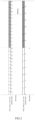
- the carrier of the PUCCH is taken as the reference carrier, so a 14-symbol duration PUSCH is mapped to be a 7-symbol duration on the carrier of the PUCCH.
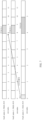
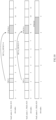
- FIG. 2 is a schematic view of mapping the PUSCH with an SCS of 30kHz and a slot index of 1 to a carrier of the PUCCH with an SCS of 15kHz and a slot index of 0, where the slot index is a slot number and the symbol index is a symbol number.
- whether the PUCCH and PUSCH overlap in a time domain may be determined according to a starting position and a duration of a symbol of the mapped PUCCH and a starting position and a duration of a symbol of the mapped PUSCH.
- Method 2 determining an overlapping based on slots
- a PUCCH is scaled according to a numerology of the PUCCH and then the PUCCH is mapped to a carrier of each PUSCH. If the starting position and duration of the symbol of the mapped PUCCH partially or completely overlap with the slot of the PUSCH, it is determined that the PUSCH and the PUCCH overlap completely.
- the determining method may be predefined in the protocol, or configured through high-level parameters.
- a PUSCH is selected to carry UCI and send the UCI, according to the following method.
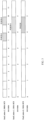
- PUSCH-2 is configured as a configured scheduling PUSCH to transmit Ultra Reliable Low Latency Communications (URLLC) services
- the non-configured scheduling PUSCH-1 is selected and multiplexed for the UCI transmission.
- the adverse effect of multiplexing PUSCH-2 to transmit the UCI on URLLC services may be avoided, a processing delay of URLLC uplink data may be reduced, a blind detection for URLLC uplink data by a network-side equipment such as base station may be avoided, and a code rate of URLLC uplink data is prevented from decreasing.
- URLLC Ultra Reliable Low Latency Communications
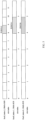
- PUSCH-2 scheduled by the DCI is selected and multiplexed to transmit the UCI.
- the overlapped PUSCH is discarded.
- the UCI is discarded.
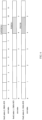
- a PUSCH which is to have a lowest UCI code rate when transmitting the UCI is selected and multiplexed to transmit the UCI, according to a weight of a ⁇ offset (Beta offset) configured or indicated by a network side, which can ensure a reliability of UCI transmission.
- a ⁇ offset Beta offset
- a PUSCH in a cell or a carrier with a smallest index (i.e., PUSCH-1) is selected and multiplexed to transmit the UCI, which can reduce the complexity of UE-side coding and PUSCH multiplexing.
- a User Equipment is further provided in some embodiments of the present disclosure, as shown in FIG. 12 , the UE includes:
- a PUSCH on an appropriate carrier is selected to carry UCI and send the UCI, according to an uplink data scheduling type and a numerology of uplink carrier, the UE may select the best PUSCH to carry the UCI when there are multiple candidate PUSCHs for transmission.
- an uplink transmission delay may be reduced, a transmission reliability of UCI may be improved, a complexity of UE-side coding and a PUSCH multiplexing are reduced, and a peak-to-average ratio of UE may be reduced.
- an adverse effect of a multiplexing for UCI on URLLC services may be avoided, a processing delay of URLLC uplink data may be reduced, a blind detection of URLLC uplink data by a base station may be avoided, and a code rate of URLLC uplink data is prevented from decreasing.
- the UE further includes: a processing module 22 , configured to determine whether the overlapping of PUCCH and PUSCH in the time domain occurs, in a PUCCH sending slot.
- a processing module 22 configured to determine whether the overlapping of PUCCH and PUSCH in the time domain occurs, in a PUCCH sending slot.
- processing module 22 includes:
- the reference carrier is a carrier of the PUCCH.
- processing module 22 includes:
- the uplink data scheduling type includes a scheduling by Downlink Control Information (DCI)
- the sending module 21 is further configured to: in a case that the PUSCH is scheduled by DCI and the DCI indicates an Aperiodic Channel State Information (A-CSI) reporting or a Semi-Persistent Channel State Information (SP-CSI) reporting, select the PUSCH to carry and send the UCI.
- DCI Downlink Control Information
- A-CSI Aperiodic Channel State Information
- SP-CSI Semi-Persistent Channel State Information
- the numerology of uplink carrier includes a transmission starting time
- the sending module is further configured to: in a case that a transmission starting time of the PUSCH is the same as a transmission starting time of a PUCCH or the transmission starting time of the PUSCH is later than the transmission starting time of the PUCCH, multiplex the PUSCH to send the UCI.
- the uplink data scheduling type includes grant-free or a configured scheduling
- the sending module is further configured to: in a case that a transmission starting time of the PUSCH is earlier than a transmission starting time of a PUCCH and at least one of overlapped PUSCHs is a grant-free PUSCH or a configured scheduling PUSCH, puncture an overlapped portion of the PUCCH or discard the UCI; in a case that overlapped PUSCHs do not include a grant-free PUSCH or a configured scheduling PUSCH, transmit the PUCCH, abandon a transmission of an overlapped portion of the PUSCH or discard the entire PUSCH.
- the sending module 21 is further configured to select the PUSCH to carry the UCI, through at least one of:
- a UE is further provided in some embodiments of the present disclosure, including: a memory, a processor and a computer program stored in the memory and executable on the processor, and the processor executes the computer program to perform the method of sending UCI hereinabove.
- FIG. 13 is a schematic diagram of the hardware structure of a user equipment implementing various embodiments of the present disclosure.
- the user equipment 300 includes but is not limited to: a radio frequency unit 301, a network module 302, an audio output unit 303, an input unit 304, a sensor 305, a display unit 306, a user input unit 307, an interface unit 308, a memory 309, a process and power supply 311.
- the terminal structure shown in FIG. 13 does not constitute a limitation on the terminal, and the terminal may include more or fewer components than those illustrated, or combine certain components, or arrange different components.
- the terminal includes but is not limited to a mobile phone, a tablet computer, a notebook computer, a palmtop computer, a vehicle-mounted terminal, a wearable device and a pedometer.
- the processor 310 is configured to: in the case that an overlapping of Physical Uplink Control Channel (PUCCH) and Physical Uplink Shared Channel (PUSCH) in a time domain occurs, select a PUSCH to carry and send UCI, based on at least one of an uplink data scheduling type and a numerology of uplink carrier.
- PUCCH Physical Uplink Control Channel
- PUSCH Physical Uplink Shared Channel
- the processor 310 is further configured to: determine whether the overlapping of PUCCH and PUSCH in the time domain occurs, in a PUCCH sending slot.
- the processor 310 is further configured to: map a PUCCH and a PUSCH onto a reference carrier and scale the PUCCH and the PUSCH according to the numerology of uplink carrier; determine whether the overlapping of PUCCH and PUSCH in the time domain occurs, according to a starting position and a duration of a symbol of the mapped PUCCH and a starting position and a duration of a symbol of the mapped PUSCH.
- the reference carrier is a carrier of the PUCCH.
- the processor 310 is further configured to: scale a PUCCH according to a numerology of the PUCCH and map the PUCCH to a carrier of each PUSCH; in the case that a starting position and a duration of a symbol of the mapped PUCCH at least partially overlap with a slot of the PUSCH, determine that the overlapping of PUCCH and PUSCH in the time domain occurs.
- the uplink data scheduling type includes a scheduling by Downlink Control Information (DCI)
- the processor 310 is further configured to: in a case that the PUSCH is scheduled by DCI and the DCI indicates an Aperiodic Channel State Information (A-CSI) reporting or a Semi-Persistent Channel State Information (SP-CSI) reporting, select the PUSCH to carry and send the UCI.
- DCI Downlink Control Information
- A-CSI Aperiodic Channel State Information
- SP-CSI Semi-Persistent Channel State Information
- the numerology of uplink carrier includes a transmission starting time
- the processor 310 is further configured to: in a case that a transmission starting time of the PUSCH is the same as a transmission starting time of a PUCCH or the transmission starting time of the PUSCH is later than the transmission starting time of the PUCCH, multiplex the PUSCH to send the UCI.
- the uplink data scheduling type includes grant-free or a configured scheduling
- the processor 310 is further configured to: in a case that a transmission starting time of the PUSCH is earlier than a transmission starting time of a PUCCH and at least one of overlapped PUSCHs is a grant-free PUSCH or a configured scheduling PUSCH, puncture an overlapped portion of the PUCCH or discard the UCI; in a case that overlapped PUSCHs do not include a grant-free PUSCH or a configured scheduling PUSCH, transmit the PUCCH, abandon a transmission of an overlapped portion of the PUSCH or discard the entire PUSCH.
- the processor 310 is further configured to: in the case that the PUSCH is multiplexed to send the UCI and a plurality of PUSCHs overlapped with a PUCCH are capable of carrying the UCI, select the PUSCH to carry the UCI, through at least one of:
- the radio frequency unit 301 can be used for receiving and sending signals in the process of sending and receiving information or talking. Specifically, the downlink data from the base station is received and processed by the processor 310; in addition, Uplink data is sent to the base station.
- the radio frequency unit 301 includes, but is not limited to, an antenna, at least one amplifier, a transceiver, a coupler, a low noise amplifier, a duplexer, and the like.
- the radio frequency unit 301 can also communicate with the network and other devices through a wireless communication system.
- the terminal provides users with wireless broadband Internet access through the network module 302, such as helping users to send and receive e-mail, browse web pages, and access streaming media.
- the audio output unit 303 can convert the audio data received by the radio frequency unit 301 or the network module 302 or stored in the memory 309 into audio signals and output them as sounds. Moreover, the audio output unit 303 may also provide audio output related to a specific function performed by the user equipment 300 (for example, call signal reception sound, message reception sound, etc.).
- the audio output unit 303 includes a speaker, a buzzer, a receiver, and the like.
- the input unit 304 is used to receive audio or video signals.
- the input unit 304 may include a Graphics Processing Unit (GPU) 3041 and a microphone 3042, and the graphics processor 3041 may image a still picture or video obtained by an image capture device (such as a camera) in a video capture mode or an image capture mode Data is processed.
- the processed image frame may be displayed on the display unit 306.
- the image frame processed by the graphics processor 3041 may be stored in the memory 309 (or other storage medium) or sent via the radio frequency unit 301 or the network module 302.
- the microphone 3042 can receive sound, and can process such sound into audio data.
- the processed audio data can be converted into a format that can be sent to the mobile communication base station via the radio frequency unit 301 for output in the case of a telephone call mode.
- the user equipment 300 also includes at least one sensor 305, such as a light sensor, a motion sensor, and other sensors.
- the light sensor includes an ambient light sensor and a proximity sensor.
- the ambient light sensor can adjust the brightness of the display panel 3061 according to the brightness of the ambient light.
- the proximity sensor can close the display panel 3061 and/or the backlight when the user equipment 300 is moved to the ear.
- the accelerometer sensor can detect the magnitude of acceleration in various directions (usually three-axis), and can detect the magnitude and direction of gravity when stationary, and can be used to identify terminal posture (such as horizontal and vertical screen switching, related games, Magnetometer attitude calibration), vibration recognition related functions (such as pedometer, percussion), etc.; sensor 305 can also include fingerprint sensor, pressure sensor, iris sensor, molecular sensor, gyroscope, barometer, hygrometer, thermometer, infrared Sensors, etc., will not be repeated here.
- the display unit 306 is used to display information input by the user or information provided to the user.
- the display unit 306 may include a display panel 3061, and the display panel 3061 may be configured in the form of a liquid crystal display (LCD), an organic light-emitting diode (OLED), etc.
- LCD liquid crystal display
- OLED organic light-emitting diode
- the user input unit 307 can be used to receive input numeric or character information, and generate key signal input related to user settings and function control of the terminal.
- the user input unit 307 includes a touch panel 3071 and other input devices 3072.
- the touch panel 3071 also known as a touch screen, can collect user's touch operations on or near it (for example, the user uses any suitable objects or accessories such as fingers, stylus, etc. on or near the touch panel 3071 operating).
- the touch panel 3071 may include two parts: a touch detection device and a touch controller.
- the touch detection device detects the user's touch position, and detects the signal brought by the touch operation, and transmits the signal to the touch controller; the touch controller receives the touch information from the touch detection device, converts it into contact coordinates, and then sends it To the processor 310, the command sent by the processor 310 is received and executed.
- the touch panel 3071 can be implemented in various types such as resistive, capacitive, infrared, and surface acoustic waves.
- the user input unit 307 may also include other input devices 3072.
- other input devices 3072 may include, but are not limited to, a physical keyboard, function keys (such as volume control buttons, switch buttons, etc.), trackball, mouse, and joystick, which will not be repeated here.
- the touch panel 3071 can be overlaid on the display panel 3061.
- the touch panel 3071 detects a touch operation on or near it, it is transmitted to the processor 310 to determine the type of the touch event.
- the type of event provides corresponding visual output on the display panel 3061.
- the touch panel 3071 and the display panel 3061 are used as two independent components to realize the input and output functions of the terminal, in some embodiments, the touch panel 3071 and the display panel 3061 can be integrated. Realize the input and output functions of the terminal, which are not limited here.
- the interface unit 308 is an interface for connecting an external device with the user equipment 300.
- the external device may include a wired or wireless headset port, an external power supply (or battery charger) port, a wired or wireless data port, a memory card port, a port for connecting a device with an identification module, audio input/output (I/O) port, video I/O port, headphone port, etc.
- the interface unit 308 may be used to receive input (for example, data information, power, etc.) from an external device and transmit the received input to one or more elements in the user equipment 300 or may be used to connect to the user equipment 300 and external Transfer data between devices.
- the memory 309 can be used to store software programs and various data.
- the memory 309 may mainly include a program storage area and a data storage area.
- the program storage area may store an operating system, an application program required by at least one function (such as a sound playback function, an image playback function, etc.), etc.
- the data storage area can store data (such as audio data, phone book, etc.) created by the use of mobile phones.
- the memory 309 may include a high-speed random access memory, and may also include a non-volatile memory, such as at least one magnetic disk storage device, a flash memory device, or other volatile solid-state storage devices.
- the processor 310 is the control center of the terminal. It uses various interfaces and lines to connect various parts of the entire terminal. It executes by running or executing software programs and/or modules stored in the memory 309, and calling data stored in the memory 309. Various functions of the terminal and processing data, so as to monitor the terminal as a whole.
- the processor 310 may include one or more processing units; the processor 310 may integrate an application processor and a modem processor, where the application processor mainly processes the operating system, user interface, and application programs.
- the processor mainly deals with wireless communication. It can be understood that the foregoing modem processor may not be integrated into the processor 310.
- the user equipment 300 may further include a power supply 311 (such as a battery) that supplies power to various components.
- a power supply 311 (such as a battery) that supplies power to various components.
- the power supply 311 may be logically connected to the processor 310 through a power management system, so as to manage charging, discharging, and power consumption management through the power management system and other functions.
- the user equipment 300 includes some function modules not shown, which will not be repeated here.
- a computer-readable storage medium is further provided in some embodiments of the present disclosure, where a computer program is stored in the computer-readable storage medium, and a processor executes the computer program to perform the method of sending UCI hereinabove.
- the computer-readable storage medium in the present disclosure may be a volatile computer-readable storage medium or a non-volatile computer-readable storage medium, or includes both a volatile computer-readable storage medium and a non-volatile computer-readable storage medium.
- the embodiments described herein may be implemented in hardware, software, firmware, middleware, microcode, or a combination thereof.
- the processing unit can be implemented in one or more application specific integrated circuits (ASIC), Digital Signal Processing (DSP), DSP Device (DSPD), Programmable Logic Device, (PLD), Field-Programmable Gate Array (FPGA), general-purpose processors, controllers, microcontrollers, microprocessors, and other electronic units for performing the functions described in this application or a combination thereof.
- ASIC application specific integrated circuits
- DSP Digital Signal Processing
- DSPD DSP Device
- PLD Programmable Logic Device
- FPGA Field-Programmable Gate Array
- the techniques described herein may be implemented through modules (e.g., procedures, functions, etc.) that perform the functions described herein.
- the software codes can be stored in the memory and executed by the processor.
- the memory can be implemented in the processor or external to the processor.
- embodiments of the embodiments of the present disclosure may be provided as methods, devices, or computer program products. Therefore, the embodiments of the present disclosure may adopt the form of a complete hardware embodiment, a complete software embodiment, or an embodiment combining software and hardware. Moreover, embodiments of the present disclosure may take the form of computer program products implemented on one or more computer usable storage media (including but not limited to disk storage, CD-ROM, optical storage, etc.) containing computer usable program code.
- computer usable storage media including but not limited to disk storage, CD-ROM, optical storage, etc.
- These computer program instructions may also be stored in a computer-readable memory that can guide a computer or other programmable data processing terminal device to work in a specific manner, so that the instructions stored in the computer-readable memory produce an article of manufacture including an instruction device, which The instruction device realizes the functions specified in one process or multiple processes in the flowchart and/or one block or multiple blocks in the block diagram.
Landscapes
- Engineering & Computer Science (AREA)
- Signal Processing (AREA)
- Computer Networks & Wireless Communication (AREA)
- Physics & Mathematics (AREA)
- Mathematical Physics (AREA)
- Mobile Radio Communication Systems (AREA)
Claims (13)
- Verfahren zur Sendung von Uplink-Steuerinformationen, UCI, umfassend:in dem Fall, dass eine Überlappung von Physical Uplink Control Channel, PUCCH, und Physical Uplink Shared Channel, PUSCH, in einer Zeitdomäne auftritt, Auswählen (101) eines PUSCH, um UCI zu tragen und zu senden, basierend auf mindestens einem von einem Uplink-Datenplanungstyp und einer Numerologie des Uplink-Trägers;wobei der Uplink-Datenplanungstyp eine Grant-Free- oder eine konfigurierte Planung umfasst, die Numerologie des Uplink-Trägers eine Übertragungsstartzeit umfasst, das Auswählen von PUSCH zum Tragen und Senden der UCI Folgendes umfasst:in dem Fall, dass eine Übertragungsstartzeit des PUSCH vor einer Übertragungsstartzeit eines PUCCH liegt, wenn mindestens einer von überlappten PUSCHs ein Grant-Free-PUSCH oder ein konfigurierter Planungs-PUSCH ist, Durchstechen eines überlappten Abschnitts des PUCCH oder Verwerfen des UCI;wenn überlappte PUSCHs keinen Grant-Free-PUSCH oder einen konfigurierten Planungs-PUSCH enthalten, Übertragen des PUCCH und Abbrechen einer Übertragung eines überlappten Abschnitts des PUSCH oder Verwerfen des gesamten PUSCH; in dem Fall, dass eine Übertragungsstartzeit des PUSCH gleich einer Übertragungsstartzeit eines PUCCH ist oder die Übertragungsstartzeit des PUSCH nach der Übertragungsstartzeit des PUCCH liegt, Multiplexen des PUSCH zum Senden von UCI.
- Verfahren zur Sendung von UCI nach Anspruch 1, wobei das Verfahren vor dem Auswählen (101) des PUSCH, um den UCI zu tragen und zu senden, basierend auf mindestens einem von einem Uplink-Datenplanungstyp und einer Numerologie des Uplink-Trägers, ferner umfasst:
Bestimmen, ob die Überlappung von PUCCH und PUSCH in der Zeitdomäne auftritt, in einem PUCCH-Sendeschlitz. - Verfahren zur Sendung von UCI nach Anspruch 2, wobei das Bestimmen, ob die Überlappung von PUCCH und PUSCH in der Zeitdomäne auftritt, Folgendes umfasst:Abbilden eines PUCCH und eines PUSCH auf einen Referenzträger, und Skalieren des PUCCH und des PUSCH gemäß der Numerologie des Uplink-Trägers;Bestimmen, ob die Überlappung von PUCCH und PUSCH in der Zeitdomäne auftritt, gemäß einer Startposition und einer Dauer eines Symbols des abgebildeten PUCCH und einer Startposition und einer Dauer eines Symbols des abgebildeten PUSCH.
- Verfahren zur Sendung von UCI nach Anspruch 3, wobei der Referenzträger ein Träger des PUCCH ist.
- Verfahren zur Sendung von UCI nach Anspruch 2, wobei das Bestimmen, ob die Überlappung von PUCCH und PUSCH in der Zeitdomäne auftritt, Folgendes umfasst:Skalieren eines PUCCH gemäß einer Numerologie des PUCCH und Abbilden des PUCCH auf einen Träger eines jeden PUSCH;in dem Fall, dass sich eine Startposition und eine Dauer eines Symbols des abgebildeten PUCCH zumindest teilweise mit einem Slot des PUSCH überlappen, Feststellen, dass die Überlappung von PUCCH und PUSCH in der Zeitdomäne auftritt.
- Verfahren zur Sendung von UCI nach einem der Ansprüche 1 bis 5, wobei in dem Fall, dass der PUSCH gemultiplext wird, um den UCI zu senden, und eine Vielzahl von PUSCHs, die mit einem PUCCH überlappt sind, in der Lage sind, den UCI zu tragen, Auswählen von PUSCH, um den UCI zu tragen, durch mindestens eines von:Auswählen eines anderen PUSCH als eines Grant-Free-PUSCH oder eines konfigurierten Planungs-PUSCH, um UCI zu tragen;in dem Fall, dass die Numerologie des Uplink-Trägers ferner eine UCI-Code-Rate umfasst, Auswählen des PUSCH, der eine niedrigste UCI-Code-Rate aufweisen soll, wenn er die UCI trägt, um die UCI zu tragen, gemäß einer Gewichtung eines β-Versatzes, der durch eine Netzwerkseite konfiguriert oder angezeigt wird;in dem Fall, dass die Numerologie des Uplink-Trägers ferner eine Datenabschnitt-äquivalente Code-Rate und ein Steuerbit von PUSCH umfasst, Auswählen des PUSCH, der eine niedrigste Datenabschnitt-äquivalente Code-Rate oder einen niedrigsten Steuerbit-Overhead aufweisen soll, wenn er die UCI trägt, um die UCI zu tragen;in dem Fall, dass die Numerologie des Uplink-Trägers ferner eine Übertragungsendzeit umfasst, Auswählen des PUSCH mit einer frühesten Übertragungsendzeit, um UCI zu tragen;in dem Fall, dass ein überlappter PUSCH in einer Zelle oder einem Träger des PUCCH übertragen wird, Auswählen des überlappten PUSCH, um die UCI zu tragen;in dem Fall, dass die Numerologie des Uplink-Trägers ferner einen Zellindex oder einen Trägerindex umfasst, Auswählen des PUSCH in einer Zelle oder einem Träger mit einem kleinsten Index, um den UCI zu tragen;in dem Fall, dass die Numerologie des Uplink-Trägers ferner eine Übertragungsendzeit umfasst und eine Vielzahl von PUSCHs, die mit dem PUCCH überlappt sind, in der Lage sind, den UCI zu tragen, Auswählen des PUSCH mit derselben Übertragungsstartzeit wie eine Übertragungsstartzeit des PUCCH und mit einer frühesten Übertragungsendzeit, um UCI zu tragen.
- Benutzergerät, UE, umfassend:ein Sendemodul (21), das konfiguriert ist, um: in dem Fall, dass eine Überlappung von Physical Uplink Control Channel, PUCCH, und Physical Uplink Shared Channel, PUSCH, in einer Zeitdomäne auftritt, Auswählen eines PUSCH, um UCI zu tragen und zu senden, basierend auf mindestens einem von einem Uplink-Datenplanungstyp und einer Numerologie des Uplink-Trägers;wobei der Uplink-Datenplanungstyp eine Grant-Free- oder eine konfigurierte Planung umfasst, die Numerologie des Uplink-Trägers eine Übertragungsstartzeit umfasst, das Sendemodul (21) ferner zu Folgendem konfiguriert ist:in dem Fall, dass eine Übertragungsstartzeit des PUSCH vor einer Übertragungsstartzeit eines PUCCH liegt, wenn mindestens einer von überlappten PUSCHs ein Grant-Free-PUSCH oder ein konfigurierter Planungs-PUSCH ist, Durchstechen eines überlappten Abschnitts des PUCCH oder Verwerfen des UCI;wenn überlappte PUSCHs keinen Grant-Free-PUSCH oder einen konfigurierten Planungs-PUSCH enthalten, Übertragen des PUCCH und Abbrechen einer Übertragung eines überlappten Abschnitts des PUSCH oder Verwerfen des gesamten PUSCH; in dem Fall, dass eine Übertragungsstartzeit des PUSCH gleich einer Übertragungsstartzeit eines PUCCH ist oder die Übertragungsstartzeit des PUSCH nach der Übertragungsstartzeit des PUCCH liegt, Multiplexen des PUSCH zum Senden von UCI.
- UE nach Anspruch 7, ferner umfassend:
ein Verarbeitungsmodul (22), das konfiguriert ist, um zu bestimmen, ob die Überlappung von PUCCH und PUSCH in der Zeitdomäne auftritt, in einem PUCCH-Sendeslot. - UE nach einem der Ansprüche 7 bis 8, wobei in dem Fall, dass der PUSCH gemultiplext ist, um die UCI zu senden, und eine Vielzahl von PUSCHs, die mit einem PUCCH überlappt sind, in der Lage sind, die UCI zu tragen, das Sendemodul (21) ferner dazu konfiguriert ist, den PUSCH auszuwählen, um die UCI zu tragen, durch mindestens eines von:Auswählen eines anderen PUSCH als eines Grant-Free-PUSCH oder eines konfigurierten Planungs-PUSCH, um UCI zu tragen;in dem Fall, dass die Numerologie des Uplink-Trägers ferner eine UCI-Code-Rate umfasst, Auswählen des PUSCH, der eine niedrigste UCI-Code-Rate aufweisen soll, wenn er die UCI trägt, um die UCI zu tragen, gemäß einer Gewichtung eines β-Versatzes, der durch eine Netzwerkseite konfiguriert oder angezeigt wird;in dem Fall, dass die Numerologie des Uplink-Trägers ferner eine Datenabschnitt-äquivalente Code-Rate und ein Steuerbit von PUSCH umfasst, Auswählen des PUSCH, der eine niedrigste Datenabschnitt-äquivalente Code-Rate oder einen niedrigsten Steuerbit-Overhead aufweisen soll, wenn er die UCI trägt, um die UCI zu tragen;in dem Fall, dass die Numerologie des Uplink-Trägers ferner eine Übertragungsendzeit umfasst, Auswählen des PUSCH mit einer frühesten Übertragungsendzeit, um UCI zu tragen;in dem Fall, dass ein überlappter PUSCH in einer Zelle oder einem Träger des PUCCH übertragen wird, Auswählen des überlappten PUSCH, um die UCI zu tragen;in dem Fall, dass die Numerologie des Uplink-Trägers ferner einen Zellindex oder einen Trägerindex umfasst, Auswählen des PUSCH in einer Zelle oder einem Träger mit einem kleinsten Index, um den UCI zu tragen;in dem Fall, dass die Numerologie des Uplink-Trägers ferner eine Übertragungsendzeit umfasst und eine Vielzahl von PUSCHs, die mit dem PUCCH überlappt sind, in der Lage sind, den UCI zu tragen, Auswählen des PUSCH mit derselben Übertragungsstartzeit wie eine Übertragungsstartzeit des PUCCH und mit einer frühesten Übertragungsendzeit, um UCI zu tragen.
- Computerlesbares Speichermedium, wobei ein Computerprogramm in dem computerlesbaren Speichermedium gespeichert ist und wobei das Computerprogramm von einem Prozessor ausgeführt wird, um Folgendes durchzuführen:in dem Fall, dass eine Überlappung von Physical Uplink Control Channel, PUCCH und Physical Uplink Shared Channel, PUSCH, in einer Zeitdomäne auftritt, Auswählen (101) eines PUSCH, um UCI zu tragen und zu senden, basierend auf mindestens einem von einem Uplink-Datenplanungstyp und einer Numerologie des Uplink-Trägers;wobei der Uplink-Datenplanungstyp eine Grant-Free- oder eine konfigurierte Planung umfasst, die Numerologie des Uplink-Trägers eine Übertragungsstartzeit umfasst, das Auswählen von PUSCH zum Tragen und Senden der UCI Folgendes umfasst:in dem Fall, dass eine Übertragungsstartzeit des PUSCH vor einer Übertragungsstartzeit eines PUCCH liegt, wenn mindestens einer von überlappten PUSCHs ein Grant-Free-PUSCH oder ein konfigurierter Planungs-PUSCH ist, Durchstechen eines überlappten Abschnitts des PUCCH oder Verwerfen des UCI;wenn überlappte PUSCHs keinen Grant-Free-PUSCH oder einen konfigurierten Planungs-PUSCH enthalten, Übertragen des PUCCH und Abbrechen einer Übertragung eines überlappten Abschnitts des PUSCH oder Verwerfen des gesamten PUSCH; in dem Fall, dass eine Übertragungsstartzeit des PUSCH gleich einer Übertragungsstartzeit eines PUCCH ist oder die Übertragungsstartzeit des PUSCH nach der Übertragungsstartzeit des PUCCH liegt, Multiplexen des PUSCH zum Senden von UCI.
- Computerlesbares Speichermedium nach Anspruch 10, wobei vor dem Auswählen (101) des PUSCH, um den UCI zu tragen und zu senden, basierend auf mindestens einem von einem Uplink-Datenplanungstyp und einer Numerologie des Uplink-Trägers das Computerprogramm durch den Prozessor ausgeführt wird, um Folgendes durchzuführen:
Bestimmen, ob die Überlappung von PUCCH und PUSCH in der Zeitdomäne auftritt, in einem PUCCH-Sendeschlitz. - Computerlesbares Speichermedium nach Anspruch 11, wobei das Bestimmen, ob die Überlappung von PUCCH und PUSCH in der Zeitdomäne auftritt, Folgendes umfasst:Abbilden eines PUCCH und eines PUSCH auf einen Referenzträger, und Skalieren des PUCCH und des PUSCH gemäß der Numerologie des Uplink-Trägers;Bestimmen, ob die Überlappung von PUCCH und PUSCH in der Zeitdomäne auftritt, gemäß einer Startposition und einer Dauer eines Symbols des abgebildeten PUCCH und einer Startposition und einer Dauer eines Symbols des abgebildeten PUSCH.
- Computerlesbares Speichermedium nach Anspruch 12, wobei der Referenzträger ein Träger des PUCCH ist.
Applications Claiming Priority (3)
| Application Number | Priority Date | Filing Date | Title |
|---|---|---|---|
| CN201810136167.9A CN110139363B (zh) | 2018-02-09 | 2018-02-09 | 发送uci的方法及用户终端 |
| PCT/CN2019/074562 WO2019154356A1 (zh) | 2018-02-09 | 2019-02-02 | 发送uci的方法及用户终端 |
| EP19751272.6A EP3751923B1 (de) | 2018-02-09 | 2019-02-02 | Verfahren zur übertragung von uci und benutzerendgerät |
Related Parent Applications (2)
| Application Number | Title | Priority Date | Filing Date |
|---|---|---|---|
| EP19751272.6A Division EP3751923B1 (de) | 2018-02-09 | 2019-02-02 | Verfahren zur übertragung von uci und benutzerendgerät |
| EP19751272.6A Division-Into EP3751923B1 (de) | 2018-02-09 | 2019-02-02 | Verfahren zur übertragung von uci und benutzerendgerät |
Publications (2)
| Publication Number | Publication Date |
|---|---|
| EP4149185A1 EP4149185A1 (de) | 2023-03-15 |
| EP4149185B1 true EP4149185B1 (de) | 2024-11-20 |
Family
ID=67549322
Family Applications (2)
| Application Number | Title | Priority Date | Filing Date |
|---|---|---|---|
| EP22203088.4A Active EP4149185B1 (de) | 2018-02-09 | 2019-02-02 | Verfahren zur übertragung von uci und benutzerendgerät |
| EP19751272.6A Active EP3751923B1 (de) | 2018-02-09 | 2019-02-02 | Verfahren zur übertragung von uci und benutzerendgerät |
Family Applications After (1)
| Application Number | Title | Priority Date | Filing Date |
|---|---|---|---|
| EP19751272.6A Active EP3751923B1 (de) | 2018-02-09 | 2019-02-02 | Verfahren zur übertragung von uci und benutzerendgerät |
Country Status (9)
| Country | Link |
|---|---|
| US (1) | US20210045143A1 (de) |
| EP (2) | EP4149185B1 (de) |
| JP (2) | JP7152492B2 (de) |
| KR (1) | KR102421282B1 (de) |
| CN (1) | CN110139363B (de) |
| ES (2) | ES3000429T3 (de) |
| HU (1) | HUE060870T2 (de) |
| PT (1) | PT3751923T (de) |
| WO (1) | WO2019154356A1 (de) |
Families Citing this family (26)
| Publication number | Priority date | Publication date | Assignee | Title |
|---|---|---|---|---|
| SG11202003639XA (en) * | 2017-10-23 | 2020-05-28 | Ntt Docomo Inc | User terminal and radio communication method |
| JP7177842B2 (ja) * | 2018-02-11 | 2022-11-24 | オッポ広東移動通信有限公司 | データ伝送方法、装置、コンピュータ装置及び記憶媒体 |
| PT3771275T (pt) * | 2018-03-22 | 2024-03-12 | Ntt Docomo Inc | Relatório csi aperiódico |
| PL3790334T3 (pl) * | 2018-05-10 | 2024-03-18 | Beijing Xiaomi Mobile Software Co., Ltd. | Sposób i urządzenie do multipleksowania przesyłania informacji oraz sposób i urządzenie do odbierania informacji |
| JP7309335B2 (ja) * | 2018-09-19 | 2023-07-18 | シャープ株式会社 | 端末装置、基地局装置、および、通信方法 |
| CN110958690B (zh) * | 2018-09-26 | 2022-06-17 | 大唐移动通信设备有限公司 | 一种上行控制信息的发送、接收方法、终端及网络设备 |
| WO2020107458A1 (zh) * | 2018-11-30 | 2020-06-04 | 华为技术有限公司 | 一种上行信号发送方法及终端 |
| CN111756506A (zh) * | 2019-03-29 | 2020-10-09 | 华为技术有限公司 | 传输上行信息的方法和通信装置 |
| CN112584498B (zh) * | 2019-09-27 | 2023-10-31 | 大唐移动通信设备有限公司 | Uci的传输方法、装置、终端及基站 |
| CN112583531B (zh) | 2019-09-27 | 2022-06-24 | 维沃移动通信有限公司 | 一种上行控制信息的传输方法、终端设备和网络设备 |
| CN120857273A (zh) | 2020-02-13 | 2025-10-28 | 高通股份有限公司 | 将上行链路动态准予与所配置上行链路传输交叠 |
| CN113541900B (zh) * | 2020-04-21 | 2024-04-26 | 维沃移动通信有限公司 | 上行控制信息传输的方法、终端设备和网络设备 |
| CN113677032B (zh) * | 2020-05-13 | 2024-05-24 | 上海朗帛通信技术有限公司 | 一种被用于无线通信的节点中的方法和装置 |
| US11882578B2 (en) * | 2020-05-15 | 2024-01-23 | Qualcomm Incorporated | Uplink control information multiplexing rule simplification for reduced capability user equipments |
| CN114071571B (zh) * | 2020-08-07 | 2024-08-02 | 大唐移动通信设备有限公司 | 上行信道间冲突的传输方法、装置及存储介质 |
| CN114389771B (zh) * | 2020-10-19 | 2024-06-25 | 大唐移动通信设备有限公司 | 一种上行信道的传输方法及设备 |
| CN114698108B (zh) * | 2020-12-31 | 2025-10-17 | 维沃移动通信有限公司 | Uci复用的方法、装置、设备及可读存储介质 |
| CN116762434A (zh) | 2021-01-14 | 2023-09-15 | 苹果公司 | 在物理上行链路共享信道(pusch)上复用上行链路控制信息(uci) |
| CN115173889B (zh) * | 2021-03-18 | 2024-04-12 | 维沃移动通信有限公司 | 跳频处理方法、装置及终端 |
| CN115190596B (zh) * | 2021-04-02 | 2026-04-24 | 大唐移动通信设备有限公司 | 一种uci在pusch上传输的方法、终端及设备 |
| CN115175332B (zh) * | 2021-04-06 | 2026-02-17 | 维沃移动通信有限公司 | 上行信道传输方法、装置、终端及网络侧设备 |
| WO2022232497A1 (en) * | 2021-04-30 | 2022-11-03 | Qualcomm Incorporated | Multiplexing techniques for multiple uplink component carriers |
| US11765765B2 (en) | 2021-04-30 | 2023-09-19 | Qualcomm Incorporated | Multiplexing techniques for multiple uplink component carriers |
| KR20240064658A (ko) * | 2021-10-01 | 2024-05-13 | 퀄컴 인코포레이티드 | 동시 pusch 송신을 위한 uci 멀티플렉싱 |
| US12279264B2 (en) * | 2022-06-01 | 2025-04-15 | Qualcomm Incorporated | UCI feedback enhancement for inter-band uplink carrier aggregation |
| CN118283809A (zh) * | 2022-12-29 | 2024-07-02 | 华为技术有限公司 | 一种通信方法及装置 |
Family Cites Families (12)
| Publication number | Priority date | Publication date | Assignee | Title |
|---|---|---|---|---|
| KR101697596B1 (ko) * | 2009-01-29 | 2017-01-18 | 엘지전자 주식회사 | 전송 전력을 제어하는 방법 및 이를 위한 장치 |
| ES2423656T3 (es) | 2010-03-22 | 2013-09-23 | Samsung Electronics Co., Ltd. | Control de multiplexación e información de datos procedentes de un equipo de usuario en un canal físico de datos |
| JP6437554B2 (ja) * | 2013-12-03 | 2018-12-12 | エルジー エレクトロニクス インコーポレイティド | 機械タイプ通信を支援する無線接続システムにおいて上りリンク送信方法及び装置 |
| WO2015109544A1 (zh) * | 2014-01-24 | 2015-07-30 | 华为技术有限公司 | 一种信道功率分配优先级的确定方法和设备 |
| EP3270532B1 (de) * | 2015-03-13 | 2021-12-29 | LG Electronics Inc. | Verfahren zur meldung des kanalstatus in einem drahtloskommunikationssystem und vorrichtung dafür |
| EP3343989B1 (de) * | 2015-08-25 | 2021-12-08 | LG Electronics Inc. | Verfahren zur ressourcenzuweisung in einem drahtloskommunikationssystem und vorrichtung dafür |
| US20170135090A1 (en) * | 2015-11-11 | 2017-05-11 | Sharp Laboratories Of America, Inc. | Systems and methods for uplink control information reporting with license-assisted access (laa) uplink transmissions |
| US10225867B2 (en) * | 2016-09-02 | 2019-03-05 | Qualcomm Incorporated | Transmission configuration and format for random access messages |
| US10492184B2 (en) * | 2016-12-09 | 2019-11-26 | Samsung Electronics Co., Ltd. | Multiplexing control information in a physical uplink data channel |
| US11540256B2 (en) * | 2017-11-03 | 2022-12-27 | Qualcomm Incorporated | Timing advance granularity for uplink with different numerologies |
| KR102049422B1 (ko) * | 2017-11-15 | 2019-11-28 | 엘지전자 주식회사 | 무선 통신 시스템에서 단말의 채널 상태 정보 전송 방법 및 상기 방법을 이용하는 단말 |
| BR112019008357B1 (pt) * | 2017-11-28 | 2020-03-24 | Lg Electronics Inc. | Método para relatar informação de estado de canal em sistema de comunicação sem fio e aparelho para o mesmo |
-
2018
- 2018-02-09 CN CN201810136167.9A patent/CN110139363B/zh active Active
-
2019
- 2019-02-02 US US16/968,549 patent/US20210045143A1/en not_active Abandoned
- 2019-02-02 WO PCT/CN2019/074562 patent/WO2019154356A1/zh not_active Ceased
- 2019-02-02 HU HUE19751272A patent/HUE060870T2/hu unknown
- 2019-02-02 EP EP22203088.4A patent/EP4149185B1/de active Active
- 2019-02-02 ES ES22203088T patent/ES3000429T3/es active Active
- 2019-02-02 EP EP19751272.6A patent/EP3751923B1/de active Active
- 2019-02-02 JP JP2020542726A patent/JP7152492B2/ja active Active
- 2019-02-02 ES ES19751272T patent/ES2935473T3/es active Active
- 2019-02-02 PT PT197512726T patent/PT3751923T/pt unknown
- 2019-02-02 KR KR1020207024509A patent/KR102421282B1/ko active Active
-
2022
- 2022-07-29 JP JP2022121630A patent/JP7390440B2/ja active Active
Also Published As
| Publication number | Publication date |
|---|---|
| PT3751923T (pt) | 2022-12-26 |
| CN110139363B (zh) | 2021-11-09 |
| ES2935473T3 (es) | 2023-03-07 |
| EP4149185A1 (de) | 2023-03-15 |
| JP2022153578A (ja) | 2022-10-12 |
| EP3751923A1 (de) | 2020-12-16 |
| EP3751923B1 (de) | 2022-12-07 |
| EP3751923A4 (de) | 2021-03-03 |
| CN110139363A (zh) | 2019-08-16 |
| HUE060870T2 (hu) | 2023-04-28 |
| JP2021513782A (ja) | 2021-05-27 |
| ES3000429T3 (en) | 2025-02-28 |
| KR102421282B1 (ko) | 2022-07-14 |
| WO2019154356A1 (zh) | 2019-08-15 |
| JP7390440B2 (ja) | 2023-12-01 |
| JP7152492B2 (ja) | 2022-10-12 |
| KR20200113253A (ko) | 2020-10-06 |
| US20210045143A1 (en) | 2021-02-11 |
Similar Documents
| Publication | Publication Date | Title |
|---|---|---|
| EP4149185B1 (de) | Verfahren zur übertragung von uci und benutzerendgerät | |
| US20220271892A1 (en) | Information transmission method and terminal | |
| CN111615179B (zh) | Pdcch监听方法和终端 | |
| US12446034B2 (en) | Transmission method, configuration method, terminal, and network-side device | |
| CN111817831B (zh) | 一种传输方法和通信设备 | |
| CN111277381B (zh) | 物理下行控制信道监听、监听配置方法、终端及网络设备 | |
| CN110719628B (zh) | 传输方法、终端设备及网络设备 | |
| CN113162738B (zh) | 一种上行传输方法、装置、设备及存储介质 | |
| CN113225816B (zh) | 物理上行控制信道传输方法、装置、设备及介质 | |
| US12232147B2 (en) | Feedback method for semi-persistent scheduling physical downlink shared channel and terminal device | |
| WO2020192547A1 (zh) | 信息传输、接收方法、终端及网络侧设备 | |
| WO2020182124A1 (zh) | 传输方法、网络设备和终端 | |
| WO2021143602A1 (zh) | 定时确定方法及通信设备 | |
| CN110149185A (zh) | Csi资源类型的确定方法、终端和网络侧设备 | |
| CN111800880B (zh) | 上行控制信息的传输方法、终端设备及存储介质 | |
| WO2020228537A1 (zh) | 资源确定方法、资源指示方法、终端及网络侧设备 | |
| WO2021093767A1 (zh) | 资源确定、资源配置方法、终端及网络设备 | |
| CN111836307B (zh) | 映射类型的确定方法及终端 | |
| CN113163502B (zh) | 一种通信处理方法及相关设备 | |
| WO2019137307A1 (zh) | Bsr上报方法和移动终端 | |
| WO2021213260A1 (zh) | 控制信令格式确定方法、指示方法及设备 | |
| CN111432481A (zh) | 一种资源映射方法及用户设备 |
Legal Events
| Date | Code | Title | Description |
|---|---|---|---|
| PUAI | Public reference made under article 153(3) epc to a published international application that has entered the european phase |
Free format text: ORIGINAL CODE: 0009012 |
|
| STAA | Information on the status of an ep patent application or granted ep patent |
Free format text: STATUS: REQUEST FOR EXAMINATION WAS MADE |
|
| 17P | Request for examination filed |
Effective date: 20221021 |
|
| AC | Divisional application: reference to earlier application |
Ref document number: 3751923 Country of ref document: EP Kind code of ref document: P |
|
| AK | Designated contracting states |
Kind code of ref document: A1 Designated state(s): AL AT BE BG CH CY CZ DE DK EE ES FI FR GB GR HR HU IE IS IT LI LT LU LV MC MK MT NL NO PL PT RO RS SE SI SK SM TR |
|
| GRAP | Despatch of communication of intention to grant a patent |
Free format text: ORIGINAL CODE: EPIDOSNIGR1 |
|
| GRAP | Despatch of communication of intention to grant a patent |
Free format text: ORIGINAL CODE: EPIDOSNIGR1 |
|
| STAA | Information on the status of an ep patent application or granted ep patent |
Free format text: STATUS: GRANT OF PATENT IS INTENDED |
|
| INTG | Intention to grant announced |
Effective date: 20240614 |
|
| RIC1 | Information provided on ipc code assigned before grant |
Ipc: H04W 72/1268 20230101ALN20240531BHEP Ipc: H04L 27/26 20060101ALN20240531BHEP Ipc: H04L 5/00 20060101ALN20240531BHEP Ipc: H04W 72/02 20090101AFI20240531BHEP |
|
| GRAS | Grant fee paid |
Free format text: ORIGINAL CODE: EPIDOSNIGR3 |
|
| GRAA | (expected) grant |
Free format text: ORIGINAL CODE: 0009210 |
|
| STAA | Information on the status of an ep patent application or granted ep patent |
Free format text: STATUS: THE PATENT HAS BEEN GRANTED |
|
| AC | Divisional application: reference to earlier application |
Ref document number: 3751923 Country of ref document: EP Kind code of ref document: P |
|
| AK | Designated contracting states |
Kind code of ref document: B1 Designated state(s): AL AT BE BG CH CY CZ DE DK EE ES FI FR GB GR HR HU IE IS IT LI LT LU LV MC MK MT NL NO PL PT RO RS SE SI SK SM TR |
|
| REG | Reference to a national code |
Ref country code: GB Ref legal event code: FG4D |
|
| REG | Reference to a national code |
Ref country code: CH Ref legal event code: EP |
|
| REG | Reference to a national code |
Ref country code: DE Ref legal event code: R096 Ref document number: 602019062454 Country of ref document: DE |
|
| REG | Reference to a national code |
Ref country code: NL Ref legal event code: FP Ref country code: IE Ref legal event code: FG4D |
|
| REG | Reference to a national code |
Ref country code: ES Ref legal event code: FG2A Ref document number: 3000429 Country of ref document: ES Kind code of ref document: T3 Effective date: 20250228 |
|
| REG | Reference to a national code |
Ref country code: LT Ref legal event code: MG9D |
|
| PG25 | Lapsed in a contracting state [announced via postgrant information from national office to epo] |
Ref country code: PT Free format text: LAPSE BECAUSE OF FAILURE TO SUBMIT A TRANSLATION OF THE DESCRIPTION OR TO PAY THE FEE WITHIN THE PRESCRIBED TIME-LIMIT Effective date: 20250320 Ref country code: HR Free format text: LAPSE BECAUSE OF FAILURE TO SUBMIT A TRANSLATION OF THE DESCRIPTION OR TO PAY THE FEE WITHIN THE PRESCRIBED TIME-LIMIT Effective date: 20241120 Ref country code: IS Free format text: LAPSE BECAUSE OF FAILURE TO SUBMIT A TRANSLATION OF THE DESCRIPTION OR TO PAY THE FEE WITHIN THE PRESCRIBED TIME-LIMIT Effective date: 20250320 |
|
| PG25 | Lapsed in a contracting state [announced via postgrant information from national office to epo] |
Ref country code: FI Free format text: LAPSE BECAUSE OF FAILURE TO SUBMIT A TRANSLATION OF THE DESCRIPTION OR TO PAY THE FEE WITHIN THE PRESCRIBED TIME-LIMIT Effective date: 20241120 |
|
| REG | Reference to a national code |
Ref country code: AT Ref legal event code: MK05 Ref document number: 1744695 Country of ref document: AT Kind code of ref document: T Effective date: 20241120 |
|
| PG25 | Lapsed in a contracting state [announced via postgrant information from national office to epo] |
Ref country code: BG Free format text: LAPSE BECAUSE OF FAILURE TO SUBMIT A TRANSLATION OF THE DESCRIPTION OR TO PAY THE FEE WITHIN THE PRESCRIBED TIME-LIMIT Effective date: 20241120 |
|
| PG25 | Lapsed in a contracting state [announced via postgrant information from national office to epo] |
Ref country code: NO Free format text: LAPSE BECAUSE OF FAILURE TO SUBMIT A TRANSLATION OF THE DESCRIPTION OR TO PAY THE FEE WITHIN THE PRESCRIBED TIME-LIMIT Effective date: 20250220 |
|
| PG25 | Lapsed in a contracting state [announced via postgrant information from national office to epo] |
Ref country code: AT Free format text: LAPSE BECAUSE OF FAILURE TO SUBMIT A TRANSLATION OF THE DESCRIPTION OR TO PAY THE FEE WITHIN THE PRESCRIBED TIME-LIMIT Effective date: 20241120 Ref country code: LV Free format text: LAPSE BECAUSE OF FAILURE TO SUBMIT A TRANSLATION OF THE DESCRIPTION OR TO PAY THE FEE WITHIN THE PRESCRIBED TIME-LIMIT Effective date: 20241120 Ref country code: GR Free format text: LAPSE BECAUSE OF FAILURE TO SUBMIT A TRANSLATION OF THE DESCRIPTION OR TO PAY THE FEE WITHIN THE PRESCRIBED TIME-LIMIT Effective date: 20250221 |
|
| PG25 | Lapsed in a contracting state [announced via postgrant information from national office to epo] |
Ref country code: PL Free format text: LAPSE BECAUSE OF FAILURE TO SUBMIT A TRANSLATION OF THE DESCRIPTION OR TO PAY THE FEE WITHIN THE PRESCRIBED TIME-LIMIT Effective date: 20241120 |
|
| PG25 | Lapsed in a contracting state [announced via postgrant information from national office to epo] |
Ref country code: RS Free format text: LAPSE BECAUSE OF FAILURE TO SUBMIT A TRANSLATION OF THE DESCRIPTION OR TO PAY THE FEE WITHIN THE PRESCRIBED TIME-LIMIT Effective date: 20250220 |
|
| PG25 | Lapsed in a contracting state [announced via postgrant information from national office to epo] |
Ref country code: SM Free format text: LAPSE BECAUSE OF FAILURE TO SUBMIT A TRANSLATION OF THE DESCRIPTION OR TO PAY THE FEE WITHIN THE PRESCRIBED TIME-LIMIT Effective date: 20241120 |
|
| PG25 | Lapsed in a contracting state [announced via postgrant information from national office to epo] |
Ref country code: DK Free format text: LAPSE BECAUSE OF FAILURE TO SUBMIT A TRANSLATION OF THE DESCRIPTION OR TO PAY THE FEE WITHIN THE PRESCRIBED TIME-LIMIT Effective date: 20241120 |
|
| PG25 | Lapsed in a contracting state [announced via postgrant information from national office to epo] |
Ref country code: EE Free format text: LAPSE BECAUSE OF FAILURE TO SUBMIT A TRANSLATION OF THE DESCRIPTION OR TO PAY THE FEE WITHIN THE PRESCRIBED TIME-LIMIT Effective date: 20241120 |
|
| PG25 | Lapsed in a contracting state [announced via postgrant information from national office to epo] |
Ref country code: RO Free format text: LAPSE BECAUSE OF FAILURE TO SUBMIT A TRANSLATION OF THE DESCRIPTION OR TO PAY THE FEE WITHIN THE PRESCRIBED TIME-LIMIT Effective date: 20241120 |
|
| PG25 | Lapsed in a contracting state [announced via postgrant information from national office to epo] |
Ref country code: SK Free format text: LAPSE BECAUSE OF FAILURE TO SUBMIT A TRANSLATION OF THE DESCRIPTION OR TO PAY THE FEE WITHIN THE PRESCRIBED TIME-LIMIT Effective date: 20241120 |
|
| PG25 | Lapsed in a contracting state [announced via postgrant information from national office to epo] |
Ref country code: CZ Free format text: LAPSE BECAUSE OF FAILURE TO SUBMIT A TRANSLATION OF THE DESCRIPTION OR TO PAY THE FEE WITHIN THE PRESCRIBED TIME-LIMIT Effective date: 20241120 |
|
| REG | Reference to a national code |
Ref country code: DE Ref legal event code: R097 Ref document number: 602019062454 Country of ref document: DE |
|
| PG25 | Lapsed in a contracting state [announced via postgrant information from national office to epo] |
Ref country code: SE Free format text: LAPSE BECAUSE OF FAILURE TO SUBMIT A TRANSLATION OF THE DESCRIPTION OR TO PAY THE FEE WITHIN THE PRESCRIBED TIME-LIMIT Effective date: 20241120 |
|
| PG25 | Lapsed in a contracting state [announced via postgrant information from national office to epo] |
Ref country code: MC Free format text: LAPSE BECAUSE OF FAILURE TO SUBMIT A TRANSLATION OF THE DESCRIPTION OR TO PAY THE FEE WITHIN THE PRESCRIBED TIME-LIMIT Effective date: 20241120 |
|
| PLBE | No opposition filed within time limit |
Free format text: ORIGINAL CODE: 0009261 |
|
| STAA | Information on the status of an ep patent application or granted ep patent |
Free format text: STATUS: NO OPPOSITION FILED WITHIN TIME LIMIT |
|
| REG | Reference to a national code |
Ref country code: CH Ref legal event code: PL |
|
| PG25 | Lapsed in a contracting state [announced via postgrant information from national office to epo] |
Ref country code: LU Free format text: LAPSE BECAUSE OF NON-PAYMENT OF DUE FEES Effective date: 20250202 |
|
| PG25 | Lapsed in a contracting state [announced via postgrant information from national office to epo] |
Ref country code: CH Free format text: LAPSE BECAUSE OF NON-PAYMENT OF DUE FEES Effective date: 20250228 |
|
| 26N | No opposition filed |
Effective date: 20250821 |
|
| REG | Reference to a national code |
Ref country code: BE Ref legal event code: MM Effective date: 20250228 |
|
| PGFP | Annual fee paid to national office [announced via postgrant information from national office to epo] |
Ref country code: FR Payment date: 20251231 Year of fee payment: 8 |
|
| PG25 | Lapsed in a contracting state [announced via postgrant information from national office to epo] |
Ref country code: BE Free format text: LAPSE BECAUSE OF NON-PAYMENT OF DUE FEES Effective date: 20250228 |
|
| PG25 | Lapsed in a contracting state [announced via postgrant information from national office to epo] |
Ref country code: IE Free format text: LAPSE BECAUSE OF NON-PAYMENT OF DUE FEES Effective date: 20250202 |
|
| PGFP | Annual fee paid to national office [announced via postgrant information from national office to epo] |
Ref country code: NL Payment date: 20260106 Year of fee payment: 8 |
|
| PGFP | Annual fee paid to national office [announced via postgrant information from national office to epo] |
Ref country code: GB Payment date: 20260106 Year of fee payment: 8 |
|
| PGFP | Annual fee paid to national office [announced via postgrant information from national office to epo] |
Ref country code: ES Payment date: 20260305 Year of fee payment: 8 |
|
| PGFP | Annual fee paid to national office [announced via postgrant information from national office to epo] |
Ref country code: DE Payment date: 20251230 Year of fee payment: 8 |
|
| PGFP | Annual fee paid to national office [announced via postgrant information from national office to epo] |
Ref country code: IT Payment date: 20260122 Year of fee payment: 8 |