EP4144970A2 - Flüssige wasserstoffverdampfer und heizgeräte - Google Patents
Flüssige wasserstoffverdampfer und heizgeräte Download PDFInfo
- Publication number
- EP4144970A2 EP4144970A2 EP22189996.6A EP22189996A EP4144970A2 EP 4144970 A2 EP4144970 A2 EP 4144970A2 EP 22189996 A EP22189996 A EP 22189996A EP 4144970 A2 EP4144970 A2 EP 4144970A2
- Authority
- EP
- European Patent Office
- Prior art keywords
- gaseous hydrogen
- flow
- gas turbine
- heat source
- engine
- Prior art date
- Legal status (The legal status is an assumption and is not a legal conclusion. Google has not performed a legal analysis and makes no representation as to the accuracy of the status listed.)
- Granted
Links
Images


Classifications
-
- F—MECHANICAL ENGINEERING; LIGHTING; HEATING; WEAPONS; BLASTING
- F02—COMBUSTION ENGINES; HOT-GAS OR COMBUSTION-PRODUCT ENGINE PLANTS
- F02C—GAS-TURBINE PLANTS; AIR INTAKES FOR JET-PROPULSION PLANTS; CONTROLLING FUEL SUPPLY IN AIR-BREATHING JET-PROPULSION PLANTS
- F02C3/00—Gas-turbine plants characterised by the use of combustion products as the working fluid
- F02C3/20—Gas-turbine plants characterised by the use of combustion products as the working fluid using a special fuel, oxidant, or dilution fluid to generate the combustion products
- F02C3/22—Gas-turbine plants characterised by the use of combustion products as the working fluid using a special fuel, oxidant, or dilution fluid to generate the combustion products the fuel or oxidant being gaseous at standard temperature and pressure
-
- F—MECHANICAL ENGINEERING; LIGHTING; HEATING; WEAPONS; BLASTING
- F02—COMBUSTION ENGINES; HOT-GAS OR COMBUSTION-PRODUCT ENGINE PLANTS
- F02C—GAS-TURBINE PLANTS; AIR INTAKES FOR JET-PROPULSION PLANTS; CONTROLLING FUEL SUPPLY IN AIR-BREATHING JET-PROPULSION PLANTS
- F02C7/00—Features, components parts, details or accessories, not provided for in, or of interest apart form groups F02C1/00 - F02C6/00; Air intakes for jet-propulsion plants
- F02C7/22—Fuel supply systems
- F02C7/224—Heating fuel before feeding to the burner
-
- F—MECHANICAL ENGINEERING; LIGHTING; HEATING; WEAPONS; BLASTING
- F02—COMBUSTION ENGINES; HOT-GAS OR COMBUSTION-PRODUCT ENGINE PLANTS
- F02C—GAS-TURBINE PLANTS; AIR INTAKES FOR JET-PROPULSION PLANTS; CONTROLLING FUEL SUPPLY IN AIR-BREATHING JET-PROPULSION PLANTS
- F02C3/00—Gas-turbine plants characterised by the use of combustion products as the working fluid
- F02C3/20—Gas-turbine plants characterised by the use of combustion products as the working fluid using a special fuel, oxidant, or dilution fluid to generate the combustion products
-
- F—MECHANICAL ENGINEERING; LIGHTING; HEATING; WEAPONS; BLASTING
- F02—COMBUSTION ENGINES; HOT-GAS OR COMBUSTION-PRODUCT ENGINE PLANTS
- F02C—GAS-TURBINE PLANTS; AIR INTAKES FOR JET-PROPULSION PLANTS; CONTROLLING FUEL SUPPLY IN AIR-BREATHING JET-PROPULSION PLANTS
- F02C6/00—Plural gas-turbine plants; Combinations of gas-turbine plants with other apparatus; Adaptations of gas-turbine plants for special use
- F02C6/04—Gas-turbine plants providing heated or pressurised working fluid for other apparatus, e.g. without mechanical power output
- F02C6/06—Gas-turbine plants providing heated or pressurised working fluid for other apparatus, e.g. without mechanical power output providing compressed gas
- F02C6/08—Gas-turbine plants providing heated or pressurised working fluid for other apparatus, e.g. without mechanical power output providing compressed gas the gas being bled from the gas-turbine compressor
-
- F—MECHANICAL ENGINEERING; LIGHTING; HEATING; WEAPONS; BLASTING
- F02—COMBUSTION ENGINES; HOT-GAS OR COMBUSTION-PRODUCT ENGINE PLANTS
- F02C—GAS-TURBINE PLANTS; AIR INTAKES FOR JET-PROPULSION PLANTS; CONTROLLING FUEL SUPPLY IN AIR-BREATHING JET-PROPULSION PLANTS
- F02C6/00—Plural gas-turbine plants; Combinations of gas-turbine plants with other apparatus; Adaptations of gas-turbine plants for special use
- F02C6/04—Gas-turbine plants providing heated or pressurised working fluid for other apparatus, e.g. without mechanical power output
- F02C6/10—Gas-turbine plants providing heated or pressurised working fluid for other apparatus, e.g. without mechanical power output supplying working fluid to a user, e.g. a chemical process, which returns working fluid to a turbine of the plant
-
- F—MECHANICAL ENGINEERING; LIGHTING; HEATING; WEAPONS; BLASTING
- F02—COMBUSTION ENGINES; HOT-GAS OR COMBUSTION-PRODUCT ENGINE PLANTS
- F02C—GAS-TURBINE PLANTS; AIR INTAKES FOR JET-PROPULSION PLANTS; CONTROLLING FUEL SUPPLY IN AIR-BREATHING JET-PROPULSION PLANTS
- F02C7/00—Features, components parts, details or accessories, not provided for in, or of interest apart form groups F02C1/00 - F02C6/00; Air intakes for jet-propulsion plants
- F02C7/12—Cooling of plants
- F02C7/14—Cooling of plants of fluids in the plant, e.g. lubricant or fuel
-
- F—MECHANICAL ENGINEERING; LIGHTING; HEATING; WEAPONS; BLASTING
- F02—COMBUSTION ENGINES; HOT-GAS OR COMBUSTION-PRODUCT ENGINE PLANTS
- F02C—GAS-TURBINE PLANTS; AIR INTAKES FOR JET-PROPULSION PLANTS; CONTROLLING FUEL SUPPLY IN AIR-BREATHING JET-PROPULSION PLANTS
- F02C7/00—Features, components parts, details or accessories, not provided for in, or of interest apart form groups F02C1/00 - F02C6/00; Air intakes for jet-propulsion plants
- F02C7/32—Arrangement, mounting, or driving, of auxiliaries
-
- F—MECHANICAL ENGINEERING; LIGHTING; HEATING; WEAPONS; BLASTING
- F02—COMBUSTION ENGINES; HOT-GAS OR COMBUSTION-PRODUCT ENGINE PLANTS
- F02C—GAS-TURBINE PLANTS; AIR INTAKES FOR JET-PROPULSION PLANTS; CONTROLLING FUEL SUPPLY IN AIR-BREATHING JET-PROPULSION PLANTS
- F02C7/00—Features, components parts, details or accessories, not provided for in, or of interest apart form groups F02C1/00 - F02C6/00; Air intakes for jet-propulsion plants
- F02C7/36—Power transmission arrangements between the different shafts of the gas turbine plant, or between the gas-turbine plant and the power user
-
- F—MECHANICAL ENGINEERING; LIGHTING; HEATING; WEAPONS; BLASTING
- F02—COMBUSTION ENGINES; HOT-GAS OR COMBUSTION-PRODUCT ENGINE PLANTS
- F02C—GAS-TURBINE PLANTS; AIR INTAKES FOR JET-PROPULSION PLANTS; CONTROLLING FUEL SUPPLY IN AIR-BREATHING JET-PROPULSION PLANTS
- F02C9/00—Controlling gas-turbine plants; Controlling fuel supply in air- breathing jet-propulsion plants
- F02C9/26—Control of fuel supply
- F02C9/28—Regulating systems responsive to plant or ambient parameters, e.g. temperature, pressure, rotor speed
-
- F—MECHANICAL ENGINEERING; LIGHTING; HEATING; WEAPONS; BLASTING
- F05—INDEXING SCHEMES RELATING TO ENGINES OR PUMPS IN VARIOUS SUBCLASSES OF CLASSES F01-F04
- F05D—INDEXING SCHEME FOR ASPECTS RELATING TO NON-POSITIVE-DISPLACEMENT MACHINES OR ENGINES, GAS-TURBINES OR JET-PROPULSION PLANTS
- F05D2260/00—Function
- F05D2260/20—Heat transfer, e.g. cooling
- F05D2260/213—Heat transfer, e.g. cooling by the provision of a heat exchanger within the cooling circuit
-
- Y—GENERAL TAGGING OF NEW TECHNOLOGICAL DEVELOPMENTS; GENERAL TAGGING OF CROSS-SECTIONAL TECHNOLOGIES SPANNING OVER SEVERAL SECTIONS OF THE IPC; TECHNICAL SUBJECTS COVERED BY FORMER USPC CROSS-REFERENCE ART COLLECTIONS [XRACs] AND DIGESTS
- Y02—TECHNOLOGIES OR APPLICATIONS FOR MITIGATION OR ADAPTATION AGAINST CLIMATE CHANGE
- Y02T—CLIMATE CHANGE MITIGATION TECHNOLOGIES RELATED TO TRANSPORTATION
- Y02T50/00—Aeronautics or air transport
- Y02T50/40—Weight reduction
Definitions
- the present disclosure relates generally to alternative fuel aircraft, and more particularly to hydrogen powered aircraft.
- Hydrogen is often considered as a fuel whenever low carbon emissions are desired. Hydrogen is often stored cryogenically in order to maximize its energy density per unit volume, however it must first be evaporated to a gaseous state before use in combustion. There is always a need for improvements to systems and methods for converting the liquid hydrogen into a gaseous state for use in combustion in the aerospace industry.
- a hydrogen fuel system for aircraft.
- the hydrogen fuel system includes a gas turbine engine and a fuel feed conduit.
- the fuel feed conduit is defined at least in part by, in fluid series, a liquid hydrogen tank fluidly connected to a combustor of the gas turbine engine, a liquid hydrogen pump to drive fuel to the combustor of the gas turbine engine, an evaporator, and a heat source (e.g., an electric heat source) in thermal communication with the evaporator to add heat into a flow of hydrogen passing through the evaporator.
- the electric energy source associated with the electric heat source to power the electric heat source.
- the fuel feed conduit is further defined by, in fluid series downstream of the evaporator, an accumulator, a pressure regulator, a gaseous hydrogen metering unit, a manifold shut-off valve, and a fuel manifold.
- an upstream working fluid conduit in fluid communication with the evaporator and defined at least in part by an electric heat source operative to add heat into the working fluid for heat exchange with the flow of hydrogen passing through the evaporator, and an upstream working fluid pump to drive the working fluid through the evaporator.
- the electric energy source is external to the gas turbine engine, and the electric energy source includes at least one of: an auxiliary power unit, an electric generator, and/or a battery operatively connected to power the electric heat source.
- the fuel feed conduit is further defined by a gaseous hydrogen pump downstream of the evaporator drive a flow of gaseous hydrogen from the evaporator to the combustor of the gas turbine engine, and a gaseous hydrogen heater downstream of the gaseous hydrogen pump and upstream of the gas turbine engine, wherein the gaseous hydrogen heater is associated with an engine heat source internal to the engine to add heat to the flow of gaseous hydrogen passing through the gaseous hydrogen heater.
- the engine heat source is compressor bleed air from a compressor section.
- a bleed air conduit is defined at least in part by the compressor section of the gas turbine engine and the gaseous hydrogen heater to add heat to the flow of gaseous hydrogen passing through the gaseous hydrogen heater and to cool the compressor bleed air passing through the gaseous hydrogen heater.
- An environmental control system return conduit is defined at least in part by the compressor section of the gas turbine engine and an environmental control system to flow the cooled compressor bleed air to the environmental control system.
- the engine heat source is turbine exhaust from a turbine exhaust section of the gas turbine engine.
- a downstream working fluid conduit defined at least in part by the turbine exhaust section of the gas turbine engine, the gaseous hydrogen heater, and a downstream working fluid pump to drive heated downstream working fluid to the gaseous hydrogen heater to add heat to the flow of gaseous hydrogen passing through the gaseous hydrogen heater.
- the downstream working fluid conduit is at least partially coiled around the turbine exhaust section of the gas turbine engine to add heat from the turbine exhaust section of the gas turbine engine to the flow of downstream working fluid in the downstream working fluid conduit.
- the engine heat source is engine fluid.
- an engine fluid conduit defined at least in part by, in fluid series, an engine fluid source, the gaseous hydrogen heater, and an engine fluid return to add heat from the engine fluid to the flow of gaseous hydrogen passing through the gaseous hydrogen heater.
- the fuel feed conduit is further defined by a gaseous hydrogen pump downstream of the evaporator drive a flow of gaseous hydrogen from the evaporator to the combustor of the gas turbine engine, and a gaseous hydrogen heater downstream of the gaseous hydrogen pump and upstream of the gas turbine engine.
- the gaseous hydrogen heater is associated with an electric heat source to add heat to the flow of gaseous hydrogen passing through the gaseous hydrogen heater, wherein the electric heat source is external to, but powered by an electric energy module driven the gas turbine engine.
- a gear box operatively connected to be driven by a spool shaft of the gas turbine engine, wherein the electric energy source includes an electric generator operatively connected to be driven by the gear box to power the electric heat source associated with the gaseous hydrogen heater.
- a downstream working fluid conduit defined at least in part by, the gaseous hydrogen heater, the electric heat source to heat the downstream working fluid, a downstream working fluid pump to drive the downstream working fluid to the gaseous hydrogen heater to add heat to the flow of gaseous hydrogen passing through the gaseous hydrogen heater.
- the multi-stage heating system includes a gas turbine engine and a fuel feed conduit.
- the fuel feed conduit is defined at least in part by, in fluid series, a liquid hydrogen tank fluidly connected to a combustor of the gas turbine engine, a liquid hydrogen pump to drive fuel to the combustor of the gas turbine engine, an evaporator in thermal communication with an upstream heat source to add heat into a flow of hydrogen passing through the evaporator, and a gaseous hydrogen heater in thermal communication with a downstream heat source to add heat into the flow of gaseous hydrogen passing through the gaseous hydrogen heater.
- the upstream heat source is external to the gas turbine engine and the downstream heat source is internal to the gas turbine engine.
- the method includes heating a flow of liquid hydrogen with an evaporator in thermal communication with an upstream heat source to convert the flow of liquid hydrogen to a flow of gaseous hydrogen, and heating the flow of gaseous hydrogen with a gaseous hydrogen heater in thermal communication with a downstream heat source.
- the upstream heat source is external to a gas turbine engine and the downstream heat source is internal to the gas turbine engine.
- the heating the flow of liquid hydrogen includes exchanging heat between an upstream working fluid in thermal communication with the upstream heat source and the flow of liquid hydrogen in the evaporator.
- the method includes powering the upstream heat source with at least one of an auxiliary power unit, an electric generator, and/or an electric energy module.
- the heating the flow of gaseous hydrogen includes exchanging heat between an engine fluid and the flow of gaseous hydrogen in the gaseous hydrogen heater, where the engine fluid includes at least one of: compressor bleed air, turbine exhaust, and/or engine oil.
- the heating the flow of gaseous hydrogen includes exchanging heat between a downstream working fluid in thermal communication with the downstream heat source and the flow of gaseous hydrogen in the gaseous hydrogen heater.
- the method includes powering the downstream heat source with an electric generator driven by the gas turbine engine.
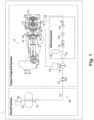
- FIG. 1 an illustrative view of an embodiment of a system in accordance with the disclosure is shown in Fig. 1 and is designated generally by reference character 100.
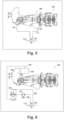
- FIGs. 2-6 Other embodiments and/or aspects of this disclosure are shown in Figs. 2-6 .
- Certain embodiments described herein can be used to improve conversion of liquid hydrogen fuel to gaseous hydrogen for combustion.
- the present disclosure relates generally to fuel control for gas turbine engines, and more particularly to control of gaseous fuel flow.
- a gas turbine engine may be fueled with gaseous fuel such as hydrogen gas. It is possible to gasify liquid hydrogen from an aircraft supply through an appropriate fuel pump, heat exchangers, pressure regulator, and metering valves. However, conventional gasification methods may not provide sufficient heat to the liquid hydrogen to offer full or efficient combustion.
- an aircraft 1 can include an engine 10, where the engine 10 can be a propulsive energy engine (e.g. creating thrust for the aircraft 1), or a non-propulsive energy engine, and a fuel system 100.
- the engine 10 is a turbofan engine, although the present disclosure may likewise be used with other engine types.
- the engine 100 includes a compressor section 102 having a compressor 104 in a primary gas path 106 to supply compressed air to a combustor 108 of the aircraft engine 100.
- the primary gas path 106 includes a nozzle manifold 110 for issuing fluid to the combustor 108.
- the primary gas path 106 includes, in fluid communication in a series: the compressor 104, the combustor 108 fluidly connected to an outlet 114 of the compressor 104, and a turbine section 116 fluidly connected to an outlet 118 of the combustor 108.
- the turbine section 116 is mechanically connected to the compressor 104 to drive the compressor 104.
- a fuel feed conduit 122 is defined at least in part by a gaseous fuel supply 124, a plurality of fuel nozzles, and the combustor 108 of the gas turbine engine 100.
- the gaseous fuel supply 124 can be any suitable gaseous fuel, such as a gaseous pressure and/or temperature regulated fuel supply, which may be or include hydrogen gas.
- the fuel feed conduit can further be defined, in fluid series or any suitable order or combination between the combustor 108 and the gaseous fuel supply 124, by a fuel shut off valve 130, a fuel pump 132, a liquid/gaseous fuel evaporator/heater 134, a turbine air cooling heat exchanger 136, a gaseous fuel accumulator 138, a pressure regulator 139, a gaseous fuel metering unit 140, and/or a fuel manifold shut off valve 142, and by fuel lines interconnecting therebetween.
- the pre-pressurized gaseous fuel accumulator 138 can be used as backup supply pressure source.
- the fuel system 100 includes the a evaporator/heater 134 where heat is supplued from any suitable heat source 144, for example engine fluid to evaporate/heat the liquid hydrogen therein.
- the evaporator/heater 134 can be an evaporator and/or a heater.
- the evaporator/heater 134 converts liquid hydrogen to gaseous hydrogen therein.
- the evaporator/heater 134 is only a heater, in which the heater 134 receives heated liquid from an external source to exchange heat with the liquid hydrogen therein, but does not necessarily evaporate the liquid hydrogen or may only evaporate some.
- the evaporator/heater 134 can be exclusively a heater if it receives gas solely to add heat to the gas, without any conversion of state.
- the engine fluid alone is insufficient to entirely evaporate the flow of liquid hydrogen in the evaporator 134, or it may be that the engine fluid alone is unable to heat the liquid and/or gaseous hydrogen to a heat acceptable for desired engine performance. Therefore, a multi-stage heating system (e.g. systems 200-600) is provided herein.
- the pump 132 is in fluid communication with the liquid hydrogen tank 124 to drive fuel from the liquid hydrogen tank 124 to the gas turbine engine 10 via the fuel feed conduit 122.
- An upstream working fluid conduit 248 is defined at least in part by an upstream heater circuit, which branches off of the fuel feed conduit 122.
- An electric heat source 244 e.g. a resistive heater
- the electric heat source 244 is in thermal communication with the upstream working fluid flowing through the upstream working fluid conduit 248 to add heat to the upstream working fluid.
- An upstream working fluid pump 245 can be disposed in the upstream heater circuit to drive working fluid through the upstream heater circuit, passing through the electric heat source 244 and the evaporator 134.
- the upstream working fluid conduit 248 is in fluidly connected to the evaporator 134 to add heat into a flow of hydrogen passing through the evaporator 134.
- the upstream working fluid conduit 248 is fluidly isolated from the flow of liquid hydrogen within the evaporator 134 but is in thermal communication with the flow of hydrogen passing through the evaporator 134 for exchanging heat from the upstream working fluid to the flow liquid hydrogen passing through the evaporator 134.
- An electric energy source 246 is associated with the electric heat source 244 to power the electric heat source 244.
- the electric energy source can be external to the gas turbine engine 10, and can be or include at least one of: an auxiliary power unit 250, an electric generator 252, and/or a battery 254 operatively connected to power the electric source 244.
- the fuel feed conduit 122 is further defined by a gaseous hydrogen pump 256 downstream of the evaporator 134, fluidly connecting an outlet of the evaporator 134 to the gas turbine engine 10 to drive gaseous hydrogen from the evaporator 134 to the gas turbine engine 10.
- the fuel feed conduit can be further defined by a gaseous hydrogen heater 258 downstream of the gaseous hydrogen pump 256 and upstream of the gas turbine engine 10.
- the gaseous hydrogen heater 258 is associated with a downstream heat source 260 internal to the engine 10 to add heat to the flow of gaseous hydrogen passing through the gaseous hydrogen heater 258.
- a system 300 can have similar components as in system 200.
- the downstream heat source 360 is compressor bleed air from the compressor section 102.
- a bleed air conduit 362 fluidly connects the compressor section 102 with the gaseous hydrogen heater 358 to add heat from the compressor section 102 to the flow of gaseous hydrogen passing through the gaseous hydrogen heater 358.
- an environmental control system return conduit 364 conveys cooled compressor bleed air to an environmental control system (ECS) 366.
- ECS environmental control system
- a switching module can be disposed in the bleed air conduit 362 to allow the option of using either the low pressure compressor bleed air (e.g. lower temperature) as the downstream heat source 360) or high pressure compressor bleed air (e.g. higher temperature) as the downstream heat source 360, depending on the amount of heat needed for the gaseous hydrogen heater 358 and the amount of cooling air required for the ECS 366.
- a system 400 can have similar components as in system 200.
- the downstream heat source 460 can be turbine exhaust from a turbine exhaust section (e.g. turbine outlet 118) of the gas turbine engine 10.
- a downstream working fluid conduit 468 defines a downstream heater circuit which branches off the fuel feed conduit 122.
- the downstream working fluid conduit 468 is at least partially coiled (e.g. portion 468a) around the turbine exhaust section 118.
- a downstream working fluid pump 470 is disposed in the downstream working fluid conduit 468 to drive downstream working fluid through the downstream heater circuit, passing through the coiled portion 468a and to the gaseous hydrogen heater 458 to add heat to the flow of gaseous hydrogen passing through the gaseous hydrogen heater 458.
- the downstream working fluid conduit 468 is fluidly isolated from the flow of liquid hydrogen within the gaseous hydrogen heater 458 but is in thermal communication with the flow of hydrogen passing through the gaseous hydrogen heater 458 for exchanging heat from the downstream working fluid to the flow gaseous hydrogen passing through the gaseous hydrogen heater 458.
- a system 500 can have similar components as in system 200.
- the downstream heat source 560 is an engine fluid (e.g. engine oil).
- An engine fluid conduit is defined at least in part by an engine fluid feed conduit 572 and an engine fluid return conduit 574 fluidly connecting between the gas turbine engine 10 and the gaseous hydrogen heater 558 to convey the hot engine fluid from the engine 10 to the gaseous hydrogen heater 558 to add heat to the flow of gaseous hydrogen passing through the gaseous hydrogen heater 558.
- An engine pump 576 can be disposed in the compressor section 102 to drive the engine fluid from the engine 10 to the gaseous hydrogen heater 558.
- a system 600 can have similar components as in system 200.
- the downstream heat source 660 is an electric heat source 678 (e.g. resistive heater), where the electric heat source 678 is external to, but powered by an electric energy module 646 driven by the gas turbine engine 10.
- a gear box 680 is operatively connected to be driven by a spool shaft 682 of the gas turbine engine 10.
- the electric energy module 646 includes an electric generator 684 operatively connected to be driven by the gear box 682 to power the electric heat source 678 associated with the gaseous hydrogen heater 658.
- a downstream working fluid conduit 668 defines a downstream heater circuit which branches off the fuel feed conduit 122.
- a downstream working fluid pump 670 is disposed in the downstream working fluid conduit 668 to drive downstream working fluid through the downstream heater circuit, passing through the electric heat source 678 to the gaseous hydrogen heater 658 to add heat to the flow of gaseous hydrogen passing through the gaseous hydrogen heater 658.
- the downstream working fluid conduit 668 is fluidly isolated from the flow of liquid hydrogen within the gaseous hydrogen heater 658 but is in thermal communication with the flow of hydrogen passing through the gaseous hydrogen heater 658 for exchanging heat from the downstream working fluid to the flow gaseous hydrogen passing through the gaseous hydrogen heater 658.
- a method of heating fuel in an aircraft includes heating a flow of liquid hydrogen with an evaporator (e.g. evaporator 134) in thermal communication with an upstream heat source (e.g. heat source 244) to convert the flow of liquid hydrogen to a flow of gaseous hydrogen.
- the method includes heating the flow of gaseous hydrogen with a gaseous hydrogen heater (e.g. 258, 358, 458, 558, 658) in thermal communication with a downstream heat source (e.g. 260, 360, 460, 560, 660).
- the upstream heat source is external to a gas turbine engine (e.g. engine 10) and the downstream heat source is internal to the gas turbine engine.
- heating the flow of liquid hydrogen includes exchanging heat between an upstream heating working fluid in thermal communication with the upstream heat source and the flow of liquid hydrogen in the evaporator.
- the method includes powering the upstream heat source with at least one of an auxiliary power unit, an electric generator, and/or an electric energy module.
- heating the flow of gaseous hydrogen includes exchanging heat between an engine fluid and the flow of gaseous hydrogen in the gaseous hydrogen heater.
- the engine fluid includes at least one of: compressor bleed air, turbine exhaust, and/or engine oil.
- heating the flow of gaseous hydrogen includes exchanging heat between a downstream working fluid in thermal communication with the downstream heat source and the flow of gaseous hydrogen in the gaseous hydrogen heater.
- powering the downstream heat source with an electric generator (e.g. generator 684) driven by the gas turbine engine.
- liquid hydrogen can be pumped from the aircraft cryogenic tanks using an electrically driven LH2 pump.
- one engine heat source or multiple heat sources can then heat the cold (e.g. 20K) liquid hydrogen to convert it from liquid to a gaseous state (e.g. 50K) where it can then be combusted in the engine to produce power.
- engine bleed or waste heat e.g. exhaust and oil
- the heating may occur in multiple stages of the aircraft power plant systems.
- the LH2 can first be evaporated to gaseous state using an electrically powered heat exchanger with an intermediate fluid medium to avoid ignition.
- the electric power supply can come from either an auxiliary power unit (e.g. a thermal engine) and/or electric power storage unit (battery pack).
- the cold gaseous hydrogen (GH2) can be further heated using heat sources in the engine (e.g. as described herein).
- the engine heat sources may be used independently, in parallel or in series depending on the final GH2 heat requirements.
- the multi-stage evaporator and heating approach can be advantageous, for example, by separating the evaporation phase from the engine, the supply of GH2 for the engine is not coupled to the heat output of the engine, meaning for certain low heat output phases (e.g. at engine starting phase, engine ground idle or flight idle running conditions), there is adequate GH2 to start the thermal cycle engine per example.
- evaporating the LH2 or heating the GH2 can be accomplished by using hot compressor bleed air, normally used for the aircraft environmental control system (ECS).
- ECS aircraft environmental control system
- An additional potential benefit of this configuration can be the ECS bleed air would be cooled by the LH2, thus eliminating the need for a typical ECS pre-cooler.
- a switching valve can be included in this embodiment to allow for switching between the low pressure compressor bleed air (e.g. lower temperature and lower impact on performance) or high pressure compressor bleed air (e.g. higher temperature more impact on performance), depending on the amount of evaporation needed or cooling needed for the ECS.
- heat from the exhaust can be used to heat a surrounding fluid (e.g. coiled around the exhaust) which in turn is used to evaporate LH2 in a heat exchanger and change its state from liquid to gaseous form.
- This source of heat may (if needed) be added in series to the compressor air heat source (e.g. multi-stage heating using three or more heating stages) in order to produce gaseous hydrogen a higher rate or to raise the gaseous hydrogen output temperature higher prior to combustion.
- hot engine oil can be used in series with any of the other means of heating as described herein. While engine oil heating may be less effective on its own than other methods described above (e.g. due to the lower temperature of the oil compared to bleed air, or exhaust air, for example), engine oil heating can be used in combination with any other method to provide supplemental heat if needed or desired.
- the heat exchange between the cold LH2 and hot engine oil also additionally provides a means of removing heat from the engine oil which can normally be done using an air-oil heat exchanger. By reducing the size (or eliminating altogether) the air-oil heat exchanger, engine weight and aircraft drag (e.g. smaller cooler inlet) can be reduced.
- heating the LH2 can be accomplished using an electric resistive heating source powered by the engine (or from another source such as an APU or other electric module) to heat a fluid which would in turn exchange heat with the cold liquid hydrogen.
- an electric resistive heating source powered by the engine or from another source such as an APU or other electric module
- This means for heating could also be used in series with the other heating sources and provides the extra advantage of being able to tune the amount of fine tune the amount of heating as required by changing the amount of current delivered to the heat source.
- any numerical values disclosed herein can be exact values or can be values within a range. Further, any terms of approximation (e.g., “about”, “approximately”, “around”) used in this disclosure can mean the stated value within a range. For example, in certain embodiments, the range can be within (plus or minus) 20%, or within 10%, or within 5%, or within 2%, or within any other suitable percentage or number as appreciated by those having ordinary skill in the art (e.g., for known tolerance limits or error ranges).
- a reference to "A and/or B", when used in conjunction with open-ended language such as “comprising” can refer, in one embodiment, to A only (optionally including elements other than B); in another embodiment, to B only (optionally including elements other than A); in yet another embodiment, to both A and B (optionally including other elements); etc.
Landscapes
- Engineering & Computer Science (AREA)
- Chemical & Material Sciences (AREA)
- Combustion & Propulsion (AREA)
- Mechanical Engineering (AREA)
- General Engineering & Computer Science (AREA)
- Chemical Kinetics & Catalysis (AREA)
- General Chemical & Material Sciences (AREA)
- Engine Equipment That Uses Special Cycles (AREA)
Applications Claiming Priority (1)
| Application Number | Priority Date | Filing Date | Title |
|---|---|---|---|
| US17/402,502 US11761381B2 (en) | 2021-08-14 | 2021-08-14 | Gas turbine engine comprising liquid hydrogen evaporators and heaters |
Publications (3)
| Publication Number | Publication Date |
|---|---|
| EP4144970A2 true EP4144970A2 (de) | 2023-03-08 |
| EP4144970A3 EP4144970A3 (de) | 2023-05-10 |
| EP4144970B1 EP4144970B1 (de) | 2025-06-25 |
Family
ID=82899092
Family Applications (1)
| Application Number | Title | Priority Date | Filing Date |
|---|---|---|---|
| EP22189996.6A Active EP4144970B1 (de) | 2021-08-14 | 2022-08-11 | Flüssige wasserstoffverdampfer und heizgeräte |
Country Status (4)
| Country | Link |
|---|---|
| US (1) | US11761381B2 (de) |
| EP (1) | EP4144970B1 (de) |
| CN (1) | CN115898647A (de) |
| CA (1) | CA3170490A1 (de) |
Cited By (5)
| Publication number | Priority date | Publication date | Assignee | Title |
|---|---|---|---|---|
| FR3140907A1 (fr) * | 2022-10-14 | 2024-04-19 | Safran | Système de conditionnement de carburant pour alimenter une turbomachine d’aéronef, procédé d’alimentation d’une turbomachine |
| EP4361418A1 (de) * | 2022-10-24 | 2024-05-01 | Rolls-Royce plc | Flugzeugtriebwerktreibstoffsystem |
| US12221924B2 (en) | 2022-10-24 | 2025-02-11 | Rolls-Royce Plc | Combined gas turbine engine and fuel cell |
| US12270341B2 (en) | 2022-10-24 | 2025-04-08 | Rolls-Royce Plc | Gas turbine engine fuel system |
| FR3168388A1 (fr) * | 2024-11-08 | 2026-05-15 | Safran | Architecture et procédé de contrôle d’une chaine propulsive d’un aéronef et aéronef comprenant une telle architecture de contrôle |
Families Citing this family (12)
| Publication number | Priority date | Publication date | Assignee | Title |
|---|---|---|---|---|
| FR3110937B1 (fr) * | 2020-05-28 | 2022-04-29 | Safran | Installation d’alimentation en carburant cryogénique de la chambre de combustion d’une turbomachine. |
| US12092042B2 (en) * | 2021-10-20 | 2024-09-17 | General Electric Company | Hydrogen fuel system |
| US11946419B2 (en) * | 2022-02-23 | 2024-04-02 | General Electric Company | Methods and apparatus to produce hydrogen gas turbine propulsion |
| US11873768B1 (en) * | 2022-09-16 | 2024-01-16 | General Electric Company | Hydrogen fuel system for a gas turbine engine |
| US12092032B1 (en) | 2023-06-05 | 2024-09-17 | Honeywell International Inc. | Gas turbine engine hydrogen supply system and method |
| EP4495012B1 (de) * | 2023-07-17 | 2026-07-08 | Airbus Operations, S.L.U. | Klimatisierungssystem für ein flugzeug |
| US12618360B2 (en) * | 2023-09-27 | 2026-05-05 | Eaton Intelligent Power Limited | Liquid hydrogen pumping system |
| GB202317413D0 (en) | 2023-11-14 | 2023-12-27 | Rolls Royce Plc | Propulsion system comprising a hydrogen-burning gas turbine engine |
| GB202317415D0 (en) * | 2023-11-14 | 2023-12-27 | Rolls Royce Plc | Propulsion system comprising a hydrogen-burning gas turbine engine |
| GB202408642D0 (en) * | 2024-06-17 | 2024-07-31 | Rolls Royce Plc | Method and apparatus for heating a flow of hydrogen |
| US12460580B1 (en) * | 2024-12-13 | 2025-11-04 | Pratt & Whitney Canada Corp. | Heat management system and method for hydrogen-fueled engine |
| CN121404532A (zh) * | 2025-12-09 | 2026-01-27 | 中国直升机设计研究所 | 一种适配于燃氢发动机的飞行氢燃料系统 |
Family Cites Families (31)
| Publication number | Priority date | Publication date | Assignee | Title |
|---|---|---|---|---|
| US3241311A (en) * | 1957-04-05 | 1966-03-22 | United Aircraft Corp | Turbofan engine |
| US3237401A (en) * | 1958-01-17 | 1966-03-01 | United Aircraft Corp | Regenerative expander engine |
| US3382672A (en) * | 1966-11-02 | 1968-05-14 | Gen Electric | Gas turbine engine fuel control system |
| DE2413507A1 (de) * | 1974-03-20 | 1975-10-02 | Motoren Turbinen Union | Gasturbine fuer kryogenen kraftstoff |
| US5185541A (en) * | 1991-12-02 | 1993-02-09 | 21St Century Power & Light Corporation | Gas turbine for converting fuel to electrical and mechanical energy |
| US5363641A (en) * | 1993-08-06 | 1994-11-15 | United Technologies Corporation | Integrated auxiliary power system |
| DE19717267B4 (de) * | 1997-04-24 | 2008-08-14 | Alstom | Verfahren zur Aufbereitung von tiefgekühltem Flüssiggas |
| US7117663B2 (en) * | 2004-05-25 | 2006-10-10 | Jonathan Cleaveland Knapp | Air breathing, hydrogen fueled jet engine for high speed aircraft |
| BRPI0518830B1 (pt) * | 2004-12-08 | 2019-06-04 | Lpp Combustion,Llc | Método e aparelho para condicionar combustíveis de hidrocarbono líquido |
| WO2008097320A2 (en) * | 2006-06-01 | 2008-08-14 | Virginia Tech Intellectual Properties, Inc. | Premixing injector for gas turbine engines |
| US20080148881A1 (en) * | 2006-12-21 | 2008-06-26 | Thomas Ory Moniz | Power take-off system and gas turbine engine assembly including same |
| US20110265488A1 (en) * | 2010-04-29 | 2011-11-03 | General Electric Company | ALTERNATE METHOD FOR DILUENT INJECTION FOR GAS TURBINE NOx EMISSIONS CONTROL |
| WO2012024683A1 (en) | 2010-08-20 | 2012-02-23 | Icr Turbine Engine Corporation | Gas turbine engine with exhaust rankine cycle |
| RU2013121599A (ru) * | 2010-10-12 | 2014-11-20 | ДжиТиЭлПЕТРОЛ ЭлЭлСи | Генерирование энергии с использованием ионно-транспортной мембраны |
| WO2014105327A1 (en) | 2012-12-28 | 2014-07-03 | General Electric Company | Turbine engine assembly comprising a cryogenic fuel system |
| RU2626903C1 (ru) * | 2016-06-08 | 2017-08-02 | Открытое Акционерное Общество "Российские Железные Дороги" | Система подачи криогенного топлива для питания двигателя |
| US11125165B2 (en) | 2017-11-21 | 2021-09-21 | General Electric Company | Thermal management system |
| US11041439B2 (en) * | 2018-09-14 | 2021-06-22 | Raytheon Technologies Corporation | Hybrid expander cycle with turbo-generator and cooled power electronics |
| US11047307B2 (en) * | 2018-09-14 | 2021-06-29 | Raytheon Technologies Corporation | Hybrid expander cycle with intercooling and turbo-generator |
| US10989117B2 (en) * | 2018-09-14 | 2021-04-27 | Raytheon Technologies Corporation | Hybrid expander cycle with pre-compression cooling and turbo-generator |
| KR102062484B1 (ko) | 2019-03-13 | 2020-02-11 | 사단법인 한국선급 | 수소 재액화 시스템 |
| US20200386189A1 (en) | 2019-04-30 | 2020-12-10 | General Electric Company | High Speed Aircraft Flight Technologies |
| US11434823B2 (en) * | 2020-01-06 | 2022-09-06 | Raytheon Technologies Corporation | Systems and methods for power transfer in cryogenic fuel applications |
| US20210340908A1 (en) * | 2020-05-01 | 2021-11-04 | Raytheon Technologies Corporation | Gas turbine engines having cryogenic fuel systems |
| US11448133B2 (en) * | 2020-05-05 | 2022-09-20 | Raytheon Technologies Corporation | Moderate pressure liquid hydrogen storage for hybrid-electric propulsion system |
| RU2746082C1 (ru) | 2020-09-15 | 2021-04-06 | Владимир Александрович Шишков | Система регулирования газотурбинного двигателя |
| EP3978807A3 (de) * | 2020-09-30 | 2022-07-06 | Rolls-Royce plc | Direktkraftstoffeinspritzsystem |
| EP3995679B1 (de) | 2020-11-06 | 2025-11-12 | General Electric Company | Wasserstoffbrennstoffsystem |
| US11674443B2 (en) * | 2020-11-06 | 2023-06-13 | General Electric Company | Hydrogen fuel system |
| US11773782B2 (en) * | 2020-12-23 | 2023-10-03 | Rtx Corporation | Gas turbine engines having cryogenic fuel systems |
| US11724815B2 (en) * | 2021-01-15 | 2023-08-15 | The Boeing Company | Hybrid electric hydrogen fuel cell engine |
-
2021
- 2021-08-14 US US17/402,502 patent/US11761381B2/en active Active
-
2022
- 2022-08-11 EP EP22189996.6A patent/EP4144970B1/de active Active
- 2022-08-12 CA CA3170490A patent/CA3170490A1/en active Pending
- 2022-08-15 CN CN202210975187.1A patent/CN115898647A/zh active Pending
Cited By (6)
| Publication number | Priority date | Publication date | Assignee | Title |
|---|---|---|---|---|
| FR3140907A1 (fr) * | 2022-10-14 | 2024-04-19 | Safran | Système de conditionnement de carburant pour alimenter une turbomachine d’aéronef, procédé d’alimentation d’une turbomachine |
| EP4361418A1 (de) * | 2022-10-24 | 2024-05-01 | Rolls-Royce plc | Flugzeugtriebwerktreibstoffsystem |
| US12221924B2 (en) | 2022-10-24 | 2025-02-11 | Rolls-Royce Plc | Combined gas turbine engine and fuel cell |
| US12252266B2 (en) | 2022-10-24 | 2025-03-18 | Rolls-Royce Plc | Aircraft engine fuel system |
| US12270341B2 (en) | 2022-10-24 | 2025-04-08 | Rolls-Royce Plc | Gas turbine engine fuel system |
| FR3168388A1 (fr) * | 2024-11-08 | 2026-05-15 | Safran | Architecture et procédé de contrôle d’une chaine propulsive d’un aéronef et aéronef comprenant une telle architecture de contrôle |
Also Published As
| Publication number | Publication date |
|---|---|
| US20230045911A1 (en) | 2023-02-16 |
| US11761381B2 (en) | 2023-09-19 |
| EP4144970B1 (de) | 2025-06-25 |
| CA3170490A1 (en) | 2023-02-14 |
| EP4144970A3 (de) | 2023-05-10 |
| CN115898647A (zh) | 2023-04-04 |
Similar Documents
| Publication | Publication Date | Title |
|---|---|---|
| EP4144970B1 (de) | Flüssige wasserstoffverdampfer und heizgeräte | |
| EP4227509A1 (de) | Kryogenisch unterstützte abgaskondensation | |
| EP4239170B1 (de) | Kombitriebwerke | |
| EP4095369B1 (de) | Wasserstoffmotor mit doppelzyklus-zwischenkühlungsarchitektur | |
| US11041439B2 (en) | Hybrid expander cycle with turbo-generator and cooled power electronics | |
| CN104884766B (zh) | 涡轮发动机组件及双燃料飞行器系统 | |
| US11661889B1 (en) | Hydrogen powered geared turbo fan engine with an off-set reduced core | |
| US20140182264A1 (en) | Aircraft engine systems and methods for operating same | |
| US12479591B2 (en) | System for conditioning fuel for supplying an aircraft turbomachine, aircraft and method of use | |
| EP4123146B1 (de) | Zweitakt-motor mit zwischenkühlungsarchitekturen | |
| JP2016509549A (ja) | 航空機発電システム及び方法 | |
| EP4367373B1 (de) | Turbinenmotoren mit wasserstoffbrennstoffsystemen | |
| EP4303418A1 (de) | Hybride elektrische energie für turbinenmotoren mit wasserstoffbrennstoffsystemen | |
| US10830105B2 (en) | System and method for improving output and heat rate for a liquid natural gas combined cycle power plant | |
| EP4361418B1 (de) | Flugzeugtriebwerktreibstoffsystem | |
| BR102022016047A2 (pt) | Sistema de combustível de hidrogênio para aeronaves, sistema de aquecimento de múltiplos estágios para uma aeronave e método para aquecer combustível em uma aeronave |
Legal Events
| Date | Code | Title | Description |
|---|---|---|---|
| PUAI | Public reference made under article 153(3) epc to a published international application that has entered the european phase |
Free format text: ORIGINAL CODE: 0009012 |
|
| STAA | Information on the status of an ep patent application or granted ep patent |
Free format text: STATUS: THE APPLICATION HAS BEEN PUBLISHED |
|
| AK | Designated contracting states |
Kind code of ref document: A2 Designated state(s): AL AT BE BG CH CY CZ DE DK EE ES FI FR GB GR HR HU IE IS IT LI LT LU LV MC MK MT NL NO PL PT RO RS SE SI SK SM TR |
|
| PUAL | Search report despatched |
Free format text: ORIGINAL CODE: 0009013 |
|
| AK | Designated contracting states |
Kind code of ref document: A3 Designated state(s): AL AT BE BG CH CY CZ DE DK EE ES FI FR GB GR HR HU IE IS IT LI LT LU LV MC MK MT NL NO PL PT RO RS SE SI SK SM TR |
|
| RIC1 | Information provided on ipc code assigned before grant |
Ipc: F02C 7/224 20060101ALI20230406BHEP Ipc: F02C 3/22 20060101AFI20230406BHEP |
|
| STAA | Information on the status of an ep patent application or granted ep patent |
Free format text: STATUS: REQUEST FOR EXAMINATION WAS MADE |
|
| 17P | Request for examination filed |
Effective date: 20231108 |
|
| RBV | Designated contracting states (corrected) |
Designated state(s): AL AT BE BG CH CY CZ DE DK EE ES FI FR GB GR HR HU IE IS IT LI LT LU LV MC MK MT NL NO PL PT RO RS SE SI SK SM TR |
|
| GRAP | Despatch of communication of intention to grant a patent |
Free format text: ORIGINAL CODE: EPIDOSNIGR1 |
|
| STAA | Information on the status of an ep patent application or granted ep patent |
Free format text: STATUS: GRANT OF PATENT IS INTENDED |
|
| INTG | Intention to grant announced |
Effective date: 20250124 |
|
| GRAS | Grant fee paid |
Free format text: ORIGINAL CODE: EPIDOSNIGR3 |
|
| GRAA | (expected) grant |
Free format text: ORIGINAL CODE: 0009210 |
|
| STAA | Information on the status of an ep patent application or granted ep patent |
Free format text: STATUS: THE PATENT HAS BEEN GRANTED |
|
| AK | Designated contracting states |
Kind code of ref document: B1 Designated state(s): AL AT BE BG CH CY CZ DE DK EE ES FI FR GB GR HR HU IE IS IT LI LT LU LV MC MK MT NL NO PL PT RO RS SE SI SK SM TR |
|
| REG | Reference to a national code |
Ref country code: GB Ref legal event code: FG4D |
|
| REG | Reference to a national code |
Ref country code: CH Ref legal event code: EP |
|
| REG | Reference to a national code |
Ref country code: DE Ref legal event code: R096 Ref document number: 602022016341 Country of ref document: DE |
|
| REG | Reference to a national code |
Ref country code: CH Ref legal event code: EP |
|
| REG | Reference to a national code |
Ref country code: IE Ref legal event code: FG4D |
|
| PG25 | Lapsed in a contracting state [announced via postgrant information from national office to epo] |
Ref country code: FI Free format text: LAPSE BECAUSE OF FAILURE TO SUBMIT A TRANSLATION OF THE DESCRIPTION OR TO PAY THE FEE WITHIN THE PRESCRIBED TIME-LIMIT Effective date: 20250625 |
|
| PGFP | Annual fee paid to national office [announced via postgrant information from national office to epo] |
Ref country code: DE Payment date: 20250724 Year of fee payment: 4 |
|
| REG | Reference to a national code |
Ref country code: LT Ref legal event code: MG9D |
|
| PG25 | Lapsed in a contracting state [announced via postgrant information from national office to epo] |
Ref country code: NO Free format text: LAPSE BECAUSE OF FAILURE TO SUBMIT A TRANSLATION OF THE DESCRIPTION OR TO PAY THE FEE WITHIN THE PRESCRIBED TIME-LIMIT Effective date: 20250925 Ref country code: GR Free format text: LAPSE BECAUSE OF FAILURE TO SUBMIT A TRANSLATION OF THE DESCRIPTION OR TO PAY THE FEE WITHIN THE PRESCRIBED TIME-LIMIT Effective date: 20250926 |
|
| PGFP | Annual fee paid to national office [announced via postgrant information from national office to epo] |
Ref country code: IT Payment date: 20250901 Year of fee payment: 4 |
|
| PG25 | Lapsed in a contracting state [announced via postgrant information from national office to epo] |
Ref country code: BG Free format text: LAPSE BECAUSE OF FAILURE TO SUBMIT A TRANSLATION OF THE DESCRIPTION OR TO PAY THE FEE WITHIN THE PRESCRIBED TIME-LIMIT Effective date: 20250625 |
|
| PG25 | Lapsed in a contracting state [announced via postgrant information from national office to epo] |
Ref country code: HR Free format text: LAPSE BECAUSE OF FAILURE TO SUBMIT A TRANSLATION OF THE DESCRIPTION OR TO PAY THE FEE WITHIN THE PRESCRIBED TIME-LIMIT Effective date: 20250625 |
|
| PGFP | Annual fee paid to national office [announced via postgrant information from national office to epo] |
Ref country code: FR Payment date: 20250725 Year of fee payment: 4 Ref country code: AT Payment date: 20251020 Year of fee payment: 4 |
|
| PG25 | Lapsed in a contracting state [announced via postgrant information from national office to epo] |
Ref country code: RS Free format text: LAPSE BECAUSE OF FAILURE TO SUBMIT A TRANSLATION OF THE DESCRIPTION OR TO PAY THE FEE WITHIN THE PRESCRIBED TIME-LIMIT Effective date: 20250925 |
|
| PG25 | Lapsed in a contracting state [announced via postgrant information from national office to epo] |
Ref country code: LV Free format text: LAPSE BECAUSE OF FAILURE TO SUBMIT A TRANSLATION OF THE DESCRIPTION OR TO PAY THE FEE WITHIN THE PRESCRIBED TIME-LIMIT Effective date: 20250625 |
|
| REG | Reference to a national code |
Ref country code: NL Ref legal event code: MP Effective date: 20250625 |
|
| PG25 | Lapsed in a contracting state [announced via postgrant information from national office to epo] |
Ref country code: NL Free format text: LAPSE BECAUSE OF FAILURE TO SUBMIT A TRANSLATION OF THE DESCRIPTION OR TO PAY THE FEE WITHIN THE PRESCRIBED TIME-LIMIT Effective date: 20250625 |
|
| PG25 | Lapsed in a contracting state [announced via postgrant information from national office to epo] |
Ref country code: PT Free format text: LAPSE BECAUSE OF FAILURE TO SUBMIT A TRANSLATION OF THE DESCRIPTION OR TO PAY THE FEE WITHIN THE PRESCRIBED TIME-LIMIT Effective date: 20251027 |
|
| REG | Reference to a national code |
Ref country code: AT Ref legal event code: MK05 Ref document number: 1806644 Country of ref document: AT Kind code of ref document: T Effective date: 20250625 |
|
| PG25 | Lapsed in a contracting state [announced via postgrant information from national office to epo] |
Ref country code: IS Free format text: LAPSE BECAUSE OF FAILURE TO SUBMIT A TRANSLATION OF THE DESCRIPTION OR TO PAY THE FEE WITHIN THE PRESCRIBED TIME-LIMIT Effective date: 20251025 |
|
| PG25 | Lapsed in a contracting state [announced via postgrant information from national office to epo] |
Ref country code: AT Free format text: LAPSE BECAUSE OF FAILURE TO SUBMIT A TRANSLATION OF THE DESCRIPTION OR TO PAY THE FEE WITHIN THE PRESCRIBED TIME-LIMIT Effective date: 20250625 Ref country code: SM Free format text: LAPSE BECAUSE OF FAILURE TO SUBMIT A TRANSLATION OF THE DESCRIPTION OR TO PAY THE FEE WITHIN THE PRESCRIBED TIME-LIMIT Effective date: 20250625 |
|
| PG25 | Lapsed in a contracting state [announced via postgrant information from national office to epo] |
Ref country code: CZ Free format text: LAPSE BECAUSE OF FAILURE TO SUBMIT A TRANSLATION OF THE DESCRIPTION OR TO PAY THE FEE WITHIN THE PRESCRIBED TIME-LIMIT Effective date: 20250625 |
|
| PG25 | Lapsed in a contracting state [announced via postgrant information from national office to epo] |
Ref country code: PL Free format text: LAPSE BECAUSE OF FAILURE TO SUBMIT A TRANSLATION OF THE DESCRIPTION OR TO PAY THE FEE WITHIN THE PRESCRIBED TIME-LIMIT Effective date: 20250625 |
|
| PG25 | Lapsed in a contracting state [announced via postgrant information from national office to epo] |
Ref country code: EE Free format text: LAPSE BECAUSE OF FAILURE TO SUBMIT A TRANSLATION OF THE DESCRIPTION OR TO PAY THE FEE WITHIN THE PRESCRIBED TIME-LIMIT Effective date: 20250625 |
|
| PG25 | Lapsed in a contracting state [announced via postgrant information from national office to epo] |
Ref country code: SK Free format text: LAPSE BECAUSE OF FAILURE TO SUBMIT A TRANSLATION OF THE DESCRIPTION OR TO PAY THE FEE WITHIN THE PRESCRIBED TIME-LIMIT Effective date: 20250625 |
|
| PG25 | Lapsed in a contracting state [announced via postgrant information from national office to epo] |
Ref country code: ES Free format text: LAPSE BECAUSE OF FAILURE TO SUBMIT A TRANSLATION OF THE DESCRIPTION OR TO PAY THE FEE WITHIN THE PRESCRIBED TIME-LIMIT Effective date: 20250625 |
|
| PG25 | Lapsed in a contracting state [announced via postgrant information from national office to epo] |
Ref country code: RO Free format text: LAPSE BECAUSE OF FAILURE TO SUBMIT A TRANSLATION OF THE DESCRIPTION OR TO PAY THE FEE WITHIN THE PRESCRIBED TIME-LIMIT Effective date: 20250625 |
|
| REG | Reference to a national code |
Ref country code: CH Ref legal event code: H13 Free format text: ST27 STATUS EVENT CODE: U-0-0-H10-H13 (AS PROVIDED BY THE NATIONAL OFFICE) Effective date: 20260324 |
|
| REG | Reference to a national code |
Ref country code: DE Ref legal event code: R097 Ref document number: 602022016341 Country of ref document: DE |
|
| PG25 | Lapsed in a contracting state [announced via postgrant information from national office to epo] |
Ref country code: MC Free format text: LAPSE BECAUSE OF FAILURE TO SUBMIT A TRANSLATION OF THE DESCRIPTION OR TO PAY THE FEE WITHIN THE PRESCRIBED TIME-LIMIT Effective date: 20250625 |
|
| PG25 | Lapsed in a contracting state [announced via postgrant information from national office to epo] |
Ref country code: DK Free format text: LAPSE BECAUSE OF FAILURE TO SUBMIT A TRANSLATION OF THE DESCRIPTION OR TO PAY THE FEE WITHIN THE PRESCRIBED TIME-LIMIT Effective date: 20250625 |
|
| PG25 | Lapsed in a contracting state [announced via postgrant information from national office to epo] |
Ref country code: LU Free format text: LAPSE BECAUSE OF NON-PAYMENT OF DUE FEES Effective date: 20250811 |
|
| PG25 | Lapsed in a contracting state [announced via postgrant information from national office to epo] |
Ref country code: CH Free format text: LAPSE BECAUSE OF NON-PAYMENT OF DUE FEES Effective date: 20250831 |
|
| REG | Reference to a national code |
Ref country code: BE Ref legal event code: MM Effective date: 20250831 |
|
| PLBE | No opposition filed within time limit |
Free format text: ORIGINAL CODE: 0009261 |
|
| STAA | Information on the status of an ep patent application or granted ep patent |
Free format text: STATUS: NO OPPOSITION FILED WITHIN TIME LIMIT |
|
| REG | Reference to a national code |
Ref country code: CH Ref legal event code: L10 Free format text: ST27 STATUS EVENT CODE: U-0-0-L10-L00 (AS PROVIDED BY THE NATIONAL OFFICE) Effective date: 20260507 |
|
| 26N | No opposition filed |
Effective date: 20260326 |
|
| PG25 | Lapsed in a contracting state [announced via postgrant information from national office to epo] |
Ref country code: LT Free format text: LAPSE BECAUSE OF FAILURE TO SUBMIT A TRANSLATION OF THE DESCRIPTION OR TO PAY THE FEE WITHIN THE PRESCRIBED TIME-LIMIT Effective date: 20250625 |
|
| PG25 | Lapsed in a contracting state [announced via postgrant information from national office to epo] |
Ref country code: BE Free format text: LAPSE BECAUSE OF NON-PAYMENT OF DUE FEES Effective date: 20250831 Ref country code: IE Free format text: LAPSE BECAUSE OF NON-PAYMENT OF DUE FEES Effective date: 20250811 |
|
| PG25 | Lapsed in a contracting state [announced via postgrant information from national office to epo] |
Ref country code: SE Free format text: LAPSE BECAUSE OF FAILURE TO SUBMIT A TRANSLATION OF THE DESCRIPTION OR TO PAY THE FEE WITHIN THE PRESCRIBED TIME-LIMIT Effective date: 20250625 |