EP4142902B1 - Unterhaltungsinteraktion basierend auf zugriff auf ein separates system zur befüllung eines verborgenen feldes - Google Patents
Unterhaltungsinteraktion basierend auf zugriff auf ein separates system zur befüllung eines verborgenen feldes Download PDFInfo
- Publication number
- EP4142902B1 EP4142902B1 EP21725624.7A EP21725624A EP4142902B1 EP 4142902 B1 EP4142902 B1 EP 4142902B1 EP 21725624 A EP21725624 A EP 21725624A EP 4142902 B1 EP4142902 B1 EP 4142902B1
- Authority
- EP
- European Patent Office
- Prior art keywords
- data
- user
- control center
- separate system
- guest
- Prior art date
- Legal status (The legal status is an assumption and is not a legal conclusion. Google has not performed a legal analysis and makes no representation as to the accuracy of the status listed.)
- Active
Links
Images

Classifications
-
- H—ELECTRICITY
- H04—ELECTRIC COMMUNICATION TECHNIQUE
- H04L—TRANSMISSION OF DIGITAL INFORMATION, e.g. TELEGRAPHIC COMMUNICATION
- H04L63/00—Network architectures or network communication protocols for network security
- H04L63/10—Network architectures or network communication protocols for network security for controlling access to devices or network resources
- H04L63/102—Entity profiles
-
- A—HUMAN NECESSITIES
- A63—SPORTS; GAMES; AMUSEMENTS
- A63G—MERRY-GO-ROUNDS; SWINGS; ROCKING-HORSES; CHUTES; SWITCHBACKS; SIMILAR DEVICES FOR PUBLIC AMUSEMENT
- A63G31/00—Amusement arrangements
-
- A—HUMAN NECESSITIES
- A63—SPORTS; GAMES; AMUSEMENTS
- A63G—MERRY-GO-ROUNDS; SWINGS; ROCKING-HORSES; CHUTES; SWITCHBACKS; SIMILAR DEVICES FOR PUBLIC AMUSEMENT
- A63G31/00—Amusement arrangements
- A63G31/16—Amusement arrangements creating illusions of travel
-
- A—HUMAN NECESSITIES
- A63—SPORTS; GAMES; AMUSEMENTS
- A63G—MERRY-GO-ROUNDS; SWINGS; ROCKING-HORSES; CHUTES; SWITCHBACKS; SIMILAR DEVICES FOR PUBLIC AMUSEMENT
- A63G7/00—Up-and-down hill tracks; Switchbacks
-
- G—PHYSICS
- G06—COMPUTING OR CALCULATING; COUNTING
- G06F—ELECTRIC DIGITAL DATA PROCESSING
- G06F21/00—Security arrangements for protecting computers, components thereof, programs or data against unauthorised activity
- G06F21/30—Authentication, i.e. establishing the identity or authorisation of security principals
- G06F21/31—User authentication
-
- G—PHYSICS
- G06—COMPUTING OR CALCULATING; COUNTING
- G06F—ELECTRIC DIGITAL DATA PROCESSING
- G06F21/00—Security arrangements for protecting computers, components thereof, programs or data against unauthorised activity
- G06F21/60—Protecting data
- G06F21/602—Providing cryptographic facilities or services
-
- G—PHYSICS
- G06—COMPUTING OR CALCULATING; COUNTING
- G06F—ELECTRIC DIGITAL DATA PROCESSING
- G06F3/00—Input arrangements for transferring data to be processed into a form capable of being handled by the computer; Output arrangements for transferring data from processing unit to output unit, e.g. interface arrangements
- G06F3/01—Input arrangements or combined input and output arrangements for interaction between user and computer
- G06F3/048—Interaction techniques based on graphical user interfaces [GUI]
- G06F3/0481—Interaction techniques based on graphical user interfaces [GUI] based on specific properties of the displayed interaction object or a metaphor-based environment, e.g. interaction with desktop elements like windows or icons, or assisted by a cursor's changing behaviour or appearance
- G06F3/0482—Interaction with lists of selectable items, e.g. menus
-
- G—PHYSICS
- G06—COMPUTING OR CALCULATING; COUNTING
- G06F—ELECTRIC DIGITAL DATA PROCESSING
- G06F9/00—Arrangements for program control, e.g. control units
- G06F9/06—Arrangements for program control, e.g. control units using stored programs, i.e. using an internal store of processing equipment to receive or retain programs
- G06F9/46—Multiprogramming arrangements
- G06F9/54—Interprogram communication
-
- H—ELECTRICITY
- H04—ELECTRIC COMMUNICATION TECHNIQUE
- H04L—TRANSMISSION OF DIGITAL INFORMATION, e.g. TELEGRAPHIC COMMUNICATION
- H04L63/00—Network architectures or network communication protocols for network security
- H04L63/04—Network architectures or network communication protocols for network security for providing a confidential data exchange among entities communicating through data packet networks
- H04L63/0428—Network architectures or network communication protocols for network security for providing a confidential data exchange among entities communicating through data packet networks wherein the data content is protected, e.g. by encrypting or encapsulating the payload
-
- H—ELECTRICITY
- H04—ELECTRIC COMMUNICATION TECHNIQUE
- H04L—TRANSMISSION OF DIGITAL INFORMATION, e.g. TELEGRAPHIC COMMUNICATION
- H04L63/00—Network architectures or network communication protocols for network security
- H04L63/08—Network architectures or network communication protocols for network security for authentication of entities
- H04L63/0884—Network architectures or network communication protocols for network security for authentication of entities by delegation of authentication, e.g. a proxy authenticates an entity to be authenticated on behalf of this entity vis-à-vis an authentication entity
-
- H—ELECTRICITY
- H04—ELECTRIC COMMUNICATION TECHNIQUE
- H04L—TRANSMISSION OF DIGITAL INFORMATION, e.g. TELEGRAPHIC COMMUNICATION
- H04L67/00—Network arrangements or protocols for supporting network services or applications
- H04L67/2866—Architectures; Arrangements
- H04L67/30—Profiles
- H04L67/306—User profiles
Definitions
- the subject matter disclosed herein relates to amusement parks, and more specifically, to providing enhanced entertainment and components of interest in amusement parks.
- Amusement parks and/or theme parks may include various entertainment attractions (e.g., restaurants, rides, and shows) useful in providing enjoyment to guests or patrons of the amusement park.
- the attractions may include traditional rides for kids, such as carousels, as well as traditional rides for thrill seekers, such as rollercoasters. It is now recognized that adding components of interest and thrill factors to such attractions and other areas of an amusement park can be difficult. In particular, including features that facilitate emersion of the guest in an experience and that provoke guests to feel that they have experienced something truly magical is a challenge.
- US2019/270022 describes a method for operating a ride attraction that includes directing a rider to a kiosk or a mobile application on a smart phone, with the rider creating a character profile or accessing his/her previously created character profile.
- the rider is assigned to a ride vehicle or to a seat in a ride vehicle.
- the rider boards the into or onto the assigned vehicle or seat.
- the ride vehicle moves along a path in the ride attraction. At least one of the path, special effects, onscreen graphics and scoring may be modified according to the rider's character.
- a mobile application gameplay may unlock specified game features to change a ride experience.
- an interactive platform for populating hidden data fields and controlling interactive features based on the hidden data fields is provided in an amusement park.
- the interactive platform includes a control center that receives an account request from a user computer system, populates forward facing data fields based on user inputs from the user computer system, coordinates authentication of the account request with a separate system configured to utilize a login application programming interface to share authentication data, receives the authentication data from the separate system, provides access to a user account based on the authentication data, and populates hidden data fields of the control center based on user data provided by the separate system.
- a method of authentication and population of hidden data fields to facilitate control of interactive devices in an amusement park setting is provided.
- the method includes receiving an account request at a control center from a user computer system, populating forward facing data fields of the control center based on user inputs from the user computer system. Further, the method includes coordinating, by the control center, authentication of the account request with a separate system configured to utilize a login application programming interface to share authentication data, receiving, at the control center, the authentication data from the separate system and providing access to a user account for the user computer system based on the authentication data, and populating hidden data fields of the control center based on user data provided by the separate system.
- An amusement park may include a ride, a mall of amusement park facilities (e.g., restaurants, souvenir shops, and shows), an assembly of amusement attractions (e.g., Ferris Wheel, dark ride, or other attraction), and so forth.
- a ride may include a rollercoaster, dark ride or other similar ride-based experience, and may thus further include a ride path that a passenger ride vehicle traverses during operation. It should be appreciated that while the passenger ride vehicle is in operation, present embodiments may be utilized to enhance the experience of guests on the ride vehicle. Likewise, present embodiments may be utilized to enhance guest experiences throughout the amusement park, even while the guest is simply traveling between locations within the amusement park.
- guest is used throughout this disclosure to reference users of disclosed systems and methods. While the term guest is frequently used, other types of users are contemplated. For example, present embodiments include systems and techniques for guest registration; and it is presently contemplated that non-guest users may employ such registration systems and techniques on behalf of a guest or future guest. Further, the term user may be interchangeable with the word guest for certain aspects of the disclosure. Accordingly, it should be understood that the disclosed examples are not limiting and that the term guest may broadly represent any of various users and user-types.
- Present embodiments relate to systems and methods of providing an interactive platform or interactive platform system for providing guest experiences at an amusement park (e.g., a theme park).
- the interactive platform may facilitate provision of tailored experiences, such as games and effects, that appeal to guests individually and allow for increased interaction between guests and park features (e.g., rides, shows, decorations, animated figures, interactive screens), other guests, costumed characters, and so forth.
- the interactive platform may coordinate with electronic goggles, electronic eyeglasses, projection screens, or the like to provide a specialized augmented reality (AR) experience, virtual reality (VR) experience, or mixed reality (e.g., a combination of AR and VR) experience as part of an attraction, such as a thrill ride, in an amusement park.
- the interactive platform may also interface with more tangible entertainment features, such as animated figures, fountains, or costume components, to provide experiences based on individual preferences, characteristics, or other information about a particular guest that is available to the interactive platform.
- Present embodiments may include a portal (e.g., a website or app) that allows guests to register with the interactive platform.
- the registration process may be utilized to obtain data about each guest that can be used within the amusement park environment to provide customized entertainment enhancements.
- the registration process may include provision of guest access to data fields along with requests to populate the data fields with user information, such as favorite color, birthdate, height, and so forth.
- user information such as favorite color, birthdate, height, and so forth.
- These data fields may then be used to control interactions, such as an augmented reality laser beam having the user's favorite color, an animated figure adjusted to appear as though looking into the user's eyes based on the user's height, or a customized dialogue that mentions the user's birthdate.
- the registration process may be a component of a larger process or include a sub-process for obtaining tickets, making reservations, assembling a schedule of events, or other such activities in relation to the amusement park.
- a guest may login and register via an app stored on a mobile device (e.g., a smart phone or smart watch) to obtain tickets to enter the park and to schedule certain events (e.g., rides, restaurant reservations, park area entry, or shows).
- a mobile device e.g., a smart phone or smart watch
- login credentials may be required.
- the interactive platform may certainly provide for internal generation of new login credentials (e.g., a new user identification and password) separate from any other account, the interactive platform may also allow for coordination with a separate account and a separate system.
- the interactive platform may allow for a login based on a separately established third-party account that already has established login credentials.
- the user may create new login credentials and use the separately established third-party account.
- the user may provide a user name (e.g., a themed name) for the new account but still use the login credentials from the established third-party account.
- Embodiments of the interactive platform may enable direct entry of personal information into data fields when populating a database with personalized information about a user.
- this type of input may alert savvy guests to the nature of park interactions that are intended to entertain the guest partially through the surprise of personalization. For example, if a user indicates a particular preference (e.g., a user's favorite planet is Saturn) and that preference is manifested in a special effect provided for the guest (e.g., a surprise simulation of the guest traveling to Saturn) in the amusement park, it may be apparent to the guest that the source of the preference was the registration process, which may eliminate mystery from the experience. Because mystery and seemingly magical aspects of an interaction are desirable, present embodiments may limit direct input of preferences.
- present embodiments may incorporate hidden data fields that are indirectly populated as part of a registration process or other process associated with managing a user's account.
- the interactive platform may obtain personalization data from a separate data source. This may include importing data from a third-party database associated with a login authentication for the interactive system. In fact, such a data importing step may be integrated with the login authentication to further obfuscate the nature of the interaction and increase the potential for surprising the guest with immersive and personal special effects in the amusement park.
- a centralized login protocol for the interactive platform may provide efficient authentication of users and facilitate account setup. For example, by linking to a previously established account on a separate (e.g., third-party) system, which has a familiar login identity and password, a single sign-on procedure employed by the interactive platform may allow a user to authenticate and/or create a new account on a website or app associated with the interactive platform. This may be achieved using a universal login application program interface (API) supported by the separate system and accessible to the interactive platform.
- API application program interface
- Present embodiments may facilitate this process by offering a web or app tool (e.g., a button or other type of input) via the interactive platform, wherein the web or app tool functions to allow the user to select verification via the separate system.
- a web or app tool e.g., a button or other type of input
- the web or app tool functions to allow the user to select verification via the separate system.
- a link between the separate system and the interactive platform may be established or opened such that credentials from the separate system may be used to verify authenticity of the user.
- a window in a graphical user interface (GUI) may be opened with a prompt to enter credentials for the separate system and, upon successful authentication, the separate system may provide an indication of authentication to the interactive platform.
- GUI graphical user interface
- present embodiments may open a new account and/or provide an authenticated login for a website or app of the interactive platform based on the approval of a separate or third-party system without the need for the website or app to receive or store login credentials. It should be noted that some or all of the communication between the interactive platform and the separate system may be encrypted to provide data security. Thus, each of these features may be configured to decrypt the relevant data.
- present embodiments may utilize communication between the interactive platform and the separate system (e.g., third-party system) to obtain user data to populate hidden data fields in the interactive platform.
- user information that can be employed to provide individualized special effects may be communicated (e.g., scraped) from the separate system using a communication protocol that is employed as part of the login process performed by the interactive platform and the separate system. While some information may be directly obtained via the website or app associated with the interactive platform, certain data fields may be hidden from the guest to facilitate provision of surprise interactions in the amusement park.
- a user's nickname may be entered directly into the interactive platform via revealed data fields (e.g., prompted entries) while a favorite color, favorite fictional character, or other available data may be obtained from a database of the separate system and used to populate hidden fields of the interactive platform.
- this action requires approval and may require varying levels of approval.
- different types of data may be defined and separate permissions obtained.
- Data may be divided into three or more levels or tiers, such as confidential (e.g., password and social security number), fundamental (e.g., birthdate, eye color, and height), and trivial (e.g., favorite planet, favorite color, and lucky number). In accordance with an embodiment, no confidential data will ever be transferred in this manner.
- a guest may be allowed to select other types of data (if any) that may be transferred.
- an app or website of the interactive protocol may provide a prompt that allows for the transfer of trivial data but not fundamental data.
- a general approval is provided for transfer and interaction with the separate system as part of allowing use of the separate system in the login process. Once permission for access is confirmed, transfer of data may then be performed in a manner that limits the visibility of the data being transferred.
- data obtained for these hidden data fields in this manner can be used in interactions in the amusement park to surprise and delight the guest.
- an immersive and magical feel may be provided and a sense of mystery generated.
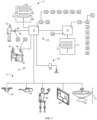
- FIG. 1 is a schematic representation of an interactive platform 10 including a control center 12 and interactive devices 14, wherein the interactive platform 10 is coupled to a separate system 16 for authentication and data provision services in accordance with an embodiment.
- the interactive platform 10 may be defined as including hardware 18 (e.g., one or more processors and memories) and software applications 20 that are used together as support for other applications, processes, device, technologies, and the like that are developed or utilized in conjunction with the interactive platform 10.
- the interactive platform 10 includes the interactive devices 14, which may reside within an amusement park 21.
- the interactive platform 10 may simply include the control center 12, which may include a computer and software (e.g., an operating system) that hosts websites (e.g., a registration website) and runs applications (e.g., applications that manage special effects devices) over one or more networks 22. It should be noted that the interactive platform 10 may interface with the separate system 16 (or third-party system 16) over a different network (e.g., a public network) than the network (e.g., a private and secured network) that the interactive platform 10 uses to interface with the interactive devices 14. Like the interactive platform 10, the separate system 16 may also include its own hardware 18 and software applications 20. While these components of the interactive platform 10 and the separate system 16 share reference numbers, they may be completely separate features.
- the control center 12 may include a computer and software (e.g., an operating system) that hosts websites (e.g., a registration website) and runs applications (e.g., applications that manage special effects devices) over one or more networks 22.
- the interactive platform 10 may interface with the separate system 16 (
- FIG. 1 includes example components within the interactive platform 10 and the separate system 16, in accordance with embodiments described herein.
- each of the control center 12 and the separate system 16 includes its own separate components but the components are similar in nature and are, thus, identified with like reference numerals.
- each of the control center 12 and the separate system 16 may respectively include a communication component 30, a processor 32, a memory 34, a storage 36, input/output (I/O) ports 38, a display 40, and the like.
- the communication component 30 of the control center 12 may be a wireless or wired communication component that may facilitate communication using the one or more networks 22.
- the communication component 30 of the control center 12 may function to communicate with the separate system 16 to obtain data from a third-party database 44, communicate with a guest's computing system 46 to set up an account, or communicate with any other device accessible via the one or more networks 22.
- the control center 12 may communicate with the separate system 16 to utilize a universal login API 41 stored thereon.
- the processor 32 may be any type of computer processor or microprocessor capable of executing computer-executable code. Further, the processor 32 of the control center 12 may be representative of or include multiple processors that are part of the control center 12 and that may perform processing operations herein described.
- the memory 34 and the storage 36 may be any suitable article of manufacture that can serve to store processor-executable code, data, or the like. These articles of manufacture may represent computer-readable media (e.g., any suitable form of memory or storage) that may store the processor-executable code used by the processor 32 to perform the presently disclosed techniques.
- the memory 34 and the storage 36 may also store data, results from analysis of acquired data, various software applications, and the like. It should be noted that non-transitory merely indicates that the media is tangible and not a signal.
- the I/O ports 38 may be interfaces that may couple to communication features or peripheral components such as input devices (e.g., keyboard, laser scanner, mouse, microphone), sensors, input/output (I/O) modules, output devices (e.g., the interface devices 14) and the like.
- the control center 12 may include one or more programmable logic controllers (PLCs) that include the I/O ports 38, which facilitate communicative coupling to the interactive devices 14.
- PLCs programmable logic controllers
- the one or more PLCs may be part of the control center 12 and may also couple with a central control terminal or an operator station of the control center 12 via the I/O ports 38.
- the display 40 may be part of the central control terminal.
- the display 40 may operate to depict visualizations associated with software or executable code being processed by the processor 32.
- the display 40 may be any suitable type of display, such as a liquid crystal display (LCD), plasma display, or an organic light emitting diode (OLED) display, for example.
- the display 40 may be provided in conjunction with a touch-sensitive mechanism (e.g., a touch screen).
- a guest's computing system 46 e.g., mobile computer, mobile device, or desktop computer
- the interactive platform 10 may include components similar those described as part of the control center 12 and the separate system 16.
- aspects of the interactive platform 10 and/or separate system 16 may include or work in conjunction with a cloud-based computing system, server, or the like.
- GUI graphical user interface
- the GUI 56 may facilitate input of an account identification (ID) (e.g., a user's email address) and allow for registration via the separate system 16.
- ID account identification
- the control center 12 may include a database 62 with numerous data fields 64. Some of these data fields 64 may be forward facing data fields 66 and some are hidden data fields 68.
- the forward facing data fields 66 may include a data field for establishing a user account (e.g., inputting a user ID, such as an email address), and the hidden data fields 68 may include data fields for user preferences.
- the forward facing data fields 66 may be populated directly into the control center 12 via the guest computing system 46. For example, upon connecting with the interactive platform 10, the GUI 56 may be provided to the user computing system 46 with a prompt for entering a new or existing user identification.
- the hidden data fields 68 may be indirectly populated.
- the hidden data fields 68 of the control center 12 may be populated from data fields 72 of a database 73 present in the separate system 16 that correspond to the user.
- user data available in the separate system 16 may be imported or otherwise entered into the hidden data fields 68. This may be done in conjunction with the authentication process.
- the data for the hidden data fields 68 may be provided in parallel or in series with authentication credentials.
- the communication of the data for the hidden data fields 68 and the authentication data may be encrypted to maintain a private interaction.
- the relevant user data may be used by the interactive platform 10 (e.g., a processor and algorithm of the control center 12) to identify characteristics, preferences, and so forth of a guest. Further, this personalized data (e.g., preferences and characteristics) may be utilized by the interactive platform 10 to provide effects in an amusement park that are tailored to entertain and delight individual guests.
- the interactive platform 10 may include or communicate with a guest identification system 78.
- the guest identification system 78 may include a camera, a signal detector (e.g., radio-frequency identification (RFID) detector, an integral global positioning satellite (GPS) detector), or some other guest identification mechanism (e.g., a feature built into one of the interactive devices 14 configured to detect use by a particular guest).
- RFID radio-frequency identification
- GPS global positioning satellite
- the interactive platform 10 may control the interactive device 14 (or multiple such devices) based on the personalized data stored in the hidden data fields 68.
- the interactive devices 14 may include a drone 82, virtual reality goggles 84, an animated figure 86, an interactive display 88, an interactive fountain 90, or the like. Further, as instructed by the interactive platform 10 (e.g., the control center 12), each of the interactive devices 14 may designed to perform a personalized action based on data from the hidden data fields 68.
- the drone 82 and fountain 90 may provide lighting effects that heavily incorporate the guest's favorite colors (e.g., the colors of the user's favorite sports team).
- the animated figure 86 may be operated to adjust a gaze based on data indicative of the guest's height.
- the virtual reality goggles 84 and/or the interactive display 88 may provide a virtual environment and virtual characters that align with a theme preference or fictional character preference of the guest.
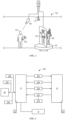
- FIG. 2 is a schematic perspective view of a guest 102 in an amusement park venue 104, wherein the interactive platform 10 is operating to provide a tailored special effect for the guest 102 in accordance with an embodiment of the present disclosure.
- the interactive platform 10 has identified the guest as being present in the venue 104 using a combination of facial recognition and RFID detection.
- a camera 105 operates to detect facial features of the guest 102 and those facial features are being compared with user data stored in the control center 12, such as in the forward facing data fields 66 (e.g., an image provided upon entry to the venue 104).
- the facial identification data stored in these forward facing fields 66 may have been provided by the guest 102 during a registration process via a camera on the guest's computing system 46.
- a RFID tag 108 being worn and associated with the guest 102 is being detected by an RFID detector 110.
- the camera 105, the RFID detector 110, and/or the RFID tag 108 may be considered features of the guest identification system 78. However, in some embodiments, only one technique (e.g., facial identification or signal detection) may be used to identify the location/presence of a guest.
- data from the hidden data fields 68 may be employed to utilize preferences of the guest 102 in the provision of special effects.
- the guest 102 may have a preference for cowboy themed environments over medieval themed environments. Accordingly, as shown, an animated figure of a cowboy 122 may be positioned on a turntable 124 for viewing by the guest 102 instead of an animated figure of a medieval knight 126.
- FIG. 3 is a block diagram of a process 198 of interactions between the user computing system 46, the interactive platform 10 (e.g., the control center 12), the separate system 16, and the interactive devices 14 in accordance with an embodiment of the present disclosure.
- the control center 12 initiates contact with the separate system 16 based on instructions from a user obtained via communication from the user computing system 46.
- a user may be interfacing with the control center 12 via the user computing system 46, which is communicatively coupled to the control center 12 (e.g., via a network), by requesting access to an account via the GUI 56.
- the user may opt to use login credentials from the separate system 16.
- This may include activating a web app or tool on the GUI 56, such as a soft button, that initiates communication regarding the requested account with the separate system 16.
- the initial input 200 provided by the user via the GUI 56 may include an account identifier (e.g., an email address) and selection of an option to use the separate system 16 for authentication, which may include using a universal login API 41.
- a user-entered account identifier may not be provided until the user is interfacing with the separate system 16. For example, to initiate the process, the request for a new account or access to an existing account may simply be assigned an auto-generated account number.
- an initial communication 202 is provided to the separate system 16 from the control center 12 after the control center 12 processes the initial input 200, which is indicative of the user requesting a new account or access to an existing account.
- This initial communication 202 includes data indicating a request for coordinating user credentials from the separate system 16 (e.g., using the universal login API 41) to open or otherwise access an account for the control center 12.
- the separate system 16 requests authentication of the user in an authentication request 204. While the authentication request 204 is illustrated as passing from the separate system 16 to the user computing system 46 via the control center 12, in other embodiments, a direct communication may be instituted or the information required for authentication may be initially prompted by the control center 12 or the GUI 56 and provided to the separate system 16 via the initial communication 202. In the illustrated embodiment, authentication data (e.g., a password) 208 is provided from the user computing system 46 back to the separate system 16 via the control center 12.
- authentication data e.g., a password
- This authentication data 208 may also include an authorization to provide access to other data (e.g., a user's trivial or fundamental data); however, such an authorization may also be provided in the initial communication 202.
- communication of the authentication data 208 may utilize routes (e.g., a direct line of communication between the user computing system 46 and the separate system 16) other than that illustrated.
- authentication approval data 212 may be provided to the control center 12 for opening or allowing access to an account associated with the authentication approval data 212.
- hidden data 216 is also provided in conjunction with this approval data 212.
- the hidden data 216 may be provided as integrated with, embedded with, parallel with, in series with, or otherwise provided in relation to the approval data 212. Further, all data or a portion of the data may be encrypted. For example, the approval data 212 and/or the hidden data 216 may be encrypted. In other embodiments, the hidden data 216 is provided in a separate communication after the approval data 212.
- the hidden data 216 may include certain data about the user of the account associated with the authentication approval data 212, such as fundamental data (e.g., birthdate) or trivial data (e.g., favorite color).
- fundamental data e.g., birthdate
- trivial data e.g., favorite color
- the type or nature of the hidden data 216 provided may depend on the nature of approved communications by the user (e.g., as indicated via the GUI 56). For example, a user may indicate that only trivial data can be shared between the interaction platform 10 and the separate system 16. By transmitting the hidden data 216 in this fashion, the transfer of the data is inconspicuous to the user, which facilitates later surprise of the user via the interactive devices 14.
- the control center 12 may open and/or access an account for the user and populate that account with the hidden data 216. Further, this hidden data 216 may be employed for special effects and the like. Specifically, the control center 12 may utilize the hidden data 216 to control the interactive devices 14. As an example, with reference back to FIG. 1 , the control center 12 may control the virtual reality goggles 84 to display a virtual reality experience that corresponds to a preference of the user found in the hidden data 216.
- the control center 12 may control the virtual reality goggles to provide imagery corresponding to a werewolf instead of other options (e.g., a ghost or zombie) because the user has indicated a preference for werewolves in the horror genre.
- a preference for werewolves in the horror genre By obscuring or masking the acquisition of such a preference via the transmission of the hidden data 216 in the disclosed fashion, an element of surprise can be added to experiences in an amusement park, such as via the provision of experiences in line with user preferences or characteristics.
- Surprise interactions may also include providing information about the user from an interactive device 14. For example, the animated figure 86 dressed as a fortune teller may announce an astrological sign associated with the birthdate of the user, which may surprise and delight the user.
- FIG. 4 is a schematic diagram of interactions with the GUI 56 in accordance with an embodiment of the present disclosure.
- a first GUI 302 may be provided via a display of the user computing system 46 in response to initiation of contact with the control center 12 to open or access a user account.
- the first GUI 302 includes prompts for the user to provide identification, specifically a prompt for an email address 304 and a prompt for a themed name 306 (e.g., a nickname or username). Further, the first GUI 302 provides a prompt to approve 308 or a prompt to decline 310 utilization of the separate system 16 for authentication purposes.
- the described prompts and other prompts may also be included to facilitate or add aspects to the disclosed interactions.
- the prompts may include inputs for data entry, toggle buttons, radio button, other interface tools and so forth.
- a personalization GUI 312 may be provided on the user computing system 46 to allow the user to enter preferences and characteristics directly. While this provides desired information about the user for use in an amusement park via the interactive devices 14, this acquisition of data is not hidden and will limit the provision of surprise. Such data may be gleaned from questions presented by the personalization GUI 312 that are intended to conceal the acquisition of relevant data. However, a savvy user may perceive the intent of the questions. In some embodiments, the user may decline to use the separate system 16 for authentication but allow data sharing between the separate system 16 and the interactive platform 10 (e.g., the control center 12). After the personalization GUI 312 is addressed, a login credential request GUI 314 may be presented on the user computer system 46 to confirm authenticity of the user and open or access a user account.
- an access authorization GUI 318 may be provided via the user computer system 46.
- the access authorization GUI 318 may provide an access authorization prompt 322 that allows the user to indicate whether data beyond the data required for authorization may be shared with the interface platform 10 from the separate system 16. This may include additional prompting for types of data that can be shared, such as whether only trivial data can be shared or additional data can be shared. By allowing this data sharing, the hidden data 216 may be provided to the control center 12 for purposes of surprising the guest via interactions in the amusement park, as discussed above.
- the login credential request GUI 314 may be immediately provided via the user computer system 46. If access authorization is declined, the personalization GUI 312 may be presented and then the login credential request GUI 314 may be provided upon completion of the personalization GUI 312.
Landscapes
- Engineering & Computer Science (AREA)
- General Engineering & Computer Science (AREA)
- Theoretical Computer Science (AREA)
- Computer Security & Cryptography (AREA)
- Computer Networks & Wireless Communication (AREA)
- Signal Processing (AREA)
- Computer Hardware Design (AREA)
- General Physics & Mathematics (AREA)
- Physics & Mathematics (AREA)
- Computing Systems (AREA)
- Software Systems (AREA)
- Human Computer Interaction (AREA)
- Bioethics (AREA)
- General Health & Medical Sciences (AREA)
- Health & Medical Sciences (AREA)
- User Interface Of Digital Computer (AREA)
- Storage Device Security (AREA)
- Information Transfer Between Computers (AREA)
- Management, Administration, Business Operations System, And Electronic Commerce (AREA)
Claims (15)
- Interaktive Plattform (10) zum Eintragen verborgener Datenfelder (68) und Steuern interaktiver Merkmale (14) in einem Vergnügungspark (21) basierend auf den verborgenen Datenfeldern (68), wobei die interaktive Plattform (10) ein Steuerzentrum (12) umfasst, das konfiguriert ist zum:Empfangen einer Kontoanfrage (202) von einem Computersystem eines Benutzers (46);Eingeben von vorwärts gerichteten Datenfeldern (66) basierend auf Benutzereingaben (200) aus dem Computersystem des Benutzers (46);Koordinieren der Authentifizierung der Kontoanfrage (202) mit einem separaten System (16), das so konfiguriert ist, dass es eine Anmeldeprogrammierschnittstelle zum Austausch von Authentifizierungsdaten (212) verwendet;Empfangen der Authentifizierungsdaten (212) von dem separaten System (16) und Bereitstellen des Zugriffs auf ein Benutzerkonto basierend auf den Authentifizierungsdaten (212); undEintragen der verborgenen Datenfelder (68) des Steuerzentrums (12) basierend auf Benutzerdaten (216), die von dem separaten System (16) bereitgestellt werden.
- Interaktive Plattform (10) nach Anspruch 1, wobei das Steuerzentrum (12) so konfiguriert ist, dass sie die Authentifizierungsdaten (212) und die Benutzerdaten (216) parallel von dem separaten System (16) empfängt oder wobei das Steuerzentrum (12) so konfiguriert ist, dass sie die in die Authentifizierungsdaten (212) eingebetteten Benutzerdaten (216) empfängt.
- Interaktive Plattform (10) nach Anspruch 1, wobei das Steuerzentrum (12) so konfiguriert ist, dass es die von dem separaten System (16) empfangenen Benutzerdaten (216) basierend auf einem Typ der Benutzerdaten (216) begrenzt.
- Interaktive Plattform (10) nach Anspruch 3, wobei das Steuerzentrum (12) so konfiguriert ist, dass es vertrauliche Abschnitte der Benutzerdaten (216) sperrt, aber zulässt, dass triviale Abschnitte der Benutzerdaten (216) empfangen werden, und wobei die vertraulichen Abschnitte und die trivialen Abschnitte durch das Steuerzentrum (12) oder das separate System (16) oder beide definiert sind.
- Interaktive Plattform (10) nach Anspruch 3, wobei das Steuerzentrum (12) so konfiguriert ist, dass es Benutzereingaben (200) verwendet, um den Typ der von dem separaten System (16) bereitgestellten Benutzerdaten (216) zu bestimmen, die von dem Steuerzentrum (12) akzeptiert und/oder abgelehnt werden sollen.
- Interaktive Plattform (10) nach Anspruch 1, die eine oder mehrere Schnittstellenvorrichtungen (14) in einer Einstellung eines Vergnügungsparks (21) umfasst und so konfiguriert ist, dass sie von dem Steuerzentrum (12) basierend auf den Benutzerdaten (216) gesteuert wird.
- Interaktive Plattform (10) nach Anspruch 6, wobei die eine oder mehrere Schnittstellenvorrichtungen (14) eine Virtual-Reality-Brille (84), eine Augmented-Reality-Brille, einen Anzeigebildschirm (88), eine animierte Figur (86), ein Fahrgeschäft oder eine Kombination davon umfassen.
- Interaktive Plattform (10) nach Anspruch 1, umfassend ein Gästeidentifikationssystem (78), das so konfiguriert ist, dass es einen Gast (102) in einem Vergnügungspark (104) nachweist und einen Hinweis auf die Anwesenheit des Gastes (52) an das Steuerzentrum (12) kommuniziert.
- Interaktive Plattform (10) nach Anspruch 8, wobei das Steuerzentrum (12) so konfiguriert ist, dass es die Anwesenheit des Gastes (102) den Gästedaten zuordnet und mindestens eine Schnittstellenvorrichtung (14) basierend auf den Gästedaten steuert, während sich der Gast (102) in dem Vergnügungspark (104) aufhält.
- Interaktive Plattform (10) nach Anspruch 1, wobei das Steuerzentrum (12) konfiguriert ist, die Authentifizierungsdaten (212) und die Benutzerdaten (216) als verschlüsselte Daten zu empfangen.
- Verfahren zur Authentifizierung und zum Eintragen versteckter Datenfelder (68) zur Erleichterung der Steuerung interaktiver Vorrichtungen (14) in einer Einstellung für Vergnügungsparks (21), das Verfahren umfassend:Empfangen einer Kontoanfrage (202) in einem Steuerzentrum (12) von einem Computersystem eines Benutzers (46);Eintragen von nach vorne gerichteten Datenfeldern (66) des Steuerzentrums (12) basierend auf Benutzereingaben (200) vom Computersystem des Benutzers (46);Koordinieren der Authentifizierung der Kontoanfrage (202) durch das Steuerzentrum (12) mit einem separaten System (16), das so konfiguriert ist, dass es eine Anmeldeprogrammierschnittstelle zum Austausch von Authentifizierungsdaten (212) verwendet;Empfangen der Authentifizierungsdaten (212) von dem separaten System (16) im Steuerzentrum und Bereitstellen des Zugriffs auf ein Benutzerkonto für das Computersystem des Benutzers (46) basierend auf den Authentifizierungsdaten (212); undEintragen der verborgenen Datenfelder (68) des Steuerzentrums (12) basierend auf Benutzerdaten (216), die von dem separaten System (16) bereitgestellt werden.
- Verfahren nach Anspruch 11, umfassend das Empfangen und Entschlüsseln der von dem separaten System (16) bereitgestellten Benutzerdaten (216) im Steuerzentrum (12).
- Verfahren nach Anspruch 11, umfassend das Bereitstellen einer grafischen Benutzerschnittstelle (56) für das Computersystem (46) des Benutzers vom Steuerzentrum (12) aus, um die Benutzereingaben (200) zum Eintragen der vorwärtsgerichteten Datenfelder (66) zu erfassen.
- Verfahren nach Anspruch 13, umfassend das Anfordern einer Berechtigung zur gemeinsamen Nutzung mindestens eines Datentyps zwischen dem Steuerzentrum (12) und dem separaten System (16) über die grafische Benutzerschnittstelle (56).
- Verfahren nach Anspruch 11, umfassend das Steuern einer oder mehrerer interaktiver Vorrichtungen (14) vom Steuerzentrum (12) basierend auf Daten in mindestens einem der verborgenen Datenfelder (68), wobei die Daten in dem mindestens einen der verborgenen Datenfelder (68) eine Benutzerpräferenz, eine Benutzereigenschaft oder eine Kombination davon einschließen.
Priority Applications (1)
| Application Number | Priority Date | Filing Date | Title |
|---|---|---|---|
| EP24218766.4A EP4494726A3 (de) | 2020-04-30 | 2021-04-22 | Unterhaltungsinteraktion basierend auf zugriff auf ein separates system zur befüllung eines verborgenen feldes |
Applications Claiming Priority (3)
| Application Number | Priority Date | Filing Date | Title |
|---|---|---|---|
| US202063018134P | 2020-04-30 | 2020-04-30 | |
| US17/200,579 US11777943B2 (en) | 2020-04-30 | 2021-03-12 | Entertainment interaction based on accessing a separate system to populate a hidden field |
| PCT/US2021/028652 WO2021221994A1 (en) | 2020-04-30 | 2021-04-22 | Entertainment interaction based on accessing a separate system to populate a hidden field |
Related Child Applications (1)
| Application Number | Title | Priority Date | Filing Date |
|---|---|---|---|
| EP24218766.4A Division EP4494726A3 (de) | 2020-04-30 | 2021-04-22 | Unterhaltungsinteraktion basierend auf zugriff auf ein separates system zur befüllung eines verborgenen feldes |
Publications (2)
| Publication Number | Publication Date |
|---|---|
| EP4142902A1 EP4142902A1 (de) | 2023-03-08 |
| EP4142902B1 true EP4142902B1 (de) | 2024-12-11 |
Family
ID=78293520
Family Applications (2)
| Application Number | Title | Priority Date | Filing Date |
|---|---|---|---|
| EP24218766.4A Pending EP4494726A3 (de) | 2020-04-30 | 2021-04-22 | Unterhaltungsinteraktion basierend auf zugriff auf ein separates system zur befüllung eines verborgenen feldes |
| EP21725624.7A Active EP4142902B1 (de) | 2020-04-30 | 2021-04-22 | Unterhaltungsinteraktion basierend auf zugriff auf ein separates system zur befüllung eines verborgenen feldes |
Family Applications Before (1)
| Application Number | Title | Priority Date | Filing Date |
|---|---|---|---|
| EP24218766.4A Pending EP4494726A3 (de) | 2020-04-30 | 2021-04-22 | Unterhaltungsinteraktion basierend auf zugriff auf ein separates system zur befüllung eines verborgenen feldes |
Country Status (8)
| Country | Link |
|---|---|
| US (2) | US11777943B2 (de) |
| EP (2) | EP4494726A3 (de) |
| JP (2) | JP7728283B2 (de) |
| KR (1) | KR20230005335A (de) |
| CN (1) | CN115427125A (de) |
| CA (1) | CA3174936A1 (de) |
| ES (1) | ES3008007T3 (de) |
| WO (1) | WO2021221994A1 (de) |
Families Citing this family (1)
| Publication number | Priority date | Publication date | Assignee | Title |
|---|---|---|---|---|
| US12283004B2 (en) * | 2022-07-08 | 2025-04-22 | Qualcomm Incorporated | Techniques to facilitate a cloud-based vehicle XR experience |
Family Cites Families (13)
| Publication number | Priority date | Publication date | Assignee | Title |
|---|---|---|---|---|
| US20070066396A1 (en) | 2002-04-05 | 2007-03-22 | Denise Chapman Weston | Retail methods for providing an interactive product to a consumer |
| JP2006293880A (ja) | 2005-04-14 | 2006-10-26 | Tokyo Electric Power Co Inc:The | 街頭情報提供システム |
| US8330587B2 (en) | 2007-07-05 | 2012-12-11 | Tod Anthony Kupstas | Method and system for the implementation of identification data devices in theme parks |
| JP2009043046A (ja) | 2007-08-09 | 2009-02-26 | Kenwood Corp | 個人認証装置、個人認証システム、個人認証方法、及び、プログラム |
| US20150142483A1 (en) * | 2013-11-11 | 2015-05-21 | Bytemark, Inc. | Method and system for electronic ticket validation using proximity detection |
| AU2013334434A1 (en) * | 2012-10-23 | 2015-06-04 | Fans Entertainment Inc. | System and method for tracking consumption habits of venue products |
| JP6056397B2 (ja) | 2012-11-13 | 2017-01-11 | 沖電気工業株式会社 | サーバ、制御システム及びプログラム |
| US20180357440A1 (en) * | 2017-06-13 | 2018-12-13 | Microsoft Technology Licensing, Llc | Personalized Meetings |
| US10603564B2 (en) | 2018-01-03 | 2020-03-31 | Universal City Studios Llc | Interactive component for an amusement park |
| US20190270022A1 (en) | 2018-03-02 | 2019-09-05 | Falcon's Treehouse Llc | Network gaming ride attraction |
| US10845975B2 (en) | 2018-03-29 | 2020-11-24 | Universal City Studios Llc | Interactive animated character head systems and methods |
| WO2019246402A1 (en) * | 2018-06-20 | 2019-12-26 | Convida Wireless, Llc | Automated iot device configuration using user profile |
| US11562539B2 (en) | 2018-09-25 | 2023-01-24 | Universal City Studios Llc | Modular augmented and virtual reality ride attraction |
-
2021
- 2021-03-12 US US17/200,579 patent/US11777943B2/en active Active
- 2021-04-22 JP JP2022566234A patent/JP7728283B2/ja active Active
- 2021-04-22 CA CA3174936A patent/CA3174936A1/en active Pending
- 2021-04-22 CN CN202180031776.8A patent/CN115427125A/zh active Pending
- 2021-04-22 KR KR1020227041912A patent/KR20230005335A/ko active Pending
- 2021-04-22 WO PCT/US2021/028652 patent/WO2021221994A1/en not_active Ceased
- 2021-04-22 ES ES21725624T patent/ES3008007T3/es active Active
- 2021-04-22 EP EP24218766.4A patent/EP4494726A3/de active Pending
- 2021-04-22 EP EP21725624.7A patent/EP4142902B1/de active Active
-
2023
- 2023-09-12 US US18/367,350 patent/US12568088B2/en active Active
-
2025
- 2025-08-12 JP JP2025134202A patent/JP2025186223A/ja active Pending
Also Published As
| Publication number | Publication date |
|---|---|
| CA3174936A1 (en) | 2021-11-04 |
| KR20230005335A (ko) | 2023-01-09 |
| JP2025186223A (ja) | 2025-12-23 |
| JP7728283B2 (ja) | 2025-08-22 |
| WO2021221994A1 (en) | 2021-11-04 |
| ES3008007T3 (en) | 2025-03-21 |
| US20230421564A1 (en) | 2023-12-28 |
| US12568088B2 (en) | 2026-03-03 |
| EP4142902A1 (de) | 2023-03-08 |
| US11777943B2 (en) | 2023-10-03 |
| US20210344682A1 (en) | 2021-11-04 |
| EP4494726A2 (de) | 2025-01-22 |
| EP4494726A3 (de) | 2025-04-02 |
| JP2023524697A (ja) | 2023-06-13 |
| CN115427125A (zh) | 2022-12-02 |
Similar Documents
| Publication | Publication Date | Title |
|---|---|---|
| US20230188521A1 (en) | Secure authorization for access to private data in virtual reality | |
| CN103312796B (zh) | 用于计算环境用户登录的登录界面选择 | |
| US10157275B1 (en) | Techniques for access management based on multi-factor authentication including knowledge-based authentication | |
| EP2712143B1 (de) | Reales Element zum Freispielen virtueller Elemente im Internet und in Videospielen | |
| JP2022551997A (ja) | 近距離送受信機を使用した、安全なメモリのデータアクセス制御のための、システム及び方法 | |
| US12175603B2 (en) | Doors for artificial reality universe traversal | |
| US20230092494A1 (en) | Information processing system and method for judging whether to allow a mobile medium to move within a virtual space | |
| US20250356725A1 (en) | Online social wager-based gaming system featuring dynamic cross-provider game filtering, persistent cross-provider voice-interactive group play, automated multi-seat group game reservation, and distributed ledger bet verification | |
| WO2016133576A1 (en) | Secure transaction processing through wearable device | |
| JP2025186223A (ja) | 別のシステムにアクセスして隠しフィールドに入力することに基づく娯楽的相互作用 | |
| US20230208832A1 (en) | Expedited User Authentication | |
| EP3343418B1 (de) | Elektronische verifizierung unter verwendung von einem digitalen fussabdruck | |
| JP2014235755A (ja) | アクセス制御システム | |
| EP2800023A2 (de) | Identifikationsvorrichtung und -verfahren | |
| US20220337999A1 (en) | Collective Artificial Reality Device Configuration | |
| HK40084513A (en) | Entertainment interaction based on accessing a separate system to populate a hidden field | |
| US12262201B1 (en) | Systems and methods for a connected mobile application with an AR-VR headset | |
| WO2018089966A1 (en) | Media service with virtual reality capabilities | |
| JP2023524697A5 (de) | ||
| US20250229187A1 (en) | Apparatus and method for interactive platform access authorization | |
| KR20250020421A (ko) | 이벤트 기반 인증 | |
| HK40037415A (en) | Cross-application relationship chain expansion method and apparatus, device, and storage medium | |
| HK40037415B (en) | Cross-application relationship chain expansion method and apparatus, device, and storage medium |
Legal Events
| Date | Code | Title | Description |
|---|---|---|---|
| STAA | Information on the status of an ep patent application or granted ep patent |
Free format text: STATUS: UNKNOWN |
|
| STAA | Information on the status of an ep patent application or granted ep patent |
Free format text: STATUS: THE INTERNATIONAL PUBLICATION HAS BEEN MADE |
|
| PUAI | Public reference made under article 153(3) epc to a published international application that has entered the european phase |
Free format text: ORIGINAL CODE: 0009012 |
|
| STAA | Information on the status of an ep patent application or granted ep patent |
Free format text: STATUS: REQUEST FOR EXAMINATION WAS MADE |
|
| 17P | Request for examination filed |
Effective date: 20221116 |
|
| AK | Designated contracting states |
Kind code of ref document: A1 Designated state(s): AL AT BE BG CH CY CZ DE DK EE ES FI FR GB GR HR HU IE IS IT LI LT LU LV MC MK MT NL NO PL PT RO RS SE SI SK SM TR |
|
| DAV | Request for validation of the european patent (deleted) | ||
| DAX | Request for extension of the european patent (deleted) | ||
| GRAP | Despatch of communication of intention to grant a patent |
Free format text: ORIGINAL CODE: EPIDOSNIGR1 |
|
| STAA | Information on the status of an ep patent application or granted ep patent |
Free format text: STATUS: GRANT OF PATENT IS INTENDED |
|
| INTG | Intention to grant announced |
Effective date: 20240704 |
|
| GRAS | Grant fee paid |
Free format text: ORIGINAL CODE: EPIDOSNIGR3 |
|
| GRAA | (expected) grant |
Free format text: ORIGINAL CODE: 0009210 |
|
| STAA | Information on the status of an ep patent application or granted ep patent |
Free format text: STATUS: THE PATENT HAS BEEN GRANTED |
|
| AK | Designated contracting states |
Kind code of ref document: B1 Designated state(s): AL AT BE BG CH CY CZ DE DK EE ES FI FR GB GR HR HU IE IS IT LI LT LU LV MC MK MT NL NO PL PT RO RS SE SI SK SM TR |
|
| REG | Reference to a national code |
Ref country code: GB Ref legal event code: FG4D |
|
| REG | Reference to a national code |
Ref country code: CH Ref legal event code: EP |
|
| REG | Reference to a national code |
Ref country code: DE Ref legal event code: R096 Ref document number: 602021023267 Country of ref document: DE |
|
| P01 | Opt-out of the competence of the unified patent court (upc) registered |
Free format text: CASE NUMBER: APP_62554/2024 Effective date: 20241123 |
|
| REG | Reference to a national code |
Ref country code: IE Ref legal event code: FG4D |
|
| REG | Reference to a national code |
Ref country code: ES Ref legal event code: FG2A Ref document number: 3008007 Country of ref document: ES Kind code of ref document: T3 Effective date: 20250321 |
|
| REG | Reference to a national code |
Ref country code: LT Ref legal event code: MG9D |
|
| PG25 | Lapsed in a contracting state [announced via postgrant information from national office to epo] |
Ref country code: HR Free format text: LAPSE BECAUSE OF FAILURE TO SUBMIT A TRANSLATION OF THE DESCRIPTION OR TO PAY THE FEE WITHIN THE PRESCRIBED TIME-LIMIT Effective date: 20241211 |
|
| PG25 | Lapsed in a contracting state [announced via postgrant information from national office to epo] |
Ref country code: FI Free format text: LAPSE BECAUSE OF FAILURE TO SUBMIT A TRANSLATION OF THE DESCRIPTION OR TO PAY THE FEE WITHIN THE PRESCRIBED TIME-LIMIT Effective date: 20241211 |
|
| PG25 | Lapsed in a contracting state [announced via postgrant information from national office to epo] |
Ref country code: BG Free format text: LAPSE BECAUSE OF FAILURE TO SUBMIT A TRANSLATION OF THE DESCRIPTION OR TO PAY THE FEE WITHIN THE PRESCRIBED TIME-LIMIT Effective date: 20241211 |
|
| REG | Reference to a national code |
Ref country code: NL Ref legal event code: MP Effective date: 20241211 |
|
| PG25 | Lapsed in a contracting state [announced via postgrant information from national office to epo] |
Ref country code: NO Free format text: LAPSE BECAUSE OF FAILURE TO SUBMIT A TRANSLATION OF THE DESCRIPTION OR TO PAY THE FEE WITHIN THE PRESCRIBED TIME-LIMIT Effective date: 20250311 |
|
| PG25 | Lapsed in a contracting state [announced via postgrant information from national office to epo] |
Ref country code: LV Free format text: LAPSE BECAUSE OF FAILURE TO SUBMIT A TRANSLATION OF THE DESCRIPTION OR TO PAY THE FEE WITHIN THE PRESCRIBED TIME-LIMIT Effective date: 20241211 Ref country code: GR Free format text: LAPSE BECAUSE OF FAILURE TO SUBMIT A TRANSLATION OF THE DESCRIPTION OR TO PAY THE FEE WITHIN THE PRESCRIBED TIME-LIMIT Effective date: 20250312 |
|
| PG25 | Lapsed in a contracting state [announced via postgrant information from national office to epo] |
Ref country code: RS Free format text: LAPSE BECAUSE OF FAILURE TO SUBMIT A TRANSLATION OF THE DESCRIPTION OR TO PAY THE FEE WITHIN THE PRESCRIBED TIME-LIMIT Effective date: 20250311 |
|
| PG25 | Lapsed in a contracting state [announced via postgrant information from national office to epo] |
Ref country code: NL Free format text: LAPSE BECAUSE OF FAILURE TO SUBMIT A TRANSLATION OF THE DESCRIPTION OR TO PAY THE FEE WITHIN THE PRESCRIBED TIME-LIMIT Effective date: 20241211 |
|
| PG25 | Lapsed in a contracting state [announced via postgrant information from national office to epo] |
Ref country code: SM Free format text: LAPSE BECAUSE OF FAILURE TO SUBMIT A TRANSLATION OF THE DESCRIPTION OR TO PAY THE FEE WITHIN THE PRESCRIBED TIME-LIMIT Effective date: 20241211 |
|
| PG25 | Lapsed in a contracting state [announced via postgrant information from national office to epo] |
Ref country code: PL Free format text: LAPSE BECAUSE OF FAILURE TO SUBMIT A TRANSLATION OF THE DESCRIPTION OR TO PAY THE FEE WITHIN THE PRESCRIBED TIME-LIMIT Effective date: 20241211 |
|
| PGFP | Annual fee paid to national office [announced via postgrant information from national office to epo] |
Ref country code: DE Payment date: 20250429 Year of fee payment: 5 |
|
| PGFP | Annual fee paid to national office [announced via postgrant information from national office to epo] |
Ref country code: GB Payment date: 20250428 Year of fee payment: 5 Ref country code: ES Payment date: 20250505 Year of fee payment: 5 |
|
| PG25 | Lapsed in a contracting state [announced via postgrant information from national office to epo] |
Ref country code: IS Free format text: LAPSE BECAUSE OF FAILURE TO SUBMIT A TRANSLATION OF THE DESCRIPTION OR TO PAY THE FEE WITHIN THE PRESCRIBED TIME-LIMIT Effective date: 20250411 |
|
| PGFP | Annual fee paid to national office [announced via postgrant information from national office to epo] |
Ref country code: IT Payment date: 20250422 Year of fee payment: 5 |
|
| PG25 | Lapsed in a contracting state [announced via postgrant information from national office to epo] |
Ref country code: PT Free format text: LAPSE BECAUSE OF FAILURE TO SUBMIT A TRANSLATION OF THE DESCRIPTION OR TO PAY THE FEE WITHIN THE PRESCRIBED TIME-LIMIT Effective date: 20250411 |
|
| PG25 | Lapsed in a contracting state [announced via postgrant information from national office to epo] |
Ref country code: EE Free format text: LAPSE BECAUSE OF FAILURE TO SUBMIT A TRANSLATION OF THE DESCRIPTION OR TO PAY THE FEE WITHIN THE PRESCRIBED TIME-LIMIT Effective date: 20241211 |
|
| PGFP | Annual fee paid to national office [announced via postgrant information from national office to epo] |
Ref country code: FR Payment date: 20250425 Year of fee payment: 5 |
|
| PGFP | Annual fee paid to national office [announced via postgrant information from national office to epo] |
Ref country code: CH Payment date: 20250501 Year of fee payment: 5 |
|
| PG25 | Lapsed in a contracting state [announced via postgrant information from national office to epo] |
Ref country code: RO Free format text: LAPSE BECAUSE OF FAILURE TO SUBMIT A TRANSLATION OF THE DESCRIPTION OR TO PAY THE FEE WITHIN THE PRESCRIBED TIME-LIMIT Effective date: 20241211 |
|
| PGFP | Annual fee paid to national office [announced via postgrant information from national office to epo] |
Ref country code: AT Payment date: 20250721 Year of fee payment: 5 |
|
| PG25 | Lapsed in a contracting state [announced via postgrant information from national office to epo] |
Ref country code: SK Free format text: LAPSE BECAUSE OF FAILURE TO SUBMIT A TRANSLATION OF THE DESCRIPTION OR TO PAY THE FEE WITHIN THE PRESCRIBED TIME-LIMIT Effective date: 20241211 |
|
| PG25 | Lapsed in a contracting state [announced via postgrant information from national office to epo] |
Ref country code: CZ Free format text: LAPSE BECAUSE OF FAILURE TO SUBMIT A TRANSLATION OF THE DESCRIPTION OR TO PAY THE FEE WITHIN THE PRESCRIBED TIME-LIMIT Effective date: 20241211 |
|
| PG25 | Lapsed in a contracting state [announced via postgrant information from national office to epo] |
Ref country code: SE Free format text: LAPSE BECAUSE OF FAILURE TO SUBMIT A TRANSLATION OF THE DESCRIPTION OR TO PAY THE FEE WITHIN THE PRESCRIBED TIME-LIMIT Effective date: 20241211 |
|
| REG | Reference to a national code |
Ref country code: DE Ref legal event code: R097 Ref document number: 602021023267 Country of ref document: DE |
|
| PG25 | Lapsed in a contracting state [announced via postgrant information from national office to epo] |
Ref country code: DK Free format text: LAPSE BECAUSE OF FAILURE TO SUBMIT A TRANSLATION OF THE DESCRIPTION OR TO PAY THE FEE WITHIN THE PRESCRIBED TIME-LIMIT Effective date: 20241211 |
|
| PLBE | No opposition filed within time limit |
Free format text: ORIGINAL CODE: 0009261 |
|
| STAA | Information on the status of an ep patent application or granted ep patent |
Free format text: STATUS: NO OPPOSITION FILED WITHIN TIME LIMIT |
|
| 26N | No opposition filed |
Effective date: 20250912 |
|
| PG25 | Lapsed in a contracting state [announced via postgrant information from national office to epo] |
Ref country code: LU Free format text: LAPSE BECAUSE OF NON-PAYMENT OF DUE FEES Effective date: 20250422 |
|
| PG25 | Lapsed in a contracting state [announced via postgrant information from national office to epo] |
Ref country code: MC Free format text: LAPSE BECAUSE OF FAILURE TO SUBMIT A TRANSLATION OF THE DESCRIPTION OR TO PAY THE FEE WITHIN THE PRESCRIBED TIME-LIMIT Effective date: 20241211 |
|
| REG | Reference to a national code |
Ref country code: BE Ref legal event code: MM Effective date: 20250430 |
|
| PG25 | Lapsed in a contracting state [announced via postgrant information from national office to epo] |
Ref country code: BE Free format text: LAPSE BECAUSE OF NON-PAYMENT OF DUE FEES Effective date: 20250430 |
|
| REG | Reference to a national code |
Ref country code: AT Ref legal event code: UEP Ref document number: 1749952 Country of ref document: AT Kind code of ref document: T Effective date: 20241211 |
|
| PG25 | Lapsed in a contracting state [announced via postgrant information from national office to epo] |
Ref country code: IE Free format text: LAPSE BECAUSE OF NON-PAYMENT OF DUE FEES Effective date: 20250422 |