EP4136430B1 - Biologischer und/oder biochemischer und/oder chemischer sensor - Google Patents
Biologischer und/oder biochemischer und/oder chemischer sensor Download PDFInfo
- Publication number
- EP4136430B1 EP4136430B1 EP21732487.0A EP21732487A EP4136430B1 EP 4136430 B1 EP4136430 B1 EP 4136430B1 EP 21732487 A EP21732487 A EP 21732487A EP 4136430 B1 EP4136430 B1 EP 4136430B1
- Authority
- EP
- European Patent Office
- Prior art keywords
- specific
- face
- sensor according
- targets
- layer
- Prior art date
- Legal status (The legal status is an assumption and is not a legal conclusion. Google has not performed a legal analysis and makes no representation as to the accuracy of the status listed.)
- Active
Links
Images



Classifications
-
- G—PHYSICS
- G01—MEASURING; TESTING
- G01N—INVESTIGATING OR ANALYSING MATERIALS BY DETERMINING THEIR CHEMICAL OR PHYSICAL PROPERTIES
- G01N33/00—Investigating or analysing materials by specific methods not covered by groups G01N1/00 - G01N31/00
- G01N33/48—Biological material, e.g. blood, urine; Haemocytometers
- G01N33/50—Chemical analysis of biological material, e.g. blood, urine; Testing involving biospecific ligand binding methods; Immunological testing
- G01N33/53—Immunoassay; Biospecific binding assay; Materials therefor
- G01N33/543—Immunoassay; Biospecific binding assay; Materials therefor with an insoluble carrier for immobilising immunochemicals
- G01N33/54366—Apparatus specially adapted for solid-phase testing
- G01N33/54373—Apparatus specially adapted for solid-phase testing involving physiochemical end-point determination, e.g. wave-guides, FETS, gratings
-
- C—CHEMISTRY; METALLURGY
- C12—BIOCHEMISTRY; BEER; SPIRITS; WINE; VINEGAR; MICROBIOLOGY; ENZYMOLOGY; MUTATION OR GENETIC ENGINEERING
- C12Q—MEASURING OR TESTING PROCESSES INVOLVING ENZYMES, NUCLEIC ACIDS OR MICROORGANISMS; COMPOSITIONS OR TEST PAPERS THEREFOR; PROCESSES OF PREPARING SUCH COMPOSITIONS; CONDITION-RESPONSIVE CONTROL IN MICROBIOLOGICAL OR ENZYMOLOGICAL PROCESSES
- C12Q1/00—Measuring or testing processes involving enzymes, nucleic acids or microorganisms; Compositions therefor; Processes of preparing such compositions
- C12Q1/02—Measuring or testing processes involving enzymes, nucleic acids or microorganisms; Compositions therefor; Processes of preparing such compositions involving viable microorganisms
- C12Q1/04—Determining presence or kind of microorganism; Use of selective media for testing antibiotics or bacteriocides; Compositions containing a chemical indicator therefor
- C12Q1/10—Enterobacteria
-
- G—PHYSICS
- G01—MEASURING; TESTING
- G01N—INVESTIGATING OR ANALYSING MATERIALS BY DETERMINING THEIR CHEMICAL OR PHYSICAL PROPERTIES
- G01N21/00—Investigating or analysing materials by the use of optical means, i.e. using sub-millimetre waves, infrared, visible or ultraviolet light
- G01N21/17—Systems in which incident light is modified in accordance with the properties of the material investigated
- G01N21/55—Specular reflectivity
- G01N21/552—Attenuated total reflection
- G01N21/553—Attenuated total reflection and using surface plasmons
-
- G—PHYSICS
- G01—MEASURING; TESTING
- G01N—INVESTIGATING OR ANALYSING MATERIALS BY DETERMINING THEIR CHEMICAL OR PHYSICAL PROPERTIES
- G01N27/00—Investigating or analysing materials by the use of electric, electrochemical, or magnetic means
- G01N27/26—Investigating or analysing materials by the use of electric, electrochemical, or magnetic means by investigating electrochemical variables; by using electrolysis or electrophoresis
- G01N27/403—Cells and electrode assemblies
- G01N27/414—Ion-sensitive or chemical field-effect transistors, i.e. ISFETS or CHEMFETS
- G01N27/4145—Ion-sensitive or chemical field-effect transistors, i.e. ISFETS or CHEMFETS specially adapted for biomolecules, e.g. gate electrode with immobilised receptors
-
- G—PHYSICS
- G01—MEASURING; TESTING
- G01N—INVESTIGATING OR ANALYSING MATERIALS BY DETERMINING THEIR CHEMICAL OR PHYSICAL PROPERTIES
- G01N33/00—Investigating or analysing materials by specific methods not covered by groups G01N1/00 - G01N31/00
- G01N33/48—Biological material, e.g. blood, urine; Haemocytometers
- G01N33/50—Chemical analysis of biological material, e.g. blood, urine; Testing involving biospecific ligand binding methods; Immunological testing
- G01N33/53—Immunoassay; Biospecific binding assay; Materials therefor
- G01N33/543—Immunoassay; Biospecific binding assay; Materials therefor with an insoluble carrier for immobilising immunochemicals
- G01N33/54366—Apparatus specially adapted for solid-phase testing
- G01N33/54373—Apparatus specially adapted for solid-phase testing involving physiochemical end-point determination, e.g. wave-guides, FETS, gratings
- G01N33/5438—Electrodes
-
- G—PHYSICS
- G01—MEASURING; TESTING
- G01N—INVESTIGATING OR ANALYSING MATERIALS BY DETERMINING THEIR CHEMICAL OR PHYSICAL PROPERTIES
- G01N33/00—Investigating or analysing materials by specific methods not covered by groups G01N1/00 - G01N31/00
- G01N33/48—Biological material, e.g. blood, urine; Haemocytometers
- G01N33/50—Chemical analysis of biological material, e.g. blood, urine; Testing involving biospecific ligand binding methods; Immunological testing
- G01N33/53—Immunoassay; Biospecific binding assay; Materials therefor
- G01N33/569—Immunoassay; Biospecific binding assay; Materials therefor for microorganisms, e.g. protozoa, bacteria, viruses
- G01N33/56911—Bacteria
-
- G—PHYSICS
- G01—MEASURING; TESTING
- G01N—INVESTIGATING OR ANALYSING MATERIALS BY DETERMINING THEIR CHEMICAL OR PHYSICAL PROPERTIES
- G01N33/00—Investigating or analysing materials by specific methods not covered by groups G01N1/00 - G01N31/00
- G01N33/48—Biological material, e.g. blood, urine; Haemocytometers
- G01N33/50—Chemical analysis of biological material, e.g. blood, urine; Testing involving biospecific ligand binding methods; Immunological testing
- G01N33/53—Immunoassay; Biospecific binding assay; Materials therefor
- G01N33/569—Immunoassay; Biospecific binding assay; Materials therefor for microorganisms, e.g. protozoa, bacteria, viruses
- G01N33/56911—Bacteria
- G01N33/56916—Enterobacteria, e.g. shigella, salmonella, klebsiella, serratia
-
- G—PHYSICS
- G01—MEASURING; TESTING
- G01N—INVESTIGATING OR ANALYSING MATERIALS BY DETERMINING THEIR CHEMICAL OR PHYSICAL PROPERTIES
- G01N33/00—Investigating or analysing materials by specific methods not covered by groups G01N1/00 - G01N31/00
- G01N33/48—Biological material, e.g. blood, urine; Haemocytometers
- G01N33/50—Chemical analysis of biological material, e.g. blood, urine; Testing involving biospecific ligand binding methods; Immunological testing
- G01N33/94—Chemical analysis of biological material, e.g. blood, urine; Testing involving biospecific ligand binding methods; Immunological testing involving narcotics or drugs or pharmaceuticals, neurotransmitters or associated receptors
- G01N33/946—CNS-stimulants, e.g. cocaine, amphetamines
-
- G—PHYSICS
- G01—MEASURING; TESTING
- G01N—INVESTIGATING OR ANALYSING MATERIALS BY DETERMINING THEIR CHEMICAL OR PHYSICAL PROPERTIES
- G01N2333/00—Assays involving biological materials from specific organisms or of a specific nature
- G01N2333/195—Assays involving biological materials from specific organisms or of a specific nature from bacteria
- G01N2333/24—Assays involving biological materials from specific organisms or of a specific nature from bacteria from Enterobacteriaceae (F), e.g. Citrobacter, Serratia, Proteus, Providencia, Morganella, Yersinia
- G01N2333/245—Escherichia (G)
-
- G—PHYSICS
- G01—MEASURING; TESTING
- G01N—INVESTIGATING OR ANALYSING MATERIALS BY DETERMINING THEIR CHEMICAL OR PHYSICAL PROPERTIES
- G01N2333/00—Assays involving biological materials from specific organisms or of a specific nature
- G01N2333/90—Enzymes; Proenzymes
- G01N2333/914—Hydrolases (3)
- G01N2333/948—Hydrolases (3) acting on peptide bonds (3.4)
- G01N2333/974—Thrombin
Definitions
- the present invention relates to the field of sensors, and more particularly biological and/or biochemical and/or chemical sensors.
- the present invention relates to a sensor implementing surface plasmon resonance and the characterization of the electrical properties of transistors suitable for the detection of biological and/or biochemical and/or chemical species.
- FIG. 1 A surface plasmon resonance imaging sensor 1 known in the art is illustrated in Figure 1. figure 1 .
- the light emission source 4 emits light radiation towards the contact face 3a at an angle of incidence ⁇ i varying, for example, continuously, in a range of angles. This light radiation is then reflected by the contact face 3a to be collected by the detector 5.
- the angle of incidence ⁇ p depends on the optical properties of the materials used and the characteristics, and in particular the wavelength, of the light emission source.
- this type of sensor which makes it possible to detect extremely small variations in the optical index of the dielectric medium, can advantageously be used for the detection of biological, and/or biochemical and/or chemical species ( hereinafter referred to as “target”).
- the simple adsorption of targets at the exposed face 3b of the metal layer 3 locally modifies the optical index of the interface formed by the metal layer 3 and the dielectric medium.
- the variation in index which results in a variation in the plasmon resonance angle thus constitutes a parameter of choice for the detection and/or identification of targets.
- the functionalization makes it possible in particular to make the adsorption at the level of the exposed face 3b selective to a given type of target, called specific target.
- the functionalization of the exposed face has no other purpose than to limit the adsorption phenomenon to the specific target only.
- This functionalization generally uses chemical or biochemical or biological species (hereinafter called “probes”) grafted onto the exposed face 3b.
- the probes may comprise an aptamer at which a target formed by adenosine is likely to be adsorbed.
- a functionalization by means of a specific probe makes such a surface plasmon resonance sensor specific to a given target, called a specific target.
- this specific sensor can be used for the detection of the specific target contained in a liquid wetting the exposed face 3b. This detection can be carried out up to a distance of at least 100 nm from the exposed face 3b.
- the adsorption selectivity is not perfect so that interference phenomena are likely to occur.
- the latter are notably due to the adsorption, via a non-specific interaction, of non-specific targets present in the fluid being analyzed.
- This interference phenomenon degrades the quality of detection, and can, if necessary, be a source of error in the analysis of a given fluid.
- such a sensor can be functionalized with an aptamer acting as a specific probe interacting specifically (or even preferentially) with adenosine.
- the specific probe can also interact with proteins other than adenosine. This last interaction degrades the quality of detection and distorts the result.
- this technique is often limited to the detection of targets of high molar mass and/or relatively high concentrations.
- a graphene sensor and in particular a transistor made of graphene, can be used for the detection of the specific target in a liquid.
- This type of sensor which also involves a functionalization similar to that of a surface plasmon resonance sensor, is also sensitive to interference phenomena relating to the presence of non-specific targets (in other words, other than the specific target).
- Such a transistor although relatively effective for the detection of targets of low molar mass and/or low concentration, remains limited to the detection of the latter a few tens of nanometers from the surface of said transistor.
- US 2019/257844 A1 presents a biochemical sensor which provides combined detection by SPR with a prism and using a transistor.
- the article Smith Christian et al. “Wavelength-selective visible-light detector based on integrated graphene transistor and surface plasmon coupler" vol. 9083, June 4, 2014 , also presents a biochemical sensor but does not provide for functionalization of the leaflet with specific probes.
- an aim of the present invention is to propose a sensor for the detection and recognition of biological, and/or biochemical and/or chemical species whose efficiency is improved.
- Another aim of the present invention is to propose a sensor allowing the detection and recognition of targets with improved sensitivity.
- the aims of the invention are, at least in part, achieved by a biological and/or biochemical and/or chemical sensor according to claim 1.
- the functionalization is also adapted to maintain at a distance greater than the detection distance Dd any target other than the specific target and capable of adsorbing at the level of the probes specific, so that only the detection of said targets by surface plasmon resonance is possible.
- the specific probes are biological or biochemical or chemical agents grafted onto the front face, each specific probe being adapted so that, when the specific target is adsorbed at the specific probe, said probe is deformed. in order to place said specific target at a distance from the front face less than the detection distance Dd.
- the senor comprises at least one reference transistor, which comprises a reference sheet, made of two-dimensional material, and the reference sheet, intended to form a channel region, rests with a rear face on the second layer, the reference sheet also comprises a reference face and adapted to be the site of adsorption of the targets in a non-selective manner, so that the latter can be the subject of detection during a measurement combined, at the level of the reference face, by resonance of surface plasmons initiated by the light source, and by electrical measurement by means of the reference transistor, the first layer advantageously forming a gate electrode of the at least one transistor of reference.
- the reference transistor comprises a reference sheet, made of two-dimensional material, and the reference sheet, intended to form a channel region, rests with a rear face on the second layer
- the reference sheet also comprises a reference face and adapted to be the site of adsorption of the targets in a non-selective manner, so that the latter can be the subject of detection during a measurement combined, at the level of
- the device comprises at least one site, at a section exposed to the external environment of the first layer, dedicated solely to the measurement by surface plasmon resonance.
- the two-dimensional material comprises at least one of the materials chosen from: graphene, molybdenum sulfide.
- the metallic material comprises at least one of the elements chosen from: gold, aluminum, copper, silver.
- said device further comprises a cover overlapping the first face, and in which a fluid, circulating from an entry path to an exit path of said cover, is capable of causing the object of molecular recognition by means of said device.
- the light emission source and the detector are arranged to allow measurements to be carried out at different angles of incidence ⁇ i.
- the light emission source is polychromatic, and is arranged with the detector so that the surface plasmon resonance measurement is carried out at a fixed angle.
- the detector is a matrix detector.
- the specific probe is adapted to promote the adsorption of Escherichia coli bacteria, and the recognition of a target specific to this family.
- the specific functionalization is adapted to promote the adsorption of targets from the cocaine family.
- the specific functionalization (155) is adapted to promote the adsorption of thrombin ⁇ .
- the present invention relates to a biological and/or biochemical and/or chemical sensor, and in particular for recognition of biological and/or biochemical and/or chemical species, such as for example Escherichia coli bacteria.
- the sensor according to the present invention comprises in particular a site, called recognition site, making it possible to implement a combined measurement involving surface plasmon resonance imaging and recognition by means of a field effect transistor (hereinafter after “transistor”).
- transistor a field effect transistor
- target we mean a biological, or biochemical or chemical species present in a solution, for example a liquid solution.
- this target is intended to be detected by a sensor described below.
- probe is meant a species or a biological, or biochemical or chemical agent grafted onto a surface so as to form a functionalization layer on said surface. These probes can in particular be adapted to promote the adsorption of the targets on the surface in question.
- the adsorption of a given target, called specific target, at the level of given probes, called specific probes can give rise to a particular interaction.
- This interaction, called specific interaction in addition to the adsorption phenomenon, can give rise to a structural deformation of the probe. This deformation may in particular involve a folding of the specific probe so as to bring the specific target closer to the surface. It is understood that the interaction between a specific probe and any target, other than the specific target, will be limited to simple adsorption of the target in question.
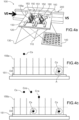
- FIG. 3 is a schematic representation of a biological and/or biochemical and/or chemical sensor 100 (hereinafter “sensor 100”) according to the present invention.
- the sensor 100 notably comprises a support 110.
- This support 110 is in particular transparent to light radiation emitted by a light emission source 130 described below.
- This support 110 may include a glass slide, or a prism.
- the prism 110 is provided with a first face 111.
- the prism 110 may in particular comprise glass.
- the first layer 120 comprises a metallic material, and more particularly at least one of the materials chosen from: gold, aluminum , copper, silver.
- An adhesion layer can also be interposed between the first face and the first layer 120.
- This first layer can in particular comprise Ni or Co, with a thickness, for example, between 2 nm and 3 nm.
- the first layer 120 may have a thickness E of between 15 nm and 100 nm.
- the sensor 100 further comprises a light emission source 130 intended to emit light radiation at an angle of incidence ⁇ i on the contact face 121.
- the light emission source 130 can be arranged so that the angle of incidence ⁇ i varies, in particular continuously, in a range of angles of incidence, for example beyond of the total reflection angle.
- the light radiation capable of being emitted by the light radiation source is advantageously non-coherent.
- the light emission source 130 may comprise a light-emitting diode emitting visible radiation, for example red.
- the light emission source 130 is polychromatic and emits light radiation at a fixed angle.
- the sensor 100 also includes a detector 140.
- Detector 140 may include one or more point detectors. According to another aspect, the detector 140 can be matrix.
- matrix detector is meant a detector provided with a plurality of detection cells arranged in a mesh of rows and columns. More particularly, the detection cells are arranged at the intersection of the rows and the columns.
- the matrix detector 140 can for example include a CCD or CMOS type detector.
- the detector 140 is also arranged to collect the light radiation emitted by the light emission source 130 and reflected by the contact face 121.
- the sensor 100 further comprises at least one transistor 150, and a second layer 160, made of a dielectric material interposed between the first layer 120 and the at least one transistor 150 ( figures 3 And 4a ).
- the dielectric material may comprise at least one of the materials chosen from: silicon nitride, silicon oxide, hafnium oxide.
- the transistor 150 comprises a sheet 151 made of a two-dimensional material, resting on its rear face on the second layer 160 and is intended to form a channel region of the transistor 150.
- two-dimensional material is meant a material which has a 2-dimensional crystalline structure. Such materials generally comprise a stack of crystalline planes within which the atoms or molecules are linked by covalent bonds, while Van der Walls type interactions ensure cohesion between crystalline planes.
- the two-dimensional material is optically transparent to the light radiation likely to be emitted by the light emission source.
- optically transparent we mean a transmission coefficient greater than 70%.
- the two-dimensional material may comprise at least one of the materials chosen from: graphene, molybdenum sulfide.
- the transistor 150 also includes two electrodes called, respectively, source electrode 152 and drain electrode 153.
- the sheet 151 also comprises a face opposite the rear face of said sheet, called the front face 154, which comprises a specific functionalization 155.
- This specific functionalization 155 notably comprises specific probes 155a at which specific targets, from a family of targets , are likely to be adsorbed ( figure 4a ).
- the specific functionalization 155 is adapted to place at a distance less than a detection distance Dd the specific targets likely to be adsorbed at the specific probes.
- the detection distance is in particular a distance below which combined detection by electrical measurement using transistor 150 and by surface plasmon resonance measurement is possible.
- FIG 4b is an illustration of the adsorption mechanism and the specific interaction described at the outset of this section.
- There figure 4b represents in particular the sheet 151 on which specific probes 155a are grafted.
- the specific interaction (zone A of the figure 4b ) of a specific target Cs with one of the specific probes 155a leads to the folding of said probe on itself so as to bring the target in question closer to a distance less than the distance Dd.
- the specific functionalization 155 can be adapted to maintain at a distance greater than the detection distance Dd any target, other than the specific target and capable of adsorbing at the specific probes.
- the detection distance Dd any target, other than the specific target and capable of adsorbing at the specific probes.
- non-specific Cns targets targets other than specific targets, called non-specific Cns targets.
- the specific interaction does not occur between the specific probes and the non-specific Cns targets, the deformation and/or folding of said probes 155a is not observed. In this way, these non-specific targets remain at a distance from the front face, and in particular at a distance greater than the distance Dd.
- the specific probe may comprise a biological agent, and in particular an aptamer for example for the detection of adenosine.
- such a sensor 100 can advantageously be used for the analysis of a complex solution comprising different targets from a family of specific targets.
- the consideration of the specific functionalization 155 according to the terms of the present invention namely a specific functionalization 155 making it possible to exclusively locate the specific target in the detection field of the transistor makes it possible to confirm the presence of said target, also detected by surface plasmon resonance.
- the specific probes are also adapted to keep any target other than the specific target at a distance from detection by the transistor.
- the senor 100 makes it possible to exacerbate the advantages of two probes having different detection fields, sensitivities and selectivities.
- detection by surface plasmon resonance makes it possible to detect, with great selectivity, the presence of specific targets over a detection field which can extend over a hundred nanometers from the front face 154.
- the transistor 150 is for its part very sensitive to the presence or absence of the specific target in its detection field which can extend a few tens of nanometers, in particular 20 nm, from the front face 154.
- maintaining outside this detection field of targets other than the specific target annihilates any detection of these targets other than the specific target by the transistor 150.
- the device 100 according to the present invention may also comprise at least a reference transistor 180.
- the latter comprises in this regard a reference sheet 181, made of the two-dimensional material, and intended to form a channel region.
- the reference transistor 180 also includes two electrodes called, respectively, source electrode 182 and drain electrode 183.
- the reference sheet 181 rests on a rear face on the second layer 160 and also includes a reference face 174.
- Said reference face is adapted to be the site of an adsorption of targets regardless of their type, so that the latter can be the subject of detection during a combined measurement, at the level of the reference face, by surface plasmon resonance initiated by the light source, and by electrical measurement using the reference transistor 180.
- This reference site makes it possible to know the response of the sensor 100 in the absence of functionalization, and consequently to make differential measurements.
- the sensor 100 may also include at least one site 190, at a section exposed to the external environment of the first layer, dedicated only for surface plasmon resonance measurement. This site allows in particular to carry out reference and calibration measurements ( figure 4a ).
- the sensor 100 can also be provided with a cover 200 (sectional view on the figure 4a ) overlapping the first face, and in which a fluid, circulating from an entry route VE towards an exit route VS of said cover, is capable of being the subject of molecular recognition by means of said device.
- the first layer 120 essentially considered for the generation of surface plasmons, can also form gate electrodes of the different transistors described in the present invention.
- this first layer can be structured in order to address the different transistors either individually or in groups. This last aspect makes it possible to simplify the device and in particular its manufacturing process.
- the sensor 100 is not limited to the implementation of a single transistor per transistor type. In this regard, it can be envisaged to implement a plurality of specific transistors and references. Computer processing can then be implemented for processing the data collected at the detector 140.
- the senor 100 due to increased sensitivity and selectivity, opens the way to the detection of small targets (and in particular of a size less than 2 nm) and/or not very concentrated and/or low molar mass.
- traces of drugs and in particular traces of cocaine taken as a specific target can in particular interact with a specific probe made of an MNS-4.1 type aptamer as described in document [1] cited at the end of the description.
- the specific probe may comprise a thrombin aptamer for the detection of thrombin ⁇ , as described in document [2] cited at the end of the description.
- the senor 100 can comprise several transistors each functionalized with a different specific probe. These different Specific probes pave the way for the analysis of complex fluids comprising different types of specific targets.
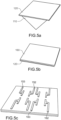
- the figure 5a represents a step of forming the first layer 120, in particular in gold, on a first face of a prism.
- the second layer 160 in particular made of silicon nitride, is formed to cover the first layer 120.
- FIG. 5c is a representation of a contact formation step, and in particular the source and drain electrodes of the different transistors.
- This step involves more particularly the formation of a layer of titanium, and a layer of gold, followed by the definition of pattern relating to said electrode by a photolithography/etching sequence (in particular by wet process).
- a monolayer of graphene is then transferred to the second layer 160 using a liquid transfer process (known as “fishing” technique) and shaped in order to prevent any crosstalk between the transistors ( figure 5d ).
- An electrical passivation layer 210 is then formed on the source and drain electrodes in order to protect the latter.
- the electrical passivation layer may in particular involve the use of a resin of the SU8 type ( figure 5e ).
- a final step, represented in figure 5f , biological functionalization can be performed.
Landscapes
- Health & Medical Sciences (AREA)
- Life Sciences & Earth Sciences (AREA)
- Immunology (AREA)
- Engineering & Computer Science (AREA)
- Chemical & Material Sciences (AREA)
- Molecular Biology (AREA)
- Hematology (AREA)
- Urology & Nephrology (AREA)
- Biomedical Technology (AREA)
- Physics & Mathematics (AREA)
- General Health & Medical Sciences (AREA)
- Biochemistry (AREA)
- Analytical Chemistry (AREA)
- General Physics & Mathematics (AREA)
- Pathology (AREA)
- Microbiology (AREA)
- Biotechnology (AREA)
- Food Science & Technology (AREA)
- Cell Biology (AREA)
- Medicinal Chemistry (AREA)
- Bioinformatics & Cheminformatics (AREA)
- Organic Chemistry (AREA)
- Tropical Medicine & Parasitology (AREA)
- Virology (AREA)
- Pharmacology & Pharmacy (AREA)
- Zoology (AREA)
- Proteomics, Peptides & Aminoacids (AREA)
- Wood Science & Technology (AREA)
- Biophysics (AREA)
- Toxicology (AREA)
- General Engineering & Computer Science (AREA)
- Genetics & Genomics (AREA)
- Spectroscopy & Molecular Physics (AREA)
- Microelectronics & Electronic Packaging (AREA)
- Chemical Kinetics & Catalysis (AREA)
- Electrochemistry (AREA)
- Investigating Or Analysing Materials By Optical Means (AREA)
Claims (14)
- Biologischer und/oder biochemischer und/oder chemischer Sensor (100), Folgendes umfassend:- ein Prisma (110), das eine Fläche, genannt erste Fläche (111), umfasst;- eine erste Metallschicht (120), die an einer Fläche, genannt Kontaktfläche (121), von der ersten Fläche (111) überdeckt wird,- eine Lichtemissionsquelle (130), die dazu bestimmt ist, eine Lichtstrahlung gemäß einem Einfallswinkel θi auf die Kontaktfläche zu emittieren;- einen Detektor (140), dazu bestimmt ist, die von der Lichtemissionsquelle emittierte und von der Kontaktfläche (121) reflektierte Lichtstrahlung zu sammeln;wobei die Vorrichtung eine zweite Schicht (160) aus dielektrischem Material umfasst, die die erste Schicht (120) überdeckt und auf der ein Feldeffekttransistor (150) ruht, wobei der Transistor, der mit einer Source-Elektrode (152) und einer Drain-Elektrode (153) versehen ist, ein Blatt (151) umfasst, das aus einem zweidimensionalen Material hergestellt ist, das eine Kristallstruktur mit zwei Dimensionen aufweist, wobei das zweidimensionale Material dazu bestimmt ist, einen Kanalbereich zu bilden, und mit einer Rückseite auf der zweiten Schicht ruht, wobei eine Vorderseite (154) des Blattes, die der Rückseite gegenüberliegt, eine Funktionalisierung (155) mit spezifischen Sonden umfasst, an denen spezifische Ziele aus einer Familie von Zielen adsorbiert werden können, wobei die spezifische Funktionalisierung (155) so beschaffen ist, dass sie die adsorbierten spezifischen Ziele in einer Distanz platziert, die geringer ist als eine Detektionsdistanz Dd, unterhalb derer eine kombinierte Detektion durch elektrische Messung mittels des spezifischen Transistors (150) und durch Oberflächenplasmonenresonanzmessung möglich ist.
- Sensor nach Anspruch 1, wobei die spezifische Funktionalisierung (155) ebenfalls so beschaffen ist, dass sie jedes andere Ziel als das spezifische Ziel, das an den spezifischen Sonden adsorbiert werden kann, in einer Distanz hält, die größer ist als die Detektionsdistanz Dd, so dass nur die Detektion dieser Ziele durch Oberflächenplasmonenresonanz möglich ist.
- Sensor nach Anspruch 1 oder 2, wobei die spezifischen Sonden biologische oder biochemische oder chemische Mittel sind, die auf die Vorderseite (154) aufgepfropft sind, wobei jede spezifische Sonde so angepasst ist, dass, wenn das spezifische Ziel an der spezifischen Sonde adsorbiert wird, sich die Sonde verformt, um das spezifische Ziel in einer Distanz von der Vorderseite (154) zu platzieren, die geringer ist als die Detektionsdistanz Dd.
- Sensor nach einem der Ansprüche 1 bis 3, wobei der Sensor (100) mindestens einen Referenztransistor (180) umfasst, der ein Referenzblatt umfasst, das aus dem zweidimensionalen Material hergestellt ist, und das Referenzblatt, das dazu bestimmt ist, einen Kanalbereich zu bilden, mit einer Rückseite auf der zweiten Schicht ruht, wobei das Referenzblatt ebenfalls eine Referenzfläche umfasst und so beschaffen ist, dass es eine Adsorption der Ziele auf nicht selektive Weise beherbergt, sodass diese bei einer kombinierten Messung auf der Ebene der Referenzfläche detektiert werden können, durch Resonanz von Oberflächenplasmonen, initiiert durch die Lichtquelle, und durch elektrische Messung mittels des Referenztransistors (180), wobei die erste Schicht vorteilhafterweise eine Gate-Elektrode des mindestens einen Referenztransistors (180) bildet.
- Sensor nach einem der Ansprüche 1 bis 4, wobei die Vorrichtung mindestens eine Stelle (190) an einem Abschnitt, der der äußeren Umgebung der ersten Schicht ausgesetzt ist, umfasst, die ausschließlich der Resonanzmessung von Oberflächenplasmonen gewidmet ist.
- Sensor nach einem der Ansprüche 1 bis 5, wobei das zweidimensionale Material mindestens eines der folgenden Materialien umfasst: Graphen, Molybdänsulfid.
- Sensor nach einem der Ansprüche 1 bis 6, wobei das metallische Material mindestens eines der Elemente umfasst, die ausgewählt sind aus: Gold, Aluminium, Kupfer, Silber.
- Sensor nach einem der Ansprüche 1 bis 7, wobei die Vorrichtung außerdem eine Haube (200) umfasst, die von der ersten Fläche überdeckt wird, und wobei ein Fluid, das von einem Einlassweg zu einem Auslassweg der Haube (200) fließt, mittels der Vorrichtung molekular erkannt werden kann.
- Sensor nach einem der Ansprüche 1 bis 8, wobei die Lichtemissionsquelle und der Detektor so angeordnet sind, dass Messungen bei verschiedenen Einfallswinkeln θi durchgeführt werden können.
- Sensor nach einem der Ansprüche 1 bis 8, wobei die Lichtemissionsquelle polychromatisch ist und mit dem Detektor so angeordnet ist, dass die Oberflächenplasmonenresonanzmessung unter einem festen Winkel durchgeführt wird.
- Sensor nach einem der Ansprüche 1 bis 10, wobei der Detektor ein Matrixdetektor ist.
- Sensor nach einem der Ansprüche 1 bis 11, wobei die spezifische Funktionalisierung (155) so angepasst ist, dass sie die Adsorption von Zielen aus der Bakterienfamilie Escherichia coli und die Erkennung eines für diese Familie spezifischen Ziels fördert.
- Sensor nach Anspruch 1 bis 11, wobei die spezifische Funktionalisierung (155) so angepasst ist, dass sie die Adsorption von Zielen aus der Familie des Kokains fördert.
- Sensor nach Anspruch 1 bis 11, wobei die spezifische Funktionalisierung (155) so angepasst ist, dass sie die Adsorption von Thrombin α fördert.
Applications Claiming Priority (2)
| Application Number | Priority Date | Filing Date | Title |
|---|---|---|---|
| FR2005584A FR3110970B1 (fr) | 2020-05-27 | 2020-05-27 | Capteur biologique et/ou biochimique et/ou chimique |
| PCT/FR2021/050951 WO2021240110A1 (fr) | 2020-05-27 | 2021-05-26 | Capteur biologique et/ou biochimique et/ou chimique |
Publications (2)
| Publication Number | Publication Date |
|---|---|
| EP4136430A1 EP4136430A1 (de) | 2023-02-22 |
| EP4136430B1 true EP4136430B1 (de) | 2023-12-27 |
Family
ID=72885634
Family Applications (1)
| Application Number | Title | Priority Date | Filing Date |
|---|---|---|---|
| EP21732487.0A Active EP4136430B1 (de) | 2020-05-27 | 2021-05-26 | Biologischer und/oder biochemischer und/oder chemischer sensor |
Country Status (4)
| Country | Link |
|---|---|
| US (1) | US12607630B2 (de) |
| EP (1) | EP4136430B1 (de) |
| FR (1) | FR3110970B1 (de) |
| WO (1) | WO2021240110A1 (de) |
Family Cites Families (2)
| Publication number | Priority date | Publication date | Assignee | Title |
|---|---|---|---|---|
| US9714952B2 (en) * | 2014-07-10 | 2017-07-25 | International Business Machines Corporation | Biosensors including surface resonance spectroscopy and semiconductor devices |
| US11428690B2 (en) * | 2017-01-30 | 2022-08-30 | University Of Miami | Portable plasmonic system for disease detection |
-
2020
- 2020-05-27 FR FR2005584A patent/FR3110970B1/fr active Active
-
2021
- 2021-05-26 WO PCT/FR2021/050951 patent/WO2021240110A1/fr not_active Ceased
- 2021-05-26 EP EP21732487.0A patent/EP4136430B1/de active Active
- 2021-05-26 US US17/999,728 patent/US12607630B2/en active Active
Also Published As
| Publication number | Publication date |
|---|---|
| US20230236182A1 (en) | 2023-07-27 |
| EP4136430A1 (de) | 2023-02-22 |
| FR3110970A1 (fr) | 2021-12-03 |
| FR3110970B1 (fr) | 2023-03-24 |
| WO2021240110A1 (fr) | 2021-12-02 |
| US12607630B2 (en) | 2026-04-21 |
Similar Documents
| Publication | Publication Date | Title |
|---|---|---|
| EP1670951A2 (de) | Mikrosensoren und nanosensoren für chemische und biologische spezies mit oberflächenplasmonen | |
| CN102066997B (zh) | 用于制造光波导的方法、光波导和传感器装置 | |
| US20080204709A1 (en) | Biosensor using microdisk laser | |
| EP1234170A1 (de) | Verstärkung eines von einer oberflächenprobe emittierten fluoreszenzsignals | |
| FR2908888A1 (fr) | Dispositif pour la detection exaltee de l'emission d'une particule cible | |
| KR20120123504A (ko) | 장치 및 관련 방법 | |
| US20160178438A1 (en) | Raman spectroscopic apparatus, raman spectroscopic method, and electronic apparatus | |
| EP3391027B1 (de) | Kontrastverstärkende träger mit zweidimensionalem material | |
| EP3058345B1 (de) | Kontrastverstärkungsträger zur beobachtung einer probe, herstellungsverfahren dafür und verwendungen davon | |
| EP2780693B1 (de) | Mikrostrukturierte chip mit konvexen oberflächen für oberflächenplasmonresonanzanalyse, analysevorrichtung mit diesem mikrostrukturierten chip und verwendung der vorrichtung | |
| WO2021240110A1 (fr) | Capteur biologique et/ou biochimique et/ou chimique | |
| WO2003044501A1 (fr) | Dispositif perfectionne du type bio-puce | |
| EP3980751A1 (de) | Verfahren und vorrichtung zur analyse einer probe unter verwendung eines resonanzträgers | |
| EP2776811A1 (de) | Mikrostrukturierter chip zur oberflächenplasmonenresonanzanalyse, analysevorrichtung mit diesem mikrostrukturierten chip und verwendung dieser vorrichtung | |
| EP2877836B1 (de) | Optische verfahren zur beobachtung von proben und zum erfassen bzw. messen chemischer oder biologischer spezies | |
| EP1946076B1 (de) | Biochipabbildungssystem | |
| EP1300675A1 (de) | Optischer Sensor zum Nachweis mindestens einer chemischen Substanz und solche Sensoren enthaltende optische Sonden | |
| EP4202417B1 (de) | Vorrichtung zur biomolekularen detektion mittels nanofotodetektoren | |
| EP4484934A1 (de) | Vorrichtung zur erkennung einer bindung zwischen zwei biologischen spezies | |
| EP4484932A1 (de) | Fluoreszenznachweisvorrichtung mit nanofotodetektoren | |
| FR2979704A1 (fr) | Dispositif de detection a plasmons de surface | |
| WO2006005881A1 (fr) | Procede et dispositif d’analyse de petits volumes de liquide | |
| Dostalek | Plasmonic Amplification for Fluorescence Bioassays Utilizing Propagating Surface Plasmons | |
| FR3131959A1 (fr) | Procédé de détection d’objets biologiques par imagerie par résonance plasmonique de surface | |
| EP1529209A2 (de) | Chromophorträgervorrichtung |
Legal Events
| Date | Code | Title | Description |
|---|---|---|---|
| STAA | Information on the status of an ep patent application or granted ep patent |
Free format text: STATUS: UNKNOWN |
|
| STAA | Information on the status of an ep patent application or granted ep patent |
Free format text: STATUS: THE INTERNATIONAL PUBLICATION HAS BEEN MADE |
|
| PUAI | Public reference made under article 153(3) epc to a published international application that has entered the european phase |
Free format text: ORIGINAL CODE: 0009012 |
|
| STAA | Information on the status of an ep patent application or granted ep patent |
Free format text: STATUS: REQUEST FOR EXAMINATION WAS MADE |
|
| 17P | Request for examination filed |
Effective date: 20221115 |
|
| AK | Designated contracting states |
Kind code of ref document: A1 Designated state(s): AL AT BE BG CH CY CZ DE DK EE ES FI FR GB GR HR HU IE IS IT LI LT LU LV MC MK MT NL NO PL PT RO RS SE SI SK SM TR |
|
| GRAP | Despatch of communication of intention to grant a patent |
Free format text: ORIGINAL CODE: EPIDOSNIGR1 |
|
| STAA | Information on the status of an ep patent application or granted ep patent |
Free format text: STATUS: GRANT OF PATENT IS INTENDED |
|
| DAV | Request for validation of the european patent (deleted) | ||
| DAX | Request for extension of the european patent (deleted) | ||
| INTG | Intention to grant announced |
Effective date: 20230817 |
|
| GRAS | Grant fee paid |
Free format text: ORIGINAL CODE: EPIDOSNIGR3 |
|
| GRAA | (expected) grant |
Free format text: ORIGINAL CODE: 0009210 |
|
| STAA | Information on the status of an ep patent application or granted ep patent |
Free format text: STATUS: THE PATENT HAS BEEN GRANTED |
|
| AK | Designated contracting states |
Kind code of ref document: B1 Designated state(s): AL AT BE BG CH CY CZ DE DK EE ES FI FR GB GR HR HU IE IS IT LI LT LU LV MC MK MT NL NO PL PT RO RS SE SI SK SM TR |
|
| REG | Reference to a national code |
Ref country code: GB Ref legal event code: FG4D Free format text: NOT ENGLISH |
|
| REG | Reference to a national code |
Ref country code: CH Ref legal event code: EP |
|
| REG | Reference to a national code |
Ref country code: DE Ref legal event code: R096 Ref document number: 602021008134 Country of ref document: DE |
|
| REG | Reference to a national code |
Ref country code: IE Ref legal event code: FG4D Free format text: LANGUAGE OF EP DOCUMENT: FRENCH |
|
| PG25 | Lapsed in a contracting state [announced via postgrant information from national office to epo] |
Ref country code: GR Free format text: LAPSE BECAUSE OF FAILURE TO SUBMIT A TRANSLATION OF THE DESCRIPTION OR TO PAY THE FEE WITHIN THE PRESCRIBED TIME-LIMIT Effective date: 20240328 |
|
| REG | Reference to a national code |
Ref country code: LT Ref legal event code: MG9D |
|
| PG25 | Lapsed in a contracting state [announced via postgrant information from national office to epo] |
Ref country code: LT Free format text: LAPSE BECAUSE OF FAILURE TO SUBMIT A TRANSLATION OF THE DESCRIPTION OR TO PAY THE FEE WITHIN THE PRESCRIBED TIME-LIMIT Effective date: 20231227 |
|
| PG25 | Lapsed in a contracting state [announced via postgrant information from national office to epo] |
Ref country code: ES Free format text: LAPSE BECAUSE OF FAILURE TO SUBMIT A TRANSLATION OF THE DESCRIPTION OR TO PAY THE FEE WITHIN THE PRESCRIBED TIME-LIMIT Effective date: 20231227 |
|
| PG25 | Lapsed in a contracting state [announced via postgrant information from national office to epo] |
Ref country code: LT Free format text: LAPSE BECAUSE OF FAILURE TO SUBMIT A TRANSLATION OF THE DESCRIPTION OR TO PAY THE FEE WITHIN THE PRESCRIBED TIME-LIMIT Effective date: 20231227 Ref country code: GR Free format text: LAPSE BECAUSE OF FAILURE TO SUBMIT A TRANSLATION OF THE DESCRIPTION OR TO PAY THE FEE WITHIN THE PRESCRIBED TIME-LIMIT Effective date: 20240328 Ref country code: FI Free format text: LAPSE BECAUSE OF FAILURE TO SUBMIT A TRANSLATION OF THE DESCRIPTION OR TO PAY THE FEE WITHIN THE PRESCRIBED TIME-LIMIT Effective date: 20231227 Ref country code: ES Free format text: LAPSE BECAUSE OF FAILURE TO SUBMIT A TRANSLATION OF THE DESCRIPTION OR TO PAY THE FEE WITHIN THE PRESCRIBED TIME-LIMIT Effective date: 20231227 Ref country code: BG Free format text: LAPSE BECAUSE OF FAILURE TO SUBMIT A TRANSLATION OF THE DESCRIPTION OR TO PAY THE FEE WITHIN THE PRESCRIBED TIME-LIMIT Effective date: 20240327 |
|
| REG | Reference to a national code |
Ref country code: NL Ref legal event code: MP Effective date: 20231227 |
|
| REG | Reference to a national code |
Ref country code: AT Ref legal event code: MK05 Ref document number: 1644967 Country of ref document: AT Kind code of ref document: T Effective date: 20231227 |
|
| PG25 | Lapsed in a contracting state [announced via postgrant information from national office to epo] |
Ref country code: NL Free format text: LAPSE BECAUSE OF FAILURE TO SUBMIT A TRANSLATION OF THE DESCRIPTION OR TO PAY THE FEE WITHIN THE PRESCRIBED TIME-LIMIT Effective date: 20231227 |
|
| PG25 | Lapsed in a contracting state [announced via postgrant information from national office to epo] |
Ref country code: SE Free format text: LAPSE BECAUSE OF FAILURE TO SUBMIT A TRANSLATION OF THE DESCRIPTION OR TO PAY THE FEE WITHIN THE PRESCRIBED TIME-LIMIT Effective date: 20231227 Ref country code: RS Free format text: LAPSE BECAUSE OF FAILURE TO SUBMIT A TRANSLATION OF THE DESCRIPTION OR TO PAY THE FEE WITHIN THE PRESCRIBED TIME-LIMIT Effective date: 20231227 Ref country code: NO Free format text: LAPSE BECAUSE OF FAILURE TO SUBMIT A TRANSLATION OF THE DESCRIPTION OR TO PAY THE FEE WITHIN THE PRESCRIBED TIME-LIMIT Effective date: 20240327 Ref country code: NL Free format text: LAPSE BECAUSE OF FAILURE TO SUBMIT A TRANSLATION OF THE DESCRIPTION OR TO PAY THE FEE WITHIN THE PRESCRIBED TIME-LIMIT Effective date: 20231227 Ref country code: LV Free format text: LAPSE BECAUSE OF FAILURE TO SUBMIT A TRANSLATION OF THE DESCRIPTION OR TO PAY THE FEE WITHIN THE PRESCRIBED TIME-LIMIT Effective date: 20231227 Ref country code: HR Free format text: LAPSE BECAUSE OF FAILURE TO SUBMIT A TRANSLATION OF THE DESCRIPTION OR TO PAY THE FEE WITHIN THE PRESCRIBED TIME-LIMIT Effective date: 20231227 |
|
| PG25 | Lapsed in a contracting state [announced via postgrant information from national office to epo] |
Ref country code: IS Free format text: LAPSE BECAUSE OF FAILURE TO SUBMIT A TRANSLATION OF THE DESCRIPTION OR TO PAY THE FEE WITHIN THE PRESCRIBED TIME-LIMIT Effective date: 20240427 |
|
| PG25 | Lapsed in a contracting state [announced via postgrant information from national office to epo] |
Ref country code: CZ Free format text: LAPSE BECAUSE OF FAILURE TO SUBMIT A TRANSLATION OF THE DESCRIPTION OR TO PAY THE FEE WITHIN THE PRESCRIBED TIME-LIMIT Effective date: 20231227 Ref country code: AT Free format text: LAPSE BECAUSE OF FAILURE TO SUBMIT A TRANSLATION OF THE DESCRIPTION OR TO PAY THE FEE WITHIN THE PRESCRIBED TIME-LIMIT Effective date: 20231227 |
|
| PG25 | Lapsed in a contracting state [announced via postgrant information from national office to epo] |
Ref country code: SK Free format text: LAPSE BECAUSE OF FAILURE TO SUBMIT A TRANSLATION OF THE DESCRIPTION OR TO PAY THE FEE WITHIN THE PRESCRIBED TIME-LIMIT Effective date: 20231227 |
|
| PG25 | Lapsed in a contracting state [announced via postgrant information from national office to epo] |
Ref country code: SM Free format text: LAPSE BECAUSE OF FAILURE TO SUBMIT A TRANSLATION OF THE DESCRIPTION OR TO PAY THE FEE WITHIN THE PRESCRIBED TIME-LIMIT Effective date: 20231227 Ref country code: SK Free format text: LAPSE BECAUSE OF FAILURE TO SUBMIT A TRANSLATION OF THE DESCRIPTION OR TO PAY THE FEE WITHIN THE PRESCRIBED TIME-LIMIT Effective date: 20231227 Ref country code: RO Free format text: LAPSE BECAUSE OF FAILURE TO SUBMIT A TRANSLATION OF THE DESCRIPTION OR TO PAY THE FEE WITHIN THE PRESCRIBED TIME-LIMIT Effective date: 20231227 Ref country code: IT Free format text: LAPSE BECAUSE OF FAILURE TO SUBMIT A TRANSLATION OF THE DESCRIPTION OR TO PAY THE FEE WITHIN THE PRESCRIBED TIME-LIMIT Effective date: 20231227 Ref country code: IS Free format text: LAPSE BECAUSE OF FAILURE TO SUBMIT A TRANSLATION OF THE DESCRIPTION OR TO PAY THE FEE WITHIN THE PRESCRIBED TIME-LIMIT Effective date: 20240427 Ref country code: EE Free format text: LAPSE BECAUSE OF FAILURE TO SUBMIT A TRANSLATION OF THE DESCRIPTION OR TO PAY THE FEE WITHIN THE PRESCRIBED TIME-LIMIT Effective date: 20231227 Ref country code: CZ Free format text: LAPSE BECAUSE OF FAILURE TO SUBMIT A TRANSLATION OF THE DESCRIPTION OR TO PAY THE FEE WITHIN THE PRESCRIBED TIME-LIMIT Effective date: 20231227 Ref country code: AT Free format text: LAPSE BECAUSE OF FAILURE TO SUBMIT A TRANSLATION OF THE DESCRIPTION OR TO PAY THE FEE WITHIN THE PRESCRIBED TIME-LIMIT Effective date: 20231227 |
|
| PG25 | Lapsed in a contracting state [announced via postgrant information from national office to epo] |
Ref country code: PT Free format text: LAPSE BECAUSE OF FAILURE TO SUBMIT A TRANSLATION OF THE DESCRIPTION OR TO PAY THE FEE WITHIN THE PRESCRIBED TIME-LIMIT Effective date: 20240429 Ref country code: PL Free format text: LAPSE BECAUSE OF FAILURE TO SUBMIT A TRANSLATION OF THE DESCRIPTION OR TO PAY THE FEE WITHIN THE PRESCRIBED TIME-LIMIT Effective date: 20231227 |
|
| PG25 | Lapsed in a contracting state [announced via postgrant information from national office to epo] |
Ref country code: PT Free format text: LAPSE BECAUSE OF FAILURE TO SUBMIT A TRANSLATION OF THE DESCRIPTION OR TO PAY THE FEE WITHIN THE PRESCRIBED TIME-LIMIT Effective date: 20240429 Ref country code: PL Free format text: LAPSE BECAUSE OF FAILURE TO SUBMIT A TRANSLATION OF THE DESCRIPTION OR TO PAY THE FEE WITHIN THE PRESCRIBED TIME-LIMIT Effective date: 20231227 |
|
| REG | Reference to a national code |
Ref country code: DE Ref legal event code: R097 Ref document number: 602021008134 Country of ref document: DE |
|
| PG25 | Lapsed in a contracting state [announced via postgrant information from national office to epo] |
Ref country code: DK Free format text: LAPSE BECAUSE OF FAILURE TO SUBMIT A TRANSLATION OF THE DESCRIPTION OR TO PAY THE FEE WITHIN THE PRESCRIBED TIME-LIMIT Effective date: 20231227 |
|
| RAP4 | Party data changed (patent owner data changed or rights of a patent transferred) |
Owner name: CENTRE NATIONAL DE LA RECHERCHE SCIENTIFIQUE Owner name: UNIVERSITE GRENOBLE ALPES Owner name: COMMISSARIAT A L'ENERGIE ATOMIQUE ET AUX ENERGIESALTERNATIVES |
|
| PG25 | Lapsed in a contracting state [announced via postgrant information from national office to epo] |
Ref country code: DK Free format text: LAPSE BECAUSE OF FAILURE TO SUBMIT A TRANSLATION OF THE DESCRIPTION OR TO PAY THE FEE WITHIN THE PRESCRIBED TIME-LIMIT Effective date: 20231227 |
|
| PLBE | No opposition filed within time limit |
Free format text: ORIGINAL CODE: 0009261 |
|
| STAA | Information on the status of an ep patent application or granted ep patent |
Free format text: STATUS: NO OPPOSITION FILED WITHIN TIME LIMIT |
|
| 26N | No opposition filed |
Effective date: 20240930 |
|
| REG | Reference to a national code |
Ref country code: CH Ref legal event code: PL |
|
| PG25 | Lapsed in a contracting state [announced via postgrant information from national office to epo] |
Ref country code: MC Free format text: LAPSE BECAUSE OF FAILURE TO SUBMIT A TRANSLATION OF THE DESCRIPTION OR TO PAY THE FEE WITHIN THE PRESCRIBED TIME-LIMIT Effective date: 20231227 |
|
| PG25 | Lapsed in a contracting state [announced via postgrant information from national office to epo] |
Ref country code: LU Free format text: LAPSE BECAUSE OF NON-PAYMENT OF DUE FEES Effective date: 20240526 |
|
| PG25 | Lapsed in a contracting state [announced via postgrant information from national office to epo] |
Ref country code: MC Free format text: LAPSE BECAUSE OF FAILURE TO SUBMIT A TRANSLATION OF THE DESCRIPTION OR TO PAY THE FEE WITHIN THE PRESCRIBED TIME-LIMIT Effective date: 20231227 Ref country code: LU Free format text: LAPSE BECAUSE OF NON-PAYMENT OF DUE FEES Effective date: 20240526 Ref country code: CH Free format text: LAPSE BECAUSE OF NON-PAYMENT OF DUE FEES Effective date: 20240531 |
|
| REG | Reference to a national code |
Ref country code: BE Ref legal event code: MM Effective date: 20240531 |
|
| PG25 | Lapsed in a contracting state [announced via postgrant information from national office to epo] |
Ref country code: IE Free format text: LAPSE BECAUSE OF NON-PAYMENT OF DUE FEES Effective date: 20240526 |
|
| PG25 | Lapsed in a contracting state [announced via postgrant information from national office to epo] |
Ref country code: SI Free format text: LAPSE BECAUSE OF FAILURE TO SUBMIT A TRANSLATION OF THE DESCRIPTION OR TO PAY THE FEE WITHIN THE PRESCRIBED TIME-LIMIT Effective date: 20231227 Ref country code: BE Free format text: LAPSE BECAUSE OF NON-PAYMENT OF DUE FEES Effective date: 20240531 |
|
| PGFP | Annual fee paid to national office [announced via postgrant information from national office to epo] |
Ref country code: DE Payment date: 20250519 Year of fee payment: 5 |
|
| PGFP | Annual fee paid to national office [announced via postgrant information from national office to epo] |
Ref country code: GB Payment date: 20250527 Year of fee payment: 5 |
|
| PGFP | Annual fee paid to national office [announced via postgrant information from national office to epo] |
Ref country code: FR Payment date: 20250526 Year of fee payment: 5 |
|
| PG25 | Lapsed in a contracting state [announced via postgrant information from national office to epo] |
Ref country code: HU Free format text: LAPSE BECAUSE OF FAILURE TO SUBMIT A TRANSLATION OF THE DESCRIPTION OR TO PAY THE FEE WITHIN THE PRESCRIBED TIME-LIMIT; INVALID AB INITIO Effective date: 20210526 |
|
| PG25 | Lapsed in a contracting state [announced via postgrant information from national office to epo] |
Ref country code: CY Free format text: LAPSE BECAUSE OF FAILURE TO SUBMIT A TRANSLATION OF THE DESCRIPTION OR TO PAY THE FEE WITHIN THE PRESCRIBED TIME-LIMIT; INVALID AB INITIO Effective date: 20210526 |