EP4135142A2 - Portable standby starting device and standby starting tool for vehicle - Google Patents
Portable standby starting device and standby starting tool for vehicle Download PDFInfo
- Publication number
- EP4135142A2 EP4135142A2 EP22189706.9A EP22189706A EP4135142A2 EP 4135142 A2 EP4135142 A2 EP 4135142A2 EP 22189706 A EP22189706 A EP 22189706A EP 4135142 A2 EP4135142 A2 EP 4135142A2
- Authority
- EP
- European Patent Office
- Prior art keywords
- circuit
- vehicle
- starting
- load
- voltage
- Prior art date
- Legal status (The legal status is an assumption and is not a legal conclusion. Google has not performed a legal analysis and makes no representation as to the accuracy of the status listed.)
- Pending
Links
Images
















Classifications
-
- H—ELECTRICITY
- H02—GENERATION; CONVERSION OR DISTRIBUTION OF ELECTRIC POWER
- H02J—ELECTRIC POWER NETWORKS; CIRCUIT ARRANGEMENTS OR SYSTEMS FOR SUPPLYING OR DISTRIBUTING ELECTRIC POWER; SYSTEMS FOR STORING ELECTRIC ENERGY
- H02J1/00—Circuit arrangements for DC mains or DC distribution networks
- H02J1/10—Parallel operation of DC sources
- H02J1/122—Provisions for temporary connection of DC sources of essentially the same voltage, e.g. jumpstart cables
-
- F—MECHANICAL ENGINEERING; LIGHTING; HEATING; WEAPONS; BLASTING
- F02—COMBUSTION ENGINES; HOT-GAS OR COMBUSTION-PRODUCT ENGINE PLANTS
- F02N—STARTING OF COMBUSTION ENGINES; STARTING AIDS FOR SUCH ENGINES, NOT OTHERWISE PROVIDED FOR
- F02N11/00—Starting of engines by means of electric motors
- F02N11/12—Starting of engines by means of mobile, e.g. portable, starting sets
-
- F—MECHANICAL ENGINEERING; LIGHTING; HEATING; WEAPONS; BLASTING
- F02—COMBUSTION ENGINES; HOT-GAS OR COMBUSTION-PRODUCT ENGINE PLANTS
- F02N—STARTING OF COMBUSTION ENGINES; STARTING AIDS FOR SUCH ENGINES, NOT OTHERWISE PROVIDED FOR
- F02N11/00—Starting of engines by means of electric motors
- F02N11/08—Circuits specially adapted for starting of engines
- F02N11/0862—Circuits specially adapted for starting of engines characterised by the electrical power supply means, e.g. battery
-
- F—MECHANICAL ENGINEERING; LIGHTING; HEATING; WEAPONS; BLASTING
- F02—COMBUSTION ENGINES; HOT-GAS OR COMBUSTION-PRODUCT ENGINE PLANTS
- F02N—STARTING OF COMBUSTION ENGINES; STARTING AIDS FOR SUCH ENGINES, NOT OTHERWISE PROVIDED FOR
- F02N11/00—Starting of engines by means of electric motors
- F02N11/08—Circuits specially adapted for starting of engines
- F02N11/087—Details of the switching means in starting circuits, e.g. relays or electronic switches
-
- H—ELECTRICITY
- H02—GENERATION; CONVERSION OR DISTRIBUTION OF ELECTRIC POWER
- H02J—ELECTRIC POWER NETWORKS; CIRCUIT ARRANGEMENTS OR SYSTEMS FOR SUPPLYING OR DISTRIBUTING ELECTRIC POWER; SYSTEMS FOR STORING ELECTRIC ENERGY
- H02J7/00—Circuit arrangements for charging or discharging batteries or for supplying loads from batteries
- H02J7/60—Circuit arrangements for charging or discharging batteries or for supplying loads from batteries including safety or protection arrangements
- H02J7/62—Circuit arrangements for charging or discharging batteries or for supplying loads from batteries including safety or protection arrangements against overcurrent
-
- H—ELECTRICITY
- H02—GENERATION; CONVERSION OR DISTRIBUTION OF ELECTRIC POWER
- H02J—ELECTRIC POWER NETWORKS; CIRCUIT ARRANGEMENTS OR SYSTEMS FOR SUPPLYING OR DISTRIBUTING ELECTRIC POWER; SYSTEMS FOR STORING ELECTRIC ENERGY
- H02J7/00—Circuit arrangements for charging or discharging batteries or for supplying loads from batteries
- H02J7/60—Circuit arrangements for charging or discharging batteries or for supplying loads from batteries including safety or protection arrangements
- H02J7/64—Circuit arrangements for charging or discharging batteries or for supplying loads from batteries including safety or protection arrangements against overvoltage
-
- H—ELECTRICITY
- H02—GENERATION; CONVERSION OR DISTRIBUTION OF ELECTRIC POWER
- H02J—ELECTRIC POWER NETWORKS; CIRCUIT ARRANGEMENTS OR SYSTEMS FOR SUPPLYING OR DISTRIBUTING ELECTRIC POWER; SYSTEMS FOR STORING ELECTRIC ENERGY
- H02J7/00—Circuit arrangements for charging or discharging batteries or for supplying loads from batteries
- H02J7/60—Circuit arrangements for charging or discharging batteries or for supplying loads from batteries including safety or protection arrangements
- H02J7/68—Circuit arrangements for charging or discharging batteries or for supplying loads from batteries including safety or protection arrangements using circuits for correcting or protecting against reverse-polarity
-
- H—ELECTRICITY
- H02—GENERATION; CONVERSION OR DISTRIBUTION OF ELECTRIC POWER
- H02J—ELECTRIC POWER NETWORKS; CIRCUIT ARRANGEMENTS OR SYSTEMS FOR SUPPLYING OR DISTRIBUTING ELECTRIC POWER; SYSTEMS FOR STORING ELECTRIC ENERGY
- H02J7/00—Circuit arrangements for charging or discharging batteries or for supplying loads from batteries
- H02J7/60—Circuit arrangements for charging or discharging batteries or for supplying loads from batteries including safety or protection arrangements
- H02J7/685—Circuit arrangements for charging or discharging batteries or for supplying loads from batteries including safety or protection arrangements using connection detecting circuits
-
- H—ELECTRICITY
- H02—GENERATION; CONVERSION OR DISTRIBUTION OF ELECTRIC POWER
- H02J—ELECTRIC POWER NETWORKS; CIRCUIT ARRANGEMENTS OR SYSTEMS FOR SUPPLYING OR DISTRIBUTING ELECTRIC POWER; SYSTEMS FOR STORING ELECTRIC ENERGY
- H02J7/00—Circuit arrangements for charging or discharging batteries or for supplying loads from batteries
- H02J7/855—Circuit arrangements for charging or discharging batteries or for supplying loads from batteries with circuits adapted for supplying loads from the battery
-
- F—MECHANICAL ENGINEERING; LIGHTING; HEATING; WEAPONS; BLASTING
- F02—COMBUSTION ENGINES; HOT-GAS OR COMBUSTION-PRODUCT ENGINE PLANTS
- F02N—STARTING OF COMBUSTION ENGINES; STARTING AIDS FOR SUCH ENGINES, NOT OTHERWISE PROVIDED FOR
- F02N11/00—Starting of engines by means of electric motors
- F02N11/14—Starting of engines by means of electric starters with external current supply
-
- F—MECHANICAL ENGINEERING; LIGHTING; HEATING; WEAPONS; BLASTING
- F02—COMBUSTION ENGINES; HOT-GAS OR COMBUSTION-PRODUCT ENGINE PLANTS
- F02N—STARTING OF COMBUSTION ENGINES; STARTING AIDS FOR SUCH ENGINES, NOT OTHERWISE PROVIDED FOR
- F02N2200/00—Parameters used for control of starting apparatus
- F02N2200/06—Parameters used for control of starting apparatus said parameters being related to the power supply or driving circuits for the starter
- F02N2200/063—Battery voltage
-
- F—MECHANICAL ENGINEERING; LIGHTING; HEATING; WEAPONS; BLASTING
- F02—COMBUSTION ENGINES; HOT-GAS OR COMBUSTION-PRODUCT ENGINE PLANTS
- F02N—STARTING OF COMBUSTION ENGINES; STARTING AIDS FOR SUCH ENGINES, NOT OTHERWISE PROVIDED FOR
- F02N2200/00—Parameters used for control of starting apparatus
- F02N2200/06—Parameters used for control of starting apparatus said parameters being related to the power supply or driving circuits for the starter
- F02N2200/065—Relay current
-
- F—MECHANICAL ENGINEERING; LIGHTING; HEATING; WEAPONS; BLASTING
- F02—COMBUSTION ENGINES; HOT-GAS OR COMBUSTION-PRODUCT ENGINE PLANTS
- F02N—STARTING OF COMBUSTION ENGINES; STARTING AIDS FOR SUCH ENGINES, NOT OTHERWISE PROVIDED FOR
- F02N2200/00—Parameters used for control of starting apparatus
- F02N2200/06—Parameters used for control of starting apparatus said parameters being related to the power supply or driving circuits for the starter
- F02N2200/066—Relay temperature
-
- F—MECHANICAL ENGINEERING; LIGHTING; HEATING; WEAPONS; BLASTING
- F02—COMBUSTION ENGINES; HOT-GAS OR COMBUSTION-PRODUCT ENGINE PLANTS
- F02N—STARTING OF COMBUSTION ENGINES; STARTING AIDS FOR SUCH ENGINES, NOT OTHERWISE PROVIDED FOR
- F02N2300/00—Control related aspects of engine starting
- F02N2300/10—Control related aspects of engine starting characterised by the control output, i.e. means or parameters used as a control output or target
- F02N2300/106—Control of starter current
-
- F—MECHANICAL ENGINEERING; LIGHTING; HEATING; WEAPONS; BLASTING
- F02—COMBUSTION ENGINES; HOT-GAS OR COMBUSTION-PRODUCT ENGINE PLANTS
- F02N—STARTING OF COMBUSTION ENGINES; STARTING AIDS FOR SUCH ENGINES, NOT OTHERWISE PROVIDED FOR
- F02N2300/00—Control related aspects of engine starting
- F02N2300/20—Control related aspects of engine starting characterised by the control method
- F02N2300/2011—Control involving a delay; Control involving a waiting period before engine stop or engine start
-
- H—ELECTRICITY
- H02—GENERATION; CONVERSION OR DISTRIBUTION OF ELECTRIC POWER
- H02J—ELECTRIC POWER NETWORKS; CIRCUIT ARRANGEMENTS OR SYSTEMS FOR SUPPLYING OR DISTRIBUTING ELECTRIC POWER; SYSTEMS FOR STORING ELECTRIC ENERGY
- H02J2105/00—Networks for supplying or distributing electric power characterised by their spatial reach or by the load
- H02J2105/30—Networks for supplying or distributing electric power characterised by their spatial reach or by the load the load networks being external to vehicles, i.e. exchanging power with vehicles
- H02J2105/33—Networks for supplying or distributing electric power characterised by their spatial reach or by the load the load networks being external to vehicles, i.e. exchanging power with vehicles exchanging power with road vehicles
-
- H—ELECTRICITY
- H02—GENERATION; CONVERSION OR DISTRIBUTION OF ELECTRIC POWER
- H02J—ELECTRIC POWER NETWORKS; CIRCUIT ARRANGEMENTS OR SYSTEMS FOR SUPPLYING OR DISTRIBUTING ELECTRIC POWER; SYSTEMS FOR STORING ELECTRIC ENERGY
- H02J2105/00—Networks for supplying or distributing electric power characterised by their spatial reach or by the load
- H02J2105/61—Load identification
-
- H—ELECTRICITY
- H02—GENERATION; CONVERSION OR DISTRIBUTION OF ELECTRIC POWER
- H02J—ELECTRIC POWER NETWORKS; CIRCUIT ARRANGEMENTS OR SYSTEMS FOR SUPPLYING OR DISTRIBUTING ELECTRIC POWER; SYSTEMS FOR STORING ELECTRIC ENERGY
- H02J7/00—Circuit arrangements for charging or discharging batteries or for supplying loads from batteries
- H02J7/80—Circuit arrangements for charging or discharging batteries or for supplying loads from batteries including monitoring or indicating arrangements
Definitions
- the present disclosure relates to the field of electrical devices, and in particular, to a portable standby starting device and a standby starting tool for a vehicle.
- An embodiment of the present disclosure provides a portable standby starting device for a vehicle, wherein the portable standby starting device includes a battery circuit, a load access detecting circuit, and a vehicle starting circuit, wherein
- An embodiment of the present disclosure further provides a portable standby starting device for a vehicle, wherein the portable standby starting device includes a battery circuit, a load access detecting circuit, and a vehicle starting circuit, wherein
- An embodiment of the present disclosure further provides a standby starting tool for a vehicle, wherein the standby starting tool includes a clamp (clip) and the portable standby starting device according to any one of the preceding, wherein the clamp is connected to the portable standby starting device, and is configured to connect the portable standby starting device and a vehicle load of the vehicle.
- the standby starting tool includes a clamp (clip) and the portable standby starting device according to any one of the preceding, wherein the clamp is connected to the portable standby starting device, and is configured to connect the portable standby starting device and a vehicle load of the vehicle.
- orientation or positional relationships indicated by terms such as “upper”, “lower”, “left”, “right”, “front”, “rear”, “top”, “bottom”, “inner”, “outer”, “middle”, “vertical”, “horizontal”, “transverse”, and “longitudinal” are based on orientation or positional relationships as shown in the accompanying drawings. These terms are used mainly for better describing the present disclosure and embodiments thereof, rather than being intended to limit that the device, element, or component referred to must be in a specific orientation, or be constructed and operated in a specific orientation.
- install should be understood in a broad sense.
- it may be a fixed connection, a detachable connection, or an integral connection; it may be a mechanical connection, and also may be an electrical connection; it may be a direct connection, indirect connection through an intermediary, or inner communication between two devices, elements or components.
- install may be a fixed connection, a detachable connection, or an integral connection; it may be a mechanical connection, and also may be an electrical connection; it may be a direct connection, indirect connection through an intermediary, or inner communication between two devices, elements or components.
- first and second are mainly used to distinguish different devices, elements or components (specific types and structures may be the same or different), rather than indicating or implying the relative importance or quantity of the device, element or component referred to.
- Multiple (a plurality of) means two or more, unless otherwise indicated.
- Objective of the present disclosure lie in providing a portable standby starting device and a standby starting tool for a vehicle.
- the problem of how to conveniently perform ignition for the automobiles can be solved, and meanwhile the ignition safety is improved, and the time and money wasted for calling for roadside assistance are saved.
- An embodiment of the present disclosure provides a portable standby starting device for a vehicle, wherein the portable standby starting device includes a battery circuit, a load access detecting circuit, and a vehicle starting circuit, wherein
- the portable standby starting device for a vehicle includes the battery circuit, the load access detecting circuit, and the vehicle starting circuit.
- the battery circuit includes a battery or a battery pack, and battery-related accessories
- the load access detecting circuit when receiving the power supply of the battery circuit, detects whether the load is connected, and when the load is connected, the ignition operation is performed for the vehicle through the vehicle starting circuit.
- the load access detecting circuit is specifically configured to, when a detected vehicle load connection state is a connected state, generate a starting control signal; or when the vehicle load connection state is an unconnected state, generate a starting prohibition signal;
- the load access detecting circuit includes a voltage type load detecting sub-circuit and/or a resistance type load detecting sub-circuit.
- the portable standby starting device further includes a reverse-connection short-circuit detecting circuit, wherein
- the portable standby starting device further may include a reverse-connection short-circuit detecting circuit, and when the portable standby starting device is provided therein with the reverse-connection short-circuit detecting circuit, the portable standby starting device can automatically control the ignition operation according to the connection state of the vehicle load, so as to ensure the safety ignition of the vehicle and improve the safety of the vehicle starting.
- the portable standby starting device further includes a load voltage detecting circuit, wherein
- the load voltage detecting circuit included in the portable standby starting device can react to the load voltage, so as to feed back to the vehicle starting circuit through the circuit result, thus the vehicle starting circuit stops the power supply or is prohibited from supplying power, consequently, the safety protection is carried out based on the load voltage.
- the portable standby starting device further includes a reverse-charge detecting circuit, wherein
- the reverse-charge detecting circuit included in the portable standby starting device can compare the battery voltage and the load voltage, and when the load voltage is higher than the battery voltage, feed back to the vehicle starting circuit in the portable standby starting device through the circuit structure, so that the vehicle starting circuit is prohibited from outputting the vehicle starting circuit.
- the portable standby starting device further includes an over-current detecting circuit, wherein
- the over-current detecting circuit in the portable standby starting device can make automatic adjustment according to the output vehicle starting current, so that the portable standby starting device cannot output a vehicle starting current greater than the preset current threshold value, thus ensuring that the output vehicle starting current is a safe current.
- the portable standby starting device further includes a time delay circuit, wherein the time delay circuit is coupled to the vehicle starting circuit, and is configured to control the vehicle starting circuit to be started in a delayed way or to be disconnected in a delayed way.
- the time delay circuit includes a first time delay circuit and/or a second time delay circuit, and the first time delay circuit and/or the second time delay circuit are coupled to the vehicle starting circuit, wherein
- the portable standby starting device further includes a temperature detecting circuit, wherein
- the temperature detecting circuit included in the portable standby starting device can carry out real-time detection on the temperature of the portable standby starting device, so that when the temperature of the portable standby starting device is too high, the power supply to the vehicle starting circuit is timely stopped, thus ensuring the use safety of the portable standby starting device.
- the portable standby starting device further includes an alarm circuit, wherein the alarm circuit is coupled to the vehicle starting circuit, and is configured to control a buzzer to send out an alarm when the vehicle starting circuit detects the starting prohibition signal.
- the alarm circuit included in the portable standby starting device can control the buzzer to give an alarm when any of the above circuits detects a problem, so that it is easier for the user to know that the portable standby starting device cannot operate normally.
- the portable standby starting device further includes a display circuit, wherein the display circuit is coupled to the vehicle starting circuit, and is configured to display an indicator light corresponding to an operation state of the portable standby starting device.
- the display circuit can display the operation state of the portable standby starting device in a visual manner, so that the user can conveniently know the same.
- the portable standby starting device further includes a forced starting circuit, wherein
- the battery circuit includes a battery, a voltage regulating circuit, and a battery voltage detecting circuit, wherein
- the battery circuit usually includes a battery or a battery pack, a DC-DC circuit, and a battery voltage detecting circuit.
- the battery circuit supplies power through the battery, adjusts an output voltage value through the DC-DC circuit, and outputs an appropriate voltage under the monitoring of the battery voltage detecting circuit, so that the vehicle starting circuit can ensure the output of an appropriate vehicle starting current.
- the portable standby starting device further includes a voltage bias switch circuit.
- the battery voltage detecting circuit includes a battery under-voltage detecting sub-circuit and/or a battery over-voltage detecting sub-circuit connected to each other.
- the portable standby starting device further includes a microprocessor, wherein
- the load access detecting circuit is specifically configured to, when a detected vehicle load connection state is a connected state, generate a starting control signal; or when the vehicle load connection state is an unconnected state, generate a starting prohibition signal;
- the portable standby starting device further includes a reverse-connection short-circuit detecting circuit, wherein
- the portable standby starting device further includes a load voltage detecting circuit, wherein
- the portable standby starting device further includes a reverse-charge detecting circuit, wherein
- the portable standby starting device further includes an over-current detecting circuit, wherein
- the portable standby starting device further includes a voltage-stabilized power supply, wherein the voltage-stabilized power supply is coupled to the microprocessor, and is configured to supply power to the microprocessor.
- An embodiment of the present disclosure further provides a standby starting tool for a vehicle, and the standby starting tool includes a clamp and the portable standby starting device mentioned in the preceding, wherein the clamp is connected to the portable standby starting device, and is configured to connect the portable standby starting device and a vehicle load of the vehicle.
- the portable standby starting device when the clamp in the standby starting tool is connected to the vehicle load, the portable standby starting device can detect whether the load is connected. If the load is connected to the circuit through the clamp, the portable standby starting device can perform the ignition operation for the vehicle. Thus, it is time-saving and labor-saving to implement such embodiment.
- all of the circuits in the portable standby starting device are provided in a housing.
- a clamp connection port is provided on the housing, and the clamp is connected to the portable standby starting device through the clamp connection port.
- the battery circuit in the portable standby starting device, is provided in a first housing, and the other circuits are provided in a second housing.
- the second housing is provided thereon with the clamp connection port, and the clamp is connected to the portable standby starting device through the clamp connection port.
- An embodiment of the present disclosure further provides a portable standby starting device for a vehicle, wherein the portable standby starting device includes a battery circuit, a load access detecting circuit, and a vehicle starting circuit, wherein
- the portable standby starting device for a vehicle includes the battery circuit, the load access detecting circuit, and the vehicle starting circuit.
- the battery circuit includes a battery or a battery pack, and battery-related accessories
- the load access detecting circuit when receiving the power supply of the battery circuit, detects whether the load is connected, and when the load is connected, the ignition operation is performed for the vehicle through the vehicle starting circuit.
- the portable standby starting device further includes a reverse-connection short-circuit detecting circuit, wherein the reverse-connection short-circuit detecting circuit is coupled to the load access detecting circuit and is configured to detect whether the vehicle load is in a reverse-connection state or a short-circuit state, and control the vehicle starting circuit to be prohibited from outputting the vehicle starting current when the vehicle load is in the reverse-connection state or the short-circuit state.
- a reverse-connection short-circuit detecting circuit is coupled to the load access detecting circuit and is configured to detect whether the vehicle load is in a reverse-connection state or a short-circuit state, and control the vehicle starting circuit to be prohibited from outputting the vehicle starting current when the vehicle load is in the reverse-connection state or the short-circuit state.
- the portable standby starting device further may include the reverse-connection short-circuit detecting circuit, and when the portable standby starting device is provided therein with the reverse-connection short-circuit detecting circuit, the portable standby starting device can automatically control the ignition operation according to the connection state of the vehicle load, so as to ensure the safety ignition of the vehicle and improve the safety of the vehicle starting.
- the portable standby starting device further includes a load voltage detecting circuit, wherein the load voltage detecting circuit is coupled to the load access detecting circuit, and is configured to detect whether the vehicle load is in a high-voltage state or a low-voltage state, and control the vehicle starting circuit to be prohibited from outputting the vehicle starting current when the vehicle load is in the high-voltage state or the low-voltage state.
- the load voltage detecting circuit included in the portable standby starting device can react to the load voltage, so as to feed back to the vehicle starting circuit through the circuit result, thus the vehicle starting circuit stops the power supply or is prohibited from supplying power, consequently, the safety protection is carried out based on the load voltage.
- the portable standby starting device further includes a reverse-charge detecting circuit, wherein the reverse-charge detecting circuit is coupled to the load access detecting circuit, and is configured to detect whether the voltage of the vehicle load is higher than an output voltage of the battery circuit or not, and control the vehicle starting circuit to be prohibited from outputting the vehicle starting current when the voltage of the vehicle load is higher than the output voltage of the battery circuit.
- the reverse-charge detecting circuit included in the portable standby starting device can compare the battery voltage and the load voltage, and when the load voltage is higher than the battery voltage, feed back to the vehicle starting circuit in the portable standby starting device through the circuit structure, so that the vehicle starting circuit is prohibited from outputting the vehicle starting circuit.
- the portable standby starting device further includes an over-current detecting circuit, wherein the over-current detecting circuit is coupled to the vehicle starting circuit, and is configured to detect whether the vehicle starting current output by the vehicle starting circuit is greater than a preset current threshold value, and control the vehicle starting circuit to be prohibited from outputting the vehicle starting current when the vehicle starting current output by the vehicle starting circuit is greater than the preset current threshold value.
- the over-current detecting circuit is coupled to the vehicle starting circuit, and is configured to detect whether the vehicle starting current output by the vehicle starting circuit is greater than a preset current threshold value, and control the vehicle starting circuit to be prohibited from outputting the vehicle starting current when the vehicle starting current output by the vehicle starting circuit is greater than the preset current threshold value.
- the over-current detecting circuit in the portable standby starting device can make automatic adjustment according to the output vehicle starting current, so that the portable standby starting device cannot output a vehicle starting current greater than the preset current threshold value, thus ensuring that the output vehicle starting current is a safe current.
- the portable standby starting device further includes a forced starting circuit, wherein the forced starting circuit includes:
- the battery circuit includes a battery, a voltage regulating circuit, and a battery voltage detecting circuit, wherein
- the battery circuit usually includes a battery or a battery pack, a DC-DC circuit, and a battery voltage detecting circuit.
- the battery circuit supplies power through the battery, adjusts an output voltage value through the DC-DC circuit, and outputs an appropriate voltage under the monitoring of the battery voltage detecting circuit, so that the vehicle starting circuit can ensure the output of an appropriate vehicle starting current.
- the portable standby starting device further includes a temperature detecting circuit, wherein the temperature detecting circuit is coupled to the vehicle starting circuit, and is configured to detect whether the portable standby starting device is in a preset high-temperature state, and control the vehicle starting circuit to be prohibited from outputting the vehicle starting current when the portable standby starting device is in the high-temperature state.
- the temperature detecting circuit included in the portable standby starting device can carry out real-time detection on the temperature of the portable standby starting device, so that when the temperature of the portable standby starting device is too high, the power supply to the vehicle starting circuit is timely stopped, thus ensuring the use safety of the portable standby starting device.
- the portable standby starting device further includes an alarm circuit, wherein the alarm circuit is coupled to the vehicle starting circuit, and is configured to control a buzzer to send out an alarm when the vehicle starting circuit is in a state of being prohibited from outputting the vehicle starting current.
- the alarm circuit included in the portable standby starting device can control the buzzer to give an alarm when any of the above circuits detects a problem, so that it is easier for the user to know that the portable standby starting device cannot operate normally.
- the portable standby starting device further includes a display circuit, wherein the display circuit is coupled to the vehicle starting circuit, and is configured to display an indicator light corresponding to an operation state of the portable standby starting device.
- the display circuit can display the operation state of the portable standby starting device in a visual manner, so that the user can conveniently know the same.
- the load access detecting circuit further includes:
- the reverse-charge detecting circuit includes:
- the display circuit includes:
- the portable standby starting device further includes a voltage bias switch circuit
- the voltage bias switch circuit includes:
- the battery voltage detecting circuit includes:
- An embodiment of the present disclosure further provides a standby starting tool for a vehicle, and the standby starting tool includes a clamp and the above portable standby starting device, wherein the clamp is connected to the portable standby starting device, and is configured to connect the portable standby starting device and a vehicle load of the vehicle.
- the load access detecting circuit includes a voltage type load detecting sub-circuit and/or a resistance type load detecting sub-circuit.
- the portable standby starting device further includes a first time delay circuit and/or a second time delay circuit, and the first time delay circuit and/or the second time delay circuit are both coupled to the vehicle starting circuit, wherein
- the battery voltage detecting circuit includes a battery under-voltage detecting sub-circuit and/or a battery over-voltage detecting sub-circuit connected to each other.
- the portable standby starting device when the clamp in the standby starting tool is connected to the vehicle load, the portable standby starting device can detect whether the load is connected. If the load is connected to the circuit through the clamp, the portable standby starting device can perform the ignition operation for the vehicle. Thus, it is time-saving and labor-saving to implement such embodiment.
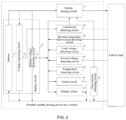
- FIG. 1 is a structural schematic view of a portable standby starting device for a vehicle provided in an embodiment of the present disclosure.
- a portable standby starting device 100 includes a battery circuit 10, a load access detecting circuit 20, and a vehicle starting circuit 30, wherein
- the load access detecting circuit 20 is specifically configured to, when the detected vehicle load connection state is a connected state, generate a starting control signal; or when the vehicle load connection state is an unconnected state, generate a starting prohibition signal;
- Couple is used to indicate that an output end and an input end of this circuit are both connected to another circuit.
- the term "couple” is specifically used to indicate that the output end of this circuit and an output end of the another circuit are both connected to the same position of a further circuit, and that the input end of this circuit and an input end of the another circuit are also both connected to the same position of the further circuit.
- the load access detecting circuit 20 includes:
- FIG. 2 is a structural schematic view of an improved portable standby starting device 100 provided in an embodiment of the present disclosure. It can be seen from FIG. 2 that the portable standby starting device 100 further may include multiple types of circuits having different functions, and for a specific circuit structure, reference can be made to subsequent contents in the present embodiment.
- the load access detecting circuit 20 includes a voltage type load detecting sub-circuit and/or a resistance type load detecting sub-circuit.
- the portable standby starting device 100 further includes a reverse-connection short-circuit detecting circuit 40, wherein
- the reverse-connection short-circuit detecting circuit 40 is connected to the battery circuit 10.
- the reverse-connection short-circuit detecting circuit 40 includes:
- the portable standby starting device 100 further includes a load voltage detecting circuit 50, wherein
- the load voltage detecting circuit 50 is connected to the battery circuit 10.
- the load voltage detecting circuit 50 includes:
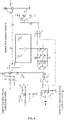
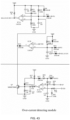
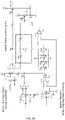
- FIG. 3 shows a schematic view of a combined circuit structure of the three, i.e. the load access detecting circuit 20, the load voltage detecting circuit 50, and the reverse-connection short-circuit detecting circuit 40.
- the load access detecting circuit 20 is also called as a load detecting module, and is composed of peripheral components such as IC4D/IC4A/R47/R53/R49/R54.
- peripheral components such as IC4D/IC4A/R47/R53/R49/R54.
- the IC4D, the D21, and other peripheral components constitute the voltage type load detecting sub-circuit.
- the other peripheral components include R47, R49, R50, R51, R53, R54, R55, and R56; and the IC4A, the D23, and other peripheral components constitute the resistance type load detecting sub-circuit.
- the other peripheral components include R47, R49, R50, R51, R53, R54, R55, and R56.
- the reverse-connection short-circuit detecting circuit 40 is also called as a reverse-connection short-circuit detecting module, and is composed of IC4B/R34/R38/R51/R56/ZD3/D20, etc.
- a battery 11 i.e., the vehicle load
- a high level output from PIN7 of the IC4B passes through D18 to turn on the Q9, so that the PIN3 of the starting control module IC1A is at a low level, then the relay K1 for output of clamp 200 is open.
- the load voltage detecting circuit 50 is also called as an automobile voltage detecting module.
- the load voltage detecting circuit 50 is composed of IC4C/R44/R52/R50/R55, etc.
- the portable standby starting device 100 further includes a forced starting circuit, wherein
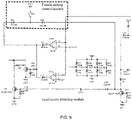
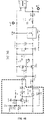
- a forced starting function can be added to the circuit structure shown in FIG. 4 , so that the clamp 200 still can be opened to ignite the automobile when the battery 11 of the automobile is 0 V.
- the working principle of the circuit with the forced starting function is as follows: the forced starting circuit is composed of the 21 st diode D21, the 32 nd diode D32, and a first switch SW1.
- FIG. 5 shows a schematic view of a circuit combination of the load access detecting circuit 20 and the forced starting circuit.
- the forced starting control module is just the forced starting circuit.
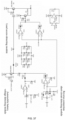
- FIG. 6 shows a schematic view of a circuit structure of the vehicle starting circuit 30.
- the vehicle starting circuit 30 is also called as a starting control module, and may be composed of peripheral components such as K1/Q3/R10/R11/IC1A/IC1B.
- the PIN3 of the IC1A When the PIN3 of the IC1A is at a high level, the PIN3 of the IC1A outputs a high level, Q3 is turned on, the relay K1 is closed, the positive pole of the battery 11 is connected to an output positive pole of the clamp 200 through the relay, and the output positive and negative poles of the clamp 200 are correctly connected to the battery 11 of the automobile, respectively, then the ignition can be performed.
- the relay K1 is open, and the positive pole of the clamp 200 outputs.
- the portable standby starting device 100 further includes a reverse-charge detecting circuit 60, wherein
- the reverse-charge detecting circuit 60 is connected to the battery circuit 10.
- the reverse-charge detecting circuit 60 includes:
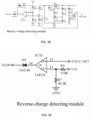
- FIG. 7 shows a schematic view of a circuit structure of the reverse-charge detecting circuit 60.
- the reverse-charge detecting circuit 60 is also called as a reverse-charge detecting module, and is specifically composed of peripheral components such as IC1D/R4/R7/D3.
- peripheral components such as IC1D/R4/R7/D3.
- the reverse-charge detecting circuit 60 includes:
- the reverse-charge protection in the reverse-charge detecting circuit 60 shown in FIG. 8 is changed from an original voltage detection mode to a current detection mode, because the current detection mode facilitates production and test. Therefore, a reverse-charge current detecting circuit composed of IC5, R67, R68, R69, C16 etc. is added.
- the working principle of the reverse-charge detecting module is as follows: the reverse-charge detecting module is composed of peripheral components such as IC1D, R4, R7, D3, IC5, R67, R68, R69, and C16.
- the portable standby starting device 100 further includes an over-current detecting circuit 70, wherein
- the over-current detecting circuit 70 includes:
- the portable standby starting device 100 further includes a forced starting circuit, wherein the forced starting circuit includes:
- FIG. 9 shows a schematic view of a circuit structure of an over-current detecting circuit 70.
- the over-current detecting circuit 70 is also called as an over-current detecting module, and may be composed of peripheral components such as IC1C/R40/R39/R42/R45/R36/D17/R41/R43/D19/Q7.
- peripheral components such as IC1C/R40/R39/R42/R45/R36/D17/R41/R43/D19/Q7.
- the portable standby starting device 100 further includes a time delay circuit, wherein the time delay circuit is coupled to the vehicle starting circuit 30, and is configured to control the vehicle starting circuit 30 to be started in a delayed way or to be disconnected in a delayed way.
- the time delay circuit includes a first time delay circuit and/or a second time delay circuit, and the first time delay circuit and/or the second time delay circuit are coupled to the vehicle starting circuit 30, wherein
- the first time delay circuit may be a 30-second time delay circuit, and this circuit mainly plays a timing function.
- the vehicle starting circuit 30 is turned off, thus realizing the effect of disconnecting the output.
- the second time delay circuit may be a 3-second time delay circuit, and this circuit mainly plays a role of delaying the starting. In the above, there is a slight time delay when the clamp 200 is connected to the vehicle load, thus achieving the effect of eliminating contact sparks.
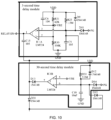
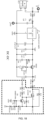
- FIG. 10 shows a schematic view of a circuit structure of the first time delay circuit and the second time delay circuit.
- the first time delay circuit is a 30-second time delay sub-circuit
- the second time delay circuit is a 3-second time delay sub-circuit.
- the portable standby starting device 100 further includes a temperature detecting circuit 80, wherein
- the temperature detecting circuit 80 is connected to the battery circuit 10.
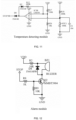
- FIG. 11 shows a schematic view of a circuit structure of the temperature detecting circuit 80.
- the temperature detecting circuit 80 is also called as a temperature detecting module, and may be specifically composed of peripheral components such as IC3B/R17/R26/R18/NTC1/D8.
- peripheral components such as IC3B/R17/R26/R18/NTC1/D8.
- the portable standby starting device 100 further includes an alarm circuit 91, wherein the alarm circuit 91 is coupled to the vehicle starting circuit 30, and is configured to control a buzzer to send out an alarm when the vehicle starting circuit 30 detects the starting prohibition signal.
- the alarm circuit 91 is connected to the battery circuit 10.
- FIG. 12 shows a schematic view of a circuit structure of the alarm circuit 91.
- the alarm circuit 91 is also called as an alarm module, and may be specifically composed of R2/BZ1/D4/Q2/R8/R9 etc.
- a B pole of the Q2 will input a high level, to turn on Q2, so that a buzzer BZ1 sends out an alarm sound.
- the portable standby starting device 100 further includes a display circuit 92, wherein the display circuit 92 is coupled to the vehicle starting circuit 30, and is configured to display an indicator light corresponding to an operation state of the portable standby starting device 100.
- the display circuit 92 is connected to the battery circuit 10.
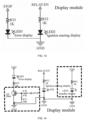
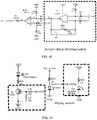
- FIG. 13 shows a schematic view of a circuit structure of the display circuit 92.
- the display circuit 92 is also called as a display module, and is composed of LED1/R33/LED2/R32.
- LED1 is configured for error display. When an error occurs, STOP is at a high level, and LED1 is lighted.
- LED2 is configured for normal display. When the relay is closed, the PIN3 of the IC1A is at a high level, and LED2 is lighted.
- the display circuit 92 includes:
- a standby display circuit 92 is added to the display circuit 92 shown in FIG. 14 , then the display is more intuitive and meanwhile it is convenient to adjust randomly.
- a separate drive circuit for the LED1 is also added.
- standby display is composed of LED3/R62, when the battery 11 is connected, a DC-DC circuit voltage stabilizing circuit composed of U1 supplies power to the LED3 in a current-limited manner through R62, so as to make the LED3 to be lighted.
- the working principle of the error display circuit 92 is as follows: when an error occurs, STOP is at a high level and turns on the LED1 by turning on Q5 via R70/R71.
- the brightness of the LED1 can be adjusted by adjusting a resistance value of R33.
- the battery circuit 10 includes the battery 11, a voltage regulating circuit 12, and a battery voltage detecting circuit 13, wherein
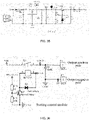
- FIG. 15 shows a schematic view of a circuit structure of the voltage regulating circuit 12.
- the voltage regulating circuit 12 is a DC-DC circuit, and is also called as a DC-DC module.
- the voltage of the battery 11 passes through a linear step-down circuit composed of D1/R3/U1/C4, etc. to output a stable 5 V voltage to various circuits.
- the battery voltage detecting circuit 13 includes a battery 11 under-voltage detecting sub-circuit and/or a battery 11 over-voltage detecting sub-circuit connected to each other.
- FIG. 16 shows a schematic view of a circuit structure of the battery voltage detecting circuit 13.
- the battery voltage detecting circuit 13 is also called as a battery 11 voltage detecting module, and is specifically composed of peripheral components such as IC3A/R13/R28/R15/R27/Q4/Q6/ZD1/R22/R29/ZD2/R19/R25/Q5/D10.
- the battery 11 under-voltage detecting sub-circuit includes: IC3A, D6, D10, R16, R13, R28, R27, R15, R14, Q4, R20, Q6, R29, R22, C7, and ZD1.
- the battery 11 over-voltage detecting sub-circuit further includes: ZD2, R19, R25, and Q5.
- a voltage detecting circuit of the battery 11 shown in FIG. 17 uses an operational amplifier as a hysteresis voltage comparator, and can solve the problem of flickering when switching the LED lamps when the high voltage protection is critical. Meanwhile, in order to save the costs, the IC4A originally for the load access detection is used as a high-voltage detecting circuit of the battery 11.
- the working principle of the battery 11 voltage detecting module is as follows: the battery 11 voltage detecting module is composed of peripheral components, such as IC3A, R13, R28, R15, R27, R19, R25, R46, IC4A, D1, D23, D30, and D10.
- peripheral components such as IC3A, R13, R28, R15, R27, R19, R25, R46, IC4A, D1, D23, D30, and D10.
- the battery 11 under-voltage detecting sub-circuit includes: IC3A, D6, D10, D33, R13, R28, R27, R15, D1, and C7.
- the battery 11 over-voltage detecting sub-circuit further includes: R19, R25, IC4A, R46, D30, and D23.
- the battery voltage detecting circuit 13 includes:
- the battery voltage detecting circuit 13 includes a battery 11 over-voltage detecting sub-circuit, and the battery 11 over-voltage detecting sub-circuit includes:
- the portable standby starting device 100 further includes a voltage bias switch circuit.
- the portable standby starting device 100 further includes a voltage bias switch circuit, wherein the voltage bias switch circuit includes:
- an electronic switch circuit can be added to the circuit, so as to reduce the problem of excessive power consumption when U1 is reversely connected or short-circuited at an output end of the clamp 200.
- the working principle of the bias voltage electronic switch circuit is as follows: the bias voltage electronic switch circuit is composed of R22, R14, R20, R29, R37, D27, D28, D29, Q4, Q6, etc.
- the bias voltage electronic switch circuit is composed of R22, R14, R20, R29, R37, D27, D28, D29, Q4, Q6, etc.
- a high level output from PIN7 of the IC4B passes through D29, R29, and R20 to turn on Q6, and Q4 is cut off, and the voltage output of the bias circuit is turned off, thus achieving the effect of reducing the power consumption of U1.
- the first access operational amplifier is corresponding to IC4A
- the second access operational amplifier is corresponding to IC4B
- the third access operational amplifier is corresponding to IC4C
- the fourth access operational amplifier is corresponding to IC4D
- the first detection operational amplifier is corresponding to IC1A
- the second detection operational amplifier is corresponding to IC1B
- the third detection operational amplifier is corresponding to IC1C
- the fourth detection operational amplifier is corresponding to IC1D.
- the portable standby starting device 100 for a vehicle described in the present embodiment, the detection and ignition for the vehicle load can be completed without any microprocessor 93; meanwhile, the portable standby starting device 100 further can constitute a complete device based on three parts of circuits, so as to achieve the effect of convenient ignition for the automobile.
- FIG. 19 is a structural schematic view of a portable standby starting device for a vehicle provided in an embodiment of the present disclosure.
- the portable standby starting device 100 includes a battery circuit 10, a load access detecting circuit 20, a vehicle starting circuit 30, and a microprocessor 93, wherein
- the load access detecting circuit 20 is specifically configured to, when a detected vehicle load connection state is a connected state, generate a starting control signal; or when the vehicle load connection state is an unconnected state, generate a starting prohibition signal;
- the portable standby starting device 100 further includes a reverse-connection short-circuit detecting circuit 40, a load voltage detecting circuit 50, a reverse-charge detecting circuit 60, and an over-current detecting circuit 70, wherein
- the portable standby starting device further includes a reverse-connection short-circuit detecting circuit 40, wherein
- the portable standby starting device further includes a load voltage detecting circuit 50, wherein
- the portable standby starting device further includes a reverse-charge detecting circuit 60, wherein
- the portable standby starting device further includes an over-current detecting circuit 70, wherein
- the portable standby starting device 100 further includes a voltage-stabilized power supply, wherein the voltage-stabilized power supply is coupled to the microprocessor 93, and is configured to supply power to the microprocessor 93.
- FIG. 20 shows a schematic view of a circuit structure of the vehicle starting circuit.
- the vehicle starting circuit is also called as a starting control module.
- the vehicle starting circuit includes a first relay K1, a fourth triode Q4, a seventh triode Q7, an 11 th triode Q11, a 12 th resistor R12, a 16 th resistor R16, a 19 th resistor R19, a 42 nd resistor R42, a 44 th resistor R44, a 77 th resistor R77, and a sixth diode D6, wherein
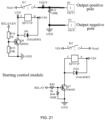
- FIG. 21 shows another schematic view of the circuit structure of the vehicle starting circuit.
- the vehicle starting circuit is also called as a starting control module.
- the vehicle starting circuit includes a first relay K1, a relay K2, a fourth triode Q4, a seventh triode Q7, a 12 th resistor R12, a 16 th resistor R16, a 19 th resistor R19, a 42 nd resistor R42, a 44 th resistor R44, a sixth diode D6, and a 29 th diode D29, wherein
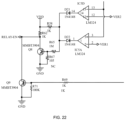
- FIG. 22 shows a schematic view of a circuit structure of the load access detecting circuit 20.
- the load access detecting circuit 20 is also called as a load access detecting module.
- the load access detecting circuit 20 includes a first access operational amplifier IC5A, a fourth access operational amplifier IC5D, a 21 st diode D21, a 22 nd diode D22, a 58 th resistor R58, a 62 nd resistor R62, a 65 th resistor R65, a 67 th resistor R67, a 69 th resistor R69, a 71 st resistor R71, an eighth triode Q8, and a ninth triode Q9, wherein
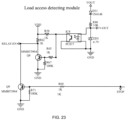
- FIG. 23 shows another schematic view of the circuit structure of the load access detecting circuit 20.
- the load access detecting circuit 20 is also called as a load access detecting module.
- the load access detecting circuit 20 includes a 31 st diode D31, a 58 th resistor R58, a 62 nd resistor R62, a 69 th resistor R69, a 71 st resistor R71, an 80 th resistor R80, a third voltage stabilizing diode ZD3, an eighth photoelectric coupler IC8, an eighth triode Q8, and a ninth triode Q9, wherein
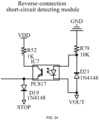
- FIG. 24 shows a schematic view of a circuit structure of the reverse-connection short-circuit detecting circuit 40.
- the reverse-connection short-circuit detecting circuit 40 is also called as a reverse-connection short-circuit detecting module.
- the reverse-connection short-circuit detecting circuit 40 includes a seventh photoelectric coupler IC7, a 52 nd resistor R52, a 79 th resistor R79, a 21 st diode D21, and a 19 th diode D19, wherein
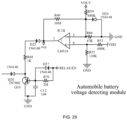
- FIG. 25 shows a schematic view of a circuit structure of the load voltage detecting circuit 50.
- the load voltage detecting circuit 50 is also called as a voltage detecting module of the battery of the automobile.
- the load voltage detecting circuit 50 includes a 27 th resistor R27, a 51 st resistor R51, a 55 th resistor R55, a 59 th resistor 259, a 60 th resistor R60, a 66 th resistor R66, a 68 th resistor R68, a 70 th resistor R70, a 12 th capacitor C12, a 23 rd diode D23, a 26 th diode D26, a 27 th diode D27, a 28 th diode D28, a tenth triode Q10, and a load detection operational amplifier IC1B, wherein
- FIG. 26 shows a schematic view of a combined circuit structure of the three, i.e. the load access detecting circuit 20, the reverse-connection short-circuit detecting circuit 40, and the load voltage detecting circuit 50. It should be understood that what is shown in FIG. 26 is not a combined schematic view of FIG. 23 , FIG. 24 , and FIG. 25 , but is a schematic view of an independent and complete circuit structure that can be implemented. Thus, no matter which structure is used, the effect achieved thereby is the same.
- FIG. 27 shows a structural schematic view of a microprocessor 93.
- the microprocessor 93 is also called as a processor module.
- the connection relationships between the microprocessor 93 and other circuits may be learned with reference to various pins shown in FIG. 9 .
- the portable standby starting device 100 further includes the reverse-charge detecting circuit 60 and the over-current detecting circuit 70, wherein
- FIG. 28 shows a schematic view of a circuit structure of a reverse-charge detecting circuit 60.
- the reverse-charge detecting circuit 60 is also called as a reverse-charge detecting module.
- FIG. 29 shows a schematic view of a circuit structure of an over-current detecting circuit 70.
- the over-current detecting circuit 70 is also called as an over-current detecting module.
- the battery circuit 10 includes the battery 11, a voltage regulating circuit 12, and a battery voltage detecting circuit 13, wherein
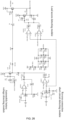
- FIG. 30 shows a schematic view of a circuit structure of the battery voltage detecting circuit 13.
- the battery voltage detecting circuit 13 is also called as a battery 11 voltage detecting module.
- the battery voltage detecting circuit 13 includes a first detection operational amplifier IC3A, a second detection operational amplifier IC3B, an eighth diode D8, an 11 th diode D11, a 15 th diode D15, a 17 th diode D17, an 18 th diode D18, a 25 th resistor R25, a 26 th resistor R26, a 27 th resistor R27, a 31 st resistor R31, a 37 th resistor R37, a 38 th resistor R38, a 39 th resistor R39, a 41 st resistor R41, a 49 th resistor R49, and a 53 rd resistor R53, wherein
- circuits controlled by the microprocessor 93 described in the present embodiment can be adaptively replaced with circuits without the control of the microprocessor 93. It can be understood that circuits with the same function in different embodiments may use any one of the specific circuit structures mentioned, and combinations thereof will not be repeatedly described in the present embodiment.
- the portable standby starting device 100 for a vehicle further includes a starting control power supply.
- the starting control power supply is electrically connected to the vehicle starting circuit 30 and the load access detecting circuit 20, respectively.
- the starting control power supply is configured to supply power to the vehicle starting circuit 30 or control the battery circuit 10 to supply power to the vehicle starting circuit 30.
- the starting control power supply may control on and off of the vehicle starting circuit 30 according to the drive signal and/or the control signal, wherein the vehicle starting circuit 30 is in an on-state when being turned on and in an off-state when being turned off.
- the starting control power supply is provided thereon with a starting control power supply input end and a starting control power supply control switch, and the starting control power supply control switch is electrically connected between the starting control power supply input end and the vehicle starting circuit 30, wherein the starting control power supply control switch turns on or off the electrical connection between the starting control power supply input end and the vehicle starting circuit 30 based on the drive signal and/or the control signal.
- the vehicle starting circuit 30 when being in the off state based on the control signal, the vehicle starting circuit 30 cannot be turned on based on the drive signal.
- the vehicle starting circuit 30 includes:
- the switch drive device is specifically configured to, when the drive signal and the control signal are in an off state, control the vehicle starting circuit 30 not to be turned on based on the drive signal.
- the portable standby starting device 100 further includes an enable control circuit, wherein the enable control circuit is electrically connected to the load access detecting circuit 20 and the vehicle starting circuit 30 and is configured to turn on or off the vehicle starting circuit 30 according to the drive signal and the control signal.
- the vehicle starting circuit 30 includes:
- the switch drive device includes: a third switch device, electrically connected in series in a circuit loop of the second switch device, wherein the third switch device is configured to control an on/off state of the circuit loop, and wherein when the circuit loop is in an on state, the third switch device is capable of receiving power supply, and enters an on state.
- the switch drive device may turn on or off the third switch device through the drive signal received by a drive signal input end provided thereon.
- the switch drive device may turn on or off the third switch device through an enable control signal received by an enable control signal input end provided thereon.
- the third switch device when being in the off state based on the enable control signal, cannot be turned on based on the drive signal.
- the enable control circuit is provided therein with an enable control signal output end and an enable control switch, wherein the enable control signal output end is electrically connected to the switch drive module, and the enable control switch is electrically connected between the enable control signal output end and the ground terminal.
- the load access detecting circuit 20 is electrically connected to the control end of the enable control switch, and sends the control signal to the control end of the enable control switch, so as to turn on or off the enable control switch.
- the portable standby starting device 100 further includes a drive signal transmission circuit, wherein the drive signal transmission circuit is electrically connected to the vehicle starting circuit and the microprocessor, and transmits the drive signal to the vehicle starting circuit, the load access detecting circuit 20 is electrically connected to the drive signal circuit, and transmits the control signal to the drive signal circuit, so as to control the transmission of the drive signal by the drive signal transmission circuit.
- the drive signal transmission circuit is electrically connected to the vehicle starting circuit and the microprocessor, and transmits the drive signal to the vehicle starting circuit
- the load access detecting circuit 20 is electrically connected to the drive signal circuit, and transmits the control signal to the drive signal circuit, so as to control the transmission of the drive signal by the drive signal transmission circuit.
- the drive signal transmission circuit is provided thereon with:
- the drive signal transmission circuit includes a logic AND gate that performs a logic AND operation on the drive signal and the control signal, wherein the control signal for suspending the transmission of the drive signal is a low level signal.
- the vehicle starting circuit 30 includes:
- the portable standby starting device 100 further includes a drive power supply circuit electrically connected to the vehicle starting circuit 30 and configured to supply power to the vehicle starting circuit 30 or control the battery circuit to supply power to the vehicle starting circuit, and the vehicle starting circuit 30, when being powered on, can be in an on or off state based on the drive signal and the control signal.
- the voltage-stabilized power supply is configured to receive an input voltage of the battery circuit 10, and output a stable voltage to the microprocessor 93.
- the voltage-stabilized power supply can supply power to or cut off power of the microprocessor based on the control signal, and the microprocessor cannot output the drive signal when being powered off.
- the voltage-stabilized power supply is provided thereon with:
- the voltage-stabilized power supply is provided thereon with:
- the portable standby starting device 100 further includes a forced starting circuit.
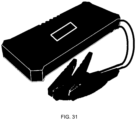
- FIG. 31 is a structural schematic view of a standby starting tool for a vehicle provided in an embodiment of the present disclosure.
- the standby starting tool includes a clamp 200 and the portable standby starting device 100 described in the embodiments, wherein the clamp 200 is connected to the portable standby starting device 100, and is configured to connect the portable standby starting device 100 and a vehicle load of the vehicle.
- the tool can connect the portable standby starting device 100 to the vehicle load through the clamp 200, so that the portable standby starting device 100 can supply power to and ignite the vehicle load.
- the clamp 200 is a combined structure with pliers and a wire, and when the pliers are connected to the vehicle load, an electrode of the vehicle load is transmitted to the other end of the wire (namely, the portable standby starting device) via the pliers-wire.
- all of the circuits in the portable standby starting device 100 are provided in a housing.
- a clamp 200 connection port is provided on the housing, and the clamp 200 is connected to the portable standby starting device 100 through the clamp 200 connection port.
- the battery circuit is provided in a first housing, and the other circuits are provided in a second housing.
- the second housing is provided thereon with the clamp 200 connection port, and the clamp 200 is connected to the portable standby starting device 100 through the clamp 200 connection port.
- the portable standby starting device when the clamp in the standby starting tool is connected to the vehicle load, the portable standby starting device can detect whether the load is connected; and when the load is connected to the circuit through the clamp, it is time-saving and labor-saving to perform the ignition operation for the vehicle.
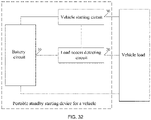
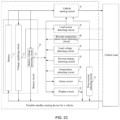
- FIG. 32 is another structural schematic view of the portable standby starting device 100 for a vehicle provided in an embodiment of the present disclosure.
- the portable standby starting device 100 includes a battery circuit 10, a load access detecting circuit 20, and a vehicle starting circuit 30, wherein
- Couple is used to indicate that an output end and an input end of this circuit are both connected to another circuit.
- FIG. 36 shows a schematic view of a circuit structure of the vehicle starting circuit 30.
- the vehicle starting circuit 30 is also called as a starting control module, and may be composed of peripheral components such as K1/Q3/R10/R11/IC1A/IC1B.
- the PIN3 of the IC1A When the PIN3 of the IC1A is at a high level, the PIN3 of the IC1A outputs a high level, Q3 is turned on, a relay K1 is closed, a positive pole of the battery is connected to an output positive pole of the clamp through the relay, and output positive and negative poles of the clamp 200 are correctly connected to the battery of the automobile, respectively, then the ignition can be performed.
- the relay K1 is open, and the positive pole of the clamp outputs.
- FIG. 37 shows a schematic view of a combined circuit structure of the three, i.e. the load access detecting circuit 20, the load voltage detecting circuit 50, and the reverse-connection short-circuit detecting circuit 40.
- the load access detecting circuit 20 is also called as a load detecting module, and is composed of peripheral components such as IC4D/IC4A/R47/R53/R49/R54.
- the IC4D and relevant components constitute a voltage type load detecting sub-circuit.
- the load access detecting circuit 20 includes:
- the portable standby starting device 100 further includes a reverse-connection short-circuit detecting circuit 40, wherein the reverse-connection short-circuit detecting circuit 40 is coupled to the load access detecting circuit 20 and is configured to detect whether a vehicle load is in a reverse-connection state or a short-circuit state, and control the vehicle starting circuit 30 to be prohibited from outputting the vehicle starting current when the vehicle load is in the reverse-connection state or the short-circuit state.
- a reverse-connection short-circuit detecting circuit 40 is coupled to the load access detecting circuit 20 and is configured to detect whether a vehicle load is in a reverse-connection state or a short-circuit state, and control the vehicle starting circuit 30 to be prohibited from outputting the vehicle starting current when the vehicle load is in the reverse-connection state or the short-circuit state.
- the reverse-connection short-circuit detecting circuit 40 is connected to the battery circuit 10.
- the term "couple” is specifically used to indicate that the output end of this circuit and an output end of the another circuit are both connected to the same position of a further circuit, and that the input end of this circuit and an input end of the another circuit are also both connected to the same position of the further circuit.
- FIG. 37 shows a schematic view of a combined circuit structure of the three, i.e. the load access detecting circuit 20, the load voltage detecting circuit 50, and the reverse-connection short-circuit detecting circuit 40.
- the reverse-connection short-circuit detecting circuit 40 is also called as a reverse-connection short-circuit detecting module, and is composed of IC4B/R34/R38/R51/R56/ZD3/D20, etc.
- the reverse-connection short-circuit detecting circuit 40 includes:
- the portable standby starting device 100 further includes a load voltage detecting circuit 50, wherein the load voltage detecting circuit 50 is coupled to the load access detecting circuit 20, and is configured to detect whether the vehicle load is in a high-voltage state or a low-voltage state, and control the vehicle starting circuit 30 to be prohibited from outputting the vehicle starting current when the vehicle load is in the high-voltage state or the low-voltage state.
- a load voltage detecting circuit 50 is coupled to the load access detecting circuit 20, and is configured to detect whether the vehicle load is in a high-voltage state or a low-voltage state, and control the vehicle starting circuit 30 to be prohibited from outputting the vehicle starting current when the vehicle load is in the high-voltage state or the low-voltage state.
- the load voltage detecting circuit 50 is connected to the battery circuit 10.
- FIG. 37 shows a schematic view of a combined circuit structure of the three, i.e. the load access detecting circuit 20, the load voltage detecting circuit 50, and the reverse-connection short-circuit detecting circuit 40.
- the load voltage detecting circuit 50 is also called as an automobile voltage detecting module.
- the load voltage detecting circuit 50 is composed of IC4C/R44/R52/R50/R55, etc.
- IC4D, D21, and other peripheral components constitute a voltage type load detecting sub-circuit.
- the other peripheral components include R47, R49, R50, R51, R53, R54, R55, and R56.
- IC4A, D23, and other peripheral components constitute a resistance type load detecting sub-circuit.
- the other peripheral components include R47, R49, R50, R51, R53, R54, R55, and R56.
- the load voltage detecting circuit 50 includes:
- the portable standby starting device 100 further includes a reverse-charge detecting circuit 60, wherein the reverse-charge detecting circuit 60 is coupled to the load access detecting circuit 20, and is configured to detect whether the voltage of the vehicle load is higher than an output voltage of the battery circuit 10 or not, and control the vehicle starting circuit 30 to be prohibited from outputting the vehicle starting current when the voltage of the vehicle load is higher than the output voltage of the battery circuit 10.
- a reverse-charge detecting circuit 60 is coupled to the load access detecting circuit 20, and is configured to detect whether the voltage of the vehicle load is higher than an output voltage of the battery circuit 10 or not, and control the vehicle starting circuit 30 to be prohibited from outputting the vehicle starting current when the voltage of the vehicle load is higher than the output voltage of the battery circuit 10.
- the reverse-charge detecting circuit 60 is connected to the battery circuit 10.
- FIG. 39 shows a schematic view of a circuit structure of the reverse-charge detecting circuit 60.
- the reverse-charge detecting circuit 60 is also called as a reverse-charge detecting module, and is specifically composed of peripheral components such as IC1D/R4/R7/D3.
- peripheral components such as IC1D/R4/R7/D3.
- the reverse-charge detecting circuit 60 includes:
- the portable standby starting device 100 further includes an over-current detecting circuit 70, wherein the over-current detecting circuit 70 is coupled to the vehicle starting circuit 30, and is configured to detect whether the vehicle starting current output by the vehicle starting circuit 30 is greater than a preset current threshold value, and control the vehicle starting circuit 30 to be prohibited from outputting the vehicle starting current when the vehicle starting current output by the vehicle starting circuit 30 is greater than the preset current threshold value.
- the over-current detecting circuit 70 is coupled to the vehicle starting circuit 30, and is configured to detect whether the vehicle starting current output by the vehicle starting circuit 30 is greater than a preset current threshold value, and control the vehicle starting circuit 30 to be prohibited from outputting the vehicle starting current when the vehicle starting current output by the vehicle starting circuit 30 is greater than the preset current threshold value.
- FIG. 43 shows a structural schematic view of a circuit structure of the over-current detecting circuit 70.
- the over-current detecting circuit 70 is also called as an over-current detecting module, and may be composed of peripheral components such as IC1C/R40/R39/R42/R45/R36/D17/R41/R43/D19/Q7.
- peripheral components such as IC1C/R40/R39/R42/R45/R36/D17/R41/R43/D19/Q7.
- the portable standby starting device further includes a first time delay circuit and/or a second time delay circuit, and the first time delay circuit and/or the second time delay circuit are both coupled to the vehicle starting circuit, wherein
- the first time delay circuit may be a 30-second time delay circuit, and this circuit mainly plays a timing function.
- the vehicle starting circuit is turned off, thus realizing the effect of disconnecting the output.
- the second time delay circuit may be a 3-second time delay circuit, and this circuit mainly plays a role of delaying the starting. In the above, there is a slight time delay when the clamp is connected to the vehicle load, thus achieving the effect of eliminating contact sparks.
- D13, IC1B, C10, R31, D12, D14, and D15 constitute the first time delay circuit.
- the first time delay circuit is the 30-second time delay sub-circuit.
- R24, IC1A, C6, R21, R23, D9, D11, R30, and C9 constitute the second time delay circuit.
- the second time delay circuit is the 3-second time delay sub-circuit.
- FIG. 51 shows another schematic view of a circuit structure of the first time delay circuit and the second time delay circuit.
- the first time delay circuit is the 30-second time delay sub-circuit
- the second time delay circuit is the 3-second time delay sub-circuit.
- the over-current detecting circuit 70 includes:
- the portable standby starting device further includes a forced starting circuit, wherein the forced starting circuit includes:
- FIG. 50 shows a schematic view of a circuit combination of the load access detecting circuit and the forced starting circuit.
- the forced starting control module is just the forced starting circuit.
- the battery circuit 10 includes the battery 11, a voltage regulating circuit 12, and a battery voltage detecting circuit 13, wherein
- FIG. 35 shows a schematic view of a circuit structure of the voltage regulating circuit 12.
- the voltage regulating circuit 12 is a DC-DC circuit, and is also called as a DC-DC module.
- the voltage of the battery passes through a linear step-down circuit composed of D1/R3/U1/C4, etc. to output a stable 5 V voltage to various circuits.
- FIG. 38 shows a schematic view of a circuit structure of the battery voltage detecting circuit 13.
- the battery voltage detecting circuit 13 is also called as a battery voltage detecting module, and is specifically composed of peripheral components such as IC3A/R13/R28/R15/R27/Q4/Q6/ZD1/R22/R29/ZD2/R19/R25/Q5/D10.
- the battery under-voltage detecting sub-circuit includes: IC3A, D6, D10, R16, R13, R28, R27, R15, R14, Q4, R20, Q6, R29, R22, C7, and ZD1.
- the battery over-voltage detecting sub-circuit further includes: ZD2, R19, R25, and Q5.
- the battery under-voltage detecting sub-circuit includes: IC3A, D6, D10, D33, R13, R28, R27, R15, D1, and C7.
- the battery over-voltage detecting sub-circuit further includes: R19, R25, IC4A, R46, D30, and D23.
- the portable standby starting device 100 further includes a temperature detecting circuit 80, wherein the temperature detecting circuit 80 is coupled to the vehicle starting circuit 30, and is configured to detect whether the portable standby starting device 100 is in a preset high-temperature state, and control the vehicle starting circuit 30 to be prohibited from outputting the vehicle starting current when the portable standby starting device 100 is in a high-temperature state.
- a temperature detecting circuit 80 is coupled to the vehicle starting circuit 30, and is configured to detect whether the portable standby starting device 100 is in a preset high-temperature state, and control the vehicle starting circuit 30 to be prohibited from outputting the vehicle starting current when the portable standby starting device 100 is in a high-temperature state.
- the temperature detecting circuit 80 is connected to the battery circuit 10.
- FIG. 40 shows a schematic view of a circuit structure of the temperature detecting circuit 80.
- the temperature detecting circuit 80 is also called as a temperature detecting module, and may be specifically composed of peripheral components such as IC3B/R17/R26/R18/NTC1/D8.
- peripheral components such as IC3B/R17/R26/R18/NTC1/D8.
- the portable standby starting device 100 further includes an alarm circuit 91, wherein the alarm circuit 91 is coupled to the vehicle starting circuit 30, and is configured to control a buzzer to send out an alarm when the vehicle starting circuit 30 is in a state of being prohibited from outputting the vehicle starting current.
- the alarm circuit 91 is connected to the battery circuit 10.
- FIG. 41 shows a schematic view of a circuit structure of the alarm circuit 91.
- the alarm circuit 91 is also called as an alarm module, and may be specifically composed of R2/BZ1/D4/Q2/R8/R9 etc.
- a B pole of the Q2 will input a high level, to turn on Q2, so that a buzzer BZ1 sends out an alarm sound.
- the portable standby starting device 100 further includes a display circuit 92, wherein the display circuit 92 is coupled to the vehicle starting circuit 30, and is configured to display an indicator light corresponding to an operation state of the portable standby starting device 100.
- the display circuit 92 is connected to the battery circuit 10.
- FIG. 42 shows a schematic view of a circuit structure of the display circuit 92.
- the display circuit 92 is also called as a display module, and is composed of LED1/R33/LED2/R32.
- LED1 is configured for error display. When an error occurs, STOP is at a high level, and LED1 is lighted.
- LED2 is configured for normal display. When the relay is closed, the PIN3 of the IC1A is at a high level, and LED2 is lighted.
- the first access operational amplifier is corresponding to IC4A
- the second access operational amplifier is corresponding to IC4B
- the third access operational amplifier is corresponding to IC4C
- the fourth access operational amplifier is corresponding to IC4D
- the first detection operational amplifier is corresponding to IC1A
- the second detection operational amplifier is corresponding to IC1B
- the third detection operational amplifier is corresponding to IC1C
- the fourth detection operational amplifier is corresponding to IC1D.
- the load access detecting circuit further includes:
- a forced starting function can be added to the circuit structure, so that the clamp still can be opened to ignite the automobile when the battery of the automobile is 0 V.
- the forced starting circuit is composed of the 21 st diode D21, the 32 nd diode D32, and a first switch SW1.
- the first switch SW1 When the first switch SW1 is closed, positive poles of the 21 st diode D21 and the 32 nd diode D32 are short-circuited to the ground, a negative pole of the 21 st diode D21 is connected to the base of the eighth triode Q8 via the 48 th resistor R48, a negative pole of the 32 nd diode D32 is connected to the base of the ninth triode Q9 via the 24 th diode D24 and the 59 th resistor R59, which is equivalent to connecting the bases of the eighth triode Q8 and the ninth triode Q9 to the ground, so that the eighth triode Q8 and the ninth triode Q9 enter an off state, the PIN3 of the starting first access operational amplifier IC1A is at a high level, and the relay K1 for output of
- the reverse-charge detecting circuit includes:
- the reverse-charge protection in the circuit is changed from an original voltage detection mode to a current detection mode, because the current detection mode facilitates production and test. Therefore, a reverse-charge current detecting circuit composed of IC5, R67, R68, R69, C16 etc. is added.
- the working principle of the reverse-charge detecting module is as follows: the reverse-charge detecting module is composed of peripheral components such as IC1D, R4, R7, D3, IC5, R67, R68, R69, and C16. After the clamp is opened and the automobile is successfully started, when the voltage of the battery of the automobile is higher than the voltage input into the battery, the reverse-charge current flows through a negative wire, then is sent from R67 to PIN1 of IC5 to be amplified, and then sent to PIN12 of IC1D.
- peripheral components such as IC1D, R4, R7, D3, IC5, R67, R68, R69, and C16.
- the display circuit includes:
- a standby display circuit is added to the circuit shown in FIG. 47 , then the display is more intuitive and meanwhile it is convenient to adjust randomly.
- a separate drive circuit for the LED1 is also added.
- standby display is composed of LED3/R62, when the battery is connected, a DC-DC circuit voltage stabilizing circuit composed of U1 supplies power to the LED3 in a current-limited manner through R62, so as to make the LED3 to be lighted.
- the working principle of the error display circuit is as follows: when an error occurs, STOP is at a high level and turns on the LED1 by turning on Q5 via R70/R71.
- the brightness of the LED1 can be adjusted by adjusting a resistance value of R33.
- the portable standby starting device further includes a voltage bias switch circuit, and the voltage bias switch circuit includes:
- an electronic switch circuit can be added to the circuit, so as to reduce the problem of excessive power consumption when U1 is reversely connected or short-circuited at an output end of the clamp.
- the working principle of the bias voltage electronic switch circuit is as follows: the bias voltage electronic switch circuit is composed of R22, R14, R20, R29, R37, D27, D28, D29, Q4, Q6, etc.
- the bias voltage electronic switch circuit is composed of R22, R14, R20, R29, R37, D27, D28, D29, Q4, Q6, etc.
- a high level output from PIN7 of the IC4B passes through D29, R29, and R20 to turn on Q6, and Q4 is turned off, and the voltage output of the bias circuit is turned off, thus achieving the effect of reducing the power consumption of U1.
- the battery voltage detecting circuit includes:
- the battery voltage detecting circuit includes a battery over-voltage detecting sub-circuit, and the battery over-voltage detecting sub-circuit includes:
- the battery high-voltage detecting circuit uses an operational amplifier as a hysteresis voltage comparator, and can solve the problem of flickering when switching the LED lamps when the high voltage protection is critical. Meanwhile, in order to save the costs, the IC4A originally for the load access detection is used as a high-voltage detecting circuit of the battery.
- the working principle of the battery voltage detecting module is as follows: the battery voltage detecting module is composed of peripheral components, such as IC3A, R13, R28, R15, R27, R19, R25, R46, IC4A, D1, D23, D30, and D10.
- peripheral components such as IC3A, R13, R28, R15, R27, R19, R25, R46, IC4A, D1, D23, D30, and D10.
- four pull-up resistors R35, R46, R24, and R37 i.e., R35 originally connected to the IC4B, R46 originally connected to the IC4C, R24 originally connected to the IC1A, and R37 originally connected to the IC1A, are all moved to other places for use.
- the detection and ignition for the vehicle load can be completed without any microprocessor 93; meanwhile, the complete portable standby starting device 100 further can be constituted only by three parts of circuits, so as to achieve the effect of convenient ignition for the automobile.
- FIG. 34 is a structural schematic view of a further standby starting tool for a vehicle provided in an embodiment of the present disclosure.
- the standby starting tool includes a clamp 200 and the portable standby starting device 100 described in the embodiments, wherein the clamp 200 is connected to the portable standby starting device 100, and is configured to connect the portable standby starting device 100 and a vehicle load of the vehicle.
- FIG. 44 shows a structural schematic view of a standby starting tool for a vehicle.
- This tool can connect the portable standby starting device 100 to the vehicle load through the clamp 200, so that the portable standby starting device 100 can supply power to and ignite the vehicle load.
- the portable standby starting device 100 can detect whether the load is connected. When the load is connected to the circuit through the clamp 200, the portable standby starting device 100 can perform the ignition operation for the vehicle. Thus, it is time-saving and labor-saving to implement such embodiment.
- the portable standby starting device and the standby starting tool for a vehicle provided in the embodiments of the present disclosure can solve the problem of how to conveniently ignite the automobiles, and meanwhile improve the ignition safety, and save the time and money wasted for calling for roadside assistance.
Landscapes
- Engineering & Computer Science (AREA)
- Power Engineering (AREA)
- Chemical & Material Sciences (AREA)
- Combustion & Propulsion (AREA)
- Mechanical Engineering (AREA)
- General Engineering & Computer Science (AREA)
- Charge And Discharge Circuits For Batteries Or The Like (AREA)
- Testing Of Short-Circuits, Discontinuities, Leakage, Or Incorrect Line Connections (AREA)
- Measurement Of Current Or Voltage (AREA)
- Lock And Its Accessories (AREA)
- Direct Current Feeding And Distribution (AREA)
Abstract
Description
- The present disclosure relates to the field of electrical devices, and in particular, to a portable standby starting device and a standby starting tool for a vehicle.
- With the rapid development of society, there are more and more private cars appearing on roads. However, most cars need to be started by ignition, which makes it necessary to perform the ignition operation only under the condition that the battery of the automobile is charged. However, it has been found in practice that there are always some unexpected situations that make it impossible to carry out the ignition operation for the cars, for example, when the battery is out of power. Thus, in this case, people usually have to wait for roadside assistance, resulting in waste of time and money.
- An embodiment of the present disclosure provides a portable standby starting device for a vehicle, wherein the portable standby starting device includes a battery circuit, a load access detecting circuit, and a vehicle starting circuit, wherein
- the battery circuit is coupled to the load access detecting circuit and the vehicle starting circuit, and is configured to supply power to the load access detecting circuit and the vehicle starting circuit;
- the load access detecting circuit is coupled to the vehicle starting circuit, and is configured to generate a control signal according to a detected vehicle load connection state; and
- the vehicle starting circuit is configured to, when detecting the control signal, control whether the vehicle starting circuit outputs a vehicle starting current or not according to the control signal; and the vehicle starting current is used for performing an ignition operation for the vehicle.
- An embodiment of the present disclosure further provides a portable standby starting device for a vehicle, wherein the portable standby starting device includes a battery circuit, a load access detecting circuit, and a vehicle starting circuit, wherein
- the battery circuit is coupled to the load access detecting circuit and the vehicle starting circuit, and is configured to supply power to the load access detecting circuit and the vehicle starting circuit; and
- the load access detecting circuit is coupled to the vehicle starting circuit, and is configured to detect whether the vehicle starting circuit is connected to the vehicle load, and control the vehicle starting circuit to be prohibited from outputting the vehicle starting current for controlling the ignition operation performed for the vehicle when the load access detecting circuit detects that the vehicle load is not connected.
- An embodiment of the present disclosure further provides a standby starting tool for a vehicle, wherein the standby starting tool includes a clamp (clip) and the portable standby starting device according to any one of the preceding, wherein
the clamp is connected to the portable standby starting device, and is configured to connect the portable standby starting device and a vehicle load of the vehicle. - In order to illustrate technical solutions of embodiments of the present disclosure more clearly, accompanying drawings which need to be used in the embodiments of the present disclosure will be introduced briefly below, and it should be understood that the accompanying drawings below merely show some embodiments of the present disclosure, and therefore should not be considered as limitation to the scope. Those ordinarily skilled in the art still could obtain other relevant accompanying drawings according to these accompanying drawings, without using any creative effort.
-
FIG. 1 is a structural schematic view of a portable standby starting device for a vehicle provided in an embodiment of the present disclosure; -
FIG. 2 is a structural schematic view of an improved portable standby starting device provided in an embodiment of the present disclosure; -
FIG. 3 is a schematic view of a combined circuit structure of the three, i.e., a load access detecting circuit, a load voltage detecting circuit, and a reverse-connection short-circuit detecting circuit provided in an embodiment of the present disclosure; -
FIG. 4 is another schematic view of the combined circuit structure of the three, i.e., the load access detecting circuit, the load voltage detecting circuit, and the reverse-connection short-circuit detecting circuit provided in an embodiment of the present disclosure; -
FIG. 5 is a schematic view of a circuit combination of the load access detecting circuit and a forced starting circuit provided in an embodiment of the present disclosure; -
FIG. 6 is a schematic view of a circuit structure of the vehicle starting circuit provided in an embodiment of the present disclosure; -
FIG. 7 is a schematic view of a circuit structure of a reverse-charge detecting circuit provided in an embodiment of the present disclosure; -
FIG. 8 is another schematic view of the circuit structure of the reverse-charge detecting circuit provided in an embodiment of the present disclosure; -
FIG. 9 is a schematic view of a circuit structure of an over-current detecting circuit provided in an embodiment of the present disclosure; -
FIG. 10 is a schematic view of a circuit structure of a first time delay circuit and a second time delay circuit provided in an embodiment of the present disclosure; -
FIG. 11 is a schematic view of a circuit structure of a temperature detecting circuit provided in an embodiment of the present disclosure; -
FIG. 12 is a schematic view of a circuit structure of an alarm circuit provided in an embodiment of the present disclosure; -
FIG. 13 is a schematic view of a circuit structure of a display circuit provided in an embodiment of the present disclosure; -
FIG. 14 is another schematic view of the circuit structure of the display circuit provided in an embodiment of the present disclosure; -
FIG. 15 is a schematic view of a circuit structure of a voltage regulating circuit provided in an embodiment of the present disclosure; -
FIG. 16 is a schematic view of a circuit structure of a battery voltage detecting circuit provided in an embodiment of the present disclosure; -
FIG. 17 is another schematic view of the circuit structure of the battery voltage detecting circuit provided in an embodiment of the present disclosure; -
FIG. 18 is a schematic view of a circuit combination of a voltage bias switch circuit and a voltage regulating circuit provided in an embodiment of the present disclosure; -
FIG. 19 is a structural schematic view of a portable standby starting device with a microprocessor provided in an embodiment of the present disclosure; -
FIG. 20 is a schematic view of a circuit structure of a vehicle starting circuit in case of having a microprocessor provided in an embodiment of the present disclosure; -
FIG. 21 is another schematic view of the circuit structure of the vehicle starting circuit in case of having a microprocessor provided in an embodiment of the present disclosure; -
FIG. 22 is a schematic view of a circuit structure of a load access detecting circuit in case of having a microprocessor provided in an embodiment of the present disclosure; -
FIG. 23 is another schematic view of the circuit structure of the load access detecting circuit in case of having a microprocessor provided in an embodiment of the present disclosure; -
FIG. 24 is a schematic view of a circuit structure of a reverse-connection short-circuit detecting circuit in case of having a microprocessor provided in an embodiment of the present disclosure; -
FIG. 25 is a schematic view of a circuit structure of a load voltage detecting circuit in case of having a microprocessor provided in an embodiment of the present disclosure; -
FIG. 26 is a schematic view of a combined circuit structure of the three, i.e., the load access detecting circuit, the load voltage detecting circuit, and the reverse-connection short-circuit detecting circuit in case of having a microprocessor provided in an embodiment of the present disclosure; -
FIG. 27 is a structural schematic view of the microprocessor provided in an embodiment of the present disclosure; -
FIG. 28 is a schematic view of a circuit structure of a reverse-charge detecting circuit in case of having a microprocessor provided in an embodiment of the present disclosure; -
FIG. 29 is a schematic view of a circuit structure of an over-current detecting circuit in case of having a microprocessor provided in an embodiment of the present disclosure; -
FIG. 30 is a schematic view of a circuit structure of a battery voltage detecting circuit in case of having a microprocessor provided in an embodiment of the present disclosure; -
FIG. 31 is a structural schematic view of a standby starting tool for a vehicle provided in an embodiment of the present disclosure; -
FIG. 32 is another structural schematic view of the portable standby starting device for a vehicle provided in an embodiment of the present disclosure; -
FIG. 33 is another structural schematic view of the portable standby starting device for a vehicle provided in an embodiment of the present disclosure; -
FIG. 34 is another structural schematic view of the portable standby starting device for a vehicle provided in an embodiment of the present disclosure; -
FIG. 35 is a schematic view of a circuit structure of a voltage regulating circuit provided in an embodiment of the present disclosure; -
FIG. 36 is a schematic view of a circuit structure of a vehicle starting circuit provided in an embodiment of the present disclosure; -
FIG. 37 is a schematic view of a combined circuit structure of the three, i.e., the load access detecting circuit, the load voltage detecting circuit, and the reverse-connection short-circuit detecting circuit provided in an embodiment of the present disclosure; -
FIG. 38 is a schematic view of a circuit structure of a battery voltage detecting circuit provided in an embodiment of the present disclosure; -
FIG. 39 is a schematic view of a circuit structure of a reverse-charge detecting circuit provided in an embodiment of the present disclosure; -
FIG. 40 is a schematic view of a circuit structure of a temperature detecting circuit provided in an embodiment of the present disclosure; -
FIG. 41 is a schematic view of a circuit structure of an alarm circuit provided in an embodiment of the present disclosure; -
FIG. 42 is a schematic view of a circuit structure of a display circuit provided in an embodiment of the present disclosure; -
FIG. 43 is a structural schematic view of a circuit structure of an over-current detecting circuit provided in an embodiment of the present disclosure; -
FIG. 44 is a structural schematic view of a standby starting tool for a vehicle provided in an embodiment of the present disclosure; -
FIG. 45 is another schematic view of the combined circuit structure of the three, i.e., the load access detecting circuit, the load voltage detecting circuit, and the reverse-connection short-circuit detecting circuit provided in an embodiment of the present disclosure; -
FIG. 46 is another schematic view of the circuit structure of the reverse-charge detecting circuit provided in an embodiment of the present disclosure; -
FIG. 47 is another schematic view of the circuit structure of the display circuit provided in an embodiment of the present disclosure; -
FIG. 48 is a schematic view of a circuit combination of a voltage bias switch circuit and a voltage regulating circuit provided in an embodiment of the present disclosure; -
FIG. 49 is another schematic view of the circuit structure of the battery voltage detecting circuit provided in an embodiment of the present disclosure; -
FIG. 50 is a schematic view of a circuit combination of the load access detecting circuit and the forced starting circuit provided in an embodiment of the present disclosure; and -
FIG. 51 is another schematic view of a circuit structure of the first time delay circuit and the second time delay circuit provided in an embodiment of the present disclosure. - Reference signs: 100-portable standby starting device; 10-battery circuit; 11-battery; 12-voltage regulating circuit; 13-battery voltage detecting circuit; 20-load access detecting circuit; 30-vehicle starting circuit; 40-reverse-connection short-circuit detecting circuit; 50-load voltage detecting circuit; 60-reverse-charge detecting circuit; 70-over-current detecting circuit; 80-temperature detecting circuit; 91-alarm circuit; 92-display circuit; 93-microprocessor; 200-clamp.
- The technical solutions in the embodiments of the present disclosure will be described clearly and completely below in conjunction with the accompanying drawings in the embodiments of the present disclosure, and apparently, some but not all embodiments of the present disclosure are described. Generally, components in the embodiments of the present disclosure, as described and shown in the accompanying drawings herein, may be arranged and designed in various different configurations. Therefore, the detailed descriptions below of the embodiments of the present disclosure provided in the accompanying drawings are not intended to limit the scope of the present disclosure claimed, but merely illustrate chosen embodiments of the present disclosure. Based on the embodiments of the present disclosure, all of other embodiments obtained by those skilled in the art without any creative effort shall fall within the scope of protection of the present disclosure.
- In the present disclosure, orientation or positional relationships indicated by terms such as "upper", "lower", "left", "right", "front", "rear", "top", "bottom", "inner", "outer", "middle", "vertical", "horizontal", "transverse", and "longitudinal" are based on orientation or positional relationships as shown in the accompanying drawings. These terms are used mainly for better describing the present disclosure and embodiments thereof, rather than being intended to limit that the device, element, or component referred to must be in a specific orientation, or be constructed and operated in a specific orientation.
- Moreover, in addition to the orientation or positional relationships, a part of the above terms may be used to indicate other meanings, for example, the term "upper" also may be used to indicate a certain attachment relationship or connection relationship in some cases. For those ordinarily skilled in the art, specific meanings of these terms in the present disclosure could be understood according to specific cases.
- Besides, the terms "install", "set", "provided with", "connect", and "join" should be understood in a broad sense. For example, it may be a fixed connection, a detachable connection, or an integral connection; it may be a mechanical connection, and also may be an electrical connection; it may be a direct connection, indirect connection through an intermediary, or inner communication between two devices, elements or components. For those ordinarily skilled in the art, specific meanings of the above-mentioned terms in the present disclosure could be understood according to specific circumstances.
- Besides, terms such as "first" and "second" are mainly used to distinguish different devices, elements or components (specific types and structures may be the same or different), rather than indicating or implying the relative importance or quantity of the device, element or component referred to. "Multiple (a plurality of)" means two or more, unless otherwise indicated.
- Objective of the present disclosure lie in providing a portable standby starting device and a standby starting tool for a vehicle. The problem of how to conveniently perform ignition for the automobiles can be solved, and meanwhile the ignition safety is improved, and the time and money wasted for calling for roadside assistance are saved.
- An embodiment of the present disclosure provides a portable standby starting device for a vehicle, wherein the portable standby starting device includes a battery circuit, a load access detecting circuit, and a vehicle starting circuit, wherein
- the battery circuit is coupled to the load access detecting circuit and the vehicle starting circuit, and is configured to supply power to the load access detecting circuit and the vehicle starting circuit;
- the load access detecting circuit is coupled to the vehicle starting circuit, and is configured to generate a control signal according to a detected vehicle load connection state; and
- the vehicle starting circuit is configured to, when detecting the control signal, control whether the vehicle starting circuit outputs a vehicle starting current or not according to the control signal; and the vehicle starting current is used for performing an ignition operation for the vehicle.
- In the above implementation process, the portable standby starting device for a vehicle includes the battery circuit, the load access detecting circuit, and the vehicle starting circuit. In the above, the battery circuit includes a battery or a battery pack, and battery-related accessories, and the load access detecting circuit, when receiving the power supply of the battery circuit, detects whether the load is connected, and when the load is connected, the ignition operation is performed for the vehicle through the vehicle starting circuit. It can thus be seen that by implementing such embodiment, the detection and ignition for the vehicle load can be completed without any microprocessor; moreover, the complete portable standby starting device further can be constituted by the combination of the three parts above, so as to achieve the effect of convenient ignition for the automobiles.
- In one or more embodiments, the load access detecting circuit is specifically configured to, when a detected vehicle load connection state is a connected state, generate a starting control signal; or when the vehicle load connection state is an unconnected state, generate a starting prohibition signal;
- the vehicle starting circuit is specifically configured to, when detecting the starting control signal, control the vehicle starting circuit to output the vehicle starting current; and
- the vehicle starting circuit is further configured to, when detecting the starting prohibition signal, control the vehicle starting circuit to be prohibited from outputting the vehicle starting current.
- In one or more embodiments, the load access detecting circuit includes a voltage type load detecting sub-circuit and/or a resistance type load detecting sub-circuit.
- In one or more embodiments, the portable standby starting device further includes a reverse-connection short-circuit detecting circuit, wherein
- the reverse-connection short-circuit detecting circuit is coupled to the load access detecting circuit and is configured to detect whether the vehicle load is in a reverse-connection state or a short-circuit state, and generate a starting prohibition signal when the vehicle load is in the reverse-connection state or the short-circuit state; and
- the vehicle starting circuit is further configured to, when detecting the starting prohibition signal, control the vehicle starting circuit to be prohibited from outputting the vehicle starting current.
- In the above implementation process, the portable standby starting device further may include a reverse-connection short-circuit detecting circuit, and when the portable standby starting device is provided therein with the reverse-connection short-circuit detecting circuit, the portable standby starting device can automatically control the ignition operation according to the connection state of the vehicle load, so as to ensure the safety ignition of the vehicle and improve the safety of the vehicle starting.
- In one or more embodiments, the portable standby starting device further includes a load voltage detecting circuit, wherein
- the load voltage detecting circuit is coupled to the load access detecting circuit, and is configured to detect whether the vehicle load is in a high-voltage state or a low-voltage state, and generate the starting prohibition signal when the vehicle load is in the high-voltage state or the low-voltage state; and
- the vehicle starting circuit is further configured to, when detecting the starting prohibition signal, control the vehicle starting circuit to be prohibited from outputting the vehicle starting current.
- In the above implementation process, the load voltage detecting circuit included in the portable standby starting device can react to the load voltage, so as to feed back to the vehicle starting circuit through the circuit result, thus the vehicle starting circuit stops the power supply or is prohibited from supplying power, consequently, the safety protection is carried out based on the load voltage.
- In one or more embodiments, the portable standby starting device further includes a reverse-charge detecting circuit, wherein
- the reverse-charge detecting circuit is coupled to the load access detecting circuit, and is configured to detect whether the voltage of the vehicle load is higher than an output voltage of the battery circuit or not, and generate the starting prohibition signal when the voltage of the vehicle load is higher than the output voltage of the battery circuit; and
- the vehicle starting circuit is further configured to, when detecting the starting prohibition signal, control the vehicle starting circuit to be prohibited from outputting the vehicle starting current.
- In the above implementation process, the reverse-charge detecting circuit included in the portable standby starting device can compare the battery voltage and the load voltage, and when the load voltage is higher than the battery voltage, feed back to the vehicle starting circuit in the portable standby starting device through the circuit structure, so that the vehicle starting circuit is prohibited from outputting the vehicle starting circuit.
- In one or more embodiments, the portable standby starting device further includes an over-current detecting circuit, wherein
- the over-current detecting circuit is coupled to the vehicle starting circuit, and is configured to detect whether the vehicle starting current output by the vehicle starting circuit is greater than a preset current threshold value, and generate the starting prohibition signal when the vehicle starting current output by the vehicle starting circuit is greater than the preset current threshold value; and
- the vehicle starting circuit is further configured to, when detecting the starting prohibition signal, control the vehicle starting circuit to be prohibited from outputting the vehicle starting current.
- In the above implementation process, the over-current detecting circuit in the portable standby starting device can make automatic adjustment according to the output vehicle starting current, so that the portable standby starting device cannot output a vehicle starting current greater than the preset current threshold value, thus ensuring that the output vehicle starting current is a safe current.
- In one or more embodiments, the portable standby starting device further includes a time delay circuit, wherein
the time delay circuit is coupled to the vehicle starting circuit, and is configured to control the vehicle starting circuit to be started in a delayed way or to be disconnected in a delayed way. - In one or more embodiments, the time delay circuit includes a first time delay circuit and/or a second time delay circuit, and the first time delay circuit and/or the second time delay circuit are coupled to the vehicle starting circuit, wherein
- the first time delay circuit is configured to control the vehicle starting circuit to be disconnected in a delayed way;
- the second time delay circuit is configured to control the vehicle starting circuit to be started in a delayed way; and
- In one or more embodiments, the portable standby starting device further includes a temperature detecting circuit, wherein
- the temperature detecting circuit is coupled to the vehicle starting circuit, and is configured to detect whether the portable standby starting device is in a preset high-temperature state, and generate the starting prohibition signal when the portable standby starting device is in the high-temperature state; and
- the vehicle starting circuit is further configured to, when detecting the starting prohibition signal, control the vehicle starting circuit to be prohibited from outputting the vehicle starting current.
- In the above implementation process, the temperature detecting circuit included in the portable standby starting device can carry out real-time detection on the temperature of the portable standby starting device, so that when the temperature of the portable standby starting device is too high, the power supply to the vehicle starting circuit is timely stopped, thus ensuring the use safety of the portable standby starting device.
- In one or more embodiments, the portable standby starting device further includes an alarm circuit, wherein
the alarm circuit is coupled to the vehicle starting circuit, and is configured to control a buzzer to send out an alarm when the vehicle starting circuit detects the starting prohibition signal. - In the above implementation process, the alarm circuit included in the portable standby starting device can control the buzzer to give an alarm when any of the above circuits detects a problem, so that it is easier for the user to know that the portable standby starting device cannot operate normally.
- In one or more embodiments, the portable standby starting device further includes a display circuit, wherein
the display circuit is coupled to the vehicle starting circuit, and is configured to display an indicator light corresponding to an operation state of the portable standby starting device. - In the above implementation process, the display circuit can display the operation state of the portable standby starting device in a visual manner, so that the user can conveniently know the same.
- In one or more embodiments, the portable standby starting device further includes a forced starting circuit, wherein
- the forced starting circuit is coupled to the load access detecting circuit and is configured generate a forced starting signal according to a forced starting operation of a user; and
- the vehicle starting circuit is further configured to, when detecting the forced starting signal, control the vehicle starting circuit to immediately output the vehicle starting current.
- In one or more embodiments, the battery circuit includes a battery, a voltage regulating circuit, and a battery voltage detecting circuit, wherein
- the battery is coupled to the voltage regulating circuit and the battery voltage detecting circuit, and is configured to supply power to other circuits;
- the voltage regulating circuit is configured to regulate an output voltage of the battery; and
- the battery voltage detecting circuit is configured to detect whether the battery is in a high-voltage state or a low-voltage state, and control the vehicle starting circuit to be prohibited from outputting the vehicle starting current when the battery is in the high-voltage state or the low-voltage state.
- In the above implementation process, the battery circuit usually includes a battery or a battery pack, a DC-DC circuit, and a battery voltage detecting circuit. In the above, the battery circuit supplies power through the battery, adjusts an output voltage value through the DC-DC circuit, and outputs an appropriate voltage under the monitoring of the battery voltage detecting circuit, so that the vehicle starting circuit can ensure the output of an appropriate vehicle starting current.
- In one or more embodiments, the portable standby starting device further includes a voltage bias switch circuit.
- In one or more embodiments, the battery voltage detecting circuit includes a battery under-voltage detecting sub-circuit and/or a battery over-voltage detecting sub-circuit connected to each other.
- In one or more embodiments, the portable standby starting device further includes a microprocessor, wherein
- the microprocessor is coupled to the vehicle starting circuit and is configured to generate a drive signal; and
- the vehicle starting circuit is specifically configured to, when detecting the drive signal and the control signal, control the vehicle starting circuit to output the vehicle starting current or not according to the drive signal and the control signal; and the vehicle starting current is used to perform an ignition operation for the vehicle.
- In one or more embodiments, the load access detecting circuit is specifically configured to, when a detected vehicle load connection state is a connected state, generate a starting control signal; or when the vehicle load connection state is an unconnected state, generate a starting prohibition signal;
- the microprocessor is specifically configured to generate a starting drive signal when the detected vehicle load connection state is the connected state; or generate a drive prohibition signal when the vehicle load connection state is an unconnected state;
- the vehicle starting circuit is specifically configured to, when detecting the starting drive signal and the starting control signal, control the vehicle starting circuit to output the vehicle starting current; and
- the vehicle starting circuit is further configured to, when detecting the starting prohibition signal or the drive prohibition signal, control the vehicle starting circuit to be prohibited from outputting the vehicle starting current.
- In one or more embodiments, the portable standby starting device further includes a reverse-connection short-circuit detecting circuit, wherein
- the reverse-connection short-circuit detecting circuit is coupled to the load access detecting circuit and is configured to detect whether a vehicle load is in a reverse-connection state or a short-circuit state, and generate a starting prohibition signal when the vehicle load is in the reverse-connection state or the short-circuit state;
- the microprocessor is further configured to generate the drive prohibition signal when detecting the starting prohibition signal; and
- the vehicle starting circuit is further configured to, when detecting the starting prohibition signal or the drive prohibition signal, control the vehicle starting circuit to be prohibited from outputting the vehicle starting current.
- In one or more embodiments, the portable standby starting device further includes a load voltage detecting circuit, wherein
- the load voltage detecting circuit is coupled to the load access detecting circuit, and is configured to detect whether the vehicle load is in a high-voltage state or a low-voltage state, and generate the starting prohibition signal when the vehicle load is in the high-voltage state or the low-voltage state;
- the microprocessor is further configured to generate the drive prohibition signal when detecting the starting prohibition signal; and
- the vehicle starting circuit is further configured to, when detecting the starting prohibition signal or the drive prohibition signal, control the vehicle starting circuit to be prohibited from outputting the vehicle starting current.
- In one or more embodiments, the portable standby starting device further includes a reverse-charge detecting circuit, wherein
- the reverse-charge detecting circuit is coupled to the load access detecting circuit, and is configured to detect whether the voltage of the vehicle load is higher than an output voltage of the battery circuit or not, and generate the starting prohibition signal when the voltage of the vehicle load is higher than the output voltage of the battery circuit;
- the microprocessor is further configured to generate the drive prohibition signal when detecting the starting prohibition signal; and
- the vehicle starting circuit is further configured to, when detecting the starting prohibition signal or the drive prohibition signal, control the vehicle starting circuit to be prohibited from outputting the vehicle starting current.
- In one or more embodiments, the portable standby starting device further includes an over-current detecting circuit, wherein
- the over-current detecting circuit is coupled to the vehicle starting circuit, and is configured to detect whether the vehicle starting current output by the vehicle starting circuit is greater than a preset current threshold value, and generate the starting prohibition signal when the vehicle starting current output by the vehicle starting circuit is greater than the preset current threshold value;
- the microprocessor is further configured to generate the drive prohibition signal when detecting the starting prohibition signal; and
- the vehicle starting circuit is further configured to, when detecting the starting prohibition signal or the drive prohibition signal, control the vehicle starting circuit to be prohibited from outputting the vehicle starting current.
- In one or more embodiments, the portable standby starting device further includes a voltage-stabilized power supply, wherein
the voltage-stabilized power supply is coupled to the microprocessor, and is configured to supply power to the microprocessor. - An embodiment of the present disclosure further provides a standby starting tool for a vehicle, and the standby starting tool includes a clamp and the portable standby starting device mentioned in the preceding, wherein
the clamp is connected to the portable standby starting device, and is configured to connect the portable standby starting device and a vehicle load of the vehicle. - In the above implementation process, when the clamp in the standby starting tool is connected to the vehicle load, the portable standby starting device can detect whether the load is connected. If the load is connected to the circuit through the clamp, the portable standby starting device can perform the ignition operation for the vehicle. Thus, it is time-saving and labor-saving to implement such embodiment.
- In one or more embodiments, all of the circuits in the portable standby starting device are provided in a housing.
- In one or more embodiments, a clamp connection port is provided on the housing, and the clamp is connected to the portable standby starting device through the clamp connection port.
- In one or more embodiments, in the portable standby starting device, the battery circuit is provided in a first housing, and the other circuits are provided in a second housing.
- In one or more embodiments, the second housing is provided thereon with the clamp connection port, and the clamp is connected to the portable standby starting device through the clamp connection port.
- An embodiment of the present disclosure further provides a portable standby starting device for a vehicle, wherein the portable standby starting device includes a battery circuit, a load access detecting circuit, and a vehicle starting circuit, wherein
- the battery circuit is coupled to the load access detecting circuit and the vehicle starting circuit, and is configured to supply power to the load access detecting circuit and the vehicle starting circuit; and
- the load access detecting circuit is coupled to the vehicle starting circuit, and is configured to detect whether the vehicle starting circuit is connected to the vehicle load; and the load access detecting circuit, when detecting that the vehicle load is connected, controls the vehicle starting circuit to output a vehicle starting current for controlling the ignition operation performed for the vehicle, and the load access detecting circuit, when detecting that the vehicle load is not connected, controls the vehicle starting circuit to be prohibited from outputting the vehicle starting current for controlling the ignition operation performed for the vehicle.
- In the above implementation process, the portable standby starting device for a vehicle includes the battery circuit, the load access detecting circuit, and the vehicle starting circuit. In the above, the battery circuit includes a battery or a battery pack, and battery-related accessories, and the load access detecting circuit, when receiving the power supply of the battery circuit, detects whether the load is connected, and when the load is connected, the ignition operation is performed for the vehicle through the vehicle starting circuit. It can thus be seen that by implementing such embodiment, the detection and ignition for the vehicle load can be completed without any microprocessor; moreover, the complete portable standby starting device further can be constituted by the combination of the three parts above, so as to achieve the effect of convenient ignition for the automobile.
- In one or more embodiments, the portable standby starting device further includes a reverse-connection short-circuit detecting circuit, wherein
the reverse-connection short-circuit detecting circuit is coupled to the load access detecting circuit and is configured to detect whether the vehicle load is in a reverse-connection state or a short-circuit state, and control the vehicle starting circuit to be prohibited from outputting the vehicle starting current when the vehicle load is in the reverse-connection state or the short-circuit state. - In the above implementation process, the portable standby starting device further may include the reverse-connection short-circuit detecting circuit, and when the portable standby starting device is provided therein with the reverse-connection short-circuit detecting circuit, the portable standby starting device can automatically control the ignition operation according to the connection state of the vehicle load, so as to ensure the safety ignition of the vehicle and improve the safety of the vehicle starting.
- In one or more embodiments, the portable standby starting device further includes a load voltage detecting circuit, wherein
the load voltage detecting circuit is coupled to the load access detecting circuit, and is configured to detect whether the vehicle load is in a high-voltage state or a low-voltage state, and control the vehicle starting circuit to be prohibited from outputting the vehicle starting current when the vehicle load is in the high-voltage state or the low-voltage state. - In the above implementation process, the load voltage detecting circuit included in the portable standby starting device can react to the load voltage, so as to feed back to the vehicle starting circuit through the circuit result, thus the vehicle starting circuit stops the power supply or is prohibited from supplying power, consequently, the safety protection is carried out based on the load voltage.
- In one or more embodiments, the portable standby starting device further includes a reverse-charge detecting circuit, wherein
the reverse-charge detecting circuit is coupled to the load access detecting circuit, and is configured to detect whether the voltage of the vehicle load is higher than an output voltage of the battery circuit or not, and control the vehicle starting circuit to be prohibited from outputting the vehicle starting current when the voltage of the vehicle load is higher than the output voltage of the battery circuit. - In the above implementation process, the reverse-charge detecting circuit included in the portable standby starting device can compare the battery voltage and the load voltage, and when the load voltage is higher than the battery voltage, feed back to the vehicle starting circuit in the portable standby starting device through the circuit structure, so that the vehicle starting circuit is prohibited from outputting the vehicle starting circuit.
- In one or more embodiments, the portable standby starting device further includes an over-current detecting circuit, wherein
the over-current detecting circuit is coupled to the vehicle starting circuit, and is configured to detect whether the vehicle starting current output by the vehicle starting circuit is greater than a preset current threshold value, and control the vehicle starting circuit to be prohibited from outputting the vehicle starting current when the vehicle starting current output by the vehicle starting circuit is greater than the preset current threshold value. - In the above implementation process, the over-current detecting circuit in the portable standby starting device can make automatic adjustment according to the output vehicle starting current, so that the portable standby starting device cannot output a vehicle starting current greater than the preset current threshold value, thus ensuring that the output vehicle starting current is a safe current.
- In one or more embodiments, the portable standby starting device further includes a forced starting circuit, wherein the forced starting circuit includes:
- a 36th diode, wherein an input end of the 36th diode is connected to the load access detecting circuit; an output end of the 36th diode is connected to both an output end of the 32nd diode and one end of the first switch;
- the 32nd diode, with an input end being connected to the load access detecting circuit; and
- the first switch, with the other end being connected to the ground terminal.
- In one or more embodiments, the battery circuit includes a battery, a voltage regulating circuit, and a battery voltage detecting circuit, wherein
- the battery is coupled to the voltage regulating circuit and the battery voltage detecting circuit, and is configured to supply power to other circuits;
- the voltage regulating circuit is configured to regulate an output voltage of the battery; and
- the battery voltage detecting circuit is configured to detect whether the battery is in a high-voltage state or a low-voltage state, and control the vehicle starting circuit to be prohibited from outputting the vehicle starting current when the battery is in the high-voltage state or the low-voltage state.
- In the above implementation process, the battery circuit usually includes a battery or a battery pack, a DC-DC circuit, and a battery voltage detecting circuit. In the above, the battery circuit supplies power through the battery, adjusts an output voltage value through the DC-DC circuit, and outputs an appropriate voltage under the monitoring of the battery voltage detecting circuit, so that the vehicle starting circuit can ensure the output of an appropriate vehicle starting current.
- In one or more embodiments, the portable standby starting device further includes a temperature detecting circuit, wherein
the temperature detecting circuit is coupled to the vehicle starting circuit, and is configured to detect whether the portable standby starting device is in a preset high-temperature state, and control the vehicle starting circuit to be prohibited from outputting the vehicle starting current when the portable standby starting device is in the high-temperature state. - In the above implementation process, the temperature detecting circuit included in the portable standby starting device can carry out real-time detection on the temperature of the portable standby starting device, so that when the temperature of the portable standby starting device is too high, the power supply to the vehicle starting circuit is timely stopped, thus ensuring the use safety of the portable standby starting device.
- In one or more embodiments, the portable standby starting device further includes an alarm circuit, wherein
the alarm circuit is coupled to the vehicle starting circuit, and is configured to control a buzzer to send out an alarm when the vehicle starting circuit is in a state of being prohibited from outputting the vehicle starting current. - In the above implementation process, the alarm circuit included in the portable standby starting device can control the buzzer to give an alarm when any of the above circuits detects a problem, so that it is easier for the user to know that the portable standby starting device cannot operate normally.
- In one or more embodiments, the portable standby starting device further includes a display circuit, wherein
the display circuit is coupled to the vehicle starting circuit, and is configured to display an indicator light corresponding to an operation state of the portable standby starting device. - In the above implementation process, the display circuit can display the operation state of the portable standby starting device in a visual manner, so that the user can conveniently know the same.
- In one or more embodiments, the load access detecting circuit further includes:
- a ninth triode, having an emitter being connected to a ground terminal and one end of a 61st resistor, a base being connected to both the other end of the 61st resistor and one end of a 59th resistor, and a collector being connected to the vehicle starting circuit;
- an eighth triode, having an emitter being connected to the ground terminal and one end of a 57th resistor, a base being connected to both the other end of the 57th resistor and one end of a 48th resistor, and a collector being connected to the vehicle starting circuit;
- the 59th resistor, with the other end being connected to an output end of a 24th diode;
- the 24th diode, with an input end being connected to a collector of the 10th triode;
- the 48th resistor, with the other end being connected to both an input end of a 21st diode and one end of a 65th resistor;
- the 65th resistor, with the other end being connected to a fourth access operational amplifier;
- the 21st diode, an output end of the 21st diode and an output end of a 32nd diode both being connected to a first switch;
- the first switch, connected to one end of a 53rd resistor, one end of a 54th resistor, one end of a 55th resistor, one end of a 56th resistor, and the ground terminal;
- the 53rd resistor, with the other end being connected to a 47th resistor;
- the 54th resistor, with the other end being connected to a 49th resistor;
- the 55th resistor, with the other end being connected to a 50th resistor;
- the 56th resistor, with the other end being connected to a 51st resistor;
- the four, i.e. the 47th resistor, the 49th resistor, the 50th resistor, and the 51st resistor, being all connected to the drive voltage end;
- a 32nd diode, having an input end being connected to a collector of a 10th triode;
- the 10th triode, having an emitter being connected to both the ground terminal and one end of a 14th capacitor; and a base being connected to the three, i.e. one end of a 60th resistor, one end of a 64th resistor, and the other end of the 14th capacitor; and the 60th resistor, with the other end being connected to the vehicle starting circuit.
- In one or more embodiments, the reverse-charge detecting circuit includes:
- the fourth detection operational amplifier, having a positive input end being connected to both one end of a 24th resistor and one end of a 35th resistor;
- the 24th resistor, with the other end being connected to the ground terminal;
- the 35th resistor, with the other end being connected to the three, i.e. an output end of a fifth detection operational amplifier, one end of a 69th resistor, and a 16th capacitor;
- the fifth detection operational amplifier, having a negative input end being connected to one end of a 68th resistor, the other end of the 69th resistor, and the other end of the 16th capacitor;
- a positive input end of the fifth detection operational amplifier being connected to both one end of a 66th resistor and one end of a 67th resistor;
- the 66th resistor, with the other end being connected to the drive voltage end; and
- the 67th resistor, with the other end being connected to the ground terminal.
- In one or more embodiments, the display circuit includes:
- a first light-emitting diode, wherein an input end of the first light-emitting diode is connected to the drive voltage end;
- an output end of the first light-emitting diode being connected to one end of a 33rd resistor;
- the 33rd resistor, with the other end being connected to a collector of a fifth triode;
- the fifth triode, having an emitter being connected to the ground terminal and one end of a 71st resistor; a base of the fifth triode being connected to one end of a 70th resistor and the other end of the 71st resistor;
- a 32nd resistor, one end of the 32nd resistor being connected to the vehicle starting circuit;
- the other end of the 32nd resistor being connected to an input end of a second light-emitting diode;
- the second light-emitting diode, with an output end being connected to the ground terminal;
- a 62nd resistor, one end of the 62nd resistor being connected to the drive voltage end; and the other end of the 62nd resistor being connected to an input end of a third light-emitting diode; and
- the third light-emitting diode, with an output end being connected to the ground terminal.
- In one or more embodiments, the portable standby starting device further includes a voltage bias switch circuit, and the voltage bias switch circuit includes:
- a 22nd resistor, wherein one end of the 22nd resistor is connected to the four, i.e. a source of a fourth field-effect transistor, one end of a 37th resistor, an emitter of a sixth triode, and an input end of a 28th diode; the other end of the 22nd resistor, a drain of the fourth field-effect transistor, and the voltage regulating circuit are connected;
- the fourth field-effect transistor, having a gate being connected to the other end of the 37th resistor, an output end of a 27th diode, and a collector of the sixth triode;
- the 27th diode, with an input end being connected to one end of a 14th resistor;
- the 14th resistor, with the other end being connected to the drive voltage end;
- the sixth triode, with a base being connected to the three, i.e. one end of a 20th resistor, an output end of a 28th diode, and one end of a 29th resistor;
- the 20th resistor, with the other end being connected to the ground terminal;
- the 29th resistor, with the other end being connected to an output end of the 29th diode; and
- the 29th diode, with an input end being connected to the second access operational amplifier.
- In one or more embodiments, the battery voltage detecting circuit includes:
- a first access operational amplifier, having a positive input end being connected to one end of a 46th resistor and the 1.6 V voltage end; a negative input end being connected to both one end of a 25th resistor and one end of a 19th resistor; and an output end being connected to both the output end of a 30th diode and an output end of a 23rd diode;
- the 30th diode, with an input end being connected to the other end of the 46th resistor; and
- the 25th resistor, with the other end being connected to the ground terminal.
- An embodiment of the present disclosure further provides a standby starting tool for a vehicle, and the standby starting tool includes a clamp and the above portable standby starting device, wherein
the clamp is connected to the portable standby starting device, and is configured to connect the portable standby starting device and a vehicle load of the vehicle. - In one or more embodiments, the load access detecting circuit includes a voltage type load detecting sub-circuit and/or a resistance type load detecting sub-circuit.
- In one or more embodiments, the portable standby starting device further includes a first time delay circuit and/or a second time delay circuit, and the first time delay circuit and/or the second time delay circuit are both coupled to the vehicle starting circuit, wherein
- the first time delay circuit is configured to control the vehicle starting circuit to be disconnected in a delayed way; and
- the second time delay circuit is configured to control the vehicle starting circuit to be started in a delayed way.
- In one or more embodiments, the battery voltage detecting circuit includes a battery under-voltage detecting sub-circuit and/or a battery over-voltage detecting sub-circuit connected to each other.
- In the above implementation process, when the clamp in the standby starting tool is connected to the vehicle load, the portable standby starting device can detect whether the load is connected. If the load is connected to the circuit through the clamp, the portable standby starting device can perform the ignition operation for the vehicle. Thus, it is time-saving and labor-saving to implement such embodiment.
- The embodiments of the present disclosure are further described in detail below with reference to the accompanying drawings.
- Referring to
FIG. 1, FIG. 1 is a structural schematic view of a portable standby starting device for a vehicle provided in an embodiment of the present disclosure. In the above, a portable standby starting device 100 includes abattery circuit 10, a loadaccess detecting circuit 20, and avehicle starting circuit 30, wherein - the
battery circuit 10 is coupled to the loadaccess detecting circuit 20 and thevehicle starting circuit 30, and is configured to supply power to the loadaccess detecting circuit 20 and thevehicle starting circuit 30; - the load
access detecting circuit 20 is coupled to thevehicle starting circuit 30, and is configured to generate a control signal according to a detected vehicle load connection state; and - the
vehicle starting circuit 30 is configured to, when detecting the control signal, control whether thevehicle starting circuit 30 outputs a vehicle starting current or not according to the control signal; and the vehicle starting current is used for performing an ignition operation for the vehicle. - As an optional embodiment, the load
access detecting circuit 20 is specifically configured to, when the detected vehicle load connection state is a connected state, generate a starting control signal; or when the vehicle load connection state is an unconnected state, generate a starting prohibition signal; - the
vehicle starting circuit 30 is specifically configured to, when detecting the starting control signal, control thevehicle starting circuit 30 to output the vehicle starting current; and - the
vehicle starting circuit 30 is further specifically configured to, when detecting the starting prohibition signal, control thevehicle starting circuit 30 to be prohibited from outputting the vehicle starting current. - In the present embodiment, the term "couple" is used to indicate that an output end and an input end of this circuit are both connected to another circuit.
- In the present embodiment, the term "couple" is specifically used to indicate that the output end of this circuit and an output end of the another circuit are both connected to the same position of a further circuit, and that the input end of this circuit and an input end of the another circuit are also both connected to the same position of the further circuit.
- As an optional embodiment, the load
access detecting circuit 20 includes: - a ninth triode, having an emitter being connected to a ground terminal and one end of a 61st resistor, a base being connected to both the other end of the 61st resistor and one end of a 59th resistor, and a collector being connected to the
vehicle starting circuit 30; - an eighth triode, having an emitter being connected to the ground terminal and one end of a 57th resistor, a base being connected to both the other end of the 57th resistor and one end of a 48th resistor, and a collector being connected to the
vehicle starting circuit 30; - the 59th resistor, with the other end being connected to an output end of a 24th diode;
- the 24th diode, with an input end being connected to a collector of the 10th triode;
- the 48th resistor, with the other end being connected to both an output end of a 21st diode and an output end of a 23rd diode;
- the 21st diode, having an input end being connected to a fourth access operational amplifier;
- the 23rd diode, having an input end being connected to a first access operational amplifier;
- an output end of the 21st diode and an output end of the 23rd diode both being connected to a collector of the 10th triode;
- the 10th triode, having an emitter being connected to the ground terminal and one end of a 62nd resistor, and a base being connected to both the other end of the 62nd resistor and one end of a 60th resistor; and
- the 60th resistor, with the other end being connected to the
vehicle starting circuit 30. - Referring to
FIG. 2, FIG. 2 is a structural schematic view of an improved portable standby starting device 100 provided in an embodiment of the present disclosure. It can be seen fromFIG. 2 that the portable standby starting device 100 further may include multiple types of circuits having different functions, and for a specific circuit structure, reference can be made to subsequent contents in the present embodiment. - As an optional embodiment, the load
access detecting circuit 20 includes a voltage type load detecting sub-circuit and/or a resistance type load detecting sub-circuit. - As an optional embodiment, the portable standby starting device 100 further includes a reverse-connection short-
circuit detecting circuit 40, wherein - the reverse-connection short-
circuit detecting circuit 40 is coupled to the loadaccess detecting circuit 20 and is configured to detect whether a vehicle load is in a reverse-connection state or a short-circuit state, and generate a starting prohibition signal when the vehicle load is in the reverse-connection state or the short-circuit state; and - the
vehicle starting circuit 30 is further configured to, when detecting the starting prohibition signal, control thevehicle starting circuit 30 to be prohibited from outputting the vehicle starting current. - In the present embodiment, the reverse-connection short-
circuit detecting circuit 40 is connected to thebattery circuit 10. - As an optional embodiment, the reverse-connection short-
circuit detecting circuit 40 includes: - a second access operational amplifier, having an output end being connected to one end of a 35th resistor and an input end of a 18th diode, and an input end being connected to the load
access detecting circuit 20; - the 35th resistor, with the other end being connected to a drive voltage end;
- the 18th diode, having an output end being connected to the load
access detecting circuit 20; - a third voltage stabilizing diode, having an input end being connected to the ground terminal, and an output end being connected to the load
access detecting circuit 20; - a 20th diode, having an input end being connected to the ground terminal, and an output end being connected to the load
access detecting circuit 20; - a 38th resistor, having one end being connected to the ground terminal, and the other end being connected to the load
access detecting circuit 20; and - a 34th resistor, having one end being connected to the vehicle load, and the other end being connected to the load
access detecting circuit 20. - As an optional embodiment, the portable standby starting device 100 further includes a load
voltage detecting circuit 50, wherein - the load
voltage detecting circuit 50 is coupled to the loadaccess detecting circuit 20, and is configured to detect whether the vehicle load is in a high-voltage state or a low-voltage state, and generate the starting prohibition signal when the vehicle load is in the high-voltage state or the low-voltage state; and - the
vehicle starting circuit 30 is further configured to, when detecting the starting prohibition signal, control thevehicle starting circuit 30 to be prohibited from outputting the vehicle starting current. - In the present embodiment, the load
voltage detecting circuit 50 is connected to thebattery circuit 10. - As an optional embodiment, the load
voltage detecting circuit 50 includes: - a 58th resistor, having one end being connected to both an output end of a 22nd diode and the load
access detecting circuit 20, and the other end being connected to the loadaccess detecting circuit 20; - the 22nd diode, having an output end connected to the load
access detecting circuit 20, and an input end of the loadaccess detecting circuit 20 and one end of a 46th resistor, which are connected to each other, being connected an output end of a third access operational amplifier; - the 46th resistor, with the other end being connected to the drive voltage end;
- the third access operational amplifier, having an input end being connected to one end of a 52nd resistor and one end of a 44th resistor;
- the 52nd resistor, with the other end being connected to the ground terminal; and
- the 44th resistor, with the other end being connected to the
vehicle starting circuit 30. - Referring to
FIG. 3, FIG. 3 shows a schematic view of a combined circuit structure of the three, i.e. the loadaccess detecting circuit 20, the loadvoltage detecting circuit 50, and the reverse-connection short-circuit detecting circuit 40. - In the above, the load
access detecting circuit 20 is also called as a load detecting module, and is composed of peripheral components such as IC4D/IC4A/R47/R53/R49/R54. When positive and negative poles of an output end of a clamp 200 are connected to a load, voltages of PIN13 of the IC4D and PIN3 of the IC4A will correspondingly change, so that level of the PIN14 of the IC4D or PIN1 of the IC4A flips to change from a high level to a low level. This low level makes Q8 cut off. After the Q8 is cut off, the PIN3 of a starting control module IC1A is at a high level, and the relay K1 for output of clamp 200 is closed. Specifically, the IC4D, the D21, and other peripheral components constitute the voltage type load detecting sub-circuit. The other peripheral components include R47, R49, R50, R51, R53, R54, R55, and R56; and the IC4A, the D23, and other peripheral components constitute the resistance type load detecting sub-circuit. The other peripheral components include R47, R49, R50, R51, R53, R54, R55, and R56. - In the above, the reverse-connection short-
circuit detecting circuit 40 is also called as a reverse-connection short-circuit detecting module, and is composed of IC4B/R34/R38/R51/R56/ZD3/D20, etc. When a battery 11 (i.e., the vehicle load) connected to an automobile is reversely connected or short-circuited, a high level output from PIN7 of the IC4B passes through D18 to turn on the Q9, so that the PIN3 of the starting control module IC1A is at a low level, then the relay K1 for output of clamp 200 is open. - In the above, as the vehicle load is the
battery 11 of the automobile, the loadvoltage detecting circuit 50 is also called as an automobile voltage detecting module. The loadvoltage detecting circuit 50 is composed of IC4C/R44/R52/R50/R55, etc. When the voltage of thebattery 11 connected to the automobile is higher than 11 V, a high level output from PIN8 of the IC4B passes through D22 to turn on the Q9, so that the PIN3 of the starting control module IC1A is at a low level, the relay K1 for output of clamp 200 is open. - As an optional embodiment, the portable standby starting device 100 further includes a forced starting circuit, wherein
- the forced starting circuit is coupled to the load
access detecting circuit 20 and is configured generate a forced starting signal according to a forced starting operation of a user; and - the
vehicle starting circuit 30 is further configured to, when detecting the forced starting signal, control thevehicle starting circuit 30 to immediately output the vehicle starting current. - Referring to
FIG. 4 , a forced starting function can be added to the circuit structure shown inFIG. 4 , so that the clamp 200 still can be opened to ignite the automobile when thebattery 11 of the automobile is 0 V. In the above, the working principle of the circuit with the forced starting function is as follows: the forced starting circuit is composed of the 21st diode D21, the 32nd diode D32, and a first switch SW1. When the first switch SW1 is closed, positive poles of the 21st diode D21 and the 32nd diode D32 are short-circuited to the ground, a negative pole of the 21st diode D21 is connected to the base of the eighth triode Q8 via the 48th resistor R48, a negative pole of the 32nd diode D32 is connected to the base of the ninth triode Q9 via the 24th diode D24 and the 59th resistor R59, which is equivalent to connecting the bases of the eighth triode Q8 and the ninth triode Q9 to the ground, so that the eighth triode Q8 and the ninth triode Q9 enter an off state, the PIN3 of the starting first access operational amplifier IC1A is at a high level, the relay K1 for output of clamp 200 is closed. - Referring to
FIG. 5, FIG. 5 shows a schematic view of a circuit combination of the loadaccess detecting circuit 20 and the forced starting circuit. In the above, the forced starting control module is just the forced starting circuit. - Referring to
FIG. 6, FIG. 6 shows a schematic view of a circuit structure of thevehicle starting circuit 30. In the above, thevehicle starting circuit 30 is also called as a starting control module, and may be composed of peripheral components such as K1/Q3/R10/R11/IC1A/IC1B. When the PIN3 of the IC1A is at a high level, the PIN3 of the IC1A outputs a high level, Q3 is turned on, the relay K1 is closed, the positive pole of thebattery 11 is connected to an output positive pole of the clamp 200 through the relay, and the output positive and negative poles of the clamp 200 are correctly connected to thebattery 11 of the automobile, respectively, then the ignition can be performed. When the PIN3 of the IC1A is at a low level, the relay K1 is open, and the positive pole of the clamp 200 outputs. - As an optional embodiment, the portable standby starting device 100 further includes a reverse-
charge detecting circuit 60, wherein - the reverse-
charge detecting circuit 60 is coupled to the loadaccess detecting circuit 20, and is configured to detect whether the voltage of the vehicle load is higher than an output voltage of thebattery circuit 10 or not, and generate the starting prohibition signal when the voltage of the vehicle load is higher than the output voltage of thebattery circuit 10; and - the
vehicle starting circuit 30 is further configured to, when detecting the starting prohibition signal, control thevehicle starting circuit 30 to be prohibited from outputting the vehicle starting current. - In the present embodiment, the reverse-
charge detecting circuit 60 is connected to thebattery circuit 10. - As an optional embodiment, the reverse-
charge detecting circuit 60 includes: - a third diode, having an output end being connected to the load
access detecting circuit 20, and an input end being connected to an output end of a reverse-charge operational amplifier; - a fourth detection operational amplifier, having a positive input end being connected to the vehicle load, and a negative input end of the reverse-charge operational amplifier being connected to both one end of a fourth resistor and one end of the seventh resistor;
- the fourth resistor, with the other end being connected to the
battery circuit 10; and - the seventh resistor, with the other end being connected to the ground terminal.
- Referring to
FIG. 7, FIG. 7 shows a schematic view of a circuit structure of the reverse-charge detecting circuit 60. In the above, the reverse-charge detecting circuit 60 is also called as a reverse-charge detecting module, and is specifically composed of peripheral components such as IC1D/R4/R7/D3. When the voltage of thebattery 11 connected to the automobile is higher than the voltage input into thebattery 11 by 0.5 V, a high level output from the PIN14 of the IC1D passes the D22 to turn on the Q9, so that the PIN3 of the starting control module IC1A is at a low level, the relay K1 for output of clamp 200 is open. - As an optional embodiment, the reverse-
charge detecting circuit 60 includes: - the fourth detection operational amplifier, having a positive input end being connected to both one end of the 24th resistor and one end of the 35th resistor;
- the 24th resistor, with the other end being connected to the ground terminal;
- the 35th resistor, with the other end being connected to the three, i.e. an output end of a fifth detection operational amplifier, one end of a 69th resistor, and a 16th capacitor;
- the fifth detection operational amplifier, having a negative input end being connected to the three one end of a 68th resistor, the other end of the 69th resistor, and the other end of the 16th capacitor;
- a positive input end of the fifth detection operational amplifier being connected to both one end of a 66th resistor and one end of a 67th resistor;
- the 66th resistor, with the other end being connected to the drive voltage end; and
- the 67th resistor, with the other end being connected to the ground terminal.
- Referring to
FIG. 8 , the reverse-charge protection in the reverse-charge detecting circuit 60 shown inFIG. 8 is changed from an original voltage detection mode to a current detection mode, because the current detection mode facilitates production and test. Therefore, a reverse-charge current detecting circuit composed of IC5, R67, R68, R69, C16 etc. is added. In the above, the working principle of the reverse-charge detecting module is as follows: the reverse-charge detecting module is composed of peripheral components such as IC1D, R4, R7, D3, IC5, R67, R68, R69, and C16. After the clamp 200 is opened and the automobile is successfully started, when the voltage of thebattery 11 of the automobile is higher than the voltage input into thebattery 11, the reverse-charge current flows through a negative wire, then is sent from R67 to PIN1 of IC5 to be amplified, and then sent to PIN12 of IC1D. Compared with the PIN13 of the IC1D, when a signal after the reverse-charge current is amplified is higher than the voltage of the PIN13 of the IC1D, a high level output from PIN14 of the IC1D is sent to PIN10 of the IC1C through D3, R36, and R40, so that PIN8 of the IC1C outputs a high level to turn on Q7, and PIN3 of the starting control module IC1A is at a low level, the relay K1 for output of clamp 200 is open. - As an optional embodiment, the portable standby starting device 100 further includes an over-current detecting
circuit 70, wherein - the over-current detecting
circuit 70 is coupled to thevehicle starting circuit 30, and is configured to detect whether the vehicle starting current output by thevehicle starting circuit 30 is greater than a preset current threshold value, and generate the starting prohibition signal when the vehicle starting current output by thevehicle starting circuit 30 is greater than the preset current threshold value; and - the
vehicle starting circuit 30 is further configured to, when detecting the starting prohibition signal, control thevehicle starting circuit 30 to be prohibited from outputting the vehicle starting current. - As an optional embodiment, the
over-current detecting circuit 70 includes: - a seventh triode, having a collector being connected to the
vehicle starting circuit 30, an emitter being connected to the ground terminal, and a base being connected to an input end of a 19th diode, one end of a 43rd resistor, one end of a 11th capacitor, and one end of a 41st resistor; - the 43rd resistor, with the other end being connected to the ground terminal;
- the 11th capacitor, with the other end being connected to the ground terminal;
- the 19th diode, with an output end being connected to the four, i.e. one end of a 37th resistor, an input end of a 17th diode, the other end of the 41st resistor, and an output end of a third detection operational amplifier;
- the 37th resistor, with the other end being connected to the drive voltage end;
- the 17th diode, with an output end being connected to one end of a 36th resistor;
- the 36th resistor, with the other end being connected to both an input end of a 16th diode and one end of a 40th resistor;
- the 16th diode, with an output end being connected to the
vehicle starting circuit 30; - the 40th resistor, with the other end being connected to a positive input end of the third detection operational amplifier, one end of a 39th resistor, and one end of a 12th capacitor;
- the 39th resistor, with the other end being connected to the
vehicle starting circuit 30; - the third detection operational amplifier, with a negative input end being connected to both one end of a 45th resistor and one end of a 42nd resistor;
- the 45th resistor, with the other end being connected to the ground terminal; and
- the 42nd resistor, with the other end being connected to the drive voltage end.
- As an optional embodiment, the portable standby starting device 100 further includes a forced starting circuit, wherein the forced starting circuit includes:
- a 36th diode, wherein an input end of the 36th diode is connected to the load
access detecting circuit 20; an output end of the 36th diode is connected to both an output end of the 32nd diode, and one end of the first switch; - the 32nd diode, with an input end being connected to the load
access detecting circuit 20; and - the first switch, with the other end being connected to the ground terminal.
- Referring to
FIG. 9, FIG. 9 shows a schematic view of a circuit structure of an over-current detectingcircuit 70. In the above, theover-current detecting circuit 70 is also called as an over-current detecting module, and may be composed of peripheral components such as IC1C/R40/R39/R42/R45/R36/D17/R41/R43/D19/Q7. When the output current is detected to be too large, the voltage of PIN10 of IC1C rises, a high level output from the PIN8 of the IC1C turns on Q7, so that the PIN3 of the starting control module IC1A is at a low level, the relay K1 for output of clamp 200 is open. - As an optional embodiment, the portable standby starting device 100 further includes a time delay circuit, wherein
the time delay circuit is coupled to thevehicle starting circuit 30, and is configured to control thevehicle starting circuit 30 to be started in a delayed way or to be disconnected in a delayed way. - As a further optional embodiment, the time delay circuit includes a first time delay circuit and/or a second time delay circuit, and the first time delay circuit and/or the second time delay circuit are coupled to the
vehicle starting circuit 30, wherein - the first time delay circuit is configured to control the
vehicle starting circuit 30 to be disconnected in a delayed way; and - the second time delay circuit is configured to control the
vehicle starting circuit 30 to be started in a delayed way. - In the present embodiment, the first time delay circuit may be a 30-second time delay circuit, and this circuit mainly plays a timing function. In the above, when the first time delay circuit completes the timing, the
vehicle starting circuit 30 is turned off, thus realizing the effect of disconnecting the output. - In the present embodiment, the second time delay circuit may be a 3-second time delay circuit, and this circuit mainly plays a role of delaying the starting. In the above, there is a slight time delay when the clamp 200 is connected to the vehicle load, thus achieving the effect of eliminating contact sparks.
- Referring to
FIG. 10, FIG. 10 shows a schematic view of a circuit structure of the first time delay circuit and the second time delay circuit. In the above, the first time delay circuit is a 30-second time delay sub-circuit, and the second time delay circuit is a 3-second time delay sub-circuit. - As an optional embodiment, the portable standby starting device 100 further includes a
temperature detecting circuit 80, wherein - the
temperature detecting circuit 80 is coupled to thevehicle starting circuit 30, and is configured to detect whether the portable standby starting device 100 is in a preset high-temperature state, and generate the starting prohibition signal when the portable standby starting device 100 is in the high-temperature state; and - the
vehicle starting circuit 30 is further configured to, when detecting the starting prohibition signal, control thevehicle starting circuit 30 to be prohibited from outputting the vehicle starting current. - In the present embodiment, the
temperature detecting circuit 80 is connected to thebattery circuit 10. - Referring to
FIG. 11, FIG. 11 shows a schematic view of a circuit structure of thetemperature detecting circuit 80. In the above, thetemperature detecting circuit 80 is also called as a temperature detecting module, and may be specifically composed of peripheral components such as IC3B/R17/R26/R18/NTC1/D8. When an NTC sensor detects that the temperature is too high, the voltage of PIN6 of the IC3B becomes low, a high level output from PIN7 of the IC3B passes through the D22 to turn on Q9, so that the PIN3 of the starting control module IC1A is at a low level, the relay K1 for output of clamp 200 is open. - As an optional embodiment, the portable standby starting device 100 further includes an
alarm circuit 91, wherein
thealarm circuit 91 is coupled to thevehicle starting circuit 30, and is configured to control a buzzer to send out an alarm when thevehicle starting circuit 30 detects the starting prohibition signal. - In the present embodiment, the
alarm circuit 91 is connected to thebattery circuit 10. - Referring to
FIG. 12, FIG. 12 shows a schematic view of a circuit structure of thealarm circuit 91. In the above, thealarm circuit 91 is also called as an alarm module, and may be specifically composed of R2/BZ1/D4/Q2/R8/R9 etc. When an access error occurs or other protection takes place, a B pole of the Q2 will input a high level, to turn on Q2, so that a buzzer BZ1 sends out an alarm sound. - As an optional embodiment, the portable standby starting device 100 further includes a
display circuit 92, wherein
thedisplay circuit 92 is coupled to thevehicle starting circuit 30, and is configured to display an indicator light corresponding to an operation state of the portable standby starting device 100. - In the present embodiment, the
display circuit 92 is connected to thebattery circuit 10. - Referring to
FIG. 13, FIG. 13 shows a schematic view of a circuit structure of thedisplay circuit 92. In the above, thedisplay circuit 92 is also called as a display module, and is composed of LED1/R33/LED2/R32. LED1 is configured for error display. When an error occurs, STOP is at a high level, and LED1 is lighted. LED2 is configured for normal display. When the relay is closed, the PIN3 of the IC1A is at a high level, and LED2 is lighted. - As an optional embodiment, the
display circuit 92 includes: - a first light-emitting diode, wherein an input end of the first light-emitting diode is connected to the drive voltage end;
- an output end of the first light-emitting diode being connected to one end of a 33rd resistor;
- the 33rd resistor, with the other end being connected to a collector of a fifth triode;
- the fifth triode, having an emitter being connected to the ground terminal and one end of a 71st resistor; a base of the fifth triode being connected to one end of a 70th resistor and the other end of the 71st resistor;
- a 32nd resistor, one end of the 32nd resistor being connected to the
vehicle starting circuit 30; - the other end of the 32nd resistor being connected to an input end of a second light-emitting diode;
- the second light-emitting diode, with an output end being connected to the ground terminal;
- a 62nd resistor, one end of the 62nd resistor being connected to the drive voltage end; and the other end of the 62nd resistor being connected to an input end of a third light-emitting diode; and
- the third light-emitting diode, with an output end being connected to the ground terminal.
- Referring to
FIG. 14 , astandby display circuit 92 is added to thedisplay circuit 92 shown inFIG. 14 , then the display is more intuitive and meanwhile it is convenient to adjust randomly. - In the present embodiment, for the luminance of the LED1 for error display, a separate drive circuit for the LED1 is also added.
- In the present embodiment, the working principle of the
standby display circuit 92 is as follows: standby display is composed of LED3/R62, when thebattery 11 is connected, a DC-DC circuit voltage stabilizing circuit composed of U1 supplies power to the LED3 in a current-limited manner through R62, so as to make the LED3 to be lighted. - In the present embodiment, the working principle of the
error display circuit 92 is as follows: when an error occurs, STOP is at a high level and turns on the LED1 by turning on Q5 via R70/R71. The brightness of the LED1 can be adjusted by adjusting a resistance value of R33. - As an optional embodiment, the
battery circuit 10 includes thebattery 11, avoltage regulating circuit 12, and a batteryvoltage detecting circuit 13, wherein - the
battery 11 is coupled to thevoltage regulating circuit 12 and the batteryvoltage detecting circuit 13, and is configured to supply power to other circuits; - the
voltage regulating circuit 12 is configured to regulate an output voltage of thebattery 11; and - the battery
voltage detecting circuit 13 is configured to detect whether thebattery 11 is in a high-voltage state or a low-voltage state, and control thevehicle starting circuit 30 to be prohibited from outputting the vehicle starting current when thebattery 11 is in the high-voltage state or the low-voltage state. - Referring to
FIG. 15, FIG. 15 shows a schematic view of a circuit structure of thevoltage regulating circuit 12. In the above, thevoltage regulating circuit 12 is a DC-DC circuit, and is also called as a DC-DC module. In this circuit, the voltage of thebattery 11 passes through a linear step-down circuit composed of D1/R3/U1/C4, etc. to output a stable 5 V voltage to various circuits. - As an optional embodiment, the battery
voltage detecting circuit 13 includes abattery 11 under-voltage detecting sub-circuit and/or abattery 11 over-voltage detecting sub-circuit connected to each other. - Referring to
FIG. 16, FIG. 16 shows a schematic view of a circuit structure of the batteryvoltage detecting circuit 13. In the above, the batteryvoltage detecting circuit 13 is also called as abattery 11 voltage detecting module, and is specifically composed of peripheral components such as IC3A/R13/R28/R15/R27/Q4/Q6/ZD1/R22/R29/ZD2/R19/R25/Q5/D10. When the voltage of thebattery 11 is too low or high, the voltage of PIN2 of the IC3A becomes low, so that a high level output from the PIN1 of the IC3A passes through the D22 to turn on the Q9, so that the PIN3 of the starting control module IC1A is at a low level, the relay K1 for output of clamp 200 is open. - In
FIG. 16 , thebattery 11 under-voltage detecting sub-circuit includes: IC3A, D6, D10, R16, R13, R28, R27, R15, R14, Q4, R20, Q6, R29, R22, C7, and ZD1. - In
FIG. 16 , thebattery 11 over-voltage detecting sub-circuit further includes: ZD2, R19, R25, and Q5. - Referring to
FIG. 17 , a voltage detecting circuit of thebattery 11 shown inFIG. 17 uses an operational amplifier as a hysteresis voltage comparator, and can solve the problem of flickering when switching the LED lamps when the high voltage protection is critical. Meanwhile, in order to save the costs, the IC4A originally for the load access detection is used as a high-voltage detecting circuit of thebattery 11. - In the present embodiment, the working principle of the
battery 11 voltage detecting module is as follows: thebattery 11 voltage detecting module is composed of peripheral components, such as IC3A, R13, R28, R15, R27, R19, R25, R46, IC4A, D1, D23, D30, and D10. When the voltage of thebattery 11 is too low or high, the voltage of PIN2 of the IC3A becomes low, so that a high level output from the PIN1 of the IC3A passes through D10 to turn on Q9, so that the PIN3 of the starting control module IC1A is at a low level, and the relay K1 for output of clamp 200 is open. - In
FIG. 17 , thebattery 11 under-voltage detecting sub-circuit includes: IC3A, D6, D10, D33, R13, R28, R27, R15, D1, and C7. - In
FIG. 17 , thebattery 11 over-voltage detecting sub-circuit further includes: R19, R25, IC4A, R46, D30, and D23. - As an optional embodiment, the battery
voltage detecting circuit 13 includes: - a first access operational amplifier, having a positive input end being connected to one end of a 46th resistor and a 1.6 V voltage end; a negative input end being connected to both one end of a 25th resistor and one end of a 19th resistor; and an output end being connected to both an output end of a 30th diode and an output end of a 23rd diode;
- the 30th diode, with an input end being connected to the other end of the 46th resistor; and
- the 25th resistor, with the other end being connected to the ground terminal.
- As a further optional embodiment, the battery
voltage detecting circuit 13 includes abattery 11 over-voltage detecting sub-circuit, and thebattery 11 over-voltage detecting sub-circuit includes: - the first access operational amplifier, having the positive input end being connected to one end of the 46th resistor and the 1.6 V voltage end; the negative input end being connected to both one end of the 25th resistor and one end of the 19th resistor; and the output end being connected to both the output end of the 30th diode and the output end of the 23rd diode;
- the 30th diode, with an input end being connected to the other end of the 46th resistor; and
- the 25th resistor, with the other end being connected to the ground terminal.
- In the present embodiment, in order to save the costs, four pull-up resistors R35, R46, R24, and R37, i.e., R35 originally connected to the IC4B, R46 originally connected to the IC4C, R24 originally connected to the IC1A, and R37 originally connected to the IC1A, are all moved to other places for use.
- As an optional embodiment, the portable standby starting device 100 further includes a voltage bias switch circuit.
- As an optional embodiment, the portable standby starting device 100 further includes a voltage bias switch circuit, wherein the voltage bias switch circuit includes:
- a 22nd resistor, wherein one end of the 22nd resistor is connected to the four, i.e. a source of a fourth field-effect transistor, one end of a 37th resistor, an emitter of a sixth triode, and an input end of a 28th diode; the other end of the 22nd resistor, a drain of the fourth field-effect transistor, and the
voltage regulating circuit 12 are connected; - the fourth field-effect transistor, having a gate being connected to the other end of the 37th resistor, an output end of a 27th diode, and a collector of the sixth triode;
- the 27th diode, with an input end being connected to one end of a 14th resistor;
- the 14th resistor, with the other end being connected to the drive voltage end;
- the sixth triode, with a base being connected to the three, i.e. one end of a 20th resistor, an output end of a 28th diode, and one end of a 29th resistor;
- the 20th resistor, with the other end being connected to the ground terminal;
- the 29th resistor, with the other end being connected to an output end of the 29th diode; and
- the 29th diode, with an input end being connected to the second access operational amplifier.
- Referring to
FIG. 18 , an electronic switch circuit can be added to the circuit, so as to reduce the problem of excessive power consumption when U1 is reversely connected or short-circuited at an output end of the clamp 200. - In the present embodiment, the working principle of the bias voltage electronic switch circuit is as follows: the bias voltage electronic switch circuit is composed of R22, R14, R20, R29, R37, D27, D28, D29, Q4, Q6, etc. When reverse connection or short circuit occurs, a high level output from PIN7 of the IC4B passes through D29, R29, and R20 to turn on Q6, and Q4 is cut off, and the voltage output of the bias circuit is turned off, thus achieving the effect of reducing the power consumption of U1.
- In the present embodiment, reference can be made to the contents of the accompanying drawings for the chip model, and details are not repeatedly described in the present embodiment.
- It should be noted that terms of order (xxth) described in the present embodiment correspondingly refer to elements in corresponding accompanying drawings, for example, the ninth triode is corresponding to Q9, and the 23rd diode is corresponding to D23.
- More particularly, the first access operational amplifier is corresponding to IC4A, the second access operational amplifier is corresponding to IC4B, the third access operational amplifier is corresponding to IC4C, and the fourth access operational amplifier is corresponding to IC4D; the first detection operational amplifier is corresponding to IC1A, the second detection operational amplifier is corresponding to IC1B, the third detection operational amplifier is corresponding to IC1C, and the fourth detection operational amplifier is corresponding to IC1D.
- It can thus be seen that by implementing the portable standby starting device 100 for a vehicle described in the present embodiment, the detection and ignition for the vehicle load can be completed without any
microprocessor 93; meanwhile, the portable standby starting device 100 further can constitute a complete device based on three parts of circuits, so as to achieve the effect of convenient ignition for the automobile. - Referring to
FIG. 19, FIG. 19 is a structural schematic view of a portable standby starting device for a vehicle provided in an embodiment of the present disclosure. In the above, the portable standby starting device 100 includes abattery circuit 10, a loadaccess detecting circuit 20, avehicle starting circuit 30, and amicroprocessor 93, wherein - the
microprocessor 93 is coupled to thevehicle starting circuit 30 and is configured to generate a drive signal; and - the
vehicle starting circuit 30 is specifically configured to, when detecting the drive signal and a control signal, control thevehicle starting circuit 30 to output a vehicle starting current or not according to the drive signal and the control signal; and the vehicle starting current is used to perform an ignition operation for the vehicle. - As an optional embodiment, the load
access detecting circuit 20 is specifically configured to, when a detected vehicle load connection state is a connected state, generate a starting control signal; or when the vehicle load connection state is an unconnected state, generate a starting prohibition signal; - the
microprocessor 93 is specifically configured to generate a starting drive signal when the detected vehicle load connection state is the connected state; or generate a drive prohibition signal when the vehicle load connection state is an unconnected state; - the
vehicle starting circuit 30 is specifically configured to, when detecting the starting drive signal and the starting control signal, control thevehicle starting circuit 30 to output the vehicle starting current; and - the
vehicle starting circuit 30 is further specifically configured to, when detecting the starting prohibition signal or the drive prohibition signal, control thevehicle starting circuit 30 to be prohibited from outputting the vehicle starting current. - As an optional embodiment, the portable standby starting device 100 further includes a reverse-connection short-
circuit detecting circuit 40, a loadvoltage detecting circuit 50, a reverse-charge detecting circuit 60, and an over-current detectingcircuit 70, wherein - the
microprocessor 93 is further configured to acquire the starting prohibition signal generated by any one of the reverse-connection short-circuit detecting circuit 40, the loadvoltage detecting circuit 50, the reverse-charge detecting circuit 60, and the over-current detectingcircuit 70; and - the
microprocessor 93 is further configured to send the starting prohibition signal to thevehicle starting circuit 30. - As an optional embodiment, the portable standby starting device further includes a reverse-connection short-
circuit detecting circuit 40, wherein - the reverse-connection short-
circuit detecting circuit 40 is coupled to the loadaccess detecting circuit 20 and is configured to detect whether the vehicle load is in a reverse-connection state or a short-circuit state, and generate the starting prohibition signal when the vehicle load is in the reverse-connection state or the short-circuit state; - the
microprocessor 93 is further configured to generate the drive prohibition signal when detecting the starting prohibition signal; and - the
vehicle starting circuit 30 is further configured to, when detecting the starting prohibition signal or the drive prohibition signal, control thevehicle starting circuit 30 to be prohibited from outputting the vehicle starting current. - As an optional embodiment, the portable standby starting device further includes a load
voltage detecting circuit 50, wherein - the load
voltage detecting circuit 50 is coupled to the loadaccess detecting circuit 20, and is configured to detect whether the vehicle load is in a high-voltage state or a low-voltage state, and generate the starting prohibition signal when the vehicle load is in the high-voltage state or the low-voltage state; - the
microprocessor 93 is further configured to generate the drive prohibition signal when detecting the starting prohibition signal; and - the
vehicle starting circuit 30 is further configured to, when detecting the starting prohibition signal or the drive prohibition signal, control thevehicle starting circuit 30 to be prohibited from outputting the vehicle starting current. - As an optional embodiment, the portable standby starting device further includes a reverse-
charge detecting circuit 60, wherein - the reverse-
charge detecting circuit 60 is coupled to the loadaccess detecting circuit 20, and is configured to detect whether the voltage of the vehicle load is higher than an output voltage of thebattery circuit 10 or not, and generate the starting prohibition signal when the voltage of the vehicle load is higher than the output voltage of thebattery circuit 10; - the
microprocessor 93 is further configured to generate the drive prohibition signal when detecting the starting prohibition signal; and - the
vehicle starting circuit 30 is further configured to, when detecting the starting prohibition signal or the drive prohibition signal, control thevehicle starting circuit 30 to be prohibited from outputting the vehicle starting current. - As an optional embodiment, the portable standby starting device further includes an over-current detecting
circuit 70, wherein - the over-current detecting
circuit 70 is coupled to thevehicle starting circuit 30, and is configured to detect whether the vehicle starting current output by thevehicle starting circuit 30 is greater than a preset current threshold value, and generate the starting prohibition signal when the vehicle starting current output by thevehicle starting circuit 30 is greater than the preset current threshold value; - the
microprocessor 93 is further configured to generate the drive prohibition signal when detecting the starting prohibition signal; and - the
vehicle starting circuit 30 is further configured to, when detecting the starting prohibition signal or the drive prohibition signal, control thevehicle starting circuit 30 to be prohibited from outputting the vehicle starting current. - As an optional embodiment, the portable standby starting device 100 further includes a voltage-stabilized power supply, wherein
the voltage-stabilized power supply is coupled to themicroprocessor 93, and is configured to supply power to themicroprocessor 93. - Referring to
FIG. 20, FIG. 20 shows a schematic view of a circuit structure of the vehicle starting circuit. The vehicle starting circuit is also called as a starting control module. In the above, the vehicle starting circuit includes a first relay K1, a fourth triode Q4, a seventh triode Q7, an 11th triode Q11, a 12th resistor R12, a 16th resistor R16, a 19th resistor R19, a 42nd resistor R42, a 44th resistor R44, a 77th resistor R77, and a sixth diode D6, wherein - an armature of the first relay K1 is connected to one end of the 12th resistor R12;
- one end of the 12th resistor R12 is an output positive pole, and the other end of the 12th resistor R12 is an output negative pole;
- an electromagnet of the first relay K1 is coupled to the sixth diode D6;
- an input end of the sixth diode D6 is connected to a collector of the fourth triode Q4;
- one end of the 19th resistor R19 is connected to a base of the fourth triode Q4;
- the other end of the 19th resistor R19 is connected to an emitter of the fourth triode Q4;
- the emitter of the fourth triode Q4 is grounded;
- one end of the 16th resistor R16 is connected to the base of the fourth triode Q4;
- one end of the 16th resistor R16 is further connected to a collector of the seventh triode Q7;
- the other end of the 16th resistor R16 is connected to an emitter of the 11th triode Q11;
- a collector of the 11th triode Q11 is connected to the
microprocessor 93; - one end of the 77th resistor R77 is connected to a base of the 11th triode Q11;
- one end of the 77th resistor R77 is further connected to the load
access detecting circuit 20; - the other end of the 77th resistor R77 is grounded;
- one end of the 42nd resistor R42 is connected to a base of the seventh triode Q7;
- the other end of the 42nd resistor R42 is connected to the
microprocessor 93; - one end of the 44th resistor R44 is connected to the base of the seventh triode Q7;
- the other end of the 44th resistor R44 is connected to an emitter of the seventh triode Q7; and
- the emitter of the seventh triode Q7 is grounded.
- In the present embodiment, when the first relay K1 is closed, a positive pole of the
battery 11 is connected to the output positive pole of the clamp 200 through the relay, and the output positive and negative poles of the clamp 200 are correctly connected to thebattery 11 of the automobile, respectively, then the ignition can be performed. - Referring to
FIG. 21, FIG. 21 shows another schematic view of the circuit structure of the vehicle starting circuit. The vehicle starting circuit is also called as a starting control module. In the above, the vehicle starting circuit includes a first relay K1, a relay K2, a fourth triode Q4, a seventh triode Q7, a 12th resistor R12, a 16th resistor R16, a 19th resistor R19, a 42nd resistor R42, a 44th resistor R44, a sixth diode D6, and a 29th diode D29, wherein - an armature of the first relay K1 is connected to one end of the 12th resistor R12;
- one end of the 12th resistor R12 is an output positive pole, and the other end of the 12th resistor R12 is an output negative pole;
- an electromagnet of the first relay K1 is coupled to the sixth diode D6;
- an input end of the sixth diode D6 is connected to a collector of the fourth triode Q4;
- one end of the 19th resistor R19 is connected to a base of the fourth triode Q4;
- the other end of the 19th resistor R19 is connected to an emitter of the fourth triode Q4;
- the emitter of the fourth triode Q4 is grounded;
- one end of the 16th resistor R16 is connected to the base of the fourth triode Q4;
- the other end of the 16th resistor R16 is connected to the
microprocessor 93; - an armature of the second relay K2 is coupled to the armature of the first relay K1;
- an electromagnet of the second relay K2 is coupled to the 29th diode D29;
- a collector of the seventh triode Q7 is connected to an input end of the 29th diode D29;
- one end of the 42nd resistor R42 is connected to a base of the seventh triode Q7;
- the other end of the 42nd resistor R42 is connected to the
microprocessor 93; - one end of the 44th resistor R44 is connected to the base of the seventh triode Q7;
- the other end of the 44th resistor R44 is connected to an emitter of the seventh triode Q7; and
- the emitter of the seventh triode Q7 is grounded.
- In the present embodiment, when the first relay K1 or the second relay K2 is closed, a positive pole of the
battery 11 is connected to the output positive pole of the clamp 200 through the relay, and the output positive and negative poles of the clamp 200 are correctly connected to thebattery 11 of the automobile, respectively, then the ignition can be performed. - Referring to
FIG. 22, FIG. 22 shows a schematic view of a circuit structure of the loadaccess detecting circuit 20. The loadaccess detecting circuit 20 is also called as a load access detecting module. In the above, the loadaccess detecting circuit 20 includes a first access operational amplifier IC5A, a fourth access operational amplifier IC5D, a 21st diode D21, a 22nd diode D22, a 58th resistor R58, a 62nd resistor R62, a 65th resistor R65, a 67th resistor R67, a 69th resistor R69, a 71st resistor R71, an eighth triode Q8, and a ninth triode Q9, wherein - a positive input end of the first access operational amplifier IC5A is connected to the reverse-connection short-
circuit detecting circuit 40; - a negative input end of the first access operational amplifier IC5A is connected to the reverse-connection short-
circuit detecting circuit 40 and the loadvoltage detecting circuit 50 through a coupling circuit; - a negative input end of the fourth access operational amplifier IC5D is connected to the reverse-connection short-
circuit detecting circuit 40; - a positive input end of the fourth access operational amplifier IC5D is connected to the reverse-connection short-
circuit detecting circuit 40 and the loadvoltage detecting circuit 50 through a coupling circuit; - an output end of the 21st diode D21 is connected to an output end of the fourth access operational amplifier IC5D;
- an output end of the 22nd diode D22 is connected to an output end of the first access operational amplifier IC5A;
- an input end of the 21st diode D21 is connected to the
microprocessor 93; - an input end of the 22nd diode D22 is connected to the
microprocessor 93; - one end of a 58th resistor R58 is connected to the
microprocessor 93; - the other end of the 58th resistor R58 is connected to one end of the 62nd resistor R62;
- the other end of the 62nd resistor R62 is connected to the vehicle starting circuit;
- one end of the 65th resistor R65 is connected to the
microprocessor 93; - the other end of the 65th resistor R65 is connected to a base of the eighth triode Q8;
- one end of the 67th resistor R67 is connected to the base of the eighth triode Q8;
- the other end of the 67th resistor R67 is connected to an emitter of the eighth triode Q8;
- the emitter of the eighth triode Q8 is grounded;
- a collector of the eighth triode Q8 is connected to the other end of the 62nd resistor R62;
- a collector of the ninth triode Q9 is connected to the other end of the 62nd resistor R62;
- an emitter of the ninth triode Q9 is grounded;
- one end of the 71st resistor R71 is connected to a base of the ninth triode Q9;
- the other end of the 71st resistor R71 is grounded;
- one end of a 69th resistor R69 is connected to the base of the ninth triode Q9; and
- the other end of the 69th resistor R69 is connected to the
microprocessor 93. - Referring to
FIG. 23, FIG. 23 shows another schematic view of the circuit structure of the loadaccess detecting circuit 20. The loadaccess detecting circuit 20 is also called as a load access detecting module. In the above, the loadaccess detecting circuit 20 includes a 31st diode D31, a 58th resistor R58, a 62nd resistor R62, a 69th resistor R69, a 71st resistor R71, an 80th resistor R80, a third voltage stabilizing diode ZD3, an eighth photoelectric coupler IC8, an eighth triode Q8, and a ninth triode Q9, wherein - an input end of the 31st diode D31 is connected to the
microprocessor 93; - an output end of the 31st diode D31 is connected to one end of the 80th resistor R80;
- the other end of the 80th resistor R80 is connected to the eighth photoelectric coupler IC8;
- the other end of the 80th resistor R80 is connected to the output end of the third voltage stabilizing diode ZD3;
- the third voltage stabilizing diode ZD3 is coupled to the eighth photoelectric coupler IC8;
- an input end of the third voltage stabilizing diode ZD3 is grounded;
- one end of the 58th resistor R58 is connected to the reverse-connection short-
circuit detecting circuit 40; - the other end of the 58th resistor R58 is connected to one end of the 62nd resistor R62;
- the other end of the 62nd resistor R62 is connected to the vehicle starting circuit;
- one end of the 65th resistor R65 is connected to the reverse-connection short-
circuit detecting circuit 40; - the other end of the 65th resistor R65 is connected to a base of the eighth triode Q8;
- one end of the 67th resistor R67 is connected to the base of the eighth triode Q8;
- the other end of the 67th resistor R67 is connected to an emitter of the eighth triode Q8;
- the emitter of the eighth triode Q8 is grounded;
- a collector of the eighth triode Q8 is connected to the other end of the 62nd resistor R62;
- a collector of the ninth triode Q9 is connected to the other end of the 62nd resistor R62;
- the emitter of the ninth triode Q9 is grounded;
- one end of the 71st resistor R71 is connected to a base of the ninth triode Q9;
- the other end of the 71st resistor R71 is grounded;
- one end of the 69th resistor R69 is connected to the base of the ninth triode Q9; and
- the other end of the 69th resistor R69 is connected to the
microprocessor 93. - Referring to
FIG. 24, FIG. 24 shows a schematic view of a circuit structure of the reverse-connection short-circuit detecting circuit 40. The reverse-connection short-circuit detecting circuit 40 is also called as a reverse-connection short-circuit detecting module. In the above, the reverse-connection short-circuit detecting circuit 40 includes a seventh photoelectric coupler IC7, a 52nd resistor R52, a 79th resistor R79, a 21st diode D21, and a 19th diode D19, wherein - one end of the 79th resistor R79 is grounded;
- the other end of the 79th resistor R79 is connected to an output end of the 21st diode D21;
- an input end of the 21st diode D21 is grounded;
- the seventh photoelectric coupler IC7 is coupled to a 21st diode D21;
- one end of the 52nd resistor R52 is connected to the
microprocessor 93; - the other end of the 52nd resistor R52 is connected to the seventh photoelectric coupler IC7;
- an input end of the 19th resistor R19 is connected to the seventh photoelectric coupler IC7;
- the input end of the 19th resistor R19 is connected to the load
access detecting circuit 20; and - an output end of the 19th resistor R19 is connected to the
microprocessor 93. - Refer to
FIG. 25, FIG. 25 shows a schematic view of a circuit structure of the loadvoltage detecting circuit 50. The loadvoltage detecting circuit 50 is also called as a voltage detecting module of the battery of the automobile. In the above, the loadvoltage detecting circuit 50 includes a 27th resistor R27, a 51st resistor R51, a 55th resistor R55, a 59th resistor 259, a 60th resistor R60, a 66th resistor R66, a 68th resistor R68, a 70th resistor R70, a 12th capacitor C12, a 23rd diode D23, a 26th diode D26, a 27th diode D27, a 28th diode D28, a tenth triode Q10, and a load detection operational amplifier IC1B, wherein - one end of the 59th resistor R59 is connected to a
battery circuit 10; - the other end of the 59th resistor R59 is connected to a positive input end of the load detection operational amplifier IC1B;
- an output end of the 26th diode D26 is connected to the positive input end of the load detection operational amplifier IC1B;
- an input end of the 26th diode D26 is grounded;
- one end of the 66th resistor R66 is grounded;
- the other end of the 66th resistor R66 is connected to the positive input end of the load detection operational amplifier IC1B;
- one end of the 51st resistor R51 is connected to the
microprocessor 93; - the other end of the 51st resistor R51 is connected to a negative input end of the load detection operational amplifier IC1B;
- one end of the 55th resistor R55 is grounded;
- the other end of the 55th resistor R55 is connected to the negative input end of the load detection operational amplifier IC1B;
- one end of the 60th resistor R60 is connected to the positive input end of the load detection operational amplifier IC1B;
- the other end of the 60th resistor R60 is connected to an output end of the load detection operational amplifier IC1B;
- the output end of the load detection operational amplifier IC1B is connected to the
microprocessor 93; - an input end of the 23rd diode D23 is connected to the output end of the load detection operational amplifier IC1B;
- the output end of the 23rd diode D23 is connected to one end of the 68th resistor R68;
- the other end of the 68th resistor R68 is connected to a collector of the tenth triode Q10;
- an input end of the 28th diode D28 is connected to a collector of the tenth triode Q10;
- an output end of the 28th diode D28 is connected to the
microprocessor 93; - one end of the 12th capacitor C12 is connected to a base of the tenth triode Q10;
- the other end of the 12th capacitor C12 is connected to an emitter of the tenth triode Q10;
- the other end of the 12th capacitor C12 is further grounded;
- one end of the 70th resistor R70 is connected to a base of the tenth triode Q10;
- the other end of the 70th resistor R70 is connected to the vehicle starting circuit;
- an input end of the 27th diode D27 is connected to the base of the tenth triode Q10; and
- an output end of the 27th diode D27 is connected to the vehicle starting circuit.
- Referring to
FIG. 26, FIG. 26 shows a schematic view of a combined circuit structure of the three, i.e. the loadaccess detecting circuit 20, the reverse-connection short-circuit detecting circuit 40, and the loadvoltage detecting circuit 50. It should be understood that what is shown inFIG. 26 is not a combined schematic view ofFIG. 23 ,FIG. 24 , andFIG. 25 , but is a schematic view of an independent and complete circuit structure that can be implemented. Thus, no matter which structure is used, the effect achieved thereby is the same. - Referring to
FIG. 27, FIG. 27 shows a structural schematic view of amicroprocessor 93. In the above, themicroprocessor 93 is also called as a processor module. The connection relationships between themicroprocessor 93 and other circuits may be learned with reference to various pins shown inFIG. 9 . - In the present embodiment, the portable standby starting device 100 further includes the reverse-
charge detecting circuit 60 and the over-current detectingcircuit 70, wherein - the reverse-
charge detecting circuit 60 is coupled to the loadaccess detecting circuit 20 and themicroprocessor 93, and is configured to detect whether the voltage of the vehicle load is higher than the output voltage of thebattery circuit 10 or not, and control the vehicle starting circuit to be prohibited from outputting the vehicle starting current when the voltage of the vehicle load is higher than the output voltage of thebattery circuit 10; and - the over-current detecting
circuit 70 is coupled to thevehicle starting circuit 30 and themicroprocessor 93, and is configured to detect whether the vehicle starting current output by the vehicle starting circuit is greater than a preset current threshold value, and control the vehicle starting circuit to be prohibited from outputting the vehicle starting current when the vehicle starting current output by the vehicle starting circuit is greater than the preset current threshold value. - Referring to
FIG. 28, FIG. 28 shows a schematic view of a circuit structure of a reverse-charge detecting circuit 60. The reverse-charge detecting circuit 60 is also called as a reverse-charge detecting module. - Referring to
FIG. 29, FIG. 29 shows a schematic view of a circuit structure of an over-current detectingcircuit 70. The over-current detectingcircuit 70 is also called as an over-current detecting module. - In the present embodiment, the
battery circuit 10 includes thebattery 11, avoltage regulating circuit 12, and a batteryvoltage detecting circuit 13, wherein - the
battery 11 is coupled to thevoltage regulating circuit 12 and the batteryvoltage detecting circuit 13, and is configured to supply power to other circuits; - the
voltage regulating circuit 12 is configured to regulate an output voltage of thebattery 11; and - the battery
voltage detecting circuit 13 is configured to detect whether thebattery 11 is in a high-voltage state or a low-voltage state, and control thevehicle starting circuit 30 to be prohibited from outputting the vehicle starting current when thebattery 11 is in the high-voltage state or the low-voltage state. - Referring to
FIG. 30, FIG. 30 shows a schematic view of a circuit structure of the batteryvoltage detecting circuit 13. The batteryvoltage detecting circuit 13 is also called as abattery 11 voltage detecting module. In the above, the batteryvoltage detecting circuit 13 includes a first detection operational amplifier IC3A, a second detection operational amplifier IC3B, an eighth diode D8, an 11th diode D11, a 15th diode D15, a 17th diode D17, an 18th diode D18, a 25th resistor R25, a 26th resistor R26, a 27th resistor R27, a 31st resistor R31, a 37th resistor R37, a 38th resistor R38, a 39th resistor R39, a 41st resistor R41, a 49th resistor R49, and a 53rd resistor R53, wherein - one end of the 53th resistor R53 is grounded;
- the other end of the 53rd resistor R53 is connected to a negative input end of the second detection operational amplifier IC3B;
- one end of the 49th resistor R49 is connected to the negative input end of the second detection operational amplifier IC3B;
- the other end of the 49th resistor R49 is connected to the
microprocessor 93; - one end of the 41st resistor R41 is connected to a positive input end of the second detection operational amplifier IC3B;
- the other end of the 41st resistor R41 is connected to an output end of the 17th diode D17;
- an input end of the 17th diode D17 is connected to an output end of the second detection operational amplifier IC3B;
- an input end of the 18th diode D18 is connected to the output end of the second detection operational amplifier IC3B;
- an output end of the 18th diode D18 is connected to the
microprocessor 93; - one end of the 31st resistor R31 is connected to the positive input end of the second detection operational amplifier IC3B;
- the other end of the 31st resistor R31 is connected to one end of the 26th resistor R26;
- the other end of the 26th resistor R26 is connected to the negative input end of the first detection operational amplifier IC3A;
- one end of the 39th resistor R39 is connected to the positive input end of the second detection operational amplifier IC3B;
- the other end of the 39th resistor R39 is connected to one end of the 37th resistor;
- the other end of the 39th resistor R39 is further grounded;
- the other end of the 37th resistor R37 is connected to the negative input end of the first detection operational amplifier IC3A;
- one end of the 38th resistor R38 is grounded;
- the other end of the 38th resistor R38 is connected to the positive input end of the first detection operational amplifier IC3A;
- one end of the 25th resistor R25 is connected to the
microprocessor 93; - the other end of the 25th resistor R25 is connected to the positive input end of the first detection operational amplifier IC3A;
- an output end of the eighth diode D8 is connected to the vehicle starting circuit;
- an input end of the eighth diode D8 is connected to the positive input end of the first detection operational amplifier IC3A;
- one end of the 27th resistor R27 is connected to the positive input end of the first detection operational amplifier IC3A;
- the other end of the 25th resistor R25 is connected to the output end of the 11th diode D11;
- an input end of the 11th diode D11 is connected to an output end of the first detection operational amplifier IC3A;
- an input end of the 15th diode D15 is connected to the output end of the first detection operational amplifier IC3A; and
- an output end of the 15th diode D15 is connected to the
microprocessor 93. - In the present embodiment, reference can be made to the contents of the accompanying drawings for the chip model, and details are not repeatedly described in the present embodiment.
- It should be understood that various circuits controlled by the
microprocessor 93 described in the present embodiment can be adaptively replaced with circuits without the control of themicroprocessor 93. It can be understood that circuits with the same function in different embodiments may use any one of the specific circuit structures mentioned, and combinations thereof will not be repeatedly described in the present embodiment. - In the present embodiment, the portable standby starting device 100 for a vehicle further includes a starting control power supply. The starting control power supply is electrically connected to the
vehicle starting circuit 30 and the loadaccess detecting circuit 20, respectively. The starting control power supply is configured to supply power to thevehicle starting circuit 30 or control thebattery circuit 10 to supply power to thevehicle starting circuit 30. Specifically, the starting control power supply may control on and off of thevehicle starting circuit 30 according to the drive signal and/or the control signal, wherein thevehicle starting circuit 30 is in an on-state when being turned on and in an off-state when being turned off. - In the present embodiment, the starting control power supply is provided thereon with a starting control power supply input end and a starting control power supply control switch, and the starting control power supply control switch is electrically connected between the starting control power supply input end and the
vehicle starting circuit 30, wherein the starting control power supply control switch turns on or off the electrical connection between the starting control power supply input end and thevehicle starting circuit 30 based on the drive signal and/or the control signal. - In the present embodiment, when being in the off state based on the control signal, the
vehicle starting circuit 30 cannot be turned on based on the drive signal. - In the present embodiment, the
vehicle starting circuit 30 includes: - a first switch device, electrically connected between the
battery circuit 10 and a load; and - a switch drive device, electrically connected to the first switch device, and configured to turn on or off the first switch device based on the drive signal and the control signal.
- In the present embodiment, the switch drive device is specifically configured to, when the drive signal and the control signal are in an off state, control the
vehicle starting circuit 30 not to be turned on based on the drive signal. - In the present embodiment, the portable standby starting device 100 further includes an enable control circuit, wherein the enable control circuit is electrically connected to the load
access detecting circuit 20 and thevehicle starting circuit 30 and is configured to turn on or off thevehicle starting circuit 30 according to the drive signal and the control signal. - In the present embodiment, the
vehicle starting circuit 30 includes: - a second switch device, electrically connected between the
battery circuit 10 and the load; and - a switch drive device, electrically connected to the second switch device and the enable control circuit, and configured to turn on or off the second switch device based on the drive signal and the control signal.
- In the present embodiment, the switch drive device includes:
a third switch device, electrically connected in series in a circuit loop of the second switch device, wherein the third switch device is configured to control an on/off state of the circuit loop, and wherein when the circuit loop is in an on state, the third switch device is capable of receiving power supply, and enters an on state. - In the present embodiment, the switch drive device may turn on or off the third switch device through the drive signal received by a drive signal input end provided thereon.
- In the present embodiment, the switch drive device may turn on or off the third switch device through an enable control signal received by an enable control signal input end provided thereon.
- In the present embodiment, the third switch device, when being in the off state based on the enable control signal, cannot be turned on based on the drive signal.
- In the present embodiment, the enable control circuit is provided therein with an enable control signal output end and an enable control switch, wherein the enable control signal output end is electrically connected to the switch drive module, and the enable control switch is electrically connected between the enable control signal output end and the ground terminal.
- In the present embodiment, the load
access detecting circuit 20 is electrically connected to the control end of the enable control switch, and sends the control signal to the control end of the enable control switch, so as to turn on or off the enable control switch. - In the present embodiment, the portable standby starting device 100 further includes a drive signal transmission circuit, wherein the drive signal transmission circuit is electrically connected to the vehicle starting circuit and the microprocessor, and transmits the drive signal to the vehicle starting circuit, the load
access detecting circuit 20 is electrically connected to the drive signal circuit, and transmits the control signal to the drive signal circuit, so as to control the transmission of the drive signal by the drive signal transmission circuit. - In the present embodiment, the drive signal transmission circuit is provided thereon with:
- a first input end, electrically connected to the
microprocessor 93 and configured to receive the drive signal, - a second input end, electrically connected to the load
access detecting circuit 20 and configured to receive the control signal, and - an output end, electrically connected to the
vehicle starting circuit 30. - In the present embodiment, the drive signal transmission circuit includes a logic AND gate that performs a logic AND operation on the drive signal and the control signal, wherein the control signal for suspending the transmission of the drive signal is a low level signal.
- In the present embodiment, the
vehicle starting circuit 30 includes: - a fourth switch device, electrically connected between a power supply connection end and a load connection end, and
- a switch drive circuit, electrically connected between the fourth switch device and the drive signal transmission circuit, wherein the switch drive circuit is configured to turn on or off the fourth switch device, and the drive signal transmission circuit is configured to transmit the drive signal to the switch drive circuit so as to turn on or off the fourth switch device.
- In the present embodiment, the portable standby starting device 100 further includes a drive power supply circuit electrically connected to the
vehicle starting circuit 30 and configured to supply power to thevehicle starting circuit 30 or control the battery circuit to supply power to the vehicle starting circuit, and thevehicle starting circuit 30, when being powered on, can be in an on or off state based on the drive signal and the control signal. - In the present embodiment, the voltage-stabilized power supply is configured to receive an input voltage of the
battery circuit 10, and output a stable voltage to themicroprocessor 93. - In the present embodiment, the voltage-stabilized power supply can supply power to or cut off power of the microprocessor based on the control signal, and the microprocessor cannot output the drive signal when being powered off.
- In the present embodiment, the voltage-stabilized power supply is provided thereon with:
- a power supply input end, electrically connected to a battery circuit connection end;
- a power supply output end;
- a voltage-stabilized power supply generation circuit, electrically connected between the power supply input end and the power supply output end, and configured to convert an input voltage and output a stable voltage at the power supply output end; and
- a voltage stabilizing control switch, electrically connected between the power supply output end and the
microprocessor 93, wherein a control end of the voltage stabilizing control switch is electrically connected to the loadaccess detecting circuit 20. - In the present embodiment, the voltage-stabilized power supply is provided thereon with:
- a power supply input end, electrically connected to a battery circuit connection end;
- a power supply output end;
- a voltage-stabilized power supply generation circuit, electrically connected between the power supply input end and the power supply output end, and configured to convert an input voltage and output a stable voltage at the power supply output end; and
- a voltage stabilizing control switch, electrically connected between the power supply input end and the voltage-stabilized power supply generation circuit, wherein a control end of the voltage stabilizing control switch is electrically connected to the load
access detecting circuit 20. - In the present embodiment, the portable standby starting device 100 further includes a forced starting circuit.
- It can thus be seen that, by implementing the portable standby starting device 100 for a vehicle described in the present embodiment, dual control can be performed on the
vehicle starting circuit 30 according to the load access condition and the user operation, thus realizing precise control of vehicle starting; and meanwhile, the use of themicroprocessor 93 also enables an overall control of the portable standby starting device 100. - Referring to
FIG. 31, FIG. 31 is a structural schematic view of a standby starting tool for a vehicle provided in an embodiment of the present disclosure. As shown inFIG. 31 , the standby starting tool includes a clamp 200 and the portable standby starting device 100 described in the embodiments, wherein
the clamp 200 is connected to the portable standby starting device 100, and is configured to connect the portable standby starting device 100 and a vehicle load of the vehicle. - In the present embodiment, the tool can connect the portable standby starting device 100 to the vehicle load through the clamp 200, so that the portable standby starting device 100 can supply power to and ignite the vehicle load.
- In the present embodiment, the clamp 200 is a combined structure with pliers and a wire, and when the pliers are connected to the vehicle load, an electrode of the vehicle load is transmitted to the other end of the wire (namely, the portable standby starting device) via the pliers-wire.
- As an optional embodiment, all of the circuits in the portable standby starting device 100 are provided in a housing.
- As an optional embodiment, a clamp 200 connection port is provided on the housing, and the clamp 200 is connected to the portable standby starting device 100 through the clamp 200 connection port.
- As an optional embodiment, in the portable standby starting device 100, the battery circuit is provided in a first housing, and the other circuits are provided in a second housing.
- As an optional embodiment, the second housing is provided thereon with the clamp 200 connection port, and the clamp 200 is connected to the portable standby starting device 100 through the clamp 200 connection port.
- It can thus be seen that by implementing the standby starting tool for a vehicle described in the present embodiment, when the clamp in the standby starting tool is connected to the vehicle load, the portable standby starting device can detect whether the load is connected; and when the load is connected to the circuit through the clamp, it is time-saving and labor-saving to perform the ignition operation for the vehicle.
- Referring to
FIG. 32, FIG. 32 is another structural schematic view of the portable standby starting device 100 for a vehicle provided in an embodiment of the present disclosure. In the above, the portable standby starting device 100 includes abattery circuit 10, a loadaccess detecting circuit 20, and avehicle starting circuit 30, wherein - the
battery circuit 10 is coupled to the loadaccess detecting circuit 20 and thevehicle starting circuit 30, and is configured to supply power to the loadaccess detecting circuit 20 and thevehicle starting circuit 30; and - the load
access detecting circuit 20 is coupled to thevehicle starting circuit 30, and is configured to detect whether thevehicle starting circuit 30 is connected to the vehicle load; and the loadaccess detecting circuit 20, when detecting that the vehicle load is connected, controls thevehicle starting circuit 30 to output a vehicle starting current for controlling the ignition operation performed for the vehicle, and the loadaccess detecting circuit 20, when detecting that the vehicle load is not connected, controls thevehicle starting circuit 30 to be prohibited from outputting the vehicle starting current for controlling the ignition operation performed for the vehicle. - In the present embodiment, the term "couple" is used to indicate that an output end and an input end of this circuit are both connected to another circuit.
- Referring to
FIG. 36, FIG. 36 shows a schematic view of a circuit structure of thevehicle starting circuit 30. In the above, thevehicle starting circuit 30 is also called as a starting control module, and may be composed of peripheral components such as K1/Q3/R10/R11/IC1A/IC1B. When the PIN3 of the IC1A is at a high level, the PIN3 of the IC1A outputs a high level, Q3 is turned on, a relay K1 is closed, a positive pole of the battery is connected to an output positive pole of the clamp through the relay, and output positive and negative poles of the clamp 200 are correctly connected to the battery of the automobile, respectively, then the ignition can be performed. When the PIN3 of the IC1A is at a low level, the relay K1 is open, and the positive pole of the clamp outputs. - Referring to
FIG. 37, FIG. 37 shows a schematic view of a combined circuit structure of the three, i.e. the loadaccess detecting circuit 20, the loadvoltage detecting circuit 50, and the reverse-connection short-circuit detecting circuit 40. In the above, the loadaccess detecting circuit 20 is also called as a load detecting module, and is composed of peripheral components such as IC4D/IC4A/R47/R53/R49/R54. When positive and negative poles of an output end of a clamp 200 are connected to a load, voltages of PIN13 of the IC4D and PIN3 of the IC4A will correspondingly change, so that level of the PIN14 of the IC4D or PIN1 of the IC4A flips to change from a high level to a low level. This low level makes Q8 cut off. After the Q8 is cut off, the PIN3 of a starting control module IC1A is at a high level, and the relay K1 for output of clamp is closed. - In the present embodiment, the IC4D and relevant components constitute a voltage type load detecting sub-circuit.
- As an optional embodiment, the load
access detecting circuit 20 includes: - a ninth triode, having an emitter being connected to the ground terminal and one end of a 61st resistor, a base being connected to both the other end of the 61st resistor and one end of a 59th resistor, and a collector being connected to the vehicle starting circuit;
- an eighth triode, having an emitter being connected to the ground terminal and one end of a 57th resistor, a base being connected to both the other end of the 57th resistor and one end of a 48th resistor, and a collector being connected to the vehicle starting circuit;
- the 59th resistor, with the other end being connected to an output end of a 24th diode;
- the 24th diode, with an input end being connected to a collector of the 10th triode;
- the 48th resistor, with the other end being connected to both an output end of a 21st diode and an output end of a 23rd diode;
- the 21st diode, having an input end being connected to a fourth access operational amplifier;
- the 23rd diode, having an input end being connected to a first access operational amplifier;
- an output end of the 21st diode and an output end of the 23rd diode both being connected to a collector of the 10th triode;
- the 10th triode, having an emitter being connected to the ground terminal and one end of a 62nd resistor, and a base being connected to both the other end of the 62nd resistor and one end of a 60th resistor; and
- the 60th resistor, with the other end being connected to the vehicle starting circuit.
- As an optional embodiment, the portable standby starting device 100 further includes a reverse-connection short-
circuit detecting circuit 40, wherein
the reverse-connection short-circuit detecting circuit 40 is coupled to the loadaccess detecting circuit 20 and is configured to detect whether a vehicle load is in a reverse-connection state or a short-circuit state, and control thevehicle starting circuit 30 to be prohibited from outputting the vehicle starting current when the vehicle load is in the reverse-connection state or the short-circuit state. - In the present embodiment, the reverse-connection short-
circuit detecting circuit 40 is connected to thebattery circuit 10. - In the present embodiment, the term "couple" is specifically used to indicate that the output end of this circuit and an output end of the another circuit are both connected to the same position of a further circuit, and that the input end of this circuit and an input end of the another circuit are also both connected to the same position of the further circuit.
- Referring to
FIG. 37, FIG. 37 shows a schematic view of a combined circuit structure of the three, i.e. the loadaccess detecting circuit 20, the loadvoltage detecting circuit 50, and the reverse-connection short-circuit detecting circuit 40. In the above, the reverse-connection short-circuit detecting circuit 40 is also called as a reverse-connection short-circuit detecting module, and is composed of IC4B/R34/R38/R51/R56/ZD3/D20, etc. When a battery (i.e., the vehicle load) connected to an automobile is reversely connected or short-circuited, a high level output from PIN7 of the IC4B passes through D18 to turn on the Q9, so that the PIN3 of the starting control module IC1A is at a low level, and the relay K1 for output of clamp is open. - As an optional embodiment, the reverse-connection short-
circuit detecting circuit 40 includes: - a second access operational amplifier, having an output end being connected to one end of a 35th resistor and an input end of a 18th diode, and an input end being connected to the load access detecting circuit;
- the 35th resistor, with the other end being connected to a drive voltage end;
- the 18th diode, having an output end being connected to the load access detecting circuit;
- a third voltage stabilizing diode, having an input end being connected to the ground terminal, and an output end being connected to the load
access detecting circuit 20; - a 20th diode, having an input end being connected to the ground terminal, and an output end being connected to the load access detecting circuit;
- a 38th resistor, having one end being connected to the ground terminal, and the other end being connected to the load
access detecting circuit 20; and - a 34th resistor, having one end being connected to the vehicle load, and the other end being connected to the load access detecting circuit.
- As an optional embodiment, the portable standby starting device 100 further includes a load
voltage detecting circuit 50, wherein
the loadvoltage detecting circuit 50 is coupled to the loadaccess detecting circuit 20, and is configured to detect whether the vehicle load is in a high-voltage state or a low-voltage state, and control thevehicle starting circuit 30 to be prohibited from outputting the vehicle starting current when the vehicle load is in the high-voltage state or the low-voltage state. - In the present embodiment, the load
voltage detecting circuit 50 is connected to thebattery circuit 10. - Referring to
FIG. 37, FIG. 37 shows a schematic view of a combined circuit structure of the three, i.e. the loadaccess detecting circuit 20, the loadvoltage detecting circuit 50, and the reverse-connection short-circuit detecting circuit 40. As the vehicle load is the battery of the automobile, the loadvoltage detecting circuit 50 is also called as an automobile voltage detecting module. The loadvoltage detecting circuit 50 is composed of IC4C/R44/R52/R50/R55, etc. When the voltage of the battery connected to the automobile is higher than 11 V, a high level output from PIN8 of the IC4C passes through D22 to turn on the Q9, so that the PIN3 of the starting control module IC1A is at a low level, and the relay K1 for output of clamp is open. - As shown in
FIG. 37 , IC4D, D21, and other peripheral components constitute a voltage type load detecting sub-circuit. The other peripheral components include R47, R49, R50, R51, R53, R54, R55, and R56. - As shown in
FIG. 37 , IC4A, D23, and other peripheral components constitute a resistance type load detecting sub-circuit. The other peripheral components include R47, R49, R50, R51, R53, R54, R55, and R56. - As an optional embodiment, the load
voltage detecting circuit 50 includes: - a 58th resistor, having one end being connected to both an output end of a 22nd diode and the load access detecting circuit, and the other end being connected to the load access detecting circuit;
- the 22nd diode, having an output end connected to the load access detecting circuit, and an input end of the load access detecting circuit and one end of a 46th resistor both being connected an output end of a third access operational amplifier;
- the 46th resistor, with the other end being connected to the drive voltage end;
- the third access operational amplifier, having an input end being connected to one end of a 52nd resistor and one end of a 44th resistor;
- the 52nd resistor, with the other end being connected to the ground terminal; and
- the 44th resistor, with the other end being connected to the vehicle starting circuit.
- As an optional embodiment, the portable standby starting device 100 further includes a reverse-
charge detecting circuit 60, wherein
the reverse-charge detecting circuit 60 is coupled to the loadaccess detecting circuit 20, and is configured to detect whether the voltage of the vehicle load is higher than an output voltage of thebattery circuit 10 or not, and control thevehicle starting circuit 30 to be prohibited from outputting the vehicle starting current when the voltage of the vehicle load is higher than the output voltage of thebattery circuit 10. - In the present embodiment, the reverse-
charge detecting circuit 60 is connected to thebattery circuit 10. - Referring to
FIG. 39, FIG. 39 shows a schematic view of a circuit structure of the reverse-charge detecting circuit 60. In the above, the reverse-charge detecting circuit 60 is also called as a reverse-charge detecting module, and is specifically composed of peripheral components such as IC1D/R4/R7/D3. When the voltage of the battery connected to the automobile is higher than the voltage input into the battery by 0.5 V, a high level output from the PIN14 of the IC1D passes the D22 to turn on the Q9, so that the PIN3 of the starting control module IC1A is at a low level, and the relay K1 for output of clamp is open. - As an optional embodiment, the reverse-
charge detecting circuit 60 includes: - a third diode, having an output end being connected to the load access detecting circuit, and an input end being connected to an output end of a reverse-charge operational amplifier;
- a fourth detection operational amplifier, having a positive input end being connected to the vehicle load, and a negative input end of the reverse-charge operational amplifier being connected to both one end of a fourth resistor and one end of the seventh resistor;
- the fourth resistor, with the other end being connected to the battery circuit; and
- the seventh resistor, with the other end being connected to the ground terminal.
- As an optional embodiment, the portable standby starting device 100 further includes an over-current detecting
circuit 70, wherein
the over-current detectingcircuit 70 is coupled to thevehicle starting circuit 30, and is configured to detect whether the vehicle starting current output by thevehicle starting circuit 30 is greater than a preset current threshold value, and control thevehicle starting circuit 30 to be prohibited from outputting the vehicle starting current when the vehicle starting current output by thevehicle starting circuit 30 is greater than the preset current threshold value. - Referring to
FIG. 43, FIG. 43 shows a structural schematic view of a circuit structure of the over-current detectingcircuit 70. In the above, theover-current detecting circuit 70 is also called as an over-current detecting module, and may be composed of peripheral components such as IC1C/R40/R39/R42/R45/R36/D17/R41/R43/D19/Q7. When the output current is detected to be too large, the voltage of PIN10 of IC1C rises, a high level output from the PIN8 of the IC1C turns on Q7, so that the PIN3 of the starting control module IC1A is at a low level, and the relay K1 for output of clamp is open. - In the present embodiment, the portable standby starting device further includes a first time delay circuit and/or a second time delay circuit, and the first time delay circuit and/or the second time delay circuit are both coupled to the vehicle starting circuit, wherein
- the first time delay circuit is configured to control the vehicle starting circuit to be disconnected in a delayed way; and
- the second time delay circuit is configured to control the vehicle starting circuit to be started in a delayed way.
- In the present embodiment, the first time delay circuit may be a 30-second time delay circuit, and this circuit mainly plays a timing function. In the above, when the first time delay circuit completes the timing, the vehicle starting circuit is turned off, thus realizing the effect of disconnecting the output.
- In the present embodiment, the second time delay circuit may be a 3-second time delay circuit, and this circuit mainly plays a role of delaying the starting. In the above, there is a slight time delay when the clamp is connected to the vehicle load, thus achieving the effect of eliminating contact sparks.
- Referring to
FIG. 43 , inFIG. 43 , D13, IC1B, C10, R31, D12, D14, and D15 constitute the first time delay circuit. Specifically, the first time delay circuit is the 30-second time delay sub-circuit. - Meanwhile, in
FIG. 43 , R24, IC1A, C6, R21, R23, D9, D11, R30, and C9 constitute the second time delay circuit. Specifically, the second time delay circuit is the 3-second time delay sub-circuit. - Referring to
FIG. 51, FIG. 51 shows another schematic view of a circuit structure of the first time delay circuit and the second time delay circuit. In the above, the first time delay circuit is the 30-second time delay sub-circuit, and the second time delay circuit is the 3-second time delay sub-circuit. - As an optional embodiment, the
over-current detecting circuit 70 includes: - a seventh triode, having a collector being connected to the vehicle starting circuit, an emitter being connected to the ground terminal, and a base being connected to an input end of a 19th diode, one end of a 43rd resistor, one end of a 11th capacitor, and one end of a 41st resistor;
- the 43rd resistor, with the other end being connected to the ground terminal;
- the 11th capacitor, with the other end being connected to the ground terminal;
- the 19th diode, with an output end being connected to the four, i.e. one end of a 37th resistor, an input end of a 17th diode, the other end of the 41st resistor, and an output end of a third detection operational amplifier;
- the 37th resistor, with the other end being connected to the drive voltage end;
- the 17th diode, with an output end being connected to one end of a 36th resistor;
- the 36th resistor, with the other end being connected to both an input end of a 16th diode and one end of a 40th resistor;
- the 16th diode, with an output end being connected to the vehicle starting circuit;
- the 40th resistor, with the other end being connected to a positive input end of the third detection operational amplifier, one end of a 39th resistor, and one end of a 12th capacitor;
- the 39th resistor, with the other end being connected to the
vehicle starting circuit 30; - the third detection operational amplifier, with a negative input end being connected to both one end of a 45th resistor and one end of a 42nd resistor;
- the 45th resistor, with the other end being connected to the ground terminal; and
- the 42nd resistor, with the other end being connected to the drive voltage end.
- As an optional embodiment, the portable standby starting device further includes a forced starting circuit, wherein the forced starting circuit includes:
- a 36th diode, wherein an input end of the 36th diode is connected to the load access detecting circuit; an output end of the 36th diode is connected to both an output end of the 32nd diode and one end of the first switch;
- the 32nd diode, with an input end being connected to the load access detecting circuit; and
- the first switch, with the other end being connected to the ground terminal.
- Referring to
FIG. 50, FIG. 50 shows a schematic view of a circuit combination of the load access detecting circuit and the forced starting circuit. In the drawing, the forced starting control module is just the forced starting circuit. - As an optional embodiment, the
battery circuit 10 includes thebattery 11, avoltage regulating circuit 12, and a batteryvoltage detecting circuit 13, wherein - the
battery 11 is coupled to thevoltage regulating circuit 12 and the batteryvoltage detecting circuit 13, and is configured to supply power to other circuits; - the
voltage regulating circuit 12 is configured to regulate an output voltage of thebattery 11; and - the battery
voltage detecting circuit 13 is configured to detect whether thebattery 11 is in a high-voltage state or a low-voltage state, and control thevehicle starting circuit 30 to be prohibited from outputting the vehicle starting current when thebattery 11 is in the high-voltage state or the low-voltage state. - Referring to
FIG. 35, FIG. 35 shows a schematic view of a circuit structure of thevoltage regulating circuit 12. In the above, thevoltage regulating circuit 12 is a DC-DC circuit, and is also called as a DC-DC module. In this circuit, the voltage of the battery passes through a linear step-down circuit composed of D1/R3/U1/C4, etc. to output a stable 5 V voltage to various circuits. - Referring to
FIG. 38, FIG. 38 shows a schematic view of a circuit structure of the batteryvoltage detecting circuit 13. In the above, the batteryvoltage detecting circuit 13 is also called as a battery voltage detecting module, and is specifically composed of peripheral components such as IC3A/R13/R28/R15/R27/Q4/Q6/ZD1/R22/R29/ZD2/R19/R25/Q5/D10. When the battery voltage is too low or high, the voltage of PIN2 of the IC3A becomes low, so that a high level output from the PIN1 of the IC3A passes through the D22 to turn on the Q9, so that the PIN3 of the starting control module IC1A is a low level, and the relay K1 for output of clamp is open. - In
FIG. 38 , the battery under-voltage detecting sub-circuit includes: IC3A, D6, D10, R16, R13, R28, R27, R15, R14, Q4, R20, Q6, R29, R22, C7, and ZD1. - In
FIG. 38 , the battery over-voltage detecting sub-circuit further includes: ZD2, R19, R25, and Q5. - In
FIG. 49 , the battery under-voltage detecting sub-circuit includes: IC3A, D6, D10, D33, R13, R28, R27, R15, D1, and C7. - In
FIG. 49 , the battery over-voltage detecting sub-circuit further includes: R19, R25, IC4A, R46, D30, and D23. - As an optional embodiment, the portable standby starting device 100 further includes a
temperature detecting circuit 80, wherein
thetemperature detecting circuit 80 is coupled to thevehicle starting circuit 30, and is configured to detect whether the portable standby starting device 100 is in a preset high-temperature state, and control thevehicle starting circuit 30 to be prohibited from outputting the vehicle starting current when the portable standby starting device 100 is in a high-temperature state. - In the present embodiment, the
temperature detecting circuit 80 is connected to thebattery circuit 10. - Referring to
FIG. 40, FIG. 40 shows a schematic view of a circuit structure of thetemperature detecting circuit 80. In the above, thetemperature detecting circuit 80 is also called as a temperature detecting module, and may be specifically composed of peripheral components such as IC3B/R17/R26/R18/NTC1/D8. When an NTC sensor detects that the temperature is too high, the voltage of PIN6 of the IC3B becomes low, a high level output from PIN7 of the IC3B passes through the D22 to turn on Q9, so that the PIN3 of the starting control module IC1A is at a low level, and the relay K1 for output of clamp is open. - As an optional embodiment, the portable standby starting device 100 further includes an
alarm circuit 91, wherein
thealarm circuit 91 is coupled to thevehicle starting circuit 30, and is configured to control a buzzer to send out an alarm when thevehicle starting circuit 30 is in a state of being prohibited from outputting the vehicle starting current. - In the present embodiment, the
alarm circuit 91 is connected to thebattery circuit 10. - Referring to
FIG. 41, FIG. 41 shows a schematic view of a circuit structure of thealarm circuit 91. In the above, thealarm circuit 91 is also called as an alarm module, and may be specifically composed of R2/BZ1/D4/Q2/R8/R9 etc. When an access error occurs or other protection takes place, a B pole of the Q2 will input a high level, to turn on Q2, so that a buzzer BZ1 sends out an alarm sound. - As an optional embodiment, the portable standby starting device 100 further includes a
display circuit 92, wherein
thedisplay circuit 92 is coupled to thevehicle starting circuit 30, and is configured to display an indicator light corresponding to an operation state of the portable standby starting device 100. - In the present embodiment, the
display circuit 92 is connected to thebattery circuit 10. - Referring to
FIG. 42, FIG. 42 shows a schematic view of a circuit structure of thedisplay circuit 92. In the above, thedisplay circuit 92 is also called as a display module, and is composed of LED1/R33/LED2/R32. LED1 is configured for error display. When an error occurs, STOP is at a high level, and LED1 is lighted. LED2 is configured for normal display. When the relay is closed, the PIN3 of the IC1A is at a high level, and LED2 is lighted. - It should be noted that terms of order (xxth) described in the present embodiment correspondingly refer to elements in corresponding accompanying drawings, for example, the ninth triode is corresponding to Q9, and the 23rd diode is corresponding to D23.
- More particularly, the first access operational amplifier is corresponding to IC4A, the second access operational amplifier is corresponding to IC4B, the third access operational amplifier is corresponding to IC4C, and the fourth access operational amplifier is corresponding to IC4D; the first detection operational amplifier is corresponding to IC1A, the second detection operational amplifier is corresponding to IC1B, the third detection operational amplifier is corresponding to IC1C, and the fourth detection operational amplifier is corresponding to IC1D.
- As an optional embodiment, the load access detecting circuit further includes:
- a ninth triode, having an emitter being connected to a ground terminal and one end of a 61st resistor, a base being connected to both the other end of the 61st resistor and one end of a 59th resistor, and a collector being connected to the vehicle starting circuit;
- an eighth triode, having an emitter being connected to the ground terminal and one end of a 57th resistor, a base being connected to both the other end of the 57th resistor and one end of a 48th resistor, and a collector being connected to the vehicle starting circuit;
- the 59th resistor, with the other end being connected to an output end of a 24th diode;
- the 24th diode, with an input end being connected to a collector of the 10th triode;
- the 48th resistor, with the other end being connected to both an input end of a 21st diode and one end of a 65th diode;
- the 65th resistor, with the other end being connected to a fourth access operational amplifier;
- the 21st diode, an output end of the 21st diode and an output end of the 32nd diode both being connected to a first switch;
- the first switch, connected to one end of a 53rd resistor, one end of a 54th resistor, one end of a 55th resistor, one end of a 56th resistor, and the ground terminal;
- the 53rd resistor, with the other end being connected to a 47th resistor;
- the 54th resistor, with the other end being connected to a 49th resistor;
- the 55th resistor, with the other end being connected to a 50th resistor;
- the 56th resistor, with the other end being connected to a 51st resistor;
- the four, i.e. a 47th resistor, a 49th resistor, the 50th resistor, and the 51st resistor, being all connected to the drive voltage end;
- a 32nd diode, having an input end being connected to a collector of a 10th triode;
- the 10th triode, having an emitter being connected to both the ground terminal and one end of a 14th capacitor; and a base being connected to the three, i.e. one end of a 60th resistor, one end of a 64th resistor, and the other end of the 14th capacitor; and the 60th resistor, with the other end being connected to the vehicle starting circuit.
- Referring to
FIG. 45 , a forced starting function can be added to the circuit structure, so that the clamp still can be opened to ignite the automobile when the battery of the automobile is 0 V. - Specifically, the working principle of the circuit with the forced starting function is as follows: the forced starting circuit is composed of the 21st diode D21, the 32nd diode D32, and a first switch SW1. When the first switch SW1 is closed, positive poles of the 21st diode D21 and the 32nd diode D32 are short-circuited to the ground, a negative pole of the 21st diode D21 is connected to the base of the eighth triode Q8 via the 48th resistor R48, a negative pole of the 32nd diode D32 is connected to the base of the ninth triode Q9 via the 24th diode D24 and the 59th resistor R59, which is equivalent to connecting the bases of the eighth triode Q8 and the ninth triode Q9 to the ground, so that the eighth triode Q8 and the ninth triode Q9 enter an off state, the PIN3 of the starting first access operational amplifier IC1A is at a high level, and the relay K1 for output of clamp is closed.
- As an optional embodiment, the reverse-charge detecting circuit includes:
- the fourth detection operational amplifier, having a positive input end being connected to both one end of a 24th resistor and one end of a 35th resistor;
- the 24th resistor, with the other end being connected to the ground terminal;
- the 35th resistor, with the other end being connected to the three, i.e. an output end of a fifth detection operational amplifier, one end of a 69th resistor, and a 16th capacitor;
- the fifth detection operational amplifier, having a negative input end being connected to one end of a 68th resistor, the other end of the 69th resistor, and the other end of the 16th capacitor;
- a positive input end of the fifth detection operational amplifier being connected to both one end of a 66th resistor and one end of a 67th resistor;
- the 66th resistor, with the other end being connected to the drive voltage end; and
- the 67th resistor, with the other end being connected to the ground terminal.
- Referring to
FIG. 46 , the reverse-charge protection in the circuit is changed from an original voltage detection mode to a current detection mode, because the current detection mode facilitates production and test. Therefore, a reverse-charge current detecting circuit composed of IC5, R67, R68, R69, C16 etc. is added. - In the present embodiment, the working principle of the reverse-charge detecting module is as follows: the reverse-charge detecting module is composed of peripheral components such as IC1D, R4, R7, D3, IC5, R67, R68, R69, and C16. After the clamp is opened and the automobile is successfully started, when the voltage of the battery of the automobile is higher than the voltage input into the battery, the reverse-charge current flows through a negative wire, then is sent from R67 to PIN1 of IC5 to be amplified, and then sent to PIN12 of IC1D. Compared with the PIN13 of the IC1D, when a signal of amplified reverse-charge current is higher than the voltage of the PIN13 of the IC1D, a high level output from PIN14 of the IC1D is sent to PIN10 of the IC1C through D3, R36, and R40, so that PIN8 of the IC1C outputs a high level to turn on Q7, and PIN3 of the starting control module IC1A is at a low level, and the relay K1 for output of clamp is open.
- As an optional embodiment, the display circuit includes:
- a first light-emitting diode, wherein an input end of the first light-emitting diode is connected to the drive voltage end;
- an output end of the first light-emitting diode being connected to one end of a 33rd resistor;
- the 33rd resistor, with the other end being connected to a collector of a fifth triode;
- the fifth triode, having an emitter being connected to the ground terminal and one end of a 71st resistor; a base of the fifth triode being connected to one end of a 70th resistor and the other end of the 71st resistor;
- a 32nd resistor, one end of the 32nd resistor being connected to the vehicle starting circuit;
- the other end of the 32nd resistor being connected to an input end of a second light-emitting diode;
- the second light-emitting diode, with an output end being connected to the ground terminal;
- a 62nd resistor, one end of the 62nd resistor being connected to the drive voltage end; and the other end of the 62nd resistor being connected to an input end of a third light-emitting diode; and
- the third light-emitting diode, with an output end being connected to the ground terminal.
- Referring to
FIG. 47 , a standby display circuit is added to the circuit shown inFIG. 47 , then the display is more intuitive and meanwhile it is convenient to adjust randomly. - In the present embodiment, for the luminance of the LED1 for error display, a separate drive circuit for the LED1 is also added.
- In the present embodiment, the working principle of the standby display circuit is as follows: standby display is composed of LED3/R62, when the battery is connected, a DC-DC circuit voltage stabilizing circuit composed of U1 supplies power to the LED3 in a current-limited manner through R62, so as to make the LED3 to be lighted.
- In the present embodiment, the working principle of the error display circuit is as follows: when an error occurs, STOP is at a high level and turns on the LED1 by turning on Q5 via R70/R71. The brightness of the LED1 can be adjusted by adjusting a resistance value of R33.
- As an optional embodiment, the portable standby starting device further includes a voltage bias switch circuit, and the voltage bias switch circuit includes:
- a 22nd resistor, wherein one end of the 22nd resistor is connected to the four, i.e. a source of a fourth field-effect transistor, one end of a 37th resistor, an emitter of a sixth triode, and an input end of a 28th diode; the other end of the 22nd resistor, a drain of the fourth field-effect transistor, and the voltage regulating circuit are connected;
- the fourth field-effect transistor, having a gate being connected to the other end of the 37th resistor, an output end of a 27th diode, and a collector of the sixth triode;
- the 27th diode, with an input end being connected to one end of a 14th resistor;
- the 14th resistor, with the other end being connected to the drive voltage end;
- the sixth triode, with a base being connected to the three, i.e. one end of a 20th resistor, an output end of a 28th diode, and one end of a 29th resistor;
- the 20th resistor, with the other end being connected to the ground terminal;
- the 29th resistor, with the other end being connected to an output end of the 29th diode; and
- the 29th diode, with an input end being connected to the second access operational amplifier.
- Referring to
FIG. 18 , an electronic switch circuit can be added to the circuit, so as to reduce the problem of excessive power consumption when U1 is reversely connected or short-circuited at an output end of the clamp. - In the present embodiment, the working principle of the bias voltage electronic switch circuit is as follows: the bias voltage electronic switch circuit is composed of R22, R14, R20, R29, R37, D27, D28, D29, Q4, Q6, etc. When reverse connection or short circuit occurs, a high level output from PIN7 of the IC4B passes through D29, R29, and R20 to turn on Q6, and Q4 is turned off, and the voltage output of the bias circuit is turned off, thus achieving the effect of reducing the power consumption of U1.
- As an optional embodiment, the battery voltage detecting circuit includes:
- a first access operational amplifier, having a positive input end being connected to one end of the 46th resistor and the 1.6 V voltage end; a negative input end being connected to both one end of the 25th resistor and one end of the 19th resistor; and an output end being connected to both the output end of the 30th diode and the output end of the 23rd diode;
- the 30th diode, with an input end being connected to the other end of the 46th resistor; and
- the 25th resistor, with the other end being connected to the ground terminal.
- As a further optional embodiment, the battery voltage detecting circuit includes a battery over-voltage detecting sub-circuit, and the battery over-voltage detecting sub-circuit includes:
- a first access operational amplifier, having a positive input end being connected to one end of the 46th resistor and the 1.6 V voltage end; a negative input end being connected to both one end of the 25th resistor and one end of the 19th resistor; and an output end being connected to both the output end of the 30th diode and the output end of the 23rd diode;
- the 30th diode, with an input end being connected to the other end of the 46th resistor; and
- the 25th resistor, with the other end being connected to the ground terminal.
- Referring to
FIG. 49 , the battery high-voltage detecting circuit uses an operational amplifier as a hysteresis voltage comparator, and can solve the problem of flickering when switching the LED lamps when the high voltage protection is critical. Meanwhile, in order to save the costs, the IC4A originally for the load access detection is used as a high-voltage detecting circuit of the battery. - In the present embodiment, the working principle of the battery voltage detecting module is as follows: the battery voltage detecting module is composed of peripheral components, such as IC3A, R13, R28, R15, R27, R19, R25, R46, IC4A, D1, D23, D30, and D10. When the battery voltage is too low or high, the voltage of PIN2 of the IC3A becomes low, so that a high level output from the PIN1 of the IC3A passes through D10 to turn on Q9, so that the PIN3 of the starting control module IC1A is at a low level, and the relay K1 for output of clamp is open.
- As an optional embodiment, in order to save the costs, four pull-up resistors R35, R46, R24, and R37, i.e., R35 originally connected to the IC4B, R46 originally connected to the IC4C, R24 originally connected to the IC1A, and R37 originally connected to the IC1A, are all moved to other places for use.
- In the present embodiment, reference can be made to the contents of the accompanying drawings for the chip model, and details are not repeatedly described in the present embodiment.
- It can thus be seen that by implementing the portable standby starting device 100 for a vehicle described in the present embodiment, the detection and ignition for the vehicle load can be completed without any
microprocessor 93; meanwhile, the complete portable standby starting device 100 further can be constituted only by three parts of circuits, so as to achieve the effect of convenient ignition for the automobile. - Referring to
FIG. 34, FIG. 34 is a structural schematic view of a further standby starting tool for a vehicle provided in an embodiment of the present disclosure. As shown inFIG. 34 , the standby starting tool includes a clamp 200 and the portable standby starting device 100 described in the embodiments, wherein
the clamp 200 is connected to the portable standby starting device 100, and is configured to connect the portable standby starting device 100 and a vehicle load of the vehicle. - Referring to
FIG. 44, FIG. 44 shows a structural schematic view of a standby starting tool for a vehicle. This tool can connect the portable standby starting device 100 to the vehicle load through the clamp 200, so that the portable standby starting device 100 can supply power to and ignite the vehicle load. - It can thus be seen that by implementing the standby starting tool for a vehicle described in the present embodiment, when the clamp 200 in the standby starting tool is connected to the vehicle load, the portable standby starting device 100 can detect whether the load is connected. When the load is connected to the circuit through the clamp 200, the portable standby starting device 100 can perform the ignition operation for the vehicle. Thus, it is time-saving and labor-saving to implement such embodiment.
- In all of the above embodiments, "large" and "small" are relative, "more" and "less" are relative, "upper" and "lower" are relative. Expressions of such relative terms are not repeated in the embodiments of the present disclosure.
- It should be understood that reference to "in the present embodiment", "in the embodiment of the present disclosure" or "as an optional embodiment" throughout the specification means that particular features, structures or characteristics relating to the embodiment are included in at least one embodiment of the present disclosure. Therefore, "in the present embodiment", "in the embodiment of the present disclosure" or "as an optional embodiment" appearing in various places throughout the specification does not necessarily refer to the same embodiment. Besides, these specific features, structures or characteristics may be incorporated in one or more embodiments in any suitable manner. It should also be understood by those skilled in the art that all the embodiments described in the specification belong to optional embodiments, and acts and modules involved are not necessarily required in the present disclosure.
- In various embodiments of the present disclosure, it should be understood that the size of serial numbers in various processes in the above does not mean necessary order of execution, while the execution order of various processes should be determined by their functions and built-in logics, and should not constitute any limitation to the implementation processes of the embodiments of the present disclosure.
- The above-mentioned are merely specific embodiments of the present disclosure, but the scope of protection of the present disclosure is not limited thereto. Any change or substitution that might easily occur to those skilled in the art within the technical scope disclosed in the present disclosure should fall within the scope of protection of the present disclosure. Therefore, the scope of protection of the present disclosure should be determined by the scope of protection of the claims.
- The portable standby starting device and the standby starting tool for a vehicle provided in the embodiments of the present disclosure can solve the problem of how to conveniently ignite the automobiles, and meanwhile improve the ignition safety, and save the time and money wasted for calling for roadside assistance.
Claims (7)
- A portable standby starting device (100) for a vehicle, wherein the portable standby starting device (100) comprises a battery circuit (10), a load access detecting circuit (20), and a vehicle starting circuit (30), whereinthe battery circuit (10) is coupled to the load access detecting circuit (20) and the vehicle starting circuit (30), and is configured to supply power to the load access detecting circuit (20) and the vehicle starting circuit (30);the load access detecting circuit (20) is coupled to the vehicle starting circuit (30), and is configured to generate a control signal according to a detected vehicle load connection state; andthe vehicle starting circuit (30) is configured to, when detecting the control signal, control whether the vehicle starting circuit (30) outputs a vehicle starting current or not according to the control signal; and the vehicle starting current is used for performing an ignition operation for the vehicle.
- The portable standby starting device (100) according to claim 1, wherein the portable standby starting device (100) further comprises a microprocessor (93), whereinthe microprocessor (93) is coupled to the vehicle starting circuit (30) and is configured to generate a drive signal; andthe vehicle starting circuit (30) is specifically configured to, when detecting the drive signal and the control signal, control the vehicle starting circuit (30) to output the vehicle starting current or not according to the drive signal and the control signal; and the vehicle starting current is used to perform an ignition operation for the vehicle,preferably, the load access detecting circuit (20) is specifically configured to, when the detected vehicle load connection state is a connected state, generate a starting control signal; or when the vehicle load connection state is an unconnected state, generate a starting prohibition signal;the microprocessor (93) is specifically configured to generate a starting drive signal when the detected vehicle load connection state is the connected state; or generate a drive prohibition signal when the vehicle load connection state is the unconnected state;the vehicle starting circuit (30) is specifically configured to, when detecting the starting drive signal and the starting control signal, control the vehicle starting circuit (30) to output the vehicle starting current; andthe vehicle starting circuit (30) is further configured to, when detecting the starting prohibition signal or the drive prohibition signal, control the vehicle starting circuit (30) to be prohibited from outputting the vehicle starting current;preferably, the portable standby starting device (100) further comprises a reverse-connection short-circuit detecting circuit (40), whereinthe reverse-connection short-circuit detecting circuit (40) is coupled to the load access detecting circuit (20) and is configured to detect whether a vehicle load is in a reverse-connection state or a short-circuit state, and generate a starting prohibition signal when the vehicle load is in the reverse-connection state or the short-circuit state;the microprocessor (93) is further configured to generate a drive prohibition signal when detecting the starting prohibition signal; andthe vehicle starting circuit (30) is further configured to, when detecting the starting prohibition signal or the drive prohibition signal, control the vehicle starting circuit (30) to be prohibited from outputting the vehicle starting current;preferably, the portable standby starting device (100) further comprises a load voltage detecting circuit (50), whereinthe load voltage detecting circuit (50) is coupled to the load access detecting circuit (20), and is configured to detect whether a vehicle load is in a high-voltage state or a low-voltage state, and generate a starting prohibition signal when the vehicle load is in the high-voltage state or the low-voltage state;the microprocessor (93) is further configured to generate a drive prohibition signal when detecting the starting prohibition signal; andthe vehicle starting circuit (30) is further configured to, when detecting the starting prohibition signal or the drive prohibition signal, control the vehicle starting circuit (30) to be prohibited from outputting the vehicle starting current;preferably, the portable standby starting device (100) further comprises a reverse-charge detecting circuit, whereinthe reverse-charge detecting circuit is coupled to the load access detecting circuit (20), and is configured to detect whether a voltage of a vehicle load is higher than an output voltage of the battery circuit (10) or not, and generate a starting prohibition signal when the voltage of the vehicle load is higher than the output voltage of the battery circuit (10);the microprocessor (93) is further configured to generate a drive prohibition signal when detecting the starting prohibition signal; andthe vehicle starting circuit (30) is further configured to, when detecting the starting prohibition signal or the drive prohibition signal, control the vehicle starting circuit (30) to be prohibited from outputting the vehicle starting current; andpreferably, the portable standby starting device (100) further comprises an over-current detecting circuit (70), whereinthe over-current detecting circuit (70) is coupled to the vehicle starting circuit (30), and is configured to detect whether the vehicle starting current output by the vehicle starting circuit (30) is greater than a preset current threshold value, and generate a starting prohibition signal when the vehicle starting current output by the vehicle starting circuit (30) is greater than the preset current threshold value; the microprocessor (93) is further configured to generate a drive prohibition signal when detecting the starting prohibition signal; andthe vehicle starting circuit (30) is further configured to, when detecting the starting prohibition signal or the drive prohibition signal, control the vehicle starting circuit (30) to be prohibited from outputting the vehicle starting current.
- A standby starting tool for a vehicle, wherein the standby starting tool comprises a clamp (200) and the portable standby starting device (100) according to claim 1, wherein
the clamp (200) is connected to the portable standby starting device (100), and is configured to connect the portable standby starting device (100) and a vehicle load of the vehicle. - The standby starting tool according to claim 3, wherein in the portable standby starting device (100), the battery circuit (10) is provided in a first housing, and other circuits are provided in a second housing,
preferably, the second housing is provided thereon with a clamp connection port, and the clamp (200) is connected to the portable standby starting device (100) through the clamp connection port. - A portable standby starting device (100) for a vehicle, wherein the portable standby starting device (100) comprises a battery circuit (10), a load access detecting circuit (20), and a vehicle starting circuit (30), whereinthe battery circuit (10) is coupled to the load access detecting circuit (20) and the vehicle starting circuit (30), and is configured to supply power to the load access detecting circuit (20) and the vehicle starting circuit (30); andthe load access detecting circuit (20) is coupled to the vehicle starting circuit (30), and is configured to detect whether the vehicle starting circuit (30) is connected to the vehicle load; and the load access detecting circuit (20), when detecting that the vehicle load is not connected, controls the vehicle starting circuit (30) to be prohibited from outputting a vehicle starting current for controlling an ignition operation performed for the vehicle;preferably, the load access detecting circuit (20) comprises a voltage type load detecting sub-circuit and/or a resistance type load detecting sub-circuit;preferably, the portable standby starting device (100) further comprises a reverse-connection short-circuit detecting circuit (40), wherein
the reverse-connection short-circuit detecting circuit (40) is coupled to the load access detecting circuit (20) and is configured to detect whether the vehicle load is in a reverse-connection state or a short-circuit state, and control the vehicle starting circuit (30) to be prohibited from outputting the vehicle starting current when the vehicle load is in the reverse-connection state or the short-circuit state;preferably, the portable standby starting device (100) further comprises a load voltage detecting circuit (50), wherein
the load voltage detecting circuit (50) is coupled to the load access detecting circuit (20), and is configured to detect whether a vehicle load is in a high-voltage state or a low-voltage state, and control the vehicle starting circuit (30) to be prohibited from outputting the vehicle starting current when the vehicle load is in the high-voltage state or the low-voltage state;preferably, the portable standby starting device (100) further comprises a reverse-charge detecting circuit (60), wherein
the reverse-charge detecting circuit (60) is coupled to the load access detecting circuit (20), and is configured to detect whether a voltage of a vehicle load is higher than an output voltage of the battery circuit (10) or not, and control the vehicle starting circuit (30) to be prohibited from outputting the vehicle starting current when the voltage of the vehicle load is higher than the output voltage of the battery circuit (10);preferably, the portable standby starting device (100) further comprises an over-current detecting circuit (70), wherein
the over-current detecting circuit (70) is coupled to the vehicle starting circuit (30), and is configured to detect whether the vehicle starting current output by the vehicle starting circuit (30) is greater than a preset current threshold value, and control the vehicle starting circuit (30) to be prohibited from outputting the vehicle starting current when the vehicle starting current output by the vehicle starting circuit (30) is greater than the preset current threshold value;preferably, the portable standby starting device (100) further comprises a first time delay circuit and/or a second time delay circuit, and the first time delay circuit and/or the second time delay circuit is coupled to the vehicle starting circuit (30), whereinthe first time delay circuit is configured to control the vehicle starting circuit (30) to be disconnected in a delayed way; andthe second time delay circuit is configured to control the vehicle starting circuit (30) to be started in a delayed way;preferably, the portable standby starting device (100) further comprises a temperature detecting circuit (80), wherein
the temperature detecting circuit (80) is coupled to the vehicle starting circuit (30), and is configured to detect whether the portable standby starting device (100) is in a preset high-temperature state, and control the vehicle starting circuit (30) to be prohibited from outputting the vehicle starting current when the portable standby starting device (100) is in the high-temperature state;preferably, the portable standby starting device (100) further comprises an alarm circuit (91), wherein
the alarm circuit (91) is coupled to the vehicle starting circuit (30), and is configured to control a buzzer to send out an alarm when the vehicle starting circuit (30) is in a state of being prohibited from outputting the vehicle starting current;preferably, the portable standby starting device (100) further comprises a display circuit (92), wherein
the display circuit (92) is coupled to the vehicle starting circuit (30), and is configured to display an indicator light corresponding to an operation state of the portable standby starting device (100);preferably, the portable standby starting device (100) further comprises a forced starting circuit; andpreferably, the battery circuit (10) comprises a battery (11), a voltage regulating circuit (12), and a battery voltage detecting circuit (13), whereinthe battery (11) is coupled to the voltage regulating circuit (12) and the battery voltage detecting circuit (13), and is configured to supply power to other circuits; the voltage regulating circuit (12) is configured to regulate an output voltage of the battery (11); andthe battery voltage detecting circuit (13) is configured to detect whether the battery (11) is in a high-voltage state or a low-voltage state, and control the vehicle starting circuit (30) to be prohibited from outputting the vehicle starting current when the battery (11) is in the high-voltage state or the low-voltage state. - A standby starting tool for a vehicle, wherein the standby starting tool comprises a clamp (200) and the portable standby starting device (100) according to claim 5, wherein
the clamp (200) is connected to the portable standby starting device (100), and is configured to connect the portable standby starting device (100) and a vehicle load of the vehicle. - The standby starting tool according to claim 6, wherein in the portable standby starting device (100), the battery circuit (10) is provided in a first housing, and other circuits are provided in a second housing,
preferably, the second housing is provided thereon with the clamp connection port, and the clamp (200) is connected to the portable standby starting device (100) through the clamp connection port.
Applications Claiming Priority (6)
| Application Number | Priority Date | Filing Date | Title |
|---|---|---|---|
| CN202110917728 | 2021-08-11 | ||
| CN202121875316 | 2021-08-11 | ||
| CN202122358818.9U CN216709232U (en) | 2021-08-11 | 2021-09-27 | Portable standby starting device and standby starting tool for vehicle |
| CN202111138746.5A CN115703414A (en) | 2021-08-11 | 2021-09-27 | Portable standby starting device and standby starting tool for vehicle |
| CN202221195012.0U CN217682063U (en) | 2021-08-11 | 2022-05-17 | Portable standby starting device and standby starting tool for vehicle |
| CN202210538354.6A CN114962112A (en) | 2021-08-11 | 2022-05-17 | Portable standby starting device and standby starting tool for vehicle |
Publications (2)
| Publication Number | Publication Date |
|---|---|
| EP4135142A2 true EP4135142A2 (en) | 2023-02-15 |
| EP4135142A3 EP4135142A3 (en) | 2023-06-21 |
Family
ID=82899117
Family Applications (1)
| Application Number | Title | Priority Date | Filing Date |
|---|---|---|---|
| EP22189706.9A Pending EP4135142A3 (en) | 2021-08-11 | 2022-08-10 | Portable standby starting device and standby starting tool for vehicle |
Country Status (3)
| Country | Link |
|---|---|
| US (1) | US11971003B2 (en) |
| EP (1) | EP4135142A3 (en) |
| JP (3) | JP7434454B2 (en) |
Cited By (1)
| Publication number | Priority date | Publication date | Assignee | Title |
|---|---|---|---|---|
| US20240209823A1 (en) * | 2021-08-11 | 2024-06-27 | Guangdong Boltpower Energy Co., Ltd. | Portable Standby Starting Device and Standby Starting Tool for Vehicle |
Families Citing this family (4)
| Publication number | Priority date | Publication date | Assignee | Title |
|---|---|---|---|---|
| JP7336264B2 (en) * | 2019-05-29 | 2023-08-31 | 株式会社マキタ | battery pack |
| JP7434454B2 (en) * | 2021-08-11 | 2024-02-20 | 広東電将軍能源有限公司 | Portable preliminary starting device and preliminary starting tool for vehicles |
| CN118625004A (en) * | 2023-03-10 | 2024-09-10 | 海湾安全技术有限公司 | Detection circuit and system for detecting detector removal failure |
| US12473882B2 (en) * | 2024-02-19 | 2025-11-18 | Shenzhen Zhanpusida Technology Co., Ltd. | Portable backup starting device for vehicle |
Family Cites Families (37)
| Publication number | Priority date | Publication date | Assignee | Title |
|---|---|---|---|---|
| JP3022346B2 (en) * | 1996-10-15 | 2000-03-21 | 中央発條株式会社 | Engine remote start control device |
| DE19946744A1 (en) * | 1999-09-29 | 2001-05-10 | Tyco Electronics Logistics Ag | Method for securely coupling an external voltage network to an operating voltage network and circuit arrangement for carrying out the method |
| JP4168550B2 (en) * | 1999-10-05 | 2008-10-22 | トヨタ自動車株式会社 | Jumper start determination device and vehicle control device |
| US20060244456A1 (en) * | 2005-04-28 | 2006-11-02 | Auto Meter Products, Inc. | Heavy duty charging and starting system testor and method |
| CN103066662B (en) * | 2013-01-07 | 2015-08-05 | 雷星亮 | emergency power supply |
| JP2015115979A (en) | 2013-12-09 | 2015-06-22 | Sfj株式会社 | Vehicular auxiliary power feeder |
| US9943924B2 (en) * | 2014-03-28 | 2018-04-17 | Illinois Tool Works Inc. | Systems and methods for wireless control of an engine-driven welding power supply |
| WO2016003471A1 (en) * | 2014-07-03 | 2016-01-07 | The Noco Company | Portable vehicle battery jump start apparatus with safety protection |
| US9007015B1 (en) * | 2014-07-03 | 2015-04-14 | The Noco Company | Portable vehicle battery jump start apparatus with safety protection |
| ES2860923T3 (en) * | 2014-08-14 | 2021-10-05 | Schumacher Electric Corp | Compact multifunctional battery booster |
| DE202015105461U1 (en) * | 2015-10-15 | 2016-01-20 | Champarts Electronic Technology Co., Ltd | Safety terminal system for emergency start of a vehicle battery |
| CA3197928C (en) * | 2015-11-12 | 2026-03-24 | Bombardier Recreational Products Inc. | Method and system for starting an internal combustion engine |
| JP2017188972A (en) * | 2016-04-01 | 2017-10-12 | 正登 糸原 | Jump starter, and charging method of jump starter |
| CN105871010B (en) * | 2016-04-28 | 2018-09-18 | 广东百事泰电子商务股份有限公司 | Automobile starting Intelligent storage battery presss from both sides |
| JP2018038116A (en) * | 2016-08-29 | 2018-03-08 | Sfj株式会社 | Jump starter and jump start method |
| CN109891704B (en) * | 2016-10-04 | 2023-02-17 | 布朗沃森国际私人有限公司 | Equipment for jump-starting a vehicle |
| JP2018137048A (en) * | 2017-02-20 | 2018-08-30 | ベロフジャパン株式会社 | Power supply device, and device and method for suppressing fire spread of power supply device |
| WO2018183864A1 (en) * | 2017-03-31 | 2018-10-04 | The Noco Company | Portable or hand held vehicle battery jump starting apparatus with battery cell equalization circuit |
| WO2019190588A1 (en) * | 2018-03-30 | 2019-10-03 | The Noco Company | Portable or hand held vehicle battery jump starting apparatus with battery cell equalization circuit |
| CN111386644B (en) * | 2017-09-22 | 2023-09-01 | 尼科公司 | Rechargeable battery jump starter with depleted or discharged battery preconditioning system |
| WO2019060135A1 (en) * | 2017-09-22 | 2019-03-28 | The Noco Company | Rechargeable battery jump starting device with control switch backlight system |
| US10697417B2 (en) * | 2017-10-06 | 2020-06-30 | Briggs & Stratton Corporation | Battery connections for battery start of internal combustion engines |
| JP7018507B2 (en) * | 2017-12-14 | 2022-02-10 | ザ・ノコ・カンパニー | Portable vehicle battery jump starter with air pump |
| CN112585345B (en) * | 2018-08-21 | 2022-08-05 | 米沃奇电动工具公司 | Vehicle battery powered starting device powered by removable and rechargeable battery pack |
| US11674490B2 (en) | 2018-08-30 | 2023-06-13 | Schumacher Electric Corporation | Multifunctional battery booster |
| CN110011371B (en) * | 2019-03-07 | 2023-10-13 | 深圳市电将军科技有限公司 | Intelligent battery clamp, integrated starting power supply device and starting ignition method |
| CN109995103A (en) | 2019-03-11 | 2019-07-09 | 深圳市华思旭科技有限公司 | Emergency starting power supply and emergency starting method |
| CA3157140A1 (en) * | 2019-11-04 | 2021-05-14 | Ox Partners, Llc | Smart jumper cables |
| CN115461536B (en) * | 2020-05-07 | 2023-05-23 | 米沃奇电动工具公司 | Vehicle battery jump starter with multiple battery pack compatibility |
| CN111878278A (en) * | 2020-08-06 | 2020-11-03 | 深圳市天成实业科技有限公司 | Novel ignition clamp and ignition judgment method |
| CN113852262B (en) * | 2020-12-18 | 2025-11-28 | 东莞市仲康电子科技有限公司 | Automobile starting power supply with voice prompt function and voice broadcasting method thereof |
| AU2022229381B2 (en) * | 2021-03-03 | 2025-03-20 | The Noco Company | Jump starter with battery detection for providing safety |
| US20240154412A1 (en) * | 2021-03-15 | 2024-05-09 | The Noco Company | Portable Jump Starter and Air Compressor Device |
| US11527897B1 (en) * | 2021-05-21 | 2022-12-13 | Deltran Operations Usa, Inc. | Battery charger and engine jump start system with automatic operating mode via a single output receptacle |
| CN216709232U (en) * | 2021-08-11 | 2022-06-10 | 广东电将军能源有限公司 | Portable standby starting device and standby starting tool for vehicle |
| JP7434454B2 (en) * | 2021-08-11 | 2024-02-20 | 広東電将軍能源有限公司 | Portable preliminary starting device and preliminary starting tool for vehicles |
| CN115596590A (en) * | 2022-09-28 | 2023-01-13 | 谢燕琳(Cn) | A kind of automobile starting power supply and automobile starting device |
-
2022
- 2022-08-05 JP JP2022125226A patent/JP7434454B2/en active Active
- 2022-08-08 US US17/818,185 patent/US11971003B2/en active Active
- 2022-08-10 EP EP22189706.9A patent/EP4135142A3/en active Pending
-
2024
- 2024-02-06 JP JP2024016255A patent/JP7665812B2/en active Active
-
2025
- 2025-04-09 JP JP2025064210A patent/JP2025096471A/en active Pending
Cited By (2)
| Publication number | Priority date | Publication date | Assignee | Title |
|---|---|---|---|---|
| US20240209823A1 (en) * | 2021-08-11 | 2024-06-27 | Guangdong Boltpower Energy Co., Ltd. | Portable Standby Starting Device and Standby Starting Tool for Vehicle |
| US12228101B2 (en) * | 2021-08-11 | 2025-02-18 | Guangdong Boltpower Energy C0., Ltd. | Portable standby starting device and standby starting tool for vehicle |
Also Published As
| Publication number | Publication date |
|---|---|
| US20230053161A1 (en) | 2023-02-16 |
| JP7434454B2 (en) | 2024-02-20 |
| EP4135142A3 (en) | 2023-06-21 |
| US11971003B2 (en) | 2024-04-30 |
| JP2025096471A (en) | 2025-06-26 |
| JP2023026356A (en) | 2023-02-24 |
| JP7665812B2 (en) | 2025-04-21 |
| JP2024056785A (en) | 2024-04-23 |
Similar Documents
| Publication | Publication Date | Title |
|---|---|---|
| EP4135142A2 (en) | Portable standby starting device and standby starting tool for vehicle | |
| CN217682063U (en) | Portable standby starting device and standby starting tool for vehicle | |
| US11754031B2 (en) | Rechargeable battery jump starting device with depleted or discharged battery pre-conditioning system | |
| US11205907B2 (en) | Rechargeable battery jump starting device with battery detection system | |
| US20250146464A1 (en) | Portable standby starting device for vehicle | |
| US10826286B2 (en) | Battery boost apparatus | |
| TWM488428U (en) | High-current protection device for vehicle emergency starting power source | |
| CA3139406A1 (en) | Smart connection device, jump starter, and battery clamp | |
| JP2023549947A (en) | Smart connection device, starting power supply and battery clamp | |
| CN204651906U (en) | A kind of automobile emergency starts battery safety folder | |
| CN205610253U (en) | Electronic switch and emergency power source connector | |
| CN204354966U (en) | Electronic switch and emergency source of electrical power ignition wire adaptor union, emergency source of electrical power | |
| US12221009B2 (en) | Power supply management device | |
| CN107681765B (en) | Solar direct-current energy storage power supply device and control method thereof | |
| CN109347172B (en) | A portable starting power supply for vehicles | |
| CN103607824B (en) | A kind of controlling apparatus for indicator lamp and system | |
| CN217240340U (en) | Portable alternating current-direct current multi-source power supply system | |
| CN106972585B (en) | Multi-battery automatic continuous charging conversion device and system | |
| CN207251230U (en) | More automatic continuous charging converting-devices of storage battery | |
| CN205395985U (en) | Intelligent OBD power supply unit | |
| WO2023015828A1 (en) | Portable backup starting device and backup starting tool for vehicle | |
| CN209088580U (en) | A kind of Portable vehicle startup power supply | |
| CN212412740U (en) | Heavy current MOS intelligence presss from both sides circuit | |
| CN109244572A (en) | Battery pack open circuit afterflow and alarm device | |
| CN218949171U (en) | Drives, driver assistance systems and vehicles |
Legal Events
| Date | Code | Title | Description |
|---|---|---|---|
| PUAI | Public reference made under article 153(3) epc to a published international application that has entered the european phase |
Free format text: ORIGINAL CODE: 0009012 |
|
| STAA | Information on the status of an ep patent application or granted ep patent |
Free format text: STATUS: REQUEST FOR EXAMINATION WAS MADE |
|
| 17P | Request for examination filed |
Effective date: 20220810 |
|
| AK | Designated contracting states |
Kind code of ref document: A2 Designated state(s): AL AT BE BG CH CY CZ DE DK EE ES FI FR GB GR HR HU IE IS IT LI LT LU LV MC MK MT NL NO PL PT RO RS SE SI SK SM TR |
|
| PUAL | Search report despatched |
Free format text: ORIGINAL CODE: 0009013 |
|
| STAA | Information on the status of an ep patent application or granted ep patent |
Free format text: STATUS: EXAMINATION IS IN PROGRESS |
|
| AK | Designated contracting states |
Kind code of ref document: A3 Designated state(s): AL AT BE BG CH CY CZ DE DK EE ES FI FR GB GR HR HU IE IS IT LI LT LU LV MC MK MT NL NO PL PT RO RS SE SI SK SM TR |
|
| RIC1 | Information provided on ipc code assigned before grant |
Ipc: F02N 11/12 20060101ALI20230515BHEP Ipc: H02J 7/00 20060101ALI20230515BHEP Ipc: H02J 1/10 20060101AFI20230515BHEP |
|
| 17Q | First examination report despatched |
Effective date: 20230616 |