EP4131604B1 - Batteriepack und herstellungsverfahren dafür - Google Patents
Batteriepack und herstellungsverfahren dafür Download PDFInfo
- Publication number
- EP4131604B1 EP4131604B1 EP21883303.6A EP21883303A EP4131604B1 EP 4131604 B1 EP4131604 B1 EP 4131604B1 EP 21883303 A EP21883303 A EP 21883303A EP 4131604 B1 EP4131604 B1 EP 4131604B1
- Authority
- EP
- European Patent Office
- Prior art keywords
- battery cells
- frame
- space
- supports
- filling material
- Prior art date
- Legal status (The legal status is an assumption and is not a legal conclusion. Google has not performed a legal analysis and makes no representation as to the accuracy of the status listed.)
- Active
Links
Images

Classifications
-
- H—ELECTRICITY
- H01—ELECTRIC ELEMENTS
- H01M—PROCESSES OR MEANS, e.g. BATTERIES, FOR THE DIRECT CONVERSION OF CHEMICAL ENERGY INTO ELECTRICAL ENERGY
- H01M50/00—Constructional details or processes of manufacture of the non-active parts of electrochemical cells other than fuel cells, e.g. hybrid cells
- H01M50/20—Mountings; Secondary casings or frames; Racks, modules or packs; Suspension devices; Shock absorbers; Transport or carrying devices; Holders
-
- H—ELECTRICITY
- H01—ELECTRIC ELEMENTS
- H01M—PROCESSES OR MEANS, e.g. BATTERIES, FOR THE DIRECT CONVERSION OF CHEMICAL ENERGY INTO ELECTRICAL ENERGY
- H01M10/00—Secondary cells; Manufacture thereof
- H01M10/04—Construction or manufacture in general
- H01M10/0422—Cells or battery with cylindrical casing
-
- H—ELECTRICITY
- H01—ELECTRIC ELEMENTS
- H01M—PROCESSES OR MEANS, e.g. BATTERIES, FOR THE DIRECT CONVERSION OF CHEMICAL ENERGY INTO ELECTRICAL ENERGY
- H01M10/00—Secondary cells; Manufacture thereof
- H01M10/60—Heating or cooling; Temperature control
- H01M10/61—Types of temperature control
- H01M10/613—Cooling or keeping cold
-
- H—ELECTRICITY
- H01—ELECTRIC ELEMENTS
- H01M—PROCESSES OR MEANS, e.g. BATTERIES, FOR THE DIRECT CONVERSION OF CHEMICAL ENERGY INTO ELECTRICAL ENERGY
- H01M10/00—Secondary cells; Manufacture thereof
- H01M10/60—Heating or cooling; Temperature control
- H01M10/64—Heating or cooling; Temperature control characterised by the shape of the cells
- H01M10/643—Cylindrical cells
-
- H—ELECTRICITY
- H01—ELECTRIC ELEMENTS
- H01M—PROCESSES OR MEANS, e.g. BATTERIES, FOR THE DIRECT CONVERSION OF CHEMICAL ENERGY INTO ELECTRICAL ENERGY
- H01M10/00—Secondary cells; Manufacture thereof
- H01M10/60—Heating or cooling; Temperature control
- H01M10/65—Means for temperature control structurally associated with the cells
- H01M10/653—Means for temperature control structurally associated with the cells characterised by electrically insulating or thermally conductive materials
-
- H—ELECTRICITY
- H01—ELECTRIC ELEMENTS
- H01M—PROCESSES OR MEANS, e.g. BATTERIES, FOR THE DIRECT CONVERSION OF CHEMICAL ENERGY INTO ELECTRICAL ENERGY
- H01M10/00—Secondary cells; Manufacture thereof
- H01M10/60—Heating or cooling; Temperature control
- H01M10/65—Means for temperature control structurally associated with the cells
- H01M10/655—Solid structures for heat exchange or heat conduction
- H01M10/6551—Surfaces specially adapted for heat dissipation or radiation, e.g. fins or coatings
-
- H—ELECTRICITY
- H01—ELECTRIC ELEMENTS
- H01M—PROCESSES OR MEANS, e.g. BATTERIES, FOR THE DIRECT CONVERSION OF CHEMICAL ENERGY INTO ELECTRICAL ENERGY
- H01M10/00—Secondary cells; Manufacture thereof
- H01M10/60—Heating or cooling; Temperature control
- H01M10/65—Means for temperature control structurally associated with the cells
- H01M10/655—Solid structures for heat exchange or heat conduction
- H01M10/6556—Solid parts with flow channel passages or pipes for heat exchange
-
- H—ELECTRICITY
- H01—ELECTRIC ELEMENTS
- H01M—PROCESSES OR MEANS, e.g. BATTERIES, FOR THE DIRECT CONVERSION OF CHEMICAL ENERGY INTO ELECTRICAL ENERGY
- H01M50/00—Constructional details or processes of manufacture of the non-active parts of electrochemical cells other than fuel cells, e.g. hybrid cells
- H01M50/20—Mountings; Secondary casings or frames; Racks, modules or packs; Suspension devices; Shock absorbers; Transport or carrying devices; Holders
- H01M50/204—Racks, modules or packs for multiple batteries or multiple cells
- H01M50/207—Racks, modules or packs for multiple batteries or multiple cells characterised by their shape
- H01M50/213—Racks, modules or packs for multiple batteries or multiple cells characterised by their shape adapted for cells having curved cross-section, e.g. round or elliptic
-
- H—ELECTRICITY
- H01—ELECTRIC ELEMENTS
- H01M—PROCESSES OR MEANS, e.g. BATTERIES, FOR THE DIRECT CONVERSION OF CHEMICAL ENERGY INTO ELECTRICAL ENERGY
- H01M50/00—Constructional details or processes of manufacture of the non-active parts of electrochemical cells other than fuel cells, e.g. hybrid cells
- H01M50/20—Mountings; Secondary casings or frames; Racks, modules or packs; Suspension devices; Shock absorbers; Transport or carrying devices; Holders
- H01M50/244—Secondary casings; Racks; Suspension devices; Carrying devices; Holders characterised by their mounting method
-
- H—ELECTRICITY
- H01—ELECTRIC ELEMENTS
- H01M—PROCESSES OR MEANS, e.g. BATTERIES, FOR THE DIRECT CONVERSION OF CHEMICAL ENERGY INTO ELECTRICAL ENERGY
- H01M50/00—Constructional details or processes of manufacture of the non-active parts of electrochemical cells other than fuel cells, e.g. hybrid cells
- H01M50/20—Mountings; Secondary casings or frames; Racks, modules or packs; Suspension devices; Shock absorbers; Transport or carrying devices; Holders
- H01M50/262—Mountings; Secondary casings or frames; Racks, modules or packs; Suspension devices; Shock absorbers; Transport or carrying devices; Holders with fastening means, e.g. locks
- H01M50/264—Mountings; Secondary casings or frames; Racks, modules or packs; Suspension devices; Shock absorbers; Transport or carrying devices; Holders with fastening means, e.g. locks for cells or batteries, e.g. straps, tie rods or peripheral frames
-
- H—ELECTRICITY
- H01—ELECTRIC ELEMENTS
- H01M—PROCESSES OR MEANS, e.g. BATTERIES, FOR THE DIRECT CONVERSION OF CHEMICAL ENERGY INTO ELECTRICAL ENERGY
- H01M50/00—Constructional details or processes of manufacture of the non-active parts of electrochemical cells other than fuel cells, e.g. hybrid cells
- H01M50/20—Mountings; Secondary casings or frames; Racks, modules or packs; Suspension devices; Shock absorbers; Transport or carrying devices; Holders
- H01M50/289—Mountings; Secondary casings or frames; Racks, modules or packs; Suspension devices; Shock absorbers; Transport or carrying devices; Holders characterised by spacing elements or positioning means within frames, racks or packs
-
- H—ELECTRICITY
- H01—ELECTRIC ELEMENTS
- H01M—PROCESSES OR MEANS, e.g. BATTERIES, FOR THE DIRECT CONVERSION OF CHEMICAL ENERGY INTO ELECTRICAL ENERGY
- H01M50/00—Constructional details or processes of manufacture of the non-active parts of electrochemical cells other than fuel cells, e.g. hybrid cells
- H01M50/60—Arrangements or processes for filling or topping-up with liquids; Arrangements or processes for draining liquids from casings
-
- Y—GENERAL TAGGING OF NEW TECHNOLOGICAL DEVELOPMENTS; GENERAL TAGGING OF CROSS-SECTIONAL TECHNOLOGIES SPANNING OVER SEVERAL SECTIONS OF THE IPC; TECHNICAL SUBJECTS COVERED BY FORMER USPC CROSS-REFERENCE ART COLLECTIONS [XRACs] AND DIGESTS
- Y02—TECHNOLOGIES OR APPLICATIONS FOR MITIGATION OR ADAPTATION AGAINST CLIMATE CHANGE
- Y02E—REDUCTION OF GREENHOUSE GAS [GHG] EMISSIONS, RELATED TO ENERGY GENERATION, TRANSMISSION OR DISTRIBUTION
- Y02E60/00—Enabling technologies; Technologies with a potential or indirect contribution to GHG emissions mitigation
- Y02E60/10—Energy storage using batteries
Definitions
- the present disclosure relates to a battery pack and a manufacturing method thereof, and more particularly, to a battery pack capable of stably supporting and storing battery cells and a manufacturing method thereof.
- the battery cells of the battery pack are densely arranged, it is important to dissipate heat generated from each of the battery cells.
- heat accumulation may be generated in the battery pack to overheat the battery cells.
- the battery cells may be ignited and exploded.
- a filling material is injected to a space between the battery cells. Since the filling material may fix the battery cells and easily dissipate the heat generated from the battery cells, the filling material may retard or prevent the ignition or explosion of the battery cells. However, the filling material is difficult to be uniformly filled in the entire space between the battery cells, and the filling of the filling material into the space between the battery cells requires much time and costs.
- EP 3 989 342 A1 discloses a battery module including a plurality of cylindrical battery cells electrically connected to each other and arranged in a horizontal direction, an upper frame mounted on the plurality of cylindrical battery cells, and a lower frame mounted below the plurality of cylindrical battery cells, wherein a pressing portion is formed in any one of the upper frame and the lower frame to elastically press the plurality of cylindrical battery cells in a horizontal inward direction for a dense arrangement of the plurality of cylindrical battery cells.
- WO 2019/083 177 A1 relates to a battery module comprising: a plurality of cylindrical battery cells; and a first fixing frame for supporting the cylindrical battery cells such that the cylindrical battery cells are arranged to stand up, wherein the first fixing frame includes: cell lower-end holder parts having a tray shape, and provided such that the cylindrical battery cells are erected and inserted, one by one, at each of predetermined positions on a plate; through-holes penetratively formed in a vertical direction among the cell lower-end holder parts; and a thermally conductive adhesive liquid flowing from the lower part to the upper part of the first fixing frame through the through-holes.
- the present disclosure provides a battery pack capable of stably supporting and storing battery cells and a manufacturing method thereof.
- the present disclosure also provides a battery pack capable of decreasing a usage amount of a filling material filled in a space between battery cells and a manufacturing method thereof.
- a battery pack(100) includes: a frame (110) having an inner space and an opened one side; a plurality of battery cells (120) each having one end disposed in the inner space of the frame (110) and the other end protruding to the outside of one side of the frame (110); a cell holder (150) having a plurality of insertion holes to which the other ends of the battery cells (120) are respectively inserted and installed at one side of the frame (110); a heat sink (140) installed on the cell holder (150) to cool the battery cells (120); a plurality of supports (170) disposed in a portion of a space between the battery cells (120); and a filling material (130) filled in the rest space in which the supports (170) are not disposed in the space between the battery cells (120), wherein the cell holder (150) is provided in plurality, and a plurality of cell holders are stacked in a vertical direction.
- a filled amount of the filling material is adjusted according
- the support (170) may be formed along a flat surface shape of the space between the battery cells (120) and extend less than a height of the inner space of the frame (110).
- Groups formed as the battery cells (120) are arranged along one direction may be arranged so that the battery cells (120) are arranged in a row along a direction perpendicularly crossing the one direction, and each of the groups may include the same number of battery cells (120).
- Groups formed as the battery cells (120) are arranged along one direction may be arranged so that the battery cells (120) are alternately arranged in a direction perpendicularly crossing the one direction, and the support (170) may have a triangular shape in which a perimeter of a flat surface of the support (170) has three sides.
- Each of the sides of the perimeter of the flat surface of the support (170) may have one of a curved shape or a straight line shape.
- the cell holder is provided in plurality, and a plurality of cell holders are stacked in a vertical direction.
- a method for manufacturing a battery pack (100) includes: storing one ends of battery cells (120) in an inner space of a frame (110); installing a plurality of supports (170) in a portion of a space between the battery cells (120); installing a cell holder (150) at one side of the frame (110) and respectively inserting the other ends of the battery cells (120) protruding to the outside of the frame (110) to insertion holes formed in the cell holder (150); and injecting a filling material (130) into the rest space in which the supports (170) are not installed in the space between the battery cells (120).
- the installing of the plurality of supports (170) includes setting the number of provided supports (170) to adjust a filled amount of the filling material (130).
- the setting of the number of provided supports (170) includes installing the supports (170) to occupy 10% or more to 40% or less of a volume of an entire space between the battery cells (120).
- the installing of the cell holder (150) at one side of the frame (110) may include stacking a plurality of cell holders (150) in a vertical direction and coupling the cell holders (150) to the frame.
- a material of the filling material (130) may include silicon.
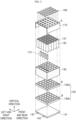
- FIG. 1 is a perspective view illustrating a battery pack in accordance with an exemplary embodiment
- FIG. 2 is an exploded perspective view illustrating a structure of the battery pack in accordance with an exemplary embodiment
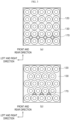
- FIG. 3 is a plan view illustrating an installation structure of supports in accordance with an exemplary embodiment.
- the battery pack in accordance with an exemplary embodiment will be described.
- a battery pack 100 in accordance with an exemplary embodiment is a device for supplying power to electronic equipment or system.
- a battery pack 100 includes a frame 110, a battery cell 120, a cell holder 150, a heat sink 140, a filling material 130, and a support 170.
- the battery cell 120 may have a cylindrical shape.
- the battery cell 120 may be a secondary battery cell and include a positive electrode collector, a negative electrode collector, a separator, an active material, and an electrolyte.
- the battery cell 120 may be repeatedly charged and discharged by an electrochemical reaction of the above-described components thereof.
- the battery cell 120 is provided in plurality.
- the battery cells 120 may be spaced apart from each other at predetermined positions.
- the battery cells 120 may be electrically connected in series or parallel.
- the battery pack 100 may increase an output voltage or an output current.
- each of the battery cells 120 may have one end (or upper end) disposed in an inner space of the frame 110 and the other end (or lower end) protruding to the outside of one side (or lower side) of the frame 110. That is, the battery cells 120 may have a length extending in one direction (or vertical direction) greater than that of the frame 110.
- the frame 110 may have a chamber shape.
- the frame 110 may have a cuboid box shape.
- the frame 110 may have an inner space for accommodating the battery cells 120.
- the frame 110 may have an opened one side (or lower side). For example, as the entire low side of the frame 110 is opened, an opening may be formed.
- the battery cells 120 may be entered to the inside of the frame 110 through the opening. Since each of the battery cells 120 has the length in the vertical direction greater than that of the frame 110, the lower end of each of the battery cells 120 may pass through the opening and protrude from the lower side of the frame 110.
- a plurality of through-holes A may be defined in the other side (or top surface) of the frame 110.
- the through-holes A may each have a circular shape and be arranged in the form of a x b.
- a terminal disposed at the upper end of the battery cell 120 may be inserted to the through-hole A.
- the battery cells 120 may be arranged in the form of a x b based on an array of the through-holes A.
- the terminals of the battery cells 120 may be respectively inserted to the through-holes A and exposed to the outside of the frame 110.
- a busbar 160 may be installed on the frame 110 and connected with the terminals.
- the busbar 160 may extend in one direction (or front and rear direction) and be provided in plurality, so that a plurality of busbars 160 are spaced apart from each other in the other direction (or left and right direction).
- the battery cells 120 spaced apart from each other in one direction may be electrically connected to each other by the busbars 160.
- the exemplary embodiment is not limited to the number of the busbars 160 and the structure of electrically connecting the battery cells 120.
- the number of the busbars 160 and the structure of electrically connecting the battery cells 120 may be variously provided.
- the frame 110 may have an opened one surface (or front surface).
- the filling material 130 may be injected to the inner space of the frame 110 through the opened front surface.
- the exemplary embodiment is not limited to the structure and shape of the frame 110.
- the frame 110 may have various structures and shapes.
- the cell holder 150 may have a plate shape.
- the cell holder 150 may have a rectangular shape along a flat surface shape of the frame 110, and an area of a top surface of the cell holder 150 may be equal to or greater than that of the flat surface of the frame 110.
- the cell holder 150 when the cell holder 150 is installed so that a perimeter of the top surface of the cell holder 150 contacts an one side end of the frame 110, the cell holder 150 may cover an entire cross-section (or lower portion) of the inner space of the frame 110.
- a lower opening formed in the frame 110 may be sealed by the cell holder 150.
- a material of the cell holder 150 may include plastic.
- the cell holder 150 may be manufactured at less cost than the filling material 130 made of silicon.
- a plurality of insertion holes B may be defined in the cell holder 150.
- Each of the insertion holes B may be formed along a circumferential shape of the battery cell 120, and an internal diameter of the insertion hole B may be equal to or greater than an external diameter of the battery cell 120.
- the other ends of the battery cells 120 may pass through and be inserted to the insertion holes B, respectively.
- the insertion holes B may respectively face the through-holes A of the frame 110. That is the insertion holes B may be arranged in the form of a x b based on the array of the through-holes A.
- the battery cell 120 may have the upper end inserted to and supported by the through-hole A and the lower end inserted to and supported by the insertion hole B.
- the battery cells 120 may maintain a stably fixed state.
- the cell holder 150 is provided in plurality.
- the cell holders 150 may be stacked to each other between the frame 110 and the heat sink 140.
- the cell holders 150 may be stacked in a vertical direction and disposed in a spaced space between the frame 110 and the heat sink 140.
- a top surface of the first cell holder 150a may be connected to the lower portion of the frame 110
- a bottom surface of the second cell holder 150b may be connected to the heat sink 140.
- the exemplary embodiment is not limited to the number of the cell holders 150. For example, three or more cell holders may be provided instead of two cell holders.
- the cell holders 150 may support the battery cells 120 together with the filling material 130. That is, the filling material 130 supports a perimeter of the one end (or upper end) of each of the battery cells 120, and each of the cell holders 150 supports a perimeter of the other end (or lower end) of each of the battery cells 120 except for the upper end of each of the battery cells 120. Since the filling material 130 is not filled in a space in which the cell holders 150 are disposed, as a portion supported by the cell holders 150 is increased in the battery cell 120, a portion supported by the filling material 130 may be decreased. Thus, a volume of the inner space of the frame 110 and an amount of the filling material 130 filled in the inner space of the frame 110 may be adjusted according to the number of staked cell holders 150.
- the volume of the inner space of the frame 110 may be decreased, and when the number of the provided cell holders 150 is decreased, the volume of the inner space of the frame 110 may be increased.
- the amount of the filling material 130 filled in the inner space of the frame 110 may be decreased, and when the volume of the inner space of the frame 110 is increased, the amount of the filling material 130 filled in the inner space of the frame 110 may be increased.
- the usage amount of the filling material 130 may be decreased by adjusting the stacked number or height of the cell holders 150.
- the heat sink 140 may be disposed below the cell holder 150. Thus, the heat sink 140 may directly or indirectly contact the battery cells 120 inserted to the cell holder 150 to cool the battery cells 120.
- the heat sink 140 may include a cooling member 141, a cooling medium supply member 142, and a cooling medium discharge member 143.
- the cooling member 141 may have a plate shape.
- the cooling member 141 may have a rectangular shape along a flat surface shape of the cell holder 150, and an area of a top surface of the cooling member 141 may be equal to or greater than that of a flat surface of the cell holder 150.
- the top surface of the cooling member 141 may directly or indirectly contact all of the battery cells 120.
- a flow path through which the cooling medium moves may be formed in the cooling member 141.
- the cooling medium may be a coolant.
- the cooling medium moving along the flow path formed in the cooling member 141 may absorb heat generated from the battery cells 120.
- the battery cells 120 may be cooled as a temperature thereof is decreased by the cooling medium.
- the cooling member 141 may be made of a material having a high thermal conductivity.
- the cooling member 141 may be made of aluminum or an aluminum alloy material.
- the cooling member 141 may easily transfer the heat generated from the battery cells 120 to the cooling medium.
- the temperature of the battery cells 120 may be quickly adjusted.
- the cooling medium supply member 142 may be connected to the cooling member 141.
- the cooling medium supply member 142 may be a line for supplying the cooling medium to the cooling member 141 and connected to one end of the flow path formed in the cooling member 141.
- the cooling medium supplied to the one end of the flow path through the cooling medium supply member 142 may absorb the heat of the battery cells 120 while passing through the flow path.
- the cooling medium discharge member 143 may be connected to the cooling member 141.
- the cooling medium supply member 143 may be a line for discharging the cooling medium in the cooling member 141 and connected to the other end of the flow path formed in the cooling member 141.
- the cooling medium may move from the one end to the other end of the flow path and be discharged to the outside through the cooling medium discharge member 143.
- the exemplary embodiment is not limited to the structure and shape of the housing 140.
- the housing may have various structures and shapes.
- the filling material 130 may be supplied to the inner space of the frame 100 and filled in the space between the battery cells 120. Since the support 170 is installed in the space between the battery cells 120 in advance, the filling material 130 may be filled in the rest space in which the supports 170 are not disposed in the space between the battery cells 120. Thus, the filling material 130 may hold the upper portions of the battery cells 120 together with the supports 170.
- a material of the filling material 130 may include silicon.
- the filling material 130 may simultaneously have a thermal conductivity and an adhesive property.
- the filling material 130 may be easily formed along a shape of the space between the battery cells 120 to fix the battery cells 120 and transfer the heat generated from the battery cells 120 to the outside.
- a feature of providing the filling material 130 to the entire space between the battery cells 120 may require much time and costs.
- the usage amount of the filling material 130 may be decreased by including the cell holders 150 and the supports 170.
- the support 170 may be provided in plurality and disposed in a portion of the space between the battery cells 120. Since the filling material 130 is also filled in the space between the battery cells 120, a volume of the space in which the filling material 130 is filled may be adjusted according to the number of the provided supports 170, and the amount of the filling material 130 to be injected may be adjusted. That is, when the number of the provided supports 170 is increased, an empty space between the battery cells 120 may be decreased, and the volume of the space filled by the filling material 130 may be decreased. When the number of the provided supports 170 is decreased, the empty space between the battery cells 120 may be increased, and the volume of the space filled by the filling material 130 may be increased.
- four supports 170 may be arranged in a row along the left and right direction and disposed between the battery cells 120 of a first column and a second column.
- the filling material 130 is filled only between the battery cells 120 of the rest columns except for the space between the battery cells 120 of the first column and the second column.
- the usage amount of the filling material 130 may be decreased.
- the exemplary embodiment is not limited to the number or arrangement structure of the provided supports 170.
- the supports 170 may have various structures and provided numbers.
- each of the supports 170 may have a bar shape extending in the vertical direction.
- the support 170 may extend less than a height of the inner space of the frame 110.
- the support 170 may be installed on a ceiling surface of the frame 110 and extend downward therefrom or extend upward from the top surface of the cell holder 150.
- the support 170 may have an upper end connected to the ceiling surface of the frame 110 and a lower end connected to the top surface of the cell holder 150.
- the support 170 may be disposed in the inner space of the frame 110.
- a flat surface of the support 170 may be formed along a flat surface shape of the space between the battery cells 120.
- a flat surface area of the support 170 may be equal to or less than that of the space between the battery cells 120.
- the support 170 may directly contact the battery cells 120, and when the flat surface area of the support 170 may be less than that of the space between the battery cells 120, the support 170 may indirectly contact the battery cells 120.
- the support 170 may be stably disposed in the empty space between the battery cells 120.
- the battery cells 120 may be arranged along one direction (or front and rear direction) to form one group.
- This group may be provided in plurality, and a plurality of groups may be arranged so that the battery cells 120 are arranged in a row in a direction perpendicularly crossing the one direction (or left and right direction).
- Each of the groups may include the same number of battery cells 120.
- the support 170 may have a rectangular shape in which a perimeter of a flat surface has four sides.
- the support 170 may be disposed at each of the spaces surrounding by different battery cells 120.
- the four sides of the support 170 may face the different battery cells 120. Accordingly, the sides of the support 170 may respectively directly or indirectly contact the facing different battery cells 120, and one support 170 may support four battery cells 120.
- the battery cells 120 may be arranged along one direction (or front and rear direction) to form one group.
- This group may be provided in plurality, and a plurality of groups may be arranged so that the battery cells 120 are alternately arranged in the direction perpendicularly crossing the one direction (or left and right direction).
- the support 170 may have a triangular shape in which a perimeter of a flat surface has three sides. Since the battery cells 120 are arranged on the same line along the front and rear direction and alternately arranged in the left and right direction, spaces surrounding by three battery cells 120 arranged in a triangular shape may be formed, and the support 170 may be disposed at each of the spaces surrounding by different battery cells 120. Thus, the three sides of the support 170 may face the different battery cells 120. Thus, the sides of the support 170 may respectively directly or indirectly contact the facing different battery cells 120, and one support 170 may support three battery cells 120.
- each of the sides of the support 170 which form a perimeter of a flat surface of the support 170, may have at least one of a curved shape or a straight line shape.
- the support 170 may be easily manufactured.
- the sides of the support 170 may form a perimeter of the support 170 so that the sides respectively surround a portion of the facing battery cells 120.
- the support 170 may more stably support the battery cells 120.
- the battery cells 120 may be supported by installing the plurality of supports 170 in a portion of the space between the battery cells 120.
- the battery cells 120 may be stably supported.
- an efficiency of a process of manufacturing the battery pack 100 may be improved by decreasing the usage amount of the filling material 130.
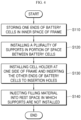
- FIG. 4 is a flowchart representing a method for manufacturing a battery pack in accordance with an exemplary embodiment. Hereinafter, the method for manufacturing the battery pack in accordance with an exemplary embodiment will be described.
- the method for manufacturing the battery pack in accordance with an exemplary embodiment relates to a method for stably fixing the battery pack and reducing a usage amount of a filling material.
- the method for manufacturing the battery pack includes: a process S110 of storing one ends of battery cells in an inner space of a frame; a process S120 of installing a plurality of supports in a portion of a space between the battery cells; a process S130 of installing a cell holder at one side of the frame and inserting the other ends of the battery cells protruding to the outside of the frame to insertion holes formed in the cell holder; and a process S140 of injecting a filling material into the rest space in which the supports are not installed in the space between the battery cells.
- one end (upper end) of each of battery cells 120 may be stored in an inner space of a frame 110 in the process S110. That is, the battery cells 120 may be entered to the inner space of the frame 110 through an opened one side (or lower side) of the frame 110, and terminals of the battery cells 120 may be respectively inserted to through-holes A defined in the other side (or top surface) of the frame 110. Thus, the battery cells 120 may be aligned along an arrangement shape of the through-holes A.
- each of the battery cells 120 may have a vertical length greater than that of the frame 110.
- the battery cells 120 may have the one ends disposed in the inner space of the frame 110 and the other ends (or lower ends) protruding downward and disposed at the outside of the frame 110.
- a plurality of supports 170 may be installed in a portion of the space between the battery cells in the process S120.
- the support 170 may be installed on a ceiling surface of the frame 110 and extend downward therefrom or extend upward from a top surface of the cell holder 150.
- the support 170 may have an upper end connected to the ceiling surface of the frame 110 and a lower end connected to the top surface of the cell holder 150.
- the support 170 may be disposed in the inner space of the frame 110.
- a volume of the space in which the filling material 130 is filled may be adjusted according to the number of the provided supports 170, and the amount of the filling material 130 to be filled may be adjusted. That is, when the number of the provided supports 170 is increased, an empty space between the battery cells 120 may be decreased, and the volume of the space filled by the filling material 130 may be decreased. When the number of the provided supports 170 is decreased, the empty space between the battery cells 120 may be increased, and the volume of the space filled by the filling material 130 may be increased.
- four supports 170 may be arranged in a row along the left and right direction and disposed between the battery cells 120 of a first column and a second column.
- the filling material 130 is filled only between the battery cells 120 of the rest columns except for the space between the battery cells 120 of the first column and the second column.
- the usage amount of the filling material 130 may be decreased.
- the supports 170 may be provided to occupy 10% or more to 40% or less of a volume of the entire space between the battery cells 120.
- the filled amount of the filling material may be slightly decreased, and a feature of filling the filling material 130 may require much time and costs like the related art.
- the supports 170 occupy greater than 40% of the volume of the entire space between the battery cells 120, the usage amount of the filling material 130 may be extremely decreased, and the filling material 130 may not stably support the battery cells 120.
- the number of the supports 170 may be determined to occupy 10% or more to 40% or less of the volume of the entire space between the battery cells 120 so that the filling material 130 stably supports the battery cells 120 while the usage amount of the filling material 130 is decreased.
- a plurality of cell holders 150 may be installed at one side of the frame 110 in the process S130.
- the other ends (or lower ends) of the battery cells 120 protruding to the outside of the frame 110 may be respectively inserted to insertion holes B formed in the cell holder 150.
- the battery cells 120 may be stably fixed in position as the one ends of the battery cells 120 are disposed in the frame 110, and the other ends are supported by the cell holder 150.
- the cell holder 150 may be provided in plurality. Thus, when the cell holders 150 are installed at one side of the frame 110, the cell holders 150 may be coupled to a lower portion of the frame 110 while the cell holders 150 are stacked in a vertical direction. When the cell holders 150 are stacked, the insertion holes B formed in the cell holders 150 may communicate each other to have an increased vertical length. Thus, a portion of the battery cells 120, which is inserted to the insertion holes B communicating each other, may be increased, and a portion of the battery cells 120, which is disposed in the inner space of the frame 110, may be decreased. Thus, a volume of the inner space of the frame 110 may be decreased by decreasing the vertical length of the frame 110 as many as the number of the provided cell holders 150.
- the volume of the inner space of the frame 110 may be decreased, and when the number of the provided cell holders 150 is decreased, the volume of the inner space of the frame 110 may be increased.
- the amount of the filling material 130 filled in the inner space of the frame 110 may be decreased, and when the volume of the inner space of the frame 110 is increased, the amount of the filling material 130 filled in the inner space of the frame 110 may be increased.
- the usage amount of the filling material 130 may be adjusted by setting the number or height of the stacked cell holders 150.
- the filling material 130 may be injected to the rest space in which the supports 170 are not installed in the space between the battery cells 120.
- the filling material 130 may be supplied between the battery cells 120 to hold the upper end of the battery cells 120.
- the volume of the inner space of the frame 110 is decreased by the cell holders 150, and the supports 170 are installed in the inner space of the frame 110 in advance.
- the usage amount of the filling material 130 supplied to fill the empty space between the battery cells 120 may be decreased by decreasing the volume of the empty space between the battery cells 120 twice.
- a time and costs required to fill the filling material 130 may be decreased.
- the usage amount of the filling material 130 may be adjusted according to the stacked number or of the cell holders 150 set based on a design specification of a battery pack 100 or according to the number of the provided supports 170.
- the filling material 130 may surround perimeters of the supports 170 and the battery cells 120 when the filling material 130 is injected. Thus, the filling material 130 may directly or indirectly contact the battery cells 120 through the filling material 130. Thus, although the gap exists between the battery cells 120 and the supports 170, the supports 170 may support the battery cells 120.
- a material of the filling material 130 may include silicon.
- the usage amount of the filling material 130 may be decreased by including the cell holder 150 and the supports 170 as described above.
- an efficiency of a process of manufacturing the battery pack 100 may be improved.
- the battery cells may be supported by installing the plurality of supports in the space between the battery cells.
- the battery cells may be stably supported.
- the efficiency of the process of manufacturing the battery pack may be improved by decreasing the usage amount of the filling material.
Landscapes
- Chemical & Material Sciences (AREA)
- Chemical Kinetics & Catalysis (AREA)
- Electrochemistry (AREA)
- General Chemical & Material Sciences (AREA)
- Engineering & Computer Science (AREA)
- Manufacturing & Machinery (AREA)
- Battery Mounting, Suspending (AREA)
- Secondary Cells (AREA)
Claims (9)
- Batteriepack (100), umfassend:einen Rahmen (110) mit einem Innenraum und einer geöffneten einen Seite;eine Vielzahl von Batteriezellen (120), die jeweils ein Ende aufweisen, das in dem Innenraum des Rahmens (110) angeordnet ist, und wobei das andere Ende zu der Außenseite einer Seite des Rahmens (110) vorsteht;einen Zellenhalter (150) mit einer Vielzahl von Einführlöchern, in die die anderen Enden der Batteriezellen (120) jeweils eingeführt und an einer Seite des Rahmens (110) installiert sind;ein Kühlkörper(140), der an dem Zellenhalter (150) installiert ist, um die Batteriezellen (120) zu kühlen;eine Vielzahl von Stützen (170), die in einem Abschnitt eines Raums zwischen den Batteriezellen (120) angeordnet sind; undein Füllmaterial (130), das in den Restraum gefüllt ist, in dem die Stützen (170) nicht in dem Raum zwischen den Batteriezellen (120) angeordnet sind,wobei eine gefüllte Menge des Füllmaterials (130) gemäß der Anzahl der bereitgestellten Stützen (170) eingestellt wird,wobei der Zellenhalter (150) in einer Vielzahl bereitgestellt ist und eine Vielzahl von Zellenhaltern in einer vertikalen Richtung gestapelt ist.
- Batteriepack (100) nach Anspruch 1, bei dem die Stütze (170) entlang einer flachen Oberflächenform des Raums zwischen den Batteriezellen (120) ausgebildet ist und sich weniger als eine Höhe des Innenraums des Rahmens (110) erstreckt.
- Batteriepack (100) nach Anspruch 2, bei dem Gruppen, die ausgebildet sind, wenn die Batteriezellen (120) entlang einer Richtung angeordnet sind, so angeordnet sind, dass die Batteriezellen (120) in einer Reihe entlang einer Richtung angeordnet sind, die die eine Richtung senkrecht kreuzt, und jede der Gruppen die gleiche Anzahl von Batteriezellen (120) umfasst.
- Batteriepack (100) nach Anspruch 2, bei dem Gruppen, die ausgebildet sind, wenn die Batteriezellen (120) entlang einer Richtung angeordnet sind, so angeordnet sind, dass die Batteriezellen (120) abwechselnd in einer Richtung angeordnet sind, die die eine Richtung senkrecht kreuzt, und
die Stütze (170) eine dreieckige Form aufweist, bei der ein Umfang einer flachen Oberfläche der Stütze (170) drei Seiten aufweist. - Batteriepack (100) nach Anspruch 3 oder 4, bei dem jede der Seiten des Umfangs der flachen Oberfläche der Stütze (170) eine gekrümmte Form oder eine geradlinige Form aufweist.
- Verfahren zum Herstellen eines Batteriepacks (100), umfassend:Lagern eines Endes von Batteriezellen (120) in einem Innenraum eines Rahmens (110);Installieren einer Vielzahl von Stützen (170) in einem Abschnitt eines Raums zwischen den Batteriezellen (120);Installieren eines Zellenhalters (150) an einer Seite des Rahmens (110) und jeweils Einführen der anderen Enden der Batteriezellen (120), die zu der Außenseite des Rahmens (110) vorstehen, in Einführlöcher, die in dem Zellenhalter (150) ausgebildet sind; undEinspritzen eines Füllmaterials (130) in den Restraum, in dem die Stützen (170) nicht in dem Raum zwischen den Batteriezellen (120) installiert sind,wobei das Installieren der Vielzahl von Stützen (170) das Einstellen der Anzahl von bereitgestellten Stützen (170) umfasst, um eine gefüllte Menge des Füllmaterials (130) einzustellen.
- Verfahren nach Anspruch 6, bei dem das Einstellen der Anzahl von bereitgestellten Stützen (170) das Installieren der Stützen (170) umfasst, um 10% oder mehr bis 40% oder weniger eines Volumens eines gesamten Raums zwischen den Batteriezellen (120) einzunehmen.
- Verfahren nach Anspruch 6 oder 7, bei dem das Installieren des Zellenhalters (150) an einer Seite des Rahmens (110) das Stapeln einer Vielzahl von Zellenhaltern (150) in einer vertikalen Richtung und das Koppeln der Zellenhalter (150) mit dem Rahmen (110) umfasst.
- Verfahren nach Anspruch 8, bei dem ein Material des Füllmaterials (130) Silizium umfasst.
Applications Claiming Priority (2)
| Application Number | Priority Date | Filing Date | Title |
|---|---|---|---|
| KR1020200137511A KR102943039B1 (ko) | 2020-10-22 | 배터리 팩 및 이의 제조방법 | |
| PCT/KR2021/014848 WO2022086235A1 (ko) | 2020-10-22 | 2021-10-21 | 배터리 팩 및 이의 제조방법 |
Publications (3)
| Publication Number | Publication Date |
|---|---|
| EP4131604A1 EP4131604A1 (de) | 2023-02-08 |
| EP4131604A4 EP4131604A4 (de) | 2023-12-20 |
| EP4131604B1 true EP4131604B1 (de) | 2025-04-02 |
Family
ID=81290983
Family Applications (1)
| Application Number | Title | Priority Date | Filing Date |
|---|---|---|---|
| EP21883303.6A Active EP4131604B1 (de) | 2020-10-22 | 2021-10-21 | Batteriepack und herstellungsverfahren dafür |
Country Status (6)
| Country | Link |
|---|---|
| US (1) | US20230369696A1 (de) |
| EP (1) | EP4131604B1 (de) |
| JP (1) | JP7483052B2 (de) |
| ES (1) | ES3031089T3 (de) |
| HU (1) | HUE071849T2 (de) |
| WO (1) | WO2022086235A1 (de) |
Family Cites Families (7)
| Publication number | Priority date | Publication date | Assignee | Title |
|---|---|---|---|---|
| JP4849848B2 (ja) * | 2005-08-31 | 2012-01-11 | 三洋電機株式会社 | 組電池 |
| KR101256075B1 (ko) * | 2011-04-07 | 2013-04-18 | 삼성에스디아이 주식회사 | 스페이서를 갖는 이차전지 팩 |
| EP3454718A4 (de) * | 2016-05-05 | 2020-02-26 | Brown, Joe Denton | Schutzkappen oder -spitzen für chirurgische laserfasern |
| ES2978039T3 (es) * | 2017-02-08 | 2024-09-04 | Elkem Silicones Usa Corp | Conjunto de baterías secundarias con gestión térmica mejorada |
| KR102204303B1 (ko) * | 2017-10-27 | 2021-01-15 | 주식회사 엘지화학 | 전지 셀 냉각 및 고정 구조가 통합된 배터리 모듈 및 이를 포함하는 배터리 팩 |
| CN209804842U (zh) * | 2019-02-01 | 2019-12-17 | 苏州安靠电源有限公司 | 电池模组和用于电池模组的导热片 |
| KR102726301B1 (ko) * | 2019-08-05 | 2024-11-04 | 주식회사 엘지에너지솔루션 | 복수의 원통형 전지셀을 구비한 배터리 모듈, 이를 포함하는 배터리 팩, 및 자동차 |
-
2021
- 2021-10-21 US US18/026,269 patent/US20230369696A1/en active Pending
- 2021-10-21 JP JP2022566714A patent/JP7483052B2/ja active Active
- 2021-10-21 HU HUE21883303A patent/HUE071849T2/hu unknown
- 2021-10-21 EP EP21883303.6A patent/EP4131604B1/de active Active
- 2021-10-21 WO PCT/KR2021/014848 patent/WO2022086235A1/ko not_active Ceased
- 2021-10-21 ES ES21883303T patent/ES3031089T3/es active Active
Also Published As
| Publication number | Publication date |
|---|---|
| ES3031089T3 (en) | 2025-07-03 |
| US20230369696A1 (en) | 2023-11-16 |
| JP2023525504A (ja) | 2023-06-16 |
| EP4131604A1 (de) | 2023-02-08 |
| EP4131604A4 (de) | 2023-12-20 |
| JP7483052B2 (ja) | 2024-05-14 |
| KR20220053269A (ko) | 2022-04-29 |
| CN115868077A (zh) | 2023-03-28 |
| HUE071849T2 (hu) | 2025-09-28 |
| WO2022086235A1 (ko) | 2022-04-28 |
Similar Documents
| Publication | Publication Date | Title |
|---|---|---|
| CN216648473U (zh) | 可再充电电池包 | |
| EP3664187B1 (de) | Zylindrische batteriezellenanordnung mit verbesserter raumausnutzung und sicherheit sowie batteriemodul damit | |
| EP3651237B1 (de) | Batteriepack mit verbesserter montagestruktur | |
| KR102204303B1 (ko) | 전지 셀 냉각 및 고정 구조가 통합된 배터리 모듈 및 이를 포함하는 배터리 팩 | |
| US11239511B2 (en) | Battery module having heat dissipation plate | |
| KR102065099B1 (ko) | 크래쉬 빔과 배수 구조를 갖는 배터리 팩 | |
| KR100684766B1 (ko) | 이차 전지 모듈 | |
| JP2018006314A (ja) | 電池サブモジュールキャリア、電池サブモジュール、電池システムおよび自動車 | |
| AU2014203086A1 (en) | Energy storage apparatus | |
| US20240429535A1 (en) | Energy storage power supply | |
| JP2014160551A (ja) | 電池ブロック、及び、電池モジュール | |
| KR20190054897A (ko) | 히트 파이프를 포함한 배터리 모듈 및 그것을 포함하는 배터리 팩 | |
| KR20220036518A (ko) | 배터리 팩 및 이에 구비되는 배터리 모듈 | |
| KR20120135883A (ko) | 교환가능한 셀 요소를 갖는 모듈형 배터리 | |
| EP4131603B1 (de) | Batteriepack und herstellungsverfahren dafür | |
| EP4131604B1 (de) | Batteriepack und herstellungsverfahren dafür | |
| JP2002373710A (ja) | 電池モジュール | |
| CN115868077B (zh) | 电池组及其制造方法 | |
| KR101256074B1 (ko) | 이격부재를 갖는 전지 모듈 | |
| KR102943040B1 (ko) | 배터리 팩 및 이의 제조방법 | |
| KR102943039B1 (ko) | 배터리 팩 및 이의 제조방법 | |
| US12160014B2 (en) | Energy storage system | |
| US20230352771A1 (en) | Battery module and vehicle including the same | |
| KR20250131443A (ko) | 이차전지 및 이를 포함하는 배터리 모듈 | |
| CN119072818A (zh) | 电池组和包括该电池组的车辆 |
Legal Events
| Date | Code | Title | Description |
|---|---|---|---|
| STAA | Information on the status of an ep patent application or granted ep patent |
Free format text: STATUS: THE INTERNATIONAL PUBLICATION HAS BEEN MADE |
|
| PUAI | Public reference made under article 153(3) epc to a published international application that has entered the european phase |
Free format text: ORIGINAL CODE: 0009012 |
|
| STAA | Information on the status of an ep patent application or granted ep patent |
Free format text: STATUS: REQUEST FOR EXAMINATION WAS MADE |
|
| 17P | Request for examination filed |
Effective date: 20221027 |
|
| AK | Designated contracting states |
Kind code of ref document: A1 Designated state(s): AL AT BE BG CH CY CZ DE DK EE ES FI FR GB GR HR HU IE IS IT LI LT LU LV MC MK MT NL NO PL PT RO RS SE SI SK SM TR |
|
| A4 | Supplementary search report drawn up and despatched |
Effective date: 20231121 |
|
| RIC1 | Information provided on ipc code assigned before grant |
Ipc: H01M 50/264 20210101ALI20231115BHEP Ipc: H01M 10/6556 20140101ALI20231115BHEP Ipc: H01M 10/653 20140101ALI20231115BHEP Ipc: H01M 10/613 20140101ALI20231115BHEP Ipc: H01M 10/643 20140101ALI20231115BHEP Ipc: H01M 10/6551 20140101ALI20231115BHEP Ipc: H01M 50/213 20210101ALI20231115BHEP Ipc: H01M 50/20 20210101AFI20231115BHEP |
|
| DAV | Request for validation of the european patent (deleted) | ||
| DAX | Request for extension of the european patent (deleted) | ||
| STAA | Information on the status of an ep patent application or granted ep patent |
Free format text: STATUS: EXAMINATION IS IN PROGRESS |
|
| 17Q | First examination report despatched |
Effective date: 20240716 |
|
| GRAP | Despatch of communication of intention to grant a patent |
Free format text: ORIGINAL CODE: EPIDOSNIGR1 |
|
| STAA | Information on the status of an ep patent application or granted ep patent |
Free format text: STATUS: GRANT OF PATENT IS INTENDED |
|
| INTG | Intention to grant announced |
Effective date: 20250102 |
|
| GRAS | Grant fee paid |
Free format text: ORIGINAL CODE: EPIDOSNIGR3 |
|
| GRAA | (expected) grant |
Free format text: ORIGINAL CODE: 0009210 |
|
| STAA | Information on the status of an ep patent application or granted ep patent |
Free format text: STATUS: THE PATENT HAS BEEN GRANTED |
|
| P01 | Opt-out of the competence of the unified patent court (upc) registered |
Free format text: CASE NUMBER: APP_6809/2025 Effective date: 20250210 |
|
| AK | Designated contracting states |
Kind code of ref document: B1 Designated state(s): AL AT BE BG CH CY CZ DE DK EE ES FI FR GB GR HR HU IE IS IT LI LT LU LV MC MK MT NL NO PL PT RO RS SE SI SK SM TR |
|
| REG | Reference to a national code |
Ref country code: GB Ref legal event code: FG4D |
|
| REG | Reference to a national code |
Ref country code: CH Ref legal event code: EP |
|
| REG | Reference to a national code |
Ref country code: IE Ref legal event code: FG4D |
|
| REG | Reference to a national code |
Ref country code: DE Ref legal event code: R096 Ref document number: 602021028691 Country of ref document: DE |
|
| REG | Reference to a national code |
Ref country code: ES Ref legal event code: FG2A Ref document number: 3031089 Country of ref document: ES Kind code of ref document: T3 Effective date: 20250703 |
|
| REG | Reference to a national code |
Ref country code: NL Ref legal event code: MP Effective date: 20250402 |
|
| PG25 | Lapsed in a contracting state [announced via postgrant information from national office to epo] |
Ref country code: NL Free format text: LAPSE BECAUSE OF FAILURE TO SUBMIT A TRANSLATION OF THE DESCRIPTION OR TO PAY THE FEE WITHIN THE PRESCRIBED TIME-LIMIT Effective date: 20250402 |
|
| REG | Reference to a national code |
Ref country code: AT Ref legal event code: MK05 Ref document number: 1782235 Country of ref document: AT Kind code of ref document: T Effective date: 20250402 |
|
| REG | Reference to a national code |
Ref country code: HU Ref legal event code: AG4A Ref document number: E071849 Country of ref document: HU |
|
| PG25 | Lapsed in a contracting state [announced via postgrant information from national office to epo] |
Ref country code: FI Free format text: LAPSE BECAUSE OF FAILURE TO SUBMIT A TRANSLATION OF THE DESCRIPTION OR TO PAY THE FEE WITHIN THE PRESCRIBED TIME-LIMIT Effective date: 20250402 Ref country code: PT Free format text: LAPSE BECAUSE OF FAILURE TO SUBMIT A TRANSLATION OF THE DESCRIPTION OR TO PAY THE FEE WITHIN THE PRESCRIBED TIME-LIMIT Effective date: 20250804 |
|
| REG | Reference to a national code |
Ref country code: LT Ref legal event code: MG9D |
|
| PG25 | Lapsed in a contracting state [announced via postgrant information from national office to epo] |
Ref country code: GR Free format text: LAPSE BECAUSE OF FAILURE TO SUBMIT A TRANSLATION OF THE DESCRIPTION OR TO PAY THE FEE WITHIN THE PRESCRIBED TIME-LIMIT Effective date: 20250703 Ref country code: NO Free format text: LAPSE BECAUSE OF FAILURE TO SUBMIT A TRANSLATION OF THE DESCRIPTION OR TO PAY THE FEE WITHIN THE PRESCRIBED TIME-LIMIT Effective date: 20250702 |
|
| PG25 | Lapsed in a contracting state [announced via postgrant information from national office to epo] |
Ref country code: PL Free format text: LAPSE BECAUSE OF FAILURE TO SUBMIT A TRANSLATION OF THE DESCRIPTION OR TO PAY THE FEE WITHIN THE PRESCRIBED TIME-LIMIT Effective date: 20250402 |
|
| PG25 | Lapsed in a contracting state [announced via postgrant information from national office to epo] |
Ref country code: BG Free format text: LAPSE BECAUSE OF FAILURE TO SUBMIT A TRANSLATION OF THE DESCRIPTION OR TO PAY THE FEE WITHIN THE PRESCRIBED TIME-LIMIT Effective date: 20250402 |
|
| PGFP | Annual fee paid to national office [announced via postgrant information from national office to epo] |
Ref country code: BE Payment date: 20250922 Year of fee payment: 5 Ref country code: GB Payment date: 20250922 Year of fee payment: 5 |
|
| PG25 | Lapsed in a contracting state [announced via postgrant information from national office to epo] |
Ref country code: HR Free format text: LAPSE BECAUSE OF FAILURE TO SUBMIT A TRANSLATION OF THE DESCRIPTION OR TO PAY THE FEE WITHIN THE PRESCRIBED TIME-LIMIT Effective date: 20250402 |
|
| PG25 | Lapsed in a contracting state [announced via postgrant information from national office to epo] |
Ref country code: AT Free format text: LAPSE BECAUSE OF FAILURE TO SUBMIT A TRANSLATION OF THE DESCRIPTION OR TO PAY THE FEE WITHIN THE PRESCRIBED TIME-LIMIT Effective date: 20250402 |
|
| PGFP | Annual fee paid to national office [announced via postgrant information from national office to epo] |
Ref country code: FR Payment date: 20250925 Year of fee payment: 5 |
|
| PG25 | Lapsed in a contracting state [announced via postgrant information from national office to epo] |
Ref country code: RS Free format text: LAPSE BECAUSE OF FAILURE TO SUBMIT A TRANSLATION OF THE DESCRIPTION OR TO PAY THE FEE WITHIN THE PRESCRIBED TIME-LIMIT Effective date: 20250702 |
|
| PG25 | Lapsed in a contracting state [announced via postgrant information from national office to epo] |
Ref country code: IS Free format text: LAPSE BECAUSE OF FAILURE TO SUBMIT A TRANSLATION OF THE DESCRIPTION OR TO PAY THE FEE WITHIN THE PRESCRIBED TIME-LIMIT Effective date: 20250802 |
|
| PG25 | Lapsed in a contracting state [announced via postgrant information from national office to epo] |
Ref country code: LV Free format text: LAPSE BECAUSE OF FAILURE TO SUBMIT A TRANSLATION OF THE DESCRIPTION OR TO PAY THE FEE WITHIN THE PRESCRIBED TIME-LIMIT Effective date: 20250402 |
|
| PGFP | Annual fee paid to national office [announced via postgrant information from national office to epo] |
Ref country code: HU Payment date: 20251029 Year of fee payment: 5 |
|
| REG | Reference to a national code |
Ref country code: DE Ref legal event code: R097 Ref document number: 602021028691 Country of ref document: DE |
|
| PGFP | Annual fee paid to national office [announced via postgrant information from national office to epo] |
Ref country code: DE Payment date: 20250922 Year of fee payment: 5 |
|
| PG25 | Lapsed in a contracting state [announced via postgrant information from national office to epo] |
Ref country code: SM Free format text: LAPSE BECAUSE OF FAILURE TO SUBMIT A TRANSLATION OF THE DESCRIPTION OR TO PAY THE FEE WITHIN THE PRESCRIBED TIME-LIMIT Effective date: 20250402 Ref country code: DK Free format text: LAPSE BECAUSE OF FAILURE TO SUBMIT A TRANSLATION OF THE DESCRIPTION OR TO PAY THE FEE WITHIN THE PRESCRIBED TIME-LIMIT Effective date: 20250402 |
|
| PG25 | Lapsed in a contracting state [announced via postgrant information from national office to epo] |
Ref country code: CZ Free format text: LAPSE BECAUSE OF FAILURE TO SUBMIT A TRANSLATION OF THE DESCRIPTION OR TO PAY THE FEE WITHIN THE PRESCRIBED TIME-LIMIT Effective date: 20250402 |
|
| PG25 | Lapsed in a contracting state [announced via postgrant information from national office to epo] |
Ref country code: EE Free format text: LAPSE BECAUSE OF FAILURE TO SUBMIT A TRANSLATION OF THE DESCRIPTION OR TO PAY THE FEE WITHIN THE PRESCRIBED TIME-LIMIT Effective date: 20250402 |
|
| PG25 | Lapsed in a contracting state [announced via postgrant information from national office to epo] |
Ref country code: SK Free format text: LAPSE BECAUSE OF FAILURE TO SUBMIT A TRANSLATION OF THE DESCRIPTION OR TO PAY THE FEE WITHIN THE PRESCRIBED TIME-LIMIT Effective date: 20250402 |
|
| PG25 | Lapsed in a contracting state [announced via postgrant information from national office to epo] |
Ref country code: IT Free format text: LAPSE BECAUSE OF FAILURE TO SUBMIT A TRANSLATION OF THE DESCRIPTION OR TO PAY THE FEE WITHIN THE PRESCRIBED TIME-LIMIT Effective date: 20250402 |
|
| PGFP | Annual fee paid to national office [announced via postgrant information from national office to epo] |
Ref country code: ES Payment date: 20251117 Year of fee payment: 5 |
|
| PLBE | No opposition filed within time limit |
Free format text: ORIGINAL CODE: 0009261 |
|
| STAA | Information on the status of an ep patent application or granted ep patent |
Free format text: STATUS: NO OPPOSITION FILED WITHIN TIME LIMIT |
|
| PG25 | Lapsed in a contracting state [announced via postgrant information from national office to epo] |
Ref country code: RO Free format text: LAPSE BECAUSE OF FAILURE TO SUBMIT A TRANSLATION OF THE DESCRIPTION OR TO PAY THE FEE WITHIN THE PRESCRIBED TIME-LIMIT Effective date: 20250402 |
|
| REG | Reference to a national code |
Ref country code: CH Ref legal event code: L10 Free format text: ST27 STATUS EVENT CODE: U-0-0-L10-L00 (AS PROVIDED BY THE NATIONAL OFFICE) Effective date: 20260211 |
|
| 26N | No opposition filed |
Effective date: 20260105 |