EP4125887B1 - Use of a thienopyridone derivative in the treatment of autosomal dominant polycystic kidney disease (adpkd) - Google Patents
Use of a thienopyridone derivative in the treatment of autosomal dominant polycystic kidney disease (adpkd) Download PDFInfo
- Publication number
- EP4125887B1 EP4125887B1 EP21715913.6A EP21715913A EP4125887B1 EP 4125887 B1 EP4125887 B1 EP 4125887B1 EP 21715913 A EP21715913 A EP 21715913A EP 4125887 B1 EP4125887 B1 EP 4125887B1
- Authority
- EP
- European Patent Office
- Prior art keywords
- formula
- groups
- hydroxy
- group
- compound
- Prior art date
- Legal status (The legal status is an assumption and is not a legal conclusion. Google has not performed a legal analysis and makes no representation as to the accuracy of the status listed.)
- Active
Links
Images

Classifications
-
- A—HUMAN NECESSITIES
- A61—MEDICAL OR VETERINARY SCIENCE; HYGIENE
- A61K—PREPARATIONS FOR MEDICAL, DENTAL OR TOILETRY PURPOSES
- A61K31/00—Medicinal preparations containing organic active ingredients
- A61K31/33—Heterocyclic compounds
- A61K31/395—Heterocyclic compounds having nitrogen as a ring hetero atom, e.g. guanethidine or rifamycins
- A61K31/435—Heterocyclic compounds having nitrogen as a ring hetero atom, e.g. guanethidine or rifamycins having six-membered rings with one nitrogen as the only ring hetero atom
- A61K31/4353—Heterocyclic compounds having nitrogen as a ring hetero atom, e.g. guanethidine or rifamycins having six-membered rings with one nitrogen as the only ring hetero atom ortho- or peri-condensed with heterocyclic ring systems
- A61K31/4365—Heterocyclic compounds having nitrogen as a ring hetero atom, e.g. guanethidine or rifamycins having six-membered rings with one nitrogen as the only ring hetero atom ortho- or peri-condensed with heterocyclic ring systems the heterocyclic ring system having sulfur as a ring hetero atom, e.g. ticlopidine
-
- A—HUMAN NECESSITIES
- A61—MEDICAL OR VETERINARY SCIENCE; HYGIENE
- A61P—SPECIFIC THERAPEUTIC ACTIVITY OF CHEMICAL COMPOUNDS OR MEDICINAL PREPARATIONS
- A61P13/00—Drugs for disorders of the urinary system
- A61P13/12—Drugs for disorders of the urinary system of the kidneys
Definitions
- the invention relates to the use of a thienopyridone derivative in the treatment of autosomal dominant polycystic kidney disease (ADPKD).
- ADPKD autosomal dominant polycystic kidney disease
- ADPKD Autosomal dominant polycystic kidney disease
- ESRD end-stage renal disease
- ADPKD Alzheimer's disease
- vasopressin receptor inhibitors such as Tolvaptan
- somatostatin analogues such as Octreotide and Lanreotide
- Pravastatin tyrosine kinase inhibitors
- Tesevatinib vasopressin receptor inhibitors
- Tolvaptan was the first drug treatment approved by the FDA to slow kidney function decline in adults at risk of rapidly progressing ADPKD.
- Tolvaptan requires frequent monitoring of liver function in patients treated therewith.
- These compounds target one of the key processes (proliferation or secretion) thought to be involved in the pathogenesis of ADPKD.
- cystic fibrosis transmembrane conductance regulator which participates in the secretion of cystic fluid and that the mammalian target of rapamycin (mTOR) pathway, which can drive proliferation of cyst epithelial cells
- mTOR mammalian target of rapamycin
- AMPK AMP-activated protein kinase
- metformin a known indirect activator of AMPK, to inhibit both the secretory and proliferative components of cyst expansion and thus slow renal cystogenesis ( V. Takiar et al., PNAS, Vol. 108, No. 6, 2462-2467, 2011 ).
- metformin is known to induce lactic acidosis as a side effect. Since metformin is cleared by the kidney, chronical renal disease has been considered a potential predisposing factor for this complication. In addition, there are concerns that therapeutic AMPK activation with metformin in human kidney may require a high oral dose thereof, at least because of its reduced bioavailability.
- WO2017/011917 thus discloses a number of thienopyridones defined by broad formulae, with no indication as to how they can be synthetized and which specific compounds are included.
- salsalate a prodrug dimer of salicylate and a direct AMPK activator
- metformin W.N. Leohnard et al., EBioMedicine, Vol. 47, 436-445, 2019 .
- Salsalate activates AMPK through direct interactions with the drug binding domain of the AMPK ⁇ 1 isoform.
- the oral dose of salsalate required for providing a therapeutic effect remains high, despite its better bioavailability compared to metformin.
- AMPK activators were broadly disclosed as AMPK activators in WO 2014/001554 but it has never been suggested so far to use them in the treatment of ADPKD. They have proven to be direct activators of various AMPK isoforms, including the ⁇ 1 subunit.
- This invention relates to a thienopyridone derivative of Formula (I): wherein:
- references to methods of treatment in this description are to be interpreted as references to the compounds, pharmaceutical compositions and medicaments of the present invention for use in a method for treatment of the human (or animal) body by therapy.
- halogen atom refers to an atom selected from fluorine, chlorine, bromine and iodine atoms.
- alkyl group refers to a linear or branched saturated chain of 1 to 5 carbon atoms, such as methyl, ethyl, n-propyl, iso-propyl, n-butyl, sec-butyl, iso-butyl or tert-butyl.
- alkyl groups are linear or branched saturated chains of 1 to 3 carbon atoms, such as methyl, ethyl, n-propyl or iso-propyl groups.
- aryl group refers to a C6-C18 aromatic group, such as phenyl or naphthyl group, optionally substituted by one or more atoms or groups selected from halogen atoms, alkyl groups, hydroxy (OH), alkyloxy groups, amino (NH 2 ), mono- or di-alkylamino groups, carboxy (COOH), alkyloxycarbonyl groups, mono- or di-alkylaminocarbonyl groups, carboxamide (CONH 2 ), cyano (CN), alkylsulfonyl groups and trifluoromethyl (CF 3 ).
- the aryl group can be subsituted or not by fluorine, chlorine, bromine atoms, hydroxy, methoxy, ethoxy, amino, dimethylamino, diethylamino, methyl, ethyl, n-propyl, n-butyl, iso-propyl, sec-butyl, iso-butyl, tert-butyl, carboxy, methoxycarbonyl, ethoxycarbonyl, carboxamide, dimethylaminocarbonyl, methylaminocarbonyl, cyano, methylsulfonyl, or trifluoromethyl group.
- alkyl group refers to alkyl group as defined above, a hydrogen atom of which is replaced by an aryl group as defined above.
- An example of an aralkyl group is a benzyl group.
- alkyloxy (or “alkoxy”) group refers to an alkyl group as defined above linked to the rest of the molecule through an oxygen atom. Among alkyloxy groups mention can be made of methoxy and ethoxy groups.
- aralkyloxy group refers to an aralkyl group as defined above linked to the rest of the molecule through an oxygen atom.
- aralkyloxy groups mention can be made of the benzyloxy group.
- alkylamino group refers to an alkyl group as defined above linked to the rest of the molecule through a nitrogen atom.
- alkylamino groups mention can be made of dimethylamino and diethylamino groups.
- alkyloxycarbonyl group refers to an alkyloxy group as defined above linked to the rest of the molecule through a carbonyl group.
- alkylaminocarbonyl group refers to an alkylamino group as defined above linked to the rest of the molecule through a carbonyl group.
- alkylsulfonyl refers to an alkyl as defined above linked to the rest of the molecule through a SO2 group.
- alkylsulfonyl groups mention can be made of methylsulfonyl and ethylsulfonyl groups.
- Solvates of the compounds are taken in the present invention to mean adductions of inert solvent molecules onto the compounds which form owing to their mutual attractive force.
- Solvates are, for example, hydrates or alcoholates.
- This invention pertains to thienopyridone derivatives of Formula (I): wherein:
- Examples of pharmaceutically acceptable salts of the compound of formula (I) can be obtained by reacting the compound of formula (I) with various organic and inorganic bases by procedures usually known in the art to give the corresponding base-addition salt.
- bases are, for example, alkali metal hydroxides, including potassium hydroxide, sodium hydroxide and lithium hydroxide; alkali metal carbonates, including potassium carbonate and sodium carbonate; alkaline earth metal hydroxides, such as barium hydroxide and calcium hydroxide; alkaline earth metal carbonates; alkali metal alkoxides, for example potassium ethoxide and sodium propoxide; and various organic bases, such as piperidine, diethanolamine and N-methylglutamine.
- the aluminium salts of the compounds of formula (I) are likewise included.
- the salts of the compound of formula (I) thus include aluminium, ammonium, calcium, copper, iron(III), iron(II), lithium, magnesium, manganese(III), manganese(II), potassium, sodium and zinc salts, but this is not intended to represent a restriction.
- any of the pharmaceutically acceptable salts of the compound of formula (I), or this compound itself, may be used in this invention in the form of one of its solvates.
- “Solvates” of the compounds are taken in the present invention to mean adductions of inert solvent molecules onto the compounds which form owing to their mutual attractive force. The nature of the solvate thus depends on the solvent used during the reaction of the base with the compound of formula (I). Examples of solvates include alcohol solvates, for instance methanol or ethanol solvates, and hydrates, including mono-, di-, tri- or tetrahydrates, but this is not intended to represent a restriction.
- At least one of the following conditions is met and preferably all of them:
- At least one of the following conditions is met and preferably all of them:
- thienopyridone derivatives are the following:
- the compounds of formula (I) may generally be prepared as disclosed in WO 2014/001554 .
- Examples of such compounds include:
- PXL770 may be prepared according to a process comprising the steps of:
- said compound of formula (II) may be obtained by an improved process (not part of the claimed invention) comprising the steps of:
- step (B) can comprise a substep (b1) of heating the mixture obtained in step (A), preferably at a temperature close to reflux of the mixture, followed by a substep (b2) of cooling the resulting mixture, for instance at a temperature comprised between -15 °C and 35 °C.
- close to reflux of the mixture refers typically to a temperature comprised between 90% and 100 % of the boiling point of the solvent system in step (A) (for instance, water/isopropanol or water/n-butyl acetate).
- a distillation step preferably under reduced pressure, can be carried out between the heating substep and substep (b2).
- Step (B) allows a crystalline precipitate to form, which formation may be favored or triggered by adding seeds to steps (b2).
- said precipitate is recovered by filtration in step (C). It may then be washed successively with one or more solvents, preferably water, n-butyl acetate and/or tert-butyl methyl ether.
- one or more solvents preferably water, n-butyl acetate and/or tert-butyl methyl ether.
- the compound of formula (Ia), i.e. PXL770, is thus obtained in the form of a solid, such as a powder, having the following XRPD (X-Ray Powder Diffraction) peaks, as measured by means of a diffractometer, using Cu K(alpha) radiation: 2-theta (°) d-value ( ⁇ ) 13.010 6.7992 14.720 6.0130 17.330 5.1128 19.640 4.5164 21.170 4.1933 22.700 3.9140 23.860 3.7263 24.410 3.6435 26.730 3.3323 28.700 3.1079 30.960 2.8860 34.750 2.5794 35.530 2.5246 35.950 2.4960 36.660 2.4493
- the wording "the thienopyridone derivative” refers to the compound of formula (I) or to one of its pharmaceutically acceptable salts and/or solvates.
- the pharmaceutical composition used according to the invention may be prepared by any conventional method.
- the thienopyridone derivative can be converted into a suitable dosage form together with at least one solid, liquid and/or semi-liquid excipient or adjuvant and, if desired, in combination with one or more further active ingredients.
- pharmaceutically acceptable support refers to carrier, adjuvant, or excipient acceptable to the subject from a pharmacological/toxicological point of view and to the manufacturing pharmaceutical chemist from a physical/chemical point of view regarding to composition, formulation, stability, subject acceptance and bioavailability.
- carrier refers to any substance, not itself a therapeutic agent, that is added to a pharmaceutical composition to be used as a carrier, adjuvant, and/or diluent for the delivery of a therapeutic agent to a subject in order to improve its handling or storage properties or to enable or facilitate formation of a dosage unit of the composition into a discrete article.
- the pharmaceutical compositions of the invention can comprise one or several agents or vehicles chosen among dispersants, solubilisers, stabilisers, preservatives, etc.
- treatment refers to therapy, prevention and prophylaxis of autosomal dominant polycystic kidney disease (ADPKD).
- ADPKD autosomal dominant polycystic kidney disease
- the term “treatment” or “treating” refers to the prophylaxis of a disease or at least one of its symptoms. This also means an improvement, prevention of at least one measurable physical parameter associated with the disease being treated, which is discernible or not in the subject.
- treatment or “treating” further refers to inhibiting or slowing the progression of the disease, physically, stabilization of a discernible symptom, physiologically, for example, stabilization of a physical parameter, or both.
- the term “treatment” or “treating” also refers to delaying the onset of a disease or disorder.
- the compound of the invention is administered as a preventive measure.
- prevention or “preventing” refers to a reduction in the risk of developing at least one of the symptoms related to the disease.
- treating can include preventing or limiting cyst growth with the thienopyridone derivative or a pharmaceutical composition comprising the same.
- Treatment also covers reducing cyst volume.
- the terms “treat”, “treating,” “treatment,” and the like, include the treatment of symptoms related to ADPKD.
- the treatment involves the administration of the thienopyridone derivative or a pharmaceutical composition of the invention to a subject having a declared disorder to cure, delay, or slow down the progress, thus improving the condition of patients.
- the term "subject” means a mammal and more particularly a human.
- the subjects to be treated according to the invention can be appropriately selected on the basis of several criteria associated to the disease.
- the treatment is more particularly suitable for a patient having at least one mutation in the PKD1 and/or PKD2 gene or for a patient at risk of ADPKD.
- a patient "at risk of ADPKD” encompasses patients aged 15-39 years old with three or more unilateral or bilateral renal cysts, patients aged 40-59 years old with two or more cysts in each kidney and patients aged 60 years old or more with four or more cysts in each kidney, as detected by ultrasonography.
- patients of 30 years old or younger with at least ten renal cysts, as observed by magnetic resonance imaging, are usually considered at risk of ADPKD.
- compositions can be administered in the form of dosage units which comprise a predetermined effective amount of active ingredient per dosage unit.
- compositions can be adapted for administration via any desired suitable method, for example by oral (including buccal or sublingual), rectal, nasal, topical (including buccal, sublingual or transdermal), vaginal or parenteral (including subcutaneous, intramuscular, intravenous or intradermal) methods.
- oral including buccal or sublingual
- rectal nasal
- topical including buccal, sublingual or transdermal
- vaginal or parenteral including subcutaneous, intramuscular, intravenous or intradermal
- parenteral including subcutaneous, intramuscular, intravenous or intradermal
- Such compositions can be prepared using all processes known in the pharmaceutical art by, for example, combining the active ingredient with the excipient(s) or adjuvant(s).
- the pharmaceutical composition according to the invention is adapted for oral administration.
- compositions adapted for oral administration can be administered as separate units, such as, for example, capsules or tablets; powders or granules; solutions or suspensions in aqueous or non-aqueous liquids; edible foams or foam foods; or emulsions, such as oil-in-water liquid emulsions or water-in-oil liquid emulsions.
- the active ingredient component in the case of oral administration in the form of a tablet or capsule, can be combined with an oral, non-toxic and pharmaceutically acceptable inert excipient.
- Powders are prepared by comminuting the compound to a suitable fine size and mixing it with a pharmaceutical excipient comminuted in a similar manner, such as, for example, an edible carbohydrate, such as, for example, starch or mannitol.
- a pharmaceutical excipient comminuted in a similar manner, such as, for example, an edible carbohydrate, such as, for example, starch or mannitol.
- a flavour, preservative, dispersant and dye may likewise be present.
- Capsules may be produced by preparing a powder mixture as described above and filling shaped gelatine shells therewith.
- Glidants and lubricants such as, for example, highly disperse silicic acid, talc, magnesium stearate, calcium stearate or polyethylene glycol in solid form, can be added to the powder mixture before the filling operation.
- a disintegrant or solubiliser such as, for example, agar-agar, calcium carbonate or sodium carbonate, may likewise be added in order to improve the availability of the medicament after the capsule has been taken.
- suitable binders include starch, gelatine, natural sugars, such as, for example, glucose or beta-lactose, sweeteners made from maize, natural and synthetic rubber, such as, for example, acacia, tragacanth or sodium alginate, carboxymethylcellulose, polyethylene glycol, waxes, and the like.
- the lubricants used in these dosage forms include sodium oleate, sodium stearate, magnesium stearate, sodium benzoate, sodium acetate, sodium chloride and the like.
- the disintegrants include, without being restricted thereto, starch, methylcellulose, agar, bentonite, xanthan gum and the like.
- the tablets are formulated by, for example, preparing a powder mixture, granulating or dry-pressing the mixture, adding a lubricant and a disintegrant and pressing the entire mixture to give tablets.
- a powder mixture is prepared by mixing the compound comminuted in a suitable manner with a diluent or a base, as described above, and optionally with a binder, such as, for example, carboxymethylcellulose, an alginate, gelatine or polyvinylpyrrolidone, a dissolution retardant, such as, for example, paraffin, an absorption accelerator, such as, for example, a quaternary salt, and/or an absorbent, such as, for example, bentonite, kaolin or dicalcium phosphate.
- a binder such as, for example, carboxymethylcellulose, an alginate, gelatine or polyvinylpyrrolidone
- a dissolution retardant such as, for example, paraffin
- an absorption accelerator such as, for example, a quaternary salt
- an absorbent such as, for example, bentonite, kaolin or dicalcium phosphate.
- the powder mixture can be granulated by wetting it with a binder, such as, for example, syrup, starch paste, acadia mucilage or solutions of cellulose or polymer materials and pressing it through a sieve.
- a binder such as, for example, syrup, starch paste, acadia mucilage or solutions of cellulose or polymer materials
- the powder mixture can be run through a tableting machine, giving lumps of non-uniform shape which are broken up to form granules.
- the granules can be lubricated by addition of stearic acid, a stearate salt, talc or mineral oil in order to prevent sticking to the tablet casting moulds. The lubricated mixture is then pressed to give tablets.
- the compound according to the invention can also be combined with a free-flowing inert excipient and then pressed directly to give tablets without carrying out the granulation or dry-pressing steps.
- a transparent or opaque protective layer consisting of a shellac sealing layer, a layer of sugar or polymer material and a gloss layer of wax may be present. Dyes can be added to these coatings in order to be able to differentiate between different dosage units.
- compositions adapted for oral administration can also be formulated by spray drying of a solid or liquid dispersion.
- Oral liquids such as, for example, solution, syrups and elixirs, can be prepared in the form of dosage units so that a given quantity comprises a prespecified amount of the compound.
- Syrups can be prepared by dissolving the compound in an aqueous solution with a suitable flavour, while elixirs are prepared using a non-toxic alcoholic vehicle.
- Suspensions can be formulated by dispersion of the compound in a non-toxic vehicle.
- Solubilisers and emulsifiers such as, for example, ethoxylated isostearyl alcohols and polyoxyethylene sorbitol ethers, preservatives, flavour additives, such as, for example, peppermint oil or natural sweeteners or saccharin, or other artificial sweeteners and the like, can likewise be added.
- the dosage unit formulations for oral administration can, if desired, be encapsulated in microcapsules.
- the formulation can also be prepared in such a way that the release is extended or retarded, such as, for example, by coating or embedding of particulate material in polymers, wax and the like.
- the thienopyridone derivative used according to the invention can also be administered in the form of liposome delivery systems, such as, for example, small unilamellar vesicles, large unilamellar vesicles and multilamellar vesicles.
- Liposomes can be formed from various phospholipids, such as, for example, cholesterol, stearylamine or phosphatidylcholines.
- the administered dose may be adapted by those skilled in the art according to the patient, the pathology, the mode of administration, etc.
- the thienopyridone derivative may be administered once or twice a day at a daily dose of 0.5mg to 300 mg for a human patient, preferably from 20 mg to 1000 mg, more preferably from 60 mg to 500 mg. It can be administered 4, 5, 6 or 7 days a week as a long-life medication.
- the thienopyridone derivative is administered as dosage units which comprise from 0.5 mg to 1500 mg, preferably from 20 mg to 1000 mg, more preferably from 60 mg to 500 mg of the thienopyridone derivative.
- X-Ray Powder Diffraction (XRPD) analyses were performed using a Panalytical Xpert Pro diffractometer equipped with a Cu (K alpha radiation) X-ray tube and a Pixcel detector system. The samples were analysed in transmission mode and held between low density polyethylene films. XRPD patterns were sorted, manipulated and indexed using HighScore Plus 2.2c software.
- Thermogravimetric (TG) analyses were carried out on a Perkin Elmer Diamond Thermogravimetric/Differential Temperature Analyser (TG/DTA).
- the calibration standards were indium and tin. Samples were placed in an aluminium sample pan, inserted into the TG furnace and accurately weighed. The samples were heated from 30-300°C in a stream of nitrogen at a rate of 10°C/minute. The temperature of the furnace was equilibrated at 30°C prior to the analysis of the samples.
- 6-Acetyl-5-hydroxytetralin 100 g, 1 eq. was dissolved in acetonitrile (300 mL). After addition of K 2 CO 3 (1.1 eq.) and benzyl bromide (1.05 eq.), the suspension was heated (76°C). After 48 hours, benzyl bromide (0.1 eq) was added. After overall 74 hours, the solid was filtered off and washed with acetonitrile (200 mL), and the combined filtrates were evaporated.
- Crystallization of potassium salt monohydrate may occur here. 4.2 parts of water were added and the mixture was seeded with compound (I) (1 to 2% of seeds). The suspension was then cooled down from 40°C to 5°C in 7 hours (5°C/hour) and kept at 5°C for several hours. The suspension was filtered. The cake was washed twice by 1.42 parts of water. The collected solid was dried at 40°C under vacuum given minimum 80% yield of Compound (Ia), at required chemical purity (i.e. 98%+).
- X-ray powder diffraction (XRPD) data of compound (Ia) indicated that it was composed of a crystalline material.
- the XRPD description of compound (Ia) is shown in Table 1.
- Table 1 Peak No 2-theta (°) d-value ( ⁇ ) Relative intensity (%) 1 4.910 17.9826 15 2 11.560 7.6486 8 3 13.010 6.7992 25 4 14.720 6.0130 100 5 16.450 5.3843 11 6 17.330 5.1128 49 7 17.770 4.9872 14 8 18.690 4.7437 12 9 19.220 4.6141 16 10 19.640 4.5164 20 11 20.190 4.3946 8 12 21.170 4.1933 23 13 21.580 4.1145 12 14 22.190 4.0028 12 15 22.700 3.9140 26 16 23.240 3.8243 17 17 23.860 3.7263 23 18 24.410 3.6435 43 19 25.330 3.5133 10 20 26.230 3.3947 17 21 26.730 3.3323 23 22 28.700 3.1079 25 23 29.590 3.
- plMDCK cells were cultured at 37°C, 21% O2 und 5% CO 2 in a modified MEM-medium, containing "Earl's balanced salt solution", 2mM L-Glutamine, 10% heat-shock inactivated FCS, 50IU/ml penicillin and 50 ⁇ g/ml streptomycin.
- a modified MEM-medium containing "Earl's balanced salt solution", 2mM L-Glutamine, 10% heat-shock inactivated FCS, 50IU/ml penicillin and 50 ⁇ g/ml streptomycin.
- cyst formation plMDCK cells were trypsinated and dissolved within a type I collagen suspension before being transferred into 24-well plates. 4 wells per condition and individual experiment were used.
- cell culture medium was added, containing either 10 ⁇ M forskolin (control; Ctrl) or 10 ⁇ M forskolin + metformin or 10 ⁇ M forskolin + PXL770 in the given concentrations. The experiments were performed for 5 days.
- PXL770 significantly inhibits cyst growth, with lower doses than metformin.
- the 3D huPKD cyst swelling assay has been performed with huPKD05 cells.
- huPKD05 cells (PKD1 mutation: c.5622G>A p.Trp1874*) were mixed with PrimCyst-Gel (OcellO BV). 15 ⁇ L of cell-gel mix was pipetted to 384-well plates (Greiner ⁇ Clear, Greiner Bio-One B.V.) using a CyBio Felix 96/250 robotic liquid dispenser (Analyik Jena AG). Gel-cell mix was plated at a final cell density of 450 cysts per well. After gel polymerization at 37°C for 30 minutes, 33 ⁇ L culture medium (no serum included) was added to each well.
- ddAVP desmopressin
- Table 1 overview of exposure conditions Treatment Concentration Stimulant Concentration Pos_ddAVP DMSO 0.1% ddAVP 2.5 ⁇ M Neg DMSO 0.1% DMSO 0.1% 20 ddAVP PXL770 or PXL037/PXL37 or PXL695 or PXL700 or PXL702 10, 5, 2.5, 0.5 ⁇ M ddAVP 2.5 ⁇ M 25
- Imaging and image analysis Imaging was done using Molecular Devices ImageXpress Micro XLS (Molecular Devices) with a 4x NIKON objective. For each well around 35 images in the Z-direction were made for both channels, capturing the whole z-plane in each image. Image analysis was performed using Ominer TM software (OcellO BV). Cysts were segmented using detection of Hoechst-stained nuclei and Rhodamine-phalloidin-stained cellular f-actin. Cyst area was determined by calculating for the area in pixels (px) of each object in every in-focus plain. This was averaged per well and normalized between solvent control (0%) and stimulant only (100%). Statistics was done using GraphPad Prism, graphs were prepared in GraphPad Prism 6 (GraphPad Software, La Jolla, CA).
- PXL770, PXL695, PXL700, PXL702 and PXL037 are PXL770, PXL695, PXL700, PXL702 and PXL037:
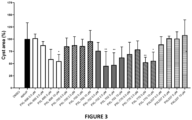
- PXL770 PXL695, PXL700, PXL702 and PXL037 were tested at 4 concentrations: 10, 5, 2.5, 0.5 ⁇ M in the presence of ddAVP.(2.5 ⁇ M).
- PXL770, PXL037, PXL770, PXL695 and PXL702 were assessed in huPKD cyst swelling assay to investigate their potency in inhibiting desmopressin (ddAVP) induced cyst swelling.
- PXL770 dose dependently reduced cyst swelling. PXL770 at 5 and 10 ⁇ M inhibited almost 50% of the induced swelling.
- PXL037 and PXL700 had no effect on cyst area up to 10 ⁇ M.
Landscapes
- Health & Medical Sciences (AREA)
- Veterinary Medicine (AREA)
- Chemical & Material Sciences (AREA)
- Medicinal Chemistry (AREA)
- Pharmacology & Pharmacy (AREA)
- Life Sciences & Earth Sciences (AREA)
- Animal Behavior & Ethology (AREA)
- General Health & Medical Sciences (AREA)
- Public Health (AREA)
- Epidemiology (AREA)
- Engineering & Computer Science (AREA)
- Bioinformatics & Cheminformatics (AREA)
- Urology & Nephrology (AREA)
- Chemical Kinetics & Catalysis (AREA)
- General Chemical & Material Sciences (AREA)
- Nuclear Medicine, Radiotherapy & Molecular Imaging (AREA)
- Organic Chemistry (AREA)
- Heterocyclic Carbon Compounds Containing A Hetero Ring Having Oxygen Or Sulfur (AREA)
- Pharmaceuticals Containing Other Organic And Inorganic Compounds (AREA)
Applications Claiming Priority (2)
| Application Number | Priority Date | Filing Date | Title |
|---|---|---|---|
| EP20167687 | 2020-04-02 | ||
| PCT/EP2021/058792 WO2021198506A1 (en) | 2020-04-02 | 2021-04-02 | Use of a thienopyridone derivative in the treatment of autosomal dominant polycystic kidney disease (adpkd) |
Publications (2)
| Publication Number | Publication Date |
|---|---|
| EP4125887A1 EP4125887A1 (en) | 2023-02-08 |
| EP4125887B1 true EP4125887B1 (en) | 2024-02-07 |
Family
ID=70165805
Family Applications (1)
| Application Number | Title | Priority Date | Filing Date |
|---|---|---|---|
| EP21715913.6A Active EP4125887B1 (en) | 2020-04-02 | 2021-04-02 | Use of a thienopyridone derivative in the treatment of autosomal dominant polycystic kidney disease (adpkd) |
Country Status (18)
| Country | Link |
|---|---|
| US (1) | US12310949B2 (pl) |
| EP (1) | EP4125887B1 (pl) |
| JP (1) | JP7366290B2 (pl) |
| KR (1) | KR20220163978A (pl) |
| CN (1) | CN115361949B (pl) |
| AU (1) | AU2021250655A1 (pl) |
| BR (1) | BR112022019403A2 (pl) |
| CA (1) | CA3171422A1 (pl) |
| DK (1) | DK4125887T3 (pl) |
| ES (1) | ES2984180T3 (pl) |
| FI (1) | FI4125887T3 (pl) |
| HU (1) | HUE066438T2 (pl) |
| IL (1) | IL296843A (pl) |
| MX (1) | MX2022012350A (pl) |
| PL (1) | PL4125887T3 (pl) |
| PT (1) | PT4125887T (pl) |
| WO (1) | WO2021198506A1 (pl) |
| ZA (1) | ZA202210318B (pl) |
Families Citing this family (2)
| Publication number | Priority date | Publication date | Assignee | Title |
|---|---|---|---|---|
| AU2021244824A1 (en) | 2020-03-26 | 2022-10-27 | Poxel | Use of a thienopyridone derivative in the treatment of adrenoleukodystrophy or adrenomyeloneuropathy |
| TW202547458A (zh) * | 2024-03-26 | 2025-12-16 | 香港商禮邦醫藥(香港)有限公司 | 用於治療體染色體顯性多囊性腎病之方法 |
Family Cites Families (6)
| Publication number | Priority date | Publication date | Assignee | Title |
|---|---|---|---|---|
| UA103321C2 (ru) * | 2008-04-11 | 2013-10-10 | Мерк Патент Гмбх | Производные тиенопиридона как активаторы amp-активированной протеинкиназы (амрк) |
| EP2679591A1 (en) | 2012-06-29 | 2014-01-01 | Poxel | Thienopyridone derivatives useful as activators of AMPK |
| WO2017011917A1 (en) | 2015-07-23 | 2017-01-26 | Thrasos Therapeutics Inc. | Methods for treating and preventing polycystic kidney diseases (pkd) using amp-activated protein kinase (ampk) modulators and activators |
| MX2021005772A (es) * | 2018-11-16 | 2021-10-13 | Poxel | Sal de monohidrato potasico de un derivado de tienopiridona y su proceso de preparacion. |
| AU2021244824A1 (en) | 2020-03-26 | 2022-10-27 | Poxel | Use of a thienopyridone derivative in the treatment of adrenoleukodystrophy or adrenomyeloneuropathy |
| US20230149370A1 (en) | 2020-03-30 | 2023-05-18 | Poxel | Use of a thienopyridone derivative in the treatment of diabetic nephropathy |
-
2021
- 2021-04-02 BR BR112022019403A patent/BR112022019403A2/pt unknown
- 2021-04-02 DK DK21715913.6T patent/DK4125887T3/da active
- 2021-04-02 CA CA3171422A patent/CA3171422A1/en active Pending
- 2021-04-02 HU HUE21715913A patent/HUE066438T2/hu unknown
- 2021-04-02 JP JP2022560086A patent/JP7366290B2/ja active Active
- 2021-04-02 PT PT217159136T patent/PT4125887T/pt unknown
- 2021-04-02 AU AU2021250655A patent/AU2021250655A1/en active Pending
- 2021-04-02 EP EP21715913.6A patent/EP4125887B1/en active Active
- 2021-04-02 PL PL21715913.6T patent/PL4125887T3/pl unknown
- 2021-04-02 ES ES21715913T patent/ES2984180T3/es active Active
- 2021-04-02 IL IL296843A patent/IL296843A/en unknown
- 2021-04-02 US US17/915,123 patent/US12310949B2/en active Active
- 2021-04-02 KR KR1020227037021A patent/KR20220163978A/ko active Pending
- 2021-04-02 WO PCT/EP2021/058792 patent/WO2021198506A1/en not_active Ceased
- 2021-04-02 FI FIEP21715913.6T patent/FI4125887T3/fi active
- 2021-04-02 CN CN202180027012.1A patent/CN115361949B/zh active Active
- 2021-04-02 MX MX2022012350A patent/MX2022012350A/es unknown
-
2022
- 2022-09-16 ZA ZA2022/10318A patent/ZA202210318B/en unknown
Also Published As
| Publication number | Publication date |
|---|---|
| PL4125887T3 (pl) | 2024-07-22 |
| BR112022019403A2 (pt) | 2022-12-06 |
| AU2021250655A1 (en) | 2022-10-27 |
| JP7366290B2 (ja) | 2023-10-20 |
| CN115361949B (zh) | 2025-03-11 |
| DK4125887T3 (da) | 2024-05-06 |
| WO2021198506A1 (en) | 2021-10-07 |
| IL296843A (en) | 2022-11-01 |
| ES2984180T3 (es) | 2024-10-29 |
| KR20220163978A (ko) | 2022-12-12 |
| CA3171422A1 (en) | 2021-10-07 |
| PT4125887T (pt) | 2024-05-06 |
| US12310949B2 (en) | 2025-05-27 |
| EP4125887A1 (en) | 2023-02-08 |
| US20230120204A1 (en) | 2023-04-20 |
| ZA202210318B (en) | 2024-06-26 |
| HUE066438T2 (hu) | 2024-08-28 |
| JP2023510039A (ja) | 2023-03-10 |
| MX2022012350A (es) | 2022-10-27 |
| FI4125887T3 (fi) | 2024-05-03 |
| CN115361949A (zh) | 2022-11-18 |
Similar Documents
| Publication | Publication Date | Title |
|---|---|---|
| EP3969449B1 (en) | New crystalline forms of n-(3-(2-(2-hydroxyethoxy)-6-morpholinopyridin-4-yl)-4-methvlphenyl)-2(trifluoromethyl)isonicotinamide as raf inhibitors for the treatment of cancer | |
| EP4049660B1 (en) | Dosage form compositions comprising an inhibitor of bruton's tyrosine kinase | |
| EP4125887B1 (en) | Use of a thienopyridone derivative in the treatment of autosomal dominant polycystic kidney disease (adpkd) | |
| EP2820019A1 (en) | Novel crystalline form of sitagliptin sulfate | |
| EP4125885B1 (en) | Use of a thienopyridone derivative in the treatment of diabetic nephropathy | |
| EP3434675A1 (en) | Hydrochloride salt crystal of drug for treating or preventing jak-associated disease and preparation method thereof | |
| US20160002250A1 (en) | Polymorphs and salts of a compound | |
| US12319700B2 (en) | Monohydrate potassium salt of a thienopyridone derivative and its preparation process | |
| EP4125886B1 (en) | Use of thienopyridone derivatives for the treatment of adrenoleucodystrophy or adrenomyeloneuropathy | |
| RU2767872C2 (ru) | Фармацевтическая композиция и способ ее получения | |
| JP7671362B2 (ja) | 医薬組成物、その製造方法及び使用 | |
| WO2015107545A1 (en) | Water soluble salts of dasatinib hydrate | |
| RU2844553C2 (ru) | Способ получения ридинилазола и его кристаллических форм | |
| HK40127061A (en) | New crystalline forms of n-(3-(2-(2-hydroxyethoxy)-6-morpholinopyridin-4-yl)-4-methvlphenyl)-2(trifluoromethyl) isonicotinamide as raf inhibitors for the treatment of cancer | |
| HK40065390B (en) | New crystalline forms of n-(3-(2-(2-hydroxyethoxy)-6-morpholinopyridin-4-yl)-4-methvlphenyl)-2(trifluoromethyl)isonicotinamide as raf inhibitors for the treatment of cancer | |
| HK40065390A (en) | New crystalline forms of n-(3-(2-(2-hydroxyethoxy)-6-morpholinopyridin-4-yl)-4-methvlphenyl)-2(trifluoromethyl)isonicotinamide as raf inhibitors for the treatment of cancer |
Legal Events
| Date | Code | Title | Description |
|---|---|---|---|
| STAA | Information on the status of an ep patent application or granted ep patent |
Free format text: STATUS: UNKNOWN |
|
| STAA | Information on the status of an ep patent application or granted ep patent |
Free format text: STATUS: THE INTERNATIONAL PUBLICATION HAS BEEN MADE |
|
| PUAI | Public reference made under article 153(3) epc to a published international application that has entered the european phase |
Free format text: ORIGINAL CODE: 0009012 |
|
| STAA | Information on the status of an ep patent application or granted ep patent |
Free format text: STATUS: REQUEST FOR EXAMINATION WAS MADE |
|
| 17P | Request for examination filed |
Effective date: 20221005 |
|
| AK | Designated contracting states |
Kind code of ref document: A1 Designated state(s): AL AT BE BG CH CY CZ DE DK EE ES FI FR GB GR HR HU IE IS IT LI LT LU LV MC MK MT NL NO PL PT RO RS SE SI SK SM TR |
|
| DAV | Request for validation of the european patent (deleted) | ||
| DAX | Request for extension of the european patent (deleted) | ||
| GRAP | Despatch of communication of intention to grant a patent |
Free format text: ORIGINAL CODE: EPIDOSNIGR1 |
|
| STAA | Information on the status of an ep patent application or granted ep patent |
Free format text: STATUS: GRANT OF PATENT IS INTENDED |
|
| INTG | Intention to grant announced |
Effective date: 20230829 |
|
| GRAS | Grant fee paid |
Free format text: ORIGINAL CODE: EPIDOSNIGR3 |
|
| GRAA | (expected) grant |
Free format text: ORIGINAL CODE: 0009210 |
|
| STAA | Information on the status of an ep patent application or granted ep patent |
Free format text: STATUS: THE PATENT HAS BEEN GRANTED |
|
| AK | Designated contracting states |
Kind code of ref document: B1 Designated state(s): AL AT BE BG CH CY CZ DE DK EE ES FI FR GB GR HR HU IE IS IT LI LT LU LV MC MK MT NL NO PL PT RO RS SE SI SK SM TR |
|
| REG | Reference to a national code |
Ref country code: GB Ref legal event code: FG4D |
|
| REG | Reference to a national code |
Ref country code: CH Ref legal event code: EP |
|
| REG | Reference to a national code |
Ref country code: DE Ref legal event code: R096 Ref document number: 602021009226 Country of ref document: DE |
|
| REG | Reference to a national code |
Ref country code: IE Ref legal event code: FG4D |
|
| P01 | Opt-out of the competence of the unified patent court (upc) registered |
Effective date: 20240222 |
|
| REG | Reference to a national code |
Ref country code: FI Ref legal event code: FGE |
|
| REG | Reference to a national code |
Ref country code: PT Ref legal event code: SC4A Ref document number: 4125887 Country of ref document: PT Date of ref document: 20240506 Kind code of ref document: T Free format text: AVAILABILITY OF NATIONAL TRANSLATION Effective date: 20240429 Ref country code: DK Ref legal event code: T3 Effective date: 20240503 |
|
| REG | Reference to a national code |
Ref country code: SE Ref legal event code: TRGR |
|
| REG | Reference to a national code |
Ref country code: LT Ref legal event code: MG9D |
|
| REG | Reference to a national code |
Ref country code: NL Ref legal event code: FP |
|
| PG25 | Lapsed in a contracting state [announced via postgrant information from national office to epo] |
Ref country code: LT Free format text: LAPSE BECAUSE OF FAILURE TO SUBMIT A TRANSLATION OF THE DESCRIPTION OR TO PAY THE FEE WITHIN THE PRESCRIBED TIME-LIMIT Effective date: 20240207 |
|
| PG25 | Lapsed in a contracting state [announced via postgrant information from national office to epo] |
Ref country code: GR Free format text: LAPSE BECAUSE OF FAILURE TO SUBMIT A TRANSLATION OF THE DESCRIPTION OR TO PAY THE FEE WITHIN THE PRESCRIBED TIME-LIMIT Effective date: 20240508 |
|
| PG25 | Lapsed in a contracting state [announced via postgrant information from national office to epo] |
Ref country code: HR Free format text: LAPSE BECAUSE OF FAILURE TO SUBMIT A TRANSLATION OF THE DESCRIPTION OR TO PAY THE FEE WITHIN THE PRESCRIBED TIME-LIMIT Effective date: 20240207 Ref country code: RS Free format text: LAPSE BECAUSE OF FAILURE TO SUBMIT A TRANSLATION OF THE DESCRIPTION OR TO PAY THE FEE WITHIN THE PRESCRIBED TIME-LIMIT Effective date: 20240507 |
|
| PG25 | Lapsed in a contracting state [announced via postgrant information from national office to epo] |
Ref country code: RS Free format text: LAPSE BECAUSE OF FAILURE TO SUBMIT A TRANSLATION OF THE DESCRIPTION OR TO PAY THE FEE WITHIN THE PRESCRIBED TIME-LIMIT Effective date: 20240507 Ref country code: LT Free format text: LAPSE BECAUSE OF FAILURE TO SUBMIT A TRANSLATION OF THE DESCRIPTION OR TO PAY THE FEE WITHIN THE PRESCRIBED TIME-LIMIT Effective date: 20240207 Ref country code: HR Free format text: LAPSE BECAUSE OF FAILURE TO SUBMIT A TRANSLATION OF THE DESCRIPTION OR TO PAY THE FEE WITHIN THE PRESCRIBED TIME-LIMIT Effective date: 20240207 Ref country code: GR Free format text: LAPSE BECAUSE OF FAILURE TO SUBMIT A TRANSLATION OF THE DESCRIPTION OR TO PAY THE FEE WITHIN THE PRESCRIBED TIME-LIMIT Effective date: 20240508 Ref country code: BG Free format text: LAPSE BECAUSE OF FAILURE TO SUBMIT A TRANSLATION OF THE DESCRIPTION OR TO PAY THE FEE WITHIN THE PRESCRIBED TIME-LIMIT Effective date: 20240207 |
|
| REG | Reference to a national code |
Ref country code: HU Ref legal event code: AG4A Ref document number: E066438 Country of ref document: HU |
|
| PG25 | Lapsed in a contracting state [announced via postgrant information from national office to epo] |
Ref country code: LV Free format text: LAPSE BECAUSE OF FAILURE TO SUBMIT A TRANSLATION OF THE DESCRIPTION OR TO PAY THE FEE WITHIN THE PRESCRIBED TIME-LIMIT Effective date: 20240207 |
|
| PG25 | Lapsed in a contracting state [announced via postgrant information from national office to epo] |
Ref country code: SM Free format text: LAPSE BECAUSE OF FAILURE TO SUBMIT A TRANSLATION OF THE DESCRIPTION OR TO PAY THE FEE WITHIN THE PRESCRIBED TIME-LIMIT Effective date: 20240207 |
|
| PG25 | Lapsed in a contracting state [announced via postgrant information from national office to epo] |
Ref country code: CZ Free format text: LAPSE BECAUSE OF FAILURE TO SUBMIT A TRANSLATION OF THE DESCRIPTION OR TO PAY THE FEE WITHIN THE PRESCRIBED TIME-LIMIT Effective date: 20240207 Ref country code: EE Free format text: LAPSE BECAUSE OF FAILURE TO SUBMIT A TRANSLATION OF THE DESCRIPTION OR TO PAY THE FEE WITHIN THE PRESCRIBED TIME-LIMIT Effective date: 20240207 |
|
| PG25 | Lapsed in a contracting state [announced via postgrant information from national office to epo] |
Ref country code: SK Free format text: LAPSE BECAUSE OF FAILURE TO SUBMIT A TRANSLATION OF THE DESCRIPTION OR TO PAY THE FEE WITHIN THE PRESCRIBED TIME-LIMIT Effective date: 20240207 |
|
| REG | Reference to a national code |
Ref country code: ES Ref legal event code: FG2A Ref document number: 2984180 Country of ref document: ES Kind code of ref document: T3 Effective date: 20241029 |
|
| PG25 | Lapsed in a contracting state [announced via postgrant information from national office to epo] |
Ref country code: SM Free format text: LAPSE BECAUSE OF FAILURE TO SUBMIT A TRANSLATION OF THE DESCRIPTION OR TO PAY THE FEE WITHIN THE PRESCRIBED TIME-LIMIT Effective date: 20240207 Ref country code: SK Free format text: LAPSE BECAUSE OF FAILURE TO SUBMIT A TRANSLATION OF THE DESCRIPTION OR TO PAY THE FEE WITHIN THE PRESCRIBED TIME-LIMIT Effective date: 20240207 Ref country code: RO Free format text: LAPSE BECAUSE OF FAILURE TO SUBMIT A TRANSLATION OF THE DESCRIPTION OR TO PAY THE FEE WITHIN THE PRESCRIBED TIME-LIMIT Effective date: 20240207 Ref country code: EE Free format text: LAPSE BECAUSE OF FAILURE TO SUBMIT A TRANSLATION OF THE DESCRIPTION OR TO PAY THE FEE WITHIN THE PRESCRIBED TIME-LIMIT Effective date: 20240207 Ref country code: CZ Free format text: LAPSE BECAUSE OF FAILURE TO SUBMIT A TRANSLATION OF THE DESCRIPTION OR TO PAY THE FEE WITHIN THE PRESCRIBED TIME-LIMIT Effective date: 20240207 |
|
| REG | Reference to a national code |
Ref country code: DE Ref legal event code: R097 Ref document number: 602021009226 Country of ref document: DE |
|
| PLBE | No opposition filed within time limit |
Free format text: ORIGINAL CODE: 0009261 |
|
| STAA | Information on the status of an ep patent application or granted ep patent |
Free format text: STATUS: NO OPPOSITION FILED WITHIN TIME LIMIT |
|
| 26N | No opposition filed |
Effective date: 20241108 |
|
| PG25 | Lapsed in a contracting state [announced via postgrant information from national office to epo] |
Ref country code: SI Free format text: LAPSE BECAUSE OF FAILURE TO SUBMIT A TRANSLATION OF THE DESCRIPTION OR TO PAY THE FEE WITHIN THE PRESCRIBED TIME-LIMIT Effective date: 20240207 |
|
| PGFP | Annual fee paid to national office [announced via postgrant information from national office to epo] |
Ref country code: NL Payment date: 20250424 Year of fee payment: 5 |
|
| PGFP | Annual fee paid to national office [announced via postgrant information from national office to epo] |
Ref country code: LU Payment date: 20250424 Year of fee payment: 5 |
|
| PGFP | Annual fee paid to national office [announced via postgrant information from national office to epo] |
Ref country code: FI Payment date: 20250424 Year of fee payment: 5 |
|
| PGFP | Annual fee paid to national office [announced via postgrant information from national office to epo] |
Ref country code: DE Payment date: 20250428 Year of fee payment: 5 |
|
| PGFP | Annual fee paid to national office [announced via postgrant information from national office to epo] |
Ref country code: DK Payment date: 20250424 Year of fee payment: 5 Ref country code: ES Payment date: 20250513 Year of fee payment: 5 |
|
| PGFP | Annual fee paid to national office [announced via postgrant information from national office to epo] |
Ref country code: IS Payment date: 20250428 Year of fee payment: 5 Ref country code: HU Payment date: 20250410 Year of fee payment: 5 Ref country code: NO Payment date: 20250422 Year of fee payment: 5 |
|
| PGFP | Annual fee paid to national office [announced via postgrant information from national office to epo] |
Ref country code: IT Payment date: 20250422 Year of fee payment: 5 Ref country code: BE Payment date: 20250424 Year of fee payment: 5 |
|
| PGFP | Annual fee paid to national office [announced via postgrant information from national office to epo] |
Ref country code: CH Payment date: 20250501 Year of fee payment: 5 |
|
| PGFP | Annual fee paid to national office [announced via postgrant information from national office to epo] |
Ref country code: AT Payment date: 20250721 Year of fee payment: 5 |
|
| PGFP | Annual fee paid to national office [announced via postgrant information from national office to epo] |
Ref country code: IE Payment date: 20250417 Year of fee payment: 5 |
|
| PGFP | Annual fee paid to national office [announced via postgrant information from national office to epo] |
Ref country code: SE Payment date: 20250424 Year of fee payment: 5 |
|
| PG25 | Lapsed in a contracting state [announced via postgrant information from national office to epo] |
Ref country code: CY Free format text: LAPSE BECAUSE OF FAILURE TO SUBMIT A TRANSLATION OF THE DESCRIPTION OR TO PAY THE FEE WITHIN THE PRESCRIBED TIME-LIMIT; INVALID AB INITIO Effective date: 20210402 |
|
| PGFP | Annual fee paid to national office [announced via postgrant information from national office to epo] |
Ref country code: GB Payment date: 20260323 Year of fee payment: 6 |
|
| PGFP | Annual fee paid to national office [announced via postgrant information from national office to epo] |
Ref country code: MC Payment date: 20260326 Year of fee payment: 6 |
|
| PGFP | Annual fee paid to national office [announced via postgrant information from national office to epo] |
Ref country code: FR Payment date: 20260320 Year of fee payment: 6 |
|
| PGFP | Annual fee paid to national office [announced via postgrant information from national office to epo] |
Ref country code: TR Payment date: 20260317 Year of fee payment: 6 |
|
| PGFP | Annual fee paid to national office [announced via postgrant information from national office to epo] |
Ref country code: PT Payment date: 20260316 Year of fee payment: 6 |
|
| PGFP | Annual fee paid to national office [announced via postgrant information from national office to epo] |
Ref country code: PL Payment date: 20260319 Year of fee payment: 6 |