EP4123541A1 - Kartenverwaltungsverfahren, benutzerendgerät, server, kartenverwaltungssystem und speichermedium - Google Patents
Kartenverwaltungsverfahren, benutzerendgerät, server, kartenverwaltungssystem und speichermedium Download PDFInfo
- Publication number
- EP4123541A1 EP4123541A1 EP21902137.5A EP21902137A EP4123541A1 EP 4123541 A1 EP4123541 A1 EP 4123541A1 EP 21902137 A EP21902137 A EP 21902137A EP 4123541 A1 EP4123541 A1 EP 4123541A1
- Authority
- EP
- European Patent Office
- Prior art keywords
- card
- bound
- type
- information
- server
- Prior art date
- Legal status (The legal status is an assumption and is not a legal conclusion. Google has not performed a legal analysis and makes no representation as to the accuracy of the status listed.)
- Pending
Links
Images





Classifications
-
- G—PHYSICS
- G06—COMPUTING OR CALCULATING; COUNTING
- G06Q—INFORMATION AND COMMUNICATION TECHNOLOGY [ICT] SPECIALLY ADAPTED FOR ADMINISTRATIVE, COMMERCIAL, FINANCIAL, MANAGERIAL OR SUPERVISORY PURPOSES; SYSTEMS OR METHODS SPECIALLY ADAPTED FOR ADMINISTRATIVE, COMMERCIAL, FINANCIAL, MANAGERIAL OR SUPERVISORY PURPOSES, NOT OTHERWISE PROVIDED FOR
- G06Q20/00—Payment architectures, schemes or protocols
- G06Q20/38—Payment protocols; Details thereof
- G06Q20/40—Authorisation, e.g. identification of payer or payee, verification of customer or shop credentials; Review and approval of payers, e.g. check credit lines or negative lists
- G06Q20/401—Transaction verification
-
- G—PHYSICS
- G06—COMPUTING OR CALCULATING; COUNTING
- G06Q—INFORMATION AND COMMUNICATION TECHNOLOGY [ICT] SPECIALLY ADAPTED FOR ADMINISTRATIVE, COMMERCIAL, FINANCIAL, MANAGERIAL OR SUPERVISORY PURPOSES; SYSTEMS OR METHODS SPECIALLY ADAPTED FOR ADMINISTRATIVE, COMMERCIAL, FINANCIAL, MANAGERIAL OR SUPERVISORY PURPOSES, NOT OTHERWISE PROVIDED FOR
- G06Q20/00—Payment architectures, schemes or protocols
- G06Q20/30—Payment architectures, schemes or protocols characterised by the use of specific devices or networks
- G06Q20/34—Payment architectures, schemes or protocols characterised by the use of specific devices or networks using cards, e.g. integrated circuit [IC] cards or magnetic cards
- G06Q20/342—Cards defining paid or billed services or quantities
-
- G—PHYSICS
- G06—COMPUTING OR CALCULATING; COUNTING
- G06K—GRAPHICAL DATA READING; PRESENTATION OF DATA; RECORD CARRIERS; HANDLING RECORD CARRIERS
- G06K19/00—Record carriers for use with machines and with at least a part designed to carry digital markings
- G06K19/06—Record carriers for use with machines and with at least a part designed to carry digital markings characterised by the kind of the digital marking, e.g. shape, nature, code
- G06K19/067—Record carriers with conductive marks, printed circuits or semiconductor circuit elements, e.g. credit or identity cards also with resonating or responding marks without active components
- G06K19/07—Record carriers with conductive marks, printed circuits or semiconductor circuit elements, e.g. credit or identity cards also with resonating or responding marks without active components with integrated circuit chips
- G06K19/073—Special arrangements for circuits, e.g. for protecting identification code in memory
-
- G—PHYSICS
- G06—COMPUTING OR CALCULATING; COUNTING
- G06Q—INFORMATION AND COMMUNICATION TECHNOLOGY [ICT] SPECIALLY ADAPTED FOR ADMINISTRATIVE, COMMERCIAL, FINANCIAL, MANAGERIAL OR SUPERVISORY PURPOSES; SYSTEMS OR METHODS SPECIALLY ADAPTED FOR ADMINISTRATIVE, COMMERCIAL, FINANCIAL, MANAGERIAL OR SUPERVISORY PURPOSES, NOT OTHERWISE PROVIDED FOR
- G06Q20/00—Payment architectures, schemes or protocols
- G06Q20/22—Payment schemes or models
- G06Q20/227—Payment schemes or models characterised in that multiple accounts are available, e.g. to the payer
-
- G—PHYSICS
- G06—COMPUTING OR CALCULATING; COUNTING
- G06Q—INFORMATION AND COMMUNICATION TECHNOLOGY [ICT] SPECIALLY ADAPTED FOR ADMINISTRATIVE, COMMERCIAL, FINANCIAL, MANAGERIAL OR SUPERVISORY PURPOSES; SYSTEMS OR METHODS SPECIALLY ADAPTED FOR ADMINISTRATIVE, COMMERCIAL, FINANCIAL, MANAGERIAL OR SUPERVISORY PURPOSES, NOT OTHERWISE PROVIDED FOR
- G06Q20/00—Payment architectures, schemes or protocols
- G06Q20/30—Payment architectures, schemes or protocols characterised by the use of specific devices or networks
- G06Q20/32—Payment architectures, schemes or protocols characterised by the use of specific devices or networks using wireless devices
- G06Q20/322—Aspects of commerce using mobile devices [M-devices]
- G06Q20/3227—Aspects of commerce using mobile devices [M-devices] using secure elements embedded in M-devices
-
- G—PHYSICS
- G06—COMPUTING OR CALCULATING; COUNTING
- G06Q—INFORMATION AND COMMUNICATION TECHNOLOGY [ICT] SPECIALLY ADAPTED FOR ADMINISTRATIVE, COMMERCIAL, FINANCIAL, MANAGERIAL OR SUPERVISORY PURPOSES; SYSTEMS OR METHODS SPECIALLY ADAPTED FOR ADMINISTRATIVE, COMMERCIAL, FINANCIAL, MANAGERIAL OR SUPERVISORY PURPOSES, NOT OTHERWISE PROVIDED FOR
- G06Q20/00—Payment architectures, schemes or protocols
- G06Q20/30—Payment architectures, schemes or protocols characterised by the use of specific devices or networks
- G06Q20/32—Payment architectures, schemes or protocols characterised by the use of specific devices or networks using wireless devices
- G06Q20/326—Payment applications installed on the mobile devices
- G06Q20/3263—Payment applications installed on the mobile devices characterised by activation or deactivation of payment capabilities
-
- G—PHYSICS
- G06—COMPUTING OR CALCULATING; COUNTING
- G06Q—INFORMATION AND COMMUNICATION TECHNOLOGY [ICT] SPECIALLY ADAPTED FOR ADMINISTRATIVE, COMMERCIAL, FINANCIAL, MANAGERIAL OR SUPERVISORY PURPOSES; SYSTEMS OR METHODS SPECIALLY ADAPTED FOR ADMINISTRATIVE, COMMERCIAL, FINANCIAL, MANAGERIAL OR SUPERVISORY PURPOSES, NOT OTHERWISE PROVIDED FOR
- G06Q20/00—Payment architectures, schemes or protocols
- G06Q20/30—Payment architectures, schemes or protocols characterised by the use of specific devices or networks
- G06Q20/34—Payment architectures, schemes or protocols characterised by the use of specific devices or networks using cards, e.g. integrated circuit [IC] cards or magnetic cards
- G06Q20/341—Active cards, i.e. cards including their own processing means, e.g. including an IC or chip
-
- G—PHYSICS
- G06—COMPUTING OR CALCULATING; COUNTING
- G06Q—INFORMATION AND COMMUNICATION TECHNOLOGY [ICT] SPECIALLY ADAPTED FOR ADMINISTRATIVE, COMMERCIAL, FINANCIAL, MANAGERIAL OR SUPERVISORY PURPOSES; SYSTEMS OR METHODS SPECIALLY ADAPTED FOR ADMINISTRATIVE, COMMERCIAL, FINANCIAL, MANAGERIAL OR SUPERVISORY PURPOSES, NOT OTHERWISE PROVIDED FOR
- G06Q20/00—Payment architectures, schemes or protocols
- G06Q20/30—Payment architectures, schemes or protocols characterised by the use of specific devices or networks
- G06Q20/34—Payment architectures, schemes or protocols characterised by the use of specific devices or networks using cards, e.g. integrated circuit [IC] cards or magnetic cards
- G06Q20/355—Personalisation of cards for use
- G06Q20/3552—Downloading or loading of personalisation data
-
- G—PHYSICS
- G06—COMPUTING OR CALCULATING; COUNTING
- G06Q—INFORMATION AND COMMUNICATION TECHNOLOGY [ICT] SPECIALLY ADAPTED FOR ADMINISTRATIVE, COMMERCIAL, FINANCIAL, MANAGERIAL OR SUPERVISORY PURPOSES; SYSTEMS OR METHODS SPECIALLY ADAPTED FOR ADMINISTRATIVE, COMMERCIAL, FINANCIAL, MANAGERIAL OR SUPERVISORY PURPOSES, NOT OTHERWISE PROVIDED FOR
- G06Q20/00—Payment architectures, schemes or protocols
- G06Q20/30—Payment architectures, schemes or protocols characterised by the use of specific devices or networks
- G06Q20/36—Payment architectures, schemes or protocols characterised by the use of specific devices or networks using electronic wallets or electronic money safes
- G06Q20/363—Payment architectures, schemes or protocols characterised by the use of specific devices or networks using electronic wallets or electronic money safes with the personal data of a user
-
- G—PHYSICS
- G06—COMPUTING OR CALCULATING; COUNTING
- G06Q—INFORMATION AND COMMUNICATION TECHNOLOGY [ICT] SPECIALLY ADAPTED FOR ADMINISTRATIVE, COMMERCIAL, FINANCIAL, MANAGERIAL OR SUPERVISORY PURPOSES; SYSTEMS OR METHODS SPECIALLY ADAPTED FOR ADMINISTRATIVE, COMMERCIAL, FINANCIAL, MANAGERIAL OR SUPERVISORY PURPOSES, NOT OTHERWISE PROVIDED FOR
- G06Q20/00—Payment architectures, schemes or protocols
- G06Q20/30—Payment architectures, schemes or protocols characterised by the use of specific devices or networks
- G06Q20/36—Payment architectures, schemes or protocols characterised by the use of specific devices or networks using electronic wallets or electronic money safes
- G06Q20/367—Payment architectures, schemes or protocols characterised by the use of specific devices or networks using electronic wallets or electronic money safes involving electronic purses or money safes
- G06Q20/3672—Payment architectures, schemes or protocols characterised by the use of specific devices or networks using electronic wallets or electronic money safes involving electronic purses or money safes initialising or reloading thereof
-
- G—PHYSICS
- G06—COMPUTING OR CALCULATING; COUNTING
- G06Q—INFORMATION AND COMMUNICATION TECHNOLOGY [ICT] SPECIALLY ADAPTED FOR ADMINISTRATIVE, COMMERCIAL, FINANCIAL, MANAGERIAL OR SUPERVISORY PURPOSES; SYSTEMS OR METHODS SPECIALLY ADAPTED FOR ADMINISTRATIVE, COMMERCIAL, FINANCIAL, MANAGERIAL OR SUPERVISORY PURPOSES, NOT OTHERWISE PROVIDED FOR
- G06Q20/00—Payment architectures, schemes or protocols
- G06Q20/38—Payment protocols; Details thereof
- G06Q20/382—Payment protocols; Details thereof insuring higher security of transaction
-
- G—PHYSICS
- G06—COMPUTING OR CALCULATING; COUNTING
- G06Q—INFORMATION AND COMMUNICATION TECHNOLOGY [ICT] SPECIALLY ADAPTED FOR ADMINISTRATIVE, COMMERCIAL, FINANCIAL, MANAGERIAL OR SUPERVISORY PURPOSES; SYSTEMS OR METHODS SPECIALLY ADAPTED FOR ADMINISTRATIVE, COMMERCIAL, FINANCIAL, MANAGERIAL OR SUPERVISORY PURPOSES, NOT OTHERWISE PROVIDED FOR
- G06Q20/00—Payment architectures, schemes or protocols
- G06Q20/38—Payment protocols; Details thereof
- G06Q20/40—Authorisation, e.g. identification of payer or payee, verification of customer or shop credentials; Review and approval of payers, e.g. check credit lines or negative lists
- G06Q20/401—Transaction verification
- G06Q20/4018—Transaction verification using the card verification value [CVV] associated with the card
-
- G—PHYSICS
- G06—COMPUTING OR CALCULATING; COUNTING
- G06Q—INFORMATION AND COMMUNICATION TECHNOLOGY [ICT] SPECIALLY ADAPTED FOR ADMINISTRATIVE, COMMERCIAL, FINANCIAL, MANAGERIAL OR SUPERVISORY PURPOSES; SYSTEMS OR METHODS SPECIALLY ADAPTED FOR ADMINISTRATIVE, COMMERCIAL, FINANCIAL, MANAGERIAL OR SUPERVISORY PURPOSES, NOT OTHERWISE PROVIDED FOR
- G06Q20/00—Payment architectures, schemes or protocols
- G06Q20/38—Payment protocols; Details thereof
- G06Q20/40—Authorisation, e.g. identification of payer or payee, verification of customer or shop credentials; Review and approval of payers, e.g. check credit lines or negative lists
- G06Q20/405—Establishing or using transaction specific rules
Definitions
- the present application belongs to the field of data processing, and in particular relates to a card management method, a user terminal, a server, a card management system and a storage medium.
- a user can implement a payment transaction through a user terminal installed with an application. Before the payment transaction, the user needs to bind a resource card, such as a bank card, for used in the payment transaction to the application, such that the resource card is available during the payment transaction through the application.
- a resource card such as a bank card
- the user can manage resource cards as required, such as adding binding of a resource card to the application, or deleting a resource card that has been bound to the application.
- resource cards such as adding binding of a resource card to the application, or deleting a resource card that has been bound to the application.
- program data packages and personalization data are set for each resource card and stored in the user terminal.
- a large amount of personalization data are required to be stored in the user terminal, which increases occupation of storage resources of the user terminal.
- Embodiments of the present application provide a card management method, a user terminal, a server, a card management system, and a storage medium, which can reduce occupation of storage resources of the user terminal.
- an embodiment of the present application provides a card management method, applicable to a user terminal, the user terminal including a security element which stores first-type universal personalization data and second-type universal personalization data.
- the method includes: sending, to a server, a card binding message including card authentication information of a card to be bound such that the server determines a card type of the card to be bound and allocates dedicated card information for the card to be bound in a case of successful verification of the card to be bound, wherein the dedicated card information includes a card transaction identifier; receiving the card type of the card to be bound and the dedicated card information for the card to be bound sent by the server; and loading the dedicated card information for the card to be bound onto the security element, wherein the dedicated card information for the card to be bound together with matching universal personalization data are useable to perform transaction verification of the card to be bound, and the matching universal personalization data is the first-type universal personalization data or the second-type universal personalization data that matches the card type of the bound card.
- an embodiment of the present application provides a card management method, applicable to a server, the server storing first-type universal personalization data and second-type universal personalization data.
- the method includes: determining a card type of a card to be bound and verifying the card to be bound in response to a received card binding message sent by a user terminal, and allocating dedicated card information for the card to be bound in a case of successful verification, wherein the card binding message includes card authentication information of the card to be bound, the dedicated card information includes a card transaction identifier, the dedicated card information for the card to be bound together with matching universal personalization data are configured to perform transaction verification of the bound card, and the matching universal personalization data is the first-type universal personalization data or the second-type universal personalization data that matches the card type of the bound card; and sending a card binding response message to the server, the card binding response message including the card type of the card to be bound and the dedicated card information for the card to be bound.
- an embodiment of the present application provides a user terminal, wherein the user terminal includes a security element which stores first-type universal personalization data and second-type universal personalization data.
- the user terminal includes: a sending module configured to send, to a server, a card binding message including card authentication information of a card to be bound such that the server determines a card type of the card to be bound and allocates dedicated card information to the card to be bound in a case of successful verification of the card to be bound, wherein the dedicated card information includes a card transaction identifier; a receiving module configured to receive the card type of the card to be bound and the dedicated card information for the card to be bound sent by the server; and a processing module configured to load the dedicated card information for the card to be bound onto the security element, wherein the dedicated card information for the card to be bound together with matching universal personalization data are useable to perform transaction verification of the card to be bound, and the matching universal personalization data is the first-type universal personalization data or the second-type universal personalization data that matches the card type
- an embodiment of the present application provides a server, wherein the server stores first-type universal personalization data and second-type universal personalization data.
- the server includes: a receiving module configured to receive a card binding message sent by a user terminal, wherein the card binding message includes card authentication information of a card to be bound; a processing module configured to determine a card type of the card to be bound and verify the card to be bound in response to the card binding message, and allocate dedicated card information for the card to be bound in a case of successful verification, wherein the dedicated card information includes a card transaction identifier, the dedicated card information for the card to be bound together matching universal personalization data are useable to perform transaction verification of the card to be bound, and the matching universal personalization data is the first-type universal personalization data or the second-type universal personalization data that matches the card type of the card to be bound; and a sending module configured to send a card binding response message to the server, wherein the card binding response message includes the card type of the card to be bound and the dedicated card information for the card
- an embodiment of the present application provides a user terminal, comprising a processor and a memory storing computer program instructions, wherein the processor executes the computer program instructions to implement the card management method according to the first aspect of the present application.
- an embodiment of the present application provides a server, comprising a processor and a memory storing computer program instructions, wherein the processor executes the computer program instructions to implement the card management method according to the second aspect of the present application.
- an embodiment of the present application provides a card management system, comprising the user terminal according to the fifth aspect of the present application and the server according to the sixth aspect of the present application.
- an embodiment of the present application provides a computer storage medium, storing computer program instructions, wherein the computer program instructions are executed by a processor to implement the card management method according to the first aspect of the present application or the second aspect of the present application.
- Embodiments of the present application provide a card management method, a user terminal, a server, a card management system, and a storage medium.
- the security element of the user terminal stores first-type universal personalization data and second-type universal personalization data.
- the user terminal interacts with the server through the card binding message to obtain the dedicated card information allocated to the card by the server.
- the obtained dedicated card information is loaded onto the security element.
- the user terminal and the server can use the matching universal personalization data and the dedicated card information for the card for transaction verification.
- the user terminal does not need to repeatedly store the universal personalization data required for transaction verification for each card, thereby reducing occupation of storage resources of the user terminal.
- a user can implement a payment transaction through an application installed in a user terminal.
- the application may be bound with cards, such as bank cards, of the use.
- resources for the payment transaction are transferred out from one of the cards bound to the application.
- Transaction verification is required for payment transactions with the respective cards.
- each of the cards is allocated with a corresponding program data package and personalization data, which are stored in the user terminal.
- Each of the cards has a dedicated program data package and personalization data.
- the application of the user terminal is bound with cards C1, C2 and C3.
- the user terminal stores a program data package Cap 1 and personalization data Data C1 corresponding to the card C1, a program data package Cap 2 and personalization data Data C2 corresponding to the card C2, and a program data package Cap 3 and personalization data Data C3 corresponding to the card C3.
- a program data package Cap 1 and personalization data Data C1 corresponding to the card C1
- a program data package Cap 2 and personalization data Data C2 corresponding to the card C2
- a program data package Cap 3 and personalization data Data C3 corresponding to the card C3.
- the embodiments of the present application provide a card management method, a user terminal, a server, a card management system and a storage medium, which can reduce occupation of storage resources of the user terminal for card management.
- Fig. 1 is a schematic diagram of an example of an application scenario of a card management method according to an embodiment of the present application.
- the card management method according to the embodiment of the present application may involve a user terminal 11 and a server 12, which are not limited herein.
- the user terminal 11 may include a terminal devices with a payment transaction function such as a mobile phone, a tablet computer, a wearable device, various types of special-shaped cards and the like, which are not limited herein.
- the user terminal 11 may be installed with an application for implementing a payment transaction, and the payment transaction can be realized through the application.
- the application of the user terminal 11 may include a Software Development Kit (SDK) for a wearable terminal device, a Software Development Kit for any other type of terminal device, and a Software Development Kit for a payment application, which are not limited herein.
- SDK Software Development Kit
- the user terminal may include a payment terminal and an auxiliary terminal.
- the auxiliary terminal can be used as an interaction relay device between the payment terminal and the server, that is, the payment terminal can interact with the server through the auxiliary terminal.
- the payment terminal may include a wearable device, such as a smart watch, smart glasses or the like, and the auxiliary terminal may include a device such as a mobile phone, which are not limited herein.
- the user terminal 11 may include a security element.
- the security element is a security protection element set in the user terminal 11, which may include a specific hardware circuit and/or a built security environment, which is not limited herein.
- the security element may include a Secure Element (SE), a Trusted Execution Environment (TEE), SE+TEE, Host-based Card Emulation (HCE), and the like.
- SE Secure Element
- TEE Trusted Execution Environment
- HCE Host-based Card Emulation
- the security element stores first-type universal personalization data and second-type universal personalization data.
- first-type universal personalization data and the second-type universal personalization data may be downloaded to the security element during an initial card binding process, or the first-type universal personalization data and the second-type universal personalization data may be stored in the security element before the user terminal 11 leaves the factory, which is not limited herein.
- the first-type universal personalization data and the second-type universal personalization data can work together with dedicated card information for respective cards to realize transaction verification of the respective cards in respective payment transaction processes.
- the first-type universal personalization data can be used for transaction verification of a card with a card type being a first-type.
- the first-type universal personalization data together with the dedicated card information for the card are used to perform transaction verification of the card.
- the second-type universal personalization data can be used for transaction verification of a card with a card type being a second-type.
- the second-type universal personalization data and the dedicated card information for the card are used to perform transaction verification of the card.
- a card of the first-type may be a debit card
- a card of the second-type may be a credit card, which is not limited herein.
- the dedicated card information may include a card transaction identifier of the card, i.e., Token.
- Different cards have different card transaction identifiers.
- the formats of card transaction identifiers may also be different for different types of cards. For example, a card of the first-type may be a debit card, and the card transaction identifier of the debit card may be a 19-digit identifier; and the second-type card may be a credit card, and the card transaction identifier of the credit card may be a 16-digit identifier.
- a mapping relationship among the dedicated card information for the card, the card type of the card, and a life state of the card may be stored in the security element, or may be stored in another device in the user terminal, which is not limited herein.
- the mapping relationship may be stored and managed in a form of a table, which is not limited here.
- the life state of the card represents a use state of the card.
- the use state of the card may include a valid state, an invalid state, and a default use state. If the use state of the card is the valid state, it means that the card has been bound and is available. If the use state of the card is the invalid state, it means that the card has been deleted and is unavailable. If the use state of the card is the default use state, it means that the card has been bound and will be used for implementing a payment transaction.
- the security element in the user terminal may store a universal program data package.
- the universal program data package includes programs required for operation of the security element, which is not limited here.
- the universal program data package may specifically be in a form of a Cap package, operations on card related information, the dedicated card information, the first-type universal personalization data, the second-type universal personalization data and the like that are performed internally in the security element can share this program data package, and the universal program data package will not be deleted upon being stored in the security element, so as to avoid frequent downloading and deleting of the program data package during card binding processes and card deleting processes.
- the universal program data package may be downloaded to the security element in an initial card binding process, or the universal program data package may be stored in the security element before the user terminal leaves the factory, which is not limited herein.
- the dedicated card information may further include dedicated personalization data.
- Different cards have different dedicated personalization data.
- transaction verification calculation of the card can be realized by using a card transaction identifier of the card, dedicated personalization data of the card and the first-type universal personalization data.
- transaction verification calculation of the card can be realized by using a card transaction identifier of the card, dedicated personalization data of the card and the second-type universal personalization data.
- the first-type universal personalization data is personalization data required for transaction verification which is the same for various cards of the first-type.
- the second-type universal personalization data is personalization data required for transaction verification which is the same for various cards of the second-type.
- the dedicated personalization data is personalization data required for transaction verification which varies for different cards.
- Fig. 2 is a schematic diagram of an example of contents stored in a security element of a user terminal according to an embodiment of the present application.
- the security element stores a universal program data package, i.e., a Cap package, the first-type universal personalization data, the second-type universal personalization data, the dedicated card information for each bank card which has been bound, and a mapping relationship management table.
- the card with the first-type is a debit bank card, and the first-type universal personalization data is shown as Data A.
- the card with the second-type is a credit bank card, and the second-type universal personalization data is shown as Data B. It is assumed that the application is bound with bank cards C1, C2, C3, C4, C5 and C6.
- the dedicated card information may include card transaction identifier and dedicated personalization data.
- the bank cards C1, C2 and C3 are debit cards
- the corresponding dedicated card information for the bank cards C1, C2 and C3 are information Ml, information M2 and information M3 respectively.
- the information M1 includes a card transaction identifier Token 1 and dedicated personalization data Data 1
- the information M2 includes a card transaction identifier Token 2 and dedicated personalization data Data 2
- the information M3 includes a card transaction identifier Token 3 and dedicated personalization data Data 3.
- the dedicated card information for the bank cards C1, C2 and C3 all correspond to the first-type universal personalization data (the corresponding relationship is indicated by arrows in Fig. 2 ).
- the bank cards C4, C5 and C6 are credit cards, and the corresponding dedicated card information for the bank cards C4, C5 and C6 are information M4, information M5 and information M6 respectively.
- the information M4 includes a card transaction identifier Token 4 and dedicated personalization data Data 4;
- the information M5 includes a card transaction identifier Token 5 and dedicated personalization data Data 5;
- the information M6 includes a card transaction identifier Token 6 and dedicated personalization data Data 6.
- the dedicated card information for the bank cards C4, C5 and C6 all correspond to the second-type universal personalization data (the corresponding relationship is indicated by arrows in Fig. 2 ).
- the mapping relationship management table includes the respective dedicated card information, card type and life state of each bank card C1, C2, C3, C4, C5 and C6. As shown in Fig. 2 , the life states of the bank cards C1, C2, C3, C4, C5 and C6 correspond to a default use state, a valid state, a valid state, a valid state, a valid state and an invalid state, respectively.
- the security element may further store third-type universal personalization data and fourth-type universal personalization data, and the like.
- the third-type universal personalization data and the fourth-type universal personalization data are similar to the first-type universal personalization data and the second-type universal personalization data, and their function and usage during a card management process are the same as those of the first-type universal personalization data and the second-type universal personalization data, which will not be repeated here.
- the server 12 may include a management server 121 and a back-end server 122 for an application, which is not limited herein.
- the management server 121 may include a Trusted Service Manager (TSM) server 1211 and a Telematics Service Provider (TSP) server 1212.
- TSM Trusted Service Manager
- TSP Telematics Service Provider
- the management server 121 and the back-end server 122 may interact with each other.
- the TSM server 1211 and the TSP server 1212 may interact with each other.
- the server 12 may store the first-type universal personalization data and the second-type universal personalization data corresponding to each user terminal interacting with the server 12.
- the first-type universal personalization data and the second-type universal personalization data stored in the security element of the user terminal are the same as the first-type universal personalization data and the second-type universal personalization data stored in the server. It should be noted that, the first-type universal personalization data and the second-type universal personalization data corresponding to different user terminals are different, and they can be allocated centrally by the server.
- the server 12 can synchronize a mapping relationship among the dedicated card information, the card type, and the life state of the card with the user terminal 11, so that the information in the user terminal 11 and the information in the server 12 can be synchronized with each other, to avoid an error in a payment transaction caused by unsynchronized information.
- the card management method, user terminal, server, card management system and storage medium according to the present application will be specifically described below.
- FIG. 3 is a flowchart of an embodiment of a card management method according to a first aspect of the present application. As shown in Fig. 3 , the card management method may include steps S201 to S203.
- step S201 a card binding message is sent to the server such that the server determines a card type of a card to be bound and in a case of successful verification of the card to be bound, allocates dedicated card information for the card to be bound.
- the card binding message includes card authentication information of the card to be bound.
- the card authentication information is used in authentication of the card.
- the card authentication information may include, but is not limited to, a card identifier, card type verification information, and an input verification code.
- the card identifier identifies the card.
- the card identifier may be a card number.
- the card type verification information is useable to verify a certain type of cards.
- the card type verification information may be different for different card types. For example, a card of a first-type is a debit card, and the card type verification information corresponding to the card of the first-type may include a withdrawal password.
- a card of a second-type is a credit card
- the card type verification information corresponding to the card of the second-type may include a credit card security code (i.e., CVN2 code) and a credit card validity period.
- the input verification code may be a verification code received by the user terminal, and may specifically be a verification code inputted by the user, or a verification code that is identified and inputted from a short message including a dynamic verification code under authorization of the user terminal, which is not limited herein.
- the card binding message may include multiple messages, and the multiple messages may be sent via multiple processes according to verification requirements.
- the card authentication information included in each of the multiple messages may be different, which will be described in detail later.
- the server can verify the card according to the card authentication information in the card binding message. In a case of successful verification, the server allocates dedicated card information to the card indicated by the card binding message, i.e., the card to be bound.
- the dedicated card information includes a card transaction identifier.
- the user terminal sends to the card transaction identifier to another device, such that the another device determines an account for the payment transaction according to the card transaction identifier.
- the card transaction identifier is allocated by the server, and may vary for a different card.
- the dedicated card information may also include dedicated personalization data as discussed in the descriptions hereinabove, which will not be repeated here.
- step S202 the card type of the card to be bound and the dedicated card information for the card to be bound sent by the server are received.
- the user terminal may receive the card type of the card and the dedicated card information for the card through multiple processes.
- the server may send the card type of the card to be bound and the dedicated card information for the card to be bound through multiple processes in response to each message in the card binding message. Specifically, the server may send the card type of the card to be bound and the dedicated card information for the card to be bound through respective card binding response messages.
- the sequential order of the step S201 and step S202 may be determined according to a relationship between requests and responses for the card binding message, the card type, and the dedicated card information, which is not limited here.
- step S203 the dedicated card information for the card to be bound is loaded onto the security element.
- the dedicated card information for the card to be bound together with matching universal personalization data are useable to perform transaction verification of the card to be bound.
- the matching universal personalization data is the first-type universal personalization data or the second-type universal personalization data that matches the card type of the card to be bound. That is, if the card type of the card to be bound is the first-type, the matching universal personalization data is the first-type universal personalization data. If the card type of the card to be bound is the second-type, the matching universal personalization data is the second-type universal personalization data.
- Different cards of the same card type have different dedicated card information, but different cards of the same card type have the same matching universal personalization data. That is, different cards of the same card type share the same matching universal personalization data.
- the dedicated card information for the first card together with target matching universal personalization data are useable to perform transaction verification of the first card
- the dedicated card information for the second card together with the target matching universal personalization data are useable to perform transaction verification of the second card.
- the target matching universal personalization data is the first-type universal personalization data or the second-type universal personalization data that matches the card type of the first card. In a case that there are more cards of the same card type, the more cards share the same target matching universal personalization data.
- the dedicated card information M1 of the bank card C1 together with the first-type universal personalization data Data A are useable to perform transaction verification of the bank card C1.
- the dedicated card information M2 of the bank card C2 together with the first-type universal personalization data Data A are useable to perform transaction verification of the bank card C2.
- the dedicated card information M3 of the bank card C3 together with the first-type universal personalization data Data A are useable to perform transaction verification of the bank card C3.
- the bank cards C1, C2 and C3 have different dedicated card information, but share the same first-type universal personalization data.
- first-type universal personalization data and the second-type universal personalization data are universal, and can be used in different user terminals and different applications, so better compatibility can be obtained.
- the user terminal may load the dedicated card information for the card to be bound to the security element through a control instruction.
- the control instruction may be sent by the server to the user terminal first, and then sent by the user terminal to the security element, so as to control the security element.
- the control instruction may include an Application Protocol Data Unit (APDU) instruction, which is not limited in its contents.
- APDU Application Protocol Data Unit
- the server may further send a universal program data package to the user terminal.
- the user terminal receives the universal program data package, and loads the universal program data package onto the security element.
- the user terminal may load the universal program data package onto the security element through the APDU instruction.
- the universal program data package may be divided into multiple parts for loading by the APDU instruction, which is not limited herein in its contents.
- the universal program data package will not be deleted from the user terminal.
- the user terminal may further trigger installation of a card organization program.
- the user terminal may install the card organization program to the security element through the APDU instruction, which is not limited here in its contents.
- the security element in the user terminal stores the first-type universal personalization data and the second-type universal personalization data.
- the user terminal interacts with the server through the card binding message to obtain the dedicated card information allocated by the server for the card.
- the obtained dedicated card information is loaded onto the security element.
- the user terminal and the server can use the matching universal personalization data and the dedicated card information for the card for transaction verification.
- the user terminal does not need to repeatedly store the universal personalization data required for transaction verification for each card, thereby reducing occupation of storage resources of the user terminal.
- contents needed to be downloaded by the user terminal in the process of binding the card does not include universal personalization data, which reduces time spent by the user terminal for downloading data. Therefore, binding of the card can be accelerated, and becomes faster and simpler.
- the card binding message may include a first card binding message, a second card binding message and a binding verification message.
- the card authentication information includes a card identifier, card type verification information and an input verification code.
- Fig. 4 is a flowchart of another embodiment of a card management method according to the first aspect of the present application. Fig. 4 differs from Fig. 3 in that, step S201 in Fig. 3 can be divided into steps S2011 to S2013 in Fig. 4 , and step S202 in Fig. 3 can be divided into steps S2021 to S2023 in Fig. 4 .
- step S2011 a first card binding message is sent to the server.
- the first card binding message includes the card identifier of the card to be bound.
- the user terminal sends the first card binding message to the server, such that the server identifies the card type of the card according to the card identifier of the card to be bound, and feeds back the card type of the card to the server through a response message.
- the server can identify the card type of the card to be bound based on a format of the card identifier of the card to be bound.
- step S2021 a first response message sent by the server is received.
- the first response message includes the card type of the card.
- the server may feedback the card type of the card to the server through the first response message.
- step S2012 a second card binding message is sent to the server.
- the second card binding message includes card type verification information of the card to be bound.
- card type verification information For different types of cards different card type verification information are provided. Specifically, in a case that the card type of the card to be bound is a first-type, the card type verification information includes first-type verification information; and in a case that the card type of the card to be bound is a second-type, the card type verification information includes second-type verification information. The first-type verification information is different from the second-type verification information.
- the first-type verification information may include a withdrawal password; and in a case that a card of the second-type is a credit card, the second-type verification information may include a credit card security code and a credit card validity period.
- the user terminal Upon reception of the first response message sent by the server, the user terminal sends a second card binding message to the server, such that the server performs card type verification according to the card type verification information in the second card binding message.
- the card type verification is a verification for that type of cards. For example, in a case that a card of the first-type is a debit card, the verification is performed with respect to a type of debit card; and in a case that a card of the second-type is a credit card, the verification is performed with respect to a type of credit card.
- step S2022 a second response message sent by the server is received.
- the second response message includes a dynamic verification code.
- the server may feedback the dynamic verification code to the server through the second response message.
- step S2013 a binding verification message is sent to the server.
- the binding verification message includes an input verification code.
- the input verification code may be a verification code received by the user terminal, and may specifically be a verification code inputted by the user, or a verification code that is identified and inputted from a short message including a dynamic verification code under authorization of the user terminal, which is not limited herein.
- a binding verification message is sent to the server, such that the server performs, according to the input verification code and the dynamic verification code, verification of the verification code.
- the server determines that verification of the card to be bound is successful.
- step S2023 a third response message sent by the server is received.
- the third response message includes dedicated card information for the card to be bound.
- the server Upon successful verification of the card, allocates the dedicated card information for the card to be bound to the user terminal, and may send it to the user terminal through the third response message.
- Fig. 5 is a flowchart of another embodiment of a card management method according to the first aspect of the present application. Fig. 5 differs from Fig. 3 in that, the card management method shown in Fig. 5 may further include steps S204 and S205.
- step S204 a life state of the card to be bound is set to a valid state through the security element, and a first mapping relationship is generated or updated.
- the first mapping relationship includes a mapping relationship among the dedicated card information or the card to be bound, the card type of the card to be bound, and the life state of the card to be bound.
- the card has never been bound with the application in the user terminal before, that is, the current binding is the first binding of the card with the application in the user terminal.
- the user terminal does not store a mapping relationship among the dedicated card information for the card to be bound, the card type of the card to be bound and the life state of the card to be bound. In this case, the user terminal generates the first mapping relationship.
- the card has ever been bound with the application in the user terminal before but has been deleted, that is, the current binding is the N th binding of the card with the application in the user terminal, where N is an integer greater than 1.
- the user terminal has deleted the mapping relationship between the dedicated card information for the card to be bound, the card type of the card to be bound, and the life state of the card before the current binding.
- the user terminal needs to generate the first mapping relationship currently.
- the user terminal does not delete the mapping relationship between the dedicated card information for the card to be bound, the card type of the card to be bound and the life state of the card to be bound before current binding, but only changes the life state of the card to be bound to an invalid state.
- the user terminal does not need to newly generate the first mapping relationship currently, and only needs to update the first mapping relationship, that is, update the life state of the card to be bound in the first mapping relationship to a valid state.
- step S205 the life state of the bound card and the first mapping relationship are synchronized to the server.
- the server needs to keeps in synchronization with the user terminal in mapping relationship among dedicated card information, card type and life state of each card, so as to avoid an error in a payment transaction process.
- the method of the synchronization between the user terminal and the server is not limited here.
- Fig. 6 is a flowchart of another embodiment of a card management method according to the first aspect of the present application. Fig. 6 differs from Fig. 5 in that, the card management method shown in Fig. 6 may further include steps S206 to S209.
- step S206 a default card selection input is received.
- the default card selection input indicates a selected card as a default card. Specifically, the default card selection input indicates a default card selected currently.
- the default card selection input may be inputted by the user to the user terminal. The user terminal may determine, according to the default card selection input, a card transaction identifier of the default card indicated by the default card selection input.
- step S207 a life state of an original default card is updated to a valid state.
- the life state of the default card Before the life state of the default card is updated to a default use state, there may be already one card whose life state is the default use state among the cards that have been bound to the application in the user terminal, and this card is used previously as a default card. In order to distinguish the default card selected previously from the default card selected currently, the default card selected previously is referred to as the original default card here.
- the life state of the original default card before being updated is the default use state.
- the user terminal can update the life state of the original default card to the valid state through a control instruction, that is, cancel the default use state of the original default card. Specifically, the life state of the original default card is changed from the default use state to the valid state.
- the card type of the original default card is not limited here, and may be the same as the card type of the default card, or may be different from the card type of the default card.
- the user terminal can control the security element to cancel the default use state of the original default card through the control instruction.
- the control instruction may be sent by the server to the user terminal first, and then sent by the user terminal to the security element, so as to control the security element.
- the control instruction may include an APDU instruction, which is not limited here in its contents.
- mapping relationship between the dedicated card information for the original default card, the card type of the original default card and the life state of the original default card is updated accordingly.
- mapping relationship corresponding to the original default card in the mapping relationship management table can be updated.
- step S208 the security element is controlled to update the life state of the default card to the default use state.
- the user terminal In response to the default card selection input, the user terminal updates the life state of the default card to the default use state.
- the default card is a card that has been bound to the application in the user terminal. Specifically, the user terminal changes the life state of the default card from the valid state to the default use state.
- the user terminal can control the security element to update the life state of the default card to the default use state through a control instruction.
- the control instruction may be sent by the server to the user terminal first, and then sent by the user terminal to the security element, so as to control the security element.
- the control instruction may include an APDU instruction, which is not limited here in its contents.
- mapping relationship among the dedicated card information for the default card, the card type of the default card and the life state of the default card is also updated accordingly. Specifically, the mapping relationship corresponding to the default card in the mapping relationship management table can be updated.
- step S209 the updated life state of the default card and the updated life state of the original default card are synchronized to the server.
- the server is synchronized with the user terminal when the card-related information in the user terminal changes.
- the default card can be set and changed locally on the user terminal without the user terminal interacting with the server, so setting of the default card can be accelerated and becomes faster and simpler.
- Fig. 7 is a flowchart of another embodiment of a card management method according to the first aspect of the present application. Fig. 7 differs from Fig. 5 in that, the card management method shown in Fig. 7 may further include steps S210 to S213.
- step S210 a card deleting request message is sent to the server, such that the server feeds back a card transaction identifier of a card to be deleted.
- the card deleting request message indicates the card to be deleted.
- the server receives the card deleting request message, and feeds back the card transaction identifier of the card to be deleted to the user terminal.
- step S211 the card transaction identifier of the card to be deleted fed back by the server is received.
- step S212 the security element is controlled to update a life state of the card to be deleted to an invalid state.
- Deleting the card means unbinding the card from the application in the user terminal.
- the card transaction identifier of the card to be deleted may not be deleted from the user terminal. Since the life status of the card to be deleted has been updated to the invalid state, even if the card transaction identifier of the card to be deleted was retained, it could not be used, and would not affect a payment transaction.
- the user terminal can control the security element to update the life state of the card to be deleted to the invalid state through the control instruction.
- the control instruction may be sent by the server to the user terminal first, and then sent by the user terminal to the security element, so as to control the security element.
- the control instruction may include an APDU instruction, which is not limited here in its contents.
- the universal program data package may also be deleted, which is not limited herein.
- the user terminal may not delete a second mapping relationship, but only update the life state of the card to be deleted in the second mapping relationship.
- the second mapping relationship includes a mapping relationship among dedicated card information for the card to be deleted, a card type of the card to be deleted, and a life state of the card to be deleted.
- the user terminal may delete the second mapping relationship.
- the application in the user terminal binds the card again, the second mapping relationship can be regenerated.
- the card deleting process may trigger a default card setting process.
- the life state of the card to be deleted before being updated is the default use state
- the default card setting process is requited in the card deleting process to designate a new default card and update a life state of the designated new default card to the default use state.
- step S213 the updated life state of the card to be deleted is synchronized to the server.
- the server is synchronized with the user terminal when the card-related information in the user terminal changes.
- the user terminal may desire to bind a card that has been previously deleted.
- the card transaction identifier of the card is not deleted from the user terminal in the card deleting process and instead only the life state of the card is changed to an invalid state, so the card transaction identifier of the card can still be found in the user terminal, and the mapping relationship among the dedicated card information, the card type and the life state of the card can still be found in the server.
- the user terminal when the user terminal desire to bind a card that has been previously deleted, the user terminal can still use the method in the card binding process in the above embodiments to bind the card again.
- binding of a card which has ever been bound does not require regeneration of dedicated card information for card because the dedicated card information allocated by the server for the card just is the dedicated card information previously for the card.
- the user terminal can update the life state of the card in the user terminal from the invalid state to the valid state.
- the mapping relationship among the dedicated card information, the card type and the life state of the card has not been deleted from the user terminal when the card was deleted, it only needs to update the life state in the mapping relationship.
- the mapping relationship among the dedicated card information, the card type and the life state of the card has been deleted from the user terminal when the card was deleted, the mapping relationship among the dedicated card information, the card type and the life state of the card may be regenerated.
- the user can delete the lost card at any user terminal through logging in to an application or logging into a web page or the like or via a card organization etc., which reduces time required to report the loss of the card.
- a second aspect of the present application provides a card management method, which is applicable to a server.
- the server may store the first-type universal personalization data and the second-type universal personalization data.
- the first-type universal personalization data stored in the server is consistent with the first-type universal personalization data stored in the user terminal
- the second-type universal personalization data stored in the server is consistent with the second-type universal personalization data stored in the user terminal.
- Fig. 8 is a flowchart of an embodiment of a card management method according to a second aspect of the present application. As shown in Fig. 8 , the card management method may include steps S301 and S302.
- step S301 in response to a received card binding message sent by the user terminal, a card type of a card to be bound is determined, the card to be bound is verified, and in a case of successful verification, dedicated card information is allocated for the card to be bound.
- the card binding message includes card authentication information of the card to be bound.
- the card binding message may include multiple messages, each of which may include different card authentication information.
- the user terminal may send the card binding message via multiple processes.
- the server may receive the card binding message via multiple processes. Based on the received message in each of the multiple processes, the server can determine the card type of the card to be bound, and perform verification of the card to be bound. The details about these can be found in the detailed description hereinabove and hereinafter.
- the server will not allocate the dedicated card information for the card to be bound.
- the card authentication information may include a card identifier, card type verification information, and an input verification code.
- the dedicated card information includes a card transaction identifier.
- the dedicated card information for the card to be bound together with matching universal personalization data are useable to perform transaction verification of the card to be bound.
- the matching universal personalization data is the first-type universal personalization data or the second-type universal personalization data that matches the card type of the card to be bound.
- the dedicated card information allocated by the server for different cards of the same card type is different.
- different cards of the same card type have the same matching universal personalization data, that is, different cards of the same card type share the same matching universal personalization data.
- the dedicated card information for the first card together with target matching universal personalization data are useable to perform transaction verification of the first card
- the dedicated card information for the second card together with the target matching universal personalization data are useable to perform transaction verification of the second card.
- the target matching universal personalization data is the first-type universal personalization data or the second-type universal personalization data that matches the card type of the first card.
- the dedicated card information may further includes dedicated personalization data.
- the details of the dedicated personalization data can be found in relevant descriptions in the above embodiments, and will not be repeated here.
- step S302 a card binding response message is sent to the server.
- the card binding response message includes the card type of the card to be bound and dedicated card information for the card to be bound.
- the card binding response message may include multiple messages, each of which may has different contents. The details about these can be found in the detailed description hereinabove and hereinafter.
- the server may send the multiple messages to the user terminal via multiple processes, and correspondingly, the user terminal may receive the multiple messages via multiple processes.
- the server receives the card binding message sent by the user terminal, determines the card type of the card to be bound and performs verification on the card to be bound in response to the card binding message. In a case of successful verification, the server allocates dedicated card information for the card to be bound and sends the dedicated card information to the user terminal, such that the user terminal receives the dedicated card information for the card to be bound.
- the user terminal and the server can use the universal personalization data and the dedicated card information for the card to perform transaction verification.
- the server does not need to repeatedly send to the user terminal the universal personalization data required for transaction verification of a card to be bound in each card binding process, thereby reducing occupation of storage resources of the user terminal and reducing occupation of resources for downloading during a download process.
- contents that the server needs to send to the user terminal in the process of binding the card does not include the universal personalization data, which reduces time spent by the user terminal for downloading data. Therefore, binding of the card binding can be accelerated and becomes faster and simpler.
- the card binding message includes a first card binding message, a second card binding message and a binding verification message.
- the card binding response message includes a first response message and a second response message.
- the card authentication information includes a card identifier, card type verification information and an input verification code.
- Fig. 9 is a flowchart of another embodiment of a card management method according to the second aspect of the present application. Fig. 9 differs from Fig. 8 in that, step S301 in Fig. 8 can be divided into steps S3011 to S3013 in Fig. 9 , and step S302 in Fig. 8 can be divided into steps S3021 to S3023 in Fig. 9 .
- step S3011 in response to the first card binding message sent by the user terminal, a card type of a card to be bound is determined according to a card identifier of the card to be bound in the first card binding message.
- the first card binding message includes the card identifier of the card to be bound. For different types of cards, their card identifiers have different formats.
- the server may identify the card type of the card to be bound based on the card identifier of the card to be bound.
- step S3021 a first response message is sent to the user terminal.
- the first response message is sent to the user terminal in response to the first card binding message sent by the user terminal.
- the first response message includes the card type of the bound card.
- step S3012 in response to the second card binding message sent by the user terminal, card type verification is performed on the card to be bound by using card type verification information of the card to be bound in the second card binding message.
- the second card binding message includes the card type verification information which matches with the card type of the card to be bound.
- the card type verification information in a case that the card type of the card to be bound is a first-type, the card type verification information includes first-type verification information; and in a case that the card type of the card to be bound is a second-type, the card type verification information includes second-type verification information.
- the first-type verification information is different from the second-type verification information.
- step S3022 a second response message is sent to the user terminal.
- a second response message is sent to the user terminal.
- the second response message includes a dynamic verification code.
- step S3013 in response to the binding verification message sent by the user terminal, dedicated card information is allocated for the card to be bound in a case that an input verification code in the binding verification message is consistent with the dynamic verification code.
- the binding verification message includes the input verification code. If the input verification code in the binding verification message is consistent with the dynamic verification code, it indicates successful verification of the verification code. Upon successful verification of the verification code, the server allocates dedicated card information for the card to be bound.
- step S3023 a third response message is sent to the user terminal.
- a third response message is sent to the user terminal.
- the third response message includes the dedicated card information for the card to be bound.
- the server may send a universal program data package to the user terminal.
- FIG. 10 is a flowchart of another embodiment of a card management method according to the second aspect of the present application.
- Fig. 10 differs from Fig. 8 in that, the card management method shown in Fig. 10 may further include step S303.
- step S303 a life state of the card to be bound and a first mapping relationship are kept in synchronization with the user terminal.
- the first mapping relationship includes a mapping relationship among the dedicated card information for the card to be bound, the card type of the card to be bound, and the life state of the card to be bound.
- step S303 Details of step S303 can be found in relevant descriptions in the above embodiments, and will not be repeated here.
- Fig. 11 is a flowchart of another embodiment of a card management method according to the second aspect of the present application. Fig. 11 differs from Fig. 10 in that, the card management method shown in Fig. 11 may further include step S304.
- step S304 an updated life state of a default card and an updated life state of an original default card are kept in synchronization with the user terminal.
- the life state of the original default card before being updated is the default use state.
- step S304 can be found in relevant descriptions in the above embodiments, and will not be repeated here.
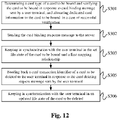
- Fig. 12 is a flowchart of another embodiment of a card management method according to a second aspect of the present application. Fig. 12 differs from Fig. 10 in that, the card management method shown in Fig. 12 may further include steps S305 and S306.
- step S305 in response to a card deleting request message sent by the user terminal, a card transaction identifier of a card to be deleted is fed back to the user terminal.
- the card deleting request message indicates the card to be deleted.
- step S306 updated life state of the card to be deleted is kept in synchronization with the user terminal.
- the server may update the life state of the card to be deleted in the second mapping relationship, but not delete the second mapping relationship. In some other examples, the server may also delete the second mapping relationship, which is not limited herein.
- the server in order to ensure that card-related information in the server is consistent with card-related information in the user terminal, the server is kept in synchronization with the user terminal when the card-related information in the user terminal changes, such that the card-related information in the server is consistent with the card-related information in the user terminal.
- the synchronization method between the server and the user terminal is not limited here.
- the following description takes the user terminal including the security element and installed with the application program and the server including the back-end server for the application, the TSM server and the TSP server as an example.
- the application may specifically be an electronic wallet application.
- Fig. 13 is a flowchart of an example of a card binding process according to an embodiment of the present application.
- the card has not been bound with the application in the user terminal before.
- the card binding process may include steps S401 to S424.
- step S401 the application receives a card binding input.
- the card binding input may include a card identifier of a card to be bound.
- step S402 the application sends a first card binding message to the back-end server.
- the first card binding message includes the card identifier of the card to be bound.
- step S403 the back-end server determines a card type of the card to be bound according to the card identifier of the card to be bound.
- step S404 the back-end server sends a first response message to the application.
- the first response message includes the card type of the card to be bound.
- step S405 the application sends a prompt message according to the card type of the card to be bound, to prompt a user to input card type verification information corresponding to the card type of the card to be bound.
- step S406 the application receives the input of card type verification information.
- step S407 the application sends a second card binding message to the back-end server.
- the second card binding message includes card type verification information of the card to be bound.
- step S408 the back-end server performs card type verification according to the card type verification information of the card to be bound.
- step S409 in a case of successful verification of the card type, the back-end server sends a second response message to the application.
- the second response message includes a dynamic verification code.
- step S410 the application receives an input verification code.
- step S411 the application sends a binding verification message to the back-end server.
- the binding verification message includes the input verification code.
- step S412 the back-end server performs, according to the input verification code, verification of the verification code.
- step S413 in a case of successfully verification of the verification code, the back-end server sends a dedicated card information request message to the TSM server.
- step S414 the TSM server sends the dedicated card information request message to the TSP server.
- step S415 the TSP server generates dedicated card information for the card to be bound.
- step S416 the TSP server sends the dedicated card information for the card to be bound to the TSM server.
- step S417 the TSM server sends the dedicated card information for the card to be bound to the back-end server.
- step S4108 the back-end server sends a third response message to the application.
- the third response message includes the dedicated card information for the card to be bound.
- step S419 the application sends the dedicated card information for the card to be bound to the security element.
- step S420 the security element stores the dedicated card information for the card to be bound, sets a life state of the card to be bound, and generates a first mapping relationship.
- step S421 the security element sends the life state of the card to be bound to the application.
- step S422 the application sends the life state of the card to be bound to the back-end server.
- step S423 the back-end server sends a first feedback message to the application.
- the first feedback message indicates that the life state of the card to be bound has been successfully synchronized in the server.
- step S424 the application sends a prompt message to prompt the user that the card has been successfully bound.
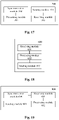
- Fig. 14 is a flowchart of an example of a card deleting process according to an embodiment of the present application. As shown in Fig. 12 , the card deleting process may include steps S501 to S509.
- step S501 the application receives a card deleting input.
- the card deleting input selects a card to be deleted.
- step S502 the application sends a card deleting request message to the back-end server.
- the card deleting request message indicates the card to be deleted.
- step S503 the back-end server feeds back a card transaction identifier of the card to be deleted to the application.
- step S504 the application sends the card transaction identifier of the card to be deleted to the security element.
- step S505 the security element updates a life state of the card to be deleted to an invalid state according to a mapping relationship corresponding to the card to be deleted.
- step S506 the security element sends the life state of the card to be deleted to the application.
- step S507 the application sends the life state of the card to be deleted to the back-end server.
- step S508 the back-end server sends a second feedback message to the application.
- the second feedback message indicates that the life state of the card to be deleted has been successfully synchronized in the server.
- step S509 the application sends a prompt message to prompt a user that the card has been successfully deleted.
- Fig. 15 is a flowchart of another example of a card binding process according to an embodiment of the present application.
- the card is a card that has ever been bound to the application in the user terminal but has been deleted.
- the card binding process may include steps S601 to S610.
- step S601 the application receives a card binding input.
- the card binding input may include a card identifier of a card to be bound.
- step S602 the application sends a first card binding message to the back-end server.
- the first card binding message includes the card identifier of the card to be bound.
- step S603 the back-end server determines, according to the card identifier, that the card to be bound has been deleted, and obtains dedicated card information that has been allocated to the card to be bound, without need to regenerate dedicated card information for the card to be bound.
- step S604 the back-end server sends the dedicated card information for the card to be bound to the application.
- step S605 the application sends the dedicated card information for the card to be bound to the security element.
- step S606 the security element stores the dedicated card information for the card to be bound, and updates a life state of the card to be bound.
- step S607 the security element sends the life state of the card to be bound to the application.
- step S608 the application sends the life state of the card to be bound to the back-end server.
- step S609 the back-end server sends a third feedback message to the application.
- the third feedback message indicates that the life state of the card to be bound has been successfully synchronized in the server.
- step S610 the application sends a prompt message to prompt a user that the card has been successfully bound.
- a third aspect of the present application provides a user terminal.
- the user terminal includes a security element.
- the security element stores first-type universal personalization data and second-type universal personalization data.
- Fig. 16 is a schematic structural diagram of an embodiment of the user terminal according to the third aspect of the present application.
- the user terminal 700 may include a sending module 701, a receiving module 702 and a processing module 703.
- the sending module 701 is configured to send a card binding message to a server, such that the server determines a card type of a card to be bound, and in a case of successful verification of the card to be bound, allocates dedicated card information for the card to be bound.
- the card binding message includes card authentication information of the card to be bound.
- the dedicated card information includes a card transaction identifier.
- the dedicated card information also includes dedicated personalization data.
- the receiving module 702 is configured to receive the card type of the card to be bound and the dedicated card information for the card to be bound sent by the server.
- the processing module 703 is configured to load the dedicated card information for the card to be bound onto the security element.
- the dedicated card information for the card to be bound together with matching universal personalization data are useable to perform transaction verification of the bound card.
- the matching universal personalization data is the first-type universal personalization data or the second-type universal personalization data that matches the card type of the bound card.
- a first mapping relationship includes a mapping relationship among the dedicated card information for the card to be bound, the card type of the card to be bound, and a life state of the card to be bound.
- the dedicated card information for the first card together with target matching universal personalization data are useable to perform transaction verification of the first card
- the dedicated card information for the second card together with the target matching universal personalization data are useable to perform transaction verification of the second card.
- the target matching universal personalization data is the first-type universal personalization data or the second-type universal personalization data that matches the card type of the first card.
- the security element of the user terminal stores the first-type universal personalization data and the second-type universal personalization data.
- the user terminal interacts with the server through the card binding message to obtain the dedicated card information allocated for the card by the server.
- the obtained dedicated card information is loaded onto the security element.
- the user terminal and the server can use the matching universal personalization data and the dedicated card information for the card for transaction verification.
- the user terminal does not need to repeatedly store the universal personalization data required for transaction verification for each card, thereby reducing occupation of storage resources of the user terminal.
- contents needed to be downloaded by the user terminal in the process of binding the card does not include the universal personalization data, which reduces time spent by the user terminal for downloading data. Therefore, binding of the card can be accelerated, and becomes faster and simpler.
- the card binding message includes a first card binding message, a second card binding message and a binding verification message.
- the card authentication information includes a card identifier, card type verification information and an input verification code.
- the sending module 702 may be further configured to: send the first card binding message to the server, the first card binding message including the card identifier of the card to be bound; send the second card binding message to the server upon reception of a first response message sent by the server, the first response message including the card type of the card to be bound, and the second card binding message including the card type verification information of the card to be bound; and send the binding verification message to the server upon reception of a second response message sent by the server, the second response message including a dynamic verification code, and the binding verification message including the input verification code.
- the card type verification information includes a first-type verification information; and in a case that the card type of the card to be bound is a second-type, the card type verification information includes a second-type verification information.
- the first-type verification information is different from the second-type verification information.
- the receiving module 702 may be further configured to receive a universal program data package sent by the server in a case that the user terminal performs binding of the card for the first time.
- the processing module 703 may be further configured to load the universal program data package onto the security element.
- the processing module 703 may be further configured to set a life state of the card to be bound to a valid state through the security element, and generate or update the first mapping relationship.
- Fig. 17 is a schematic structural diagram of another embodiment of the user terminal according to the third aspect of the present application.
- Fig. 17 differs from Fig. 16 in that, the user terminal 700 may further include a synchronization module 704.
- the synchronization module 704 is configured to synchronize the life state of the card to be bound and the first mapping relationship to the server.
- the receiving module 702 may be further configured to receive a default card selection input.
- the default card selection input is provided to indicate a selected default card.
- the processing module 703 may be further configured to control the security element to update the life state of an original default card to a valid state.
- the life state of the original default card before being updated is a default use state.
- the processing module 703 may be further configured to control the security element to update the life state of the default card to the default use state.
- the synchronization module 704 may be further configured to synchronize the updated life state of the default card and the updated life state of the original default card to the server.
- the sending module 701 may be further configured to send a card deleting request message to the server such that the server feeds back a card transaction identifier of a card to be deleted.
- the card deleting request message indicates the card to be deleted.
- the receiving module 702 may be further configured to receive the card transaction identifier of the card to be deleted fed back by the server.
- the processing module 703 may be further configured to control the security element to update a life state of the card to be deleted to an invalid state.
- the synchronization module 704 may be further configured to synchronize the updated life state of the card to be deleted to the server.
- the processing module 703 may be further configured to delete a second mapping relationship, the second mapping relationship including a mapping relationship among dedicated card information for the card to be deleted, a card type of the card to be deleted, and a life state of the card to be deleted.
- a fourth aspect of the present application provides a server.
- the server stores the first-type universal personalization data and the second-type universal personalization data.
- Fig. 18 is a schematic structural diagram of an embodiment of the server according to the fourth aspect of the present application.
- the server 800 may include a receiving module 801, a processing module 802 and a sending module 803.
- the receiving module 801 is configured to receive the card binding message sent by the user terminal.
- the card binding message includes card authentication information of the card to be bound.
- the processing module 802 is configured to determine a card type of the card to be bound and verifying the card to be bound in response to the card binding message, and allocate dedicated card information for the card to be bound in a case of successful verification.
- the dedicated card information includes a card transaction identifier.
- the dedicated card information for the card to be bound together with matching universal personalization data are useable to perform transaction verification of the bound card.
- the matching universal personalization data is the first-type universal personalization data or the second-type universal personalization data that matches the card type of the bound card.
- the dedicated card information further includes dedicated personalization data.
- the sending module 803 is configured to send a card binding response message to the server.
- the card binding response message includes the card type of the d card to be bound and dedicated card information for the card to be bound.
- the dedicated card information for the first card together with target matching universal personalization data are useable to perform transaction verification of the first card
- the dedicated card information for the second card together with the target matching universal personalization data are useable to perform transaction verification of the second card.
- the target matching universal personalization data is the first-type universal personalization data or the second-type universal personalization data that matches the card type of the first card.
- the server receives the card binding message sent by the user terminal, determines the card type of a card to be bound and verifies the card to be bound in response to the card binding message, and allocates dedicated card information for the card to be bound in a case of successful verification.
- the server sends the dedicated card information for the card to be bound to the user terminal, such that the user terminal receives the dedicated card information for the card to be bound.
- the user terminal and the server can use the matching universal personalization data and the dedicated card information for the card for transaction verification.
- the server does not need to repeatedly send to the user terminal the universal personalization data required for transaction verification of the card to be bound in each card binding process, thereby reducing occupation of storage resources of the user terminal and reducing occupation of resources for downloading a the download process.
- contents that the server needs to send to the user terminal in the process of binding the card does not include the universal personalization data, which reduces time spent by the user terminal for downloading data. Therefore, binding of the card can be accelerated and becomes faster and simpler.
- the card binding response message includes a first response message, a second response message and a third response message.
- the card authentication information includes a card identifier, card type verification information and an input verification code.
- the sending module 803 may be configured to: send a first response message to the user terminal upon determination of the card type of the card to be bound in response to a first card binding message sent by the user terminal, the first response message including the card type of the card to be bound, and the first card binding message including the card identifier of the card to be bound; send a second response message to the user terminal upon successful verification of the card type of the card to be bound in response to a second card binding message sent by the user terminal, the second card binding message including the card type verification information that matches the card type of the card to be bound, and the second response message including a dynamic verification code; and send a third response message to the user terminal upon successful verification of the verification code of the card to be bound in response to the binding verification message sent by the user terminal, the binding verification message including the input verification code, and the third response message including the dedicated card information for the card to be bound.
- the card binding message includes a first card binding message, a second card binding message and a binding verification message.
- the processing module 802 may be configured to: determine a card type of the card to be bound according to the card identifier of the card to be bound in the first card binding message; perform verification on the card type of the card to be bound using card type verification information of the card to be bound in the second card binding message; and allocate the dedicated card information for the card to be bound in a case that the input verification code in the binding verification message is consistent with the dynamic verification code.
- the card type verification information includes first-type verification information; and in a case that the card type of the card to be bound is a second-type, the card type verification information includes second-type verification information.
- the first-type verification information is different from the second-type verification information.
- the sending module 803 may be further configured to send a universal program data package to the user terminal in a case that the user terminal performs binding of the card for the first time.
- Fig. 19 is a schematic structural diagram of another embodiment of the server according to the fourth aspect of the present application.
- Fig. 19 differs from Fig. 18 in that, the server 800 shown in Fig. 19 may further include a synchronization module 804.
- the synchronization module 804 is configured to keep in synchronization with the user terminal in the life state of the card to be bound and a first mapping relationship.
- the first mapping relationship includes a mapping relationship among the dedicated card information for the card to be bound, the card type of the card to be bound, and the life state of the card to be bound.
- the synchronization module 804 may be further configured to keep in synchronization with the user terminal in updated life state of a default card and updated life state of an original default card, wherein the life state of the original default card before being updated is a default use state.
- the sending module 803 may be further configured to feed back a card transaction identifier of a card to be deleted to the user terminal in response to a card deleting request message sent by the user terminal.
- the card deleting request message indicates a card to be deleted.
- the synchronization module 804 may be further configured to keep synchronization with the user terminal in updated life state of the card to be deleted.
- processing module 802 may be further configured to delete a second mapping relationship.
- the second mapping relationship includes a mapping relationship among dedicated card information for the card to be deleted, a card type of the card to be deleted, and a life state of the card to be deleted.
- FIG. 20 is a schematic structural diagram of an embodiment of a user terminal according to the fifth aspect of the present application.
- the user terminal 900 includes a memory 901, a processor 902, and computer programs stored on the memory 901 and executable on the processor 902.
- the processor 902 may include a central processing unit (CPU), an Application Specific Integrated Circuit (ASIC), or one or more integrated circuits configured to implement the embodiments of the present application.
- CPU central processing unit
- ASIC Application Specific Integrated Circuit
- the memory 901 may include a Read-Only Memory (ROM), a Random Access Memory (RAM), a magnetic disk storage medium device, an optical storage medium device, a flash memory device, an electrical, optical or any other physical/tangible memory storage device.
- the memory generally includes one or more tangible (non-transitory) computer-readable storage media (for example, memory devices) encoded with software including computer-executable instructions, and the software, when executed (for example, by one or more processors), is operable to perform the operations described with reference to the card management method according to the first aspect of the present application.
- the processor 902 reads executable program codes stored in the memory 901 and executes computer programs corresponding to the executable program codes to implement the card management method according to the first aspect of the embodiments.
- the user terminal 900 may further include a communication interface 903 and a bus 904. As shown in Fig. 20 , the memory 901, the processor 902, and the communication interface 903 are connected through the bus 904 and achieve mutual communication therebetween.
- the communication interface 903 is mainly configured to achieve communication between various modules, apparatus, units and/or devices in the embodiments of the present application.
- An input device and/or an output device may also be connected through the communication interface 903.
- the bus 904 includes hardware, software, or both of them, and is configured to couple the various components of the user terminal 900 to each other.
- the bus 904 may include an Accelerated Graphics Port (AGP) or any other graphics bus, an Enhanced Industry Standard Architecture (EISA) bus, a Front Side Bus (FSB), a Hyper Transport (HT) interconnect, an Industrial Standard Architecture (ISA) bus, a wireless band interconnect, a Low Pin Count (LPC) bus, a memory bus, an Micro Channel Architecture (MCA) bus, a Peripheral Component Interconnect (PCI) bus, a PCI-Express (PCI-X) bus, a Serial Advanced Technology Attachment (SATA) bus, a Video Electronics Standards Association Local Bus (VLB) bus or any other suitable bus or any combination of two or more of the above.
- the bus 904 may include one or more buses.
- FIG. 21 is a schematic structural diagram of an embodiment of a server according to the sixth aspect of the present application.
- the server 1000 includes a memory 1001, a processor 1002, and computer programs stored on the memory 1001 and executable on the processor 1002.
- the processor 1002 may include a central processing unit (CPU), an Application Specific Integrated Circuit (ASIC), or one or more integrated circuits configured to implement the embodiments of the present application.
- CPU central processing unit
- ASIC Application Specific Integrated Circuit
- the memory 1001 may include a Read-Only Memory (ROM), a Random Access Memory (RAM), a magnetic disk storage medium device, an optical storage medium device, a flash memory device, an electrical, optical or any other physical/tangible memory storage device.
- the memory generally includes one or more tangible (non-transitory) computer-readable storage media (for example, memory devices) encoded with software including computer-executable instructions, and the software, when executed (for example, by one or more processors), is operable to perform the operations described with reference to the card management method according to the second aspect of the present application.
- the processor 1002 reads executable program codes stored in the memory 1001 and executes computer programs corresponding to an executable program codes to implement the card management method according to the second aspect of the embodiments.
- the server 1000 may further include a communication interface 1003 and a bus 1004. As shown in Fig. 21 , the memory 1001, the processor 1002, and the communication interface 1003 are connected through the bus 1004 and achieve mutual communication therebetween.
- the communication interface 1003 is mainly configured to achieve communication between various modules, apparatus, units and/or devices in the embodiments of the present application.
- An input device and/or an output device may also be connected through the communication interface 1003.
- the bus 1004 includes hardware, software, or both of them, and is configured to couple various components of the server 1000 to each other.
- the bus 1004 may include an Accelerated Graphics Port (AGP) or any other graphics bus, an Enhanced Industry Standard Architecture (EISA) bus, a Front Side Bus (FSB), a Hyper Transport (HT) interconnect, an Industrial Standard Architecture (ISA) bus, a wireless band interconnect, a Low Pin Count (LPC) bus, memory bus, an Micro Channel Architecture (MCA) bus, a Peripheral Component Interconnect (PCI) bus, a PCI-Express (PCI-X) bus, a Serial Advanced Technology Attachment (SATA) bus, a Video Electronics Standards Association Local Bus (VLB) bus or any other suitable bus or any combination of two or more of the above.
- the bus 1004 may include one or more buses.
- a seventh aspect of the present application further provides a card management system.
- the card management system may include the user terminal and the server in the above embodiments. For their specific contents, they may be the same as the detailed description in the above embodiments, and will not be repeated here.
- An eighth aspect of the present application provides a computer storage medium having computer program instructions stored thereon.
- the computer program instructions when executed by a processor, are operable to implement the card management method according to the above embodiments, and achieve the same technical effects, which will not be repeated here.
- the computer storage medium may include a non-transitory computer-readable storage medium, such as a Read-Only Memory (ROM), a Random Access Memory (RAM), a magnetic disk or an optical disk, and so on, which is not limited here.
- Such processor may be but is not limited to a general purpose processor, a special purpose processor, an application specific processor, or a field programmable logic circuit. It should also be understood that, each block in the block diagrams and/or the flowcharts and a combination of any of blocks in the block diagrams and/or the flowcharts may be implemented by special purpose hardware that performs specified functions or actions, or by a combination of the special purpose hardware and computer instructions.
Landscapes
- Business, Economics & Management (AREA)
- Engineering & Computer Science (AREA)
- Accounting & Taxation (AREA)
- Theoretical Computer Science (AREA)
- Physics & Mathematics (AREA)
- General Physics & Mathematics (AREA)
- Strategic Management (AREA)
- General Business, Economics & Management (AREA)
- Finance (AREA)
- Computer Security & Cryptography (AREA)
- Computer Networks & Wireless Communication (AREA)
- Microelectronics & Electronic Packaging (AREA)
- Development Economics (AREA)
- Economics (AREA)
- Computer Hardware Design (AREA)
- General Engineering & Computer Science (AREA)
- Financial Or Insurance-Related Operations Such As Payment And Settlement (AREA)
- Information Transfer Between Computers (AREA)
- Information Retrieval, Db Structures And Fs Structures Therefor (AREA)
- Control Of Vending Devices And Auxiliary Devices For Vending Devices (AREA)
- Storage Device Security (AREA)
Applications Claiming Priority (2)
| Application Number | Priority Date | Filing Date | Title |
|---|---|---|---|
| CN202011422479.XA CN112581123B (zh) | 2020-12-08 | 2020-12-08 | 卡管理方法、用户终端、服务器、系统及存储介质 |
| PCT/CN2021/118835 WO2022121429A1 (zh) | 2020-12-08 | 2021-09-16 | 卡管理方法、用户终端、服务器、系统及存储介质 |
Publications (2)
| Publication Number | Publication Date |
|---|---|
| EP4123541A1 true EP4123541A1 (de) | 2023-01-25 |
| EP4123541A4 EP4123541A4 (de) | 2023-09-20 |
Family
ID=75127686
Family Applications (1)
| Application Number | Title | Priority Date | Filing Date |
|---|---|---|---|
| EP21902137.5A Pending EP4123541A4 (de) | 2020-12-08 | 2021-09-16 | Kartenverwaltungsverfahren, benutzerendgerät, server, kartenverwaltungssystem und speichermedium |
Country Status (7)
| Country | Link |
|---|---|
| US (1) | US20230237478A1 (de) |
| EP (1) | EP4123541A4 (de) |
| JP (1) | JP2023522248A (de) |
| KR (1) | KR102879307B1 (de) |
| CN (1) | CN112581123B (de) |
| TW (1) | TWI797843B (de) |
| WO (1) | WO2022121429A1 (de) |
Families Citing this family (8)
| Publication number | Priority date | Publication date | Assignee | Title |
|---|---|---|---|---|
| CN112581123B (zh) * | 2020-12-08 | 2024-02-23 | 中国银联股份有限公司 | 卡管理方法、用户终端、服务器、系统及存储介质 |
| CN115689539A (zh) * | 2021-05-11 | 2023-02-03 | 支付宝(中国)网络技术有限公司 | 一种支付方法、装置及设备 |
| JP7230120B2 (ja) * | 2021-06-30 | 2023-02-28 | 楽天グループ株式会社 | サービス提供システム、サービス提供方法、及びプログラム |
| KR20230109282A (ko) * | 2022-01-13 | 2023-07-20 | 현대자동차주식회사 | 서버 및 그 제어 방법 |
| KR20230174586A (ko) * | 2022-06-21 | 2023-12-28 | 현대자동차주식회사 | Etcs 단말 및 그 제어 방법 |
| JP7724261B2 (ja) * | 2023-08-02 | 2025-08-15 | 楽天グループ株式会社 | 認証システム、認証方法、及びプログラム |
| CN120769248A (zh) * | 2025-03-04 | 2025-10-10 | 支付宝(杭州)信息技术有限公司 | 一种获取通信协议信息的方法、装置、设备和介质 |
| CN120496216B (zh) * | 2025-07-17 | 2026-01-06 | 支付宝(杭州)数字服务技术有限公司 | 通行场所的虚拟卡处理方法及装置 |
Family Cites Families (31)
| Publication number | Priority date | Publication date | Assignee | Title |
|---|---|---|---|---|
| US5889941A (en) * | 1996-04-15 | 1999-03-30 | Ubiq Inc. | System and apparatus for smart card personalization |
| JP5120816B2 (ja) * | 2008-04-21 | 2013-01-16 | Necカシオモバイルコミュニケーションズ株式会社 | 端末装置及びプログラム |
| US8615466B2 (en) * | 2008-11-24 | 2013-12-24 | Mfoundry | Method and system for downloading information into a secure element of an electronic device |
| US8196131B1 (en) * | 2010-12-17 | 2012-06-05 | Google Inc. | Payment application lifecycle management in a contactless smart card |
| JP5762056B2 (ja) * | 2011-03-07 | 2015-08-12 | 株式会社日本総合研究所 | カード利用管理システム |
| CH705774B1 (de) * | 2011-11-16 | 2016-12-15 | Swisscom Ag | Verfahren, System und Karte zur Authentifizierung eines Benutzers durch eine Anwendung. |
| US8918855B2 (en) * | 2011-12-09 | 2014-12-23 | Blackberry Limited | Transaction provisioning for mobile wireless communications devices and related methods |
| EP3848874B1 (de) * | 2012-04-16 | 2024-04-17 | sticky.io, Inc. | Systeme und verfahren zur ermöglichung einer transaktion unter verwendung einer virtuellen karte auf einer mobilen vorrichtung |
| US8832847B2 (en) * | 2012-07-10 | 2014-09-09 | International Business Machines Corporation | Coordinating data sharing among applications in mobile devices |
| US20160019536A1 (en) * | 2012-10-17 | 2016-01-21 | Royal Bank Of Canada | Secure processing of data |
| US9842256B2 (en) * | 2013-07-17 | 2017-12-12 | International Business Machines Corporation | Detection of astronomical objects |
| US9704156B2 (en) * | 2014-01-23 | 2017-07-11 | Mastercard International Incorporated | Mobile secure element based shared cardholder verification |
| KR20160016402A (ko) * | 2014-08-05 | 2016-02-15 | 김보영 | 통합카드장치와 통합카드를 운영하는 시스템 및 방법 |
| JP6300382B2 (ja) * | 2016-01-21 | 2018-03-28 | 株式会社三井住友銀行 | カード決済システム、カード決済管理サーバ、カード決済プログラム及びカード決済方法 |
| KR102676682B1 (ko) * | 2016-03-14 | 2024-06-20 | 삼성전자주식회사 | 카드 운용 정보 처리 방법 및 이를 지원하는 전자 장치 |
| US20170270517A1 (en) * | 2016-03-18 | 2017-09-21 | Madhu Vasu | Partially activated tokens with limited functionality |
| US20170278095A1 (en) * | 2016-03-28 | 2017-09-28 | Microsoft Technology Licensing, Llc | Mobile payment system and method |
| CN107403312B (zh) * | 2016-05-18 | 2024-03-26 | 北京三星通信技术研究有限公司 | 快捷支付方法和装置 |
| CN106127478A (zh) * | 2016-06-20 | 2016-11-16 | 上海易码信息科技有限公司 | 使用预付卡账户载体进行线下移动支付的方法 |
| WO2018098941A1 (zh) * | 2016-11-30 | 2018-06-07 | 华为技术有限公司 | 一种通信标识绑定的处理方法及终端 |
| CN106991317B (zh) * | 2016-12-30 | 2020-01-21 | 中国银联股份有限公司 | 安全验证方法、平台、装置和系统 |
| WO2018137302A1 (zh) * | 2017-01-25 | 2018-08-02 | 华为技术有限公司 | 一种添加银行卡的方法及装置 |
| JP6976372B2 (ja) * | 2017-09-14 | 2021-12-08 | ヤフー株式会社 | 生成装置、生成方法及び生成プログラム |
| CN109842605B (zh) * | 2017-11-29 | 2020-07-07 | 华为技术有限公司 | 绑卡方法及终端 |
| CN108960818A (zh) * | 2018-05-04 | 2018-12-07 | 中国银联股份有限公司 | 一种虚拟卡生成方法、用户终端以及令牌服务器 |
| KR102005554B1 (ko) * | 2018-08-09 | 2019-07-30 | 주식회사 센스톤 | 공카드를 이용한 금융거래제공방법 및 시스템 |
| EP3948736A4 (de) * | 2019-03-27 | 2023-01-18 | Xard Group Pty Ltd | Sicherheitshierarchie auf einer digitalen transaktionsverarbeitungseinheit (dtpu) |
| CN111932244B (zh) * | 2020-07-24 | 2023-10-20 | 中国银联股份有限公司 | 信息处理方法、装置、设备及介质 |
| CN111932245B (zh) * | 2020-07-24 | 2023-09-19 | 中国银联股份有限公司 | 数据处理方法、装置、设备及介质 |
| WO2022074416A1 (en) * | 2020-10-06 | 2022-04-14 | Dynamics Inc. | Cards, devices, systems, and methods for advanced payment functionality selection |
| CN112581123B (zh) * | 2020-12-08 | 2024-02-23 | 中国银联股份有限公司 | 卡管理方法、用户终端、服务器、系统及存储介质 |
-
2020
- 2020-12-08 CN CN202011422479.XA patent/CN112581123B/zh active Active
-
2021
- 2021-09-16 JP JP2022564001A patent/JP2023522248A/ja active Pending
- 2021-09-16 US US17/923,321 patent/US20230237478A1/en active Pending
- 2021-09-16 WO PCT/CN2021/118835 patent/WO2022121429A1/zh not_active Ceased
- 2021-09-16 KR KR1020227036702A patent/KR102879307B1/ko active Active
- 2021-09-16 EP EP21902137.5A patent/EP4123541A4/de active Pending
- 2021-11-22 TW TW110143403A patent/TWI797843B/zh active
Also Published As
| Publication number | Publication date |
|---|---|
| EP4123541A4 (de) | 2023-09-20 |
| KR20220156918A (ko) | 2022-11-28 |
| CN112581123B (zh) | 2024-02-23 |
| WO2022121429A1 (zh) | 2022-06-16 |
| TWI797843B (zh) | 2023-04-01 |
| TW202223798A (zh) | 2022-06-16 |
| US20230237478A1 (en) | 2023-07-27 |
| CN112581123A (zh) | 2021-03-30 |
| JP2023522248A (ja) | 2023-05-29 |
| KR102879307B1 (ko) | 2025-10-31 |
Similar Documents
| Publication | Publication Date | Title |
|---|---|---|
| EP4123541A1 (de) | Kartenverwaltungsverfahren, benutzerendgerät, server, kartenverwaltungssystem und speichermedium | |
| US11119791B2 (en) | Information processing apparatus, IC chip, information processing method, program, and information processing system | |
| TWI802084B (zh) | 卡管理方法、用戶終端、伺服器、系統及存儲介質 | |
| JP7438404B2 (ja) | リソース処理方法、サーバ、端末、デバイス、システム及び記憶媒体 | |
| CN112184197B (zh) | 资源账户绑定方法、服务器、设备、系统及存储介质 | |
| EP4123540A1 (de) | Verfahren zur aktivierung einer zahlungsfunktion, endgerätevorrichtung, server, system und speichermedium | |
| US20130174266A1 (en) | Data exchange between a secure element and a terminal | |
| CN111352719A (zh) | 交易簿记服务数据处理方法、装置及系统 | |
| CN113949632B (zh) | 一种区块链的节点动态配置方法及装置 | |
| CN108667647B (zh) | 一种设备参数的设置方法、设备及服务器 | |
| HK40049884B (zh) | 卡管理方法、用户终端、服务器、系统及存储介质 | |
| HK40049884A (en) | Card management method, user terminal, server, system and storage medium | |
| CN112153630B (zh) | vSIM授权方法、设备与系统 | |
| AU2024266937B2 (en) | Card management method, user terminal, server, system and storage medium | |
| CN106339233A (zh) | 一种智能卡操作系统更新方法和装置 | |
| CN113657885A (zh) | 手机银行离线收付款方法及装置 | |
| CN121619325A (zh) | 一种本地缓存同步方法、装置、设备和存储介质 | |
| JP2025027889A (ja) | 方法 | |
| CN121918897A (zh) | 动态集成第三方插件的方法及装置 | |
| CN121213173A (zh) | 一种交易协议确定方法、装置、设备及介质 |
Legal Events
| Date | Code | Title | Description |
|---|---|---|---|
| STAA | Information on the status of an ep patent application or granted ep patent |
Free format text: STATUS: THE INTERNATIONAL PUBLICATION HAS BEEN MADE |
|
| PUAI | Public reference made under article 153(3) epc to a published international application that has entered the european phase |
Free format text: ORIGINAL CODE: 0009012 |
|
| STAA | Information on the status of an ep patent application or granted ep patent |
Free format text: STATUS: REQUEST FOR EXAMINATION WAS MADE |
|
| 17P | Request for examination filed |
Effective date: 20221021 |
|
| AK | Designated contracting states |
Kind code of ref document: A1 Designated state(s): AL AT BE BG CH CY CZ DE DK EE ES FI FR GB GR HR HU IE IS IT LI LT LU LV MC MK MT NL NO PL PT RO RS SE SI SK SM TR |
|
| A4 | Supplementary search report drawn up and despatched |
Effective date: 20230818 |
|
| RIC1 | Information provided on ipc code assigned before grant |
Ipc: G06Q 20/32 20120101ALI20230811BHEP Ipc: G06Q 20/36 20120101ALI20230811BHEP Ipc: G06Q 20/34 20120101AFI20230811BHEP |
|
| DAV | Request for validation of the european patent (deleted) | ||
| DAX | Request for extension of the european patent (deleted) | ||
| STAA | Information on the status of an ep patent application or granted ep patent |
Free format text: STATUS: EXAMINATION IS IN PROGRESS |
|
| 17Q | First examination report despatched |
Effective date: 20240318 |
|
| GRAP | Despatch of communication of intention to grant a patent |
Free format text: ORIGINAL CODE: EPIDOSNIGR1 |
|
| STAA | Information on the status of an ep patent application or granted ep patent |
Free format text: STATUS: GRANT OF PATENT IS INTENDED |
|
| INTG | Intention to grant announced |
Effective date: 20260209 |
|
| GRAS | Grant fee paid |
Free format text: ORIGINAL CODE: EPIDOSNIGR3 |
|
| GRAA | (expected) grant |
Free format text: ORIGINAL CODE: 0009210 |
|
| STAA | Information on the status of an ep patent application or granted ep patent |
Free format text: STATUS: THE PATENT HAS BEEN GRANTED |