EP4123093A1 - Work machine - Google Patents
Work machine Download PDFInfo
- Publication number
- EP4123093A1 EP4123093A1 EP21772049.9A EP21772049A EP4123093A1 EP 4123093 A1 EP4123093 A1 EP 4123093A1 EP 21772049 A EP21772049 A EP 21772049A EP 4123093 A1 EP4123093 A1 EP 4123093A1
- Authority
- EP
- European Patent Office
- Prior art keywords
- service
- execution
- work machine
- information
- condition
- Prior art date
- Legal status (The legal status is an assumption and is not a legal conclusion. Google has not performed a legal analysis and makes no representation as to the accuracy of the status listed.)
- Withdrawn
Links
Images



Classifications
-
- G—PHYSICS
- G05—CONTROLLING; REGULATING
- G05D—SYSTEMS FOR CONTROLLING OR REGULATING NON-ELECTRIC VARIABLES
- G05D1/00—Control of position, course, altitude or attitude of land, water, air or space vehicles, e.g. using automatic pilots
- G05D1/0011—Control of position, course, altitude or attitude of land, water, air or space vehicles, e.g. using automatic pilots associated with a remote control arrangement
- G05D1/0016—Control of position, course, altitude or attitude of land, water, air or space vehicles, e.g. using automatic pilots associated with a remote control arrangement characterised by the operator's input device
-
- E—FIXED CONSTRUCTIONS
- E02—HYDRAULIC ENGINEERING; FOUNDATIONS; SOIL SHIFTING
- E02F—DREDGING; SOIL-SHIFTING
- E02F9/00—Component parts of dredgers or soil-shifting machines, not restricted to one of the kinds covered by groups E02F3/00 - E02F7/00
- E02F9/20—Drives; Control devices
- E02F9/2025—Particular purposes of control systems not otherwise provided for
- E02F9/205—Remotely operated machines, e.g. unmanned vehicles
-
- E—FIXED CONSTRUCTIONS
- E02—HYDRAULIC ENGINEERING; FOUNDATIONS; SOIL SHIFTING
- E02F—DREDGING; SOIL-SHIFTING
- E02F9/00—Component parts of dredgers or soil-shifting machines, not restricted to one of the kinds covered by groups E02F3/00 - E02F7/00
- E02F9/20—Drives; Control devices
- E02F9/2025—Particular purposes of control systems not otherwise provided for
- E02F9/2054—Fleet management
-
- E—FIXED CONSTRUCTIONS
- E02—HYDRAULIC ENGINEERING; FOUNDATIONS; SOIL SHIFTING
- E02F—DREDGING; SOIL-SHIFTING
- E02F9/00—Component parts of dredgers or soil-shifting machines, not restricted to one of the kinds covered by groups E02F3/00 - E02F7/00
- E02F9/26—Indicating devices
- E02F9/267—Diagnosing or detecting failure of vehicles
-
- G—PHYSICS
- G05—CONTROLLING; REGULATING
- G05D—SYSTEMS FOR CONTROLLING OR REGULATING NON-ELECTRIC VARIABLES
- G05D1/00—Control of position, course, altitude or attitude of land, water, air or space vehicles, e.g. using automatic pilots
- G05D1/0011—Control of position, course, altitude or attitude of land, water, air or space vehicles, e.g. using automatic pilots associated with a remote control arrangement
- G05D1/0022—Control of position, course, altitude or attitude of land, water, air or space vehicles, e.g. using automatic pilots associated with a remote control arrangement characterised by the communication link
-
- G—PHYSICS
- G05—CONTROLLING; REGULATING
- G05D—SYSTEMS FOR CONTROLLING OR REGULATING NON-ELECTRIC VARIABLES
- G05D1/00—Control of position, course, altitude or attitude of land, water, air or space vehicles, e.g. using automatic pilots
- G05D1/20—Control system inputs
- G05D1/22—Command input arrangements
- G05D1/221—Remote-control arrangements
- G05D1/222—Remote-control arrangements operated by humans
-
- G—PHYSICS
- G05—CONTROLLING; REGULATING
- G05D—SYSTEMS FOR CONTROLLING OR REGULATING NON-ELECTRIC VARIABLES
- G05D1/00—Control of position, course, altitude or attitude of land, water, air or space vehicles, e.g. using automatic pilots
- G05D1/20—Control system inputs
- G05D1/22—Command input arrangements
- G05D1/221—Remote-control arrangements
- G05D1/226—Communication links with the remote-control arrangements
-
- H—ELECTRICITY
- H04—ELECTRIC COMMUNICATION TECHNIQUE
- H04L—TRANSMISSION OF DIGITAL INFORMATION, e.g. TELEGRAPHIC COMMUNICATION
- H04L67/00—Network arrangements or protocols for supporting network services or applications
- H04L67/01—Protocols
- H04L67/12—Protocols specially adapted for proprietary or special-purpose networking environments, e.g. medical networks, sensor networks, networks in vehicles or remote metering networks
-
- H—ELECTRICITY
- H04—ELECTRIC COMMUNICATION TECHNIQUE
- H04L—TRANSMISSION OF DIGITAL INFORMATION, e.g. TELEGRAPHIC COMMUNICATION
- H04L67/00—Network arrangements or protocols for supporting network services or applications
- H04L67/01—Protocols
- H04L67/12—Protocols specially adapted for proprietary or special-purpose networking environments, e.g. medical networks, sensor networks, networks in vehicles or remote metering networks
- H04L67/125—Protocols specially adapted for proprietary or special-purpose networking environments, e.g. medical networks, sensor networks, networks in vehicles or remote metering networks involving control of end-device applications over a network
-
- H—ELECTRICITY
- H04—ELECTRIC COMMUNICATION TECHNIQUE
- H04W—WIRELESS COMMUNICATION NETWORKS
- H04W24/00—Supervisory, monitoring or testing arrangements
- H04W24/04—Arrangements for maintaining operational condition
-
- H—ELECTRICITY
- H04—ELECTRIC COMMUNICATION TECHNIQUE
- H04W—WIRELESS COMMUNICATION NETWORKS
- H04W4/00—Services specially adapted for wireless communication networks; Facilities therefor
- H04W4/30—Services specially adapted for particular environments, situations or purposes
- H04W4/40—Services specially adapted for particular environments, situations or purposes for vehicles, e.g. vehicle-to-pedestrians [V2P]
-
- H—ELECTRICITY
- H04—ELECTRIC COMMUNICATION TECHNIQUE
- H04W—WIRELESS COMMUNICATION NETWORKS
- H04W4/00—Services specially adapted for wireless communication networks; Facilities therefor
- H04W4/30—Services specially adapted for particular environments, situations or purposes
- H04W4/40—Services specially adapted for particular environments, situations or purposes for vehicles, e.g. vehicle-to-pedestrians [V2P]
- H04W4/44—Services specially adapted for particular environments, situations or purposes for vehicles, e.g. vehicle-to-pedestrians [V2P] for communication between vehicles and infrastructures, e.g. vehicle-to-cloud [V2C] or vehicle-to-home [V2H]
Definitions
- the present invention relates to work machines.
- Work machines such as construction machines have been required to support advanced construction functions developed based on the IoT technology such as computerized construction to improve the work efficiency.
- Work machines have a long maintenance period, meaning that it is necessary to upgrade their construction functions mainly with the controller and the in-vehicle communication network installed at the time of shipment. It is therefore essential for the controller to connect to external devices and information infrastructure via a communication network to enhance their functions.
- the current remote service is started simply by the operator's judgment. In this case, interruption and retry may occur depending on the working condition of the machine and environmental factors, which causes a lot of time loss. This time loss directly leads to the increase in non-operational time of the work machine. Thus, in order to enhance the work efficiency, which is the most important matter in the operation of work machines, it is essential to complete the remote service in the shortest possible time.
- JP H11-134027 A is known as a conventional technology for such remote services.
- a system of this conventional technology includes: a queue manager on each mobile machine; and a service manager on each mobile machine configured to generate a service request signal in response to a status of the mobile machine.
- the system also includes a resource manager configured to establish and control an access to the service resource, and the resource manager is configured to receive the service request signal and allow the mobile machine to access the service resource as a function of the status of each mobile machine.
- Patent Literature 1 JP H1 1-134027 A
- Patent Literature 1 does not consider changes in the communication performance of the in-vehicle communication network and the out-of-vehicle communication network, and it is difficult for the technology to reduce the frequency of remote service interruptions and retries that occur due to tight communication capacity during the processing of other functions or deterioration of transmission conditions.
- the technology also does not consider the operating condition of the work machine and the remote service provision condition at the remote site, making it difficult to reduce the frequency of remote service interruptions and retries that occur because of inappropriate operating condition of the work machine or when the remote service cannot be provided.
- the present invention aims to provide a work machine capable of reducing the frequency of remote service interruptions and retries that occur because of changes in the communication network performance or depending on the operating state of the work machine and the service provision state.
- a work machine of the present invention includes a controller that is connectable to a first communication network for a communication with outside of the work machine.
- the controller generates service request information having: a function type corresponding to each of a plurality of remote service functions to remotely operate the work machine and refer to internal information of the work machine; an operating mode indicating an operation state of the work machine; and a first communication performance measured at the first communication network, and transfers the generated service request information to outside of the machine via the first communication network, and receives service execution information from outside of the machine via the first communication network, the service execution information having: execution possibility of a service function corresponding to a function type included in the service request information; a condition for the operating mode that permits execution of a service function corresponding to a function type included in the service request information; and a condition for communication performance that permits execution of a service function corresponding to a function type included in the service request information.
- the major aspect of the present invention prevents interruptions and retries of the work in advance due to the working condition of the work machine, environmental factors, the status of the entire work site, or the status of the remote site, and thus shortens non-operating time of the work machine. This also reduces interruptions and retries of the provision of functions that may occur at the remote service provider, and thus provides a remote service that enables frequent adjustments and settings with a small number of personnel in the entire work site. Further features of the present invention will be clearer from the following descriptions and the attached drawings. Other problems, configurations and advantageous effects also will be clear from the following descriptions of the embodiment.
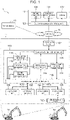
- Fig. 1 describes the configuration of Example 1 that is a system for remote service (hereinafter a remote service system) including a work machine 10 according to the present embodiment.
- the remote service system 1 for the work machine 10 of this embodiment includes a controller 11 mounted on the work machine 10, a data center 12, and a remote terminal 13.
- the work machine 10 is a construction machine used at construction sites.
- the controller 11 includes an out-of-vehicle communication network (first communication network) 14 that connects the controller 11 and the data center 12, and the data center 12 and the remote terminal 13.
- the controller 11 includes an information control unit 100 that transmits and receives information inside and outside the vehicle via communications, a communication terminal 101 that is connected to the information control unit 100 and executes communication processing with the data center 12 via the out-of-vehicle communication network 14, an in-vehicle display input device 102, a display control unit 103 that is connected to the in-vehicle display input device 102 and executes the output processing of a display screen that is output from the in-vehicle display input device 102, a vehicle control unit 104 that executes control of the vehicle body such as room lights and wipers, a construction control unit 105 that controls the construction work using the boom, the bucket, and the like of the work machine 10, and an engine control unit 106 that controls the engine.
- an information control unit 100 that transmits and receives information inside and outside the vehicle via communications
- a communication terminal 101 that is connected to the information control unit 100 and executes communication processing with the data center 12 via the out-of-vehicle communication network 14
- the controller 11 also includes connection lines that are an in-vehicle communication network 107a that connects the information control unit 100, the display control unit 103, and the vehicle control unit 104, and an in-vehicle communication network 107b that connects the information control unit 100, the construction control unit 105, and the engine control unit 106.
- connection lines that are an in-vehicle communication network 107a that connects the information control unit 100, the display control unit 103, and the vehicle control unit 104, and an in-vehicle communication network 107b that connects the information control unit 100, the construction control unit 105, and the engine control unit 106.
- the information control unit 100 includes a service request generation unit 110 that generates and transfers a request for remote services, a service execution condition management unit 111 that receives the execution conditions of a remote service and stores them therein, a communication performance management unit 112 that is connected to the service request generation unit 110 and collects and formats information on various communication performances at the out-of-vehicle communication network 14 and the in-vehicle communication networks 107a and 107b, and stores it therein, an operating mode management unit 113 that is connected to the service request generation unit 110 and manages the operating mode indicating the control state of the entire vehicle, an operation information management unit 114 that is connected to the service request generation unit 110 and collects and formats information on the operation history and stores it therein, a communication terminal interface unit 115 that is connected to the communication terminal 101, the service request generation unit 110, the service execution condition management unit 111, and the communication performance management unit 112, and controls the exchange of data via the out-of-vehicle communication network 14, an in-vehicle communication interface unit 116
- the data center 12 includes a primary determination unit 120 that receives a request for remote service and determines whether or not the remote service is executable based on the information received, a secondary determination unit 121 that determines again the determination result by the primary determination unit 120 about whether or not the remote service is executable, based on the state of other work machines 10 that execute remote services, the work site conditions such as weather conditions, the situation of the service personnel, the past service history, and other conditions, a database 122 that is connected to the secondary determination unit 121, and gathers and stores information transferred from a plurality of work machines 10 via the out-of-vehicle communication network 14 and information transferred from the remote terminal 13 via the out-of-vehicle communication network 14, and a data center communication interface unit 123 that is connected to the primary determination unit 120, the secondary determination unit 121 and the database 122, and controls the exchange of data via the out-of-vehicle communication network 14.
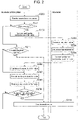
- Fig. 2 is a flowchart showing the procedure by the remote service system 1 including the work machine 10 according to the present embodiment.
- the controller 11 receives a request for remote service, which is input in response to an instruction from the operator via the in-vehicle display input device 102, or is input triggered by a malfunction of a device such as an actuator mounted on the work machine 10 or the display control unit 103, via the in-vehicle communication network 107a or 107b, where the request is received finally at the service request generation unit 110 (S200).
- a request for remote service which is input in response to an instruction from the operator via the in-vehicle display input device 102, or is input triggered by a malfunction of a device such as an actuator mounted on the work machine 10 or the display control unit 103, via the in-vehicle communication network 107a or 107b, where the request is received finally at the service request generation unit 110 (S200).
- the request for remote service contains a requested function indicating the function type of the requested remote service, and it may include a plurality of requested functions.
- the service request generation unit 110 of the controller 11 refers to service execution information 600 ( Fig. 6 ) stored in advance in the service execution condition management unit 111 as a result of this procedure performed in the past, and compares the requested function included in the service execution information 600 (for convenience, referred to as past requested function) with the requested function contained in the remote service request received at step 200 (for convenience, referred to as current requested function). If there is a mismatch (S201->Yes), the service request generation unit 110 generates remote service request information 400 that is a new received remote service.
- the remote service request information 400 is the combination of the current requested function, the communication performances of the out-of-vehicle communication network 14 and the in-vehicle communication networks 107a and 107b acquired by the communication performance management unit 112, and the operating mode managed by the operating mode management unit 113.
- the service request generation unit 110 transfers the generated information to the data center 12 via the communication terminal 101 (S202). At this time, the service request generation unit 110 may also transfer the minimum operating information stored in the operation information management unit 114 together.
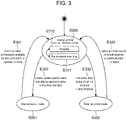
- Fig. 3 shows a state transition indicating how the controller 11 of the work machine 10 according to the present embodiment manages the control mode.
- the controller 11 controls the operating mode management unit 113 to shift its operating mode to an internal control/external reference mode (S300), so that the work operation can be controlled only by the operator's manipulation, and only the data reference is allowed for an access from the outside of the vehicle.
- S300 internal control/external reference mode
- the internal control/external reference mode (S300) further includes a stopping mode (S310) indicating that the work machine 10 is stopped, and a running/work executing mode (S311) indicating that the work machine 10 is running or work is being executed.
- the operating mode management unit 113 of the controller 11 shifts the operating mode to the state S310 or the state S311.
- the operating mode management unit 113 shifts the operating mode based on the operation state of the work machine 10 acquired via the in-vehicle communication network 107.
- the operating mode is the internal control/external reference mode (S300), and the communication performance available for the service function is less than a standard (E300), that is, it is determined that either one of the communication performance, which is acquired by the communication performance management unit 112, of the out-of-vehicle communication network 14 and the in-vehicle communication network 107 that is assignable to the remote service is less than a value of the communication performance that is preset therein, the operating mode management unit 113 shifts the operating mode to an internal control mode (S301), where the work operation is controllable only by the operator's manipulation and an access from the outside of the vehicle is disabled.
- S301 internal control mode
- the operating mode is the internal control mode (S301)
- the communication performance available for the service function is the standard or more, that is, it is determined that either one of the communication performance, which is acquired by the communication performance management unit 112, of the out-of-vehicle communication network 14 and the in-vehicle communication network 107 that is assignable to the remote service is the communication performance that is present therein or more (E301)
- the operating mode management unit 113 shifts the operating mode to the internal control/external reference mode (S300).
- the operating mode management unit 113 shifts the operating mode to an external control mode (S302), where the manipulation from the operator for work operation is not accepted, and the work operation can be executed only by an access from the outside of the vehicle.
- the operating mode management unit 113 shifts the operating mode to the internal control/external reference mode (S300).
- Fig. 4 shows the remote service request information 400 used in the remote service system 1 including the work machine 10 according to the present embodiment.
- the remote service request information 400 contains requested content information 410, operating mode information 411, and communication performance information 412.
- the requested content information 410 contains a requested function included in the request for remote service that is received by the service request generation unit 110.
- the operating mode information 411 contains the operating mode acquired from the operating mode management unit 113 when the service request generation unit 110 accepts the request for remote service.
- the communication performance information 412 contains the communication performances of the out-of-vehicle communication network 14 and the in-vehicle communication networks 107a and 107b, which are obtained from the communication performance management unit 112 when the service request generation unit 110 accepts the request for remote service.
- the data center 12 receives the remote service request information 400 transferred from the controller 11, and the primary determination unit 120 executes a primary determination whether or not to execute the remote service using the received remote service request information 400 (S203).
- the primary determination unit 120 compares determination standard setting information 500, which is the reference value set therein for determination, with the received remote service request information 400. If the remote service request information 400 satisfies the reference value of the determination standard setting information 500, the primary determination unit 120 determines executable in the first determination. If it does not satisfy the reference value, the primary determination unit 120 determines not executable.
- the following describes the determination standard setting information 500 configured at the primary determination unit 120, referring to Fig. 5 .
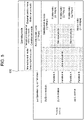
- Fig. 5 shows the setting content at the primary determination unit 120 of the remote service system 1 including the work machine 10 according to the present embodiment.
- executable and non-executable are set for each function type of remote service (corresponding to each row in Fig. 5 ), and for each operating mode (corresponding to each column in Fig. 5 ).
- the primary determination unit 120 determines non-executable.
- the determination standard setting information 500 further sets the communication performance standard.
- the communication performance standard is that the out-of-vehicle communication network 14 is a mobile radio and the communication rates of the out-of-vehicle communication network 14 and the in-vehicle communication network 107 are 5 Mbps or higher. If the remote service request information 400 meets the condition, the primary determination unit 120 determines non-executable.
- the primary determination unit 120 When step 203 ends, the primary determination unit 120 outputs a plurality of requested functions registered in the requested content information 410 of the remote service request information 400, a first execution possibility indicating whether or not each of the requested functions is executable, and a first execution condition, which is the content of the determination standard setting information 500 set for each of the requested functions to the out-of-vehicle communication network 14.
- the secondary determination unit 121 executes a secondary determination about whether or not the remote service is executable based on the requested function, the status of the work site where the work machine operates from the information on the plurality of work machines 10 stored in the database 122, the status of the remote site where the remote service is to be provided from the information stored in the database 122 and transferred from the remote terminal 13, and the environmental information of the weather condition and the communication infrastructure status (S204).
- the secondary determination unit 121 finds: the status of the work site, including the time transition of the current and future number of remote services executed at the entire work site, which is derived from the execution status, execution reservation and execution time of each piece of remote service information for multiple work machines 10 that are stored in the database 122, and the time transition of the current and future maximum number of simultaneous remote services executed, derived from the communication status predicted according to the weather conditions and communication infrastructure conditions stored in database 122; and the status of the remote site, including the time transition of the current and future number of remote services provided at the remote site, which is derived from the provision status, provision reservation and response time of each remote service at the remote site that is stored in the data 122 and transferred from the remote terminal 13, and the time transition of the maximum number of simultaneous responses at the remote site that is stored in the database 122 and transferred from the remote terminal 13.
- the secondary determination unit 121 outputs a determination on a second execution possibility as follows: it determines that each requested function is executable if the number of current services executed is less than the maximum number of current services executed based on the status of the work site and if the number of current remote services provided is less than the number of current remote services provided based on the status of the remote site, and it determines that each requested function is not executable if the current number of services executed is equal to or greater than the current maximum number of services executed based on the status of the work site, or if the current maximum number of remote services provided is equal to or greater than the current number of remote services provided based on the status of the remote site.
- the secondary determination unit 121 finds the execution time at which the execution of the remote service will be permitted, based on the time transition of the number of future remote service executions that is included in the status of the work site, the maximum number of future service executions, the number of future remote services provided that is included in the status of the remote site, and the maximum number of future remote services provided, and outputs the second execution condition including various conditions used for the finding and the execution time.
- the secondary determination unit 121 may add the execution order that is determined from the execution time of each requested function. To output the second execution condition, the secondary determination unit 121 may request the remote terminal 13 to transfer additional information.
- the secondary determination unit 121 combines the requested function, the first execution possibility, the second execution possibility, the first execution condition, and the second execution condition to create service execution information 600, and transfers this to the controller 11 via the out-of-vehicle communication network 14 (S205).
- Fig. 6 shows the content of the service execution information 600 used in the remote service system 1 including the work machine 10 according to the present embodiment.
- the service execution information 600 contains the requested content information 410, execution possibility information (determination result) 610, and execution condition information 611.
- the execution possibility information 610 contains the first execution possibility (corresponding to 610-2 in Fig. 6 ) and the second execution possibility (corresponding to 610-3 in Fig. 6 ), and if any one of the first execution possibility and the second execution possibility is non-executable, general determination for execution possibility (corresponding to 610-1 in Fig. 6 ) will be non-executable, and if not, the general determination will be executable.
- the execution condition information 611 contains a first execution condition (corresponding to 611-1 in Fig. 6 ) and a second execution condition (corresponding to 611-2 in Fig. 6 ).
- step 205 the controller 11 makes the service execution condition management unit 111 confirm the content of the received service execution information 600 and stores it in the service execution condition management unit 111 (S206).
- the service execution condition management unit 111 continues to store the information at least until all the remote services corresponding to the stored service execution information 600 are executed and completed.
- the service execution condition management unit 111 transfers the service execution information 600, which is transferred via the communication terminal 101 and stored therein, to the display control unit 103.
- the display control unit 103 creates service provision information, which contains a part of the content of the transferred service execution information 600 and is used for screen outputting to the in-vehicle display input device 102 (S207), and presents the service provision information to be output on the screen of the in-vehicle display input device 102 (S208).
- FIG. 7 an example of the service provision information on the output screen 700 of the in-vehicle display input device 102 is described.
- Fig. 7 shows the screen to display the remote service determination result output from the controller 11 of the work machine 10 according to the present embodiment.
- the output screen 700 includes a remote service request manipulation unit 701 that is a display screen for input to accept a remote service request entered based on an instruction from the operator via the in-vehicle display input device 102 (corresponding to a part of step 200 in Fig. 2 ), and a service provision information display unit 702, which is a display screen for input to present the service provision information.
- a remote service request manipulation unit 701 that is a display screen for input to accept a remote service request entered based on an instruction from the operator via the in-vehicle display input device 102 (corresponding to a part of step 200 in Fig. 2 )
- a service provision information display unit 702 which is a display screen for input to present the service provision information.
- the service provision information includes the general determination in the service execution information 600 about the execution possibility and information for screen display based on the general determination in the service execution information 600 about the execution possibility, which is presented as a part of the service provision information display unit 702 (corresponding to 702-1 in Fig. 7 ).
- the service provision information also includes the execution condition information 611 corresponding to the items that are determined as non-executable in the execution possibility information 610 of the service execution information 600, and information for screen display based on the execution condition information 611, which is presented as a part of the service provision information display unit 702 (corresponding to 702-2 in Fig. 7 ).
- step 208 if the general determination in the execution possibility information 610 of the service execution information 600 that the service execution condition management unit 111 stores indicates executable and a remote service execution instruction is received within the predetermined time via the in-vehicle display input device 102 (S209->Yes), the service request generation unit 110 of the controller 11 transfers an execution command of the remote service corresponding to the requested information 410 of the service execution information 600 to the data center 12 via the communication terminal 101 to start the execution of the remote service (S210) and ends the procedure when the remote service is completed or interrupted.
- the controller 11 fixes its operating mode to the external operating mode so as not to accept an operator's instruction related to the work operation of the work machine 10. Then, the controller 11 rewrites various parameters related to the control of the work machine 10 and received via the communication terminal 101, and makes the work machine 10 operate based on the operating instruction received via the communication terminal 101, thus confirming the effect of adjustment.
- step 208 if the general determination in the execution possibility information 610 of the service execution information 600 that the service execution condition management unit 111 stores indicates executable and no remote service execution instruction is received within the predetermined time via the in-vehicle display input device 102, or if the general determination in the execution possibility information 610 indicates non-executable (S209 ⁇ No), the service request generation unit 110 of the controller 11 ends the procedure.
- step 201 the procedure of the controller 11 in this re-execution will be described again.
- the controller 11 makes the service request generation unit 110 refer to the service execution information 600 that the service execution condition management unit 111 stores and compare the past requested functions with the current requested functions. If all the functions match (S201 ⁇ No, the re-execution corresponds to the condition of S201 ⁇ No), the controller 11 determines that this is a remote service request that has been accepted in the past but was not executed, and the procedure proceeds to step 211.
- the service request generation unit 110 refers to the service execution information 600, which contains the past requested functions that match the current requested functions (referred to as the relevant execution information for convenience), and executes all of the execution determinations including: a first execution determination that is made based on the conditions for the communication performance contained in the execution condition information 611 of the relevant execution information relative to the communication performances of the out-of-vehicle communication network 14 and the in-vehicle communication networks 107a, 107b acquired by the communication performance management unit 112; a second execution determination that is made based on the conditions for the operating mode contained in the execution condition information 611 of the relevant execution information relative to the operating mode managed by the operating mode management unit 113; a third execution determination that is made based on the conditions for the execution order contained in the execution condition information 611 of the relevant execution information relative to a plurality of the current requested functions; and a fourth execution determination that is made based on the conditions for the execution time contained in the execution condition information 611 of the relevant execution information relative to the current time managed by the
- the procedure replaces the execution possibility information 610 of the relevant execution information with the result of the first to fourth execution determinations, and then proceeds to step 207.
- the procedure creates and presents the conditions that are not satisfied in the first to fourth execution determinations on the output screen 700 (S207, S208).
- the requested function is not-executable (S209->No), so that the procedure ends.
- Such a determination by the data center 12 makes it possible to determine whether or not the vehicle itself and the surrounding environment such as the work site and the service provider are in an appropriate state before executing the remote service. This therefore prevents interruptions and retries of the work in advance due to the working condition of the vehicle, environmental factors, the status of the entire work site, or the status of the remote site. This contributes to shortening the non-operating time of the work machine. This also reduces interruptions and retries of the provision of functions that may occur at the remote service provider, and thus provides a remote service that enables frequent adjustments and settings with a small number of personnel in the entire work site.
- Fig. 8 describes the configuration of Example 2 that is a remote service system 1 including a work machine 10 according to the present embodiment.
- the present embodiment does not include the primary determination unit 120 in the data center 12 in Example 1, but includes a primary determination unit 120 in the information control unit 100 of the controller 11.
- the primary determination unit 120 in this example is connected to the service request generation unit 110, the service execution condition management unit 111, and the communication terminal interface unit 115.
- Fig. 9 is a flowchart showing the procedure of Example 2 by the remote service system 1 including the work machine 10 according to the present embodiment.
- Example 1 This procedure shares a lot of features with Example 1 described above. The duplicated parts therefore are omitted and the following describes steps 900 to 902 that are different from Example 1.
- the service request generation unit 110 of the controller 11 generates remote service request information 400 similarly to at step 202 of Fig. 2 , and transfers it to the primary determination unit 120 (S900).
- the primary determination unit 120 of the controller 11 receives the remote service request information 400, and executes the primary determination of whether or not the remote service is executable similarly to at step 203 in Fig. 2 to create a first execution possibility and a first execution condition (S901). If the result of the primary determination shows that the remote service is executable, the primary determination unit 120 makes it as a new reception (S902->Yes), and transfers the first execution possibility and the first execution condition to the data center 12 via the communication terminal 101. Then, the procedure proceeds to step 204.
- the primary determination unit 120 If the result of the primary determination shows that remote service is not-executable (S902->No), the primary determination unit 120 generates service execution information 600 containing the requested information 410, the execution possibility information 610 that contains the first execution possibility and second execution possibility that is no data and contains the result of the first execution possibility as the general determination of execution possibility, and the execution condition information 611 that contains the first execution condition and second execution condition that are no data, and transfers it to the service execution condition management unit 111. Then, the procedure proceeds to step 206.
- the primary determination unit 120 sets the determination standard setting information 500 in advance.
- This embodiment allows the controller 11 alone to make a determination as to whether or not the state of the machine itself is appropriate without using the data center 12 prior to the execution of a remote service. If it is determined simply based on the state of the machine itself that the remote service is not-executable, the present embodiment immediately presents the execution possibility of the remote service not via the out-of-vehicle communication network 14. This further shortens the non-operating time of the work machine.
- controller 11 and the remote service system 1 in this example are the same as those in Example 1, and their duplicated descriptions are omitted.
Landscapes
- Engineering & Computer Science (AREA)
- Mining & Mineral Resources (AREA)
- Civil Engineering (AREA)
- General Engineering & Computer Science (AREA)
- Structural Engineering (AREA)
- Physics & Mathematics (AREA)
- Computer Networks & Wireless Communication (AREA)
- Signal Processing (AREA)
- Automation & Control Theory (AREA)
- Remote Sensing (AREA)
- Radar, Positioning & Navigation (AREA)
- General Physics & Mathematics (AREA)
- Aviation & Aerospace Engineering (AREA)
- Computing Systems (AREA)
- Health & Medical Sciences (AREA)
- General Health & Medical Sciences (AREA)
- Medical Informatics (AREA)
- Mathematical Physics (AREA)
- Theoretical Computer Science (AREA)
- Selective Calling Equipment (AREA)
- Operation Control Of Excavators (AREA)
Abstract
Description
- The present invention relates to work machines.
- Work machines such as construction machines have been required to support advanced construction functions developed based on the IoT technology such as computerized construction to improve the work efficiency. Work machines have a long maintenance period, meaning that it is necessary to upgrade their construction functions mainly with the controller and the in-vehicle communication network installed at the time of shipment. It is therefore essential for the controller to connect to external devices and information infrastructure via a communication network to enhance their functions.
- Currently, automation of work machines is progressing, and as autonomous work using sensors and actuators of the machine itself increases, opportunities for adjustment and setting increase due to individual differences of the machine, the ways of operations and the environment. Moreover, as the functions advance, the parameters to be adjusted and set increase in number and become more complicated.
- It is difficult for the operator of the work machine to perform all of these adjustments and settings, and maintenance services by specialists are essential. However, the conventional method of dispatching specialists to the site takes a huge amount of manpower and time to adjust and set all the work machines in the site. A remote service therefore is essential to perform the maintenance services remotely.
- The current remote service is started simply by the operator's judgment. In this case, interruption and retry may occur depending on the working condition of the machine and environmental factors, which causes a lot of time loss. This time loss directly leads to the increase in non-operational time of the work machine. Thus, in order to enhance the work efficiency, which is the most important matter in the operation of work machines, it is essential to complete the remote service in the shortest possible time.
- To reduce the interruption and retry of remote services and execute the remote services in a short time, a lot of data collected and used by the controller has to be transferred smoothly over the in-vehicle communication network, and the data has to be transferred without delay to the outside of the site over the out-of-vehicle communication network such as satellite communication or mobile radio.
- It is also important to keep the work machine in proper working condition and to keep specialists to be assigned to the service in the remote site.
-
JP H11-134027 A - Patent Literature 1:
JP H1 1-134027 A - The technology described in
Patent Literature 1, however, does not consider changes in the communication performance of the in-vehicle communication network and the out-of-vehicle communication network, and it is difficult for the technology to reduce the frequency of remote service interruptions and retries that occur due to tight communication capacity during the processing of other functions or deterioration of transmission conditions. - The technology also does not consider the operating condition of the work machine and the remote service provision condition at the remote site, making it difficult to reduce the frequency of remote service interruptions and retries that occur because of inappropriate operating condition of the work machine or when the remote service cannot be provided.
- In view of the above problems, the present invention aims to provide a work machine capable of reducing the frequency of remote service interruptions and retries that occur because of changes in the communication network performance or depending on the operating state of the work machine and the service provision state.
- To solve the above problems, a work machine of the present invention includes a controller that is connectable to a first communication network for a communication with outside of the work machine. The controller generates service request information having: a function type corresponding to each of a plurality of remote service functions to remotely operate the work machine and refer to internal information of the work machine; an operating mode indicating an operation state of the work machine; and a first communication performance measured at the first communication network, and transfers the generated service request information to outside of the machine via the first communication network, and receives service execution information from outside of the machine via the first communication network, the service execution information having: execution possibility of a service function corresponding to a function type included in the service request information; a condition for the operating mode that permits execution of a service function corresponding to a function type included in the service request information; and a condition for communication performance that permits execution of a service function corresponding to a function type included in the service request information.
- The major aspect of the present invention prevents interruptions and retries of the work in advance due to the working condition of the work machine, environmental factors, the status of the entire work site, or the status of the remote site, and thus shortens non-operating time of the work machine. This also reduces interruptions and retries of the provision of functions that may occur at the remote service provider, and thus provides a remote service that enables frequent adjustments and settings with a small number of personnel in the entire work site. Further features of the present invention will be clearer from the following descriptions and the attached drawings. Other problems, configurations and advantageous effects also will be clear from the following descriptions of the embodiment.
-
-
Fig. 1 describes the configuration of Example 1 that is a remote service system including a work machine according to the present embodiment. -
Fig. 2 is a flowchart showing the procedure by the remote service system including the work machine according to the present embodiment. -
Fig. 3 shows a state transition indicating how the controller of the work machine according to the present embodiment manages the control mode. -
Fig. 4 shows the remote service request information used in the remote service system including the work machine according to the present embodiment. -
Fig. 5 shows the setting content of the primary determination unit of the remote service system including the work machine according to the present embodiment. -
Fig. 6 shows the content of the service execution information used in the remote service system including the work machine according to the present embodiment. -
Fig. 7 shows the screen to display the remote service determination result output from the controller of the work machine according to the present embodiment. -
Fig. 8 describes the configuration of Example 2 that is a remote service system including a work machine according to the present embodiment. -
Fig. 9 is a flowchart showing the procedure of Example 2 by the remote service system using the work machine according to the present embodiment. - The following describes a mode to implement the present invention (referred to as an embodiment) in details, with reference to the drawings as needed.
- The following embodiment has a plurality of the same components, and letters (a, b, ...) may be added to the end of their reference numbers to distinguish between them. If no distinction is necessary, the description is given without the addition of letters.
-
Fig. 1 describes the configuration of Example 1 that is a system for remote service (hereinafter a remote service system) including awork machine 10 according to the present embodiment. - The
remote service system 1 for thework machine 10 of this embodiment includes acontroller 11 mounted on thework machine 10, adata center 12, and aremote terminal 13. In one example, thework machine 10 is a construction machine used at construction sites. Thecontroller 11 includes an out-of-vehicle communication network (first communication network) 14 that connects thecontroller 11 and thedata center 12, and thedata center 12 and theremote terminal 13. - The
controller 11 includes aninformation control unit 100 that transmits and receives information inside and outside the vehicle via communications, acommunication terminal 101 that is connected to theinformation control unit 100 and executes communication processing with thedata center 12 via the out-of-vehicle communication network 14, an in-vehicledisplay input device 102, adisplay control unit 103 that is connected to the in-vehicledisplay input device 102 and executes the output processing of a display screen that is output from the in-vehicledisplay input device 102, avehicle control unit 104 that executes control of the vehicle body such as room lights and wipers, aconstruction control unit 105 that controls the construction work using the boom, the bucket, and the like of thework machine 10, and anengine control unit 106 that controls the engine. - The
controller 11 also includes connection lines that are an in-vehicle communication network 107a that connects theinformation control unit 100, thedisplay control unit 103, and thevehicle control unit 104, and an in-vehicle communication network 107b that connects theinformation control unit 100, theconstruction control unit 105, and theengine control unit 106. - The
information control unit 100 includes a servicerequest generation unit 110 that generates and transfers a request for remote services, a service executioncondition management unit 111 that receives the execution conditions of a remote service and stores them therein, a communicationperformance management unit 112 that is connected to the servicerequest generation unit 110 and collects and formats information on various communication performances at the out-of-vehicle communication network 14 and the in-vehicle communication networks mode management unit 113 that is connected to the servicerequest generation unit 110 and manages the operating mode indicating the control state of the entire vehicle, an operationinformation management unit 114 that is connected to the servicerequest generation unit 110 and collects and formats information on the operation history and stores it therein, a communicationterminal interface unit 115 that is connected to thecommunication terminal 101, the servicerequest generation unit 110, the service executioncondition management unit 111, and the communicationperformance management unit 112, and controls the exchange of data via the out-of-vehicle communication network 14, an in-vehiclecommunication interface unit 116 that is connected to the servicerequest generation unit 110, the service executioncondition management unit 111, the communicationperformance management unit 112, the operatingmode management unit 113, and the operationinformation management unit 114, and controls the exchange of data via the in-vehicle communication networks 107a and b. - The
data center 12 includes aprimary determination unit 120 that receives a request for remote service and determines whether or not the remote service is executable based on the information received, asecondary determination unit 121 that determines again the determination result by theprimary determination unit 120 about whether or not the remote service is executable, based on the state ofother work machines 10 that execute remote services, the work site conditions such as weather conditions, the situation of the service personnel, the past service history, and other conditions, adatabase 122 that is connected to thesecondary determination unit 121, and gathers and stores information transferred from a plurality ofwork machines 10 via the out-of-vehicle communication network 14 and information transferred from theremote terminal 13 via the out-of-vehicle communication network 14, and a data centercommunication interface unit 123 that is connected to theprimary determination unit 120, thesecondary determination unit 121 and thedatabase 122, and controls the exchange of data via the out-of-vehicle communication network 14. - Next, a method of executing a remote service using the
controller 11 and theremote service system 1 of this embodiment will be described in order of execution, while referring toFigs. 2 to 7 as needed. The following describes an example of parameter adjustment (calibration) related to the control of thework machine 10. -
Fig. 2 is a flowchart showing the procedure by theremote service system 1 including thework machine 10 according to the present embodiment. - First, the
controller 11 receives a request for remote service, which is input in response to an instruction from the operator via the in-vehicledisplay input device 102, or is input triggered by a malfunction of a device such as an actuator mounted on thework machine 10 or thedisplay control unit 103, via the in-vehicle communication network - At this time, the request for remote service contains a requested function indicating the function type of the requested remote service, and it may include a plurality of requested functions.
- Next, the service
request generation unit 110 of thecontroller 11 refers to service execution information 600 (Fig. 6 ) stored in advance in the service executioncondition management unit 111 as a result of this procedure performed in the past, and compares the requested function included in the service execution information 600 (for convenience, referred to as past requested function) with the requested function contained in the remote service request received at step 200 (for convenience, referred to as current requested function). If there is a mismatch (S201->Yes), the servicerequest generation unit 110 generates remoteservice request information 400 that is a new received remote service. The remoteservice request information 400 is the combination of the current requested function, the communication performances of the out-of-vehicle communication network 14 and the in-vehicle communication networks performance management unit 112, and the operating mode managed by the operatingmode management unit 113. The servicerequest generation unit 110 transfers the generated information to thedata center 12 via the communication terminal 101 (S202). At this time, the servicerequest generation unit 110 may also transfer the minimum operating information stored in the operationinformation management unit 114 together. - The following describes the details of the operating mode, referring to
Fig. 3 . -
Fig. 3 shows a state transition indicating how thecontroller 11 of thework machine 10 according to the present embodiment manages the control mode. - First, when the
controller 11 is activated, thecontroller 11 controls the operatingmode management unit 113 to shift its operating mode to an internal control/external reference mode (S300), so that the work operation can be controlled only by the operator's manipulation, and only the data reference is allowed for an access from the outside of the vehicle. - The internal control/external reference mode (S300) further includes a stopping mode (S310) indicating that the
work machine 10 is stopped, and a running/work executing mode (S311) indicating that thework machine 10 is running or work is being executed. The operatingmode management unit 113 of thecontroller 11 shifts the operating mode to the state S310 or the state S311. - At this step, the operating
mode management unit 113 shifts the operating mode based on the operation state of thework machine 10 acquired via the in-vehicle communication network 107. - Next, when the operating mode is the internal control/external reference mode (S300), and the communication performance available for the service function is less than a standard (E300), that is, it is determined that either one of the communication performance, which is acquired by the communication
performance management unit 112, of the out-of-vehicle communication network 14 and the in-vehicle communication network 107 that is assignable to the remote service is less than a value of the communication performance that is preset therein, the operatingmode management unit 113 shifts the operating mode to an internal control mode (S301), where the work operation is controllable only by the operator's manipulation and an access from the outside of the vehicle is disabled. - Next, when the operating mode is the internal control mode (S301), and the communication performance available for the service function is the standard or more, that is, it is determined that either one of the communication performance, which is acquired by the communication
performance management unit 112, of the out-of-vehicle communication network 14 and the in-vehicle communication network 107 that is assignable to the remote service is the communication performance that is present therein or more (E301), the operatingmode management unit 113 shifts the operating mode to the internal control/external reference mode (S300). - Further, when the operating mode is the internal control/external reference mode (S300) and the stopping mode (S310), and an instruction to change the operating mode is received from the service
request generation unit 110, such as an instruction for final execution from thework machine 10 during stopping (E302), the operatingmode management unit 113 shifts the operating mode to an external control mode (S302), where the manipulation from the operator for work operation is not accepted, and the work operation can be executed only by an access from the outside of the vehicle. - Next, when the operating mode is the external control mode (S302), and it is determined that an instruction to change the operating mode has been received from the outside of the vehicle via the out-of-
vehicle communication network 14 or that a communication via the out-of-vehicle communication network 14 has been disrupted (E303), the operatingmode management unit 113 shifts the operating mode to the internal control/external reference mode (S300). - Referring back to
Fig. 2 atstep 203, the description continues. - Details of the remote
service request information 400 used atstep 203 are described, referring toFig. 4 . -
Fig. 4 shows the remoteservice request information 400 used in theremote service system 1 including thework machine 10 according to the present embodiment. - The remote
service request information 400 contains requestedcontent information 410, operatingmode information 411, andcommunication performance information 412. The requestedcontent information 410 contains a requested function included in the request for remote service that is received by the servicerequest generation unit 110. The operatingmode information 411 contains the operating mode acquired from the operatingmode management unit 113 when the servicerequest generation unit 110 accepts the request for remote service. Thecommunication performance information 412 contains the communication performances of the out-of-vehicle communication network 14 and the in-vehicle communication networks performance management unit 112 when the servicerequest generation unit 110 accepts the request for remote service. - Referring back to
Fig. 2 , the description continues. - Following step 202, the
data center 12 receives the remoteservice request information 400 transferred from thecontroller 11, and theprimary determination unit 120 executes a primary determination whether or not to execute the remote service using the received remote service request information 400 (S203). - At this step, the
primary determination unit 120 compares determinationstandard setting information 500, which is the reference value set therein for determination, with the received remoteservice request information 400. If the remoteservice request information 400 satisfies the reference value of the determinationstandard setting information 500, theprimary determination unit 120 determines executable in the first determination. If it does not satisfy the reference value, theprimary determination unit 120 determines not executable. - The following describes the determination
standard setting information 500 configured at theprimary determination unit 120, referring toFig. 5 . -
Fig. 5 shows the setting content at theprimary determination unit 120 of theremote service system 1 including thework machine 10 according to the present embodiment. - In the determination
standard setting information 500, executable and non-executable are set for each function type of remote service (corresponding to each row inFig. 5 ), and for each operating mode (corresponding to each column inFig. 5 ). - For example, when the function type of the remote service is error analysis and the operating mode is the internal control mode, this case is non-executable, and if the remote
service request information 400 meets the condition, theprimary determination unit 120 determines non-executable. - When the combination of the functions of the remote service and the operating modes is set executable, the determination
standard setting information 500 further sets the communication performance standard. - For example, when the function type of the remote service is calibration and the operating mode is the external control mode, the communication performance standard is that the out-of-
vehicle communication network 14 is a mobile radio and the communication rates of the out-of-vehicle communication network 14 and the in-vehicle communication network 107 are 5 Mbps or higher. If the remoteservice request information 400 meets the condition, theprimary determination unit 120 determines non-executable. - Referring back to
Fig. 2 atstep 203, the description continues. - When
step 203 ends, theprimary determination unit 120 outputs a plurality of requested functions registered in the requestedcontent information 410 of the remoteservice request information 400, a first execution possibility indicating whether or not each of the requested functions is executable, and a first execution condition, which is the content of the determinationstandard setting information 500 set for each of the requested functions to the out-of-vehicle communication network 14. - Next, in the
data center 12, thesecondary determination unit 121 executes a secondary determination about whether or not the remote service is executable based on the requested function, the status of the work site where the work machine operates from the information on the plurality ofwork machines 10 stored in thedatabase 122, the status of the remote site where the remote service is to be provided from the information stored in thedatabase 122 and transferred from theremote terminal 13, and the environmental information of the weather condition and the communication infrastructure status (S204). - Specifically, firstly, the
secondary determination unit 121 finds: the status of the work site, including the time transition of the current and future number of remote services executed at the entire work site, which is derived from the execution status, execution reservation and execution time of each piece of remote service information formultiple work machines 10 that are stored in thedatabase 122, and the time transition of the current and future maximum number of simultaneous remote services executed, derived from the communication status predicted according to the weather conditions and communication infrastructure conditions stored indatabase 122; and the status of the remote site, including the time transition of the current and future number of remote services provided at the remote site, which is derived from the provision status, provision reservation and response time of each remote service at the remote site that is stored in thedata 122 and transferred from theremote terminal 13, and the time transition of the maximum number of simultaneous responses at the remote site that is stored in thedatabase 122 and transferred from theremote terminal 13. - Next, the
secondary determination unit 121 outputs a determination on a second execution possibility as follows: it determines that each requested function is executable if the number of current services executed is less than the maximum number of current services executed based on the status of the work site and if the number of current remote services provided is less than the number of current remote services provided based on the status of the remote site, and it determines that each requested function is not executable if the current number of services executed is equal to or greater than the current maximum number of services executed based on the status of the work site, or if the current maximum number of remote services provided is equal to or greater than the current number of remote services provided based on the status of the remote site. - If any one of the first execution possibility and the second execution possibility is not-executable for each requested function, the
secondary determination unit 121 finds the execution time at which the execution of the remote service will be permitted, based on the time transition of the number of future remote service executions that is included in the status of the work site, the maximum number of future service executions, the number of future remote services provided that is included in the status of the remote site, and the maximum number of future remote services provided, and outputs the second execution condition including various conditions used for the finding and the execution time. - At this time, the
secondary determination unit 121 may add the execution order that is determined from the execution time of each requested function. To output the second execution condition, thesecondary determination unit 121 may request theremote terminal 13 to transfer additional information. - Following
step 204, thesecondary determination unit 121 combines the requested function, the first execution possibility, the second execution possibility, the first execution condition, and the second execution condition to createservice execution information 600, and transfers this to thecontroller 11 via the out-of-vehicle communication network 14 (S205). - Details of the
service execution information 600 are described, referring toFig. 6 . -
Fig. 6 shows the content of theservice execution information 600 used in theremote service system 1 including thework machine 10 according to the present embodiment. - The
service execution information 600 contains the requestedcontent information 410, execution possibility information (determination result) 610, andexecution condition information 611. Theexecution possibility information 610 contains the first execution possibility (corresponding to 610-2 inFig. 6 ) and the second execution possibility (corresponding to 610-3 inFig. 6 ), and if any one of the first execution possibility and the second execution possibility is non-executable, general determination for execution possibility (corresponding to 610-1 inFig. 6 ) will be non-executable, and if not, the general determination will be executable. Theexecution condition information 611 contains a first execution condition (corresponding to 611-1 inFig. 6 ) and a second execution condition (corresponding to 611-2 inFig. 6 ). - Referring back to
Fig. 2 atstep 205, the description continues. Followingstep 205, thecontroller 11 makes the service executioncondition management unit 111 confirm the content of the receivedservice execution information 600 and stores it in the service execution condition management unit 111 (S206). - At this step, the service execution
condition management unit 111 continues to store the information at least until all the remote services corresponding to the storedservice execution information 600 are executed and completed. - Next, the service execution
condition management unit 111 transfers theservice execution information 600, which is transferred via thecommunication terminal 101 and stored therein, to thedisplay control unit 103. Thedisplay control unit 103 creates service provision information, which contains a part of the content of the transferredservice execution information 600 and is used for screen outputting to the in-vehicle display input device 102 (S207), and presents the service provision information to be output on the screen of the in-vehicle display input device 102 (S208). - Referring to
Fig. 7 , an example of the service provision information on theoutput screen 700 of the in-vehicledisplay input device 102 is described. -
Fig. 7 shows the screen to display the remote service determination result output from thecontroller 11 of thework machine 10 according to the present embodiment. - The
output screen 700 includes a remote servicerequest manipulation unit 701 that is a display screen for input to accept a remote service request entered based on an instruction from the operator via the in-vehicle display input device 102 (corresponding to a part ofstep 200 inFig. 2 ), and a service provisioninformation display unit 702, which is a display screen for input to present the service provision information. - In this example, the service provision information includes the general determination in the
service execution information 600 about the execution possibility and information for screen display based on the general determination in theservice execution information 600 about the execution possibility, which is presented as a part of the service provision information display unit 702 (corresponding to 702-1 inFig. 7 ). - The service provision information also includes the
execution condition information 611 corresponding to the items that are determined as non-executable in theexecution possibility information 610 of theservice execution information 600, and information for screen display based on theexecution condition information 611, which is presented as a part of the service provision information display unit 702 (corresponding to 702-2 inFig. 7 ). - Referring back to
Fig. 2 atstep 208, the description continues. - Following
step 208, if the general determination in theexecution possibility information 610 of theservice execution information 600 that the service executioncondition management unit 111 stores indicates executable and a remote service execution instruction is received within the predetermined time via the in-vehicle display input device 102 (S209->Yes), the servicerequest generation unit 110 of thecontroller 11 transfers an execution command of the remote service corresponding to the requestedinformation 410 of theservice execution information 600 to thedata center 12 via thecommunication terminal 101 to start the execution of the remote service (S210) and ends the procedure when the remote service is completed or interrupted. - In a specific example where the remote service executed in step 210 is calibration of the
work machine 10 of this embodiment, thecontroller 11 fixes its operating mode to the external operating mode so as not to accept an operator's instruction related to the work operation of thework machine 10. Then, thecontroller 11 rewrites various parameters related to the control of thework machine 10 and received via thecommunication terminal 101, and makes thework machine 10 operate based on the operating instruction received via thecommunication terminal 101, thus confirming the effect of adjustment. - Following
step 208, if the general determination in theexecution possibility information 610 of theservice execution information 600 that the service executioncondition management unit 111 stores indicates executable and no remote service execution instruction is received within the predetermined time via the in-vehicledisplay input device 102, or if the general determination in theexecution possibility information 610 indicates non-executable (S209→No), the servicerequest generation unit 110 of thecontroller 11 ends the procedure. - After this, when the conditions of the
execution condition information 611 presented in the service provisioninformation display unit 702 of theoutput screen 700 are satisfied, then the operator desirably re-executes this procedure. - Returning to step 201, the procedure of the
controller 11 in this re-execution will be described again. - At step 201, the
controller 11 makes the servicerequest generation unit 110 refer to theservice execution information 600 that the service executioncondition management unit 111 stores and compare the past requested functions with the current requested functions. If all the functions match (S201→No, the re-execution corresponds to the condition of S201→No), thecontroller 11 determines that this is a remote service request that has been accepted in the past but was not executed, and the procedure proceeds to step 211. - At step 211, the service
request generation unit 110 refers to theservice execution information 600, which contains the past requested functions that match the current requested functions (referred to as the relevant execution information for convenience), and executes all of the execution determinations including: a first execution determination that is made based on the conditions for the communication performance contained in theexecution condition information 611 of the relevant execution information relative to the communication performances of the out-of-vehicle communication network 14 and the in-vehicle communication networks performance management unit 112; a second execution determination that is made based on the conditions for the operating mode contained in theexecution condition information 611 of the relevant execution information relative to the operating mode managed by the operatingmode management unit 113; a third execution determination that is made based on the conditions for the execution order contained in theexecution condition information 611 of the relevant execution information relative to a plurality of the current requested functions; and a fourth execution determination that is made based on the conditions for the execution time contained in theexecution condition information 611 of the relevant execution information relative to the current time managed by the servicerequest generation unit 110. Then, if the conditions are satisfied for all of the first through four execution determinations (S211->Yes), the procedure starts to execute the remote service corresponding to the current request information (S210), and ends when the remote service is completed or interrupted. - If any one of the first to fourth execution determinations does not satisfy the conditions (S211→No), the procedure replaces the
execution possibility information 610 of the relevant execution information with the result of the first to fourth execution determinations, and then proceeds to step 207. - As a result, the procedure creates and presents the conditions that are not satisfied in the first to fourth execution determinations on the output screen 700 (S207, S208). In this case, the requested function is not-executable (S209->No), so that the procedure ends.
- Such a determination by the
data center 12 makes it possible to determine whether or not the vehicle itself and the surrounding environment such as the work site and the service provider are in an appropriate state before executing the remote service. This therefore prevents interruptions and retries of the work in advance due to the working condition of the vehicle, environmental factors, the status of the entire work site, or the status of the remote site. This contributes to shortening the non-operating time of the work machine. This also reduces interruptions and retries of the provision of functions that may occur at the remote service provider, and thus provides a remote service that enables frequent adjustments and settings with a small number of personnel in the entire work site. -
Fig. 8 describes the configuration of Example 2 that is aremote service system 1 including awork machine 10 according to the present embodiment. - The present embodiment does not include the
primary determination unit 120 in thedata center 12 in Example 1, but includes aprimary determination unit 120 in theinformation control unit 100 of thecontroller 11. - The
primary determination unit 120 in this example is connected to the servicerequest generation unit 110, the service executioncondition management unit 111, and the communicationterminal interface unit 115. -
Fig. 9 is a flowchart showing the procedure of Example 2 by theremote service system 1 including thework machine 10 according to the present embodiment. - This procedure shares a lot of features with Example 1 described above. The duplicated parts therefore are omitted and the following describes
steps 900 to 902 that are different from Example 1. - At
step 900, the servicerequest generation unit 110 of thecontroller 11 generates remoteservice request information 400 similarly to at step 202 ofFig. 2 , and transfers it to the primary determination unit 120 (S900). - Next, the
primary determination unit 120 of thecontroller 11 receives the remoteservice request information 400, and executes the primary determination of whether or not the remote service is executable similarly to atstep 203 inFig. 2 to create a first execution possibility and a first execution condition (S901). If the result of the primary determination shows that the remote service is executable, theprimary determination unit 120 makes it as a new reception (S902->Yes), and transfers the first execution possibility and the first execution condition to thedata center 12 via thecommunication terminal 101. Then, the procedure proceeds to step 204. - If the result of the primary determination shows that remote service is not-executable (S902->No), the
primary determination unit 120 generatesservice execution information 600 containing the requestedinformation 410, theexecution possibility information 610 that contains the first execution possibility and second execution possibility that is no data and contains the result of the first execution possibility as the general determination of execution possibility, and theexecution condition information 611 that contains the first execution condition and second execution condition that are no data, and transfers it to the service executioncondition management unit 111. Then, the procedure proceeds to step 206. - Note that the
primary determination unit 120 sets the determinationstandard setting information 500 in advance. - This embodiment allows the
controller 11 alone to make a determination as to whether or not the state of the machine itself is appropriate without using thedata center 12 prior to the execution of a remote service. If it is determined simply based on the state of the machine itself that the remote service is not-executable, the present embodiment immediately presents the execution possibility of the remote service not via the out-of-vehicle communication network 14. This further shortens the non-operating time of the work machine. - Other advantageous effects from the
controller 11 and theremote service system 1 in this example are the same as those in Example 1, and their duplicated descriptions are omitted. - That is a detailed description of the embodiments of the present invention. The present invention is not limited to the above-stated embodiment, and the design may be modified variously without departing from the spirits of the present invention. For instance, the entire detailed configuration of the embodiment described above for explanatory convenience is not always necessary for the present invention. A part of one embodiment may be replaced with the configuration of another embodiment, or the configuration of one embodiment may be added to the configuration of another embodiment. A part of the configuration of each embodiment may include another configuration that is added, or may be deleted or replaced with another configuration.
-
- 1
- Remote service system
- 10
- Work machine
- 11
- Controller
- 12
- Data center
- 13
- Remote terminal
- 14
- Out-of-vehicle communication network (first communication network)
- 100
- Information control unit
- 101
- Communication terminal
- 102
- In-vehicle display input device
- 103
- Display control unit
- 104
- Vehicle control unit
- 105
- Construction control unit
- 106
- Engine control unit
- 107, 107a, 107b
- In-vehicle communication network (second communication network)
- 110
- Service request generation unit
- 111
- Service execution condition management unit
- 112
- Communication performance management unit
- 113
- Operating mode management unit
- 114
- Operation information management unit
- 115
- Communication terminal interface unit
- 116
- In-vehicle communication interface unit
- 120
- Primary determination unit
- 121
- Secondary determination unit
- 122
- Database
- 123
- Data center communication interface unit
- 400
- Remote service request information (service request information)
- 410
- Requested information
- 411
- Control mode information
- 412
- Communication performance information
- 500
- Determination standard setting information
- 600
- Service execution information
- 610
- Execution possibility information
- 611
- Execution condition information
- 700
- Output screen
- 701
- Remote service request manipulation unit
- 702
- Service provision information display unit
Claims (9)
- A work machine including a controller that is connectable to a first communication network for a communication with outside of the work machine,the controllergenerating service request information having: a function type corresponding to each of a plurality of remote service functions to remotely operate the work machine and refer to internal information of the work machine; an operating mode indicating an operation state of the work machine; and a first communication performance measured at the first communication network, and transferring the generated service request information to outside of the machine via the first communication network,
andreceiving service execution information from outside of the machine via the first communication network, the service execution information having: execution possibility of a service function corresponding to a function type included in the service request information; a condition for the operating mode that permits execution of a service function corresponding to a function type included in the service request information; and a condition for communication performance that permits execution of a service function corresponding to a function type included in the service request information. - The work machine according to claim 1, wherein
the operating mode includes:an internal control/external reference mode that enables the work machine to operate only by an instruction from inside of the work machine and enables only data reference of the work machine for an access from outside of the machine via the first communication network;an internal control mode that enables the work machine to operate only by an instruction from inside of the work machine and disables data reference for an access from outside of the machine via the first communication network; andan external control mode that does not accept an instruction from inside of the work machine to operate the work machine and enables the work machine to operate only for an access from outside of the machine via the first communication network,whereinthe operating modes change only when a transition condition including a communication performance and a change in operating state of the work machine is met. - The work machine according to claim 2, whereinthe internal control mode is the operating mode when the work machine is executing a function of computerized construction,the internal control/external reference mode is the operating mode when the work machine is executing a typical construction work, andthe external control mode is the operating mode when the work machine is in standby with a typical construction work stopped and the power of the work machine turned on.
- The work machine according to claim 3, whereinfunction types of the plurality of remote services in the service request information include calibration of setting values that are required at least when executing the function of computerized construction, andwhen the function type included in the service request information is calibration and the operating mode included in the service request information is the internal control mode or the internal control/external reference mode, the service execution information is received, disabling the execution of the service function corresponding to calibration included in the service request information.
- The work machine according to claim 4, whereinwhen the operating mode included in the service request information is the internal control/external reference mode and the communication performance included in the service request information is less than a predetermined value,the service execution information is received, disabling the execution of the service function corresponding to calibration included in the service request information.
- The work machine according to claim 4 or 5, whereinthe service execution information includes execution time of the service function corresponding to the function type included in the service request information, andbased on the execution time, the condition for the operating mode that permits execution, and the condition for communication performance that permits execution that are included in the service execution information received, when all the conditions are satisfied, start of execution of the function type of the corresponding remote service is transmitted to outside of the machine via the first communication network.
- The work machine according to any one of claims 4 to 6, wherein
the controller includes:a plurality of control units configured to control an input/output device and perform data processing;a communication terminal that transmits and receives data via the first communication network;a display input device having functions of screen output and manipulation input; anda plurality of second communication networks configured to enable data transfer among the plurality of control units, whereinat least one of the plurality of control units includes:an operating mode management unit configured to manage the operating mode of the work machine;a communication performance management unit configured to acquire and manage the first communication performance, and second communication performance measured based on a communication status of the second communication network;a service request generation unit configured to generate and transfer the service request information to which the second communication performance is added; anda service execution condition management unit configured to receive a service execution condition from outside of the machine, and confirm and manage the condition for executing the remote service, whereinthe control units are connected to the communication terminal and the display input device via a connection line, via the second communication network, or via the second communication network and other control units, and outputs the service execution information via the display input device. - The work machine according to claim 7, whereinthe control units further includea primary determination unit that is connected to the service request generation unit and the service execution condition management unit, whereinthe primary determination unit receives service request information transferred from the service request generation unit, and for each function type included in the received service request information,based on the condition for the operating mode preset for each function type of the remote service and the condition for communication performance, determines whether or not the remote service is executable,finds first execution possibility, which is a result of determining whether or not the remote service is executable, anda first execution condition, which is the condition used to determine whether or not the remote service is executable and includes the condition for the operating mode that permits execution, and the condition for the communication performance that permits execution, andtransfers the service request information, the first execution possibility, and the first execution condition to the first communication network.
- The work machine according to any one of claims 4 to 7, further comprisinga connection unit with a data center configured to gather and store information transferred via the first communication network from a plurality of work machines and a remote terminal,whereinthe data center includes:a database configured to gather and storeinformation transferred from the plurality of work machines via the first communication network,information transferred from the remote terminal via the first communication network, andenvironmental information on a status of communication infrastructure;a primary determination unit configured to, for each function type included in the service request information transferred from the work machines via the first communication network,based on the condition for the operating mode preset for each function type of the remote service and the condition for communication performance, determine whether or not the remote service is executable, andfind first execution possibility, which is a result of determining whether or not the remote service is executable, anda first execution condition, which is the condition used to determine whether or not the remote service is executable and includes the condition for the operating mode that permits execution, and the condition for the communication performance that permits execution; anda secondary determination unit configured to, for each function type included in the received service request information,determine whether or not the remote service corresponding to each function type included in the service request information is executable, based on a status of a work site obtained by referring to the database to find the status from the stored information therein,a status of a remote site obtained by referring to the database to find the status from the stored information therein, andenvironmental information of the communication infrastructure status; andfind secondary execution possibility, which is a result of determining whether or not the remote service is executable, anda secondary execution condition, which is a situation and a condition used to determine whether or not the remote service is executable,whereinthe data center includes the functions:of generating service execution information having a function type included in service request information,execution possibility determined from the first execution possibility and the second execution possibility, anda condition for an operating mode and a condition for communication performance, which are generated from the first execution condition and the second execution condition, andof transferring the service execution information to the work machine,whereinthe work machine exchanges the service request information and the service execution information with the data center.
Applications Claiming Priority (2)
| Application Number | Priority Date | Filing Date | Title |
|---|---|---|---|
| JP2020045497A JP6997823B2 (en) | 2020-03-16 | 2020-03-16 | Work machine |
| PCT/JP2021/009700 WO2021187290A1 (en) | 2020-03-16 | 2021-03-11 | Work machine |
Publications (2)
| Publication Number | Publication Date |
|---|---|
| EP4123093A1 true EP4123093A1 (en) | 2023-01-25 |
| EP4123093A4 EP4123093A4 (en) | 2024-04-24 |
Family
ID=77771527
Family Applications (1)
| Application Number | Title | Priority Date | Filing Date |
|---|---|---|---|
| EP21772049.9A Withdrawn EP4123093A4 (en) | 2020-03-16 | 2021-03-11 | WORK MACHINE |
Country Status (6)
| Country | Link |
|---|---|
| US (1) | US12181867B2 (en) |
| EP (1) | EP4123093A4 (en) |
| JP (1) | JP6997823B2 (en) |
| KR (1) | KR102779790B1 (en) |
| CN (1) | CN114746611B (en) |
| WO (1) | WO2021187290A1 (en) |
Families Citing this family (1)
| Publication number | Priority date | Publication date | Assignee | Title |
|---|---|---|---|---|
| JP2024092434A (en) * | 2022-12-26 | 2024-07-08 | 株式会社クボタ | Industrial machinery and communication systems for industrial machinery |
Family Cites Families (17)
| Publication number | Priority date | Publication date | Assignee | Title |
|---|---|---|---|---|
| US5961560A (en) * | 1996-12-19 | 1999-10-05 | Caterpillar Inc. | System and method for managing access of a fleet of mobile machines to a service resource |
| JP4023643B2 (en) * | 1998-06-02 | 2007-12-19 | 株式会社小松製作所 | Apparatus performance data measuring method and apparatus for construction machinery |
| CN101977351B (en) * | 2010-10-14 | 2013-06-12 | 北京邮电大学 | Method and system for adjusting vehicle travelling state information transmitting rate |
| KR101401010B1 (en) * | 2012-05-07 | 2014-05-29 | 주식회사 플렉스시스템 | System and method for remote control of excavator using zigbee communication |
| JP6105377B2 (en) | 2013-04-30 | 2017-03-29 | 株式会社クボタ | Work machine and application program |
| CN104602194B (en) * | 2013-10-31 | 2019-04-12 | 国际商业机器公司 | Data transmission method and equipment in car networking |
| JP6302645B2 (en) | 2013-11-12 | 2018-03-28 | 日立建機株式会社 | Work machine operation data collection device |
| JP6153882B2 (en) * | 2014-03-27 | 2017-06-28 | 日立建機株式会社 | Vehicle traveling system and operation management server |
| JP6147406B1 (en) * | 2016-02-02 | 2017-06-14 | 株式会社タダノ | Server, remote monitoring system and remote monitoring method |
| JP6646190B2 (en) * | 2016-07-20 | 2020-02-14 | 国土交通省九州地方整備局長 | Remote control system |
| CN106912002B (en) * | 2017-01-22 | 2022-02-15 | 斑马信息科技有限公司 | Communication control method, communication control device, vehicle-mounted equipment and transportation means |
| JP6935322B2 (en) | 2017-12-21 | 2021-09-15 | 株式会社クボタ | Work equipment communication device, mobile terminal, work equipment communication system, and work equipment communication processing method |
| KR102602383B1 (en) * | 2018-03-30 | 2023-11-14 | 스미도모쥬기가이고교 가부시키가이샤 | Driving support system for construction machinery, construction machinery |
| US20200007410A1 (en) * | 2018-06-27 | 2020-01-02 | Viasat, Inc. | Vehicle communication service performance monitoring |
| JP7106374B2 (en) | 2018-06-29 | 2022-07-26 | 日立建機株式会社 | working machine |
| JP7581212B2 (en) * | 2019-08-29 | 2024-11-12 | 住友建機株式会社 | Excavator, Excavator Diagnostic System |
| EP3816749A1 (en) * | 2019-10-29 | 2021-05-05 | Volkswagen AG | Teleoperated driving of a vehicle |
-
2020
- 2020-03-16 JP JP2020045497A patent/JP6997823B2/en active Active
-
2021
- 2021-03-11 EP EP21772049.9A patent/EP4123093A4/en not_active Withdrawn
- 2021-03-11 CN CN202180006875.0A patent/CN114746611B/en active Active
- 2021-03-11 WO PCT/JP2021/009700 patent/WO2021187290A1/en not_active Ceased
- 2021-03-11 US US17/780,108 patent/US12181867B2/en active Active
- 2021-03-11 KR KR1020227017814A patent/KR102779790B1/en active Active
Also Published As
| Publication number | Publication date |
|---|---|
| CN114746611B (en) | 2023-09-12 |
| KR102779790B1 (en) | 2025-03-12 |
| WO2021187290A1 (en) | 2021-09-23 |
| US12181867B2 (en) | 2024-12-31 |
| KR20220088922A (en) | 2022-06-28 |
| US20220413488A1 (en) | 2022-12-29 |
| EP4123093A4 (en) | 2024-04-24 |
| CN114746611A (en) | 2022-07-12 |
| JP2021147775A (en) | 2021-09-27 |
| JP6997823B2 (en) | 2022-01-18 |
Similar Documents
| Publication | Publication Date | Title |
|---|---|---|
| KR100957900B1 (en) | Remote update system of elevator control program | |
| US7007077B1 (en) | Remote maintenance method of an information processing apparatus | |
| JP5865701B2 (en) | Parking lot management system | |
| US12181867B2 (en) | Work machine | |
| EP3249531A1 (en) | Control means, in-vehicle program rewriting device equipped with same, and in-vehicle program rewriting method | |
| CN109688547A (en) | A kind of shared bicycle localization method and system based on Bluetooth of mobile phone auxiliary positioning | |
| CN118891609A (en) | User interface-based whole-cluster intelligent body installation with intelligent prompt | |
| JP2020120149A (en) | Management server, management method, user terminal, setting method, and setting program | |
| WO2013132529A1 (en) | Monitoring control system | |
| CN112596764A (en) | Internet of things monitoring method and device based on NB-IoT remote upgrading | |
| US8037160B2 (en) | Method and device arrangement for managing a user application/device management server/client device environment | |
| JP2015106377A (en) | Information processor, information processing method, and information processing program | |
| US20220207927A1 (en) | Method and system for managing a maintenance task of a motor vehicle | |
| JP5159300B2 (en) | Simulation device | |
| JP7681783B2 (en) | RESERVATION MANAGEMENT DEVICE, RESERVATION MANAGEMENT METHOD, AND RESERVATION MANAGEMENT PROGRAM | |
| JP7860531B2 (en) | Vehicle data relay device | |
| JP5546407B2 (en) | Information processing apparatus, information processing apparatus control method, and program | |
| JP2005301712A (en) | Remote maintenance management method and remote maintenance management system | |
| KR20120029816A (en) | Remote maintenance and monitoring service framework for heterogeneous device and system | |
| JP2003152726A (en) | Plant monitoring system | |
| JP2025122313A (en) | Information processing device, information processing system, information processing method and program | |
| JP5340515B6 (en) | Supervisory control system | |
| JP2001318710A (en) | System controller and data transmission / reception method in production system | |
| CN118226777A (en) | Control system and method for multi-state machine supporting multi-optical fiber signal collector | |
| JP2000207177A (en) | Image forming device management system |
Legal Events
| Date | Code | Title | Description |
|---|---|---|---|
| STAA | Information on the status of an ep patent application or granted ep patent |
Free format text: STATUS: THE INTERNATIONAL PUBLICATION HAS BEEN MADE |
|
| PUAI | Public reference made under article 153(3) epc to a published international application that has entered the european phase |
Free format text: ORIGINAL CODE: 0009012 |
|
| STAA | Information on the status of an ep patent application or granted ep patent |
Free format text: STATUS: REQUEST FOR EXAMINATION WAS MADE |
|
| 17P | Request for examination filed |
Effective date: 20221017 |
|
| AK | Designated contracting states |
Kind code of ref document: A1 Designated state(s): AL AT BE BG CH CY CZ DE DK EE ES FI FR GB GR HR HU IE IS IT LI LT LU LV MC MK MT NL NO PL PT RO RS SE SI SK SM TR |
|
| DAV | Request for validation of the european patent (deleted) | ||
| DAX | Request for extension of the european patent (deleted) | ||
| A4 | Supplementary search report drawn up and despatched |
Effective date: 20240321 |
|
| RIC1 | Information provided on ipc code assigned before grant |
Ipc: H04L 67/12 20220101ALI20240315BHEP Ipc: E02F 9/26 20060101ALI20240315BHEP Ipc: E02F 9/20 20060101AFI20240315BHEP |
|
| GRAP | Despatch of communication of intention to grant a patent |
Free format text: ORIGINAL CODE: EPIDOSNIGR1 |
|
| STAA | Information on the status of an ep patent application or granted ep patent |
Free format text: STATUS: GRANT OF PATENT IS INTENDED |
|
| INTG | Intention to grant announced |
Effective date: 20241021 |
|
| RIN1 | Information on inventor provided before grant (corrected) |
Inventor name: WATANABE, YUTAKA Inventor name: MORIMOTO, TAKAFUMI Inventor name: NAGAOKA, YUUKI Inventor name: SAEGUSA, TAKASHI |
|
| STAA | Information on the status of an ep patent application or granted ep patent |
Free format text: STATUS: THE APPLICATION IS DEEMED TO BE WITHDRAWN |
|
| 18D | Application deemed to be withdrawn |
Effective date: 20250222 |