EP4120791B1 - Method and device for performing service request procedure in wireless communication system - Google Patents
Method and device for performing service request procedure in wireless communication system Download PDFInfo
- Publication number
- EP4120791B1 EP4120791B1 EP22193791.5A EP22193791A EP4120791B1 EP 4120791 B1 EP4120791 B1 EP 4120791B1 EP 22193791 A EP22193791 A EP 22193791A EP 4120791 B1 EP4120791 B1 EP 4120791B1
- Authority
- EP
- European Patent Office
- Prior art keywords
- message
- amf
- network
- pdu session
- smf
- Prior art date
- Legal status (The legal status is an assumption and is not a legal conclusion. Google has not performed a legal analysis and makes no representation as to the accuracy of the status listed.)
- Active
Links
Images







Classifications
-
- H—ELECTRICITY
- H04—ELECTRIC COMMUNICATION TECHNIQUE
- H04W—WIRELESS COMMUNICATION NETWORKS
- H04W60/00—Affiliation to network, e.g. registration; Terminating affiliation with the network, e.g. de-registration
- H04W60/04—Affiliation to network, e.g. registration; Terminating affiliation with the network, e.g. de-registration using triggered events
-
- H—ELECTRICITY
- H04—ELECTRIC COMMUNICATION TECHNIQUE
- H04W—WIRELESS COMMUNICATION NETWORKS
- H04W36/00—Hand-off or reselection arrangements
- H04W36/0005—Control or signalling for completing the hand-off
- H04W36/0011—Control or signalling for completing the hand-off for data sessions of end-to-end connection
- H04W36/0022—Control or signalling for completing the hand-off for data sessions of end-to-end connection for transferring data sessions between adjacent core network technologies
-
- H—ELECTRICITY
- H04—ELECTRIC COMMUNICATION TECHNIQUE
- H04W—WIRELESS COMMUNICATION NETWORKS
- H04W4/00—Services specially adapted for wireless communication networks; Facilities therefor
- H04W4/70—Services for machine-to-machine communication [M2M] or machine type communication [MTC]
-
- H—ELECTRICITY
- H04—ELECTRIC COMMUNICATION TECHNIQUE
- H04W—WIRELESS COMMUNICATION NETWORKS
- H04W68/00—User notification, e.g. alerting and paging, for incoming communication, change of service or the like
- H04W68/02—Arrangements for increasing efficiency of notification or paging channel
-
- H—ELECTRICITY
- H04—ELECTRIC COMMUNICATION TECHNIQUE
- H04W—WIRELESS COMMUNICATION NETWORKS
- H04W76/00—Connection management
- H04W76/10—Connection setup
- H04W76/12—Setup of transport tunnels
-
- H—ELECTRICITY
- H04—ELECTRIC COMMUNICATION TECHNIQUE
- H04W—WIRELESS COMMUNICATION NETWORKS
- H04W76/00—Connection management
- H04W76/10—Connection setup
- H04W76/18—Management of setup rejection or failure
-
- H—ELECTRICITY
- H04—ELECTRIC COMMUNICATION TECHNIQUE
- H04W—WIRELESS COMMUNICATION NETWORKS
- H04W76/00—Connection management
- H04W76/20—Manipulation of established connections
- H04W76/27—Transitions between radio resource control [RRC] states
-
- H—ELECTRICITY
- H04—ELECTRIC COMMUNICATION TECHNIQUE
- H04W—WIRELESS COMMUNICATION NETWORKS
- H04W76/00—Connection management
- H04W76/30—Connection release
-
- H—ELECTRICITY
- H04—ELECTRIC COMMUNICATION TECHNIQUE
- H04W—WIRELESS COMMUNICATION NETWORKS
- H04W80/00—Wireless network protocols or protocol adaptations to wireless operation
- H04W80/08—Upper layer protocols
- H04W80/10—Upper layer protocols adapted for application session management, e.g. SIP [Session Initiation Protocol]
-
- H—ELECTRICITY
- H04—ELECTRIC COMMUNICATION TECHNIQUE
- H04W—WIRELESS COMMUNICATION NETWORKS
- H04W4/00—Services specially adapted for wireless communication networks; Facilities therefor
- H04W4/12—Messaging; Mailboxes; Announcements
- H04W4/14—Short messaging services, e.g. short message services [SMS] or unstructured supplementary service data [USSD]
-
- H—ELECTRICITY
- H04—ELECTRIC COMMUNICATION TECHNIQUE
- H04W—WIRELESS COMMUNICATION NETWORKS
- H04W4/00—Services specially adapted for wireless communication networks; Facilities therefor
- H04W4/90—Services for handling of emergency or hazardous situations, e.g. earthquake and tsunami warning systems [ETWS]
-
- H—ELECTRICITY
- H04—ELECTRIC COMMUNICATION TECHNIQUE
- H04W—WIRELESS COMMUNICATION NETWORKS
- H04W60/00—Affiliation to network, e.g. registration; Terminating affiliation with the network, e.g. de-registration
- H04W60/06—De-registration or detaching
-
- H—ELECTRICITY
- H04—ELECTRIC COMMUNICATION TECHNIQUE
- H04W—WIRELESS COMMUNICATION NETWORKS
- H04W74/00—Wireless channel access
- H04W74/08—Non-scheduled access, e.g. ALOHA
- H04W74/0833—Random access procedures, e.g. with 4-step access
-
- H—ELECTRICITY
- H04—ELECTRIC COMMUNICATION TECHNIQUE
- H04W—WIRELESS COMMUNICATION NETWORKS
- H04W84/00—Network topologies
- H04W84/02—Hierarchically pre-organised networks, e.g. paging networks, cellular networks, WLAN [Wireless Local Area Network] or WLL [Wireless Local Loop]
- H04W84/04—Large scale networks; Deep hierarchical networks
- H04W84/042—Public Land Mobile systems, e.g. cellular systems
Definitions
- the MME performs signaling for the UE's access to the network, supporting allocation, tracking, paging, roaming, handover of network resources, and so on; and control functions.
- the MME controls control plane functions related to subscribers and session management.
- the MME manages a plurality of eNodeBs and performs signaling of the conventional gateway's selection for handover to other 2G/3G networks. Also, the MME performs such functions as security procedures, terminal-to-network session handling, idle terminal location management, and so on.
- the ePDG acts as a security node with respect to an unreliable, non-3GPP network (for example, I-WLAN, WiFi hotspot, and so on).
- an unreliable, non-3GPP network for example, I-WLAN, WiFi hotspot, and so on.
- a UE with the IP capability can access the IP service network (for example, the IMS) that a service provider (namely, an operator) provides, via various components within the EPC based not only on the 3GPP access but also on the non-3GPP access.
- the IP service network for example, the IMS
- a service provider namely, an operator
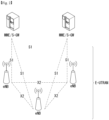
- FIG. 1 illustrates various reference points (for example, S1-U, S1-MME, and so on).
- the 3GPP system defines a reference point as a conceptual link which connects two functions defined in disparate functional entities of the E-UTAN and the EPC.
- Table 1 below summarizes reference points shown in FIG. 1 .
- various other reference points can be defined according to network structures.
- S1-U Reference point between E-UTRAN and Serving GW for the per bearer user plane tunneling and inter eNodeB path switching during handover S3 It enables user and bearer information exchange for inter 3GPP access network mobility in idle and/or active state.
- This reference point can be used intra-PLMN or inter-PLMN (e.g. in the case of Inter-PLMN HO).
- S4 It provides related control and mobility support between GPRS core and the 3GPP anchor function of Serving GW. In addition, if direct tunnel is not established, it provides the user plane tunneling.
- S5 It provides user plane tunneling and tunnel management between Serving GW and PDN GW.
- Packet data network may be an operator external public or private packet data network or an intra-operator packet data network (e.g., for provision of IMS services). This reference point corresponds to Gi for 3GPP accesses.
- S2a and S2b corresponds to non-3GPP interfaces.
- S2a is a reference point which provides reliable, non-3GPP access, related control between PDN GWs, and mobility resources to the user plane.
- S2b is a reference point which provides related control and mobility resources to the user plane between ePDG and PDN GW.
- FIG. 2 illustrates one example of an Evolved Universal Terrestrial Radio Access Network (E-UTRAN) to which the present invention can be applied.
- E-UTRAN Evolved Universal Terrestrial Radio Access Network
- the E-UTRAN system has evolved from an existing UTRAN system and may be the 3GPP LTE/LTE-A system, for example.
- a communication system is disposed over a wide area to provide various communication services including voice communication through IMS and packet data (for example, VoIP (Voice over Internet Protocol)).
- an E-UMTS network comprises an E-UTRAN, EPC, and one or more UEs.
- the E-UTRAN comprises eNBs providing a UE with a control plane and user plane protocols, where the eNBs are connected to each other through X2 interface.
- the X2 user plane interface (X2-U) is defined among the eNBs.
- the X2-U interface provides non-guaranteed delivery of the user plane Packet Data Unit (PDU).
- the X2 control plane interface (X2-CP) is defined between two neighboring eNBs.
- the X2-CP performs the functions of context delivery between eNBs, control of user plane tunnel between a source eNB and a target eNB, delivery of handover-related messages, uplink load management, and so on.
- the eNB is connected to the UE through a radio interface and is connected to the Evolved Packet Core (EPC) through the S1 interface.
- EPC Evolved Packet Core
- the S1 user plane interface (S1-U) is defined between the eNB and the Serving Gateway (S-GW).
- the S1 control plane interface (S1-MME) is defined between the eNB and the Mobility Management Entity (MME).
- the S1 interface performs the functions of EPS bearer service management, NAS signaling transport, network sharing, MME load balancing management, and so on.
- the S1 interface supports many-to-many-relation between the eNB and the MME/S-GW.
- An MME is capable of performing various functions such as NAS signaling security, AS (Access Stratum) security control, inter-CN (Core Network) signaling for supporting mobility among 3GPP access networks, IDLE mode UE reachability (including performing and controlling retransmission of a paging message), TAI (Tracking Area Identity) management (for IDLE and active mode UEs), PDN GW and SGW selection, MME selection for handover in which MMEs are changed, SGSN selection for handover to a 2G or 3G 3GPP access network, roaming, authentication, bearer management function including dedicated bearer establishment, and support for transmission of a PWS (Public Warning System) (including Earthquake and Tsunami Warning System (ETWS) and Commercial Mobile Alert System (CMAS)) message.
- PWS Public Warning System
- EWS Earthquake and Tsunami Warning System
- CMAS Commercial Mobile Alert System
- FIG. 3 illustrates structures of an E-UTRAN and an EPC in a wireless communication system to which the present invention may be applied.
- an eNB is capable of performing functions such as selection of a gateway (for example, MME), routing to a gateway during RRC (Radio Resource Control) activation, scheduling and transmission of a BCH (Broadcast Channel), dynamic resource allocation for a UE in uplink and downlink transmission, and mobility control connection in an LTE_ACTIVE state.
- a gateway belonging to an EPC is capable of performing functions such as paging origination, LTE_IDLE state management, ciphering of a user plane, SAE (System Architecture Evolution) bearer control, and ciphering of NAS signaling and integrity protection.
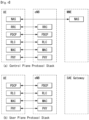
- FIG. 4 illustrates a radio interface protocol structure between a UE and an E-UTRAN in a wireless communication system to which the present invention can be applied.
- FIG. 4(a) illustrates a radio protocol structure for the control plane
- FIG. 4(b) illustrates a radio protocol structure for the user plane.
- the RLC layer of the second layer supports reliable data transmission.
- the function of the RLC layer includes concatenation, segmentation, reassembly of the RLC SDU, and so on.
- QoS Quality of Service
- RB Radio Bearer
- the RLC layer provides three operation modes: Transparent Mode (TM), Unacknowledged Mode (UM), and Acknowledge Mode (AM).
- TM Transparent Mode
- UM Unacknowledged Mode
- AM Acknowledge Mode
- the AM RLC provides error correction through Automatic Repeat reQuest (ARQ).
- ARQ Automatic Repeat reQuest
- the RLC layer can be incorporated into the MAC layer as a functional block.
- the transport IP layer employs point-to-point transmission for Protocol Data Unit (PDU) signaling transmission.
- PDU Protocol Data Unit
- single SCTP association uses a pair of stream identifiers for the S-MME common procedure. Only part of stream identifier pairs is used for the S1-MME dedicated procedure.
- the MME communication context identifier is allocated by the MME for the S1-MME dedicated procedure, and the eNB communication context identifier is allocated by the eNB for the S1-MME dedicated procedure.
- the MME communication context identifier and the eNB communication context identifier are used for identifying a UE-specific S1-MME signaling transmission bearer.
- the communication context identifier is delivered within each S1-AP message.
- the MME changes the state of the UE which has used the corresponding signaling connection to ECM-IDLE state. And the eNB releases RRC connection of the corresponding UE.
- the S1 user plane interface (S1-U) is defined between eNB and S-GW.
- the S1-U interface provides non-guaranteed delivery of the user plane PDU between the eNB and the S-GW.
- the transport network layer is based on IP transmission, and the GPRS Tunneling Protocol User Plane (GTP-U) layer is used on top of the UDP/IP layer to deliver the user plane PDU between the eNB and the S-GW.
- GTP-U GPRS Tunneling Protocol User Plane
- a physical channel delivers signaling and data by using a radio resource comprising one or more subcarriers in the frequency domain and one or more symbols in the time domain.
- One subframe having a length of 1.0 ms comprises a plurality of symbols.
- a specific symbol(s) of a subframe (for example, a first symbol of a subframe) may be used for a PDCCH.
- the PDCCH carries information about dynamically allocated resources (for example, resource block and MCS (Modulation and Coding Scheme)).
- EMM EPS Mobility Management
- ECM EPS Connection Management
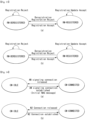
- FIG. 7 illustrates an EMM and ECM states in a wireless communication system to which the present invention can be applied.
- EMM-REGISTERED and EMM-DEREGISTERED states can be defined according to the UE is attached to or detached from a network.
- the EMM-REGISTERED and the EMM-DEREGISTERED states can be applied to the UE and the MME.
- the UE stays in the EMM-DEREGISTERED state as when the UE is first powered on and performs registering to a network through an initial attach procedure to connect to the network. If the connection procedure is performed successfully, the UE and the MME makes transition to the EMM-REGISTERED state. Also, in case the UE is powered off or the UE fails to establish a radio link (namely, a packet error rate for a radio link exceeds a reference value), the UE is detached from the network and makes a transition to the EMM-DEREGISTERED state.
- a radio link namely, a packet error rate for a radio link exceeds a reference value
- the network is unable to know the existence of the UE staying in the ECM-IDLE state, and a Core Network (CN) manages the UE on the basis of a tracking area unit which is an area unit larger than the cell.
- a Core Network CN
- the UE performs Discontinuous Reception (DRX) that the NAS has configured by using the ID allocated uniquely in the tracking area.
- DRX Discontinuous Reception
- the UE can receive a broadcast signal of system information and paging information by monitoring a paging signal at a specific paging occasion for each UE-specific paging DRX cycle.
- a UE performs the random access procedure in the following cases.
- the 3GPP Rel-10 specification takes into account applying a TA (Timing Advance) value applicable to one specific cell (for example, P cell) commonly to a plurality of cells in a wireless access system.
- a UE may combine a plurality of cells belonging to different frequency bands (namely separated with a large distance in the frequency domain) or a plurality of cells having different propagation characteristics.
- TA group TAG
- TAG TAG
- MAC TA command control element is composed of a 2-bit TAG Identity (ID) and a 6-bit TA command field.
- the UE on which a carrier aggregation is configured performs the random access procedure in case that the random access procedure previously described is required in connection with PCell.
- TAG that is, primary TAG (pTAG)
- pTAG primary TAG
- the TA which is determined based on PCell same as the existing case, or regulated through the random access procedure that accompanies PCell, can be applied to all the cells within the pTAG.
- the TA which is determined based on a specific SCell within sTAG, can be applied to all the cells within the corresponding sTAG, and in this time, the TA may be acquired through the random access procedure by being initiated by the eNB.
- the SCell in the sTAG is set to be a (Random Access Channel) RACH resource, and the eNB requests a RACH access in SCell for determining TA. That is, the eNB initiates the RACH transmission on the SCells by PDCCH order that is transmitted from PCell.
- the response message for the SCell preamble is transmitted through PCell by using RA-RNTI.
- the TA that is determined based on SCell that successfully completes the random access can be applied to all the cells in the corresponding sTAG by the UE.
- the random access procedure may be performed in SCell as well in order to acquire timing alignment of the sTAG to which the corresponding SCell belongs.
- the LTE/LTE-A system supports both of a contention based random access procedure and a non-contention based random access procedure.
- a UE selects one arbitrary preamble from a specific set, while, in the latter procedure, the UE uses the random access preamble that an eNB has allocated only to the specific UE.
- the non-contention based random access procedure may be confined to the handover process described above, a case requested by a command from the eNB, and UE positioning and/or timing advance alignment for sTAG.
- a normal uplink/downlink transmission occurs.
- a relay node also support both of the contention based random access procedure and the non-contention based random access procedure.
- RN subframe configuration is suspended. That is, this means that the RN subframe configuration is temporarily discarded.. Thereafter, the RN subframe structure is resumed at the time when the random access procedure is successfully completed.
- FIG. 8 illustrates a contention-based random access procedure in a wireless communication system to which the present invention may be applied.
- a UE selects one random access preamble (RACH preamble) randomly from a set of random access preambles indicated by system information or a handover command.
- the UE selects a PRACH (Physical RACH) resource capable of transmitting the random access preamble and transmits the random access preamble by using the PRACH resource.
- RACH Physical RACH
- a random access preamble is transmitted in six bits on the RACH transmission channel, where the six bit comprises a 5-bit random identity for identifying a UE which transmits a RACH preamble and 1 bit for representing additional information (for example, indicating size of Msg 3).
- An eNB which has received a random access preamble from a UE decodes the preamble and obtains RA-RNTI.
- a time-frequency resource of a random access preamble transmitted by the corresponding UE determines the RA-RNTI related to a PRACH to which a random access preamble is transmitted.
- the eNB transmits a random access response to the UE, where the RA-RNTI obtained by using the preamble on Msg 1 addresses the random access response.
- a random access response may include an RA preamble index/identifier, UL grant indicating a uplink radio resource, Temporary Cell RNTI (TC-RNTI), and Time Alignment Command (TAC).
- TAC indicates a time synchronization value that the eNB transmits to the UE to maintain uplink time alignment.
- the UE updates uplink transmission timing by using the time synchronization value. If the UE updates time synchronization, the UE initiates or restarts a time alignment timer.
- the UL grant includes uplink resource allocation and TPC (Transmit Power Command) used for transmitting a scheduling message (Msg 3) described later.
- TPC is used to determine the transmission power for a scheduled PUSCH.
- the UE attempts to receive a random access response within a random access response window indicated by the eNB through system information or a handover command, detects a PDCCH masked with an RA-RNTI corresponding to the PRACH, and receives a PDSCH indicated by the detected PDCCH.
- the random access response information may be transmitted in the form of a MAC PDU (MAC Packet Data Unit) and the MAC PDU may be transmit through the PDSCH.
- the PDCCH should include information of the UE that has to receive the PDSCH, frequency and time information of a radio resource of the PDSCH, and transmission format of the PDSCH. As described above, once the UE succeeds to detect the PDCCH transmitted to itself, it may properly receive a random access response transmitted to the PDSCH according to the information of the PDCCH.
- the random access response window refers to a maximum time interval in which the UE transmitting a preamble waits to receive a random access response message.
- the random access response window has a length of 'ra-ResponseWindowSize' starting from a subframe after three subframes in the last subframe transmitting a preamble. In other words, the UE waits to receive a random access response during a random access window secured after three subframes from the subframe completed transmission of the preamble.
- the UE may obtain the random access window size ('ra-ResponseWindowsize') parameter through system information, and the random access window size is determined to be a value between 2 to 10.
- the UE If receiving a random access response having the same random access preamble delimiter/identity as that of the random access preamble transmitted to the eNB, the UE stops monitoring the random access response. On the other hand, if failing to receive a random access response message until a random access response window is terminated or failing to receive a valid random access response having the same random access preamble identity as that of the random access preamble transmitted to the eNB, the UE may consider reception of the random access response as having failed and then perform retransmission of the preamble.
- one random access response may include random access response information for one or more UEs and thus it is necessary to indicate to which UE the UL grant, TC-RNTI, and TAC is valid.
- the UE separately processes the information included in the random access response. In other words, the UE applies the TAC and stores the TC-RNTI. Also, by using the UL grant, the UE transmits the data stored in its buffer or newly generated data to the eNB.
- an RRC Connection request generated at the RRC layer and transmitted through a CCCH may be included in the Msg 3 and transmitted.
- an RRC Connection Re-establishment request generated at the RRC layer and transmitted through the CCCH may be included in the Msg 3 and transmitted.
- a NAS connection request message may be included in the Msg 3.
- the Msg 3 has to include a UE identity.
- the eNB In the case of a contention based random access procedure, the eNB is unable to determine which UEs perform the random access procedure. Thus, the eNB needs the UE identity for each UE to avoid potential contention.
- Two methods are used for contention resolution.
- One of the methods employs a contention resolution timer and the other method employs transmitting an identity of a successful UE to other UEs.
- the former case is used when a UE already has a unique C-RNTI before performing a random access process.
- a UE that already has a C-RNTI transmits data including its C-RNTI to the eNB according to a random access response and operates a contention resolution timer.
- the UE receives a PDCCH indicated by its C-RNTI before the contention resolution timer expires, the UE determines that it has won the contention and finishes random access normally.
- the UE determines that it has lost the contention and performs the random access process again or inform a upper layer of the failure.
- the latter contention resolution method namely the method for transmitting an identity of a successful UE, is used when a UE does not have a unique cell identity before performing the random access process.
- the UE transmits data by including an upper identity (S-TMSI or a random number) higher than a cell identity in the data according to the UL grant information included in a random access response and operates a contention resolution timer.
- the UE determines that the random access process has been performed successfully.
- the UE determines that the random access process has failed.
- a non-contention based random access process finishes its procedures only by transmitting the Msg 1 and 2.
- the eNB allocates a random access preamble to the UE.
- the random access procedure is terminated as the UE transmits the allocated random access preamble to the eNB as the Msg 1 and receives a random access response from the eNB.
- a 5G system is a technology advanced from the 4th generation LTE mobile communication technology and a new radio access technology (RAT) through the evolution of the existing mobile communication network structure or a clean-state structure and an extended technology of long term evolution (LTE), and it supports extended LTE (eLTE), non-3GPP (e.g., WLAN) access and so on.
- RAT new radio access technology
- FIG. 9 is a diagram illustrating 5G system architecture using a reference point representation.
- the 5G system architecture may include various elements (i.e., a network function (NF)).
- NF network function
- This drawing illustrates an authentication server function (AUSF), a (core) access and mobility management function (AMF), a session management function (SMF), a policy control function (PCF), an application function (AF), united data management (UDM), a data network (DN), a user plane function (UPF), a (radio) access network ((R)AN) and a user equipment (UE) corresponding to some of the various elements.
- AUSF authentication server function
- AMF access and mobility management function
- SMF session management function
- PCF policy control function
- AF application function
- UDM united data management
- DN data network
- UPF user plane function
- R radio access network
- UE user equipment
- Each of the NFs supports the following functions.
- the AMF supports functions, such as signaling between CN nodes for mobility between 3GPP access networks, the termination of a radio access network (RAN) CP interface (i.e., N2 interface), the termination (N1) of NAS signaling, NAS signaling security (NAS ciphering and integrity protection), AS security control, registration area management, connection management, idle mode UE reachability (including control and execution of paging retransmission), mobility management control (subscription and policy), intra-system mobility and inter-system mobility support, the support of network slicing, SMF selection, lawful interception (for an AMF event and an interface to an LI system), the provision of transfer of a session management (SM) message between a UE and an SMF, a transparent proxy for SM message routing, access authentication, access authorization including a roaming right check, the provision of transfer of an SMS message between a UE and an SMSF(SMS(Short Message Service) function), a security anchor function (SEA) and/or security context management (SCM).
- RAN radio
- Some or all of the functions of the AMF may be supported within a single instance of one AMF.
- the SMF supports functions, such as session management (e.g., session setup, modification and release including the maintenance of a tunnel between a UPF and an AN node), UE IP address allocation and management (optionally including authentication), the selection and control of the UP function, a traffic steering configuration for routing traffic from the UPF to a proper destination, the termination of an interface toward policy control functions, the execution of the control part of a policy and QoS, lawful interception (for an SM event and an interface to an LI system), the termination of the SM part of an NAS message, downlink data notification, the initiator of AN-specific SM information (transferred to an AN through N2 via the AMF), the determination of an SSC mode of a session, and a roaming function.
- session management e.g., session setup, modification and release including the maintenance of a tunnel between a UPF and an AN node
- UE IP address allocation and management optionally including authentication
- the selection and control of the UP function e.g., session
- Some or all of the functions of the SMF may be supported within a single instance of one SMF.
- the network node in charge of transmission/reception of wireless signals with the UE is the gNB, and plays the same role as the eNB.
- the gNB supports functions for radio resource management (i.e., radio bearer control and radio admission control), connection mobility control, the dynamic allocation (i.e., scheduling) of resources to a UE in the uplink/downlink, Internet protocol (IP) header compression, the encryption and integrity protection of a user data stream, the selection of an AMF upon attachment of a UE if routing to the AMF has not been determined based on information provided to the UE, the selection of an AMF upon attachment of a UE, user plane data routing to an UPF(s), control plane information routing to an AMF, connection setup and release, the scheduling and transmission of a paging message (generated from an AMF), the scheduling and transmission of system broadcast information (generated from an AMF or operation and maintenance (O&M)), a measurement and measurement report configuration for mobility and scheduling, transport level packet marking in the uplink, session management, the support of network slicing, QoS flow management and mapping to a data radio bearer, the support of a UE that is an inactive mode, the distribution
- a node which is responsible for wireless transmission/reception with the UE is gNB and plays the same role as the eNB in the EPS.
- the UE When the UE is simultaneously connected to the 3GPP connection and the non-3GPP connection, the UE receives a service through one AMF as illustrated in FIG. 9 .
- FIG. 9 it is illustrated that a connection is made by the non-3GPP connection and a connection is made by the 3GPP connection are connected to one same UPF, but the connection is not particularly required and may be connected by a plurality of different UPFs.
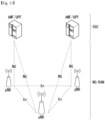
- N3IWK also referred to as non-3GPP interworking function (N3IWF)
- N3IWF non-3GPP interworking function
- the non-3GPP access network is connected to the 5G core network via N3IWK/N3IWF.
- the N3IWK/N3IWF interfaces the 5G core network control plane function and user plane function via the N2 and N3 interfaces, respectively.
- a representative example of the non-3GPP connection mentioned in the present specification may be a WLAN connection.
- NF service is a kind of capability exposed to another NF (i.e., NF service consumer) by an NF (i.e., NF service supplier) through a service-based interface.
- the NF may expose one or more NF service(s).
- NF service the following criteria are applied:
- FIG. 12 is a diagram illustrating a radio protocol stack to which the present invention may be applied. Specifically, FIG. 12(a) illustrates a radio interface user plane protocol stack between a UE and a gNB, and FIG. 12(b) illustrates a radio interface control plane protocol stack between the UE and the gNB.
- a control plane means a passage through which control messages are transmitted in order for a UE and a network to manage a call.
- a user plane means a passage through which data generated in an application layer, for example, voice data or Internet packet data is transmitted.
- the user plane protocol stack may be divided into a first layer (Layer 1) (i.e., a physical layer (PHY) layer) and a second layer (Layer 2).
- Layer 1 i.e., a physical layer (PHY) layer
- Layer 2 a second layer
- the control plane protocol stack may be divided into a first layer (i.e., a PHY layer), a second layer, a third layer (i.e., a radio resource control (RRC) layer) and a non-access stratum (NAS) layer.
- a first layer i.e., a PHY layer
- a second layer i.e., a third layer
- RRC radio resource control
- NAS non-access stratum
- the second layer is divided into a medium access control (MAC) sublayer, a radio link control (RLC) sublayer, a packet data convergence protocol (PDC) sublayer, and a service data adaptation protocol (SDAP) sublayer (in the case of a user plane).
- MAC medium access control
- RLC radio link control
- PDC packet data convergence protocol
- SDAP service data adaptation protocol
- Radio bearers are classified into two groups: a data radio bearer (DRB) for user plane data and a signaling radio bearer (SRB) for control plane data
- DRB data radio bearer
- SRB signaling radio bearer
- Each logical channel type defines that information of which type is transferred.
- Logical channels are classified into two groups: a control channel and a traffic channel.
- a connection between a logical channel and a transport channel is as follows.
- a BCCH may be mapped to a BCH.
- a BCCH may be mapped to a DL-SCH.
- a PCCH may be mapped to a PCH.
- a CCCH may be mapped to a DL-SCH.
- a DCCH may be mapped to a DL-SCH.
- a DTCH may be mapped to a DL-SCH.
- a connection between a logical channel and a transport channel is as follows.
- a CCCH may be mapped to an UL-SCH.
- a DCCH may be mapped to an UL-SCH.
- a DTCH may be mapped to an UL-SCH.
- the RLC sublayer supports three transport modes: a transparent mode (TM), an unacknowledged mode (UM) and acknowledged mode (AM).
- TM transparent mode
- UM unacknowledged mode
- AM acknowledged mode
- An RLC configuration may be applied to each logical channel.
- the TM or AM mode is used.
- the UM or AM mode is used.
- the RLC sublayer performs the transfer a higher layer PDU; independent sequence numbering with a PDCP; error correction through an automatic repeat request (ARW); segmentation and re-segmentation; the reassembly of an SDU; RLC SDU discard; and RLC re-establishment.
- AGW automatic repeat request
- a 5G system has introduced a network slicing technology which provides network resources and network functions to an independent slice based on each service.
- a network slice refers to a network that logically integrates an access network and a core network.
- the network slice may include one or more of the followings:
- One UE may be connected to one or more network slice instances at the same time via a 5G-AN.
- One UE may be served at the same time by a maximum of 8 network slices.
- An AMF instance that serves a UE may belong to each network slice instance that serves the UE. That is, the AMF instance may be common to a network slice instance that serves the UE.
- the CN part of a network slice instance(s) that serves a UE is selected by a CN.
- One PDU session belongs to a specific one network slice instance for each PLMN. Different slices may have slice-specific PDU sessions using the same DNN, but different network slice instances do not share one PDU session.
- a Configured NSSAI may be configured in a UE by a home PLMN (HPLMN) for each PLMN.
- the Configured NSSAI becomes PLMN-specific, and the HPLMN indicates a PLMN(s) to which each Configured NSSAI has been applied.
- Subscription data includes the S-NSSAI(s) of a network slice(s) to which a UE has subscribed.
- One or more S-NSSAI(s) may be marked as a default S-NSSAI.
- an S-NSSAI is marked by default, although a UE does not transmit any S-NSSAI to a network within a Registration Request, the network may serve the UE through a related network slice.
- the Allowed NSSAI has precedence over the Configured NSSAI for the PLMN. Thereafter, the UE uses only an S-NSSAI(s) within the Allowed NSSAI corresponding to a network slice for a network slice selection-related procedure within the serving PLMN.
- a UE In each PLMN, a UE stores a Configured NSSAI and an Allowed NSSAI (if present). When the UE receives an Allowed NSSAI for a PLMN, it overrides the previously stored Allowed NSSAI for the PLMN.
- a network may change an already selected network slice instance depending on a local policy and the mobility, subscription information change, etc. of a UE. That is, a set of network slices of a UE may be changed at any time while the UE is registered with a network. Furthermore, a change of a set of network slices of a UE may be initiated by a network or under specific conditions.
- a core network When a UE enters an area in which a network slice is no longer available, a core network releases a PDU session for an S-NSSAI corresponding to a network slice that is no longer available through a PDU session release procedure.
- the UE determines whether the existing traffic can be routed through a PDU session belonging to another slice using a UE policy.
- a PCF provides a UE with a network slice selection policy (NSSP).
- the NSSP associates the UE with an S-NSSAI and is used by the UE in order to determine a PDU session to which traffic will be routed.
- PDU connectivity service that is, a service that provides the exchange of PDU(s) between a UE and a DN identified by a data network name (DNN) (or an access point name (APN)).
- DNN data network name
- APN access point name
- the PDU connectivity service is also supported through a PDU session established upon request from the UE.
- An SMF checks whether a UE request complies with user subscription information. To this end, the SMF obtains SMF level subscription data from UDM. Such data may indicate an accepted PDU session type for each DNN:
- a UE registered through a plurality of accesses selects access for setting up a PDU session.
- a UE may request to move a PDU session between 3GPP and non-3GPP access.
- a determination for moving the PDU session between 3GPP and non-3GPP access is made for each PDU session. That is, the UE may have a PDU session using 3GPP access while another PDU session uses non-3GPP access.
- a UE having a plurality of established PDU sessions may be served by different SMFs.
- An SSC mode selection policy is used to determine the type of SSC mode associated with an application (or application group) of a UE.
- An operator may previously configure an SSC mode selection policy in a UE.
- the policy includes one or more SSC mode selection policy rules which may be used for a UE to determine the type of SSC mode associated with an application (or a group of applications).
- the policy may include a default SSC mode selection policy rule which may be applied to all of applications of a UE.
- an SMF selects whether it will accept the requested SSC mode or whether it will modify the requested SSC mode based on subscription information and/or a local configuration. If a UE does not provide an SSC mode when it requests a new PDU session, an SMF selects a default SSC mode for data networks listed within subscription information or applies a local configuration for selecting an SSC mode.
- An SMF notifies a UE of an SSC mode selected for a PDU session.
- RM-DEREGISTERED in order to reflect the registration state of a UE within a selected PLMN, two RM states of RM-DEREGISTERED and RM-REGISTERED are used within the UE and the AMF.
- Registration area management includes a function for allocating or re-allocating a registration area to the UE.
- the registration area is managed for each access type (i.e., 3GPP access or non-3GPP access).
- CM Connection management
- CM is used to establish and release a signaling connection between the UE and the AMF.
- CM includes a function of establishing and releasing a signaling connection between the UE and the AMF through N1.
- the signaling connection is used to enable an NAS signaling exchange between the UE and a core network.
- the signaling connection includes both an AN signaling connection for the UE between the UE and the AN and an N2 connection for the UE between the AN and the AMF.
- the UE in the CM-IDLE state is the RM-REGISTERED state and does not have an NAS signaling connection established with the AMF through N1.
- the UE performs cell selection, cell reselection and PLMN selection.
- the UE in the CM-CONNECTED state has an NAS signaling connection with the AMF through N1.
- the UE In the CM-CONNECTED state, whenever the AN signaling connection is released, the UE enters the CM-IDLE state.
- the AMF may maintain the UE in the CM-CONNECTED state until the UE is deregistered from a core network.
- the UE in the CM-CONNECTED state may be an RRC Inactive state.
- UE reachability is managed by an RAN using assistant information from a core network.
- UE paging is managed by the RAN.
- the UE monitors paging using the CN and RAN ID of the UE.
- the AMF provides assistant information to the NG-RAN in order to assist the determination of the NG-RAN regarding whether the UE will be changed to the RRC Inactive state based on a network configuration.
- CN assistant information is provided to a serving NG RAN node during N2 activation (i.e., registration, a service request or path switch).
- the state of an N2 and the N3 reference point is not changed by the UE that enters the CM-CONNECTED state accompanied by RRC Inactive.
- the UE in the RRC Inactive state is aware of an RAN notification area.
- the UE may resume an RRC connection due to uplink data pending, a mobile-initiated signaling procedure (i.e., periodical registration update), a response to RAN paging, or when the UE notifies a network that it has deviated from the RAN notification area.
- a mobile-initiated signaling procedure i.e., periodical registration update
- UE AS context is recovered from an old NG RAN node, and the procedure is triggered toward a CN.
- the UE When the UE is in the CM-CONNECTED state accompanied by RRC Inactive, the UE performs cell selection on a GERAN/UTRAN/EPS and complies with an idle mode procedure.
- the UE in the CM-CONNECTED state accompanied by RRC Inactive enters the CM-IDLE mode and complies with an NAS procedure related to the following cases.
- the NAS signaling connection management includes a function for establishing and releasing an NAS signaling connection.
- the NAS signaling connection establishment function is provided by the UE and the AMF in order to establish the NAS signaling connection of the UE in the CM-IDLE state.
- the UE When the UE in the CM-IDLE state needs to transmit an NAS message, the UE initiates a service request or registration procedure in order to establish a signaling connection to the AMF.
- the AMF may maintain the NAS signaling connection until the UE is deregistered from a network based on the preference of the UE, UE subscription information, a UE mobility pattern and a network configuration.
- the procedure of releasing the NAS signaling connection is initiated by a 5G (R)AN node or the AMF.
- the UE determines that the NAS signaling connection has been released.
- the AMF detects that N2 context has been released, the AMF determines that the NAS signaling connection has been released.
- a mobility restriction restricts the service access or mobility control of a UE within a 5G system.
- a mobility restriction function is provided by a UE, an RAN and a core network.
- the mobility restriction is applied to only 3GPP access, but is not applied to non-3GPP access.
- a mobility restriction is performed by a UE based on information received from a core network.
- a mobility restriction is performed by an RAN and a core network.
- a core network In the CM-CONNECTED state, a core network provides a handover restriction list for a mobility restriction to an RAN.
- a UE If a UE has an RAT restriction, a forbidden area, an allowed area, a non-allowed area or an area overlapping between them, the UE performs an operation according to the following priority:
- the AMF When the AMF indicates the MICO mode for the UE, the AMF considers that the UE is always unreachable during the CM-IDLE state. The AMF rejects any request for downlink data transfer for a corresponding UE that is in the MICO mode and the CM-IDLE state. The AMF also delays downlink transport, such as SMS or location service through the NAS. A UE in the MICO mode may be reachable for mobile-terminated data or signaling only when the UE is in the CM-CONNECTED mode.
- the AMF may provide an RAN node with pending data indication when a UE in the MICO mode can immediately transport mobile-terminated data and/or signaling when the UE switches to the CM-CONNECTED mode.
- the RAN node receives the indication, the RAN node considers the information when it determines user inactivity.
- a UE in the MICO mode does not need to listen to paging during the CM-IDLE state.
- the UE in the MICO mode may stop any AS procedure within the CM-IDLE state until it starts switching from the CM-IDLE to the CM-CONNECTED mode due to one of the following reasons.
- the AMF may respond with a Service Response message to synchronize PDU session status between a UE and a network.
- the AMF may also respond with a Service Reject message to the UE, in the case that the Service Request is unable to be accepted by the network.
- a network may take further actions in the case that User Plane resource establishment is not successful.
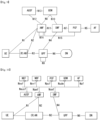
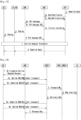
- FIG. 15 illustrates a UE triggered Service Request procedure in CM-IDLE state according to the present invention.
- the UE transmits NAS message Service Request towards the AMF encapsulated in an RRC message to the RAN.
- the RRC message(s) that may be used to carry the 5G Temporary ID and this NAS message are described in RAN specifications.
- the PDU session status indicates the PDU sessions available in the UE.
- the AMF may initiate PDU session release procedure in the case that the PDU session is not available in the UE.
- the N11 message is sent in one or more of the following scenarios:
- an N4 Session Establishment Request message is sent to the new UPF, providing Packet detection, enforcement and reporting rules to be installed on the intermediate UPF.
- the PDU session anchor info for this PDU Session is also provided to the intermediate UPF.
- the new intermediate UPF transmits an N4 Session Establishment Response message to the SMF.
- the UPF allocates CN tunnel info
- the UPF provides CN DL tunnel information and UL tunnel information (i.e. CN N3 tunnel information) to the SMF.
- the SMF starts a timer, to be used in step 17a to release the resource in old intermediate UPF if there is one.
- the SMF transmits N4 Session Modification Request message to PDU session anchor UPF, UPF (PSA), providing the DL tunnel information from new intermediate UPF.
- PDU session anchor UPF UPF (PSA)
- the UE When the N1 message is present in the Service Accept and indicates that the any PDU session needs to be re-established, the UE initiates PDU session re-establishment after Service Request procedure is complete.
- the uplink data from the UE may now be forwarded to RAN.
- the 5G RAN transmits the uplink data to the UPF address and Tunnel ID provided in the step 4.
- the message may include N2 SM information(s), for example, RAN tunnel information.
- RAN may respond N2 SM information with separate N2 message (e.g. N2 tunnel setup response) in the case that the AMF transmits separate N2 message in step 5.
- the SMF initiates a N4 Session Modification procedure and provides RAN Tunnel Information.
- the SMF initiates resource release, after timer in step 6b expires, by transmitting an N4 Session Release Request (Release Cause) to old intermediate UPF.
- the Service Request procedure is used by a 5G UE in CM-CONNECTED to request establish User Plane resources for the PDU sessions.
- the procedure is not applicable for an access network (once the UE is registered in the network) in which the UE is always considered as in CM-CONNECTED state and in which the User Plane resource is always considered established for an active PDU session.
- the old UPF (intermediate) acknowledges with an N4 Session Release Response message to confirm the release of resources.
- This procedure is used when the network needs to signal (e.g. N1 signalling to UE, Mobile-terminated SMS, PDU session User Plane resource establishment to deliver mobile terminating user data) with a UE.
- the network initiates a network triggered Service Request procedure.
- the network transmits a Paging Request to (R)AN/UE.
- the Paging Request triggers the Service Request procedure in the UE.
- the network stores the received message and forward the message to the (R)AN and/or the UE (i.e. synchronizes the context with the (R)AN and/or the UE) when the UE enters CM-CONNECTED state.
- the SMF determines the AMF and transmits an N11 message (UE Permanent ID, PDU session ID, N2 SM information (PDU Session ID, QoS profile, CN N3 Tunnel Info, S-NSSAI), Priority, Paging Policy Indication) to the AMF including the Priority and PDU Session ID received in the Data Notification message as part of step 2a.
- N11 message UE Permanent ID, PDU session ID, N2 SM information (PDU Session ID, QoS profile, CN N3 Tunnel Info, S-NSSAI), Priority, Paging Policy Indication
- the SMF When the SMF, while waiting for the User Plane to be activated, receives an N11 message response from an AMF other than the one to which the SMF sent an N11 message, the SMF transmits the N11 message to this AMF.
- the SMF When supporting Paging Policy Differentiation, the SMF indicates in the N11 message the Paging Policy Indication related to the downlink data that triggered the Data Notification message.
- the AMF may receive request message(s) from other network functions which leads to signaling towards UE/RAN (e.g. network initiated detach, SMF initiated PDU session modification).
- UE/RAN e.g. network initiated detach, SMF initiated PDU session modification.
- the AMF shall either transmit an N11 message to the SMF, or other network functions from which AMF received the request message in step 3a, indicating the UE is not reachable, or the AMF performs asynchronous type communication and store the N11 message.
- the AMF initiates communication with the UE and (R)AN when the UE is reachable, for example, when the UE enters CM-CONNECTED state.
- the AMF rejects the request from the SMF and may notify the SMF that the UE is unreachable (in case the SMF had not subscribed to the UE reachability) with an indication that the SMF needs not transmit DL data notifications to the AMF.
- the AMF stores an indication that the SMF has been informed that the UE is unreachable.
- the old AMF may reject N11 message with an indication that the N11 message has been temporarily rejected.
- SMF may notify the UPF about the User Plane setup failure.
- the SMF may, based on network policies, either:
- AMF transmits Paging message to (R)AN node.
- the AMF When the UE is in CM-CONNECTED state, the AMF performs step 5 to 12 in UE triggered Service Request procedure to activate the User Plane Connection for this PDU session (i.e. establish the radio resources and N3 tunnel). The rest of this procedure is omitted.
- the AMF transmits a Paging message (NAS ID for paging, Registration Area list, Paging DRX length, Paging Priority indication,) to (R)AN node(s) belonging to the Registration Area(s) in which the UE is registered.
- NAS ID for paging, Registration Area list, Paging DRX length, Paging Priority indication,
- the AMF may include Paging Policy Indication in Paging Request message.
- Paging strategies may be configured in the AMF for different combinations of DNN, Paging Policy Indication, PDU Session IDs from SMF when available and other PDU Session context information identified by PDU Session ID received in N11 message.
- Paging strategies may include:
- the AMF adds the UE Radio Capability for Paging Information in the N2 Paging message to the (R)AN nodes.
- the AMF shall take that information into account to determine the (R)AN nodes for paging and, when paging a (R)AN node, the AMF may transparently convey the information on recommended cells to the (R)AN node.
- the AMF may include in the N2 Paging message(s) the paging attempt count information.
- the paging attempt count information shall be the same for all (R)AN nodes selected by the AMF for paging.
- the AMF supervises the paging procedure with a timer. In the case that the AMF receives no response from the UE to the Paging Request message, the AMF may apply further paging according to any applicable paging strategy described in step 3.
- the UE When UE is in the CM-IDLE state, upon reception of paging request, the UE initiates the UE triggered Service Request procedure ( FIG. 15 ). In step 4a of FIG. 15 , the AMF transmits N11 message to SMF(s) associated with the PDU session identified by PDU session ID(s) in MM NAS Service Request message if there is any. However, not to SMF(s) from which it receives the N11 message in step 3a.
- FIG. 18 illustrates MO SMS transmission procedure via NAS in CM-IDLE which is applicable to the present invention.
- MO SMS in CM-CONNECTED Mode procedure is specified by reusing the MO SMS in CM-IDLE Mode without the UE triggered Service Request procedure.
- EMM and ESM for Service Request procedure in EPC are described. Followings represents parts that (E)MM process in the EPC existing technique is influenced by the ESM. This is a part related to Service Request procedure.
- the area A may be configured with the granularity of an MME area, tracking area or eNodeB service area.
- the MME may further be configured for a certain area A' to exempt service requests for mobile originating CS fallback calls from this MME-based access control, if:
- the operator may use this second option when the eNodeBs in area A' are supporting the eNodeB-based access control for CS fallback calls.
- the area A' may be part of area A or the whole area A. It is the responsibility of the operator to coordinate the activation of MME-based access control and eNodeB-based access control for mobile originating CS fallback calls.
- the MME When the EMM cause value is #39 "CS service temporarily not available", the MME shall include a value for timer T3442 in the SERVICE REJECT message. In the case that a mobile terminating CS fallback call is aborted by the network during call establishment, the MME shall include the EMM cause value #39 "CS service temporarily not available” and set the value of timer T3442 to 'zero'.
- the MME shall include the following EMM cause value in the SERVICE REJECT message:
- the MME shall:
- the MME shall transmit an ATTACH REJECT message to the UE including an appropriate EMM cause value.
- the attach procedure fails due to:
- the MME shall:
- the MME shall transmit an ATTACH REJECT message to the UE including an appropriate EMM cause value.
- the attach request included a PDN CONNECTIVITY REQUEST message, and the attach procedure fails due to a default EPS bearer setup failure, an ESM procedure failure or operator determined barring, the MME shall:
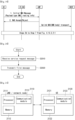
- step 9 of the Service Request procedure in the case that the AMF receives at least one N2 Session Management (SM) information from SMF, the AMF does not wait for the transmission of the additional N2 SM information from the corresponding SMF, but directly forwards the N2 SM information to (R)AN.
- the additional N2 SM information transmitted from the corresponding SMF is forwarded to (R)AN by the AMF through a separate N2 message (e.g., N2 tunnel setup request).
- the reject cause 3) may be received through the N11 (response) message by being signaled as information that the AMF may identify.
- the AMF may determine whether the corresponding PDU session ID is accepted based on whether the reject cause is included without the separate indication described above (e.g., in the case that the reject cause is signaled/included in the N11 (response) message, the AMF may identify that the PDU session ID is rejected based on the corresponding reject cause.
- FIG. 15 In relation to A-1) and A-2), the description of FIG. 15 may be applied.
- the cause for the rejection may be transmitted by being included in the N11 (response) message.
- the AMF may not identify the information in the included container. Instead, according to/based on whether to include the container, the AMF may determine whether the response is Accept or Reject and the operation to perform when the response is Accept. For example, in the case that at least one reject cause container is transmitted by being included in the N11 (response) message, the AMF may regard a response of the SMF as rejection.
- identification for the SM reject cause of the SMF may be signaled/represented by a separate IE, not the container described above.
- the AMF may know a response of the SMF (e.g., whether to accept/reject) by directly identifying the SM reject cause through the corresponding IE.
- the AMF may identify that the response from the SMF is Accept. In the case that III) described above is included in the N11 (response) message, the AMF may identify that the response from the SMF is Reject.
- the reject cause of A-3) described above may be forwarded as N1 SM information.
- an indication for the AMF to distinguish whether the N1 SM information includes/means Accept for the PDU session ID requested by the UE or includes/means Reject shall be included in the N11 (response) message, and in this case, the AMF may distinguish whether the SM response from the SMF is Accept or Reject through the indication, which is as described above.
- the reject cause of A-3) may be i) forwarded as N1 SM information, ii) transmitted with being included in the reject cause container which is separately defined, or iii) transmitted with being included in the IE which is separately defined so as to be identified by the AMF, and the description according to each embodiment is as described above.
- the timer Tabcd value may be set as smaller than the timer value for the UE to determine whether a transmission of the Service Request message is successful. Otherwise, it is highly probable that the Service Request procedure is unnecessarily/improperly failed due to the timer termination.
- the AMF may transmit the Service Reject message to the UE.
- the embodiment assumes/premises the case that the AMF accepts the response to the MM Request message (e.g., Service Request message). That is, the embodiment assumes/premises the case that the AMF accepts the request for connection/mobility management in 5GMM aspect.
- MM Request message e.g., Service Request message
- the AMF transmits the Service Reject message regardless of the response of the SMF described above. That is, the AMF may transmit the Service Reject message when rejecting the MM request (e.g., Service Request message), and the AMF may transmit the Service Accept message or the Service Reject message according to the N11 response message transmitted later.
- the transmission condition of the Service Accept/Reject message may be different depending on option 1 and/or 2 described above.
- the condition of transmitting Service Accept message, Service Reject message or other N1 message using the N1 response message may follow the embodiment/option (e.g., option 1 or 2 described above) or the combination thereof.
- the N1 message including the PDU session ID and the MM message requested by the UE is transmitted to the AMF, a method for the AMF to configure N1 response message therefor is particularly proposed:
- the AMF may operate as follows:
- Invention proposal 2 The proposal is to propose a method/operation for solving problem 2 described above.
- the AMF may receive a second message (e.g., N11 response message) including a reject cause of the PDU session establishment as a response to the first message.
- the AMF may transmit a service response message including the reject cause and a PDU session ID rejected by the reject cause to the UE.
- the AMF may transmit the additional N2 SM information to the AN through a separate N2 message.
- the separate N2 message may correspond to an N2 tunnel setup request message.
- the AN that receives the N2 SM information may perform an RRC connection reconfiguration for the UE based on the received N2 SM information.
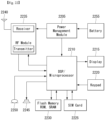
- a wireless communication system includes a network node 2110 and a plurality of UEs (UE) 2120.
Landscapes
- Engineering & Computer Science (AREA)
- Computer Networks & Wireless Communication (AREA)
- Signal Processing (AREA)
- Mobile Radio Communication Systems (AREA)
Applications Claiming Priority (4)
| Application Number | Priority Date | Filing Date | Title |
|---|---|---|---|
| US201762522702P | 2017-06-21 | 2017-06-21 | |
| US201762528987P | 2017-07-06 | 2017-07-06 | |
| EP18820176.8A EP3481139B1 (en) | 2017-06-21 | 2018-06-21 | Method and device for performing service request procedure in wireless communication system |
| PCT/KR2018/007035 WO2018236164A1 (ko) | 2017-06-21 | 2018-06-21 | 무선 통신 시스템에서 서비스 요청 절차 수행 방법 및 이를 위한 장치 |
Related Parent Applications (2)
| Application Number | Title | Priority Date | Filing Date |
|---|---|---|---|
| EP18820176.8A Division-Into EP3481139B1 (en) | 2017-06-21 | 2018-06-21 | Method and device for performing service request procedure in wireless communication system |
| EP18820176.8A Division EP3481139B1 (en) | 2017-06-21 | 2018-06-21 | Method and device for performing service request procedure in wireless communication system |
Publications (2)
| Publication Number | Publication Date |
|---|---|
| EP4120791A1 EP4120791A1 (en) | 2023-01-18 |
| EP4120791B1 true EP4120791B1 (en) | 2025-04-09 |
Family
ID=64692931
Family Applications (2)
| Application Number | Title | Priority Date | Filing Date |
|---|---|---|---|
| EP22193791.5A Active EP4120791B1 (en) | 2017-06-21 | 2018-06-21 | Method and device for performing service request procedure in wireless communication system |
| EP18820176.8A Active EP3481139B1 (en) | 2017-06-21 | 2018-06-21 | Method and device for performing service request procedure in wireless communication system |
Family Applications After (1)
| Application Number | Title | Priority Date | Filing Date |
|---|---|---|---|
| EP18820176.8A Active EP3481139B1 (en) | 2017-06-21 | 2018-06-21 | Method and device for performing service request procedure in wireless communication system |
Country Status (6)
| Country | Link |
|---|---|
| US (2) | US10674469B2 (https=) |
| EP (2) | EP4120791B1 (https=) |
| JP (1) | JP7189126B2 (https=) |
| KR (1) | KR101928497B1 (https=) |
| CN (1) | CN110663284B (https=) |
| WO (1) | WO2018236164A1 (https=) |
Families Citing this family (144)
| Publication number | Priority date | Publication date | Assignee | Title |
|---|---|---|---|---|
| KR102449475B1 (ko) * | 2016-10-21 | 2022-09-30 | 삼성전자 주식회사 | 무선 통신 시스템에서 단말이 지원 가능한 네트워크 정보에 기반한 단말의 네트워크 접속 방법 및 장치 |
| AU2018255075B2 (en) * | 2017-04-19 | 2020-02-06 | Lg Electronics Inc. | Method for processing PDU session establishment procedure and AMF node |
| EP3643116B1 (en) * | 2017-06-19 | 2022-05-11 | IDAC Holdings, Inc. | User plane relocation |
| WO2018236164A1 (ko) * | 2017-06-21 | 2018-12-27 | 엘지전자(주) | 무선 통신 시스템에서 서비스 요청 절차 수행 방법 및 이를 위한 장치 |
| CN109548092B (zh) * | 2017-07-28 | 2021-04-09 | 华为技术有限公司 | 一种激活session的方法、设备及系统 |
| KR102329925B1 (ko) * | 2017-08-14 | 2021-11-23 | 삼성전자 주식회사 | 4g/5g 동시 등록된 이동 통신 단말을 위한 네트워크 이동시 데이터 동기화 제공 방안 |
| TWI669019B (zh) * | 2017-08-14 | 2019-08-11 | Htc Corporation | 處理互通程序的裝置及方法 |
| WO2019035614A1 (en) | 2017-08-14 | 2019-02-21 | Samsung Electronics Co., Ltd. | ANCHOR USER PLAN (UPF) FUNCTION PROCESSING METHOD FOR LOCAL DELIVERY IN A 5G CELLULAR NETWORK |
| US11115838B2 (en) * | 2017-08-15 | 2021-09-07 | Telefonaktiebolaget Lm Ericsson (Publ) | Service area definition at network slicing |
| CN109428853B (zh) * | 2017-08-21 | 2021-06-29 | 华为技术有限公司 | 一种通信方法和相关设备 |
| CN109474954B (zh) * | 2017-09-08 | 2020-12-25 | 华为技术有限公司 | 一种会话建立方法及装置 |
| CN109586941B (zh) * | 2017-09-29 | 2021-11-26 | 华为技术有限公司 | 一种基于服务化架构的业务处理方法及装置 |
| CN110019511B (zh) * | 2017-09-30 | 2021-10-22 | 华为技术有限公司 | 通信方法及其通信设备 |
| US20190116546A1 (en) * | 2017-10-17 | 2019-04-18 | Electronics And Telecommunications Research Institute | Method for notifying downlink data in a network, network triggered service request method, and network entity performing the same |
| CN111182572B (zh) | 2017-10-20 | 2021-03-05 | Oppo广东移动通信有限公司 | 用于传输数据的方法、终端设备和网络设备 |
| WO2019084758A1 (en) * | 2017-10-31 | 2019-05-09 | Qualcomm Incorporated | Indirect single radio voice call continuity |
| EP3697170B1 (en) * | 2017-11-17 | 2022-01-12 | LG Electronics Inc. | Methods, user equipment and amf for initiating service request procedure |
| CN113473646B (zh) | 2017-11-21 | 2022-04-12 | 华为技术有限公司 | 一种通信方法及装置 |
| WO2019120477A1 (en) * | 2017-12-18 | 2019-06-27 | Motorola Mobility Llc | Indicating a network for a remote unit |
| CN111615844B (zh) * | 2018-01-08 | 2022-04-19 | 瑞典爱立信有限公司 | 用于选择服务无线通信设备的会话管理实体的方法和装置 |
| KR102418565B1 (ko) * | 2018-03-13 | 2022-07-07 | 삼성전자주식회사 | 통신을 수행하는 방법 및 이를 위한 장치 |
| EP4210424A1 (en) * | 2018-03-23 | 2023-07-12 | Samsung Electronics Co., Ltd. | Methods, terminal and network entity for handling a service request procedure in a communication network |
| CN110366270B (zh) * | 2018-04-10 | 2021-08-13 | 华为技术有限公司 | 通信方法及装置 |
| US11419022B2 (en) | 2018-05-11 | 2022-08-16 | FG Innovation Company Limited | Cell prioritization for cell (re)selection in wireless communication systems |
| JP6954467B2 (ja) | 2018-05-18 | 2021-10-27 | 日本電気株式会社 | 方法、及びamf |
| GB201809967D0 (en) * | 2018-06-18 | 2018-08-01 | Samsung Electronics Co Ltd | AMF informing UE of change of SMS usage |
| WO2020005143A1 (en) * | 2018-06-25 | 2020-01-02 | Telefonaktiebolaget Lm Ericsson (Publ) | Radio network node, user plane function (upf) and methods performed therein for paging policy differentiation |
| WO2020026835A1 (ja) * | 2018-08-01 | 2020-02-06 | 日本電気株式会社 | 無線局、無線通信方法、非一時的なコンピュータ可読媒体及び無線通信システム |
| US11611475B2 (en) * | 2018-08-02 | 2023-03-21 | Apple Inc. | Association of 3GPP (Third Generation Partnership Project) UPF (User Plane Function) and edge computing application server |
| WO2020039054A1 (en) * | 2018-08-24 | 2020-02-27 | Koninklijke Kpn N.V. | Information-centric networking over 5g or later networks |
| WO2020039056A1 (en) | 2018-08-24 | 2020-02-27 | Koninklijke Kpn N.V. | Information-centric networking over 5g or later networks |
| US10805792B2 (en) * | 2018-09-07 | 2020-10-13 | Nokia Technologies Oy | Method and apparatus for securing multiple NAS connections over 3GPP and non-3GPP access in 5G |
| US12082286B2 (en) * | 2018-11-14 | 2024-09-03 | Nokia Technologies Oy | Apparatus, method, and computer program for connection management |
| CN113039763B (zh) * | 2018-11-14 | 2024-05-24 | 瑞典爱立信有限公司 | 使用nf之间的直接信令的nf服务消费者重启检测 |
| US12028799B2 (en) * | 2018-11-16 | 2024-07-02 | Telefonaktiebolaget Lm Ericsson (Publ) | Efficient handling of subscriptions |
| CN113196807B (zh) * | 2018-11-28 | 2022-08-23 | 京瓷株式会社 | 通信设备、车辆和方法 |
| EP3910890A4 (en) * | 2019-01-11 | 2022-08-31 | Ntt Docomo, Inc. | COMMUNICATION MANAGEMENT DEVICE AND DATA MANAGEMENT DEVICE |
| WO2020167820A1 (en) * | 2019-02-12 | 2020-08-20 | Apple Inc. | Systems and methods to deploy user plane function (upf) and edge computing virtualized network functions (vnfs) in network functions virtualization (nfv) environment networks |
| WO2020167982A1 (en) * | 2019-02-14 | 2020-08-20 | Apple Inc. | Service request procedures in information centric networking for next generation cellular networks |
| KR102636076B1 (ko) * | 2019-02-15 | 2024-02-13 | 삼성전자주식회사 | 무선 통신 시스템에서 nas 메시지 정보 처리 방법 및 장치 |
| US11330648B2 (en) * | 2019-02-15 | 2022-05-10 | Ofinno, Llc | Charging aggregation control for network slices |
| US12192765B2 (en) * | 2019-02-15 | 2025-01-07 | Nokia Technologies Oy | Management of user equipment security capabilities in communication system |
| CN113475159A (zh) * | 2019-02-17 | 2021-10-01 | 瑞典爱立信有限公司 | 用于在无线通信中避免不必要消息的传输的方法及相关网络和网络节点 |
| WO2020171311A1 (ko) * | 2019-02-22 | 2020-08-27 | 엘지전자 주식회사 | 5gs에서 always-on pdu 세션을 사용하는 방법 및 단말 |
| US11419174B2 (en) * | 2019-02-26 | 2022-08-16 | Mediatek Inc. | Connection recovery method for recovering a connection between a communications apparatus and a data network and the associated communications apparatus |
| US12167230B2 (en) * | 2019-03-18 | 2024-12-10 | Apple Inc. | Data forwarding in MR-DC with 5GC operations involving SN change |
| EP3949669A4 (en) | 2019-04-02 | 2023-01-04 | Nokia Technologies Oy | METHOD AND DEVICE FOR DATA TRANSMISSION OF CELLULAR INTERNET OF THINGS (CIOT) THROUGH A CONTROL PLANE IN A WIRELESS COMMUNICATION SYSTEM |
| KR102865244B1 (ko) * | 2019-04-09 | 2025-09-25 | 삼성전자주식회사 | 무선 통신 시스템에서 통신을 수행하는 방법 및 장치 |
| DE102019205489A1 (de) * | 2019-04-16 | 2020-10-22 | Robert Bosch Gmbh | Verfahren und Vorrichtung zum Betreiben einer Netzwerkkomponente und einer Kontrollinstanz in einer Software Defined Networking Kommunikationsinfrastruktur |
| WO2020214949A1 (en) * | 2019-04-19 | 2020-10-22 | Apple Inc. | Lightweight support of information centric network services in cellular network |
| JP7324863B2 (ja) * | 2019-04-25 | 2023-08-10 | テレフオンアクチーボラゲット エルエム エリクソン(パブル) | ユーザ機器を追跡するための方法およびネットワークノード |
| EP4440234A3 (en) | 2019-04-26 | 2025-01-08 | Apple Inc. | Split protocol data unit (pdu) session indication for multi-rat dual connectivity (mr-dc) with 5gc |
| KR20210149106A (ko) * | 2019-04-30 | 2021-12-08 | 삼성전자주식회사 | 무선 통신 네트워크에서 충돌을 처리하기 위한 방법 및 ue |
| EP3952604B1 (en) | 2019-05-02 | 2023-11-29 | Samsung Electronics Co., Ltd. | Session and mobility management method using nas protocols |
| CN113796055B (zh) * | 2019-05-03 | 2024-06-11 | 联想(新加坡)私人有限公司 | 用于确定有效性的方法和装置 |
| US10944797B2 (en) * | 2019-05-08 | 2021-03-09 | Verizon Patent And Licensing Inc. | Systems and methods for next generation mobile network optimized media path selection |
| KR102760814B1 (ko) * | 2019-05-13 | 2025-02-03 | 삼성전자 주식회사 | 무선통신 시스템에서 서비스 유연하게 제공하는 방법 및 장치 |
| WO2020251303A1 (en) * | 2019-06-14 | 2020-12-17 | Samsung Electronics Co., Ltd. | Method and apparatus for supporting various services in wireless communication system |
| CN110290140B (zh) * | 2019-06-28 | 2021-09-24 | 腾讯科技(深圳)有限公司 | 多媒体数据处理方法及装置、存储介质、电子设备 |
| US12137493B2 (en) | 2019-07-15 | 2024-11-05 | Nokia Technologies Oy | Method and apparatus for handling non-IP data network connectivity and restrictions |
| US12279221B2 (en) | 2019-08-01 | 2025-04-15 | Lg Electronics Inc. | Measure for changing PLMN |
| US20230189208A1 (en) * | 2019-08-08 | 2023-06-15 | Lg Electronics Inc. | Processing method of amf for supporting multiple usims |
| US20230189268A1 (en) * | 2019-08-09 | 2023-06-15 | Lg Electronics Inc. | Operating method for user equipment supporting multiple usim |
| US11265771B2 (en) * | 2019-08-14 | 2022-03-01 | Mediatek Inc. | AT commands for supporting session and service continuity modes of 5G protocol data unitsession operations |
| EP3939374B1 (en) * | 2019-08-14 | 2025-02-19 | Samsung Electronics Co., Ltd. | Method and apparatus for handling session in a wireless communication system |
| EP4020918B1 (en) * | 2019-08-22 | 2025-01-15 | LG Electronics Inc. | Efficient processing method according to relocation of application server in 5g |
| US11394702B2 (en) | 2019-09-23 | 2022-07-19 | T-Mobile Usa, Inc. | Authentication system when authentication is not functioning |
| KR102870004B1 (ko) * | 2019-10-02 | 2025-10-10 | 주식회사 케이티 | 단말 상황 인지 네트워크 시스템 및 방법, 그리고 이와 통신하는 단말 |
| WO2021064714A1 (en) * | 2019-10-03 | 2021-04-08 | Telefonaktiebolaget Lm Ericsson (Publ) | Support of network slicing for sms |
| KR102253961B1 (ko) * | 2019-10-11 | 2021-05-18 | 에스케이텔레콤 주식회사 | 네트워크 단일 등록 단말의 smsf 등록 해제 및 재등록 방법 및 시스템 |
| US20220322489A1 (en) * | 2019-10-11 | 2022-10-06 | Nec Corporation | Controlling and restricting of user identities per ue |
| KR102238699B1 (ko) | 2019-10-14 | 2021-04-09 | 에스케이텔레콤 주식회사 | 단말의 연결 시간을 제어하는 방법 및 그 방법을 수행하는 amf 노드 |
| CN112788745B (zh) | 2019-11-08 | 2022-11-04 | 华为技术有限公司 | 一种通信方法及装置 |
| US12160843B2 (en) | 2019-11-14 | 2024-12-03 | Lg Electronics Inc. | Relay communication |
| WO2021093997A1 (en) * | 2019-11-15 | 2021-05-20 | Telefonaktiebolaget Lm Ericsson (Publ) | A method for supporting authentication of a user equipment |
| WO2021112567A1 (en) * | 2019-12-03 | 2021-06-10 | Samsung Electronics Co., Ltd. | Method and apparatus for receiving downlink data packets over n3gpp access |
| CN112953748B (zh) * | 2019-12-11 | 2022-05-24 | 华为技术有限公司 | 一种通信方法及装置 |
| KR20210088268A (ko) * | 2020-01-06 | 2021-07-14 | 삼성전자주식회사 | 무선 통신 시스템에서 네트워크 슬라이스 데이터 속도를 제어하기 위한 장치 및 방법 |
| WO2021145660A1 (en) * | 2020-01-13 | 2021-07-22 | Samsung Electronics Co., Ltd. | Method and apparatus for acquiring communication services |
| ES2952593T3 (es) | 2020-02-10 | 2023-11-02 | Ericsson Telefon Ab L M | Métodos y aparatos para la entrega de SMS |
| US11729737B2 (en) * | 2020-02-11 | 2023-08-15 | Nokia Technologies Oy | Methods, apparatuses, and computer program products for handling emergency services in private networks |
| KR20220140522A (ko) * | 2020-02-12 | 2022-10-18 | 삼성전자주식회사 | 무선 통신 시스템에서 랜덤 액세스 절차를 위한 방법 및 장치 |
| CN111371843B (zh) * | 2020-02-19 | 2021-11-26 | 中国联合网络通信集团有限公司 | 一种数据存储方法及装置 |
| CN111431882B (zh) * | 2020-03-18 | 2022-06-10 | 惠州Tcl移动通信有限公司 | 数据处理方法、装置及存储介质 |
| WO2021191802A1 (en) * | 2020-03-23 | 2021-09-30 | Telefonaktiebolaget Lm Ericsson (Publ) | Ran-5gc interactions for session join, session start, session leave, session stop, and session delete for 5g multicast broadcast services |
| CN115315965B (zh) * | 2020-03-25 | 2025-11-18 | 中兴通讯股份有限公司 | 多播或广播会话建立和管理 |
| JP2023072093A (ja) * | 2020-03-27 | 2023-05-24 | シャープ株式会社 | UE(User Equipment) |
| CN111432439B (zh) * | 2020-03-27 | 2021-08-17 | 广州爱浦路网络技术有限公司 | 一种upf数据面扩展及其系统 |
| EP4114054B1 (en) * | 2020-03-31 | 2025-12-24 | Samsung Electronics Co., Ltd. | Method and apparatus for supporting inter-system mobility in wireless communication system |
| KR20220164724A (ko) * | 2020-04-07 | 2022-12-13 | 레노보 (싱가포르) 피티이. 엘티디. | 특정한 네트워크 슬라이스에 대한 구성 |
| CN115336377B (zh) * | 2020-04-24 | 2024-11-29 | Oppo广东移动通信有限公司 | 多媒体广播组播服务认证方法、装置、设备及存储介质 |
| JP2021175107A (ja) * | 2020-04-27 | 2021-11-01 | 日本電気株式会社 | 無線端末、センターサーバ装置、及びこれらの方法 |
| JP7643774B2 (ja) * | 2020-04-27 | 2025-03-11 | 日本電気株式会社 | 無線アクセスネットワークノード及び無線アクセスネットワークノードにおける方法 |
| WO2021223054A1 (en) * | 2020-05-05 | 2021-11-11 | Qualcomm Incorporated | Data stall recovery |
| WO2021225283A1 (ko) * | 2020-05-07 | 2021-11-11 | 삼성전자 주식회사 | 네트워크 슬라이스와 데이터 세션을 형성하는 전자 장치 및 그 동작 방법 |
| JP7607054B2 (ja) * | 2020-05-12 | 2024-12-26 | オッポ広東移動通信有限公司 | マルチキャストダウンリンクサービスの通知方法、端末デバイス及びネットワークデバイス |
| CN111526552B (zh) * | 2020-05-13 | 2024-02-02 | 腾讯科技(深圳)有限公司 | Ue执行的方法及ue、以及smf实体执行的方法及smf实体 |
| CN113766502A (zh) * | 2020-05-18 | 2021-12-07 | 英特尔公司 | 用在ue、smf实体、以及预配置服务器中的装置 |
| WO2021236913A1 (en) * | 2020-05-20 | 2021-11-25 | Ryu Jinsook | Network slice specific authentication and authorization |
| EP4154567A1 (en) * | 2020-05-21 | 2023-03-29 | IDAC Holdings, Inc. | Methods and apparatus for c2 communications security establishment, modification and revocation |
| WO2021233555A1 (en) * | 2020-05-22 | 2021-11-25 | Nokia Technologies Oy | Apparatus, methods, and computer programs for multicast session management in 5g networks |
| CN113747479B (zh) * | 2020-05-27 | 2022-12-02 | 荣耀终端有限公司 | 获取网络资源的方法、设备及系统 |
| CN114071576B (zh) * | 2020-07-28 | 2024-09-20 | 中国联合网络通信集团有限公司 | 网络切片选择方法、系统、计算机设备及存储介质 |
| CN114071578B (zh) * | 2020-07-30 | 2025-11-11 | 维沃移动通信有限公司 | 数据传输方法、装置、核心网设备及接入网侧设备 |
| EP4184959A4 (en) * | 2020-08-03 | 2024-01-03 | Huawei Technologies Co., Ltd. | COMMUNICATION METHOD, DEVICE AND SYSTEM |
| KR102353226B1 (ko) * | 2020-08-04 | 2022-01-18 | 주식회사 엘지유플러스 | 세션 관리 장치의 장애 발생 시의 서비스 복구 방법 |
| EP4193346A1 (en) * | 2020-08-07 | 2023-06-14 | Ofinno, LLC | Connection control |
| KR20220021332A (ko) | 2020-08-13 | 2022-02-22 | 삼성전자주식회사 | 모바일 네트워크에서 에지 컴퓨팅 서비스 지속성을 지원하기 위한 방법 및 장치 |
| CN114126082B (zh) * | 2020-08-31 | 2025-08-29 | 华为技术有限公司 | 一种通信方法及通信装置 |
| CN112449404B (zh) * | 2020-10-21 | 2024-10-22 | 北京智联安行科技有限公司 | 一种改变用户终端网络接入类型的方法及设备 |
| WO2022086294A1 (en) * | 2020-10-22 | 2022-04-28 | Samsung Electronics Co., Ltd. | Methods and systems for energy efficient and synchronized reception of mbs in 5g communication network |
| CN114390677B (zh) * | 2020-10-22 | 2025-04-18 | 维沃移动通信有限公司 | 寻呼方法、装置、终端、网络侧设备及可读存储介质 |
| US11140618B1 (en) | 2020-11-04 | 2021-10-05 | Sprint Communications Company L.P. | Wireless data service based on geographic data network names |
| CN114982316B (zh) * | 2020-12-26 | 2024-04-02 | 北京小米移动软件有限公司 | 寻呼预告指示方法和装置 |
| KR102402852B1 (ko) * | 2021-01-15 | 2022-05-26 | 주식회사 엘지유플러스 | 문자 메시지 전송 방법 및 그 방법을 수행하는 장치 |
| EP4284082B1 (en) * | 2021-01-25 | 2025-11-19 | LG Electronics Inc. | Method and device for updating location of terminal in wireless communication system |
| US11451954B1 (en) * | 2021-02-03 | 2022-09-20 | Sprint Communications Company L.P. | Wireless communication service delivery using multiple data network names (DNNs) |
| EP4298839A1 (en) * | 2021-02-25 | 2024-01-03 | Lenovo (Singapore) Pte. Ltd. | Sidelink ranging for positioning reference signal types |
| US11729699B2 (en) | 2021-03-17 | 2023-08-15 | T-Mobile Innovations Llc | User equipment (UE) control by a non-third generation partnership project (non-3GPP) access node using 3GPP signaling |
| US12170979B2 (en) * | 2021-03-29 | 2024-12-17 | Lg Electronics Inc. | Method and apparatus for paging procedure considering network slicing in a wireless communication system |
| US20240172175A1 (en) * | 2021-05-07 | 2024-05-23 | Interdigital Patent Holdings, Inc. | Method and appartuses for group paging for signal efficiency in 5g network |
| US11956702B2 (en) | 2021-05-18 | 2024-04-09 | T-Mobile Innovations Llc | User equipment (UE) service over a network exposure function (NEF) in a wireless communication network |
| EP4096343A1 (fr) * | 2021-05-28 | 2022-11-30 | Airbus SAS | Procédé de routage et dispositif mettant en oeuvre ledit procédé |
| CN113423073B (zh) * | 2021-06-08 | 2023-01-31 | Oppo广东移动通信有限公司 | 消息处理方法、装置、电子设备和存储介质 |
| KR102525736B1 (ko) * | 2021-06-17 | 2023-04-25 | 에스케이텔레콤 주식회사 | 네트워크 장치 및 서비스 요청 처리 방법 |
| CN113163511B (zh) * | 2021-06-28 | 2021-10-26 | 中移(上海)信息通信科技有限公司 | 信息处理方法、装置、网络网元、终端及可读存储介质 |
| US11910305B2 (en) * | 2021-06-28 | 2024-02-20 | At&T Intellectual Property I, L.P. | System and method of securing allocation of network functions for session slices |
| US11582636B1 (en) | 2021-07-12 | 2023-02-14 | T-Mobile Innovations Llc | Wireless communication service over a wireless network slice based on user equipment (UE) concentrations |
| CN116567171B (zh) * | 2021-09-03 | 2024-04-23 | 荣耀终端有限公司 | 一种视频通话方法及电子设备 |
| WO2023096644A1 (en) | 2021-11-24 | 2023-06-01 | Nokia Technologies Oy | Slice-specific cell re-direction |
| US12598654B2 (en) | 2022-01-10 | 2026-04-07 | Mediatek Inc. | Handling of MBS session related back-off timer |
| US11985501B2 (en) | 2022-01-12 | 2024-05-14 | T-Mobile Innovations Llc | Third generation partnership project (3GPP) service delivery to non-3GPP user devices over 3GPP N1 links |
| US20230362061A1 (en) * | 2022-03-30 | 2023-11-09 | Shabodi Corp. | Network element and service discovery |
| US12526618B2 (en) | 2022-04-28 | 2026-01-13 | T-Mobile Innovations Llc | Accelerated user data messaging in a wireless communication network |
| GB2621931A (en) * | 2022-08-10 | 2024-02-28 | Samsung Electronics Co Ltd | Methods for handling NAS Messages for UEs using Satellite Access from a Non-allowed Location |
| EP4595573A4 (en) * | 2022-11-04 | 2025-12-31 | Samsung Electronics Co Ltd | METHOD AND APPARATUS FOR MANAGING NO-TRACKING ZONES IN A COMMUNICATION NETWORK |
| WO2024169729A1 (en) * | 2023-02-14 | 2024-08-22 | Telefonaktiebolaget Lm Ericsson (Publ) | Method and apparatus for session management |
| US12081405B1 (en) * | 2023-04-24 | 2024-09-03 | Verizon Patent And Licensing Inc. | Systems and methods for enhanced session management policy interface in a wireless network |
| CN119012276A (zh) * | 2023-05-18 | 2024-11-22 | 维沃移动通信有限公司 | 信息标记方法及通信设备 |
| WO2025030011A1 (en) * | 2023-08-01 | 2025-02-06 | Intel Corporation | Non-access stratum (nas) procedures to manage integrated access and backhaul nodes |
| CN119485346A (zh) * | 2023-08-08 | 2025-02-18 | 华为技术有限公司 | 通信方法和通信装置 |
| WO2025068841A1 (en) * | 2023-09-28 | 2025-04-03 | Telefonaktiebolaget Lm Ericsson (Publ) | Enhancement of operator determined barring |
| WO2025208565A1 (en) * | 2024-04-04 | 2025-10-09 | Nokia Shanghai Bell Co., Ltd. | C-rnti assignment |
| GB2640201A (en) * | 2024-04-04 | 2025-10-15 | Canon Kk | Managing network connectivity in a wireless communication system |
Family Cites Families (11)
| Publication number | Priority date | Publication date | Assignee | Title |
|---|---|---|---|---|
| KR100442436B1 (ko) * | 2002-08-21 | 2004-07-30 | 엘지전자 주식회사 | 인터넷 전화망에서 ivr 서비스를 이용한 사용자 인증방법 |
| KR100959719B1 (ko) * | 2003-05-09 | 2010-05-25 | 엘지전자 주식회사 | 이동통신시스템에서의 무선자원관리 방법 |
| KR20100102026A (ko) * | 2009-03-10 | 2010-09-20 | 주식회사 케이티 | 사용자 단말 인증 방법과 그 인증 서버 및 사용자 단말 |
| US10362511B2 (en) * | 2016-05-17 | 2019-07-23 | Lg Electronics Inc. | Method and apparatus for determining PDU session identity in wireless communication system |
| US10531420B2 (en) * | 2017-01-05 | 2020-01-07 | Huawei Technologies Co., Ltd. | Systems and methods for application-friendly protocol data unit (PDU) session management |
| US10728952B2 (en) * | 2017-01-09 | 2020-07-28 | Huawei Technologies Co., Ltd. | System and methods for session management |
| US10397892B2 (en) * | 2017-02-06 | 2019-08-27 | Huawei Technologies Co., Ltd. | Network registration and network slice selection system and method |
| CN110431859B (zh) * | 2017-03-20 | 2022-04-15 | Lg电子株式会社 | 用于无线通信系统中层之间交互的方法及其设备 |
| WO2018236164A1 (ko) * | 2017-06-21 | 2018-12-27 | 엘지전자(주) | 무선 통신 시스템에서 서비스 요청 절차 수행 방법 및 이를 위한 장치 |
| US12363193B2 (en) * | 2020-06-09 | 2025-07-15 | Ofinno, Llc | Multimedia priority service |
| US11706705B2 (en) * | 2020-06-26 | 2023-07-18 | Ofinno, Llc | Multimedia priority service |
-
2018
- 2018-06-21 WO PCT/KR2018/007035 patent/WO2018236164A1/ko not_active Ceased
- 2018-06-21 EP EP22193791.5A patent/EP4120791B1/en active Active
- 2018-06-21 CN CN201880033139.2A patent/CN110663284B/zh active Active
- 2018-06-21 JP JP2019511571A patent/JP7189126B2/ja active Active
- 2018-06-21 EP EP18820176.8A patent/EP3481139B1/en active Active
- 2018-06-21 KR KR1020180071632A patent/KR101928497B1/ko active Active
- 2018-06-22 US US16/016,245 patent/US10674469B2/en active Active
-
2020
- 2020-04-24 US US16/857,744 patent/US11375471B2/en active Active
Also Published As
| Publication number | Publication date |
|---|---|
| EP3481139B1 (en) | 2022-10-12 |
| WO2018236164A1 (ko) | 2018-12-27 |
| US20200252900A1 (en) | 2020-08-06 |
| EP4120791A1 (en) | 2023-01-18 |
| JP7189126B2 (ja) | 2022-12-13 |
| CN110663284A (zh) | 2020-01-07 |
| US20180376444A1 (en) | 2018-12-27 |
| US10674469B2 (en) | 2020-06-02 |
| EP3481139A4 (en) | 2020-01-08 |
| KR101928497B1 (ko) | 2019-02-26 |
| JP2019525682A (ja) | 2019-09-05 |
| CN110663284B (zh) | 2023-08-04 |
| US11375471B2 (en) | 2022-06-28 |
| EP3481139A1 (en) | 2019-05-08 |
Similar Documents
| Publication | Publication Date | Title |
|---|---|---|
| US11375471B2 (en) | Method for performing service request procedure and apparatus therefor in wireless communication system | |
| US12082284B2 (en) | Method for registering terminal in wireless communication system and apparatus therefor | |
| US11452163B2 (en) | Method for interaction between layers in wireless communication system and apparatus therefor | |
| EP3598812B1 (en) | Notifying a mobility event in a wireless communication system | |
| EP3641423B1 (en) | Method for registering terminal in wireless communication system and apparatus therefor | |
| US11160134B2 (en) | Method for performing RRC connection procedure in wireless communication system and apparatus therefor | |
| EP3544337B1 (en) | Selecting an amf supporting a slice based on updated priority of the nssai | |
| EP3528532B1 (en) | Method for applying reflective quality of service in wireless communication system, and device therefor | |
| EP3432641A1 (en) | Method for interworking between networks in wireless communication system and apparatus therefor | |
| US20180376446A1 (en) | De-registration method in wireless communication system and apparatus therefor | |
| US20200145953A1 (en) | Tracking area assignment method in wireless communication system and device therefor |
Legal Events
| Date | Code | Title | Description |
|---|---|---|---|
| PUAI | Public reference made under article 153(3) epc to a published international application that has entered the european phase |
Free format text: ORIGINAL CODE: 0009012 |
|
| STAA | Information on the status of an ep patent application or granted ep patent |
Free format text: STATUS: THE APPLICATION HAS BEEN PUBLISHED |
|
| AC | Divisional application: reference to earlier application |
Ref document number: 3481139 Country of ref document: EP Kind code of ref document: P |
|
| AK | Designated contracting states |
Kind code of ref document: A1 Designated state(s): AL AT BE BG CH CY CZ DE DK EE ES FI FR GB GR HR HU IE IS IT LI LT LU LV MC MK MT NL NO PL PT RO RS SE SI SK SM TR |
|
| STAA | Information on the status of an ep patent application or granted ep patent |
Free format text: STATUS: REQUEST FOR EXAMINATION WAS MADE |
|
| 17P | Request for examination filed |
Effective date: 20230718 |
|
| RBV | Designated contracting states (corrected) |
Designated state(s): AL AT BE BG CH CY CZ DE DK EE ES FI FR GB GR HR HU IE IS IT LI LT LU LV MC MK MT NL NO PL PT RO RS SE SI SK SM TR |
|
| REG | Reference to a national code |
Ref country code: DE Free format text: PREVIOUS MAIN CLASS: H04W0076180000 Ref country code: DE Ref legal event code: R079 Ref document number: 602018081076 Country of ref document: DE Free format text: PREVIOUS MAIN CLASS: H04W0076180000 Ipc: H04W0036000000 |
|
| GRAP | Despatch of communication of intention to grant a patent |
Free format text: ORIGINAL CODE: EPIDOSNIGR1 |
|
| STAA | Information on the status of an ep patent application or granted ep patent |
Free format text: STATUS: GRANT OF PATENT IS INTENDED |
|
| RIC1 | Information provided on ipc code assigned before grant |
Ipc: H04W 76/30 20180101ALN20241127BHEP Ipc: H04W 76/27 20180101ALN20241127BHEP Ipc: H04W 74/0833 20240101ALN20241127BHEP Ipc: H04W 68/02 20090101ALN20241127BHEP Ipc: H04W 4/90 20180101ALN20241127BHEP Ipc: H04W 4/14 20090101ALN20241127BHEP Ipc: H04W 60/06 20090101ALN20241127BHEP Ipc: H04W 76/12 20180101ALI20241127BHEP Ipc: H04W 76/18 20180101ALI20241127BHEP Ipc: H04W 4/70 20180101ALI20241127BHEP Ipc: H04W 60/04 20090101ALI20241127BHEP Ipc: H04W 36/00 20090101AFI20241127BHEP |
|
| INTG | Intention to grant announced |
Effective date: 20241212 |
|
| GRAS | Grant fee paid |
Free format text: ORIGINAL CODE: EPIDOSNIGR3 |
|
| GRAA | (expected) grant |
Free format text: ORIGINAL CODE: 0009210 |
|
| STAA | Information on the status of an ep patent application or granted ep patent |
Free format text: STATUS: THE PATENT HAS BEEN GRANTED |
|
| AC | Divisional application: reference to earlier application |
Ref document number: 3481139 Country of ref document: EP Kind code of ref document: P |
|
| AK | Designated contracting states |
Kind code of ref document: B1 Designated state(s): AL AT BE BG CH CY CZ DE DK EE ES FI FR GB GR HR HU IE IS IT LI LT LU LV MC MK MT NL NO PL PT RO RS SE SI SK SM TR |
|
| REG | Reference to a national code |
Ref country code: GB Ref legal event code: FG4D |
|
| REG | Reference to a national code |
Ref country code: CH Ref legal event code: EP |
|
| REG | Reference to a national code |
Ref country code: DE Ref legal event code: R096 Ref document number: 602018081076 Country of ref document: DE |
|
| REG | Reference to a national code |
Ref country code: IE Ref legal event code: FG4D |
|
| PGFP | Annual fee paid to national office [announced via postgrant information from national office to epo] |
Ref country code: DE Payment date: 20250609 Year of fee payment: 8 |
|
| PGFP | Annual fee paid to national office [announced via postgrant information from national office to epo] |
Ref country code: GB Payment date: 20250610 Year of fee payment: 8 |
|
| PGFP | Annual fee paid to national office [announced via postgrant information from national office to epo] |
Ref country code: FR Payment date: 20250611 Year of fee payment: 8 |
|
| REG | Reference to a national code |
Ref country code: NL Ref legal event code: MP Effective date: 20250409 |
|
| PG25 | Lapsed in a contracting state [announced via postgrant information from national office to epo] |
Ref country code: NL Free format text: LAPSE BECAUSE OF FAILURE TO SUBMIT A TRANSLATION OF THE DESCRIPTION OR TO PAY THE FEE WITHIN THE PRESCRIBED TIME-LIMIT Effective date: 20250409 |
|
| REG | Reference to a national code |
Ref country code: AT Ref legal event code: MK05 Ref document number: 1784721 Country of ref document: AT Kind code of ref document: T Effective date: 20250409 |
|
| PG25 | Lapsed in a contracting state [announced via postgrant information from national office to epo] |
Ref country code: FI Free format text: LAPSE BECAUSE OF FAILURE TO SUBMIT A TRANSLATION OF THE DESCRIPTION OR TO PAY THE FEE WITHIN THE PRESCRIBED TIME-LIMIT Effective date: 20250409 Ref country code: PT Free format text: LAPSE BECAUSE OF FAILURE TO SUBMIT A TRANSLATION OF THE DESCRIPTION OR TO PAY THE FEE WITHIN THE PRESCRIBED TIME-LIMIT Effective date: 20250811 Ref country code: ES Free format text: LAPSE BECAUSE OF FAILURE TO SUBMIT A TRANSLATION OF THE DESCRIPTION OR TO PAY THE FEE WITHIN THE PRESCRIBED TIME-LIMIT Effective date: 20250409 |
|
| REG | Reference to a national code |
Ref country code: LT Ref legal event code: MG9D |
|
| PG25 | Lapsed in a contracting state [announced via postgrant information from national office to epo] |
Ref country code: NO Free format text: LAPSE BECAUSE OF FAILURE TO SUBMIT A TRANSLATION OF THE DESCRIPTION OR TO PAY THE FEE WITHIN THE PRESCRIBED TIME-LIMIT Effective date: 20250709 Ref country code: GR Free format text: LAPSE BECAUSE OF FAILURE TO SUBMIT A TRANSLATION OF THE DESCRIPTION OR TO PAY THE FEE WITHIN THE PRESCRIBED TIME-LIMIT Effective date: 20250710 |
|
| PG25 | Lapsed in a contracting state [announced via postgrant information from national office to epo] |
Ref country code: PL Free format text: LAPSE BECAUSE OF FAILURE TO SUBMIT A TRANSLATION OF THE DESCRIPTION OR TO PAY THE FEE WITHIN THE PRESCRIBED TIME-LIMIT Effective date: 20250409 |
|
| PG25 | Lapsed in a contracting state [announced via postgrant information from national office to epo] |
Ref country code: BG Free format text: LAPSE BECAUSE OF FAILURE TO SUBMIT A TRANSLATION OF THE DESCRIPTION OR TO PAY THE FEE WITHIN THE PRESCRIBED TIME-LIMIT Effective date: 20250409 |
|
| PG25 | Lapsed in a contracting state [announced via postgrant information from national office to epo] |
Ref country code: HR Free format text: LAPSE BECAUSE OF FAILURE TO SUBMIT A TRANSLATION OF THE DESCRIPTION OR TO PAY THE FEE WITHIN THE PRESCRIBED TIME-LIMIT Effective date: 20250409 |
|
| PG25 | Lapsed in a contracting state [announced via postgrant information from national office to epo] |
Ref country code: AT Free format text: LAPSE BECAUSE OF FAILURE TO SUBMIT A TRANSLATION OF THE DESCRIPTION OR TO PAY THE FEE WITHIN THE PRESCRIBED TIME-LIMIT Effective date: 20250409 |
|
| PG25 | Lapsed in a contracting state [announced via postgrant information from national office to epo] |
Ref country code: RS Free format text: LAPSE BECAUSE OF FAILURE TO SUBMIT A TRANSLATION OF THE DESCRIPTION OR TO PAY THE FEE WITHIN THE PRESCRIBED TIME-LIMIT Effective date: 20250709 |
|
| PG25 | Lapsed in a contracting state [announced via postgrant information from national office to epo] |
Ref country code: IS Free format text: LAPSE BECAUSE OF FAILURE TO SUBMIT A TRANSLATION OF THE DESCRIPTION OR TO PAY THE FEE WITHIN THE PRESCRIBED TIME-LIMIT Effective date: 20250809 |
|
| PG25 | Lapsed in a contracting state [announced via postgrant information from national office to epo] |
Ref country code: LV Free format text: LAPSE BECAUSE OF FAILURE TO SUBMIT A TRANSLATION OF THE DESCRIPTION OR TO PAY THE FEE WITHIN THE PRESCRIBED TIME-LIMIT Effective date: 20250409 |
|
| REG | Reference to a national code |
Ref country code: DE Ref legal event code: R097 Ref document number: 602018081076 Country of ref document: DE |
|
| PG25 | Lapsed in a contracting state [announced via postgrant information from national office to epo] |
Ref country code: SM Free format text: LAPSE BECAUSE OF FAILURE TO SUBMIT A TRANSLATION OF THE DESCRIPTION OR TO PAY THE FEE WITHIN THE PRESCRIBED TIME-LIMIT Effective date: 20250409 Ref country code: DK Free format text: LAPSE BECAUSE OF FAILURE TO SUBMIT A TRANSLATION OF THE DESCRIPTION OR TO PAY THE FEE WITHIN THE PRESCRIBED TIME-LIMIT Effective date: 20250409 |
|
| PG25 | Lapsed in a contracting state [announced via postgrant information from national office to epo] |
Ref country code: CZ Free format text: LAPSE BECAUSE OF FAILURE TO SUBMIT A TRANSLATION OF THE DESCRIPTION OR TO PAY THE FEE WITHIN THE PRESCRIBED TIME-LIMIT Effective date: 20250409 |
|
| PG25 | Lapsed in a contracting state [announced via postgrant information from national office to epo] |
Ref country code: EE Free format text: LAPSE BECAUSE OF FAILURE TO SUBMIT A TRANSLATION OF THE DESCRIPTION OR TO PAY THE FEE WITHIN THE PRESCRIBED TIME-LIMIT Effective date: 20250409 |
|
| PG25 | Lapsed in a contracting state [announced via postgrant information from national office to epo] |
Ref country code: SK Free format text: LAPSE BECAUSE OF FAILURE TO SUBMIT A TRANSLATION OF THE DESCRIPTION OR TO PAY THE FEE WITHIN THE PRESCRIBED TIME-LIMIT Effective date: 20250409 |
|
| REG | Reference to a national code |
Ref country code: CH Ref legal event code: H13 Free format text: ST27 STATUS EVENT CODE: U-0-0-H10-H13 (AS PROVIDED BY THE NATIONAL OFFICE) Effective date: 20260127 |
|
| PG25 | Lapsed in a contracting state [announced via postgrant information from national office to epo] |
Ref country code: IT Free format text: LAPSE BECAUSE OF FAILURE TO SUBMIT A TRANSLATION OF THE DESCRIPTION OR TO PAY THE FEE WITHIN THE PRESCRIBED TIME-LIMIT Effective date: 20250409 |
|
| PG25 | Lapsed in a contracting state [announced via postgrant information from national office to epo] |
Ref country code: MC Free format text: LAPSE BECAUSE OF FAILURE TO SUBMIT A TRANSLATION OF THE DESCRIPTION OR TO PAY THE FEE WITHIN THE PRESCRIBED TIME-LIMIT Effective date: 20250409 |
|
| PG25 | Lapsed in a contracting state [announced via postgrant information from national office to epo] |
Ref country code: RO Free format text: LAPSE BECAUSE OF FAILURE TO SUBMIT A TRANSLATION OF THE DESCRIPTION OR TO PAY THE FEE WITHIN THE PRESCRIBED TIME-LIMIT Effective date: 20250409 |
|
| PLBE | No opposition filed within time limit |
Free format text: ORIGINAL CODE: 0009261 |
|
| STAA | Information on the status of an ep patent application or granted ep patent |
Free format text: STATUS: NO OPPOSITION FILED WITHIN TIME LIMIT |
|
| PG25 | Lapsed in a contracting state [announced via postgrant information from national office to epo] |
Ref country code: LU Free format text: LAPSE BECAUSE OF NON-PAYMENT OF DUE FEES Effective date: 20250621 |
|
| REG | Reference to a national code |
Ref country code: CH Ref legal event code: L10 Free format text: ST27 STATUS EVENT CODE: U-0-0-L10-L00 (AS PROVIDED BY THE NATIONAL OFFICE) Effective date: 20260218 |
|
| REG | Reference to a national code |
Ref country code: BE Ref legal event code: MM Effective date: 20250630 |
|
| 26N | No opposition filed |
Effective date: 20260112 |
|
| PG25 | Lapsed in a contracting state [announced via postgrant information from national office to epo] |
Ref country code: IE Free format text: LAPSE BECAUSE OF NON-PAYMENT OF DUE FEES Effective date: 20250621 |
|
| PG25 | Lapsed in a contracting state [announced via postgrant information from national office to epo] |
Ref country code: BE Free format text: LAPSE BECAUSE OF NON-PAYMENT OF DUE FEES Effective date: 20250630 |
|
| PG25 | Lapsed in a contracting state [announced via postgrant information from national office to epo] |
Ref country code: CH Free format text: LAPSE BECAUSE OF NON-PAYMENT OF DUE FEES Effective date: 20250630 |