EP4120761A1 - Verfahren und vorrichtung zur planung von spektrumsressourcen sowie computervorrichtung und computerlesbares medium - Google Patents
Verfahren und vorrichtung zur planung von spektrumsressourcen sowie computervorrichtung und computerlesbares medium Download PDFInfo
- Publication number
- EP4120761A1 EP4120761A1 EP20925099.2A EP20925099A EP4120761A1 EP 4120761 A1 EP4120761 A1 EP 4120761A1 EP 20925099 A EP20925099 A EP 20925099A EP 4120761 A1 EP4120761 A1 EP 4120761A1
- Authority
- EP
- European Patent Office
- Prior art keywords
- network system
- preset
- band
- spectrum resources
- channel quality
- Prior art date
- Legal status (The legal status is an assumption and is not a legal conclusion. Google has not performed a legal analysis and makes no representation as to the accuracy of the status listed.)
- Withdrawn
Links
Images

Classifications
-
- H—ELECTRICITY
- H04—ELECTRIC COMMUNICATION TECHNIQUE
- H04W—WIRELESS COMMUNICATION NETWORKS
- H04W16/00—Network planning, e.g. coverage or traffic planning tools; Network deployment, e.g. resource partitioning or cells structures
- H04W16/14—Spectrum sharing arrangements between different networks
-
- H—ELECTRICITY
- H04—ELECTRIC COMMUNICATION TECHNIQUE
- H04W—WIRELESS COMMUNICATION NETWORKS
- H04W72/00—Local resource management
- H04W72/12—Wireless traffic scheduling
- H04W72/1215—Wireless traffic scheduling for collaboration of different radio technologies
-
- H—ELECTRICITY
- H04—ELECTRIC COMMUNICATION TECHNIQUE
- H04W—WIRELESS COMMUNICATION NETWORKS
- H04W72/00—Local resource management
- H04W72/50—Allocation or scheduling criteria for wireless resources
- H04W72/54—Allocation or scheduling criteria for wireless resources based on quality criteria
-
- H—ELECTRICITY
- H04—ELECTRIC COMMUNICATION TECHNIQUE
- H04W—WIRELESS COMMUNICATION NETWORKS
- H04W72/00—Local resource management
- H04W72/50—Allocation or scheduling criteria for wireless resources
- H04W72/54—Allocation or scheduling criteria for wireless resources based on quality criteria
- H04W72/542—Allocation or scheduling criteria for wireless resources based on quality criteria using measured or perceived quality
-
- H—ELECTRICITY
- H04—ELECTRIC COMMUNICATION TECHNIQUE
- H04W—WIRELESS COMMUNICATION NETWORKS
- H04W72/00—Local resource management
- H04W72/50—Allocation or scheduling criteria for wireless resources
- H04W72/56—Allocation or scheduling criteria for wireless resources based on priority criteria
- H04W72/566—Allocation or scheduling criteria for wireless resources based on priority criteria of the information or information source or recipient
- H04W72/569—Allocation or scheduling criteria for wireless resources based on priority criteria of the information or information source or recipient of the traffic information
-
- H—ELECTRICITY
- H04—ELECTRIC COMMUNICATION TECHNIQUE
- H04W—WIRELESS COMMUNICATION NETWORKS
- H04W72/00—Local resource management
- H04W72/04—Wireless resource allocation
- H04W72/044—Wireless resource allocation based on the type of the allocated resource
- H04W72/0453—Resources in frequency domain, e.g. a carrier in FDMA
Definitions
- the present disclosure relates to the field of wireless communication technology, and specifically relates to a spectrum resource scheduling method and apparatus, a computer device and a computer-readable medium.
- the spectrum resource is one of the most important assets of operators, and the continuous improvement of spectrum utilization rate is a consistent concern of the operators. Due to historical reasons, an operator often operates a network of multiple systems simultaneously, and after 5G (the 5th Generation Mobile Communication Technology) deployment, there may be a scenario where 2G, 3G, 4G (the 4th Generation Mobile Communication Technology), and 5G operate at the same time. With the increasing traffic demand of mobile broadband network services, the operators have to re-arrange the network from 2G/3G to 4G, and from 4G to 5G, which has been an irresistible trend.
- each system fixedly occupies certain spectrum resources, and since each system occupies the spectrum in an exclusive manner, the spectra between different systems cannot be shared and used in a staggered peak mode, leading to serious waste of spectrum resources.
- the spectrum sharing technology which can schedule spectrum resources dynamically on demand in a same band, has become an inevitable choice for operators.
- 4G/5G dynamic spectrum sharing is a broadband system in which channel configuration is relatively extensive, and control channels, pilot frequency and the like all adopt full-band mapping
- 5G is also a broadband system where various physical channels are present. Therefore, in order to solve the interference of various physical channels between the two systems perfectly, and improve an overall spectrum utilization rate of a service channel on the shared spectrum, support of an algorithm with overall reasonable planning is desired.
- TDD-LTE Time Division Duplex Long Term Evolution
- 5G NR 5G New Radio
- 5G NR 5G New Radio
- NR100M may coexist with the frequency points to be cleared.
- RRC radio resource control
- the conventional dynamic spectrum sharing scheme is based on a physical resource block (PRB) utilization rate of the 4G LTE system, and shares a fraction of band of the 4G LTE system to the 5G system.
- PRB physical resource block
- MCS modulation and coding scheme
- an embodiment of the present disclosure provides a spectrum resource scheduling method and apparatus, a computer device and a computer-readable medium.
- an embodiment of the present disclosure provides a spectrum resource scheduling method for scheduling spectrum resources of at least two coexisting network systems including a first network system and a second network system.
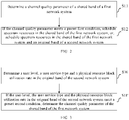
- the method includes: determining a channel quality parameter of a shared band of the first network system; and in response to the channel quality parameter meeting a preset first condition, scheduling spectrum resources in the shared band of the first network system, or, scheduling spectrum resources in the shared band of the first network system and an original band of the second network system.
- an embodiment of the present disclosure further provides a spectrum resource scheduling apparatus, including a first determining module and a scheduling module.
- the first determining module is configured to determine a channel quality parameter of a shared band of a first network system; and the scheduling module is configured to, when the channel quality parameter meets a preset first condition, schedule spectrum resources in the shared band of the first network system, or, schedule spectrum resources in the shared band of the first network system and an original band of a second network system.
- an embodiment of the present disclosure further provides a computer device, including: one or more processors and a storage.
- the storage stores one or more programs thereon which, when executed by the one or more processors, cause the one or more processors to perform the spectrum resource scheduling method described in any of the embodiments.
- an embodiment of the present disclosure further provides a computer-readable medium storing a computer program thereon, where the computer program, when executed by a processor, causes the processor to perform the spectrum resource scheduling method described in any of the embodiments.
- Embodiments described herein may be described with reference to plan and/or cross-sectional views in idealized representations of the present disclosure. Accordingly, the example illustrations may be modified in accordance with manufacturing techniques and/or tolerances. Accordingly, the embodiments are not limited to the embodiments shown in the drawings, but include modifications of configurations formed based on a manufacturing process. Thus, the regions illustrated in the figures have schematic properties, and the shapes of the regions shown in the figures illustrate specific shapes of regions of elements, but are not intended to be limiting.
- an embodiment of the present disclosure provides a spectrum resource scheduling method in a spectrum sharing mode, which performs individual evaluation on a shared band, thereby integrally improving the user perception.
- An embodiment of the present disclosure provides a spectrum resource scheduling method, which is used for scheduling spectrum resources of at least two coexisting network systems including a first network system and a second network system.
- the shared band of the first network system used as a band width part (BWP) separately configured for the second network system, is denoted as BWP share .
- BWP band width part
- the BWP originally configured (i.e., the original band) for the second network system is denoted as BWP old .
- BWP old the bandwidth of the second network system becomes (BWP share +BWP old ).
- the spectrum resource scheduling method includes the following operations S11 to S12.
- the channel quality parameter of the shared band of the first network system is determined in a preset evaluation period T share .
- the spectrum resource scheduling method is used for scheduling spectrum resources of at least two coexisting network systems including a first network system and a second network system.
- the method includes: determining a channel quality parameter of a shared band of the first network system, and if the channel quality parameter meets a preset first condition, scheduling spectrum resources in the shared band of the first network system, or, scheduling spectrum resources in the shared band of the first network system and an original band of the second network system.
- determining a channel quality parameter of a shared band of the first network system and if the channel quality parameter meets a preset first condition, scheduling spectrum resources in the shared band of the first network system, or, scheduling spectrum resources in the shared band of the first network system and an original band of the second network system.
- the channel quality parameter is a parameter that reflects a quality of the channel, and in some embodiments, the channel quality parameter includes, but is not limited to, spectral efficiency, and/or an average channel quality indicator in the evaluation period (i.e., T share ). It should be noted that the spectral efficiency refers to the spectral efficiency within T share .
- the channel quality parameter meeting the preset first condition includes a case where: the spectral efficiency is greater than a preset first threshold.
- the channel quality parameter meeting the preset first condition includes a case where: the average channel quality indicator in the preset evaluation period is greater than a preset second threshold value.
- the channel quality parameter meeting the preset first condition includes a case where: the spectral efficiency is greater than a preset first threshold, and the average channel quality indicator in the preset evaluation period is greater than a preset second threshold value.
- the operation of scheduling spectrum resources includes: preferentially scheduling spectrum resources in the shared band of the first network system.
- preferentially scheduling spectrum resources in the shared band of the first network system includes: if the spectrum resources in the shared band of the first network system meet requirements of a user, scheduling spectrum resources in the shared band of the first network system; and if the spectrum resources in the shared band of the first network system fail to meet requirements of the user, scheduling spectrum resources in original band of the second network system after scheduling spectrum resources in the shared band of the first network system.
- spectrum resources in the shared band of the first network system are firstly scheduled, and then, if the spectrum resources in that shared band are insufficient, spectrum resources in the original band of the second network system are called.
- the channel quality of the shared band of the first network system passes the evaluation (i.e., the channel quality of the shared band is relatively good)
- the channel quality parameter of the shared band of the first network system is determined according to a preset scheduling period (T max ).
- T max a preset scheduling period
- the spectrum resources in the shared channel are scheduled according to the scheduling period, so that scheduling of the spectrum resources can be flexibly adjusted, and the real-time performance is improved.
- the spectrum resource scheduling method may further include: if the channel quality parameter does not meet the first condition, scheduling spectrum resources in the original band of the second network system.
- the spectrum resources in the original band of the second network system are scheduled so that stability of the user service is ensured, and the user perception is improved.
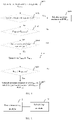
- the spectrum resource scheduling method may further include the following operation S10.
- a user level, a user service type and a physical resource block utilization rate in the original band of the second network system are determined after a user terminal accesses the network.
- the user level refers to a level of importance of a user, such as a VIP user, and can be obtained from an operator device.
- a level of importance of a user such as a VIP user
- the user service type may be determined by obtaining a quality of service (QoS) parameter, and specifically, may be determined from indexes such as latency, latency variations (including jitter and drift), and a packet loss rate in the QoS.
- QoS quality of service
- a preset type of user service refers to a user service with low latency and high reliability, such as a voice call service or the like.
- the operation of determining the channel quality parameter of the shared band of the first network system includes the following operation S11'.
- the user level, the user service type and the physical resource block utilization rate in the original band of the second network system meet a preset second condition, it indicates that it is preliminarily determined that the spectrum resources in the shared band of the first network system can be scheduled.
- the spectrum resources in the shared band of the first network system it depends on further evaluation of the channel quality of the shared band (i.e., operation S11 is performed).
- the user level, the user service type and the physical resource block utilization rate in the original band of the second network system are comprehensively considered in calling of the spectrum resources so that calling of the spectrum resources is more reasonable, stability of the user service is improved, and the user experience and perception are guaranteed.
- the user level, the user service type and the physical resource block utilization rate in the original band of the second network system meeting the preset second condition includes a case where: the user level is lower than a preset level, the physical resource block utilization rate in the original band of the second network system is greater than a preset fourth threshold, and the user service type is a non-preset type.
- the fourth threshold is a load threshold of an original band bandwidth in the sharing mode.
- the spectrum resources in the shared band of the first network system can be scheduled for the user since the requirements of the user and the service on spectrum resources are not too high.
- the spectrum resource scheduling method further includes: if the user level, the user service type and the physical resource block utilization rate in the original band of the second network system fail to meet the preset second condition, scheduling spectrum resources in the original band of the second network system.
- the user level, the user service type and the physical resource block utilization rate in the original band of the second network system fail to meet the preset second condition, it is determined that the spectrum resources in the shared band of the first network system cannot be scheduled; otherwise, the user service reliability and the user experience will be affected. Therefore, in this case, spectrum resources in the original band of the second network system are scheduled to guarantee the service reliability and the user experience.
- the user level, the user service type and the physical resource block utilization rate in the original band of the second network system failing to meet the preset second condition includes any one of the following cases (1) to (3):
- spectrum resources in the original band of the second network system are scheduled to guarantee the service reliability and the user experience.
- the spectrum resources in the original band of the second network system can also be scheduled for a lower-level user.
- spectrum resources in the original band of the second network system are also scheduled for the user to guarantee the service reliability since the user currently uses a low latency and high reliability service.
- the spectrum resource scheduling method further includes: judging whether to further schedule spectrum resources, if to further schedule spectrum resources, determining, for a user with a user level lower than a preset level, a current physical resource block utilization rate in the original band of the second network system, so as to schedule spectrum resources according to a judgment result of whether the user level, the user service type and the current physical resource block utilization rate in the original band of the second network system meet the preset second condition (i.e., perform operation S11'), or, for a user with a user level higher than or equal to a preset level, scheduling spectrum resources in the original band of the second network system.
- the preset second condition i.e., perform operation S11'
- the user level and the user service type remain unchanged in a short term, while the current physical resource block utilization rate in the original band of the second network system changes in real time, so when it is determined to further schedule spectrum resources, the current physical resource block utilization rate in the original band of the second network system may be simply determined again for a user with a user level lower than a preset level.
- the case of scheduling spectrum resources of two network systems is taken as an example, where a first network system is 4G, and a second network system is 5G.
- a 5G cell obtains a shared band of a 4G LTE cell.
- a BWP is set on the shared band and denoted as BWP share .
- One or more BWPs are set on an original band of the 5G cell, and denoted as BWP old .
- the channel quality parameter of the shared band is spectral efficiency E share .
- the spectrum resource scheduling method includes the following operations S401 to S408.
- operation S405 if it is determined that the user service type does not belong to a service type of low latency and high reliability, the channel quality of the shared channel is further evaluated (i.e., operation S405 is performed); and if it is determined that the user service type belongs to a service type of low latency and high reliability (i.e., the preset type), spectrum resources are scheduled in BWP old (i.e., operation S408 is performed).
- scheduling spectrum resources in BWP share or, scheduling spectrum resources in (BWP share + BWP old ).
- the spectrum resources are scheduled for a time period (T max -T share ).
- the method further includes: judging whether to further schedule spectrum resources, if not to further schedule spectrum resources, ending the process; and if to further schedule spectrum resources, for a lower-level user, determining P PRBold and judging whether P PRBold is greater than P expection (i.e., performing operation S403), and for a higher-level user, directly scheduling spectrum resources in BWP old (i.e., performing operation S408).
- the spectrum resource scheduling method can overcome the problem of affected user perception in some cases because the shared band is not evaluated and the 4G shared band is simply added to the bandwidth of the 5G original band, realizing the effects of optimizing scheduling and use of the 4G shared band and improving the user perception.
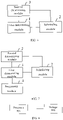
- an embodiment of the present disclosure further provides a spectrum resource scheduling apparatus which, as shown in FIG. 5 , includes a first determining module 1 and a scheduling module 2.
- the first determining module 1 is configured to determine a channel quality parameter of a shared band of a first network system.
- the scheduling module 2 is configured to, when the channel quality parameter meets a preset first condition, schedule spectrum resources in the shared band of the first network system, or, schedule spectrum resources in the shared band of the first network system and an original band of a second network system.
- the first determining module 1 is configured to determine the channel quality parameter of the shared band of the first network system in a preset evaluation period.
- the channel quality parameter includes spectral efficiency
- the channel quality parameter meeting the preset first condition includes a case where: the spectral efficiency is greater than a preset first threshold; or, the channel quality parameter includes an average channel quality indicator in the preset evaluation period
- the channel quality parameter meeting the preset first condition includes a case where: the average channel quality indicator in the preset evaluation period is greater than a preset second threshold value; or, the channel quality parameter includes spectral efficiency, and an average channel quality indicator in the preset evaluation period
- the channel quality parameter meeting the preset first condition includes a case where: the spectral efficiency is greater than a preset first threshold, and the average channel quality indicator in the preset evaluation period is greater than a preset second threshold value.
- the scheduling module 2 is configured to preferentially schedule spectrum resources in the shared band of the first network system.
- the scheduling module 2 is configured to, when the spectrum resources in the shared band of the first network system meet requirements of a user, schedule spectrum resources in the shared band of the first network system; and when the spectrum resources in the shared band of the first network system fail to meet requirements of the user, schedule spectrum resources in original band of the second network system after scheduling spectrum resources in the shared band of the first network system.
- the scheduling module 2 is further configured to, when the channel quality parameter does not meet the first condition, schedule spectrum resources in the original band of the second network system.
- the first determining module 1 is configured to determine the channel quality parameter of the shared band of the first network system according to a preset scheduling period.
- the spectrum resource scheduling apparatus further includes a second determining module 3 configured to determine a user level, a user service type and a physical resource block utilization rate in the original band of the second network system.
- the first determining module 1 is configured to, when the user level, the user service type and the physical resource block utilization rate in the original band of the second network system meet a preset second condition, determine a channel quality parameter of a shared band of a first network system.
- the user level, the user service type and the physical resource block utilization rate in the original band of the second network system meeting the preset second condition includes a case where: the user level is lower than a preset level, the physical resource block utilization rate in the original band of the second network system is greater than a preset fourth threshold, and the user service type is a non-preset type.
- the scheduling module 2 is further configured to, when the user level, the user service type and the physical resource block utilization rate in the original band of the second network system fail to meet the preset second condition, schedule spectrum resources in the original band of the second network system.
- the user level, the user service type and the physical resource block utilization rate in the original band of the second network system failing to meet the preset second condition includes any one of the following cases:
- the spectrum resource scheduling apparatus further includes a judgement module 4 configured to judge whether to further schedule spectrum resources.
- the first determining module 1 is further configured to, when the judgement module 4 determines to further schedule spectrum resources, determine, for a user with a user level lower than a preset level, a current physical resource block utilization rate in the original band of the second network system, so as to schedule spectrum resources according to a judgment result of whether the user level, the user service type and the current physical resource block utilization rate in the original band of the second network system meet the preset second condition, or, for a user with a user level higher than or equal to a preset level, schedule spectrum resources in the original band of the second network system.
- an embodiment of the present disclosure further provides a computer device, including: one or more processors 801 and a storage 802.
- the storage 802 stores one or more programs thereon which, when executed by the one or more processors 801, cause the one or more processors 801 to perform the spectrum resource scheduling method described in any of the above embodiments.
- An embodiment of the present disclosure further provides a computer-readable medium storing a computer program thereon, where the computer program, when executed by a processor, causes the processor to perform the spectrum resource scheduling method described in any of the above embodiments.
- the spectrum resource scheduling method is used for scheduling spectrum resources of at least two coexisting network systems including a first network system and a second network system.
- the method includes: determining a channel quality parameter of a shared band of the first network system, and if the channel quality parameter meets a preset first condition, scheduling spectrum resources in the shared band of the first network system, or, scheduling spectrum resources in the shared band of the first network system and an original band of the second network system.
- determining a channel quality parameter of a shared band of the first network system and if the channel quality parameter meets a preset first condition, scheduling spectrum resources in the shared band of the first network system, or, scheduling spectrum resources in the shared band of the first network system and an original band of the second network system.
- the term computer storage medium includes volatile and nonvolatile, removable and non-removable media implemented in any method or technology for storage of information such as computer-readable instructions, data structures, program modules or other data, as is well known to those of ordinary skill in the art.
- the computer storage medium includes, but is not limited to, RAM, ROM, EEPROM, flash memory or other memory technology, CD-ROM, digital versatile disc (DVD) or other optical disc storage, magnetic cartridge, magnetic tape, magnetic disk storage or other magnetic storage devices, or may be any other medium used for storing the desired information and accessible by a computer.
- a communication medium typically includes a computer-readable instruction, a data structure, a program module, or other data in a modulated data signal, such as a carrier wave or other transport mechanism, and may include any information delivery medium.
Landscapes
- Engineering & Computer Science (AREA)
- Computer Networks & Wireless Communication (AREA)
- Signal Processing (AREA)
- Quality & Reliability (AREA)
- Mobile Radio Communication Systems (AREA)
Applications Claiming Priority (2)
| Application Number | Priority Date | Filing Date | Title |
|---|---|---|---|
| CN202010203301.XA CN113498065B (zh) | 2020-03-20 | 2020-03-20 | 频谱资源调度方法、装置、计算机设备及计算机可读介质 |
| PCT/CN2020/136245 WO2021184849A1 (zh) | 2020-03-20 | 2020-12-14 | 频谱资源调度方法、装置、计算机设备及计算机可读介质 |
Publications (2)
| Publication Number | Publication Date |
|---|---|
| EP4120761A1 true EP4120761A1 (de) | 2023-01-18 |
| EP4120761A4 EP4120761A4 (de) | 2024-02-28 |
Family
ID=77771916
Family Applications (1)
| Application Number | Title | Priority Date | Filing Date |
|---|---|---|---|
| EP20925099.2A Withdrawn EP4120761A4 (de) | 2020-03-20 | 2020-12-14 | Verfahren und vorrichtung zur planung von spektrumsressourcen sowie computervorrichtung und computerlesbares medium |
Country Status (3)
| Country | Link |
|---|---|
| EP (1) | EP4120761A4 (de) |
| CN (1) | CN113498065B (de) |
| WO (1) | WO2021184849A1 (de) |
Families Citing this family (6)
| Publication number | Priority date | Publication date | Assignee | Title |
|---|---|---|---|---|
| CN114286348B (zh) * | 2021-12-20 | 2024-12-17 | 中国电信股份有限公司 | 动态频谱共享网络的调度方法、装置、电子设备及介质 |
| CN114466365B (zh) * | 2022-02-16 | 2023-10-03 | Tcl通讯科技(成都)有限公司 | 频谱资源获取方法、装置和计算机可读存储介质 |
| CN115002784B (zh) * | 2022-05-30 | 2024-06-07 | 中国联合网络通信集团有限公司 | 一种频谱配置方法、装置及存储介质 |
| CN117750513A (zh) * | 2022-09-09 | 2024-03-22 | 华为技术有限公司 | 通信方法及装置 |
| CN119854807A (zh) * | 2024-12-30 | 2025-04-18 | 中国联合网络通信集团有限公司 | 一种共享载频的调度方法、装置及可读存储介质 |
| CN120711518A (zh) * | 2025-08-22 | 2025-09-26 | 北京玄戒技术有限公司 | 资源分配方法、装置、设备和芯片 |
Family Cites Families (25)
| Publication number | Priority date | Publication date | Assignee | Title |
|---|---|---|---|---|
| WO2010096964A1 (zh) * | 2009-02-27 | 2010-09-02 | 华为技术有限公司 | 使用频谱的方法、设备及系统 |
| CN101568125B (zh) * | 2009-05-15 | 2011-01-19 | 重庆大学 | 一种支持频谱资源共享的无线资源分配方法 |
| CN101594617A (zh) * | 2009-06-19 | 2009-12-02 | 电子科技大学 | 一种分级频谱共享网络的控制信道建立方法 |
| WO2013151469A1 (en) * | 2012-04-03 | 2013-10-10 | Telefonaktiebolaget L M Ericsson (Publ) | Interference control between different radio communication systems involving user equipments |
| CN103379498A (zh) * | 2012-04-20 | 2013-10-30 | 华为技术有限公司 | 动态频谱共享方法和装置 |
| WO2015055243A1 (en) * | 2013-10-16 | 2015-04-23 | Telefonaktiebolaget L M Ericsson (Publ) | Scheduling shared spectral resource in mobile communications system |
| WO2015058787A1 (en) * | 2013-10-22 | 2015-04-30 | Nokia Solutions And Networks Oy | Spectrum sharing |
| CN107006005B (zh) * | 2014-12-02 | 2021-01-29 | 瑞典爱立信有限公司 | 用于处理无线电频谱中的信道的方法和模块 |
| CN107431929B (zh) * | 2015-03-31 | 2020-01-21 | 华为技术有限公司 | 一种频谱共享的方法及装置 |
| CN106162784B (zh) * | 2015-04-21 | 2019-07-12 | 普天信息技术有限公司 | 一种频谱共享情形下的频谱切换方法及系统 |
| US9877203B2 (en) * | 2015-05-07 | 2018-01-23 | Qualcomm Incorporated | Channel feedback reporting for shared frequency spectrum |
| WO2016182634A1 (en) * | 2015-05-14 | 2016-11-17 | Intel IP Corporation | Evolved node-b, shared spectrum controller and method for communication in shared spectrum |
| CN104980932B (zh) * | 2015-06-30 | 2018-09-21 | 中国联合网络通信集团有限公司 | 多模基站的频谱分配方法及装置 |
| CN106470424A (zh) * | 2015-08-19 | 2017-03-01 | 中兴通讯股份有限公司 | 一种异构网络中的频谱资源共享方法、装置及系统 |
| CN106941676A (zh) * | 2016-01-04 | 2017-07-11 | 中兴通讯股份有限公司 | 频谱资源共享的方法和装置 |
| CN107306401B (zh) * | 2016-04-18 | 2019-09-17 | 普天信息技术有限公司 | 一种基于频谱共享的冲突解决方法及感知系统 |
| US10244399B2 (en) * | 2016-09-30 | 2019-03-26 | Qualcomm Incorporated | Signature sequence-based signaling and allocation of resources of a shared spectrum |
| CN106454855B (zh) * | 2016-10-12 | 2020-01-03 | 中国联合网络通信集团有限公司 | 频谱共享方法及装置 |
| CN108271163B (zh) * | 2017-01-03 | 2021-04-16 | 中兴通讯股份有限公司 | 一种频谱资源的共享方法和装置 |
| CN108366375B (zh) * | 2017-01-26 | 2021-09-14 | 华为技术有限公司 | 一种共享下行频谱的方法和装置 |
| CN109587705B (zh) * | 2017-09-28 | 2021-10-22 | 华为技术有限公司 | 通信方法、装置和系统 |
| CN107835515B (zh) * | 2017-12-18 | 2021-05-25 | 海能达通信股份有限公司 | 一种分配带宽资源的方法及基站 |
| CN118400807A (zh) * | 2018-02-23 | 2024-07-26 | 交互数字专利控股公司 | 用于带宽部分操作的系统和方法 |
| CN110636629A (zh) * | 2018-06-21 | 2019-12-31 | 上海华为技术有限公司 | 一种应用于多系统的频谱调度方法及网络设备 |
| CN110049436B (zh) * | 2019-05-14 | 2020-04-21 | 北京邮电大学 | 基于异构频谱的分布式信道分配与共享方法和系统 |
-
2020
- 2020-03-20 CN CN202010203301.XA patent/CN113498065B/zh active Active
- 2020-12-14 EP EP20925099.2A patent/EP4120761A4/de not_active Withdrawn
- 2020-12-14 WO PCT/CN2020/136245 patent/WO2021184849A1/zh not_active Ceased
Also Published As
| Publication number | Publication date |
|---|---|
| WO2021184849A1 (zh) | 2021-09-23 |
| CN113498065A (zh) | 2021-10-12 |
| CN113498065B (zh) | 2025-08-26 |
| EP4120761A4 (de) | 2024-02-28 |
Similar Documents
| Publication | Publication Date | Title |
|---|---|---|
| EP4120761A1 (de) | Verfahren und vorrichtung zur planung von spektrumsressourcen sowie computervorrichtung und computerlesbares medium | |
| CN110248417B (zh) | 一种电力物联网中上行通信业务的资源分配方法及系统 | |
| US8730900B2 (en) | Method and device for adaptive adjusting uplink and downlink bandwidth | |
| CN113840357B (zh) | 基站通道关断的方法和装置、电子设备、计算机可读介质 | |
| CN113891370B (zh) | 时隙干扰处理方法、装置、介质及电子设备 | |
| WO2012000760A1 (en) | Cellular telecommunication system network element, corresponding method and computer -readable storage medium | |
| WO2010108348A1 (zh) | 载波聚合的实现方法以及基站 | |
| CN112383952A (zh) | 一种载波确定方法及装置 | |
| CN112492658B (zh) | 用户均衡方法、设备、存储介质及装置 | |
| EP3986061A1 (de) | Verfahren zur unterdrückung von gleichkanalinterferenz und basisstation und system | |
| CN110401970B (zh) | 一种传输方法、基站及终端 | |
| CN105517179A (zh) | 一种无线资源调度的方法以及调度器 | |
| CN111786764A (zh) | 主载波选择方法、系统、终端设备及计算机可读存储介质 | |
| CN115643612B (zh) | 基于上行链路质量的带宽部分的调度方法及装置 | |
| KR102604940B1 (ko) | 데이터 송신 방법, 장치 및 시스템 | |
| Balapuwaduge et al. | Significance of channel failures on network performance in CRNs with reserved spectrum | |
| CN113055895B (zh) | 频谱资源的共享方法及设备 | |
| CN115103415B (zh) | 基站算力调度方法、装置及存储介质 | |
| US20240236182A9 (en) | Dynamic open radio access network radio unit sharing between multiple tenant open radio access network distributed units | |
| WO2023098786A1 (zh) | 能耗控制方法、基站、电子设备及计算机可读存储介质 | |
| CN111836351B (zh) | 一种功率分配方法及装置 | |
| US20250007656A1 (en) | Carrier aggregation method and apparatus, and electronic device | |
| CN116981093A (zh) | 资源调度方法、网络侧设备及相关设备 | |
| CN112954699A (zh) | 无线通信的频谱共享方法、装置、电子设备及存储介质 | |
| CN115460637B (zh) | 资源负荷确定方法、装置及存储介质 |
Legal Events
| Date | Code | Title | Description |
|---|---|---|---|
| STAA | Information on the status of an ep patent application or granted ep patent |
Free format text: STATUS: THE INTERNATIONAL PUBLICATION HAS BEEN MADE |
|
| PUAI | Public reference made under article 153(3) epc to a published international application that has entered the european phase |
Free format text: ORIGINAL CODE: 0009012 |
|
| STAA | Information on the status of an ep patent application or granted ep patent |
Free format text: STATUS: REQUEST FOR EXAMINATION WAS MADE |
|
| 17P | Request for examination filed |
Effective date: 20221013 |
|
| AK | Designated contracting states |
Kind code of ref document: A1 Designated state(s): AL AT BE BG CH CY CZ DE DK EE ES FI FR GB GR HR HU IE IS IT LI LT LU LV MC MK MT NL NO PL PT RO RS SE SI SK SM TR |
|
| DAV | Request for validation of the european patent (deleted) | ||
| DAX | Request for extension of the european patent (deleted) | ||
| REG | Reference to a national code |
Ref country code: DE Ref legal event code: R079 Free format text: PREVIOUS MAIN CLASS: H04W0072040000 Ipc: H04W0016140000 |
|
| A4 | Supplementary search report drawn up and despatched |
Effective date: 20240125 |
|
| RIC1 | Information provided on ipc code assigned before grant |
Ipc: H04W 72/542 20230101ALI20240119BHEP Ipc: H04W 72/12 20230101ALI20240119BHEP Ipc: H04W 16/14 20090101AFI20240119BHEP |
|
| STAA | Information on the status of an ep patent application or granted ep patent |
Free format text: STATUS: THE APPLICATION HAS BEEN WITHDRAWN |
|
| 18W | Application withdrawn |
Effective date: 20250919 |